Article

Comparative Study on Photothermal Adaptive Performance of Phase-Change Photovoltaic Window in Summer Conditions

1
College of Pipeline and Civil Engineering, China University of Petroleum (East China), Qingdao 266580, China
2
CNOOC EnerTech, Safety and Environmental Protection Branch, Tianjin 300452, China
3
Qingdao Honghai Green Energy Co., Ltd., Qingdao 266000, China
*
Author to whom correspondence should be addressed.
Buildings 2026, 16(7), 1319; https://doi.org/10.3390/buildings16071319
Submission received: 27 February 2026 / Revised: 21 March 2026 / Accepted: 23 March 2026 / Published: 26 March 2026

Abstract

This study integrates phase change material (PCM) with semi-transparent photovoltaic (PV) glazing to develop a composite window providing thermal buffering and PV temperature regulation in summer. A PCM-PV double glazing window (PCM-PV-DGW) using paraffin PCM and CdTe semi-transparent PV glass was fabricated and evaluated through outdoor hot-box experiments and transient modeling in Qingdao, China. Four window types—DGW, PCM-DGW, PV-DGW, and PCM-PV-DGW—were tested under identical boundary conditions. The coupled system showed improved photothermal performance, achieving a daily average Solar Heat Gain Coefficient (SHGC) of 0.105, compared with 0.180 for PV-DGW without PCM filling, together with a temperature attenuation factor of 0.904 and a 35 min peak temperature delay. A two-dimensional transient heat transfer model incorporating radiative transfer through semi-transparent layers and an enthalpy-based phase change method was established and validated against measured inner-surface temperatures, showing good agreement (RMSE 1.54–1.80 °C). Parametric and sensitivity analyses indicate that PCM phase transition temperature is the dominant parameter (suggested 28–32 °C), while ~12 mm PCM thickness and 50% PV coverage offer a practical balance for the Qingdao summer scenario. The results provide preliminary guidance for PCM–PV window design under the investigated summer conditions.

1. Introduction

Building energy consumption is one of the most significant contributors to global energy demand and greenhouse gas emissions. According to International Energy Agency (IEA) data, buildings account for approximately 41% of total global energy consumption and generate 30% of annual carbon dioxide emissions [1]. Against the backdrop of rapid urbanization, global building floor area is projected to double by 2050, potentially exacerbating energy challenges [2]. The Paris Agreement’s commitment to limit global temperature rise to well below 2 °C intensifies the urgency for sustainable building design and retrofit strategies [3]. Within building envelopes, transparent components—particularly windows and glazing systems—constitute critical thermal weak points. Although windows typically occupy only 20–40% of facade area in commercial buildings, they can lead to up to 60% of heating and cooling energy losses in cold climates [4,5]. The high thermal conductivity of glass (approximately 1.0 W/m·K) and its poor insulation performance compared to opaque wall components (typical U-value of 5.8 W/m2·K for single glazing versus 0.3–0.5 W/m2·K for insulated walls) make window optimization a priority for building energy efficiency [6,7]. Building-integrated renewable energy technologies are identified as critical pathways for energy efficiency [8,9,10]. Conventional glazing systems—even advanced configurations—suffer from inherent limitations: (1) passive thermal regulation unable to adapt to changing environmental conditions, (2) inability to store thermal energy for load shifting, and (3) lack of renewable energy generation capability. These limitations have prompted researchers to develop “smart” or adaptive glazing technologies.
Phase change materials (PCMs) offer significant potential for enhancing window thermal performance through latent heat storage capacity. Recent cross-domain reviews further highlight that PCM integration is being actively explored across PV systems, building envelopes and glazing, while also emphasizing climate dependence, material selection, encapsulation/integration techniques, and remaining barriers such as incomplete phase transition and performance sensitivity to boundary conditions [11]. Early studies by Ismail and Henríquez (2001) demonstrated that PCM-filled double-glazed units reduced peak heat flux by 30–40% compared to air-filled references [12]. Gowreesunker et al. [13] revsaled that PCM windows provide dynamic solar control with visible light transmittance varying from 40% (solid) to 90% (liquid). Goia et al.’s [14,15,16] extensive experiments showed 50% reductions in indoor peak heat gains and significant thermal comfort improvements. These advances establish PCM windows as effective passive thermal regulation systems capable of load shifting through diurnal thermal cycles. However, recent seasonal evidence indicates that PCM glazing benefits are not uniform across the year: in a triple-glazing PCM configuration evaluated under seasonally representative boundary conditions, Rodriguez-Ake et al. reported that the most favorable configuration reduced inward heat flux by up to 37.4% on warm days and achieved annual reductions in electricity cost and CO2 emissions, while also suggesting complementary solar-control strategies for colder seasons—underscoring the need for season-resolved evaluation (e.g., time lag and decrement factor) rather than single averaged indicators [17].
Building-integrated photovoltaics (BIPV) represent a parallel technological evolution addressing the dual objectives of energy efficiency and renewable power generation. The development of semi-transparent photovoltaic (STPV) technologies—including spaced crystalline silicon cells, thin-film cadmium telluride (CdTe), and emerging perovskites—has enabled window applications [18]. Jin et al. [19] conducted pioneering field tests of amorphous silicon STPV windows, demonstrating 15–20% solar transmittance and 5–7% power conversion efficiency. Chow et al.’s [20] subsequent study of CdTe-based STPV double-skin facades in Hong Kong revealed significant cooling load reductions (30–40%) due to combined shading and electricity generation. Ji et al. [21,22,23] performed comprehensive investigations of STPV ventilated windows, optimizing PV coverage ratios for different Chinese climate zones and demonstrating that 40–50% coverage balances daylighting, thermal performance, and electrical output.
The integration of PCMs with semi-transparent PV glazing presents synergistic potential. PCM latent heat absorption during melting can stabilize PV operating temperatures, mitigating heat-induced efficiency losses. Huang et al. [24,25] theoretically predicted that PCM layers behind PV panels could reduce peak temperatures by 10–15 °C, improving power output by 5–8%. Hasan et al. [26] experimentally compared five PCM types coupled with opaque PV panels, identifying calcium chloride hexahydrate (Tm = 29 °C, ΔH = 190 kJ/kg) as optimal for temperate climates, achieving 8–12 °C temperature reductions. PV solar absorption reduces transmitted radiation while PCM thermal storage provides time-delay benefits, potentially achieving superior SHGC reduction compared to individual components. Semi-transparent PV naturally reduces PCM visible light transmittance penalties, maintaining acceptable daylighting (20–40%) while enhancing thermal performance. PV heat generation may facilitate more frequent PCM melting–solidification cycles, particularly in cold climates where ambient temperatures alone are insufficient [24,25,26,27]. However, PCM-PV coupling for window applications remains underdeveloped. Existing research predominantly addresses opaque PV-PCM configurations for roofs or facades, with minimal investigation of semi-transparent window systems where optical-thermal coupling fundamentally differs [27,28,29].
Despite theoretical synergies, critical research gaps persist for PCM-PV window applications. First, most PCM-PV studies mainly rely on numerical simulations with idealized weather inputs or laboratory experiments using artificial heating lamps. Only limited experimental evidence is available for PCM-integrated fenestration systems evaluated with seasonally realistic boundary conditions, as demonstrated by recent PCM triple-glazing investigations. Second, existing research mainly addresses opaque PV-PCM systems where solar radiation is fully absorbed at the PV surface. Semi-transparent PV windows exhibit fundamentally different physics: partial solar transmission and PCM optical–property changes during phase transitions create complex radiation–conduction–convection–phase change coupling that remains insufficiently characterized, especially when effective optical behavior and conjugate heat transfer are considered. Third, while parametric studies exist for PCM-only windows, the sensitivity of PCM-PV coupled systems remains poorly quantified under realistic weather conditions, hindering translation into practical design guidelines. In addition, window–wall interactions can introduce thermal bridging and non-uniform heat transfer, which may influence PCM activation and the net energy benefit. Recent experimental work on PCM-enhanced multi-layer cavity walls with integrated double-glazed windows shows that PCM placement within the wall assembly can change heat transfer and energy use substantially (reported heating/cooling energy reductions of ~34–37% for optimal placement), highlighting the importance of assessing integrated façade subsystems rather than isolated components when developing deployable solutions [30].
To address the identified research gaps, this study proposes and investigates a novel photovoltaic double-glazed window with phase change material (PVDW+PCM), coupling CdTe semi-transparent photovoltaic glazing with paraffin phase change materials. Specific objectives of the study include the following: First, conducting outdoor hot-box experiments in Qingdao’s cold climate zone to measure dynamic photothermal performance of four different window configurations, including conventional double glazing (DGW), PCM-filled double glazing (PCM-DGW), semi-transparent PV double glazing (PV-DGW), and PCM-PV double glazing (PCM-PV-DGW), with testing conditions providing performance evaluation and establishing experimental validation datasets for numerical models. Second, establishing a two-dimensional transient heat transfer model incorporating radiative transfer through semi-transparent PV and PCM layers using spectrally averaged effective optical properties, enthalpy-based phase change modeling with temperature-dependent thermophysical properties, conjugate heat transfer at glass–PCM–air interfaces, and realistic weather boundary conditions (measured solar radiation and ambient temperature), validating models against experimental data. Third, systematically investigating the influence of key design parameters including PCM layer thickness, PCM melting temperature, PCM latent heat, and PV coverage ratio, performing sensitivity analyses to evaluate each parameter’s impact on window thermal performance and providing guidance for optimized design in cold climate zones.
Scientific contributions of this study include the following: (1) Experimental comparison of four window configurations under identical outdoor weather conditions in Qingdao’s summer climate, providing realistic data for semi-transparent PCM-PV window performance. (2) Development of a heat transfer model that accounts for effective (spectrally averaged) optical properties of semi-transparent PV, temperature-dependent PCM thermophysical properties, natural convection in molten PCM, and PV electrothermal coupling. Model predictions show reasonable agreement with experimental measurements. (3) Parametric framework systematically investigating the relative influences of PCM melting temperature, layer thickness, latent heat, and PV coverage ratio on thermal performance metrics.

2. Methods

This study employs an integrated experimental model parameterization workflow to evaluate the solar thermal adaptability of PCM-PV composite windows during summer conditions. In a clear summer outdoor thermal chamber at Qingdao, four window configurations, DGW, PCM-DGW, PV-DGW and PCM-PV-DGW, were simultaneously tested. Experimental boundary conditions and key response parameters were measured to quantify Solar Heat Gain Coefficient, temperature attenuation, and time delay. A two-dimensional transient heat transfer model was established using the enthalpy method, incorporating radiation transfer, heat conduction, phase change in PCM, and photovoltaic electrothermal effects. The computational scheme was determined in ANSYS Fluent 2022 R1 using measured meteorological data as boundary conditions and conducted through time step sensitivity analysis. Model validation was performed using RMSE and CV-RMSE metrics, followed by single-factor parameter simulations and sensitivity analyses to compare the impact of PCM thickness, phase change temperature, latent heat, and PV coverage rate under summer operating conditions.

2.1. Experimental Setup

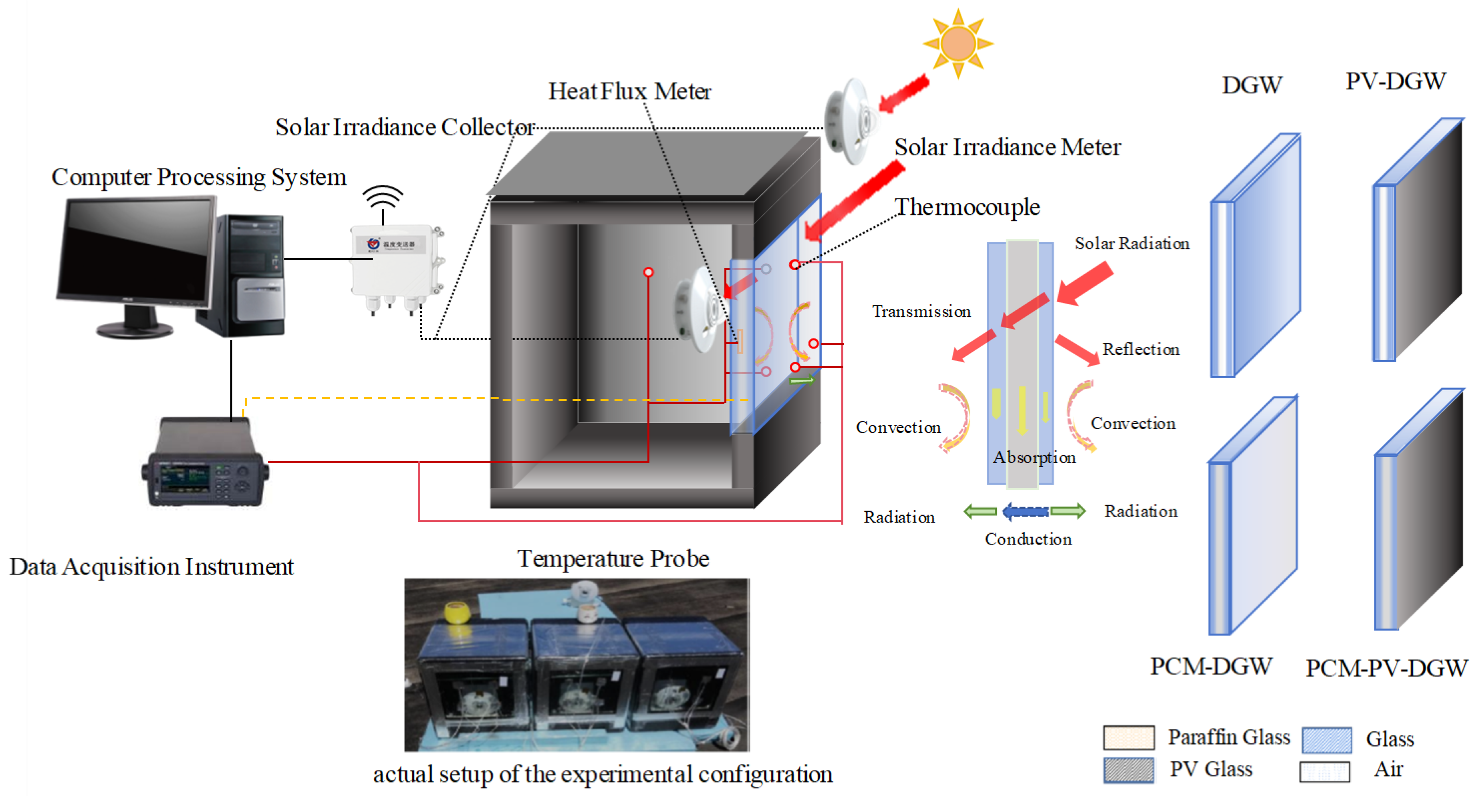
Outdoor tests were performed in Qingdao, China (cold climate zone), under clear-sky summer conditions. The glazing was mounted on a south-facing vertical plane, and the transient boundary conditions were obtained from on-site measurements, including ambient air temperature Ta, out and south-façade solar irradiance Gsolar (logged at 5 min for temperature/heat flux and 1 min for irradiance). The experimental dataset corresponds to a 72 h monitoring campaign, and the representative 24 h profiles on a typical clear-sky summer day were used for performance comparison and model validation. The representative 24 h dataset was selected due to its most stable boundary conditions (solar irradiance and ambient temperature) and complete dataset integrity. Although other monitoring periods exhibited stable trends, numerical variations were primarily reflected in magnitude due to weather fluctuations. The experimental platform constructed in the experiment is shown in Figure 1; three sets of comparative insulated experimental boxes (EPP) with external dimensions of 460 mm × 400 mm × 340 mm and internal dimensions of 430 mm × 360 mm × 320 mm were employed for simultaneous comparative testing, The red solid arrows in the figure denote the direction of incident solar radiation and heat flow paths monitored by the heat flux meter and thermocouples, while orange curved arrows represent convective heat transfer between the sample surface and ambient air. Green/blue double-headed arrows indicate conductive heat transfer within the multi-layered glass/PCM/PV structure, and black dashed arrows illustrate radiative heat exchange with the surroundings. The color legend follows: light blue for glass layers, dark gray for PV glass, beige for paraffin (PCM), and white for the insulating air gap. Sensor components (solar irradiance meter, heat flux meter, thermocouples) and data acquisition systems are labeled to clarify the experimental setup, alongside four window configurations (DGW, PV-DGW, PCM-DGW, PCM-PV-DGW) for comparative analysis. The specific configurations are detailed in Table 1.
The phase change material used in the experiment was paraffin derived from n-octadecane (molecular: C18H38). Its thermophysical properties are presented in Table 2. The paraffin was filled to 90% of the cavity volume in the double-glazed window.
Temperatures were measured using T-type thermocouples (Custom-made T-type thermocouples, manufactured in China) at glass surfaces and air volumes. Heat flux density (Captec Enterprise, Villeneuve-d’Ascq, Lille, France) was recorded by patch-type meters on inner glass surfaces. Solar irradiance (Shandong Renke Control Technology Co., Ltd., Jinan, China) (incident and transmitted) was monitored using calibrated pyranometers, The data were collected by the RS-TRA-AL (Shandong Renke Control Technology Co., Ltd., Jinan, China) radiometric intensity collector. The conductive heat flux was measured by the CHS-30 surface-mount heat flux meter. Data acquisition (Keysight Technologies, Bayan Lepas, Malaysia) intervals were 5 min (temperatures, heat flux) and 1 min (irradiance). The specifications of main measurement instruments and sensors are listed in Table 3.

2.2. Evaluation Indicators

The Solar Heat Gain Coefficient (SHGC) represents the ratio of heat gain entering the interior through transparent building envelopes (qin) to the solar irradiance incident on the glass window (G). The calculations of Equations (1) and (2) are as follows:
q i n = q r a d + q c o n d
S H G C = q i n G s o l a r
where
  • qrad—Transmitted solar heat through the window, W/m2;
  • qcond—Conductive heat flow, W/m2.
Temperature lag time (φPCM) refers to the phase difference between the inner surface temperature peak of the phase change glass window (TPCM,MAX) and the inner surface temperature peak of the control group (TAIR,MAX) under identical outdoor conditions, calculated by Equation (3):
Φ P C M = T P C M , M A X T A I R , M A X
The temperature attenuation factor (fPCM) refers to the ratio of the inner surface temperature fluctuation amplitude of the phase change glass window to the inner surface temperature fluctuation amplitude of the control group under identical outdoor conditions, calculated by Equation (4):
f P C M = T P C M , M A X T P C M , M I N T A I R , M A X T A I R , M I N
where
  • TPCM,MAX—Maximum temperature of the experimental group glass inner surface, °C;
  • TPCM,MIN—Minimum temperature of the experimental group glass inner surface, °C;
  • TAIR,MAX—Maximum temperature of the control group glass inner surface, °C;
  • TPCM,MIN—Minimum temperature of the control group glass inner surface, °C.

2.3. Mathematical Model

The mathematical model of the photovoltaic phase change window system primarily comprises three components: the external CdTe semi-transparent photovoltaic glass, the intermediate paraffin PCM layer, and the internal ordinary transparent glass. The model for each component is established based on energy balance equations.
(1)
Photovoltaic Glass Layer
Governing equations: Equation (5), for constructing the unsteady energy equation of the outer semi-transparent photovoltaic glass model, is as follows:
( ρ c p ) p v g T p v g t = k p v g 2 T p v g x 2 + ϕ
where
  • cp—specific heat capacity at constant pressure, J/kg·K;
  • ρpvg—density of semi-transparent photovoltaic glass, kg/m3;
  • cp,pvg—specific heat capacity of semi-transparent photovoltaic glass, J/kg·K;
  • kpvg—thermal conductivity of semi-transparent photovoltaic glass, W/m·K;
  • t—time, s;
  • T p v g —temperature of semi-transparent photovoltaic glass, K;
  • ϕ—heat source term, W/m2.
Where ϕ is calculated from the solar radiation heat absorbed by the photovoltaic glass and the heat consumed for power generation, with Equation (6) as follows:
ϕ = α p v g G s o l a r L p v g ζ E p v
where
  • αpvg—absorption rate of photovoltaic glass, %;
  • Gsolar—solar irradiance, W/m2;
  • Lpvg—thickness of semi-transparent photovoltaic glass, m;
  • ζ—cell coverage rate of semi-transparent photovoltaic glass, %;
  • Epv—electrical output power of semi-transparent photovoltaic glass, W/m2.
Where Epv can be obtained by solving the following Equation (7):
E P V = G s o l a r η r e f 1 B r ( T p v g T r e f )
where
  • ηref—photovoltaic power generation efficiency under standard conditions (solar radiation intensity of 1000 W/m2, ambient temperature of 25 °C);
  • Tref—reference temperature, K;
  • Br—temperature coefficient, K−1.
(2)
Intermediate Phase Change Material Layer
The energy conservation model (governing equation) constructed using the enthalpy method is as follows (8):
ρ p H t = k p 2 T x 2 + ϕ p
where
  • H—specific enthalpy of phase change material paraffin, J/kg;
  • ρp—density of phase change material paraffin, kg/m3;
  • kp—thermal conductivity of phase change material paraffin, W/m·K;
  • ϕp—radiation heat absorbed by phase change material paraffin, W/m2.
Where H can be obtained by solving the following Equations (9) and (10):
H = T r e f T c p p c m d T + β Q L
β = 0 , T < T s β = T T s T l T s , T s T T l β = 1 , T > T l
where:
  • cppcm—specific heat capacity of phase change material paraffin, J/kg·K;
  • QL—latent heat of phase change material paraffin, J/kg;
  • β—liquid fraction of phase change material paraffin during operation, %;
  • Ts—solid state temperature of phase change material paraffin, K;
  • Tl—liquid state temperature of phase change material paraffin, K.
(3)
Interior Transparent Glass Layer
The governing equation (unsteady energy equation) is as below:
ρ g c p g T t = k g 2 T x 2 + ϕ g
where:
  • ρg—density of ordinary transparent glass, kg/m3;
  • cpg—specific heat capacity of ordinary transparent glass, J/kg·K;
  • kg—thermal conductivity of ordinary transparent glass, W/m·K;
  • t—time, s;
  • T—temperature, K;
  • ϕg—heat source term, W/m2.
When solar light is absorbed by the medium, reflection and refraction occur at the interface. The solar radiation absorption heat of the phase change material calculation region and the inner ordinary glass can be calculated according to Equations (12)–(14).
When the calculation region is in the phase change material paraffin layer,
φ p = τ g 1 α p G s o l a r L p
When the calculation region is in the inner glass layer,
φ g = τ p v g τ p α g G s o l a r L g
where
  • τ g 1 —transmittance of glass layer;
  • τ p v g —transmittance of the glass layer to the PCM layer;
  • τ p —transmittance of the PCM layer itself;
  • ap—absorptance of the PCM layer;
  • ag—absorption rate of glass layer;
  • Lg—thickness of glass layer, m;
  • Lp—thickness of PCM layer, m.
The interface transmittance and absorptance of the i-th layer medium can be calculated by Equations (14) and (15):
τ i = ( 1 ρ i 1 ) ( 1 ρ i 2 ) exp ( K i L i ) 1 ρ i 1 ρ i 2 exp ( 2 K i L i )
α i = 1 ρ i l ( 1 ρ i l ) ρ i 2 exp ( 2 K i L i ) 1 ρ i l ρ i 2 exp ( 2 K i L i ) τ i
where
  • ρi1—front interface reflectance of medium i, %;
  • ρi2—rear interface reflectance of medium i, %;
  • Ki—extinction coefficient of the medium;
  • Li—thickness of the medium, m.
The reflectance calculation equation for the interface between medium i and medium j is Equation (16):
ρ i j = ( n i n j ) 2 ( n i + n j ) 2
where
  • ni, nj—refractive indices of medium i and medium j.
The boundary conditions are as follows: The indoor temperature on the inner side of the glass is set to a constant temperature of 26 °C, and the outdoor air temperature on the outer side of the glass is based on experimental measurements. Heat transfer between the glass outer surface and the environment is achieved through convection and radiation, with boundary condition calculation equations as follows in Equations (17) and (18):
λ T x = R v + h c , o u t ( T a , o u t T g , o u t ) + h r , o u t ( T s , o u t T g , o u t )
R e = R a + R s + R g
where
  • λ —thermal conductivity, W/m2;
  • Ta,out—outdoor air temperature, K;
  • Ts,out—outdoor sky temperature, K;
  • Tg,out—glass outer surface temperature, K;
  • Re—radiant heat flux of outdoor environment, W/m2;
  • hc,out—air convective heat transfer coefficient of outer glass surface, W/m2·K;
  • hr,out—radiative heat transfer coefficient between glass and sky, W/m2·K;
  • Ra, Rs, Rg—radiant heat transfer flux from external glass surface to atmosphere, sky and ground, W/m2.
Where the outdoor sky temperature Ts,out can be calculated using the empirical correlation proposed by Swinbank [31], as shown in Equation (19):
T s , o u t = 0.0552 T a , o u t 1.5
The radiant heat fluxes Ra, Rs and Rg are calculated by Equations (20)–(22):
R a = ( 1 + cos θ ) 2 1.5 ε σ ( T g , o u t 4 T s , o u t 4 )
R s = 1 cos θ 2 ε σ ( T g , o u t 4 T a , o u t 4 )
R g = 1 + cos θ 2 ε σ 1 1 + cos θ 2 ( T g , o u t 4 T a , o u t 4 )
where
  • ρs—surface reflectance of semi-transparent photovoltaic glass;
  • σ—Stefan-Boltzmann constant, 5.67 × 10⁻⁸ W/(m2·K4);
  • θ—angle between the glass window and the ground.
The calculation Equation (23) for the inner glass inner surface boundary condition is as follows:
λ T t = h i n ( T g , i n T a , i n )
where
  • hin—air convective heat transfer coefficient of inner glass surface, W/m2·K;
  • Tg,in, Ta,in—inner glass temperature and indoor air temperature, K.
The boundary condition calculation Equation (24) for internal connections between material layers is shown as follows:
λ 4 T x 1 2 = λ 2 T x 2 1
The physical property parameters and structure of each material in the simulation structure are shown in Table 4 below, and Table 5 shows the transmittance of photovoltaic glass under different transmittances (photovoltaic cell coverage rates).
All numerical calculations were carried out in ANSYS Fluent 2022 R1 (finite-volume solver). Pressure–velocity coupling used the SIMPLE algorithm with PRESTO! pressure discretization, while momentum, energy, and DO radiation equations employed second-order upwind schemes. Measured ambient temperature Ta,out and solar irradiance Gsolar were prescribed through user-defined functions (UDFs). Based on the time step sensitivity study, a time step of 300 s was used for all transient simulations.

2.4. Numerical Model Validation

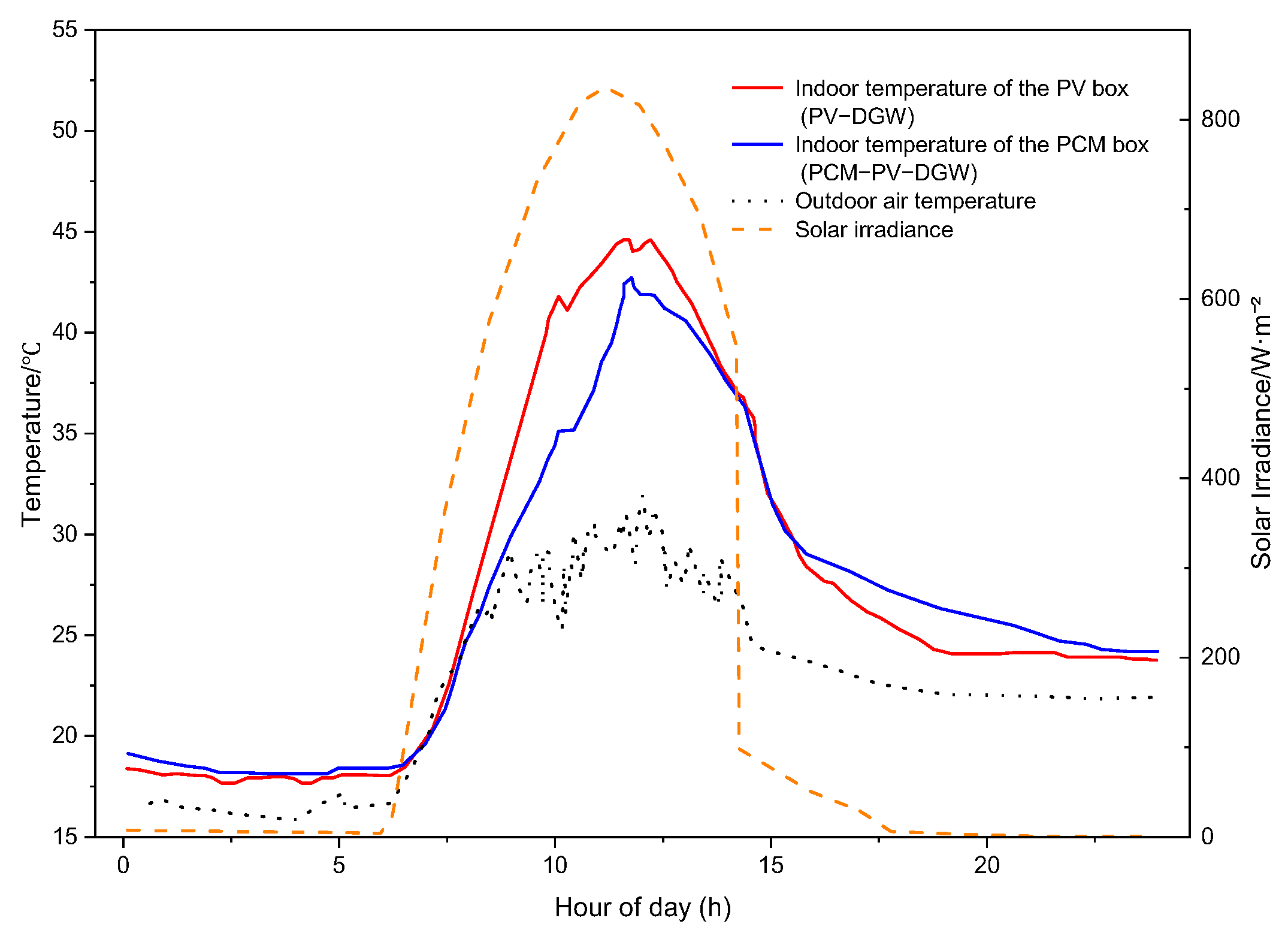
The model is solved using Fluent simulation software based on the finite volume method. The pressure–velocity coupling equation employs the SIMPLE algorithm, and radiation heat transfer is calculated using the DO model. In the iterative process, pressure is solved using the PRESTO! discretization scheme, while momentum, energy, and DO model equations all adopt second-order upwind discretization schemes. This study validates the model using the aforementioned experimental results. Figure 2 shows the outdoor ambient temperature, solar radiation intensity, and indoor temperature. The convective heat transfer coefficients on the inner and outer sides of the glass window are 19 W/m2·K and 8.9 W/m2·K, respectively (the convective heat transfer coefficients on the indoor and outdoor sides were set following ISO 15099 [32]). The ambient temperature and radiation heat are incorporated into the computational simulation through user-defined function (UDF) programming. Model assumptions included the following:
(1)
adiabatic surrounding walls.
(2)
isotropic materials with temperature-dependent properties.
(3)
linear property variation in molten PCM.
(4)
negligible volume expansion and scattering.
(5)
wavelength-independent optical properties.
(6)
solar radiation treated as volumetric source terms.
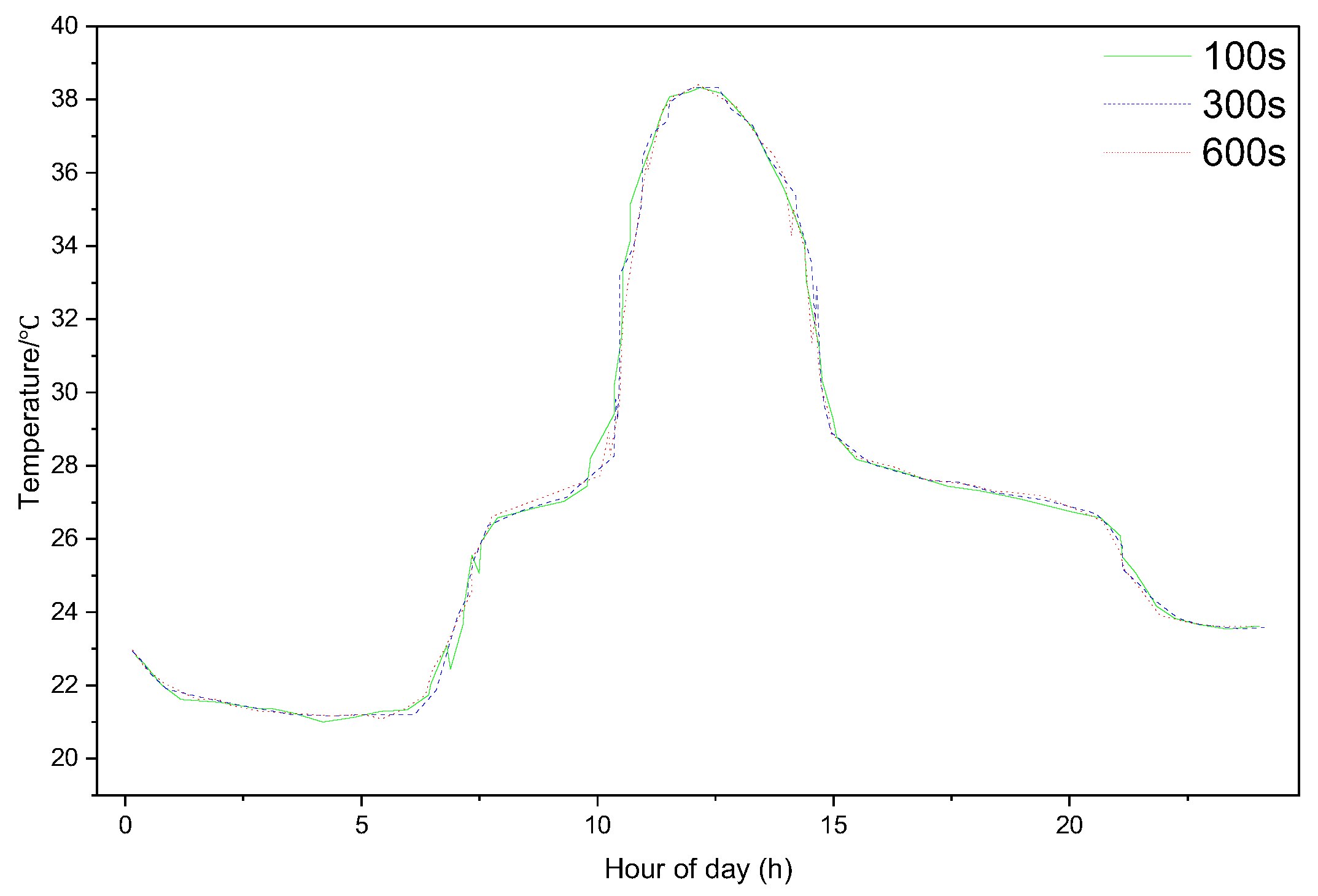
This paper selected three different time steps of 100 s, 300 s, and 600 s for calculation and comparison, with results shown in Figure 3. From Figure 3, it can be seen that selecting a time step of 300 s can both clearly describe the temporal variation trends of relevant parameters of the glass window system and effectively reduce the simulation workload, significantly shortening the required simulation time.
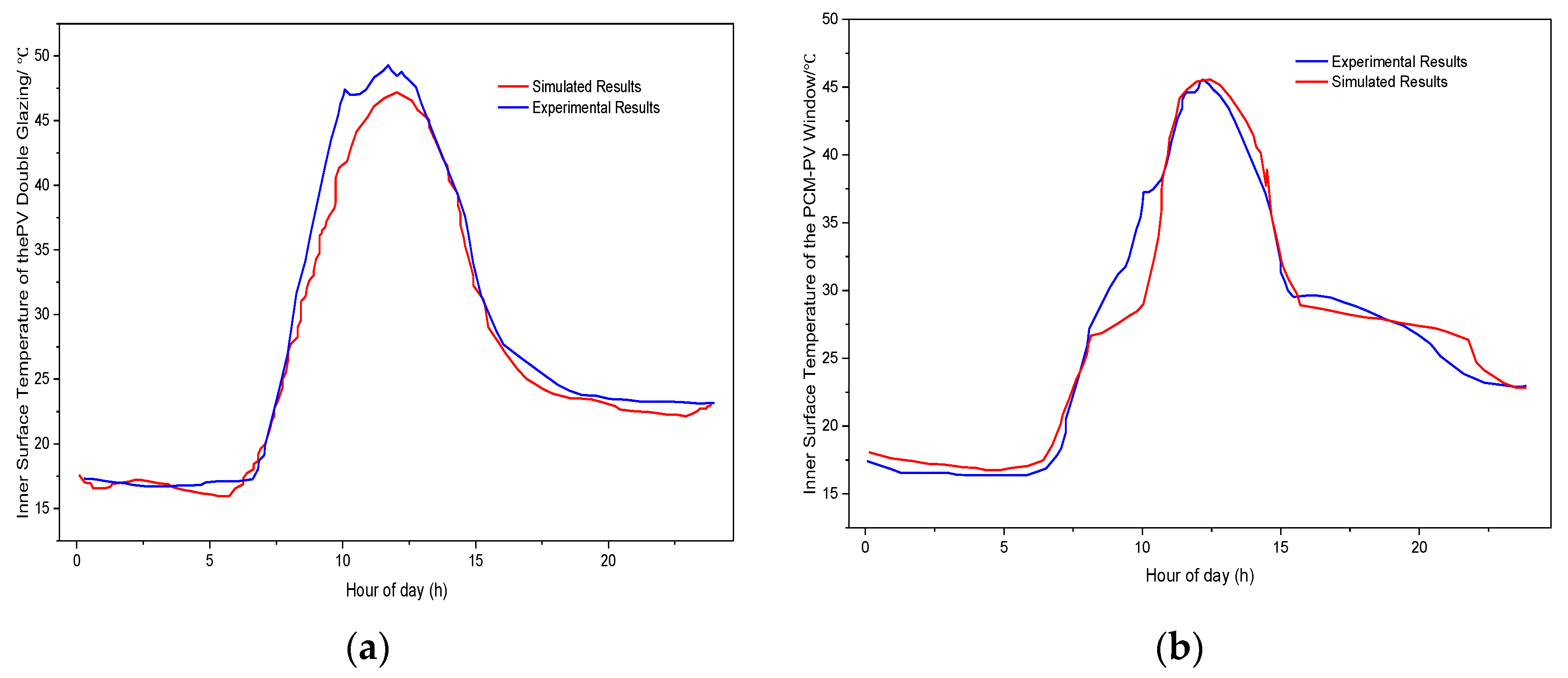
Figure 4 show comparisons between experimental data results and simulation data results. The degree of agreement between validation simulation results and experimental data is evaluated through the criterion of root mean square error (RMSE). Root mean square error is commonly used to assess the stability between calculated values and measured values, calculated by Equation (25):
R M S E = 1 n i = 1 n ( X i Y i ) 2
Through comparison with the experimental data, the RMSE values of the simulated inner-surface temperature are 1.54 °C (PV-DGW) and 1.804 °C (PCM-PV-DGW), with CV-RMSE < 15%, indicating reasonable agreement under the tested summer boundary conditions. Since the inner-surface temperature is the integrated outcome of radiative absorption/transmission, heat transfer, and PCM phase change, this agreement provides indirect support for the coupled optical–thermal model. Nevertheless, the present validation is temperature-based only; predictions of heat flux/SHGC, PCM liquid fraction, and PV electrical output remain uncertain and are therefore discussed mainly in a comparative (trend-level) sense. Given the relatively low PV conversion efficiency in this study, the electrical term is expected to have a limited impact on the overall heat transfer behavior.

3. Results and Discussion

3.1. Experimental Performance Comparison

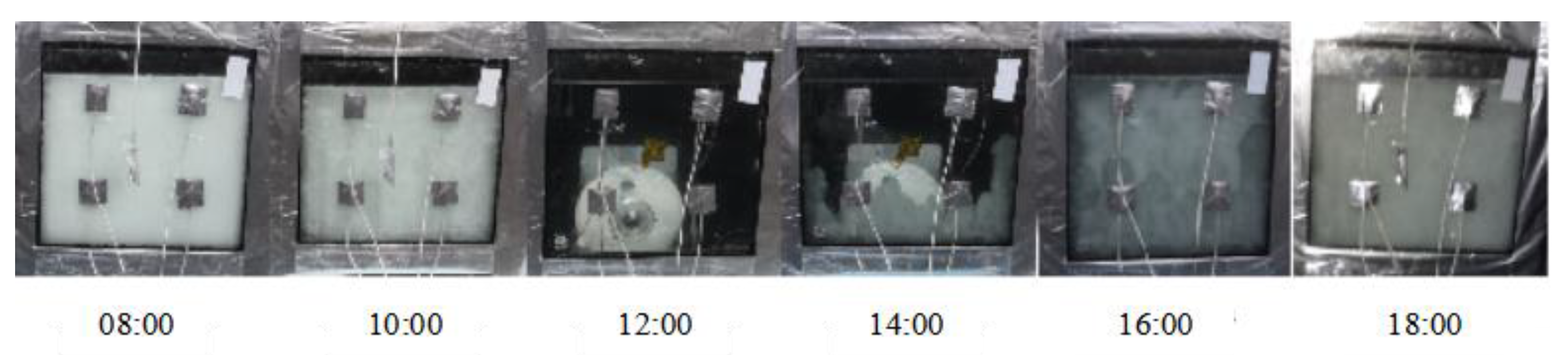
To investigate the photothermal performance changes in glass windows filled with phase change material paraffin, three sets of experimental boxes were selected for comparison: those with air-gap interlayers and those filled with paraffin demonstrating phase transition temperatures of 20 °C and 28 °C in double-glazed windows. The experimental weather conditions were selected as clear summer days without clouds, with 72 h of continuous monitoring conducted. Representative 24 h full-day data under typical summer climate conditions were selected for analysis. The paraffin phase change process in double-glazed windows with paraffin-filled interlayers under clear weather is shown in Figure 5. The paraffin filled in both types of phase change glass windows underwent a complete phase transition cycle.
To systematically evaluate the improvement effects of paraffin phase change material filling on the photothermal performance of different types of windows, this section focuses on analyzing 24 h measured data from a clear summer day without clouds comparing Double Glazing Window (DGW) with Phase Change Double Glazing Window (PCM-DGW) and Phase Change Photovoltaic Double Glazing Window of 28 °C (PCM-PV-DGW) with Photovoltaic Double Glazing Window (PV-DGW).
Figure 6 demonstrates that the comparison between PCM-DGW and DGW PCM filling significantly reduces the inner surface temperature of glass, with the peak temperature of phase change glass windows decreasing by 12.2 °C. As phase change materials undergo solidification and heat release after 18:00, the inner surface temperature only drops by 1.47 °C between 18:00 and 24:00, resulting in a smoother temperature curve. After installing phase change windows, the indoor air peak temperature decreases by 6.82 °C. The temperature decay factor is 0.66, with a peak time lag of 55 min. These findings indicate that PCM filling effectively lowers indoor temperatures while providing significant thermal storage, temperature regulation, and heat delay effects.
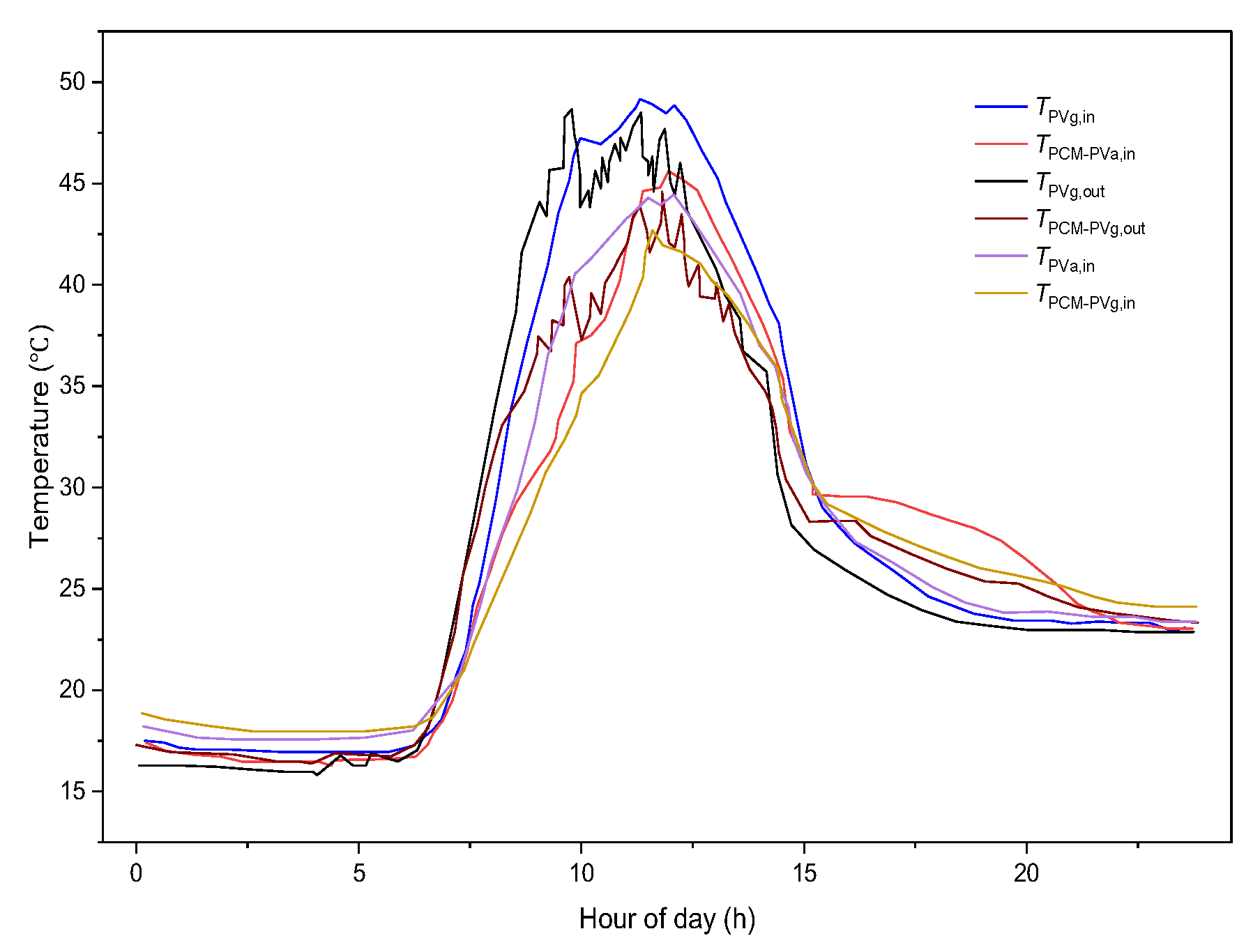
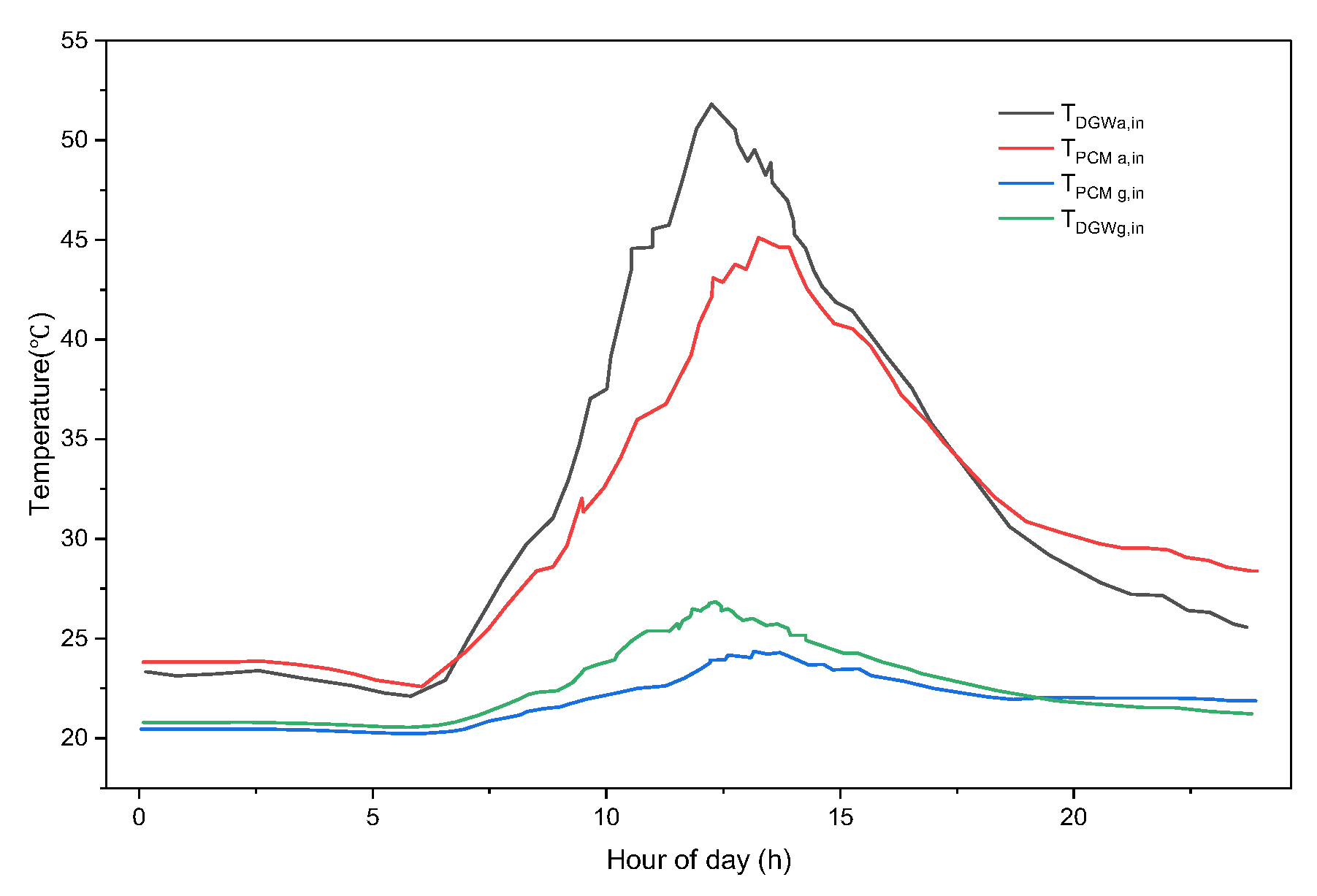
Additionally, filling with phase change material can effectively alleviate high-temperature attenuation. As shown in Figure 7, the peak temperature of the inner surface of the phase change photovoltaic window glass decreased by 3.58 °C, and the time to reach peak temperature was effectively delayed, with a temperature attenuation factor and temperature lag time of 0.904 and 35 min, respectively; at 11:20, the peak temperature of the outer surface of the hollow photovoltaic window glass was 48.36 °C, while the outer surface temperature of the phase change photovoltaic window glass decreased by 4.4 °C. During daytime when solar radiation is high and paraffin has not completely transformed into a liquid state, the phase change material absorbs the solar heat gain from the translucent photovoltaic glass on the outer side of the window through the phase change heat storage process, transferring the low-grade heat that could not be converted to electrical energy in the photovoltaic glass to the phase change material. Consequently, photovoltaic windows filled with paraffin can effectively smooth indoor temperature fluctuations. Compared to traditional translucent photovoltaic glass windows filled with air, after filling with phase change material, through phase change heat storage and release cycles, the peak temperature of the outer photovoltaic glass can be reduced, power generation components can be protected, indoor temperature can be lowered, and indoor temperature fluctuations can be smoothed.
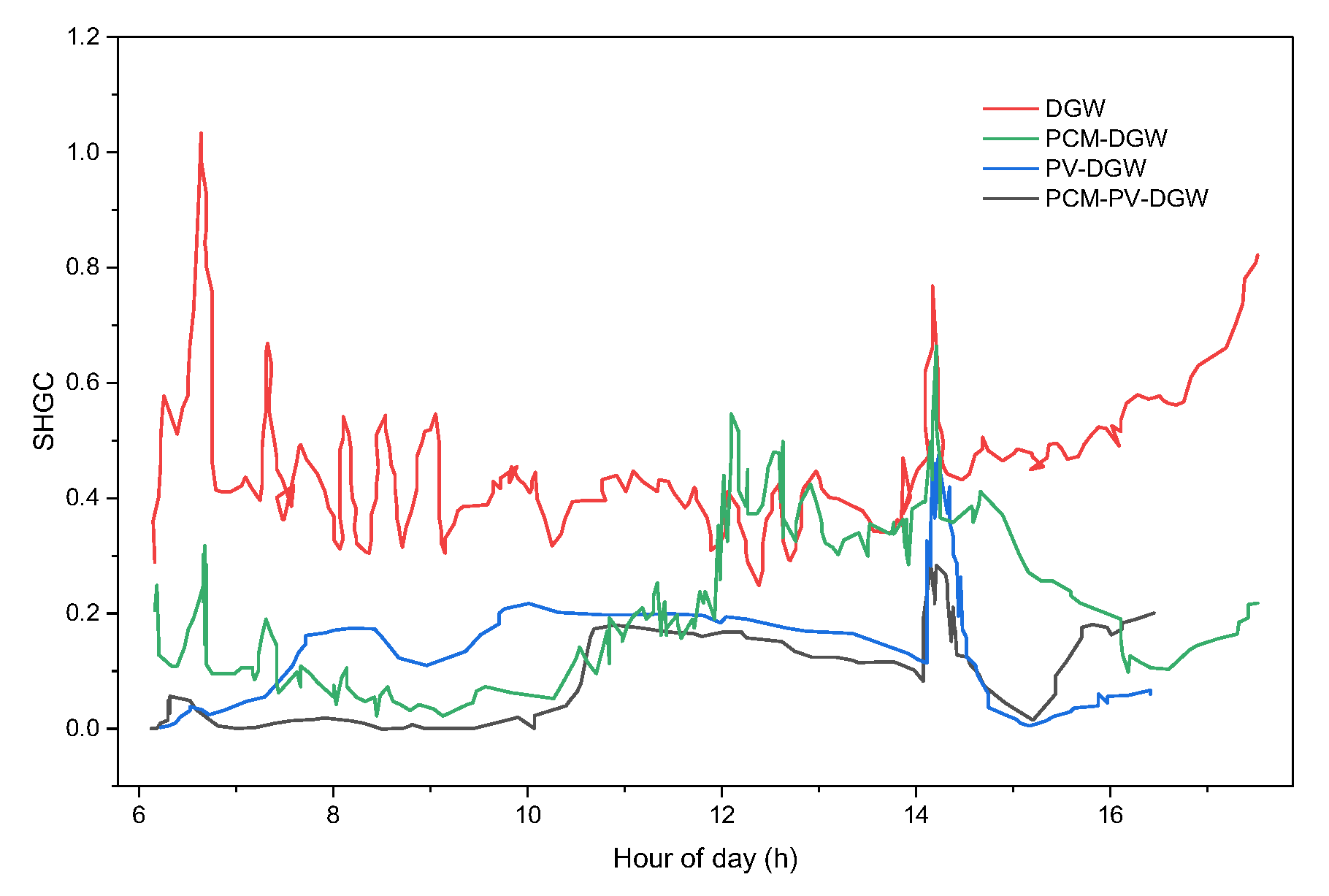
PCM-PV-DGW demonstrated powerful adaptive solar radiation regulation capability, as shown in Figure 8. It can be seen that before phase change, most (>90%) solar radiation heat cannot enter the room. As time progresses, after the paraffin completes phase change, the transmittance of liquid paraffin approaches that of air, and the solar radiation heat gain received by hollow photovoltaic windows and phase change photovoltaic windows becomes similar (>80%), with SHGC values approaching each other. After filling with paraffin that demonstrates a phase change temperature of 28 °C, the daily average SHGC value of the double-layer phase change window is 0.105, significantly lower than the 0.180 of the hollow photovoltaic window, demonstrating better capability to block solar radiation. The photovoltaic double-layer window filled with phase change material possesses excellent dynamic solar radiation regulation capability. The PCM-PV double glazing window exhibits time-dependent solar heat gain regulation. During the solid and melting stages, the PCM provides strong attenuation due to latent heat storage and higher optical extinction (solid PCM), while after complete melting the transmitted component can increase. Nevertheless, under the tested summer day, the daily average SHGC of PCM-PV-DGW remains substantially lower than that of PV-DGW.
The significant fluctuations observed in the experimental curves in Figure 7 and Figure 8 are primarily due to outdoor boundary-condition variability (short-term changes in solar irradiance and wind-driven convection) and measurement uncertainty/response (Table 3). Because the instantaneous SHGC can amplify these disturbances, especially during rapid irradiance variations, we therefore emphasize overall trends and the daily average SHGC in Table 6.
To comprehensively evaluate the improvement effects of PCM on different window types, the key performance indicators of the four window types on a typical summer day are compared in Table 6. The comparisons were conducted between DGW and PCM-DGW, PV-DGW and PCM-PV-DGW, and PCM-DGW and PV-PCM-DGW. PCM filling provided strong thermal buffering (SHGC fall by 42.5%, tMAX fall by 12.2 °C, φ = 55 min), while PV integration achieved superior solar control (SHGC fall by 53.6%) with electricity generation. The coupled system (PCM-PV-DGW) demonstrated synergistic performance: SHGC of 0.105 (72.9% reduction versus DGW) with maintained thermal regulation capability (f = 0.904, φ = 35 min), exceeding individual technologies.
Regarding the impact of phase change materials (PCM) on system electrical properties, despite significant annual fluctuations in glass temperature, overall power generation efficiency showed no significant monthly variations and exhibited minimal temperature correlation. Instantaneous power output and energy production also failed to achieve substantial improvements. This phenomenon may be attributed to the low power temperature coefficient (−0.214%/°C) of CdTe materials in test glass, which contrasts markedly with the −0.40 to −0.50%/°C range observed in crystalline silicon materials, highlighting CdTe’s superior thermal stability. The experimental samples used in this article are similar to those employed in previous studies. Similar observations were previously documented in our research (Xu et al., Performance evaluation of building-integrated photovoltaic windows with triple-glazing: summer assessment in cold climate [33].).

3.2. Simulation Result Analysis

On the basis of validating the model’s effectiveness through experiments, CFD simulation software was employed to conduct single-factor parametric analysis. The influence laws of four key parameters—filling layer thickness, phase change temperature, phase change latent heat, and photovoltaic cell coverage—on the photothermal performance of phase change photovoltaic windows were explored. The regulation effects and appropriate ranges of each parameter were determined, providing a comparative basis for preliminary design exploration of PCM–PV windows.
(1)
Effect of PCM Thickness
For traditional double-layer glass windows coupled with phase change materials, the thickness of the phase change material layer has a significant impact on the thermal performance of the phase change window system.
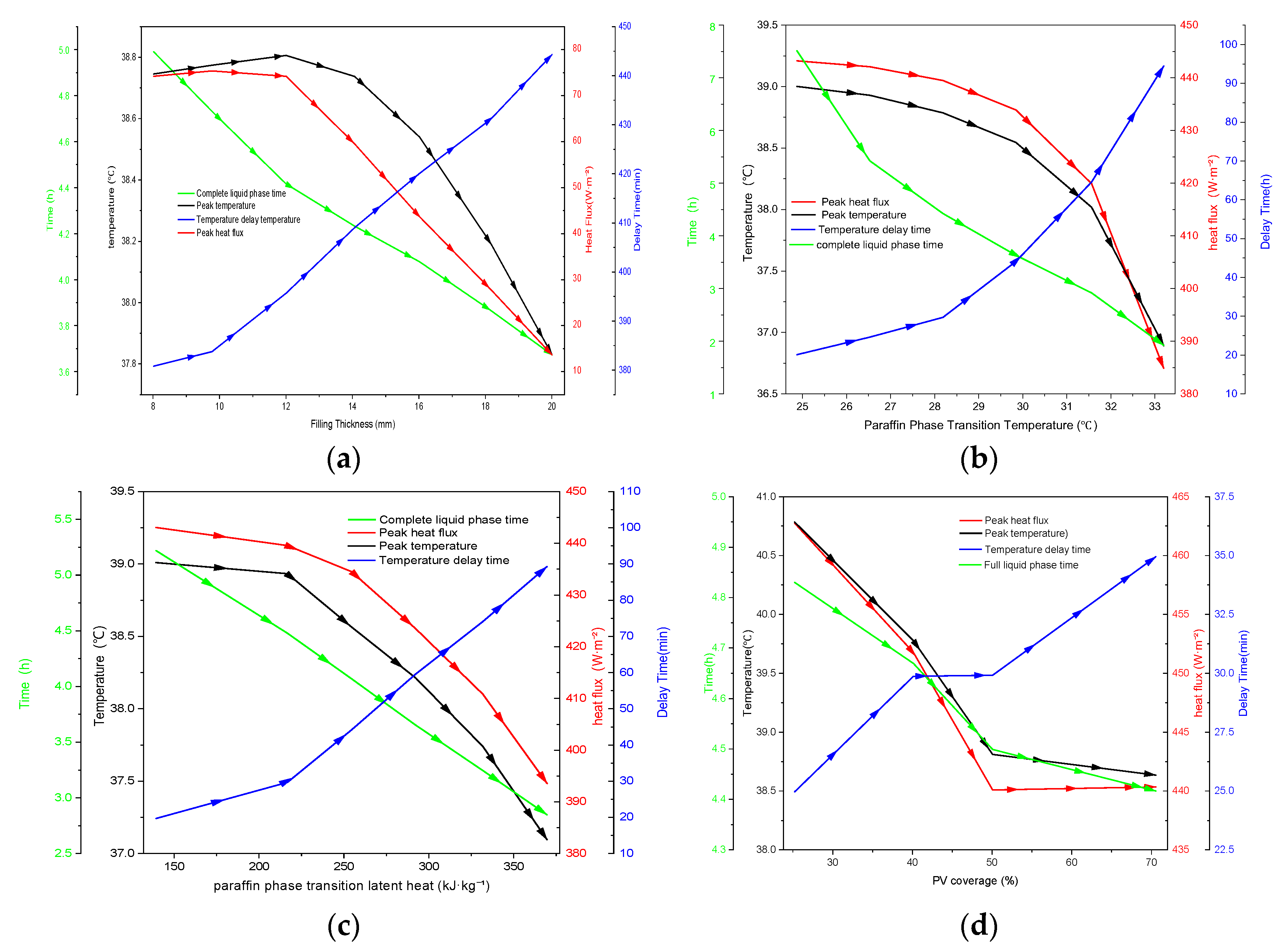
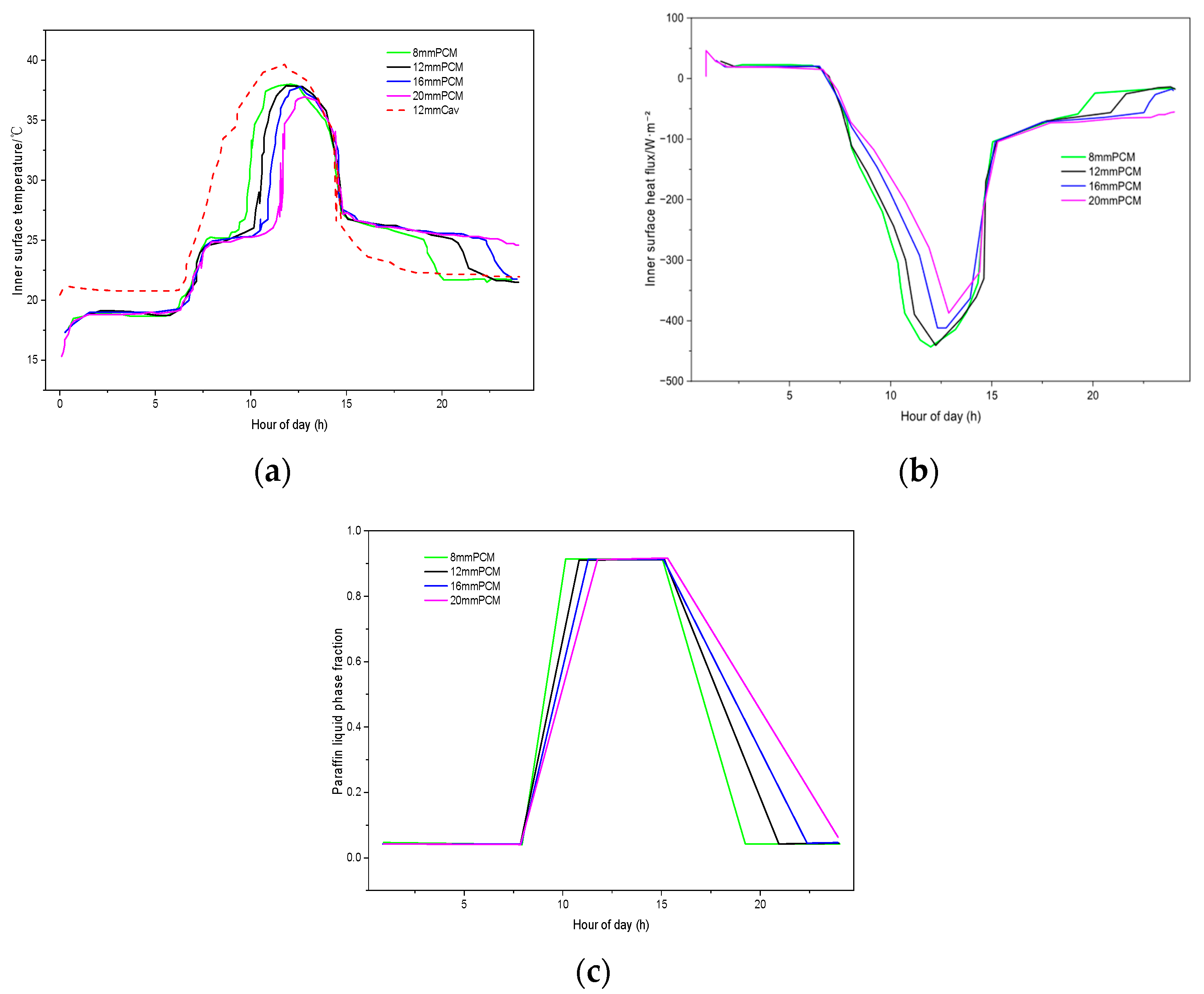
Figure 9a shows that phase change photovoltaic windows with different filling layer thicknesses have significant effects on the peak temperature of the inner surface of the building envelope. To study their impact on the thermal performance of the window system, quantitative analysis was conducted, and the relevant data for inner surface temperature are shown in Table 7. From the experimental results, it can be seen that when the filling layer thickness exceeds 12 mm, the glass peak temperature decreases with increasing thickness, reaching a reduction of 2.6% at 20 mm thickness, down to 37.83 °C. As the filling layer thickens, the time to reach peak temperature on the glass inner surface also extends. At 20 mm thickness, the heat release time can extend until 12 PM at night. Compared to hollow photovoltaic windows, the temperature delay times for 8–20 mm thick paraffin filling are 15–80 min, respectively, with temperature attenuation factors of 0.923–0.854. In summary, increasing the filling layer thickness improves the thermal performance of phase change photovoltaic windows to a certain extent.
As shown in Figure 9b, which displays the time-varying curves of heat flux on the inner side of windows with different paraffin layer thicknesses, it can be seen that as thickness increases from 8 mm to 20 mm, the peak heat flux density decreases by 57.42 W/m2. Figure 9c shows the variation in liquid phase fraction of the phase change material paraffin. From the figure, it can be observed that increasing thickness delays the rise rate of liquid phase fraction and extends the heat storage time.
As shown in Table 8, for filling layer thickness variations within a range of 4 mm increments, the timing of peak heat flux remains unchanged. It was also found that the peak heat flux for 8 mm filling layer thickness compared to 12 mm filling layer thickness is 440.55 W/m2 and 439.97 W/m2, respectively. When increasing from 16 mm to 20 mm, the peak heat flux decreases by 7.0%. The results indicate that changing the window filling layer thickness has a relatively small impact on the thermal performance of phase change windows but can significantly affect the material consumption of phase change material paraffin. For the adaptive regulation capability of photothermal performance in phase change windows, parameters such as the amount of phase change material need to be reasonably calculated to maintain regulation capability during reasonable daytime periods rather than complete liquefaction in order to achieve enhanced window thermal performance effects.
(2)
Effect of Phase Transition Temperature
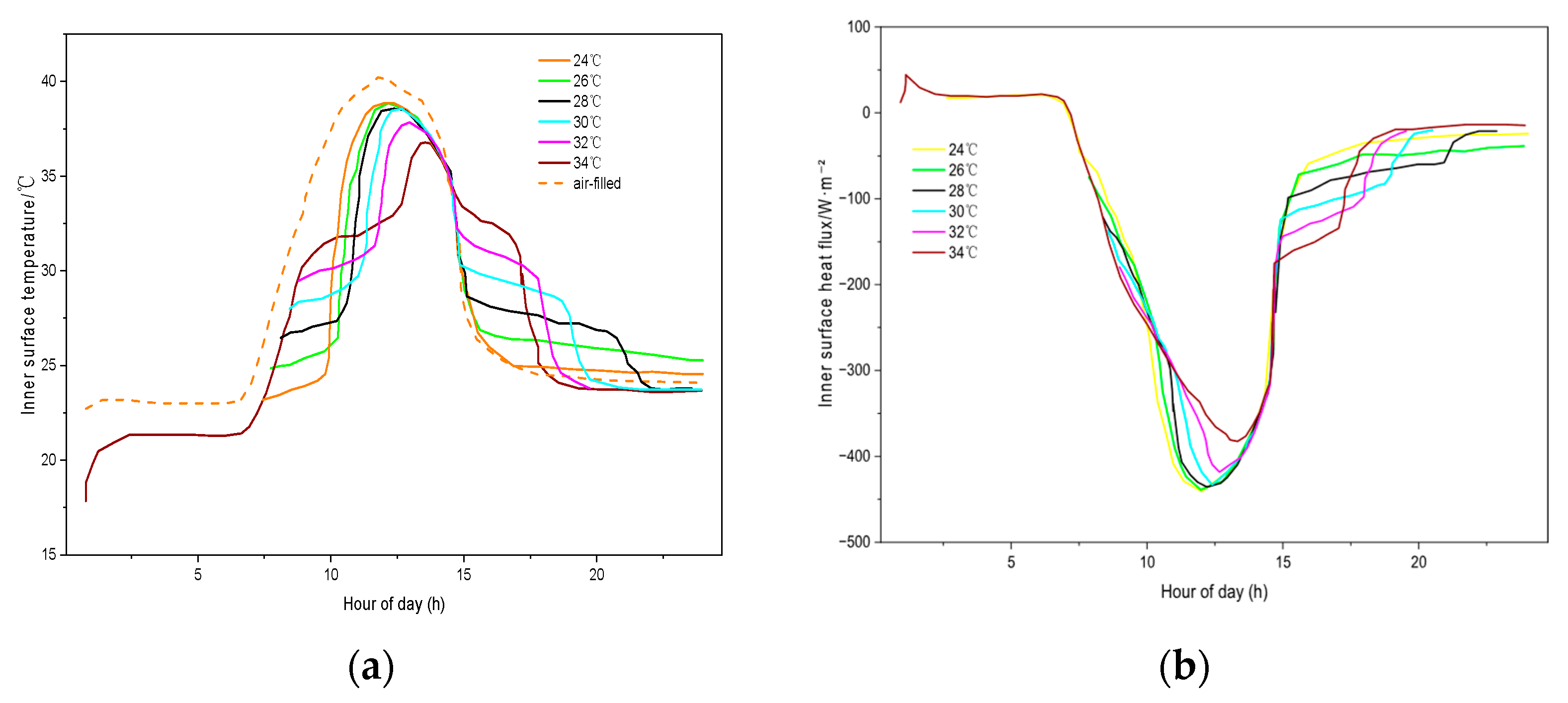
This study focused on the phase change temperature of paraffin as the phase change material. Based on the original phase change temperature of 28 °C, five variables were designed at 24 °C, 26 °C, 30 °C, 32 °C, and 34 °C without changing other conditions. This study analyzed the impact of changing only the phase change temperature on the thermal performance of phase change photovoltaic windows under the same outdoor conditions. Table 9 demonstrates that altering the latent heat of phase transition in paraffin filling layers can modify the thermal properties of phase change materials.
Figure 10a shows the time-varying curves of glass inner surface temperature under different phase change temperature conditions. From the figure, it can be seen that under different phase change temperature conditions, the window glass inner surface experiences the process of daytime liquefaction heat absorption, complete liquefaction, afternoon solidification heat release, and nighttime complete solidification. When the phase change temperature is 24 °C, the glass inner surface temperature is smooth with the highest peak temperature, and nighttime temperature maintains good balance. When the phase change temperature rises from 28 °C to 34 °C, the inner surface peak temperature decreases by 1.93 °C. This is because lower phase change temperature causes paraffin to melt earlier, reducing scattering ability and allowing more heat to enter the room. Data analysis shows that as phase change temperature increases (24–34 °C), the temperature attenuation factor decreases from 0.934 to 0.825, peak temperature decreases from 39.00 °C to 36.89 °C, and temperature delay time extends from 20 min to 95 min. Therefore, reasonable selection of phase change temperature is beneficial for enhancing window thermal performance and thermal inertia, provided that the phase change material completes its working cycle.
From Figure 10b, it can be seen that excessively high phase change temperature (34 °C) significantly reduces the duration of paraffin liquid state to only 1.67 h and may even prevent complete liquefaction. Excessively low phase change temperature causes paraffin to fail to completely solidify at night, affecting the thermal regulation performance of the phase change window the next day. For the cold region of Qingdao, the suitable phase change temperature should be controlled between 28 and 32 °C, which can ensure that paraffin completes the phase change cycle and guarantees working efficiency. The variation in Tm (phase transition temperature) primarily affects the phase transition onset time of PCM and the optical extinction difference between solid and liquid states, which significantly alters the temperature hysteresis and attenuation. However, since the PCM thickness and latent heat capacity remain constant, and the system’s peak temperature is still predominantly controlled by the irradiation peak and overall heat transfer path, the difference in internal surface peak temperatures under different Tm conditions is relatively limited.
(3)
Effect of Latent Heat Capacity
To study the impact of phase change latent heat of paraffin on the new glass system, this study designed five different phase change latent heat values for paraffin based on the original phase change latent heat (Q = 205 kJ/kg): 0.5Q = 102.5 kJ/kg, 1.25Q = 256.25 kJ/kg, 1.5Q = 307.5 kJ/kg, 1.75Q = 358.75 kJ/kg, and 2Q = 410 kJ/kg. Simulation comparative analysis was conducted with all other conditions remaining unchanged.
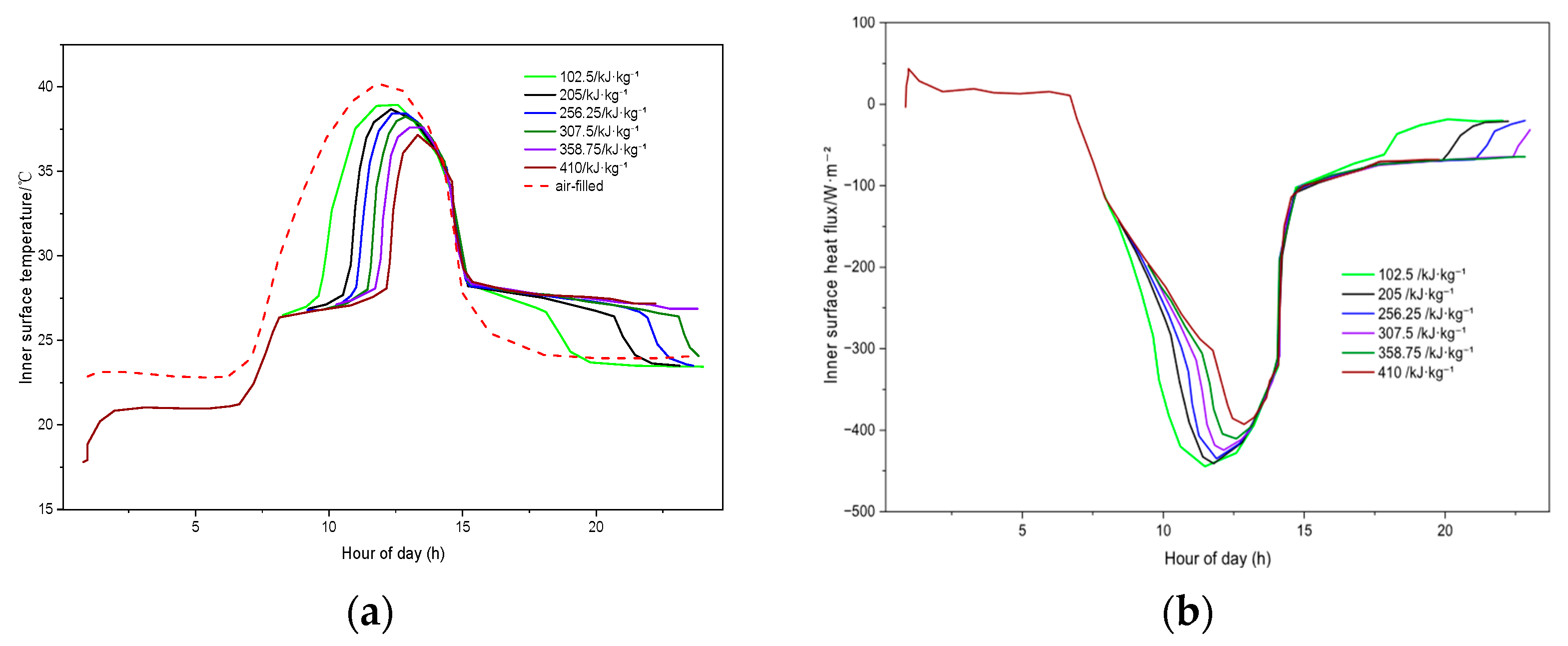
As shown in Figure 11, as the phase change latent heat increases from 0.5Q to 2Q, the peak temperature of the glass inner surface decreases from 39.92 °C to 37.11 °C, with smoother temperature fluctuations. Increasing phase change latent heat can significantly absorb more outdoor heat and reduce the amount of heat entering the room. However, excessively high phase change latent heat (>1.75Q, i.e., 358.75 kJ/kg) will prevent paraffin from completely solidifying at 24:00, failing to complete an effective phase change cycle. The increase in phase change latent heat mainly affects the growth slope of the liquid phase fraction but cannot advance or delay the timing of phase change occurrence. Therefore, both phase change temperature and phase change latent heat parameters need to be adjusted simultaneously to optimize the working effect of paraffin in a daily cycle and improve the photothermal performance of the phase change photovoltaic window.
As shown in Table 10, changing the phase change latent heat of paraffin in the filling layer can significantly alter the thermal performance of the phase change material. For the assessment of photothermal adaptive regulation capability of windows with six different phase change latent heat values of paraffin, it can be seen that when the phase change latent heat values are 0.5Q = 102.5 kJ/kg, 1.25Q = 256.25 kJ/kg, 1.5Q = 307.5 kJ/kg, 1.75Q = 358.75 kJ/kg, and 2Q = 410 kJ/kg, the corresponding temperature attenuation factors are 0.935, 0.931, 0.912, 0.894, 0.868, and 0.836, respectively, and the temperature delay times are 20 min, 30 min, 45 min, 60 min, 75 min, and 90 min, respectively.
Through comparison from paraffin’s phase change latent heat of 1Q = 205 kJ/kg to 2Q = 410 kJ/kg, the thermal performance of phase change photovoltaic windows, including peak temperature, temperature delay time, temperature delay factor, and peak heat flux temperature, all show proportional changes.
(4)
Effect of PV Coverage Ratio
For phase change photovoltaic windows, selecting appropriate translucent photovoltaic cell coverage can ensure stable photovoltaic operation while enhancing the heat transfer performance of the window. Based on the original translucent photovoltaic cell coverage (coverage rate of 50%), this study designed simulation comparative analysis of phase change photovoltaic glass windows with three different coverage rates.
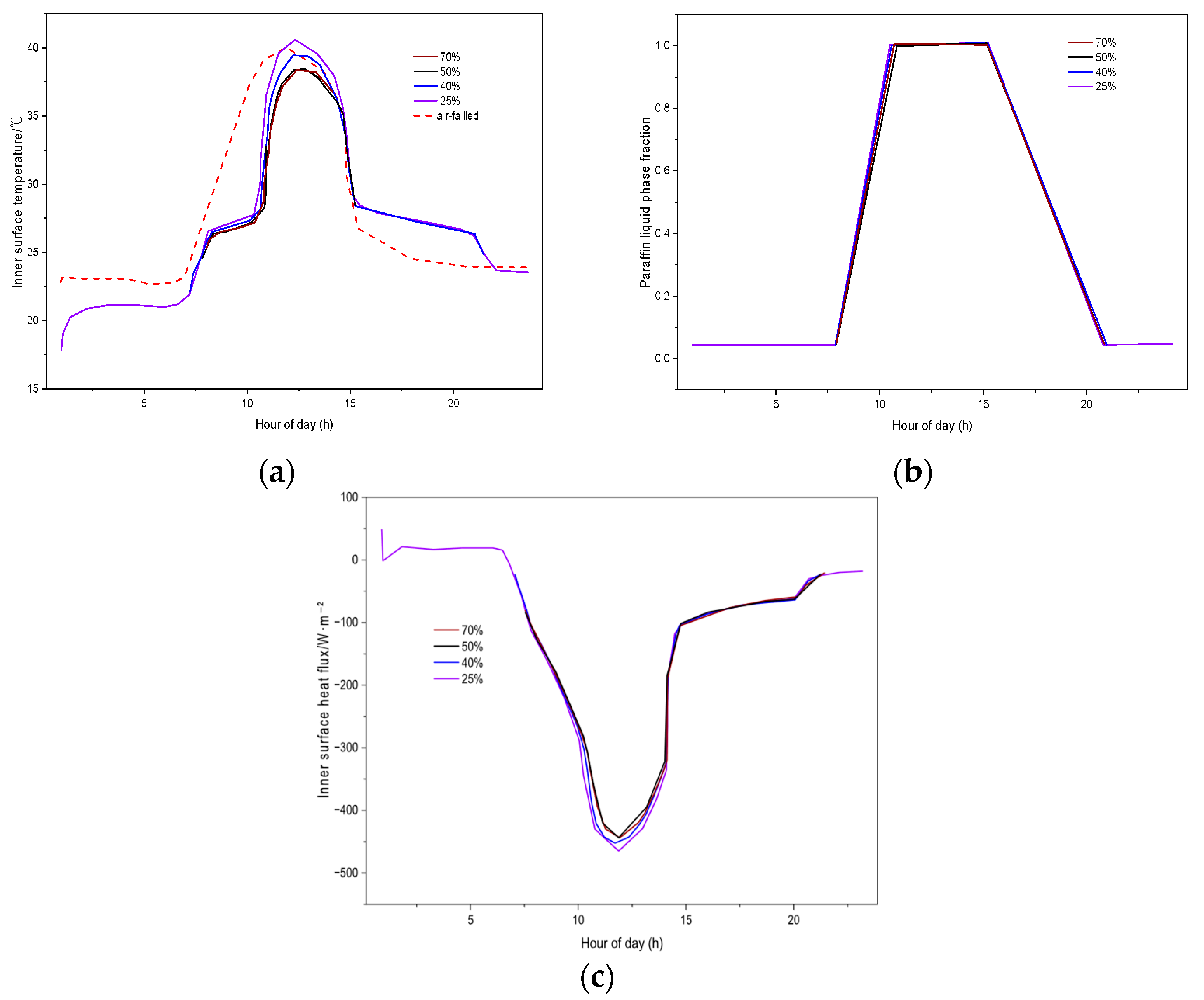
As shown in Figure 12a, under low solar radiation intensity conditions, before 6:00 and after 15:00, changes in photovoltaic coverage have no obvious effect on glass inner surface temperature. This is because photovoltaic glass requires solar radiation to operate, and photovoltaic coverage regulates the power generation and shading behavior of photovoltaic glass. Meanwhile, under four different coverage conditions, high transmittance significantly increases glass inner surface temperature. When transmittance is within the 25–50% range, the increase in photovoltaic coverage has a significant effect on reducing inner surface temperature, with a decrease of 1.97 °C. When coverage is within the 50–70% range, changes in glass inner surface temperature are not obvious. Therefore, when pursuing optimal thermal performance in photovoltaic phase change windows, transmittance can be appropriately controlled within the range of around 50% to achieve higher power generation efficiency.
As shown in Table 11, when the photovoltaic coverage is 25%, the inner surface temperature of the photovoltaic phase change window even exceeds the peak temperature of the photovoltaic double-layer window (air cavity). The reason for this is that the photovoltaic air cavity double-layer window has a photovoltaic cell coverage of 50%, which can effectively reduce the heat entering the room and the inner glass. Meanwhile, air has low thermal conductivity, so the air cavity provides good thermal insulation performance, while the thermal conductivity of paraffin as a phase change material is stronger than air. The 25% transmittance photovoltaic coverage is extremely low, very close to normal transparent glass (i.e., ordinary single glass (6 mm) with an absorption rate of 0.14). Under this condition, the photovoltaic phase change window is more similar to an ordinary double-layer phase change window. Therefore, excessively low coverage will reduce window thermal performance, even resulting in poorer thermal performance than photovoltaic windows filled with air.
For phase change windows with photovoltaic cell coverages of 40%, 50%, and 70%, their peak temperatures are 39.78, 38.82, and 38.64 °C, respectively; temperature delay times are 30 min, 30 min, and 35 min, respectively, with temperature attenuation factors of 0.975, 0.931, and 0.915. It can be seen that photovoltaic coverage does not provide relatively significant improvement in thermal inertia aspects, namely temperature lag time, of phase change windows, but can effectively reduce peak temperature. Meanwhile, as shown in Figure 12b, under three coverage conditions (70%, 50%, and 40%), the liquid phase fraction curves of paraffin are very similar, with little variation in liquid phase maintenance time. Therefore, in regions with high daytime solar radiation and relatively high temperatures, photovoltaic cell coverage can be increased to achieve more power generation on one hand and enhance the thermal performance of glass building envelope on the other hand.
From Table 11, it can be seen that gradually increasing photovoltaic cell coverage cannot proportionally enhance window photothermal adaptive regulation characteristics, and its impact decreases as coverage increases. Therefore, selecting photovoltaic cell coverage within a reasonable range according to actual outdoor and regional climate conditions can effectively utilize the adaptive regulation capability of photovoltaic phase change windows and the power generation efficiency of photovoltaics.

3.3. Sensitivity Analysis

To quantitatively evaluate the relative importance of design parameters on PCM-PV window performance, sensitivity analysis was conducted using the controlled variable method. The sensitivity coefficient (SA) is calculated by Equation (26):
S A i = f m a x ( x i ) f m i n ( x i ) j = 1 n f m a x ( x j ) f m i n ( x j ) × 100 %
where
  • xi, xj represent independent variables;
  • fmax represents the maximum value of the target variable;
  • fmin represents the minimum value of the target variable.
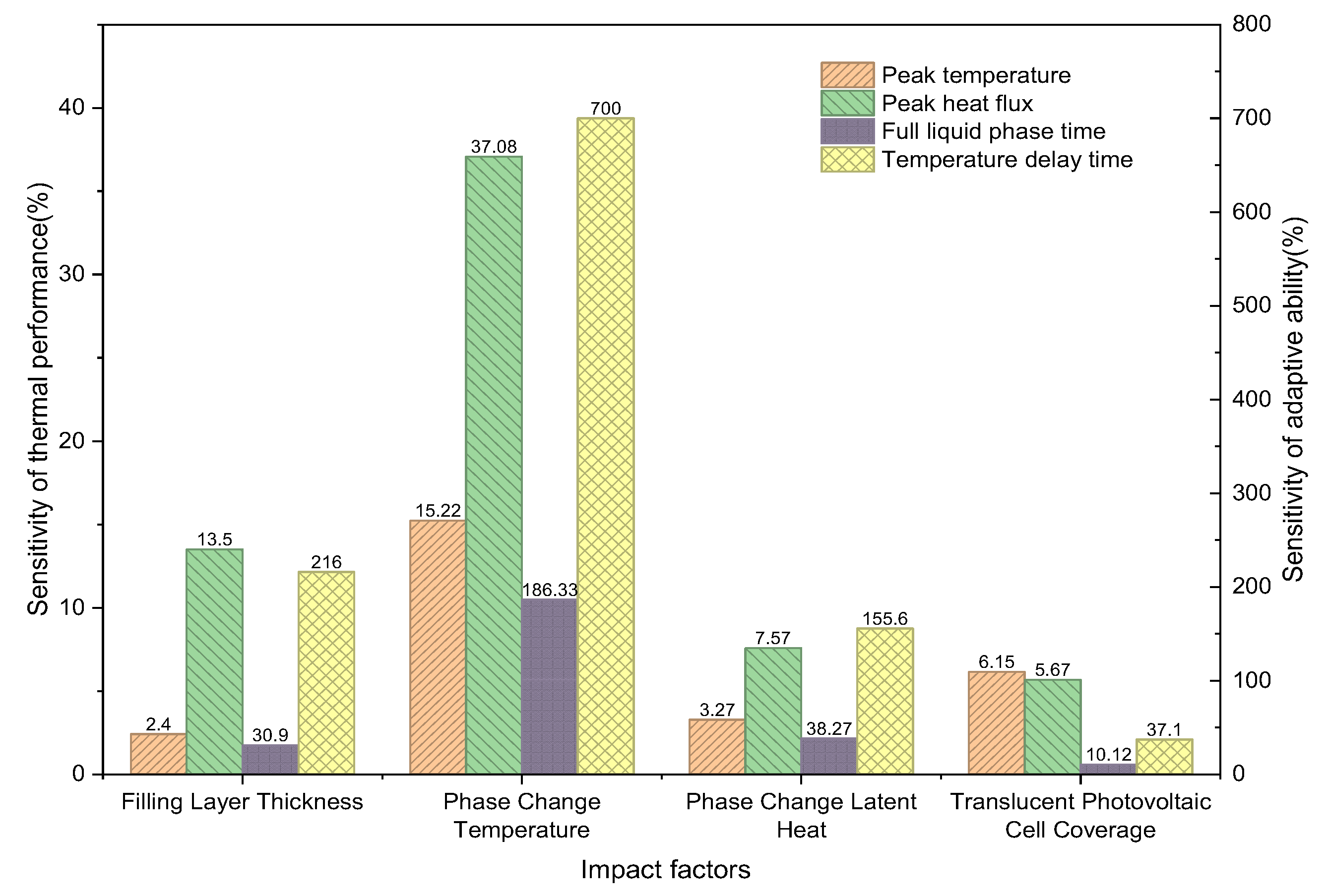
Figure 13 presents the comprehensive parametric analysis of four key design parameters on thermal performance indicators. As shown in Figure 13a–d, phase transition temperature demonstrates the most significant influence across all performance metrics, followed by PCM thickness and latent heat capacity, while PV coverage shows relatively limited effects on thermal regulation. Figure 14 quantifies the sensitivity coefficients of each parameter. For thermal performance regulation (peak heat flux and temperature), phase transition temperature exhibits the highest sensitivity at 37.08% and 15.22%, respectively. PCM thickness ranks second with 13.05% sensitivity to peak heat flux, while PV coverage shows minimal impact (6.15% for peak temperature). For adaptive regulation capability (temperature delay time and melting duration), phase transition temperature demonstrates exceptional sensitivity (700%), significantly outperforming other parameters. This indicates that adaptive regulation primarily depends on the PCM phase change cycle rather than window shading performance. Notably, increasing PCM thickness from 12 mm to 20 mm results in 66.7% material volume increase but only 12.92% improvement in peak heat flux reduction, suggesting that adjusting phase transition temperature is more efficient than increasing thickness for performance optimization. Figure 13d demonstrates that peak heat flux remains constant when photovoltaic coverage reaches ≥ 50%, as shading effects at this coverage level have essentially saturated. Further increases in coverage no longer significantly reduce solar radiation transmission but instead cause the photovoltaic layer to absorb more energy, generating waste heat that intensifies internal heat transfer. This thermal compensation offsets the benefits of additional shading. Concurrently, the latent heat buffering capacity of the phase change material (PCM) layer predominates, neutralizing minor variations in radiation input caused by high coverage. Consequently, peak heat flux stabilizes without fluctuating with increasing photovoltaic coverage.
Figure 14 is provided to quantify the relative influence of PCM thickness, PCM phase-transition temperature, PCM latent heat, and PV coverage on PCM-PV window performance, thereby supporting the optimization conclusions. The sensitivity coefficients are calculated using Equation (26) with a one-at-a-time approach, varying one parameter within the investigated ranges (thickness 8–20 mm, transition temperature 24–34 °C, latent heat 102.5–410 kJ/kg, PV coverage 25–70%) while keeping the others at the baseline values (12 mm, 28 °C, 205 kJ/kg, 50%). The high sensitivity reported for the delay time (e.g., 700%) reflects the strong dependence of the phase change cycle on the transition temperature under the present boundary conditions and the normalization in Equation (26), rather than an absolute change of the same magnitude.
As shown in Figure 14, the sensitivity analysis reveals that phase transition temperature (28–32 °C) is the most critical parameter for PCM-PV window optimization in cold climate regions, while an appropriate combination of PCM thickness (12 mm) and PV coverage (50%) can achieve optimal balance between thermal regulation and power generation efficiency.

3.4. Uncertainty and Limitations

The uncertainties in this study primarily stem from fluctuations in outdoor boundary conditions and measurement instrument errors. The irradiance meters precision (±3%) and the thermal flux meters adhesion/responsiveness may affect instantaneous heat flux and SHGC. Therefore, this paper quantitatively compares daily average SHGC (Table 6) and employs multi-index cross-validation. Regarding the model, the outdoor convective heat transfer coefficient uses standard values (without explicit consideration of wind speed variability), while PCM physical properties and optical parameters exhibit discreteness and temperature dependence, potentially introducing biases. Despite these uncertainties, the performance differences among various window types are significantly greater than the error magnitude. The experimental simulation comparison shows an RMSE of 1.541.80 °C, supporting the main conclusions about performance improvement and the ranking of key parameter impacts. Given the relatively low PV conversion efficiency in this study, the electrical term has a limited influence on the overall heat transfer behavior and is treated as secondary factor.

3.4.1. Fire Safety and Practical Implementation Considerations

Fire safety is a key practical concern for façade applications of paraffin-based PCMs, especially when integrated with PV glazing and electrical components. Paraffin is combustible, and leakage under overheating or mechanical failure may increase the fire load, while PV modules and associated wiring/junction boxes can introduce fault-related ignition risks (e.g., overheating or arcing).
This study focuses on summer photothermal performance and does not include dedicated fire tests or certification; therefore, the results should not be interpreted as evidence of fire safety compliance. Practical deployment should follow relevant building fire and PV electrical standards, with fire risk assessed at both component and façade-system levels.
Potential mitigation strategies include robust, leak-proof PCM encapsulation; fire-resistant barriers and compartmentalized fire-stopping details to limit flame spread; selection of flame-retardant or low-flammability PCMs; and improved PV electrical safety (insulation, grounding, overcurrent/overtemperature protection, and hot-spot prevention). Future work will evaluate fire performance and validate safety-oriented designs for PCM–PV window applications.

3.4.2. Limitations: Seasonal SHGC Trade-Off

The proposed PCM–PV glazing is designed to provide strong solar heat-gain reduction and thermal buffering under summer conditions. This is confirmed by the measured daily average SHGC reduction (PCM-PV-DGW: 0.105 vs. PV-DGW: 0.180 and DGW: 0.388) and by the observed temperature attenuation and peak-delay effects. However, such a low and time-dependent SHGC may not be fully aligned with “optimal” seasonal management of solar radiation in heating-dominated periods. In winter or colder seasons, beneficial solar gains can contribute to space-heating demand reduction; therefore, an excessively low SHGC may reduce passive gains and potentially increase heating energy use, depending on climate, orientation, setpoint, and internal gains. Moreover, the PCM phase change cycle and its optical/thermal response may differ when outdoor temperatures and irradiance are lower, which could further modify the net seasonal benefit. Consequently, while the present results demonstrate clear advantages for summer overheating mitigation in Qingdao, a full-year performance assessment (energy, comfort and daylighting) and/or seasonally adaptive design/operation (e.g., tunable PV coverage, switchable shading, or PCM selection tailored to the dominant season) are required to ensure optimal seasonal solar management.


4. Conclusions

This study investigated PCM-PV double glazing windows through outdoor experiments in Qingdao and validated numerical simulations. Key findings include the following:
(1)
Outdoor experiments confirmed the synergistic performance of PCM-PV coupling. The integrated window (PCM-PV-DGW) achieved SHGC of 0.105, representing 73% and 42% reductions compared to baseline (DGW) and PV-only (PV-DGW) configurations, respectively. PCM integration reduced peak inner surface temperature by 3.6 °C, extended thermal delay to 35 min, and achieved an attenuation factor of 0.904. The synergy arises from complementary mechanisms: PV glazing blocks solar radiation through photoelectric conversion while PCM provides thermal buffering via latent heat storage, collectively enabling superior photothermal adaptive regulation exceeding individual technologies.
(2)
A two-dimensional transient heat transfer model incorporating radiative transfer through semi-transparent layers using spectrally averaged effective optical properties; enthalpy-based phase change modeling with temperature-dependent thermophysical properties; conjugate heat transfer at glass-PCM-air interfaces; and PV electrothermal coupling considering temperature-dependent efficiency degradation. Model predictions showed good agreement with experimental measurements (RMSE = 1.54–1.80 °C, CV − RMSE < 15%), validating its reliability for parametric investigations.
(3)
Parametric studies revealed critical design principles. PCM thickness beyond 12 mm yields diminishing returns due to incomplete phase cycling. Phase transition temperature (Tm) exhibits the strongest influence—an optimal range of 28–32 °C ensures complete melting/solidification cycles in Qingdao’s climate while maximizing thermal buffering. Excessive latent heat (>358.75 kJ/kg) compromises daily regeneration, while PV coverage below 40% undermines shading effectiveness. The synergistic performance depends primarily on proper phase change cycling rather than individual component properties.
(4)
Phase transition temperature is the most critical parameter (sensitivity: 37.08% for peak heat flux, 700% for delay time), followed by PCM thickness (13.05%), latent heat (9.87%), and PV coverage (6.15%). For the Qingdao summer scenario, a practical preliminary set is Tm = 28–32 °C, thickness = 12 mm, latent heat ≈ 300 kJ/kg, PV coverage = 50%.
(5)
While the PCM–PV glazing shows strong summer solar-gain control, the resulting low and time-dependent SHGC may not be fully consistent with optimal seasonal solar management, since reduced winter solar gains could penalize heating-dominated operation depending on climate and building use. As this study focuses solely on summer photothermal performance and temperature-based model validation, no quantitative evidence for winter performance is provided herein. Future work will address full-year (and multi-climate) energy/daylighting assessments.
(6)
Fire safety is an essential prerequisite for the engineering deployment of PCM-PV glazing. The flammable paraffin-based PCM, when integrated with PV glazing and electrical components, poses fire risks of elevated fire load from PCM leakage and ignition from PV electrical faults. Though no fire tests were performed herein, facade applications must adhere to building fire and PV electrical standards, with risk mitigation via leak-proof encapsulation, flame-retardant PCM selection, and enhanced PV electrical protection. Dedicated fire performance testing and fire-safety optimized designs are required in future research to underpin practical engineering applications.
This study has some limitations: experiments were conducted only in Qingdao’s cold climate zone, requiring validation across diverse climatic regions, and an absence of long-term durability testing and economic feasibility analysis. Despite these constraints, this research elucidates PCM-PV window’s photothermal adaptive mechanisms and establishes quantitative design frameworks. The technology demonstrates significant potential for building energy efficiency applications.

Author Contributions

Conceptualization, C.X., D.K. and S.W.; methodology, C.X. and Y.M.; software, Y.M.; validation, C.X. and S.S.; formal analysis, Y.M. and G.B.; investigation, Y.M. and G.B.; resources, D.K. and S.W.; data curation, Y.M.; writing—original draft preparation, Y.M.; writing—review and editing, C.X. and S.S.; visualization, Y.M.; supervision, C.X. and S.S.; project administration, D.K. and S.W.; funding acquisition, C.X. All authors have read and agreed to the published version of the manuscript.

Funding

This research was funded by National Natural Science Foundation of China (52278131, 52570232).

Data Availability Statement

The original contributions presented in this study are included in the article. Further inquiries can be directed to the corresponding author.

Acknowledgments

Special thanks are extended to graduate student Xingyu Lei for his contributions to experimental data collection and numerical simulations.

Conflicts of Interest

Author Shasha Song was employed by the company CNOOC EnerTech, Safety and Environmental Protection Branch. Authors Defeng Kong and Shoujie Wang were employed by the company Qingdao Honghai Green Energy Co., Ltd. The remaining authors declare that the research was conducted in the absence of any commercial or financial relationships that could be construed as a potential conflict of interest.

References

  1. Souayfane, F.; Biwole, P.H.; Fardoun, F. Thermal behavior of a translucent super-insulated latent heat energy storage wall in summertime. Appl. Energy 2018, 217, 390–408. [Google Scholar] [CrossRef]
  2. Yu, G.; Yang, H.; Luo, D. A review on developments and researches of building integrated photovoltaic (BIPV) windows and shading blinds. Renew. Sustain. Energy Rev. 2021, 149, 111355. [Google Scholar] [CrossRef]
  3. Mi, X.; Liu, R.; Cui, H. Energy and economic analysis of building integrated with PCM in different cities of China. Appl. Energy 2016, 175, 324–336. [Google Scholar] [CrossRef]
  4. Ramakrishnan, S.; Wang, X.; Sanjayan, J. Thermal performance of buildings integrated with phase change materials to reduce heat stress risks during extreme heatwave events. Appl. Energy 2017, 194, 410–421. [Google Scholar] [CrossRef]
  5. Li, D.; Wu, Y.; Wang, B. Optical and thermal performance of glazing units containing PCM in buildings: A review. Constr. Build. Mater. 2020, 233, 117327. [Google Scholar] [CrossRef]
  6. Liu, C.; Wu, Y.; Li, D.L. Effect of PCM thickness and melting temperature on thermal performance of double glazing units. J. Build. Eng. 2017, 11, 87–95. [Google Scholar] [CrossRef]
  7. Goia, F.; Perino, M.; Haase, M. A numerical model to evaluate the thermal behavior of PCM glazing system configurations. Energy Build. 2012, 54, 141–153. [Google Scholar] [CrossRef]
  8. Gorgolis, G.; Karamanis, D. Solar energy materials for glazing technologies. Sol. Energy Mater. Sol. Cells 2016, 144, 559–578. [Google Scholar] [CrossRef]
  9. Zhang, X. Field Experimental Study and Analysis on Heat Transfer Characteristics of Building Exterior Window Glass. Master’s Thesis, Beijing University of Technology, Beijing, China, 2008. [Google Scholar]
  10. Poudhar, A.; Ghosh, A. Phase change materials for energy efficiency in photovoltaic systems and buildings: A review. J. Build. Eng. 2025, 114, 112360. [Google Scholar] [CrossRef]
  11. Silva, T.; Vicente, R.; Rodrigues, F. Literature review on the use of phase change materials in glazing and shading solutions. Renew. Sustain. Energy Rev. 2016, 53, 515–535. [Google Scholar] [CrossRef]
  12. Ismail, K.A.; Henríquez, J.R. Thermally effective windows with moving phase change material curtains. Appl. Therm. Eng. 2001, 21, 1909–1923. [Google Scholar] [CrossRef]
  13. Gowreesunker, B.L.; Stankovic, S.B.; Tassou, S.A. Experimental and numerical investigations of the optical and thermal aspects of a PCM-glazed unit. Energy Build. 2013, 61, 239–249. [Google Scholar] [CrossRef]
  14. Goia, F.; Perino, M.; Serra, V. Experimental analysis of the energy performance of a full-scale PCM glazing prototype. Sol. Energy 2014, 100, 217–233. [Google Scholar] [CrossRef]
  15. Zhang, S.M.; Hu, W.; Li, D.L. Energy efficiency optimization of PCM and aerogel-filled multiple glazing windows. Energy 2021, 222, 119916. [Google Scholar] [CrossRef]
  16. Hui, C.; Wang, Y.; Zheng, S. Analysis of heat transfer process and U-value influencing factors of single-layer glass and insulating glass. Sci. Technol. Eng. 2015, 35, 1671–1815. [Google Scholar]
  17. Rodriguez-Ake, E.V.; Xamán, J.; Hernández-Pérez, I.; Alvarado-Juárez, R.; Álvarez, G. Seasonal performance evaluation of phase change material-based triple glazing system under transient heat transfer and boundary conditions. Appl. Therm. Eng. 2025, 275, 127002. [Google Scholar] [CrossRef]
  18. Sun, G.; Li, S.; Zhong, K. Study on the impact of phase change windows on building energy consumption in hot summer and cold winter regions. Doors Windows 2016, 2, 20–24. [Google Scholar]
  19. Jin, Q.; Long, X.; Liang, R. Numerical analysis on the thermal performance of PCM-integrated thermochromic glazing systems. Energy Build. 2022, 257, 111734. [Google Scholar] [CrossRef]
  20. Long, H.; Chow, T.T.; Ji, J. Building-integrated heat pipe photovoltaic thermal system for use in Hong Kong. Sol. Energy 2017, 155, 1084–1891. [Google Scholar] [CrossRef]
  21. Wang, C.; Ji, J.; Uddin, M.M.; Yu, B.; Song, Z. The study of a double-skin ventilated window integrated with cdte cells in a rural building. Energy 2021, 215, 119043. [Google Scholar] [CrossRef]
  22. Wang, C.; Ji, J.; Yu, B.; Zhang, C.; Ke, W.; Wang, J. Comprehensive investigation on the luminous and energy-saving performance of the double-skin ventilated window integrated with CdTe cells. Energy 2022, 238, 121757. [Google Scholar] [CrossRef]
  23. Wang, C.; Uddin, M.M.; Ji, J.; Yu, B.; Wang, J. The performance analysis of a double-skin ventilated window integrated with CdTe cells in typical climate regions. Energy Build. 2021, 241, 110922. [Google Scholar] [CrossRef]
  24. Farah, S.; Pascal, H.B.; Farouk, F. Energy performance and economic analysis of a TIM-PCM wall under different climates. Energy 2019, 169, 1274–1291. [Google Scholar] [CrossRef]
  25. Huang, M.; Eames, P.; Norton, B. Phase change materials for limiting temperature rise in building integrated photovoltaics. Sol. Energy 2006, 80, 1121–1130. [Google Scholar] [CrossRef]
  26. Hasan, A.; McCormack, S.J.; Huang, M.J.; Norton, B. Evaluation of phase change materials for thermal regulation enhancement of building integrated photovoltaics. Sol. Energy 2010, 84, 1601–1612. [Google Scholar] [CrossRef]
  27. Heim, D.; Knera, D.; Krempski-Smejda, M. Determination of total solar and visual radiation transmitted through triple glazing component with PCM layer. In Proceedings of the IOP Conference Series: Materials Science and Engineering, Bristol, UK, 10–12 October 2018. [Google Scholar]
  28. Wei, H.; Zhang, Y.X.; Wei, S. Experimental and numerical investigation on the performance of amorphous silicon photovoltaics window in east China. Build. Environ. 2011, 46, 363–369. [Google Scholar] [CrossRef]
  29. Meng, W.; Peng, J.; Li, N. Experimental study on thermal performance of semi-transparent pv window in winter in Hong Kong. Energy Procedia 2017, 105, 864–868. [Google Scholar] [CrossRef]
  30. Achaku, R.; Li, L.; Chen, Y. An experimental investigation of phase change material (PCM)-enhanced cavity walls with integrated windows in office buildings: Optimising energy savings. Sustain. Energy Technol. Assess. 2025, 80, 104381. [Google Scholar] [CrossRef]
  31. Swinbank, W.C. Long-wave radiation from clear skies. Q. J. R. Meteorol. Soc. 1963, 89, 339–348. [Google Scholar] [CrossRef]
  32. ISO 15099:2003; Thermal Performance of Windows, Doors and Shading Devices—Detailed Calculations. International Organization for Standardization: Geneva, Switzerland, 2003.
  33. Xu, C.; Tian, X.; Yang, R.; Song, S.; Han, F.; Kong, D.; Zhang, Y. Performance evaluation of building-integrated photovoltaic windows with triple-glazing: Summer assessment in cold climate. Energy Build. 2026, 358, 117247. [Google Scholar] [CrossRef]
Figure 1. Schematic diagram and actual setup of the experimental configuration.
Buildings 16 01319 g001
Figure 2. Boundary condition parameter design curve.
Buildings 16 01319 g002
Figure 3. Model time step verification.
Buildings 16 01319 g003
Figure 4. Model validation of inner surface temperature: (a) PV-DGW; (b) PCM-PV-DGW.
Buildings 16 01319 g004
Figure 5. Photos of the complete phase transition process of paraffin wax throughout the day.
Buildings 16 01319 g005
Figure 6. Monitored temperature variations of DGW and PCM-DGW.
Buildings 16 01319 g006
Figure 7. Monitored temperature variations of PV-DGW and PCM-PV-DGW.
Buildings 16 01319 g007
Figure 8. Monitored SHGC profiles of different window configurations over the test day.
Buildings 16 01319 g008
Figure 9. Internal surface temperature fluctuation curve of phase change photovoltaic window with different thickness: (a) inner surface temperature; (b) inner surface heat flux; (c) paraffin liquid phase fraction.
Buildings 16 01319 g009
Figure 10. Internal surface temperature fluctuation curves of phase change photovoltaic windows with different phase change temperatures: (a) inner surface temperature; (b) inner surface heat flux.
Buildings 16 01319 g010
Figure 11. Internal surface temperature fluctuation curves of phase change photovoltaic windows with different latent heat of phase change: (a) inner surface temperature; (b) inner surface heat flux.
Buildings 16 01319 g011
Figure 12. Internal surface temperature fluctuation curves of phase change photovoltaic windows with different photovoltaic coverage: (a) inner surface temperature; (b) paraffin liquid phase fraction; (c) inner surface heat flux.
Buildings 16 01319 g012
Figure 13. The peak temperature, peak heat flux, temperature delay time and complete liquid phase time of the form with different: (a) filling thickness; (b) paraffin phase transition temperatures; (c) paraffin phase transition latent heat; (d) PV coverage.
Buildings 16 01319 g013
Figure 14. Sensitivity analysis of design parameters on PCM-PV window thermal performance and adaptive ability.
Buildings 16 01319 g014
Table 1. Four groups of experimental glass-type structure.
Window SystemsGlass System TypeConstructionU-Value (W/(m2·K))Daily SHGCVLT
DGWDouble Glazing WindowTransparent Glass (6) + Air-gap (12) + Transparent Glass (6)2.850.3880.786
PCM-DGWPhase Change Double Glazing WindowTransparent Glass (6) + Phase Change Material (12) + Transparent Glass (6)1.920.2230.311 (non-liquid); 0.613(liquid)
PV-DGWPhotovoltaic Double Glazing WindowTransparent Glass (6) + Air-gap (12) + transparent PV Glass (6)2.780.1800.429
PCM-PV-DGWPhase Change Photovoltaic Double Glazing WindowTransparent Glass (6) + Phase Change Material (12) + transparent PV Glass (6)1.850.1050.162 (non-liquid); 0.334 (liquid)
Table 2. Physical property parameter table of phase change materials (PCM).
Material NamePhase Change Temperature/°CLatent Heat of Phase Change/(kJ/kg)Specific Heat Capacity/(kJ/kg·K)Thermal Conductivity/(W/m·K)Density/(kg/m3)
Phase Change Paraffin (R28)282002.20.21845 (liquid)
850 (solid)
Table 3. Experimental instrumentation and specifications.
InstrumentManufacture and ModeSensitivity and/or Measurable RangeMeasurement Error
PyranometerJinan RENKE RS-TRA-AL0–2000 W/m2 Spectral range: 0.3–3 μm±3%
Thermal resistanceT-type thermocouples−50–200 °C±0.05 °C
Conduction heat flux meterCaptec CHS-301 μV/(W/m2) Response time: 1 s0–2000 W/m2
Data logger (temperature and heat flux)Keysight 34970ASampling interval: 5 min-
Data logger (solar radiation)RS-TRASampling interval: 1 min-
Table 4. Physical property parameters of each material in the model.
MaterialParaffin (C18H38)Transparent GlassPhotovoltaic Glass
Melting/Solidification Temperature °C27~29--
Latent Heat of Phase Change/(kJ/kg)205--
Specific Heat Capacity/(kJ/kg·K)2.2840840
Density/(kg/m3)885 (solid)/880 (liquid)25002500
Extinction Coefficient80 (solid)/20 (liquid)12Refer to Table 5
Thermal Conductivity/(W/m·K)0.210.760.76
Refractive Index1.31.5Refer to Table 5
Table 5. Different photovoltaic coverage ratio corresponds to photovoltaic glass transmittance.
Photovoltaic Cell Coverage RatePhotovoltaic Glass TransmittanceVisible Light Transmittance
20%80%0.774
30%70%0.677
40%60%0.581
50%50%0.484
60%40%0.387
70%30%0.290
Table 6. Key performance comparisons on a typical summer day.
Window SystemsDaily Average SHGCInner Surface Peak Temperature tMAX/°CTemperature Delay Time φ/minTemperature Attenuation Factor f
DGW (Baseline)0.38854.920 (Control Group)1.000
PCM-DGW0.22342.72550.66
PV-DGW0.18049.180 (Control Group)1.000
PCM-PV-DGW0.10545.60350.904
Table 7. The internal surface temperature and other parameters of PV phase change window with different thickness of filling layer.
Filling Layer Thickness/mmPeak Temperature °CTime to PeakTemperature Delay Time φ/minTemperature Attenuation Factor f
12 (AIR)40.2711:30--
8 (PCM)38.7611:45150.923
12 (PCM)38.8212:00300.92
16 (PCM)38.5512:25550.897
20 (PCM)37.8312:50800.854
Table 8. Internal surface heat flux and other parameters of phase change photovoltaic window with different thickness of filling layer.
Filling Layer Thickness/mmPeak Heat Flux Density/(W/m2)Peak Heat Flux TimeLiquid Phase Maintenance Time/h
12 (AIR)---
8 (PCM)440.5511:505
12 (PCM)439.9711:504.42
16 (PCM)411.8911:504.08
20 (PCM)383.1312:353.67
Table 9. Thermal performance parameters of phase change photovoltaic windows at different phase change temperatures.
Phase Change Temperature/°CPeak Temperature/°CTime to PeakTemperature Delay Time φ/minTemperature Attenuation Factor fPeak Heat Flux Density/(W/m2)Liquid Phase Maintenance Time/h
Air40.2711:30----
2439.0011:50200.934443.487.33
2638.9411:55250.931442.355.50
2838.8212:00300.92439.974.42
3038.5612:15450.911434.113.67
3238.0412:35650.884419.782.83
3436.8913:05950.825385.211.67
Table 10. Thermal performance parameters of phase change photovoltaic windows with different latent heat of phase change.
Phase Change Latent Heat/(kJ/kg)Peak Temperature/°CTime to PeakTemperature Delay Time φ/minTemperature Attenuation Factor fPeak Heat Flux Density/(W/m2)Liquid Phase Maintenance Time/h
Air40.2711:30----
102.539.0211:50200.935443.715.42
20538.9412:00300.931439.984.50
256.2538.5812:15450.912434.744.08
307.538.2212:30600.894423.803.67
358.7537.7412:45750.868410.863.25
41037.1113:00900.836393.722.83
Table 11. Thermal performance parameters of phase change photovoltaic windows with different photovoltaic coverage.
ModelCell Coverage/%Peak Temperature/°CTime to PeakTemperature Delay Time φ/minTemperature Attenuation Factor fPeak Heat Flux Density/(W/m2)Liquid Phase Maintenance Time/h
Air5040.2711:30----
PCM7038.6412:05350.915440.394.42
PCM5038.8212:00300.931439.984.50
PCM4039.7812:00300.975451.764.67
PCM2540.7911:55251.027462.864.83
Disclaimer/Publisher’s Note: The statements, opinions and data contained in all publications are solely those of the individual author(s) and contributor(s) and not of MDPI and/or the editor(s). MDPI and/or the editor(s) disclaim responsibility for any injury to people or property resulting from any ideas, methods, instructions or products referred to in the content.