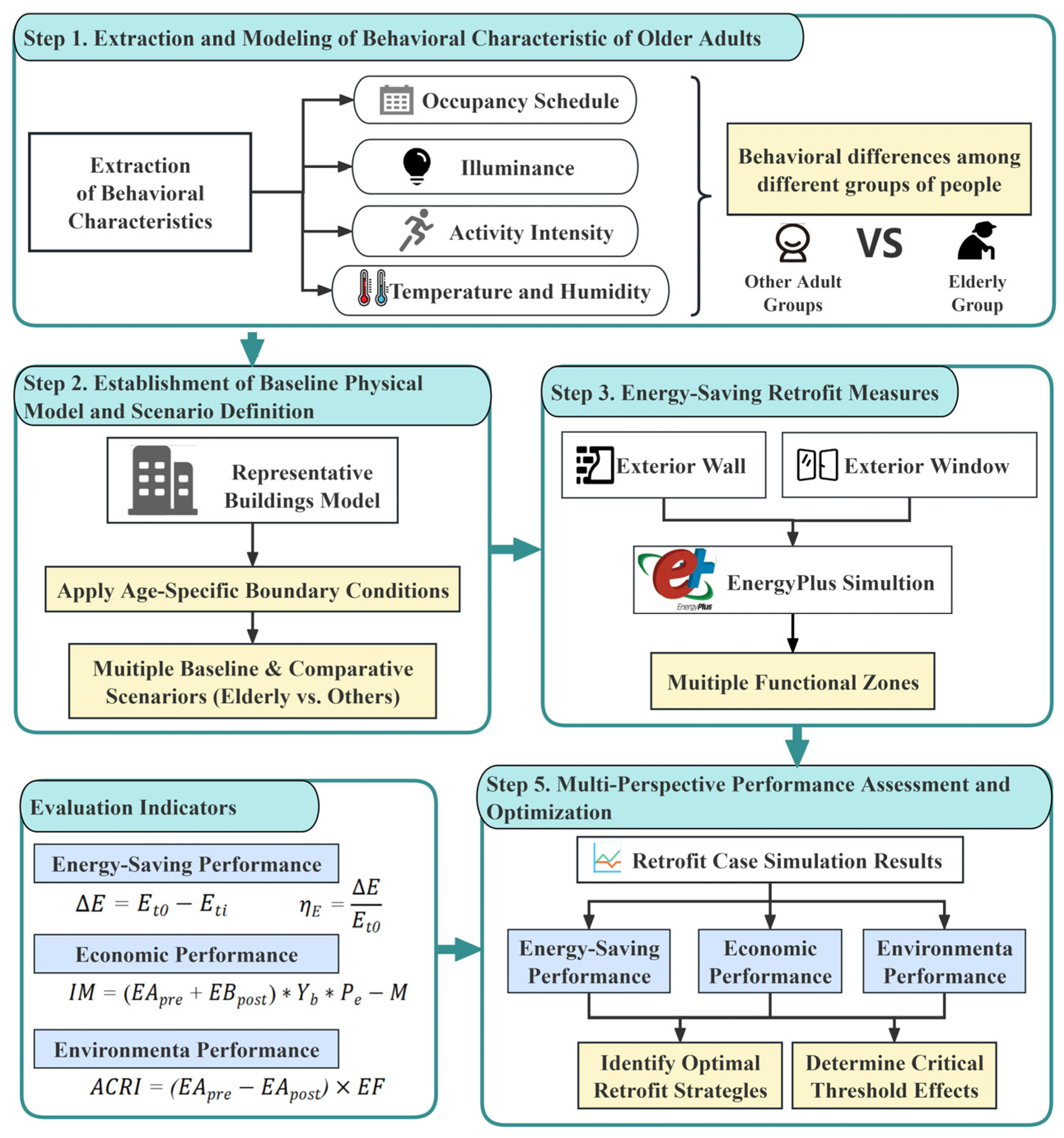
Incorporating Occupant Age Structure into Building Energy Simulation for Envelope Retrofit Evaluation in Existing Residential Buildings
Abstract
1. Introduction
2. Methodology
2.1. Extraction and Modeling of Behavioral Characteristics of Older Adults
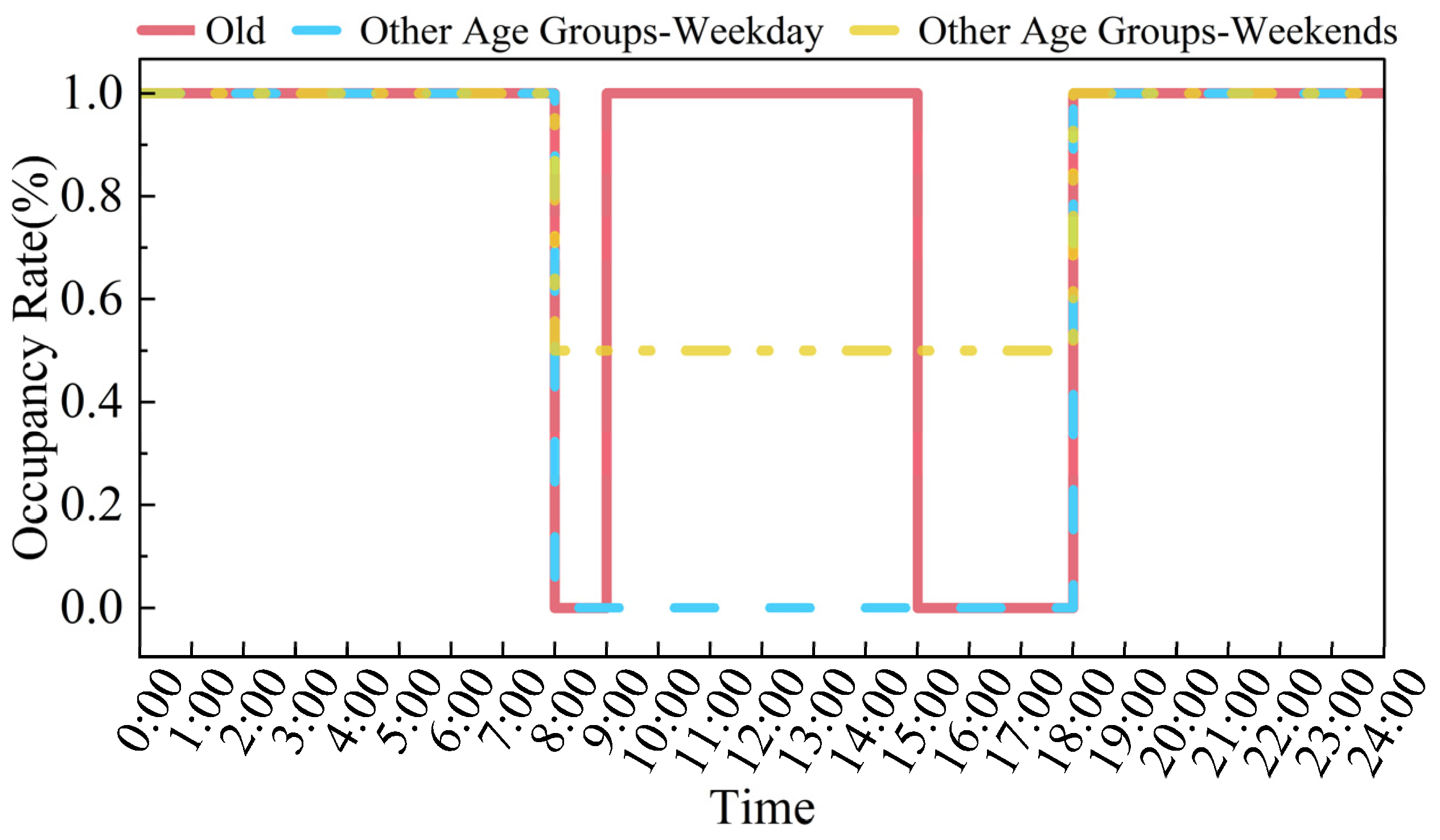
2.1.1. Occupancy Rate
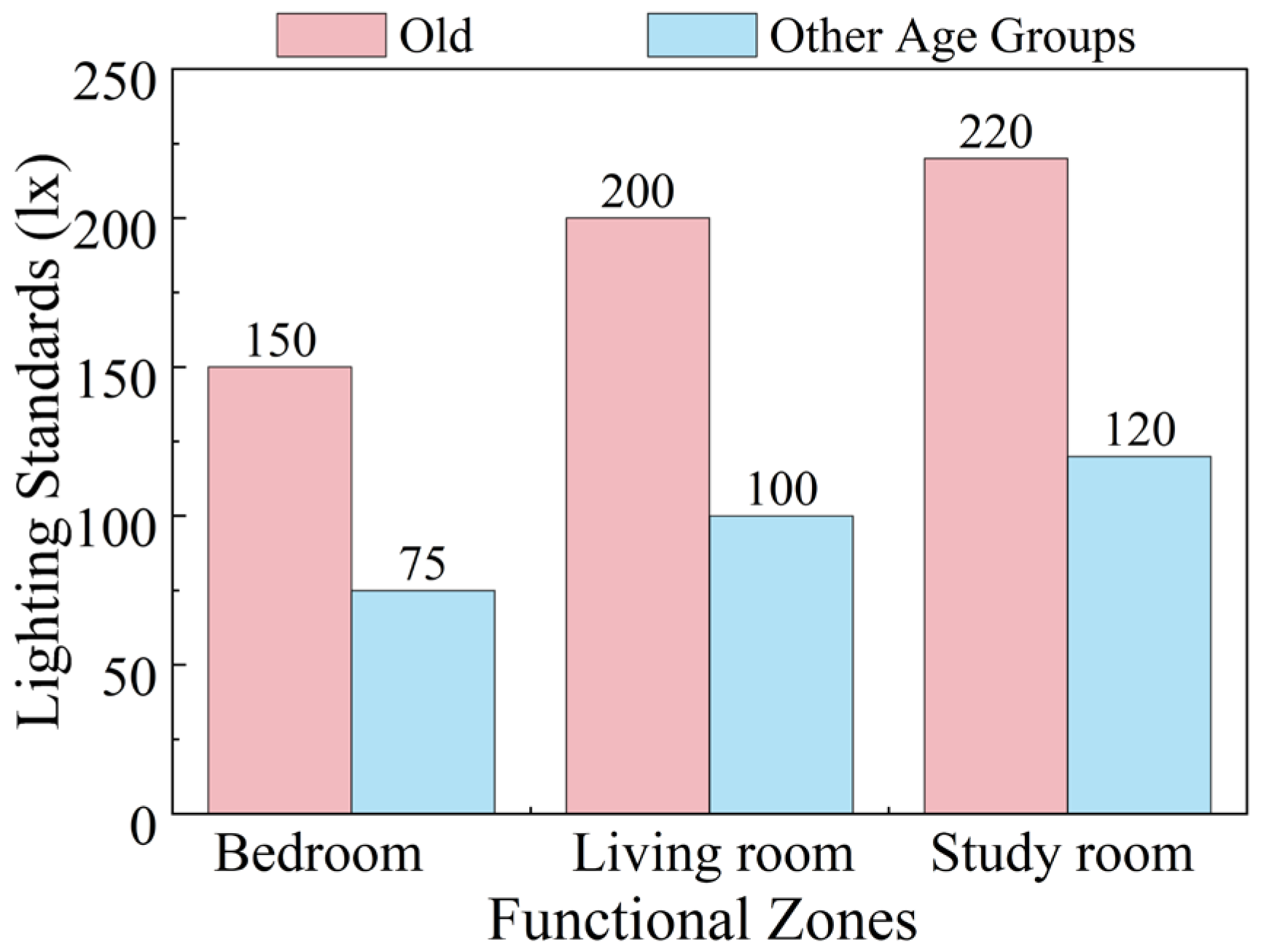
2.1.2. Illuminance Requirements
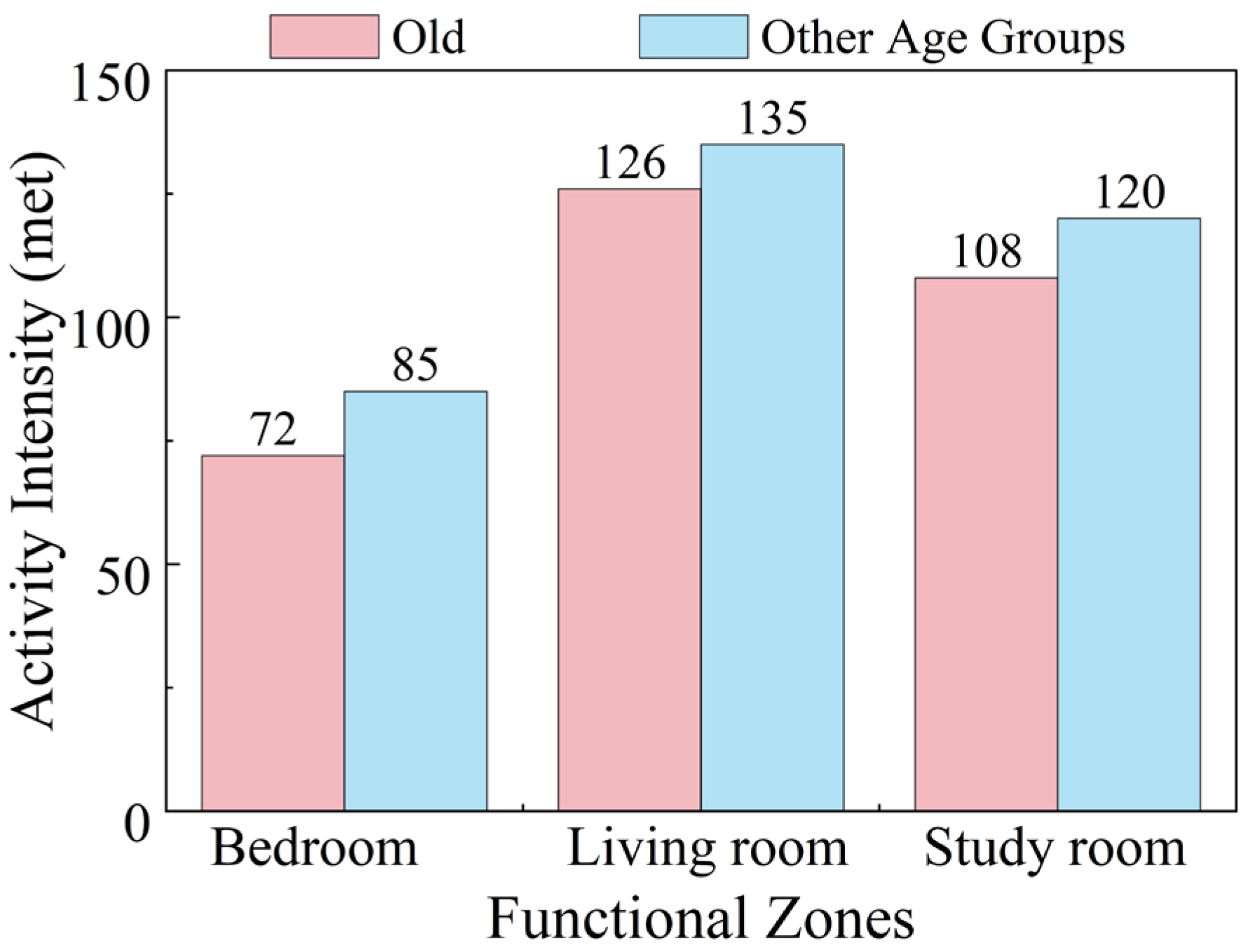
2.1.3. Activity Intensity
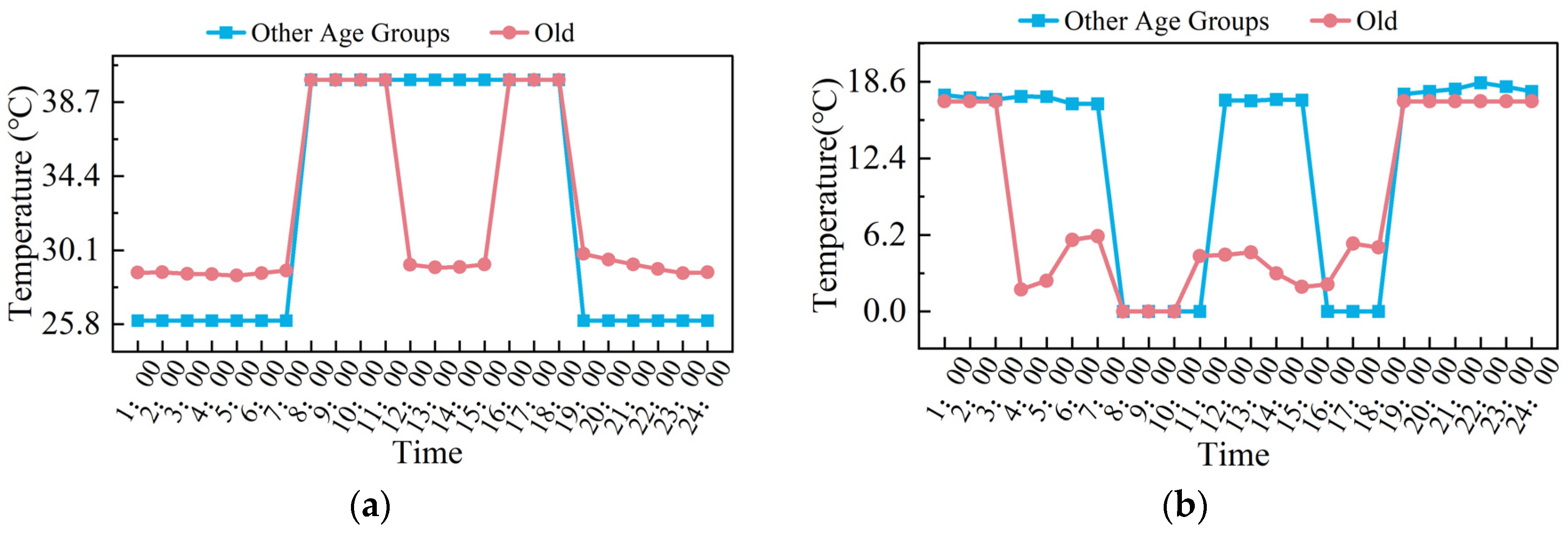
2.1.4. Thermal and Humidity Preferences
2.2. Building Energy Modeling of Aging Residential Buildings Based on the Elderly Occupant Behavior
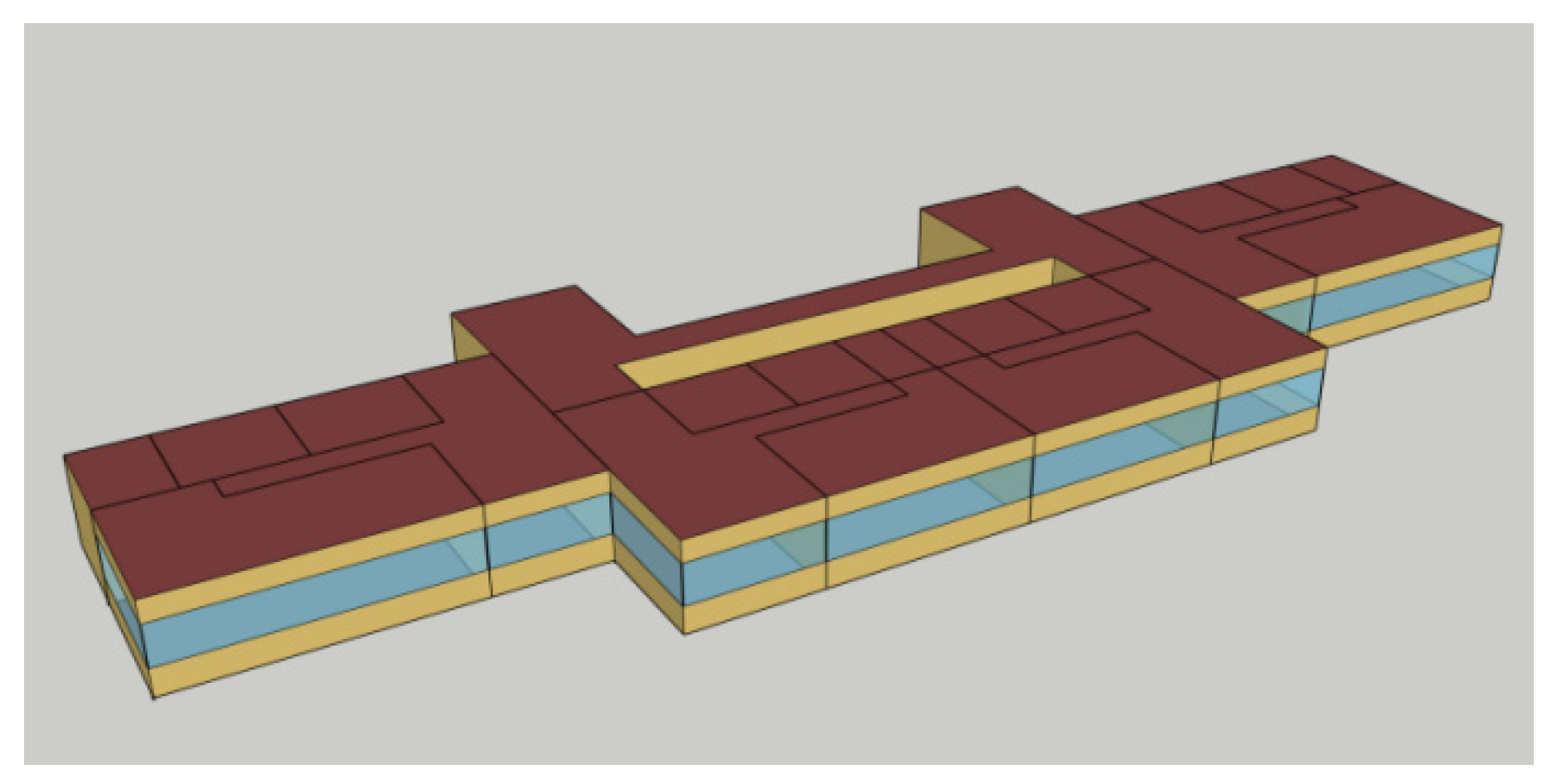
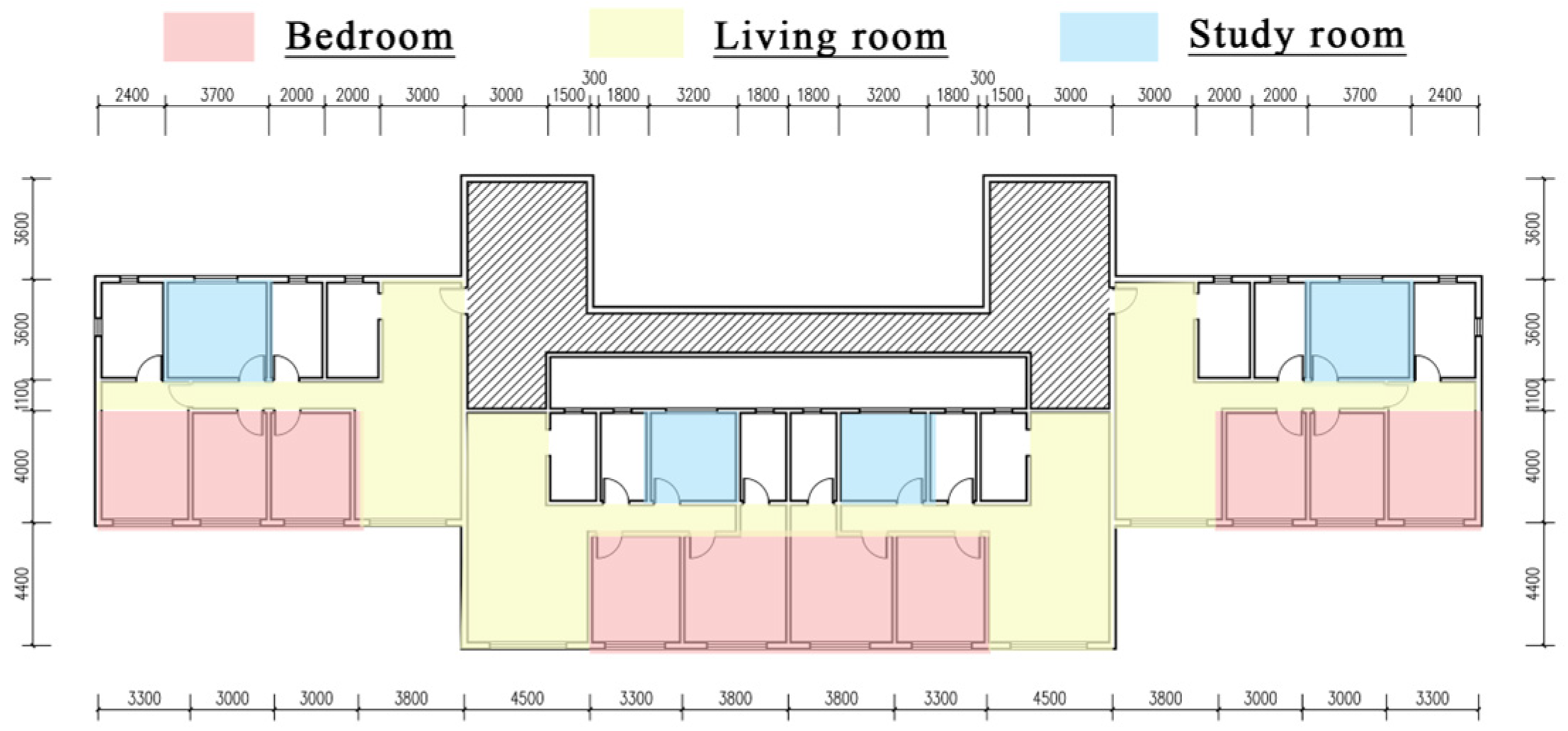
2.2.1. Typical Residential Building Model
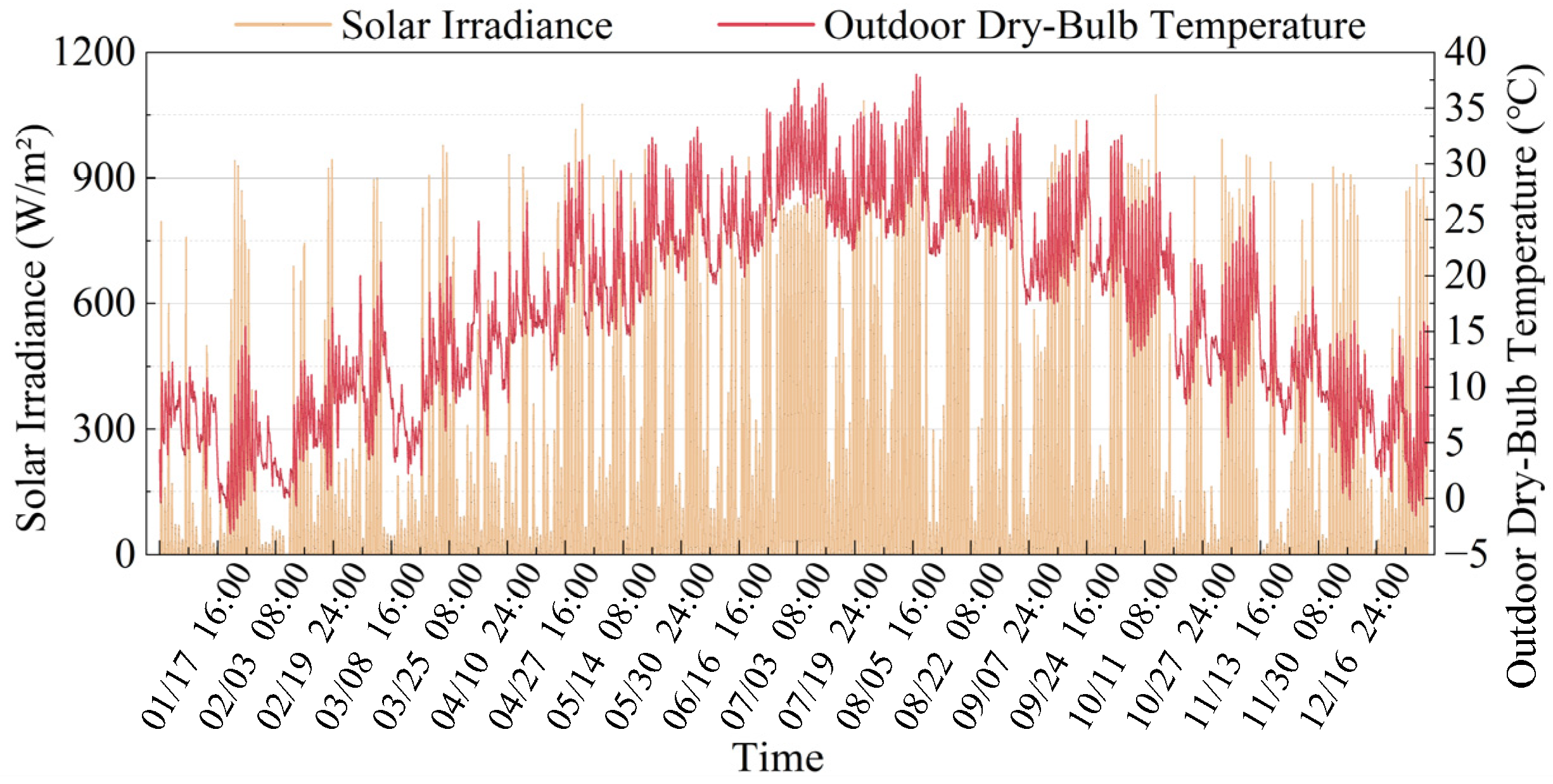
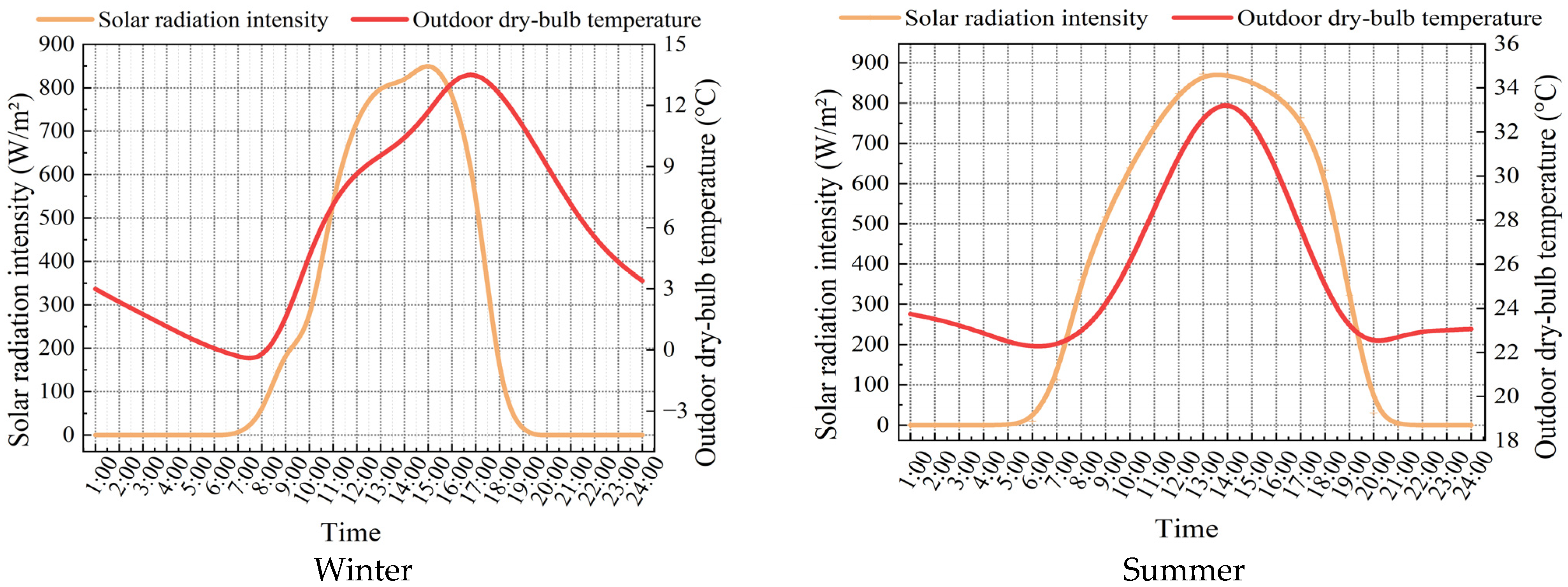
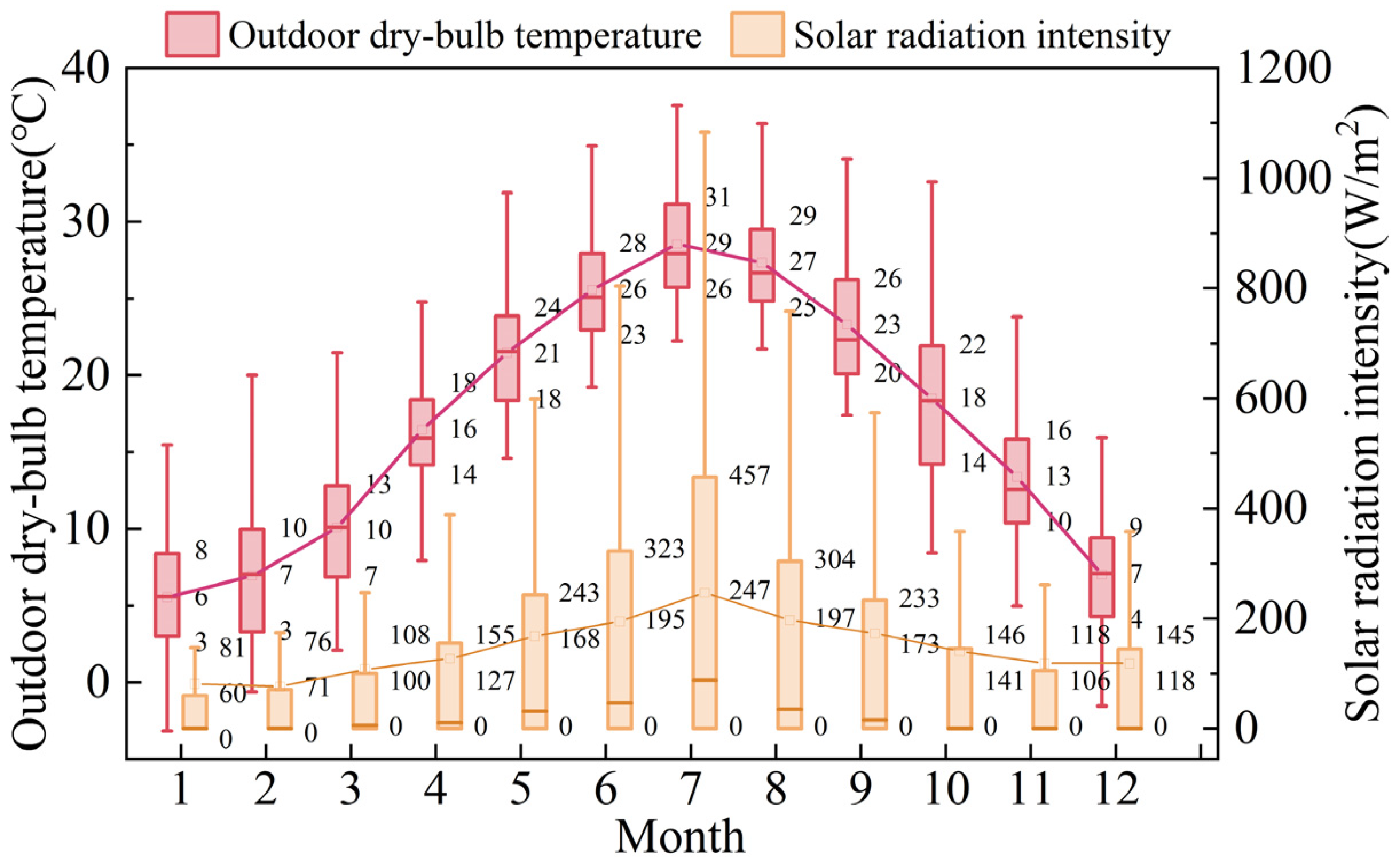
2.2.2. Climate Data and Boundary Conditions
2.2.3. HVAC Systems and Lighting-Related Internal Loads
2.3. Proposed Energy-Saving Measures
2.3.1. Exterior Wall Insulation Retrofit
2.3.2. Exterior Window Retrofit
2.4. Evaluation Indicators
2.4.1. Energy-Saving Performance
2.4.2. Economic Performance
2.4.3. Environmental Performance
3. Results and Discussion
3.1. Baseline Energy Consumption Characteristics
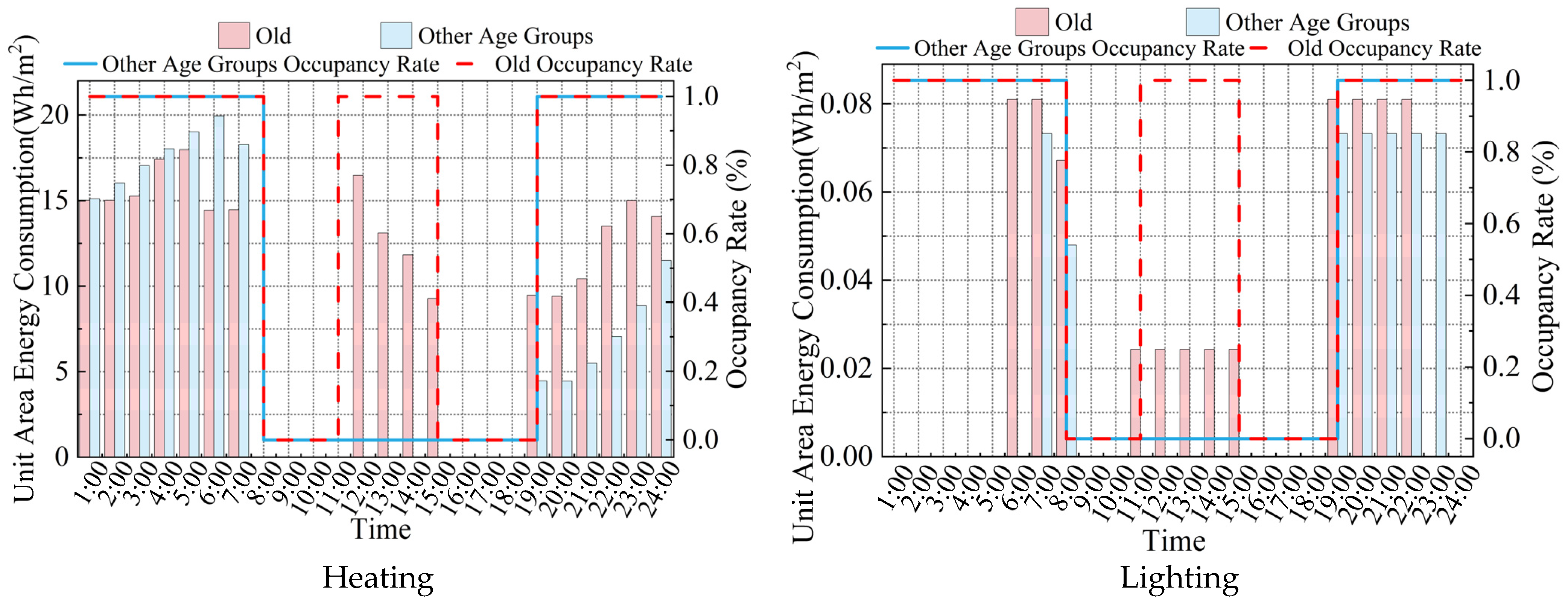
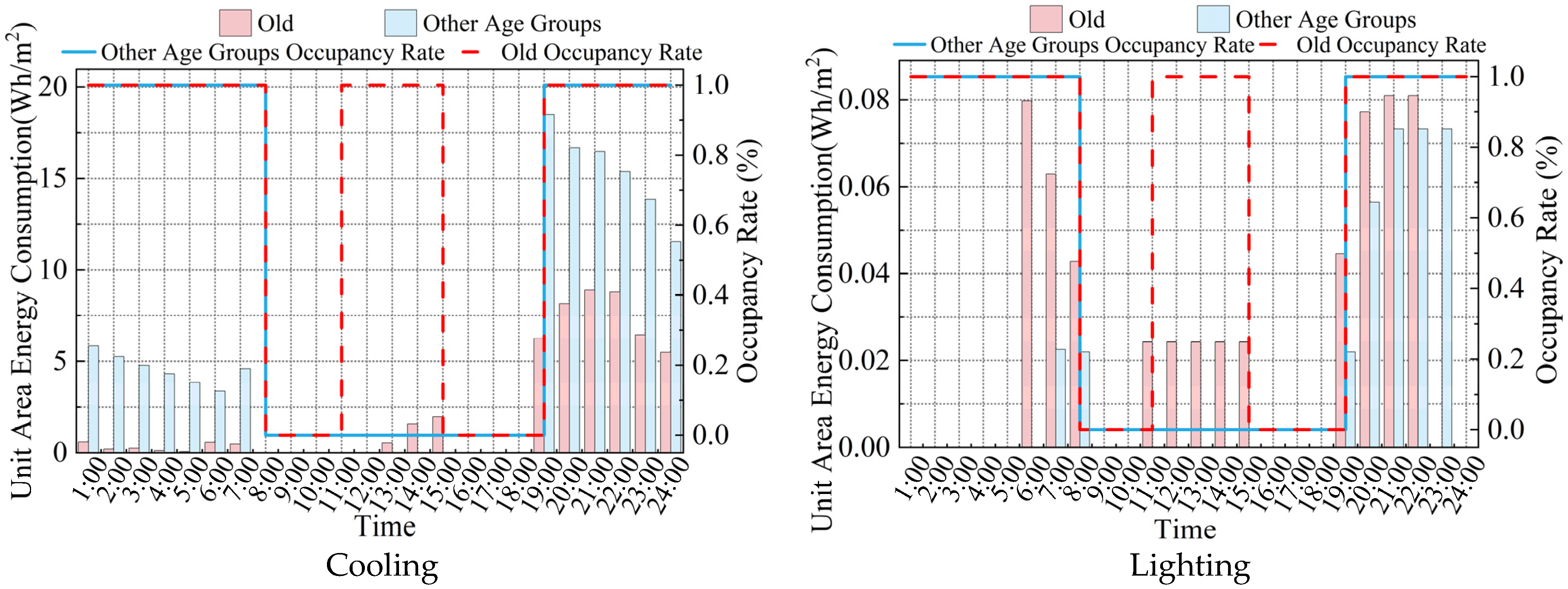
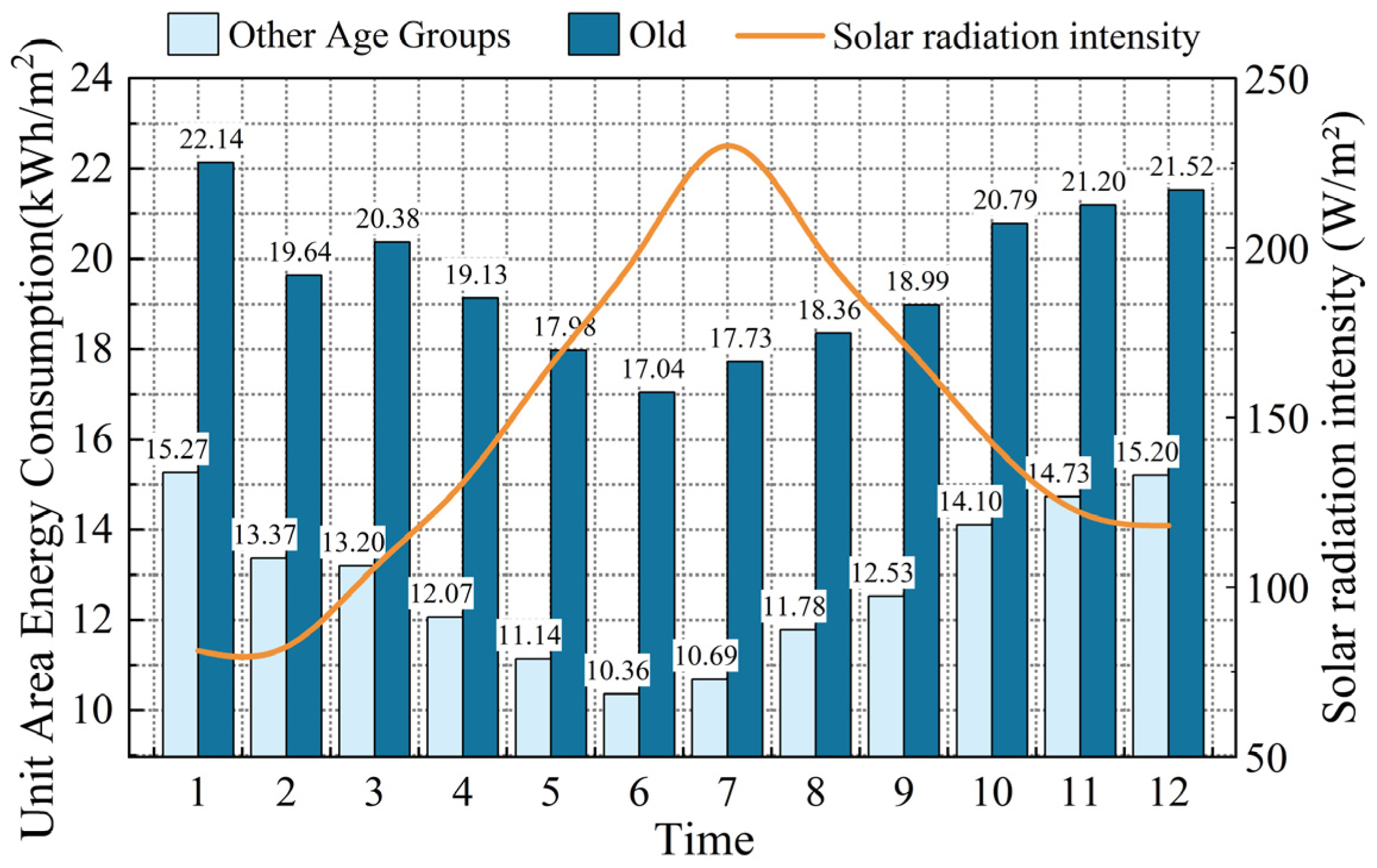
3.1.1. Analysis of Energy Consumption on Typical Winter and Summer Days
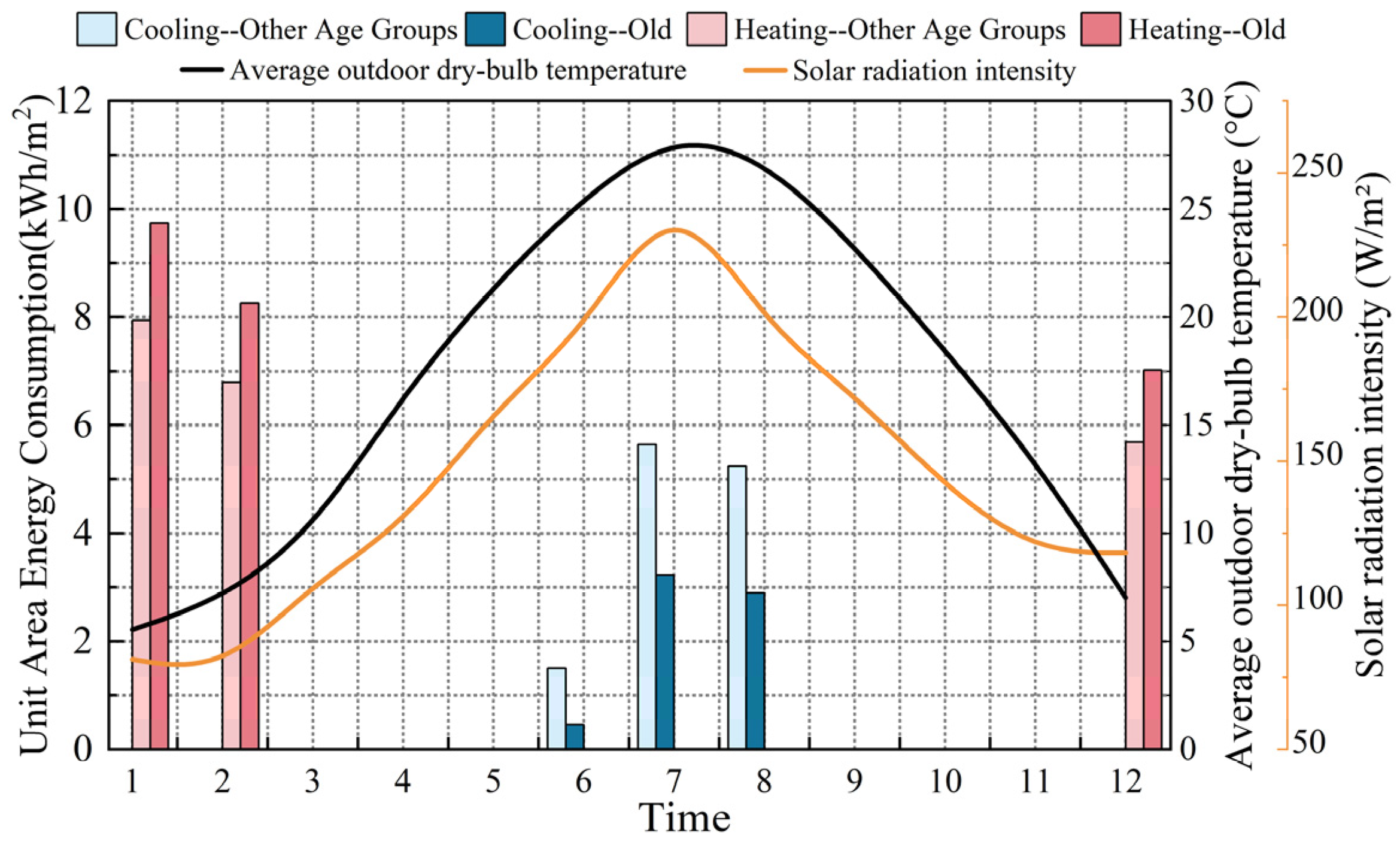
3.1.2. Analysis of Monthly Energy Consumption
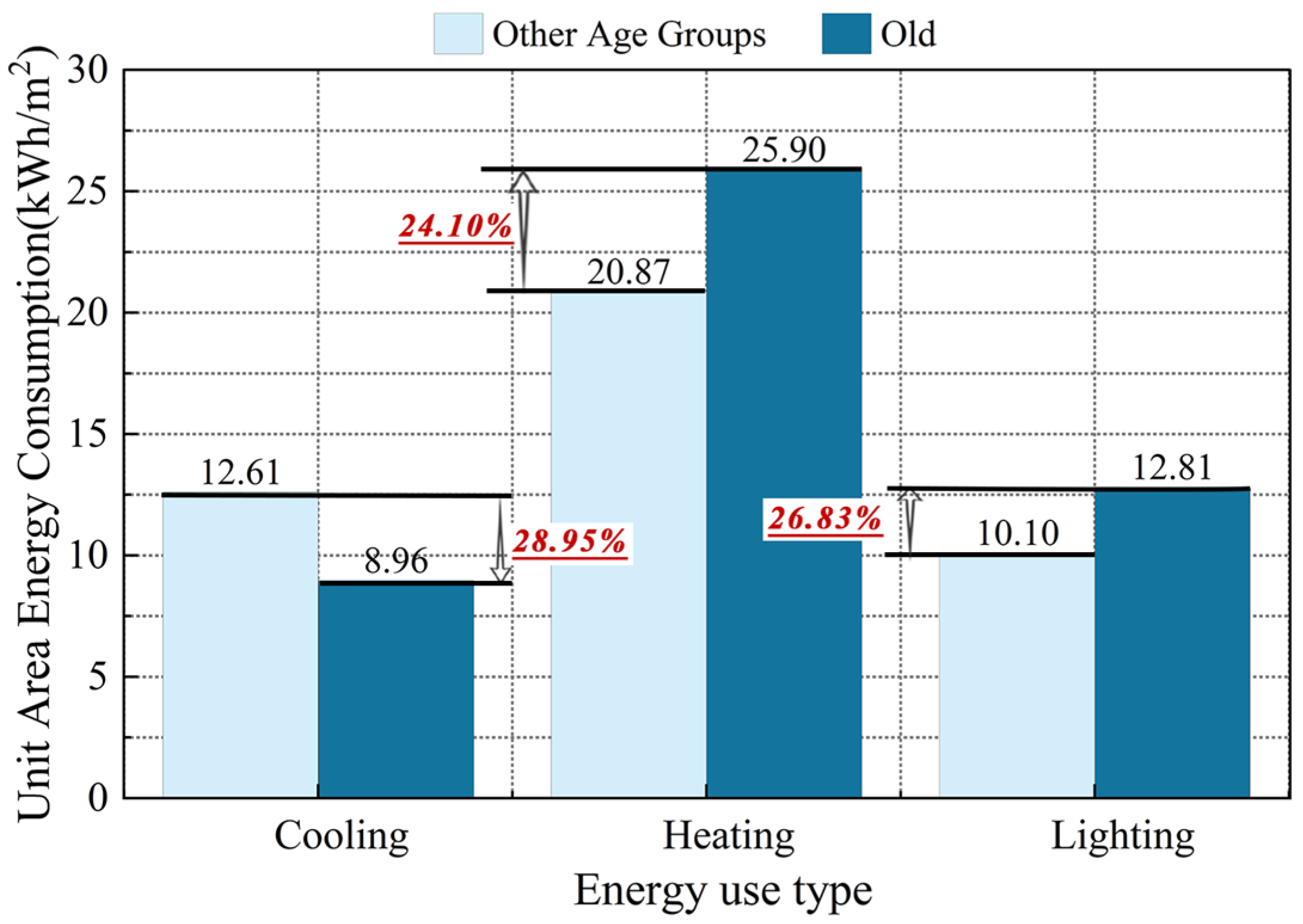
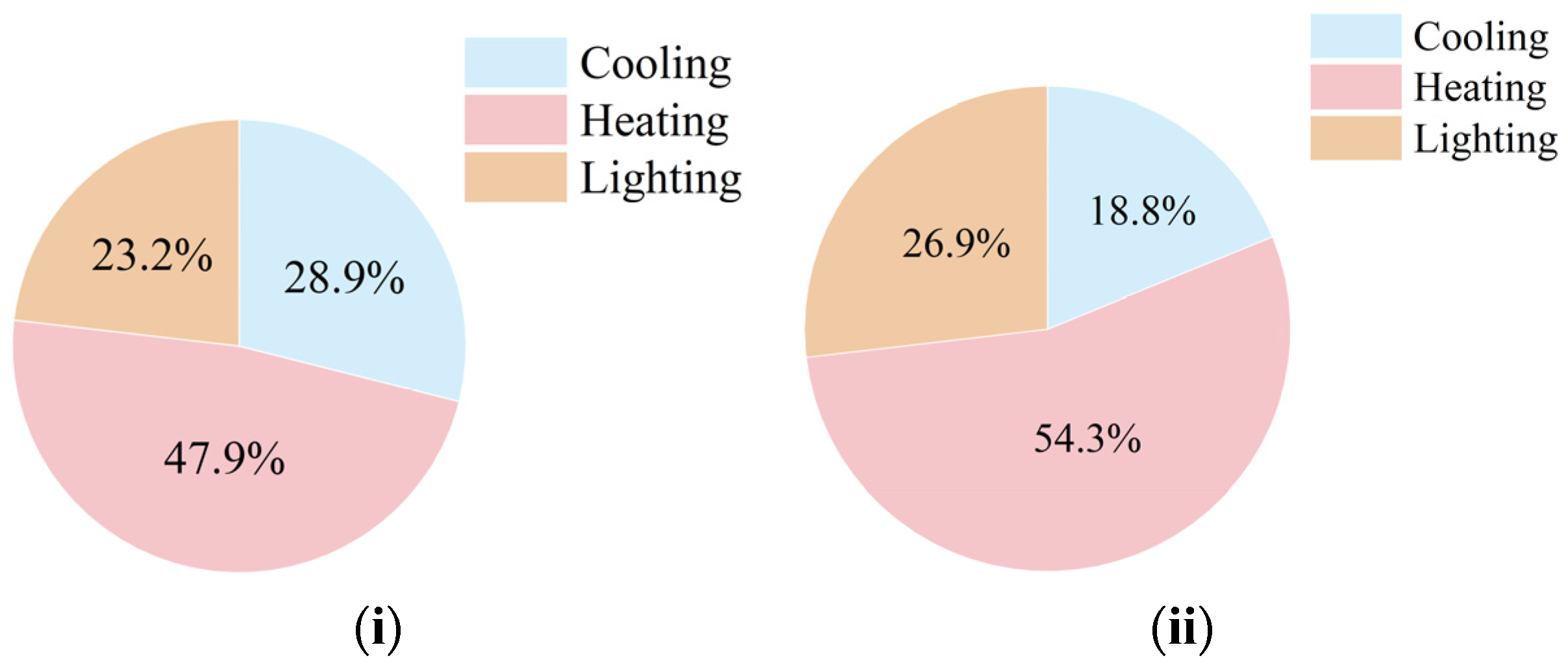
3.1.3. Analysis of Annual Energy Consumption
3.2. Retrofit Case Simulation Results
3.2.1. Analysis of Energy-Saving Potential
Exterior Wall Insulation Retrofit
Window Retrofit Measures
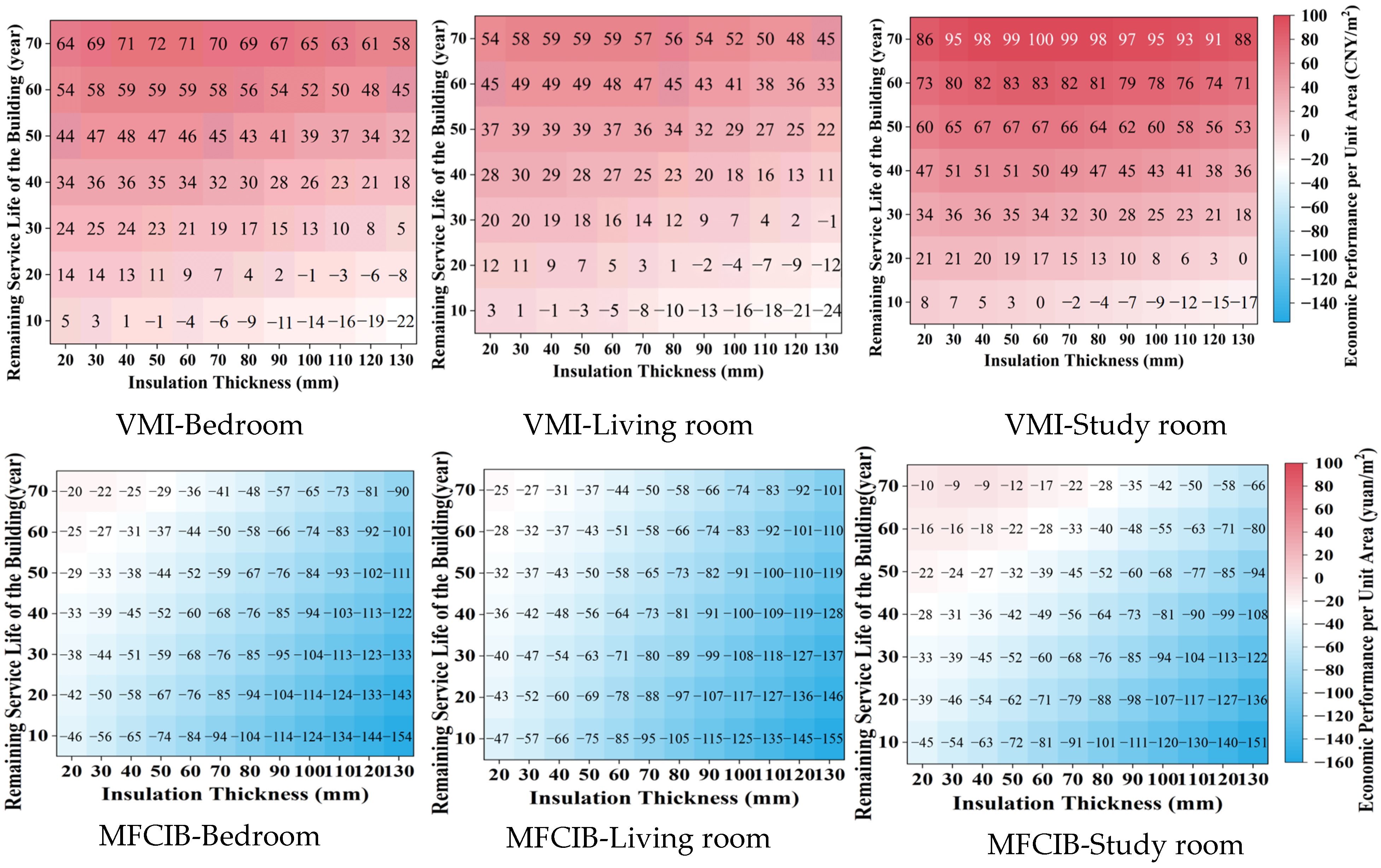
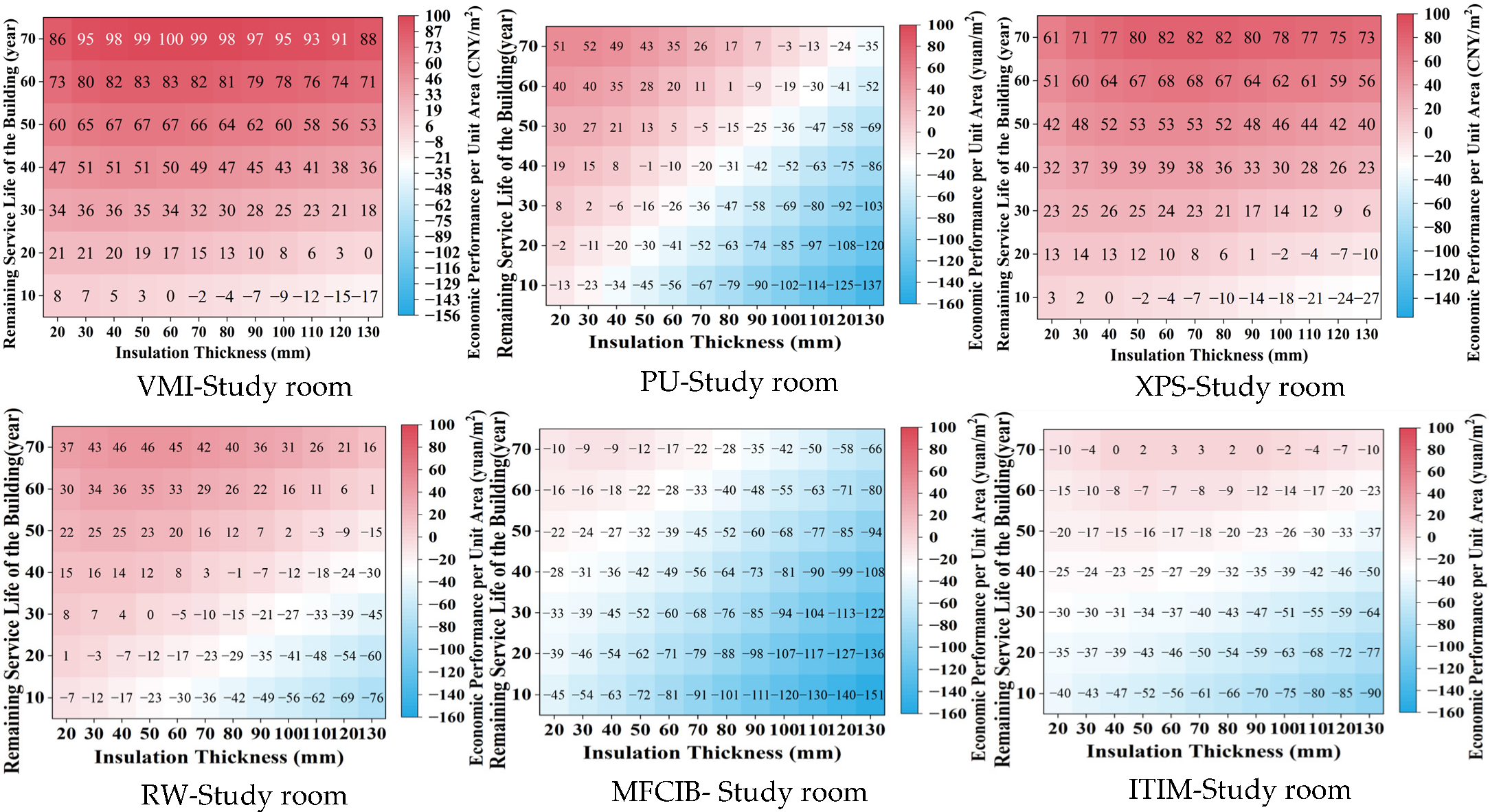
3.2.2. Economic Feasibility Analysis
Exterior Wall Insulation Retrofit
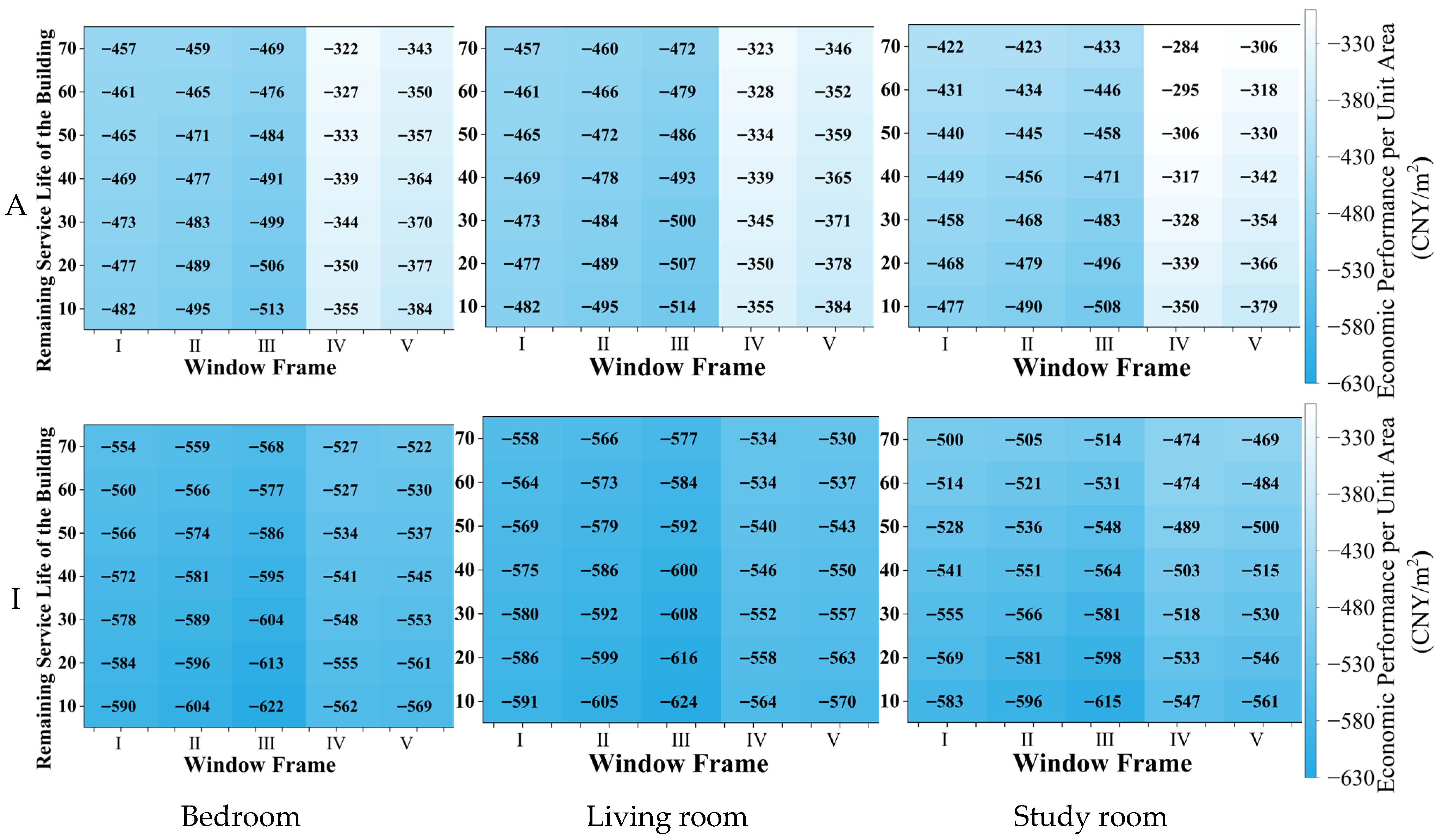
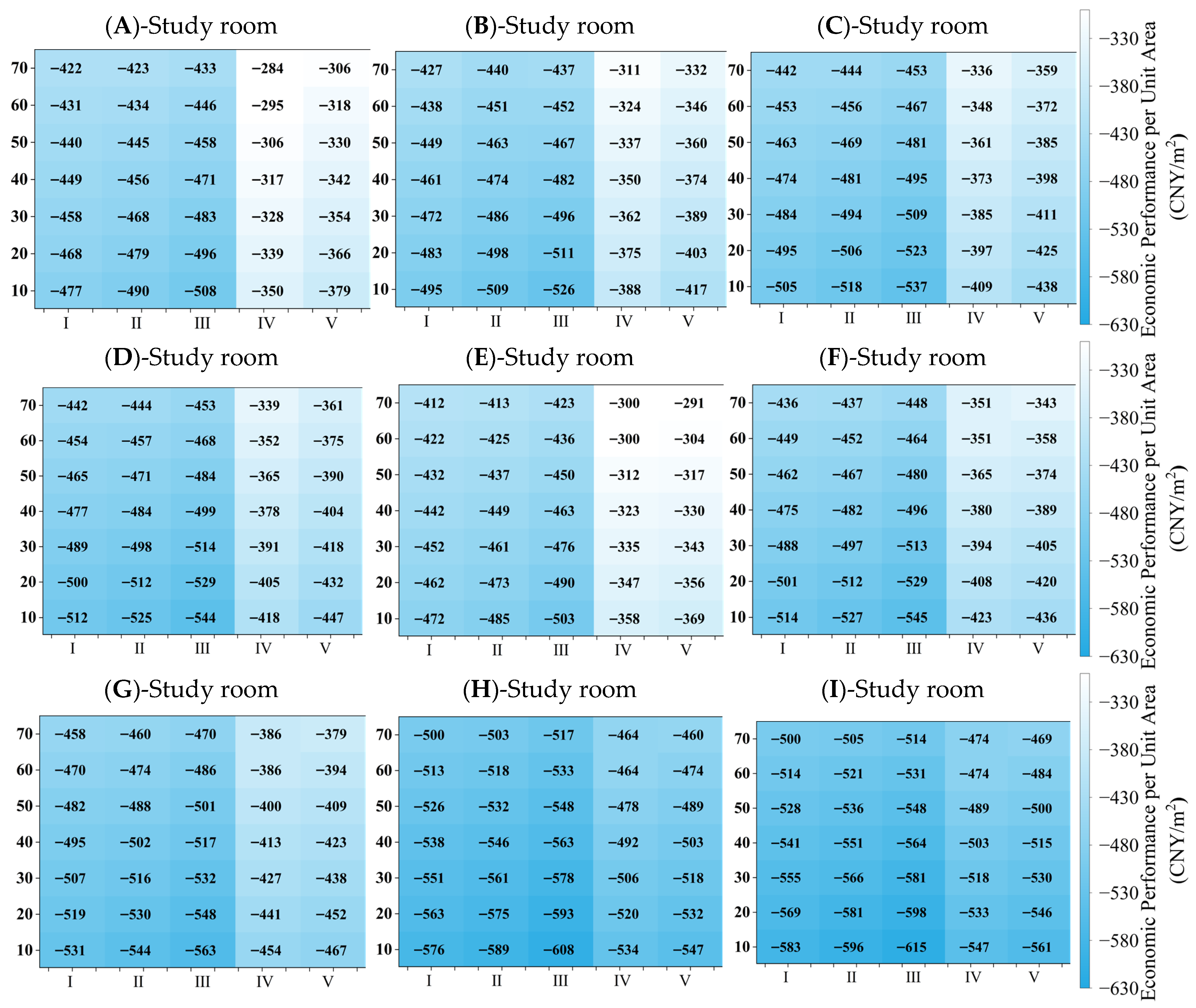
Window Retrofit Measures
3.2.3. Environmental Performance Analysis
Exterior Wall Insulation Retrofit
Window Retrofit Measures
3.2.4. Integrated Comparison and Implications
4. Conclusions
- (1)
- Elderly-oriented occupancy produces a distinct baseline residential energy-use structure. Compared with the non-elderly comparison group, elderly-oriented dwellings exhibit higher heating demand, higher lighting demand, and relatively lower cooling demand. As a result, annual energy use is governed more strongly by persistent winter heat losses and age-related visual comfort requirements than by short-duration summer cooling peaks.
- (2)
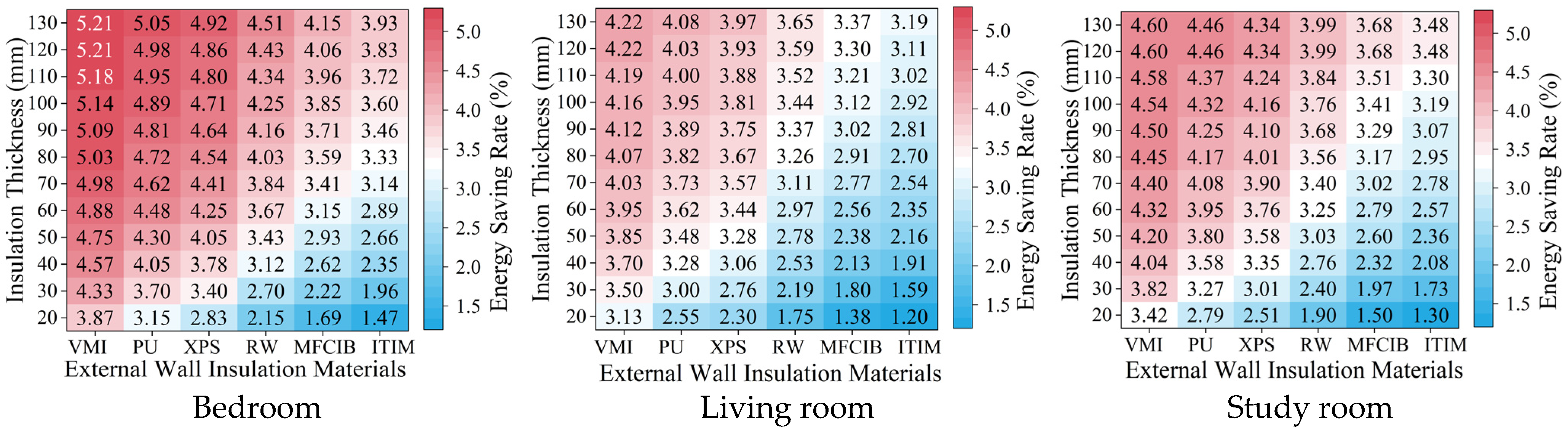
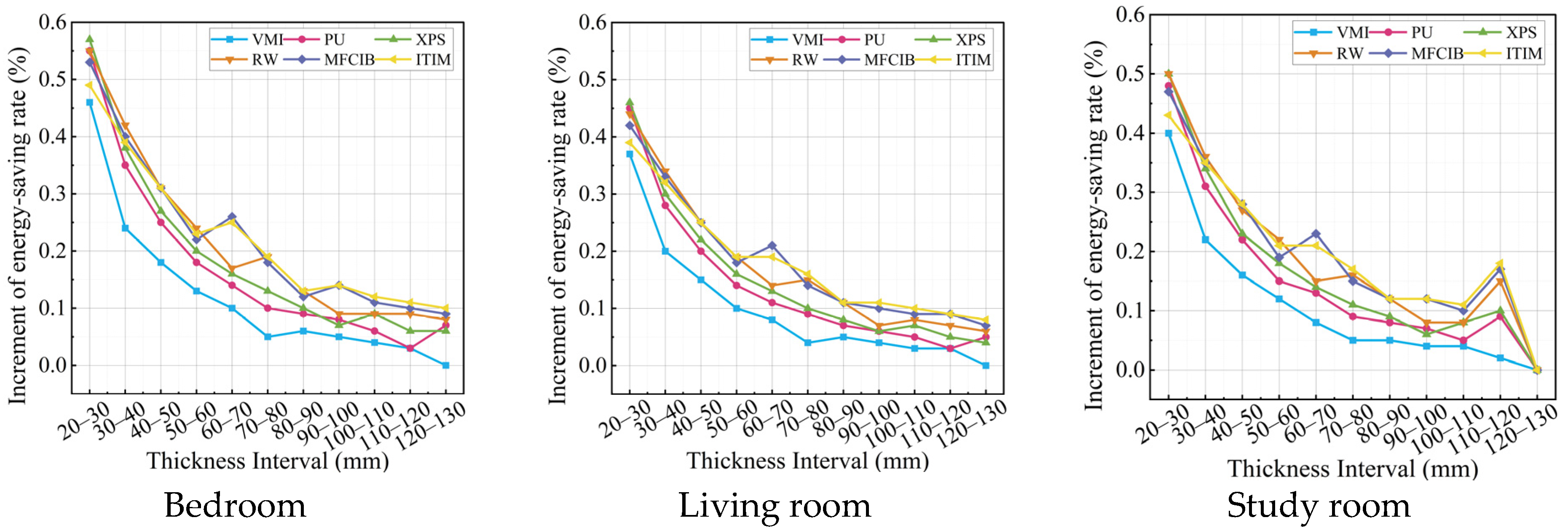
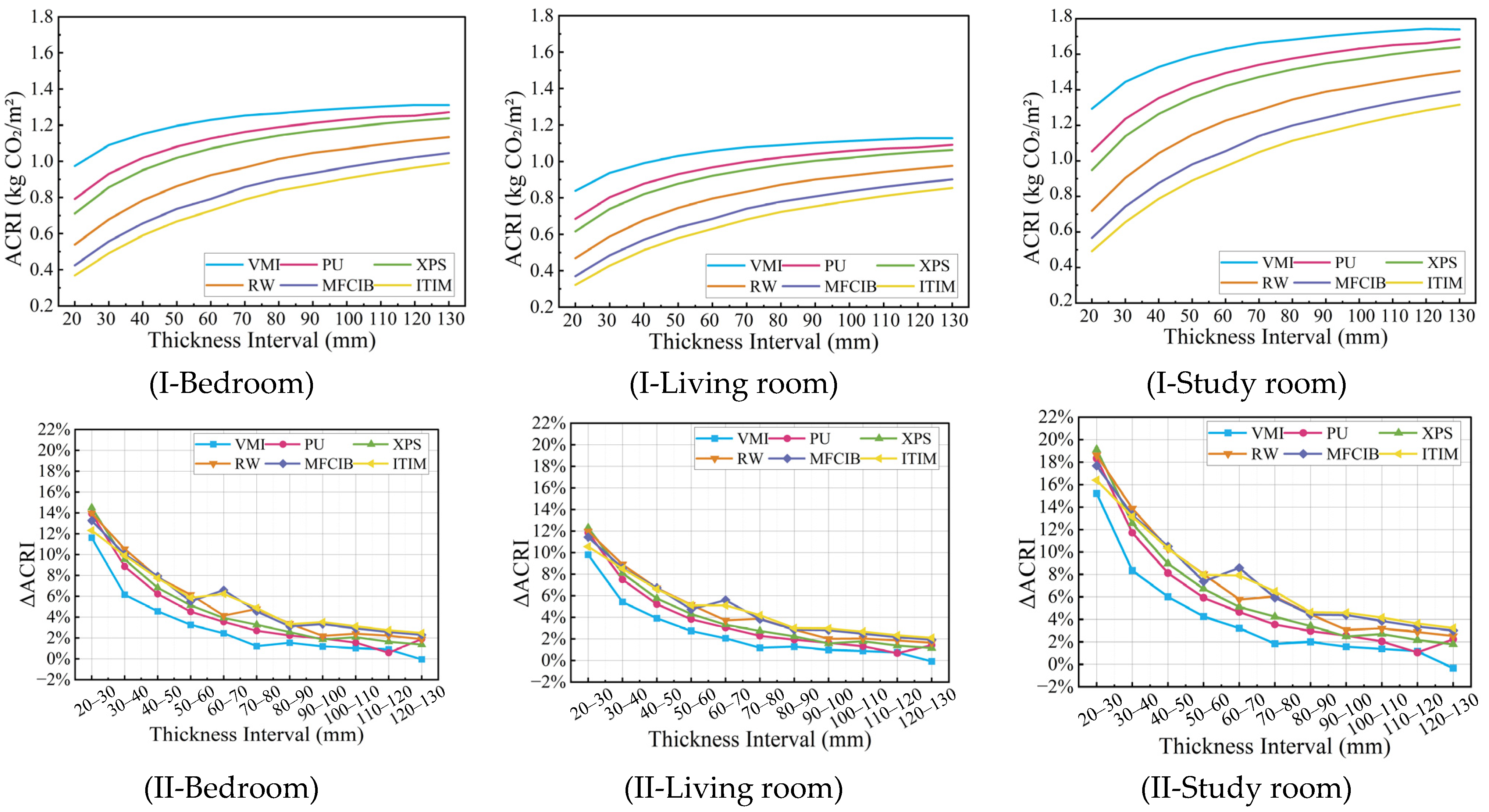
- Exterior wall insulation retrofits show the most robust overall performance under elderly-oriented occupancy. Across energy, economic, and environmental evaluations, moderate insulation thicknesses—especially 40–60 mm—provide the best overall balance between technical performance and lifecycle feasibility. Among the evaluated materials, vitrified microbead insulation performs best overall, while the study room and bedroom exhibit higher retrofit sensitivity than the living room.
- (3)
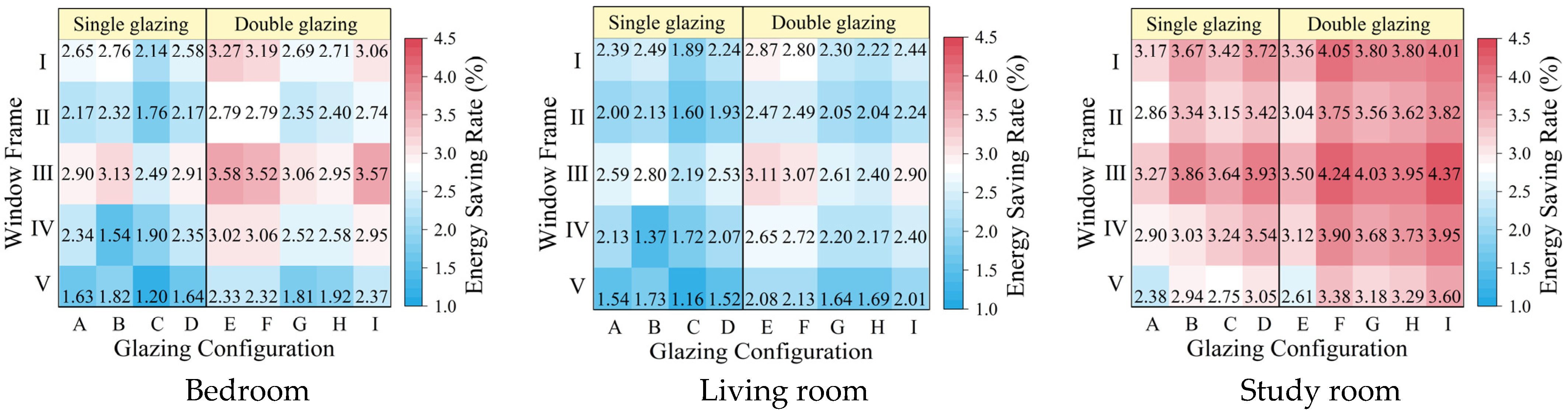
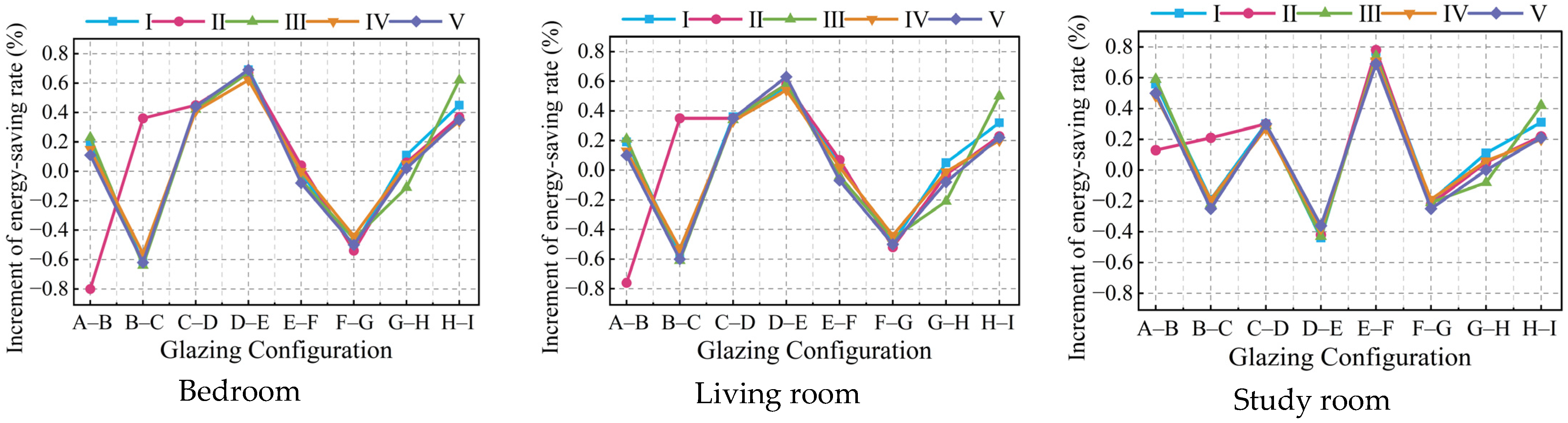
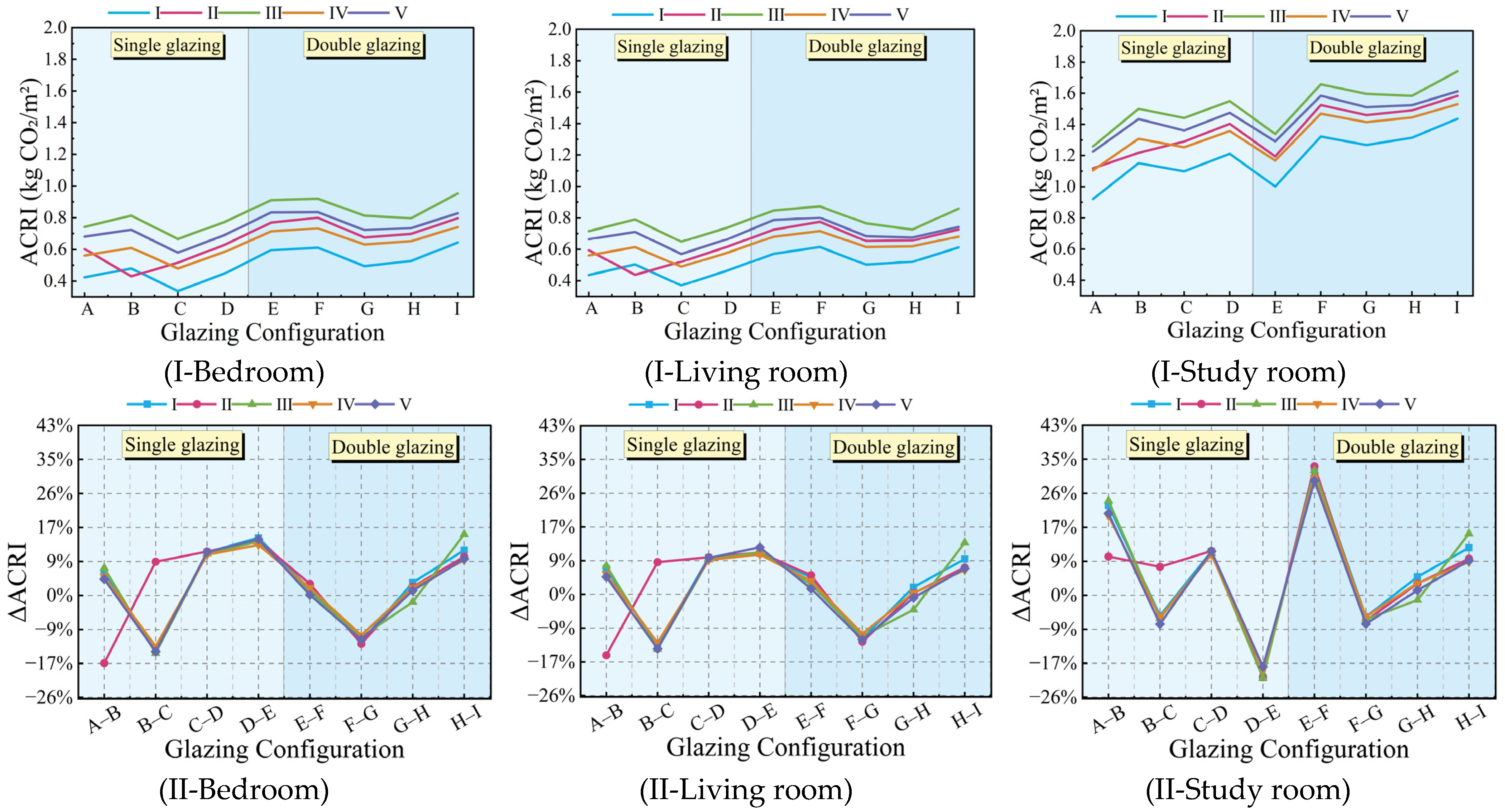
- Window retrofit measures yield only limited overall benefits under the evaluated conditions. Although window upgrades can reduce energy consumption to a certain extent, their effects are substantially weaker and less stable than those of exterior wall insulation. Under the assumed cost conditions and elderly-oriented demand profile, all evaluated window retrofit schemes remain economically unfavorable, even under long-remaining service-life scenarios.
- (4)
- The quantitative conclusions are context-dependent, but the analytical framework is transferable. Because the analysis was based on one representative existing high-rise residential building in Changsha, the numerical results should be interpreted as most applicable to buildings with similar climatic and architectural characteristics. Nevertheless, the broader contribution of this study lies in the proposed retrofit evaluation framework, which incorporates age-related occupant behavior differences into envelope retrofit assessment and can support further applications in other climates, building types, and demographic contexts.
Author Contributions
Funding
Data Availability Statement
Conflicts of Interest
Abbreviations
| ACRI | Annual Carbon Reduction Intensity |
| ∆ACRI | Relative Annual Carbon Reduction Intensity |
| CO2 | Carbon Dioxide |
| CSWD | Chinese Standard Weather Data |
| DCF | Discounted Cash Flow |
| EPW | EnergyPlus Weather file |
| HVAC | Heating, Ventilation, and Air Conditioning |
| K | Thermal Transmittance |
| VMI | Vitrified microbeads insulation |
| PU | Polyurethane composite panel |
| XPS | Flame-retardant extruded polystyrene board |
| RW | Rock wool strips |
| MFCIB | Modified foamed cement insulation board |
| ITIM | Inorganic thermal insulation mortar |
| Low-E | Low Emissivity |
| MET | Metabolic Equivalent of Task |
| RSL | Remaining Service Life |
| SHGC | Solar Heat Gain Coefficient |
| τᵥ | Visible Light Transmittance |
| U-value | Overall Thermal Transmittance |
References
- Li, X.; Bai, Y.; Cao, S. Exploring urban renewal actions under China’s “dual-carbon” targets. Urban Dev. Stud. 2023, 30, 58–67. [Google Scholar]
- Chen, S.; Hu, J.; Huang, Y.; Huang, Z.; Yang, S.; Wu, P. Clustering of urban residential energy-use behaviors in Guangzhou and their impacts on energy demand. Heat. Vent. Air Cond. 2022, 52, 151–157. [Google Scholar]
- Wang, D. Research on Home-Based Elderly Care and Residential Adaptability Design. Ph.D. Thesis, Tongji University, Shanghai, China, 2007. [Google Scholar]
- Chen, Y.; Zhang, S.; Shi, Y.; Wang, X. Urban renewal and governance pathways of aging residential communities from an age-friendly perspective: A case study of Changning Road Workers’ Village, Shanghai. Urban Dev. Stud. 2021, 28, 39–44. [Google Scholar]
- Hu, S.; Yan, D.; Jiang, Y. Indicator definition and survey analysis of occupants’ spatiotemporal presence patterns in buildings. Build. Sci. 2021, 37, 160–169. [Google Scholar]
- Yan, Y. Age-Friendly Thermal Environment Design of Residential Buildings in Hot Summer and Cold Winter Regions. Master’s Thesis, Shenzhen University, Shenzhen, China, 2018. [Google Scholar]
- Shi, J.; Jiang, C. Impacts of home-based age-friendly renovation on elderly life satisfaction: A mechanism analysis based on the ICF framework. Urban Probl. 2024, 64–73. [Google Scholar] [CrossRef]
- Zhou, Y.; Zheng, Y. International development trends and implications of service-oriented senior housing. Sci. Technol. Rev. 2024, 42, 41–52. [Google Scholar]
- Ortiz, J.; Fonseca i Casas, A.; Salom, J.; Garrido Soriano, N.; Fonseca i Casas, P. Cost-effective analysis for selecting energy efficiency measures for refurbishment of residential buildings in Catalonia. Energy Build. 2016, 128, 442–457. [Google Scholar] [CrossRef]
- Ascione, F.; Bianco, N.; De Masi, R.F.; Mauro, G.M.; Vanoli, G.P. Energy retrofit of educational buildings: Transient energy simulations, model calibration and multi-objective optimization towards nearly zero-energy performance. Energy Build. 2017, 144, 303–319. [Google Scholar] [CrossRef]
- Altieri, D.; Patel, M.K.; Lazarus, J.; Branca, G. Numerical analysis of low-cost optimization measures for improving energy efficiency in residential buildings. Energy 2023, 273, 127257. [Google Scholar] [CrossRef]
- Valentini, F.; Maracchini, G.; di Filippo, R.; Dorigato, A.; Bursi, O. A prospective life cycle assessment of insulation and window systems under evolving electricity and recycling scenarios for building energy retrofit in Italy. Energy Build. 2025, 347, 116245. [Google Scholar] [CrossRef]
- Xiang, J.; Liu, H.; Li, X. Occupant energy-use behavior modeling for residential buildings in hot summer and cold winter regions. Build. Sci. 2024, 40, 15–23. [Google Scholar]
- Richardson, I.; Thomson, M.; Infield, D. A high-resolution domestic building occupancy model for energy demand simulations. Energy Build. 2008, 40, 1560–1566. [Google Scholar] [CrossRef]
- Gaetani, I.; Hoes, P.-J.; Hensen, J.L.M. Occupant behavior in building energy simulation: Towards a fit-for-purpose modeling strategy. Energy Build. 2016, 121, 188–204. [Google Scholar] [CrossRef]
- Luo, Z.; Peng, J.; Yin, R. Many-objective day-ahead optimal scheduling of residential flexible loads integrated with stochastic occupant behavior models. Appl. Energy 2023, 347, 121348. [Google Scholar] [CrossRef]
- Luo, Z.; Yun, D.; Cang, Y. Prediction methods for whole life-cycle carbon emissions and reduction potential of buildings at the design stage. J. Xi’an Univ. Archit. Technol. (Nat. Sci. Ed.) 2025, 57, 1–9. [Google Scholar]
- Zhou, H.; Yu, W.; Wei, S.; Zhao, K.; Shan, H.; Zheng, S.; Guo, L.; Zhang, Y. Variability in thermal comfort and behavior of elderly individuals with different levels of frailty in residential buildings during winter. Build. Environ. 2025, 267, 112290. [Google Scholar] [CrossRef]
- Zhou, J.; Song, Y. Analysis of residential thermal environment and energy consumption based on occupancy probability. Build. Sci. 2018, 34, 59–65. [Google Scholar]
- Xu, M. Age-Friendly Renewal of Public Spaces in Old Residential Communities from a Daily-Life Perspective: A Case Study of Xi’an. Master’s Thesis, Xi'an University of Architecture and Technology, Xi’an, China, 2025. [Google Scholar]
- Aversa, A.; Ballestero, L.; Austin, M.C. Highlighting the Probabilistic Behavior of Occupants’ Preferences in Energy Consumption by Integrating a Thermal Comfort Controller in a Tropical Climate. Sustainability 2022, 14, 9591. [Google Scholar] [CrossRef]
- Day, J.K.; Gunderson, D.E. Understanding high performance buildings: The link between occupant knowledge of passive design systems, corresponding behaviors, occupant comfort and environmental satisfaction. Build. Environ. 2015, 84, 114–124. [Google Scholar] [CrossRef]
- Wang, C.; Du, S. The Impact of Remote Monitoring Devices on the Health of Older Adults under Different Living Arrangements: An Analysis Based on the China Longitudinal Aging Social Survey. Shanghai Urban Plan. 2024, 37–42. [Google Scholar] [CrossRef]
- Li, Q.; Xiao, X.; Li, Y. Design of Elderly Care Centers in Age-Friendly Communities: Boyuan Elderly Care Center in Ankang City. Contemp. Archit. 2024, 82–91. [Google Scholar]
- Hassani, A.; Jancewicz, B.; Wrotek, M.; Chwałczyk, F.; Castell, N. Understanding thermal comfort expectations in older adults: The role of long-term thermal history. Build. Environ. 2024, 263, 111900. [Google Scholar] [CrossRef]
- Younes, J.; Khovalyg, D. Advances in human thermophysiology modelling: Methodological review of a century of developments. Comput. Biol. Med. 2025, 198, 111218. [Google Scholar] [CrossRef]
- Hong, T.; Yan, D.; D’Oca, S.; Chen, C.-f. Ten questions concerning occupant behavior in buildings: The big picture. Build. Environ. 2017, 114, 518–530. [Google Scholar] [CrossRef]
- Hoes, P.; Hensen, J.L.M.; Loomans, M.G.L.C.; de Vries, B.; Bourgeois, D. User behavior in whole building simulation. Energy Build. 2009, 41, 295–302. [Google Scholar] [CrossRef]
- Chen, Y.; Wulff, F.; Clark, S.; Huang, J. Indoor comfort domains and well-being of older adults in residential settings: A scoping review. Build. Environ. 2025, 267, 112268. [Google Scholar] [CrossRef]
- Jiao, Y.; Hang, Y.; Yu, Y.; Wang, Z.; Wei, Q. Adaptive thermal comfort models for homes for older people in Shanghai, China. Energy Build. 2020, 215, 109918. [Google Scholar] [CrossRef]
- Baquero Larriva, M.T.; Mendes, A.S.; Forcada, N. The effect of climatic conditions on occupants’ thermal comfort in naturally ventilated nursing homes. Build. Environ. 2022, 214, 108930. [Google Scholar] [CrossRef]
- EnergyPlus. EnergyPlus 22.1; US Department of Energy: Washington, DC, USA, 2022. [Google Scholar]
- Chen, Y.; Ren, Z.; Peng, Z.; Yang, J.; Chen, Z.; Deng, Z. Impacts of climate change and building energy efficiency improvement on city-scale building energy consumption. J. Build. Eng. 2023, 78, 107646. [Google Scholar] [CrossRef]
- JGJ 134-2010; Design Standard for Energy Efficiency of Residential Buildings in Hot Summer and Cold Winter Zone. China Architecture & Building Press: Beijing, China, 2010.
- Li, Z.; Xu, X. Building energy saving potential from the occupant dimension: A critical review. J. Build. Eng. 2025, 104, 112355. [Google Scholar] [CrossRef]
- Hamdy, M.; Siren, K. A multi-aid optimization scheme for large-scale investigation of cost-optimality and energy performance of buildings. J. Build. Perform. Simul. 2016, 9, 411–430. [Google Scholar] [CrossRef]
- Asadi, E.; da Silva, M.G.; Antunes, C.H.; Dias, L.; Glicksman, L. Multi-objective optimization for building retrofit: A model using genetic algorithm and artificial neural network and an application. Energy Build. 2014, 81, 444–456. [Google Scholar] [CrossRef]
- DBJ43/T 025-2022; Energy Efficiency Design Standard for Residential Buildings in Hunan Province. Hunan University: Changsha, China, 2022.
- He, X.; Shi, S.; Long, Y.; Wang, X.; Zuo, L.; Huang, B. Energy-saving retrofit of building envelopes for old high-rise residential buildings in Shanghai. Build. Energy Effic. 2025, 53, 142–150. [Google Scholar]
- Lu, Z.; Wang, P. Carbon emission accounting and mitigation effects of green buildings from a life-cycle perspective. Environ. Ecol. 2024, 6, 9–16. [Google Scholar]
- Nath, A.D.; Abdelaty, A.; Dilsiz, A.D.; Yamany, M.S. Energy Optimization in Residential Buildings: Evaluating PCM-CLT Wall Systems Across U.S. Climate Zones. Civil. Eng. J. 2025, 11, 1786–1806. [Google Scholar] [CrossRef]
- Vighio, A.A.; Zakaria, R.; Ahmad, F.; Aminuddin, E. Real-Time Monitoring and Development of a Localized OTTV Equation for Building Energy Performance. Civil. Eng. J. 2025, 11, 544–564. [Google Scholar] [CrossRef]


| Behavioral Dimension | Main Data Source Type | Selection Criterion | Conflict-Handling Rule | Final Simulation Representation |
|---|---|---|---|---|
| Occupancy rate | time-use survey/residential occupancy model | age definition clear, residential context | keep common trend, avoid extremes | hourly weekday/weekend schedule |
| Illuminance requirement | standards + empirical studies | zone-specific and age-relevant | choose representative value/range | zone illuminance threshold |
| Activity intensity | empirical studies/compendium values | activity category comparable | preserve ranking, avoid extremes | metabolic rate by zone |
| Thermal preference | empirical comfort studies | elderly-specific evidence | use trend for schedule translation | seasonal setpoint schedule |
| Temperature and Humidity | Elderly Occupants | Non-Elderly Comparison Group |
|---|---|---|
| Neutral temperature | 25.6 °C | 23.2 °C |
| Acceptable temperature range | Winter: 14–26.8 °C Summer: 16.4–24.8 °C | Winter: 12–24.8 °C Summer: 14.4–22.8 °C |
| Neutral relative humidity | 62% | 57% |
| Acceptable relative humidity range | 55–69% | 48–66% |
| Envelope Component | Envelope Construction | Performance Parameters |
|---|---|---|
| Exterior wall | 20 mm cement mortar + 200 mm sintered perforated brick + 20 mm cement mortar + 15 mm flame-retardant extruded polystyrene (XPS) board + 15 mm cement mortar + 5 mm paint finish | Thermal transmittance, K = 1.0 [W/(m2·K)] |
| Exterior window | Thermally broken aluminum window frame + Low-E high-transmittance insulating glass (6 + 12A + 6) | Thermal transmittance, K = 3.2 [W/(m2·K]); Solar heat gain coefficient, SHGC = 0.4 |
| Roof | 20 mm cement mortar + 40 mm fine aggregate concrete + 90 mm flame-retardant extruded polystyrene (XPS) board + 6 mm waterproof membrane + 20 mm cement mortar leveling layer + 30 mm lightweight aggregate concrete slope layer + 120 mm reinforced concrete + 20 mm mixed mortar | Thermal transmittance, K = 0.4 [W/(m2·K)] |
| Partition wall | 20 mm mixed mortar + 200 mm sintered perforated brick + 20 mm mixed mortar | Thermal transmittance, K = 1.5 [W/(m2·K)] |
| Insulation Material | Thermal Conductivity [W/(m·K)] | Apparent Density [kg/m3] | Specific Heat Capacity [J/(kg·K)] |
|---|---|---|---|
| Vitrified microbeads insulation (VMI) | 0.030 | 300 | 1000 |
| Polyurethane composite panel (PU) | 0.036 | 40 | 1460 |
| Flame-retardant extruded polystyrene board (XPS) | 0.040 | 30 | 1400 |
| Rock wool strips (RW) | 0.050 | 48 | 750 |
| Modified foamed cement insulation board (MFCIB) | 0.070 | 330 | 1075 |
| Inorganic thermal insulation mortar (ITIM) | 0.085 | 370 | 1000 |
| Insulation Material Type and Thickness for Exterior Wall Retrofitting | Material and Transportation Costs [CNY/m2] | Transportation and Disposal Costs of Waste Materials [CNY/m2] | Total Cost per Unit Area [CNY/m2] |
|---|---|---|---|
| 20–130 mm vitrified microbeads | 4.68–30.42 | 0.70–4.55 | 5.38–34.97 |
| 20–130 mm polyurethane composite panel | 23.00–149.50 | 0.70–4.55 | 23.70–154.05 |
| 20–130 mm flame-retardant extruded polystyrene (XPS) board | 5.60–39.00 | 0.70–4.55 | 6.30–43.55 |
| 20–130 mm rock wool strips | 13.30–86.45 | 0.70–4.55 | 14.00–91.00 |
| 20–130 mm modified foamed cement insulation board | 50.00–160.00 | 0.70–4.55 | 50.70–164.55 |
| 20–130 mm inorganic thermal insulation mortar | 44.00–99.00 | 0.70–4.55 | 44.70–103.55 |
| ID | I | II | III | IV | V | ||||||
|---|---|---|---|---|---|---|---|---|---|---|---|
| Window Frame | Thermally Broken Aluminum Alloy Frame: Thermal Break Width = 14.8 mm, Kf = 4.2 W/(m2·K), Frame Area Ratio = 20%, ρ = 0.4 | Thermally Broken Aluminum Alloy Frame: Thermal Break Width = 24 mm, Kf = 2.8 W/(m2·K), Frame Area Ratio = 20%, ρ = 0.4 | Thermally Broken Aluminum Alloy Frame: Thermal Break Width = 35 mm, Kf= 1.8 W/(m2·K), Frame Area Ratio = 20%, ρ = 0.4 | PVC Frame: Thermal Break Width = 35 mm, Kf = 2.7 W/(m2·K), Frame Area Ratio = 25%, ρ = 0.4 | Multi-Chamber PVC Frame: Thermal Break Width = 35 mm, Kf = 2.0 W/(m2·K), Frame Area Ratio = 25%, ρ = 0.6 | ||||||
| Visible Light Transmittance τᵥ (–) | U-Value [W/(m2·K)] | SHGC (–) | U-Value [W/(m2·K)] | SHGC (–) | U-Value [W/(m2·K)] | SHGC (–) | U-Value [W/(m2·K)] | SHGC (–) | U-Value [W/(m2·K)] | SHGC (–) | |
| A | 0.72 | 2.65 | 0.48 | 2.37 | 0.47 | 2.17 | 0.47 | 2.39 | 0.45 | 2.22 | 0.45 |
| B | 0.68 | 2.30 | 0.36 | 2.02 | 0.35 | 1.82 | 0.35 | 2.07 | 0.34 | 1.89 | 0.33 |
| C | 0.62 | 2.26 | 0.28 | 1.98 | 0.27 | 1.78 | 0.27 | 2.03 | 0.27 | 1.86 | 0.26 |
| D | 0.61 | 2.11 | 0.28 | 1.83 | 0.27 | 1.63 | 0.27 | 1.89 | 0.27 | 1.71 | 0.26 |
| E | 0.70 | 2.54 | 0.54 | 2.26 | 0.53 | 2.06 | 0.53 | 2.29 | 0.51 | 2.12 | 0.51 |
| F | 0.61 | 2.04 | 0.33 | 1.76 | 0.32 | 1.56 | 0.31 | 1.82 | 0.31 | 1.65 | 0.30 |
| G | 0.58 | 2.01 | 0.27 | 1.73 | 0.26 | 1.53 | 0.26 | 1.79 | 0.26 | 1.62 | 0.25 |
| H | 0.49 | 1.89 | 0.25 | 1.61 | 0.24 | 1.41 | 0.23 | 1.68 | 0.24 | 1.50 | 0.23 |
| I | 0.48 | 1.69 | 0.24 | 1.41 | 0.23 | 1.21 | 0.23 | 1.49 | 0.23 | 1.32 | 0.22 |
| Window Frame Type and Glazing Configuration | Material and Transportation Costs [CNY/m2] | Transportation and Disposal Costs of Waste Materials [CNY/m2] | Total Cost per Unit Area [CNY/m2] |
|---|---|---|---|
| I + (A/B/C/D/E/F/G/H/I) | 450–595 | 0.84–1.47 | 450.8–596.5 |
| II + (A/B/C/D/E/F/G/H/I) | 465–610 | 0.84–1.47 | 465.8–611.5 |
| III + (A/B/C/D/E/F/G/H/I) | 485–630 | 0.84–1.47 | 485.8–631.5 |
| IV + (A/B/C/D/E/F/G/H/I) | 350–555 | 0.84–1.47 | 350.8–556.5 |
| V + (A/B/C/D/E/F/G/H/I) | 380–575 | 0.84–1.47 | 380.8–576.5 |
Disclaimer/Publisher’s Note: The statements, opinions and data contained in all publications are solely those of the individual author(s) and contributor(s) and not of MDPI and/or the editor(s). MDPI and/or the editor(s) disclaim responsibility for any injury to people or property resulting from any ideas, methods, instructions or products referred to in the content. |
© 2026 by the authors. Licensee MDPI, Basel, Switzerland. This article is an open access article distributed under the terms and conditions of the Creative Commons Attribution (CC BY) license.
Share and Cite
Man, Z.; Tan, Y.; Lin, H.; Ai, Z.; Zhang, R. Incorporating Occupant Age Structure into Building Energy Simulation for Envelope Retrofit Evaluation in Existing Residential Buildings. Buildings 2026, 16, 1323. https://doi.org/10.3390/buildings16071323
Man Z, Tan Y, Lin H, Ai Z, Zhang R. Incorporating Occupant Age Structure into Building Energy Simulation for Envelope Retrofit Evaluation in Existing Residential Buildings. Buildings. 2026; 16(7):1323. https://doi.org/10.3390/buildings16071323
Chicago/Turabian StyleMan, Zexin, Yutong Tan, Han Lin, Zhengtao Ai, and Rongpeng Zhang. 2026. "Incorporating Occupant Age Structure into Building Energy Simulation for Envelope Retrofit Evaluation in Existing Residential Buildings" Buildings 16, no. 7: 1323. https://doi.org/10.3390/buildings16071323
APA StyleMan, Z., Tan, Y., Lin, H., Ai, Z., & Zhang, R. (2026). Incorporating Occupant Age Structure into Building Energy Simulation for Envelope Retrofit Evaluation in Existing Residential Buildings. Buildings, 16(7), 1323. https://doi.org/10.3390/buildings16071323