A Social Dimension Study of Post-Occupancy Evaluation for Old Residential Communities: A Case Study of Baoshengli North Community in Beijing



Abstract
1. Introduction
1.1. Core Research Questions
- How do entrance area design characteristics in renovated old residential communities shape residents’ spatial perception, sense of attachment, experience of safety, and social interaction?
- How can an integrated, systematic POE approach combining behavioral observation and subjective perception analysis be applied to evaluate spatial effectiveness and user well-being in old community renewal?
- What holistic design and management strategies can be proposed to enhance spatial quality, user satisfaction, social harmony, and long-term sustainability in renovated old residential communities?
1.2. Research Hypotheses
1.3. Research Focus and Objectives
2. Background
2.1. Post-Occupancy Evaluation (POE): Definition and International Development
2.2. Development of POE in China and Its Integration with Urban Renewal
2.3. Current Status and Research Gaps of Neighborhood-Scale POE
2.4. Key Term Definitions
3. Methodology
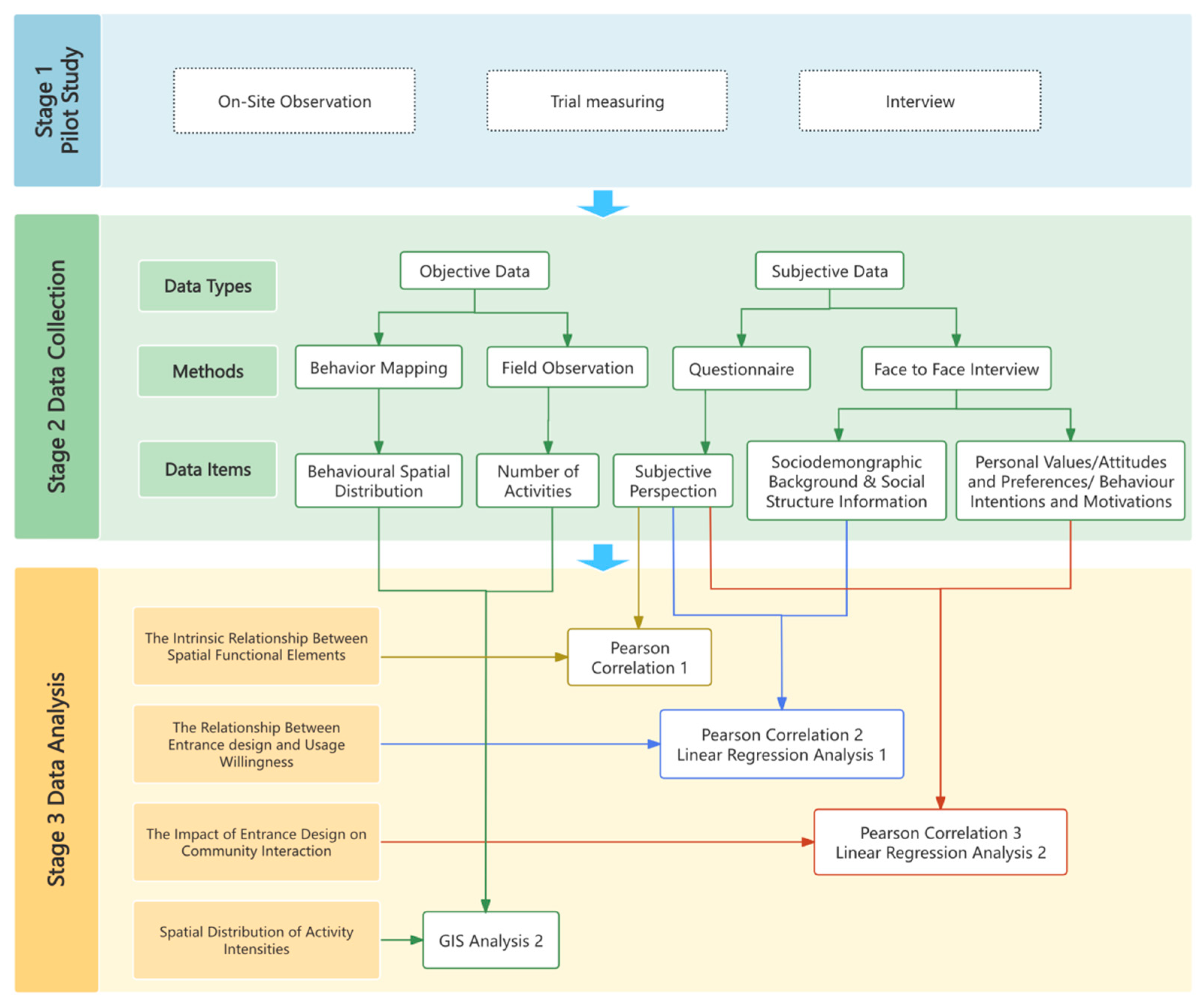
3.1. Stage 1: Pilot Study
3.1.1. Field Observation
3.1.2. Trial Measuring
3.1.3. Pilot Interview
3.2. Stage2 Data Collection
3.2.1. Behavior Mapping
3.2.2. On-Site Observation
3.2.3. Questionnaire
3.2.4. Face-to-Face Interview
3.3. Stage 3: Data Analysis
3.3.1. GIS Spatial Analysis of Multi-Source Data
3.3.2. Correlation Analysis of Spatial Functional Elements
3.3.3. Analysis of Factors Influencing Space Use Intention
3.3.4. Investigation of the Mechanism Influencing Community Social Interaction Frequency
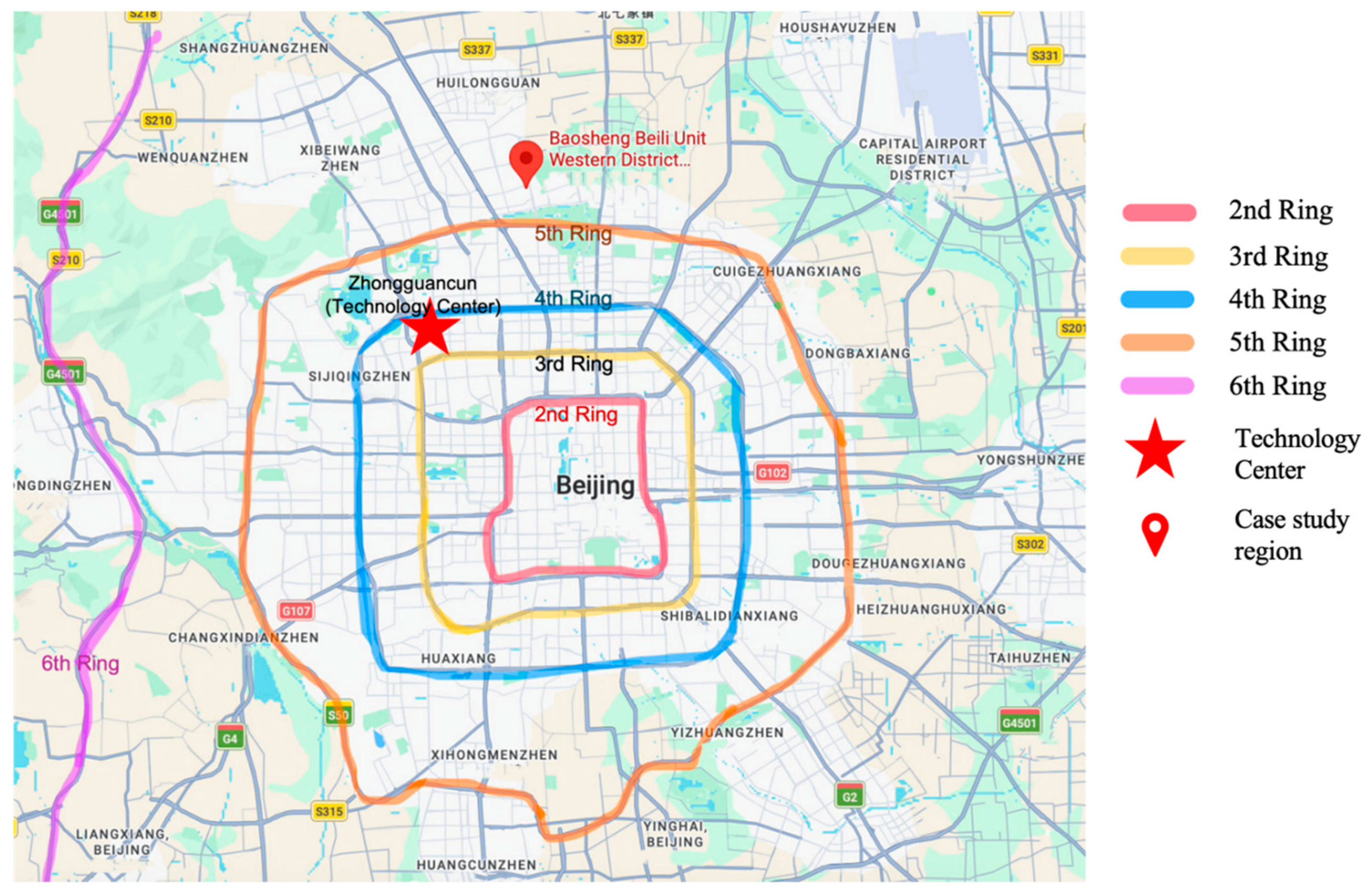
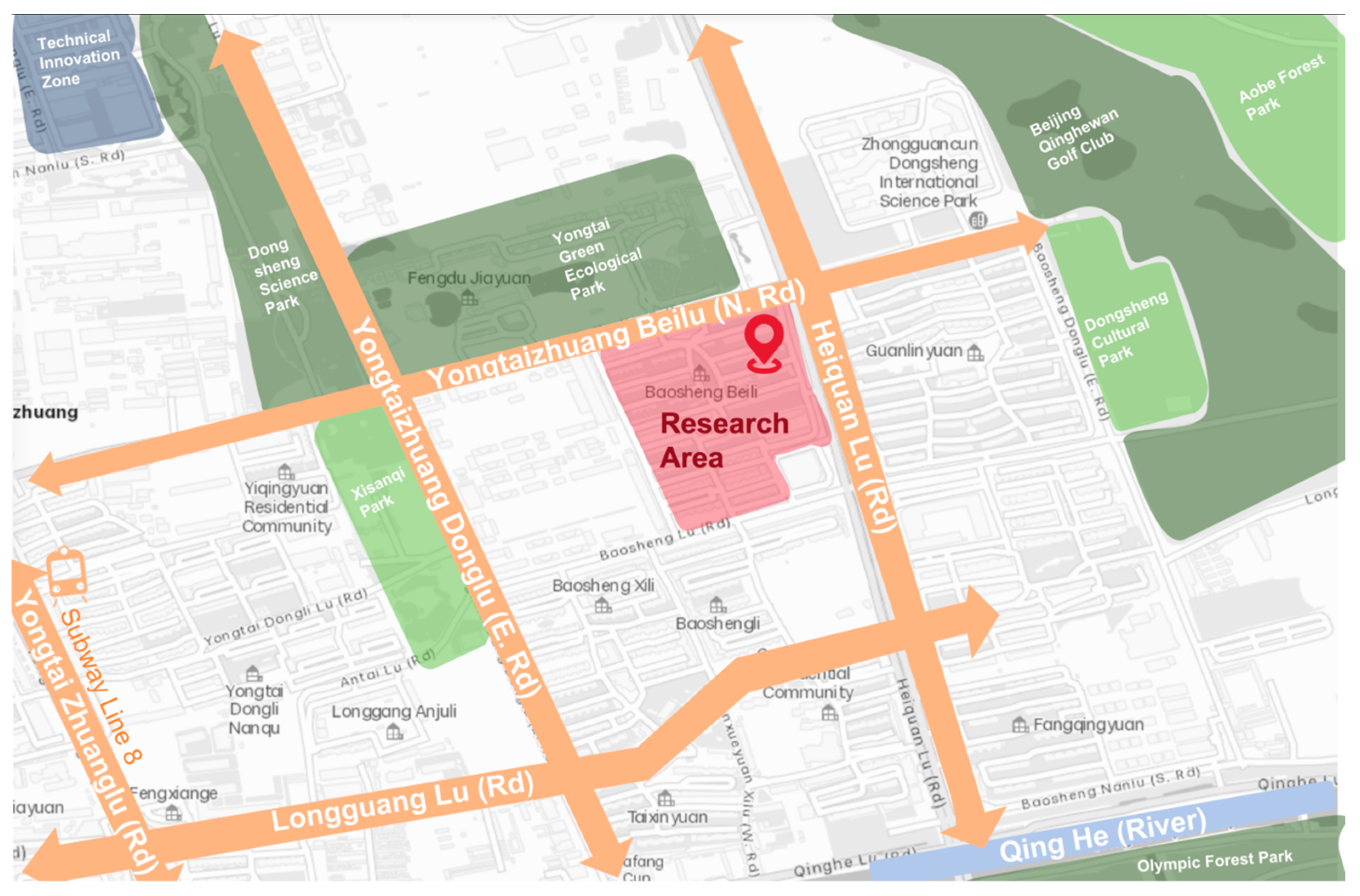
4. Case Study Region
5. Results
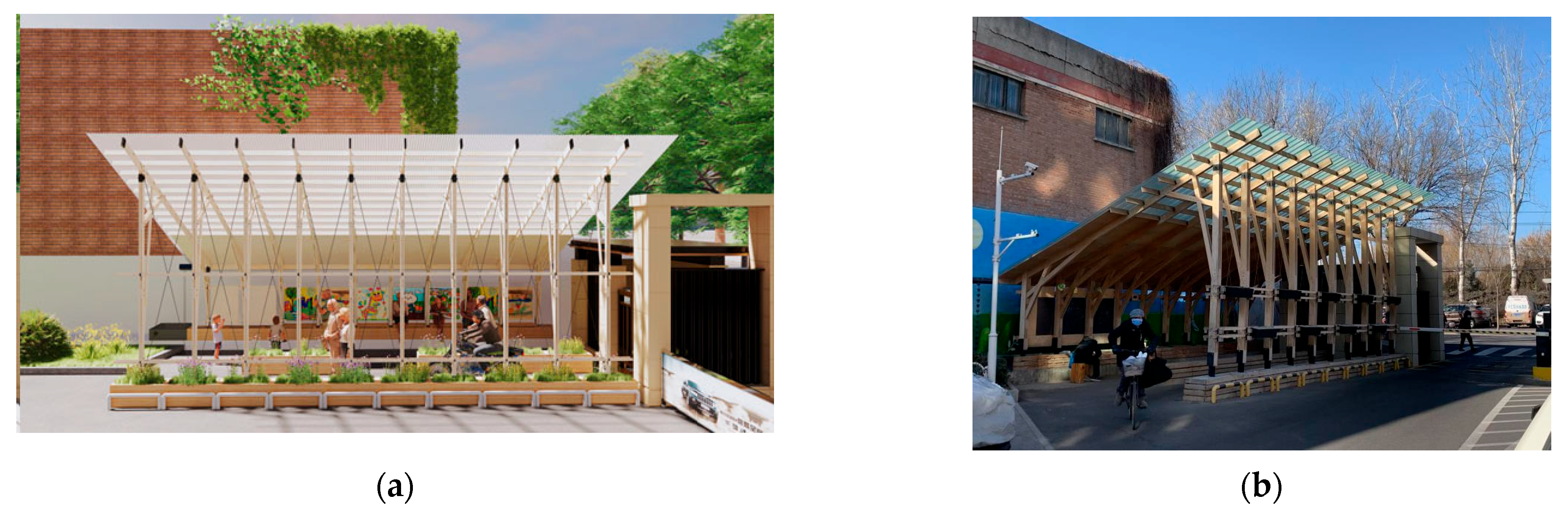
5.1. The Entrance Pavilion Provides a Space to Promote Short-Term Social Well-Being
5.2. The Impact of Safety and Security on Residents’ Psychology
5.3. The Impact of Information and Recognition on the Psychology of Residents
5.4. Conflicts in Residents’ Needs Cause Unfair Use of Space
5.4.1. Differentiation of Usage Patterns
5.4.2. Management of Cognitive Conflict
5.4.3. Opposing Values
6. Discussion
6.1. Public Space Plays an Underappreciated Role in Improving Social Well-Being
6.2. Entrance Landmark Design Strengthens Residents’ Psychological Identity
6.3. The Influence of Diverse Social Demographic Structures on Spatial Transformation
7. Conclusions
7.1. Main Findings
7.1.1. User Behaviors and the Meaning of Spatial Use
7.1.2. Psychological Effects of Spatial Design
7.1.3. Conflicts Between Different Groups and Proposed Solutions
7.1.4. Design and Management Proposals
- Adopting design approaches that take into account the needs and expectations of various user groups and strengthen people’s psychological and emotional connections.
- Enhancing esthetic and psychological comfort by integrating sensory factors such as lighting, color, and natural elements.
- Improving the perception of security through optimized lighting systems and strengthened maintenance and management.
- Promoting multi-stakeholder participation and developing collaborative governance models to enhance spatial sustainability and local adaptability.
- Designing spaces that encourage both temporary and long-term social interactions, supported by activity and recreational facilities.
- Establishing continuous monitoring of user satisfaction and spatial effectiveness, and carrying out regular feedback and improvement mechanisms.
7.2. Suggested Design Principles
- Participatory Design with User and Stakeholder Collaboration: Participatory processes should be introduced in spatial design and management to fully understand the needs and expectations of diverse social groups and age groups.
- Landmark and Iconic Design with Local Cultural Identity: Symbolic elements that reflect local characteristics, cultural architecture, and social memory should be applied to strengthen residents’ sense of belonging and social identity.
- Flexible and Multipurpose Spatial Design: Considering the limited data and observations, spaces should be designed to be multi-functional, easily accessible, and adaptable to meet diverse user needs.
- Dynamic and Flexible Spatial Elements: Modular and adaptable designs should be adopted to encourage spatial usage, facilitate movement and social interaction, and integrate natural elements and activity areas.
- Integration of Data Collection and Feedback Mechanisms: Systems that support continuous improvement through user feedback and long-term observation should be embedded into the design process.
- Environmentally and Socially Sustainable Approaches: The space should be designed in harmony with nature and society, using natural materials, green infrastructure, and ecological design as fundamental principles.
7.3. Limitations and Future Research
Supplementary Materials
Author Contributions
Funding
Institutional Review Board Statement
Informed Consent Statement
Data Availability Statement
Acknowledgments
Conflicts of Interest
Appendix A. Behavioral Coding Guide
Appendix A.1. Behavior Categories and Definitions

| Behavior | Definition | Distinction from Similar Behaviors |
|---|---|---|
| Appreciating scenery from a car | Observing the surrounding landscape while inside a stationary vehicle or a vehicle moving slowly enough to permit clear viewing | This category is only applied when the vehicle speed is low enough to allow clear visual observation of the occupant’s behavior. It is distinguished from Watching plants, which involves focused observation of vegetation outside a vehicle. Behaviors in faster-moving vehicles are not coded under this category, as the occupant’s activity cannot be reliably observed. |
| Cycling | Riding a standard bicycle for travel, leisure, or exercise | Excludes motorized vehicles and other forms of locomotion. |
| E-bike delivery riding | Riding an electric bicycle or scooter primarily for courier or delivery services | This is coded for commercial delivery activities on an e-bike. The rider is clearly engaged in delivery work (e.g., delivery box, uniform, courier behavior). If no commercial delivery characteristics are observed, code as Cycling. |
| Engaging in quiet activities | Performing low-intensity, individual activities such as using a mobile phone, reading, listening to audio, resting quietly, or observing general scenery, sky, or buildings. Valid for both seated and standing postures, and for individuals inside stationary or slowly moving vehicles | This behavior takes priority over Sitting, Standing and Stopping and staying when a clear quiet activity is observed. It is distinct from Sitting, which describes only a passive seated posture. This behavior does not include focused observation of plants, which should be coded as Watching plants. |
| Informal games | Participating in unorganized, recreational physical or interactive activities among peers, with no adult supervision or caregiving role | This is coded for unstructured, physical or recreational group activities, regardless of age, but without a care or supervision relationship. It is distinguished from Playing with children, which involves care, supervision, or recreation specifically with children. |
| Playing with children | Engaging in interactive care, supervision, monitoring, or accompanying children in recreational or supervisory activities, regardless of posture | This behavior is focused on interaction with children, takes priority over Standing, Socializing, Walking, and Engaging in quiet activities. If an adult supervises or plays with children while casually talking with other parents, the behavior is still coded as Playing with children rather than Socializing. |
| Sitting | Resting in a stationary, seated posture on benches, stool, or the ground. Maintaining a stationary seated posture with no other observable activity | This refers to a stationary seated posture without engaging in any other distinct activity. It is distinguishable from Engaging in quiet activities, which involves purposeful low-intensity individual tasks such as reading or using a mobile device. |
| Socializing | Verbal or interactive communication with others, regardless of posture (standing, sitting, or walking) | Socializing takes priority over Walking, Standing, Sitting, and Engaging in quiet activities. Individuals who walk while talking are coded as Socializing, not Walking. If the primary activity is conversation, code as Socializing. |
| Standing | Maintaining an upright, stationary standing posture with no goal-directed activity, social interaction, or focused observation. | Maintaining a stationary upright posture without social interaction or any observable activity. It is distinguished from Stopping and staying, which is a temporary pause in a fixed location. It also excludes individuals engaged in conversation, who should be coded as Socializing. |
| Stopping and staying | A brief, temporary pause in a fixed location with no clear activity or purpose | It is distinguished from Standing (sustained posture) and Waiting for a car (clear vehicle-waiting intent). For ambiguous short pauses, code as Stopping and staying. |
| Seeking shelter from the rain | Taking cover under canopies, eaves, or structures to avoid rain | This category refers to individuals taking shelter to avoid rain. It is clearly distinguishable from other stationary behaviors (e.g., sitting, standing, stopping and staying) that are unrelated to rain avoidance, as the contextual purpose is distinct. |
| Walking | Moving at a normal, unhurried pace through the space | This is coded for unaccompanied, moderate-paced movement. It is distinguished from Walking fast (rapid, purposeful pace) and Walking with a dog (accompanied by a dog). If movement speed is ambiguous or moderate, code as Walking |
| Walking fast | Moving at a rapid, purposeful pace, typically for transit | This is coded for accelerated, goal-directed movement. It is distinguished from Walking, which is a relaxed, unhurried gait. |
| Walking with a dog | Accompanying a dog while walking or standing in the space | This is coded when accompanied by a dog. It is distinguished from Walking, which is unaccompanied movement. |
| Watching plants | Focused observation, viewing, or attending to vegetation, greenery, or landscape plantings while outside a vehicle, regardless of posture | This category takes priority over Engaging in quiet activities and Standing. It is distinguished from Standing, which does not involve focused observation of plants. It is also distinguished from Appreciating scenery from a car, which occurs inside a vehicle. |
| Waiting for a car | Remaining in a fixed location while visibly waiting for a specific vehicle, such as looking toward oncoming traffic, checking for a ride, standing at a pickup point, or exhibiting clear waiting behavior for transportation | This is coded only when vehicle-waiting intent is obvious. It is distinguished from Stopping and staying, which is a general temporary pause without a specific purpose. If the purpose of stopping is unclear or not vehicle-related, code as Stopping and staying. |
Appendix A.2. Inclusion Criteria
Appendix A.3. Exclusion Criteria
Appendix A.4. Decision Rule
References
- Han, J.; Hu, S. Reviewing the Past to Learn New Things—Introduction to the Post-Occupancy Evaluation (POE) Method. Archit. J. 2006, 1, 80–82. [Google Scholar] [CrossRef]
- Preiser, W.F.E.; White, E.; Rabinowitz, H. Post-Occupancy Evaluation (Routledge Revivals), 1st ed.; Routledge: London, UK, 2015. [Google Scholar]
- Alexander, C.; Hirschen, S.; Ishikawa, S.; Coffin, C.; Angel, S. Houses Generated by Patterns; Center for Environmental Structure: Berkeley, CA, USA, 1969. [Google Scholar]
- Yin, X.; Gong, S.; Sun, Y. A Review of Research on Post Occupancy Evaluation (POE) of the Built Environment. J. Shandong Jianzhu Univ. 2018, 33, 62–69. [Google Scholar]
- Preiser, W.F. Post-Occupancy Evaluation: How to Make Buildings Work Better. Facilities 1995, 13, 19–28. [Google Scholar] [CrossRef]
- Kansara, T.; Ridley, I. Post Occupancy Evaluation of Buildings in a Zero Carbon City. Sustain. Cities Soc. 2012, 5, 23–25. [Google Scholar] [CrossRef]
- Wu, S. An important Research Directions in Architecture—Post-Occupancy Evaluation. South. Archit. 2009, 1, 4. [Google Scholar] [CrossRef]
- Khalil, N.; Kamaruzzaman, S.N.; Riley, M.; Husin, H.N.; Nawawi, A.H. Systematic Literature Review: The Nexus of Users’ Social Characteristics to Environmental Performance Mandates in Post Occupancy Evaluation (POE). Facilities 2024, 42, 1–26. [Google Scholar] [CrossRef]
- Chen, J.; Sun, S.; Lin, K.; Lin, J. Post -occupancy Evaluation of Public Space in Traditional Villages and Towns from the Perspective of Space Syntax. J. South Archit. 2022, 4, 106. [Google Scholar] [CrossRef]
- Asojo, A.O.; Bae, S.; Martin, C.S. Post-Occupancy Evaluation Study of the Impact of Daylighting and Electric Lighting in the Workplace. Leukos 2020, 16, 239–250. [Google Scholar] [CrossRef]
- Gatea, A.; Batcha, M.F.M.; Taweekun, J. Energy Efficiency and Thermal Comfort in Hospital Buildings: A Review. Int. J. Integr. Eng. 2020, 12, 33–41. [Google Scholar] [CrossRef]
- Wang, P. Comprehensive Evaluation and Planning Path Research on the Renewal of Old Urban Residential Areas. Ph.D. Thesis, Southeast University, Nanjing, China, 2019. [Google Scholar] [CrossRef]
- Pham, A.-D.; Ngo, N.-T.; Truong, T.T.H.; Huynh, N.-T.; Truong, N.-S. Predicting Energy Consumption in Multiple Buildings Using Machine Learning for Improving Energy Efficiency and Sustainability. J. Clean. Prod. 2020, 260, 121082. [Google Scholar] [CrossRef]
- Zhuang, W.; Han, M. Building Post-Occupancy Evaluation Basic Methods and Frontier Technology Review. Times Archit. 2019, 62, 46–51. [Google Scholar] [CrossRef]
- GB/T 50504-2009; Standard for Terminology of Civil Architectural Design. Ministry of Housing and Urban-Rural Development of the People’s Republic of China: Beijing, China, 2009.
- Zhao, D.; Li, S. Domestic and International Use Evaluation (POE) Development Research. Urban Environ. Des. 2007, 2, 93–95. [Google Scholar] [CrossRef]
- Wei, B.; Jiang, F. Study on Post-Occupancy Evaluation of Commercial Buildings Based on SD Method—Taking Jinsha International Shopping Plaza as an Example. Urban Archit. 2022, 19, 106–109. [Google Scholar] [CrossRef]
- Cai, S.; Ding, S. Research on the Renewal Strategy of Public Space in Resettlement Communities Based on Post-Occupancy Evaluation—Taking Tongfuyuan Community on Fenghuang Avenue in Chengdu as an Example. Resid. Area 2022, 1, 21–31. Available online: https://kns.cnki.net/kcms2/article/abstract?v=FCWB7knoBeQTTIq2f1WBiKhWdAoydqPGQoc8HwjI4mcDKILj92fEgGMWl2jk2EVYKNi35yOQU1I5PdkYFTlH9Q1xztnQW7t-FKzyDbfRyxCJk3VZIw4px1tVZeqp0M-eEXyjAXLjebSySMu3lpZ3CT_-llhPTsxUIXuFMMqL3CcxM1EEbfjIAA==&uniplatform=NZKPT&language=CHS (accessed on 25 February 2026).
- Bai, G. Study on Optimization of Community Parks Based on Residents’ Usage Evaluation. Master’s Thesis, Tianjin University, Tianjin, China, 2017. [Google Scholar]
- Xu, L. Study on User Activities and Crowding in Urban Open Spaces—Taking the Plaza and Pedestrian Street in the Central Area of Shanghai as an Example. Urban Plan. Forum 2004, 4, 75–78. [Google Scholar] [CrossRef]
- Si, G.; Zhuang, W.; Liang, S. Framework and Logic for Post-Use Evaluation Street Space. Archit. J. 2024, 2, 36–42. [Google Scholar] [CrossRef]
- Lin, L. A Study on the Post-Use Evaluation of the Pedestrian Street in Linxia Ancient Tea and Horse Market. Urban Archit. Space 2022, 29, 135–138. Available online: https://kns.cnki.net/kcms2/article/abstract?v=FCWB7knoBeTxv9w7rzsipVliz7hT27VKOqR0zuFdPF_VDLyhKSxNvnq9OAtpqeEjNXDpi9O4Pa9GT0iS6psjIjoOcNhz1xrDRv_lRtuuDnErbgdrqNuDXb3evUakJ1akryO_U7jdyUZidgwPeJ6QrysUMobCsKo5RM7eIaomFjuUkCpstgp87A==&uniplatform=NZKPT&language=CHS (accessed on 25 February 2026).
- Wen, Y.; Zhang, W.; Qin, Z.; Ge, L. A Preliminary Study on Post-Occupancy Evaluation of Residential Community Center Buildings: A Case Study of Nanjing Shazhou Community Center Building. Archit. Cult. 2022, 8, 37–39. [Google Scholar] [CrossRef]
- Luo, L.; Lu, W. International Trends in POE Research and Realistic Reflections on Its Introduction into China. J. Archit. 2004, 8, 82–83. [Google Scholar]
- Li, M.; Zhang, J.; Wang, Y. Research on Post-Use Evaluation of Community Green Space Rectification Based on a Multi-Dimensional Perception System: A Case Study of Jiayuan Sanli Community in Beijing. Land 2024, 13, 698. [Google Scholar] [CrossRef]
- Zhang, H. Research on Planning, Design, Use, and Evaluation of Elderly Communities in Beijing. Master’s Thesis, Hefei University of Technology, Hefei, China, 2017. [Google Scholar]
- Zheng, L.; Wu, J. Community Public Space Production–Taking the Shanghai Xinhua Road Community Construction Practice of Dayu Community Construction Development Center as an Example. N. Archit. 2020, 4, 81–85. [Google Scholar] [CrossRef]
- Chen, T.; Luh, D.; Hu, L.; Shan, Q. Exploring Factors Affecting Residential Satisfaction in Old Neighborhoods and Sustainable Design Strategies Based on Post-Occupancy Evaluation. Sustainability 2023, 15, 15213. [Google Scholar] [CrossRef]
- Li, Y.; Wang, M.; Peng, Y.; Wang, Z. Understanding Residents’ Satisfaction and Perceptions in Urban Renewal: A Systematic Review of Subjective Evaluation Research in China. J. Asian Archit. Build. Eng. 2026, 1–20. [Google Scholar] [CrossRef]
- Bai, X.; Xie, Z.; Dewancker, B.J. Exploring the Factors Affecting User Satisfaction in Poverty Alleviation Relocation Housing for Minorities through Post-Occupancy Evaluation: A Case Study of Pu’er. Sustainability 2022, 14, 15167. [Google Scholar] [CrossRef]
- Zhao, J.; Abdul Aziz, F.; Cheng, Z.; Ujang, N.; Zhang, H.; Xu, J.; Xiao, Y.; Shi, L. Post-Occupancy Evaluation of the Improved Old Residential Neighborhood Satisfaction Using Principal Component Analysis: The Case of Wuxi, China. ISPRS Int. J. Geo-Inf. 2024, 13, 318. [Google Scholar] [CrossRef]
- Mishra, H.S.; Bell, S.; Grellier, J.; White, M.P. Testing the Reliability and Effectiveness of a New Tool for Assessing Urban Blue Spaces: The BlueHealth Environmental Assessment Tool (BEAT). Health Place 2021, 68, 102526. [Google Scholar] [CrossRef]
- Lv, L.; Jiang, H. Research on Regeneration Mode of Industrial Heritage Based on Mixed-Use Development. Ind. Constr. 2022, 52, 35–39. [Google Scholar] [CrossRef]
- Yan, W.; Fan, C.; Shen, S.; Qiu, B. A Study on the Multi-Dimensional Recreational Emotion Evaluation Framework Based on Social Media Data: A Case Study of Urban Parks in the Central Urban Area of Nanjing. Mod. Urban Res. 2024, 5, 85–91. [Google Scholar]
- Li, S.; Wang, H.; Chen, G. Research on the Improving Strategies for the Revitalization of Industrial Heritage Based on POE: A Case Study of Taikoo Warehouse in Guangzhou. Art Des. 2023, 8, 130–132. [Google Scholar]
- Xiao, W.; Yoon, J.-E. A Post Occupancy Evaluation of the Space Utilization of Cultural Heritage in Children’s Education: A Case Study of Wuhan’s Historical Districts, China. Buildings 2024, 14, 2682. [Google Scholar] [CrossRef]
- Wang, S.; Duan, W.; Zheng, X. Post-Occupancy Evaluation of Brownfield Reuse Based on Sustainable Development: The Case of Beijing Shougang Park. Buildings 2023, 13, 2275. [Google Scholar] [CrossRef]
- Himansu Sekhar Mishra. Bluehealth Environmental Assessment Tool (BEAT) Survey Form for the Professionals. Available online: https://beatbluehealth.wixsite.com/site/survey-for-experts (accessed on 1 March 2026).



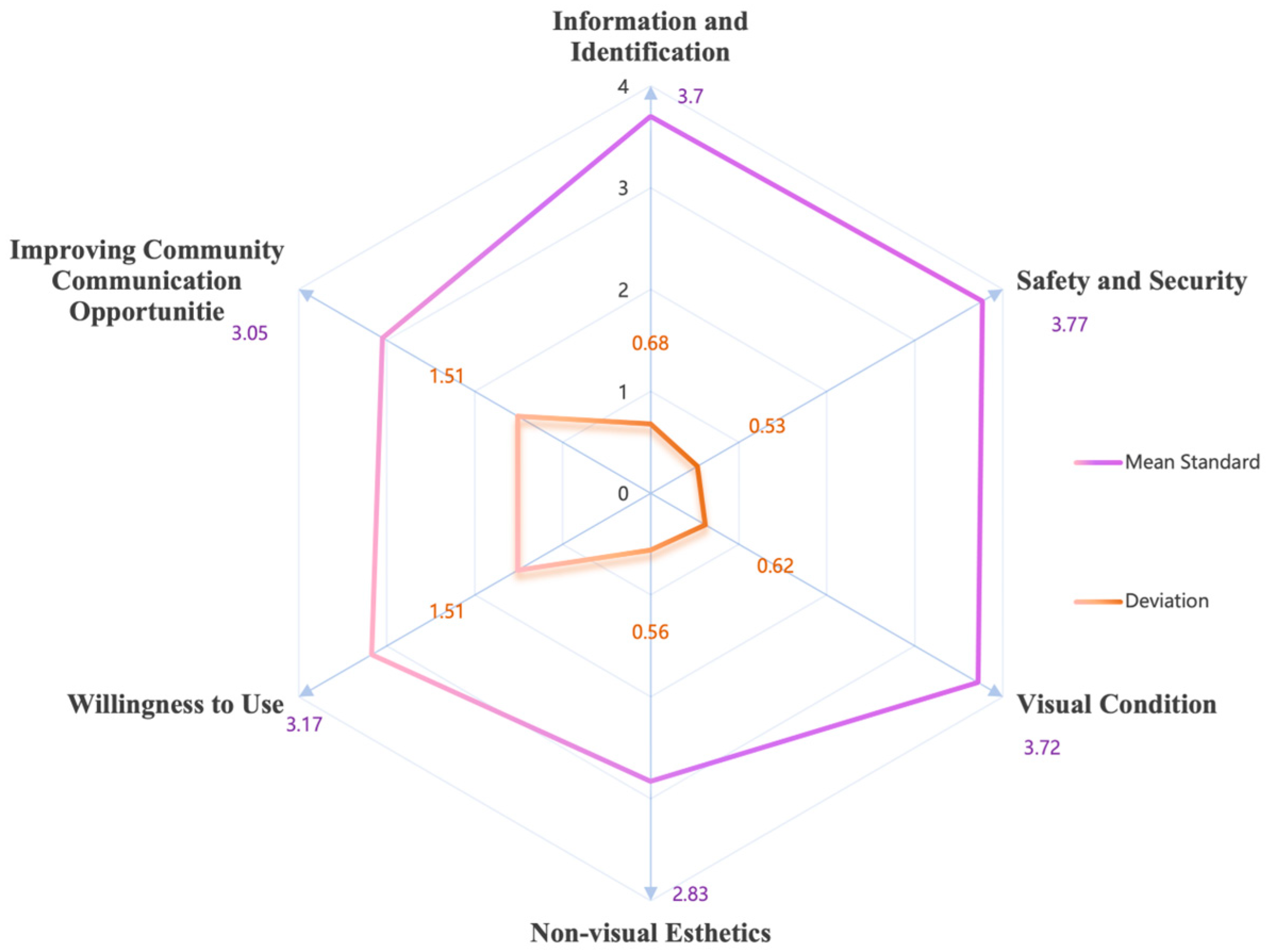
| Dimension | Description | Key Evaluation Contents |
|---|---|---|
| Information and Recognition | Functionality | Spatial signage and guidance |
| Cultural meaning | Spatial structure and landscape coordination | |
| Orientation | ||
| Sense of belonging | Community culture and belonging | |
| Safety and Security | Safety and security | Reduction in accidental risks |
| Risk prevention | Nighttime environment safety | |
| Security experience | Reduction in crime and antisocial behavior | |
| Visual State | Visual quality | Esthetic satisfaction |
| Esthetic effect | View quality | |
| Spatial openness | Visibility and obstruction level | |
| Non-Visual State | Multi-sensory | Olfactory comfort |
| Acoustic environment | ||
| Atmospheric experience | Air quality and humidity | |
| Spatial tranquility |
| Information and Identification | Safety and Security | Visual Condition | Non-Visual Esthetics | |
|---|---|---|---|---|
| Information and Identification | ||||
| Safety and Security | 0.361 ** | |||
| Visual Condition | 0.230 * | 0.294 ** | ||
| Non-Visual Esthetics | 0.193 * | 0.182 | 0.067 |
| Information and Identification | Safety and Security | Visual Condition | Non-Visual Esthetics | |
|---|---|---|---|---|
| Willingness to use the entrance pavilion | 0.364 ** | 0.181 | 0.058 | 0.064 |
| Improvement of communication opportunities | 0.598 ** | 0.242 * | 0.088 | 0.157 |
| B | Standard | T-Value | p-Value | VIF | Tolerance | |
|---|---|---|---|---|---|---|
| Constant | 0.599 | 1.065 | 0.562 | 0.575 | ||
| Information and Identification | 0.64 | 0.185 | 3.463 | 0.001 | 0.836 | 1.196 |
| Safety and Security | 0.161 | 0.241 | 0.67 | 0.505 | 0.811 | 1.234 |
| Visual Condition | −0.084 | 0.194 | −0.434 | 0.665 | 0.896 | 1.116 |
| Non-Visual Esthetics | −0.03 | 0.21 | −0.144 | 0.886 | 0.948 | 1.055 |
| R2 | 0.137 | |||||
| Adjustment R2 | 0.103 | |||||
| F | F (4100) = 3.978, p = 0.005 | |||||
| D-W | 1.884 | |||||
| B | Standard | T-Value | p-Value | VIF | Tolerance | |
|---|---|---|---|---|---|---|
| Constant | −1.057 | 0.915 | −1.155 | 0.251 | ||
| Information and Identification | 1.072 | 0.159 | 6.758 | 0.000 | 0.836 | 1.196 |
| Safety and Security | 0.094 | 0.207 | 0.454 | 0.651 | 0.811 | 1.234 |
| Visual Condition | −0.124 | 0.167 | −0.741 | 0.460 | 0.896 | 1.116 |
| Non-Visual Esthetics | 0.088 | 0.180 | 0.490 | 0.626 | 0.948 | 1.055 |
| R2 | 0.363 | |||||
| Adjustment R2 | 0.338 | |||||
| F | F (4100) = 14.252, p < 0.001 | |||||
| D-W | 1.78 | |||||
Disclaimer/Publisher’s Note: The statements, opinions and data contained in all publications are solely those of the individual author(s) and contributor(s) and not of MDPI and/or the editor(s). MDPI and/or the editor(s) disclaim responsibility for any injury to people or property resulting from any ideas, methods, instructions or products referred to in the content. |
© 2026 by the authors. Licensee MDPI, Basel, Switzerland. This article is an open access article distributed under the terms and conditions of the Creative Commons Attribution (CC BY) license.
Share and Cite
Yang, J.; Shi, Y.; Ding, W.; Liu, Y.; Wang, M.; Liu, C.; Han, M. A Social Dimension Study of Post-Occupancy Evaluation for Old Residential Communities: A Case Study of Baoshengli North Community in Beijing. Buildings 2026, 16, 1263. https://doi.org/10.3390/buildings16061263
Yang J, Shi Y, Ding W, Liu Y, Wang M, Liu C, Han M. A Social Dimension Study of Post-Occupancy Evaluation for Old Residential Communities: A Case Study of Baoshengli North Community in Beijing. Buildings. 2026; 16(6):1263. https://doi.org/10.3390/buildings16061263
Chicago/Turabian StyleYang, Jianming, Yanglu Shi, Wenying Ding, Yang Liu, Mingli Wang, Chenxiao Liu, and Mo Han. 2026. "A Social Dimension Study of Post-Occupancy Evaluation for Old Residential Communities: A Case Study of Baoshengli North Community in Beijing" Buildings 16, no. 6: 1263. https://doi.org/10.3390/buildings16061263
APA StyleYang, J., Shi, Y., Ding, W., Liu, Y., Wang, M., Liu, C., & Han, M. (2026). A Social Dimension Study of Post-Occupancy Evaluation for Old Residential Communities: A Case Study of Baoshengli North Community in Beijing. Buildings, 16(6), 1263. https://doi.org/10.3390/buildings16061263