3D Printing of Earth-Based Mixtures: Linking Material Design, Printability, and Structural Performance


Abstract
1. Introduction
2. Materials and Methods
2.1. Soil Characterization
2.2. Soil Mix Design
2.2.1. Set 1 Mixes: Enhancing Soil Mix Design by Substituting Local Soil with Concrete Sand
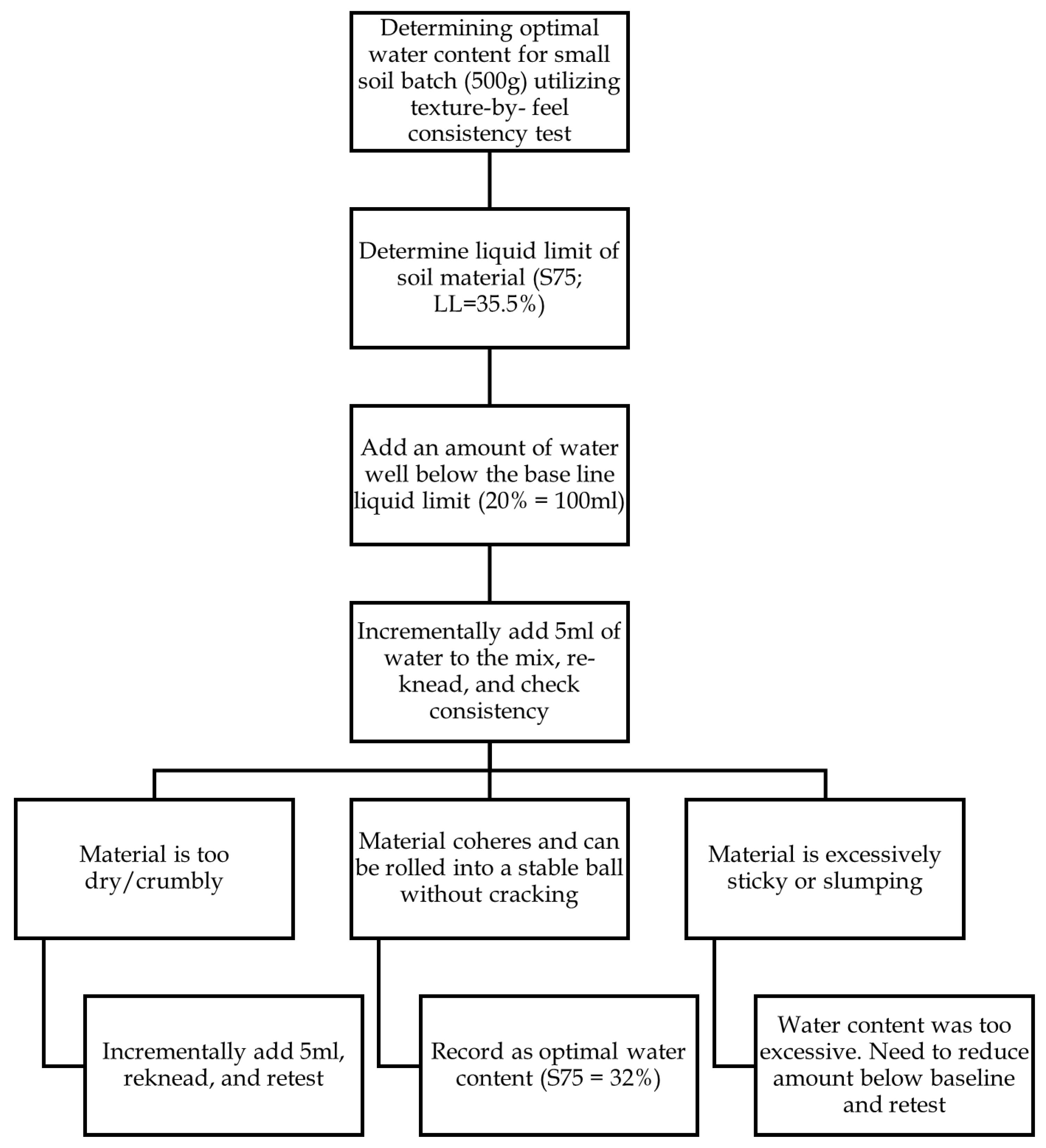
- If the material crumbled and could not be rolled into a cohesive ball, the water content was insufficient. In this case, water was added incrementally in 5 mL steps, followed by re-kneading and re-testing;
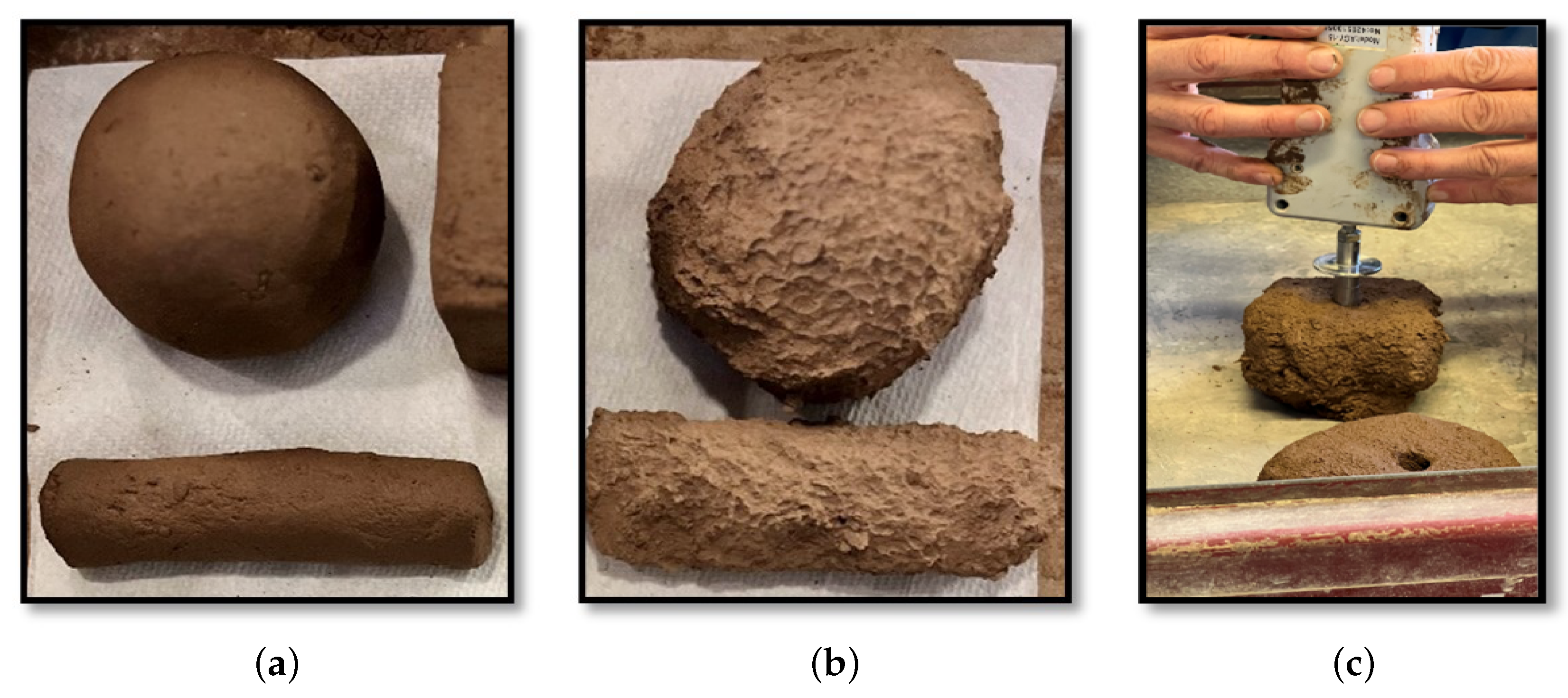
- If the material cohered and could be rolled into a stable ball without cracking, the corresponding water amount was recorded as the optimal water content (Figure 3a);
- If the material became excessively sticky or exhibited slumping behavior, the water content was considered excessive (Figure 3b).
2.2.2. Set 2 Mixes: Enhancing Soil Mix Design by Including Natural Fibers
2.2.3. Mixing Procedure for Soil Mixes
2.3. Test Methods
2.3.1. Measurement of Compressive Strength in Cast Soil Cubes
2.3.2. Measurement of Shrinkage in Cast Soil Samples
2.3.3. 3D Printability Tests and Mechanical Properties of 3D-Printed Soil Samples
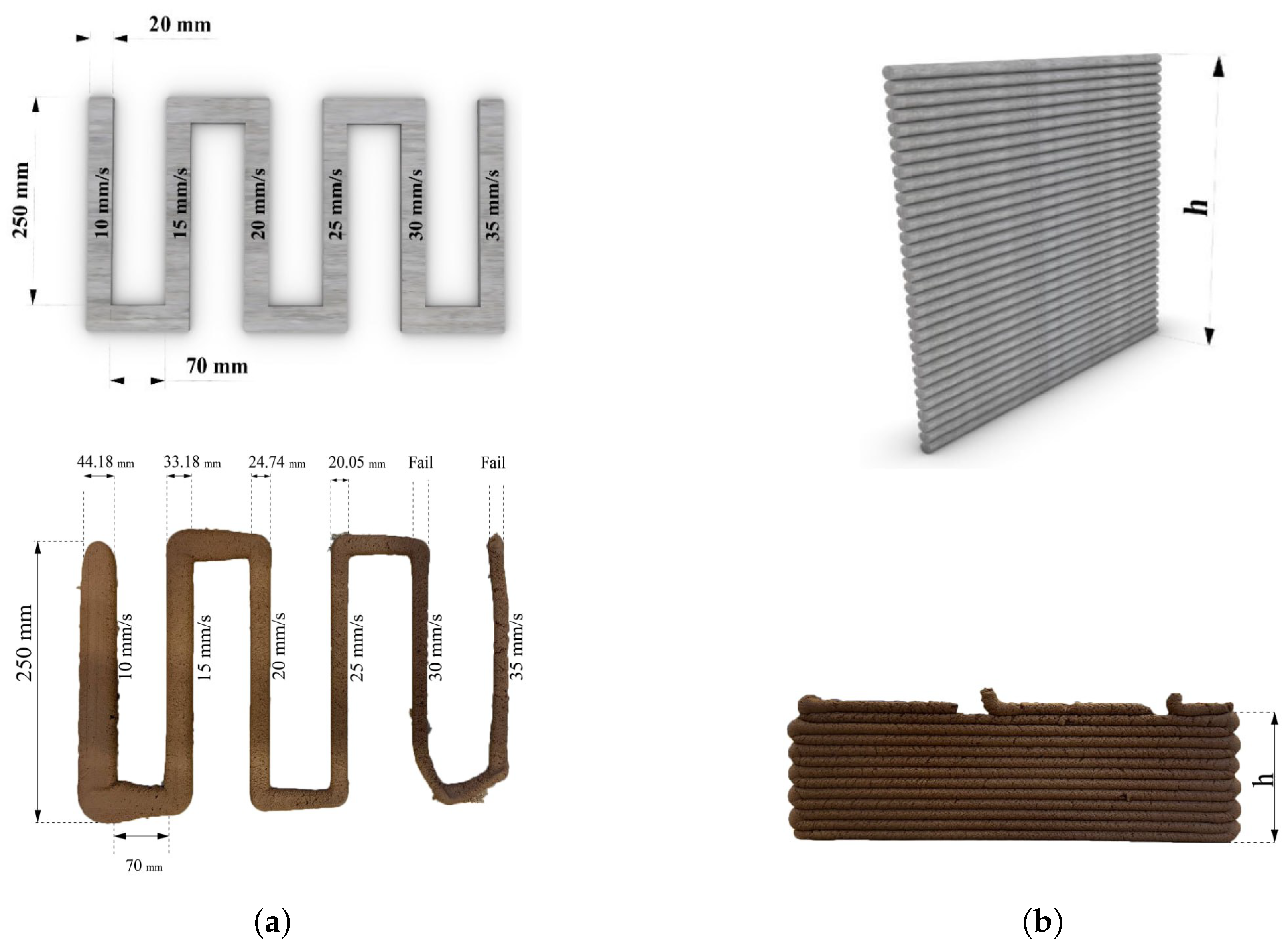
Extrudability Tests
Buildability Tests
2.3.4. Flexural Strength of 3D Printed Beam
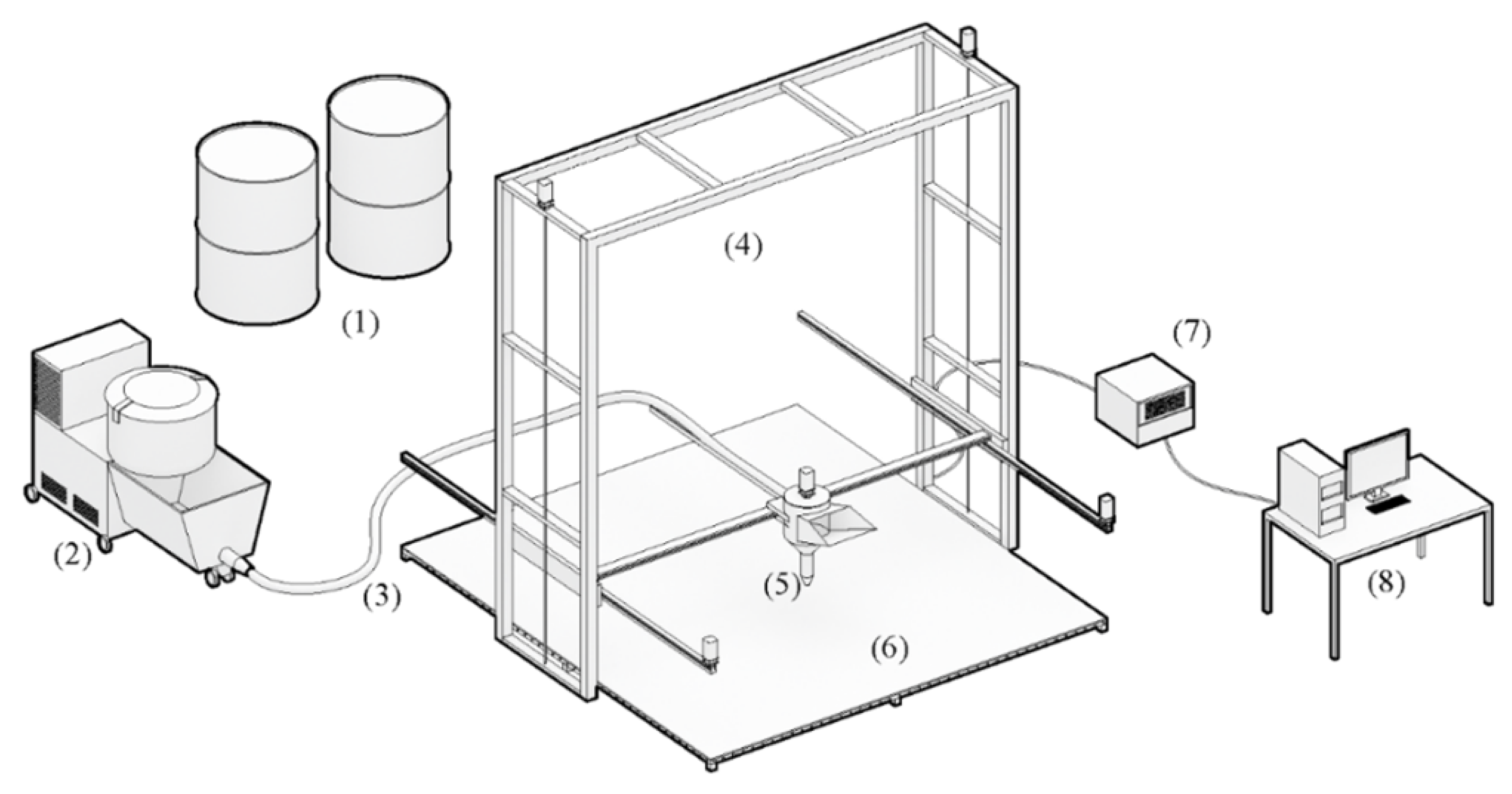
2.3.5. 3D Printability of Soil Samples on a Larger Scale
3. Results and Discussion
3.1. Traditional Consistency Test for Determining Optimum Water Content
3.2. Properties of Soil Mixes
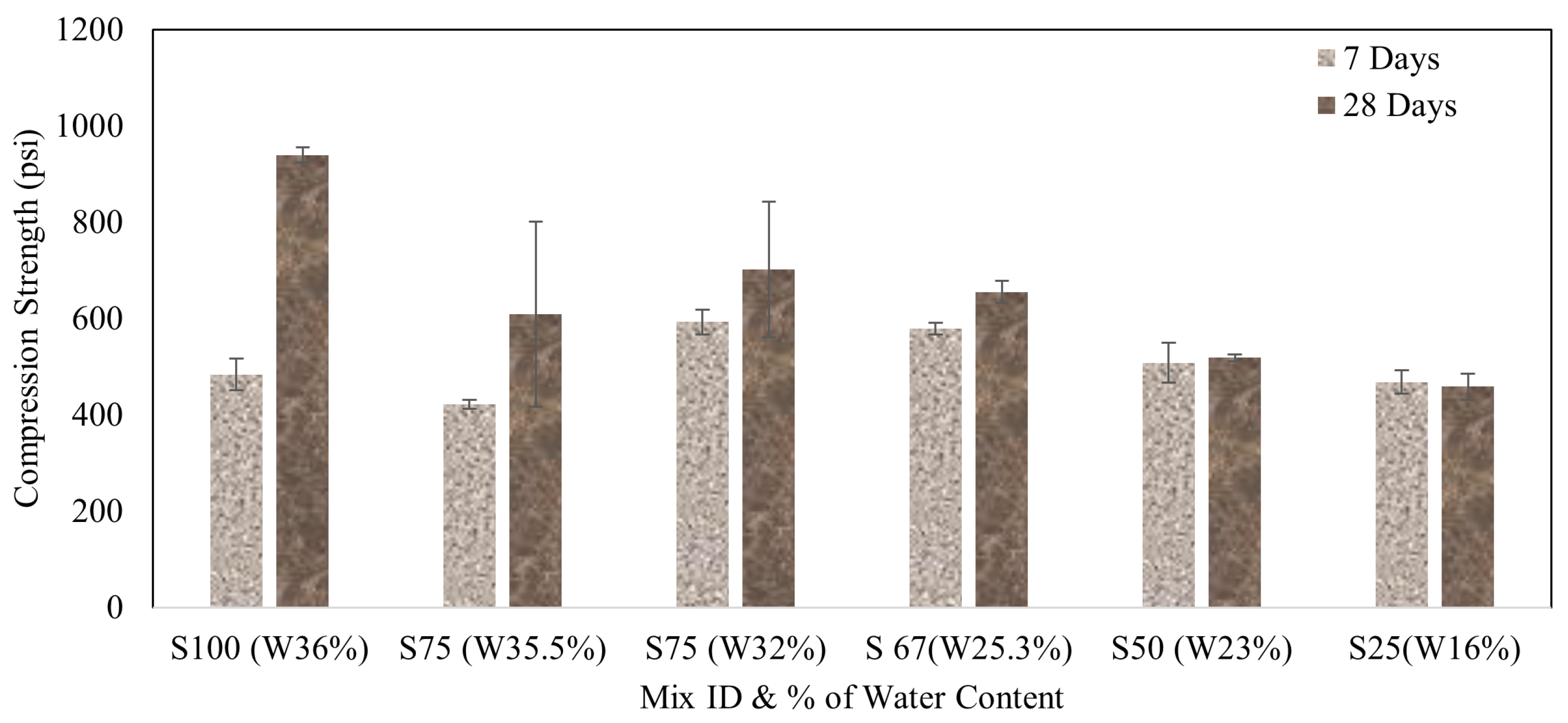
3.2.1. Properties of Set 1 Mixes Meeting Strength and Printability Requirements
3.2.2. Properties of Set 2 Mixes Meeting Shrinkage and Printability Requirements
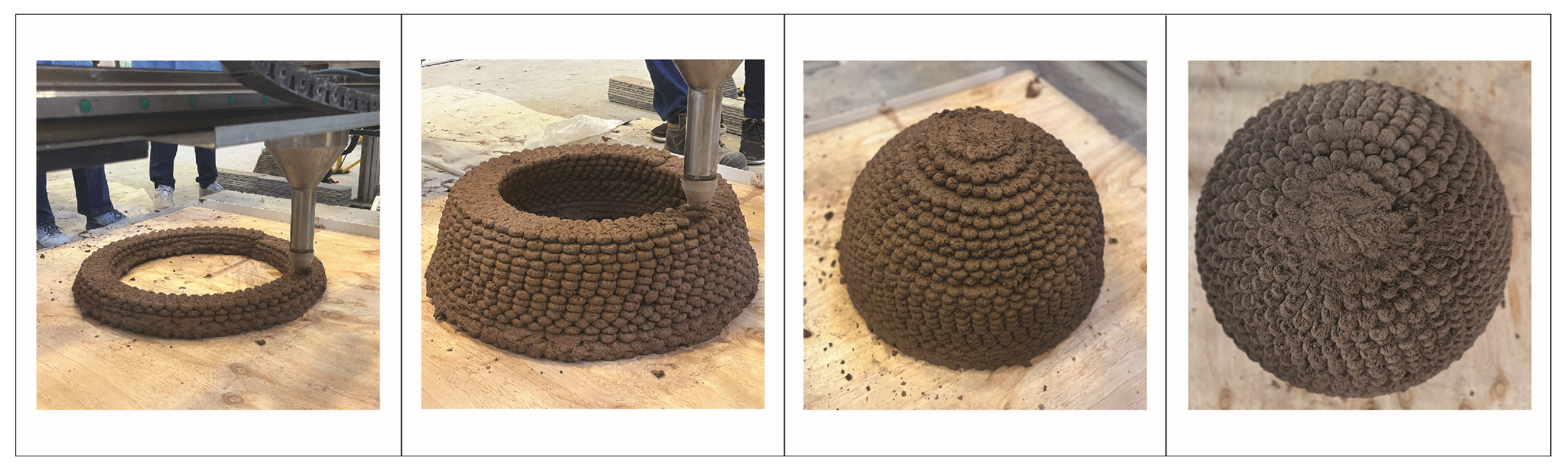
3.3. Large-Scale 3D Printing of the Selected Mix
4. Future Research
5. Conclusions
- This study demonstrates the viability of adapting locally sourced clay-loam soil from Belén, NM, for gantry-based 3D printed earthen construction (without the use of harmful chemicals) through systematic modification with graded concrete sand and rice hull fiber. By integrating conventional soil characterization methods with additive manufacturing metrics such as extrudability, buildability, and strength, a multiscale framework was established to assess material behavior from laboratory specimens to structural components, paving the way for a potential standard to be developed.
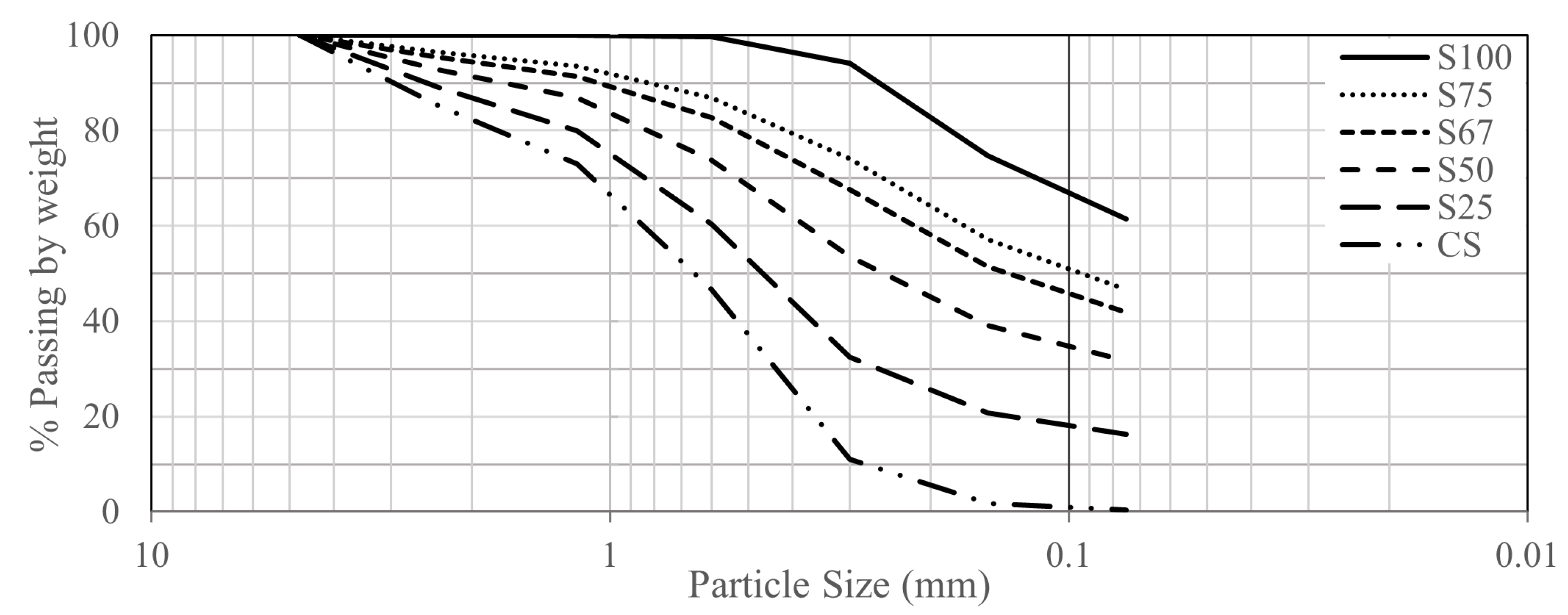
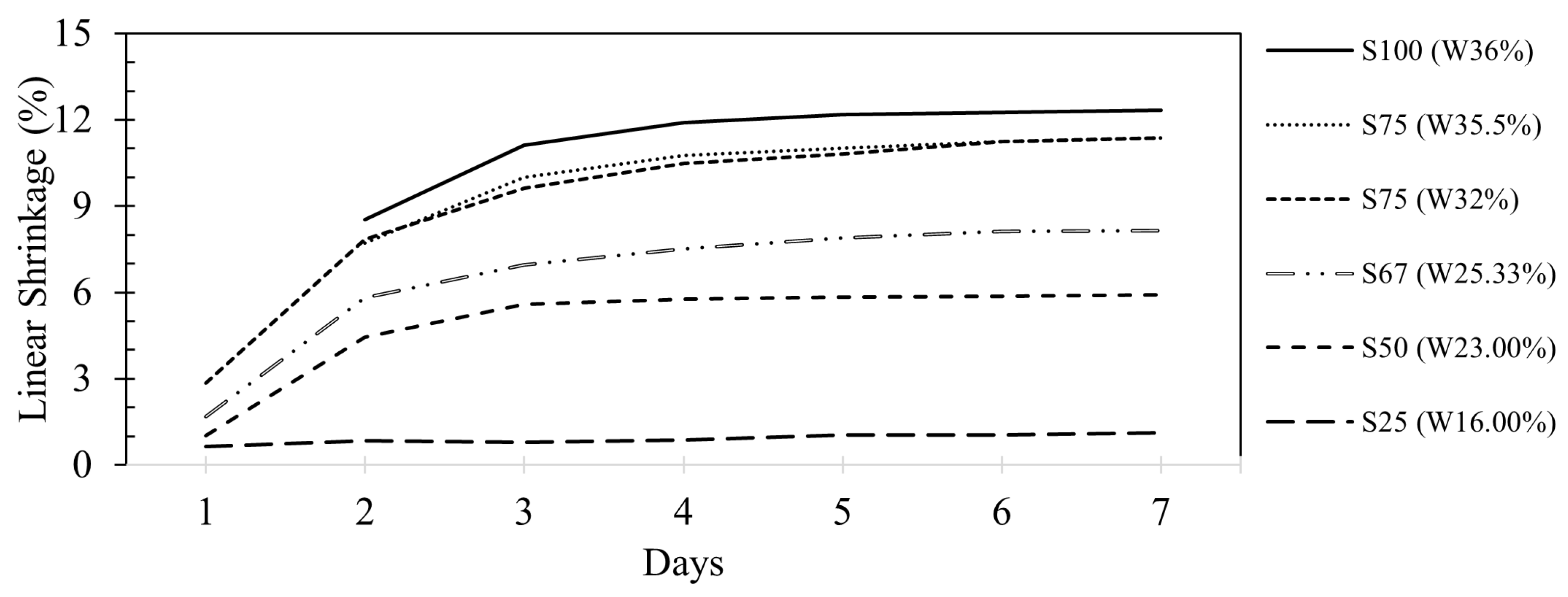
- Partial replacement of soil with graded concrete sand (max aggregate size sieve No. 4), set 1 of the soil mixes, demonstrated decent results in shrinkage but not so well in strength. As the CS content increased from S100 to S25, 7 day linear shrinkage dropped from 12.33% to 1.12%; however, it was accompanied by a 51.2% reduction in compressive strength, emphasizing the need to balance shrinkage control against strength retention to meet code requirements. A 2:1 soil-to-sand ratio provided an effective baseline.
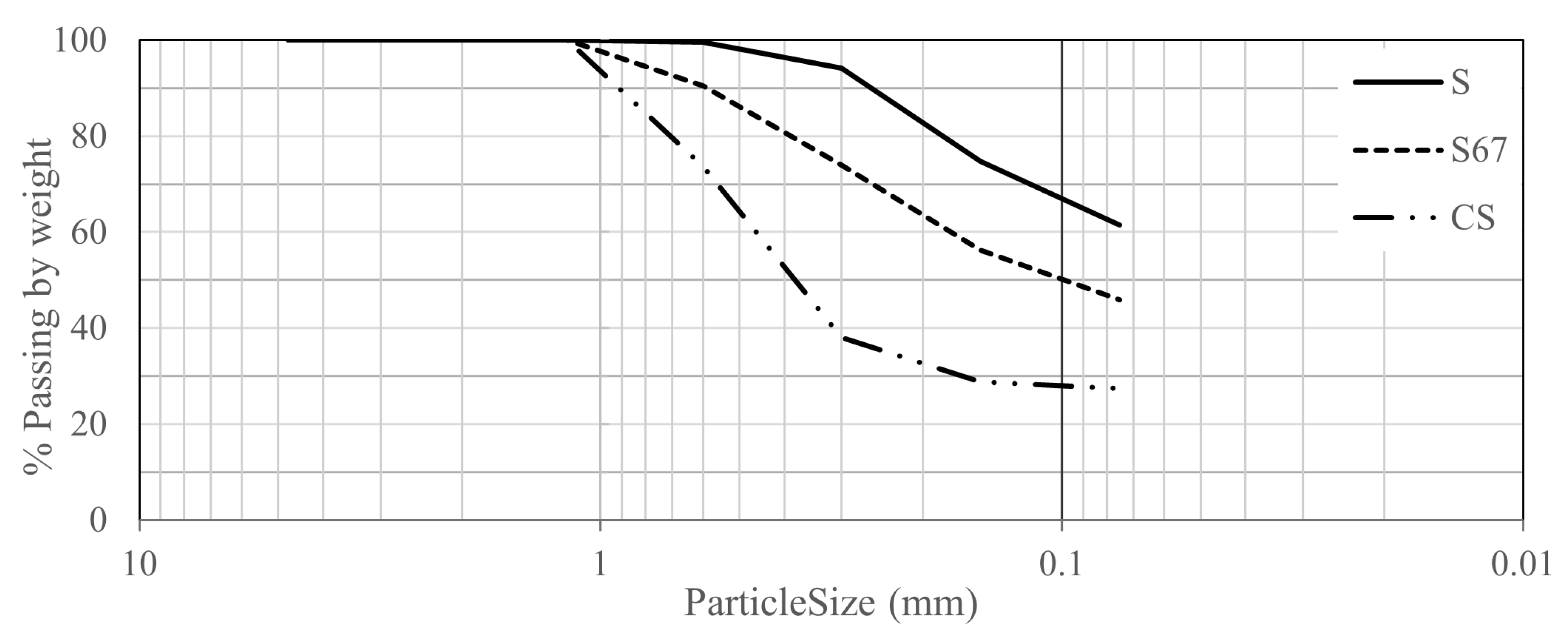
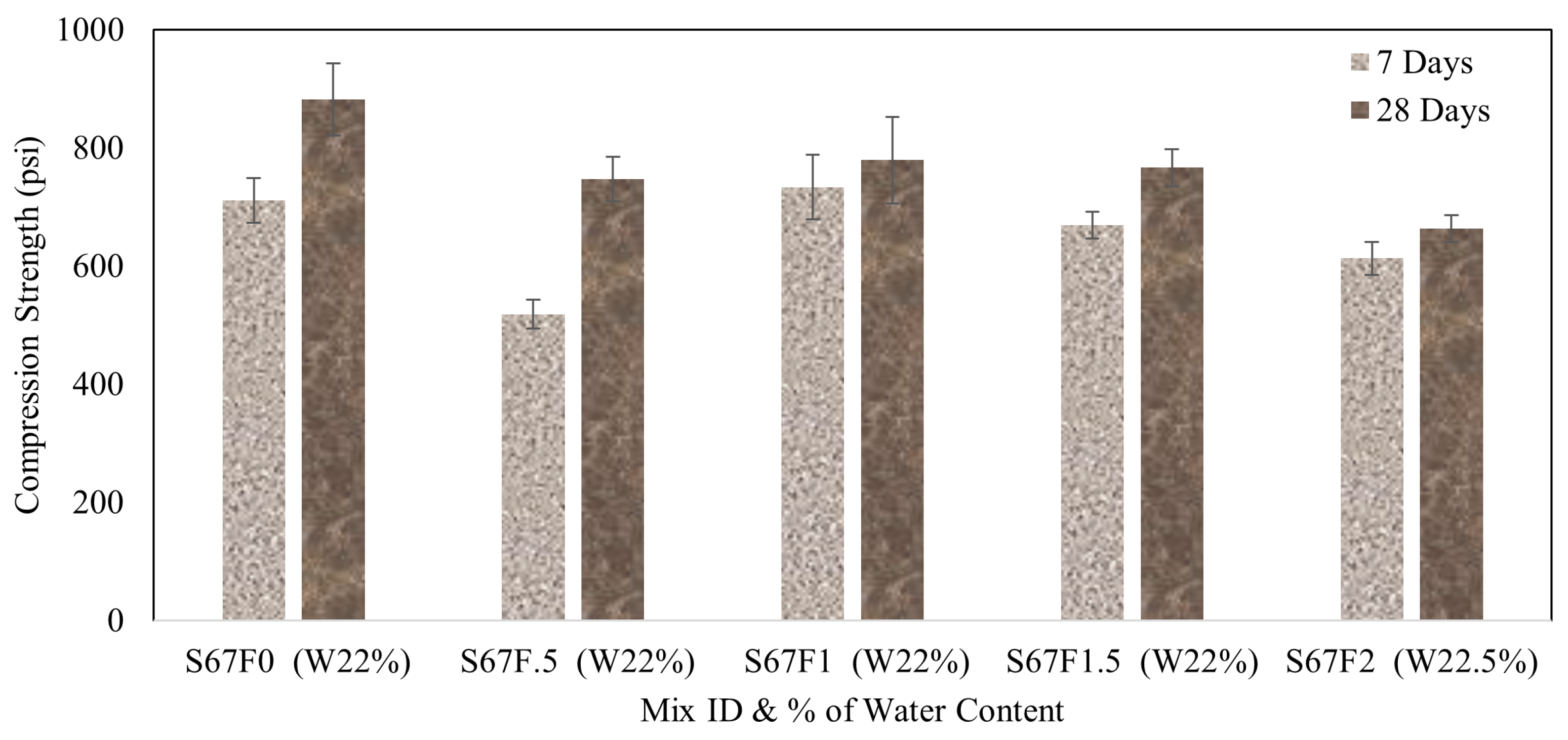
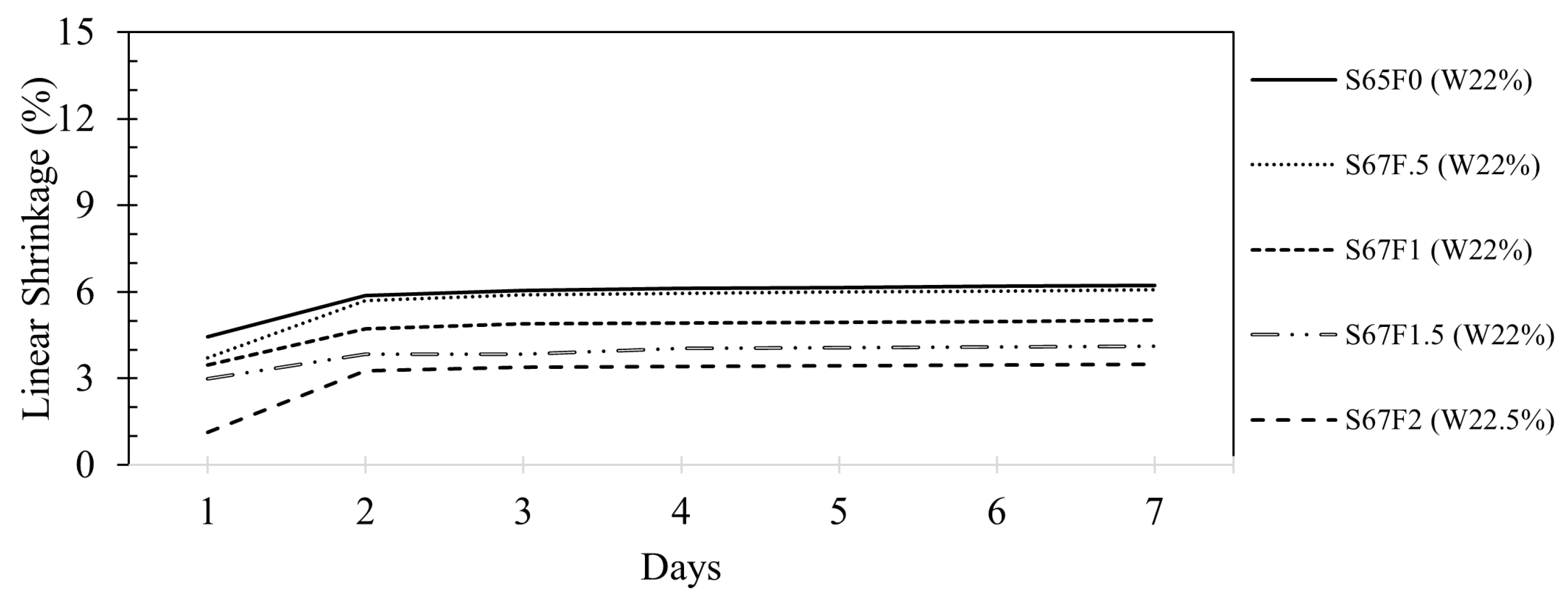
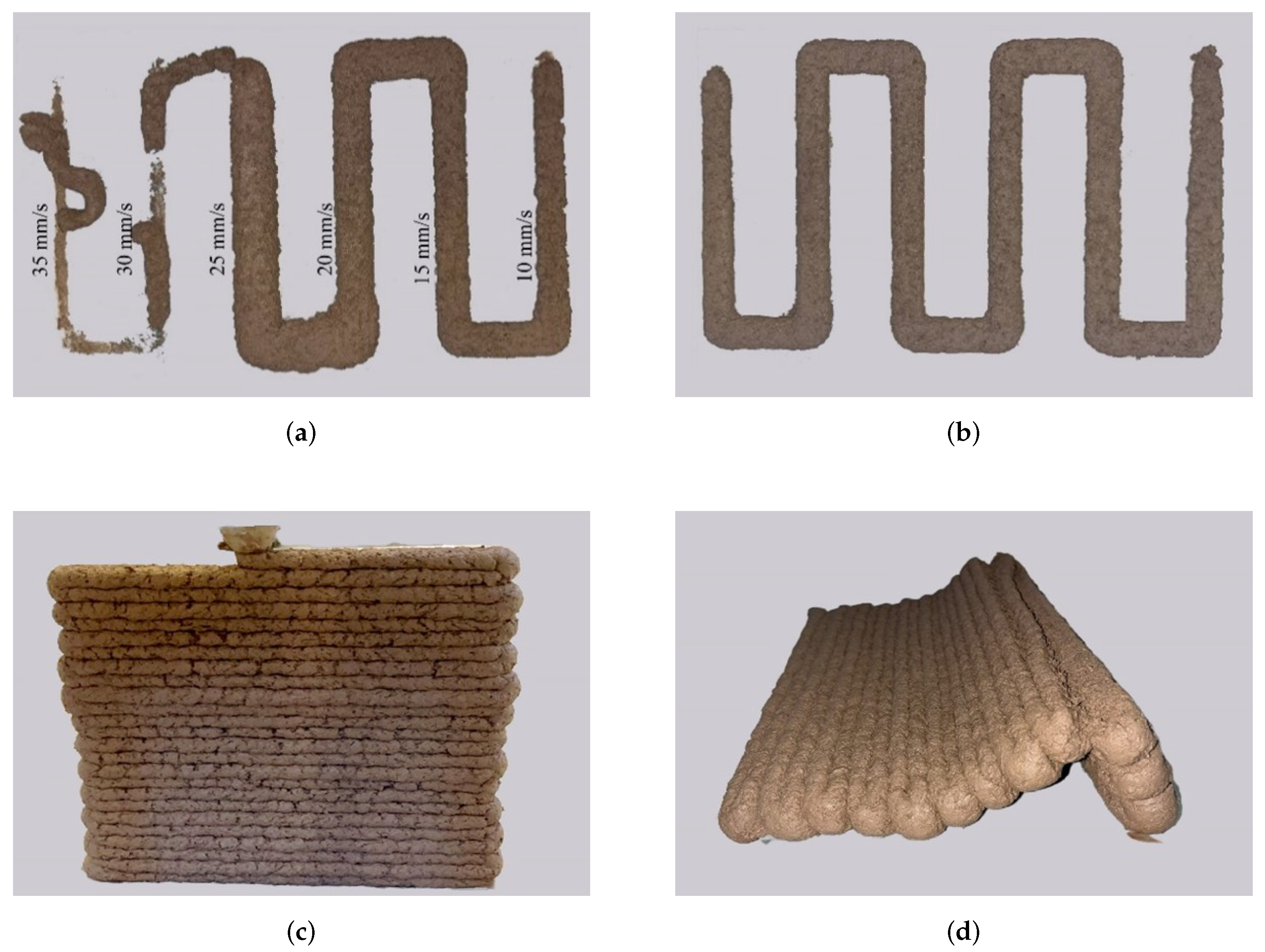
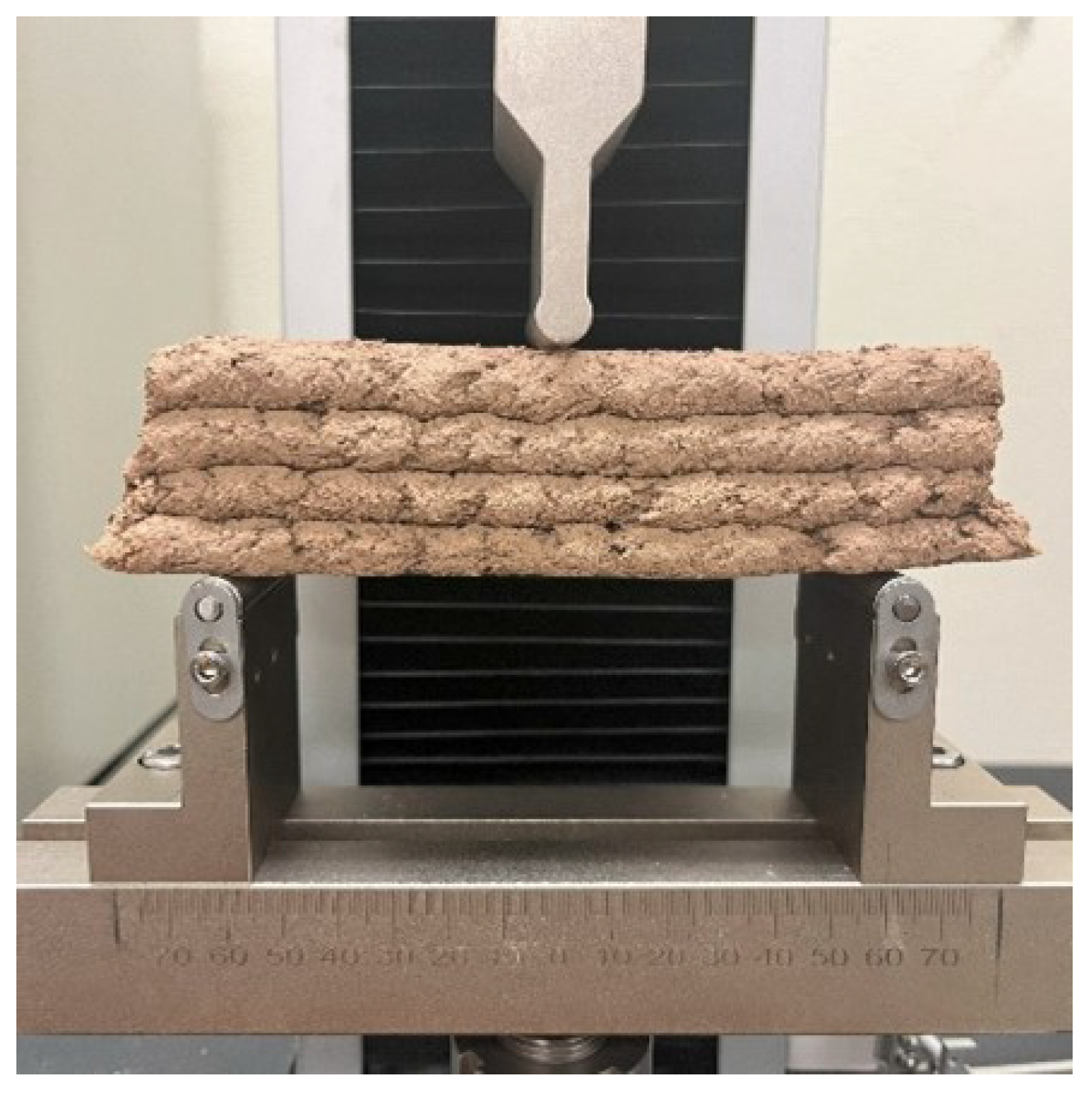
- In set 2 of the soil mixes, the max aggregate size of CS was reduced to sieve No. 16, and the incorporation of 2% rice hull fiber improved the performance of the earthen mixture. Linear shrinkage was reduced to 3.48%, a 72% reduction relative to set 1, and exceeded compressive (663 psi) and flexural (189 psi) strengths required by the NM Earthen Building Code by nearly double and triple, respectively. The mix demonstrated reliable extrudability and supported 24 printed layers without deformation.
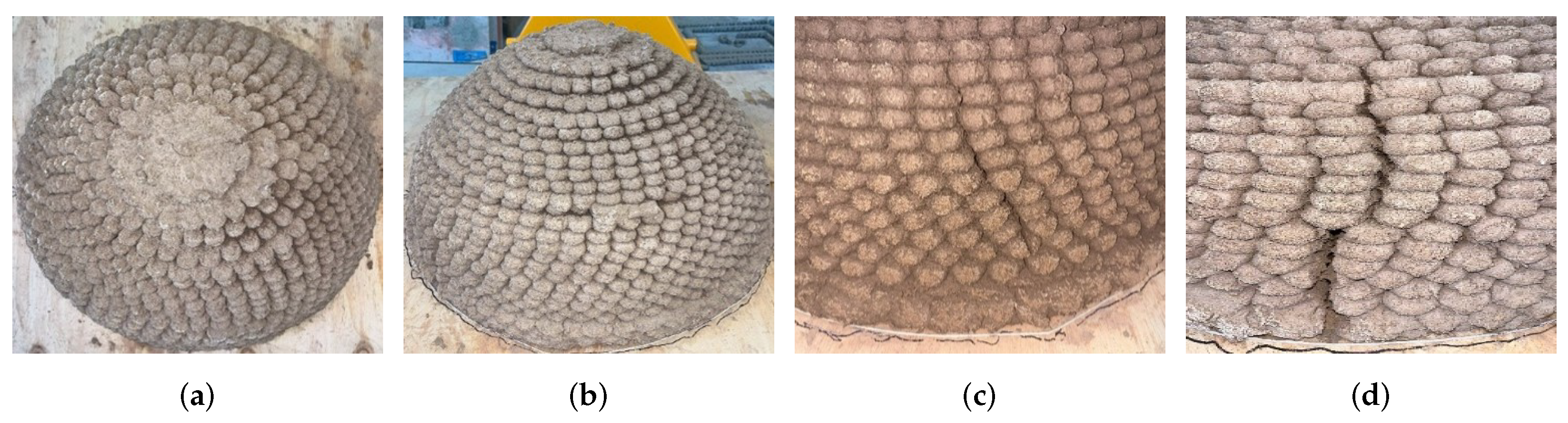
- Successful fabrication of a 2-ft-diameter hemispherical dome confirmed the structural viability of the optimized mix and highlighted the vital interaction between material properties, printing parameters, and shell geometry. The results provide a scalable methodology for developing low-carbon earthen mixtures and offer insight into shrinkage-induced stress behavior in 3D-printed structures.
Author Contributions
Funding
Data Availability Statement
Acknowledgments
Conflicts of Interest
References
- Steenhuis, H.-J.; Fang, X.; Ulusemre, T. Global diffusion of innovation during the fourth industrial revolution: The case of additive manufacturing or 3DP. Int. J. Innov. Technol. Manag. 2020, 17, 2050005. [Google Scholar] [CrossRef]
- Dickinson, H. The next industrial revolution? The role of public administration in supporting government to oversee 3DP technologies. Public Adm. Rev. 2018, 76, 922–925. [Google Scholar] [CrossRef]
- Nazarian, S.; Rodrigues, H.; Gaspar, F.; Fernandes, P.; Mateus, A. Additive manufacturing of architectural structures: An interplay between materials, systems, and design. In Sustainability and Automation in Smart Constructions; Rodrigues, H., Gaspar, F., Fernandes, P., Mateus, A., Eds.; Springer: Cham, Switzerland, 2021; pp. 111–119. [Google Scholar] [CrossRef]
- Hassan, H.; Rodriguez-Ubinas, E.; Al Tamimi, A.; Trepci, E.; Mansouri, A.; Almehairbi, K. Towards innovative and sustainable buildings: A comprehensive review of 3DP in construction. Autom. Constr. 2024, 163, 105417. [Google Scholar] [CrossRef]
- Hojati, M.; Nazarian, S.; Duarte, J.P.; Radlińska, A.; Ashrafi, N.; Craveiro, F.; Bilén, S. 3D Printing of Concrete: A Continuous Exploration of Mix Design and Printing Process. In Proceedings of the 42nd IAHS World Congress, Naples, Italy, 10–13 April 2018; pp. 1–10. [Google Scholar]
- Gomaa, M.; Jabi, W.; Soebarto, V.; Xie, Y.M. Digital manufacturing for earth construction: A critical review. J. Clean. Prod. 2022, 338, 130630. [Google Scholar] [CrossRef]
- Li, Z.; Hojati, M.; Wu, Z.; Piasente, J.; Ashrafi, N.; Duarte, J.P.; Nazarian, S.; Bilén, S.G.; Memari, A.M.; Radlińska, A. Fresh and hardened properties of extrusion-based 3D-printed cementitious materials: A review. Sustainability 2020, 12, 5628. [Google Scholar] [CrossRef]
- Rashid, A.A.; Khan, S.A.; Ali, F.; Muhammad, J. 3DP technology for rapid response to climate change: Challenges and emergency needs. Int. Stud. Manag. 2024, 1, 10004. [Google Scholar] [CrossRef]
- Ibrahim, I.; Eltarabishi, F.; Abdalla, H.; Abdallah, M. 3DP in sustainable buildings: Systematic review and applications in the United Arab Emirates. Buildings 2022, 12, 1703. [Google Scholar] [CrossRef]
- Zeiher, L.C. The Ecology of Architecture: A Complete Guide to Creating the Environmentally Conscious Building; Whitney Library of Design: New York, NY, USA, 1996. [Google Scholar]
- Watari, T.; Cao, Z.; Serrenho, A.C.; Cullen, J. Growing role of concrete in sand and climate crises. iScience 2023, 26, 106782. [Google Scholar] [CrossRef]
- Bryson, Z.; Kawashima, S.; Ben-Alon, L. Towards 3D printed earth- and bio-based insulation materials: A case study on light straw clay. In Proceedings of the 18th International Conference on Non-Conventional Materials and Technologies (NOCMAT 2022), Virtual, 7–23 June 2022. [Google Scholar] [CrossRef]
- Perrot, A.; Rangeard, D.; Courteille, E. 3DP of earth-based materials: Processing aspects. Constr. Build. Mater. 2018, 172, 670–676. [Google Scholar] [CrossRef]
- Assunção, J.; Chadha, K.; Vasey, L.; Brumaud, C.; Escamilla, E.Z.; Gramazio, F.; Kohler, M.; Habert, G. Contribution of production processes in environmental impact of low carbon materials made by additive manufacturing. Autom. Constr. 2024, 165, 105545. [Google Scholar] [CrossRef]
- Curth, A.; Pearl, N.; Castro-Salazar, A.; Mueller, C.; Sass, L. 3DP earth: Local, circular material processing, fabrication methods, and life cycle assessment. Constr. Build. Mater. 2024, 421, 135714. [Google Scholar] [CrossRef]
- Althoey, F.; Ansari, W.S.; Sufian, M.; Deifalla, A.F. Advancements in low-carbon concrete as a construction material for the sustainable built environment. Dev. Built Environ. 2023, 16, 100284. [Google Scholar] [CrossRef]
- Le, T.T.; Austin, S.A.; Lim, S.; Buswell, R.A.; Gibb, A.G.F.; Thorpe, T. Mix design and fresh properties for high-performance printing concrete. Mater. Struct. 2012, 45, 1221–1232. [Google Scholar] [CrossRef]
- Andrew, R.M. Global CO2 emissions from cement production, 1928–2018. Earth Syst. Sci. Data 2019, 11, 1675–1710. [Google Scholar] [CrossRef]
- Moquin, M. Ancient Solutions for Future Sustainability: Building with Adobe, Rammed Earth, and Mud. In Proceedings of the CIB TG 16 Sustainable Construction Conference, Tampa, FL, USA, 6–9 November 1994; Available online: https://www.irbnet.de/daten/iconda/CIB_DC24848.pdf (accessed on 18 March 2026).
- Adebowale, O.J.; Agumba, J.N. Sustainable building materials utilization in the construction sector and the implications on labour productivity. J. Eng. Des. Technol. 2023, 24, 448–471. [Google Scholar] [CrossRef]
- Kibert, C.J. The next generation of sustainable construction. Build. Res. Inf. 2007, 35, 595–601. [Google Scholar] [CrossRef]
- New Mexico Regulation and Licensing Department. 2021 New Mexico Earthen Building Materials Code; Title 14, Chapter 7. 2021. Available online: https://www.srca.nm.gov/parts/title14/14.007.0004.html (accessed on 18 March 2026).
- Smith, E.W.; Austin, G.S. Adobe, Pressed-Earth, and Rammed-Earth Industries in New Mexico; New Mexico Bureau of Mines and Mineral Resources: Socorro, NM, USA, 1989. [Google Scholar]
- Cornerstones Community Partnership. Adobe Conservation: A Preservation Handbook; Sunstone Press: Santa Fe, NM, USA, 2006; Available online: https://www.cstones.org (accessed on 18 March 2026).
- Bhusal, S. 3DP of Earthen Materials: Toward Carbon-Zero Construction. Master’s Thesis, The University of New Mexico, Albuquerque, NM, USA, 2021. Available online: https://digitalrepository.unm.edu/ce_etds/294/ (accessed on 18 March 2026).
- Bhusal, S.; Uviña Contreras, F.; Hojati, M. Preliminary Study on 3D Printing of Locally Available Earthen Materials in New Mexico; Technical Report; The University of New Mexico: Albuquerque, NM, USA, 2022; Available online: https://www.researchgate.net/publication/365945674_PRELIMINARY_STUDY_ON_3D_PRINTING_OF_LOCALLY_AVAILABLE_EARTHEN_MATERIALS_IN_NEW_MEXICO (accessed on 18 March 2026).
- Bhusal, S.; Sedghi, R.; Hojati, M. Evaluating the printability and rheological and mechanical properties of 3D-printed earthen mixes for carbon-neutral buildings. Sustainability 2023, 15, 15617. [Google Scholar] [CrossRef]
- Dana, L.-P.; Anderson, R. Taos Pueblo: An indigenous community holding on to Promethean values. J. Enterprising Communities 2007, 1, 321–336. [Google Scholar] [CrossRef]
- Smith, E.W. Adobe Bricks in New Mexico; New Mexico Bureau of Mines and Mineral Resources: Socorro, NM, USA, 1982. [Google Scholar]
- Arrieta-Escobar, J.A.; Derrien, D.; Ouvrard, S.; Asadollahi-Yazdi, E.; Hassan, A.; Boly, V.; Tinet, A.-J.; Dignac, M.-F. 3DP: An emerging opportunity for soil science. Geoderma 2020, 378, 114588. [Google Scholar] [CrossRef]
- Daher, J.; Kleib, J.; Benzerzour, M.; Abriak, N.-E.; Aouad, G. The development of soil-based 3D-printable mixtures: A mix-design methodology and a case study. Buildings 2023, 13, 1618. [Google Scholar] [CrossRef]
- Wilson, T.T.; Mativenga, P.T.; Marnewick, A.L. Sustainability of 3DP in infrastructure development. Procedia CIRP 2023, 120, 195–200. [Google Scholar] [CrossRef]
- Gomaa, M.; Schade, S.; Bao, D.W.; Xie, Y.M. Automation in rammed earth construction for industry 4.0: Precedent work, current progress and future prospect. J. Clean. Prod. 2023, 398, 136569. [Google Scholar] [CrossRef]
- Rael San Fratello. Rael San Fratello 3D Prints Mud Structures as Prototypes for Low-Cost Construction. Dezeen. 2019. Available online: https://www.dezeen.com/2019/10/03/mud-frontiers-rael-san-fratello-3d-printed-low-cost-construction/ (accessed on 18 March 2026).
- Fratello, V.S.; Rael, R. Innovating materials for large-scale additive manufacturing: Salt, soil, cement and chardonnay. Cem. Concr. Res. 2020, 134, 106097. [Google Scholar] [CrossRef]
- Gomaa, M.; Vaculik, J.; Soebarto, V.; Griffith, M.; Jabi, W. Feasibility of 3DP cob walls under compression loads in low-rise construction. Constr. Build. Mater. 2021, 301, 124079. [Google Scholar] [CrossRef]
- Scoggins, H. The Portalab Manual: Low-Cost Soil-Engineering Tests for Construction of Earthen Buildings; New Mexico Appropriate Technology Program: Albuquerque, NM, USA, 1981; Available online: https://www.scribd.com/document/349121664/The-Portalab-Manual (accessed on 18 March 2026).
- Wolfskill, L.; Dunlap, W.; Gallaway, B. Handbook for Building Homes of Earth; Texas Transportation Institute: College Station, TX, USA, 1981. Available online: https://files.eric.ed.gov/fulltext/ED242877.pdf (accessed on 18 March 2026).
- Zozaya, D.; Bhusal, S.; Uviña Contreras, F.; Hojati, M. Evaluating grain size distribution of local soils for 3DP in construction. In Proceedings of the Earth USA 2024, Santa Fe, NM, USA, 13–15 September 2024. [Google Scholar]
- Soil Survey Staff. USDA Soil Textural Classification Chart; U.S. Department of Agriculture: Washington, DC, USA, 1993.
- ASTM C33; Standard Specification for Concrete Aggregates. ASTM International: West Conshohocken, PA, USA, 2007. Available online: https://www.astm.org/c0033-07.html (accessed on 18 March 2026).
- ASTM C136/C136M-14; Standard Test Method for Sieve Analysis of Fine and Coarse Aggregates. ASTM International: West Conshohocken, PA, USA, 2014.
- ASTM D2487; Standard Practice for Classification of Soils for Engineering Purposes (USCS). ASTM International: West Conshohocken, PA, USA, 2000.
- ASTM C117-23; Standard Test Method for Materials Finer than 75-μm (No. 200) Sieve in Mineral Aggregates by Washing. ASTM International: West Conshohocken, PA, USA, 2023. Available online: https://www.astm.org/c0117-23.html (accessed on 18 March 2026).
- Doat, P.; Norton, C.; Hays, A.; Houben, H.; Matuk, S.; Vitoux, F. Building with Earth; Mud Village Society: Delhi, India, 1991; Available online: https://ia600600.us.archive.org/13/items/Building_with_Earth/Building_with_Earth.pdf?utm_source=chatgpt.com (accessed on 18 March 2026).
- Dominguez, T. ABCs of Making Adobe Bricks; New Mexico State University: Las Cruces, NM, USA, 2011; Available online: https://pubs.nmsu.edu/_g/G521/index.html (accessed on 18 March 2026).
- ASTM D4318; Standard Test Methods for Liquid Limit, Plastic Limit, and Plasticity Index of Soils. ASTM International: West Conshohocken, PA, USA, 2010. Available online: https://www.astm.org/d4318-17e01.html (accessed on 18 March 2026).
- Brady, N.C.; Weil, R.R. The Nature and Properties of Soils; Pearson Prentice Hall: Upper Saddle River, NJ, USA, 2007. [Google Scholar]
- VTSYIQI. Digital Fruit Penetrometer Hardness Tester (0.2–15 kgf/cm2, Diameter 11.1 mm). Available online: https://www.vtsyiqi.net/products/vtsyiqi-digital-fruit-penetrometer-hardness-tester-fruit-firmness-tester-sclerometer-with-range-0-2-to-15-kgf-cm2-diameter-11-1mm (accessed on 31 May 2024).
- Glushankova, I.; Ketov, A.; Krasnovskikh, M.; Rudakova, L.; Vaisman, I. Rice hulls as a renewable complex material resource. Resources 2018, 7, 31. [Google Scholar] [CrossRef]
- Luh, B.S. Rice hulls. In Rice: Volume I. Production/Volume II. Utilization; Luh, B.S., Ed.; Springer: Boston, MA, USA, 1991; pp. 688–713. [Google Scholar] [CrossRef]
- Haddad, K.; Lannon, S.; Latif, E. Investigation of cob construction: Review of mix designs, structural characteristics, and hygrothermal behaviour. J. Build. Eng. 2024, 87, 108959. [Google Scholar] [CrossRef]
- Gomaa, M.; Jabi, W.; Veliz Reyes, A.; Soebarto, V. 3DP system for earth-based construction: Case study of cob. Autom. Constr. 2021, 124, 103577. [Google Scholar] [CrossRef]
- ASTM C109/C109M-02; Standard Test Method for Compressive Strength of Hydraulic Cement Mortars. ASTM International: West Conshohocken, PA, USA, 2020. Available online: https://store.astm.org/c0109_c0109m-21.html (accessed on 18 March 2026).
- ASTM C490/C490M-17; Standard Practice for Use of Apparatus for the Determination of Length Change of Hardened Cement Paste, Mortar, and Concrete. ASTM International: West Conshohocken, PA, USA, 2017. Available online: https://www.wje.com/expertise/laboratories/testing-standards/astm-c490 (accessed on 18 March 2026).
- Sedghi, R.; Zafar, M.S.; Hojati, M. Exploring fresh and hardened properties of sustainable 3D-printed lightweight cementitious mixtures. Sustainability 2023, 15, 14425. [Google Scholar] [CrossRef]
- ASTM C293; Standard Test Method for Flexural Strength of Concrete (Using Simple Beam with Center-Point Loading). ASTM International: West Conshohocken, PA, USA, 2010. Available online: https://www.astm.org/c0293-08.html (accessed on 18 March 2026).
- Friedman-Gerlicz, C.; Gelosi, D.; Bell, F.; Buechley, L. WeaveSlicer: Expanding the range of printable geometries in clay. In Proceedings of the CHI Conference on Human Factors in Computing Systems; ACM: Honolulu, HI, USA, 2024; pp. 1–16. [Google Scholar] [CrossRef]
- Rhinoceros, 3D. Rhinoceros 3D; Robert McNeel & Associates: Seattle, WA, USA, 2023. Available online: https://www.rhino3d.com/ (accessed on 18 March 2026).



| Gradation Test | Material | Gravel (%) | Medium to Coarse Sand (%) | Fine-Grain Sand (%) | Silt (%) | Clay (%) | Soil Classification |
|---|---|---|---|---|---|---|---|
| Wet Sieve | S | 0.00 | 0.42 | 38.19 | 61.39 | CL* | |
| Shake Jar | S | 0.00 | 38.55 | 30.12 | 31.33 | CL* | |
| Dry Sieve | CS** | 14.86 | 38.59 | 46.20 | 0.36 | SP*** | |
| Mix ID | Plain (Belén) Soil, S (%) | Concrete Sand, CS (%) | Clay/Silt Content (%) | Liquid Limit (%) | Water/(S+CS) (%) |
|---|---|---|---|---|---|
| S100 | 100.00 | 0.00 | 61.39 | 36.12 | 36.00 |
| S75 | 75.00 | 25.00 | 46.67 | 35.50 | 32.00 |
| S67 | 67.00 | 33.00 | 41.89 | 33.21 | 25.33 |
| S50 | 50.00 | 50.00 | 31.61 | 32.56 | 23.00 |
| S25 | 25.00 | 75.00 | 16.17 | 25.03 | 16.00 |
| Mix ID | Plain (Belén) Soil, S (%) | Concrete Sand, CS (%) | Fiber Content (%) | Clay/Silt Content (%) | Water/(S+CS) (%) |
|---|---|---|---|---|---|
| S67–F0.0 | 67.00 | 33.00 | 0.00 | 45.87 | 22.00 |
| S67–F0.5 | 66.75 | 32.75 | 0.50 | 45.64 | 22.00 |
| S67–F1.0 | 66.50 | 32.50 | 1.00 | 45.41 | 22.00 |
| S67–F1.5 | 66.25 | 32.25 | 1.50 | 45.19 | 22.00 |
| S67–F2.0 | 66.00 | 32.00 | 2.00 | 44.95 | 22.50 |
| Mix ID | Liquid Limit (%) | Water/(S+CS) (%) | Traditional Consistency Test Observation | Picture of Consistency Test at Optimum Water Content |
|---|---|---|---|---|
| S100 | 36.12 | 36.00 | Thick but smooth and creamy; sticky, slippery, similar to peanut butter. |  |
| S75 | 35.50 | 32.00 | Very sticky, slurry-like, and slumpy; not able to roll into a ball or sausage. |  |
| S67 | 33.21 | 25.33 | Thick but smooth; semi-sticky, semi-grainy, and semi-slippery texture. |  |
| S50 | 32.56 | 23.00 | More manageable; medium sandy, less sticky, medium-grainy, and less slippery. |  |
| S25 | 25.03 | 16.00 | Very crumbly and sandy; slumpy but still able to cohere into a ball. |  |
Disclaimer/Publisher’s Note: The statements, opinions and data contained in all publications are solely those of the individual author(s) and contributor(s) and not of MDPI and/or the editor(s). MDPI and/or the editor(s) disclaim responsibility for any injury to people or property resulting from any ideas, methods, instructions or products referred to in the content. |
© 2026 by the authors. Licensee MDPI, Basel, Switzerland. This article is an open access article distributed under the terms and conditions of the Creative Commons Attribution (CC BY) license.
Share and Cite
Zozaya, D.; Shojaeian, H.; Uviña-Contreras, F.; Hojati, M. 3D Printing of Earth-Based Mixtures: Linking Material Design, Printability, and Structural Performance. Buildings 2026, 16, 1261. https://doi.org/10.3390/buildings16061261
Zozaya D, Shojaeian H, Uviña-Contreras F, Hojati M. 3D Printing of Earth-Based Mixtures: Linking Material Design, Printability, and Structural Performance. Buildings. 2026; 16(6):1261. https://doi.org/10.3390/buildings16061261
Chicago/Turabian StyleZozaya, Daiquiri, Hamideh Shojaeian, Francisco Uviña-Contreras, and Maryam Hojati. 2026. "3D Printing of Earth-Based Mixtures: Linking Material Design, Printability, and Structural Performance" Buildings 16, no. 6: 1261. https://doi.org/10.3390/buildings16061261
APA StyleZozaya, D., Shojaeian, H., Uviña-Contreras, F., & Hojati, M. (2026). 3D Printing of Earth-Based Mixtures: Linking Material Design, Printability, and Structural Performance. Buildings, 16(6), 1261. https://doi.org/10.3390/buildings16061261