


Abstract
The use of recycled materials and locally sourced alternative binders in 3D concrete printing (3DCP) has significant potential to reduce carbon emissions in concrete construction. This study examines the effect of sugarcane bagasse ash (SCBA), a byproducts from the sugarcane industry, as a sustainable binder in 3DCP. SCBA was oven-dried at 105 °C, sieved to 250 µm, and used to replace up to 25% of the total binder by weight in a supplementary cementitious material (SCM) blended system. The impact of polypropylene (PP) and steel (ST) microfibres on SCBA-based mixes was also investigated. The fresh properties of the mortar were evaluated using the flow table, Vicat needle, shape retention, buildability, and rheometer tests. The mortar was 3D printed using a small-scale robotic setup with a RAM extruder. Mechanical properties were then tested, including compressive and flexural strengths, and interlayer bonding, along with microstructure analysis. The results showed that increasing the SCBA content led to greater slump and improved flowability, as well as a slower rate of static yield stress development, with up to a 90 percent reduction compared to the control mix. The addition of PP fibres doubled the static yield stress in the mixes containing 20 percent SCBA. The 10 percent SCBA mix achieved the highest mechanical strength, both in compression and flexure, due to its denser microstructure and enhanced pozzolanic reaction.
1. Introduction
Traditional concrete construction significantly impacts the environment through high-energy consumption, greenhouse gas emissions, and material waste [1,2]. Consequently, researchers are actively exploring innovative methods to reduce the environmental footprint and energy consumption of concrete construction. In the last two decades, 3D concrete printing (3DCP) has emerged as a sustainable alternative to traditional concrete casting methods. This digital additive manufacturing technique enhances resource efficiency, minimises waste, and enables the fabrication of complex geometries without formwork [3,4]. One of the key strategies to improve the sustainability of 3DCP is to replace ordinary Portland cement (OPC) with supplementary cementitious materials (SCMs) derived from industrial byproducts, such as fly ash (FA), silica fume (SF), and ground granulated blast-furnace slag (GGBS) [5,6].
FA is widely studied in 3DCP due to its spherical particle morphology, which reduces interparticle friction, enhances flowability, and facilitates pumpability [7,8,9]. Zahabizadeh et al. [10] reported higher FA content at around 50% of cement replacement, decreased the growth rate of static yield stress, and structural build-up due to slower early hydration. The finding is further corroborated by Kaya et al. [11], highlighting that 60% FA led to a decrease in green strength by up to 35.4 %, delayed formation of initial hydration products, and a decrease in static yield stress by up to 36.9 %. SF, a byproduct of the industrial production of silicon metal and ferrosilicon alloys, has ultrafine particles and is a highly reactive SCM. Cui et al. [12] found that SF improved the buildability of 3DCP and increased its mechanical properties, but may impair extrudability if not properly dosed. Xue et al. [13] reported that SF significantly increased static and dynamic yield stress at 30% replacement, enhanced layer stability, and reduced deformation, but slower early-age strength gain was observed due to reduced hydration. GGBS, a byproduct of the steel industry, consists predominantly of CaO and SiO2, which govern its hydraulic activity and pozzolanic reactivity, respectively [11]. Balanced workability and strength in 3DCP typically occur in the range of 30–50% replacement level, with higher ratios resulting in lower flowability and increased porosity [14]. The increase in the structuration rate can be observed with 60% GGBS replacement, as fine particles and pozzolanic reactions accelerate flocculation and early stiffness, enhancing the buildability of the mix [11].
The challenges of shrinkage, microcracks, mechanical properties, and buildability in 3DCP can be addressed by incorporating discrete microfibres [15,16]. During the extrusion process, fibre alignment along the printing direction gives a positive influence on the flexural and tensile strengths, although poor dispersion may lead to nozzle clogging [15]. Various types of fibres have been used in 3DCP, including polyethylene (PE), polypropylene (PP), polyvinyl alcohol (PVA), steel and cellulose-based fibres. Ma et al. [16] found that PP fibres improved the static yield stress and plastic viscosity, as well as reducing the total shrinkage of 3DCP. PP fibres tend to reduce mix flowability due to increased cement paste demand, with optimal mechanical performance at a fibre content of 0.5% [17]. Xia et al. [17] also revealed that PP fibres are oriented vertically within printed layers, while fibres at the interlayer interface align parallel to the cross-section. Steel fibres are commonly used in fibre-reinforced 3DCP ultra-high performance concrete (UHPC). Pham et al. [18] reported optimal flexural performance with 6 mm steel fibres at 0.75–1% volume, with 90% aligning within 0–30° of the print direction. Consistently, Yang et al. [19] suggested that 1% steel fibre content in 3DCP-UHPC offers superior flexural and tensile properties. A study by Xia et al. [17] confirmed that steel fibres have significantly enhanced the static yield stress and mechanical strength of the mixes because of their high stiffness, strong interlocking with the cement matrix, and strong directional alignment.
Australia is the second-largest raw sugar exporter in the world, producing 31 million tonnes of sugarcane annually [20]. The sugar industry generates substantial sugarcane bagasse ash (SCBA) as a byproduct of energy production in sugar mills, with annual worldwide production between 48 and 60 million tons [21]. SCBA, a fine particulate aluminosilicate ash, offers an opportunity for valorisation in concrete construction, as it is typically discarded or used as a low-grade fertiliser and can; therefore, support circular economy and sustainability goals [22].
Arif et al. [22] reported that SCBA varies in chemical composition depending on growth conditions, combustion environment, purity of the bagasse feedstock, and ash collection point. SCBA has emerged as a promising SCM for conventional concrete, used as binary and ternary blends with a cement replacement ratio between 20% and 60% by weight [23,24,25,26]. Studies revealed that replacing cement with 10–15% SCBA improved mechanical properties by forming additional calcium silicate hydrate, thereby creating a denser matrix, refining the microstructure, and reducing porosity [27,28]. At higher dosage of SCBA, the dilution effect of cement and lower pozzolanic reactivity led to higher porosity in the concrete matrix and decreased mechanical strength [29]. The physical properties of SCBA particles with elongated, angular shapes, as well as fibrous, porous particles, demand more water, which contributes to an increase in yield stress and viscosity [30]. Sankeeth et al. [31] found that higher SCBA content reduced slump and flowability, although improved buildability. Amjad et al. [32] concluded that SCBA enhanced rheological properties, while Cupim et al. [33] reported increased yield stress and shape retention with SCBA addition. According to Jiménez–Quero et al. [23], the high loss on ignition (LOI) of SCBA due to a significant amount of unburnt carbon increased both water and superplasticiser demand, thereby adversely affecting the rheological properties. The SCBA content impacted the durability performance of concrete, where Quedou et al. [27] reported that water penetration increased by up to 112% compared to the control mix with 20% SCBA content, due to the high porosity of the SCBA particles and the presence of voids. In addition, Neto et al. [34] found that 15% SCBA resulted in reductions in porosity and sorptivity owing to physical effects and enhanced packing density, which eventually reduced chloride diffusion coefficients and increased the lifetime of concrete by up to 97.3%.
Although numerous studies have been conducted with different percentages of SCBA in conventional concrete, the effects of SCBA in 3DCP remain underexplored. Jesus et al. [35] found that 5% SCBA replacement matched OPC strength, while 20% improved durability. However, higher dosages often impair the fresh properties of 3DCP due to SCBA’s porous and irregular microstructure, which increases water demand and disrupts particle packing [35]. Chourasia et al. [36] examined the combination of SCBA and FA as partial cement replacement in 3DCP, and the effects of printing direction and interlayer printing time on mechanical performance and interlayer bond. They reported that the interlayer time gap significantly affects the flexural and split tensile strengths. In promoting sustainable binders from agricultural waste for low-carbon 3D printing applications, this paper investigates the effects of SCBA on flowability, buildability, rheology, microstructure, and mechanical properties in 3DCP, where up to 25% SCBA was incorporated as a direct replacement for silica fume (SF) within a blended SCM system. As both SCBA and SF have similar chemical and mineral compositions, evaluating this specific substitution and its combined effect with PP and steel microfibers on 3DCP printability and mechanical performance, distinguishing it from studies focused on SCBA as a primary cement substitute.
2. Experimental Procedure
2.1. Materials and Mix Design
In this study, General Purpose Cement (GPC), FA, GGBS, SF, and SCBA were used as binders. A PCE-based Superplasticiser (SP), along with liquid and powder Viscosity Modifying Agent (VMA), was used as an admixture to control flowability and buildability. Sand with a maximum size of 1 mm was used as fine aggregate. SCBA was collected from Rocky Point Sugar Mill, Woongoolba, Queensland, Australia. Raw SCBA often contains fibrous particles and high levels of amorphous carbon due to incomplete combustion, reducing its pozzolanic activity. Sieving through 75–355 μm meshes helps remove unburnt fibres and lower carbon content, producing finer, more reactive ash suitable for use as a supplementary binder in concrete [37,38,39]. In this study, SCBA was oven dried at 105 °C for 24 h, and then sieved with a 250 µm strainer to discard the coarse particles, similar to the study by Jesus et al. [35]. The summary of constituent materials used in this study is presented in Table 1.
Table 1.
Constituent materials of the concrete mix.
The binders and sand used in this study were characterised using established methods shown in Table 2 to examine particle morphology, elemental identification, particle size distribution, chemical composition, and mineral structure.
Table 2.
Material Characterisation Methods.
The particle size distribution (PSD) of the materials (Figure 1) showed that SCBA has a larger particle size, up to 250 µm, with 50% particles less than 70 µm and 90% particles less than 245 µm. GGBS, FA, and GPC have the smallest particle sizes, with most particles less than 40 µm. The findings of PSD correspond to another notable study [40]. Particles of GGBS and SF may agglomerate and may exhibit larger particle sizes than cement particles. The particle sizes of sand mostly range from 150 to 1000 µm, with 50% particles less than 500 µm and 90% particles less than 850 µm.
Figure 1.
PSD of the binders and sand.
Oxide compositions of the binders from XRF analysis are shown in Table 3. Cement (GPC) is mainly composed of CaO (61.75%) followed by SiO2 (19.68%). The MgO content is 3.45%, which is below the 4.5% threshold set by AS3972 [41]. FA is mainly SiO2 (53.79%) followed by Al2O3 (32.19%), with a cumulative percentage of SiO2, Al2O3, and Fe2O3 above 70%, which conforms to AS3582.1 [42]. GGBS is mainly CaO (41.18%) and SiO2 (33.92%) with Al2O3 (14.69%) < 18% and MgO (5.92%) < 15%, conforming to AS3582.2 [43]. SF is mostly SiO2 (95.95%) and has a loss on ignition (LOI) < 6%, which conforms to AS3582.3 [44]. SCBA conforms to AS3582.1 [42] for Class F pozzolans [22], with cumulative percentages of SiO2, Al2O3 and Fe2O3 above 70%. However, the LOI of 10.55% is higher than the allowable limit of 6% as per AS3582.1 [42], indicating that the SCBA is partially burnt. Although the LOI of SCBA can be substantially reduced through high-temperature calcination for extended durations [45,46], such processing is energy-intensive and leads to additional atmospheric emissions. In this study, SCBA was therefore utilised in its least processed form, avoiding calcination. SCBA with a similar LOI level has also been successfully employed in high-strength concrete in previous studies [47,48,49].
Table 3.
The percentage of the major elements present in the chemical composition of the materials.
Mineral structures of GPC, FA, GGBS, SF, and SCBA from XRD analysis are presented in Table 4. GPC particles are mostly composed of Alite, C3S (3CaO·SiO2) (58.8%), which is the principal phase in Portland cement clinker and plays a crucial role in early strength development. FA particles are composed of Amorphous Silica (64.5%), which is highly reactive. FA also has 28.7% Mullite, which is a crystalline aluminosilicate phase, particularly from coal combustion. Mullite itself is chemically inert in normal cement hydration but provides a stable skeleton for microstructure development. GGBS particles are mainly composed of the Amorphous state (96.8%), which is highly reactive, with minor crystalline structures of Gypsum and Calcite. SF particles are also mainly composed of the Amorphous state (97.2%), which is highly reactive, with minor Quartz. This highly reactive structure enables rapid reaction with calcium hydroxide (Ca(OH)2) to form additional calcium silicate hydrate (C–S–H), enhancing strength and durability. SCBA particles consist of 52% Amorphous state and 31.1% Quartz, which is a highly crystalline form of silica with a strong Si–O bond network and is considered inert in normal conditions. Quartz acts as a filler, refining microstructure and enhancing compressive strength through packing efficiency in 3DCP. Moreover, Sub-10 µm quartz can act as nucleation sites for C–S–H formation, improving early strength [50].
Table 4.
Percentage of major crystal structure of the materials obtained from XRD analysis.
SEM and EDS were performed to establish particle morphology and match the size and chemical compositions with PSD and XRF. Figure 2 shows the SEM images of the binders under secondary electron (SE) mode. Particle morphology shows various irregular shapes of GPC and GGBS particles, with most of the particles less than 50 µm. SEM of FA shows predominantly spherical shapes with most of the particles less than 50 µm. SF has mostly spherical shapes, with most of the particles less than 300 µm. Particle morphology of SCBA shows various shapes, with most of the particles less than 150 µm. Figure 3 presents an SEM image of SCBA at 720× magnification, where different shapes of particles can be seen. SCBA is mainly an aluminosilicate, where EDS analysis performed on the selected points also revealed oxides of aluminium and silicon to be dominant in SCBA (Table 5).
Figure 2.
SEM images under secondary electron (SE) mode of different binders.
Figure 3.
SEM image (SED) of SCBA at 720× magnification. Particle 1, 4, 8: Incomplete combustion showing cell structure (bright white lines), Particle 3: Spherical silica, Particle 2, 5: Irregular porous silica, and Particle 6, 7: Irregular silica.
Table 5.
Elemental identification of particles in SCBA by EDS.
For this study, eight mixes were prepared as shown in Table 6. The control mix PC had 0% SCBA, and 10%, 20%, and 25% SCBA were incorporated into mix 10BA, 20BA, and 25BA, respectively. The incorporation of SCBA was limited to 25% as other studies have reported that 20% replacement is optimal, considering strength and buildability [30,33,51]. All the materials were added on a weight basis, and admixtures were added as a percentage of the total binder content. PP fibres (18 mm length and 32 µm dia.) and steel fibres (ST) (13 mm length and 0.2 mm dia.) were added in mixes PC and 20BA to examine their influence on fresh and mechanical properties of the control and SCBA-based mixes. The mix with 20% SCBA was selected after evaluating its printability and mechanical performance, with the aim of maximising the content of agricultural waste to promote a sustainable solution in 3DPC. PP fibres were added as 0.1% of the total binder content by weight, while steel fibres were added as 0.5% percentage of the concrete volume. Previous studies have investigated polypropylene (PP) fibre dosages ranging from 0.1% to 0.5% [16,52]. Higher PP fibre content can enhance mechanical strength, but it also increases the risk of nozzle clogging. Accordingly, a PP fibre dosage of 0.1% by weight was adopted in this study in line with the manufacturer’s recommendation [53]. Similarly, several studies have examined the influence of steel fibre dosage on 3D printable concrete [18,54,55]. Increasing steel fibre content generally reduces flowability and adversely affects filament extrusion [54,55]. Pham et al. [18] identified an optimal steel fibre dosage of approximately 0.5% by volume for mechanical performance, which was therefore adopted in the present study. Sand–Binder ratio and Water–Binder ratio were kept constant at 1 and 0.30, respectively, for all the mixes.
Table 6.
Mix Proportion.
2.2. Mixing and Printing Procedure
The mixing was conducted using a Hobart A200 Planetary Mixer (product of Hobart, Australia). All the dry materials were added to the bowl and mixed at low speed for 3 min, then half of the water, along with admixtures, was added and mixed at 3 min at low speed, followed by 3 min at medium speed. Subsequently, full water was added, with 3 min of mixing at medium speed and 3 min at high speed. Fibres were added last, and mixing was performed at high speed for an additional 3 min.
The printing was performed by a ram extruder attached to a UR16e robot arm (product of Universal Robots USA, Inc., Novi, MI, USA) (Figure 4). After mixing the mortar, it was manually loaded into the extruder tube in two layers, with each layer compacted by rodding 25 times using a steel rod. The mortar was printed with a 19 mm circular nozzle, 8 mm contour height, and printing speed up to 25 mm/s to extrude a stable filament with a width of 20 mm and a height of 8 mm. The same mixes were cast into 50 × 50 × 50 mm3 cubes and 40 × 40 × 160 mm3 prisms to compare the mechanical strength between the printed and mould-cast specimens.
Figure 4.
Printing setup with a ram extruder attached to the UR16e robot arm.
2.3. Fresh Properties Test
Fresh properties tests are important as they govern the printability of 3DCP mixes. Printability is a collective term encompassing pumpability, extrudability, buildability and open time, which is mainly described by the rheological properties of concrete [56]. Printability of the 3DCP mixes depends on nozzle shape and size, printer type and size, pumping distance, mix design, extrusion rate, amount of concrete and setting rate [57]. Therefore, the rheological properties of 3DCP concrete are different from conventional cast concrete, and different testing methods are warranted.
2.3.1. Mini Slump and Flow Table Test
Immediately after mixing, a flow table test was performed to assess the flowability of the mix in accordance with ASTM C1437 [58]. Using a flow table apparatus and a mini slump cone (50 mm height, 70 mm upper diameter and 100 mm bottom diameter), mini slump was measured as the drop of vertical height from the top of the cone and flow diameter was measured in two perpendicular directions after jolting the table 25 times in 15 s (Figure 5). Extrudability was determined through visual inspections during printing to ensure that no nozzle blockages or filament breakage occurred.
Figure 5.
(a) Flow table equipment, (b) Mini slump test and (c) Flow diameter for flowability test.
2.3.2. Setting Time
Setting time was determined using Vicat’s apparatus (Figure 6) following the method of BS EN 480-2 [59]. The room temperature during the test was 23 °C. A needle of diameter 1.13 mm was dropped through the mould containing the specimen every 10 min, and the distance from the bottom of the needle to the base was recorded. The initial setting time was determined as the time from finishing mixing to the time when the needle penetration to the base was 4 mm. The final setting time was determined as the time from finishing mixing to the time when the needle penetrated less than 2.5 mm into the specimen.
Figure 6.
Vicat’s apparatus.
2.3.3. Shape Retention and Buildability
The shape retention ability, indicating the capacity of a printed layer to support subsequent layers, was evaluated following the method used by Nematollahi et al. [60], as shown in Figure 7. Immediately after mixing, the mixture was filled into a mini-slump cone (used in the flowability test as per ASTM C1437) [58] and lifted after one minute. A 600 g static load was then applied for another minute, and the resulting spread was measured in two perpendicular directions. The average spread diameter under the 600 g load represented the shape retention ability; a smaller spread indicated higher stability. Subsequently, the final height of the mixture was recorded. Mixtures exhibiting lower vertical deformation (slump) or greater retained height were regarded as having superior shape retention ability.
Figure 7.
Shape retention test.
Several researchers have proposed various methods to evaluate buildability; however, no standardised procedure currently exists for 3DCP structures. Buildability is typically assessed through visual inspection, layer count, and measurement of layer deformation [60,61]. In this study, buildability was evaluated by printing 300 mm length layers with an 8 mm layer height, stacking them vertically to failure, and using 25 layers as a reference for deformation calculation (Figure 8). Moreover, the total deformation of the layers was calculated based on the theoretical height from the model (202 mm) and the actual height from the printed object, according to Pham et al. [18]. The more the deformation, the less the buildability.
Figure 8.
Assessment of buildability.
2.3.4. Rheology Test
The study of rheology is crucial in 3DCP as it directly influences the material’s printability and structural integrity. The structural buildup of the 3DCP was studied using an Anton Paar 302 Rheometer by Anton Paar Australia Pty Ltd, Australia with CC27 measuring system and ST10 vane spindle (Figure 9). The chiller temperature was kept at 20 °C, and the test chamber at 25 °C; 40 mL mortar mixes were prepared and filled into the CC27 cup. Tests were performed with pre-shearing the sample at a constant shear rate of 100/s for 60 s to achieve a reference state for all samples. Subsequently, the samples were sheared at a constant shear rate of 0.01/s for 60 s at intervals of 0, 5, 10, 15, 20, 25, 30, 40, 50, 60, 70, 80 and 90 min, with two measurements taken every second.
Figure 9.
(a) Rheology study setup with Anton Paar 302 Rheometer and (b) CC27 measuring system with ST10 vane spindle.
2.4. Mechanical Properties
The anisotropic behaviour of 3D printed concrete significantly influences its mechanical performance, as the layer-by-layer deposition process creates directional variations in strength. Among these properties, compressive strength is generally lower in printed specimens compared to mould-cast ones. The strength variations depend on the filament orientation relative to the applied load. The interlayer adhesion of 3D printed concrete is a critical parameter that influences the structural integrity and durability of printed elements. Studies have shown that the bond strength between successive layers is highly sensitive to process parameters, including the time interval between layer depositions, nozzle settings, and surface moisture conditions [62,63]. Moreover, fibres can enhance mechanical strength and crack resistance, significantly increasing tensile and flexural strength, fracture toughness, and fracture energy [64,65].
In this study, hardened properties were tested for both mould-cast (MC) and printed specimens after 28 days of ambient curing. For MC specimens, 50 mm cube (compression) and 40 × 40 × 160 mm3 prism (flexure) specimens were prepared and tested in accordance with ASTM C109/C109M [66] and ASTM C293/C293M [67], respectively. To test hardened properties of printed specimens, three objects of size (A) 180 × 140 × 80 mm3 (compression), (B) 140 × 180 × 80 mm3 (flexure) and (C) 80 × 160 × 180 mm3 (interlayer bond) were printed for each mix, as shown in Figure 10. The printed objects were cut with a “Struers Discotom-6” saw-cut machine (product of Struers Australia) for the specimens in the mechanical tests.
Figure 10.
(a) Object (A) 180 × 140 × 80 mm3. (b) Object (B) 140 × 180 × 80 mm3. (c) Object (C) 80 × 160 × 180 mm3.
2.4.1. Compressive Strength
As shown in Figure 11, Object (A) was cut to extract six 50 mm cube specimens for compression testing. As 3D concrete printed structures exhibit anisotropic behaviour, compression tests were performed in three different orientations of the 50 mm cube, such as X (printing direction), Y (lateral direction) and Z (vertical direction). Loading was applied to the specimens using a 2000 kN Instron compression testing machine (Instron Melbourne, Australia) at a loading rate of 1 mm/min.
Figure 11.
(a) Extraction location of specimens from Object (A). (b) Loading directions for the compression test of printed specimens.
2.4.2. Flexural Strength Test
Object (B) was cut to extract three 40 × 40 × 160 mm3 prism specimens for flexural strength testing, as shown in Figure 12a,b. A three-point bending test was performed on the extracted prism specimens to assess the flexural strength. As with compressive strength, the loading direction of 3D printed specimens also affects the flexural strength. However, due to the limitations of specimen fabrication, the flexural test was performed in one direction only. The specimen was positioned in the X–Z plane, and the load was applied in the Z-direction. The supported span was set as 120 mm. The flexure test was conducted using the 10 kN Instron machine with a loading rate of 400 N/min.
Figure 12.
(a) Extraction location of specimens for Object (B) and (b) loading orientation for flexure test. (c) extraction location of specimens for Object (C), and (d) loading orientation for interlayer bond strength test.
2.4.3. Interlayer Bond Strength Test
Object (C) was cut to extract three 40 × 40 × 160 mm3 prism specimens for interlayer bond strength testing (Figure 12c,d). A three-point bending test was performed on the extracted prism specimens to assess the interlayer bond strength. The specimen was positioned in the Z–X plane, and the load was applied in the X-direction. The supported span was set as 120 mm using the same equipment and loading rate as per the flexure test.
2.5. Microstructural Investigation
The interlayer bond area is of great significance in 3DCP as it is the weakest region due to layer-by-layer construction. Studies have shown that the interlayer bond area in 3DCP is characterised by increased voids and dehydrated particles due to a lack of compaction and moisture loss during printing [61,62]. To investigate microstructure behaviour at the interlayer area, scanning electron microscopy (SEM) was performed on printed concrete using Phenom XL G2 Desktop SEM with an integrated energy dispersive spectroscopy (EDS) detector, which was used for elemental analysis. Specimens were prepared by cutting along the interlayer bond area between two vertically stacked layers. 15 × 15 × 10 mm3 concrete pieces were cut from printed objects. The pieces were embedded into resin, ground and polished, then coated with a 10 nm gold coating. Figure 13 shows the samples prepared for SEM and EDS. In SEM, Secondary Electron Detector (SED) and Back-Scattered Electron Detector (BSED) were used to study surface morphology and compositional heterogeneity, respectively.
Figure 13.
SEM samples preparation and testing (a) yellow dotted rectangle shows the extraction location of the sample, (b) samples embedded in resin, and (c) Samples on the sample-holder inside the SEM chamber.
3. Results
3.1. Fresh Properties
3.1.1. Mini Slump and Flow Diameter
The mini-slump and flow diameters measured immediately after mixing are presented in Table 7. Both the mini-slump and flow diameter increased progressively with increasing SCBA content. The mixes containing SCBA exhibited higher mini-slump values, ranging from 15 to 25 mm. Relative to the control mix PC, the mini-slump increased linearly by 50%, 100%, and 150% for the 10BA, 20BA, and 25BA mixes, respectively, as shown in Figure 14a.
Table 7.
Flow table test results.
Figure 14.
(a) Effect of SCBA content on flowability, (b) effect of microfibers on flowability of mix PC and (c) effect of microfibres on flowability of mix 20BA.
The flow diameters of the SCBA mixes ranged from 185 to 195 mm, representing increases of 12.1%, 15.2%, and 18.2% compared to the PC mix. Except for the 25BA mix, these values fall within the recommended flow range of 150–190 mm according to Tay et al. [68], indicating that mixes with up to 20% SCBA remain within acceptable printability limits.
Previous studies have attributed the improved flowability at higher SCBA contents to the smooth, glassy particles of SCBA, which reduce interparticle friction [26,69]. Additionally, increasing SCBA content corresponds to a reduction in silica fume (SF) content to 20%, 10%, and 5% in the 10BA, 20BA, and 25BA mixes, respectively. As the proportion of SF replaced decreases, flowability improves due to the lower water demand is required to disperse the finer SF particles [70,71].
Both PP and ST microfibers reduced the mini-slump and flow diameter values in both the control and SCBA-based mixes. For the control mix PC, the addition of either type of microfiber resulted in a 20% reduction in mini slump to 8 mm. The flow diameter decreased by only 3% in the fibre-reinforced specimens, with both PP and ST mixes exhibiting similar values of 160 mm, compared to 165 mm for the unreinforced mix (as shown in Figure 14b).
In the 20% SCBA mixes, the incorporation of PP and ST microfibers led to substantial reductions in mini-slump values of 50% for PP and 40% for ST compared to the unreinforced specimen. As illustrated in Figure 14c, the flow diameters of the reinforced specimens were comparable for both fibre types, showing a 10% reduction compared to the unreinforced mix and resulting in a flow value of 170 mm, which remains within the recommended printable range [68].
3.1.2. Setting Time
In 3DCP, the setting time governs the duration available for transporting and extruding the mortar from the storage system through the nozzle. An excessively short initial setting time can lead to premature stiffening, reducing workability and interlayer adhesion. While a shorter setting time promotes early strength gain, it also increases the risk of hardening within the reservoir, potentially causing nozzle blockage and interrupting the printing process. Conversely, a prolonged final setting time enhances flowability and extrudability but compromises buildability and interlayer bonding, increasing the likelihood of deformation or structural collapse [72].
In this study, the setting times of four mixes containing 0–25% SCBA were evaluated using Vicat’s apparatus. Fibre-reinforced mixes were excluded as the penetration of the Vicat needle could be obstructed by fibres, leading to inaccurate readings. Results of the setting time test are presented in Figure 15a. The results showed that both initial and final setting times increased with higher SCBA content. For 10% SCBA, the initial setting time rose from 167 min to 188 min (a 12.5% increase), while the final setting time remained nearly unchanged. For the 20% SCBA mix, the initial and final setting times increased by 30.5% and 17.4%, respectively, and for 25% SCBA, by 40.7% and 19.7%, respectively. This demonstrates a stronger retardation effect of SCBA primarily due to its higher silica and unburnt carbon content, which slows the early hydration [73]. Other studies also found a similar effect of SCBA on setting time [22,24,73]. Consequently, SCBA improves workability and extrusion time but may reduce early buildability in 3D printing applications (as illustrated in Section 3.1.3). A strong linear correlation (R2 = 0.99) was observed between SCBA content and initial setting time, indicating a clear proportional relationship (Figure 15b). In addition, the increase in setting time at higher SCBA replacement levels is associated with a reduction in the silica fume content in those mixes.
Figure 15.
(a) Comparison of initial and final setting time across SCBA-mixes, and (b) linearity of initial setting time for increasing SCBA content.
3.1.3. Shape Retention and Buildability
Shape retention and buildability are critical parameters in 3DCP, as the mix must be sufficiently flowable and extrudable while maintaining its form after deposition. The shape retention test results are summarised in Table 8 and Figure 16a. As illustrated in Figure 16b, minimal effect on shape retention was observed for SCBA content up to 10%. However, the percentage fall in height and increase in spread diameter rose sharply beyond 10% SCBA. For 20BA and 25BA, the changes in height (42.22% and 55.56%) and spread (33.67% and 43.88%), respectively, exhibited strong linearity, confirming that shape retention ability declined linearly with increasing SCBA content above 10%.
Table 8.
Shape retention test results.
Figure 16.
Analysis of shape retention test results (a) comparision of height and spread diameter across different mixes, and (b) decreasing shape retention ability with increasing SCBA content.
Fibre inclusion enhanced the shape retention, with a more profound effect in 20BA mixes compared to PC specimens, as depicted in Figure 16a. Specimens reinforced with PP fibres exhibited superior shape stability compared to those with ST fibres, achieving a 19.2% (PP) and 7.7% (ST) increase in height and a corresponding 3.8% (PP) and 1.9% (ST) reduction in spread diameter compared to the unreinforced 20BA mix.
Table 9 shows the buildability test results. The vertical deformations of the layers measured up to 25 layers for mix PC, 10BA, and 20BA, compared to the theoretical height from the model, are 0, 1, and 4 mm, respectively. The test could not be conducted for 25BA due to excessive deformations and early collapse. PP and ST fibres were added to the mix 20BA, and the buildability test revealed lower deformations of 1 mm and 2 mm, respectively, indicating an improvement in buildability due to the added fibres. Images from the buildability tests are shown in Figure 17. Fibre addition affected extrusion by intermittently blocking the nozzle, leading to increased filament breakage, as shown in Figure 17d,e. From these results, the microfibre types and their physical properties have an impact on the extrudability, buildability, and printing process performance [15].
Table 9.
Buildability test results.
Figure 17.
Buildability test of different mixes.
3.1.4. Rheology Test
The structural build-up behaviour of the 3DCP mixes containing SCBA was evaluated by monitoring the evolution of static yield stress over time. Figure 18a–d presents the shear stress–time responses of the mixes, measured over 60 s at successive time intervals, up to 90 min. The peak stress in each curve was identified as the static yield stress for that specific resting time. As shown, the static yield stress consistently increased with time, and the peak became more distinct at longer resting periods, reflecting the progressive development of internal structure and thixotropic rebuilding within the mixes [74,75].
Figure 18.
Development of static yield stress for SCBA mixes.
Figure 18e summarises the temporal evolution of static yield stress for all four mixes at different resting times. The control mix (PC) exhibited a gradual increase in yield stress up to approximately 7000 Pa within the first hour, followed by a rapid rise to over 14,000 Pa in the subsequent 30 min. This behaviour indicates the presence of two distinct structuration stages in cementitious materials, which can be described as an early flocculation phase dominated by physical particle interactions, and a subsequent hydration-driven stiffening phase [76,77,78].
In contrast, the SCBA-incorporated mixes demonstrated a noticeably slower rate of structural build-up. After 90 min, the static yield stress reached only 4000 Pa for mix 10BA, while mixes 20BA and 25BA attained just 1500 Pa and 1400 Pa, respectively.
Figure 19 illustrates the development of static yield stress in the fibre-reinforced mixes (PP and ST) for both PC and 20BA compositions. For the PC mix, both PP and ST fibre-reinforced specimens exhibited a similar two-stage structuration rate. After 60 min of resting time, the static yield stress of mix PC-0.1%PP increased sharply, reaching 29.8 kPa at 90 min, compared with 19.3 kPa for PC-0.5%ST. These values correspond to increases of 111.3% and 36.9%, respectively, compared to the unreinforced control. Significant enhancement was observed in the 20BA mixes, where PP and ST fibre-reinforced samples achieved maximum static yield stresses of 9.2 kPa and 7.1 kPa at 90 min, which are 6.1 and 4.7 times the static yield stress of the unreinforced mix. In all cases, the inclusion of fibres enhanced the rate of static yield stress build-up over time with variable viscosity, indicating improved structural build-up and resistance to deformation in the resting state [15].
Figure 19.
Development of static yield stress for fibre-reinforced mixes.
3.2. Mechanical Properties
The influence of Sugarcane Bagasse Ash (SCBA) and fibre addition on the mechanical performance of 3D printed concrete was examined through compressive, flexural, and interlayer bond strength tests. These parameters were selected to evaluate both the intrinsic material strength and the interfacial integrity between printed layers, which are critical for structural performance in 3DCP applications. The overall results of the mechanical tests, encompassing compressive, flexural, and interlayer bond strengths for all mixes, are summarised in Table 10, highlighting the influence of SCBA content and fibre reinforcement on the structural performance of 3D printed concrete.
Table 10.
Summary of mechanical test results.
3.2.1. Compressive Strength
Results showed that mould-cast (MC) specimens of the 10BA mix achieved the highest compressive strength of 92.76 MPa, exceeding that of the control mix (PC) by 9%. However, further replacement of cement with SCBA beyond 10% led to a gradual reduction in strength, with 20BA and 25BA exhibiting lower compressive strengths than the control (refer to Figure 20a), by 12.9% and 18.6%, respectively.
Figure 20.
Compressive strength for (a) Mix PC and 10–25% SCBA mixes, (b) fibre-reinforced mixes.
For 3D printed specimens, a similar trend was observed, where the 10BA mix showed improved strength (74.25–86.41 MPa), while 20BA (62.28–71.92 MPa) and 25BA (58.18–65.75 MPa) displayed reduced performance compared to the control (refer to Figure 20a). The slight enhancement in the compression strength of 10BA may be attributed to less dehydrated particles and a denser microstructure in the mix (as illustrated in Section 3.3). The compressive strength of the mould-cast specimen was higher than that of the printed specimen for all mixes. Among the print orientations, specimens loaded in the X-direction exhibited the highest compressive strength, owing to the continuous material path and minimal interlayer interfaces. The Z-direction showed slightly lower strength, while the Y-direction demonstrated the weakest performance due to the presence of more interlayer planes and weaker bonding between printed filaments. Similar anisotropic behaviour in compressive strength was reported by other researchers [64,65].
Compressive strength increased in the fibre-reinforced mixes for both PC and 20BA compositions in mould-cast and all loading directions for printed specimens (refer to Figure 20b). For the mould-cast, 6% and 11.8% improvements in the compressive strength were observed in the PC mix with PP and ST microfibres, with corresponding similar increments of 6% and 12.7% in the 20BA mixes, respectively. The inclusion of steel (ST) and polypropylene (PP) fibres enhanced the capacity by improving matrix cohesion and crack resistance [17]. For the printed specimens, on average, steel fibre reinforcement resulted in approximately 9.6% and 8.7% increases in compressive strength, while polypropylene fibre led to 2.7% and 3.1% increase compared to the unreinforced specimens in PC and 20BA mixes, respectively. The superior performance of steel fibres is attributed to their higher strength, stiffness and their restraint effect, which could improve the strength and toughness of concrete [19].
3.2.2. Flexural Strength
A similar trend was observed in the flexural behaviour of both mould-cast and 3D printed specimens (Figure 21a). The mix containing 10% SCBA achieved the highest flexural strength, where 9.1% and 6.8% increments were observed compared to the control mix for the mould-cast and printed specimens, respectively. However, increasing the SCBA content to 20% and 25% caused progressive strength reductions, with flexural strength decreasing by 9.4% and 18.8%, respectively, in the mould-cast specimens, and by 12.2% and 16.6%, respectively, in the printed specimens. This behaviour corresponds with the compressive strength trend and can be attributed to the reduced early-age reactivity and weaker matrix formation at higher SCBA levels [28,29].
Figure 21.
Comparison of (a) flexural strength for mould-cast and printed and (b) interlayer bond strength for printed specimens for different mixes.
Flexural strength increased further with the inclusion of fibres in both PC and 20BA mixes. The addition of steel (ST) and polypropylene (PP) fibres enhanced the capacity by improving matrix cohesion, crack resistance, and stress redistribution [17]. On average, steel fibres resulted in about a 40% increase in flexural strength, while polypropylene fibres produced a 20% increase relative to the corresponding unreinforced mixes. Specimens reinforced with steel fibres exhibited a more ductile failure mode than those reinforced with polypropylene. This enhanced ductility is attributed to the higher tensile strength and greater pull-out resistance of steel fibres, as illustrated in Figure 22.
Figure 22.
Failure modes of fibre-reinforced SCBA-based mixes under flexure.
3.2.3. Interlayer Bond Strength
In the present study, the interlayer bond strength of all SCBA and fibre-reinforced mixes remained relatively stable, ranging between 6 and 7 MPa, with only a slight increase in strength (5.7%) for the 10BA mix compared to the control (Figure 21b). The incorporation of SCBA up to 25% did not adversely affect the interlayer adhesion, suggesting that the SCBA replacement did not hinder chemical bonding at the layer interface. This was likely because the SCBA particles, owing to their fine size and irregular morphology, filled interfacial voids, promoting mechanical interlocking even though the pozzolanic reactivity at early ages was relatively low [34].
Similarly, the inclusion of fibres, polypropylene (PP) and steel (ST), did not significantly alter interlayer bond strength. This observation can be explained by the orientation of fibres predominantly along the printing direction, which enhanced in-plane mechanical properties but provided little bridging across layer interfaces [17]. Figure 23 illustrates the failure of fibre-reinforced specimens tested for interlayer strength. In PP-based mixes, only minimal fibres contributed to bridging cracks across the interlayer, as evident in the tensile region of the tested specimen shown in Figure 23a. A similar observation can be seen in ST-based mixes, where most ST fibres were aligned parallel to the printing direction, with few fibres penetrating between adjacent layers (as shown in Figure 23b). Consequently, their contribution to interlayer bond strength was limited. Additionally, Figure 23b reveals the presence of large pores between adjacent concrete filaments in the perpendicular printing direction, which can further reduce interlayer adhesion strength. This effect is reflected in the slightly larger error bars observed for the ST fibre-reinforced specimens in Figure 21b. Overall, the results indicate that interlayer bond strength remained consistent (6–7 MPa) across all formulations, confirming that moderate SCBA incorporation and fibre addition can be implemented without compromising interlayer adhesion.
Figure 23.
Failure of fibre-reinforced specimens in the interlayer bond strength test.
3.3. Microstructural Investigation
To examine the microstructure of SCBA-based mixes at the interlayer zone, SEM and EDS analyses were performed on specimens obtained from mix PC and 10–25% SCBA mixes. Microstructural investigations on the interlayer area between two vertically stacked layers are shown in Figure 24. Back-scattered electron (BSE) mode was used to identify the dehydrated particles (bright areas) indicated by red arrows and the voids/pores (black areas) indicated by yellow arrows. The corresponding EDS spectra obtained from the blue-marked regions are presented alongside the micrograph (Figure 24, right side).
Figure 24.
(Left side)—SEM images (BSE) at the interlayer zone at 1000× magnification. Red arrows refer to unhydrated areas, and yellow arrows refer to pores/voids in the cement matrix. (Right side)—result of EDS performed on the blue rectangular region.
Among the four mixes, the 10BA specimen exhibited a comparatively denser microstructure, characterised by fewer dehydrated particles and reduced porosity. This refined microstructure correlates with the superior compressive and flexural strength observed for this mix. A dense interlayer zone is particularly critical in extrusion-based 3D concrete printing, as interlayer bond strength is governed by both chemical bonding through hydration products and mechanical interlocking across adjacent layers [79,80].
In cementitious systems, mechanical strength primarily originates from calcium silicate hydrate (C–S–H) formed during cement hydration. Primary C–S–H generated from ordinary Portland cement (OPC) hydration typically exhibits Ca/Si ratios in the range of approximately 1.5–2.0. In contrast, secondary C–S–H produced through pozzolanic reactions involving supplementary cementitious materials (SCMs), such as silica fume, fly ash, and biomass ashes, is leaner in calcium, with Ca/Si ratios generally ranging from 0.8 to 1.5 [81,82,83]. A lower Ca/Si ratio is therefore indicative of enhanced pozzolanic activity and increased formation of secondary C–S–H.
EDS analysis revealed Ca/Si ratios of 0.99, 0.91, 1.39, and 1.70 for the PC, 10BA, 20BA, and 25BA mixes, respectively. The 10BA mix exhibited the lowest Ca/Si ratio, indicating the highest contribution from secondary C–S–H formed through pozzolanic reactions. This enhanced secondary C–S–H formation promotes improved particle packing, pore refinement, and stronger interfacial bonding between printed layers, thereby improving mechanical performance [84,85].
4. Discussions
The use of SCMs derived from industrial byproducts and agricultural wastes as partial cement replacements in 3DCP provides significant environmental benefits by reducing the carbon footprint associated with cement production [13]. As a fine aluminosilicate ash, SCBA offers considerable potential for valorisation in concrete, helping to minimise waste while advancing circular-economy and sustainability goals [22]. The following discussion provides a broader comparison of the findings from this study with the existing literature on the properties of 3DCP with a combination of industrial byproducts and agricultural waste as alternative binders in 3DCP.
4.1. Printability Characteristics of SCBA-Based Mixes with Microfibres
The printability characteristics of SCBA-based 3DCP mix with microfibres were investigated in this paper, including flowability, setting time, shape retention, buildability and rheological properties. Based on the results, it was found that the SCBA has a positive impact on flowability, but at 25% SCBA content, the flow diameter exceeds the acceptable printability range [68]. Previous studies have also demonstrated improved workability with increasing SCBA replacement. Wu et al. [26] and Zareei et al. [69] observed increased slump with higher SCBA replacement levels, which they attributed to the presence of smooth, glassy particles formed during high-temperature combustion. These particles act as micro ball bearings, reducing interparticle friction and improving flowability. Similar improvements in workability have been widely reported for SCMs with glassy or smooth particle morphology, such as Class F fly ash and processed biomass ashes, where reduced interparticle friction dominates over water absorption effects [86,87].
In contrast, many studies have reported a reduction in slump and flowability with increasing SCBA content, attributing this behaviour to the hygroscopic nature of SCBA, irregular particle morphology, porous structure, and high unburnt carbon content, all of which increase water demand and interparticle friction [35,88,89]. Such behaviour is particularly evident when SCBA contains high unburnt carbon content or is used as a fine replacement without adequate grading control [89].
In addition, the observed increase in workability in the present study is strongly influenced by the concurrent reduction in silica fume (SF) content as SCBA replacement increases. Lucen et al. [90] and Zhang et al. [91] reported that reducing SF content leads to significant improvements in slump and flow due to the reduction in total specific surface area and water adsorption. Therefore, the observed increase in mini-slump and flow diameter in this study is attributed to the combined effect of increasing SCBA content and decreasing silica fume (SF) content. Although SCBA can exert competing influences on workability depending on its physical and chemical characteristics, the reduction in SF content had a more dominant effect on flowability. The SCBA used in the present study exhibited high loss on ignition (LOI), indicating a significant amount of unburnt carbon, and possessed a porous, shell-like morphology, which would typically increase water demand. However, sieving the SCBA through a 250 μm mesh ensured controlled particle grading, mitigated excessive water absorption, and allowed the effects of reduced SF content to govern the overall flowability behaviour [45].
Incorporation of microfibres has significantly reduced the flowability of SCBA-based mixes. The lower flowability of PP fibre-reinforced mixes resulted from the finer fibre size and larger total surface area, which produced a denser fibre network and higher interlocking within the matrix [17,92]. A study conducted by Liao et al. [54], which used a similar ST microfiber, found that steel fibre incorporation decreased workability (flow diameter), with a generally linear decrease as the fibre content increased.
Flowability has a direct correlation with the shape retention and buildability of SCBA-based mixes. At higher SCBA dosages, reductions in shape retention and buildability can be attributed to the presence of unburnt carbon and fibrous particles, which lower packing density and disrupt the flocculated particle network responsible for early structural build-up [73]. Conversely, the incorporation of fibres improved shape stability in both PC and 20BA mixes as fibres form a bridging network that increases cohesion and yield stress, helping the printed filament regain stiffness and resist deformation [93,94,95]. PP fibres exhibited slightly higher enhancement compared to ST fibres, likely due to their larger surface area, finer distribution and stronger interparticle bridging effects [96]. These findings suggest that controlled fibre addition can be an effective means to counteract reduced buildability in SCBA-based 3DCP mixes, while simultaneously improving mechanical performance in the hardened state [15].
Open time is a critical parameter for printability, as it ensures that the mix maintains adequate pumpability and extrudability while supporting layer-by-layer structural build-up. In this study, initial and final setting times were measured to evaluate the open time of SCBA-based mixes. A strong correlation was observed between setting time and SCBA content, with both initial and final setting times increasing as SCBA content increased. At low replacement levels (i.e., 10%), the increase in setting time was minimal, but it became much more pronounced beyond 20% replacement [22]. This prolongation of setting time can be attributed to several interacting mechanisms. The finer particles of SCBA exhibit higher water absorption, reducing the amount of free water available for hydration, thereby slowing early-age hydration reactions and delaying setting [22,73]. Additionally, SCBA dilutes the clinker minerals (C3A and C3S) responsible for early hydration, thereby reducing the heat of hydration and slowing the formation of initial hydration products, which further postpones setting [24]. Moreover, the delayed setting is associated with a corresponding reduction in silica fume content at higher SCBA percentages. Sahin et al. [70] reported that the increase in setting time is most significant at the lowest silica fume content, due to reduced water consumption and a lower heat of hydration resulting from the decreased presence of fine silica fume particles.
The shape stability and buildability of 3DCP mixes are closely linked to their rheological properties [91]. In this study, the static yield stress of mixtures with varying SCBA contents was measured to assess rheological behaviour and its correlation with other printability aspects. Results showed that an increase in SCBA content leads to a reduction in the static yield stress. This delayed structuration is attributed to the slower hydration kinetics and reduced early-age reactivity of SCBA, which contains unburned carbon and partially amorphous silica that react later in the curing process [97,98,99]. Consequently, mixes with higher SCBA content developed internal structure more gradually, leading to insufficient early-age rigidity. This caused deformation in the lower layers during printing and compromised overall buildability. In contrast, the PC mix with 30% silica fume exhibited rapid yield stress development, effectively preventing such deformations and achieving superior shape retention and buildability. These findings align with prior research demonstrating that silica fume, due to its ultrafine particle size and high surface energy, significantly increases yield stress and plastic viscosity even at low dosages [91].
The complementary material properties and fibre dosage used in 3DPC mixtures significantly affect the rheological properties [15,16,17]. The incorporation of PP and ST microfibres has significantly improved the static yield stress of the SCBA-based mixes. This enhancement can be attributed to the rigidity of steel fibres, which act as micro-reinforcement to resist shear deformation and improve internal stress transfer [100], and the matrix interlocking and entanglement effects of PP fibres, which increase particle cohesion and network stability within the fresh mix [101]. Notably, the static yield stress build-up for PP fibre-reinforced mixes was higher than that for steel fibre-reinforced mixes, likely due to the finer distribution and greater surface area of PP fibres, which promote stronger interaction with the cement matrix and accelerate thixotropic recovery [96]. This study is limited to a single fibre dosage, used in a 20% SCBA mix. Future research on a wide range of PP and ST dosages could be considered to evaluate the impact of fibres on the rheological properties of SCBA-based 3DCP mixes.
4.2. Impact of SCBA and Microfibres on Mechanical Performance
The influence of SCBA content and microfibres on the compression, flexural and interlayer bond strength was also studied in this paper. The results of the compression strength reveal that 10% SCBA content gives the highest strength; beyond this range, the strength decreased gradually. This trend aligns with previous studies, which also reported an increase in compressive strength at around 10% SCBA replacement, followed by a decrease at higher levels due to the lower pozzolanic reactivity and unburnt carbon content of SCBA [45,89]. In contrast, Ganesan et al. [73] observed an optimal replacement level of 20%, beyond which the strength dropped significantly. The improvement in strength at lower SCBA contents was mainly attributed to the increased silica content, finer particle size, higher specific surface area, and presence of amorphous reactive silica, all of which promoted additional formation of calcium silicate hydrate (C–S–H) and densified the microstructure [73]. Consistent with the compression strength, the incorporation of SCBA resulted in a similar trend in the flexural strength of the specimens, where 10% SCBA content gave the highest strength, with a progressive reduction as the percentages increased.
Overall, the microstructural analyses confirm that a moderate SCBA replacement level (10%) optimises secondary C–S–H formation and densification, thereby enhancing mechanical strength. These findings highlight the importance of optimising SCBA dosage, particle grading, and binder synergy to achieve both printability and structural integrity in low-carbon 3D concrete printing systems. At higher SCBA replacement levels (20BA and 25BA), the Ca/Si ratio increased markedly, indicating a reduction in effective pozzolanic contribution. This behaviour can be attributed to the reduction in silica fume content and the presence of unreactive or slowly reactive phases in SCBA, particularly at higher dosages [45]. The resulting increase in dehydrated particles and porosity weakens chemical bonding and reduces the continuity of the C–S–H network, thereby compromising mechanical strength [102,103].
The interlayer adhesion of 3D printed concrete is a critical factor governing the structural integrity and durability of printed elements. Previous studies have reported that interlayer bond strength was highly sensitive to various process parameters, including the time interval between layer depositions, nozzle configuration, and surface moisture conditions [62,63]. Wolfs et al. [102] demonstrated that shorter interlayer intervals helped preserve bond quality, whereas longer delays caused surface drying and weak interfacial bonding, resulting in reduced tensile and compressive strengths. Notably, despite the higher LOI and porous, shell-like morphology of the SCBA used in this study, a consistent interlayer bond strength was achieved at all replacement levels due to controlled particle grading (<250 µm) and the synergistic interaction with silica fume. The combination of controlled SCBA content and reduced silica fume dosage enabled sufficient workability for proper layer deposition while maintaining adequate reactivity for interlayer adhesion [79,102]. This balance is essential in 3D concrete printing, where excessive workability can impair buildability, while insufficient hydration at the interface can lead to weak interlayer adhesion [36]. The consistency of the interlayer bonding can also be attributed to the controlled printing conditions maintained during specimen fabrication, particularly uniform layer deposition intervals, identical nozzle settings, and constant environmental humidity. As a result, the interface between layers experienced similar hydration and moisture retention conditions across all mixes, minimising variability in bonding behaviour [62,63].
The incorporation of fibres significantly enhanced the mechanical strength of SCBA-based 3DCP. Notably, a flexural strength increase of up to 40% was achieved in mixtures incorporating 20% SCBA. Under flexure loading, steel fibres have substantially improved ductility, with the fibres sustaining additional load after crack initiation through an effective fibre-bridging mechanism, leading to higher post-crack load capacity and energy absorption [17,19]. The pull-out resistance of 13 mm steel fibres contributed to this 40% enhancement in flexural strength, approximately double the performance of PP fibre specimens. Similar improvements in flexural behaviour with steel fibre reinforcement in 3DCP have been reported by other researchers [54,55]. Previous studies have further indicated that PP fibres provide modest gains in compressive strength while significantly improving ductility, flexural capacity, and crack resistance through micro-crack bridging, with only a minor increase in porosity [95,96].
4.3. Applications, Limitations and Future Research
Sugarcane bagasse ash (SCBA) offers strong potential as a sustainable cement replacement due to its pozzolanic properties, which enhance strength, durability, and rheology while reducing reliance on energy-intensive cement [27]. As a widely available agricultural byproduct, incorporating SCBA in concrete reduces disposal problems, promotes resource efficiency and transforms an abundant global waste stream into a valuable construction material [99]. In countries with substantial sources of SCBA, such as Brazil, India, China, Thailand, Mexico, and Australia [21], there is considerable opportunity to adopt this sustainable material to promote the circular economy in both conventional concrete construction and emerging 3DCP technology.
The current work is limited by the use of as-received SCBA with an LOI value of 10.55%. The high carbon content and the presence of unburnt particles contributed to inferior printability characteristics in mixtures with higher SCBA replacement levels. Previous research has demonstrated the benefits of processing raw SCBA to mitigate these limitations. Jagadesh et al. [29] subjected raw SCBA to grinding and reburning at 400 °C, resulting in a particle size distribution in which 85% passed through a 40 μm sieve. Their findings revealed enhanced mechanical properties, reduced porosity, and improved reactivity attributable to the increased specific surface area. In a related investigation, Jittin et al. [30] ground raw SCBA for 180 min to obtain a mean particle size of 15.5 μm. This treatment not only increased reactivity but also lowered LOI by removing carbon-rich fibrous unburnt particles. Additionally, the processed SCBA led to higher plastic viscosity and yield stress in fresh mixtures, alongside reduced permeability in hardened concrete. Accordingly, future studies could explore various treatment methods for SCBA to reduce LOI and carbon content, hence improving printability, mechanical strength, and long-term durability for 3DCP applications.
The scope of the present study is restricted to evaluating the fresh properties and strength performance of 3DCP mortar with SCBA at replacement levels up to 25%, together with silica fume contents up to 30%. Prior research on combinations of SCMs such as SCBA, silica fume, and fly ash in conventional concrete has consistently demonstrated improvements in mechanical and durability performance, supporting their application in structural members [45]. Future research should investigate SCBA in combination with other industrial byproducts at varying replacement levels in 3D printed concrete. In addition, integrating climatic and environmental factors into future research of SCBA-based 3DCP materials is essential because they control the hydration process, strength development, anisotropy, pore structure, and durability performance for applications in 3DCP technology.
The present study is limited to evaluating a single dosage of polypropylene (PP) and steel (ST) fibres in sugarcane bagasse ash (SCBA)-based mixtures. Future investigations could examine a range of PP and ST fibre dosages to enhance the printability and buildability of SCBA-incorporated mixes. Additionally, research is needed to assess the effects of varying fibre length and aspect ratio on key properties, including flowability, crack control, and fracture behaviour in SCBA-based mixes. Most importantly, the long-term performance of fibre-reinforced SCBA-based 3DCP materials under diverse environmental exposures such as freeze–thaw cycles, carbonation, chloride penetration, and chemical resistance is required to ensure structural integrity for real-world applications.
5. Conclusions
In this study, sugarcane bagasse ash (SCBA) was used as a partial cement replacement for low-carbon 3DCP. Printable mixes with up to 25% SCBA were evaluated for flowability, setting time, shape retention, buildability, rheology, mechanical properties and microstructure. The effects of Polypropylene (PP) and steel (ST) microfibres on 20% SCBA content were examined further to understand their contributions to buildability and strength. The following conclusions are drawn:
SCBA increased flowability and extended setting times, which benefited extrusion but delayed early structural build-up. Mini slump increased from 10 mm (control) to 25 mm (25% SCBA), and flow diameter rose from 165 mm to 195 mm. The flowability increment was partially due to the reduction in SF content with increasing SCBA replacement levels.
Increasing SCBA content delayed the setting time, where a linear correlation was observed between SCBA percentages and the initial setting time. The retardation is mainly due to SCBA’s high silica and unburned carbon, which slowed the early hydration.
Higher SCBA content significantly slowed static yield stress development, reducing early rigidity and print stability. Static yield stress after 90 min was 14,000 Pa for the control mix but only 1400 Pa for the 25% SCBA mix, indicating up to 90% reduction in the structural build-up rate.
Replacement with 10% SCBA resulted in the highest compressive and flexural strengths, due to enhanced pozzolanic activity and microstructural densification. This was supported by SEM and EDS results, which showed fewer dehydrated particles and minimal pores in the interlayer region.
The interlayer interface exhibited comparable hydration conditions and moisture retention across all mixes, resulting in consistent and minimal variability in bonding performance. Incorporating SCBA up to 25% did not negatively impact interlayer adhesion.
Polypropylene (PP) and steel (ST) microfibres improved shape retention, accelerated yield stress recovery, and enhanced mechanical properties, with steel fibres providing superior performance. Steel fibres increased compressive strength by ~12% and flexural strength by ~40% compared to unreinforced specimens.
Overall, SCBA has demonstrated to be a suitable binder for low-carbon 3DCP, especially at lower replacement levels, with improved mechanical performance. Although the results showed promising strength and printability characteristics, the long-term performance of SCBA-based 3DCP remained a critical consideration for practical implementation. To address this gap, future investigations will focus on evaluating durability performance, including porosity, drying shrinkage, chemical resistance, and carbonation behaviour of SCBA-based 3DCP.
Author Contributions
Conceptualization, A.H.M.J.H.T. and N.H.R.S.; methodology A.H.M.J.H.T., N.H.R.S., M.B.F.T., S.F., T.Z. and M.E.K.; investigation, A.H.M.J.H.T., N.H.R.S., M.B.F.T., S.F., T.Z. and M.E.K.; data curation, A.H.M.J.H.T.; writing—original draft preparation, A.H.M.J.H.T. and N.H.R.S.; writing—review and editing, M.B.F.T., S.F., T.Z., M.E.K. and N.H.R.S.; visualisation, A.H.M.J.H.T.; supervision, N.H.R.S., M.B.F.T. and S.F.; project administration, N.H.R.S.; funding acquisition, N.H.R.S., M.B.F.T., T.Z. and S.F.; resources, M.E.K. All authors have read and agreed to the published version of the manuscript.
Funding
This research was funded by the Building 4.0 Cooperative Research Centre Project #86: Sustainable 3D Printed Concrete for Bespoke Infrastructure, Everhard Industries Pty. Ltd. and Queensland University of Technology.
Data Availability Statement
The original contributions presented in this study are included in the article. Further inquiries can be directed to the corresponding author.
Acknowledgments
Authors gratefully acknowledge the financial support from the Building 4.0 CRC Project #86, in collaboration with QUT and Everhard Industries. Authors would like to thank Master Builders Solutions and Rocky Point sugar mill for the supply of materials. Thanks also to QUT PhD students, Ahmed Sakr and Shabnam Lotfian for their assistance during the robotic 3D printing work. This work was enabled by use of the Faculty of Engineering, Construction and Architectural Robotics Lab, Design and Fabrication Research Facility (DeFab) and Central Analytical Research Facility (CARF) at QUT.
Conflicts of Interest
Author Mohammad Eyni Kangavar was employed by the company Everhard Industries. The remaining authors declare that the research was conducted in the absence of any commercial or financial relationships that could be construed as a potential conflict of interest. The funders had no role in the design of the study; in the collection, analyses, or interpretation of data; in the writing of the manuscript; or in the decision to publish the results.
References
- Yang, H.; Cai, Z.; Tang, S.; Li, W.; Lin, Y.; Liao, Y.; Wang, L. Influential Mechanism Analysis of Modified Absorbent Polymer in Roller-Compacted Cementitious Materials. J. Mater. Civ. Eng. 2026, 38, 04025538. [Google Scholar] [CrossRef] [Scilit]
- Yu, W.; Zhou, Y.; Zhao, Z.; Li, Y.; Long, Y.; Tang, S. Simulation of low-heat Portland cement permeability and thermal conductivity using thermodynamics. Proc. Inst. Civ. Eng.-Transp. 2024, 178, 404–414. [Google Scholar] [CrossRef] [Scilit]
- Ahmed, G.H. A review of “3D concrete printing”: Materials and process characterization, economic considerations and environmental sustainability. J. Build. Eng. 2023, 66, 105863. [Google Scholar] [CrossRef] [Scilit]
- Gamage, K.; Fawzia, S.; Zahra, T.; Teixeira, M.B.F.; Sulong, N.H.R. Advancement in Sustainable 3D Concrete Printing: A Review on Materials, Challenges, and Current Progress in Australia. Buildings 2024, 14, 494. [Google Scholar] [CrossRef] [Scilit]
- Liao, Y.; Cai, Z.; Deng, F.; Ye, J.; Wang, K.; Tang, S. Hydration behavior and thermodynamic modelling of ferroaluminate cement blended with steel slag. J. Build. Eng. 2024, 97, 110833. [Google Scholar] [CrossRef] [Scilit]
- Feng, W.; Li, Z.; Long, Q.; Tang, S.; Zhao, Y. Study on the properties of autoclaved aerated concrete with high content concrete slurry waste. Dev. Built Environ. 2024, 17, 100338. [Google Scholar] [CrossRef] [Scilit]
- Xu, Z.; Zhang, D.; Li, H.; Sun, X.; Zhao, K.; Wang, Y. Effect of FA and GGBFS on compressive strength, rheology, and printing properties of cement-based 3D printing material. Constr. Build. Mater. 2022, 339, 127685. [Google Scholar] [CrossRef] [Scilit]
- Abu Taqa, A.; Mohsen, M.O.; Aburumman, M.O.; Naji, K.; Taha, R.; Senouci, A. Nano-fly ash and clay for 3D-Printing concrete buildings: A fundamental study of rheological, mechanical and microstructural properties. J. Build. Eng. 2024, 92, 109718. [Google Scholar] [CrossRef] [Scilit]
- Tseng, K.-C.; Chi, M.; Yeih, W.; Huang, R. Influence of Slag/Fly Ash as Partial Cement Replacement on Printability and Mechanical Properties of 3D-Printed Concrete. Appl. Sci. 2025, 15, 3933. [Google Scholar] [CrossRef] [Scilit]
- Zahabizadeh, B.; Pereira, J.; Gonçalves, C.; Pereira, E.N.B.; Cunha, V.M.C.F. Influence of the printing direction and age on the mechanical properties of 3D printed concrete. Mater. Struct. 2021, 54, 73. [Google Scholar] [CrossRef] [Scilit]
- Kaya, E.; Ciza, B.; Yalçınkaya, Ç.; Felekoğlu, B.; Yazıcı, H.; Çopuroğlu, O. A comparative study on the effectiveness of fly ash and blast furnace slag as partial cement substitution in 3D printable concrete. J. Build. Eng. 2025, 108, 112841. [Google Scholar] [CrossRef] [Scilit]
- Cui, W.; Wang, T.; Chen, X.; Shen, W.; Shi, X.; Wang, S.; Zhang, P. Study of 3D printed concrete with low-carbon cementitious materials based on its rheological properties and mechanical performances. J. Sustain. Cem. Mater. 2023, 12, 832–841. [Google Scholar] [CrossRef] [Scilit]
- Xue, J.-C.; Wang, W.-C.; Lee, M.-G.; Huang, C.-Y. Development of sustainable 3D printing concrete materials: Impact of natural minerals and wastes at high replacement ratios. J. Build. Eng. 2025, 113, 114. [Google Scholar] [CrossRef] [Scilit]
- Akhlaq, H.; Peng, T.; Ajmal, M.M.; Khan, M.S.; Riaz, M. Impact of GGBS on the rheology and mechanical behavior of pumpable concrete. Front. Mater. 2025, 12, 1614951. [Google Scholar] [CrossRef] [Scilit]
- Zat, T.; Schuster, S.L.; Duarte, E.S.; Daudt, N.D.F.; Cruz, R.C.D.; Rodríguez, E.D. Rheological properties of high-performance concrete reinforced with microfibers and their effects on 3D printing process. J. Build. Eng. 2025, 105, 112406. [Google Scholar] [CrossRef] [Scilit]
- Ma, L.; Zhang, Q.; Lombois-Burger, H.; Jia, Z.; Zhang, Z.; Niu, G.; Zhang, Y. Pore structure, internal relative humidity, and fiber orientation of 3D printed concrete with polypropylene fiber and their relation with shrinkage. J. Build. Eng. 2022, 61, 105250. [Google Scholar] [CrossRef] [Scilit]
- Xia, Z.; Geng, J.; Zhou, Z.; Liu, G. Comparative analysis of polypropylene, basalt, and steel fibers in 3D printed concrete: Effects on flowability, printabiliy, rheology, and mechanical performance. Constr. Build. Mater. 2025, 465, 140098. [Google Scholar] [CrossRef] [Scilit]
- Pham, L.; Tran, P.; Sanjayan, J. Steel fibres reinforced 3D printed concrete: Influence of fibre sizes on mechanical performance. Constr. Build. Mater. 2020, 250, 118785. [Google Scholar] [CrossRef] [Scilit]
- Yang, Y.; Wu, C.; Liu, Z.; Wang, H.; Ren, Q. Mechanical anisotropy of ultra-high performance fibre-reinforced concrete for 3D printing. Cem. Concr. Compos. 2022, 125, 104310. [Google Scholar] [CrossRef] [Scilit]
- Australian Bureau of Statistics. Sugarcane, Experimental Regional Estimates Using New Data Sources and Methods. Available online: https://www.abs.gov.au/statistics/industry/agriculture/sugarcane-experimental-regional-estimates-using-new-data-sources-and-methods/latest-release (accessed on 28 May 2024).
- de Sande, V.T.; Sadique, M.; Pineda, P.; Bras, A.; Atherton, W.; Riley, M. Potential use of sugar cane bagasse ash as sand replacement for durable concrete. J. Build. Eng. 2021, 39, 102277. [Google Scholar] [CrossRef] [Scilit]
- Arif, E.; Clark, M.W.; Lake, N. Sugar cane bagasse ash from a high efficiency co-generation boiler: Applications in cement and mortar production. Constr. Build. Mater. 2016, 128, 287–297. [Google Scholar] [CrossRef] [Scilit]
- Jiménez-Quero, V.; León-Martínez, F.; Montes-García, P.; Gaona-Tiburcio, C.; Chacón-Nava, J. Influence of sugar-cane bagasse ash and fly ash on the rheological behavior of cement pastes and mortars. Constr. Build. Mater. 2013, 40, 691–701. [Google Scholar] [CrossRef] [Scilit]
- Bahurudeen, A.; Kanraj, D.; Dev, V.G.; Santhanam, M. Performance evaluation of sugarcane bagasse ash blended cement in concrete. Cem. Concr. Compos. 2015, 59, 77–88. [Google Scholar] [CrossRef] [Scilit]
- Mello, L.C.d.A.; dos Anjos, M.A.S.; de Sá, M.V.V.A.; de Souza, N.S.L.; de Farias, E.C. Effect of high temperatures on self-compacting concrete with high levels of sugarcane bagasse ash and metakaolin. Constr. Build. Mater. 2020, 248, 118715. [Google Scholar] [CrossRef] [Scilit]
- Wu, N.; Ji, T.; Huang, P.; Fu, T.; Zheng, X.; Xu, Q. Use of sugar cane bagasse ash in ultra-high performance concrete (UHPC) as cement replacement. Constr. Build. Mater. 2022, 317, 125881. [Google Scholar] [CrossRef] [Scilit]
- Quedou, P.G.; Wirquin, E.; Bokhoree, C. Sustainable concrete: Potency of sugarcane bagasse ash as a cementitious material in the construction industry. Case Stud. Constr. Mater. 2021, 14, e00545. [Google Scholar] [CrossRef] [Scilit]
- Sobuz, H.R.; Imran, A.; Datta, S.D.; Jabin, J.A.; Aditto, F.S.; Hasan, N.M.S.; Hasan, M.; Zaman, A.A.U. Assessing the influence of sugarcane bagasse ash for the production of eco-friendly concrete: Experimental and machine learning approaches. Case Stud. Constr. Mater. 2023, 20, e02839. [Google Scholar] [CrossRef] [Scilit]
- Jagadesh, P.; Murthy, A.R.; Murugesan, R. Effect of processed sugar cane bagasse ash on mechanical and fracture properties of blended mortar. Constr. Build. Mater. 2020, 262, 120846. [Google Scholar] [CrossRef] [Scilit]
- Jittin, V.; Bahurudeen, A. Evaluation of rheological and durability characteristics of sugarcane bagasse ash and rice husk ash based binary and ternary cementitious system. Constr. Build. Mater. 2022, 317, 125965. [Google Scholar] [CrossRef] [Scilit]
- Sankeeth, S.; Prabhath, A.; Damruwan, H.; Herath, H.; Priyadarshana, H.; Kumara, S.; Lewangamage, C.; Koswattage, K. Optimizing mechanical properties of concrete using sugarcane bagasse ash. Results Eng. 2025, 27, 105968. [Google Scholar] [CrossRef] [Scilit]
- Amjad, U.; Sarir, M.; Khan, D.; Haq, I.U.; Khawaja, M.W.A.; Mahmood, K. Effect of Sugar Cane Bagasse Ash Incorporated as Viscosity Modifying Agent on Fresh, Microstructure and Mechanical Properties of Self-Compacting Concrete. Int. J. Concr. Struct. Mater. 2025, 19, 2. [Google Scholar] [CrossRef] [Scilit]
- Cupim, R.V.; Júnior, J.A.T.L.; Mesquita, L.C.; Marques, M.G.; de Azevedo, A.R.G.; Marvila, M.T. Rheological and Mechanical properties of mortars made with recycled sugarcane bagasse ash. J. Mater. Res. Technol. 2025, 36, 3546–3555. [Google Scholar] [CrossRef] [Scilit]
- Neto, J.d.S.A.; de França, M.J.S.; Júnior, N.S.d.A.; Ribeiro, D.V. Effects of adding sugarcane bagasse ash on the properties and durability of concrete. Constr. Build. Mater. 2021, 266, 120959. [Google Scholar] [CrossRef] [Scilit]
- Jesus, M.; Teixeira, J.; Alves, J.L.; Pessoa, S.; Guimarães, A.S.; Rangel, B. Potential Use of Sugarcane Bagasse Ash in Ce-Mentitious Mortars for 3D Printing; Springer International Publishing: Berlin/Heidelberg, Germany, 2023; pp. 89–103. [Google Scholar]
- Chourasia, A.; Pal, B.; Kapoor, A. Influence of Printing Direction and Interlayer Printing Time on the Bond Characteristics and Hardened Mechanical Properties of Agro-Industrial Waste–Based 3D Printed Concrete. J. Mater. Civ. Eng. 2025, 37, 04025065. [Google Scholar] [CrossRef] [Scilit]
- Arenas-Piedrahita, J.; Montes-García, P.; Mendoza-Rangel, J.; Calvo, H.L.; Valdez-Tamez, P.; Martínez-Reyes, J. Mechanical and durability properties of mortars prepared with untreated sugarcane bagasse ash and untreated fly ash. Constr. Build. Mater. 2016, 105, 69–81. [Google Scholar] [CrossRef] [Scilit]
- Kazmi, S.M.S.; Munir, M.J.; Patnaikuni, I.; Wu, Y.-F. Pozzolanic reaction of sugarcane bagasse ash and its role in controlling alkali silica reaction. Constr. Build. Mater. 2017, 148, 231–240. [Google Scholar] [CrossRef] [Scilit]
- Almeida, F.C.; Sales, A.; Moretti, J.P.; Mendes, P.C. Sugarcane bagasse ash sand (SBAS): Brazilian agroindustrial by-product for use in mortar. Constr. Build. Mater. 2015, 82, 31–38. [Google Scholar] [CrossRef] [Scilit]
- Colyn, M.; van Zijl, G.; Babafemi, A.J. Fresh and strength properties of 3D printable concrete mixtures utilising a high volume of sustainable alternative binders. Constr. Build. Mater. 2024, 419, 135474. [Google Scholar] [CrossRef] [Scilit]
- AS 3972; General Purpose and Blended Cements. Australian Standard: Sydney, NSW, Australia, 2010.
- AS 3582.1; Supplementary Cementitious Materials, Part 1: Fly Ash. Australian Standard: Sydney, NSW, Australia, 2016.
- AS 3582.2; Supplementary Cementitious Materials, Part 2: Slag—Ground Granulated Blast-Furnace. Australian Standard: Sydney, NSW, Australia, 2016.
- AS 3582.3; Supplementary Cementitious Materials, Part 3: Amorphous Silica. Australian Standard: Sydney, NSW, Australia, 2016.
- Abdalla, T.A.; Koteng, D.O.; Shitote, S.M.; Matallah, M. Mechanical and durability properties of concrete incorporating silica fume and a high volume of sugarcane bagasse ash. Results Eng. 2022, 16, 100666. [Google Scholar] [CrossRef] [Scilit]
- Bahurudeen, A.; Santhanam, M. Influence of different processing methods on the pozzolanic performance of sugarcane bagasse ash. Cem. Concr. Compos. 2015, 56, 32–45. [Google Scholar] [CrossRef] [Scilit]
- Rukzon, S.; Chindaprasirt, P. Utilization of bagasse ash in high-strength concrete. Mater. Des. 2012, 34, 45–50. [Google Scholar] [CrossRef] [Scilit]
- Ríos-Parada, V.; Jiménez-Quero, V.G.; Valdez-Tamez, P.L.; Montes-García, P. Characterization and use of an untreated Mexican sugarcane bagasse ash as supplementary material for the preparation of ternary concretes. Constr. Build. Mater. 2017, 157, 83–95. [Google Scholar] [CrossRef] [Scilit]
- Farrant, W.E.; Babafemi, A.J.; Kolawole, J.T.; Panda, B. Influence of Sugarcane Bagasse Ash and Silica Fume on the Mechanical and Durability Properties of Concrete. Materials 2022, 15, 3018. [Google Scholar] [CrossRef] [Scilit]
- Tavares, L.R.C.; Junior, J.F.T.; Costa, L.M.; Bezerra, A.C.D.S.; Cetlin, P.R.; Aguilar, M.T.P. Influence of quartz powder and silica fume on the performance of Portland cement. Sci. Rep. 2020, 10, 21461. [Google Scholar] [CrossRef] [Scilit]
- Jittin, V.; Minnu, S.; Bahurudeen, A. Potential of sugarcane bagasse ash as supplementary cementitious material and comparison with currently used rice husk ash. Constr. Build. Mater. 2021, 273, 121679. [Google Scholar] [CrossRef] [Scilit]
- Rahul, A.; Santhanam, M.; Meena, H.; Ghani, Z. 3D printable concrete: Mixture design and test methods. Cem. Concr. Compos. 2019, 97, 13–23. [Google Scholar] [CrossRef] [Scilit]
- Master Builders Solutions. MasterFiber M 018 Monofilament Micro Polypropylene Fibre for Concrete. Available online: https://master-builders-solutions.com/en-au/products/masterfiber/masterfiber-m-018/ (accessed on 1 June 2024).
- Liao, G.; Wu, R.; He, M.; Huang, X.; Wu, L. The Effect of Steel Fiber Content on the Workability and Mechanical Properties of Slag-Based/Fly Ash-Based UHPC. Buildings 2025, 15, 2350. [Google Scholar] [CrossRef] [Scilit]
- Bos, F.P.; Bosco, E.; Salet, T.A.M. Ductility of 3D printed concrete reinforced with short straight steel fibers. Virtual Phys. Prototyp. 2018, 14, 160–174. [Google Scholar] [CrossRef] [Scilit]
- Riaz, R.D.; Usman, M.; Ali, A.; Majid, U.; Faizan, M.; Malik, U.J. Inclusive characterization of 3D printed concrete (3DPC) in additive manufacturing: A detailed review. Constr. Build. Mater. 2023, 394, 132229. [Google Scholar] [CrossRef] [Scilit]
- Xiao, J.; Ji, G.; Zhang, Y.; Ma, G.; Mechtcherine, V.; Pan, J.; Wang, L.; Ding, T.; Duan, Z.; Du, S. Large-scale 3D printing concrete technology: Current status and future opportunities. Cem. Concr. Compos. 2021, 122, 104115. [Google Scholar] [CrossRef] [Scilit]
- ASTM C1437-20; Standard Test Method for Flow of Hydraulic Cement Mortar. ASTM International: West Conshohocken, PA, USA, 2020.
- BS EN 480-2:2006; Admixtures for Concrete, Mortar and Grout—Test Methods—Part 2: Determination of Setting Time. British Standards Institution: London, UK, 2006.
- Nematollahi, B.; Vijay, P.; Sanjayan, J.; Nazari, A.; Xia, M.; Nerella, V.N.; Mechtcherine, V. Effect of Polypropylene Fibre Addition on Properties of Geopolymers Made by 3D Printing for Digital Construction. Materials 2018, 11, 2352. [Google Scholar] [CrossRef] [Scilit]
- Kaliyavaradhan, S.K.; Ambily, P.; Prem, P.R.; Ghodke, S.B. Test methods for 3D printable concrete. Autom. Constr. 2022, 142, 104529. [Google Scholar] [CrossRef] [Scilit]
- Chen, Y.; Jansen, K.; Zhang, H.; Rodriguez, C.R.; Gan, Y.; Çopuroğlu, O.; Schlangen, E. Effect of printing parameters on interlayer bond strength of 3D printed limestone-calcined clay-based cementitious materials: An experimental and numerical study. Constr. Build. Mater. 2020, 262, 120094. [Google Scholar] [CrossRef] [Scilit]
- Weng, Y.; Li, M.; Zhang, D.; Tan, M.J.; Qian, S. Investigation of interlayer adhesion of 3D printable cementitious material from the aspect of printing process. Cem. Concr. Res. 2021, 143, 106386. [Google Scholar] [CrossRef] [Scilit]
- Panda, B.; Paul, S.C.; Tan, M.J. Anisotropic mechanical performance of 3D printed fiber reinforced sustainable construction material. Mater. Lett. 2017, 209, 146–149. [Google Scholar] [CrossRef] [Scilit]
- Arunothayan, A.R.; Nematollahi, B.; Ranade, R.; Bong, S.H.; Sanjayan, J.G.; Khayat, K.H. Fiber orientation effects on ultra-high performance concrete formed by 3D printing. Cem. Concr. Res. 2021, 143, 106384. [Google Scholar] [CrossRef] [Scilit]
- ASTM C109/C109M-23; Standard Test Method for Compressive Strength of Hydraulic Cement Mortars (Using 2-in. or [50 mm] Cube Specimens). ASTM International: West Conshohocken, PA, USA, 2025.
- ASTM C293/C293M-16; Standard Test Method for Flexural Strength of Concrete (Using Simple Beam with Center-Point Loading). ASTM International: West Conshohocken, PA, USA, 2016.
- Tay, Y.W.D.; Qian, Y.; Tan, M.J. Printability region for 3D concrete printing using slump and slump flow test. Compos. Part B Eng. 2019, 174, 106968. [Google Scholar] [CrossRef] [Scilit]
- Zareei, S.A.; Ameri, F.; Bahrami, N. Microstructure, strength, and durability of eco-friendly concretes containing sugarcane bagasse ash. Constr. Build. Mater. 2018, 184, 258–268. [Google Scholar] [CrossRef] [Scilit]
- Şahin, H.G.; Mardani, A.; Beytekin, H.E. Effect of Silica Fume Utilization on Structural Build-Up, Mechanical and Dimensional Stability Performance of Fiber-Reinforced 3D Printable Concrete. Polymers 2024, 16, 556. [Google Scholar] [CrossRef] [Scilit] [PubMed]
- Bradshaw, J.; Balasubramanian, S.; Si, W.; Khan, M.; McNally, C. Towards Greener 3D Printing: A Performance Evaluation of Silica Fume-Modified Low-Carbon Concrete. Buildings 2025, 15, 3919. [Google Scholar] [CrossRef] [Scilit]
- Samad, N.A.I.A.; Abdullah, S.R.; Ibrahim, M.; Shahidan, S.; Ismail, N. Initial properties of 3D printing concrete using Rice Husk Ash (RHA) as Partial Cement Replacement. IOP Conf. Ser. Earth Environ. Sci. 2022, 1022, 012055. [Google Scholar] [CrossRef] [Scilit]
- Ganesan, K.; Rajagopal, K.; Thangavel, K. Evaluation of bagasse ash as supplementary cementitious material. Cem. Concr. Compos. 2007, 29, 515–524. [Google Scholar] [CrossRef] [Scilit]
- Moeini, M.A.; Hosseinpoor, M.; Yahia, A. Effectiveness of the rheometric methods to evaluate the build-up of cementitious mortars used for 3D printing. Constr. Build. Mater. 2020, 257, 119551. [Google Scholar] [CrossRef] [Scilit]
- Yuan, Q.; Zhou, D.; Khayat, K.H.; Feys, D.; Shi, C. On the measurement of evolution of structural build-up of cement paste with time by static yield stress test vs. small amplitude oscillatory shear test. Cem. Concr. Res. 2017, 99, 183–189. [Google Scholar] [CrossRef] [Scilit]
- Perrot, A.; Rangeard, D.; Pierre, A. Structural built-up of cement-based materials used for 3D-printing extrusion techniques. Mater. Struct. 2015, 49, 1213–1220. [Google Scholar] [CrossRef] [Scilit]
- Roussel, N. A thixotropy model for fresh fluid concretes: Theory, validation and applications. Cem. Concr. Res. 2006, 36, 1797–1806. [Google Scholar] [CrossRef] [Scilit]
- Perrot, A.; Pierre, A.; Vitaloni, S.; Picandet, V. Prediction of lateral form pressure exerted by concrete at low casting rates. Mater. Struct. 2014, 48, 2315–2322. [Google Scholar] [CrossRef] [Scilit]
- Buswell, R.A.; De Silva, W.R.L.; Jones, S.Z.; Dirrenberger, J. 3D printing using concrete extrusion: A roadmap for research. Cem. Concr. Res. 2018, 112, 37–49. [Google Scholar] [CrossRef] [Scilit]
- Le, T.T.; Austin, S.A.; Lim, S.; Buswell, R.A.; Gibb, A.G.F.; Thorpe, T. Mix design and fresh properties for high-performance printing concrete. Mater. Struct. 2012, 45, 1221–1232. [Google Scholar] [CrossRef] [Scilit]
- Taylor, H.F.W. Cement Chemistry; Hydrated Cement Paste; Emerald Publishing Limited: Leeds, UK, 1997. [Google Scholar]
- Richardson, I. The calcium silicate hydrates. Cem. Concr. Res. 2008, 38, 137–158. [Google Scholar] [CrossRef] [Scilit]
- Beaudoin, J.; Odler, I. 5-Hydration, Setting and Hardening of Portland Cement. In Lea’s Chemistry of Cement and Concrete, 5th ed.; PHewlett, C., Liska, M., Eds.; Butterworth-Heinemann: Oxford, UK, 2019; pp. 157–250. [Google Scholar]
- Scrivener, K.L.; Juilland, P.; Monteiro, P.J. Advances in understanding hydration of Portland cement. Cem. Concr. Res. 2015, 78, 38–56. [Google Scholar] [CrossRef] [Scilit]
- Panda, B.; Unluer, C.; Tan, M.J. Extrusion and rheology characterization of geopolymer nanocomposites used in 3D printing. Compos. Part B Eng. 2019, 176, 107290. [Google Scholar] [CrossRef] [Scilit]
- Mehta, P.K.; Monteiro, P.J.M. Concrete: Microstructure, Properties, and Materials, 4th ed.; Mehta, P.K., Monteiro, P.J.M., Eds.; McGraw-Hill’s Access Engineering; McGraw-Hill Professional: New York, NY, USA, 2014. [Google Scholar]
- Chindaprasirt, P.; Jaturapitakkul, C.; Sinsiri, T. Effect of fly ash fineness on microstructure of blended cement paste. Constr. Build. Mater. 2007, 21, 1534–1541. [Google Scholar] [CrossRef] [Scilit]
- Barbosa, F.L.; Cordeiro, G.C. Partial cement replacement by different sugar cane bagasse ashes: Hydration-related properties, compressive strength and autogenous shrinkage. Constr. Build. Mater. 2021, 272, 121625. [Google Scholar] [CrossRef] [Scilit]
- Chi, M.-C. Effects of sugar cane bagasse ash as a cement replacement on properties of mortars. Sci. Eng. Compos. Mater. 2012, 19, 279–285. [Google Scholar] [CrossRef] [Scilit]
- Lucen, H.; Long, L.; Shipeng, Z.; Huanghua, Z.; Jianzhuang, X.; Sun, P.C. The synergistic effect of greenhouse gas CO2 and silica fume on the properties of 3D printed mortar. Compos. Part B Eng. 2023, 271, 111188. [Google Scholar] [CrossRef] [Scilit]
- Zhang, Y.; Zhang, Y.; Liu, G.; Yang, Y.; Wu, M.; Pang, B. Fresh properties of a novel 3D printing concrete ink. Constr. Build. Mater. 2018, 174, 263–271. [Google Scholar] [CrossRef] [Scilit]
- Rajeev, P.; Ramesh, A.; Navaratnam, S.; Sanjayan, J. Using Fibre recovered from face mask waste to improve printability in 3D concrete printing. Cem. Concr. Compos. 2023, 139, 105047. [Google Scholar] [CrossRef] [Scilit]
- Liu, J.; Tran, P.; Van, V.N.; Gunasekara, C.; Setunge, S. 3D printing of cementitious mortar with milled recycled carbon fibres: Influences of filament offset on mechanical properties. Cem. Concr. Compos. 2023, 142, 105169. [Google Scholar] [CrossRef] [Scilit]
- Zhou, Y.; Althoey, F.; Alotaibi, B.S.; Gamil, Y.; Iftikhar, B. An overview of recent advancements in fibre-reinforced 3D printing concrete. Front. Mater. 2023, 10, 1289340. [Google Scholar] [CrossRef] [Scilit]
- Hopkins, B.; Si, W.; Khan, M.; McNally, C. Recent Advancements in Polypropylene Fibre-Reinforced 3D-Printed Concrete: Insights into Mix Ratios, Testing Procedures, and Material Behaviour. J. Compos. Sci. 2025, 9, 292. [Google Scholar] [CrossRef] [Scilit]
- Zhao, Y.; Wu, X.; Zhu, L.; Yang, Z.; Wang, Y.; Xi, X. The Influence of Polypropylene Fiber on the Working Performance and Mechanical Anisotropy of 3D Printing Concrete. J. Adv. Concr. Technol. 2021, 19, 1264–1274. [Google Scholar] [CrossRef] [Scilit]
- Landa-Ruiz, L.; Landa-Gómez, A.; Mendoza-Rangel, J.M.; Landa-Sánchez, A.; Ariza-Figueroa, H.; Méndez-Ramírez, C.T.; Santiago-Hurtado, G.; Moreno-Landeros, V.M.; Croche, R.; Baltazar-Zamora, M.A. Physical, Mechanical and Durability Properties of Ecofriendly Ternary Concrete Made with Sugar Cane Bagasse Ash and Silica Fume. Crystals 2021, 11, 1012. [Google Scholar] [CrossRef] [Scilit]
- Hussein, A.A.E.; Shafiq, N.; Nuruddin, M.F.; Memon, F.A. Compressive strength and microstructure of sugar cane bagasse ash concrete. Res. J. Appl. Sci. Eng. Technol. 2014, 7, 2569–2577. [Google Scholar] [CrossRef] [Scilit]
- Abdalla, T.A.; Hussein, A.A.E.; Ahmed, Y.H.; Semmana, O. Strength, durability, and microstructure properties of concrete containing bagasse ash—A review of 15 years of perspectives, progress and future insights. Results Eng. 2024, 21, 101764. [Google Scholar] [CrossRef] [Scilit]
- Arunothayan, A.R.; Nematollahi, B.; Khayat, K.H.; Ramesh, A.; Sanjayan, J.G. Rheological characterization of ultra-high performance concrete for 3D printing. Cem. Concr. Compos. 2022, 136, 104854. [Google Scholar] [CrossRef] [Scilit]
- Chen, M.; Yang, L.; Zheng, Y.; Li, L.; Wang, S.; Huang, Y.; Zhao, P.; Lu, L.; Cheng, X. Rheological behaviors and structure build-up of 3D printed polypropylene and polyvinyl alcohol fiber-reinforced calcium sulphoaluminate cement composites. J. Mater. Res. Technol. 2021, 10, 1402–1414. [Google Scholar] [CrossRef] [Scilit]
- Wolfs, R.J.M.; Bos, F.P.; Salet, T.A.M. Hardened properties of 3D printed concrete: The influence of process parameters on interlayer adhesion. Cem. Concr. Res. 2019, 119, 132–140. [Google Scholar] [CrossRef] [Scilit]
- Zhang, Y.; Zhang, Y.; She, W.; Yang, L.; Liu, G.; Yang, Y. Rheological and harden properties of the high-thixotropy 3D printing concrete. Constr. Build. Mater. 2019, 201, 278–285. [Google Scholar] [CrossRef] [Scilit]
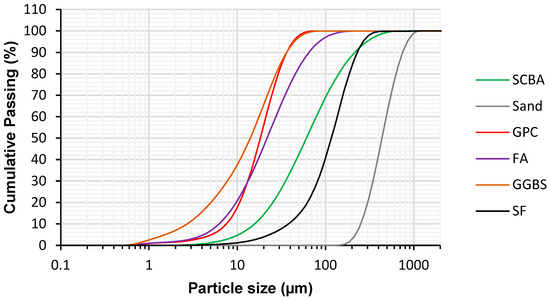
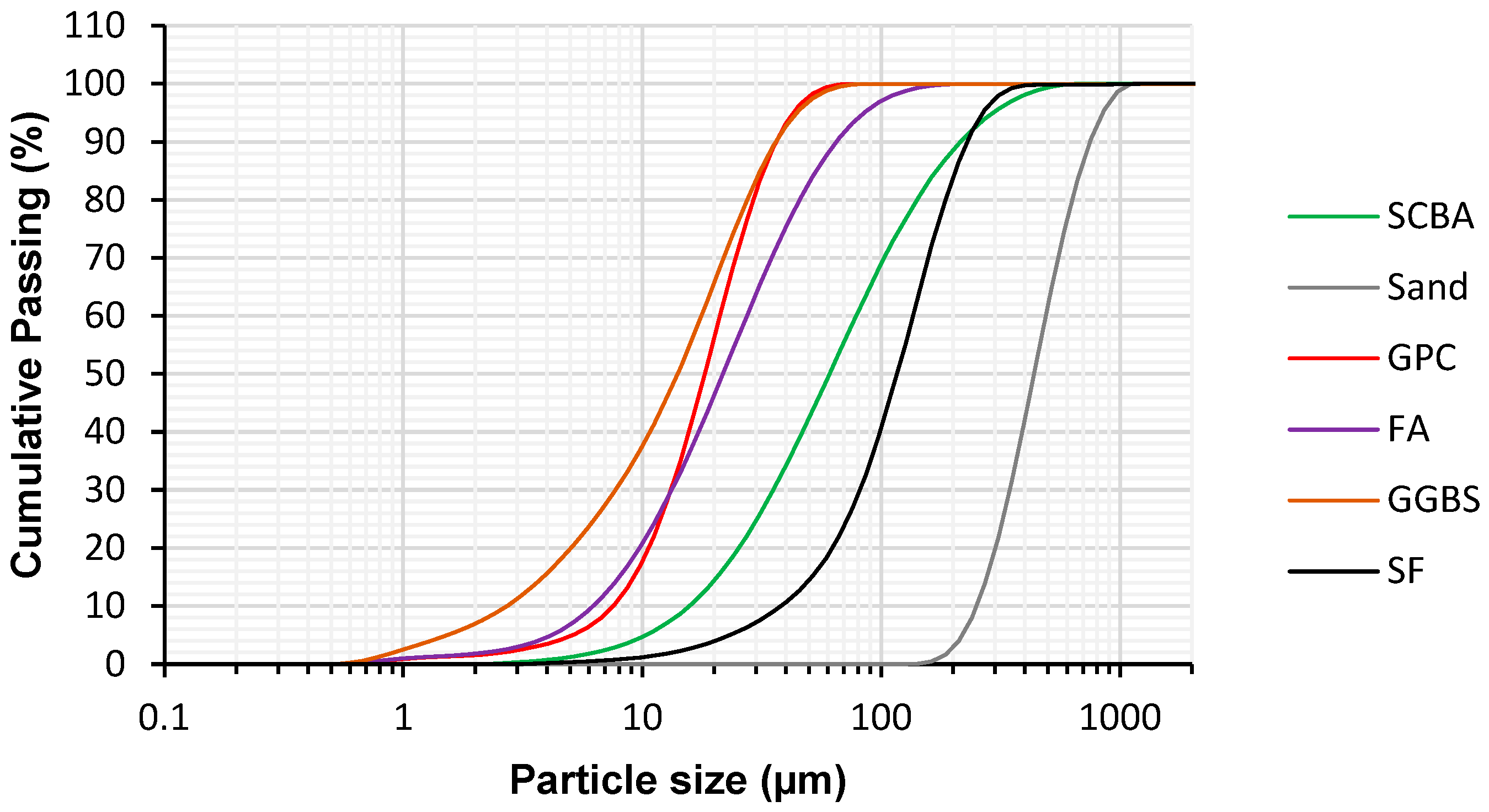
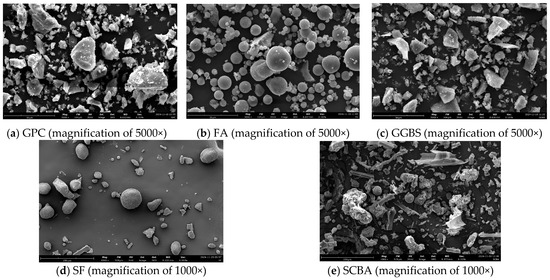
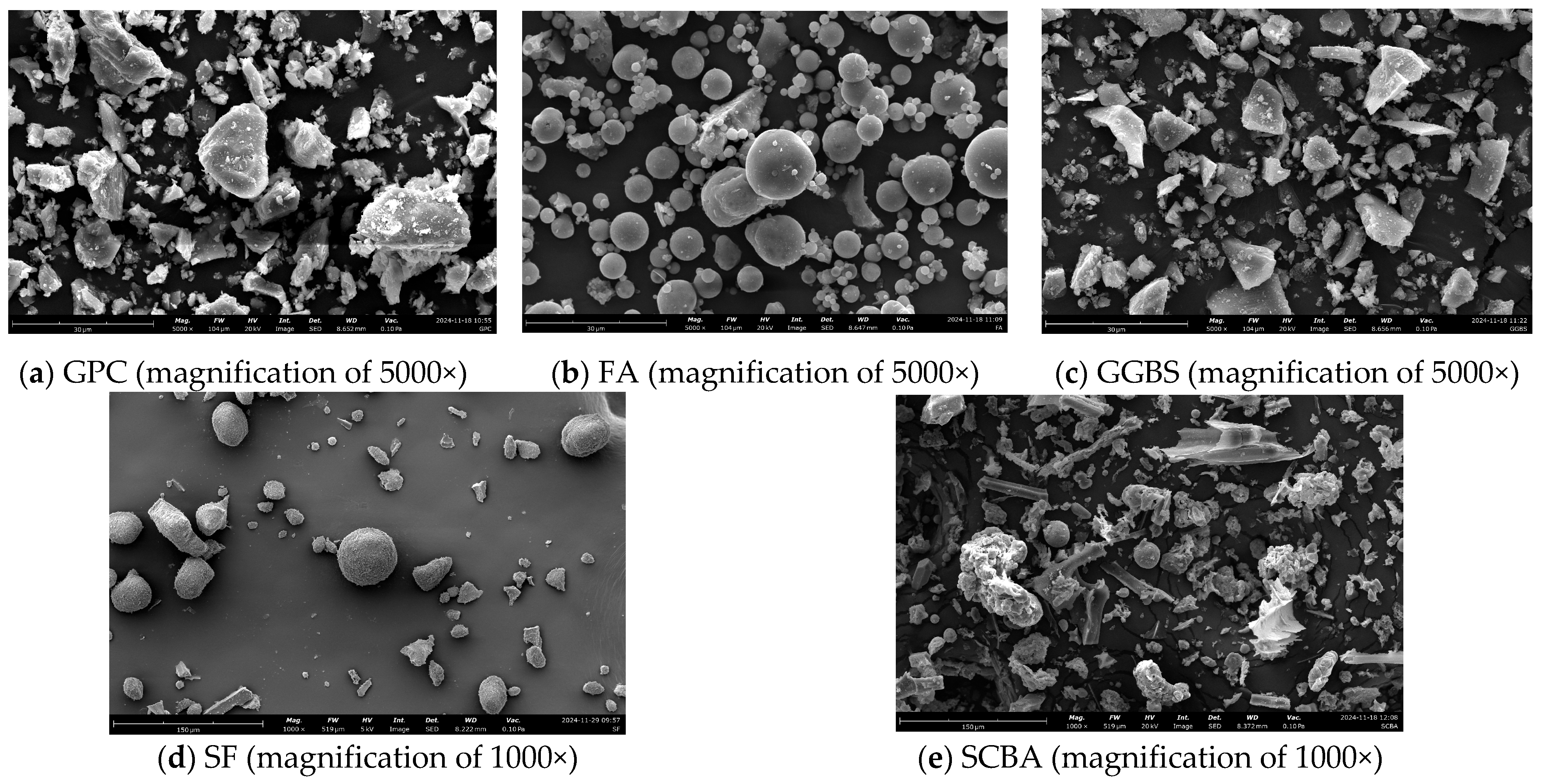
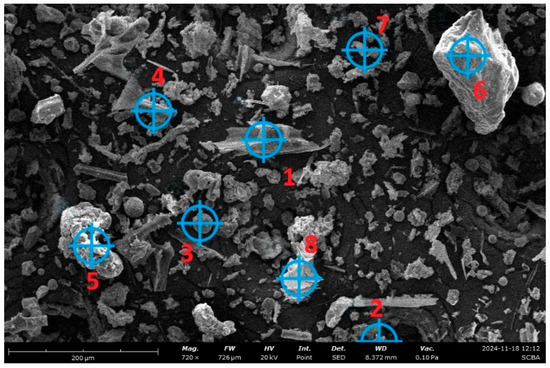
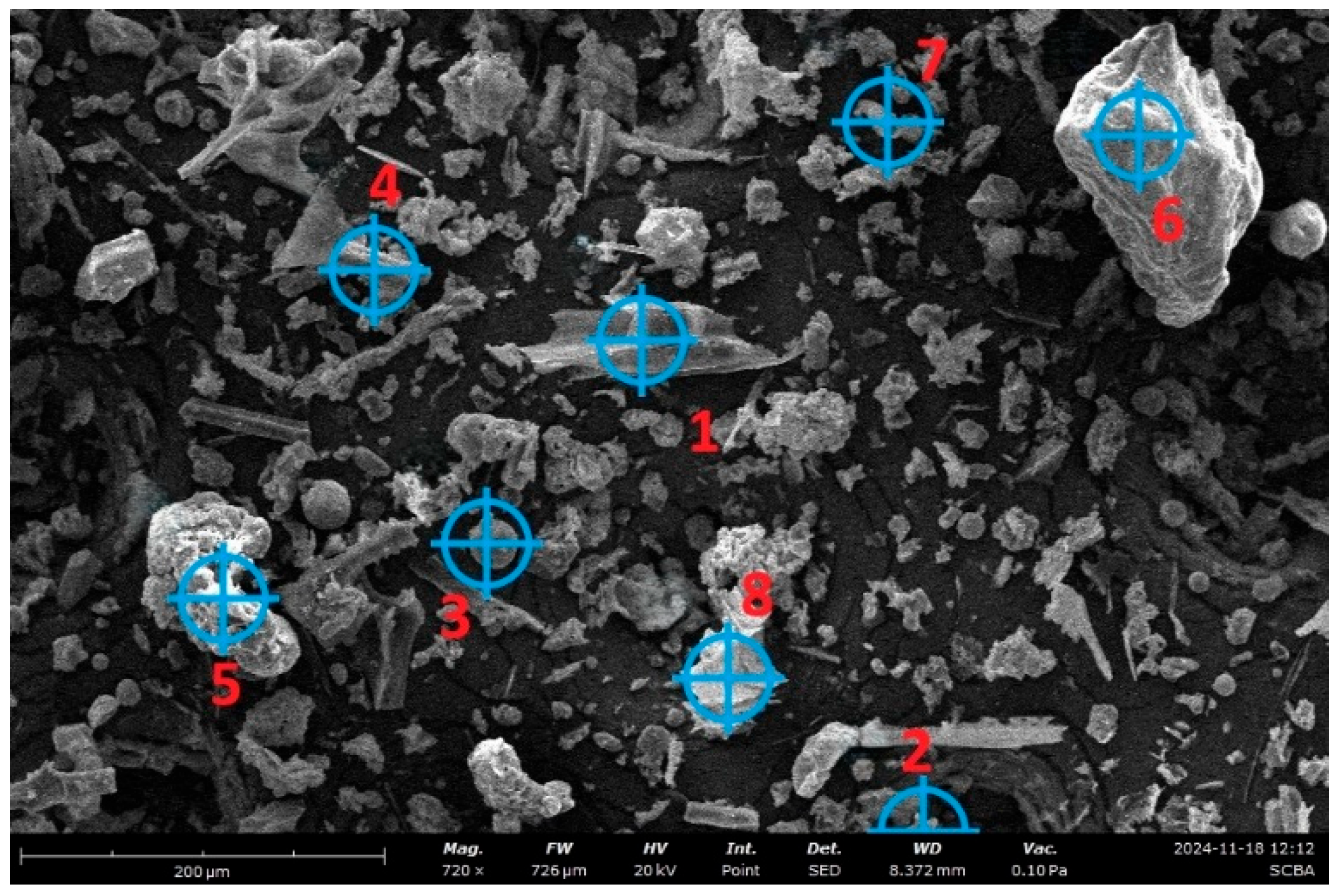
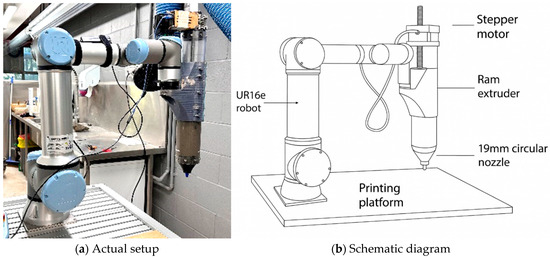
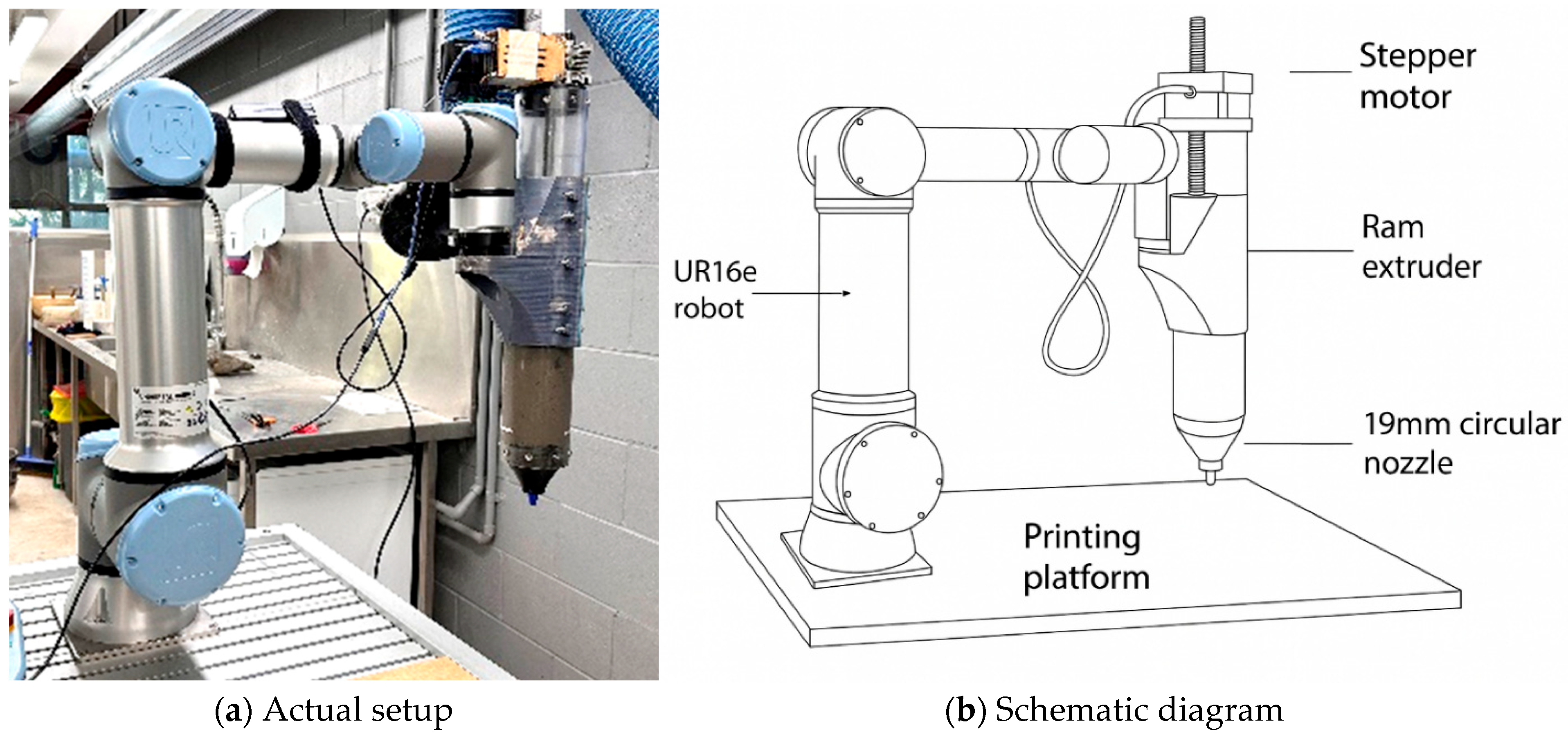
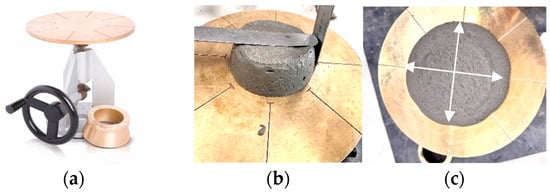
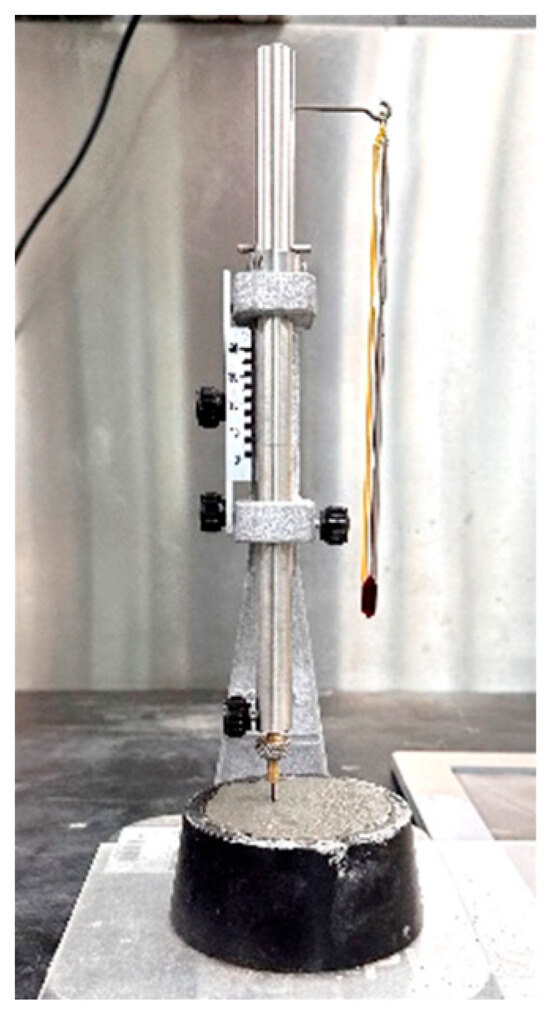
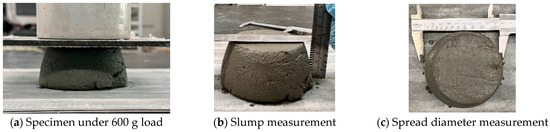
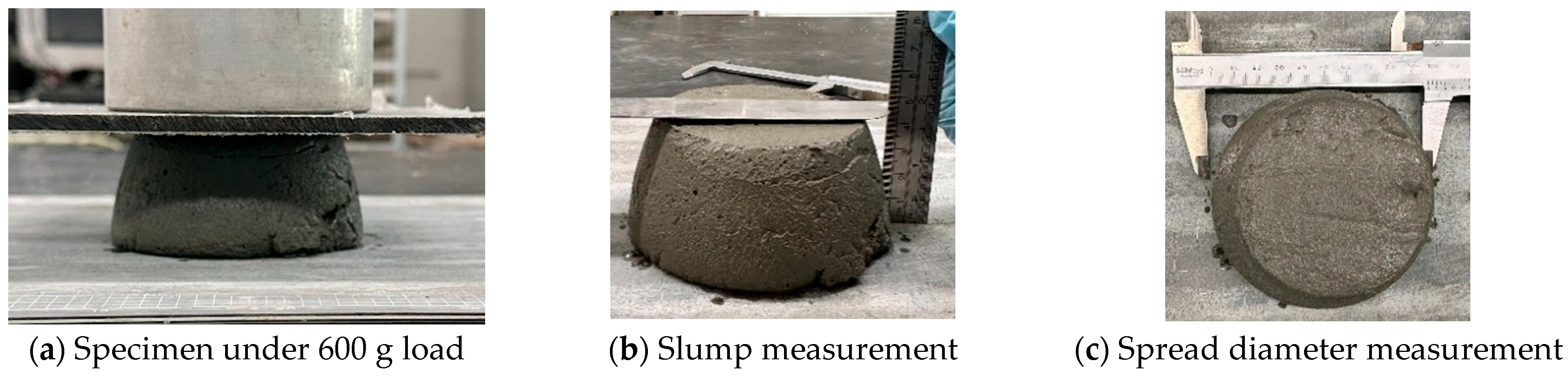
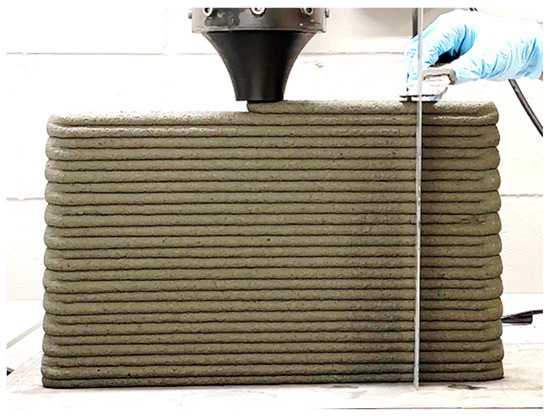
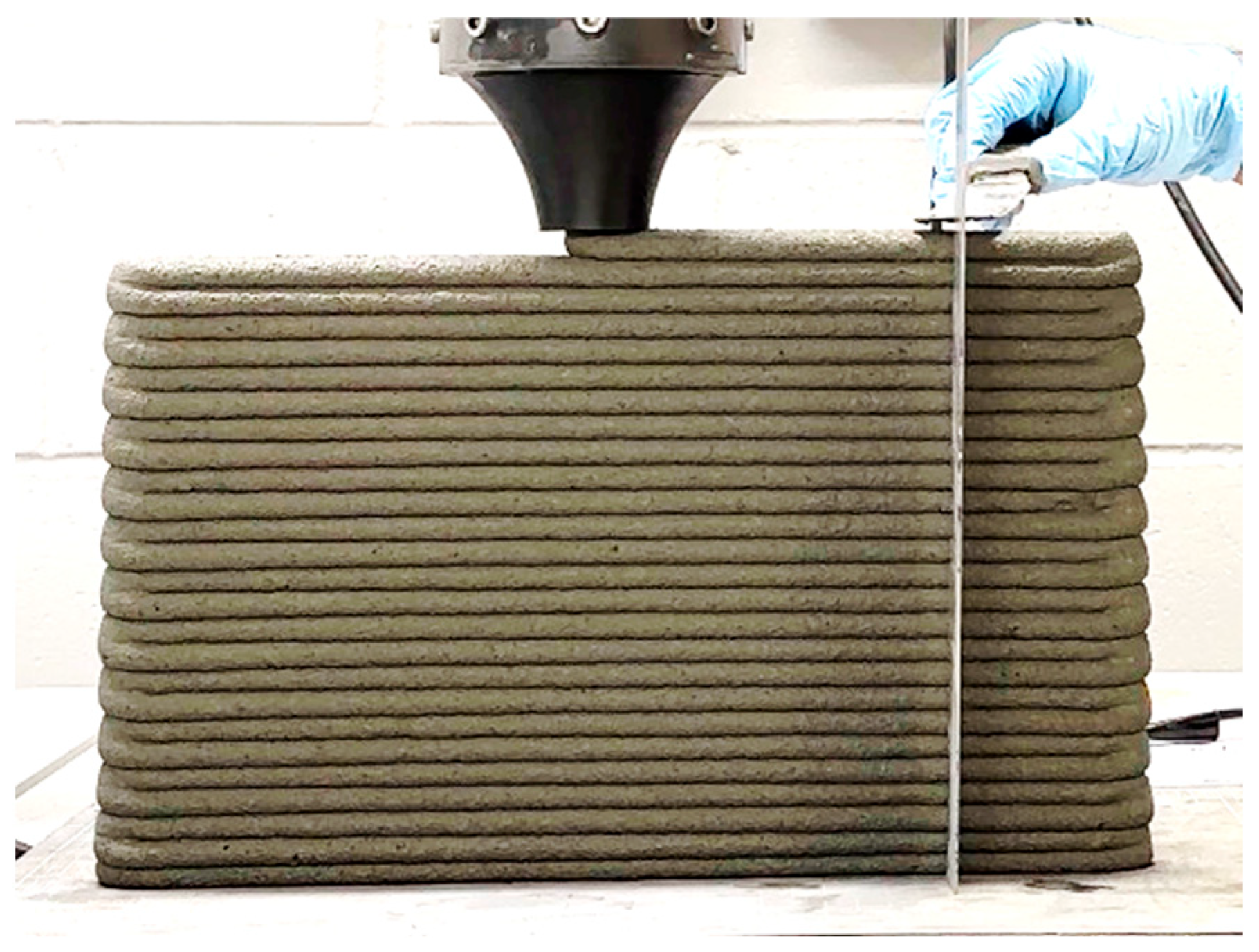
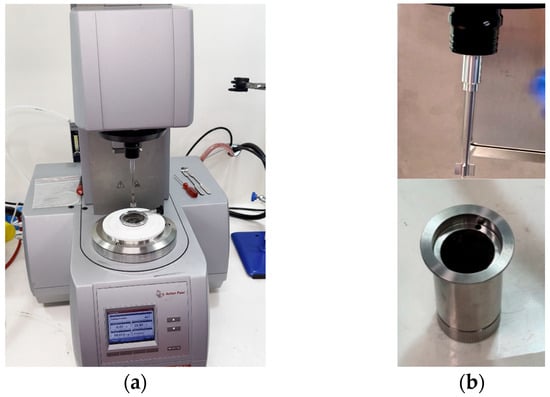
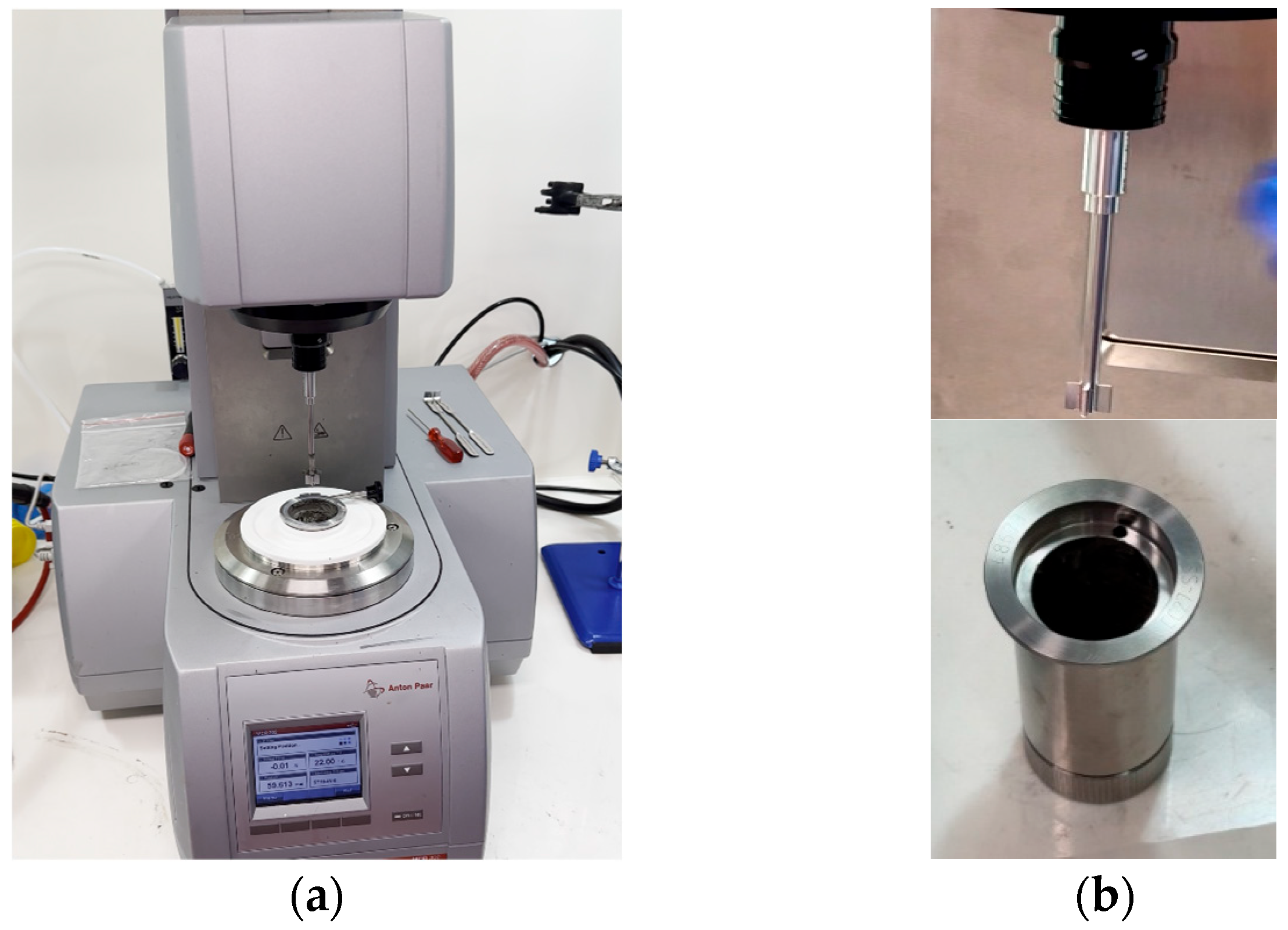
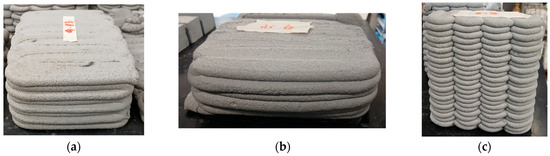
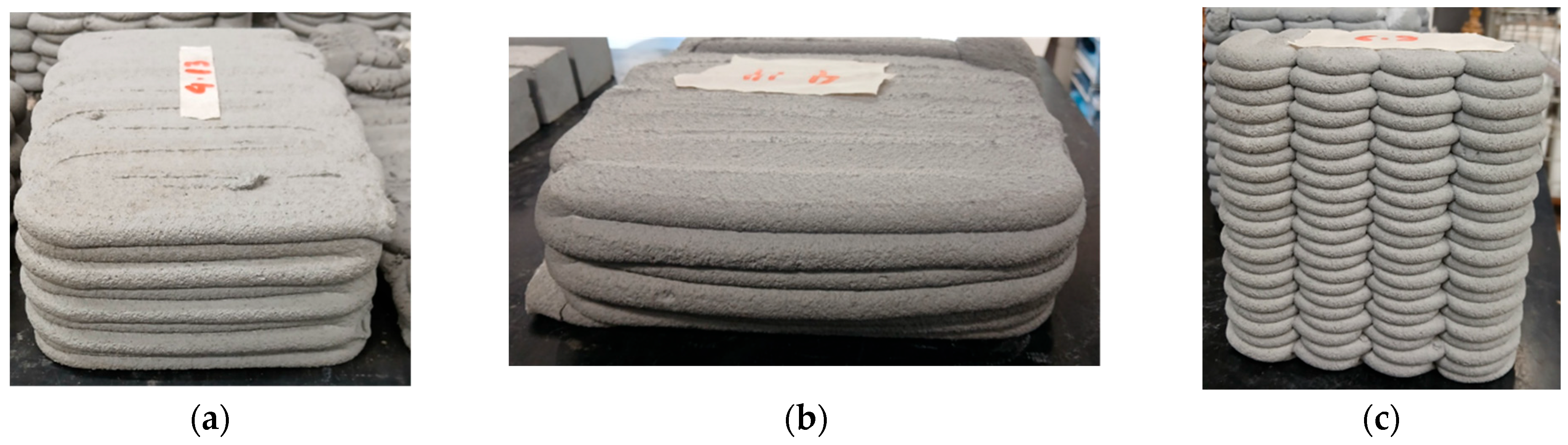
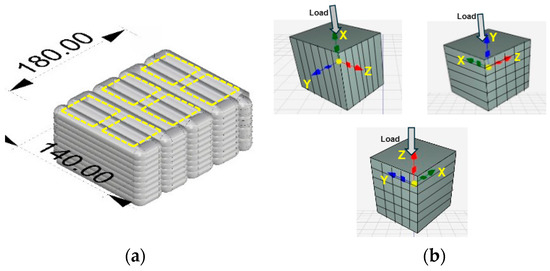
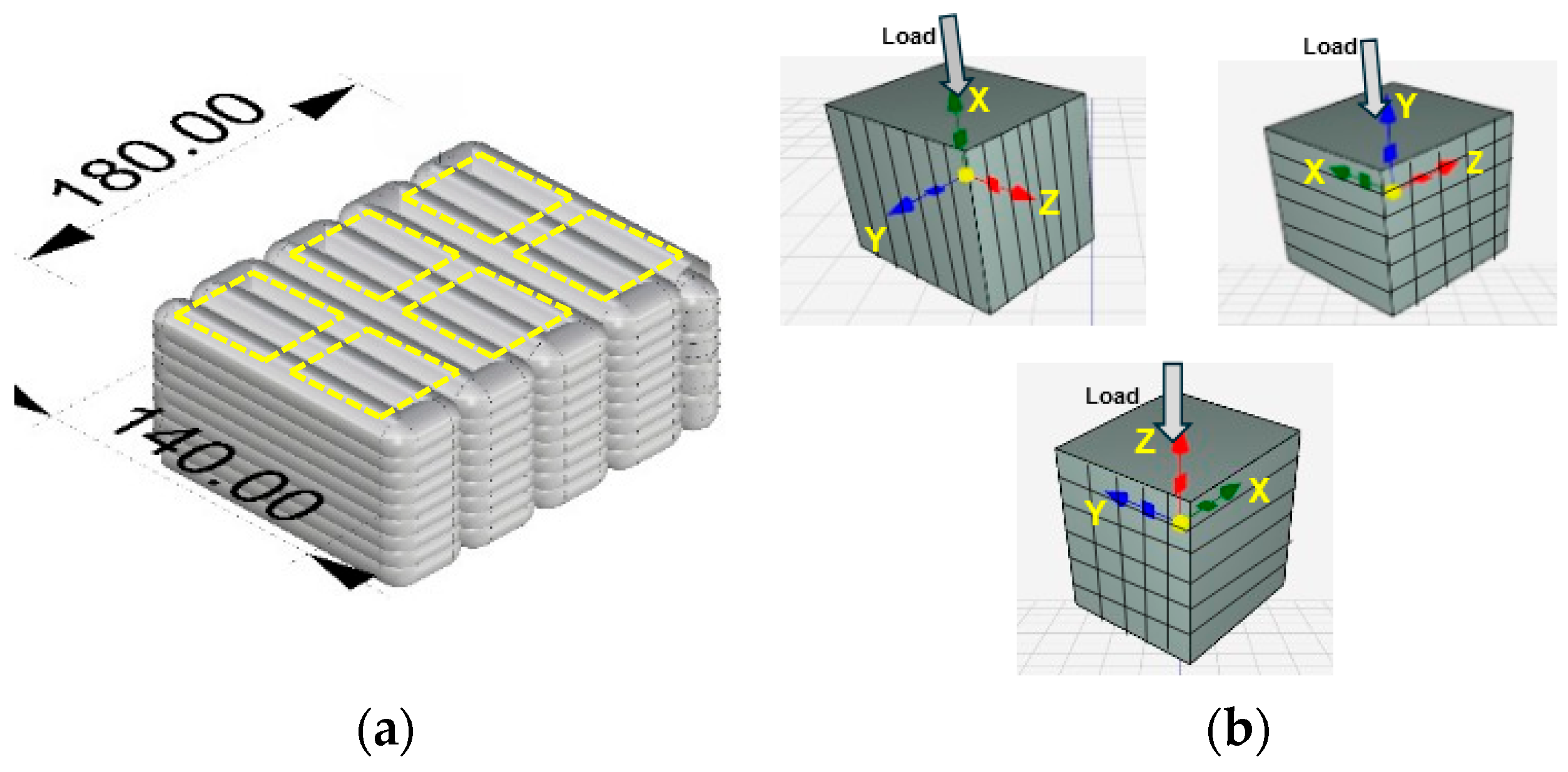
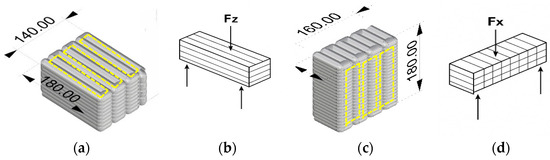
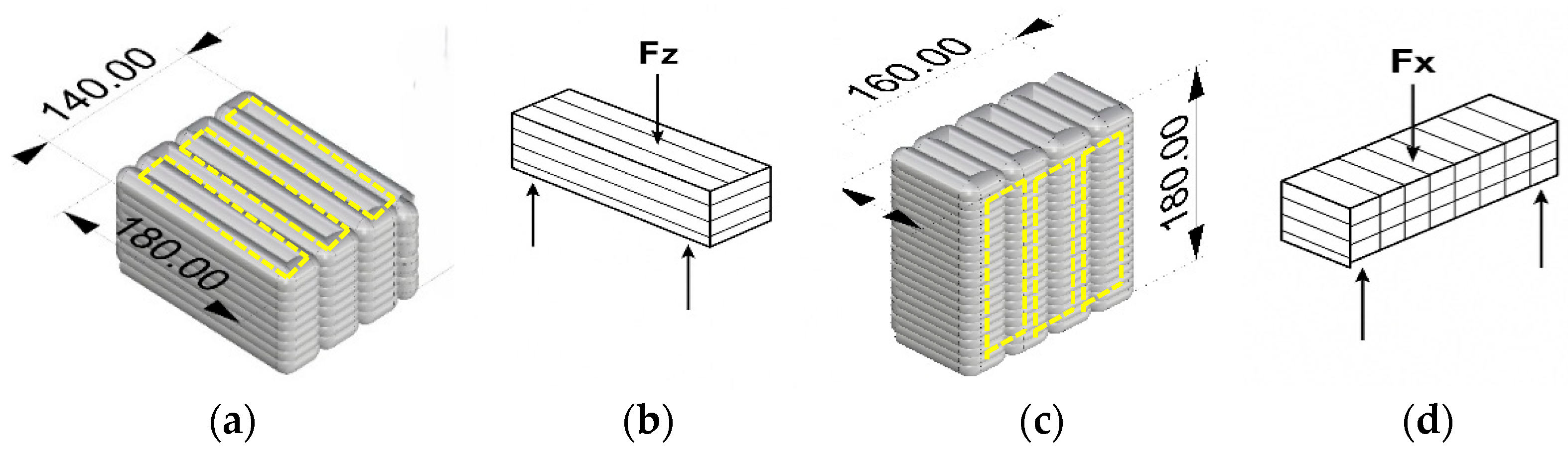
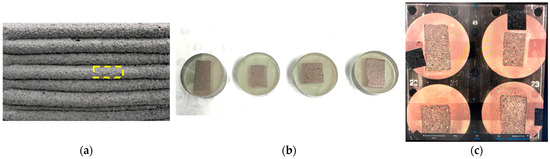
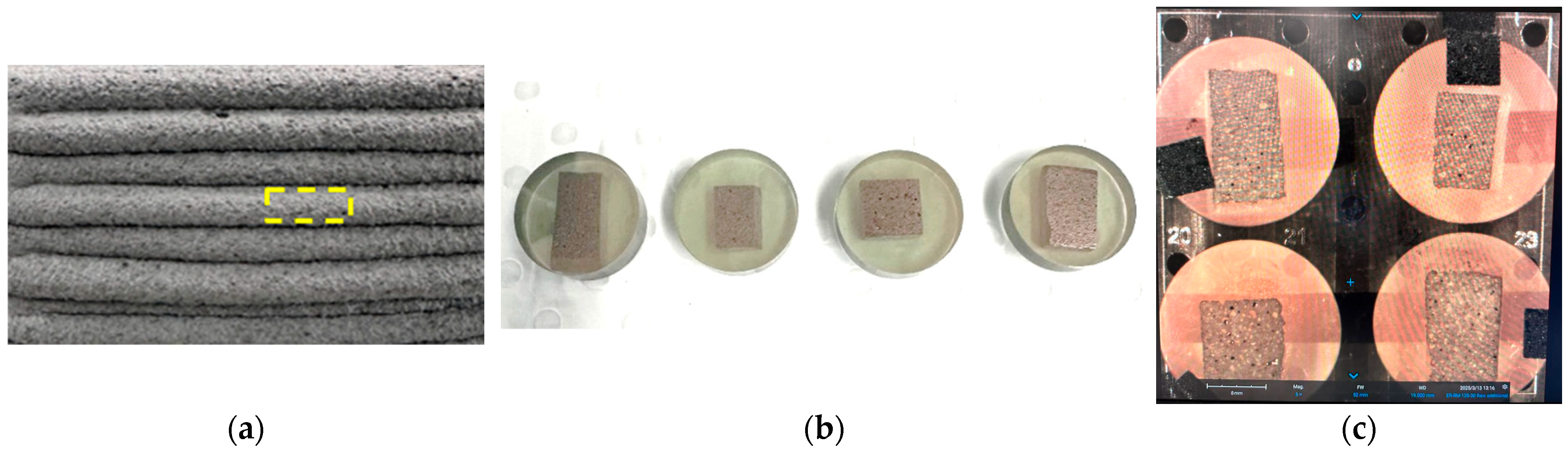
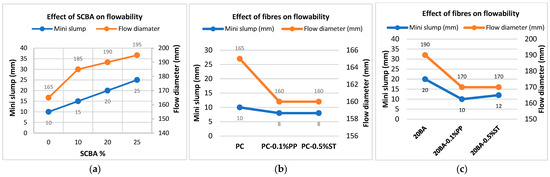
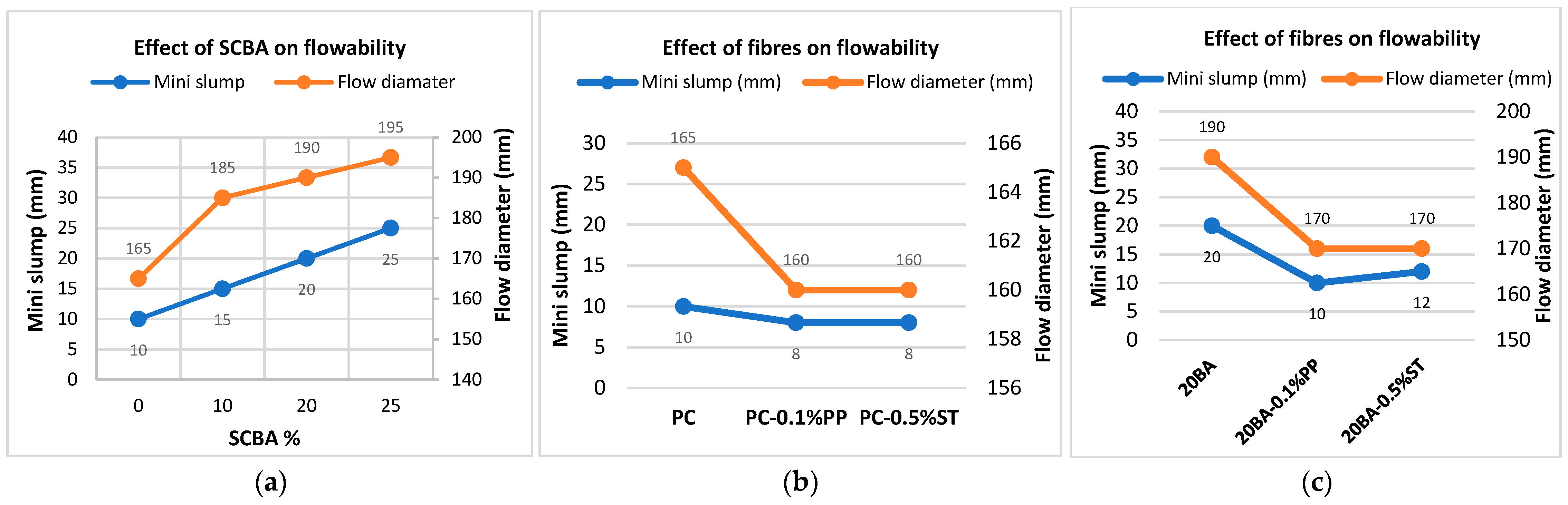
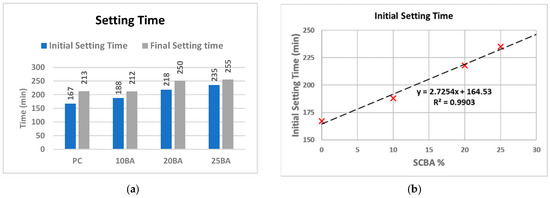
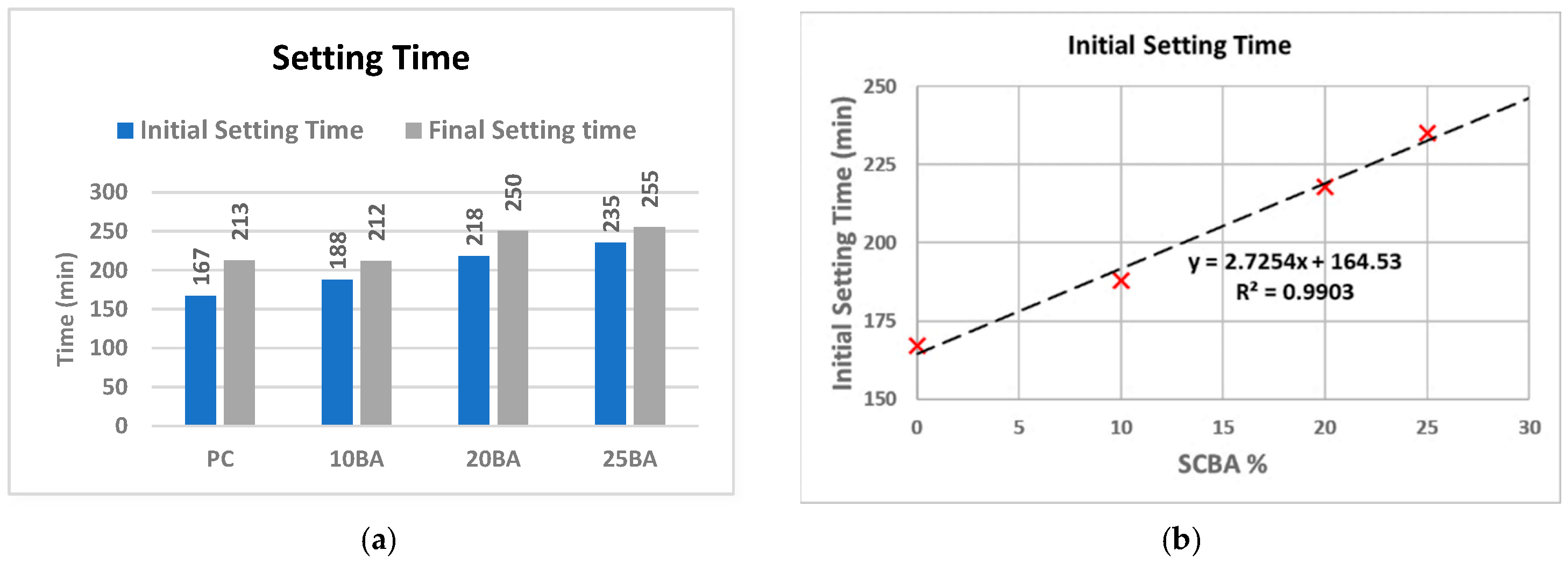
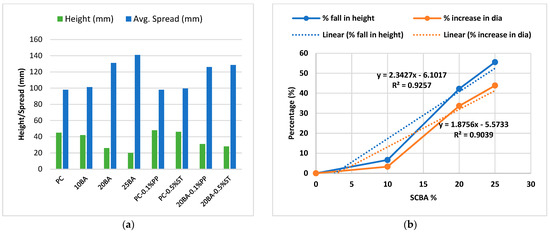
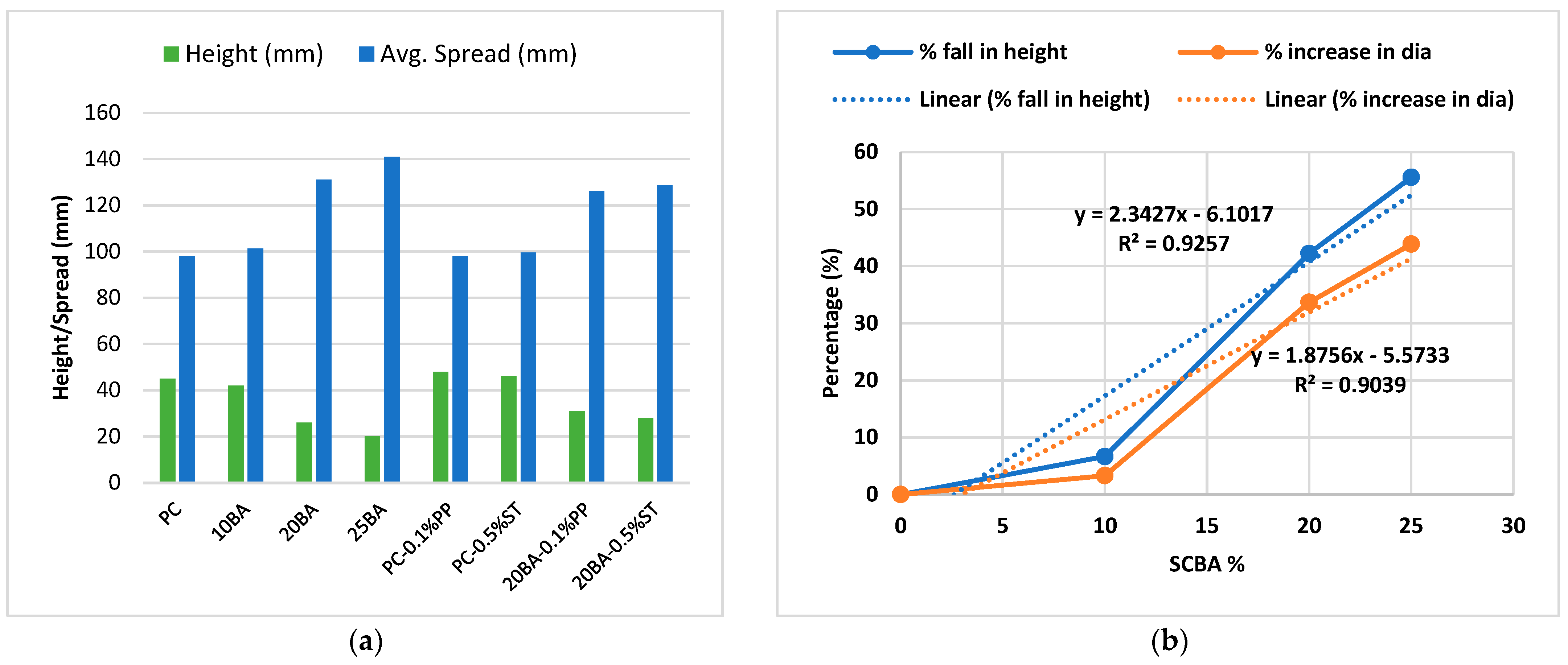
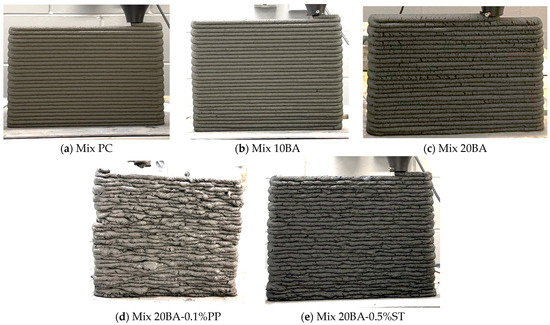
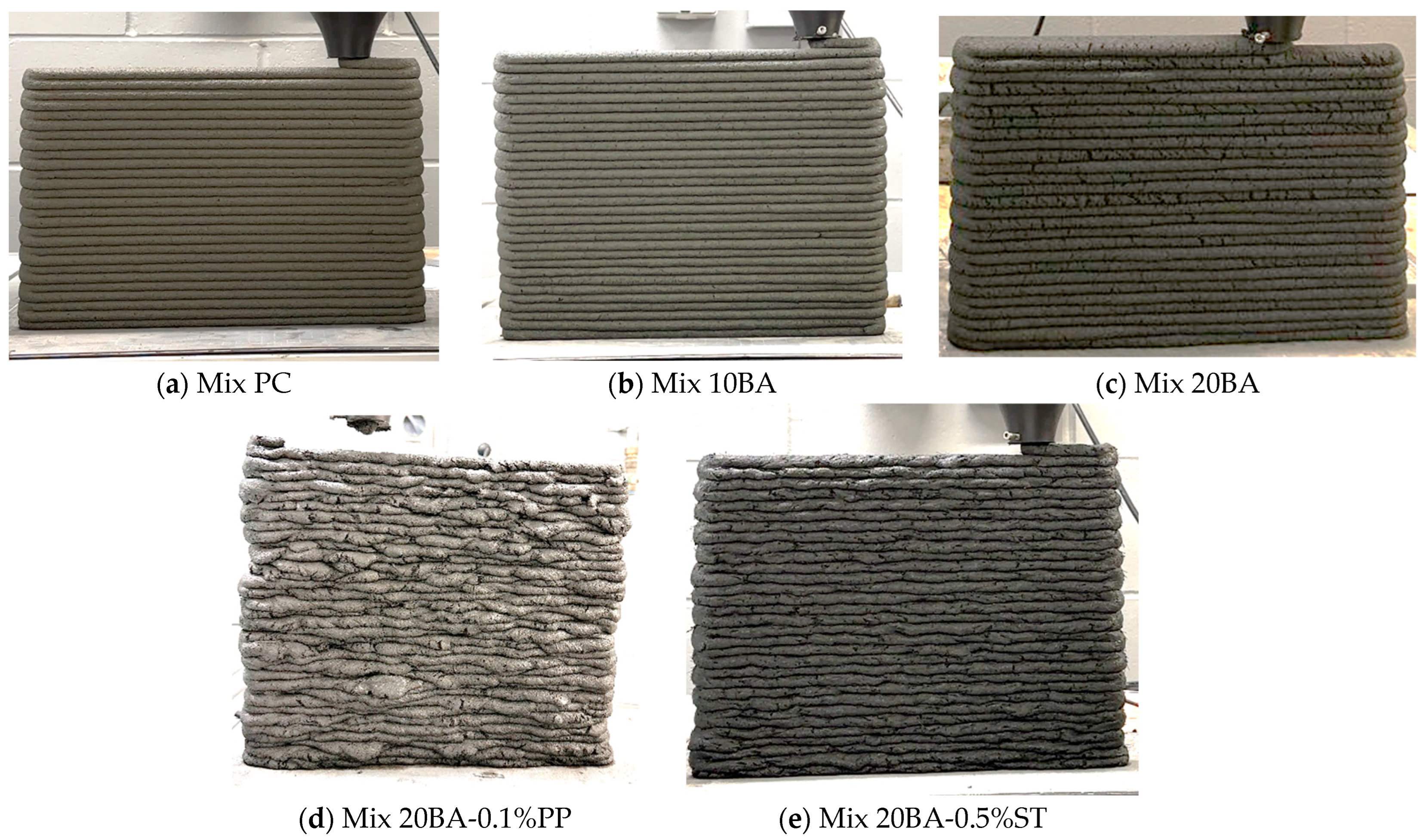
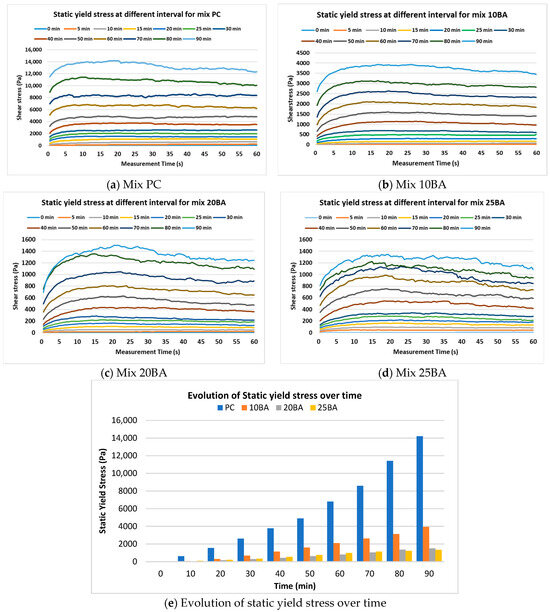
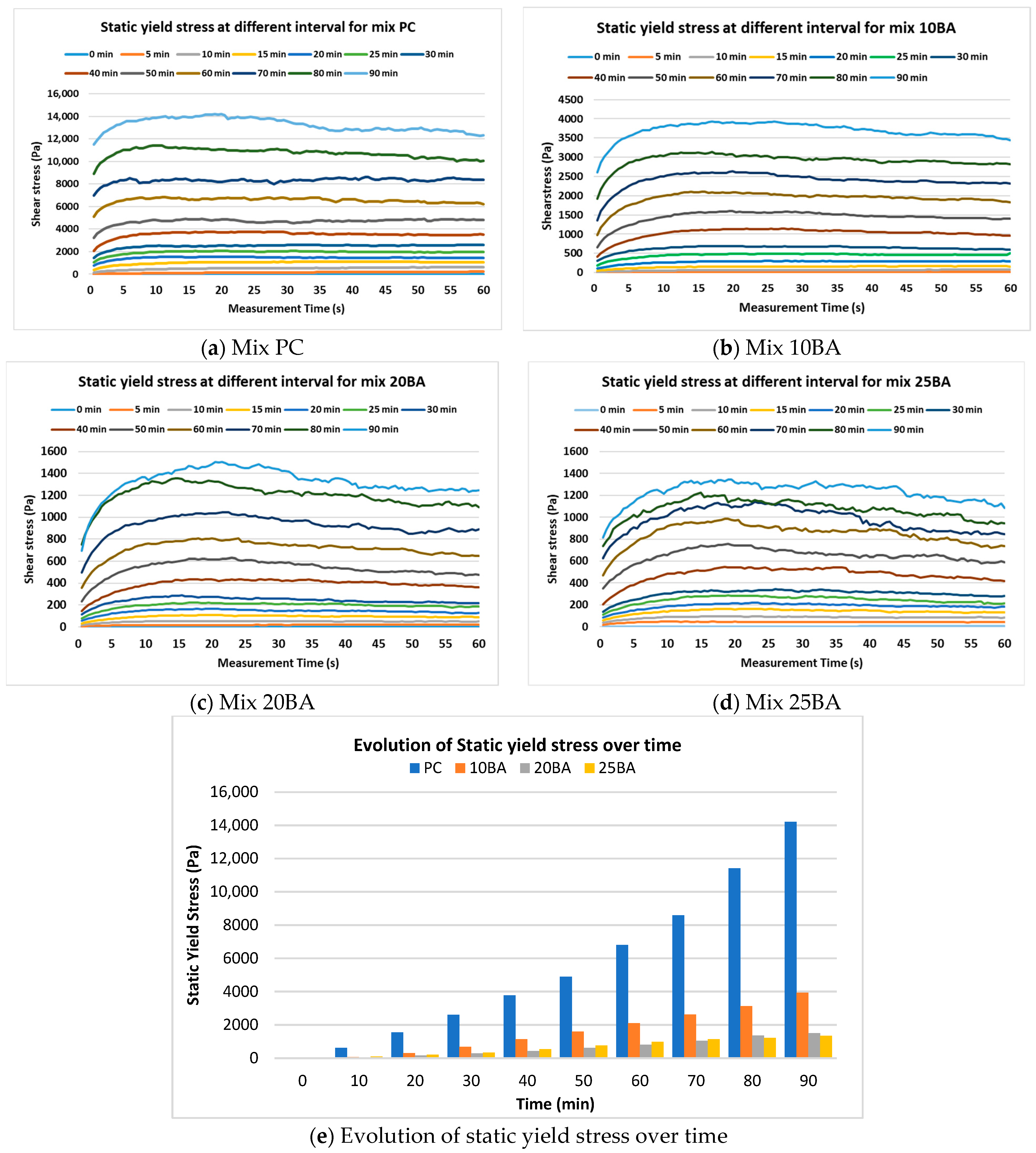
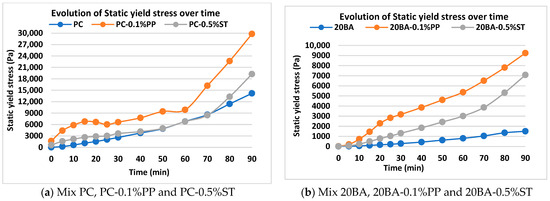
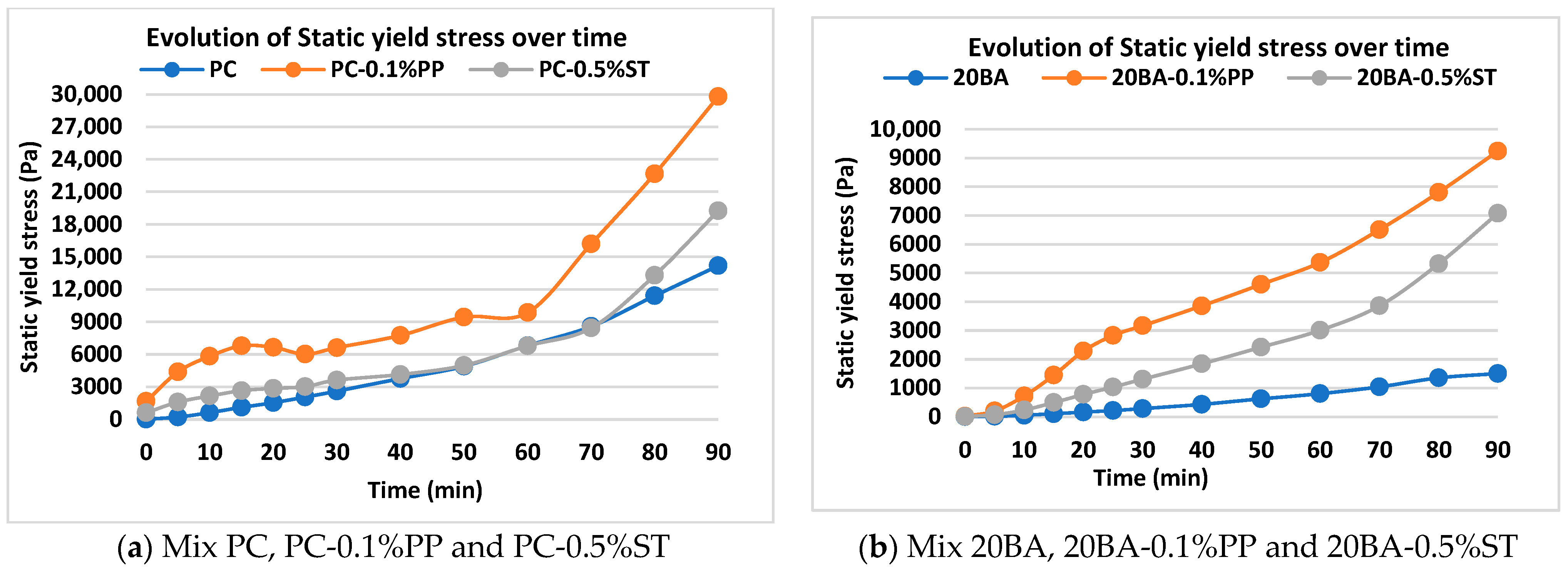
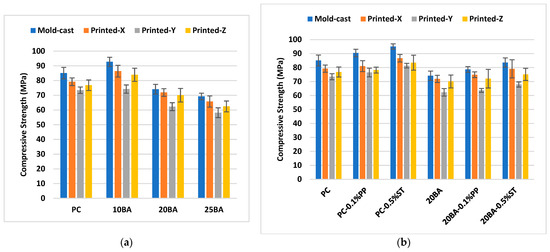
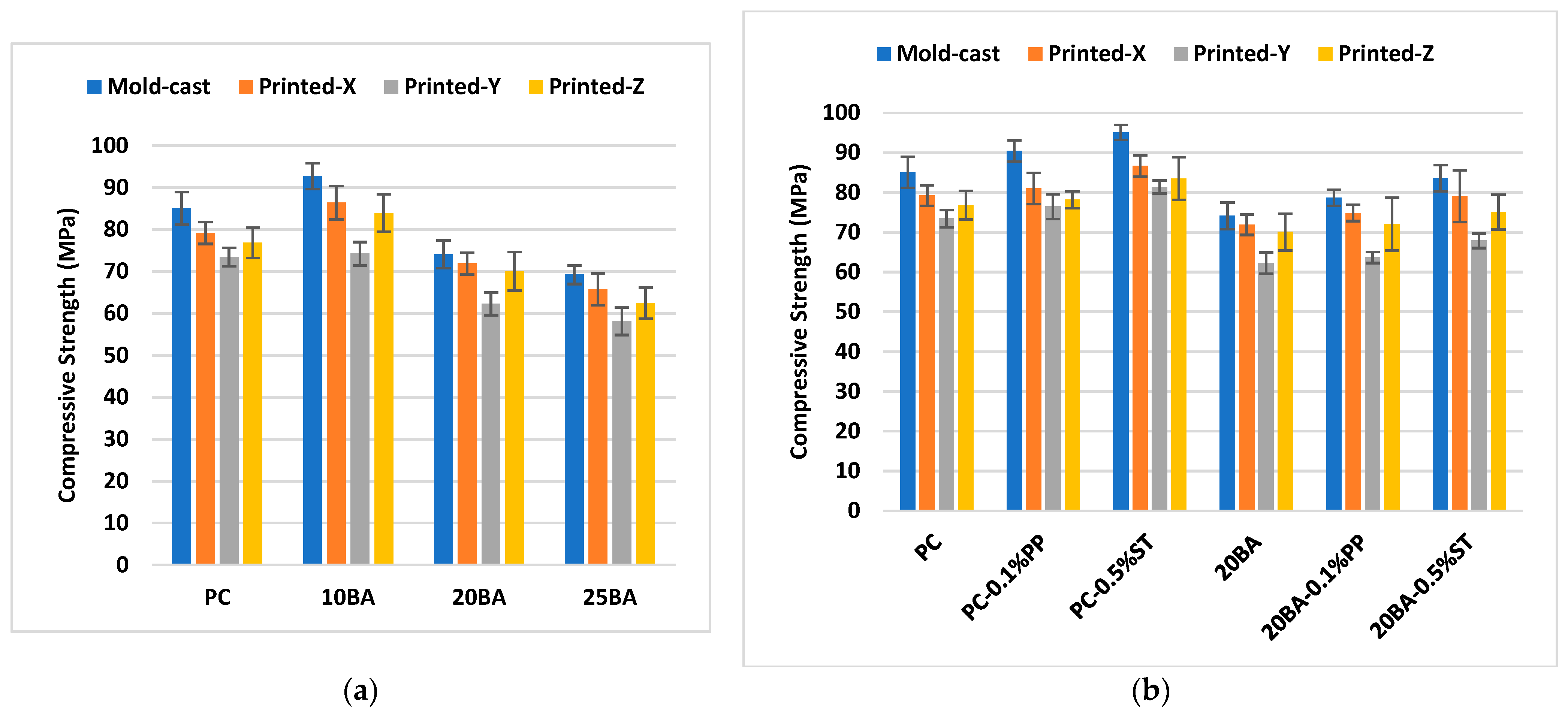
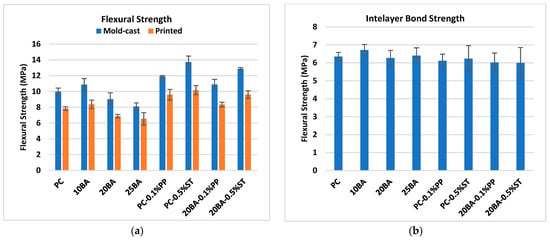
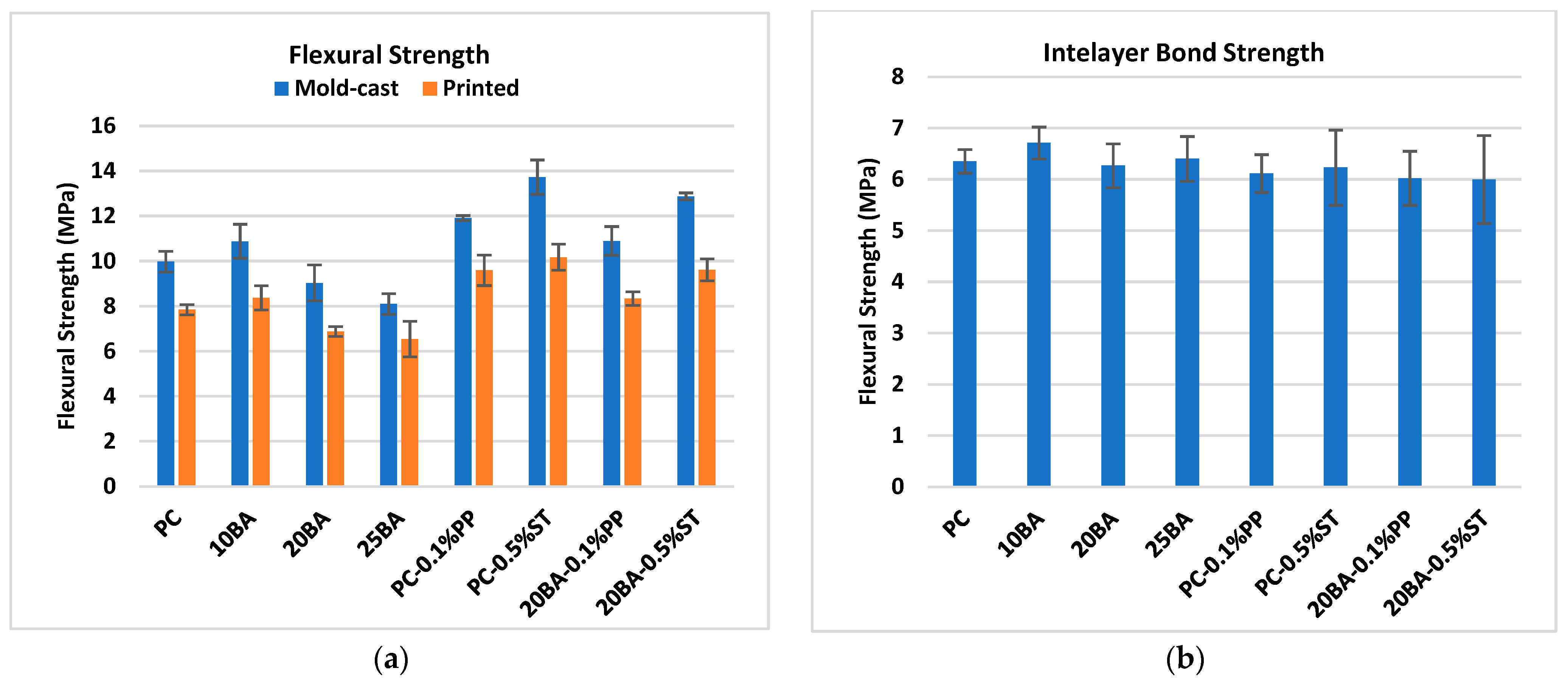
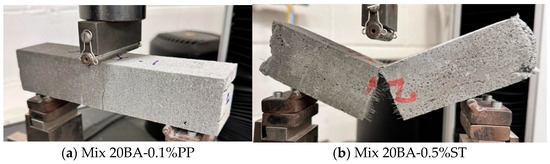
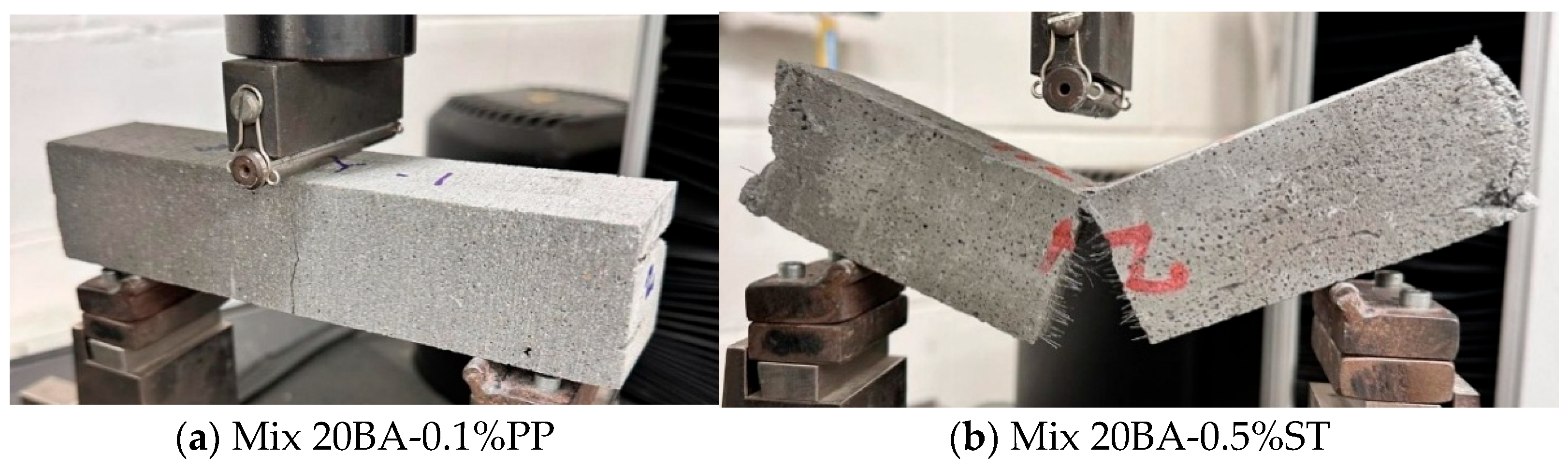
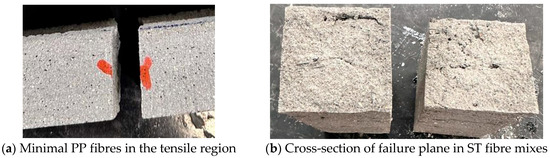
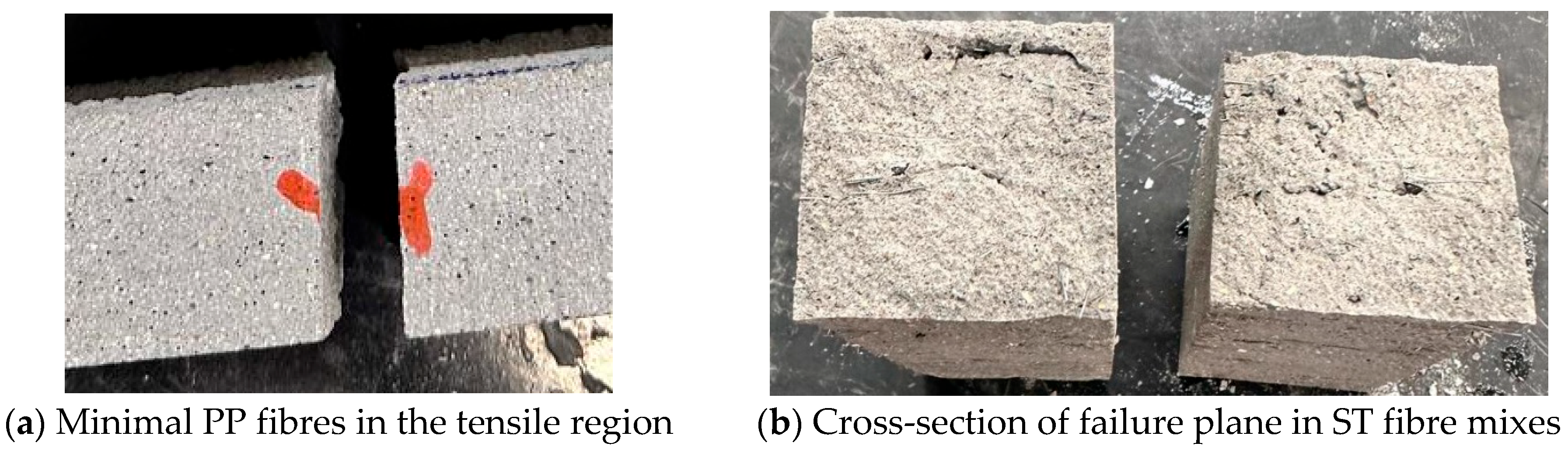
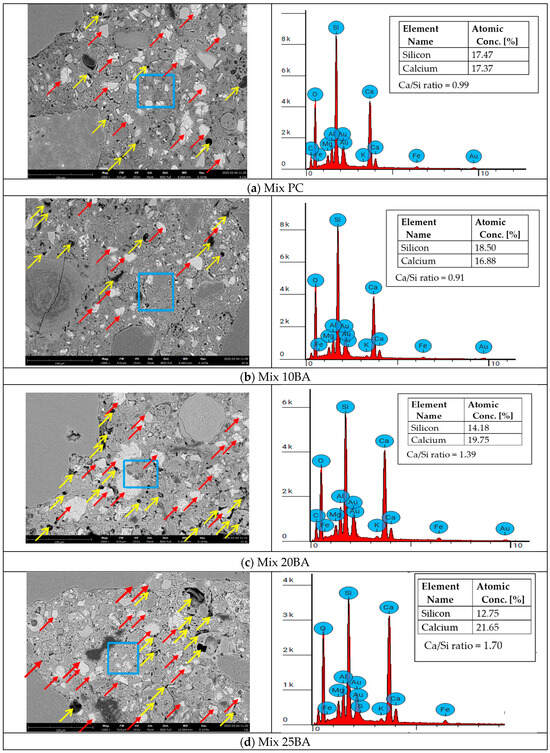
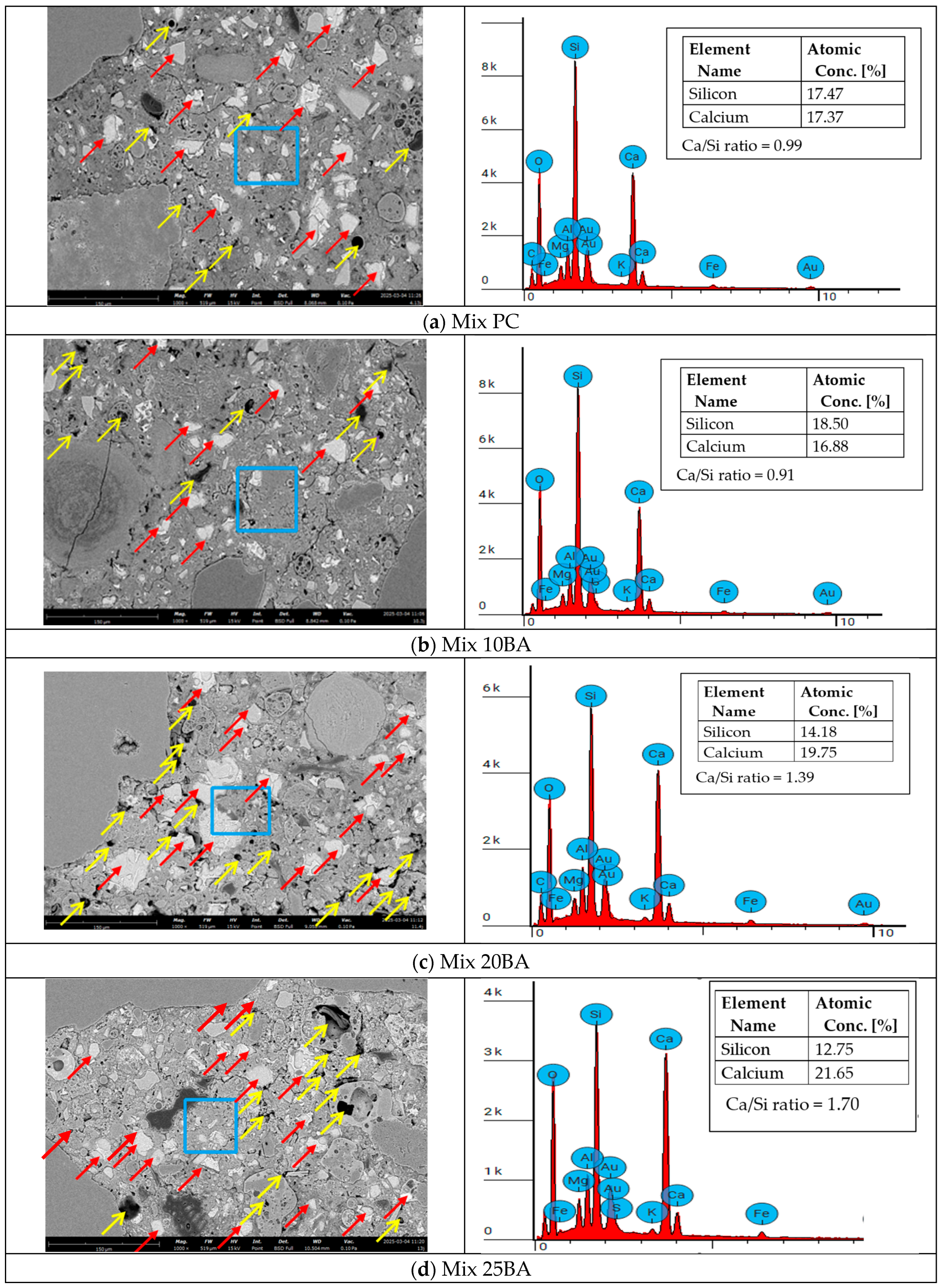

Disclaimer/Publisher’s Note: The statements, opinions and data contained in all publications are solely those of the individual author(s) and contributor(s) and not of MDPI and/or the editor(s). MDPI and/or the editor(s) disclaim responsibility for any injury to people or property resulting from any ideas, methods, instructions or products referred to in the content. |
© 2026 by the authors. Licensee MDPI, Basel, Switzerland. This article is an open access article distributed under the terms and conditions of the Creative Commons Attribution (CC BY) license.