Systematic Review

Stakeholder Conflicts in the Construction Industry: A Systematic Review of Three Decades

by
Nilmi Bhagya Senarath
1,
Nilupa Udawatta
1,*,
Gayani Karunasena
1 and
Salman Shooshtarian
2
1
School of Architecture and Built Environment, Deakin University, Geelong, VIC 3220, Australia
2
School of Property, Construction and Project Management, RMIT University, Melbourne, VIC 3000, Australia
*
Author to whom correspondence should be addressed.
Buildings 2026, 16(6), 1229; https://doi.org/10.3390/buildings16061229
Submission received: 21 February 2026 / Revised: 16 March 2026 / Accepted: 17 March 2026 / Published: 20 March 2026
(This article belongs to the Section Construction Management, and Computers & Digitization)

Abstract

Construction projects are prone to conflicts and disputes due to differing stakeholder interests, which can adversely affect their successful completion in terms of time, cost, and quality. Thus, implementing effective conflict management methods is essential to reduce negative outcomes and capitalize on the positive outcomes of conflicts. However, there is still limited understanding of the status and trends of stakeholder conflicts, and critical conflict causes and management strategies identified by previous studies. Thus, a systematic literature review was conducted, complemented by a scientometric analysis using the VOSviewer bibliographic tool and Pareto analysis to systematically identify critical factors within literature. A total of 63 studies published between 1993 and 2025 were analyzed. Findings indicate that most recent studies have focused more on human, contractual, and technological aspects of conflict. Overall, this study identified 46 conflict causes and 58 management strategies, which were categorized into different groups based on their characteristics. Among these, 23 and 31 were identified as most critical causes and management strategies based on Pareto analysis, with most factors linked to stakeholder relationships. The study offers a systematic understanding of the status quo and emerging themes in stakeholder conflicts research in construction industry. The findings of this study will be beneficial for researchers in identifying future research directions and project stakeholders to understand the most common conflicts and effective management methods for handling conflicts in construction projects.

1. Introduction

Construction projects have become more complex due to the involvement of diverse stakeholders from various disciplines [1]. They consist of professionals from one or more organizations with different skills and expertise to successfully initiate and complete construction projects [2]. Conflicts among stakeholders have become a common issue in construction project teams due to differences in team members’ perspectives [3]. These conflicts have both positive and negative effects on construction projects, leading to productive or non-productive outcomes [4]. Researchers have argued that these conflicts impact team efficiency and team member satisfaction [5]. However, they can positively foster teamwork among project members while enhancing their creativity, innovation, open communication and active listening [6,7,8]. If conflicts are not properly managed, they can further escalate into unnecessary disputes [9]. Appropriate measures should be implemented to prevent the harmful effects of disputes to ensure the success of construction projects [10,11]. Therefore, a proper conflict management process should be implemented to mitigate the negative effects of conflicts and enhance the positive effects [12]. Effective management of conflicts facilitates better understanding between project team members, stronger relationships, and improved communication skills [8]. Conflict management can be defined as the process of planning measures to avoid conflicts and taking prompt, appropriate actions when they occur [12]. The conflict management methods used by a team do not operate in isolation but are influenced by the characteristics of the conflicts [13]. The authors emphasized that the conflict management method is influenced by the cause of conflict at both the individual and team levels, which contrasts with the previous view that conflict type and management method are not interrelated. Therefore, initially, a proper understanding of different causes of conflicts should be obtained [14], as well as different management strategies. However, further theory and research regarding the role of conflict management methods explaining the effects of conflicts on team outcomes required [13]. A systematic literature review (SLR) ensures comprehensive coverage of available studies using a transparent, reproducible method to review the literature without bias [15]. Thus, to obtain a proper understanding of conflicts and their management in construction projects, to reduce the destructive outcomes while improving constructive outcomes from conflicts, a thorough review of previous studies is required.
Different authors have previously conducted SLRs on construction conflicts. Nevertheless, a nuanced, deep, and comprehensive understanding of conflicts among project stakeholders remains lacking, despite available bibliometric and narrative studies revealing an evolving trend in the area [15]. Accordingly, the authors conducted a SLR from 2000 to 2024 and revealed four common perspectives used to study conflicts between stakeholders as perceptual, behavioral, event and dynamic process. However, their analysis was constrained by the selection of databases and journals, which focused on construction management and conflict management journals. According to [16], there is a significant lack of a thorough review of prior research works despite the importance of conflicts in project management and the various research conducted. Thus, a proper analysis of the field using the scientometric method is necessary in order to tackle this issue [16]. Accordingly, the authors conducted a SLR using the scientometric review and built a knowledge base for construction conflict considering keywords, clusters and citation bursts. Nevertheless, a theoretical framework that incorporates the most frequent conflicts and their resolution methods is significantly lacking in terms of construction projects [17]. Accordingly, the authors developed a tool based on the Preferred Reporting Items for Systematic Reviews and Meta-Analyses (PRISMA) method, but they compared only dispute resolution methods in the construction industry. Despite the availability of a large body of knowledge, a SLR study investigating the nature of conflict causes and management strategies is significantly lacking, particularly for building construction projects, where effective conflict management is essential.
Therefore, the present study aims to conduct a SLR on the causes of conflicts among project stakeholders in construction projects and the management strategies to address them. In order to understand conflicts properly, it is fundamental to group them into distinct types or categories [15]. Therefore, this study aims to identify the conflict causes and management strategies for project stakeholders by investigating the most used themes around the concepts, the trend of the themes, categorizing and developing the taxonomies of conflict causes and management strategies and finally proposing an integrated map by identifying the most critical factors. Consequently, the outcomes of the study provide a cohesive understanding of the main causes of conflicts and conflict management strategies to mitigate the negative effects of conflicts while improving the positive outcomes. The paper is organized into five sections, namely: 1—Introduction, 2—Materials and Methods, 3—Results and Discussions, 4—Conclusion, and References.

2. Materials and Methods

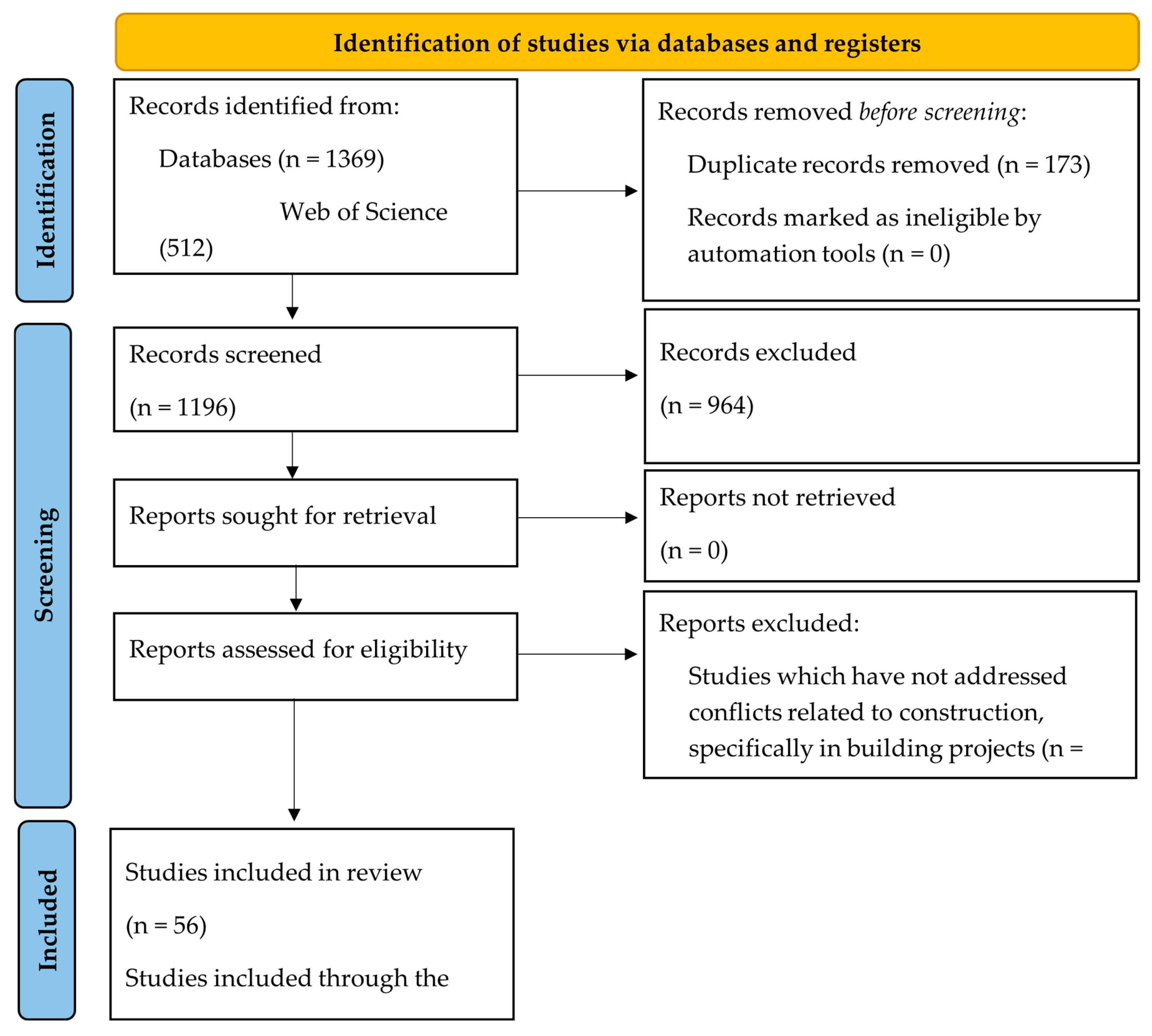
This research employed a qualitative approach through a SLR. The PRISMA guideline, which is annexed as Supplementary Materials (Table S1—PRISMA 2020 Checklist) and PRISMA flow diagram were used to conduct the SLR. PRISMA is a standardized protocol for conducting systematic reviews and meta-analyses, designed to enhance the precision and reliability of literature reviews [18]. It also employs a systematic search strategy that reduces various types of bias and facilitates effective synthesis of findings [19]. The criteria for selecting relevant literature, the search plan, metadata, the extraction process, and the data analysis process are outlined in the review protocol, which is annexed in the Supplementary Materials (Table S1—PRISMA 2020 Checklist). Figure 1 shows the complete process using PRISMA flowchart in this research.
In the first stage, the most suitable database for retrieving pertinent literature was identified. Clarivate Analytics’ Web of Science and Scopus were selected as the potential databases for conducting the literature search. The relevant literature was searched using the keywords in combination with the Boolean operators “AND” and “OR”. Construction-related research encompasses a wide range of project types such as infrastructure, building, transportation and industry, etc. The term “Building” was included in the search string to focus the SLR on the studies that were conducted specifically about building projects and include them in the review, as this research focuses explicitly on stakeholder conflicts in construction projects. It further ensured contextual consistency alongside broader construction-related keywords. The following keywords were used to detect the relevant publications:
((“Stakeholder” OR “Project Team” OR “Project Stakeholder” OR “Client” OR “Contractor” OR “Consultant” OR “Engineer” OR “Architect”) AND (“Conflict*” OR “Dispute*”) AND (“construction*” OR “construction industry” OR “construction project*”) AND (Building)).
This process yielded 1369 results, which were exported in RIS format for analysis, screening, and record-keeping (512—Web of Science, 857—Scopus) as illustrated in Figure 1. Initially, 173 publications were excluded to eliminate duplicate records. Thereafter, the studies were selected based on predefined inclusion and exclusion criteria. The inclusion criteria strongly focused on selecting prior studies that identified and/or examined conflicts between project stakeholders and conflict management strategies, specifically in building construction projects. As for the exclusion criteria, the search was limited to English-language publications from 1993 to 2025. In order to ensure comprehensive coverage of the literature, the search for publications was not restricted by article type or country.
In the screening process, the studies were further examined based on their titles, abstracts, and keywords, resulting in the exclusion of 964 studies that were not relevant to the study area. Thereafter, the remaining 232 studies were further assessed for eligibility by reading the full text and 176 studies were removed as they did not address the conflicts between the project stakeholders, specifically in building construction projects. Finally, 56 publications were shortlisted for inclusion in the analysis to comprehensively identify the causes of conflict and management strategies. Additionally, 7 publications were identified through website searches and citation tracking, bringing the total to 63 studies for this research. Table 1 provides an overview of the selected 63 studies.
Numerous types of software tools are available to conduct scientometric analyses [16] such as VOSviewer [20], CiteSpace [21] and Gephi [22]. These software tools enable the literature co-citation analysis and keyword co-occurrence analysis, which assist in performing quantitative and objective analysis of associated disciplines and discovering quantitative relationships between different studies [16]. The selected publications were reviewed and analyzed using VOSviewer software (version 1.6.17) based on keyword occurrence. VOSviewer is a program developed to create and view bibliometric maps in a more comprehensible and straightforward way, and it places particular emphasis on the graphical representation of bibliometric maps, unlike other available software [20]. Therefore, this study used VOSviewer to visualize and present the findings based on the keyword occurrence. Thereafter, the trend of the research was analyzed considering the keywords and the average publication year. A comprehensive content analysis of conflict causes and management methods was conducted to provide a detailed outline of the findings. Thereafter, Pareto analysis was used to identify the most influential causes of conflicts and the most effective management methods. Pareto analysis, also known as the “80/20” rule, is a complex economic concept introduced by Vilfredo Pareto [23]. It implies that, in many cases, roughly 80% of the effects result from 20% of the causes; thus, the Pareto principle is a much more suitable tool for identifying the crucial few resources responsible for the majority of the issues [24]. Accordingly, it ranks the data in descending order by frequency of occurrence [25]. The total frequency will sum to 100%, and the vital few items will account for 80% of the cumulative occurrences, while the useful many items will account for the remaining 20% [25]. Pareto analysis was used because the data used in the study were mainly citation frequencies, limiting the applicability of other analytical techniques [26].
Table 1. List of the final eligible studies.
Item NoReferenceReference No
1(Senaratne & Udawatta, 2013)[5]
2(Gunarathna et al., 2018)[12]
3(Gunasekara et al., 2023)[27]
4(Leung et al., 2005)[28]
5(Liu & Zhai, 2011)[29]
6(Li et al., 2015)[30]
7(Trinkūnas et al., 2021)[31]
8(Amoah & Nkosazana, 2022)[32]
9(Gardiner & Simmons, 1998)[33]
10(Yiu & Cheung, 2006)[34]
11(El-adaway et al., 2017)[35]
12(Chaturvedi et al., 2021)[36]
13(Padroth et al., 2017)[37]
14(Lee et al., 2023)[38]
15(Otasowie et al., 2023)[39]
16(Ussing & Wandahl, 2013)[40]
17(Yusuf & Pretorius, 2017)[41]
18(Tabish & Jha, 2023)[42]
19(Kayastha et al., 2024)[43]
20(Salem et al., 2024)[44]
21(Senaratne et al., 2013)[45]
22(Wu et al., 2017)[46]
23(Jaffar et al., 2011)[47]
24(Zhang & Huo, 2015)[48]
25(Rahimian et al., 2022)[49]
26(Leung et al., 2008)[50]
27(Ashif & Saud, 2024)[51]
28(Kamaruddeen et al., 2019)[52]
29(Aibinu et al., 2008)[53]
30(Nursin et al., 2018)[54]
31(Mahmudnia et al., 2022)[55]
32(Rahnamayiezekavat et al., 2022)[56]
33(Mahamid, 2024)[57]
34(Sagar et al., 2023)[58]
35(Chan et al., 2021)[59]
36(Vilkonis et al., 2023)[60]
37(Yan et al., 2024)[61]
38(Fassa & Wibowo, 2024)[62]
39(Al-Raqeb et al., 2024)[63]
40(Charehzehi et al., 2017)[64]
41(Peansupap & Cheang, 2015)[65]
42(Aibinu, 2009)[66]
43(Ayodeji, 2009)[67]
44(Aibinu, 2006)[68]
45(Strahorn et al., 2015)[69]
46(Ling & Khoo, 2016)[70]
47(Chauhan et al., 2024)[71]
48(A. Rehan et al., 2024)[72]
49(Ashok Rehan et al., 2024)[73]
50(Osei-Kyei et al., 2019)[74]
51(Fu et al., 2013)[75]
52(Rahman et al., 2020)[76]
53(Acharya et al., 2006)[77]
54(Chen et al., 2014)[78]
55(Oyedele et al., 2020)[79]
56(Bahadorestani et al., 2020)[80]
57(Ilter, 2012)[81]
58(Tabassi et al., 2017)[82]
59(Tabassi et al., 2019)[83]
60(Kukah et al., 2022)[84]
61(Abougamil et al., 2024)[85]
62(Hosseinian et al., 2022)[86]
63(Berg et al., 2023)[87]
The findings from the analysis are presented and discussed in relation to the research question, leading to the conclusions drawn. The analysis was conducted using four main methods. First, a bibliometric analysis of keyword occurrence was performed, followed by a trend analysis of keywords. Next, qualitative and Pareto analyses were applied to examine conflict types, their causes, and conflict management strategies. The identified causes of conflicts and management strategies were first grouped into categories based on their primary conceptual characteristics, which describe their underlying mechanisms more perfectly. Finally, an integrated map was developed to present the most significant causes of conflicts and management strategies identified from the findings.

3. Results

This section presents the bibliometric analysis, trend analysis, and the identified causes and management methods of stakeholder conflicts in construction projects based on the selected papers.

3.1. Bibliometric Analysis

A co-occurrence of keywords analysis was conducted to examine the subject matter of the selected papers in this research. This analysis identifies the frequency with which a term appears alongside other terms, thereby revealing patterns in prior publications and highlighting the research themes previously explored by authors. Furthermore, the in-depth analysis of keywords enables a clearer understanding of the significant topics and emerging development trends within the field [88]. To obtain a more comprehensive view, the minimum number of keyword occurrences was set at two. A thesaurus file was also prepared to consolidate similar keywords; for example, all variations referring to stakeholders were merged under the term “project stakeholders”, which is annexed in Supplementary Materials (Table S2—Thesaurus).
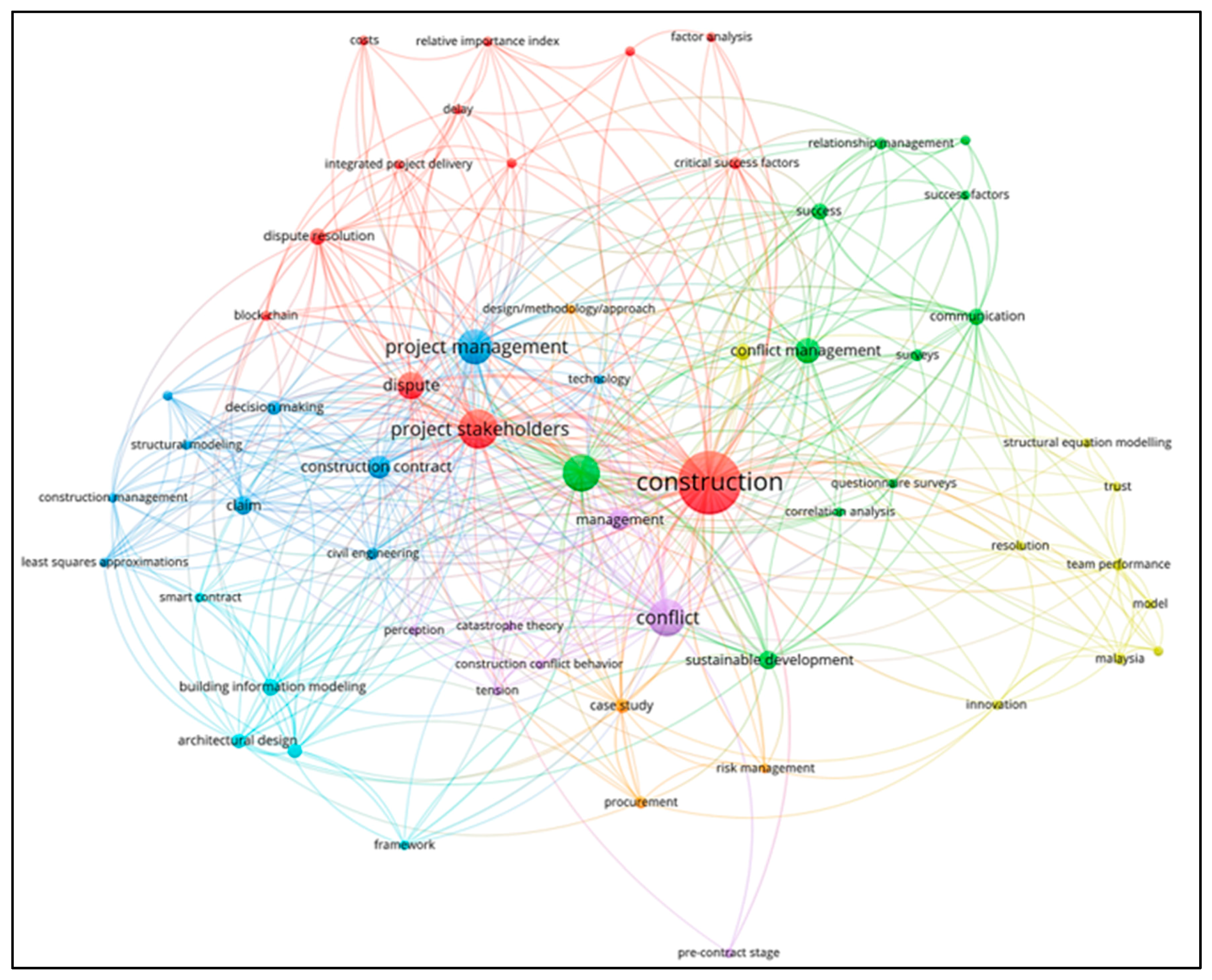
Based on the data, the selected documents contained a total of 394 keywords, of which 59 met the set threshold. These identified keywords represent the most prominent research areas in stakeholder conflict studies and show strong interconnections with other terms. “Construction” emerged as the most frequent keyword, followed by “project stakeholders” and “building projects.” Among the 59 identified keywords, only 16 (27.12%) appeared five or more times, highlighting the limited scope of research on stakeholder conflicts. The visual representation of keyword linkages is shown in Figure 2.
The visualization illustrates that the network for the keywords related to stakeholder conflicts in the building construction industry is inclusive of seven clusters with 462 links and a 757 total link strength. The nodes presented in the same color belong to the same cluster [88] and when the frequency of keywords gets higher, the size of the node gets larger [4]. The red cluster (cluster 1) is the largest, with 13 keywords. This cluster expands around the project stakeholders and dispute management to support the project’s success. The green cluster (cluster 2) includes 11 keywords and focuses on successful project completion and conflict management through communication and relationship management. The blue cluster (cluster 3) includes 10 items and indicates a research focus on construction claims and contract management. The yellow cluster (cluster 4) includes nine keywords and illustrates how team performance affects conflict resolution by fostering trust among members. The purple cluster (cluster 5) has a total of seven items and mainly focuses on conflicts and their management via conflict management behavior. The light blue cluster (cluster 6) includes five items and focuses on sustainable design practices with building information modeling. The purple cluster (cluster 7) includes four items and focuses more on procurement handling and risk management.
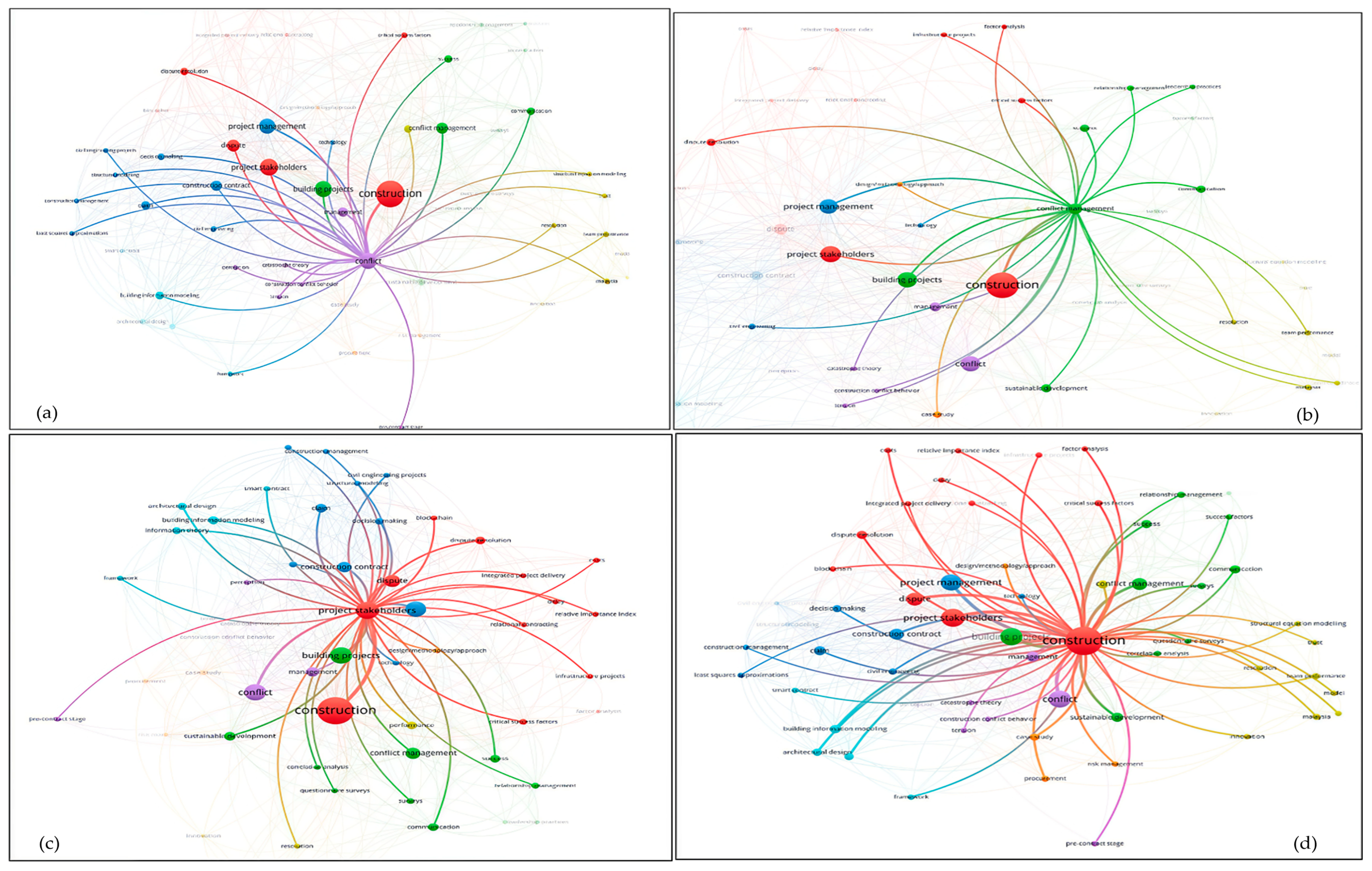
To analyze the stakeholder conflicts, the terms “conflict”, “conflict management”, “project stakeholders” and “construction” can be considered the most important terms to investigate the stakeholder conflicts and the interrelationships associated with each node. Figure 3 illustrates the links of the nodes.
Figure 3a visualizes the interrelated keywords with “conflict”, whereas Figure 3b presents the keywords that are interrelated with “conflict management”. In a bibliometric network, the nodes are arranged in a way that the distance between the nodes approximately represents the relatedness of the nodes and if the nodes are very closely associated, the distance between the nodes gets shorter [89]. The nodes represent the keywords and their size represents the frequency [90]. The node “conflict” has 33 links with a total link strength of 72. The nodes “management” has the lowest distance from the node “conflict”. Moreover, the distances between the nodes “building projects”, “construction” and “construction conflict behavior” are also comparatively low. This suggests that conflict is closely studied in the context of conflict management behavior. The node “conflict management” has 26 links and 46-link strength and is most closely associated with “success”, “construction”, “relationship management” and “critical success factors”. This reflects studies in the literature on conflict management in projects for success, with a greater focus on relationship management. The node “project stakeholders”, as in Figure 3c, has high relatedness with “dispute” and “project management”. It is associated with 42 links with a total link strength of 105. Accordingly, it implies the involvement of project stakeholders in disputes and the management of project-related challenges. Finally, the node “construction” as presented in Figure 3d has 54 links, a 178-link strength, and is most closely associated with the nodes “management”, followed by “performance”, “conflict management” and “conflict”. It further emphasizes the broader association of the conflicts, their management and how conflicts affect the performance of the construction industry.

3.2. Trend Analysis

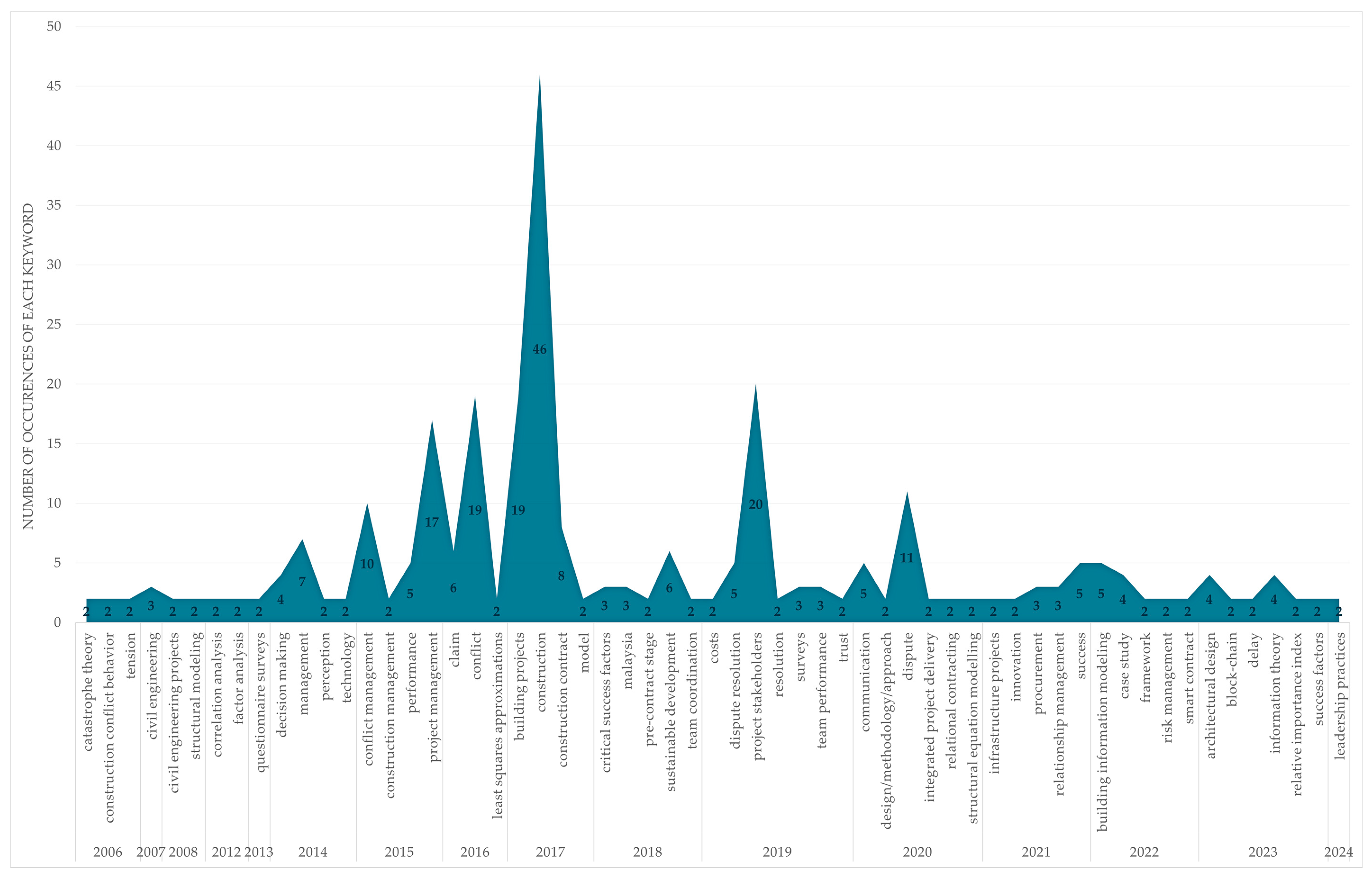
An idea on the trend of the keywords further enhances the insights into the evolution of research in conflicts and conflict management of stakeholders in construction projects. Figure 4 illustrates the evolution of keywords throughout the years. The keywords were extracted from VOSviewer, including their average publication year.
The data obtained presents a dynamic shift in the research themes over time. Most recent studies have focused more on technological aspects (e.g., block chain, building information modeling, smart contract, etc.) and project team management (e.g., leadership practices, relationship management, communication, etc.). However, certain keywords related to contract management, procurement, dispute management, and conflicts have persisted over the years. In the latter years, studies have focused more on conflict behavior, tension among the members and their perceptions, which has been continuously studied in recent years as well in relation to improvements in the project teams.

3.3. Causes of Conflicts Between the Stakeholders

The various types of conflict cannot be resolved without a proper understanding of their causes [14]. Thus, to obtain a comprehensive idea of the available conflicts, the studies were analyzed thoroughly. A total of 46 causes of conflict between project stakeholders were identified from the selected literature.

3.3.1. Taxonomies of the Causes of Conflicts Between the Project Stakeholders

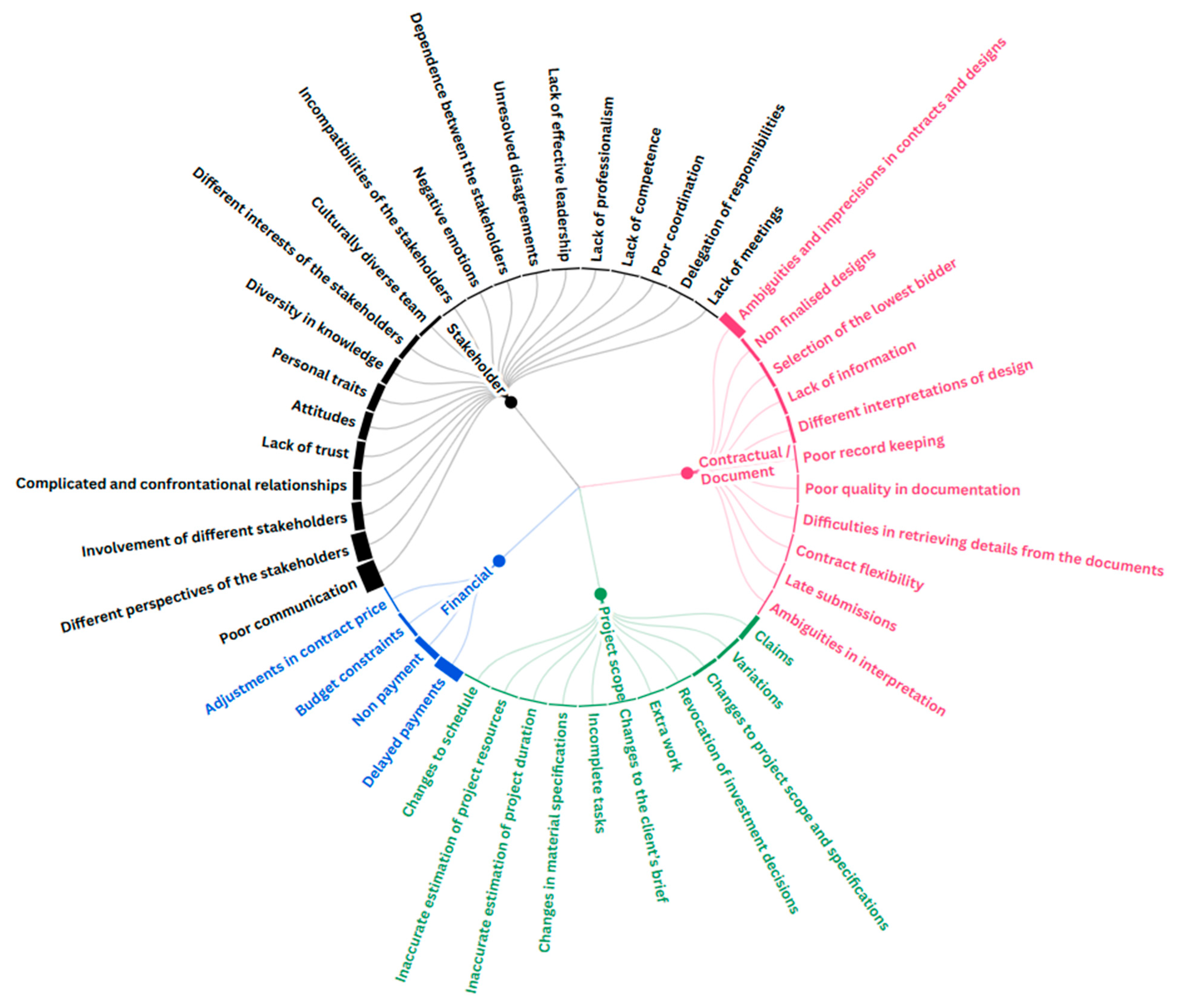
Upon reviewing the causes of conflict, similar characteristics can be identified among some of them. Thus, based on the characteristics and existing classifications and typologies [12,27], the conflict causes can be further categorized into four groups, namely financial, stakeholder, contractual/document and project scope. The causes of the conflict were grouped into relevant categories based on their main conceptual characteristics. In situations where a cause could conceptually overlap with more than one category, classification was determined by the category that best reflected the main focus of the conflict. Each taxonomy with associated conflict causes units can facilitate targeted and enhanced conflict management strategies. Figure 5 illustrates the radial map of the categorization of groups of conflicts with their frequencies.
Table 2 presents the total identified conflict causing categories subdivided into four categories based on their characteristics while considering the citation frequency of each cause of conflict.
To provide a clearer understanding of the main conflict categories and their underlying causes, the following section presents a detailed content analysis.
  • Stakeholder
Conflicts are inevitable due to the involvement of many individuals from several contracting parties and stakeholders in construction projects [5,28,29,30,31,32] and their incompatibilities [27]. Mostly, these parties have different perspectives and attempt to maximize their utility at the cost of other stakeholders [27,33,34,35,36]. Moreover, if the diverse interests of the project stakeholders are not managed effectively with the right skills and pragmatism, this can lead to conflicts [37,38,39]. The complicated and confrontational relationships, lack of trust between the contractual parties, the complexities in the construction works and poor organizational structures contribute to conflicts between them, which may later turn into disputes if not properly managed [40,41,42,43,44]. The attitudes of the stakeholders and their personal traits have a major impact on relational conflicts, which can be characterized by unpleasant feelings, tension or stress, etc. [27,38,39,41,45]. Moreover, diversity in the knowledge of project participants is a major source of conflict after signing contracts and commencing work [27,46]. On the other hand, quality-related conflicts mainly occur due to the availability of diverse expertise because experts on the client side can identify issues that consultants and contractors cannot, while the experts from the contractor’s side can identify errors in the consultant’s documents [5,47]. The negative emotions of team members are positively associated with interpersonal conflicts [48]. If the project performance is poor, it can further increase the negative emotions and interpersonal conflicts among them [48]. The most common interpersonal conflict is pseudo-conflict, the perceptual difference between members, followed by attitude conflict due to disagreements over moral beliefs [41,49]. Proper collaboration is important because issues such as responsibility delegation and scheduling difficulties among members can easily lead to conflicts [27].
Role conflicts occur when colleagues’ demands conflict [50] and unresolved disagreements escalate to an emotional level [41]. Moreover, the lack of effective leadership and support from upper management can significantly impact projects, leading to conflicts among team members [51]. The lack of professionalism and competence can lead to conflicts among stakeholders over specifications and change orders, resulting in a lack of expertise in project execution [51]. Misinterpretations arise when project-specific terms, such as offer and acceptance, are not properly articulated and understood, increasing the probability of conflicts [37].
Coordination and communication issues can be identified as the most significant factors in conflicts and disputes, with serious effects on project completion, cost, and quality [51,52]. Accordingly, poor and insufficient communication leads to misunderstandings, poor decision-making, and delays in project completion [39,47,51,53]. Lack of communication results from improper project planning and management, further leading to conflicts between the parties [38,41,54,55,56,57]. Moreover, the culture of a project significantly influences stakeholder conflicts [47,54]. A culturally diverse team results in increased conflict and decreased trust [58] because conflicts arise when people have different attitudes, plans, social status, education, and personal traits [12].
  • Project scope
Changes to the project scope without adhering to the associated quantity and cost changes can cause conflicts [32]. The most influential factors in conflicts over change issues between clients and contractors are schedule changes, changes in material specifications, and changes to the client’s requirements [65]. This is further established by [27], which identified that project schedules and incomplete tasks after the project timeline can significantly affect work progress. Inaccurate estimation of project duration and resources can also lead to unrealistic project time and cost estimates, causing strain on the relationship between project stakeholders and leading to conflicts [51]. Furthermore, task- and process-related conflicts in projects are mainly due to cost, quality, and time issues arising from the revocation of investment decisions, extra work, and variations [5]. Variations, issues with agreements on rates, resources, and quality, and conflicts related to project work and scope can also be identified as major causes of conflicts [12]. Claims regarding contracts are another source of conflict between the parties [66]. The findings of [67] revealed that the quantum of claims is the most influential factor in conflicting issues. Moreover, in claims, there is a high possibility of conflicts if parties use different methods to analyze the delay in question, especially if the decision of the contract administrator is unfavorable or tends to be less favorable [53,66,68].
  • Contractual/Document
The traditional method of document management is a source of conflict in construction projects due to poor record-keeping, unacceptable document quality produced by parties, and difficulties retrieving details from documents [55]. Moreover, the ambiguities and imprecisions in contract documents lead to significant conflicts in construction projects [31,59,60]. The negative effect perspective of contract flexibility states that contract flexibility can cause conflict while encouraging the opportunistic behavior of the contractors [61]. Ref. [39] investigated the contributing factors for relational conflicts in South Africa and revealed that opportunistic behavior was the highest contributing factor. Mainly, design and document errors, late submissions, contradictions in documents, and non-finalized designs cause conflicts related to documents [12]. There can be incompatibilities between drawings and bills of quantities due to communication gaps between the design team [45]. Even the lack of clarity in the initial designs, especially in design-and-build projects, can lead to conflicts between the parties [62]. They can further intensify conflicts between the client and the design and build contractor due to ambiguities in interpretation [62]. After signing the contracts, the project stakeholders often have conflicts about what to do and how to do the work due to a lack of information and differing interpretations of the design [27,46], mainly because of errors by the consultants [52]. Furthermore, selecting the lowest bidder also causes issues related to poor productivity and quality due to their low qualifications, leading to conflicts on-site [57,63].
  • Financial
When a project is prolonged, conflicts occur between the client and contractor over the appropriate price index to adjust the contract price [43]. Especially, delayed payments are the most common type of conflict, created by clients and contractors [12]. Delays in the payments or non-payments to suppliers or sub-contractors can cause conflicts, and the consequences of these conflicts extend beyond the immediate situation [31,47,51,55,56,64]. Moreover, the issues arising from payment issues can further raise emotional issues within the project while causing legal issues, and increased costs and project duration. Budget constraints as well often create issues related to cost, quality and time, causing task and process-related conflicts in projects [5], where insufficient funds act as the most prominent conflict caused by the client [52].

3.3.2. Frequency Analysis of Causes of Conflicts

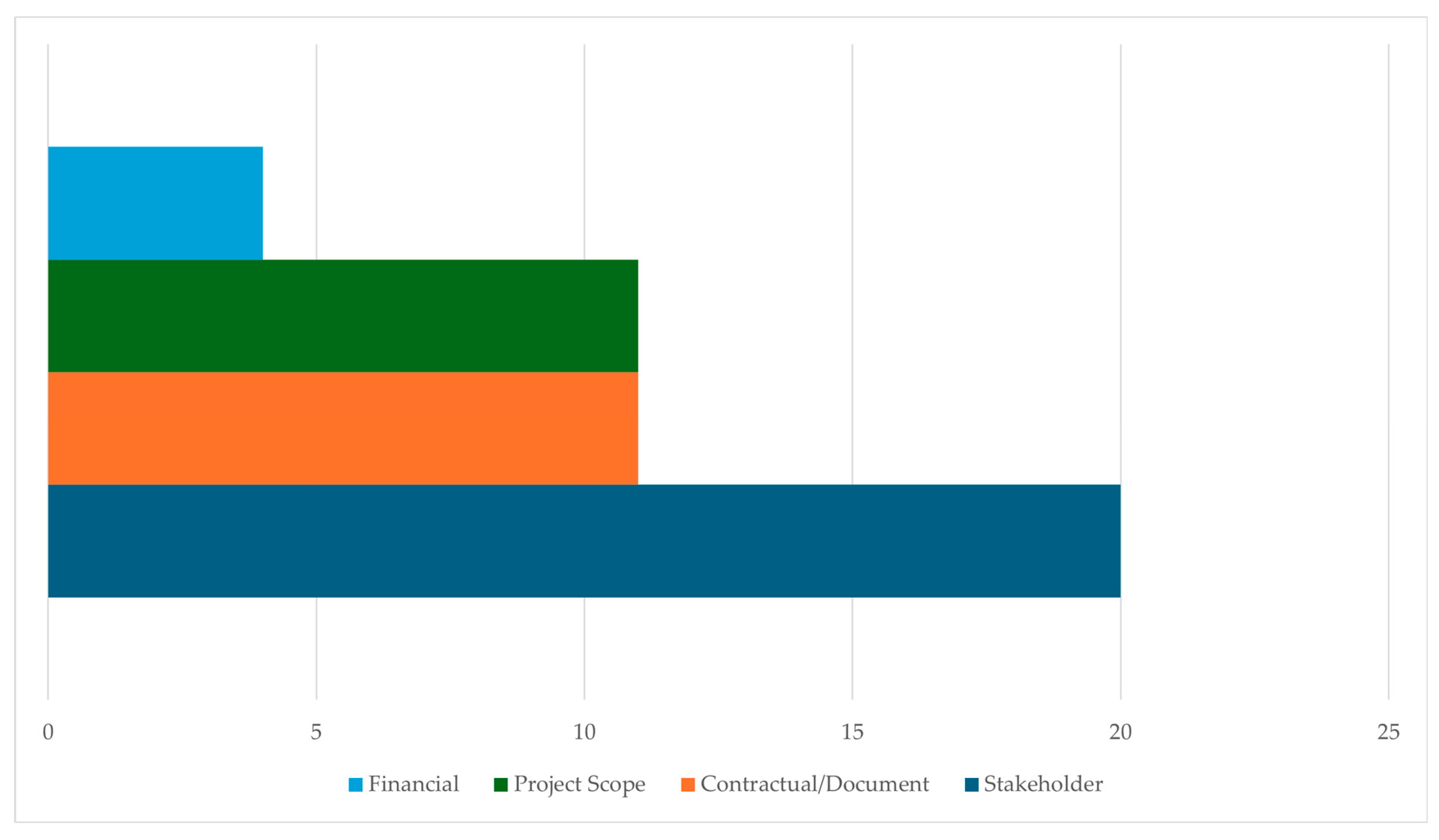
This study identified 46 causes of conflicts among project stakeholders, consistent with previous literature. These causes were further categorized into four primary management categories as shown in Figure 5 and Table 2. The most frequently identified categories of conflict causes are presented in Figure 6.
Of the five conflict-causing categories, stakeholder-related causes are the most frequently observed, with 20 occurrences in the selected literature. It highlights the delicate nature of stakeholder relationships and how previous researchers attributed conflicts to stakeholder management. In contrast, conflicts due to financial reasons are the lowest among the identified causes of conflict, with only four occurrences in the selected studies. On the other hand, project scope and contractual/document-related causes of conflicts have the same number of causes, with 11 mentions.

3.3.3. Pareto Analysis of the Causes of Conflicts

Pareto analysis was conducted using the frequency of conflict occurrences across the studies to identify the most critical conflict causes and the groups they belong to, providing greater insight into the nature of the conflicts.
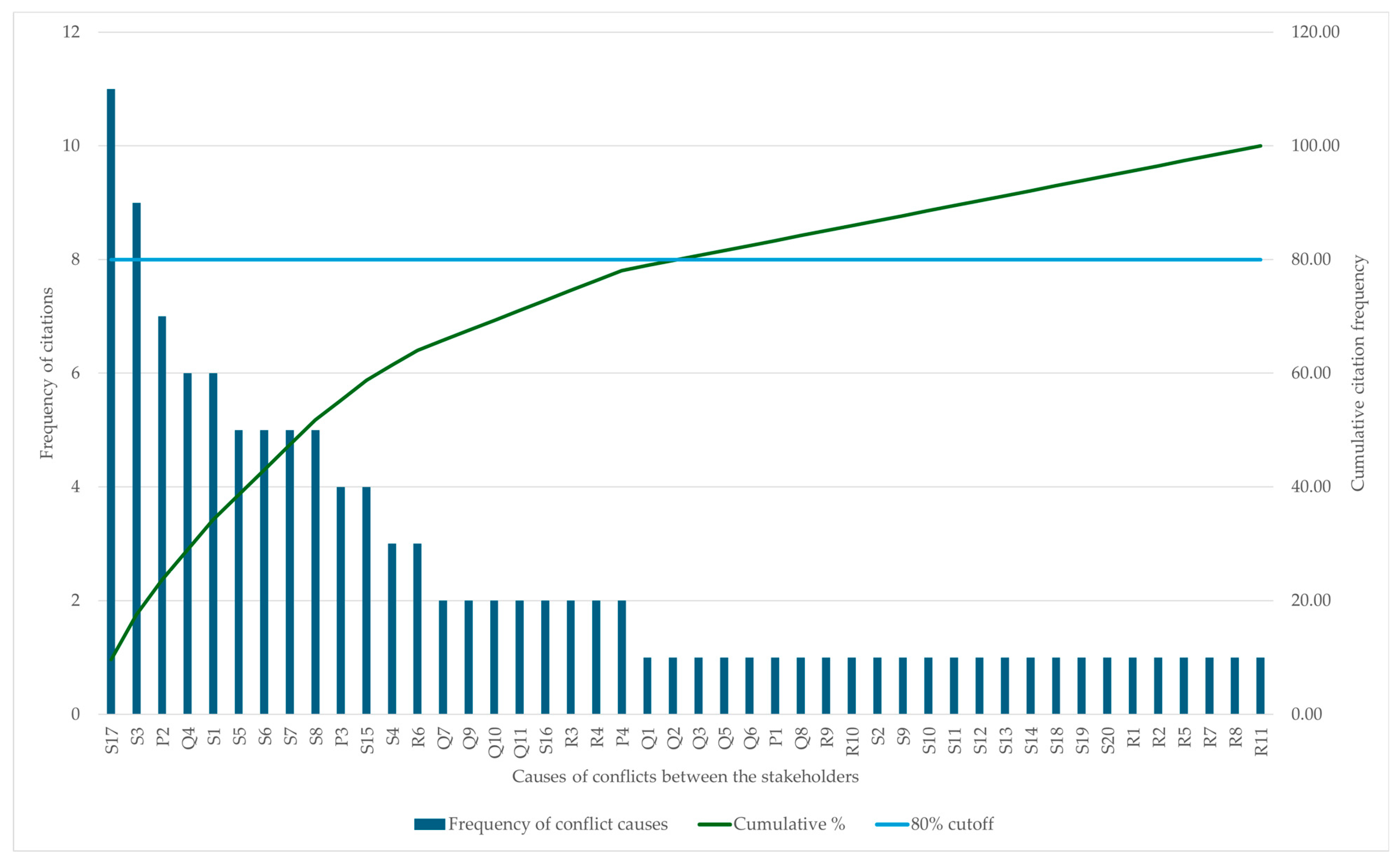
Figure 7 illustrates the results of Pareto analysis for conflict causes.
A total of 23 (out of 46) causes of conflicts with the highest citation frequencies were identified through Pareto analysis. Accordingly, the highest mentioned cause of conflict by previous studies can be identified as poor communication (S17), followed by different perspectives of the stakeholders (S3), delayed payments (P2), ambiguities and imprecisions of the contract documents and designs (Q4) and involvement of different stakeholders (S1) in the top five. As the analysis shows, most of the causes of conflicts identified in the previous literature fall under the stakeholder-related category (43.48%), followed by the contractual/documentation category (30.43%). While finance and scope-related causes account for the smallest share of vital causes, it is noteworthy that all three finance-related conflicts were identified as significant.

3.4. Conflict Management Strategies

Timely identification and management of conflicts are essential to prevent project cost and time overruns and to maintain healthy relationships among stakeholders [43]. To gain a comprehensive understanding of the conflict management strategies identified by previous scholars, the selected studies were thoroughly analyzed which revealed a total of 58 conflict management strategies between project stakeholders.

3.4.1. Taxonomies of the Conflict Management Strategies Between the Project Stakeholders

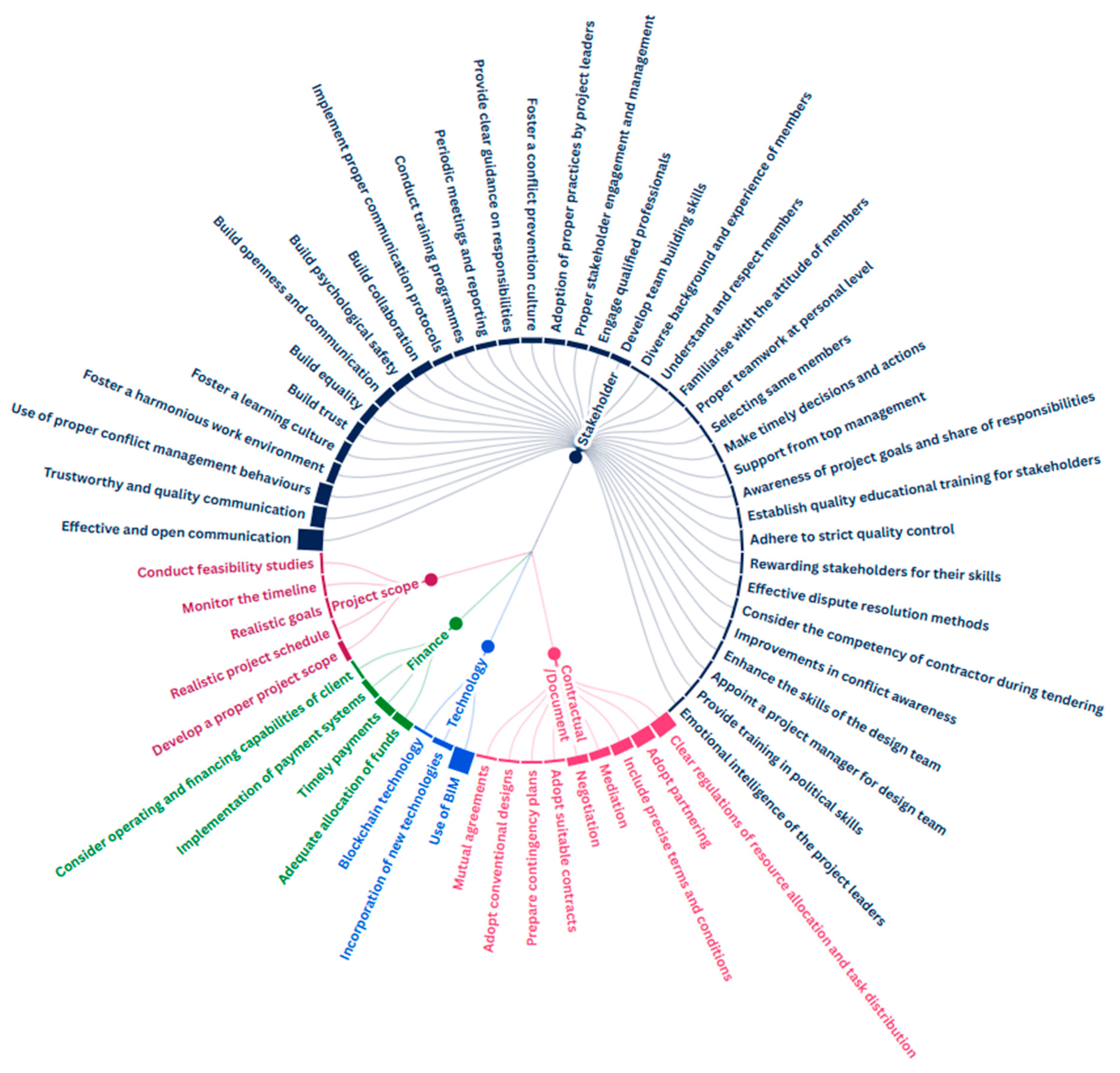
The reviewed studies discuss various conflict management strategies that address the identified taxonomies of conflict causes, which, together, can inform an integrated map of strategies. To develop this map linking conflict causes and management strategies, the identified strategies were first grouped according to the corresponding conflict cause categories—finance, stakeholder, contractual/document, project scope, and, additionally, technology, based on their characteristics. The identified strategies were categorized under the above-mentioned categories based on their main conceptual characteristics. Figure 8 presents a radial map of the identified conflict management strategies and their frequencies.
Table 3 presents the total identified conflict management strategies subdivided into five categories based on their characteristics while considering the citation frequency of each conflict management strategy.
To provide a more comprehensive overview of conflict management methods and strategies, the following section presents a detailed content analysis.
  • Stakeholder
Effective and open communication throughout the project plays a vital role in initiating, building, and maintaining strong stakeholder relationships, as well as enhancing decision-making, thereby facilitating conflict management [27,46,49,50,69,70,71,72,73]. A trustworthy, frequent, and high-quality communication approach between the project team and the stakeholders is important for project success and early conflict management [30,36,40,73,74], and, specifically, it helps manage conflicts arising from payment delays [51]. Addressing communication difficulties, implementing proper communication protocols, conducting training programs on communication practices and conflict awareness, holding periodic meetings and reporting with stakeholders, a network-based information-sharing system, and defining clear guidance on the roles and responsibilities of stakeholders can reduce conflicts due to communication issues [51,58]. Ref. [71] further emphasized that training programs should focus on safety regulations as well followed by regular safety audits, to reduce potential conflicts related to safety. Interestingly, ref. [75] found that a moderate level of owner-contractor conflict in design–bid–build projects can enhance communication among project team members, thereby improving the quality of decision-making and creativity.
The projects should foster a harmonious work environment and a learning culture that continuously facilitates professional development and mutual trust [46,71,75]. This requires deliberate efforts to build trust and promote equality among project participants [30,42,76] because long-term, trust-based relationships are highly important for managing key conflicts. Accordingly, a high level of trust, openness, communication, collaboration, and psychological safety is more conducive to effective conflict management [46,75,77]. If the owners and contractors can build a culture that promotes healthy patterns by innovatively focusing on work, interpreting one another well through improved communication and trust, and finding the optimal balance between conflicts arising from different management strategies [78], better relationships will be built. Five critical success factors assist the project team in developing a culture of conflict prevention, including building effective relationships, effective project communication, project team efficacy, a proactive conflict management approach, and effective project documentation [79]. The authors emphasized that these methods are especially focused on conflicts induced in project teams by the initiation of new technological innovations.
The project members should be well aware of the project goals and requirements, as well as their respective responsibilities [27]. Moreover, when the team comprises members with diverse backgrounds and experience, conflicts can be reduced, fostering better team cohesion and maturity [58]. According to the authors, although differences among team members can be a source of conflict, they can be overcome through mutual understanding and respect. As team members become familiar with one another’s attitudes, conflicting perspectives tend to diminish gradually as the project progresses [45]. Especially, effective interpersonal teamwork significantly impacts conflict management and overall project success [77]. On the other hand, selecting project stakeholders from previous teams they were involved in significantly influences the management of relationship conflicts among members [27]. Specifically, top management in projects plays a vital role in managing conflicts [42]. Accordingly, timely decisions and remedial actions should be taken upon the recognition of a slight deviation during the construction or operation [42]. Support from top management in conducting meetings, drafting appropriate contract clauses, addressing contract ambiguities, and providing training is important for managing conflicts. Adoption of practices by project leaders, such as seeking feedback, building trustworthy relationships, knowledge sharing, developing collaborations, working toward shared goals, and coaching and encouraging the team, can enhance conflict resolution [73]. Ref. [80] argued that project managers can plan their interactions with other stakeholders by engaging them in the critical fields of conflict. Accordingly, there should be an appropriate stakeholder management and engagement plan with critical conflicts and salient stakeholders [54,80].
Adversarial approaches to conflict resolution heavily influence the escalation of conflicts into disputes [81]. Among the conflict management styles employed by project members, the cooperative and avoidance approaches are most used by project team leaders, significantly enhancing team coordination [82,83]. However, the authors suggested avoiding conflict-handling styles as a win–win for both project members and the project. If the team is well coordinated, it mediates the relationship between the leaders’ selected conflict management style and team performance [82]. In the Sri Lankan context, compromising is the most used conflict management style, but stakeholders believe a style such as obliging can better protect professional relationships [12]. Integrating style is the most common conflict management style among facility managers in Hong Kong, followed by the compromising style [29]. Nevertheless, compromise and consensus approaches work the best in any circumstance [41]. However, conflicts can be minimized when the members can achieve positive working experiences where every person at each management level can solve issues without referring to their leader [76]. Furthermore, when project leaders, managers, and workers are emotionally intelligent, they can help overcome misunderstandings and conflicts [84].
The competence of project team members is negatively correlated with conflicts, including task, process, and relationship conflicts [46]. To manage potential conflicts due to a lack of competencies, it is important to establish quality educational training for project stakeholders that revisits current industry standards and methodologies, a strong certification system to engage qualified professionals, adhere to strict quality control methods, recognize the skills of the professionals and reward them and develop effective dispute resolution methods [51]. In particular, the client should be cautious during the tendering process, prioritizing contractor competence over the lowest bid [46]. As the main contractor is responsible for the final product, he is responsible for appointing a well-qualified construction project team of project managers, subcontractors and properly trained laborers [36]. Awareness of conflicts and their management should be improved among project members [27]. When a design change is made, its effect on the design should be properly analyzed, documented and studied [5,42]. Thus, the competency of the contractor’s design consultant should be enhanced to avoid potential conflicts [42]. Further, a project manager can be appointed to the design team to avoid errors and incompatibilities arising from client requirements due to communication, coordination, and decision-making issues [27]. Moreover, absorbing and training project stakeholders with high political skills is an effective method of conflict management [48]. Overall, the collaboration between the team members should be enhanced by developing team-building skills to facilitate effective conflict management in construction projects [40,54].
  • Contractual/Document
It is mandatory to make necessary changes to contract documents by including precise terms and conditions to reduce project conflicts [30,42,60,71], which are acceptable to all parties [32]. For example, when there are goal conflicts between the contractual parties, an outcome-based contract is more suitable as it aligns the interests of the parties [86]. The authors emphasized that with the increase in goal conflicts, the selection of outcome-based contracts increases, and behavior-based contracts decreases, while the likelihood of outcome-based contracts decreases, and behavior-based contracts increase when goal conflicts are increased. The project management team and project consultants should ensure contingency plans are in place to manage contract-related conflicts [32]. Accordingly, the regulations governing resource allocation and task distribution should be clearly established in the contracts while facilitating open communication channels [30,36,46,71,74]. Responsibilities should be systematically divided among team members [27]. The projects should adopt conventional designs to reduce conflicts regarding technological complexity and facilitate project implementation [46]. Moreover, adopting a partnering approach by the parties to the contract encourages them to work well together and identify common goals to develop innovative conflict management methods [33,35,36,46]. Regarding strategic partnerships in the public procurement framework, the agreement includes a six-step conflict-resolution process [87]. The first step is taken at the project management level, the second at the operational management level, the third at the steering committee level, the fourth step uses a mediator, and the fifth step uses an independent evaluator, while the final step is the arbitration board. The authors elaborated on the importance of a step-by-step conflict resolution method, as it allows for managing conflicts without resorting to litigation, while not excluding litigation completely. The use of mediation in construction projects is identified as a better alternative for conflict resolution than judicial approaches [31,70]. It is a confidential, structured procedure for resolving a conflict with the assistance of a mediator or mediators [27,31]. Furthermore, negotiation can be used as a strategy to manage conflicts, but proper legal knowledge is required to assess both parties fairly, preventing conflicts from escalating into disputes [37,66]. The availability of pre-contract negotiation and a pre-contract agreement is important, as it helps reduce conflicts, especially in delay claims [66]. The related decision-making processes and procedures should be carried out fairly while securing the cooperation between the members [53]. Conflicts can be resolved through a unilateral compromise by the contractor or through mutual agreement of the parties [67]. However, arriving at a mutually acceptable settlement for both parties, rather than a one-sided compromise, is more suitable for focusing on both parties’ needs [67].
  • Project scope
It is the client’s responsibility to assess the risks associated with the project and to develop the project scope to prevent conflicts arising from frequent scope changes [36,74]. To manage conflicts related to work progress, it is necessary to prepare the project schedule and goals realistically with the agreement of all parties involved, continuously monitor the timeline and targets, and conduct proper feasibility studies [27].
  • Financial
Regarding finance-related conflict management strategies, the client should ensure sufficient funds are available and that payments to the contractor are made on time [36,52,74]. The contractor should also consider the client’s operating and financing capabilities [46]. Implementation of effective payment systems, including accounting software and electronic payment platforms, can reduce payment delays caused by human errors, which will ultimately facilitate conflict management due to payment delays [51,71].
  • Technology
Existing methods for conflict management are unavoidable; thus, innovative approaches incorporating new technologies are required [5,44]. Using BIM, the owner can obtain information about the contractor and the project in a more accessible manner, reducing conflicts and enabling clearer communication [27,61]. It can further mitigate the negative impact of contract flexibility on conflicts, resulting in contractors adopting cooperative behavior, alleviating agency conflicts between the owner and the contractor. The improvements made to communication and information sharing, and collaboration of project stakeholders through the application of BIM resolve the conflicts of the rights and obligations of the parties, leading to savings on time and cost [44,51,61,63,64,85]. Ref. [55] identified blockchain technology as a method to address conflicts mainly due to payment, documentation and collaboration issues in the projects. Accordingly, the unique features of blockchain technology such as decentralization, discretion and transparency facilitate better reduction in conflicts.

3.4.2. Frequency Analysis of Conflict Management Categories

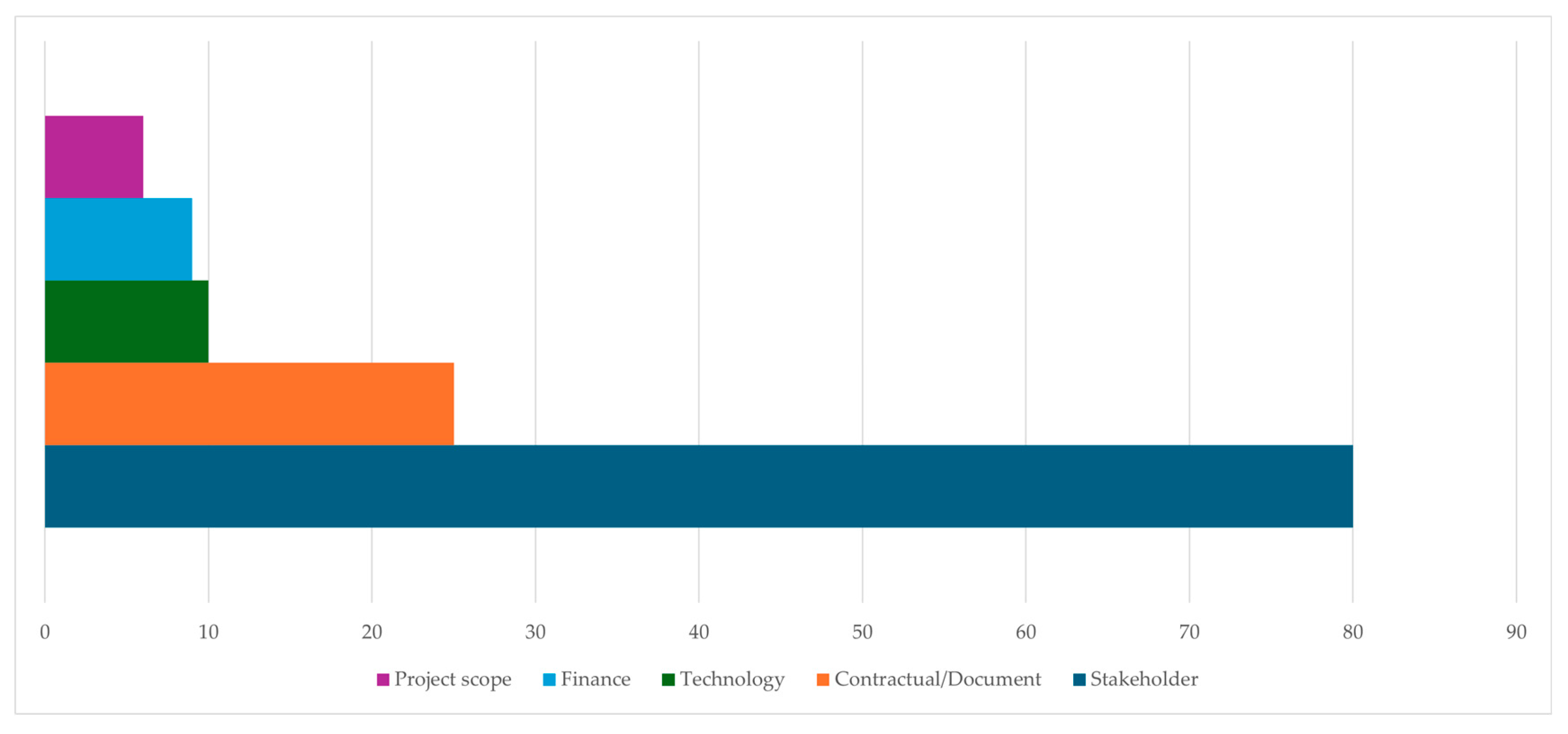
This study identified 58 conflict management strategies to address conflicts among project stakeholders. These strategies were further categorized into five primary management categories as shown in Figure 8 and Table 3. The most frequently identified conflict management categories are presented in Figure 9.
Of the five conflict management categories, stakeholder-related management strategies are the most frequently observed, with a total of 80 occurrences in the selected literature. It highlights the recognition of proper stakeholder relationship management and engagement by previous researchers to facilitate proper conflict management in construction projects. In contrast, project scope-related conflict management strategies are the lowest among the observed strategies, indicating less recognition of the need to improve project scope to prevent potential conflicts. The second key conflict management strategy falls under the contractual/document category, with a total occurrence of 25 in the previous literature. Technology-related conflict management strategies are the third most common category, highlighting the technological aspects, such as BIM and blockchain, that can be adopted to enhance the management of conflicts. The fourth most recognized related area in conflict management is finance-related strategies, which highlight the importance of financial control and responsibility for all parties involved in the project.

3.4.3. Pareto Analysis of Conflict Management Strategies

Pareto analysis was conducted based on the frequency of strategy use across studies to identify the most critical strategies and their groups, providing greater insight into managing the available conflicts and developing the integrated map.
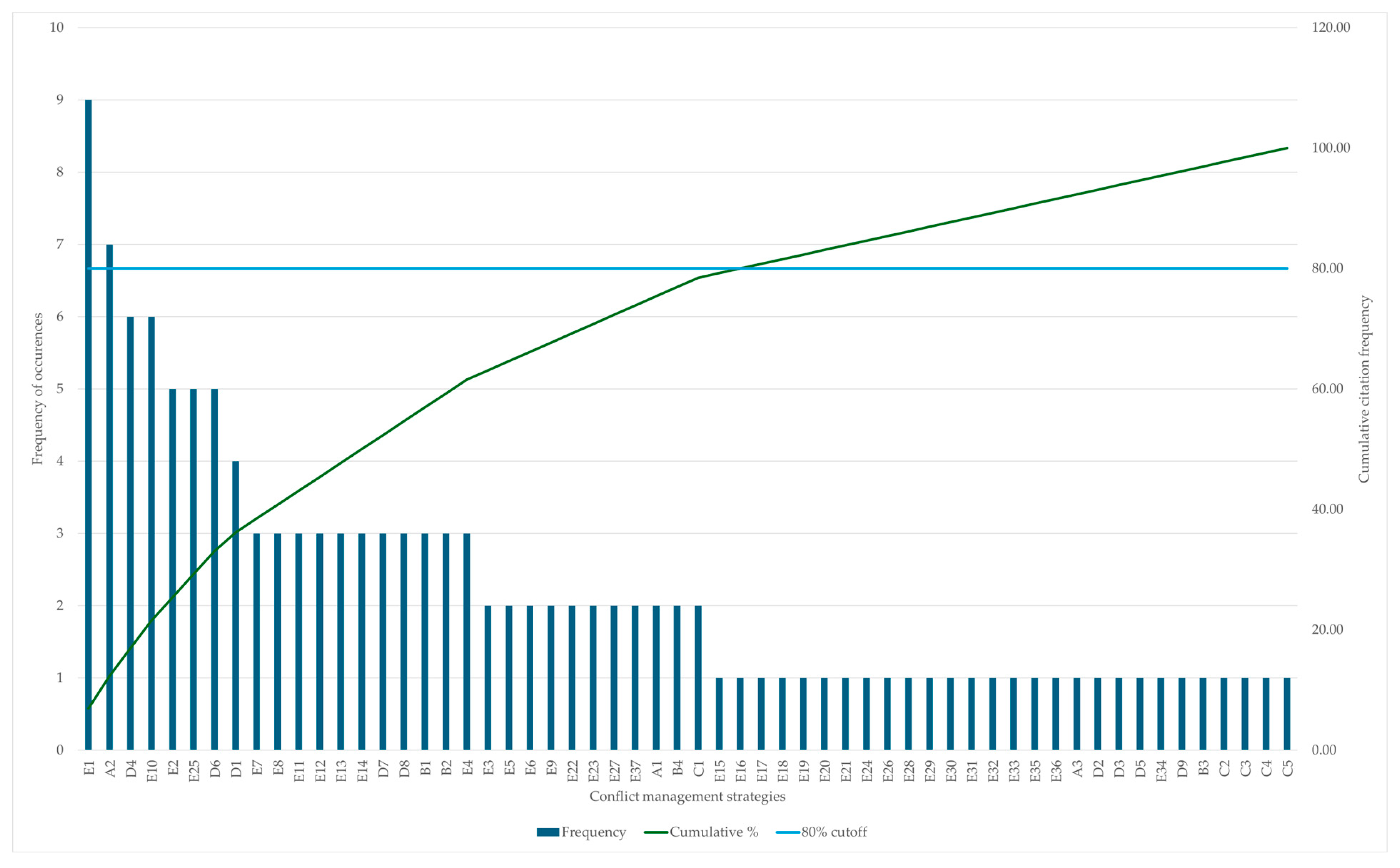
Figure 10 illustrates the results of Pareto analysis for conflict management strategies.
A total of 31 (out of 58) conflict management strategies with the highest citation frequencies were identified through Pareto analysis. Accordingly, the strategy that was most frequently cited was effective and open communication (E1), followed by using BIM (A2), establishing clear regulations of resource allocation and task distribution (D4), building trust (E10) and trustworthy and quality communication (E2) in the top five. According to the analysis, most of the conflict management strategies identified by previous studies are stakeholder-related (64.52%), followed by contractual/document-related strategies (16.13%), finance (9.68), technology (6.45%) and project scope-related strategies (3.23%).

4. Discussion

This study aimed to investigate the causes of conflicts between project stakeholders in building construction projects and conflict management strategies as recognized by previous studies, and the patterns of previous studies in the area. The complexity of the construction works often leads to conflicts between the parties [44]. To facilitate better conflict management, a proper understanding of the possible causes of conflicts and their influence on management strategies should be obtained [13]. Accordingly, the findings of this study provide a structured overview of causes of conflicts and management strategies to address the lack of a SLR investigating those aspects. The prominence of stakeholder-related conflicts in the previous literature reflects the complex nature of relationships among project stakeholders, particularly due to poor communication among them. A similar pattern can be observed in conflict management strategies as well, with the most prominent strategies being stakeholder-related, as identified by previous researchers. Interestingly, effective and open communication is again the most frequently highlighted strategy for managing potential conflicts and it further enhances and maintains strong stakeholder relationships and improves decision-making [27,46,49,50,69,70,71,72,73]. On the contrary, the lowest number of causes of conflict falls under the financial category, but delayed payments is the third most frequently mentioned conflict cause among previous authors. Therefore, the literature emphasizes strategies for timely payments and adequate financial capabilities.
The Pareto analysis further confirmed the prominence of different causes of conflicts and management strategies. Overall, the findings of this study highlighted 46 causes of conflicts and 58 conflict management strategies. Pareto analysis further identified the most important causes and management strategies, revealing 23 conflict causes and 31 conflict management strategies that are most recognized in previous studies. Among the most highlighted causes of conflict in previous studies, stakeholder-related causes contribute the most. The analysis of conflict management strategies also shows a similar pattern, with 64.52% of the highest-mentioned strategies falling under the stakeholder category. Accordingly, poor communication, different stakeholder perspectives, delayed payments, ambiguities in contract documents, and the involvement of multiple stakeholders are the top sources of conflict identified in previous studies. On the other hand, effective communication, use of BIM, clear regulations for resource allocation and task distribution, trust between stakeholders, and trustworthy, high-quality communication can be identified as the top five conflict management strategies. These findings reflect how the previous literature places strong emphasis on proactive and collaborative methods to manage conflicts, including the incorporation of new technological advancements. It further emphasizes the growing recognition that conflicts should be properly addressed at early stages as they can be escalated into disputes if not properly managed [9]. The findings can also be elaborated on through a trend analysis of the research themes, which shows that aspects of technology and project team advancement have received greater consideration in recent years. Conflict-related research in the construction context is increasingly linked to diverse themes, including, but not limited to, project management, stakeholder management, and technological aspects, highlighting the multidisciplinary nature of conflict research. However, without a doubt, the most important has been the focus on improving stakeholder relationships, especially regarding their communication for project governance.
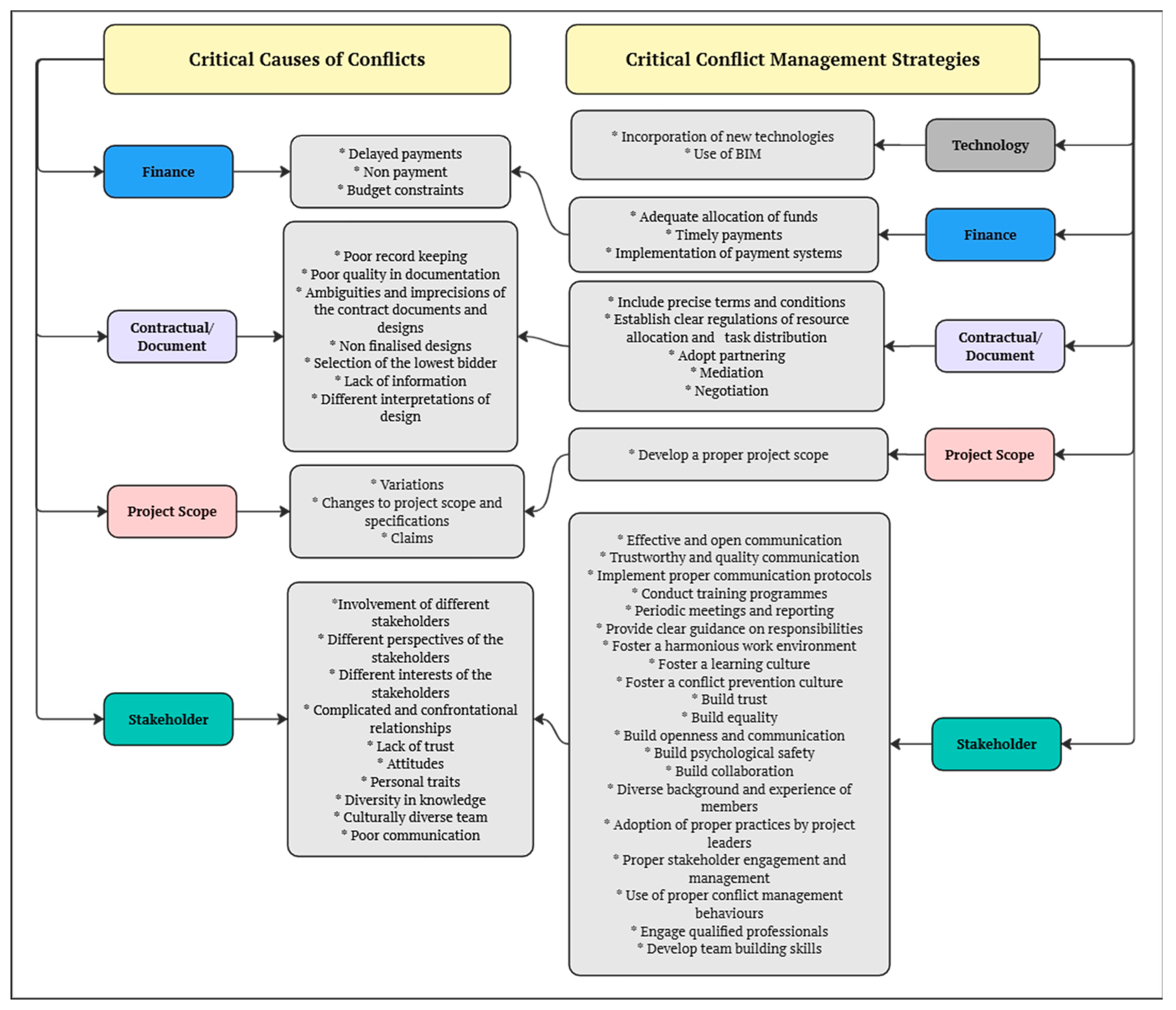
The identified taxonomies and their associated key causes of conflict provide a solid foundation for developing countermeasures and specific strategies to mitigate the effects of conflicts. Additionally, various conflict management strategies were identified and grouped according to the same conflict cause taxonomies, with one additional category: ‘technology.’ Together, these findings support the development of an integrated strategy map to address conflicts. Figure 11 illustrates the map of the most significant management strategies aligned with the most critical causes of conflict.
The results depict that the most critical conflict causes and management strategies identified in the previous studies mostly relate to project stakeholders and their attributes. Most importantly, the most critical conflict cause is poor communication among members, while the most critical management method is effective, open communication. More emphasis in the selected studies on improving stakeholder relationships can be identified along with ensuring precise contractual documents, financing capabilities and technological interventions.
It is important to note that the identified causes of conflicts and strategies in this study are primarily drawn from previous studies reported in the selected literature. While this analysis provides an overall idea of the research areas and topics that have gained significant attention from scholars, it is necessary to further investigate the practical applications of these findings. The findings of this study practically contribute as a reference for the construction professionals to identify most commonly recognized conflicts and their management strategies in the literature and to apply them in the construction projects. Understanding the possible recurring conflict types helps project stakeholders predict potential sources of disagreements and issues that may trigger conflicts and adopt appropriate management strategies accordingly. In particular, enhancing communication methods, fostering collaborative relationships, and creating a harmonious team environment may significantly reduce the likelihood of conflicts and help manage them effectively.

5. Conclusions

This study investigated the prevailing trends in stakeholder conflicts from 1993 to 2025, identified through a SLR that combined the PRISMA method with VOSviewer software as a bibliographic tool. The keyword co-occurrence analysis revealed that research on stakeholder conflicts primarily focused on dispute management, project success, sustainable development, contract management, communication and relationship management, conflict management behavior, and technology. These findings were further validated through a qualitative analysis. The temporal keyword trends indicate that technological advancements and project team management have emerged as recent focal points, while disputes, project management, and contract management have remained consistently studied over the years. In contrast, earlier research placed greater emphasis on conflict management behaviors and interpersonal tensions.
Using content analysis and Pareto analysis, this study explored, categorized, and prioritized the causes of conflicts and corresponding management strategies among project stakeholders. In total, 46 conflict causes and 58 management strategies were identified, with 23 causes and 31 strategies deemed most influential, as identified by previous studies according to Pareto analysis.
The findings revealed that conflicts between the stakeholders are mainly driven by communication breakdowns between them, different perspectives of the stakeholders, delayed payments, ambiguities in contractual documents and involvement of different stakeholders. Similarly, the most frequently used conflict management strategies included proper communication, the use of BIM, proper risk allocation and task distribution, trustworthiness, and the use of appropriate conflict management behaviors. Notably, most causes and strategies fell under the stakeholder category, underscoring the need to prioritize positive stakeholder relationships and active engagement throughout the project to effectively prevent and manage conflicts. The full-text analysis further confirmed that the identified keywords were predominantly discussed in relation to the causes of stakeholder conflicts and methods to address them. Based on these findings, an integrated map linking key conflict causes and management strategies was developed.
This comprehensive analysis of conflict causes, strategies, their taxonomies, and significance offers a holistic theoretical understanding of the most prevalent issues that warrant attention, along with proactive, relationship-based methods to manage potential conflicts. Despite the contributions of this study, several limitations should be acknowledged. As this study was based on a SLR, the analysis mainly relied on previously published research and thus reflects the perspectives and research trends. Therefore, an in-depth examination of stakeholder conflicts in building construction projects shall be carried out to complement these findings by incorporating empirical data. Future research should focus on improving stakeholder relationships by considering individual attributes, integrating technological advancements, and applying these insights to conflict management. Furthermore, as this study is confined to building construction projects, similar investigations across other types of construction projects are encouraged, including different project types, geographical regions and procurement methods. Although this research focuses on building projects, some findings, such as conflict causes and management strategies related to communication, stakeholders, and contract documentation, are common across different project types. However, certain aspects, such as the adoption of technology, can significantly depend on project type, location, local rules and regulations, culture, team climate, and organizational policies. Therefore, it is vital to assess the applicability of the findings to different scenarios. Overall, this research contributes to the existing body of knowledge by understanding current stakeholder conflict trends in building projects. The findings provided a consolidated understanding of the key conflicts in the prevailing literature and highlighted the ongoing need for deeper exploration of this domain.

Supplementary Materials

The following supporting information can be downloaded at https://www.mdpi.com/article/10.3390/buildings16061229/s1, Table S1: PRISMA 2020 Checklist; Table S2: Thesaurus.

Author Contributions

Conceptualization, N.B.S., N.U., G.K. and S.S.; methodology, N.B.S. and N.U.; software, N.B.S.; formal analysis, N.B.S.; investigation, N.B.S.; writing—original draft preparation, N.B.S.; writing—review and editing, N.B.S., N.U., G.K. and S.S.; visualization, N.B.S.; supervision, N.U., G.K. and S.S.; project administration, N.U. All authors have read and agreed to the published version of the manuscript.

Funding

This research received no external funding.

Data Availability Statement

All scholarly articles used for the review are listed in the references.

Conflicts of Interest

The authors declare no conflicts of interest.

Abbreviations

The following abbreviations are used in this manuscript:
SLRSystematic Literature Review
PRISMAPreferred Reporting Items for Systematic Reviews and Meta-Analyses

References

  1. Tahir, M.M.; Haron, N.A.; Alias, A.H.; Harun, A.N.; Muhammad, I.B.; Baba, D.L. Improving cost and time control in construction using building information model (Bim): A review. Pertanika J. Sci. Technol. 2018, 26, 21–36. [Google Scholar]
  2. Kwofie, T.E.; Alhassan, A.; Botchway, E.; Afranie, I. Factors contributing towards the effectiveness of construction project teams. Int. J. Constr. Manag. 2015, 15, 170–178. [Google Scholar] [CrossRef]
  3. De Dreu, C.K.; Weingart, L.R. Task versus relationship conflict, team performance, and team member satisfaction: A meta-analysis. J. Appl. Psychol. 2003, 88, 741–749. [Google Scholar] [CrossRef] [PubMed]
  4. Wu, G.; Zhu, Y.; Hu, Z. A bibliometric review of research on interorganizational conflicts in the construction industry: 1989–2021. Int. J. Confl. Manag. 2023, 34, 181–212. [Google Scholar] [CrossRef]
  5. Senaratne, S.; Udawatta, N. Managing intragroup conflicts in construction project teams: Case studies in Sri Lanka. Archit. Eng. Des. Manag. 2013, 9, 158–175. [Google Scholar] [CrossRef]
  6. Runde, C.E.; Flanagan, T.A. Building Conflict Competent Teams; Jossey-Bass, A Wiley Imprint: San Francisco, CA, USA, 2008. [Google Scholar]
  7. Runde, C.; Flanagan, T. Becoming a Conflict Competent Leader: How You and Your Organization Can Manage Conflict Effectively, 2nd ed.; Jossey-Bass, A Wiley Imprint: San Francisco, CA, USA, 2013. [Google Scholar]
  8. Adham, T.K.I. Conflict resolution in team: Analyzing the cause of conflicts and best skills for resolution. Sch. J. Eng. Technol. 2023, 11, 152–162. [Google Scholar] [CrossRef]
  9. Femi, O.T. Causes and effects of conflicts in the Nigerian construction industry. Int. J. Technol. En-Hancement Emerg. Eng. Res. 2014, 2, 7–16. [Google Scholar]
  10. Senarath, P.A.N.B.; Francis, M. Dispute avoidance from the perspective of procurement methods: A conceptual focus. In Proceedings of the 9th World Construction Symposium, Online, 9–10 July 2021. [Google Scholar]
  11. Senarath, N.B.; Francis, M. Dispute avoidance in the construction industry: A perspective of procurement methods. J. Leg. Aff. Disput. Resolut. Eng. Constr. 2024, 16, 04524011. [Google Scholar] [CrossRef]
  12. Gunarathna, C.; Yang, R.J.; Fernando, N. Conflicts and management styles in the Sri Lankan commercial building sector. Eng. Constr. Archit. Manag. 2018, 25, 178–201. [Google Scholar] [CrossRef]
  13. Todorova, G.; Goh, K.T.; Weingart, L.R. The effects of conflict type and conflict expression intensity on conflict management. Int. J. Confl. Manag. 2022, 33, 245–272. [Google Scholar] [CrossRef]
  14. Madalina, O. Conflict management, a new challenge. Procedia Econ. Financ. 2016, 39, 807–814. [Google Scholar] [CrossRef]
  15. Wang, D.; Wang, T.; Jia, J.; Xiao, L. Inter-organizational conflict in the construction industry: A systematic review integrating multiple perspectives and future research directions. J. Asian Archit. Build. Eng. 2025, 1–15. [Google Scholar] [CrossRef]
  16. Liu, N.; Zhou, R.; Jin, R.; Xiao, Q.; Hu, Z. Scientometric review of construction conflict from 1991 to 2020. Eng. Constr. Archit. Manag. 2022, 30, 4210–4228. [Google Scholar] [CrossRef]
  17. Sabri, O.; Lædre, O.; Bruland, A. A structured literature review on construction conflict prevention and resolution: A modified approach for engineering. Organ. Technol. Manag. Constr. Int. J. 2022, 14, 2616–2630. [Google Scholar] [CrossRef]
  18. Page, M.J.; McKenzie, J.E.; Bossuyt, P.M.; Boutron, I.; Hoffmann, T.C.; Mulrow, C.D.; Shamseer, L.; Tetzlaff, J.M.; Akl, E.A.; Brennan, S.E.; et al. The PRISMA 2020 statement: An updated guideline for reporting systematic reviews. BMJ 2021, 372, n71. [Google Scholar] [CrossRef]
  19. Karunasena, G.; Gajanayake, A.; Wijeratne, W.M.P.U.; Milne, N.; Udawatta, N.; Perera, S.; Crimston, A.; Aliviano, P. Liquid waste management in the construction sector: A systematic literature review. Int. J. Constr. Manag. 2024, 24, 86–96. [Google Scholar] [CrossRef]
  20. Van Eck, N.J.; Waltman, L. Software survey: VOSviewer, a computer programfor bibliometric mapping. Scientometrics 2010, 84, 523–538. [Google Scholar] [CrossRef] [PubMed]
  21. Chen, C. CiteSpace II: Detecting and Visualizing Emerging Trends and Transient Patterns in Scientific Literature. J. Am. Soc. Inf. Sci. Technol. 2006, 57, 359–377. [Google Scholar] [CrossRef]
  22. Bastian, M.; Heymann, S.; Jacomy, M. Gephi: An open source software for exploring and manipulating networks visualization and exploration of large graphs. In Proceedings of the Third International ICWSM Conference, San Jose, CA, USA, 17–20 May 2009. [Google Scholar]
  23. Powell, T.; Sammut-Bonnici, T. Pareto analysis. In Wiley Encyclopedia of Management; Cooper, C.L., McGee, J., Sammut-Bonnici, T., Eds.; Wiley: Hoboken, NJ, USA, 2015. [Google Scholar] [CrossRef]
  24. Thirumal, S.; Udawatta, N.; Karunasena, G.; Al-Ameri, R. Barriers to Adopting Digital Technologies to Implement Circular Economy Practices in the Construction Industry: A Systematic Literature Review. Sustainability 2024, 16, 3185. [Google Scholar] [CrossRef]
  25. Talib, F.; Rahman, Z.; Qureshi, M.N. Pareto analysis of total quality management factors critical to success for service industries. Int. J. Qual. Res. 2010, 4, 155–168. [Google Scholar]
  26. Wuni, I.Y. Mapping the barriers to circular economy adoption in the construction industry: A systematic review, Pareto analysis, and mitigation strategy map. Build. Environ. 2022, 223, 109453. [Google Scholar] [CrossRef]
  27. Gunasekara, D.M.H.; Indikatiya, I.H.P.R.; Perera, B.A.K.S.; Senaratne, S. Managing intragroup conflicts within project design teams during pre-contract stage that effect the project deliverables in Sri Lanka. Constr. Innov. 2023, 23, 406–424. [Google Scholar] [CrossRef]
  28. Leung, M.Y.; Liu, A.M.M.; Ng, S.T. Is there a relationship between construction conflicts and participants’ satisfaction? Eng. Constr. Archit. Manag. 2005, 12, 149–167. [Google Scholar] [CrossRef]
  29. Liu, A.M.M.; Zhai, X.F. Influences of personality on the adoption of conflict-handling styles and conflict outcomes for facility managers. J. Leg. Aff. Disput. Resolut. Eng. Constr. 2011, 3, 101–108. [Google Scholar] [CrossRef]
  30. Wang, Y.; Olofsson, T.; Shen, G.; Bai, Y. ICCREM 2015—Environment and the Sustainable Building, Proceedings of the 2015 International Conference on Construction and Real Estate Management, Luleå, Sweden, 11–12 August 2015; ASCE: Reston, VA, USA, 2015. [Google Scholar]
  31. Trinkūnas, V.; Quapp, U.; Banaitienė, N.; Holschemacher, K.; Trinkūnienė, E.; Banaitis, A. Comparison of Mediation Systems in the Construction Industry of Two European Countries. J. Leg. Aff. Disput. Resolut. Eng. Constr. 2021, 13, 04521027. [Google Scholar] [CrossRef]
  32. Amoah, C.; Nkosazana, H. Effective management strategies for construction contract disputes. Int. J. Build. Pathol. Adapt. 2022, 41, 70–84. [Google Scholar] [CrossRef]
  33. Gardiner, P.D.; Simmons, J.E.L. Conflict in small- and medium-sized projects: Case of partnering to the rescue. J. Manag. Eng. 1998, 14, 35–40. [Google Scholar] [CrossRef]
  34. Yiu, K.T.W.; Cheung, S.O. A catastrophe model of construction conflict behavior. Build. Environ. 2006, 41, 438–447. [Google Scholar] [CrossRef]
  35. El-adaway, I.; Abotaleb, I.; Eteifa, S. Framework for Multiparty Relational Contracting. J. Leg. Aff. Disput. Resolut. Eng. Constr. 2017, 9, 04517018. [Google Scholar] [CrossRef]
  36. Chaturvedi, S.; Bhatt, N.; Rajasekar, E.; Patel, H. Assessment of Critical Causes of Conflicts for Building Construction Projects in India Using Fuzzy Analytical Network Process. J. Inst. Eng. (India) Ser. A 2021, 102, 919–941. [Google Scholar] [CrossRef]
  37. Padroth, C.; Davis, P.R.; Morrissey, M. Contract Information Asymmetry: Legal Disconnect within the Project Team. J. Leg. Aff. Disput. Resolut. Eng. Constr. 2017, 9, 04517015. [Google Scholar] [CrossRef]
  38. Lee, K.T.; Park, S.J.; Kim, J.H. Comparative analysis of managers’ perception in overseas construction project risks and cost overrun in actual cases: A perspective of the Republic of Korea. J. Asian Archit. Build. Eng. 2023, 22, 2291–2308. [Google Scholar] [CrossRef]
  39. Otasowie, K.; Aigbavboa, C.; Oke, A.; Adekunle, P. Contributing Factors to Relational Conflict in Construction Project Delivery in South Africa. In Proceedings of the 13th International Conference on Construction in the 21st Century, CITC 2023, Arnhem, The Netherlands, 8–11 May 2023. [Google Scholar]
  40. Ussing, L.F.; Wandahl, S. Unfavorable communications lead to conflicts in building projects. In ICCREM 2013: Construction and Operation in the Context of Sustainability, Proceedings of the 2013 International Conference on Construction and Real Estate Management, Karlsruhe, Germany, 10–11 October 2013; ASCE: Reston, VA, USA, 2013. [Google Scholar]
  41. Yusuf, A.S.; Pretorius, J.H.C. Conflict management in projects. In Proceedings of the 2017 IEEE AFRICON: Science, Technology and Innovation for Africa, AFRICON 2017 C7–8095588, Cape Town, South Africa, 18–20 September 2017. [Google Scholar]
  42. Tabish, S.Z.S.; Jha, K.N. Dispute Avoidance in Public Construction Projects. J. Leg. Aff. Disput. Resolut. Eng. Constr. 2023, 15, 04522033. [Google Scholar] [CrossRef]
  43. Kayastha, R.; Kisi, K.; Chitrakar, Y. Analysis of Price Adjustment Claim during Project Time Extension. J. Leg. Aff. Disput. Resolut. Eng. Constr. 2024, 16, 06523003. [Google Scholar] [CrossRef]
  44. Salem, E.; Elwakil, E.; Hegab, M. Emerging trends in construction dispute resolution: Integrating technology and collaboration for the future. In Civil Engineering, Material and Smart Buildings: New Technologies in Cities’ Infrastructures. ICATH 2023. Sustainable Civil Infrastructures; Mosallam, A.S., El Bhiri, B., Merzouk, S., Eds.; Springer: Cham, Switzerland, 2024. [Google Scholar]
  45. Senaratne, S.; Udawatta, N.; Gunasekara, D.M.H. Intragroup conflicts in the pre contract stage of construction projects. In Proceedings of the 38th Australasian Universities Building Education Association International Conference, Auckland, New Zealand, 20–22 November 2013. [Google Scholar]
  46. Wu, G.; Zhao, X.; Zuo, J. Effects of inter-organizational conflicts on construction project added value in China. Int. J. Confl. Manag. 2017, 28, 695–723. [Google Scholar] [CrossRef]
  47. Jaffar, N.; Tharim, A.H.A.; Shuib, M.N. Factors of conflict in construction industry: A literature review. Proceedia Eng. 2011, 20, 193–202. [Google Scholar] [CrossRef]
  48. Zhang, L.; Huo, X. The impact of interpersonal conflict on construction project performance: A moderated mediation study from China. Int. J. Confl. Manag. 2015, 26, 479–498. [Google Scholar] [CrossRef]
  49. Rahimian, A.; Hosseini, M.R.; Martek, I.; Taroun, A.; Alvanchi, A.; Odeh, I. Predicting communication quality in construction projects: A fully-connected deep neural network approach. Autom. Constr. 2022, 139, 104268. [Google Scholar] [CrossRef]
  50. Leung, M.Y.; Chan, Y.S.; Chong, A.; Sham, J.F.C. Developing structural integrated stressor-stress models for clients’ and contractors’ cost engineers. J. Constr. Eng. Manag. 2008, 134, 635–643. [Google Scholar] [CrossRef]
  51. Ashif, E.K.M.; Saud, S.J. A study on dispute resolution mechanisms with emphasis on high-rise buildings from perspectives of schedule, cost and quality in Ernakulam district, Kerala using relative importance index method. In Proceedings of SECON’24. SECON 2024. Lecture Notes in Civil Engineering; Nehdi, M., Rahman, R.A., Davis, R.P., Antony, J., Kavitha, P.E., Jawahar Saud, S., Eds.; Springer: Cham, Switzerland, 2024. [Google Scholar]
  52. Kamaruddeen, A.M.; Li, B.W.; John, O.N.; Wahi, W. Identification of the causes of conflict among construction players in Sarawak, Malaysia. Int. J. Recent Technol. Eng. 2019, 8, 2100–2107. [Google Scholar] [CrossRef]
  53. Aibinu, A.A.; Ofori, G.; Ling, F.Y.Y. Explaining cooperative behavior in building and civil engineering projects’ claims process: Interactive effects of outcome favorability and procedural fairness. J. Constr. Eng. Manag. 2008, 134, 681–691. [Google Scholar] [CrossRef]
  54. Nursin, A.; Latif, Y.; Mochtar, K.; Soeparto, H.G. Cross-Party Collaboration to Reduce Construction Waste to Design-Build Projects. Int. J. Technol. 2018, 9, 751–765. [Google Scholar] [CrossRef]
  55. Mahmudnia, D.; Arashpour, M.; Yang, R. Blockchain in construction management: Applications, advantages and limitations. Autom. Constr. 2022, 140, 104379. [Google Scholar] [CrossRef]
  56. Rahnamayiezekavat, P.; Sorooshnia, E.; Rashidi, M.; Faraji, A.; Mostafa, S.; Moon, S. Forensic Analysis of the Disputes Typology of the NSW Construction Industry Using PLS-SEM and Prospective Trend Analysis. Buildings 2022, 12, 1571. [Google Scholar] [CrossRef]
  57. Mahamid, I. Study of relationship between cost overrun and material waste in building construction projects. Int. Rev. Appl. Sci. Eng. 2024, 15, 20–28. [Google Scholar] [CrossRef]
  58. Sagar, S.K.; Oladinrin, O.T.; Arif, M.; Kaushik, A.; Islam, R. Impact of trust in virtual project teams: Structural equation modelling approach. Constr. Innov. 2023. [Google Scholar] [CrossRef]
  59. Chan, E.E.; Nik-Bakht, M.; Han, S.H. Sources of Ambiguity in Construction Contract Documents, Reflected by Litigation in Supreme Court Cases. J. Leg. Aff. Disput. Resolut. Eng. Constr. 2021, 13, 04521031. [Google Scholar] [CrossRef]
  60. Vilkonis, A.; Antucheviciene, J.; Kutut, V. Construction contracts quality assessment from the point of view of contractor and customer. Buildings 2023, 13, 1154. [Google Scholar] [CrossRef]
  61. Yan, L.; Pan, Y.; Chen, Y. Understanding the Double-Edged Sword Effect of Contract Flexibility on Contractor’s Opportunistic Behavior in Construction Project: Moderating Role of BIM Application Degree. J. Constr. Eng. Manag. 2024, 150, 04024124. [Google Scholar] [CrossRef]
  62. Fassa, F.; Wibowo, A. Issues and challenges of employing the design-build contract system in government construction projects: Lessons learned from the gelora bung karno project. J. Leg. Aff. Disput. Resolut. Eng. Constr. 2024, 16, 05024002. [Google Scholar] [CrossRef]
  63. Al-Raqeb, H.; Ghaffar, S.H.; Haitherali, H.; Gopakumar, A. Overcoming Barriers to Implementing Building Information Modelling in Kuwait’s Ministry of Public Works: A Framework for Sustainable Construction. Buildings 2024, 14, 130. [Google Scholar] [CrossRef]
  64. Charehzehi, A.; Chai, C.; Yusof, A.M.; Chong, H.Y.; Loo, S.C. Building information modeling in construction conflict management. Int. J. Eng. Bus. Manag. 2017, 9, 1–18. [Google Scholar] [CrossRef]
  65. Peansupap, V.; Cheang, L. Identifying Issues of Change Leading to Cost Conflicts: Case Study in Cambodia. Procedia Eng. 2015, 123, 379–387. [Google Scholar] [CrossRef][Green Version]
  66. Aibinu, A.A. Avoiding and Mitigating Delay and Disruption Claims Conflict: Role of Precontract Negotiation. J. Leg. Aff. Disput. Resolut. Eng. Constr. 2009, 1, 47–58. [Google Scholar] [CrossRef]
  67. Ayodeji, A.A. Reducing Disputes in Construction Claims: The Role of the Decision-Making Process. AACE International Transactions. 2009. Available online: https://www.researchgate.net/publication/282905732_Reducing_disputes_in_construction_claims_The_role_of_the_decision-making_process (accessed on 20 February 2026).
  68. Aibinu, A.A. The relationship between distribution of control, fairness and potential for dispute in the claims handling process. Constr. Manag. Econ. 2006, 24, 45–54. [Google Scholar] [CrossRef]
  69. Strahorn, S.; Gajendran, T.; Brewer, G. The Influence of Trust in Traditional Contracting: Investigating the “Lived Experience” of Stakeholders. Constr. Econ. Build. 2015, 15, 81–101. [Google Scholar] [CrossRef]
  70. Ling, F.Y.Y.; Khoo, W.W. Improving relationships in project teams in Malaysia. Built Environ. Proj. Asset Manag. 2016, 6, 284–301. [Google Scholar] [CrossRef]
  71. Chauhan, U.S.; Saikia, S.; Johari, S. Mitigation measures for conflicting situations on Indian construction sites. In Proceedings of the 12th World Construction Symposium, Colombo, Sri Lanka, 9–10 August 2024. [Google Scholar]
  72. Rehan, A.; Thorpe, D.; Heravi, A. Leadership practices and communication framework for project success: The construction sector. Organ. Technol. Manag. Constr. Int. J. 2024, 16, 204–223. [Google Scholar] [CrossRef]
  73. Rehan, A.; Thorpe, D.; Heravi, A. Project success factors for leadership practices and communication: Challenges in the construction sector. Int. J. Manag. Proj. Bus. 2024, 17, 562–590. [Google Scholar] [CrossRef]
  74. Osei-Kyei, R.; Chan, A.P.C.; Yao, Y.; Mazher, K.M. Conflict prevention measures for public-private partnerships in developing countries. J. Financ. Manag. Prop. Constr. 2019, 24, 39–57. [Google Scholar] [CrossRef]
  75. Fu, Y.; Chen, Y.; Zhang, S. Empirical study on the relationship between owner-contractor conflict and schedule performance in design-bid-build projects. In ICCREM 2013: Construction and Operation in the Context of Sustainability, Proceedings of the 2013 International Conference on Construction and Real Estate Management, Karlsruhe, Germany, 10–11 October 2013; ASCE: Reston, VA, USA, 2013. [Google Scholar]
  76. Rahman, S.H.A.; Nusa, F.N.M.; Md Hanafiah, R.; Jusoh, M.Z.; Endut, I.R.; Faisol, N. Antecedents and Consequences of Trust and Satisfaction in Main Contractor and Subcontractor Relationship. In IOP Conference Series: Earth and Environmental Science; IOP Publishing: Bristol, UK, 2020. [Google Scholar]
  77. Acharya, N.K.; Lee, Y.D.; Kim, S.Y.; Kim, J.K. Teamwork and job satisfaction in construction projects. In Proceedings of the 2006 Technology Management for the Global Future-PICMET 2006 Conference, Istanbul, Turkey, 8–13 July 2006. [Google Scholar]
  78. Chen, Y.Q.; Zhang, Y.B.; Zhang, S.J. Impacts of different types of owner-contractor conflict on cost performance in construction projects. J. Constr. Eng. Manag. 2014, 140, 04014017. [Google Scholar] [CrossRef]
  79. Oyedele, A.; Owolabi, H.A.; Oyedele, L.O.; Olawale, O.A. Big data data innovation and diffusion in projects teams: Towards a conflict prevention culture. Dev. Built Environ. 2020, 3, 100016. [Google Scholar] [CrossRef]
  80. Bahadorestani, A.; Naderpajouh, N.; Sadiq, R. Planning for sustainable stakeholder engagement based on the assessment of conflicting interests in projects. J. Clean. Prod. 2020, 242, 118402. [Google Scholar] [CrossRef]
  81. Ilter, D. Identification of the relations between dispute factors and dispute categories in construction projects. Int. J. Law Built Environ. 2012, 4, 45–59. [Google Scholar] [CrossRef]
  82. Tabassi, A.A.; Bryde, D.J.; Abdullaha, A.; Argyropoulou, M. Conflict management style of team leaders in multi-cultural work environment in the construction industry. Procedia Comput. Sci. 2017, 121, 41–46. [Google Scholar] [CrossRef]
  83. Tabassi, A.A.; Abdullah, A.; Bryde, D.J. Conflict Management, Team Coordination, and Performance Within Multicultural Temporary Projects: Evidence from the Construction Industry. Proj. Manag. J. 2019, 50, 101–114. [Google Scholar] [CrossRef]
  84. Kukah, A.S.; Akomea-Frimpong, I.; Jin, X.; Osei-Kyei, R. Emotional intelligence (EI) research in the construction industry: A review and future directions. Eng. Constr. Archit. Manag. 2022, 29, 4267–4286. [Google Scholar] [CrossRef]
  85. Abougamil, R.A.; Thorpe, D.; Heravi, A. A BIM Package with a NEC4 Contract Option to Mitigate Construction Disputes in the Kingdom of Saudi Arabia. Buildings 2024, 14, 2009. [Google Scholar] [CrossRef]
  86. Hosseinian, S.M.; Andalib, M.; Carmichael, D.G. Appropriate Types of Payments in Construction Contracts Based on Agency Theory Parameters. J. Constr. Eng. Manag. 2022, 148, 04021187. [Google Scholar] [CrossRef]
  87. Berg, J.B.; Thuesen, C.; Jensen, P.A. Procurement innovation as a vehicle for sustainable change–a case study of the Danish model of strategic partnerships. Constr. Innov. 2023, 23, 665–682. [Google Scholar] [CrossRef]
  88. Oladinrin, O.T.; Arif, M.; Rana, M.Q.; Gyoh, L. Interrelations between construction ethics and innovation: A bibliometric analysis using VOSviewer. Constr. Innov. 2023, 23, 505–523. [Google Scholar] [CrossRef]
  89. Van Eck, N.J.; Waltman, L. Visualizing bibliometric networks. In Measuring Scholarly Impact: Methods and Practice; Ding, Y., Rousseau, R., Wolfram, D., Eds.; Springer: Cham, Switzerland, 2014; pp. 285–320. [Google Scholar] [CrossRef]
  90. Huang, Y.-J.; Cheng, S.; Yang, F.-Q.; Chen, C. Analysis and visualization of research on resilient cities and communities based on VOSviewer. Int. J. Environ. Res. Public Health 2022, 19, 7068. [Google Scholar] [CrossRef] [PubMed]
Figure 1. PRISMA flowchart used in this study. Source: created by authors.
Buildings 16 01229 g001
Figure 2. Visualization of co-occurrence of all keywords (when the minimum number of occurrences of a keyword is 2). Source: created by authors.
Buildings 16 01229 g002
Figure 3. Visualization of co-occurrence of keywords associated with (a) “conflict”, (b) “conflict management”, (c) “project stakeholders”, and (d) “construction”. Source: created by authors.
Buildings 16 01229 g003
Figure 4. Trend of the keywords. source: created by authors.
Buildings 16 01229 g004
Figure 5. Radial tree map of the causes of conflicts. Source: created by authors.
Buildings 16 01229 g005
Figure 6. Category-wise representation of the frequencies of causes of conflicts. Source: created by authors.
Buildings 16 01229 g006
Figure 7. Pareto analysis of causes of conflicts. Source: created by authors.
Buildings 16 01229 g007
Figure 8. Radial tree map of conflict management strategies. Source: created by authors.
Buildings 16 01229 g008
Figure 9. Category-wise representation of the frequencies of conflict management strategies. Source: created by authors.
Buildings 16 01229 g009
Figure 10. Pareto analysis of conflict management strategies. Source: created by authors.
Buildings 16 01229 g010
Figure 11. Integrated map of critical causes and strategies. Source: created by authors.
Buildings 16 01229 g011
Table 2. Categories of conflicts and relevant causes.
Conflict CategoryCodeCause of ConflictReferencesFrequency
FinancialP1Adjustments in contract price[43]114
P2Delayed payments[12,31,47,51,55,56,64]7
P3Non-payment[12,47,51,64]4
P4Budget constraints[5,52]2
Contractual/documentQ1Poor record keeping[55]120
Q2Poor quality in documentation[55]1
Q3Difficulties in retrieving details from the documents[55]1
Q4Ambiguities and imprecisions of the contract documents and designs[12,31,45,59,60,62]6
Q5Contract flexibility[61]1
Q6Late submissions[12]1
Q7Non finalized designs[12,65]2
Q8Ambiguities in interpretation[62]1
Q9Selection of the lowest bidder[57,63]2
Q10Lack of information[27,46]2
Q11Different interpretations of design[27,46]2
Project scopeR1Revocation of investment decisions[5]115
R2Extra work[5]1
R3Variations[5,12]2
R4Changes to project scope and specifications[32,65]2
R5Changes to the client’s brief[65]1
R6Claims[66,67,68]3
R7Incomplete tasks[27]1
R8Changes in material specifications[65]1
R9Inaccurate estimation of project duration[51]1
R10Inaccurate estimation of project resources[51]1
R11Changes to schedule[65]1
StakeholderS1Involvement of different stakeholders[5,28,29,30,31,32]665
S2Incompatibilities of the stakeholders[27]1
S3Different perspectives of the stakeholders[27,28,33,34,35,36,37,38,39]9
S4Different interests of the stakeholders[37,38,39]3
S5Complicated and confrontational relationships[40,41,42,43,44]5
S6Lack of trust[40,41,42,43,44]5
S7Attitudes[27,38,39,41,45]5
S8Personal traits[27,38,39,41,45]5
S9Negative emotions[48]1
S10Dependence between the stakeholders[46]1
S11Unresolved disagreements[41]1
S12Lack of effective leadership[51]1
S13Lack of professionalism[51]1
S14Lack of competence[51]1
S15Diversity in knowledge[5,27,46,47]4
S16Culturally diverse team[27,58]2
S17Poor communication[38,39,41,47,51,52,53,54,55,56,57]11
S18Poor coordination[51]1
S19Delegation of responsibilities[27]1
S20Lack of meetings[27]1
Table 3. Conflict management categories and relevant strategies.
Conflict Management CategoryCodeConflict Management StrategyReferenceFrequency
TechnologyA1Incorporation of new technologies[5,44]211
A2Use of BIM[27,44,51,61,63,64,85]7
A3Blockchain technology[55]1
FinanceB1Adequate allocation of funds[36,52,74]39
B2Timely payments[36,52,74]3
B3Consider the operating and financing capabilities of the client[46]1
B4Implementation of payment systems[51,71]2
Project ScopeC1Develop a proper project scope[36,74]26
C2Realistic project schedule[27]1
C3Realistic goals[27]1
C4Monitor the timeline[27]1
C5Conduct feasibility studies[27]1
Contractual/DocumentD1Include precise terms and conditions[30,42,60,71]425
D2Adopt suitable contracts[86]1
D3Prepare contingency plans[32]1
D4Establish clear regulations of resource allocation and task distribution[27,30,36,46,71,74]6
D5Adopt conventional designs[46]1
D6Adopt partnering[33,35,36,46,87]5
D7Mediation[27,31,70]3
D8Negotiation[37,53,66]3
D9Mutual agreements[67]1
StakeholderE1Effective and open communication[27,46,49,50,69,70,71,72,73]980
E2Trustworthy and quality communication[30,36,40,73,74]5
E3Implement proper communication protocols[51,58]2
E4Conduct training programs[51,58,71]3
E5Periodic meetings and reporting[51,58]2
E6Provide clear guidance on responsibilities[51,58]2
E7Foster a harmonious work environment[46,71,75]3
E8Foster a learning culture[46,71,75]3
E9Foster a conflict prevention culture[78,79]2
E10Build trust[30,42,46,75,76,77]6
E11Build equality[30,42,76]3
E12Build openness and communication[46,75,77]3
E13Build psychological safety[46,75,77]3
E14Build collaboration[46,75,77]3
E15Diverse background and experience of members[58]1
E16Understand and respect members[58]1
E17Familiarize with the attitude of members[45]1
E18Proper teamwork at personal level[77]1
E19Selecting same members[27]1
E20Make timely decisions and actions[42]1
E21Support from top management[42]1
E22Adoption of proper practices by project leaders[73,80]2
E23Proper stakeholder engagement and management[54,80]2
E24Awareness of project goals and share of responsibilities[27]1
E25Use of proper conflict management behaviors[2,12,41,82,83]5
E26Establish quality educational training for stakeholders[51]1
E27Engage qualified professionals[46]2
E28Adhere to strict quality control[51]1
E29Rewarding stakeholders for their skills[51]1
E30Effective dispute resolution methods[51]1
E31Consider the competency of contractor during tendering process[46]1
E32Improvements in conflict awareness[27]1
E33Enhance the skills of the design team[27]1
E34Appoint a project manager for design team[27]1
E35Provide training in political skills[48]1
E36Emotional intelligence of the project leaders[84]1
E37Develop team building skills[40,54]2
Disclaimer/Publisher’s Note: The statements, opinions and data contained in all publications are solely those of the individual author(s) and contributor(s) and not of MDPI and/or the editor(s). MDPI and/or the editor(s) disclaim responsibility for any injury to people or property resulting from any ideas, methods, instructions or products referred to in the content.