Article

Performance Evaluation of ENVI-Met in Simulating Microclimates Beneath Elevated Buildings in Cold Climates


Department of Architecture, Chang’an University, Xi’an 710064, China
*
Author to whom correspondence should be addressed.
Buildings 2026, 16(6), 1215; https://doi.org/10.3390/buildings16061215
Submission received: 21 January 2026 / Revised: 11 March 2026 / Accepted: 12 March 2026 / Published: 19 March 2026

Abstract

Sustainable development in cities has gained popularity due to the emergence of numerous urban challenges in harsh environments. Selecting an accurate turbulence model in CFD is crucial for assessing the outdoor environment. Among the widely used microclimate simulation tools, ENVI-met stands out for its convenience and its proven effectiveness in urban microclimate studies. Elevated design, often referred to as ‘lifted up design,’ is standard in architectural practice, serving both as recreational spaces and corridors, potentially improving thermal comfort. To ensure reliable microclimate modeling, assessments in such areas should be validated against empirical data. This study compares the microclimatic conditions in open space beneath an elevated building using ENVI-met with on-site meteorological data collected in Xi’an, China, across three days with varying weather conditions. The results show that ENVI-met can reasonably reproduce air temperature (R2 = 0.80–0.96, RMSE = 0.67–1.42 °C), relative humidity (R2 = 0.85–0.99, RMSE = 2.83–9.32%), and mean radiant temperature (R2 = 0.87–0.90, RMSE = 4.11–7.23 °C) under different conditions, though some deviations exist—especially with diffuse radiation, which ENVI-met tends to underestimate beneath elevated structures. Despite these discrepancies, the model performance was evaluated by comparing field measurements with ENVI-met outputs, and the results indicate that ENVI-met can provide useful insights for simulating microclimate conditions in open spaces beneath elevated buildings under different weather conditions.

1. Introduction

Cities face various challenges, such as the UHI effect, climate change, and population growth, making it essential to integrate sustainability into architecture and urban design to address these urban climate issues [1]. Creating a suitable living environment is crucial for enhancing thermal comfort and reducing energy consumption. Elevated design, also known as lift-up design, is a common approach in urban planning to create open spaces underneath buildings, offering benefits such as shading and wind corridors [2,3,4,5,6]. The open space beneath buildings has been identified as more comfortable and favorable [7]. Therefore, it is essential to discuss and quantify the advantages of elevated buildings in improving outdoor thermal comfort and reducing energy usage, particularly in hot summers.
The use of simulation processes, specifically CFD simulations, for assessing the flow field and for modeling the microscale thermodynamic and moisture regimes of the thermal environment and microclimate, has become increasingly prevalent due to technological advancements and improved understanding. Among the available tools, DesignBuilder/EnergyPlus [8] are primarily used for building energy simulation, ANSYS Fluent [9] is widely used for CFD-based airflow analysis, and ENVI-met [10] is specifically suitable for outdoor microclimate simulation. For building energy simulation, accurate climatic input data are fundamental to ensuring reliable prediction performance, as also highlighted in previous studies [11]. ANSYS Fluent, although suitable for assessing fluid and turbulence models, requires a considerable amount of time when applied to selected groups of buildings [12]. Given our focus on the microclimate in the open area beneath buildings, the most appropriate tool in this study is ENVI-met. Originally developed by Michael Bruse in 1999, ENVI-met effectively analyzes and assesses the complex interactions between outdoor air, vegetation, soil, and buildings to forecast the outdoor environment [13,14,15,16,17].
ENVI-met follows the fundamental laws of thermodynamics, atmospheric physics, and fluid mechanics to predict and calculate parameters such as wind turbulence, Ta, Rh, pollutant dispersion, and radiative fluxes [18,19,20,21]. Its key advantage lies in simulating the intricate interactions of buildings, soil, vegetation, and atmospheric processes within a single platform. Previous studies [22,23] have extensively examined the reliability of ENVI-met. Until now, statistical parameters such as the R2 the and RMSE have been used to verify the deviations between measured and simulate meteorological data [24,25]. Simultaneously, this method has been applied in different studies across various regions around the world (Table 1).
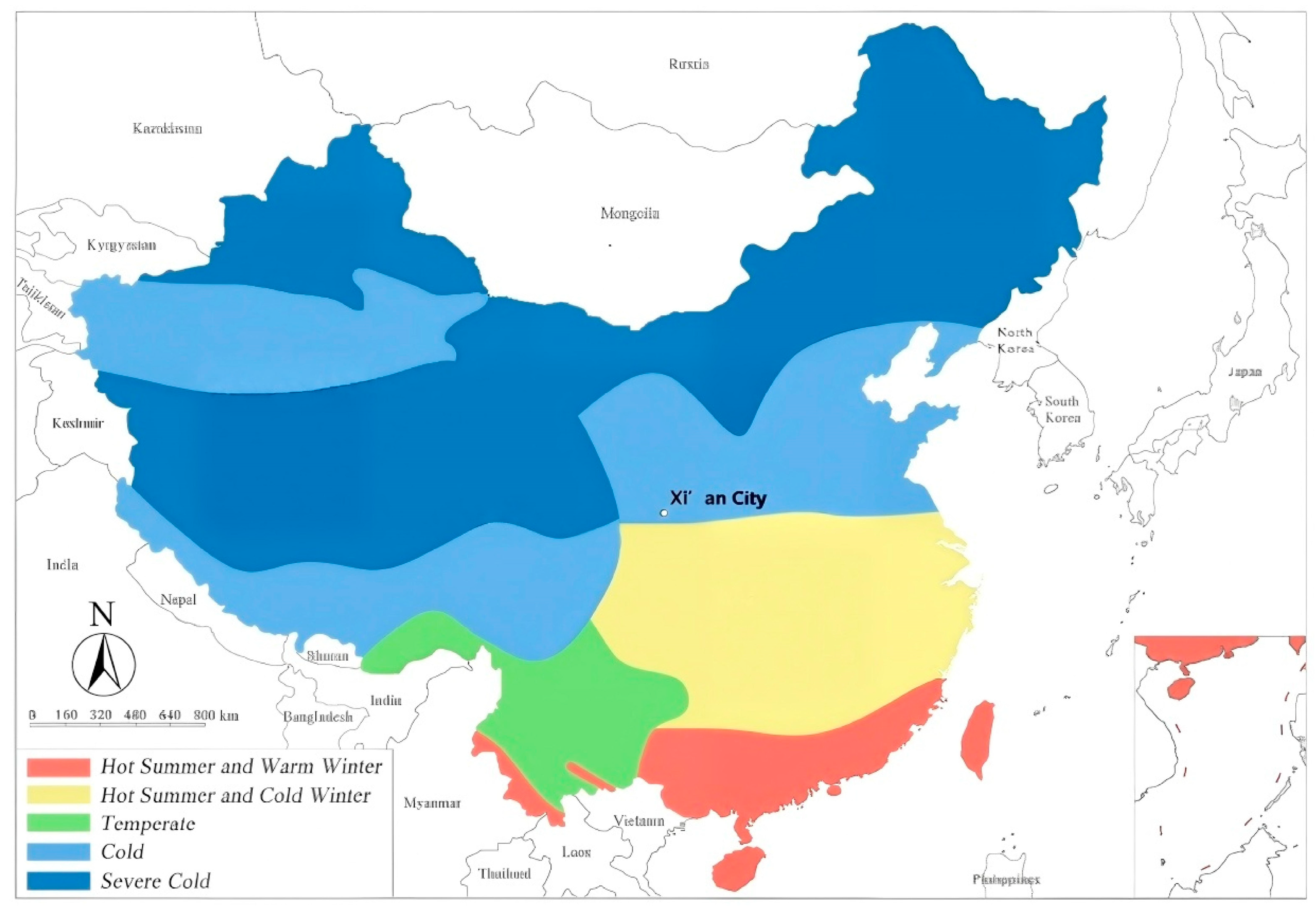
It is evident that the final results vary, with RMSE ranging from 2.9 to 4.8 and R2 from 0.52 to 0.98. Such variability is likely related not only to model performance itself, but also to differences in climatic conditions, seasonal background, urban morphology, and spatial scale among the selected studies. These findings indicate that ENVI-met has been widely applied and its accuracy validated for outdoor thermal environment prediction in different urban settings. However, most previous studies have focused on conventional outdoor spaces, such as streets, courtyards, parks, and residential blocks, whereas studies specifically assessing ENVI-met performance in semi-sheltered open spaces beneath elevated buildings remain scarce. Previous studies have provided some insights into the environmental benefits of elevated building design. Liu et al. discovered that wind velocity tends to be higher in the spaces beneath elevated buildings [1]. Similarly, Niu et al. highlighted the advantages of elevated areas during hot weather, noting a potential decrease in the Physiological Equivalent Temperature (PET) by up to 15 °C when compared to open spaces [38]. Weng et al. also analyzed thermal comfort in the elevated space of residential dwellings using ENVI-met and found that the number of continuously arranged buildings and the aspect ratio have a positive effect on thermal comfort, while elevated height has a negative correlation [39]. Nevertheless, these studies have mainly been carried out in the hot-summer and warm-winter climate and the hot-summer and cold-winter climate zones of southern China, while validation evidence for elevated building spaces in cold-climate regions remains notably limited (Figure 1).
The previous studies referenced primarily approach the ENVI-met simulation process as an applied tool, while fewer studies have explicitly examined its performance boundaries and the uncertainties associated with radiation-related variables in elevated semi-outdoor spaces. Therefore, this study endeavors to gauge the fidelity with which ENVI-met mirrors the microclimate in open spaces beneath elevated buildings through a comparative analysis of ENVI-met simulated outputs and measured meteorological data. It should be noted that PET is cited here only as a thermal comfort indicator reported in previous studies. The present manuscript does not aim to perform a full thermal comfort or heat/cold stress assessment; instead, it focuses on the validation of measured microclimatic variables and the evaluation of ENVI-met model performance beneath elevated buildings. By evaluating its simulation performance against measured data, we aim to provide practical insights into the applicability and limitations of ENVI-met for microclimate studies in elevated building spaces in cold climates.

2. Materials and Methods

2.1. Monitoring Site

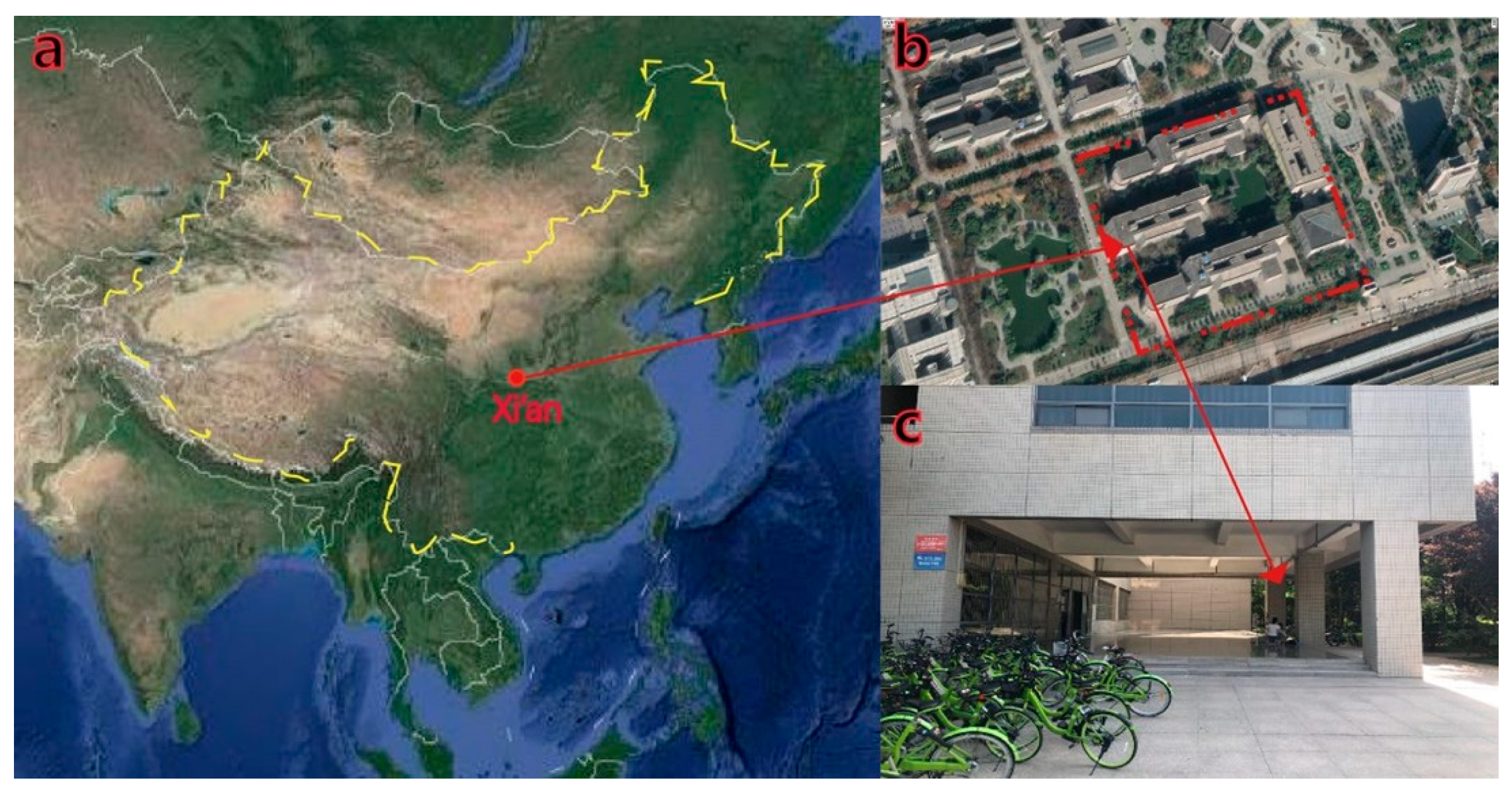
The selected research site is situated in the city of Xi’an, China, with coordinates ranging from 107.4° E to 109.49° E and from 33.42° N to 34.45° N [40]. Xi’an is an inland city with an average air temperature of 27.2 °C and an average wind velocity of 1.6 m/s in July [40]. Based on the meteorological data for the entire year, this city is classified as a region with predominantly static winds [41]. The specific test site is located in a corridor beneath an elevated building, measuring approximately 15 m in length, 8.5 m in width, and 3.5 m in height (Figure 2).

2.2. Experimental Design of the Field Measurement

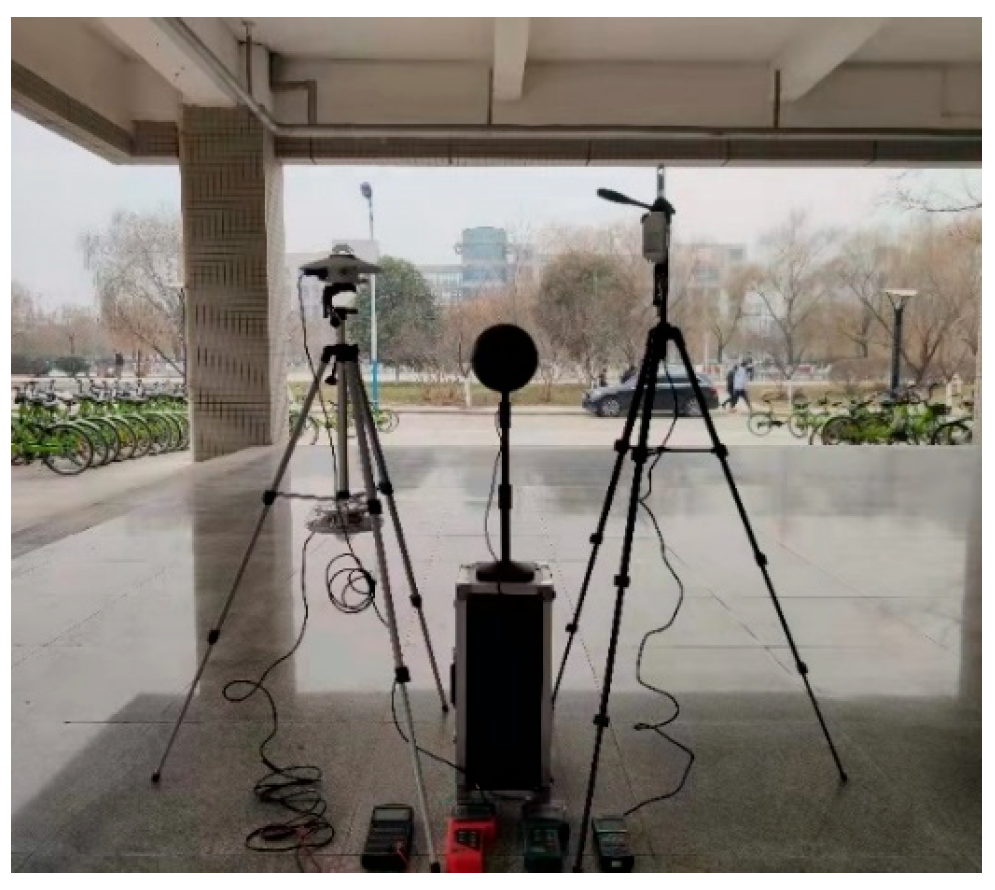
The field measurement was conducted from 8 to 10 July 2020, between 9:00 am and 6:00 pm. These days were selected as they represent the hottest period of the year [41] (Table 2). Various meteorological parameters, including air temperature (Ta), relative humidity (Rh), global radiation (G), and globe temperature (Tg), were measured. Ta and Rh were recorded using a HOBO instrument, while Tg and G were separately recorded using an HD32.2 WBGT Index instrument equipped with a 50 mm black globe probe ( D = 0.05 m) and a Pyranometer TBQ-2 (Table 3).
The 50 mm globe was selected for practical field measurement and its faster response compared with the standard 150 mm globe. This choice was appropriate for the present study because the semi-open space beneath the elevated building is exposed to rapidly changing radiative conditions, and the smaller globe is more responsive to short-term microclimatic variations. Meanwhile, the 150 mm globe is the conventional reference size in ISO 7726 [42], and the use of a 50 mm globe may introduce additional uncertainty in the derivation of T M R T , particularly under varying wind conditions. Therefore, the globe-based T M R T results were interpreted with caution.
The instrument specifications listed in Table 3 were used as the basis for uncertainty interpretation in the present study, and the accuracy of all devices had been tested in previous studies [26]. In the present campaign, the measurements relied on the manufacturer-reported instrument accuracy and the previously validated performance of the sensors. To reduce procedural uncertainty, all instruments were installed using a consistent setup and operated with a unified one-minute sampling interval throughout the measurement period. In this study, all instruments were positioned at 1.5 m above the ground surface to represent the pedestrian-level microclimate, and microclimatic data were collected at one-minute intervals. This height was selected because the present study focuses on model validation for thermal conditions at the level most directly relevant to human activity and exposure beneath elevated buildings.
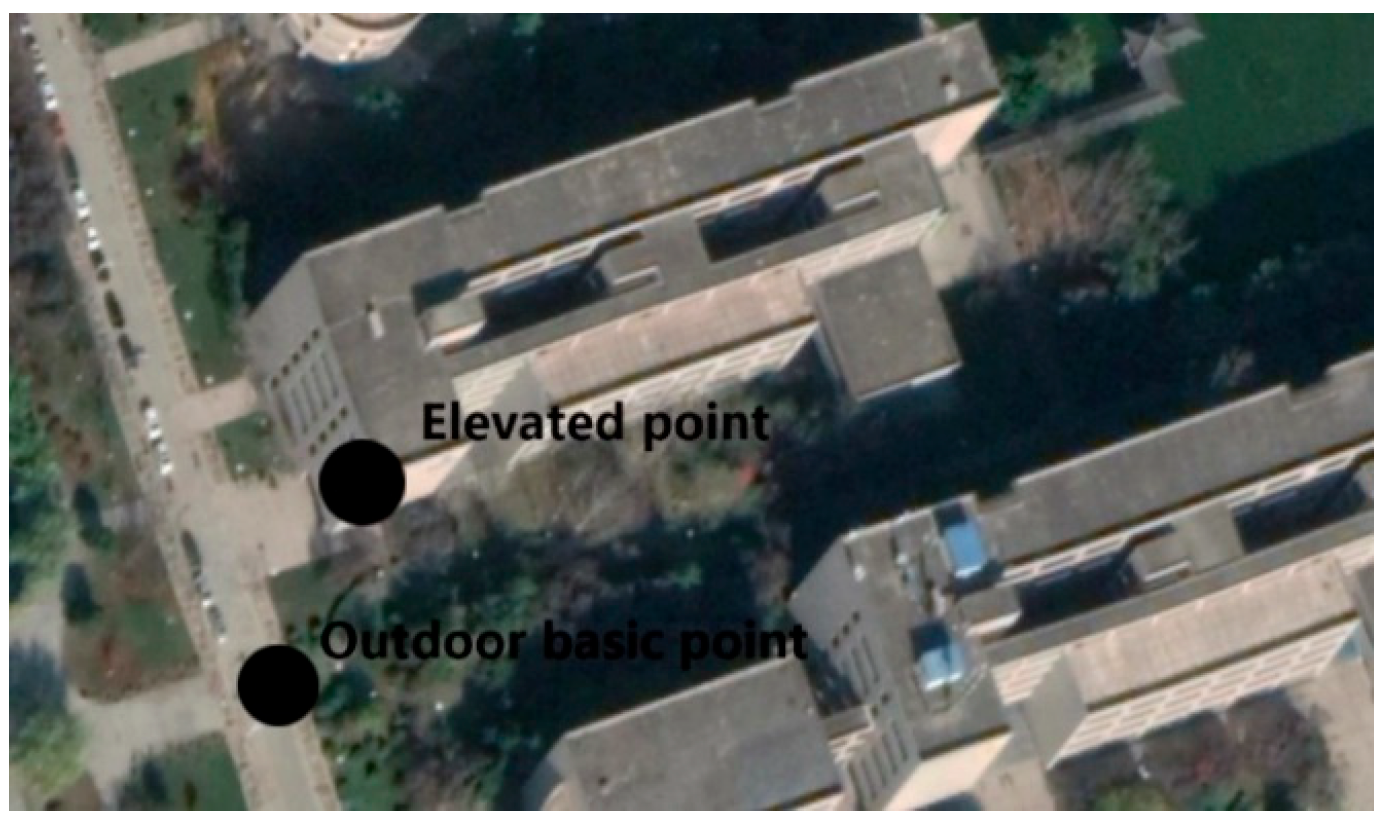
This part of the field measurement consists of two selected points, the elevated point and the outdoor base point (Figure 3 and Figure 4). The software takes the outdoor base point of meteorological data as the initial data for simulation.

2.3. The Introduction of the Software

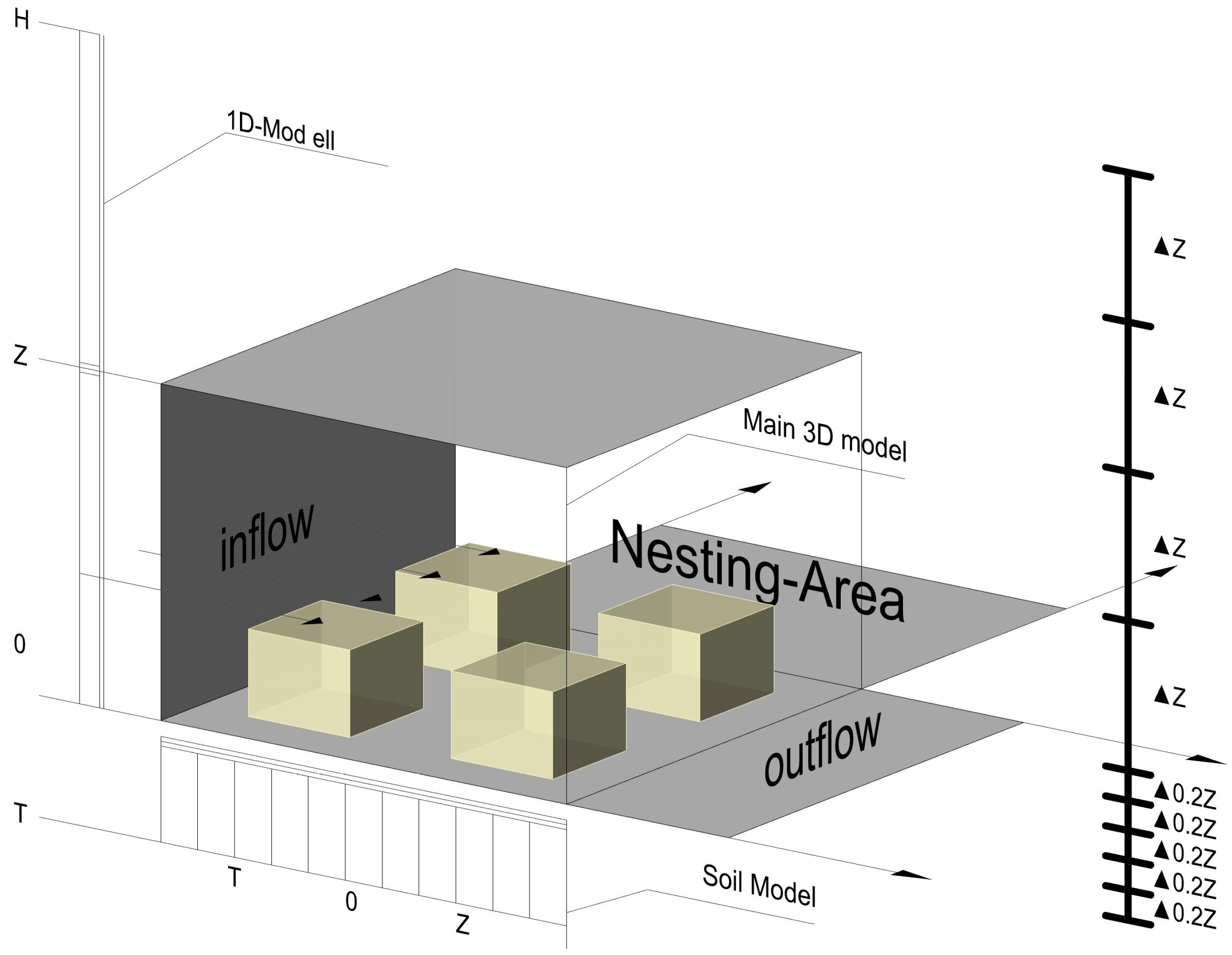
The ENVI-met software 5.0 is designed to provide a platform for simulating the interactions among soil, vegetation, air, and buildings, based on the fundamental laws of thermodynamics and fluid dynamics [43,44]. Figure 5 provides a schematic illustration of the ENVI-met model structure, adapted and simplified from the ENVI-met documentation [14]. The simulation model in this software comprises several sub-models, including a 1D boundary model, a 3D atmosphere model, and a 3D soil model. The 1D model simulates the atmospheric process, which can be from the ground level (0 m) to 2500 m in height. The 3D model is divided into many grid cells, and its size is set as the resolution in the initial input file for simulation. To improve accuracy, the lowest five cells are divided into five small extensions of Δ z = 0.2 Δ z . In this study, ENVI-met was used in its original developer-released configuration, and no code-level or model-structure modifications were introduced by the authors. The purpose of the present work is to evaluate the performance of the original ENVI-met model in reproducing the measured microclimate beneath elevated buildings.

2.3.1. The Inner Calculated Principle of Potential Air Temperature (Ta) and Relative Humidity (Rh)

The equations presented below are retained not to redevelop the original ENVI-met model, but to clarify the physical mechanisms most relevant to the present validation study, particularly those related to heat and moisture exchange. The potential air temperature θ is calculated and obtained by a combined advection–diffusion equations in ENVI-met [43,46]:
θ t + u i 2 θ x i   = k h ( 2 θ x i 2 ) + 1 ρ c p R l w z + Q θ
Q θ is used to define the inner heat exchange between vegetation and air, and k h is the turbulent exchange coefficient for heat. The 1 ρ c p R l w z is the change in air temperature (Ta) affected by the divergence of the long wave radiation, and u i is the velocity component.
q t + u i 2 q x i = k q ( 2 q x i 2 ) + Q q
Q q is the inner exchange of humidity between air and vegetation, and k q is the turbulent exchange coefficient for humidity.

2.3.2. The Inner Calculated Principle of Radiative Fluxes

The new ENVI-met is strongly modified, in which the reduction factors between zero and one are utilized in the simulated model to represent the shade of vegetation and buildings on outdoor long-wave and short-wave radiation. Equations (3)–(6) [43] show the reduction effect of the vegetation on direct solar radiation ( σ s w , d i r ) , diffuse radiation ( σ s w , d i f ) , and upward ( σ l w ) and downward long-wave radiation ( σ l w ).
σ s w , d i r = e x p [ F · L A I * ( z ) ]
σ s w , d i f = e x p [ F · L A I ( z , z p ) ]
σ l w = e x p [ F · L A I ( 0 , z ) ]
σ l w = e x p [ F · L A I ( z , z p ) ]
where F means the coefficient of leaf orientation, and LAI is the vertical leaf area index of the selected plant from the bottom (z) to the top (zp). For short-wave radiation, L A I * replaces L A I , in which the angle of incidence of incoming sun rays is considered and assessed.
The short-wave radiation intensity of the arbitrary point in this software can be expressed as follows [43]:
Q s w ( z ) = σ s w , d i r ( z ) Q s w , d i r 0 + σ s w , d i f ( z ) σ s v f ( z ) Q s w , d i f 0 + ( 1 σ s v f ( z ) ) Q s w , d i r 0 · a ¯
where σ s w , d i r ( z ) is the attenuation of the obstacle in impeding solar radiation, σ s w , d i f ( z ) is the attenuation in impeding diffuse radiation, Q s w , d i r 0 represents the direct solar radiation intensity, Q s w , d i f 0 represents the diffuse radiation intensity, the a ¯ represents the inner albedo of the building walls of the simulated model, and the sky view factor σ s v f means a calculation of the sky seen from the center of the inner grid cell [43]:
σ s v f =   1 360   π = 0 360 cos ω ( π )
In ENVI-met, the long-wave radiation assumes that the shielding vegetation layers can absorb a few parts of the fluxes and will influence it by their longwave radiation, and the horizontal long-wave radiation fluxes are simply designed and assessed with the sky view factor σ s v f and added to the vertical incoming radiation. The upward and downward long-wave radiation fluxes at the level z are shown [43]:
Q l w ( z ) = σ l w ( z ) Q l w , 0   + ( 1 σ l w   ( z ) ) ε f σ B T ¯ f + 4 + ( 1 σ s v f ( z ) ) Q l w  
Q l w ( z ) = σ l w ( z ) ε s σ B T 0 4 + ( 1 σ l w ( z ) ) ε f σ B T ¯ f 4
where T ¯ f + 4 is the average foliage temperature of the overlying vegetation layer and T ¯ f 4 is the average foliage temperature of the underlying vegetation layer; T 0 4 is the ground surface temperature of the simulated area; T ¯ w 4 is the average surface temperature of the building surfaces; ε f , ε s and ε w are emissivities of the foliage, ground, and walls respectively; and σ B is the Stefan–Boltzman constant, being 5.67 · 10−8 W m−2 K4.

2.3.3. The Inner Calculated Principle of the Mean Radiant Temperature (TMRT)

The software can calculate the mean radiant temperature (TMRT) for the cylindric-shaped body [43]:
T M R T = ( 1 σ ( Q l w , i n + a k ϵ ( Q s w d i f , i n + Q s w d i r , i n ) ) 0.25
where the σ represents the Stefan–Boltzmann constant, the emission coefficient of the human’s body ( ε ) is set as 0.97, and ak, the absorption coefficient of the body for short wave radiation, is designated as 0.7.
In this study, the final calculated MRT in the open area beneath the building can be expressed as follows:
T M R T = ( 1 σ ( Q l w , i n + a k ϵ ( Q s w d i f , i n ) ) 0.25
The default setting of incoming longwave radiation Q l w , i t is assumed to come 50% from the ground surface and the other 50% from the above sky, vegetation and buildings [43]:
Q l w , i n = 0.5 ( v f v e g ε v e g ¯ σ T v e g ¯ 4 + v f b l d g ε b l d g ¯ σ T b l d g ¯ 4 + v f s k y Q l w , s k y + v f b l d g ( 1 ε b l d g ¯ ) Q l w , s k y ) + 0.5 ( σ ε g r o u n d T g r o u n d 4 )
In this study, it can be expressed as follows:
Q l w , i n = 0.5 ( v f v e g ε v e g ¯ σ T v e g ¯ 4 + v f b l d g ε b l d g ¯ σ T b l d g ¯ 4 ) + 0.5 ( σ ε g r o u n d T g r o u n d 4 )
The view factors vf represents the total proportion of vegetation, building, and sky that can be seen from a tested point. Only surface temperature and corresponding grid cell’s emissivity are calculated and considered for long-wave radiation coming from the ground surface.
The diffuse incoming short wave radiation Q s w d i f is calculated in the simulated process accordingly [43]:
Q s w d i f , i n = 0.5 ( v f b l d g r f b l d g ¯ Q s w d i r , s k y + v f s k y Q s w d i f , s k y ) + 0.5 ( r f g r o u n d Q s w , g r o u n d )
where rf is the reflectivity and Q s w , t h e   g r o u n d is the shortwave radiation at the ground surface of the corresponding grid cells. In this study, it can be simplified as follows:
Q s w d i f , i n = 0.5 ( r f g r o u n d Q s w , g r o u n d )
These formulations are presented to support the interpretation of the simulation results and the discussion of model–measurement discrepancies, especially for radiation-related variables and T M R T , rather than to provide a full theoretical derivation of ENVI-met.

2.4. The Boundary Conditions for Simulation

Based on field measurements, data collected over three consecutive days were used to run ENVI-met under the simple open full forcing option [47]. The initial simulated boundary conditions are presented in Table 4 and Table 5, corresponding to the meteorological data collected and published by the local meteorological department [48]. Considering the geometric scale of the study area and the need to represent pedestrian-level microclimatic conditions beneath the elevated building, the numbers of grid cells along the X, Y, and Z axes were set to 200, 200, and 30, respectively. The grid size in the X and Y directions was set to 1 m, while the grid size in the Z direction was set to 0.5 m. This resolution was selected as a compromise between spatial detail and computational feasibility for the present multi-day ENVI-met simulations. The present study focuses on model–measurement comparison at selected monitoring points rather than on resolving fine-scale turbulent structures near complex building edges or vegetation canopies; therefore, the adopted grid resolution was considered adequate for the targeted validation variables, although it may not fully capture local small-scale gradients. The ground material for the outdoor basic point is set to gray bricks, while the ground material for the elevated point is set to tile. The physical properties of these materials are shown in Table 4.
Table 6. The validation and assessment between the measured and simulated data in the basic outdoor point.
ParameterTaRh
Outdoor Reference Point
R20.920.90
RMSE1.1 °C3.66%
Table 7. The final assessment of the performance on the analysis of Ta in RMSE, RMSEu, RMSEs, and R2.
ConditionRMSERMSEuRMSEsR2
Average1.2 °C2.0 °C1.0 °C0.90
Sunny0.7 °C1.2 °C0.9 °C0.96
Slightly cloudy1.4 °C2.6 °C1.1 °C0.91
Mostly cloudy0.8 °C1.410.7 °C0.79
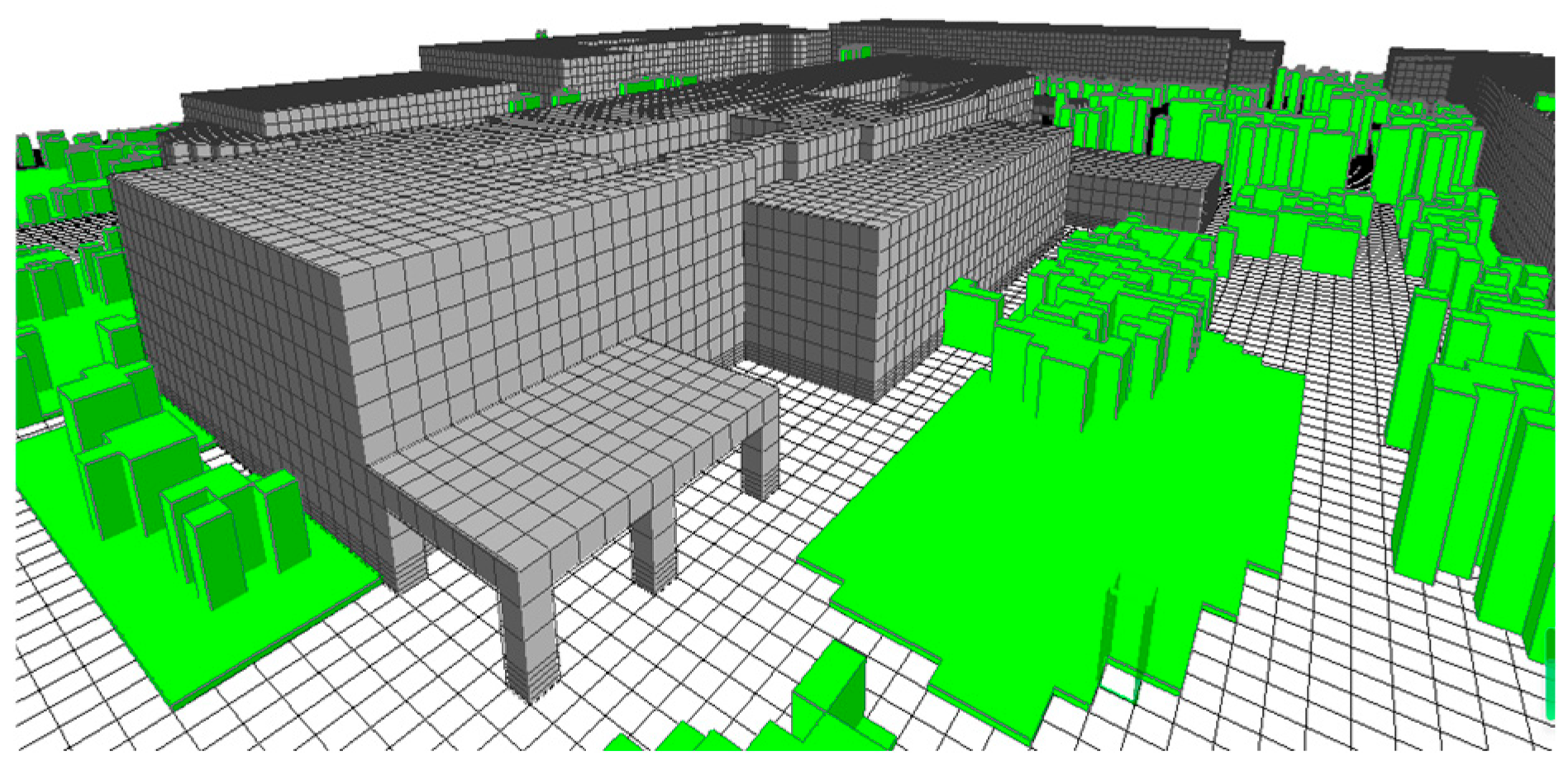
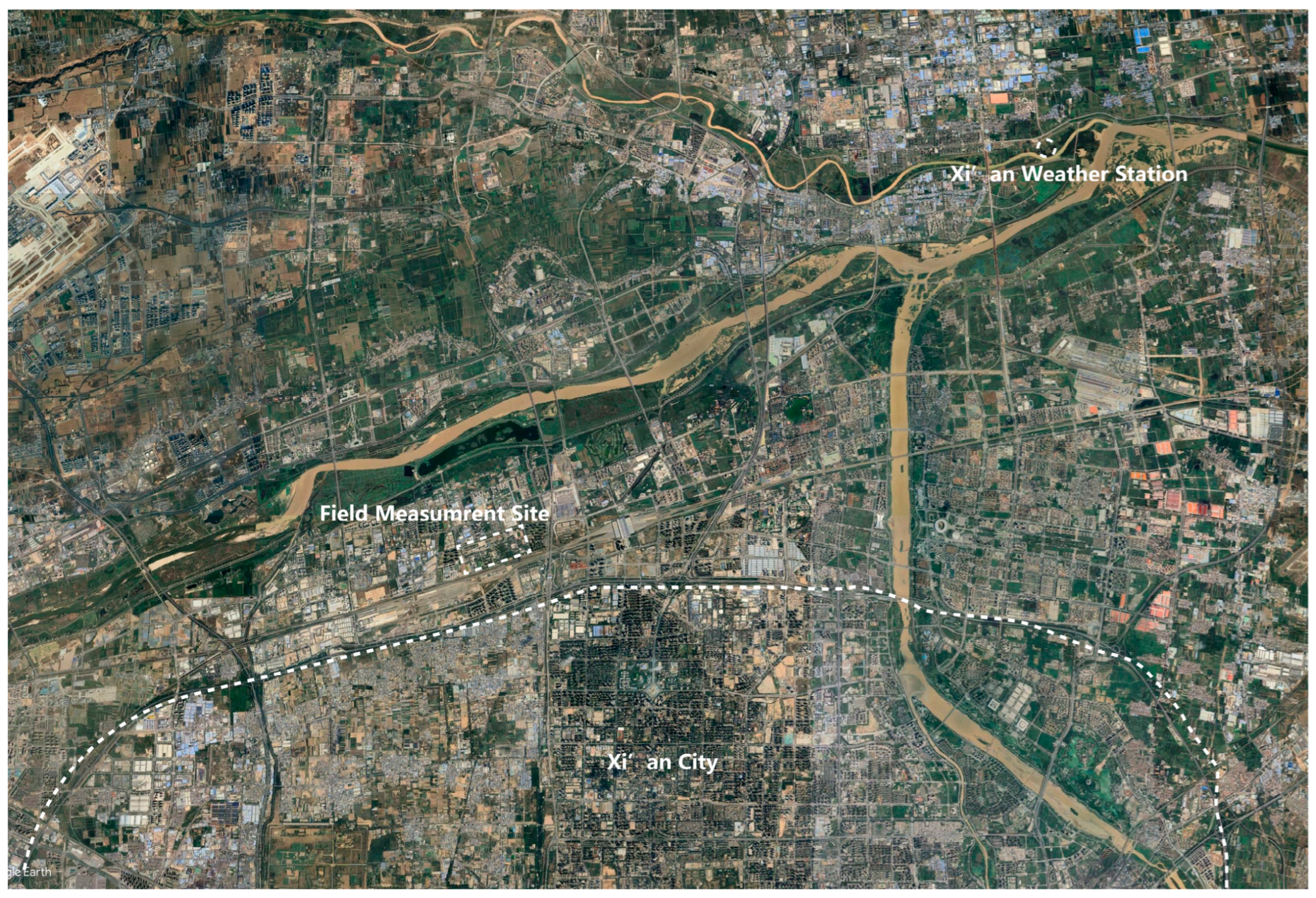
The overall dimensions of the building under study are 15 m by 8.5 m, with a height of 3.5 m. The simulation model is shown in Figure 6. The distance between the first buildings and the model boundaries is 9 m, which was determined based on the actual site conditions recorded during the field measurement. In addition, a location map (Figure 7) has been included to indicate the positions of the local weather station and the field measurement site, providing spatial context for the boundary conditions used in the simulation.
As listed in Table 5, the meteorological boundary conditions included Ta and Rh recorded by the local weather station and verified by field measurements. However, because Rh is strongly temperature-dependent and less suitable as an independent indicator of atmospheric moisture, we derived absolute humidity (Ah) metrics for analysis [49].
Following standard psychrometric relationships, the saturation vapor pressure (es, hPa) was calculated as
e s ( T ) = 6.112 × e x p ( 17.67 T a T a + 243.5 )
The actual vapor pressure (e, hPa) was then obtained as
e = R h 100 × e s
Finally, absolute humidity (Ah, vapor density, g·m−3) was derived as
A h = 216.7 × e T a + 273.15
where e s denotes the saturation vapor pressure in hPa, e is the actual vapor pressure in hPa, and Ah corresponds to the absolute humidity expressed as vapor density in g·m−3. In the present study, the measured T a and Rh data recorded at one-minute intervals were batch-processed time step by time step using Equations (17)–(19). Specifically, e s was first calculated from the measured T a , then e was obtained from Rh, and finally Ah was derived for each minute of the measurement period. The resulting Ah time series was then temporally aligned with the corresponding ENVI-met outputs and used for model–measurement comparison alongside vapor pressure. This preprocessing strategy also defines the focus of the subsequent Results section: temperature, humidity-related variables, and radiation-related indicators are compared separately, because their physical meanings, uncertainty sources, and model sensitivities differ under the semi-sheltered elevated condition.

3. Results

3.1. The Analyzed Validation in the Basic Outdoor Point

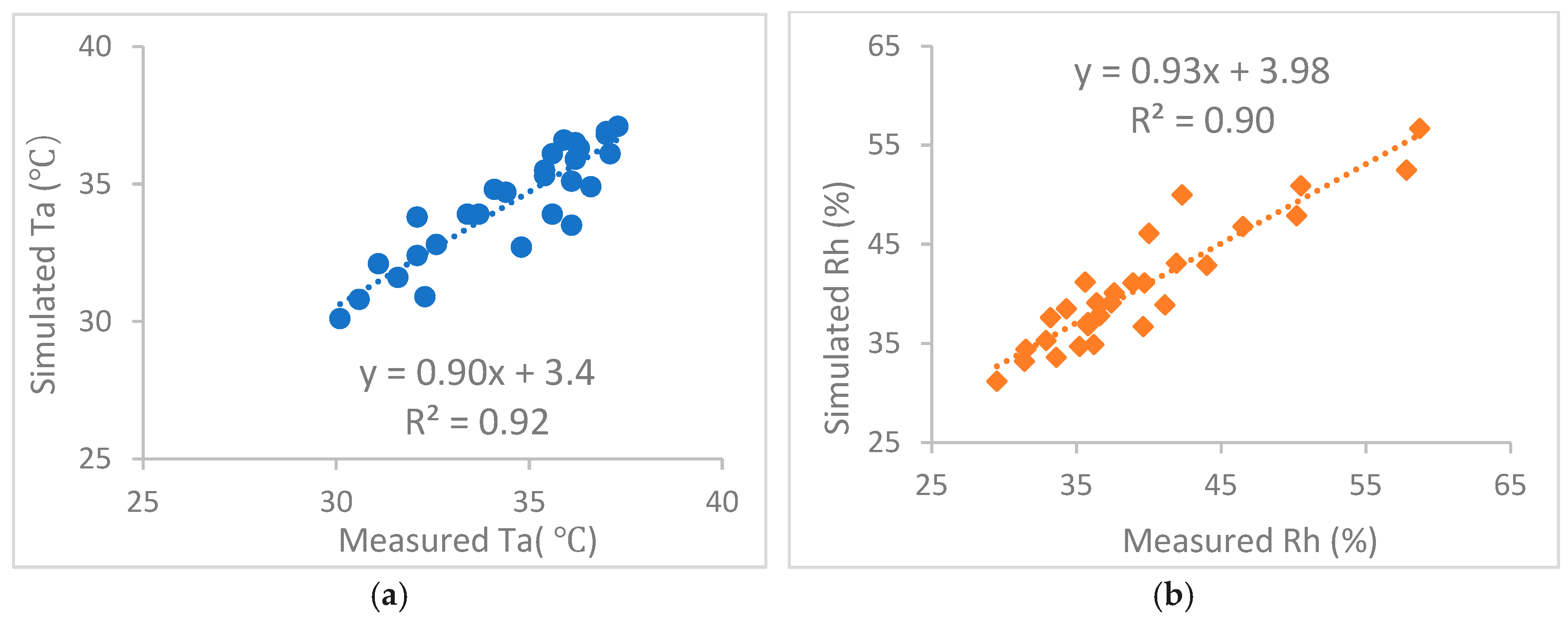
In this study, the coefficient of determination (R2) and root mean square error (RMSE) are used to observe and evaluate the deviations and differences between the observed and predicted data. If the final R2 is close to one, the two types of data are highly correlated and similar. Unlike R2, if the RMSE is close to zero, the model is more accurate and precise, meaning that the simulated data closely align with the measured data. Figure 8 and Table 6 present the comparison of measured and simulated Ta and Rh in the basic outdoor point, where the R2 is 0.92 and 0.90, and the RMSE is 1.1 °C and 3.66%. These results indicate that ENVI-met reproduced the general background microclimatic conditions at the outdoor point with acceptable accuracy under the imposed boundary conditions. At the same time, the regression line in Figure 8 shows a slope lower than 1 and a positive intercept, indicating that some systematic bias remains between the simulated and measured values. In particular, the model tends to underrepresent the amplitude of the observed variation and shows a tendency to underestimate the higher observed values. Therefore, although the overall correlation is strong, the agreement should not be interpreted as a perfect 1:1 match.
It should also be noted that the relatively high R 2 values may partly reflect the use of meteorological forcing data from a nearby climate station, which reduces the independence between the simulated and measured datasets. Nevertheless, the validation at the outdoor reference point provides an important baseline check for the overall simulation framework. This agreement supports the reliability of the model setup at the background level and suggests that the larger discrepancies observed beneath the elevated building are more likely associated with the greater spatial and radiative complexity of the semi-open space, rather than with a failure of the overall model configuration.
It should be noted that, while Rh was used here for consistency with previous ENVI-met validations at outdoor points, in the subsequent elevated-point analysis we replace RH with absolute AH derived from Ta and Rh to provide a more independent humidity indicator.

3.2. The Assessment of the Validation Between Measured and Simulated Data of the Elevated Point

Besides the Ta and Ah the software ENVI-met can also calculate and output radiation intensity by its model. By inputting the longitude, latitude, date, and the specific location and position of the sun in the sky, the direct radiation, diffuse sky radiation, and total solar radiation intensity of incidence to the tested model boundary can be calculated and obtained [43]. The output of total radiation influences directly the mean radiant temperature (TMRT), which is essential for outdoor thermal comfort.
The software ENVI-met can calculate and output the reflected radiation intensity of any selected point in an outdoor space: in the simulation of open space beneath the elevated building, the total reflection quantity of the underlying surface of the elevated space is expressed by the reflected short wave radiation intensity (Reflected Qsw Radiation). In this process, if the calculated synthetic reflection quantity of the sky and building walls are taken into consideration, the reflected short wave radiation intensity of the upper hemisphere (Qsw Reflected Upper Hemisphere) can be utilized; on the contrary, if the calculated synthetic reflection quantity of the building walls and ground surface are taken into consideration, the reflected short wave radiation intensity of lower hemisphere (Qsw Reflected Lower Hemisphere) can be calculated and obtained [50].
Regarding the simulated long-wave radiation, the software ENVI-met can calculate and perform the analog of underlying surface long-wave emission intensity, the acquisition of underlying surface long-wave radiation balance, the total surface long-wave flux, and the output of the upper/lower hemisphere long-wave radiation flux [50].
Regarding the diffuse radiation, ENVI-met can calculate and output the diffuse radiation on both sunny (cloudless) and cloudy days; when it is a sunny day, the diffuse radiation amount is calculated and assessed only by the direct radiation; when it is a cloudy day, it depends on the thickness of the cloud layer of the sky and the reflectance of the underlying surface of the selected model. In this study, direct shortwave radiation from the sun and the component of longwave radiation originating from the sun’s direction were blocked by the elevated building roof and therefore ignored in the simulation, while longwave radiation from the ground, surrounding building surfaces, and the atmosphere was still considered [50].
Notably, in ENVI-met version 5.0, the obstacle in impeding the radiation is represented by a reduction in the indexed view sphere (IVS) effect, which calculates the shortwave and longwave radiation fluxes resulting from multiple interactions between different ambient ground and building surfaces. However, in this simulated process, ENVI-met still has certain limitations. First, the simulated longwave radiation intensity emitted from building surfaces is calculated based on the mean surface temperature, rather than the temperature of each individual surface. Second, the calculated diffuse shortwave radiation is not influenced by surrounding vegetation, meaning that ENVI-met does not account for the absorption of diffuse radiation when passing through vegetation, nor for the generation of diffuse radiation due to scattering by vegetation. These factors can introduce noticeable errors in the simulation results [50].

3.2.1. Results and Discussion (Ta and Ah)

At the outset, it should be noted that the field measurement instruments (HOBO) recorded only RH and T a . Because RH is strongly dependent on T a and therefore less suitable as an independent indicator of atmospheric moisture, we derived AH from T a and RH using the psychrometric formulas described in Section 2.4. The converted Ah series was then used as the humidity-related variable for comparison with the corresponding ENVI-met outputs.
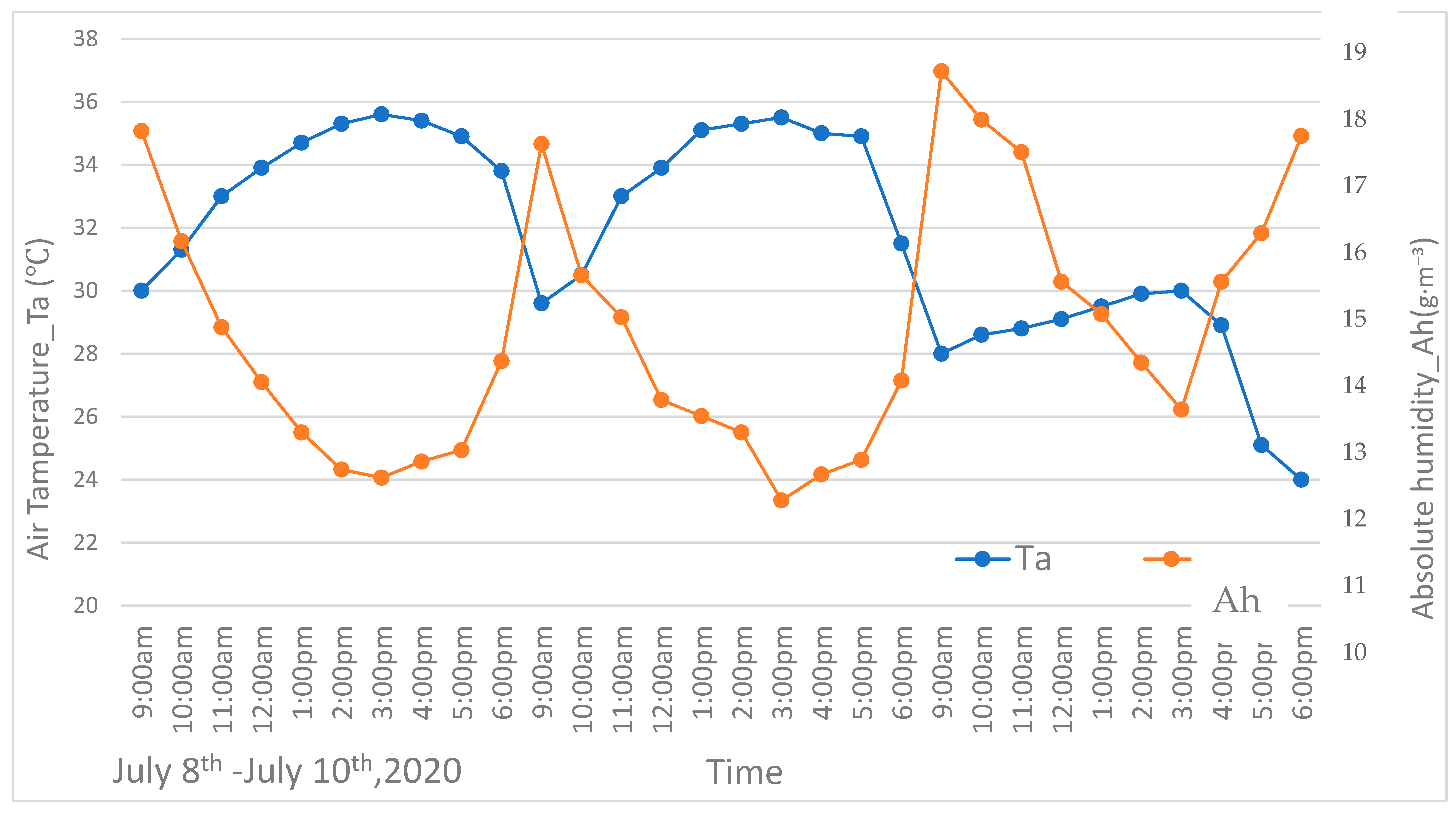
The results of monitoring Ta and Ah at elevated points are presented in Figure 9. Across the three measured days, the maximum Ta and the minimum AH occurred at around 3:00 pm, reflecting the strong diurnal coupling between temperature and atmospheric moisture content. On the first measured day (July 8), the variation curves show that Ta increased steadily to a maximum of 35.6 °C, while Ah decreased to its lowest value at the same time. This inverse relationship between Ta and Ah is physically reasonable, as warmer air can contain more water vapor; thus, for the same absolute amount of water vapor, the vapor density per unit volume decreases as air expands with heating.
The comparison indicates that ENVI-met can reasonably reproduce the diurnal dynamics of both Ta and Ah, with R2 values ranging from 0.84 to 0.98 and RMSE values between 0.70 and 1.50 g·m−3 for Ah (Table 8).
Before 3:00 pm the minimum Ah decreases to 37.9%. On the slightly cloudy day (July 9th), the changing trend of this day’s curve is similar to the first day. On the mostly cloudy day (July 10th), the average Ta is lower than the former two days. Conversely, the Ah is much higher.
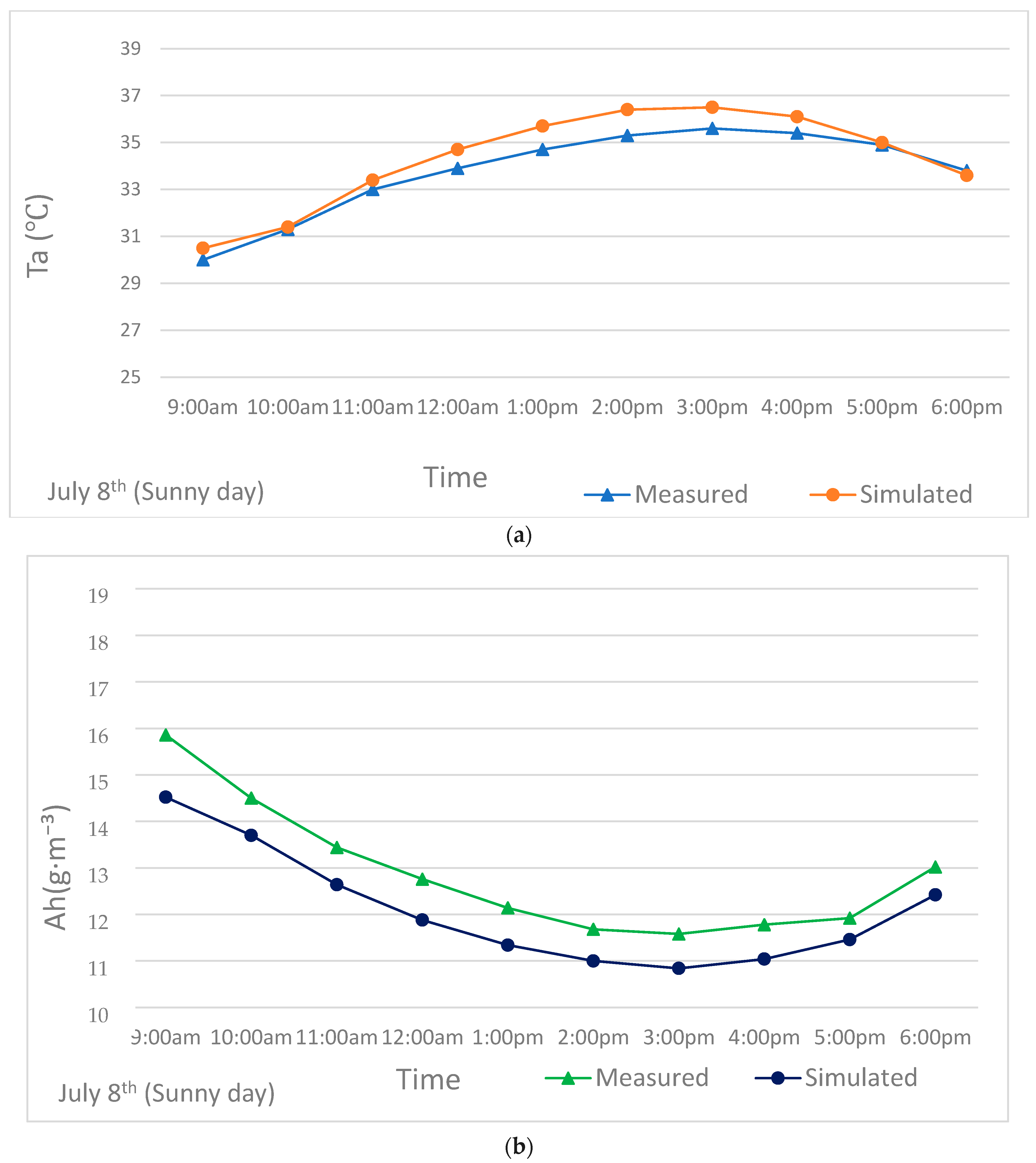
On the sunny day (July 8th) (Figure 10), a quite distinct discrepancy between the simulated and measured data appears; Figure 10a shows that the calculated Ta is higher than the measured Ta. Before 6:00 pm, that means ENVI-met will overestimate the Ta during the daytime when it is sunny; after 6:00 pm (sunset), the simulated Ta is underestimated by the software. This deviation can be attributed to the software’s default setting, which assumes no sun in the sky at 6:00 pm. However, in reality, sunshine is still present outside at this time. Regarding the Ah, ENVI-met tends to underestimate the final outputs; all simulated Ah values are lower than those measured.
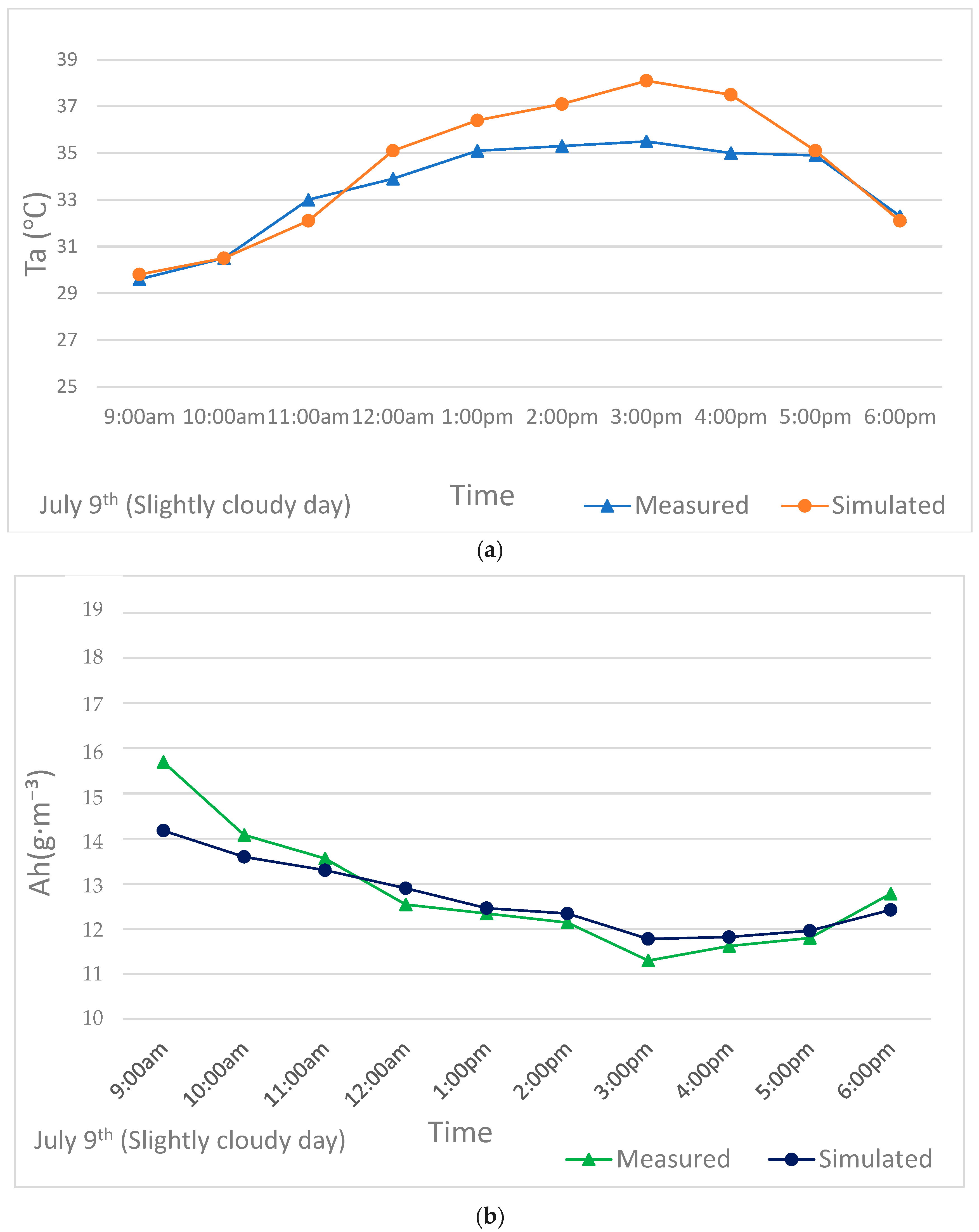
After 6:00 pm, the simulated Ta is lower than the measured Ta. In Figure 11b, a similar discrepancy between modeled and measured Ah is visible; different from the former day, there is a minor deviation between the two variables during the estimated time.
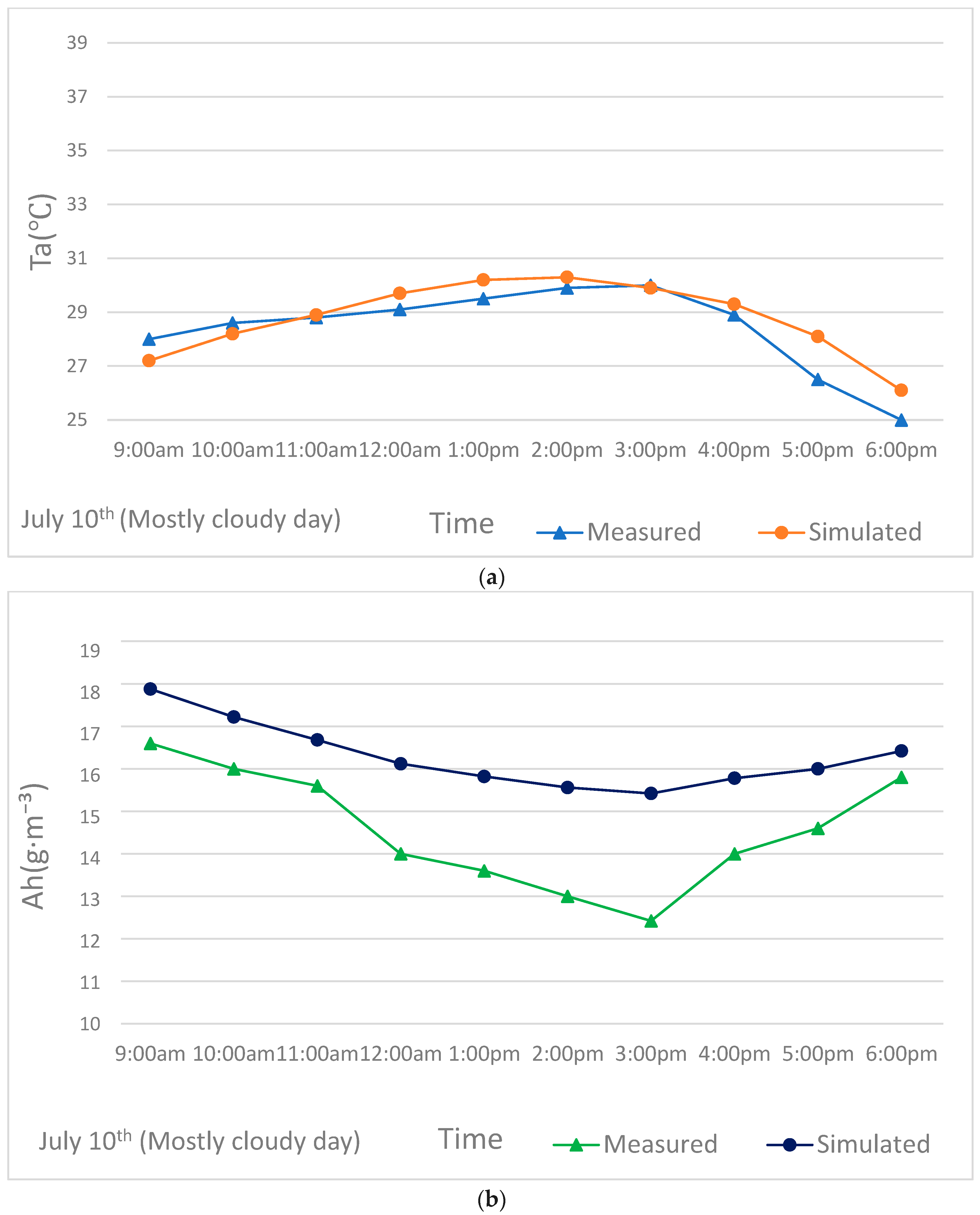
On the mostly cloudy day (July 10th), the average Ta and Ah are lower and higher than the other two days, and the changing trends of the curves are similar (Figure 12). The precision and accuracy of the simulation have been tested and assessed through different means of the statistical parameters usually used to contrast the performance of the model testing.
In this study, the assessed indices, including the RMSE, RMSEu, RMSEs, and R2, are considered and used. To obtain a reliable and accurate result, the parameters mentioned above must be close to the following: RMSE 0, RMSEs 0, RMSEu RMSE, and R2  0 [42,50].
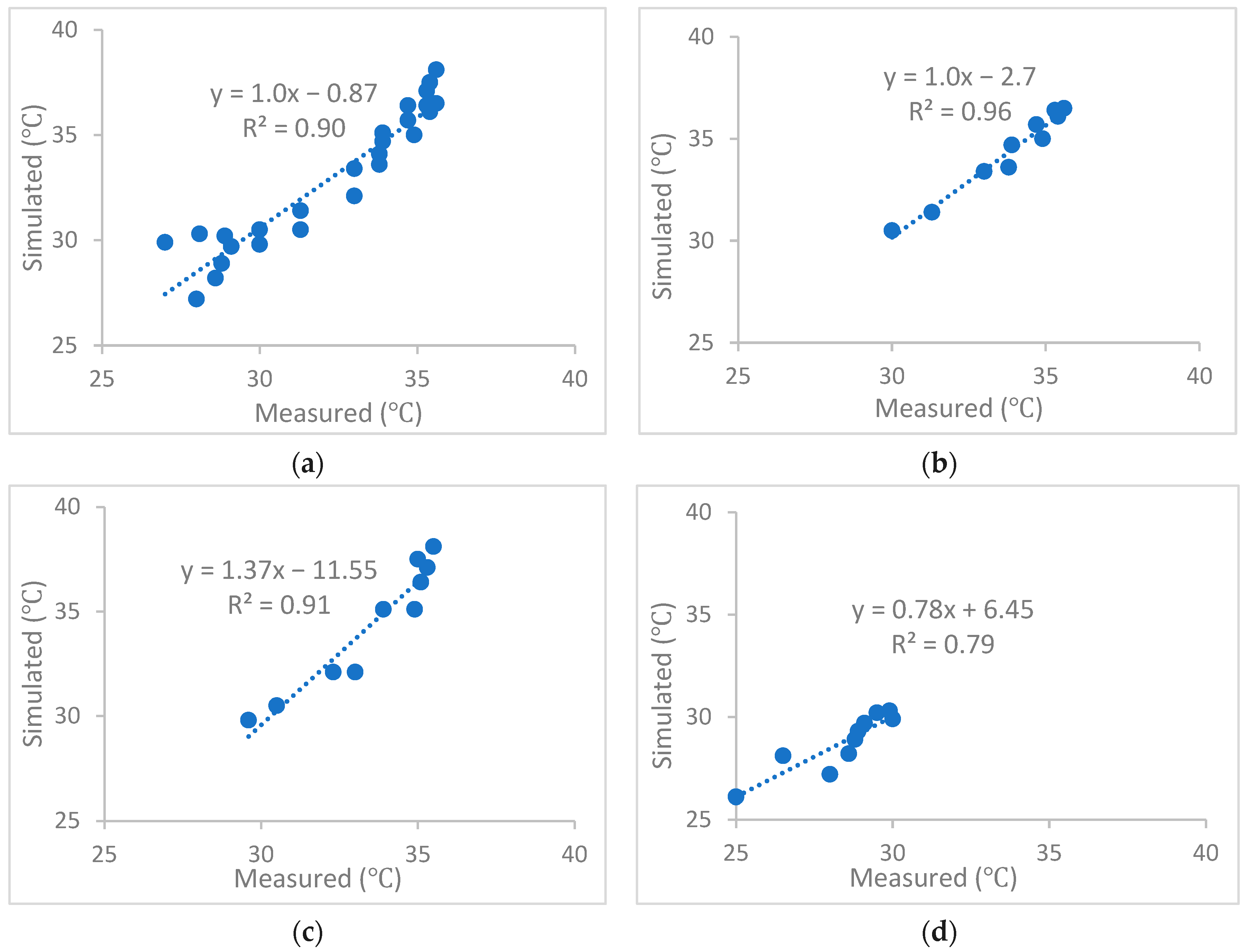
Table 7 and Figure 13 present the validation results for T a . Overall, ENVI-met reproduced the temporal variation in outdoor air temperature with acceptable agreement, with an average R 2 of 0.90 and an RMSE of 1.2 °C. Under different sky conditions, the R 2 values range from 0.79 to 0.96, while the RMSE values range from 0.7 to 1.4 °C. However, the regression lines in Figure 13 show slopes lower than 1 and positive intercepts in some cases, indicating that the model does not fully capture the observed amplitude and retains a systematic offset. In particular, the simulated results tend to smooth the measured variability and slightly underestimate the higher observed T a values. In addition, RMSEs remain relatively small, suggesting that the unsystematic component of the error is limited, although systematic bias is still present.
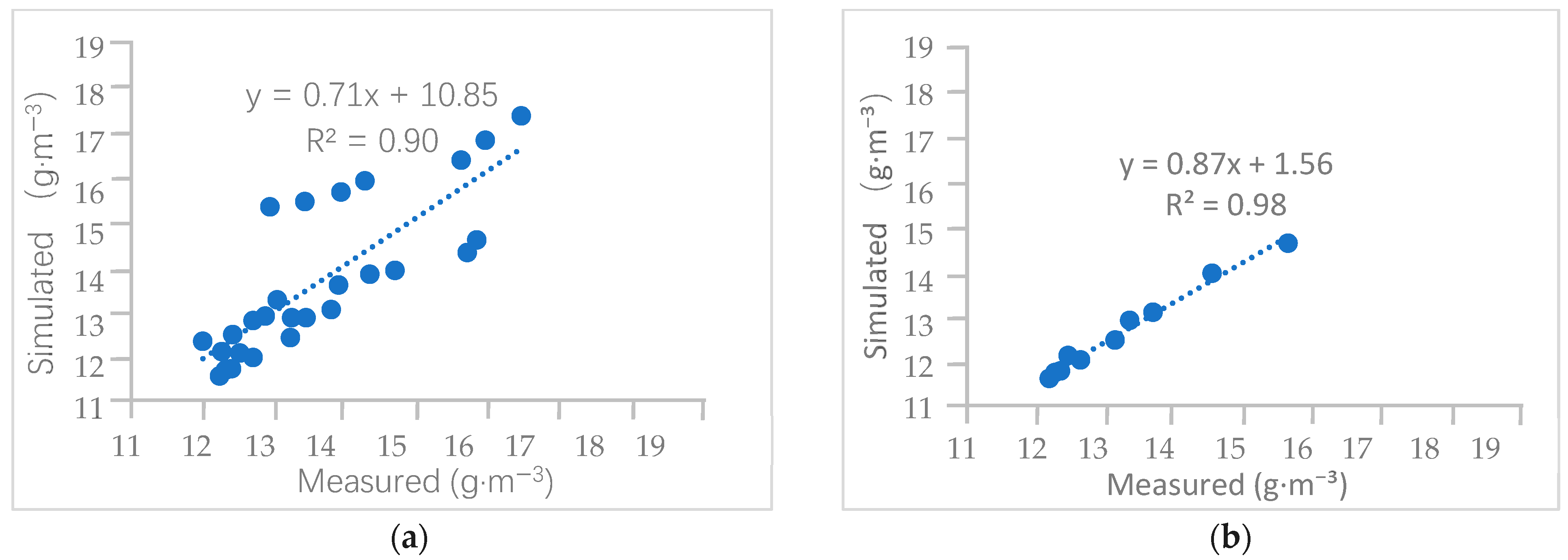
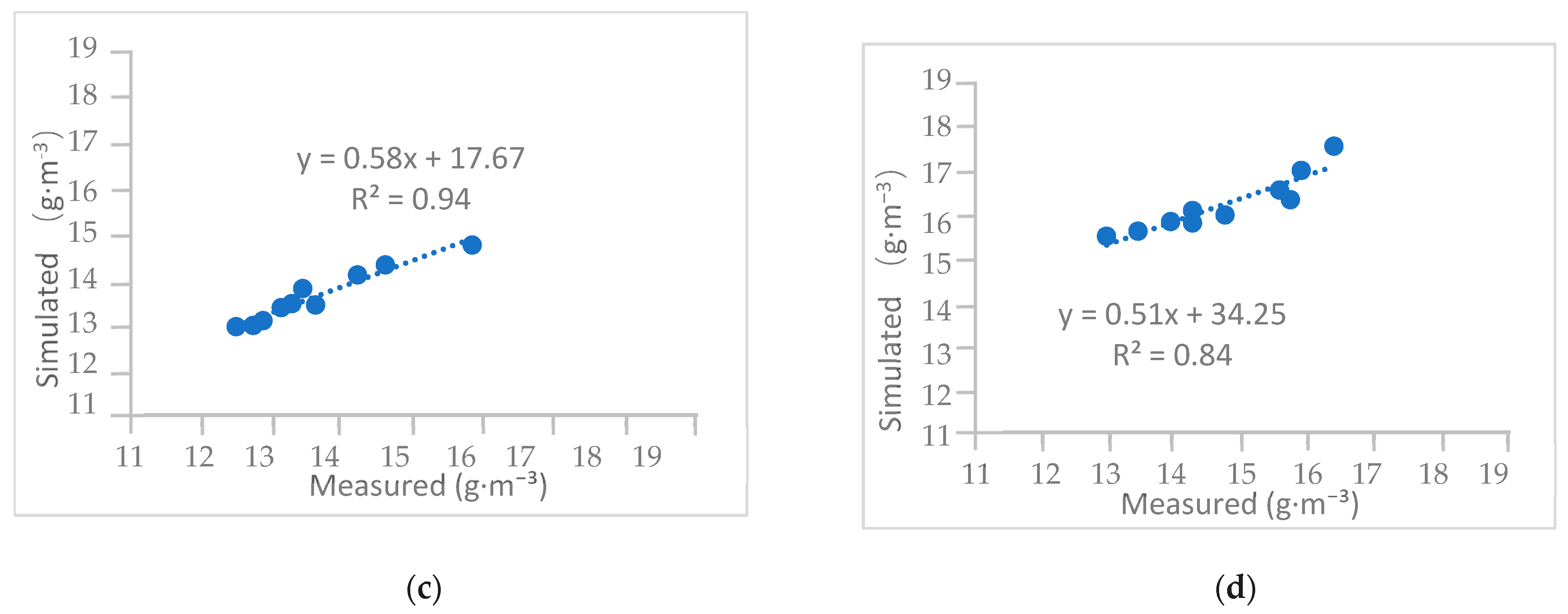
For A h , the final results show that R 2 ranges from 0.84 to 0.98 over the three measured days, with an average value of 0.90 (Figure 14). Table 8 further shows that RMSE, RMSEu, and RMSEs remain within an acceptable range [18,19,20,21]. Nevertheless, similar to the T a results, the regression relationships indicate that some systematic deviation persists between simulated and measured A h . Therefore, although the model reproduces the overall variation in humidity conditions reasonably well, the agreement should be interpreted with caution, as the simulations still exhibit residual offset and a tendency to underrepresent the full observed variability.

3.2.2. Results and Discussion (Radiation)

In contrast to outdoor spaces, the incoming solar radiation is obstructed by the roof in the semi-open space of the building, indicating that direct radiation does not affect people’s thermal comfort. Therefore, further analysis of diffuse and reflected radiation in such spaces should be discussed.
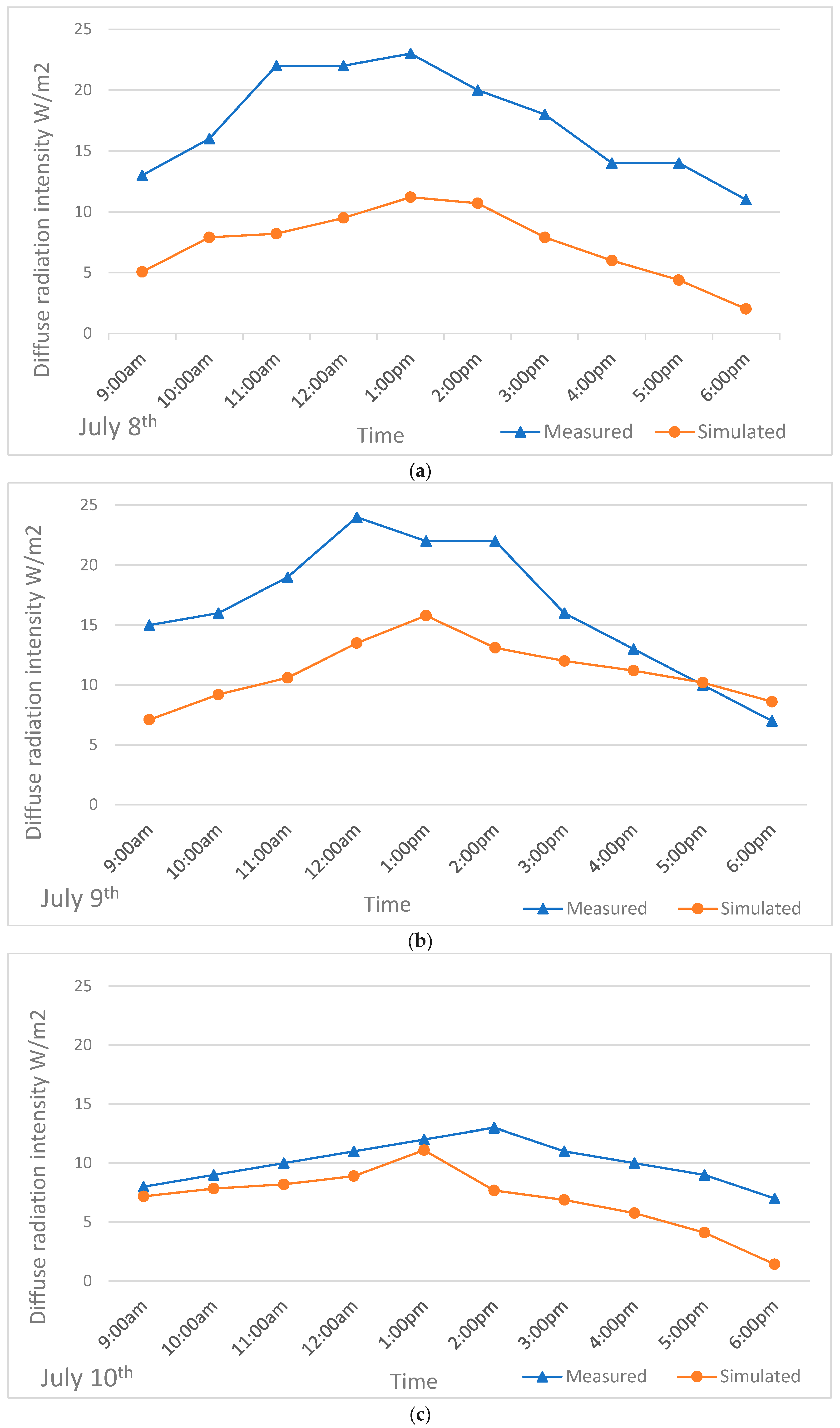
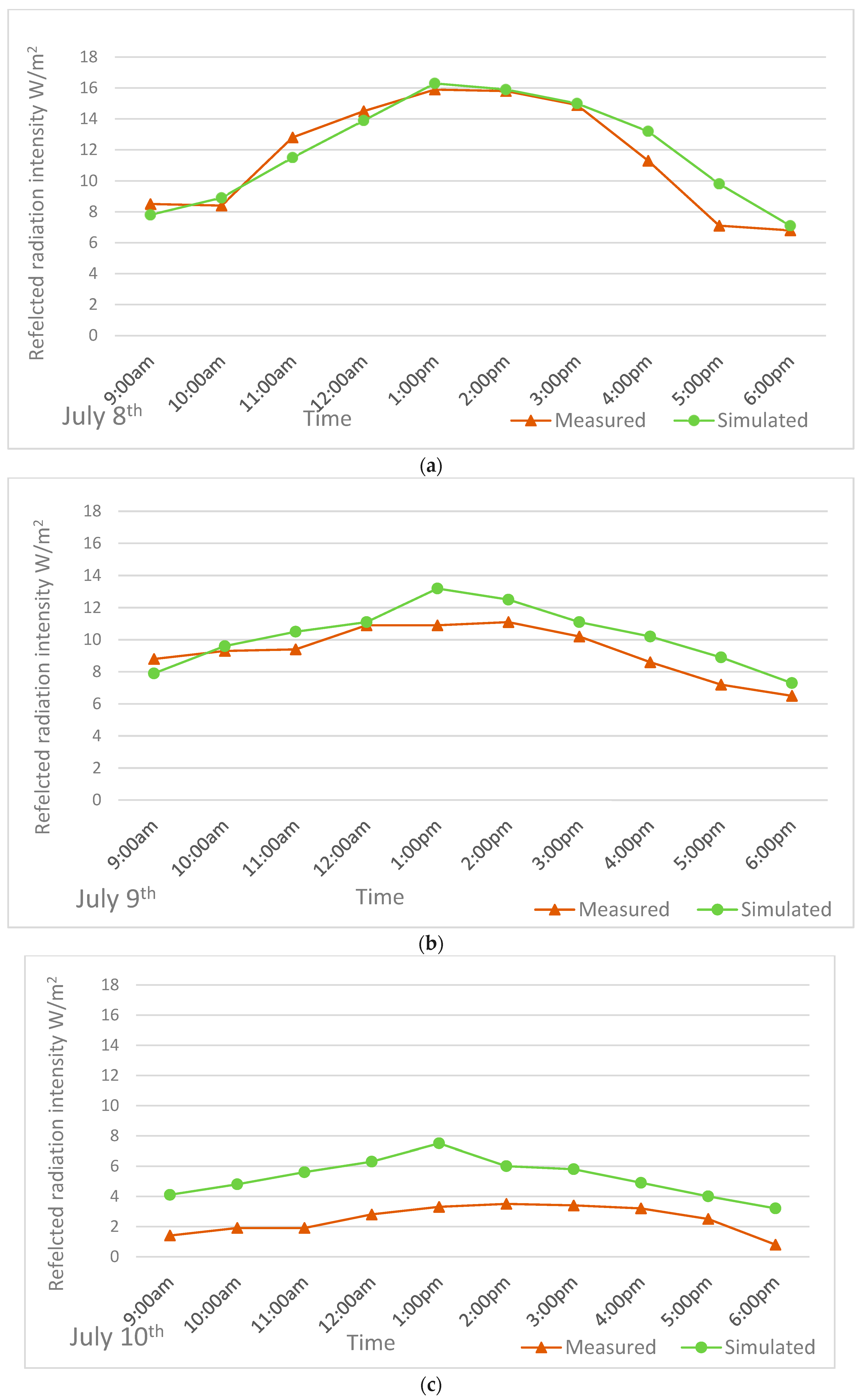
Figure 15 illustrates the changing trends in diffuse radiation intensity on a horizontal plane at the selected point over three days. It is evident that all the simulated values are lower than the measured results. This discrepancy may not be attributed solely to the ENVI-met model, because the measured diffuse radiation may also contain residual uncertainty related to the response characteristics of the TBQ-2 pyranometer under semi-enclosed and semi-shaded conditions. Consequently, the software ENVI-met tends to underestimate simulated diffuse radiation, as it defaults to setting direct shortwave radiation beneath the elevated building to 0 [50]. Figure 15a shows the measured and simulated variation in diffuse radiation on a sunny day, where a distinct deviation between the two variables is evident. The maximum value occurs at 1:00 pm, followed by a decline in the curve. On the slightly cloudy day (Figure 15b), a similar discrepancy is visible; however, the deviation is less than on the first day. This reduced deviation can be attributed to the amounts of clouds and the increase in the cloudiness of the cloud layer [50]. Figure 15c shows the variations in the two variables on the mostly cloudy day, compared to the previous two days; it is evident that the deviation is the smallest because of the increase in thickness of the cloud layer [50]. From the analysis above, the simulated diffuse radiation remains lower than the measured values throughout the three days; however, the discrepancy becomes smaller under cloudier conditions, likely because the radiative environment is increasingly dominated by scattering radiation. The reflected radiation intensities above the ground beneath the building during the three measured days are shown in Figure 16.
During the three measured days, the minor deviations of the two variables appear on a sunny day (July 8th), which can be attributed to considering the average reflectivity of the ground surface and surrounding building walls in the selected computational domain in ENVI-met. On a mostly cloudy day (July 10th), the software platform cannot completely restore the proper cloud amount in the sky, thus resulting in a higher error in the working process. This suggests that reflected radiation beneath the elevated building is affected not only by the prescribed surface reflectance in the model, but also by the complex interaction between cloud-dependent diffuse radiation and surrounding surface geometry.
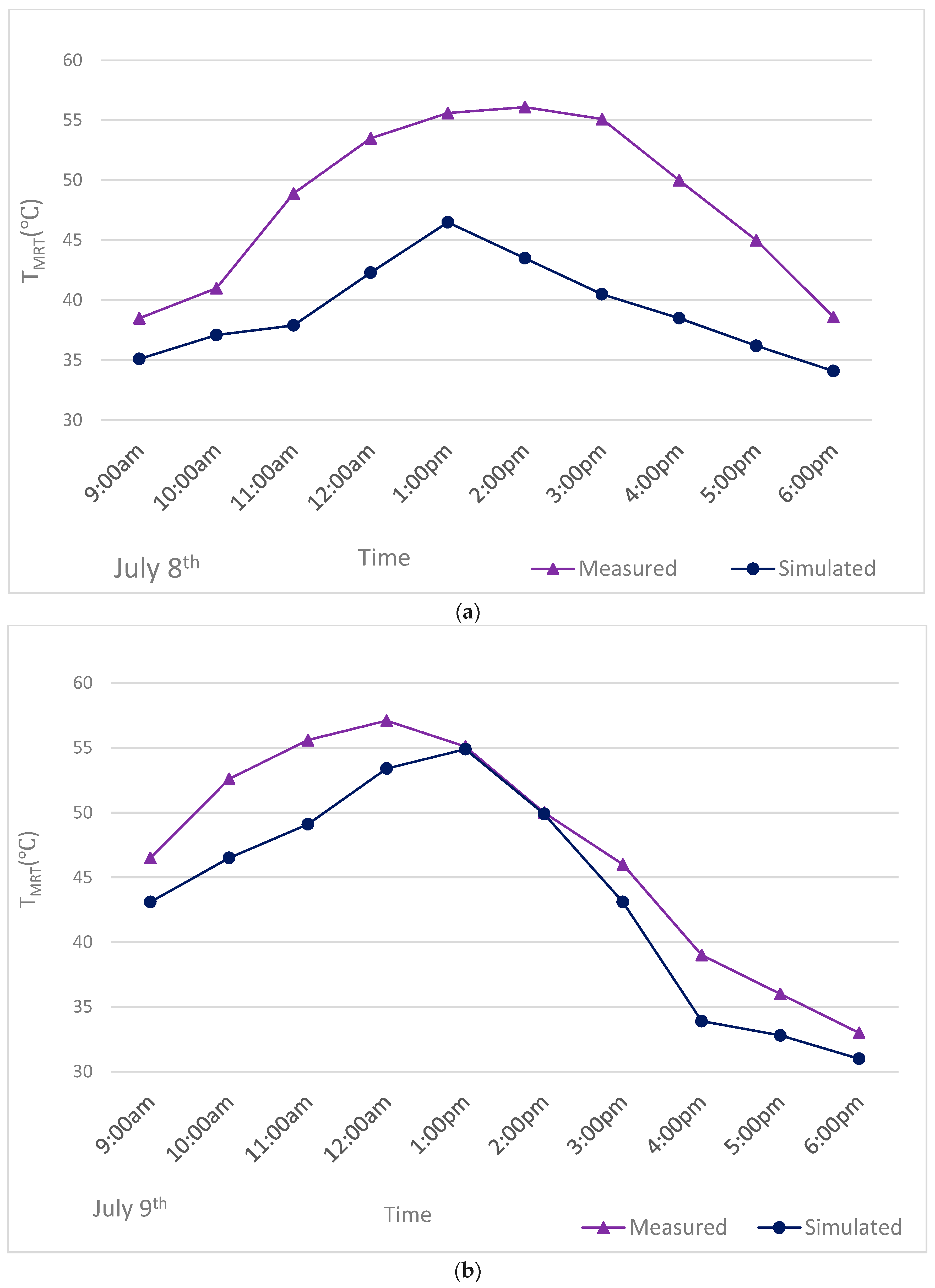
The total radiation intensities can directly affect the mean radiant temperature (TMRT) and thermal comfort. In our study, the final comparison between the measured and simulated values of TMRT is shown in Figure 17. The TMRT is calculated by the ISO 7726:2025 [42]:
T M R T = [ ( T g + 273.15 ) 4 + 1.10 × v a 0.6 10 8 ε × D 0.4 ( Tg Ta ) ]   1 4   273.15
It should be noted that the convective correction term in Equation (20) is proportional to v a 0.6 (rather than va); using a linear wind-speed dependence would distort the convective cooling/heating correction and bias the derived TMRT particularly under higher wind-speed conditions. This omission is particularly relevant to the interpretation of T M R T , because the globe-based calculation of T M R T depends on wind speed through the convective heat transfer term. Therefore, although the present T M R T comparison remains useful for model performance evaluation, its interpretation should be more cautious in the absence of direct wind-speed validation.
Where va is the wind speed of the selected point, D represents the used globe diameter (0.05 m in this study), and ε represents the emissivity (0.95 for a black globe). Figure 17a–c are created to display the variation curves of the measured and simulated TMRT on the selected days.
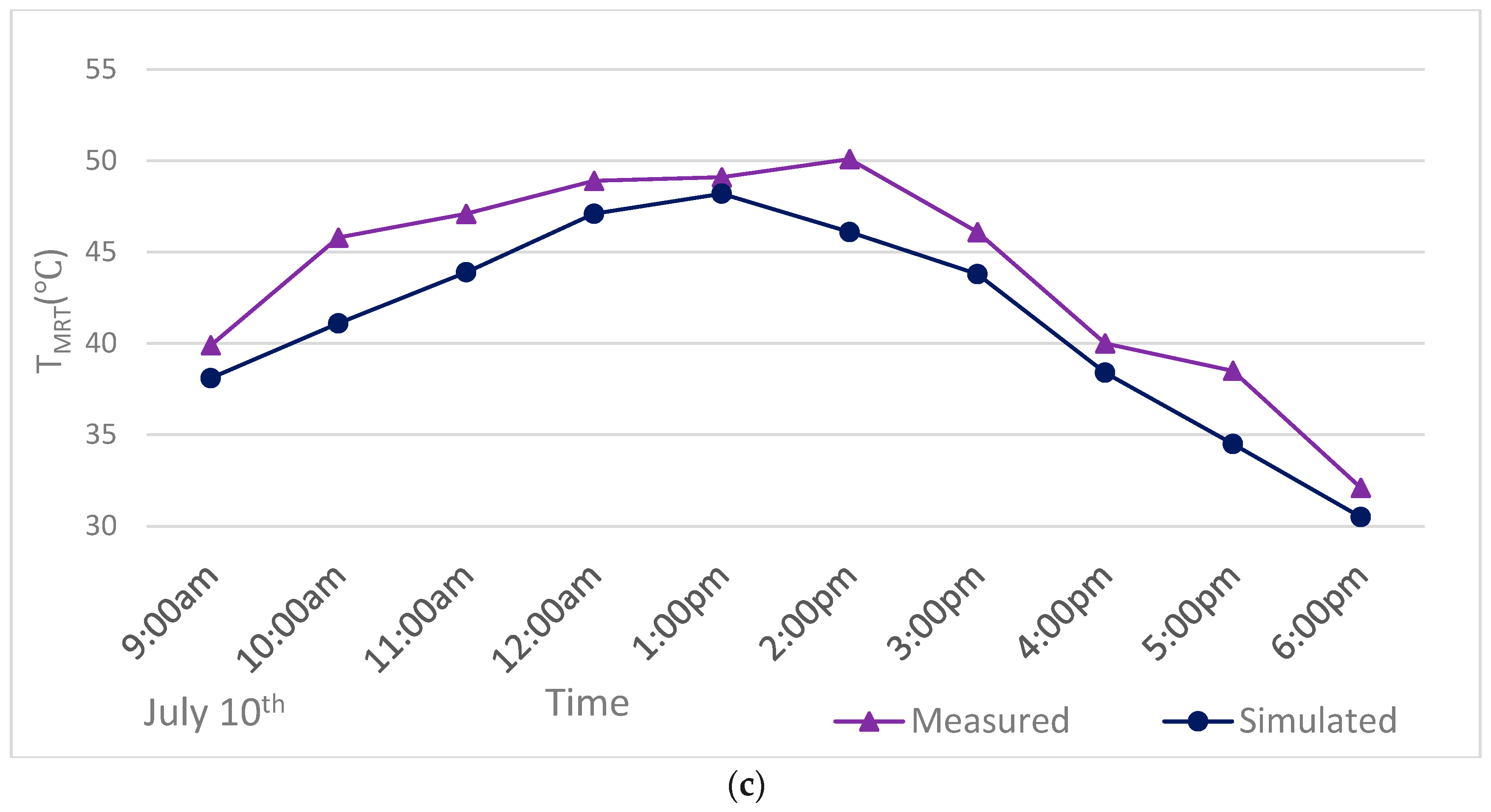
As shown in Figure 17, the discrepancies in TMRT are generally larger than those observed for Ta and Ah, indicating that radiative processes remain a major source of uncertainty in the model–measurement comparison beneath elevated buildings. The underestimation of diffuse radiation (Figure 15) and the uncertainties in reproducing cloud conditions (Figure 16) can contribute to the mismatch in radiative load and therefore TMRT. In addition, the comparability between simulated and measured TMRT is influenced by the measurement approach: the globe thermometer method is sensitive to wind and globe size, and the adopted globe diameter (0.05 m) may introduce potential bias under outdoor radiative and convective conditions [46,51,52]. Meanwhile, ENVI-met computes radiative exchanges using a simplified cylindrical body representation, which differs from the spherical geometry of a globe thermometer. These factors are further discussed in the Limitations section when interpreting the magnitude of TMRT discrepancies.
Regarding the TMRT, nearly all the measured values are higher than the simulated values, which can be partly attributed to the default radiative parameterization in ENVI-met, where longwave radiation from surrounding surfaces and residual shortwave radiation in semi-shaded areas may be underestimated. In addition, variations in cloud cover during the measurement days affected the balance between direct, diffuse, and reflected radiation, leading to larger deviations between simulation and field measurement under certain conditions. For example, on sunny days, the roof of the elevated building blocked direct shortwave radiation, increasing the relative contribution of diffuse and reflected components, while the model may not have fully captured these effects. It should also be noted that the measured T M R T values were derived from a 50 mm globe thermometer, which may systematically underestimate T M R T under outdoor conditions with strong radiative loads and convective effects. Therefore, the discrepancy between measured and simulated T M R T should be interpreted as the combined result of model-side and measurement-side uncertainty, rather than being attributed to a single source [46].
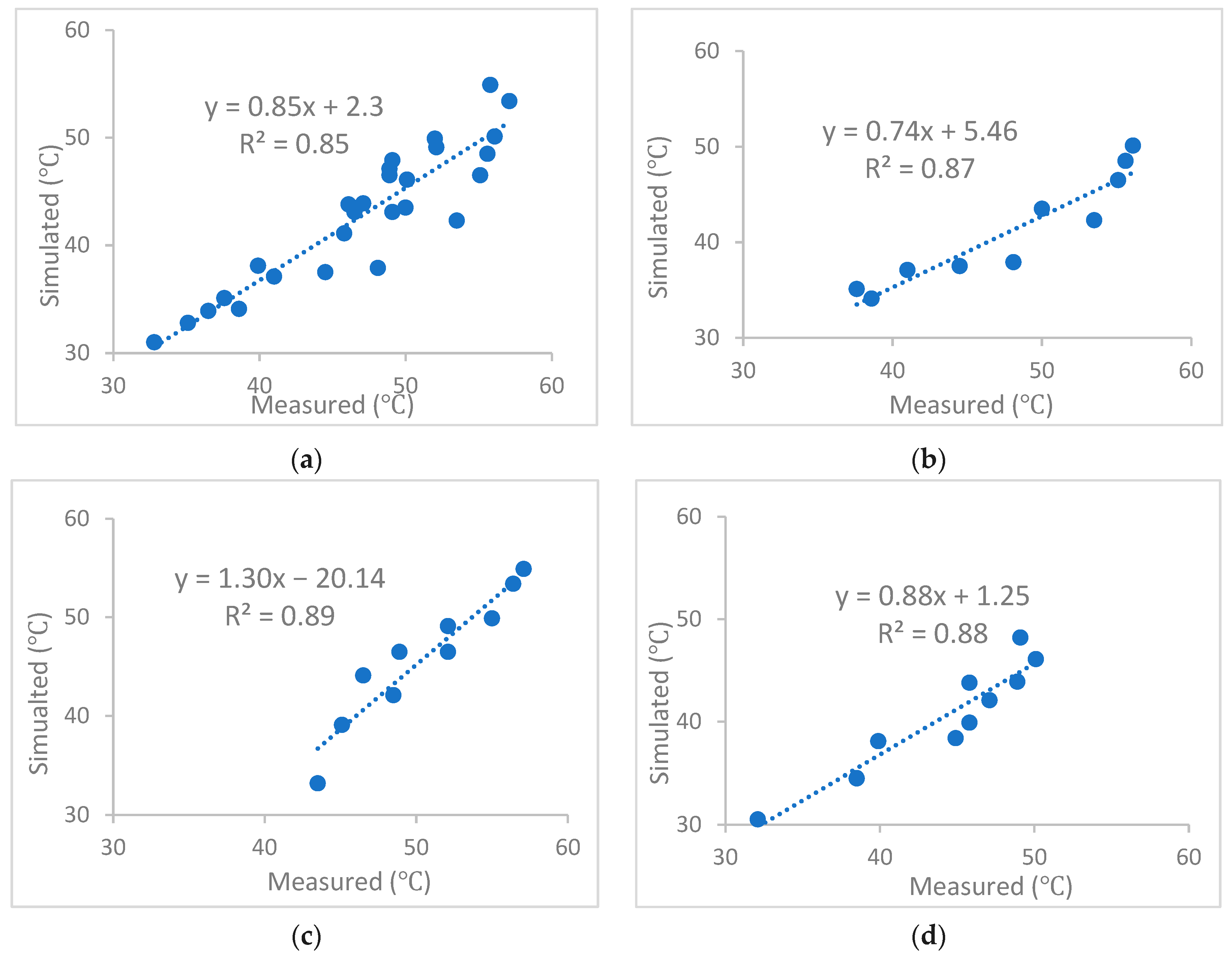
Similar to the comparisons for T a and R H , the simulated T M R T shows generally acceptable agreement with the measurements, with an average R 2 of 0.85 and an RMSE of 5.0 °C. Under sunny, slightly cloudy, and mostly cloudy conditions, the R 2 values range from 0.87 to 0.90, while the RMSE values range from 4.1 °C to 7.2 °C. In addition, RMSEs remains relatively small, suggesting that the unsystematic component of the error is limited. However, as indicated by the regression relationships in Figure 18, the agreement should not be interpreted only in terms of correlation, because some systematic bias remains between the simulated and measured T M R T values. In particular, the model tends to smooth the observed variation and underrepresent part of the measured response. Therefore, although the simulated results remain broadly comparable to the measurements, the interpretation of the T M R T -related comparison should remain cautious because of the known uncertainty associated with radiative measurement and radiative-exchange representation (Figure 18, Table 9).
In addition, the comparability between simulated and measured T M R T is influenced by the different geometric assumptions underlying the two approaches. ENVI-met computes radiative exchange using a simplified cylindrical body representation, whereas the measured T M R T in this study was derived from a spherical globe thermometer. This geometric difference may lead to different radiative responses and therefore contribute to the discrepancy between simulated and measured T M R T . Overall, these discrepancies are unlikely to arise from a single source, but rather from the combined effects of radiation parameterization, cloud-related variability, wind-related uncertainty in globe-based T M R T derivation, and the geometric inconsistency between the cylindrical body representation in ENVI-met and the spherical globe thermometer used in the field measurements. For this reason, the present T M R T -related results are interpreted primarily as part of the overall model performance evaluation, rather than as definitive evidence of full reliability for outdoor comfort or heat-stress assessment.

4. Summary and Conclusions

Through the aforementioned analysis, it is evident that the ENVI-met simulation results vary under different weather conditions. By comparing these results with those summarized in Table 1, we find that the validation performance obtained in this study is within the range reported in previous ENVI-met studies. In addition, most previous studies have primarily analyzed the errors between simulated and measured Ta, with few focusing on TMRT or humidity variables. Our study demonstrates that ENVI-met is also applicable for simulating radiative and moisture dynamics in elevated semi-shaded spaces beneath buildings, providing a useful reference for future research and practical applications in similar environments.
The deviations obtained in Ta, Ah, and TMRT are meaningful when considering their proportions relative to the total dataset. The comparison indicates that ENVI-met generally reproduces the diurnal variation in AH but tends to slightly underestimate water-vapor density during daytime peaks, which can be attributed to the simplified parameterization of turbulent moisture transport and radiation–air coupling in semi-enclosed spaces. Nevertheless, the model successfully captures the overall temporal trend of humidity and its interaction with air temperature, supporting its reliability in simulating coupled heat–moisture processes beneath elevated buildings.
According to the final results presented in this study, the limitations and drawbacks of the software during the simulation process may arise from various factors—such as the handling of diffuse radiation, the uniform treatment of surface emissivity, and simplified vegetation effects—all of which have been discussed in previous sections. By comparing with earlier outdoor studies and predicting similar microclimates, we find that ENVI-met also has distinct advantages in representing the microclimatic behavior of elevated building areas.
It should be noted that the measurement period in this study covered only three days. While this duration is comparable to that used in many similar validation efforts, it inevitably limits the statistical robustness of the conclusions. Therefore, the results should be interpreted as indicative of model applicability under short-term meteorological variations, rather than as definitive statistical proof. Future long-term monitoring campaigns covering different seasons will be essential for further verification and refinement of these findings.
The results collectively suggest that ENVI-met can serve as a practical and scientifically reliable tool for predicting thermal and moisture conditions in open spaces beneath elevated buildings. Its application can thus support urban design, landscape planning, and energy-conservation strategies aimed at improving environmental comfort in cold-climate cities. However, considering the observed discrepancies and the short measurement period, additional validation under diverse boundary conditions is still recommended to further enhance model reliability.

5. Limitations and Future Work

This study has certain limitations. These should be understood as the performance boundaries of the original ENVI-met model in the present application, rather than as modifications introduced by the authors. The study focused on the microclimatic performance of open spaces beneath elevated buildings in the cold climate zone of northern China. While the results confirm the applicability of ENVI-met in this specific context, the findings may not fully represent conditions in other climatic regions or building typologies. Future studies will therefore extend this research framework to a broader range of climate zones and spatial configurations to enhance its generalizability.
In addition, although ENVI-met is capable of outputting detailed wind-field information, wind-speed validation was not included in this study. Previous studies have shown that ENVI-met’s simulation accuracy for wind velocity is generally lower than that for temperature and humidity, largely due to simplifications in its turbulence parameterization and its sensitivity to transient boundary-layer disturbances such as pedestrian movement and building-induced eddies.
Considering these inherent model uncertainties and the limited representativeness of point-based wind measurements, this study primarily focused on the thermal and moisture aspects of microclimatic performance, which are more stable and physically interpretable within the semi-shaded elevated context. This limitation is particularly relevant to the interpretation of T M R T , because the globe-based calculation of T M R T depends on wind speed through the convective heat transfer term. Therefore, although the present T M R T comparison remains useful for model performance evaluation, its interpretation should be more cautious in the absence of direct wind-speed validation.
The present study therefore emphasized the validation of microclimatic variables rather than a comprehensive assessment of outdoor thermal comfort or heat/cold stress. Future work will extend the present framework by incorporating internationally recognized indices and standards, including UTCI and ISO-based approaches for heat/cold stress evaluation. Future work will extend the present framework by incorporating internationally recognized thermal-comfort and heat/cold stress assessment methods, including UTCI as well as the ISO-based approaches in ISO 7726 [42], in order to provide a more complete interpretation of the measured and simulated microclimatic conditions in elevated semi-outdoor spaces.
Furthermore, although the present measurements were conducted using a consistent setup and instruments with previously validated accuracy, residual uncertainty may still arise from the long-term stability of the HOBO logger and the angular-response and nonlinearity characteristics of the TBQ-2 pyranometer under outdoor conditions. These factors should therefore be taken into account when interpreting small discrepancies between measured and simulated results. In addition, because the measurements were conducted at a single height (1.5 m), the present dataset cannot fully describe possible vertical thermal stratification within the semi-enclosed space beneath the elevated building. Future work should incorporate multi-level measurements to better capture the vertical structure of the local microclimate.
Moreover, the simplified cylindrical body representation used in ENVI-met and the spherical globe thermometer used in the field measurements are not geometrically equivalent. This inconsistency may affect the strict comparability of radiative load estimation and should therefore be considered when interpreting the T M R T related validation results.
In addition, because the present T M R T values were derived from a 50 mm globe thermometer, the radiative comparison may still be affected by the known tendency of small-diameter globes to underestimate T M R T under outdoor convective and high-radiation conditions. Future work will therefore adopt more appropriate outdoor radiant-temperature measurement methods, in accordance with the updated recommendations of ISO 7726:2025, to improve the robustness of radiative validation.
In future work, our team will incorporate wind-field analysis and multi-point velocity validation once more robust observational datasets become available. Moreover, we will further explore comfort variations and indoor–outdoor energy exchanges associated with elevated building spaces, thereby providing a more comprehensive understanding of the coupled heat–moisture–airflow processes in urban semi-outdoor environments. Methodologically, future studies will incorporate wind-field analysis and multi-point velocity validation once more robust observational datasets become available, and will also adopt multi-level measurements to better capture vertical stratification. In addition, more suitable outdoor radiant-temperature measurement approaches should be introduced, and the interpretation of diffuse and reflected radiation in semi-shaded elevated spaces should be further refined. Finally, although the present ENVI-met simulations adopted a grid resolution of 1 m × 1 m × 0.5 m to balance spatial detail and computational cost, a formal grid independence study was not conducted. Future work should therefore assess the sensitivity of key variables to grid refinement and examine convergence more explicitly, particularly near complex building edges and vegetation elements.
These improvements will help strengthen both the methodological robustness and the practical applicability of future ENVI-met validation studies in elevated semi-outdoor spaces.

Author Contributions

X.M.: Conceptualization, Methodology, Software, Validation, Formal analysis, Visualization, Writing—original draft. Y.Y.: Investigation, Data curation, Software, Validation, Visualization, Writing—review and editing. T.L.: Investigation, Data curation, Software, Validation, Formal analysis, Writing—review and editing; Corresponding author responsibilities and submission administration. All authors have read and agreed to the published version of the manuscript.

Funding

This study was supported by the National Natural Science Foundation of China (52278087), Beilin District Science and Technology Project (GX2454), Shaanxi Provincial Science and Technology Plan Project (2025JC-YBMS-372), and Weiyang District Science and Technology Plan (202430).

Data Availability Statement

The original contributions presented in this study are included in the article. Further inquiries can be directed to the corresponding author.

Conflicts of Interest

The authors declare no competing interest.

Abbreviations

The following abbreviations are used in this manuscript:
CFDComputational Fluid Dynamics
TaAir Temperature (°C)
GGlobal Radiation (W/m2)
TMRTMean Radiant Temperature (°C)
RMSEuUnsystematic Root Mean Square Error (°C)
R2coefficient of determination
UHIUrban Heat Island
RhRelative Humidity
TgGlobe Temperature
RMSERoot Mean Square Error (°C)
RMSEsSystematic Root Mean Square Error (°C)

References

  1. Liu, J.; Niu, J. CFD simulation of the wind environment around an isolated high rise building: An evaluation of SRANS, LES and DES models. Build. Environ. 2016, 96, 91–106. [Google Scholar] [CrossRef]
  2. Du, Y.; Mak, C.M.; Liu, J.; Xia, Q.; Niu, J.; Kwok, K.C.S. Effects of lift-up design on pedestrian level wind comfort in different building configurations under three wind directions. Build. Environ. 2017, 117, 84–99. [Google Scholar] [CrossRef]
  3. Goshayeshi, D.; Fairuz Shahidan, M.; Khafi, F.; Ehtesham, E. A review of researches about human thermal comfort in semi-outdoor spaces. Eur. Online J. Nat. Soc. Sci. 2013, 2, 516–523. [Google Scholar]
  4. Liu, J.; Niu, J.; Xia, Q. Combining measured thermal parameters and simulated wind velocity to predict outdoor thermal comfort. Build. Environ. 2016, 105, 185–197. [Google Scholar] [CrossRef]
  5. Tse, K.T.; Zhang, X.; Weerasuriya, A.U.; Li, S.W.; Kwok, K.C.S.; Mak, C.M.; Niu, J. Adopting ‘lift-up’ building design to improve the surrounding pedestrian level wind environment. Build. Environ. 2017, 117, 154–165. [Google Scholar] [CrossRef]
  6. Xia, Q.; Liu, X.; Niu, J.; Kwok, K.C.S. Effects of building lift-up design on the wind environment for pedestrians. Indoor Built Environ. 2015, 26, 1214–1231. [Google Scholar] [CrossRef]
  7. Ma, X.; Chen, H.; Lu, Y.; Luo, Q.; Yan, F.; Li, T.; Zhao, J.; Ding, H. Evaluating blue-green infrastructure for outdoor thermal comfort and energy efficiency in a university campus microclimate: A case study from Xi’an, China. Energy Build. 2026, 350, 116640. [Google Scholar] [CrossRef]
  8. Molenaar, K.R.; Gransberg, D.D. Design-builder selection for small highway projects. J. Manag. Eng. 2001, 17, 214–223. [Google Scholar] [CrossRef]
  9. Antoniou, N.; Montazeri, H.; Neophytou, M.; Blocken, B. CFD simulation of urban microclimate: Validation using high-resolution field measurements. Sci. Total Environ. 2019, 695, 133743. [Google Scholar] [CrossRef]
  10. Song, B.G.; Park, K.H.; Jung, S.G. Validation of ENVI-met model with in situ measurements considering spatial characteristics of land use types. J. Korean Assoc. Geogr. Inf. Stud. 2014, 17, 156–172. [Google Scholar] [CrossRef]
  11. Al-Hafith, O.; Satish, B.K.; Bradbury, S.; de Wilde, P. Simulation of courtyard spaces in a desert climate. In Energy Procedia, Proceedings of the 9th International Conference on Applied Energy, Cardiff, UK, 21–24 August 2017; Elsevier: Amsterdam, The Netherlands. [CrossRef]
  12. Paramita, B.; Fukuda, H. Urban microclimate prognostic model in a hot-humid climate region. J. Adv. Res. Dyn. Control. Syst. 2018, 10, 211–216. [Google Scholar]
  13. Ali-Toudert, F.; Mayer, H. Numerical study on the effects of aspect ratio and orientation of an urban street canyon on outdoor thermal comfort in hot and dry climate. Build. Environ. 2006, 41, 94–108. [Google Scholar] [CrossRef]
  14. ENVI-Met Documentation. ENVI-Met Scientific Overview. 2021. Available online: https://envi-met.com/ (accessed on 13 September 2025).
  15. Chen, Y.; Deng, S.; Hou, Y.; Yan, Q. Impact of environmental elements in classical Chinese gardens on microclimate and their optimization using ENVI-MET simulations. Energy Build. 2025, 329, 115238. [Google Scholar] [CrossRef]
  16. Koutsanitis, S.; Sinou, M.; Kanetaki, Z.; Tousi, E.; Varelidis, G. Thermal Performance Investigation in Historical Urban Neighborhoods Using ENVI-Met Simulation Software. Land 2025, 14, 284. [Google Scholar] [CrossRef]
  17. Yan, D.; Xu, L.; Wang, Q.; Feng, J.; Wu, X. Quantifying Landscape Effects on Urban Park Thermal Environments Using ENVI-Met and 3D Grid Profile Analysis. Forests 2025, 16, 1085. [Google Scholar] [CrossRef]
  18. Bochenek, A.D.; Klemm, K. The impact of passive green technologies on the microclimate of historic urban structures: The case study of Lodz. Atmosphere 2020, 11, 974. [Google Scholar] [CrossRef]
  19. Rui, L.; Buccolieri, R.; Gao, Z.; Gatto, E.; Ding, W. Study of the effect of green quantity and structure on thermal comfort and air quality in an urban-like residential district by ENVI-met modeling. Build. Simul. 2019, 12, 183–194. [Google Scholar] [CrossRef]
  20. Sahnoune, S.; Benhassine, N. Quantifying the impact of green roofs on urban heat island mitigation. Int. J. Environ. Sci. Dev. 2017, 8, 116–123. [Google Scholar] [CrossRef]
  21. Su, X.; Cai, H.; Chen, Z.; Feng, Q. Influence of the ground greening configuration on the outdoor thermal environment in residential areas under different underground space overburden thicknesses. Sustainability 2017, 9, 1656. [Google Scholar] [CrossRef]
  22. Aboelata, A. Assessment of green roof benefits on buildings’ energy-saving by cooling outdoor spaces in different urban densities in arid cities. Energy 2020, 219, 119–514. [Google Scholar] [CrossRef]
  23. Yang, Y.; Zhou, D.; Wang, Y.; Ma, D.; Chen, W.; Xu, D.; Zhu, Z. Economical and outdoor thermal comfort analysis of greening in multistory residential areas in Xi’an. Sustain. Cities Soc. 2019, 51, 101730. [Google Scholar] [CrossRef]
  24. Gusson, C.S.; Duarte, D.H.S. Effects of built density and urban morphology on urban microclimate—Calibration of the model ENVI-met V4 for the subtropical Sao Paulo, Brazil. Procedia Eng. 2016, 169, 2–10. [Google Scholar] [CrossRef]
  25. Willmott, C.J. Some Comments on the Evaluation of Model Performance. Bull. Am. Meteorol. Soc. 1982, 63, 1309–1313. [Google Scholar] [CrossRef]
  26. Ma, X.; Fukuda, H.; Zhou, D.; Wang, M. The evaluation of outdoor thermal sensation and outdoor energy efficiency of a commercial pedestrianized zone. Energies 2019, 12, 1324. [Google Scholar] [CrossRef]
  27. Ma, X.; Fukuda, H.; Zhou, D.; Gao, W.; Wang, M. The study on outdoor pedestrian thermal comfort in blocks: A case study of the Dao He Old Block in hot-summer and cold-winter area of southern China. Sol. Energy 2019, 179, 210–225. [Google Scholar] [CrossRef]
  28. Yang, X.; Zhao, L.; Bruse, M.; Meng, Q. Evaluation of a microclimate model for predicting the thermal behavior of different ground surfaces. Build. Environ. 2013, 60, 93–104. [Google Scholar] [CrossRef]
  29. Wang, Y.; Berardi, U.; Akbari, H. Comparing the effects of urban heat island mitigation strategies for Toronto, Canada. Energy Build. 2016, 114, 2–19. [Google Scholar] [CrossRef]
  30. Qaid, A.; Ossen, D.R. Effect of asymmetrical street aspect ratios on microclimates in hot, humid regions. Int. J. Biometeorol. 2015, 59, 657–677. [Google Scholar] [CrossRef]
  31. Lee, H.; Mayer, H.; Chen, L. Contribution of trees and grasslands to the mitigation of human heat stress in a residential district of Freiburg, Southwest Germany. Landsc. Urban Plann. 2016, 148, 37–50. [Google Scholar] [CrossRef]
  32. Jänicke, B.; Meier, F.; Hoelscher, M.-T.; Scherer, D. Evaluating the Effects of Façade Greening on Human Bioclimate in a Complex Urban Environment. Adv. Meteorol. 2015, 2015, 747259. [Google Scholar] [CrossRef]
  33. Hedquist, B.C.; Brazel, A.J. Seasonal variability of temperatures and outdoor human comfort in Phoenix, Arizona, U.S.A. Build. Environ. 2014, 72, 377–388. [Google Scholar] [CrossRef]
  34. Ketterer, C.; Matzarakis, A. Comparison of different methods for the assessment of the urban heat island in Stuttgart, Germany. Int. J. Biometeorol. 2015, 59, 1299–1309. [Google Scholar] [CrossRef] [PubMed]
  35. Song, B.; Park, K. Contribution of greening and high-albedo coatings to improvements in the thermal environment in complex urban areas. Adv. Meteorol. 2015, 2015, 12–21. [Google Scholar] [CrossRef]
  36. Ma, X.; Zhang, L.; Zhao, J.; Wang, M.; Cheng, Z. The outdoor pedestrian thermal comfort and behavior in a traditional residential settlement—A case study of the cave dwellings in cold winter of China. Solar. Energy 2021, 220, 130–143. [Google Scholar] [CrossRef]
  37. Xiong, Y.; Zhang, J.; Xu, X.; Yan, Y.; Sun, S.; Liu, S. Strategies for improving the microclimate and thermal comfort of a classical Chinese garden in the hot-summer and cold-winter zone. Energy Build. 2020, 215, 109914. [Google Scholar] [CrossRef]
  38. Niu, J.; Liu, J.; Lee, T.-C.; Lin, Z.; Mak, C.; Tse, K.-T.; Tang, B.-S.; Kwok, K.C. A new method to assess spatial variations of outdoor thermal comfort: Onsite monitoring results and implications for precinct planning. Build. Environ. 2015, 91, 263–270. [Google Scholar] [CrossRef]
  39. Weng, J.; Luo, B.; Xiang, H.; Gao, B. Effects of Bottom-Overhead Design Variables on Pedestrian-Level Thermal Comfort during Summertime in Different High-Rise Residential Buildings: A Case Study in Chongqing, China. Buildings 2022, 12, 265. [Google Scholar] [CrossRef]
  40. Meteorological Organization Country. Available online: https://wmo.int/ (accessed on 7 March 2026).
  41. Xu, D.; Zhou, D.; Wang, Y.; Xu, W.; Yang, Y. Field measurement study on the impacts of urban spatial indicators on urban climate in a Chinese basin and static-wind city. Build. Environ. 2019, 147, 482–494. [Google Scholar] [CrossRef]
  42. ISO 7726:2025; Ergonomics of the Thermal Environment—Instruments for Measuring and Monitoring Physical Quantities. International Organization for Standardization: Geneva, Switzerland, 2025.
  43. Huttner, S. Further Development and Application of the 3D Microclimate Simulation ENVI-Met. Ph.D. Thesis, Johannes Gutenberg-Universitat in Maina, Mainz, Germany, 2012. [Google Scholar] [CrossRef]
  44. Jamei, E.; Seyedmahmoudian, M.; Horan, B.; Stojcevski, A. Verification of a bioclimatic modeling system in a growing suburb in Melbourne. Sci. Total Environ. 2019, 689, 883–898. [Google Scholar] [CrossRef]
  45. López-Cabeza, V.P.; Galán-Marín, C.; Rivera-Gómez, C.; Roa-Fernández, J. Courtyard microclimate ENVI-met outputs deviation from the experimental data. Build. Environ. 2018, 144, 129–141. [Google Scholar] [CrossRef]
  46. Alfano, F.R.D.A.; Dell’Isola, M.; Ficco, G.; Palella, B.I.; Riccio, G. Small globes and pocket heat stress meters for WBGT and PHS evaluations. A critical analysis under controlled conditions. Build. Environ. 2022, 226, 109781. [Google Scholar] [CrossRef]
  47. Spett, M.; Lau, K.; Rizzo, A. Automated Microclimate Model Generation from Remote Sensing Data. Land 2026, 15, 329. [Google Scholar] [CrossRef]
  48. Meteorological Organization of Xi’an City. Available online: http://sn.cma.gov.cn/dsqx/xaqx/ (accessed on 7 March 2026).
  49. Jarraud, M. Guide to Meteorological Instruments and Methods of Observation (WMO-No. 8); World Meteorological Organisation: Geneva, Switzerland, 2008. [Google Scholar]
  50. Liu, D.; Songshu, H.U.; Liu, J. Contrasting the Performance Capabilities of Urban Radiation Field Between Three Microclimate Simulation Tools. Build. Environ. 2020, 175, 106789. [Google Scholar] [CrossRef]
  51. Teitelbaum, E.; Rysanek, A.; Pantelic, J.; Aviv, D.; Obelz, S.; Buff, A.; Luo, Y.; Sheppard, D.; Meggers, F. Revisiting radiant cooling: Condensation-free heat rejection using infrared-transparent enclosures of chilled panels. Archit. Sci. Rev. 2019, 62, 152–159. [Google Scholar] [CrossRef]
  52. Cooper, E.; Grundstein, A.; Rosen, A.; Miles, J.; Ko, J.; Curry, P. An evaluation of portable wet bulb globe temperature monitor accuracy. J. Athl. Train. 2017, 52, 1161–1167. [Google Scholar] [CrossRef]
Figure 1. The climate zones of China.
Buildings 16 01215 g001
Figure 2. The research site in Xi’an city. (a) Location of Xi’an city; (b) Research building; (c) The tested point.
Buildings 16 01215 g002
Figure 3. The chosen points in this study.
Buildings 16 01215 g003
Figure 4. Field measurement setup at the elevated point.
Buildings 16 01215 g004
Figure 5. Self-designed schematic representation of the ENVI-met model framework [45].
Buildings 16 01215 g005
Figure 6. The simulated model of this study.
Buildings 16 01215 g006
Figure 7. Location of the weather station and field measurement site.
Buildings 16 01215 g007
Figure 8. Comparison between the measured and simulated values at the basic outdoor point: (a) Ta; (b) Rh.
Buildings 16 01215 g008
Figure 9. The monitoring data of the Ta and Ah of the elevated point.
Buildings 16 01215 g009
Figure 10. The changing curve of the measured and simulated Ta (a) and Ah (b) on a sunny day (July 8th).
Buildings 16 01215 g010
Figure 11. The changing curve of the measured and simulated Ta (a) and Ah (b) on the slightly cloudy day (July 9th).
Buildings 16 01215 g011
Figure 12. The changing curve of the measured and simulated Ta (a) and Ah (b) on the mostly cloudy day (July 10th).
Buildings 16 01215 g012
Figure 13. The validation between the measured and simulated Ta in the three days: (a) average; (b) sunny; (c) slightly cloudy; (d) mostly cloudy.
Buildings 16 01215 g013
Figure 14. The validation between the measured and simulated Ah in the three days: (a) average; (b) sunny; (c) slightly cloudy; (d) mostly cloudy.
Buildings 16 01215 g014aBuildings 16 01215 g014b
Figure 15. The changing curve of the measured and simulated diffuse radiation in the three days. (a) July 8th: sunny; (b) July 9th: slightly cloudy; (c) July 10th: mostly cloudy.
Buildings 16 01215 g015
Figure 16. The changing curve of the measured and simulated reflected radiation in the three days. (a) July 8th: sunny; (b) July 9th: slightly cloudy; (c) July 10th: mostly cloudy.
Buildings 16 01215 g016
Figure 17. The changing curve of the measured and simulated TMRT in the three days. (a) July 8th: sunny; (b) July 9th: slightly cloudy; (c) July 10th: mostly cloudy.
Buildings 16 01215 g017aBuildings 16 01215 g017b
Figure 18. The comparison between the measured and simulated TMRT in the three measured days: (a) average; (b) sunny; (c) slightly cloudy; (d) mostly cloudy.
Buildings 16 01215 g018
Table 1. Summary of previous ENVI-met validation studies for outdoor thermal environment simulation under different climates and urban settings.
LocationR2RMSE (°C)SeasonArea
[26]Foshan, China
(Ma et al.)
0.981.1SummerUrban block
[27]Tai Zhou
(Ma et al.)
0.83/SummerUrban block
[28]Guangzhou, China
(Yang et al.)
0.941.0SummerUrban Park
[29]Beijing, China
(Wang et al.)
0.89/SummerUrban Distract
[30]Putrajaya, Malaysia
(Qaid and Ossen)
0.691.8SummerUrban
Boulevard
[31]Freiburg, Germany
(Lee et al.)
0.850.6SummerUrban Area
[32]Berlin, Germany
(Janicke et al.)
0.891.3SummerUrban Facade
[33]Phoenix, USA
(Hedquist et al.)
0.892.9SummerUrban Area
[34]Stuttgart, Germany
(Ketter et al.)
0.880.3SummerCourtyard
[35]Changwon, Korea
(Song and Park)
0.524.8SummerUrban Open
Space
[36] Mizhi, China
(Ma et al.)
0.922.1WinterResidential
settlement
[37]Suzhou, China
(Xiong et al.)
0.78/WinterUrban Garden
Table 2. The meteorological conditions in this study.
DateMeteorological Condition
8 July 2020Sunny (Clear sky)
9 July 2020Cloudy (Slightly cloudy)
10 July 2020Cloudy (Mostly cloudy)
Table 3. Detailed information of the instruments used.
InstrumentParameterMeasured AccuracyMeasured Range
HOBOTaAccuracy: ±0.2 °C−40–+70 °C
RhAccuracy: ±2.5%0–100%
Pyranometer TBQ-2GNonlinearity ≤ 3%280–3000 nm
HD32.2 WBGT Index (50 mm black globe)TgResolution: ±0.1 °C−10–100 °C
Table 4. The initial simulated boundary conditions of the initial data for simulation in ENVI-met.
ParametersValue
Outdoor basic pointGrey brickAlbedo0.3
Emissivity0.9
Roughness length0.01
Elevated pointTileAlbedo0.5
Emissivity0.9
Roughness length0.01
Boundary conditionsTurbulent modelKinetic energy (TKE) model
Air temperature
Relative humidity
Table 5, Table 6 and Table 7
Wind direction (°)145
Wind speed (m/s)1.5 m/s
Number of x grid200
Number of y grid200
Number of z grid30
Grid in dx (m)1
Grid in dy (m)1
Grid in dz (m)0.5
SimulationStarting day8–10 July 2020
Starting time0:00 am
Total simulation time72 h
July 8th24 h
July 9th24 h
July 10th24 h
Table 5. Initial Ta and Rh.
8 JulyAir Temperature (°C)Relative Humidity (%)9 JulyAir Temperature (°C)Relative Humidity (%)10 JulyAir Temperature (°C)Relative Humidity (%)
0:00 am24.667.30:00 am2765.10:00 am24.172.2
1:00 am24711:00 am26.371.11:00 am23.275.1
2:00 am24.5.68.52:00 am26.868.32:00 am24.273.1
3:00 am25.663.93:00 am27.666.53:00 am24.971.5
4:00 am26.860.54:00 am27.962.14:00 am25.669.9
5:00 am28.959.15:00 am28.359.55:00 am26.968.1
6:00 am29.157.86:00 am28.958.16:00 am27.167
7:00 am30.256.27:00 am29.456.37:00 am27.866.1
8:00 am31558:00 am29.955.18:00 am28.365.1
9:00 am31.654.69:00 am30.653.29:00 am28.664.8
10:00 am33.444.710:00 am33.344.910:00 am28.963.9
11:00 am34.640.311:00 am33.840.911:00 am2962.7
12:00 am35.438.712:00 am34.839.812:00 am29.961.2
1:00 pm36371:00 pm35.837.61:00 pm30.158.9
2:00 pm36.334.82:00 pm36.5362:00 pm31.258
3:00 pm36.933.43:00 pm36.935.53:00 pm3257
4:00 pm36.134.74:00 pm36.636.24:00 pm3157.9
5:00 pm35.235.75:00 pm36.138.15:00 pm30.558.9
6:00 pm34.238.66:00 pm35.339.16:00 pm3059.3
7:00 pm32.546.57:00 pm34.140.57:00 pm28.560.2
8:00 pm29.848.98:00 pm32.342.18:00 pm27.163.1
9:00 pm2752.59:00 pm30.848.69:00 pm26.565.6
10:00 pm25.96010:00 pm28.955.110:00 pm25.467.8
11:00 pm25.162.5 11:00 pm27.861.211:00 pm24.869.1
Table 8. The assessment of the performance on the analysis of Ah in RMSE, RMSEu, RMSEs, and R2.
ConditionRMSERMSEuRMSEsR2
Average1.05 g·m−31.35 g·m−30.96 g·m−30.90
Sunny0.70 g·m−31.05 g·m−30.80 g·m−30.98
Slightly cloudy0.95 g·m−31.20 g·m−30.40 g·m−30.94
Mostly cloudy1.50 g·m−31.65 g·m−31.20 g·m−30.84
Table 9. Performance evaluation of ENVI-met in simulating T M R T under different sky conditions.
ConditionRMSERMSEuRMSEsR2
Average5.0 °C6.1 °C3.9 °C0.85
Sunny7.2 °C7.9 °C6.1 °C0.87
Slightly cloudy5.2 °C6.2 °C4.3 °C0.89
Mostly cloudy4.1 °C5.2 °C3.9 °C0.88
Disclaimer/Publisher’s Note: The statements, opinions and data contained in all publications are solely those of the individual author(s) and contributor(s) and not of MDPI and/or the editor(s). MDPI and/or the editor(s) disclaim responsibility for any injury to people or property resulting from any ideas, methods, instructions or products referred to in the content.