Article

Heritage Building Meets Feng Shui: Validating Wind Comfort Logic in a Beijing Siheyuan by CFD and Field Experiments


1
Innovation Institute for Sustainable Maritime Architecture Research and Technology, Qingdao University of Technology, Qingdao 266033, China
2
School of Architecture and Urban Planning, Qingdao University of Technology, Qingdao 266033, China
*
Author to whom correspondence should be addressed.
Buildings 2026, 16(6), 1134; https://doi.org/10.3390/buildings16061134
Submission received: 26 January 2026 / Revised: 10 March 2026 / Accepted: 11 March 2026 / Published: 12 March 2026

Abstract

This study delves into the impact of the Feng Shui theory framework on the wind environment of the Beijing Siheyuan (a traditional quadrangle courtyard). By integrating numerical simulations, field experiments, and comparative analyses, we assess the wind environment of Feng Shui and non-Feng Shui layouts of the Siheyuan in summer. The results demonstrate that the Feng Shui layout provides an improved wind environment and comfort level in the Siheyuan in summer. Specifically, the Feng Shui layout demonstrates superior average wind speeds and expands the area of comfortable wind zones by 75.52% when the entrance is located at the southeastern point, outperforming the non-Feng Shui layout. Additionally, optimizing the courtyard, the Moon Gate, and the Screen Wall according to the Feng Shui theory framework can enhance wind comfort in the Siheyuan. This study provides valuable insights for climate-adaptive design based on the Feng Shui theory framework. It also provides a novel method for translating Chinese cultural genes from a scientific perspective.

1. Introduction

1.1. Research Background

Traditional dwellings achieve healthy and comfortable living environments through adaptation to local climatic conditions. Central to this adaptation are passive ventilation strategies, with natural ventilation serving as a primary design driver that fundamentally shapes architectural form [1]. Unlike modern architecture, traditional dwellings have achieved harmony with the natural environment and developed climate-adaptive strategies. This inherent strategy governs the building’s layout and spatial configuration, where the strategic positioning and sizing of door openings are critical for actively inducing and directing airflow to optimize the interior wind environment for occupant comfort [2]. The excellent climate adaptability and inherent construction wisdom of Chinese traditional dwellings have attracted widespread attention [3].
Feng Shui is a prominent traditional Chinese theoretical framework for spatial organization and is one of the significant Chinese cultural genes. The Feng Shui theory framework derives from ancient Chinese practice and includes harmonizing environments with passive ventilation design in traditional dwellings. Its profound theories seamlessly weave together cosmology, geography, and social ethics, profoundly shaping landscapes, settlements, and architecture across thousands of years in China [4].
“Kan Zhai Xun Men” is one representative theory in the Feng Shui theory framework. The Kan Zhai Xun Men theory constitutes the core standard for the construction of the Beijing Siheyuan. Specifically, this theory dictates that the precise location of the main entrance determines the geometric layout and orientation of the living quarters [5]. By aligning the entrance’s position with the building’s internal organization, it creates a spatial hierarchy that regulates airflow, ensuring that the dwelling effectively responds to local climatic conditions. This theory combines cultural symbolism with functional adaptation, creating passive systems that enhance microclimate performance. Feng Shui is profoundly location-specific. While the “Kan Zhai Xun Men” model exists across both northern and southern regions, it was strictly implemented in the North China Plain. Unlike southern dwellings (e.g., Huizhou style) [6], which use vertical shading and narrow sky wells to address humidity and heat, northern architecture employs expansive courtyards to maximize winter solar gain and summer monsoon winds. Thus, Feng Shui cannot be regarded merely as a form of superstition. Rather, it constitutes a vernacular science that has been specifically adapted to the climatic conditions of Northern China, embodying a systematic expression of ancient wisdom [7].
The Beijing Siheyuan is a traditional quadrangle courtyard in Beijing. It is a characteristic Chinese traditional dwelling, with a representative ecological environment and a history of more than 1000 years [1]. The spatial organization of the Siheyuan utilizes the Feng Shui theory framework to harmonize natural rhythms with climate adaptation through local design strategies [8]. The Siheyuan utilizes microclimate-regulating proportions to optimize airflow patterns, reflecting an empirical understanding of local environmental conditions. This demonstrates how passive design strategies harmonize environmental performance with the Feng Shui theory framework, the traditional philosophical theories [9]. By optimizing vernacular materiality and passive environmental modulation, the Siheyuan achieves wind environment equilibrium and encodes Feng Shui philosophical ideals into spatial arrangements where central-axis main houses embody “Yang” energy and east–west wings maintain “Yin” equilibrium [10].
Despite its historical significance, Feng Shui’s scientific validity remains a subject of debate, with critics arguing that it is often conflated with superstition and lacks empirical support [11]. However, it is crucial to distinguish between its metaphysical claims and its rational environmental wisdom. This study excludes the superstitious dimensions and focuses on the architectural morphology dictated by Feng Shui. We aim to objectively evaluate its measurable impact on the wind environment using numerical simulations, thereby providing a physics-based verification.
Consequently, this study investigates the summer wind environment of the Beijing Siheyuan to extract the Feng Shui construction theory that shapes its design and validate its scientific basis. Furthermore, it derives a set of scientific design theories for passive energy conservation in traditional dwellings by integrating the Feng Shui theory framework.

1.2. Literature Review

The Feng Shui theory framework integrates environmental awareness and architectural wisdom, emphasizing harmony between structures and nature through ventilation, daylighting, terrain adaptation, shading, and greenery [12,13]. Its theory aligns with modern goals of energy efficiency and ecological balance [14]. As sustainable design gains prominence, Feng Shui offers proven passive strategies for green architecture [15]. Traditional dwellings demonstrate energy-saving approaches from site selection to construction [6]. The south-facing orientation is one of the ideal configurations in Feng Shui theory framework [16]. These ancient concepts continue inspiring sustainable architectural innovation.
In studying the wind environments of the Beijing Siheyuan, scholars use simulation technology to compare door positions, directions, and main house heights, verifying the ancient “Three Essentials of Residence” theories and exploring their alignment with the Feng Shui theory framework and modern applications [17,18]. Quantitative assessments using wind speed ratios and computational fluid dynamics (CFD) simulations demonstrate how openings affect the courtyard wind environments [19]. Parametric modeling via Grasshopper and environmental simulations using Ladybug Tools reveal the climate adaptation patterns. Recent research algorithmically translates the Feng Shui theory framework in Grasshopper, enabling digital analysis of historical courtyards and preserving traditional computational rules [20].
Current scholarship lays a substantial foundation for understanding traditional dwelling environments. However, modern simulation technologies reveal several opportunities to further refine the methodology and improve the alignment between quantitative results and the traditional Feng Shui framework.
Firstly, the quantitative translation of specific Feng Shui theories such as “Cang Feng Ju Qi” into wind environment metrics invites further exploration. Cang Feng Ju Qi means hiding wind and gathering vital energy. While the existing literature acknowledges the cultural significance of Feng Shui, the precise mapping between traditional design wisdom and modern quantitative assessment criteria requires more detailed elaboration [21]. Current research often discusses these concepts as a general background. Thus, a rigorous correspondence between these ancient theoretical frameworks and specific scientific indicators remains to be fully established.
Secondly, the robustness of numerical simulations benefits significantly from the integration of empirical validation. Although CFD provides valuable theoretical insights, the reliance on idealized digital models merits supplementation with on-site evidence. Given the stochastic nature of real-world wind environments, the calibration of boundary conditions and turbulence parameters through field-measured data serves to strengthen the connection between digital predictions and the actual physical microclimate, ensuring that research conclusions reflect the site-specific reality [22].
Thirdly, there is potential to extend the scope of analysis from isolated building performance to the broader urban fabric. Existing studies frequently prioritize the target building in relative isolation, which offers clear building-level data but may not fully capture the aerodynamic nuances of a high-density neighborhood. Consequently, it remains an area of interest to verify whether simplified single-entity models sufficiently represent complex flow patterns, or if the inclusion of the surrounding context clarifies potential deviations in ventilation assessments [23,24].
Finally, accurate CFD simulation depends on precise Atmospheric Boundary Layer (ABL) representation. Studies indicate that simulation accuracy is highly sensitive to boundary layer meteorology across building scales. Neglecting specific ABL profiles can lead to significant errors in estimating natural ventilation potential, observed in both high-rise [25] and low-rise buildings [26]. Similarly, passive cooling devices like wind catchers are strictly dependent on local terrain roughness [27]. Based on these verifications, this study explicitly incorporates the ABL power-law profile to ensure high fidelity in simulating Siheyuan’s urban wind environment.

1.3. Research Contributions

Given that natural ventilation is the primary cooling strategy in Beijing, this study focuses on the summer wind environment. “The Kan Zhai Xun Men” layout is specifically optimized to capture “Sheng Qi”, the southeasterly summer monsoon, for thermal relief. Therefore, all simulations and measurements are conducted under typical summer conditions. This study utilizes the Beijing Siheyuan as a case study to establish a scientifically grounded verification framework. The investigation focuses on three core objectives.
Firstly, to conduct a targeted validation of the Feng Shui theory framework, this study translates the specific Feng Shui rules into quantifiable metrics within a unified Rhino (https://www.rhino3d.com, accessed on 15 August 2023) Grasshopper environment. By systematically comparing the aerodynamic performance of Feng Shui layouts and non-Feng Shui layouts, we aim to uncover the underlying airflow mechanisms, thereby confirming the scientific rationality of these traditional configurations and demonstrating their practical applicability in climate adaptation design.
Secondly, to ensure simulation reliability, this research integrates field measurement data to calibrate the boundary conditions and turbulence models for CFD simulations. This step bridges the gap between idealized digital models and the stochastic reality of the physical environment, ensuring that subsequent parametric evaluations are grounded in verified, site-specific data.
Thirdly, to validate the simulation scope, this study extends the modeling domain to include the surrounding urban fabric. By performing a comparative analysis between “community-scale” and “isolated” models, we determine whether a simplified single-entity model accurately captures key wind features. This step justifies the rationality of the chosen simulation domain and clarifies the impact of neighborhood context on ventilation assessment.

2. Research Object and Methods

2.1. Research Object: Dongsi-Sitiao-77 Siheyuan

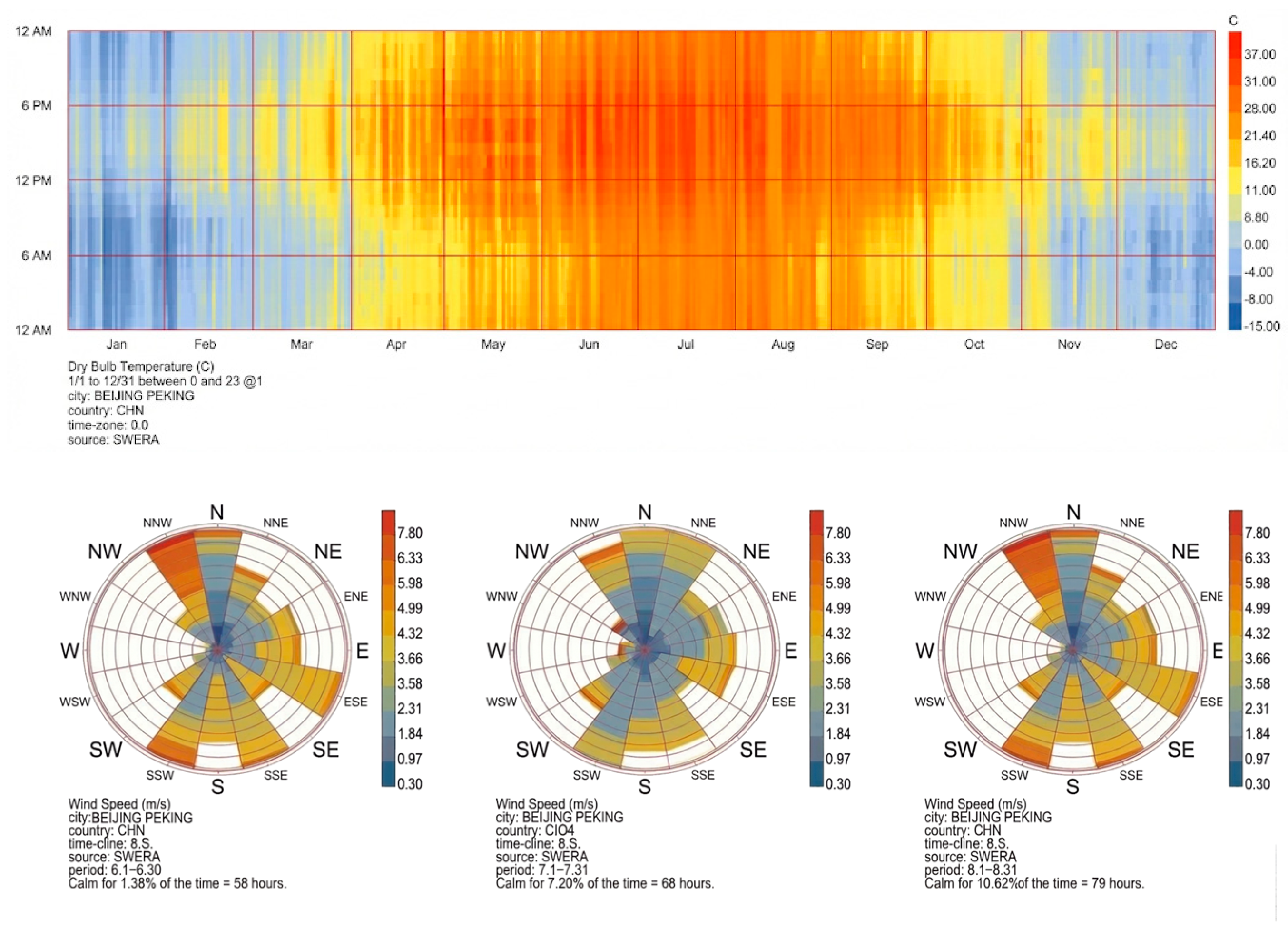
Beijing Siheyuan architecture encompasses diverse typologies, ranging from simple single courtyards to complex multiple parallel garden complexes. Among these, the three-section layout remains the most representative archetype, as it effectively balances the spatial depth required for airflow analysis with the standardized geometry of the urban fabric. Focusing on this archetype allows for the extrapolation of wind environment and entrance orientation results to understand the ventilation logic of both simpler and more complex variations [28]. Therefore, the research object of this study is the Dongsi-Sitiao-77 Siheyuan, which was constructed in the first half of the 20th century. It exemplifies this classic layout of a traditional three-section courtyard. Its address is No. 77 Dongsi Sitiao Hutong, Dongcheng District, Beijing, China. This Siheyuan is located at approximately 39.93° northern latitude and 116.42° eastern longitude. Geographically, the Beijing region spans from 115.7° eastern longitude to 117.4° eastern longitude and 39.4° northern latitude to 41.6° northern latitude, with an average elevation of 43.5 m. The region exhibits a warm temperate semi-humid and semi-arid monsoon climate, and the plain area features an average annual temperature from 11 to 13 degrees Celsius [29]. For Beijing, July is the hottest month of the year, with a monthly average temperature of approximately 26 degrees Celsius in the plain area, and January is the coldest month of the year, with an average monthly temperature in the plain area ranging from −5 to −4 degrees Celsius. The wind direction exhibits distinct seasonal variations, with southeast winds prevailing in the summer and northwest winds in the winter. The annual average wind speed is between 2.1 and 2.2 m per second. The annual temperature distribution and wind roses in Beijing are illustrated in the diagrams below [30] (see Figure 1).
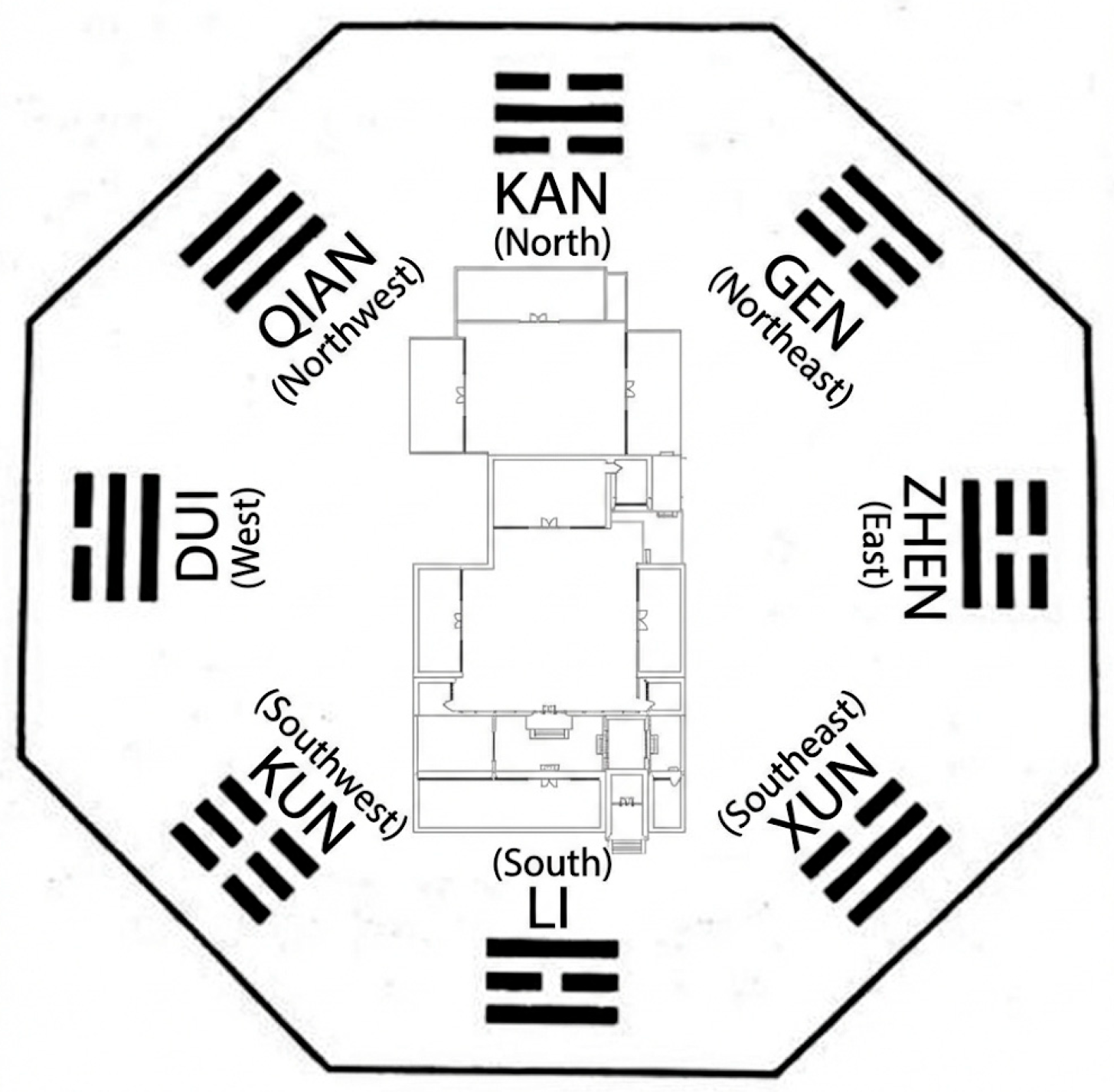
According to the Kan Zhai Xun Men theory, the ideal Feng Shui configuration of the Beijing Siheyuan adheres to the south-facing orientation theory, optimizing the wind environment while symbolizing cosmic alignment. The U-shaped architectural composition encloses a central courtyard that functions as a “wind harbor” for accumulating airflow, acting as a semi-enclosed buffer zone that reduces wind velocity and encourages air circulation within the courtyard. The entrance occupies the strategic southeastern “Xun” sector. As a convergence point for auspicious energy, this position enhances fortune and familial prosperity (see Figure 2). This spatial dichotomy between Yang (courtyard) and Yin (built structures) achieves a harmonic equilibrium. Computational fluid dynamics (CFD) simulations verify that the southeastern gateway alignment capitalizes on summer monsoon winds and improves thermal comfort via enhanced airflow dynamics [31].
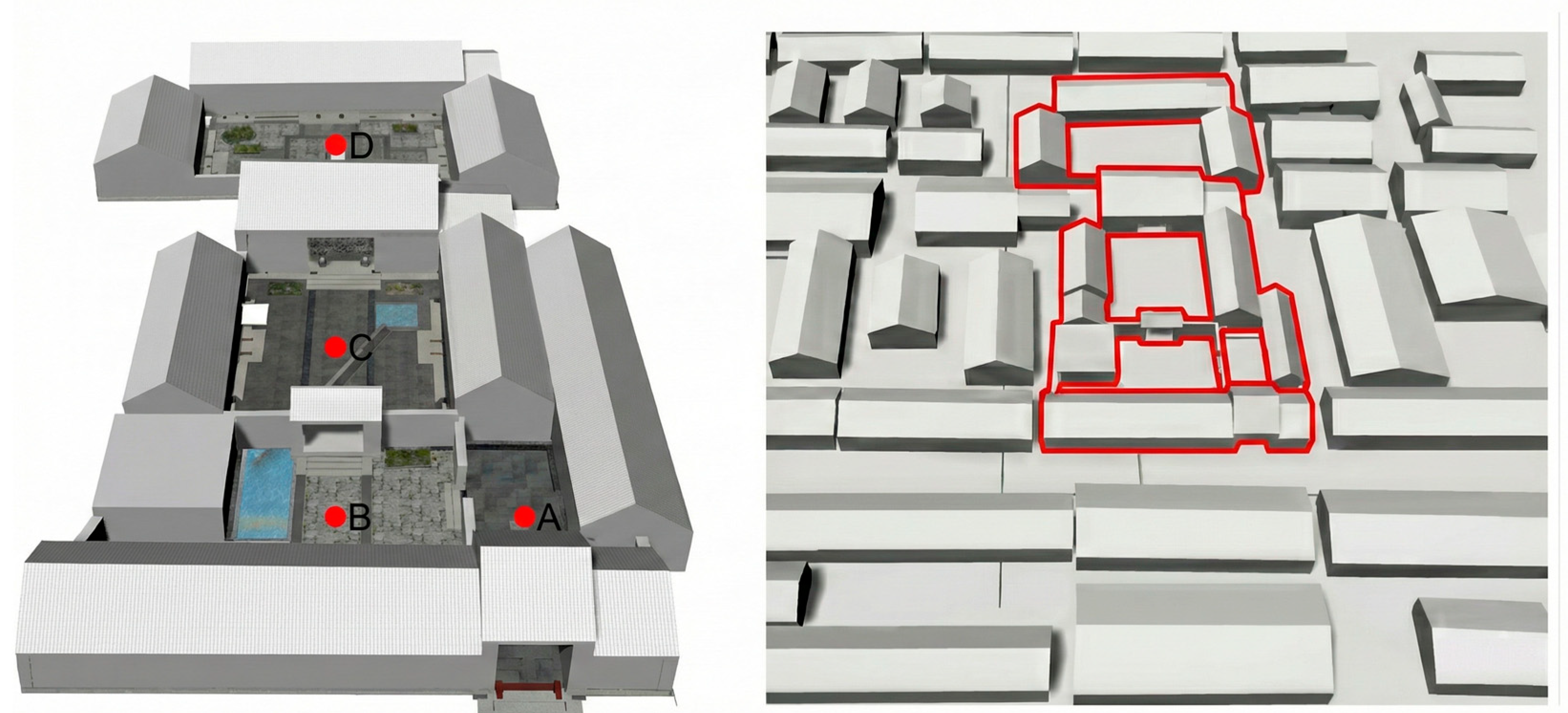
We selected Dongsi-Sitiao-77 Siheyuan as the primary research object following a comprehensive comparative analysis of numerous Hutongs and courtyards, designating the Dongsi Sitiao Hutong as the central study area. This structure embodies a canonical three-section Siheyuan configuration, strictly adhering to Feng Shui spatial organization theories. Its strict alignment with traditional construction concepts is evidenced not only by the general layout but specifically by the preservation of a complete “Screen Wall–Moon Gate” composite structure. This Moon Gate, measuring approximately 2.4 m in diameter and 0.36 m in thickness, acts as a pivotal node that authenticates the courtyard’s functional and ritual integrity [32]. We initiate field surveys to collect architectural documentation and photographic records of Hutong structures in Beijing’s Dongcheng District, concurrently conducting dimensional measurements on-site. Subsequent to data acquisition, we digitally reconstruct the Dongsi-Sitiao-77 Siheyuan complex using the Rhino Grasshopper platform. By integrating satellite imagery with high-resolution texture maps, we develop two distinct geometric models: an “isolated” model and a “community-scale” collective model (see Figure 3). Wind environment simulations are conducted using the Eddy3D (https://www.eddy3d.com, accessed on 3 November 2023) plug-in directly within the Grasshopper environment. This setup ensures a seamless, high-precision workflow from parametric modeling to CFD analysis. To capture the spatial progression of airflow and provide necessary data for field calibration, four monitoring points are deployed along the central axis: the Entrance (Point A), the First Courtyard (Point B), the Second Courtyard (Point C), and the Third Courtyard (Point D).

2.2. Comparative Study Method

The Dongsi-Sitiao-77 Siheyuan exhibits a spatial configuration inspired by Feng Shui principles and constitutes the principal research subject of this article. To facilitate comparative analysis, we construct a non-Feng Shui layout deviating from traditional Feng Shui theory. The Feng Shui layout is operationally defined as the standard “Kan Zhai Xun Men” configuration, characterized by a north–south axis, with the main entrance strictly positioned within the southeast (Xun) sector. This specific orientation is theoretically associated with accumulating auspicious energy. Conversely, non-Feng Shui layouts are defined as configurations wherein the entrance location contravenes this optimal principle. For the purposes of this study, three specific non-Feng Shui variations were modeled by relocating the entrance to the southwest (Kun), northeast (Gen), and northwest (Qian) sectors, respectively.
This study evaluates summer wind environments between the Feng Shui layout and non-Feng Shui layout, focusing on the quadrangle orientations to north–south and east–west, and entrance orientations to the southeast (Xun), southwest (Kun), northeast (Gen), and northwest (Qian).
We model the Feng Shui layout and the non-Feng Shui layout based on the Rhino Grasshopper platform, extending the spatial scope to include the buildings within a 150 m radius. To optimize computational efficiency, we generate simplified geometric representations excluding architectural details such as brackets and decorative roof tiles. These prototypes undergo Grasshopper simulations to analyze wind flow patterns, with boundary conditions being calibrated to reflect Beijing’s prevailing summer winds.

2.3. Research Framework

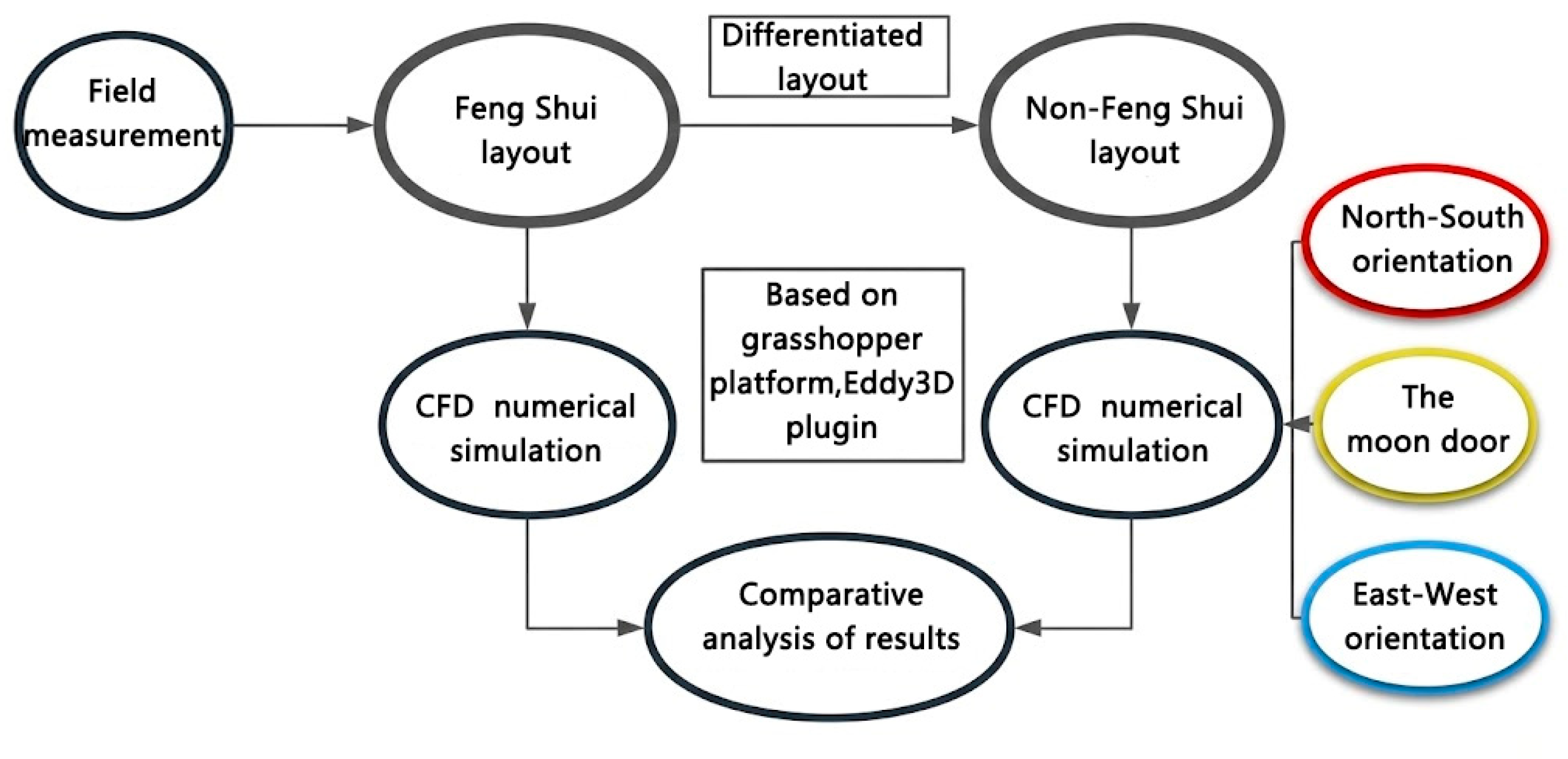
This study utilizes computational fluid dynamics (CFD) simulations, mathematical analysis, field measurements, and comparative studies to investigate the wind environment of the Dongsi-Sitiao-77 Siheyuan under varying Feng Shui conditions. Specifically, we evaluate how different directions of the Siheyuan’s entrance orientation influences the wind comfort within the courtyards of the Siheyuan under typical summer meteorological conditions. The evaluation orientations correspond to the southeast, the southwest, the northeast, and the northwest, corresponding to Xun, Kun, Gen, and Qian, respectively [33]. The Xun, Kun, Gen, and Qian are the four orientations of “Ba Zhai”, which means the Eight Trigrams. The Eight Trigrams are the key elements of the Feng Shui theory framework. The research framework of this study is depicted in Figure 4.

2.4. Evaluation Criteria of Wind Environment in Summer

According to the requirements of the Assessment Standard for Green Building (GB/T 50378-2019) issued by the Ministry of Housing and Urban-Rural Development of the People’s Republic of China (MOHURD) [34], the wind speed in the pedestrian area within 1.5 m from the ground around buildings should not exceed 5 m per second. At the same time, the wind speed in outdoor rest areas and children’s play areas should be below 2 m per second. This study integrates the Green Building Evaluation Standard with previous criteria for courtyard houses to define the numerical values for comfortable, low, and strong wind speed zones. Table 1 summarizes the outdoor wind environment evaluation standards. Drawing on past research experience [18], we select the horizontal plane at 1.5 m from the ground for the wind environment evaluation [35].
To scientifically validate the traditional theory, we establish a quantitative mapping framework between the abstract Feng Shui concepts and measurable aerodynamic parameters. In this study, the traditional concept of “Qi” is interpreted through the lens of fluid dynamics as the airflow velocity vector field within the courtyard. We establish a quantitative mapping to correlate abstract cultural concepts with measurable CFD metrics. We introduce specific threshold definitions to translate “Sheng Qi” (Vital Energy) and “Sha Qi” (Harmful Energy) into computational fluid dynamics (CFD) metrics.

2.5. Wind Environment Experiment

2.5.1. CFD Simulation Settings

We employ the Eddy3D plugin (version 0.4.1.4), which is powered by the OpenFOAM (version 8) kernel. We adopt the standard k-epsilon ( k ϵ ) turbulence model. While we acknowledge that the standard k ϵ model has limitations in predicting flow separation and strong adverse pressure gradients compared to Large Eddy Simulation (LES), it remains the industry standard for architectural wind environment studies due to its robustness in predicting mean flow patterns [36,37]. We select a medium mesh, 0.35 million cells, for this study to optimize calculation time without compromising accuracy.
Regarding the grid generation, the mesh strategy was determined based on established guidelines for architectural wind environment simulations. We selected a medium mesh density (0.35 million cells) with refined resolution in critical zones (pedestrian level). While a formal grid independence study is not presented, this resolution aligns with similar studies on courtyard microclimates [30], ensuring sufficient accuracy to capture dominant flow features (e.g., recirculation zones and Venturi effects). Given that this study focuses on the comparative performance of Feng Shui versus non-Feng Shui layouts rather than absolute aerodynamic load quantification, the current mesh density is deemed sufficient to reveal the relative velocity trends effectively.
The simulation utilizes a 3D computational domain measuring 100 m × 100 m × 20 m with a spatial resolution of 0.3 m. Key boundary conditions include an inlet turbulence intensity of 10%. According to the meteorological data from the 2024 Beijing Meteorological Bureau (Beijing Meteorological Bureau. Historical Climate Data of Beijing. Available online: http://bj.cma.gov.cn, accessed on 1 August 2024), the average wind speed of Beijing in summer in August is 7.01 km/h = 1.9 m/s, and the dominant wind direction is southeast. In the CFD simulation, the inlet wind speed at the boundary of the computational domain is set to 1.9 m/s, and the wind direction is southeast.

2.5.2. Field Experiment Method

To verify the accuracy of the simulation settings, on-site field measurements of the wind environment were performed at the Dongsi-Sitiao-77 Siheyuan. Instead of undertaking long-term monitoring throughout the entire summer, the experiments specifically targeted two representative days for CFD model validation: 1 August 2024 (a sunny day) and 10 August 2024 (a cloudy day).
Measurements were confined to a controlled one-hour timeframe (10:00 a.m. to 11:00 a.m.). This specific timing was crucial to avoid the peak thermal instability that is frequently encountered in the afternoon. By conducting measurements before strong convective turbulence developed, we thereby ensured relatively stable atmospheric conditions, enabling a more accurate comparison with steady-state CFD simulations.
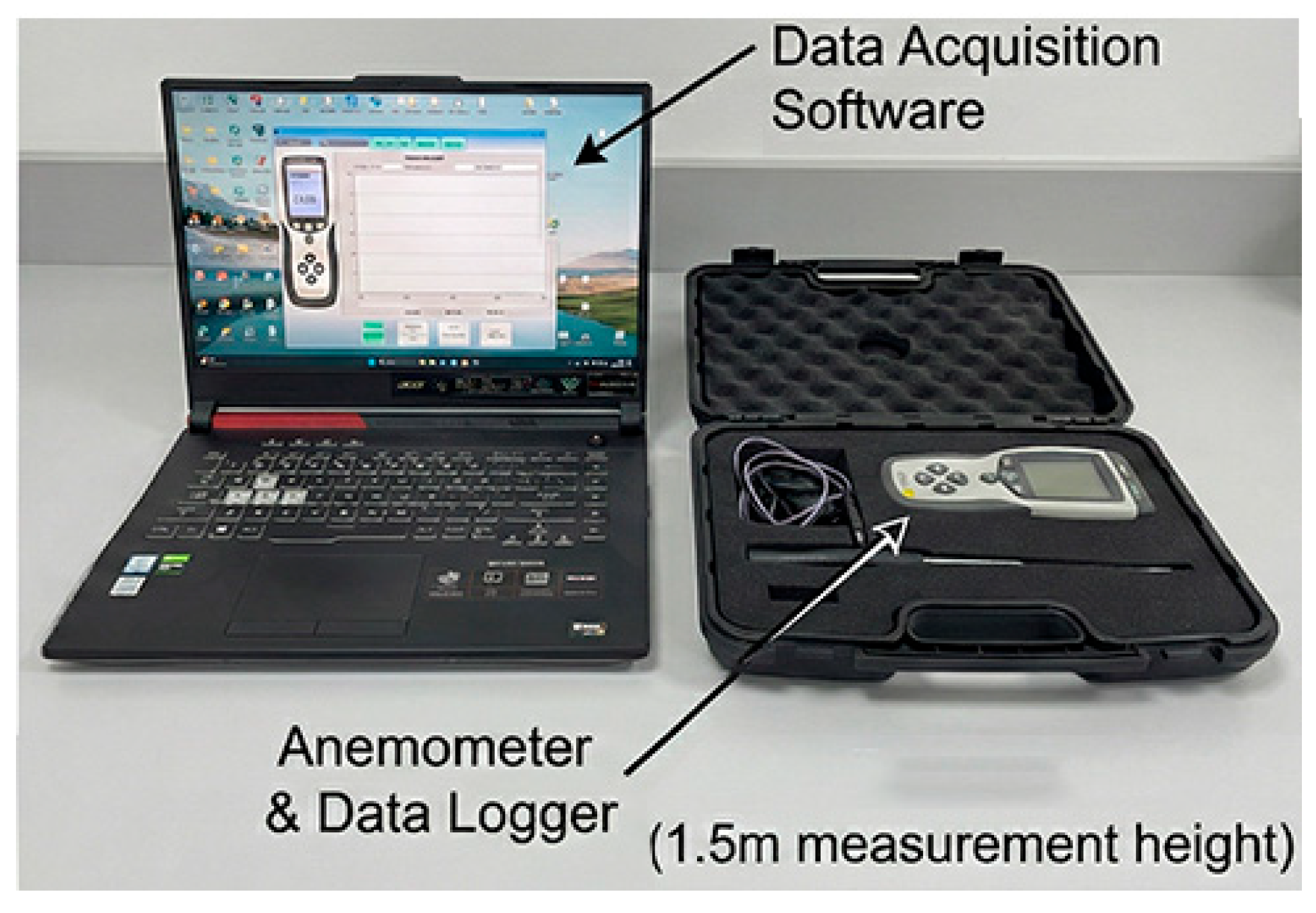
For wind speed measurements, we utilized a CEM (Shenzhen CEM Instruments Co., Ltd.; Shenzhen, China. Available online: http://www.cem-instruments.com, accessed on 1 August 2024) handheld hot-wire anemometer (Model DT-8880), with a measurement accuracy of ±(5% + 0.1 m/s). Figure 5 clearly illustrates the field instruments, showcasing the integrated setup of the anemometer, data logger, and acquisition software. We strategically selected four specific courtyard monitoring points to capture the intricate airflow distribution. As Figure 5 highlights, the probes were positioned at a standardized height of 1.5 m above ground level, representing the typical pedestrian breathing height. Regarding the sampling strategy, we established a data collection frequency of 1 Hz (one record per second). At each point, wind speed data were continuously recorded for precisely 15 min. To minimize the influence of transient wind gusts, the time-averaged value over the entire 15 min interval served as the final measured wind speed for comparison with CFD simulation results.

3. Results and Discussion

3.1. Analysis of Simulation

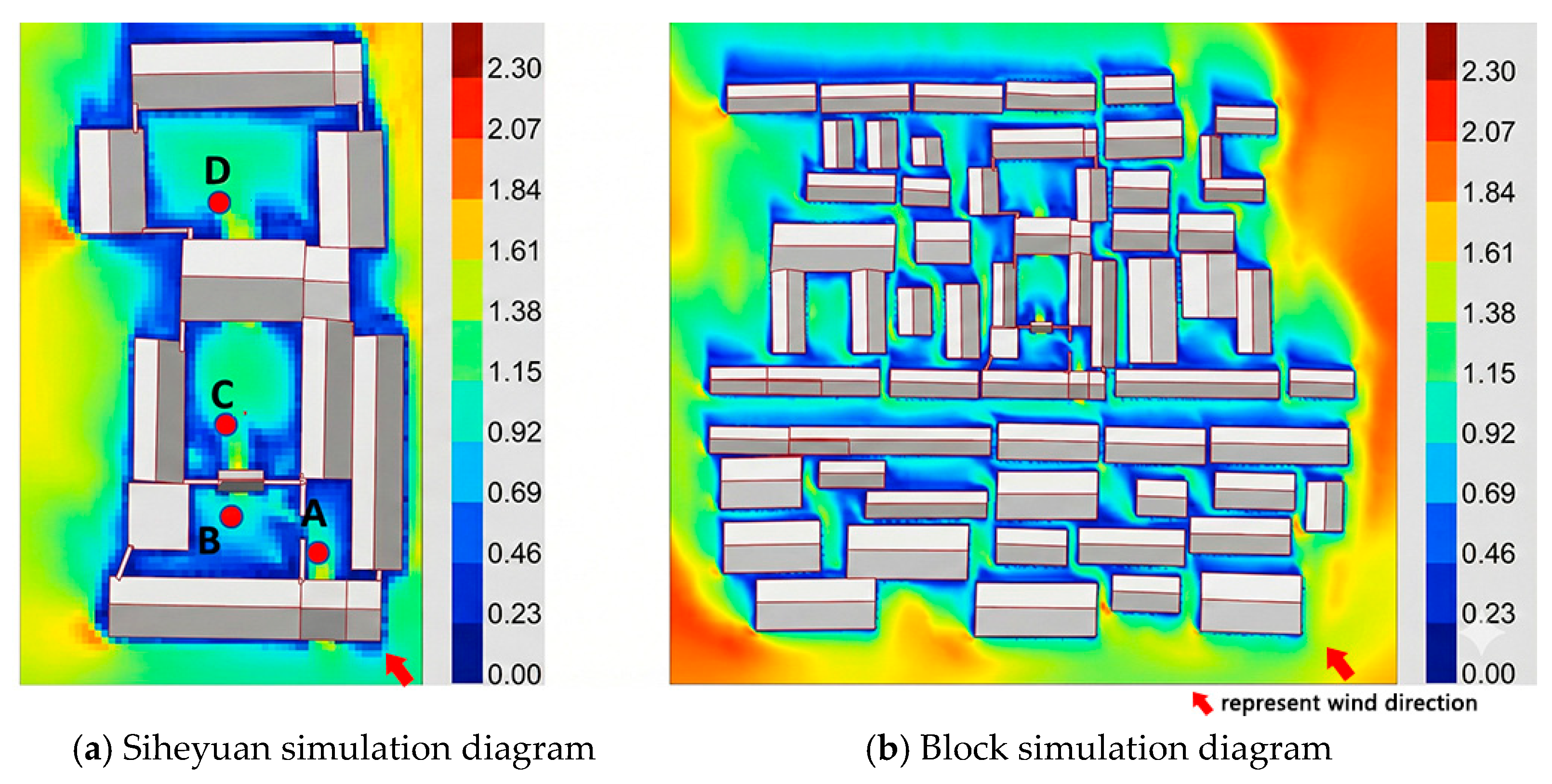
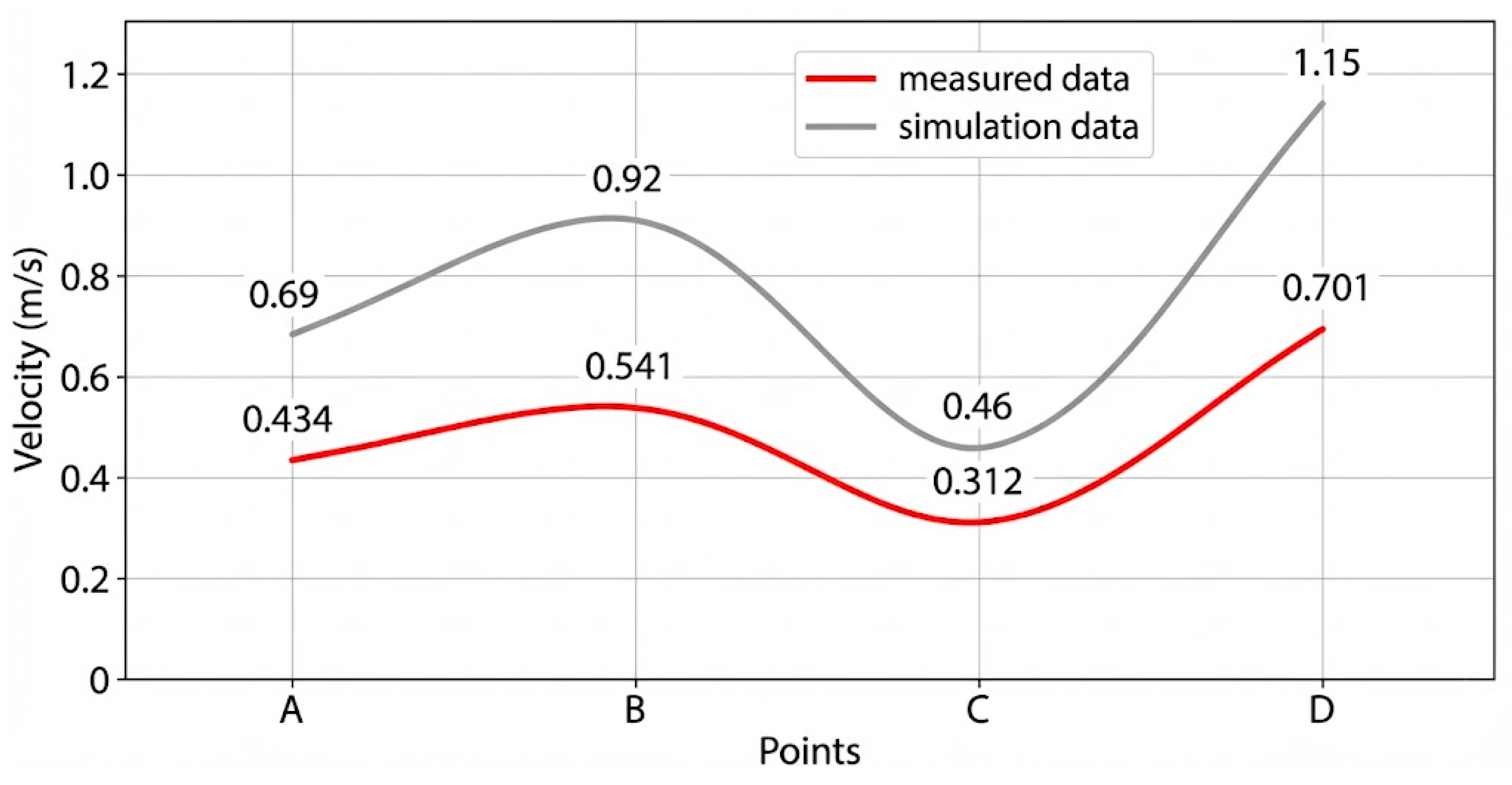
Focusing on the typical layout with a southeast entrance, Figure 6a presents the wind velocity distribution at key monitoring points. The recorded average wind speeds at points A (Entrance), B (First Courtyard), C (Second Courtyard), and D (Rear Courtyard) are 0.69 m/s, 0.92 m/s, 0.46 m/s, and 1.15 m/s, respectively.
The elevated wind speed at Point D (1.15 m/s) is particularly notable; this increase is attributed to the Venturi effect that is generated as airflow constricts through the narrow corridor connecting the Second and Third Courtyards, coupled with flow re-attachment in the rear zone.
Overall, the Siheyuan demonstrates excellent internal ventilation, with a large area of comfortable wind zones. A Screen Wall buffers the entrance, ensuring that the wind speed entering the interior of the compound aligns with a comfortable wind speed for the human body, thus avoiding extremes. This design is in line with the Feng Shui theory framework of “Hidden Wind”, which emphasizes the importance of sheltering from strong winds to maintain a harmonious flow of energy (see Figure 6b).
As the airflow penetrates deeper into the Second Courtyard (Point C), the primary living zone, the wind speed naturally decelerates to 0.46 m/s. This deceleration occurs because the central courtyard functions as a stable recirculation zone (wind shadow), shielding the core living area from high-velocity drafts. This transition is crucial. It retains sufficient air movement for thermal comfort while preventing harsh draughts, creating a stable and gentle environment that is suitable for dwelling. This spatial configuration demonstrates the Feng Shui theory framework of “Gathering Energy”, as the layout allows for high ventilation efficiency at the periphery (Point B) to drive airflow, while maintaining calmness at the core (Point C). This balance between “Dynamic Ventilation” (Yang) and “Static Comfort” (Yin) validates the scientific rationality of the traditional Cang Feng Ju Qi theory of Feng Shui in a summer context.
Crucially, a comparative analysis reveals that the internal wind velocity distribution within the target Siheyuan in the neighborhood context shows no significant deviation from the isolated single-entity simulation. Therefore, the “single-entity” model is proven to possess sufficient representativeness and accuracy. This finding validates the research scope, justifying the focus on the single-entity Siheyuan for the subsequent detailed parametric studies.
Figure 7 presents an error analysis comparing measured and simulated wind speeds. The results reveal a consistent overestimation by the simulated values relative to the measured data, with relative discrepancies peaking at approximately 50% at specific locations (Points B and D). Nevertheless, the absolute errors remain confined within a range of 0.2 to 0.5 m/s. This range is widely recognized as an acceptable tolerance for validating steady-state RANS simulations against complex outdoor field measurements [38].
This systematic overestimation chiefly stems from the geometric simplifications that are essential for computational efficiency. Specifically, the discrepancy observed at Point D is driven by the Venturi effect within the narrow corridor; the smooth wall boundary conditions applied in the CFD model fail to capture the inherent high friction in actual historic rough bricks, thereby exaggerating the flow’s pronounced acceleration. Similarly, the overestimation at Point B within the First Courtyard arises from the omission of minor architectural ornaments and the inherent tendency of RANS models to over-predict velocities within structural recirculation zones. Although these necessary simplifications result in localized overestimations, their influence on the overall flow pattern remains relatively minor. While minor numerical discrepancies are noted, the simulation accurately captures the overall qualitative trend of the airflow. This pronounced and consistent overestimation across cases enables the model to effectively reflect relative performance differences among layouts, reinforcing its value as a robust tool for comparative analysis. Moreover, airflow around sharp-edged bluff bodies like the Siheyuan is inherently turbulent in nature. Consequently, fundamental flow characteristics remain largely Reynolds-number-independent. Therefore, normalized flow patterns and velocity distributions maintain consistency under varying wind speeds, indicating that comparative findings hold true under prevailing meteorological conditions [22].
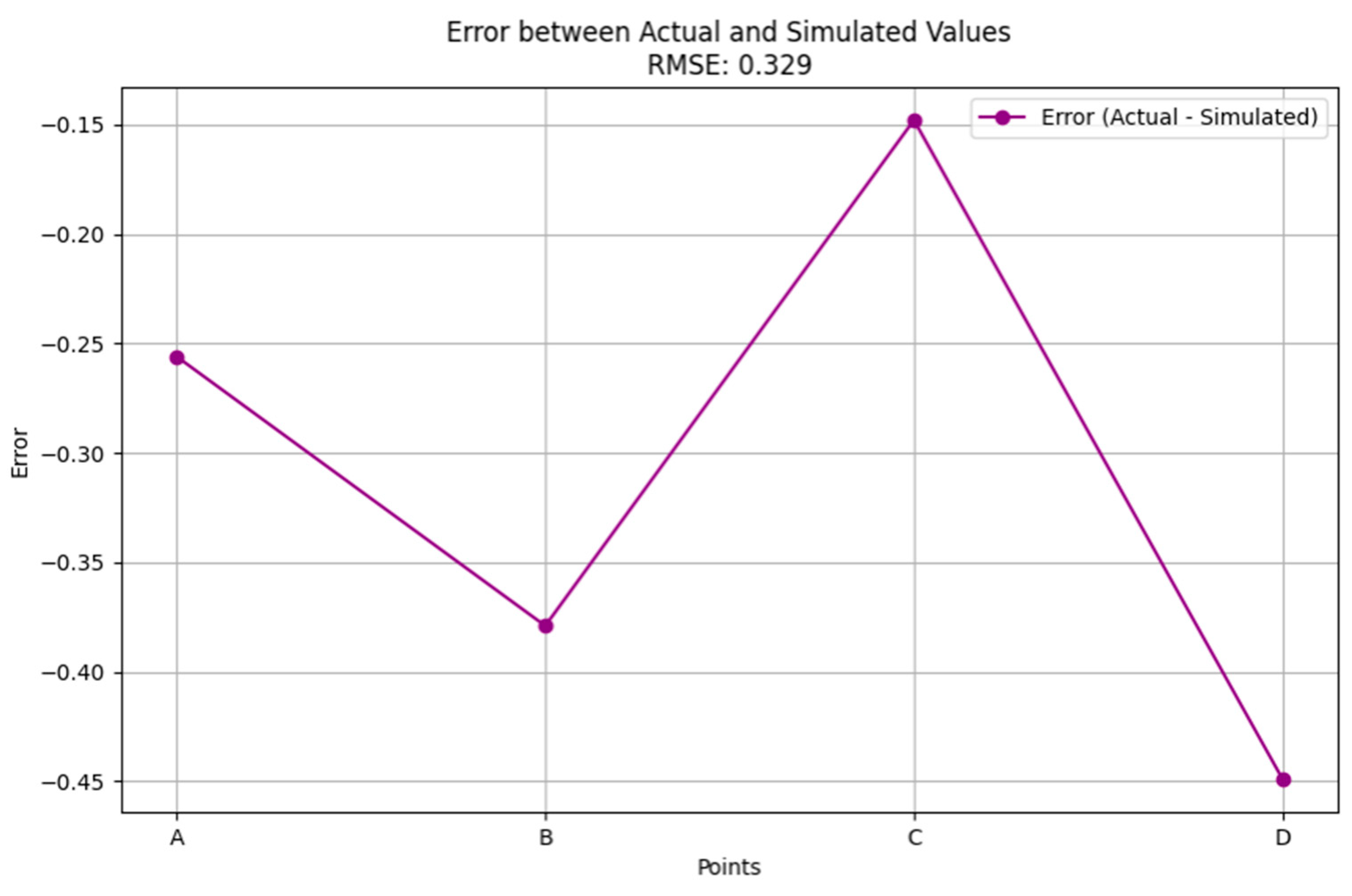
We utilize Root Mean Square Error (RMSE) to verify the accuracy of the simulation results. From Figure 8, we can see that the error values of Points A, B, C, and D are around 0.26, 0.35, 0.15, and 0.45, respectively. Although the specific values differ, the trends of the two datasets match well (e.g., both go up at Point B and down at Point C). Also, the Root Mean Square Error (RMSE) is 0.329, which is acceptable for outdoor simulations. This demonstrates that the simulation correctly captures airflow patterns, even though model simplification introduces some errors. Therefore, the model is reliable for the following analysis.

3.2. Eight Trigrams Direction’s Influence on Wind Environment

The spatial arrangements of the Beijing Siheyuans exhibit two primary configurations, the predominant north–south-oriented Siheyuan and the less common east–west-oriented Siheyuan, reflecting adaptations to urban topography.
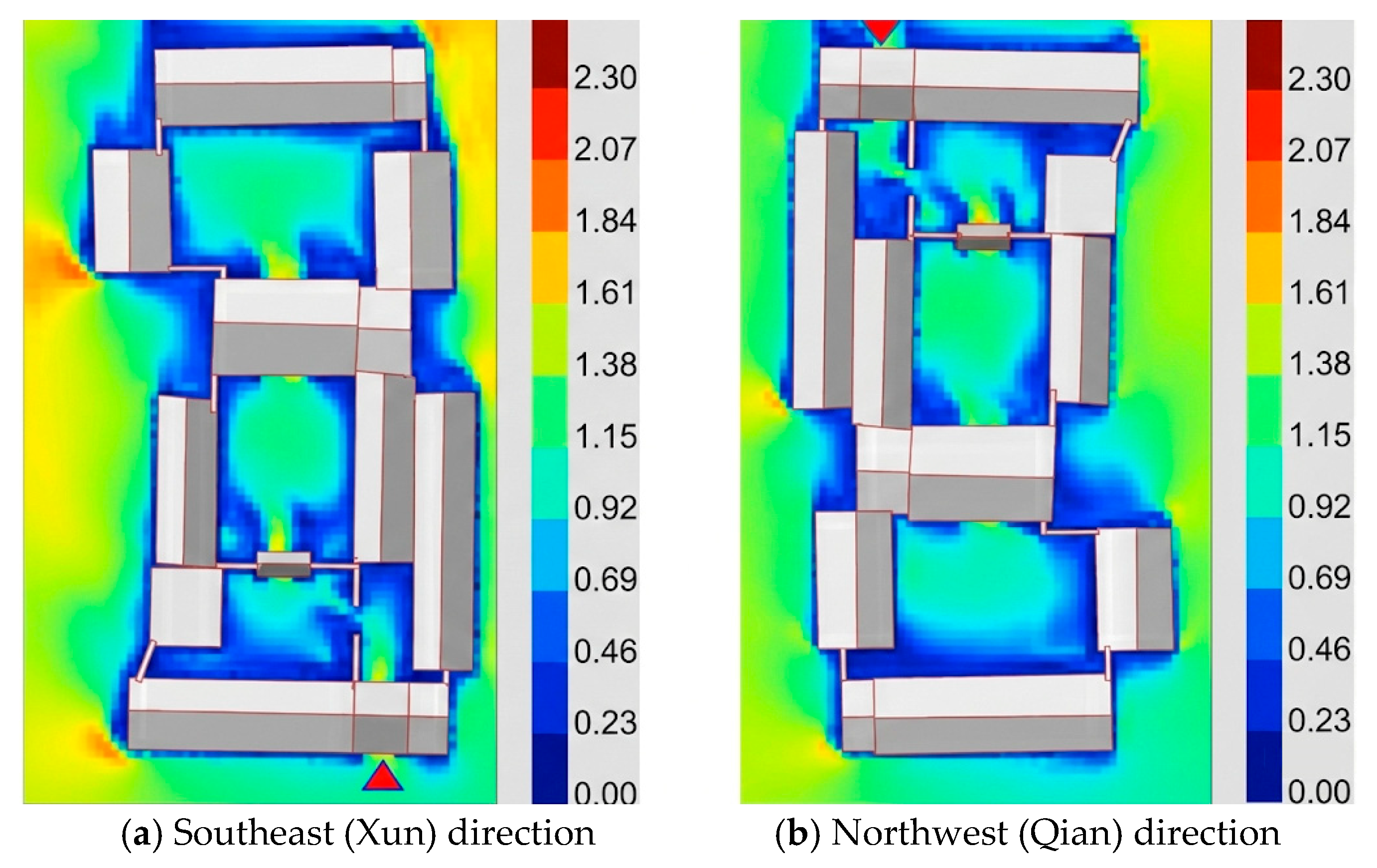
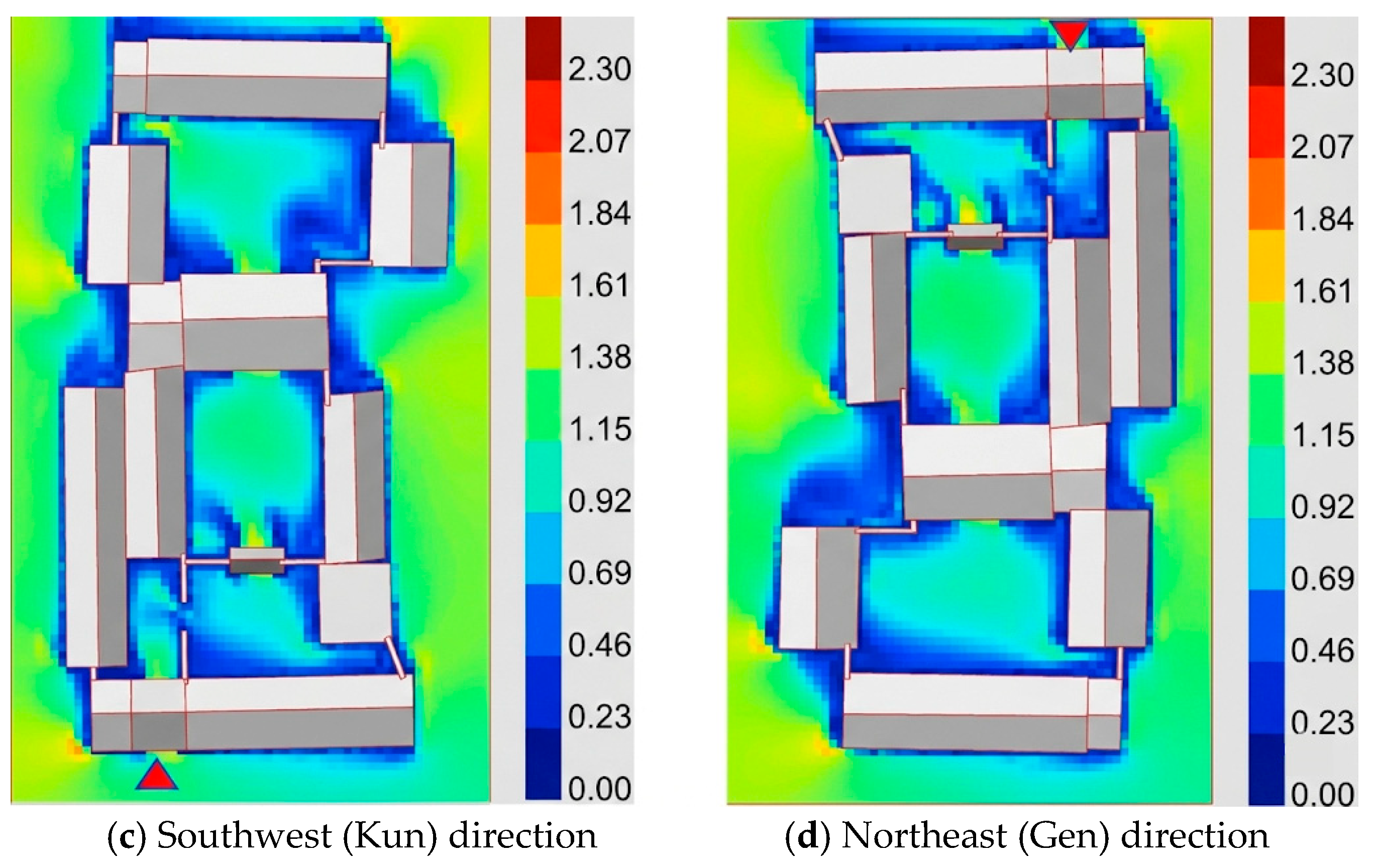
According to the north–south-oriented courtyard, we integrate the Feng Shui theory framework governing the construction of the Beijing Siheyuans. The orientation of the Siheyuan’s entrance follows the direction theory of the Eight Trigrams. The experimental group’s entrance orients to the southeast (Xun). The control groups’ entrances orient to the southwest (Kun), the northeast (Gen), and the northwest (Qian), respectively. The threshold of the summer wind speed is defined within 0.5–2.0 m/s for thermal comfort assessment.
The simulation results provide a physical validation for the core Feng Shui concept of “Li Qi” (Regulating Energy). Mathematically, “Li Qi” can be interpreted as the optimization of the velocity field distribution to maximize the area of the comfortable wind zone ( A c o m f o r t ).
The traditional “Na Qi” (Admitting Energy) function of the southeast (Xun) entrance can be explained by aerodynamic principles. By aligning the entrance vector with the dominant summer monsoon vector, this geometric configuration minimizes the kinetic energy loss at the boundary layer. By aligning the entrance vector with the dominant summer monsoon vector, the southeast entrance minimizes the kinetic energy loss at the boundary layer. The simulation data shows that this orientation maximizes the comfortable area ratio ( R c o m f o r t ):
R c o m f o r t = A S h e n g Q i A t o t a l × 100 %
where A S h e n g Q i represents the courtyard area, where velocity V [ 0.5 , 2.0 ]   m / s .
The CFD simulations reveal the spatial distribution differences in wind speed comfort zones. The wind speed comfort zone coverage of the southeast (Xun) orientation achieves 75.52%, outperforming the values of the southwest (Kun) orientation, which is 69.63%; the northeast (Gen) orientation, which is 68.42%; and the northwest (Qian) orientation, which is 66.49%. The simulation results conform to the traditional construction experience, coming from the practice where the southeast entrance typically prevails in optimizing the natural ventilation patterns (see Figure 9).
The experiments adopt the variation in the entrance orientations while maintaining the consistent courtyard geometry. The quantitative comparison of the wind speed comfort zone coverage demonstrates statistically significant differences between the variant entrance orientations, which confirms the fluid mechanics advantages of the southeast-oriented entrances in terms of summer wind guidance.
The Feng Shui theory framework dictates the placement of the entrance at the southeast corner, the Xun direction. It posits that the Xun direction facilitates airflow circulation between the interior and exterior, a condition that signifies high auspiciousness. Additionally, most courtyard houses occupy the north side of east–west alleys, where the terrain descends from the northwest to the southeast. Consequently, placing the entrance in the Xun direction benefits drainage. Furthermore, since Beijing’s summer features predominant southeasterly winds, this arrangement enhances ventilation. Thus, this configuration not only embodies the ancient pursuit of auspicious symbolism but also aligns with practical living requirements.
The quantitative results from this phase of the experiments reveal that the classic Kan Zhai Xun Men layout (i.e., north-facing house with a southeast entrance) embodies a profound adaptation to the regional climate. The summer wind comfort coverage of 75.52%, which significantly outperforms other orientation combinations, provides robust support from a modern physics perspective for the core Feng Shui concept of “Li Qi”. Li Qi literally means regulating energy, which is the theory governing the airflow and distribution of environmental energy.
Firstly, the physical essence of the “Na Qi” process, admitting beneficial environmental energy, is elucidated through these simulation outcomes. The data reveal that the Xun (southeast) entrance does not merely allow the dominant southeast wind to penetrate directly. Rather, it leverages the architectural enclosure to steer airflow into the courtyard in a stable, circuitous trajectory. This specific flow morphology effectively circumvents the generation of turbulence, establishing a micro-environment characterized by moderate, uniformly distributed wind speeds. In this context, we scientifically interpret the traditionally abstract concept of “Qi” as a comprehensive flow field of climatic elements (such as velocity, temperature, and humidity) that directly influence occupant health. This empirical evidence corroborates the traditional ideal of Cang Feng Ju Qi, which aims to create a habitable architectural microclimate through spatial strategies.
Secondly, the simulations offer a bioclimatic explanation for the layout design according to the Kan Zhai Xun Men theory. The design imports Sheng Qi (i.e., the southeasterly summer monsoon) into the Siheyuan, which improves the comfort level in the Siheyuan. This orientation optimizes the harnessing of cool southeasterly summer winds, thereby promoting thermal pressure ventilation and cooling within the courtyard. Conversely, the northwest (Qian position) entrance, which exhibits the poorest comfort levels in the simulation, implies direct exposure to harsh winter winds or the creation of ventilation dead zones during summer. This physical phenomenon corresponds to the Feng Shui concept of “Sha Qi”. Sha Qi means the harmful influence. It is the essence of this which is an adverse microclimate that exacerbates human thermal stress through heat loss or accumulation.
Consequently, the reverence for the Kan Zhai Xun Men configuration as “highly auspicious” fundamentally represents an optimal passive spatial strategy that emerges from long-term practice. It successfully resolves the region’s dynamic climatic contradiction, requiring insulation in winter while maximizing ventilation in summer, through the strategic selection of architectural orientation.
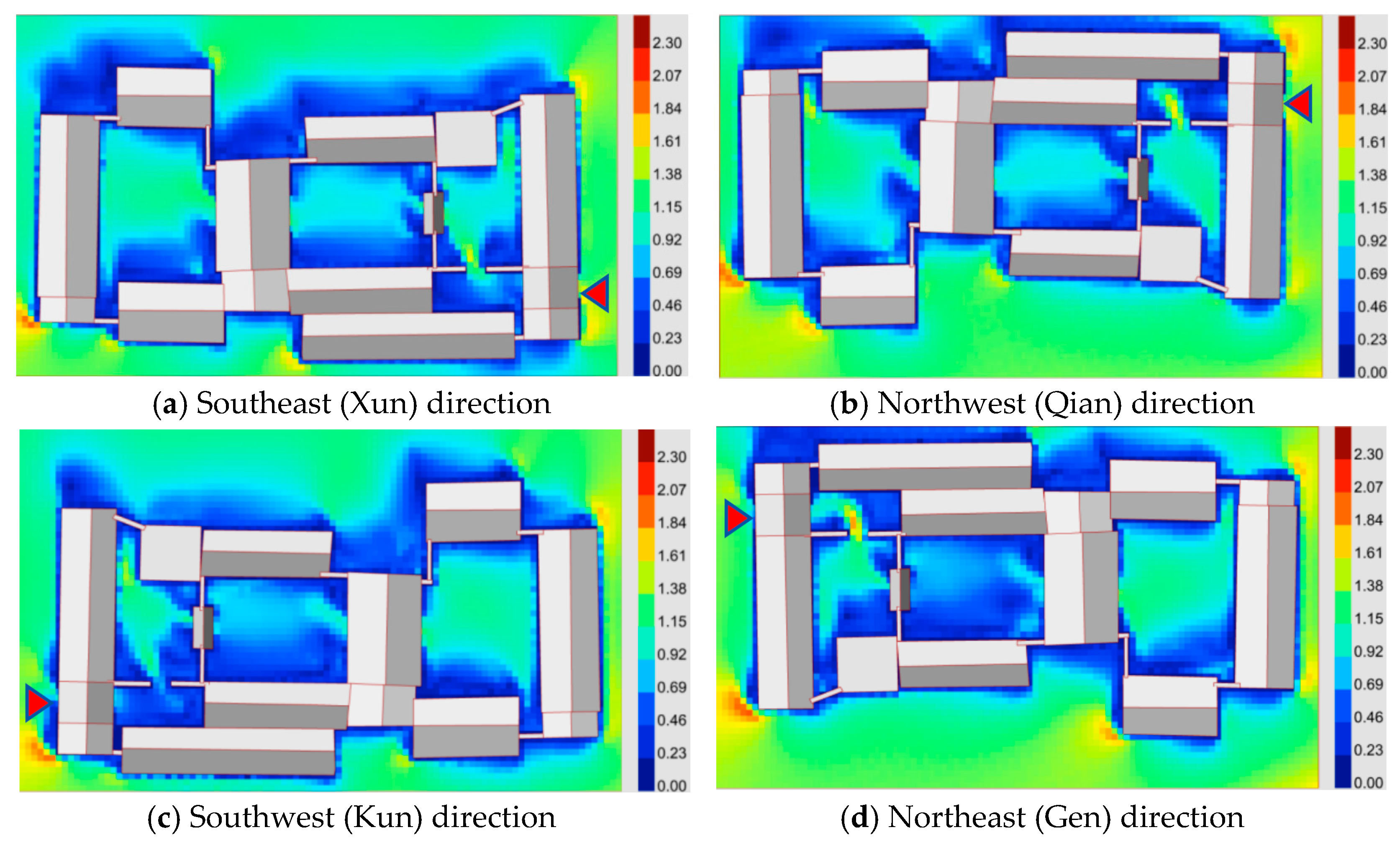
Following the analysis of the standard north–south layout, the second phase of the experiments investigates atypical east–west orientation courtyards, where the complex urban fabric often shapes the spatial boundaries. Applying an east–west-oriented Siheyuan as the case study, we adjust entrance locations according to the four cardinal quadrants to form the second comparative group. The experimental group follows the Feng Shui layout with the entrance in the southeast (Xun; a), while the control groups adopt non-Feng Shui layouts with entrances in the southwest (Kun; c), northeast (Gen; d), and northwest (Qian; b). The CFD results indicate that the wind speeds within the courtyard generally remain between 0.23 and 1.38 m/s. The proportion of the area within the comfort range (0.5–2.0 m/s) was 66.75% for the southeast layout, outperforming the northeast (64.21%), northwest (60.88%), and southwest (58.55%) layouts (see Figure 10).
The results show that the building’s form limits the effect of Li Qi. Because the building is perpendicular (90°) to the summer wind, it hinders “cross-ventilation”. As a result, its maximum ventilation potential (66.75%) is lower than that of the standard north–south courtyard (75.52%). This confirms that the function of Li Qi is limited by the physical orientation.
However, even in this difficult condition, the southeast (Xun) entrance still achieves the best wind speed. This proves the scientific basis of the Feng Shui rules. The Xun direction is the most efficient for Li Qi, simply because it aligns with the dominant wind direction. This follows the fluid dynamics theory of minimizing kinetic energy loss.
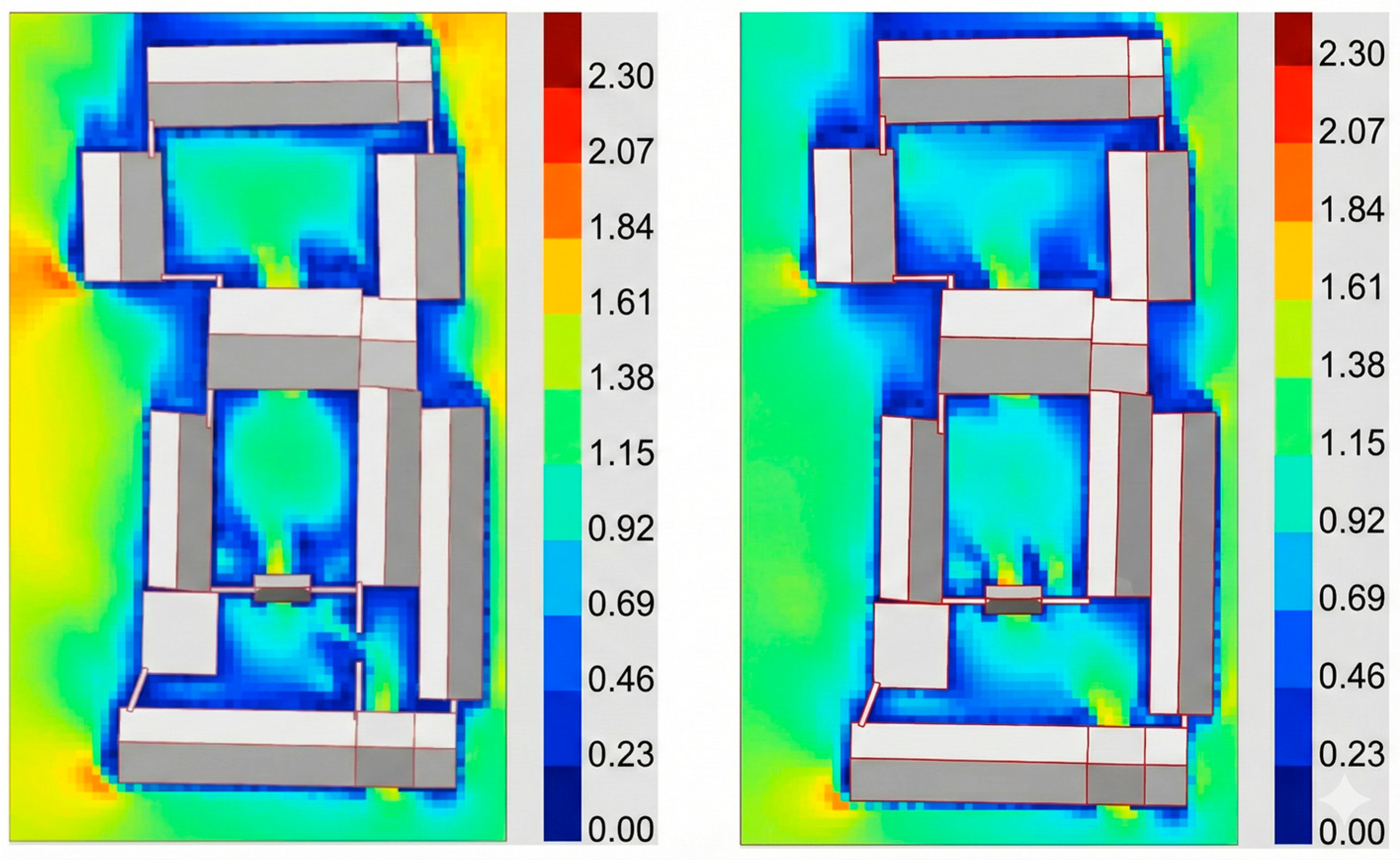
The final phase of the experiments shifts focus from macro-orientation to micro-geometric constraints, specifically examining the aerodynamic impact of the “Moon Gate”. To quantify the influence of this traditional architectural feature, we conduct a comparative simulation by hypothetically removing the Moon Gate to create a fully open entrance.
Using the established summer comfort threshold (0.5–2.0 m/s), the results reveal that removing the Moon Gate increases the wind comfort zone coverage to 71.19%, with a mean wind speed of 0.92 m/s. As illustrated in Figure 11, the removal of this geometric constriction allows incoming airflow to penetrate the Siheyuan more effectively, delivering superior ventilation performance and significantly enhancing the cooling potential across the courtyard during summer.
The Moon Gate balances physical comfort with traditional rules. The simulation confirms that the Moon Gate acts as an effective airflow regulator. Although it slightly reduces the total wind amount relative to a fully open entrance, it maintains airflow within a comfortable range while preserving the spatial boundary that ritual norms require. Therefore, when analyzing the Moon Gate, it is essential to consider the constraint of “Li Zhi” which is a kind of Ritual Norm in Ancient China. The layout of a traditional Siheyuan emphasizes the distinction between “inside” and “outside” through a gradual transition. In this context, the Moon Gate serves as a key element for visual control and privacy. Its narrow opening is not just for decoration. It directly reflects the requirements of social etiquette and privacy.
Crucially, the Moon Gate works with the Screen Wall (“Ying Bi”) to form a physical baffle system. From an aerodynamic perspective, this combination obstructs high-velocity drafts and dissipates kinetic energy. This physical buffering effect aligns with the Feng Shui mechanism of “Zu Sha” (blocking harmful energy), effectively shielding the interior from turbulence. In Feng Shui, Sha Qi usually refers to the harmful airflow which is the straight high-speed airflow disturbing the stable environment. Therefore, the Zu Sha method shields the interior from this strong wind. From an aerodynamic perspective, this phase study defines the Moon Gate and the Screen Wall combination as a baffle system. The Moon Gate reduces the inlet area, and the Screen Wall acts as a barrier directly in the airflow path. The simulation results confirm that this synergistic combination, constricting flow at the gate and dispersing it at the wall, effectively provides a climate-buffering effect.
This provides a valuable reference for climate-responsive design. By using adjustable technologies, we can achieve similar climate-buffering effects. This allows us to meet the requirements of contemporary architecture while applying the core of the traditional Li Qi wisdom.

4. Conclusions

To bridge the Feng Shui theory framework with practical application, this study validates the scientific rationale and feasibility of Feng Shui layouts in Siheyuan dwellings using CFD simulations. The results confirm that the traditional Kan Zhai Xun Men configuration (i.e., north–south orientation with a southeast gate) exhibits excellent climatic adaptability. Under identical boundary conditions, the southeast (Xun) entrance achieves the highest wind comfort coverage of 75.52%, significantly outperforming the southwest (69.63%), northeast (68.42%), and northwest (66.49%) orientations. These precise data scientifically verify the concept of Li Qi (i.e., regulating energy), identifying the southeast entrance as the optimal intake for Sheng Qi due to its alignment with the prevailing summer monsoon.
Analysis of east–west layouts corroborates these findings. Despite lower overall ventilation potential (66.75%) due to the building axis obstructing cross-ventilation, the southeast (Xun) entrance remains superior (66.75%) to northeast (64.21%), northwest (60.88%), and southwest (58.55%) configurations. This consistency confirms the theory of Na Qi, which means admitting energy. This consistency demonstrates that the southeast entrance effectively steers airflow into the courtyard, regardless of the primary building orientation.
At the micro-scale, the study validates Cang Feng Ju Qi and Zu Sha. The traditional layout retains this feature to balance aerodynamic efficiency with environmental stability. The Moon Gate and Screen Wall function as a baffle system that moderates high-velocity drafts, preventing Sha Qi and ensuring occupant comfort. Field measurements (RMSE 0.329) validate these findings and demonstrate that Feng Shui rules represent empirical wisdom for climate adaptation.
In future work, we will evaluate the winter thermal performance in the Siheyuan, specifically the layout’s capacity to block cold northern winds. Additionally, we will extend from the single-building scale to high-density urban planning, translating the Feng Shui rules into modern adaptive design guidelines. Additionally, future research will aim to decouple the aerodynamic effects of the Moon Gate and the Screen Wall to quantify their individual contributions to the courtyard’s wind comfort. We also will extend from the single-building scale to high-density urban planning. Future work will also address the limitations of the current numerical setup by conducting a rigorous grid independence study and exploring finer mesh configurations to further validate the aerodynamic accuracy.

Author Contributions

A.S. conceived the study and provided the key ideas and performed the method design, the manuscript revision, and the research supervision. H.F. performed the modeling, the CFD simulations, the data collection, the case study, and the result analysis and constructed the manuscript. X.Z. provided key suggestions on the research questions and the method design and revised the manuscript. Y.J. provided assistance for the case study. All authors have read and agreed to the published version of the manuscript.

Funding

This work was supported by Natural Science Foundation of Shandong Province (Grant NO. ZR2023QD005) and the Natural Science Foundation of China (Grant NO. 42301266).

Data Availability Statement

The original contributions presented in the study are included in the article, further inquiries can be directed to the corresponding author.

Conflicts of Interest

The authors declare no conflicts of interest.

References

  1. Cheng, Z.; Zhou, S.; Zhang, B. The Spatial Factors of Cultural Identity: A Case Study of the Courtyards in a Historical Residential Area in Beijing. Sustainability 2018, 10, 2587. [Google Scholar] [CrossRef]
  2. Xu, J.; Luo, Z.; Gao, W.; Yang, M.; Shi, M. The Comparative Study on the Climate Adaptability Based on Indoor Physical Environment of Traditional Dwelling in Qinba Mountainous Areas, China. Energy Build. 2019, 197, 140–155. [Google Scholar] [CrossRef]
  3. Xu, J.; Ma, W.; Yan, W.; Luo, Z.; Xu, G.; Wang, X. Impact of Transition Spaces on the Indoor Thermal Environment: A Case Study of Traditional Dwellings in Southern Shaanxi, China. J. Build. Eng. 2024, 95, 110283. [Google Scholar] [CrossRef]
  4. Dorostkar, E.; Ziari, K. Integrating Ancient Chinese Feng Shui Philosophy with Smart City Technologies: A Culturally Sustainable Urban Planning Framework for Contemporary China. J. Chin. Archit. Urban 2025, 7, 025080018. [Google Scholar] [CrossRef]
  5. Hu, B.-X.; Li, W.-Y.; Chiou, S.-C. Study on Courtyard Residence and Cultural Sustainability: Reading Chinese Traditional Siheyuan through Space Syntax. Sustainability 2019, 11, 1582. [Google Scholar] [CrossRef]
  6. Huang, Z.; Zhao, W.; Wang, C.; Lu, Y.; Zhang, Y. Inheritance Design of Residence Based on Huizhou Traditional Dwellings. J. Asian Archit. Build. Eng. 2025, 24, 835–850. [Google Scholar] [CrossRef]
  7. Xu, P. “Feng-shui” Models Structured Traditional Beijing Courtyard Houses. J. Archit. Plan. Res. 1998, 15, 271–282. [Google Scholar]
  8. Zhao, Y.C. The Historical and Cultural Form of the Traditional Construction Techniques of Beijing Quadrangle Courtyards. Intang. Cult. Herit. China 2023, 1, 111–120. (In Chinese) [Google Scholar]
  9. Zhang, M.; He, Y.; Huang, L.; Xiong, R.; Zhang, Y. Built-In Environmental Construction Mechanism and Sustainable Renewal Strategies of Traditional Qiang Dwellings in Western China. Sustainability 2024, 16, 7122. [Google Scholar] [CrossRef]
  10. Wang, Z.Y.; Shi, J. Analysis of the Living Space of Beijing Quadrangle Courtyard. Chin. Resid. Houses 2011, 10, 5–6. (In Chinese) [Google Scholar]
  11. Bonaiuto, M.; Bilotta, E.; Bonnes, M. “Feng Shui” and Environmental Psychology: A Critical Comparison. J. Archit. Plan. Res. 2010, 27, 23–34. [Google Scholar]
  12. Mak, M.Y.; Ng, S.T. The Art and Science of Fengshui—A Study on Architecture Perception. Build. Environ. 2005, 40, 427–434. [Google Scholar] [CrossRef]
  13. Wang, Q.H. Research of Feng Shui Theory, 2nd ed.; Tianjin University Press: Tianjin, China, 2014. (In Chinese) [Google Scholar]
  14. Chan, S. Greenery Concerns of Green Building Design and Feng Shui. J. Int. Sci. Publ. 2015, 9, 609–618. [Google Scholar]
  15. Low, S.P.; Deng, X.; Quek, L.T. Assimilating Total Building Performance Mandates with Chinese Geomancy Principles and Scenarios. Facilities 2012, 30, 558–589. [Google Scholar] [CrossRef]
  16. Yu, Y.; Yang, Z.J. Scientificity and Rationality of Chinese Traditional Classical Fengshui Theory. Can. Soc. Sci. 2017, 13, 55–65. [Google Scholar] [CrossRef]
  17. Zhao, J.F. The Three Essentials of Dwellings; Hualing Publishing House: Beijing, China, 2011. (In Chinese) [Google Scholar]
  18. Wang, Z.; Liu, T.; Wu, X.; Chen, J.; Liang, X. Influence of Doorway Position on Wind Comfort in Beijing Quadrangle Dwellings. Buildings 2023, 13, 2557. [Google Scholar] [CrossRef]
  19. Jiang, Z.; Gao, W.; Yao, W. Research on the Wind Environment in an Enclosed Courtyard: Effect of the Opening Position, Size and Wind Angle. Urban Clim. 2023, 52, 101737. [Google Scholar] [CrossRef]
  20. Wang, Y.; Crompton, A.; Agkathidis, A. Form Follows Fengshui: A Parametric Approach to Investigate the Influence of Fengshui on Traditional Chinese Courtyard Dwelling Design. Herit. Sci. 2026, 14, 1. [Google Scholar] [CrossRef]
  21. Kastner, P.; Dogan, T. Eddy3D: A Toolkit for Decoupled Outdoor Thermal Comfort Simulations in Urban Areas. Build. Environ. 2022, 212, 108639. [Google Scholar] [CrossRef]
  22. Ai, Z.T.; Mak, C.M. Guidelines for CFD Simulation of Wind Environment in a Complex Urban Area: Case Study of a University Campus. Build. Environ. 2018, 129, 25–34. [Google Scholar]
  23. Tominaga, Y.; Mochida, A.; Yoshie, R.; Kataoka, H.; Nozu, T.; Yoshikawa, M.; Shirasawa, T. AIJ Guidelines for Practical Applications of CFD to Pedestrian Wind Environment around Buildings. J. Wind Eng. Ind. Aerodyn. 2008, 96, 1749–1761. [Google Scholar] [CrossRef]
  24. Toparlar, Y.; Blocken, B.; Maiheu, B.; van Heijst, G.J.F. A Review on the CFD Analysis of Urban Microclimate. Renew. Sustain. Energy Rev. 2017, 80, 1613–1640. [Google Scholar] [CrossRef]
  25. Tong, Z.; Chen, Y.; Malkawi, A. Estimating natural ventilation potential for high-rise buildings considering boundary layer meteorology. Appl. Energy 2017, 193, 276–286. [Google Scholar] [CrossRef]
  26. Miše, D.; Irrenfried, C.; Meile, W.; Brenn, G.; Kozmar, H. Wind-driven natural ventilation of cubic buildings in rural and suburban areas. J. Build. Eng. 2024, 87, 108740. [Google Scholar] [CrossRef]
  27. Nejat, P.; Calautit, J.K.; Fekri, Y.; Sheikhshahrokhdehkordi, M.; Alsaad, H.; Voelker, C. Influence of terrain and atmospheric boundary layer on the ventilation and thermal comfort performance of windcatchers. J. Build. Eng. 2023, 73, 106791. [Google Scholar] [CrossRef]
  28. Liu, Y.; Li, Z.; Zhang, X. From Traditional Settlements to Arrival Cities: A Study on Contemporary Residential Patterns in Chinese Siheyuan. Buildings 2025, 15, 1216. [Google Scholar] [CrossRef]
  29. Liu, W.; Zhao, H.; Sun, S.; Xu, X.; Huang, T.; Zhu, J. Green Space Cooling Effect and Contribution to Mitigate Heat Island Effect of Surrounding Communities in Beijing Metropolitan Area. Front. Public Health 2022, 10, 870403. [Google Scholar] [CrossRef]
  30. Muench, B. The Traditional Beijing Courtyard House: Assessment of Its Environmental Performance under Changing Historic Circumstances. Ph.D. Thesis, Technische Universität Berlin, Berlin, Germany, 2004. [Google Scholar]
  31. Guo, P.; Ding, C.; Guo, Z.; Liu, T.; Lyu, T. Coupling CFD Simulation and Field Experiments in Summer to Prove Feng Shui Optimizes Courtyard Wind Environments: A Case Study of Prince Kung”s Mansion in Beijing. Buildings 2022, 12, 629. [Google Scholar] [CrossRef]
  32. Zhang, D. Classical Courtyard Houses of Beijing: Architecture as Cultural Artifact. Archnet-IJAR 2016, 10, 47–68. [Google Scholar] [CrossRef]
  33. Li, B.; Guo, W.; Schnabel, M.A.; Moleta, T. Feng-Shui and Computational Fluid Dynamics (CFD): Analyzing Natural Ventilation and Human Comfort. In Proceedings of the 25th International Conference on Computer-Aided Architectural Design Research in Asia (CAADRIA), Bangkok, Thailand, 5–6 August 2020; pp. 731–740. [Google Scholar] [CrossRef]
  34. GB/T 50378-2019; Assessment Standard for Green Building. China Architecture & Building Press: Beijing, China, 2019.
  35. Zhang, H. Research on Natural Ventilation Design of Rural Housing in Yangtze River Delta. Ph.D. Thesis, Southeast University, Nanjing, China, 2016. (In Chinese) [Google Scholar]
  36. Blocken, B. 50 years of Computational Wind Engineering: Past, present and future. J. Wind Eng. Ind. Aerodyn. 2014, 129, 69–102. [Google Scholar] [CrossRef]
  37. Ramponi, R.; Blocken, B. CFD Simulation of Cross-Ventilation for a Generic Isolated Building: Impact of Computational Parameters. Build. Environ. 2012, 53, 34–48. [Google Scholar] [CrossRef]
  38. Ramponi, R.; Blocken, B. CFD Simulation of Cross-Ventilation Flow for Different Isolated Building Configurations: Validation with Wind Tunnel Measurements and Analysis of Physical and Numerical Diffusion Effects. J. Wind Eng. Ind. Aerodyn. 2012, 104, 408–418. [Google Scholar] [CrossRef]
Figure 1. Beijing annual temperature distribution and summer wind roses.
Buildings 16 01134 g001
Figure 2. Ideal Feng Shui layout of buildings.
Buildings 16 01134 g002
Figure 3. Building and community-scale modeling. The red outline indicates the boundary of the specific study object, the Dongsi-Sitiao-77 Siheyuan.
Buildings 16 01134 g003
Figure 4. Research flowchart.
Buildings 16 01134 g004
Figure 5. The measurement device for the field experiments.
Buildings 16 01134 g005
Figure 6. Simulation diagram. (A: Entrance; B: First Courtyard; C: Second Courtyard; D: Rear Courtyard).
Buildings 16 01134 g006
Figure 7. Comparison of simulated wind speed and measured wind speed.
Buildings 16 01134 g007
Figure 8. Error of the wind speed simulation.
Buildings 16 01134 g008
Figure 9. Wind environment simulation of the north–south-oriented courtyard. Buildings 16 01134 i001 represents the main entrance orientation.
Buildings 16 01134 g009aBuildings 16 01134 g009b
Figure 10. East–west-oriented courtyard wind environment simulation. Buildings 16 01134 i001 represents the main entrance orientation.

Buildings 16 01134 g010
Figure 11. Impact of removing the Moon Gate on the wind environment.
Buildings 16 01134 g011
Table 1. Wind speed evaluation criteria.
Wind Speed Range (M/S)Physical Comfort StatusFeng Shui PerspectiveQuantitative Definition
0.0–0.4StagnantDead Qi (Si Qi)Insufficient ventilation
0.5–2.0Ideal ComfortHidden Wind (Sheng Qi)Optimal flow
2.1–5.0Tolerable ComfortDispersing QiTransition zone
>5.0UncomfortableKilling Qi (Sha Qi)High turbulence
Disclaimer/Publisher’s Note: The statements, opinions and data contained in all publications are solely those of the individual author(s) and contributor(s) and not of MDPI and/or the editor(s). MDPI and/or the editor(s) disclaim responsibility for any injury to people or property resulting from any ideas, methods, instructions or products referred to in the content.