Performance Evaluation of ENVI-Met in Simulating Microclimates Beneath Elevated Buildings in Cold Climates


Abstract
1. Introduction
2. Materials and Methods
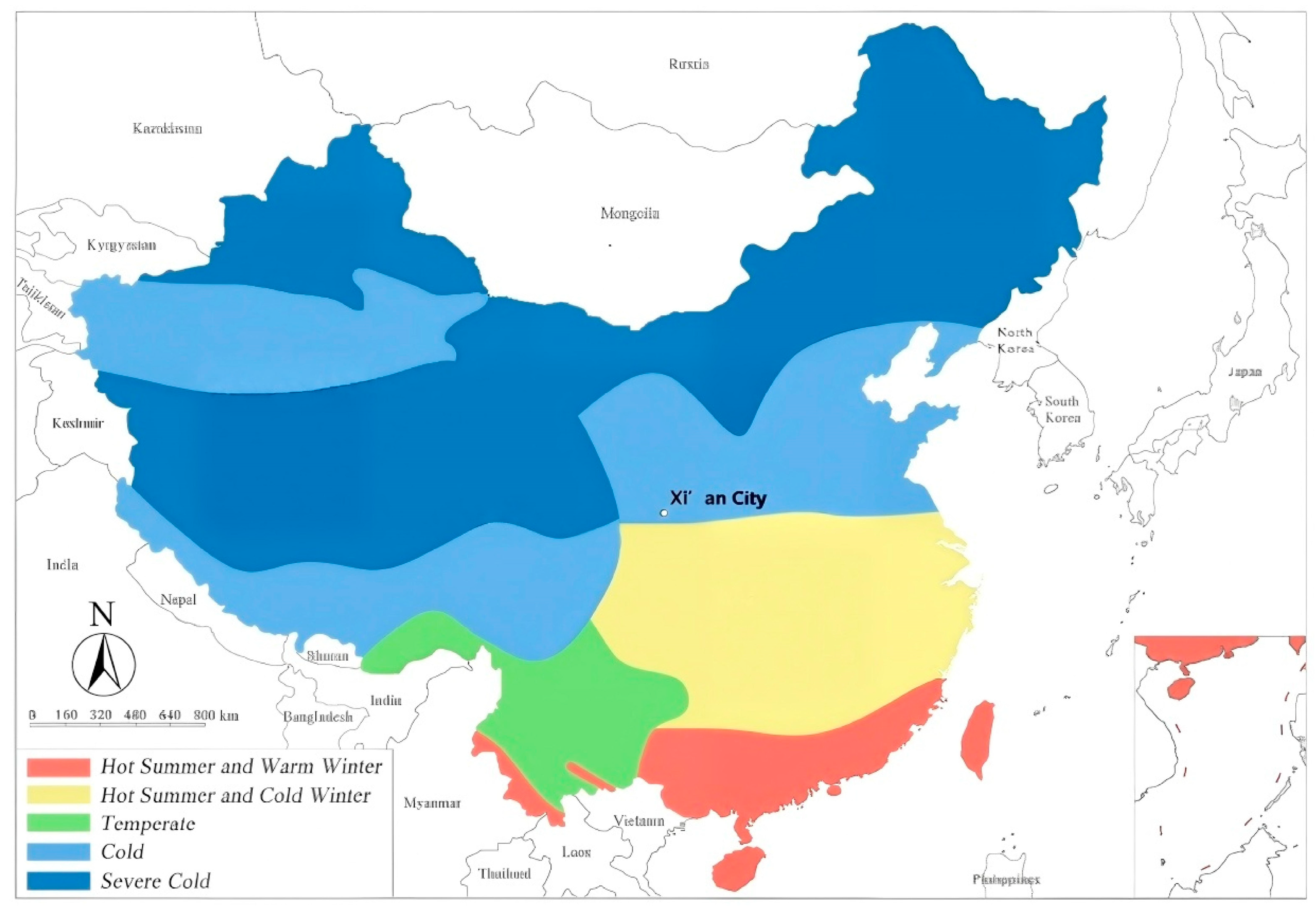
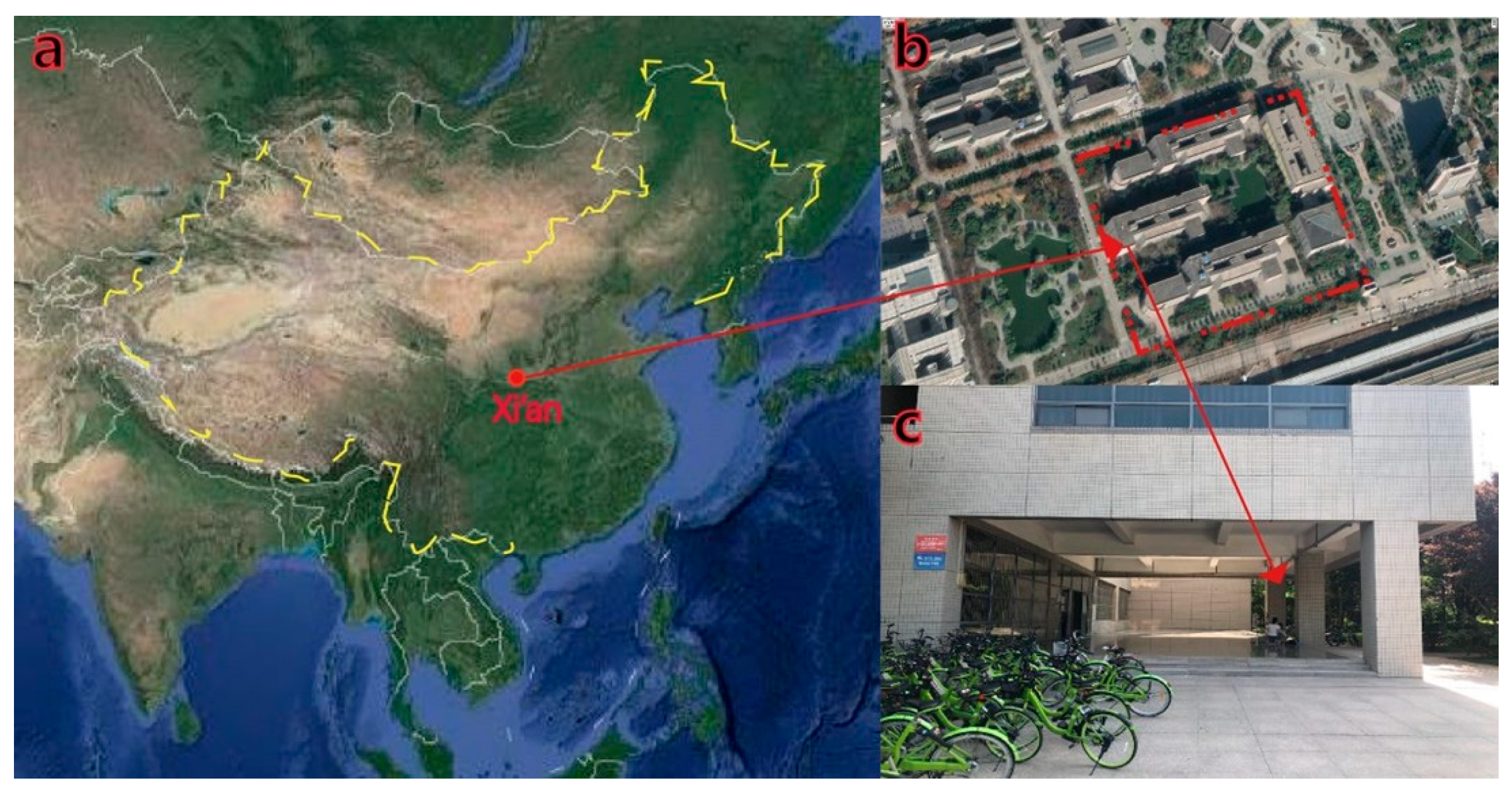
2.1. Monitoring Site
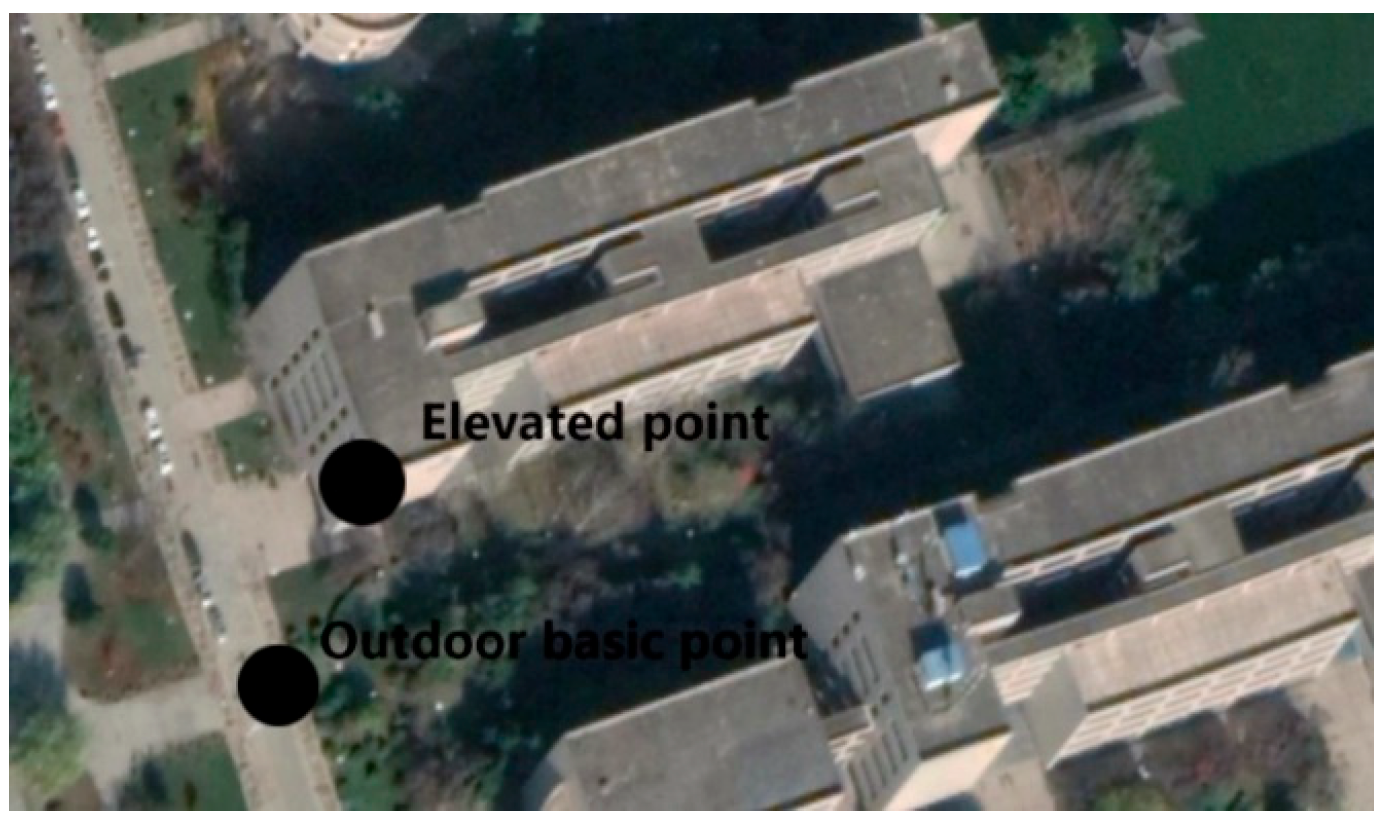
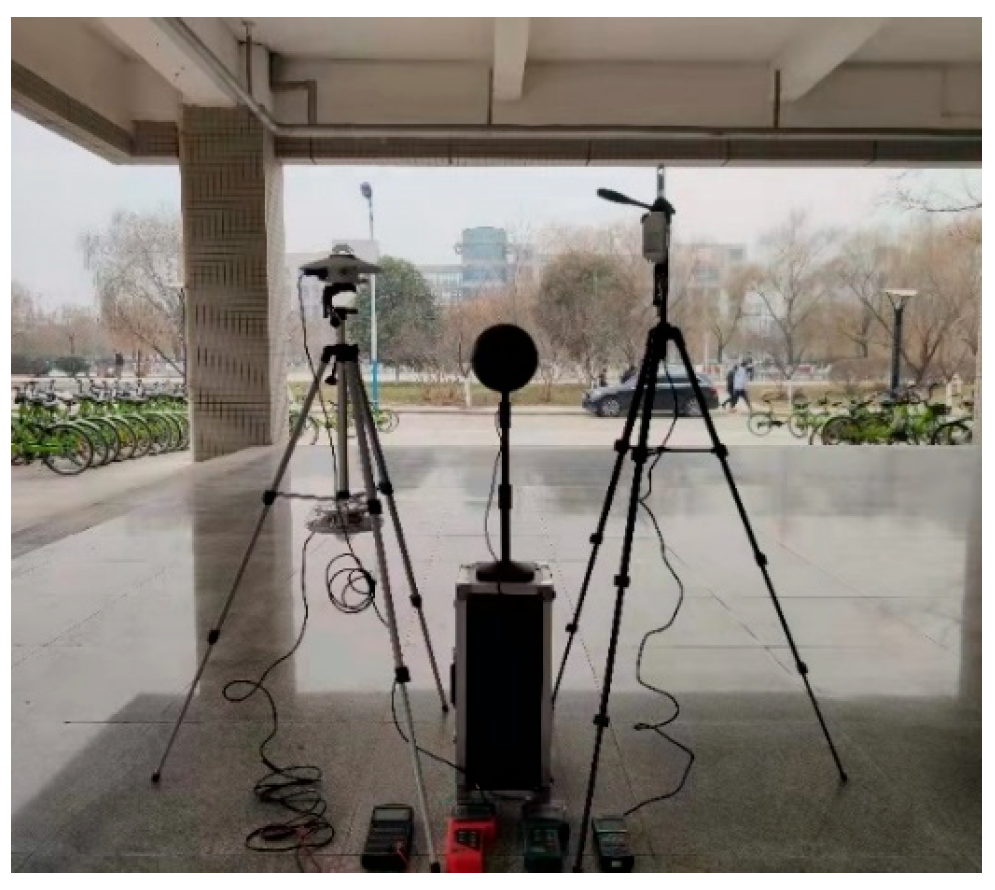
2.2. Experimental Design of the Field Measurement
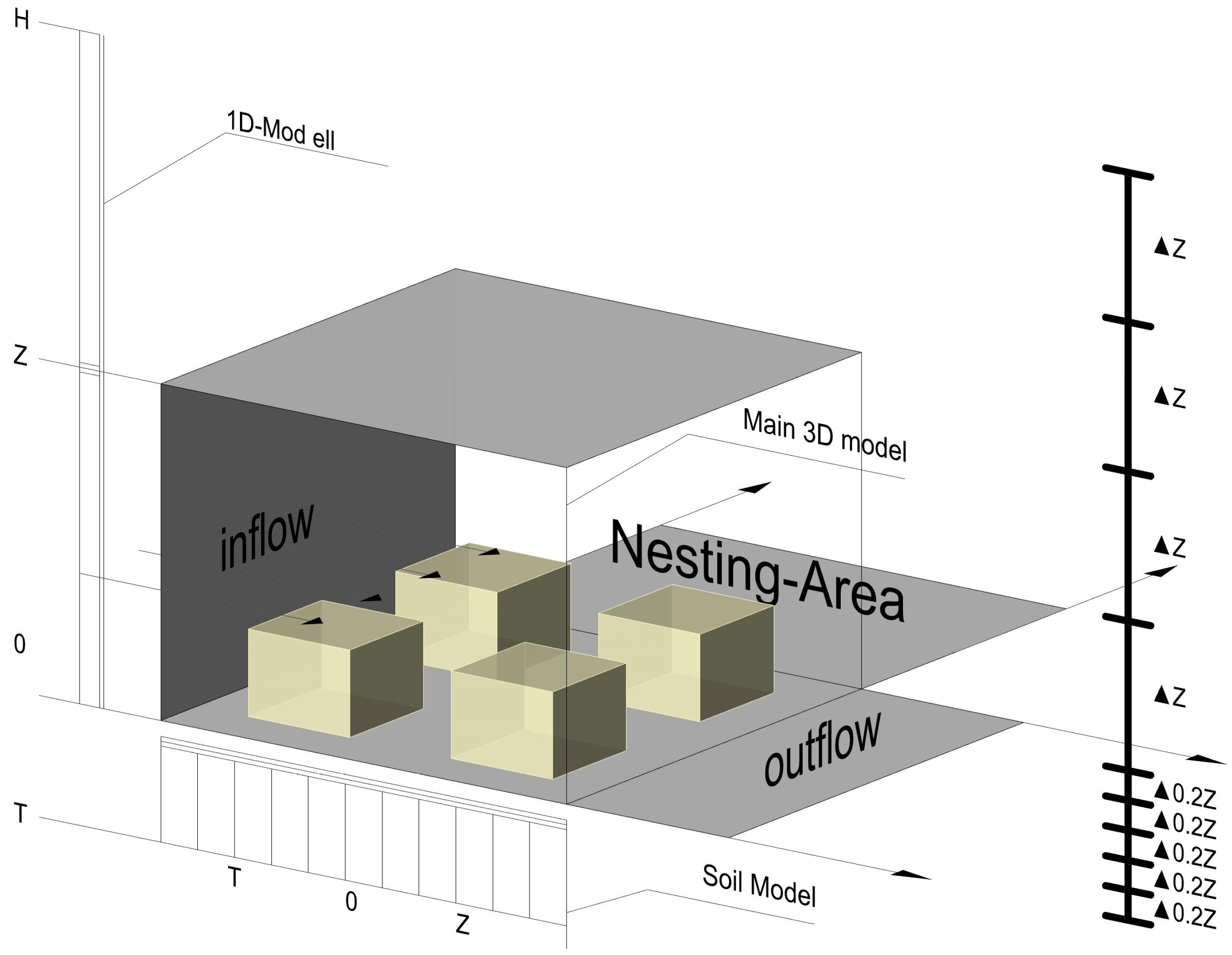
2.3. The Introduction of the Software
2.3.1. The Inner Calculated Principle of Potential Air Temperature (Ta) and Relative Humidity (Rh)
2.3.2. The Inner Calculated Principle of Radiative Fluxes
2.3.3. The Inner Calculated Principle of the Mean Radiant Temperature (TMRT)
2.4. The Boundary Conditions for Simulation

| Parameter | Ta | Rh |
|---|---|---|
| Outdoor Reference Point | ||
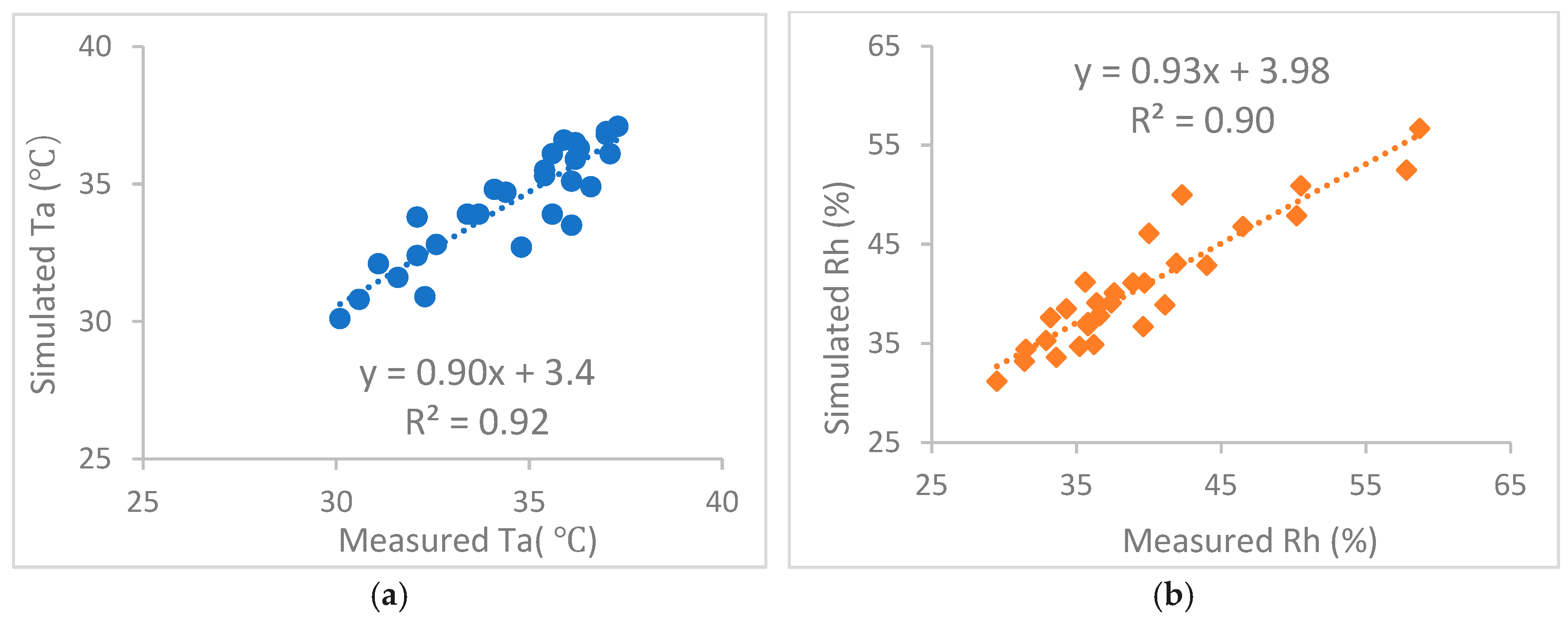
| R2 | 0.92 | 0.90 |
| RMSE | 1.1 °C | 3.66% |
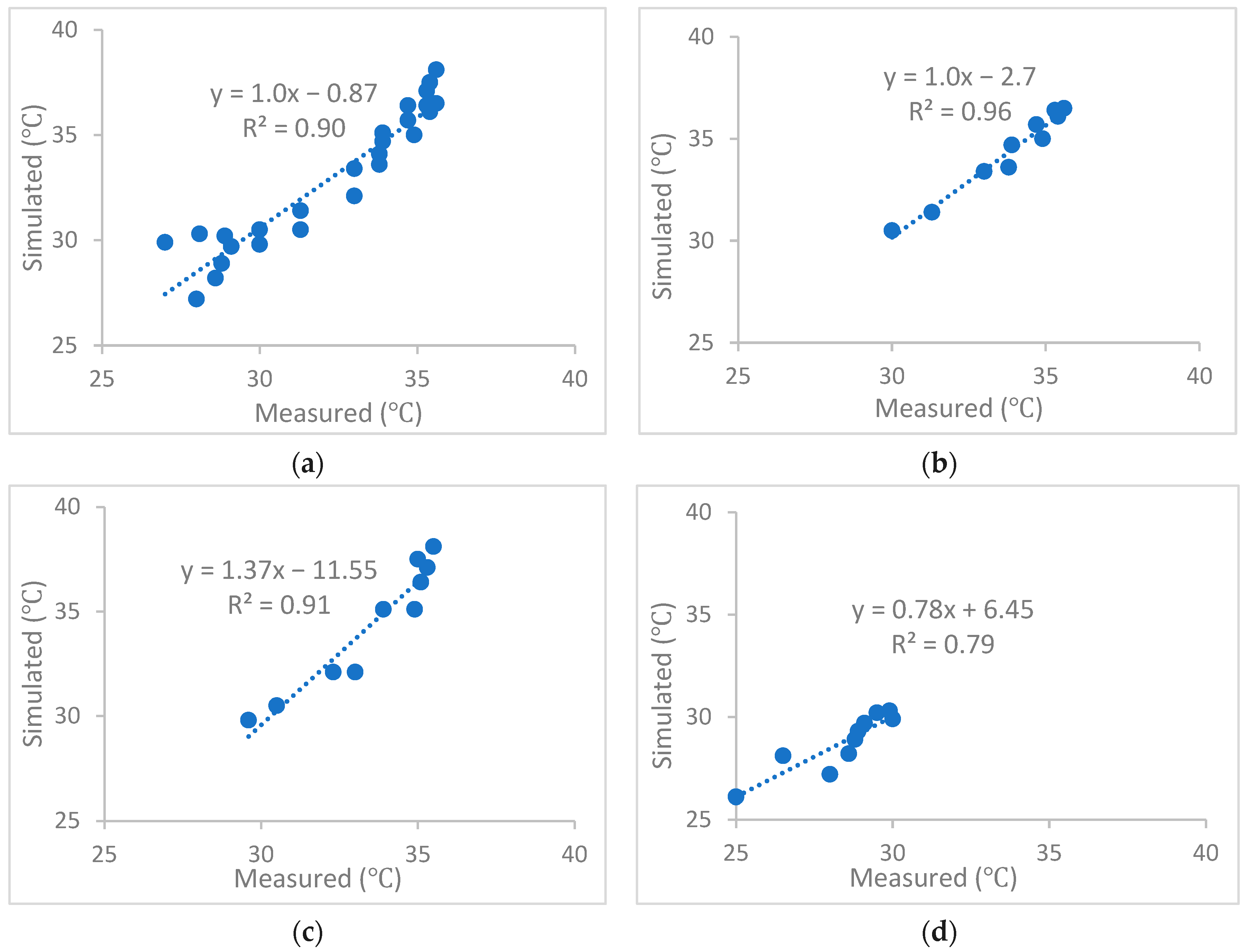
| Condition | RMSE | RMSEu | RMSEs | R2 |
|---|---|---|---|---|
| Average | 1.2 °C | 2.0 °C | 1.0 °C | 0.90 |
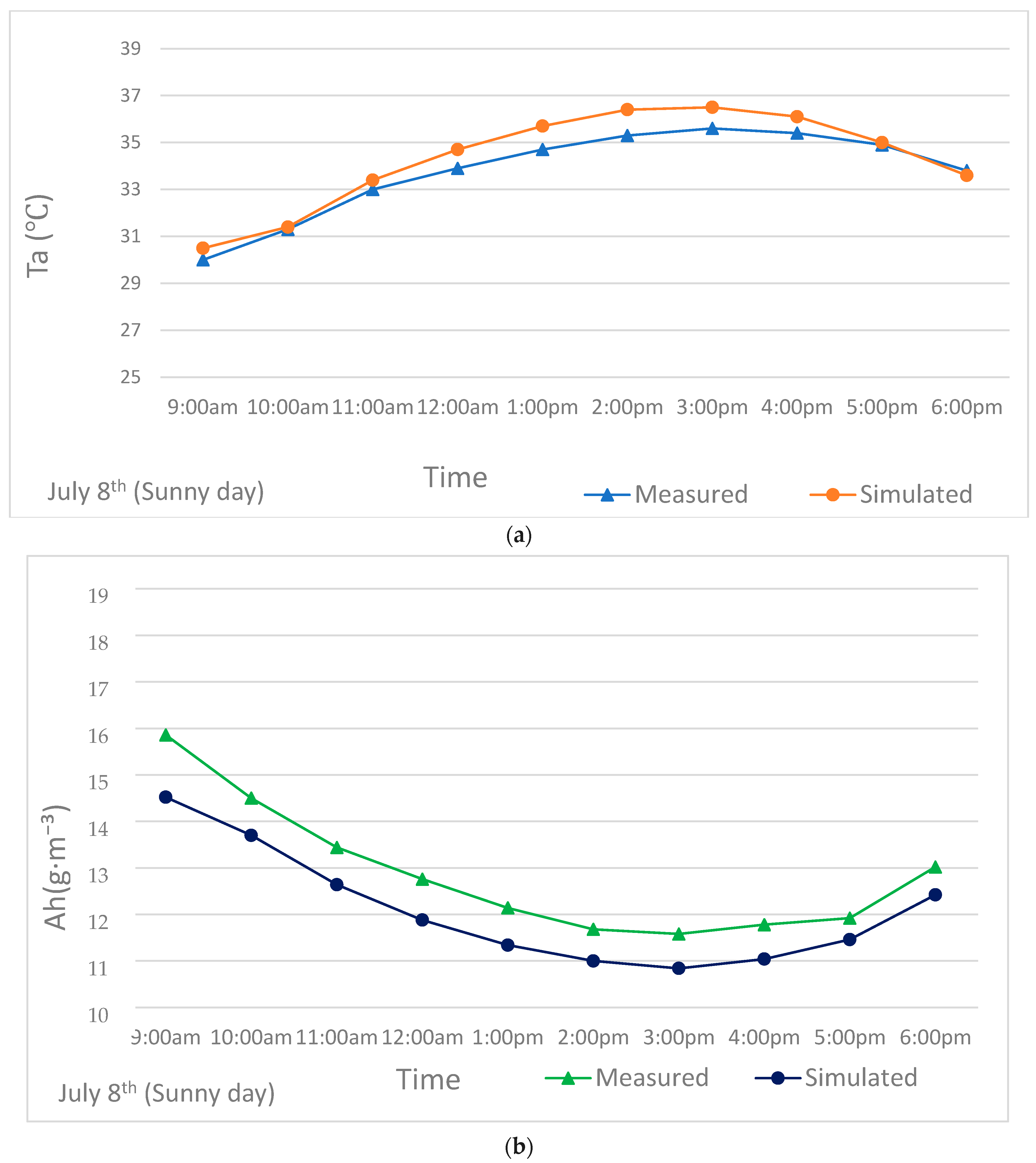
| Sunny | 0.7 °C | 1.2 °C | 0.9 °C | 0.96 |
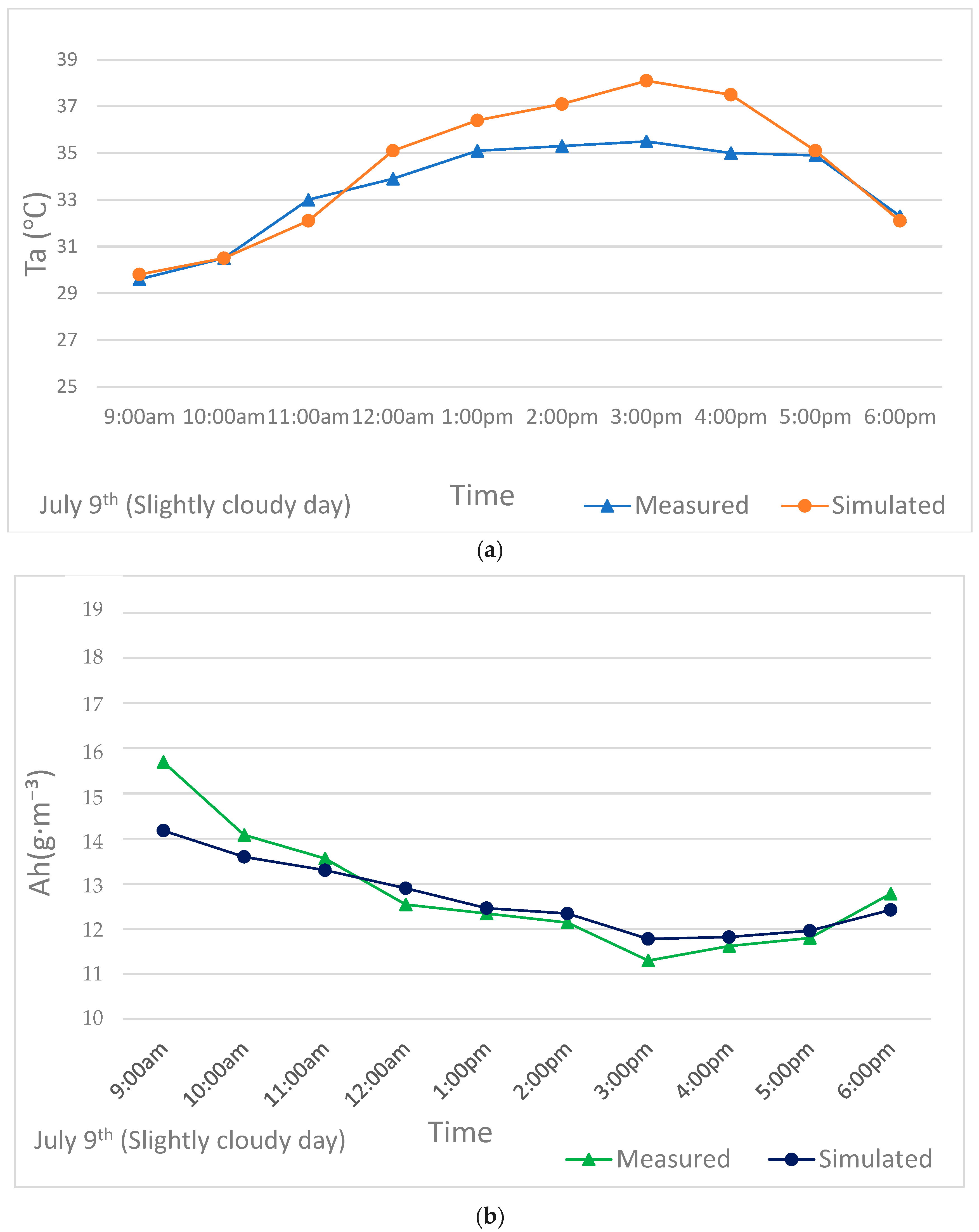
| Slightly cloudy | 1.4 °C | 2.6 °C | 1.1 °C | 0.91 |
| Mostly cloudy | 0.8 °C | 1.41 | 0.7 °C | 0.79 |
3. Results
3.1. The Analyzed Validation in the Basic Outdoor Point
3.2. The Assessment of the Validation Between Measured and Simulated Data of the Elevated Point
3.2.1. Results and Discussion (Ta and Ah)
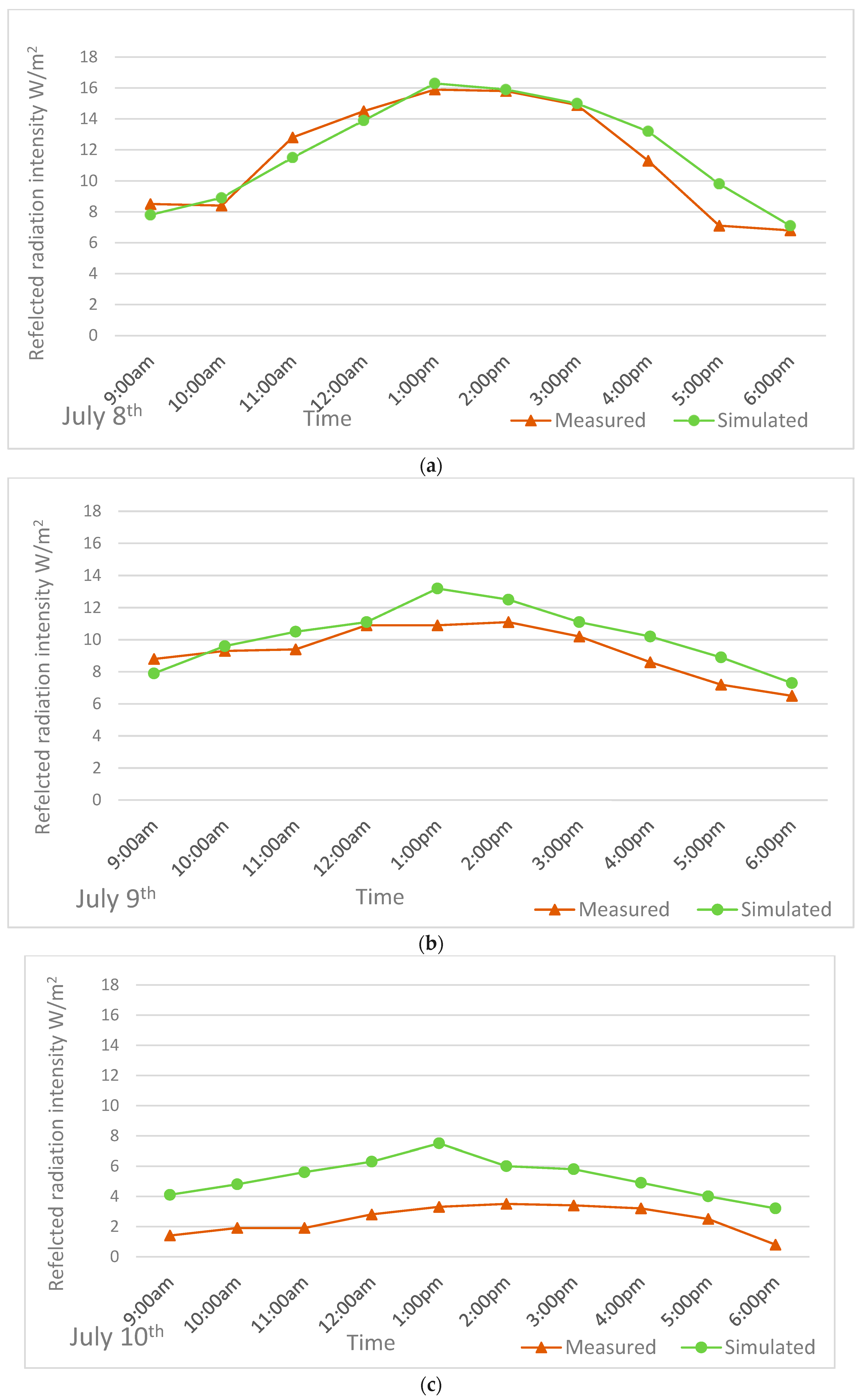
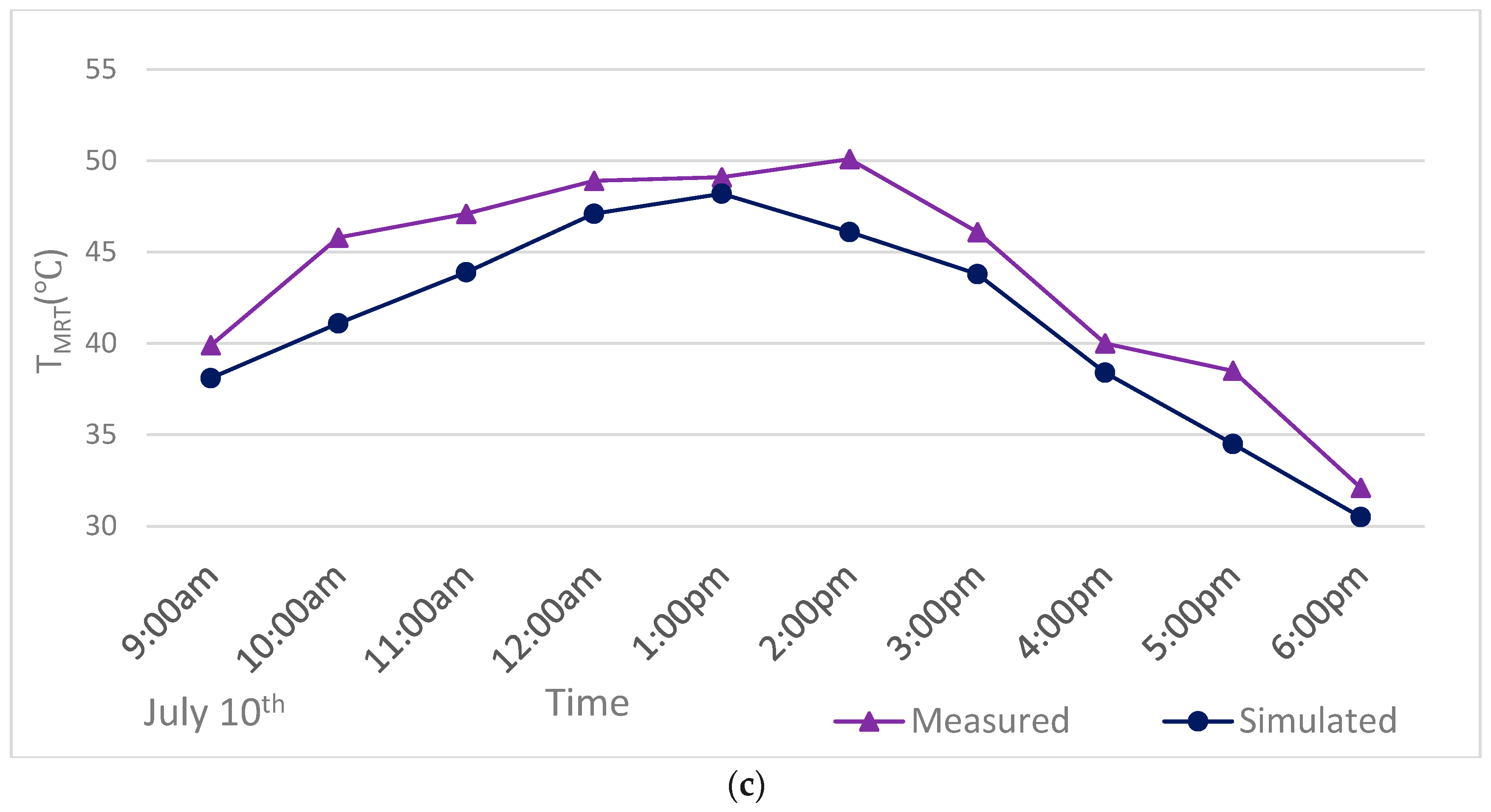
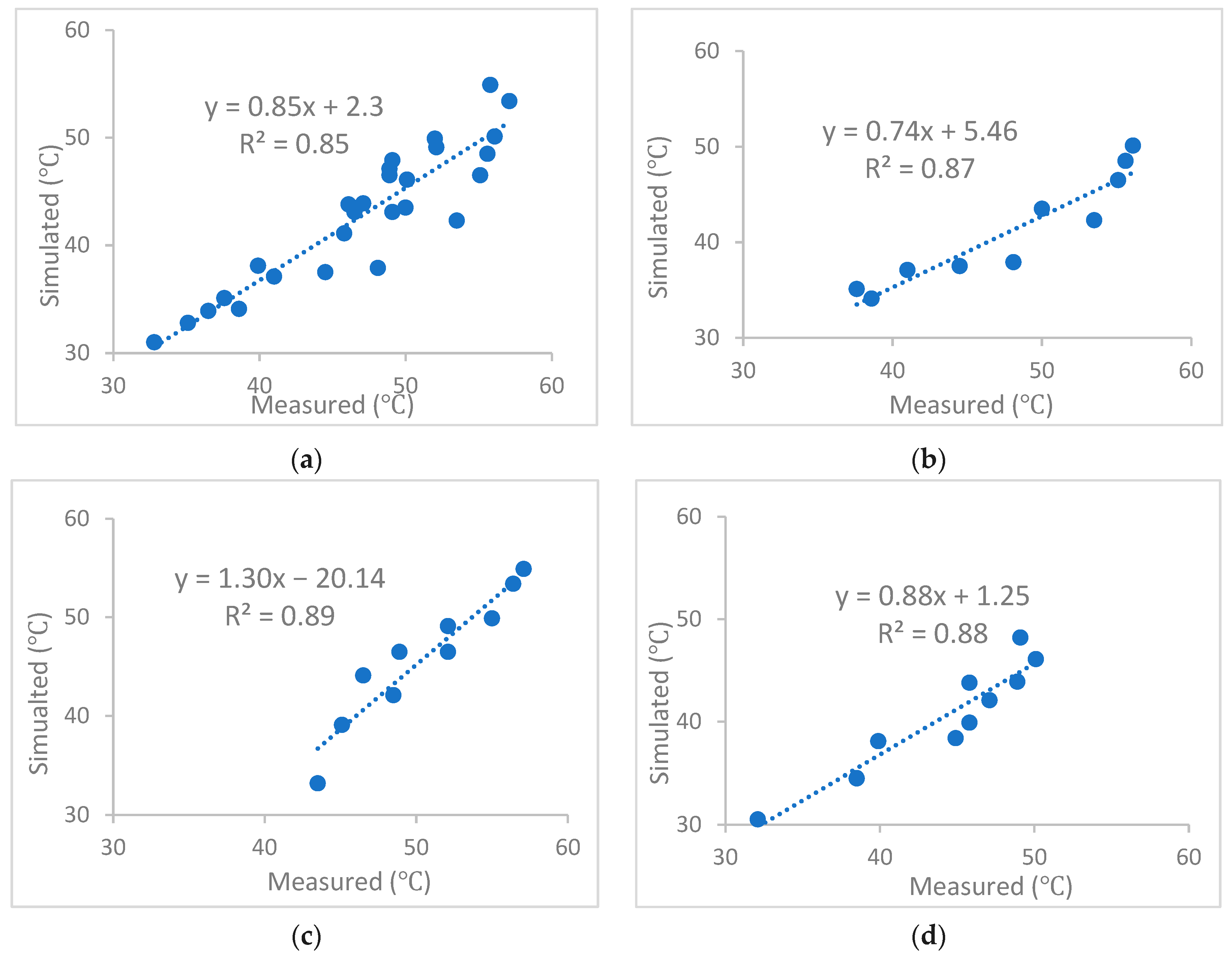
3.2.2. Results and Discussion (Radiation)
4. Summary and Conclusions
5. Limitations and Future Work
Author Contributions
Funding
Data Availability Statement
Conflicts of Interest
Abbreviations
| CFD | Computational Fluid Dynamics |
| Ta | Air Temperature (°C) |
| G | Global Radiation (W/m2) |
| TMRT | Mean Radiant Temperature (°C) |
| RMSEu | Unsystematic Root Mean Square Error (°C) |
| R2 | coefficient of determination |
| UHI | Urban Heat Island |
| Rh | Relative Humidity |
| Tg | Globe Temperature |
| RMSE | Root Mean Square Error (°C) |
| RMSEs | Systematic Root Mean Square Error (°C) |
References
- Liu, J.; Niu, J. CFD simulation of the wind environment around an isolated high rise building: An evaluation of SRANS, LES and DES models. Build. Environ. 2016, 96, 91–106. [Google Scholar] [CrossRef]
- Du, Y.; Mak, C.M.; Liu, J.; Xia, Q.; Niu, J.; Kwok, K.C.S. Effects of lift-up design on pedestrian level wind comfort in different building configurations under three wind directions. Build. Environ. 2017, 117, 84–99. [Google Scholar] [CrossRef]
- Goshayeshi, D.; Fairuz Shahidan, M.; Khafi, F.; Ehtesham, E. A review of researches about human thermal comfort in semi-outdoor spaces. Eur. Online J. Nat. Soc. Sci. 2013, 2, 516–523. [Google Scholar]
- Liu, J.; Niu, J.; Xia, Q. Combining measured thermal parameters and simulated wind velocity to predict outdoor thermal comfort. Build. Environ. 2016, 105, 185–197. [Google Scholar] [CrossRef]
- Tse, K.T.; Zhang, X.; Weerasuriya, A.U.; Li, S.W.; Kwok, K.C.S.; Mak, C.M.; Niu, J. Adopting ‘lift-up’ building design to improve the surrounding pedestrian level wind environment. Build. Environ. 2017, 117, 154–165. [Google Scholar] [CrossRef]
- Xia, Q.; Liu, X.; Niu, J.; Kwok, K.C.S. Effects of building lift-up design on the wind environment for pedestrians. Indoor Built Environ. 2015, 26, 1214–1231. [Google Scholar] [CrossRef]
- Ma, X.; Chen, H.; Lu, Y.; Luo, Q.; Yan, F.; Li, T.; Zhao, J.; Ding, H. Evaluating blue-green infrastructure for outdoor thermal comfort and energy efficiency in a university campus microclimate: A case study from Xi’an, China. Energy Build. 2026, 350, 116640. [Google Scholar] [CrossRef]
- Molenaar, K.R.; Gransberg, D.D. Design-builder selection for small highway projects. J. Manag. Eng. 2001, 17, 214–223. [Google Scholar] [CrossRef]
- Antoniou, N.; Montazeri, H.; Neophytou, M.; Blocken, B. CFD simulation of urban microclimate: Validation using high-resolution field measurements. Sci. Total Environ. 2019, 695, 133743. [Google Scholar] [CrossRef]
- Song, B.G.; Park, K.H.; Jung, S.G. Validation of ENVI-met model with in situ measurements considering spatial characteristics of land use types. J. Korean Assoc. Geogr. Inf. Stud. 2014, 17, 156–172. [Google Scholar] [CrossRef]
- Al-Hafith, O.; Satish, B.K.; Bradbury, S.; de Wilde, P. Simulation of courtyard spaces in a desert climate. In Energy Procedia, Proceedings of the 9th International Conference on Applied Energy, Cardiff, UK, 21–24 August 2017; Elsevier: Amsterdam, The Netherlands. [CrossRef]
- Paramita, B.; Fukuda, H. Urban microclimate prognostic model in a hot-humid climate region. J. Adv. Res. Dyn. Control. Syst. 2018, 10, 211–216. [Google Scholar]
- Ali-Toudert, F.; Mayer, H. Numerical study on the effects of aspect ratio and orientation of an urban street canyon on outdoor thermal comfort in hot and dry climate. Build. Environ. 2006, 41, 94–108. [Google Scholar] [CrossRef]
- ENVI-Met Documentation. ENVI-Met Scientific Overview. 2021. Available online: https://envi-met.com/ (accessed on 13 September 2025).
- Chen, Y.; Deng, S.; Hou, Y.; Yan, Q. Impact of environmental elements in classical Chinese gardens on microclimate and their optimization using ENVI-MET simulations. Energy Build. 2025, 329, 115238. [Google Scholar] [CrossRef]
- Koutsanitis, S.; Sinou, M.; Kanetaki, Z.; Tousi, E.; Varelidis, G. Thermal Performance Investigation in Historical Urban Neighborhoods Using ENVI-Met Simulation Software. Land 2025, 14, 284. [Google Scholar] [CrossRef]
- Yan, D.; Xu, L.; Wang, Q.; Feng, J.; Wu, X. Quantifying Landscape Effects on Urban Park Thermal Environments Using ENVI-Met and 3D Grid Profile Analysis. Forests 2025, 16, 1085. [Google Scholar] [CrossRef]
- Bochenek, A.D.; Klemm, K. The impact of passive green technologies on the microclimate of historic urban structures: The case study of Lodz. Atmosphere 2020, 11, 974. [Google Scholar] [CrossRef]
- Rui, L.; Buccolieri, R.; Gao, Z.; Gatto, E.; Ding, W. Study of the effect of green quantity and structure on thermal comfort and air quality in an urban-like residential district by ENVI-met modeling. Build. Simul. 2019, 12, 183–194. [Google Scholar] [CrossRef]
- Sahnoune, S.; Benhassine, N. Quantifying the impact of green roofs on urban heat island mitigation. Int. J. Environ. Sci. Dev. 2017, 8, 116–123. [Google Scholar] [CrossRef]
- Su, X.; Cai, H.; Chen, Z.; Feng, Q. Influence of the ground greening configuration on the outdoor thermal environment in residential areas under different underground space overburden thicknesses. Sustainability 2017, 9, 1656. [Google Scholar] [CrossRef]
- Aboelata, A. Assessment of green roof benefits on buildings’ energy-saving by cooling outdoor spaces in different urban densities in arid cities. Energy 2020, 219, 119–514. [Google Scholar] [CrossRef]
- Yang, Y.; Zhou, D.; Wang, Y.; Ma, D.; Chen, W.; Xu, D.; Zhu, Z. Economical and outdoor thermal comfort analysis of greening in multistory residential areas in Xi’an. Sustain. Cities Soc. 2019, 51, 101730. [Google Scholar] [CrossRef]
- Gusson, C.S.; Duarte, D.H.S. Effects of built density and urban morphology on urban microclimate—Calibration of the model ENVI-met V4 for the subtropical Sao Paulo, Brazil. Procedia Eng. 2016, 169, 2–10. [Google Scholar] [CrossRef]
- Willmott, C.J. Some Comments on the Evaluation of Model Performance. Bull. Am. Meteorol. Soc. 1982, 63, 1309–1313. [Google Scholar] [CrossRef]
- Ma, X.; Fukuda, H.; Zhou, D.; Wang, M. The evaluation of outdoor thermal sensation and outdoor energy efficiency of a commercial pedestrianized zone. Energies 2019, 12, 1324. [Google Scholar] [CrossRef]
- Ma, X.; Fukuda, H.; Zhou, D.; Gao, W.; Wang, M. The study on outdoor pedestrian thermal comfort in blocks: A case study of the Dao He Old Block in hot-summer and cold-winter area of southern China. Sol. Energy 2019, 179, 210–225. [Google Scholar] [CrossRef]
- Yang, X.; Zhao, L.; Bruse, M.; Meng, Q. Evaluation of a microclimate model for predicting the thermal behavior of different ground surfaces. Build. Environ. 2013, 60, 93–104. [Google Scholar] [CrossRef]
- Wang, Y.; Berardi, U.; Akbari, H. Comparing the effects of urban heat island mitigation strategies for Toronto, Canada. Energy Build. 2016, 114, 2–19. [Google Scholar] [CrossRef]
- Qaid, A.; Ossen, D.R. Effect of asymmetrical street aspect ratios on microclimates in hot, humid regions. Int. J. Biometeorol. 2015, 59, 657–677. [Google Scholar] [CrossRef]
- Lee, H.; Mayer, H.; Chen, L. Contribution of trees and grasslands to the mitigation of human heat stress in a residential district of Freiburg, Southwest Germany. Landsc. Urban Plann. 2016, 148, 37–50. [Google Scholar] [CrossRef]
- Jänicke, B.; Meier, F.; Hoelscher, M.-T.; Scherer, D. Evaluating the Effects of Façade Greening on Human Bioclimate in a Complex Urban Environment. Adv. Meteorol. 2015, 2015, 747259. [Google Scholar] [CrossRef]
- Hedquist, B.C.; Brazel, A.J. Seasonal variability of temperatures and outdoor human comfort in Phoenix, Arizona, U.S.A. Build. Environ. 2014, 72, 377–388. [Google Scholar] [CrossRef]
- Ketterer, C.; Matzarakis, A. Comparison of different methods for the assessment of the urban heat island in Stuttgart, Germany. Int. J. Biometeorol. 2015, 59, 1299–1309. [Google Scholar] [CrossRef] [PubMed]
- Song, B.; Park, K. Contribution of greening and high-albedo coatings to improvements in the thermal environment in complex urban areas. Adv. Meteorol. 2015, 2015, 12–21. [Google Scholar] [CrossRef]
- Ma, X.; Zhang, L.; Zhao, J.; Wang, M.; Cheng, Z. The outdoor pedestrian thermal comfort and behavior in a traditional residential settlement—A case study of the cave dwellings in cold winter of China. Solar. Energy 2021, 220, 130–143. [Google Scholar] [CrossRef]
- Xiong, Y.; Zhang, J.; Xu, X.; Yan, Y.; Sun, S.; Liu, S. Strategies for improving the microclimate and thermal comfort of a classical Chinese garden in the hot-summer and cold-winter zone. Energy Build. 2020, 215, 109914. [Google Scholar] [CrossRef]
- Niu, J.; Liu, J.; Lee, T.-C.; Lin, Z.; Mak, C.; Tse, K.-T.; Tang, B.-S.; Kwok, K.C. A new method to assess spatial variations of outdoor thermal comfort: Onsite monitoring results and implications for precinct planning. Build. Environ. 2015, 91, 263–270. [Google Scholar] [CrossRef]
- Weng, J.; Luo, B.; Xiang, H.; Gao, B. Effects of Bottom-Overhead Design Variables on Pedestrian-Level Thermal Comfort during Summertime in Different High-Rise Residential Buildings: A Case Study in Chongqing, China. Buildings 2022, 12, 265. [Google Scholar] [CrossRef]
- Meteorological Organization Country. Available online: https://wmo.int/ (accessed on 7 March 2026).
- Xu, D.; Zhou, D.; Wang, Y.; Xu, W.; Yang, Y. Field measurement study on the impacts of urban spatial indicators on urban climate in a Chinese basin and static-wind city. Build. Environ. 2019, 147, 482–494. [Google Scholar] [CrossRef]
- ISO 7726:2025; Ergonomics of the Thermal Environment—Instruments for Measuring and Monitoring Physical Quantities. International Organization for Standardization: Geneva, Switzerland, 2025.
- Huttner, S. Further Development and Application of the 3D Microclimate Simulation ENVI-Met. Ph.D. Thesis, Johannes Gutenberg-Universitat in Maina, Mainz, Germany, 2012. [Google Scholar] [CrossRef]
- Jamei, E.; Seyedmahmoudian, M.; Horan, B.; Stojcevski, A. Verification of a bioclimatic modeling system in a growing suburb in Melbourne. Sci. Total Environ. 2019, 689, 883–898. [Google Scholar] [CrossRef]
- López-Cabeza, V.P.; Galán-Marín, C.; Rivera-Gómez, C.; Roa-Fernández, J. Courtyard microclimate ENVI-met outputs deviation from the experimental data. Build. Environ. 2018, 144, 129–141. [Google Scholar] [CrossRef]
- Alfano, F.R.D.A.; Dell’Isola, M.; Ficco, G.; Palella, B.I.; Riccio, G. Small globes and pocket heat stress meters for WBGT and PHS evaluations. A critical analysis under controlled conditions. Build. Environ. 2022, 226, 109781. [Google Scholar] [CrossRef]
- Spett, M.; Lau, K.; Rizzo, A. Automated Microclimate Model Generation from Remote Sensing Data. Land 2026, 15, 329. [Google Scholar] [CrossRef]
- Meteorological Organization of Xi’an City. Available online: http://sn.cma.gov.cn/dsqx/xaqx/ (accessed on 7 March 2026).
- Jarraud, M. Guide to Meteorological Instruments and Methods of Observation (WMO-No. 8); World Meteorological Organisation: Geneva, Switzerland, 2008. [Google Scholar]
- Liu, D.; Songshu, H.U.; Liu, J. Contrasting the Performance Capabilities of Urban Radiation Field Between Three Microclimate Simulation Tools. Build. Environ. 2020, 175, 106789. [Google Scholar] [CrossRef]
- Teitelbaum, E.; Rysanek, A.; Pantelic, J.; Aviv, D.; Obelz, S.; Buff, A.; Luo, Y.; Sheppard, D.; Meggers, F. Revisiting radiant cooling: Condensation-free heat rejection using infrared-transparent enclosures of chilled panels. Archit. Sci. Rev. 2019, 62, 152–159. [Google Scholar] [CrossRef]
- Cooper, E.; Grundstein, A.; Rosen, A.; Miles, J.; Ko, J.; Curry, P. An evaluation of portable wet bulb globe temperature monitor accuracy. J. Athl. Train. 2017, 52, 1161–1167. [Google Scholar] [CrossRef]









| Location | R2 | RMSE (°C) | Season | Area | |
|---|---|---|---|---|---|
| [26] | Foshan, China (Ma et al.) | 0.98 | 1.1 | Summer | Urban block |
| [27] | Tai Zhou (Ma et al.) | 0.83 | / | Summer | Urban block |
| [28] | Guangzhou, China (Yang et al.) | 0.94 | 1.0 | Summer | Urban Park |
| [29] | Beijing, China (Wang et al.) | 0.89 | / | Summer | Urban Distract |
| [30] | Putrajaya, Malaysia (Qaid and Ossen) | 0.69 | 1.8 | Summer | Urban Boulevard |
| [31] | Freiburg, Germany (Lee et al.) | 0.85 | 0.6 | Summer | Urban Area |
| [32] | Berlin, Germany (Janicke et al.) | 0.89 | 1.3 | Summer | Urban Facade |
| [33] | Phoenix, USA (Hedquist et al.) | 0.89 | 2.9 | Summer | Urban Area |
| [34] | Stuttgart, Germany (Ketter et al.) | 0.88 | 0.3 | Summer | Courtyard |
| [35] | Changwon, Korea (Song and Park) | 0.52 | 4.8 | Summer | Urban Open Space |
| [36] |
Mizhi, China
(Ma et al.) | 0.92 | 2.1 | Winter | Residential settlement |
| [37] | Suzhou, China (Xiong et al.) | 0.78 | / | Winter | Urban Garden |
| Date | Meteorological Condition |
|---|---|
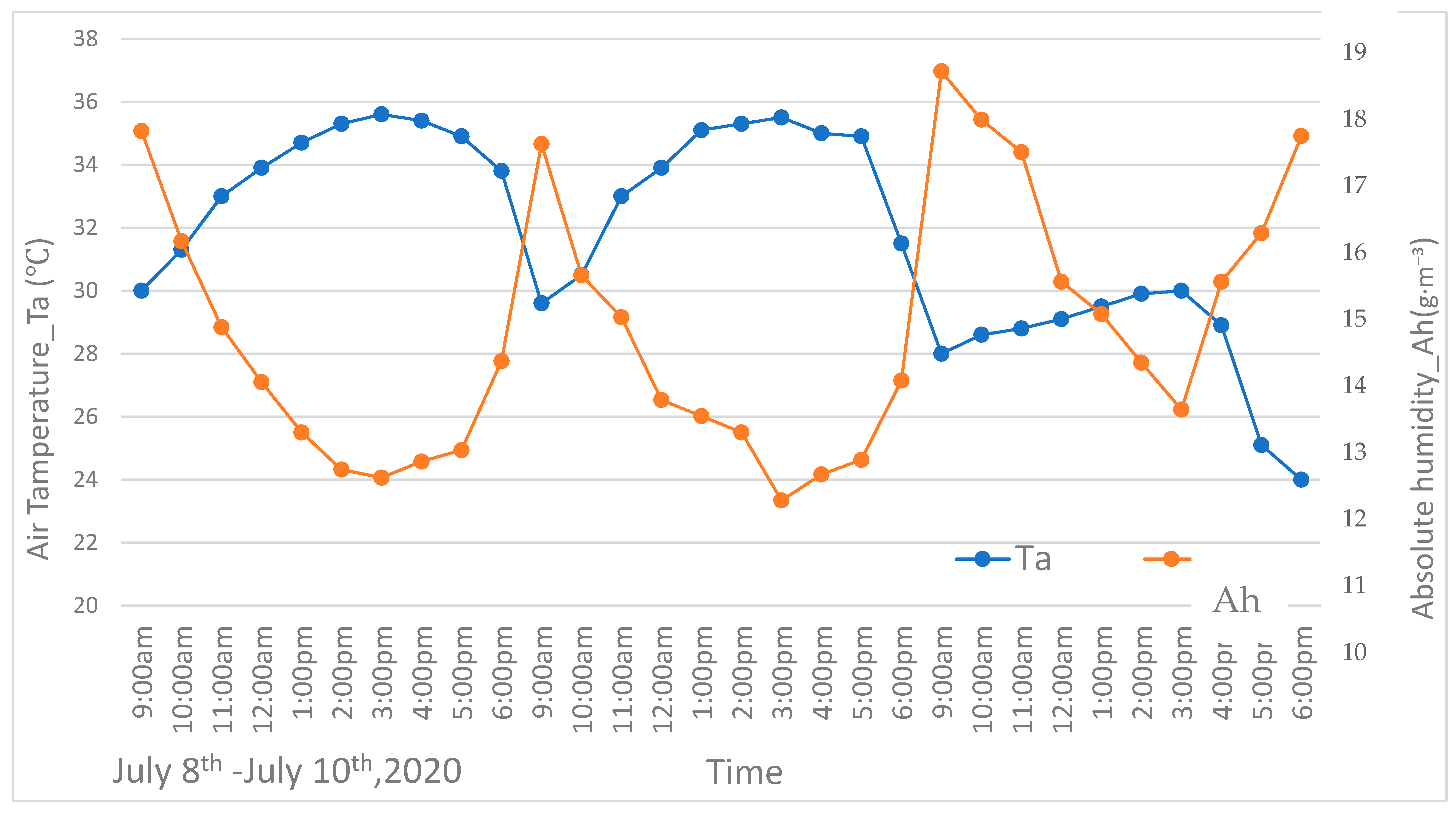
| 8 July 2020 | Sunny (Clear sky) |
| 9 July 2020 | Cloudy (Slightly cloudy) |
| 10 July 2020 | Cloudy (Mostly cloudy) |
| Instrument | Parameter | Measured Accuracy | Measured Range |
|---|---|---|---|
| HOBO | Ta | Accuracy: ±0.2 °C | −40–+70 °C |
| Rh | Accuracy: ±2.5% | 0–100% | |
| Pyranometer TBQ-2 | G | Nonlinearity ≤ 3% | 280–3000 nm |
| HD32.2 WBGT Index (50 mm black globe) | Tg | Resolution: ±0.1 °C | −10–100 °C |
| Parameters | Value | ||
|---|---|---|---|
| Outdoor basic point | Grey brick | Albedo | 0.3 |
| Emissivity | 0.9 | ||
| Roughness length | 0.01 | ||
| Elevated point | Tile | Albedo | 0.5 |
| Emissivity | 0.9 | ||
| Roughness length | 0.01 | ||
| Boundary conditions | Turbulent model | Kinetic energy (TKE) model | |
| Air temperature Relative humidity | Table 5, Table 6 and Table 7 | ||
| Wind direction (°) | 145 | ||
| Wind speed (m/s) | 1.5 m/s | ||
| Number of x grid | 200 | ||
| Number of y grid | 200 | ||
| Number of z grid | 30 | ||
| Grid in dx (m) | 1 | ||
| Grid in dy (m) | 1 | ||
| Grid in dz (m) | 0.5 | ||
| Simulation | Starting day | 8–10 July 2020 | |
| Starting time | 0:00 am | ||
| Total simulation time | 72 h | ||
| July 8th | 24 h | ||
| July 9th | 24 h | ||
| July 10th | 24 h | ||
| 8 July | Air Temperature (°C) | Relative Humidity (%) | 9 July | Air Temperature (°C) | Relative Humidity (%) | 10 July | Air Temperature (°C) | Relative Humidity (%) |
|---|---|---|---|---|---|---|---|---|
| 0:00 am | 24.6 | 67.3 | 0:00 am | 27 | 65.1 | 0:00 am | 24.1 | 72.2 |
| 1:00 am | 24 | 71 | 1:00 am | 26.3 | 71.1 | 1:00 am | 23.2 | 75.1 |
| 2:00 am | 24.5. | 68.5 | 2:00 am | 26.8 | 68.3 | 2:00 am | 24.2 | 73.1 |
| 3:00 am | 25.6 | 63.9 | 3:00 am | 27.6 | 66.5 | 3:00 am | 24.9 | 71.5 |
| 4:00 am | 26.8 | 60.5 | 4:00 am | 27.9 | 62.1 | 4:00 am | 25.6 | 69.9 |
| 5:00 am | 28.9 | 59.1 | 5:00 am | 28.3 | 59.5 | 5:00 am | 26.9 | 68.1 |
| 6:00 am | 29.1 | 57.8 | 6:00 am | 28.9 | 58.1 | 6:00 am | 27.1 | 67 |
| 7:00 am | 30.2 | 56.2 | 7:00 am | 29.4 | 56.3 | 7:00 am | 27.8 | 66.1 |
| 8:00 am | 31 | 55 | 8:00 am | 29.9 | 55.1 | 8:00 am | 28.3 | 65.1 |
| 9:00 am | 31.6 | 54.6 | 9:00 am | 30.6 | 53.2 | 9:00 am | 28.6 | 64.8 |
| 10:00 am | 33.4 | 44.7 | 10:00 am | 33.3 | 44.9 | 10:00 am | 28.9 | 63.9 |
| 11:00 am | 34.6 | 40.3 | 11:00 am | 33.8 | 40.9 | 11:00 am | 29 | 62.7 |
| 12:00 am | 35.4 | 38.7 | 12:00 am | 34.8 | 39.8 | 12:00 am | 29.9 | 61.2 |
| 1:00 pm | 36 | 37 | 1:00 pm | 35.8 | 37.6 | 1:00 pm | 30.1 | 58.9 |
| 2:00 pm | 36.3 | 34.8 | 2:00 pm | 36.5 | 36 | 2:00 pm | 31.2 | 58 |
| 3:00 pm | 36.9 | 33.4 | 3:00 pm | 36.9 | 35.5 | 3:00 pm | 32 | 57 |
| 4:00 pm | 36.1 | 34.7 | 4:00 pm | 36.6 | 36.2 | 4:00 pm | 31 | 57.9 |
| 5:00 pm | 35.2 | 35.7 | 5:00 pm | 36.1 | 38.1 | 5:00 pm | 30.5 | 58.9 |
| 6:00 pm | 34.2 | 38.6 | 6:00 pm | 35.3 | 39.1 | 6:00 pm | 30 | 59.3 |
| 7:00 pm | 32.5 | 46.5 | 7:00 pm | 34.1 | 40.5 | 7:00 pm | 28.5 | 60.2 |
| 8:00 pm | 29.8 | 48.9 | 8:00 pm | 32.3 | 42.1 | 8:00 pm | 27.1 | 63.1 |
| 9:00 pm | 27 | 52.5 | 9:00 pm | 30.8 | 48.6 | 9:00 pm | 26.5 | 65.6 |
| 10:00 pm | 25.9 | 60 | 10:00 pm | 28.9 | 55.1 | 10:00 pm | 25.4 | 67.8 |
| 11:00 pm | 25.1 | 62.5 | 11:00 pm | 27.8 | 61.2 | 11:00 pm | 24.8 | 69.1 |
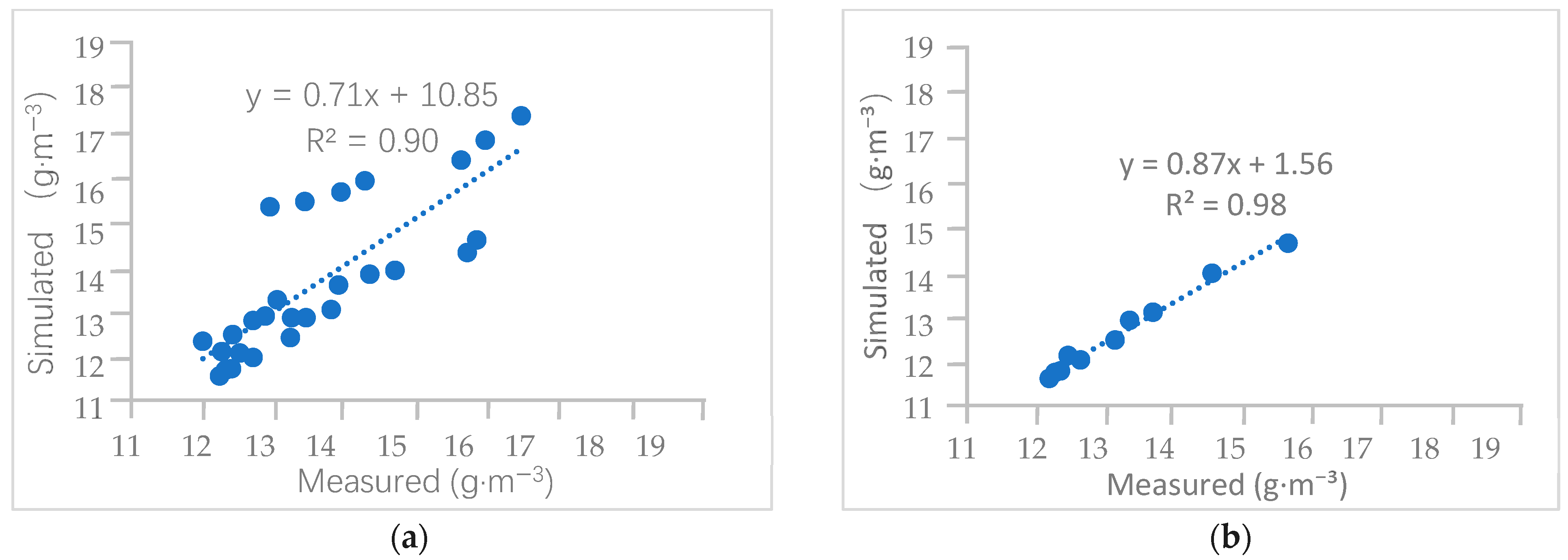
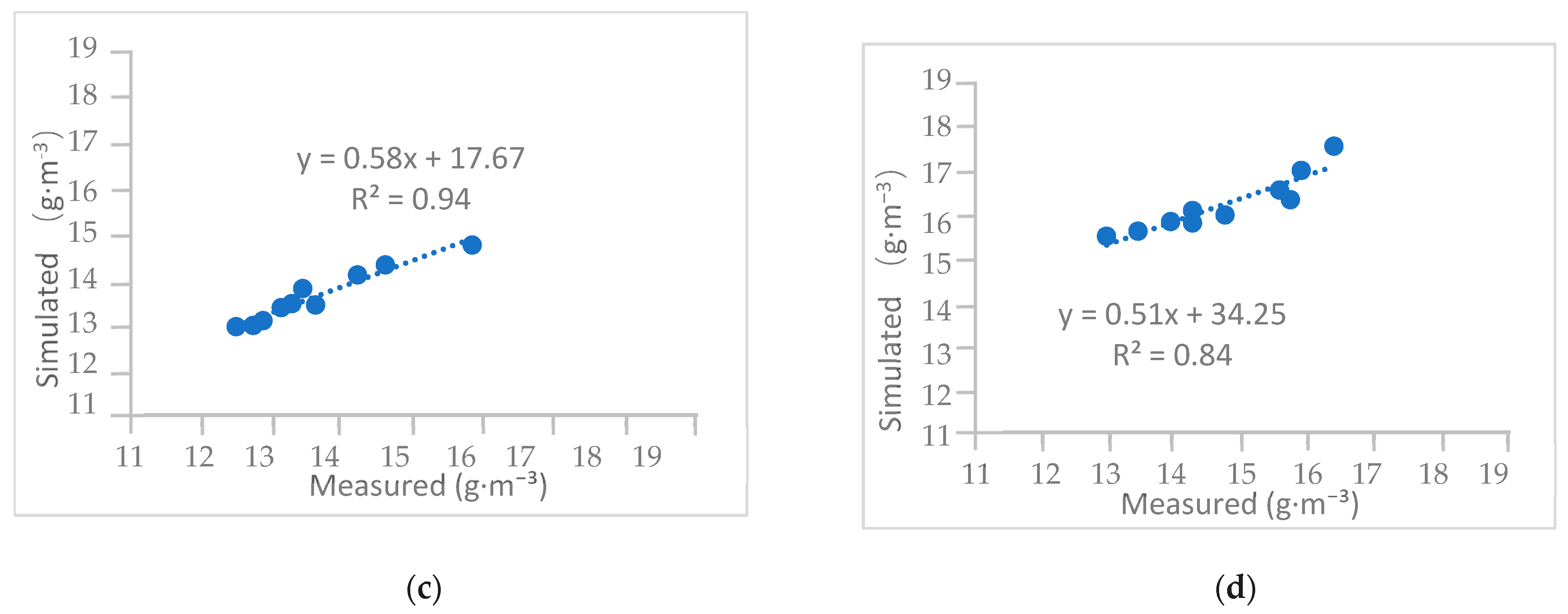
| Condition | RMSE | RMSEu | RMSEs | R2 |
|---|---|---|---|---|
| Average | 1.05 g·m−3 | 1.35 g·m−3 | 0.96 g·m−3 | 0.90 |
| Sunny | 0.70 g·m−3 | 1.05 g·m−3 | 0.80 g·m−3 | 0.98 |
| Slightly cloudy | 0.95 g·m−3 | 1.20 g·m−3 | 0.40 g·m−3 | 0.94 |
| Mostly cloudy | 1.50 g·m−3 | 1.65 g·m−3 | 1.20 g·m−3 | 0.84 |
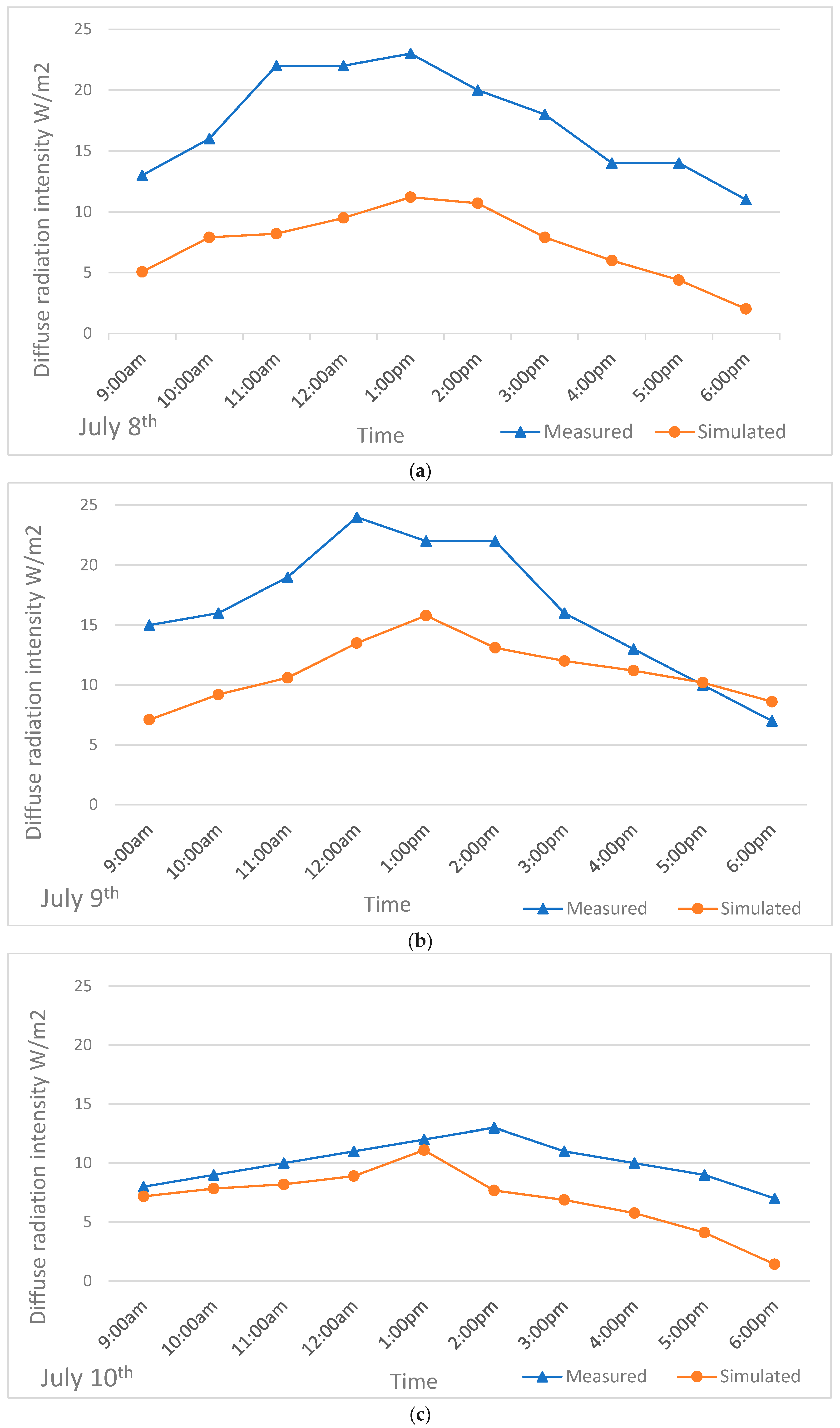
| Condition | RMSE | RMSEu | RMSEs | R2 |
|---|---|---|---|---|
| Average | 5.0 °C | 6.1 °C | 3.9 °C | 0.85 |
| Sunny | 7.2 °C | 7.9 °C | 6.1 °C | 0.87 |
| Slightly cloudy | 5.2 °C | 6.2 °C | 4.3 °C | 0.89 |
| Mostly cloudy | 4.1 °C | 5.2 °C | 3.9 °C | 0.88 |
Disclaimer/Publisher’s Note: The statements, opinions and data contained in all publications are solely those of the individual author(s) and contributor(s) and not of MDPI and/or the editor(s). MDPI and/or the editor(s) disclaim responsibility for any injury to people or property resulting from any ideas, methods, instructions or products referred to in the content. |
© 2026 by the authors. Licensee MDPI, Basel, Switzerland. This article is an open access article distributed under the terms and conditions of the Creative Commons Attribution (CC BY) license.
Share and Cite
Ma, X.; Yang, Y.; Li, T. Performance Evaluation of ENVI-Met in Simulating Microclimates Beneath Elevated Buildings in Cold Climates. Buildings 2026, 16, 1215. https://doi.org/10.3390/buildings16061215
Ma X, Yang Y, Li T. Performance Evaluation of ENVI-Met in Simulating Microclimates Beneath Elevated Buildings in Cold Climates. Buildings. 2026; 16(6):1215. https://doi.org/10.3390/buildings16061215
Chicago/Turabian StyleMa, Xuan, Yuhuan Yang, and Tongxin Li. 2026. "Performance Evaluation of ENVI-Met in Simulating Microclimates Beneath Elevated Buildings in Cold Climates" Buildings 16, no. 6: 1215. https://doi.org/10.3390/buildings16061215
APA StyleMa, X., Yang, Y., & Li, T. (2026). Performance Evaluation of ENVI-Met in Simulating Microclimates Beneath Elevated Buildings in Cold Climates. Buildings, 16(6), 1215. https://doi.org/10.3390/buildings16061215