1. Introduction
With the rapid development of society, people’s requirements for living environments are continuously improving. In this process, the role of air conditioning is undoubtedly indispensable. As devices that maintain the temperature of indoor spaces and ensure thermal comfort, most air conditioners adopt mechanical vapor compression technology, which has a wide range of applications [
1]. However, such vapor-compression air conditioners tend to consume a relatively large amount of power. According to statistics, approximately 15% of the world’s electricity is consumed by refrigeration and air conditioning systems [
2], while in developed countries, air conditioning systems alone account for up to about 20% of electricity consumption [
3]. Furthermore, surveys indicate that in summer, air conditioning system energy consumption constitutes 60–70% of the total energy use in residential households [
4]. At present, window-type air conditioners have been phased out in most residential households, which have instead adopted split-type air conditioners [
5]. In addition, the world’s refrigeration industry emits 7.8% of greenhouse gases and contributes 37% to global warming, mainly from fluorinated refrigerants [
6]. Therefore, it is evident that reducing air conditioning energy consumption, particularly in household air conditioners, is crucial for decreasing overall energy use and carbon dioxide emissions. There are various ways to reduce the energy consumption of air conditioners, including variable refrigerant flow (VRF) technology [
7,
8,
9], high-performance refrigerants [
10,
11,
12], combined with renewable energy methods [
13,
14,
15], improved fan structures [
16,
17], improved compressor performance [
18,
19], evaporative cooling of condensers [
1,
6,
20], and intelligent control systems for air conditioning [
21,
22,
23], among others. These methods improve the performance of air conditioning systems through different approaches, thereby reducing energy consumption. In recent years, more and more scholars have focused on evaporative cooling air conditioning technology and conducted various related studies [
24,
25,
26,
27], achieving significant progress.
Evaporative cooling is a technology that relies on the heat absorption from water evaporation to cool air or water [
28]. Depending on whether air is in direct contact with water or not, evaporative cooling can be classified as direct evaporative cooling (DEC) or indirect evaporative cooling (IEC) [
6]. DEC is the simplest form, where water and air are in direct contact. The evaporation of water absorbs heat, thereby reducing the temperature of both the air and water. In this process, the air is not only cooled but also humidified, making it an isenthalpic humidification process. IEC uses either the lower-temperature air (secondary air) or water obtained through DEC and employs a heat exchanger to cool the outdoor air (primary air). In this process, the outdoor air does not come into direct contact with water, so its moisture content remains unchanged, forming an isohumid cooling process. DEC features low cost, energy savings and environmental friendliness, making it particularly suitable for arid climatic environments, yet its application is restricted by the performance and operating conditions of the associated equipment. By contrast, IEC can overcome the limitations of DEC and is thus applicable to tropical and humid climatic environments. It is mainly influenced by factors such as the heat exchanger structure, the flow rate ratio of primary air to secondary air, and the inlet air conditions. Nevertheless, it does not increase the moisture content of the supply air and can even remove the indoor moisture load. Numerous scholars have carried out extensive research on the application of evaporative cooling technology in vapor-compression air conditioners. Mehrabi et al. [
29] studied the influence of different placement angles of wet pads on the DEC effect through experiments. They found that a 15° angle resulted in the lowest outlet air temperature and the best performance. Atmaca et al. [
20] carried out an experimental investigation on variable-frequency split-type air conditioners integrated with evaporative cooling, and their results indicated that the effectiveness of the evaporative pad ranged from 0.65 to 0.72. They further noted that the performance efficiency of the evaporative pad is influenced not only by outdoor air temperature and RH, but also by pad-related parameters including material properties, physical thickness, air velocity, and water flow rate. Venkateswaran et al. [
30] tested the condenser performance of a water chiller equipped with jute, cotton, and coconut fiber cooling pads through evaporative cooling experiments. They observed significant improvements in condenser heat dissipation for all three pads, with jute fiber demonstrating the best performance. Its cooling rate was 23.5% higher than that of cotton fiber and 47.1% higher than that of coconut fiber. Chen et al. [
5] used a fixed-frequency split air conditioner with a cooling capacity of 2.2 kW as the experimental device by covering the compressor shell with a moisture-transferring and quick-drying textile and delivering condensate water to it for evaporative cooling. Under optimal operating conditions, the compressor shell temperature decreased by 15.1 °C, the high-pressure side pressure dropped by 2.7%, energy consumption was reduced by 9.2%, and the Energy Efficiency Ratio (EER) increased by 7.3%. Larn et al. [
4] directly sprayed water onto the condenser of a commercial split air conditioner using a spraying method, and their results showed a 6.16% improvement in the Coefficient of Performance (COP). Rasha et al. [
31] applied DEC technology to a window-type air conditioning unit with a 2-ton cooling capacity. The experimental study found that the cooling capacity increased by 10–20% and the power consumption decreased by about 3%. Majid et al. [
32] selected a fixed-frequency split air conditioner with a cooling capacity of 5275 W as the experimental device. Air exchanges heat with the condenser through a wet pad. Experimental results showed that within the tested temperature range of 40–50 °C, the cooling capacity increased by an average of 19%, power consumption decreased by an average of 13%, and the EER improved by an average of 36%. Gupta et al. [
6] found that by using DEC to lower the condenser temperature of an inverter split air conditioner, under conditions of 43 °C ambient temperature and 50% RH, power consumption could be reduced by 21.6% and the EER increased by 23.7%. Wang et al. [
33] applied the DEC technology to cool the condenser of a household split-type air conditioner, and their research findings indicated an inverse relation between the condenser inlet dry-bulb temperature and the COP. Moreover, this approach enabled the air conditioning system to operate under subcooled conditions, with the saturation temperature drop across the condenser rising from 2.4 °C to 6.6 °C. This resulted in lower compressor power consumption and a significant improvement in the system COP, with the enhancement ranging from 6.1% to 18%.
In summary, it can be observed that evaporative cooling technology is widely applied, particularly in commercial air conditioning systems. Many scholars have also carried out relevant studies and explorations on its application in household air conditioners, which has verified the feasibility of applying evaporative cooling technology to household air conditioners, particularly SAC. However, mature and widely adopted application cases remain relatively scarce. In the research on applying evaporative cooling technology to household air conditioning, current technical approaches usually involve spraying water directly onto the condenser or onto the wet pad to cool the condenser either directly or indirectly. These methods are relatively singular in form and fail to demonstrate alternative approaches and improved effects. This paper proposes a new method, namely the double-layer rotating wet pad water absorption method. In this method, double-layer wet pads are arranged on the driving shaft and the driven shaft. Instead of requiring a water pump to spray water, the lower end of the double-layer wet pads is directly submerged in the water of the water tank. Driven by the rotation of the motor, the double-layer wet pads move in a cyclic vertical motion, enabling more extensive and uniform water distribution across their surface. In addition, due to a certain gap between the double-layer wet pads, if the air is not completely cooled by DEC when passing through the first layer of the wet pad, it can be further cooled by DEC at the second layer. This study focuses on investigating the cooling effect of DEC when air flows through the double-layer wet pads with this water distribution method. It also measures the reduction in condensation temperature after the cooled air exchanges heat with the condenser through convection and calculates and analyzes the energy-saving effect of this SAC. This technology is conducive to practical application and widespread adoption.
2. Experimental Introduction
2.1. Experimental Site
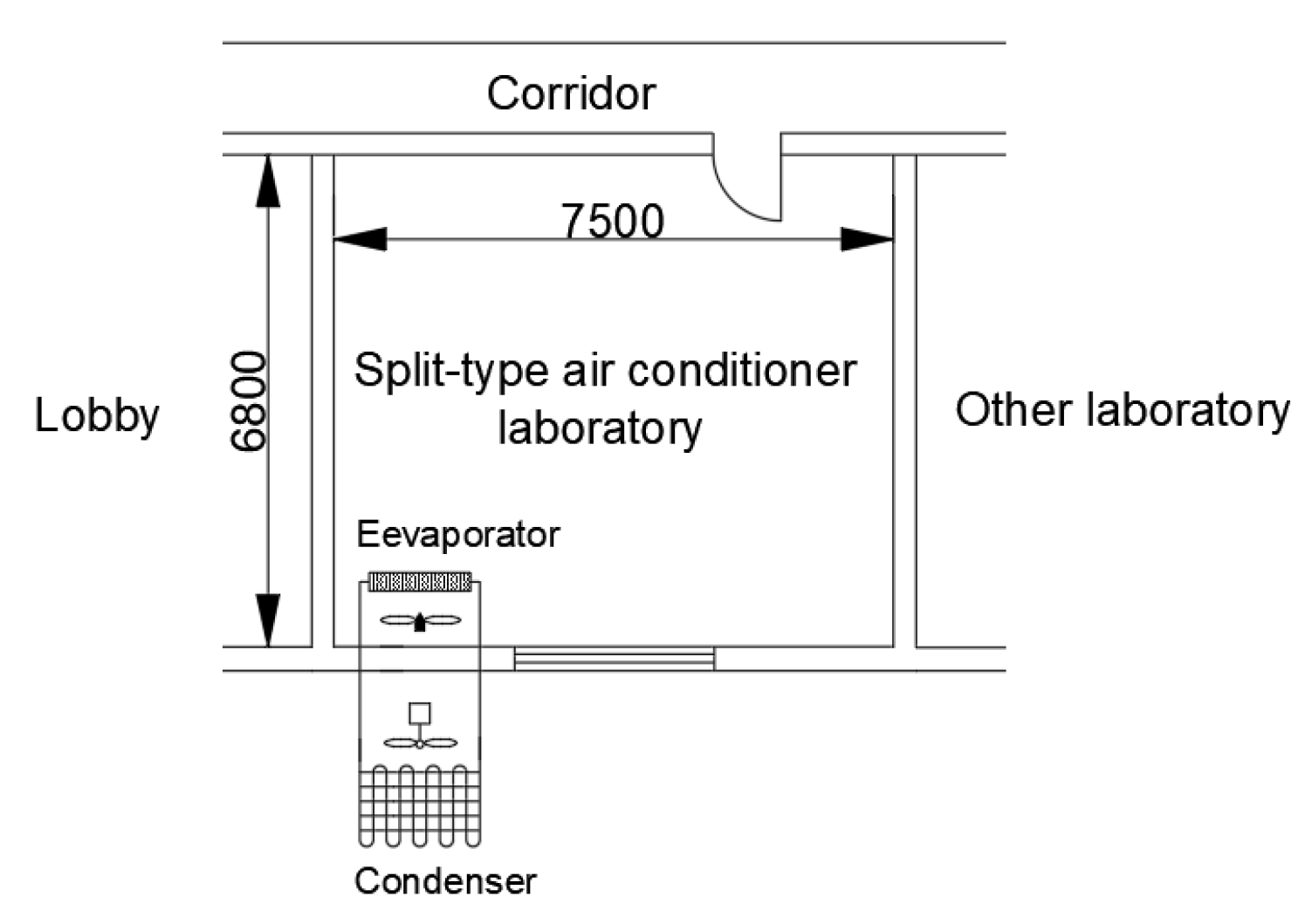
The experiment was conducted in a laboratory at Henan University of Urban Construction, as illustrated in
Figure 1. The laboratory measures 7.5 m × 6.8 m × 3.7 m (length × width × height). The experimental room has a northern interior wall adjacent to a corridor, an east wall adjoining another laboratory, a west wall adjoining the first-floor hall, and the southern external wall incorporating a 3.2 m
2 aluminium alloy glazed window.
2.2. Air Conditioning Design Structure and System Description
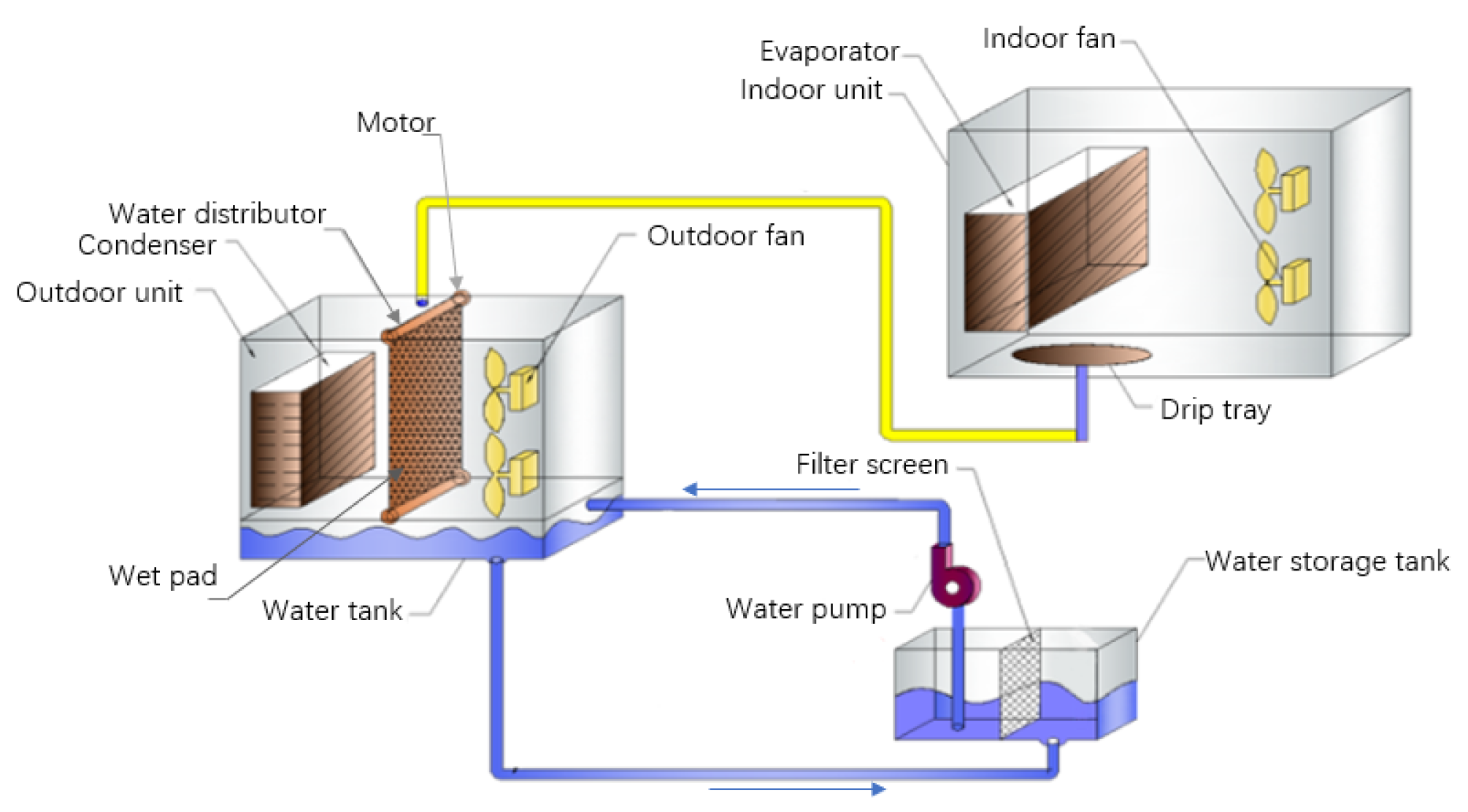
The schematic diagram of the air conditioner structure is shown in
Figure 2. The retrofit is based on a household SAC. Compared with the conventional household SAC, the indoor unit remains unchanged. A water distribution system is added between the fan and the condenser of the outdoor unit. A water tank is installed at the bottom of the outdoor unit, and a water replenishment system is additionally incorporated. The water distributor system consists of double-layer wet pads, a motor, a driving shaft, a driven shaft, and a bracket, among other components. A specific gap is reserved between the double-layer wet pads instead of them being closely attached to each other. The water replenishment system consists of a water storage tank, a water pump, a filter screen, and supply/return pipes.
The indoor unit of the air conditioner is typically installed at a higher elevation than the outdoor unit. During cooling operation, the condensate water generated by the air conditioner can drain into the wet pad via a water pipe by gravity. The water tank at the bottom of the outdoor unit is filled with water, and the lower end of the wet pad is partially submerged in water. Due to the excellent water absorption of the wet pad, a large amount of water will adhere to it. Driven by the motor, the entire wet pad will be covered with a significant amount of water. In addition, when the water level in the water tank drops, the water pump will automatically draw water from the water storage tank to refill the water tank. The filter screen fitted inside the water storage tank will filter out impurities to prevent them from entering the water tank.
Driven by the motor, the double-layer wet pad rotates continuously. The airflow generated by the axial flow fan blows through the wet pad, inducing the evaporation and heat absorption of the water adhering to the pad surface. The sensible heat of the relatively dry air is transferred to the water on the wet pad, resulting in a drop in air temperature. Meanwhile, the water on the pad absorbs the sensible heat from the air and undergoes vaporization with the latent heat of vaporization release, and the evaporated water vapor is entrained into the airflow. In this process, the air is not only cooled but also humidified, constituting an isenthalpic humidification process. Ultimately, the relatively dry and warm air is transformed into cool, humid air, which then exchanges heat with the condenser, improving the heat exchange efficiency of the condenser, thereby reducing the condensation temperature and further lowering the air conditioning energy consumption. In this process, due to the gap of a certain distance between the double-layer wet pad, if the DEC of the air is incomplete when it passes through the first layer of the wet pad, it can undergo further DEC when passing through the second layer. This enhances the effect of DEC and thus reduces the air temperature to the maximum extent. In addition, the dual methods of the immersion method and the direct dripping of condensed water onto the wet pad can ensure that the amount of water distributed on the wet pad is more adequate and uniform, which is also conducive to improving the effect of DEC.
In practical applications, the common implementation methods of evaporative cooling technology in household SAC primarily include condenser spraying and wet pad evaporative cooling. The first method employs a micro high-pressure water pump to directly spray water onto the condenser surface through atomizing nozzles or spray heads, thereby directly reducing the condenser temperature. However, this approach demands high uniformity in water distribution, and the nozzles are prone to clogging during prolonged use, which can lead to localized scaling and corrosion of the condenser. The second method utilizes a micro-circulation water pump to deliver water to the top of the wet pad, where it flows uniformly downward via a water distribution pipe under gravity, ensuring thorough wetting of the pad. As air passes through the wet pad, it is cooled through evaporative cooling before exchanging heat with the condenser, thus lowering the condenser temperature. Nevertheless, this method still suffers from nozzle clogging during water distribution and is affected by gravity. The method proposed in this paper effectively avoids nozzle clogging while overcoming gravitational limitations, enabling more uniform water distribution across the wet pad. Furthermore, it achieves two-stage evaporative cooling, maximizing the reduction of air temperature and further enhancing the heat exchange efficiency between the air and the condenser.
2.3. Experimental Setup
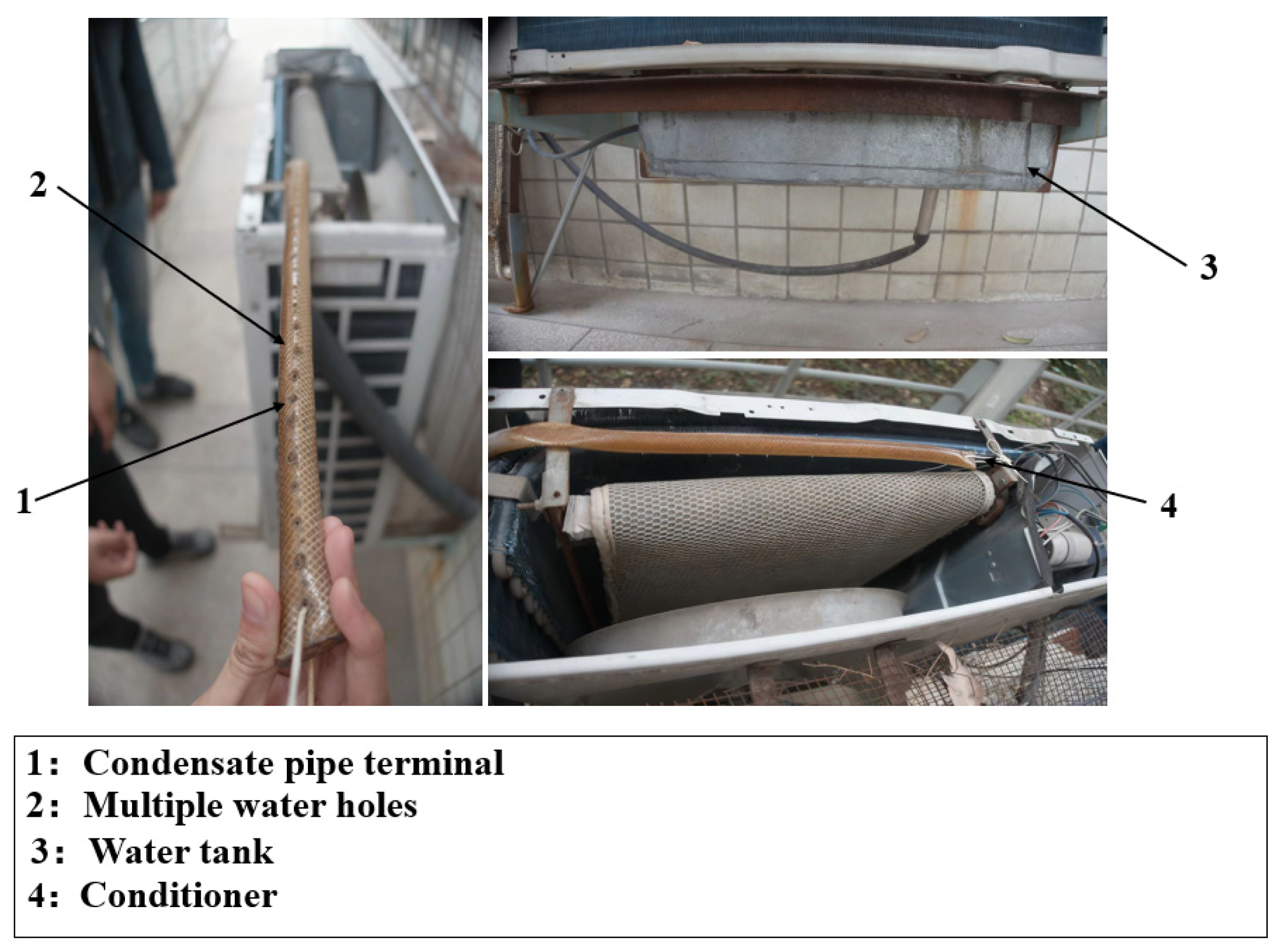
The experimental device was modified from a domestic fixed-frequency SAC with a rated cooling capacity of 3.5 kW and a rated power input of 1.06 kW, as shown in
Figure 3. It was manufactured in accordance with the design concept outlined in
Figure 2. The indoor unit remained unmodified, while the outdoor unit was primarily upgraded. Key additions include a condensate pipe terminal for condensate recovery and reuse, a water distribution system, and a water replenishment system for the water tank. As shown in
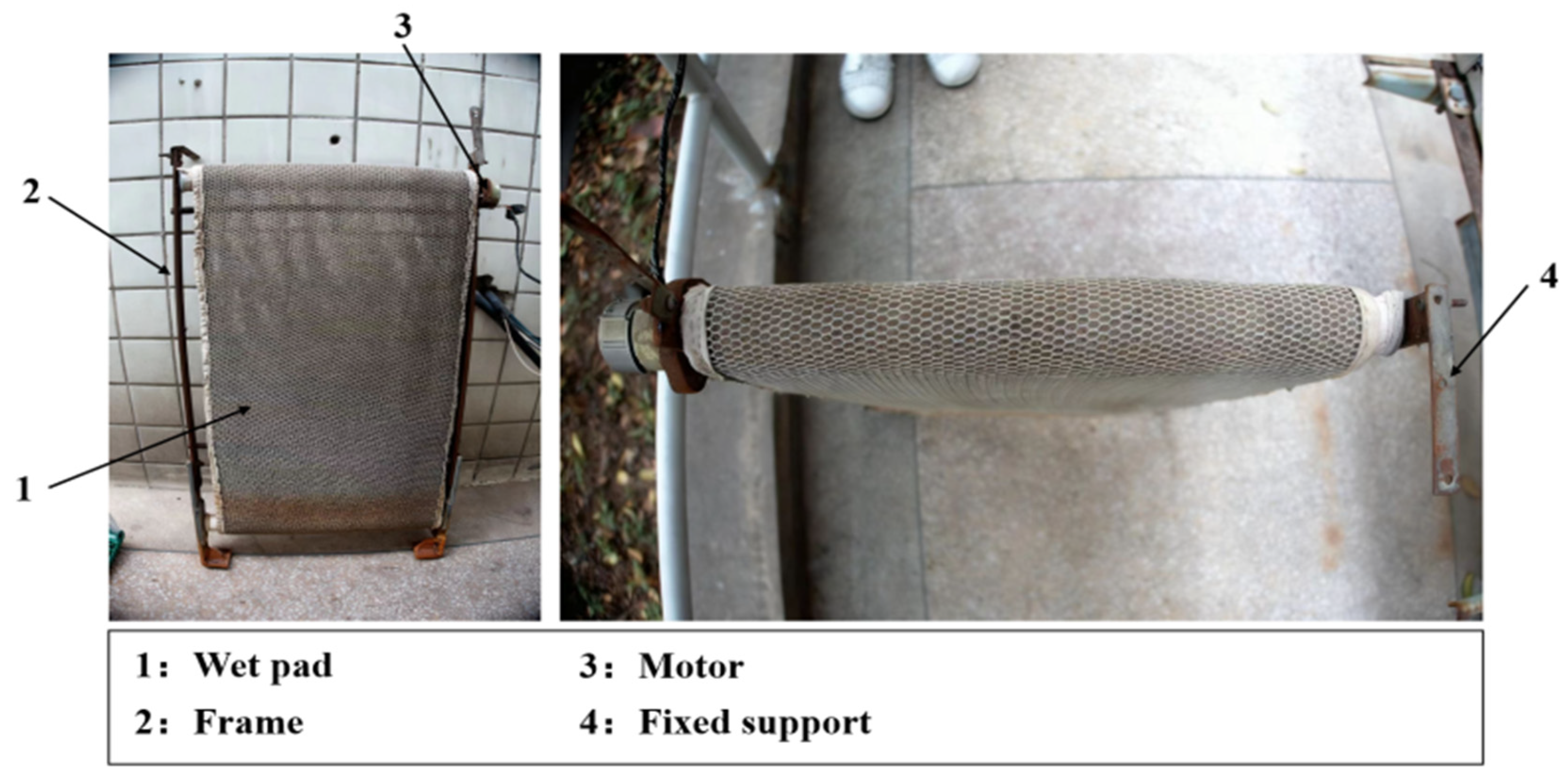
Figure 4, the double-layer wet pad in the water distributor is made of polyamide material with a thickness of 7 mm. The spacing between the two layers of the wet pad is 50 mm, and the effective windward area is 0.29 m
2. The wet pad has good water absorption performance. A small 6 W motor is used to drive the continuous rotation of the double-layer wet pad, with a rotational speed of 93 rpm. As shown in
Figure 3, the condensate pipe terminal is drilled with numerous small holes to allow condensate water to evenly flow onto the double-layer wet pad. The water tank is made of thick sheet iron and is filled with water, enabling the lower end of the double-layer wet pad to be immersed. This ensures the entire double-layer wet pad is saturated with water, facilitating DEC. A small water pump with a power of 3 W is adopted for water replenishment to the tank. Since the power consumption of both the small pump and the small motor is extremely low, the energy they consume during operation is considered negligible.
2.4. Measuring Instruments
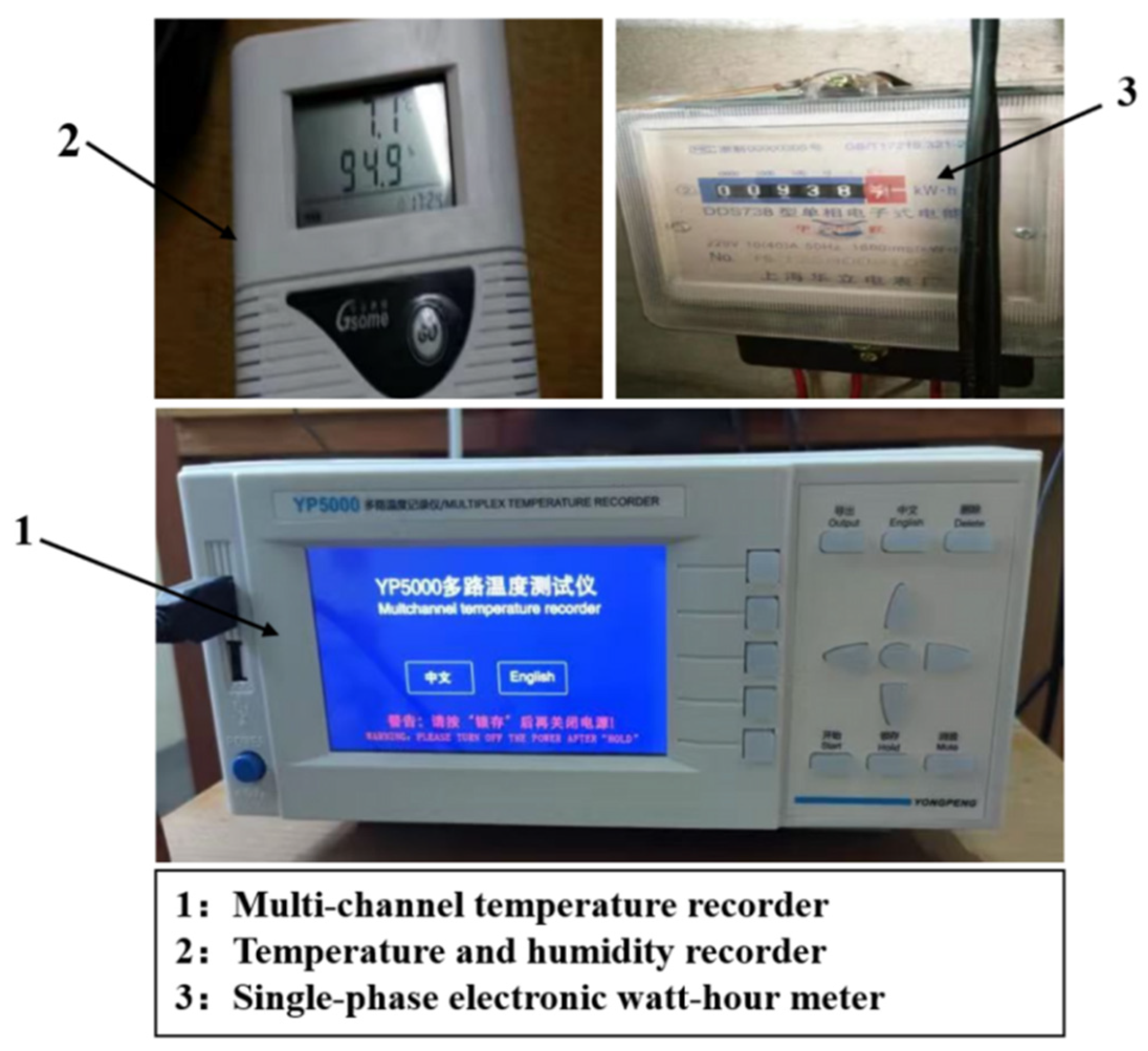
In this experiment, the DS18B20 temperature sensor (manufactured by Maxim Integrated, Foster City, CA, USA) was used to measure the relevant temperature parameters during the operation of the SAC, and the YP5000 multi-channel temperature recorder (manufactured by YongPeng, Shenzhen, China) was employed to record the measured temperature data. The Dl-TWS211 temperature and humidity recorder (manufactured by Hangzhou Gsome Technology, Hangzhou, China) was adopted to record the indoor and outdoor temperature and humidity parameters of the laboratory, while the DDS738 single-phase electronic energy meter (manufactured by Shanghai Huali Electric Meter Factory, Shanghai, China) was used to record the power consumption of the SAC during operation. The relevant instruments are shown in
Figure 5.
The models and relevant parameters of the measuring instruments are listed in
Table 1.
2.5. Test Method
In this study, comparative experiments were conducted during time periods with similar outdoor meteorological conditions. In the actual experiments, four tests were conducted under each set of similar weather conditions, and the results from these four tests were found to be highly consistent, which can be regarded as repeated experiments. Accordingly, in this paper, one set of experimental data was selected for analysis under each distinct operating condition and weather condition. Two days, 17 June and 19 June, were selected as the timeframe for one group of comparative experiments, both of which were sunny days with light wind and similar outdoor temperatures and humidity levels. The SAC integrated with the water distribution unit was tested on 17 June, while the standard SAC without this device was used on 19 June. Another group of comparative experiments was carried out on 22 June and 25 June, both of which were cloudy days with light wind and similarly matched outdoor temperatures and humidity levels. For this group, the SAC with the water distribution unit was tested on 22 June, and the standard unit on 25 June. Notably, the outdoor air in the first group of comparative experiments was relatively dry, whereas the outdoor air in the second group was relatively humid.
During the experiment, all doors, windows, and lights were closed, with no external infiltration load. A desktop computer with a power rating of 300 W was in operation, and a university student who remained mostly sedentary with occasional slight movements was responsible for measuring and recording the experimental data. For both groups of comparative experiments, the air conditioner remote control was set to a preset temperature. Each experiment was conducted from 9:00 a.m. to 8:00 p.m., with experimental data acquired and recorded at 5 min intervals. A multi-channel temperature recorder was used to acquire relevant data, which was then stored in the computer. Additionally, a temperature and humidity recorder was employed to measure the indoor and outdoor temperature and humidity of the experimental room, while a single-phase electronic energy meter was used to record the corresponding power consumption. It should be noted that there was a large amount of tree shade covering the south side of the laboratory, which significantly reduced its cooling load.
3. Results and Discussion
3.1. Comparative Analysis of Experiments Under Clear Weather Conditions
Experiments were conducted on 17 June and 19 June. Specifically, the experiment on the 17th involved a SAC equipped with the water distribution unit, while the experiment on the 19th used a SAC without this device. The SAC operated from 9:00 a.m. to 8:00 p.m. During the experiments, the set temperature on the room’s remote control was consistently 24 °C. On 17 June, the air conditioner compressor operated for 7 h and 39 min, whereas on 19 June, it ran for 8 h and 43 min. Compared to the latter, the former not only exhibited reduced compressor power consumption but also a significantly shorter operating time.
As shown in
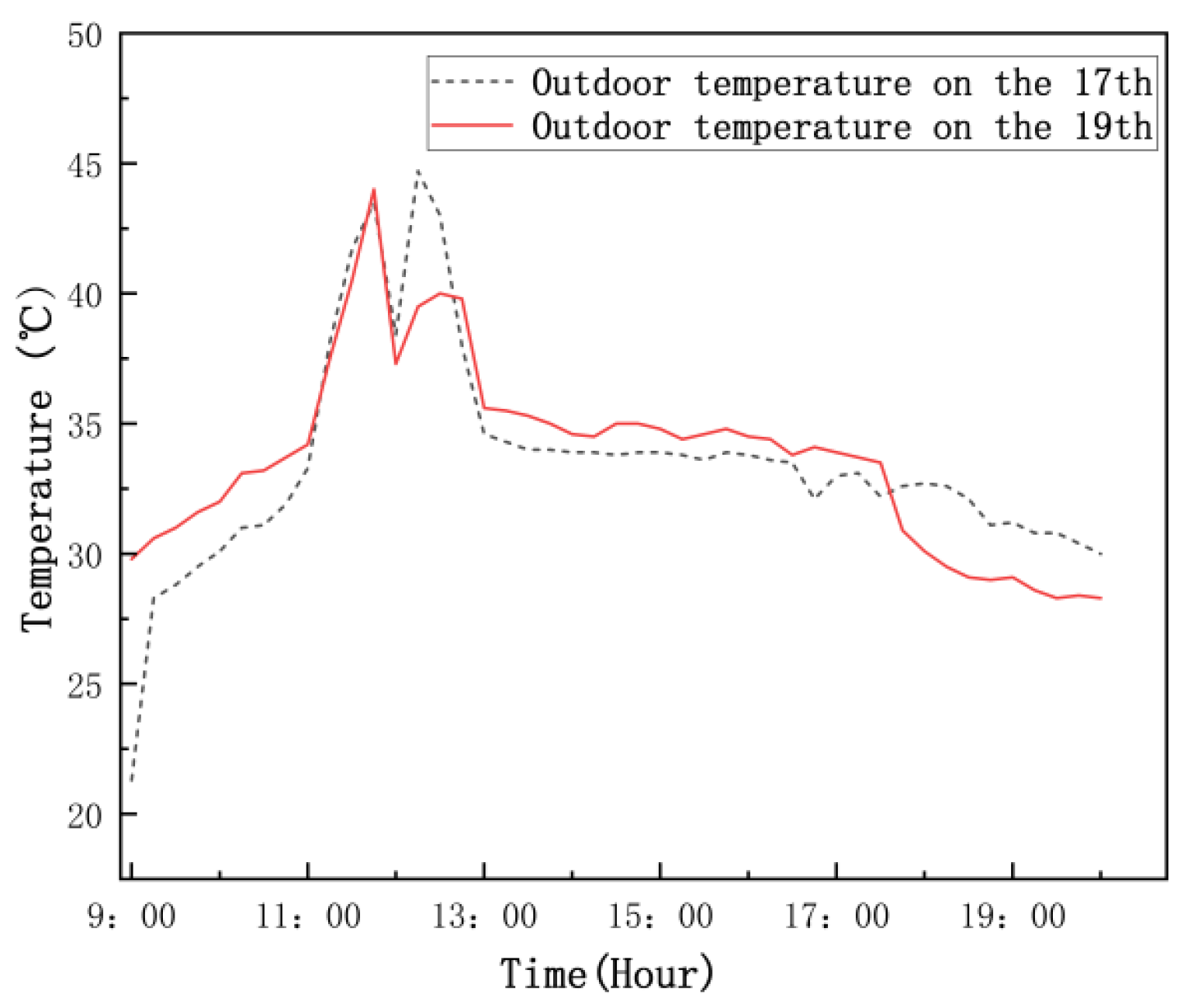
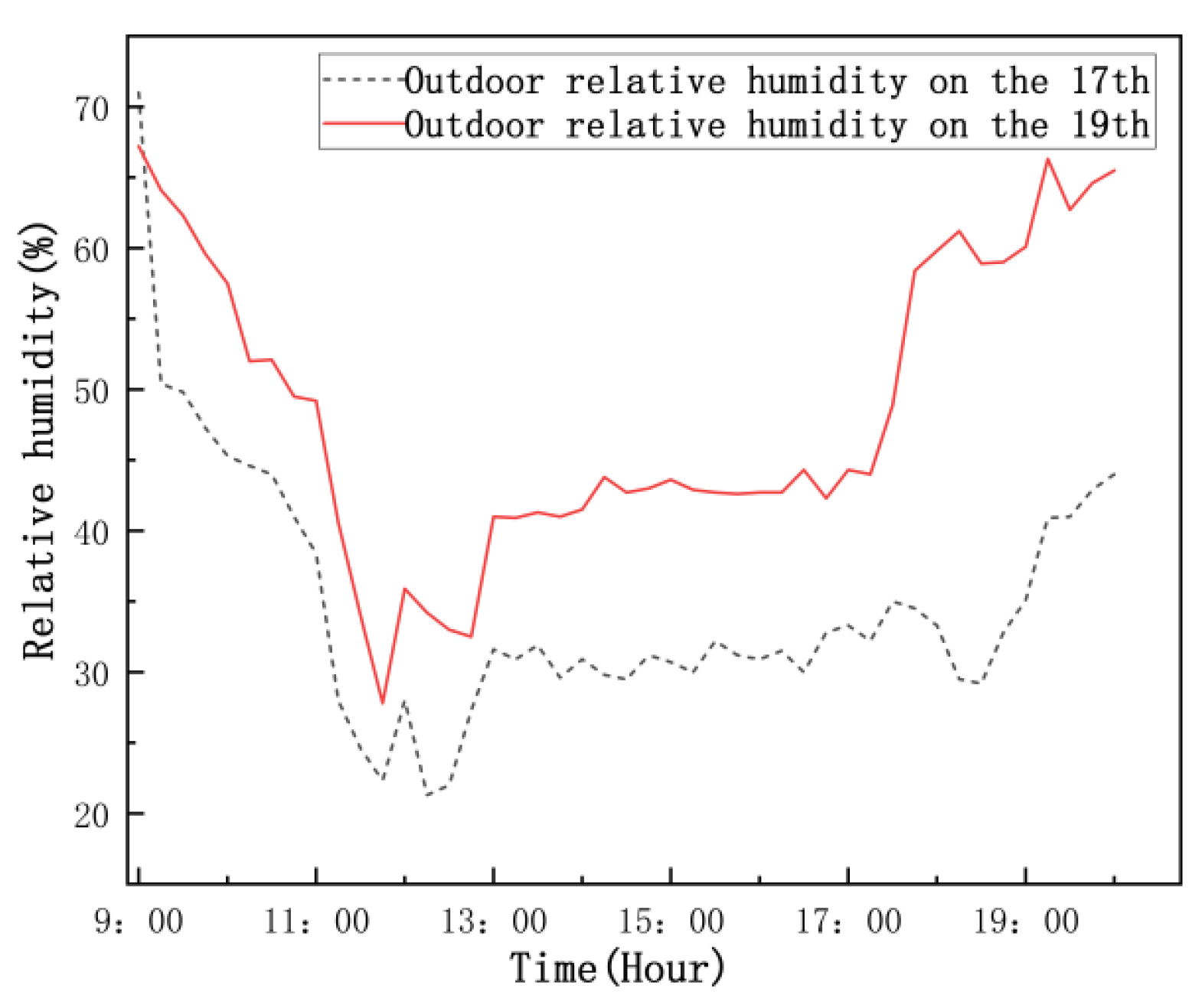
Figure 6 and
Figure 7, it can be observed that two days with highly similar weather conditions were selected for the experiments. On 17 June, the average outdoor temperature was 33.5 °C and the average RH was 34.7%; on 19 June, the average outdoor temperature was 33.7 °C and the average RH was 48.5%. The weather conditions on these two days were close to each other. As shown in
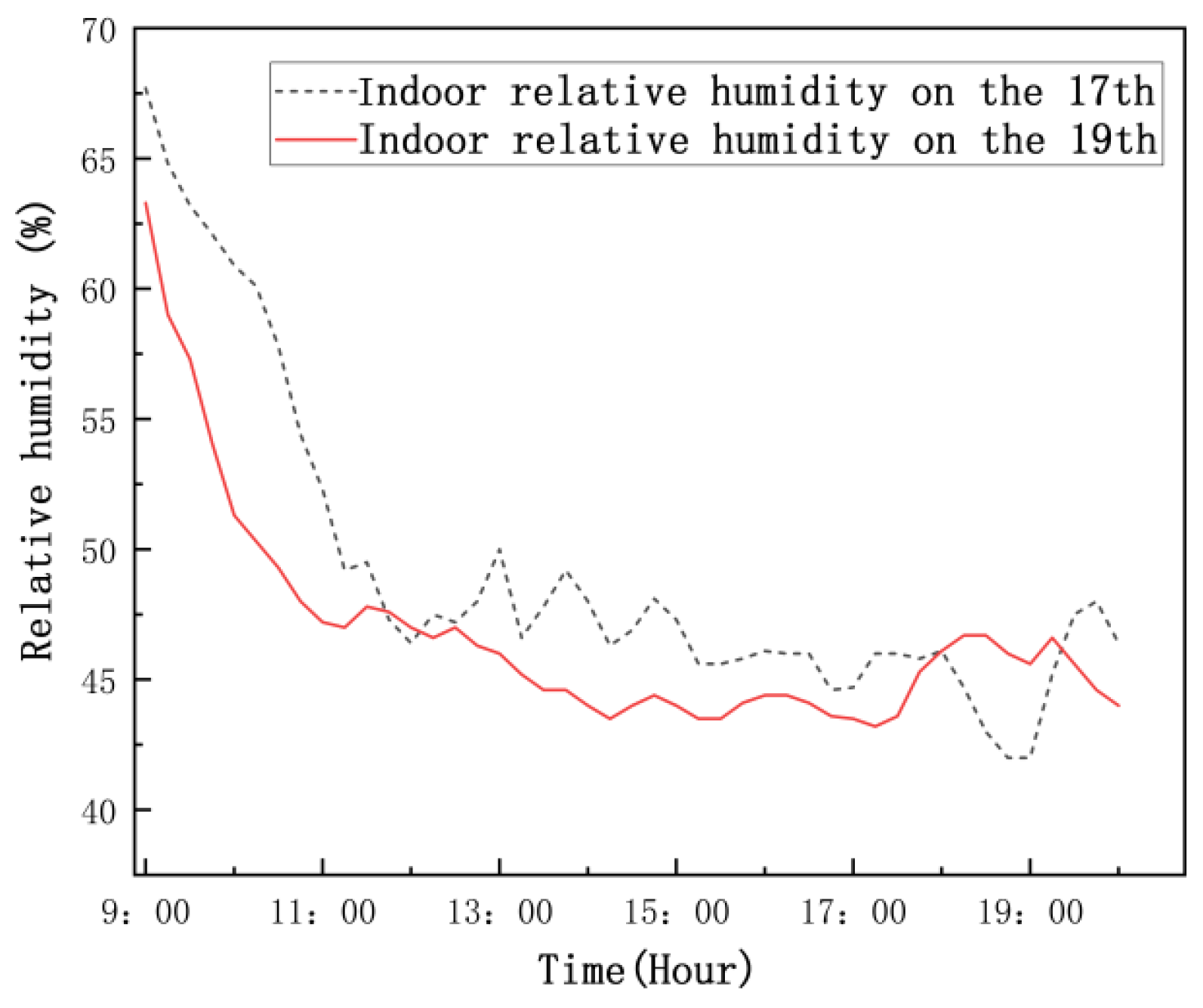
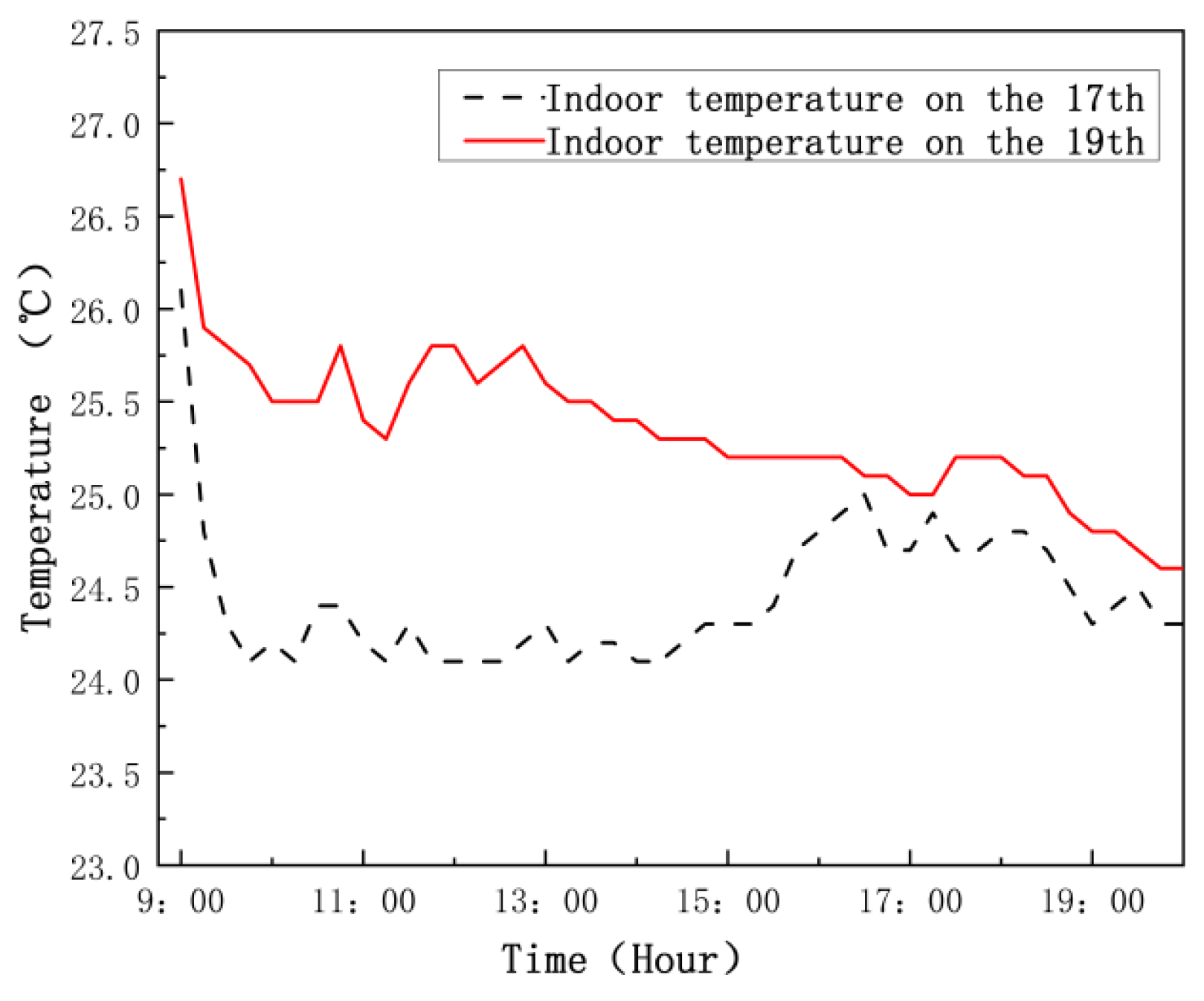
Figure 8 and
Figure 9, on the 17th, the average indoor temperature was 24.3 °C, which basically reached the set temperature, and the indoor RH was 49.2%. In contrast, on the 19th, the average indoor temperature was 25.3 °C, which was 1.3 °C higher than the setpoint, and the indoor RH was 46.8%. The difference in the average indoor temperature between the two days was 1.0 °C.
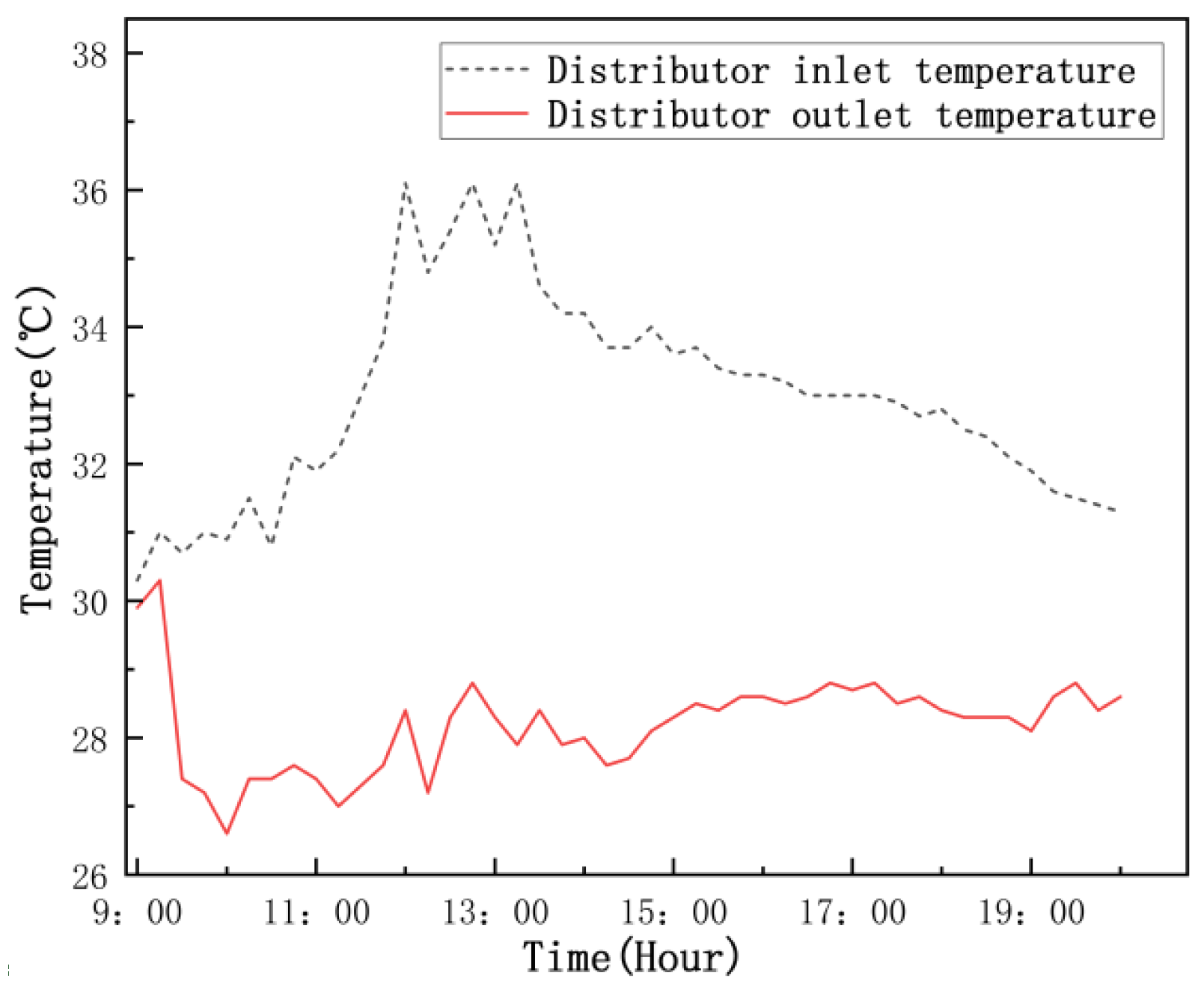
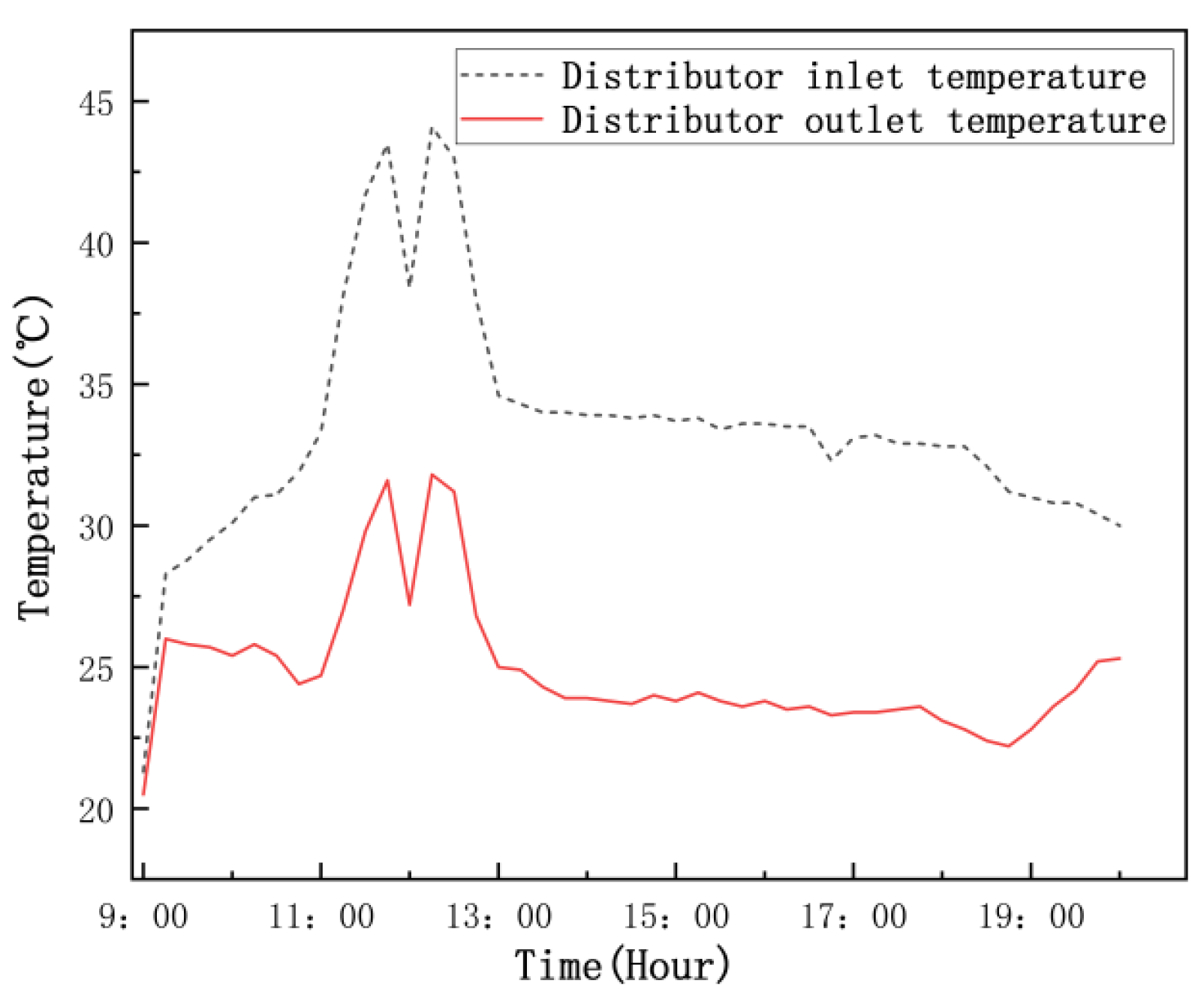
During the experiment, measurements showed that the temperature of the condensed water flowing into the water distribution network was 18.8 °C, and the temperature of the make-up water for the water tank was 28 °C. Both temperatures were significantly lower than the outdoor air temperature, which contributed to reducing the temperature of the air passing through the water distribution unit. As shown in
Figure 10, in the experiment on the 17th, the average outlet air temperature of the water distributor was only 24.8 °C, which was 8.7 °C lower than the average inlet temperature of 33.5 °C. The maximum temperature difference between the inlet and outlet of the water distributor reached 12.3 °C. Lowering the condensation temperature can reduce the condensing pressure of the condenser and the compression ratio of the compressor, thereby decreasing the power consumption of the compressor and lowering the energy consumption of the air conditioner [
32]. The air temperature at the water distributor inlet is the outdoor air temperature. After being cooled by the water distribution unit, the air exchanged heat with the condenser, resulting in better heat transfer efficiency. This helps reduce the condensation temperature and decrease the air conditioner’s energy consumption.
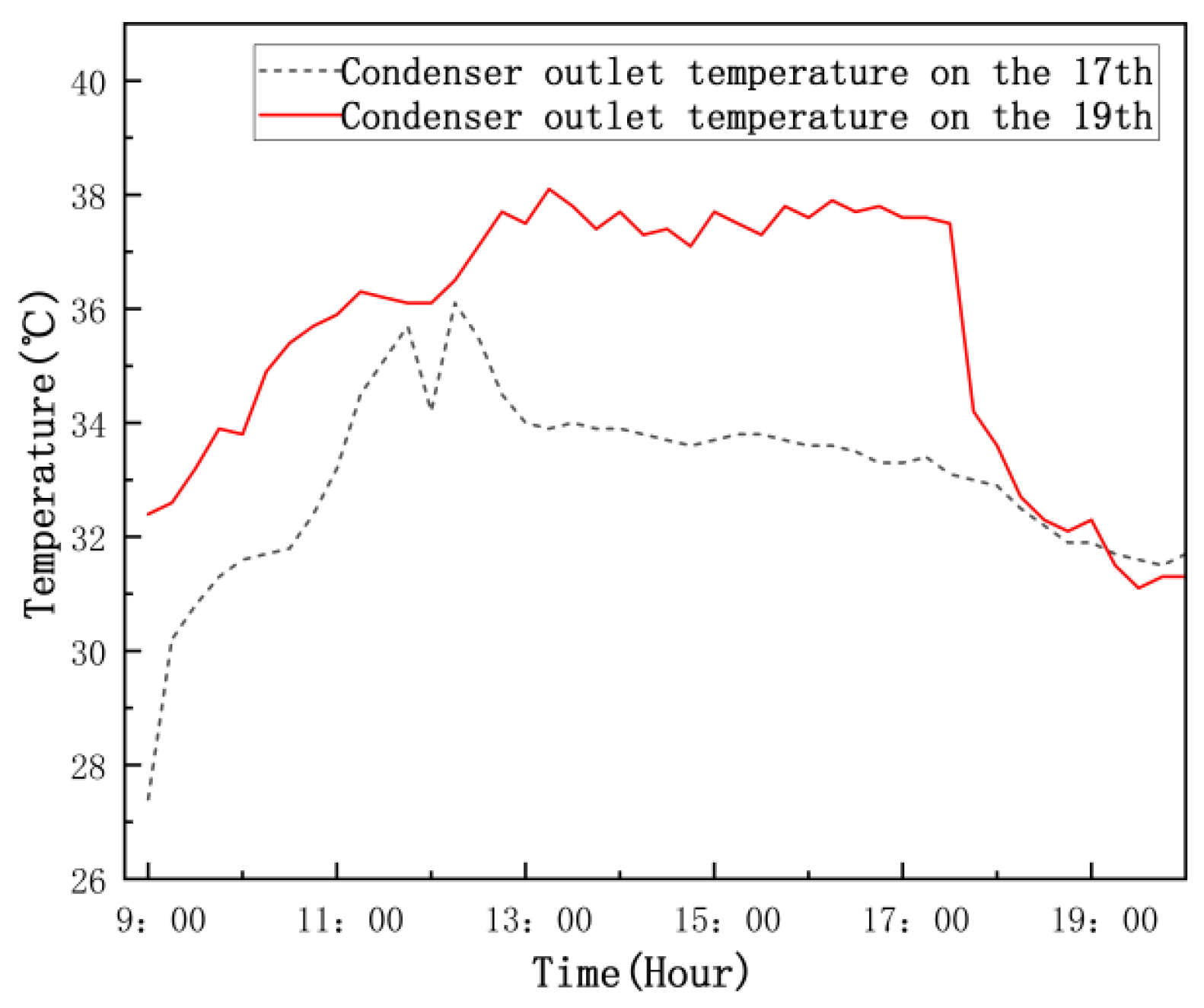
As shown in
Figure 11, the average outlet temperature of the condenser on the 17th was 33.0 °C, which was 0.5 °C lower than the average outdoor temperature, while the average outlet temperature of the condenser on the 19th was 35.6 °C, 1.9 °C higher than the outdoor ambient temperature. The difference in the average outlet temperature of the condensers between the two days was 2.6 °C. In addition, the figure shows that the difference in the average condenser outlet temperatures was close to 5 °C during the period from 12:30 to 17:30. Furthermore, the power consumption of the air conditioner on the 17th was measured to be 7.8 kW·h, while that on the 19th was 9.5 kW·h. According to the COP calculation method proposed by Qisheng et al. [
34], the average system COP measured on the 19th was 3.1, while that on the 17th reached 3.8, representing a 22.6% increase in COP on the 17th compared with the 19th.
From the experimental results, it can be seen that under similar weather conditions, compared with the SAC without a water distributor, the SAC equipped with the water distribution unit reduced power consumption by 1.7 kW·h, achieving an energy saving rate of up to 17.9%. Additionally, its average indoor temperature was 1.0 °C lower, basically reaching the set temperature. The significant energy-saving effect is attributed to two reasons: on the one hand, the condensation temperature is significantly reduced; on the other hand, the SAC with the water distribution unit has a longer compressor shutdown time during cooling operation, while the one without the water distribution unit operates under high load.
3.2. Comparative Analysis of Experiments Under Cloudy Weather Conditions
Experiments were conducted on 22 June and 25 June. Specifically, the experiment on the 22nd involved a SAC equipped with the water distribution unit, while the experiment on the 25th used a SAC without this device. During the experiments, the set temperature on the room’s remote control was consistently 26 °C, and the SAC operated from 9:00 a.m. to 8:00 p.m. On 22 June, the air conditioner compressor operated for 5 h and 41 min, compared to 6 h and 18 min on 25 June, resulting in a reduction of 37 min in operating time for the former relative to the latter.
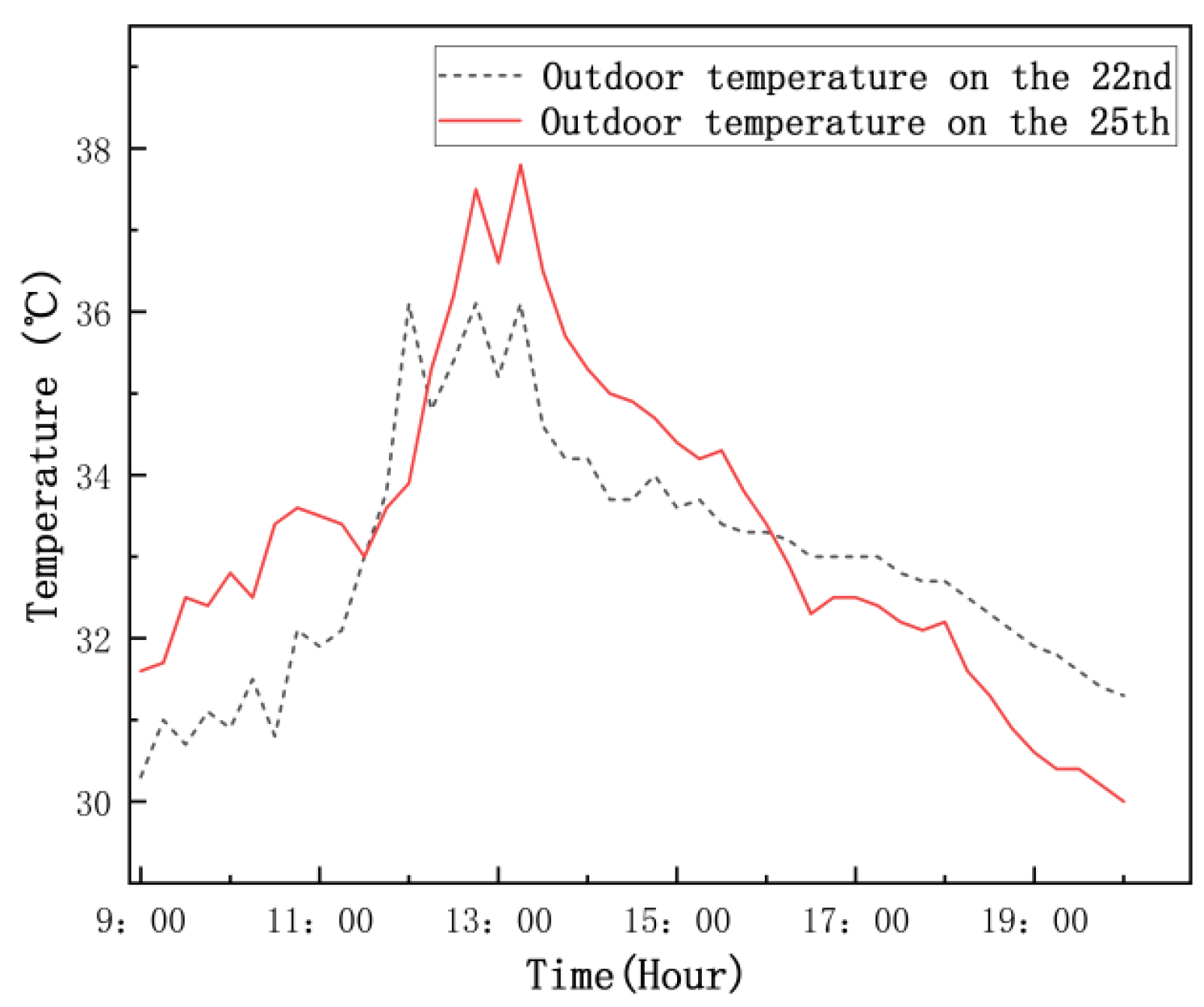
As shown in
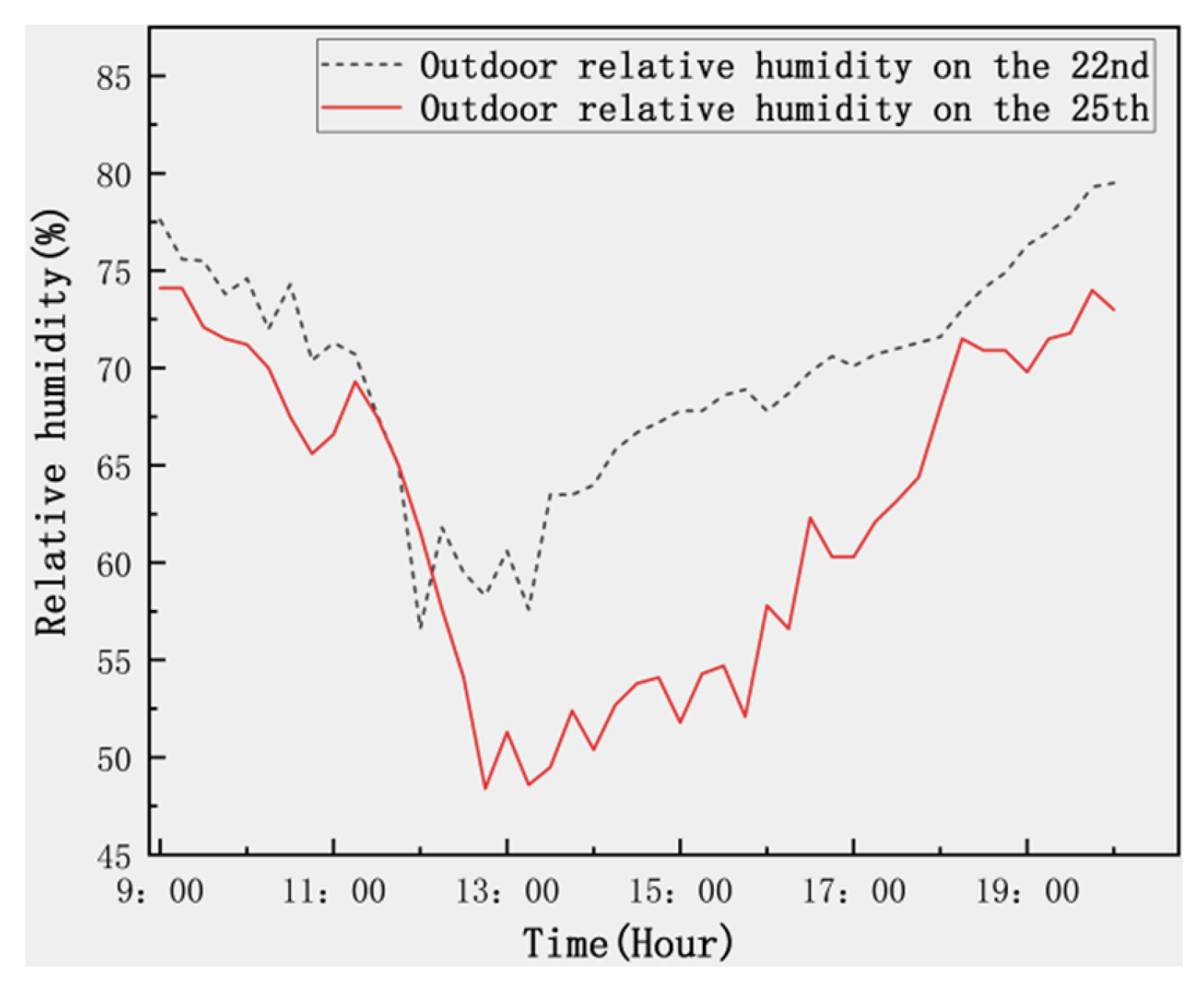
Figure 12 and
Figure 13, it can be observed that the outdoor weather conditions on 22 June and 25 June were relatively similar, with both days being cloudy. On the 22nd, the average outdoor air temperature was 33.0 °C and the average RH was 69.6%; on the 25th, the average outdoor air temperature was 33.3 °C and the average RH was 62.5%, confirming that the weather conditions on the two days were close. As shown in
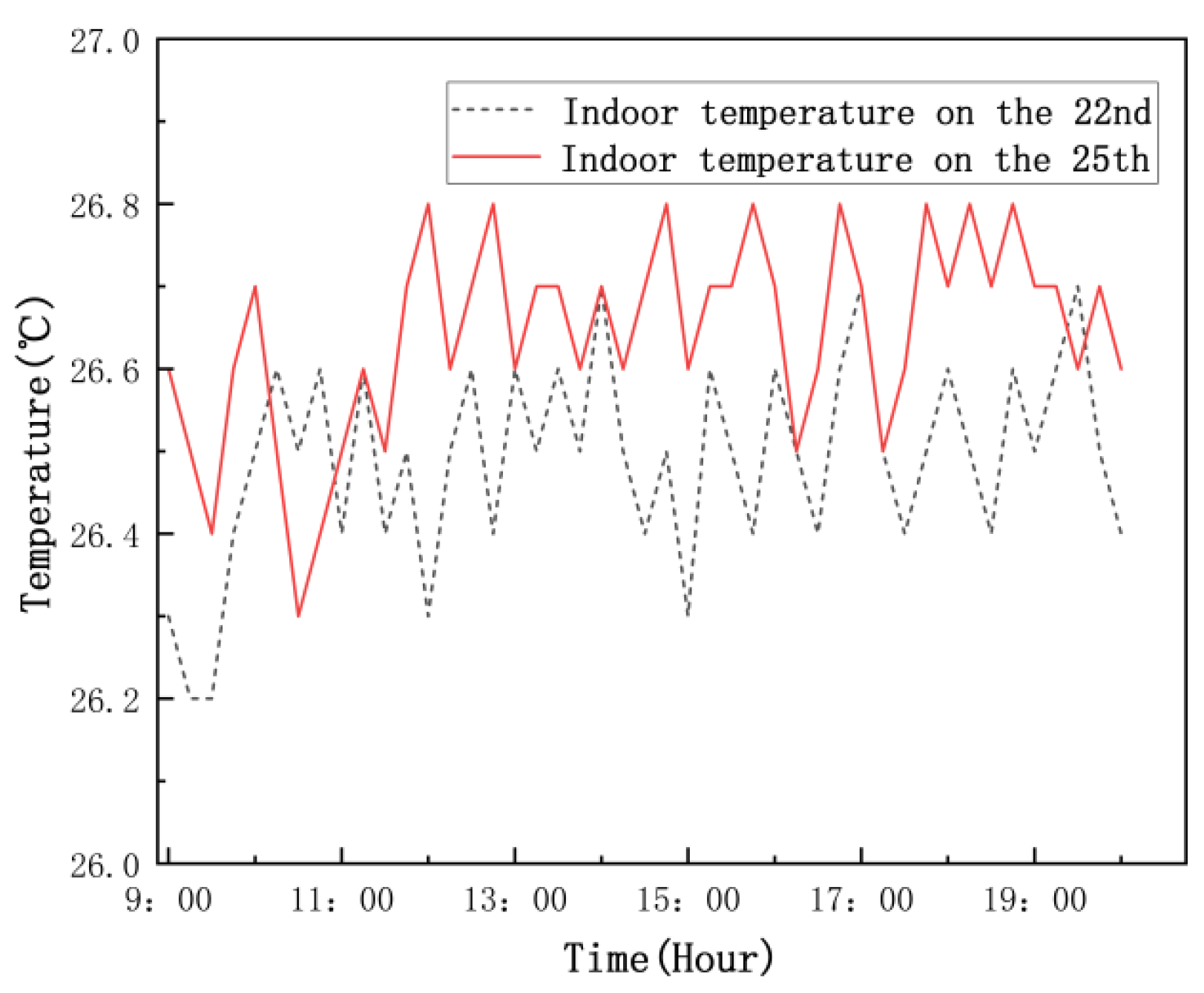
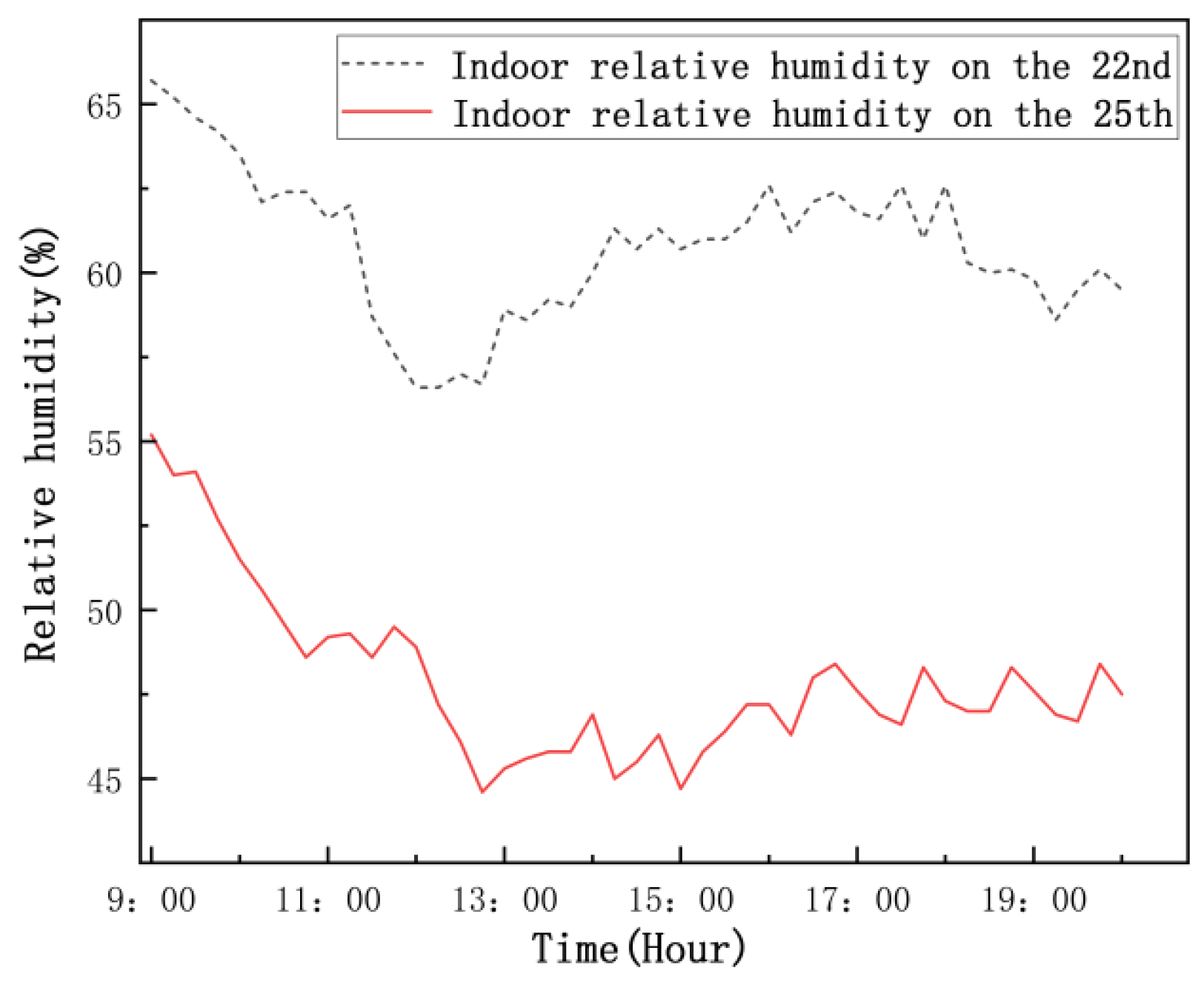
Figure 14 and
Figure 15, during the operation of the SAC, the average indoor air temperature on the 22nd was 26.5 °C, which basically reached the preset temperature, with an RH of 60.8%. On the 25th, the average indoor temperature was 26.6 °C, which also basically met the set temperature, and the RH was 47.9%.
During the experiment, the temperature of the condensed water supplied to the water distribution system was 18.8 °C, and the temperature of the make-up water for the water tank was 28 °C, which was consistent with that in the previous experimental group. As shown in
Figure 16, on the 22nd, the average outlet temperature of the water distribution unit was 28.2 °C, which was 4.8 °C lower than the average inlet temperature of the water distribution unit (33.0 °C), and the maximum temperature difference between the inlet and outlet of the water distributor reached as high as 8.2 °C. The air cooled in this way subsequently exchanged heat with the condenser, which significantly reduced the condensing temperature.
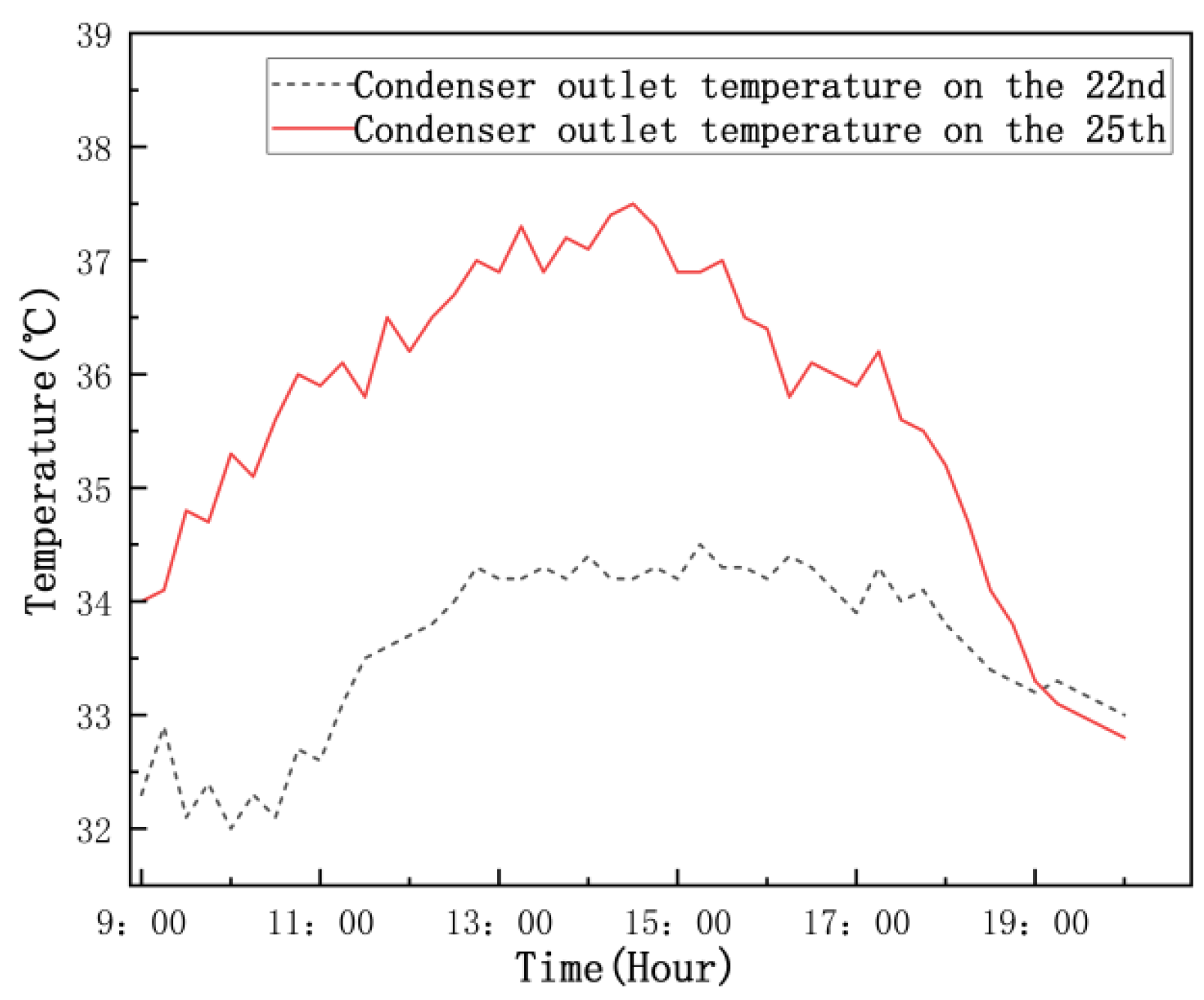
As shown in
Figure 17, the average outlet temperature of the condenser on the 22nd was 33.6 °C, which was 0.6 °C higher than the average outdoor temperature, while the average outlet temperature of the condenser on the 25th was 35.7 °C, 2.4 °C higher than the outdoor ambient temperature. The difference in the average outlet temperature of the condensers between the two days was 2.1 °C. In addition, it can be seen from the figure that within the time range from 10:00 a.m. to 4:00 p.m., the difference in the average outlet temperature of the two condensers was about 3 °C. Through measurement, the operating power consumption of the SAC on the 22nd was 6.2 kW·h, and that of the SAC on the 25th was 7.1 kW·h. Using the same COP calculation method proposed by Qisheng et al. [
34], the average system COP measured on the 25th was 3.3, while that on the 22nd was 3.9. This represents an 18.2% increase in the COP on the 22nd compared with that on the 25th.
Compared to the SAC without the water distributor, the one equipped with the water distribution unit reduced power consumption by 0.9 kW·h, achieving energy savings of 12.7%. In comparison with the previous experimental group, the water distribution unit’s inlet–outlet temperature difference was noticeably smaller, a trend largely attributed to the higher outdoor RH. The higher the outdoor RH, the more humid the ambient air, which is less conducive to lowering the air temperature passing through the water distributor. This in turn affects the heat exchange effect with the condenser and is not beneficial for reducing the condensation temperature. Since humans are less sensitive to RH, the noticeable difference in indoor RH between the 22nd and the 25th did not significantly impact human comfort.
The study found that the second group of experiments yielded results consistent with the first. The energy savings can be attributed to two main factors: first, a significant reduction in the condensation temperature, which increases the COP and improves the Energy Efficiency Ratio (EER); second, the SAC equipped with the water distribution unit provides a higher cooling capacity, enabling it to reach the preset room temperature more easily. During cooling operation, its compressor had longer off periods, thus contributing to energy savings. In contrast, the SAC without the water distribution unit operates for a long time with shorter shutdown periods, leading to higher energy consumption. In addition, the higher the outdoor air RH, the less obvious the energy-saving effect. In particular, when the RH reaches a certain level, the energy-saving performance is almost undetectable, which is consistent with the principle of evaporative cooling.
4. Conclusions
At present, the conventional application of evaporative cooling technology in household SAC involves spraying water onto the condenser or wet pad to cool the condenser either directly or indirectly, a relatively simplistic approach in practice. This paper adopts a new method, namely the double-layer rotating wet pad water absorption method. Instead of using a water pump to spray water onto the wet pad, the lower end of the wet pad is directly immersed in water. If the air is not completely cooled by DEC when passing through the first layer of the wet pad, it can be further cooled by DEC at the second layer. This enhances the performance of direct evaporative cooling and maximizes the reduction in air temperature.
Through a comparative analysis of the two experimental groups, it was found that higher outdoor air temperatures coupled with lower RH resulted in more significant air temperature drops after DEC, which is consistent with the law of DEC. Using this evaporative cooling technology, the average inlet–outlet air temperature differences of the water distribution unit in the two groups were 8.7 °C and 4.8 °C, respectively, with the maximum differences reaching 12.3 °C and 8.2 °C. The more the air temperature is reduced, the more conducive it is to heat exchange with the condenser, improving heat exchange efficiency, thereby reducing the condensation temperature and saving energy consumption.
In the first experimental set, the average outlet temperature of the condenser on the 17th was 33.0 °C, while that of the condenser on the 19th was 35.6 °C, showing a temperature difference of 2.6 °C. Particularly during the time period from 12:30 to 17:30, the average temperature difference was approximately 5 °C. The experimental measurements indicated that the power consumption of the air conditioner on the 17th was 7.8 kW·h, and that of the air conditioner on the 19th was 9.5 kW·h. The former reduced the power consumption by 1.7 kW·h compared to the latter, increased the average system COP by 22.6%, and achieved energy savings of 17.9%. In the second experimental set, the average condenser outlet temperature was 33.6 °C on the 22nd and 35.7 °C on the 25th, with a difference of 2.1 °C. During the period from 10:00 to 16:00, the difference was about 3 °C. Power consumption measurements showed 6.2 kW·h for the 22nd and 7.1 kW·h for the 25th. The former reduced the power consumption by 0.9 kW·h compared to the latter, increased the average system COP by 18.2%, and achieved an energy saving of 12.7%.
The experimental study revealed that, compared with SAC without a water distribution unit, SAC equipped with this unit is more likely to reach the preset temperature of the indoor room during operation, and the total operating time of the compressor is reduced. This is more conducive to energy conservation during operation. In addition, the household SAC designed in this study is easy to retrofit, with only a slight increase in cost but considerable energy-saving performance. This advantage is particularly prominent in high-temperature and arid regions. This approach provides valuable insights for the further research and widespread application of evaporative cooling technology in residential split-type air conditioning systems.