Article

Fire Importance Factor for Existing Urban Bridges According to Italian Guidelines Within a Fire–Seismic Multi-Risk Assessment


by
Michele Fabio Granata
*,
Antonio Cutrona
and
Piero Colajanni
Dipartimento di Ingegneria, Università di Palermo, 90128 Palermo, Italy
*
Author to whom correspondence should be addressed.
Buildings 2026, 16(6), 1148; https://doi.org/10.3390/buildings16061148
Submission received: 29 January 2026 / Revised: 7 March 2026 / Accepted: 12 March 2026 / Published: 13 March 2026
(This article belongs to the Collection Buildings and Fire Safety)

Abstract

Fire represents a relatively infrequent but potentially severe hazard for bridges, with collapse rates comparable to or exceeding those caused by seismic events. Despite this, fire risk is often neglected in bridge design and assessment, particularly for existing infrastructures in urban contexts. Beyond collapse, fire can induce significant post-event consequences, including material degradation, serviceability loss, traffic disruption, and economic and social impacts. Existing studies highlight the influence of bridge material, fire scenario, and traffic characteristics—especially the presence of fuel tankers—on damage severity. In this context, this paper proposes a rapid fire-risk assessment methodology applicable to large bridge stocks. The approach adapts and modifies existing methods from the literature, integrating them into the multi-risk framework defined by the Italian Guidelines for existing bridges, where fire is not explicitly addressed. The methodology is specifically adapted to urban and suburban bridges and European roadways, validated through its application to a stock of 30 bridges along the Palermo ring road. The results enable the classification of bridges by fire risk, supporting infrastructure Authorities in prioritizing detailed assessments and intervention strategies on the most vulnerable bridges. Multi-risk assessment considering the fire–seismic risk is also addressed, by adopting a simplified seismic risk approach consistent with the Italian Guidelines for existing bridges and comparing it with internationally accepted methods, particularly the North American HAZUS system. Results show that accounting for the actual condition and deterioration of bridges leads to higher seismic risk classes, more consistent with the fire risk assessment procedure proposed. In contrast, expedited methods such as HAZUS, which neglect maintenance conditions, may underestimate seismic risk.

1. Introduction

Fire represents one of the most severe actions to which structures may be subjected during their service life. In recent years, these phenomena have become increasingly critical, mainly due to the rapid development of urban and land transportation systems and the increase in the transport of hazardous or flammable goods [1]. A study conducted by the State University of New York at Buffalo [2], and the one reported in the paper by Spencer et al. [3] analyzed the causes leading to both local and global bridge collapses within the United States. A total of 1062 bridges that collapsed between 1980 and 2012 were analyzed. The study revealed that most collapses were due to hydraulic hazards such as flooding, followed by collapses caused by vehicle collisions, overloading, and deterioration. With regard to fire, the percentage is approximately 2.8% of cases, which is nevertheless comparable to collapses caused by earthquakes, whose incidence is even lower. Another similar study was conducted by the New York State Department of Transportation [4], which analyzed bridge collapses across 18 U.S. states. Data were collected from 1746 bridge collapses based on typology, material (steel, concrete), and cause of collapse. This study also reported that the vast majority of bridges (1001, 57.3%) collapsed due to hydraulic reasons (erosion, flooding), while 520 collapsed due to collisions, overloading, or deterioration. Additionally, 52 collapses were caused by fire and only 19 by earthquakes or seismic actions.
Other authors have conducted similar research on bridge collapse cases, obtaining nearly identical results. For example, the study in [5] performed a comprehensive review of 503 bridges, reporting that approximately 3.18% of the collapses were due to fire-related causes (16 out of 503). Scheer [6] also highlighted that 4.9% of collapsed bridges were caused by fires or explosions. All these studies indicate that bridge collapses due to fire represent a limited number compared to the total, but they are comparable to or even exceed those caused by earthquakes.
Therefore, fire risk on bridges should be given greater consideration during design, particularly in cases where vulnerability is higher, such as bridges in urban areas or those with heavy traffic, especially involving vehicles such as tankers transporting flammable materials. In practice, bridge design often focuses on seismic aspects, materials, loads, and deterioration, while fire risk is frequently overlooked.
Furthermore, it is essential to consider this risk particularly in scenarios involving multiple concurrent hazards [7,8,9]. For instance, a bridge already deteriorated over time may also be exposed to fire risk, and the combination of these hazards would significantly increase vulnerability [10]. Other examples include the coexistence of seismic events and fires triggered by earthquake damage, or overloading combined with fire [11].
For these reasons, a multi-hazard analysis that includes fire may be necessary even when assessing existing bridges, for example during monitoring activities or when planning rehabilitation or strengthening interventions.
However, it should be emphasized that the studies mentioned refer only to bridges that actually collapsed; therefore, less information is available on the extent of fire-induced damage in cases without collapse, such as traffic disruption and the costs of detours and repairs. In fact, the most severe consequences are often related to the post-fire phase, even when collapse does not occur. Fire may cause material degradation, structural deformations, or aesthetic damage, that are serviceability aspects. In such cases, it is essential to inspect and monitor the bridge, assess material conditions, and determine whether the bridge can be reused or requires repair or reconstruction. All of this inevitably leads to environmental, economic, and social impacts affecting both citizens and traffic.
An analysis of several bridge fire incidents reveals multiple causes, including vehicle accidents, tanker trucks carrying flammable fuels, electrical faults, and wildfires [12,13]. The severity of the damage depends on factors such as the position of the fire, the type of vehicle, and the bridge material [14]. A study by Peris-Sayol et al. [15] analyzed 154 bridge fire cases using ANOVA statistical analysis to correlate damage levels (on a scale of 1 to 5) with independent variables. The study highlighted that:
-
Timber bridges perform worse, while concrete bridges perform best. Steel bridges fall in between but perform significantly worse than concrete.
-
Fuel tankers cause the most severe damage, particularly gasoline tankers due to high heat release rates.
-
The most critical scenarios involve fires occurring under the bridge or fuel spills flowing beneath the superstructure.
Understanding material behavior at high temperatures is crucial for risk assessment. Concrete is non-combustible and has low thermal conductivity. It generally maintains mechanical properties but, at higher temperatures, dehydration and thermal expansion of aggregates can cause cracking and spalling (explosive detachment of surface layers), exposing the reinforcement bars to direct heat. High-performance concrete is notably more susceptible to spalling at temperatures around a well as prestressed concrete [14,16,17].
Steel is widely used for its ductility but it is highly vulnerable to fire due to high thermal conductivity. Steel loses its mechanical properties at high temperatures. Unprotected steel elements can undergo significant deformation and collapse rapidly [16]. This is the case of steel bridge decks along roadways. Composite (steel-concrete) structures generally perform better than pure steel due to the heat sink effect and protection provided by the concrete slab, though differential thermal expansion between materials can induce additional stresses. When fire is underneath, steel girders are naked and the concrete slab has no role in fire protection, hence they perform like steel structures.
Wood is combustible and ignites at low temperatures. However, the charring layer can act as an insulator, slowing down the reduction of the resistant section. In the initial phase of a fire affecting timber elements, rapid combustion occurs, producing flammable gases and carbonaceous residues, giving rise to the so-called charring phenomenon. However, the charred layer that forms acts as an insulating barrier for the underlying timber section; as a result, timber structures actually exhibit very good fire resistance, since this phenomenon slows down the temperature increase and prevents the reduction of the effective residual load-bearing cross-section [16]. Timber elements can be treated with a range of fire-retardant substances that significantly enhance fire resistance by delaying ignition and reducing the rate of combustion.
Other fundamental aspects for fire risk assessment include the position of the bridge within the highway network, the type of traffic it carries, the global structural scheme, the incidence of the passage of vehicles with a higher fire impact, and the possible presence of pre-existing structural deterioration due to aging.
All these aspects are fundamental in the risk assessment of bridges exposed to fire and, in particular, of existing bridges within a network; therefore, they represent factors that, with different weights, must be taken into account in methodologies for the risk assessment of road infrastructures.
In the following, the rapid fire-assessment methodology proposed by Kodur & Naser [18], relying in the evaluation of the so-called importance factor, is suitably re-arranged and adapted for better describing the multi-hazard risk of entire bridge stocks, consistently with classification provided by the Italian Guidelines for existing bridges [19,20], where fire risk is not currently considered explicitly, according to the present text. Considering that it is possible to coherently include, with an appropriate weight relative to other hazards, the fire-related aspect within a multi-risk analysis framework [21], especially for bridges for which the incidence of this factor may be significant, a modification of Kodur’s method is presented within the context of bridges in urban areas. The results are validated on a dataset of 30 bridges within the metropolitan area of Palermo, Italy, mostly lying along the ring road and differing in structural typology, material, and type of loading.
The applied methodology allows the introduction of fire risk assessment for urban bridges within a broader multi-risk methodology, assigning a risk class to the analyzed bridges making it possible to provide guidance to road management Authorities on which bridges require a more specific and detailed risk assessment analysis and which others, instead, are characterized by a more remote risk and therefore do not require further investigation.
Subsequently, the seismic risk of the same bridges is also evaluated based on the methodology established by the Italian standard, in comparison with expedited methods accepted internationally, including the North American HAZUS model [22,23]. In this way, a preliminary approach to fire–seismic multi-risk assessment is proposed, in which the bridge’s global risk level is defined as the envelope between the class obtained from the application of the fire importance factor and the seismic class specifically evaluated for the studied stock of urban bridges considered.

2. Importance Factor for Fire Risk-Assessment

The fire risk assessment is based on the methodology proposed by Kodur & Naser [18], which evaluates bridge vulnerability through an importance factor derived from weighted parameters grouped into five classes: structural properties, fire probability, traffic demand, economic impact, and expected losses.
Each class includes specific parameters related to bridge typology, material, age, traffic volume, availability of alternative routes, and potential socio-economic consequences of bridge failure. The global importance factor is used to classify bridges into different fire risk levels.
The procedure is applied to bridges located within the urban area of the city of Palermo, Italy, which is a metropolitan area characterized by a complex and articulated infrastructure network that includes several important bridges for urban mobility. For this reason, this analysis is essential to ensure infrastructure safety, thereby protecting both the population and the economic activities of the city.
The use of a fire risk assessment method applied to bridges can be useful both during the initial design phase and in the development of strategies, interventions, and maintenance activities for existing bridges. In both cases, the analysis serves to highlight potential critical issues that may arise during bridge service life and thus to guide the designer in selecting the most appropriate design solutions that can prevent, or at least reduce, the likelihood of the bridge being exposed to specific risk factors.

2.1. Methodology for Importance Factor Determination by Kodur & Naser

To carry out this study, the model proposed by Kodur & Naser [18] was adopted, which involves the determination of an importance factor that accounts for the vulnerability of a bridge to fire. This method therefore represents a practical approach that allows the identification of bridges which, depending on their characteristics, are more or less vulnerable in terms of fire risk. Such vulnerability is assessed through a multi-risk analysis that considers the simultaneous presence of several factors in addition to fire risk, such as traffic, road accident risk, and deterioration due to aging.
For each bridge to be analyzed, the first step concerns data collection, including information on the bridge history, material composition, traffic flows, geometric characteristics, and the surrounding environmental context.
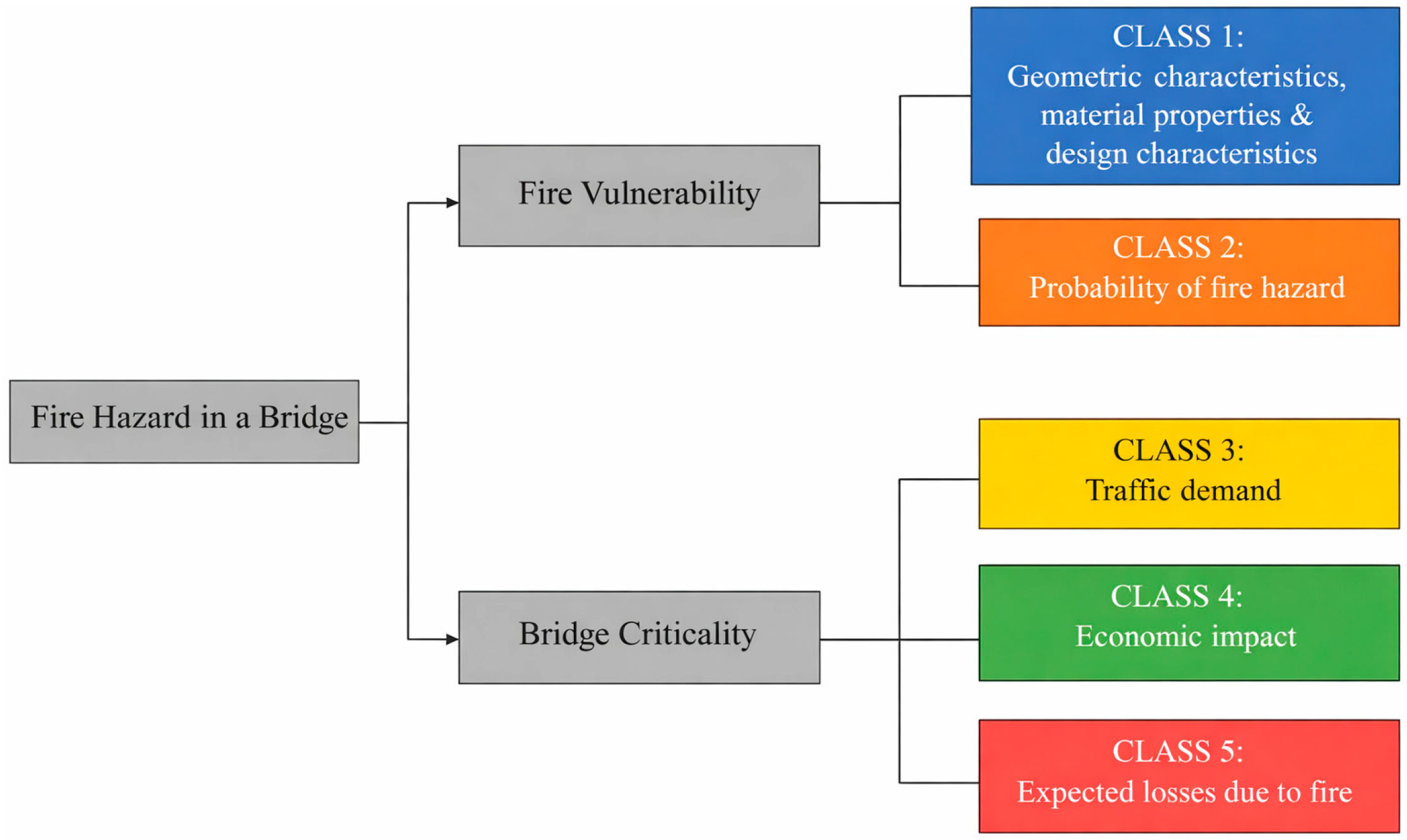
The method considers two families of factors used to assign the hazard level of a bridge, namely structural vulnerability to fire and bridge criticalities. In total, five classes are considered, as highlighted in Figure 1.
As it can be seen from Table 1, Table 2, Table 3, Table 4 and Table 5, each class includes a set of parameters; each parameters includes a set of sub-parameters, each of them representing the specific feature that takes the parameter for a given bridge, and a corresponding weighting factor jx,i used to classify the bridge according to its characteristics. Therefore, for each parameter of the class the value of the weighting factor is assigned to the specific characteristic sub-parameter of the bridge. Each of the listed parameters contributes to the definition of the importance factor that will be associated with the bridge. The higher the weighting factor assigned to a given parameter, the higher the corresponding importance factor and, consequently, the greater the fire risk.
With regard to fire vulnerability, the model considers two classes (1 and 2), which depend on factors such as the geometric characteristics of structural elements, the materials used, boundary and loading conditions, fire intensity, the assumed fire scenario, and the historical value of the bridge itself. The parameters associated with these two classes are listed below (Table 1 and Table 2).
CLASS 1: Geometric, material properties, and design features
Structural system: Cable-stayed and suspension bridges are assigned higher weighting factors due to their long spans, complex load paths, and the presence of steel cable components that are highly vulnerable to fire. Their slender steel elements further increase susceptibility to local and torsional instability. Conversely, conventional girder bridges exhibit lower vulnerability, both for simply supported and continuous schemes, independently from the material used.
Material type: Steel bridges are assigned to the highest weighting factor due to the high vulnerability of steel elements to fire and the rapid degradation of their thermo-physical and mechanical properties at elevated temperatures. Concrete generally performs better under fire, with RC being less vulnerable than high-strength concrete thanks to its slower degradation. Timber elements also show high susceptibility due to rapid loss of mechanical properties. Composite steel–concrete bridges are assigned an intermediate weighting factor, as their fire performance is superior to that of steel-only systems. Bridges strengthened or rehabilitated with FRP materials or external post-tensioning systems are also classified with high weighting factors due to the fire sensitivity of these components.
Span length: Longer spans are assigned higher weighting factors, as they typically carry higher load intensities resulting from a greater proportion of dead loads relative to variable live loads.
Number of lanes: Bridges with a larger number of lanes receive higher weighting factors, reflecting their greater width, higher traffic volumes, and increased probability of vehicle-related incidents.
Age: Higher weighting factors are attributed to older bridges, which generally exhibit increased deterioration from environmental exposure and fatigue, including cracking and corrosion that adversely affect fire performance.
Current condition assessment: This parameter accounts for the presence and severity of deterioration phenomena such as cracking, corrosion, and carbonation, with higher indices assigned as damage severity increases (aging damage for existing bridges).
Additional services and functionalities: This parameter captures the presence of supplementary services or special configurations, including pedestrian pathways, railway traffic, multi-level layouts, or bridges spanning over water, which increase the exposure and consequences of a collapse.
CLASS 2: Probability of fire hazard
Response time: This parameter represents the time required for fire brigade emergency teams to reach the bridge. It depends on the distance to the nearest fire station, traffic conditions, and delays related to incident detection and emergency call processing and is also influenced by the severity of the fire scenario.
Historical/architectural significance: This qualitative index reflects the historical or architectural value of the bridge and its role as an urban landmark. Conventional bridges are assigned to lower weighting factors, whereas historic or architecturally significant structures receive higher values.
Perceived threat: This factor is based on available historical data and the occurrence of previous fire events in the vicinity of the bridge, and represents an index closely associated with the probability of fire occurrence.
Probable fire scenario: This parameter accounts for the assumed fire scenario, which governs the fire load, intensity, and duration. Fires involving fuel tankers or vehicles transporting flammable goods are considered the most severe, compared to those originating from passenger vehicles or surrounding vegetation.
Bridge criticality is influenced by the other three classes (3, 4, and 5) based on factors such as the bridge’s location, traffic density, and economic and environmental impact. The parameters associated with these classes are listed below (Table 3, Table 4 and Table 5).
CLASS 3: Traffic demand
Average daily traffic: This measures the number of vehicles crossing the bridge in a single day. As traffic increases, the weighting factor rises due to higher loads and greater accident likelihood, particularly on congested highways or near urban areas.
Bridge location: Bridges in urban areas present higher risk, as they serve main traffic arteries, experience greater traffic volumes, and often have longer spans and more lanes compared to rural bridges.
CLASS 4: Economic impact
Alternative routes: Bridge fires compromise structural integrity and traffic flow. The length and availability of alternative routes determine disruption levels: longer detours and limited alternatives increase congestion and delays, whereas multiple routes or low traffic reduce impact.
Expected repair time: Temporary bridge closure for inspections and repairs depends on fire damage extent. Longer closures cause greater traffic disruption and are assigned higher weighting factors.
Expected repair cost: Economic impact is proportional to repair or reconstruction costs. Greater damage and higher repair expenses result in higher weighting factors.
CLASS 5: Expected fire-related losses
Loss of life/property: This parameter is primarily qualitative, based on the effects of probable fire scenarios on people, and more precisely of the damage severity caused and its diffusion among users.
Environmental damage: The parameter depends on the spread of damage in the environment surrounding the bridge: fires limited to the bridge structure receive a lower weighting factor; if the fire spreads to the surrounding environment, including vegetation, or poses risks of air or water pollution (e.g., over watercourses), a higher factor is applied.
When conducting a risk assessment by evaluation of the importance factor the first step is to assign the different weighting factors to each parameter based on the data collected for the bridge. The importance factor takes into account both the bridge’s vulnerability and its critical nature by assigning a weight to the five classes. Each class influences the importance factor differently, according to a class factors yx (x = 1 to 6) associated with each of them (Table 6), which was determined by Kodur using the following formula:
ψ x   = i = 1 n x φ x i , m a x / φ t o t
where:
  • φxi,max is the maximum weighting factor for each parameter i within the class x;
  • nx is the number of parameters within the class x;
  • φtot =  x = 1 6 i = 1 n x φ x i , m a x is the sum of the maximum weighting factors of all parameters within all the classes.

Their numerical values are reported in Table 6.
Table 6. Class factors.
ClassClass Factor ψx
(1)Geometric, material properties, and design features0.44
(2)Probability of fire hazard0.23
(3)Traffic demand0.11
(4)Economic impact0.13
(5)Expected fire-related losses0.09
For a given bridge, the class coefficient Δx for each class x is found by taking the ratio between the sum of the weighting factors assigned to each parameter within class x and the sum of the maximum weighting factors of the same parameters in that class:
Δ x   =   i = 1 n x φ x , i / i = 1 n x φ x i , m a x             ( x   =   1 , 2 ,     , 6 )
where:
  • φx,i is the weighting factor of the i -th sub-parameter within class x;
  • φxi,max is the maximum weighting factor (among sub-parameters) for each parameter i within the class x.
Finally, a global class coefficient λ can be obtained by calculating the sum of the product between the class coefficient Δx and the corresponding class factor ψx:
λ   =   x = 1 6 Δ x   ψ x
This parameter is used to assign the fire risk level of the bridge. Based on the obtained value of the global class coefficient λ of a given bridge, the corresponding importance factor and, consequently, the risk level are assigned, as indicated in Table 7.

2.2. Importance Factors for the Stock of Bridges Within Palermo Urban Area

The method previously seen, coincident with the one proposed by Kodur & Naser [18] was applied to each of the 30 bridges in the urban area of the city of Palermo, along the ring road of the city or spanning the Oreto River, which contributed to forming the access routes to the city. The weighting factors for each sub-parameter were assigned to each bridge, and the overall class coefficient was then calculated, which is used to determine the bridge’s higher or lower vulnerability to fire.
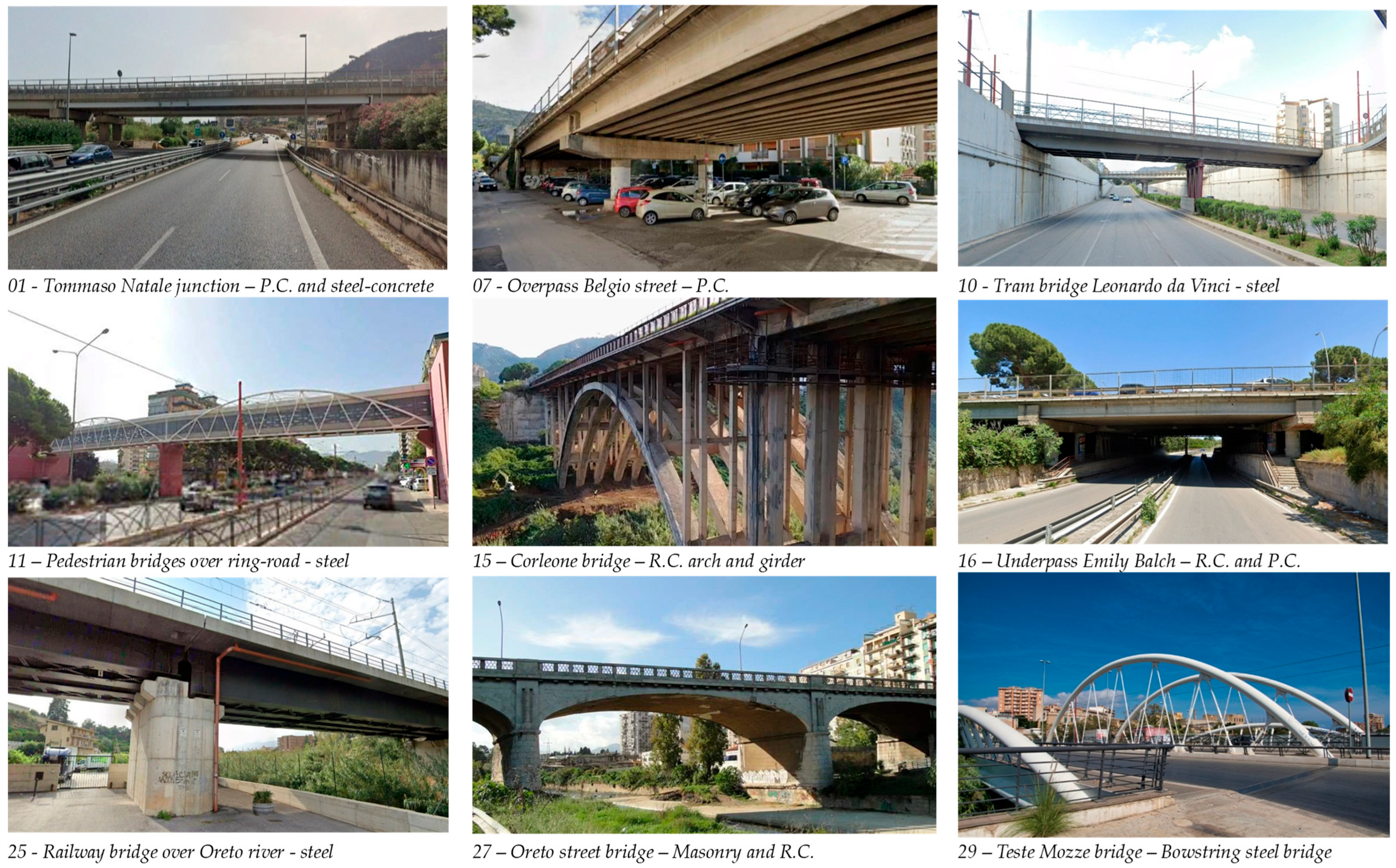
The method proves to be easily implementable when the bridge characteristics and the surrounding urban context are known. Figure 2 shows some of these bridges with different materials and structural systems. Table 8 provides a summary of the results obtained.
It is worth noting that no bridges were classified “critical” and all bridges fall within “high” and “medium” classes without bridges classified with low level of risk. Hence, there is a tendency for an excessive uniformity in the classification, with a large number of bridges to be classified as having a high risk level. This can be justified by the fact that the study focuses on urban bridges, which inherently involve a larger number of people, activities, and, most importantly, traffic. Therefore, it is useful to further differentiate and classify the various risk levels, in order to prioritize the in-depth assessment analysis for the most vulnerable ones.
It should also be noted that, according to this model, the parameters that contribute most to defining the overall class coefficient are those with the highest class factors specifically, those belonging to the first class: geometric and structural characteristics, material properties, design features, and services.
The model does not account for the fact that bridges in urban areas often carry utility services, such as gas pipelines, water mains, electrical cables, or telecommunications lines. These services increase the bridge’s fire risk for several reasons. First, they could themselves be the cause of a fire on the bridge, for example, through electrical short-circuits or gas leaks that may be ignited. Additionally, these services could be damaged during a fire, causing disruptions to the city’s population. One of the most striking examples among the bridges in Palermo is the Corleone Bridge, which is traversed by several services, including a gas pipeline located exactly between the two carriageways, protected only by a simple concrete curb, making it particularly exposed to potential vehicle impacts. Based on this consideration, it is advisable to pay special attention to bridges carrying such services by introducing an additional sub-parameter in the “Additional services and functionalities” parameter in class 1 to account for this factor.
Moreover, many bridges located in urban environments consist of overpasses, underpasses, or interchange ramps, where the primary hazard is associated with hydrocarbon fires originating from vehicles beneath the bridge. Such fires can directly affect the deck structure and, due to the partially confined conditions often present in these configurations, their effects may be further amplified. In [10], the authors performed Computational Fluid Dynamics (CFD) and fire modeling simulations, also supported by FEM analyses. Comparable investigations can also be found in De Silva et al. [12,13].
Another important observation concerns arch bridges, such as those spanning the Oreto River in Palermo. Regarding fire vulnerability, it is important to distinguish between bridges with a lower arch and roadway above, and bridges with an upper arch and roadway below. The arch itself is a robust structural element and is therefore assigned a low weighting factor. This is true for bridges with a lower arch or a massive arch (R.C. or masonry), where the arch is unlikely to be affected by a fire originating from traffic on the deck and for which fire has a low impact. Examples include the Oreto Bridge, the railway bridges over the Oreto River, and the Sea Bridge, which exhibit lower levels of risk. Conversely, if a bridge has an upper arch above the deck, with elements such as hangers, the vulnerability in case of fire is higher, as these components are more exposed to vehicle traffic and thus more likely to be involved in a fire event. For instance, the Teste Mozze bridge has an upper arch structure made of steel with hangers that are particularly exposed to fire risk (Figure 2).
Truss bridges represent another structural type to be considered. These are generally statically determinate and often built by steel, such as the Bailey bridge at Guadagna. These factors contribute to higher vulnerability. In the event of a fire, the web beams, which are directly exposed, would heat up rapidly and could immediately undergo deformation or collapse.
Based on these considerations, it is justifiable to assign a low weighting factor to a lower-arch concrete bridge, as it is a particularly robust structure, usually fixed at its base. Conversely, a steel truss bridge or a bowstring bridge (tied-arch) should be assigned a higher risk level.
The three pedestrian walkways crossing the ring-road, which are steel trusses with curved decks supported on piers, also need to be analyzed (#11 in Table 8 and in Figure 2): these walkways show a relatively lower risk level, primarily because the loading levels are much lower than those on vehicular bridges. However, one of the most important considerations is the protection of human life; therefore, the presence of pedestrians on these bridges and the steel structure increases their actual vulnerability.
Regarding major steel bridges, as expected, they exhibit the highest coefficients. Examples include the Tommaso Natale junction, with a steel box-girder structure that is simply supported, and the tramway bridge Leonardo da Vinci with continuous girder spans. In these scenarios, economic impact factors—such as the lack of alternative routes and the high costs and repair times—also play a fundamental role.

3. Modification of Importance Factor Determination and New Classification of Bridges in Compliance with Italian Guidelines

Considering that the analysis using Kodur’s method, applied to the set of 30 bridges in Palermo, revealed some evident inconsistencies, it is proposed below to adjust the sub-parameters of Class 1 by assigning new sub-parameters and different weighting factors, and to recalculate the overall class coefficient. Indeed, the method was originally developed and calibrated based on the bridge stock in the United States, which is significantly different from Italian bridges. Based on this, and following the observations made in the previous paragraph, Table 9 presents the new proposed sub-parameters and weighting factors for Class 1, which are better suited to urban bridges in Italy.
The Italian guidelines for the assessment and maintenance of existing bridges [19,20] provide a procedure for evaluating the state of the bridge considering also the aging degradation for the classification of structural, seismic, and hydraulic-geotechnical risks, but do not consider fire risk.
The proposed modification to the above-mentioned procedure by Kodur & Naser [18] has two objectives: (1) to make the procedure more suitable for application to urban and suburban bridges, where fire risk assessment is particularly significant, and (2) to adapt the evaluation of the final risk class for each bridge to the methodology followed by the Italian Guidelines. These guidelines classify each risk according to a multi-level procedure, in which levels 0 and 1 involve knowledge of the infrastructure through on-site inspections, while level 2 classifies the overall bridge risk based on various factors, distinguishing five “attention classes”: LOW, MEDIUM-LOW, MEDIUM, MEDIUM-HIGH, and HIGH.
Following this methodology, some modifications were made to the fundamental parameters for weighting factor assessment, making them more consistent with the current state of European road nets and urban bridge types. Subsequently, the importance factor was redefined based on the global coefficient values, redefining the subdivision into five classes instead of the four classes originally proposed by Kodur, integrating them into a multi-risk assessment of existing bridges in compliance with Italian procedures [19].
Regarding the structural system, it is considered appropriate to separate the possible arch types into massive arches and bowstring (tied-arch) arches, as they exhibit different fire behaviors. Structures with massive arches generally feature a lower arch with the roadway above and are therefore assigned a low weighting factor due to their high load-bearing capacity. Conversely, a typical tied-arch bridge is considered to have significantly poorer fire performance, due to the presence of vulnerable elements such as steel hangers in tension. Moreover, tied-arch bridges usually have an upper arch and a roadway below, making these elements more exposed to vehicular traffic, which could cause impacts or contribute to the fire load. For these reasons, they are assigned to a higher weighting factor.
Additionally, frame or portal-type bridges, which are often found in European roads and highways are considered. Being hyperstatic (statically indeterminate) structures, usually fixed at the supports and therefore highly resistant, they are assigned a weighting factor of 2. Continuous girder bridges are assigned to a factor of 3. Simply supported beams are assigned a factor of 4, as they are statically determinate and therefore more vulnerable, with a higher likelihood of collapse in the event of a fire. Truss structures were previously classified with a low risk factor of 1; however, it is now considered appropriate to assign them a factor of 4, as they are generally simply supported and constructed with steel elements, making them particularly vulnerable. Finally, the maximum weighting factor is maintained for cable-stayed and suspension bridges [24,25], in accordance with Kodur’s method but unified in a single weighting class.
Regarding material type, the criteria established by Kodur’s model are generally followed, except for reinforced concrete (RC) bridges and steel–concrete composite bridges, for which the weighting factors are inverted. Steel–concrete composite bridges are therefore considered more vulnerable. As shown by studies of reinforced RC bridges in detail, the concrete section retains its basic performance even if the external reinforcement degrades rapidly due to fire [10]. The primary structure maintains most of its mechanical properties, limiting the risk of collapse despite a rapid loss of strengthening performance. Conversely, composite bridges, which often feature steel girders with concrete slabs, are particularly fragile under fire exposure from below. Based on this assessment, composite bridges are considered more vulnerable and are assigned to a higher weighting factor than externally reinforced RC bridges.
Regarding span lengths, it is considered that, in ordinary roads and urban context, spans over 300 m are already significant, and the values proposed by Kodur are slightly reduced. For the number of lanes and current bridge condition, the same classification proposed in Kodur’s model is retained.
For age, it should be noted that in Europe, major infrastructure is generally designed for a longer service life compared to American bridges. Therefore, the threshold values between age classes are slightly increased. The optimal age range for Italian infrastructure is considered to be between 20 and 60 years, as the Italian bridge stock is generally older.
Finally, for the services and additional functionalities parameter, it is considered necessary to include whether the bridge carries flammable services, such as gas pipelines, oil pipelines, electrical cables, or is exclusively used to carry utility lines. This represents a very high fire risk and is therefore assigned the maximum weighting factor of 5.
Based on these revised parameters, the global class coefficients of the bridges are recalculated, while the factors for the other classes remain those chosen by Kodur. Furthermore, in order to classify the fire risk level according to the logic used in the Italian Guidelines for existing bridges, the results are reclassified into five classes instead of four, as shown in Table 10. Table 11 summarizes the results, listing the bridges according to the global class coefficient l in the new proposal of classification.
Results suggest that the proposed methodology may offer improved performance, based on a revised risk-level classification that appears more consistent with European and urban bridges.
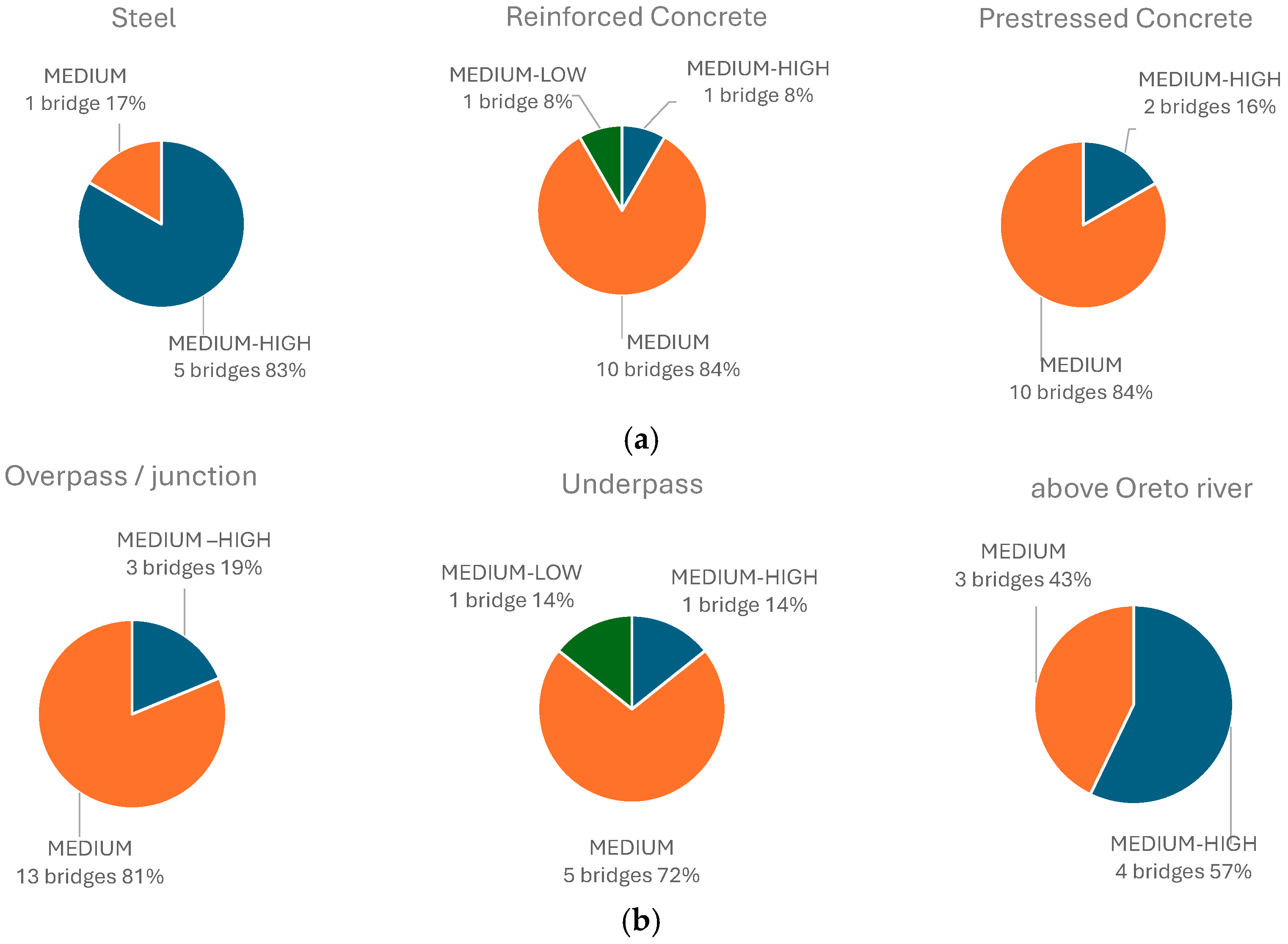
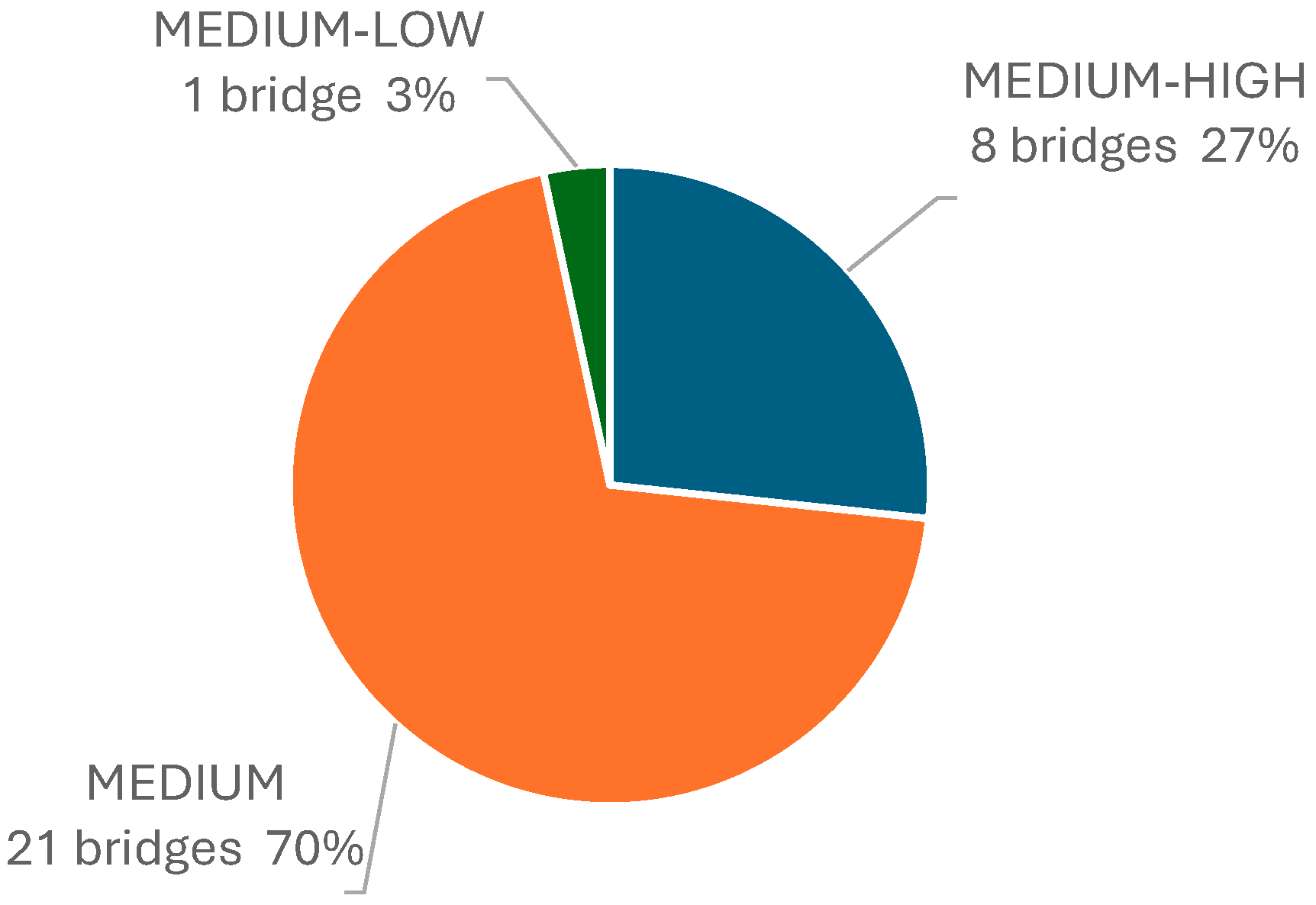
The new classification is summarized in Figure 3 for the entire stock of analysed bridges. Figure 4 shows the classification divided into categories according to the material and according to the location or bridge type.
Regarding material, it is confirmed that steel bridges have the highest importance factor and they are the most vulnerable. Bridges made of conventional RC and prestressed concrete exhibit lower values, which are comparable to each other. However, it should be noted that reinforced concrete degrades more slowly than prestressed concrete. Prestressing tendons, in fact, may lose prestress even at relatively low temperatures due to relaxation. Therefore, prestressed concrete structures can generally be considered more vulnerable from a fire risk perspective.
In most cases, it is observed that in the new proposal the overall class coefficient increases, meaning that bridges receive a more critical evaluation in terms of global factors. Although Kodur’s method might initially appear to assign a higher risk level, it should be noted that a different risk class composition was used, changing from 4 to 5 classification levels. Therefore, bridges actually exhibit less vulnerability under the new proposal compared to Kodur’s method, with most having a reduced final risk level classification. Additionally, most bridges fall into the medium risk category. This implies that the adoption of five risk classes enforces the distinction between high and medium–high risk levels, which warrant further investigation with different priority levels, and low or medium risk levels, which may instead be considered as presenting a non-significant risk.
In this way, the excessive uniformity and the lack of information to priority regarding the in-depth assessment to be adopted, which characterized the evaluation based on the original Kodur methodology, are overcome.
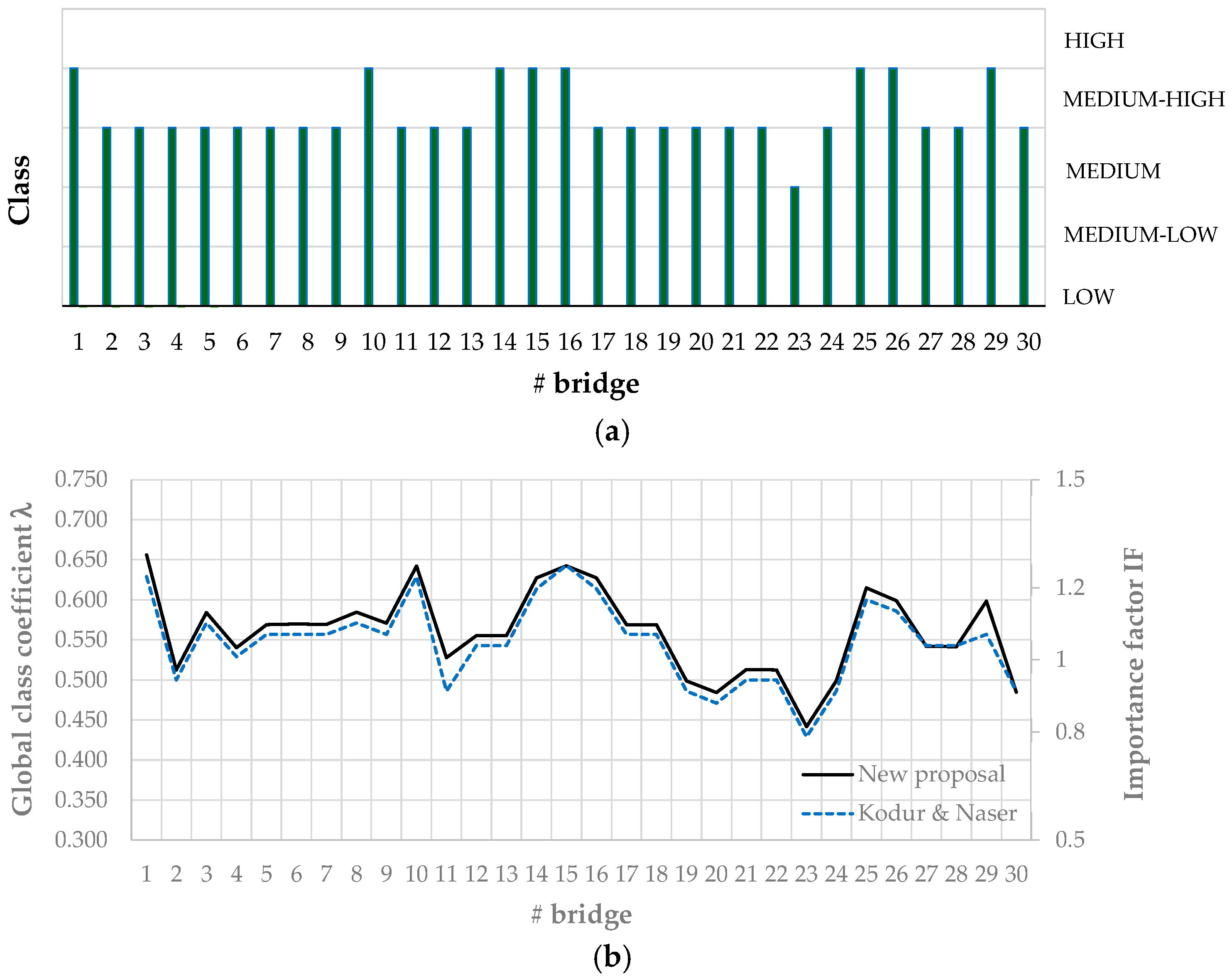
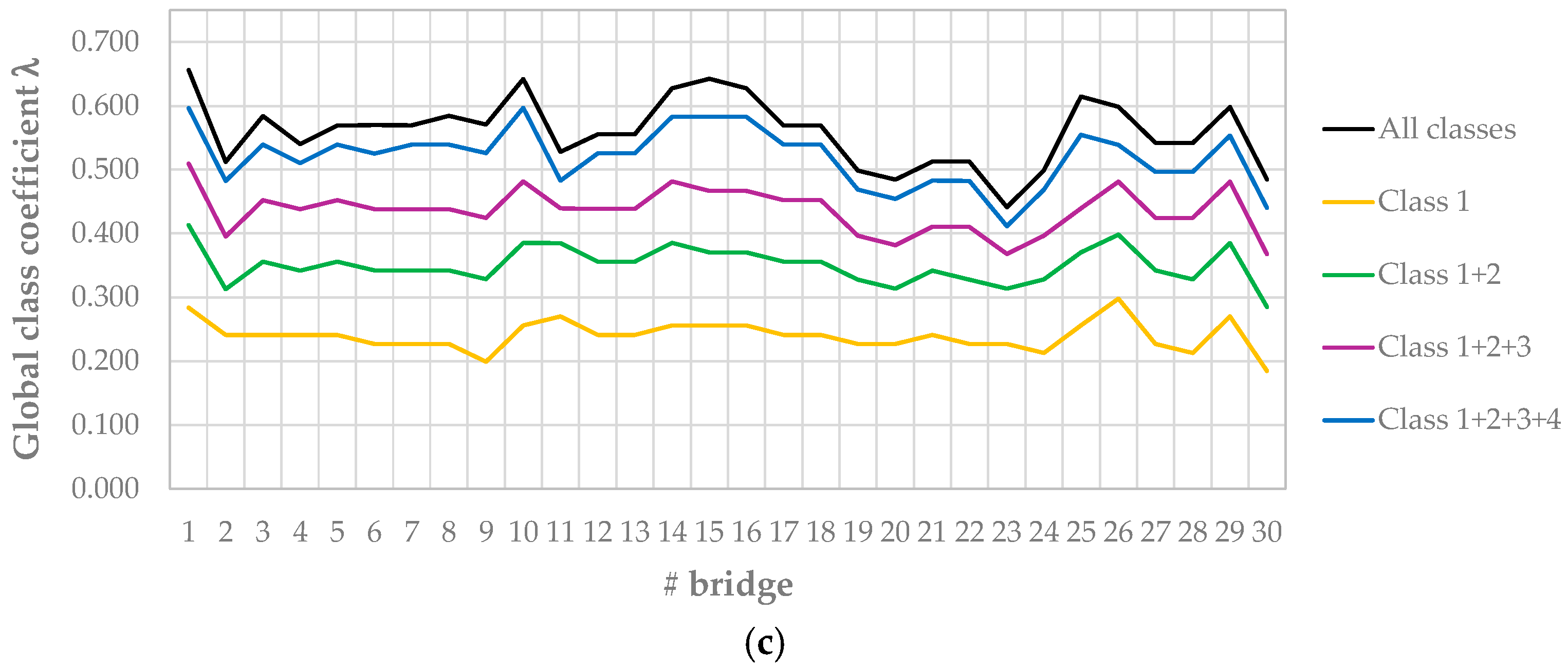
Figure 5 shows the results obtained in terms of global class coefficient l and importance factor for the entire stock (Figure 5a), comparing the values obtained through the original Kodur procedure and the one proposed herein (Figure 5b) making evidence of the contribution to the global coefficient given by each class (Figure 5c). Moreover, the comparison between the two methods shows that:
-
Steel bridges (like #1, #10 or # 29) remain in the medium–high risk category and are those with the highest vulnerability.
-
Reinforced and prestressed concrete bridges (like #7, #17 and #27), which were classified as high-risk under Kodur, are now downgraded to the medium class; some bridges that Kodur classified as medium are lowered to the medium–low class.
-
None of the analyzed bridges fall within the “high” attention risk class.
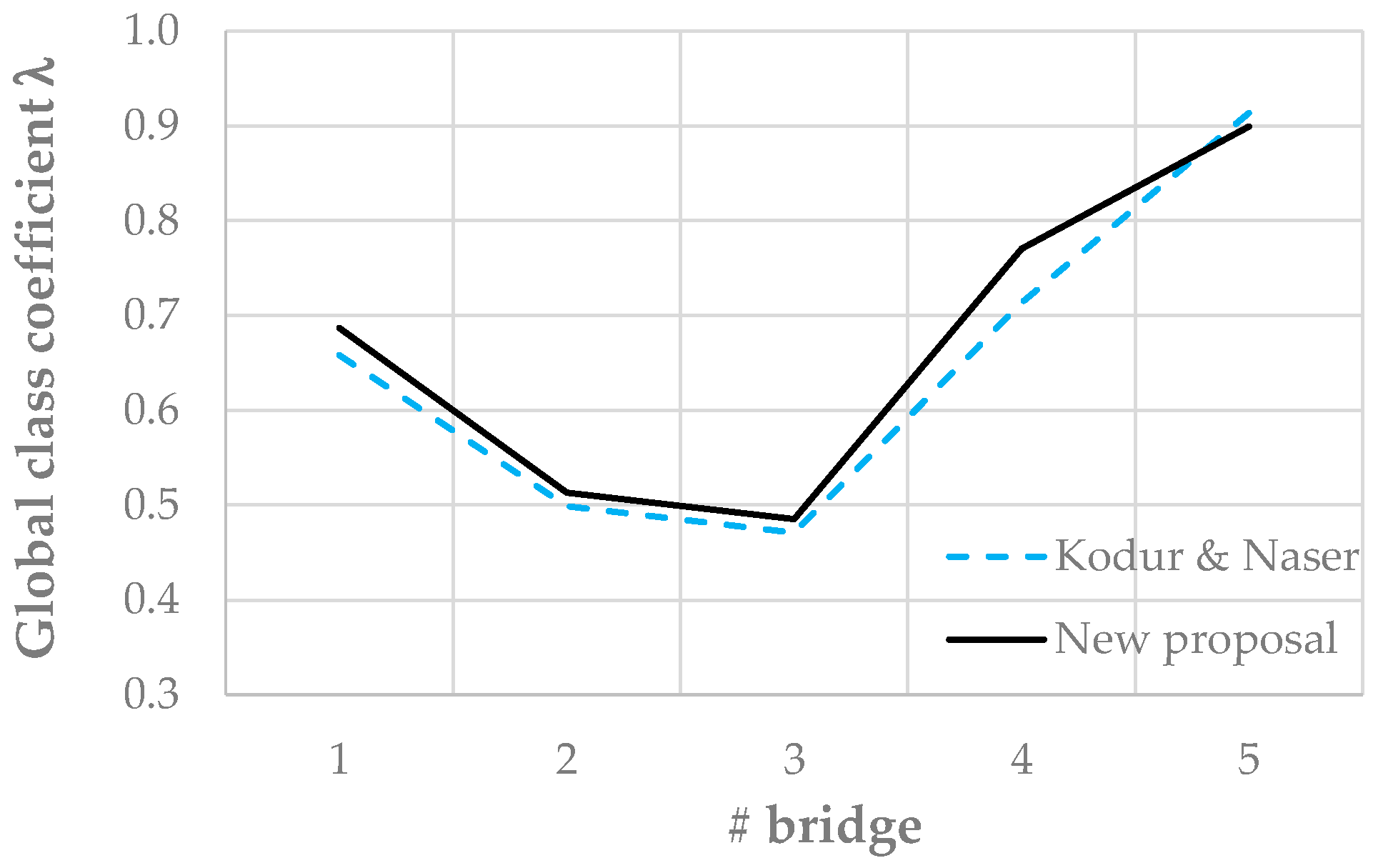
In order to validate the changes introduced to the original Kodur procedure, the global class coefficient and the corresponding classes were recalculated for five examples proposed by Kodur in [18], which are based on real bridge fire events and case studies. Table 12 reports the numerical results and the final classes, while Figure 6 shows a plot illustrating the variation of the global class coefficient for the five bridges.
The observed variations are entirely attributable to the modifications introduced in Class 1, whereas the other classes remain unchanged. As a result, long-span bridges, steel bridges, or more aged bridges tend to exhibit a worsening of both the coefficient value and the assigned class. Conversely, for conventional bridges, the assessment remains essentially unchanged, with variations that do not significantly affect the attribution of the importance factor and, consequently, the classification, apart from the subdivision into five classes instead of four. The assignment of the HIGH level in the new classification for some bridges (corresponding to the critical level in the original one) is mainly due to the penalization introduced for steel bridges in the proposed approach, as well as to the importance factor threshold set equal to 0.75 for the highest class, instead of the value 0.9 proposed by Kodur.

4. Introduction of Fire Risk Assessment in a Fire–Seismic Multi-Risk Framework

Seismic risk assessment of bridges is a challenging topic, due to the significant variability in deck typologies [26], piers, bearings, and boundaries, as well as the variability of seismic actions and soil conditions. For this reason, several simplified risk assessment methodologies have been proposed in the literature. Among these, the most widely adopted approach in the American context is the HAZUS system [22]. Several authors have proposed modifications to the HAZUS methodology, introducing a larger number of parameters to refine the assessment with respect to the original model [23].
The aim of this section is not to provide a comprehensive seismic risk assessment, but rather to introduce a multi-risk evaluation framework for bridges, accounting for the effects of fire and seismic hazards. This evaluation is developed on the basis of models available in the literature, with primary emphasis on their correlation with the Italian Guidelines framework, followed by a comparison with the available international models.
Italian Guidelines already provide a specific framework for the assessment of seismic risk and vulnerability of bridges [19,20] in which, based on the combination of hazard, exposure, and vulnerability classes, an overall class is obtained, referred to as the “Class of Attention” (CdA). Parameters involved are more specific than those adopted in HAZUS; therefore, while the general approach is very similar, the bridge classes defined in HAZUS are more generic, as are the variations of the parameters with respect to the class median. Moreover, whereas HAZUS refers to the bridge without accounting for possible degradation due to aging, the Italian approach explicitly includes this effect, which has a significant influence on vulnerability. This is because, within this procedure, seismic risk assessment is performed on the basis of on-site bridge inspections, which are not explicitly accounted for in HAZUS. In addition, the main hazard parameter related to the intensity of the action (PGA) has a decisive influence on the classification from the very beginning of the procedure, which is slightly modified by vulnerability aspects.
The output of HAZUS is a fragility curve for a given seismic damage level, which can therefore be associated with a Limit State. In order to make the two approaches comparable, the Italian procedure was first applied without modifications and compared with the fire risk determined in the previous section using the proposed procedure to define the envelope of risk classes. Subsequently, the Italian approach was modified by neglecting the influence of aging, so as to enable a direct comparison with the HAZUS procedure. Based on this, a Limit State is selected as reference for the risk assessment and the corresponding damage level of the HAZUS fragility curve is considered; hence, the probability of exceedance of the Limit State was re-parameterized into consistent five classes.

4.1. Seismic Risk Within the Italian Guideline Framework

The global assessment of seismic risk according to the Guidelines for the Classification and Management of Risk of Existing Bridges, is determined through a multi-level procedure integrating seismic hazard, vulnerability, and exposure assessments which supplies the so-called “Seismic Attention Class (CdA)” of a bridge [19].
Seismic hazard is evaluated with reference to the Italian Technical Standards based on the Peak Ground Acceleration (PGA) with a 10% probability of exceedance in 50 years (corresponding to the Life Safety Limit State (SLV) defined by the Italian Standard), considering rigid soil conditions, topographic category, and soil classification. The area where all the bridges are located is characterized by peak ground acceleration ag = 0.167 g and 1-s spectral acceleration Sa(T = 1 s) = 0.308 g.
According to Itlia guidelines The value of PGA defines an initial hazard class: LOW (<0.05 g), MEDIUM-LOW (0.05–0.10 g), MEDIUM (0.10–0.15 g), MEDIUM-HIGH (0.15–0.25 g), and HIGH (≥0.25 g), where g is the gravity acceleration. The hazard class is further adjusted according to topographic and soil types, considering soil type and topography condition as a worsening of the hazard class. In the absence of geotechnical data, the soil category is conservatively assumed. This combination yields the seismic hazard class.
Seismic vulnerability is then assessed qualitatively through hierarchical analysis of structural characteristics. Bridges are classified by deck material (reinforced concrete, prestressed concrete, masonry, steel) and number of spans (single- or multi-span). For multi-span bridges with heterogeneous spans, the most critical span governs vulnerability. Additional factors include the deck static scheme (isostatic or hyperstatic) and span length (small/medium ≤ 20 m, large > 20 m), again taking the most critical span for multi-span structures. This combination defines the basic structural vulnerability class, which can be increased if specific vulnerability elements are present, such as skewed or curved decks, single-column or irregular piers, and degraded or stress-concentrated bearings.
Design criteria further adjust the vulnerability class: bridges designed according to seismic provisions maintain their class, while the risk class of those originally designed without seismic criteria is increased by one level. Finally, the defect level, evaluated through visual inspections of critical elements (piers, foundations, bearings), accounts for severity, intensity, and distribution of defects. Defect levels range from high (severe or medium-high defects on critical elements or critical conditions) to low (few medium/low defects), defining the final seismic vulnerability class. In this way, defects in the existing bridge are explicitly considered as a significant parameter in the class assessment, worsening the vulnerability class when high level of defect occurs.
Seismic exposure considers bridge usage and strategic importance. Primary exposure is based on Average Daily Traffic (ADT) and average span length. Secondary parameters include absence of alternative routes (increasing the class) and frequent freight transport (used for prioritization, not class). Other parameters modify exposure: HIGH (significant occupancy, essential/emergency functions, railways, urban areas) increases the class, MEDIUM (normal occupancy, secondary roads, watercourses) remains unchanged, and LOW (occasional presence) may decrease the final class. Strategic importance is considered too: strategic bridges increase by one level, non-strategic remain unchanged. This defines the final seismic exposure class.
The Seismic Attention Class (CdA) is finally determined by crossing the three determined classes, using specific combination matrices. The reference table for the site-specific Seismic Hazard Class is selected, and the final Attention Class is obtained intersecting Structural Vulnerability and Exposure.
The procedure was applied to the set of urban bridges described above, yielding an assessment compliant with the Italian Guidelines for seismic risk.
Table 13 presents a comparison between the classes determined according to the previously described fire risk procedure and the current procedure for the seismic class, identifying the envelope, i.e., which of the two assumes greater significance for the overall attention to be given to each bridge within a multi-risk assessment framework.
It can be observed that, in general, fire risk is predominant, except for certain specific bridges where the seismic risk class increases due to existing defects or specific conditions more closely related to vulnerability. Exposure and hazard are relatively constant, as these are urban bridges with little variation in action levels or location along the road network. Naturally the PGA value of the site is a key parameter for this evaluation, because it is constant along the roadnet; consequently, if the same bridges were located at a different site, for instance characterized by a higher PGA value, the resulting risk class would change.

4.2. Seismic Risk Compared with HAZUS Model [22]

According to HAZUS model, vulnerability depends primarily on static scheme (bridge class), span length, location, and road alternatives, and seismic risk were evaluated without specific attention to the actual conditions of the bridge and the presence of defect due to aging.
The simplified procedure proposed by HAZUS was then used to evaluate the seismic vulnerability and risk of bridges, based on the application of typological fragility curves. The first step of the analysis consists of assigning each bridge to one of the 28 typological classes defined by the method, according to its main structural and geometric characteristics, including structural scheme, material, type of supports, number of spans, deck length, and year of construction.
Once the typological class is defined, the geographical location of the bridge (latitude and longitude) is identified, allowing the determination of site-specific seismic hazard parameters, namely the peak ground acceleration (PGA) and the acceleration response spectrum values on rock soil at periods of 0.3 s and 1.0 s. These parameters are subsequently amplified according to the soil category.
For each bridge class, the HAZUS methodology provides standard median values of acceleration response spectra associated with different seismic damage states. These median values are modified through corrective coefficients Kskew, Kshape, K3D, accounting respectively for skew angle, structural typology, and three-dimensional seismic response effects. The modified median represents the reference parameter for the construction of fragility curves.
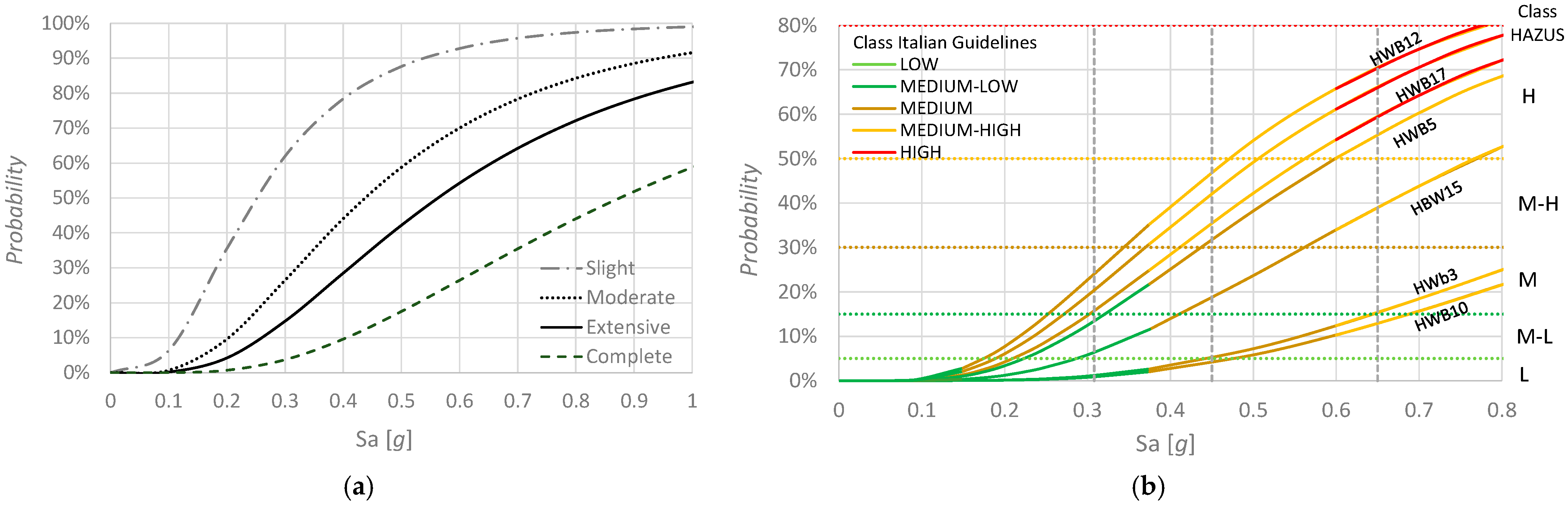
Fragility curves corresponding to slight, moderate, extensive, and complete damage states are created assuming a lognormal distribution with a dispersion coefficient β = 0.6 .
For the purpose of seismic risk classification, the fragility curve associated with the extensive damage state was considered, as it is consistent with the “Life Safety” Limit State (SLV) defined by the Italian Standard and allowing for a direct comparison with the Seismic Attention Class obtained from the Italian Guidelines [19,20]. According to Italian guidelines, for each bridge, the seismic hazard was represented by the spectral acceleration at period T = 1.0 s, while seismic risk is assumed to be represented by the corresponding probability of exceeding the extensive damage level in the Hazus fragility curve. Based on this representation of seismic risk and with the aim of comparing the risk level, bridges were re-classified into five seismic risk classes, depending on the probability of exceeding the extensive level of damage for Sa(T = 1 s), according to the following thresholds:
P < 0.05 :            LOW
0.05 P < 0.15 : MEDIUM-LOW
0.15 P < 0.30 : MEDIUM
0.30 P < 0.50 : MEDIUM-HIGH
P 0.50 :            HIGH
This classification was performed based on the accepted risk associated with the selected Limit State, considering the highest risk as that corresponding to a mean probability of 50% of exceeding the damage level indicated by the fragility curve.
This assumption is derived and validated from a comparison between the HAZUS fragility curve developed for the extensive damage state and the predictions associated with the bridge classes considered by the Italian Guidelines (where the actual damage is not considered). Figure 7a presents an example of the four HAZUS fragility curves for the different damage levels of a bridge, whereas Figure 7b shows only the curve corresponding to extensive damage for the 7 different bridge classes and the range of probability of exceedance corresponding to the five risk class above mentioned. The HAZUS classes corresponding to the bridges in the analyzed stock are HWB3, 5, 10, 12, 15, and 17. According to Italian guidelines, each bridge type belongs to a different risk class, depending on the seismic hazard, i.e depending on the value of the spectral acceleration. Thus, the curves are marked with different colors according to the correspondence between each curve segment, within a given range of spectral accelerations Sa(T), and the seismic classifications supplied by the Guidelines. The figure highlights how the above stated probability of exceedance ranges of the Hazus curve is well correlated with a specific class defined by the Italian Guidelines. Based on this correspondence, the probability of exceedance ranges was established for the reclassification of HAZUS into five classes, thus defining the limits discussed above.
It is important to note that PGA associated with the seismic hazard in Italian territory range from 0.05 g to 0.40 g; consequently, the significant range of spectral acceleration Sa(T), for a period T = 1 s, roughly lies between 0.05 g and 0.6 g. Beyond this value, the class was assumed to automatically increase by one level.
With these assumptions, HAZUS was applied to the same stock of bridges, reclassifying them according to the categories codified by HAZUS and constructing the fragility curves it provides for each damage level as a function of the seismic hazard represented by the 1-s spectral acceleration of the construction site corresponding to the SLV limit state. The overall assessment was then compared with a revised risk class from the Guidelines that does not consider the defect level. Naturally, in this case, the seismic risk decreases, both in the evaluations according to the Guidelines and thus is consistent with the assessments performed using HAZUS.
Table 14 presents this new comparison and the resulting envelope, taking into account three aspects: fire risk, seismic risk according to the Italian Guidelines, and seismic risk according to the HAZUS model. It can be observed that the absence of the degradation aspect lowers the seismic risk. This is mainly due to the bridge type and the seismic action of the area where the bridges are located (peak ground acceleration ag = 0.167 g and 1-s spectral acceleration Sa(T) = 0.308 g).
In general, probabilities of exceedance greater than 50% correspond to high seismic classes; however, these are associated with very high acceleration levels. For the set of bridges analyzed, the value Sa(T) = 0.308 g therefore results in low, medium-low, or medium classes. Higher classes are attained only for sites characterized by greater seismic hazard, such as those corresponding to the values of 0.45 g and 0.65 g shown in Figure 7b, which would increase the seismic risk classification of the bridges by one class. This implies that, if the same bridges were located in an area characterized by a higher baseline seismic hazard, higher classification levels would be obtained.
In this way, the final assessment produces an envelope in which the most severe class is determined by fire risk, while the seismic risk class depends primarily on the bridge type and its location within the infrastructure, being in the examined case low or medium-low for most of the bridges examined.
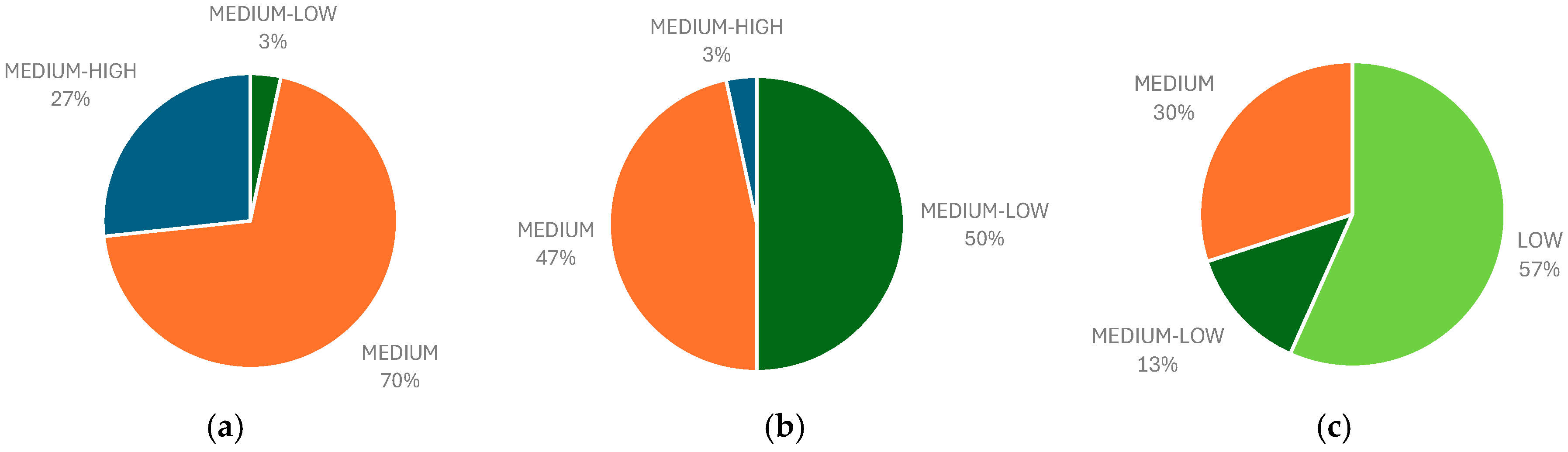
Figure 8 summarizes the results reported in Table 14, highlighting the percentage distribution among the different risk classes.
This risk classification allows the level of attention to fire and seismic hazards to be established independently of potential risks related to structural capacity or element deterioration, which are assessed within separate risk classes. Moreover, it enables Road Authorities to evaluate the relative influence of fire risk versus seismic risk, in order to identify which maintenance or retrofitting strategy should be prioritized.
For the specific set of bridges examined, deterioration appears to have a fundamental influence on seismic risk (compare the relevant columns in Table 13 and Table 14), as the actual condition of the bridge leads to a worsening of the risk class with respect to what can be assessed using expedited methods such as HAZUS, which do not account for this aspect. Moreover, the seismic risk according to the Italian Guidelines and the fire risk obtained through the modifications to the Kodur & Naser method proposed herein are comparable; therefore, the overall risk level, defined through the envelope, may derive from either condition, depending on the specific vulnerability of each bridge to the two examined hazards. The combined assessment of fire and seismic risk is not addressed in this study, as it would require the combination of probabilities associated with both actions and effects, which lies beyond the scope of the simplified, expedited risk assessment methods adopted herein.
This is because the analysis carried out previously does not depend on the causes generating the sequence of events, i.e., whether the fire is triggered by the earthquake or whether the two events are correlated. Although a direct correlation between the events is possible, statistical evidence from past occurrences suggests that the most severe fire scenarios are more likely to be associated with other factors, primarily the transport of hydrocarbons by tanker vehicles [1,2,3,4,5,6,7,8,9].
A different consideration applies to material pre-existing degradation due to ageing, which can significantly influence the consequences of both seismic and fire events. The statistical correlation among these three different hazards is complex, and the data currently available in the literature are insufficient to establish a reliable relationship. For this reason, the present study adopts an envelope approach to the risks rather than a combination not supported by objective data. Some preliminary attempts in this direction can be found in [20,21], although these studies do not include the fire risk.

5. Conclusions

This study investigates fire risk in urban bridges within a multi-risk assessment framework integrating fire with natural and anthropogenic hazards. Although often underestimated compared to earthquakes and floods, fire represents a significant threat, especially under concurrent conditions such as structural degradation or fire triggered by seismic events, which increase vulnerability. Fires can cause severe structural damage, leading to serviceability loss or collapse, highlighting the need for adequate risk assessment in both bridge design and management. An analysis of Italian and international regulations shows that current standards mainly address fire risk in buildings and confined spaces, inadequately covering bridge fires and other outdoor infrastructures. This reveals significant regulatory gaps and the need for updated provisions addressing fire scenarios in open road infrastructures.
Specifically, the expedited risk assessment procedure proposed by Kodur and Naser was applied to a stock of existing bridges in the metropolitan area of Palermo, Italy for the evaluation of the risk level of each bridge, thus identifying those with higher susceptibility to fire vulnerability. Modifications were made to the parameters used in the original procedure to better align them with the characteristics of European bridges, particularly in urban and suburban areas. Additionally, the importance factor was reclassified according to the five attention classes defined by the Italian Guidelines for existing bridges, allowing fire risk to be integrated into the multi-risk assessment approach currently applied in Italy, which do not yet consider fire. The new classification thus bases the procedure on Kodur and Naser’s parameters, with specific adjustments, and re-parameterizes the final outcome into the five attention classes, in compliance with Italian regulations.
Results from a set of 30 urban bridges located in medium seismicity area indicate that most fall within a medium risk level. The study identified key factors increasing bridge vulnerability to fires, including structural system, material type, traffic loads, probability of road accidents, degradation, economic and environmental damage, and the potential presence of flammable services. These factors must be carefully studied and addressed to reduce the overall risk to infrastructure. In the new proposal the coefficients related to the structural scheme, construction materials, age, and span lengths of the bridge were revised, as well as the factor accounting for the possible presence of flammable utilities carried by the bridge.
The procedure, whose results were validated using the experimental stock of bridges here considered and those originally supplied by Kodur & Naser, is easily applicable to large numbers of existing bridges on the road network. It allows the identification of bridges that require detailed assessment due to a high level of risk, compared to those that can be considered low risk. In this way, the process can be promptly used by Road Authorities across the network, providing a prioritized evaluation of bridges that are most vulnerable to fire or to the combination of fire with other risks.
Particularly, the fire–seismic multi-risk case was examined by adopting a simplified seismic risk approach consistent with the Italian Guidelines for existing bridges and comparing it with internationally accepted methods, particularly the North American HAZUS system. The results indicate that when the actual condition of the bridge and the presence of deterioration are considered, the seismic risk class increases and becomes more consistent with the fire risk assessment, in which this parameter is included, even though in simplified form. Conversely, when more expedited methods such as HAZUS are used, where seismic risk mainly depends on action intensity, bridge typology, and geometric characteristics, without accounting for maintenance conditions, the seismic risk may be underestimated. However, seismic risk is strongly dependent on hazard, namely the expected ground motion for the considered area (PGA); therefore, comparisons among different risks must always take this aspect into account.
For the examined real bridges, fire and seismic risks are generally comparable in degraded existing bridges, with a slight predominance of fire risk, whereas for non-degraded bridges seismic risk remains significantly lower and it is mainly controlled by the seismic action level and the typology of medium- to short-span urban bridges.
The main contribution and novelty of the paper mainly lies in the modifications introduced to the Kodur method, which allow a more refined classification of bridges into five classes. These classes can be directly correlated with those adopted in the Italian Guidelines for the assessment of other risks. Furthermore, in line with international studies, this approach leads to a harmonization with the seismic risk assessment, also accounting for the possible pre-existing degradation state of the bridge due to ageing, also with a view to enabling rapid assessments of large bridge inventories by Bridge and Road Authorities.

Author Contributions

Conceptualization, methodology, validation, formal analysis, investigation, data curation, writing—original draft preparation, writing—review and editing, M.F.G. Methodology, validation, analysis, data curation, writing—review and editing, A.C. Methodology, validation, investigation, data curation, writing—review and editing, P.C. All authors have read and agreed to the published version of the manuscript.

Funding

Acknowledgements are due to the Italian Ministry of University and Research for the research grant in the PRIN PNRR 2022 line, under the project SaFeBIMAs: Estimation of the combined Seismic-Fire risk and optimization of interventions for Buildings and Infrastructures in the context of Metropolitan Areas.

Data Availability Statement

Data are available from the authors on reasonable request.

Acknowledgments

The authors wish to acknowledge Mario Stabile for supporting the authors in the execution of some analyses and the Municipality of Palermo.

Conflicts of Interest

The authors declare no conflicts of interest.

References

  1. Garlock, M.; Paya-Zaforteza, I.; Kodur, V.; Li, G. Fire hazard in bridges: Review, assessment and repair strategies. Eng. Struct. 2012, 35, 89–98. [Google Scholar] [CrossRef]
  2. Lee, G.C.; Mohan, S.B.; Huang, C.; Fard, B.N. Technical Report MCEER-13-008: A Study of US Bridge Failures (1980–2012); MCEER, University at Buffalo (SUNY): Buffalo, NY, USA, 2013. [Google Scholar]
  3. Spencer, E.; Quiel, S.; Pessiki, P. Bridges, Fire, and the Structural Engineer. Struct. Mag. 2018, 12–14. [Google Scholar]
  4. New York State Department of Transportation. Bridge Fire Incidents in New York State; Private Correspondence with Prof. M. Garlock; New York State Department of Transportation: New York, USA, 2008. [Google Scholar]
  5. Wardhana, K.; Hadipriono, F. Analysis of recent bridge failures in the United States. J. Perform. Constr. Facil. 2003, 17, 144–150. [Google Scholar] [CrossRef]
  6. Scheer, J. Failed Bridges: Case Studies, Causes and Consequences; Wilhelm Ernst & Sohn: Berlin, Germany, 2011; p. 321. [Google Scholar]
  7. Hu, J.; Carcel, R.; Usmani, A. Bridge fires in the 21st century: A literature review. Fire Saf. J. 2021, 126, 103487. [Google Scholar] [CrossRef]
  8. Kodur, V.K.R.; Gu, L.; Garlock, M.E.M. Review and assessment of fire hazard in bridges. Transp. Res. Rec. J. Transp. Res. Board 2010, 2172, 23–29. [Google Scholar] [CrossRef]
  9. Zhang, G.; Zhao, X.; Lu, Z.; Song, C.; Li, X.; Tang, C. Review and discussion on fire behaviour of bridge girders. J. Traffic Transp. Eng. 2022, 9, 422–446. [Google Scholar]
  10. Granata, M.F.; Grigoras, Z.C.; Colajanni, P. Fire Load Effects on Concrete Bridges with External Post-Tensioning: Modeling and Analysis. Buildings 2026, 16, 430. [Google Scholar] [CrossRef]
  11. De Silva, D.; Miano, A.; Prota, A.; Nigro, E. Estimation of the combined seismic-fire risk: A critical review and future research agenda. In Proceedings of the 9th ECCOMAS Thematic Conference on Computational Methods in Structural Dynamics and Earthquake Engineering, Athens, Greece, 12–14 June 2023. [Google Scholar] [CrossRef]
  12. Gallo, M.; de Silva, D.; Nigro, E. Fire vulnerability assessment of bridges: A performance-based approach procedure with unconventional fire scenarios. Structures 2025, 71, 108019. [Google Scholar] [CrossRef]
  13. de Silva, D.; Miano, A.; De Rosa, G.; Di Meglio, F.; Prota, A.; Nigro, E. Analitycal fire fragility assessment for bridges considering fire scenarios variability. Eng. Struct. 2025, 325, 119442. [Google Scholar] [CrossRef]
  14. Bamonte, P.; Kalaba, N.; Felicetti, R. Computational study on prestressed concrete members exposed to natural fires. Fire Saf. J. 2018, 97, 54–65. [Google Scholar] [CrossRef]
  15. Peris-Sayol, G.; Payá-Zaforteza, I.; Balasch-Parisi, S.; Alós-Moya, J. Detailed Analysis of the Causes of Bridge fires and Their Associated Damage Levels. ASCE J. Perform. Constr. Facil. 2017, 31, 04016108. [Google Scholar] [CrossRef]
  16. Buchanan, A.H.; Abu, A.K. Structural Design for Fire Safety; John Wiley & Sons: Hoboken, NJ, USA, 2016; ISBN 9780470972892. [Google Scholar] [CrossRef]
  17. Felicetti, R.; Gambarova, P.G. Effects of high temperature on the residual compressive strength of high-strength siliceous concretes. ACI Mater. J. 1998, 95, 395–406. [Google Scholar] [CrossRef] [PubMed]
  18. Kodur, V.K.R.; Naser, M.Z. Importance factor for design of bridges against fire. Eng. Struct. 2013, 54, 207–220. [Google Scholar] [CrossRef]
  19. Italian Ministry of Infrastructures. Linee Guida per la Classificazione e Gestione Del Rischio, la Valutazione Della Sicurezza ed il Monitoraggio dei Ponti Esistenti’; Consiglio Superiore dei Lavori Pubblici: Rome, Italy, 2022. (In Italian) [Google Scholar]
  20. Santarsiero, G.; Masi, A.; Picciano, V.; Digrisolo, A. The Italian Guidelines on Risk Classification and Management of Bridges: Applications and Remarks on Large Scale Risk Assessments. Infrastructures 2021, 6, 111. [Google Scholar] [CrossRef]
  21. Grieco, L.A.; Scattarreggia, N.; Monteiro, R.; Parisi, F. An index-based multi-hazard risk assessment method for prioritisation of existing bridge portfolios. Int. J. Disaster Risk Reduct. 2024, 114, 104895. [Google Scholar] [CrossRef]
  22. HAZUS-MH. Multi-Hazard Loss Estimation Methodology: Earthquake Model. Hazus Earthquake Model Technical Manual; Hazus 6.1. FEMA; Department of Homeland Security: Washington, DC, USA, 2024. [Google Scholar]
  23. Mangalathu, S.; Soleimani, F.; Jeon, J.-S. Bridge classes for regional seismic risk assessment: Improving HAZUS models. Eng. Struct. 2017, 148, 755–766. [Google Scholar] [CrossRef]
  24. Granata, M.F.; Margiotta, P.; Arici, M.; Recupero, A. Construction stages of cable-stayed bridges with composite deck. Bridge Struct. 2012, 8, 93–106. [Google Scholar] [CrossRef]
  25. Recupero, A.; Granata, M.F. A mixed approach for determination of initial cable forces in cable-stayed bridges and the parameters variability. Balt. J. Road Bridge Eng. 2015, 10, 141–150. [Google Scholar] [CrossRef]
  26. Colajanni, P.; Granata, M.F.; La Mendola, L. Seismic Vulnerability of Segmental Bridges with Drop-In Span by Pushover Analysis. Appl. Sci. 2023, 14, 202. [Google Scholar] [CrossRef]
Figure 1. Classes of parameters influencing the fire performance of bridges.
Buildings 16 01148 g001
Figure 2. Examples within the stock of bridges considered for testing the procedure of risk-assessment in urban areas.
Buildings 16 01148 g002
Figure 3. Results of the analysis on the urban bridges of Palermo (new proposal) for the entire stock.
Buildings 16 01148 g003
Figure 4. Results of the analysis on the urban bridges of Palermo (new proposal). (a) Classification according to material. (b) Classification according to function.
Buildings 16 01148 g004
Figure 5. Importance factor and global class coefficient for the stock of bridges examined. (a) Classification of bridges through the new proposal. (b) Comparison between the original procedure by Kodur and the new proposal. (c) Contribution of each class to the global coefficient for the new proposal.
Buildings 16 01148 g005aBuildings 16 01148 g005b
Figure 6. Importance factor and global class coefficient for the example bridges by Kodur & Naser [16]. Comparison with the new proposal.
Buildings 16 01148 g006
Figure 7. Fragility curves and classification of seismic risk according to HAZUS. (a) Fragility curves for Belgio overpass (#7 of Table 8 and Figure 2), class HWB17 with 3 spans; (b) Classification on the basis of extensive damage fragility curve, corresponding to 1-s spectral acceleration and risk level associated to the related exceedance probability compared with Italian Guideline Classes.
Buildings 16 01148 g007
Figure 8. Results of the final multi-risk level analysis on the urban bridges of Palermo (a) Fire risk according to new proposal; (b) Seismic risk according to Italian Guidelines; (c) Hazus-like classification.
Buildings 16 01148 g008
Table 1. Parameters for class x = 1: Geometric, material properties, and design features.
Parameter (i)Sub-ParameterWeighting Factor φx,i
Structural system arch/truss1
continuous girder2
simply supported girder3
cable-stayed4
suspension5
MaterialReinforced concrete1
high-strength RC/prestressed2
steel-concrete composite3
RC bridge retrofitted with FRP or ext. prestr.4
steel or timber bridges5
Span length [m]<501
50–2002
200–5003
>5004
Number of lanes 21
2–42
>43
Age [years]<151
15–292
30–503
>504
Current condition
assessment
80–1001
60–802
40–603
20–404
<205
Additional services and functionalities1 deck1
2 decks + pedestrians2
railway3
Multi-level4
above water5
Table 2. Parameters for class x = 2: Probability of fire hazard.
Parameter (i)Sub-ParameterWeighting Factor φx,i
Response time
[min]
<51
5–102
10–203
20–304
>305
Historical/architectural significanceconventional1
historical2
prestigious3
Perceived threatnothing (low)1
not available (medium)2
frequent (high)3
Probable fire scenariosmall vehicle on fire above/below the bridge1
collision between a large truck and fire with other vehicles2
Tanker collision and bridge substructure fire3
serious collision of a fuel tanker and fire with multiple vehicles and against the bridge substructure4
fire due to the collision of a vessel with a deck pier5
Table 3. Parameters for class x = 3: Traffic demand.
Parameter (i) Sub-ParameterWeighting Factor φx,i
Average daily traffic [vehicles/day]<10001
1000–50002
5000–10,0003
15,000–50,0004
>50,0005
Bridge locationrural1
suburban2
urban3
Table 4. Parameters for class x = 4: Economic impact.
Parameter (i) Sub-ParameterWeighting Factor φx,i
Alternative routes
[km]
<10
10–20
>20
1
2
3
Expected repair time
[months]
<3
3–9
>9
1
2
3
Expected repair cost [millions]<1
1–3
>3
1
2
3
Table 5. Parameters for class x = 5: Expected fire-related losses.
Parameter (i) Sub-ParameterWeighting Factor φx,i
Loss of life/propertyminimal or no injuries1
minimum deaths2
many deaths3
Environmental damageminor damage1
significant damage2
unacceptable damage3
Table 7. Importance factor and risk level as a function of global class coefficient by Kodur & Naser.
Global Class Coefficient λImportance Factor IFRisk Level
>0.951.5CRITICAL
0.51–0.941.2HIGH
0.20–0.501MEDIUM
<0.200.8LOW
Table 8. Global class coefficient of Palermo bridges (Kodur & Naser method).
BridgeMaterialSpan Length [m]Global Class CoefficientIFRisk Level
01—Tommaso Natale junctionSteel450.6291.2HIGH
02—Overpass A29—Regione Siciliana NWHS RC/prestressed190.51MEDIUM
03—Underpass A29—n.1 (Ind. area north)Reinforced concrete13.60.5711.2HIGH
04—Underpass A29—n.2 (Cervello hospital)Reinforced concrete6.70.5291.2HIGH
05—Underpass A29—n.3 (Cervello hospital)Reinforced concrete13.60.5571.2HIGH
06—Belgio junction (2 bridges)Reinforced concrete340.5571.2HIGH
07—Overpass Belgio streetHS RC/prestressed RC/prestressed240.5571.2HIGH
08—Lazio junction (2 bridges)Reinforced concrete190.5711.2HIGH
09—Leonardo da Vinci junction (2 bridges)Reinforced concrete350.5571.2HIGH
10—Tram bridge Leonardo da VinciSteel320.6291.2HIGH
11—Pedestrian bridges over ring-road (3 bridges)Steel290.4861MEDIUM
12—Pitrè junctionHS RC/prestressed160.5431.2HIGH
13—Calatafimi junctionHS RC/prestressed210.5431.2HIGH
14—Ernesto Basile junctionHS RC/prestressed320.6141.2HIGH
15—Corleone bridgeReinforced concrete900.6431.2HIGH
16—Underpass Emily BalchReinforced concrete230.6141.2HIGH
17—Bonagia junctionHS RC/prestressed360.5571.2HIGH
18—Carlo Perrier viaductHS RC/prestressed340.5571.2HIGH
19—Emiro Giafar overpassHS RC/prestressed300.4861MEDIUM
20—Conte Federico bridgeHS RC/prestressed490.4711MEDIUM
21—Industrial Area junctionHS RC/prestressed370.51MEDIUM
22—Overpass A19—corso dei MilleHS RC/prestressed330.51MEDIUM
23—Railway bridge—corso dei MilleReinforced concrete9.60.4291MEDIUM
24—Villabate junctionReinforced concrete32.60.4861MEDIUM
25—1st Railway bridge over Oreto river Steel400.61.2HIGH
26—Bailey bridge at GuadagnaSteel320.5861.2HIGH
27—Oreto street bridgeReinforced concrete300.5431.2HIGH
28—2nd Railway bridge over Oreto riverReinforced concrete300.5431.2HIGH
29—Teste Mozze bridgeSteel350.5571.2HIGH
30—Sea bridge over Oreto riverReinforced concrete140.4861MEDIUM
Table 9. Weighting parameters relating to Class 1 in the new proposal for urban bridges.
ParameterSub-ParameterWeighting Factor φx,i
Structural systemmassive arch1
frame with vertical or inclined piers2
continuous girder3
simply supported, truss, bowstring bridges4
cable-stayed or suspended5
MaterialReinforced concrete1
High-strength R.C./Prestressed concrete2
RC bridge retrofitted with FRP or external prestressing3
steel-concrete composite4
steel or timber bridge5
Span length
[m]
<501
50–1502
150–3003
>3004
Number of lanes21
2–42
>43
Age
[years]
<201
20–342
35–603
>604
Current condition
assessment
1001
60–802
40–603
20–404
<205
Additional services and functionalities1 deck1
2 decks + pedestrians2
railway3
overpass or underpass, above water4
hosting flammable systems5
Table 10. New proposal for importance factor and risk level according to global class coefficient.
Global Class Coefficient λImportance Factor IFRisk Level
>0.751.5HIGH
0.60—0.751.2MEDIUM-HIGH
0.45–0.601MEDIUM
0.30–0.450.8MEDIUM-LOW
<0.300.5LOW
Table 11. Results of the analysis on the Palermo bridges according to the new proposal.
BridgeGlobal Coeff.Modified
IF
Risk Level
(New Proposal)
Global Coeff.
(Kodur)
Risk Level
(Kodur)
Comparison of Risk Level
New/Kodur
01—Tommaso Natale junction0.6561.2MEDIUM-HIGH0.629HIGHSame
02—Overpass A29—Regione Siciliana NW0.5121MEDIUM0.5MEDIUMSame
03—Underpass A29—n.1 (Ind. area north)0.5841MEDIUM0.571HIGHReduced
04—Underpass A29—n.2 (Cervello hospital)0.5401MEDIUM0.529HIGHReduced
05—Underpass A29—n.3 (Cervello hospital)0.5691MEDIUM0.557HIGHReduced
06—Belgio junction (2 bridges)0.5701MEDIUM0.557HIGHReduced
07—Overpass Belgio street0.5691MEDIUM0.557HIGHReduced
08—Lazio junction (2 bridges)0.5841MEDIUM0.571HIGHReduced
09—Leonardo da Vinci junction (2 bridges)0.5711MEDIUM0.557HIGHReduced
10—Tram bridge Leonardo da Vinci0.6421.2MEDIUM-HIGH0.629HIGHSame
11—Pedestrian bridges over ring-road (3 bridges)0.5281MEDIUM0.486MEDIUMSame
12—Pitrè junction0.5551MEDIUM0.543HIGHReduced
13—Calatafimi junction0.5551MEDIUM0.543HIGHReduced
14—Ernesto Basile junction0.6281.2MEDIUM-HIGH0.614HIGHSame
15—Corleone bridge0.6421.2MEDIUM-HIGH0.643HIGHSame
16—Underpass Emily Balch0.6271.2MEDIUM-HIGH0.614HIGHSame
17—Bonagia junction0.5691MEDIUM0.557HIGHSame
18—Carlo Perrier viaduct0.5691MEDIUM0.557HIGHSame
19—Emiro Giafar overpass0.4991MEDIUM0.486MEDIUMSame
20—Conte Federico bridge0.4841MEDIUM0.471MEDIUMSame
21—Industrial Area junction0.5131MEDIUM0.5MEDIUMSame
22—Overpass A19—corso dei Mille0.5131MEDIUM0.5MEDIUMSame
23—Railway bridge—corso dei Mille0.4420.8MEDIUM-LOW0.429MEDIUMReduced
24—Villabate junction0.4991MEDIUM0.486MEDIUMSame
25—1st Railway bridge over Oreto river 0.6151.2MEDIUM-HIGH0.6HIGHSame
26—Bailey bridge at Guadagna0.5991.2MEDIUM-HIGH0.586HIGHSame
27—Oreto street bridge0.5421MEDIUM0.543HIGHReduced
28—2nd Railway bridge over Oreto river0.5411MEDIUM0.543HIGHReduced
29—Teste Mozze bridge0.5981.2MEDIUM-HIGH0.557HIGHReduced
30—Sea bridge over Oreto river0.4851MEDIUM0.486MEDIUMSame
Table 12. Results of the analysis on the example bridges presented by Kodur & Naser [18].
BridgeGlobal Coeff.
(Kodur)
Risk Level
(Kodur)
Global Coeff.
(New Proposal)
Risk Level
(New Proposal)
Example 1—I-75 bridge near Hazel Park, MI0.658HIGH0.687MEDIUM-HIGH
Example 2—Stop Thirty Road—SR 3860.499MEDIUM0.513MEDIUM
Example 3—Pulyallup River Bridge0.471MEDIUM0.485MEDIUM
Example 4—cable-stayed bridge0.714HIGH0.770HIGH
Example 5—suspension bridge0.914HIGH0.900HIGH
Table 13. Envelope fire and seismic risk level with degradation.
BridgeFire Risk Level
(New Proposal)
Seismic Risk Level
Italian Guidelines
Envelope
Multi-Risk Level
01—Tommaso Natale junctionMEDIUM-HIGHMEDIUM-HIGHMEDIUM-HIGH
02—Overpass A29—Regione Siciliana NWMEDIUMMEDIUMMEDIUM
03—Underpass A29—n.1 (Ind. area north)MEDIUMMEDIUMMEDIUM
04—Underpass A29—n.2 (Cervello hospital)MEDIUMMEDIUMMEDIUM
05—Underpass A29—n.3 (Cervello hospital)MEDIUMMEDIUMMEDIUM
06—Belgio junction (2 bridges)MEDIUMMEDIUMMEDIUM
07—Overpass Belgio streetMEDIUMMEDIUM-HIGHMEDIUM-HIGH
08—Lazio junction (2 bridges)MEDIUMMEDIUMMEDIUM
09—Leonardo da Vinci junction (2 bridges)MEDIUMMEDIUM-HIGHMEDIUM-HIGH
10—Tram bridge Leonardo da VinciMEDIUM-HIGHMEDIUMMEDIUM-HIGH
11—Pedestrian bridges over ring-road (3 bridges)MEDIUMMEDIUMMEDIUM
12—Pitrè junctionMEDIUMMEDIUM-LOWMEDIUM
13—Calatafimi junctionMEDIUMMEDIUMMEDIUM
14—Ernesto Basile junctionMEDIUM-HIGHMEDIUM-HIGHMEDIUM-HIGH
15—Corleone bridgeMEDIUM-HIGHHIGHHIGH
16—Underpass Emily BalchMEDIUM-HIGHMEDIUM-HIGHMEDIUM-HIGH
17—Bonagia junctionMEDIUMMEDIUMMEDIUM
18—Carlo Perrier viaductMEDIUMMEDIUMMEDIUM
19—Emiro Giafar overpassMEDIUMMEDIUMMEDIUM
20—Conte Federico bridgeMEDIUMMEDIUMMEDIUM
21—Industrial Area junctionMEDIUMMEDIUMMEDIUM
22—Overpass A19—corso dei MilleMEDIUMMEDIUM-HIGHMEDIUM-HIGH
23—Railway bridge—corso dei MilleMEDIUM-LOWMEDIUMMEDIUM
24—Villabate junctionMEDIUMMEDIUMMEDIUM
25—1st Railway bridge over Oreto river MEDIUM-HIGHMEDIUM-LOWMEDIUM-HIGH
26—Bailey bridge at GuadagnaMEDIUM-HIGHMEDIUMMEDIUM-HIGH
27—Oreto street bridgeMEDIUMMEDIUMMEDIUM
28—2nd Railway bridge over Oreto riverMEDIUMMEDIUM-HIGHMEDIUM-HIGH
29—Teste Mozze bridgeMEDIUM-HIGHMEDIUMMEDIUM-HIGH
30—Sea bridge over Oreto riverMEDIUMMEDIUMMEDIUM
Table 14. Envelope fire and seismic risk level without considering defects due to aging.
BridgeFire Risk Level
(New Proposal)
Seismic Risk Level
Italian Guidelines
Seismic Risk Level Through HAZUSEnvelope of
Risk Level
01—Tommaso Natale junctionMEDIUM-HIGHMEDIUMMEDIUMMEDIUM-HIGH
02—Overpass A29—Regione Siciliana NWMEDIUMMEDIUM-LOWLOWMEDIUM
03—Underpass A29—n.1 (Ind. area north)MEDIUMMEDIUM-LOWLOWMEDIUM
04—Underpass A29—n.2 (Cervello hospital)MEDIUMMEDIUM-LOWLOWMEDIUM
05—Underpass A29—n.3 (Cervello hospital)MEDIUMMEDIUM-LOWLOWMEDIUM
06—Belgio junction (2 bridges)MEDIUMMEDIUMLOWMEDIUM
07—Overpass Belgio streetMEDIUMMEDIUMMEDIUMMEDIUM
08—Lazio junction (2 bridges)MEDIUMMEDIUM-LOWMEDIUMMEDIUM
09—Leonardo da Vinci junction (2 bridges)MEDIUMMEDIUMMEDIUM-LOWMEDIUM
10—Tram bridge Leonardo da VinciMEDIUM-HIGHMEDIUMLOWMEDIUM-HIGH
11—Pedestrian bridges over ring-road (3)MEDIUMMEDIUM-LOWMEDIUMMEDIUM
12—Pitrè junctionMEDIUMMEDIUM-LOWMEDIUM-LOWMEDIUM
13—Calatafimi junctionMEDIUMMEDIUMMEDIUM-LOWMEDIUM
14—Ernesto Basile junctionMEDIUM-HIGHMEDIUMMEDIUMMEDIUM-HIGH
15—Corleone bridgeMEDIUM-HIGHMEDIUM-HIGHMEDIUMMEDIUM-HIGH
16—Underpass Emily BalchMEDIUM-HIGHMEDIUMMEDIUMMEDIUM-HIGH
17—Bonagia junctionMEDIUMMEDIUMLOWMEDIUM
18—Carlo Perrier viaductMEDIUMMEDIUMLOWMEDIUM
19—Emiro Giafar overpassMEDIUMMEDIUM-LOWLOWMEDIUM
20—Conte Federico bridgeMEDIUMMEDIUM-LOWLOWMEDIUM
21—Industrial Area junctionMEDIUMMEDIUM-LOWLOWMEDIUM
22—Overpass A19—corso dei MilleMEDIUMMEDIUMMEDIUMMEDIUM
23—Railway bridge—corso dei MilleMEDIUM-LOWMEDIUM-LOWLOWMEDIUM-LOW
24—Villabate junctionMEDIUMMEDIUMMEDIUM-LOWMEDIUM
25—1st Railway bridge over Oreto river MEDIUM-HIGHMEDIUM-LOWMEDIUMMEDIUM-HIGH
26—Bailey bridge at GuadagnaMEDIUM-HIGHMEDIUM-LOWLOWMEDIUM-HIGH
27—Oreto street bridgeMEDIUMMEDIUM-LOWLOWMEDIUM
28—2nd Railway bridge over Oreto riverMEDIUMMEDIUMLOWMEDIUM
29—Teste Mozze bridgeMEDIUM-HIGHMEDIUMLOWMEDIUM-HIGH
30—Sea bridge over Oreto riverMEDIUMMEDIUM-LOWLOWMEDIUM
Disclaimer/Publisher’s Note: The statements, opinions and data contained in all publications are solely those of the individual author(s) and contributor(s) and not of MDPI and/or the editor(s). MDPI and/or the editor(s) disclaim responsibility for any injury to people or property resulting from any ideas, methods, instructions or products referred to in the content.