1. Introduction
With the acceleration of the global energy transition, offshore wind power, as a clean and efficient renewable energy source, has become an important component of global energy strategies [
1,
2,
3,
4]. Its development not only enables effective utilization of marine renewable resources but also reduces dependence on fossil fuels and lowers carbon emissions. Driven jointly by the “dual-carbon” targets and the global transformation of the energy structure, offshore wind power is rapidly advancing toward deeper and distant seas and larger-capacity turbines, which significantly increases the engineering complexity and quality requirements of offshore support structures [
5,
6].
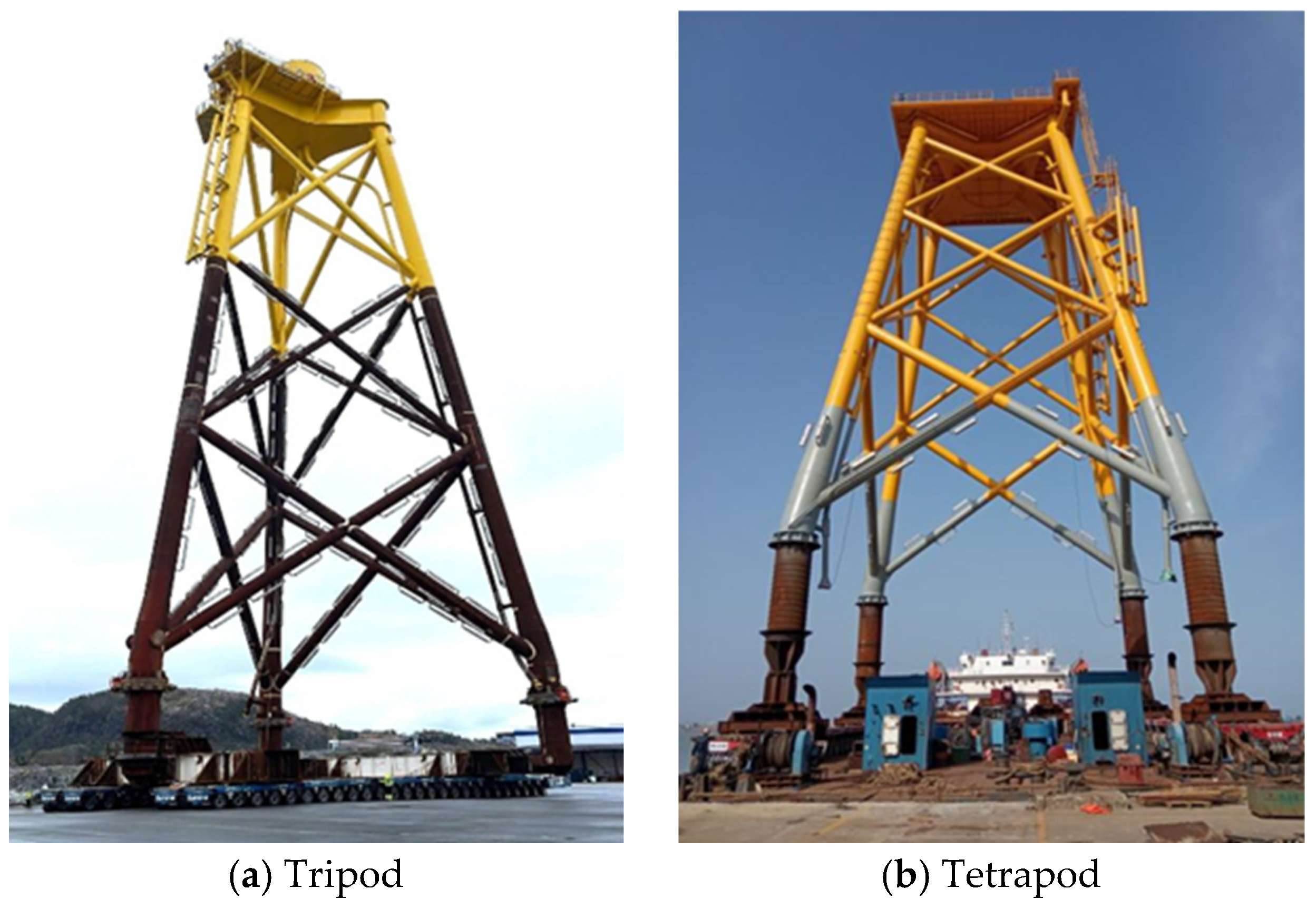
Jacket foundations, benefiting from their favorable overall stiffness and fatigue resistance, have become a major structural solution for fixed offshore wind turbines under certain water depth conditions. As shown in
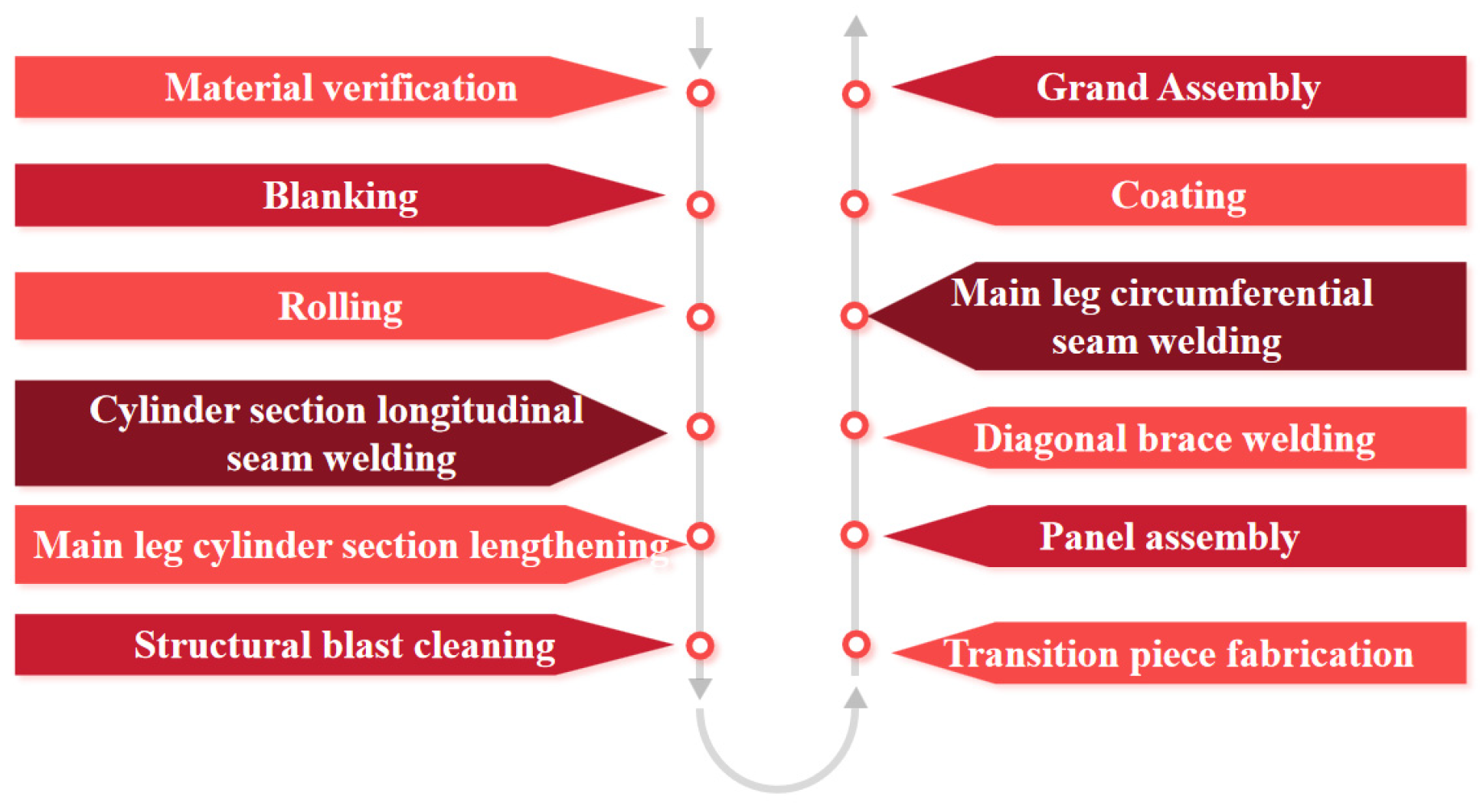
Figure 1, the jacket foundation, benefiting from its favorable overall stiffness and fatigue resistance, has become a critical structural solution for fixed offshore wind turbines at certain water depths. Two typical configurations are illustrated: (a) the three-legged jacket, (b) the four-legged jacket. These multi-pod structures effectively transfer upper loads to the seabed, offering high structural reliability for offshore installations. However, unlike single-component products or those with short process chains, the construction of jacket foundations is characterized by typical features such as a long process chains, strong interface coupling, and high process uncertainty. The construction process typically covers key stages such as material verification, cutting, rolling, longitudinal seam welding of shell sections, section extension, brace assembly and welding, panel assembly, transition piece fabrication, structural sandblasting, coating, and final assembly. Any local quality deviation may be amplified during subsequent assembly and inspection release, which in turn leads to management consequences such as rework, schedule delays [
7], and cost fluctuations [
8,
9].
In this context, conducting research on quality risk management throughout the entire construction process of jacket foundations is not only essential for ensuring engineering safety and reliability, but also represents an important issue in civil engineering management concerning the “process quality controllability” of complex manufacturing–construction systems [
10]. Quality risk management, in this study, refers to the systematic process of identifying potential quality deviations, analyzing their likelihood and consequences, and implementing proactive controls to prevent defects before they occur—rather than relying solely on post-process inspection.
From the perspective of specifications and management systems, wind turbine support structures must meet the overall requirements of international standards for structural safety and engineering implementation. For example, DNV-ST-0126 [
11] provides general principles and guidelines for the structural design of wind turbine support structures, while ISO 19902:2020 [
12] specifies the scope of application and basic requirements for fixed steel offshore structures (including jacket structures), thereby providing a regulatory framework for design, fabrication, and engineering implementation in practice projects. Meanwhile, ISO 9001:2015 [
13] emphasizes a process approach and the PDCA cycle driven by “risk-based thinking,” requiring the identification of uncertainties that may lead to deviations from expected results and the deployment of preventive controls. However, at jacket construction sites, quality management still commonly suffers from several persistent challenges, such as over-reliance on manual experience and post-event inspection, fragmented information across processes, and difficulties in closing the loop of evaluation and control. In particular, in critical stages such as welding, coating, and dimensional accuracy control of large-scale assembly, quality problems are rarely triggered by a single factor; instead, they result from the interaction of multiple factors, including personnel competence, equipment condition, materials and process execution, inspection frequency, and environmental conditions. Therefore, a risk-management-oriented approach is needed to achieve feed-forward identification and proactive process control.
In recent years, substantial research achievements have been made worldwide in the areas of structural response analysis, design optimization, and service performance evaluation of offshore wind turbine foundations. In parallel, in studies of risks in engineering projects and manufacturing systems, multi-criteria decision-making and uncertainty modeling methods have been widely applied for risk identification and prioritization [
10,
14,
15]. Nevertheless, research focusing on the construction process of offshore wind foundations remains relatively limited. In particular, systematic attention is lacking in quality risk management related to heavy component lifting, dimensional accuracy control of large spatial structures, heavy-duty structural welding, and corrosion protection in marine environments. As a result, systematic, process-oriented quality risk management for manufacturing and construction is still insufficient [
16,
17,
18]. At the same time, digitalization and data-driven quality technologies are developing rapidly. For instance, digital-twin quality inspection frameworks that integrate point-cloud scanning, weld image data, and IoT information have been applied to improve the efficiency of dimensional tolerance verification, weld integrity assessment, and specification compliance reviews. These advances demonstrate the feasibility of integrating “inspection–model–decision” workflows; however, the coupling of this framework with the management closed-loop of the construction process quality risk management system (identification–evaluation–control) still needs to be further advanced [
19,
20,
21].
Against this background, a central research gap becomes evident: quality risks in jacket construction cannot be managed solely through “pass/fail” conformity judgments. Instead, it is necessary to address a series of key scientific and managerial questions at the process-chain level, including where risks originate, how they can be quantitatively compared, and how they can be translated into actionable controls. First, at the object level, jacket construction involves multiple processes, interfaces, and stakeholders. Without a structured representation of risk sources, it is difficult for managers to identify the real key risks points under resource-constrained conditions. Therefore, it is necessary to transform high-frequency on-site risk factors from experience-based descriptions into an evaluable indicator system, and to develop a traceable, comparable, and extensible risk indicator list within the 5M1E framework (man, machine, material, method, measurement, and environment), thereby supporting consistent cross-process evaluation and communication [
22].
Second, at the methodological level, risk assessment in jacket construction often faces typical constraints such as limited samples, incomplete information, and uncertainty in expert linguistic judgments. How to improve the robustness of ranking results while maintaining interpretability is a key concern in civil engineering management research. Traditional TOPSIS evaluates alternatives mainly based on their distances to positive and negative ideal solutions and does not account for data variation trends, which may lead to discrepancies between results and reality. Moreover, ranking difficulties may arise when Euclidean distances are equal. To address these issues, grey relational analysis, which reflects the similarity of curves, can be introduced, and the entropy weight method can be used to reduce subjectivity in weight determination, thereby constructing a comprehensive evaluation model more suitable for construction quality risk scenarios.
Third, at the decision-making and implementation level, quality risk studies that stop at “identification and ranking” often fail to generate management outputs with direct practical guidance [
23]. Risk control in jacket construction further requires answering how, when a certain process (e.g., welding or coating) is assessed as high risk, the risk is distributed across specific dimensions and secondary indicators within the 5M1E framework. Enterprises then need to translate assessment results into concrete control points, such as personnel qualification and training, equipment stability and maintenance, material identification and batch control, process execution and documentation, environmental monitoring, and measurement tools and inspection frequency. These controls should be coordinated with FMEA, process audits (e.g., VDA), and information-based and automated technologies to form a closed-loop mechanism of “prevention–monitoring–correction–verification” [
24].
Based on this chain of issues, this study takes the construction process of offshore wind jacket foundations as the research object and conducts a systematic investigation along the risk management pathway of “identification–assessment–control.” In the risk identification stage, methods such as brainstorming, expert interviews, and questionnaire surveys are employed to extract on-site risk factors related to four categories of processes—preparation, welding, coating, and assembly—and to establish an indicator list that enables structured representation and attribution of construction quality risks. In the risk assessment stage, a comprehensive evaluation model integrating the entropy weight method with grey relational analysis and TOPSIS is developed to enhance objectivity in weight determination and robustness in ranking under multi-criteria conditions, thereby enabling comparable quantification and prioritization of quality risk levels across different processes. In the risk control stage, process-specific and dimension-specific response strategies are proposed based on the assessment results, and the integration pathways of FMEA, VDA process audits, and information-based and automated technologies in the governance of jacket construction quality risks are discussed, with the aim of translating evaluation outcomes into actionable control measures.
This study contributes to the field in three ways: (1) a structured 5M1E-based risk identification framework tailored to jacket construction; (2) an integrated EWM-TOPSIS-GRA evaluation model that enhances ranking robustness; (3) translation of risk rankings into quantifiable control thresholds with managerial applicability.
2. Quality Risk Indicator System and Identification Logic for Jacket Construction
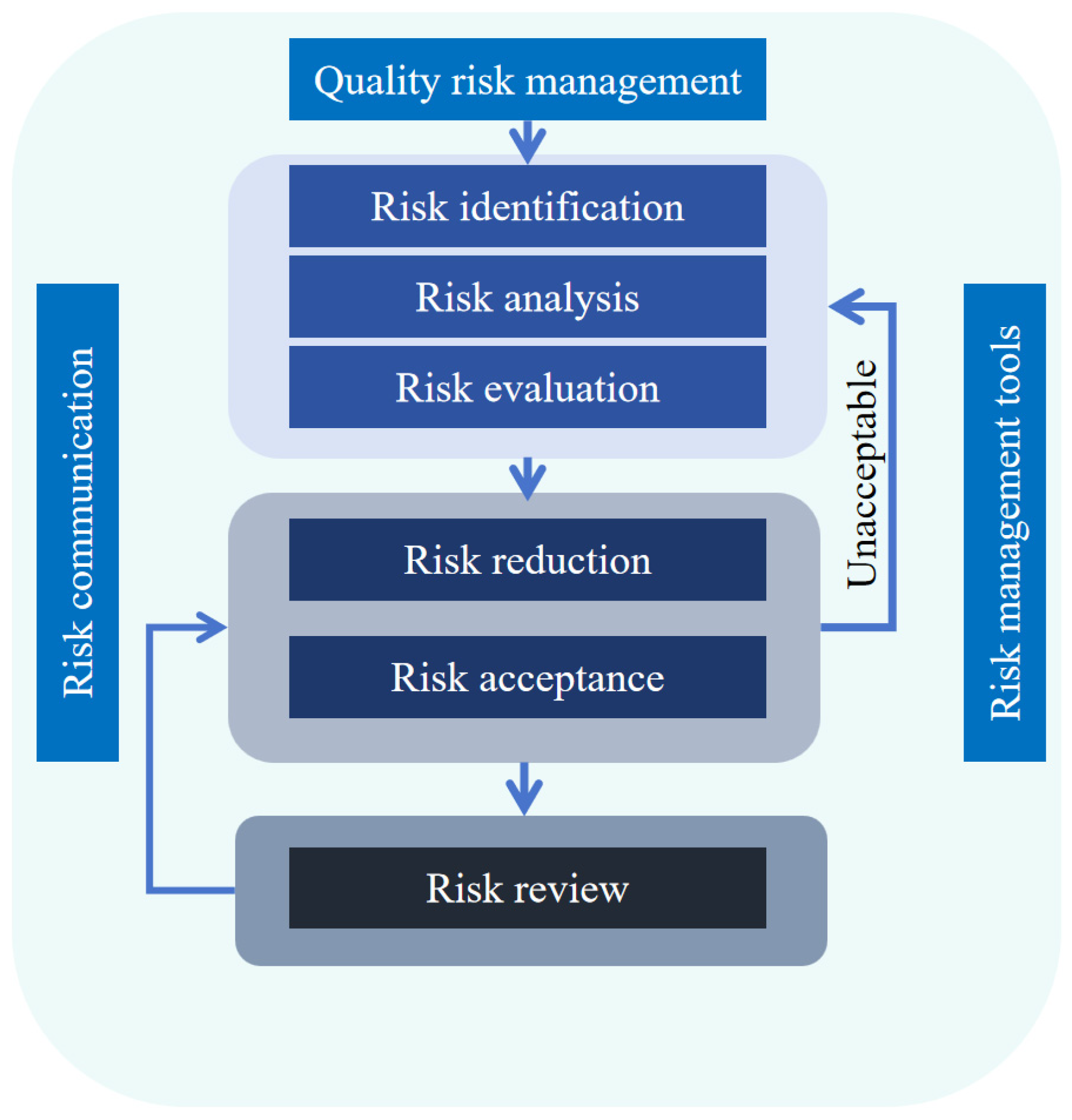
A key prerequisite for quality risk management in jacket construction is the transformation of on-site “dispersed descriptions of risk points” into structured information that is comparable, computable, and capable of supporting the design of control strategies. This study follows the logic of quality risk assessment (
Figure 2), which requires answering three fundamental questions: what problems may occur, how likely they are to occur, and what consequences they may cause. Accordingly, risk assessment consists of three stages: risk identification, risk analysis, and risk evaluation. Among these, risk identification is not merely the listing of risk factors; it should also involve scientific classification based on the characteristics, causes, and potential outcomes of the risks, and it must be continuously updated to reflect the dynamic nature of risks.
Within this theoretical framework, the assessment object is explicitly defined as the jacket construction process. An identification scheme is proposed in which the process domain serves as the carrier for risk comparison, the 5M1E framework is used to classify causal factors, and a verifiable indicator list is developed through a combination of brainstorming and expert consolidation. This approach provides a consistent and standardized input basis for subsequent multi-criteria comprehensive evaluation models.
2.1. Evaluation Boundaries and Objects
The construction process of jackets features a long process chain and numerous interfaces, with a typical workflow shown in
Figure 3. If highly subdivided operations are directly used as evaluation units, the assessment is likely to become excessively fragmented, leading to high indicator redundancy and results that are difficult to apply to managerial resource allocation.
Therefore, based on the preliminary identification of risk factors, this study consolidates the entire construction process from a management perspective and defines the evaluation objects as four categories of integrated processes: the preparation process, the welding process, the coating process, and the assembly process. This classification establishes an operable framework for cross-process risk comparison and enables a direct correspondence between “ranking results” and “governance priorities.” The definition of these evaluation objects is ultimately formalized and reflected in the final indicator list.
2.2. Construction of the Indicator System
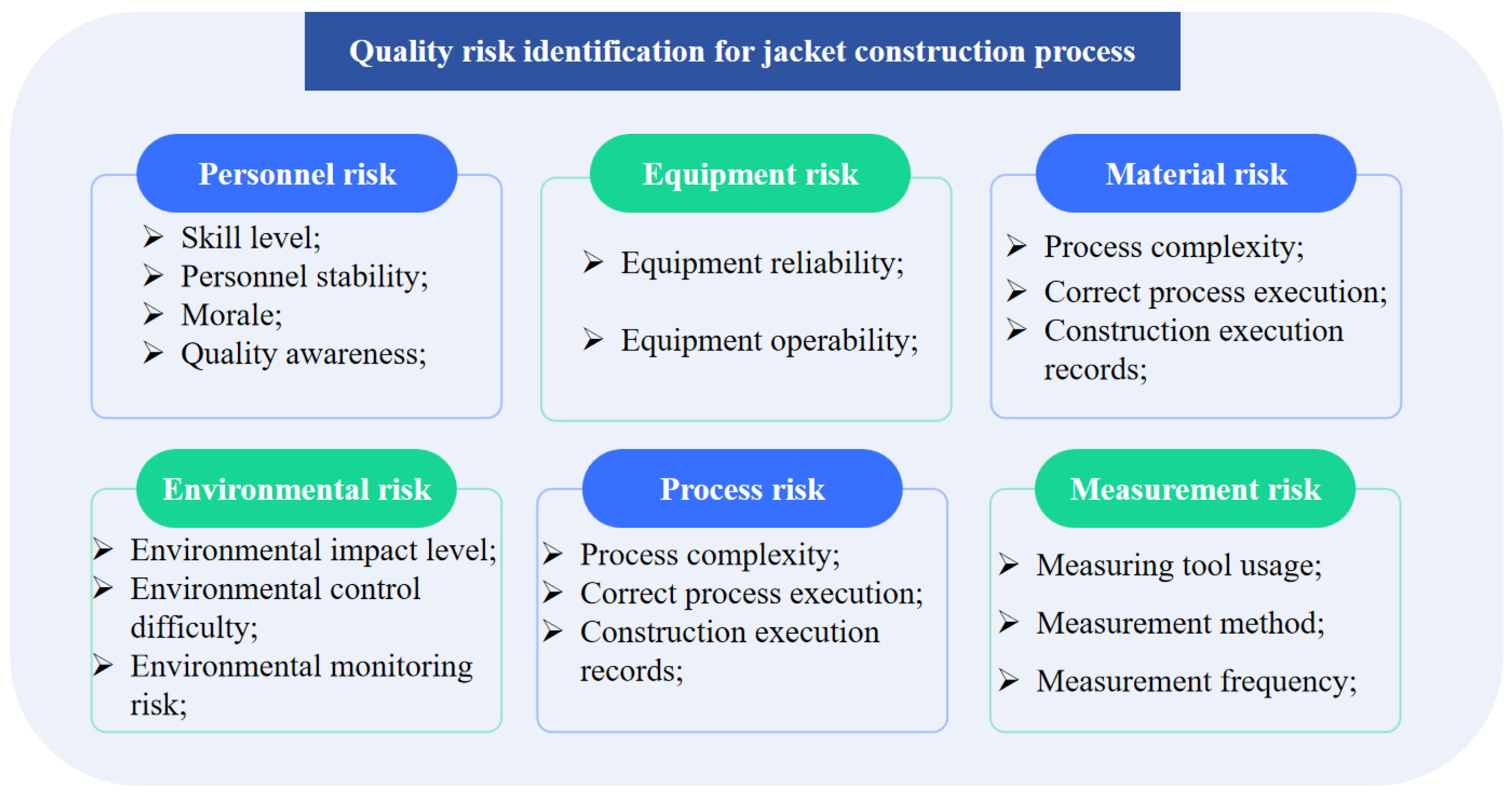
To ensure systematic coverage of risk factors and clear managerial attribution, this study adopts the 5M1E framework as the structural basis for classifying the causes of quality risks. On this basis, a hierarchical indicator system of “evaluation object–first-level indicators–second-level indicators” is established (
Figure 4).
The first-level indicators correspond to six categories of causal domains: personnel risk, equipment risk, material risk, process risk, environmental risk, and measurement risk. The second-level indicators further operationalize each causal domain into a set of risk elements that are observable, recordable, and auditable, thereby providing a sound foundation for subsequent questionnaire surveys, expert scoring, and quantitative analysis.
Personnel risk is characterized by risks related to skill level, workforce stability, emotional state, and quality awareness.
Equipment risk is described in terms of equipment stability risk and operational difficulty risk.
Material risk is characterized by risks associated with material type verification and the difficulty of material identification.
Process risk is represented by risks related to process complexity, correct execution of procedures, and construction execution recordkeeping.
Environmental risk is characterized by the degree of environmental impact risk, environmental control difficulty risk, and environmental monitoring risk.
Measurement risk is described by risks associated with the correct use of measurement tools, measurement methods, and measurement frequency.
The core advantage of this indicator system lies in two aspects. On the one hand, the use of process domains ensures consistency in cross-process comparisons; on the other hand, the 5M1E causal domains enable clear localization of risk sources and attribution of responsible units. Together, these features provide a solid structural foundation for establishing a closed loop from “evaluation results → control point definition → measure design.”
2.3. Identification Logic and Implementation Procedure
In terms of method selection, risk identification is required to be closely aligned with the project environment and actual construction practices, with an emphasis on balancing comprehensiveness and effectiveness. Different identification methods have their respective scopes of applicability and limitations and should therefore be selected and combined appropriately according to the specific context.
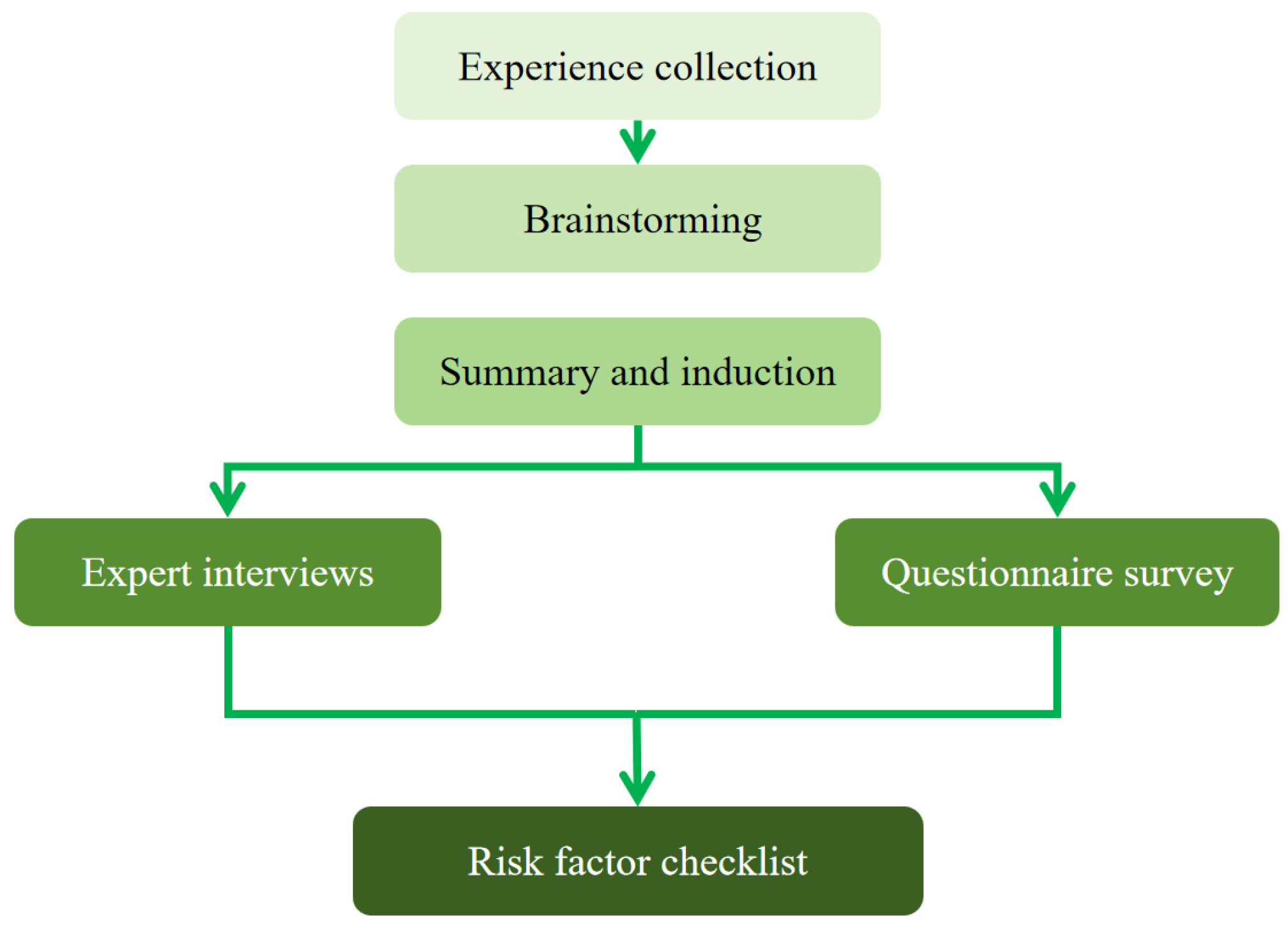
Given the wide distribution of risk factors, strong process coupling, and prevalence of latent risks in jacket construction, a “multi-method collaborative” identification logic is adopted. Brainstorming is first used to fully elicit on-site experiential knowledge; the 5M1E framework is then applied to achieve structured classification and to define discussion boundaries. Subsequently, expert interviews and reviews are conducted to screen, cluster, and abstract the identified risk elements, ultimately producing the finalized list of risk factors and the corresponding indicator system (
Figure 5).
2.3.1. Acquisition of On-Site Knowledge
This study first organized brainstorming sessions to conduct a comprehensive investigation among heads of quality management–related departments, technical staff, process-area supervisors, and frontline workers, with the aim of identifying potential risk points from multiple role-based perspectives and forming an initial list of risk elements. To ensure broad coverage of opinions and practical relevance, a total of 33 participants were invited, including representatives of frontline jacket fabrication operators, production area managers, QC personnel from the quality management department, technicians from the technical department, and managers from production, technical, and quality departments. All participants possessed more than five years of experience in jacket fabrication (
Table 1).
The discussions were organized using a group-based mechanism. Participants first identified the major risk elements affecting process quality along the six dimensions of the 5M1E framework. Based on historical quality issues and analysis reports, the current status of on-site quality management, and proposed improvement measures, each group developed an internal list of risk elements. These lists were then consolidated through plenary discussion to form the initial risk element inventory.
2.3.2. Structured Consolidation
Because the initial list of risk elements obtained from brainstorming mainly covered the entire process along the “process dimension,” it exhibited characteristics such as dispersion, limited abstraction, and insufficient suitability for further analysis. Therefore, the study further invited nine industry experts to form an expert panel for discussion and consolidation. The panel included university academics, enterprise managers, and technical service professionals from relevant fields, with disciplinary backgrounds spanning enterprise management, quality management, statistics, welding, and polymer materials, thereby enhancing content validity and cross-disciplinary consistency.
During the expert consolidation stage, the initial risk elements were clustered and abstracted within the 5M1E framework. Based on managerial attributes, the evaluation objects were formalized into four categories of integrated processes: preparation, welding, coating, and assembly. Ultimately, a quality risk indicator list for the jacket construction process was produced.
2.3.3. Output and Linkage
Based on an introduction of structural characteristics, process workflows, and the current state of quality management, on-site risk factors were first obtained through brainstorming. These factors were then synthesized and refined by the expert panel through expert interviews and questionnaire surveys, resulting in the final quality risk indicator list. Accordingly, the identification results of this study do not remain at the level of enumerating risk points but instead accomplish a critical translation from “on-site language” to “computable indicators.” The resulting indicator list serves as the direct input for constructing decision matrices, conducting multi-criteria comprehensive evaluations, and ranking process risks in subsequent sections, while also providing a basis for the targeted design of control strategy systems.
4. Empirical Analysis of Typical Process Scenarios and Sensitivity Discussion
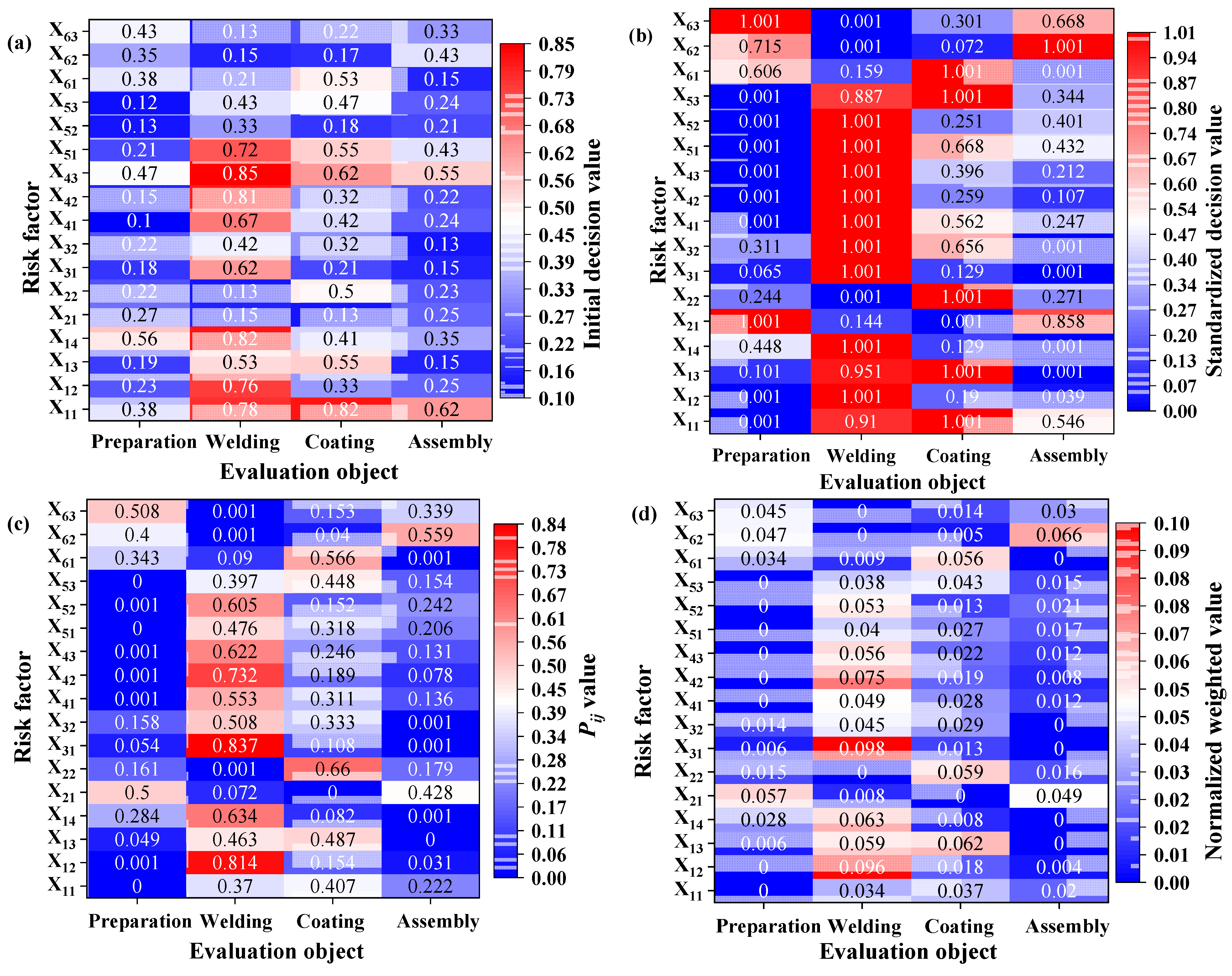
The construction of jacket foundations represents a typical multi-process coupled manufacturing–construction system, on which quality risks exhibit engineering characteristics such as “cross-process accumulation, cross-disciplinary superposition, and high defect spillover costs.” Therefore, following the establishment of the risk indicator system, the evaluation framework was extended to the process level, encompassing four key processes: preparation, welding, coating, and assembly. Expert-assigned values were used to construct the decision matrix, which was subsequently analyzed using the integrated Entropy–GRA–TOPSIS evaluation model to quantitatively characterize and rank process-level risk levels, thereby providing a basis for prioritizing control strategies.
4.1. Typical Scenarios and Data Acquisition
The empirical study is based on a representative production environment for offshore wind turbine equipment manufacturing, focusing on the primary quality activities of the jacket construction process. To ensure comprehensive coverage of risk factors and interpretability at the frontline, a multi-role process discussion was organized, including 33 participants with jacket construction experience: frontline operators, area managers, quality management personnel, and technical staff. This discussion generated an initial risk factor list reflecting on-site conditions.
Subsequently, an expert panel comprising nine members—including university faculty, enterprise managers, and technical professionals—was engaged to consolidate and validate the risk elements. All indicators were assigned values using a uniform scoring scale, and a robust aggregation rule (“removing the highest and lowest scores, then computing the arithmetic mean”) was applied to produce the original scoring matrix (
Table 4). This data acquisition approach aimed to reduce individual scoring bias while maintaining consistent mapping between evaluation inputs and on-site management language, thereby enhancing the communicability and implementability of the evaluation results.
4.2. Quantitative Results of Process Quality Risk
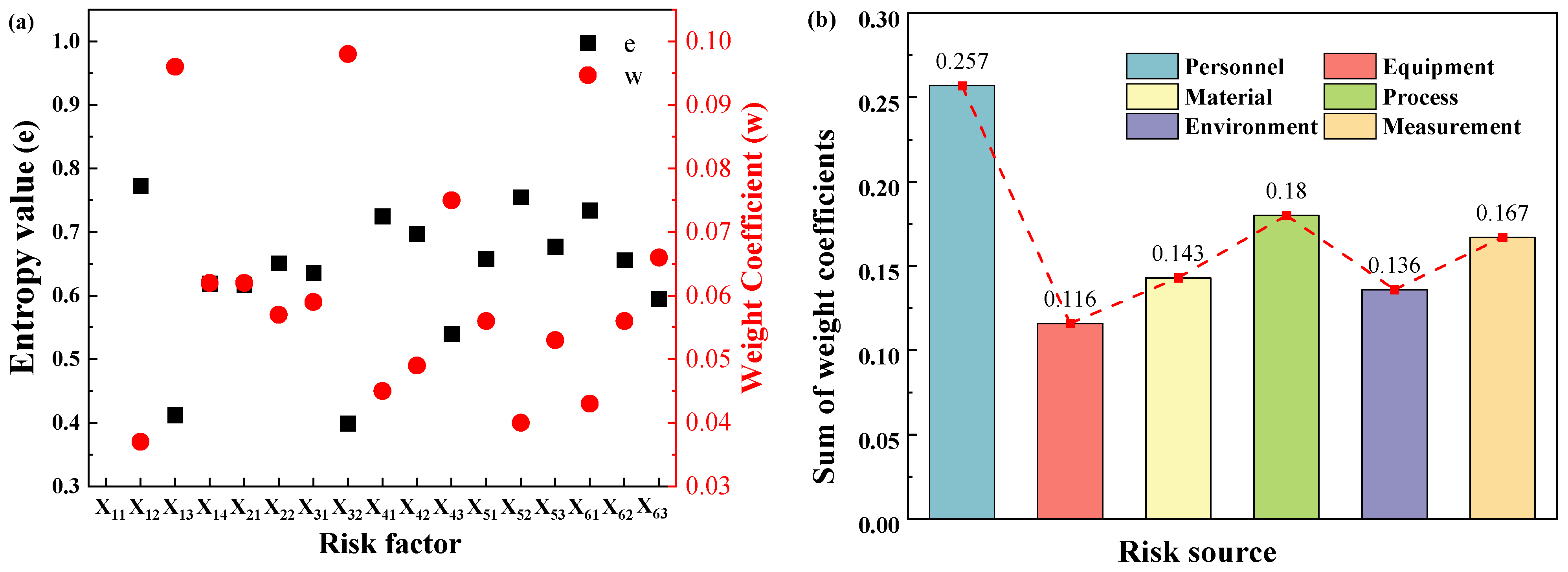
The entropy weights calculated from Equations (3)–(5) reveal a significant gradient in factor importance (
Figure 7). Personnel factors carry the highest cumulative weight (0.257), indicating that variation in skill levels, workforce stability, and quality awareness across processes contributes most to distinguishing risk levels. Process factors (0.180) and measurement factors (0.167) follow, reflecting the critical role of execution consistency and inspection rigor. This weight distribution suggests that quality improvement efforts should prioritize human factors and process discipline, as these dimensions exhibit the greatest variation and thus the highest potential for risk reduction.
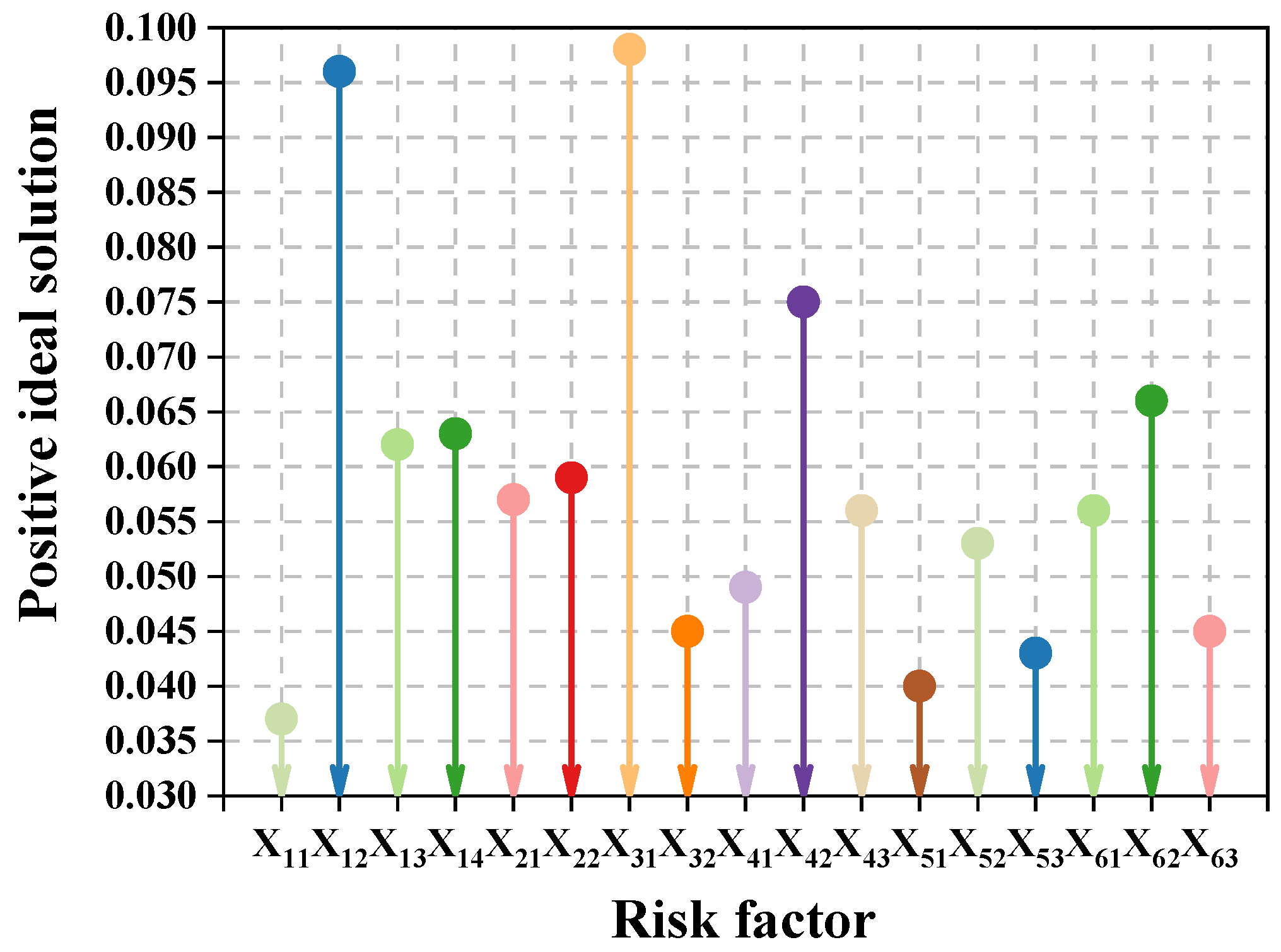
At the process level, the model outputs of Euclidean distance and grey relational degree further reveal differences in risk proximity among the processes. Specifically, the welding process has the shortest distance to the positive ideal solution () and the highest grey relational degree (), indicating that it is closest to a high-risk state in terms of both “distance proximity” and “sequence similarity.” In contrast, the preparation process has the highest relational degree to the negative ideal solution () and a relatively large distance to the positive ideal solution (), reflecting its overall lower risk level. After fusing distance and relational information, the relative closeness values are: preparation 0.365, welding 0.605, coating 0.463, and assembly 0.370. Applying the rule that a higher relative closeness corresponds to higher risk, the process risk priority is: welding > coating > assembly > preparation.
This ranking aligns with the engineering mechanisms of jacket construction. Welding, as a critical process determining structural bearing capacity and fatigue performance, is influenced by multiple factors, including personnel skill and stability, process parameter adherence, environmental disturbances, and non-destructive testing strategies. Defects in welding are characterized by both concealment and severe consequences. Coating, as the key step for marine service protection, is sensitive to environmental conditions and process control, and defects often necessitate large-area rework and schedule disruption. Although assembly and preparation processes exhibit relatively lower risk, their risks primarily manifest as “assembly deviations caused by insufficient measurement or tool control” and “latent defects due to inadequate process verification,” presenting moderate but non-negligible risk levels in the evaluation.
4.3. Typical Process Risk Profile
By integrating the contribution distribution of first-level factors, the high-risk characteristics of welding and coating can be understood as a concentrated expression of multidimensional coupling across “personnel–process–measurement–environment.” The high weight of personnel factors indicates that operator ability and stability directly affect process variability. The high weight of process factors reflects the dominant role of process complexity and execution deviations in defect formation. The significant weight of measurement factors highlights that inspection frequency, methods, and tool suitability determine whether defects can be detected within a “repairable window.” Accordingly, risk governance should not rely solely on end-point inspection but should focus on building process capability and enforcing process discipline, shifting critical control points forward to “personnel qualification and authorization, controlled process execution and recordkeeping, and online monitoring with hierarchical inspection.”
4.4. Parameter Sensitivity Discussion
To test the sensitivity of the evaluation results to key model parameters, a robustness analysis was conducted without altering the evaluation framework or computational logic. Two commonly used parameters were examined: (i) the distance–relational fusion coefficient , representing the relative weighting of distance and relational information, (ii) the grey relational distinguishing coefficient , which controls the discriminative capability of the relational coefficient. The results indicate that when varies within 0.3–0.7, the process risk ranking remains unchanged: welding > coating > assembly > preparation. Similarly, when varies within 0.3–0.7, the ranking is stable, demonstrating the robustness of the evaluation conclusions with respect to the choice of . And the process risk priority is determined by the combined effects of multiple indicators rather than a single parameter.
Comparison with a conventional TOPSIS-only approach further shows that using only Euclidean distance preserves the high-risk ranking of welding and coating but may yield unstable or closely ranked results for medium- and low-risk processes (preparation and assembly). Incorporating grey relational analysis enhances the model’s discriminative capability in cases where alternatives have similar distances but different trends, better reflecting the real-world characteristic of jacket construction: risk patterns arise from the joint action of multiple factors. This comparison further demonstrates that the integrated method improves ranking interpretability and managerial applicability without introducing unnecessary complexity.
5. Control Strategy System and Management Recommendations
Based on the empirical results presented above, the quality risks in jacket construction exhibit clear characteristics of “concentration in critical processes” and dominance of “personnel–process–measurement” factors. Consequently, the control strategy system should follow two fundamental principles:
Allocate governance resources according to the risk ranking, prioritizing enhanced control for high-risk processes such as welding and coating;
Adopt the 5M1E framework to implement control measures at auditable process control points, forming a closed-loop management cycle of “prevention–monitoring–correction–verification.”
5.1. Control Strategy Framework
From a governance mechanism perspective, mitigating quality risks in jacket construction depends both on technical improvements at the process and equipment level (e.g., process optimization, automation, online monitoring) and on strengthened management at the organizational and procedural level (e.g., qualification authorization, performance incentives, process audits, digital traceability). Based on the risk ranking results, Welding and Coating were identified as the highest-risk processes, with Man, Method, and Measurement emerging as the key contributing dimensions within the 5M1E framework. Accordingly, the formulation of control strategies follows two fundamental principles. First, governance resources should be allocated according to the risk ranking, prioritizing interventions for higher-risk processes and dimensions. Second, control measures should be designed based on root causes identified within the 5M1E framework. In practice, technical measures aim to reduce inherent process variability and human uncertainty, while management measures ensure that technical requirements are consistently executed and continuously improved. These two approaches are complementary rather than substitutive and should be integrated through “critical processes.” For processes highly sensitive to personnel skill and environmental conditions, such as welding and coating, technical interventions should enhance process capability, while institutionalized process verification and data-driven traceability ensure the effectiveness of control.
5.2. Welding Process
Given the high-risk nature of welding, the focus of control should shift from end-point defect handling to process capability governance.
Personnel Dimension: Targeting the Personnel Risk (Skill Level), which carries the highest weight in the welding process, welder qualification and pre-job skill assessment mechanisms are established. Performance evaluations oriented toward welding quality are implemented to curb the pursuit of quantity at the expense of quality. Professional education and continuous training reinforce quality awareness, embedding process discipline and understanding of risk consequences as stable behavioral norms.
Process and Equipment Dimension: Strengthen the controlled release and on-site communication of welding procedures to ensure consistent adherence to process parameters, groove and assembly requirements. Key equipment should undergo status maintenance and calibration to minimize the impact of equipment variability on weld quality.
Measurement and Inspection Dimension: Develop a hierarchical inspection strategy combining in-process inspection, post-completion inspection, and non-destructive testing for critical welds, with results fed back to both process and personnel levels to form a closed-loop improvement cycle. Measurement system effectiveness should be quantified through gauge repeatability and reproducibility (GR&R) studies, with acceptance criteria of ≤10% for critical dimensions and ≤20% for non-critical dimensions. Calibration intervals should not exceed 6 months for torque tools and 3 months for coating thickness gauges.
Digitalization Dimension: Implement a welding information management system to unify personnel authorization, welding records, quality data, and rework information, enabling traceable defects, assignable responsibility, and experience retention, thereby transforming welding quality control from “experience-driven” to “data-driven.” For digitalization initiatives, implementation should target specific performance thresholds: welding parameter monitoring systems should achieve real-time data capture for at least 95% of production time; digital record traceability should cover 100% of critical welds with ≤24 h data entry lag; and automated alert systems should trigger when process parameters deviate by more than ±5% from specified ranges.
5.3. Coating Process
Addressing the significant impact of Environmental Risk on coating quality—which ranks as the second-highest risk after welding—governance focuses on controlling environmental disturbances and ensuring process consistency. A key measure is to strengthen monitoring and control of the construction environment, establishing a control chain along the mainline: “surface preparation–environmental window–coating thickness and defect control–record traceability.”
Technical Measures: Improve spray and surface treatment equipment, monitor coating process parameters, and apply suitable environmental control methods to enhance process stability.
Management Measures: Reinforce procedure dissemination, process patrol inspections, and record audits to ensure compliance with critical requirements such as coating intervals, material mixing ratios, curing, and pot life.
Measurement Dimension: Given the high sensitivity of marine anti-corrosion systems to quality defects, measurement closure is essential. Standardized dry film thickness measurement, rational sampling frequency, and post-completion verification should be implemented to detect defects early and prevent high-cost rework during subsequent transport and installation.
Material Dimension: Although it has a relatively low overall weight, batch management and labeling should remain controlled to ensure consistency between coating systems and process requirements. In material control, quantitative thresholds should guide inspection intensity: batch sampling frequency should increase from standard 5% to 20% when supplier quality scores fall below 85/100; material identification errors should trigger 100% batch verification if exceeding 0.5% in any month; and coating material pot life should be monitored with alerts at 75% of maximum specified time.
5.4. Assembly and Preparation Processes
Although assembly and preparation processes present relatively lower risk, their risk type is characterized by “latent accumulation,” often manifested as assembly deviations, insufficient process verification, and uncontrolled tools and gauges.
Assembly: Equipment and measurement are closely coupled with tools; thus, tool and gauge management should be designated as a key control point. Implement 6S and fixed-location management, establish calibration and status management for torque tools and measuring devices, and reinforce operational correctness through training and spot checks to ensure repeatable quality in critical connections and installations.
Preparation: Operations heavily rely on CNC equipment, with risks primarily stemming from input errors, process tracking, and personnel skill differences. Strengthen traceable process verification and employ a personnel skill matrix and performance mechanism to ensure consistent operations, maintaining the controlled steady state of low-risk processes.
5.5. Systematic Enhancement
To elevate process-level controls from an “experience-based collection” to a “sustainable management system,” mature quality risk tools and audit mechanisms should be embedded in jacket construction.
Introduce Process FMEA (PFMEA) to identify failure modes and prepare control plans for high-risk processes, forming a structured mapping from risk elements to control points. Traditional RPN-based ranking may be insufficient for differentiating similar values, so PFMEA should complement the integrated evaluation: use the comprehensive assessment to identify “priority processes and risk clusters,” then refine “failure modes–control plans–verification methods” via PFMEA.
Adopt the philosophy of VDA6 (especially VDA6.3 process audits) to establish a process audit system for mass production, conducting periodic scoring and improvement cycles across project management, process development, production stability, and customer/delivery requirements. This ensures process discipline, record integrity, and execution consistency are quantifiable and manageable.
Digitalization and automation should be leveraged to reduce human uncertainty and improve process visibility. Welding information systems, environmental monitoring, and quality data platforms should integrate “risk identification–process monitoring–defect handling–experience reuse” to provide a data foundation for continuous improvement.
5.6. Management Recommendations and Implementation Path
In summary, the governance of jacket construction quality risks should adopt a “three-tier progressive” implementation path:
- Tier 1:
Prioritize high-risk processes based on risk ranking, allocating resources primarily to welding and coating.
- Tier 2:
Use the 5M1E framework to implement control measures at process control points and assign responsibility units, forming process-level control plans and hierarchical inspection systems.
- Tier 3:
Support the strategy with tools and systems by embedding PFMEA, process audits, and digital traceability into the enterprise quality management system, establishing a sustainable PDCA closed loop.
To ensure effective implementation, key performance indicators should focus on process quality capability and cost consequences, such as first-pass yield, rework hours and cost, critical defect detection rate, process audit scores, and closed-loop completion rate for high-risk items. These metrics enable quantification of the marginal effect of control strategies and drive continuous optimization.
6. Conclusions
This study establishes a closed-loop framework for quality risk identification, evaluation, and mitigation within the manufacturing process, integrating principles of quality management with risk management. Methodologically, an integrated evaluation approach is proposed by combining the Entropy Weight Method (EWM) with TOPSIS and Grey Relational Analysis (GRA). This composite model enhances both the robustness and interpretability of multi-dimensional risk assessment, particularly in complex construction scenarios characterized by “small samples, multiple factors, and incomplete information.” By integrating objective weighting with distance- and similarity-based measures, the proposed framework addresses the potential ranking biases inherent in methods that rely solely on empirical judgment or single distance metrics. Beyond identifying high-risk processes, the analysis further attributes these risks to specific dimensions within the 5M1E framework (e.g., welding risk primarily stems from “Man” and “Method”), based on which targeted control measures are proposed. This advancement shifts the research conclusion beyond describing “what” the risks are, delving into “why” they occur and “how” to address them, thereby providing a direct pathway for refined enterprise management. The main findings are as follows:
First, methodologically, the integrated EWM-TOPSIS-GRA model demonstrates superior discriminative capability compared to conventional approaches. Sensitivity analysis confirms ranking stability (welding > coating > assembly > preparation) across parameter variations (ρ = 0.3–0.7), while comparison with TOPSIS-only evaluation shows the integrated model resolves ranking ambiguities for medium-risk processes (assembly vs. preparation) where Euclidean distances alone are statistically indistinguishable (Δd < 0.01).
Second, empirically, the study quantifies that welding processes exhibit 66% higher relative closeness (0.605) than preparation processes (0.365), establishing welding as the unequivocal priority for resource allocation. Furthermore, factor contribution analysis reveals that personnel (weight = 0.257), process (0.180), and measurement (0.167) dimensions collectively account for 60.4% of risk variation, providing empirical justification for focusing interventions on human factors, procedural discipline, and inspection systems.
Third, practically, the research translates rankings into actionable thresholds: for welding processes, personnel qualification programs should target 100% certification with quarterly requalification; for coating, environmental controls must maintain temperature within ±2 °C and humidity below 85% during application; for measurement systems, inspection frequency should increase from 10% to 100% for critical parameters when process capability (Cpk) falls below 1.33.
These findings advance the field beyond descriptive risk identification toward prescriptive, quantifiable control strategies, directly supporting the industry’s transition from experience-based quality management to data-driven risk governance.
It should be noted that several methodological and application boundaries exist in this study. First, risk quantification heavily relies on expert knowledge structures and cognitive consistency; the depth of experts’ understanding of risk mechanisms directly affects the reliability of evaluation results. Therefore, the professionalism and representativeness of the expert sample remain key constraints on model validity. Second, the study primarily focuses on high-risk key processes and critical links, which aligns with the practical principle of concentrating management resources. However, this may result in insufficient coverage of low-frequency, high-impact risks or cross-process coupling risks, potentially limiting the comprehensiveness of full-process optimization.