1. Introduction
Tower cranes represent essential large-scale lifting equipment on construction sites, and their operation depends primarily on manual control. Tower crane operation tasks are typically characterized by long working durations, high operational intensity, and complex environments, placing substantial demands on operators’ attention, reaction capability, and operational precision. Under high-intensity and high-workload conditions, operators are prone to developing both physical and cognitive fatigue, which can significantly degrade operational performance and consequently increase the risk of safety incidents such as collisions. Therefore, exploring effective approaches to mitigate the adverse effects of fatigue on tower crane operators’ operational performance in complex construction environments, and to enhance the overall safety level of lifting operations, has gradually emerged as a critical research topic in the field of construction safety management. In this context, HMI technologies, with advantages such as real-time feedback, intelligent assistance, and corrective control, provide a promising technical approach for improving operational accuracy and reducing human error, and are expected to play a key safety-regulating role under fatigue conditions.
Against this background, it is imperative to conduct a systematic investigation into the effects of operator fatigue on collision risk during tower crane operations, as well as the regulatory influence of HMI technologies on operational accuracy and collision risk under fatigue conditions. Elucidating the intrinsic relationships among operator fatigue, operational behaviors, and collision risk, as well as uncovering the mechanisms through which HMI exerts its regulatory effects, can not only enhance the safety of tower crane operations but also provide theoretical foundations and technical support for the advancement of intelligent and smart construction equipment.
Extensive research has been conducted on the relationship between operator fatigue and construction safety risk. Existing studies indicate that fatigue significantly impairs operators’ attention levels, reaction speed, and decision-making ability, thereby increasing the likelihood of collisions and accidents [
1]. Most related studies have investigated fatigue mechanisms from behavioral and cognitive perspectives, demonstrating that fatigue leads to extended reaction times, reduced attentional resource allocation, and increased cognitive workload, which in turn increases operators’ susceptibility to operational errors during complex tasks [
2,
3]. In addition, physical fatigue not only directly promotes unsafe behaviors among construction workers but may also further amplify safety risks through mediating factors such as job burnout. Meanwhile, fatigue monitoring methods based on physiological indicators—including heart rate, eye-movement parameters, and electroencephalogram (EEG) signals—have been extensively applied in fatigue assessment and risk prediction studies, providing important technical support for the objective identification and quantitative analysis of fatigue states [
4].
In the field of human–machine interaction, HMI technologies have found extensive applications in transportation, industrial automation, and intelligent manufacturing. Intelligent driving assistance systems improve traffic safety by providing environmental perception, risk warning, and control assistance functionalities. In industrial applications, various HMI modalities—including touch, voice, and gesture interactions—combined with the integration of virtual reality (VR) and augmented reality (AR) technologies—have significantly enhanced user experience and reduced operational errors [
5,
6]. Particularly in industrial and construction robotics, multimodal HMI analysis frameworks integrating operational data, physiological signals, and environmental information have offered novel insights into intelligent decision-making and collaborative control [
7]. However, existing studies have predominantly focused on scenarios such as traffic driving, aviation control, and industrial automation, where investigations into the mechanisms underlying fatigue and HMI are generally conducted in relatively closed or standardized operational environments. In contrast, tower crane operations are characterized by high-altitude tasks, dynamic multi-target interference, significant three-dimensional collision risks, and multi-role collaborative coordination. The risk structure of such operations differs substantially from that of driving or conventional industrial control contexts. In high-risk construction scenarios of this nature, operators’ judgments of spatial distance rely heavily on visual perception and cognitive resources, and fatigue may exert a more sensitive influence on their spatial decision-making capability. Although prior research has separately examined the effects of fatigue on safety behavior and the supportive role of HMI technologies in operational safety, systematic experimental investigations that integrate fatigue states with intelligent HMI mechanisms in the context of tower crane operations remain limited. In particular, empirical evidence is lacking regarding whether HMI can moderate collision risk indicators under different levels of fatigue and how the boundaries of such moderating effects can be defined.
Against this background, the present study focuses on the operational context of tower cranes and establishes an integrated analytical framework encompassing fatigue, collision risk, and HMI intervention. An experimental simulation study was conducted accordingly. The main contributions of this research are threefold. First, an analytical model describing the relationship between fatigue state and collision risk in tower crane operations is developed, thereby extending the application of fatigue research to high-risk construction equipment contexts. Second, experimental simulations are employed to quantify variations in safety distance control and risk exposure characteristics under different fatigue levels, revealing the influence of fatigue on spatial risk judgment. Third, the moderating trend of HMI on collision risk indicators under varying fatigue conditions is examined, providing empirical support for the design and implementation of intelligent tower crane assistance systems. Therefore, this study not only applies the existing fatigue–HMI relationship to a specific operational context, but also conducts a contextualized validation and structural integration of their interaction mechanism within high-risk construction equipment operations.
Based on the proposed framework, an intelligent tower crane operation platform was established in a laboratory setting. Two experimental scenarios were designed, namely traditional manual mechanical operation and HMI—assisted operation, with three fatigue levels (low, moderate, and high) configured for each scenario. Fatigue levels were comprehensively assessed through a combination of physically induced tasks, subjective rating scales, and eye-tracking indicators. Operational process data were recorded using displacement sensors. The analysis was conducted at three levels—fatigue state, operational behavior characteristics, and collision risk indicators—to examine the moderating effect of HMI on risk trends under different fatigue conditions. This study was conducted under controlled laboratory conditions. Accordingly, the findings should be interpreted as an exploratory analysis of the interaction between fatigue and HMI, and their applicability to real construction environments requires further validation.
The remainder of this paper is organized as follows.
Section 1 presents the introduction, highlighting the safety risks associated with tower crane operator fatigue and the regulatory potential of HMI.
Section 2 reviews the relevant literature and establishes the research foundation.
Section 3 describes the methodology, including experimental design, physical fatigue induction, and data analysis.
Section 4 introduces the experimental participants, experimental scenarios, and experimental procedures.
Section 5 presents the results, including descriptive statistics, repeated-measures analysis of variance, linear mixed-effects model analysis, and collision risk analysis under the two operational scenarios.
Section 6 discusses the interpretation, implications, and practical significance of the findings. Finally,
Section 7 concludes the study, emphasizing the mitigating effects of HMI on operator workload and collision risk, and discusses the limitations of the present research.
3. Methodology
3.1. Experimental Design
Given that construction workers differ in body weight, height, age, educational background, and other individual characteristics, ignoring these personal factors in fatigue assessment may compromise the practical relevance of the evaluation results. Therefore, prior to the formal experiment, each participant underwent an individualized physical fatigue tolerance test, followed by a pilot experiment. The pilot experiment was required to be consistent with the formal experiment in all essential aspects. Individual maximum physical fatigue capacity was assessed using a stair-climbing task, with the highest floor level completed by each participant serving as a reference to determine their maximum physical fatigue state. Subsequently, based on this maximum fatigue level, corresponding low-fatigue and moderate-fatigue states were scientifically defined for each participant, providing personalized parameter support for subsequent fatigue classification experiments. During the fatigue induction process (stair climbing), all participants were instructed to maintain a normal pace without intentionally accelerating or decelerating, thereby minimizing the influence of unnatural movements or speed deviations and to enhance the consistency and repeatability of fatigue induction.
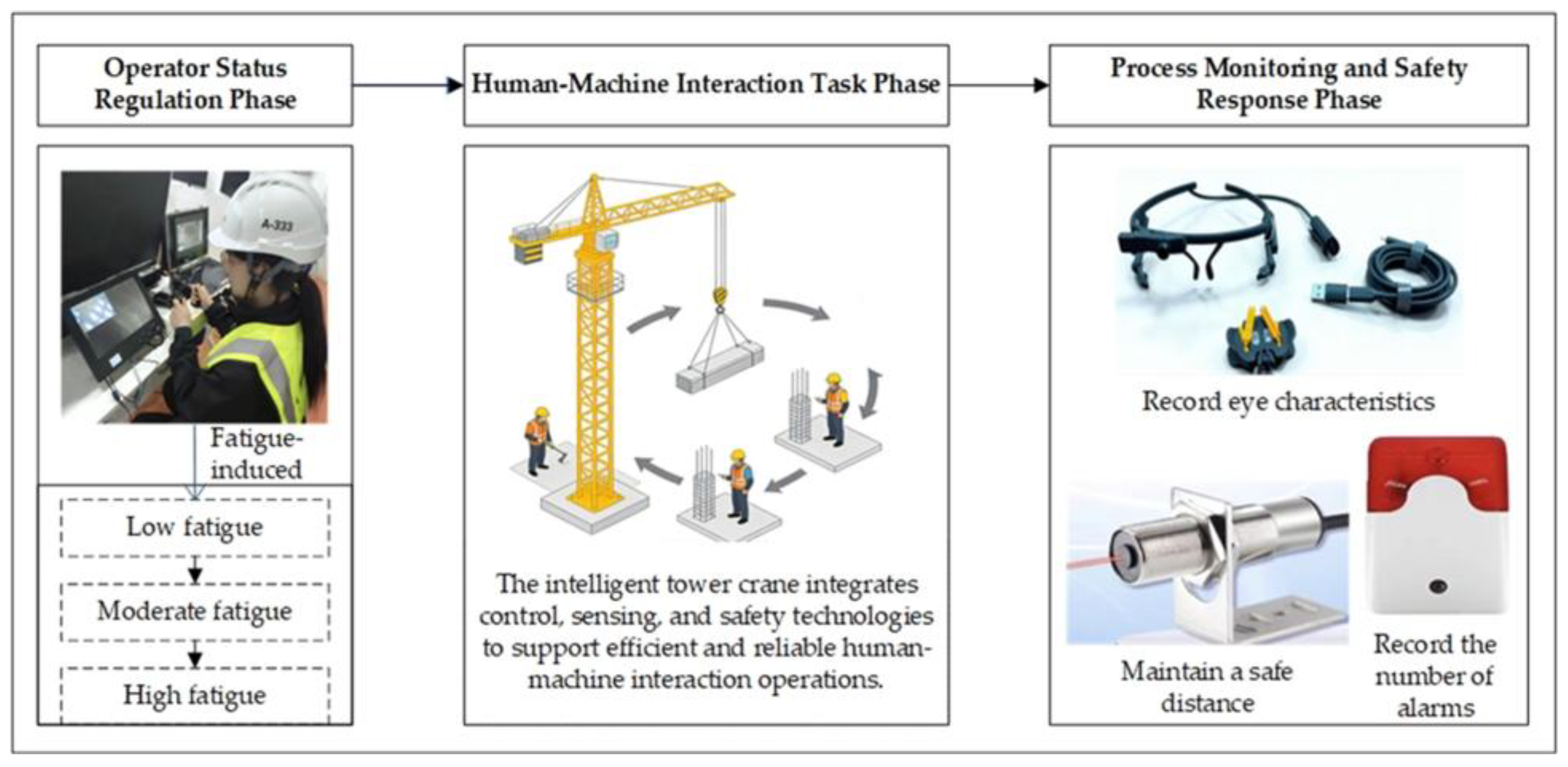
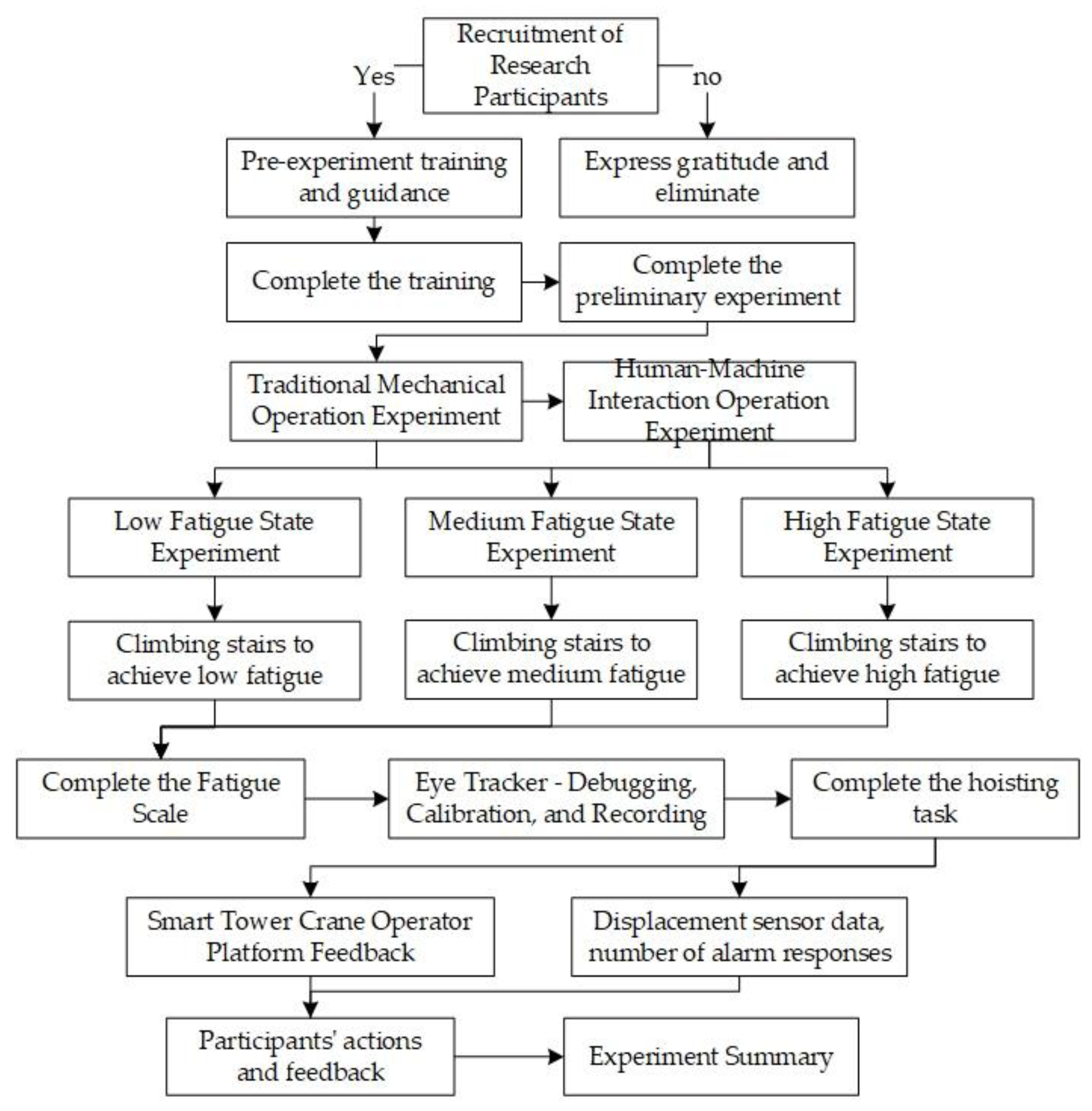
An intelligent tower crane operation scenario was implemented in a laboratory environment using a within-subject experimental design. Participants were exposed to three physical fatigue states—low fatigue, moderate fatigue, and high fatigue—under two experimental conditions: traditional mechanical operation and HMI. Fatigue was induced through a simulated stair-climbing task. Participants performed standardized lifting tasks in the simulated laboratory environment under each fatigue state in both experimental scenarios. During the experiment, representative eye-tracking indicators and fatigue scale measures were selected, and displacement sensors were used to measure the distance between the crane hook and the rigger. In addition, alarm devices were employed to record the number of response events under both scenarios, which served as indicators for collision risk occurrence. Through these experiments, the role of HMI in the relationship between operator fatigue state and collision risk was investigated. The experimental framework is illustrated in
Figure 1.
3.2. Rationale for Experimental Scenario Design
The experimental task procedure in this study was constructed based on the general operational steps of actual tower crane lifting operations, encompassing key stages such as target positioning, hook movement control, spatial path adjustment, and personnel coordination. The spatial proportions, hook movement trajectories, and safety distance parameters in the experimental scenario were scaled and configured with reference to relevant construction codes and engineering practice data, ensuring that the logical structure of the experimental tasks remained consistent with real-world operational processes.
During the development of the experimental scenario, particular emphasis was placed on retaining the core risk-related variables directly associated with collision risk in tower crane operations. These included three-dimensional spatial distance judgment, dynamic target movement control, and visual warning feedback mechanisms. Such factors constitute the primary operational basis for risk formation in tower crane activities. By measuring and analyzing these key variables within a controlled environment, this study aims to identify the influence of fatigue states and HMI interventions on the mechanisms underlying risk formation. It should be noted that macro-level factors present on construction sites—such as organizational management variables, multi-team coordination mechanisms, and complex environmental disturbances—were not incorporated. Instead, the focus was placed on operational-level risk control mechanisms to enable a controlled examination of how HMI affects the relationship between operator fatigue and collision risk.
3.3. Physical Fatigue Induction and Classification Method
This study seeks to simulate the gradually accumulated fatigue experienced by operators during prolonged tower crane operations. Although a short-term, controllable physical workload induction method was adopted in the experiment, its theoretical basis lies in the physiological and cognitive responses following high-intensity physical activity. Specifically, such activity can increase cardiovascular load, lead to the accumulation of muscular metabolic by-products, and consume central nervous system resources, thereby resulting in decreased attention, delayed reaction time, and reduced cognitive processing capacity. Previous research has indicated that physical fatigue can influence cognitive system functioning through central fatigue mechanisms, with particularly pronounced effects in tasks requiring sustained monitoring and spatial judgment. Accordingly, physical fatigue was employed in this study as a controllable inducing variable to simulate the integrated fatigue state that operators may experience after prolonged on-site operations, with particular emphasis on its impact mechanisms on risk perception and operational control performance.
To achieve a multidimensional assessment of fatigue status, this study employed a comprehensive evaluation approach integrating subjective scales and objective physiological indicators. Subjective fatigue was measured using the FS-14 (Fatigue Scale-14). The FS-14 is a brief and effective fatigue assessment instrument used to measure individuals’ perceived fatigue and the impact of fatigue on daily functioning [
62]. The FS-14 was jointly developed in 1992 by Professor Chalder from the Department of Psychological Medicine at King’s College Hospital and Dr. G. Berelowiyz from the Royal London Hospital (Queen Mary University) [
63]. Participants were required to carefully read each item and select either “Yes” or “No” based on the option that best reflected their current condition. The physical fatigue score was obtained by summing the scores of the first eight items (Items 1–8), while the mental fatigue score was calculated by summing the scores of the remaining six items (Items 9–14). The total fatigue score was computed as the sum of the physical and mental fatigue scores. The maximum possible scores are 8 for physical fatigue, 6 for mental fatigue, and 14 for total fatigue, with higher scores indicating more severe fatigue [
64].
Given that tower crane operation tasks are inherently characterized by high visual dependence and sustained attentional demands, reliance solely on subjective scales is insufficient to comprehensively capture cognitive fatigue variations. Therefore, this study further employed a Pupil Core eye-tracking system to collect objective eye-movement data, including blink frequency, fixation duration, saccade frequency, and pupil diameter variation. Previous studies have demonstrated that fluctuations in pupil diameter are closely associated with cognitive load, blink frequency is significantly correlated with sustained attention capacity, and prolonged fixation duration typically reflects reduced information-processing efficiency. Accordingly, eye-movement parameters were utilized to characterize cognitive fatigue manifestations potentially induced by physical workload.
Fatigue classification was determined using an “individual baseline-relative change” approach. First, each participant’s eye-movement indicators under resting conditions were recorded as individual baseline values. Following fatigue induction, both eye-movement metrics and FS-14 scores were reassessed. Fatigue levels were categorized according to the following criteria. Low fatigue was defined as a slight increase in FS-14 scores relative to baseline, accompanied by minor changes in eye-movement indicators, typically manifested as a slight increase in blink frequency, relatively stable pupil diameter, and largely maintained cognitive processing capacity. Moderate fatigue was identified when both physical and mental dimension scores of the FS-14 were significantly higher than baseline values, and eye-movement indicators exhibited noticeable changes, including increased blink frequency and fixation duration, as well as enhanced pupil diameter fluctuations, suggesting reduced efficiency in attentional resource allocation. High fatigue was defined when the total FS-14 score approached the upper bound of the individual’s maximum fatigue testing range, and eye-movement indicators displayed pronounced abnormal fluctuations, including a marked increase in blink frequency, reduced regularity of saccadic movements, and an overall decreasing trend in pupil diameter, reflecting substantial impairment in cognitive control capability. The core assumption underlying this classification method is that when physical workload exceeds a certain threshold, central nervous system regulatory mechanisms influence cognitive system functioning. Therefore, fatigue classification was not based solely on physical exertion levels but was determined through an integrated assessment combining physical fatigue, mental fatigue dimensions, and objective cognitive indicators. Cross-validation across multiple measures enhances the theoretical robustness and measurement reliability of the fatigue categorization.
In addition, to ensure participant safety, heart rate was continuously monitored during the experiment. Participants wore heart rate belts, and individual maximum heart rate thresholds were calculated using the Gellish formula (Maximum Heart Rate = 206.9 − 0.67 × age). The experiment was immediately terminated when heart rate approached the safety threshold to prevent physiological risks associated with excessive workload. Through these procedures, the study established, under controlled experimental conditions, an associative pathway linking physical workload, cognitive performance, and risk-related behavior. This approach strengthens the theoretical connection between the fatigue induction protocol and fatigue states observed in real tower crane operations, while clarifying the criteria and logical basis for fatigue classification.
3.4. Collision Risk Indicators
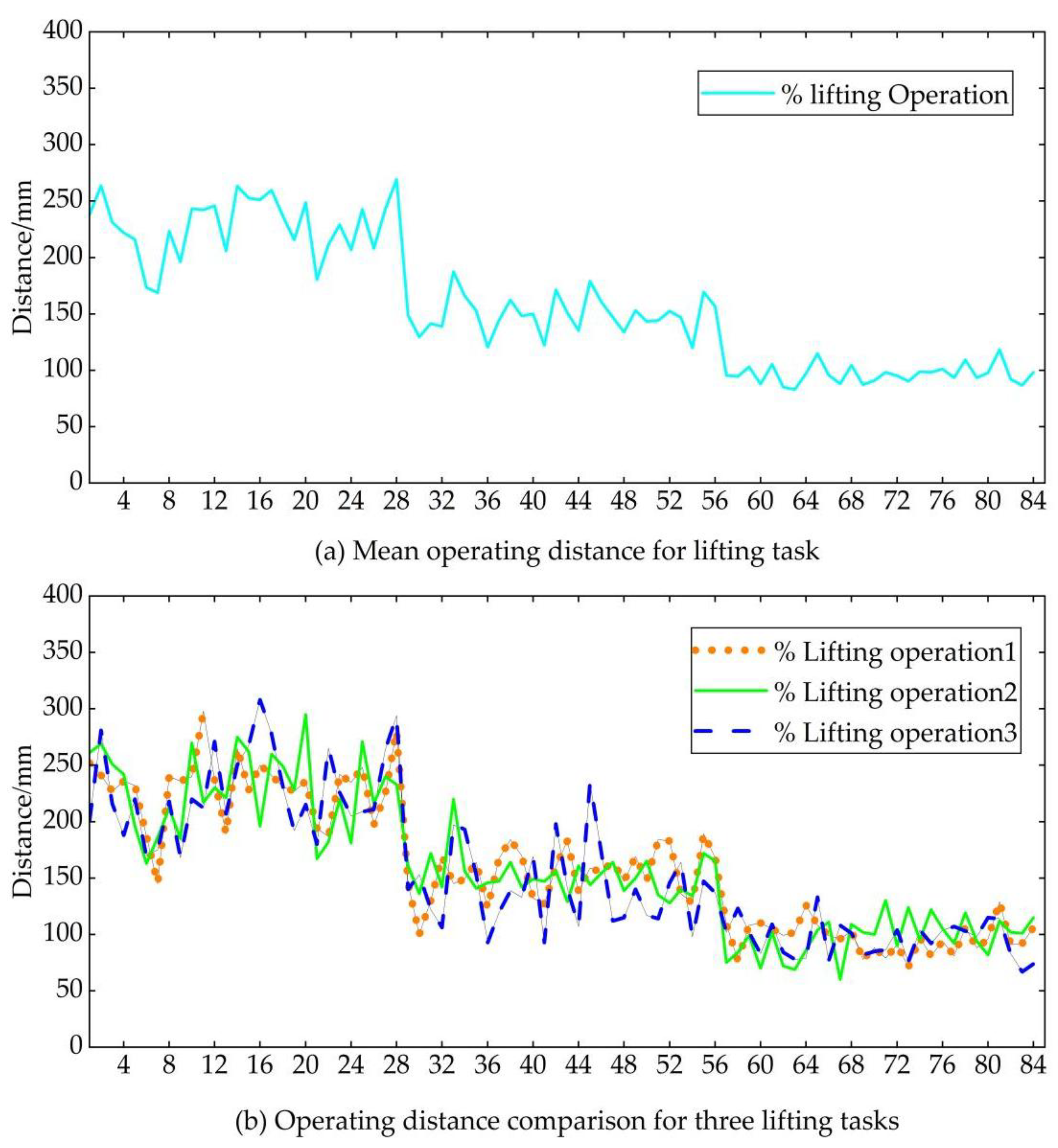
Based on previous studies, operational data recorded under two experimental scenarios and different fatigue states were selected as the basis for analyzing the effects of HMI on collision risk. Displacement sensors were used to record the safety distance between the crane hook and the rigger, which serves as a key indicator for evaluating whether the intelligent tower crane maintains a safe separation from the rigger during cooperative operations [
65], thereby quantifying potential collision risk during crane operation. A smaller safety distance indicates that the crane trajectory is closer to the rigger, significantly increasing the likelihood of collision and reflecting reduced risk control capability. By comparing this indicator across different fatigue states under human–machine interaction and traditional mechanical operation scenarios, the role of HMI in supporting operators’ risk perception and fine-grained operational control can be effectively identified, allowing for a scientific evaluation of its effectiveness in reducing collision risk under fatigue conditions. The number of alarm responses was used as an additional indicator to measure the frequency of collision risk events, providing a direct reflection of how often collision risks occurred under different fatigue states [
66]. A higher number of alarm responses may indicate that operators exhibited more hazardous behaviors while controlling the tower crane or that they experienced insufficient environmental perception or delayed reactions, particularly under high-fatigue conditions. This indicator, combined with the system’s warning mechanism, enables effective assessment of the role of HMI in assisting operators with risk avoidance, while also reflecting operators’ adaptability to alarm feedback. Therefore, this study developed a two-dimensional quantitative framework for collision risk assessment based on “spatial distance-warning frequency.” Within this framework, the spatial distance indicator represents the intensity of risk exposure, while warning frequency reflects the tendency of risk activation. The two dimensions complement each other, thereby enhancing the structural integrity and interpretive consistency of the risk assessment model. As both indicators are closely related to collision risk and can effectively capture the influence of human–machine interaction on the relationship between operator fatigue and collision risk, they were selected as the key analytical metrics in this study.
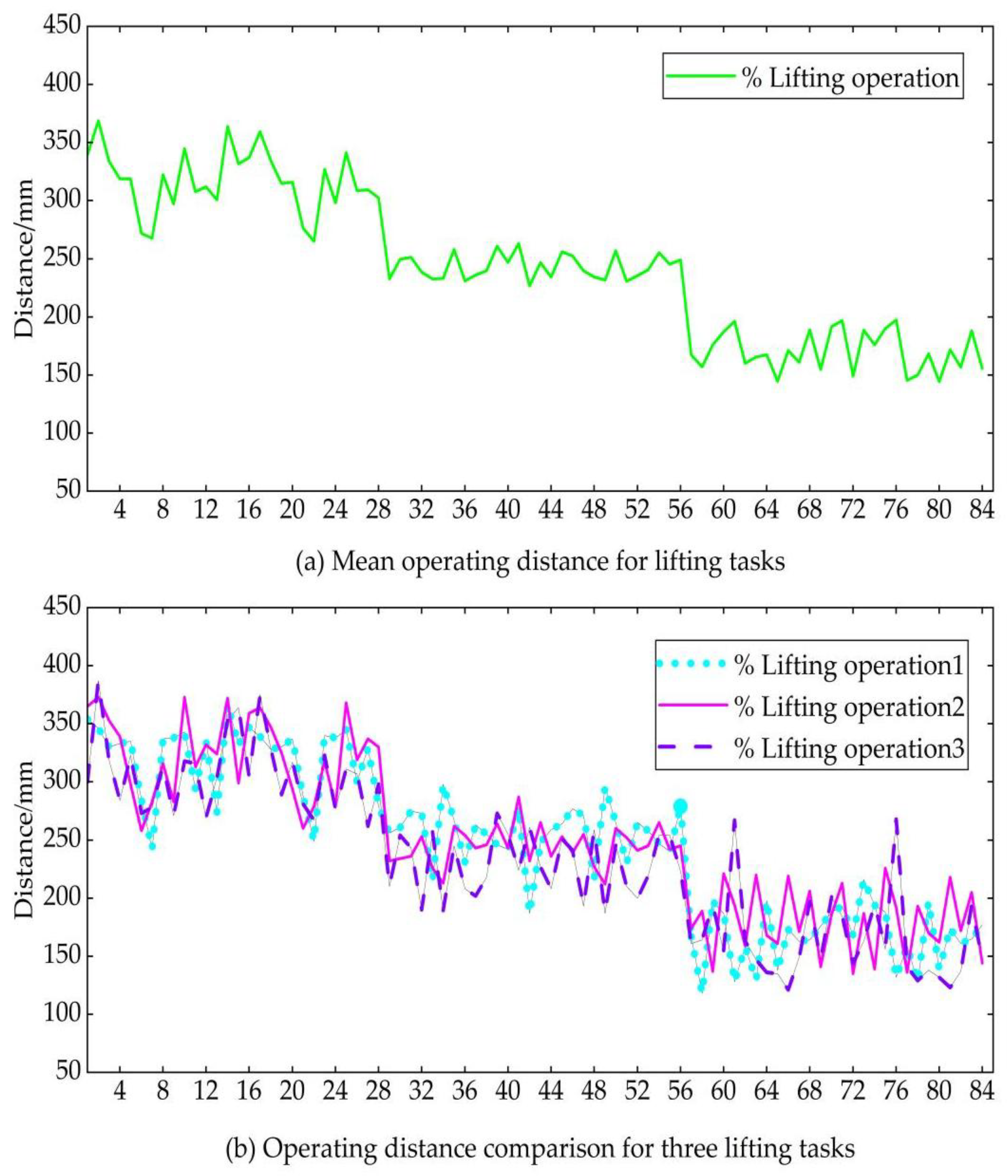
According to research in ergonomics and construction safety, the recommended safe operating radius for personnel within the lifting area of actual tower crane operations—considering dynamic buffer distance—is generally not less than 2 m, so as to reduce collision risks caused by load swing and operational errors. In this study, the experimental platform was constructed using a 1:10 scaled model. To ensure consistency in spatial judgment, the safety radius was proportionally set at 200 mm. Based on this safety buffer radius, collision risk was classified from the perspective of risk exposure level. When the operational distance exceeded 200 mm, the target was considered to be outside the safety buffer zone and was categorized as “no risk.” When the distance ranged between 100 and 200 mm, the target was deemed to have entered the safety buffer zone but not yet approached the critical collision boundary, and was therefore classified as “low risk.” When the distance was less than 100 mm, the safety boundary was considered to be significantly encroached upon, representing a high-exposure interval and categorized as “high risk.” It should be emphasized that the risk classification adopted in this study is operational in nature, intended to characterize behavioral variation trends across different risk intervals, rather than to directly predict the probability of actual construction accidents.
3.5. Data Analysis
Statistical analyses were conducted on the experimental data to investigate the relationship between operators’ physical fatigue levels and collision risk during tower crane lifting operations, and to evaluate the mitigating effects of the HMI operation mode on collision risk under fatigue conditions. Physical fatigue level was treated as the independent variable and classified into three categories—low fatigue, moderate fatigue, and high fatigue—based on the fatigue test results. All participants performed lifting tasks under each fatigue condition, resulting in a within-subject repeated-measures data structure.
Given that traditional mechanical operation and HMI operation constituted two independent experimental scenarios, statistical analyses were performed separately for each scenario. Within each scenario, one-way repeated-measures analysis of variance (RM-ANOVA) was first applied to compare collision risk performance across different fatigue states, to examine the overall effect of physical fatigue level on lifting operation safety. The significance level was set at 0.05 (p < 0.05), and all statistical analyses were conducted using SPSS software, (version 27.0, IBM Corp., Armonk, NY, USA). Prior to performing RM-ANOVA, the assumptions of the method were examined. Although each participant was measured multiple times under different fatigue states, measurements across different participants were independent, satisfying the independence assumption, while measurements within the same participant were correlated, making the repeated-measures design appropriate. The Shapiro–Wilk test was used to assess the normality of the dependent variables under each fatigue condition, with p > 0.05 indicating approximate normality. In addition, Mauchly’s test of sphericity was conducted to examine the homogeneity of variances of the differences among repeated measures. When the sphericity assumption was violated (Mauchly’s test p < 0.05), the Greenhouse–Geisser correction was applied to adjust the degrees of freedom. To quantify the magnitude of the effects, partial η2 was reported to assess the practical impact of fatigue levels on collision risk.
On this basis, to further quantitatively analyze the effects of physical fatigue level on collision risk in tower crane operations and to enhance the robustness of statistical inference while controlling for individual differences, linear mixed-effects models (LMMs) were constructed separately for the traditional mechanical operation scenario and the HMI scenario. The safety distance between the crane hook and the rigger was specified as the dependent variable, while physical fatigue level (low, moderate, and high) was included as a fixed effect to evaluate the impact of different fatigue states on safety distance. Considering that each participant took part in multiple trials under different fatigue conditions and that repeated measurements were therefore not independent, participant ID was included as a random effect to account for inter-individual variability and to control for the repeated-measures structure. The model parameters were estimated using the Restricted Maximum Likelihood (REML) method. The F-values, p-values, and effect sizes (Cohen’s d or partial η2) of the fixed effects were reported to evaluate the magnitude of the influence of physical fatigue on safety distance. The significance of the fixed-effect terms was examined to assess the magnitude of the effect of physical fatigue level on safety distance. The significance level for all statistical tests was set at 0.05. Model fitting and parameter estimation were performed using the Linear Mixed Models module in SPSS software (Version 27). By establishing LMMs separately for the two experimental scenarios and comparing the estimated fixed-effect parameters, the mitigating effects of the HMI operation mode on collision risk under different fatigue states were revealed.
In addition, collision alarm frequencies under different fatigue states were incorporated to provide a supplementary analysis of collision risk levels in both traditional mechanical operation and HMI operation scenarios, thereby offering a comprehensive reflection of operators’ safety performance under varying fatigue conditions. By comparing the trends of fatigue effects between the traditional mechanical operation and HMI operation scenarios, the effectiveness of the HMI system in mitigating collision risk during tower crane lifting operations under operator fatigue was systematically evaluated.
4. Experiment
4.1. Participants
Participants were recruited through collaboration with construction enterprises. Prior to the experiment, an a priori power analysis was conducted using G*Power 3.1.9.7 software (version 3.1.9.7, University of Düsseldorf, Dusseldorf, Germany), with a one-way repeated-measures analysis of variance as the planned study design. Specifically, a moderate effect size (f = 0.25), a significance level of α = 0.05, and a statistical power (1 − β) of 0.80 were specified. This preliminary power analysis provided an effective means of controlling statistical power and guiding sample size determination before initiating the actual study. The sample size was determined based on the research design, variable dimensionality, and statistical power considerations, and it meets the standards of mainstream empirical research. The power analysis indicated that a minimum of 28 participants was required to detect the expected effect. Accordingly, a total of 28 healthy adult construction workers were recruited after screening, including 17 males and 11 females. Participants were aged between 35 and 45 years and had undergone medical examinations at a Grade III, Class A hospital, confirming the absence of neurological disorders, musculoskeletal diseases, or other health conditions that could affect experimental performance. All participants had more than five years of professional experience in formal construction enterprises, and their safety training assessment results over the past two years were rated as excellent. All participants provided written informed consent and received detailed explanations of the experimental procedures and safety instructions prior to participation. After completing the experiment, participants received financial compensation. Participants were instructed to maintain adequate sleep on the day before the experiment, avoid staying up late or excessive alcohol consumption, refrain from taking medications, avoid strenuous physical activity, and abstain from spicy or greasy foods, to minimize potential biases caused by physical discomfort on the experimental day. In addition, each participant was assigned an experimental identification number from “1” to “28”, and the experimental sessions were conducted sequentially according to this numbering.
4.2. Experimental Scenarios
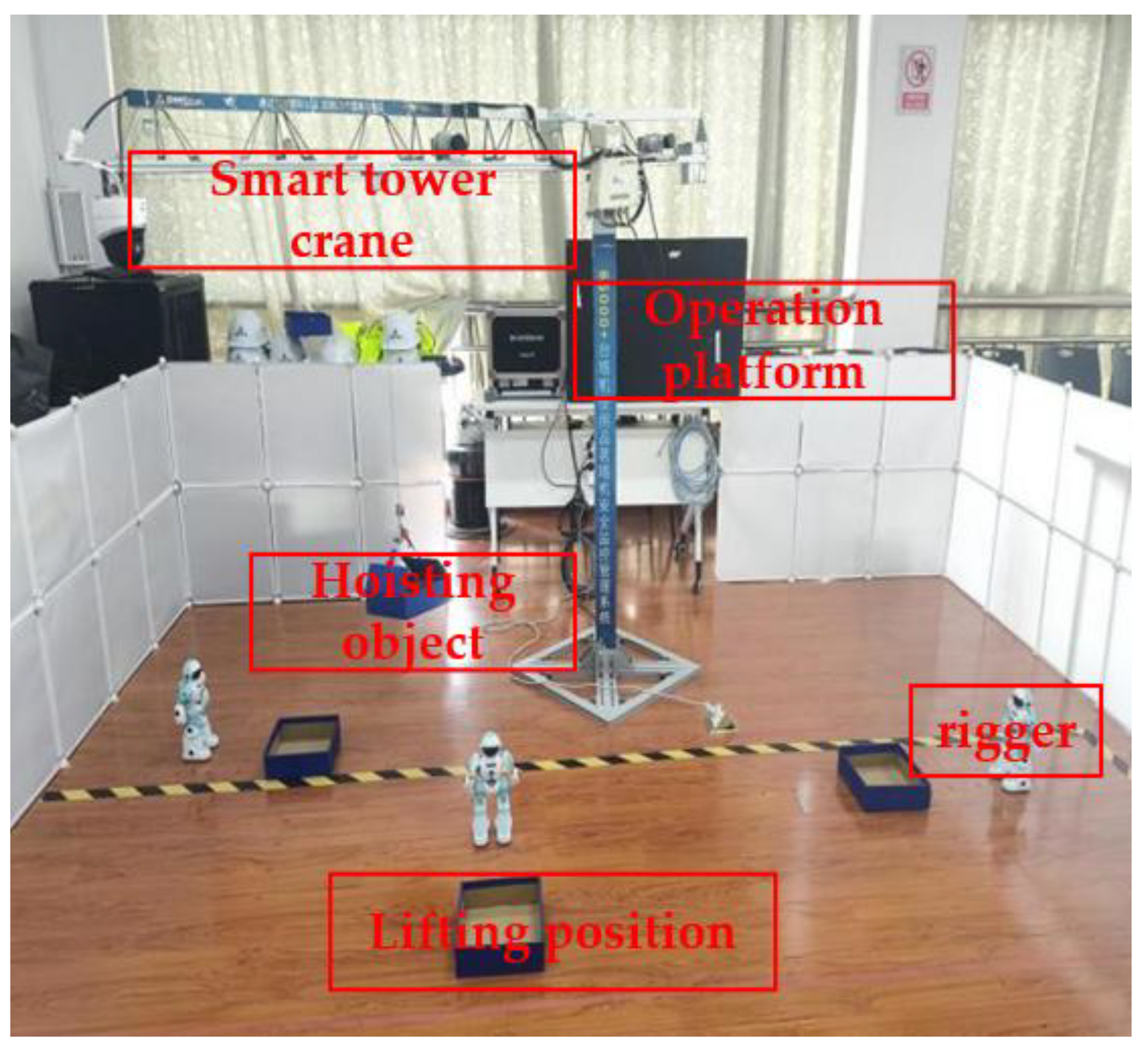
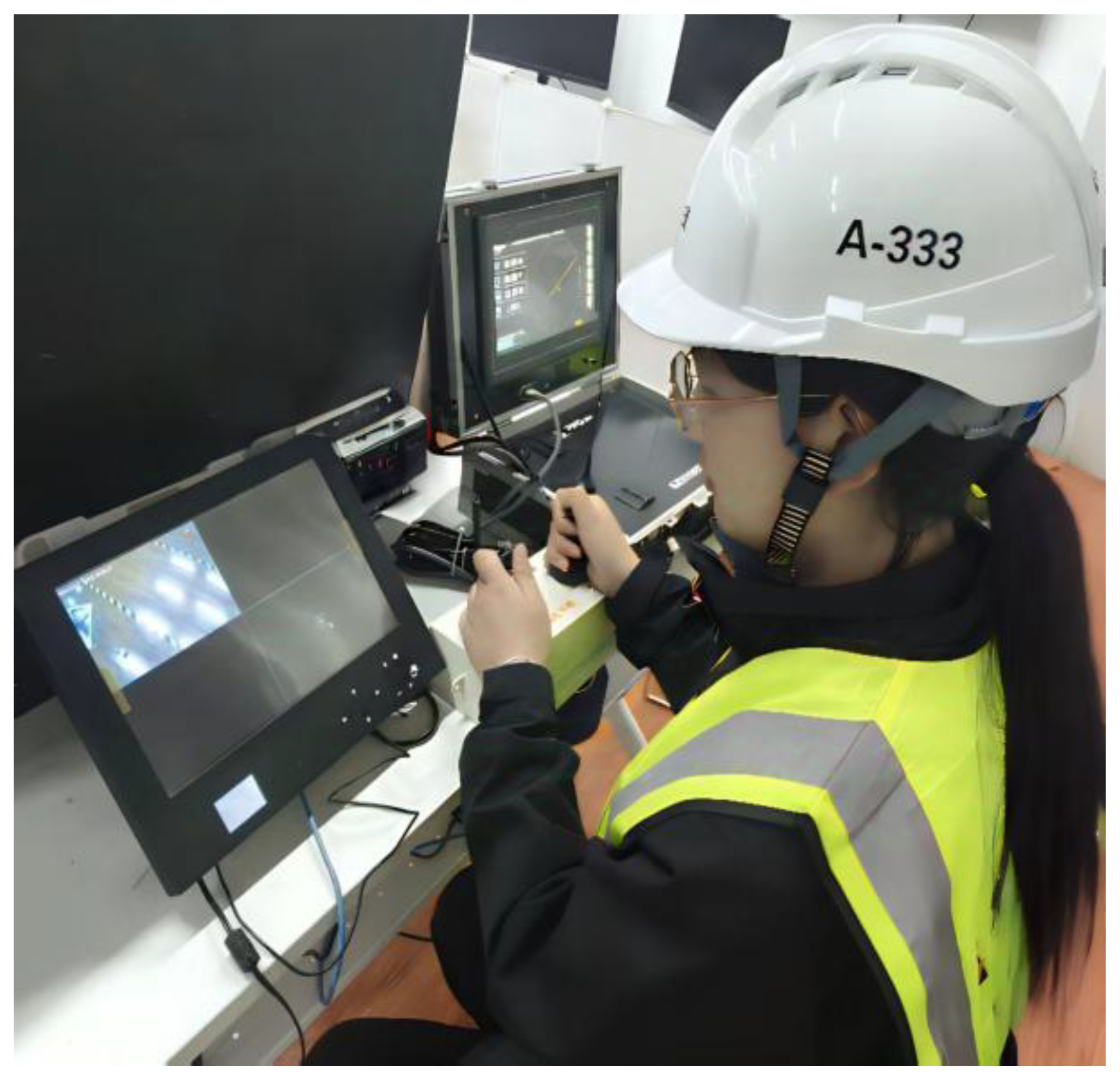
Two simulated operation scenarios based on an intelligent tower crane system were established in this experiment: a traditional mechanical operation scenario and an HMI operation scenario. Each scenario consisted of an operator control area and a lifting operation area to support the investigation of crane hoisting tasks. As shown in
Figure 2 and
Figure 3, the overall layout of the experimental setup includes the main structure of the tower crane, the hook movement area, the operator control zone, and the lifting operation area. The experimental site was configured with three typical lifting zones. Operators were required to use the intelligent tower crane interaction system to sequentially control the crane hook, lift target objects from the starting point, avoid dynamic obstacles (intelligent mobile robots), and accurately place the objects into the designated target zones. The figure clearly illustrates the hook trajectory, the activity range of the dynamic obstacles, and the spatial relationships between personnel and equipment, thereby providing an intuitive representation of the structural layout of the experimental environment.
A small-scale, high-precision intelligent tower crane equipped with a real-time monitoring and intelligent feedback system was employed in the experiment, enabling operators to perform complex lifting operations with system assistance. During operation, participants monitored the crane’s operational status and target positions via a display interface at the control console and executed lifting tasks using control devices. In the HMI operation scenario, operators were required to make timely judgments and adaptive adjustments based on system feedback and alarm responses to ensure operational safety and enhance HMI efficiency. In contrast, in the traditional mechanical operation scenario, the HMI system of the intelligent tower crane was deactivated, and operators relied solely on their own observation of the working environment and manual decision-making to complete the lifting tasks, thereby realistically simulating the actual operating mode of conventional tower cranes.
In addition, as shown in
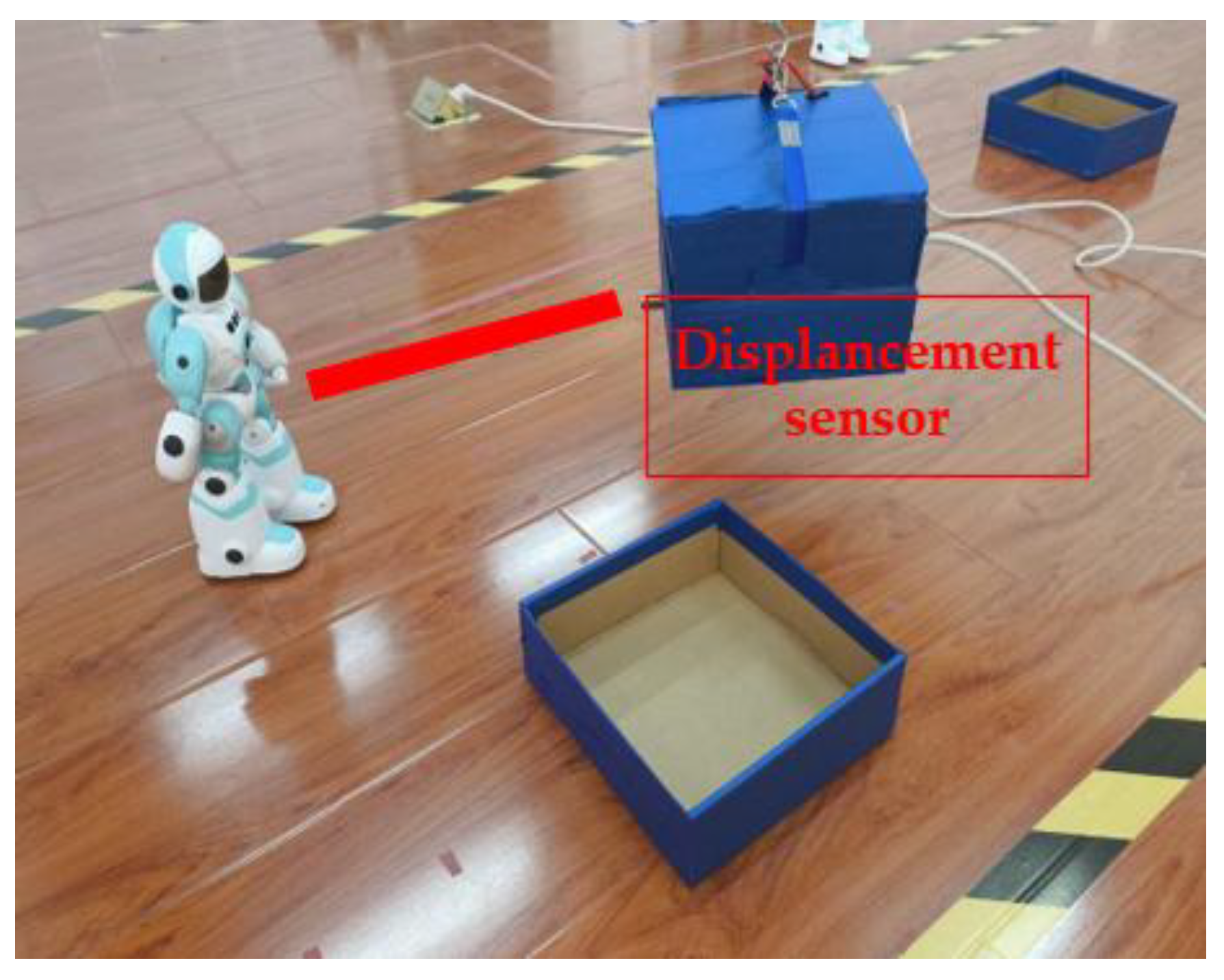
Figure 4, the safety distance in this study was defined as the Euclidean distance between the geometric center of the crane hook and the reference position of the signal worker. By continuously collecting the spatial coordinate data of both entities, the dynamic variation in this distance was calculated to quantify the collision risk under different fatigue states. This measurement approach objectively reflects the safety clearance between personnel and equipment, thereby improving the accuracy and reproducibility of collision risk assessment.
4.3. Experimental Procedure
Each participant completed experiments under the same fatigue state across two experimental scenarios within a single day. To control for potential time-related effects, all participants performed the experiments at a consistent time each day. After completing the pilot test, participants advanced to the formal experiments. First, under the traditional mechanical operation scenario, participants performed a stair-climbing task to induce low, moderate, and high levels of fatigue, respectively. They then completed the subjective fatigue questionnaire and wore the eye-tracking device, which was adjusted and calibrated before entering the preliminary experimental stage. Eye-tracking indicators were analyzed to verify the attainment of target fatigue states and to minimize potential subjective biases. If the corresponding fatigue level was confirmed, participants were allowed to proceed to the formal experiment; otherwise, fatigue induction was continued until the required fatigue state was achieved. After reaching the designated fatigue level, participants completed three standardized lifting tasks, with a displacement sensor continuously recorded the safety distance between the crane hook and the rigger.
Under the HMI operation scenario, the experimental procedures were largely consistent with those of the traditional mechanical operation scenario. During this process, operators monitored the real-time operational status of the tower crane through the intelligent crane operation platform and made adjustments based on system feedback. The displacement sensor continuously measured the safety distance between the crane hook and the rigger, while the alarm system responded to sensor data in real time. When the crane hook approached the rigger beyond a safe threshold or when a potential collision risk was detected, the alarm system was triggered to warn the operator of improper actions. The operator then adjusted the operation according to maintain the lifting equipment within a safe range and prevent collisions. The intelligent tower crane operating system responded in real time to the operator’s performance. Specifically, warnings were issued when the load was excessive or when the hook descended below a safe level, and emergency braking measures were activated under critical conditions to ensure the safety of the human–machine collaborative process. By comparatively analyzing the safety distances maintained by operators under different fatigue states in HMI and traditional mechanical operation scenarios, this study aimed to elucidate the role of HMI in modulating the relationship between operator fatigue and collision risk, thereby providing theoretical support for enhancing operational safety and HMI efficiency in intelligent tower crane operations. A detailed operational flowchart is shown in
Figure 5.
6. Discussion
In high-risk construction environments, previous studies suggest that physical fatigue may not only impair workers’ physical performance but may also indirectly influence operational safety by affecting perception, judgment, and motor control. Under controlled laboratory conditions, this study systematically examined the relationship between operators’ physical fatigue and collision risk across different operational scenarios and explored the moderating effect of HMI under fatigue. The findings observed in the experimental context reveal certain tendencies and may provide empirical support for understanding the fatigue-risk mechanism and the potential role of intelligent assistance systems in construction safety.
6.1. Relationship Between Physical Fatigue and Collision Risk
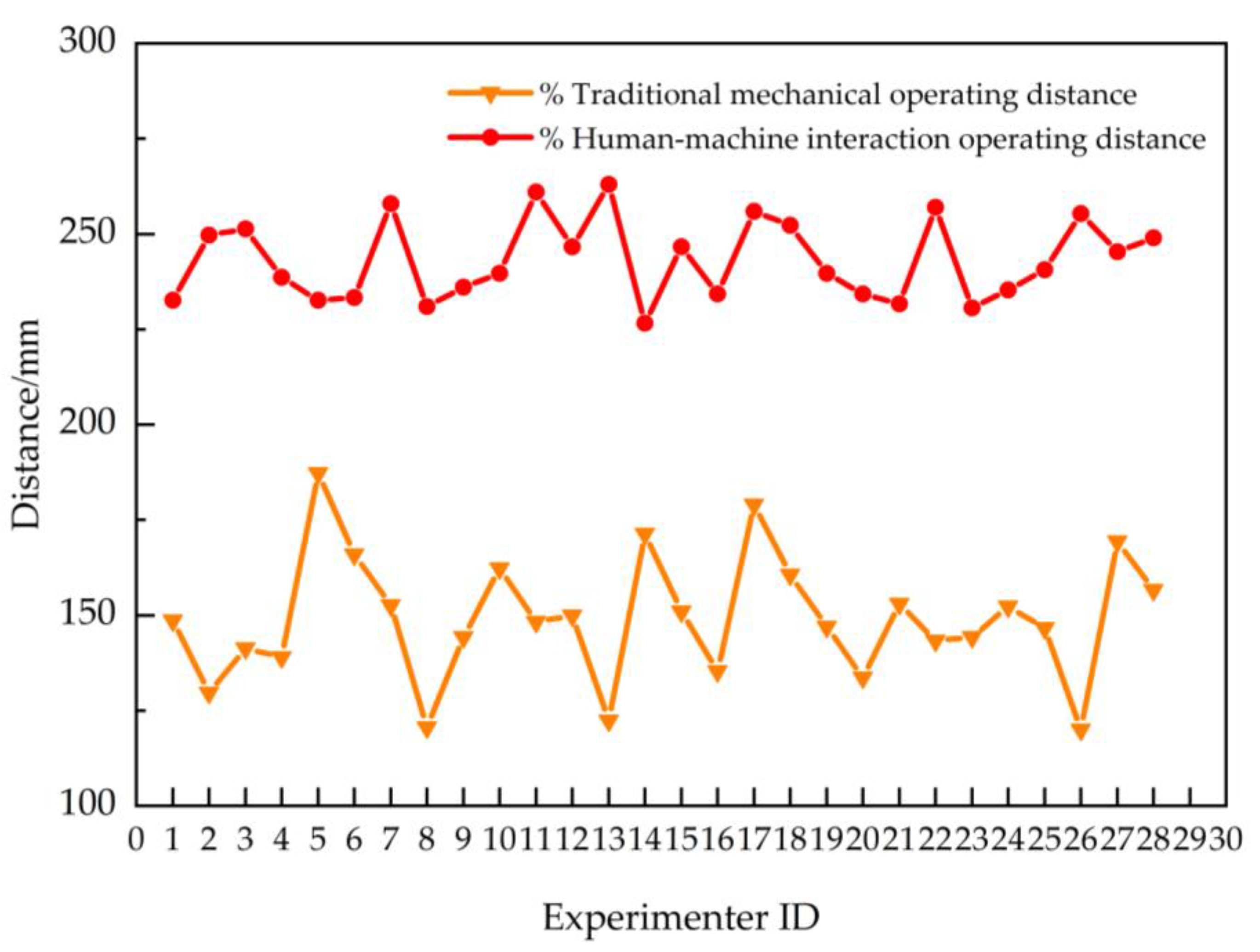
Under the laboratory-simulated traditional mechanical operation scenario, as physical fatigue gradually increased, the minimum safety distance between the hook and the riggers significantly decreased, and the alarm response count increased markedly, resulting in a continuous rise in overall collision risk. The same pattern was observed in the HMI operation scenario. These findings suggest that, within the experimental setting, physical fatigue may weaken operators’ control capability and risk avoidance performance in complex tasks. The underlying mechanism is likely related to fatigue-induced decreases in alertness, reaction speed, and fine motor control, which impair perception and judgment of critical spatial information during lifting operations. As fatigue levels increase, operators are more prone to delayed responses, unstable motion amplitude control, and insufficient risk anticipation, leading to deviations of the hook trajectory from safe zones. These findings align with previous research showing that physical fatigue significantly diminishes situational awareness and hazard recognition, thereby negatively affecting safety performance. Empirical evidence indicates that fatigue reduces construction workers’ hazard recognition and risk assessment capabilities, reflecting a decrease in attentional resources and deterioration of safety performance [
67]. Moreover, the reduction in safety distance implies a smaller tolerance margin for potential hazards under fatigue, meaning that operational errors are more likely to trigger dangerous events. This partially explains why collision risk in traditional operation scenarios rapidly escalates to high-risk levels under high-fatigue conditions. It should be emphasized that these findings are derived from a laboratory-based simulation and reflect associations between fatigue levels and risk indicators rather than direct predictions of real-world construction accident rates.
6.2. Mitigating Effect of HMI on Fatigue-Induced Collision Risk
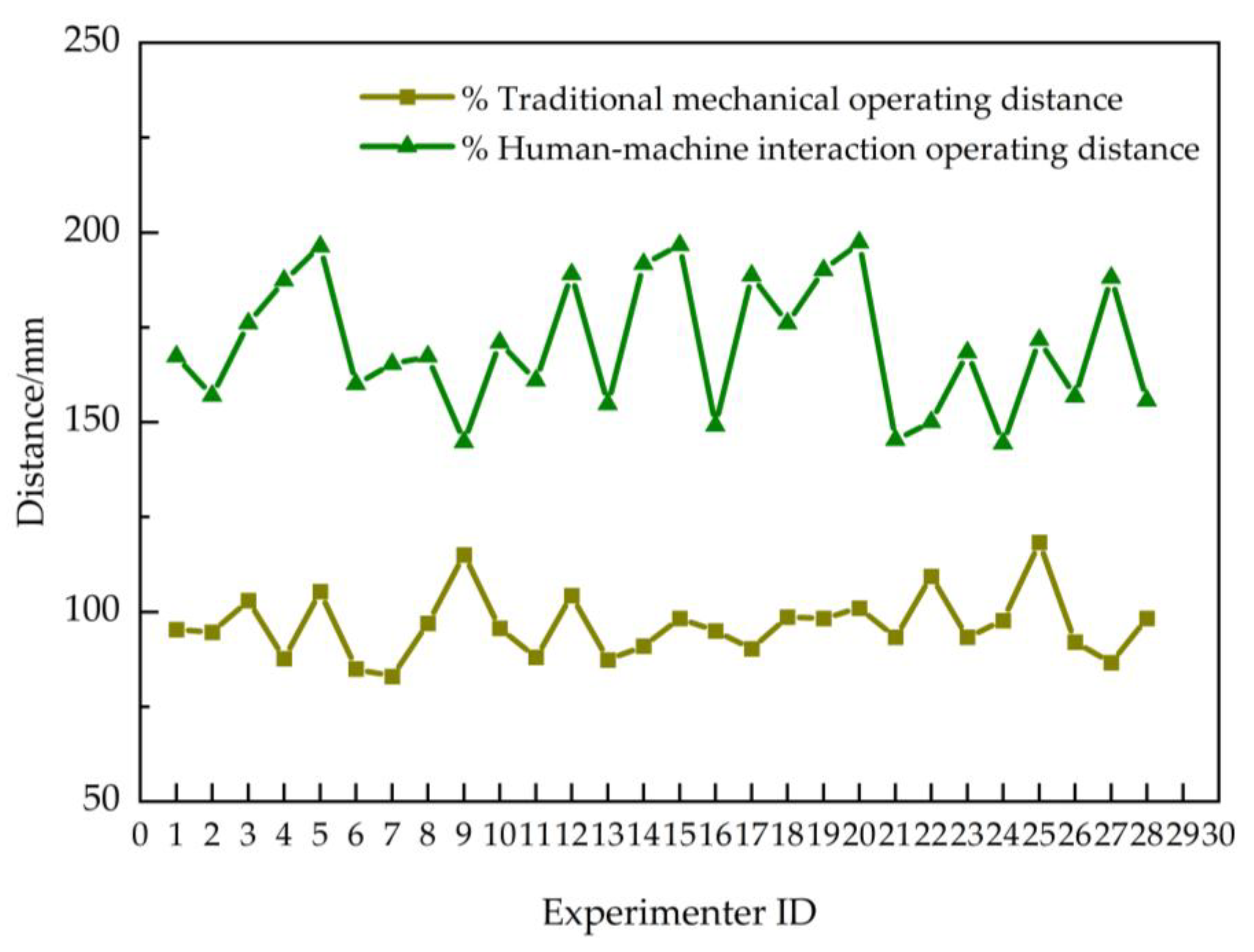
Compared with traditional mechanical operations, under the controlled laboratory conditions established in this study, the HMI operation scenario exhibited distinct risk variation patterns. The results indicate that, at the same fatigue level, the safety distance between the hook and the riggers in the HMI operation scenario was generally greater than in the traditional scenario, with a significant reduction in alarm counts. This difference was particularly pronounced under moderate- and high-fatigue conditions. Specifically, within the experimental setting, collision risk under moderate fatigue in the HMI scenario showed a tendency to shift from low-risk toward no-risk levels, while under high fatigue, risk levels exhibited a decreasing trend from high-risk toward lower-risk categories. These findings suggest that, in the present laboratory context, the HMI system may provide a certain degree of safety compensation when operators experience fatigue.
The underlying mechanism may be that HMI systems reduce the operator’s reliance on sustained high-intensity attention and precise spatial judgment through real-time risk alerts, distance monitoring, and alarm feedback. When operators experience fatigue-induced declines in perception and decision-making, the system’s auxiliary information compensates for cognitive resource limitations, guiding timely adjustment of operational behavior and preventing proximity to hazards or collisions. Thus, under the laboratory conditions of this study, the regulatory effect of HMI appears to show a tendency to mitigate fatigue-related increases in collision risk, although the magnitude of this effect requires further verification.
Furthermore, even under high fatigue, operators’ control stability over lifting operations remained superior in the HMI operation scenario compared with traditional mechanical operations. This tendency suggests that, in the laboratory environment, HMI may not only reduce the probability of collision events but also contribute to improved operational controllability to some extent. From a human factors perspective, the HMI system may reduce cognitive and perceptual workload under fatigue by reallocating part of the information-processing demands. This “cognitive offloading” effect allows operators to focus limited attentional resources on critical operational decisions rather than continuously monitoring complex environmental information, thereby improving overall safety performance. This observation is generally consistent with prior studies on intelligent assistance systems under high workload or fatigue conditions and may provide reference for the application of HMI in complex construction equipment operations, although its broader applicability should be further examined in real-world construction settings.
6.3. Mechanistic Transferability Analysis
Although this study was conducted using a laboratory-based intelligent tower crane operation platform under controlled experimental conditions, the core variables of interest are not specific to any particular construction process. Rather, they pertain to the effects of fatigue on cognitive processing capacity, reaction time, and spatial distance judgment accuracy. These abilities reflect human cognitive mechanisms that are relatively stable across contexts, and their patterns of change generally do not fundamentally depend on the specific operational scenario. Extensive research in ergonomics has shown that fatigue systematically reduces the efficiency of attentional resource allocation, prolongs reaction times, and impairs spatial judgment accuracy, thereby affecting individuals’ ability to manage risks in dynamic environments.
In this study, the observed trends—namely, decreased ability to maintain safety distance and increased exposure to collision risk with rising fatigue levels—essentially reflect the manifestation of cognitive function degradation in three-dimensional operational tasks. Therefore, at the mechanistic level, the relationship between fatigue and spatial risk control capacity exhibits a degree of theoretical stability, suggesting that these trends may be transferable across different contexts. Similarly, the role of the HMI system in this study primarily operates through visual cues, distance feedback, and risk alarms that enhance the salience of hazards, thereby triggering attention capture and decision-correction processes. Such information-presentation mechanisms are not specific to tower crane operations but rely on general principles of human information processing and attentional regulation. Consequently, the modulatory effects of HMI on risk perception and operational control also possess a degree of cross-task consistency at the theoretical level.
It should be emphasized that the term “transferability” in this study refers primarily to mechanistic insights, rather than the direct generalization of numerical thresholds or risk proportions. Variations in risk intensity, organizational pressure, and coordination complexity may exist across different construction environments, and practical application still requires further validation under actual field conditions.
6.4. Practical Implications
The findings of this study offer new technical pathways for improving tower crane operation safety. It was observed that under traditional mechanical operations, as operator fatigue increased, the safety distance between the hook and the riggers decreased significantly, and collision risk increased markedly. Conversely, under HMI operation scenario, collision risk could be effectively controlled even when operators were under moderate- or high-fatigue conditions. This indicates that HMI systems can provide important safety compensation under operator fatigue, effectively mitigating the decline in control ability and the increase in risk exposure caused by fatigue.
Therefore, in high-intensity, long-duration, or high-risk lifting operations, prioritizing the use of intelligent tower crane systems with HMI functions can reduce the risk of collisions caused by operator fatigue. Particularly in construction environments where fatigue cannot be completely avoided, HMI systems serve as an effective engineering control measure, compensating for the safety hazards arising from diminished perception, judgment, and operational precision. Moreover, by quantifying collision risk through safety distance and alarm counts, this study provides actionable metrics for on-site risk monitoring and safety management. Construction managers can use operator fatigue levels and system alarm information to dynamically assess operational risk, allowing timely adjustment of work pace or targeted interventions.
The results of this study further emphasize the importance of systematic management of operator fatigue. Although physical fatigue cannot be fully eliminated during construction, reasonable work duration scheduling, optimized shift arrangements, and integration with HMI assistance can mitigate its adverse effects on operational safety. Particularly during critical high-risk work phases, the introduction of intelligent assistance and risk alert mechanisms can help ensure overall site safety.
7. Conclusions
This study employed a laboratory-based tower crane simulation platform to conduct comparative experiments between conventional mechanical operation and HMI operation, aiming to investigate the relationship between operator physical fatigue and collision risk, as well as the potential moderating effect of HMI under different fatigue levels. The conclusions drawn from the experimental results should be interpreted within the context of the controlled laboratory conditions.
Firstly, the experimental results indicated that collision risk increased with rising levels of fatigue. In the conventional mechanical operation scenario, no collision risk was observed under low fatigue, low risk was associated with moderate fatigue, and high fatigue corresponded to high risk. In the HMI operation scenario, high fatigue corresponded to low risk, whereas low- and moderate-fatigue conditions did not trigger collision risk. Across both scenarios, increasing physical fatigue was generally accompanied by higher collision risk indices. Specifically, in the conventional mechanical operation scenario, elevated fatigue levels led to reduced safety distances and increased alarm frequency; similar trends were observed in the HMI scenario, although the degree of risk exposure differed between operation modes. These findings suggest that physical fatigue may adversely affect spatial control ability and risk exposure during tower crane operations under the experimental conditions.
Secondly, comparative analysis of the two operation scenarios under laboratory-simulated conditions revealed that, at moderate and high fatigue levels, the HMI scenario maintained relatively greater safety distances and lower alarm frequencies. Risk stratification results showed that, under moderate fatigue, the conventional mechanical operation scenario exhibited low risk, while no risk was triggered in the HMI scenario; under high fatigue, conventional operation corresponded to a high-risk range, whereas HMI operation remained within a lower-risk range. These results indicate that, in a controlled experimental environment, HMI may provide a moderating effect on risk exposure under fatigued conditions. However, it is important to emphasize that these findings reflect differences in operator performance under laboratory simulation and cannot be directly equated with a reduction in actual construction site accidents; further validation in real-world settings is required.
Overall, this study observed a trend linking physical fatigue to collision risk indices in a controlled experimental environment and preliminarily revealed the potential moderating role of HMI under fatigue. Given that the experimental platform simplifies the complexity of real construction environments, these conclusions should be regarded as exploratory findings rather than direct inferences to real-world operations.
This study also has several limitations that warrant further investigation. First, it primarily focused on the operational-level mechanisms of risk formation, analyzing the effects of physical fatigue and HMI on collision risk, without incorporating complex factors present on construction sites, such as organizational pressure, team coordination, management systems, or multitasking. Therefore, the results should be interpreted as trend observations under controlled experimental conditions rather than quantitative predictions of real-world risk levels. Second, although the experimental scenarios were designed to approximate the task workflow and risk structure of actual tower crane operations, the laboratory environment cannot fully replicate the spatial complexity and dynamic disturbances of real construction sites. Consequently, these conclusions should be cautiously evaluated before engineering application. Third, this study focused on the impact of physical fatigue on operational safety and did not integrate cognitive factors such as mental fatigue, sustained attention decline, or emotional stress. In real construction environments, multidimensional fatigue factors may interact, and their combined influence requires further investigation. Finally, the sample size was relatively limited; although a repeated-measures design and linear mixed-effects models were employed to control for individual differences, further stratified analysis based on operator experience or habitual practices was not conducted. Future research should consider on-site or semi-physical experiments in actual construction settings to enhance the external validity of the findings. Moreover, integrating multimodal physiological and behavioral data could enable more refined fatigue modeling and support the development of adaptive HMI strategies based on real-time fatigue recognition, providing a more reliable empirical foundation for the optimization of intelligent tower crane systems.