Article

Assessing Street-Level Emotional Perception in Urban Regeneration Contexts Using Domain-Adapted CLIP

1
Manchester School of Architecture, The University of Manchester, Manchester M1 7ED, UK
2
Graduate School of Design, Harvard University, Cambridge, MA 02138, USA
*
Author to whom correspondence should be addressed.
Buildings 2026, 16(5), 980; https://doi.org/10.3390/buildings16050980

Submission received: 27 January 2026 / Revised: 22 February 2026 / Accepted: 26 February 2026 / Published: 2 March 2026
(This article belongs to the Section Architectural Design, Urban Science, and Real Estate)

Abstract

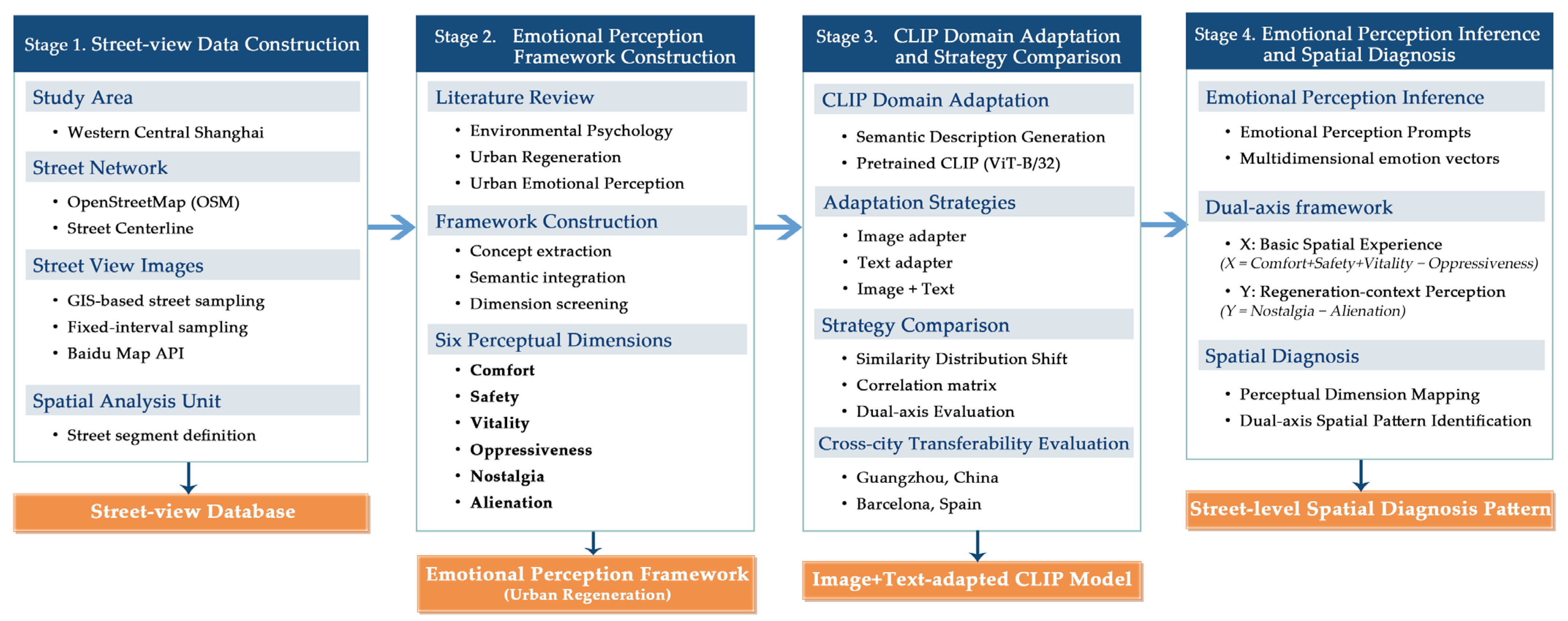
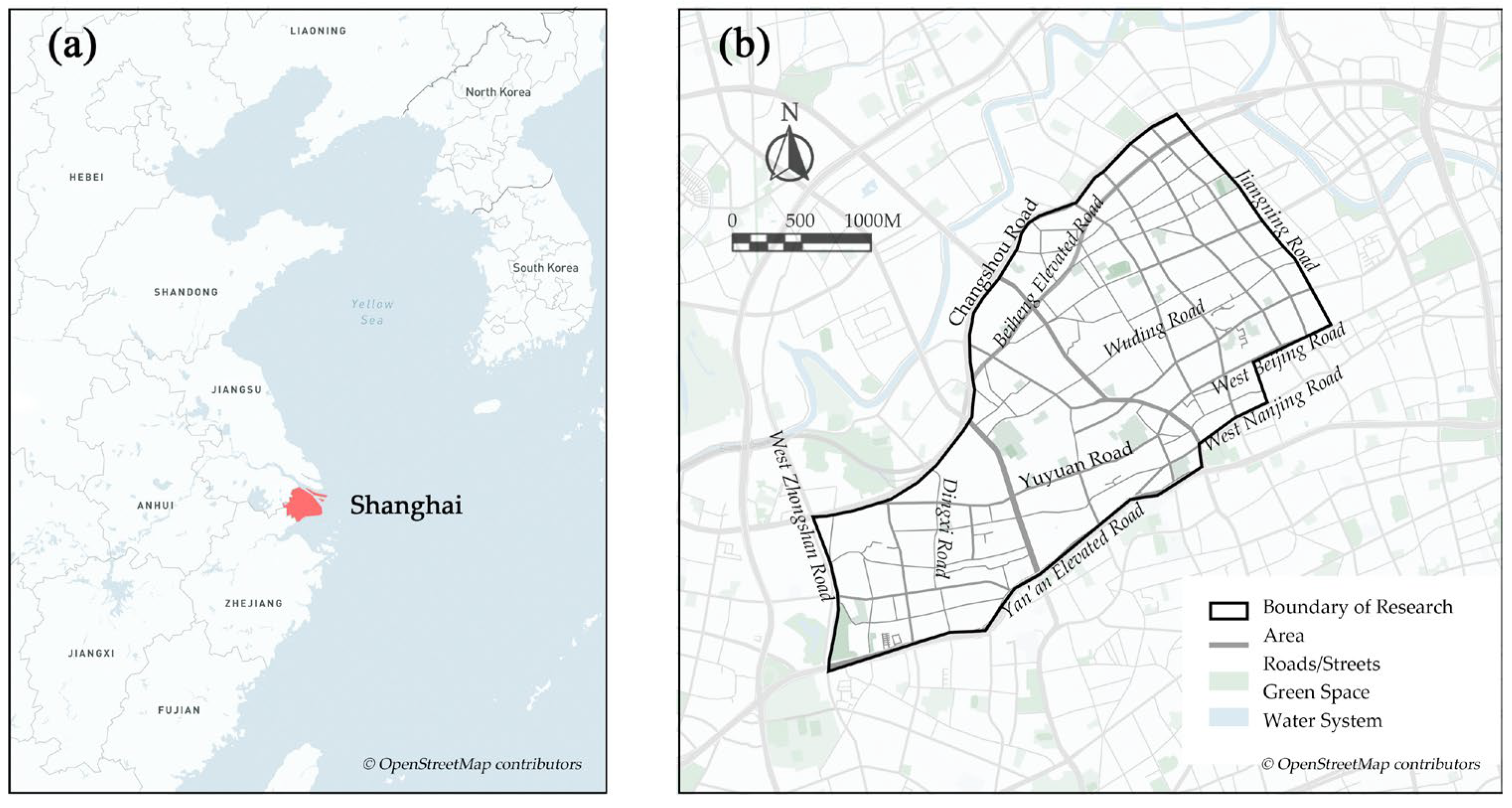
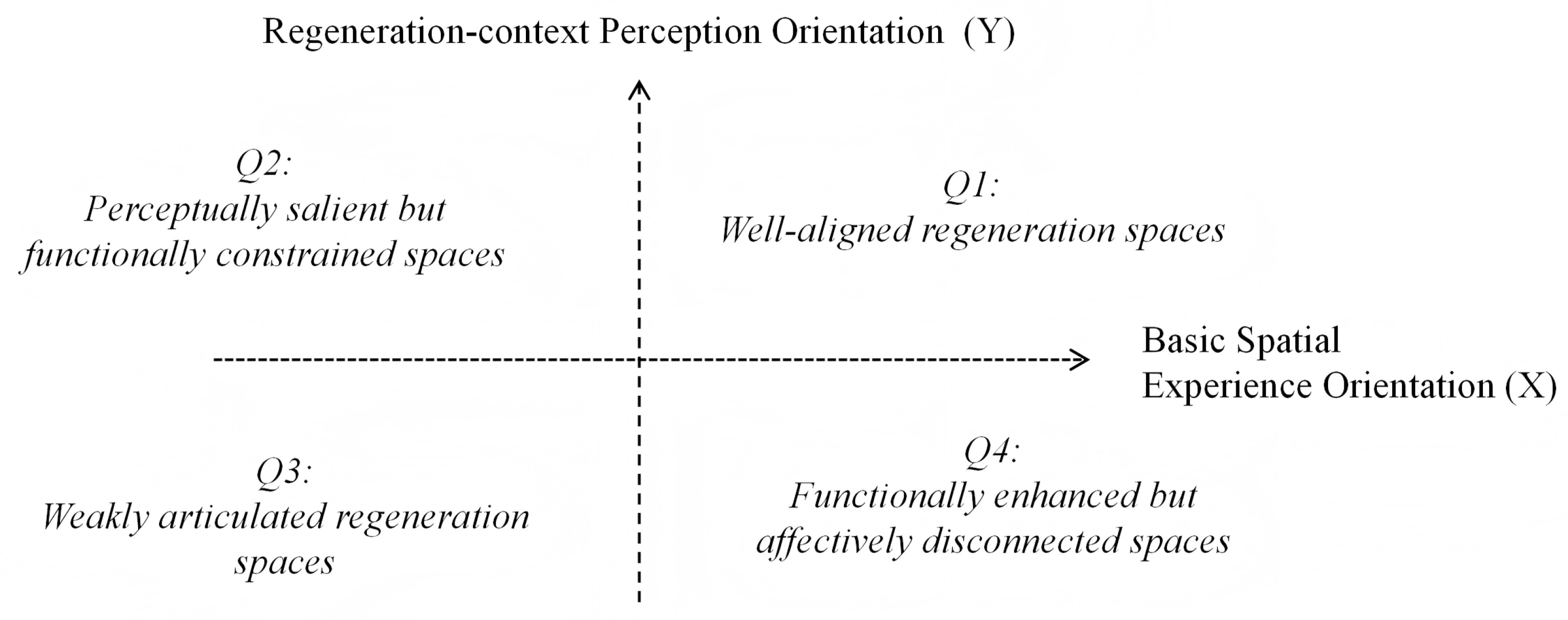
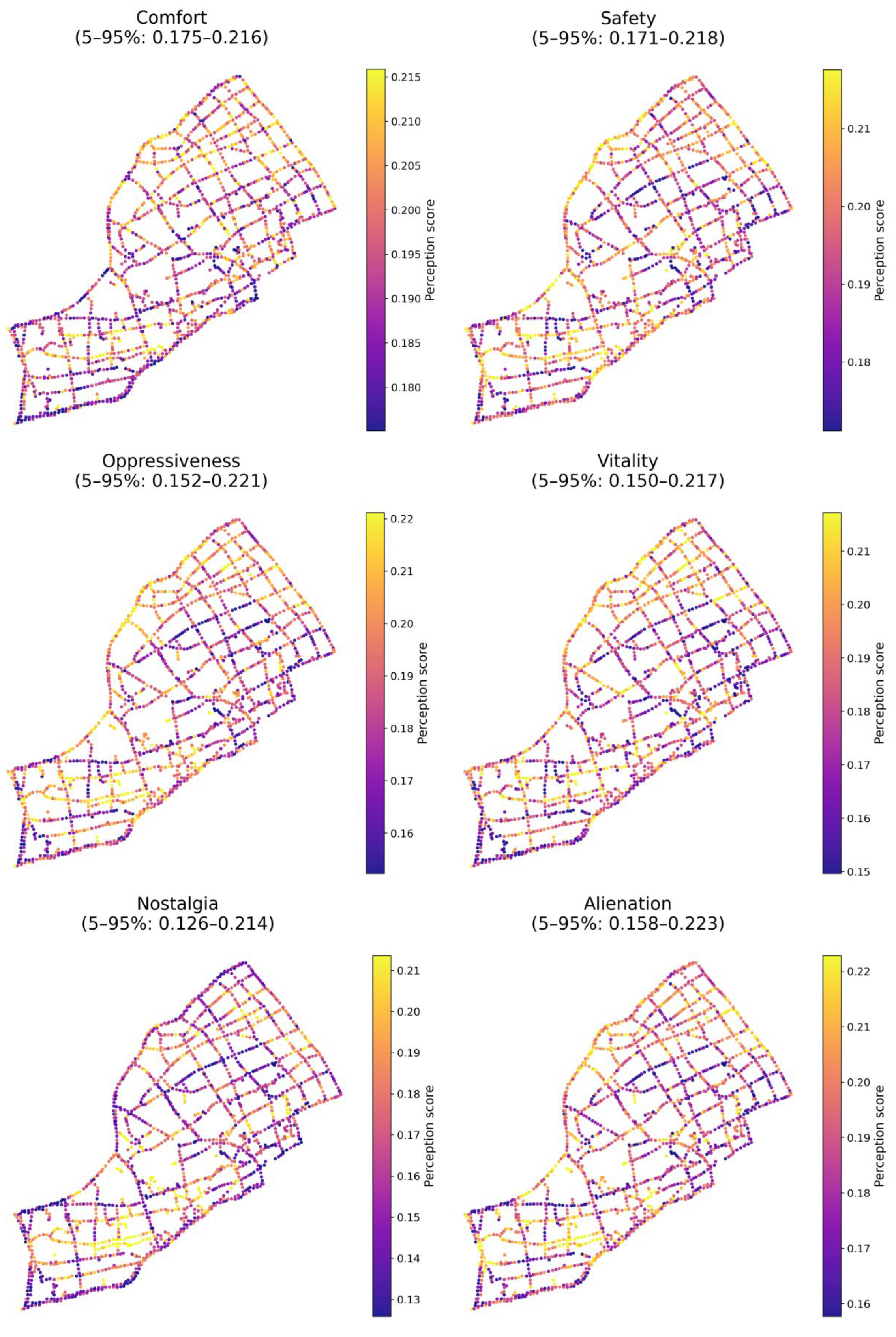
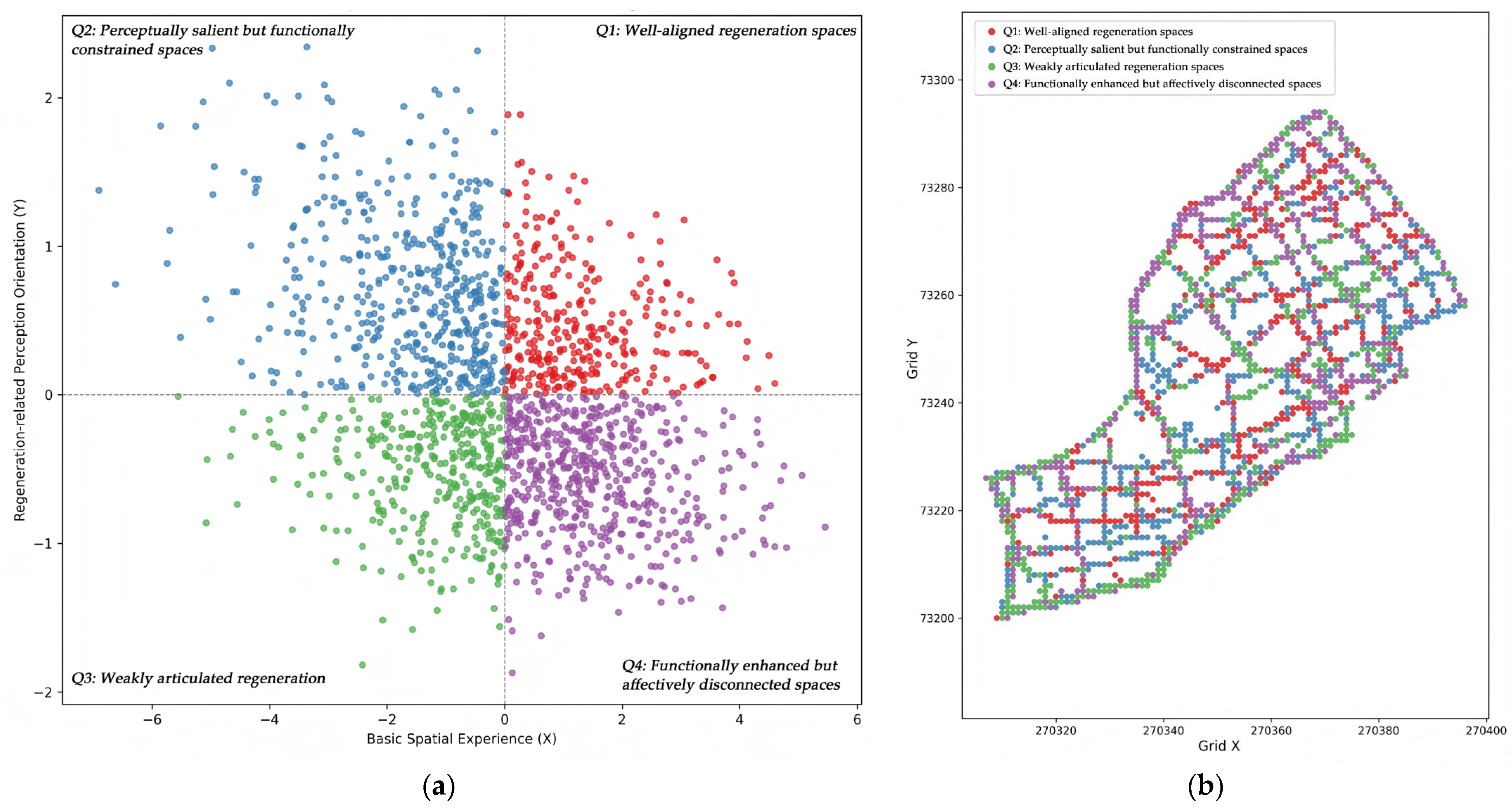
As urban regeneration goals shift from physical improvement to pedestrian-level experience and emotional perception, existing assessment methods struggle to describe the emotional responses associated with renewed street environments. This paper proposes a framework for street-level emotional perception inference and analysis within the context of urban regeneration, enabling the automatic semantic recognition based on Street View Images (SVIs) and a Vision-Language Model (VLM). The paper constructs a six-dimensional emotion perceptual framework encompassing Comfort, Vitality, Safety, Oppressiveness, Nostalgia, and Alienation and uses a lightweight domain-adapted Contrastive Language-Image Pre-training (CLIP) model to infer emotional perceptions from SVIs. Building upon this, a dual-axis evaluation framework is introduced to structure and interpret basic spatial experience and regeneration-related perception. Using the Yuyuan Road and Wuding Road areas in Shanghai as a case study, the paper combines emotional perception results with street-level spatial analysis, proposing a scalable and interpretable analytical method for diagnosing urban regeneration outcomes and supporting emotion-informed spatial interventions.
Keywords: urban regeneration; street-level emotional perception; domain-adapted CLIP; Vision-Language Model (VLM); Street View Image (SVI) urban regeneration; street-level emotional perception; domain-adapted CLIP; Vision-Language Model (VLM); Street View Image (SVI)