1. Introduction
The European Green Deal frames the transition to a climate neutral, resource efficient and competitive economy [
1,
2,
3]. Buildings sit at the interface between climate mitigation, public health, affordability, and industrial transformation because they embody material flows, operational energy demand, land use patterns, and long lived infrastructure decisions [
4,
5,
6]. Green building (GB) addresses this intersection through design and management practices that reduce environmental pressures across the life cycle, improve indoor environmental quality, and support circular material strategies [
7]. These goals are not achieved through technology alone. They depend on competences that enable individuals and organisations to interpret performance criteria, select materials and products responsibly, plan and manage projects, evaluate trade-offs, and communicate with stakeholders [
8]. Education and training are therefore part of the enabling conditions for the Green Deal. Competence frameworks help translate policy objectives into learnable outcomes and assessable performance [
9]. They provide a common language for curricula, qualifications, and professional development, and they support mobility through alignment with the European Qualifications Framework [
10]. This paper presents the GB competence framework subset expressed through knowledge, skills, and attitudes. The work is intentionally scoped to GB and excludes separate domains such as energy systems outside the building boundary. Because GB sits within a highly coupled socio-technical ecosystem, achieving Green Deal objectives requires competences that can anticipate and manage dynamic interactions (e.g., between design choices, project delivery, occupant practices, and regulatory/market constraints) rather than treating performance as a static target. Recent resilience engineering approaches, by representing how system functions unfold and resonate over time, offer a conceptual rationale for competence frameworks that foreground monitoring, trade-off reasoning, and adaptive coordination across the building life cycle [
11,
12]. GB is used here as an umbrella concept that includes resource efficient construction and renovation, low impact material selection, healthy indoor environments, durability and maintainability, and responsible end of life pathways for components and materials [
13]. GB was used in this study as an operational umbrella concept that includes the broader notion of Sustainable Building. While the two terms are often used interchangeably, Sustainable Building generally refers to the integration of environmental, social and economic dimensions, whereas GB has traditionally focused more on environmental performance. In this framework, GB is adopted in a broad sense, consistent with the objectives of the European Green Deal, and therefore includes environmental, economic, and social aspects. Competence is treated as an integrated capability expressed through what a learner understands, what a learner can do, and what a learner is disposed to value and enact. The knowledge skills attitudes model supports this integration while preserving analytical clarity. Mapping to European Qualifications Framework levels provides a way to represent progression, from basic awareness and supervised practice to expert judgement and leadership. GB competences are inherently systemic. They require critical thinking about performance claims, awareness of supply constraints, familiarity with assessment methods, and the ability to work across disciplines [
14]. They also require attitudes that support long-term stewardship, precaution in the face of uncertainty, and commitment to environmental and social objectives, including a consideration of economic sustainability, cost–benefit trade-offs, and resource efficiency. A competence framework that is explicit about these dimensions can support educational design that moves beyond declarative sustainability rhetoric and towards operational capability. It is important to clarify the relationship between the proposed competence framework and existing green building certification systems such as LEED, BREEAM, and DGNB. These systems focus on assessing building performance against defined sustainability criteria. The framework presented in this study does not aim to replace these certification schemes. Instead, it complements them by focusing on the competences required by individuals to achieve such performance. While certification systems define performance targets, the proposed framework specifies the knowledge, skills and attitudes needed to interpret, implement and critically apply these standards in practice.
The proposed competence framework is aligned with key policy instruments supporting the European Green Deal, while maintaining a focus on education and competence development. In relation to the Renovation Wave initiative, the framework addresses competences relevant to the energy renovation of existing buildings, including energy efficiency, material selection, and project management, which are essential for large-scale retrofit interventions. The framework also relates to the New European Bauhaus by integrating environmental sustainability with broader considerations such as system thinking, user well-being, and interdisciplinary collaboration. While aesthetic and inclusiveness dimensions are not explicitly structured as separate competence areas, they are embedded within transversal competences and decision-making processes that consider social and environmental impacts [
15]. Furthermore, the framework is conceptually consistent with the Level(s) framework for assessing the sustainability performance of buildings. Although it does not replicate Level(s) indicators, it supports the development of competences required to understand, apply, and interpret performance-based approaches across the building life cycle, including resource efficiency, environmental impacts, and operational performance. Overall, the framework is intended as an enabling layer that supports the implementation of European policy objectives by focusing on the knowledge, skills, and attitudes required to translate these objectives into practice. This work was developed within the GreenSCENT project funded by the European Union’s Horizon 2020 research and innovation programme under grant agreement no. 101036480 [
16]. The GreenSCENT competence framework can be explored at:
https://publish.obsidian.md/greenscent/_START+HERE_ (accessed on 6 January 2026) (
Supplementary Materials).
4. Discussion
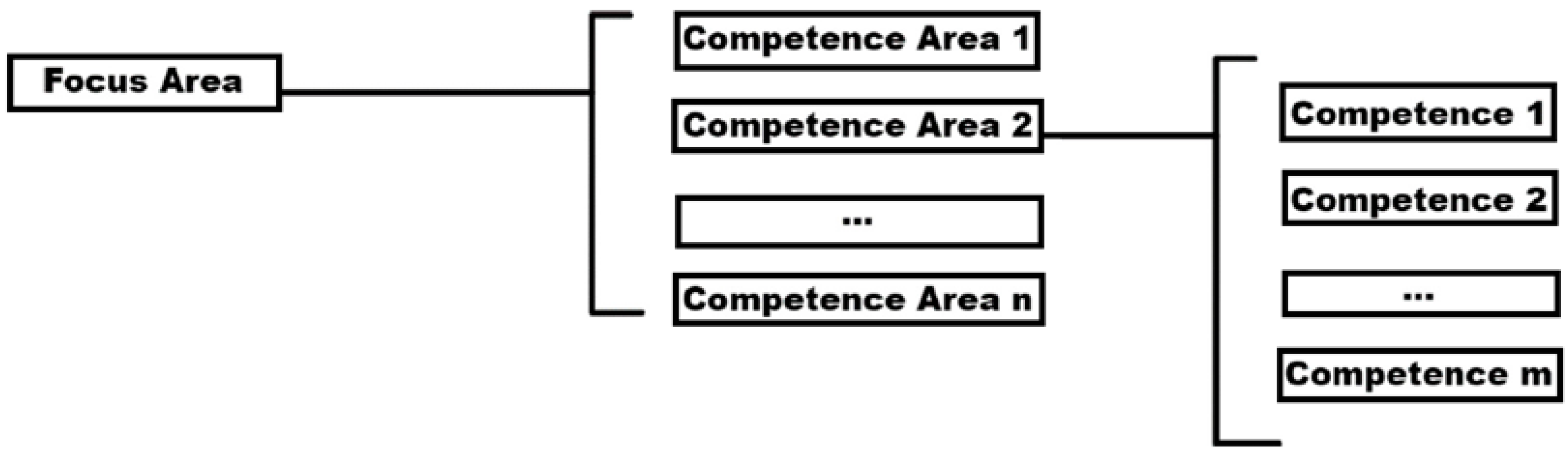
The results of the GB competence framework can be discussed by following the same internal articulation used to present them, moving from the structural organisation of competences to their qualification level distribution, semantic connectivity, and educational implications. The first-order competence matrix confirms that GB can be coherently represented through a limited number of competence areas while still capturing the complexity of the sector. The four competence areas identified provide a balanced coverage of transversal reasoning, material and resource stewardship, product and technology choices, and economic and managerial considerations. This structure reflects the reality of building practice, where performance outcomes emerge from the interaction of design intentions, material decisions, technological systems, and project level coordination rather than from isolated technical interventions. The competence descriptors show that GB knowledge extends beyond compliance-oriented understanding and requires the ability to interpret performance criteria, assess trade-offs, and integrate environmental objectives with functional and economic constraints.
The articulation of each competence through knowledge, skills, and attitudes highlights the multidimensional nature of capability development in the building sector. Knowledge statements capture the conceptual understanding of materials, technologies, and assessment approaches, while skills statements emphasise application, evaluation, monitoring, and optimisation across the building life cycle. Attitudes play a distinctive role by making explicit the value orientations that support responsible decision-making, such as commitment to resource conservation, attention to health and indoor environmental quality, and responsibility towards long-term impacts. The relative balance among these dimensions varies across competences, suggesting that some areas, such as energy saving and project management, demand a broader integration of cognitive, practical, and behavioural elements. This observation supports the interpretation that effective GB practice depends as much on judgement and coordination as on technical expertise.
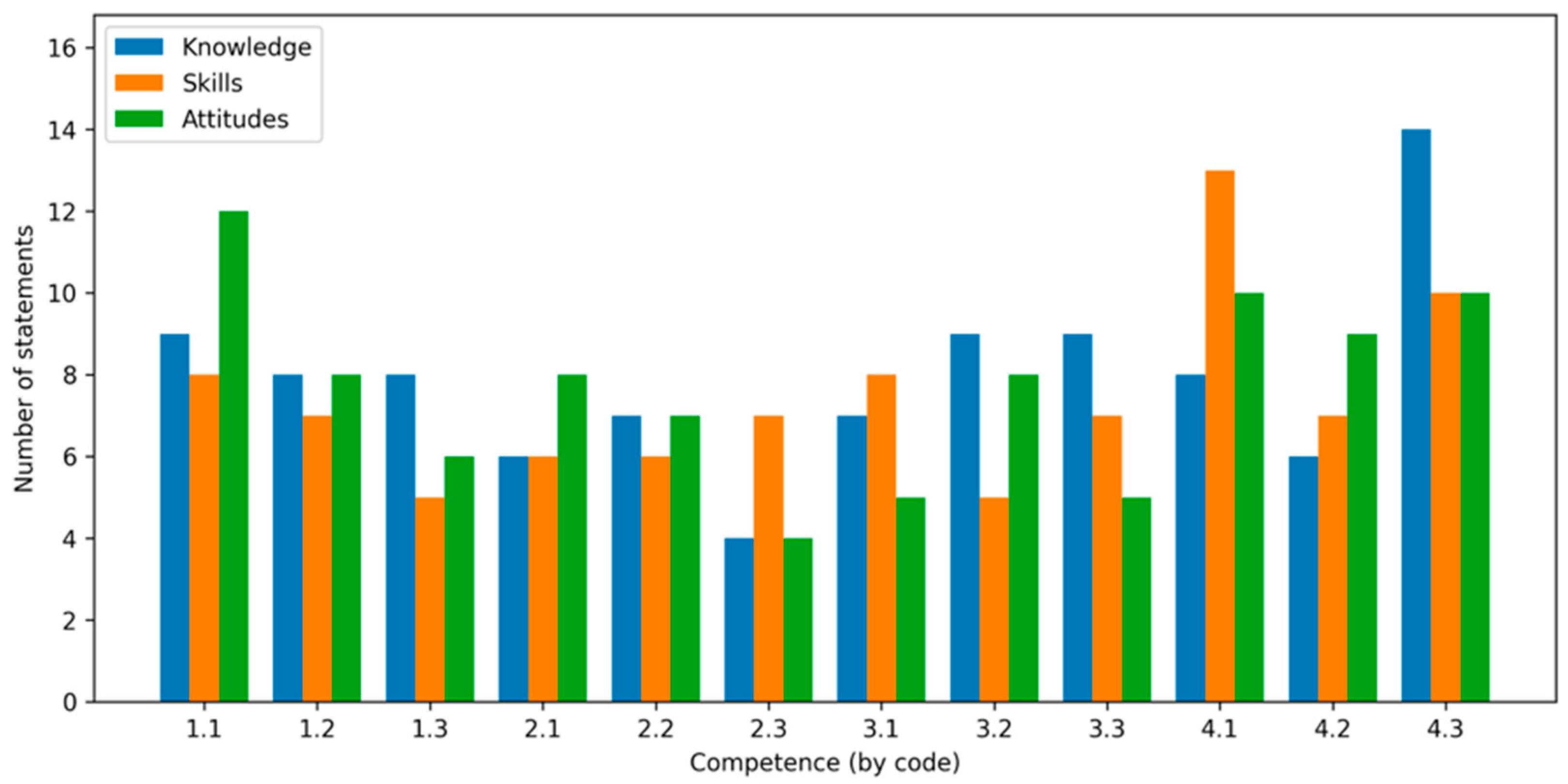
The distribution of statements across competences provides further insight into the internal logic of the framework. Competences related to project management and energy saving in buildings contained the largest number of statements, indicating that these domains function as convergence points where multiple strands of GB knowledge and practice intersect. Project management emerged as a critical competence because it mediates between design intent and implementation, translating sustainability objectives into schedules, budgets, procurement choices, and stakeholder coordination. Energy saving in buildings similarly spanned design, technology selection, operation, and user behaviour, requiring continuous monitoring and adjustment rather than one time optimisation. In contrast, competences such as artificial materials or system thinking were more concentrated in scope, reflecting more specialised domains of application. This uneven density does not indicate imbalance but rather mirrors the differentiated roles that competences play within real-world building processes.
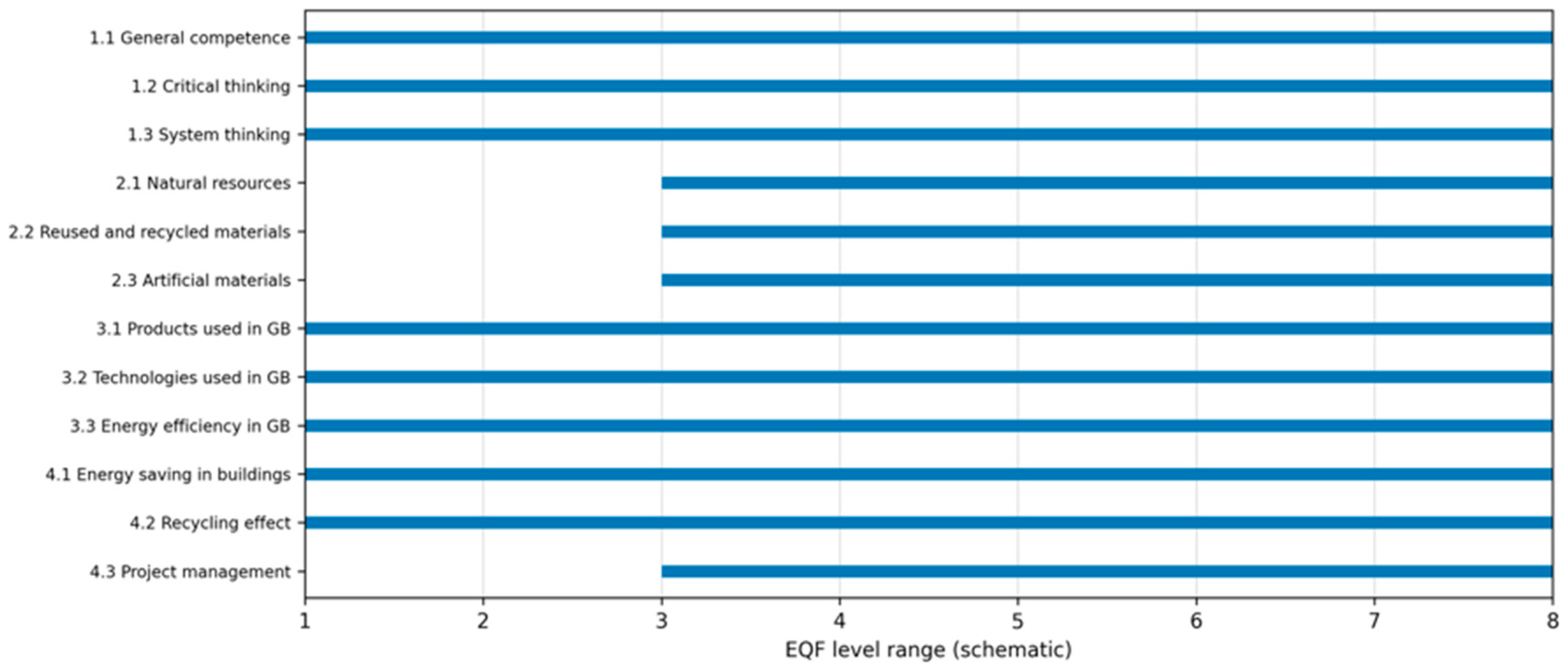
The mapping of competences to European Qualifications Framework levels reinforces the interpretation of GB as a field that supports progressive learning pathways. The broad EQF coverage of most competences reflects their relevance across educational stages, from early awareness to advanced professional practice. The higher entry level associated with material specific and project governance competences signals the need for prior foundational learning and contextual understanding before engaging with complex technical or managerial tasks. This pattern aligns with educational practice in the construction and building sector, where advanced decision-making is typically built on earlier exposure to basic concepts, tools, and site experience. The EQF mapping also enhances the usability of the framework for curriculum designers and training providers by making progression and differentiation explicit.
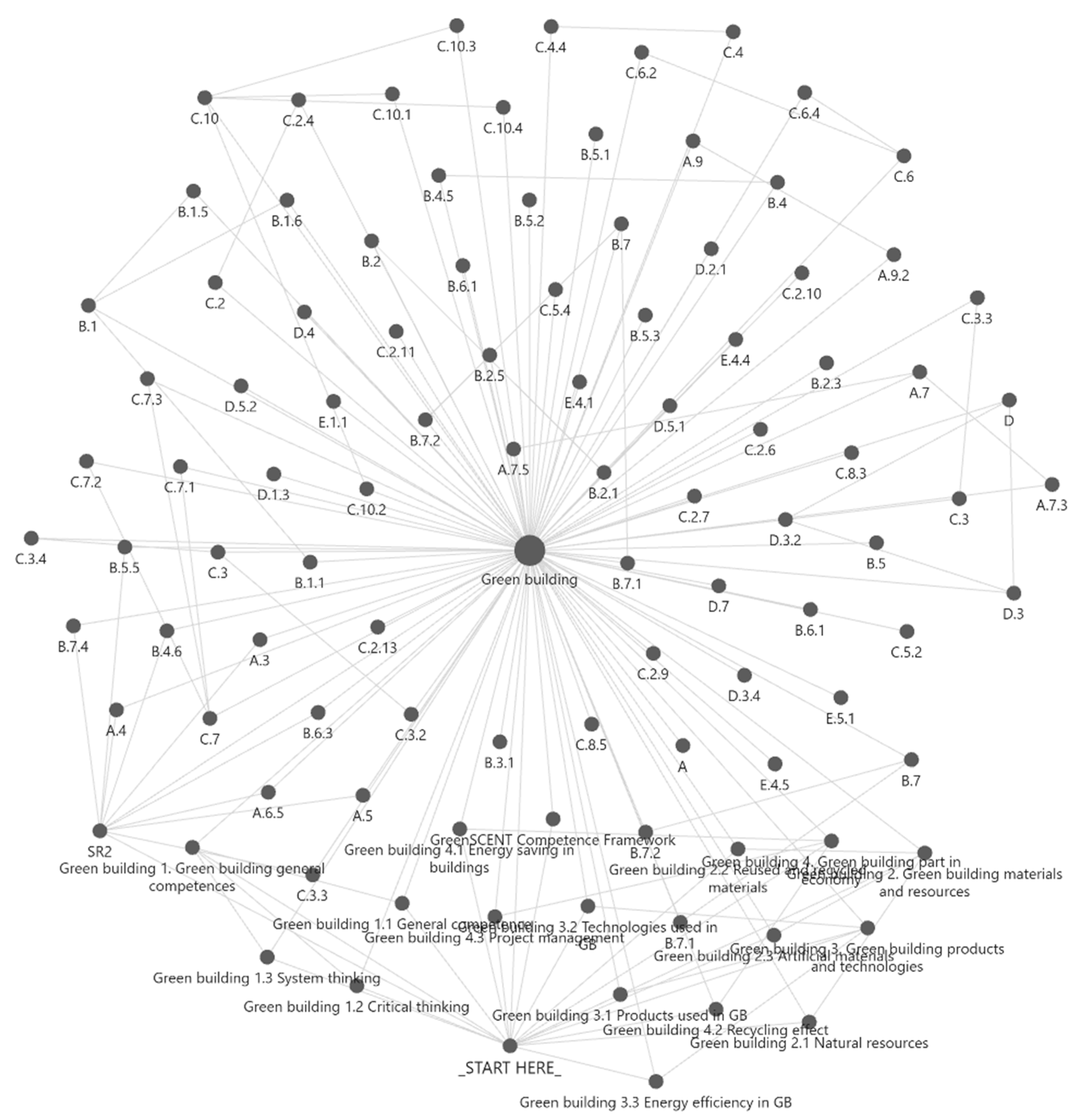
The semantic tagging and knowledge graph representation add a further interpretative layer to the results by exposing relationships that are not visible in the hierarchical matrix alone [
36,
37,
38,
39]. The emergence of shared tags across competences demonstrates that GB knowledge is organised around recurring themes such as energy performance, material circularity, water efficiency, assessment methods, health and well-being considerations, and resource management. These connections support integrative learning approaches and reduce the risk of compartmentalisation that often characterises technical education. The knowledge graph functions as a cognitive scaffold that enables exploration of the framework from multiple entry points, supporting both structured instruction and exploratory learning. This representation is particularly relevant for complex domains such as GB, where understanding develops through the recognition of patterns and interdependencies rather than through the linear accumulation of facts.
The integration of resilience engineering concepts, including those derived from FRAM, provides an additional interpretative layer for understanding the competence framework. By emphasising variability, interaction, and emergent performance, this perspective reinforces the need for competences that support monitoring, adaptation, and coordination across the building life cycle. This is particularly relevant in green building, where outcomes depend on the alignment of multiple actors, systems, and decisions rather than on isolated technical solutions.
While the proposed framework provides a structured representation of green building competences, it does not aim to offer an exhaustive coverage of all possible domains relevant to sustainable construction. The framework reflects a selective focus shaped by the objectives of the GreenSCENT project and by the need to develop a coherent and manageable competence structure. In particular, the framework prioritises the intersection of material use, technological systems, energy performance, and project-level decision-making, as these dimensions are central to the implementation of green building strategies within the European Green Deal context. As a result, some domains that are increasingly relevant in green building practice are only partially addressed or indirectly represented. These include, for example, indoor environmental quality in its full articulation (thermal, visual, acoustic, and air quality dimensions), advanced water management strategies (such as greywater and blackwater systems), biodiversity and ecosystem services, social aspects related to accessibility and community engagement, as well as digital competences related to simulation, parametric design, and smart building operation. Similarly, climate change adaptation competences, such as resilience to extreme weather events, are not explicitly structured within the current framework. These areas are not excluded in principle, but are only partially captured through broader competences related to materials, technologies, and system thinking. Their limited explicit representation reflects the need to balance comprehensiveness with clarity and usability in the development of an educational competence framework. Some degree of conceptual overlap between competence areas is intentional and reflects the systemic nature of green building. For instance, distinctions between natural resources, recycled materials, and artificial materials may become blurred in practice, particularly in the case of hybrid or processed materials. Rather than enforcing rigid boundaries, the framework is designed to allow for connections across domains, which are further supported by the semantic tagging and knowledge graph representation. The knowledge graph representation provides an additional interpretative layer that complements the tabular structure of competences. Rather than introducing a strict hierarchical classification, the graph highlights the relational nature of competences by making explicit the connections established through shared tags. In this sense, the value of the graph lies not in quantitative network metrics, but in its ability to reveal patterns of integration across domains. From this perspective, competences can be understood not as isolated units, but as nodes within a network of interdependencies linking materials, technologies, transversal skills, and decision-making processes. The presence of shared tags across different domains suggests that competences traditionally considered distinct are in practice interconnected. For example, system thinking competences may be linked to both material choices and technological solutions, while economic considerations intersect with environmental and technical aspects. The graph structure therefore supports a systemic interpretation of green building, where performance emerges from the interaction of multiple components rather than from individual competences. It also highlights potential bridging competences that connect different domains, facilitating interdisciplinary integration. At the same time, the absence of strictly separated clusters reinforces the idea that the four domains should not be interpreted as rigid categories, but as complementary perspectives within a broader competence ecosystem. In this sense, the knowledge graph can be seen as a tool to support competence integration, curriculum design, and the identification of cross-cutting learning pathways, rather than as an analytical model requiring formal network analysis.
In addition to the scope-related considerations discussed above, further limitations should be acknowledged in relation to sampling, timeliness, and validation depth. The expert consultation and validation activities were conducted within the context of the GreenSCENT project and primarily involved participants from specific European contexts. While the panel included a diversity of disciplinary backgrounds, the geographic distribution may not fully capture the variability of building traditions, regulatory environments, and climatic conditions across Europe. As a result, the applicability of the framework to regions with different construction practices or environmental conditions, such as Northern or Eastern Europe, may require further contextualisation. A second limitation concerns the dynamic nature of the construction sector. The framework is based on a documentary corpus and expert consultation conducted within a defined time frame, and therefore reflects the state of knowledge and practice at that moment. However, the domain is characterised by rapid technological and methodological evolution, including developments such as mass timber construction, digital fabrication, and AI-assisted design processes. While the framework is structured to capture underlying competences that are not tied to specific technologies, its continued relevance would benefit from periodic updates to incorporate emerging practices and innovations. Finally, the validation activities focused primarily on the clarity, coherence, and interpretability of the competence framework as an educational artefact. They did not systematically address aspects such as the completeness of the competence set, the feasibility of implementing the framework within existing educational programmes, or its predictive validity in terms of professional performance. These aspects represent important directions for future research, particularly in relation to empirical testing in educational and professional contexts.
Future developments of the framework may expand its scope to include a more detailed articulation of these domains or may reorganise competences according to alternative logics, such as building life cycle stages or professional roles. In its current form, however, the framework is intended as a focused and operational tool that captures key competences at the intersection of materials, technologies, and decision-making processes in green building. A further aspect concerns the assessability of competence statements articulated through knowledge, skills, and attitudes. While the KSA structure provides a clear organisational framework, the degree to which individual statements can be directly observed and assessed varies across the framework. In particular, a substantial proportion of knowledge statements are expressed at a declarative level (“to know that”), which captures factual awareness but does not always make explicit procedural (“know how”) or explanatory (“know why”) dimensions. Similarly, some skill statements describe high-level capabilities, such as system-level reasoning or interdisciplinary collaboration, which may be difficult to operationalise into observable and measurable performance indicators without further specification. Attitudes present an additional challenge, as they represent dispositions that influence behaviour rather than directly observable actions. The framework explicitly recognises the importance of value-based orientations, such as responsibility towards environmental and social outcomes, but does not fully specify the mechanisms through which these attitudes are translated into practice. This reflects a broader challenge in competence-based education, where the relationship between attitudes, decision-making, and behaviour is mediated by contextual, organisational, and situational factors. For these reasons, the present framework should be interpreted as a conceptual and structural model rather than as a complete assessment system. Its effective use in educational and professional contexts would benefit from the development of complementary tools that translate KSA statements into observable learning outcomes and performance criteria. These may include rubrics, scenario-based assessments, performance tasks, and simulation-based evaluations that make explicit the link between knowledge, action, and decision-making. Future research may therefore focus on the operationalisation of competences into assessable units, including the differentiation of cognitive levels within knowledge statements, the definition of behavioural indicators for skills, and the identification of conditions that support the translation of attitudes into practice. Such developments would strengthen the applicability of the framework for curriculum design, assessment, and professional training.
The distribution of competence statements across domains, as illustrated in
Figure 3 and
Figure 4, can be interpreted in multiple ways. While the higher number of statements in areas such as energy saving and project management may reflect their cross-cutting role in green building practice, alternative explanations should also be considered. For instance, this pattern may partly reflect biases in the existing literature, where energy performance and project management are more extensively studied and standardised compared to areas such as material innovation or ecosystem-related competences. Similarly, the composition of the expert panel and the disciplinary backgrounds involved in the framework development may have influenced the relative emphasis on certain domains. In addition, the uneven distribution of statements may indicate different levels of maturity across competence areas. Domains with a higher number of statements may correspond to areas where knowledge and practices are more consolidated, whereas domains with fewer statements may reflect emerging or less formalised fields, where competences are still evolving. With regard to the EQF distribution, the fact that some competences are defined starting from level 3 does not imply that lower-level learners cannot engage with these topics. Rather, it reflects the assumption that a minimum level of conceptual or technical understanding is required for their full articulation within the framework. At the same time, introductory exposure to these topics at earlier stages remains both possible and desirable, particularly in the context of early STEM education. In this sense, the EQF mapping should be interpreted as indicative of expected levels of autonomy and responsibility, rather than as a strict limitation on when learning can begin.
Taken together, the results indicate that the proposed framework offers a robust basis for education and training aligned with Green Deal objectives while remaining grounded in the realities of building practice. By combining structured competence areas with a semantic layer that supports connectivity, the framework addresses both clarity and flexibility. It provides a shared reference for educators, trainers, and policy stakeholders while allowing for adaptation to different institutional contexts and learner profiles. While the KSA structure provides a clear and widely adopted framework for organising competences, some limitations should be acknowledged in terms of granularity and pedagogical structuring. In particular, the distinction between knowledge, skills, and attitudes may not fully capture differences in cognitive complexity or levels of performance. For example, skill statements in the framework range from basic application to more advanced capabilities involving analysis, evaluation, and system-level reasoning.
In this regard, complementary educational taxonomies such as Bloom’s taxonomy or Miller’s pyramid could provide additional structure by differentiating levels of cognitive and professional performance (e.g., from knowing to doing). Similarly, the interpretation of attitudes may benefit from a more explicit distinction between cognitive, affective, and behavioural components. In the present study, attitudes are treated as broad dispositions guiding responsible action, but further refinement could enhance their operationalisation for assessment purposes. A further limitation concerns the dependence on a predefined document corpus. The competence framework was derived from materials developed within the GreenSCENT project, which provided a structured and coherent knowledge base for competence elicitation. However, this approach may introduce a bias of origin, as the identified competences reflect, at least in part, the structure and focus of the analysed documents rather than the full spectrum of skills required in green building practice. This may also result in an incomplete representation of emerging or rapidly evolving topics, such as advanced life cycle assessment methods, digital twins, or new generations of bio-based materials, which may not be fully captured within the selected corpus. While the integration of expert judgement partially mitigates this limitation, further expansion of the framework through additional data sources and sectoral validation could enhance its comprehensiveness. Other limitations concern the process of reconstructing competence statements from the source material. In order to ensure consistency and educational readability, some statements were reformulated, synthesised, or adapted from the original sources. While this process was necessary to produce a coherent framework, it inevitably introduces a degree of subjective interpretation by the researchers. In addition, the transformation of source content into KSA statements does not always allow for full traceability between the original formulation and the final statement, and a formal protocol distinguishing between derived, adapted, and synthesised statements was not systematically implemented. Future developments of the framework could address this aspect by introducing more explicit procedures for documenting the transformation of source materials, including traceability mechanisms and validation protocols, in order to strengthen reproducibility and support empirical validation.
These aspects are considered as directions for future development, particularly in the context of curriculum design and competence assessment, where a more fine-grained classification could support the alignment between learning outcomes, teaching methods, and evaluation strategies.
The emphasis on knowledge, skills, and attitudes supports assessment approaches that go beyond declarative learning and capture performance in realistic scenarios. In this way, the framework contributes to strengthening the human capacity required to implement GB strategies at scale, supporting the transition from policy ambition to effective action within the built environment. The present study adopted a defined system boundary by focusing on competences related to the building itself and explicitly excluding energy systems outside the building boundary. This delimitation was necessary to maintain conceptual clarity and to ensure a manageable scope for competence identification. However, it is important to acknowledge that in practice, the boundary between building-internal systems and external energy networks is increasingly blurred. Technologies such as heat pumps, building-integrated photovoltaics, and smart control systems operate at the interface between buildings and wider energy infrastructures, including district heating, electricity grids, and renewable energy systems.
This increasing integration suggests that future competence frameworks may need to explicitly address the interaction between buildings and external energy systems, particularly in the context of energy flexibility, demand response, and grid integration. While the present framework provides a structured foundation focused on the building scale, its practical application would benefit from further extension towards system-level competences that capture these interactions. This limitation does not undermine the internal coherence of the framework, but rather indicates a direction for future development aligned with the evolving nature of the built environment.
5. Conclusions
This paper set out to translate the objectives of the European Green Deal into an operational competence framework focused on GB, structured through knowledge, skills, and attitudes and aligned with European Qualifications Framework levels. The main result is a coherent and internally consistent framework composed of four competence areas and twelve competences articulated through 276 statements, which together describe what learners and professionals need to understand, be able to do, and be willing to enact in order to contribute effectively to GB practices. The findings respond directly to the research questions by showing that GB competences are inherently systemic, spanning technical, managerial, and value-based dimensions, and that they require progression across qualification levels rather than being confined to a single stage of education or training. The analysis highlights that project management and energy saving in buildings function as integrative competences where environmental performance, economic constraints, and governance responsibilities converge, indicating that delivery capacity is as critical as technological knowledge. The use of semantic tagging and a knowledge graph demonstrates that competences are connected through recurring themes that support interdisciplinary learning and reduce fragmentation, reinforcing the suitability of the framework as both an educational and communicative artefact.
From an application perspective, the framework provides clear take home messages for education, training, and policy. It offers a practical reference for curriculum design, assessment development, and micro-credential construction across formal education, vocational training, and continuing professional development. By making competence progression explicit through EQF mapping, it supports comparability, mobility, and the stackability of learning pathways within the European context. For policy and sector stakeholders, the framework clarifies the human competences required to move from regulatory and strategic objectives to implementation in design, construction, and building operation. The study is subject to some limitations, as the framework is derived from a defined documentary corpus and reflects the scope and granularity of the available source materials, with some statements reconstructed to ensure educational usability. These limitations do not undermine the internal coherence of the framework but point to future developments, including empirical validation in educational settings, refinement through sector specific case studies, and extension to additional building typologies or regional contexts. Future work may also explore integration with digital learning environments and performance based assessment tools. Further research may also explore the cross-cultural applicability of the framework by testing its relevance and adaptability across different European contexts, considering variations in building traditions, regulatory environments, and climatic conditions. Longitudinal studies could provide additional insights into the effectiveness of the framework by assessing its impact on learning outcomes and professional performance over time. In addition, the rapid evolution of technologies in the construction sector suggests the need for dynamic updating mechanisms, enabling the framework to incorporate emerging practices such as digital design tools, advanced materials, and data-driven building management. Future developments of the framework may also integrate digital competences relevant to the AEC sector, including data-driven approaches, real-time monitoring systems, and advanced digital tools such as BIM, digital twins, and AI-based applications. This would support the alignment of the framework with the growing importance of digital green skills in the ecological transition.
Taken together, the results indicate that the proposed GB competence framework represents a transferable and actionable contribution to capacity building for the Green Deal, supporting the alignment of education, professional practice, and sustainability objectives in the built environment.