Carbonation Behavior of an Aged Reinforced Concrete Building in Seoul
Abstract
1. Introduction
2. Experimental Methods
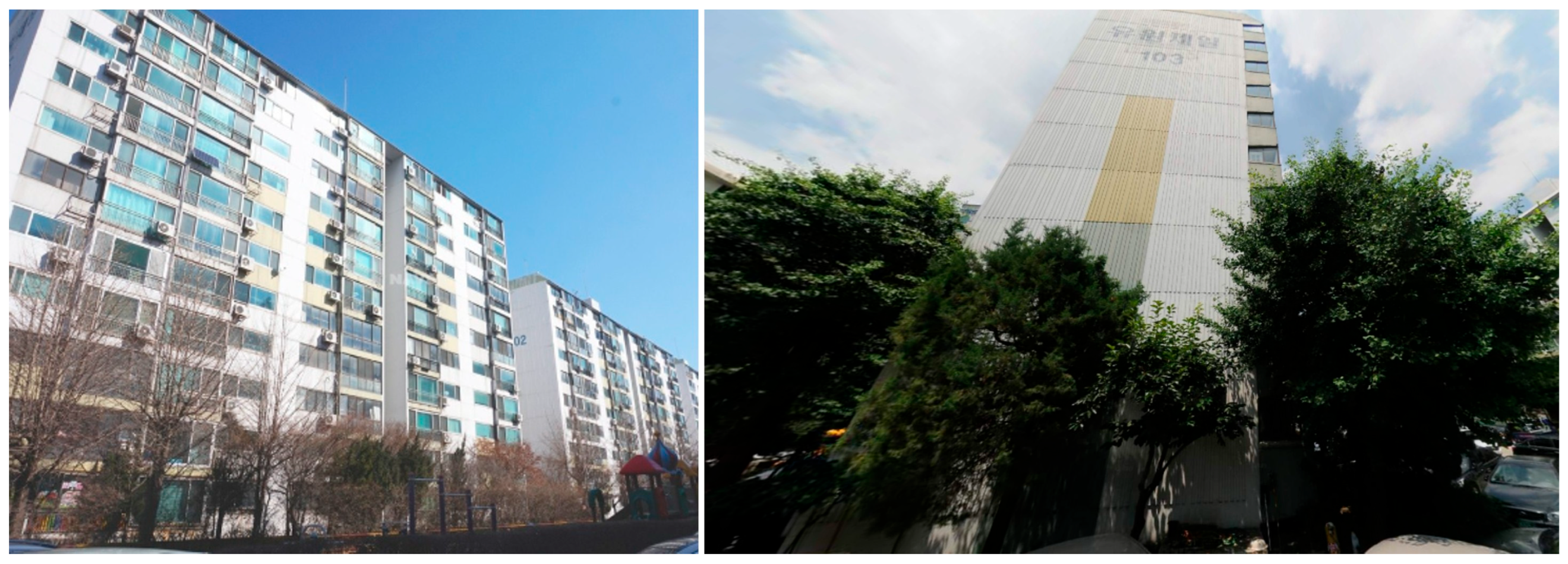
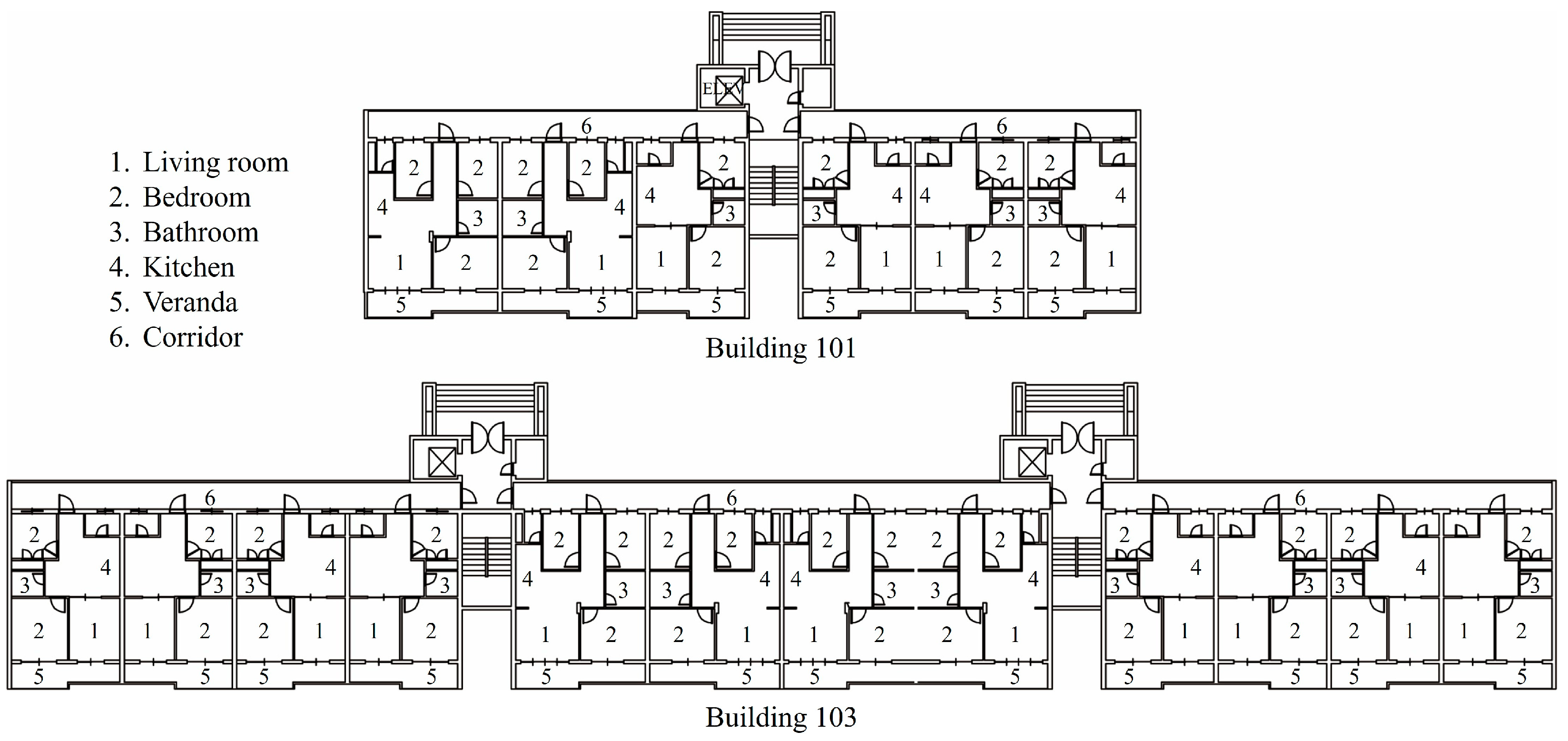
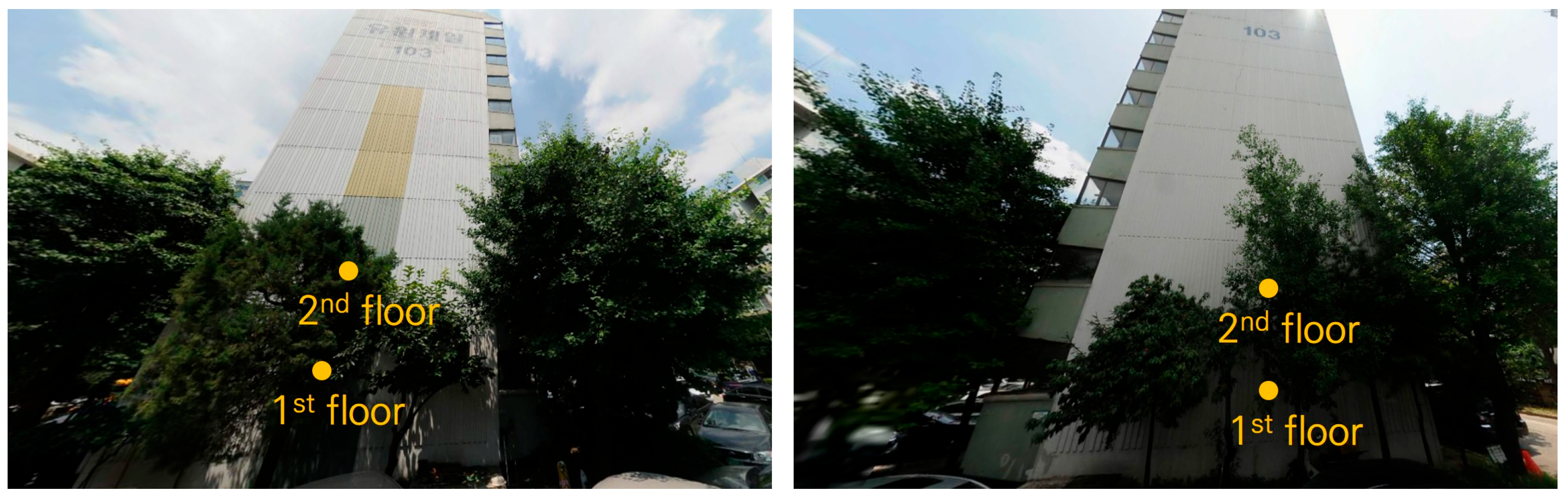
2.1. Investigated Building
2.2. Climate Data Analysis
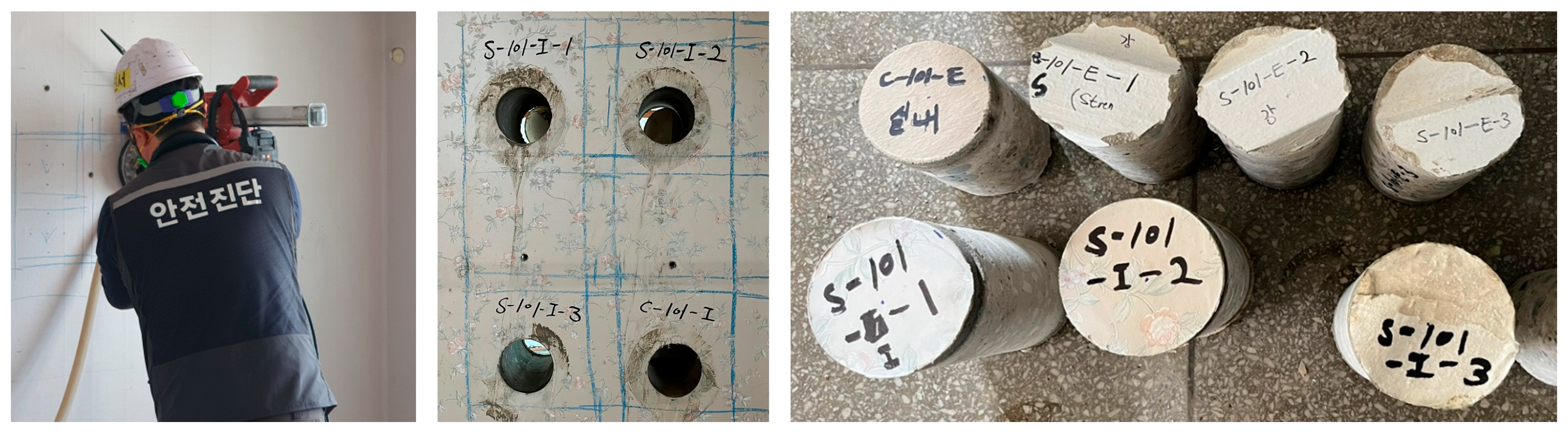
2.3. Core Sampling
2.4. Compressive Strength
2.5. Strength Estimation Using Rebound Hammer
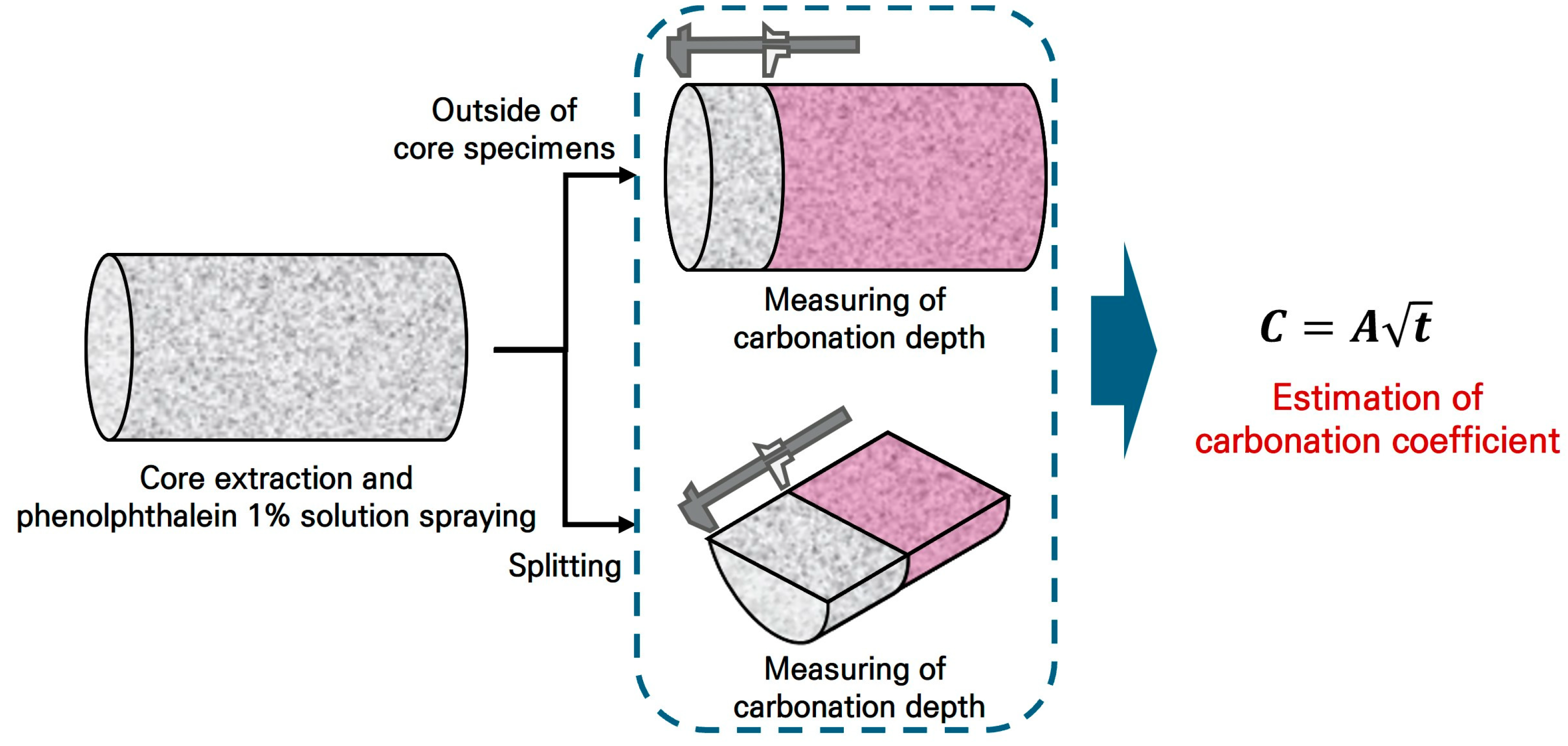
2.6. Measurement of Carbonation Depth
3. Results
3.1. Climate Data Analysis
3.2. Compressive Strength
3.3. Carbonation Depth
4. Discussion
4.1. Effects of Exposure Condition and Orientation on Concrete Carbonation
4.2. Effects of Finishing Materials on Concrete Carbonation
5. Conclusions
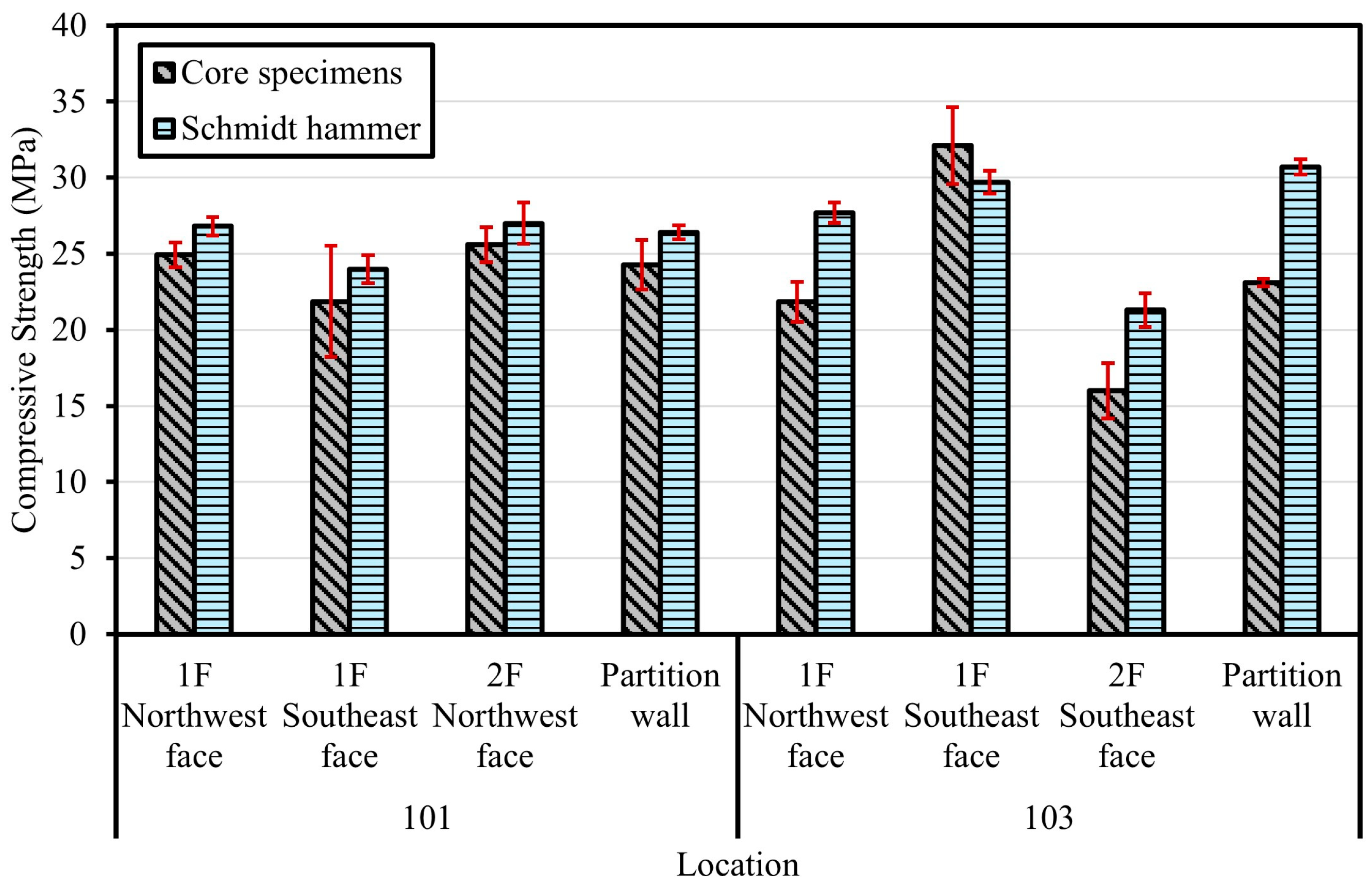
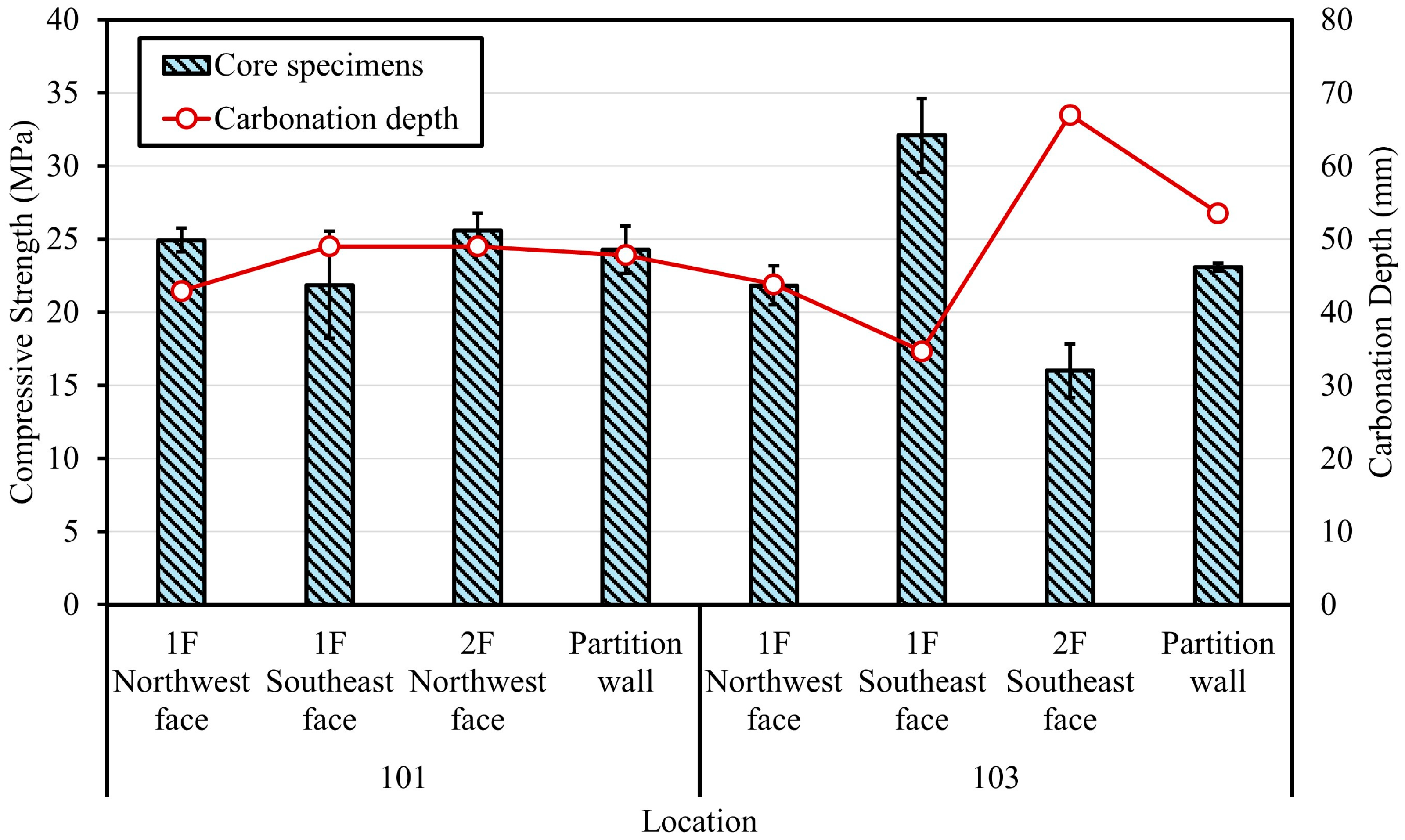
- A comparison between the core compressive strength and the compressive strength estimated from the rebound-hammer measurements showed that, although the rebound-hammer-based estimates exhibited some scatter, they generally captured trends similar to those of the core strengths, indicating a meaningful correlation. However, the rebound-hammer-based strengths tended to be slightly higher than the corresponding core strengths, which can be attributed to the rebound hammer’s sensitivity to the near-surface zone and to carbonation-related surface densification in aged concrete. Accordingly, for structures with conditions comparable to those investigated, rebound-hammer testing can be used as a supplementary indicator for on-site durability assessment, particularly for rapid screening and relative comparisons among locations. Nevertheless, because rebound readings can be affected by age, surface condition, moisture state, and carbonation, strength estimation based solely on rebound measurements may be biased upward; therefore, core testing should be performed in parallel when higher accuracy or representative bulk strength is required.
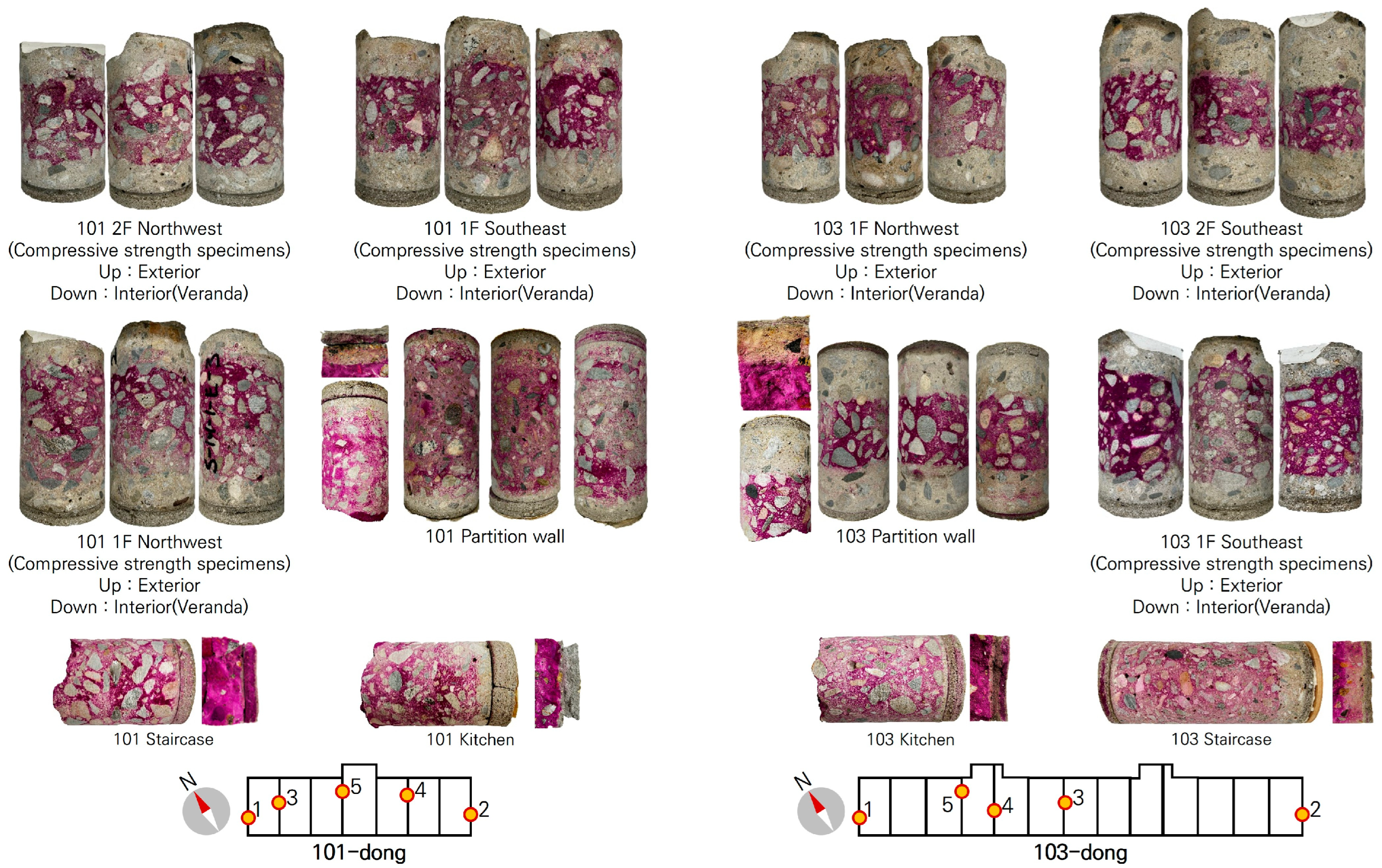
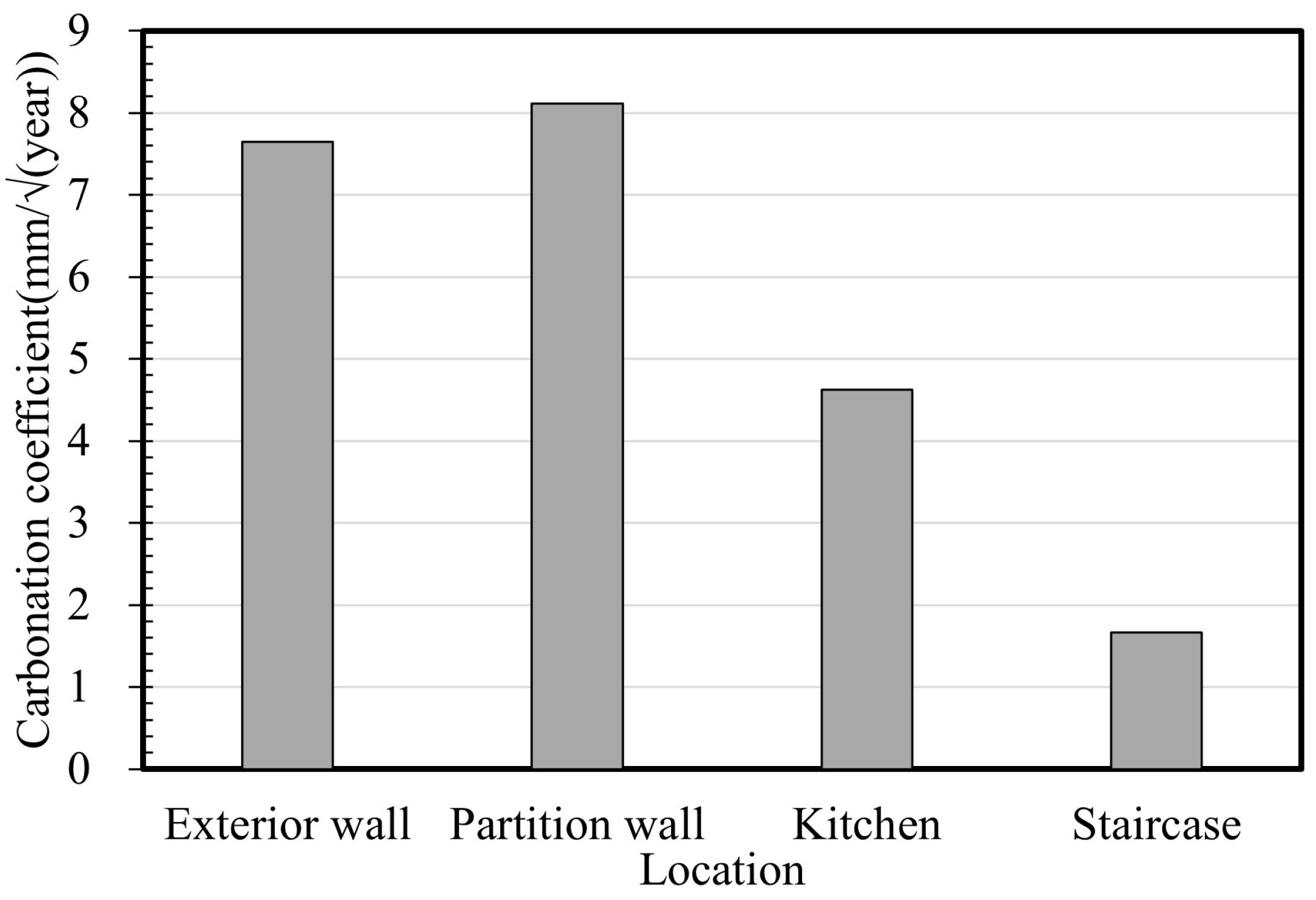
- The measurement of carbonation depth at different locations indicated that indoor areas, where CO2 concentrations are likely to be higher due to the respiration of occupants and daily activities, tended to exhibit greater carbonation depths. This suggests that carbonation progress can be strongly affected not only by outdoor exposure conditions but also by the indoor use environment, including CO2 concentration, ventilation, and moisture.
- The influence of orientation-dependent solar radiation on the carbonation progress in exterior walls was examined. The measured carbonation depths were greater on the southwest-facing wall than on the northwest-facing wall, suggesting that increased solar radiation on the southwest wall may promote drying, thereby creating conditions more favorable for CO2 diffusion into the concrete, accelerating carbonation. These findings imply that carbonation rates can vary by orientation, even within the same building; thus, orientation should be considered in durability assessment and maintenance planning.
- When the carbonation coefficients were compared under similar compressive strength conditions, the coefficient for the southeast-facing wall was estimated to be approximately 1.1 times that of the northwest-facing wall. This indicates that even when the material performance is comparable, carbonation can differ owing to exposure conditions (e.g., solar radiation, drying, rainfall, and shielding). Therefore, carbonation-based durability prediction is more appropriately performed by applying carbonation coefficients that reflect actual exposure conditions rather than relying solely on a single strength-based indicator.
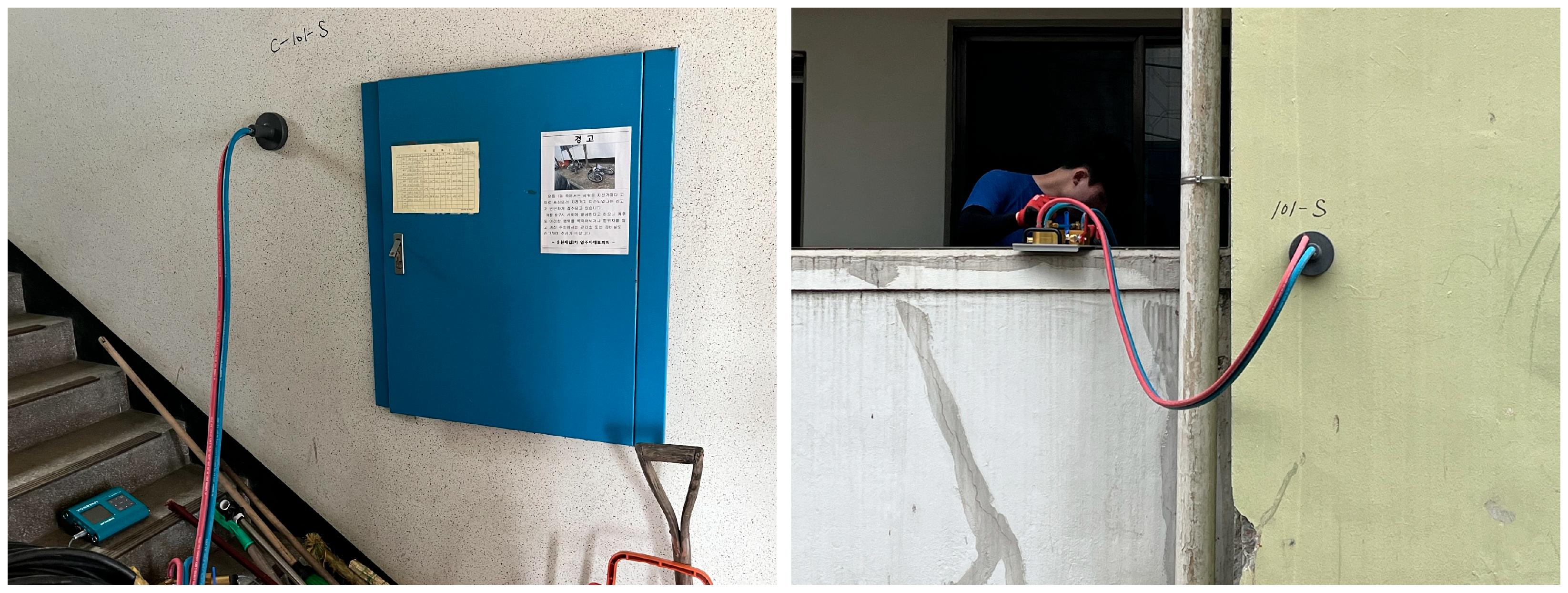
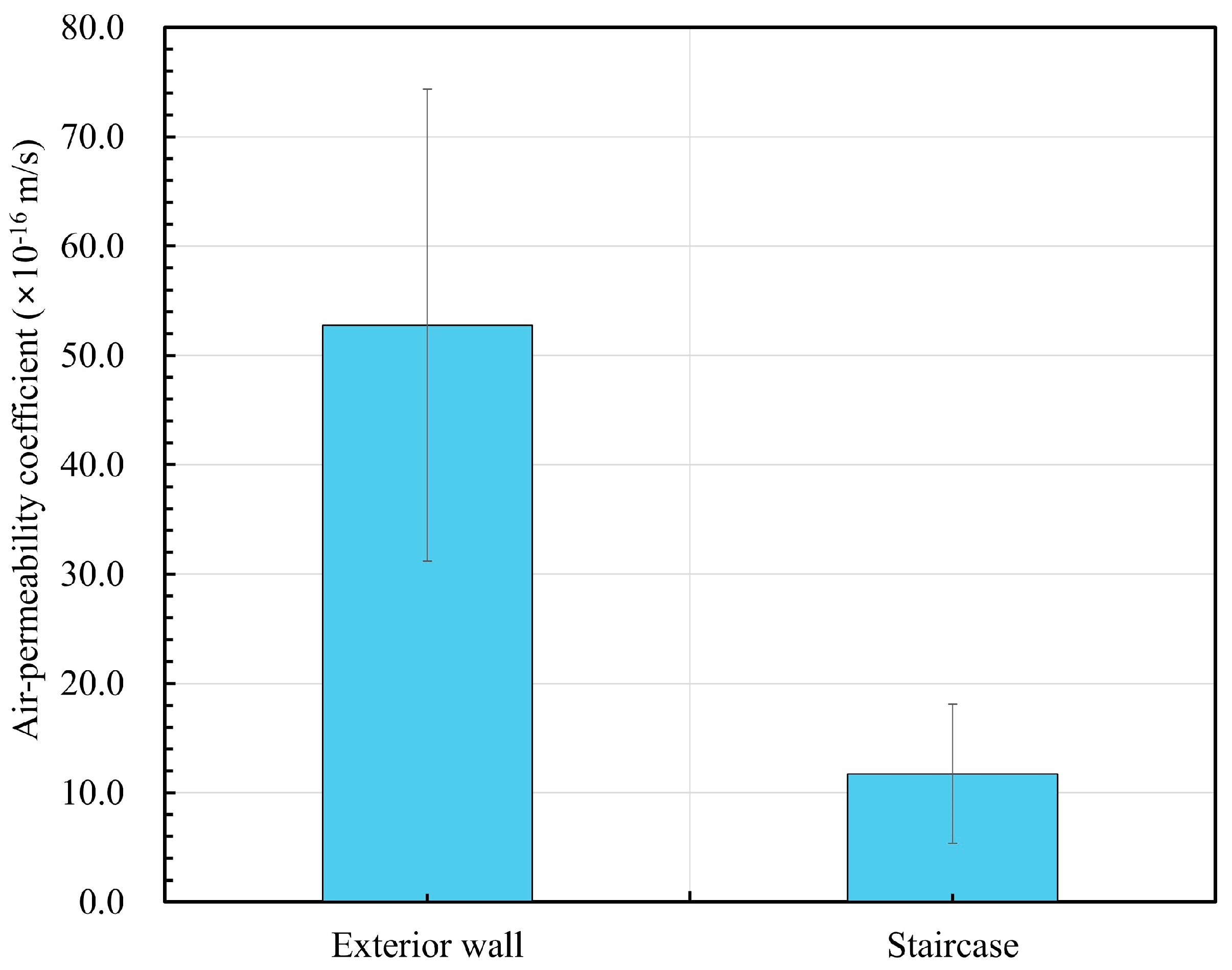
- The effect of finishing materials on concrete carbonation was evaluated, and the results indicate that, under indoor conditions, the influence of finishing materials could not be clearly isolated because carbonation was strongly affected by living-related factors such as ventilation, cooking frequency, and moisture conditions. In contrast, under outdoor conditions, the staircase surface coated with oil-based paint exhibited a markedly lower air-permeability coefficient (Torrent method) than the exterior wall coated with water-based paint, and carbonation in the staircase was negligible compared with the pronounced carbonation observed in the exterior wall. These findings suggest that finishing materials, particularly paint type, can significantly influence carbonation resistance by controlling near-surface gas (CO2) transport through concrete.
- This study was based on a snapshot field assessment of an existing reinforced-concrete building at a single time point; therefore, the effects of long-term seasonal temperature cycling (warm vs. cold periods) and other time-dependent environmental influences could not be quantitatively isolated from the measured carbonation depths. Further research is required to verify the roles of solar-driven drying and temperature on carbonation kinetics through accelerated laboratory carbonation tests under controlled boundary conditions that incorporate realistic warm–cold cycles and drying–wetting histories. In addition, complementary field investigations of comparable existing buildings in regions with colder climates (e.g., Gangwon Province) are needed to examine climate-dependent differences in carbonation progress under real exposure conditions.
Funding
Data Availability Statement
Conflicts of Interest
References
- Bijen, J. Durability of Concrete Structures: Design, Repair and Maintenance; Woodhead Publishing: Cambridge, UK, 2003. [Google Scholar]
- Qiu, Q. A state-of-the-art review on the carbonation process in cementitious materials: Fundamentals and characterization techniques. Constr. Build. Mater. 2020, 247, 118503. [Google Scholar] [CrossRef]
- Kassir, M.K.; Ghosn, M. Chloride-induced corrosion of reinforced concrete bridge decks. Cem. Concr. Res. 2002, 32, 139–143. [Google Scholar] [CrossRef]
- Pack, S.W.; Jung, M.S.; Song, H.W.; Kim, S.H.; Ann, K.Y. Prediction of time dependent chloride transport in concrete structures exposed to a marine environment. Cem. Concr. Res. 2010, 40, 302–312. [Google Scholar] [CrossRef]
- Maehara, S.; Iyoda, T. Study on the effects of rain exposure on carbonation-induced spalling/falling of the cover concrete. J. Jpn. Soc. Civ. Eng. 2018, 74, 80–87. [Google Scholar] [CrossRef]
- Park, H.; Jeong, S.; Park, H.; Labzovskii, L.D.; Bowman, K.W. An assessment of emission characteristics of Northern Hemisphere cities using spaceborne observations of CO2, CO, and NO2. Remote Sens. Environ. 2021, 254, 112246. [Google Scholar] [CrossRef]
- Xu, Z.; Zhang, Z.; Huang, J.; Yu, K.; Zhong, G.; Chen, F.; Chen, X.; Yang, W.; Wang, Y. Effects of temperature, humidity and CO2 concentration on carbonation of cement-based materials: A review. Constr. Build. Mater. 2022, 346, 128399. [Google Scholar] [CrossRef]
- Ishida, T.; Ichiba, D.; Dawai, K. Effects of carbon dioxide gas concentration on carbonation of C-S-H. Cem. Sci. Concr. Technol. 2009, 63, 347–353. [Google Scholar] [CrossRef][Green Version]
- Cui, H.; Tang, W.; Liu, W.; Dong, Z.; Xing, F. Experimental study on effects of CO2 concentrations on concrete carbonation and diffusion mechanisms. Constr. Build. Mater. 2015, 93, 522–527. [Google Scholar] [CrossRef]
- KDS 14 20 40; Reinforced Concrete Structure Durability Design. Ministry of Land, Infrastructure and Transport: Sejong, Republic of Korea, 2021.
- Xian, X.; Zhang, D.; Lin, H.; Shao, Y. Ambient pressure carbonation curing of reinforced concrete for CO2 utilization and corrosion resistance. J. CO2 Util. 2022, 56, 101861. [Google Scholar] [CrossRef]
- Korea Meteorological Administration (KMA). Open MET Data Portal. Available online: https://data.kma.go.kr/resources/html/en/aowdp.html (accessed on 30 January 2026).
- Seoul Metropolitan Government. GHG Monitoring Status. Available online: https://site.seoul.go.kr/datas/ghg-monitoring-status (accessed on 30 January 2026).
- KS F 2422; Standard Test Method for Obtaining and Testing Drilled Cores and Sawed Beams of Concrete. Korea Standard Association: Seoul, Republic of Korea, 2017.
- Japan Materials Testing Association (JMTA); Committee on Judging In-situ Concrete Strength. Guideline (Draft) for Judging Compressive Strength of In-situ Concrete Using the Schmidt Hammer. Zair. Shiken Mater. Test. 1958, 7, 426–430. (In Japanese) [Google Scholar]
- Japan Nuclear Cycle Development Institute (JNC). Survey of Secular Change for the Buildings of Nuclear Fuel Facility in JNC Tokai Works: Survey Document; Report No. JNC TN8420 2002-003; Japan Nuclear Cycle Development Institute, Tokai Works: Ibaraki, Japan, 2002. [Google Scholar]
- Architectural Institute of Japan (AIJ). Manual of Nondestructive Test Methods for Estimating Concrete Strength; Architectural Institute of Japan: Tokyo, Japan, 1983. (In Japanese) [Google Scholar]
- Alwash, M.; Breysse, D.; Sbartaï, Z.M.; Szilágyi, K.; Borosnyói, A. Factors affecting the reliability of assessing the concrete strength by rebound hammer and cores. Constr. Build. Mater. 2017, 140, 354–363. [Google Scholar] [CrossRef]
- Breysse, D. Nondestructive evaluation of concrete strength: An historical review and a new perspective by combining NDT methods. Constr. Build. Mater. 2012, 33, 139–163. [Google Scholar] [CrossRef]
- Kim, J.-K.; Kim, C.-Y.; Yi, S.-T.; Lee, Y. Effect of carbonation on the rebound number and compressive strength of concrete. Cem. Concr. Compos. 2009, 31, 139–144. [Google Scholar] [CrossRef]
- Satish, U.; Mendell, M.J.; Shekhar, K.; Hotchi, T.; Sullivan, D.; Streufert, S.; Fisk, W.J. Is CO2 an indoor pollutant? Direct effects of low-to-moderate CO2 concentrations on human decision-making performance. Environ. Health Perspect. 2012, 120, 1671–1677. [Google Scholar] [CrossRef]
- Persily, A. Development and application of an indoor carbon dioxide metric. Indoor Air 2022, 32, e13059. [Google Scholar] [CrossRef]
- Seppänen, O.A.; Fisk, W.J.; Mendell, M.J. Association of ventilation rates and CO2 concentrations with health and other responses in commercial and institutional buildings. Indoor Air 1999, 9, 226–252. [Google Scholar] [CrossRef]
- Lo, T.Y.; Liao, W.; Wong, C.K.; Tang, W. Evaluation of carbonation resistance of paint coated concrete for buildings. Constr. Build. Mater. 2016, 107, 299–306. [Google Scholar] [CrossRef]
- Hur, Y.K.; Lee, S.H. A study of the separated distance between apartments for optimum daylight environment. J. Korea Plan. Assoc. 2001, 36, 139–147. [Google Scholar]
- Tanuma, T.; Sugiyama, H. Analysis on natural concrete carbonation of actual buildings and suggestion for its prediction method. Trans. AIJ J. Struct. Constr. Eng. 2016, 81, 167–177. [Google Scholar] [CrossRef][Green Version]
- Rakotovao Ravahatra, N.; Duprat, F.; Schoefs, F.; de Larrard, T.; Bastidas-Arteaga, E. Assessing the capability of analytical carbonation models to propagate uncertainties and spatial variability of reinforced concrete structures. Front. Built Environ. 2017, 3, 1. [Google Scholar] [CrossRef][Green Version]
- Vollpracht, A.; Gluth, G.J.G.; Rogiers, B.; Uwanuakwa, I.D.; Phung, Q.T.; Villagran Zaccardi, Y.; Thiel, C.; Vanoutrive, H.; Etcheverry, J.M.; Gruyaert, E.; et al. Report of RILEM TC 281-CCC: Insights into factors affecting the carbonation rate of concrete with SCMs revealed from data mining and machine learning approaches. Mater. Struct. 2024, 57, 206. [Google Scholar] [CrossRef]
- Cho, K.; Cho, D.; Kim, T. Experimental Analysis of CO2 Concentration Changes in an Apartment Using a Residential Heat Recovery Ventilator. Sustainability 2021, 13, 10302. [Google Scholar] [CrossRef]
- Persily, A.; de Jonge, L. Carbon dioxide generation rates for building occupants. Indoor Air 2017, 27, 868–879. [Google Scholar] [CrossRef] [PubMed]
- Mckeen, P.; Liao, Z. The Influence of Building Airtightness on Airflow in Stairwells. Buildings 2019, 9, 208. [Google Scholar] [CrossRef]





| Item | Description |
|---|---|
| Location | Yeongdeungpo-gu, Seoul |
| Structure type | Reinforced concrete structure |
| Completion date | December 1983 |
| Area | 72, 90 m2 |
| Finishing materials | Exterior: plaster mortar + water-based paint Interior: plaster mortar + wallpaper or tile Staircase: plaster mortar + oil-based paint |
| Factors | Location of Core Extraction |
|---|---|
| Compressive strength | Partition wall Exterior wall facing northwest 1st floor Exterior wall facing southeast 1st floor Exterior wall facing northwest 2nd floor (Building 101) Exterior wall facing southeast 2nd floor (Building 103) |
| Carbonation depth | Partition wall Kitchen Staircase Exterior wall facing northwest 1st floor Exterior wall facing southeast 1st floor Exterior wall facing northwest 2nd floor (Building 101) Exterior wall facing southeast 2nd floor (Building 103) |
| Schmidt hammer | Same as the location of the core specimens for compressive strength |
| H/D Ratio | Correction Factor |
|---|---|
| 2.00 | 1.00 |
| 1.75 | 0.98 |
| 1.50 | 0.96 |
| 1.25 | 0.93 |
| 1.00 | 0.89 |
| Age (Day) | 28 | 50 | 100 | 150 | 200 | 300 | 500 | 1000 | 3000 |
|---|---|---|---|---|---|---|---|---|---|
| αn | 1.00 | 0.87 | 0.78 | 0.74 | 0.72 | 0.70 | 0.67 | 0.65 | 0.63 |
| Division | Average Value | |
|---|---|---|
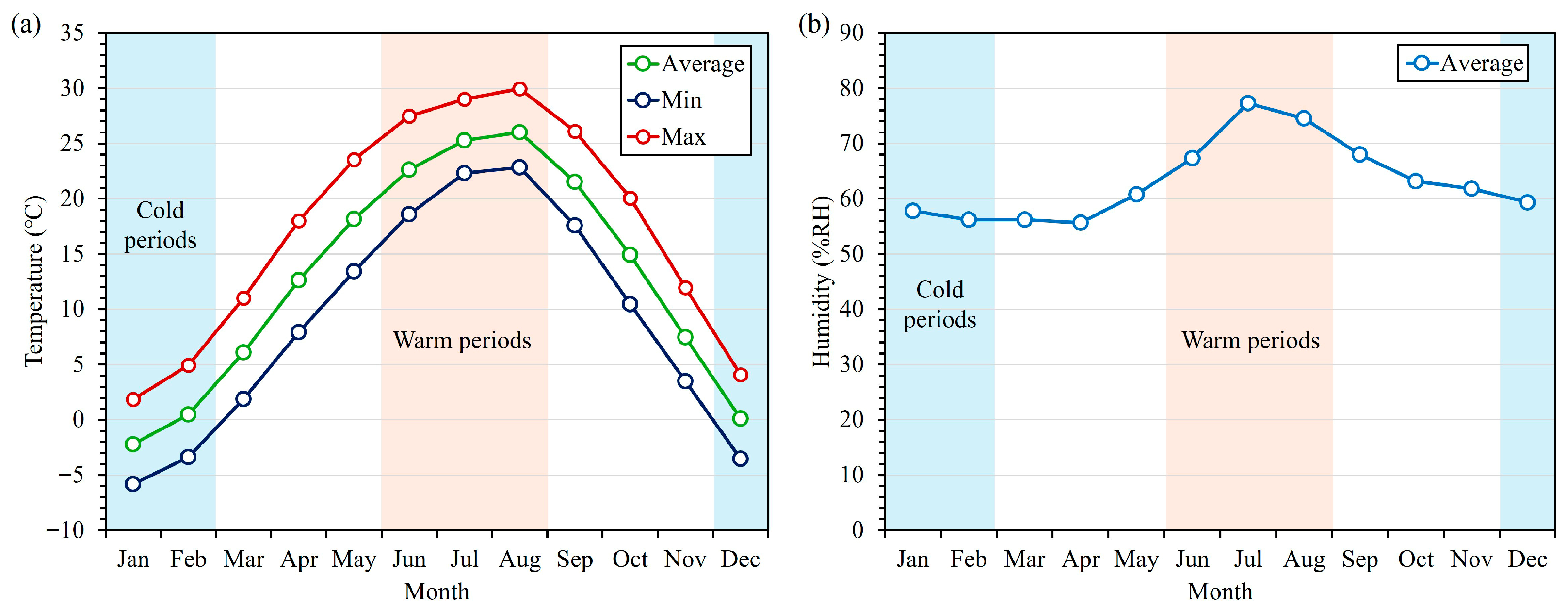
| Temperature | 12.72 °C | |
| Warm periods (June~August) | Average temperature | 24.63 °C |
| Min temperature | 21.23 °C | |
| Max temperature | 28.80 °C | |
| Cold period (December~February) | Average temperature | −0.57 °C |
| Min temperature | −4.26 °C | |
| Max temperature | 3.61 °C | |
| Atmospheric pressure | 1006 hPa | |
| Relative humidity | 63.13%RH | |
| Monthly precipitation | 119.14 mm | |
| Wind speed | 8.79 m/s | |
| Monthly solar radiation time | 179.96 h | |
| CO2 concentration | 443.8 ppm | |
| Location | Core Specimens | Schmidt Hammer | |||||||||||
|---|---|---|---|---|---|---|---|---|---|---|---|---|---|
| Compressive Strength (MPa) | Rebound Index (R) | Estimation Strength (MPa) | |||||||||||
| #1 | #2 | #3 | Ave. | #1 | #2 | #3 | Ave. | A | B | C | Ave. | ||
| 101 | 1F Northwest | 25.4 | 25.4 | 24 | 24.9 | 50.2 | 49.4 | 48.3 | 49.3 | 28.2 | 23.7 | 28.4 | 26.8 |
| 1F Southeast | 24.5 | 23.4 | 17.7 | 21.9 | 46.5 | 43.7 | 44.3 | 44.8 | 24.6 | 20.9 | 26.4 | 24.0 | |
| 2F Northwest | 25.7 | 24.4 | 26.7 | 25.6 | 49.4 | 47.6 | 51.9 | 49.6 | 28.5 | 23.9 | 28.6 | 27.0 | |
| Partition wall | 22.4 | 25.3 | 25.1 | 24.3 | 48.9 | 49.3 | 47.9 | 48.7 | 27.7 | 23.3 | 28.1 | 26.4 | |
| 103 | 1F Northwest | 22.7 | 22.5 | 20.3 | 21.8 | 50.8 | 51.8 | 49.7 | 50.8 | 29.4 | 24.6 | 29.1 | 27.7 |
| 1F Southeast | 31.0 | 35.0 | 30.3 | 32.1 | 55.0 | 54.3 | 52.7 | 54.0 | 32.0 | 26.6 | 30.5 | 29.7 | |
| 2F Southeast | 18.1 | 14.8 | 15.1 | 16.0 | 40.7 | 42.2 | 38.7 | 40.5 | 21.2 | 18.2 | 24.5 | 21.3 | |
| Partition wall | 23.2 | 23.3 | 22.8 | 23.1 | 55.4 | 54.8 | 56.4 | 55.5 | 33.2 | 27.5 | 31.2 | 30.7 | |
| Location | Exposure | Finishing Material | Carbonation Depth (mm) | Age (Years) | Carbonation Coefficient (mm/√(Year)) | |
|---|---|---|---|---|---|---|
| 101 | 1F Northwest | Exterior | water-based paint | 42.9 | 39 | 6.9 |
| 1F Southeast | Exterior | water-based paint | 49.0 | 39 | 7.8 | |
| 2F Northwest | Exterior | water-based paint | 49.0 | 39 | 7.8 | |
| Partition wall | Interior | Wallpaper | 47.8 | 39 | 7.7 | |
| Kitchen | Interior | Wallpaper | 27.0 | 39 | 4.3 | |
| Staircase | Interior | Oil-based paint | 0 | 39 | 0 | |
| 103 | 1F Northwest | Exterior | water-based paint | 43.9 | 39 | 7.0 |
| 1F Southeast | Exterior | water-based paint | 34.7 | 39 | 5.6 | |
| 2F Southeast | Exterior | water-based paint | 67.0 | 39 | 10.7 | |
| Partition wall | Interior | Wallpaper | 53.5 | 39 | 8.6 | |
| Kitchen | Interior | Tile | 30.8 | 39 | 4.9 | |
| Staircase | Interior | Oil-based paint | 20.8 | 39 | 3.3 | |
| Factors | Southeast Face | Northwest Face |
|---|---|---|
| Carbonation coefficient (mm/√year) | 8.04 | 7.25 |
| Carbonation coefficient ratio | 1.11 | |
| Direction | West | 45° West | South | 45° East | East |
|---|---|---|---|---|---|
| Solar radiation time | 3 h 8 m | 6 h 7 m | 8 h | 6 h 51 m | 3 h 53 m |
Disclaimer/Publisher’s Note: The statements, opinions and data contained in all publications are solely those of the individual author(s) and contributor(s) and not of MDPI and/or the editor(s). MDPI and/or the editor(s) disclaim responsibility for any injury to people or property resulting from any ideas, methods, instructions or products referred to in the content. |
© 2026 by the author. Licensee MDPI, Basel, Switzerland. This article is an open access article distributed under the terms and conditions of the Creative Commons Attribution (CC BY) license.
Share and Cite
Sim, S.-R. Carbonation Behavior of an Aged Reinforced Concrete Building in Seoul. Buildings 2026, 16, 927. https://doi.org/10.3390/buildings16050927
Sim S-R. Carbonation Behavior of an Aged Reinforced Concrete Building in Seoul. Buildings. 2026; 16(5):927. https://doi.org/10.3390/buildings16050927
Chicago/Turabian StyleSim, Sang-Rak. 2026. "Carbonation Behavior of an Aged Reinforced Concrete Building in Seoul" Buildings 16, no. 5: 927. https://doi.org/10.3390/buildings16050927
APA StyleSim, S.-R. (2026). Carbonation Behavior of an Aged Reinforced Concrete Building in Seoul. Buildings, 16(5), 927. https://doi.org/10.3390/buildings16050927