Article

Mechanical Behavior and Modeling of Polypropylene Fiber-Reinforced Cemented Tailings Interface with Granite Under Shear Loading: Effects of Roughness and Curing Time

1
Faculty of Innovation Engineering, Macau University of Science and Technology, Macau, China
2
Department of Energy Engineering, Shanxi Institute of Science and Technology, Jincheng 048011, China
*
Author to whom correspondence should be addressed.
Buildings 2026, 16(5), 913; https://doi.org/10.3390/buildings16050913
Submission received: 20 January 2026 / Revised: 20 February 2026 / Accepted: 23 February 2026 / Published: 25 February 2026

Abstract

Cemented paste backfill (CPB) is widely adopted in underground mines, where the shear resistance of the CPB–rock interface critically governs the integrity of backfill–rock systems. This study investigates the effects of polypropylene fiber reinforcement, surface roughness (Joint Roughness Coefficient, JRC = 0 and 1.76), and curing time (1, 3, and 7 days) on the shear strength and deformation characteristics of CPB–rock interfaces. Direct shear tests were performed under normal stresses of 50, 100, and 150 kPa, with synchronous measurements of shear and vertical displacements. Results show that increasing roughness markedly strengthens the interface, with the peak shear stress rising by up to 45% due to enhanced mechanical interlocking and dilation. In contrast, adding 0.5 vol.% PP fibers slightly reduces peak shear capacity but consistently improves post-peak deformability, indicating a transition from brittle interfacial fracture to a more ductile, progressive failure mode. A three-stage mechanical model was established to describe the shear stress–displacement relationship, incorporating elastic, bond degradation, and frictional sliding phases. The model parameters, including the shear stiffness ( K s ), bond degradation coefficient ( η ), and residual strength ( τ r ), were calibrated using the experimental data. Mohr–Coulomb analysis further quantifies the curing-dependent evolution of interfacial strength parameters, highlighting a marked increase in cohesion from 1 to 7 days alongside roughness-governed peak strengthening. This research provides insights into the optimization of the CPB–rock interface design for enhanced geomechanical performance in underground applications.

1. Introduction

The mining industry is the cornerstone of global industrialization and urbanization, which supplies essential mineral resources. However, traditional mining practices often lead to significant geo-hazards, such as ground subsidence and collapses, which jeopardize safety and disrupt ecological systems in mining areas [1,2,3]. Cemented paste backfill (CPB) technology offers a sustainable solution by simultaneously mitigating these hazards and recycling industrial wastes. Composed primarily of tailings (70–85%), cement (3–7%), water, and additives, CPB reduces surface tailings accumulation by over 60% while improving ore recovery efficiency, making it a key component of green mining strategies [4,5,6,7].
Once deployed in underground mining, CPB must meet stringent mechanical requirements to ensure operational safety. While existing design approaches mainly focus on the intrinsic strength of CPB materials [8,9,10], the interfacial shear behavior between CPB and surrounding rock has received comparatively little attention. This interface plays a critical role in the stress transfer process due to the mismatch in stiffness between CPB (0.1–1.2 GPa) and surrounding rock (20–100 GPa), which leads to the formation of the so-called “arching effect” [11,12,13]. The stability of this effect directly influences the stress distribution in underground structures, with the conversion rate of vertical to horizontal stress in narrow stopes reaching up to 86.25% [14]. Wang et al. reported that, in ultra-wide and large mining-height panels, the floor failure depth evolves with face advance and is closely related to peak abutment pressure and the development of a stress-arch system [15]. Lin et al. showed that coal failure under dynamic loading is governed by energy dissipation and fracture-network evolution, with both energy consumption and fragmentation fractal characteristics increasing with strain rate [16].
Several studies have investigated the interfacial shear properties of CPB and rocks under various conditions. For instance, Fang et al. [17,18,19,20,21] examined the effects of curing temperature, surface roughness, cementation, and drainage conditions on the shear behavior of CPB–rock interfaces. These studies revealed that rougher rock surfaces promote higher shear strength due to enhanced mechanical interlocking, whereas factors such as curing stress and temperature significantly influence the hydration process and interfacial bonding. Similarly, Zhang et al. [22,23] and Xiu et al. [24] explored the impact of hydration products, pore distribution, and interfacial microstructure on shear strength, highlighting the critical role of chemical bonding and mechanical occlusion in improving interfacial stability. Yang et al. [25] developed a theoretical model to quantify the effects of roughness on shear strength and deformation patterns, providing a mechanistic understanding of CPB–rock interactions.
Despite these advances, CPB remains a brittle material with poor crack resistance. Enhancing its strength often requires a higher cement content, which can account for up to 75% of the CPB costs [12,13]. To address this issue, recent research has explored the use of polypropylene fibers to improve CPB performance. Polypropylene fibers are known for their high toughness, corrosion resistance, and economic benefits, which enhance ductility by bridging cracks and reinforcing interfaces. Li et al. [26] emphasized that the post-cracking response of fiber-reinforced cementitious materials is largely governed by fiber–matrix interfacial bonding/anchorage, which evolves with curing and strongly affects stress transfer. Chen et al. [27] further reported that increasing PP fiber content can reduce workability while promoting a more ductile post-peak response and improved toughness in cement-based composites. Studies on fiber-reinforced concrete [28,29,30,31,32,33] have demonstrated significant improvements in its mechanical properties, including increased tensile strength, reduced shrinkage, and enhanced post-crack behavior. However, the reinforcement mechanisms in CPB differ from those in concrete due to the unique characteristics of tailing sands, such as grain size and pore structure [34,35,36]. Limited research has specifically addressed the shear behavior of fiber-reinforced CPB–rock interfaces.
Recent investigations into fiber-reinforced CPB (FR-CPB) have provided valuable insights into its mechanical performance under various conditions such as curing temperature, sulfate concentration, and fiber content [37,38,39,40,41]. For example, Libos et al. [37,38] reported that higher curing temperatures and fiber reinforcement significantly enhanced the shear stiffness, cohesion, and residual strength. Zhao et al. [40] introduced the water film thickness as a key parameter for optimizing the rheological properties of FR-CPB, while Xu et al. [41] demonstrated the bidirectional effects of sulfate on the interfacial shear strength. Although these findings underscore the potential of polypropylene fibers to improve CPB performance, how polypropylene fibers modulate roughness-dependent shear degradation pathways, especially under evolving cement hydration, remains unexplored, limiting the design of fiber-reinforced CPB systems.
This study primarily focuses on early-age performance of CPB–rock interfaces during the first week after placement, which is critical for backfilling cycles and short-term ground control in underground operations. We systematically investigated the effects of surface roughness (Joint Roughness Coefficient, JRC = 0 and 1.76) and curing time (1, 3, and 7 days) on the shear mechanical behavior of polypropylene fiber-reinforced CPB–granite interfaces. Direct shear tests were conducted under normal stresses of 50, 100, and 150 kPa, and for the first time, a time-dependent constitutive model quantifying fiber–roughness–hydration interactions at CPB–rock interfaces was developed. The results provide insight into the evolution of the interfacial shear strength, elucidating the synergistic interactions between the fibers and CPB matrix. This study aims to fill gaps in the theory of fiber-reinforced interfacial mechanics, optimize CPB design for enhanced stability, and promote the development of efficient, cost-effective, and environmentally sustainable backfill technologies.

2. Experimental Procedure

2.1. Experimental Materials

The experimental materials used in this study included tailings, binder, mixing water, rock specimens, and polypropylene fibers.
(1)
Tailings
Tailings are solid mineral wastes formed by the natural dewatering of tailings slurry from mineral processing and serve as the primary aggregate in cemented backfill materials. The artificial quartz tailings sand used in this study was representative of silica-rich tailings typically generated during quartz/silica mineral processing. Its chemical composition was dominated by chemically inert SiO2 at 99.8% by mass, with only trace amounts of Al2O3 at 0.05% and Fe2O3 at 0.035%. This material was selected to minimize compositional variability and ensure precise experimental control, thereby enabling a focused investigation of CPB–rock interfacial mechanics and a clearer interpretation of the results. The key physical properties are listed in Table 1. The particle-size distribution indicates that the majority of tailings particles fall within 0.2–200 μm.
(2)
Binder
Ordinary Portland cement conforming to ASTM C150 Type I was used as the binder. This type of cement is widely used in general construction applications due to its balanced hydration characteristics and mechanical performance. The principal physicochemical properties of the cement, including chemical composition and physical parameters, are summarized in Table 2.
(3)
Mixing Water
Potable tap water with a neutral pH of 7.5 was used as the mixing water. The main properties of water are summarized in Table 3.
(4)
Granite Specimens
Granite, a predominant igneous rock in underground engineering, forms through the partial fusion and solidification of crustal rock components. The specimens used in this study were medium-grained granites with an average uniaxial compressive strength of 160 MPa. Each rock specimen was fabricated by first cutting a large, intact granite block into 60 mm × 60 mm × 10 mm plates using a diamond saw, followed by surface polishing with a variable-speed grinder and 600-grit silicon carbide sandpaper to achieve specified roughness profiles. Prior to bonding with fiber-reinforced CPB, the specimens were ultrasonically cleaned for 15 min to remove machining debris and fine particles generated during cutting/polishing, ensuring contaminant-free bonding surfaces. We acknowledge that field rock walls are typically created by mechanical chipping and/or drilling–blasting and may exhibit more heterogeneous and higher roughness. Therefore, the prepared granite surfaces in this study are intended as controlled laboratory representations rather than exact replicas of field walls, and the conclusions should be interpreted within the tested scale and JRC range.
Joint Roughness Coefficient (JRC) serves as a critical parameter for quantifying the structural surface topography in rock mechanics, directly influencing the interfacial shear behavior. To characterize the specimen roughness, a high-precision Linear Variable Differential Transformer (LVDT) profilometer was used to measure 2D surface profiles along the specimen centerline, yielding discrete elevation data at 0.1 mm intervals. Following the standard procedures, two representative roughness conditions (JRC values of 0 and 1.76) were prepared. Roughness values were validated using empirical Equations (1) and (2) proposed by Barton and Choubey (1977), which correlate profile parameters (e.g., amplitude and wavelength) with JRC [18].
Z = 1 L y i + 1 y i 2 x i + 1 x i 1 / 2
J R C = 32.69 + 32.98 l o g Z
where Z is a surface parameter representing the square root of the first-order derivative of the measured profile; L denotes the nominal length of the discrete points along the centerline; and xi and yi denote the coordinates of the discrete points.
(5)
Polypropylene Fiber
Polypropylene fibers are widely used as reinforcing additives in cementitious materials to enhance composite ductility, impact resistance, crack control, and long-term durability. The fibers employed in this study were bundled monofilament polypropylene synthetic fibers synthesized via propylene polymerization, characterized by a length of 6 mm, diameter of 18 μm (resulting in an aspect ratio of 333:1), specific gravity of 0.91 (lower than water to ensure good mixability), tensile strength of 600 MPa, and melting point of 165 °C. Although the volume content of polypropylene fibers affects the shear properties of the interface between the FR-CPB and granite rock, it is not the focus of this study and has been described in the relevant literature [39,41]. In this study, 0% (control) and 0.5% fiber content were selected.

2.2. Specimen Preparation

The fabrication of FR-CPB and granite interface specimens followed the following steps.
(1)
Mortar Mixing Procedure
Initially, Ordinary Portland cement, tailings sand, and polypropylene fibers were weighed according to the predefined mix design. The dry components (cement, tailings, and fibers) were first added to a planetary mixer and blended at low speed (60 rpm) for 2 min to ensure uniform distribution and prevent fiber clustering. Subsequently, the pre-measured tap water was gradually introduced into the mixing pot using a calibrated beaker while maintaining low-speed mixing. The mixture was then blended at a low speed for an additional 2 min to form a homogeneous paste, during which the mixer was paused briefly to scrape any residual mortar from the blades and pot walls into the mixture. Finally, the mixer was switched to high speed (120 rpm) for 5 min to achieve complete hydration and eliminate air voids. Throughout mixing, the fresh mortar was visually checked at the end of each mixing stage and at approximately 1 min intervals during the 5 min high-speed mixing to confirm adequate workability and homogeneity, with no visible segregation/bleeding, mixer blockage, or fiber balling/entanglement. The resulting fresh mortar exhibited a cohesive, moderately plastic consistency, allowing it to be readily placed and leveled while maintaining integrity without visible bleeding or segregation.
(2)
Specimen Curing
Granite plates (60 mm × 60 mm × 10 mm, pre-fabricated as described in Section 2.1) were first positioned at the bottom of rectangular acrylic molds (internal dimensions: 60 mm × 60 mm × 30 mm), forming the lower half of the interface specimen. The pre-mixed FR-CPB mortar was then carefully poured into the mold above the granite plate to create a 20 mm-thick CPB layer, resulting in a composite specimen with a direct CPB-granite contact surface. The mold sides were manually tapped 30 times using a rubber mallet to eliminate air bubbles at the interface and to ensure intimate bonding. Immediately after casting, the molds were sealed with a polyethylene film to prevent moisture evaporation and placed horizontally in a temperature-controlled curing chamber maintained at 20 ± 2 °C and ≥95% relative humidity. The specimens were cured for targeted durations of 1, 3, and 7 d, corresponding to early stage hydration periods that are critical for evaluating strength development in mining backfill applications.
(3)
Specimen Demolding and Preparation
Before direct shear testing, the CPB–granite interface specimens were carefully demolded from the acrylic molds and immediately labeled with unique identifiers to track the roughness (JRC), fiber content, and curing time. Each specimen was then wrapped in polyethylene film to preserve moisture and prevent mechanical damage during handling. To ensure material homogeneity and minimize batch-to-batch variability, all specimens within the same experimental group (e.g., identical JRC, fiber content, and curing time) were fabricated from a single mortar batch mixed consecutively. This protocol ensured that the observed variations in the shear behavior could be attributed to the test variables (roughness, fiber content, and curing time) rather than inconsistencies in the CPB matrix.

2.3. Experimental Methods

A strain-controlled direct shear apparatus was employed to characterize the interfacial shear behavior, comprising a load frame capable of applying normal stresses up to 300 kPa and shear forces up to 10 kN, a split shear box (60 mm × 60 mm internal dimensions) to isolate the CPB–granite interface at the shear plane, a sensing system with LVDTs (0.001 mm resolution) for displacement measurements, a load cell (±0.1% accuracy) for force monitoring, and a LabVIEW 2015 data acquisition system recording parameters at 10 Hz. Specimens were positioned with the granite plate in the lower shear box half and CPB layer in the upper half, separated by a 1 mm layer of 0.5 mm-diameter steel balls to align the shear plane with the interface [42]. Normal stresses of 50, 100, and 150 kPa were applied via a pneumatic system, followed by shear loading at 0.5 mm/min to 6 mm displacement, with at least three replicate tests per condition to ensure reliability. The shear strength parameters (cohesion and internal friction angle) were derived using the Mohr–Coulomb criterion, with the peak and residual strengths determined from the stress–displacement curves. The experimental matrix included 36 unique conditions from factorial combinations of roughness, fiber content, curing time, and normal stress, as summarized in Table 4.

3. Experimental Results and Discussion

3.1. Shear Stress-Shear Displacement Behavior

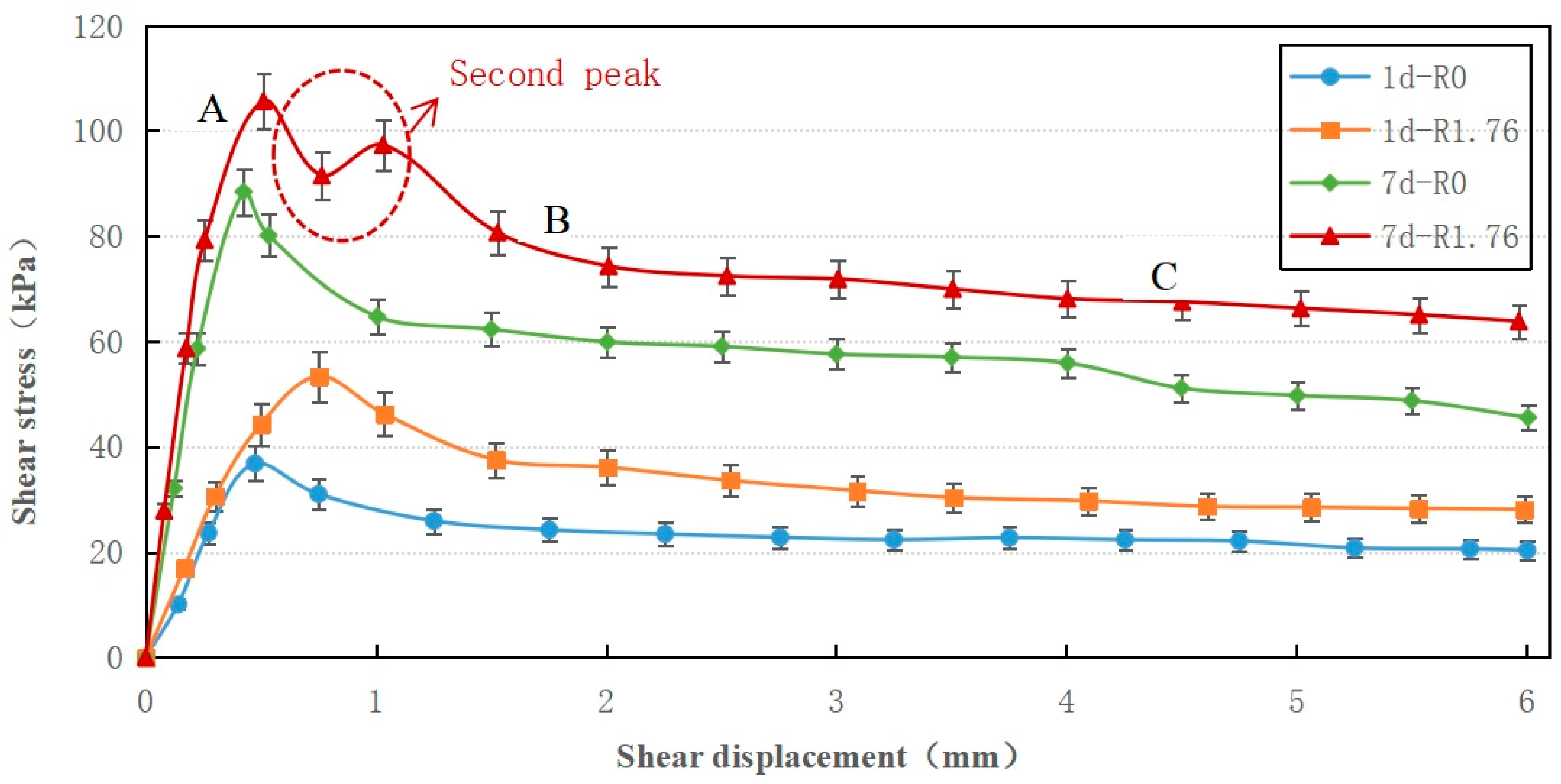
The shear stress-displacement curves for specimens with varying curing times (1 d and 7 d) and 5% fiber incorporated under a normal stress of 50 kPa are depicted in Figure 1. The results highlight two primary trends: (1) the pronounced influence of surface roughness (JRC) on the peak shear strength, and (2) the time-dependent strengthening effect of cement hydration. For the 1 d cured specimens, the rough interface (JRC 1.76) exhibited a peak shear stress 45% higher than that of the smooth interface (JRC 0), whereas this difference decreased to 20% after 7 d of curing. This reduction in roughness sensitivity over time is attributed to the progressive densification of the fiber-reinforced CPB (FR-CPB) matrix via cement hydration, which strengthens the chemical bond between the CPB and granite, thereby complementing the mechanical interlocking provided by surface asperities [43]. The curing time significantly enhanced the shear resistance under both roughness conditions. From day 1 to 7 d, the peak shear stress of the JRC 0 interface increased by 58%, driven by the formation of calcium silicate hydrate (C-S-H) gel and other hydration products that improve interfacial adhesion and matrix rigidity [11,12,13]. For the JRC 1.76 interface, hydration not only strengthens the chemical bond but also hardens the FR-CPB micro-asperities, making them more resistant to shear-induced degradation.
A notable observation is the biphasic peak behavior in the 7d cured JRC 1.76 specimens (Figure 1 inset). After the first peak (attributed to bond failure between the FR-CPB and granite), the shear stress decreases with displacement and then rebounds to a secondary peak before stabilizing at the residual strength. This phenomenon, also reported in concrete–rock interface studies [44], reflects a transition from cohesive failure to frictional sliding: (1) the first peak occurs at the onset of bond degradation, where the mechanical interlock of asperities is partially overcome, and (2) the secondary peak arises from the re-establishment of frictional resistance as the sheared surface adapts to the applied normal stress, with the effective contact area decreasing and real contact pressure increasing until asperity tips fail [11,12]. Significantly, this biphasic behavior is absent in 1 d cured JRC 1.76 specimens, indicating that insufficient hydration limits the development of cohesive strength, preventing the clear separation of bond failure and frictional sliding phases. The dependence of roughness effects on curing time underscores the critical role of microstructural development in governing interfacial failure mechanisms, which is a key consideration for optimizing FR-CPB placement schedules in mining applications.
These findings align with the three-stage mechanical model proposed in Section 4.2, where the elastic phase (OA, dominated by asperity deformation), bond degradation phase (AB, cohesive failure), and frictional sliding phase (BC, asperity wear) are sequentially activated. The biphasic peak in mature specimens (7 d) exemplifies the model’s second and third stages, whereas the single-peak behavior in early age specimens (1 d) reflects a premature transition to frictional sliding due to weak cohesive bonds.
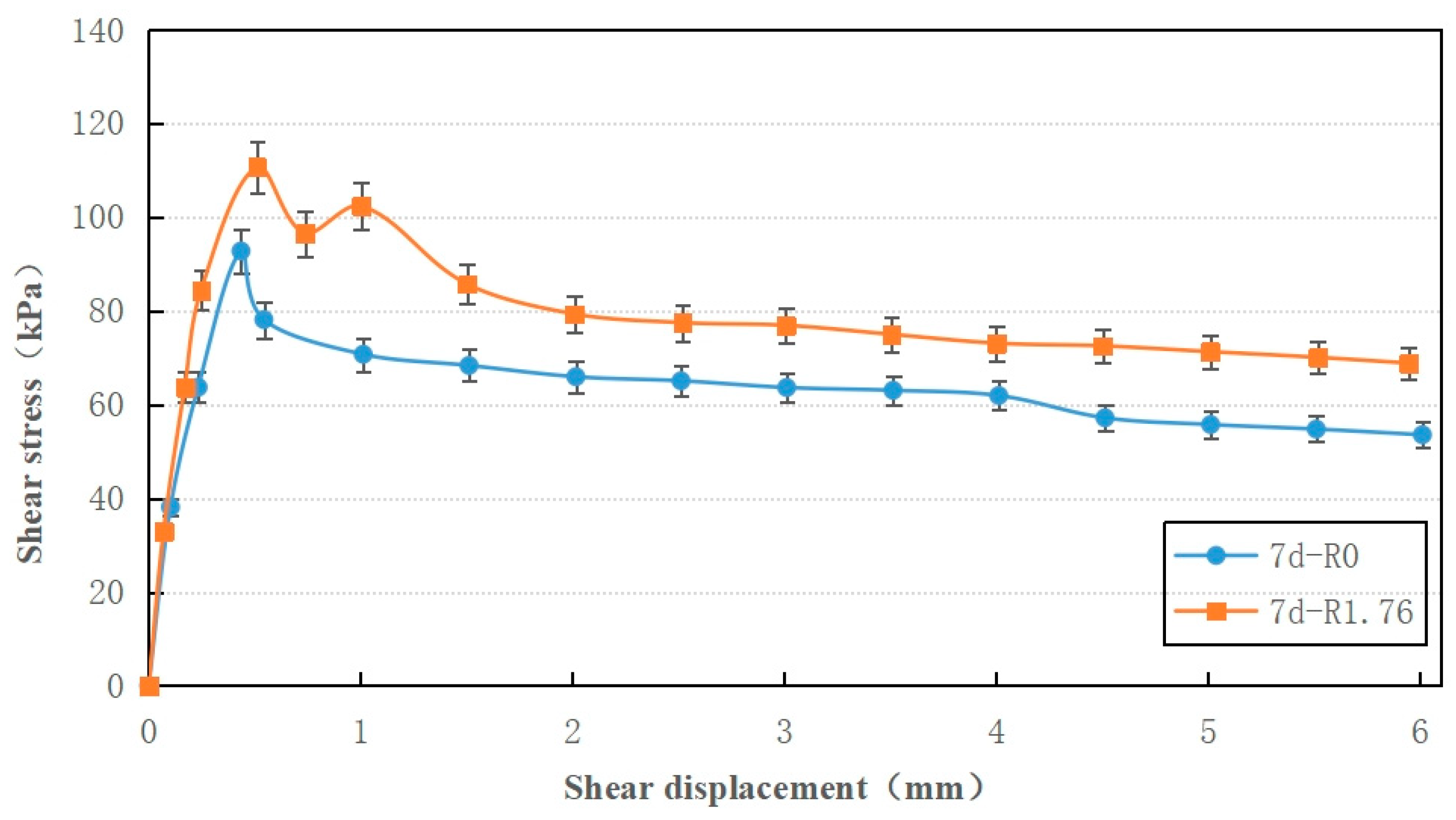
Figure 2 illustrates the shear stress-displacement curves for fiber-free specimens with different roughness at a 7-day curing time under a normal stress of 50 kPa. A comparison with Figure 1 reveals that the curves exhibit similar patterns across the fiber-reinforced and fiber-free groups for the same roughness, indicating that polypropylene fibers do not substantially alter the fundamental damage pattern of the contact interface. Notwithstanding this similarity, the addition of 0.5% fibers results in lower peak shear strengths, which is attributed to the complex interplay between the fiber–matrix interactions and interfacial bonding mechanisms.
Polypropylene fibers primarily enhance composite ductility by bridging cracks and transferring loads across the fiber–matrix interface. Their elastic modulus mismatch with the cementitious matrix induces interfacial frictional forces during deformation, which can mitigate crack propagation and improve energy dissipation [45]. However, at a 0.5% volume content, fibers tend to agglomerate into clusters due to increased fiber–fiber interactions, reducing their dispersion uniformity and effective contact area with the matrix. This clustering displaces critical cement hydration products (e.g., C-S-H gel) at the CPB–granite interface, weakening chemical adhesion and creating localized weak zones prone to premature failure [46,47,48,49]. Additionally, fiber clusters introduce micro voids and disrupt the continuous phase of the cementitious matrix, thereby reducing the effective contact area for stress transfer and accelerating the degradation of interfacial cohesion. These mechanisms collectively result in a reduction in the peak shear strength of fiber-reinforced specimens compared with fiber-free controls, despite the theoretical benefits of fiber reinforcement. The observed trend aligns with the literature, indicating that high fiber dosages can compromise the interfacial integrity in cementitious composites, particularly in critical contact zones where cohesive bonding is essential for shear resistance [39,41].

3.2. Vertical Displacement-Shear Displacement Response

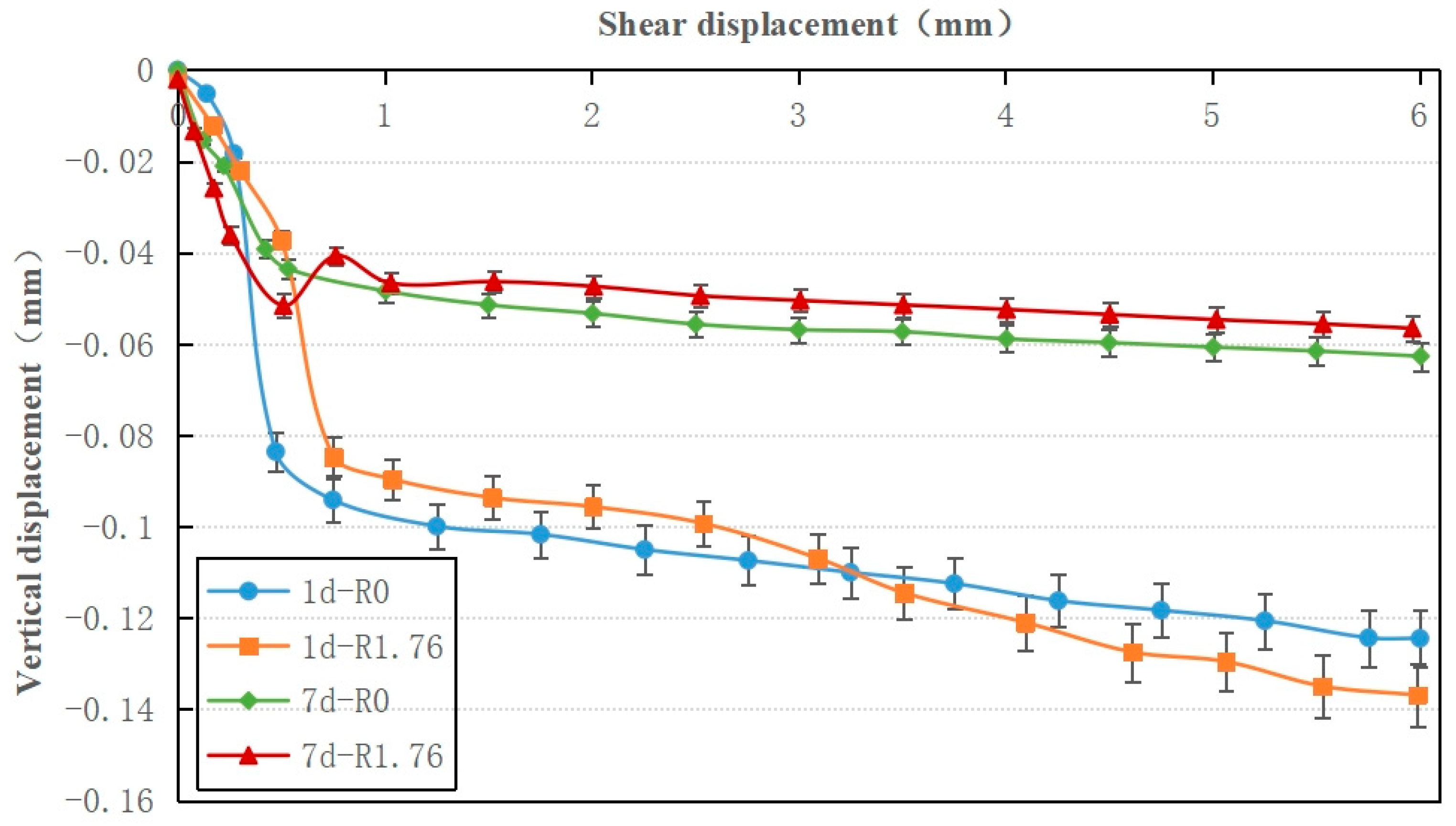
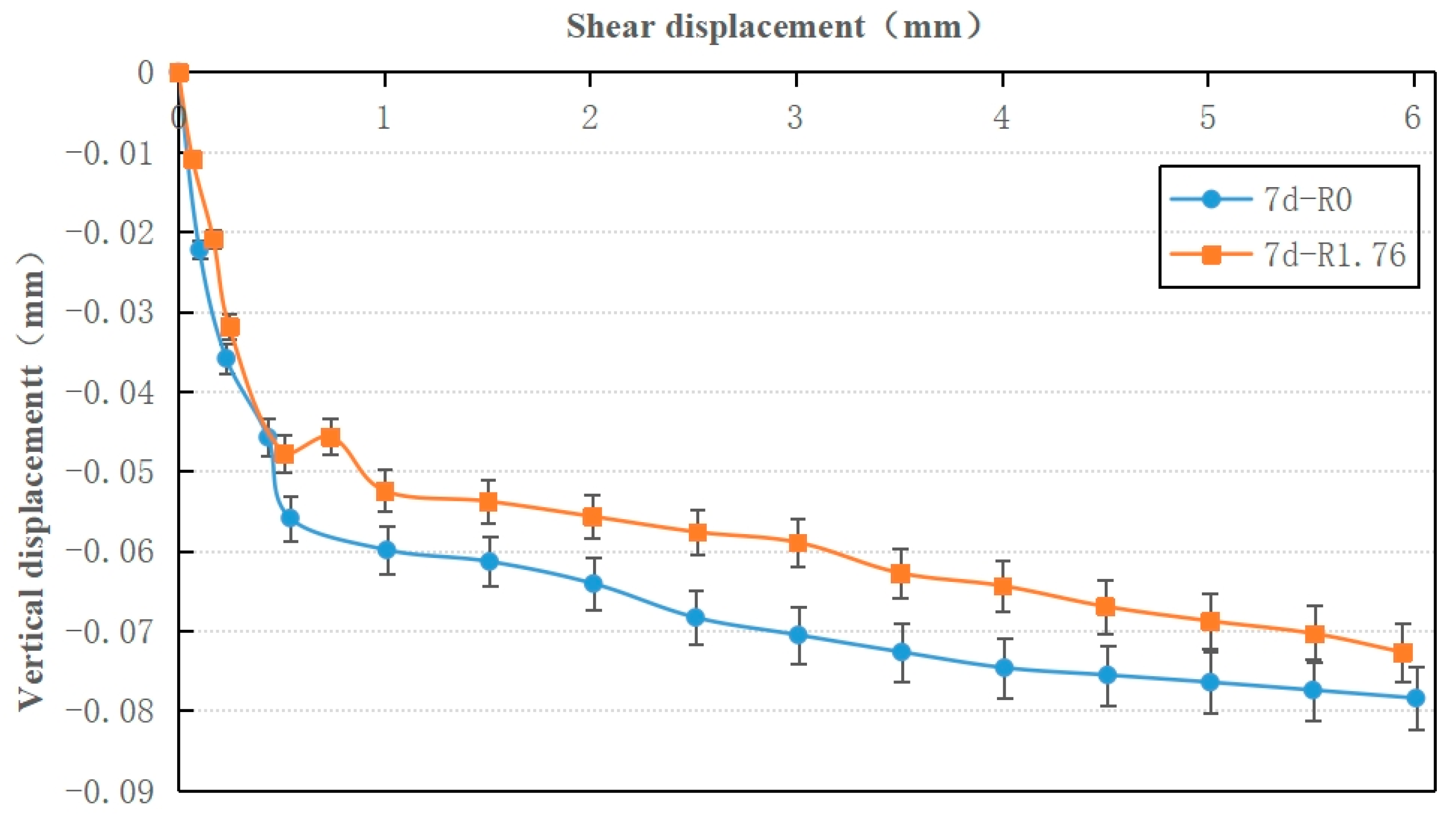
Figure 3 and Figure 4 depict the vertical displacement-shear displacement curves for the fiber-reinforced (0.5% polypropylene) and fiber-free specimens under 50 kPa normal stress, varying in roughness (JRC 0 vs. 1.76) and curing time (1 d vs. 7 d). These curves reveal distinct deformation behaviors governed by hydration maturity and roughness-induced interlocking. The measured vertical displacement results from the competition between dilation and closure. Rough interfaces dilate as FR-CPB climbs granite asperities and mobilizes interlocking, while asperity damage after peak can reduce dilation or cause slight contraction. Smooth interfaces show limited interlocking and are dominated by closure, and higher normal stress generally suppresses dilation and promotes compaction.
For the 1 d cured specimens (Figure 3), both roughness conditions exhibited continuous shear shrinkage, characterized by monotonically decreasing vertical displacement with increasing shear displacement. This behavior arises from insufficient hydration at early ages, where the FR-CPB matrix contains abundant interconnected pores and weak fiber-matrix bonds [11,12]. The low stiffness of the immature matrix allows significant compression under normal stress, whereas the fragile micro-asperities on the shear surface are readily crushed, leading to net volume contraction. In contrast, the 7 d cured specimens showed a transition from initial shear shrinkage to slight shear expansion (Figure 3 inset for JRC 1.76). Prolonged curing densifies the matrix via C-S-H gel formation, reduces the porosity, and enhances asperity rigidity. As the shear displacement increases, the interlocking of hardened asperities on rough surfaces induces dilatancy (volume expansion), which is a behavior consistent with the classic shear dilation theory in granular materials [50].
Comparing the fiber-reinforced (Figure 3) and fiber-free (Figure 4) specimens at 7 d of curing, both exhibited similar deformation trends, but fiber addition significantly reduced the overall vertical displacement significantly. This reduction is attributed to the reinforcing effect of polypropylene fibers, which hinders particle rearrangement and settlement within the matrix. By bridging pores and constraining micro-crack propagation, fibers maintain a more stable microstructure, thereby limiting compressibility during shear [51]. However, the fundamental deformation mode shrinkage at early ages and dilation at mature ages remain unaffected by fibers, indicating that roughness and hydration kinetics are the primary drivers of vertical displacement behavior, while fibers modulate the deformation magnitude rather than changing the underlying mechanism. These findings highlight the critical role of curing time in transitioning the deformation response from shear-dominated contraction (1 d) to dilation-controlled expansion (7 d), which is a shift mediated by matrix densification. The modest reduction in displacement due to the fibers underscores their function in enhancing structural stability without altering the intrinsic roughness- and hydration-dependent deformation mechanisms, providing practical insights for optimizing backfill design in terms of both strength and deformability.
Figure 3 further demonstrates the influence of surface roughness on contact specimen deformation, showing contrasting behaviors at different curing times. After 1 d of curing, the rough contact specimen (R1.76) exhibited larger deformation than the smooth specimen (R0), as the low-strength micro-asperities in the immature cemented filler matrix were easily crushed by the rough granite surface undulations, with the indentations providing space for further compression. In contrast, at 7 d of curing, the rough specimen (R1.76) showed smaller deformation, with a distinct shear expansion phase (shear displacement of 0.51–0.77 mm) after initial compression, followed by gradual contraction. This reversal arises because prolonged curing strengthens the matrix micro-asperities via hydration product formation (e.g., C-S-H gel), enabling them to resist shearing during asperity climbing, which interlocks with the rough granite surface, inducing dilatancy as the shear displacement increases, while only minimal asperity degradation occurs. The harder micro-asperity tips maintain close contact with granite undulations, limiting the overall deformation compared with the smooth interface [39,41]. These observations highlight how hydration maturity transitions the deformation mechanism from compression-dominated (1 d) to dilation-dominated (7 d) behavior, driven by the interplay between matrix rigidity and roughness-induced mechanical interlock.

3.3. Evolutionary Trends of Shear Strength Parameters

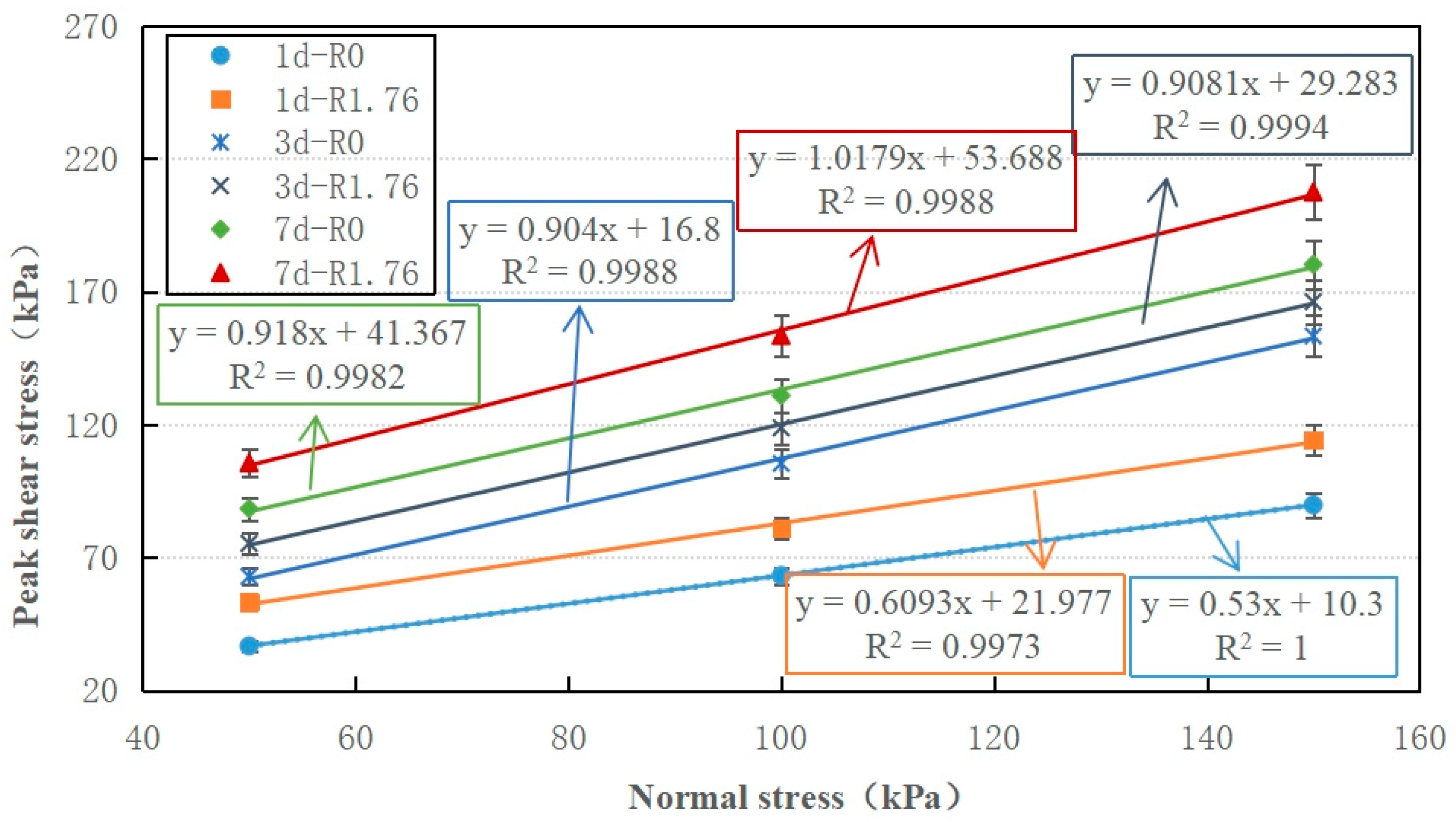
Figure 5 illustrates the linear relationship between the peak shear stress and normal stress for 0.5% polypropylene fiber-reinforced specimens with varying surface roughness (JRC 0 and JRC 1.76) at curing times of 1 d, 3 d, and 7 d. All data sets exhibited strong linear correlations (R2 > 0.99), confirming that the interfacial shear behavior adheres to the Mohr–Coulomb failure criterion across all conditions. This allows for the derivation of shear strength parameters (cohesion and internal friction angle) that characterize the adhesive and frictional resistance at the CPB–granite interface, as shown in Table 5.
From Table 5, the cohesion increases monotonically with curing time for both roughness levels, rising from 10.30 kPa (JRC 0, 1 d) to 41.37 kPa (JRC 0, 7 d) and from 21.98 kPa (JRC 1.76, 1 d) to 53.69 kPa (JRC 1.76, 7 d), reflecting the progressive densification of the FR-CPB matrix via cement hydration, which strengthens chemical bonding and reduces interfacial porosity. For the internal friction angle, the rough interfaces (JRC 1.76) consistently exhibited higher values than the smooth interfaces (JRC 0), with differences ranging from 27.92° (1 d) to 42.55° (7 d). The increase in with curing time is attributed to the hardening of the FR-CPB micro-asperities, which enhances mechanical interlocking with the granite surface.
Notably, Ref. [18], utilizing the modified Barton equation, reports non-monotonic trends in shear strength parameter trends, which can be attributed to stress redistribution from asperity degradation. The current study observed a monotonic increase in this evolution for the FR–CPB–granite interfaces. This discrepancy arises from the dominance of hydration-driven matrix stiffening over asperity wear in FR-CPB as well as the absence of coarse aggregates that typically induce more pronounced asperity crushing. The Mohr–Coulomb model effectively captures the combined effects of surface roughness and matrix development, providing a practical foundation for optimizing the backfill design in mining applications where early-age strength and interfacial stability are critical.

4. Mechanical Modeling

4.1. Shear Mechanism Analysis

The shear strength of the CPB–granite interface is governed by three interdependent mechanisms, which are influenced by the surface roughness (JRC), normal stress, and curing time:
(1)
Interfacial Adhesion
Interfacial adhesion arises from chemical bonding between the FR-CPB and granite surface, primarily driven by the calcium silicate hydrate (C-S-H) gel formed during cement hydration. This mechanism dominates the early stage of shear loading when the relative displacement between the interface surfaces is minimal. The bond strength, quantified as the shear stress at 0 kPa of normal stress, reflects the intrinsic adhesive capacity of the hydrated matrix. Prolonged curing enhances adhesion by promoting C-S-H gel formation, which densifies the matrix and strengthens molecular interactions. The surface roughness (JRC 1.76) further reinforces adhesion by increasing the effective contact area for chemical bonding and enabling initial mechanical interlocking with FR-CPB asperities, thereby delaying bond degradation under shear.
(2)
Frictional Resistance
The frictional resistance is governed by Coulombic sliding between sheared surfaces. This mechanism becomes dominant after interfacial adhesion fails, sustaining shear stress through asperity interactions. The linear increase in frictional resistance with normal stress is evident in the constant slope of the Mohr–Coulomb envelopes (Figure 5), with rough interfaces (JRC 1.76) exhibiting higher friction coefficients due to enhanced asperity interlock. The curing time strengthens the FR-CPB matrix, hardens surface asperities, and reduces their susceptibility to wear, thereby increasing the internal friction angle (representing frictional efficiency). Thus, frictional resistance reflects a combination of surface roughness and matrix rigidity, governing the steady-state shear behavior post-adhesion failure.
(3)
Mechanical Interlocking
Mechanical interlocking is driven by topographical mismatches between FR-CPB micro-asperities and granite surface undulations, encompassing both macro-scale indentations and micro-scale roughness features (e.g., C-S-H protrusions and fiber–matrix interfaces). During shear, these features interlock to resist displacement, requiring forces to overcome geometric obstructions or to induce asperity failure. Longer curing times enhance the interlock efficiency by hardening the FR-CPB matrix, reducing asperity crushing, and reflecting a strengthened interlock. The surface roughness significantly amplifies this mechanism, as larger asperities and undulations create more robust mechanical barriers to sliding. Thus, mechanical interlocking represents a critical factor in determining the peak shear strength, particularly for rough interfaces with well-developed hydrated matrices.

4.2. Mechanical Modeling

Based on the preceding analysis, the loading-to-failure process of the interface specimen can be divided into three successive stages, with sudden bond failure phenomena documented in the literature [41]. Given the limited experimental data points, the following analysis focused on the stress-continuous failure cases:
(1)
Linear elasticity stage (OA)
In this initial stage, the shear stress increases linearly with shear displacement until it reaches the peak shear stress, reflecting purely elastic behavior, where deformation is fully recoverable upon unloading. The linear relationship is governed by
τ = K s · δ 0 δ δ p
where τ is the shear stress (kPa), δ is the shear displacement (mm), and K s is the shear stiffness (kPa/mm) determined by the bond rigidity between the FR-CPB and granite surfaces. Microscopically, this stage was dominated by the elastic deformation of hydration products (e.g., C-S-H gel) and minimal asperity engagement, with no visible damage to the interface.
(2)
Bond failure stage (AB)
Upon reaching the peak shear stress, the interface enters a non-linear phase where the shear stress decreases gradually with increasing displacement until it stabilizes at the residual shear strength. This decline is attributed to the progressive failure of chemical bonds and microasperity shearing, with frictional resistance increasingly dominating the shear response. The stress-displacement relationship can be modeled as
τ = τ p η δ δ p δ p < δ δ r
where η is the bond degradation coefficient (kPa/mm) that describes the rate of strength loss, and δ r is the displacement threshold corresponding to the residual strength (mm). As the bonding weakens, the interface transitions from cohesive-dominated to friction-dominated behavior, with the surface roughness and normal stress influencing the rate of degradation.
(3)
Friction sliding stage (BC)
At the residual strength, the interface exhibited stable frictional sliding with shear stress independent of the displacement. Here, all cohesive bonds are fully ruptured, and the shear resistance arises solely from the mechanical interlock and Coulombic friction
τ = τ r = C r + σ n tan φ r δ > δ r
where τ r is the residual shear stress (kPa); C r and φ r are the residual cohesion (kPa) and internal friction angle (°), respectively; and σ n is the normal stress (kPa). This stage is characterized by steady-state asperity wear and frictional equilibrium, with deformation dominated by particle rearrangement rather than bond failure. The transition from Stage AB to BC marks the completion of the failure process, with the residual shear stress serving as a critical parameter for assessing the long-term stability in mining backfill applications.
It should be noted that the proposed three-stage model is a skeleton (envelope) description primarily intended for stress-continuous post-peak responses. For biphasic peak curves observed in some mature rough-interface cases, the secondary peak is interpreted as a transient frictional re-mobilization during the cohesion-to-friction transition; however, it is not explicitly reproduced by the current piecewise-linear formulation. In such cases, the model is applied to capture the first peak and residual strength as an engineering simplification.

5. Parameter Calibration and Verification

5.1. Parameter Calibration

(1)
Linear elastic phase (OA)
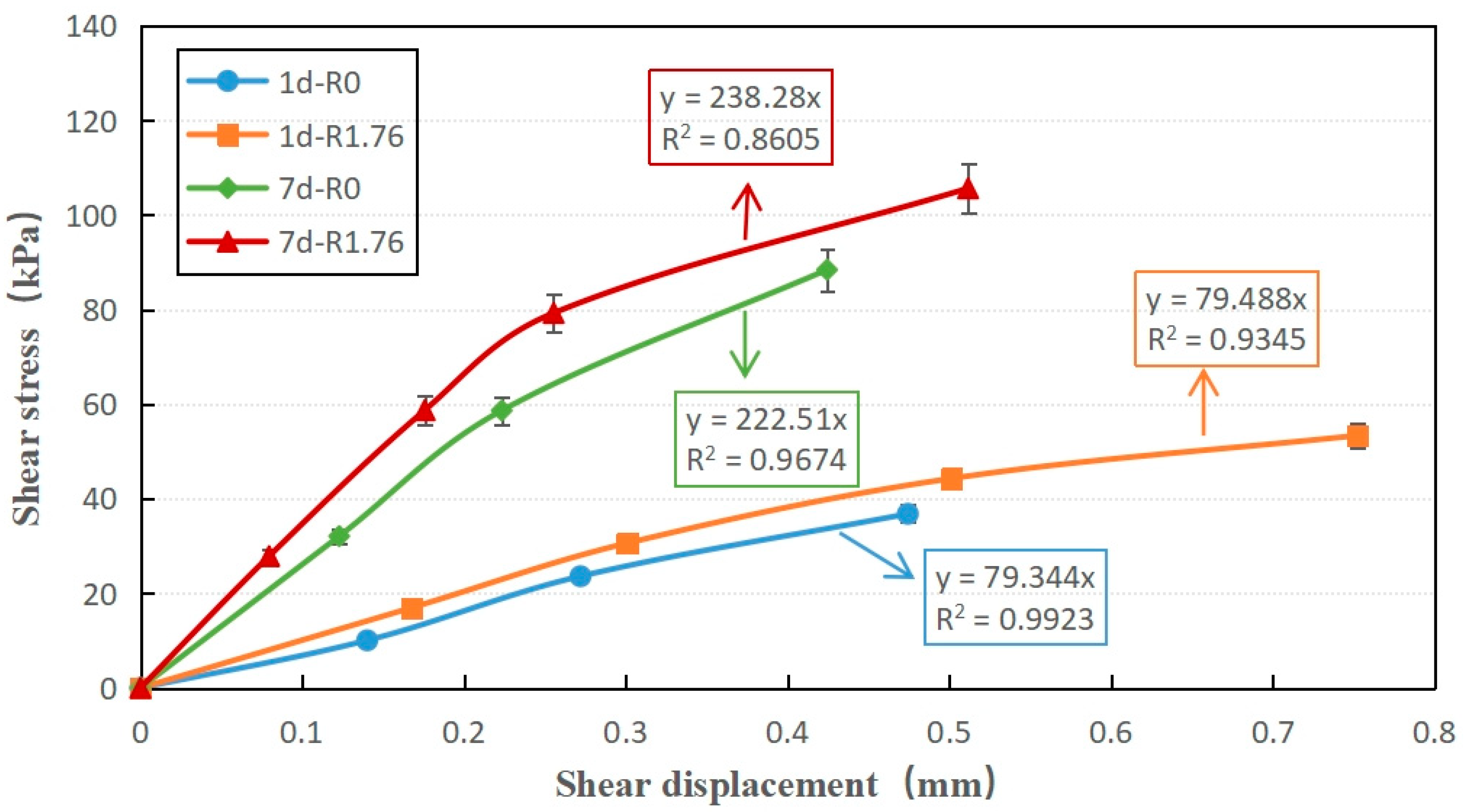
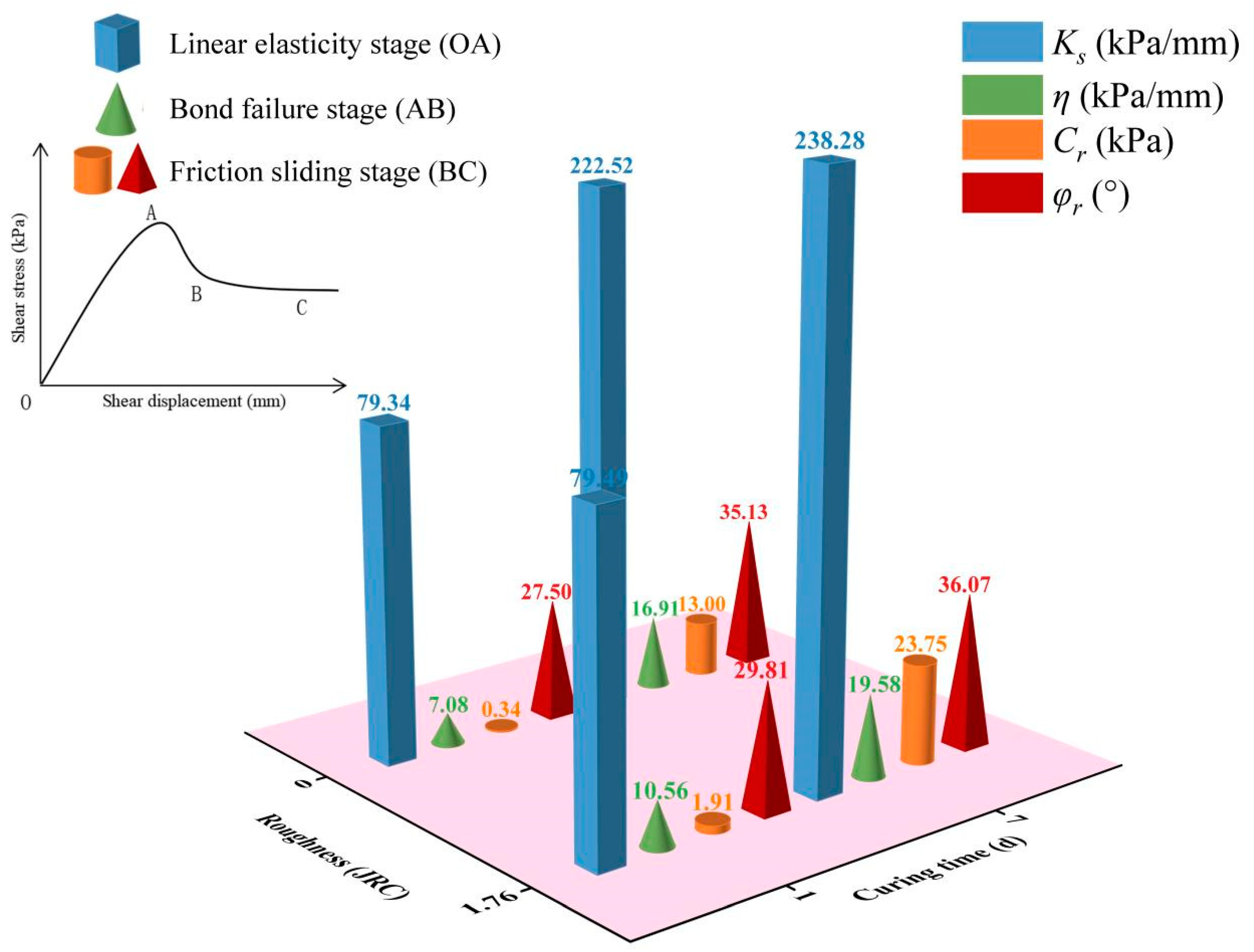
Figure 6 presents the fitting results for the linear elastic phase (OA) of the specimens with 0.5% fiber content under a normal stress of 50 kPa. All the fitted curves exhibited strong linear correlations (R2 ≥ 0.86), validating the applicability of the mechanical model (Equation (3)) for this stage. For example, the shear stiffness of the rough interface (JRC = 1.76) cured for 7 d is 238.28 kPa/mm, 7% higher than the smooth interface (JRC = 0, 222.69 kPa/mm). This increase in shear stiffness reflects an enhanced initial mechanical interlock at rough interfaces, which more effectively resists shear displacement through asperity engagement.
(2)
Bond Degradation Phase (AB)
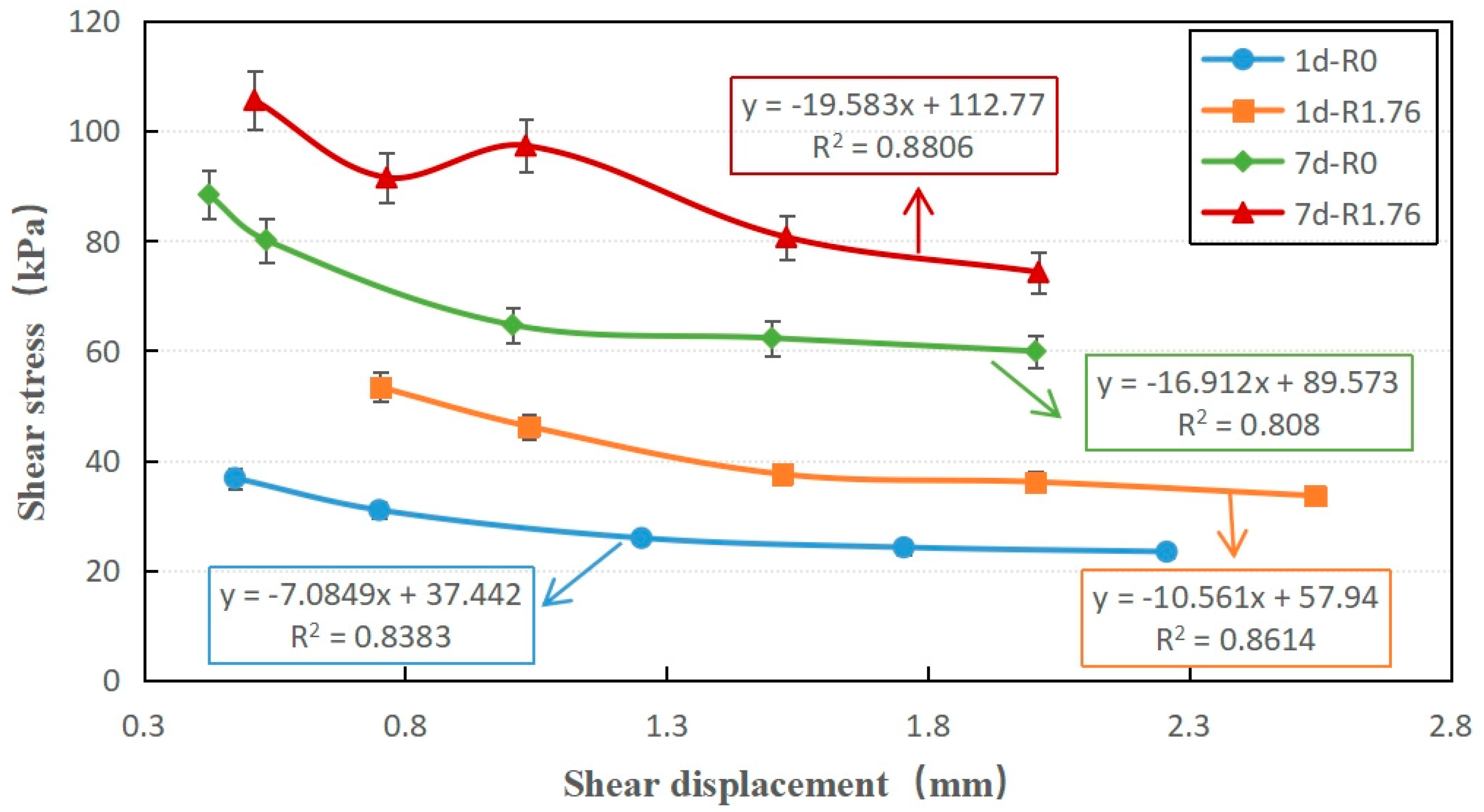
The fitting results for the bond degradation phase (AB) are shown in Figure 7 (R2 ≥ 0.81), confirming the suitability of Equation (4). For 7 d cured JRC 1.76 specimens, the bond degradation coefficient is 19.58 kPa/mm, significantly higher than 16.91 kPa/mm for JRC 0 specimens. The steeper degradation for rough interfaces indicates more abrupt bond failure due to stress concentration at the asperity tips, whereas smooth interfaces exhibit gradual strength degradation dominated by adhesive bond loss. While the linear fit provides a macroscopic average, the actual degradation process may involve nonlinear microcrack propagation influenced by the fiber orientation and matrix heterogeneity.
(3)
Friction sliding phase (BC)
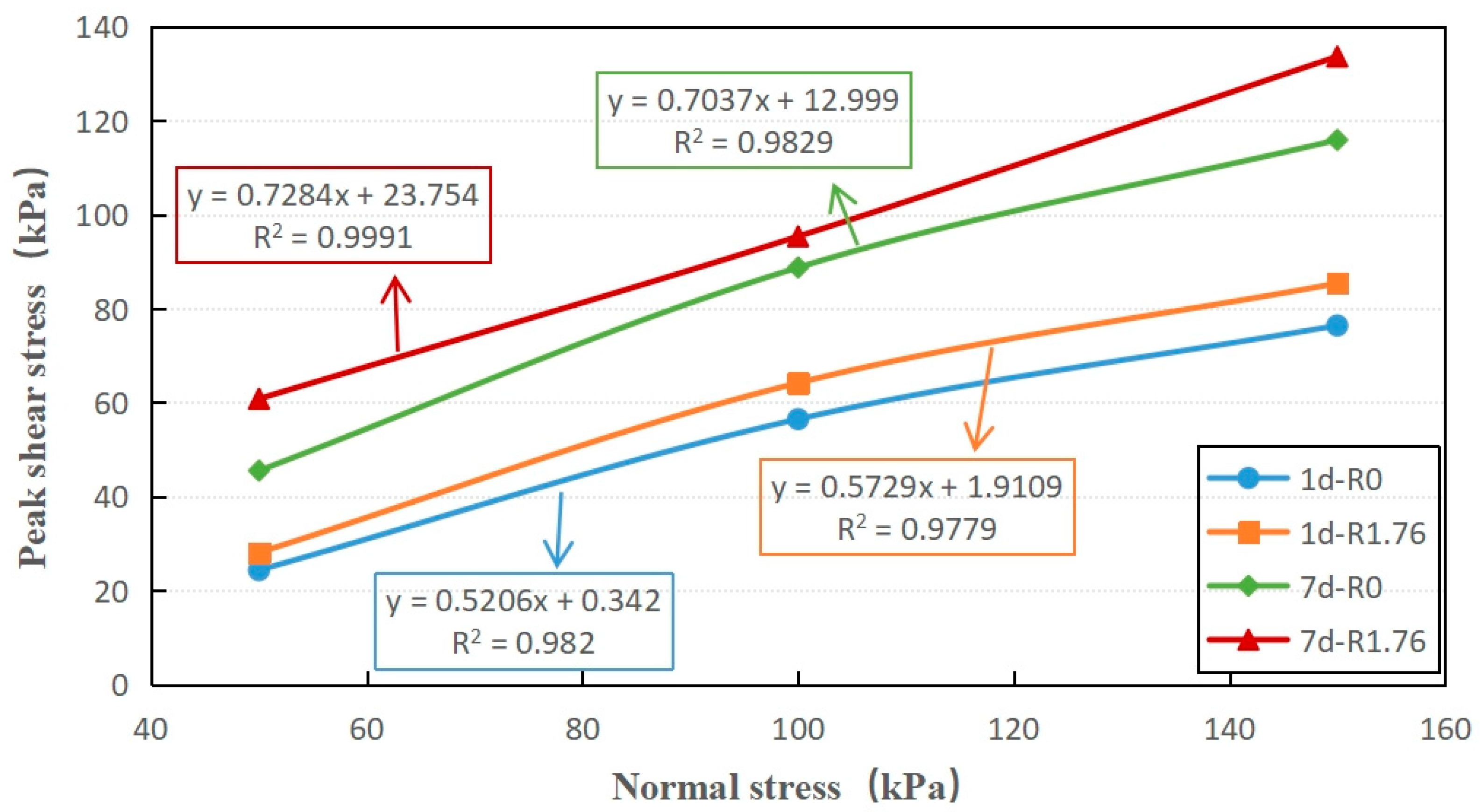
Figure 8 shows the frictional sliding phase (BC) fitting results (R2 ≥ 0.98), which are well described by Equation (5). Residual shear strength parameters listed in Table 6 reveal that JRC 1.76 specimens (7 d curing) have C r   = 23.75 kPa and φ r   = 36.07°, exceeding JRC 0 values ( C r   = 13.00 kPa and φ r   = 35.13°). These results align with the friction-dominated mechanism, where roughness sustains the interlocking resistance even after cohesive bond failure. The higher residual internal friction angle for rough interfaces underscores the persistent role of asperity friction in determining residual strength.

5.2. Model Parameter Evolution and Mechanistic Insights

The calibrated model parameters, including shear stiffness (Ks), bond degradation coefficient ( η ), residual cohesion ( C r ), and residual internal friction angle ( φ r ), exhibited distinct evolutionary trends with curing time and surface roughness (Figure 9). These parameters were rigorously derived from Section 5.1, with high correlation coefficients quantitatively encapsulating the interplay between cement hydration and interfacial topology.
(1)
Shear Stiffness (Ks): Elastic Behavior and Microstructural Development
Ks in the linear elastic stage (OA) reflects the initial resistance of the interface to deformation, governed by the interplay of chemical bonding (hydration products) and mechanical interlock (asperity engagement). For JRC 1.76 specimens cured for 7 d, Ks = 238.28 k Pa/mm, 7% higher than JRC 0 (222.69 kPa/mm), a direct consequence of enhanced asperity interlock, as hypothesized in Section 3.1. Over curing, Ks increased by 180% for JRC 0 and 200% for JRC 1.76, mirroring the densification of the FR-CPB matrix via C-S-H gel formation. This trend aligns with the biphasic peak behavior shown in Figure 1, where mature specimens exhibit a stiffer initial response due to the rigidity of the hydrated matrix.
(2)
Bond Degradation Coefficient ( η ): Rate of Cohesive Failure
η quantifies the transition from cohesive to frictional dominance during the bond degradation (AB). Rough interfaces show higher η values (19.58 kPa/mm for JRC 1.76 vs. 16.91 kPa/mm for JRC 0 at 7 d), a manifestation of stress concentration at asperity tips accelerating bond failure, as observed in the abrupt post-peak stress drop for JRC 1.76 in Figure 1. Curing reduces η by 30–46% across roughness levels, likely due to hydrated asperities resisting shear-induced degradation, as discussed in Section 3.2’s vertical displacement analysis. This parameter captures the competition between matrix strength and topographical stress concentration.
(3)
Residual Strength Parameters ( C r φ r ): Post-Failure Interlock and Friction
In the frictional sliding stage (BC), C r and φ r characterize the enduring resistance of the interface. JRC 1.76 specimens at 7 d, the specimens retained C r   = 23.75 kPa and φ r = 36.07°, 82% and 3% higher than JRC 0, respectively, underscoring the persistent role of roughness in maintaining mechanical interlock. The increase in C r for JRC 0 from 1 d to 7 d highlights the cumulative impact of hydration on residual adhesive bonds, while the rise in φ r for JRC 1.76 reflects the hardening of FR-CPB asperities, enhancing frictional resistance, consistent with the micro-asperity hardening mechanism in Section 4.1.
(4)
Theoretical Consistency and Engineering Relevance
The parameter trends validate the predictive power of the three-stage model: Ks aligns with the elastic deformation of intact interfaces (Equation (3)), η mirrors the cohesive degradation described in Equation (4), C r and φ r satisfy the Mohr–Coulomb criterion in Equation (5), thereby confirming frictional dominance post-failure.
For engineering applications, these parameters inform backfill design: rough interfaces with longer curing times optimize both initial stiffness (Ks) and residual strength ( C r and φ r ), mitigate arching effects, and enhance long-term stability. Conversely, smooth interfaces may rely more on hydration-induced C r growth for delayed stability, as shown in the cohesion trends in Table 5. By dissociating the contributions of roughness and hydration, this analysis provides a mechanistic foundation for FR-CPB interface design, which enables engineers to tailor backfill properties to specific geotechnical demands, namely, balancing roughness for rapid stress transfer and curing time for sustained bonding, thereby enhancing the safety and sustainability of underground mining structures. This integration of theoretical modeling and experimental data provides a robust foundation for advancing eco-efficient backfill technologies in challenging mining environments.

6. Conclusions

This study systematically investigated the shear behavior of polypropylene fiber-reinforced cemented paste backfill (FR-CPB)–granite interfaces, revealing the complex interplay of surface roughness (JRC = 0 and 1.76), curing time (1, 3, and 7 days), and fiber content (0% and 0.5%) on interfacial mechanics. The main findings are summarized as follows:
  • Interface roughness markedly increased the peak shear strength by approximately 20–45%, mainly due to enhanced mechanical interlocking and dilation at the shear plane. Curing time substantially improved interfacial bonding, as reflected by the Mohr–Coulomb parameters: cohesion increased by about 86–144% from 1 to 7 days, indicating hydration-driven strengthening. As bonding developed, the relative contribution of roughness to the peak capacity became less dominant.
  • Adding 0.5 vol.% polypropylene fibers slightly reduced the peak shear capacity by roughly 15–20% but improved post-peak deformability, demonstrating a clear strength–ductility trade-off. The reduction in peak capacity is likely related to changes in effective bonding and increased local heterogeneity at the interface in the presence of fibers.
  • Both peak and residual shear strengths were satisfactorily described by the Mohr–Coulomb criterion. The quantified evolution of strength parameters with curing time and roughness provides a useful basis for interface design and for comparison across different conditions.
  • A three-stage mechanical model was proposed and validated, covering linear elastic response, bond degradation, and frictional sliding. The calibrated parameters, including shear stiffness, bond degradation coefficient, and residual strength, enable accurate prediction of the stress–displacement response across the tested conditions.
These findings underscore the critical role of curing time and roughness in optimizing FR-CPB design for mining backfill. For applications requiring early age strength, shorter curing times may prioritize mechanical interlocking, whereas longer curing periods may enhance cohesive bonding for long-term stability. The model also offers a theoretical framework for geomechanical design, enabling engineers to predict interfacial stress transfer and optimize backfill placement schedules to mitigate arching effects and improve underground structure stability. Future research should explore higher fiber dosages, alternative fiber types, and time-dependent behaviors to further refine interfacial mechanics models for sustainable geotechnical applications.

Author Contributions

Conceptualization, X.X. and R.L.; Methodology, X.X.; Investigation, X.X., Y.L. and R.L.; Data curation, X.X.; Writing—original draft, X.X.; Writing—review & editing, X.X., Y.L. and R.L.; Supervision, R.L.; Funding acquisition, R.L. All authors have read and agreed to the published version of the manuscript.

Funding

This research was funded by Science and Technology Development Fund (FDCT) of Macau grant number 0019/2023/AMJ.

Data Availability Statement

The original contributions presented in this study are included in the article. Further inquiries can be directed to the corresponding author.

Acknowledgments

The authors would like to sincerely acknowledge the support of the Science and Technology Development Fund (FDCT) of Macau, under Grant 0019/2023/AMJ.

Conflicts of Interest

The authors declare that the article described has not been published before; that it is not under consideration for publication anywhere else; that its publication has been approved by all co-authors; and that there is no conflict of interest regarding the publication of this study.

References

  1. Al-Moselly, Z.; Fall, M. Sulphate influence on strength development of cemented paste backfill with superplasticizer under field-like curing conditions. Constr. Build. Mater. 2024, 451, 138788. [Google Scholar] [CrossRef]
  2. Quan, W.; Fall, M. Self-Healing Capacity of Cemented Paste Backfill in Response to Internal Sulfate Exposure. J. Mater. Civ. Eng. 2025, 37, 04025192. [Google Scholar] [CrossRef]
  3. Carnogursky, E.A.; Fall, M.; Haruna, S. Strength development and self-desiccation of saline cemented paste backfill. Environ. Sci. Pollut. Res. 2024, 31, 14894–14911. [Google Scholar] [CrossRef]
  4. Zhao, X.; Fourie, A.; Qi, C.-C. Mechanics and safety issues in tailing-based backfill: A review. Int. J. Miner. Metall. Mater. 2020, 27, 1165–1178. [Google Scholar] [CrossRef]
  5. Fang, K.; Zhang, J.; Cui, L.; Haruna, S.; Li, M. Cost optimization of cemented paste backfill: State-of-the-art review and future perspectives. Miner. Eng. 2023, 204, 108414. [Google Scholar] [CrossRef]
  6. Al-Moselly, Z.; Fall, M. Investigating Pore Water Pressure Development in Paste Backfill Under Conditions Mimicking Field Loading. Geotech. Geol. Eng. 2024, 42, 3491–3514. [Google Scholar] [CrossRef]
  7. Al-Moselly, Z.; Fall, M. Multiphysical testing of strength development of cemented paste backfill containing superplasticizer. Cem. Concr. Compos. 2024, 154, 105772. [Google Scholar] [CrossRef]
  8. Liu, S.G.; Fall, M. Fresh and hardened properties of cemented paste backfill: Links to mixing time. Constr. Build. Mater. 2022, 324, 126688. [Google Scholar] [CrossRef]
  9. Cui, L.; Fall, M. Mechanical and thermal properties of cemented tailings materials at early ages: Influence of initial temperature, curing stress and drainage conditions. Constr. Build. Mater. 2016, 125, 553–563. [Google Scholar] [CrossRef]
  10. Zhang, Q.; Liu, B.; Feng, Y.; Guo, L.; Wang, D.; Zhu, M.; Zhang, Y.; Chen, Q. Mechanism development of strength contributed by CPB with rice husk ash. J. Cent. South Univ. 2024, 31, 1608–1618. [Google Scholar] [CrossRef]
  11. Nasir, O.; Fall, M. Shear behaviour of cemented pastefill-rock interfaces. Eng. Geol. 2008, 101, 146–153. [Google Scholar] [CrossRef]
  12. Fall, M.; Nasir, O. Mechanical Behaviour of the Interface Between Cemented Tailings Backfill and Retaining Structures Under Shear Loads. Geotech. Geol. Eng. 2010, 28, 779–790. [Google Scholar] [CrossRef]
  13. Koupouli, N.J.F.; Belem, T.; Rivard, P.; Effenguet, H. Direct shear tests on cemented paste backfill–rock wall and cemented paste backfill–backfill interfaces. J. Rock Mech. Geotech. Eng. 2016, 8, 472–479. [Google Scholar] [CrossRef]
  14. Wu, A.; Shen, H.; Jiang, L.; Jiao, H.; Wang, Y. Arching effect of long-narrow cemented paste backfill body and its effect on target strength. Chin. J. Nonferrous Met. 2016, 26, 648–654. [Google Scholar]
  15. Wang, W.; Li, Z.; Du, F.; Cao, Z.; Shi, J.; Zhai, M.; Liu, M. Study on the evolution law of failure depth of large mining height and ultra-wide working surface. Sci. Rep. 2026, 16, 665. [Google Scholar] [CrossRef]
  16. Lin, H.; Zhang, W.; Guo, S.; Zhang, X.; Wang, L.; Zhang, J. Study on the Energy Evolution Mechanism and Fractal Characteristics of Coal Failure under Dynamic Loading. ACS Omega 2025, 10, 54710–54719. [Google Scholar] [CrossRef]
  17. Fang, K.; Fall, M. Effects of curing temperature on shear behaviour of cemented paste backfill-rock interface. Int. J. Rock Mech. Min. Sci. 2018, 112, 184–192. [Google Scholar] [CrossRef]
  18. Fang, K.; Fall, M. Shear Behaviour of Rock–Tailings Backfill Interface: Effect of Cementation, Rock Type, and Rock Surface Roughness. Geotech. Geol. Eng. 2021, 39, 1753–1770. [Google Scholar] [CrossRef]
  19. Fang, K.; Fall, M. Insight into the mode I and mode II fracture toughness of the cemented backfill-rock interface: Effect of time, temperature and sulphate. Constr. Build. Mater. 2020, 262, 120860. [Google Scholar] [CrossRef]
  20. Fang, K.; Fall, M. Shear Behavior of the Interface Between Rock and Cemented Backfill: Effect of Curing Stress, Drainage Condition and Backfilling Rate. Rock Mech. Rock Eng. 2020, 53, 325–336. [Google Scholar] [CrossRef]
  21. Fang, K.; Fall, M.; Cui, L. Thermo-chemo-mechanical cohesive zone model for cemented paste backfill-rock interface. Eng. Fract. Mech. 2021, 244, 107546. [Google Scholar] [CrossRef]
  22. Zhang, C.; Wang, J.; Song, W.; Fu, J. The bonding mechanism of rock and cement paste backfill interface under high temperature curing. Powder Technol. 2025, 453, 120680. [Google Scholar] [CrossRef]
  23. Zhang, C.; Wang, J.; Song, W.; Fu, J. Study on shear behavior and microstructure of rock and cemented paste backfill interface. Constr. Build. Mater. 2024, 443, 137834. [Google Scholar] [CrossRef]
  24. Xiu, Z.; Meng, F.; Wang, F.; Wang, S.; Ji, Y.; Hou, Q. Shear behavior and damage evolution of the interface between rough rock and cemented tailings backfill. Theor. Appl. Fract. Mech. 2023, 125, 103887. [Google Scholar] [CrossRef]
  25. Yang, L.; Hou, C.; Zhu, W.; Li, L. Effect of roughness on shear behavior of interface between cemented paste backfill and rock. Constr. Build. Mater. 2024, 411, 134312. [Google Scholar] [CrossRef]
  26. Li, L.; Li, X.; Wang, B.; Tao, J.; Shi, K. A review on interfacial bonding behavior between fiber and concrete. J. Build. Eng. 2025, 105, 112455. [Google Scholar] [CrossRef]
  27. Chen, Y.; Ul, H.S.; Shahid, I.; Inamullah, K.; Shah, R.; Ali, K.S. Performance evaluation of indented macro synthetic polypropylene fibers in high strength self-compacting concrete (SCC). Sci. Rep. 2024, 14, 20844. [Google Scholar] [CrossRef]
  28. Niu, Y.; Li, Q.; Wang, X.; Cheng, Y.; Zhang, Y.; Li, T. Study on mechanical properties and constitutive model of cement and polypropylene fiber improved loess considering freeze-thaw cycles. Constr. Build. Mater. 2025, 462, 140011. [Google Scholar] [CrossRef]
  29. Chen, L.; Li, P.; Guo, W.; Zhang, D.; Wang, R.; Gao, M.; Yuan, K. Mechanical properties and failure modes of polypropylene fiber-reinforced foamed concrete subjected to high strain rates and large compressive deformation: Effects of fiber content and length. J. Sustain. Cem.-Based Mater. 2025, 14, 36–54. [Google Scholar] [CrossRef]
  30. Qian, Y.; Yang, D.; Xia, Y.; Gao, H.; Ma, Z. Properties and improvement of ultra-high performance concrete with coarse aggregates and polypropylene fibers after high-temperature damage. Constr. Build. Mater. 2023, 364, 129925. [Google Scholar] [CrossRef]
  31. Reyad, M.; ElTair, A.M.; El-Nemr, A.; Jato-Espino, D. Mechanical and permeability behavior of porous concrete when using different aggregate sizes and adding polypropylene fiber. J. Mater. Civ. Eng. 2024, 36, 04024132. [Google Scholar] [CrossRef]
  32. Ramírez, W.; Mayacela, M.; Contreras, L.; Shambi, A.; Ramírez, F.; Chacón, J. Mechanical Properties of Permeable Concrete Reinforced with Polypropylene Fibers for Different Water–Cement Ratios. Buildings 2024, 14, 2935. [Google Scholar] [CrossRef]
  33. Xu, Y.; Yao, L.; Yu, X. Effect of polypropylene fibers on mechanical and wetting properties of overall superhydrophobic foamed concrete. Constr. Build. Mater. 2024, 448, 138207. [Google Scholar] [CrossRef]
  34. Zeiml, M.; Leithner, D.; Lackner, R.; Mang, H.A. How do polypropylene fibers improve the spalling behavior of in-situ concrete? Cem. Concr. Res. 2006, 36, 929–942. [Google Scholar] [CrossRef]
  35. Zhang, P.; Li, Q.; Zhang, H. Combined effect of polypropylene fiber and silica fume on mechanical properties of concrete composite containing fly ash. J. Reinf. Plast. Compos. 2011, 30, 1349–1358. [Google Scholar] [CrossRef]
  36. Li, Q.; Zhang, P.; Shen, J. Research on Crack Resistance of Cement Stabilized Macadam Reinforced with Polypropylene Fiber. J. Build. Mater. 2008, 11, 368–374. [Google Scholar]
  37. Libos, I.L.S.; Cui, L.; Liu, X. Effect of curing temperature on time-dependent shear behavior and properties of polypropylene fiber-reinforced cemented paste backfill. Constr. Build. Mater. 2021, 311, 125302. [Google Scholar] [CrossRef]
  38. Libos, I.L.S.; Cui, L. Time- and temperature-dependence of compressive and tensile behaviors of polypropylene fiber-reinforced cemented paste backfill. Front. Struct. Civ. Eng. 2021, 15, 1025–1037. [Google Scholar] [CrossRef]
  39. Xu, X.; An, N.; Fang, K. Experimental investigation into the temperature effect on the shear behavior of the fiber-reinforced interface between rock and cemented paste backfill. Constr. Build. Mater. 2022, 356, 129280. [Google Scholar] [CrossRef]
  40. Zhao, X.; Wang, H.; Luo, G.; Dai, K.; Hu, Q.; Jin, J.; Liu, Y.; Liu, B.; Miao, Y.; Zhu, K. Study on the Rheological and Thixotropic Properties of Fiber-Reinforced Cemented Paste Backfill Containing Blast Furnace Slag. Minerals 2024, 14, 964. [Google Scholar] [CrossRef]
  41. Xu, X.; Wu, W.; Xu, W. Sulfate-dependent shear behavior of cementing fiber-reinforced tailings and rock. Minerals 2020, 10, 1032. [Google Scholar] [CrossRef]
  42. Pan, A.N.; Grabinsky, M.W.F.; Guo, L. Shear Properties of Cemented Paste Backfill under Low Confining Stress. Adv. Civ. Eng. 2021, 2021, 7561977. [Google Scholar] [CrossRef]
  43. Taha, A.; Fall, M. Shear Behavior of Sensitive Marine Clay-Concrete Interfaces. J. Geotech. Geoenviron. Eng. 2013, 139, 644–650. [Google Scholar] [CrossRef]
  44. Tian, H.M.; Chen, W.Z.; Yang, D.S.; Yang, J.P. Experimental and Numerical Analysis of the Shear Behaviour of Cemented Concrete–Rock Joints. Rock Mech. Rock Eng. 2015, 48, 213–222. [Google Scholar] [CrossRef]
  45. Tang, C.; Shi, B.; Gao, W.; Chen, F.; Cai, Y. Strength and mechanical behavior of short polypropylene fiber reinforced and cement stabilized clayey soil. Geotext. Geomembr. 2007, 25, 194–202. [Google Scholar] [CrossRef]
  46. Yi, X.W.; Ma, G.W.; Fourie, A. Compressive behaviour of fibre-reinforced cemented paste backfill. Geotext. Geomembr. 2015, 43, 207–215. [Google Scholar] [CrossRef]
  47. Yi, X.W.; Ma, G.W.; Fourie, A. Centrifuge model studies on the stability of fibre-reinforced cemented paste backfill stopes. Geotext. Geomembr. 2018, 46, 396–401. [Google Scholar] [CrossRef]
  48. Chakilam, S.; Cui, L. Effect of polypropylene fiber content and fiber length on the saturated hydraulic conductivity of hydrating cemented paste backfill. Constr. Build. Mater. 2020, 262, 120854. [Google Scholar] [CrossRef]
  49. Xue, G.; Yilmaz, E.; Song, W.; Yilmaz, E. Influence of fiber reinforcement on mechanical behavior and microstructural properties of cemented tailings backfill. Constr. Build. Mater. 2019, 213, 275–285. [Google Scholar] [CrossRef]
  50. Cao, S.; Yilmaz, E.; Song, W. Fiber type effect on strength, toughness and microstructure of early age cemented tailings backfill. Constr. Build. Mater. 2019, 223, 44–54. [Google Scholar] [CrossRef]
  51. Fang, K.; Fall, M. Chemically Induced Changes in the Shear Behaviour of Interface Between Rock and Tailings Backfill Undergoing Cementation. Rock Mech. Rock Eng. 2019, 52, 3047–3062. [Google Scholar] [CrossRef]
Figure 1. Correlation of shear stress and shear displacement of the interface samples with different roughness under the effect of various curing time (fiber content: 0.5%; normal stress: 50 kPa).
Buildings 16 00913 g001
Figure 2. Correlation of shear stress and shear displacement of the interface samples with different roughness (fiber content: 0%; curing time: 7 d; normal stress: 50 kPa).
Buildings 16 00913 g002
Figure 3. Correlation of vertical displacement and shear displacement of the interface samples with different roughness under the influence of curing time (fiber content: 0.5%; normal stress: 50 kPa).
Buildings 16 00913 g003
Figure 4. Correlation of vertical displacement and shear displacement of the interface samples with different roughness (fiber content: 0%; curing time: 7 d; normal stress: 50 kPa).
Buildings 16 00913 g004
Figure 5. Correlation of peak shear strength and normal stress of the interface samples with different roughness under the effect of curing time (fiber content: 0.5%).
Buildings 16 00913 g005
Figure 6. Shear stiffness calibration in the linear elastic stage (fiber content: 0.5%; normal stress: 50 kPa).
Buildings 16 00913 g006
Figure 7. Bond degradation parameter calibration in the failure stage (fiber content: 0.5%; normal stress: 50 kPa).
Buildings 16 00913 g007
Figure 8. Residual strength parameter calibration in the frictional sliding stage.
Buildings 16 00913 g008
Figure 9. Variation in model parameters under different curing times and surface roughness.
Buildings 16 00913 g009
Table 1. Main physical properties of tailings.
GsD10 (μm)D30 (μm)D50 (μm)D60 (μm)CuCcSs (cm2/g)
2.701.909.0022.5031.5016.601.303600
Note: Gs = specific gravity; D10 = diameter at a cumulative pass rate of 10%; Cu = coefficient of uniformity; Cc = coefficient of curvature; Ss = specific surface area.
Table 2. Main physical and chemical properties of OPC.
GsSs (m2/g)SO3 (wt.%)CaO (wt.%)SiO2 (wt.%)Al2O3 (wt.%)MgO (wt.%)Fe2O3 (wt.%)
3.151.323.8262.8218.034.532.652.70
Note: The chemical compositions listed in the table were obtained using ICP-ES testing. Gs: specific gravity; Ss: specific surface area (BET).
Table 3. Main properties of mixing water.
ElementFeCaAlSiNaMgMnSO42−
Content (mg/L)0.0346.600.130.645.302.60088
Note: The chemical compositions listed in the table were obtained using ICP-ES testing.
Table 4. Experimental program design.
Binder (Content by Volume, %)Polypropylene Fibers (Content by Volume, %)W/CRoughness (JRC)Curing Time (d)
4.507.3507
4.507.351.767
4.50.57.3501, 3, 7
4.50.57.351.761, 3, 7
Table 5. Shear strength parameters of contact interface (0.5% polypropylene fiber).
Roughness
(JRC)
Curing Time (d)Shear Strength Parameters
Cohesion, c (kPa)Internal Friction Angle, φ (°)
0110.3027.92
0316.7342.11
0741.3742.55
1.76121.9831.35
1.76329.2842.24
1.76753.6945.51
Table 6. Residual shear strength parameters of contact interface (0.5% polypropylene fiber).
Roughness
(JRC)
Curing Time (d)Residual Shear Strength Parameter
Residual Cohesion, C r  (kPa)Internal Friction Angle, φ r  (°)
010.3427.50
0713.0035.13
1.7611.9129.81
1.76723.7536.07
Disclaimer/Publisher’s Note: The statements, opinions and data contained in all publications are solely those of the individual author(s) and contributor(s) and not of MDPI and/or the editor(s). MDPI and/or the editor(s) disclaim responsibility for any injury to people or property resulting from any ideas, methods, instructions or products referred to in the content.