1. Introduction
The global construction industry stands at a critical juncture, facing unprecedented challenges in productivity, sustainability, and technological integration [
1]. Despite representing a major share of global economic output, the construction sector has historically lagged behind other industries in adopting digital innovations and process improvements [
2]. The fragmented, project-based nature of construction production, characterised by temporary multi-organisational collaborations and one-off deliverables, has created persistent barriers to technological advancement, coordination, and knowledge transfer [
3].
Over the past two decades, information technology and digitalisation have emerged as primary drivers of development across most industries, forming the cornerstone of what many scholars characterise as the Fourth Industrial Revolution (Industry 4.0) [
4]. This technological transformation builds on earlier revolutionary steps in mechanisation, electrification, and automation, promising similarly profound impacts on productivity and operational paradigms. However, the construction industry’s unique characteristics, including high levels of customisation, site-specific constraints, regulatory complexity, and fragmented supply chains, have resulted in slower technology adoption than in manufacturing and other sectors [
5].
The introduction of Building Information Modelling (BIM) represented a significant step toward construction digitalisation, enabling three-dimensional visualisation, clash detection, and enhanced collaboration among project stakeholders [
6]. Nevertheless, BIM implementations have predominantly focused on design and construction phases, with limited integration into operational and maintenance activities. This lifecycle discontinuity results in substantial information loss at project handover, undermining potential benefits for facility management and long-term asset performance [
7]. Digital twin technology, conceptualised initially for aerospace and manufacturing applications, offers a potential solution to these persistent challenges. The digital twin paradigm proposes creating dynamic, data-rich virtual replicas of physical assets that maintain bidirectional communication throughout their lifecycles [
8]. Unlike static BIM models, digital twins continuously evolve, incorporating real-time data from sensors, operational systems, and user interactions to enable predictive analytics, optimisation, and automated decision-making [
9]. The convergence of enabling technologies, including the Internet of Things (IoT), artificial intelligence (AI), cloud computing, big data analytics, and advanced visualisation, has made digital twin implementations increasingly feasible and valuable. In manufacturing contexts, digital twins have demonstrated benefits in product development, production optimisation, predictive maintenance, and quality control. These successes have sparked growing interest in adapting digital twin concepts to construction and built environment applications.
Despite increasing research attention and pilot implementations, significant gaps remain in understanding how digital twin technology can effectively address construction industry challenges. The lack of clear, universally accepted definitions has led to confusion, with “digital twin” sometimes used interchangeably with BIM or inconsistently applied across applications [
10]. This conceptual ambiguity hinders meaningful comparison of implementations, assessment of benefits, and the development of shared frameworks and industry standards [
11]. Furthermore, existing research and practice have predominantly focused on isolated lifecycle phases, such as design optimisation, construction site management, or building operations, rather than on integrated approaches spanning from early design through project delivery and beyond. This fragmented perspective limits the ability to capture systemic benefits of digital twins as lifecycle integration mechanisms. The construction industry’s project-based structure, where different organizations assume responsibility at various phases, creates additional challenges for maintaining digital continuity across handover points.
Additional uncertainties surround the organisational, process, and cultural changes necessary for successful digital twin adoption. Technology implementation alone is insufficient; realising digital twin benefits requires transformations in collaborative practices, data governance, contractual relationships, and skill development [
12]. However, limited research has examined these sociotechnical dimensions or provided a practical framework for managing organisational transitions toward digital twin-enabled project delivery and operations. The sustainability implications of digital twins also warrant deeper investigation. While proponents argue that digital twins can contribute to environmental goals through performance optimisation, predictive maintenance, and the enablement of the circular economy, empirical evidence and assessment methodologies remain underdeveloped [
5]. Understanding how digital twins can support sustainability transformations in construction, therefore, represents both a research gap and a practical imperative. In response, this systematic review addresses these gaps by examining digital twin technology applications in construction from a comprehensive, lifecycle-oriented perspective. The primary objectives are to:
Clarify digital twin terminology, concepts, and theoretical foundations relevant to construction contexts;
Identify and characterise current digital twin initiatives across different scales and lifecycle phases;
Analyse the relationship between digital twins and related technologies, particularly BIM;
Explore challenges and opportunities for maintaining digital twin continuity through project delivery;
Synthesise implications for practice, policy, and future research.
In doing so, the review makes a dual contribution. Theoretically, it develops a conceptual framework for understanding digital twin maturity levels and the BIM-DT relationship, addressing persistent definitional ambiguity in the literature. Practically, it synthesises evidence-based guidance for construction practitioners navigating adoption, for policymakers designing enabling frameworks, and for researchers identifying priority directions for future investigation.
2. Methodology
This study employs a systematic literature review approach to examine digital twin technology in construction. Primary academic literature was identified through systematic database searches in Scopus, selected for its extensive coverage of construction, engineering, and technology literature. Scopus was selected as the primary database because it offers the most comprehensive coverage of engineering, construction, and built environment literature among major academic databases, and provides consistent metadata, citation tracking, and export functionality suitable for systematic review protocols. Nevertheless, we recognise that this choice may introduce database bias by excluding sources indexed only in Web of Science, ASCE Library, or Google Scholar. Future reviews are encouraged to incorporate multiple databases to improve coverage and reduce selection bias. The primary search string employed Boolean operators to identify relevant literature: (“digital twin” OR “digital-twin” OR “construction digital twin” OR “building digital twin” OR “urban digital twin” OR “city digital twin”) AND (construction OR “built environment” OR building OR infrastructure OR city OR urban) AND (BIM OR “building information model” OR “building information modelling” OR “building information modelling”) AND (“facility management” OR FM OR operation OR maintenance OR “asset management”). Searches were initially constrained to publications from 2018 to 2026 to focus on recent developments, given the rapid evolution of digital twin technology. However, seminal earlier work establishing foundational concepts (e.g., Glaessgen & Stargel [
13]) were incorporated through citation tracking and snowball sampling.
2.1. Inclusion and Exclusion Criteria
The selection process employed systematic inclusion and exclusion criteria to ensure relevance and quality while maintaining appropriate scope. Publications were included when they explicitly addressed digital twin concepts or technologies rather than using terminology superficially, focused on construction, built environment, buildings, or related infrastructure contexts, discussed design, construction, operation, or lifecycle management phases, represented academic peer-reviewed articles, were published in English language to ensure researcher comprehension, and contained sufficient methodological detail regarding methods, findings, or implementation approaches to enable meaningful synthesis [
10].
Conversely, publications were excluded when they used “digital twin” purely as marketing terminology without substantive technical content distinguishing the concept from conventional practices, focused exclusively on non-construction domains such as healthcare or automotive manufacturing without providing transferable insights applicable to construction contexts, presented purely theoretical or conceptual arguments lacking empirical grounding or practical application examples, provided insufficient detail or quality for meaningful synthesis and comparison with other sources, or substantially overlapping content already captured from primary sources [
14].
2.2. Selection Process
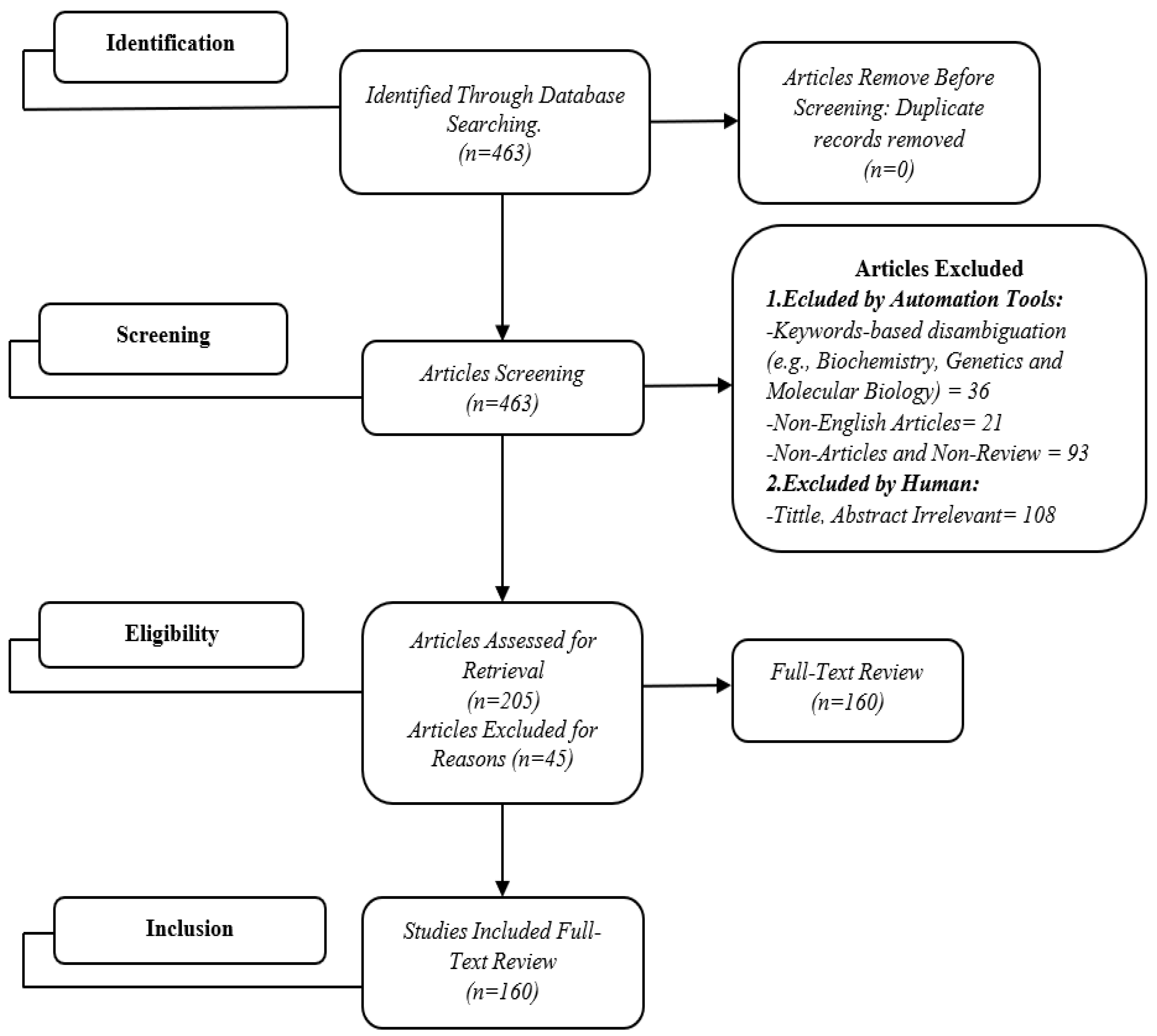
The selection process adhered to the PRISMA (Preferred Reporting Items for Systematic Reviews and Meta-Analyses) guidelines, appropriately adapted for reviews (The PRISMA checklist for this study is provided in the
Supplementary Materials). Initial database searches across Scopus identified 463 potentially relevant publications based on title and keyword matching with search strings. The following titles and abstracts were screened across 205 unique publications, eliminating 258 publications that clearly fell outside the scope based on topic, domain, or relevance criteria. The remaining 205 publications underwent full-text assessment evaluating methodological quality, depth of relevance, and potential contribution, resulting in the final inclusion of 160 academic publications that met all criteria (see
Figure 1).
The quality assessment was conducted using a structured appraisal checklist applied independently by two reviewers across six criteria: clarity of research questions and objectives, appropriateness of methodology, transparency of data collection and analysis, rigour of interpretation, acknowledgement of limitations, and contribution to knowledge. Each criterion was rated on a three-point scale (0 = not met, 1 = partially met, 2 = fully met), yielding a maximum score of 12 per study. Studies scoring below 6 were excluded. Disagreements between reviewers were resolved through structured discussion, with a third senior reviewer consulted where consensus could not be reached. Inter-rater reliability was assessed using Cohen’s kappa statistic, yielding 0.83, indicating substantial agreement between reviewers and confirming the systematic, reliable application of inclusion criteria [
15]. This systematic, transparent process ensures reproducibility, while the substantial inter-rater agreement provides confidence in selection decisions that balance inclusivity appropriate for this research with quality standards necessary for rigorous synthesis. Quality assessment employed adapted criteria appropriate for mixed evidence types. Academic publications were assessed using established criteria, including:
Clarity of research questions and objectives;
Appropriateness of methodology for research questions;
Transparency regarding data collection and analysis;
Rigour in analysis and interpretation;
Acknowledgement of limitations;
Contribution to knowledge.
3. Findings
3.1. Digital Twin Conceptualisation and Definition
3.1.1. Conceptual Origins and Evolution
The digital twin concept emerged from product lifecycle management (PLM) discourse in the early 2000s and is widely attributed to Michael Grieves, who initially introduced the idea as the “mirror space model” for manufacturing contexts [
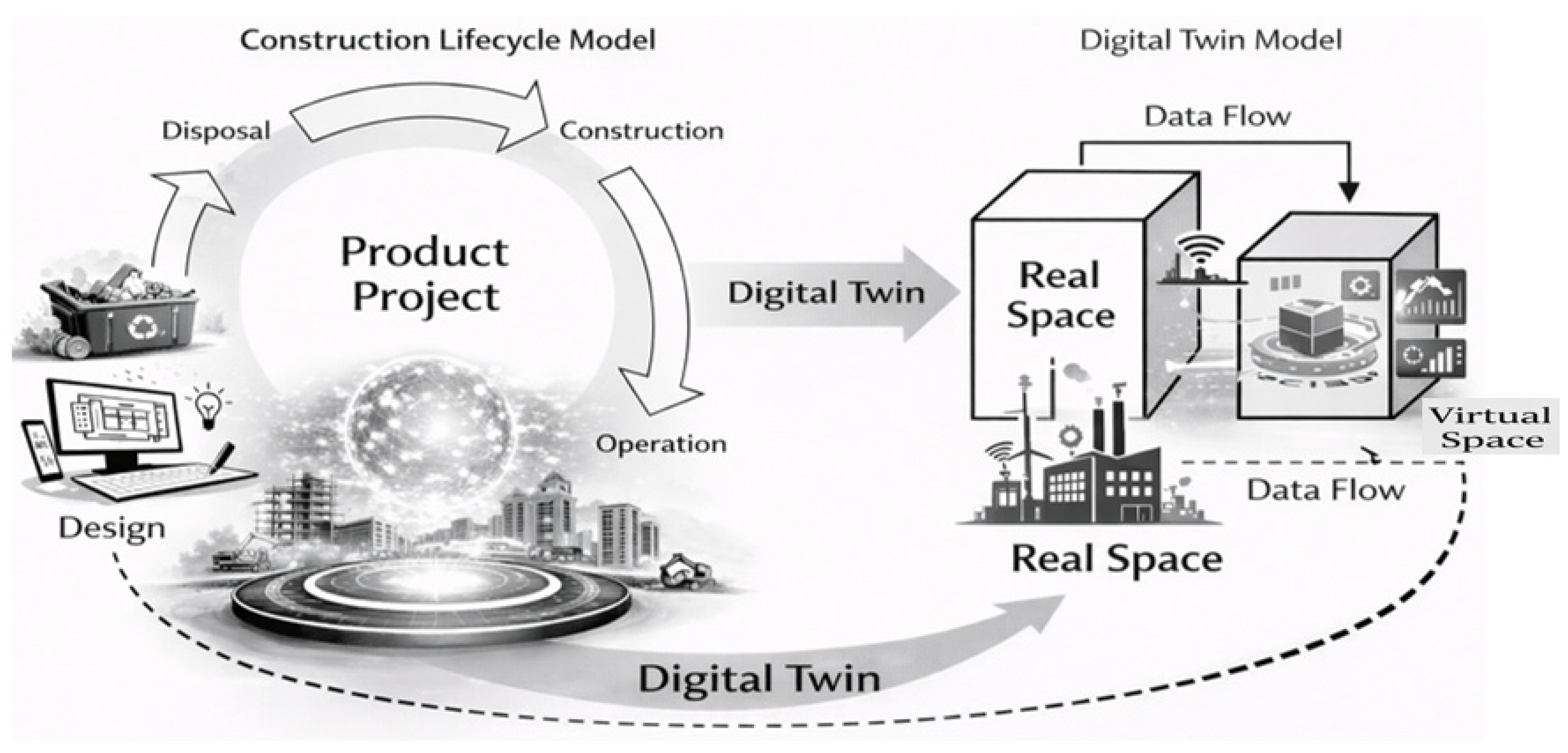
16]. This foundational conceptualisation envisioned integrating information from different lifecycle stages, design, production, operation, and disposal around a product-centric information core, enabling the creation of a digital entity that mirrors the physical product throughout its lifetime [
9]. The concept gained broader recognition following its formal definition in aerospace contexts by Glaessgen & Stargel [
13], who described a digital twin as “an integrated multi-physics, multiscale, probabilistic simulation of an as-built vehicle or system that uses the best available physical models, sensor updates, fleet history, etc., to mirror the life of its corresponding flying twin.” This definition emphasised high-fidelity simulation, continuous integration of sensor and historical data, and lifecycle continuity characteristics that have strongly influenced subsequent digital twin conceptualizations across industries [
13].
Literature analysis further reveals three evolutionary phases in digital twin development [
9]. The formation stage (2003–2011) featured limited publications, immature technological foundations, and a lack of a long-term implementation vision, with research confined mainly to the aerospace and manufacturing engineering domains. The incubation stage (2011–2016) witnessed a gradual expansion of academic interest, although outputs remained dominated by conference papers and were restricted to research communities [
9]. The expansion stage (2016–present) has experienced exponential growth in publications, diversification across application domains, including construction, and a transition from conceptual discussions to implementation-focused research and practical use cases [
17]. This evolutionary trajectory reflects the maturation of digital twins from a theoretical proposition into a scalable digital framework for lifecycle integration and decision support. The construction industry’s growing engagement with digital twins is part of this broader expansion phase, as researchers and practitioners increasingly seek to adapt concepts initially developed for manufacturing and aerospace to the unique challenges of the built environment [
10].
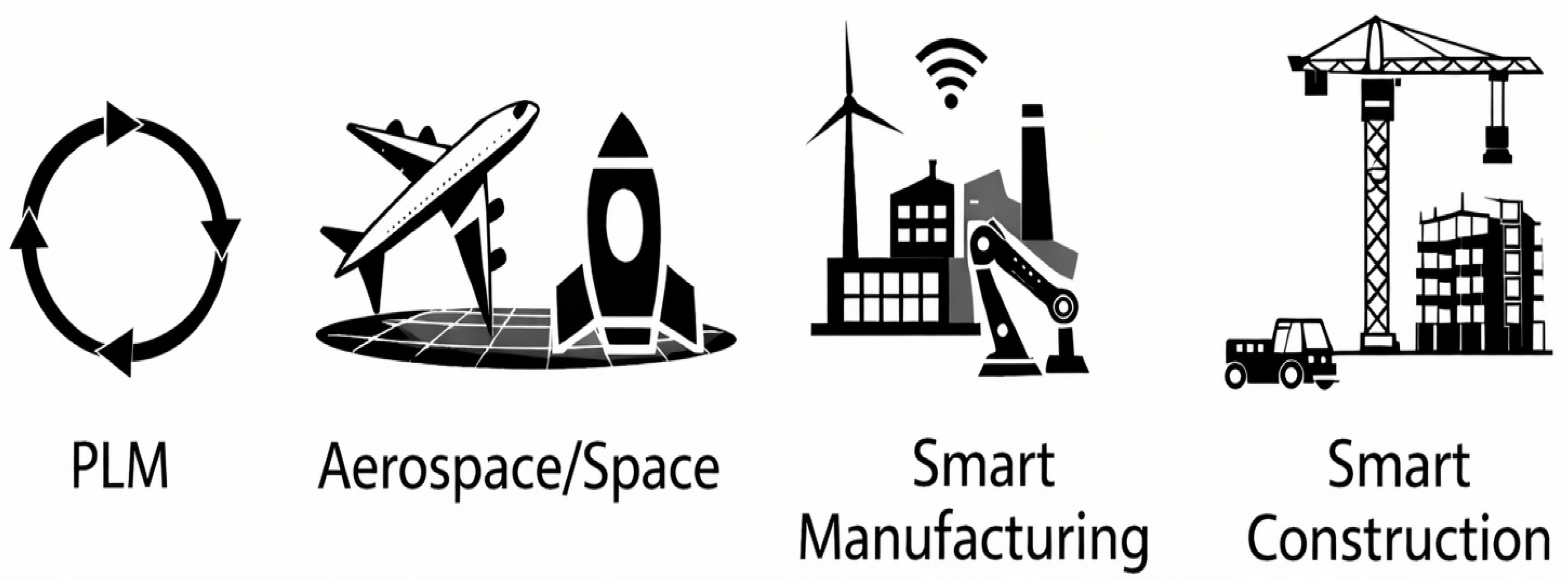
Figure 2 illustrates the four evolutionary stages of digital twin development.
3.1.2. Definitions and Core Characteristics
Despite the proliferation of digital twin literature, no universally accepted definition exists. The review identified substantial definitional variation, with some publications offering explicit definitions while others use the term without clarification, sometimes merely as marketing terminology or a “buzzword” [
18] (Jones et al., 2020). This ambiguity reflects both the concept’s relative youth and its rapid adaptation across diverse application domains. At its simplest, a digital twin is commonly described as a “digital representation,” “replicas,” or “mirrors” of a physical asset. However, more elaborate definitions emphasise specific characteristics that distinguish digital twins from simpler digital models or representations [
19]:
- ❖
Dynamic and Living Nature: Digital twins are often characterised as “living virtual models,” or connected digital representations that evolve continuously over time rather than remaining static [
10]. This temporal dimension distinguishes digital twins from traditional CAD models or conventional BIM implementations, which often remain snapshot-based and phase-limited.
- ❖
Bidirectional Communication: A defining feature is real-time (or near-real-time) two-way communication between physical and digital entities, enabling monitoring of physical assets and providing feedback, actuation, or control based on digital twin insights [
20]. This bidirectionality exceeds traditional monitoring systems that only capture data unidirectionally.
- ❖
High-Fidelity Representation: Digital twins aim to achieve high-fidelity replication with sufficient detail and accuracy for reliable decision-making and prediction. While the required level of fidelity varies by application, this characteristic typically exceeds simplified or abstracted representations [
21].
- ❖
Simulation Capability: Digital twins enable simulation of various scenarios, enabling predictive analysis, what-if experimentation, and optimisation before implementing changes to physical assets [
22]. Simulation is therefore frequently treated as a differentiating element that moves beyond visualisation and documentation.
- ❖
Decision Support Functionality: Digital twins provide decision-support features by transforming raw data into actionable insights through analytics, visualisation, and recommendation mechanisms [
23]. This aligns with broader cyber-physical systems paradigms, in which digital models directly contribute to operational strategy and performance improvement.
- ❖
Lifecycle Perspective: Unlike phase-specific models, digital twins emphasise continuity across the asset lifecycle from conception through disposal, accumulating knowledge over time and adapting as the physical system changes [
24]. This lifecycle orientation is particularly relevant in-built environment contexts, where handover stages often trigger information loss.
Synthesising across sources, this review adopts the following working definition: “A digital twin is a high-fidelity virtual representation of a physical asset featuring real-time bidirectional data communication, simulation capabilities for scenario analysis, and decision-support functionalities maintained throughout the asset’s lifecycle”. This definition captures consensus elements while remaining sufficiently flexible for construction applications. Importantly, it distinguishes digital twins from simpler concepts through three requirements: (1) bidirectional, not just unidirectional data flow, (2) real-time or near-real-time updating, and (3) simulation and decision-support capabilities beyond mere visualisation.
Figure 3 illustrates the connection between physical and virtual spaces throughout the construction lifecycle, highlighting the bidirectional data flows and digital twin integration mechanisms across design, construction, and operational phases.
3.1.3. Digital Twin Maturity Levels
Analysis reveals that digital twins exist along maturity continuums rather than as binary present/absent phenomena. Kritzinger et al. [
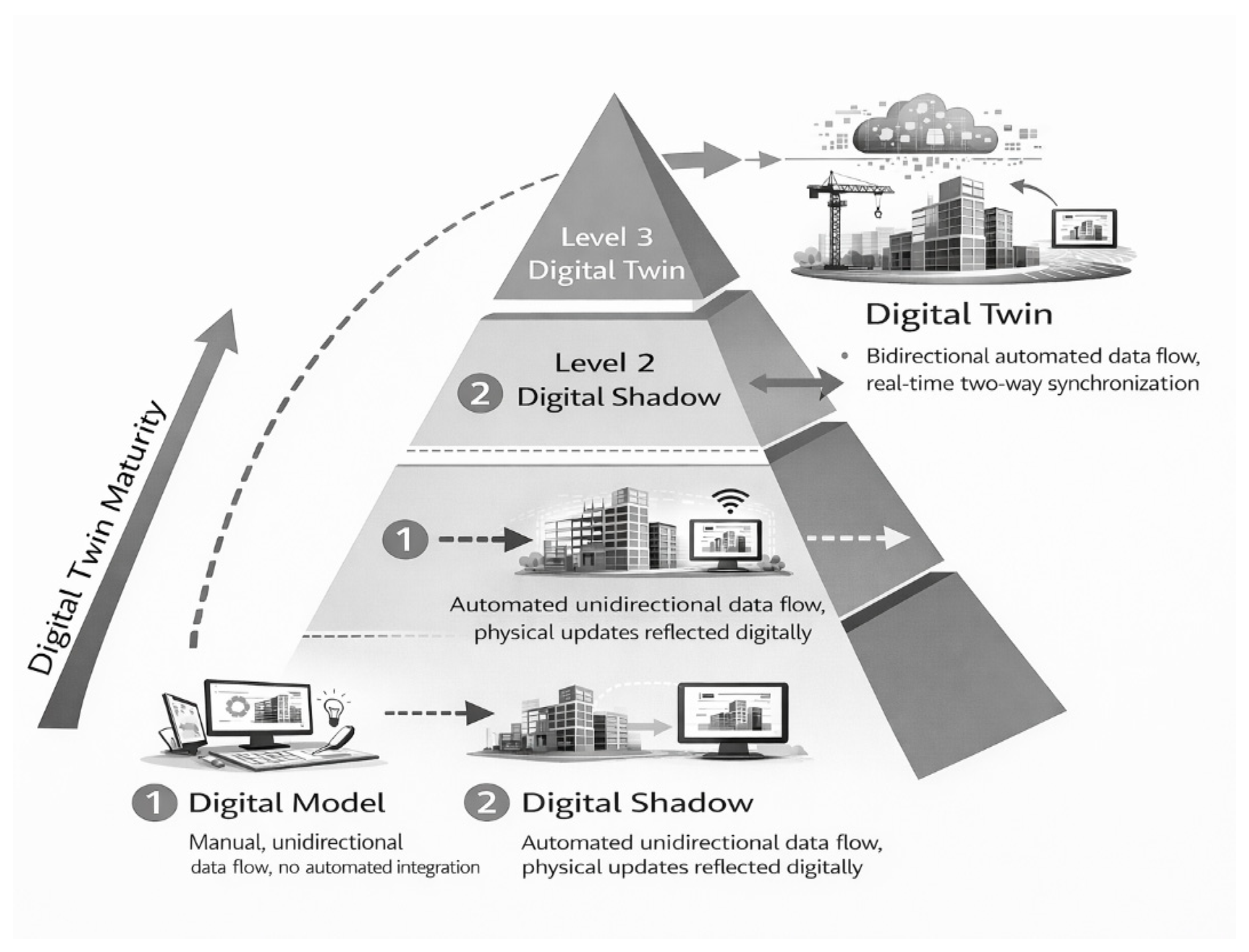
25] propose a three-level classification based on data-flow integration, which has gained traction in both manufacturing and construction contexts:
- ❖
Level 1—Digital Model: Manual, unidirectional data flow from physical to digital object with no automated integration. Changes to physical or digital objects do not automatically affect counterparts. Traditional BIM models during design, where designers manually update models based on decisions, exemplify this level.
- ❖
Level 2—Digital Shadow: Automated unidirectional data flow from physical to digital object. Physical changes automatically update the digital representation, but digital modifications do not affect the physical object. Construction monitoring systems using IoT sensors to track progress automatically update the digital representation, but design changes in the digital model do not automatically execute in physical construction.
- ❖
Level 3—Digital Twin: Bidirectional automated data flow. Changes to either physical or digital objects automatically update their counterparts, enabling closed-loop control and optimisation. Building automation systems that adjust HVAC equipment based on digital twin optimisation recommendations, which in turn update the digital twin with actual performance data, illustrate this level.
Figure 4 presents the three maturity levels of digital twins in construction, distinguishing between the Digital Model, Digital Shadow, and full Digital Twin configurations based on the direction of data flow, degree of automation, and extent of physical-digital integration.
Most current construction implementations operate at Level 1 or are transitioning toward Level 2, while actual Level 3 digital twins remain aspirational in most real-world construction contexts [
26]. Madni et al. [
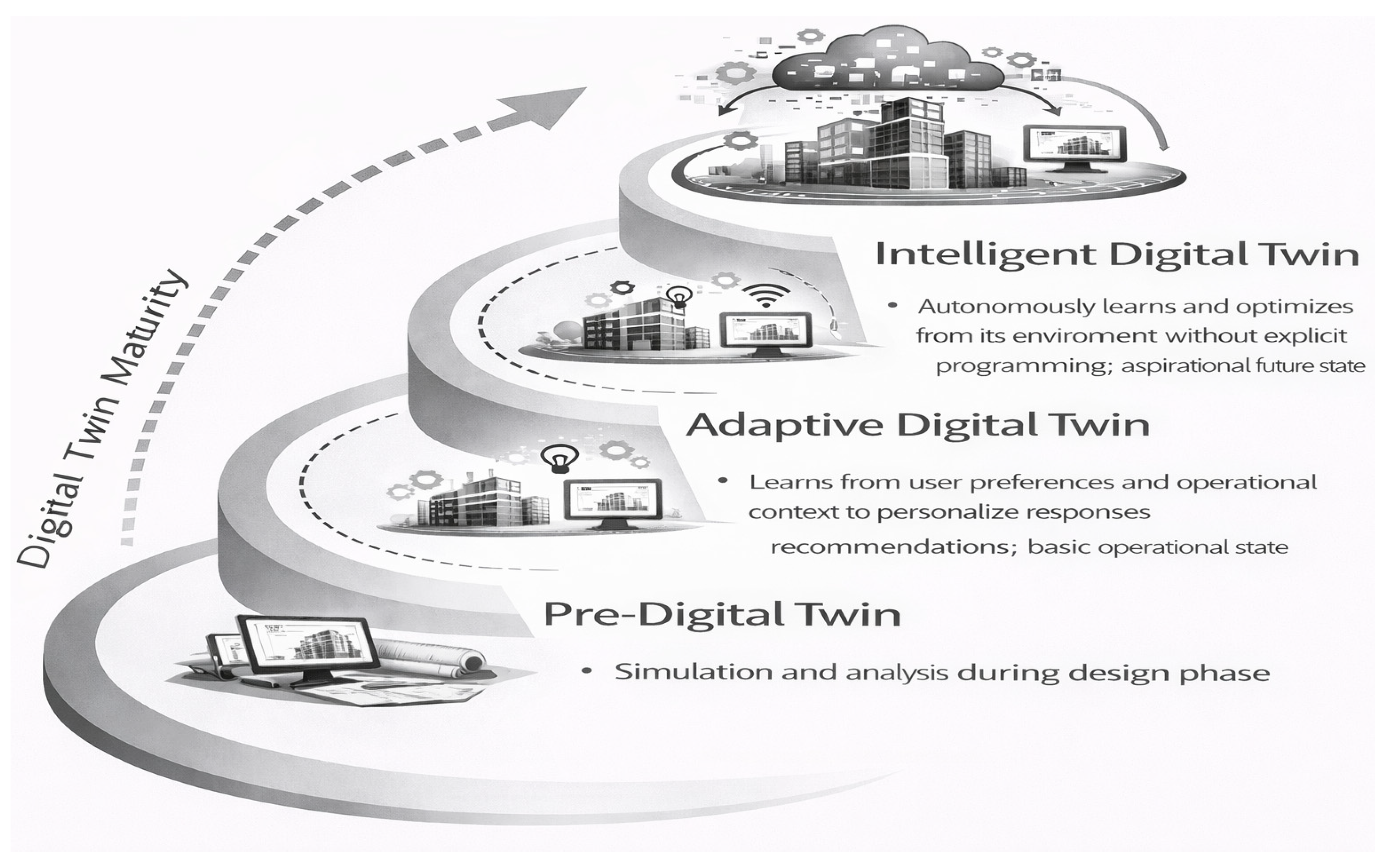
27] propose an alternative maturity framework focusing on sophistication and intelligence:
- ❖
Pre-digital Twin: Exists before physical asset construction, supporting design and engineering decisions through simulation and analysis. Can transition to operational digital twin upon asset completion. This category recognises that digital twins can deliver value during design phases, not just after construction.
- ❖
Adaptive Digital Twin: Learns from user preferences and operational context, personalising responses and recommendations based on accumulated experience. For buildings, this might include learning occupant comfort preferences and proactively adjusting systems.
- ❖
Intelligent Digital Twin: Demonstrates autonomous learning from the environment and self-optimisation without explicit programming. Such systems could automatically identify inefficiencies, develop optimisation strategies, and implement improvements while monitoring outcomes that represent the aspirational future state for construction digital twins.
- ❖
Figure 5 illustrates the digital twin maturity framework in construction, depicting the staged progression from pre-digital twin configurations through operational and adaptive systems to fully intelligent, self-optimising digital twins.
This framework highlights evolutionary pathways toward increasing autonomy and intelligence. Current construction implementations predominantly function as pre-digital twins or basic operational twins, with adaptive and intelligent capabilities representing future development directions [
27].
3.1.4. Relationship to Building Information Modelling
The relationship between digital twins and Building Information Modelling (BIM) emerged as critically important yet frequently misunderstood, with analysis revealing three distinct perspectives in the literature and in practice. The first positions BIM as a digital twin precursor, with maturity levels corresponding to digital twin categories. The second view BIM as the static geometric and semantic core, while digital twins extend BIM through dynamic data integration, IoT connectivity, and AI-enabled analytics. The third perspective conceptualises digital twins as next-generation paradigms that transcend BIM limitations, particularly lifecycle fragmentation, static model characteristics, and limited interoperability and represent fundamental shifts rather than incremental enhancements.
Perspective 1—BIM as Digital Twin Precursor: This view positions BIM as an evolutionary step toward digital twins, with BIM maturity levels corresponding to digital twin categories. Proponents suggest BIM Level 1 (object-based modelling with limited collaboration) aligns with digital models, BIM Level 2 (collaborative cloud-based environments) aligns with digital shadows, and BIM Level 3 (fully integrated lifecycle information management) corresponds to true digital twins [
26]. This perspective emphasises continuity and suggests that organisations can build on existing BIM investments.
Perspective 2—BIM as Digital Twin Core Component: Here, BIM serves as the static geometric and semantic core, while digital twins extend BIM through dynamic data integration, IoT connectivity, AI-enabled analytics, and operational system integration [
28]. Digital twins are therefore conceptualised as “BIM+”, layering additional functionality on established BIM foundations rather than replacing BIM entirely.
Perspective 3—Digital Twin as BIM Evolution: This perspective views digital twins as next-generation paradigms that transcend BIM limitations, particularly lifecycle fragmentation, static model characteristics, limited interoperability, and the dominant focus on design and construction rather than operational performance [
29]. In this view, digital twins address BIM shortcomings while still leveraging BIM strengths, representing a fundamental shift rather than an incremental enhancement.
Table 1 presents the key differences between traditional BIM and digital twins across eight characteristics, including temporal scope, data flow, data sources, integration capability, update frequency, primary purpose, analytical capability, and user base.
These distinctions suggest digital twins represent qualitative rather than merely quantitative advancement beyond BIM. While BIM provides the necessary foundations, achieving digital twin capabilities requires fundamental extensions in data integration, analytics, and operational focus [
30]. The relationship between BIM and the digital twin varies by context and maturity. Organisations with advanced BIM Level 3 implementations featuring lifecycle integration and everyday data environments may already possess many digital twin characteristics, making the distinction somewhat semantic. Conversely, organisations with basic BIM implementations face substantial gaps before achieving digital twin capabilities. The relationship, therefore, depends on BIM maturity level and organisational digital capabilities [
31].
3.2. Enabling Technologies and Technical Architecture
3.2.1. Core Technology Components
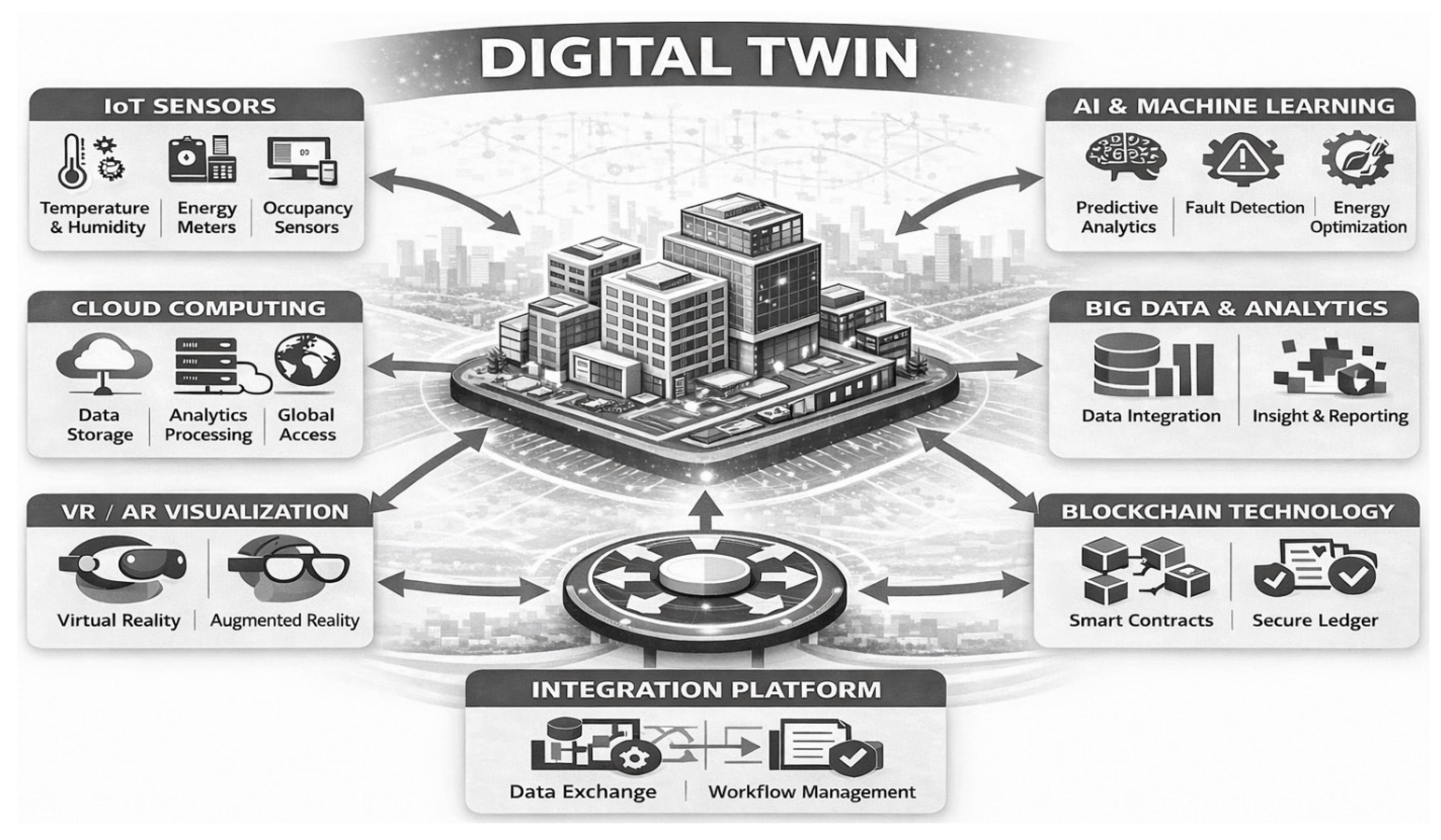
Digital twin implementations integrate multiple enabling technologies, each contributing essential capabilities that, together, create comprehensive systems for monitoring, analysing, and managing built assets [
32]. The Internet of Things (IoT) serves as the sensory foundation for digital twins, with sensors and connected devices providing real-time data on physical asset performance, environmental conditions, occupancy patterns, energy consumption, and system operations [
33]. The range of IoT technologies identified in implementations spans environmental sensors that monitor temperature, humidity, carbon dioxide levels, and light intensity, as well as energy metres that track electricity, heating, and cooling consumption. Occupancy sensors detect presence and count people within spaces, while equipment sensors monitor HVAC performance, elevator operations, and pump status. Additionally, structural sensors provide critical data on vibration, settlement, and strain monitoring to support condition assessment and long-term integrity monitoring [
34].
Figure 6 illustrates the key technology domains supporting digital twin integration across urban and built environment systems, showing how IoT, cloud computing, artificial intelligence, and advanced visualisation converge to underpin city-scale and building-scale implementations.
Cloud computing provides scalable infrastructure to support digital twin operations, offering storage for massive data volumes generated by IoT sensors, computational resources for intensive analytics, and accessibility for distributed stakeholders across organisational boundaries [
20]. Cloud capabilities enable centralised data repositories accessible across organisational boundaries, reducing information silos between design, construction, and operations teams. The elastic computational resources provided by cloud platforms scale dynamically with demand, ensuring performance during peak usage periods without requiring organisations to maintain costly infrastructure during quieter periods [
35]. Platform-as-a-Service offerings further reduce infrastructure management burdens, while built-in backup, redundancy, and recovery capabilities enhance data availability. Importantly, cloud-based integration platforms can act as connectors between heterogeneous systems, enabling data flow across previously incompatible technologies [
35].
Artificial intelligence (AI) and machine learning (ML) algorithms serve as the analytical engine of digital twins, detecting patterns in historical and real-time data to predict failures, optimise performance, and support decision-making [
36]. Beyond maintenance, AI can enable energy optimisation by learning building thermal dynamics and occupant behaviours to minimise consumption while maintaining comfort. Anomaly detection algorithms continuously monitor data streams to identify unusual patterns that may indicate equipment malfunctions or operational risks, enabling earlier intervention than traditional reactive approaches [
37]. Increasingly sophisticated automated control systems can adjust building systems based on predicted occupancy levels and contextual data (e.g., weather forecasts), thereby optimising performance with reduced manual intervention.
Big data analytics provides tools to extract meaningful insights from diverse, heterogeneous data sources that feed digital twins, including BIM models, IoT sensor streams, operational systems, maintenance records, and external data such as weather forecasts and energy prices [
38]. These analytics capabilities enable pattern identification across datasets too large and complex for manual analysis, including correlation discovery and portfolio benchmarking to compare performance across multiple assets. Root cause analysis tools further support diagnosis by tracing performance deviations through causal chains, while visualisation and reporting mechanisms assist communication with stakeholders with varying technical expertise [
39].
Advanced visualisation technologies, particularly virtual reality (VR) and augmented reality (AR), enable intuitive interaction with digital twins beyond traditional 2D interfaces [
40]. Design review and stakeholder engagement benefit from immersive VR environments that allow users to experience proposed designs at full scale before construction begins. On-site AR applications can overlay digital models onto physical construction environments, supporting installation verification and rapid discrepancy detection during construction and commissioning [
41]. Training simulations also leverage these technologies to prepare personnel for equipment operation and safety procedures in risk-free virtual environments. Remote collaboration capabilities further enable distributed teams to interact with shared digital twin visualisations, reducing geographic coordination constraints [
42].
Blockchain technology is an emerging application area, with researchers exploring its potential to establish data provenance, protect intellectual property, enable automated contracting, and build trust among collaborating organisations [
43]. Potential applications include immutable audit trails of design decisions and construction changes, improving transparency and accountability across project lifecycles. Smart contracts can support automated payment execution based on verified progress, while supply chain traceability can enhance material authenticity by tracking products from manufacture through installation [
44]. Blockchain-based access control mechanisms may also support permission management and governance of sensitive project information [
45].
Finally, digital platforms and integration middleware provide the shared environments necessary for data exchange, collaboration, and workflow management across organisational boundaries [
46]. These platforms serve as integration hubs that connect diverse systems and stakeholders and translate between different data formats and protocols, supporting interoperability in complex project ecosystems. By enabling standardised interfaces and data models, integration platforms reduce the complexity of combining best-of-breed digital twin components, enabling the development of scalable systems beyond monolithic vendor solutions [
47].
Table 2 presents the core technology components enabling digital twin implementation in construction, detailing the function and application of each component.
3.2.2. Technical Architecture Patterns
Analysis of digital twin implementations revealed recurring architectural patterns across projects. However, the specific technology selections and platform ecosystems vary significantly depending on organisational priorities, legacy systems, and intended use cases [
48]. A commonly observed approach is a layered architecture, where the digital twin is structured into multiple functional layers that isolate responsibilities and support system scalability through clear interfaces [
49]. At the foundation lies the physical layer, which comprises buildings, infrastructure systems, construction activities, sensors, actuators, and equipment that form the real-world assets being represented digitally. This layer generates operational data and responds to control inputs transmitted through the digital twin environment.
Above this, the data acquisition layer collects information from heterogeneous sources such as IoT sensors embedded in building systems, building automation platforms, mobile device inputs from field teams, manual data entry where automation is not feasible, and external contextual streams such as weather or energy market data [
50]. The communication layer provides connectivity between physical and cyber components, enabling reliable, secure data transfer across networks, gateways, and protocols. This layer must accommodate the technical realities of diverse connectivity standards, variable bandwidth, and cybersecurity constraints typical of complex built environments [
51]. The data integration layer performs cleaning, transformation, synchronisation, and harmonisation of incoming datasets that differ in format, structure, and semantic meaning. Data integration is essential because digital twin value depends on establishing interoperability and meaningful alignment across multiple digital and physical subsystems. Without this capability, inconsistent data streams undermine trust and reduce the effectiveness of advanced analytics [
52].
Following integration, the digital model layer maintains key representations required for digital twin operation, including BIM/CAD-derived geometric models, semantic asset models describing component relationships, simulation models supporting predictive assessment, and databases that store both real-time states and historical records [
32]. The analytics layer then applies computational methods such as machine learning for predictive insights, simulation engines for scenario testing, and optimisation tools to support improved decision-making, including high-value use cases such as predictive maintenance and energy management [
27]. Outputs from analytics flow into the application and service layers, which provide user interfaces, dashboards, decision-support modules, visualisation services, mobile access for field personnel, and feedback-control mechanisms that translate recommendations into actions across connected systems [
32].
This layered architectural approach supports separation of concerns, enabling modular development and reducing system complexity [
53]. It also improves long-term flexibility by allowing individual components or technologies within a given layer to evolve without requiring full redesign of the overall system. This capability is particularly important in the built environment, where assets may remain operational for decades while digital technologies change rapidly [
50].
Table 3 presents the layered architecture of digital twin systems in construction, detailing the function and data flow responsibilities of each layer.
3.2.3. Implementation Focus Areas
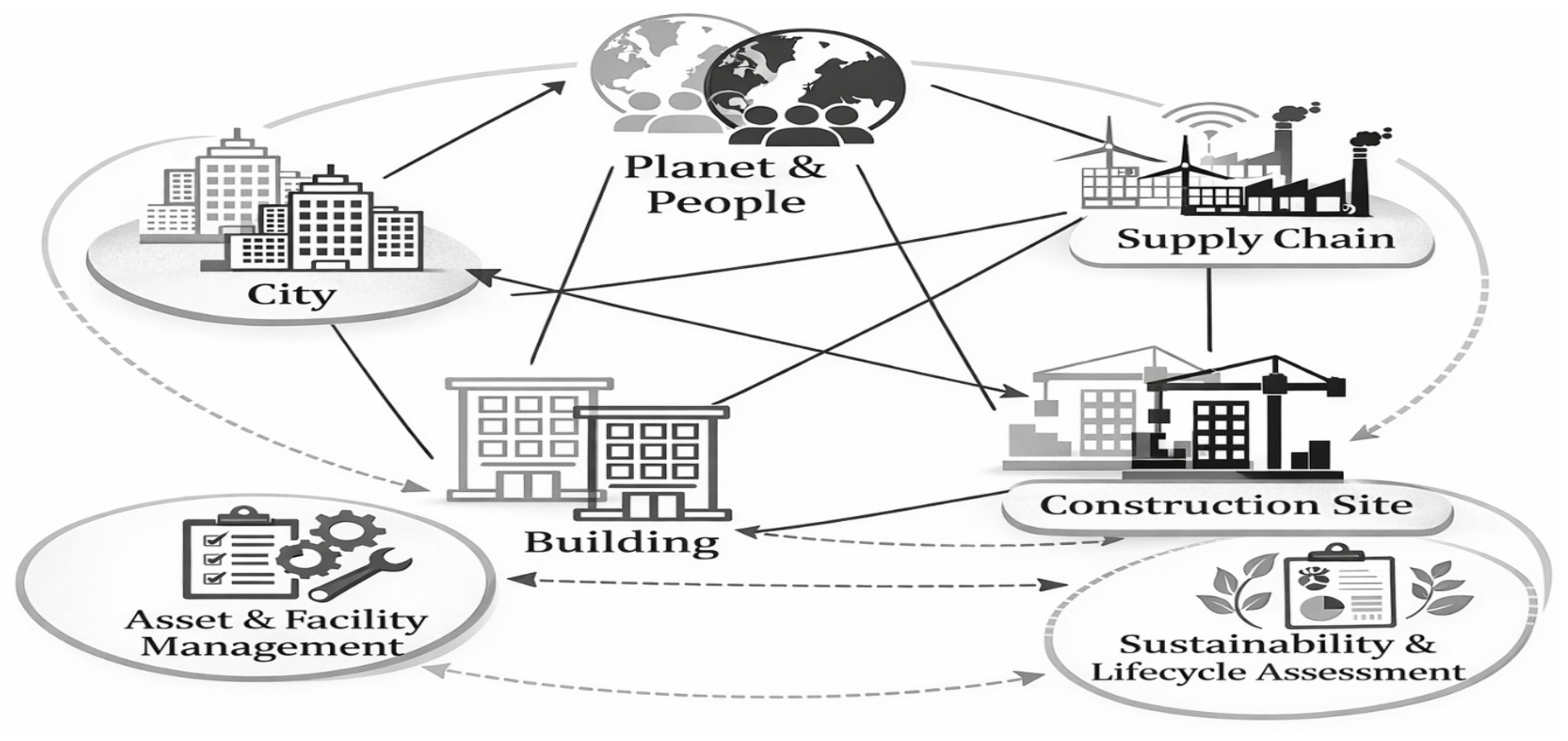
Digital twin implementations cluster around several primary application domains, each addressing specific challenges and value propositions that have proven compelling to early adopters and mature users [
54]. Urban planning and city development represent a major application domain in which city-scale digital twins support the creation and visualisation of development plans, regulatory compliance checks, stakeholder engagement, infrastructure capacity planning, and scenario analysis for complex urban decisions [
55]. Benefits reported from these implementations span multiple dimensions of urban governance. Improved public participation is enabled by interactive 3D visualisation, making development proposals more accessible to non-technical citizens. Faster permitting and review processes can be supported through automated rule and compliance checking, reducing manual verification burdens. Better-informed planning outcomes are achieved through simulation-based analysis of impacts on traffic, the environment, and infrastructure demand [
56]. Enhanced inter-agency coordination also becomes feasible when municipal departments and external developers operate from a shared representation of existing conditions and proposed interventions.
Construction site management is another high-impact application domain, where construction-phase digital twins enable real-time progress monitoring, logistics optimisation, safety monitoring and hazard anticipation, multi-trade coordination, and quality assurance through continuous documentation [
57]. Advanced implementations report measurable value creation during construction delivery. Logistics improvements can reduce unnecessary material handling and transport by optimising sequencing and implementing just-in-time delivery. Safety performance improves through predictive hazard systems that combine site conditions with worker proximity data to anticipate risk events [
58]. Quality management benefits from continuous capture of construction states, improving traceability and evidence-based verification. Reduced rework is enabled through earlier detection of schedule conflicts and coordination issues before they translate into physical installation errors [
59].
Asset and facility management emerged as the most mature application area in the literature, focusing on operational optimisation such as predictive maintenance, energy management, indoor environmental quality monitoring, and space utilisation analytics across buildings and portfolios [
60]. Reported benefits include extending asset service life and reducing unplanned downtime through early detection of degradation patterns. Energy optimisation is frequently cited as a high-value outcome, as digital twin-enabled control strategies can improve efficiency while maintaining comfort and operational reliability [
61]. Space management capabilities gained particular importance during the COVID-19 period, when organisations required more detailed occupancy monitoring and compliance verification to support the safe use of office and public building spaces [
62]. Portfolio-level integration also enables benchmarking and identification of transferable best practices across multiple assets [
63].
Sustainability and lifecycle assessment are emerging domains in which digital twins are used for real-time sustainability monitoring, lifecycle environmental assessment, material tracking to support circular economy principles, and carbon performance management across asset lifecycles [
64]. Digital twins can strengthen lifecycle assessment accuracy by maintaining a continuous record of design specifications, material selection, operational consumption, maintenance activities, and system adjustments that influence environmental performance [
65]. Component-level tracking across building lifecycles could enable more systematic reuse, refurbishment, or recycling decisions by documenting composition, installation date, service history, and remaining service life, supporting circular economy transitions through improved material intelligence and recovery planning [
66].
Figure 7 illustrates the key connections and interdependencies within the construction ecosystem, highlighting how digital twins integrate across stakeholders, technologies, and project phases.
3.3. Lifecycle Perspective: From Early Design to Project Delivery
The lifecycle perspective has emerged as one of digital twins’ most distinctive characteristics and a primary value proposition in built-environment applications [
67]. Traditional construction practices frequently fragment information across lifecycle stages, design, construction, operation, and end-of-life, resulting in recurring knowledge loss at handover points and limiting the effectiveness of long-term asset performance management [
68]. Digital twins aim to reduce this discontinuity by sustaining coherent, connected data flows from early design through project delivery and ongoing operations, thereby supporting the continuity of design intent, construction decisions, performance history, and operational learning across the asset lifecycle [
69]. However, lifecycle integration does not occur automatically through the adoption of digital twin tools alone. Achieving true continuity requires deliberate organisational commitments, governance mechanisms for trusted information management across time, and delivery frameworks that align incentives beyond individual project phases [
70].
Table 4 presents the key digital twin lifecycle phases in construction, outlining the primary applications and reported outcomes at each stage from early design through to operation and maintenance.
3.3.1. Early Design Phase
Analysis indicates that the early design phase is critically essential for digital twin implementation but remains significantly underdeveloped in current industry practice [
71]. A key insight from interview participants emphasised the need to “start thinking digital twin before thinking about building,” reflecting a temporal shift in how digital twins should be conceived and deployed. This shift requires initiating digital twin development alongside project conception rather than waiting until construction completion or operational handover, challenging traditional workflows where digital representations typically evolve gradually and remain phase-limited [
72].
Development planning integration represents a crucial early-phase function, where emerging approaches demonstrate the value of automating comparisons among preliminary design proposals, municipal development plans, regulatory constraints, and infrastructure requirements [
73]. When building-level proposals are linked to city-scale digital twins, conflicts and constraints can be identified earlier, allowing design teams to evaluate how projects interact with infrastructure capacity, transport systems, and environmental constraints before costly design lock-in occurs [
64].
Stakeholder engagement and communication also emerge as a strong early design application, as interactive visualisation increases public understanding and improves the quality of consultation outcomes [
74]. Citizen-centric planning benefits from digital environments where non-technical stakeholders can explore and interpret proposals more effectively than through conventional 2D drawings and technical documentation [
75]. This supports clearer feedback loops, reduces misunderstanding, and enables design refinement before commitments are made that are difficult or expensive to reverse [
76].
Design optimisation and simulation represent the most technically advanced early-stage digital twin applications, enabling iterative exploration of design alternatives before construction begins [
48]. Early digital twin approaches can support energy performance assessments, daylight simulations, structural evaluation, and constructability or sequencing analysis, allowing teams to balance competing performance objectives more effectively than traditional linear methods [
77]. In addition, lifecycle cost evaluation can be strengthened when early digital twin development supports long-term decision-making, allowing design teams to assess operational implications that extend beyond initial construction budgets and improve long-run value outcomes [
78]. Despite these benefits, several barriers continue to slow early-phase adoption. Limited data availability during early design creates challenges for developing detailed twins when requirements and specifications remain fluid [
79]. Responsibility and funding for digital twin development are often unclear, particularly when benefits accrue later during operation. Client awareness gaps also reduce demand, while the absence of enforceable contractual requirements leads to inconsistent digital twin deliverables across projects [
80].
3.3.2. Design and Procurement Phase
The design phase emerged from the research as foundational for establishing digital twin infrastructure and information richness, with decisions made during this phase strongly shaping the effectiveness and long-term utility of digital twins across later project stages and operational life [
64]. Collaborative modelling and integrated design practices can substantially transform design processes when implemented effectively. Frequent multidisciplinary coordination sessions using shared digital models support a shift from sequential, discipline-based workflows toward concurrent engineering, enabling continuous collaboration during design development and earlier identification of design conflicts, with resolution remaining relatively straightforward [
81]. Traditional design approaches often generate recurring rework cycles due to interdisciplinary clashes, such as structural elements interfering with mechanical services, architectural decisions limiting maintenance access, or routing conflicts between electrical and plumbing systems [
82]. Digital twin-enabled coordination reduces such iterations by improving visibility into interdependencies and enabling real-time resolution before conflicts become embedded in the evolving design [
50].
Establishing clear, progressive requirements for model maturity, information richness, and structured data at each design stage was identified as essential to ensuring digital models evolve appropriately as projects transition through conceptual design, schematic design, design development, and construction documentation [
83]. These requirements clarify the information that must exist at each milestone, which components should be modelled with the required geometric and semantic detail, and when product-level attributes should be embedded to support procurement and delivery processes [
29]. Without such specifications, inconsistent model development can create downstream inefficiencies, as team members adopt conflicting assumptions about required detail levels and required information attributes [
84].
Digital models can revolutionise procurement processes when properly implemented, altering how construction work is tendered, evaluated, and awarded [
85]. Model-based quantity extraction enables more transparent tendering by providing bidders with consistent quantity information generated from coordinated models rather than requiring separate take-offs from two-dimensional drawings, which are prone to inconsistency and measurement uncertainty [
85]. This improves efficiency in tender preparation and supports more reliable pricing strategies by reducing uncertainty-driven contingencies.
Early involvement of facility managers was consistently identified as a critical success factor [
86]. In high-performing implementations, facility management stakeholders are engaged during design to ensure operational requirements influence information structures and digital twin deliverables from the outset. This reduces the need for costly retrofitting after handover, where digital models may otherwise lack operationally essential information such as warranties, maintenance procedures, spare parts requirements, and system operating sequences [
87]. When facility managers contribute early, operational data requirements can be embedded into model structures and workflows when adjustments remain feasible and cost-effective [
88].
Finally, establishing comprehensive digital delivery standards during design, including specifications for file formats, naming conventions, classification structures, information requirements, and exchange protocols, was shown to be crucial for enabling reliable downstream integration and lifecycle continuity [
89]. Such standards strengthen interoperability across organisations and software environments and reduce ambiguity during information exchange and handover across project phases [
90].
3.3.3. Construction Phase
Construction phase implementations demonstrated substantial benefits while simultaneously requiring significant organisational and process transformations that challenged traditional construction practices and necessitated fundamental changes in how workers, supervisors, and contractors approached their daily activities [
91]. Paperless construction operations represented one of the most radical departures from traditional practice, with advanced implementations eliminating paper drawings and instead providing workers with tablets equipped with intuitive BIM viewers [
92]. This transformation initially faced considerable scepticism from field personnel accustomed to working with physical drawings, but ultimately demonstrated superior efficiency and accuracy compared to conventional approaches. The infrastructure supporting paperless operations proved extensive and required careful planning, including comprehensive Wi-Fi coverage across construction sites ensuring continuous connectivity, reference points physically measured and marked on site corresponding to model gridlines to support orientation between physical and digital representations, cloud-based model access enabling real-time updates to reach devices simultaneously, and responsive viewer development incorporating user feedback to address usability issues as they emerged [
93]. Critical success factors distinguished successful paperless implementations from failed attempts. User-friendly mobile interfaces explicitly designed for construction workers rather than office professionals proved essential, as desktop-optimised applications often performed poorly in field conditions [
94]. Continuous technical support and training further helped workers build competence and confidence while providing channels for rapid problem resolution.
Real-time progress monitoring emerged as another powerful application enabled by IoT devices, drones, photogrammetry, and laser-scanning technologies, which together enable continuous monitoring against planned schedules and design intent [
95]. Early warning of schedule deviations allowed project managers to identify problems promptly and take corrective action before delays cascaded through dependent activities, improving schedule performance compared to traditional approaches where issues are often detected only after substantial delays have accumulated [
96]. Accurate as-built documentation captures actual construction conditions automatically, rather than relying on manual measurements and sketches that introduce errors and inconsistencies. Reduced manual inspection requirements freed supervisors from routine documentation tasks, enabling greater focus on coordination and problem-solving activities requiring human judgement [
95].
Quality management integration transformed how construction quality was documented and verified, enabling workers to record quality checks directly in digital models using mobile devices. Creating quality records linked to specific components and locations rather than completing disconnected paper forms [
92]. This approach provided several significant advantages. Reduced documentation burden resulted from capturing information once in digital form rather than completing multiple paper forms requiring later transcription [
97] (Luo et al., 2022). Improved traceability emerged from location-specific quality records that precisely identified inspection locations and findings, supporting accountability and auditability [
98]. Faster issue resolution became possible by immediately notifying responsible parties when problems were identified, reducing the time between detection and corrective action. Better handover documentation for facility management resulted from quality records maintained in structured digital formats that could be transferred into operational environments [
81].
Logistics optimisation and site management benefited from model-based quantity take-offs, enabling more precise material ordering and just-in-time delivery strategies, minimising on-site storage requirements and reducing waste from damage and obsolescence [
85]. Safety enhancement represented a particularly compelling value proposition, as digital twins enabled proactive safety management through multiple complementary mechanisms. Pre-construction virtual reality training for hazardous operations allowed workers to practice dangerous procedures in risk-free simulated environments [
99]. Automated hazard identification leveraged digital models combined with safety logic to identify potential dangers based on planned construction sequences and site conditions. Real-time worker location monitoring further supports safety by detecting unauthorised access to restricted zones and triggering alerts when workers enter hazardous areas [
100].
3.3.4. Project Delivery and Handover
Project delivery emerged as the most critical yet challenging phase for digital twin continuity, as the transition from construction to operation has traditionally involved substantial information loss, undermining the operational benefits digital twins aim to deliver [
101]. This information loss manifests as persistent, predictable patterns in conventional handover processes. Design rationale often becomes inaccessible once design teams disband and move to subsequent projects, taking with them the contextual understanding of why particular decisions were made and which alternatives were considered [
102]. Construction decisions, substitutions, and field modifications are frequently undocumented as contractors prioritise physical completion over systematic digital record-keeping, particularly under schedule pressure [
103]. Product information, warranties, and maintenance requirements are often fragmented across paper documents and disparate digital repositories maintained by multiple organisations, making systematic retrieval during operation difficult [
104].
As-built conditions inevitably deviate from design intent in numerous ways. Yet, these discrepancies are commonly under-recorded, creating uncertainty and operational risk when facility managers must intervene without accurate knowledge of actual system configurations [
38]. Commissioning data, performance test results, and baseline measurements that could support future optimisation and fault diagnosis are frequently lost when not formally structured and transferred into operational systems [
105]. As a result, buildings often enter their operational phase with substantial knowledge gaps that persist throughout their lifecycle, forcing operators either to rediscover information through costly investigation or to operate with an incomplete understanding of asset conditions [
106].
As-built documentation challenges persist even when digital models theoretically enable more accurate representation than traditional paper drawings [
107]. Construction modifications and substitutions are often not reflected in models when field personnel lack time, incentives, or clear responsibility for updating digital assets [
92]. Field adjustments made in response to site conditions may fail to propagate back into coordinated models, particularly when communication between site teams and model managers is weak. Concealed systems, such as wiring, piping, and embedded services, become inaccessible after installation, making post-construction verification difficult without destructive inspection and increasing uncertainty about model accuracy [
108]. Inconsistent levels of detail across building systems further undermine trust in digital models and limit their usefulness for operational decision-making.
System integration difficulties further compound handover challenges, as linking construction-phase digital models with facility management systems, building automation platforms, and maintenance databases involves both technical and organisational barriers [
109]. Semantic inconsistencies arise because construction models are typically structured around assemblies and installation sequences, whereas operational systems prioritise maintenance activities, asset hierarchies, and space utilisation [
110]. The lack of standardised interfaces between construction and operational software necessitates project-specific integration solutions, increasing costs and limiting scalability. Organisational separation between construction and operations teams, each with distinct information governance, security requirements, and software ecosystems, further inhibits seamless data transfer [
111].
Contractual and organisational boundaries represent particularly entrenched barriers, as project delivery marks a transition from temporary project organisations to permanent facility management entities operating under different priorities and performance metrics [
12]. While constructors prioritise timely and cost-effective completion, operators emphasise long-term performance, reliability, and efficiency objectives that are often poorly aligned under traditional procurement arrangements [
112]. Fragmented accountability for maintaining and updating digital twins during handover periods frequently results in models being neglected precisely when continuity is most critical, leading to persistent data gaps in early operational phases [
113].
Despite these challenges, successful implementations demonstrate practices that significantly improve handover outcomes. Early involvement of facility managers emerged as a critical enabler, ensuring operational requirements inform design decisions and digital model structures from project inception rather than being retrofitted after construction [
110]. Continuous model validation throughout construction, rather than relying on single-point handover reviews, helps maintain alignment between physical and digital assets, enabling discrepancies to be identified and corrected incrementally before they accumulate into unmanageable inconsistencies.
3.3.5. Operation and Maintenance Phase
Operational-phase digital twins demonstrated the clearest value propositions and the most mature implementations across all lifecycle stages, reflecting the maturity of facility management systems [
113]. The direct connection between digital twin capabilities and measurable operational outcomes is valued by building owners and operators. Predictive maintenance emerged as one of the most compelling operational applications, with machine learning algorithms analysing sensor data together with maintenance histories to anticipate failures before breakdowns occur [
114]. This predictive capability delivers multiple interconnected benefits that collectively transform maintenance operations. Extended equipment lifespans result from optimal timing of interventions that address degradation early, reducing premature replacement [
115]. Reduced emergency repairs and associated disruptions minimise costly unplanned interventions typical of reactive maintenance. Lower overall maintenance costs arise from planned tasks that can be efficiently scheduled, coordinated, and executed with appropriate preparation rather than requiring premium emergency response. Improved reliability also reduces interruptions affecting occupant experience and tenant satisfaction, creating value beyond direct cost savings [
115].
Energy optimisation is another mature and valuable application, in which real-time monitoring and optimisation of HVAC, lighting, and other systems can reduce energy consumption while maintaining or improving occupant comfort [
49]. Automated control adjustments respond intelligently to factors influencing optimal performance. Occupancy patterns learned from historical data enable anticipatory scheduling, reducing conditioning of unused spaces and improving comfort when occupants arrive [
20]. Weather forecasts further enable proactive adjustments that prepare buildings for changing conditions and reduce peak loads. Energy price signals can support demand-response strategies that shift consumption to lower-cost periods, improving economic performance while supporting grid stability. Indoor environmental quality targets ensure efficiency strategies do not compromise wellbeing, supporting balanced optimisation between energy and human comfort outcomes [
78].
Space utilisation management emerged as an increasingly important application, especially given hybrid work practices and pressure to maximise returns from real estate investments [
116]. Digital twins can track space-use patterns using sensing technologies, enabling decisions that align space supply with actual demand. Identifying underutilised spaces supports consolidation and reallocation strategies that reduce total space requirements and cost [
117]. Right-sizing allocations based on actual occupancy improves functional performance. Flexible workspace management also supports dynamic desk and room allocation based on real presence patterns rather than fixed assignments [
62]. Meeting room and amenity optimisation further enhances shared resource availability while identifying surplus capacity. Portfolio-level analytics represent a sophisticated capability for organisations managing multiple assets, as digital twins enable cross-building insights, benchmarking, and optimisation strategies not achievable through isolated building-by-building management [
106]. Performance benchmarking highlights high and low performers, improving transparency and accountability. Best practice identification and transfer enable organisations to replicate effective operational strategies across properties. Aggregate analytics can reveal systemic issues and trends that remain invisible when performance is assessed only at the individual-building level [
29].
Renovation and retrofit planning are increasingly common as building stock ages and faces pressure to upgrade for efficiency and climate adaptation [
118]. Digital twins support retrofit planning by providing more reliable as-built information, reducing investigation costs and uncertainty associated with incomplete or outdated documentation in existing buildings. Digital twins can also enable scenario simulation before implementation, supporting evaluation of alternatives, cost estimation, and decision-making about which interventions deliver the best value over time [
50].
3.4. Challenges and Barriers to Digital Twin Implementation
3.4.1. Technical Challenges
Interoperability and data exchange emerged as perhaps the most persistent technical challenge, with seamless data exchange between diverse systems remaining problematic despite Industry Foundation Classes (IFC) standards and decades of development effort [
119]. Specific challenges manifest in multiple ways that collectively undermine the vision of frictionless information flow. Inconsistent IFC implementation across software vendors leads to translation errors, as different interpretations of the exact standard yield incompatible outputs that fail to transfer information reliably [
120]. Geometric precision loss during model exchanges can degrade dimensional accuracy, potentially causing problems when precise measurements are required for construction execution or facility management activities [
121]. Semantic information degradation also occurs when converting between platforms, because rich contextual information embedded in native formats may not map cleanly to exchange structures, resulting in loss of relationships, functional characteristics, and design intent [
122]. Proprietary data formats and vendor lock-in strategies further impede interoperability by making migration across competing platforms difficult and costly [
90]. The lack of standardised interfaces between construction and operational systems creates particularly problematic discontinuities at the critical handover phase, where information must transition from construction-focused environments to facility management systems that structure and consume data differently [
123].
Data quality and management challenges fundamentally threaten digital twin reliability, as inaccurate, incomplete, or inconsistent data undermines confidence and decision usefulness regardless of the sophistication of analytics or visualisation tools [
78]. Data quality issues manifest throughout digital twin lifecycles, compounding over time. Manual data entry errors during initial model creation can introduce foundational inaccuracies that propagate into later use and analysis [
59]. Incomplete documentation of construction changes and substitutions creates discrepancies between the digital representation and physical reality, eroding trust and forcing operators to re-verify information before acting. Sensor calibration drift over time gradually degrades the accuracy of measured data unless calibration and maintenance are systematically managed [
114]. Missing or incorrect product information for installed equipment limits the utility of the digital twin for maintenance planning and operational optimisation. Data degradation during system migrations or upgrades can introduce errors when information is transferred between platforms or versions [
124]. Maintaining quality across multi-decade building lifecycles is especially difficult due to staff turnover, technology obsolescence, and organisational restructuring that disrupt established data practices [
125].
Integration complexity represents another substantial barrier, as integrating heterogeneous data sources requires significant technical effort during initial implementation and ongoing maintenance across operational life [
20]. The systems requiring integration span technologies developed independently for different purposes. BIM and CAD platforms use geometric representations and data structures optimised for design rather than operations. Building automation systems rely on manufacturer-specific protocols with limited standardisation and varying degrees of openness [
126]. IoT sensor networks generate varied data formats, temporal resolutions, and quality characteristics that require harmonisation. Facility management databases maintain inconsistent schemas due to differing organisational priorities and workflows, further complicating integration [
127]. External data streams, such as weather forecasts and energy prices, arrive via diverse APIs and must be translated into meaningful operational parameters using custom logic.
Scalability limitations became evident as organisations attempted to expand beyond pilots into enterprise-wide implementation [
128]. Infrastructure capacity for real-time processing becomes constrained when large numbers of sensors generate continuous streams requiring near-immediate analytics and feedback loops. Computational demands for simulation and optimisation can become prohibitive at portfolio scale, while network bandwidth for streaming data may be insufficient in older buildings or constrained environments. Storage requirements also grow rapidly when long-term retention of high-frequency time-series data is required for performance history, benchmarking, or predictive modelling [
129].
Technology obsolescence risks pose major concerns for digital twins supporting long-lived buildings, as the platforms and formats chosen today may become unsupported or incompatible as technology evolves over decades [
130]. Strategies to mitigate obsolescence risks include prioritising open standards, adopting modular architectures that enable component replacement without rebuilding entire systems, and planning technology refresh cycles that anticipate periodic migrations while minimising operational disruption [
130].
Table 5 presents the key technical challenges in digital twin implementation, outlining the specific issues, impacts, and mitigation strategies associated with each challenge.
3.4.2. Organisational and Process Challenges
Digital maturity gaps emerged as fundamental barriers to effective digital twin adoption, with organisations varying dramatically in their digital capabilities and many lacking baseline competencies required for successful implementation and sustained use [
131]. Digital maturity encompasses multiple dimensions extending beyond technical skills. Data literacy enables organisations to interpret information and make informed choices rather than relying solely on experience. Process maturity, including documented workflows and structured information practices, provides the foundation for digital tools to enhance operations rather than create additional complexity [
132]. Change management capabilities determine whether organisations can navigate transitions without excessive disruption. In contrast, collaborative capabilities enable the information sharing and coordination that digital twins require, but organisational boundaries often impede them [
133]. Strategic understanding further ensures that digital twin investments align with organisational objectives rather than being pursued as novelty or marketing-driven initiatives.
Change management and cultural resistance represent some of the most intractable barriers, as digital twins require work process redesign, role redefinition, and new collaboration patterns that challenge established routines and power structures [
12]. Resistance emerges at multiple organisational levels. Worker scepticism often reflects concern about job security, increased monitoring, and the learning burden associated with unfamiliar systems [
131]. Middle-management concerns may arise because increased digital transparency can reduce information asymmetries and disrupt long-standing informal control mechanisms [
106]. Executive uncertainty about return on investment can reduce willingness to allocate resources to initiatives whose benefits are difficult to measure in the short term, especially when organisational readiness remains low. More broadly, organisational inertia embedded in routine practices, incentives, and legacy systems creates persistent resistance even when the technical case for adoption is strong [
134].
Collaboration and trust deficits fundamentally undermine the value propositions of digital twins, which depend on multi-organisational coordination and data sharing across project networks [
135]. Construction relationships frequently operate in adversarial contractual environments, constraining transparency and limiting the willingness to share information that could be used in disputes [
81]. Reluctance to reveal inefficiencies reduces the openness needed for performance improvement. At the same time, unclear roles and responsibilities lead to underinvestment and coordination failures when the responsibilities for digital twin development, updating, and governance remain ambiguous [
133]. Skills and competency gaps also impede adoption, as effective digital twin implementation demands combinations of technical, analytical, and domain capabilities that rarely exist within individual professionals [
136]. Technical proficiency with BIM platforms serves as a baseline but is insufficient on its own. Domain expertise in building systems, data science competencies, and analytical capabilities is necessary. However, workforce skills often lag behind requirements, and training pipelines do not consistently keep pace with technology evolution [
137].
Table 6 presents the key organisational and process challenges in digital twin adoption, outlining the specific issues, impacts, and recommended solutions associated with each challenge.
3.4.3. Economic and Business Model Challenges
Investment requirements and associated risks create substantial barriers, as digital twin development requires significant upfront investment that many organisations find difficult to justify given uncertain returns and tight profit margins [
12]. Technology infrastructure, including sensors, networks, and platform software, requires capital expenditure before operational benefits are realised [
20]. Software licencing, integration development, training, capability building, and process redesign demand sustained investment in workforce development and organisational resources to restructure established workflows. The construction sector’s fragmented, project-based structure and low margins make such long-horizon investments particularly challenging, as many firms lack the scale to amortise costs across portfolios [
138].
Value-capture asymmetries create perhaps the most fundamental economic barrier, as the misalignment between where costs occur and where benefits accrue produces systematic underinvestment [
106]. Digital twin benefits often accrue primarily to asset owners and operators through reduced operational costs over multi-decade lifecycles. However, development costs are often borne by designers and contractors whose engagement is time-limited and whose contractual incentives focus on delivery outcomes rather than long-term operational optimisation [
139]. This split-incentive dynamic resembles market failure, in which rational actors underinvest because they bear costs without capturing proportional long-term benefits [
140]. Business model uncertainty further compounds economic barriers, as established procurement models do not easily support digital twin responsibilities spanning multiple phases and organisational boundaries. Limited evidence on return on investment constrains adoption decisions, creating a reinforcing cycle in which limited adoption limits evidence generation [
141].
Table 7 presents the key economic and business model challenges in digital twin adoption, outlining the specific issues, impacts, and recommended solutions associated with each challenge.
3.4.4. Regulatory and Standardisation Challenges
Regulatory framework lag creates significant barriers, as building codes, permitting processes, and regulatory frameworks remain predominantly paper-based in many jurisdictions despite long-standing digitalisation ambitions [
142]. This regulatory conservatism creates multiple interconnected problems. Duplication of effort becomes necessary as digital work must be translated back into paper-based formats for approval, consuming time and resources while introducing translation errors [
143]. Inability to fully leverage digital advantages means potential benefits such as automated compliance checking, three-dimensional plan review, and integrated analysis remain unrealised [
144]. Implicit discouragement of digital innovation occurs when regulatory frameworks fail to recognise digital deliverables, signalling that digital approaches are peripheral rather than mainstream [
95]. Some progressive jurisdictions have begun enabling digital submissions and model-based approvals; however, such innovation remains exceptional [
143].
The lack of comprehensive standards continues to impede interoperability and scalability. Comprehensive frameworks remain underdeveloped for digital twin data structures, lifecycle exchange protocols that preserve semantic context, quality requirements and verification methods, cybersecurity and privacy requirements, and certification mechanisms that verify compatibility across software ecosystems [
119]. This standards deficit leads to fragmentation as organisations and vendors develop incompatible approaches, increasing integration costs and limiting scalability. Data governance and privacy concerns require robust frameworks protecting individual rights while enabling beneficial uses of building and operational data [
145]. Digital twins that capture detailed occupancy and performance information pose privacy risks as monitoring capabilities expand [
146]. Intellectual property complexities create additional barriers when multiple organisations contribute to digital twin development over long timeframes, leading to ambiguous ownership and reuse rights.
Table 8 presents the key regulatory and standardisation challenges in digital twin adoption, outlining the specific issues, impacts, and recommended solutions associated with each challenge.
3.5. Benefits and Opportunities
Digital twin implementations deliver substantial value across construction and operational phases, though benefits vary significantly by organisational maturity, implementation sophistication, and application context. Evidence from advanced implementations reveals both quantified performance improvements and qualitative enhancements that transform how stakeholders collaborate, make decisions, and manage built assets. Beyond immediate project-level gains, digital twins create strategic opportunities spanning industry transformation, innovative business models, cross-sector integration, and circular-economy transitions. Understanding this multi-dimensional value proposition, encompassing measurable metrics, qualitative improvements, and long-term strategic potential, is essential for organisations evaluating digital twin investments and policymakers considering interventions to accelerate adoption while maximising societal benefits.
3.5.1. Quantified Benefits
The construction phase benefits from advanced implementations that deliver impressive performance improvements [
147]. One sophisticated project achieved 80% reductions in both site transportation through optimised logistics and just-in-time delivery strategies, and in rework through improved coordination and real-time issue identification, as continuous monitoring enabled early detection and resolution of conflicts that required costly post-installation corrections [
148]. Despite substantial investments in innovative digital twin capabilities, the project achieved approximately 5% cost savings relative to budget, demonstrating that efficiency gains and problem avoidance can offset innovation expenses [
148]. Most remarkably, the project completed nearly two months ahead of schedule, delivering early occupancy benefits and demonstrating that digitally enabled delivery can accelerate performance despite learning curves and process changes [
149].
Operational phase benefits proved equally compelling, with energy consumption reductions of 15-30% reported through optimised system operation and improved insight into occupant behaviour patterns, supporting intelligent control strategies [
150]. Maintenance cost reductions of 10-25% have been associated with predictive maintenance approaches that extend equipment lifespan and prevent breakdowns, shifting from reactive emergency interventions to planned maintenance strategies [
151]. Space utilisation improvements of 20-40% have been linked to data-driven allocation strategies that align space supply with actual demand rather than static assumptions [
151]. Important caveats apply: the reported figures derive from limited advanced implementations by organisations with high digital maturity, leadership commitment, and comprehensive solution resources. These early adopters may not represent typical organisations, suggesting that the benefits may not generalise without similar enabling conditions [
152].
3.5.2. Qualitative Benefits
Beyond quantified metrics that dominate business case discussions, important qualitative improvements create substantial value for stakeholders throughout the building lifecycle [
101]. Enhanced communication and collaboration emerged as the most universally appreciated benefit, as visual three-dimensional models improve coordination among diverse stakeholders with widely varied technical backgrounds [
71]. Non-technical stakeholders, including clients, community members, regulatory officials, and facility managers, can more readily understand design implications, construction challenges, and operational considerations through intuitive visualisation than through traditional two-dimensional drawings that require specialised expertise [
153]. This improved communication reduces misunderstanding, enables meaningful input from diverse perspectives, and supports shared understanding, facilitating collaboration and conflict resolution [
72].
Improved decision-making capabilities emerged through access to comprehensive, current, and integrated information supporting better-informed decisions across lifecycle stages [
103]. Rather than relying on partial information, assumptions, or outdated data, stakeholders can access verified near-real-time information reflecting actual conditions. Better early decisions reduce the need for later corrections, which consume resources and constrain future options [
80]. Increased transparency in project delivery, procurement, and operations reduces disputes by making information visible to multiple parties. It builds trust through independent verification rather than reliance on claims by parties with differing incentives [
154]. Knowledge retention addresses the dissipation of project knowledge when design and delivery teams disband [
155]. Digital capture of design rationale, construction changes, and operational experience supports continuity despite staff turnover, enabling better-informed future decisions and continuous improvement.
3.5.3. Strategic Opportunities
Analysis revealed strategic opportunities extending beyond individual project benefits to encompass industry transformation, new business models, cross-sector integration, and societal outcomes, positioning digital twins as enabling technologies for addressing pressing built-environment challenges [
156]. Industry transformation potential emerged as the most ambitious opportunity, with digital twins poised to catalyse construction industry transformation akin to manufacturing’s Industry 4.0 revolution, integrating cyber-physical systems, IoT, cloud computing, and data-driven intelligence to achieve significant productivity and operational gains [
157]. This transformation could address persistent productivity stagnation, quality issues driving defects and rework, and increasingly urgent sustainability challenges as climate targets tighten.
New service model enablement represents a near-term opportunity, as digital twins create monitoring, verification, and optimisation capabilities that support service-based business models and outcome-focused delivery approaches [
158]. Performance-based contracts become feasible when digital twins provide reliable performance measurement, enabling service providers to guarantee outcomes such as energy efficiency rather than simply delivering installed assets. Predictive maintenance services leveraging portfolio-scale analytics improve reliability by learning patterns across assets and optimising intervention timing [
114].
Cross-sector integration opportunities position built-environment digital twins as components of wider urban systems rather than standalone building tools [
159]. Integration with transportation, energy, water, and telecommunications networks enables smart city applications and systemic optimisation beyond traditional sector boundaries [
64]. Circular economy acceleration represents one of the most transformative long-term opportunities, as component-level tracking through building lifecycles could enable reuse, refurbishment, and recycling at unprecedented scales, reducing environmental impacts while creating economic value through material recovery [
160].
4. Discussion
The findings strongly support understanding digital twin not merely as technology but as a technological paradigm, a cluster of innovations, shared mindsets, and organisational methods coevolving toward new capabilities. This paradigmatic perspective helps explain both opportunities and challenges observed in construction implementations. As a paradigm, digital twins represent discontinuous change that requires simultaneous advancement across multiple dimensions. Technological capabilities certainly enable digital twins, but complementary innovations in processes, organisations, contracts, and culture are equally essential. Implementations succeeding technologically while failing organizationally produce disappointing results, sophisticated platforms underutilised because work processes have not adapted, or isolated digital twins lacking ecosystem connectivity because collaboration mechanisms remain absent.
The paradigmatic lens also illuminates adoption dynamics. Paradigm shifts feature pioneering implementations that demonstrate possibilities, gradual capability-building across broader populations, and eventual institutionalisation as new norms. Construction digital twin development exhibits this pattern: aerospace and manufacturing pioneers establish concepts, conduct pilots to test transferability, and see slow mainstream diffusion as capabilities develop. However, paradigmatic transitions encounter resistance from established paradigms. Current construction practices, contractual frameworks, and organisational structures optimised for paper-based, phase-separated approaches actively resist the adoption of digital twins.
The relationship between BIM and digital twins proved complex and context-dependent. BIM undeniably provides foundational capabilities for construction digital twins, particularly geometric modelling, component information structuring, and stakeholder collaboration platforms. Most digital twin implementations leverage BIM models as cores. However, traditional BIM implementations exhibit limitations that digital twins address: lifecycle fragmentation with information loss at handovers, limited integration with operational systems and IoT, predominant unidirectional data flows, and focus on geometric rather than performance information.
The most productive perspective views BIM and digital twins not as competing alternatives but as complementary technologies at different maturity stages along a digitalisation continuum. Organisations with mature BIM capabilities can incrementally extend into digital twins by adding operational integration, real-time data streams, and advanced analytics rather than abandoning BIM entirely for new platforms. The ecosystem concept of networked digital twins at multiple scales, exchanging data and services, emerged as powerful but largely aspirational. Theoretical frameworks describe building digital twins that connect to district twins, which connect to city twins, forming nested hierarchies that enable both local optimisation and systemic coordination. Such ecosystems promise substantial benefits: construction logistics optimisation, building energy optimisation responsive to grid conditions, emergency response planning that accounts for building occupancy, and urban planning informed by actual building performance data.
Realising ecosystem benefits requires resolving significant challenges. Ecosystems require seamless data exchange between heterogeneous digital twins developed by different organisations and using different technologies. Current standards are insufficient for this level of integration. Sophisticated data governance frameworks must address ownership, access rights, and usage permissions across organisational boundaries while protecting privacy and proprietary interests. Ecosystem benefits often accrue differently than costs; investment by private owners in building digital twins could generate value for public urban planning without mechanisms for value sharing. Interconnected systems create security vulnerabilities that require security by design and resilience against cascading failures.
Digital maturity emerged as perhaps the most critical factor distinguishing successful from unsuccessful implementations. Technology installations alone produce limited value; realising benefits requires organisational capabilities, including skills for using digital tools effectively, work processes adapted to leverage digital technologies, data literacy enabling evidence-based decision-making, change management capabilities supporting organisational transitions, and the ability to work effectively in multi-organisational digital environments. Digital twins’ sustainability implications have received substantial attention but have received limited rigorous assessment. Claims that digital twins enable sustainability transformations remain largely theoretical. Potential benefits include energy and resource consumption optimisation, comprehensive lifecycle environmental impact assessment, material reuse facilitated by component tracking, and equipment lifespan extension through predictive maintenance. However, digital twins also entail sustainability costs requiring comprehensive accounting: energy consumption for computational infrastructure, embodied impacts of sensor networks, potential rebound effects, and electronic waste from technology obsolescence. Rigorous sustainability assessment requires comprehensive lifecycle accounting of both benefits and costs measured against appropriate baselines.
5. Implications
5.1. Implications for Practice
Based on the synthesis of findings and theoretical analysis, several strategic recommendations emerge for organisations pursuing digital twin adoption. Organisations should initiate digital twin development concurrently with project conception rather than waiting until the construction or handover phases. This temporal shift enables the establishment of an information architecture from project inception, facilitates design optimisation informed by operational considerations, and supports incremental capability building throughout the project. Organisations must invest systematically in digital maturity development, recognising that technology investments alone are insufficient. Systematic investment encompasses skills development through structured training programmes, process reengineering to establish clear procedures adapted for digital workflows, data literacy development to enable evidence-based decision-making, change management capabilities to support organisational transitions, and collaborative capabilities for effective multi-organisational digital environments.
Even when implementing digital twins for single buildings, organisations should adopt an ecosystem perspective, designing for eventual network integration. Using standardised data formats that conform to industry foundation classes and other open standards, establishing clear data governance frameworks, and architecting systems for interoperability position organisations to participate in emerging digital twin ecosystems as they mature. Organisations should identify specific high-value use cases, such as energy optimisation, predictive maintenance, enhanced space utilisation, or safety improvement, and develop digital twins explicitly supporting those applications. This use case focus ensures tangible value delivery while preventing implementations that consume resources without producing commensurate benefits.
Given digital twin technology’s nascent stage and rapid evolution, organisations should embrace experimentation through safe-to-fail pilot projects, allowing capability development without risking significant investments. Building knowledge through progressive iterations, systematically documenting lessons learned, and scaling gradually as capabilities develop is more effective than attempting comprehensive, immediate transformation. Clients should establish comprehensive digital requirements at project initiation, specifying information requirements, data standards, system integrations, handover specifications, and performance criteria. Early specification enables design teams to incorporate requirements from the outset, supports accurate cost estimation, and prevents expensive retrofitting. Adoption of collaborative delivery approaches, including Integrated Project Delivery, is essential for aligning stakeholder incentives across fragmented construction value chains. Traditional adversarial contracts create structural barriers to information sharing and lifecycle continuity that digital twins fundamentally require.
Facility managers should actively participate from design inception to ensure operational considerations inform design decisions and that digital twins meet downstream operational requirements. Early involvement enables operational requirements specification, maintenance-focused design review, and capability building before handover. Projects should implement continuous, progressive validation throughout the design and construction phases rather than relying on a single comprehensive handover validation. Continuous validation identifies issues during phases when correction proves easier and less expensive. Beyond physical asset documentation, digital twins should systematically capture design rationale, construction decisions, trade-offs evaluated, and operational knowledge accumulated. This decision’s provenance proves valuable for future renovations, troubleshooting, adaptation to changing requirements, and preservation of institutional knowledge. Organisations must navigate technology selection decisions, prioritising interoperability and open standards over proprietary solutions. Technology acquisition costs constitute small fractions of total ownership costs, so selection decisions should comprehensively consider the total cost of ownership, including operational costs, maintenance requirements, upgrade pathways, integration expenses, and training investments. Technology architecture design must anticipate substantial evolution, incorporating modular designs, abstraction layers, service-oriented architectures, open interfaces, and explicit migration strategies.
5.2. Implications for Policy
Policy interventions at municipal, regional, and national levels can substantially accelerate digital twin adoption while shaping development trajectories toward socially beneficial outcomes. Building permit processes should be modernised to accept and actively prefer digital submissions over traditional paper drawings. Progressive jurisdictions should establish digital permitting as standard practice with automated compliance checking, verifying adherence to building codes and zoning regulations, three-dimensional visualisation enabling planners and community reviewers to understand proposals intuitively, integration with geographic information systems ensuring proper site context consideration, and digital records facilitating future modifications and urban planning decisions. Regulatory frameworks require updating to recognise digital-native documentation as legally equivalent to traditional paper drawings, potentially superior due to its precision, completeness, and machine-readability.
For public building and infrastructure projects, government agencies should establish comprehensive digital twin delivery requirements as standard procurement conditions including detailed specifications for data standards conforming to industry foundation classes and other open formats, information requirements defining what component properties must be captured, system integrations identifying required connections to facility management systems, handover specifications clarifying deliverable content and quality criteria, and lifecycle maintenance expectations addressing ongoing digital twin updating responsibilities. Public sector leadership through demand-side requirements can drive industry capability development and technology standardisation more effectively than exhortation or voluntary guidelines alone.
Building codes should evolve to incorporate digital twin capabilities while avoiding premature standardisation that would constrain beneficial innovation. Performance-based code provisions specifying desired outcomes, such as energy efficiency or occupant safety, rather than prescribing specific technologies offer appropriate flexibility, supporting diverse implementation approaches, including digital twin-enabled solutions. Potential incentive mechanisms include expedited permitting for projects incorporating comprehensive digital twins, density bonuses for digitally enabled smart buildings that contribute to urban intelligence, preferential treatment in competitive public procurements that reward digital maturity, and recognition programmes highlighting exemplary implementations. However, regulators must balance incentivising adoption with avoiding regulatory capture, where incumbent technology providers unduly influence requirements that favour their proprietary solutions over potentially superior future innovations.
Policymakers should develop comprehensive frameworks for digital twin data governance that address privacy protection for building occupants, security requirements to prevent unauthorised access, ownership rights clarifying data ownership and usage permissions, access rules specifying who can view or use data, public-interest considerations balancing individual privacy with collective benefits, retention periods, and enforcement mechanisms. Governance frameworks should be developed through multi-stakeholder processes that include building owners, technology vendors, privacy advocates, researchers, and public agencies, ensuring diverse perspectives are considered.
5.3. Implications for Future Research
Based on the identified gaps and theoretical understanding developed through this review, future research should address the following prioritised directions, ordered by the magnitude of knowledge gaps and their potential impact on digital twin adoption in construction. The most pressing priority is research into lifecycle integration mechanisms spanning technical, organisational, and contractual dimensions, as fragmentation across project phases remains the construction industry’s most fundamental barrier to realising digital twin value. Technically, research should develop robust data exchange protocols maintaining semantic richness across phase transitions, investigate data quality assurance methods, and explore automated verification approaches. Organisationally, studies should examine structures bridging phase boundaries, analyse incentive alignment mechanisms, and investigate collaborative delivery models such as Integrated Project Delivery. Contractually, research should develop model clauses specifying information requirements, explore liability frameworks for digital twin errors, and design equitable value-sharing mechanisms distributing lifecycle benefits among contributors.
The second priority is rigorous sustainability assessment. Current decision-making relies heavily on anecdotal claims, and standardised frameworks are needed to measure both benefits such as operational energy savings and material waste reduction and costs, including the embodied impacts of sensor networks and data processing infrastructure. Longitudinal studies tracking sustainability outcomes over complete building lifecycles would provide evidence on sustained benefits, unintended consequences, and potential rebound effects where efficiency gains enable increased consumption.
The third priority is organisational change and digital maturity research. Studies should investigate change management strategies, capability development pathways, learning mechanisms distinguishing individual skill development from organisational knowledge embedding, and cultural transformation approaches shifting mindsets toward data-driven decision-making. Longitudinal tracking of organisations over multi-year periods would illuminate change dynamics that cross-sectional studies cannot capture.
The fourth priority is human-digital twin interaction research, examining interface design principles for different user roles, decision-making processes comparing digital twin-supported versus conventional approaches, trust calibration, and skill requirements identifying which human capabilities remain essential versus tasks suitable for automation. Alongside this, research into value creation and distribution across stakeholders would inform business model development and contractual innovation to address the misaligned incentives currently impeding adoption. Finally, as digital twin ecosystems develop beyond isolated implementations, governance research should examine alternative organisational models for ecosystem coordination, decision-making processes balancing diverse stakeholder interests, and enforcement mechanisms ensuring compliance with collective agreements.
5.4. Limitations and Future Database Coverage
This review is subject to an important scope limitation: the systematic search was restricted to Scopus as the primary database. While Scopus provides comprehensive coverage of engineering and built environment literature, this restriction may have excluded relevant studies indexed solely in Web of Science, ASCE Library, RIBA, or Google Scholar. Future systematic reviews should incorporate multiple databases to broaden coverage, reduce selection bias, and ensure a more complete representation of the global digital twin literature in construction. Additionally, the review was limited to English-language peer-reviewed publications, which may have excluded valuable contributions from non-English-speaking research communities where digital twin adoption is also rapidly advancing.
6. Conclusions
This systematic review examined digital twin technology in construction from conceptualisation through implementation across building lifecycles, synthesising academic literature through a systematic literature review analysis. The investigation was structured around five primary objectives, and the findings address each in turn.
The first objective sought to clarify digital twin terminology, concepts, and theoretical foundations. The review establishes that digital twins are dynamic, bidirectional, data-rich virtual replicas of physical assets, distinguished from static Building Information Modelling by continuous lifecycle maintenance, real-time operational integration, and advanced analytical capabilities. A working definition is adopted and a maturity framework spanning from Digital Model through Digital Shadow to full Digital Twin is identified, providing conceptual clarity for the field.
The second objective aimed to identify and characterise current digital twin initiatives across different scales and lifecycle phases. The review finds that implementations cluster around four primary domains: early design simulation and stakeholder engagement, construction site management and quality monitoring, project handover and as-built documentation, and operational asset management. Most current implementations operate at early maturity levels, with operational-phase twins being the most developed, while early design applications remain significantly underdeveloped.
The third objective was to analyse the relationship between digital twins and related technologies, particularly BIM. Three distinct perspectives are synthesised: BIM as a digital twin precursor, BIM as its core geometric component, and digital twin as an evolution beyond BIM. The most productive view positions them as complementary technologies along a digitalisation continuum, with BIM providing essential foundations that digital twins extend through IoT integration, real-time data flows, AI-driven analytics, and lifecycle continuity.
The fourth objective explored challenges and opportunities for maintaining digital twin continuity through project delivery. The review identifies project handover as the most critical and challenging phase, with persistent information loss at organisational boundaries, as-built documentation gaps, and system integration difficulties constituting the primary barriers. Successful implementations nonetheless demonstrate that early facility manager involvement, structured digital delivery requirements, and contractual data continuity provisions can substantially improve handover outcomes.
The fifth objective was to synthesise implications for practice, policy, and future research. The review concludes that digital twins represent a paradigm shift requiring simultaneous advancement across technological infrastructure, process redesign, organisational restructuring, collaborative frameworks, workforce capabilities, and governance mechanisms. Practical recommendations emphasise phased adoption, ecosystem design, and safe-to-fail pilots; policy recommendations address digital building permits, procurement mandates, and data governance frameworks; and future research priorities include rigorous sustainability assessment, organisational change management, human-digital twin interaction, and ecosystem governance.
Taken together, advanced implementations demonstrate substantial quantified benefits, including 80% reductions in rework and logistics, 5% cost savings, and significant operational performance improvements, yet most implementations remain in early adoption phases, with persistent technical, organisational, economic, and regulatory barriers yet to be resolved. Future trajectories depend on sustained, coordinated effort from researchers, practitioners, policymakers, and educators to realise the transformative potential of digital twins for construction industry productivity, sustainability, and built environment quality.