1. Introduction
Contemporary housing systems are increasingly shaped by demographic ageing, sustained fertility decline, and the diversification of household forms. These shifts have contributed to the re-emergence of intergenerational co-residential arrangements as adaptive responses to housing affordability constraints, care needs, and urban density pressures [
1,
2,
3,
4]. In high-density urban environments, shared housing among older adults and children introduces intensified demands for spatial coordination, safety regulation, and differentiated autonomy. Housing thus operates not merely as shelter but as a socio-spatial institution through which developmental capacity, vulnerability, and care responsibilities are negotiated across generations.
In practice, these negotiations are rarely abstract. A circulation corridor that must remain unobstructed to prevent an older adult’s fall may simultaneously function as a child’s primary zone of exploratory movement. A monitoring system installed to detect risk may also render everyday activities continuously visible to other household members. Within such shared domestic infrastructures, protection and dignity, supervision and autonomy, efficiency and relational trust do not align automatically but require deliberate calibration. Intergenerational co-living therefore transforms the dwelling from a static built form into a dynamic governance arena in which authority, protection, and autonomy are continuously rebalanced across unequal yet interdependent actors.
Within this context, smart housing has predominantly evolved under the ageing-in-place paradigm. Existing research emphasizes environmental monitoring, assistive automation, fall detection, and chronic disease management systems designed to prolong functional independence among older adults [
5,
6,
7,
8,
9]. Complementary architectural scholarship highlights accessibility, environmental legibility, and spatial comfort as key determinants of healthy ageing in residential settings [
10]. Although these contributions have advanced individualized technological optimization, they largely conceptualize smart housing as an assistive enhancement for older residents rather than as an intergenerational governance infrastructure. Smart housing has thus been framed primarily as a device-centered response to individual vulnerability, leaving largely unexamined its role in structuring authority distribution and regulating shared domestic space.
Parallel research on intergenerational housing demonstrates that shared living arrangements influence life satisfaction, reciprocal support exchange, and relational well-being [
11,
12,
13,
14,
15,
16]. However, this literature has primarily focused on social interaction and relational outcomes, without systematically integrating technological mediation or generational differentiation into its analytical frameworks. In particular, children remain theoretically underdeveloped as spatial and technological co-users. Unlike older adults, whose technological engagement is framed through assistive need, children inhabit domestic environments as developing spatial actors characterized by exploratory behavior, evolving cognitive judgment, and differentiated risk exposure [
17,
18,
19,
20,
21,
22,
23,
24]. In intergenerational settings, these developmental characteristics intersect with older adults’ safety concerns and autonomy claims, generating structural asymmetries in authority, surveillance, access control, and risk governance [
25,
26,
27]. Absent a structured analytical lens capable of incorporating these asymmetries, existing scholarships struggle to conceptualize intergenerational smart housing as a coherent socio-technical governance system rather than as a juxtaposition of age-segmented functions.
These asymmetries become more complex when digital infrastructures are embedded within the home. Smart systems simultaneously enable monitoring, boundary regulation, behavioral coordination, and environmental control, thereby reshaping power distribution and everyday negotiation across age groups. Yet existing evaluation frameworks, including multi-criteria decision-making approaches such as the Analytic Hierarchy Process (AHP), rarely incorporate generational asymmetry as a structuring principle within hierarchical design prioritization [
28,
29,
30,
31]. The absence of such differentiation limits the capacity of current models to address intergenerational smart housing as a unified socio-technical system. Consequently, prevailing decision-support tools risk reproducing optimization logic tailored to single-user scenarios, rather than articulating governance priorities across heterogeneous household members whose vulnerabilities and competencies are asymmetrically distributed.
Against this backdrop, the present study reconceptualizes senior–child intergenerational co-living as a governance-oriented socio-technical residential system in which children are treated as structurally significant spatial actors rather than peripheral beneficiaries. The study develops a theoretically grounded and methodologically explicit decision-support framework for prioritizing smart residential design criteria under conditions of generational asymmetry. Conceptually, it differentiates between assistive optimization paradigms dominant in ageing-in-place research and relational governance paradigms that characterize multi-generational domestic systems. Methodologically, generational asymmetry is operationalized within an AHP hierarchy to structure systematic prioritization of safety, autonomy, accessibility, and spatial integration criteria. Procedurally, spatial governance and technological mediation are integrated into a unified evaluation framework for inclusive senior–child co-residential design. Through this synthesis, the study advances smart housing research beyond incremental refinement of ageing-centered models toward a relationally grounded and governance-explicit paradigm for inclusive intergenerational residential design.
Rather than extending ageing-centered smart housing models incrementally, this study reorders the analytical logic of residential intelligence by foregrounding governance as the primary structuring axis. Generational asymmetry is rendered analytically visible and procedurally operational within hierarchical decision modeling, enabling measurable articulation of safety prioritization, autonomy calibration, and authority allocation across age groups. In translating expert-derived weighting structures into architecturally actionable programming logic, the research demonstrates how value prioritization can inform schematic sequencing and spatial structuring in high-density intergenerational housing contexts. Through this repositioning, smart housing is reframed not as a collection of assistive devices but as an institutionalized governance infrastructure for relationally complex domestic environments.
2. Theoretical Background
2.1. Intergenerational Co-Living and Shared Residential Space
Intergenerational co-living has gained renewed attention amid population ageing, declining fertility, and the restructuring of family-based support systems. Housing scholarship increasingly conceptualizes co-residence as a structurally embedded arrangement shaped by affordability, tenure regimes, intergenerational transfers, and institutionalized care expectations rather than a purely private decision [
1,
11]. Senior–child co-living therefore reflects broader socio-spatial transformations that redistribute care responsibilities and reconfigure dependency structures within the household.
Empirical evidence links intergenerational co-residence to enhanced well-being, life satisfaction, and social integration among older adults, particularly under conditions of residential stability and perceived security [
3,
13]. Intentions toward co-living are influenced by neighborhood cohesion and relational proximity, situating such arrangements within spatially organized social networks [
4]. Systematic and scoping reviews further confirm positive social and mental well-being outcomes associated with intergenerational interaction [
15,
16]. While existing literature emphasizes emotional exchange and reciprocal support through everyday co-occupation such as cooking and leisure [
12,
14,
26], the spatial infrastructures enabling such interaction to remain comparatively under-theorized.
Residential space mediates intergenerational living by structuring encounter opportunities, regulating interaction density, and calibrating privacy–collectivity balances. Research on age-friendly environments demonstrates that spatial configuration, circulation systems, and shared–private differentiation shape engagement feasibility and quality [
2], while built-environment studies highlight how visibility, accessibility, and proximity condition interaction patterns and authority relations [
25,
32]. Semi-private and transitional zones function as low-threshold interfaces that balance supervision and autonomy within shared domestic territories [
21]. Beyond social interaction, residential environments influence physical health, psychological well-being, and adaptive capacity, particularly under high-density or climate-sensitive conditions [
17,
18,
19,
20,
21,
22,
23,
24]. From an environmental psychology perspective, built form material structures autonomy, perceived control, and behavioral regulation across the life course [
20].
Despite these insights, intergenerational research continues to privilege social outcomes while insufficiently conceptualizing residential space as an active governance medium. This limitation is especially salient in senior–child co-living, where asymmetries in physical capacity and developmental stage intensify spatial regulatory demands. A spatially explicit framework is therefore required to reconceptualize shared housing as a dynamic socio-spatial system within which authority, safety, and autonomy are materially configured.
Within such a framework, children cannot be reduced to passive recipients of protection. Developmental and environmental psychology position them as stratified spatial actors whose perceptual capacities, executive functions, and risk calibration abilities evolve throughout childhood. Spatial governance must therefore differentiate supervised exploration, semi-autonomous circulation, and independent retreat according to developmental stage. Children’s spatial behaviors—including exploratory movement, boundary negotiation, collaborative co-play, and solitary withdrawal—are shaped by configuration, visibility gradients, acoustic buffering, and transitional thresholds. Calibrated exposure to manageable risk supports competence and self-regulation, whereas total risk elimination may constrain adaptive development.
Children’s agencies extend further to the co-production of domestic spatial order. Intergenerational households operate through iterative micro-negotiations that shape circulation patterns, territorial demarcations, and everyday rhythms. Spatial norms emerge relationally rather than hierarchically imposed, and authority is stabilized through coordinated adjustment rather than predetermined control. Reframing children as developmentally situated co-producers of spatial governance shifts analysis from vulnerability management toward relational developmental structuring. Spatial configuration and technological mediation jointly enable differentiated autonomy and negotiated boundaries, embedding children’s generative capacities within the socio-spatial architecture of intergenerational living.
2.2. Smart Housing as Socio-Technical Governance
Building upon the socio-spatial framework outlined above, this study distinguishes between two paradigms of smart housing: the assistive optimization model and the relational governance model. Conventional ageing-in-place research conceptualizes smart housing as assistive infrastructure centered on individual functional optimization, emphasizing independence, health risk reduction, physiological monitoring, and residential stability [
5,
8,
9]. Technological effectiveness is therefore assessed in terms of autonomy enhancement and safety performance, while authority relations within households remain largely implicit.
Senior–child intergenerational co-living necessitates a governance-oriented perspective. In domestic environments characterized by asymmetrical capacities and uneven digital competencies, technology mediates visibility, authority, and access across generations. Monitoring systems, environmental controls, and data infrastructures configure decision rights and regulatory boundaries, shifting the analytical focus from individual optimization to relational ordering. Smart housing thus functions as a socio-technical infrastructure that redistributes authority and structures negotiated co-presence within shared territories.
Although smart housing literature addresses ageing and urban densification, it largely assumes single-user or age-homogeneous households [
5,
8,
9]. While digital connectivity may enhance social integration [
6,
7], sensor-based monitoring and digital healthcare platforms raise concerns regarding consent, surveillance boundaries, and decision authority [
33]. Technology adoption studies identify privacy anxiety, trust asymmetries, digital literacy disparities, and intra-household power dynamics as barriers, particularly among older and digitally marginalized groups [
34,
35]. Research on digital inequality further demonstrates that technological infrastructures may reproduce intergenerational disparities in control and access [
36,
37,
38].
Recent scholarship situates smart housing within broader governance arrangements, value systems, spatial configurations, and everyday practices [
39]. Inclusivity and relational equity therefore constitute structural design imperatives. Technologies misaligned with heterogeneous cognitive capacities and developmental needs risk reinforcing exclusion [
40,
41], whereas participatory co-design emphasizes alignment with lived intergenerational experience [
42]. Built environment research confirms that technological effectiveness is inseparable from spatial configuration, as environmental affordances shape co-occupation and interaction patterns [
10,
25,
27].
Despite these developments, existing research rarely conceptualizes senior–child co-living as a shared governance system in which technology actively mediates authority, responsibility, and negotiated access, nor does it integrate social, ethical, spatial, and technological dimensions within structured decision frameworks capable of balancing safety, autonomy, accessibility, privacy, and relational equity. Conceptualizing smart housing as a socio-technical residential governance system therefore provides the theoretical foundation of this study. Rather than evaluating isolated technological functions, this research applies an AHP-based decision framework to prioritize inclusive design criteria under intergenerational asymmetry.
To ensure analytical precision, governance, authority distribution, and risk management are embedded within the hierarchical evaluation model. Residential governance refers to the allocation of decision rights, monitoring boundaries, environmental control, and accountability mechanisms within socio-technical domestic systems, operationalized primarily in Dimensions B and D, with partial representation in Dimension A. Authority distribution denotes differentiated control over environmental settings, behavioral data access, monitoring calibration, and system configuration through consent structures and role-based access. Risk management is conceptualized as an integrated process of hazard anticipation, real-time monitoring, coordinated emergency response, and adaptive recalibration under heterogeneous developmental capacities. Embedding these constructs within the weighting structure renders governance a measurable dimension of design prioritization in generationally asymmetrical domestic systems.
2.3. Decision Framework for Inclusive Smart Housing
Senior–child intergenerational smart housing constitutes a socio-technical environment in which safety, accessibility, autonomy, privacy, technological mediation, and shared space activation are structurally interdependent. These dimensions cannot be evaluated in isolation because intergenerational asymmetries in physical capacity, developmental stage, digital literacy, and decision authority generate inherent value tensions. Protection may constrain autonomy; monitoring may conflict with privacy; automation may redistribute control unevenly across generations. Design decisions in such contexts therefore exceed single-criterion optimization and require explicit structuring of competing objectives within a multi-criteria decision framework [
30,
31].
Within architectural and design research, structured decision-making approaches have been employed to make implicit value hierarchies analytically explicit. The AHP is particularly suited to contexts characterized by qualitative judgment, experiential evaluation, and limited direct measurability [
29]. By decomposing complex design problems into hierarchical criteria and enabling systematic expert comparison, AHP facilitates rational prioritization without reducing design evaluation to purely technical metrics. In residential environments, where perceptions of safety, comfort, and autonomy are central yet not fully quantifiable, this methodological capacity is especially relevant.
Empirical applications in aging-related design demonstrate AHP’s robustness. Research on assistive products and medical devices integrates safety, usability, emotional comfort, and caregiver perspectives within coherent evaluative structures [
43,
44]. At the spatial scale, studies on elderly housing and community facility planning translate mobility, lifestyle, and care requirements into operational criteria while remaining sensitive to environmental and cultural contexts [
45,
46]. However, these frameworks predominantly assume age-homogeneous users or caregiver-centered perspectives. Intergenerational negotiation, competing autonomy claims, and technologically mediated authority redistribution remain insufficiently structured, particularly where smart systems simultaneously enhance safety and constrain independence [
28,
47].
To address this limitation, the present study adopts AHP not as a comprehensive social theory but as a value-structuring instrument capable of rendering intergenerational tensions analytically visible. Generational asymmetry is treated as a transversal condition shaping the weighting and interaction of criteria rather than as an isolated evaluative dimension. Smart technologies are conceptualized as cross-cutting decision layers influencing autonomy, privacy, control, and shared space use, rather than as discrete functional components. Expert judgments are elicited with explicit recognition of intergenerational power differentials, ensuring that children are treated as active residential users whose developmental needs inform the prioritization logic of design criteria [
44,
46].
By reorganizing the evaluative logic through which spatial and technological attributes are comparatively weighted under generational asymmetry, this study extends AHP into a context-sensitive socio-technical decision framework. Rather than multiplying indicators, it formalizes how intergenerational value tensions are structurally embedded within hierarchical weighting, thereby providing a transparent and analytically robust foundation for inclusive smart housing design [
30,
31].
2.4. The Intergenerational Residential Governance Framework
Building upon the layered conceptualization articulated above, this study formally advances the Intergenerational Residential Governance Framework (IRGF) as a theoretical model for analyzing smart housing in senior–child co-living environments. The IRGF conceptualizes residential intelligence as a multi-layered socio-technical governance architecture that institutionalizes asymmetrical authority distribution across spatial, technological, and relational domains. Within this framework, generational asymmetry is treated as a constitutive structural condition rather than a demographic characteristic. Spatial governance structures patterns of co-presence and negotiated proximity; technological governance embeds rule-based regulation of monitoring, automation, and access; relational authority governance formalizes decision rights, consent mechanisms, and role-differentiated control. These layers are analytically distinct yet mutually reinforcing, collectively stabilizing intergenerational domestic order under conditions of heterogeneous capacity, cognition, and risk perception. The IRGF departs from age-segmented optimization models by shifting the analytical unit from the individual resident to the relational residential system. Smart housing is thereby reframed as an institutional governance infrastructure rather than a collection of assistive devices. By integrating socio-spatial configuration, technological mediation, and normative authority structuring within a unified analytical model, the framework establishes a transferable theoretical foundation for examining how residential intelligence organizes autonomy, risk, and power in intergenerational domestic systems.
In this sense, the IRGF responds to a key limitation in existing smart housing and intergenerational living research, which has often examined technological assistance, spatial design, and family interaction as separate analytical domains. By embedding governance, authority allocation, and risk regulation into a structured decision framework operationalized through the AHP, the present study bridges these fragmented perspectives. The framework therefore contributes a governance-oriented theoretical perspective that integrates spatial configuration, technological mediation, and intergenerational relational order within a unified socio-technical analytical model.
3. Materials and Methods
3.1. Research Design
This study employs a sequential expert-based multi-criteria decision-making design to identify and prioritize smart residential criteria for senior–child intergenerational co-living. Such environments are characterized by asymmetries in physical capacity, developmental stage, digital literacy, and authority over residential systems, producing structural trade-offs among safety, autonomy, privacy, and shared space governance that exceed single-user or outcome-oriented evaluation models.
The research integrates qualitative expert deliberation with quantitative priority analysis to structure competing design values rather than to test causal relationships. Expert judgment serves as the principal evaluative basis, given ethical and developmental constraints on children’s participation in formal weighting and the experiential nature of older adults’ smart housing perspectives. Intergenerational smart housing is conceptualized as a socio-technical system in which spatial configuration, technological infrastructure, and governance mechanisms jointly shape everyday coordination.
A two-stage procedure was implemented. Moderated expert focus groups first refined and validated candidate indicators derived from interdisciplinary scholarship on intergenerational housing, age-inclusive design, and smart home systems, ensuring conceptual clarity and dimensional distinctiveness. Subsequently, the AHP was applied to determine relative importance across validated dimensions and criteria. AHP was selected for its capacity to hierarchically decompose complex decision structures and to support systematic pairwise comparison with internal logical consistency diagnostics [
48,
49]. Qualitative judgments were thereby translated into quantitatively comparable weights.
Prior to weighing, five analytically bounded design domains were operationalised to prevent conceptual overlap and ensure comparability within pairwise evaluation. These domains address spatial integration, safety governance, technological accessibility, authority and privacy regulation, and technology-enabled relational activation. The resulting hierarchical structure enables systematic prioritization of spatial, technological, and governance considerations under generational asymmetry, forming a transparent decision-support foundation for inclusive smart housing design.
3.2. Participants and Recruitment
Given the governance-oriented objective of structuring intergenerational design priorities, an expert-based sampling strategy was adopted. The study does not seek behavioral modeling or causal inference but aims to formalize value hierarchies under conditions of generational asymmetry. The AHP was therefore implemented with domain experts possessing at least ten years of professional or research experience in residential environments involving older adults and children. This threshold reflects methodological conventions in group-based AHP research, which demonstrated domain maturity functions as a safeguard for epistemic reliability. Expertise is treated as a structural validity condition rather than a demographic variable.
To ensure interdisciplinary balance, the panel comprised academics in architecture, interior design, and family science, licensed practitioners with residential experience, government officials engaged in housing or aging policy, and institutional managers from senior or child care organizations. Experts were treated as epistemically equivalent, with no differential weighting across categories. Recruitment followed purposive sampling combined with controlled snowball procedures, with disciplinary composition monitored to prevent institutional clustering and preserve heterogeneity.
Methodological scholarship on group AHP emphasizes aggregation stability and logical consistency over statistical sample size thresholds. Prior research demonstrates that stable ranking structures can be achieved in moderately sized panels when disciplinary diversity and internal coherence are maintained [
50,
51], and that configuration variation does not necessarily induce rank instability when aggregation procedures are properly implemented [
52]. In this study, 28 experts participated in the focus group stage, conducted across two moderated sessions to refine and delimit evaluation criteria. Following framework validation, 26 experts submitted valid AHP pairwise comparison matrices satisfying the recommended consistency criterion (CR ≤ 0.10). The mean consistency ratio was 0.047, with a maximum of 0.089, indicating strong internal logical coherence. Empirical evidence supports the robustness of this threshold in practical applications [
53].
Group aggregation was performed using the geometric mean to preserve matrix reciprocity. Robustness was assessed through leave-one-out sensitivity testing and subgroup aggregation analyses. No rank reversal occurred at either dimension or indicator levels, and maximum weight variation remained below 3.2 percent, demonstrating structural stability across disciplinary subgroups.
Methodological credibility is supported through four safeguards: interdisciplinary expert composition, formal consistency screening, reciprocal geometric aggregation, and robustness verification through sensitivity analysis. Participation proceeded sequentially, beginning with moderated framework refinement followed by structured pairwise comparison. All experts provided informed consent and participated voluntarily under conditions of anonymity. Expert characteristics are summarized in
Table 1.
3.3. Development of Evaluation Framework and AHP Procedure
Building on the expert-refined criteria derived from the focus group deliberations, a hierarchical evaluation framework is formally established and operationalized through the Analytic Hierarchy Process.
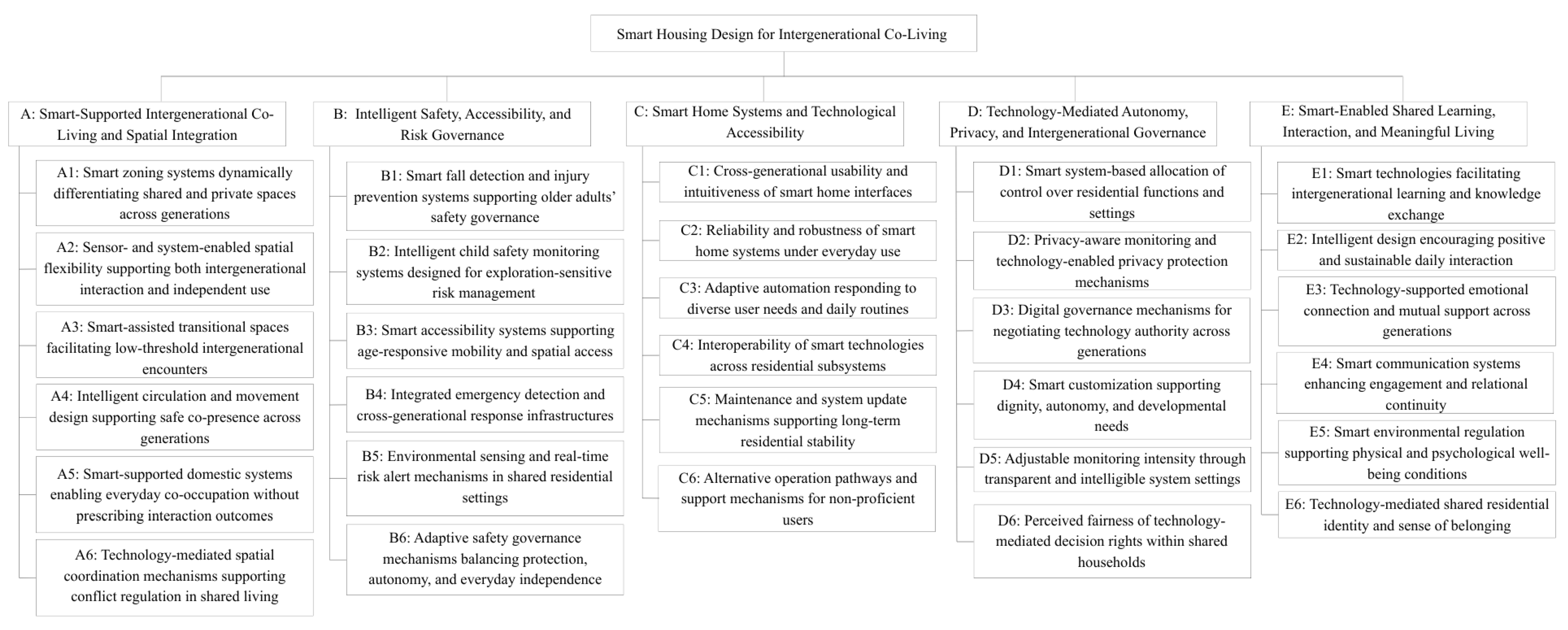
Figure 1 presents the three-level evaluation structure and the corresponding decision configuration underpinning the analysis.
3.3.1. Construction of the Hierarchical Evaluation Framework
The evaluation framework is organized into three hierarchical levels to ensure conceptual clarity and analytical comparability. The first level defines the overall evaluation objective, namely the prioritization of inclusive smart residential design criteria that support sustainable senior–child intergenerational co-living. This objective reflects the study’s governance-oriented perspective on shared residential environments characterized by generational asymmetry.
The second level comprises five major design dimensions identified through interdisciplinary literature synthesis and subsequently refined through expert focus group deliberation. These dimensions are conceptually delineated to minimize overlap while capturing distinct analytical domains of smart residential design. They include spatial integration in intergenerational co-living, intelligent safety and risk governance, technological accessibility of smart home systems, technology-mediated autonomy and privacy governance, and smart-enabled shared living and interaction.
The third level consists of thirty specific evaluation indicators, with six indicators operationalizing each design dimension. All indicators are formulated as normative design principles rather than outcome-based performance metrics. This formulation ensures alignment with the study’s value-structuring orientation and facilitates systematic pairwise comparison within the AHP framework.
3.3.2. AHP Procedure and Consistency Assessment
Following the establishment of the hierarchical structure, the Analytic Hierarchy Process is employed to determine the relative importance of the design dimensions and their associated indicators. In this study, AHP functions as a structured priority-weighting method designed to articulate expert value judgments rather than as a predictive or explanatory statistical model.
A hierarchical decision model is constructed in accordance with the defined framework. Expert participants perform pairwise comparisons within each level of the hierarchy, evaluating the relative importance of elements in relation to the overall objective of inclusive and sustainable smart residential design for senior–child co-living. Judgments are expressed using the standard nine-point fundamental scale, enabling graded distinctions in perceived importance.
For each expert, pairwise comparison matrices are generated and subjected to consistency testing. The consistency ratio is calculated to assess the internal coherence of judgments, and only matrices satisfying the recommended threshold of CR ≤ 0.10 are retained for further analysis. This criterion ensures logical reliability in individual evaluations prior to aggregation.
To synthesize collective expert judgments, the geometric mean method is applied to aggregate individual pairwise comparison matrices at each hierarchical level. This procedure yields group-level priority weights for both design dimensions and indicators. The resulting weights represent a structured prioritization of smart residential design criteria under conditions of intergenerational asymmetry and shared governance. These weights serve as a decision-support reference for architectural programming and policy consideration in inclusive smart housing design.
3.4. Consistency Assessment and Reliability Assurance
Consistency assessment is a fundamental procedural requirement in the application of the AHP, as the method relies on structured expert judgment rather than empirical measurement. In this study, consistency is interpreted as an indicator of the internal logical coherence of expert value judgments when comparing competing smart residential design criteria for senior–child intergenerational co-living.
Based on the established hierarchical framework, pairwise comparison matrices were constructed at both the design-dimension and indicator levels. Experts evaluated the relative importance of elements within each level using Saaty’s nine-point fundamental scale, reflecting their contribution to inclusive and sustainable smart residential design.
The internal consistency of expert judgments was assessed using the consistency ratio (CR). In accordance with established AHP methodological standards, matrices with a consistency ratio not exceeding the recommended threshold (CR ≤ 0.10) were regarded as logically coherent and retained for subsequent analysis. Pairwise comparison matrices failing to meet this criterion were excluded at the matrix level rather than at the participant level, ensuring that experts were not removed from the study due to isolated inconsistencies in specific judgment tasks. This approach preserved interdisciplinary representation while maintaining analytical rigor.
Following consistency screening, only valid pairwise comparison matrices were aggregated to derive relative weights for design dimensions and indicators. Reliability in this study is established through procedural transparency, systematic consistency assessment, and the application of a clearly specified hierarchical decision structure, rather than through repeated measurement or psychometric reliability indices. Collectively, these procedures enhance the analytical robustness, credibility, and replicability of the AHP-based prioritization outcomes.
3.5. Data Analysis
Data analysis was conducted to derive a structured prioritization of smart residential design criteria for senior–child intergenerational co-living based on expert judgment data collected through AHP questionnaires. Each expert independently completed a series of pairwise comparisons assessing the relative importance of design dimensions and indicators within the predefined hierarchical framework.
Pairwise comparison judgments were organized into reciprocal comparison matrices
, where
represents the relative importance of element
over element
, and
. Consistency of these matrices was assessed using the consistency ratio (CR), calculated as:
where λ_max represents the maximum eigenvalue of the comparison matrix and n indicates the matrix order. Only matrices meeting the accepted consistency threshold of CR ≤ 0.10 were retained for aggregation.
To synthesize expert judgments at the group level, valid pairwise comparison matrices were aggregated using the geometric mean method, which preserves the reciprocal properties of AHP data and is widely adopted in group-based AHP applications. The aggregated group comparison value for each matrix element was computed as:
where
denotes the number of experts contributing valid judgments.
Priority weights were first derived at the design dimension level to determine the relative importance of the five major dimensions within the overall evaluation objective. Subsequently, indicator-level weights were calculated within each dimension to examine internal prioritization among specific design criteria. Global priority weights for individual indicators were obtained by multiplying the indicator-level weights by their corresponding dimension-level weights:
This procedure resulted in a complete hierarchical priority structure spanning all design dimensions and indicators.
The resulting weight distribution is interpreted as a representation of convergent expert prioritization under the socio-spatial and socio-technical conditions characteristic of senior–child intergenerational co-living. The analysis does not involve hypothesis testing, inferential statistics, or causal estimation. Instead, it clarifies relative value trade-offs among competing design considerations, including spatial integration, safety and risk governance, technological accessibility, intergenerational governance, and the conditions supporting meaningful shared living.
Analytical results are presented using ranked tables and hierarchical representations to facilitate comparative interpretation. Emphasis is placed on relative relationships among criteria rather than absolute weight magnitudes, supporting reflective reasoning and decision support in early-stage architectural design and policy deliberation contexts.
4. Results
4.1. Descriptive Overview of the AHP Evaluation Framework
The AHP-based prioritization results for smart residential design criteria in senior–child intergenerational co-living are reported at two evaluative levels: the design-dimension level and the indicator level nested within each dimension, consistent with the established hierarchical decision structure.
All expert judgments were collected through structured pairwise comparison questionnaires and subjected to consistency assessment prior to aggregation. Only pairwise comparison matrices that satisfied the established consistency criterion were retained for analysis. The final dataset therefore reflects logically coherent and convergent expert judgments across the full hierarchical structure, ensuring the analytical validity of the resulting priority weights.
The results are presented in a stepwise manner. First, priority weights of the five major design dimensions are reported to illustrate the relative importance of different analytical domains within the overall evaluation objective. Subsequently, indicator-level priorities within each design dimension are examined to reveal internal differentiation among specific design criteria. Finally, a global priority ranking is constructed by integrating dimension-level and indicator-level weights, providing an overall comparison across all smart residential design indicators.
4.2. Priority Weights of Major Design Dimensions
At the dimension level, experts assigned the greatest priority to Intelligent Safety, Accessibility, and Risk Governance (0.27), indicating that safety-centered governance and accessibility assurance constitute the primary decision concern in senior–child intergenerational co-living. The second-highest priority was Smart Home Systems and Technological Accessibility (0.22), suggesting that inclusive usability and stable system operation are central to the feasibility of smart residential environments. Smart-Supported Intergenerational Co-Living and Spatial Integration (0.19) and Technology-Mediated Autonomy, Privacy, and Intergenerational Governance (0.18) formed a mid-priority tier, reflecting the importance of balancing spatial coordination with governance of control and privacy. Finally, Smart-Enabled Shared Learning, Interaction, and Meaningful Living (0.14) received the lowest weight, indicating that enabling social and experiential qualities, while still relevant, was comparatively less prioritized at the macro design-dimension level. The dimension-level weights and rankings are summarized in
Table 2.
4.3. Indicator-Level Prioritization Across Design Dimensions
4.3.1. Smart-Supported Intergenerational Co-Living and Spatial Integration
Table 3 reports the prioritization of indicators under Smart-Supported Intergenerational Co-Living and Spatial Integration across four expert groups. Smart zoning systems dynamically differentiating shared and private spaces across generations (A1) received the highest overall local weight, followed by sensor- and system-enabled spatial flexibility (A2) and intelligent circulation and movement design supporting safe co-presence (A4). Professional experts assigned relatively higher weights to A2 and A4.
Indicators related to transitional and everyday shared living functions (A3, A5) received moderate priority, while technology-mediated spatial coordination mechanisms supporting conflict regulation (A6) consistently ranked lowest across expert groups.
Overall, experts prioritized spatial differentiation, adaptability, and circulation safety over technology-mediated conflict regulation in smart-supported intergenerational co-living environments.
4.3.2. Intelligent Safety, Accessibility, and Risk Governance
Table 4 reports the indicator-level prioritization under Intelligent Safety, Accessibility, and Risk Governance across four expert groups. At the aggregated level, indicators related to system-level safety monitoring and coordinated emergency response received the highest priorities, followed by accessibility-supportive design features enabling cross-generational use. Government and public policy experts assigned relatively higher weights to indicators associated with risk governance and emergency coordination, while professional experts emphasized accessibility and operational safety.
Indicators addressing secondary or situational safety functions received moderate weights, whereas indicators focusing on supplementary or reactive safety mechanisms ranked lower across expert groups. Overall, the results indicate that experts prioritize proactive, system-integrated safety and accessibility infrastructures over isolated or event-driven risk mitigation measures in senior–child intergenerational co-living environments.
4.3.3. Smart Home Systems and Technological Accessibility
Table 5 presents the indicator-level prioritization under Smart Home Systems and Technological Accessibility across four expert groups. At the aggregated level, indicators related to system usability, reliability, and cross-generational accessibility received the highest priorities. Academic and institutional experts consistently emphasized inclusive interface design and system stability, while professional experts assigned relatively higher weights to operational reliability and maintenance feasibility. Government and policy experts showed balanced weighting across core accessibility and reliability indicators. Overall, the results indicate that experts prioritize inclusive usability and stable system performance over advanced or optional technological functions in smart-supported intergenerational co-living environments.
4.3.4. Technology-Mediated Autonomy, Privacy, and Intergenerational Governance
Table 6 reports the indicator-level prioritization under Technology-Mediated Autonomy, Privacy, and Intergenerational Governance across four expert groups. At the aggregated level, indicators addressing clear governance rules for monitoring and data access and transparent consent and control mechanisms received the highest priorities. Government and public policy experts assigned relatively higher weights to governance- and compliance-related indicators, while academic and institutional experts emphasized mechanisms that balance autonomy and privacy across generations. Overall, the results indicate that experts prioritize rule-based governance and transparency over discretionary or ad hoc control arrangements in smart-supported intergenerational co-living environments.
4.3.5. Smart-Enabled Shared Learning, Interaction, and Meaningful Living
Table 7 presents the indicator-level prioritization under Smart-Enabled Shared Learning, Interaction, and Meaningful Living across four expert groups. At the aggregated level, indicators supporting shared activities, emotional continuity, and the construction of a shared living context received higher priorities than indicators emphasizing optional or technology-driven interaction features. Academic and institutional experts assigned relatively higher weights to indicators associated with meaningful daily engagement and shared routines, while professional and government experts demonstrated more conservative weighting patterns. Overall, the results indicate that experts prioritize technology as an enabling background for shared living and learning, rather than as a primary driver of interaction or experiential intensity in senior–child intergenerational co-living environments.
4.4. Global Ranking of Design Indicators
Table 8 presents the integrated global prioritization of design indicators, obtained by combining dimension-level weights with indicator-level local weights. Global weights were calculated as the product of each indicator’s local weight and its associated dimension weight, resulting in a comprehensive ranking across the entire hierarchical structure.
The results indicate that indicators related to spatial differentiation, system-level safety governance, and inclusive technological accessibility occupy the highest global ranks. In contrast, indicators associated with optional interaction features, discretionary governance overrides, and post-event or episodic mechanisms consistently ranked lower. Overall, the global ranking reflects expert prioritization of structural, preventive, and system-integrated design criteria over reactive or supplementary technological functions in senior–child intergenerational co-living environments.
5. Discussion
The findings indicate that smart residential design in senior–child intergenerational households is predominantly understood as a governance-oriented socio-technical infrastructure rather than a collection of assistive or interactive devices. The empirically derived AHP hierarchy demonstrates a stable prioritization structure in which smart-supported spatial integration, intelligent safety and risk governance, and technological accessibility consistently rank above interaction-oriented functions. This ordering substantiates the theoretical distinction between assistive optimization and relational governance paradigms and confirms that experts interpret smart housing primarily as a system of coordinated authority, risk regulation, and spatial stabilization under generational asymmetry [
17,
18,
27,
54,
55].
The prominence of spatial integration underscores the foundational role of legible zoning, calibrated circulation, and differentiated shared–private boundaries in accommodating both children’s developmental needs and older adults’ mobility and cognitive conditions. Rather than implying trade-offs between age groups, the findings suggest that inclusive spatial organization simultaneously supports protection, autonomy, and life-course continuity. This interpretation aligns with environmental psychology and built-environment research emphasizing spatial legibility and boundary clarity as determinants of well-being [
19,
21,
22,
23,
56], while extending such insights to explicitly intergenerational domestic settings. Importantly, the weighted hierarchy transforms these principles into design-ordering implications, indicating that spatial safety and governance conditions should precede interaction-oriented enhancements during architectural programming.
The prioritization of intelligent safety and risk governance further indicates that smart technologies are valued primarily as institutionalized protective infrastructures rather than as feature-driven innovations. In senior–child households, monitoring systems and adaptive safety mechanisms function as embedded regulators that stabilize daily routines and redistribute caregiving burdens. This interpretation accords with systematic reviews highlighting reliability and unobtrusive support as determinants of acceptance [
8,
9,
34,
35,
57] and with governance-oriented digital infrastructure research in complex living environments [
58,
59]. The emphasis on technology-mediated autonomy and privacy similarly reflects concerns regarding differentiated access, consent, and authority allocation, particularly in contexts where protection and dignity must be balanced across generations. These results resonate with scholarship on digital inequality and inclusive design, which conceptualizes accessibility and governance as structural system responsibilities rather than individual competencies [
7,
39,
40,
41].
The comparatively lower ranking of smart-enabled shared learning and interaction does not imply diminished relational value. Instead, it suggests that intergenerational engagement is perceived as contingent upon stable spatial and governance foundations. Social interaction is treated as an emergent outcome of safety, trust, and infrastructural coherence rather than as a function that can be directly engineered through technological intensification. This interpretation aligns with intergenerational intervention research demonstrating that positive social and psychological outcomes depend more strongly on environmental stability than on technological stimulation alone [
11,
12,
15,
16,
26].
From an architectural standpoint, the governance-oriented hierarchy implies a sequencing logic for spatial programming. In high-density urban apartment contexts, prioritization of safety and spatial integration supports early-stage emphasis on circulation clarity, threshold buffering, bathroom accessibility calibration, and visibility gradients before communal feature enhancement. The hierarchy further implies layered zoning strategies in which infrastructural safety embedding and differentiated autonomy allocation precede adaptive shared spaces. In this respect, the AHP results function as a schematic allocation framework capable of informing adjacency logic, circulation systems, and governance-embedded spatial sequencing during pre-construction programming.
Theoretically, this study contributes by integrating aging-in-place, child safety, and family governance within a unified value-structuring framework, addressing fragmentation in prior research that has treated these domains separately [
1,
2,
3,
25]. Conceptualizing smart housing as a socio-technical governance system extends relational and life-course perspectives in residential design. Methodologically, the application of AHP as a value-prioritization instrument translates interdisciplinary expert reasoning into a transparent decision-support structure suited to sustainability-oriented housing design and policy contexts [
28,
29,
30,
47].
Collectively, the findings reposition smart residential design for senior–child co-living as a governance-embedded spatial infrastructure that redistributes authority, regulates negotiated access, and stabilizes overlapping domestic routines. By foregrounding governance, spatial integration, and structured value prioritization, the study provides a theoretically grounded and architecturally actionable framework for advancing inclusive intergenerational housing under demographic transition and increasing household complexity.
6. Conclusions
This study developed a governance-oriented decision-support framework for smart residential design in senior–child intergenerational co-living households, addressing asymmetries in physical capacity, cognitive development, and domestic authority. By integrating expert deliberation with the AHP, the research structured and prioritized design criteria relevant to shared family living across generations. The results reveal a stable hierarchy in which smart-supported spatial integration, intelligent safety and risk governance, and technological accessibility are consistently ranked above interaction-oriented smart functions. This ordering indicates that smart systems are primarily valued as infrastructures that stabilize co-residence, regulate risk, and enable differentiated autonomy rather than as devices for enhancing interaction or technological novelty.
6.1. Theoretical Contributions
This study advances smart housing scholarship by repositioning residential intelligence as a socio-technical governance structure rather than an individualized assistive apparatus. Whereas ageing-in-place research predominantly emphasizes functional independence and risk mitigation for older adults, the present framework situates smart housing within intergenerational relational order. By conceptualizing generational asymmetry as a structural condition shaping authority distribution, negotiated autonomy, and risk governance, the study contributes a relational and family-centered theoretical reorientation of smart residential design.
6.2. Methodological Contributions
Methodologically, the research extends AHP into the domain of intergenerational residential governance. Instead of applying AHP to single-user optimization, generational asymmetry was embedded as a transversal structuring principle within the hierarchical model. The integration of interdisciplinary expert deliberation with consistency-controlled pairwise comparison demonstrates how multi-criteria decision-making tools can operationalize normatively complex housing contexts where competing objectives exceed purely technical evaluation.
6.3. Practical Contributions
From a practical standpoint, the prioritization framework offers structured guidance for architects, developers, planners, and policymakers engaged in inclusive residential innovation. The empirical hierarchy underscores that stabilization of everyday co-presence, calibrated autonomy, and risk governance constitute foundational design imperatives in senior–child co-living environments. By clarifying sequencing priorities at the programming stage, the framework supports informed investment allocation and policy formulation in ageing and high-density societies pursuing sustainable intergenerational housing models.
Future research may extend this framework to broader intergenerational configurations and incorporate participatory validation approaches. Overall, the study provides a structured foundation for governance-oriented and inclusive smart housing design.
7. Research Limitations and Future Directions
This study positions the AHP framework as a value-structuring instrument for early-stage design prioritization in senior–child intergenerational smart housing. The hierarchical weights derived from expert judgment establish an ordered indicator system rather than an empirically verified performance model. Accordingly, the findings articulate a governance-oriented design architecture that precedes physical implementation. While the prioritization structure demonstrates internal logical consistency and interdisciplinary convergence, it does not directly assess behavioral adaptation, post-occupancy dynamics, or measurable well-being outcomes. The framework therefore functions as a normative decision-support tool that requires subsequent empirical investigation to evaluate its applied performance in lived residential environments.
Further development of this research agenda lies in translating the weighted indicators into built or pilot-scale implementations, followed by post-occupancy evaluation and longitudinal observation within operational intergenerational households. Comparative analysis between expert-derived priorities and household-level experiential preferences would also strengthen contextual calibration. Extending the framework across different housing typologies, cultural contexts, and evolving technological infrastructures will enable examination of its structural robustness under varying socio-technical conditions. In this sense, the present study establishes a governance-oriented indicator architecture that invites systematic empirical elaboration rather than substituting for real-world residential validation.




 ,
,