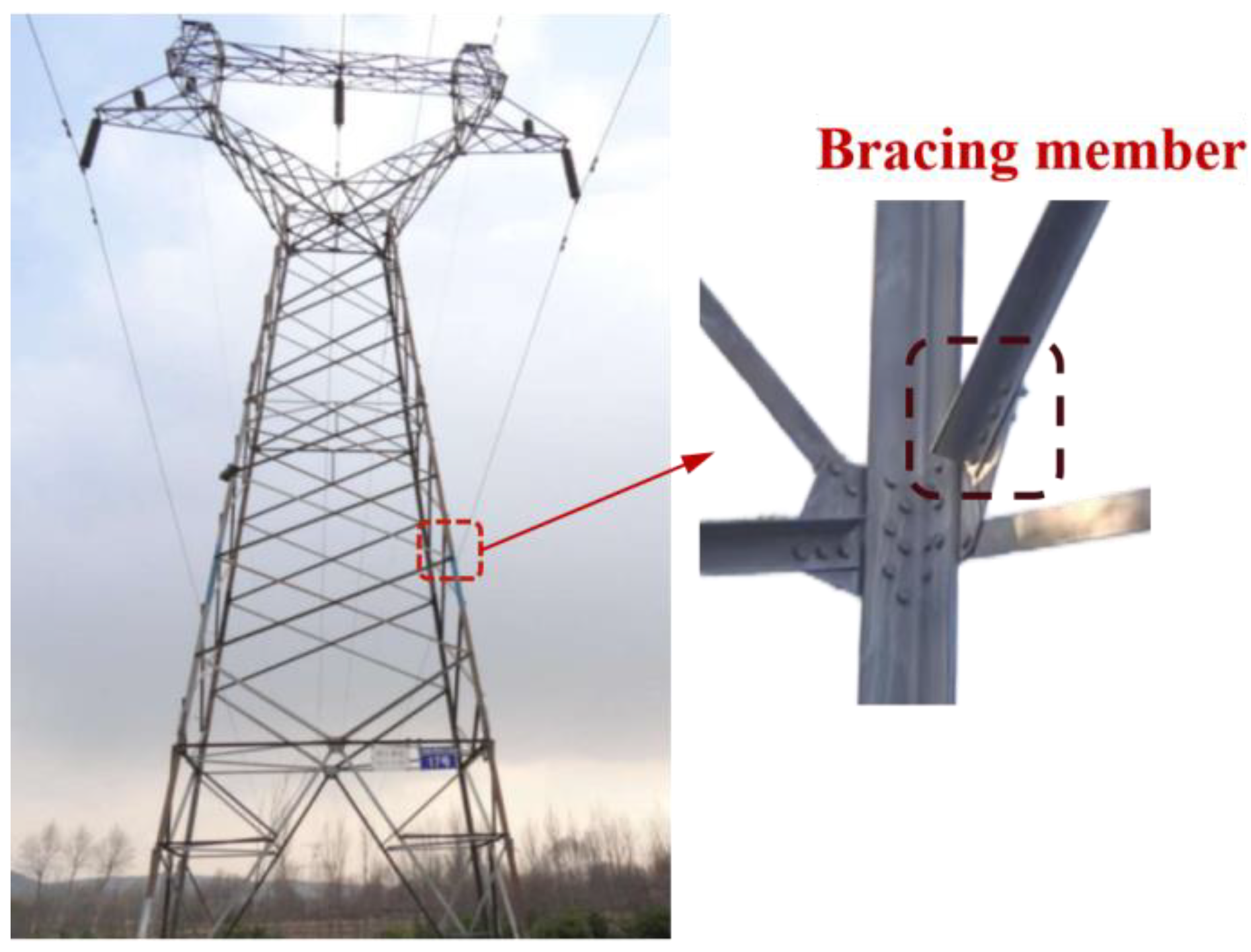

Evaluation Methods and Sensitivity Analysis of Corrosion Parameters for Eccentrically Loaded Angle Steel Members


Abstract
1. Introduction
2. Corrosion Test Design and Results
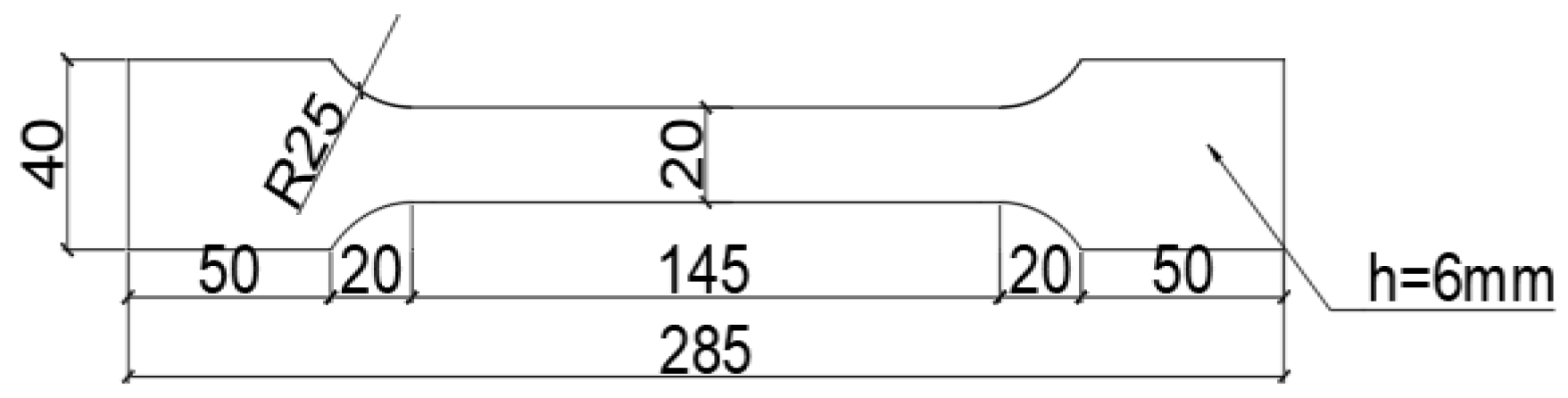
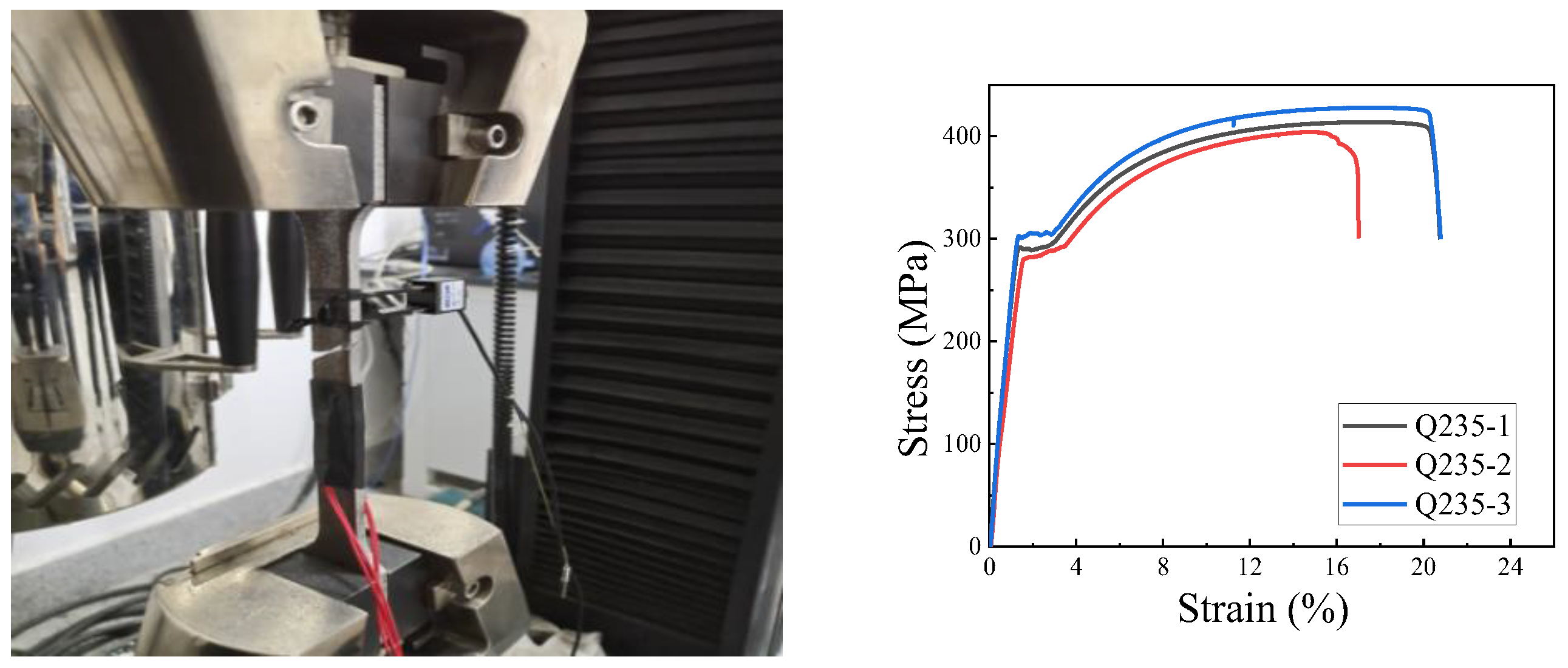
2.1. Material Properties
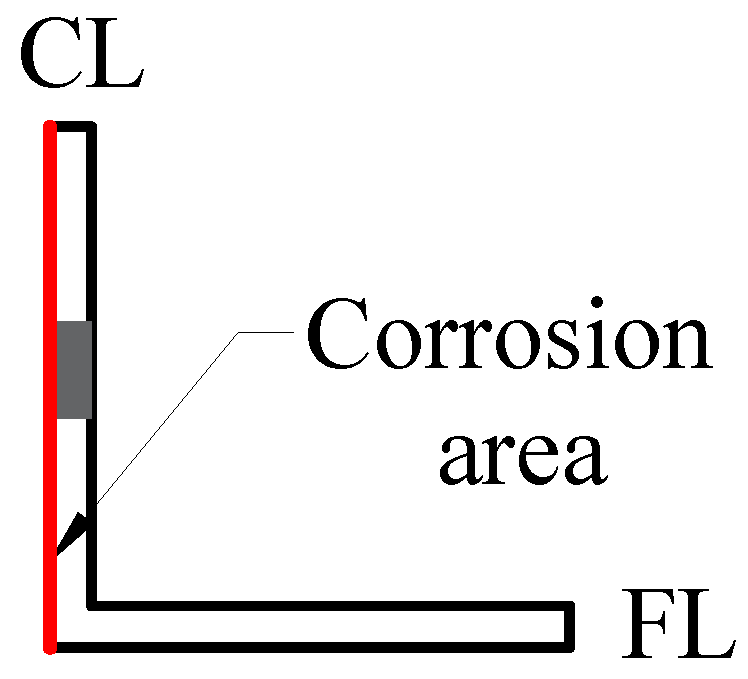
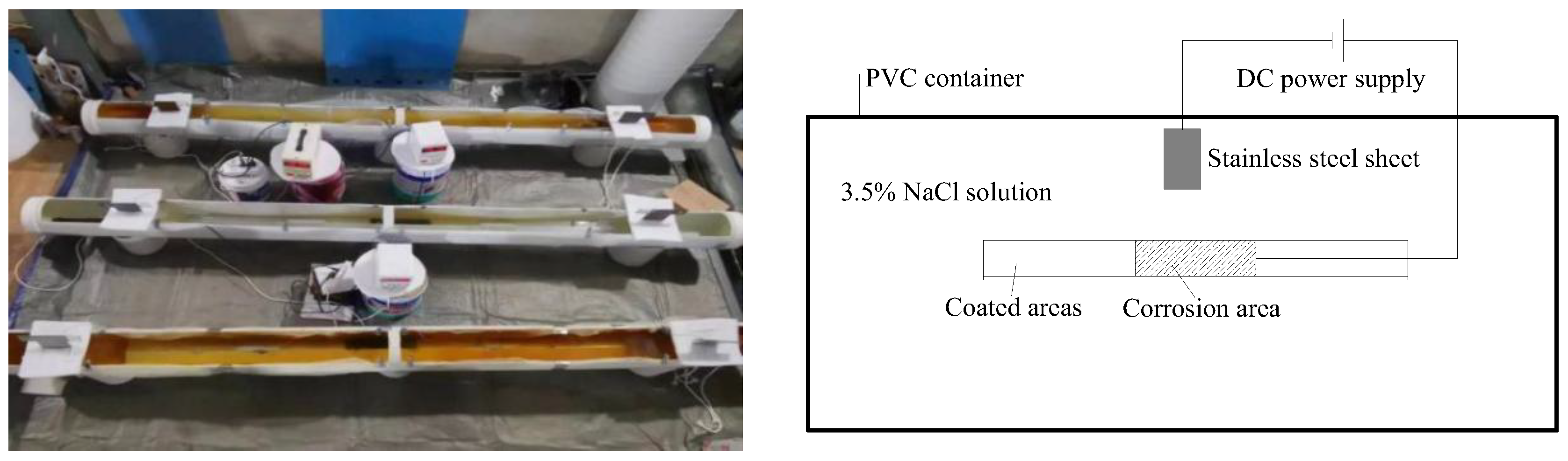
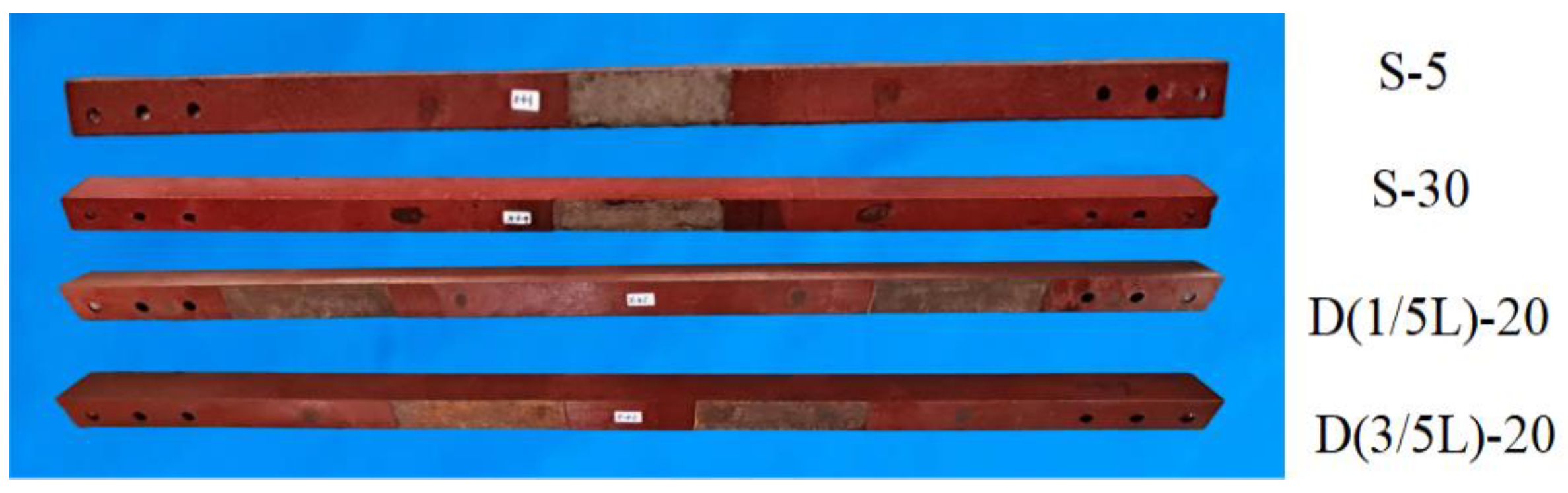
2.2. Preparation and Analysis of Corroded Members
3. Eccentric Compression Tests
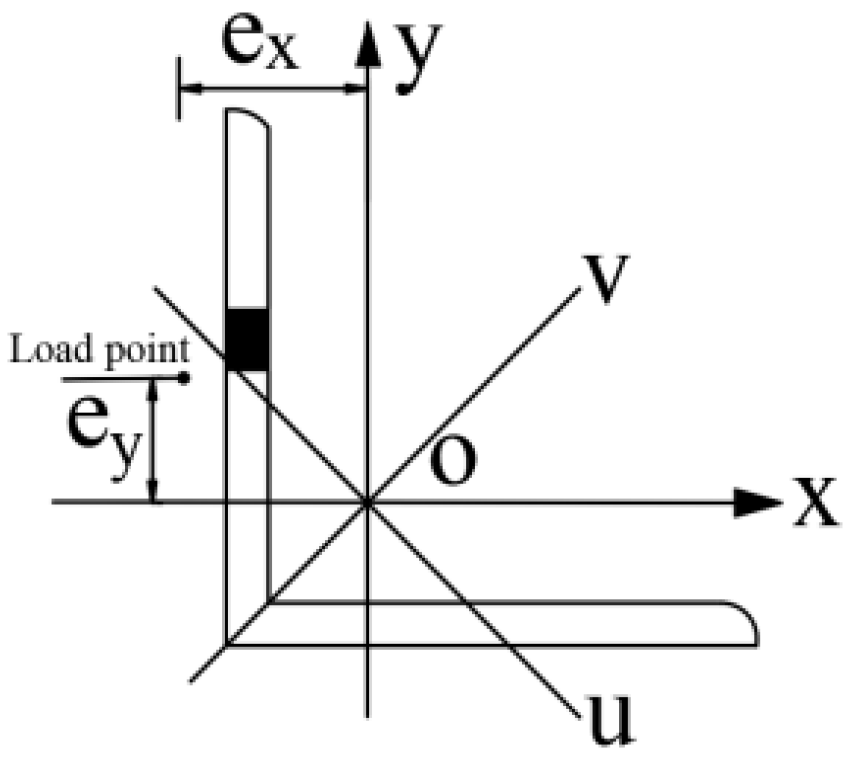
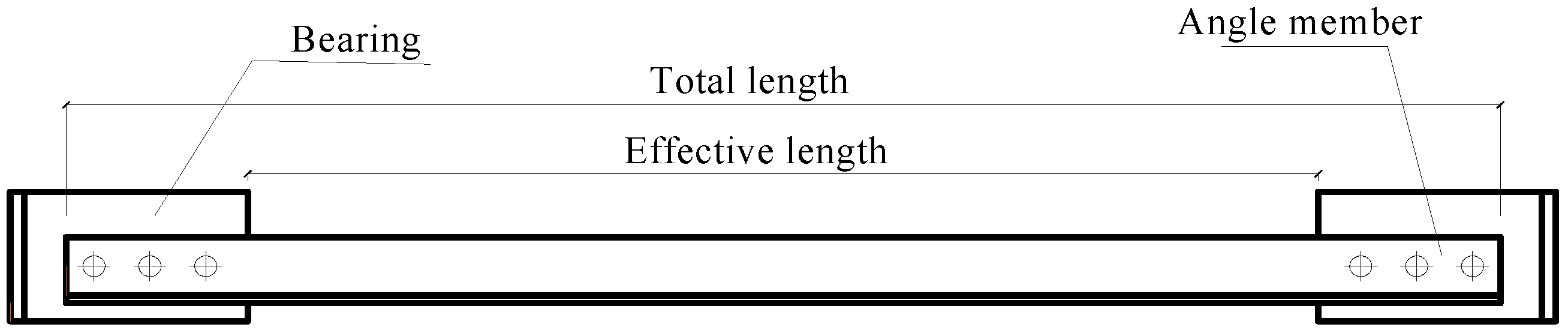
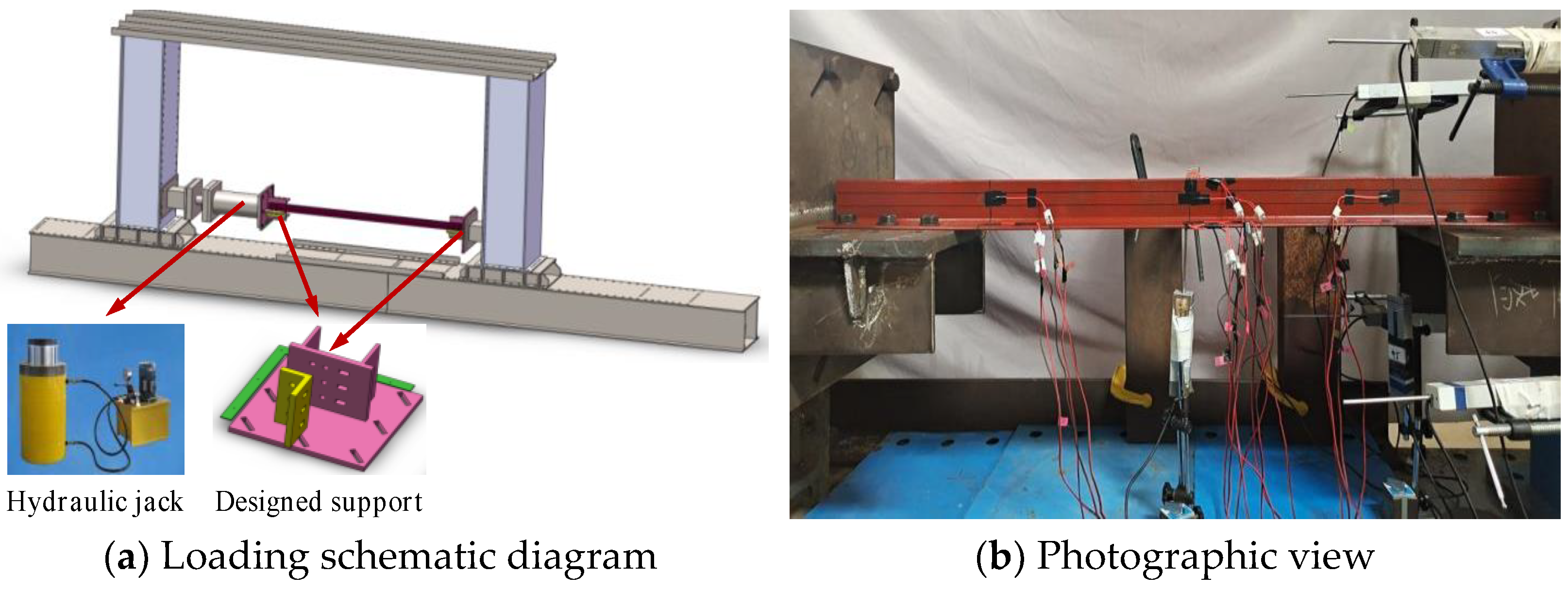
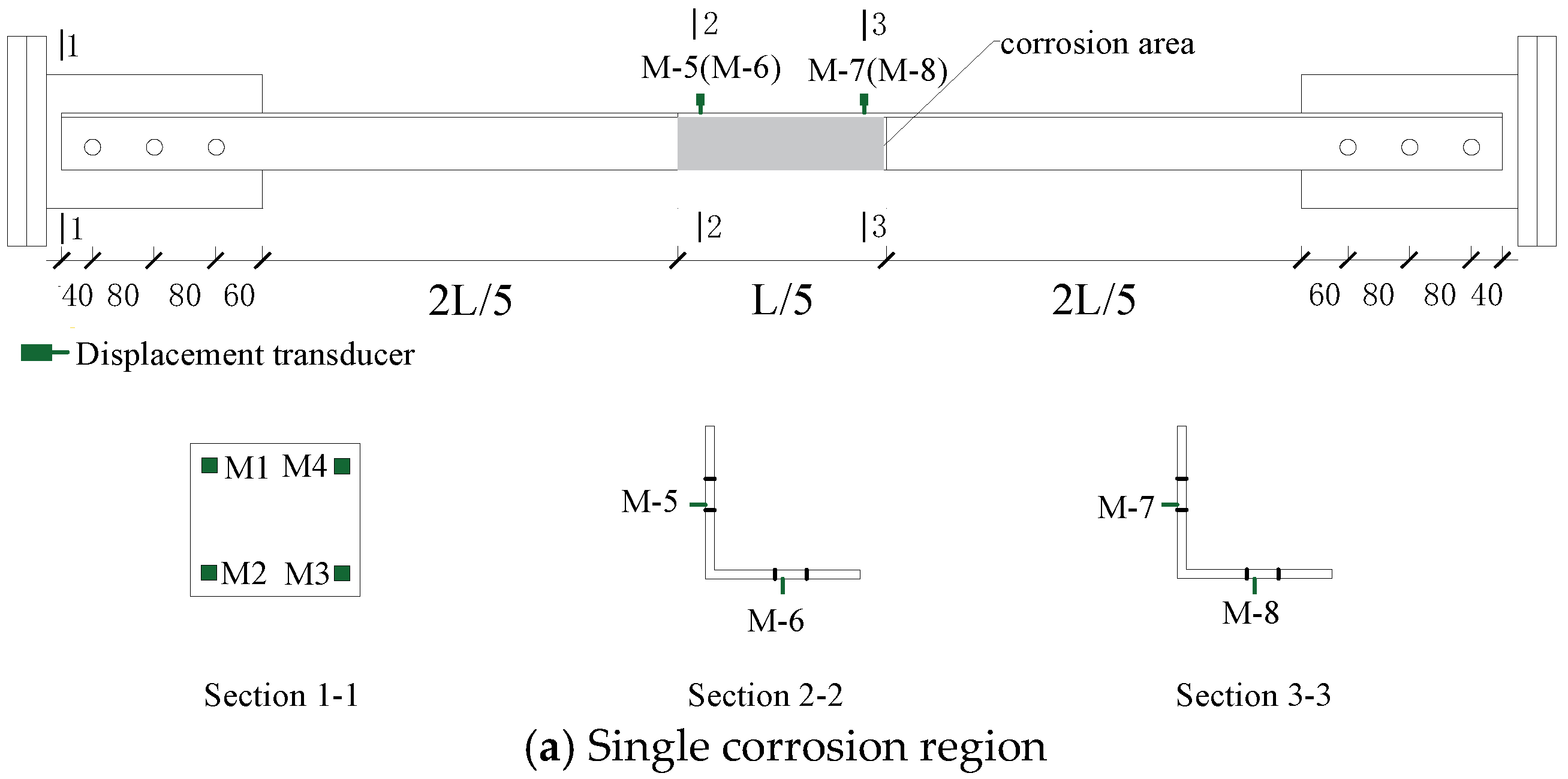
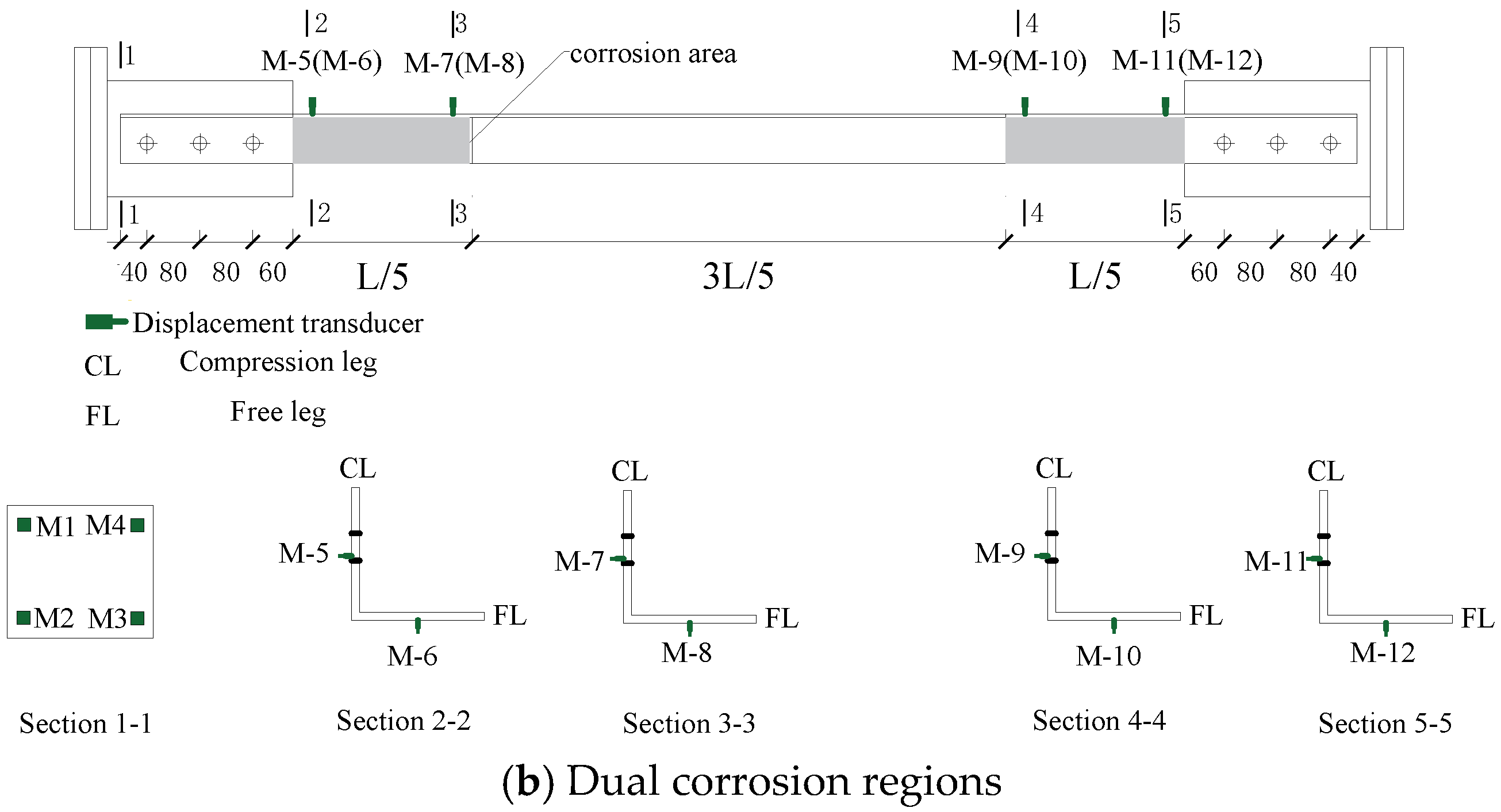
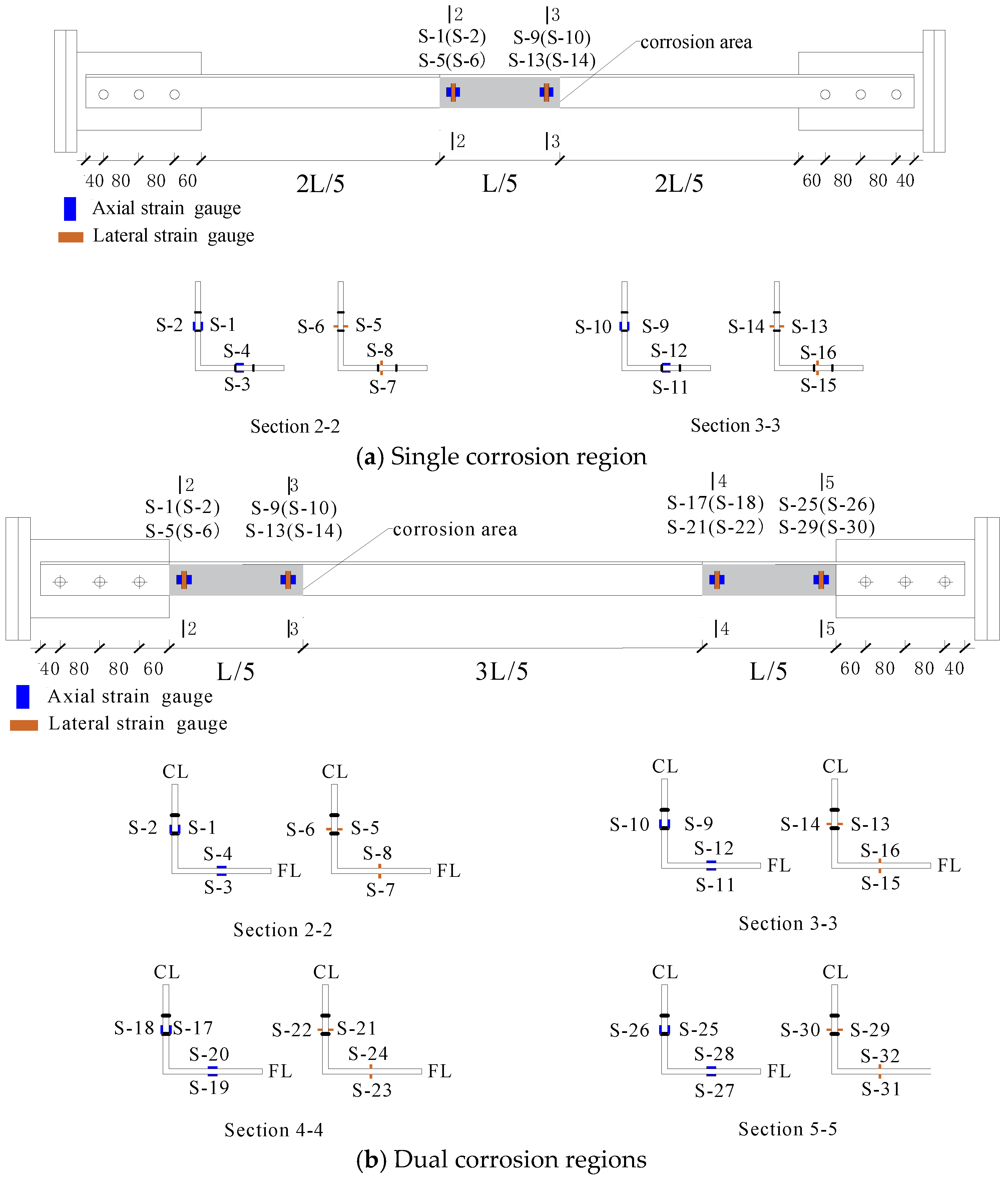
3.1. Loading Scheme and Measurement Point Arrangement
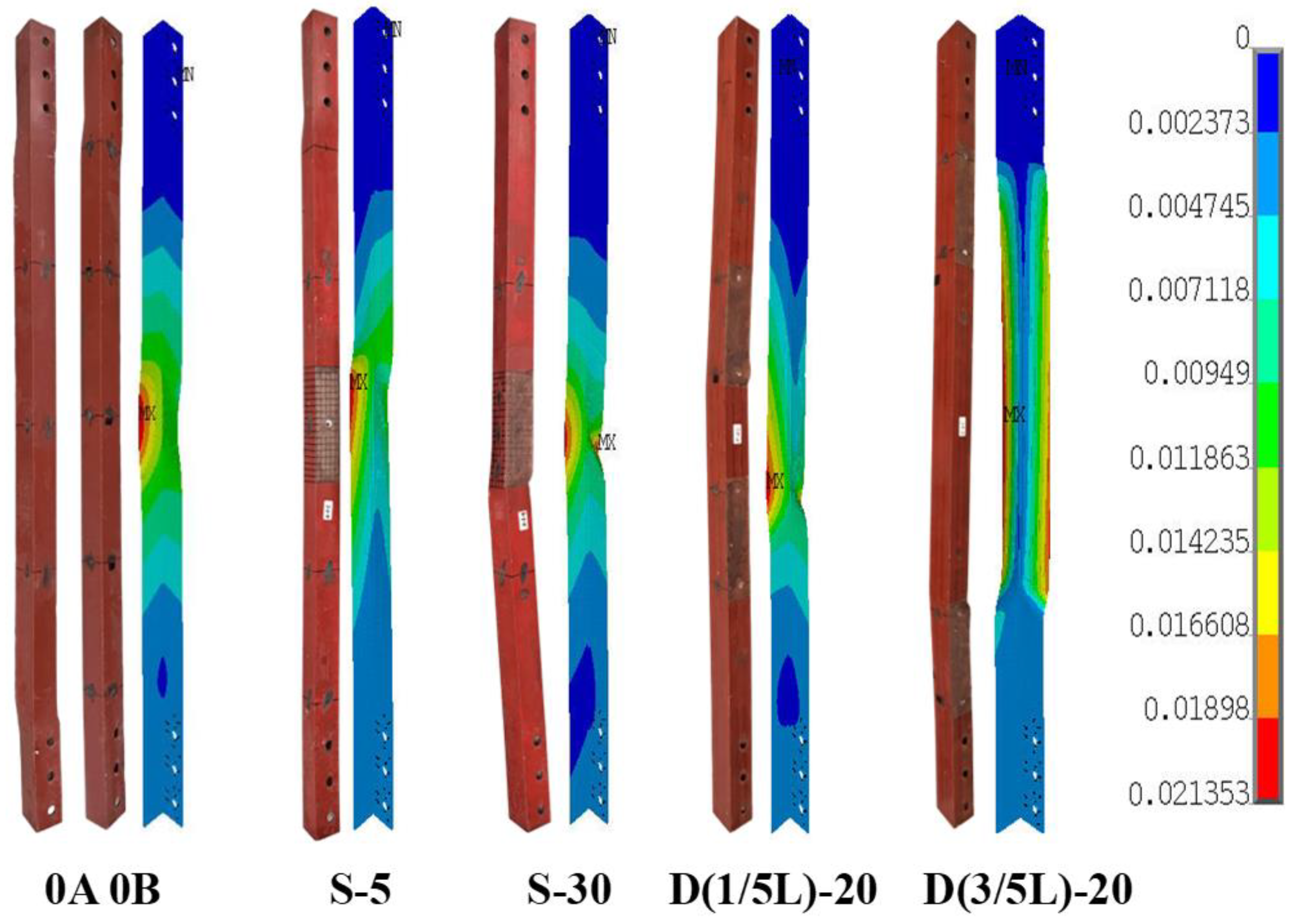
3.2. Test Results and Analysis
4. Numerical Analysis
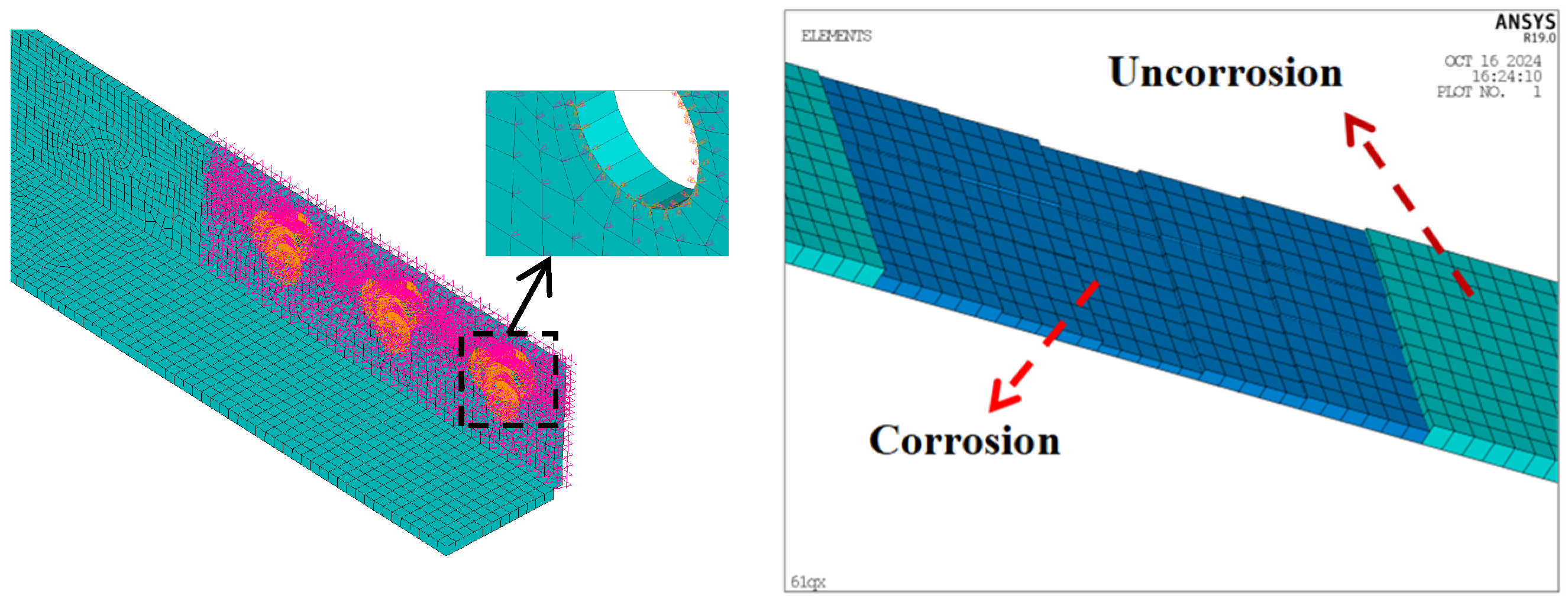
4.1. Finite Element Model and Validation
4.2. Parametric Analysis
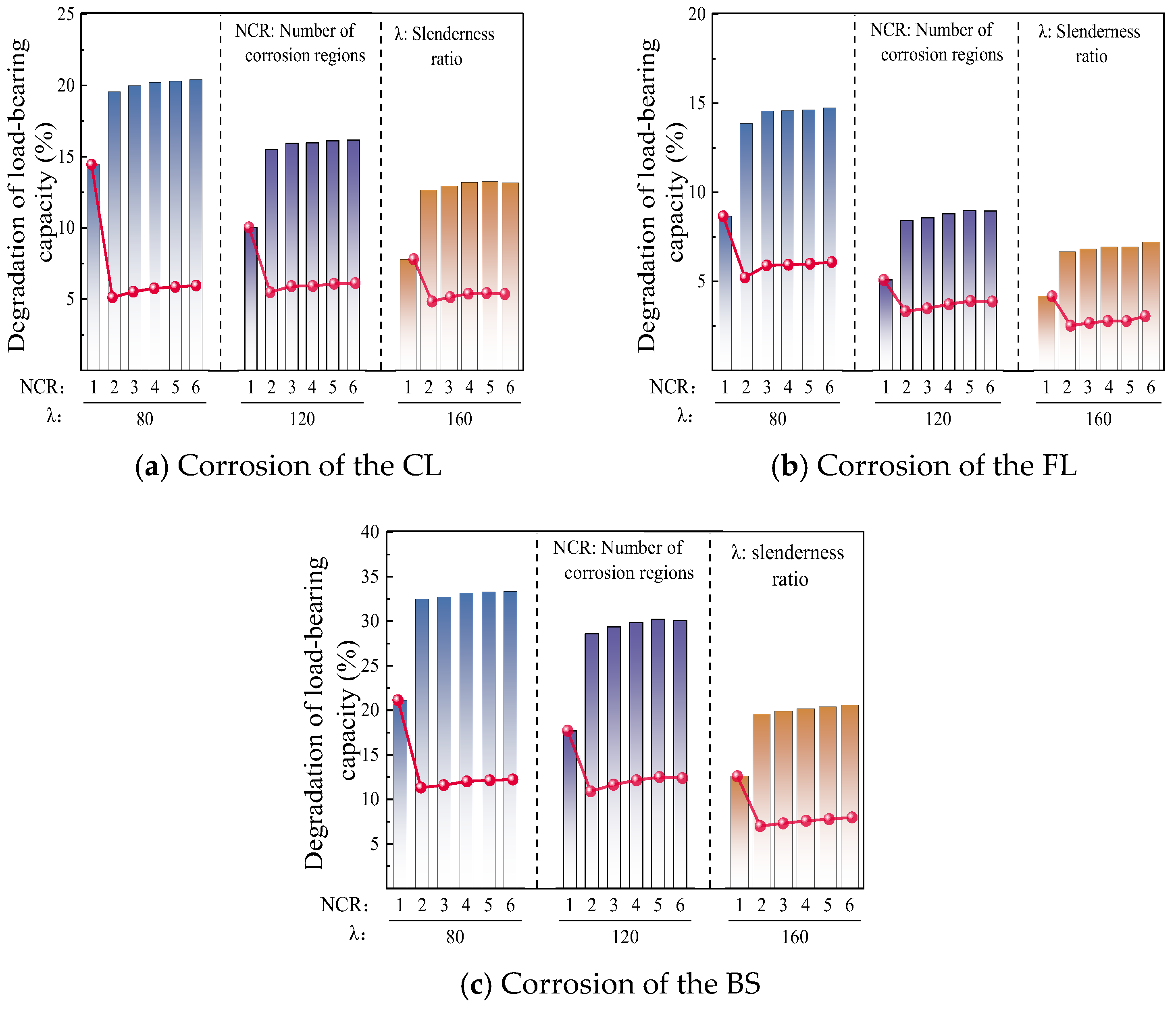
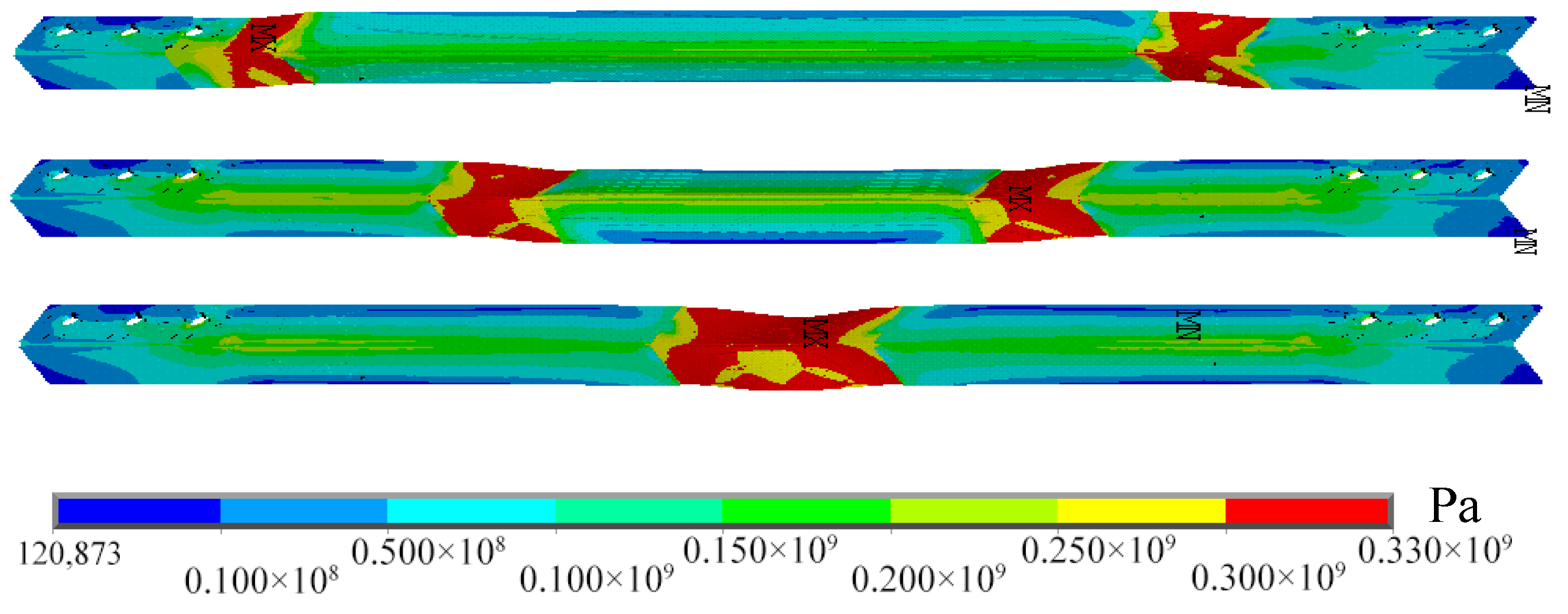
4.2.1. Rationality Analysis of the Dual Corrosion Regions
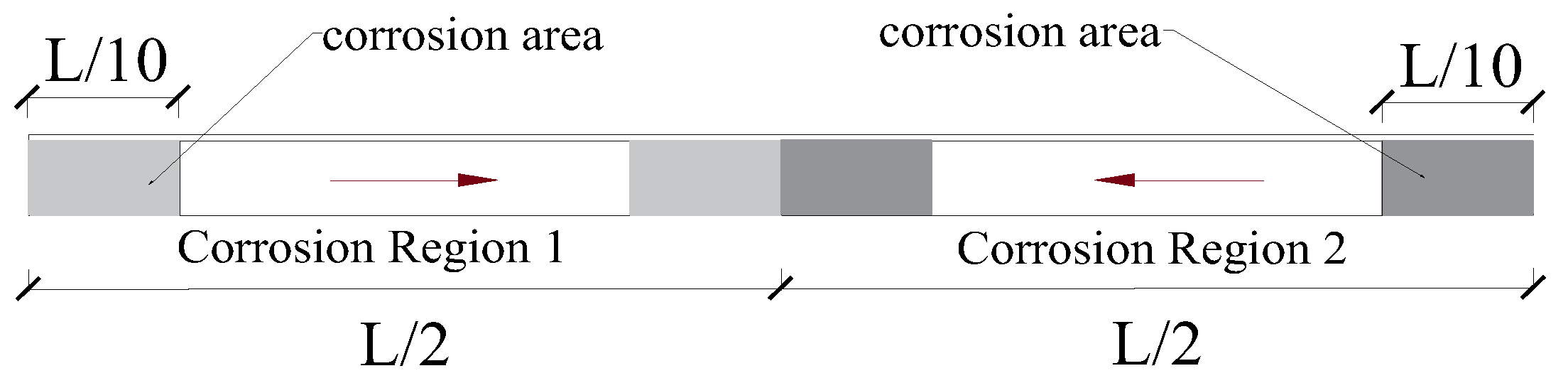
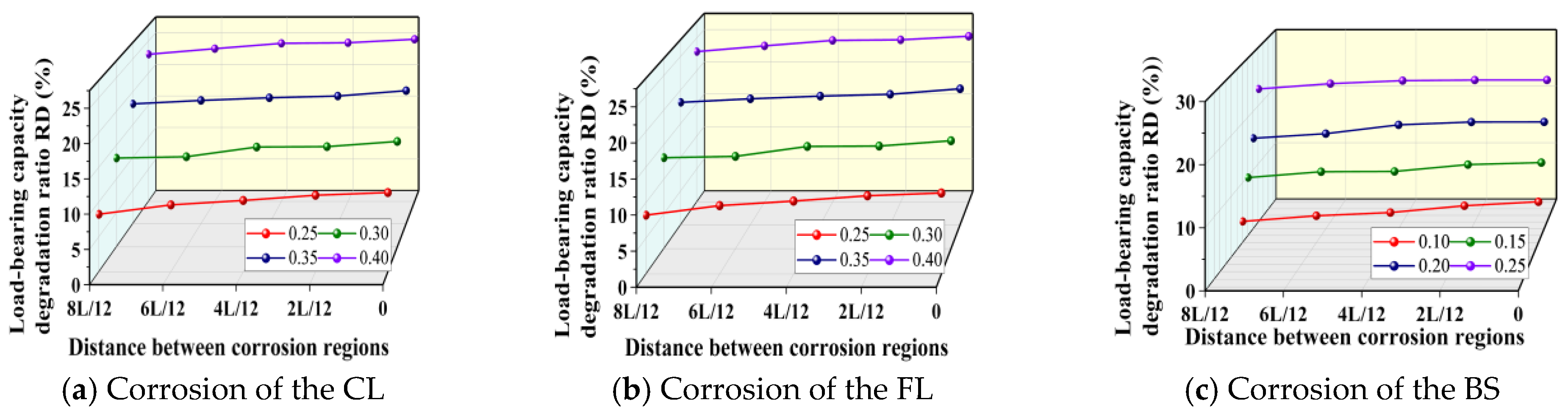
4.2.2. Influence of Spacing Between Dual Corrosion Regions on Angle Steel Bearing Capacity
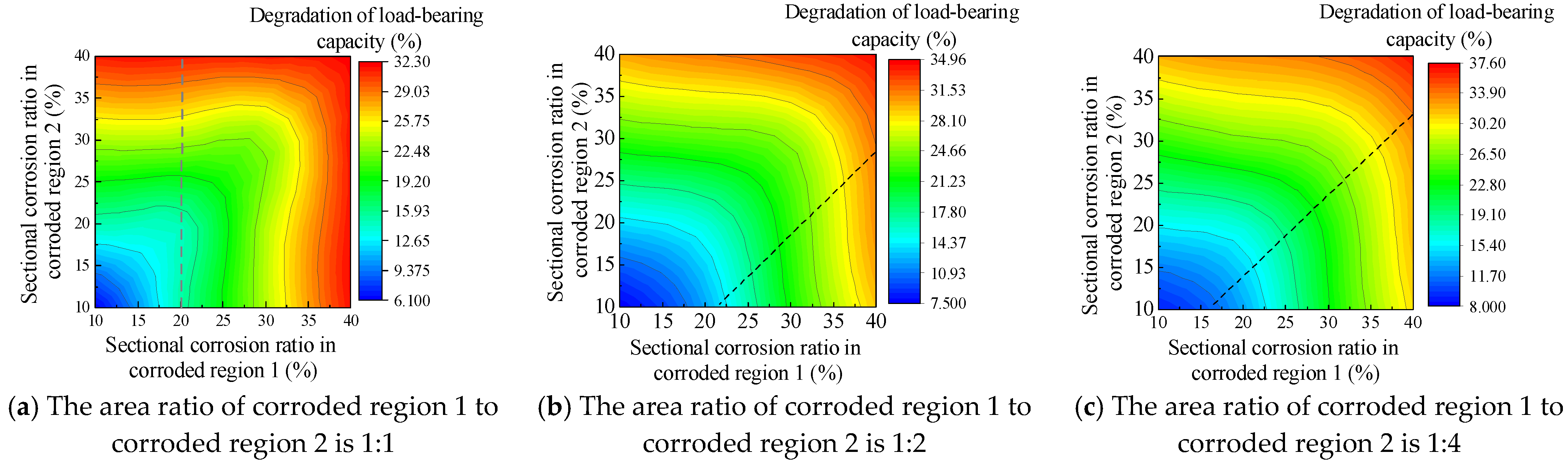
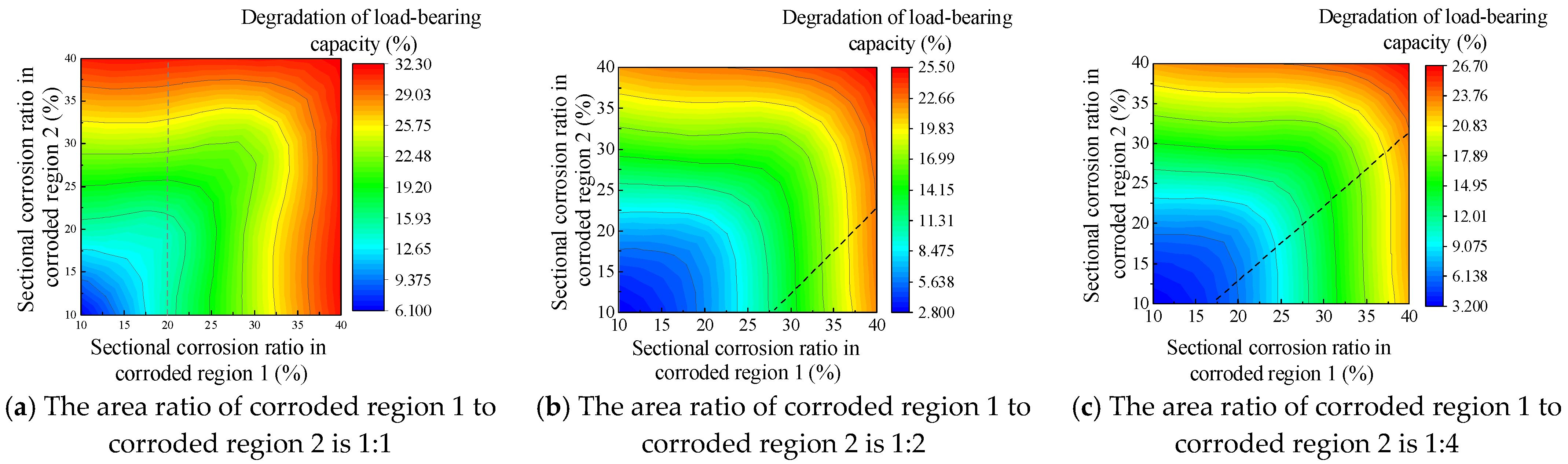
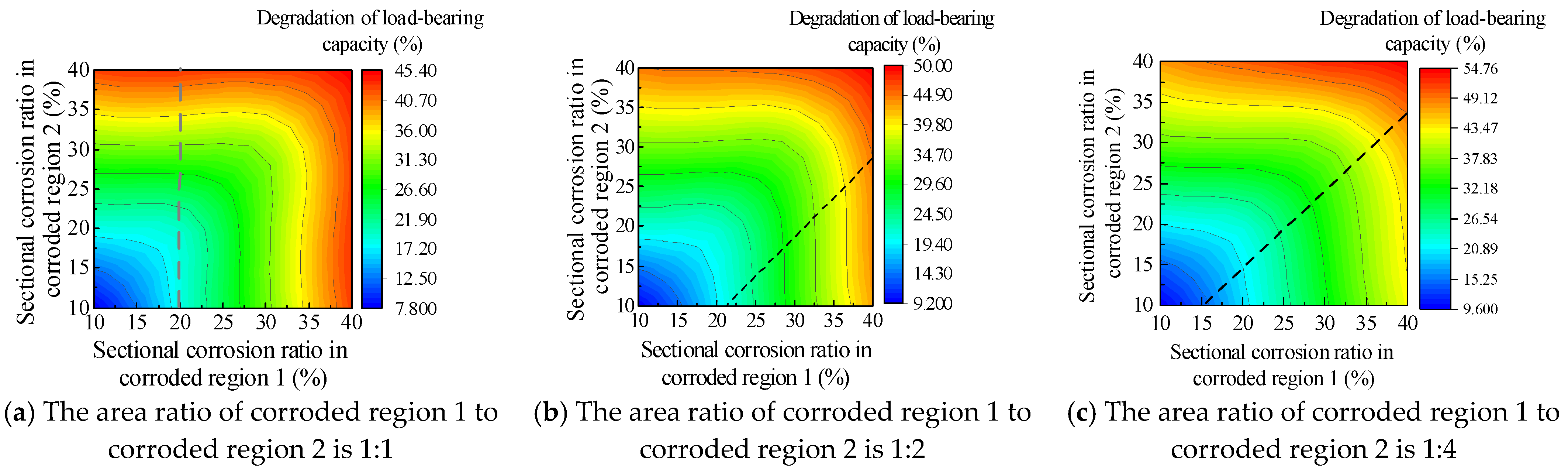
4.2.3. Influence of Relative Corrosion Area and Depth of Dual Corrosion Regions on Angle Steel Bearing Capacity
5. Evaluation Method and Sensitivity Analysis of Corroded Regions in Angle Steel
5.1. Bearing Capacity Calculation Method for Locally Corroded Members

| λ | Dc | Ac | Lc |
|---|---|---|---|
| 60–200 | 0–0.4 | 0–1 | 0–1 |
5.2. Sensitivity Analysis Based on the K–S Statistic
6. Conclusions
- (1)
- Corroded specimens were prepared using the electrochemical accelerated corrosion method, with the error between the target corrosion mass and the actual corrosion mass within 4.0%.
- (2)
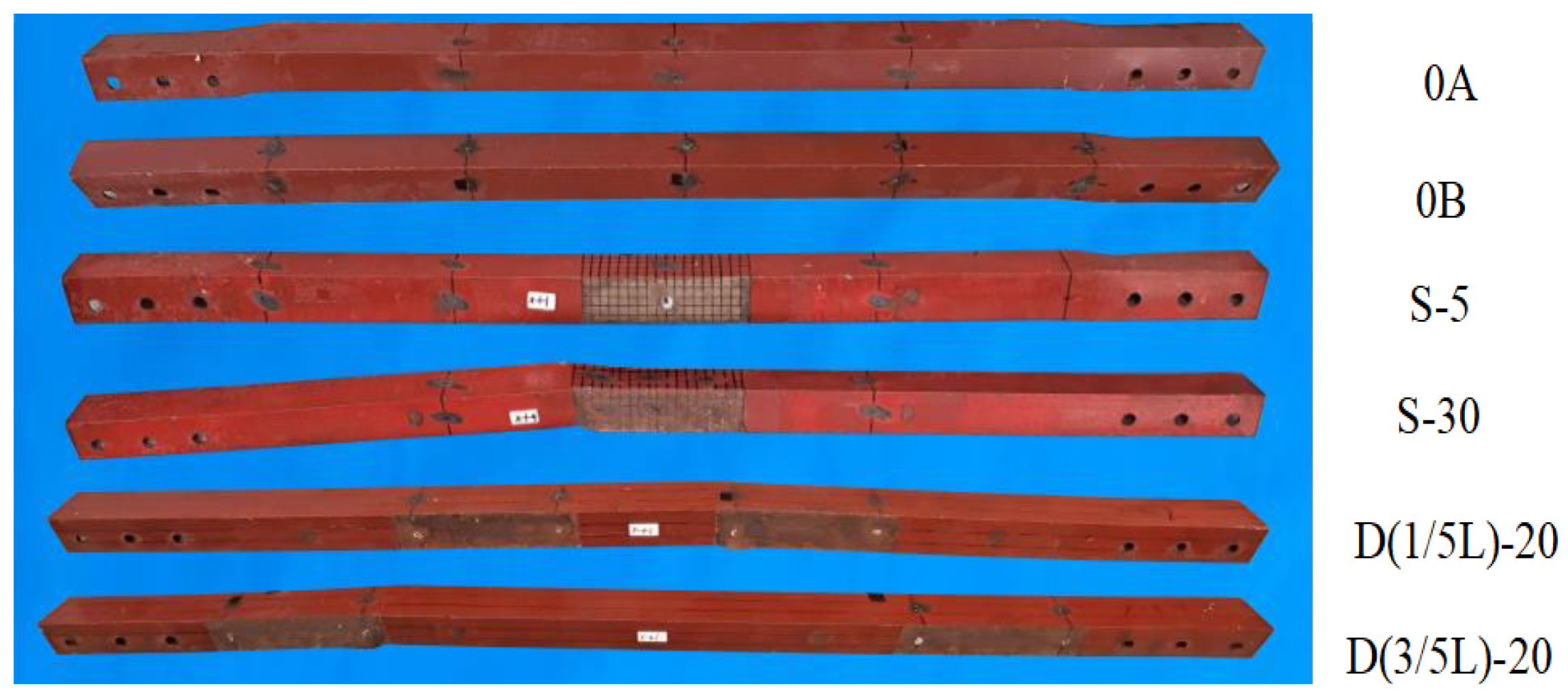
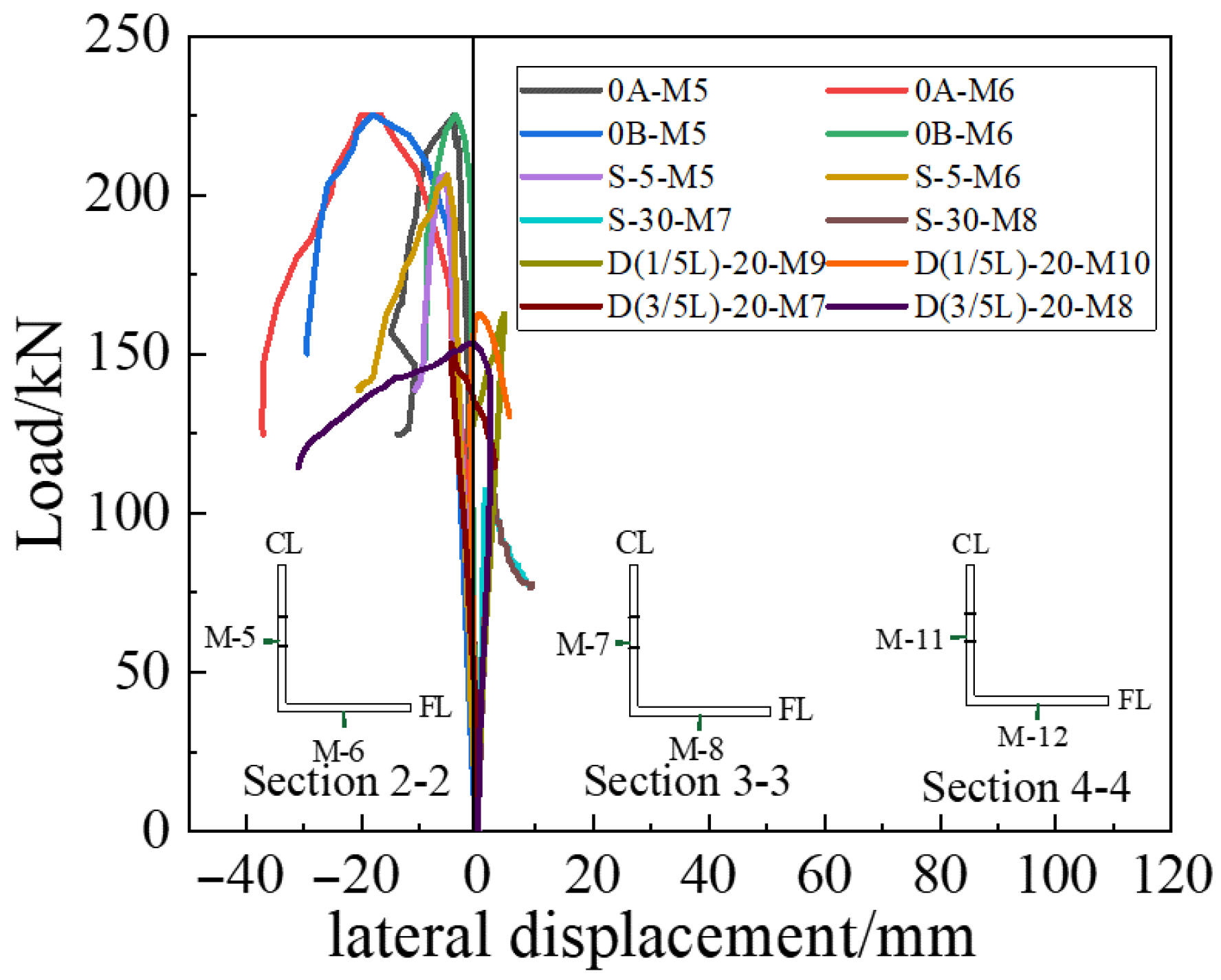
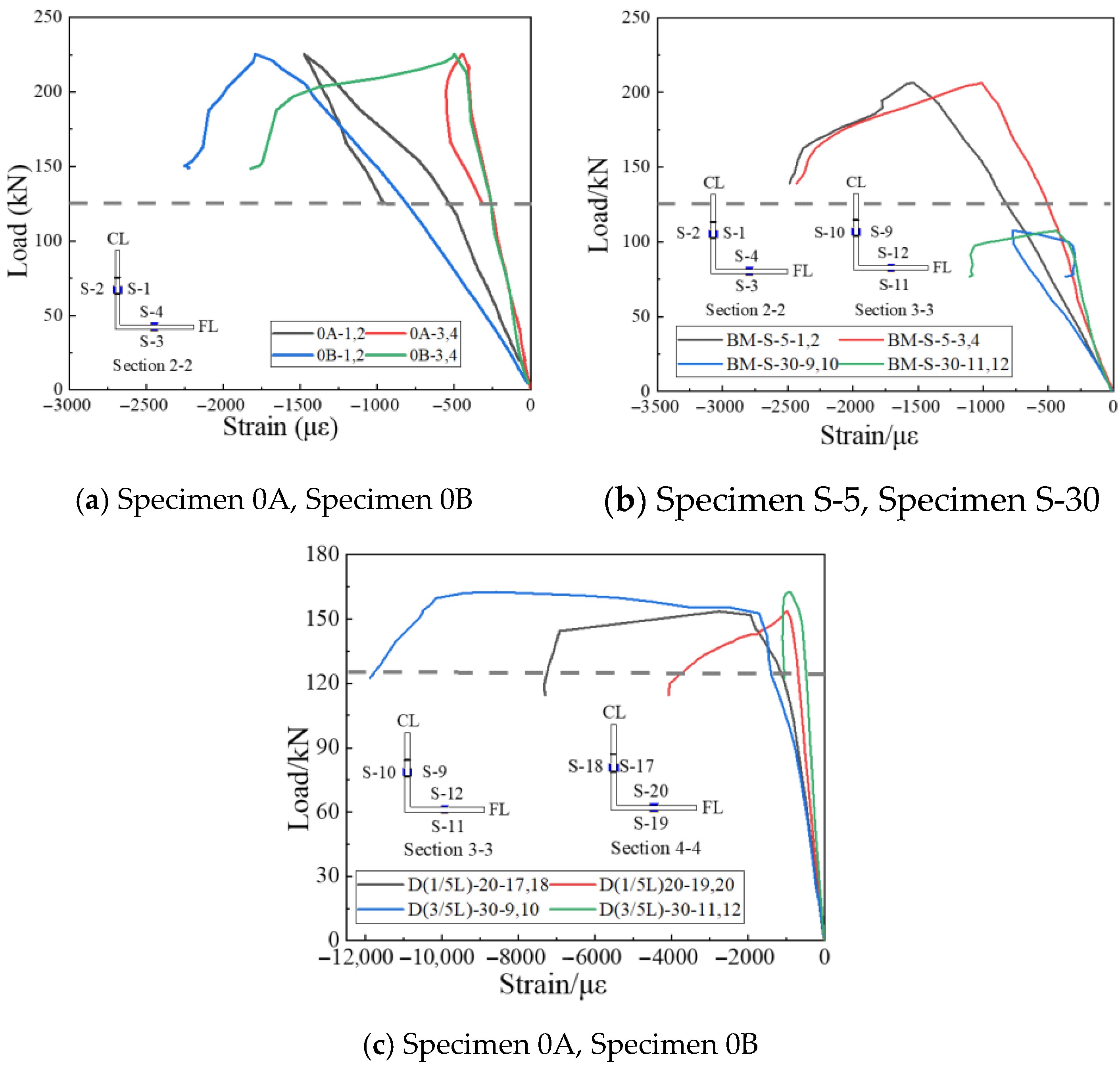
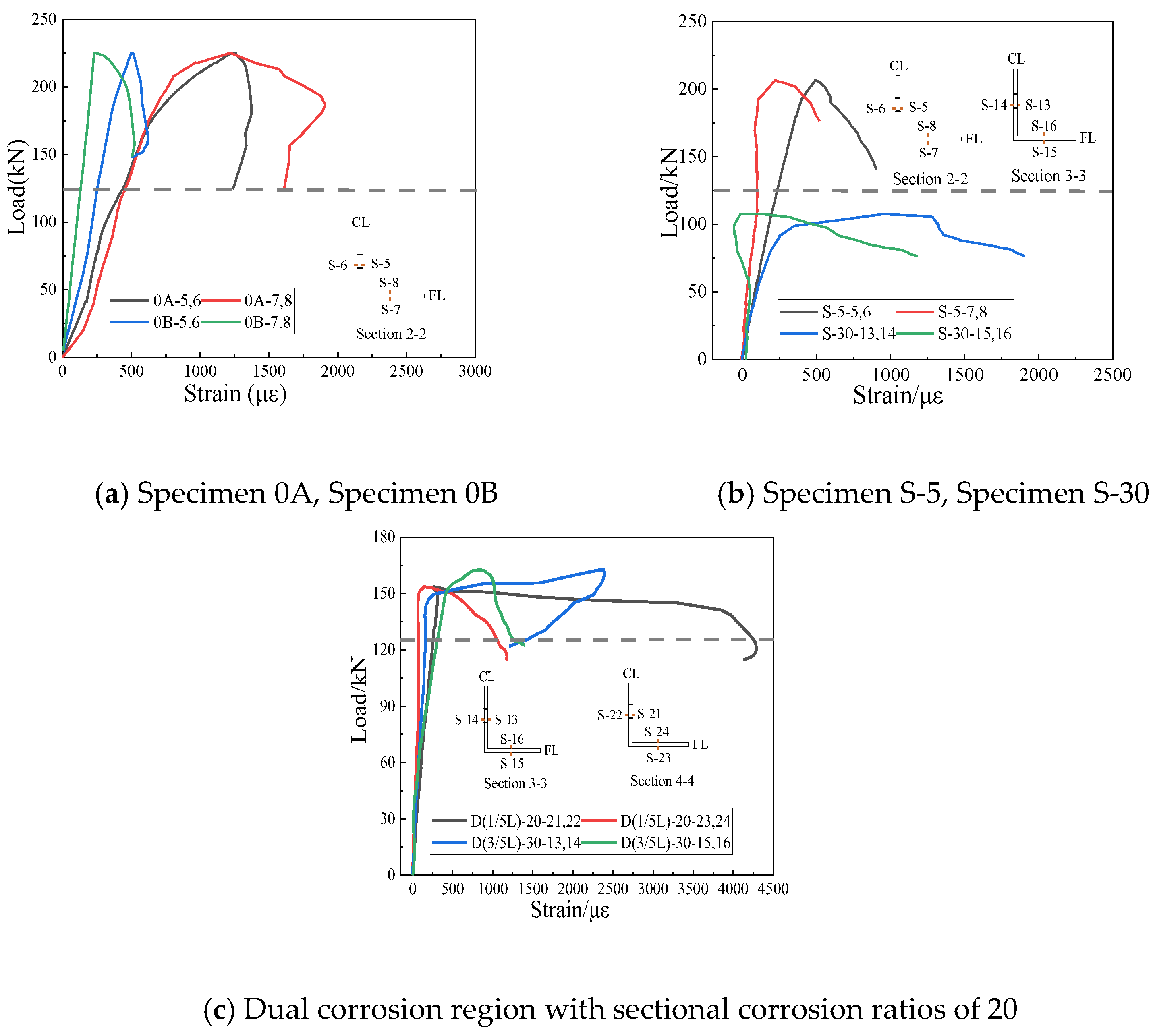
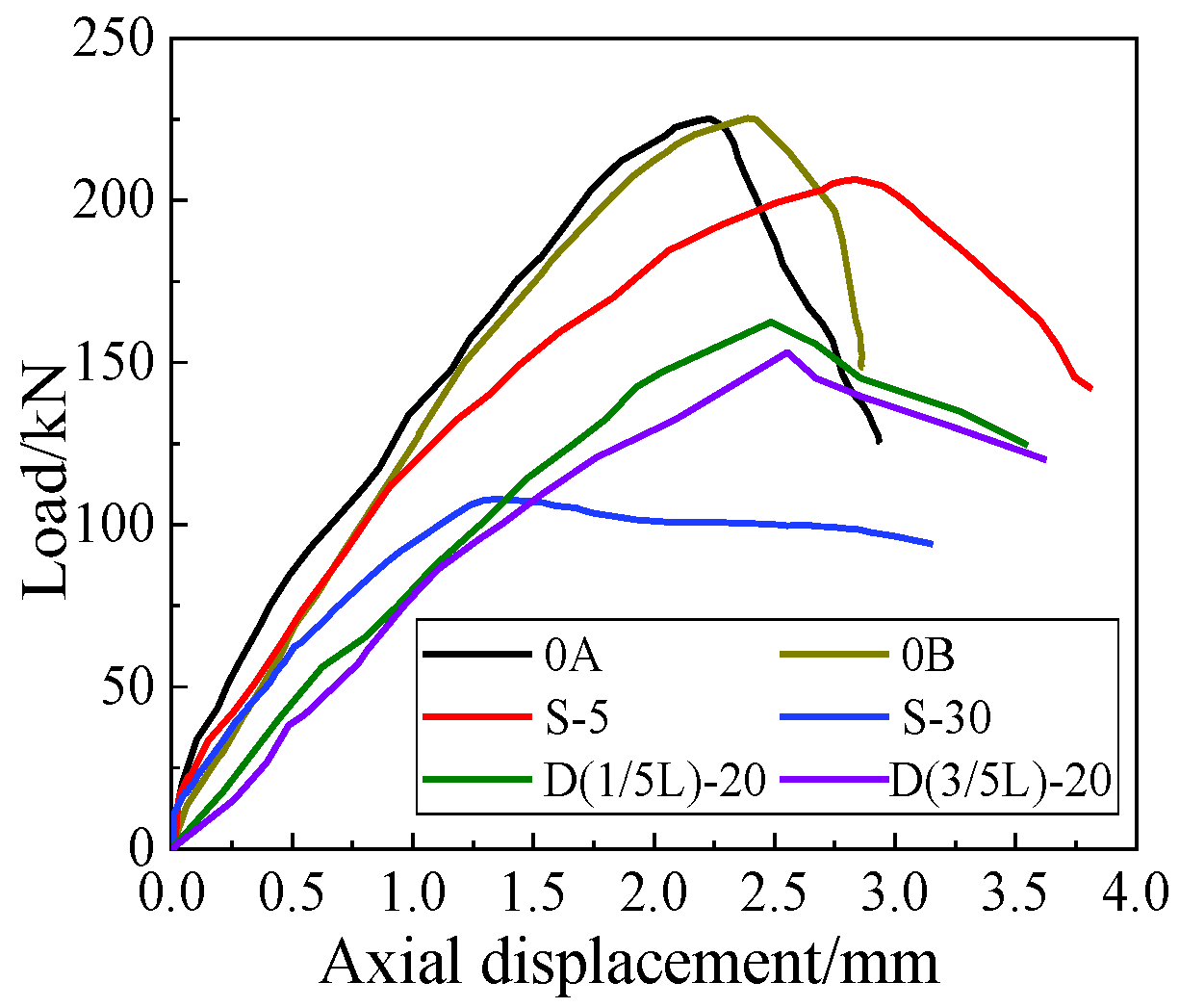
- Eccentric compression tests were conducted on six single-sided connected angle steels. Analysis of the results revealed a significant strain difference between the compression and free legs, the compression leg exhibiting higher strain. A finite element model capable of effectively simulating the eccentric compression behavior and deformation of corroded members was established, and the error between the simulated ultimate bearing capacity and the experimental ultimate bearing capacity was less than 7.5%.
- (3)
- A finite element model validated by experimental results was employed to conduct a parametric analysis of corroded members. The results indicate that, compared with a single corrosion region, a dual corrosion configuration exhibits a more pronounced effect on the load-bearing capacity of the member. Moreover, as the spacing between the two corrosion regions decreases, the degradation ratio of load-bearing capacity increases accordingly. In addition, the relative corrosion depth and area ratio of the two corrosion regions have a significant influence on the bearing capacity degradation ratio.
- (4)
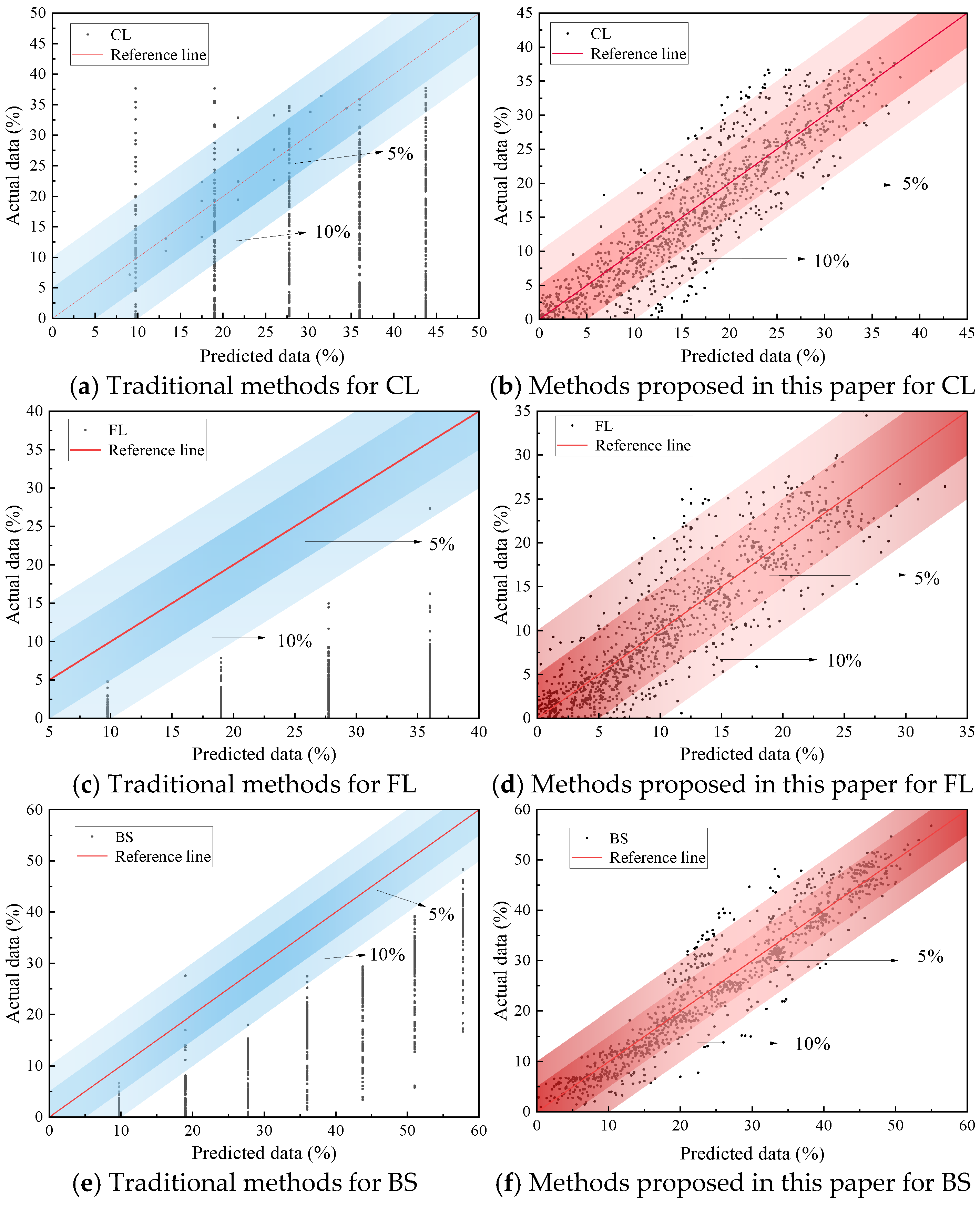
- Through systematic analysis of the effects of corrosion parameters under the dual corrosion region configuration, evaluation methods were developed to predict the bearing capacity degradation ratio of the compression leg and the free leg. Based on the computational models for corrosion in the compression leg and the free leg, an assessment approach for corrosion on both sides incorporating multiple corrosion parameters was established. This assessment method incorporates multiple corrosion parameters and, compared with traditional approaches, can more reasonably and accurately evaluate the bearing capacity degradation ratio of members under multiple corrosion patterns.
- (5)
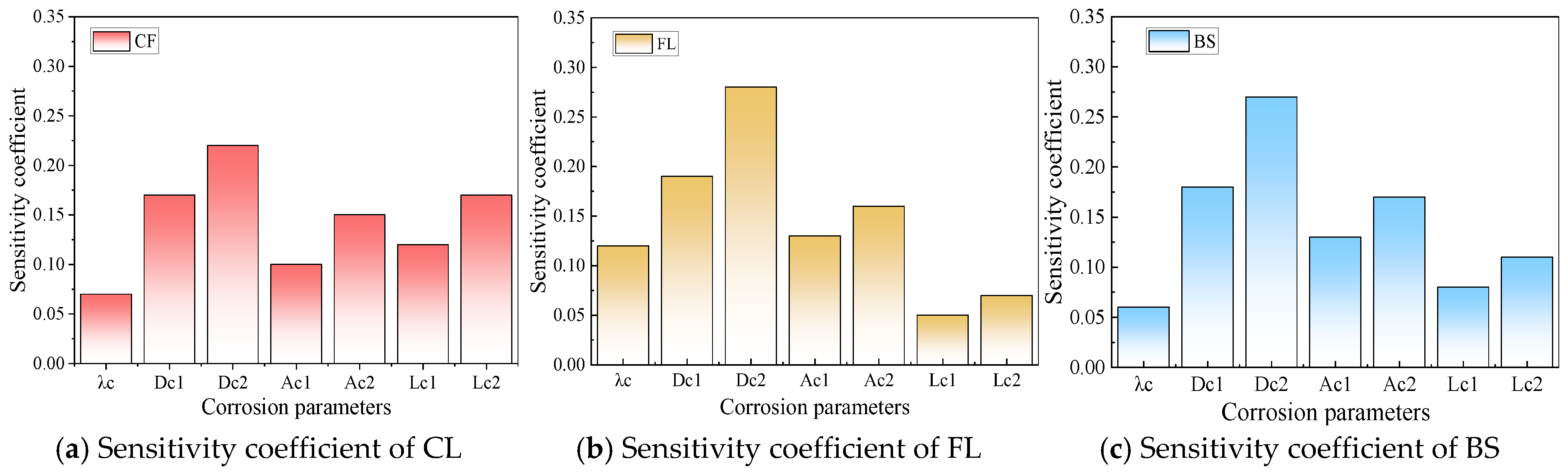
- Based on a computational model incorporating dual corrosion regions, sensitivity analysis of the corrosion parameters was conducted using the K–S statistic method. The results show that the cross-sectional corrosion ratio has the greatest influence on the load-bearing capacity degradation ratio, followed by the corrosion area ratio. In contrast, corrosion location has a relatively minor influence on load-bearing capacity degradation under free leg corrosion conditions.
Author Contributions
Funding
Data Availability Statement
Conflicts of Interest
References
- Ke, W. Current investigation into the corrosion cost in China. Total Corros. Control 2003, 17, 1. [Google Scholar]
- Xia, X.J.; Jin, Y.; Qiao, H.W.; Li, X.G.; Lei, L.W.; Hao, W.K.; Lin, D.Y. Investigation and analysis on corrosion status of power transmission and transformation equipment. Corros. Sci. Prot. Technol. 2019, 31, 121–127. [Google Scholar]
- Shi, X.; Chen, H.; Qiao, X.; Fan, P.; Bai, H. Analysis on corrosion of angle steel used for 500 kV transmission tower. Inner Mong. Petrochem. Ind. 2021, 47, 38–41. [Google Scholar]
- Zhang, Y.J. Corrosion mechanism and protection technology of steel structure. Total Corros. Control 2022, 36, 104–105. [Google Scholar]
- Yang, Y.T. Time-Dependent Wind Reliability Analysis of In-Service Transmission Towers Considering Corrosion Effects. Master’s Thesis, Chongqing University, Chongqing, China, 2022. (In Chinese) [Google Scholar]
- Qian, X.H.; Liang, H.; Wu, J.G. Durability evaluation of corroded components for in-service transmission line towers. East China Electr. Power 2013, 41, 1695–1698. [Google Scholar]
- Di Sarno, L.; Majidian, A.; Karagiannakis, G. The effect of atmospheric corrosion on steel structures: A state-of-the-art and case-study. Buildings 2021, 11, 571. [Google Scholar] [CrossRef] [Scilit]
- Zhang, C.T.; Zhu, H.; Zhu, L. Effect of interaction between corrosion and high temperature on mechanical properties of Q355 structural steel. Constr. Build. Mater. 2021, 271, 121605. [Google Scholar] [CrossRef] [Scilit]
- Chen, S.; Wang, H.; Feng, D.; Zeng, E.; Wang, S.; Zhang, Z.; Qi, M.; Qian, H.; Fan, F. Multi-scale structural analysis method for transmission towers considering the combined effects of multiple imperfections. Eng. Struct. 2026, 353, 122242. [Google Scholar] [CrossRef] [Scilit]
- Zeng, Y.R.; Zhang, C. Corrosion and mechanical behavior of a new Q450 weathering steel. J. Constr. Steel Res. 2025, 225, 109156. [Google Scholar] [CrossRef] [Scilit]
- Li, Z.; Guo, J.; Li, W.; Zhao, Y.; Gong, J. Experimental study on mechanical properties of corroded steel used as containment liner in nuclear power plant. J. Nucl. Sci. Technol. 2022, 59, 1266–1284. [Google Scholar] [CrossRef] [Scilit]
- Shi, W.Z.; Tong, L.W.; Chen, Y.Y.; Li, Z.; Shen, K. Experimental study on influence of corrosion on behavior of steel material and steel beams. J. Build. Struct. 2012, 33, 53–60. [Google Scholar]
- Zhang, Z.; Dong, J.; Ma, M.; Chen, W.; Wang, H.; Qian, H.; Fan, F. The aging behavior and failure mechanism of epoxy-acrylic polyurethane coating system under different accelerated testing methods. Eng. Fail. Anal. 2026, 188, 110650. [Google Scholar] [CrossRef] [Scilit]
- Ahn, J.-H.; Kainuma, S.; Kim, I.-T. Shear failure behaviors of a web panel with local corrosion depending on web boundary conditions. Thin-Walled Struct. 2013, 73, 302–317. [Google Scholar] [CrossRef] [Scilit]
- Zheng, S.; Wang, X.; Han, Y.; Tian, J.; Cheng, Y.; Sun, L. Experimental study on seismic behavior of steel frame columns with different service ages in acidic atmospheric environment. China Civ. Eng. J. 2015, 48, 47–59. [Google Scholar]
- Xu, S.H.; Wang, H.; Xue, N. Deterioration law of bearing properties for corroded eccentric steel columns. J. Harbin Inst. Technol. 2016, 48, 157–163. [Google Scholar]
- Tohidi, S.; Sharifi, Y. Load-carrying capacity of locally corroded steel plate girder ends using artificial neural network. Thin-Walled Struct. 2016, 100, 48–61. [Google Scholar] [CrossRef] [Scilit]
- Cao, C.; Zheng, S.S.; Hu, W.B.; Zhang, X.; Liu, Y. A review on mechanical properties of steel structures under atmospheric corrosion. Mater. Rep. 2020, 34, 11162–11170. [Google Scholar]
- Zhang, J.; Hou, B.; Huang, Y.; Guo, G. Grey interrelation analysis of alloy elements and steel corrosion. Mater. Corros. 2000, 51, 514–517. [Google Scholar] [CrossRef]
- Katayama, H.; Noda, K.; Masuda, H.; Nagasawa, M.; Itagaki, M.; Watanabe, K. Corrosion simulation of carbon steels in atmospheric environment. Corros. Sci. 2004, 47, 2599–2606. [Google Scholar] [CrossRef] [Scilit]
- Akduman, S. Effect of reinforcement corrosion on structural behavior in RC structures according to initiation and propagation periods. Buildings 2024, 14, 4026. [Google Scholar] [CrossRef] [Scilit]
- Ni, Y.; Zhu, E.; Chen, L. Steel strand corrosion and corrosion-induced cracking in concrete structures under electrochemical corrosion. Buildings 2025, 15, 3681. [Google Scholar] [CrossRef] [Scilit]
- Sarfaraz, A.; Harish, K.V.; Misra, S. Experimental behaviour of deep reinforced concrete beams exposed to combined effect of pre-fatigue cycles and rebar corrosion. Structures 2025, 76, 108995. [Google Scholar] [CrossRef] [Scilit]
- Papakonstantinou, K.G.; Shinozuka, M. Spatial stochastic and sensitivity analysis of steel corrosion in a RC port structure. In Proceedings of the International Conference on Structural Safety and Reliability (ICOSSAR), Rome, Italy, 19–23 June 2005; pp. 1–8. [Google Scholar]
- Gu, X.; Zhang, Y.; Huang, C.; Luo, X.; Zhang, H.; Zhou, R.; Qiu, Y. Sensitivity analysis of influencing factors of gas pipelines with corrosion defects under the action of landslides. Energies 2022, 15, 6640. [Google Scholar] [CrossRef] [Scilit]
- Oszvald, K.; Tomka, P.; Dunai, L. The remaining load-bearing capacity of corroded steel angle compression members. J. Constr. Steel Res. 2016, 120, 188–198. [Google Scholar] [CrossRef] [Scilit]
- Zeng, S.; Gu, S.; Ren, S.; Gu, Y.; Kong, C.; Yang, L. A modeling method for finite element analysis of corroded steel structures with random pitting damage. Buildings 2022, 12, 1793. [Google Scholar] [CrossRef] [Scilit]
- Ranji, A.R. Buckling analysis of corroded angle beams with irregular random surfaces. J. Fail. Anal. Prev. 2016, 16, 912–918. [Google Scholar] [CrossRef] [Scilit]
- Ahn, J.H.; Choi, W.R.; Jeon, S.H.; Kim, S.H.; Kim, I.T. Residual compressive strength of inclined steel tubular members with local corrosion. Appl. Ocean Res. 2016, 59, 498–509. [Google Scholar] [CrossRef] [Scilit]
- Zhao, N.; Zhang, C. Experimental investigation of the mechanical behavior of corroded Q345 and Q420 structural steels. Buildings 2023, 13, 475. [Google Scholar] [CrossRef] [Scilit]
- Dong, J.; Zhang, Z.; Yang, T.; Wang, J.; Ma, M.; Chen, W.; Qian, H.; Fan, F. Comparative study on surface morphology evolution and mechanical property degradation of galvanized steel under different corrosion tests and its service life prediction. Case Stud. Constr. Mater. 2025, 23, e05242. [Google Scholar] [CrossRef] [Scilit]
- Wu, B.; Cao, J.; Kang, L. Influence of local corrosion on behavior of steel I-beams subjected to end patch loading: Experiments. J. Constr. Steel Res. 2017, 135, 150–161. [Google Scholar] [CrossRef] [Scilit]
- Wang, R.; Fang, Y.; Dou, P.; Lin, Z. Study on axial compressive ultimate bearing capacity of leg columns of jacket platforms with pitting corrosion damage. Ocean Eng. 2015, 33, 29–35. [Google Scholar]
- Nakai, T.; Matsushita, H.; Yamamoto, N.; Arai, H. Effect of pitting corrosion on local strength of Hold frames of bulk carriers (1st report). Mar. Struct. 2004, 17, 403–432. [Google Scholar] [CrossRef] [Scilit]
- Wang, R.H.; Zhao, S.S. Prediction of ultimate strength of steel plates with random pitting corrosion damage. Eng. Mech. 2018, 35, 248–256. [Google Scholar]
- GB/T 228.1-2021; Metallic Materials—Tensile Testing—Part 1: Method of Test at Room Temperature. Standards Press of China: Beijing, China, 2021. (In Chinese)
- DL/T 5486-2020; Technical Specification for Design of Tower Structures of Overhead Transmission Lines. Standards Press of China: Beijing, China, 2020. (In Chinese)
- Chen, B.; Xu, Y.L.; Qu, W.L. Evaluation of atmospheric corrosion damage to steel space structures in coastal areas. Int. J. Solids Struct. 2005, 42, 4673–4694. [Google Scholar] [CrossRef] [Scilit]
- Glinicka, A.; Imieowski, S.; Ajdukiewicz, C. Influence of Uniformly Distributed Corrosion on the Compressive Capacity of Selected Thin-Walled Metal Columns. Procedia Eng. 2015, 111, 262–268. [Google Scholar] [CrossRef] [Scilit]
- Luo, Y.H.; Huang, Y.; Yang, X.F.; Chen, G.; Teng, Y.; Liu, W.; Li, F. Effect of P elements on mechanical properties and corrosion resistance of high strength weathering steel used in transmission tower. Iron Steel Vanadium Titan. 2019, 40, 142–147. [Google Scholar]
- Rahgozar, R. Remaining Capacity Assessment of corrosion damaged beams using minimum curves. J. Constr. Steel Res. 2009, 65, 299–307. [Google Scholar] [CrossRef] [Scilit]
- Chen, M.; Fang, W.; Huang, H. Static behavior of corroded concrete-filled steel tubular members by simulating acid rain solution. J. Eng. Mech. 2020, 37, 34–43. [Google Scholar]
- Kim, Y.; Toledo, K.K.; Jeong, Y.S.; Song, S.Y.; Kim, I.T. Residual compressive strength of locally corroded intermediate tubular steel columns. J. Eng. Fail. Anal. 2022, 138, 106375. [Google Scholar] [CrossRef] [Scilit]
- Shu, Q.; Wang, K.; Yuan, G.; Zhang, Y.; Liu, Z. Assessing capacity of corroded angle members in steel structures based on experiment and simulation. Constr. Build. Mater. 2020, 244, 118210. [Google Scholar] [CrossRef] [Scilit]
- Beaulieu, L.; Legeron, F.; Langlois, S. Compression strength of corroded steel angle members. J. Constr. Steel Res. 2011, 66, 1366–1373. [Google Scholar] [CrossRef] [Scilit]
- Hisazumi, K.; Kanno, R. Column Buckling of Corroded Steel Angles and Channels: Experiments and Failure Mode Analyses. J. Struct. Eng. 2021, 147, 04021106. [Google Scholar] [CrossRef] [Scilit]
- Pianosi, F.; Wagener, T. A simple and efficient method for global sensitivity analysis based on cumulative distribution functions. Environ. Model. Softw. 2015, 67, 1–11. [Google Scholar] [CrossRef] [Scilit]
- Wang, H.; Ma, H.B.; Xu, H.L.; Hua, G.R. Remaining useful life prediction method for mechanical equipment based on K-S test and dynamic grey model. Instrum. Tech. Sens. 2015, 1, 97–100. [Google Scholar]








| Samples | Yield Stress (fy)/MPa | Ultimate Stress (fu)/MPa | Elastic Modulus/GPa |
|---|---|---|---|
| Q235 | 292.27 | 415.26 | 190.26 |
| Specimen Number | M2 (g) | M1 (g) | M∆ (g) | Error Ratio (%) |
|---|---|---|---|---|
| S-5 | 42.6 | 44.3 | 1.0 | 4.0 |
| S-30 | 272.3 | 275.2 | 2.9 | 1.1 |
| D(1/5L)-20 | 383.4 | 392.4 | 9.0 | 2.3 |
| D(3/5L)-20 | 380.8 | 387.8 | 7.0 | 1.8 |
| Specimen Number | Average Corrosion Ratio (%) | Test Bearing Capacity (kN) | Simulated Bearing Capacity (kN) | Error Ratio (%) |
|---|---|---|---|---|
| 0A | 0 | 225.28 | 241.70 | 7.3 |
| 0B | 0 | 225.38 | 241.70 | 7.3 |
| S-5 | 4.61 | 206.46 | 208.45 | 1.0 |
| S-30 | 30.83 | 107.14 | 113.29 | 5.7 |
| D(1/5L)-20 | 20.13 | 153.08 | 159.77 | 4.4 |
| D(3/5L)-20 | 19.91 | 162.43 | 165.39 | 1.8 |
| Parameters | Sensitivity Coefficient of Compression Leg (CL) | Sensitivity Coefficient of Free Leg (FL) | Sensitivity Coefficient of Both Sides (BS) |
|---|---|---|---|
| Slenderness ratio λ | 0.16 | 0.25 | 0.14 |
| Corrosion depth Dc1 | 0.37 | 0.39 | 0.4 |
| Corrosion depth Dc2 | 0.48 | 0.59 | 0.59 |
| Corrosion area Ac1 | 0.22 | 0.25 | 0.28 |
| Corrosion area Ac2 | 0.32 | 0.34 | 0.36 |
| Corrosion location Lc1 | 0.27 | 0.1 | 0.17 |
| Corrosion location Lc2 | 0.38 | 0.15 | 0.23 |
Disclaimer/Publisher’s Note: The statements, opinions and data contained in all publications are solely those of the individual author(s) and contributor(s) and not of MDPI and/or the editor(s). MDPI and/or the editor(s) disclaim responsibility for any injury to people or property resulting from any ideas, methods, instructions or products referred to in the content. |
© 2026 by the authors. Licensee MDPI, Basel, Switzerland. This article is an open access article distributed under the terms and conditions of the Creative Commons Attribution (CC BY) license.
Share and Cite
Chen, W.; Chen, S.; Zhang, Z.; Wang, H.; Qian, H.; Fan, F. Evaluation Methods and Sensitivity Analysis of Corrosion Parameters for Eccentrically Loaded Angle Steel Members. Buildings 2026, 16, 1047. https://doi.org/10.3390/buildings16051047
Chen W, Chen S, Zhang Z, Wang H, Qian H, Fan F. Evaluation Methods and Sensitivity Analysis of Corrosion Parameters for Eccentrically Loaded Angle Steel Members. Buildings. 2026; 16(5):1047. https://doi.org/10.3390/buildings16051047
Chicago/Turabian StyleChen, Wenjie, Shijin Chen, Zhiwei Zhang, Huajie Wang, Hongliang Qian, and Feng Fan. 2026. "Evaluation Methods and Sensitivity Analysis of Corrosion Parameters for Eccentrically Loaded Angle Steel Members" Buildings 16, no. 5: 1047. https://doi.org/10.3390/buildings16051047
APA StyleChen, W., Chen, S., Zhang, Z., Wang, H., Qian, H., & Fan, F. (2026). Evaluation Methods and Sensitivity Analysis of Corrosion Parameters for Eccentrically Loaded Angle Steel Members. Buildings, 16(5), 1047. https://doi.org/10.3390/buildings16051047