Article

Failure of a Code-Compliant Reinforced Concrete Building: Damage Patterns and Nonlinear Seismic Response


1
Department of Civil Engineering, Faculty of Engineering, Inonu University, 44280 Malatya, Türkiye
2
Department of Construction Technology, Diyarbakir Vocational School of Technical Sciences, Dicle University, 21280 Diyarbakır, Türkiye
3
Department of Civil Engineering, Faculty of Engineering, Munzur University, 62000 Tunceli, Türkiye
4
Department of Civil Engineering, Faculty of Engineering and Architecture, Bingöl University, 12000 Bingöl, Türkiye
5
Department of Civil Engineering, Faculty of Engineering, Dicle University, 21280 Diyarbakır, Türkiye
6
Şırnak Vocational School, Şırnak University, 73000 Şırnak, Türkiye
*
Author to whom correspondence should be addressed.
Buildings 2026, 16(5), 1012; https://doi.org/10.3390/buildings16051012
Submission received: 29 January 2026 / Revised: 26 February 2026 / Accepted: 27 February 2026 / Published: 4 March 2026
(This article belongs to the Section Building Structures)

Abstract

This study investigates the seismic performance limitations of a newly constructed reinforced concrete building that collapsed during the 6 February 2023 Kahramanmaraş–Elbistan earthquake despite formal compliance with current seismic design requirements. Beyond the specific earthquake event, the study addresses a broader scientific problem: the limited understanding of the relationship between observed damage mechanisms and nonlinear dynamic response in mid-rise reinforced concrete buildings. The first part classifies recurring structural and non-structural damage patterns identified in newly constructed RC residences. The second part presents a nonlinear fiber-based static and dynamic analysis of a collapsed mid-rise building. Nonlinear dynamic analyses were conducted using ground motion records scaled to match the site-specific elastic design spectrum defined by TBDY 2018, corresponding to predefined seismic performance levels rather than an incremental dynamic analysis framework. The results indicate that an extremely low shear wall–to–floor area ratio (0.0357%) combined with asymmetric vertical element distribution significantly amplified torsional response and local shear demands. Nonlinear dynamic analyses showed that critical shear walls exceeded Collapse Prevention limits under DD2-level excitation, while system-level shear contribution limits remained within code-defined thresholds. Dynamic base shear demand corresponded to approximately 30% of the maximum nonlinear capacity obtained from pushover analysis, indicating that localized member failure rather than global strength deficiency governed the collapse mechanism. The analytically identified critical members were consistent with the observed collapse configuration, particularly at the soft ground story. The findings demonstrate that prescriptive code compliance alone may not ensure satisfactory seismic performance when structural irregularities, torsional amplification, and detailing deficiencies coexist. The results are consistent with damage patterns reported in other recent destructive earthquakes and contribute to improving the understanding of collapse mechanisms in code-compliant RC buildings.

1. Introduction

1.1. Seismicity of Türkiye

Türkiye is located in one of the most seismically active regions in the world due to the interaction between the Eurasian, African, and Arabian plates [1,2,3,4,5,6,7]. As a result, the country has experienced numerous destructive earthquakes in recent decades, including the 1992 Erzincan, 1999 İzmit, and 2011 Van events. The NAF extends across northern Türkiye and consists of multiple segments that have ruptured progressively over time. The EAF, originating near Karlıova (Bingöl), traverses Eastern Anatolia and extends toward Hatay province. The sequential rupture of these major fault systems has produced significant earthquakes over the past three decades, culminating in the 6 February 2023 Kahramanmaraş earthquakes [3,4,5,6,7,8,9,10,11,12,13]. On 6 February 2023, two major earthquakes occurred in southern Türkiye, causing widespread destruction across eleven provinces. These events exposed the vulnerability of both old and newly constructed buildings and prompted renewed evaluation of seismic design practices under the most recent seismic code TBEC 2018 [14].

1.2. A Brief Reminder About 6 February 2023 Kahramanmaraş Earthquakes

The Pazarcık earthquake, occurring at 04:17, was triggered by the release of seismic energy that had accumulated over nearly a millennium, along a Dead Sea fault. This earthquake set off a sequence of three subsequent earthquakes, resulting in the simultaneous rupture of the Erkenek, Pazarcık, and Amanos segments (Figure 1) [14,15,16,17,18,19].
Additionally, according to the MTA reports [17], a 50 km fault segment was also ruptured along the Dead Sea fault, leading to a total surface rupture of 400 km. The primary cause of the rupture of these four faults remains unclear, although analysis of the “P” and “S” waves has provided some clues. The expected velocity of the “S” wave is 2.8 km/s; however, the observed velocity was 3.2 km/s. A possible explanation for this discrepancy is the rupture of EAF segments immediately following the Dead Sea fault, induced by the massive stress transfer [22]. The main shock of the Pazarcık earthquake series triggered another major shock that struck Kahramanmaraş–Elbistan at 13:24 local time. This event occurred on the Çardak and Sürgü faults, as shown in Figure 1. The Elbistan earthquake ruptured a total of 167 km of fault length, according to MTA reports [19]. The Anatolian Plate reportedly slid 8.1 m relative to the European Plate. Table 1 summarizes the earthquake characteristics based on data from the DEMA [23]. The DEMA’s seismic ground motion recording instruments recorded a PGA of 2.05 g at the Kahramanmaraş–Pazarcık station, coded as 4614. The affected area has experienced 33,591 aftershocks from the first main shock until 6 May 2023.
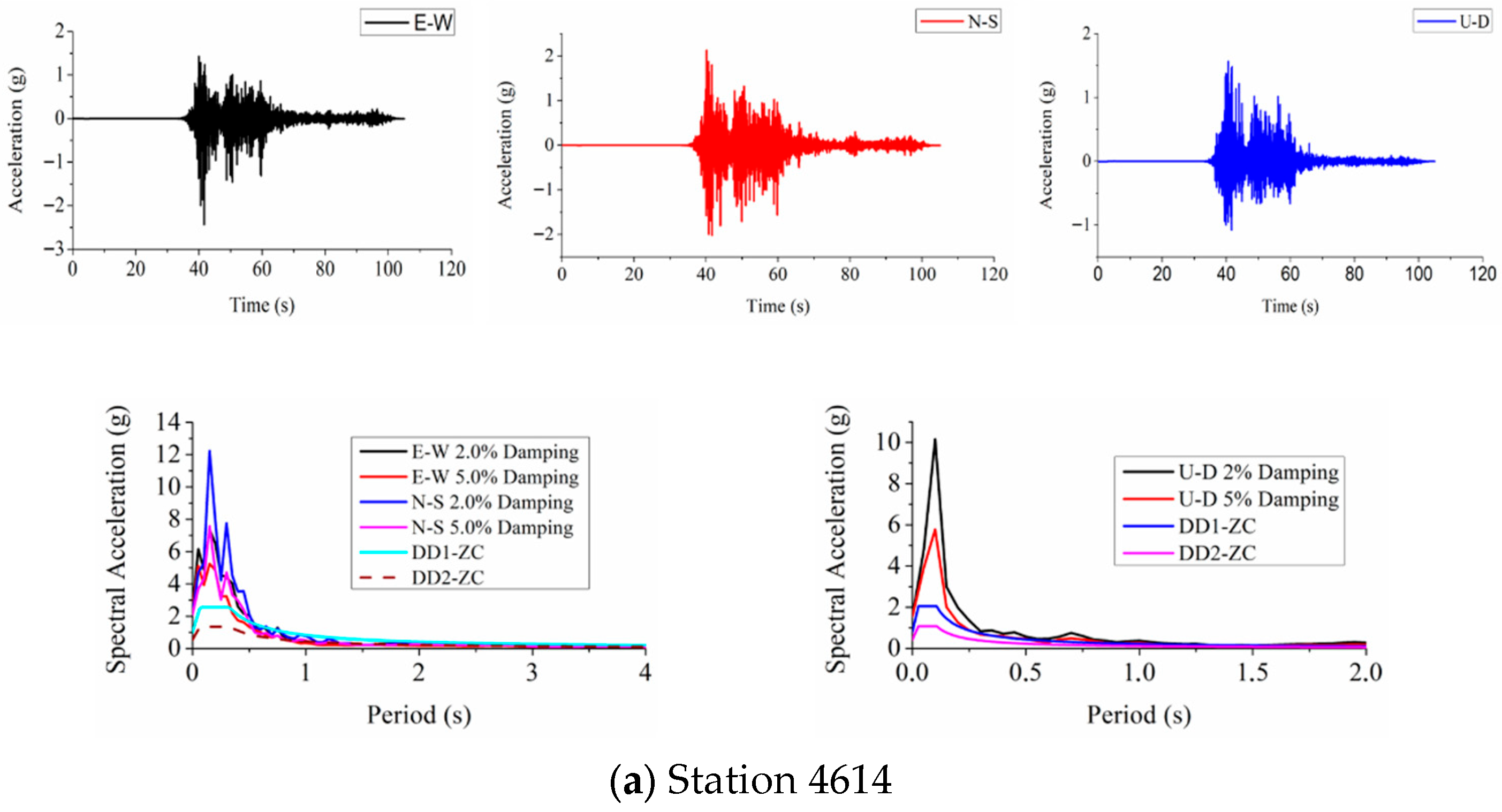
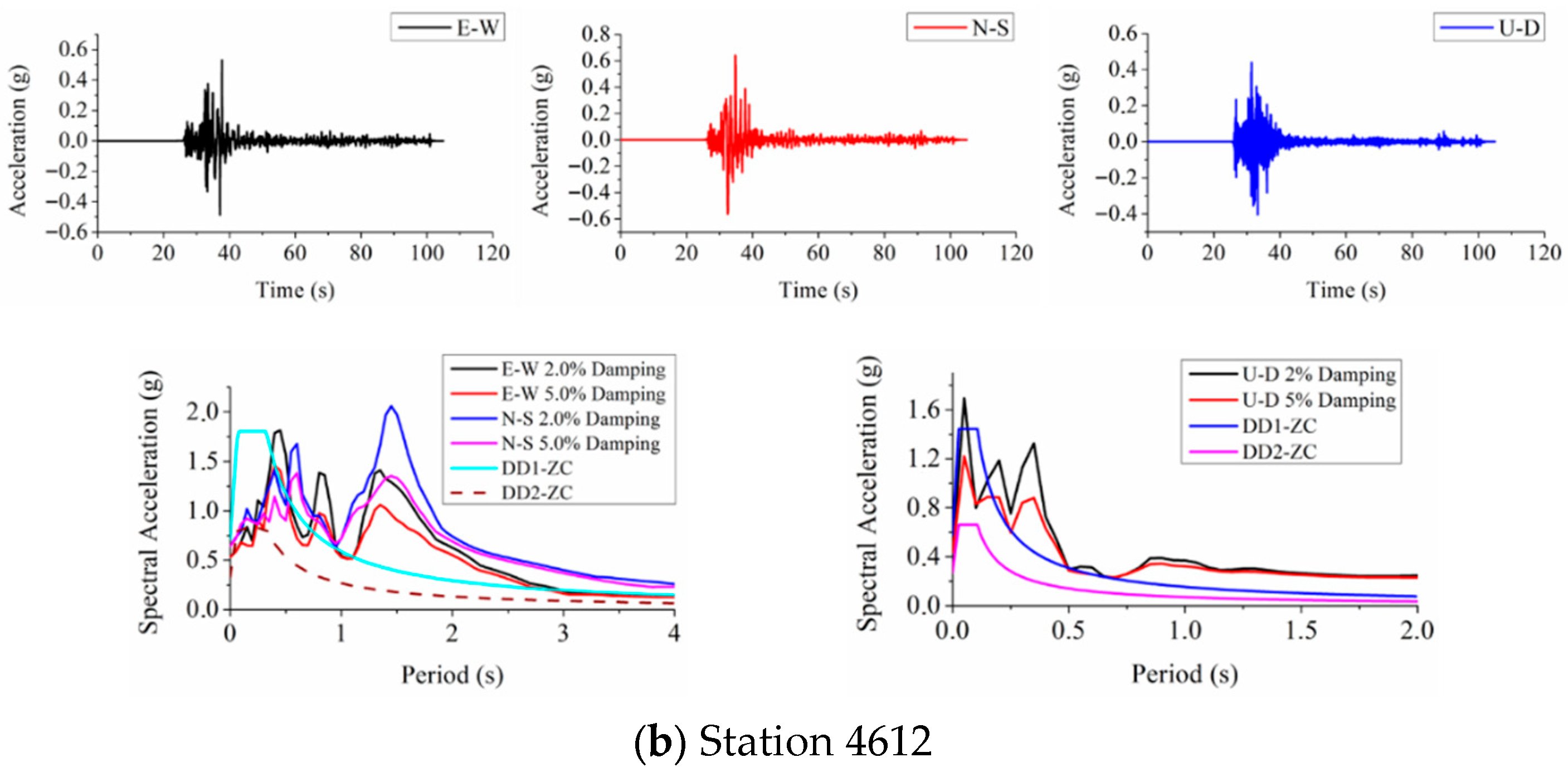
Produced response spectrum with 2% and 5% damping compared with the design spectrum, as seen in Figure 2a,b.
It should be noted that, particularly in Figure 2a, the recorded response spectrum significantly exceeds the corresponding TBEC 2018 elastic design spectrum over certain period ranges. This exceedance is primarily attributed to near-fault effects, pulse-like ground motion characteristics, and localized site amplification. The elastic design spectrum represents a probabilistic hazard-based target for predefined return periods and does not necessarily bound extreme recorded spectra at specific stations. Similar spectrum exceedances were widely reported during the 6 February 2023 earthquake sequence.

1.3. Motivation of This Study

The 6 February 2023 earthquakes had devastating consequences across eleven provinces in Türkiye, affecting approximately 14 million people. According to the final official report issued by the DEMA, the earthquake sequence resulted in 53,537 fatalities and over 100,000 injuries. A total of 39,441 buildings collapsed, while more than 200,000 buildings sustained heavy damage. The estimated economic loss exceeded USD 170 billion. Beyond the scale of destruction, a particularly concerning observation was that numerous newly constructed RC buildings, formally designed in accordance with TBEC 2018, suffered severe damage or total collapse. These unexpected failures raised fundamental questions regarding the reliability of prescriptive code-based design and inspection practices.
In response to these observations, this study adopts a two-part approach. First, recurring structural and non-structural damage patterns observed in newly constructed RC residential buildings are classified based on extensive field investigations conducted in Malatya and surrounding provinces. Particular emphasis is placed on shear failures, soft-story mechanisms, torsional irregularities, and detailing deficiencies that persisted despite formal code compliance. Second, a comprehensive nonlinear numerical investigation is performed on a collapsed mid-rise RC residence located in the Bostanbaşı district of Malatya. The building’s seismic response is evaluated using a fiber-based nonlinear modeling framework under scaled ground motions to examine the role of structural configuration in the observed collapse.
These observations highlight two interrelated challenges. From a scientific perspective, there remains a limited understanding of how unfavorable structural configurations, such as low shear wall ratios, asymmetric layouts, and soft-story conditions, interact with nonlinear dynamic response to produce collapse mechanisms in buildings that formally comply with seismic codes. Although post-earthquake reconnaissance studies have documented damage patterns, the quantitative relationship between observed failure modes and analytically predicted nonlinear response parameters remains insufficiently clarified.
From an applied engineering perspective, the reliability of purely prescriptive code-based design in preventing collapse under strong ground motion requires further examination. Field evidence suggests that certain structural configurations may remain vulnerable despite meeting strength-based code requirements, underlining the need for improved performance verification and configuration-sensitive design considerations.
Accordingly, the present study is conducted within the framework of the TBEC 2018, which determines the seismic design and performance evaluation of RC buildings in Türkiye. The investigated structure was reportedly designed in accordance with TBEC 2018 provisions, including strength-based design procedures and performance-based verification criteria defined through LS and CP limits. Despite this formal compliance, the building collapsed during the Elbistan earthquake, raising a critical question regarding the consistency between prescriptive code-based design checks and actual nonlinear seismic response in mid-rise RC systems with unfavorable structural configurations.
In this context, the primary objective of this study is to investigate the collapse mechanism of a code-compliant mid-rise RC building through combined field documentation and nonlinear static and dynamic analysis. The specific objectives are (i) to classify recurring damage patterns in newly constructed RC buildings, (ii) to evaluate the nonlinear response of the selected case study under site-specific ground motions, and (iii) to assess the consistency between analytically identified critical members and the observed collapse configuration within the performance limits defined by TBEC 2018.

2. Literature Review

The 6 February 2023 Kahramanmaraş earthquakes produced ground motions that severely affected RC buildings across a wide region. Numerous post-earthquake investigations were conducted to document damage patterns, identify failure mechanisms, and evaluate structural performance in relation to seismic code provisions. Several studies reported that a significant portion of damaged RC buildings had been constructed after 2000. Vuran et al. [24] classified damage according to construction year and noted that non-compliance with seismic detailing requirements remained common. Similar observations were reported by Ince [25] and Sezgin et al. [26], who identified deficiencies in reinforcement detailing, weak structural discontinuities, inadequate material quality, and violations related to structural irregularities. Numerical investigations conducted in Hatay and Antakya [27,28] indicated that insufficient shear wall ratios, asymmetric layouts, and missing confinement detailing were major contributors to collapse in mid- and high-rise residential buildings. Tura et al. [29] further showed that early loss of moment capacity due to inadequate transverse reinforcement led to damage states beyond the CP limit. Material-related deficiencies were also reported in [30], where chemical analyses revealed low binder content and poor concrete quality. Geotechnical conditions were also emphasized as an important factor influencing damage severity. Ozdemir [31] and Sivrikaya et al. [32] discussed local soil amplification effects in Malatya, İskenderun, and Hatay. Sarıcı and Özcan [33,34] classified the Bostanbaşı region as ZC and ZD soil classes and highlighted its amplification potential. Additional studies [32,35,36] similarly underlined the influence of soil conditions on structural response during the earthquakes. Other investigations focused on conventional damage mechanisms in older building stocks constructed under previous seismic codes [14,37,38], while Tonyalı et al. [39] examined the seismic resilience of an existing RC dual system. Although these studies provided important insights into observed damage and structural deficiencies, many were limited either to qualitative field observations or to analytical simulations without direct comparison to actual collapse behavior. Recent experimental studies that motivated field observations have examined the seismic strengthening of RC members using FRCM systems. For instance, John and Cascardi [40] combined cyclic experimental testing with numerical modeling and reported substantial enhancement in ductility and energy dissipation capacity of strengthened RC columns. And adopted data-driven and machine learning-based approaches to evaluate seismic response and damage patterns in buildings subjected to earthquake sequences. For instance, ref. [41] employed data-driven methodologies to assess structural performance under multiple seismic events, highlighting the influence of cumulative damage and response variability. Similarly, ref. [42] investigated seismic damage progression using advanced statistical or computational frameworks. These approaches provide valuable predictive insights. However, many such studies rely primarily on numerical or data-oriented modeling without direct correlation to detailed field-documented collapse mechanisms. In contrast, the present study integrates field observations with nonlinear dynamic analysis to establish a direct link between observed damage patterns and quantified structural response parameters. The present study addresses this limitation by combining detailed field documentation with nonlinear time-history analysis of a collapsed mid-rise RC residence. Particular attention is given to the role of an extremely low shear wall ratio (0.0357%) and its influence on seismic performance within the framework of TBEC 2018 provisions.

3. Methodology

3.1. Field Investigation Procedure

During post-earthquake reconnaissance surveys conducted in Malatya and adjacent provinces (Adıyaman, Elazığ, and Diyarbakır) following the 6 February 2023 earthquakes, approximately 1000 newly constructed RC residential buildings were visually inspected. The surveys focused on mid-rise residential structures designed under TBEC 2018 provisions. Visual inspections were performed to document recurring structural and non-structural damage patterns. Particular attention was given to column and shear wall cracking, beam–column joint behavior, soft-story formations, irregular structural layouts, and detailing conditions. Damage observations were recorded through photographic documentation and field notes. The damage mechanisms presented in the subsequent section represent frequently observed patterns identified during these reconnaissance surveys rather than isolated cases.

3.2. Case Study Selection and Structural Characteristics

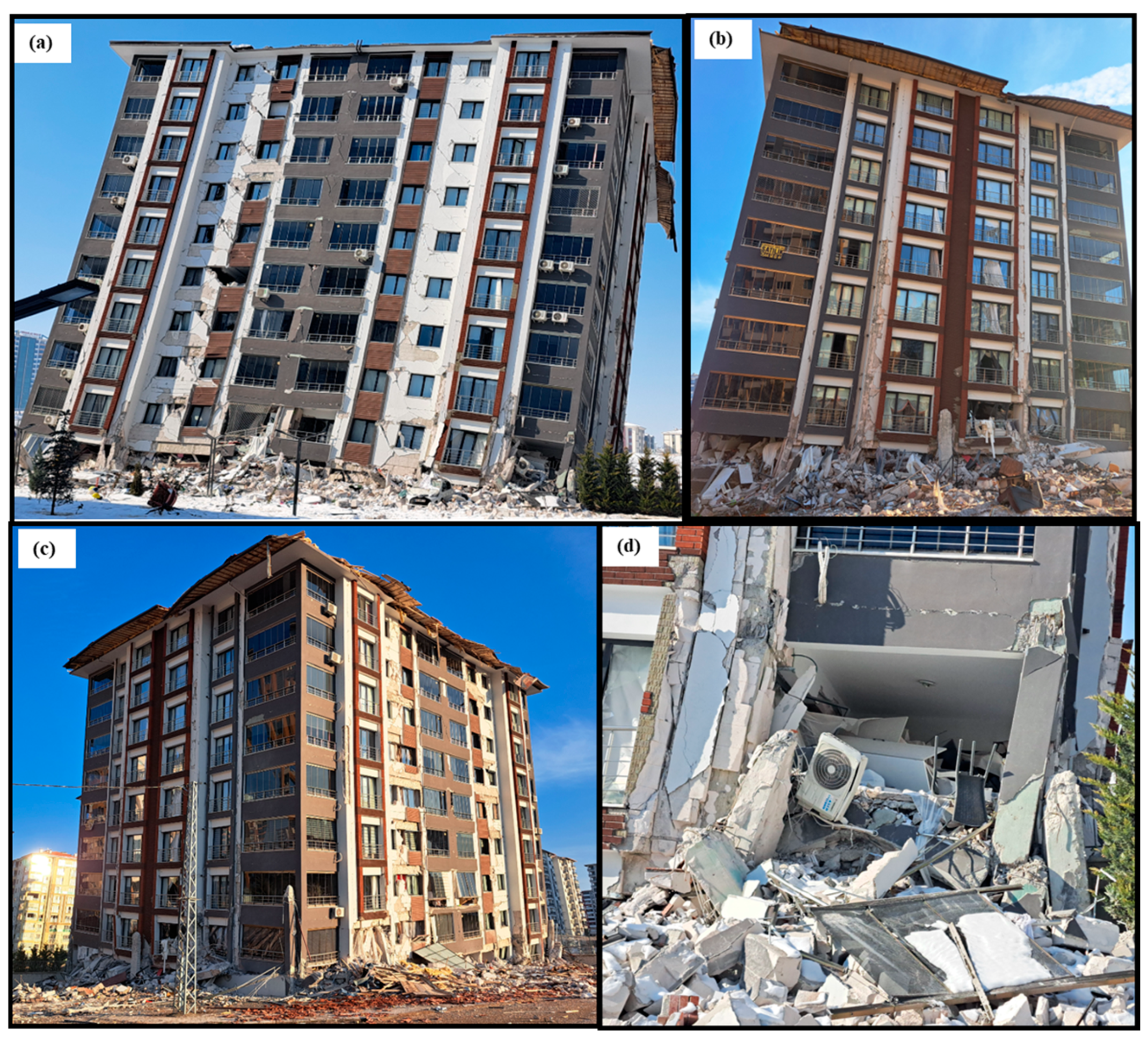
The selected case study is a newly constructed RC residential building that collapsed during the 6 February 2023 Kahramanmaraş–Elbistan earthquake. Located in the Bostanbaşı district of Malatya, the building was approximately 100 km from the epicenter and was reportedly designed in compliance with TBEC 2018. Despite this, it suffered a progressive collapse during the seismic event. The building consisted of a basement, ground floor, mezzanine, and 11 additional stories. The total ground floor height, including the mezzanine, was 5.5 m, leading to a soft-story mechanism that initiated the collapse. Figure 3 shows the final failure mode of the structure after the earthquake.
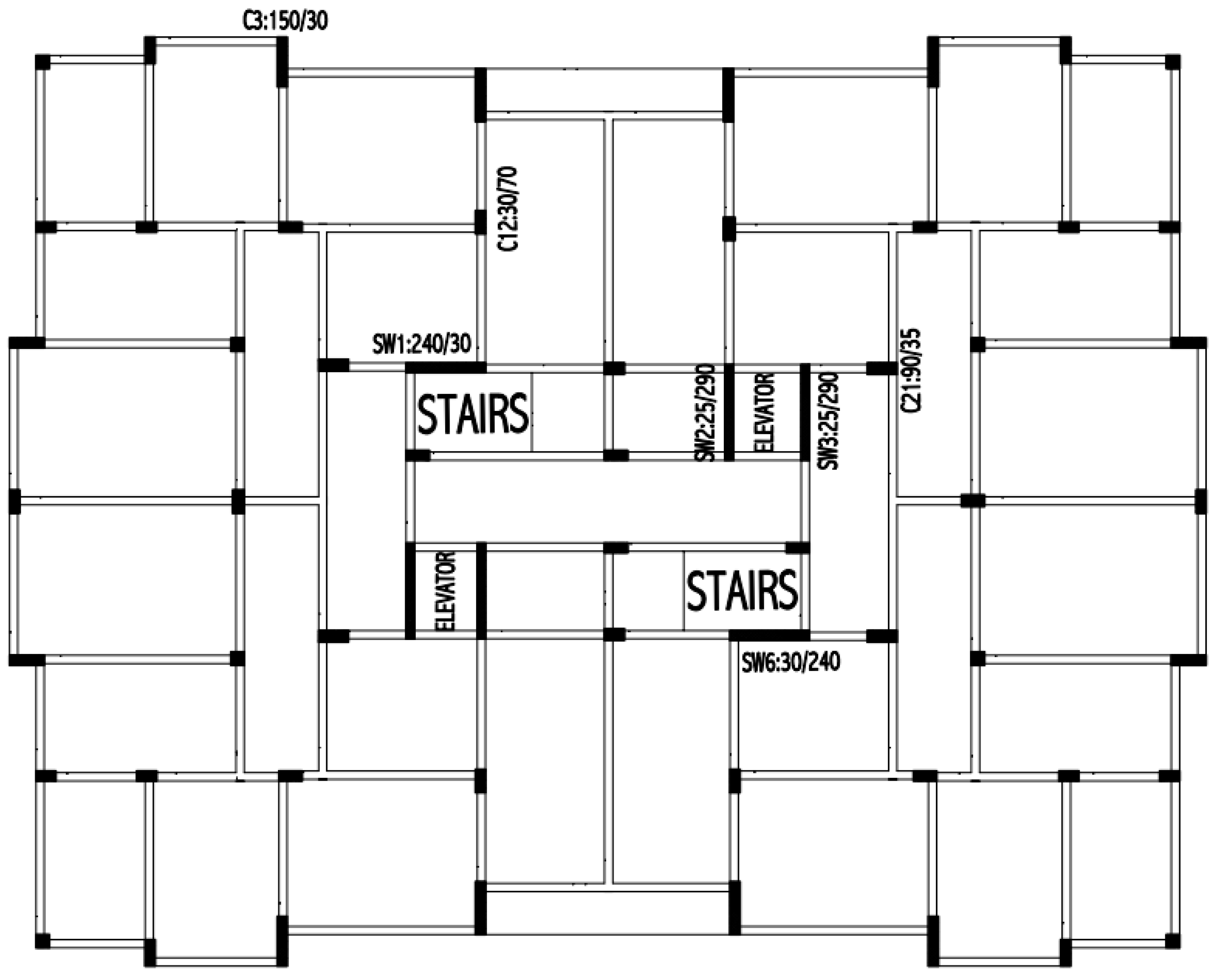
In earthquake engineering literature, RC buildings with approximately 4 to 15 stories (or heights ranging roughly between 15 m and 45 m) are commonly categorized as mid-rise structures. With a total structural height of 38.5 m and 13 stories, the investigated building falls within this mid-rise classification. After the earthquake, to clarify the failure reason for this new structure, a numerical study was conducted on this residential building. The plan view of the structural system can be seen in Figure 4.
Figure 3. Failure mode of the studied residence. (a) East, (b) West, (c) South-West, (d) Columns.
Buildings 16 01012 g003
Figure 4. Plan view of numerical study.
Buildings 16 01012 g004
The architectural layout was modeled as per the site documentation. The building footprint was 36.2 m × 28.1 m, with typical floor heights of 3.0 m (except the ground floor). Minimum column dimensions were 30 cm, with typical sizes ranging from 40 × 40 cm to 150 × 30 cm. Six shear walls were placed at the building core, with dimensions of 240 × 30 cm and 290 × 25 cm. However, these walls were asymmetrically distributed in both X and Y directions. The concrete shear wall-to-floor area ratio (∑Awi/∑Api) was calculated as 0.0357%. A vulnerable limit of 0.25% has been suggested in the literature [27,43], where ∑Awi and ∑Api are the sum of the cross-sectional areas of rectangular shear walls resisting earthquake loads in each direction of the plan area and the sum of all floor areas of the residence, respectively. In addition, Kazaz [44] suggested a concrete shear wall ratio as 1.2% for an 8–12 story structural system to conform to the LS performance level. In addition, these shear walls had not been oriented to resist lateral earthquake loads without torsion. The ground floor was composed of two different floors (G+Mezzanine) at a height of 5.5 m.

3.3. Numerical Modeling Framework

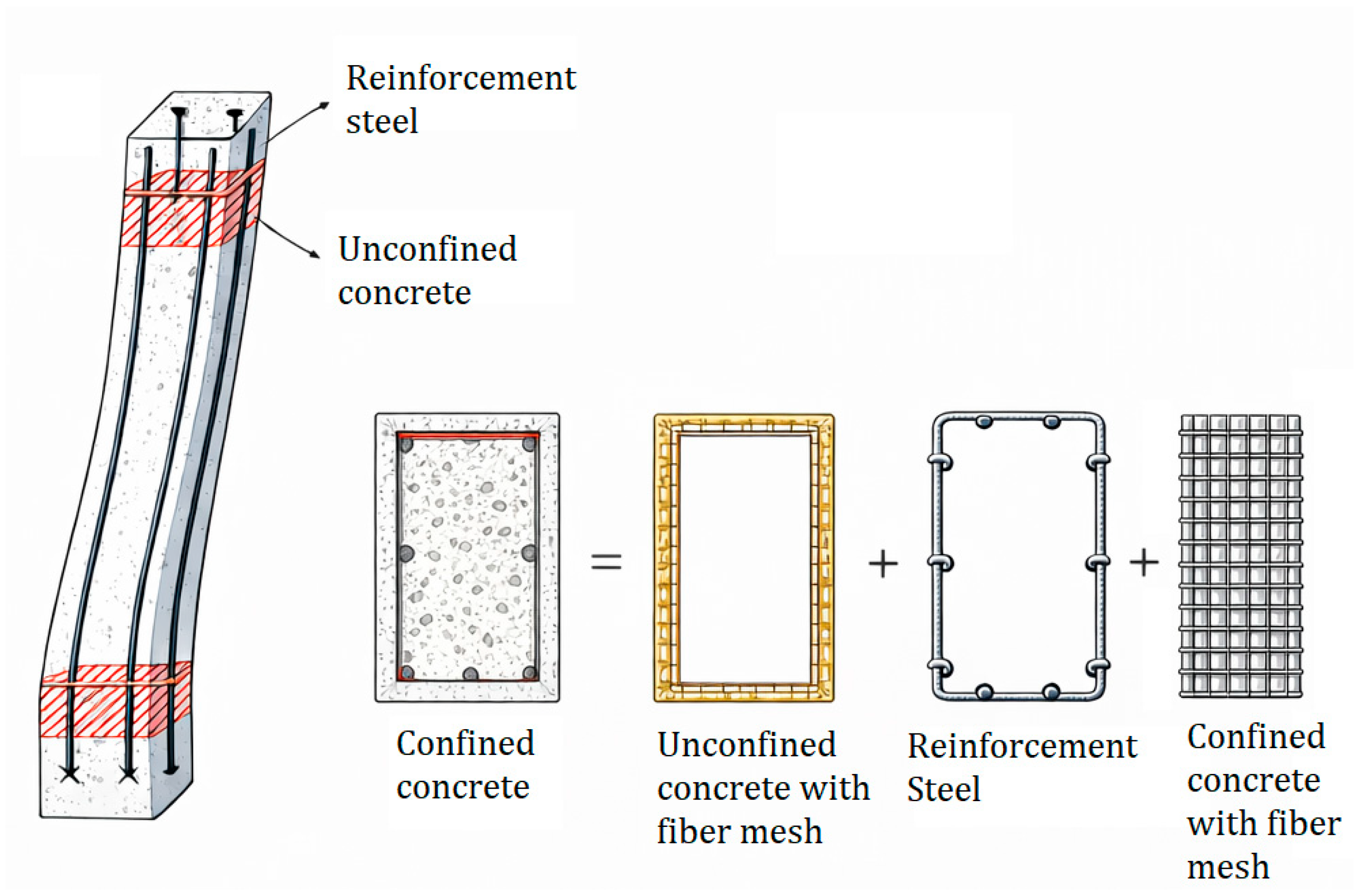
To investigate the collapse mechanism of the selected structural system, a detailed 3D nonlinear numerical model was developed. The model was built using SeismoBuild [45] and transferred to SeismoStruct [45] for advanced analysis. Structural members were modeled using nonlinear force-based fiber elements (infrmFBPH) [46]. The cross-sectional stress–strain behavior of beam and column members is derived by integrating the nonlinear uniaxial material response of the individual fibers into which the end sections have been partitioned (Figure 5) [27,47,48].
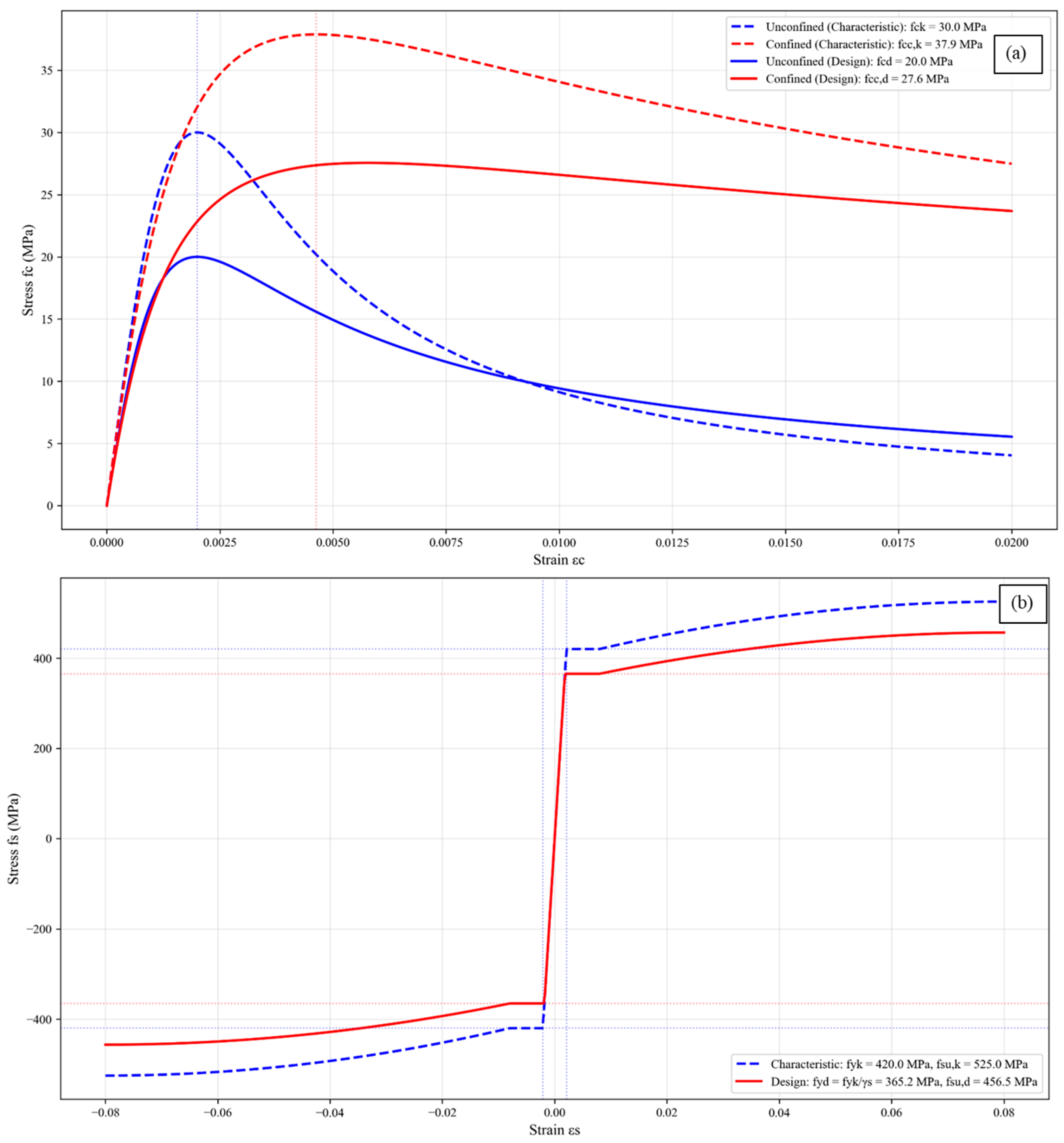
The nonlinear stress–strain behavior of concrete was modeled according to Mander et al.’s [50] formulation. Separate constitutive curves were defined for unconfined and confined concrete regions (Figure 6a). The unconfined compressive strength was taken as the original design strength of concrete that was 30 MPa, and this value was adopted for the numerical model, while the enhanced confined strength and corresponding ultimate strain were calculated considering the transverse reinforcement ratio and confinement effectiveness in columns and shear walls. The tensile strength of concrete was defined based on code-consistent empirical relations and incorporated with a linear softening branch after cracking. Reinforcing steel was modeled using the idealized elastic–plastic stress–strain relationship defined in TBEC 2018 (Figure 6b), incorporating both characteristic and design strength parameters, yielding plateau, and post-yield strain hardening behavior. Reinforcement yield strength was defined as 420 MPa. Moreover, safety factors of 1.5 and 1.15 are used for concrete and steel, respectively.
Structural members were represented using force-based fiber elements (infrm-FBPH), in which nonlinear behavior is distributed along the element length through sectional integration points. Therefore, plasticity was not concentrated at predefined lumped hinge locations. However, for deformation-based performance evaluation in accordance with TBEC 2018 criteria, an equivalent plastic hinge length was required. In this study, the plastic hinge length was taken as 0.5 h (where h is the section depth), consistent with commonly adopted empirical approximations in rotation capacity calculations. Live load was modeled as 2.0 kN/m2 for typical floor slabs and 3.5 kN/m2 for stairs. The infill wall of the structural system was considered as a dead load on the beams. The model incorporated vertical and lateral loads and was prepared for eigenvalue, pushover, and nonlinear dynamic analyses to capture both global response and local member performance.
Figure 6. Material models (a) Mander model for concrete (30 MPa) [50] and (b) Bilinear elastic–plastic model for steel (S420).
Buildings 16 01012 g006

3.4. Ground Motion Selection and Scaling Procedure

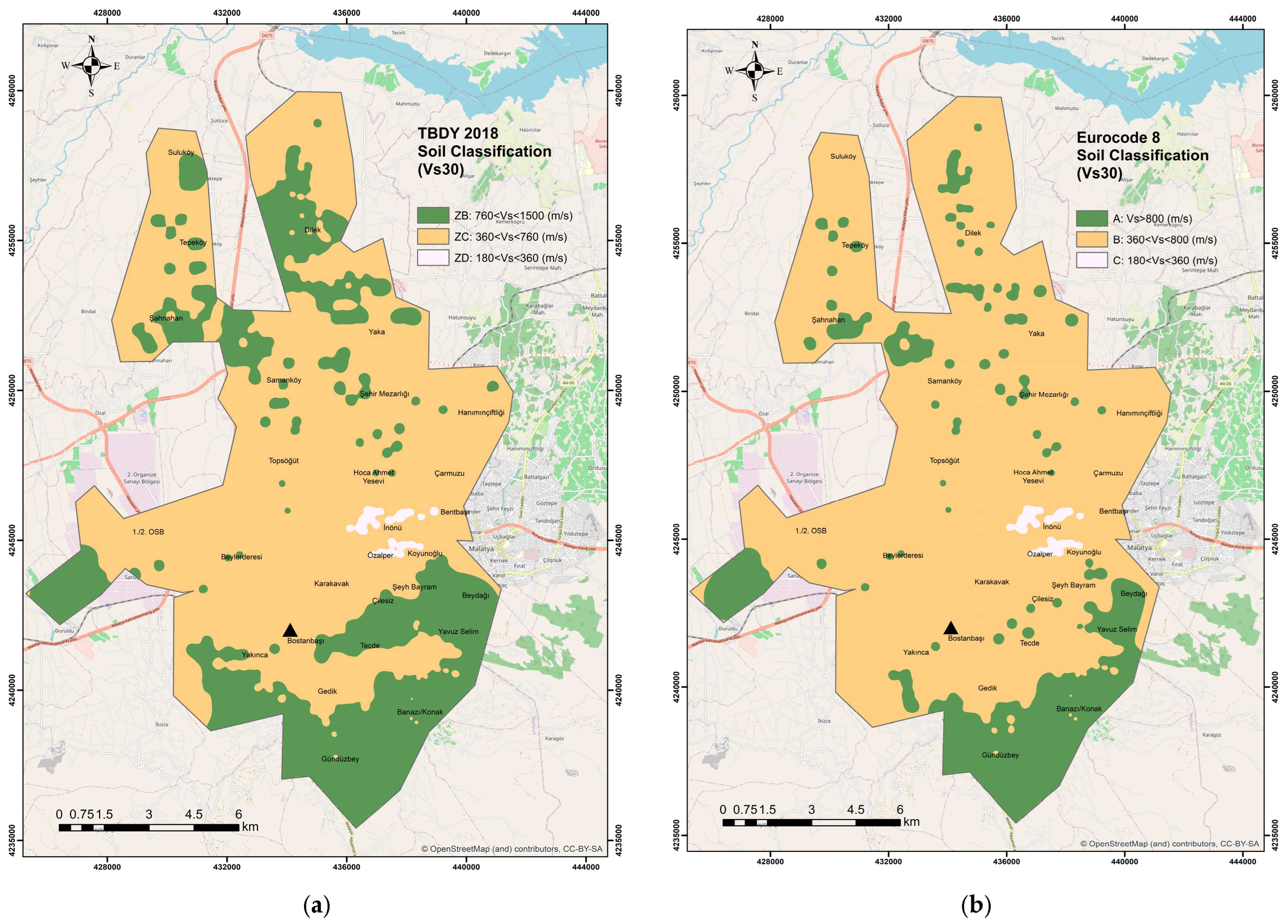
Three scaled ground motion records (EQ1, EQ2, EQ3) from the 2023 earthquake sequence were used for dynamic analysis under DD2 and DD3 seismic levels. The soil was classified as ZC, as illustrated in Figure 7, in accordance with TBDY 2018 [51] and Eurocode 8 [52].
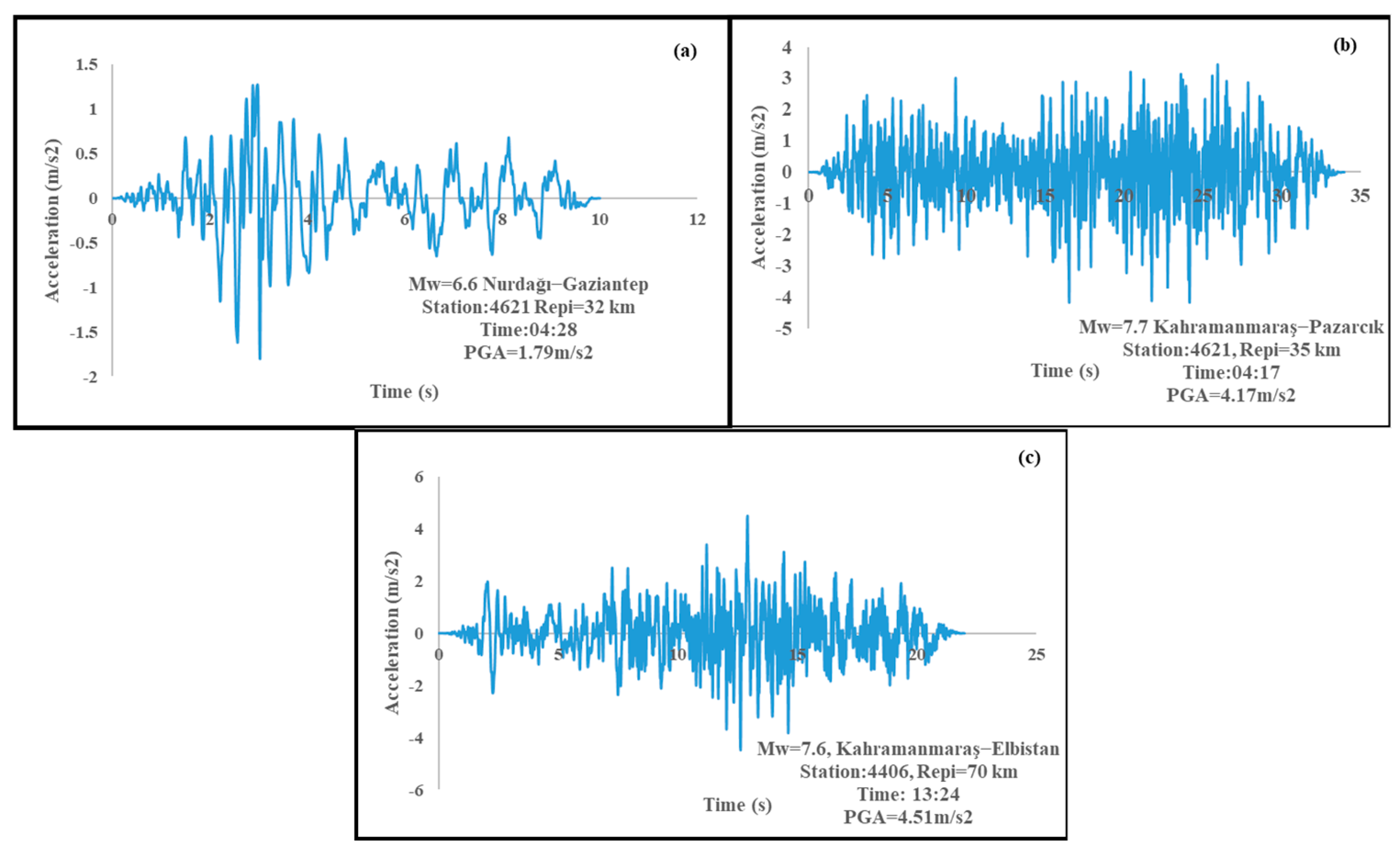
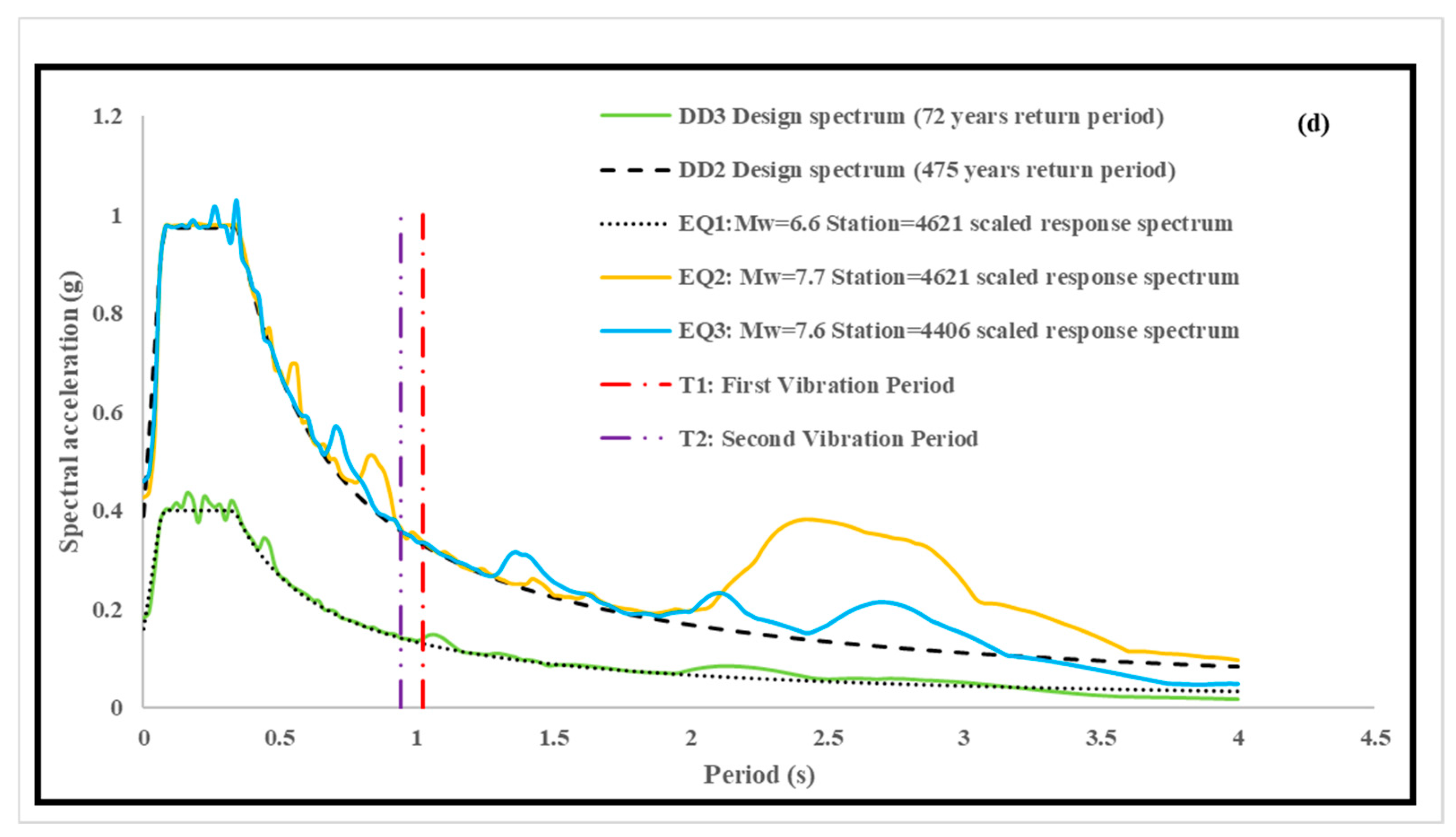
The location of the studied system was marked as a black triangle in Figure 7. After determining soil classification, three earthquakes were selected from the 6 February 2023 Kahramanmaraş earthquakes, and then these three earthquake records were scaled according to the design spectrum of the structures’ location. Seismic characteristics (Epicentral distance, magnitude, and PGA) of the selected earthquake records are presented in Figure 8a–c. The records were scaled to match the site-specific design spectrum as illustrated in Figure 8d.
Ground motion records were selected from stations located within a 0–100 km epicentral distance range and classified under ZC soil conditions. Site-specific elastic design spectra for DD3 and DD2 seismic levels were generated in accordance with TBEC 2018 using the exact geographical coordinates of the building. The return period of DD3 is 72 years. This earthquake level generally has not been used to assess the earthquake performance of any structural system used for residential purposes. However, to see the performance of the members, it is used in the first analysis. The other earthquake level is the DD2, whose return period is 475 years. This earthquake is used to assess the actual performance of the residence as defined in the current seismic code. The performance of the residence should be behind the LS limit after NDA. Records were filtered to include those containing PGA values compatible with the DD3 and DD2 design PGA levels at the site. The selected records were scaled to match the corresponding elastic design spectrum up to a period of 4.0 s. The scaling factors were determined by minimizing the difference between the response spectrum of each record and the target elastic design spectrum over the period range from 0.2T1 to 4.0 s, where T1 denotes the fundamental period of the structure. This approach ensured compatibility with both the fundamental and higher-mode dynamic characteristics of the building while preserving the original time-history characteristics of the records. Although three ground motion records were used to represent record-to-record variability, peak response quantities were evaluated individually rather than averaged, in order to avoid masking potential dispersion in nonlinear response parameters. It is acknowledged that the limited number of records may still influence the variability of the results. However, the adopted procedure provides a consistent representation of site-specific seismic demand for the investigated structure.

3.5. Performance Evaluation Criteria

After conducting nonlinear analysis, moment rotation of the insufficient shear walls and columns, shear force, and interstory drifts were plotted to see if the main bearing elements are sufficient or not. During the calculation of the rotation capacity of the main bearing elements, an equation that was addressed in the TBEC 2018 was considered, as seen in Equations (1) and (2).
θ p C P = 2 3 [ u y L p 1 0.5 L p L s + 4.5 u d b ]
θ p L S = 0.75 θ p C P
In Equation (1), θ p C P represent, rotation capacity at the CP limit, u and y represent ultimate and yield rotations, respectively. L p and L s represents the plastic hinge and the moment zero length of the elements. The d b represents the maximum diameter of the longitudinal reinforcement. As for Equation (2), θ p L S represents the rotation demand at the LS limit. In addition, the shear demand of the column and shear wall is calculated as presented in Equations (3) and (4).
V e = 0.85 A w f c k
V r = A c h ( 0.65 f c t d + ρ s h f y w d )
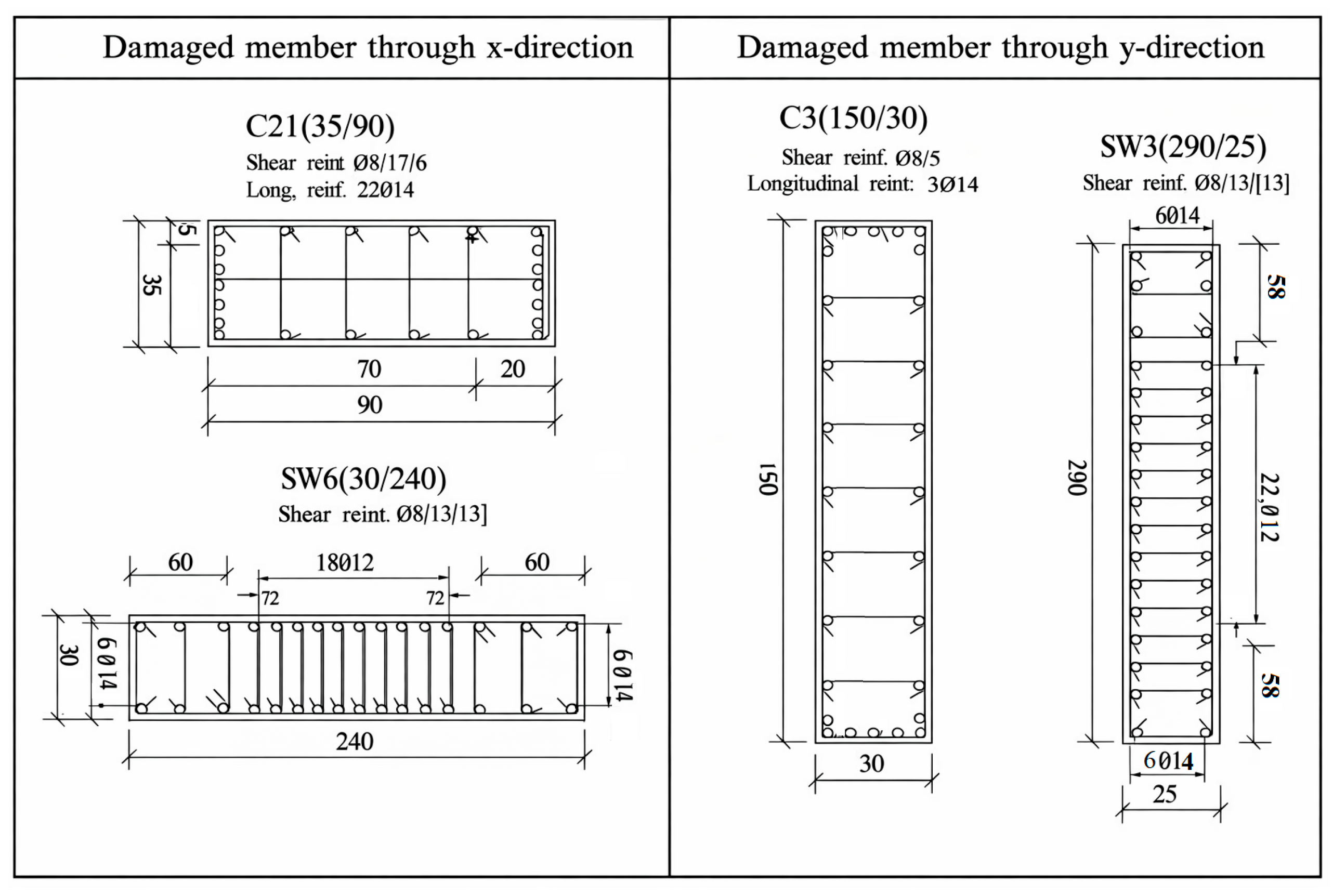
In Equation (3), A w represent the cross-sectional area of the column and f c k represent the characteristic axial compressive strength of the concrete. Moreover, A c h is the cross-sectional area of the shear wall, f c t d is the design tensile strength, ρ s h is the ratio of lateral reinforcement, which is calculated as the total cross-section area of the longitudinal reinforcement over the gross cross-section area of the shear wall in Equation (4). And finally, f y w d is the design yield strength of shear reinforcement. Two critical members, one shear wall (SW6: 30 cm × 240 cm) and one column (C30: 35 cm × 90 cm), were selected in the longitudinal (x-dir) direction. In addition, one column (C3: 150 cm × 30 cm) and one shear wall (SW3: 25 cm × 290 cm), different from the ones in the x-direction, were selected in the longitudinal direction (y-dir). The selected columns and shear walls in longitudinal and transversal directions are presented in Figure 9.

4. Results

4.1. Observed Damage Patterns

4.1.1. Workmanship Deficiencies

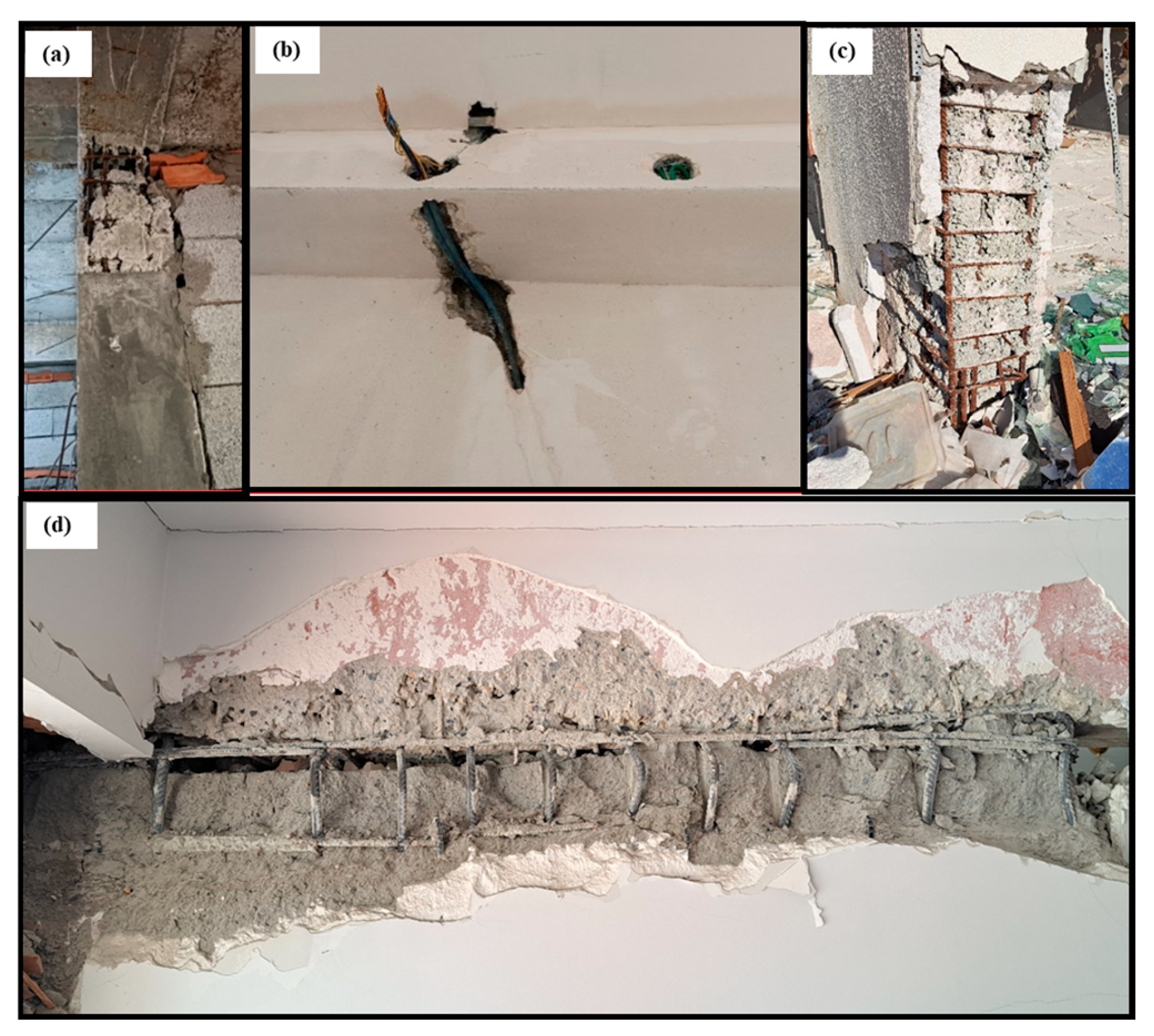
One of the most frequent issues observed was poor workmanship. As shown in Figure 10a,c,d, misused vibrators, gaps in column formwork, and misplaced shear reinforcements were common. Figure 10b illustrates how structural elements were damaged during construction to accommodate plumbing, electrical, and gas lines, creating local weaknesses that can act as failure initiation points (Figure 10b).

4.1.2. Single Column Failures

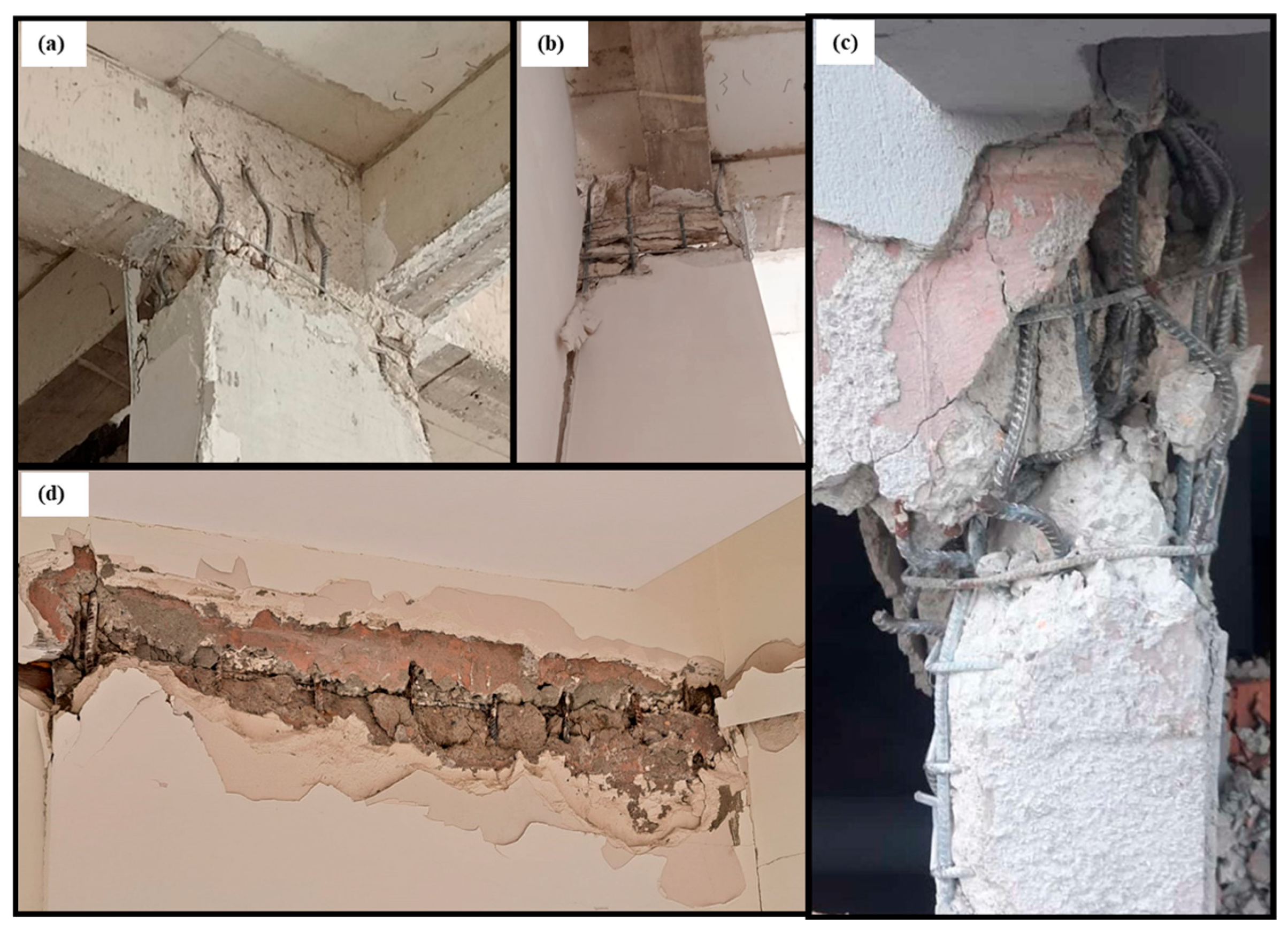
Another widespread problem was isolated column failure due to excessive shear forces. Although TBEC 2018 limits individual column shear contribution to 20% of the total floor shear, over-rotation or asymmetric design can cause some columns to exceed this limit. These failures frequently occurred at upper joints of basement columns (Figure 11c) and ground floor columns (Figure 11a,b,d). Especially, there is a shear sliding observed due to the settling problem of concrete in Figure 11d.
In several cases illustrated in Figure 11, column failures were associated not only with high shear demand but also with detailing deficiencies at beam–column joints. In Figure 11a,b, insufficient transverse reinforcement within the joint region reduced confinement effectiveness, limiting the ability of stirrups to restrain longitudinal bar buckling under cyclic loading. Inadequate anchorage and widely spaced stirrups further decreased shear resistance and confinement capacity. In Figure 11c, insufficient transverse reinforcement and poor anchorage detailing contributed to premature shear cracking and loss of load transfer mechanisms. Moreover, local buckling of longitudinal reinforcement bars was observed in several damaged columns, indicating deficient confinement and inadequate lateral restraint provided by transverse reinforcement. Such detailing deficiencies significantly reduce ductility and accelerate strength degradation under seismic loading.

4.1.3. Shear Wall Failures

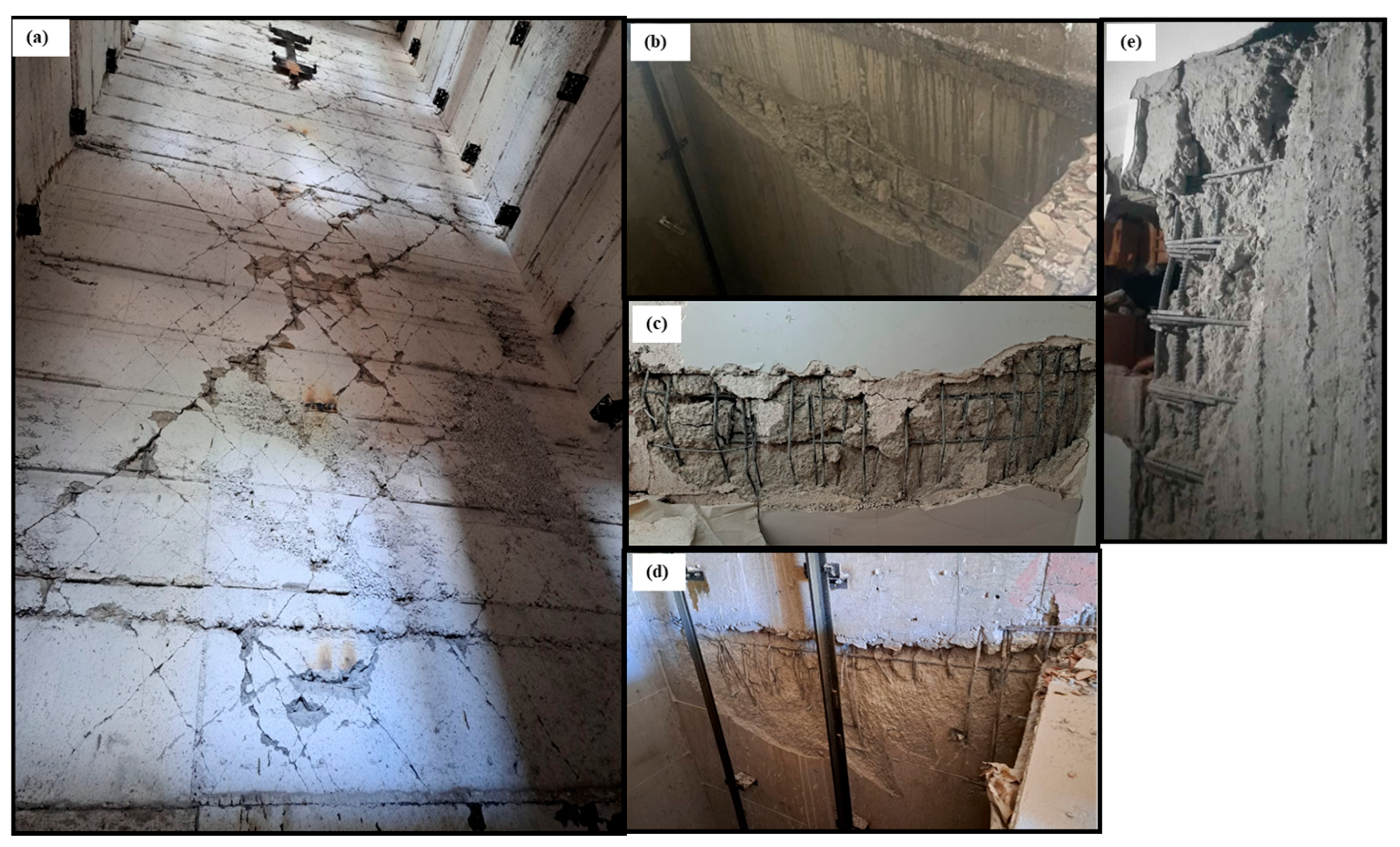
Several types of shear wall damage were identified in new RC buildings: (i) X-shaped cracking due to insufficient shear wall ratio (Figure 12a), (ii) Shear-sliding cracks running along the wall length (Figure 12b,d), (iii) Shear compression (Figure 12c), and (iv) Joint crushing at wall ends caused by high rotational demand on tall ground stories (Figure 12e). These failure patterns indicate that the shear wall ratio was significantly lower than the minimum requirements addressed in the literature. The current code provisions do not explicitly define a minimum shear wall ratio considering building height, soil class, and torsional configuration simultaneously. Similar inadequacies in code provisions were observed in Chile after the 2010 earthquake, leading to subsequent revisions [54].

4.1.4. Short Beam and Infill Wall Damages

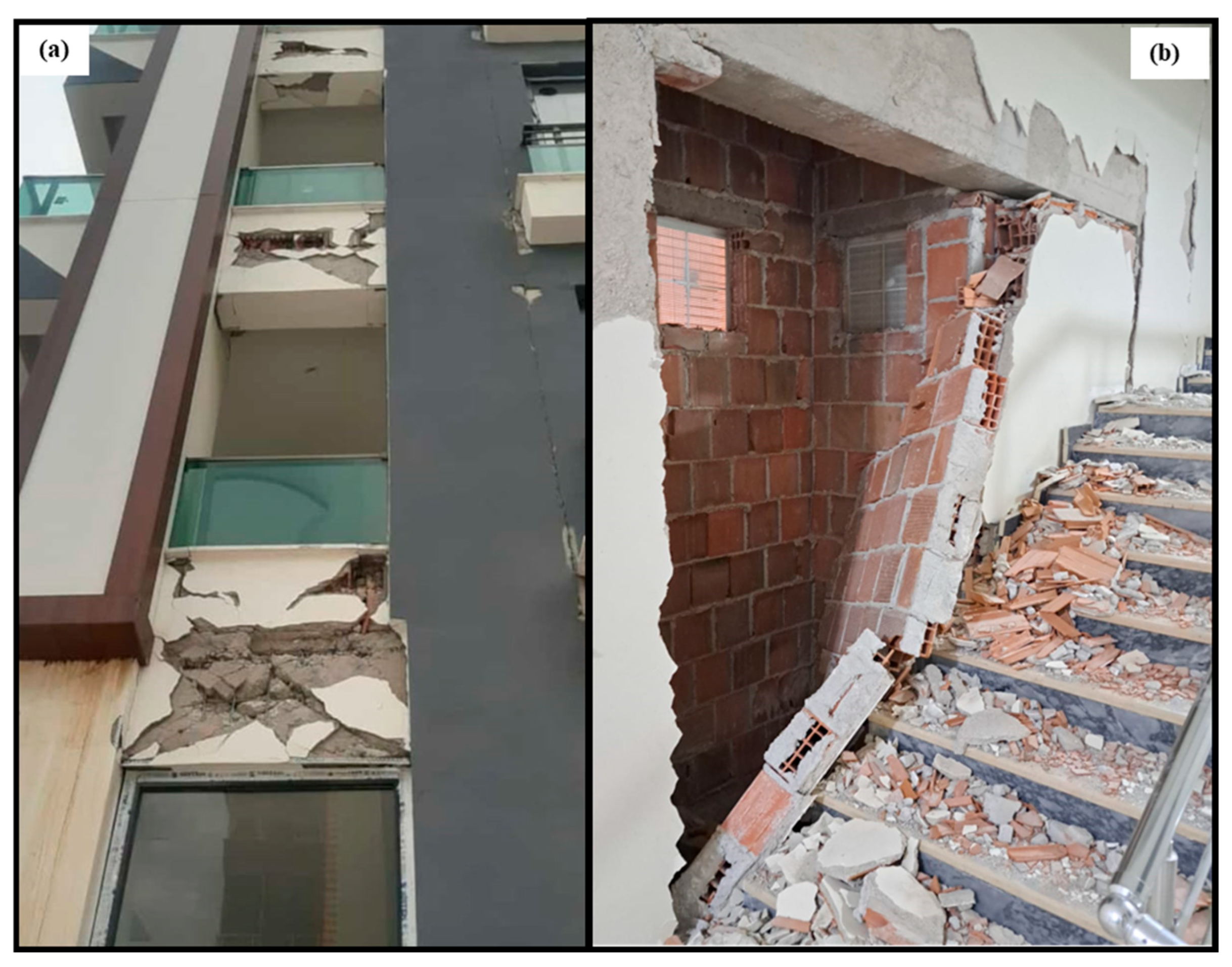
Short beam failures were observed between shear walls and stiff columns, especially around elevator cores (Figure 13a). These beams were inadequately detailed, lacking sufficient confinement reinforcement. Infill wall damages primarily showed out-of-plane failure due to slenderness, inadequate anchorage, and increasing inertial forces (Figure 13b).
To understand the seismic performance of the investigated RC building, a series of analyses were conducted, including eigenvalue analysis, nonlinear static (pushover) analysis, and NDA analysis. Ground motions recorded during the 6 February 2023 earthquakes were used after appropriate scaling.
Figure 13. (a) Short beam and (b) infill wall damages.
Buildings 16 01012 g013

4.2. Eigenvalue Analysis Results

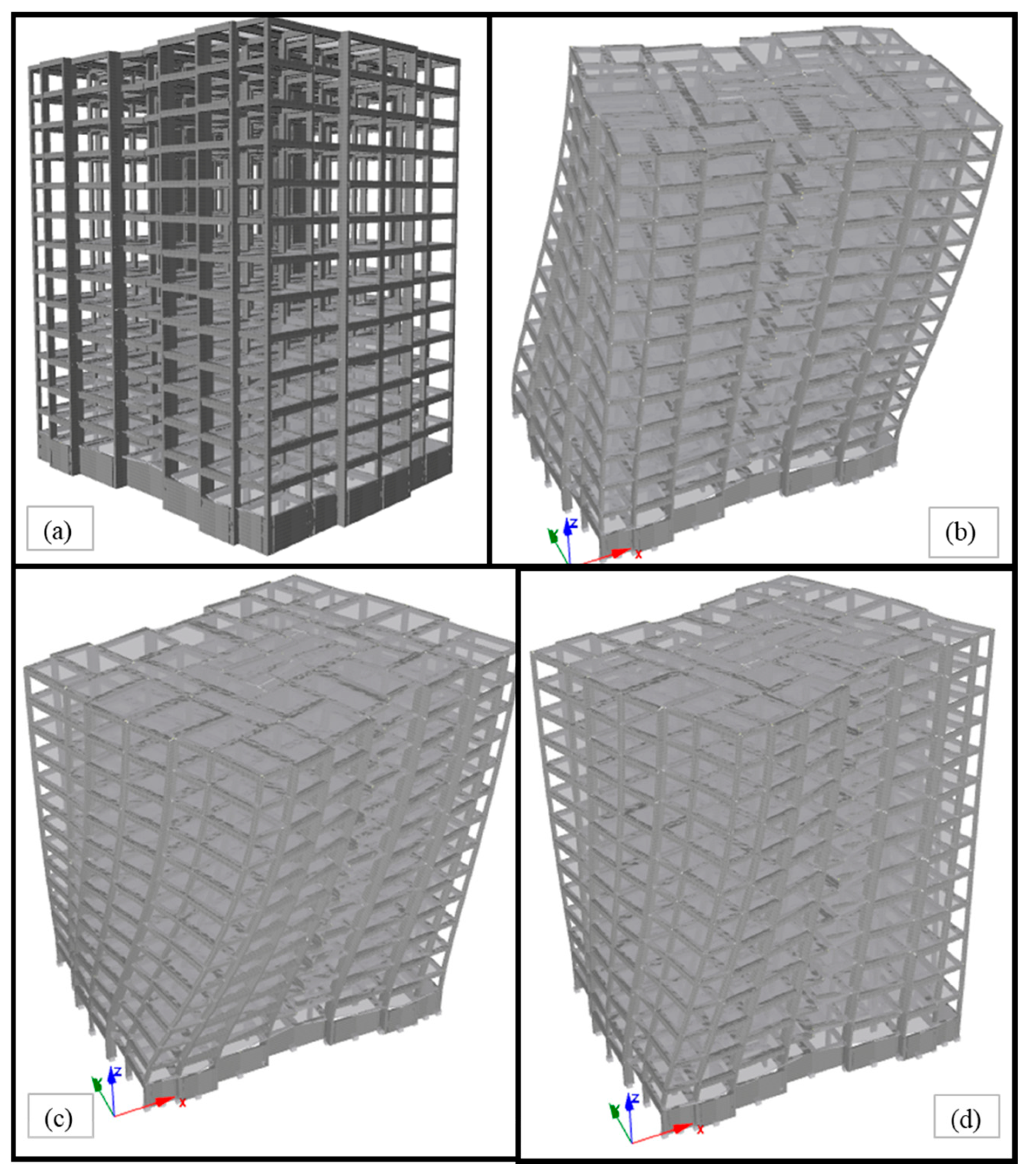
After modeling the structural system, first of all, eigenvalue analysis was conducted to see the natural vibration modes. The eigenvalue analysis is important to see both the dynamic characteristics and plan irregularity, if available. The 3D model and first three modes are presented in Figure 14.
Eigenvalue analysis was performed to determine the fundamental vibration modes and identify potential torsional irregularities. As shown in Figure 14, the first three modes consisted primarily of torsional components: (i) Mode 1 (1.13 s): torsional–longitudinal hybrid, (ii) Mode 2 (1.04 s): torsional–transverse hybrid, and (iii) Mode 3 (1.00 s): predominantly torsional. These results indicate significant plan irregularity and asymmetry in shear wall distribution, confirming a critical structural deficiency. The presentation of modal shapes is essential in this context, as the dominance of torsional components directly explains the concentration of nonlinear demands observed in subsequent static and dynamic analyses. Therefore, the modal analysis provides fundamental structural insight into the collapse mechanism by linking geometric configuration to torsionally amplified seismic response. Periods and participation factors are presented in Table 2.
Table 2. Periods and cumulative mass participation ratios.
Period NumberPeriod (s)Ux (%)Uy (%)Rx (%)Ry (%)
11.1357.92.60.8515.33
21.0458.943.113.815.6
31.0071.371.523.018.9
40.3677.971.623.332.1
50.3380.574.229.737.0
60.3282.082.449.940.2
70.2282.182.450.440.4
Figure 14. (a) 3D view, (b) T1 = 1.13 s, (c) T2 = 1.04 s, and (d) T3 = 1.00 s.
Buildings 16 01012 g014
The first seven vibration modes were considered to evaluate the modal mass participation in both translational (Ux, Uy) and rotational (Rx, Ry) degrees of freedom. The cumulative translational mass participation exceeds 80% in both principal directions within the first six modes, indicating that the dominant portion of the global inertial response is captured. In addition, non-negligible torsional mass participation ratios are observed in intermediate modes, confirming the presence of coupled translational–torsional behavior. This distribution of modal contributions supports the interpretation that the seismic response of the building cannot be characterized as only translational and justifies the detailed evaluation of torsional demand concentrations in the subsequent nonlinear analyses. The modal characteristics further indicate that higher modes contribute meaningfully to torsional response amplification, particularly in upper stories, which is consistent with the observed demand distribution in the nonlinear dynamic analyses.

4.3. Nonlinear Static Analysis

After eigenvalue analysis, the basic characteristics of the system were calculated on the base of TBEC 2018. These parameters had to be considered during the design to determine the equivalent seismic load for elastic design. For instance, the use of the structural system is residence; for this reason, I = 1; therefore, it is possible to obtain BUC = 3 in the same table at TBEC2018. Moreover, EDC is fixed in the seismic code DD2, which is classified according to earthquake return period. The DD2 seismic level demonstrates an earthquake return period of 475 years. The possibility of earthquake occurrence in 50 years is 10%. After these parameters, unitless short map and design spectral acceleration parameters were calculated (SS and SDS). The SS is directly related to the earthquake threat to the structural system, considering the minimum offset distance of residences to the active fault. In addition, SDS parameters are the design spectral acceleration parameter considering soil class, calculated by SDS = FS × SS. The FS parameter is the soil amplification coefficient that is directly obtained according to the soil class table. For the current study, FS = 1.2, SS = 0.811, and yield SDS = 0.973. In the current seismic code, the height of the structural system was categorized into different classes from BHC = 1 to BHC = 8. The number 1 presents the tallest building on the table (Up to 105 m), and the number 8 presents the shortest building in the related table. For the current study, the height of the selected structural system is 38.50 m; for this reason, BHC = 4. The equivalent seismic load method (Equation (5)) is applicable for buildings equivalent and shorter than BHC ≥ 4. For this reason, an equivalent seismic load was calculated for the studied residence to consider the earthquake load during the design phase.
Vd = mt × SaR(Tp) ⩾ 0.04 × mt × I × SDS × g
In this case, mt stands for the total seismic mass of the residence, and SaR(Tp) is the reduced design spectral acceleration. It is calculated by dividing Sae(Tp) to Ra which is the seismic load reduction factor Ra, presented in Equation (6).
R a = R I     i f   T > T B
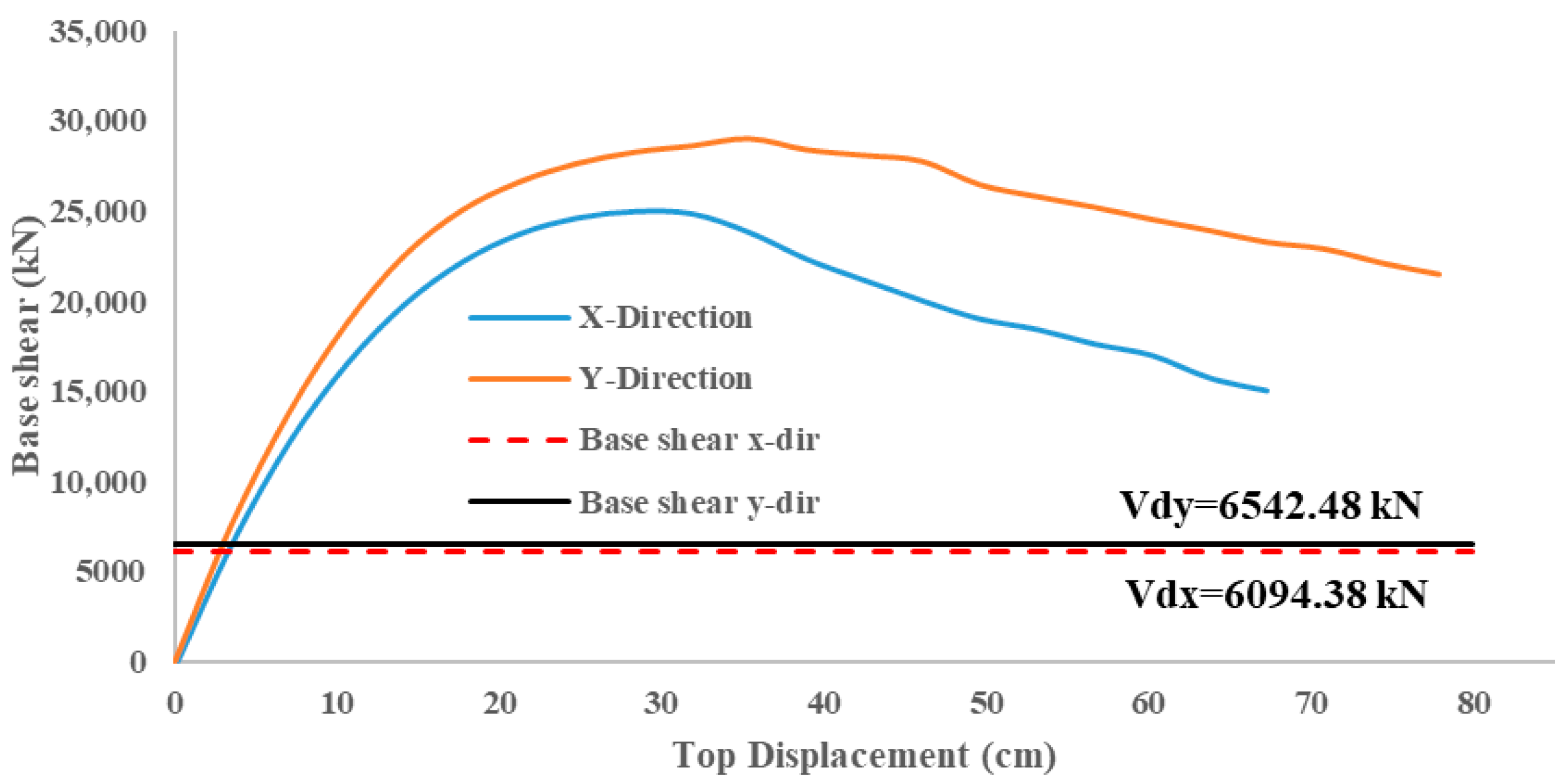
The Ra value was calculated by R over I. The I value was calculated above as “1”. The R value was obtained from the seismic code (Table 4.1 in TBEC2018 [51]) 7, and then the R value is calculated as 7. Therefore, the SaR(Tp) values were calculated as 0.04257 and 0.0457 for x- and y-directions, respectively. Although the first vibration modes exhibit coupled translational–torsional characteristics, the fundamental translational period in each principal direction was used for base shear calculation in accordance with conventional response spectrum procedures. The Tp value adopted for each direction corresponds to the dominant modal period associated with the respective translational mass. Base shear was calculated using the standard spectral acceleration value SaR(Tp) multiplied by the effective seismic mass. Finally, equivalent base shear forces were calculated as 6094.38 kN and 6542.48 kN for x- and y-direction, respectively. Then, a nonlinear static analysis was conducted on the numerical model for both transversal and longitudinal directions. Analysis results are presented in Figure 15.
As observed in Figure 15, the orientation of the primary load-bearing elements reduces the load-carrying capacity in the longitudinal direction. Consequently, the structural capacity in the transverse direction exceeds that in the longitudinal direction. The maximum loads resisted by the structural system were 29,013.56 kN and 24,945.97 kN in the transverse and longitudinal directions, respectively. During the design phase, the equivalent seismic load remained at approximately 30% of the corresponding maximum resisted capacities.

4.4. Nonlinear Dynamic Analysis

The NDA results are presented in two sub-sections, namely longitudinal and transversal directions.

4.4.1. Analysis Results in Longitudinal Direction (X-dir)

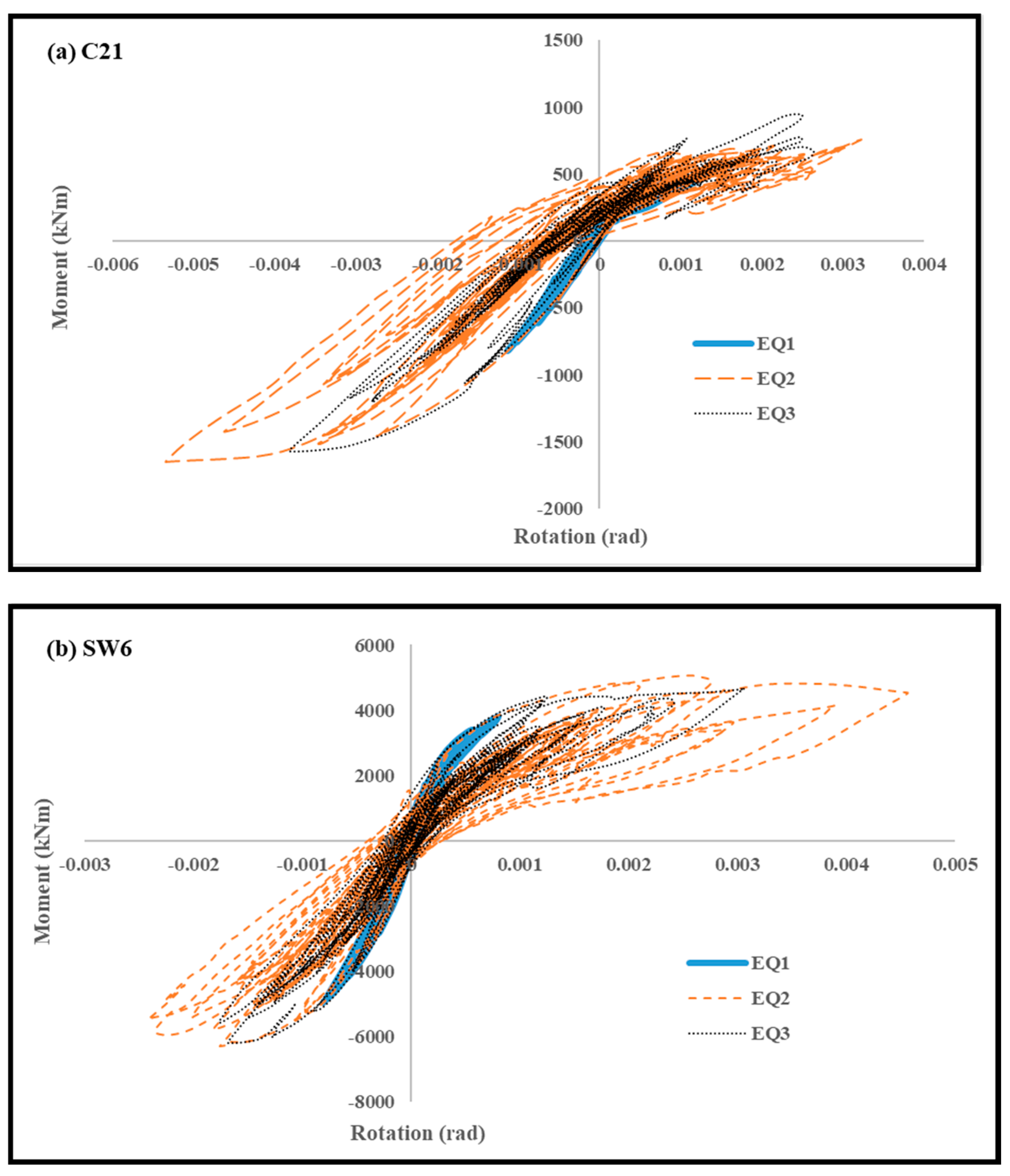
Following the first NDA performed using DD3-level seismic records, it was observed that one reinforced concrete (RC) shear wall did not satisfy the shear capacity requirements, even though this earthquake level is lower than the design level. However, no rotation demand exceedance was identified at this seismic level in the longitudinal direction. The moment–rotation responses of the selected column (C21) and shear wall (SW6) are presented in Figure 16a and Figure 16b, respectively.
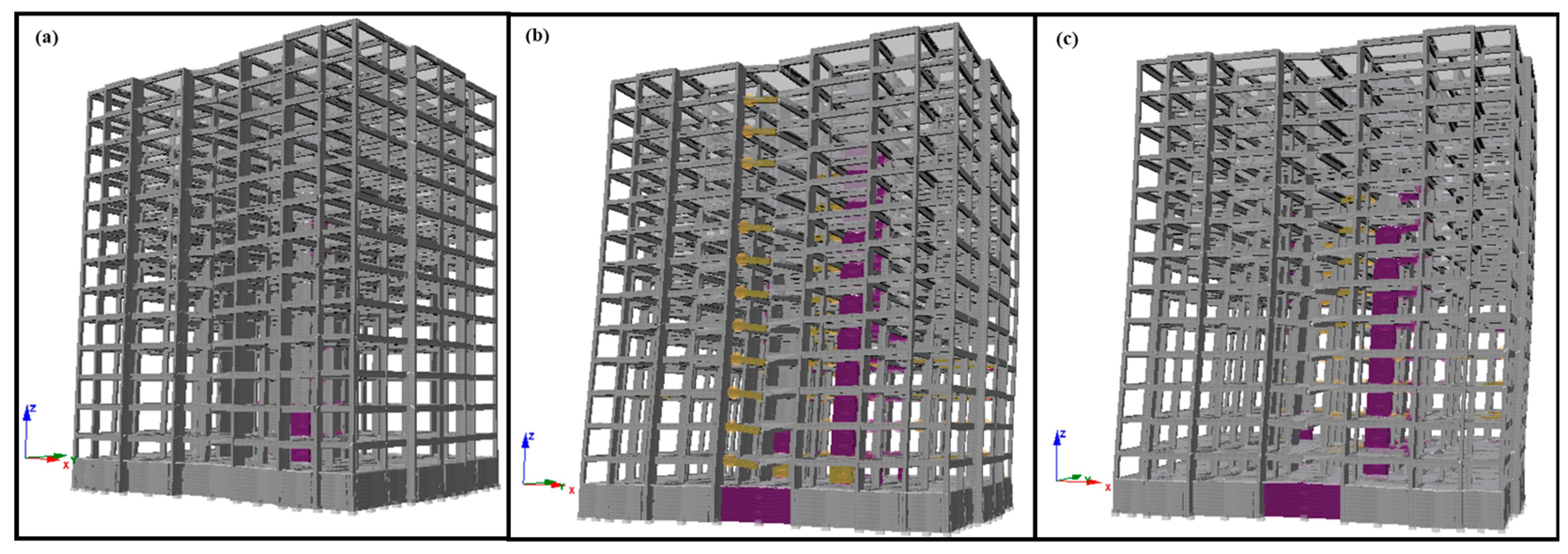
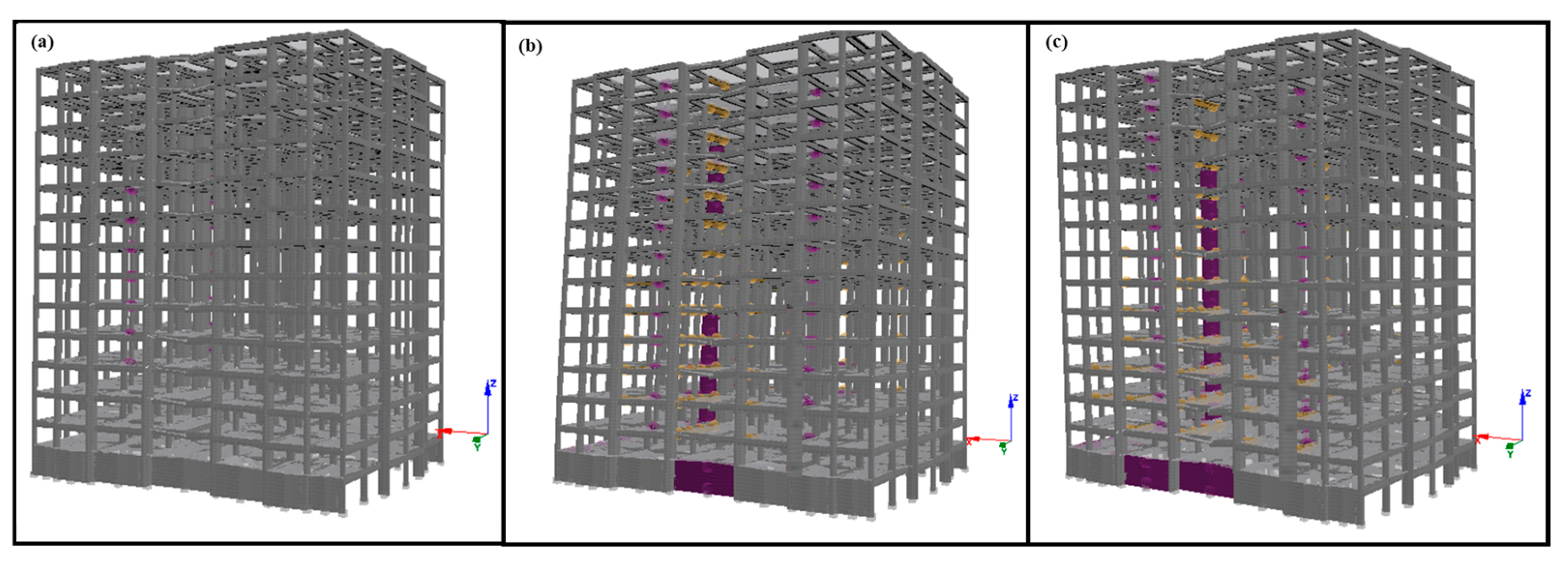
For the analysis conducted using the EQ1 record, the maximum displacement relative to the ground was obtained as 7.58 cm at 7.58 s. At this seismic level, the maximum rotation of the column was calculated as 0.001355 rad and 0.00114 rad in the positive and negative directions, respectively. The corresponding maximum bending moments were 507.8 kNm and 821.7 kNm in the positive and negative directions. For the shear wall, yielding initiated at this earthquake level, with maximum rotation of 0.000804 rad and 0.000805 rad in the positive and negative directions, respectively. The corresponding maximum moments were calculated as 3810.3 kNm and 4963.11 kNm. Following the analysis using the Kahramanmaraş–Pazarcık ground motion record (EQ2), the maximum displacement reached 19.62 cm at 25.02 s (Figure 16a). The maximum rotation of the column increased to 0.00322 rad and 0.00530 rad in the positive and negative directions, respectively, while the corresponding maximum bending moments were calculated as 756.14 kNm and 1648.57 kNm. A pronounced discrepancy was observed in the rotation of the reinforced concrete shear wall, with values of 0.004568 rad and 0.00242 rad in the positive and negative directions, respectively. In contrast, the difference between the corresponding bending moments, calculated as 5059.8 kNm and 6297.7 kNm, was relatively limited. In addition, the analysis revealed an insufficient shear capacity for the shear wall, as illustrated in Figure 17b. In the final analysis performed using the EQ3 record in the longitudinal direction, the maximum displacement was obtained as 19.1 cm at 5.97 s. The calculated maximum rotation demands of the column were 0.0026 rad and 0.0038 rad in the positive and negative directions, respectively. Nearly a 40% difference was observed between the maximum bending moments in the positive (950.7 kNm) and negative (1573.8 kNm) directions. Across all analyses, the reinforced concrete shear walls exhibited insufficient shear capacity. The resulting damage distribution of the structural system is presented in Figure 17 for all analyses, where the yellow color indicates insufficient rotation capacity, and the purple color denotes insufficient shear capacity of the load-bearing members.
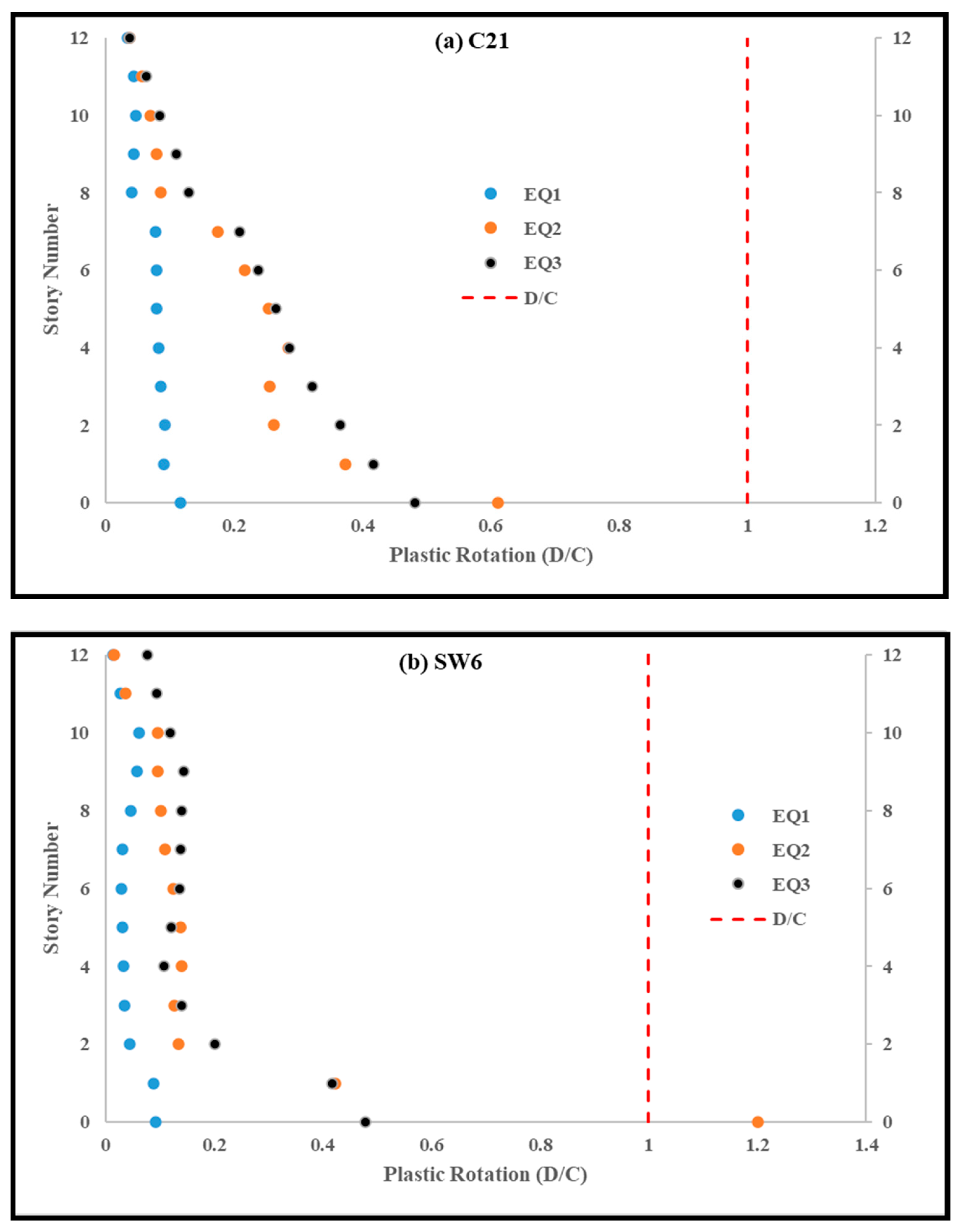
In Figure 17, the three subfigures represent the nonlinear dynamic analysis results obtained under the EQ1, EQ2, and EQ3 ground motion records, respectively. Under the EQ1 record, the investigated shear wall (SW6) in the X-direction exceeded the CP limit. For the EQ2 record, the same shear wall exceeded the CP limit at the ground story due to insufficient rotational capacity, while shear capacity deficiency persisted up to the 12th story. In addition, the examined column (C21) in the X-direction exhibited both rotational and shear capacity deficiencies at the ground story level. Under the EQ3 record, shear capacity deficiency in the investigated shear wall was observed up to the 12th story, although CP exceedance due to rotational demand was not as pronounced as in the EQ2 case. The rotation distributions of the column and reinforced concrete shear wall members from the ground level to the roof level are illustrated in Figure 18. In Figure 18 and the subsequent figures, the red dashed line represents the demand-to-capacity (D/C) ratio.
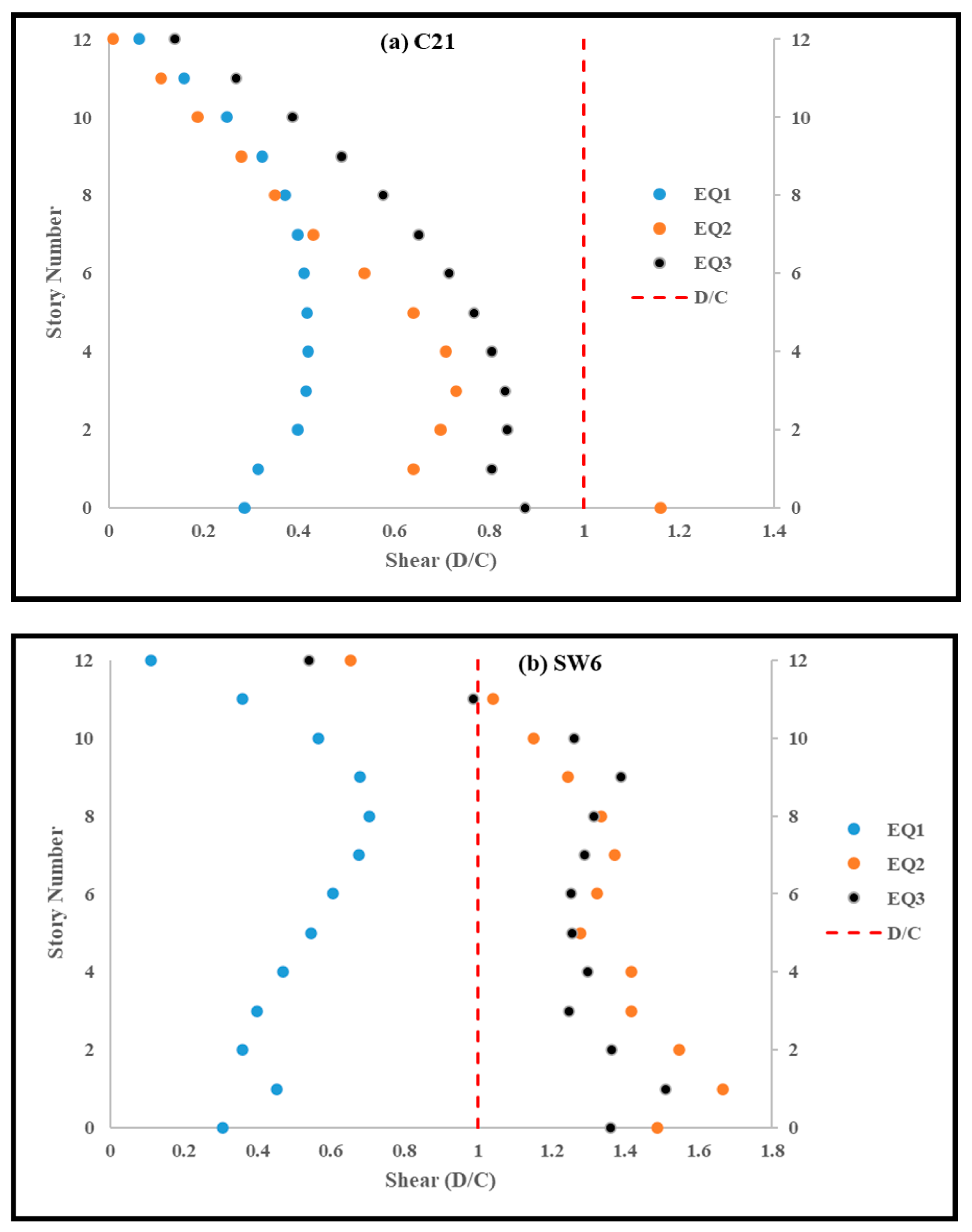
As shown in Figure 18a, the investigated column remained within its rotation capacity, whereas the shear wall exceeded its rotation capacity. In addition, the RC shear wall exceeded the demand-to-capacity (D/C) limit under the EQ2 ground motion. The shear force distributions of the selected column and reinforced concrete shear wall members are presented in Figure 19.
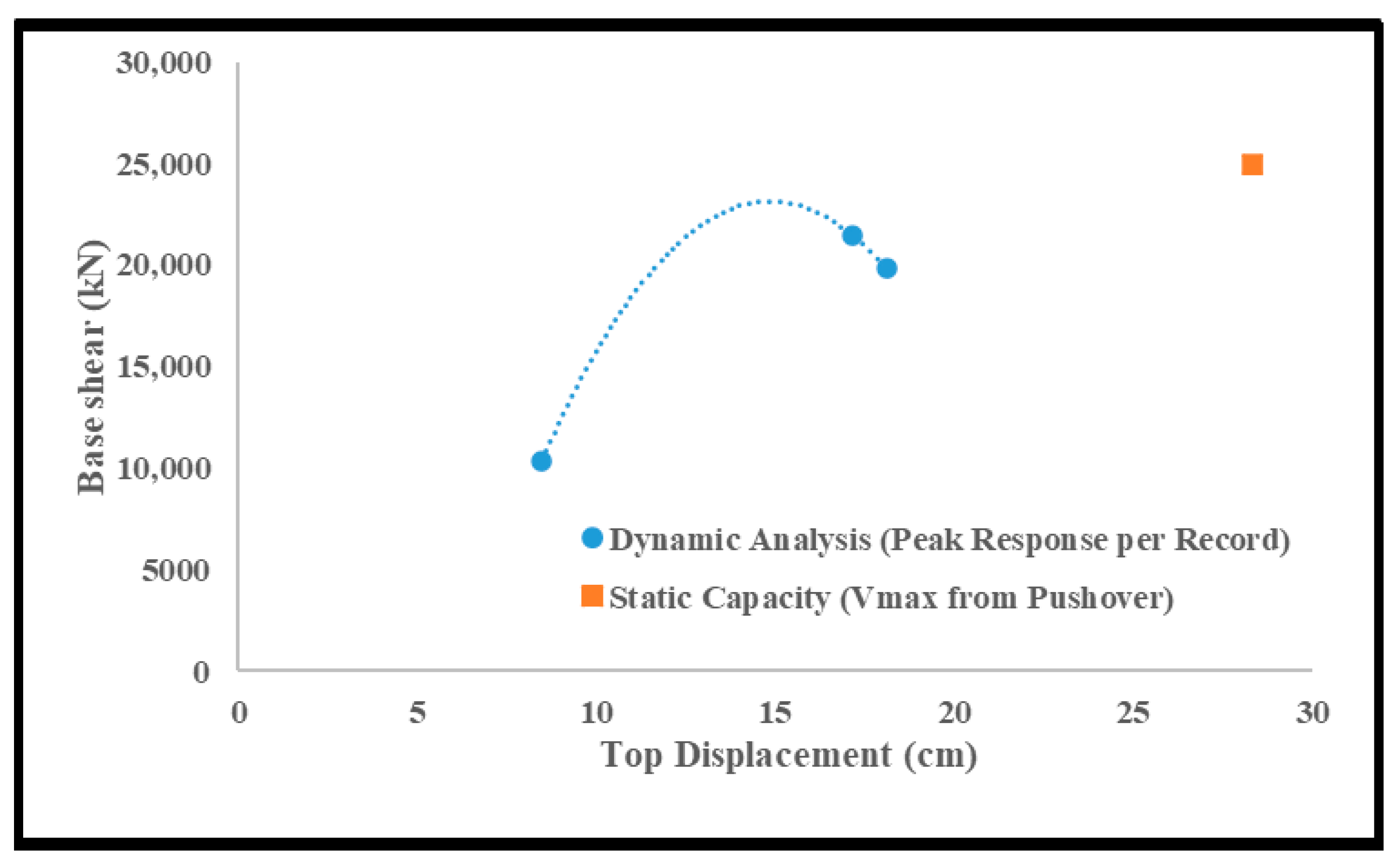
As shown in Figure 19a, a shear capacity deficiency was identified for the column also. Moreover, a significant shear capacity deficiency was observed in the selected RC shear wall. This member was unable to resist the shear forces along nine stories as designed. A summary of all nonlinear analyses conducted in the longitudinal direction is presented in Figure 20.
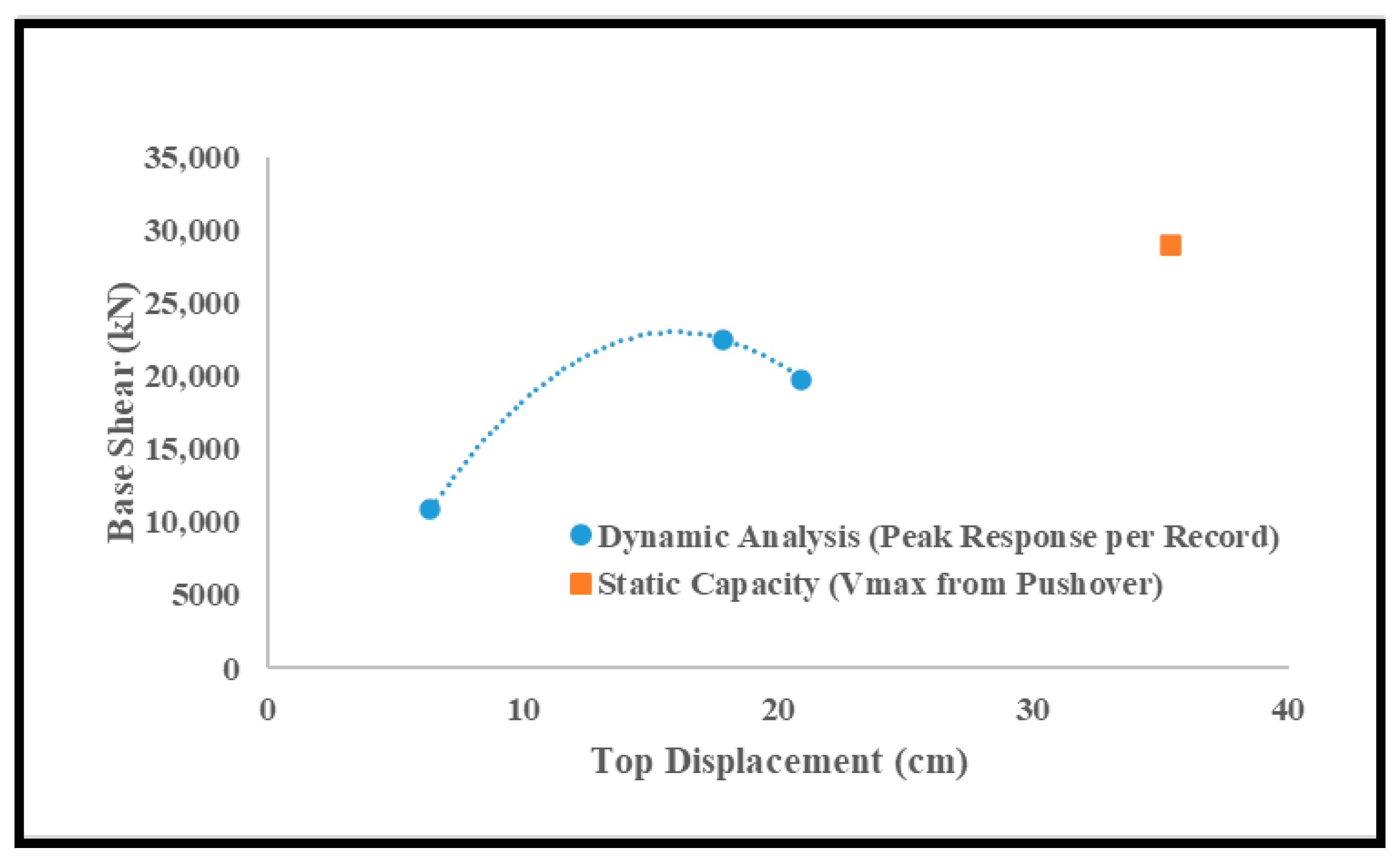
The static result represents the maximum base shear capacity (Vmax) obtained from pushover analysis, whereas dynamic points correspond to peak responses under individual ground motion records. The roof displacement values shown in Figure 20 and Figure 25 were evaluated according to a selected point at the roof that gives the maximum displacement. In the numerical model, rigid diaphragm constraints were assigned at each floor level. Therefore, the reported displacement represents the maximum translational response of the diaphragm. Although the first three vibration modes exhibited dominant torsional components, torsional effects were evaluated separately through modal shape interpretation and member-level rotation and shear demand distributions. The roof centroid displacement is presented as a global response indicator and does not substitute the assessment of torsional amplification effects, which were examined independently in the study. It should be noted that individual column and shear wall shear forces may develop opposite signs due to torsional response. However, the base shear values reported in Figure 20 and Figure 25 correspond to the global support reactions obtained from the numerical model. These reactions represent the algebraic summation of all member contributions at the base level and inherently satisfy global equilibrium conditions. Therefore, opposite shear force signs at the member level do not artificially increase or reduce the calculated base shear demand.

4.4.2. Analysis Results in Transversal Direction (Y-dir)

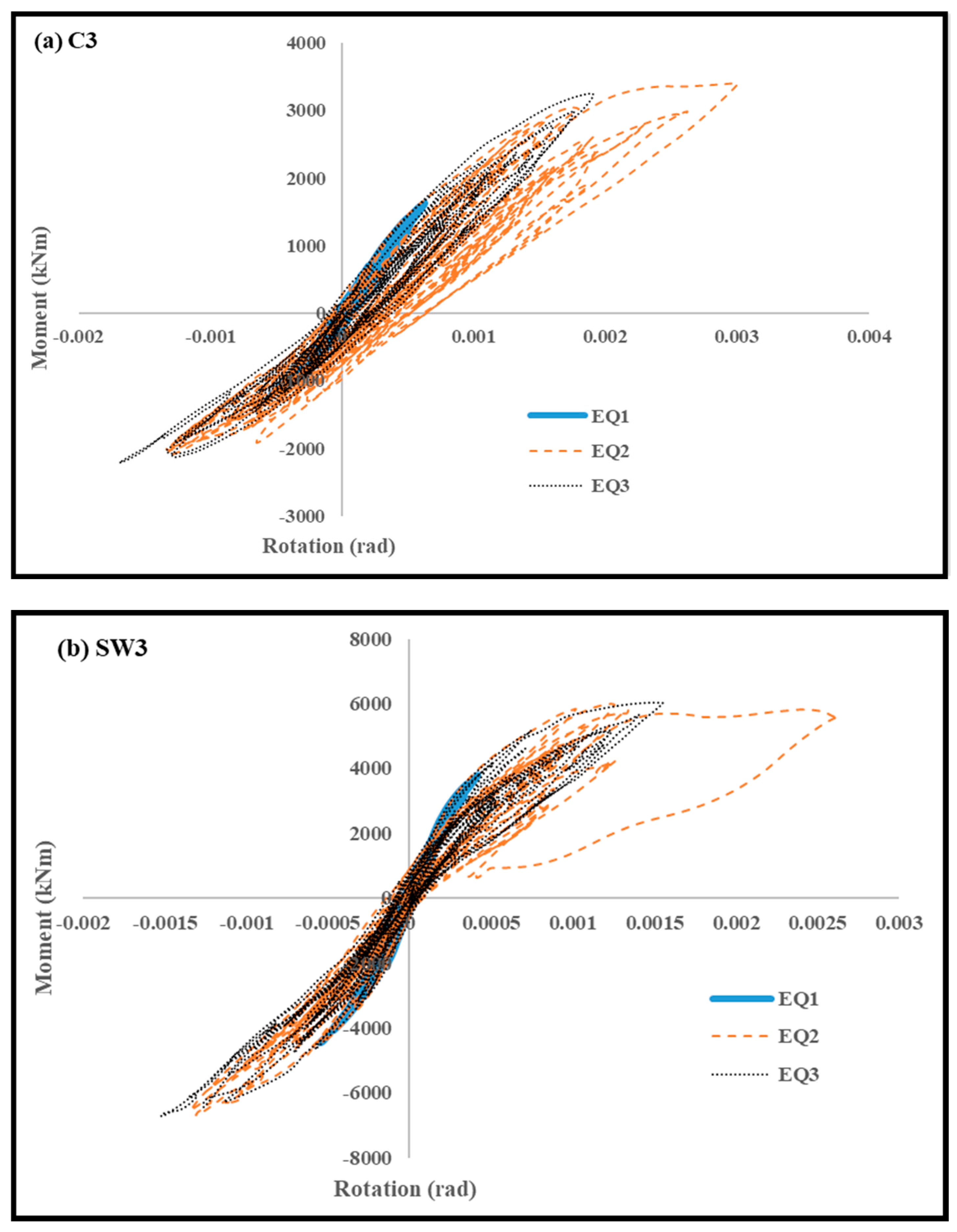
Three NDAs were conducted to evaluate the seismic performance of the investigated residential building in the transverse direction. Following the NDA performed using the EQ1 ground motion record, corresponding to the DD3 seismic level, no deficiencies were observed in the primary load-bearing elements. The structural system exhibited satisfactory performance, except for five beams that did not satisfy the shear demand requirements. Moreover, no rotation demand exceedance was identified at this earthquake level in the transverse direction. The roof-level maximum displacement (Figure 21a) and the moment–rotation responses of the selected column (C3) and shear wall (SW3) (Figure 21a,b) are presented in Figure 21.
For the analysis conducted using the EQ1 ground motion record, the maximum roof displacement was obtained as 7.49 cm at 8.69 s. At this earthquake level, the rotation of the column in both the positive and negative directions remained well below the rotation capacity, with calculated values of 0.00063 rad and 0.00054 rad, respectively. The corresponding bending moments of the column were 1630.9 kNm and 1209.1 kNm in the positive and negative directions. For the reinforced concrete shear wall, the rotations were calculated as 0.00042 rad and 0.00055 rad in the positive and negative directions, respectively, while the corresponding bending moments reached 3802.5 kNm and 4472.3 kNm. The analysis using the EQ2 ground motion record resulted in a maximum displacement of 19.67 cm at 25.02 s. At this seismic level, no rotation capacity exceedance was identified for either the column or the shear wall. However, a pronounced shear capacity deficiency was observed in the selected shear wall. The maximum rotation demands reached 0.003 rad and 0.00133 rad in the positive and negative directions, respectively, while the corresponding maximum bending moments were calculated as 3413.2 kNm and 2104.5 kNm. Finally, the structural system was subjected to the EQ3 ground motion record. The analysis yielded a maximum roof displacement of 17.21 cm at 13.31 s, measured relative to the base. The maximum rotations of the column were calculated as 0.0019 rad and 0.0017 rad in the positive and negative directions, respectively, with corresponding bending moments of 3250.7 kNm and 2204.0 kNm. For the RC shear wall, the maximum rotations were obtained as 0.0016 rad and 0.0015 rad in the positive and negative directions, respectively, while the corresponding bending moments reached 6032.9 kNm and 6736.0 kNm. The damage state of the structural system for all analyses conducted in the transverse direction is presented in Figure 22.
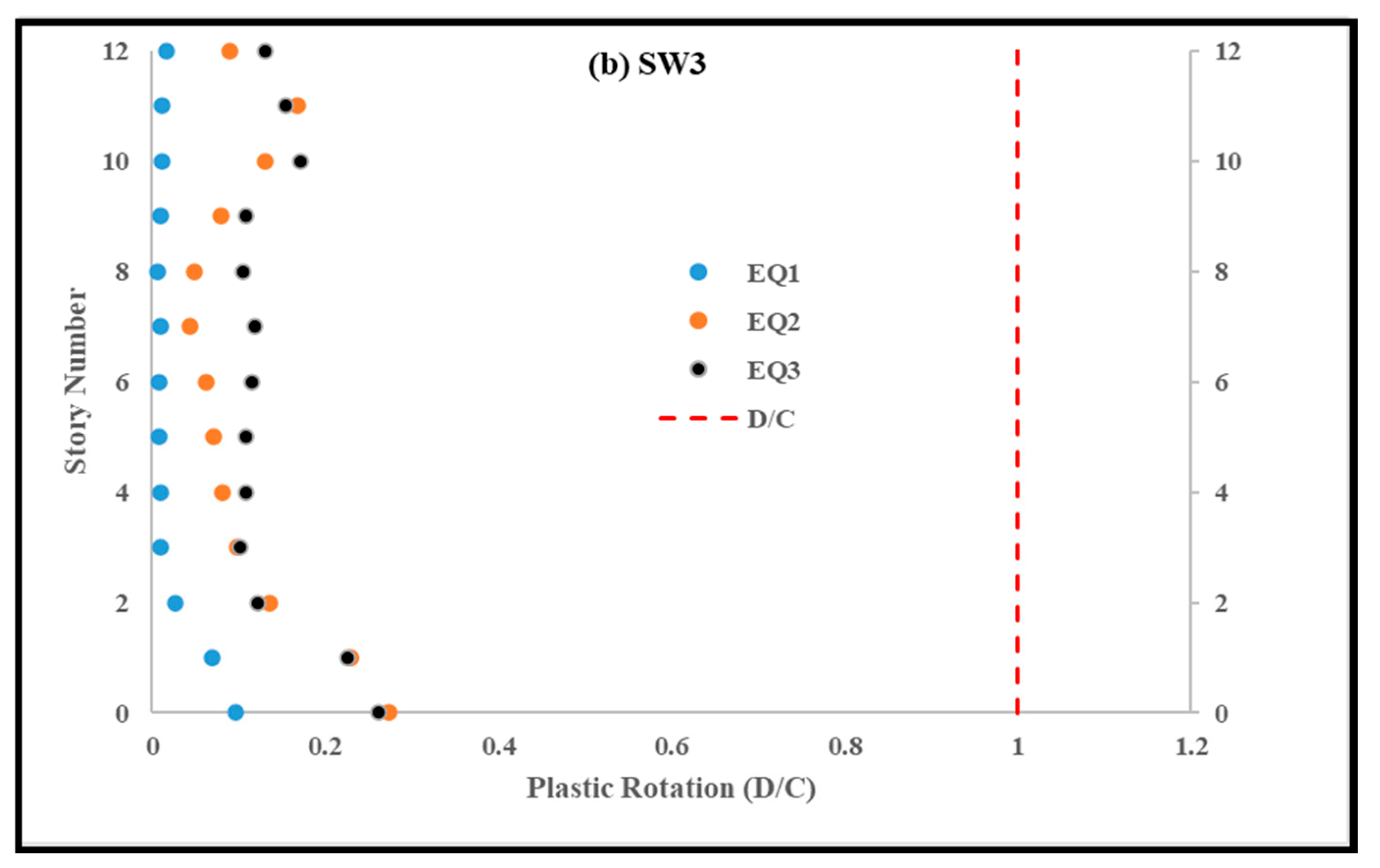
As shown in Figure 22a, limited beam members experienced shear damage due to insufficient shear capacity between the 2nd and 8th floors under the DD3-level seismic loading. Moreover, as illustrated in Figure 22b, shear wall SW3 suffered severe damage across the first five floors, while shear wall SW3 was damaged from the ground floor up to the 8th floor due to the same deficiency, namely, inadequate shear capacity. Another analysis result presented in Figure 22c indicates that the shear wall identified as SW3 also sustained damage as a result of insufficient shear capacity, which was unable to resist the seismic demands at the DD2 level. The rotation distributions of C3 and SW3 along the building height are presented in Figure 23.
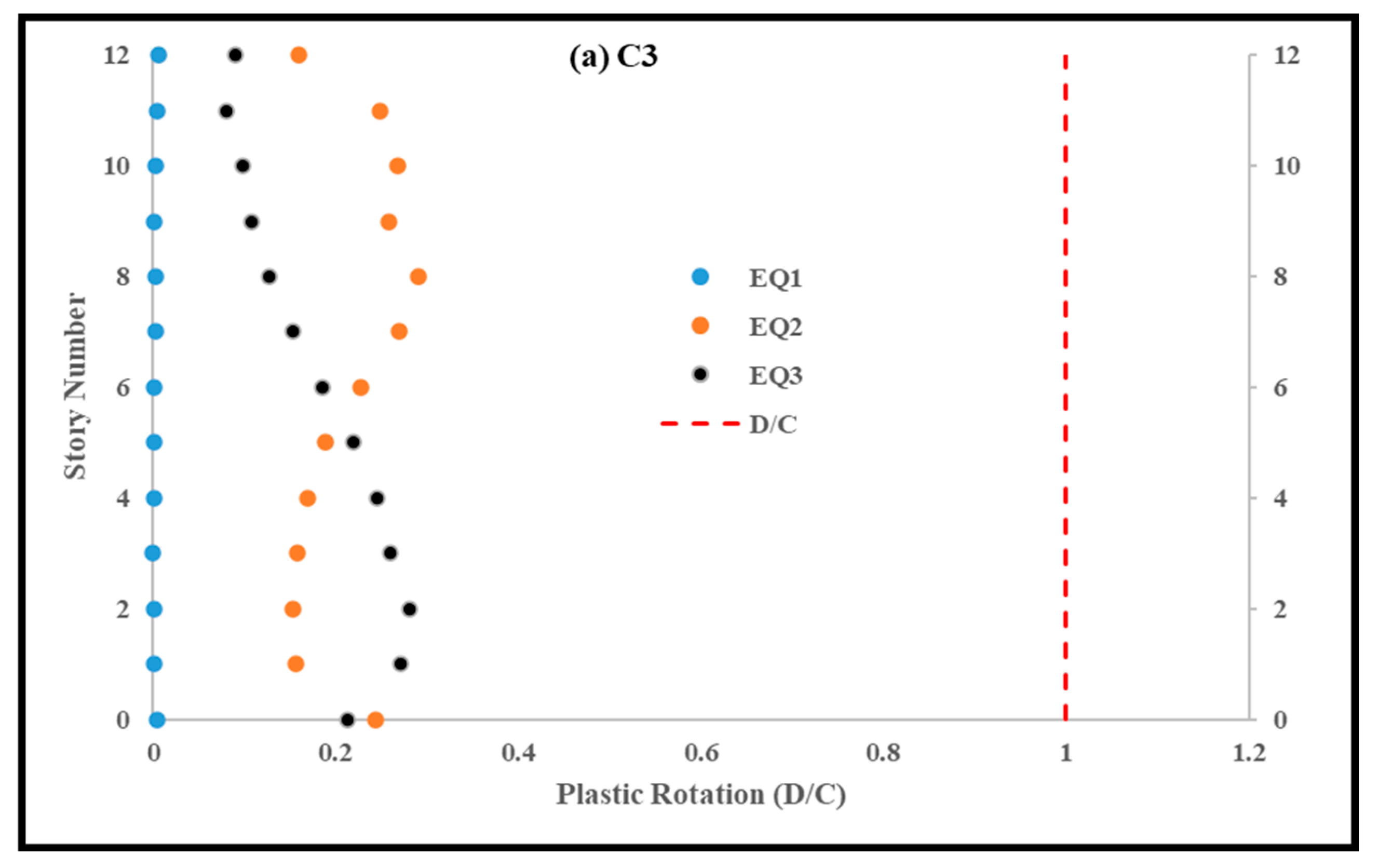
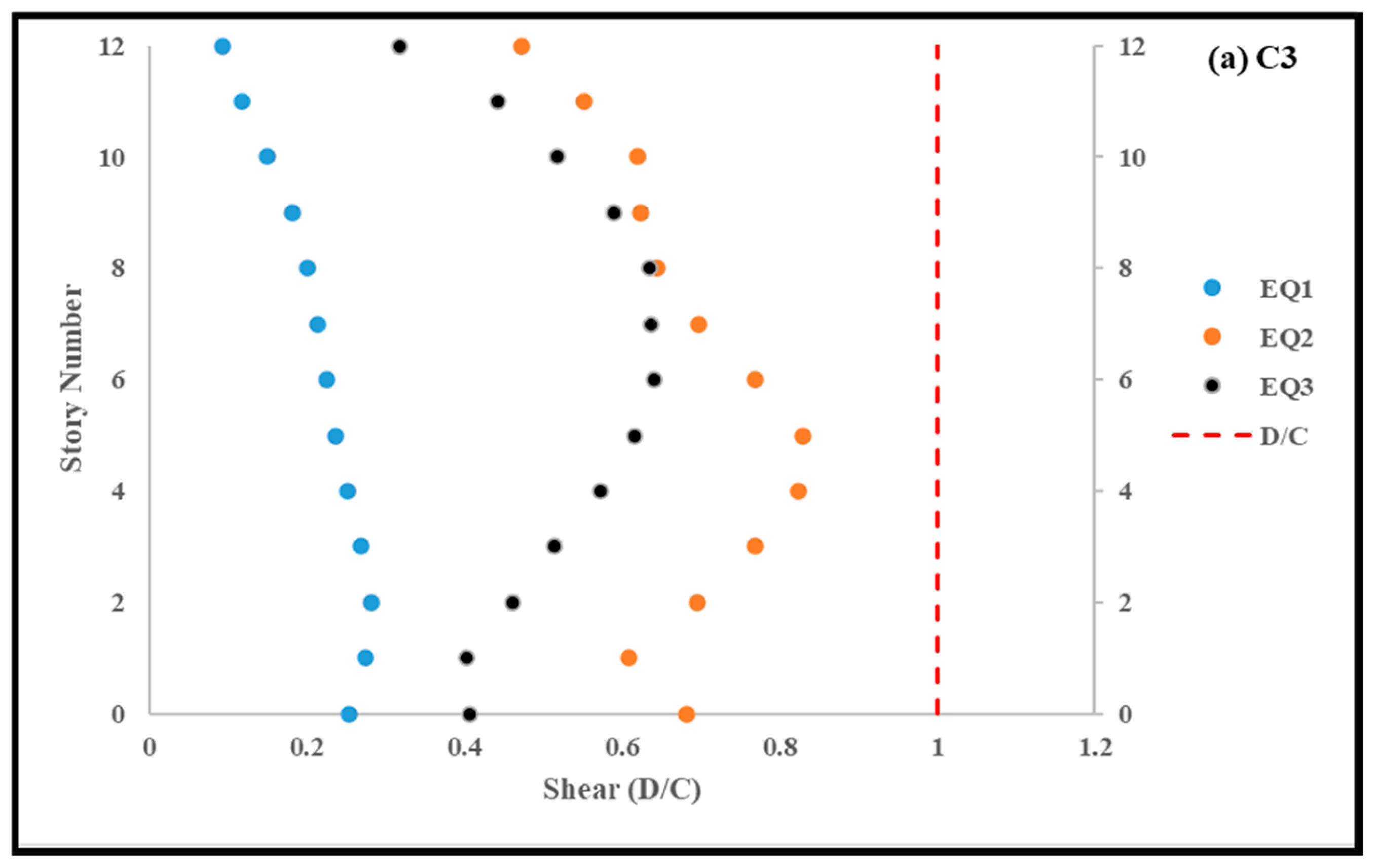
As shown in Figure 23, neither the column nor the shear wall exhibited a rotation capacity exceedance under the applied seismic loading. A clear discrepancy can be observed between the CP limit and the closest rotation demand in Figure 23a, corresponding to the EQ2 record. The CP limit lies beyond the black line representing the EQ3 results. The comparison between shear force capacity and demand for members C3 and SW3 is presented in Figure 24.
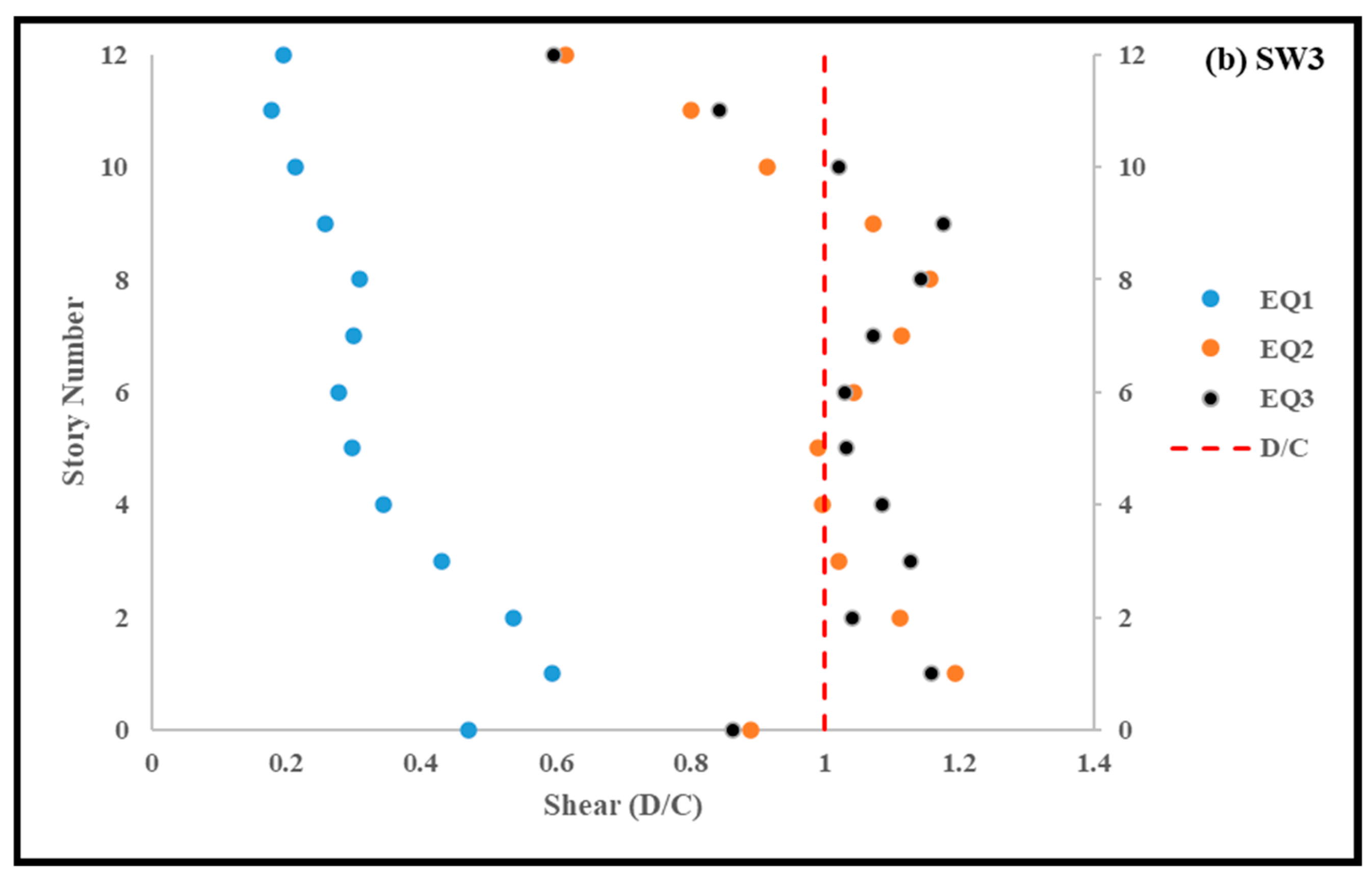
No shear capacity deficiency was identified for the column in the transverse direction. However, a significant shear capacity deficiency was observed for the RC shear wall identified as SW3 in the transverse direction across the first ten stories under the EQ2 and EQ3 ground motion records. A concise summary of the nonlinear static and dynamic analyses is presented in Figure 25.
Figure 25. Comparison of nonlinear analysis in the transversal direction.
Buildings 16 01012 g025
The static result represents the maximum base shear capacity (Vmax) obtained from pushover analysis, whereas dynamic points correspond to peak responses under individual ground motion records.

4.5. Interpretation of the Results

The nonlinear analysis results presented in Section 4.1, Section 4.2 and Section 4.3 primarily reflect member-level performance behavior under different seismic scenarios. However, the interpretation of these results requires distinguishing between local damage states and global structural performance as defined by TBEC 2018. Exceedance of LS or CP limits in individual members does not automatically imply system-level collapse; rather, global performance assessment additionally considers the cumulative contribution of severely damaged vertical elements to total story shear as tabulated in Table 3.
Table 2 summarizes the critical LS and CP exceedances observed in both principal directions under DD2- and DD3-level ground motions. According to TBEC 2018, structural performance is evaluated at both the member level and the system level. In addition to element-based rotation and shear capacity limits, the code defines global performance criteria based on the cumulative contribution of heavily damaged vertical elements to the total story shear force. In the present analyses, nonlinear dynamic simulations were performed independently for each principal horizontal direction. Under DD2-level excitation, one column and one shear wall in each horizontal direction exceeded the Collapse Prevention (CP) limit. For shear walls, both shear and rotation capacity deficiencies were observed, whereas for columns, the deficiency remained primarily at the shear capacity level.

5. Discussions

To provide a structured interpretation of the analytical findings and their broader implications, a comparative evaluation is presented in Table 4. The table summarizes the relationship between observed damage patterns, nonlinear analysis results, and their scientific and applied significance, as well as their potential transferability to other severe earthquake scenarios.
Table 4 summarizes the main analytical findings and their engineering implications. While the conclusions are derived from a single case study, the observed mechanisms may be relevant for mid-rise reinforced concrete buildings with comparable structural configurations subjected to strong ground motion.
It should be clarified that the deficiencies identified in this study do not directly imply that TBEC 2018 is inherently inadequate. Rather, the collapse appears to result from a combination of project-specific design decisions and structural configuration choices that were formally code-compliant but structurally unfavorable. In particular, the extremely low shear wall–to–floor area ratio, asymmetric wall layout, and soft-story configuration significantly amplified torsional response and local shear demands. Field observations further indicated workmanship-related deficiencies that may have aggravated the structural response. Therefore, the findings should be interpreted as evidence of the limitations of prescriptive compliance when irregular structural configurations are present, rather than as a generalized inadequacy of the seismic code itself. The seismic analyses revealed that the investigated RC building, although designed in accordance with TBEC 2018, did not achieve the CP performance level under DD2-level ground motions. Two primary deficiencies were identified in both the longitudinal and transverse directions: (i) insufficient shear capacity in critical structural members, and (ii) increased rotation demands, particularly in shear walls located at the ground floor. According to TBEC 2018, Section 15.8.4 in ref. [51], the contribution of heavily damaged vertical members within the advanced damage zone should not exceed 20% of the total floor shear force.
The NDAs indicated that this threshold was not exceeded in any of the investigated cases. For example, in the longitudinal direction, shear wall SW6 resisted a maximum of 13.5% of the total ground-floor base shear under the EQ2 record. In addition, the damaged column and shear wall contributed 9.22% and 10.4% of the total ground-floor base shear under EQ2, respectively. Although the cumulative shear contribution of advanced-damage members remained below the 20% threshold defined in TBEC 2018, the exceedance of CP limits in two columns and two shear walls indicates that critical vertical load-carrying components entered severe damage states. The concentration of damage in these key structural members likely triggered loss of stability and progressive collapse. Therefore, while the formal code-based shear contribution limits were not exceeded, the structure cannot be considered to have satisfied a safe global performance state under DD2-level ground motion. The SCWB capacity design principle, which aims to ensure global ductile behavior through controlled beam yielding prior to column failure, was also examined in interpreting the collapse mechanism. Nonlinear analysis results indicated that plastic hinge formation in beams occurred in several stories, suggesting that flexural demand redistribution had initiated. However, shear capacity deficiencies in columns and shear walls were significantly more dominant and developed earlier than a stable global beam-sway mechanism could fully form. In particular, brittle shear failures and torsion-induced demand concentrations in vertical elements limited the effectiveness of the intended ductile flexural mechanism. These findings indicate that although flexural yielding was present, the collapse was ultimately governed by shear-dominated and torsion-amplified failure mechanisms.
The nonlinear model did not explicitly incorporate the inelastic contribution of masonry infill walls. It is acknowledged that infill panels may significantly influence the initial stiffness and modal characteristics of RC frame structures, potentially reducing fundamental periods and altering force distribution patterns. However, infill walls typically experience early cracking and stiffness degradation under strong ground motion, particularly in soft-story configurations. In the examined building, the collapse was governed by shear capacity deficiencies and torsion-amplified demand concentrations in vertical elements. While inclusion of nonlinear infill modeling could modify the initial stiffness and demand distribution, it is unlikely to alter the fundamental collapse mechanism identified in this study. The omission of infill walls, in terms of stiffness, represents a modeling simplification and is recognized as a limitation of the present work.
Excessive torsional rotation significantly increased the seismic demand on certain vertical members, particularly at the soft ground story with a height of 5.5 m, thereby further reducing the overall seismic resilience of the structure. While the soil class was defined as ZC in accordance with available geotechnical data, the potential variability of local soil conditions at the parcel scale may influence amplification characteristics beyond generalized regional classifications. It should be emphasized that the shear wall–to–floor area ratio values reported in previous studies (e.g., 0.25% and 1.2%) were derived from different structural configurations and building typologies. These values are therefore referenced in this study as indicative ranges rather than absolute or generally applicable thresholds. TBEC 2018 does not explicitly describe a minimum shear wall–to–floor area ratio; instead, structural adequacy is evaluated through strength-based and performance-based criteria. In the present case, the calculated ratio of 0.0357% is interpreted as structurally unfavorable not in isolation, but in combination with asymmetric wall distribution, significant torsional participation in the first vibration modes, and the presence of a soft ground story. The interaction of these factors resulted in amplified shear demands that exceeded member capacities under nonlinear dynamic loading. This interaction between low wall proportion and torsional amplification was further reflected in the nonlinear dynamic analysis results. The rotation demand of shear wall SW6 in the longitudinal direction exceeded the CP limit under DD2-level excitation (EQ2), indicating a potential for brittle failure, whereas the selected columns (e.g., C3) remained within CP limits. These findings are consistent with field observations of partial and total collapses reported in similar reinforced concrete buildings in Malatya, Adıyaman, and Hatay. They further demonstrate that performance-based designs complying with current seismic codes may still remain vulnerable in the presence of (i) soft-story mechanisms, (ii) torsional irregularities, (iii) inadequate detailing and workmanship, and (iv) insufficient shear wall proportioning. The results corroborate previous post-earthquake reconnaissance studies [26,27,28,29] and extend them by providing quantitative validation through advanced fiber-based nonlinear modeling. In addition, the results of this study verify Atmaca et al.’s [55] study that 25.57% of the buildings failed due to design and analysis problems. By integrating field observations with analytical verification, this study presents a robust framework for identifying critical structural vulnerabilities in newly constructed reinforced concrete buildings.

6. Conclusions

This study investigated the seismic performance of newly constructed RC buildings following the 6 February 2023 Kahramanmaraş earthquakes, with particular emphasis on a collapsed mid-rise residential building in Malatya during the Elbistan earthquake (Mw = 7.6). Field-based damage documentation was integrated with nonlinear static and dynamic analyses to evaluate the collapse mechanism of a code-compliant structure.
The main conclusions are summarized below.
Scientific Findings
1.
Field investigations revealed recurring structural deficiencies in newly constructed RC residential buildings, including single-column shear failures, soft-story mechanisms, torsional irregularities, and inadequate detailing, despite formal code compliance.
2.
The investigated building exhibited a shear wall–to–floor area ratio of 0.0357%, which is considerably lower than indicative ranges reported in the literature. This configuration, combined with asymmetric shear wall distribution, amplified torsional response and concentrated shear demands in critical vertical members.
3.
Nonlinear dynamic analyses showed that several critical structural members exceeded code-defined CP limits under DD2-level ground motions, indicating that localized member-level demand governed the collapse mechanism.
4.
Although system-level shear contribution limits defined by TBEC 2018 were not exceeded, critical vertical members reached or exceeded CP limits, demonstrating that global compliance checks may not fully capture localized instability mechanisms.
Applied and Engineering Implications
5.
The findings indicate that formal compliance with prescriptive code requirements may not ensure satisfactory seismic performance when unfavorable structural configurations and detailing deficiencies coexist.
6.
The results highlight the importance of reviewing structural layout and vertical element distribution in addition to strength-based design checks, particularly for mid-rise RC buildings with heights ranging approximately from 20 m to 45 m.
7.
Although soil class parameters were incorporated according to TBEC 2018, structural system reliability may be improved when design decisions are supported by parcel-specific geotechnical investigations, including multiple boreholes and geophysical measurements to better characterize local amplification effects.
Recommendations
Based on the findings of this study, the following recommendations are proposed:
8.
Seismic design provisions may consider introducing configuration-sensitive guidance, including minimum shear wall ratio ranges that account for building height, soil conditions, and torsional behavior.
9.
Performance-based seismic evaluation may be considered for irregular mid-rise buildings exceeding certain height thresholds (e.g., 35 m or BHC ≤ 4), particularly in irregular mid-rise systems.
10.
Future analytical studies may incorporate sequential earthquake scenarios to investigate potential cumulative damage effects.
11.
Periodic structural validation during the design phase, including eigenvalue analysis and irregularity checks, should be strengthened.
12.
Construction quality control practices should be continuously improved to reduce risks associated with poor detailing and execution.
These conclusions contribute to improving the understanding of collapse mechanisms in code-compliant RC buildings and may assist engineers and decision-makers in enhancing seismic resilience in earthquake-prone regions.

Author Contributions

All authors contributed to the conception and design of this study. For detailed contributions, O.O.: Conceptualization, Data curation, Formal analysis, Funding acquisition, Investigation, Methodology, Project administration, Resources, Supervision, Validation, Visualization, Writing—original draft, Writing—review and editing. İ.B.K.: Data curation, Formal analysis, Software, Validation, Visualization, Writing—original draft, Writing—review and editing. B.Y.: Conceptualization, Investigation, Methodology, Resources, Software, Writing—original draft, Writing—review and editing, S.V.: Investigation, Writing—original draft, Writing—review and editing, M.E.Ö.: Data curation, Methodology, Writing—original draft, Writing—review and editing, A.U.: Data curation, Formal analysis, Visualization, Writing—original draft, Writing—review and editing. All authors have read and agreed to the published version of the manuscript.

Funding

This research received no external funding.

Data Availability Statement

The data available in this study can be used upon request and citation.

Conflicts of Interest

The authors declare that there are no known conflicts of interest between the authors.

Abbreviations

The following abbreviations are used in this manuscript:
IBuilding Importance Factor
BUCBuilding Utilization Category
EDCEarthquake Design Category
BHCBuilding Height Category
DD2Earthquake level with a return period of 475 years
DD3Earthquake level with a return period of 72 years
LSLife Safety
CPCollapse Prevention
RCReinforced Concrete
TBEC2018Turkish Building Earthquake Code 2018
EAFEast Anatolian Fault
NAFNorth Anatolian Fault
MTAMineral Research and Exploration
DEMADisaster and Emergency Management Authority
PGAPeak Ground Acceleration
USDUnited States Dollar
NDANonlinear Dynamic Time-History
SCWBStrong Column–Weak Beam

References

  1. Kürçer, A.; Elmacı, H.; Yıldırım, N.; Özalp, S. January 24, 2020 Sivrice (Elazığ) Depremi (Mw = 6.8) Field Observation and Evaluation Report; Mineral Research and Exploration Institute: Ankara, Türkiye, 2020. [Google Scholar]
  2. Acarel, D.; Cambaz, M.D.; Turhan, F.; Mutlu, A.K.; Polat, R. Seismotectonics of Malatya Fault, Eastern Turkey. Open Geosci. 2019, 11, 1098–1111. [Google Scholar] [CrossRef]
  3. Dogangun, A.; Yon, B.; Onat, O.; Oncu, M.E.; Sagiroglu, S. Seismicity of East Anatolian of Turkey and Failures of Infill Walls Induced by Major Earthquakes. J. Earthq. Tsunami 2021, 15, 2150017. [Google Scholar] [CrossRef]
  4. Sayin, E.; Yon, B.; Onat, O.; Gor, M.; Oncu, M.E.; Tunc, E.T.; Bakir, D.; Karaton, M.; Calayir, Y. 24 January 2020 Sivrice-Elazig, Turkey earthquake: Geotechnical evaluation and performance of structures. Bull. Earthq. Eng. 2021, 19, 657–684. [Google Scholar] [CrossRef]
  5. Yön, B.; Onat, O. 3 Aralık 2015 Bingöl-Kiğı depreminin Tunceli ilindeki yığma yapılara etkisinin değerlendirilmesi. Dicle Üniversitesi Mühendislik Fakültesi Derg. Mühendislik Derg. 2018, 9, 375–385. [Google Scholar]
  6. Yon, B.; Onat, O.; Oncu, M.E. Earthquake Damage to Nonstructural Elements of Reinforced Concrete Buildings during 2011 Van Seismic Sequence. J. Perform. Constr. Fac. 2019, 33, 6. [Google Scholar] [CrossRef]
  7. Yon, B.; Onat, O.; Oncu, M.E.; Karasin, A. Failures of masonry dwelling triggered by East Anatolian Fault earthquakes in Turkey. Soil. Dyn. Earthq. Eng. 2020, 133, 106126. [Google Scholar] [CrossRef]
  8. Calayir, Y.; Sayin, E.; Yön, B. Performance of structures in the rural area during the March 8, 2010 Elazig-Kovancilar earthquake. Nat. Hazards 2012, 61, 703–717. [Google Scholar] [CrossRef]
  9. Demir, S.; Günaydin, M.; Atmaca, B.; Altunişik, A.C.; Hüsem, M.; Adanur, S.; Angin, Z.; Ateş, Ş. Performance Evaluation of Reinforced Concrete Buildings During the Sivrice-Elazığ Earthquake (Mw = 6.8, January 24, 2020) in Accordance with Turkish Earthquake Code. J. Earthq. Tsunami 2021, 15, 2150018. [Google Scholar] [CrossRef]
  10. Onat, O.; Yön, B.; Öncü, M.E.; Varolgünes, S.; Karasin, A.; Cemalgil, S. Field reconnaissance and structural assessment of the October 30, 2020, Samos, Aegean Sea earthquake: An example of severe damage due to the basin effect. Nat. Hazards 2022, 112, 75–117. [Google Scholar] [CrossRef]
  11. Oyguc, R.; Oyguc, E. 2011 Van Earthquakes: Lessons from Damaged Masonry Structures. J. Perform. Constr. Fac. 2017, 31, 5. [Google Scholar] [CrossRef]
  12. Sayin, E.; Yön, B.; Calayir, Y.; Karaton, M. Failures of masonry and adobe buildings during the June 23, 2011 Maden-(Elazig) earthquake in Turkey. Eng. Fail. Anal. 2013, 34, 779–791. [Google Scholar] [CrossRef]
  13. Celep, Z.; Erken, A.; Taskin, B.; Ilki, A. Failures of masonry and concrete buildings during the March 8, 2010 Kovancilar and Palu (Elazig) Earthquakes in Turkey. Eng. Fail. Anal. 2011, 18, 868–889. [Google Scholar] [CrossRef]
  14. Sevim, B.; Ayvaz, Y.; Akbulut, S.; Aydiner, M.F.; Uzun, S.; Ari, A. Seismic Performance and Damage Evaluation of Reinforced Concrete Structures Based on Field Investigation Made After February 6, 2023, Kahramanmaraş Earthquakes. J. Earthq. Tsunami 2024, 18, 2350032. [Google Scholar] [CrossRef]
  15. T.C. Cumhurbaşkanlığı Strateji ve Bütçe Başkanlığı. 2023 Kahramanmaraş and Hatay Earthquakes Report. 2023. Available online: https://www.sbb.gov.tr/wp-content/uploads/2023/03/2023-Kahramanmaras-and-Hatay-Earthquakes-Report.pdf (accessed on 1 February 2026).
  16. Karasin, I.B. Comparative Analysis of the 2023 Pazarcik and Elbistan Earthquakes in Diyarbakir. Buildings 2023, 13, 2474. [Google Scholar] [CrossRef]
  17. Kürçer, A.; Elmacı, H.; Özdemir, E.; Güven, C.; Güler, T.; Avcu, İ.; Olgun, Ş.; Avcı, H.O.; Aydoğan, H.; Yüce, A.A.; et al. 06 February 2023 Pazarcık (Kahramanmaraş) Earthquake (Mw 7,7) Field Observation and Evaluation (In Turkish); General Directiorate of Mineral Research and Exploration: Ankara, Turkey, 2023; p. 187. [Google Scholar]
  18. Onat, O.; Yön, B.; Uslu, A.; Öncü, M.E.; Varolgünes, S.; Karasin, I.B.; Gör, M. Seismic Resistance and Performance Evaluation of Masonry Dwellings After the February 6, 2023, Kahramanmaraş Earthquake Sequence in Türkiye. J. Earthq. Tsunami 2024, 18, 2450013. [Google Scholar] [CrossRef]
  19. Parlak, O.; Yavuzoğlu, A.; Bayrak, A.; Karayazı, O.; Olgun, Ş. 06 February 2023 Elbistan (Kahramanmaraş) Earthquake (Mw 7,6) Field Observation and Evaluation (In Turkish); General Directiorate of Mineral Research and Exploration (MTA): Ankara, Türkiye, 2023; p. 99. [Google Scholar]
  20. Onat, O.; Deniz, F.; Özmen, A.; Özdemir, E.; Sayin, E. Performance evaluation and damage assessment of historical Yusuf Ziya Pasha Mosque after February 6, 2023 Kahramanmaras earthquakes. Structures 2023, 58, 105415. [Google Scholar] [CrossRef]
  21. Available online: https://yerbilimleri.mta.gov.tr/anasayfa.aspx (accessed on 1 February 2026).
  22. Tanırcan, G.; Eken, T.K. 6 Şubat 2023 Mw7.7 Gaziantep, 6 Şubat 2023 Mw.7.6 Kahramanmaraş, 20 Şubat 2023 Mw6.4 Hatay Earthquakes Preliminary Evaluation Report; Boğaziçi University Kandilli Observatory and Earthauek Research Institute: İstanbul, Turkey, 2023. [Google Scholar]
  23. Agency. D.E.M.A. Türkiye Open Access Earthquake Data Base; Disaster and Emergency Management Agency, 2023. Available online: https://deprem.afad.gov.tr/event-catalog (accessed on 1 February 2026).
  24. Vuran, E.; Serhatoglu, C.; Timuragaoglu, M.Ö.; Smyrou, E.; Bal, I.E.; Livaoglu, R. Damage observations of RC buildings from 2023 Kahramanmaraş earthquake sequence and discussion on the seismic code regulations. Bull. Earthq. Eng. 2024, 23, 1153–1182. [Google Scholar] [CrossRef]
  25. Ince, O. Structural damage assessment of reinforced concrete buildings in Adiyaman after Kahramanmaras, (Türkiye) Earthquakes on 6 February 2023. Eng. Fail. Anal. 2024, 156, 107799. [Google Scholar] [CrossRef]
  26. Sezgin, S.K.; Sakcali, G.B.; Özen, S.; Yildirim, E.; Avci, E.; Bayhan, B.; Çaglar, N. Reconnaissance report on damage caused by the February 6, 2023, Kahramanmaras, Earthquakes in reinforced-concrete structures. J. Build. Eng. 2024, 89, 109200. [Google Scholar] [CrossRef]
  27. Kazaz, I.; Avsar, Ö.; Dilsiz, A. Importance of building inspection on the seismic response of a severely damaged RC structure during the February 6, 2023 Kahramanmaras, earthquake sequence. Eng. Fail. Anal. 2024, 162, 108410. [Google Scholar] [CrossRef]
  28. Kazaz, I.; Bilge, I.H.; Gürbüz, M. Near-fault ground motion characteristics and its effects on a collapsed reinforced concrete structure in Hatay during the February 6, 2023 Mw7.8 Kahramanmaras, earthquake. Eng. Struct. 2024, 298, 117067. [Google Scholar] [CrossRef]
  29. Tura, C.; Orakcal, K.; Kusunoki, K.; Ilki, A. Seismic Response Simulation of a Reinforced Concrete Wall-Frame Building That Collapsed During the February 2023 Kahramanmaras Earthquake. J. Earthq. Eng. 2024, 29, 3423–3447. [Google Scholar] [CrossRef]
  30. Dogruyol, M. Characterisation of acrylic copolymer treated concretes and concretes of reinforced concrete buildings collapsed in the 6 February 2023 Mw=7.8 Kahramanmaras, (Türkiye) earthquake. Eng. Fail. Anal. 2024, 161, 108249. [Google Scholar] [CrossRef]
  31. Ozdemir, A. Examining the Effect of Structural Characteristics of Antakya Building Stock on the Damage Level After the Kahramanmaraş Earthquakes. J. Earthq. Eng. 2024, 29, 3475–3504. [Google Scholar] [CrossRef]
  32. Sivrikaya, O.; Türker, E.; Cüre, E.; Atmaca, E.E.; Angin, Z.; Basaga, H.B.; Altunisik, A.C. Impact of soil conditions and seismic codes on collapsed structures during the 2023 Kahramanmaras, earthquakes: An in-depth study of 400 reinforced concrete buildings. Soil Dyn. Earthq. Eng. 2025, 190, 109119. [Google Scholar] [CrossRef]
  33. Sarici, T.; Ozcan, R.T. Evaluation of geotechnical properties of Dogansehir district with geographical information systems after the February 6, 2023 earthquakes. J. Seism. 2024, 28, 1421–1444. [Google Scholar] [CrossRef]
  34. Sarici, T.; Ozcan, R.T. Interpretation of geotechnical risk maps for Malatya province in terms of earthquake sequence on February 6, 2023. Environ. Earth Sci. 2025, 84, 3. [Google Scholar] [CrossRef]
  35. Altundas, S.; Tanis, A. Evaluation of soil-structure resonance by determining local soil conditions in Gümüşhane city center. J. Seism. 2025, 29, 875–902. [Google Scholar] [CrossRef]
  36. Yılmaz, Z.; Altunışık, A.C.; Taciroğlu, E.; Günaydın, M.; Okur, F.Y.; Sunca, F.; Şişman, R.; Aslan, B.; Sezdirmez, T. Regional Building Damage Survey Data on the 2023 Kahramanmaraş, Türkiye, Earthquakes. ASCE Open: Multidiscip. J. Civ. Eng. 2024, 2, 1–25. [Google Scholar]
  37. Erbas, Y.; Mercimek, Ö.; Anil, O.; Çelik, A.; Akkaya, S.T.; Kocaman, I.; Gürbüz, M. Design deficiencies, failure modes and recommendations for strengthening in reinforced concrete structures exposed to the February 6, 2023 Kahramanmaraş Earthquakes (Mw 7.7 and Mw 7.6). Nat. Hazards 2024, 121, 3153–3194. [Google Scholar] [CrossRef]
  38. Yön, B.; Dedeoglu, I.Ö.; Yetkin, M.; Erkek, H.; Calayir, Y. Evaluation of the seismic response of reinforced concrete buildings in the light of lessons learned from the February 6, 2023, Kahramanmaraş, Türkiye earthquake sequences. Nat. Hazards 2024, 121, 873–909. [Google Scholar] [CrossRef]
  39. Tonyali, Z.; Kiral, A.; Ergun, M.; Garcia, R. Seismic resilience of existing RC dual-system buildings during the 2023 Kahramanmaraş earthquakes: A case study. J Asian Arch. Build 2025. [Google Scholar] [CrossRef]
  40. John, S.K.; Cascardi, A.; Verre, S.; Nadir, Y. RC-columns subjected to lateral cyclic force with different FRCM-strengthening schemes: Experimental and numerical investigation. Bull. Earthq. Eng. 2025, 23, 1561–1590. [Google Scholar] [CrossRef]
  41. Lazaridis, P.C.; Kavvadias, I.E.; Demertzis, K.; Iliadis, L.; Vasiliadis, L.K. Structural Damage Prediction of a Reinforced Concrete Frame under Single and Multiple Seismic Events Using Machine Learning Algorithms. Appl. Sci. 2022, 12, 3845. [Google Scholar] [CrossRef]
  42. Zhang, C.Y.; Wen, W.P.; Zhai, C.H.; Zhang, G.Q.; Dai, N.Q.; Zhou, B.C. Rapid seismic response prediction of city-scale RC frames under mainshock-aftershock sequences using deep learning and easily obtainable building information. Structures 2025, 82, 110777. [Google Scholar] [CrossRef]
  43. Hassan, A.F.; Sozen, M.A. Seismic vulnerability assessment of low-rise buildings in regions with infrequent earthquakes. Aci. Struct. J. 1997, 94, 31–39. [Google Scholar]
  44. Kazaz, I. Seismic deformation demands on rectangular structural walls in frame-wall systems. Earthq. Struct. 2016, 10, 329–350. [Google Scholar] [CrossRef]
  45. Seismosoft. A Computer Program for Static and Dynamic Nonlinear Analysis of Framed Structures, version 23; Seismosoft: Pavia, Italy, 2023.
  46. Scott, M.H.; Fenves, G.L. lastic hinge integration methods for force-based beam-column elements. J. Struct. Eng. 2006, 132, 244–252. [Google Scholar] [CrossRef]
  47. Onat, O.; Yön, B. Incremental dynamic analysis of mid-rise rc buildings to assess effect of concrete strength and tension reinforcement ratio in beam. Uludağ Üniversitesi Mühendislik Fakültesi Derg. 2021, 26, 283–300. [Google Scholar] [CrossRef]
  48. Onat, O.; Yön, B.; Calayir, Y. Seismic assessment of existing RC buildings before and after shear-wall retrofitting. Gradevinar 2018, 70, 703–712. [Google Scholar]
  49. Rodrigues, H. Biaxial Seismic Behaviour of Reinforced Concrete Columns. Ph.D. Thesis, University of Aveiro, Aveiro, Portugal, 2012. [Google Scholar]
  50. Mander, J.B.; Priestley, M.J.N.; Park, R. Theoretical Stress-Strain Model for Confined Concrete. J. Struct. Eng.-Asce 1988, 114, 1804–1826. [Google Scholar] [CrossRef]
  51. TBEC2018; Turkish Building Earthquake Code. Ministry of Environment, Urbanization and Climate Change: Ankara, Türkiye, 2018.
  52. European Committee for Standardization. Eurocode 8: Design of Structures for Earthquake Resistance–Part 1: General Rules, Seismic Actions and Rules for Buildings; European Committee for Standardization: Brussels, Belgium, 2003. [Google Scholar]
  53. Özcan, R.T. Use of Geographic Information System for Evaluating Liquefaction, Bearing Capacity and Other Geotechnical Properties for Malatya Province. Master’s Thesis, Inonu University, Malatya, Türkiye, 2023. [Google Scholar]
  54. Massone, L.M. Fundamental principles of the reinforced concrete design code changes in Chile following the Mw 8.8 earthquake in 2010. Eng. Struct. 2013, 56, 1335–1345. [Google Scholar] [CrossRef]
  55. Atmaca, B.; Altunisik, A.C.; Atmaca, E.E.; Basaga, H.B.; Günaydin, M.; Adanur, S.; Ates, S.; Hüsem, M.; Haciefendioglu, K.; Sunca, F.; et al. What is the reason for collapses on February 6, 2023 Kahramanmaras, earthquakes: Insights from a dataset of 400 collapsed RC buildings post-earthquake analysis. J. Build. Eng. 2025, 107, 112660. [Google Scholar] [CrossRef]
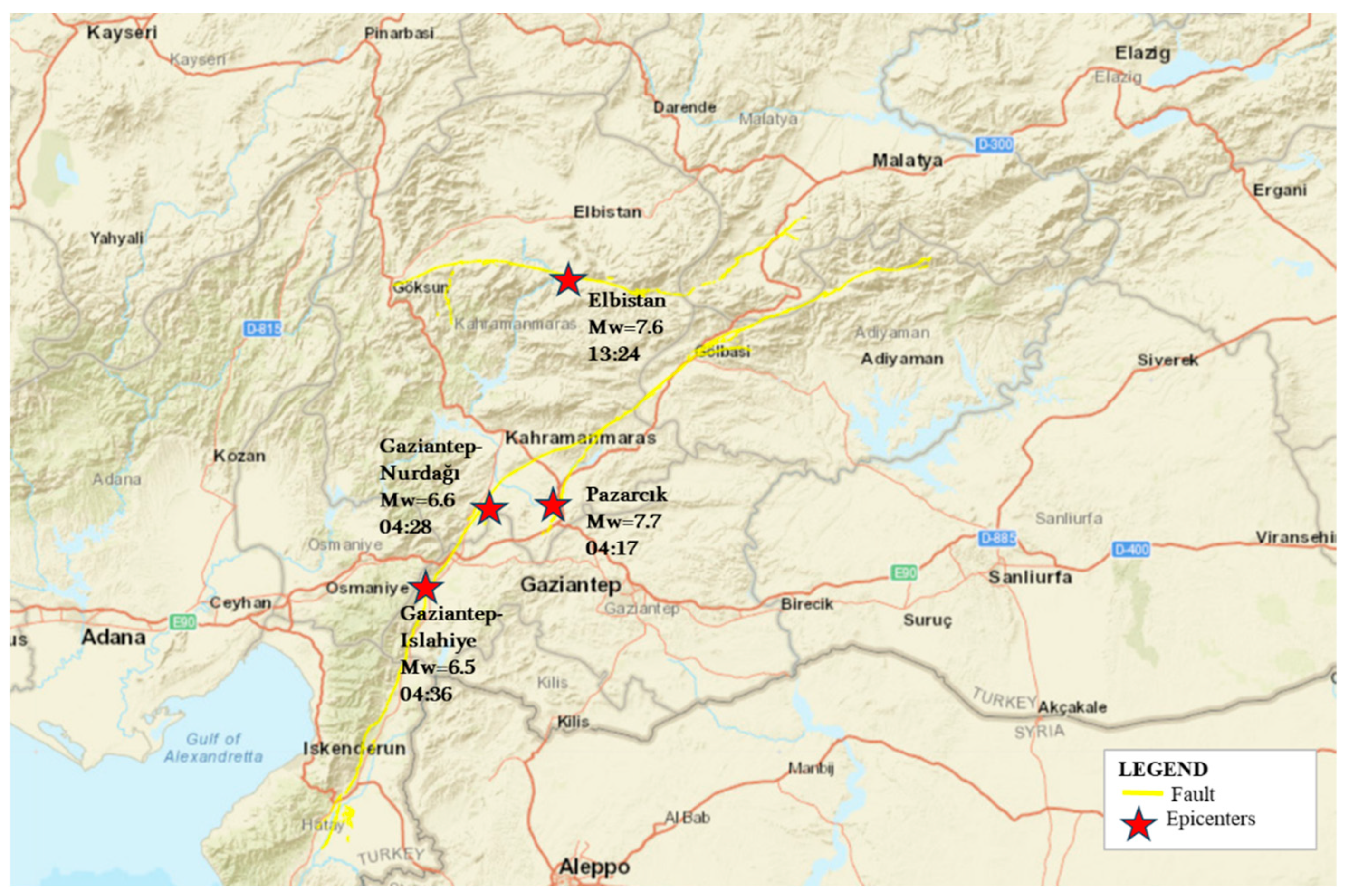
Figure 1. Epicenters and ruptured faults of 6 February 2023 earthquakes [20,21].
Buildings 16 01012 g001
Figure 2. Comparison between recorded response spectra and the corresponding TBEC 2018 elastic design spectra for the 6 February 2023 earthquakes: (a) Pazarcık main shock recorded at Station 4614; (b) Elbistan main shock recorded at Station 4612.
Buildings 16 01012 g002aBuildings 16 01012 g002b
Figure 5. Fiber element modeling of RC elements [49].
Buildings 16 01012 g005
Figure 7. The soil classification of Bostanbaşı [34,53] for (a) TBEC 2018 [51] and for (b) Eurocode 8 [52].
Buildings 16 01012 g007
Figure 8. Scaled time series (ad) comparison of scaled response/design spectrums.
Buildings 16 01012 g008aBuildings 16 01012 g008b
Figure 9. Selected members during the seismic analysis through the x- and y-directions.
Buildings 16 01012 g009
Figure 10. Workmanship defects. (a) and (c) Column, (b) beam and (d) shear wall.
Buildings 16 01012 g010
Figure 11. Single column damage due to overloading by shear force. (ac) Joint sliding due to insufficient shear reinforcement, (d) shear sliding due to local cold joint.
Buildings 16 01012 g011
Figure 12. Shear wall damage. (a) insufficient shear wall ratio, (bd) shear tension, (e) shear compression failure.
Buildings 16 01012 g012
Figure 15. Nonlinear static analysis results.
Buildings 16 01012 g015
Figure 16. Moment–rotation curve of (a) column and (b) shear wall in x-direction.
Buildings 16 01012 g016
Figure 17. Damage of the system at maximum displacement through longitudinal direction (a) EQ1, (b) EQ2, and (c) EQ3.
Buildings 16 01012 g017
Figure 18. Rotation of (a) Column (C21) and (b) Concrete shear wall (SW6).
Buildings 16 01012 g018
Figure 19. Shear force distribution of (a) Column (C21) and (b) Concrete shear wall (SW6).
Buildings 16 01012 g019
Figure 20. Comparison of nonlinear analyses in the longitudinal direction.
Buildings 16 01012 g020
Figure 21. Moment–rotation curve of (a) column and (b) shear wall.
Buildings 16 01012 g021
Figure 22. Damage of the system at maximum displacement through transversal direction, (a) EQ1, (b) EQ2 and (c) EQ3.
Buildings 16 01012 g022
Figure 23. Rotation of (a) Column (C3) and (b) Concrete shear wall (SW3).
Buildings 16 01012 g023aBuildings 16 01012 g023b
Figure 24. Shear force distribution of (a) Column (C3) and (b) Concrete shear wall (SW3).
Buildings 16 01012 g024aBuildings 16 01012 g024b
Table 1. Earthquake characteristics.
ParameterDEMA 1KOERI 2
EventPazarcıkElbistanPazarcıkElbistan
Magnitude (MW)7.77.67.77.6
Depth (km)8.67.010.010.0
Longitude (o)37.04337.23937.002937.2063
Latitude (o)37.28838.08937.231838.0717
1 Turkish Ministry of Interior Disaster and Emergency Management Presidency. 2 Kandilli Observatory and Earthquake Research Institute.
Table 3. Summary of critical member-level performance limit exceedances and system-level interpretation under nonlinear dynamic analysis.
Dir.RecordLS RotationLS ShearCP RotationCP Shear
X-dirEQ13 BeamsW38, 2 Beams-W38, 2 Beams
X-dirEQ21 Column, 2 SW, 9 Beams 2 Column, 4 SW, 13 Beams1 Column, 1 SW, 13 Beams1 Column, 4 SW, 13 Beams
X-dirEQ35 Beams2 SW, 10 Beams5 Beams2 SW, 10 Beams
Y-dirEQ1----
Y-dirEQ214 Beams9 SW, 6 Beams13 Beams9 SW, 7 Beams
Y-dirEQ315 Beams10 SW, 7 Beams17 Beams10 SW, 7 Beams
Table 4. Comparative evaluation of analytical findings and observed damage patterns.
NoAnalytical ResultObserved Collapse PatternScientific InsightEngineering ImplicationPotential Relevance to Similar RCF.
1Shear wall ratio = 0.0357%Soft-story concentration and torsional effectsInfluence of vertical element proportioning on nonlinear responseSuggests careful evaluation of wall proportioning in mid-rise RC buildingsRelevant for buildings with comparable frame–wall configurations
2CP exceeded in critical shear walls under DD2Localized wall cracking and failure along structure heightDemonstrates member-level vulnerability despite global complianceEmphasizes importance of member-level performance checksApplicable within performance-based assessment frameworks
3System-level shear limits not exceededCollapse occurredGlobal strength checks may not fully capture local instability mechanismsImportance of reviewing structural layout in addition to strength-based design checksRelevant for irregular code-compliant structures
4Dynamic base shear ≈ 30% of pushover capacityLocalized collapse mechanismSuggests collapse governed by local response concentrationNeed for nonlinear dynamic verification in critical casesTransferable to buildings exposed to strong ground motion
Disclaimer/Publisher’s Note: The statements, opinions and data contained in all publications are solely those of the individual author(s) and contributor(s) and not of MDPI and/or the editor(s). MDPI and/or the editor(s) disclaim responsibility for any injury to people or property resulting from any ideas, methods, instructions or products referred to in the content.