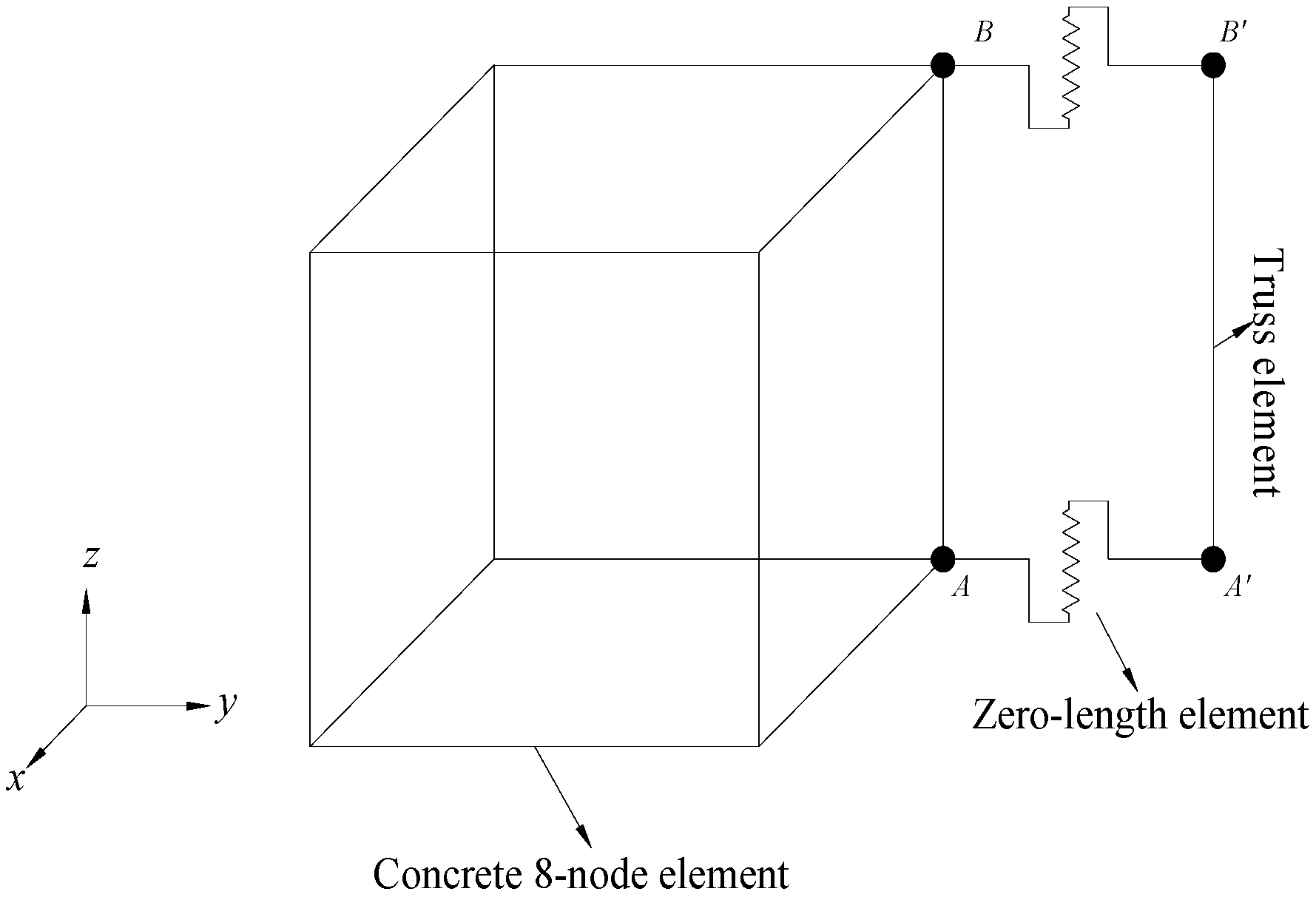
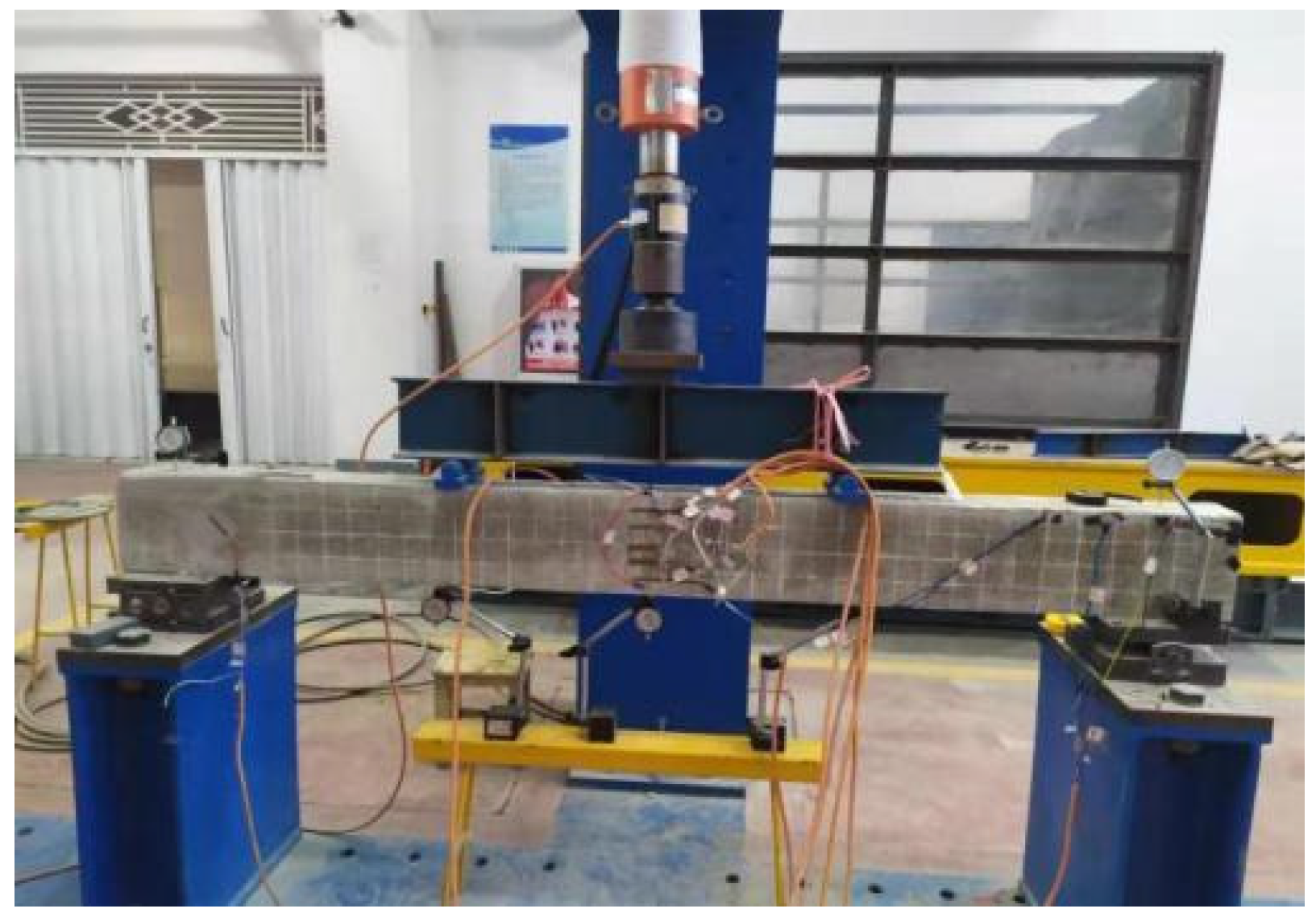
Figure 1.
Schematic illustration of the three-dimensional separated modeling approach.
Figure 1.
Schematic illustration of the three-dimensional separated modeling approach.
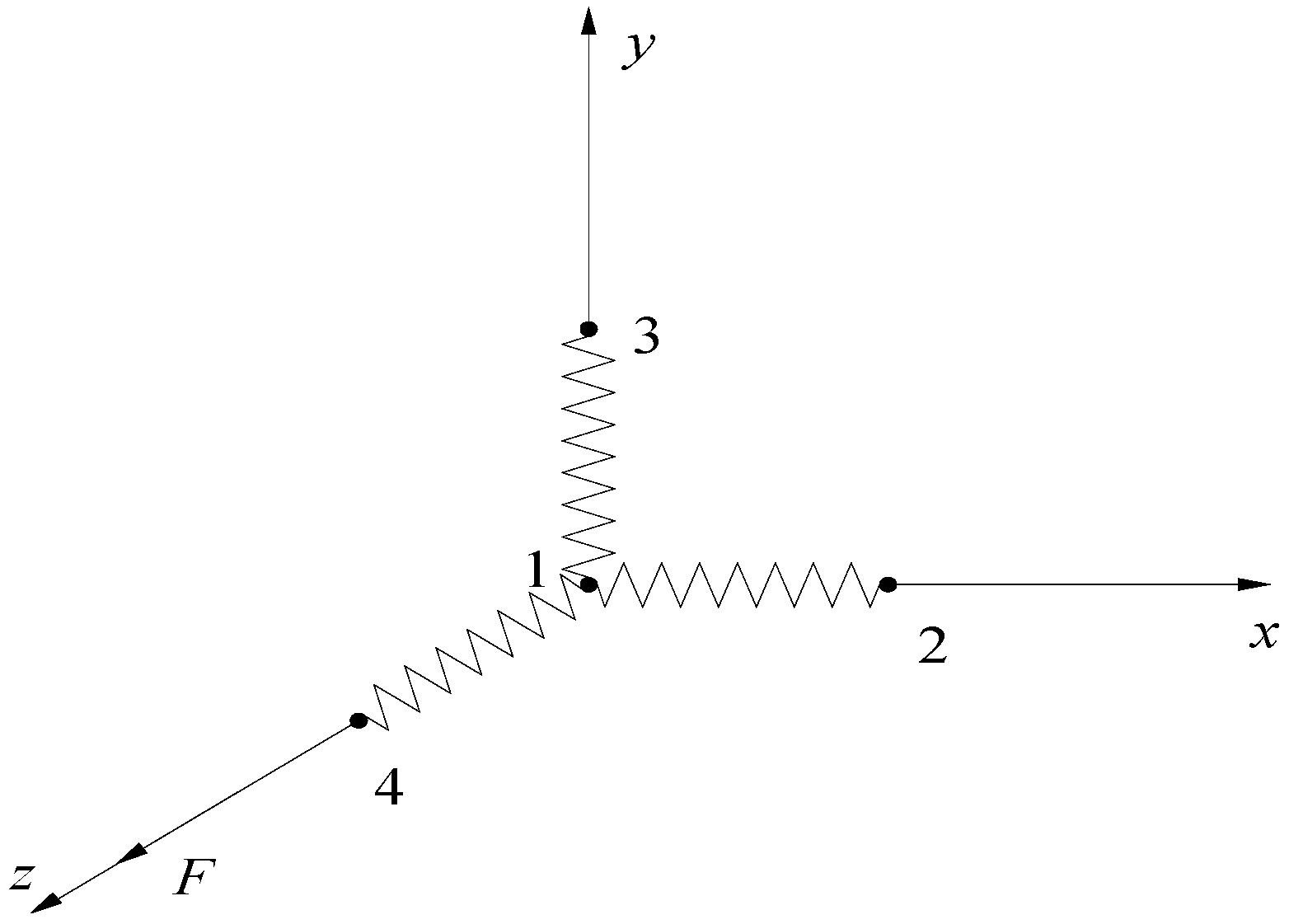
Figure 2.
Schematic representation of the spring element.
Figure 2.
Schematic representation of the spring element.
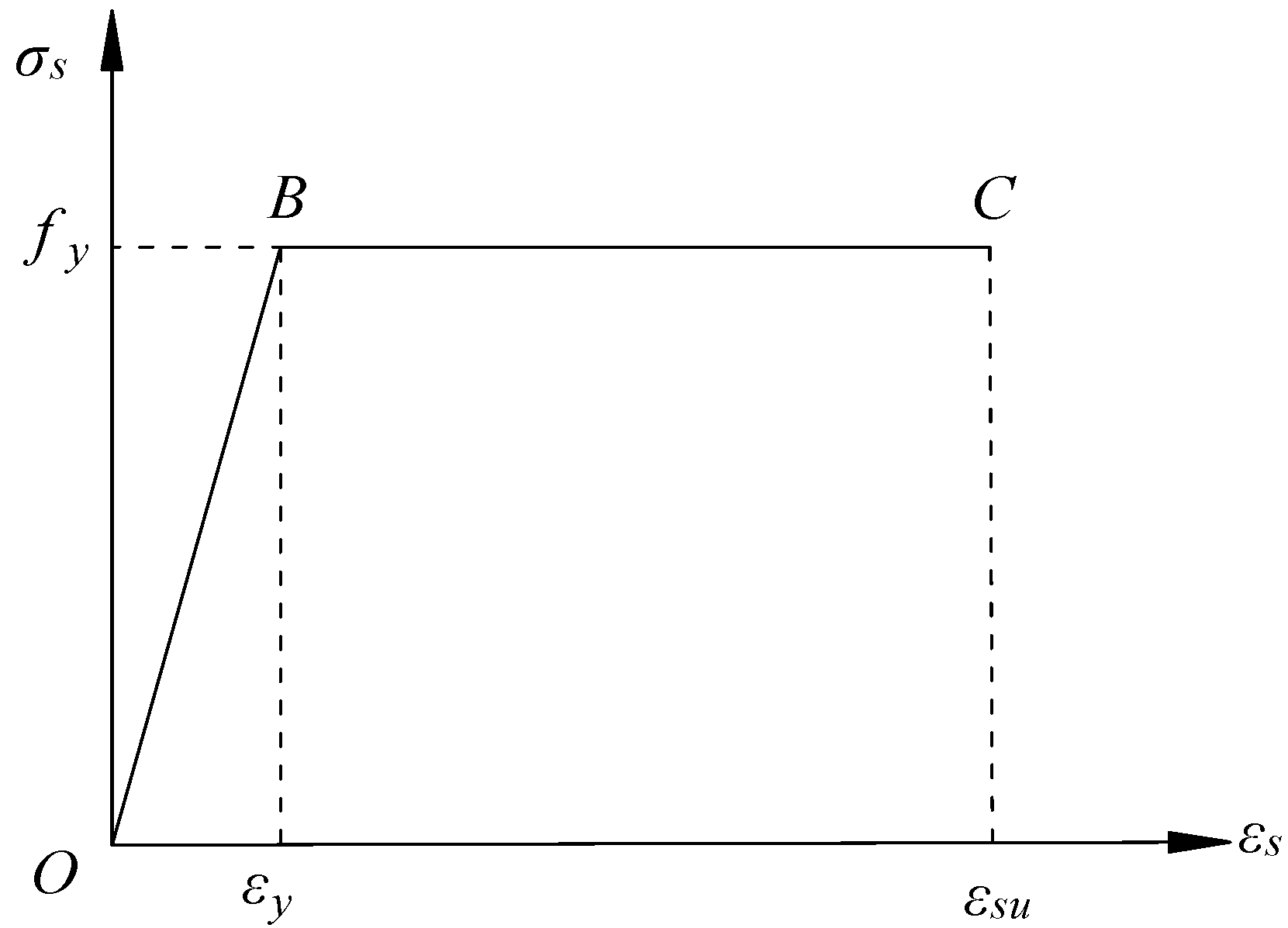
Figure 3.
Stress–strain relationship of reinforcing steel.
Figure 3.
Stress–strain relationship of reinforcing steel.
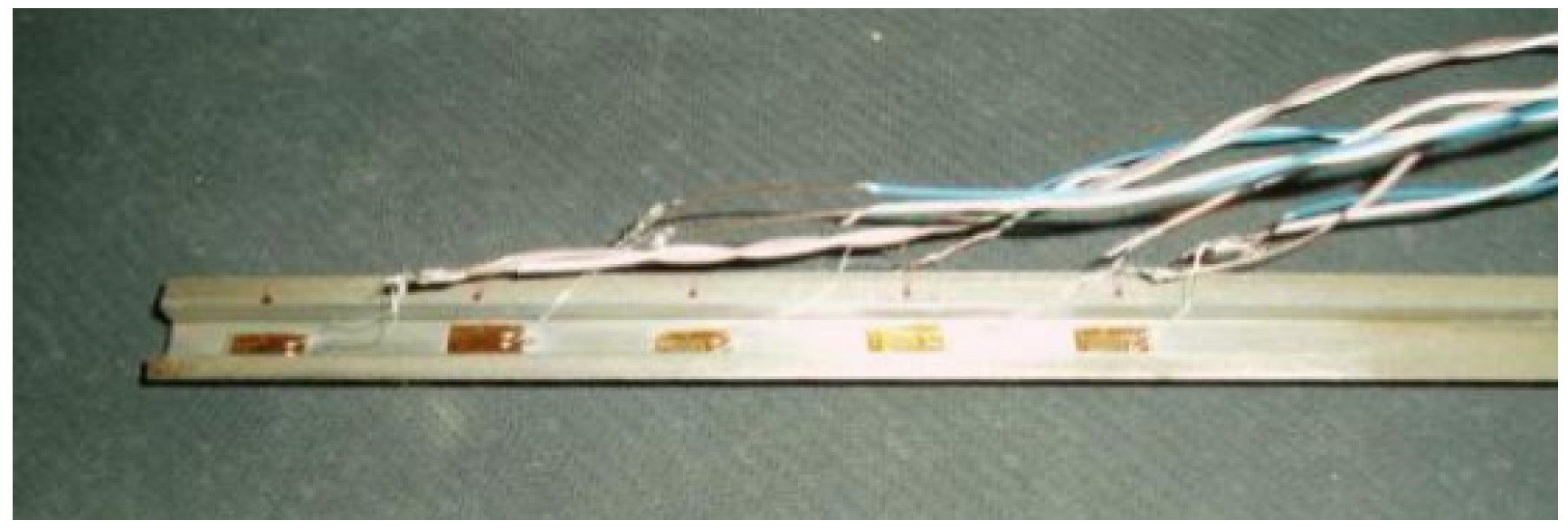
Figure 4.
Schematic illustration of strain gauges embedded in the reinforcing bar.
Figure 4.
Schematic illustration of strain gauges embedded in the reinforcing bar.
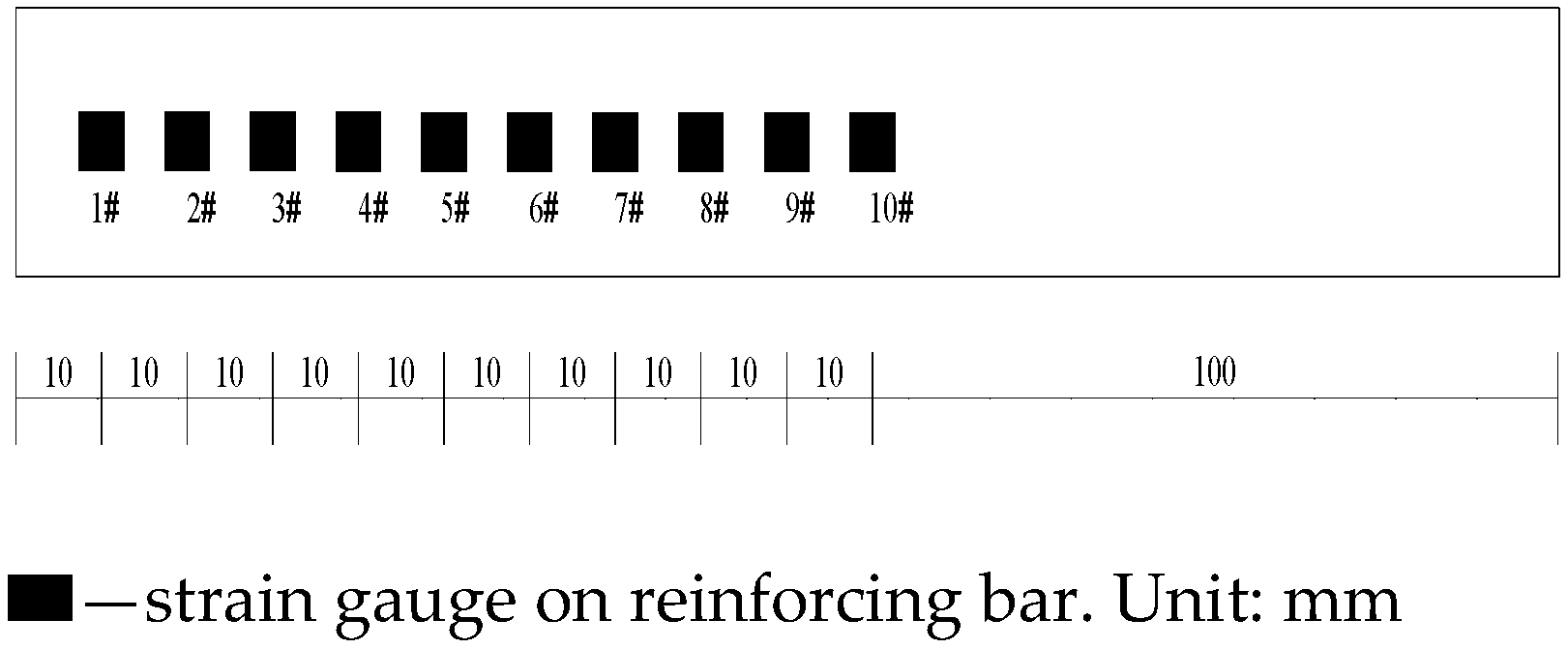
Figure 5.
Layout of strain measurement locations along the reinforcing bar.
Figure 5.
Layout of strain measurement locations along the reinforcing bar.
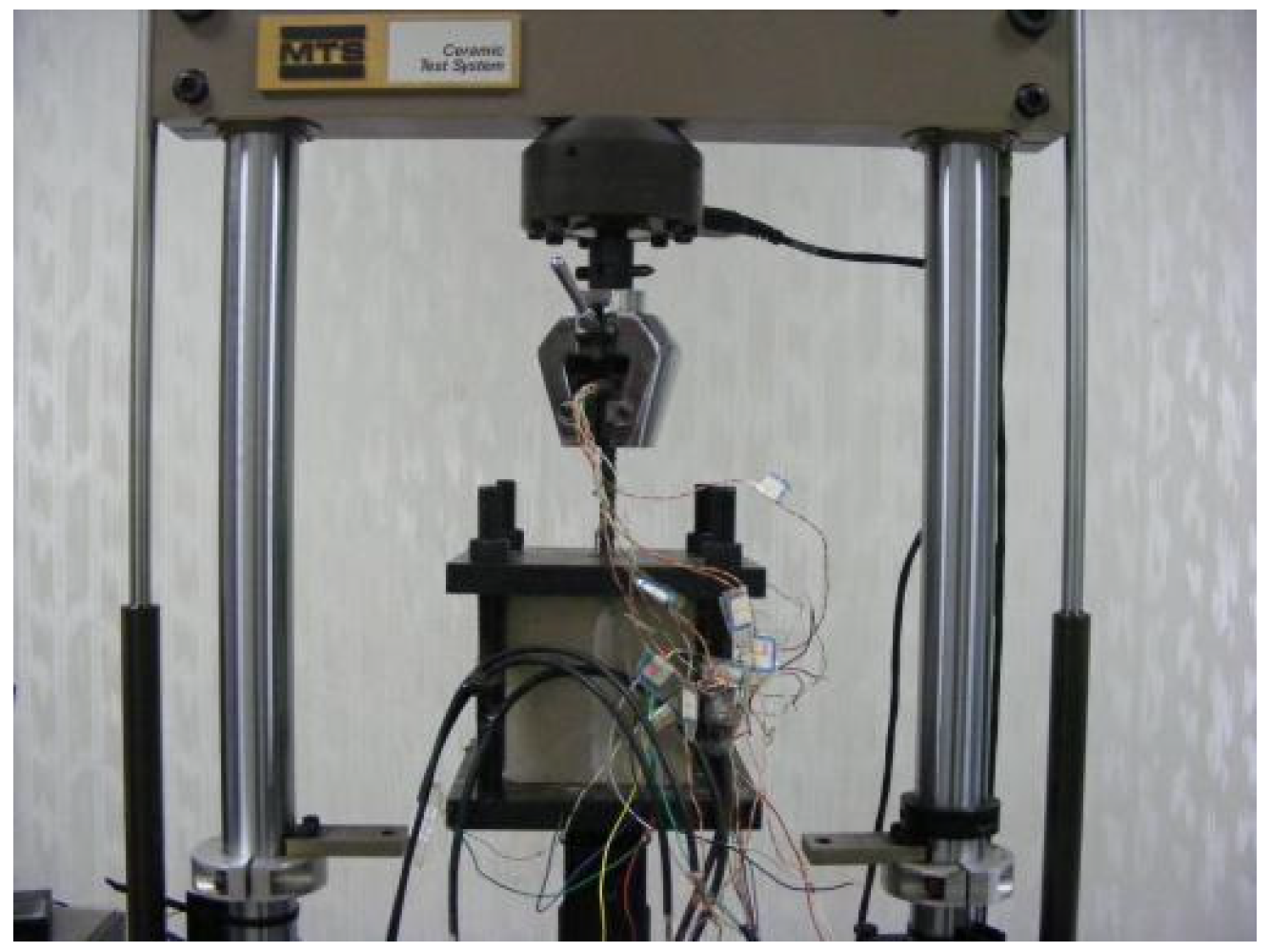
Figure 6.
Test loading setup.
Figure 6.
Test loading setup.
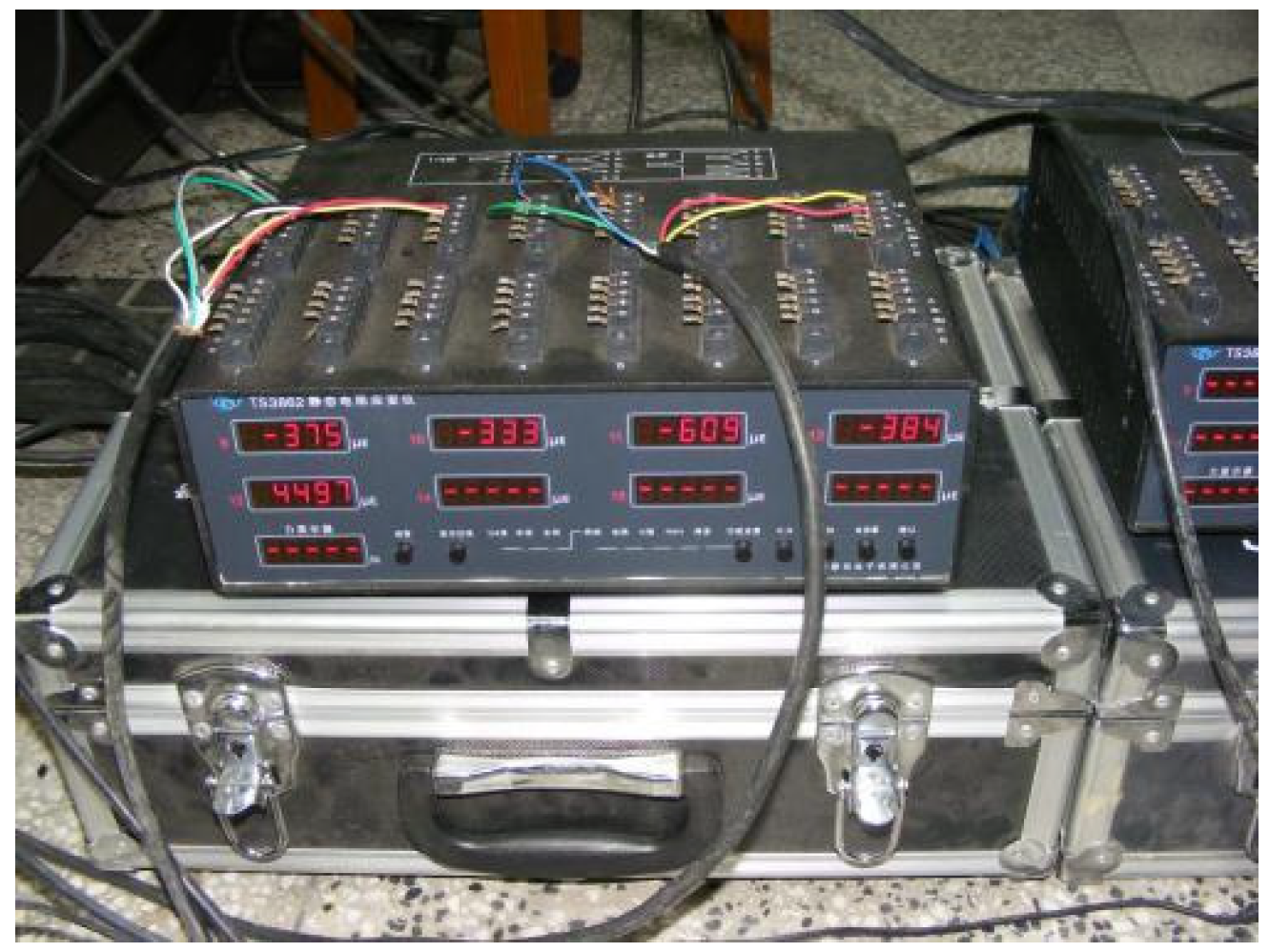
Figure 7.
Slip and strain acquisition equipment.
Figure 7.
Slip and strain acquisition equipment.
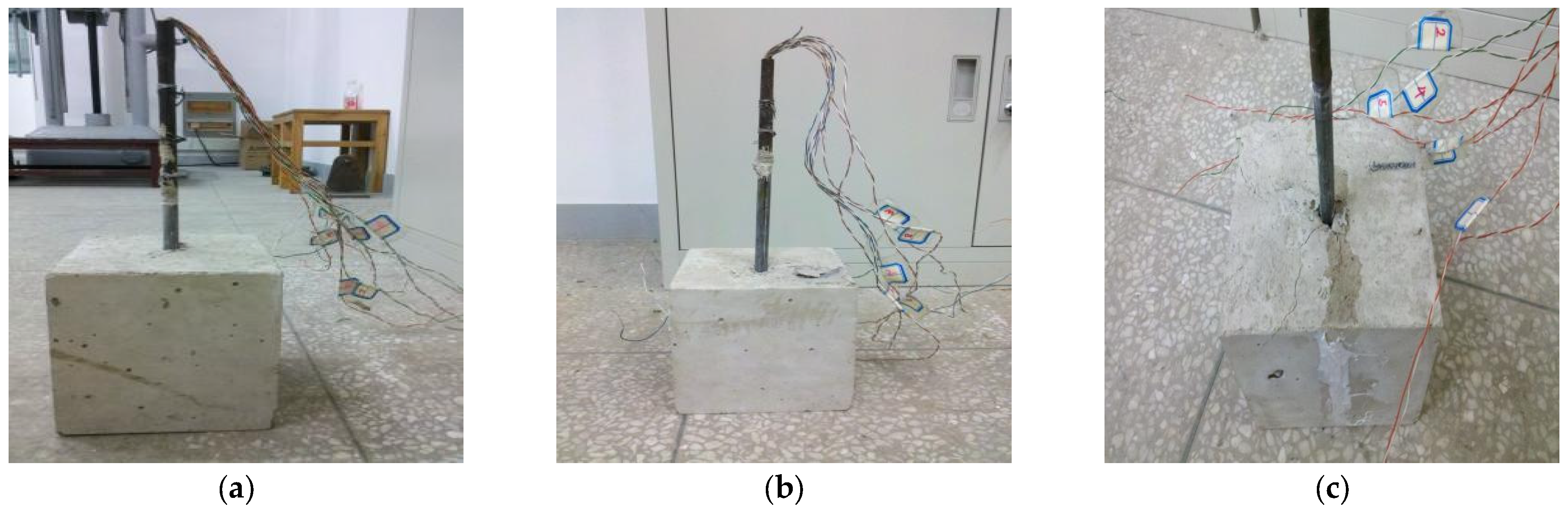
Figure 8.
Failure modes of plain round bar specimens. (a) Y1, (b) Y2, (c) Y3.
Figure 8.
Failure modes of plain round bar specimens. (a) Y1, (b) Y2, (c) Y3.
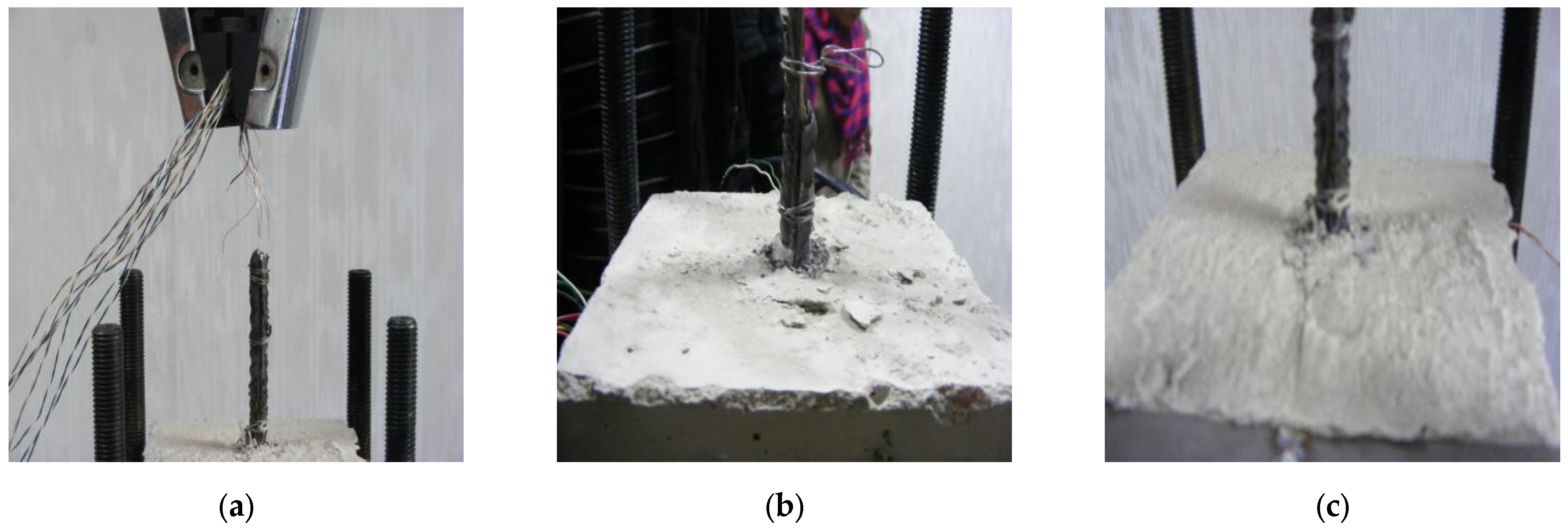
Figure 9.
Failure modes of ribbed bar specimens. (a) L1, (b) L2, (c) L3.
Figure 9.
Failure modes of ribbed bar specimens. (a) L1, (b) L2, (c) L3.
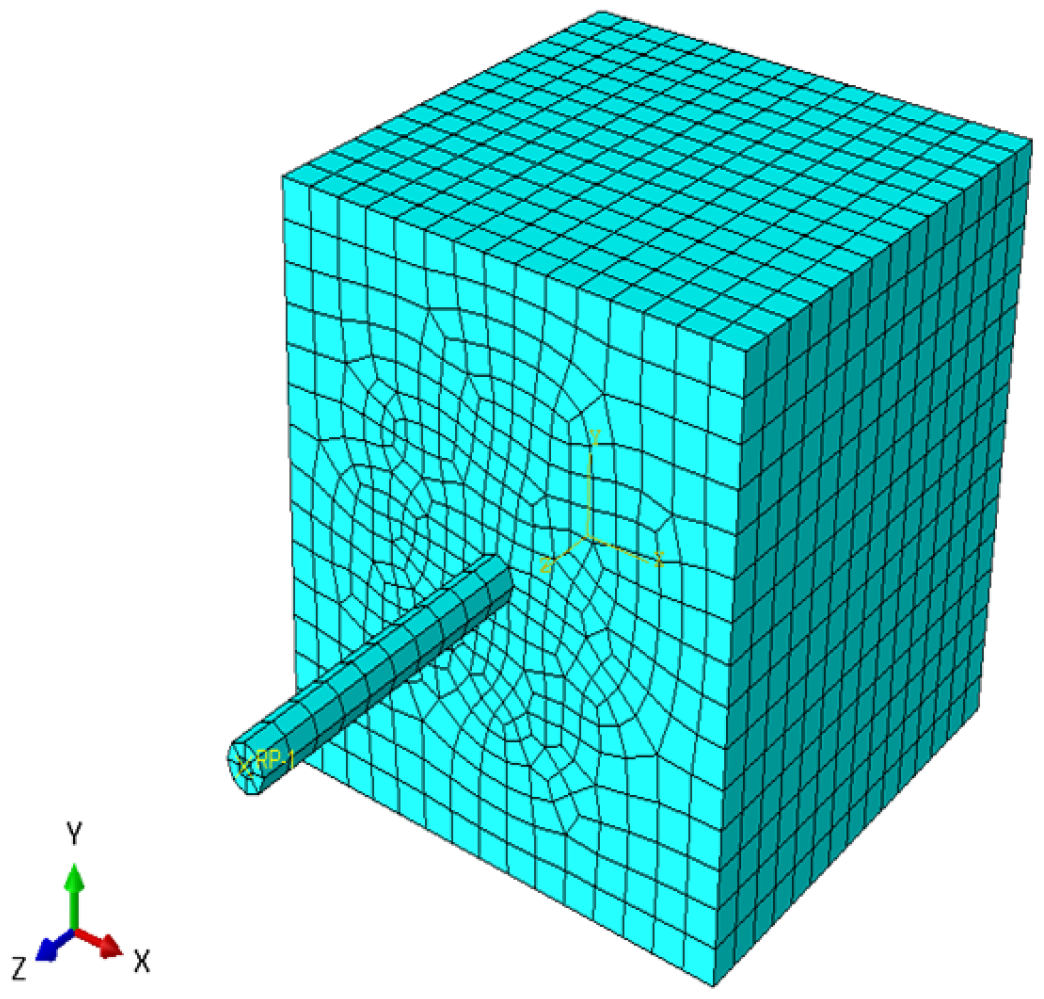
Figure 10.
Finite element model.
Figure 10.
Finite element model.
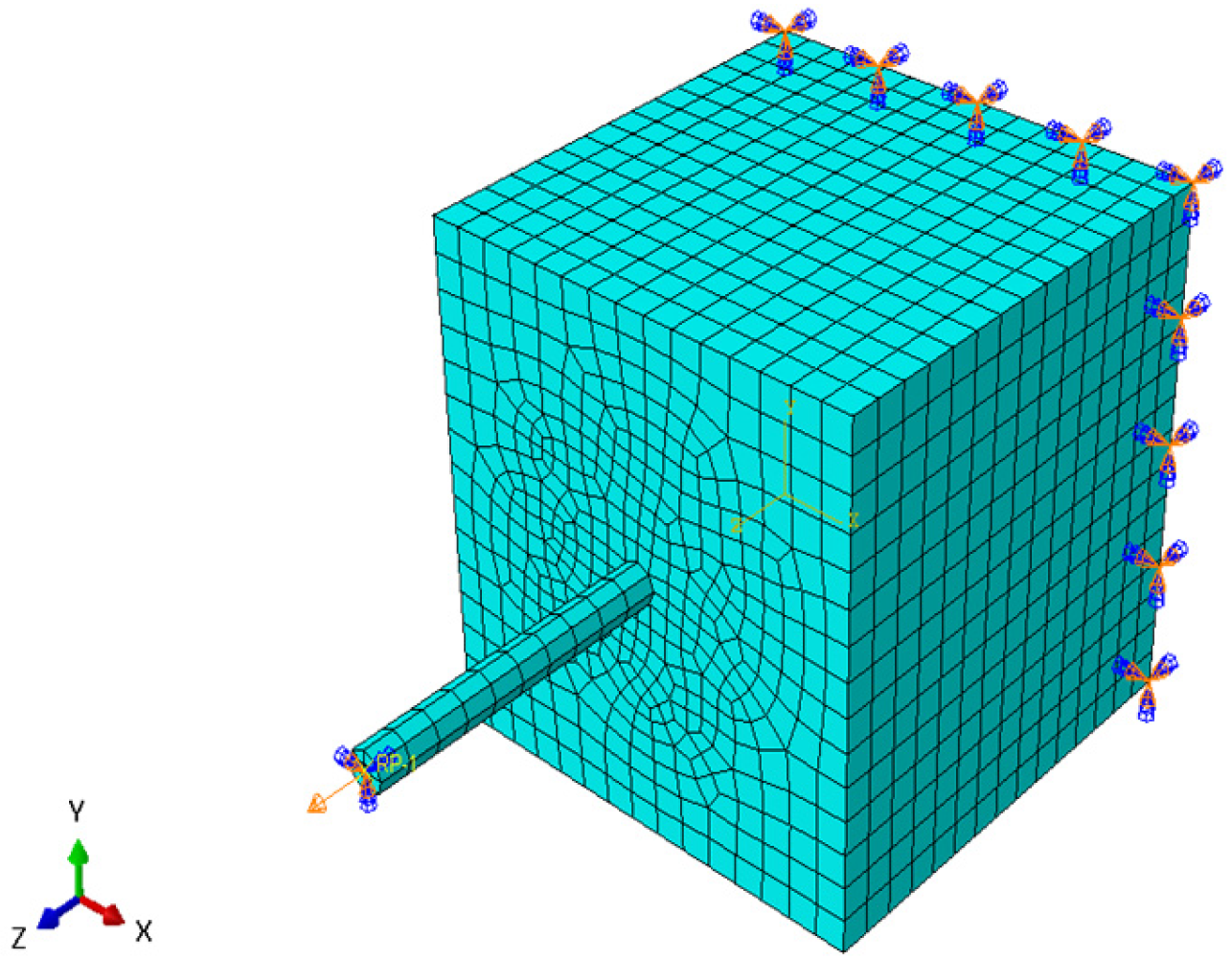
Figure 11.
Loading configuration and boundary conditions.
Figure 11.
Loading configuration and boundary conditions.
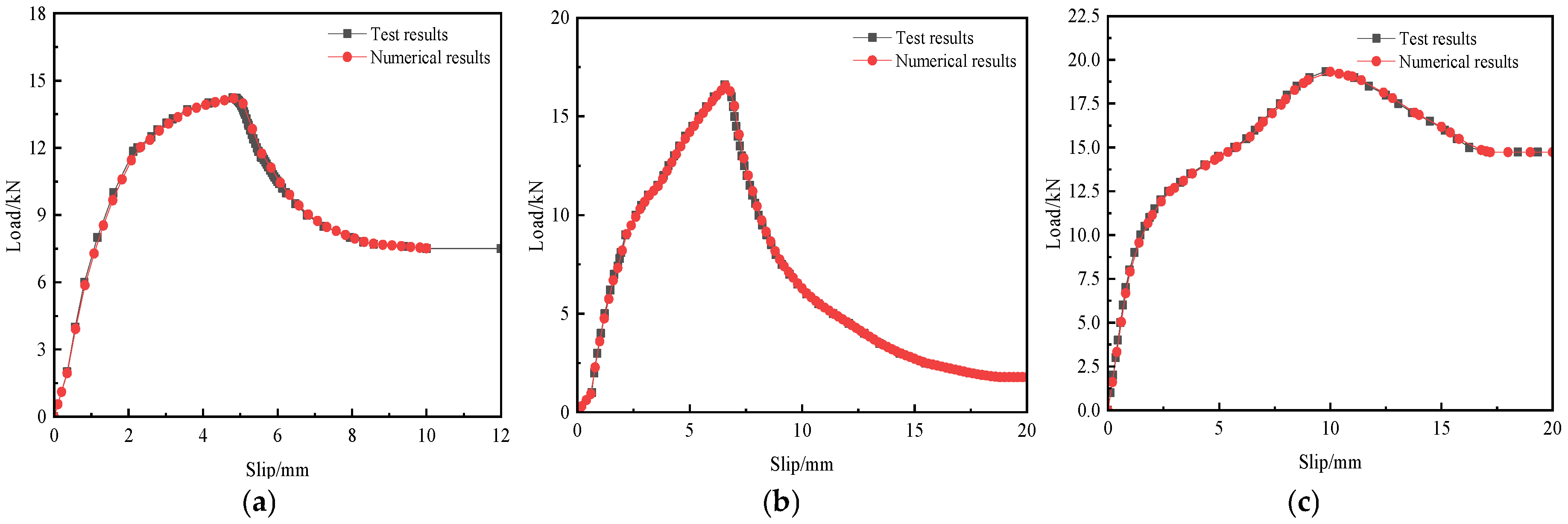
Figure 12.
Comparison of experimental and simulated load–slip curves for plain round bar pull-out specimens. (a) Y1, (b) Y2, (c) Y3.
Figure 12.
Comparison of experimental and simulated load–slip curves for plain round bar pull-out specimens. (a) Y1, (b) Y2, (c) Y3.
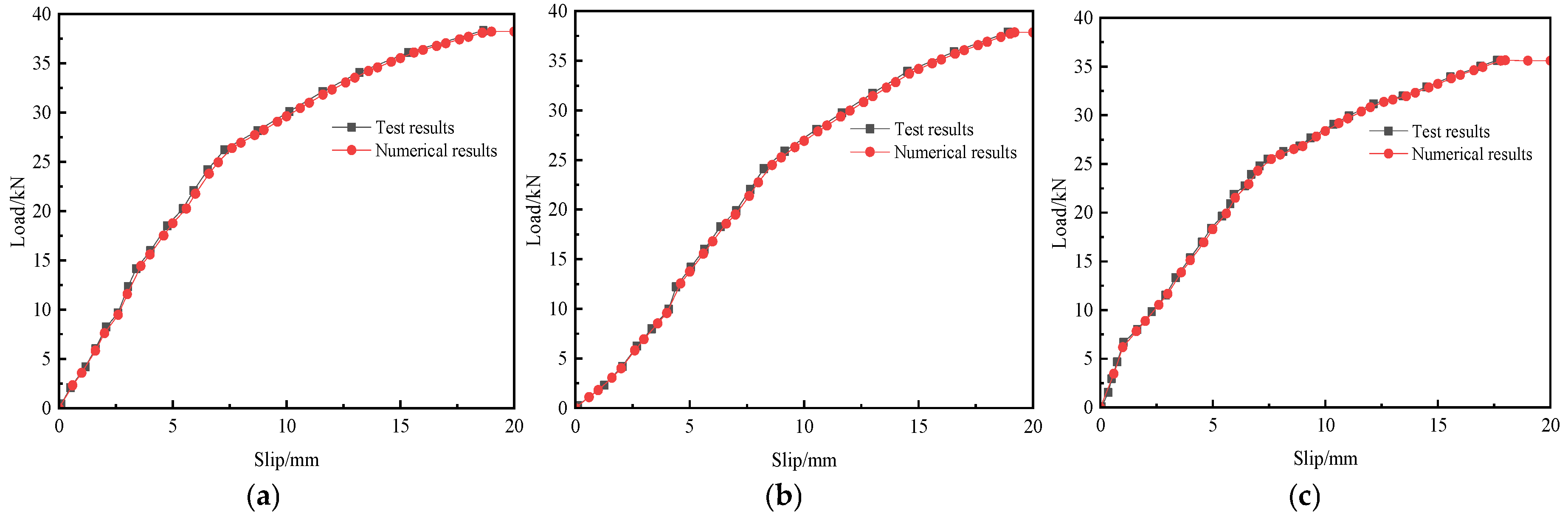
Figure 13.
Comparison of experimental and simulated load–slip curves for ribbed bar pull-out specimens. (a) L1, (b) L2, (c) L3.
Figure 13.
Comparison of experimental and simulated load–slip curves for ribbed bar pull-out specimens. (a) L1, (b) L2, (c) L3.
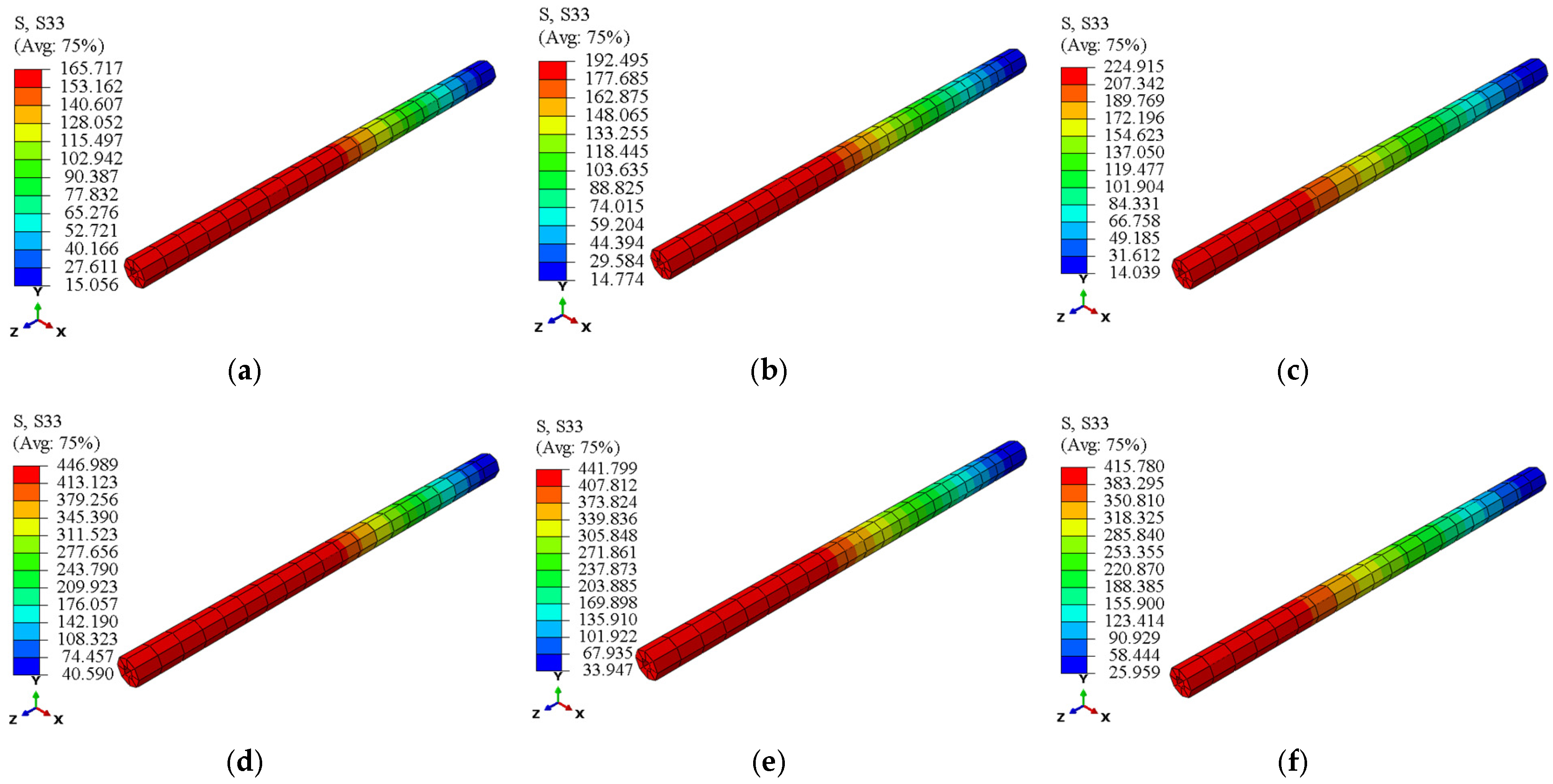
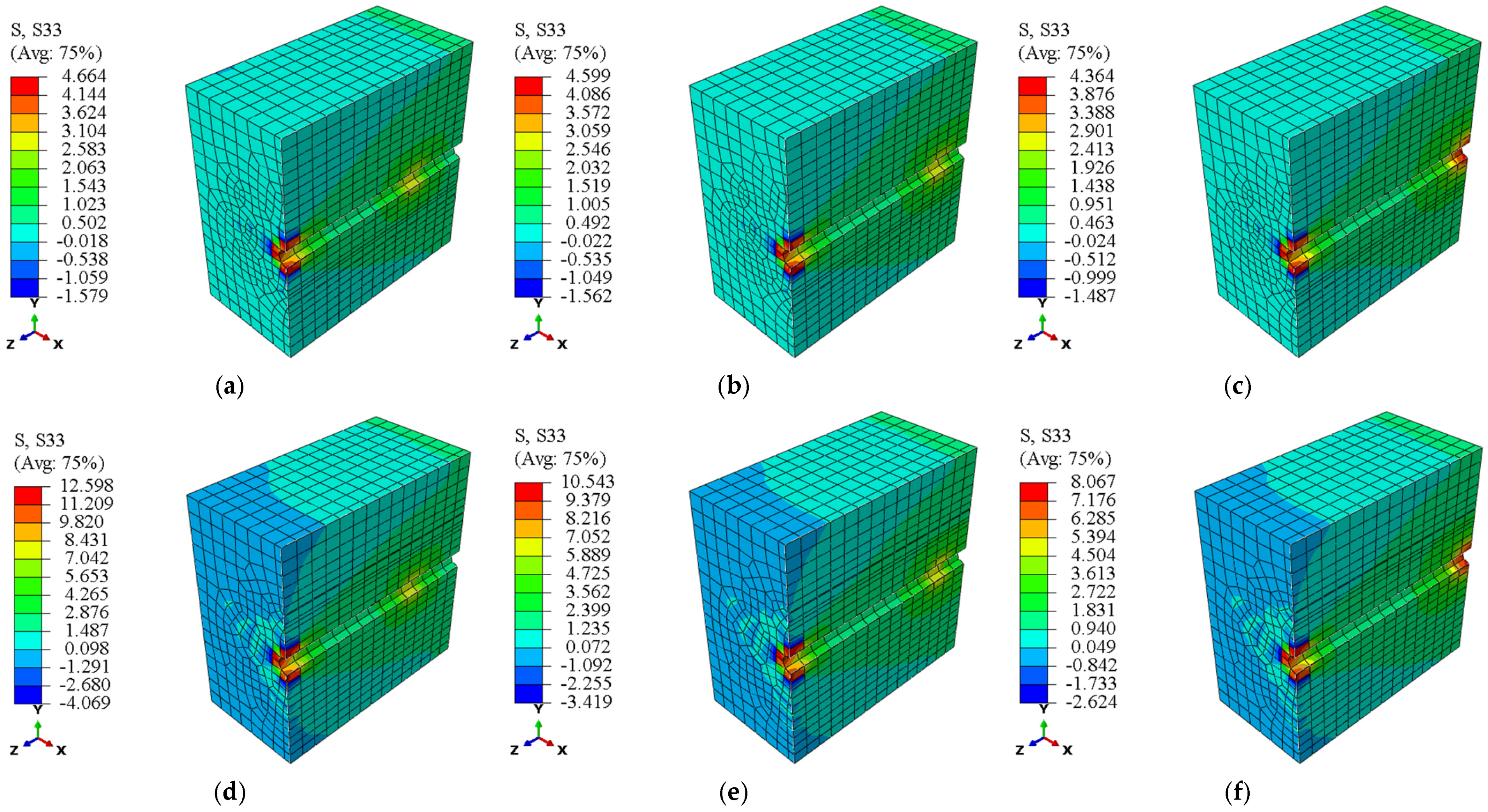
Figure 14.
Contours of reinforcing bar stress in the z-direction at ultimate load (unit: MPa). (a) Y1, (b) Y2, (c) Y3, (d) L1, (e) L2, (f) L3.
Figure 14.
Contours of reinforcing bar stress in the z-direction at ultimate load (unit: MPa). (a) Y1, (b) Y2, (c) Y3, (d) L1, (e) L2, (f) L3.
Figure 15.
Contours of concrete stress in the z-direction at ultimate load (unit: MPa). (a) Y1, (b) Y2, (c) Y3, (d) L1, (e) L2, (f) L3.
Figure 15.
Contours of concrete stress in the z-direction at ultimate load (unit: MPa). (a) Y1, (b) Y2, (c) Y3, (d) L1, (e) L2, (f) L3.
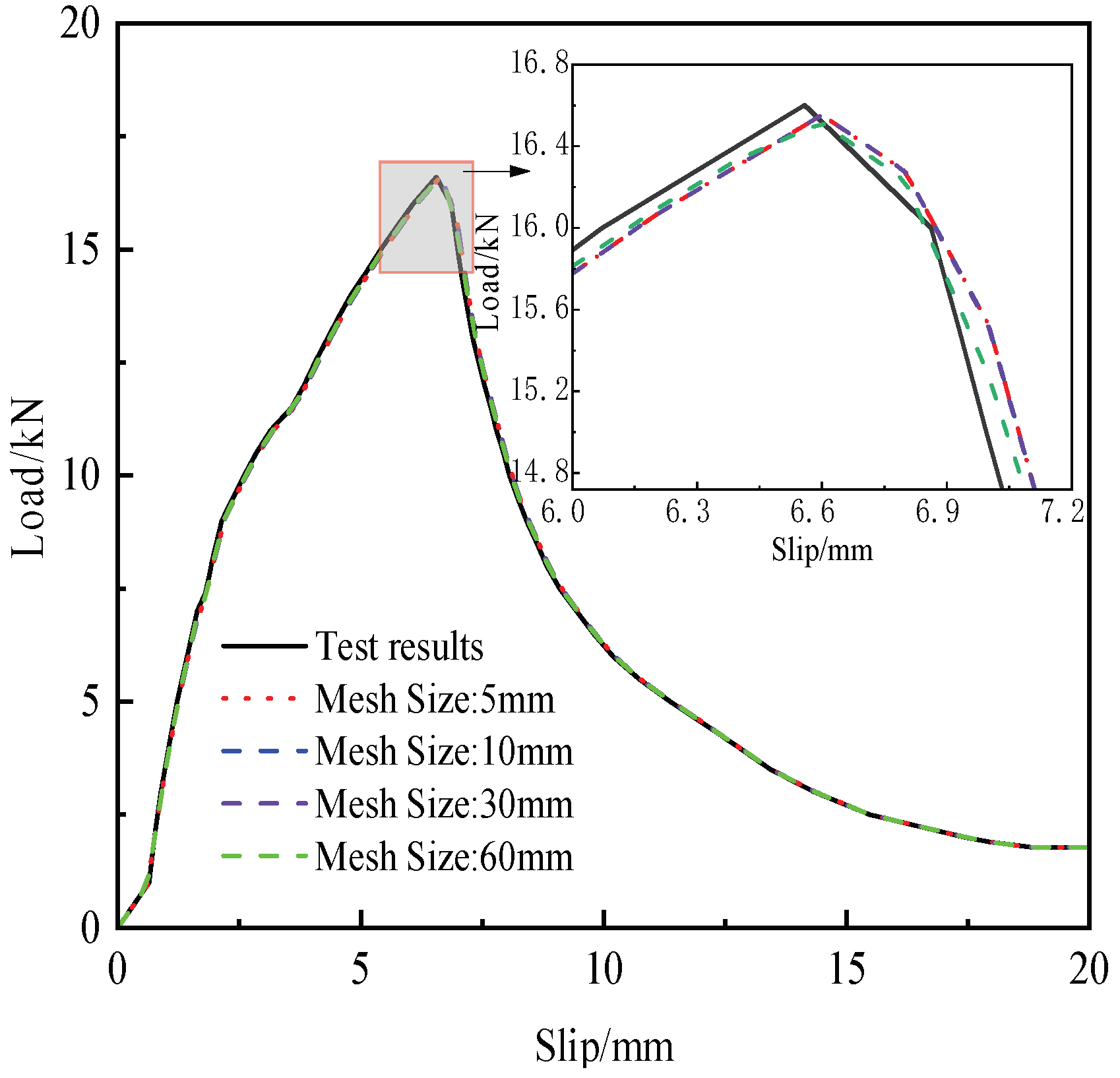
Figure 16.
Effect of mesh size on load–slip response.
Figure 16.
Effect of mesh size on load–slip response.
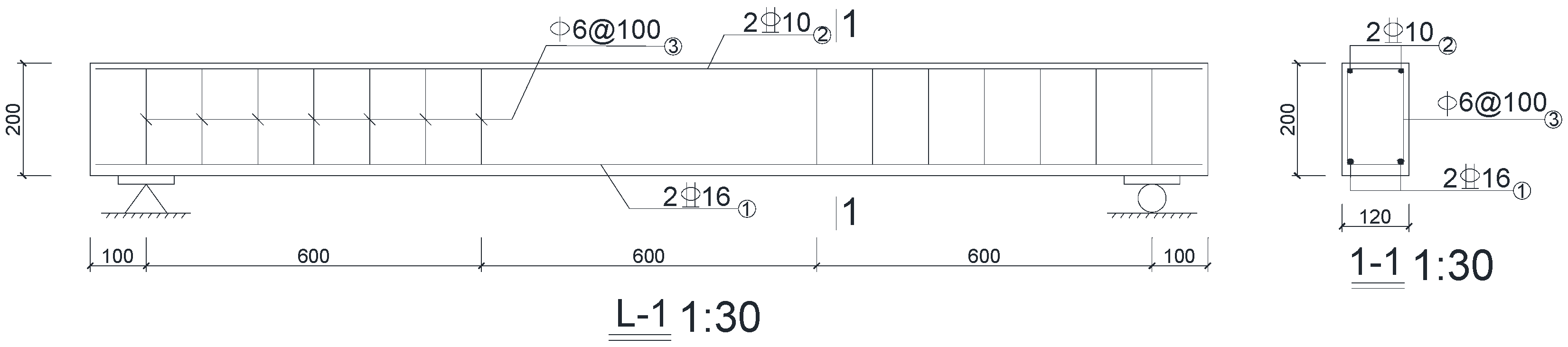
Figure 17.
Geometry and reinforcement layout of test beams (unit: mm).
Figure 17.
Geometry and reinforcement layout of test beams (unit: mm).
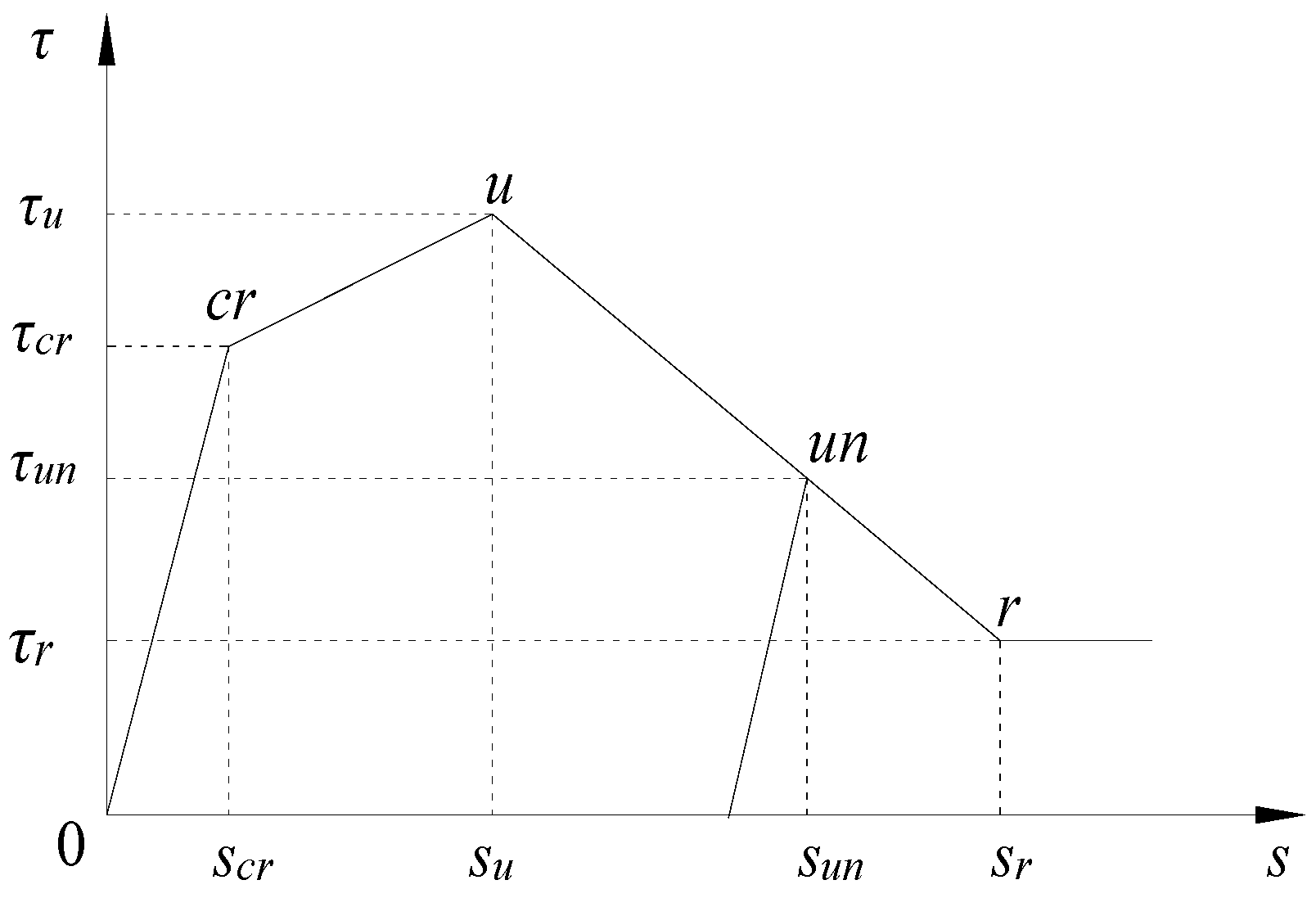
Figure 19.
Bond stress–slip relationship between ribbed reinforcing bar and concrete.
Figure 19.
Bond stress–slip relationship between ribbed reinforcing bar and concrete.
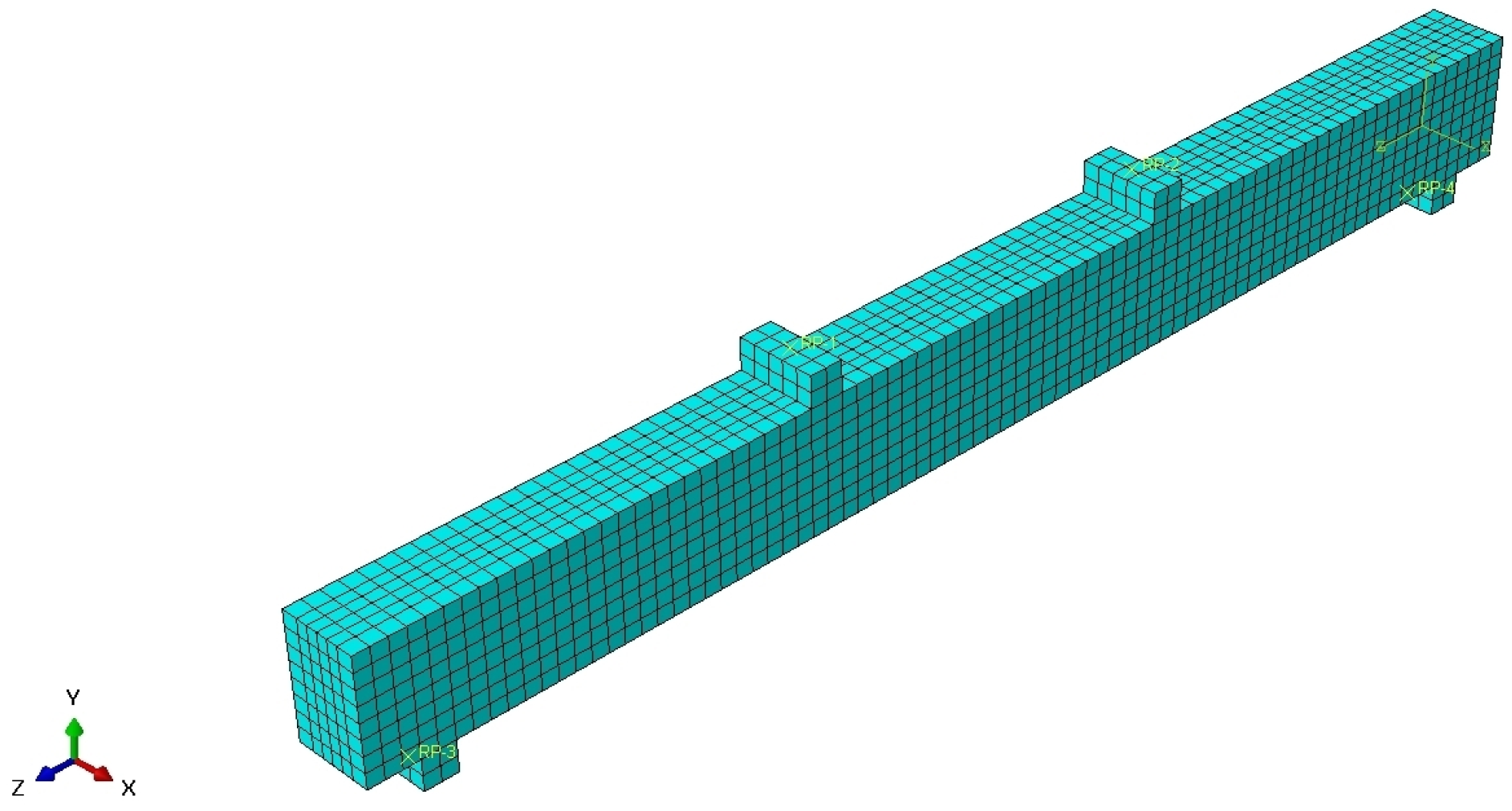
Figure 20.
FE model of the reinforced concrete beam after mesh discretization.
Figure 20.
FE model of the reinforced concrete beam after mesh discretization.
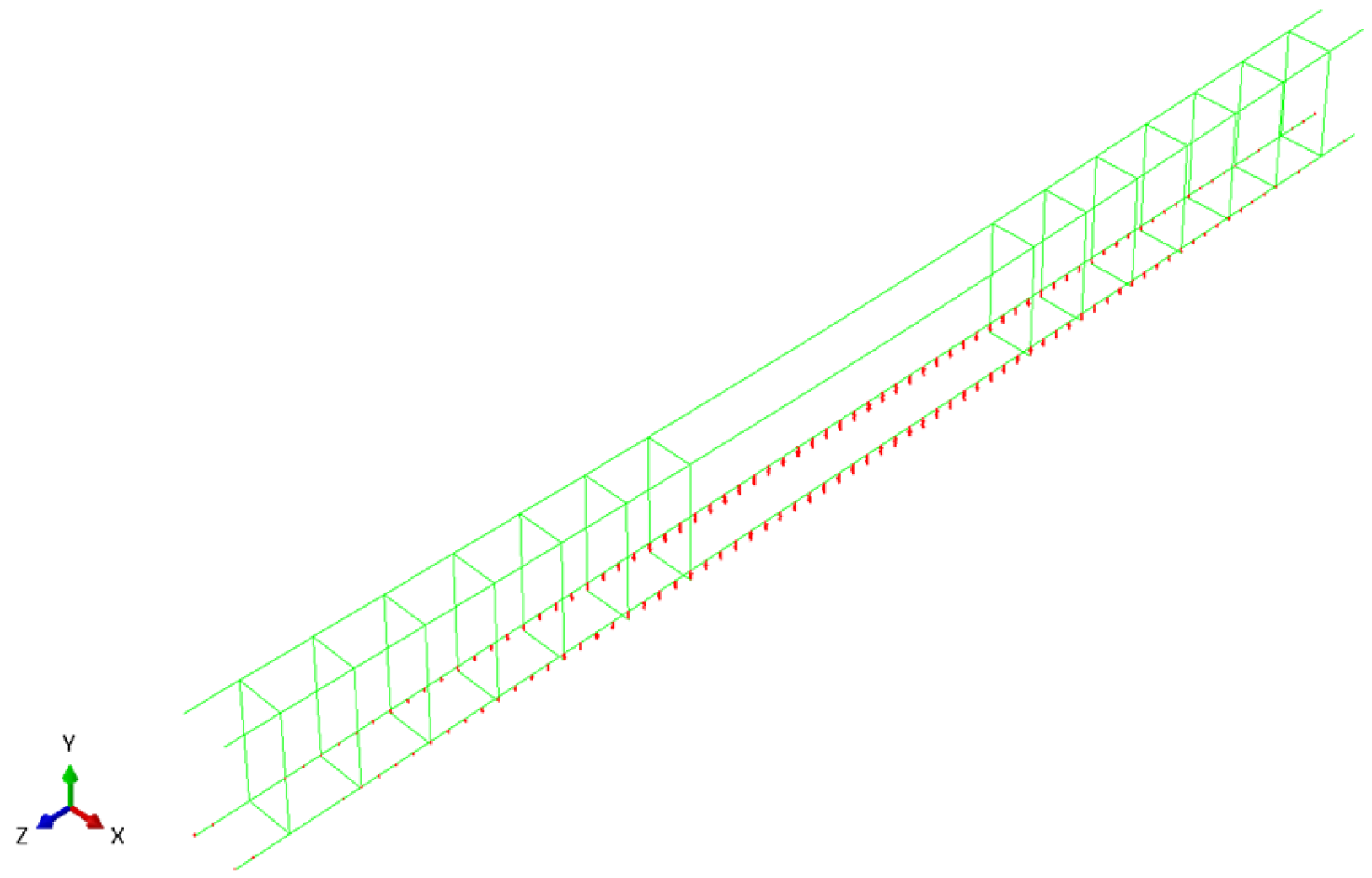
Figure 21.
Schematic illustration of the arrangement of spring elements.
Figure 21.
Schematic illustration of the arrangement of spring elements.
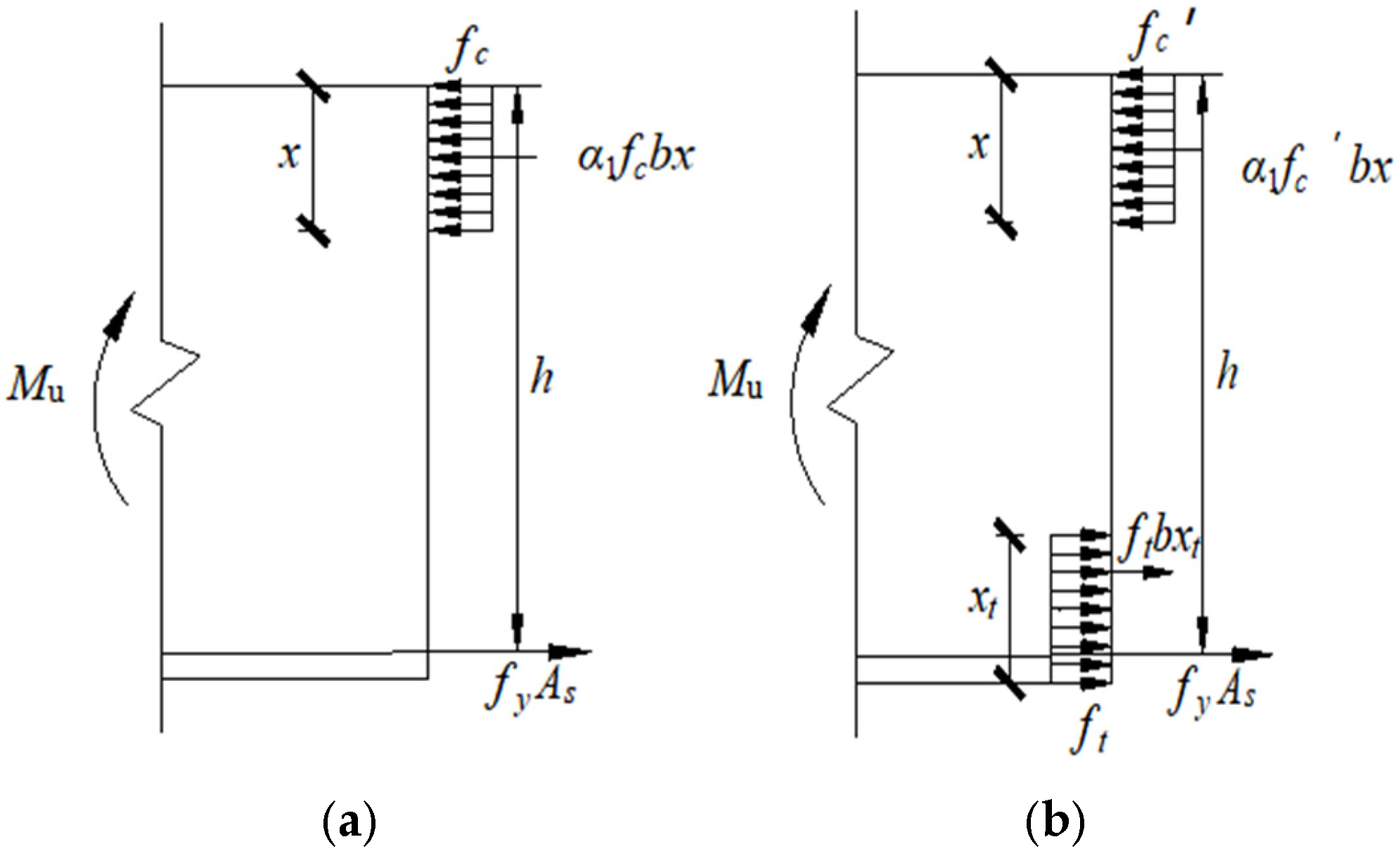
Figure 22.
Equivalent rectangular stress block of concrete in the compression zone. (a) Without considering the tensile strength of concrete, (b) considering the tensile strength of concrete.
Figure 22.
Equivalent rectangular stress block of concrete in the compression zone. (a) Without considering the tensile strength of concrete, (b) considering the tensile strength of concrete.
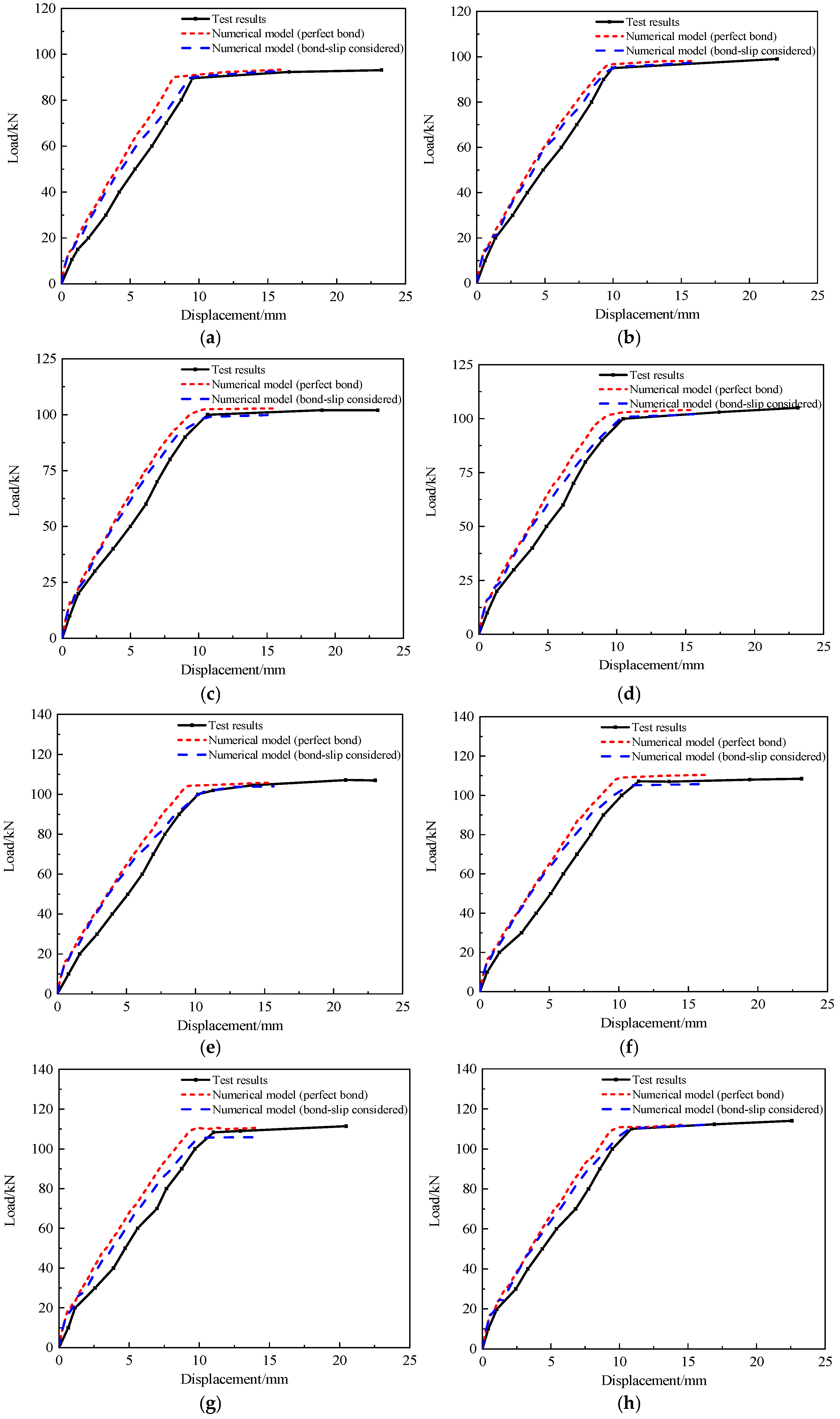
Figure 23.
Comparison between numerical and experimental load–displacement curves of eight test beams with bond–slip effects considered. (a) Load–displacement curve of SFR-AASC1, (b) load–displacement curve of SFR-AASC2, (c) load–displacement curve of SFR-AASC3, (d) load–displacement curve of SFR-AASC4, (e) load–displacement curve of SFR-AASC5, (f) load–displacement curve of SFR-AASC6, (g) load–displacement curve of SFR-AASC7, (h) load–displacement curve of SFR-AASC8.
Figure 23.
Comparison between numerical and experimental load–displacement curves of eight test beams with bond–slip effects considered. (a) Load–displacement curve of SFR-AASC1, (b) load–displacement curve of SFR-AASC2, (c) load–displacement curve of SFR-AASC3, (d) load–displacement curve of SFR-AASC4, (e) load–displacement curve of SFR-AASC5, (f) load–displacement curve of SFR-AASC6, (g) load–displacement curve of SFR-AASC7, (h) load–displacement curve of SFR-AASC8.
Table 1.
Specimen parameters.
Table 1.
Specimen parameters.
| Concrete Type | Bar Type | Specimen ID | Anchorage Length/mm | Concrete Dimension/mm | Quantity |
|---|
| AASC40 | A12 Ribbed Bar | L1 | 100 | 150 × 150 × 150 | 1 |
| L2 | 120 | 1 |
| L3 | 150 | 1 |
| A12 Plain round bar | Y1 | 100 | 1 |
| Y2 | 120 | 1 |
| Y3 | 150 | 1 |
Table 2.
Comparison of calculated and experimental ultimate load and displacement for specimens with different anchorage lengths.
Table 2.
Comparison of calculated and experimental ultimate load and displacement for specimens with different anchorage lengths.
| Bar Type | Specimen ID | Item | Ultimate Load/kN | Relative Error/% | Ultimate Displacement/mm | Relative Error/% | Ultimate Average Bond Stress/MPa |
|---|
| Plain bar | Y1 | Experimental | 14.22 | - | 4.79 | - | 3.78 |
| Numerical | 14.20 | 0.14 | 4.90 | 2.30 | 3.77 |
| Y2 | Experimental | 16.60 | - | 6.56 | - | 3.67 |
| Numerical | 16.55 | 0.30 | 6.60 | 0.61 | 3.67 |
| Y3 | Experimental | 19.34 | - | 9.80 | - | 3.42 |
| Numerical | 19.32 | 0.10 | 10.00 | 2.04 | 3.42 |
| Ribbed bar | L1 | Experimental | 38.31 | - | 18.65 | - | 10.17 |
| Numerical | 38.22 | 0.23 | 18.8 | 0.80 | 10.14 |
| L2 | Experimental | 37.87 | - | 18.90 | - | 8.37 |
| Numerical | 37.72 | 0.40 | 19.20 | 1.59 | 8.34 |
| L3 | Experimental | 35.65 | - | 17.62 | - | 6.31 |
| Numerical | 35.64 | 0.03 | 18.00 | 2.16 | 6.31 |
Table 3.
Comparison of steel stress at different measurement locations for the plain round bar specimen with an anchorage length of 100 mm under ultimate load.
Table 3.
Comparison of steel stress at different measurement locations for the plain round bar specimen with an anchorage length of 100 mm under ultimate load.
| Measurement Point | Stress/MPa |
|---|
| 1# | 2# | 3# | 4# | 5# | 6# | 7# | 8# | 9# |
|---|
| Experimental value | 28.6 | 44.5 | 60.0 | 74.8 | 94.0 | 100.9 | 116.0 | 131.1 | 152.6 |
| Numerical value | 30.1 | 45.2 | 60.3 | 75.3 | 90.4 | 105.5 | 120.5 | 135.6 | 150.6 |
| Error/% | 5.2 | 1.6 | 0.5 | 0.7 | 3.8 | 4.6 | 3.9 | 3.4 | 1.3 |
Table 4.
Basic mechanical properties of SFR-AASC beams.
Table 4.
Basic mechanical properties of SFR-AASC beams.
| Specimen ID | Steel Fiber Volume Fraction/% | Cube Compressive Strength fcu/MPa | Axial Compressive Strength fc,r/MPa | Tensile Strength ft/MPa | Elastic Modulus E/MPa | Poisson’s Ratio μ |
|---|
| SFR-AASC1 | 0.0 | 45.2 | 40.2 | 3.22 | 2.55 × 10⁴ | 0.148 |
| SFR-AASC2 | 0.5 | 53.4 | 43.8 | 3.67 | 2.59 × 10⁴ | 0.171 |
| SFR-AASC3 | 0.9 | 55.2 | 46.6 | 4.03 | 2.72 × 10⁴ | 0.189 |
| SFR-AASC4 | 1.0 | 56.0 | 47.5 | 4.12 | 2.75 × 10⁴ | 0.199 |
| SFR-AASC5 | 1.1 | 58.5 | 53.8 | 4.21 | 2.77 × 10⁴ | 0.202 |
| SFR-AASC6 | 1.2 | 60.7 | 55.0 | 4.30 | 2.87 × 10⁴ | 0.210 |
| SFR-AASC7 | 1.3 | 64.6 | 59.2 | 4.39 | 3.04 × 10⁴ | 0.219 |
| SFR-AASC8 | 1.4 | 70.0 | 67.6 | 4.48 | 3.06 × 10⁴ | 0.300 |
Table 5.
Mechanical properties of reinforcing steel.
Table 5.
Mechanical properties of reinforcing steel.
| Steel Grade | Bar Diameter/mm | Cross-Sectional Area/mm2 | Yield Strength/MPa | Ultimate Strength/MPa | Elastic Modulus/N/mm2 |
|---|
| HPB300 | 6 | 28.3 | 337 | 463 | 2 × 10⁵ |
| HRB400 | 10 | 78.5 | 449 | 608 | 2 × 10⁵ |
| 16 | 201.1 | 488 | 646 | 2 × 10⁵ |
Table 6.
Parameters of the bond stress–slip relationship between reinforcing steel and concrete.
Table 6.
Parameters of the bond stress–slip relationship between reinforcing steel and concrete.
| Characteristic Point | Splitting/cr | Peak/u | Residual/r |
|---|
| Bond stress/MPa | τcr | 2.5ft,r | τu | 3ft,r | τr | ft,r |
| Relative slip/mm | scr | 0.025d | su | 0.04d | sr | 0.55d |
Table 7.
Comparison of concrete and steel stress parameters at the ultimate state for eight beam specimens with and without bond–slip consideration.
Table 7.
Comparison of concrete and steel stress parameters at the ultimate state for eight beam specimens with and without bond–slip consideration.
| Specimen ID | Concrete Stress Without Bond–Slip/MPa | Concrete Stress With Bond–Slip/MPa | Axial Compressive Strength
fc,r/MPa | Steel Stress Without Bond–Slip/MPa | Steel Stress With Bond–Slip/MPa |
|---|
| SFR-AASC1 | 40.91 | 40.24 | 40.20 | 451.50 | 461.80 |
| SFR-AASC2 | 43.90 | 43.00 | 43.80 | 454.40 | 465.70 |
| SFR-AASC3 | 46.33 | 45.70 | 46.60 | 472.90 | 477.30 |
| SFR-AASC4 | 48.03 | 47.28 | 47.50 | 491.30 | 494.10 |
| SFR-AASC5 | 53.88 | 52.08 | 53.80 | 486.30 | 500.90 |
| SFR-AASC6 | 55.22 | 55.16 | 55.00 | 481.20 | 484.20 |
| SFR-AASC7 | 59.51 | 57.81 | 59.20 | 499.70 | 505.60 |
| SFR-AASC8 | 66.36 | 64.18 | 67.60 | 509.90 | 513.10 |
Table 8.
Comparison between numerical predictions and experimental results of cracking load, ultimate load, and ultimate displacement for eight beam specimens without considering bond–slip effects.
Table 8.
Comparison between numerical predictions and experimental results of cracking load, ultimate load, and ultimate displacement for eight beam specimens without considering bond–slip effects.
| Specimen ID | Cracking Load/kN | Ultimate Load/kN | Ultimate Displacement/mm |
|---|
| Experimental | Numerical | Error/% | Experimental | Numerical | Error/% | Experimental | Numerical | Error/% |
|---|
| SFR-AASC1 | 15.8 | 16.5 | 4.4 | 89.4 | 90.4 | 1.1 | 9.53 | 8.71 | −8.6 |
| SFR-AASC2 | 19.5 | 20.1 | 3.1 | 96.4 | 96.6 | 0.2 | 10.14 | 9.74 | −3.9 |
| SFR-AASC3 | 22.1 | 23.3 | 5.4 | 100.2 | 102.4 | 2.2 | 10.76 | 10.34 | −3.9 |
| SFR-AASC4 | 21.2 | 21.6 | 1.9 | 101.2 | 103.0 | 1.8 | 10.72 | 10.01 | −6.6 |
| SFR-AASC5 | 22.8 | 23.6 | 3.5 | 103.8 | 104.3 | 0.5 | 10.83 | 9.78 | −9.7 |
| SFR-AASC6 | 23.7 | 25.3 | 6.8 | 107.0 | 108.5 | 1.4 | 11.56 | 10.51 | −9.1 |
| SFR-AASC7 | 24.4 | 24.7 | 1.2 | 108.0 | 110.6 | 2.4 | 11.01 | 9.99 | −9.3 |
| SFR-AASC8 | 25.3 | 26.6 | 5.1 | 110.5 | 110.9 | 0.4 | 11.08 | 10.33 | −6.8 |
Table 9.
Comparison between numerical predictions and experimental results of cracking load, ultimate load, and ultimate displacement for eight beam specimens with bond–slip effects considered.
Table 9.
Comparison between numerical predictions and experimental results of cracking load, ultimate load, and ultimate displacement for eight beam specimens with bond–slip effects considered.
| Specimen ID | Cracking Load/kN | Ultimate Load/kN | Ultimate Displacement/mm |
|---|
| Experimental | Numerical | Error/% | Experimental | Numerical | Error/% | Experimental | Numerical | Error/% |
|---|
| SFR-AASC1 | 15.8 | 16.1 | 1.9 | 89.4 | 89.2 | −0.2 | 9.53 | 9.45 | −0.8 |
| SFR-AASC2 | 19.5 | 19.6 | 0.5 | 96.4 | 96.6 | −0.9 | 10.14 | 9.89 | −2.5 |
| SFR-AASC3 | 22.1 | 22.9 | 3.6 | 100.2 | 99.1 | −1.1 | 10.76 | 10.53 | −2.1 |
| SFR-AASC4 | 21.2 | 21.6 | 1.9 | 101.2 | 100.8 | −0.4 | 10.72 | 10.50 | −2.1 |
| SFR-AASC5 | 22.8 | 23.4 | 2.5 | 103.8 | 103.7 | −0.1 | 10.83 | 10.73 | −0.9 |
| SFR-AASC6 | 23.7 | 23.7 | 0.1 | 107.0 | 105.6 | −1.3 | 11.56 | 11.02 | −4.7 |
| SFR-AASC7 | 24.4 | 24.7 | 1.2 | 108.0 | 105.8 | −2.0 | 11.01 | 11.09 | −2.1 |
| SFR-AASC8 | 25.3 | 26.4 | 4.2 | 110.5 | 110.2 | −0.2 | 11.08 | 10.89 | −1.7 |
Table 10.
Comparison of prediction errors in cracking load, ultimate load, and ultimate displacement for eight beam specimens with and without bond–slip effects.
Table 10.
Comparison of prediction errors in cracking load, ultimate load, and ultimate displacement for eight beam specimens with and without bond–slip effects.
| Specimen ID | Cracking Load Error/% | Ultimate Load Error/% | Ultimate Load Error/% |
|---|
| Without Bond–Slip | With Bond–Slip | Without Bond–Slip | With Bond–Slip | Without Bond–Slip | With Bond–Slip |
|---|
| SFR-AASC1 | 4.4 | 1.9 | 1.1 | −0.2 | −8.6 | −0.8 |
| SFR-AASC2 | 3.1 | 0.5 | 0.2 | −0.9 | −3.9 | −2.5 |
| SFR-AASC3 | 5.4 | 3.6 | 2.2 | −1.1 | −3.9 | −2.1 |
| SFR-AASC4 | 1.9 | 1.9 | 1.8 | −0.4 | −6.6 | −2.1 |
| SFR-AASC5 | 3.5 | 2.5 | 0.5 | −0.1 | −9.7 | −0.9 |
| SFR-AASC6 | 6.8 | 0.1 | 1.4 | −1.3 | −9.1 | −4.7 |
| SFR-AASC7 | 1.2 | 1.2 | 2.4 | −2.0 | −9.3 | −2.1 |
| SFR-AASC8 | 5.1 | 4.2 | 0.4 | −0.2 | −6.8 | −1.7 |