A Concurrent Multiscale Framework for Concrete Damage Analysis Using Overlapping Domain Decomposition


Abstract
1. Introduction
2. Methods
2.1. Damage Constitutive Model for Concrete
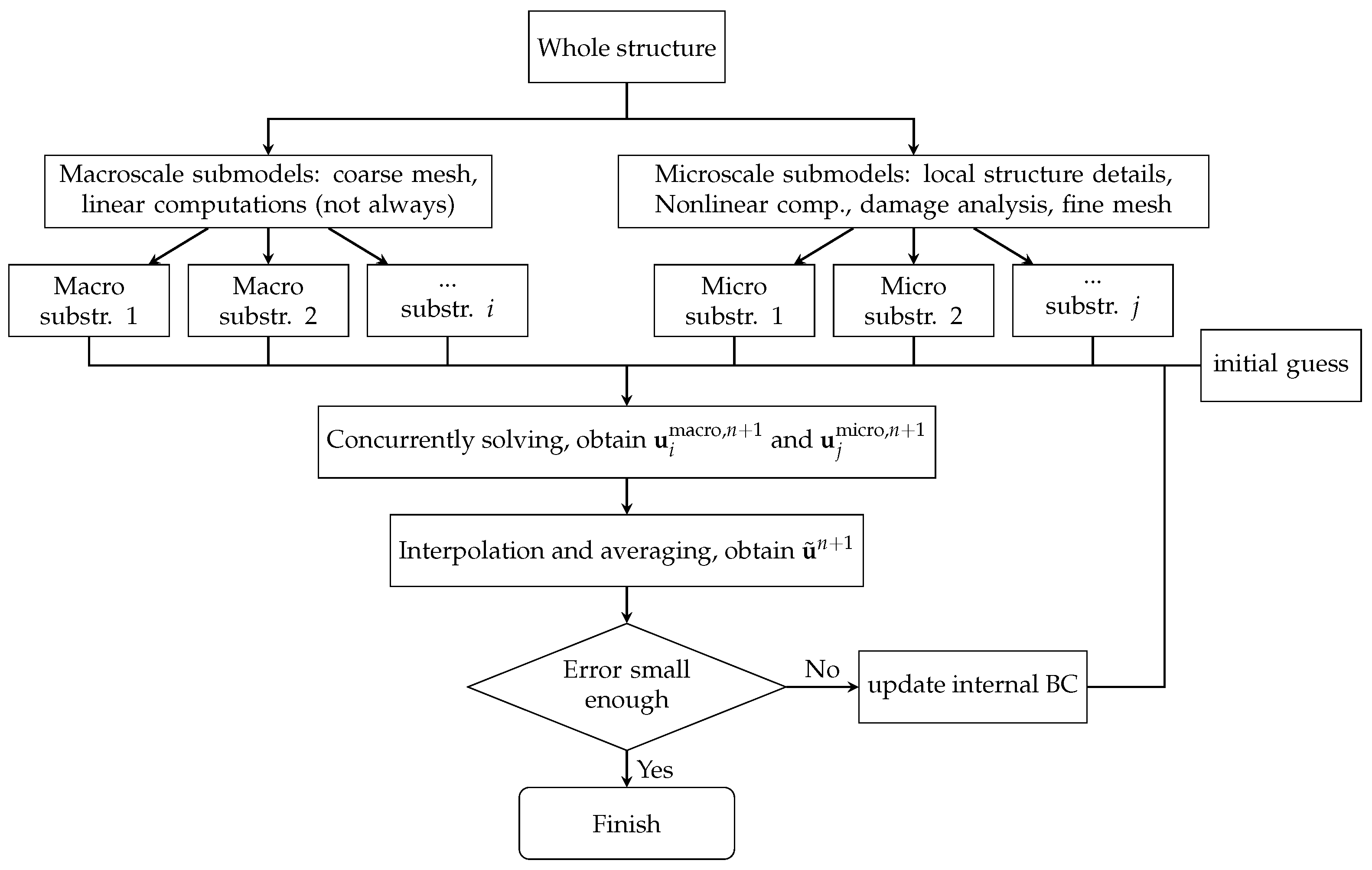
2.2. Overlapping Domain Decomposition Method for Multiscale Damage Analysis
| Algorithm 1 Multiscale damage analysis of concrete structure |
| Step 1. Initial guess of , |
| Step 2. Solving BVP on subdomains concurrently () |
| Step 3. Interpolate onto the global domain , i.e., |
| Step 4. Averaging |
| Set and go back to Step 2. Repeat until |
| Return |
2.3. Implementation
3. Multiscale Damage Analysis of Concrete: An Application
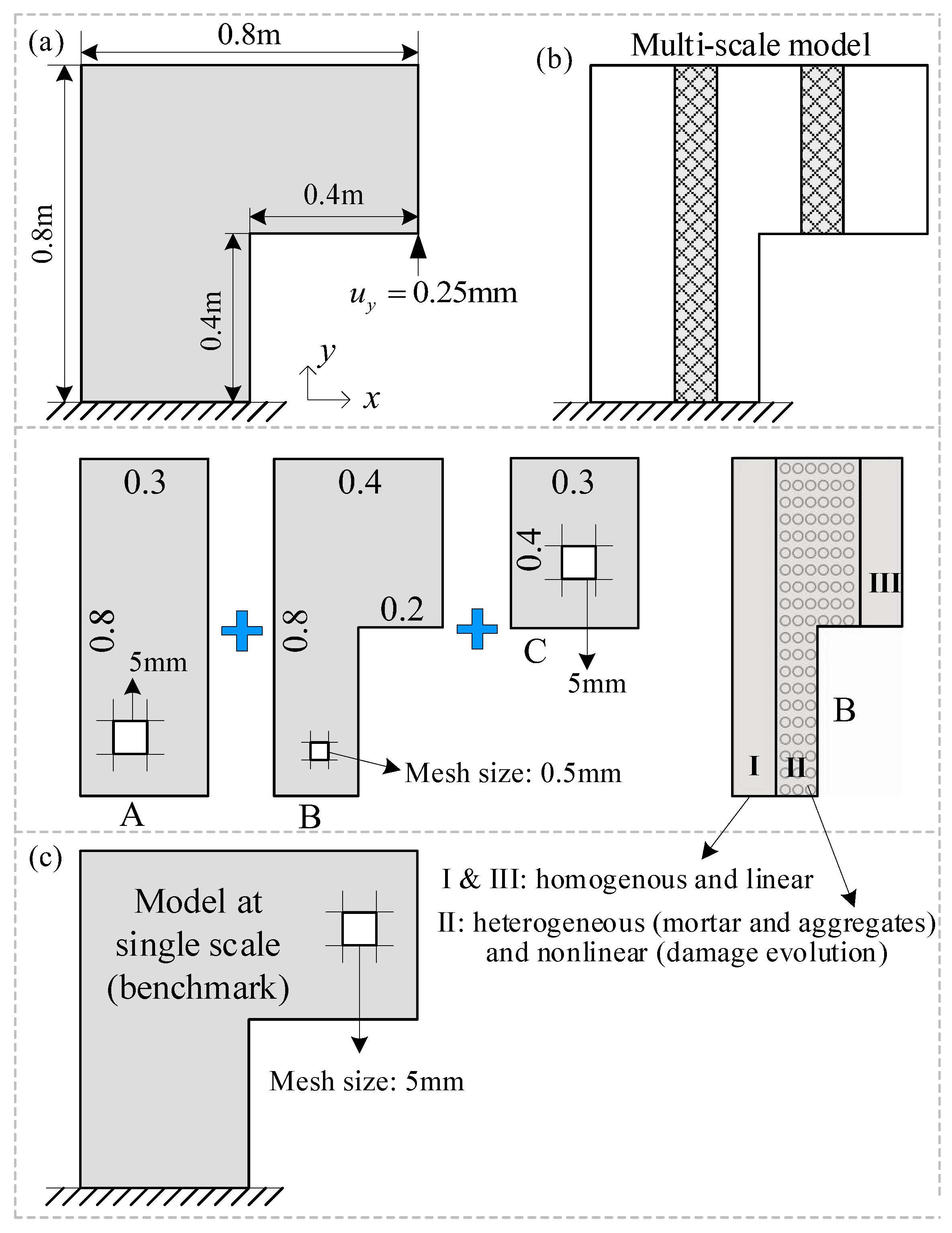
3.1. The Multiscale Model of L-Shaped Concrete Structure
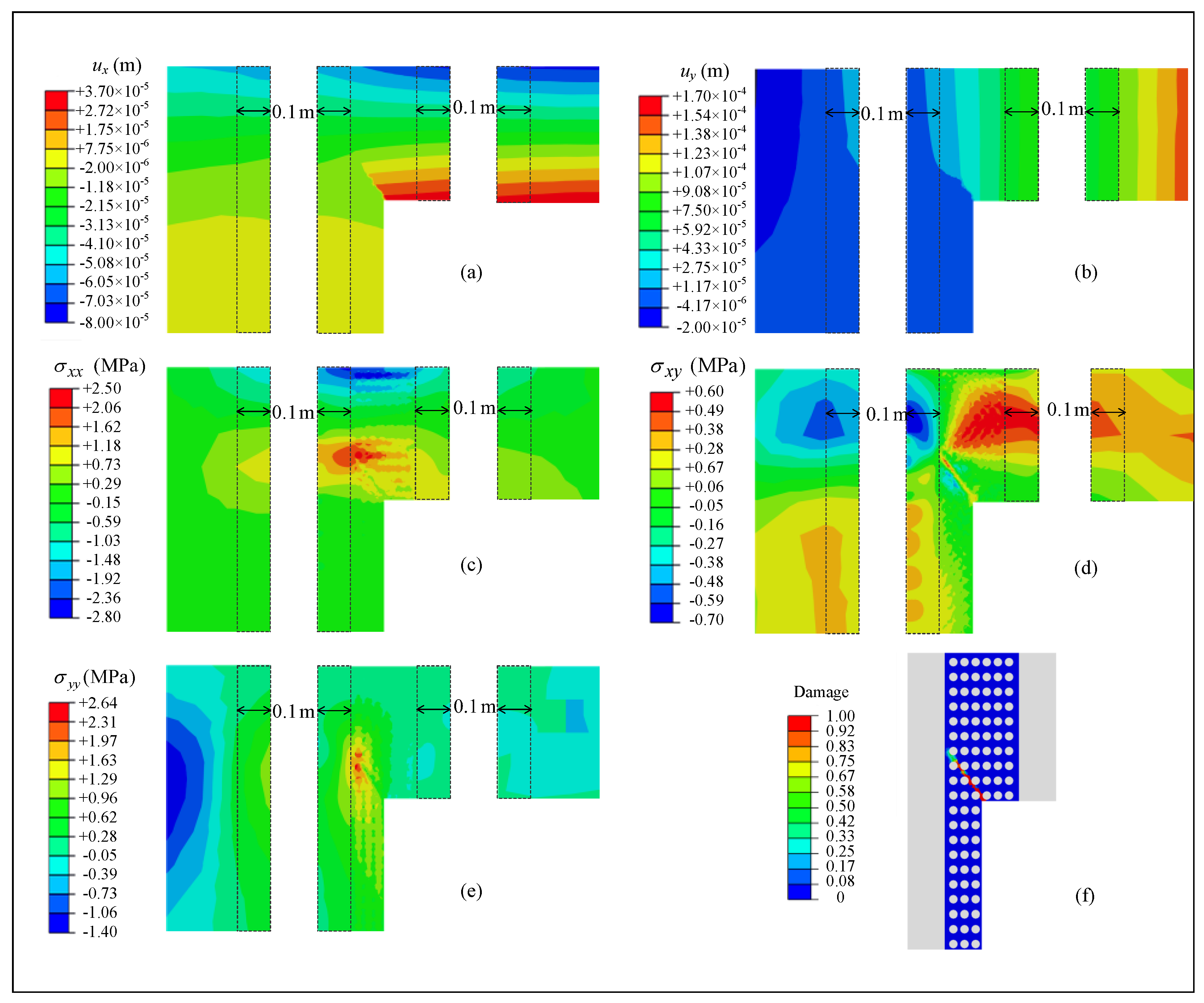
3.2. Results
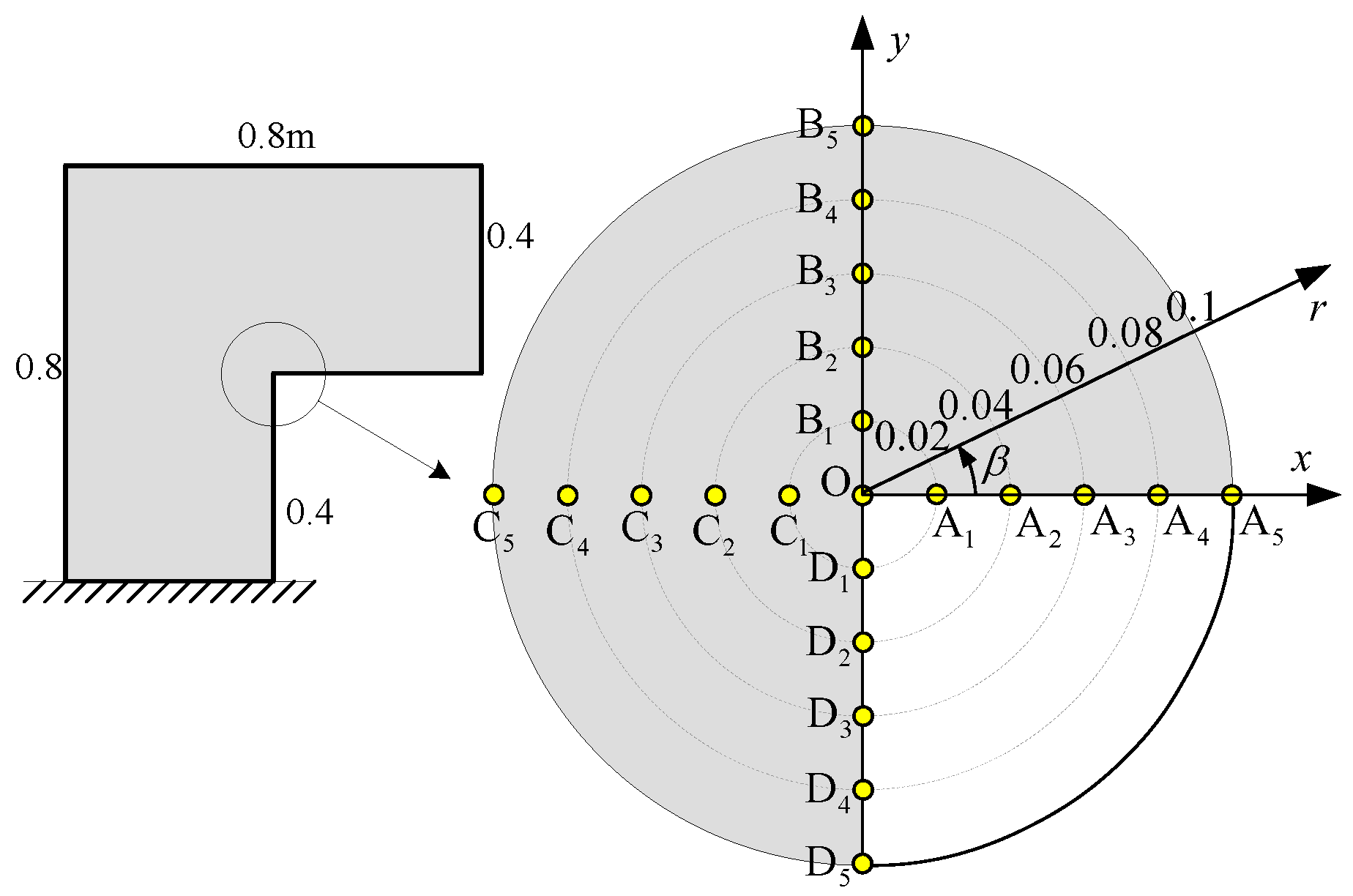
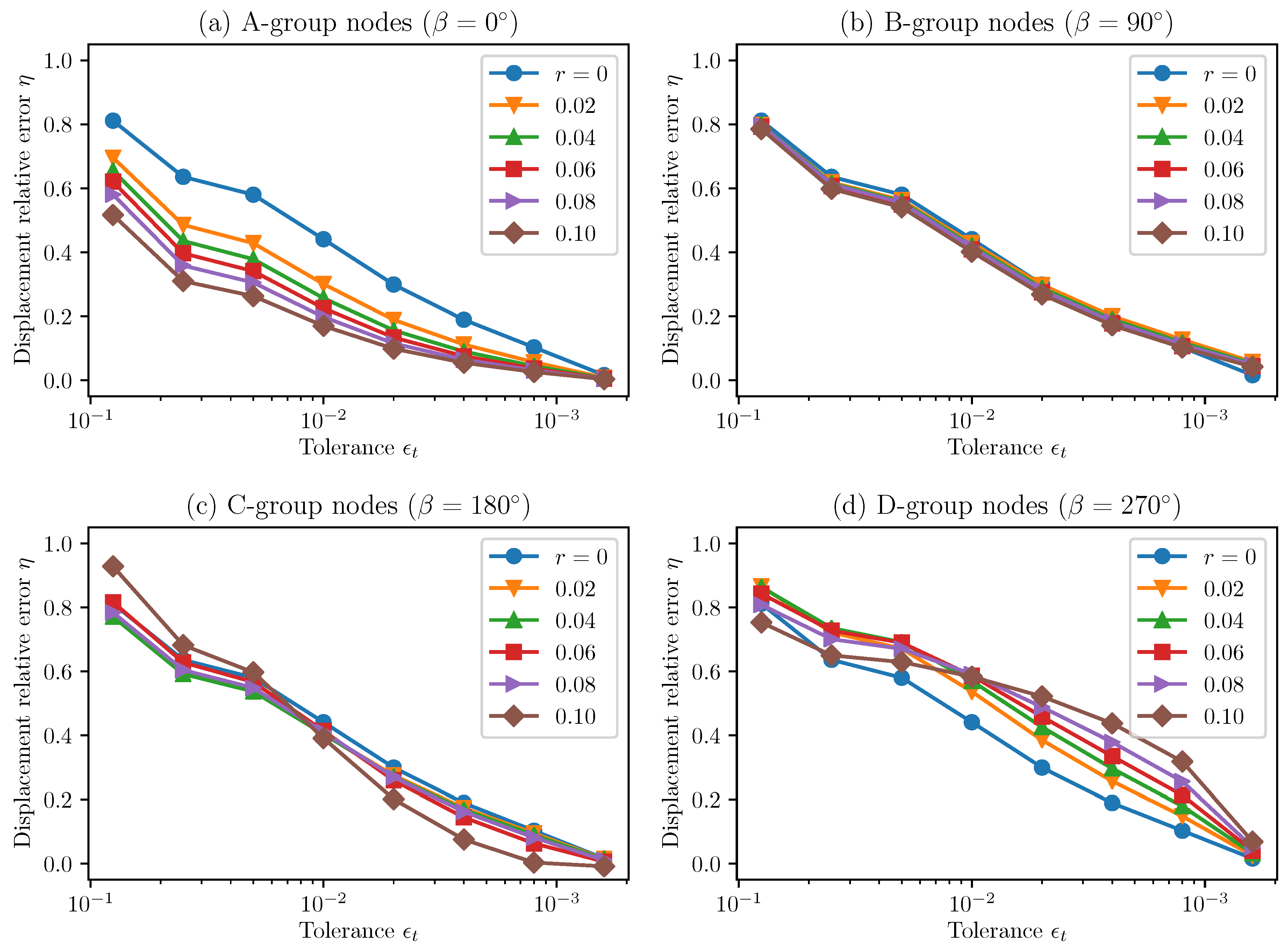
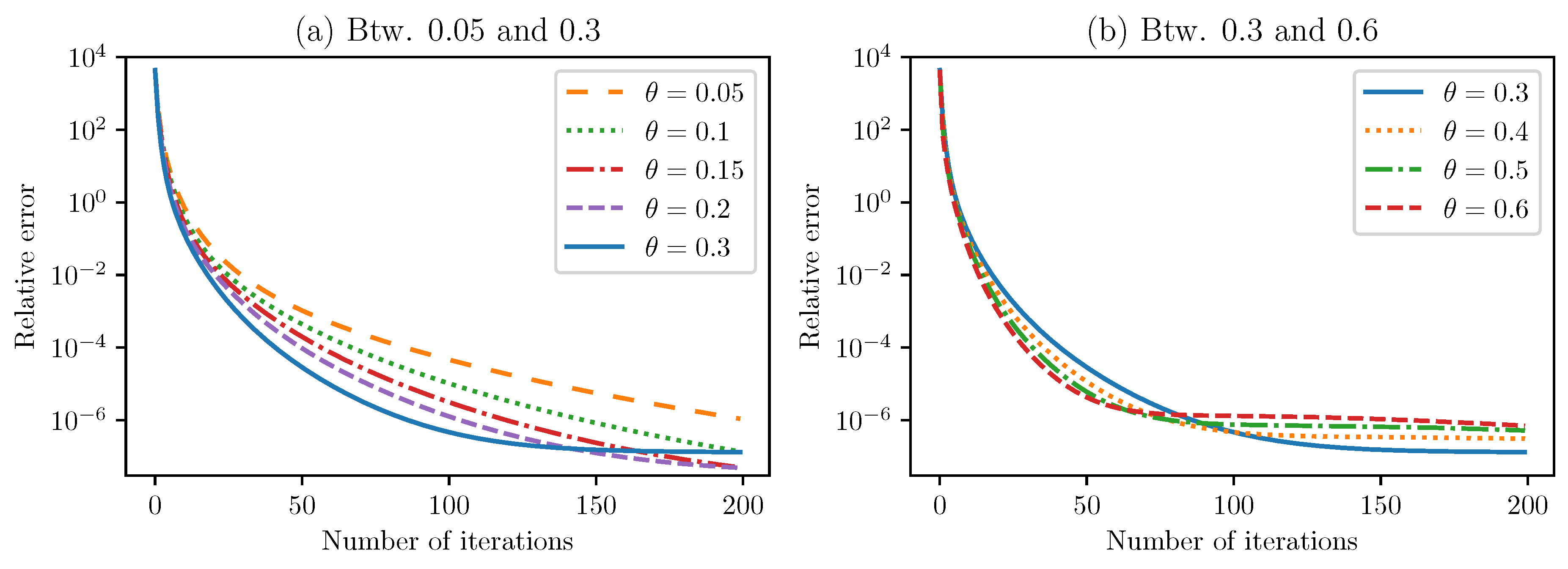
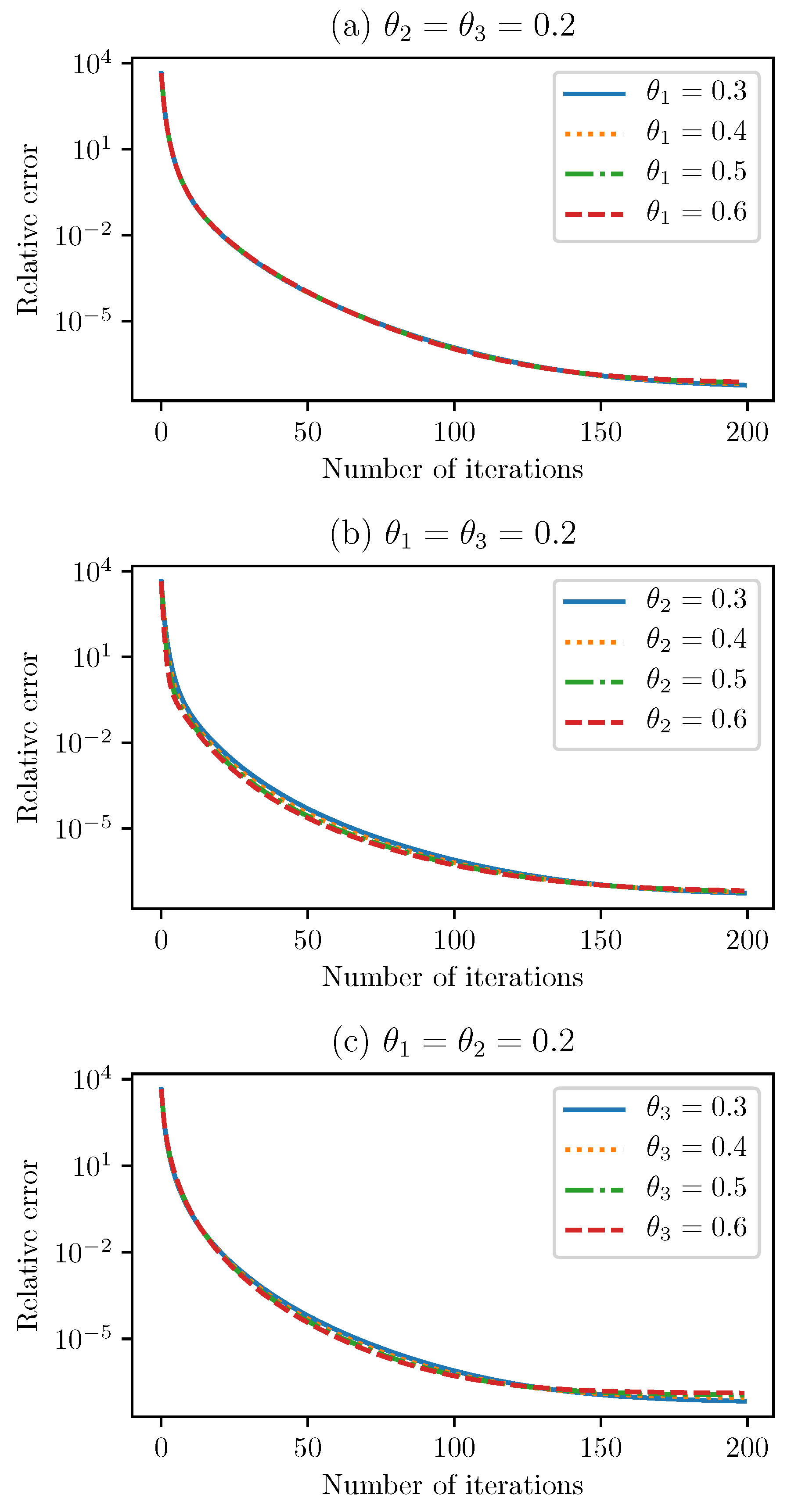
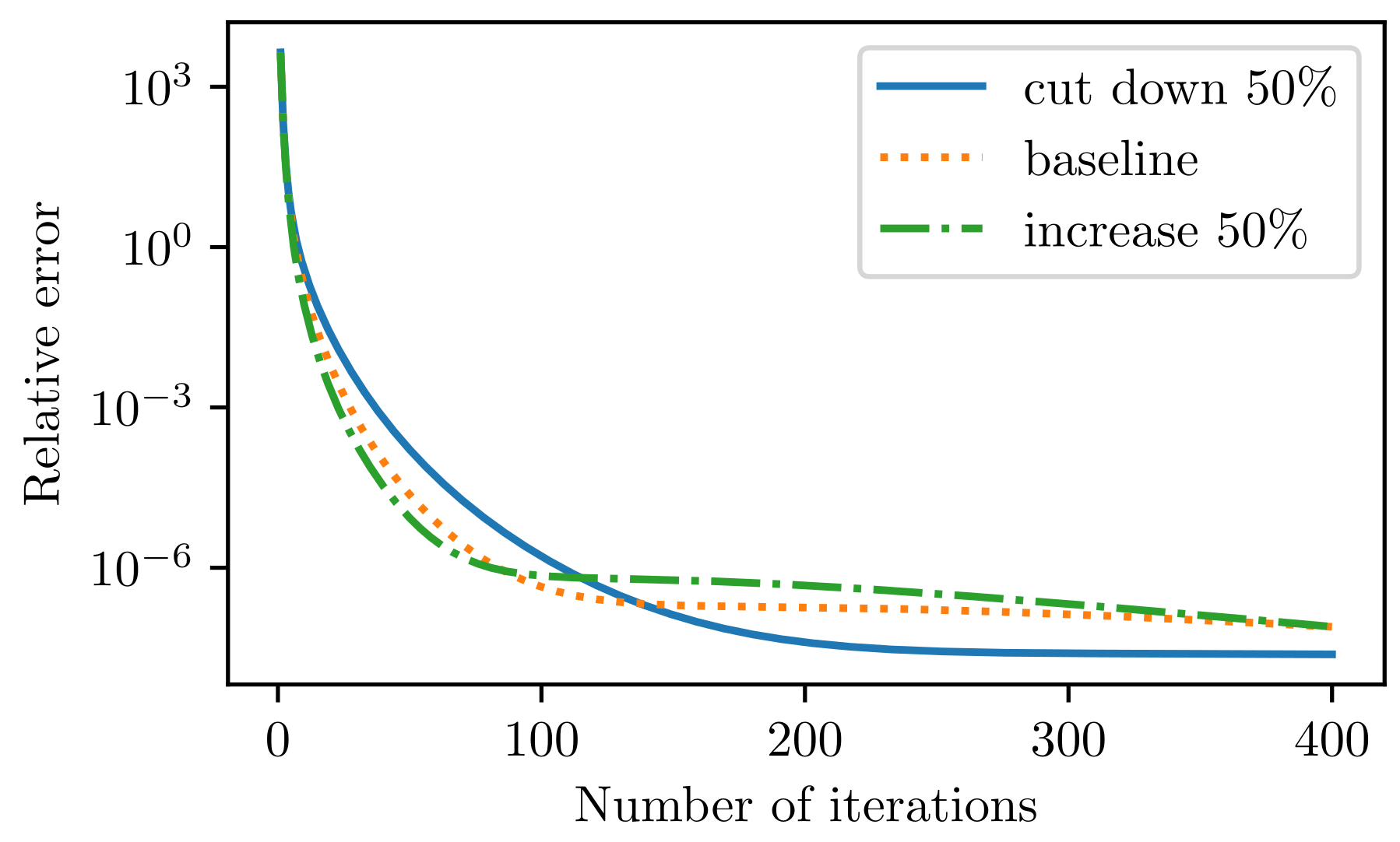
3.3. Discussions on Convergency and Accuracy
4. Conclusions
Author Contributions
Funding
Data Availability Statement
Conflicts of Interest
Abbreviations
| DD | domain decomposition |
| ODD | overlapping domain decomposition |
| FEM | finite element method |
| DEM | discrete element method |
References
- Unger, J.F.; Eckardt, S. Multiscale modeling of concrete. Arch. Comput. Methods Eng. 2011, 18, 341–393. [Google Scholar] [CrossRef]
- Barbhuiya, S.; Jivkov, A.; Das, B.B. A review of multi-scale modelling of concrete deterioration: Fundamentals, techniques and perspectives. Constr. Build. Mater. 2023, 406, 133472. [Google Scholar] [CrossRef]
- He, K.; Liu, C.; Zhong, L.; Tang, J.; Hui, D. Microstructural regulation and multiscale performance evolution of ultra-high performance concrete incorporating copper slag. Constr. Build. Mater. 2026, 506, 144861. [Google Scholar] [CrossRef]
- Rezakhani, R.; Zhou, X.; Cusatis, G. Adaptive multiscale homogenization of the lattice discrete particle model for the analysis of damage and fracture in concrete. Int. J. Solids Struct. 2017, 125, 50–67. [Google Scholar] [CrossRef]
- Rivarola, F.; Benedetto, M.; Labanda, N.; Etse, G. A multiscale approach with the Virtual Element Method: Towards a VE2 setting. Finite Elem. Anal. Des. 2019, 158, 1–16. [Google Scholar] [CrossRef]
- Chen, Q.; Wang, H.; Li, H.; Jiang, Z.; Zhu, H.; Ju, J.W.; Yan, Z. Multiscale modelling for the ultra-high performance concrete: From hydration kinetics to macroscopic elastic moduli. Constr. Build. Mater. 2020, 247, 118541. [Google Scholar] [CrossRef]
- Talebi, H.; Silani, M.; Bordas, S.P.; Kerfriden, P.; Rabczuk, T. A computational library for multiscale modeling of material failure. Comput. Mech. 2014, 53, 1047–1071. [Google Scholar] [CrossRef]
- Papadopoulos, V.; Impraimakis, M. Multiscale modeling of carbon nanotube reinforced concrete. Compos. Struct. 2017, 182, 251–260. [Google Scholar] [CrossRef]
- Tang, K.; Wang, X. Simulation of the interfaced structural component based on a multiple-time-scale algorithm. Acta Mech. Solida Sin. 2014, 27, 353–363. [Google Scholar] [CrossRef]
- Pirmoradi, P.; Suiker, A.; Poorsolhjouy, P. Multi-scale constitutive model for fiber-reinforced concrete with FEM analyses of structural failure. Eng. Fract. Mech. 2025, 323, 111166. [Google Scholar] [CrossRef]
- Rodrigues, E.A.; Manzoli, O.L.; Bitencourt, L.A., Jr. 3D concurrent multiscale model for crack propagation in concrete. Comput. Methods Appl. Mech. Eng. 2020, 361, 112813. [Google Scholar] [CrossRef]
- Yu, J.C.; Wang, J.T.; Pan, J.W.; Guo, N.; Zhang, C.H. A dynamic FEM-DEM multiscale modeling approach for concrete structures. Eng. Fract. Mech. 2023, 278, 109031. [Google Scholar] [CrossRef]
- Du, Y.; Wang, Z.; Lu, S.; Huang, H. Mechanical characteristics of multi-scale carbon nanotube-carbon fiber reinforced concrete and a dynamic constitutive model within an EP damage framework. Case Stud. Constr. Mater. 2025, 23, e05616. [Google Scholar] [CrossRef]
- Abbès, F.; Abbès, B.; Benkabou, R.; Asroun, A. A FEM Multiscale Homogenization Procedure using Nanoindentation for High Performance Concrete. J. Appl. Comput. Mech. 2020, 6, 493–504. [Google Scholar]
- Sun, X.; Gao, Z.; Cao, P.; Zhou, C. Mechanical properties tests and multiscale numerical simulations for basalt fiber reinforced concrete. Constr. Build. Mater. 2019, 202, 58–72. [Google Scholar] [CrossRef]
- Klimczak, M.; Cecot, W. Towards asphalt concrete modeling by the multiscale finite element method. Finite Elem. Anal. Des. 2020, 171, 103367. [Google Scholar] [CrossRef]
- Marcos-Meson, V.; Fischer, G.; Solgaard, A.; Edvardsen, C.; Michel, A. Mechanical performance and corrosion damage of steel fibre reinforced concrete–A multiscale modelling approach. Constr. Build. Mater. 2020, 234, 117847. [Google Scholar] [CrossRef]
- Tal, D.; Fish, J. Stochastic multiscale modeling and simulation framework for concrete. Cem. Concr. Compos. 2018, 90, 61–81. [Google Scholar] [CrossRef]
- Eftekhari, M.; Mohammadi, S.; Khanmohammadi, M. A hierarchical nano to macro multiscale analysis of monotonic behavior of concrete columns made of CNT-reinforced cement composite. Constr. Build. Mater. 2018, 175, 134–143. [Google Scholar] [CrossRef]
- Olsen, M.J.; Chen, Z.; Hutchinson, T.; Kuester, F. Optical techniques for multiscale damage assessment. Geomat. Nat. Hazards Risk 2013, 4, 49–70. [Google Scholar] [CrossRef]
- Mamand, H.; Chen, J. Extended digital image correlation method for mapping multiscale damage in concrete. J. Mater. Civ. Eng. 2017, 29, 04017179. [Google Scholar] [CrossRef]
- Li, S.; Hou, S. A machine learning method of accelerating multiscale analysis for spatially varying microstructures. Int. J. Mech. Sci. 2024, 266, 108952. [Google Scholar] [CrossRef]
- Zhang, P.; Xiang, Y.; Tang, K. Deep learning surrogate for phase field modeling in fiber-reinforced composites: From stress evolution to final crack path. Comput. Methods Appl. Mech. Eng. 2026, 448, 118518. [Google Scholar] [CrossRef]
- Wang, B.; Zhang, P.; Xiang, Y.; Wang, D.; Wu, B.; Wang, X.; Tang, K.; Chen, A. Advancing Structural Failure Analysis with Physics-Informed Machine Learning in Engineering Applications. Engineering, 2025; in press. [Google Scholar] [CrossRef]
- Lloberas-Valls, O.; Rixen, D.; Simone, A.; Sluys, L. On micro-to-macro connections in domain decomposition multiscale methods. Comput. Methods Appl. Mech. Eng. 2012, 225, 177–196. [Google Scholar] [CrossRef]
- Lloberas-Valls, O.; Rixen, D.; Simone, A.; Sluys, L. Multiscale domain decomposition analysis of quasi-brittle heterogeneous materials. Int. J. Numer. Methods Eng. 2012, 89, 1337–1366. [Google Scholar] [CrossRef]
- Cai, X. Overlapping domain decomposition methods. In Advanced Topics in Computational Partial Differential Equations; Springer: Berlin/Heidelberg, Germany, 2003; pp. 57–95. [Google Scholar]
- Adam, J.M.; Parisi, F.; Sagaseta, J.; Lu, X. Research and practice on progressive collapse and robustness of building structures in the 21st century. Eng. Struct. 2018, 173, 122–149. [Google Scholar] [CrossRef]
- Huang, H.; Huang, M.; Zhang, W.; Guo, M.; Chen, Z.; Li, M. Progressive collapse resistance of multistory RC frame strengthened with HPFL-BSP. J. Build. Eng. 2021, 43, 103123. [Google Scholar] [CrossRef]
- Farhat, C.; Mandel, J.; Roux, F.X. Optimal convergence properties of the FETI domain decomposition method. Comput. Methods Appl. Mech. Eng. 1994, 115, 365–385. [Google Scholar] [CrossRef]
- Farhat, C.; Lesoinne, M.; Pierson, K. A scalable dual-primal domain decomposition method. Numer. Linear Algebra Appl. 2000, 7, 687–714. [Google Scholar] [CrossRef]
- Wu, B.; Tang, Y.; Li, Z.; Tang, K. Hierarchical modeling and damage prognosis on industrial RC building with preexisting defects. Mater. Des. Process. Commun. 2019, 2, e124. [Google Scholar] [CrossRef]
- Wu, B.; Li, Z.; Tang, K.; Wang, K. Microscopic multiple fatigue crack simulation and macroscopic damage evolution of concrete beam. Appl. Sci. 2019, 9, 4664. [Google Scholar] [CrossRef]
- Wu, B.; Tang, K. Modelling on crack propagation behaviours at concrete matrix-aggregate interface. Fatigue Fract. Eng. Mater. Struct. 2019, 42, 1803–1814. [Google Scholar] [CrossRef]
- Wu, B.; Li, Z.; Tang, K. Numerical modeling on micro-to-macro evolution of crack network for concrete materials. Theor. Appl. Fract. Mech. 2020, 107, 102525. [Google Scholar] [CrossRef]
- Lee, J.H.; Fenves, G.L. Plastic-damage model for cyclic loading of concrete structures. J. Eng. Mech.-ASCE 1998, 124, 892–900. [Google Scholar] [CrossRef]
- Genikomsou, A.S.; Polak, M.A. Finite element analysis of punching shear of concrete slabs using damaged plasticity model in ABAQUS. Eng. Struct. 2015, 98, 38–48. [Google Scholar] [CrossRef]
- Toselli, A.; Widlund, O. Domain Decomposition Methods-Algorithms and Theory; Springer Science & Business Media: Berlin/Heidelberg, Germany, 2006; Volume 34. [Google Scholar]
- Chan, T.F.; Mathew, T.P. Domain decomposition algorithms. Acta Numer. 1994, 3, 61–143. [Google Scholar] [CrossRef]
- Sadd, M.H. Elasticity: Theory, Applications, and Numerics; Academic Press: Cambridge, MA, USA, 2009. [Google Scholar]
- Lu, T.; Shih, T.; Liem, C. Domain Decomposition Methods: New Numerical Techniques for Solving PDE; Science Press: Beijing, China, 1992. [Google Scholar]
- Wriggers, P.; Moftah, S.O. Mesoscale models for concrete: Homogenisation and damage behaviour. Finite Elem. Anal. Des. 2006, 42, 623–636. [Google Scholar] [CrossRef]
- Kupfer, H.; Hilsdorf, H.K.; Rusch, H. Behavior of concrete under biaxial stresses. ACI J. Proc. 1969, 66, 656–666. [Google Scholar] [CrossRef]
- Thilakarathna, P.S.M.; Kristombu Baduge, K.S.; Mendis, P.; Vimonsatit, V.; Lee, H. Mesoscale modelling of concrete—A review of geometry generation, placing algorithms, constitutive relations and applications. Eng. Fract. Mech. 2020, 231, 106974. [Google Scholar] [CrossRef]
- Zeng, X.; Zhu, S.; Deng, K.; Pang, L.; Zhao, C. Design method and seismic vulnerability of bridges using UHPC-NSC composite pier. Eng. Struct. 2024, 312, 118265. [Google Scholar] [CrossRef]



| Material | Constitutive Model | Parameter | Value |
|---|---|---|---|
| Mortar | CDP | Young’s modulus (GPa) | 38 |
| Density (kg/m3) | 2.75 × 10³ | ||
| Poisson’s ratio | 0.2 | ||
| Dilatancy angle (°) | 30 | ||
| Stress ratio | 1.16 | ||
| Tensile strength (MPa) | 3.6 | ||
| Compressive strength (MPa) | 4.5 | ||
| Compressive limit (MPa) | 2.8 | ||
| Aggregates | Elastic | Young’s modulus (GPa) | 73 |
| Density (kg/m3) | 2.75 × 10³ | ||
| Poisson’s ratio | 0.2 | ||
| Concrete | Elastic | Young’s modulus (GPa) | 45 |
| Density (kg/m3) | 2.75 × 10³ | ||
| Poisson’s ratio | 0.2 |
Disclaimer/Publisher’s Note: The statements, opinions and data contained in all publications are solely those of the individual author(s) and contributor(s) and not of MDPI and/or the editor(s). MDPI and/or the editor(s) disclaim responsibility for any injury to people or property resulting from any ideas, methods, instructions or products referred to in the content. |
© 2026 by the authors. Licensee MDPI, Basel, Switzerland. This article is an open access article distributed under the terms and conditions of the Creative Commons Attribution (CC BY) license.
Share and Cite
Wu, B.; Wang, X.; Zhang, P. A Concurrent Multiscale Framework for Concrete Damage Analysis Using Overlapping Domain Decomposition. Buildings 2026, 16, 815. https://doi.org/10.3390/buildings16040815
Wu B, Wang X, Zhang P. A Concurrent Multiscale Framework for Concrete Damage Analysis Using Overlapping Domain Decomposition. Buildings. 2026; 16(4):815. https://doi.org/10.3390/buildings16040815
Chicago/Turabian StyleWu, Baijian, Xinyue Wang, and Peng Zhang. 2026. "A Concurrent Multiscale Framework for Concrete Damage Analysis Using Overlapping Domain Decomposition" Buildings 16, no. 4: 815. https://doi.org/10.3390/buildings16040815
APA StyleWu, B., Wang, X., & Zhang, P. (2026). A Concurrent Multiscale Framework for Concrete Damage Analysis Using Overlapping Domain Decomposition. Buildings, 16(4), 815. https://doi.org/10.3390/buildings16040815