


Abstract
Wind catchers are widely used as vernacular systems for natural ventilation in hot–arid regions, yet their performance is often compromised by airborne dust. This study investigates the architectural integration of a camel hair–based filtration layer within a traditional down-draft wind catcher in a rural Saudi Arabian context, focusing on airflow behavior, indoor environmental response, and qualitative particulate interception under natural ventilation. Building on the authors’ previously published laboratory research that quantified the PM10 filtration performance of camel hair–based media under controlled conditions, the present work extends the investigation to an in situ architectural application. Field measurements of air velocity, temperature, and relative humidity were conducted during a 24 h dust event to examine system-level behavior following filter integration. PM10 capture was assessed qualitatively through visual inspection and comparative observation, serving as corroborative evidence rather than a standardized filtration metric. Results indicate that the filtration layer alters airflow characteristics without fundamentally disrupting natural ventilation. Indoor thermal conditions are interpreted within the framework of the Adaptive Thermal Comfort Model, appropriate for a free-running building, emphasizing occupant adaptation rather than fixed comfort thresholds. This study demonstrates the feasibility of integrating a biomimetically inspired, locally sourced natural material within a vernacular ventilation system, contributing architectural insights into balancing dust mitigation and natural ventilation in arid climates.
1. Introduction
Hot arid regions face severe environmental challenges that impact building performance and indoor air quality. Harsh climatic conditions, extreme temperatures, low humidity, and frequent dust storms are common across the Middle East, including Saudi Arabia [1,2]. These dust storms are part of a “dust belt” stretching from the Sahara to the Gobi Desert and often lead to hazardous air quality, with particulate concentrations far exceeding health guidelines [1]. Naturally ventilated buildings in such environments can be especially vulnerable: high infiltration rates mean outdoor dust easily penetrates indoors, degrading air quality and occupant comfort [2]. This creates a paradox for sustainable design: while natural ventilation is desired for its energy savings and passive cooling potential, it can inadvertently introduce significant dust loads into interiors during storm events. There is a pressing need for architectural strategies that provide ventilation and cooling in hot, dusty climates while protecting indoor environments from particulate pollution [3].
Building designers are increasingly looking to climate-responsive approaches to resolve this challenge. Modern buildings contribute nearly 40% of global energy use [4], largely due to air-conditioning in extreme climates, so passive cooling is a key sustainability goal. In hot-arid zones like Saudi Arabia, traditional architecture offers valuable clues: vernacular designs evolved to minimize heat gain and maximize comfort with minimal resources [4]. Thick adobe walls, courtyards, mashrabiya screens, and wind catchers are examples of indigenous solutions that moderated the desert environment long before mechanical HVAC systems. These features prioritized shade, airflow, and dust protection—for instance, providing ventilation while shielding occupants from sun and blowing sand has always been a high design priority in arid regions [3]. Today, there is growing recognition that reviving and adapting such passive strategies can help meet modern performance standards sustainably. Governments and planners in the Middle East have also set visions for greener, more resilient cities, motivating research into blending vernacular wisdom with contemporary technology [5].
One notable vernacular cooling system is the wind catcher (known as badgir in Persian, malqaf in Arabic). Wind catchers are chimney-like towers that harness prevailing breezes to drive natural ventilation and cooling in buildings, and they were historically widespread from Iran to the Arabian Peninsula [3]. These structures, often rising above rooftops, channel fresh outside air indoors and expel hot stale air, achieving thermal comfort with zero operational energy. In past centuries, wind catchers enabled comfortable living even in the region’s scorching summers by tapping into any available winds and sometimes augmenting cooling with water evaporation at the tower’s base. However, with industrialization and modern air-conditioning, wind catchers fell out of use or survived only as stylistic motifs. In recent years, interest in wind catchers has been renewed as part of a broader sustainable architecture movement. Researchers have documented their effectiveness and the diverse traditional designs suited to different climates (e.g., one-sided scoops vs. multi-directional towers) [3,5]. Studies confirm that wind catchers can still significantly improve indoor comfort and reduce energy demand in hot climates, making them attractive for contemporary green buildings [5]. Moreover, restoring wind catchers aligns with cultural heritage preservation, bridging modern needs with regional architectural identity [5]. The challenge lies in updating this vernacular concept to overcome present-day constraints such as urban context and air pollution. In dense cities, wind availability may be limited, and unmodified wind towers can become conduits for dust, sand, and insects during storms [5]. Thus, modern designs must refine the wind catcher concept to maintain its passive cooling benefits while mitigating these drawbacks.
Recent research has focused on innovating wind catcher design for improved performance and dust control. For example, Chohan and Awad in 2022 reviewed various traditional wind tower configurations and identified numerous design modifications to enhance airflow intake and prevent dust or rain penetration. Some recommended strategies include aerodynamic shaping of the tower, optimizing the size of openings relative to room area, and adding protective elements at inlets [3]. One simple yet effective approach is the incorporation of filtering and dust-trapping features at the wind catcher’s openings. In one modern installation in Jodhpur, India, a wind tower was fitted with a wet screen on the windward side to filter incoming dust and provide evaporative cooling; this adaptation successfully improved indoor comfort during summer and reduced dust ingress. Likewise, design guides propose adding “dust catcher” cavities or louvers along the shaft to capture sand before it can drop into occupied spaces [3]. Such measures acknowledge that without intervention, a wind catcher in a sandstorm might deliver as much dust as it does fresh air. In parallel, hybrid solutions have been suggested—for instance, integrating low-speed fans or misting systems powered by solar panels to boost air movement during still, dusty conditions [5]. These incremental innovations aim to preserve the zero-energy nature of wind catchers while addressing air quality and reliability concerns.
Beyond engineered add-ons, architects are also revisiting biomimicry and material innovations to solve the dust-ventilation dilemma. Vernacular builders traditionally used locally available materials with natural climate-adaptive properties: a salient example is the Bedouin tent woven from goat and camel hair. The coarse weave of camel hair fabric creates a “breathing” membrane that allows ventilation but screens out sand particles, an ingenious adaptation for desert dwellings [6]. This observation has spurred interest in using natural fibers as passive filtration media in building envelopes. In fact, the camel itself offers inspiration: camels have evolved remarkable features to survive sandstorms, including long eyelashes and inner nose hairs that trap dust before it enters the lungs [6]. Additionally, the camel’s nasal passages include convoluted turbinates that cool and humidify inhaled air, protecting the animal from heat and water loss [6]. Architects and engineers are investigating how these biological strategies can translate into design solutions for buildings [6,7]. One outcome of this biomimetic approach is the concept of a “hairy” building envelope: for instance, Badarnah et al. (2010) proposed a multilayer wall system called the Stoma Brick for desert climates, whose outermost layer is a camel-hair-inspired porous mat intended to filter airborne dust before air enters a building [8]. Recent studies continue to build on this idea, suggesting that attaching fibrous or bristled materials at air intake points could significantly reduce particulate ingress without impeding airflow [6,7,8]. However, these concepts remain largely theoretical or in experimental stages.
In summary, the literature indicates a clear progression toward integrating vernacular knowledge and biomimetic features into contemporary passive design. Environmental pressures in Saudi Arabia and similar climates demand solutions that concurrently address cooling, ventilation, and dust mitigation. Traditional wind catchers provide a proven passive cooling method, and modern research is enhancing their design for efficiency and cleanliness [3]. In parallel, natural fibers like camel hair represent a sustainable, locally sourced material that could serve as a built-in filter for sand and dust, inspired by the desert ecosystem itself [6]. Despite these advances, a specific gap remains at the convergence of these ideas: to date, no full-scale implementation has combined a wind catcher with a camel-hair (or similar natural fiber) filtration layer as an integrated system for passive cooling and dust control. This gap defines the scope of the present research. By uniting the wind catcher—a time-tested vernacular ventilation tower—with a biomimetic camel-hair filter, this study aims to explore a novel passive design strategy that can deliver clean, cool air in hot, dusty environments. The following background section reviews the state-of-the-art in greater detail, establishing the theoretical and empirical basis for investigating such an innovation.
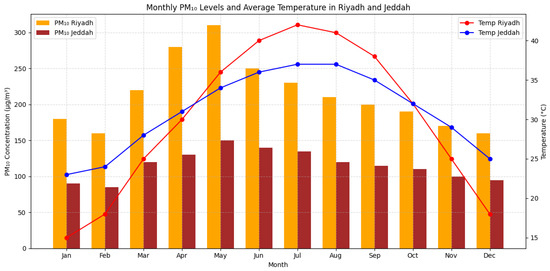
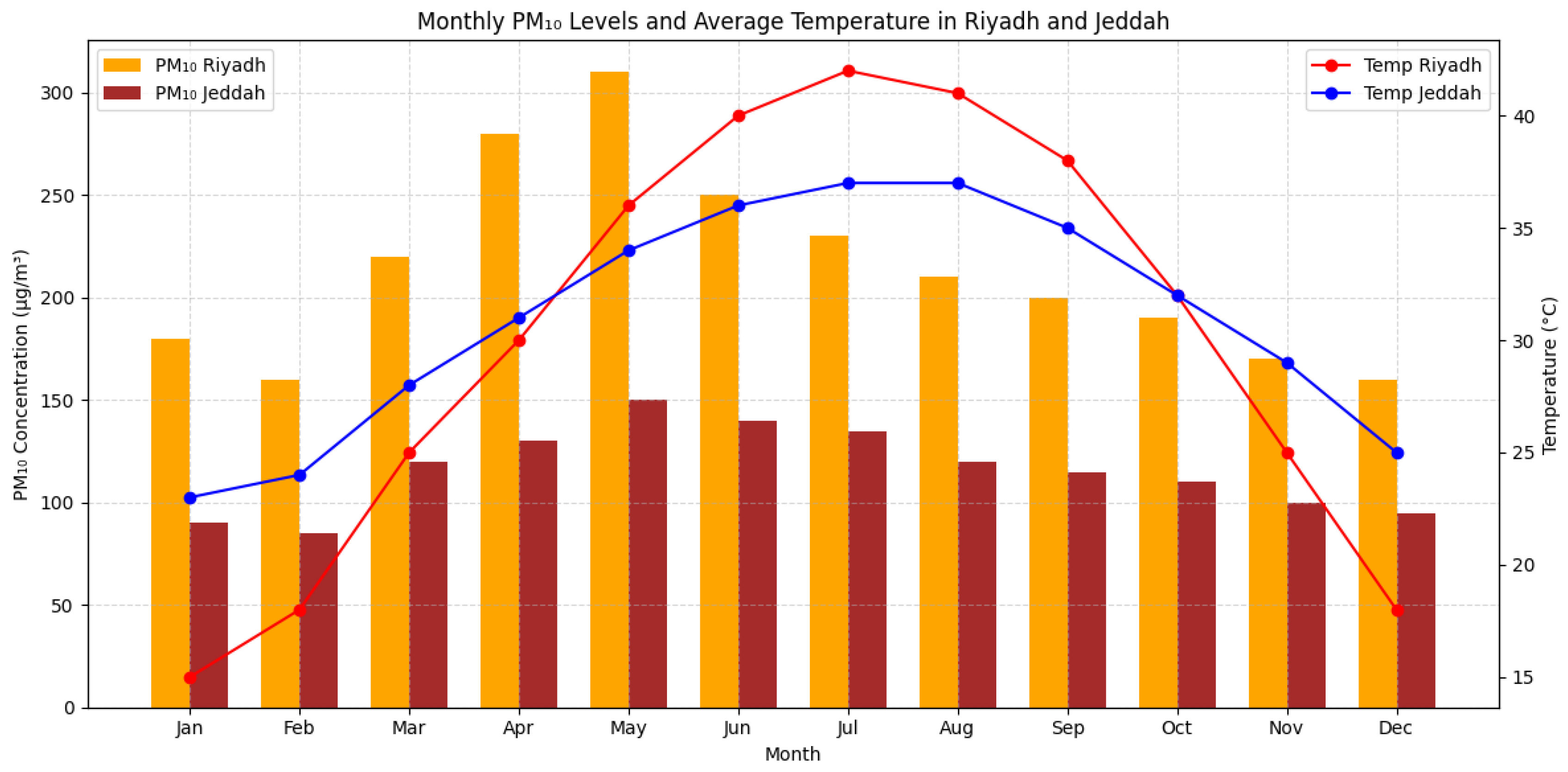
This study is situated within the hot–arid climatic context that characterizes much of rural Saudi Arabia, where high ambient temperatures, low relative humidity, and frequent dust-laden wind events significantly influence both indoor air quality and thermal comfort [9]. Seasonal and episodic dust storms contribute to elevated concentrations of coarse particulate matter (PM10), particularly in rural and semi-rural settings where natural ventilation remains a dominant strategy for indoor environmental control [10]. Wind patterns in these regions, although variable, are sufficient to support the operation of traditional wind catchers. These systems have historically functioned as passive devices for air movement, cooling, and dust mitigation [11]. Figure 1 illustrates the broader regional air quality and particulate matter context relevant to the study, providing environmental justification for examining filtration strategies integrated within vernacular wind catcher systems.
Figure 1.
Monthly PM10 levels and average temperatures in Riyadh and Jeddah, illustrating the seasonal overlap of dust storms and high cooling demand [12].
Traditional down-draft wind catchers operate by intercepting prevailing winds at elevations above the pedestrian level, where airflow is less obstructed and wind velocities are typically higher. Pressure differentials between the windward and leeward faces of the tower induce downward airflow through the shaft, delivering outdoor air into interior spaces while promoting exhaust through secondary openings. This passive mechanism enables ventilation and air movement without mechanical assistance and has historically supported thermal moderation and particulate interception through geometric deceleration and surface deposition [11].
Within this environmental and architectural context, the present study examines the integration of a camel hair–based filtration layer into a traditional down-draft wind catcher as an exploratory architectural intervention. The paper does not aim to assess compliance with air quality standards; rather, it investigates system-level airflow behavior, indoor environmental response, and qualitative particulate interception under natural ventilation conditions. Quantitative filtration performance metrics are referenced from previously published laboratory work by the authors.
Research Aims and Objectives
This research forms a direct continuation of the authors’ previous work on the development and laboratory-scale characterization of camel hair–leather composite panels as sustainable filtration and insulation materials for hot-arid environments [13]. The earlier study established the material’s fundamental performance under standardized conditions, including particulate filtration efficiency, pressure-drop behavior, thermal resistance, and moisture response. Building upon this foundation, the present research advances the investigation from material-level evaluation to architectural system integration. The primary aim of this study is to assess the applicability of camel hair filtration within traditional downdraft wind catcher systems, focusing on its influence on airflow behavior, indoor thermal conditions, and qualitative air quality performance under natural ventilation. Unlike prior laboratory-based assessments, this research situates the camel hair filter within a vernacular architectural element, thereby examining its performance under real environmental airflow conditions relevant to rural Saudi architecture.
The novelty of this work lies in three key aspects. First, it represents one of the first studies to integrate a biomimetically inspired, locally sourced natural filtration material directly into a traditional wind catcher system, rather than evaluating it as a standalone filter panel. Second, the research shifts the analytical focus from mechanical HVAC applications to naturally ventilated spaces, where airflow is driven by wind-induced pressure differentials rather than forced convection. Third, the study evaluates the combined implications of filtration and natural ventilation comfort, ensuring that air quality improvement strategies do not compromise the passive cooling function of vernacular architecture. To achieve these aims, the research examines how the incorporation of camel hair filters affects airflow velocity characteristics within a downdraft wind catcher, evaluates resulting indoor thermal conditions through measured air temperature and relative humidity, and qualitatively assesses indications of particulate interception. Through this integrated approach, the study contributes new knowledge on how traditional architectural systems can be enhanced using bio-based materials to improve indoor environmental quality while preserving their passive operational principles.
The 24 h dust event analyzed in this study is presented as a representative observational case rather than as a statistically generalizable sample. The intent is not to extrapolate filtration performance across all dust conditions, but to examine the behavior of the camel hair filtration layer when integrated within a down-draft wind catcher under a real environmental exposure. Given the episodic and highly variable nature of dust events in arid regions, the findings are interpreted as indicative of system response under the observed conditions, complementing previously published laboratory-based performance data rather than replacing them. Also, previous dust-mitigation strategies in wind catchers have typically relied on screens, wet pads, or dust traps, which function either as coarse physical barriers or through evaporative mechanisms that alter airflow characteristics. In contrast, this study examines the integration of a dry, natural-fiber filtration layer directly within a down-draft wind catcher, without introducing active moisture or mechanical assistance. Unlike laboratory-focused natural-fiber filtration studies, the contribution of this work lies in evaluating how such a material interacts with airflow at the architectural system level, yielding design-relevant insights rather than optimized or prescriptive performance metrics.
The objective of this study is to explore the architectural feasibility of integrating a camel hair–based filtration layer within a traditional down-draft wind catcher operating under real climatic conditions in a hot–arid rural Saudi context. Building on previously published laboratory research that quantified the material’s particulate filtration characteristics, this work shifts focus toward system-level architectural integration, airflow behavior, and indoor environmental response under natural ventilation. The study is framed as an exploratory, case-based investigation intended to assess qualitative performance trends and design implications rather than to establish optimized or standardized filtration outcomes.
Accordingly, the research is guided by the following questions:
- How does the integration of a camel hair–based filtration layer influence airflow behavior within a traditional down-draft wind catcher under natural ventilation conditions?
- What relative changes in indoor air movement and thermal conditions are observed following the integration of the filtration layer?
- How does the filtration layer interact with dust-laden airflow in situ, as evidenced through qualitative particulate interception?
- What architectural insights and limitations emerge from integrating bio-based filtration materials into vernacular wind catcher systems in hot–arid environments?
2. Literature Review
2.1. Natural Ventilation and Dust in Arid Environments
Arid regions like the Middle East are characterized by a climate that poses twin challenges for building ventilation: intense heat and pervasive airborne dust. Natural ventilation is an attractive cooling strategy in these climates, as it harnesses wind and buoyancy to reduce indoor temperatures without mechanical energy. Indeed, passive ventilation and cooling are crucial for energy efficiency, given that buildings account for a large share of energy use in cities [4]. Traditional settlements in desert climates were adept at self-ventilation—courtyard houses, for example, use temperature differentials to induce airflow, and narrow streets channel breezes [14]. However, dust storms are a major complicating factor. During seasonal dust events, outdoor PM10 and PM2.5 levels can spike to hazardous concentrations, and any open apertures in a building may invite this dust inside [1,2]. Jung et al. (2023) found that in Dubai’s residences, naturally ventilated units had significantly higher indoor dust particle infiltration compared to those with mechanical ventilation, especially during spring dust storms [2]. This underscores a fundamental issue: while natural ventilation is needed to expel heat, it can also act as a conduit for pollution in dusty atmospheres.
Efforts to mitigate dust ingress in naturally ventilated buildings span both traditional practices and modern innovations. On the traditional side, architecture evolved features to buffer interior spaces from external dust. For instance, Middle Eastern vernacular houses often incorporate semi-outdoor transitional spaces (entrance vestibules, courtyards, mashrabiya screens) that allow air exchange while capturing a share of the dust before it reaches primary living areas. Building orientation and form were also used to minimize exposure to prevailing dusty winds [15]. A recent study by Alzaid et al. (2024) notes that Middle Eastern dust storms are often regional in scale, calling for urban and architectural dust management measures such as wind breaks and sealed envelopes when storms strike [1]. In contemporary design, the simplest solution to keep dust out is to rely on mechanical HVAC with filtration—but this comes at the cost of energy and moves away from passive principles. Therefore, researchers have been exploring passive or low-energy dust mitigation techniques compatible with natural ventilation. These include installing louvers or mesh screens over openings, using vegetation (green filters) to capture particulates, and incorporating water features (mist sprays or wet surfaces) to scrub incoming air. The use of porous materials and natural fibers as dust filters is particularly promising, as these can be integrated into the building envelope itself. Abu Qadourah and other researchers in 2024 emphasize considering “filtration or precipitation mechanisms in ventilation channels” for buildings in hot, dry climates to mitigate the ingress of dust and pollutants while maintaining airflow [16]. In essence, the challenge is to design ventilation openings that remain permeable to air but act as barriers to sand and fine dust.
2.2. Wind Catchers as Vernacular Passive Cooling Systems
Among passive ventilation strategies in hot-arid regions, the wind catcher stands out as a time-honored and effective solution. Wind catchers (also called wind towers or air scoops) have been used for centuries in places like Iran, Egypt, and the Arabian Gulf to promote natural ventilation and cooling in buildings [3]. A typical wind catcher is a tall tower rising above a building’s roof with one or more openings oriented to catch the breeze. Air is funneled down the shaft into the interior, creating airflow that flushes out hot air and cools the space. Some wind catchers were combined with subterranean water reservoirs or fountains (as in traditional Persian badgirs) to add evaporative cooling to the incoming air. These vernacular devices provided thermal comfort with zero energy input, exemplifying sustainable design long before modern sustainability became a goal [5].
Downdraft wind catchers operate primarily through pressure differentials generated by prevailing winds and thermal buoyancy, directing external air downward into interior spaces while facilitating heat removal and air exchange [17]. Recent studies have explored innovations in downdraft wind catcher configurations, including modified inlet geometries, internal flow guides, and integrated filtration elements aimed at improving airflow stability and indoor air quality [17]. Contemporary research has emphasized the adaptability of these systems to arid environments, highlighting their potential to combine passive ventilation with particulate mitigation strategies while maintaining low energy demand [18].
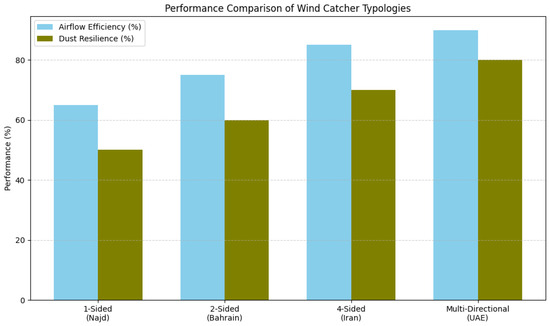
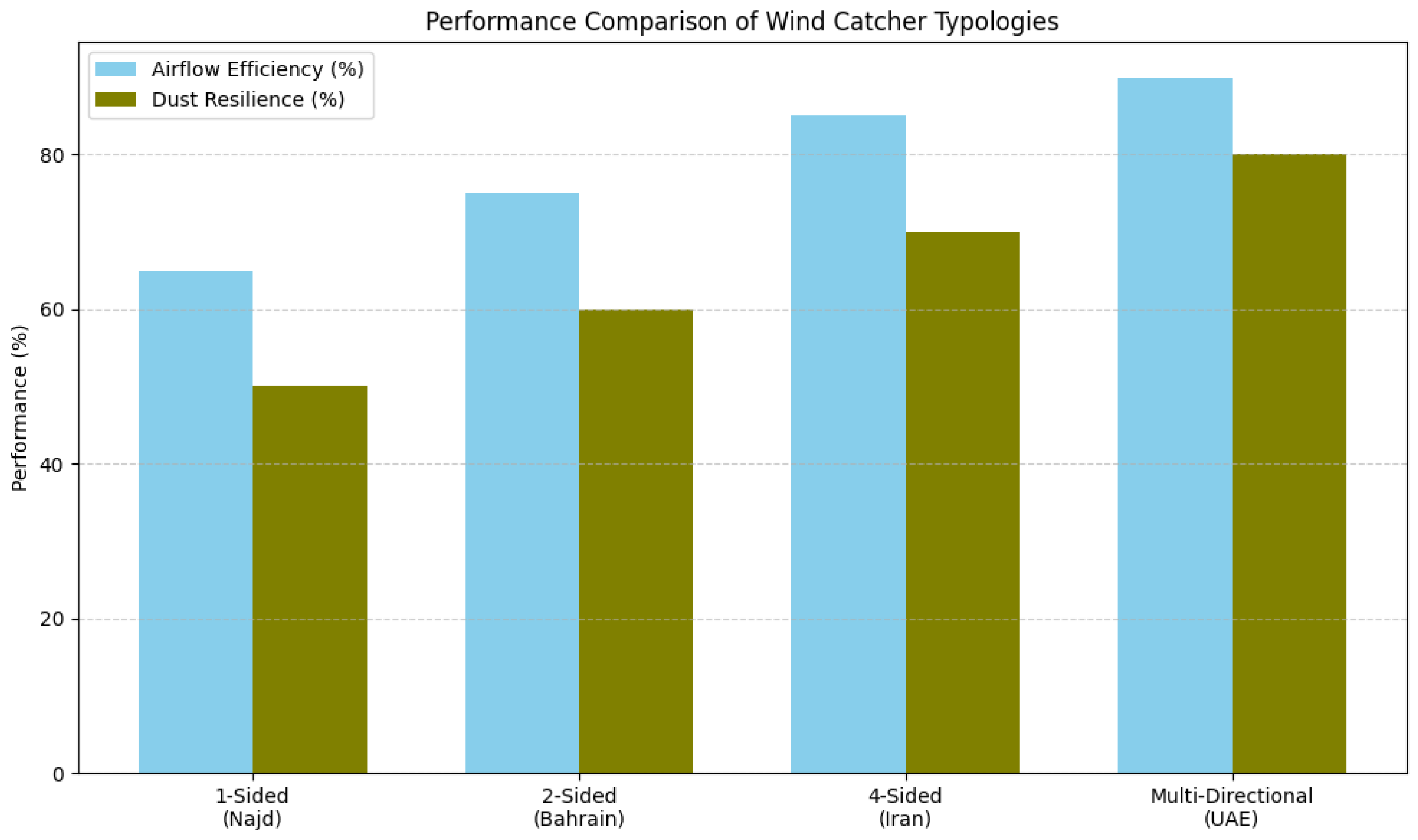
Studies on wind catcher performance affirm their value in contemporary architecture. According to a recent review by Chohan and Awad in 2022, wind catchers can reduce indoor temperatures by several degrees and maintain comfortable conditions in hot climates when properly designed [3,5]. Different geometries—one-sided, four-sided, multi-directional—have been developed to suit various wind patterns and cultural contexts, and each type has its own effectiveness profile. For example, a one-sided wind catcher (single opening facing the prevailing wind) acts purely as a scoop, whereas a four-sided tower can simultaneously capture wind on the windward side and vent warm air on the leeward side, acting as both intake and exhaust. Field measurements and wind-tunnel experiments have shown that proper sizing of the tower and its openings is critical; an intake area equivalent to about 8–12% of the floor area is recommended for adequate ventilation, check Figure 2. Furthermore, adding internal vanes or dividing walls can help channel airflow and even allow one tower to serve multiple directions of wind [3]. These findings provide design guidelines for reviving wind catchers in modern buildings, ensuring they deliver sufficient airflow.
Figure 2.
Comparative analysis of wind catcher typologies showing airflow efficiency and dust resilience [3].
However, traditional wind catchers were conceived in an era with lower urban air pollution, and they encounter limitations in today’s environments. Wind catchers in dusty, polluted, or densely urban settings face three main issues: (1) Dust and Sand Infiltration—during dust storms or high winds, large amounts of particulate matter can be drawn into the building through the wind catcher. (2) Insect and Debris Entry—open towers can allow insects, leaves, or other debris inside. (3) Low Wind or Calms—in stagnant hot weather, a passive wind catcher may not generate adequate airflow, leading to overheating [5]. To address these issues, researchers propose various adaptations. One straightforward modification is to equip wind catchers with protective grilles or louvers at the openings. Saadatian et al. noted that screens can prevent insect ingress and reduce dust intake, though fine screens may impede airflow if not kept clean [19]. Another idea is the creation of a “dust trap” chamber near the top of the shaft: by enlarging the cross-section or adding a cavity, the air velocity drops and heavier dust particles can settle out before the air continues downward. This concept is akin to a gravity-settling chamber and has been suggested for single- and two-sided wind catchers to avoid direct gusts of dust into rooms. Additionally, external hoods or cowls can shield the tower opening from falling sand while still admitting breeze. Computational fluid dynamics (CFD) simulations have been instrumental in testing these modifications virtually, allowing designers to optimize shapes that enhance airflow but deflect particles.
Modern hybrid approaches are also being explored to support wind catchers. In scenarios of low winds, one can augment a wind catcher with a small fan to induce air movement—for instance, a photovoltaic-powered fan at the tower top or bottom that runs on particularly still, hot days [20]. This preserves the passive operation most of the time and only uses minimal power as a backup. Similarly, for cooling augmentation, misters or damp pads can be integrated to add evaporative cooling in the airstream (an idea inherited from the traditional use of wet mats in Bahrain’s wind towers) [21]. Chohan and Awad research in 2022 compiled 14 key design modifications for wind catchers, many of which revolve around improving air intake and quality—from adjusted roof profiles and multi-directional intake designs to rain and dust barriers. The overarching trend is that with innovative tweaks, wind catchers can meet modern expectations for comfort and hygiene [3]. Indeed, some contemporary buildings in the Gulf states and Iran have reintroduced wind catchers not just as historic replicas but as functioning environmental devices (often in combination with mechanical systems to cover all conditions) [22]. This revival aligns with a broader architectural movement valuing vernacular principles in new construction, merging past and present knowledge for sustainable outcomes [5].
2.3. Filtration Materials and Camel Hair Integration in Building Envelopes
A particularly intriguing development in passive design is the use of natural fiber materials as air filtration media in buildings. Conventional HVAC filters are usually synthetic (fiberglass, polymers) and active (requiring fan pressure), but researchers are asking if materials like wool, cotton, or camel hair could passively filter dust when deployed in facade elements or ventilation inlets. Natural fibers are renewable, biodegradable, and often locally available in arid regions (e.g., sheep wool, date palm fiber, camel hair), making them attractive for sustainable design. Moreover, many natural fibers have microstructures well-suited to trapping particulate matter. Wool and animal hairs, for instance, are crimped and can hold dust similarly to how a dust mop or brush works [13].
Camel hair, in particular, has drawn interest due to its cultural and functional significance in desert regions [6]. Camel hair (often blended with goat hair) is the traditional material for Bedouin tents—black tents woven from camel/goat hair are legendary for their ability to keep out sun and sand while allowing ventilation. The material’s performance comes from its coarse, hairy texture and loose weave: wind can penetrate, but much of the sand is filtered as it tries to pass through the fibrous mat [12]. This is effectively a passive filter that also provides thermal insulation. Inspired by this, architects have begun to experiment with camel hair in modern applications. Alqahtani and Shaheen research in 2025 explore camel hair as a sustainable local material for Saudi architecture, noting its air-filtering potential when used as an exterior layer in construction (e.g., as part of composite panels or screens). They cite that unfiltered natural airflow brings heavy dust loads indoors and propose retrofitting building apertures with camel-hair based screens to alleviate this issue [13]. While the practical implementation is still nascent, preliminary tests indicate that a layer of camel hair fabric can significantly reduce dust penetration without completely blocking airflow (performance will depend on weave density and hair length).
In architectural design, biomimetic approaches are commonly classified as either direct or indirect strategies. Direct biomimicry involves the literal replication of biological forms or systems, whereas indirect biomimicry translates functional principles observed in nature into architectural solutions. The present study adopts an indirect biomimetic approach by utilizing camel hair as a naturally inspired filtration medium, focusing on its functional properties rather than direct biological imitation [23]. Biomimetic research also reinforces the viability of camel hair for dust control. As noted earlier, camels themselves use “hairy filters” (eyelashes, fur lining) to survive dusty winds [6]. Architects like Badarnah have translated this into design concepts such as the Stoma Brick System, where the outermost layer of the wall is a hairy camel-eye-lash-inspired material that filters incoming air. In that system, the hairy layer was combined with a humidity-sensitive veneer and a moist sponge layer, creating a wall that dynamically cools and filters air—essentially a breathing wall for arid climates [8]. Arbabzadeh et al. (2020) likewise discuss passive thermoregulation strategies in vernacular architecture, mentioning the potential of “fur-like facades” to reduce dust and solar gain in hot, dry environments [24]. These studies highlight that material choices at the building envelope can serve multiple functions: shading, cooling, and air purification.
Despite these advances, there is a lack of published work on directly integrating a camel hair filter into a wind catcher system. Most research on wind catchers has treated dust exclusion through mechanical or geometric means (louvers, cavities, etc.), and most research on camel hair or natural fiber filters has looked at static building envelopes or conceptual wall panels. The intersection of the two—a dynamic airflow device (wind tower) lined or wrapped with a fiber filter—remains largely unexplored [25]. This represents a novel design direction: a wind catcher could be outfitted with a camel hair filter layer at its intake, effectively emulating a camel’s nose by cooling and cleaning the air before it enters the living space [13]. Conceptually, as hot dust-laden air is drawn into the tower, the camel hair layer would act as a sieve, capturing particles (and potentially providing evaporative cooling if the fibers are kept slightly moist, mimicking the nasal turbinates effect) [12]. The filtered air stream would then descend, delivering cooler, cleaner air indoors. Such a system could maintain indoor air quality even during dust storms, which is a significant advantage over a traditional open wind catcher.
Integrating a camel hair filtration layer in wind catchers dovetails with the broader theme of bridging vernacular architecture and modern passive design. It harnesses a vernacular material (camel hair) and a vernacular form (wind tower) and innovates by combining them to meet contemporary requirements for air cleanliness. This approach is emblematic of what many researchers advocate: learning from the past and from nature to solve today’s problems sustainably [5]. As Nejat and others have argued, modern architecture in arid regions can greatly benefit from re-integrating elements like wind catchers, provided they are updated with current knowledge and technology [22]. The camel hair wind catcher concept is precisely such an update—taking an ancient cooling device and enhancing it with a biomimetic filter.
2.4. Air Quality Guidelines and Standards
Air quality guidelines and standards provide reference thresholds for acceptable levels of particulate matter in both outdoor and indoor environments, with the primary objective of minimizing adverse health effects associated with airborne pollutants [26]. Internationally, particulate matter with aerodynamic diameters of 10 μm or less (PM10) is of particular relevance in arid and semi-arid regions, where natural dust events frequently elevate ambient concentrations. These guidelines are typically developed for regulatory assessment and mechanically ventilated buildings; however, they also offer an important contextual framework for evaluating passive and naturally ventilated architectural systems [27]. Organizations such as the World Health Organization and national environmental agencies have established indicative concentration limits for PM10 exposure over defined averaging periods. While direct compliance assessment requires standardized monitoring protocols and calibrated instrumentation, these reference values remain useful for framing research that investigates low-energy or vernacular strategies aimed at reducing occupant exposure to coarse particulate matter [28]. In the context of naturally ventilated vernacular architecture, air quality guidelines should therefore be interpreted as comparative benchmarks rather than strict performance targets [3].
Collectively, the reviewed literature demonstrates that traditional wind catchers remain an effective vernacular strategy for passive ventilation and environmental moderation in hot–arid climates, with documented influences on airflow patterns, thermal perception, and particulate deposition. Previous studies have also explored a range of passive and bio-based filtration materials, largely within laboratory or component-scale contexts, establishing their material properties and filtration potential under controlled conditions. However, a clear gap persists between material-focused filtration research and architectural-scale investigations that examine how such materials perform when integrated into vernacular ventilation systems operating under real environmental variability. Existing studies rarely address system-level airflow behavior, qualitative particulate interaction, or indoor environmental response within inhabited settings. This gap underpins the present study, which advances the discourse by examining the architectural integration of a camel hair–based filtration layer within a traditional down-draft wind catcher as an exploratory, case-based investigation under natural ventilation conditions.
3. Materials and Methods
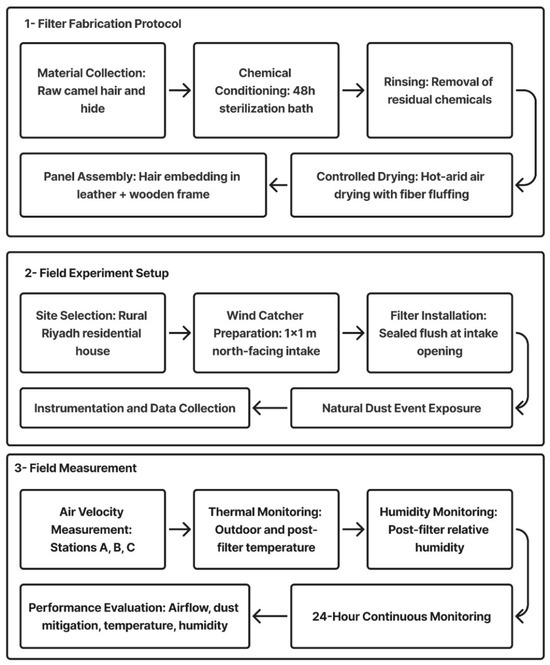
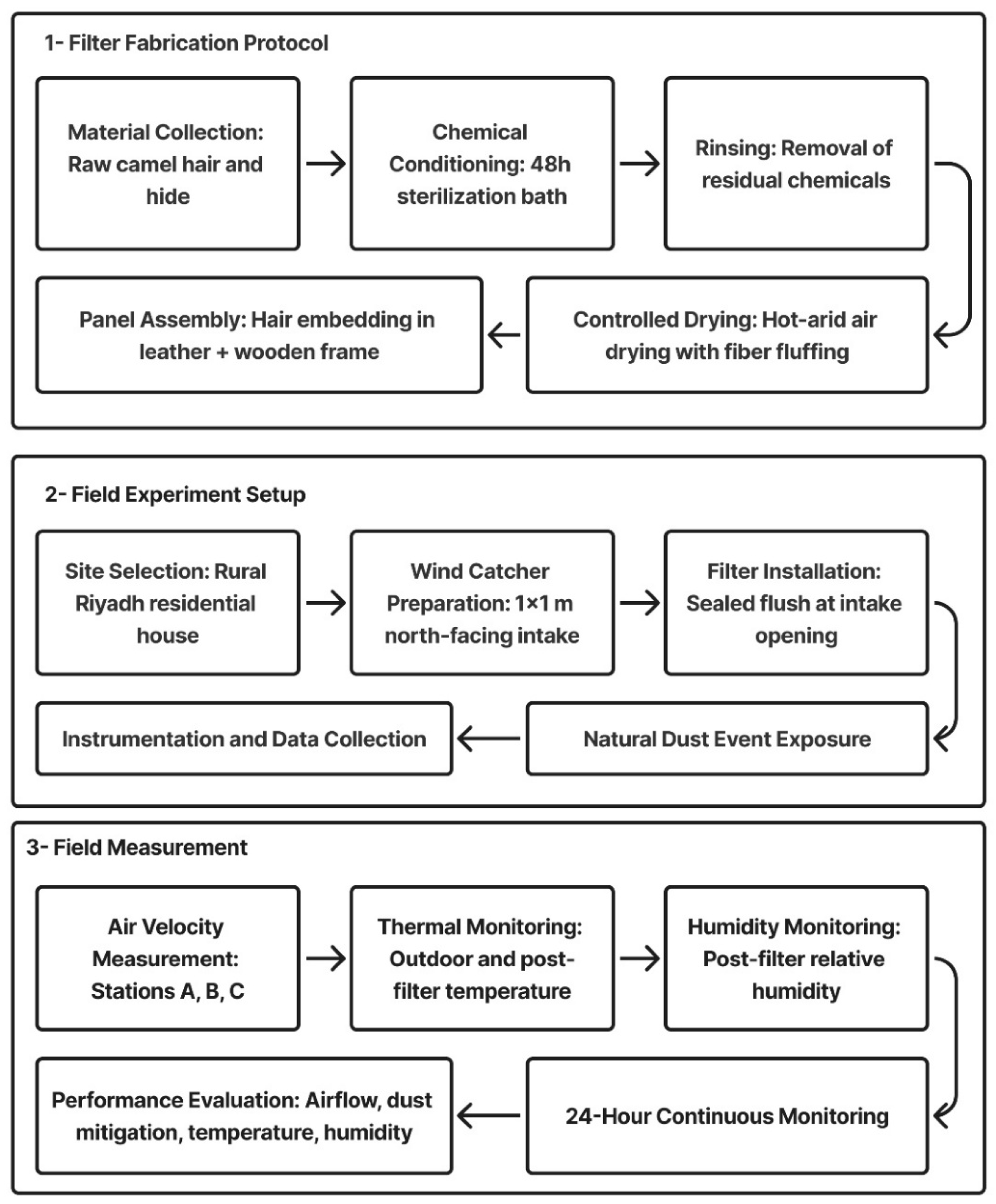
The methodology (Figure 3) employed in this research was developed to evaluate the real-world performance of a full-scale camel-hair-leather composite filter integrated into a traditional down draft wind catcher system. This section outlines the fabrication, installation, and performance monitoring of the filter under natural climatic conditions. Unlike previous laboratory-based simulations, this study prioritized empirical data collection from an in situ application, leveraging an actual dusty wind event in a rural Saudi residential context. The goal was to investigate how the filter impacted airflow, dust mitigation, temperature moderation, and humidity buffering—all critical parameters for the viability of passive ventilation systems in arid environments. Through a detailed account of material preparation, field deployment, and instrumentation strategy, the following subsections document the methodology as a replicable protocol for future architectural and environmental research.
Figure 3.
Methodology Flowchart.
3.1. Filter Fabrication Protocol
The composite filter (1.0 × 1.0 m) was prepared following the same procedure as the prior lab-scale research [13], scaled up for architectural application. The process consisted of three main phases: Chemical Conditioning, Controlled Drying, Panel Assembly.
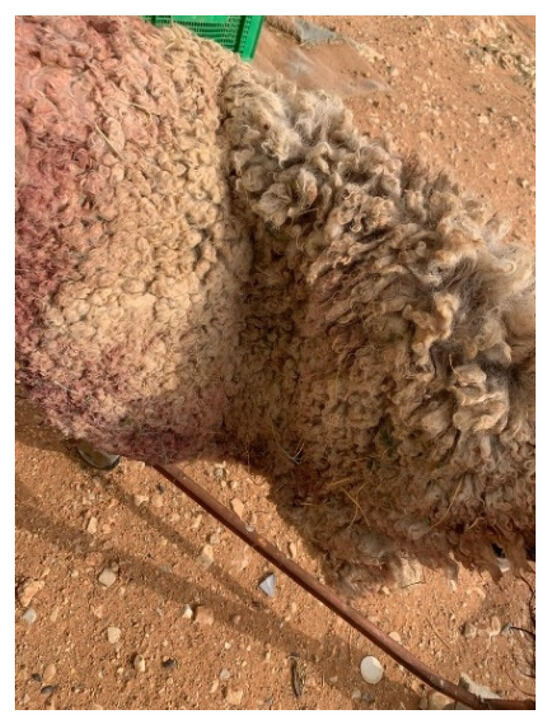
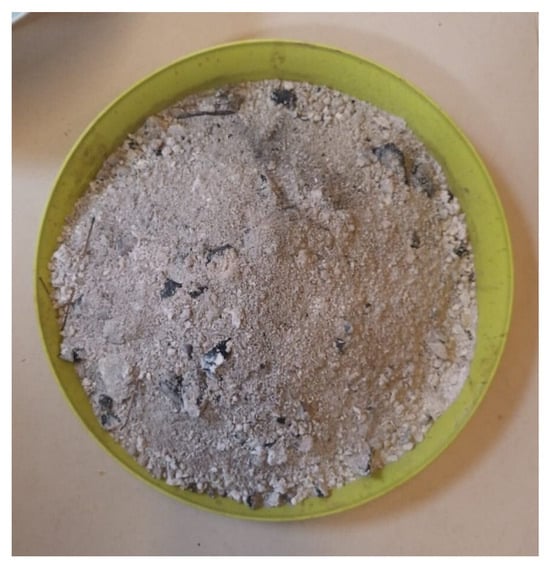
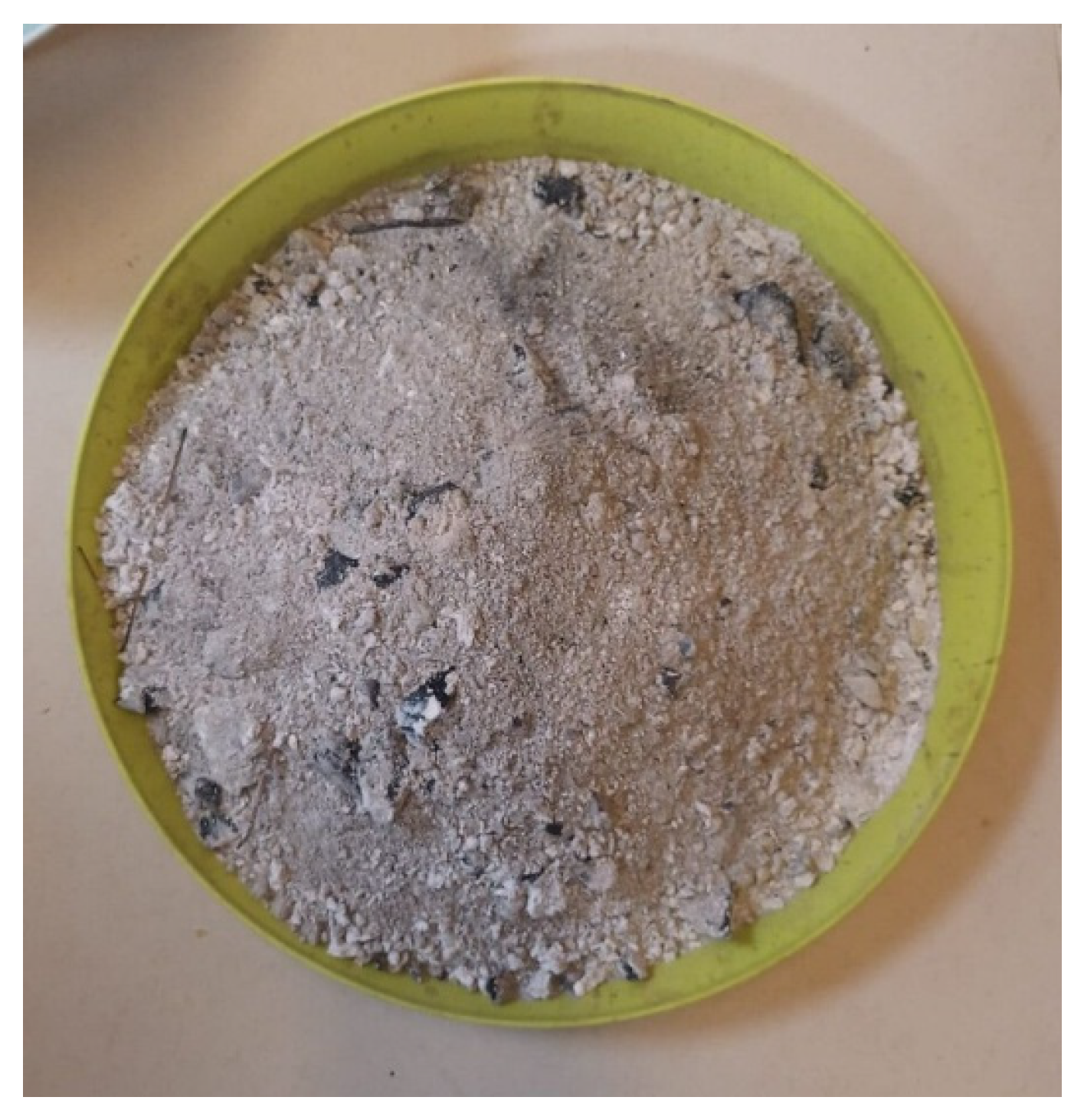
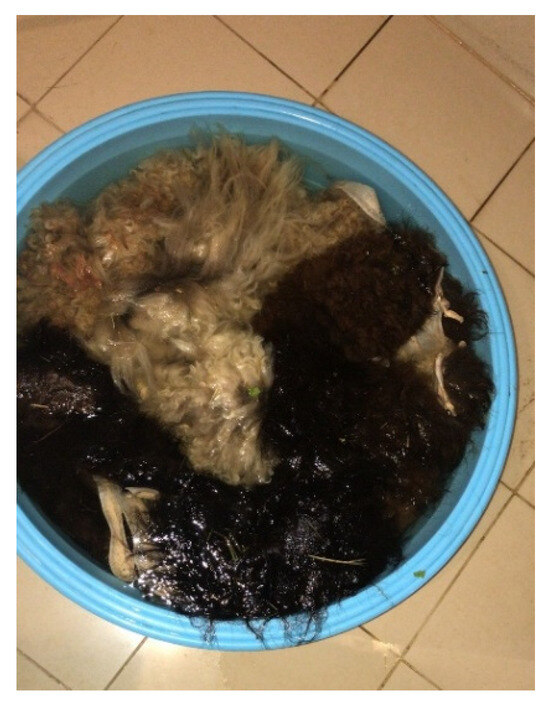
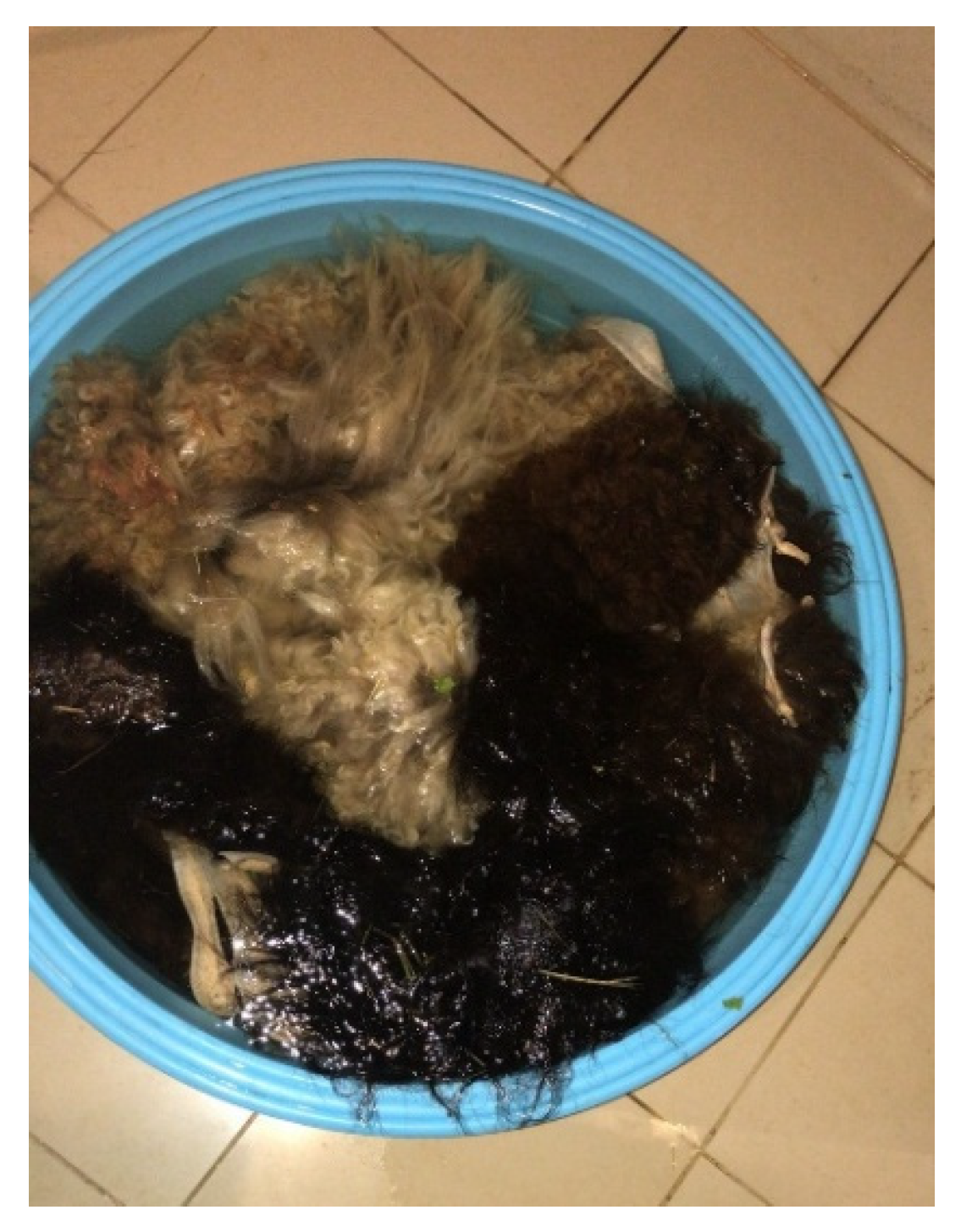
At first, raw camel hair and camel hide were freshly obtained from local abattoirs and cleaned of debris (Figure 4). The hide (with hair intact) was soaked for 48 h in a formulated bath of aqueous chlorine (~5% Cl) and traditional additives (ash, salt, alum, pomegranate peel) to sterilize organic matter and lightly remove oils (Figure 5). After this treatment, the materials were thoroughly rinsed with clean water to remove any residual chemicals (Figure 6).
Figure 4.
Raw camel hair and leather.
Figure 5.
Firewood ash, fine salt, alum, and ground pomegranate peel.
Figure 6.
Sample chemical conditioning.
After that, the conditioned hide and hair were air-dried in a sheltered environment under hot, arid conditions (≈30–40 °C, <20% RH). During drying, the camel hair fibers were manually “fluffed” twice daily to prevent matting and to maintain a loose, porous fiber structure. Drying continued for about 5 days until the moisture content fell below 10%, ensuring the leather substrate was stable and the hair fibers remained lofted and well-distributed.
Finally, the filter panel was then constructed at full scale. Camel hair fibers (trimmed to 20–50 mm length for optimal porosity vs. pressure drop) were mechanically embedded into a 1 m2 tanned leather hide which was stretched over a custom wooden frame 50 mm in depth. No synthetic binders were used—the hairs were held in place by friction and the natural crimp of the fibers within the leather matrix. The leather edges were folded as a 10 mm flange over the frame and secured with stainless-steel rivets for structural reinforcement. Finally, the assembled filter panel was steam-treated at ~60 °C for 10 min to relieve residual stresses in the leather and to improve the cohesion between the hair fiber web and the leather backing. This yielded a sturdy, breathable filter panel ready for field installation.
The fabrication process of the camel hair filtration layer is described in this study to provide contextual understanding of the material used in the architectural application, rather than to re-establish material properties or manufacturing protocols. Detailed characterization of fiber areal density, porosity, thickness uniformity, pressure drop behavior, and material safety considerations was previously reported by the authors through controlled laboratory testing [13]. The present study therefore does not aim to reproduce or extend material-scale characterization, but to examine system-level behavior when the previously characterized material is integrated within a down-draft wind catcher under natural ventilation conditions.
3.2. Field Experiment Setup
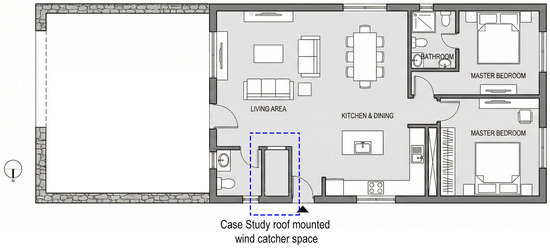
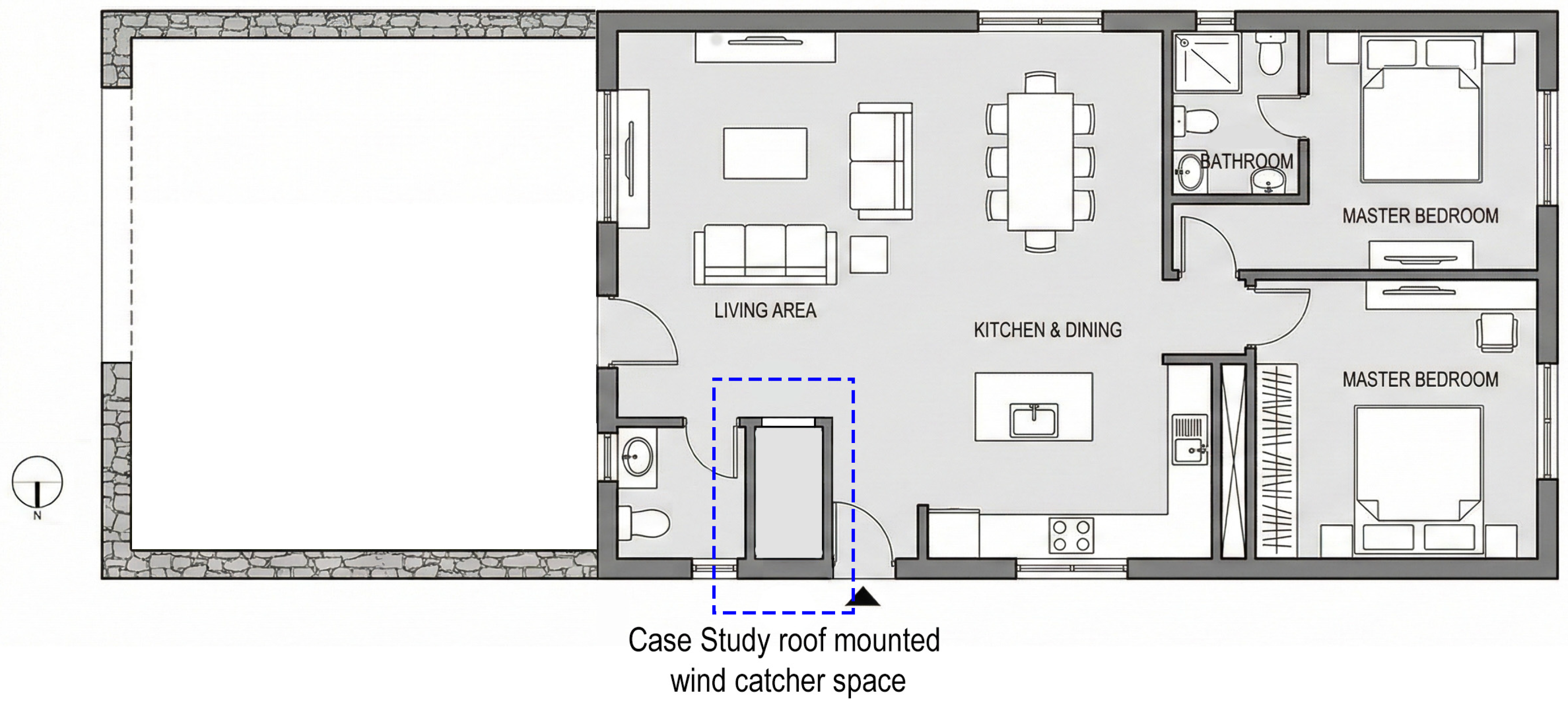
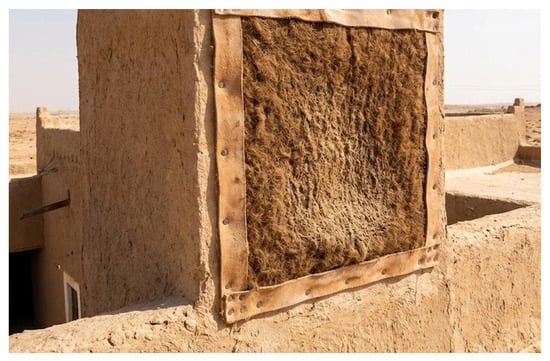
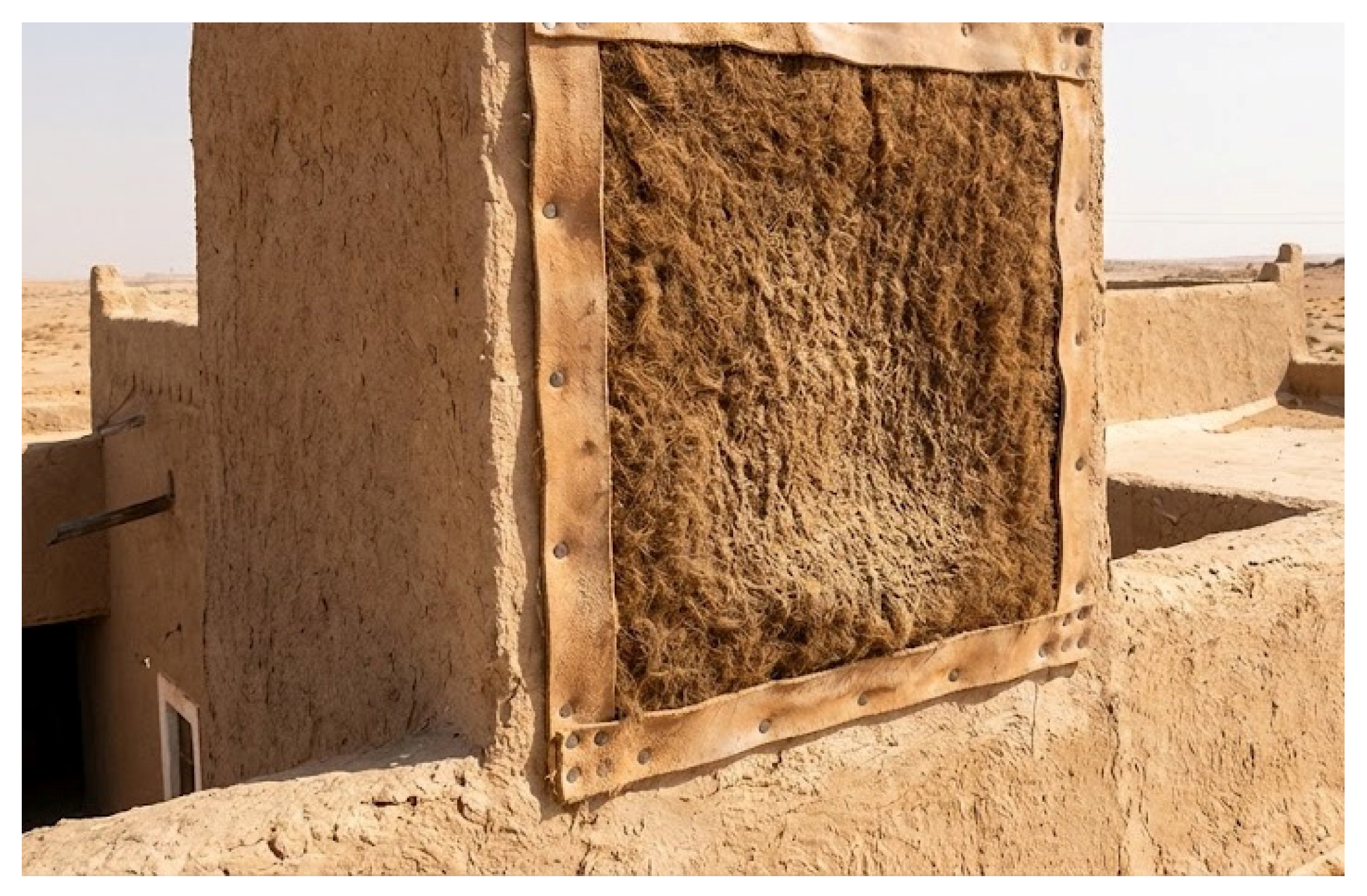
The field experiment took place in a single-story house on the outskirts of Riyadh (Saudi Arabia) near open desert terrain (Figure 7). The test space was a living room equipped with a traditional roof-mounted down draft wind catcher (malqaf). The wind catcher’s intake aperture, measuring 1.0 m × 1.0 m, faced north to capture prevailing winds and was elevated ~6 m above ground level (Figure 8 and Figure 9). Opposing windows on the north and south walls of the living space were kept open to promote cross-ventilation, thus enhancing the down draft wind catcher’s draw via a pressure differential.
Figure 7.
Plan of case study demonstrating the wind catcher (Malqaf) with camel hair filter.
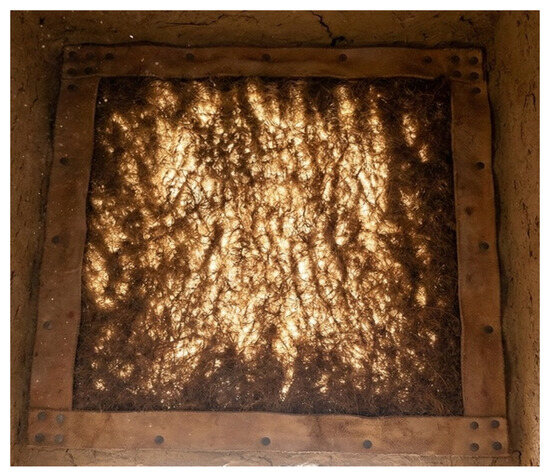
Figure 8.
External shot of the camel hair air filter installed to the down draft wind catcher inlet.
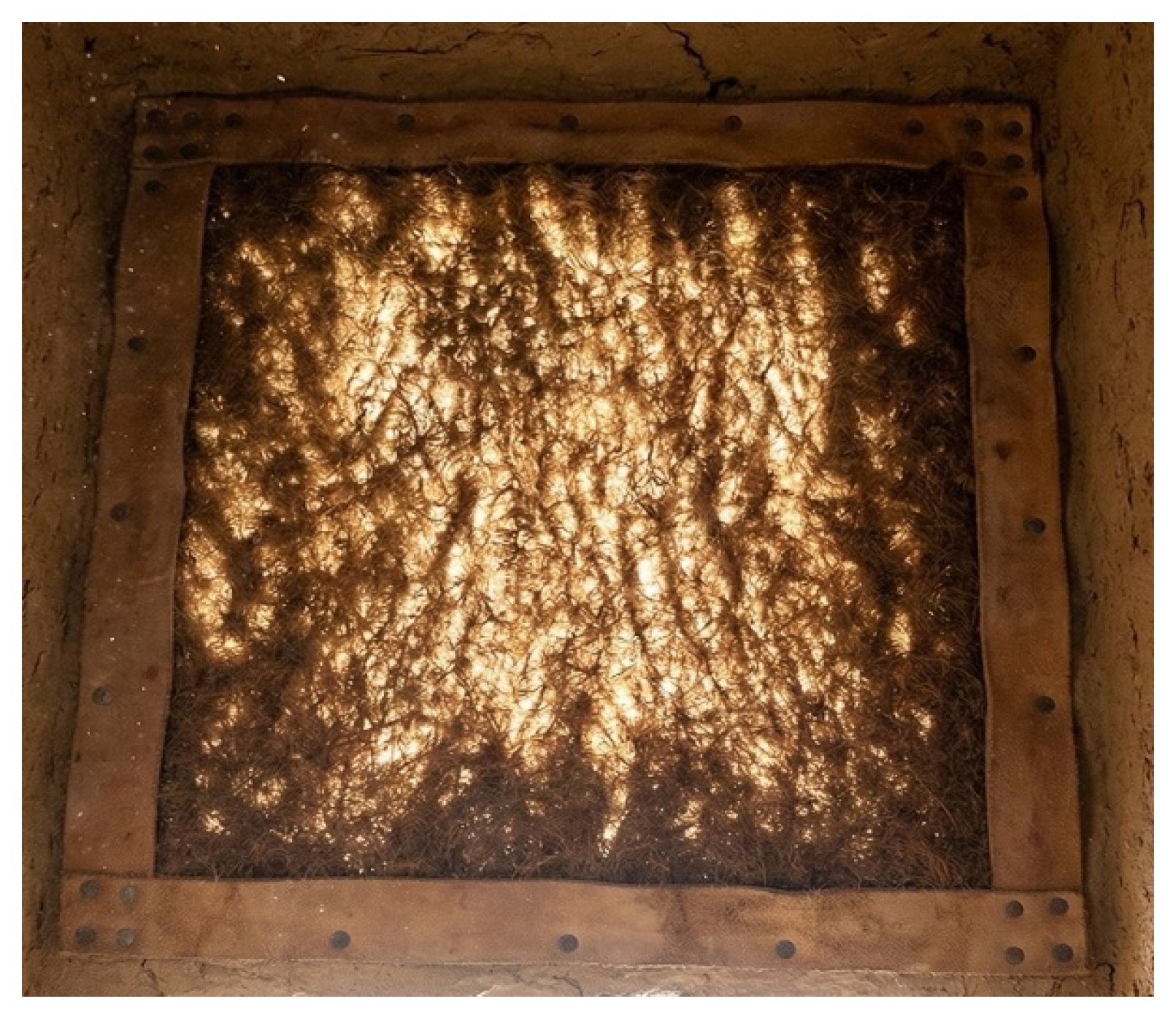
Figure 9.
Internal shot of the installed camel hair air filter.
For the experiment, the prepared camel-hair filter panel was installed flush at the down draft wind catcher’s intake opening, and all edges were sealed to prevent air bypassing the filter. This way, all incoming airflow had to pass through the filter. The study was conducted during a typical hot, dusty wind event, providing a realistic scenario to test both ventilation and dust mitigation performance of the filter.
3.3. Instrumentation and Data Collection
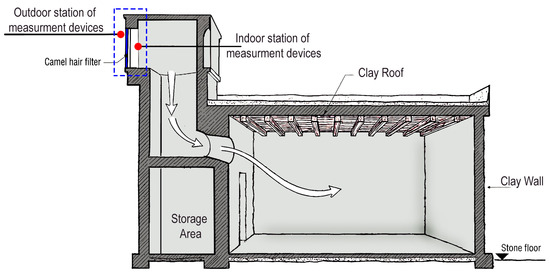
Environmental data were collected over a continuous 24 h period during the dust event, using calibrated instruments to monitor airflow, climate, and dust accumulation as shown in the down draft wind catcher section demonstrating the measuring stations (Figure 10).
Figure 10.
Vertical section of case study down draft wind catcher (Malqaf) with camel hair filter demonstrating the measuring station in the dashed area.
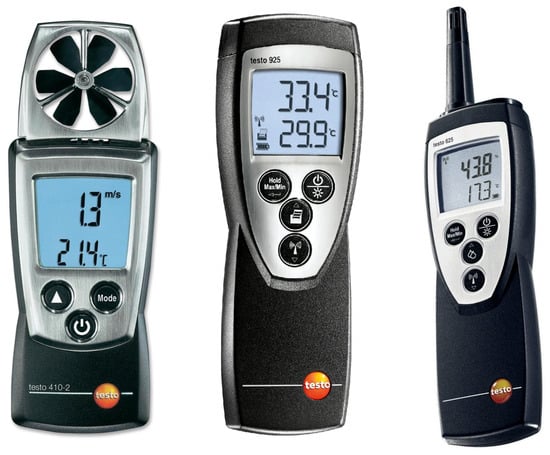
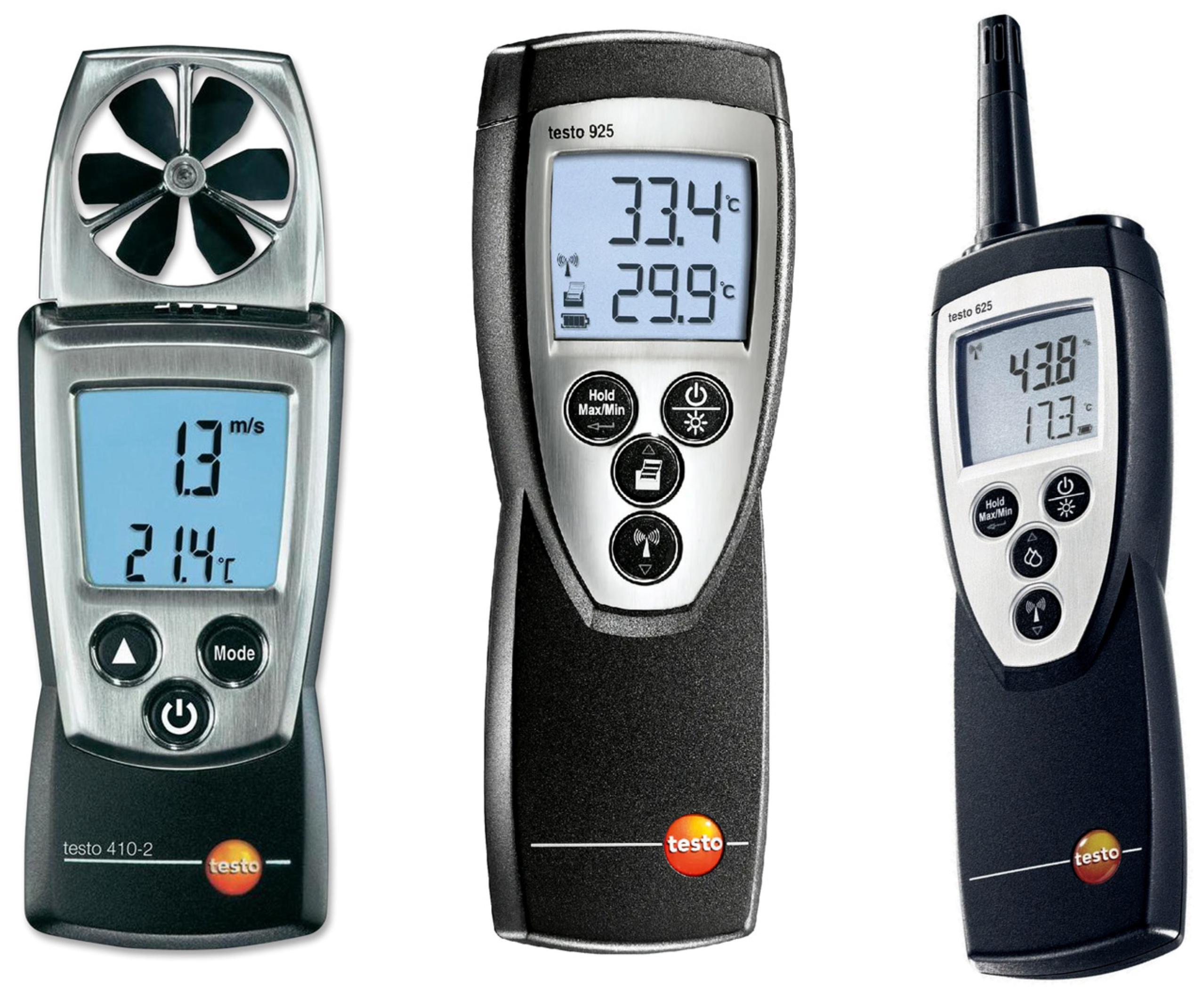
A vane anemometer (Testo 410-1, accuracy ±0.2 m/s + 2% of reading, manufactured by Testo SE & Co. in Lenzkirch, Germany) (Figure 11) recorded air velocities at three locations: (a) Station A—Outdoor free-stream wind speed upwind of the wind catcher; (b) Station B—Pre-filter intake velocity, measured ~10 cm inside the down draft wind catcher opening (upstream of the filter); and (c) Station C—Post-filter supply velocity, ~10 cm downstream of the filter into the shaft. These measurements captured the wind speed reduction through the wind catcher and across the filter.
Figure 11.
Measurement devices from right to left (Testo 410-1, Testo 925, Testo 625).
Air temperature was monitored with a precision thermometer (Testo 925, Type-K thermocouple probe, manufactured by Testo SE & Co. in Lenzkirch, Germany) (Figure 11) at two points—outdoors (ambient) and at the supply air just after the filter. This tracked any cooling effect of the filter. Simultaneously, a thermohydrometer (Testo 625, manufactured by Testo SE & Co. in Lenzkirch, Germany) (Figure 11) logged relative humidity (RH) at the same location. The RH data helped assess moisture exchange due to the filter (e.g., fibers absorbing or releasing humidity) and ensured consistent baseline conditions throughout the day-night cycle. To evaluate filtration performance, the filter was examined for dust loading after 24 h of exposure. Visual inspection of the filter’s surface and interior was performed, and the dust captured was qualitatively assessed. In addition, any accumulated particulate mass on the filter was noted to gauge the level of dust capture and potential clogging over the test period.
All instruments were synchronized and calibrated, and data were logged at regular intervals. The experiment thus provided a full day’s profile of how the filter affected incoming air flow, temperature, humidity, and dust in a real-world setting.
In the present study, PM10 capture was evaluated qualitatively to support interpretation of the architectural integration of camel hair filtration rather than to re-establish filtration efficiency values. Quantitative PM10 removal performance of camel hair–based filtration media has been previously reported by the authors under controlled laboratory conditions using standardized testing protocols, where filtration efficiency, pressure drop, and material behavior were rigorously quantified. The current investigation represents a subsequent research phase, shifting focus from material-scale performance to in situ system behavior within a down-draft wind catcher under natural ventilation. Under such field conditions, episodic dust events, spatial variability, and practical instrumentation constraints limit the feasibility of continuous quantitative particulate monitoring. Accordingly, visual inspection and comparative observation were employed as complementary indicators to assess particulate interception at the architectural system level, without implying standardized or generalized filtration performance compliance.
4. Results and Discussion
This section presents the empirical findings of the full-scale field experiment, structured around airflow dynamics, thermal and humidity modulation, and dust filtration performance of the camel-hair leather composite filter. The analysis draws on data collected over a continuous 24 h dust event using synchronized environmental instrumentation.
The quantitative outcomes reported in this study are limited to system-level environmental indicators appropriate for a field-based, naturally ventilated case study. These include relative changes in airflow velocity within the wind catcher shaft and indoor space, as well as measured indoor air temperature and relative humidity used for adaptive comfort interpretation. No quantitative particulate concentration, filtration efficiency, or standardized performance metrics are derived from the field investigation. Qualitative particulate interception observations are presented as contextual evidence to support interpretation of system behavior, while detailed quantitative filtration performance is referenced from prior laboratory-based studies.
4.1. Airflow Dynamics and Velocity Reduction
The field data revealed that the filter introduced measurable airflow resistance while maintaining acceptable ventilation rates throughout the day. Table 1 summarizes the airflow velocity profiles recorded at three measurement stations: the outdoor free stream, just before the filter, and immediately after the filter inside the down draft wind catcher shaft.
Table 1.
Diurnal airflow velocity profile over 24 h.
The mean velocity reduction across the filter during active wind periods was approximately 38.4%, confirming the filter’s impedance to airflow while still allowing passive ventilation. During peak outdoor wind speeds (16:00), the system delivered a post-filter supply velocity of 0.8 m/s, well within the ASHRAE-recommended range (0.5–1.0 m/s) for effective passive cooling.
Within the framework of adaptive thermal comfort, increased air movement is widely recognized as an effective strategy for improving occupant comfort in warm environments, particularly in naturally ventilated buildings. ASHRAE Standard 55 acknowledges that elevated air speeds, exceeding 1.0 m/s and reaching up to approximately 2.0 m/s, may be perceived as desirable under hot conditions, provided that occupants have adaptive opportunities such as operable openings or behavioral control [29]. In this context, the airflow velocities observed in the present study are consistent with adaptive comfort strategies reported in hot-arid climates, suggesting that the integration of filtration within the down draft wind catcher does not inherently compromise the potential for comfort-enhancing air movement.
4.2. Thermal and Hygrometric Behavior
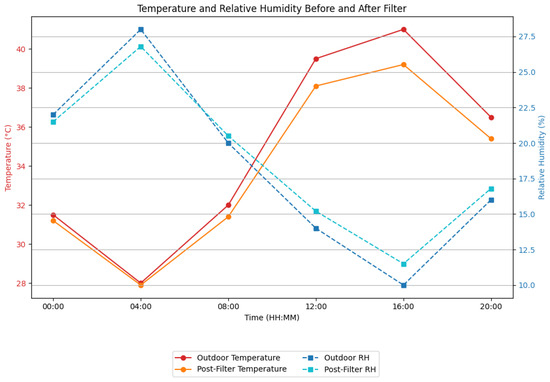
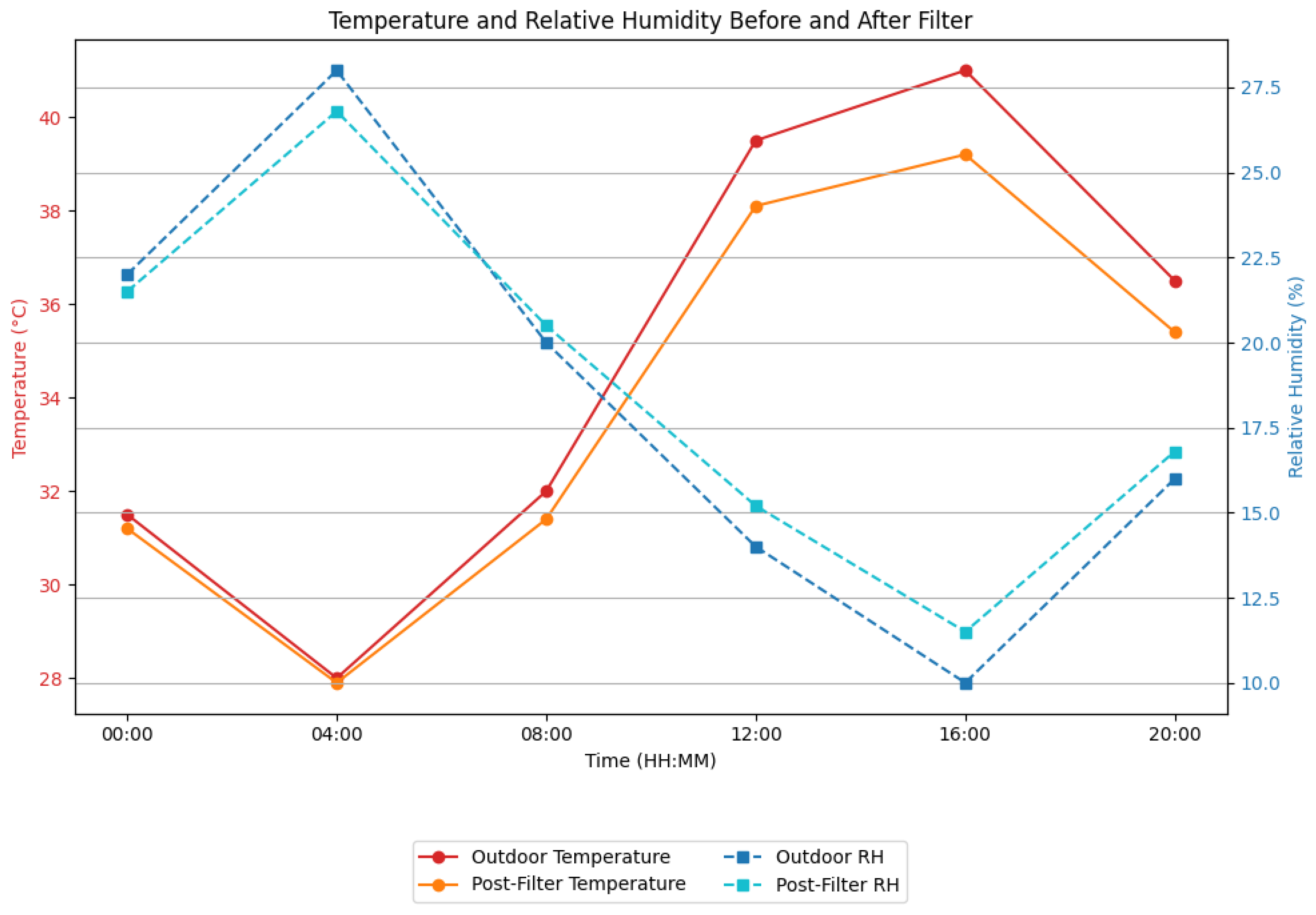
Temperature and humidity measurements demonstrated the filter’s additional environmental moderation capabilities. Table 2 provides a full diurnal profile comparing outdoor and post-filter air temperatures and relative humidity levels.
Table 2.
Thermal and relative humidity (RH) profile over 24 h.
The maximum temperature reduction across the filter was observed at 16:00, with a ΔT of −1.8 °C, primarily due to the filter’s dual role as a Thermal Break and Desorption Cooling. The camel-hair matrix’s low conductivity (~0.038 W/m·K) insulated incoming air from solar-heated external surfaces. Also, Camel hair absorbed ambient humidity at night and gradually released it during arid daytime hours, generating a mild evaporative cooling effect. The corresponding rise in RH at supply (e.g., +1.5% at 16:00) confirmed moisture release from the filter fibers. These thermal and hygrometric modulations, while modest, suggest that the filter contributes to thermal comfort not only by airflow but also by modifying air properties, check Figure 12.
Figure 12.
Temperature and Relative Humidity Before and After Filter.
The observed reduction in indoor air temperature (up to 1.8 °C) following the integration of camel hair filtration should be interpreted as an empirical association rather than as evidence of a single dominant cooling mechanism. While evaporative effects related to residual moisture in natural fibers may contribute to localized cooling under certain conditions, the present study did not quantify evaporation rates or latent heat exchange. The measured temperature difference may therefore result from a combination of factors, including moderated airflow velocity, increased air residence time within the down draft wind catcher shaft, partial attenuation of solar radiation, and the thermal buffering characteristics of the camel hair–leather assembly. As such, the cooling effect is reported as an observed outcome under the specific experimental conditions rather than a thermodynamically isolated process.
The observed changes in air temperature and relative humidity are reported as empirical observations rather than as evidence of a specific heat or moisture transfer mechanism. The present study did not conduct a heat or moisture balance assessment, nor did it measure filter surface temperature, material moisture content, or solar exposure. The camel hair filter was not actively wetted, and no shading devices were introduced as part of the experimental configuration. Sensor locations and measurement positions are documented in the sectional drawings to clarify spatial context. Accordingly, the observed thermal and humidity variations may reflect a combination of factors, including airflow redistribution, mixing effects, and local microclimatic interactions, which cannot be fully isolated within the scope of the present study.
The reported airflow reduction of 38.4% represents a relative change in measured air velocity associated with the introduction of the filtration layer, rather than an assessment of ventilation adequacy or indoor air quality compliance. The present study did not evaluate ventilation effectiveness using CO2 concentration or similar metabolic indicators, and therefore does not make claims regarding minimum ventilation rates. Instead, airflow measurements are interpreted in relation to adaptive comfort strategies in naturally ventilated buildings, where perceived comfort is influenced by air movement, thermal conditions, and occupant adaptation rather than solely by volumetric ventilation criteria. Accordingly, the observed airflow reduction is discussed in terms of its influence on air movement patterns and comfort perception, not as an indicator of ventilation sufficiency.
4.3. Dust Filtration Performance and Structural Integrity
After 24 h of exposure to dusty winds, the camel-hair filter panel was visually inspected. Key observations are summarized in Table 3. The qualitative particulate interception observations are intended to function as corroborative, in situ evidence of system interaction under natural ventilation conditions, complementing previously published quantitative laboratory results rather than substituting for standardized filtration assessment.
Table 3.
Qualitative assessment of particulate capture.
Moreover, no significant sediment was observed on indoor surfaces, contrasting with unfiltered days. The filter effectively blocked coarse and some fine particulates, acting as an inertial barrier without relying on synthetic membranes or electrostatic systems. Overall, the field deployment demonstrated that the camel-hair-leather composite filter offers:Reliable air velocity reduction while preserving passive airflow-Minor but measurable cooling and humidifying effects-Strong coarse dust capture and resilience under desert wind loads. These results support the feasibility of incorporating natural fiber filters into down draft wind catchers, offering a biomimetic, low-energy solution for indoor air quality in dusty climates.
5. Architectural Integration and Design Implications
The integration of camel hair–based filtration within downdraft wind catcher systems represents a strategy for enhancing indoor environmental quality while preserving the passive operational logic of vernacular Saudi architecture. Rather than functioning as a standalone technological intervention, the proposed approach should be understood as part of a broader architectural system in which airflow behavior, material properties, user interaction, and environmental conditions collectively determine performance.
From an architectural perspective, the placement of filtration material within the airflow path of a down draft wind catcher introduces both opportunities and constraints. While the incorporation of camel hair may contribute to reducing the ingress of coarse airborne particulates, it simultaneously influences airflow resistance and maintenance requirements. Variations in wind direction, seasonal dust intensity, and opening geometry can affect pressure differentials driving natural ventilation, underscoring the importance of situating filtration elements in locations that minimize disruption to airflow continuity. As such, architectural integration requires careful consideration of section geometry, inlet sizing, and access for inspection or replacement.
Validation of the system’s performance cannot rely on a single metric or observation. Instead, architectural effectiveness is best assessed through triangulation of multiple forms of evidence, including measured airflow and thermal parameters, qualitative observations of particulate deposition, and alignment with established principles of adaptive comfort in naturally ventilated buildings. In this study, airflow measurements and indoor thermal data provide quantitative insight into ventilation behavior, while visual inspection and comparative observation support qualitative assessment of filtration effects. Together, these complementary approaches allow for a more robust interpretation of system performance without implying standardized compliance or certification.
Material sourcing and circularity are also critical considerations in architectural applications. Camel hair and hide are byproducts of existing livestock and meat-processing industries in Saudi Arabia, suggesting potential availability beyond small-scale artisanal use. However, scaling such materials for widespread architectural application would require coordinated collection, processing, and quality-control frameworks to ensure consistency and hygiene. Variability in fiber density and hide thickness introduces design uncertainty that must be addressed through standardized preparation protocols or hybrid assembly strategies. From a circular-economy perspective, valorizing agricultural byproducts as architectural components offers environmental advantages, but logistical feasibility remains a determining factor for broader adoption.
Holistic integration further requires situating filtration performance within the wider context of comfort and energy considerations (Table 4). In naturally ventilated buildings, elevated air movement is commonly used to enhance thermal comfort under hot conditions, and the introduction of filtration must not compromise this adaptive strategy. The results of this study suggest that camel hair filtration can be incorporated without inherently negating airflow levels associated with comfort-enhancing air movement; however, long-term impacts on pressure drop and maintenance frequency may influence energy use indirectly through occupant behavior or supplementary mechanical systems. Consequently, the architectural value of camel hair filtration lies not in maximizing a single performance criterion, but in contributing to a balanced environmental strategy that addresses air quality, comfort, material sustainability, and passive energy use collectively.
Table 4.
Potential applications of camel hair filters across building components.
6. Conclusions
This study has examined the integration of camel hair–based filtration within traditional down-draft wind catcher systems as an architectural strategy for addressing indoor air quality while maintaining natural ventilation performance in hot-arid Saudi contexts. Building upon earlier material-focused research by the authors, the present work advances the investigation to the scale of vernacular architectural systems, emphasizing the interaction between material behavior, airflow dynamics, and indoor environmental conditions under natural ventilation. The results indicate that camel hair filtration can be incorporated within a down-draft wind catcher without fundamentally disrupting airflow patterns associated with passive ventilation. Observed air movement and indoor thermal conditions are consistent with adaptive comfort approaches commonly applied in free-running buildings, while qualitative observations suggest a capacity for intercepting coarse airborne particulates. These findings support the notion that natural fiber filtration may function as a complementary layer within passive ventilation systems, rather than as an isolated or performance-maximizing intervention.
From an architectural standpoint, the study highlights the importance of holistic integration. The effectiveness of the down draft wind catcher system is influenced not only by the filtration material itself, but also by section geometry, wind variability, environmental context, and operational considerations. Accordingly, camel hair filtration should be understood as part of a broader environmental control strategy that balances air quality, thermal comfort, material sustainability, and passive energy use. In addition, the use of camel hair and hide as functional filtration materials underscores the potential role of locally available livestock byproducts in environmentally responsive architecture. Their application illustrates how circular-economy principles can be embedded within vernacular and contemporary design strategies, provided that material sourcing, preparation, and integration are addressed at the architectural scale.
Overall, this research contributes to the discourse on adaptive and low-energy building design by demonstrating the architectural feasibility of integrating a biomimetically inspired natural filtration material into a traditional ventilation system. By situating material performance within an architectural and environmental framework, the study offers a measured contribution that bridges material experimentation, building science, and vernacular architectural practice.
Limitations and Future Work
While the experimental results presented in this study are promising, the research is subject to several limitations that point to areas for further exploration. One primary constraint is the limited scope of particulate measurement. This study focused primarily on PM10-level coarse dust particles, without detailed quantification of finer particles such as PM2.5 or ultrafine particulates. These smaller fractions are increasingly recognized for their adverse health impacts and should be evaluated in subsequent testing phases to establish the filter’s broader efficacy. Comparative evaluation with other natural fiber filtration materials (e.g., wool, coir, or jute) was beyond the scope of the present study and is identified as a logical extension of this work. Future studies could expand on this exploratory work by incorporating more extensive and continuous interior environmental monitoring across multiple spaces and seasons, enabling a deeper assessment of indoor thermal comfort responses associated with filtered wind catcher operation under varying climatic conditions.
Future studies should incorporate parallel filtered and unfiltered down draft wind catcher configurations operated under identical environmental conditions to isolate the causal effects of filtration on airflow, temperature, and particulate behavior. Additionally, the duration of the field trial was confined to a 24 h cycle during a single dust event. Although this provided valuable insight into the filter’s performance under realistic environmental stress, it does not fully capture long-term effects such as cumulative dust loading, fiber clogging, microbial growth, UV degradation, or material fatigue. These factors are essential for defining maintenance schedules and replacement intervals, and they warrant extended seasonal or year-round monitoring. The experiment also evaluated only a single filter configuration—a 1 × 1 m flush-mounted panel integrated into a square down draft wind catcher. As architectural geometries and airflow dynamics vary widely, further investigations are needed to test different wind catcher orientations, multilateral tower designs, and other passive ventilation strategies such as clerestories or roof turbines. These comparative trials would establish the versatility and performance consistency of the camel-hair filter system across different spatial contexts.
Material variability represents another challenge. As a naturally derived fiber, camel hair is subject to variation in fiber length, thickness, lanolin content, and crimp, depending on the breed, age, and region of origin. These differences can influence filtration behavior, mechanical durability, and moisture absorption. Future research should include fiber property standardization protocols and performance benchmarking against synthetic and alternative natural fibers like sheep wool or date palm fiber. From a building integration perspective, future studies should explore more detailed lifecycle assessments (LCA) and cost–benefit models that quantify the environmental and economic advantages of camel-hair filters over conventional filtration solutions. These analyses would help architects and developers make informed decisions based on resource use, carbon footprint, operational cost, and occupant health benefits.
Author Contributions
Conceptualization, L.A. and K.A.; methodology, L.A. and K.A.; software, K.A.; validation, B.S. and K.A.; formal analysis, L.A.; resources, K.A.; data curation, B.S.; writing, original draft preparation, K.A. and B.S.; writing, review and editing, B.S. and L.A.; visualization, K.A.; supervision, L.A.; project administration, L.A.; funding acquisition, L.A. All authors have read and agreed to the published version of the manuscript.
Funding
The authors extend their appreciation to Princess Nourah bint Abdulrahman University Researchers Supporting Project number (PNURSP2025R245), Princess Nourah bint Abdulrahman University, Riyadh, Saudi Arabia.
Institutional Review Board Statement
This study was reviewed and approved by the Princess Nourah bint Abdulrahman University Institutional Review Board (IRB) under protocol number 25-0592, in accordance with national guidelines for minimal-risk research.
Data Availability Statement
All data generated or analyzed during this study are included in this published article. Any additional data supporting the findings of this study are available from the corresponding author upon reasonable request.
Acknowledgments
This research is derived from the patented invention titled “Filter of Camel Skin and Hair for Air Purification” (Saudi Patent No. SA 9184), granted to the principal investigator Laila Amer Hashem Alqahtani by the Saudi Authority for Intellectual Property.
Generative AI
During the preparation of this work the authors used pre-trained large language models in order to improve the grammar and readability of the manuscript text. After using this AI model, the authors reviewed and edited the content as needed and take full responsibility for the content of the published article.
Conflicts of Interest
The authors declare no conflicts of interest.
Nomenclature
| PM10 | Particulate matter with aerodynamic diameter less than 10 μm |
| RH | Relative Humidity (%) |
| ΔT | Change in air temperature across the filter (°C) |
| ASHRAE | American Society of Heating, Refrigerating and Air-Conditioning Engineers |
| W/m·K | Thermal conductivity unit (watts per meter-kelvin) |
| CFD | Computational Fluid Dynamics |
| MERV | Minimum Efficiency Reporting Value |
References
- Alzaid, A.S.; Anil, I.; Aga, O. Simulation and Assessment of Episodic Dust Storms in Eastern Saudi Arabia Using HYSPLIT Trajectory Model and Satellite Observations. Atmosphere 2024, 15, 1515. [Google Scholar] [CrossRef] [Scilit]
- Jung, C.; Mahmoud, N.S.A. Navigating dust storms and urban living: An analysis of particulate matter infiltration in Dubai’s residences. Front. Built Environ. 2023, 9, 1297520. [Google Scholar] [CrossRef] [Scilit]
- Chohan, A.H.; Awad, J. Wind Catchers: An Element of Passive Ventilation in Hot, Arid and Humid Regions, a Comparative Analysis of Their Design and Function. Sustainability 2022, 14, 11088. [Google Scholar] [CrossRef] [Scilit]
- Moscoso-García, P. Analysis of Passive Strategies in Traditional Vernacular Architecture. Buildings 2023, 13, 1984. [Google Scholar] [CrossRef] [Scilit]
- Sirror, H. Innovative Approaches to Windcatcher Design: A Review on Balancing Tradition Sustainability and Modern Technologies for Enhanced Performance. Energies 2024, 17, 5770. [Google Scholar] [CrossRef] [Scilit]
- Eid, Y.M.; Zekry, O.S. Sustainable Architecture Inspired by Camels: A Review. Suez Canal Eng. Energy Environ. Sci. 2025, 3, 64–79. [Google Scholar] [CrossRef] [Scilit]
- Shahda, M.M.; Elhafeez, M.M.A.; El Mokadem, A.A. Camel’s nose strategy: New innovative architectural application for desert buildings. Sol. Energy 2018, 176, 725–741. [Google Scholar] [CrossRef] [Scilit]
- Badarnah, L.; Farchi, Y.N.; Knaack, U. Solutions From Nature For Building Envelope Thermoregulation. WIT Trans. Ecol. Environ. 2010, 138, 251–262. [Google Scholar] [CrossRef] [Scilit]
- Almazroui, M.; Islam, M.N.; Athar, H.; Jones, P.D.; Rahman, M.A. Recent climate change in the Arabian Peninsula: Annual rainfall and temperature analysis of Saudi Arabia for 1978–2009. Int. J. Climatol. 2012, 32, 953–966. [Google Scholar] [CrossRef] [Scilit]
- Modaihsh, A.S.; Mahjou, M.O. Falling Dust Characteristics in Riyadh City, Saudi Arabia During Winter Months. APCBEE Procedia 2013, 5, 50–58. [Google Scholar] [CrossRef] [Scilit]
- Alghafis, M.F. Investigating Thermal Comfort in Vernacular and Contemporary Houses in Al-Qassim’s Hot-Arid Climate: Technical, Cultural and Behavioural Factors. Ph.D. Thesis, Cardiff University, Cardiff, Wales, 2023. Available online: https://orca.cardiff.ac.uk/id/eprint/169258 (accessed on 21 January 2026).
- Attia, S. Assessing the Thermal Performance of Bedouin Tents in Hot Climates. 2014. Available online: https://hdl.handle.net/2268/164042 (accessed on 1 January 2026).
- Alqahtani, L.; Shaheen, B. Exploring Camel Hair: A Sustainable Local Material for Architectural Applications in Saudi Arabia. CIB Conf. 2025, 1, 119. [Google Scholar] [CrossRef] [Scilit]
- Aloshan, M.A.; Aldali, K.M. Courtyard design for energy efficiency and thermal comfort: Machine learning insights across hot and warm climates. Sci. Rep. 2025, 15, 43660. [Google Scholar] [CrossRef] [Scilit] [PubMed]
- Agharabi, A.; Fard, Z. Architectural design solutions for combating dust storms in residential buildings. Jordan J. Earth Environ. Sci. 2021, 12, 145. Available online: https://jjees.hu.edu.jo/files/Vol12No2/JJEES_Vol_12_No_2_LQ.pdf#page=51 (accessed on 1 January 2026).
- Abu Qadourah, J. Energy efficiency evaluation of green roofs as a passive strategy in the mediterranean climate. Results Eng. 2024, 23, 102519. [Google Scholar] [CrossRef] [Scilit]
- Foruzanmehr, A. The wind-catcher: Users perception of a vernacular passive cooling system. Archit. Sci. Rev. 2012, 55, 250–258. [Google Scholar] [CrossRef] [Scilit]
- Jomehzadeh, F.; Nejat, P.; Calautit, J.K.; Yusof, M.B.M.; Zaki, S.A.; Hughes, B.R.; Yazid, M.N.A.W.M. A review on windcatcher for passive cooling and natural ventilation in buildings, Part 1: Indoor air quality and thermal comfort assessment. Renew. Sustain. Energy Rev. 2017, 70, 736–756. [Google Scholar] [CrossRef] [Scilit]
- Saadatian, O.; Haw, L.C.; Sopian, K.; Sulaiman, M. Review of windcatcher technologies. Renew. Sustain. Energy Rev. 2012, 16, 1477–1495. [Google Scholar] [CrossRef] [Scilit]
- Aloshan, M.A.; Aldali, K. The Role of Regional Codes in Mitigating Residential Sector Energy Demand Sensitivity to Climate Change Scenarios in Hot–Arid Regions. Buildings 2025, 15, 1789. [Google Scholar] [CrossRef] [Scilit]
- Seidabadi, L.; Ghadamian, H.; Aminy, M. A novel integration of PCM with wind-catcher skin material in order to increase heat transfer rate. Int. J. Renew. Energy Dev. 2019, 8, 1–6. [Google Scholar] [CrossRef] [Scilit]
- Nejat, P.; Ajarostaghi, S.S.M.; Gohari, M.; Jomehzadeh, F.; Poncet, S.; Amiri, L. Development of an Artificial Neural Network Model to Predict the Windcatcher (Badgir) Performance. In Proceedings of the Canadian Society for Mechanical Engineering International Congress: Computational Fluid Dynamics Canada International Congress, Sherbrooke, QC, Canada, 28–31 May 2023. [Google Scholar]
- Zari, M.P. Biomimetic approaches to architectural design for increased sustainability. In Sustainable Building Conference (SB07); School of Architecture, Victoria University: Auckland, New Zealand, 2007. [Google Scholar]
- Arbabzadeh, M.; Etessam, I.; Mofidi, S.S.M. Passive Thermoregulation in Vernacular and Biomimetic Architecture in Hot and Arid Climate. Iran Univ. Sci. Technol. 2020, 30, 198–211. [Google Scholar] [CrossRef] [Scilit]
- Mayhoub, M.; Selim, H.; Abuzaid, A. Roadmap to developing a geometrical design guide for windcatchers. Front. Built Environ. 2025, 11, 1534284. [Google Scholar] [CrossRef] [Scilit]
- World Health Organization. WHO global air quality guidelines. In Particulate Matter (PM2.5 and PM10), Ozone, Nitrogen Dioxide, Sulfur Dioxide and Carbon Monoxide; World Health Organization: Geneva, Switzerland, 2021; pp. 1–360. [Google Scholar]
- Belias, E.; Flourentzou, F.; Licina, D. Can naturally ventilated office buildings cope with dusty outdoor air? In Proceedings of the 43rd AIVC—11th TightVent—9th Venticool Conference, Copenhagen, Denmark, 4–5 October 2023; Available online: https://www.aivc.org/resource/can-naturally-ventilated-office-buildings-cope-dusty-outdoor-air (accessed on 25 January 2026).
- Ma, Q.; Qian, G.; Yu, M.; Li, L.; Wei, X. Performance of Windcatchers in Improving Indoor Air Quality, Thermal Comfort, and Energy Efficiency: A Review. Sustainability 2024, 16, 9039. [Google Scholar] [CrossRef] [Scilit]
- ANSI/ASHRAE Standard 55; Thermal Environmental Conditions for Human Occupancy. ASHRAE: Peachtree Corners, GA, USA, 1992. Available online: https://cir.nii.ac.jp/crid/1574231875437564672 (accessed on 23 September 2024).

Disclaimer/Publisher’s Note: The statements, opinions and data contained in all publications are solely those of the individual author(s) and contributor(s) and not of MDPI and/or the editor(s). MDPI and/or the editor(s) disclaim responsibility for any injury to people or property resulting from any ideas, methods, instructions or products referred to in the content. |
© 2026 by the authors. Licensee MDPI, Basel, Switzerland. This article is an open access article distributed under the terms and conditions of the Creative Commons Attribution (CC BY) license.