Article

Construction Contract Price Prediction Model for Government Buildings Using a Deep Learning Technique: A Study from Thailand

Faculty of Architecture and Planning, Thammasat University, Pathumthani 12121, Thailand
*
Author to whom correspondence should be addressed.
Buildings 2026, 16(3), 651; https://doi.org/10.3390/buildings16030651
Submission received: 31 December 2025 / Revised: 29 January 2026 / Accepted: 30 January 2026 / Published: 4 February 2026

Abstract

Government building projects are particularly complex due to their scale and number of end users, which makes construction prices time-consuming and prone to error. Machine learning is recognized for its ability to process large volumes of complex data quickly with high accuracy, but only a limited number of studies have applied Deep Learning in the early construction stage. Therefore, we aimed to evaluate the potential of Deep Learning to predict construction contract prices for government buildings. Factors were identified through a literature review and interviews with eight experts, and data were collected from 300 government construction projects obtained from Thailand’s Electronic Government Procurement (e-GP) database, the national centralized platform for transparent public bidding. By varying the number of parameters, 80 models were developed and tested. The best-performing model had a three-hidden-layer ratio of 128:64:32 with a Quadratic Loss Function, achieving an R2 of 0.918 and an RMSE of 2.022. The results showed 14 significant factors, with the top 5 being (1) usable area, (2) number of sanitary wares, (3) number of rooms, (4) height, and (5) number of elevators. Sensitivity analysis was subsequently conducted to enhance the explainability of the model. The findings demonstrate the potential of Deep Learning to enhance the accuracy of determining construction price and support more effective government budget planning and decision making.

Graphical Abstract

1. Introduction

In Thailand, construction is considered one of the key economic sectors contributing to national growth, with government projects accounting for a larger share of total construction value (57%) compared to private projects (43%) [1]. Among these, government building construction projects are particularly complex due to their large scale and the significant number of end users they must accommodate. Cost estimation for such projects is time-consuming and susceptible to errors, and any inaccuracies in this stage can lead to substantial miscalculations in the total project cost, delay the procurement process, and result in inefficient resource allocation. Government-funded projects, which rely on tax revenues and public budgets [2], further amplify the importance of accurate estimations.
As a result, determining contract prices for government construction projects is a complex task that requires careful consideration of numerous factors. To arrive at a reasonable contract price, one must calculate both direct and indirect construction costs and then add a mark-up that includes contingencies and projected profit margins [3]. Inaccurate or inappropriate cost estimation can jeopardize the project’s success in multiple dimensions [4]. Such errors may stem from insufficient reference data, inappropriate estimation methods, or failure to account for factors like scope changes and sudden fluctuations in material or labor prices [5]. Additionally, external variables such as economic shifts, political uncertainty, legal or regulatory changes, and delays in administrative approvals can contribute to estimation inaccuracies [6]. Estimating the appropriate construction cost is particularly difficult, as it depends on the characteristics and bidding strategies of individual contractors in determining the mark-up for the project [7,8].
In Thailand, the construction contract price of government buildings is established through a structured legal and administrative process. The formation of this price begins with the determination of the official standard construction cost, which serves as the government’s budgetary ceiling. The official standard construction cost is established by the Committee on the Determination of Standard Construction Costs, which is appointed by the head of the respective government authority. The committee’s mandate is to determine construction costs with accuracy and integrity, in accordance with established academic standards as well as the guidelines prescribed by the Comptroller General’s Department (Ministry of Finance). The primary objective of this process is to ensure transparency and efficiency in public procurement, preventing prices from being excessively high or so low that they compromise project quality. Technically, the committee derives this price by first determining the direct cost, which is the summed value of all construction items based on a detailed quantity take-off and the application of standardized unit material and labor costs. To this direct cost, a ‘Factor F’ is applied as a multiplier that reflects additional indirect charges, including interest, contractor profit, overhead costs, and value-added tax (VAT). This factor is retrieved from official standardized tables, which vary according to the project’s total direct cost. Once this estimated price is finalized, it is used as the benchmark for the competitive bidding process via the e-Government Procurement (e-GP) system. The final contract price is then formed when the winning contractor’s proposal is accepted, representing a synthesis between the government’s cost standards and market-driven competition [9]. However, despite this rigorous process, traditional estimation often faces challenges in capturing real-time market volatility and complex project variables, which may lead to discrepancies between the standard construction costs and actual construction costs.
Currently, artificial intelligence and machine learning are being applied in cost estimation within the construction industry, such as estimating costs for large-scale building projects [10] and high-rise buildings [11]. These technologies are not only used in the construction industry but also in related industries, as demonstrated by studies applying artificial intelligence in earthwork [12] and by the tourism industry using machine learning on travel satisfaction [13]. Furthermore, Deep Learning has recently become a research hotspot in broader engineering applications, demonstrating significant success in areas such as structural damage identification [14] and non-linear response prediction through advanced models like Deep Convolutional Neural Network (DCNN) and Long Short-Term Memory (LSTM) [15]. Existing research on construction cost estimation normally employs neural networks and regression models, which is mainly due to their suitability for processing relatively simple data and performing preliminary cost assessments. However, only a limited number of studies have applied Deep Learning techniques in the early stage of construction [16]. Therefore, in this study, the researchers evaluated the feasibility of applying these techniques to analyze limited, complex, and detailed datasets obtained from Thailand’s government procurement website (e-GP). These datasets include both numerical values and classification-based attributes, enriching the depth of analysis.
Deep Learning, a subfield of machine learning, is recognized for its ability to process large volumes of complex data quickly and with high accuracy [17]. It is well suited for construction cost estimation, which involves multifaceted data such as material costs, labor costs, indirect costs, and other influencing factors. Applying Deep Learning to government construction cost estimation not only improves the precision of bid evaluations by learning from historical databases but also helps uncover and interpret key variables that influence pricing. The resulting models can be developed into applications or software tools that assist cost estimators and project stakeholders. These tools can work in parallel with human experts to reduce unnecessary errors, conserve resources, and enhance the accuracy and efficiency of government budget management.

2. Materials and Methods

In this research, we conducted a literature review to identify independent variables related to building construction costs and associated with project characteristics, which are the parts of the key influencing factors that affect different project pricing determinations [18,19]. These variables were subsequently categorized into four main groups: (1) project type, (2) physical characteristics of the building, (3) physical characteristics of the site, and (4) contract conditions.

2.1. Cost Estimation Standard

Construction cost estimation is a crucial process used in planning, investment decision making, and construction project management. The International Construction Measurement Standards (ICMS), which is a global standard for measuring and reporting construction costs, emphasizes the systematic structuring of costs, covering construction costs, operating costs, and life-cycle costs of projects. Its key advantage is the establishment of a unified global cost classification framework, enabling effective comparison of construction project costs across countries, building types, and time periods. Therefore, this standard is utilized in research, policy analysis, and investment decision making by international stakeholders [20].
When comparing Thailand’s construction cost estimation standards with ICMS, they are found to be suitable for practical application within the domestic context, while ICMS plays a significant role in creating consistency and comparability of costs at the international level. In Thailand, construction cost estimation typically references public sector estimation standards developed by relevant agencies such as the Bureau of the Budget, the Comptroller General’s Department, and public works departments. These standards establish guidelines for calculating construction costs based on quantities of work combined with standard prices for materials, labor costs, and operational costs that reflect the domestic economic conditions and labor market [21]. Therefore, Thailand’s cost estimation standards are primarily suited to the context of laws, government regulations, and the cost structure of the domestic construction industry.

2.2. Project Type Factor in Construction Projects

Different types of construction projects result in different building construction scopes for various uses [22]. For example, residential buildings and office buildings have different usage patterns by occupants, resulting in different building costs [23,24,25]. For instance, residential projects need to consider occupant comfort conditions [26] more than other project building types. This aligns with Elhag et al. [27], who categorized project types affecting different costs into residential buildings, office buildings, commercial buildings, and industrial buildings.

2.3. Physical Characteristics of a Building Factor in Construction Projects

The physical characteristics of a building refer to the various components it is composed of in a construction project. From reviewing the related studies, the physical components of buildings that affect building costs are summarized in Table 1.
The variable coverage percentage in Table 1 was calculated as the proportion (percentage) of reviewed studies that explicitly examined the target variable [42]. From the literature review on the physical characteristics of buildings, additional explanation regarding building material costs can be provided, as they vary according to construction project specifications. Several research studies, including Toh et al. [23], Li et al. [39], Frimpong et al. [40], and Haslinda et al. [41], discuss the types of materials that significantly increase construction costs. These include high-quality decorative materials such as premium materials, marble, granite, or high-quality wood; special glass materials and custom-cut or uniquely manufactured metals such as stainless steel or copper; sustainable environmentally friendly materials like bamboo or recycled products; advanced insulation materials; and the incorporation of smart technologies such as automated lighting systems, including photovoltaic building technologies that can efficiently save energy, reduce overall energy consumption, and decrease carbon dioxide emissions but with higher building costs [43]. These building costs will also be impacted by changes in the size, shape, or functional space of buildings, which will change the number of materials [23,44] and will affect construction costs. Material shortages due to economic conditions also lead to higher building costs [44,45,46,47]. Therefore, it can be concluded that the building’s usable area and materials have significant impacts on construction costs. As buildings increase in number of floors or height, the number of required materials increases accordingly, resulting in higher costs. While the choice of materials or building structures also affects building costs, their impacts are less significant than the size of the building itself. Appropriately adjusting the building characteristics can help control material quantities.

2.4. Site Characteristics Factor in Construction Projects

Environmental factors and limitations arising from the physical characteristics of the land can affect the construction costs of a project [34]. Changes in physical characteristics throughout the year can affect project costs; for example, changing weather conditions across seasons can alter the physical characteristics of the site [48]. Additionally, hot or cold weather conditions may require the building design to accommodate these challenges [47,48,49]. In the areas with frequent rainfall, projects may find that materials are unavailable at the construction site, impacting construction duration and leading to higher costs due to the increased overhead cost [50]. Furthermore, obstacles encountered at the construction site affect project costs, such as steep slopes, elevation, and wetlands, which increase the complexity of the project area. For example, land with appropriate elevation helps reduce the amount of work related to adjusting the original land level [27,51]. Beyond the factors related to the characteristics of the land, Erzaij and Ali [52] and Chan et al. [53] described how remote locations or areas with difficult material transportation result in increased project costs. This aligns with the research works performed by Migliaccio et al. [54], Zhang et al. [55], and Soni et al. [16], which show that location has a significant impact on project cost.

2.5. Contract Conditions Factor in Construction Projects

In construction projects, contract conditions must be clearly determined during the contractor selection process because these conditions will affect the project construction costs. Different types of contracts impact project costs differently due to several factors, such as the different scope of work and project characteristics [35,56]. Several studies have explained the risks that may affect the construction costs during the project implementation phase. The higher the project risk, the more contractors or service providers need to increase construction costs to compensate for the potential risks arising from the contract conditions. Among these factors are subsequent work variation, contract delay, additional contractual procedures, and design changes [16,57,58]. These studies highlighted one of the three constraints in project implementation, i.e., time constraints. If project implementation conditions have limited time, this may result in higher costs [24,58,59]. Additionally, Ali and Kamaruzzaman [60] explained the connection between the scope of work and the timeframe, all of which affect the cost of construction projects.

2.6. Deep Learning

Deep Learning is a machine learning technique built upon the concept of the artificial neural network (ANN), which imitates neural structures in the human brain by stacking multiple layers of interconnected neurons. Each network comprises three principal types of layers: an input layer, one or more hidden layers, and an output layer. The input layer is responsible for receiving raw data that is fed into the system. The core learning operations occur in the hidden layers; adding more of these layers allows the model to capture increasingly complex and detailed representations. Finally, the output layer produces the predicted outcomes based on the transformed information from the preceding layers [61]. This is a process that allows computers to learn from algorithms that can learn and predict from data by recognizing patterns and categorizing data for analysis and prediction based on learning and memorization [6]. Therefore, Deep Learning mimics the process of ANN by increasing the number of stacked hidden layers to achieve more accurate results [62]. The challenge in developing a Deep Learning model is to find the appropriate neural network and to identify variables that affect the teaching performance of the computer network [63]. The more complex the layer system used in processing, the deeper the structure becomes, resulting in more complex and accurate outcomes.
The versatility of Deep Learning has led to its increasing adoption within the construction domain to address diverse challenges. For instance, Sharafat [64] demonstrated the high accuracy and reliability of Deep Learning compared to traditional methods in land use and cover classification within urban settings. Beyond classification, Deep Learning has been utilized to enhance site safety and management; Zhong et al. [65] applied Deep Learning and network analysis to classify and visualize accident narratives, while Zhao et al. [66] integrated it for real-time risk detection and trajectory tracking at construction sites. Furthermore, to support the development of such models, Duan et al. [67] introduced a large-scale open site object detection dataset specifically designed for Deep Learning applications in construction. Collectively, these studies underscore the robustness of Deep Learning in extracting meaningful patterns from complex construction data, providing a foundation for its application in cost estimation as explored in this study.
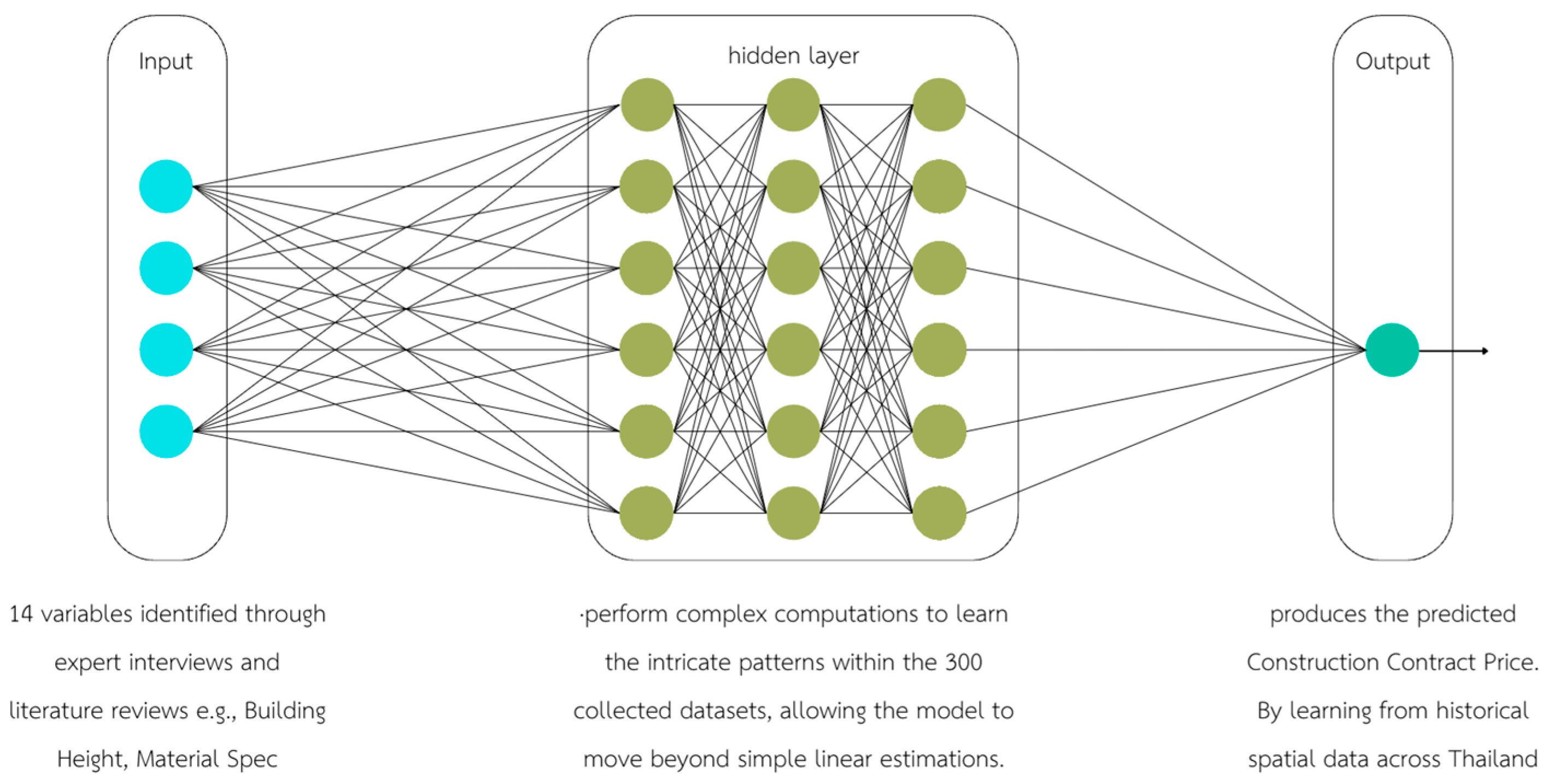
In this research, Deep Learning architecture is specifically designed to handle the complexity of government construction data retrieved from the e-GP system, as shown in Figure 1.
The model’s mechanism is structured into three primary components:
  • Input Layer: This layer receives the pre-processed data consisting of 14 variables identified through expert interviews and literature reviews. These inputs are categorized into quantity data (e.g., Building Height and Size), which accounts for physical volume and material consumption, and quality data (e.g., Material Specifications and Building Types), which reflects the aesthetic and functional requirements of the 8 building classifications (such as hospitals, academic buildings, and residences).
  • Hidden Layers: To capture the non-linear relationships between these diverse variables, such as how ‘Material Specification’ costs vary significantly between a residential building and a car park building, the model utilizes hidden layers. These layers perform complex computations to learn the intricate patterns within the 300 collected datasets, allowing the model to move beyond simple linear estimations.
  • Output Layer: The final layer produces the predicted Construction Contract Price. By learning from historical spatial data across Thailand, the output layer provides a high-fidelity estimation that accounts for the multifaceted nature of government procurement.
This structured approach ensures that both the physical dimensions (quantity) and the specific standards of government buildings (quality) are accurately integrated into the pricing model, addressing the ‘black box’ nature of Deep Learning with a clear, logical framework based on engineering reality.

3. Research Methodology

3.1. Data Source

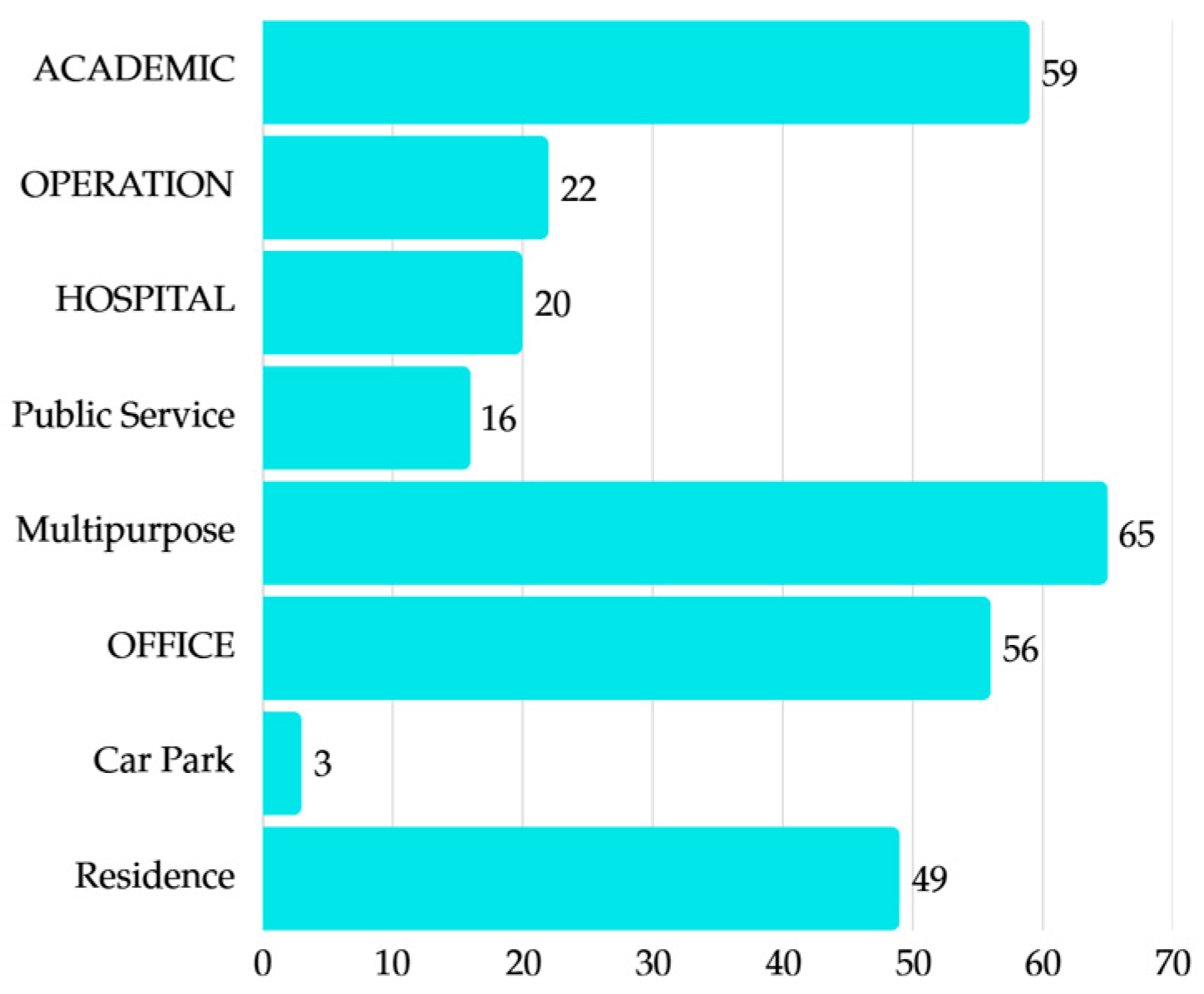
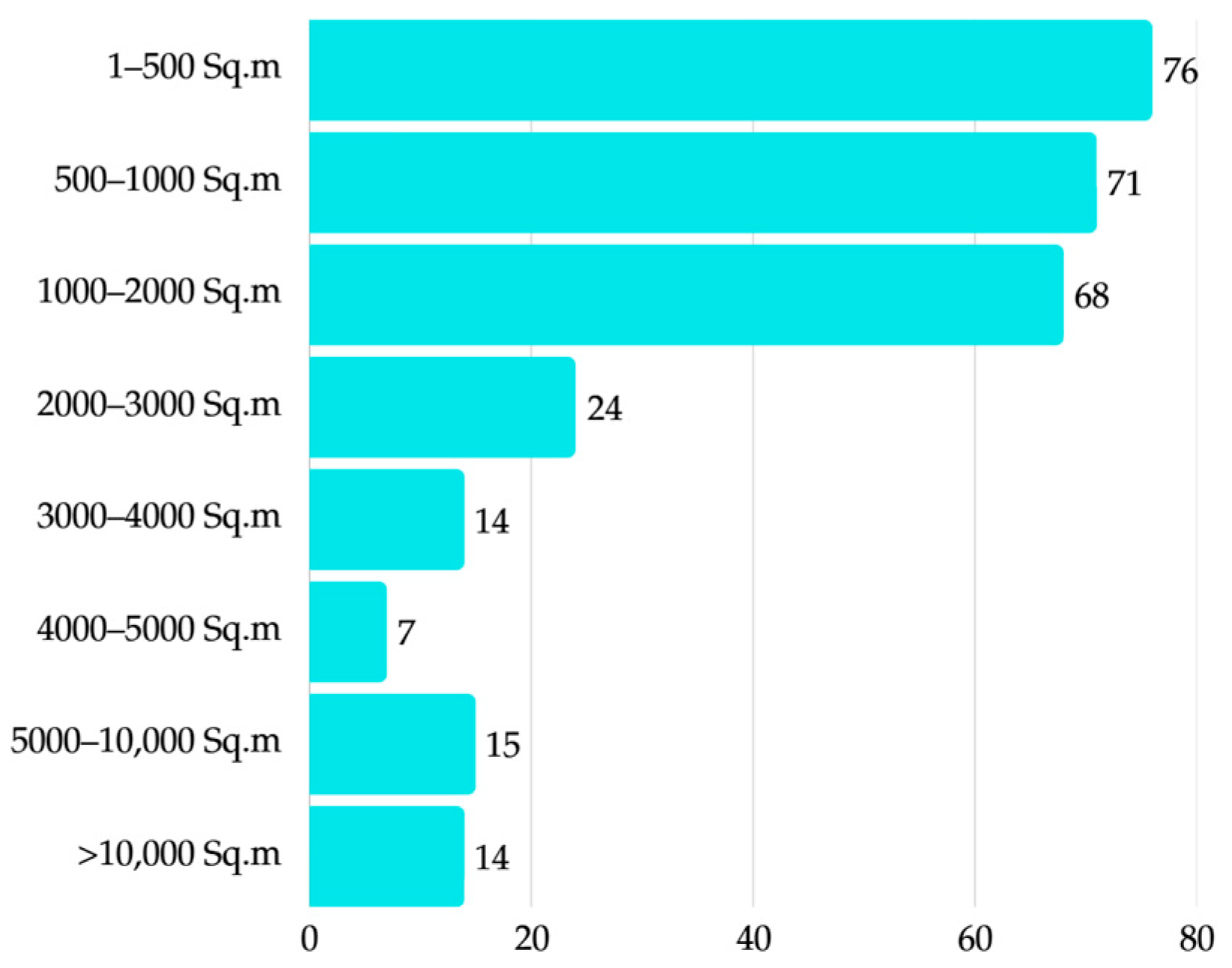
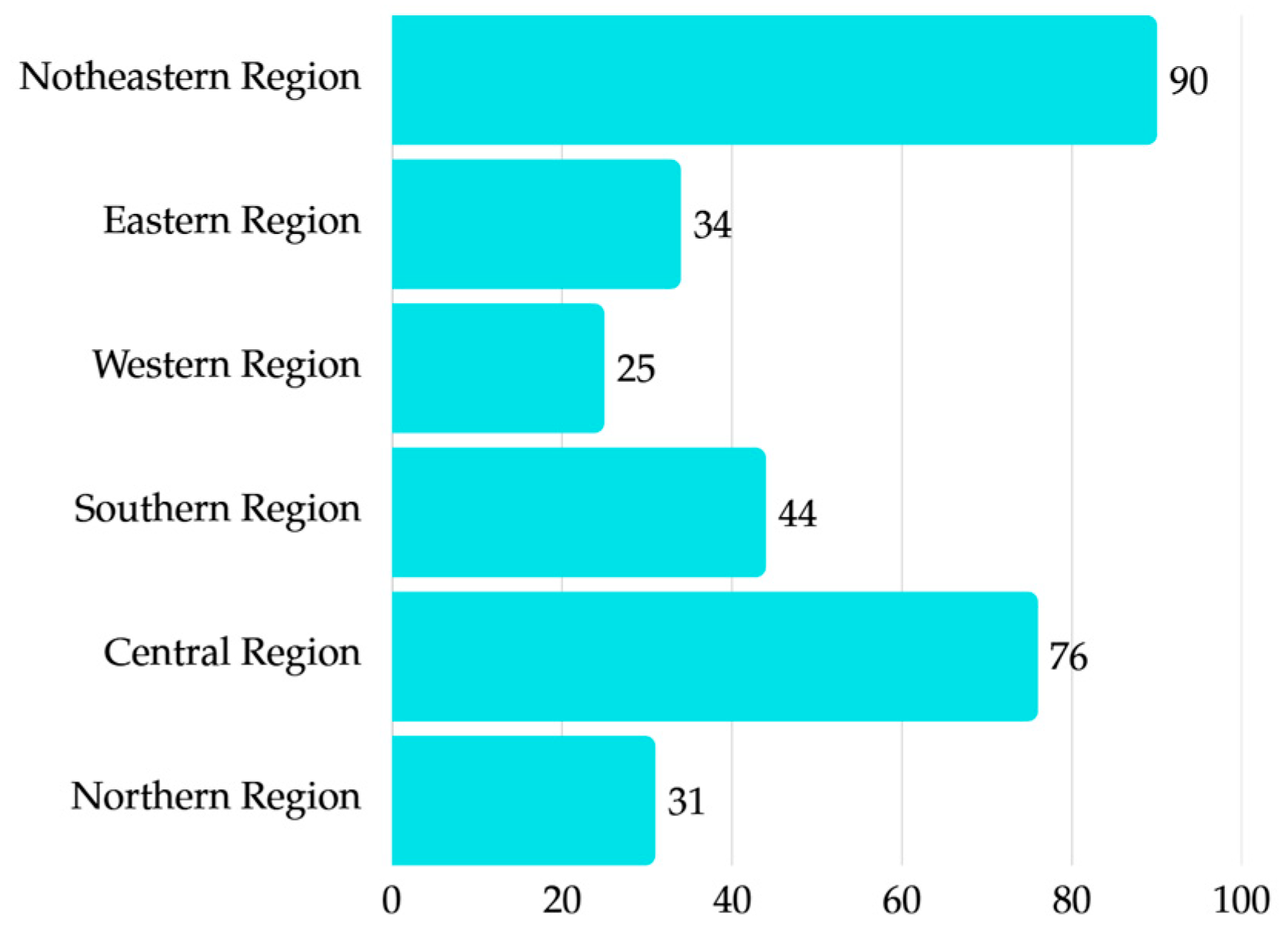
In this research, we employed a mixed-methodology approach, beginning with a literature review followed by a survey of expert opinions regarding factors affecting construction contract prices of various types of government buildings. Government building types were classified based on data collected from the website as follows, (1) academic building, (2) operation building, (3) hospital building, (4) public service building, (5) multipurpose building, (6) office building, (7) car park building, and (8) residence building, with proportions shown in Figure 2 and varying sizes as illustrated in Figure 3. The survey was performed by interviewing eight experts who have expertise in budget management to collect the factors that affect the construction contract prices of various government building types. Subsequently, data from 300 government buildings were collected through Thailand’s Electronic Government Procurement (e-GP) website, with spatial coverage across Thailand, as shown in Figure 4, and collected from the government procurement system website of the Comptroller General’s Department, as shown in Figure 5. The acquired data were used in developing the construction contract price prediction model using Deep Learning techniques, as described in the following section.

3.2. Research Process

After completing the literature review, the researchers conducted a survey of expert opinions regarding the factors influencing the construction contract prices for various types of government buildings. This was carried out by interviewing eight experts in government construction budget management, and the interview data were analyzed using content analysis. Subsequently, data of 300 government buildings and their contract prices were collected from the Electronic Government Procurement (e-GP) system. A prediction model of contract prices for government building construction was developed using RapidMiner software (version 10.1, RapidMiner GmbH, Dortmund, Germany), which can offer comparable accuracy to that of famous coding software, such as Python [68]. In the data analysis process, the project contract price (Thai baht) was set as the target variable. In addition, we employed stratified k-fold cross-validation, which is widely used for datasets with class imbalance, where some classes contain significantly fewer observations than others. Stratification ensures that each fold preserves approximately the same class distribution as the entire dataset, thereby reducing the risk that minority classes are unevenly allocated to the training or testing sets [69]. The entire dataset was then analyzed using the cross-validation operator with the number of folds set to 10, and in each iteration, approximately 90% of the data were used for model training, while the remaining 10% were used for model testing. This process was repeated ten times, allowing each observation to be used as both training and testing data across different folds, which enhances the robustness and reliability of the model evaluation [70]. During model development, the hidden layer configuration and the activation function were adjusted to find the most appropriate settings, and the results were compared with those obtained using the automatic model creation command (Auto Model) of RapidMiner software (version 10.1, RapidMiner GmbH, Dortmund, Germany). The resulting model must have higher accuracy than the model generated by the Auto Model function and have a value at an acceptable level.
Furthermore, to enhance model transparency and address the ‘black box’ nature of the Deep Learning model, we employed Local Agnostic Explanations via the RapidMiner software (version 10.1, RapidMiner GmbH, Dortmund, Germany). Model Simulator, which provided a clear justification for individual predictions. By perturbing input variables and observing changes in the output, the simulator identifies the contribution of each feature (supporting or contradicting) to the final result. This ensures the model meets the interpretability requirements necessary for public procurement and high-stakes decision making.

4. Results

4.1. Qualifications of Informants

To ensure the validity of the identified factors, the authors conducted semi-structured interviews with eight purposively selected experts. The inclusion criteria were defined based on direct involvement in the Government Electronic Procurement (e-GP) system and the legal determination of public standard construction costs. All selected experts are senior officials from government departments with over seven years of specialized experience in estimating construction costs and managing public works contracts, as shown in Table 2. The decision to focus on government-sector experts was made because the research specifically analyzes contract data governed by strict public procurement regulations. These individuals possess the requisite authority and ‘on-the-ground’ expertise to identify factors that are legally and practically significant within the public procurement framework.

4.2. Relevant Variables

The variables in this study were collected from a review of the relevant literature, resulting in 12 identified key variables associated with building construction contract prices. These include aspects such as architectural complexity, labor wages, and transportation costs. After interviews with eight construction-contract-price experts, two additional factors were added based on expert suggestions, i.e., number of sanitary wares and material specifications, totaling 14 factors. The data of these factors for the government buildings were then collected from the database of the e-GP website. The variable details are shown in Table 3.
From Table 3, which shows all 14 variables, the data collected from these variables fall into two categories: quantity data, which refers to increases in amount that result in greater material usage, such as the variable ‘Height,’ meaning the total height of the building, which results in the need for more materials to ensure the strength of the building’s foundation in bearing the weight; and quality data, which refers to improved quality leading to the selection of stronger materials that are suitable for indoor use and esthetically pleasing, such as the variable ‘Material Specification,’ which refers to indoor materials. This stems from the fact that government buildings in Thailand have different usage requirements depending on each building type. Buildings that are residences, such as dormitories and staff housing, as well as public service buildings, require better flooring and wall materials than car park buildings, for example.

4.3. Model Development Process

This research focused on data collection exclusively for building construction projects. The selected projects were those announced for competitive bidding through the e-GP website, in accordance with Thailand’s public procurement regulations. The dataset included 300 projects with complete and verifiable construction details. The awarded contract price (Thai baht) was used as the target variable for prediction, and a total of 80 models were developed and compared using RapidMiner software (version 10.1, RapidMiner GmbH, Dortmund, Germany) with the model parameters (hidden layer configuration and activation function) and performance indicators (R2 and Root-Mean-Square Error (RMSE)), as shown in Table A1 in Appendix A.

4.4. Results of the Construction Contract Price Prediction Model

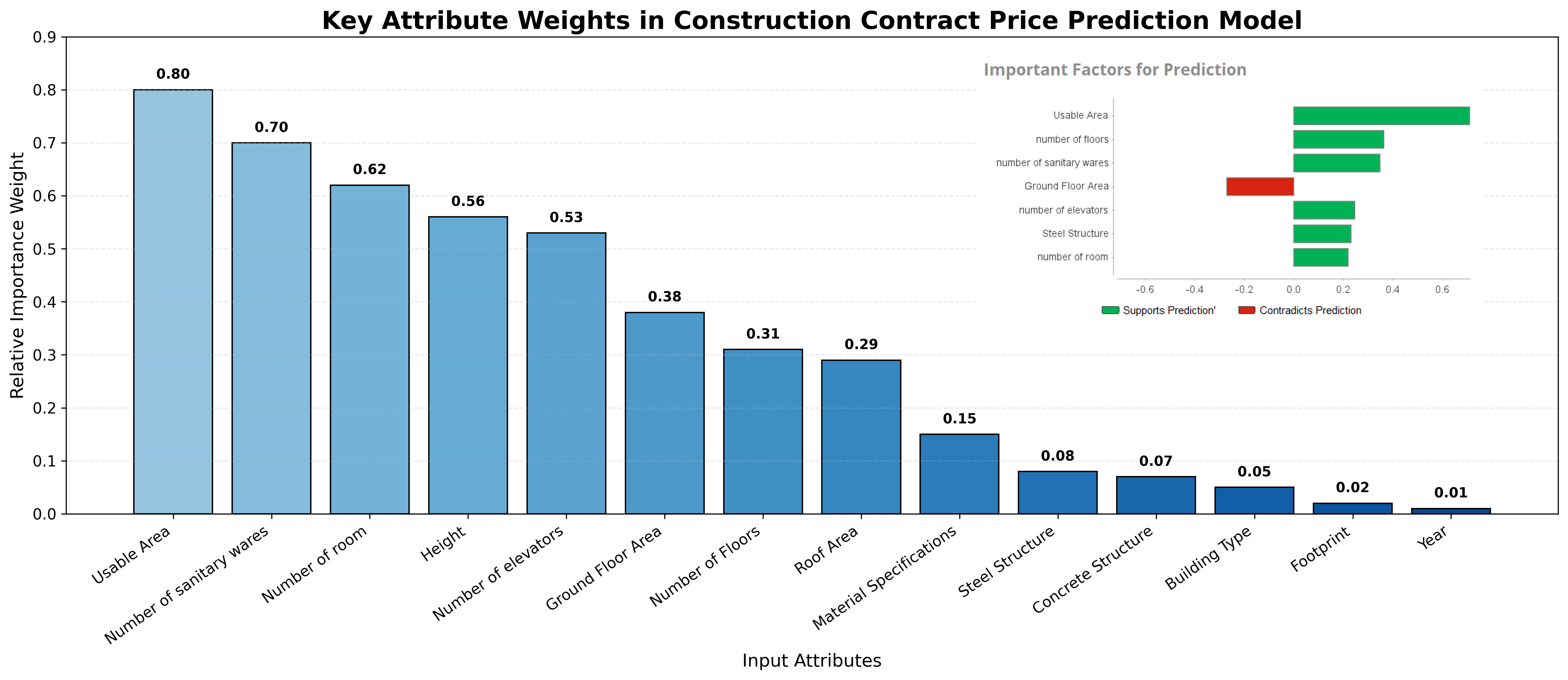
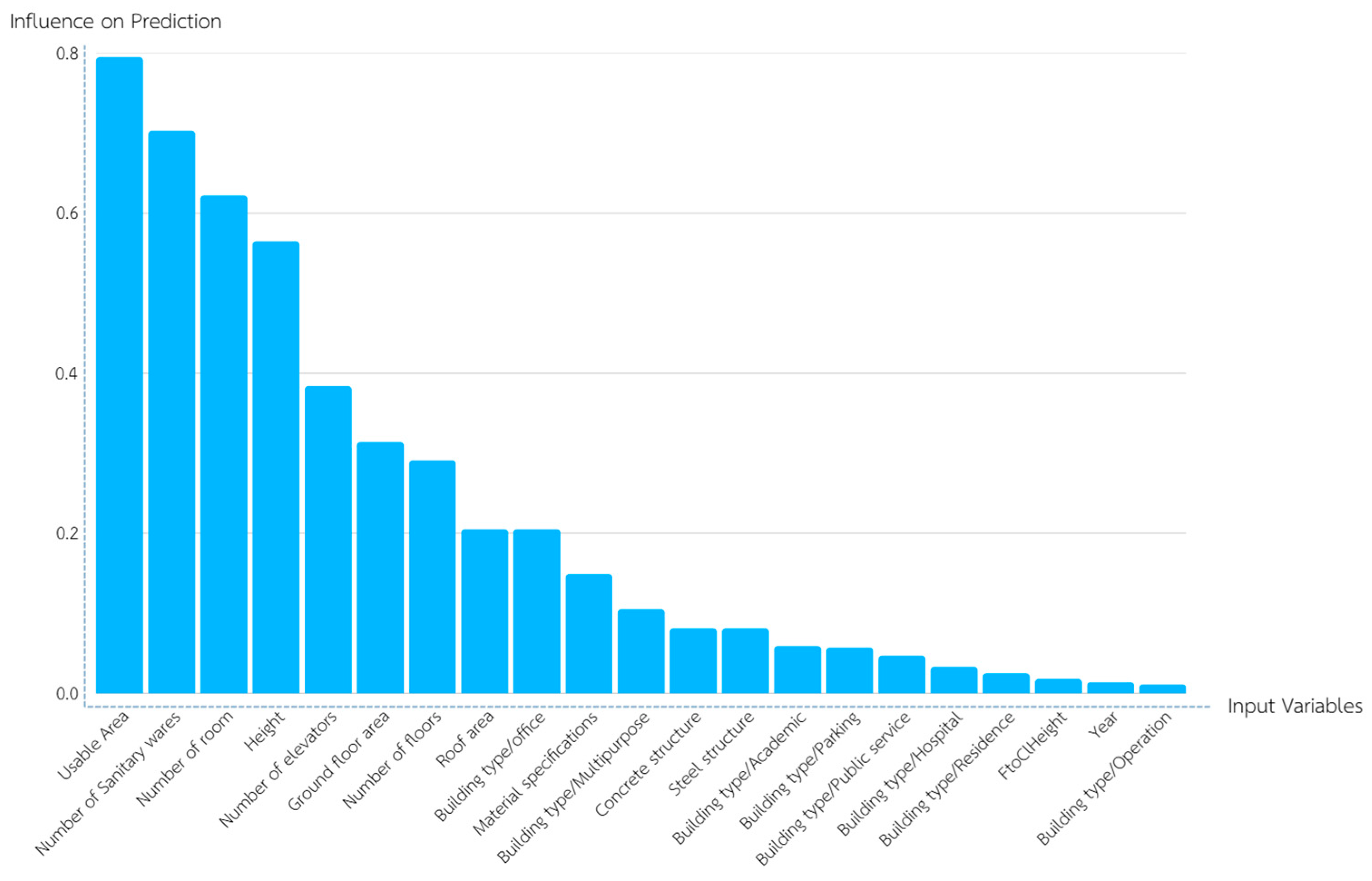
After collecting the dataset of 14 variables affecting construction contract price for developing the prediction model, the analysis was conducted using the Deep Learning function in RapidMiner software (version 10.1, RapidMiner GmbH, Dortmund, Germany), with parameter tuning to minimize RMSE and to achieve an acceptable R2 value. For predicting construction contract price, the models were trained by setting the project price as the target variable (label). By varying the number of hidden layers (two or three layers), node arrangement, and loss functions (Quadratic/Huber/Absolute/Quantile), 80 parameter-adjusted models were tested. The best-performing model has a three-hidden-layer ratio of 128:64:32 with a Quadratic Loss Function and Rectifier Activation Function, and was trained for 10 epochs, achieving an R2 of 0.918 and an RMSE of 2.022, as shown in Table A1 in the Appendix A. To validate the accuracy, the model’s performance was compared with an automated Deep Learning model (Auto Model), which achieved an R2 of 0.738, indicating lower accuracy than the acquired manually optimized model. Furthermore, comparisons were made with research by Sitthikankun et al. [71], who estimated construction costs for government buildings using linear regression modeling techniques. Although this technique differs from the current approach, it achieved an R2 accuracy of 0.677. Additionally, it was compared with the research by Boadu [11] on exploring regression models for forecasting early cost estimates for high-rise buildings, which used regression techniques and obtained an R2 accuracy of 0.64. This confirms that the Deep Learning approach with parameter tuning significantly improved prediction performance. The specific weights and the subsequent ranking of the variables were determined using the Weight by Correlation operator in RapidMiner software (version 10.1, RapidMiner GmbH, Dortmund, Germany). This technique calculates the statistical relationship between each input attribute and the Predicted variable Contract Price, assigning a numerical weight that represents the strength of its influence, ranked by their weights from highest to lowest as shown in Figure 6: (1) usable area, (2) number of sanitary wares, (3) number of rooms, (4) building height, (5) number of elevators, (6) ground floor area, (7) number of floors, (8) roof area, (9) building type office, (10) material specification, (11) building type multipurpose, (12) concrete structure, (13) steel structure, (14) building type academic, (15) building type parking, (16) building type public service, (17) building type hospital, (18) building type residence, (19) floor-to-ceiling height, (20) bidding years, and (21) building type operation.
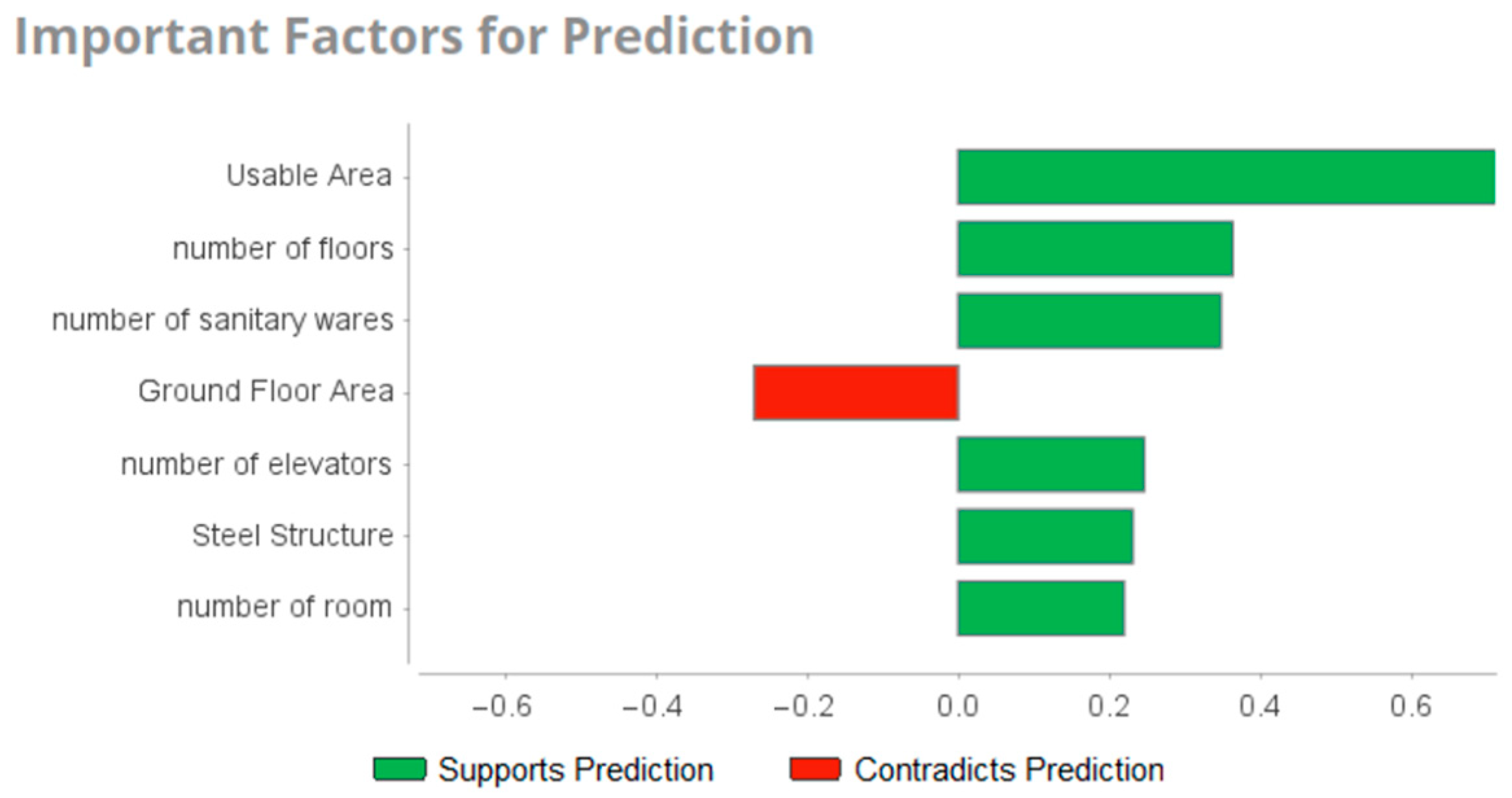
The explainability analysis in Figure 7 reveals the key drivers behind the model’s predictions. For instance, in the analyzed case, usable area and number of floor area emerged as the primary ‘Supporting Factors,’ significantly pushing the predicted value upward. Conversely, certain categorical variables, such as ground floor area, acted as ‘Contradicting Factors,’ exerting downward pressure on the estimate.
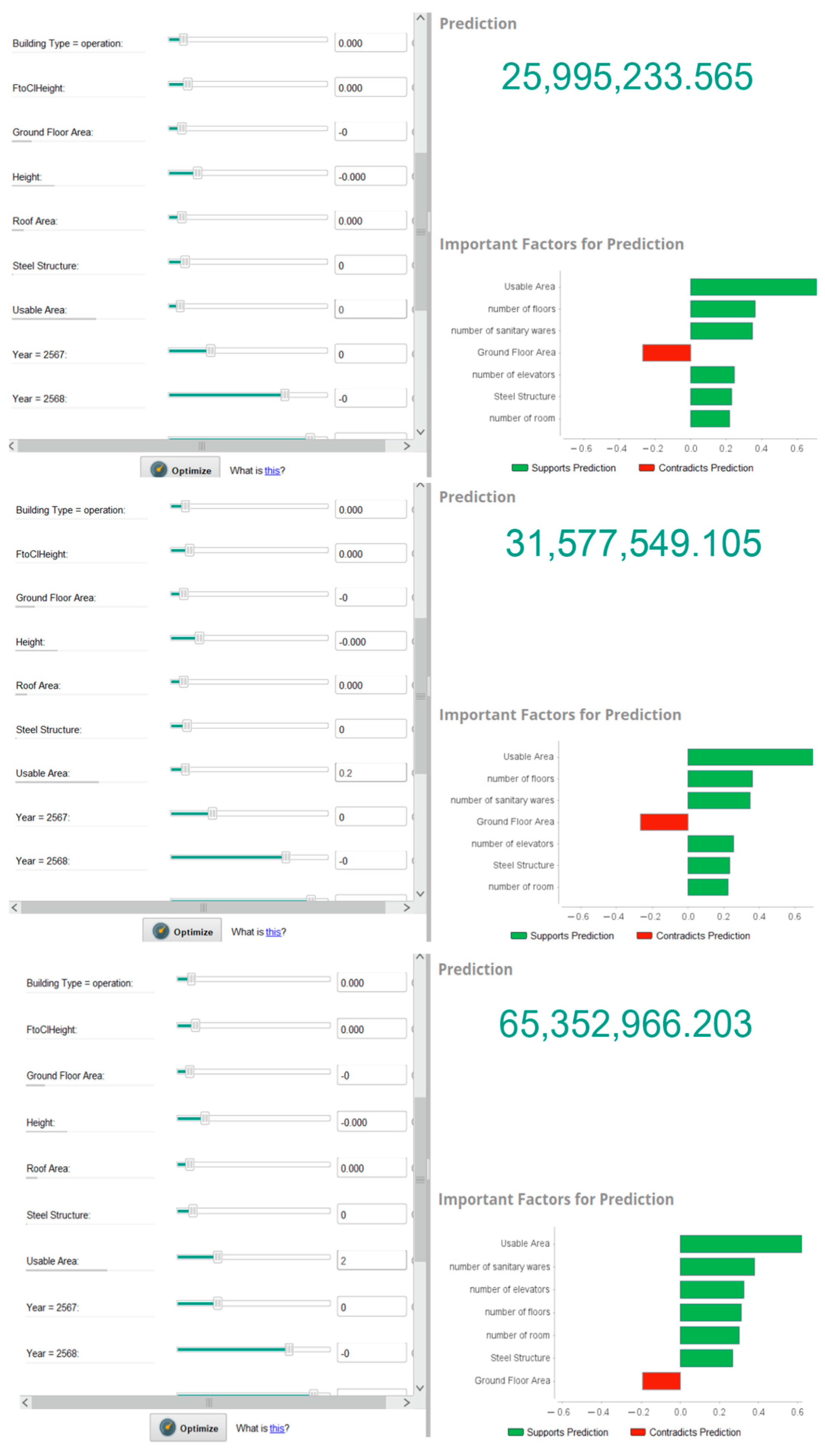
To validate the model’s robustness and understand its response to key architectural variables, a sensitivity analysis was performed by adjusting the usable area, as shown in Figure 8. When this was increased incrementally from its baseline, the predicted cost showed a significant and consistent upward trend, rising from 25,995,233.565 to 65,352,966.203. This stems from experimental adjustments of the unit value from 0 to 2 and demonstrates stability when adjusting the unit value from 0 to 0.2, with changes from 25,995,233.565 to 31,577,549.105. This sharp but logical increase indicates that the model correctly identifies usable area as a high-impact driver for cost estimation, aligning with real-world construction economics where space remains a primary cost determinant.

4.5. Discussion

The results are promising enough to support project development analysis. The fourteen acquired factors were categorized into four groups:

4.5.1. Analysis and Discussion of Project Type Factors

Different project types reflect varying building usage patterns. The factor in this category includes building type, which has a relatively low weight because Thailand’s government buildings tend to have designs that are not too dissimilar from one another, even though their functional uses may vary. Different project types also result in different space allocation requirements, including variables such as the number of sanitary wares, the number of rooms, and material specifications. For example, residential projects require more sanitary fixtures than office projects, or office projects have more room partitioning than educational building projects. Multipurpose building projects and parking building projects have lower-quality material specifications than office and residential projects. This is consistent with the research by Wang [22], which explains why different types of construction projects result in different building construction scopes for various uses. This means that increased sanitary fixtures result in more complex building systems, and increased room partitioning with walls leads to higher material and labor requirements, causing certain project types to be more expensive than others.

4.5.2. Analysis and Discussion of Physical Characteristics of Building Factors

The varying shapes of buildings in different projects result in unequal usable areas and also lead to increased labor costs due to greater construction complexity. Variables in this category include usable area, building height, ground floor area, roof area, number of floors, floor-to-ceiling height, and number of elevators. This is consistent with research from Gauch et al. [72] and Toh et al. [23], who explained that the changes in the size, shape, or functional space of buildings will change the number of materials, which increases building costs.

4.5.3. Analysis and Discussion of Physical Characteristics of Site Factors

The different physical characteristics of project sites in various locations result in different material qualities being selected. For example, some areas are suitable for steel structures, while others require concrete structures for durability, leading to materials being selected with different costs. This is consistent with research by Emsley et al. [34], which mentioned that site physical constraints can affect the construction costs of a project. Variables in this category include concrete structure and metal structure.

4.5.4. Analysis and Discussion of Contract Conditions Factors

The literature review revealed that contract factors affect contractors’ bidding capabilities. However, in this research, we collected data from government price announcements rather than prices resulting from unilateral contractor proposals. Expert interviews also highlighted issues regarding contract duration, which the researcher hypothesized would affect project prices. However, experts pointed out that this issue is not very relevant to government price estimation, because construction contracts for government buildings are based on standardized contracts mandated by law specifically for public construction projects. Moreover, the Year of Bid Announcement variable was still considered because contracts in different years may result in varying project prices due to material price fluctuations.
Furthermore, based on the factor weights in the model, the researcher can categorize the factors into three groups as follows:
  • Factors with high weights: These factors often reflect the building’s function and physical attributes, including usable area, number of sanitary wares, number of rooms, building height, and number of elevators.
  • Factors with medium weights: This group of factors is related to the building’s size and physical dimensions, including ground floor area, number of floors, roof area, and office building type.
  • Factors with low weights: This group of factors represents the fundamental technical and structural characteristics of the building, comprising material specification, structural type (steel, concrete), building type (multipurpose/academic/parking/public service/hospital/residence/operation), floor-to-ceiling height, and year of bid announcement.

5. Conclusions and Recommendations

This research demonstrated how artificial intelligence (AI), especially Deep Learning, can be applied in public procurement processes to help predict construction contract prices for government buildings more efficiently. Unlike traditional regression-type models, which often struggle with the non-linear relationships and high complexity inherent in construction data, the Deep Learning approach utilized in this study captures intricate patterns between variables, providing a more robust and reliable predictive performance. Deep Learning is particularly suitable for prediction and analysis [73,74,75,76] and can still be effective even when data is limited [77,78]. This research proposed a Deep Learning model with fourteen key factors influencing the construction contract prices of government buildings, which can be categorized into four main categories: (1) project type, (2) physical characteristics of building, (3) physical characteristics of site, and (4) contract conditions. Each of these factors directly impacts construction contract prices of government buildings, consistent with expert interviews, which explain that higher material quantities and increased construction complexity directly affect project prices. The acquired prediction model is sufficiently accurate and efficient for use in determining project feasibility and rechecking the construction cost for detailed estimation, aligning with the research of Subongkot [77], Techarojanpakin [78], Sreekanth et al. [79], Moustris et al. [80], and Simsek [81].
The advantages of this research can be categorized into three main groups: government agencies, bidders of government building construction works, and researchers and academia, with details as follows.
  • Government Agencies
The forecasting model serves as a critical decision-support tool in public procurement. It assists in determining project feasibility, setting appropriate budgets, and roughly estimating construction contract prices. The list of the weighted factors that affect construction contract prices can guide the government authorities on how to control the budgets for buildings. By moving beyond static linear estimation toward this AI-driven approach, government authorities can enhance the transparency and technical clarity of price determination. In addition, the prediction model developed according to the process described in this study has the potential to be further enhanced and utilized to support governmental operations by streamlining the process for determining construction contract price and reducing both time and resource consumption.
  • Government Building Project Bidders
Government building project bidders who participate in construction project auctions can utilize this research to study the factors that affect project prices and use this information as a consideration in price setting for their bid submissions. Similar to government agencies, bidders can use the predictive model developed in this study to verify the accuracy of construction cost estimation for public building projects, thereby enhancing the precision of cost estimation.
  • Researchers and Academics
This research contributes to the academic field by validating the application of Deep Learning in construction cost analysis, particularly in scenarios with limited data availability [78,79]. While traditional statistical methods remain fundamental for linear cost estimation, this study demonstrates that Deep Learning offers a complementary approach capable of capturing the complex, non-linear dependencies often found in public procurement datasets. These findings provide a solid foundation for future studies to further integrate advanced AI techniques into the construction management domain.

6. Conceptual Practical Application Framework

The high predictive performance (R2 = 0.918) of the proposed Deep Learning model demonstrates its potential as a conceptual analytical framework for supporting the digitalization of budget planning in Thailand’s government building projects. Rather than delivering a ready-to-use software application, we provide a conceptual foundation that can inform the future development of intelligent cost estimation systems.
  • Early-stage Budget Benchmarking Framework
The proposed framework can be conceptualized as a preliminary benchmarking mechanism in the early stages of project planning. By utilizing the 14 significant variables identified in this study, such as usable area, number of sanitary wares, and building height, decision makers can conceptually assess whether a proposed budget is consistent with historical cost patterns derived from the e-GP database before detailed design development.
  • Conceptual Decision-Support Framework for Procurement
In the procurement phase, the framework can serve as a conceptual basis for a decision-support approach. Key input parameters (e.g., usable area and sanitary wares) are processed through the trained model to generate an expected contract price range. Significant deviations between submitted bids and the model-derived range can conceptually support the identification of abnormal cases, which may then be subject to further manual or expert review.

7. Limitations

This research has several limitations, with the details as follows:
  • Since we aimed to develop a model for predicting contract prices in this study, we focused on collecting factors that are common among bidders rather than company-specific factors of individual bidders.
  • The amount of data collected is limited due to information being announced on the e-GP website over several weeks, resulting in data collection that is inappropriate for the research timeframe. Collecting a larger amount of data may yield different accuracy results.
  • Since this research collects data from the e-GP database, the factors used in the study are limited to only those factors that can be obtained from the e-GP database. In actual cost estimation, there are other variables that affect costs, such as site-specific variables and variables related to material prices that fluctuate with market conditions. Identifying more specific variables may lead to different research outcomes.
  • Research data from the e-GP website was collected only during the period of 2024–2025. If data were collected from other time periods, different results might be obtained. Future research could collect data covering multiple years to capture results that demonstrate price changes across different periods.
  • Despite the expertise of the participants, this study is limited by the absence of perspectives from the private sector and academia. Future research could broaden the scope by including engineering technical personnel from construction and design units to provide a more holistic view of contract price fluctuations from the market’s perspective.

Author Contributions

Conceptualization, K.T.; Methodology, K.T.; Software, A.B.; Validation, K.T.; Formal analysis, K.T. and A.B.; Investigation, A.B.; Data curation, A.B.; Writing—original draft, K.T. and A.B.; Writing—review & editing, K.T.; Visualization, A.B.; Supervision, K.T.; Project administration, K.T.; Funding acquisition, K.T. All authors have read and agreed to the published version of the manuscript.

Funding

This research is supported by Thailand Science Research and Innovation (TSRI) Fundamental Fund, fiscal year 2025, Contact Number TUFF 01/2568.

Institutional Review Board Statement

The study was conducted in accordance with the Declaration of Helsinki, and approved by the Human Research Ethics Committee of Thammasat University Social Science (protocol code SSTU-EC 044/2568 and date of approval 27 May 2025) for studies in-volving humans.

Informed Consent Statement

Informed consent was obtained from all subjects involved in the study.

Data Availability Statement

Publicly available datasets were analyzed in this study. This data can be found at the Electronic Government Procurement (e-GP) website: https://www.gprocurement.go.th. The processed statistical data generated during the study are available within the article or from the corresponding author upon request.

Conflicts of Interest

The authors declare no conflict of interest.

Appendix A

Table A1. List of top 5 models developed by parameter adjustment.
Deep Learning Parameter Adjustment
Hidden LayersActivation FunctionR2RMSE
64:32Quadratic0.8772.477
127:65Quadratic0.8822.431
128:63:33Quadratic0.8862.385
128:64:32Quadratic0.9182.022
128:65:31Quadratic0.9002.236

References

  1. SCB Economic and Business Research Center. SCB EIC Expects That in 2025, the Value of Government Construction Will Expand by 3%, While in the Second Half of This Year, There Will Be Signs of Recovery. THE STANDARD. Available online: https://thestandard.co/the-value-of-government-construction-will-expand/ (accessed on 5 November 2025).
  2. Lunkam, P. Business/Industry Trends 2024–2026: Construction Contracting Business. Krungsri. Available online: https://www.krungsri.com/th/research/industry/industry-outlook/construction-construction-materials/construction-contractors/io/construction-contractor-2024-2026 (accessed on 5 November 2025).
  3. Shamim, M.M.I.; Hamid, A.B.b.A.; Nyamasvisva, T.E.; Rafi, N.S.B. Advancement of Artificial Intelligence in Cost Estimation for Project Management Success: A Systematic Review of Machine Learning, Deep Learning, Regression, and Hybrid Models. Modelling 2025, 6, 35. [Google Scholar] [CrossRef]
  4. Holm, J.; Schaufelberger, J.E. Construction Cost Estimating, 1st ed.; Routledge: Abingdon, UK, 2021. [Google Scholar]
  5. Haddad, B. Construction estimating challenges after COVID 19—The effect of price escalation and material shortages on construction cost and contract management. In Proceedings of the 2022 IEMS Conference, Cocoa Beach, FL, USA, 14–15 March 2022. [Google Scholar] [CrossRef]
  6. Thairath. Thai Construction Business Plunges 17.3%, Risks Low Growth, Materials Are Expensive, Labor Costs Are Rising, Housing Market Is Slowing Down, Stuck in Debt Trap. Thairath Money. 2024. Available online: https://www.thairath.co.th/money/economics/thai_economics/2801065 (accessed on 5 November 2025).
  7. Tonnessen, J. Renovation Markup Factors for Public and Private Campus Construction. Master’s Thesis, University of Colorado, Boulder, CO, USA, 2014. [Google Scholar]
  8. Akintoye, A. Analysis of factors influencing project cost estimating practice. Constr. Manag. Econ. 2000, 18, 77–89. [Google Scholar] [CrossRef]
  9. Committee on Central Price Estimation and Con17tractors’ Registration. Criteria and Procedures for Determining the Central Estimate of Building Construction Costs; Comptroller General’s Department, Ministry of Finance: Bangkok, Thailand, 2017; p. 50. [Google Scholar]
  10. Chandanshive, V.B.; Kambekar, A.R. Estimation of building construction cost using artificial neural networks. J. Soft Comput. Civ. Eng. 2019, 3, 91–107. [Google Scholar] [CrossRef]
  11. Ofori-Boadu, A.N. Exploring Regression Models for Forecasting Early Cost Estimates for High-Rise Buildings. J. Technol. Manag. Appl. Eng. 2015, 31, 1–24. [Google Scholar]
  12. Chowdhury, S.; Rahman, N.; Sheikh, S.; Sayeid, A.; Mahmud, H.K.; Hafsa, B. GIS-based landslide susceptibility mapping using logistic regression, random forest and decision and regression tree models in Chattogram District, Bangladesh. Heliyon 2024, 10, e23424. [Google Scholar] [CrossRef] [PubMed]
  13. Dong, W.; Wang, N.; Dong, Y.; Cao, J. Examining the nonlinear and interactive effects of built environment characteristics on travel satisfaction. J. Transp. Geogr. 2025, 123, 104111. [Google Scholar] [CrossRef]
  14. Huang, M.; Zhao, W.; Gu, J.; Lei, Y. Damage Identification of a Steel Frame Based on Integration of Time Series and Neural Network under Varying Temperatures. Adv. Civ. Eng. 2020, 2020, 4284381. [Google Scholar] [CrossRef]
  15. Huang, M.; Zhang, J.; Hu, J.; Ye, Z. Nonlinear modeling of temperature-induced bearing displacement of long-span single-pier rigid frame bridge based on DCNN-LSTM. Case Stud. Therm. Eng. 2024, 53, 103897. [Google Scholar] [CrossRef]
  16. Soni, D.; Murthy, Y.I.; Chowdhary, K.K. Study of Factors Affecting in Construction Costs. Int. J. Eng. Res. Technol. (IJERT) 2015, 4, 637–642. [Google Scholar]
  17. Thaiprogrammer. What Is Deep Learning? 2018. Available online: https://thaiprogrammer.org/deep-learning-%E0%B8%84%E0%B8%B7%E0%B8%AD%E0%B8%AD%E0%B8%B0%E0%B9%84%E0%B8%A3/ (accessed on 5 November 2025).
  18. Jarkas, A.M. Primary factors influencing bid mark-up size decisions of general contractors in Kuwait. J. Financ. Manag. Prop. Constr. 2013, 18, 53–75. [Google Scholar] [CrossRef]
  19. Azlan, H.Z.; Khaderi, S.S.; Bakri, A. Critical Factors Influencing Bid Mark-up Decision in Public Street Project—A Review. Built Environ. J. 2024, 21, 30–44. [Google Scholar] [CrossRef]
  20. RICS. ICMS: International Cost Management Standards. RICS. Available online: https://www.rics.org/profession-standards/rics-standards-and-guidance/sector-standards/construction-standards/icms-international-cost-management-standards (accessed on 11 January 2026).
  21. Excise Department. Determination of the Median Price for Goods to Be Purchased or Services to Be Hired, in Accordance with the Public Procurement and Government Supplies Management Act B.E. 2017. Available online: https://www.ratchakitcha.soc.go.th/DATA/PDF/2560/A/024/13.PDF (accessed on 13 January 2026).
  22. Wang, J. Influencing Factors and Control Measures of Construction and Installation Cost Management. Highlights Bus. Econ. Manag. 2023, 20, 460–466. [Google Scholar] [CrossRef]
  23. Toh, T.; Ting, C.; Ali, K.; Aliagha, G.; Munir, O. Critical cost factors of building construction projects in Malaysia. Soc. Behav. Sci. 2012, 57, 360–367. [Google Scholar] [CrossRef]
  24. Cunningham, T. Factors Affecting the Cost of Building Work—An Overview; Dublin Institute of Technology: Dublin, Ireland, 2013. [Google Scholar]
  25. Boussabaine, A.H. A comparative approach for modeling the cost of energy in sport facilities. Facilities 2001, 19, 194–203. [Google Scholar] [CrossRef]
  26. Ma, K.; Yu, Y.; Yang, B.; Yang, J. Demand-Side Energy Management Considering Price Oscillations for Residential Building Heating and Ventilation Systems. IEEE Trans. Ind. Inform. 2019, 15, 4742–4752. [Google Scholar] [CrossRef]
  27. Elhag, T.M.S.; Boussabaine, A.H.; Ballal, T.M.A. Critical determinants of construction tendering costs: Quantity surveyors standpoint. Int. J. Proj. Manag. 2005, 23, 538–545. [Google Scholar] [CrossRef]
  28. Sitthikankun, S.; Buachat, C.; Damrongsak, R. Construction cost estimation for government building using linear regression modeling techniques. In Proceedings of the 26th National Convention on Civil Engineering Conference, Online, 23–25 June 2021. [Google Scholar]
  29. Manprasert, S. A Study on Building Construction Cost Estimation Using Work Quantity Model Approach. Master’s Thesis, Department of Civil Engineering, Chulalongkorn University, Bangkok, Thailand, 1998. [Google Scholar]
  30. Thaweekichakan, W. Application of Regression Analysis in Building Cost Estimation. Eng. J. (Wisawakam San) 1990, 43, 51–56. (In Thailand) [Google Scholar]
  31. Stoy, C.; Schalcher, H.R. Residential Building Projects: Building Cost Indicators and Drivers. J. Constr. Eng. Manag. 2007, 133, 139–145. [Google Scholar] [CrossRef]
  32. Arafa, M.; Alqedra, M. Early Stage Cost Estimation of Buildings Construction Projects using Artificial Neural Networks. J. Artif. Intell. 2011, 4, 63–75. [Google Scholar] [CrossRef]
  33. Thalmann, P. A low-cost construction price index based on building functions. In Proceedings of the 15th International Cost Engineering Congress; International Cost Engineering Council (ICEC): Rotterdam, The Netherlands, 1998. [Google Scholar]
  34. Emsley, M.E.; Lowe, D.J.; Duff, A.R.; Harding, A.; Hickson, A. Data modeling and the application of a neural network approach to the prediction of total construction costs. Constr. Manag. Econom. 2002, 20, 465–472. [Google Scholar] [CrossRef]
  35. Picken, D.H.; Ilozor, B.D. Height and construction costs of buildings in Hong. Kong. Constr. Manag. Econo. 2003, 21, 107–111. [Google Scholar] [CrossRef]
  36. Love, P.E.D. Influence of project type and procurement method on rework costs in building construction projects. J. Constr. Eng. Manag. 2002, 128, 18–29. [Google Scholar] [CrossRef]
  37. Love, P.E.D.; Tse, R.Y.C.; Edwards, D.J. Time–cost relationships in Australian building construction projects. J. Constr. Eng. Manag. 2005, 131, 187–194. [Google Scholar] [CrossRef]
  38. Wheaton, W.C.; Simonton, W.E. The secular and cyclic behavior of true construction costs. In Proceedings of the 21st American Real Estate Society (ARES) Annual Meeting or Conference, Santa Fe Springs, CA, USA, 13–16 April 2005. [Google Scholar]
  39. Li, X.; Jia, X.; Huang, M. Analysis of Influencing Factors of Construction Cost Based on Building Information Model. Educ. Reform. Dev. 2024, 6, 257–262. [Google Scholar] [CrossRef]
  40. Frimpong, Y.; Oluwoye, J.; Crawford, L. Causes of delays and cost overruns in construction of groundwater projects in developing countries; Ghana as a case study. Int. J. Proj. Manag. 2003, 21, 321–326. [Google Scholar] [CrossRef]
  41. Haslinda, A.N.; Xian, T.W.; Norfarahayu, K.; Hanafi, R.M.; Fikri, H.M. Investigation on the Factors Influencing Construction Time and Cost Overrun for High-Rise Building Projects in Penang. J. Phys. Conf. Ser. 2018, 995, 012043. [Google Scholar] [CrossRef]
  42. Eybye, M.N.; Madsen, S.D.; Schultz, A.N.Ø.; Nim, C.G. Database coverage and their use in systematic reviews regarding spinal manipulative therapy: An exploratory study. Chiropr. Man. Ther. 2022, 30, 57. [Google Scholar] [CrossRef] [PubMed]
  43. Yang, Y.; Li, X.; Yao, Z.; Yu, A.; Wang, M. Impact of Facade Photovoltaic Retrofit on Building Carbon Emissions for Residential Buildings in Cold Regions. Buildings 2025, 15, 3762. [Google Scholar] [CrossRef]
  44. Ahmed, S.M.; Azhar, S.; Kappagntula, P.; Gollapudil, D. Delays in construction: A brief study of the Florida construction industry. In Proceedings of the 39th Annual ASC Conference, Clemson, SC, USA, 10–12 April 2003; Clemson University: Clemson, SC, USA, 2003; pp. 257–266. [Google Scholar]
  45. Alwi, S.; Hampson, K. Identifying the importance causes of delays in building construction projects. In Proceedings of the 9th East Asia—Pracific Conference on Structural Engineering and Construction, Bali, Indonesia, 16–18 December 2003; pp. 1–6. [Google Scholar]
  46. Adam, A.; Josephson, P.; Lindahl, G. Implications of cost overruns and time delays on major public construction projects. In Proceedings of the 19th International Symposium on the Advancement of Construction Management and Real Estate, Chongqing, China, 7–9 November 2014; pp. 1–13. [Google Scholar]
  47. Kaming, P.F.; Olomolaiye, P.O.; Holt, G.D.; Harris, F.C. Factors influencing construction time and cost overruns on high-rise projects in Indonesia. Constr. Manag. Econ. 1997, 15, 83–94. [Google Scholar] [CrossRef]
  48. Nega, F. Causes and Effects of Cost Overrun on Public Building Construction Projects in Ethiopia. Ph.D. Thesis, Addis Ababa University, Addis Ababa, Ethiopia, 2008. [Google Scholar]
  49. Chimwaso, D.K. An evaluation of cost performance of public projects: Case of Botswana. In Proceedings of the 2nd International Conference of the CIB; International Council for Research and Innovation in Building and Construction (CIB): Rotterdam, The Netherlands, 2000; pp. 1–11. [Google Scholar]
  50. Rana, M.M.; Azad, M.S.; Akhi, A.H.; Azad, G.M.S.I. Effect of Environmental Impact in Building Constructions. Am. J. Civ. Eng. 2017, 5, 339–343. [Google Scholar] [CrossRef]
  51. Kursah, M.B. Geo-environmental assessment to identify a least-cost road in Ghana. Appl. GIS 2016, 10, 1–22. [Google Scholar]
  52. Erzaij, K.R.; Ali, R.H. The Effect of Desert Environment on the Cost of Construction Projects (Materials Transportation). Appl. Mech. Mater. 2020, 897, 152–156. [Google Scholar] [CrossRef]
  53. Chan, D.W.M.; Kumaraswamy, M.M. An evaluation of construction time performance in the building industry. Build. Environ. 1996, 31, 569–578. [Google Scholar] [CrossRef]
  54. Migliaccio, G.C.; Zandbergen, P.A.; Martinez, A.A. Assessment of methods for adjusting construction cost estimates by geographical location. In Proceedings of the Construction Research Congress, Seattle, WA, USA, 5–7 April 2009. [Google Scholar]
  55. Zhang, S.; Migliaccio, G.; Zandbergen, P.A.; Guindani, M. Empirical Assessment of Geographically Based Surface Interpolation Methods for Adjusting Construction Cost Estimates by Project Location. J. Constr. Eng. Manag. 2014, 140, 04014015. [Google Scholar] [CrossRef]
  56. Attalla, M.; Hegazy, T. Predicting cost deviation in recon-struction projects: Artificial neural networks versus regression. J. Constr. Eng. Manag. 2003, 129, 405–411. [Google Scholar] [CrossRef]
  57. Boonchan, T. The Risk Management in Building Construction Project Through Turnkey Contract Approach: A Case Study of Science Centre for Education. Master’s Thesis, Rajamangala University of Technology Thanyaburi, Thanyaburi, Thailand, 2010. [Google Scholar]
  58. Skitmore, R.M. Developments in Contract Price Forecasting and Bidding Techniques. Quantity Surveying Techniques: New Directions; Brandon, P.S., Ed.; BSP Professional Books: London, UK, 1990; pp. 75–120. [Google Scholar]
  59. Abd El-Karim, M.S.B.A.; Mosa El Nawawy, O.A.; Abdel-Alim, A.M. Identification and assessment of risk factors affecting construction projects. HBRC J. 2017, 13, 202–216. [Google Scholar] [CrossRef]
  60. Ali, A.S.; Kamaruzzaman, S.N. Cost performance for building construction projects in Klang Valley. J. Build. Perform. 2010, 1, 110–118. [Google Scholar]
  61. Singh, H. Deep Learning 101: Beginners Guide to Neural Network. Analytics Vidhya. Available online: https://www.analyticsvidhya.com/blog/2021/03/basics-of-neural-network/?utm_source=chatgpt.com (accessed on 16 November 2023).
  62. Hovsepyan, T. Deep Learning vs Neural Networks—What’s the Difference? Plat AI. Available online: https://plat.ai/blog/deep-learning-vs-neural-networks-whats-the-difference/ (accessed on 5 November 2025).
  63. Chhabra, G.; Kumar, S.; Kumar, A.; Raha, S.; Saha, C.G. Analysis of Deep Learning in Real-World Applications: Challenges and Progress. J. Propuls. Technol. 2023, 44, 2023. [Google Scholar] [CrossRef]
  64. Sharafat, C. Comparison of accuracy and reliability of random forest, support vector machine, artificial neural network and maximum likelihood method in land use/cover classification of urban setting. Environ. Chall. 2024, 14, 100800. [Google Scholar] [CrossRef]
  65. Zhong, B.; Pan, X.; Love, E.D.P.; Ding, L.; Fang, W. Deep learning and network analysis: Classifying and visualizing accident narratives in construction. Autom. Constr. 2020, 113, 103089. [Google Scholar] [CrossRef]
  66. Zhao, Y.; Chen, Q.; Cao, W.; Yang, J.; Xiong, J.; Gui, G. Deep Learning for Risk Detection and Trajectory Tracking at Construction Sites. IEEE Access 2019, 7, 30905–30912. [Google Scholar] [CrossRef]
  67. Duan, R.; Deng, H.; Tian, M.; Deng, Y.; Lin, J. SODA: A large-scale open site object detection dataset for deep learning in construction. Autom. Constr. 2022, 142, 104499. [Google Scholar] [CrossRef]
  68. Laszlo, K.; Ghous, H. Efficiency comparison of Python and RapidMiner. Multidiszcip. Tudományok 2020, 10, 212–220. [Google Scholar] [CrossRef]
  69. Encode. Training, Validation, Test Split for Machine Learning Datasets. 2024. Available online: https://encord.com/blog/train-val-test-split/?utm_source=chatgpt.com (accessed on 5 November 2025).
  70. Rico-Juan, J.R.; De La Paz, P.T. Machine learning with explainability orspatial hedonics tools? An analysis of the asking prices in the housing marketin Alicante, Spain. Expert Syst. Appl. 2021, 171, 114590. [Google Scholar] [CrossRef]
  71. Sitthikankun, S.; Buachart, C.; Rinchumphu, D. Construction Cost Estimation for Government Building Using Artificial Neural Network Technique. J. Eng. Manag. Appl. Sci. Technol. 2021, 26, 1–8. [Google Scholar]
  72. Gauch, H.L.; Dunant, C.F.; Hawkins, W.; Serrenho, A.C. What really matters in multi-storey building design? A simultaneous sensitivity study of embodied carbon, construction cost, and operational energy. Appl. Energy 2022, 333, 119841. [Google Scholar] [CrossRef]
  73. Nguyen, N.; Cripps, A. Predicting housing value: A comparison of multiple regression analysis and artificial neural networks. J. Real Estate Res. 2001, 22, 313–336. [Google Scholar] [CrossRef]
  74. Zainun, N.Y.B.; Rahman, I.A.; Eftekhari, M. Forecasting low-costhousing demand in Johor Bahru, Malaysia using artificial neural networks (ANN). J. Math. Res. 2010, 2, 14. [Google Scholar] [CrossRef][Green Version]
  75. Morano, P.; Tajani, F.; Torre, C.M. Artificial intelligence in property valuations. An application of artificial neural networks to housing appraisal. Adv. Environ. Sci. Energy Plan. 2015, 39, 23–29. [Google Scholar]
  76. Tochaiwat, K.; Seniwong, P.; Rinchumphu, D. Sales rate forecasting of single-detached houses using artificial neural network technique. Decis. Mak. Appl. Manag. Eng. 2023, 6, 772–786. [Google Scholar] [CrossRef]
  77. Subongkotch, P. Factors Affecting the Land Appraisal in Angthong Province. Master’s Thesis, Sukhothai Thammathirat Open University, Nonthaburi, Thailand, 2019. [Google Scholar]
  78. Techarojanpakin, S. Small Size Land Price Prediction Model for Residential Purposes in Eastern Bangkok. Master’s Thesis, Thammasat University, Bangkok, Thailand, 2017. [Google Scholar]
  79. Sreekanth, P.D.; Geethanjali, N.; Sreedevi, P.D.; Ahmed, S.; Kumar, N.R. Forecasting groundwater level using artificial neural networks. Curr. Sci. 2009, 96, 933–939. [Google Scholar]
  80. Moustris, K.P.; Larissi, I.K.; Nastos, P.T.; Paliatsos, A.G. Precipitation Forecast Using Artificial Neural Networks in Specific Regions of Greece. Water Resour. Manag. 2011, 25, 1979–1993. [Google Scholar] [CrossRef]
  81. Simsek, A.I. Using stacked generalization model in stock price forecasting: A comparative analysis on BIST100 index. Fiscaoeconomia 2025, 9, 305–322. [Google Scholar] [CrossRef]
Figure 1. The proposed Deep Learning architecture for government construction contract price prediction.
Buildings 16 00651 g001
Figure 2. Types of buildings in the data.
Buildings 16 00651 g002
Figure 3. Size of buildings in the data.
Buildings 16 00651 g003
Figure 4. Project location in the data.
Buildings 16 00651 g004
Figure 5. Thailand’s Electronic Government Procurement (e-GP) website.
Buildings 16 00651 g005
Figure 6. Attribute weights from Deep Learning.
Buildings 16 00651 g006
Figure 7. Local explanation of the Deep Learning model prediction using Model Simulator.
Buildings 16 00651 g007
Figure 8. Sensitivity analysis result of the Deep Learning model prediction using Model Simulator.
Buildings 16 00651 g008
Table 1. Variable Coverage Matrix.
AuthorsUsable Building AreaAverage Building PerimeterAverage Floor-to-Ceiling HeightBuilding HeightNumber of FloorsNumber of RoomsRoof AreaBathroom AreaGround Floor Area (on Land)Building Material TypeBuilding Structure TypeNumber of Basement FloorsNumber of Elevators
Sitthikankun [28]
Manprasert [29]
Thaweekichakan [30]
Toh et al. [23]
Schalcher [31]
Elhag et al. [27]
Arafa & Alqeda [32]
Thalmann [33]
Boussabaine [25]
Emsley et al. [34]
Picken & Ilozor [35]
Love [36]
Love et al. [37]
Wheaton & Simonton [38]
Li et al. [39]
Frimpong et al. [40]
Haslinda et al. [41]
Variable Coverage Percentage76.47%23.52%17.64%29.41%47.05%5.88%17.64%11.76%11.76%29.41%35.29%17.64%5.88%
Table 2. Qualifications of experts.
Expert No.PositionOrganizationExperience More than 7 Years
1Civil EngineerMinistry of TransportYes
2Civil EngineerMinistry of TransportYes
3Civil EngineerMinistry of TransportYes
4Civil EngineerConstruction Engineering DivisionYes
5Civil EngineerConstruction Engineering DivisionYes
6Civil EngineerConstruction Engineering DivisionYes
7Civil EngineerMunicipal Engineering DepartmentYes
8Civil EngineerDepartment of HighwaysYes
Table 3. The variables used for data collection.
No.Variable NameMeaningUnitMeasurement LevelSource
1Usable AreaTotal usable area of the buildingSq.m.RatioLiterature Review
2Number of RoomsTotal number of roomsRoomsRatioLiterature Review
3Number of FloorsTotal number of floorsFloorsRatioLiterature Review
4HeightBuilding heightm.RatioLiterature Review
5Number of ElevatorsNumber of elevatorsUnitsRatioLiterature Review
6Number of Sanitary waresNumber of sanitary fixturesUnitsRatioExpert Opinion
7Ground Floor AreaArea of the lowest floor of the buildingSq.m.RatioLiterature Review
8Roof AreaTotal roof areaSq.m.RatioLiterature Review
9Material SpecificationTypes and specifications of indoor materialsN/ANominalExpert Opinion
10Concrete StructureBuilding structure is concrete DummyBinominalLiterature Review
11Steel StructureBuilding structure is steelDummyBinominalLiterature Review
12Floor-to-Ceiling HeightAverage floor-to-ceiling heightm.RatioLiterature Review
13Year of BiddingYear of project bid announcementN/ANominalLiterature Review
14Building TypeType of buildingN/ANominalLiterature Review
Disclaimer/Publisher’s Note: The statements, opinions and data contained in all publications are solely those of the individual author(s) and contributor(s) and not of MDPI and/or the editor(s). MDPI and/or the editor(s) disclaim responsibility for any injury to people or property resulting from any ideas, methods, instructions or products referred to in the content.