


Abstract
Phosphogypsum, the primary solid waste from the wet-process phosphoric acid industry, poses significant environmental and health risks due to large-scale stockpiling. To promote its resource utilisation, this study systematically evaluated the solidification and stabilisation performance of phosphogypsum–coal fly ash cementitious material (PAC) for Cr(VI)-contaminated soil under high-chloride conditions. Phosphogypsum reactivity was enhanced via mechanical activation and high-temperature calcination. An orthogonal experimental design was employed to analyse the effects of multiple factors—including calcination temperature and duration—on compressive strength and heavy metal leaching behaviour. Results show that PAC prepared from coal ash calcined at 600 °C for 3 h exhibits excellent mechanical properties and Cr(VI) stabilisation efficacy under high-chloride conditions, achieving a maximum compressive strength of 28.75 MPa and a Cr(VI) leaching concentration as low as 15.69 μg/L. Microstructural characterisation revealed the synergistic formation of a dense framework between C–S–H gel and calcium aluminate, conferring superior mechanical strength. Substitution and chelation mechanisms of Cl− ions played a key role in enhancing corrosion resistance. This study provides theoretical support and technical guidance for the high-value utilisation of phosphogypsum-based materials in remediating saline–alkali-contaminated soils.
1. Introduction
Rapid industrialisation has led to widespread soil degradation at numerous industrial sites [1]. The combined effects of saline–alkali pollution and heavy metal contamination have resulted in increasingly severe compound pollution [2,3]. Such complexly contaminated soils pose major challenges for remediation [4]. In high-salinity environments, conventional soil stabilisation and solidification materials often degrade due to salt precipitation and ion interference [5]. This degradation makes it difficult to achieve both mechanical strength and effective immobilisation of heavy metals while ensuring environmental safety [6]. Developing high-performance cementitious materials with combined mechanical stability and environmental functionality has significant theoretical and engineering value for the remediation of contaminated soils [7].
Research and engineering practices for remediating heavy metal-contaminated soils in high-chloride environments have advanced considerably [8,9]. Heavy metal remediation technologies have evolved from single-process methods to multi-pathway integrated approaches [10]. Internationally, the principle of “in-situ remediation as the priority, guided by risk” is widely adopted [11]. Physical methods control exposure and migration, chemical methods focus on removal or valence state modification, electrokinetic techniques are suited for low-permeability fine-grained soils, and bioremediation offers environmental benefits and low cost but requires longer cycles [12,13]. Practical engineering typically employs integrated processes to balance efficiency, cost, and long-term stability. Domestic remediation strategies have shifted from “excavation and disposal” towards in-situ solidification/stabilisation and resource recovery. By-product solid waste-based cementitious materials show potential for immobilising multiple heavy metals while enhancing soil reinforcement properties.
Existing studies have largely focused on the stabilization/solidification behavior of Cr(VI) under salt-free or low-salinity conditions, whereas its remediation performance in heavy-metal-contaminated soils subjected to high chloride salinity still lacks systematic investigation and rigorous scientific validation. Li et al. [14] reported that CMC-stabilized nanoscale ferrous sulfide markedly enhanced Cr(VI) immobilization in salt-free soils. Through multiple leaching tests, they verified the material’s high reductive capacity and long-term stability, and attributed the underlying mechanism to the formation of stable Cr(OH)3 and Fe–Cr precipitates [14]. Asadoullahtabar et al. further demonstrated that applying 3.00% sodium thiosulfate in mildly alkaline soils achieved a Cr(VI) removal efficiency of 99.56% [15]. However, under high-chloride environments and concurrent heavy-metal stress, key knowledge gaps remain, including long-term durability, the mechanisms by which chloride ions interfere with Cr(VI) stabilization, and the quantitative characterization of interfacial processes—areas that are still essentially unexplored [16]. Although the above approaches have achieved certain remediation effects, they still face limitations such as high cost, long treatment durations, low efficiency, and a propensity to induce secondary pollution [17]. Therefore, there is an urgent need to develop integrated remediation materials and technologies that combine robust stability, high efficiency, and environmental compatibility.
Driven by the dual demands of resource valorization and performance enhancement, our research team has successfully developed a phosphogypsum–coal ash/slag cementitious material (PAC). PAC is synthesized by using activated phosphogypsum as the primary activator [18] in synergy with coal ash/slag and other silica–alumina-rich industrial by-products [19,20,21]. It is prepared through ambient-temperature mechanical activation coupled with chemical co-activation, enabling all constituents to participate in the reaction. As a result, PAC offers advantages including low cost, wide feedstock availability, and potential environmental friendliness.
This study investigates the treatment of Cr(VI)-contaminated soil under high-chloride conditions. It systematically evaluates the mechanical properties and Cr(VI) immobilisation performance of PAC at varying salinities, exploring its engineering applicability and potential for modification. An alkali-activated modification strategy for chloride and Cr(VI) ions was optimised based on previous findings. By constructing a chloride concentration gradient model, the interaction mechanisms between salts and heavy metals were elucidated, improving structural density and environmental stability. The results provide a low-cost, low-carbon, and environmentally sustainable remediation material for coastal industrial areas, saline–alkali lands, and other high-salinity environments affected by heavy metal contamination.
2. Test Materials and Methods
2.1. Test Materials
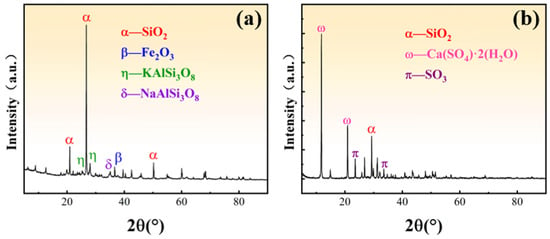
The soil used in this study was collected from undisturbed coastal sites in the Shaoyu Bay region of Dalian, China. The soil exhibited a natural moisture content of 11% and was grey-brown and powdery, with occasional lumps. Its mineralogical composition is presented in Figure 1a, and its chemical composition is summarised in Table 1. The soil primarily comprises silicon–iron–aluminium compounds with high iron content, occurring in mineral phases such as quartz and ferrosilicon.
Figure 1.
Mineral structure composition of (a) soil and (b) phosphogypsum.
Table 1.
Main chemical components of soil and phosphogypsum (wt/%).
Phosphogypsum was sourced from a chemical plant in Wuhan, Hubei Province. It was a grey-black powder containing occasional lumps, with an initial moisture content of 9.5%. The primary component was calcium sulfate dihydrate. The XRD pattern is presented in Figure 1b, and the chemical composition is listed in Table 1. Before the experiment, raw phosphogypsum was dried to constant weight at 105 °C in a forced-air oven (DHG-9145A, Shanghai Heheng Instrument Equipment Co., Ltd., Shanghai, China), ground, and sieved through a 60-mesh screen for subsequent use.
XRD analysis revealed that the soil is primarily composed of quartz and hematite, reflecting sandy properties and an oxidising environment. Weak peaks corresponding to feldspar minerals suggest remnants of primary rock; kaolinite and illite exhibit broad peaks with low crystallinity or occur as nanoparticles; the absence of montmorillonite peaks indicates low soil expansibility and favourable engineering stability. XRF analysis results align with the mineralogical composition. Showing that phosphogypsum is primarily composed of calcium sulfate, with minor amounts of silica–alumina-based minerals such as Al2Mg4(OH)12(CO3)(H2O) and CaHPO4(H2O)2. The interlayer structure of clay minerals offers intercalation sites for CrO42− [22]. The soil possesses both an inert skeletal framework and an active interface, rendering it a suitable reaction matrix for PAC curing systems. Further investigation is required to elucidate and control the synergistic mechanisms between the cementitious phase and pollutants.
2.2. Preparation of Cr(VI)-Contaminated Soil Under High-Salinity Conditions
To simulate a heavy metal-contaminated environment under hypersaline conditions, NaCl solution was added to the soil to adjust the Cl− content to 0.6% while maintaining the optimal moisture level [23]. After 60 days of Cl−–soil equilibration, K2Cr2O7(aq) was introduced to the hypersaline soil to prepare Cr(VI)-contaminated soil under hypersaline conditions.
2.3. PAC Preparation
Coal ash and phosphogypsum were mixed in a mass ratio of 1:2 and stirred in a cement slurry mixer (JJ-5, Shandong Yisheng Heavy Industry Technology Co., Ltd., Taian, China) at medium–low speed for 45 s, followed by high-speed stirring for an additional 45 s until homogeneous. The mixture was then heated to 500–700 °C in a muffle furnace (MFLXD433-12, Shanghai Muffle Furnace Technology Instrument Co., Ltd., Shanghai, China) at a heating rate of 10 °C min−1 and calcined for 1–3 h to obtain PAC. After cooling to room temperature, the calcined material was milled in a vertical planetary ball mill (XQM-4, Jiangxi Victor International Mining Equipment Co., Ltd., Ganzhou, China) at 200 rpm for 20 min to obtain PAC powder. Uncalcined coal ash and phosphogypsum were also mixed in a mass ratio of 1:2 using the same method to obtain uncalcined PAC.
2.4. Preparation of Solidified Body
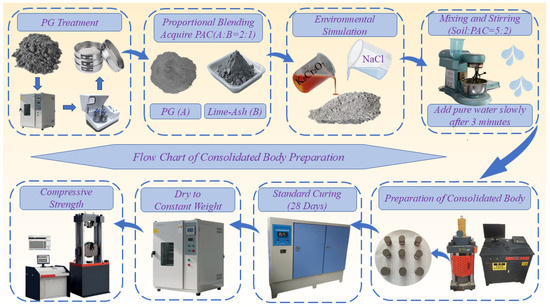
Following a soil-to-PAC powder mass ratio of 5:2, the mixture was mechanically stirred for 5 min until homogeneous. The mixture was placed into a cylindrical mould (50 mm × 50 mm) and pressed at a loading rate of 40 kN min−1. After maintaining the pressure for 40 s, the mould was removed, and the specimens were numbered and cured. The specimens were then placed in a standard curing chamber at 20 ± 2 °C, and the relative humidity not less than 95%. The curing period lasted 28 days, during which the specimens were regularly rotated to minimise water gradients caused by gravity and evaporation, ensuring uniform curing. The preparation process of the PAC solidification system is illustrated in Figure 2.
Figure 2.
Preparation flowchart of solidified body.
This study adopted a three-factor, three-level orthogonal experimental design based on the L9(34) table. The experimental conditions are presented in Table 2. The experimental factors included the calcination temperature (500–700 °C) and calcination time (1–3 h) of the coal ash in the PAC, as well as the Cr(VI) concentration (30–90 mg/kg, corresponding to 1, 2, and 3 times the risk intervention values for Class 1 land specified in GB 36600-2018) in the contaminated soil. Compressive strength and leaching toxicity of the solidified material served as the response indicators. For comparative analysis, three blank samples were prepared with varying contaminated soil concentrations and uncalcined coal ash in the PAC. The comparison table of the uncalcined test of PAC coal ash slag is shown in Table 3.
Table 2.
PAC coal ash calcination test design table.
Table 3.
Comparison of uncalcined PAC coal ash test samples.
After 28 days of curing, the solidified material was dried to constant weight in a 60 °C forced-air drying oven (DHG-9145A, Shanghai Heheng Instrument Equipment Co., Ltd., Shanghai, China). The specimens were subsequently loaded to failure at a rate of 40 kN min−1. The peak load at failure was recorded, and compressive strength was calculated based on the loaded area. Cr(VI) concentration was determined through a toxicity leaching test employing the sulfuric acid–nitric acid method (HJ/T 299-2007) [24].
2.5. Test Methods
Orthogonal and range analyses were employed to calculate the mean and range of strength and leaching rates at each factor level, thereby determining the order of influence. The microscopic solidification mechanism of Cr(VI) in a high-salinity environment was comprehensively evaluated using mineralogical analysis, functional group characterisation, infrared spectroscopy, scanning electron microscopy (SEM), and tests for specific surface area and pore-size distribution. The experimental program is outlined as follows.
- (1)
- X-ray diffraction (XRD): To determine the crystalline structure and phase assemblage of each specimen, XRD was performed using a Rigaku SmartLab SE diffractometer (Rigaku, Tokyo, Japan) operated at 40.0 kV and 40.0 mA. Cu Kα radiation (λ = 0.15406 nm) was used, with a scanning rate of 5° min−1 in 2θ.
- (2)
- Fourier transform infrared spectroscopy (FTIR): To probe molecular structure, chemical composition, and vibrational features, FTIR spectra were collected using a Thermo Scientific Nicolet iS10 spectrometer (Thermo Fisher Scientific, Waltham, MA, USA) over 4000–400 cm−1.
- (3)
- Scanning electron microscopy (SEM): Surface morphology and microstructure were examined using a Gemini SEM 300 (Carl Zeiss, Oberkochen, Germany) and a Tescan SEM system (model 120-0283; Tescan, Brno, Czech Republic). Prior to imaging, all samples were oven-dried at 105 °C.
- (4)
- Specific surface area and pore structure: Specific surface area and pore characteristics were analyzed using an AUTOSORB-1-C analyzer (Quantachrome, Boynton Beach, FL, USA) with N2 as the adsorbate. Samples were degassed at 200 °C for 6 h before measurement.
3. Analysis of Test Results
3.1. Orthogonal Test Analysis
3.1.1. Mechanical Properties
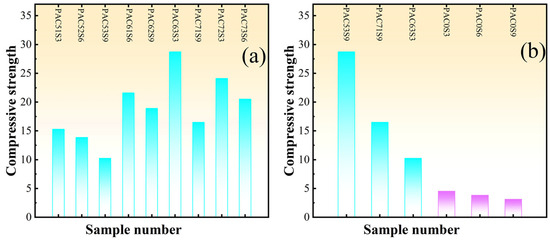
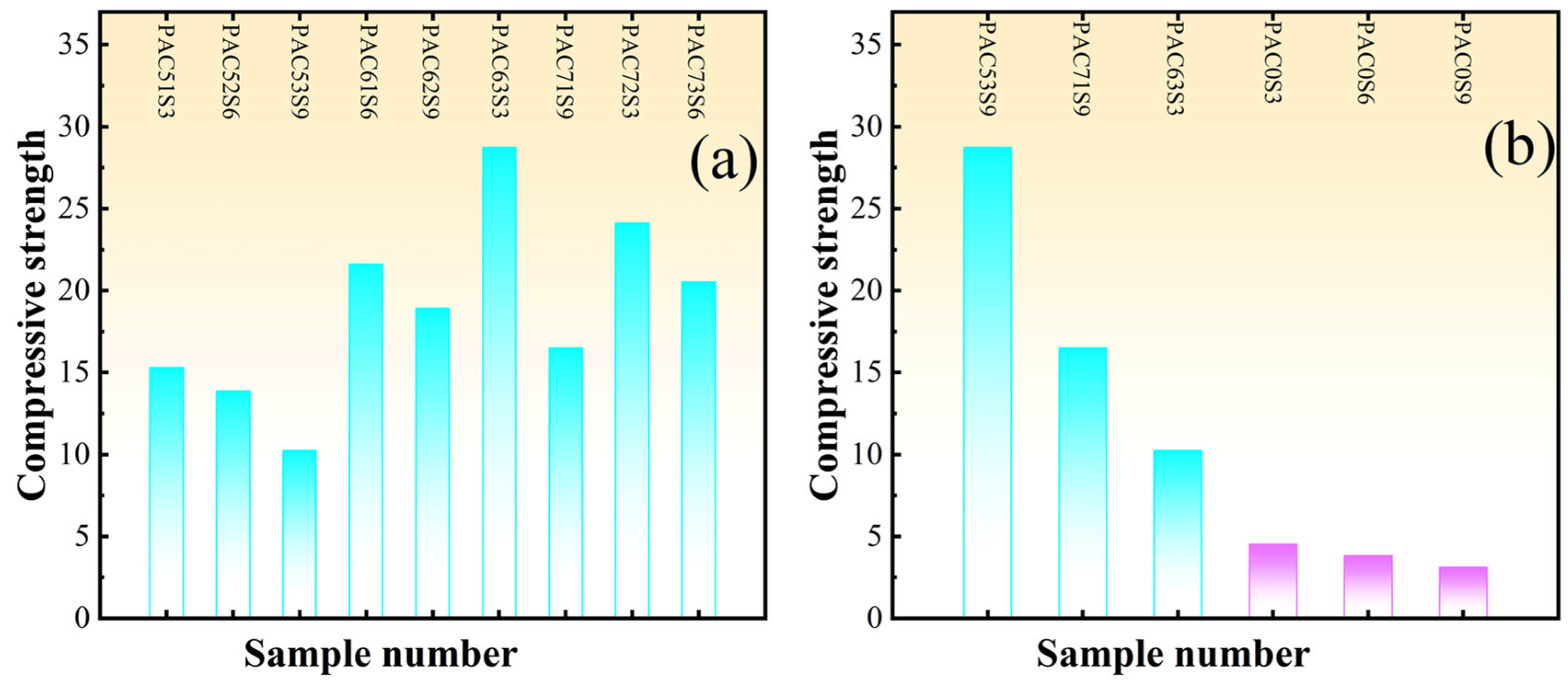
After 28 days of curing, the solidified specimens were subjected to a compressive strength test. The compressive strength results are presented in Figure 3a. Specimen groups exhibiting significant strength differences were compared with the blank control group, as illustrated in Figure 3b. The mean and range for each experimental factor at different levels were calculated to assess the influence of each factor on compressive strength.
Figure 3.
(a) Statistics of compressive strength of orthogonal test; (b) comparison of compressive strength of blank sample.
The data in Table 4 reveal substantial differences in the performance responses of the sample materials under combined high-salinity and Cr(VI) contamination conditions. The PAC63S3 group achieved the highest mechanical performance, with a 28-day compressive strength of 28.75 MPa, exceeding that of the PAC73S6 group, despite the latter being calcined at the highest temperature. This indicates that material performance depends not only on calcination-induced strength but also on the synergistic effects of multiple factors, including curing agent ratio and environmental adaptability.
Table 4.
Average and range values of various factors in the calculation of compressive strength.
Calcination temperature exerted a substantial influence on compressive strength, with a strength variation range of 10.5 MPa. At 700 °C, the average compressive strength reached 26.0 MPa. This enhancement was attributed to the significant activation of latent aluminosilicate components in coal ash at elevated temperatures, promoting C-S-H gel formation and improving material density. At 500 °C, the average compressive strength was only 15.5 MPa, suggesting that this temperature was insufficient to disrupt the glassy structure of coal ash, thereby limiting the release of the active phase [25]. At 600 °C, the average strength was 24.30 MPa, approaching the softening point of coal ash, where the aluminosilicate network was most efficiently disrupted, indicating an optimal activation temperature range.
The influence of calcination time was comparatively minor, with a strength variation range of 4.0 MPa, suggesting a limited role in controlling compressive strength. Insufficient activation at 1 h led to reduced compressive strength, whereas at 2 h, active silicon and aluminium were adequately released, producing a strength increase of approximately 33% relative to the 1-h group. Extending the calcination time to 3 h caused partial sintering and agglomeration of coal ash particles, reducing the specific surface area by approximately 18%, which weakened reactivity and slowed strength development [26].
Cr(VI) concentration exerted the most pronounced effect on compressive strength, with a range of 11.7 MPa. Increasing the Cr(VI) level from 30 to 90 mg kg−1 reduced the mean compressive strength by 41.64%. This deterioration is primarily attributed to the coupled effects of chemical toxicity and pore-pressure build-up. Chromate anions (CrO42−) readily adsorb onto C–S–H surfaces [27], hindering Ca2+ cross-linking and suppressing further development of the gel network. In addition, colloidal phases formed during Cr(VI) stabilization can clog capillary pores and reduce pore connectivity, thereby impeding the growth of hydration products and microstructural densification [28], which ultimately compromises the overall strength.
Compared with the uncalcined blank, calcination markedly enhanced compressive strength. The absence of high-temperature treatment in the blank prevented effective disruption of the vitreous coal ash structure, restricting the release of latent active components and resulting in consistently low strength. By contrast, calcination maximised the reactivity of latent aluminosilicate components in PAC, enhancing C-S-H gel formation and thus improving the compressive strength of the solidified material [29].
Range analysis revealed that at 600 °C with a 3-h calcination time and a Cr(VI) concentration of 30 mg/kg, the compressive strength reached 28.70 ± 1.5 MPa, outperforming all other factor combinations.
3.1.2. Toxic Leaching
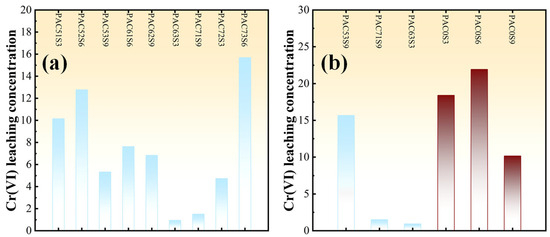
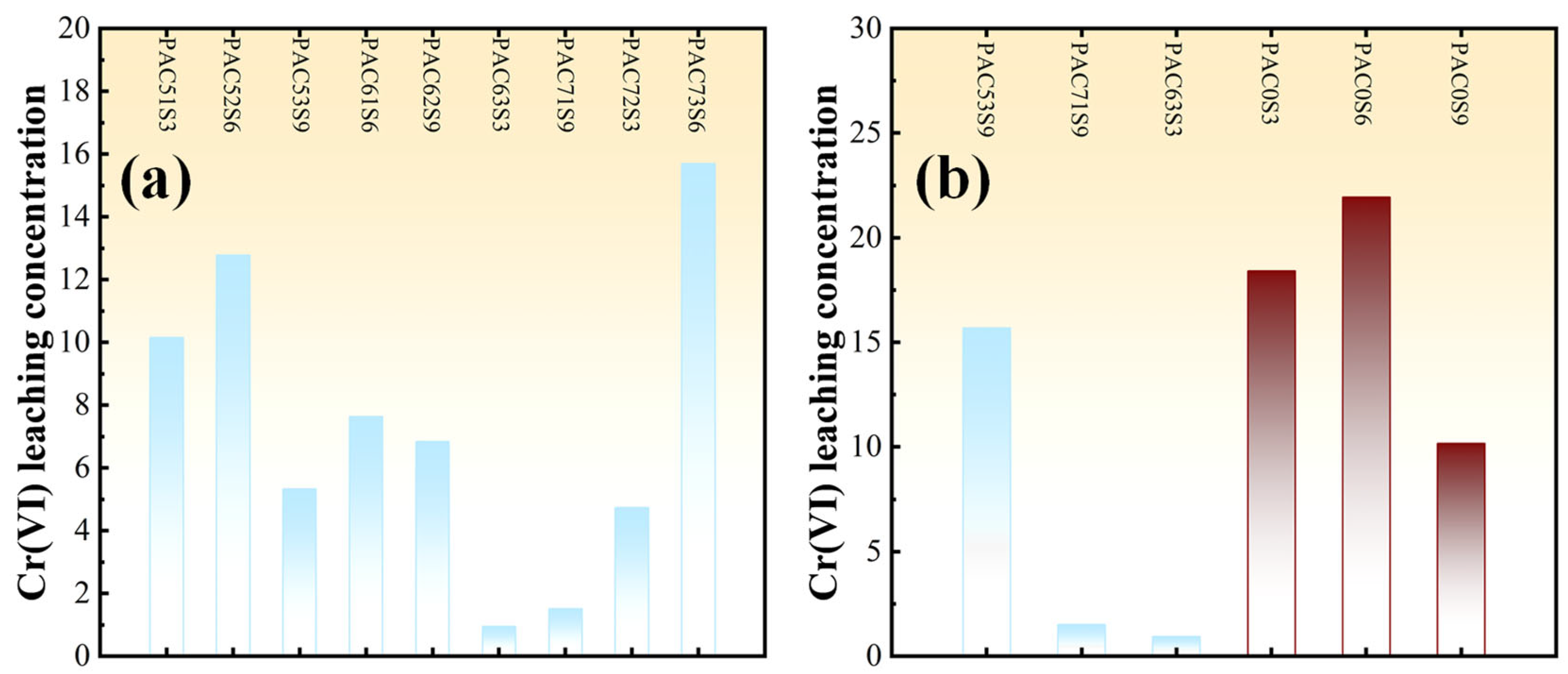
Figure 4a presents the results of the toxicity leaching tests. Under high-salinity conditions, the Cr(VI) immobilisation efficiency of the solidified material was markedly influenced by calcination temperature, calcination duration, and initial Cr(VI) loading. Cr(VI) leaching concentrations ranged from 0.95 to 21.93 mg/L, reflecting substantial differences in immobilisation and stabilisation performance across process parameter combinations. Representative samples with the highest, intermediate, and lowest leaching concentrations were compared with the blank sample (Figure 4b).
Figure 4.
Statistical chart of Cr(VI) leaching concentration in nine groups (a) and comparison chart of Cr(VI) leaching concentration (b).
Range analysis revealed that the initial Cr(VI) concentration was the primary factor controlling the leached concentration, showing a strong positive correlation with a range of 7.7 μg/L. When Cr(VI) increased from 30 to 90 mg/kg, the mean leached concentration rose by approximately 3.4-fold. This indicates that, under high loading, the hydration-derived cementitious products progressively approach saturation in available sites for chromate adsorption, interlayer exchange, and physical encapsulation. As a result, a fraction of Cr(VI) remains in a mobile form within the pore solution and becomes more readily leachable [30].
Calcination temperature markedly influenced leaching risk. The 700 °C group exhibited the lowest mean leached concentration of 4.1 μg/L, likely because an appropriate temperature enhances ash/slag reactivity and promotes the formation of cementitious phases as well as pore-structure densification, thereby strengthening chromate immobilization and diffusion resistance. In contrast, calcination time had a comparatively minor effect, with a range of 0.6 μg/L. Extending the duration to 3 h can improve the release of reactive components and increase immobilization efficiency; however, excessive calcination may induce sintering and agglomeration, reduce specific surface area, and consequently hinder subsequent hydration reactions (Table 5).
Table 5.
Average and range values of various factors calculated based on Cr(VI) leaching concentration.
Compared with the single Cr(VI) system, where the leached concentration remained below 1.5 μg L−1, the high-salinity condition markedly increased Cr(VI) mobility and leaching risk. Chloride ions can compete for adsorption sites on hydration-product surfaces and within pores, and can modify surface charge and the availability of complexation sites through processes such as chloride–hydroxide exchange, thereby suppressing chromate surface bonding and immobilization [31]. This interpretation is consistent with our FTIR results: the intensity of the chromium–oxygen characteristic band decreased by approximately 40% relative to the non-saline group, indicating weakened chromate-related immobilization. In addition, elevated ionic strength compresses the electrical double layer and increases anion mobility in the pore solution, further promoting Cr(VI) leaching.
PAC63S3 exhibited the lowest Cr(VI) leaching concentration, indicating superior solidification performance. This was attributed to partial SO42− substitution by Cl− within the AFt lattice, forming a stable solid solution. XRD peak shifts confirmed structural changes that reduced free Cl− content, mitigating stability loss. Additionally, SiO2 incorporation from coal ash densified the gel matrix, concentrating pore sizes around 8 nm, increasing tortuosity, and effectively impeding CrO42− migration.
Compared with the uncalcined blank, the uncalcined control exhibited Cr(VI) leaching concentrations as high as 15.69–21.93 μg/L. This occurred because the non-cementitious structure, dominated by dihydrate gypsum, lacked an effective fixation mechanism, allowing Cl− and CrO42− to form soluble complexes at grain boundaries. Moreover, the porous structure and high permeability accelerated Cr(VI) migration, compromising environmental stability. The calcined samples exhibited markedly higher compressive strength. Specifically, calcination at 600–700 °C effectively activated silicon and aluminium species, producing dense gels and yielding much higher strength than the blank; calcination duration had only minor effects, with 2–3 h outperforming 1 h; however, increased initial Cr(VI) loading weakened structural density and reduced strength.
3.2. Analysis of Microscopic Characteristics
3.2.1. Mineral Structure Composition
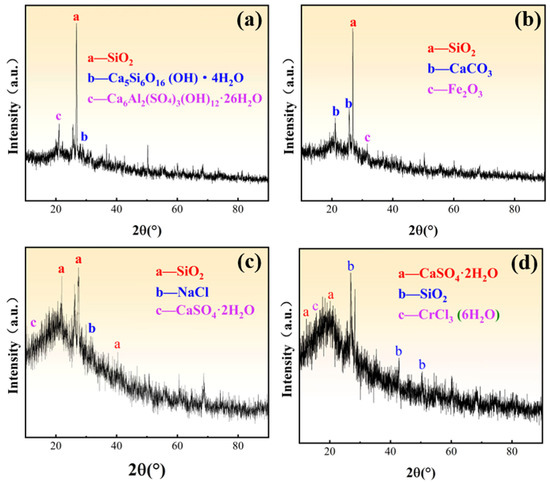
In this experiment, PAC63S3, PAC71S9, and PAC53S9—representing samples with substantial differences in compressive strength—along with the blank group PAC0S9 exhibiting the lowest strength, were selected for XRD mineral phase analysis to elucidate the microscopic mechanisms underlying their adaptability in high-salinity environments. The corresponding XRD patterns are presented in Figure 5.
Figure 5.
X-ray diffraction patterns of samples: (a) PAC63S3; (b) PAC71S9; (c) PAC53S9; (d) PAC0S9.
The diffraction pattern of PAC63S3 (Figure 5a) shows prominent C-S-H gel and AFt diffraction peaks, suggesting complete gelation at 600 °C for 3 h, with efficient release of reactive silica and alumina species and substantial formation of hydration products. The marked reduction in SiO2 peak intensity implies that the original mineral either participated in the gelation reaction or was encapsulated by the newly formed C-S-H gel, thereby enhancing mechanical performance [32].
In PAC71S9 (Figure 5b), the coexistence of CrO42− adsorption peaks with CaCO3 suggests that elevated Cr(VI) concentrations inhibit hydration by competing with Ca2+ for complexation, thereby impeding gel formation and compromising the mechanical integrity of the solidified matrix [33].
PAC53S9 (Figure 5c) primarily contains amorphous aluminosilicates, indicating that the 500 °C calcination temperature was insufficient to activate PAC reactive components. The concurrent presence of sodium and chloride salt crystallisation peaks indicates free Cl− enrichment [34], which readily precipitates from the crystal lattice, inducing expansion and exacerbating the degradation of the brittle, gypsum-rich structure, thereby reducing structural stability.
The uncalcined control PAC0S9 (Figure 5d) primarily comprises dihydrate gypsum and quartz, lacking C-S-H or AFt cementitious phases. Without thermal activation, PAC fails to release its latent reactive components, leaving the system dominated by original, inert mineral phases. This accounts for the low strength observed in the solidified structure [35].
3.2.2. Functional Group Structure
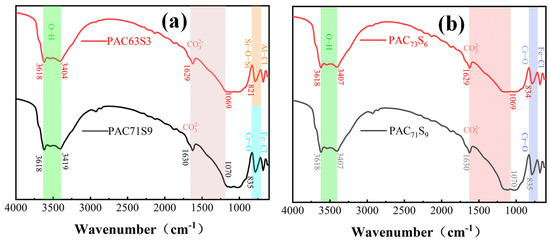
In this experiment, PAC63S3, PAC71S9, and PAC53S9—representing samples with substantial differences in compressive strength—along with the blank group PAC0S9, which exhibited the lowest strength, were selected for FTIR analysis. The corresponding FTIR spectra are presented in Figure 6.
Figure 6.
FTIR spectra of samples: (a) PAC63S3 and PAC71S9; (b) PAC53S9 and PAC0S9.
PAC63S3 (Figure 6a) shows characteristic hydroxyl peaks in the 3400–3700 cm−1 range, with shifts near 3400 cm−1 indicating variations in the hydroxyl bonding environment [36]. The Si-O-Si peak appears at 821 cm−1 with accompanying Al-Cl bond signals, suggesting that calcination temperature influences the Si-O-Si framework and Cl− binding at metal sites, thereby affecting structural stability in Cl-containing systems [37]. At elevated Cr(VI) concentrations, C-S-H gel peaks were absent in PAC71S9 (Figure 6a) [38], whereas peaks corresponding to CO32−, Fe-Cl, and Cr-O (1630 cm−1, 835 cm−1) emerged, indicating that Cr(VI) competes with or chemically reacts with C-S-H gel, inhibiting its formation.
The PAC53S9 spectrum (Figure 6b) exhibits intensified OH stretching and HOH bending peaks, indicating abundant free water, hydroxyl groups, and elevated porosity. Additionally, splitting and shifting of Si-O-Al peaks indicate insufficient polymerisation of the Si-Al framework and a porous gel structure, weakening cementation and load-bearing capacity, thereby reducing mechanical strength [39]. The PAC0S9 spectrum (Figure 6b) lacks prominent Fe-Cl peaks, while the Cr-O peak remains relatively stable. Without Fe-Cl complexes, the CrO42− adsorption peak more directly reflects its intrinsic bonding characteristics, altering its morphology and intensity. This suggests that Fe-Cl complexes compete with CrO42− for adsorption sites, thereby influencing its bonding behaviour and spectral features.
3.2.3. Micromorphology
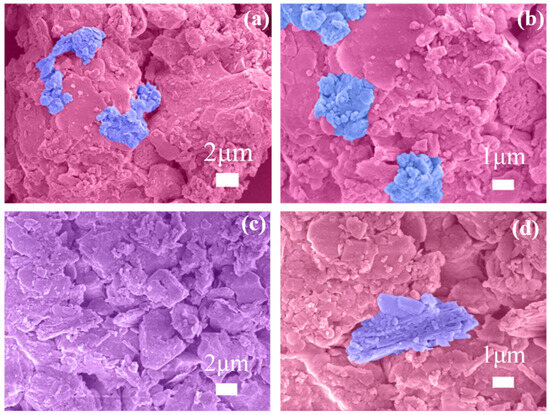
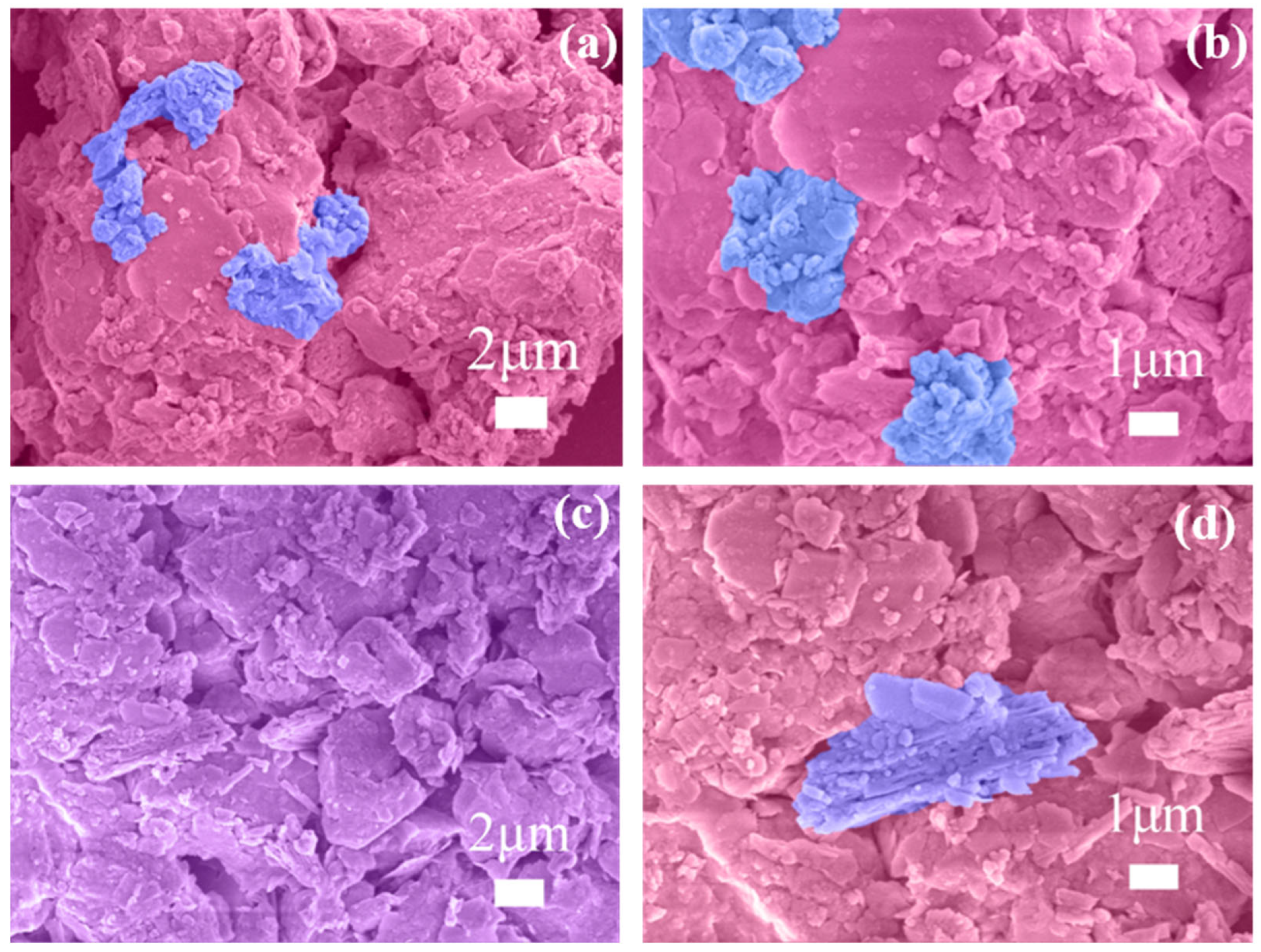
The compressive strength tests revealed no clear linear correlation between material mechanical properties and calcination conditions. To elucidate the influence of calcination conditions on microstructure, PAC63S3 and PAC73S6 samples were selected for scanning electron microscopy (SEM) analysis. The corresponding micromorphologies are presented in Figure 7.
Figure 7.
Microscopic morphology of CrO42− at 5000 and 10,000 times magnification of PAC63S3 (a,b) and 5000 and 10,000 times magnification of PAC73S6 (c,d).
As shown in Figure 7a,b, abundant amorphous C-S-H gel structures, primarily composed of Ca, Si, and O, formed in PAC63S3. These exhibited flocculent or reticular morphologies, encapsulating particles and filling pores to construct a dense three-dimensional skeleton, thereby significantly enhancing mechanical properties [40]. Fibrous ettringite (AFt) was also observed locally, formed by reactions between residual Al3+ and SO42−. This C-S-H/AFt composite structure immobilises Cr(VI) via physical entrapment and chemical bonding, forming a key foundation for strength enhancement of the solidified body. In contrast, PAC73S3 exhibits numerous microcracks and granular accumulations, with markedly reduced C-S-H gel content and only trace amounts of low-crystallinity AFt, indicating suppressed gelation reactions.
Further analysis (Figure 7c,d) revealed that Cl− content in PAC73S6 was approximately twice that of PAC63S1 and positively correlated with Fe. Under high temperatures, dissolved Fe3+ complexes with Cl− to form soluble [FeCl4]−, hindering the formation of C-S-H and AFt phases. Simultaneously, Cl− enrichment in pores promotes CaCl2·2H2O crystallisation, whose volumetric expansion during hydration generates local stresses that disrupt the gel network structure [41]. Consequently, the mechanical properties of PAC73S3 are substantially lower than those of PAC63S1.
3.2.4. Electron Energy Spectrum Test
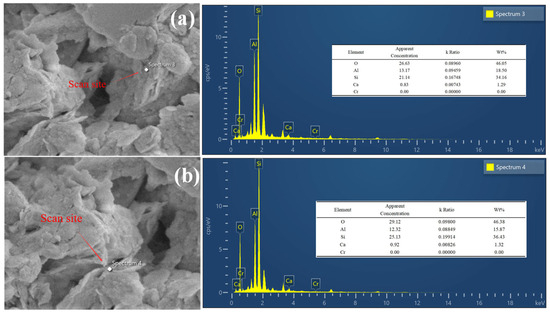
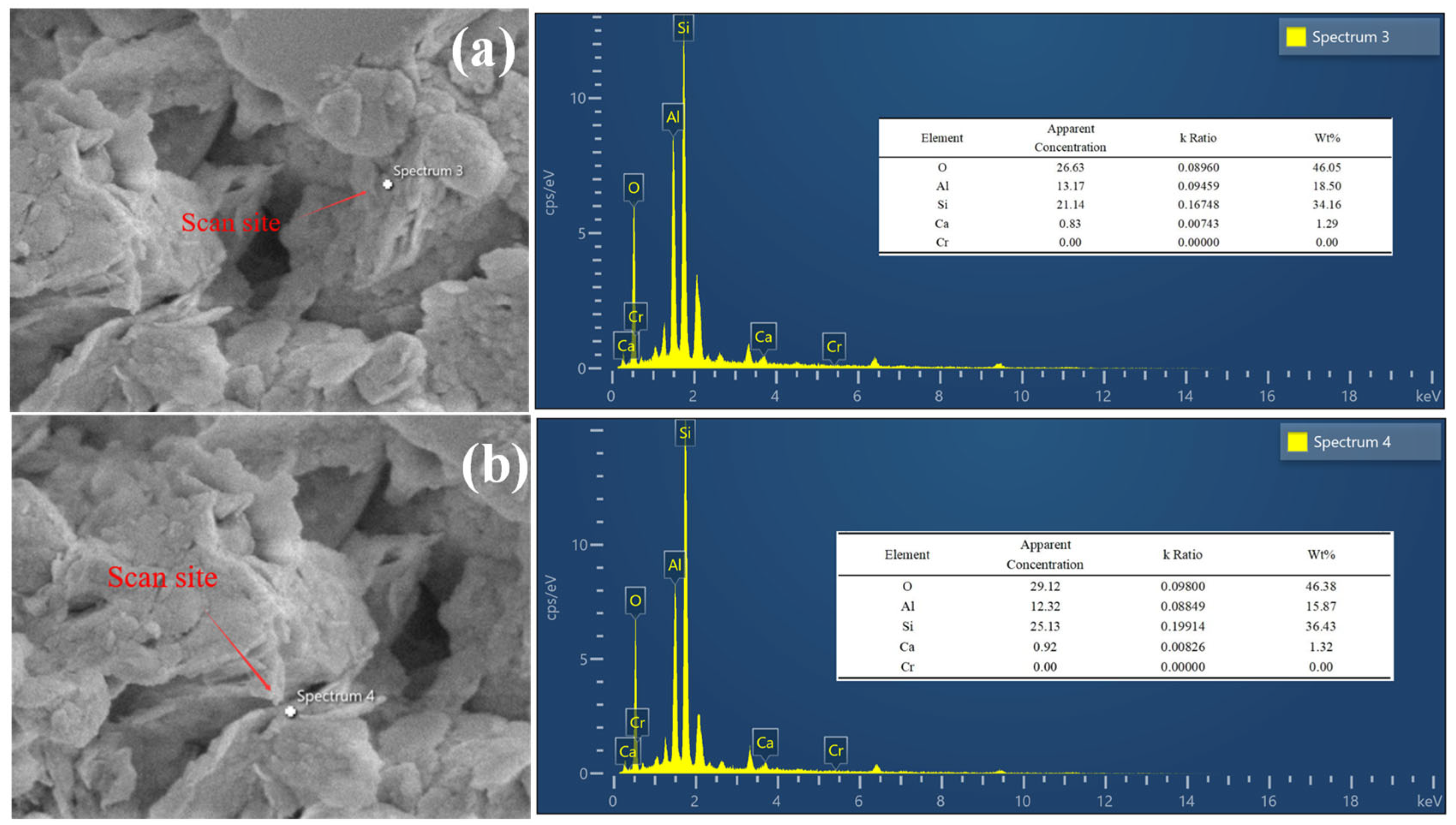
To elucidate the mechanisms underlying the superior mechanical properties and microstructure of the PAC63S2 group with optimal compressive strength, two-point energy-dispersive spectrometry (EDS) scans were performed and jointly analysed with scanning electron microscopy (SEM) images to establish the relationship between elemental composition and the spatial distribution of cementitious products. The corresponding results are presented in Figure 8.
Figure 8.
PAC63S3 scanning (a) point position and (b) point position energy spectrum scanning.
Figure 8a,b presents the EDS spectra obtained at two distinct locations on the PAC63S3 solidified body. The primary elements identified at both locations were Ca, Si, Al, O, and trace amounts of Cr. Ca and Si exhibited the highest abundances, with pronounced Ca-K and Si-K peaks. The Ca/Si atomic ratio ranged from 1.5 to 2.0, consistent with the typical composition of C-S-H gels, confirming that the amorphous flocculent structures observed in the SEM images correspond to the C-S-H phase. The Al-K peak indicated the presence of Al, likely originating from residual Al3+ in calcined phosphogypsum or aluminosilicate minerals within the soil. Al3+ reacts with SO42− to form AFt, promoting its localized deposition.
A weak Cr-K signal was detected, indicating effective Cr(VI) immobilisation. This suggests that C-S-H gels immobilise Cr(VI) within their microporous structures via surface adsorption or ion-exchange mechanisms, thereby reducing leaching risk. Elemental mapping revealed high concentrations of Ca, Si, and O within the matrix, indicating that C-S-H gels formed a continuous, dense network that filled pores and encapsulated soil particles, thereby enhancing compressive strength. Localized Al enrichment likely served as nucleation sites for AFt formation, which interwove with C-S-H to create a composite structure, enhancing matrix compactness. Cr exhibited no distinct enrichment regions but was uniformly dispersed within the gelling system, indicating its immobilisation within the C-S-H or AFt structures, consistent with the previously reported low Cr(VI) leaching results.
3.2.5. Specific Surface Area and Pore Size Distribution
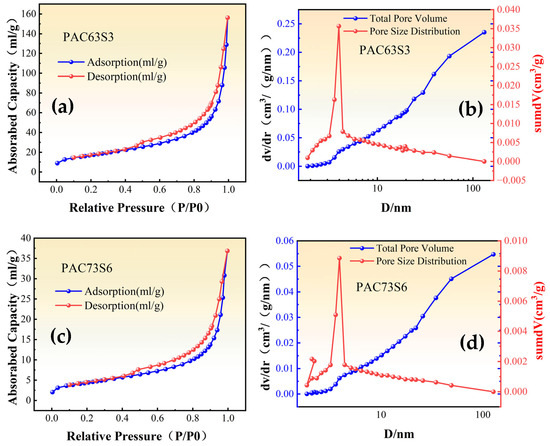
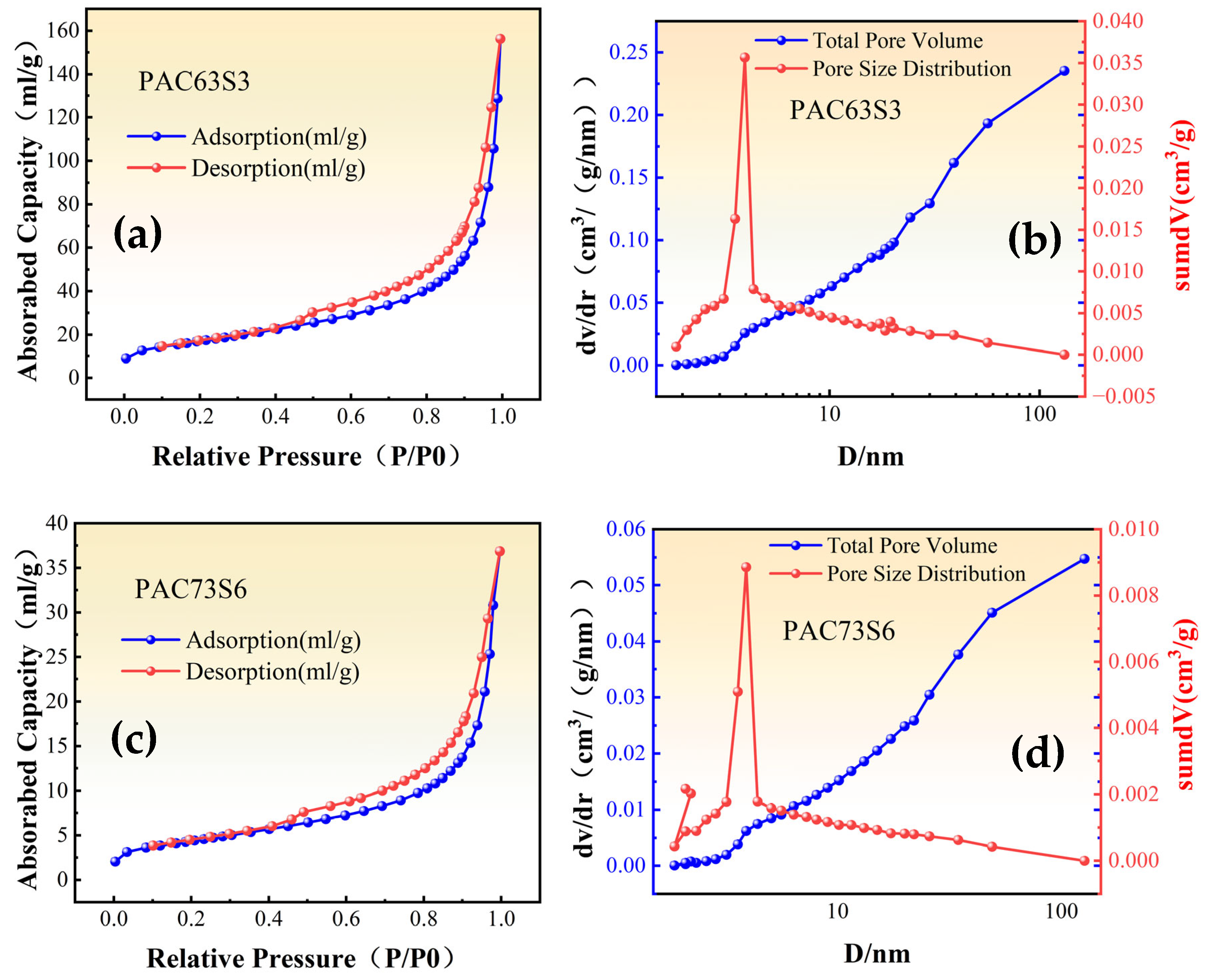
To further elucidate the microstructural differences between the PAC63S3 and PAC73S6 solids, specific surface area and pore size distribution analyses were conducted. Nitrogen adsorption–desorption isotherms were employed to determine specific surface area, pore size, and pore volume, thereby investigating the mechanisms governing changes in pore characteristics under varying calcination conditions. Figure 9 presents the adsorption–desorption curves for the two solids, while Table 6 summarises the corresponding BET surface area and pore size distribution results.
Figure 9.
Adsorption–desorption curves and pore volume–pore size distribution of PAC63S3 (a,b) and PAC73S6 (c,d).
Table 6.
PAC63S3 and PAC73S6 specific surface area test results.
The nitrogen adsorption–desorption isotherms for PAC63S3 (Figure 9a) and PAC73S6 (Figure 9c) exhibit typical Type IV curve characteristics with a pronounced hysteresis loop in the high relative pressure region. The average pore size is 14.17 nm, with the pore size distribution predominantly concentrated in the 2–4 nm range, exhibiting a unimodal peak indicative of a hierarchical mesoporous structure. In contrast, PAC63S3 exhibits a markedly higher adsorption capacity than PAC73S6 throughout the process, with a steeper upward trend in the high-pressure region, suggesting a more developed pore network and enhanced adsorption capacity.
Both PAC63S3 (Figure 9b) and PAC73S6 (Figure 9d) exhibit a distribution dominated by mesopores with minor micropore fractions, characterised by a sharp peak at approximately 3–5 nm, indicating a highly concentrated pore size distribution. PAC63S3 demonstrates a higher total pore volume and a greater fraction of small-diameter pores. Its elevated specific surface area and dense mesoporous framework promote the formation of a continuous hydration product network, thereby improving matrix density, mechanical integrity, and compressive strength. Conversely, PAC73S6 displays underdeveloped and heterogeneously distributed pores, leading to incomplete hydration and a loosely bound structure, thereby constraining strength development.
Table 6 indicates that PAC63S3 possesses a substantially greater specific surface area (60.83 m2/g) and total pore volume (0.2155 cm3/g) than PAC73S6. The average pore diameters of PAC63S3 and PAC73S6 are similar, at 14.17 nm and 13.76 nm, respectively. The elevated specific surface area and pore volume of PAC63S3 not only supply additional reaction sites for hydration but also facilitate the formation of a denser, more continuous hydration product network, thereby improving macroscopic compressive strength. However, the restricted pore structure of PAC73S6 hinders the formation and accumulation of hydration products, leading to suboptimal mechanical performance.
3.2.6. Photoelectronic Energy Spectrum
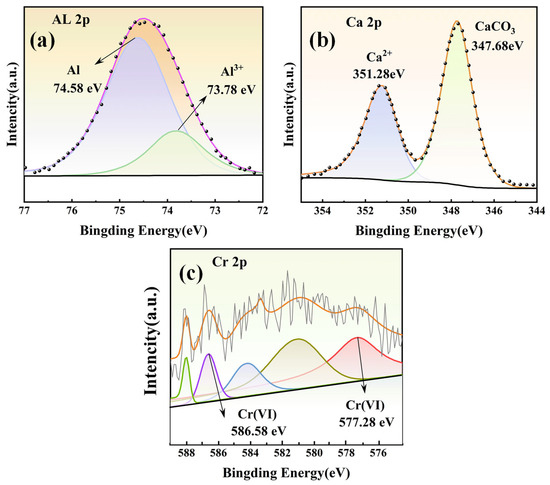
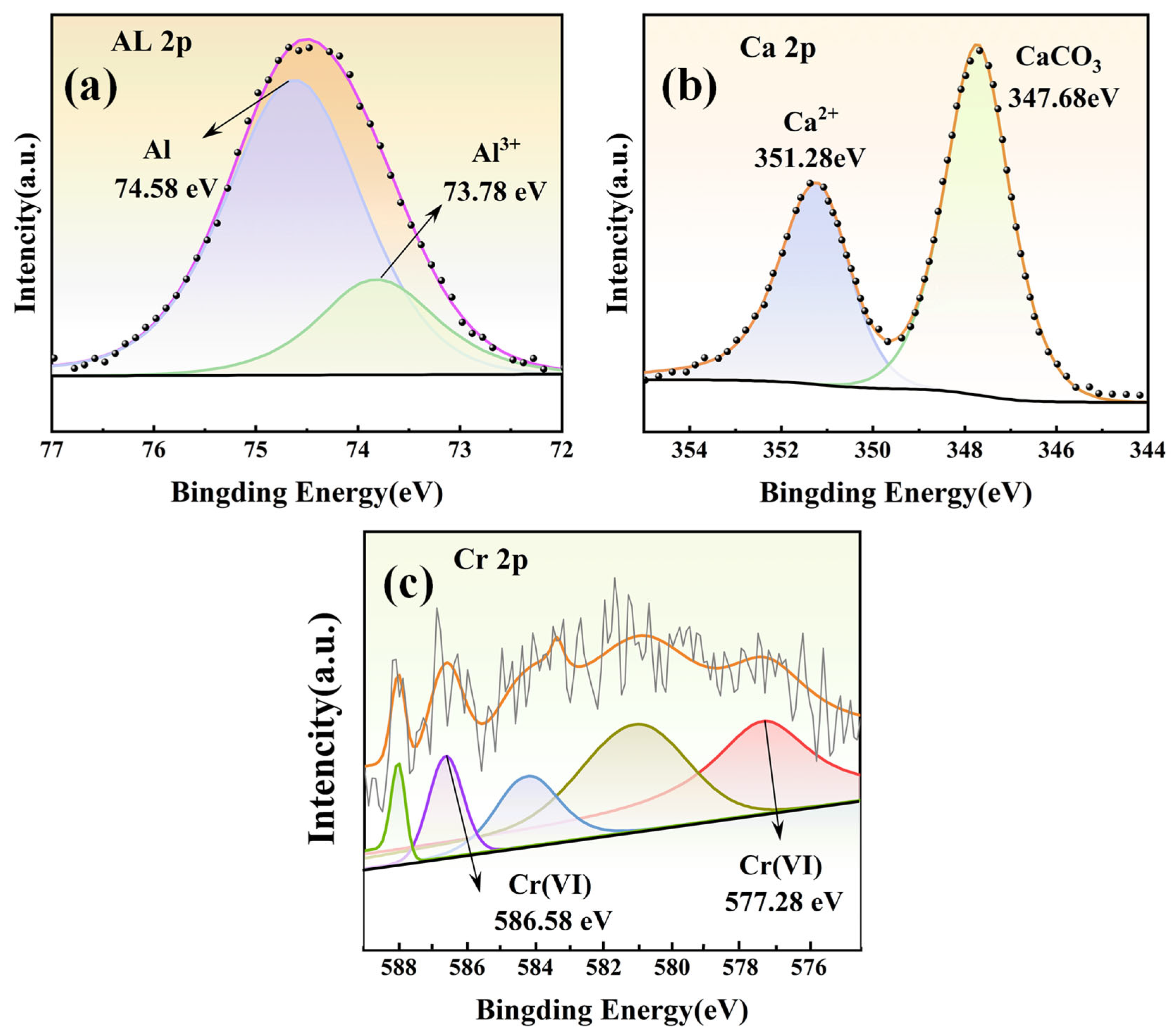
X-ray photoelectron spectroscopy was conducted on specimen PAC63S1, and the results are presented in Figure 10. Together with the SEM morphology and EDS elemental mapping, the data clarify the relationship between the microstructural features of hydration-derived cementitious products and the speciation of key elements.
Figure 10.
High-resolution XPS spectra of sample PAC63S1: (a) Al 2p, (b) Ca 2p, (c) Cr 2p.
In Figure 10a, the Al 2p spectrum shows two components at 73.8 and 74.68 eV, indicating that Al is predominantly present as Al–O bonds in aluminosilicates or hydrated aluminate phases. The incorporation of Al into Si–O–Al linkages facilitates the formation of C–A–S–H and aluminate-type hydrates [42]. In Figure 10b, the Ca 2p spectrum exhibits the characteristic spin–orbit doublet at 347.68 and 351.28 eV. The lower binding energy is consistent with calcium in a carbonate environment and also reflects Ca-related chemical states, confirming that Ca participates in hydrate formation while coexisting with carbonate phases [43]. In Figure 10c, the Cr 2p signal at approximately 579.2 and 588.5 eV is characteristic of chromate species, suggesting that chromium remains mainly in a high-valence state. Combined with SEM–EDS showing no pronounced Cr enrichment, the results imply that Cr(VI) is stabilized primarily through surface adsorption and interlayer anion immobilization within cementitious phases such as C-A-S-H and AFm or hydrotalcite-like phases, together with diffusion resistance induced by pore-structure densification. This is consistent with the low Cr(VI) concentrations observed in the toxicity leaching tests.
3.3. Mechanistic Analysis and Discussion
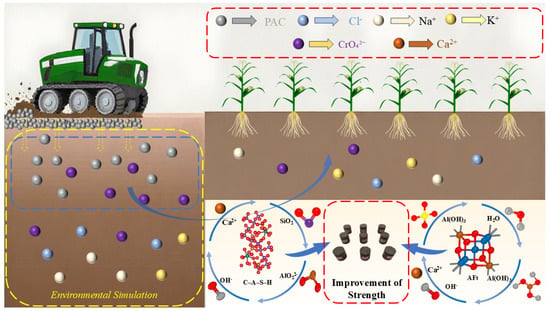
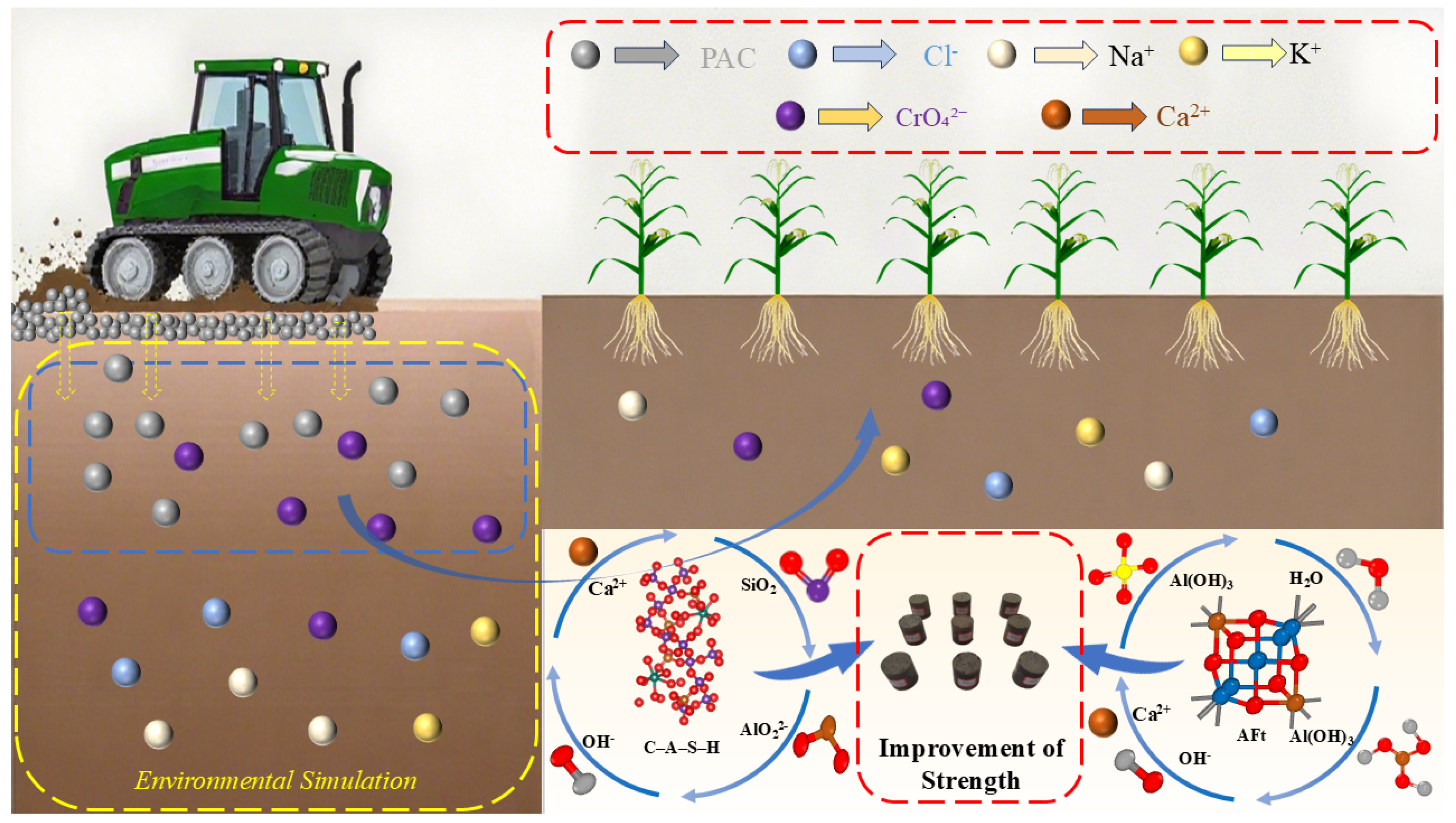
In the PAC stabilization system, Cr(VI) mobility is mainly controlled by chromate immobilization by hydration-derived cementitious products and by pore-structure densification. Under alkaline pore-solution conditions, Cr(VI) occurs predominantly as chromate, CrO42−, with the local presence of hydrogen chromate, HCrO4−. Calcium released from PAC reacts with reactive silica and alumina to form abundant C–A–S–H gel, calcium aluminate hydrates, ettringite, and AFm-type phases. These cementitious phases immobilize chromate within the solid matrix through surface complexation and electrostatic adsorption, and through interlayer anion exchange in layered phases such as AFm and hydrotalcite-like structures. This reduces the effective chromate concentration in the pore solution and lowers the leaching risk [44]. Meanwhile, continuous precipitation and cross-linking of hydrates within pore space decrease porosity and connectivity, strengthening diffusion resistance and physical encapsulation. The coupled chemical binding and microstructural densification limits Cr(VI) release from the matrix and enables stabilization of high-salinity Cr(VI)-contaminated soils, as schematically illustrated in Figure 11.
Figure 11.
Hydration mechanism of solid waste-based materials.
As a benchmark against recent advanced stabilization technologies, Asadoullahtabar et al. proposed a nano TiO2−modified solidification strategy and systematically compared it with cement, bentonite, and silica fume. Compared with conventional cement-based or solid-waste-based binders, nano-modification provides clear advantages: nanoscale particles serve as efficient nucleation and filling agents, accelerating structure development and markedly densifying the microstructure.
To better relate mechanical performance to immobilization behavior, Cr(VI) leaching should be viewed as a transport-controlled process occurring within a porous cementitious matrix. In our system, the increase in compressive strength indicates improved mechanical integrity and a denser hydration network, which is expected to reduce pore connectivity and hinder the propagation of microcracks, thereby suppressing preferential pathways for ion migration. Consequently, the effective transport of aqueous species is reduced and the measured leaching decreases [45]. Their study further integrated mechanical performance, sustainability assessment, and multi-criteria decision analysis, offering a more rigorous framework to judge engineering competitiveness and practical applicability. To overcome the limitations of our current qualitative interpretation, future work will prioritize quantitative characterization and analysis.
3.4. Economic Benefit Analysis
With the expansion of carbon trading markets and rising carbon prices, the economics of stabilization technologies are increasingly shaped by both energy-related material costs and carbon-emission costs. Building on the above technical assessment of PAC-based stabilization of Cr(VI)-contaminated soil under high-chloride conditions, this study further incorporates carbon-price scenarios. The integrated net benefit per unit mass of treated soil is adopted as the key metric to evaluate how carbon-price fluctuations influence the economic competitiveness of the PAC pathway.
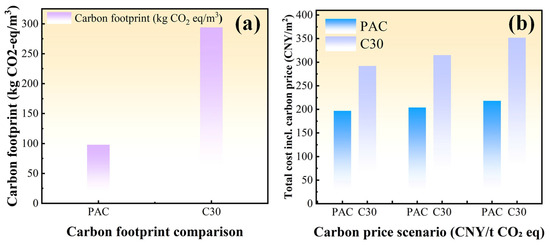
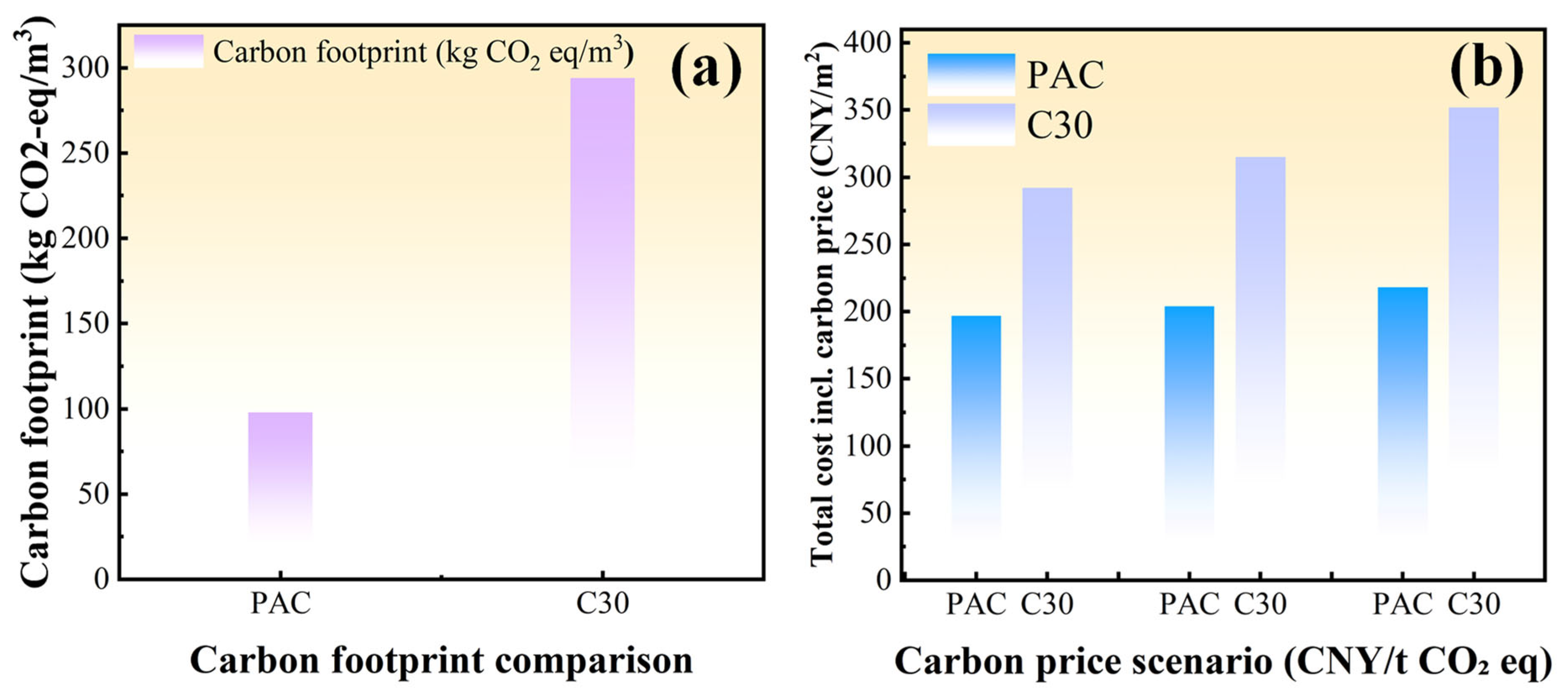
Figure 12a shows that the unit-volume carbon footprint of PAC is markedly lower than that of conventional C30 concrete, indicating a clear advantage in carbon emissions. Consistent with this trend, Figure 12b demonstrates that the total carbon-inclusive cost of both materials increases as the carbon price rises across all scenarios. However, because C30 has a higher carbon footprint, its cost increases more sharply. As a result, PAC maintains a lower total cost under all carbon-price scenarios, and its economic advantage becomes more pronounced at higher carbon prices.
Figure 12.
Economic performance of PAC stabilization: (a) carbon footprint; (b) total carbon-inclusive cost.
4. Conclusions
The experimental results demonstrate that PAC significantly influences both the mechanical properties and environmental stability of high-salinity, Cr(VI)-contaminated soil remediation systems. Calcination temperature and Cr(VI) concentration are identified as the primary controlling factors for strength development. An optimal balance between energy consumption and activation efficiency is achieved at 600 °C for 3 h.
- (1)
- Compressive strength and orthogonal analysis:
Orthogonal experimental results, using 28-day compressive strength as the response variable, reveal that calcination temperature and Cr(VI) concentration exert dominant effects, with corresponding strength ranges of 10.5 MPa and 11.7 MPa, respectively. The 700 °C calcination group achieves maximum strength under low-salinity conditions. However, under high-salinity conditions, complexation between Fe3+ and Cl− to form soluble [FeCl4]− complexes reduces strength. A calcination regime of 600 °C for 3 h achieves optimal performance, balancing coal ash activation with energy consumption and yielding a 28-day compressive strength of 28.75 MPa. Increasing the Cr(VI) concentration from 30 to 90 mg/kg reduces mean compressive strength by 41.6%, attributed to interfacial toxicity reactions and pore-blocking effects.
- (2)
- Toxicity leaching and salinity-interference mechanisms:
High salinity markedly increased the leaching risk of Cr(VI). The uncalcined group exhibited a leached concentration as high as 21.9 μg L−1, which remains far below the Chinese regulatory limit of 5 mg L−1, whereas PAC63S3 showed only 1.5 μg L−1. Chloride intensified the risk via three pathways. First, it preferentially occupied surface sites on C–S–H, suppressing chromate binding. Second, salt crystallization increased porosity by about 8%, and SEM revealed cracks wider than 5 μm, creating transport pathways for chromate migration. Third, chloride promoted complexation with ferric ions, thereby reducing the immobilization efficiency of Cr(VI).
- (3)
- Strength loss in high-salinity environments and mitigation:
High salinity reduced mechanical strength by 22%, mainly due to chloride-induced disruption of the cementitious framework and the inhibitory effect associated with ferric ions. This discrepancy highlights the need for environment-adaptive design. Medium-temperature, extended-duration calcination or nano-modification strategies are recommended to balance mechanical performance with long-term durability under saline conditions.
Author Contributions
Conceptualization, A.D.; Investigation, N.Z.; Resources, S.W.; Data curation, G.C., W.C. and H.L.; Writing—original draft, Y.D.; Writing—review & editing, L.M. and S.L.; Funding acquisition, Y.D. All authors have read and agreed to the published version of the manuscript.
Funding
This work was funded by the Visiting Researcher Fund Program of State Key Laboratory of Water Resources Engineering and Management (Grant No. 2024SGG01), the National Natural Science Foundation of China (Grant No. 52500182).
Data Availability Statement
The data presented in this study are available on request from the corresponding author.
Conflicts of Interest
Authors Anhua Deng and Sha Wan were employed by the company CCCC Second Harbor Engineering Company Ltd. The remaining authors declare that the research was conducted in the absence of any commercial or financial relationships that could be construed as a potential conflict of interest.
References
- Xu, D.M.; Fu, R.B.; Liu, H.Q.; Guo, X.P. Current knowledge from heavy metal pollution in Chinese smelter contaminated soils, health risk implications and associated remediation progress in recent decades: A critical review. J. Clean. Prod. 2021, 286, 124989. [Google Scholar] [CrossRef] [Scilit]
- Xu, X.; Guo, L.; Wang, S.B.; Ren, M.; Zhao, P.J.; Huang, Z.Y.; Jia, H.J.; Wang, J.H.; Lin, A.J. Comprehensive evaluation of the risk system for heavy metals in the rehabilitated saline-alkali land. J. Environ. Manag. 2023, 347, 119117. [Google Scholar] [CrossRef] [Scilit] [PubMed]
- Zhang, J.X.; Fan, X.D.; Wang, X.Q.; Tang, Y.B.; Zhang, H.; Yuan, Z.T.; Zhou, J.Y.; Han, Y.B.; Li, T. Bioremediation of a saline-alkali soil polluted with Zn using ryegrass associated with Fusarium incarnatum. Environ. Pollut. 2022, 312, 119929. [Google Scholar] [CrossRef] [Scilit] [PubMed]
- Nie, J.; Wang, Q.M.; Han, L.J.; Li, J.S. Synergistic remediation strategies for soil contaminated with compound heavy metals and organic pollutants. J. Environ. Chem. Eng. 2024, 12, 113145. [Google Scholar] [CrossRef] [Scilit]
- Sun, Z.; Chen, W.B.; Zhao, R.D.; Malik, N.; Yin, J.H.; Chen, Y.G. Investigation on solidified/stabilized behavior of marine soil slurry by lime-activated incinerated sewage sludge ash-ground granulated blast furnace slag under multifactor conditions. J. Rock Mech. Geotech. Eng. 2024, 16, 5264–5277. [Google Scholar] [CrossRef] [Scilit]
- Yu, H.T.; Liu, Z.B.; Song, M.; Liu, L.Q.; Liu, Z. Soil flushing for remediation of landfill leachate-contaminated soil: A comprehensive evaluation of optimal flushing agents and influencing factors. Waste Manag. 2025, 200, 114771. [Google Scholar] [CrossRef] [Scilit]
- Xu, D.M.; Fu, R.B.; Wang, J.X.; Shi, Y.X.; Guo, X.P. Chemical stabilization remediation for heavy metals in contaminated soils on the latest decade: Available stabilizing materials and associated evaluation methods-A critical review. J. Clean. Prod. 2021, 321, 128730. [Google Scholar] [CrossRef] [Scilit]
- Abbas, H.M.M.; Rais, U.; Altaf, M.M.; Rasul, F.; Shah, A.; Tahir, A.; Nafees-Ur-Rehman, M.; Shaukat, M.; Sultan, H.; Zou, R.L.; et al. Microbial-inoculated biochar for remediation of salt and heavy metal contaminated soils. Sci. Total Environ. 2024, 954, 176104. [Google Scholar] [CrossRef] [Scilit]
- Zheng, X.J.; Li, Q.; Peng, H.; Zhang, J.X.; Chen, W.J.; Zhou, B.C.; Chen, M. Remediation of Heavy Metal-Contaminated Soils with Soil Washing: A Review. Sustainability 2022, 14, 13058. [Google Scholar] [CrossRef] [Scilit]
- Song, P.P.; Xu, D.; Yue, J.Y.; Ma, Y.C.; Dong, S.J.; Feng, J. Recent advances in soil remediation technology for heavy metal contaminated sites: A critical review. Sci. Total Environ. 2022, 838, 156417. [Google Scholar] [CrossRef] [Scilit]
- Wang, L.; Chen, L.; Guo, B.L.; Tsang, D.C.W.; Huang, L.B.; Ok, Y.S.; Mechtcherine, V. Red mud-enhanced magnesium phosphate cement for remediation of Pb and As contaminated soil. J. Hazard. Mater. 2020, 400, 123317. [Google Scholar] [CrossRef] [Scilit]
- Dhaliwal, S.S.; Singh, J.; Taneja, P.K.; Mandal, A. Remediation techniques for removal of heavy metals from the soil contaminated through different sources: A review. Environ. Sci. Pollut. Res. 2020, 27, 1319–1333. [Google Scholar] [CrossRef] [Scilit] [PubMed]
- Naseer, U.; Ali, M.; Younis, M.A.; Du, Z.P.; Mushtaq, A.; Yousaf, M.; Qiu, C.T.; Yue, T.X. Sustainable Permeable Reactive Barrier Materials for Electrokinetic Remediation of Heavy Metals-Contaminated Soil. Adv. Sustain. Syst. 2025, 9, 2400722. [Google Scholar] [CrossRef] [Scilit]
- Li, X.; He, X.; Wang, H.; Liu, Y.S. Characteristics and long-term effects of stabilized nanoscale ferrous sulfide immobilized hexavalent chromium in soil. J. Hazard. Mater. 2020, 389, 122089. [Google Scholar] [CrossRef] [Scilit] [PubMed]
- Asadoullahtabar, S.R.; Asgari, A.; Tabari, M.M.R. Assessment, identifying, and presenting a plan for the stabilization of loessic soils exposed to scouring in the path of gas pipelines, case study: Maraveh-Tappeh city. Eng. Geol. 2024, 342, 107747. [Google Scholar] [CrossRef] [Scilit]
- Meng, W.C.; Dong, Y.Q.; Zang, M.; Zou, N.C.; Lu, H.J. Mechanical properties and chemical microscopic characteristics of all-solid-waste composite cementitious materials prepared from phosphogypsum and granulated blast furnace slag. Mater. Today Commun. 2024, 41, 110809. [Google Scholar] [CrossRef] [Scilit]
- Tian, D.Y.; Jiang, H.; Qiu, Z.D.; Lv, M.R.; Cong, X.Y.; Wu, X.G.; Gong, J.; Yang, X.C.; Lu, S. Synergy effects of phosphogypsum on the hydration mechanism and mechanical properties of alkali-activated slag in polysilicon sludge solidification. Constr. Build. Mater. 2024, 456, 139386. [Google Scholar] [CrossRef] [Scilit]
- Yang, Z.H.; Zhang, X.M.; Jiang, Z.; Li, Q.; Huang, P.C.; Zheng, C.J.; Liao, Q.; Yang, W.C. Reductive materials for remediation of hexavalent chromium contaminated soil—A review. Sci. Total Environ. 2021, 773, 145654. [Google Scholar] [CrossRef] [Scilit]
- Dong, Y.Q.; Zou, N.C.; Lan, J.R.; Zang, M.; Lu, H.J.; Huang, B.T. Ball milling modified phosphogypsum as active admixture: Milling kinetics and activation mechanism. Constr. Build. Mater. 2025, 488, 142158. [Google Scholar] [CrossRef] [Scilit]
- Cui, Y.; Bai, J.D.; Chang, I.S.; Wu, J. A systematic review of phosphogypsum recycling industry based on the survey data in China—Applications, drivers, obstacles, and solutions. Environ. Impact Assess. Rev. 2024, 105, 107405. [Google Scholar] [CrossRef] [Scilit]
- Qin, X.T.; Cao, Y.H.; Guan, H.W.; Hu, Q.S.; Liu, Z.H.; Xu, J.; Hu, B.; Zhang, Z.Y.; Luo, R. Resource utilization and development of phosphogypsum-based materials in civil engineering. J. Clean. Prod. 2023, 387, 135858. [Google Scholar] [CrossRef] [Scilit]
- Wan, X.; Ding, J.W.; Mou, C.; Gao, M.Y.; Jiao, N. Role of Bayer red mud and phosphogypsum in cement-stabilized dredged soil with different water and cement contents. Constr. Build. Mater. 2024, 418, 135396. [Google Scholar] [CrossRef] [Scilit]
- Wang, T.; Cao, Y.J.; Zhang, W.Y.; Luo, X.H.; Feng, W.; Wang, R.; Yi, C.P.; Ai, Z.Y.; Zhang, H. Physicochemical Properties of the Rice Flour and Structural Features of the Isolated Starches from Saline-Tolerant Rice Grown at Different Levels of Soil Salinity. J. Agric. Food Chem. 2024, 72, 7560, Erratum in J. Agric. Food Chem. 2023, 71, 17353–17361. [Google Scholar] [CrossRef] [Scilit] [PubMed]
- Wan, X.; Ding, J.W.; Wang, J.H.; Gao, P.J.; Wei, X. Evolution in macro-micro properties of cement-treated clay with changing ratio of red mud to phosphogypsum. Constr. Build. Mater. 2023, 392, 131972. [Google Scholar] [CrossRef] [Scilit]
- He, C.; Bai, J.; Li, W.C.; Kong, L.X.; Xu, J.; Guhl, S.; Li, X.M.; Bai, Z.Q.; Li, W. Iron transformation behavior in coal ash slag in the entrained flow gasifier and the application for Yanzhou coal. Fuel 2019, 237, 851–859. [Google Scholar] [CrossRef] [Scilit]
- Elliott, L.; Wang, S.M.; Wall, T.; Novak, F.; Lucas, J.; Hurst, H.; Patterson, J.; Happ, J. Dissolution of lime into synthetic coal ash slags. Fuel Process. Technol. 1998, 56, 45–53. [Google Scholar] [CrossRef] [Scilit]
- Liu, M.H.; Xia, Y.; Zhao, Y.D.; Cao, Z.G. Immobilization of Cu (II), Ni (II) and Zn (II) in silica fume blended Portland cement: Role of silica fume. Constr. Build. Mater. 2022, 341, 127772. [Google Scholar] [CrossRef] [Scilit]
- Liu, G.; He, M.H.; Chen, H.; Rashad, A.M.; Liang, Y.S. Study on the curing conditions on the physico-mechanical and environmental performance of phosphogypsum-based artificial aggregates. Constr. Build. Mater. 2024, 415, 135030. [Google Scholar] [CrossRef] [Scilit]
- Wang, Y.B.; Xu, L.; He, X.Y.; Su, Y.; Miao, W.J.; Strnadel, B.; Huang, X.P. Hydration and rheology of activated ultra-fine ground granulated blast furnace slag with carbide slag and anhydrous phosphogypsum. Cem. Concr. Compos. 2022, 133, 104727. [Google Scholar] [CrossRef] [Scilit]
- Rajapaksha, A.U.; Selvasembian, R.; Ashiq, A.; Gunarathne, V.; Ekanayake, A.; Perera, V.O.; Wijesekera, H.; Mia, S.M.; Ahmad, M.; Vithanage, M.; et al. A systematic review on adsorptive removal of hexavalent chromium from aqueous solutions: Recent advances. Sci. Total Environ. 2022, 809, 152055. [Google Scholar] [CrossRef] [Scilit]
- Wu, S.; Yao, X.L.; Yao, Y.G.; Ren, C.Z.; Wu, C.L.; Zhang, C.; Wang, W.L. Recycling phosphogypsum as the sole calcium oxide source in calcium sulfoaluminate cement production and solidification of phosphorus. Sci. Total Environ. 2022, 808, 152118. [Google Scholar] [CrossRef] [Scilit]
- Xin, L.W. Meso-scale modeling of the influence of waste rock content on mechanical behavior of cemented tailings backfill. Constr. Build. Mater. 2021, 307, 124473. [Google Scholar] [CrossRef] [Scilit]
- Chen, G.; Ye, Y.; Yao, N.; Fu, F.; Hu, N. Study on Acoustic Emission Characteristics and Damage Mechanism of Mixed Aggregate Cemented Backfill Under Uniaxial Compression. Arab. J. Geosci. 2022, 15, 1309. [Google Scholar] [CrossRef] [Scilit]
- Min, C.D.; Li, X.B.; He, S.Y.; Zhou, S.T.; Zhou, Y.N.; Yang, S.; Shi, Y. Effect of mixing time on the properties of phosphogypsum-based cemented backfill. Constr. Build. Mater. 2019, 210, 564–573. [Google Scholar] [CrossRef] [Scilit]
- Meskini, S.; Mechnou, I.; Benmansour, M.; Remmal, T.; Samdi, A. Environmental investigation on the use of a phosphogypsum-based road material: Radiological and leaching assessment. J. Environ. Manag. 2023, 345, 118597. [Google Scholar] [CrossRef] [Scilit] [PubMed]
- Miaomiao, W.; Weiguo, S.; Xing, X.; Li, Z.; Zhen, Y.; Huiying, S.; Gelong, X.; Qinglin, Z.; Guiming, W.; Wengsheng, Z. Effects of the phosphogypsum on the hydration and microstructure of alkali activated slag pastes. Constr. Build. Mater. 2023, 368, 130391. [Google Scholar] [CrossRef] [Scilit]
- Wu, S.; Yao, X.L.; Ren, C.Z.; Yao, Y.G.; Wang, W.L. Recycling phosphogypsum as a sole calcium oxide source in calcium sulfoaluminate cement and its environmental effects. J. Environ. Manag. 2020, 271, 110986. [Google Scholar] [CrossRef] [Scilit]
- Yu, X.; Yunzhi, T.; Changlin, Z.; Wenjing, S.; De’an, S.; Hang, Y.; Dongliang, X. Utilisation of silica-rich waste in eco phosphogypsum-based cementitious materials: Strength, microstructure, thermodynamics and CO2 sequestration. Constr. Build. Mater. 2024, 411, 134469. [Google Scholar]
- Wang, Z.Y.; Shui, Z.H.; Sun, T.; Li, H.Y.; Chi, H.H.; Ouyang, G.S.; Li, Z.W.; Tang, P. Effect of MgO and superfine slag modification on the carbonation resistance of phosphogypsum-based cementitious materials: Based on hydration enhancement and phase evolution regulation. Constr. Build. Mater. 2024, 415, 134914. [Google Scholar] [CrossRef] [Scilit]
- Zhang, J.X.; Cui, K.; Yang, Y.; Chang, J. Investigation on the preparation of low carbon cement materials from industrial solid waste phosphogypsum: Clinker preparation, cement properties, and hydration mechanism. J. Clean. Prod. 2024, 452, 142203. [Google Scholar] [CrossRef] [Scilit]
- Zhang, L.J.; Mo, K.H.; Tan, T.H.; Hung, C.C.; Yap, S.P.; Ling, T.C. Influence of calcination and GGBS addition in preparing β-hemihydrate synthetic gypsum from phosphogypsum. Case Stud. Constr. Mater. 2023, 19, e02259. [Google Scholar] [CrossRef] [Scilit]
- Xu, L.; Wang, J.J.; Hu, X.C.; Ran, B.; Huang, R.; Tang, H.Y.; Li, Z.; Li, B.W.; Wu, S.H. Modification of recycled cement with phosphogypsum and ground granulated blast furnace slag. Constr. Build. Mater. 2024, 426, 136241. [Google Scholar] [CrossRef] [Scilit]
- Mao, L.; Cui, W.; Chen, M.; Lu, H. Solidified Tailings-Contaminated Sludge as an Anti-Seepage Material for Solid Waste Landfills: Mechanical Characteristics and Microscopic Mechanisms. GeoStorage 2025, 1, 171–179. [Google Scholar]
- Zou, Y.X.; Zuo, X.B.; Yin, G.J.; Zhang, H.L.; Ding, F.B. Utilization of industrial wastes on the durability improvement of cementitious materials: A comparative study between FA and GGBFS. Constr. Build. Mater. 2024, 421, 135629. [Google Scholar] [CrossRef] [Scilit]
- Kafshgarkolaei, H.J.; Lotfollahi-Yaghin, M.A.; Mojtahedi, A. A modified orthonormal polynomial series expansion tailored to thin beams undergoing slamming loads. Ocean Eng. 2019, 182, 38–47. [Google Scholar] [CrossRef] [Scilit]

Disclaimer/Publisher’s Note: The statements, opinions and data contained in all publications are solely those of the individual author(s) and contributor(s) and not of MDPI and/or the editor(s). MDPI and/or the editor(s) disclaim responsibility for any injury to people or property resulting from any ideas, methods, instructions or products referred to in the content. |
© 2026 by the authors. Licensee MDPI, Basel, Switzerland. This article is an open access article distributed under the terms and conditions of the Creative Commons Attribution (CC BY) license.