


Abstract
The construction cost overrun is an important issue that should be addressed, as it directly impacts many construction companies. Our research objective is to study and rank the impacts of empirical attitudes on construction cost overruns using the matrix analysis method. The research began with a focus group of 78 respondents, including 40 project engineers from contractor construction companies, 18 heads of government sectors related to construction projects, and 20 construction academicians. Based on expert interviews and the focus group discussion, 13 relevant factors were identified, and a questionnaire survey was subsequently conducted for data collection. The results showed that labor shortages were the most important factor influencing construction cost overruns, with the highest eigenvector value of 0.1687. The ranking of factors based on the percentages of average construction cost overruns includes labor shortages, variation orders, financial capacity, material price fluctuations, and drawing conditions, accounting for 18.3%, 15.7%, 12.8%, 10.2%, and 9.0%, respectively. These findings demonstrate the applicability of matrix analysis as a systematic approach for prioritizing empirical managerial attitudes influencing construction cost overruns, thereby providing a structured basis for decision-making in construction cost risk management.
1. Introduction
Each year, many foreign companies are turning to invest more in Thailand. As a result, Thai entrepreneurs are driving their business to a supereminent level, and business competition has intensified across sectors. Mostly, foreign investors came to hold shares and invest in Thailand, particularly in opening construction-related businesses [1]. This increasing foreign investment has accelerated urban development and intensified competition among construction contractors, thereby amplifying financial pressure and cost-related risks at the project level [2]. Thai people are more interested in accommodation due to changing lifestyles, increased urban migration, and the need for proximity to workplaces. As a result, many residential projects have been developed, including condominiums, housing estates, dormitories, and apartments. The rapid growth in residential demand has increased project scale, complexity, and delivery speed requirements, which in turn heighten the risk of construction cost overruns [3]. Consequently, the government has implemented policies to expand roads and public transportation infrastructure, such as railways, busways, and ports, to support urban mobility [4]. Multiple buildings of large, medium, and small sizes are constructed around residential areas, particularly in Bangkok and other metropolitan regions, which serve as the country’s economic center [5].
Residential construction is predominantly carried out in Bangkok and metropolitan areas, where owners often employ large construction companies to deliver projects under tight cost and schedule constraints. Construction contractors are therefore exposed to a high risk of incurring construction cost overruns [5]. Residential construction projects, in particular, tend to experience frequent cost overruns due to their multi-story structures, detailed architectural components, and the need to manage both internal and external construction activities simultaneously. These challenges make cost overruns a critical managerial issue for contractors, directly affecting profitability, competitiveness, and long-term business sustainability [6]. Many construction contractor companies are directly affected by this issue, with multiple interrelated factors contributing to cost escalation [7]. Accordingly, new foreign and Thai construction companies need to understand the prevailing drivers of construction cost overruns to prepare for potential risks in the Thai market.
Bangkok province, as the capital of Thailand, and its surrounding metropolitan areas represent the country’s primary economic hub, attracting labor, investment, and large-scale residential development. Residential construction projects are therefore heavily concentrated in these areas [5]. These projects are mainly undertaken by large contractor companies, which often maintain long-term relationships with owners to secure future work [8]. Given their central role in project execution, contractors are directly responsible for managing labor, materials, finances, and on-site operations, making their perspectives particularly critical for understanding the mechanisms of construction cost overruns [9]. Construction contractors encounter cost-related challenges throughout the entire project lifecycle, from planning to completion. Their accumulated experience provides valuable empirical insights into the factors influencing cost overruns in residential construction projects in Bangkok and metropolitan areas [5]. Therefore, large construction contractor companies are selected as the primary case study for this research [10]. These factors impacting construction cost overruns are prioritized based on contractors’ empirical attitudes [8]. The Analytic Hierarchy Process (AHP), developed by Saaty in 1970, is adopted as the analytical foundation of this study [11]. The method involves pairwise comparisons, matrix-based evaluation, and consistency checking to derive priority weights. AHP is widely used in decision-making problems and is particularly suitable for quantifying the relative importance of multiple competing factors with a structured and transparent approach.
Despite extensive prior research on construction cost overruns, most existing studies emphasize factor identification, country-based comparisons, or causal explanation, while limited attention has been given to systematically prioritizing contractors’ empirical managerial attitudes using matrix-based decision-support methods. This study addresses this gap by applying a matrix analysis approach to rank the impacts of empirical contractor attitudes on construction cost overruns in residential projects. By focusing on contractors—the primary agents responsible for cost control during project execution—this research provides a novel and practical contribution to the construction cost management literature and offers decision-support insights relevant to rapidly urbanizing markets such as Bangkok and metropolitan Thailand. For the reasons mentioned above, this research objective focuses on factors impacting cost overruns in residential construction projects in Bangkok and metropolitan areas of Thailand. The findings support decision-making for both foreign and Thai construction contractor companies by enhancing their understanding of critical cost overrun drivers and improving preparedness for future project risks.
2. Literature Review
Previous studies on construction cost overruns generally indicate that cost escalation arises from a complex interaction of managerial, technical, and external factors, rather than from isolated project deficiencies. Many contractors incur construction costs due to various problems. These issues led to the contractor’s lack of trust in the owner. Several problems led to the contractor’s lack of readiness to work, and the project could not be completed on schedule, which ultimately led to the loss of the cost [12]. They tried to manage the construction plan well. A loss of construction cost still ultimately occurred, because there were insufficient surveys, analyses, and evaluations of the construction financial risk that may arise in the scheduling of the action plan [13]. As a result, construction companies face cost overruns [14]. They must pay an additional penalty each day, depending on the project contract prices [15]. That is why construction operators were more concerned about risks in construction contract-making, which are related to construction costs [16]. Poor construction planning led to financial risk, driven by several significant factors that contributed to construction cost overruns [17]. These factors still directly impacted the loss of construction profits as well [18].
Many studies have addressed factors that lead to construction cost risk, emphasizing the involvement of parties who fully understand these factors, such as the owner, contractor, consultants, architect, and other external parties [19]. The information from several databases was reviewed and presented to obtain direct experience from related experts in construction projects. Various problems suggested were added to the questionnaire list [20]. Some researchers used only database data to answer the questions [14]. Using statistical methods was most suitable for analyzing and prioritizing this data [21]. Most of these research results came from respondents’ experiences or empirical data [22]. Recent studies further demonstrate that cost overrun factors can be systematically structured into multiple dimensions, including project management, resource management, supply chain, and external or environmental factors. Advanced analytical techniques such as exploratory factor analysis (EFA) and structural equation modeling (SEM) have been widely adopted to examine causal relationships among these dimensions, revealing that deficiencies in internal management significantly amplify resource-related problems and cost escalation, while effective managerial practices can mitigate external uncertainties [23].
Construction contractors across various cities faced many problems that contributed to construction cost overruns. Some areas have a similar situation. Societal aspects, the environment, religion, regulations, and state-of-the-art technology affected these factors, which were different cases of construction cost risk [24]. Many researchers have studied factors suitable for various city areas, emphasizing the most critical results to improve construction cost overruns. The 359 Malaysian construction projects faced five significant risks that caused construction cost overruns, including issues with procuring workers, equipment, and materials, as well as changes in the order of design and specifications [25,26]. The factors of cost overruns in Turkish construction companies were collected from 78 respondents. Owner changes to the order, consultant drawings lacking extra details, low productivity, contractor financial constraints, and inadequate task programming were identified as key contributors [27]. Saudi Arabia used construction projects in Mecca, with 49 projects surveyed, revealing land acquisition as the most significant cost overrun factor [28]. Pakistan adopted 27 factors recommended by construction professionals and collected data from 50 construction projects, showing that domestic economic and administrative problems were primary drivers of cost overruns [29]. The survey of 30 engineers working on Jordanian construction projects found that determinants of cost overruns include equipment shortages, lack of communication among parties, subcontractor problems, workers’ lack of experience, and client-initiated changes [20]. The study using questionnaires across 60 Ghanaian construction projects identified 22 significant items leading to cost overruns, including slow change orders, unsuitable contract durations, delayed decisions, payment delays, ineffective scheduling, and poor contractor planning [19,30]. South African studies identified construction cost overruns related to contractors, investors, and external parties’ lack of project management knowledge, based on surveys of 30 building projects [31]. A cross-country survey covering Nigeria, Kuwait, Australia, Vietnam, the UK, and Egypt highlighted ten major factors consistently leading to cost overruns across different national contexts [24]. Several factors also led to cost overruns in Indian construction projects, including delayed approval of design documents, late payments, poor contractor performance, labor shortages, inadequate consultancy staffing, material delivery problems, and bidding system issues [12]. Environmental and climate-related factors have also been identified as significant contributors to construction cost overruns. In Australia, extreme weather events, rising sea levels, excessive heat, and rainfall disruptions adversely affected construction activities, material performance, and labor productivity, thereby increasing project costs [17,32]. Moreover, large-scale literature reviews identified thousands of cost overrun factors, indicating that labor conflicts, managerial inefficiencies, and construction process issues dominate across project types and regions [3,14,33]. Reviews in other construction sectors further revealed that financial liquidity constraints, slow approvals, late material delivery, poor resource planning, inadequate site management, and weak communication among stakeholders are persistent contributors to construction cost overruns [13,34]. At the project-execution level, empirical studies consistently report that design changes, change orders, contractor-related deficiencies, and resource constraints significantly exacerbate both cost overruns and schedule delays. Evidence from questionnaire-based surveys and empirical modeling indicates that frequent change orders, inadequate planning, inappropriate construction methods, material price escalation, equipment breakdowns, and limited contractor experience are among the most influential execution-stage drivers of cost escalation [35,36,37,38]. While these studies provide valuable empirical insights, they primarily focus on identifying and explaining execution-related factors rather than systematically ranking their relative impacts for managerial decision-making.
Although the existing literature provides extensive evidence on the identification, categorization, and causal explanation of construction cost overrun factors, it remains largely descriptive and context-specific. Most prior studies emphasize country-based comparisons or causal modeling approaches, such as SEM, fuzzy evaluation, Delphi techniques, and descriptive statistics [38,39,40], while offering limited insight into the systematic ranking of empirically observed managerial attitudes that influence cost overruns [3,39,41]. In particular, the relative impacts of such empirical attitudes are rarely prioritized using structured decision-support techniques. To address this gap, the present study aims to analyze and rank the impacts of empirical managerial attitudes on construction cost overruns using a matrix analysis method, thereby providing a practical prioritization framework that bridges empirical evidence and managerial decision-making.
From the literature reviews in each research, the four key factors that impact construction cost overruns across various countries can be summarized into the following groups, as shown in Table 1.
Table 1.
Summary of the literature review related to construction cost overruns.
3. Research Methodology
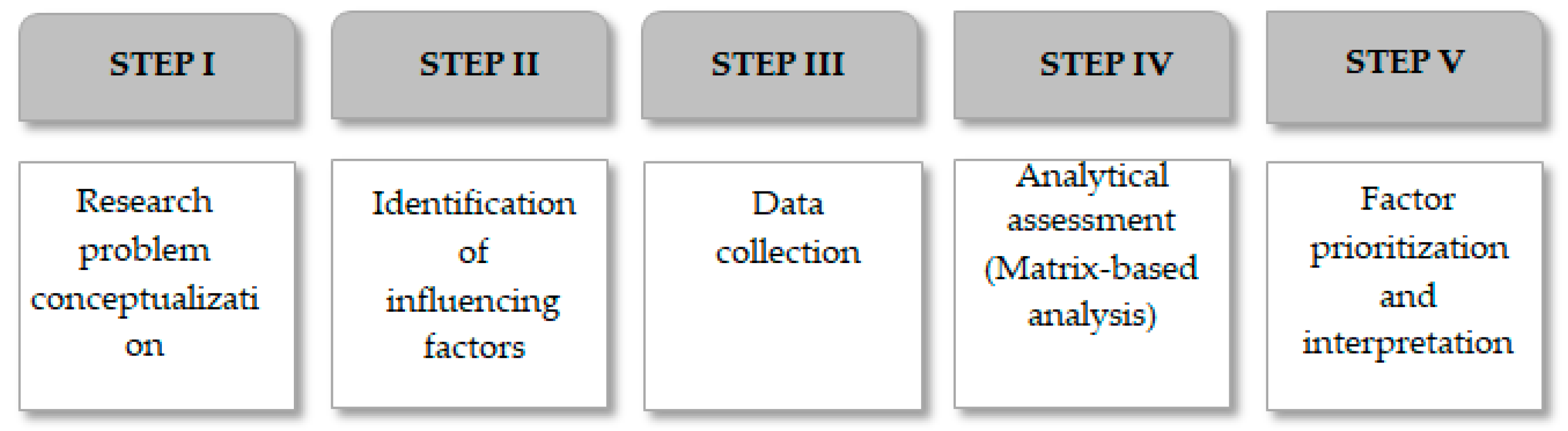
The research surveys and prioritizes factors that affect the risk of construction cost overrun in residential construction projects, including the contractor’s empirical attitude and scope of work in Bangkok and metropolitan areas. To provide an overview of the research conducted, this study presents the details of the research procedure at each step in Figure 1.
Figure 1.
Research procedure.
The researcher conducts a focus group with 40 project engineers from 40 construction contractors, 18 heads of government sectors related to construction projects, and 20 construction academicians. The field needs to know their suggestions for factors that contributed to cost overruns in residential construction projects. The meeting is divided into three rounds, with one per group. Their opinions are based on real experiences. During the focus group discussions, participants were first asked to independently propose factors contributing to construction cost overruns based on their professional experience. The suggested factors were then systematically reviewed and consolidated through a facilitated discussion process. Similar or overlapping factors were merged based on conceptual similarity, scope, and relevance to residential construction projects, while distinct factors were retained as separate items. This grouping and consolidation process continued until consensus was reached among participants, resulting in a refined and non-redundant set of factors suitable for subsequent AHP analysis. Various factors suggested by 78 experts will be grouped with familiar and different items. As a result, the thirteen factors that impacted construction cost overruns are a suitable list for this case study. Some factors have been derived from the literature review of the items already reviewed.
Regarding the number of respondents, the participation of 40 project engineers is considered adequate for the AHP application, as prior AHP studies commonly rely on expert panels of similar or smaller size. In this study, the sample size was determined based on feasibility and data quality considerations, and the consistency of judgments indicated that response saturation had been achieved, suggesting that additional respondents were unlikely to introduce substantially new prioritization outcomes. Consequently, the thirteen factors influencing construction cost overruns identified by the 78 experts in this study are summarized as follows:
F1: Variation order;
F2: Drawing conditions;
F3: Management conditions;
F4: Material shortages;
F5: Labor shortages;
F6: Poor maintenance of the machine;
F7: Financial capacity;
F8: Unpredictable weather and protests;
F9: Poor communication;
F10: Government requirement;
F11: Material price fluctuation;
F12: Facilities and space available;
F13: Unsafe working conditions.
Thirteen factors (F1–F13) of construction cost overruns will be questioned in the respective query. The questionnaire was sent to respondents. There are 40 project engineers of a construction contractor with 40 residential construction companies. The researcher directly sent a questionnaire to their workplace. Project engineers have obtained common experience over three years. They must know all the details of at least one construction project. Therefore, this guarantees that these project engineers have real experience. After collecting the data, it must be calculated and analyzed by the matrix method. Various factors that affect construction cost overruns will be prioritized based on the contractor’s empirical attitudes. To calculate only one hierarchy, we had to adapt the Analytic Hierarchy Process (AHP) matrix method used in this research. The questionnaire uses a pairwise comparison of 13 factors. Thus, this research has 78 pairs of questions (Appendix A). In each pairwise factor, there are nine scales to measure the importance of weight. The details of the scale are shown in Table 2.
Table 2.
Priority weight scales in various questions.
The respondent can only select one scale to be answered in each pairwise comparison. The first step is to start calculating the geometric mean for 40 respondents, using various pairwise combinations. The left pair factor is more important than the right, so the number of priority weights used is an integer. The number is a fraction; the right-hand pair factor is more critical than the left-hand side. The Equation (1) of geometry mean calculation is
where n is the number of respondents. Therefore, this research uses an equal sample size of 40, and the multiple in that pairwise factor is based on 40 respondents’ perspectives. The geometric mean outgrowth includes all 78 pairwise combinations, and their calculated outcomes are added to the matrices. Then, each pair will receive the inverse of the data. The factors will be calculated for various column totals and used to divide each column of the data. Eigenvector values are calculated by row, totaling each factor, and dividing it by several cost overrun factors in construction. The ranking of factors depends on the eigenvector value. The most important weight, represented by the cost overrun factor, had the highest eigenvector value. To check the reason for the data, the researcher must calculate the Consistency Ratio (CR). It should not be over 0.01, and its formula is the consistency ratio in Equation (2)
when
Table 3.
Values of Random Consistency Index (RI) [11].
This research has 13 factors that impacted construction cost overruns, and these factors are calculated in the matrix. Therefore, the value of the CR computed uses a 13 × 13 matrix with an RI of 1.56. Thus, the ranking of factors that impact construction cost overruns will be prioritized using the matrix method, which gives greater weight to ranking based on eigenvector values. In the case of CR, there is an inconsistency of over 0.1 in creating questionnaires and answering questions. The step has to restart. The procedure is a review of the literature on expert opinion, and a CR of less than 0.1.
4. Results
The answers from 40 residential projects by construction contractors’ companies include 10 high-rise condominiums, 10 low-rise condominiums, 10 single-family homes, and 10 townhouses, shown in two parts below.
4.1. General Data of Construction Cost Overruns
The general data are presented in Table 4 and Table 5. The average percentage of construction cost overruns for four residential project types. The results showed 10 high-rise condominiums, 10 low-rise condominiums, 10 single-family homes, and 10 townhouses, with an average of 120–130%, as shown in Table 4. The average construction cost overruns for the 13 factors across four residential project types are shown in Table 5. The factors of variation order (F1), drawing conditions (F2), management conditions (F3), material shortages (F4), labor shortages (F5), poor maintenance of machine (F6), financial capacity (F7), unpredictable weather and protests (F8), poor communication (F9), government requirement (F10), material prices fluctuation (F11), facilities and space available (F12), and unsafe working condition (F13) have average values of 15.7%, 9.0%, 5.6%, 6.6%, 18.3%, 5.2%, 12.8%, 1.3%, 4.2%, 5.7%, 10.2%, 3.9% and 1.7%, respectively. The next step shows the significance weight calculation for the various factors.
Table 4.
Construction cost overruns of forty projects.
Table 5.
The average values of construction cost overruns in various factors.
4.2. Evaluate the Factor for Each Pairwise Combination
The research presents the calculation steps for obtaining results using the matrix method. The perspectives of forty construction contractors have been used to calculate the priority weight of the factor in construction cost overruns. The first step is to start calculating the geometric mean for 40 respondents, using various pairwise combinations. The outcomes are all 78 pairwise, computed outcomes that are added to the matrices. These data, in matrices calculated by geometric mean, are added to the top number 1.00. Seventy-eight pairwise comparisons are added to the top number 1.00. The data under number 1.00 are to be inverted. The data was received to calculate the balance of weight in the various factor columns. The priority ranking will be based on the eigenvectors’ values. However, the data supporting these factors must be checked, CR. The information is reasonable when the consistency ratio is less than 0.01. The data in Table 6 led to the determination of the maximum value. It is a significant variable in calculating the CR values. The first step in computing the גmax is to multiply the matrix by the eigenvector values. The calculations yielded quotient values. The 13.0237 is the maximum of this research; it is the sum of the quotient values.
Table 6.
The computation of λmax.
Third, the research shows a calculation to check the reasonable value. The גmax is added to the formula of CI, where . As such, = 0.001975 and the CR formula is = , in which RI is 1.56 and thus = 0.0013. These data, regarding construction contractor perspectives, are reasonable because the CR value is not over 0.1, as shown in Table 7.
Table 7.
The reasonable value.
Consequently, this section can be summarized as a priority ranking of the factors impacting construction cost overruns. The respondents are from large construction companies in Thailand. The answer represents the contractor’s attitude toward the cost overrun factors in residential construction. The vital ranking is based on the eigenvectors’ value. It shows the priority of each factor for Bangkok and the Metropolitan areas, as shown in Table 8. The results showed that the average construction cost overruns for various factors corresponded to their priority ranking.
Table 8.
Priority ranking of the factors impacting construction cost overruns.
5. Discussions
The discussion describes the different priority rankings of the factors that impacted construction cost overruns and any solutions from the project engineer’s perspective. The answers from 40 respondents were analyzed using the metric method, and their attitudes were prioritized based on various factors. From the project cost overruns in four residential types, these 13 factors are occurring. The average cost overruns corresponded with the ranking 1–13 shown in Table 8 as well.
5.1. A #1 Ranking Factor: Labor Shortages
The F5 is ranked first with an eigenvector value of 0.1687. Labor is the key factor that led to the work achieved in [8]. It is an essential factor that causes work-related cost overruns when construction projects are short of laborers [25]. Because of the labor shortage, contractors were unable to finish on schedule; they had to lose money and incur a penalty under the employment contract. These factors led the construction contractor to have the highest construction cost overruns, amounting to 18.3% of the project value. Thailand’s government supported the Thai people to become construction laborers. Mostly, people choose other work because construction labor is uncomfortable, and some people go to work in a foreign country for a better income. Therefore, foreign workers have received considerable attention; however, it is not easy to get them to work in Thailand. The contractor’s financial credibility and the convenience of the workers must be verified first. Usually, other countries must verify the contractor’s financial liquidity before sending their laborers to work in Thailand. Many construction contractor companies are not allowed to hire labor due to a lack of financial credibility [13,19]. As a result, the process of bringing foreign labor to work is lengthy, leading to a labor shortage in Thailand [24].
This result aligns with prior studies indicating that labor shortages are a structural constraint in rapidly growing urban construction markets, where labor mobility and alternative employment opportunities reduce workforce availability [19,30]. Labor shortages also generate substantial “hidden costs” (e.g., overtime, acceleration, and penalties), which helps explain the high average overrun observed in this study [14,17]. In Bangkok, this factor is particularly salient because metropolitan labor demand is highly competitive while cross-border labor inflows remain administratively constrained, requiring both industry-level mechanisms and policy coordination rather than project-level management alone [7,15]. The respondents suggested solutions related to labor shortages. From a practical perspective, labor shortages reflect structural constraints in workforce availability rather than short-term project inefficiencies. The government should consider more flexible regulatory mechanisms for migrant labor, particularly for construction-specific skill categories, while ensuring compliance with labor protection standards. At the firm level, contractors should strengthen labor retention strategies by improving wage stability, accommodation conditions, and long-term livelihood security, which can reduce workforce turnover and productivity losses during peak construction periods.
5.2. A #2 Ranking Factor: Variation Order
Number two in the ranking is F1, which obtained 0.1262 of the eigenvector values. Construction contractors claimed that the owner’s change in order led them to waste time and prevented them from continuing to work. Clients slowly decided on various order changes [13,16]. And the owner changing orders beyond the scope without additional payment [30] resulted in contractors lacking financial liquidity [8] and directly caused work delays [12]. This situation poses a risk of construction cost overruns due to the fines for the delay and the need to pay workers continuously. The variation order factors led the construction contractor to incur a second construction cost overrun of 15.7% of the project value.
This finding is consistent with evidence that change orders are a primary driver of both cost overruns and delays, especially when front-end decisions are incomplete and changes occur during execution [13,14,37]. Importantly, prior studies emphasize that variation orders are fundamentally a coordination and governance problem across owner–consultant–contractor interfaces, rather than an isolated contractor performance issue, which explains why contractors perceive it as a high-impact risk outside their direct control [17]. The respondents suggested that contractors should include clearer contractual provisions to accommodate client-initiated variation orders. Practically, this implies the need for predefined change management procedures, including explicit approval workflows, cost adjustment mechanisms, and decision-making deadlines. Such measures can reduce uncertainty, minimize disruption to construction schedules, and prevent uncontrolled cost escalation.
5.3. A #3 Ranking Factor: Financial Capacity
Ranking third with an eigenvector value of 0.1029 is F7. This factor contributed to the contractor’s lack of funds to pay labor on a routine basis. Most of the laborers have to go back to their countries without emolument. It is significant that this led other countries to not approve their labor to work efficiently in Thailand until employers obtained financial credibility [27]. Mostly, a contractor’s lack of financial capacity is due to customer uncertainty and a shortage of experienced and skilled workers [12,31]. The contractor has to incur additional costs for work that does not meet customer or owner needs. They must purchase extra materials to revise it until they satisfy customers [24]. This situation delayed work, and we finally received the adjusted amount from the client. The worker’s experience and skill will help ensure the job is not significantly modified. As a result, the lack of financial capacity impacts construction cost overruns, ranking third at an average of 12.8% of the project value.
This ranking is consistent with prior studies identifying liquidity and financial resilience as foundational capabilities that determine whether contractors can absorb uncertainty and respond to disruptions [15,18]. Importantly, financial constraints are not only an outcome of overruns but also a systemic cause that amplifies the effects of other risks—particularly labor shortages and variation orders—creating reinforcing cycles of delays and cost escalation [26,31]. The respondents recommended that companies employ skilled and experienced workers and invest in workforce training prior to project execution. Beyond labor competency, financial capacity also reflects the contractor’s ability to manage cash flow, procurement timing, and contractual risk allocation. Clearly defining contractual terms related to additional material procurement and time extensions can reduce disputes and mitigate financial strain during unforeseen project changes.
5.4. A #4 Ranking Factor: Material Price Fluctuation
The F11 is ranked fourth with 0.0956 of the eigenvector values. Material price fluctuations will result in higher prices, according to economic conditions [25]. Most contractors must be responsible for this cost [22] under the contract between the owner and the contractor. They have to lose the extra money when material prices fluctuate [30]. This situation led to real cost overruns in construction, averaging 10.2% of the project value. In some construction contracts, the owner may be required to purchase the material themselves [20]. They may pay more money when the material prices fluctuate as well [16,19].
This finding aligns with prior research showing that under lump-sum arrangements, contractors typically bear material price risk, making price volatility a high-ranked external driver of overruns [27,30]. Beyond direct cost increases, volatility disrupts procurement planning and cash flow, which helps explain its relatively high impact in practice [39]. Respondents indicated that bulk purchasing and direct procurement from manufacturers could mitigate material price volatility. From an operational standpoint, contractors should complement these practices with strategic procurement planning, price-locking agreements, and early material ordering to reduce exposure to market fluctuations and intermediary markups.
5.5. A #5 Ranking Factor: Drawing Conditions
The F2 is ranked fifth, with an eigenvector value of 0.0827. The contractor’s perspective emphasized completing the work on time, so that it does not incur a cost for the owner and so that the contractor does not lose extra money. The mistakes in the blueprint [27] may cause the need for reworking and require the contractor to redo some tasks [24]. Some works have already been completed, but the consultant rejected them due to blueprint errors [20,27]. This problem caused the contractor to waste time and may result in additional costs for the revision, such as additional material and labor [16]. This factor directly contributed to construction cost overruns totaling 9.0% of the project value.
Consistent with prior studies, incomplete or inaccurate drawings are strongly associated with reworking and cost escalation [20]. The salience of this factor also reflects coordination gaps between design and construction teams; thus, contractors may perceive drawing errors as high-impact risks that are not fully controllable at the site level [17]. The respondents emphasized that construction drawings must be thoroughly inspected and approved prior to execution. This highlights the importance of early-stage design coordination and constructability review. Systematic drawing checks, interdisciplinary coordination meetings, and formal consultant approvals can reduce rework, delays, and downstream cost overruns caused by design inconsistencies.
5.6. A #6 Ranking Factor: Material Shortages
The material shortages factor (F4) is ranked sixth, with an eigenvector value of 0.0778. Traffic jams in Bangkok and other metropolitan areas are the main point affected by construction delays [13]. The material shortages resulted from the contractor having to order the same or different materials to replace them. The speed of material delivery is essential to ensure continuity of construction work [12]. Traffic congestion may cause transportation not to proceed as planned [30]. Some cases require immediate service but they cannot be served on time [25]. Therefore, this factor may influence significant emergency cases that are linked to core work, which cannot be avoided [13]. The contractors must be paid extra to obtain materials faster from nearby stores, which keeps the work going. This factor led the contractor to earn construction cost overruns of around 6.6% of the project value.
Prior studies suggest that material shortages in urban settings often arise less from market scarcity and more from delivery delays, procurement-plan mismatch, and logistic constraints—conditions that are particularly pronounced in dense metropolitan areas [13,19,21]. In Bangkok, traffic congestion and limited staging/storage space can act as an amplifier: when shortages occur during critical activities, contractors face emergency procurement premiums and cascading schedule disruptions, increasing indirect costs. Respondents suggested planning material consumption and storage throughout the project. Practically, this requires integrated material planning systems that link procurement schedules with construction progress and daily readiness checks. Effective inventory control can reduce idle time, emergency procurement costs, and site congestion.
5.7. A #7 Ranking Factor: Government Requirement
The F10 is ranked seventh with 0.0722 of the eigenvector values. The government requirement factor directly affected contractor operations [13]. Government requirements for construction time control, labor work-time control, and minimum wage control are a significant obstacle for contractors to bear [12]. This factor led the contractor to incur a penalty for work delay [20] and was not worth the cost of working for a limited time at eight hours per day [25]. As a result, this factor directly contributed to construction cost overruns totaling 5.7% of project value.
This moderate ranking is consistent with prior research indicating that regulatory constraints affect productivity and flexibility, especially in developing contexts [7,10]. However, contractors may view such requirements as relatively predictable and therefore more plannable than volatile risks (e.g., labor availability and price fluctuations), which might explain the mid-level impact observed [15]. Respondents mentioned that government requirements should be more flexible [22]. Rather than regulatory relaxation alone, this finding indicates the need for clearer regulatory communication, standardized approval procedures, and predictable compliance timelines. Improved coordination between contractors and regulatory authorities can reduce administrative delays that indirectly contribute to cost overruns.
5.8. A #8 Ranking Factor: Management Conditions
The management conditions factor (F3) had an eigenvector value of 0.0634, ranking eighth. This factor focused on compliance with the owner’s construction contract [20]. Some agreement conditions are challenging for a construction contractor to manage [15]. The contractor is often taken advantage of by clients in many situations [18]. As a result, construction costs have increased, leading to overruns [31]. This factor impacts construction cost overruns, which an average 5.6% of the project value. Consistent with prior findings, management capability influences cost control; however, its impact depends heavily on contract structure and decision authority [14,17]. The ranking suggests contractors perceive management conditions as a manageable internal risk relative to structural constraints (labor and finance); however, misalignment with owner-driven contract conditions can still propagate overruns through coordination failures and disputes. Respondents suggested negotiating management conditions with owners prior to contract signing. This underscores the importance of aligning project governance structures, authority levels, and risk-sharing arrangements at the contractual stage. Clear definition of managerial responsibilities can reduce coordination inefficiencies and post-contract disputes [13].
5.9. A #9 Ranking Factor: Poor Maintenance of the Machine
The F6 is ranked ninth, with 0.0573 of the eigenvector values. The elevators, conveyor cranes, and various hydraulic systems should be maintained to be ready for use. Construction work at each step may not be continuous when these multiple materials and machines are unavailable. This influences the operation delay [25]. If the machine is damaged in an accident, it must be repaired immediately by replacing the damaged parts or materials [20]. This factor led the contractor to spend extra money on maintenance, purchasing new ones, and transportation costs [12]. In addition to this, they must open overtime work for workers to keep to the contract schedule [13]. This factor led the contractor to incur real cost overruns, with an average of 5.2% of the project value. This aligns with evidence that equipment reliability is essential for workflow continuity in large projects; failures generate unplanned costs such as substitute equipment rental, acceleration, and overtime [12,16]. The lower ranking relative to structural drivers suggests contractors view equipment maintenance as more controllable through preventive systems, even though its disruption costs can be significant when breakdowns occur. Respondents emphasized regular machine inspections before and after use. Preventive maintenance programs, combined with equipment usage monitoring, can reduce unexpected breakdowns and productivity losses. Timely repairs contribute directly to cost stability and schedule reliability.
5.10. A #10 Ranking Factor: Poor Communication
The F9 has an eigenvector value of 0.0484 and is ranked 10th. Poor communication from workers may lead to repeated changes and modifications [24], the impact of which is similar to factor F2 [20]. Some cases may be rejected, and new ones started [22]. This has resulted in the contractor having to pay fines due to construction delays [11] and may also lead to the loss of extra money from work revisions [27]. This factor directly impacts contractors who experience construction cost overruns of around 4.2% of the project value. Prior research links ineffective stakeholder communication to rework and delays [17,20]. However, the lower ranking here suggests contractors may interpret communication breakdowns as secondary effects of upstream issues (e.g., variation orders and drawing errors), rather than a primary root cause, consistent with the view that coordination failures often originate in the broader project interface system [14]. Although respondents offered limited direct solutions, effective communication remains a critical managerial function. Contractors should establish formal communication protocols, assign clear reporting responsibilities, and maintain daily documentation to ensure alignment among project participants and reduce misunderstandings that lead to rework and delays.
5.11. A #11 Ranking Factor: Facilities and Space Available
The facilities and space available (F12) factor is ranked 11th, with an eigenvector value of 0.0381. Bangkok and the metropolitan provinces are economic centers. The land in this area is quite expensive [28]. It is tough to find an area to install the utility system. In some cases, the contractor must pay a relatively high rental fee for the utility system location outside the construction zone [19]. This factor contributed to construction cost overruns at 3.9% of the project value. This finding reflects urban site constraints; limited space increases logistic complexity and support costs (e.g., temporary facilities, storage, and off-site rentals), which is commonly reported in dense urban projects [30,41]. The relatively low rank may indicate that contractors view space constraints as manageable through site planning and sequencing, despite the high land-cost context of Bangkok. Respondents highlighted the need for effective space utilization. In dense urban construction environments, systematic site layout planning and phased space allocation are essential. Efficient circulation of limited construction space can improve workflow, safety, and material handling efficiency.
5.12. A #12 Ranking Factor: Unsafe Working Conditions
F1 is ranked 12th at 0.0355 in the eigenvector values. Safety controls and operations do not meet the defined standards, and most workers lack knowledge of safe operations in the construction area. This factor is affected by some accidents on the construction site. Moreover, accidents may harm people in the surrounding area. Such accidents result in construction cost overruns of 1.7% of the project value, from the indemnification, and in work delays and fines. Prior studies emphasize that accidents increase both direct and indirect costs; however, the lower ranking here may reflect contractors’ perception that safety risks are less frequent and more controllable through preventive measures compared to persistent structural risks [31,33]. Respondents recommended strict safety training prior to daily work activities. This finding reinforces the link between occupational safety management and cost performance. Regular safety training, supervision, and enforcement can reduce accidents, work stoppages, and compensation-related costs.
5.13. A #13 Ranking FACTOR: Unpredictable Weather and Protests
The F8 has an eigenvector value of 0.0312 and is ranked 13th. Climate change sometimes occurs in Thailand. Mostly rain happens, affecting work continuity [32]. Political protest and terrorism are among the factors that influence work delays [29]. This issue does not occur too often, but rain occurs every year [17]. However, these causes may occur without proper planning, leading to work delays [16]. Contractors have still not paid labor wages for work not yet completed and have received fines for delays in work. This issue resulted in the contractor having construction cost overruns of around 1.3% of the project value.
Consistent with prior research, weather and social disruptions are typically low-frequency but high-shock risks; contractors may rank them lower because they can be partially managed via contingencies, buffers, and contractual clauses [29,32]. Respondents suggested including appropriate contractual provisions to address unpredictable conditions. From a risk management perspective, this involves contingency planning, flexible scheduling, and contractual clauses that explicitly allocate weather- and disruption-related risks. Such measures can enhance project resilience under uncertain external conditions.
6. Conclusions
The results of this research showed that contractor perspectives on the prioritization of causes impacted construction cost overruns. The percentages of average cost overruns in various factors are related to their priority ranking.
- The 13 critical factors that a contractor prioritizes are labor shortages, variation order, financial capacity, material price fluctuation, drawing conditions, material shortages, government requirement, management conditions, poor maintenance of the machine, poor communication, facilities and space available, unsafe working conditions, and unpredictable weather and protests. These factors led 40 construction contractor companies to incur construction cost overruns on four residential-type projects: high-rise condominium, low-rise condominium, single-family home, and townhouse.
- The five factors are the significant causes impacting construction cost overruns due to the average high percentage and importance weight. Labor shortages, variation in order, financial capacity, material price fluctuations, and drawing conditions are the top five factors ranked in order of importance, with weights of 0.1687, 0.1262, 0.1029, 0.0956, and 0.0827, respectively. These five factors had average cost overrun percentages of 18.3%, 15.7%, 12.8%, 10.2%, and 9.0%, respectively. The significant factors that impact construction cost overruns will be considered to guide contractor companies in sequential processing.
- To mitigate construction cost overruns, contractors should prioritize strategies for improving labor retention and recruitment, including enhancing wage stability and working conditions, as the labor shortage significantly impacts project timelines and financial outcomes.
- The construction industry should advocate for more flexible regulatory frameworks for migrant labor, ensuring compliance with labor standards while addressing the structural constraints of labor availability in Bangkok’s competitive market, ultimately leading to more efficient project delivery.
- This study demonstrates that empirical managerial attitudes influencing construction cost overruns can be systematically ranked using a matrix analysis method, extending prior descriptive and causal research toward actionable decision-support. The ranked results provide practical guidance for contractors in prioritizing labor management, variation order control, financial capacity planning, material price risk mitigation, and design coordination.
- While the empirical evidence is derived from residential construction projects in Bangkok and metropolitan areas of Thailand, the proposed matrix-based framework is transferable to other construction markets, subject to contextual calibration across different project types, locations, and institutional settings.
- The study focuses on large contractors and residential projects, which may limit generalizability across stakeholders, project scales, and regions. Future research should apply the framework to other construction sectors, stakeholder groups, and geographical contexts to enhance robustness and external validity.
7. Research Limitations
This study, while comprehensive, has several limitations that should be acknowledged. First, the research is geographically confined to Bangkok and its metropolitan areas, which may not fully reflect the diverse challenges and factors affecting construction cost overruns in other regions. Consequently, the findings may have limited generalizability to different locations with varying construction practices and economic conditions. Additionally, the focus group comprised a relatively small sample size of 78 experts, which may not encompass all relevant stakeholders in the construction industry, thus potentially overlooking important perspectives. The reliance on subjective opinions from participants, though valuable, introduces bias and variability in responses, posing a challenge to the objective analysis of the gathered data. Furthermore, the study predominantly emphasizes empirical attitudes and omits the influence of broader systemic issues, such as regulatory frameworks and economic fluctuations, which can significantly impact construction costs. The Analytical Hierarchical Process (AHP) used also has inherent limitations, as it may not capture the complexities of interrelated factors or the dynamic nature of construction projects where multiple variables interact concurrently. Lastly, while the study successfully identifies and ranks factors, it does not delve into the root causes behind these issues, meaning that further investigation is warranted to develop effective mitigation strategies. By acknowledging these limitations, future research can seek to build on this study’s findings, expanding the scope and enhancing the understanding of construction cost overruns in various contexts.
Author Contributions
Conceptualization, T.N., S.M., N.K., B.C., P.C., A.A. and G.S.-I.; Methodology, P.C. and G.S.-I.; Investigation, T.N. and N.K.; Data curation, T.N., S.M. and N.K.; Formal analysis, T.N., S.M., B.C., A.A. and G.S.-I.; Validation, B.C., P.C., G.S.-I. and A.A.; Writing—original draft, T.N., N.K., A.A. and G.S.-I.; Writing—review & editing, S.M., B.C., P.C. and G.S.-I.; All authors have read and agreed to the published version of the manuscript.
Funding
This research received no external funding.
Institutional Review Board Statement
Ethical review and approval were waived for this study because the data was collected only via anonymous questionnaires with informed consent regarding the purpose of the study.
Informed Consent Statement
Informed consent was obtained from all subjects involved in the study.
Data Availability Statement
Data are contained within the article.
Acknowledgments
The authors gratefully acknowledge Rajamangala University of Technology Phranakhon for their invaluable support in facilitating this study. The authors also extend their sincere appreciation to all respondents from the construction contractor companies, government agencies, and academic institutions who contributed their time and expertise by completing the questionnaires and participating in discussions. Their insights were essential to the successful completion of this research.
Conflicts of Interest
The authors declare no conflicts of interest.
Appendix A
Part 1 General information.
- How many years of experience do you have in construction contracting business, specifically in residential construction projects?
…………………………………………………………………………………………………………………………………………………………………
- 2.
- What type of project will you be providing information about?
- ⎕
- High-rise condominium
- ⎕
- Low-rise condominium
- ⎕
- Single-family home
- ⎕
- Townhouse
- 3.
- The contract value of a project was…………………………….… Thai Bath
- 4.
- The actual cost of work paid for a project was…………………. Thai Bath
- 5.
- The total of project cost overrun was………………….% divided into the factors of,
- -
- Variation order……………………………………%
- -
- Drawing conditions………………………………%
- -
- Management conditions…………………………%
- -
- Material shortages………………………………..%
- -
- Labor shortages…………………………………...%
- -
- Poor maintenance of the machine………………%
- -
- Financial capacity…………………………………%
- -
- Unpredictable weather and protests……………%
- -
- Poor communication……………………………...%
- -
- Government requirement………………………..%
- -
- Material price fluctuation………………………..%
- -
- Facilities and space available…………….……...%
- -
- Unsafe working conditions……………….……..%
Table A1.
Part 2 A pairwise comparison of factors affecting the construction cost overrun; please mark an X in the space provided for only one answer that best reflects your opinion when comparing the importance of each pair of factors.


References
- Trangkanont, S.; Wichaiphruek, T.; Yongkiadtikan, K.; Wannasiriwong, P.; Uttaraphon, P. Root causes of construction project disputes in Thailand. Int. J. Concept. Mech. Civ. Eng. 2016, 4, 2357–2752. [Google Scholar]
- Nguyen, V.T.; Do, S.T.; Tran, C.N.N.; Van Pham, L. Analysis of interrelationships among constructs of cost overrun causes in consortium projects between construction contractors. Int. J. Constr. Manag. 2025, 25, 1596–1608. [Google Scholar] [CrossRef] [Scilit]
- Abdelalim, A.M.; Salem, M.; Salem, M.; Al-Adwani, M.; Tantawy, M. An analysis of factors contributing to cost overruns in the global construction industry. Buildings 2025, 15, 18. [Google Scholar] [CrossRef] [Scilit]
- Ghosh, S.; Jintanapakanont, J. Identifying and assessing the critical risk factors in an underground rail project in Thailand: A factor analysis approach. Int. J. Proj. Manag. 2004, 22, 633–643. [Google Scholar] [CrossRef] [Scilit]
- Ogunlana, O.S.; Promkuntong, K.; Jearkjirm, V. Construction delays in a fast-growing economy: Comparing Thailand with other economies. Int. J. Proj. Manag. 1996, 14, 37–45. [Google Scholar] [CrossRef] [Scilit]
- Héctor, A.; Ignacio, M.; Bautista, L.F. Analysis of causes of delays and cost overruns as well as mitigation measures to improve profitability and sustainability in turnkey industrial projects. Sustainability 2023, 16, 1449. [Google Scholar] [CrossRef] [Scilit]
- Kog, Y.C. Construction delays in Indonesia, Malaysia, Thailand, and Vietnam. Pract. Period. Struct. Des. Constr. 2019, 24, 04019013. [Google Scholar] [CrossRef] [Scilit]
- Ayudhya, N.; Israngkura, B. Common disputes related to public work projects in Thailand. Songklanakarin J. Sci. Technol. 2011, 33, 565–573. [Google Scholar]
- Sheamar, S.; Wedawatta, G.; Tennakoon, M.; Palliyaguru, R.; Antwi-Afari, M.F. The potential of new models of construction procurement to counter cost overruns in construction projects: An exploratory study from a contractors’ perspective. J. Financ. Manag. Prop. Constr. 2024, 29, 211–228. [Google Scholar] [CrossRef] [Scilit]
- Toor, R.S.; Ogunlana, O.S. Critical COMs of success in large-scale construction projects: Evidence from Thailand construction industry. Int. J. Proj. Manag. 2008, 26, 420–430. [Google Scholar] [CrossRef] [Scilit]
- Saaty, L.T. Decision making with the analytic hierarchy process. Int. J. Serv. Sci. 2008, 1, 83–98. [Google Scholar] [CrossRef] [Scilit]
- Katre, Y.V.; Ghaitidak, M.D. Elements of cost and schedule overrun in construction projects. Int. J. Eng. Res. Dev. 2016, 12, 64–68. [Google Scholar]
- Olatunde, A.N.; Alao, O.O. Quantitative appraisal of cost and time performance of construction projects in public and private universities in Osun State, Nigeria. J. Eng. Des. Technol. 2017, 15, 619–634. [Google Scholar] [CrossRef] [Scilit]
- Adam, A.; Josephson, B.E.P.; Lindahl, G. Aggregation of factors causing cost overruns and time delays in large public construction projects trends and implications. Eng. Constr. Arch. Manag. 2017, 24, 393–406. [Google Scholar] [CrossRef] [Scilit]
- Senouci, A.; Ismail, A.; Eldin, N. Time delay and cost overrun in Qatari public construction projects. Procedia Eng. 2016, 164, 368–375. [Google Scholar] [CrossRef] [Scilit]
- Anibire, S.O.M.; Zin, M.R.; Olatunji, O.S. Machine learning model for delay risk assessment in tall building projects. Int. J. Constr. Manag. 2020, 22, 2134–2143. [Google Scholar] [CrossRef] [Scilit]
- Doloi, H. Cost overruns and failure in project management: Understanding the roles of key stakeholders in construction projects. J. Constr. Eng. Manag. 2013, 139, 267–279. [Google Scholar] [CrossRef] [Scilit]
- Heravi, G.; Mohammadian, M. Investigating cost overruns and delay in urban construction projects in Iran. Int. J. Constr. Manag. 2019, 21, 958–968. [Google Scholar] [CrossRef] [Scilit]
- Famiyeh, S.; Amoatey, T.C.; Adaku, E. Major causes of construction time and cost overruns A case of selected educational sector projects in Ghana. J. Eng. Des. Technol. 2017, 15, 181–198. [Google Scholar]
- Sweis, J.G.; Sweis, R.; Rumman, A.M.; Hussein, A.R.; Dahiyat, E.S. Cost overruns in public construction projects: The case of Jordan. J. Am. Sci. 2013, 9, 134–141. [Google Scholar]
- Muneeswaran, G.; Manoharan, P.; Awoyera, O.P.; Adesina, A. A statistical approach to assess the schedule delays and risks in Indian construction industry. Int. J. Constr. Manag. 2020, 20, 450–461. [Google Scholar] [CrossRef] [Scilit]
- Niazi, A.G.; Painting, N. Significant factors causing cost overruns in the construction industry in Afghanistan. Procedia Eng. 2017, 182, 510–517. [Google Scholar] [CrossRef] [Scilit]
- Dong, S.; Ahmed, M.; Chatpattananan, V. Analysis of key factors of cost overrun in construction projects based on structural equation modeling. Sustainability 2025, 17, 2119. [Google Scholar] [CrossRef] [Scilit]
- Vaardini, S. Study on cost overruns in construction projects—A review. Int. J. Appl. Eng. Res. 2016, 11, 356–363. [Google Scholar]
- Shehu, Z.; Endut, R.I.; Akintoye, A.; Holt, D.G. Cost overrun in the Malaysian construction industry projects: A deeper insight. Int. J. Proj. Manag. 2014, 32, 1471–1480. [Google Scholar] [CrossRef] [Scilit]
- Shehu, Z.; Endut, R.I.; Akintoye, A. Factors contributing to project time and hence cost overrun in the Malaysian construction industry. J. Financ. Manag. Prop. Constr. 2014, 19, 55–75. [Google Scholar] [CrossRef] [Scilit]
- Polat, G.; Okay, F.; Kray, E. Factors effective cost overruns in micro-scaled construction companies. Procedia Eng. 2014, 85, 428–435. [Google Scholar] [CrossRef] [Scilit]
- Elawi, G.S.A.; Algahtany, M.; Kashiwagi, D. Owners’ perspective of factors contributing to project delay: Case studies of road and bridge projects in Saudi Arabia. Procedia Eng. 2016, 145, 1402–1409. [Google Scholar] [CrossRef] [Scilit]
- Gardezi, S.S.S.; Manarvi, A.I.; Gardezi, S.J.S. Time extension factors in construction industry of Pakistan. Procedia Eng. 2014, 77, 196–204. [Google Scholar] [CrossRef] [Scilit]
- Plebankiewicz, E. Model of predicting cost overrun in construction projects. Sustainability 2018, 10, 4387. [Google Scholar] [CrossRef] [Scilit]
- Saidu, I.; Shakantu, W. An investigation into cost overruns for ongoing building projects in Abuja, Nigeria. Acta Structilia 2017, 24, 53–72. [Google Scholar] [CrossRef] [Scilit]
- Hurlimann, C.A.; Warren-Myers, G.; Browne, R.G. Is the Australian construction industry prepared for climate change. Build. Environ. 2019, 153, 128–137. [Google Scholar] [CrossRef] [Scilit]
- Afana, O.; Al Zubaidi, R.; Abu Dabous, S.; Ibrahim, F. Categories and factors of cost overrun in construction projects: A systematic review. Eng. Technol. Appl. Sci. Res. 2024, 14, 18330–18347. [Google Scholar] [CrossRef] [Scilit]
- Frimpong, Y.; Oluwoye, J.; Crawford, L. Causes of delay and cost overruns in construction of groundwater projects in a developing countries; Ghana as a case study. Int. J. Proj. Manag. 2003, 21, 321–326. [Google Scholar] [CrossRef] [Scilit]
- Rauzana, A. Factors causing cost overruns in construction projects. Int. J. Eng. Technol. Manag. Res. 2022, 9, 1–9. [Google Scholar] [CrossRef] [Scilit]
- Wu, Q.; Khatibi, A.; Tham, J. Study on the factors affecting construction project cost overrun. Int. J. Glob. Econ. Manag. 2025, 6, 53–59. [Google Scholar] [CrossRef] [Scilit]
- Ramadhan, J.S.; Waty, M. Impact of change orders on cost overruns and delays in large-scale construction projects. Eng. Technol. Appl. Sci. Res. 2023, 15, 20291–20299. [Google Scholar] [CrossRef] [Scilit]
- Sohu, S.; Md Kassim, T.R.; Sohu, N.; Loganathan, K. Critical factors affecting cost and time overrun of construction projects in Pakistan. Int. J. Sustain. Constr. Eng. Technol. 2024, 15, 221–232. Available online: https://penerbit.uthm.edu.my/ojs/index.php/ijscet/article/view/21044 (accessed on 25 January 2026).
- Xie, W.; Deng, B.; Yin, Y.; Lv, X.; Deng, Z. Critical factors influencing cost overrun in construction projects: A fuzzy synthetic evaluation. Buildings 2022, 12, 2028. [Google Scholar] [CrossRef] [Scilit]
- Daoud, A.O.; El Hefnawy, M.; Wefki, H. Investigation of critical factors affecting cost overruns delays in Egyptian mega construction projects. Alex. Eng. J. 2023, 83, 326–334. [Google Scholar] [CrossRef] [Scilit]
- Wu, Q. Research on the influencing factors of cost overruns in construction projects. Int. J. New Dev. Eng. Soc. 2024, 8, 18–23. [Google Scholar] [CrossRef] [Scilit]

Disclaimer/Publisher’s Note: The statements, opinions and data contained in all publications are solely those of the individual author(s) and contributor(s) and not of MDPI and/or the editor(s). MDPI and/or the editor(s) disclaim responsibility for any injury to people or property resulting from any ideas, methods, instructions or products referred to in the content. |
© 2026 by the authors. Licensee MDPI, Basel, Switzerland. This article is an open access article distributed under the terms and conditions of the Creative Commons Attribution (CC BY) license.