Article

Study on Wind-Induced Response of Multi-Row Large-Span Cable Flexible Photovoltaic Panels

1
College of Architecture and Civil Engineering, Beijing University of Technology, Beijing 100124, China
2
The Key Laboratory of Urban Security and Disaster Engineering, Ministry of Education, Beijing University of Technology, Beijing 100124, China
*
Author to whom correspondence should be addressed.
Buildings 2026, 16(3), 599; https://doi.org/10.3390/buildings16030599 (registering DOI)
Submission received: 28 December 2025 / Revised: 22 January 2026 / Accepted: 30 January 2026 / Published: 1 February 2026

Abstract

With its benefits of high efficiency and cheap cost, solar photovoltaic is rebuilding the energy supply and demand system as the world’s energy structure shifts to a clean one. This research investigates the wind-induced vibration response of a multi-row flexible photovoltaic system using large eddy simulation and the two-way fluid–solid coupling approach. Firstly, the two-way coupling and the standard shape coefficient are compared to verify the reliability of the simulation method. Then, the model of multi-row flexible photovoltaics is analyzed to determine the natural frequency and vibration mode of the photovoltaic system. Finally, the vertical displacement of the photovoltaic system and the internal force of the cable are studied by investigating different wind direction angles and initial pretension. It is discovered that the natural frequency of the flexible photovoltaic system exhibits a stepwise increase in three distinct stages. Both the internal force in the load-bearing cable and the vertical displacement of the photovoltaic system decrease with increasing wind direction angle, with the cable force lagging behind at the peak time. The internal force and vertical displacement of the first row of load-bearing cables are at their highest at the 0° direction angle. The difference between the cable’s internal force’s peak and valley values grows when the pretension is low. The cable pretension significantly affects the vibration response of the flexible photovoltaic more than the angle of direction. The response law of direction angle and pretension to multi-row flexible photovoltaic wind-induced vibration is revealed, which provides a basis for wind-resistant design.

1. Introduction

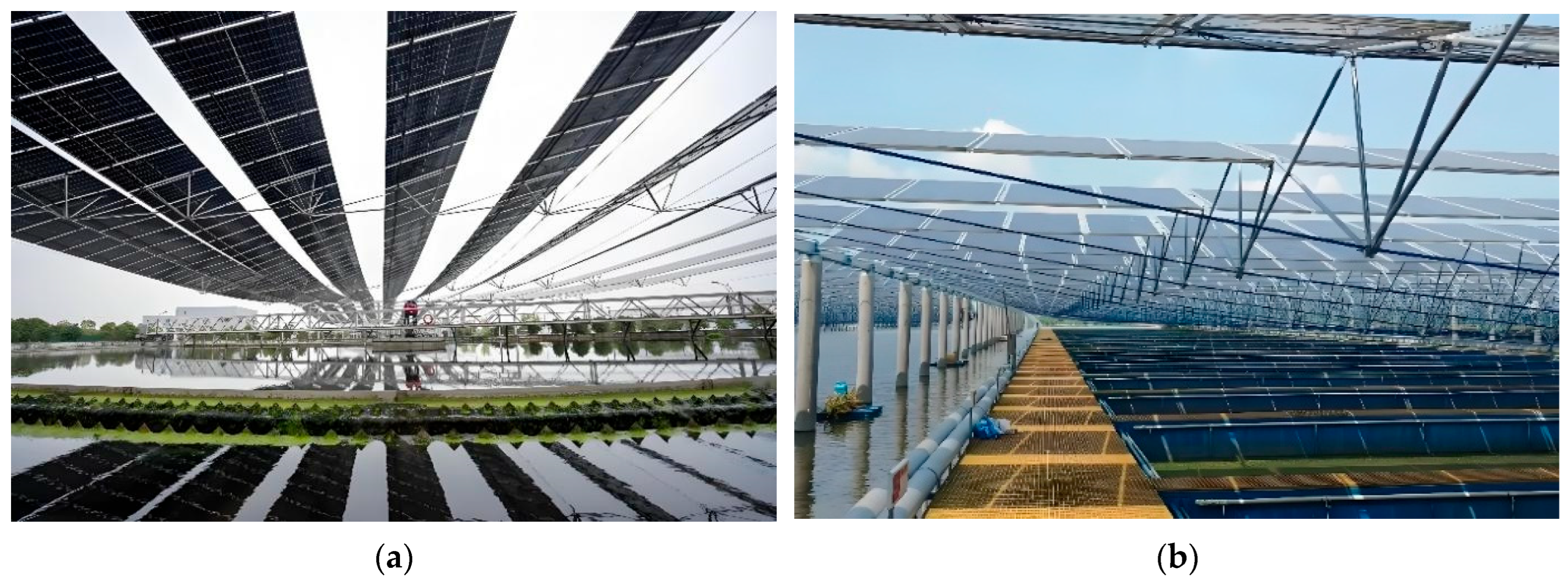
An essential material foundation for human survival and advancement is energy. Accelerating energy development and transformation to achieve sustainable energy use is more crucial in light of resource depletion and global warming. The direct use of solar photovoltaics has grown in popularity as a way to meet the green, low-carbon standards. The flexible photovoltaic system is increasingly favored because of its extensive range, ease of installation, lightweight nature, and cost-effectiveness. The application of a flexible photovoltaic system is shown in Figure 1. Multi-row flexible photovoltaics are predominantly situated in remote mountainous regions, where construction is minimal. Their flexibility and lightweight nature render them more vulnerable to wind loads. Therefore, it is necessary to explore the response of a multi-row flexible photovoltaic system under wind load.
Currently, photovoltaic systems are categorized based on their installation methods into flexible photovoltaic, ground-mounted photovoltaic, roof-mounted photovoltaic, and floating photovoltaic. Flexible photovoltaics are extensively utilized due to their straightforward design and minimal production expenses. Inclination angle and pretension are important factors affecting the wind-induced vibration response of photovoltaics. Zhu [1] and Zhou [2] discovered that the second row of the windward area exhibits the most noticeable shielding effect as the tilt angle of the photovoltaic module increases. The displacement change caused by wind-induced vibration is significantly greater than the internal force change. The effects of wind speed, cable pretension, and PV panel tilt angle on vertical displacement response and aerodynamic damping were assessed by Xu [3] and Zhu [4]. The natural period and the reaction force’s vibration coefficient will decrease as the pretension increases. Wu [5] and Yang [6] found that with the increase in wind speed, significant vibration occurs at 0° and 180° wind directions. The upstream row of the windward row exhibits the flexible photovoltaic array’s highest wind-induced reaction under various wind directions. Li [7] studied the wind load effect of photovoltaic arrays with different lengths and widths. The proposed wind load reduction factors for various array areas take into account the upstream wind-proof impact. Liu [8], Liu [9], and Cai [10] investigated the wind-induced reaction and critical wind speed of flexible photovoltaic modules using wind tunnel experiments. The single-row photovoltaic system vibrates a lot when the wind speed exceeds the critical value. Ding [11] discovered that the novel structure of WIV is akin to chattering. The vibration amplitude escalates quadratically with the augmentation of wind speed. Li [12] developed a three-dimensional explicit dynamic model to evaluate the wind-induced dynamic response characteristics and instability process of large-span flexible photovoltaic support structures.
Ground-fixed photovoltaic has obvious advantages in large-scale photovoltaic power generation and wasteland development because of its simple installation and low maintenance cost. Bao [13] and Zhang [14] determined that the interference effect on the back row is minimal within the modest tilt range. The third row felt comparatively more wind force than the second row when the inclination angle was high. Bao [15] revealed three torsional modes in the frequency range of 2.9–5.0 Hz. The range is 1.07 percent to 2.99 percent, accompanied by a rather low modal damping ratio. Jubayer [16] validated the efficacy of the numerical simulation method by juxtaposing the velocity field surrounding the independently installed photovoltaic panels on the ground with the results from the wind tunnel experiment. Reina [17] revealed that explicitly simulating the wind stress generated by the system’s constant rotation through dynamic mesh conserves static computational resources. Wittwer [18] determined the aerodynamic forces on air using experimental measurements and computational analysis of conventional photovoltaic panels under various situations. Chi [19] examined the disturbance characteristics of the flexible photovoltaic support structure in response to average and varying wind loads to mitigate wind-induced damage to the support. Jia [20] investigated how six photovoltaic array constructions mounted on offshore floating photovoltaic platforms were affected by wind stress. An array with a symmetrical staggered layout is shown to be less susceptible to the direction of the wind. Xu [21] and Naeiji [22] found that the inclination angle of photovoltaic panels is a key parameter affecting the peak pressure coefficient. The burden on the array’s initial row can be decreased by 25% when the slope angle is 30 degrees. Peng [23] discovered that the module located at the roof’s corner experiences detrimental wind loads at a 0° wind angle. The impact of the distance between the PV panel and the roof was examined by Geurts [24] and Stenabaugh [25]. The larger gap between the PV panels and the smaller gap between the PV panel and the roof surface will produce a lower net wind load.
Offshore floating photovoltaics conserve land resources and enhance efficiency through their cooling impact. Choi [26,27] established that the drag and lift coefficients are highest for the outermost rows in multi-row floating PV arrays. A new floating tube flexible photovoltaic four-module array model considering flexible connection was proposed by Wang [28]. Song [29] and Claus [30] introduced a response analysis technique for multi-connected offshore floating photovoltaic systems grounded in hydrodynamics. The aforementioned research on various photovoltaic systems includes measurement, experiment, and one-way fluid–solid coupling. For large-area flexible photovoltaics, it is limited to experimental and unidirectional fluid–solid coupling. At present, the research on the influence of two-way fluid–solid coupling of large-area multi-row flexible photovoltaic has not been carried out. In addition, there is a lack of systematic and comprehensive research from different direction angles and initial prestress.
In this paper, the vibration response of a large-area multi-row flexible photovoltaic system under wind load is studied by two-way fluid–solid coupling analysis. It is found that the natural frequency of the flexible photovoltaic system presents a continuous three-stage transition. The influence of pretension of flexible cable on the vibration response of flexible photovoltaic system is significantly greater than that of the direction angle. In the wind-resistant design, the main flexible photovoltaic conductor and the 0-degree direction angle must be strengthened. This work establishes a foundation for the wind-resistant design of extensive photovoltaic systems by elucidating the wind-induced vibrational response characteristics of multi-row flexible photovoltaics.

2. Structural Parameters Setting

2.1. Model Establishment

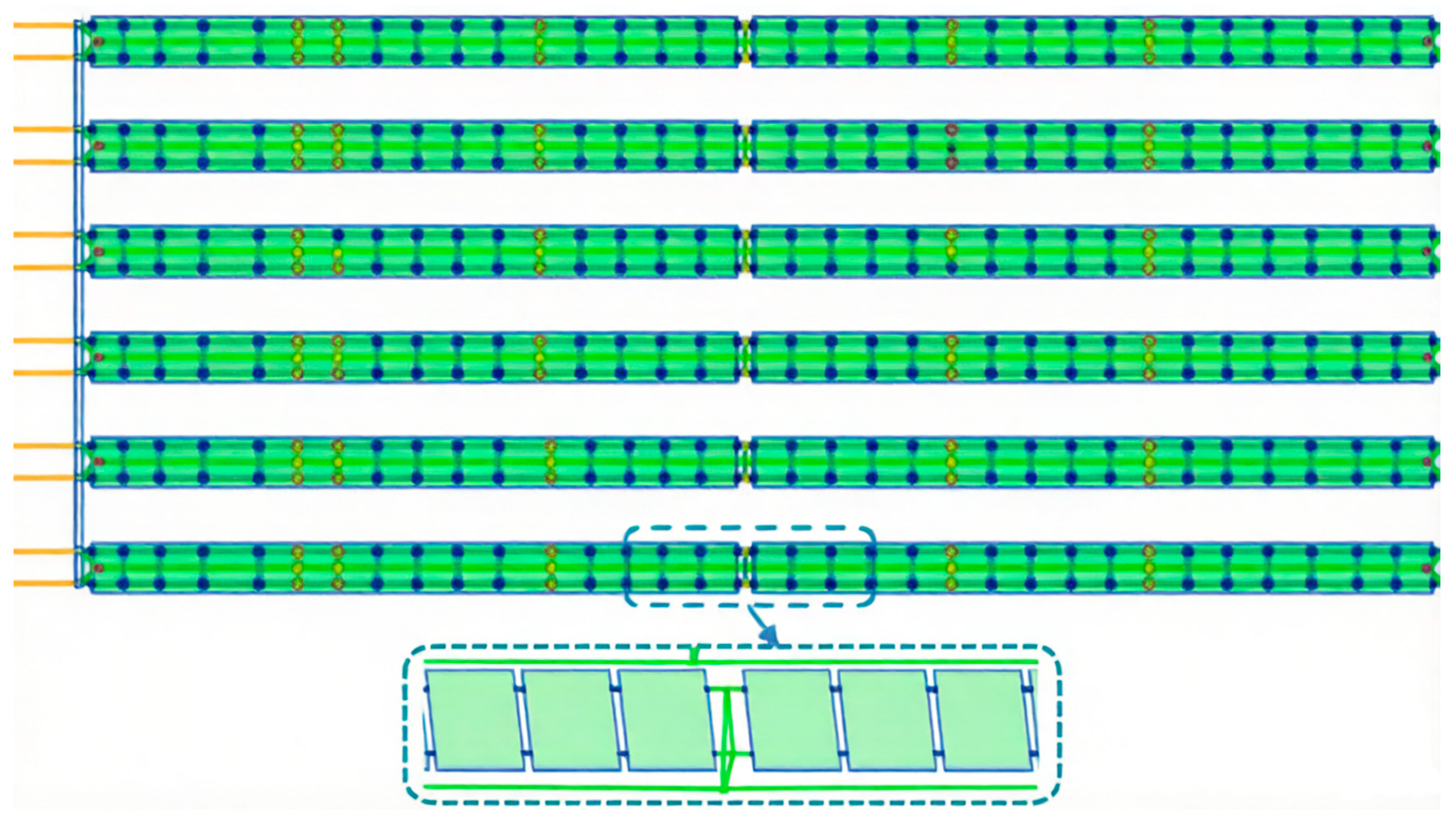
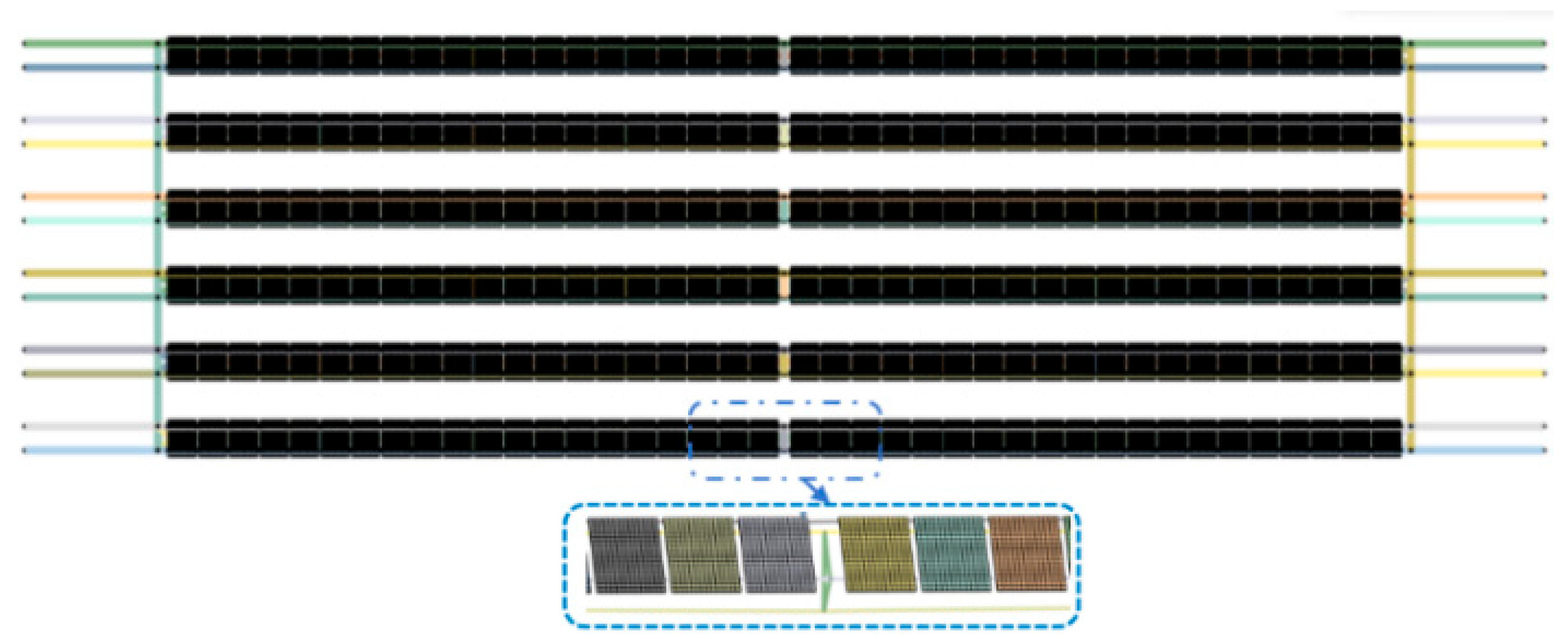
This study employs the structural system outlined in the standard CSEE0394-2023 [31] to investigate the wind-induced response of a six-row large-span flexible photovoltaic system. Figure 2 shows the model of multi-row flexible photovoltaic system. The flexible photovoltaic system comprises six rows, with a spacing of three meters between each row. Table 1 gives the parameters of the photovoltaic system. The photovoltaic system has a height of 3 m, with a panel spacing of 0.05 m. The photovoltaic system has a single-row span of 48.5 m, comprising a total of 40 photovoltaic panels. The photovoltaic panel is a rigid structure with a material density of 2500 kg/m3 and a Poisson’s ratio of 0.2. The dimensions of an individual photovoltaic panel are 1.5 m × 1.0 m × 0.02 m, and the elastic modulus is 7.2 × 10¹¹ Pa. The cable employs the link180 element, which experiences only tensile forces without compression, and the prestress is implemented by a pre-strain technique. The cable has a diameter of 22 mm, an elastic modulus of 1.95 × 10¹¹ Pa, and a Poisson’s ratio of 0.3. The V-shaped brace connecting the component cable to the load-bearing cable, as well as the transverse connecting steel beam between the component cable, utilize P63.5 × 4.5 circular steel tubes. The material is Q235B steel, with a density of 7850 kg/m3.
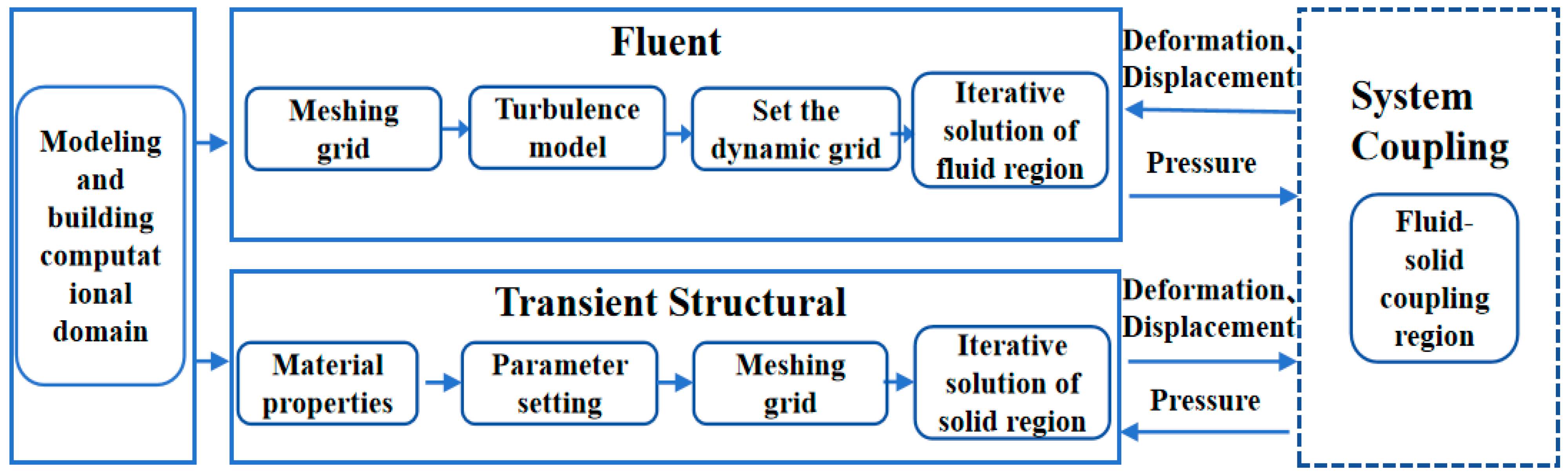
The two-way fluid–solid interaction (FSI) process entails initially relaying the fluid-domain pressure computation to the solid structure analysis through the fluid–solid coupling interface, followed by transmitting the solid-domain deformation and displacement back to the fluid domain via the same coupling interface. Figure 3 shows the two-way fluid–solid coupling flow chart. The strength of the fluid–solid contact is appropriate for a two-way fluid–solid coupling. The disadvantage is that the requirements for computing resources and algorithms are high. This paper employs two-way fluid-solid coupling to more properly demonstrate the structural reaction generated by wind. We employ the workbench platform to couple the transient structure with Fluent.

2.2. Turbulence Model and Control Equations

Large eddy simulation can comprehensively analyze the large-scale vortex structure of the flow field. The equation for large eddy simulation is as follows:
ρ t + ρ u i ¯ ρ = 0
ρ u i ¯ t + ρ u i ¯ u j ¯ x j = p ¯ x i + v 2 u i ¯ x i x j ( τ i j ) x j
τ i j 1 3 τ k k δ i j = 2 C Δ 2 S ¯ S ¯ ij
S ¯ i j = 1 2 u i ¯ x j + u j ¯ x i
S ¯ = 2 S ¯ i j S ¯ i j
In the formula, the kinematic viscosity of air is denoted by ν, ρ represents air density, and t represents time. p signifies the pressure after filtration, while the velocity after filtration is denoted by u i . xi represents the spatial coordinate component. τ ij denotes the subgrid-scale stress. What is more, τ kk is the isotropic part of the subgrid stress, which is included in the filtration pressure term, and δ i j is the Kronecker δ function. C is a dynamic Smagorinsky constant, and the Smagorinsky constant C in this paper is set to 0.1. Δ is the filtration length of a filter, that is, the spatial grid scale, S ij is the strain rate tensor, and S is the amplitude of the analytical strain rate tensor.
The choice of LES over RANS is fundamentally driven by the necessity to resolve transient, large-scale turbulent structures that dominate the wind loading on bluff bodies. For flexible PV systems, the key failure mechanisms—vortex-induced vibration and torsional galloping—are initiated by unsteady flow separation and vortex shedding. RANS models, which time-average all turbulence, are inherently limited in capturing these phenomena. In contrast, LES explicitly resolves the energy-containing eddies responsible for the pressure fluctuations that directly excite the structure’s natural frequencies. This capability is indispensable for a faithful prediction of the aerodynamic forcing that drives the system’s dynamic response.

2.3. Grid Division and Computational Domain

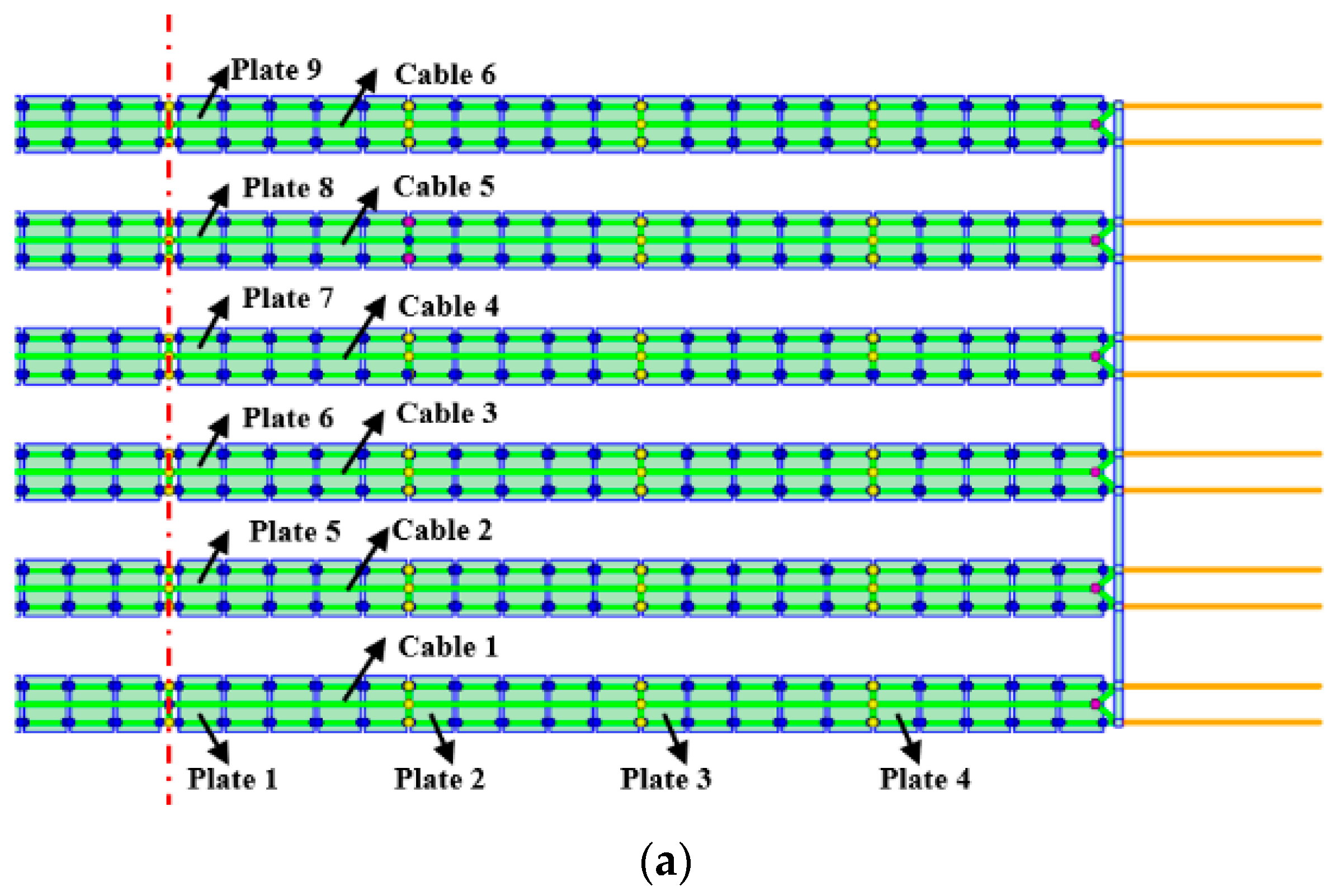
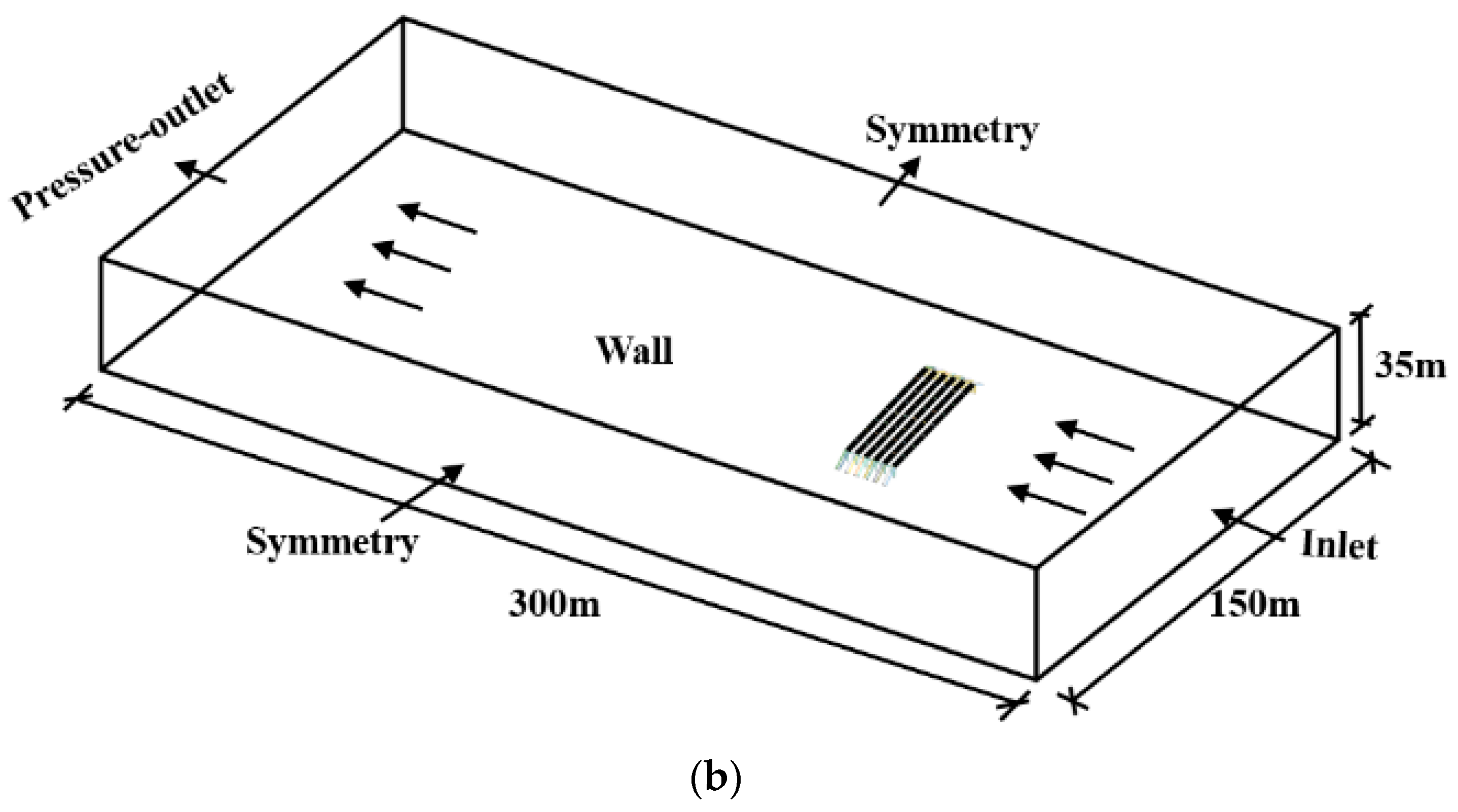
The photovoltaic system model is situated at one-third of the fluid domain, with the computational domain dimensions measuring 300 m × 150 m × 35 m. The fluid domain’s blockage rate is 0.91%, conforming to the standards set by ASCE/SEI 49-12 (ASCE, 2012) [32] of 5%. We use the fluid domain for additional simulation. The streamwise length of the fluid domain increases from 10 H to 18 H, where H is the structural height. The results show that the difference in key indicators can be ignored: the change in pressure coefficient is less than 1.5%. In the wake region, the velocity profile deviation is less than 2%. Figure 4 shows the monitoring point layout and fluid domain diagram of the flexible multi-row photovoltaic system. The photovoltaic system on the right half is examined since it is symmetrically distributed. The change in vertical displacement of the photovoltaic system is analyzed by observing the arrangement of one to four photovoltaic panels in the initial array and five to nine photovoltaic panels in subsequent rows. The internal forces of the load-bearing cables and the stable cables numbered one to six at the mid-span location are observed to investigate the variation patterns of the cables’ internal forces. The grid division of the flexible multi-row photovoltaic system is shown in Figure 5. Tetrahedral unstructured mesh is utilized to improve mesh quality. The boundary layer has five layers, the growth rate is 1.1, and the minimum grid size is 0.04 m. There exist 6.18 million grids and 1.11 million grid nodes, with the quality of the subdivided grids exceeding 0.25. The time step is 0.01.

2.4. Boundary Conditions and Solution Settings

The fluid domain’s outflow is designated as the pressure outlet, the entrance is classified as the velocity inlet, the ground and model surface are identified as walls, while the remaining surfaces are categorized as symmetry. Table 2 gives the boundary conditions and solution parameters. In this paper, large eddy simulation and second-order upwind discrete scheme are used to study the operation of flexible photovoltaic system when the direction angle is 0°, 45°, 90°, 135°, and 180°, and the inclination angle is 20°. The convergence accuracy of transient calculation is 10−4. The flexible photovoltaic system with pretensions of 148 kN, 170.7 kN, 199.6 kN, 222 kN, and 295 kN is the second system under investigation.
The flexible photovoltaic system’s form coefficient, wind pressure, and wind-induced reaction are investigated in order to better understand how the wind field interacts with it. The expressions of wind pressure and shape coefficient are as follows:
C p = P P ref 0.5 ρ v 0 2
μ si = C p z 0 z i 2 α
In the formula: the wind pressure of the measuring point is P , P ref is the static pressure of the reference point, and a standard atmospheric pressure is taken. The air density is ρ , and the inlet reference wind speed is v 0 . The reference inlet velocity is 10 m/s. The wind pressure shape coefficient is μ si , the reference height is z 0 , take 10 m, and z i is the distance from the node to the base. α is the ground roughness index, taking B landform, and α is 0.15.

2.5. Comparison and Verification

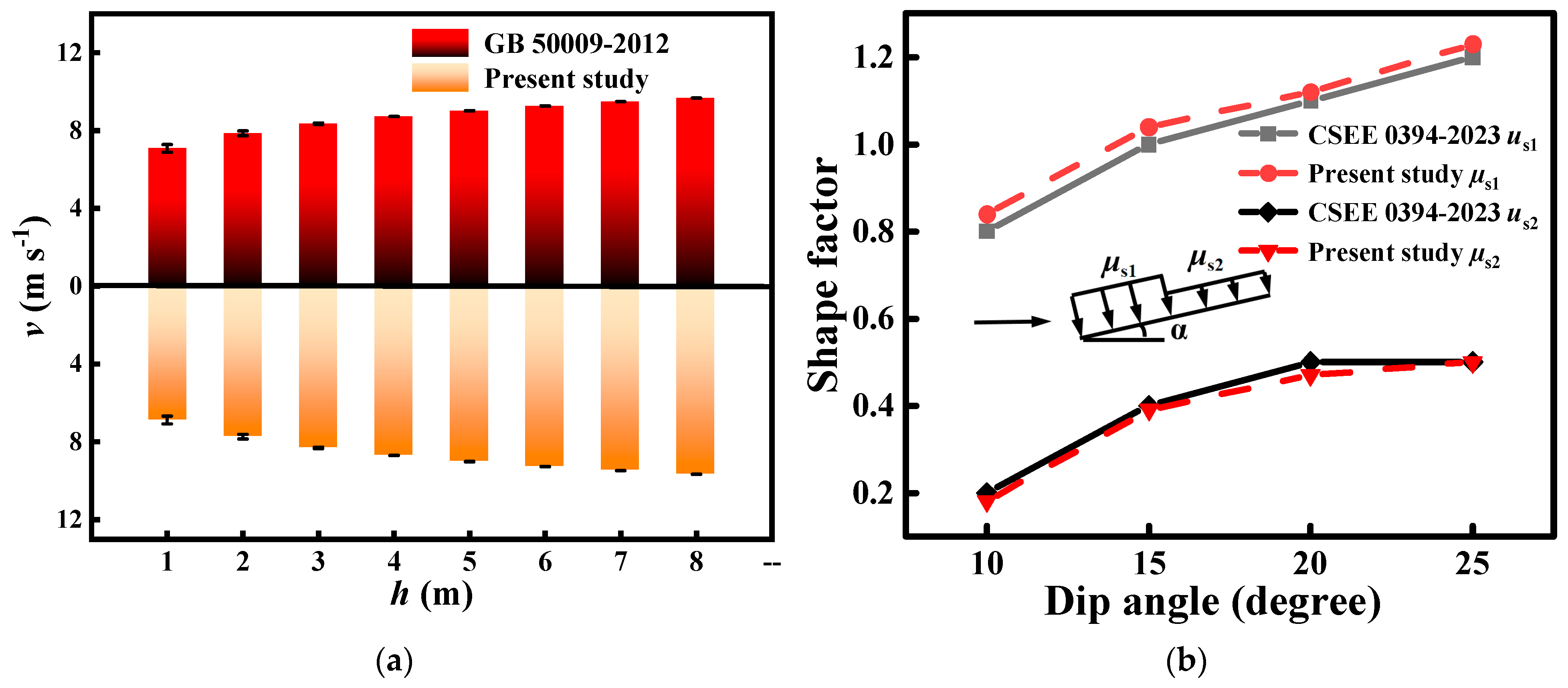
The research data are compared with the standard so as to systematically verify the reliability of the two-way fluid–solid coupling numerical model [31,33]. Figure 6 compares the difference between the wind speed and the shape coefficient of the photovoltaic panel and the standard value. The wind speed of the inlet wind field converges towards the standard value as the inlet height increases. The comparison of shape coefficient shows that with the increase in photovoltaic installation angle, the expansion of windward area promotes the increase in shape coefficient of the photovoltaic panel. The numerical computation result exceeds the usual value due to its conservative nature. The shape coefficient of the lower portion of the panel deviates by 4% from the standard value when the inclination angle exceeds 15°. The simulation curve and the standard benchmark maintain the synchronous evolution law, which strongly proves the scientificity and accuracy of the calculation method.

3. Results and Discussion

3.1. Modal Analysis

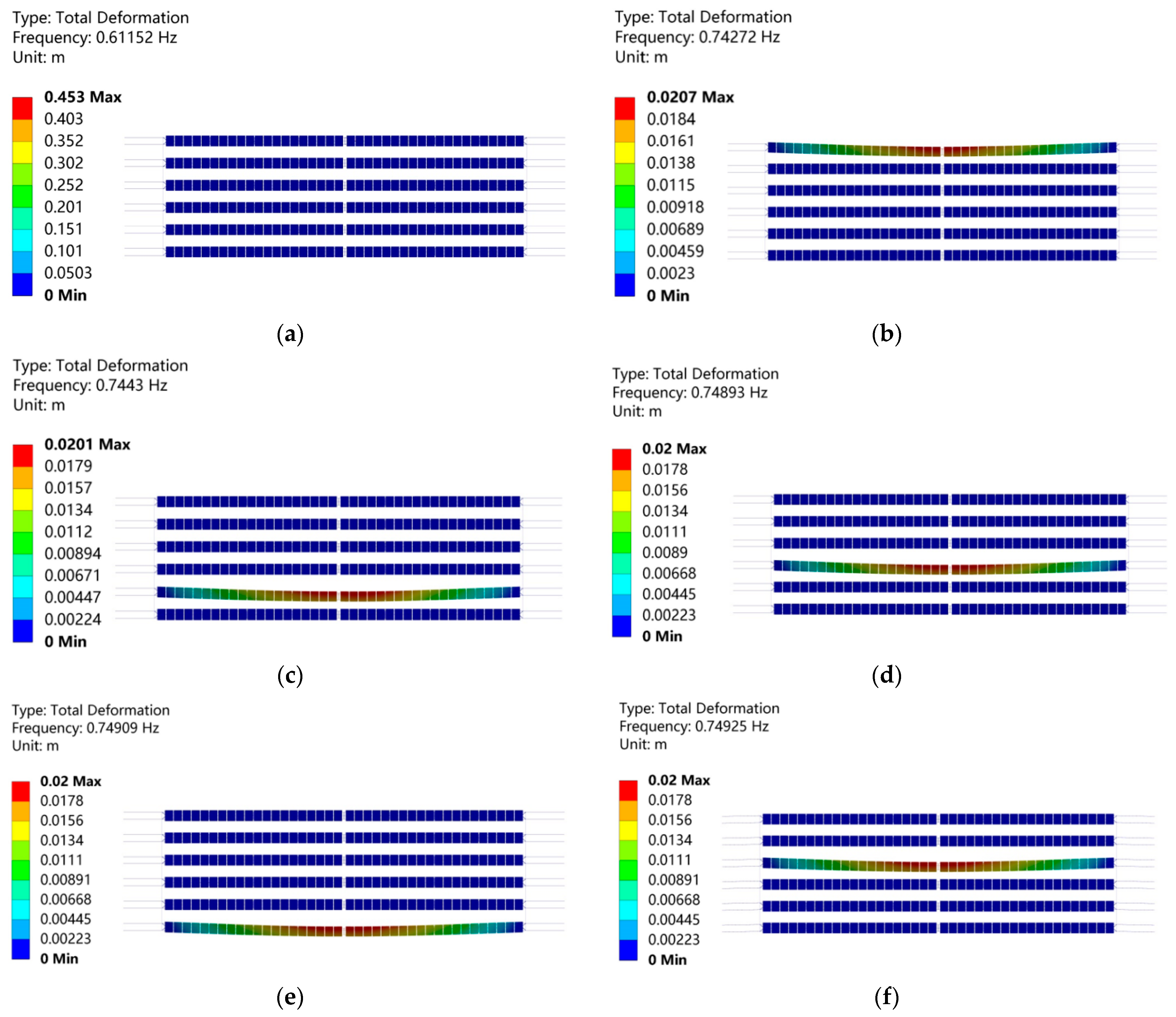
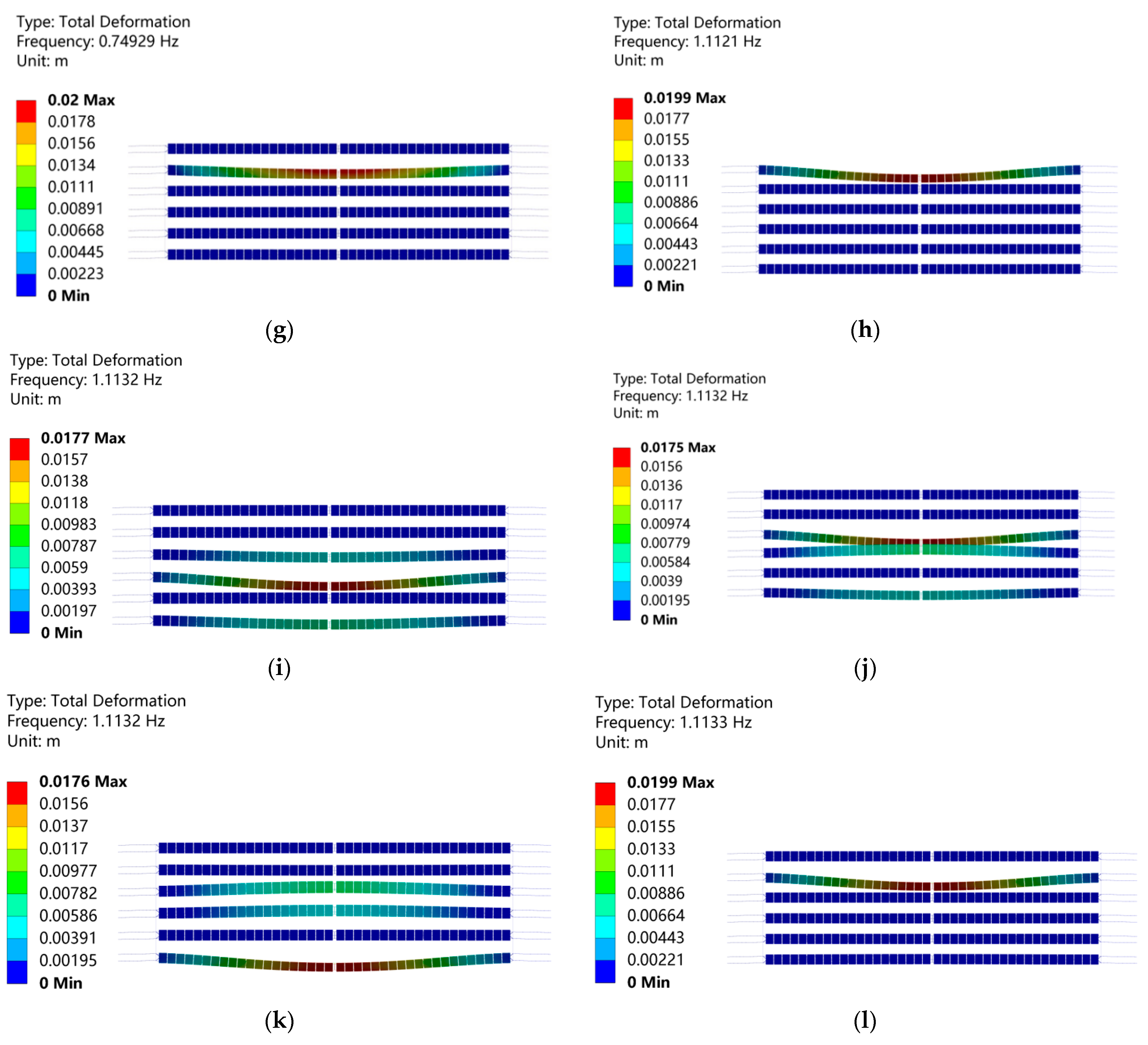
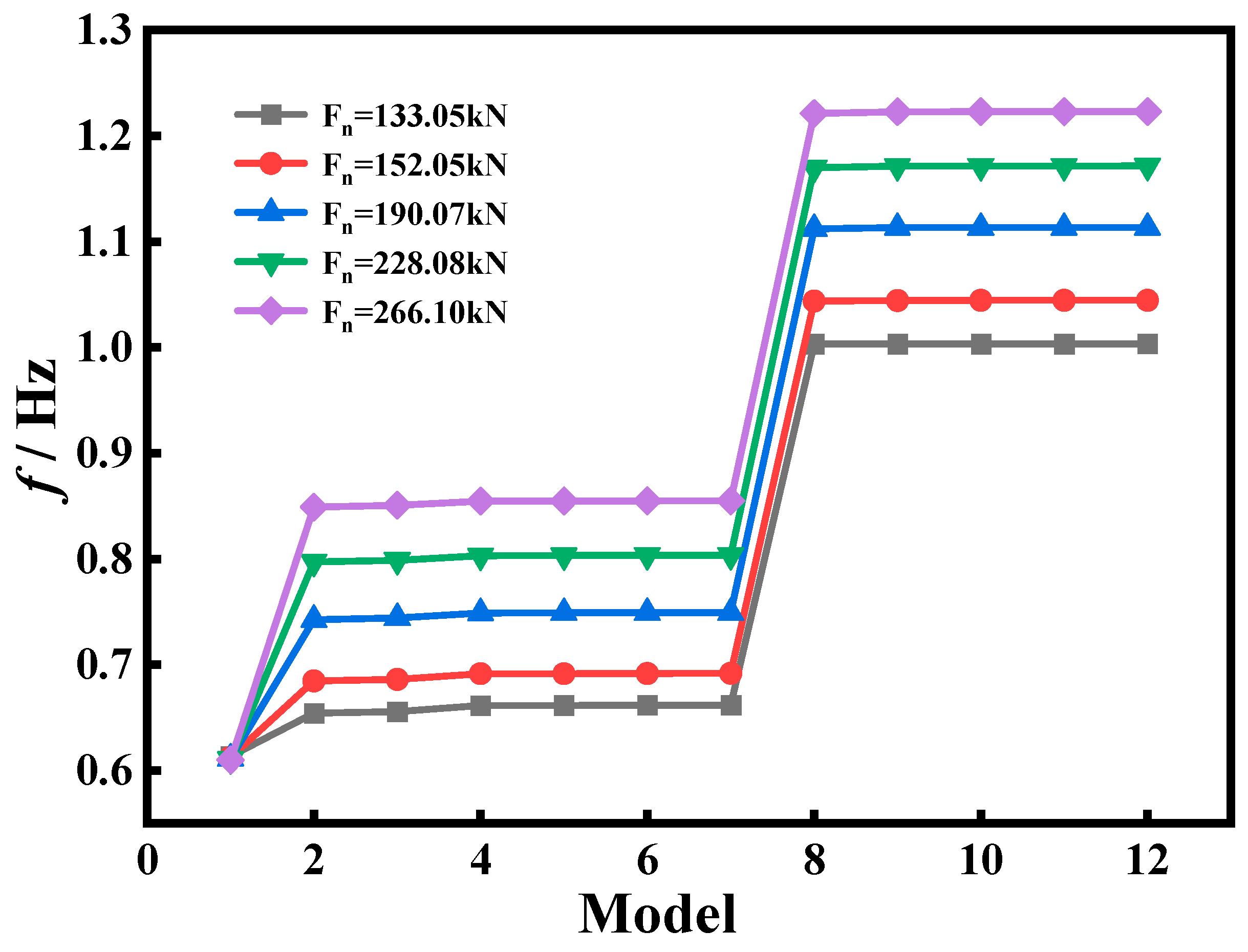
The vibration mode of the structure facilitates an intuitive comprehension of its dynamic deformation across different frequencies, forming the basis for optimal design. The 12-order modal total deformation cloud map of the photovoltaic system with Fn = 190.07 kN is shown in Figure 7. The natural frequency of flexible photovoltaics ranges from 0.61 Hz to 1.11 Hz. The natural frequency values and failure modes across different rows are analogous from the second to the seventh order. The natural frequencies of different cable pretension forces are shown in Figure 8. The first 12-order natural frequency distribution is dense, displaying a step-like jump rise. The structure’s natural frequency exhibits a continuous third-order step jump, whereas its fundamental frequency is 0.61 Hz. Orders seven and eight demonstrate a discontinuous increase. The photovoltaic system’s inherent frequency rises, and the structure becomes more stable as the initial pressure increases.
The 12 finite element models (Model 1 to Model 12) were developed to systematically investigate the influence of critical design parameters on the dynamic characteristics of the flexible PV system under a constant axial force (Fn = 190.07 kN). The primary variables include the support configuration, cable layout, and boundary constraint conditions, which collectively alter the system’s global stiffness and mass distribution. The specific configuration and intent of each model are detailed in Table 3. This parametric variation explains the progression of natural frequencies observed, from a fundamental mode of 0.61 Hz in the baseline configuration (Model 1) to higher-frequency modes in subsequent, stiffer configurations.
The discontinuity between Mode 7 (0.75 Hz) and Mode 8 (1.11 Hz) is attributed to a transition in the dominant mode shape type. Modes 1–7 involve global, low-stiffness deformations of the primary cable structure, while Modes 8–12 are governed by localized, high-stiffness vibrations of secondary support elements. This shift in the effective stiffness mechanism explains the significant frequency.

3.2. Different Wind Direction Angle

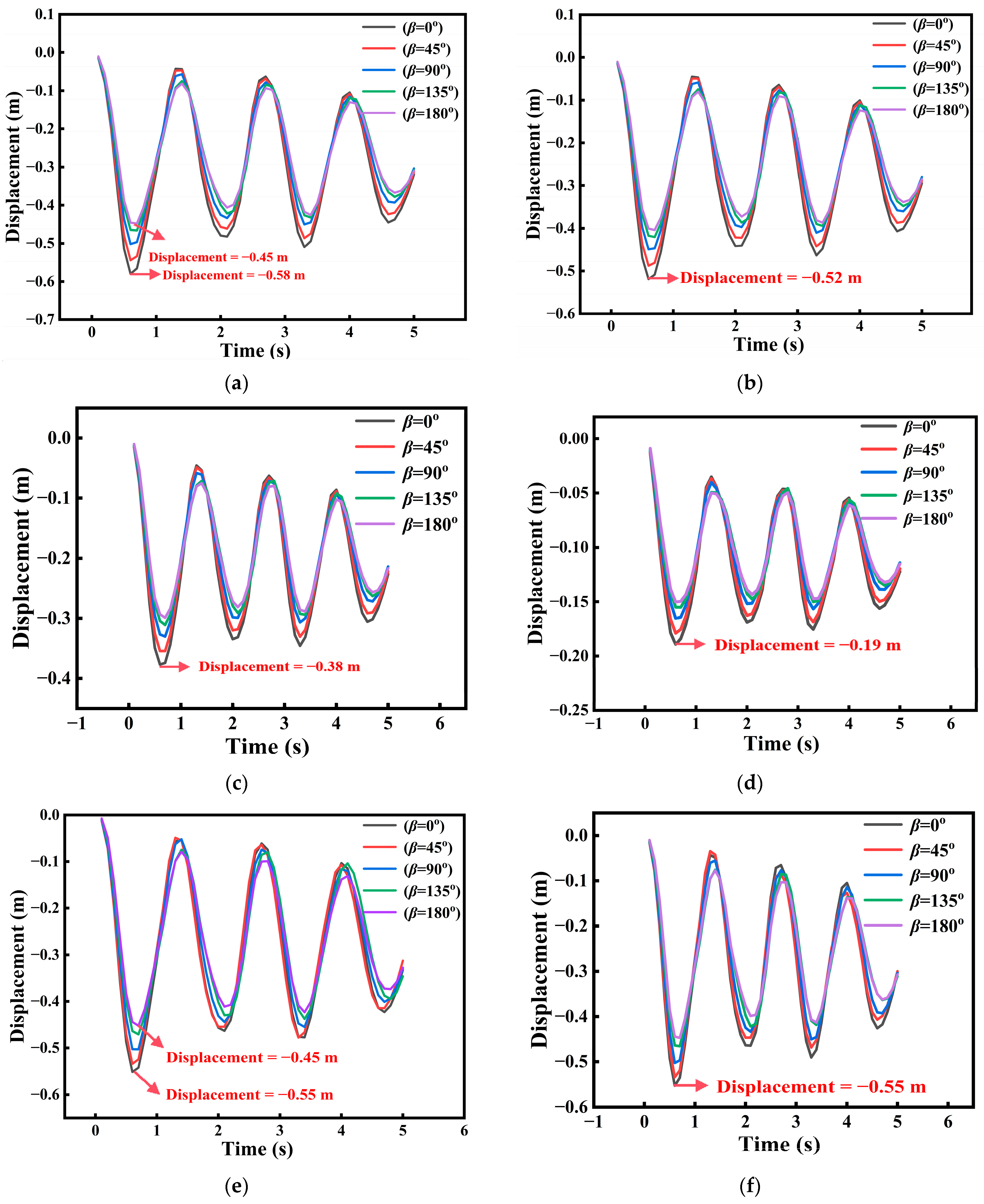
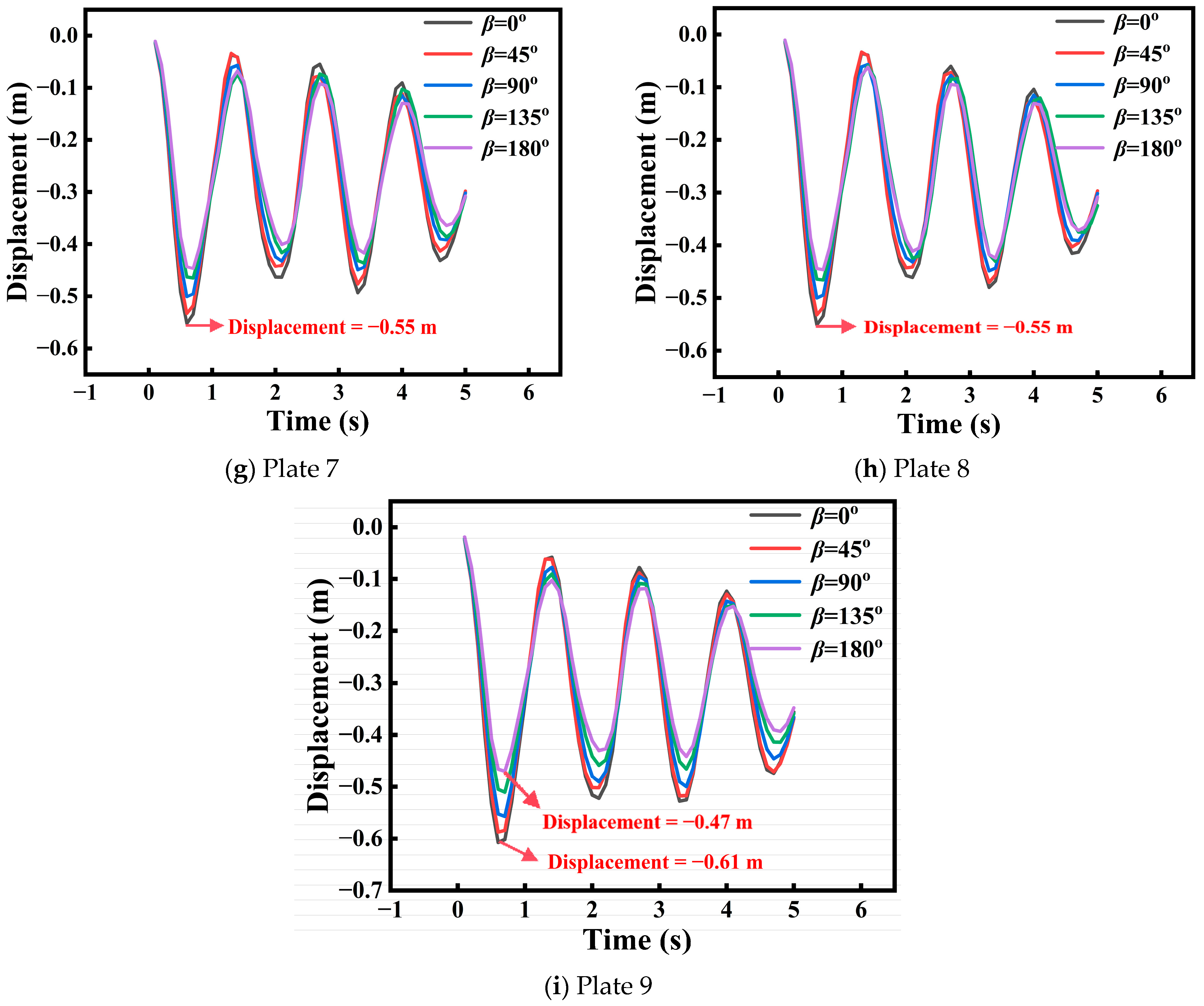
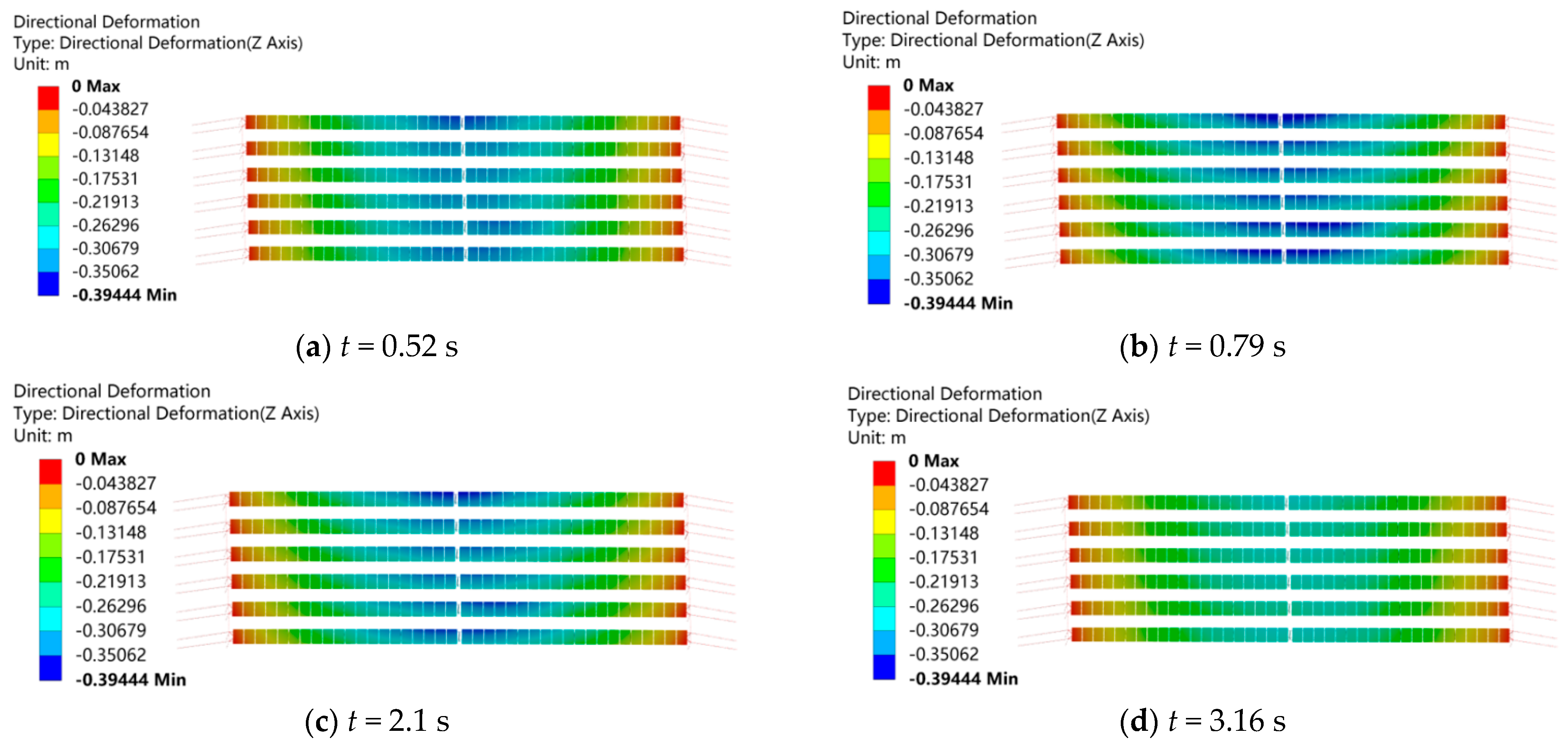
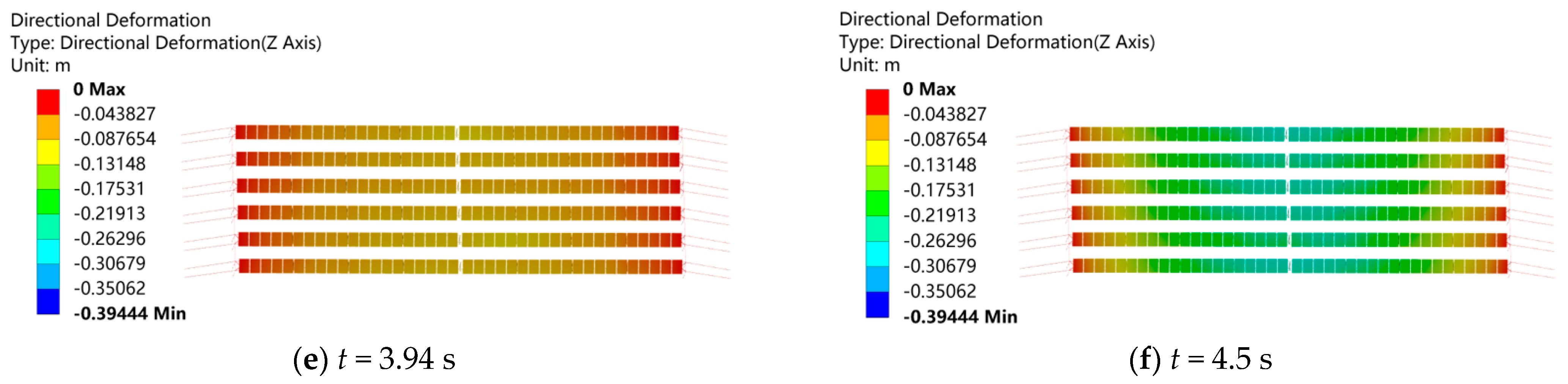
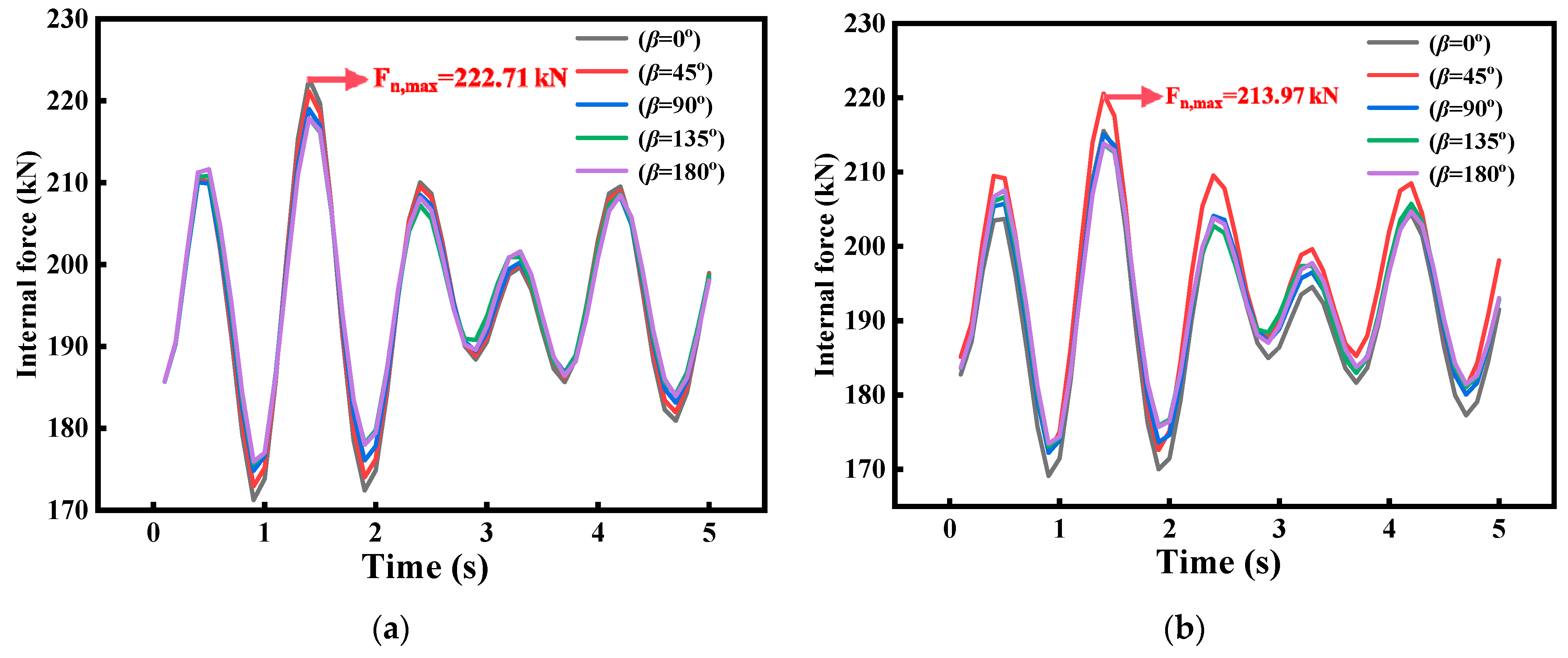
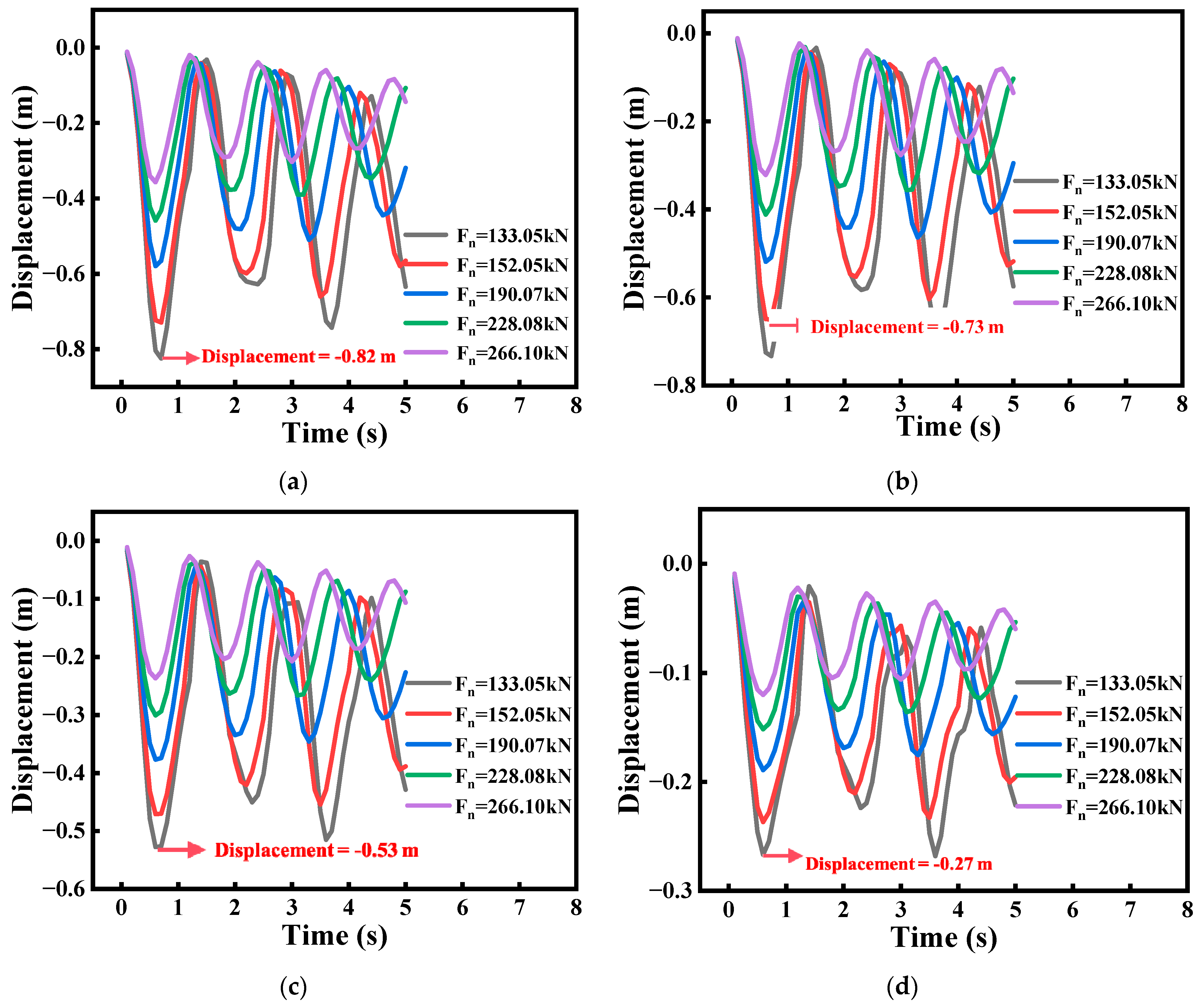
This study examines the vertical displacement of flexible photovoltaic systems, as lateral displacement is negligible and the vibration response of wind-affected photovoltaic systems predominantly involves vertical displacement [12]. The force of wind on photovoltaic panels will vary depending on the angle of the wind, which will also have an impact on the structure’s force distribution. This research examines the variations in vertical displacement and internal cable forces of a flexible photovoltaic system subjected to wind directions of 0°, 45°, 90°, 135°, and 180°. Figure 9 shows the vertical displacement and cable internal force time history of different wind direction angles. The photovoltaic system’s vertical displacement decreases as the wind direction angle rises. The photovoltaic panel’s vertical displacement attains its peak at 0.6 s and 0.58 m at a 0° angle. The vertical displacement cloud diagram at various 0° direction angle times is displayed in Figure 10. The vertical displacement of the flexible photovoltaic system is symmetrically distributed, exhibiting minimal displacement near the supports and maximal displacement at the center of the span. The vertical displacement of the first and final rows is the greatest, while the vertical displacement of the middle row is reduced due to the shielding effect of the first row. The vertical displacement diminishes from 0.58 m to 0.19 m at a 0° angle of direction. The photovoltaic system has the smallest vertical displacement at the 180° direction angle, where the wind blows from the back of the panel and forms a bluff body surrounding the flow, creating a wake area with considerable turbulence. The flexible photovoltaic system exhibits a similar peak duration for the initial vertical displacement across various wind direction angles, as well as a comparable maximum value. The peak time of vertical displacement reaches the second, third, and fourth shifts forward as the wind direction angle decreases.
The photovoltaic system’s vertical displacement is the highest and its wind-induced reaction is the strongest because of the upstream row’s exposure to wind load and the last row’s wake effect. The vertical displacement difference between the first and last rows of photovoltaic panels 1 and 9 is 0.13 m and 0.14 m, respectively. The middle row’s vertical displacement is lowered, and the wind-induced vibration effect is lessened due to the upstream row’s shielding effect. The vertical displacement of the middle row photovoltaic panel 5 is 0.1 m, whereas the differential between the head and tail rows exceeds that of the middle row by 0.04 m. The initial and terminal rows of flexible photovoltaics must be reinforced in the wind-resistant design of the structure. This finding confirms the experimental results of Li [12].
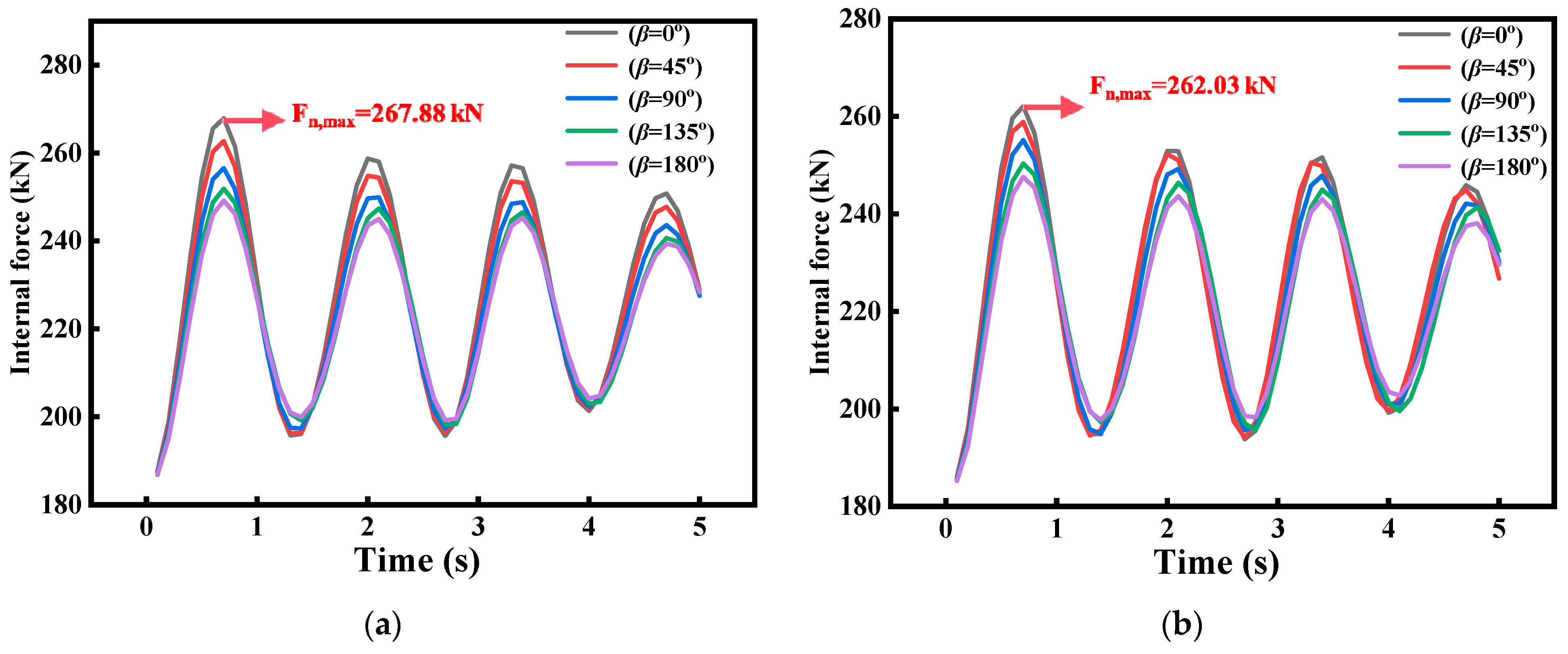
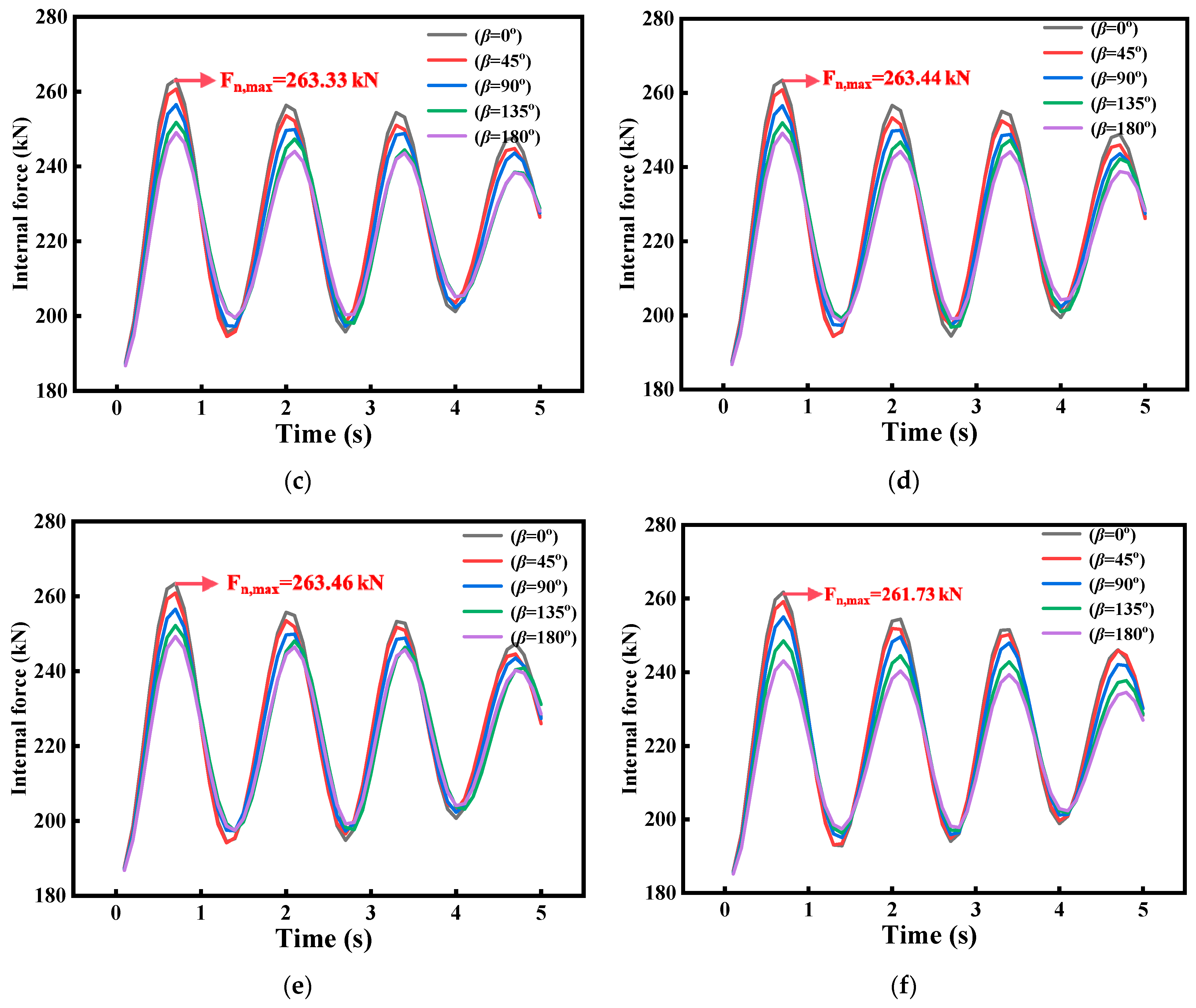
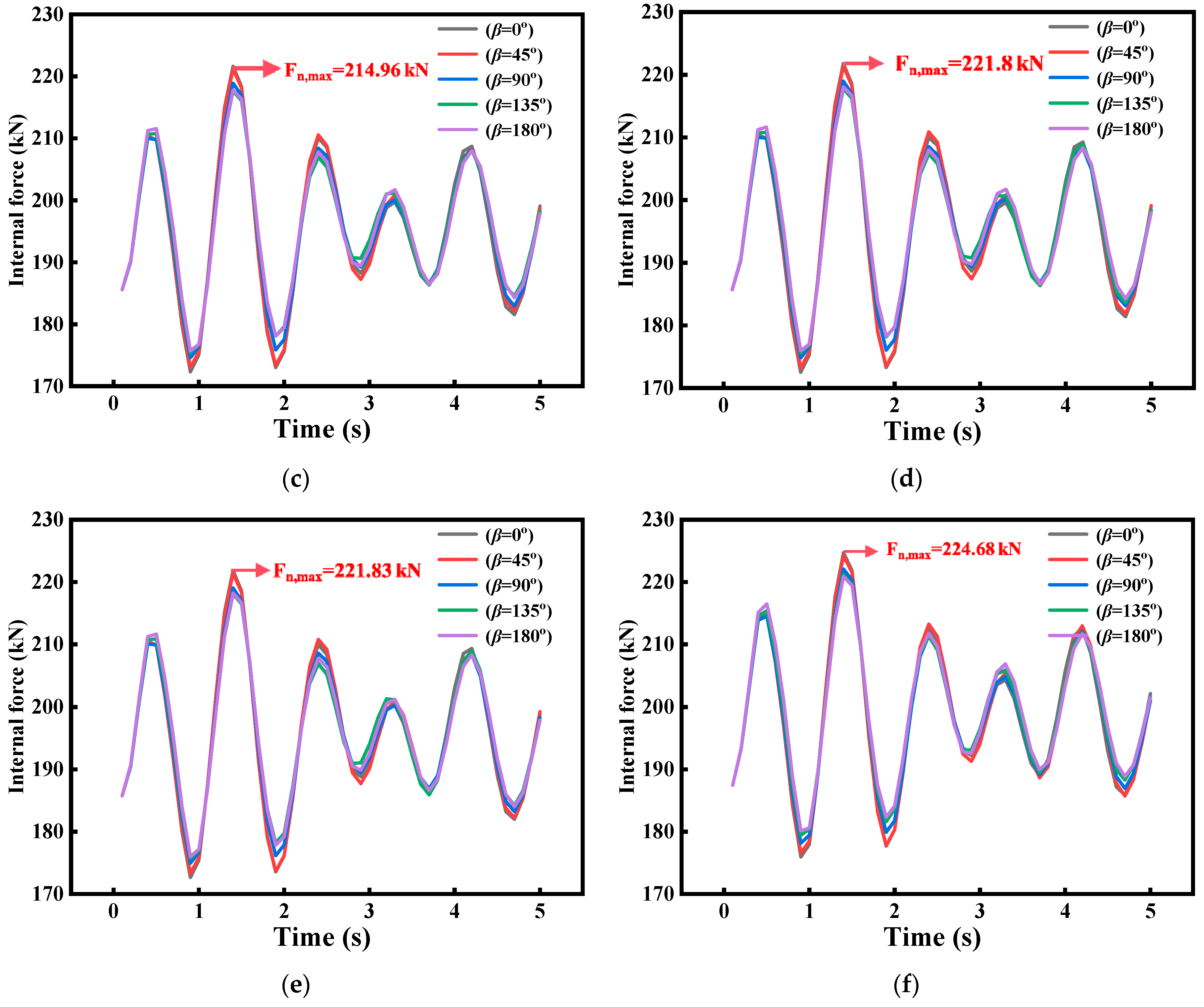
The variance of internal forces in load-bearing and stable cables is strongly influenced by varying angles of direction. The time history of internal force changes in different load-bearing cables and stable cables is shown in Figure 11 and Figure 12. The wind blows toward the front of the photovoltaic panel at the 0° direction angle, distributing the wind load equally across the panel surface and increasing the pressure on the panel surface. The windward section of the photovoltaic panel is the most extensive, experiencing the greatest wind load intensity, resulting in a more pronounced wind-induced response of the wire. The internal force of the initial row of load-bearing cable 1 is the greatest, attaining 267.88 kN. The internal force of load-bearing cable 2 is minimal due to the wind load being obstructed by the initial array of photovoltaic panels. The internal force of the load-bearing cable gradually declines as the wind direction angle increases, and the time lag of the cable’s internal force to reach its peak is also noted.
The force exerted by the photovoltaic panel is quite minimal, and the internal forces within the load-bearing and stable cables are at their nadir when the wind direction angle is 180 degrees, as the wind does not directly impact the panel’s surface. The internal force peak value decreases as the load-bearing cable reaches its first peak at t = 0.7 s, at which point the value is maximized. The steady cable’s peak value reaches a maximum of 222.71 kN at t = 1.4 s and a wind direction angle of 0 degrees.

3.3. Pretension of Different Cables

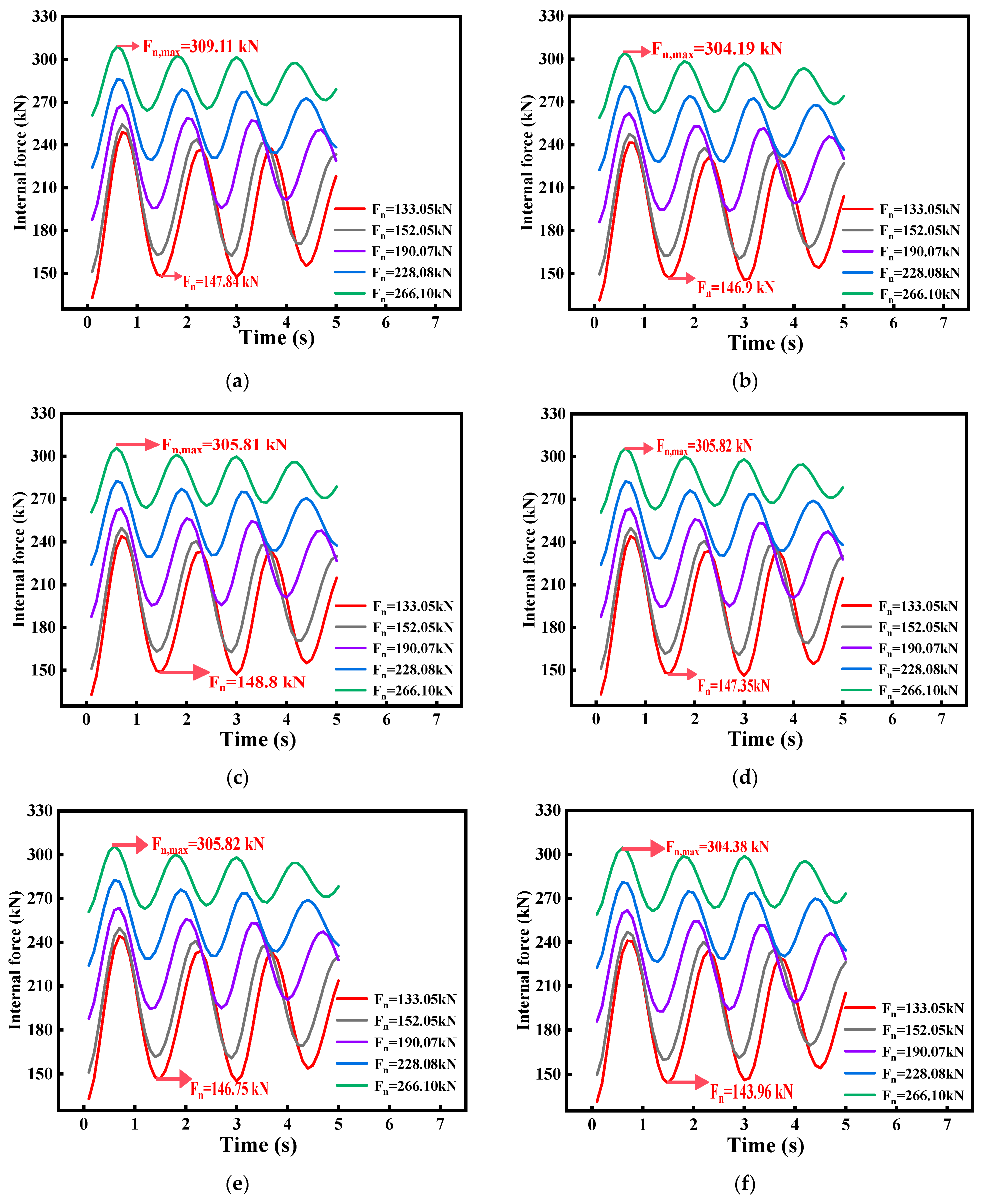
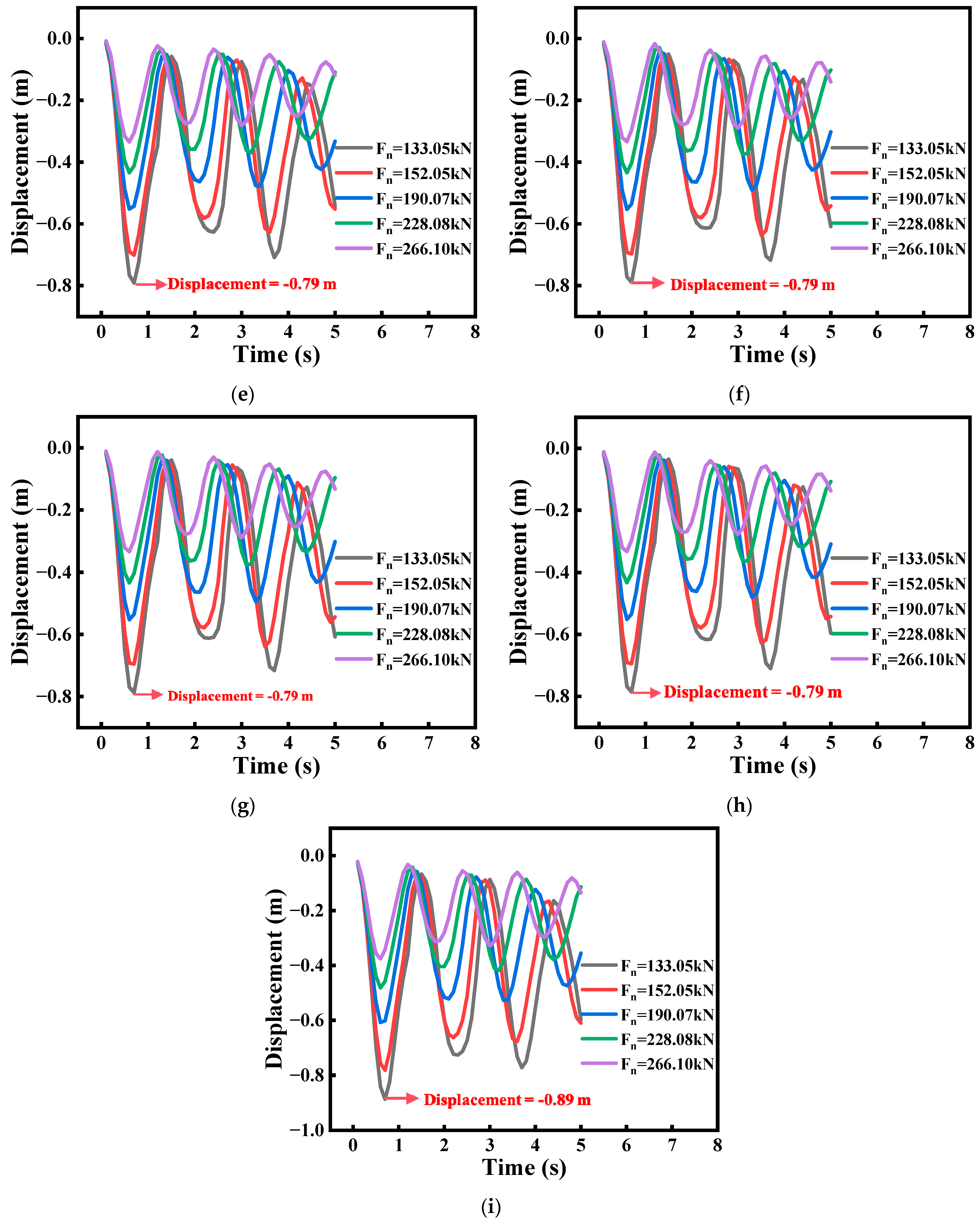
Pretension significantly impacts the dependability of flexible photovoltaics. Therefore, it is essential to investigate the effect of initial pretension on the internal force and vertical displacement of photovoltaic cables. Figure 13 shows the time history of internal force change in load-bearing cables with different initial pretensions. The internal forces of the load-bearing and stable cables progressively intensify as the cable’s pretension consistently escalates. The heightened pretension results in increased tension on both sides of the cable, hence enhancing the stability of the structure. The shorter the period of the internal force of the bearing cable, the more the peak phase moves forward and the more the fluctuation amplitude decreases. The upstream row of cables has the highest internal force, measuring 309.11 kN, as a direct result of wind load. The second row of photovoltaic panels experiences reduced internal force, whereas load-bearing cable 2 exhibits the least internal force due to the shielding effect of the initial array. The internal forces of load-bearing cables 3, 4, and 5 exhibit minor variations with the number of middle rows, and the values remain comparable.
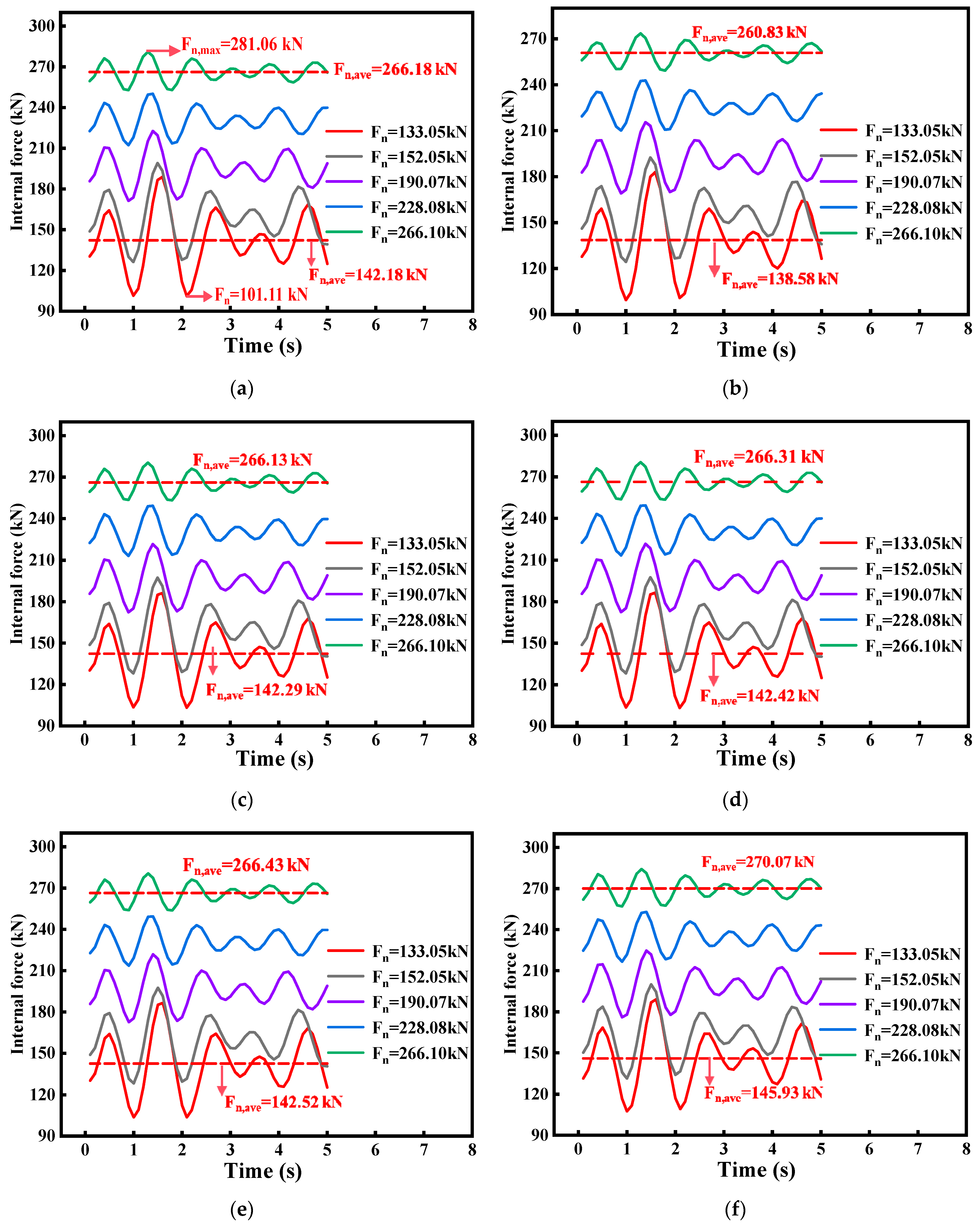
The internal force change time history of a stable cable with varying starting pretension is displayed in Figure 14. The amplitude of fluctuation in the stable cable is less than that of the load-bearing cable, whereas the stable cable exhibits significant fluctuation at the second peak. The internal force fluctuation range of the stable cable tends to be stable as the cable’s pretension increases. The difference between the internal force of the stable cable’s peak and valley values increases when the pretension is low. The larger the pretension, the smaller the fluctuation amplitude of the stable cable, and the smaller the difference between the peak and the peak valley. The initial row of photovoltaic panels is significantly affected by wind load, resulting in the greatest windward area and the maximum wind load intensity. The internal force of stable cable 1 is the largest, with an average value of 266.18 kN. The wind load shelter provided by the first row of photovoltaic panels results in the minimal internal force of stable cable 2 in the second row, averaging 260.83 kN.
The augmentation of cable pretension diminishes the impact of wind load pressure, hence decreasing the vertical displacement of the photovoltaic panel. Figure 15 shows the vertical displacement time history of photovoltaic panels with different pretensions. The vertical displacement time history of the photovoltaic panel advances as a whole, and the time history of attaining the peak and valley values advances as the cable’s pretension grows. The vertical displacement of photovoltaic panel 1 is the greatest at t = 0.7 s, reaching −0.82 m, or 3.04 times that of side panel 4. The vertical displacement from the mid-span to both sides diminishes progressively and eventually stabilizes due to the ongoing proximity to the support. Each peak value has a comparable vertical distortion due to high pretension. The low pretension vertical peaks differ significantly. The middle row’s maximum vertical displacement, − 0.79 m, is also caused by the shielding effect of the upstream row. The wind load flow rate is diminished due to the low pressure effect in the wake region. The photovoltaic panels experience inconsistent suction, with the vertical displacement of the final row of panels being the most significant, at −0.89. The wind-resistant design of flexible photovoltaic systems primarily focuses on the initial and terminal rows of reinforcement.
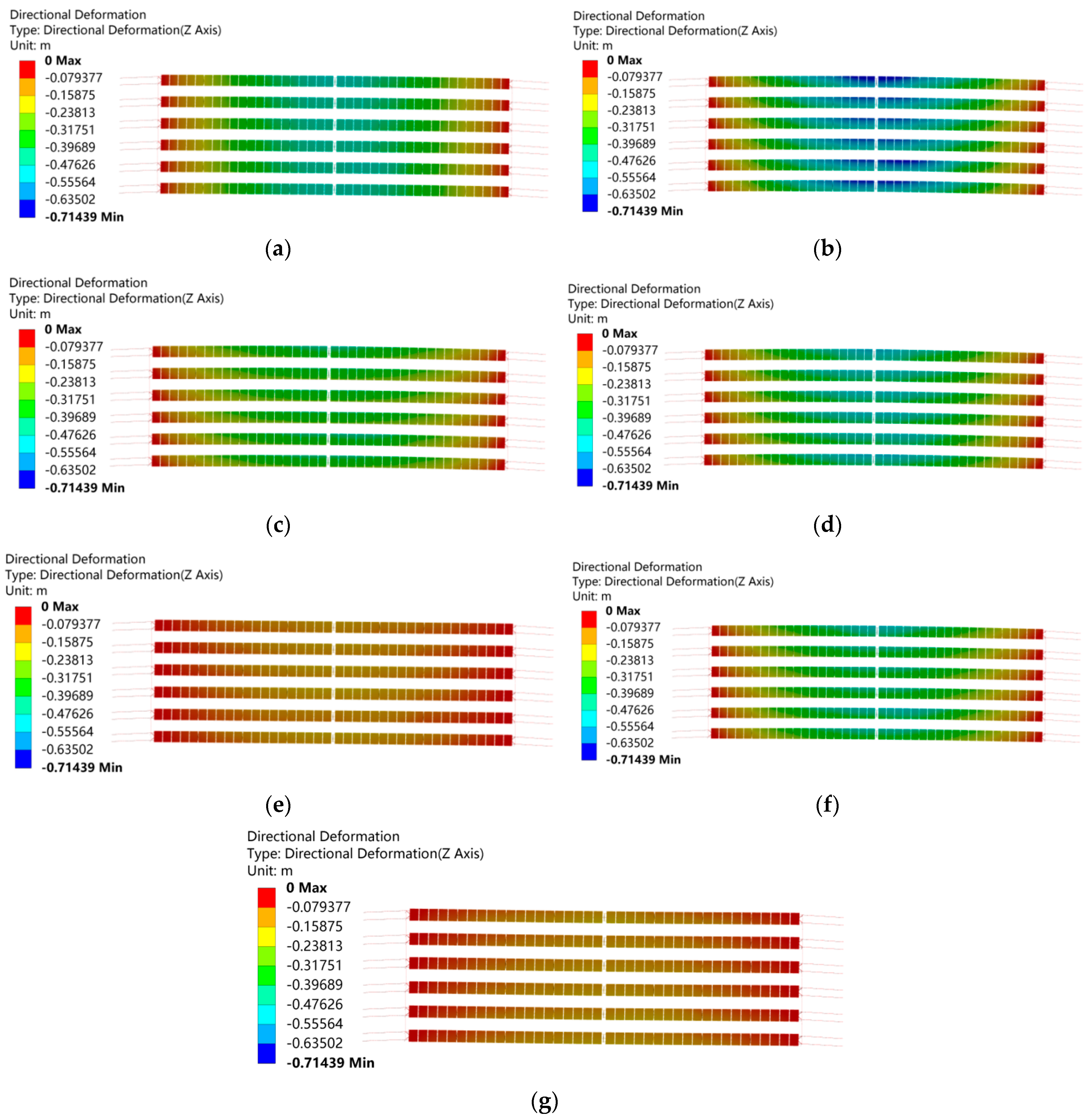
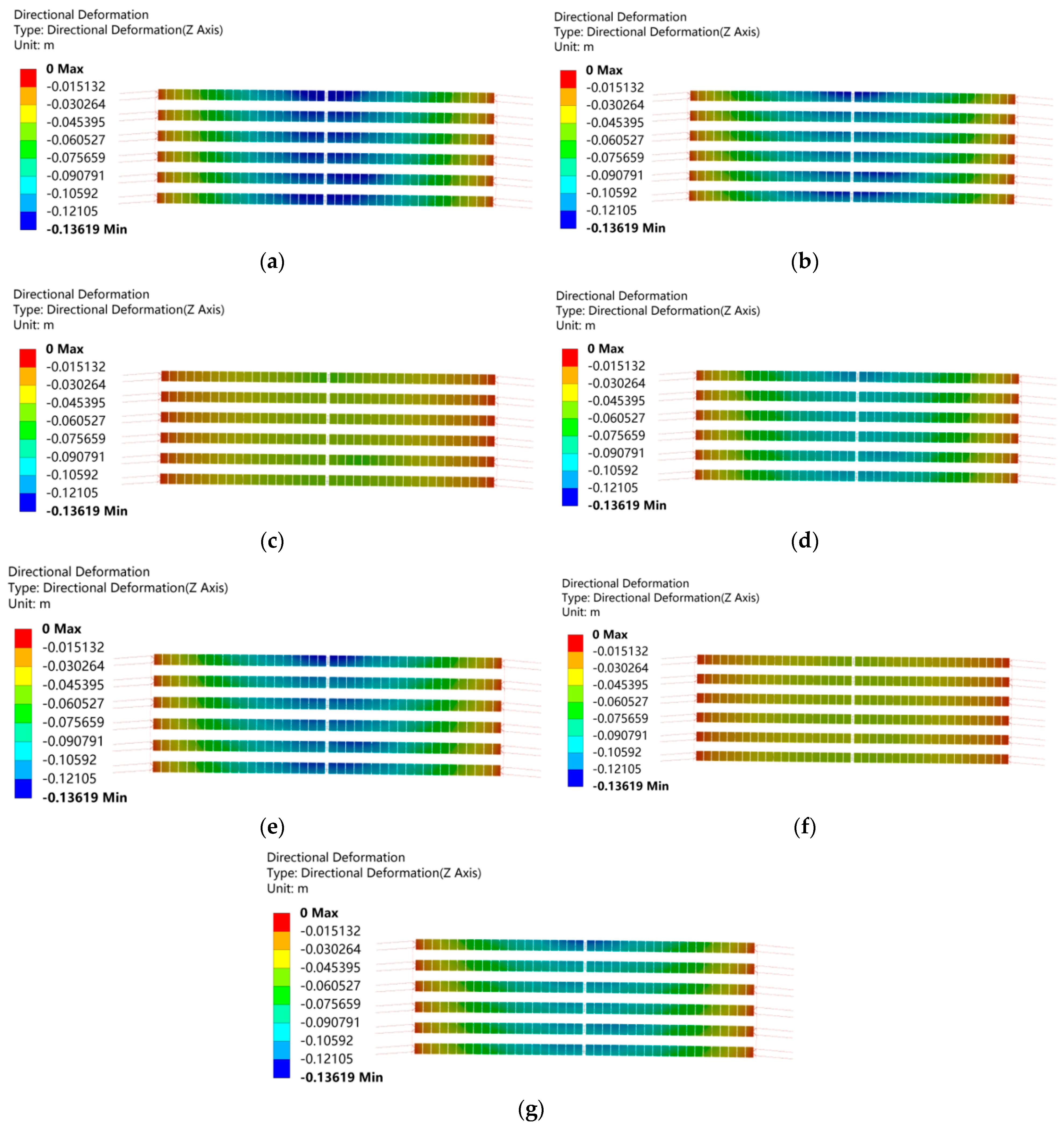
The vertical displacement time histories of flexible photovoltaic systems with Fn = 133.5 kN and 266.1 kN are displayed in Figure 16 and Figure 17. The cable pretension has a greater vibration response to the flexible photovoltaic system than the direction angle. The overall vertical displacement of the photovoltaic system exhibits a symmetrical distribution with varying initial pretension. The vertical displacement peak of flexible photovoltaic goes forward as cable pretension increases, yet the vertical displacement of flexible photovoltaic simultaneously changes. The change in cable displacement caused by wind-induced vibration is greater than that of internal force.

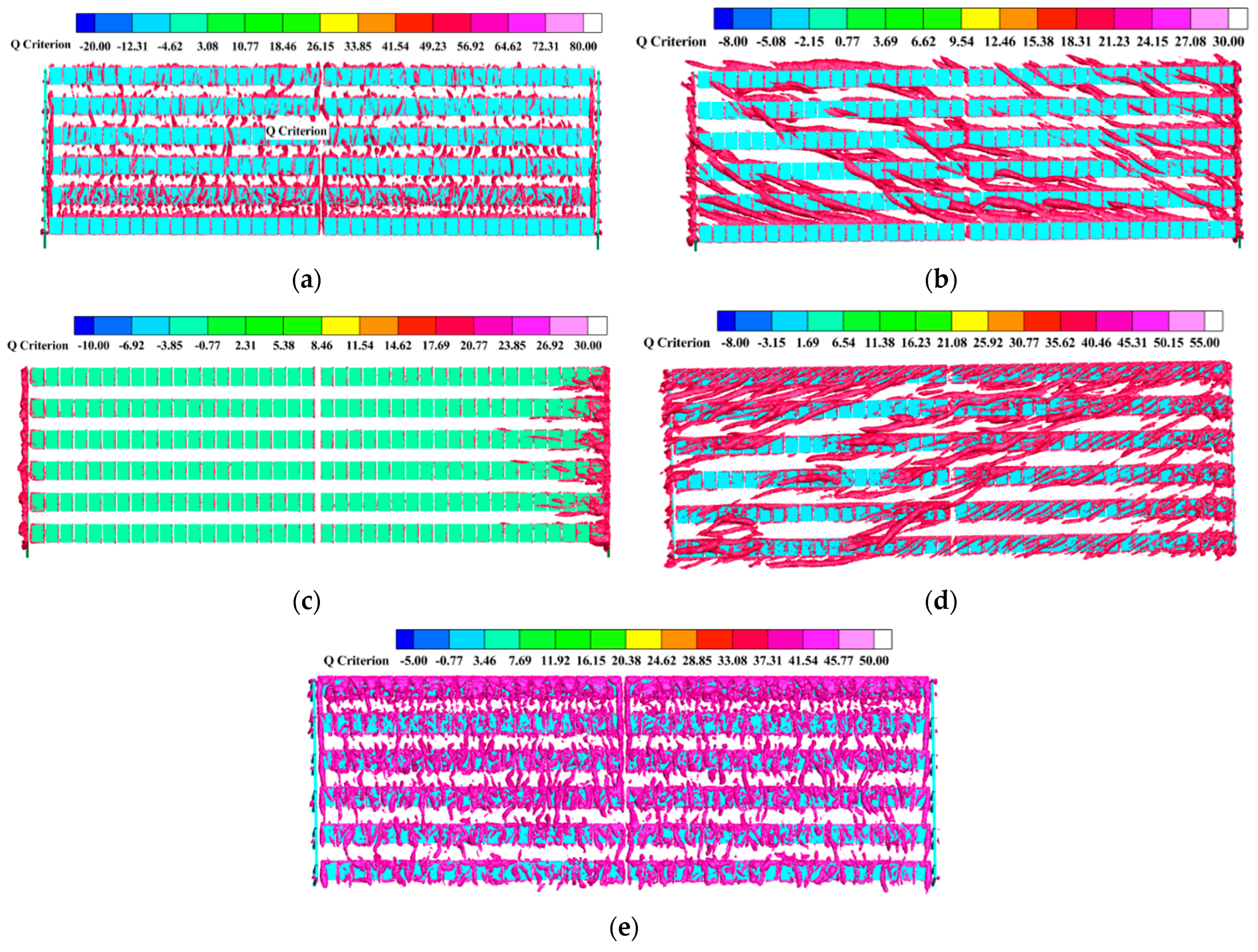
3.4. Vorticity

The evolution of vorticity in the flexible photovoltaic system across different wind directions is examined to elucidate the correlation between wind load and the system. The vorticity distribution of the photovoltaic system at different wind directions is shown in Figure 18. The threshold in this article is 40, and the Q criterion is used. This value was chosen based on a sensitivity analysis conducted during post-processing. Lower thresholds (10–20) captured a very diffuse and extensive volume of weak rotational flow, which obscured the primary, energetically significant vortex cores associated with flow separation from the photovoltaic panel edges. Conversely, significantly higher thresholds (60–80) identified only the most intense rotational regions, omitting the connecting vortex filaments and the broader wake structure essential for understanding the flow–structure interaction dynamics. A threshold of 40 provided an optimal balance, clearly delineating the dominant vortex structures. The vorticity of the flexible photovoltaic system is symmetrically distributed at a wind angle of 0 degrees. The second row exhibits greater vorticity because the upstream row is obscured. The mid-span position is more susceptible to airflow separation, resulting in vortices, and the vorticity is amplified because of the extensive flexible photovoltaic gap. The support has a significant shielding effect on the wind load at 45°, 90°, and 135° wind direction angles, which causes a significant vorticity close to the support. The interaction between the flexible photovoltaic’s backing and the wind load facilitates the division of airflow and the formation of a vortex at a 180° wind direction angle, demonstrating increased vorticity. Asymmetric vortex shedding and the formation of large and persistent vortex structures at the leeward side (especially at 90° and 135° wind directions) generate net aerodynamic forces in phase with the direction of motion of the structure. It shows that the system will be affected by large oscillation under specific flow conditions. The spatial distribution of vorticity indicates a strong coupling region of aerodynamic stiffness and damping. The different vortex vibration modes of 0° relative to 45° can be coupled with the bending and torsional natural modes of the structure differently. This analysis provides a basis for assessing the flutter risk of coupled modes.

4. Conclusions

This paper provides a comprehensive assessment and analysis of the response of a multi-row large-span flexible photovoltaic system to wind-induced vibrations. The two-way fluid–solid coupling modeling approach is used to visualize the vertical displacement and cable internal force distribution of the flexible photovoltaic system at different wind direction angles and initial pretension. The conclusions are as follows:
(1)
The fundamental frequency of the flexible photovoltaic system is 0.61 Hz, and the natural frequency exhibits a constant three-step increment. The photovoltaic system’s inherent frequency rises as the initial pretension does. The photovoltaic system’s vertical displacement decreases as the wind direction angle increases. The vertical displacement of the photovoltaic panel is maximized and the wind-induced reaction is most pronounced at a 0° angle due to the wake effect from the last row and the influence of wind load on the initial array. The vertical displacement of the middle row decreases due to the shielding effect of the upstream row.
(2)
The surface of the photovoltaic panel experiences increased pressure at the 0° direction angle, and the initial array of load-bearing cables has the maximum internal force. The internal force of the load-bearing cable gradually diminishes as the wind direction angle increases, and the cable’s internal force peak time lags behind. The internal force of the stable cable and the load-bearing cable is minimized when the wind direction angle is 180 degrees, as the wind does not directly impact the surface of the photovoltaic panel. The initial row of flexible photovoltaics must be reinforced in the wind-resistant design of the structure.
(3)
The internal forces of the load-bearing and stable cables rise in proportion to the cable’s pretension. The internal force of the first row of wires is the biggest since the initial array of photovoltaic panels has the largest windward area. The internal force of the second row of wires is minimized due to the shielding effect of the upstream row. The peak value and peak-valley difference in cable internal force are high when the pretension is low. The cable’s fluctuation decreases with increasing pretension. The change in cable displacement caused by wind-induced vibration is greater than that of internal force.
(4)
The impact of wind load is lessened as cable pretension increases. As a result, the vertical displacement of the photovoltaic panel is reduced, and the overall time history of vertical displacement is enhanced. The flexible photovoltaic system’s vibration response is more affected by the cable pretension than by the direction angle. The second row exhibits greater vorticity at 0° wind direction because of the first row’s protection. Airflow separation to generate vortices is more likely to occur in the mid-span location due to the big flexible photovoltaic gap, and the vorticity is high.
This study provides insights into wind-induced response and design recommendations for flexible photovoltaic systems, but further study of specific failure mechanisms will provide a deeper understanding of the limit state. In addition, the current model adopts linear elastic material behavior and idealized connection, combining the nonlinear material model and the performance of semi-rigid joints in future work will produce more accurate long-term performance predictions.

Author Contributions

Conceptualization, J.W. and Z.Y.; methodology, G.S. and Z.Y.; software, Z.Y.; validation, J.W. and G.S.; formal analysis, Z.L.; investigation, J.W.; resources, Z.Y.; data curation, G.S.; writing—original draft preparation, Z.Y.; writing—review and editing, G.S. and J.W.; visualization, Z.L.; supervision, J.W.; project administration, Z.Y.; funding acquisition, G.S. All authors have read and agreed to the published version of the manuscript.

Funding

This research was funded by the National Natural Science Foundation of China (Grant No. 52278136).

Data Availability Statement

The datasets used during the current study available from the corresponding author G.S. on reasonable request.

Conflicts of Interest

The authors declare that there are no conflicts of interest.

References

  1. Zhu, Y.F.; Huang, Y.; Xu, C.; Xiao, B.; Chen, C.H.; Yao, Y. Effect of tilt angle on wind-induced vibration in pre-stressed flexible cable-supported photovoltaic systems. Sol. Energy 2024, 277, 112729. [Google Scholar] [CrossRef]
  2. Zhou, Y.; Peng, R.; Xiang, Y.; Li, M.; Xi, G.; Li, Y.; Luo, N. Experimental investigation on wind loads and wind-induced responses of large-span flexible photovoltaic support structure. Eng. Struct. 2025, 322, 119009. [Google Scholar] [CrossRef]
  3. Xu, H.; Ding, K.; Shen, G.; Du, H.; Chen, Y. Experimental investigation on wind-induced vibration of photovoltaic modules supported by suspension cables. Eng. Struct. 2024, 299, 117125. [Google Scholar] [CrossRef]
  4. Zhu, Y.F.; Huang, Y.; Guo, Y.; Xiao, B.; Chen, C.H.; Yao, Y. Numerical assessment of the initial pretension impact on wind-induced vibration in flexible cable-supported photovoltaic systems. J. Wind Eng. Ind. Aerodyn. 2024, 251, 105788. [Google Scholar] [CrossRef]
  5. Wu, Y.; Wu, Y.; Sun, Y.; Sun, X. Wind-induced vibration response and suppression of the cable-truss flexible supportphotovoltaic module array. Sol. Energy 2024, 284, 113096. [Google Scholar] [CrossRef]
  6. Yang, W.; Dai, J.; Chen, W. Experimental study on wind-induced vibration and aerodynamic interference effects of flexible photovoltaics. J. Wind Eng. Ind. Aerodyn. 2025, 256, 105965. [Google Scholar] [CrossRef]
  7. Li, J.; Hong, G.; Xu, H. Wind load effects and gust loading factor for cable-suspended photovoltaic structures. Energies 2023, 17, 38. [Google Scholar] [CrossRef]
  8. Liu, J.; Li, S.; Luo, J.; Chen, Z. Experimental study on critical wind velocity of a 33-meter-span flexible photovoltaic support structure and its mitigation. J. Wind Eng. Ind. Aerodyn. 2023, 236, 105355. [Google Scholar] [CrossRef]
  9. Liu, J.; Li, S.; Chen, Z. Experimental study on effect factors of wind-induced response of flexible photovoltaic support structure. Ocean Eng. 2024, 307, 118199. [Google Scholar] [CrossRef]
  10. Cai, Q.; Ke, S.; Wang, L.; Ren, H.; Zhang, C.; Wu, H.; Zhou, Y.; Cai, Z. Evolution of wind-induced vibration form of large-span flexible PV aeroelastic arrays. Sol. Energy 2024, 277, 112684. [Google Scholar] [CrossRef]
  11. Ding, H.; He, X.; Jing, H.; Wu, X.; Weng, X. Shielding and wind direction effects on wind-induced response of cable-supported photovoltaic array. Eng. Struct. 2024, 309, 118064. [Google Scholar] [CrossRef]
  12. Li, W.; Ke, S.; Cai, Z.; Ji, C.; Wang, W.; Wang, L.; Ren, H. Instability mechanism and failure criteria of large-span flexible PV support arrays under severe wind. Sol. Energy 2023, 264, 112000. [Google Scholar] [CrossRef]
  13. Bao, T.; Li, Z.; Pu, O.; Yang, Y.; Huang, B.; Wu, H. Field measurement-based research on wind pressure interference effects of tracking photovoltaic arrays. J. Wind Eng. Ind. Aerodyn. 2025, 257, 105971. [Google Scholar] [CrossRef]
  14. Zhang, X.; Ma, W.; Zhang, Z.; Hu, L.; Cui, Y. Experimental study on the interference effect of the wind-induced large torsional vibration of single-axis solar tracker arrays. J. Wind Eng. Ind. Aerodyn. 2023, 240, 105470. [Google Scholar] [CrossRef]
  15. Bao, T.; Li, Z.; Pu, O.; Chan, R.W.; Zhao, Z.; Pan, Y.; Yang, Y.; Huang, B.; Wu, H. Modal analysis of tracking photovoltaic support system. Sol. Energy 2023, 265, 112088. [Google Scholar] [CrossRef]
  16. Jubayer, C.M.; Hangan, H. A numerical approach to the investigation of wind loading on an array of ground mounted solar photovoltaic (PV) panels. J. Wind Eng. Ind. Aerodyn. 2016, 153, 60–70. [Google Scholar] [CrossRef]
  17. Reina, G.P.; De Stefano, G. Computational evaluation of wind loads on sun-tracking ground-mounted photovoltaic panel arrays. J. Wind Eng. Ind. Aerodyn. 2017, 170, 283–293. [Google Scholar] [CrossRef]
  18. Wittwer, A.R.; Podestá, J.M.; Castro, H.G.; Mroginski, J.L.; Marighetti, J.O.; De Bortoli, M.E.; Paz, R.R.; Mateo, F. Wind loading and its effects on photovoltaic modules: An experimental–Computational study to assess the stress on structures. Sol. Energy 2022, 240, 315–328. [Google Scholar] [CrossRef]
  19. Chi, Y.; Nan, B.; Qiao, Y.; Leng, J. A Parametric Study of Flexible Support Deflection of Photovoltaic Cells Considering Wind-Induced Load Using Time History Technique. Buildings 2024, 14, 2706. [Google Scholar] [CrossRef]
  20. Jia, G.; Ma, C.; Zhao, Y.; Sun, Y.; Liu, H. Numerical study on the sensitivity of photovoltaic panels to wind load on array layout. Sustain. Horiz. 2024, 11, 100101. [Google Scholar] [CrossRef]
  21. Xu, A.; Ma, W.; Yang, W.; Li, M.; Tan, Y.; Zou, C.; Qiang, S. Study on the wind load and wind-induced interference effect of photovoltaic (PV) arrays on two-dimensional hillsides. Sol. Energy 2024, 278, 112790. [Google Scholar] [CrossRef]
  22. Naeiji, A.; Raji, F.; Zisis, I. Wind loads on residential scale rooftop photovoltaic panels. J. Wind Eng. Ind. Aerodyn. 2017, 168, 228–246. [Google Scholar] [CrossRef]
  23. Peng, H.Y.; Shen, Z.; Liu, H.J.; Dai, S. Wind loads on rooftop solar photovoltaic panels oriented with varying azimuth angles: A comprehensive wind tunnel analysis. J. Build. Eng. 2024, 92, 109747. [Google Scholar] [CrossRef]
  24. Geurts, C.; Blackmore, P. Wind loads on stand-off photovoltaic systems on pitched roofs. J. Wind. Eng. Ind. Aerodyn. 2013, 123, 239–249. [Google Scholar] [CrossRef]
  25. Stenabaugh, S.E.; Iida, Y.; Kopp, G.A.; Karava, P. Wind loads on photovoltaic arrays mounted parallel to sloped roofs on low-rise buildings. J. Wind. Eng. Ind. Aerodyn. 2015, 139, 16–26. [Google Scholar] [CrossRef]
  26. Choi, S.M.; Park, C.D.; Cho, S.H.; Lim, B.-J. Effects of wind loads on the solar panel array of a floating photovoltaic system–Experimental study and economic analysis. Energy 2022, 256, 124649. [Google Scholar] [CrossRef]
  27. Choi, S.M.; Park, C.D.; Cho, S.H.; Lim, B.-J. Effects of various inlet angle of wind and wave loads on floating photovoltaic system considering stress distributions. J. Clean. Prod. 2023, 387, 135876. [Google Scholar] [CrossRef]
  28. Wang, W.; Wang, B.; Ke, S.; Zhang, T.; Ren, H.; He, C.; Pan, Z. Research on wind-wave induced dynamic responses and energy dissipation mechanism of the offshore new floating tube platform with flexible photovoltaic array. Ocean. Eng. 2025, 318, 120077. [Google Scholar] [CrossRef]
  29. Song, J.; Kim, J.; Chung, W.C.; Jung, D.; Kang, Y.J.; Kim, S. Wave-induced structural response analysis of the supporting frames for multiconnected offshore floating photovoltaic units installed in the inner harbor. Ocean. Eng. 2023, 271, 113812. [Google Scholar] [CrossRef]
  30. Claus, R.; López, M. A methodology to assess the dynamic response and the structural performance of floating photovoltaic systems. Solar Energy 2023, 262, 111826. [Google Scholar] [CrossRef]
  31. T/CSEE 0394-2023; Design Specification for Flexible Support Structures of Photovoltaic Modules. Chinese Society for Electrical Engineering: Beijing, China, 2023.
  32. ASCE. Wind Tunnel Testing for Buildings and Other Structures; American Society of Civil Engineers: Reston, VA, USA, 2012. [Google Scholar]
  33. GB 50009-2012; Load Code for the Design of Building Structures. China Architecture Industry Press: Beijing, China, 2012.
Figure 1. Application of flexible photovoltaic system. (a) Large-scale flexible photovoltaic panels installed over a water surface; (b) Flexible photovoltaic panels mounted on an industrial rooftop.
Buildings 16 00599 g001
Figure 2. Establishment of multi-row flexible photovoltaic system model.
Buildings 16 00599 g002
Figure 3. Two-way fluid–solid coupling flow chart.
Buildings 16 00599 g003
Figure 4. Flexible multi-row photovoltaic system monitoring point layout and fluid domain diagram. (a) Detection point layout of flexible photovoltaic system, (b) Calculate the fluid domain diagram.
Buildings 16 00599 g004aBuildings 16 00599 g004b
Figure 5. Grid division of flexible multi-row photovoltaic system.
Buildings 16 00599 g005
Figure 6. Wind field wind speed and photovoltaic panel shape coefficient compared with the specification. (a) Comparison of inlet wind speed. (b) Body shape coefficient and specification comparison.
Buildings 16 00599 g006
Figure 7. Fn = 190.07 kN PV system 12-order modal total deformation. (a) Model 1 f1 = 0.61 Hz, (b) Model 2 f2 = 0.74 Hz, (c) Model 3 f3 = 0.74 Hz, (d) Model 4 f4 = 0.75 Hz, (e) Model 5 f5 = 0.75 Hz, (f) Model 6 f6 = 0.75 Hz, (g) Model 7 f7 = 0.75 Hz, (h) Model 8 f8 = 1.11 Hz, (i) Model 9 f9 = 1.11 Hz, (j) Model 10 f10 = 1.11 Hz, (k) Model 11 f11 = 1.11 Hz, (l) Model 12 f12 = 1.11 Hz.
Buildings 16 00599 g007aBuildings 16 00599 g007b
Figure 8. Comparison of natural frequencies of different cable pretensions.
Buildings 16 00599 g008
Figure 9. Vertical displacement time history of different wind direction angles. (a) Plate 1, (b) Plate 2, (c) Plate 3, (d) Plate 4, (e) Plate 5, (f) Plate 6, (g) Plate 7, (h) Plate 8, (i) Plate 9.
Buildings 16 00599 g009aBuildings 16 00599 g009b
Figure 10. Vertical displacement cloud diagram at different time of direction angle 0°. (a) t = 0.52 s, (b) t = 0.79 s, (c) t = 2.1 s, (d) t = 3.16 s, (e) t = 3.94 s, (f) t = 4.5 s.
Buildings 16 00599 g010aBuildings 16 00599 g010b
Figure 11. Time history of internal force variation in load-bearing cable at different wind direction angles. (a) Load-bearing cable 1, (b) Load-bearing cable 2, (c) Load-bearing cable 3, (d) Load-bearing cable 4, (e) Load-bearing cable 5, (f) Load-bearing cable 6.
Buildings 16 00599 g011aBuildings 16 00599 g011b
Figure 12. Time history of internal force change in different stable cables. (a) Stable cable 1, (b) Stable cable 2, (c) Stable cable 3, (d) Stable cable 4, (e) Stable cable 5, (f) Stable cable 6.
Buildings 16 00599 g012aBuildings 16 00599 g012b
Figure 13. Time history of internal force change in different pretension load-bearing cables. (a) Stable cable 1, (b) Stable cable 2, (c) Stable cable 3, (d) Stable cable 4, (e) Stable cable 5, (f) Stable cable 6.
Buildings 16 00599 g013
Figure 14. Time history of internal force change in stable cable with different pretension. (a) Load-bearing cable 1, (b) Load-bearing cable 2, (c) Load-bearing cable 3, (d) Load-bearing cable 4, (e) Load-bearing cable 5, (f) Load-bearing cable 6.
Buildings 16 00599 g014
Figure 15. Vertical displacement time history of photovoltaic panels with different pretension. (a) Plate 1, (b) Plate 2, (c) Plate 3, (d) Plate 4, (e) Plate 5, (f) Plate 6, (g) Plate 7, (h) Plate 8, (i) Plate 9.
Buildings 16 00599 g015aBuildings 16 00599 g015b
Figure 16. Fn = 133.5 kN vertical displacement time history of the flexible photovoltaic system. (a) t = 0.52 s, (b) t = 0.79 s, (c) t = 1.05 s, (d) t = 2.1 s, (e) t = 3.16 s, (f) t = 3.95 s, (g) t = 4.47 s.
Buildings 16 00599 g016
Figure 17. Fn = 266.1 kN vertical displacement time history of the flexible photovoltaic system. (a) t = 0.52 s, (b) t = 0.79 s, (c) t = 1.05 s, (d) t = 2.1 s, (e) t = 3.15 s, (f) t = 3.94 s, (g) t = 4.47 s.
Buildings 16 00599 g017
Figure 18. The vorticity distribution of photovoltaic system with different wind direction angles. (a) β = 0°, (b) β = 45°, (c) β = 90°, (d) β = 135°, (e) β = 180°.
Buildings 16 00599 g018
Table 1. Photovoltaic panel system parameter table.
ParameterNumerical Value
Photovoltaic system height3 m
Height span of photovoltaic system48.5 m
Number of photovoltaic panels per row40
Single Photovoltaic Size1.5 m × 1.0 m × 0.02 m
Photovoltaic plate spacing0.05 m
Photovoltaic panel density2500 kg/m3
Poisson ‘s ratio of photovoltaic panels0.2
Elastic modulus of photovoltaic panels7.2 × 1011 Pa
Cable diameter22 mm
Elastic modulus of cable1.95 × 1011 Pa
Cable Poisson ‘s ratio0.3
V-shaped support sizeP63.5 × 4.5
Steel material modelQ235B
Steel density7850 kg/m3
Table 2. Boundary conditions and solution parameters.
ParameterSimulation Settings
InletVelocity inlet
OutletPressure outlet
GroundWall
SidewallSymmetry
Model surfaceWall
CalculationTransient
Turbulence modelLES
Discrete formatSecond-order upwind
Convergence precision10−4
Air density1.225 kg.m−3
The reference inlet velocity10 m/s
Wind direction angle0°, 45°, 90°, 135°, 180°
Cable diameter (m)0.022
Cross-sectional area of cable (m2)0.00038
Initial prestress of cable (Mpa)390, 448.5, 525, 585, 682.5
Initial pretension of cable (kN)148, 170.7, 199.6, 222, 295
Initial pre-strain of cable0.0018, 0.002, 0.0025, 0.0028, 0.0032
Dip angle of photovoltaic panel20°
Table 3. Summary of model parameters.
Model NoNatural Frequency (Hz)Primary Distinguishing Feature
Model 10.61Lowest stiffness, fundamental global deformation mode.
Model 20.74Increased in-plane stiffness, reducing asymmetric deformation.
Model 30.74Similar frequency to M2 but with altered mode shape asymmetry.
Model 40.75Further increased overall stiffness and frequency.
Model 5–70.75Stiffness governed by cable axial rigidity; minimal frequency change.
Model 81.11Higher-order local modes activated; frequency stable, mode shape varies.
Model 9–121.11Higher-order local modes activated; frequency stable, mode shape varies.
Disclaimer/Publisher’s Note: The statements, opinions and data contained in all publications are solely those of the individual author(s) and contributor(s) and not of MDPI and/or the editor(s). MDPI and/or the editor(s) disclaim responsibility for any injury to people or property resulting from any ideas, methods, instructions or products referred to in the content.