Relative Evaluation Approach for Cross-Room Exposure in a Detached House Using a Measurement-Informed Multizone Model


Abstract
1. Introduction
2. Methods
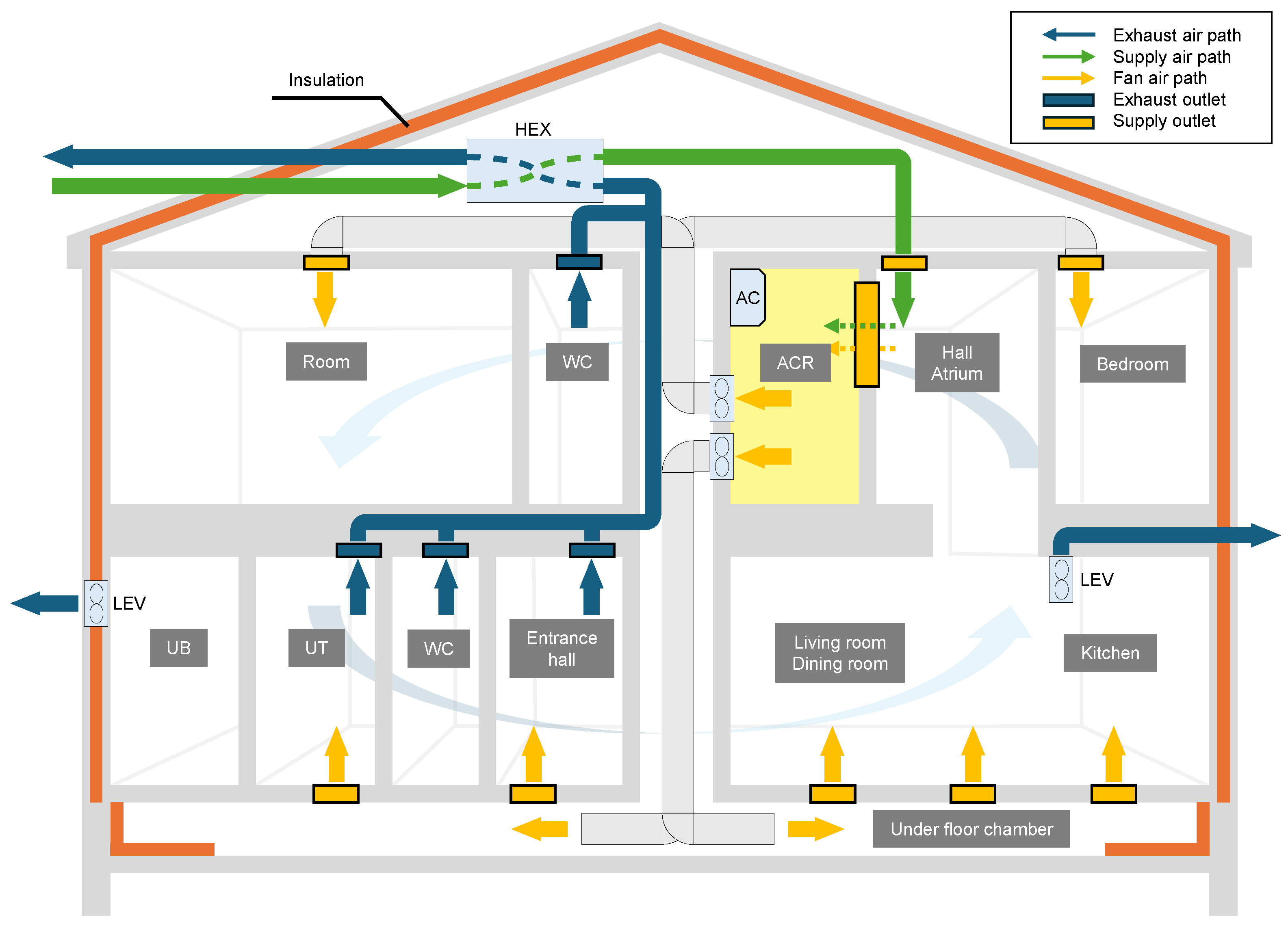
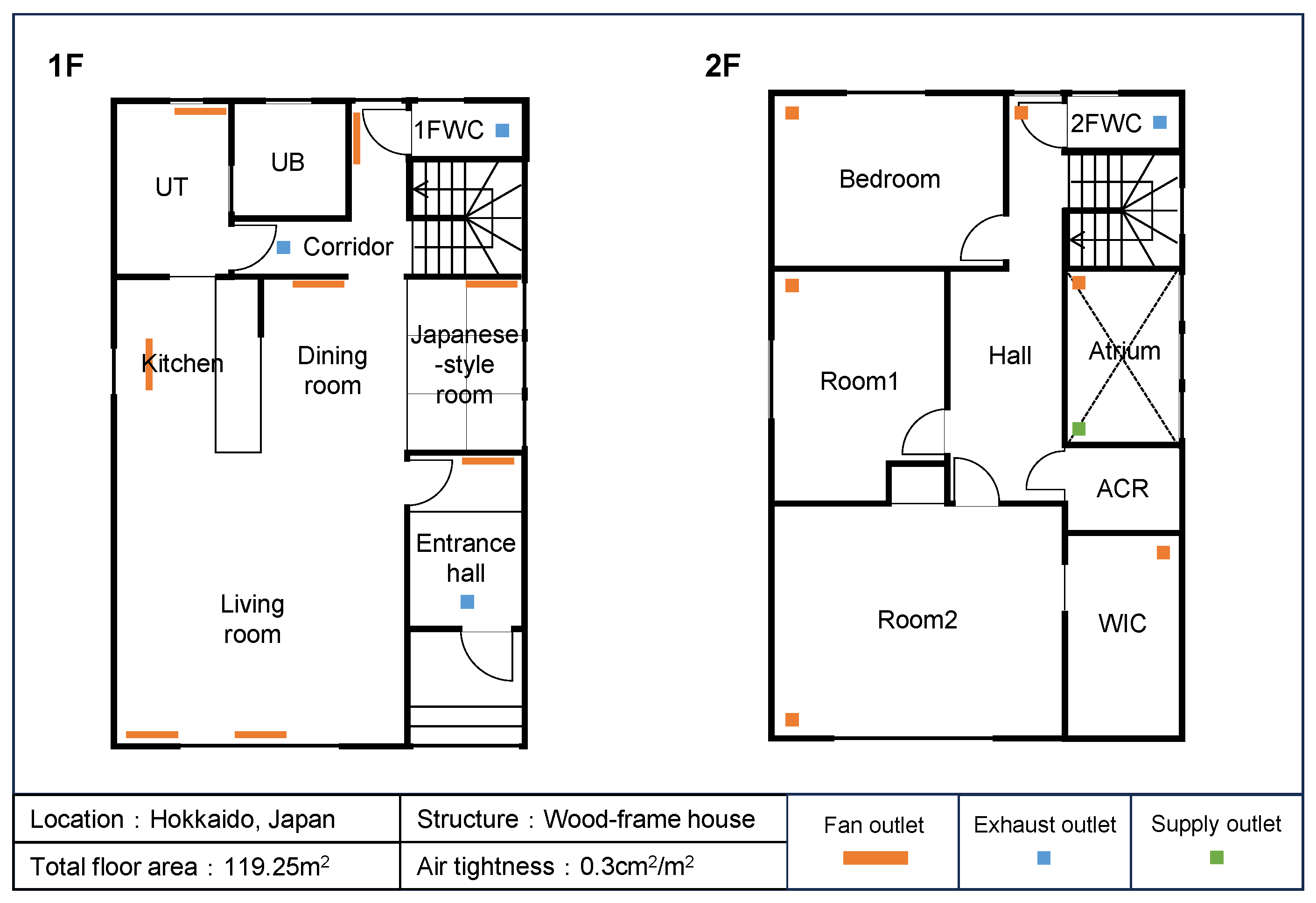
2.1. Overview of the House
2.2. Modeling Methodology
2.2.1. Modeling Procedure
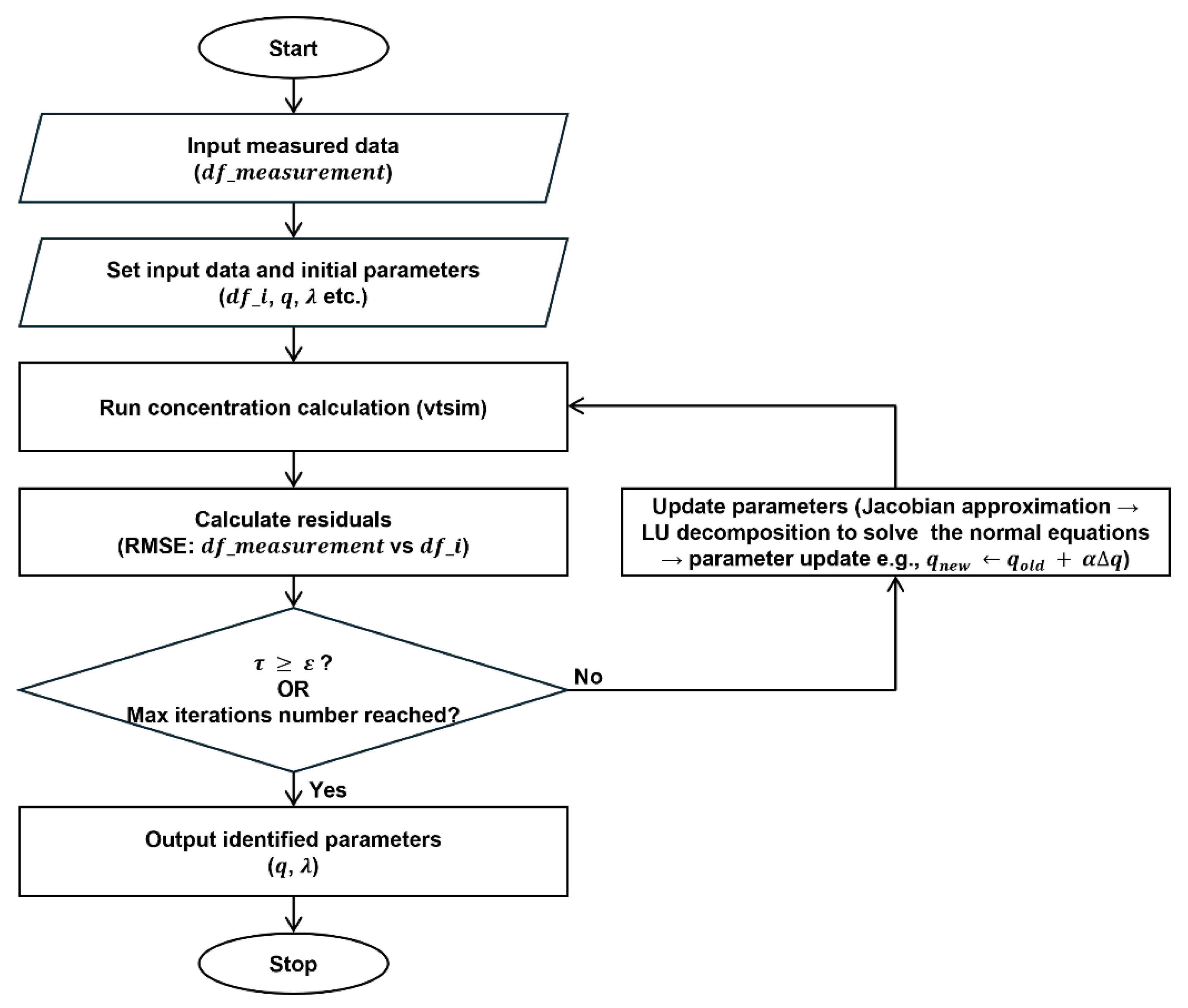
2.2.2. Convergence Calculation Procedure
2.2.3. Input Parameters
2.3. Airflow Measurement Methods
2.4. Measurements of CO2 and Aerosol Dynamics
2.5. Calculation Method for the Exhaled-Air Tracer Concentration
3. Results
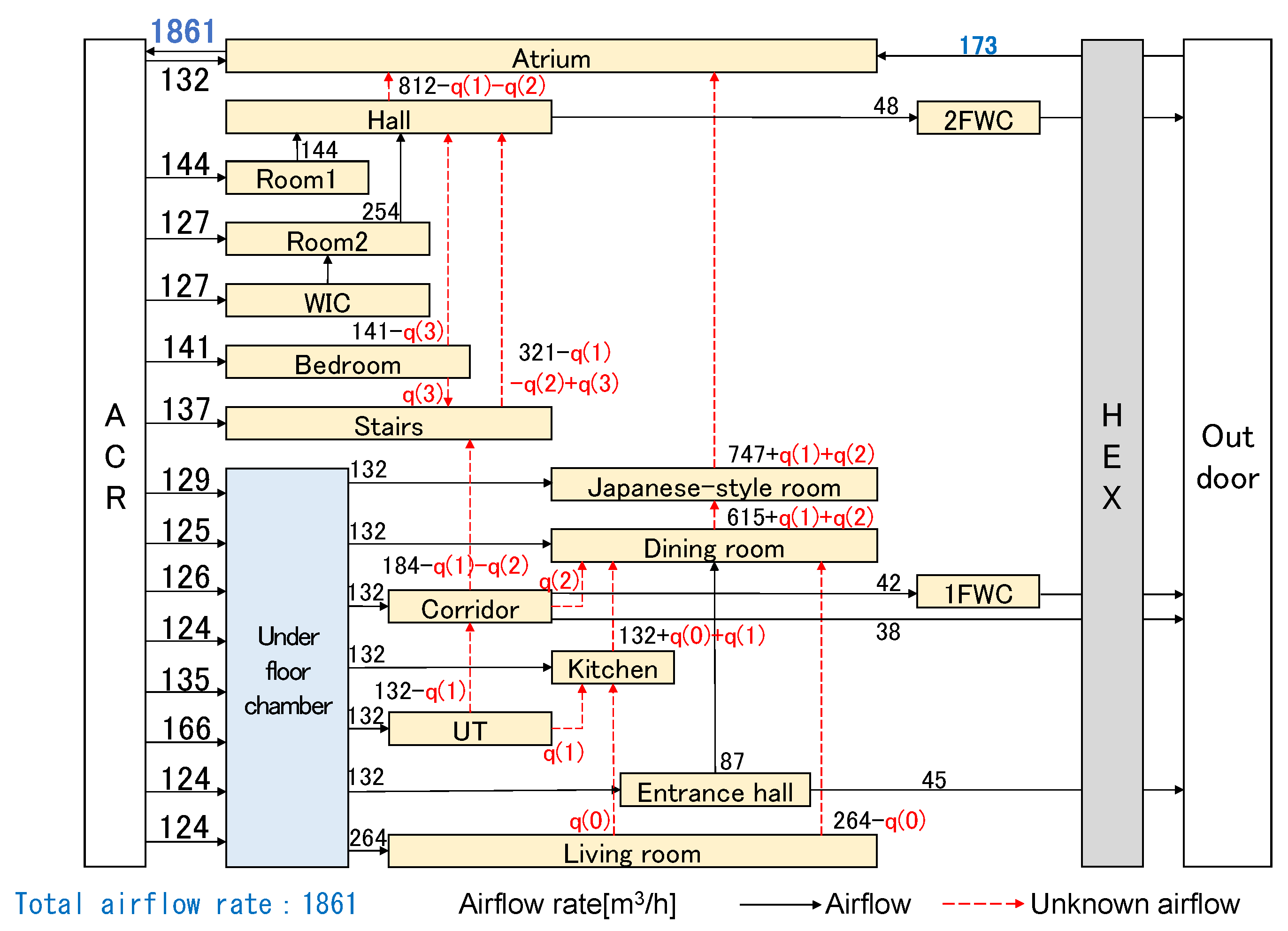
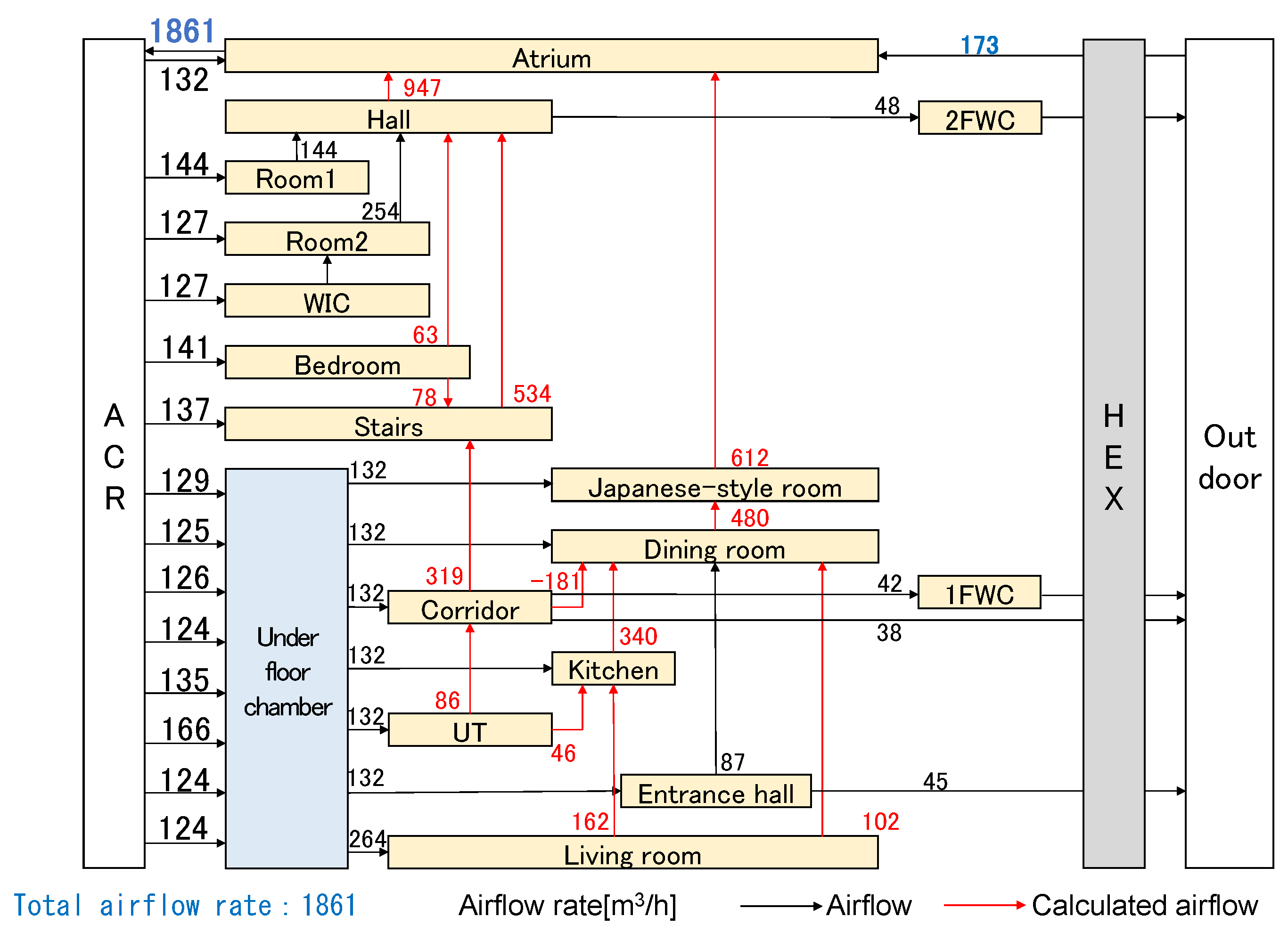
3.1. Results of Airflow Measurements and the Ventilation–Recirculation Network (Step 1)
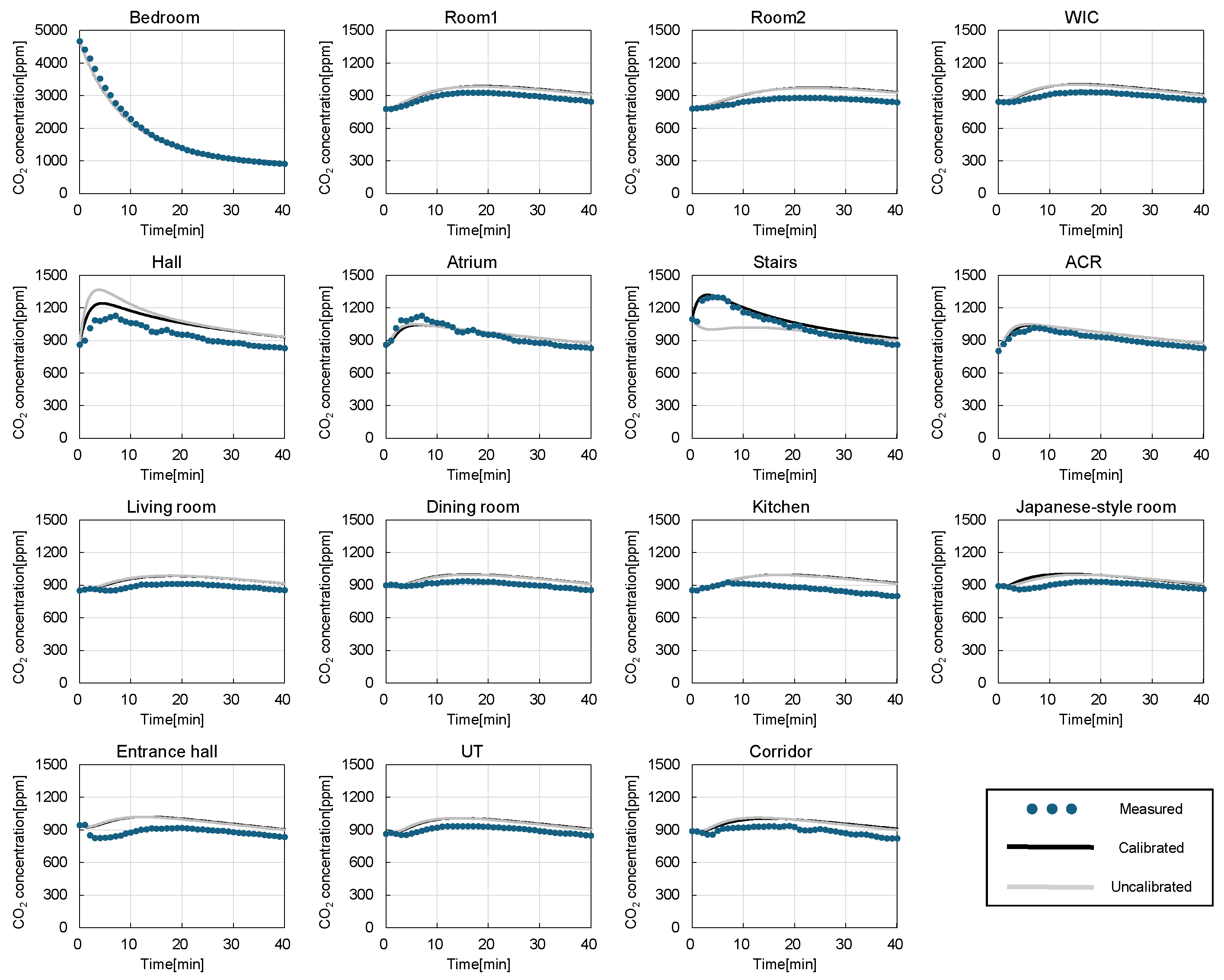
3.2. Identification of Inter-Room Airflow Rates (Step 2)
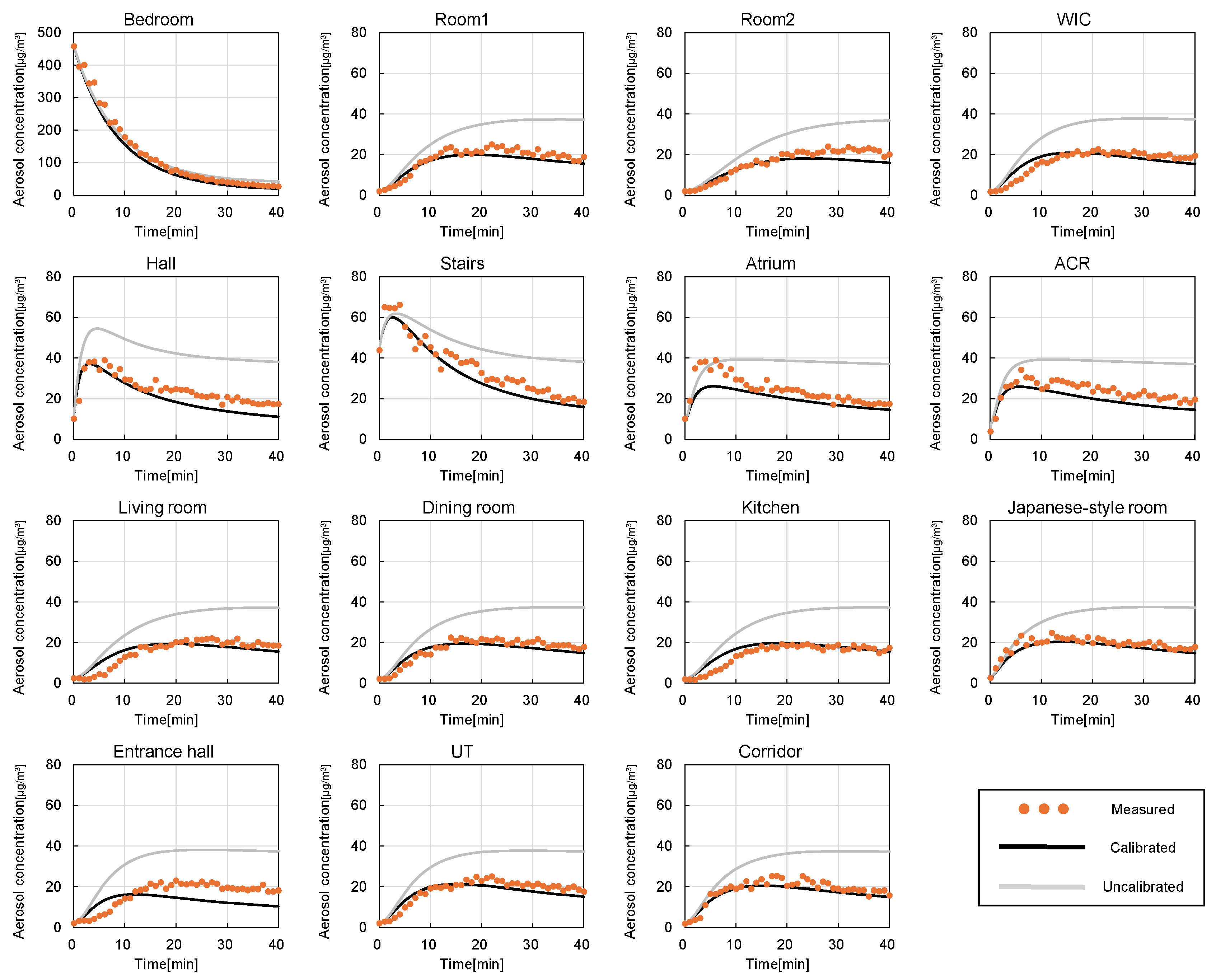
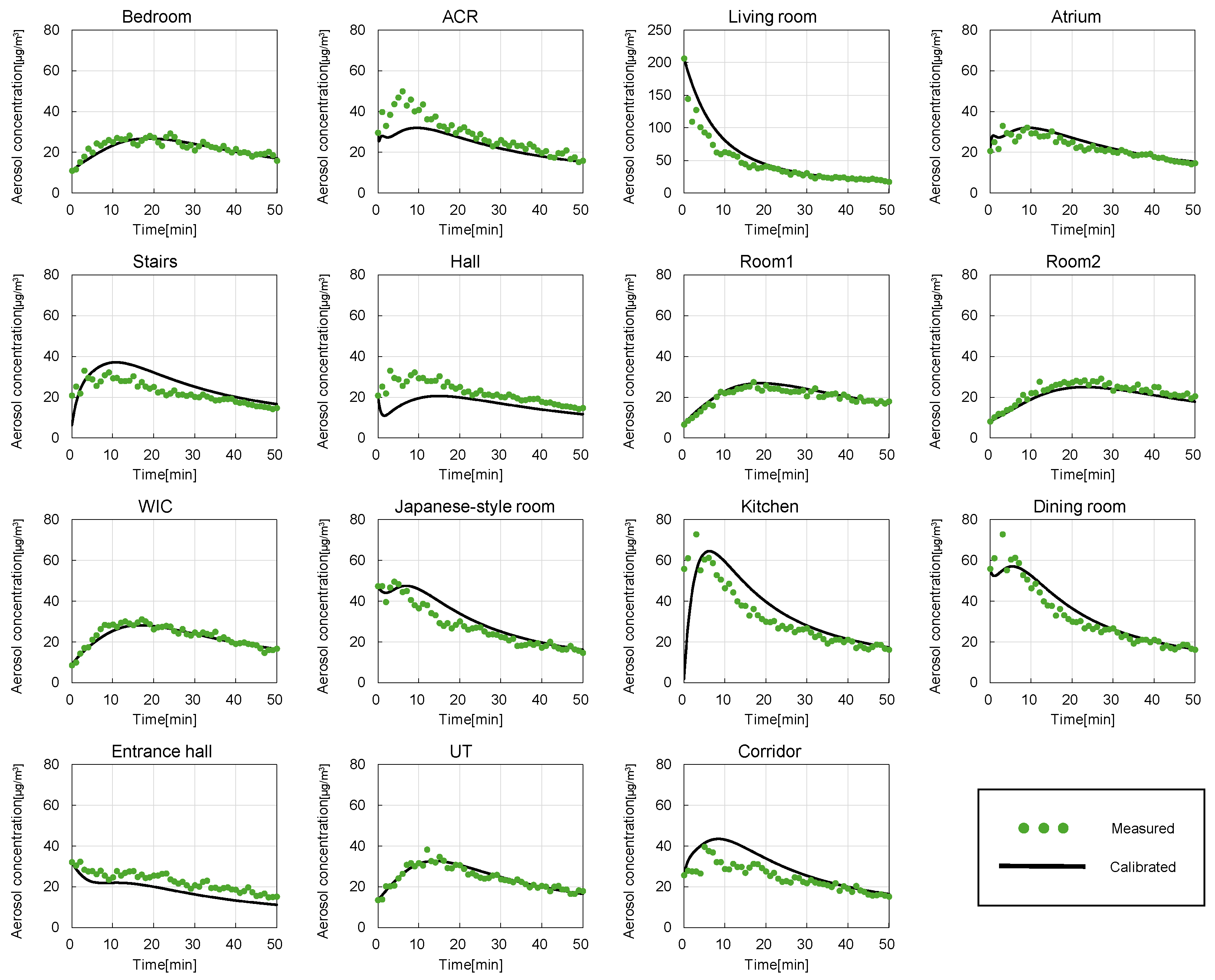
3.3. Identification of the Aerosol Loss Rate (Step 3) and Verification of Model Applicability
3.4. Exhaled-Air Tracer Concentration
4. Discussion
4.1. Dispersion Risk in Recirculating Duct-Type Whole-House Air-Conditioning Systems
4.2. Positioning of the Concentration Index for Relative Evaluation
4.3. Interpretation and Robustness of the Effective Loss Rate
4.4. Mitigation Is Not Elimination: Practical Implications and Limitations
4.5. Limitations and Applicability
5. Conclusions
Author Contributions
Funding
Data Availability Statement
Acknowledgments
Conflicts of Interest
References
- Department of Health and Social Care. New Legal Duty to Self-Isolate Comes into Force Today. 2020. Available online: https://www.gov.uk/government/news/new-legal-duty-to-self-isolate-comes-into-force-today (accessed on 28 October 2025).
- Ministry of Health (Singapore). Promulgation of Regulations Under Infectious Diseases Act [Press Release]. Ministry of Health Singapore. 2020. Available online: https://www.moh.gov.sg/newsroom/promulgation-of-regulations-under-infectious-diseases-act/ (accessed on 28 October 2025).
- New Zealand Government. COVID-19 Public Health Response (Self-Isolation Requirements) Order 2022 [Revoked August 15, 2023]. New Zealand Legislation. 2022. Available online: https://www.legislation.govt.nz/regulation/public/2022/0046/latest/contents.html (accessed on 28 October 2025).
- Ministry of Health, Labour and Welfare (Japan). COVID-19 Q&A: Self-Isolation and Close Contact. Available online: https://www.mhlw.go.jp/stf/covid-19/qa.html (accessed on 28 October 2025).
- Ministry of Health, Labour and Welfare (Japan). Open Data (COVID-19). Available online: https://www.mhlw.go.jp/stf/covid-19/open-data_english.html (accessed on 28 October 2025).
- Madewell, Z.J.; Yang, Y.; Longini, I.M., Jr.; Halloran, M.E.; Dean, N.E. Household transmission of SARS-CoV-2: A systematic review and meta-analysis. JAMA Netw. Open 2020, 3, e2031756. [Google Scholar] [CrossRef]
- Lewis, N.M.; Chu, V.T.; Ye, D.; Conners, E.E.; Gharpure, R.; Laws, R.L.; Reses, H.E.; Freeman, B.D.; Fajans, M.; Rabold, E.M.; et al. Household Transmission of Severe Acute Respiratory Syndrome Coronavirus-2 in the United States. Clin. Infect. Dis. 2020, 73, e1805–e1813. [Google Scholar] [CrossRef]
- McLean, H.Q.; Grijalva, C.G.; Hanson, K.E.; Zhu, Y.; Deyoe, J.E.; Meece, J.K.; Halasa, N.B.; Chappell, J.D.; Mellis, A.M.; Reed, C.; et al. Household Transmission and Clinical Features of SARS-CoV-2 Infections. Pediatrics 2022, 149, e2021054178. [Google Scholar] [CrossRef]
- Ogata, T.; Irie, F.; Ogawa, E.; Ujiie, S.; Seki, A.; Wada, K.; Tanaka, H. Secondary Attack Rate among Non-Spousal Household Contacts of Coronavirus Disease 2019 in Tsuchiura, Japan, August 2020–February 2021. Int. J. Environ. Res. Public Health 2021, 18, 8921. [Google Scholar] [CrossRef]
- Adenaiye, O.O.; Lai, J.; de Mesquita, P.J.B.; Hong, F.; Youssefi, S.; German, J.; Tai, S.H.S.; Albert, B.; Schanz, M.; Weston, S.; et al. Infectious Severe Acute Respiratory Syndrome Coronavirus 2 (SARS-CoV-2) in Exhaled Aerosols and Efficacy of Masks During Early Mild Infection. Clin. Infect. Dis. 2021, 75, e241–e248. [Google Scholar] [CrossRef] [PubMed]
- Morawska, L.; Cao, J. Airborne transmission of SARS-CoV-2: The world should face the reality. Environ. Int. 2020, 139, 105730. [Google Scholar] [CrossRef] [PubMed]
- Correia, G.; Rodrigues, L.; Afonso, M.; Mota, M.; Oliveira, J.; Soares, R.; Tomás, A.L.; Reichel, A.; Silva, P.M.; Costa, J.J.; et al. SARS-CoV-2 air and surface contamination in residential settings. Sci. Rep. 2022, 12, 18058. [Google Scholar] [CrossRef]
- Martinot, M. Standard precautions should include ‘safe ventilation’ to minimise far-afield airborne transmission in health and social care settings. Infect. Dis. Health 2022, 28, 135–137. [Google Scholar] [CrossRef]
- U.S. Environmental Protection Agency. Ventilation and Respiratory Viruses. 2025. Available online: https://www.epa.gov/indoor-air-quality-iaq/ventilation-and-respiratory-viruses (accessed on 28 October 2025).
- Duval, D.; Palmer, J.C.; Tudge, I.; Pearce-Smith, N.; O’Connell, E.; Bennett, A.; Clark, R. Long distance airborne transmission of SARS-CoV-2: Rapid systematic review. BMJ 2022, 377, e068743. [Google Scholar] [CrossRef] [PubMed]
- Ministry of Land, Infrastructure, Transport and Tourism (Japan). Summary of the White Paper on Land, Infrastructure, Transport and Tourism in Japan, 2022. 2022. Available online: https://www.mlit.go.jp/en/statistics/content/001579732.pdf (accessed on 28 October 2025).
- Kawamura, M.; Ozaki, A.; Arima, Y.; Kuma, Y.; Abe, G.; Isoya, R. Indoor thermal environment and the effectiveness of central air-conditioning in a typical Japanese house under future climate. In Proceedings of the ASim Conference 2024: 5th Asia Conference of IBPSA, Osaka, Japan, 8–10 December 2024; pp. 427–434. [Google Scholar] [CrossRef]
- Kishi, T.; Lee, S.; Asano, Y. Adjusting air flow rate for blower fan on central air-conditioning system for residential building: Effect of variable air volume control on thermal environment in a detached house during winter. J. Environ. Eng. Trans. AIJ 2020, 85, 37–44. [Google Scholar] [CrossRef]
- Lee, S.; Kishi, T.; Asano, Y. Applicability of the whole-house air-conditioning system in cold climate district. E3S Web Conf. 2019, 111, 06036. [Google Scholar] [CrossRef]
- ASHRAE. Position Document on Infectious Aerosols. Available online: https://www.ashrae.org/about/position-documents (accessed on 28 October 2025).
- Etheridge, D.W.; Sandberg, M. Building Ventilation: Theory and Measurement; Wiley: Hoboken, NJ, USA, 1996. [Google Scholar]
- Dols, W.S.; Polidoro, B.J. CONTAM User Guide and Program Documentation Version 3.4; NIST Technical Note 1887r1; National Institute of Standards and Technology: Gaithersburg, MD, USA, 2020. [CrossRef]
- Feustel, H.E. COMIS—An international multizone air-flow and contaminant transport model. Energy Build. 1999, 30, 3–18. [Google Scholar] [CrossRef]
- Nazaroff, W.W. Indoor particle dynamics. Indoor Air 2004, 14, 175–183. [Google Scholar] [CrossRef]
- Lai, A.C.K.; Nazaroff, W.W. Modeling Indoor Particle Deposition from Turbulent Flow onto Smooth Surfaces. J. Aerosol Sci. 2000, 31, 463–476. [Google Scholar] [CrossRef]
- Hinds, W.C.; Zhu, Y. Aerosol Technology: Properties, Behavior, and Measurement of Airborne Particles, 2nd ed.; Wiley: Hoboken, NJ, USA, 1999. [Google Scholar]
- Azimi, P.; Stephens, B. HVAC filtration for controlling infectious airborne disease transmission in indoor environments: Predicting risk reductions and operational costs. Build. Environ. 2013, 70, 150–160. [Google Scholar] [CrossRef]
- Thatcher, T.L.; Lai, C.K.A.; Moreno-Jackson, R.; Sextro, R.G.; Nazaroff, W. Effects of room furnishings and air speed on particle deposition rates indoors. Atmos. Environ. 2002, 36, 1811–1819. [Google Scholar] [CrossRef]
- Miller, S.L.; Leiserson, K.; Nazaroff, W.W. Nonlinear Least-Squares Minimization Applied to Tracer Gas Decay for Determining Airflow Rates in a Two-Zone Building. Indoor Air 1997, 7, 64–75. [Google Scholar] [CrossRef]
- Okuyama, H.; Onishi, Y.; Tanabe, S.-I.; Kashihara, S. Statistical data analysis method for multi-zonal airflow measurement using multiple kinds of perfluorocarbon tracer gas. Build. Environ. 2009, 44, 546–557. [Google Scholar] [CrossRef]
- Townsend, A.; Rudd, A.; Lstiburek, J. A calibrated multi-zone airflow model for extension of ventilation system tracer gas testing. ASHRAE Trans. 2009, 115, 924–942. [Google Scholar]
- Howard-Reeds, C.; Wallace, L.A.; Emmerich, S.J. Effect of ventilation systems and air filters on decay rates of particles produced by indoor sources in an occupied townhouse. Atmos. Environ. 2003, 37, 5295–5306. [Google Scholar] [CrossRef]
- He, C.; Morawska, L.; Gilbert, D. Particle deposition rates in residential houses. Atmos. Environ. 2005, 39, 3891–3899. [Google Scholar] [CrossRef]
- GitHub. Iguchi Lab Vtsim: Text.md. Available online: https://github.com/iguchi-lab/vtsim/blob/main/text.md (accessed on 28 October 2025).
- Peng, Z.; Jimenez, J.L. Exhaled CO2 as a COVID-19 Infection Risk Proxy for Different Indoor Environments and Activities. Environ. Sci. Technol. Lett. 2021, 8, 392–397. [Google Scholar] [CrossRef]
- Riley, E.C.; Murphy, G.; Riley, R.L. Airborne spread of measles in a suburban elementary school. Am. J. Epidemiol. 1978, 107, 421–432. [Google Scholar] [CrossRef]
- Li, Y.; Qian, H.; Hang, J.; Chen, X.; Cheng, P.; Ling, H.; Wang, S.; Liang, P.; Li, J.; Xiao, S.; et al. Probable airborne transmission of SARS-CoV-2 in a poorly ventilated restaurant. Build. Environ. 2021, 196, 107788. [Google Scholar] [CrossRef] [PubMed]
- Noakes, C.J.; Sleigh, P.A. Mathematical models for assessing the role of airflow on the risk of airborne infection in hospital wards. J. R. Soc. Interface 2009, 6, S791–S800. [Google Scholar] [CrossRef]
- Buonanno, G.; Stabile, L.; Morawska, L. Estimation of airborne viral emission: Quanta emission rate of SARS-CoV-2 for infection risk assessment. Environ. Int. 2020, 141, 105794. [Google Scholar] [CrossRef]
- Lai, A.C.K. Particle deposition indoors: A review. Indoor Air 2002, 12, 211–214. [Google Scholar] [CrossRef]
- Okuyama, K.; Kousaka, Y.; Yoshida, T. Behavior of aerosols undergoing brownian coagulation, brownian diffusion and gravitational settling in a closed chamber. J. Chem. Eng. Jpn. 1976, 9, 140–146. [Google Scholar] [CrossRef][Green Version]
- Kim, J.; Mulholland, G.; Kukuck, S.; Pui, D. Slip correction measurements of certified PSL nanoparticles using a nanometer differential mobility analyzer (nano-DMA) for Knudsen number from 0.5 to 83. J. Res. Natl. Inst. Stand. Technol. 2005, 110, 31–54. [Google Scholar] [CrossRef] [PubMed]
- Sherman, M.H. Tracer-gas techniques for measuring ventilation in a single zone. Build. Environ. 1990, 25, 365–374. [Google Scholar] [CrossRef]
- Watty Co., Ltd. HYPM Wireless PM Sensor—Specifications. 2019. Available online: https://watty.co.jp/wp-content/uploads/2019/06/HYPM.pdf (accessed on 25 December 2025).
- Otsuka Pharmaceutical Factory, Inc. Oral Rehydration Solution OS-1 Series—Nutrition Facts (per 100 mL). Available online: https://www.os-1.jp/en/ (accessed on 25 December 2025).
- Yanagi, U.; Fukushima, N.; Nagai, H.; Ye, H.; Kano, M. Bioaerosol Sensor for In Situ Measurement: Real-Time Measurement of Bioaerosol Particles in a Real Environment and Demonstration of the Effectiveness of Air Purifiers to Reduce Bioaerosol Particle Concentrations at Hot Spots. Atmosphere 2023, 14, 1656. [Google Scholar] [CrossRef]
- Beimdiek, J.; Schmid, H.-J. Evaluation of Surrogate Aerosol Experiments to Predict Spreading and Removal of Virus-Laden Aerosols. Atmosphere 2024, 15, 305. [Google Scholar] [CrossRef]
- Zaatari, M.; Novoselac, A.; Siegel, J. The relationship between filter pressure drop, indoor air quality, and energy consumption in rooftop HVAC units. Build. Environ. 2014, 73, 151–161. [Google Scholar] [CrossRef]
- Rudnick, S.N.; Milton, D.K. Risk of indoor airborne infection transmission estimated from carbon dioxide concentration. Indoor Air 2003, 13, 237–245. [Google Scholar] [CrossRef] [PubMed]
- Saad, M.A.; Hassan, A.; Hanafy, A.; Salem, M.; William, M. Assessing HVAC airflow modulation strategies to reduce short-term aerosol transmission in office environments. Sci. Rep. 2025, 15, 23911. [Google Scholar] [CrossRef]
- Chahardoli, S.; Tak, M.S.N.; Lesan, M.; Mousavi, E.; Bhattacharya, A. Analysis of the Effects of a Swing Door Opening on Indoor Airflow Fields—An Experimental Study. Buildings 2025, 16, 54. [Google Scholar] [CrossRef]
- NISTIR 5559; Indoor Air Quality Impacts of Residential HVAC Systems: Phase II. A Report: Baseline and Preliminary Simulations. National Institute of Standards and Technology: Washington, DC, USA, 1995. Available online: https://nvlpubs.nist.gov/nistpubs/Legacy/IR/nistir5559.pdf (accessed on 28 October 2025).
- Siegel, J. Primary and secondary consequences of indoor air cleaners. Indoor Air 2016, 26, 88–96. [Google Scholar] [CrossRef] [PubMed]
- Pantelic, J.; Tham, K.W. Adequacy of air change rate as the sole indicator of an air distribution system’s effectiveness to mitigate airborne infectious disease transmission caused by a cough release in the room with overhead mixing ventilation: A case study. HVAC&R Res. 2013, 19, 947–961. [Google Scholar] [CrossRef]
- Du, L.; Batterman, S.; Godwin, C.; Chin, J.-Y.; Parker, E.; Breen, M.; Brakefield, W.; Robins, T.; Lewis, T. Air Change Rates and Interzonal Flows in Residences, and the Need for Multi-Zone Models for Exposure and Health Analyses. Int. J. Environ. Res. Public Health 2012, 9, 4639–4661. [Google Scholar] [CrossRef]
- Thornburg, J.W.; Rodes, C.E.; Lawless, P.A.; Stevens, C.D.; Williams, R.W. A pilot study of the influence of residential HAC duty cycle on indoor air quality. Atmos. Environ. 2004, 38, 1567–1577. [Google Scholar] [CrossRef]
- Walker, I.S.; Dickerhoff, D.J.; Faulkner, D.; Turner, W.J.N. System Effects of High Efficiency Filters in Homes. Lawrence Berkeley National Laboratory; 2013. LBNL-6144E. Available online: https://eta-publications.lbl.gov/sites/default/files/lbnl-6144e.pdf (accessed on 25 December 2025).
- Nassif, N. The impact of air filter pressure drop on the performance of typical air-conditioning systems. Build. Simul. 2012, 5, 345–350. [Google Scholar] [CrossRef]
- Stephens, B.; Novoselac, A.; Siegel, J.A. The Effects of Filtration on Pressure Drop and Energy Consumption in Residential HVAC Systems (RP-1299). HVAC&R Res. 2010, 16, 273–294. [Google Scholar] [CrossRef]
- Ward, M.; Siegel, J.A. Modeling filter bypass: Impact on filter efficiency. In Proceedings of the ASHRAE Winter Conference, Orlando, FL, USA, 5–9 February 2005. [Google Scholar]



| Approach Category | Primary Data Used | Identify Inter-Room Airflow () from Measurements | Identify Effective Aerosol Loss () from Measurements | Explicit Representation of Recirculating Airflow and Interzonal Flows | Reuse Identified Parameters for Scenario Comparison | Representative References |
|---|---|---|---|---|---|---|
| Forward multizone simulation (prescribed parameters) | Nominal/design inputs | - | - | ± | ✓ | [21,22,23] |
| CO2-based exposure proxy (rebreathed CO2/CO2 proxy) | CO2 only | - (proxy only) | - | - | ± | [35] |
| Inverse multizone using tracer time series (airflow identification) | CO2/tracer time series | ✓ | - | ± | ± | [29,30,31] |
| Particle decay/deposition studies (residential PM dynamics) | PM time series | - | ✓ (effective decay) | - | - | [32,33] |
| Multizone with prescribed or filter efficiency | Mixed (model + assumed removal) | ± | - (assumed) | ± | ✓ | [27,28] |
| This study (vtsim-based, measurement-informed workflow) | CO2 + PM time series + operating modes | ✓ | ✓ (effective ) | ✓ | ✓ | This study, [34] |
| Category | Item | Setting/Value | Notes |
|---|---|---|---|
| Ventilation (outdoor air) | HEX | AVH-95 | Operated at level 5 (continuous) |
| SA | 173 m3/h | SA was supplied to the atrium | |
| EA | 173 m3/h | EA was exhausted from 1F WC, 2F WC, corridor, and entrance hall | |
| Whole-house recirculation | Air-distribution fans DC fan | FY-27JDS | DC fans were installed in the ACR |
| Fan setting | Low (continuous) | Three speed modes (High/Medium/Low) | |
| Total recirculating airflow | 1861 m3/h (measured, low setting) | Reported total circulation airflow at weak setting | |
| Rated airflow (catalog) | FY-27JD8/83 (Panasonic (Osaka, Japan)): L/M/H = 100/200/305 m3/h | Catalog/reference values | |
| Opening | Interior door | All closed | Pass/undercut exists |
| Windows | All closed | - | |
| Airtightness/leakage | Infiltration/exfiltration | Neglected (set to 0) | Explicit modeling assumption for the network model. |
| Airtightness reference (C-value) | C = 0.3 cm2/m2 (after completion) | reference values |
| Description | Identified Parameter | Output Model | |
|---|---|---|---|
| Step 1 | Input of network data (Node: volume, Connection: path and airflow). | - | Model 1 |
| Step 2 | Unknown inter-room airflow rates were identified by calibrating the model to measured CO2 concentration dynamics. | Inter-room airflow rate | Model 2 |
| Step 3 | The aerosol loss rate was identified by calibrating the model to measured aerosol concentration dynamics. | Aerosol loss rate | Model 3 |
| Category | Parameter | Symbol/Setting | Unit | Description | |
|---|---|---|---|---|---|
| Node settings (sn) | Concentration flag | (0: none, 1: calc, 2: fixed) | - | Specifies whether concentration is calculated or fixed | |
| Concentration | m3/m3 | μg/m3 | Initial or fixed concentration | ||
| Room volume | m3 | Volume of each zone | |||
| Source Strength | m3/s | μg/s | Release rate from dust source | ||
| Aerosol loss rate | 1/s | Represents particle loss (deposition/removal) | |||
| Ventilation network (vn) | Flow path | node1- > node2 | - | Direction of airflow | |
| Airflow rate | vol | m3/s | Supply/exhaust airflow rate through each path | ||
| Others | Dust source | dust source | m3/s | μg/s | Node and release rate of dust source |
| Air cleaner | air cleaner | - | Target path for removal and effi-ciency |
| Room | Aerosol Loss Rate [1/s] |
|---|---|
| ACR | 0.0000018 |
| Living room | 0.0000017 |
| Bedroom | 0.0000018 |
| Room 1 | 0.0000018 |
| Room 2 | 0.0000018 |
| Japanese-style room | 0.0000017 |
| Source Room | Index | Before Calibration | After Calibration |
|---|---|---|---|
| Bedroom | CO2 [ppm] | 85 | 75 |
| Aerosol [μg/m3] | 14.4 | 5.6 | |
| Living room | Aerosol [μg/m3] | - | 6.4 |
| Room | Case 1 [ppm] | Bounds | Case 2 [ppm] | Bounds | Reduction (Relative to Case 1) [%] |
|---|---|---|---|---|---|
| ACR | 402.1 | 361.9–442.3 (±10%) | 58.6 | 48.6–68.6 (±10%) | 85.4 |
| Living room | 401.5 | 361.4–441.7 (±10%) | 58.5 | 48.5–68.5 (±10%) | 85.4 |
| Dining room | 385.1 | 346.6–423.6 (±10%) | 56.1 | 46.1–66.1 (±10%) | 85.4 |
| Kitchen | 397.1 | 357.4–436.8 (±10%) | 57.9 | 47.9–67.9 (±10%) | 85.4 |
| Room 1 | 401.4 | 361.3–441.5 (±10%) | 58.5 | 48.5–68.5 (±10%) | 85.4 |
| Room 2 | 401.4 | 361.0–441.2 (±10%) | 58.4 | 48.4–68.4 (±10%) | 85.5 |
| Bedroom | 3020.8 | 2718.7–3322.9 (±10%) | 2683.8 | 2415.4–2952.2 (±10%) | 11.2 |
Disclaimer/Publisher’s Note: The statements, opinions and data contained in all publications are solely those of the individual author(s) and contributor(s) and not of MDPI and/or the editor(s). MDPI and/or the editor(s) disclaim responsibility for any injury to people or property resulting from any ideas, methods, instructions or products referred to in the content. |
© 2026 by the authors. Licensee MDPI, Basel, Switzerland. This article is an open access article distributed under the terms and conditions of the Creative Commons Attribution (CC BY) license.
Share and Cite
Katsuki, A.; Kikuta, K.; Tanaka, Y.; Iguchi, M.; Hayashi, M. Relative Evaluation Approach for Cross-Room Exposure in a Detached House Using a Measurement-Informed Multizone Model. Buildings 2026, 16, 583. https://doi.org/10.3390/buildings16030583
Katsuki A, Kikuta K, Tanaka Y, Iguchi M, Hayashi M. Relative Evaluation Approach for Cross-Room Exposure in a Detached House Using a Measurement-Informed Multizone Model. Buildings. 2026; 16(3):583. https://doi.org/10.3390/buildings16030583
Chicago/Turabian StyleKatsuki, Akihiro, Koki Kikuta, Yu Tanaka, Masato Iguchi, and Motoya Hayashi. 2026. "Relative Evaluation Approach for Cross-Room Exposure in a Detached House Using a Measurement-Informed Multizone Model" Buildings 16, no. 3: 583. https://doi.org/10.3390/buildings16030583
APA StyleKatsuki, A., Kikuta, K., Tanaka, Y., Iguchi, M., & Hayashi, M. (2026). Relative Evaluation Approach for Cross-Room Exposure in a Detached House Using a Measurement-Informed Multizone Model. Buildings, 16(3), 583. https://doi.org/10.3390/buildings16030583