Research on Heat and Moisture Transfer Performance and Annual Energy Consumption of Full-Size Rammed Earth Buildings

Abstract
1. Introduction
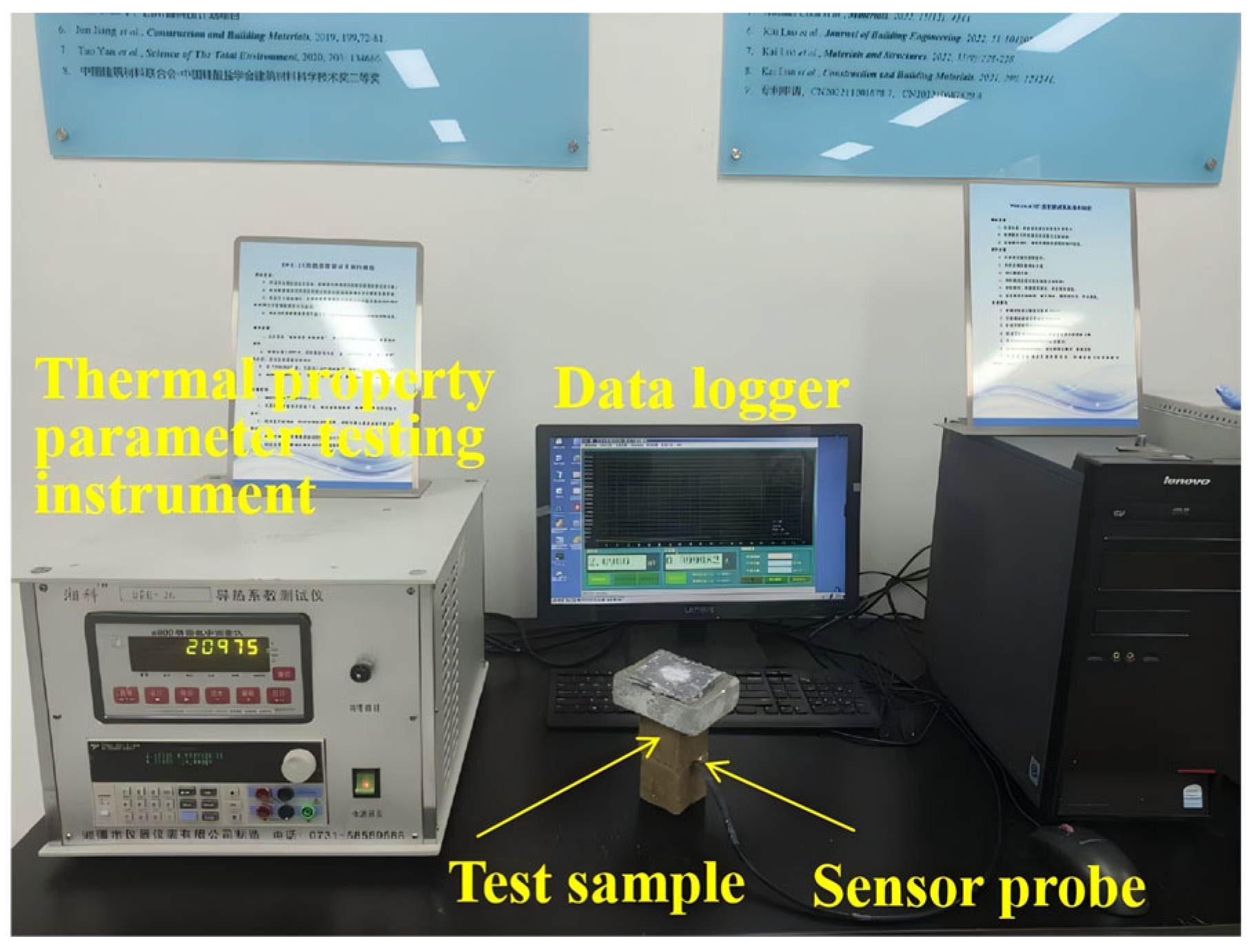
2. Thermal Physical Property Parameter Experiment
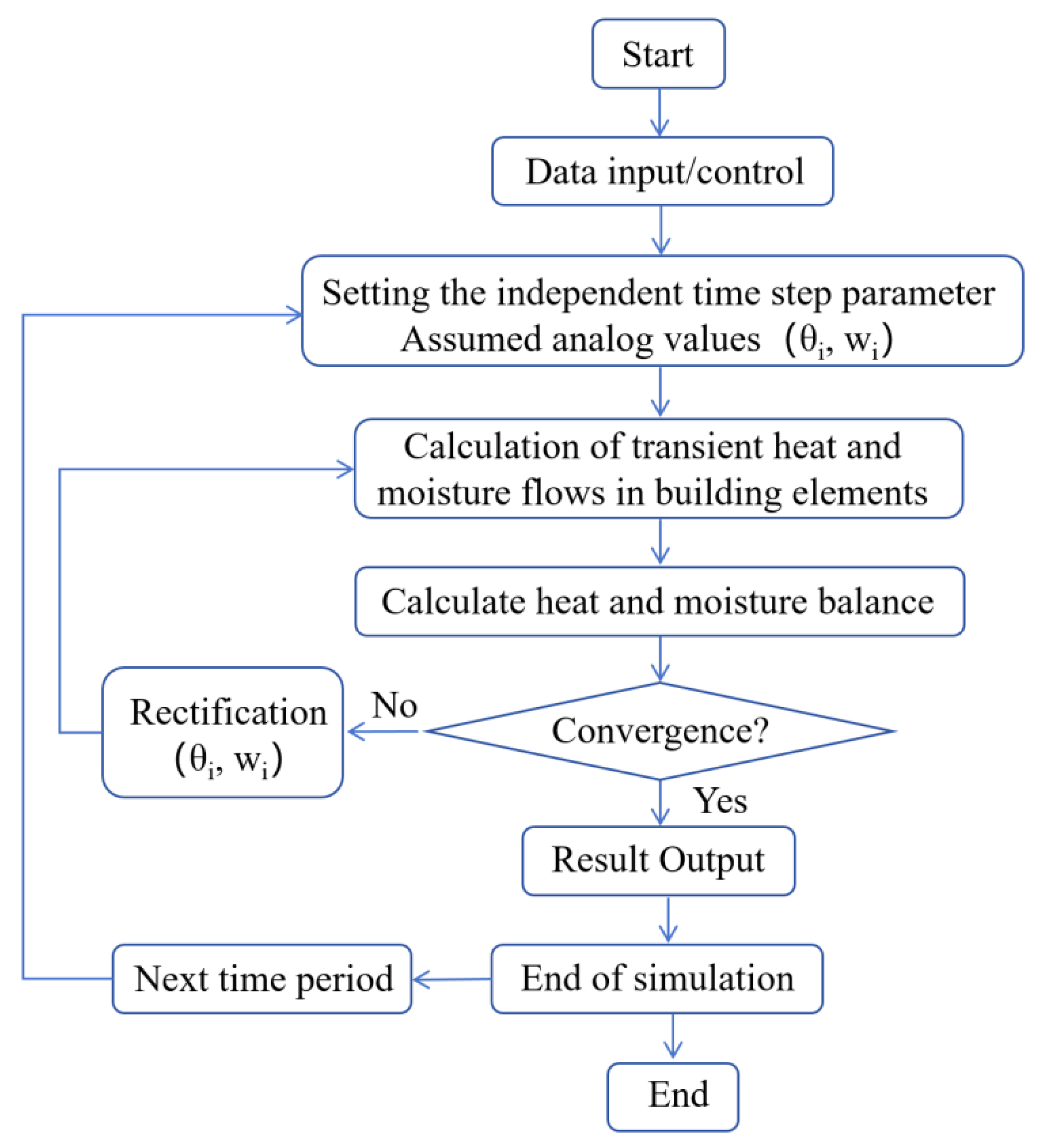
3. Mathematical Model
4. Simulation Parameters
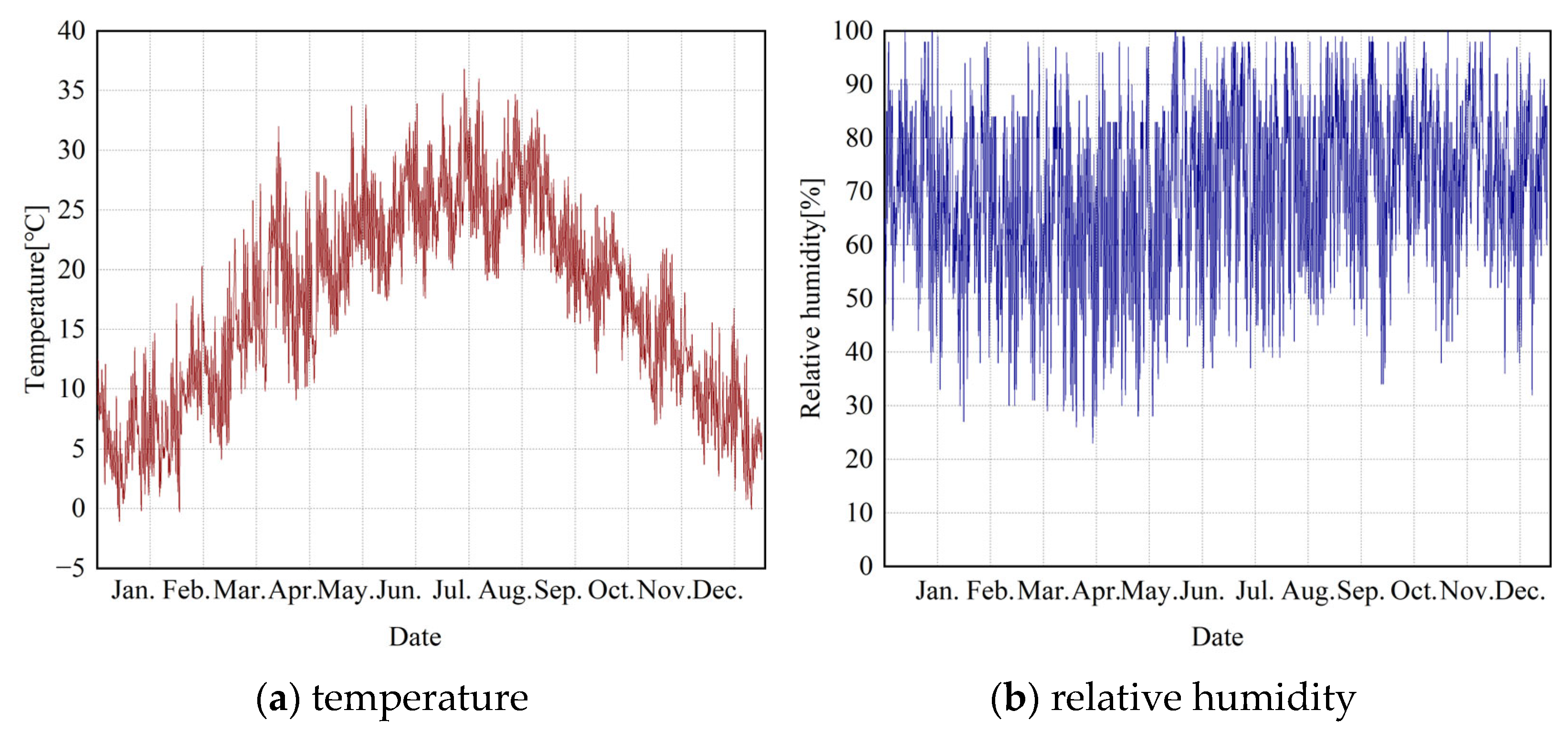
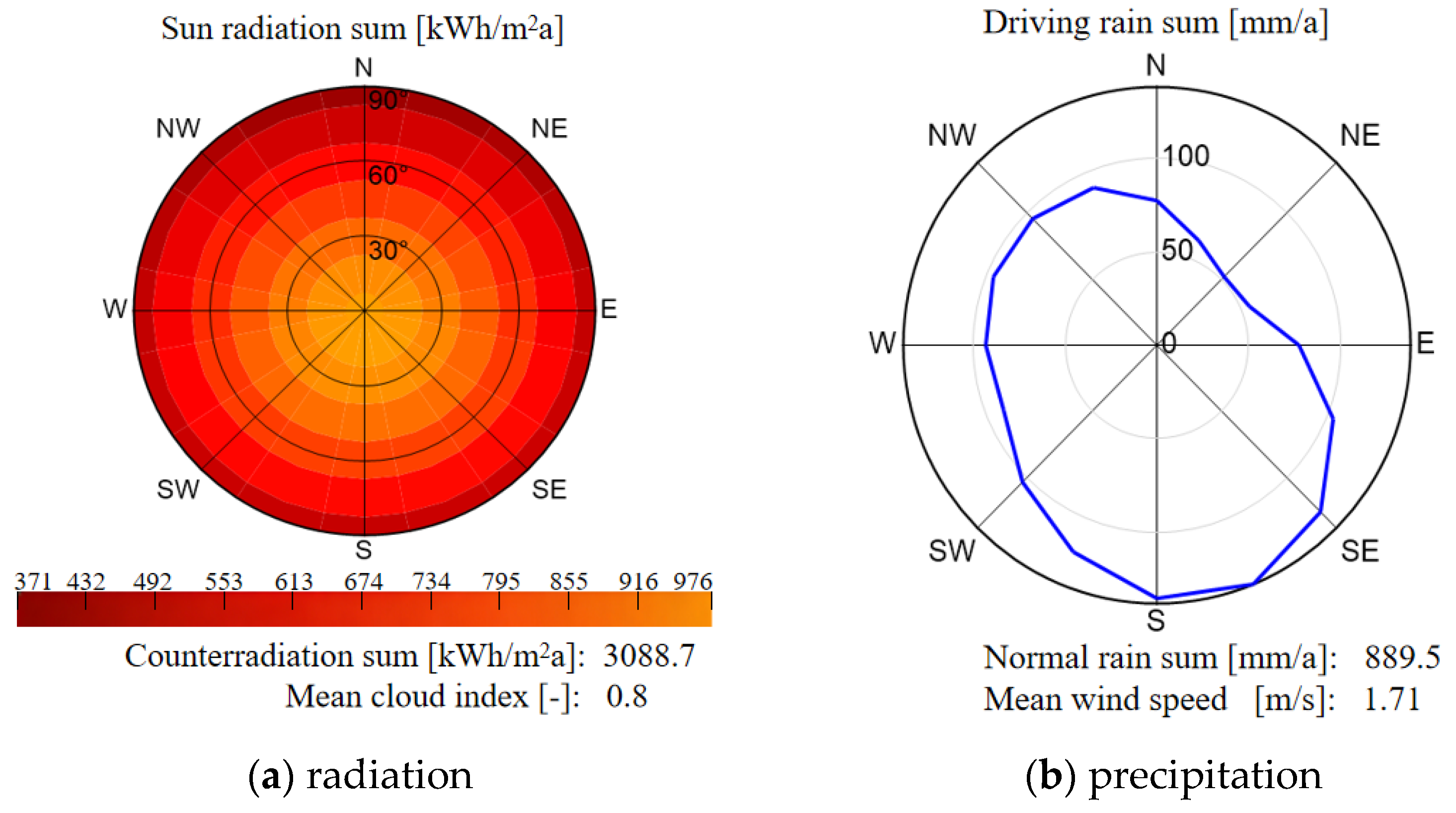
4.1. Meteorological Parameters
4.2. Geometric Dimensions and Material Parameters of Rammed Earth Buildings
4.3. Indoor Load and HVAC
- (1)
- Indoor load
- (2)
- Indoor HVAC
5. Model Validation
6. Results and Discussion
6.1. Heat and Moisture Transfer by Walls
6.2. Annual Energy Consumption for Heating and Cooling
6.3. Monthly Heat Flow
6.4. Effects of Wall Thickness on Energy Consumption by Buildings
7. Conclusions
- (1)
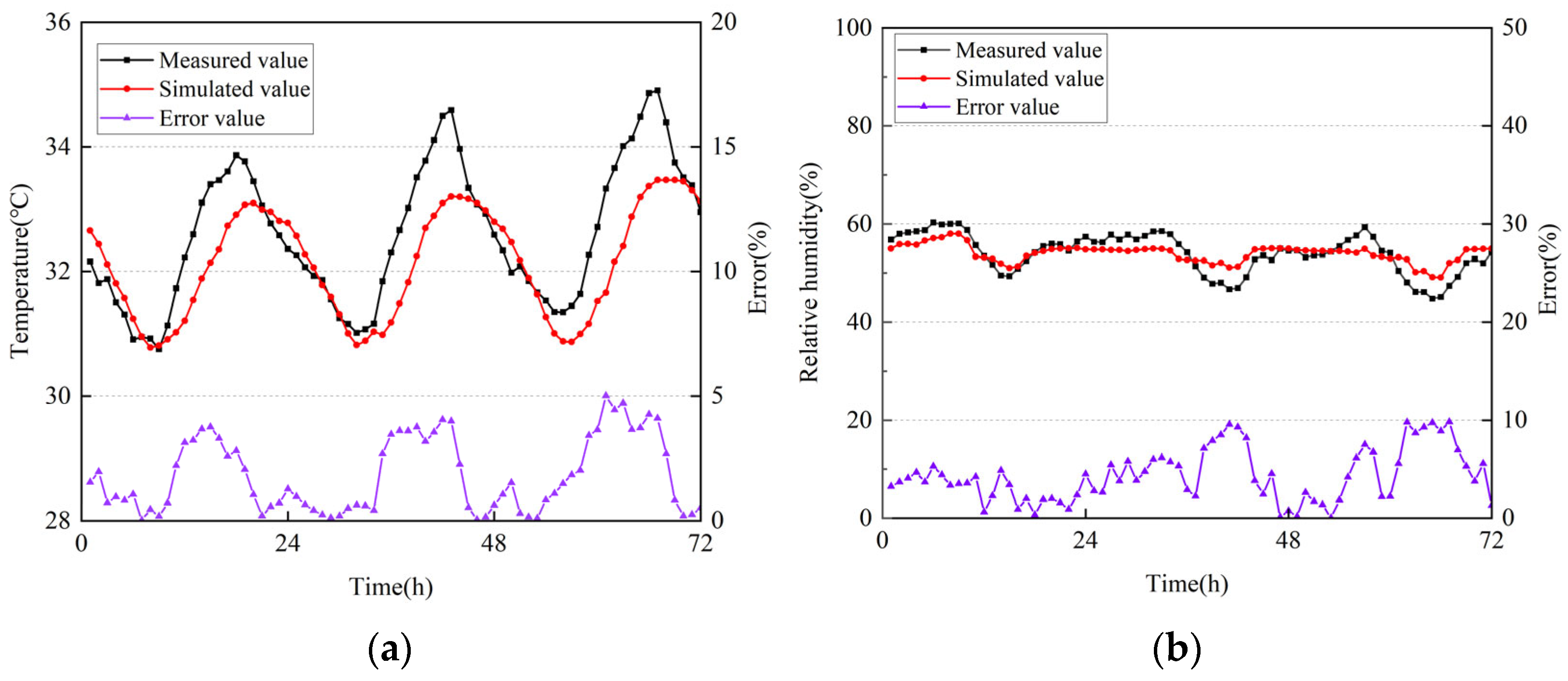
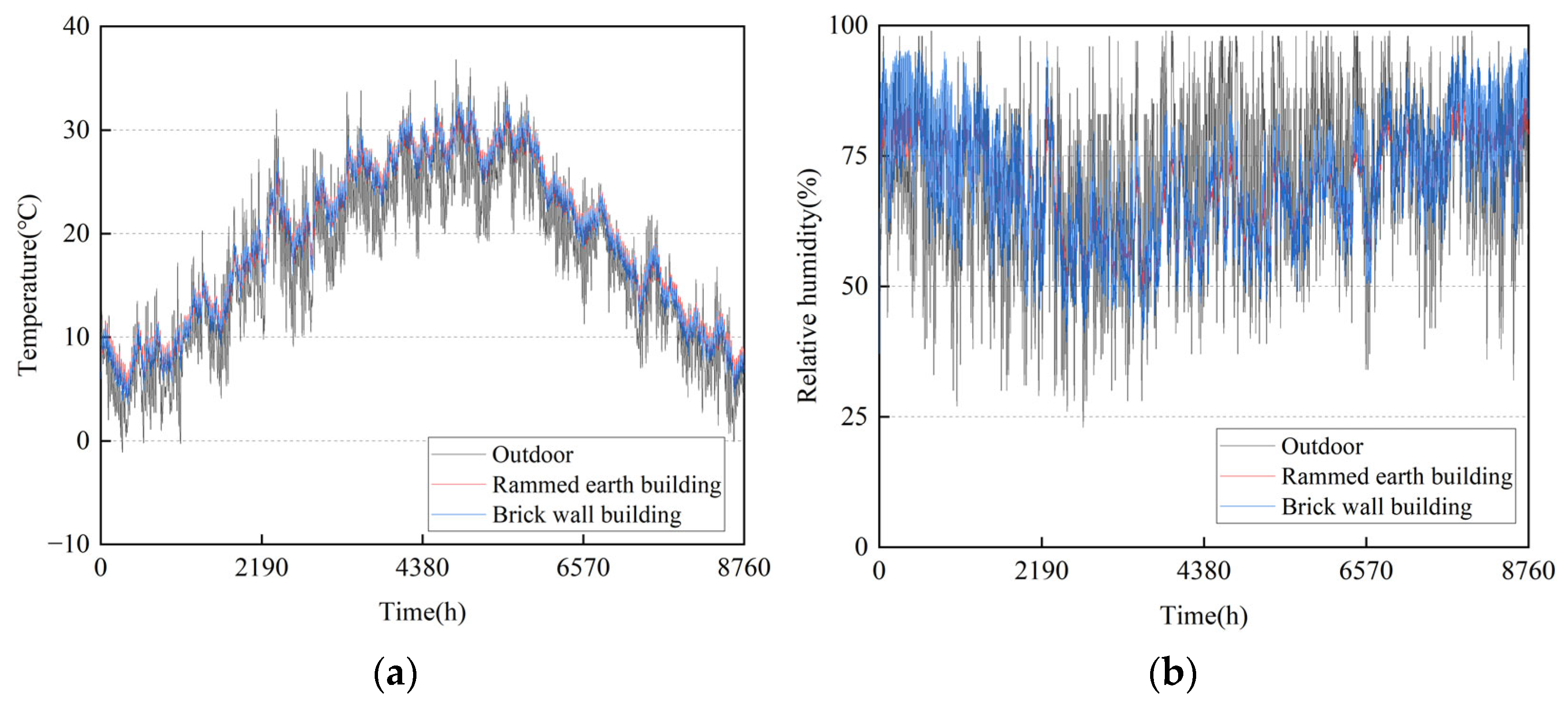
- Under indoor personnel load conditions without air conditioning, rammed earth buildings exhibited superior hygrothermal performance compared with brick buildings. Specifically, the minimum and maximum indoor temperatures were 0.7 °C higher and 0.4 °C lower, respectively, in rammed earth buildings. The annual average indoor temperature reached 19.3 °C, slightly exceeding that of brick buildings. In terms of humidity, the rammed earth buildings demonstrated an 11.4% higher minimum and 9.6% lower maximum indoor relative humidity, with an annual average of 69.2%, which is marginally lower than that in brick buildings. The dynamic simulation results confirmed that rammed earth buildings maintained a more stable indoor hygrothermal environment. Overall, the warmer and drier indoor conditions provided by rammed earth contributed to improved thermal comfort throughout the year.
- (2)
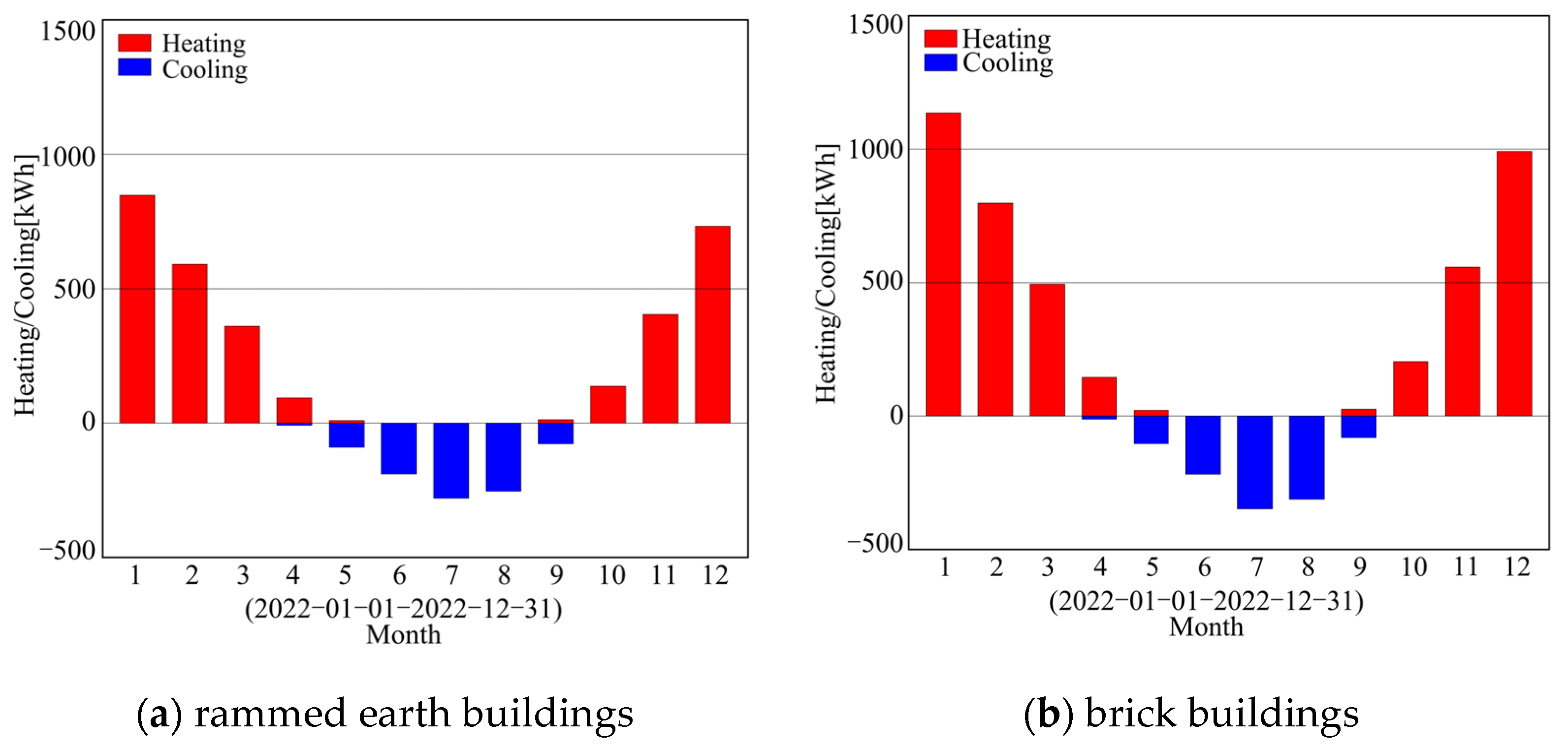
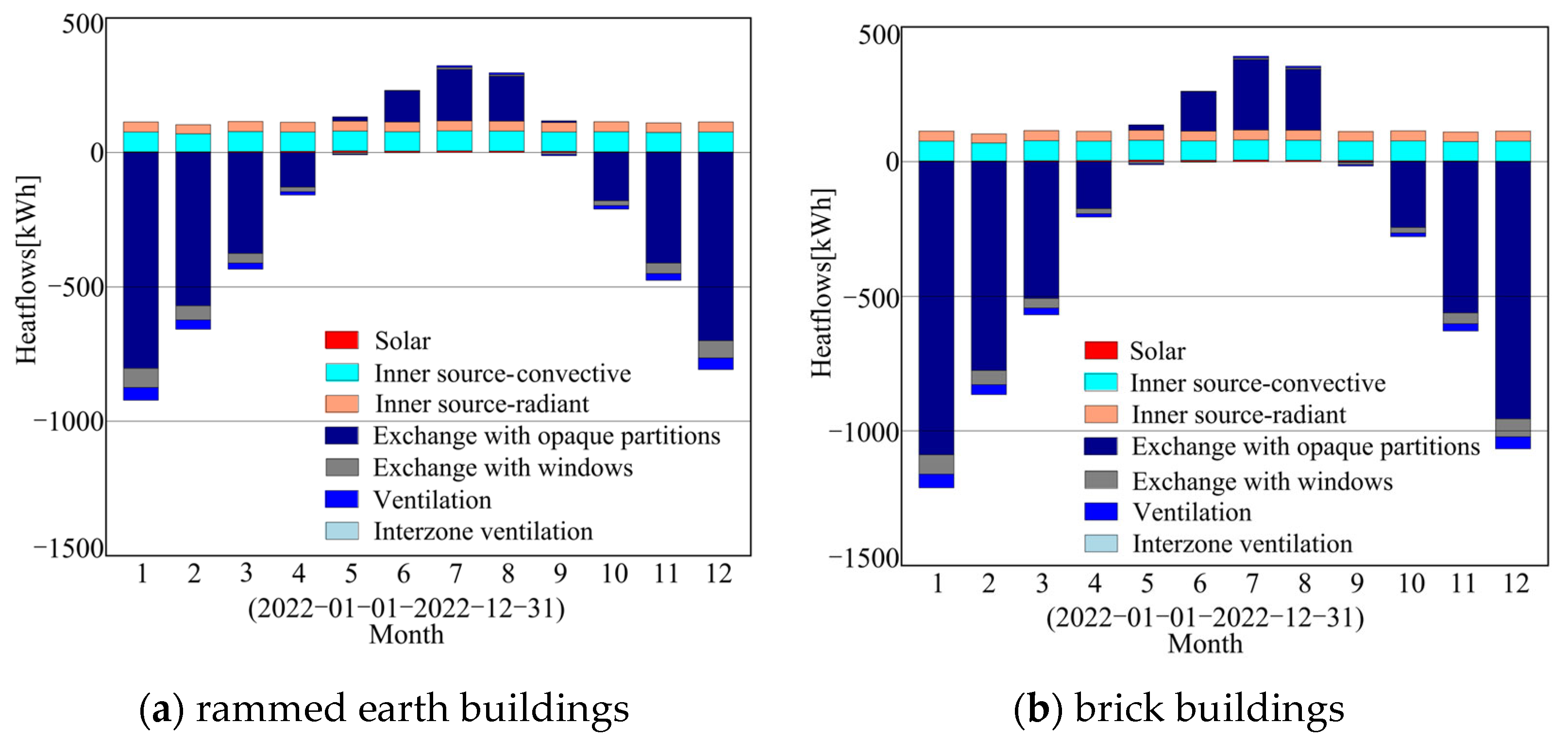
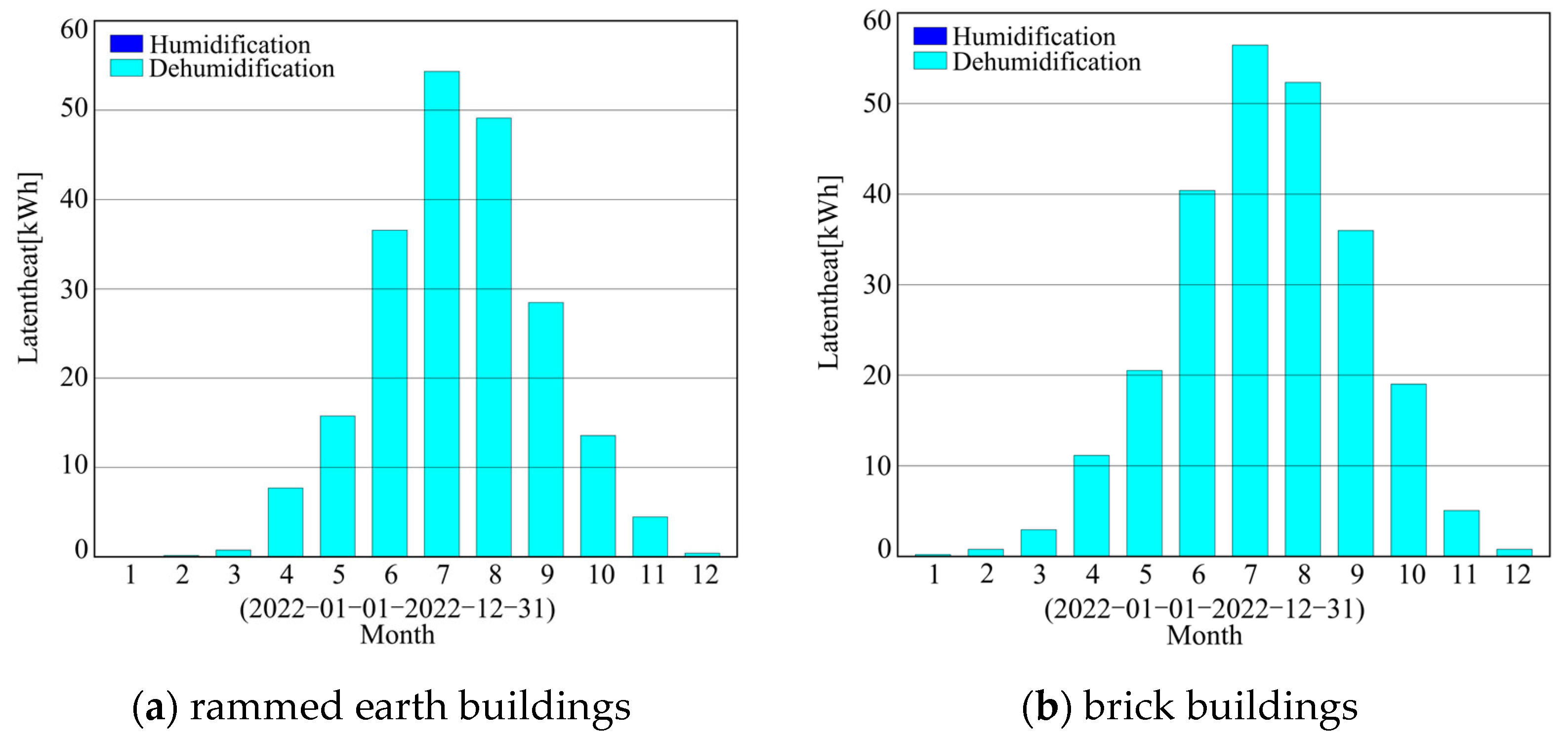
- With HVAC systems implemented, the annual energy consumption for heating and cooling in brick buildings was 1.37 and 1.20 times higher, respectively, than that of rammed earth buildings under identical indoor temperature and humidity settings. Moreover, the monthly dehumidification demand in brick buildings exceeded that in rammed earth buildings throughout the year. These results highlight the ability of rammed earth buildings to maintain comfortable indoor hygrothermal conditions with lower energy input, demonstrating their superior energy-saving performance.
- (3)
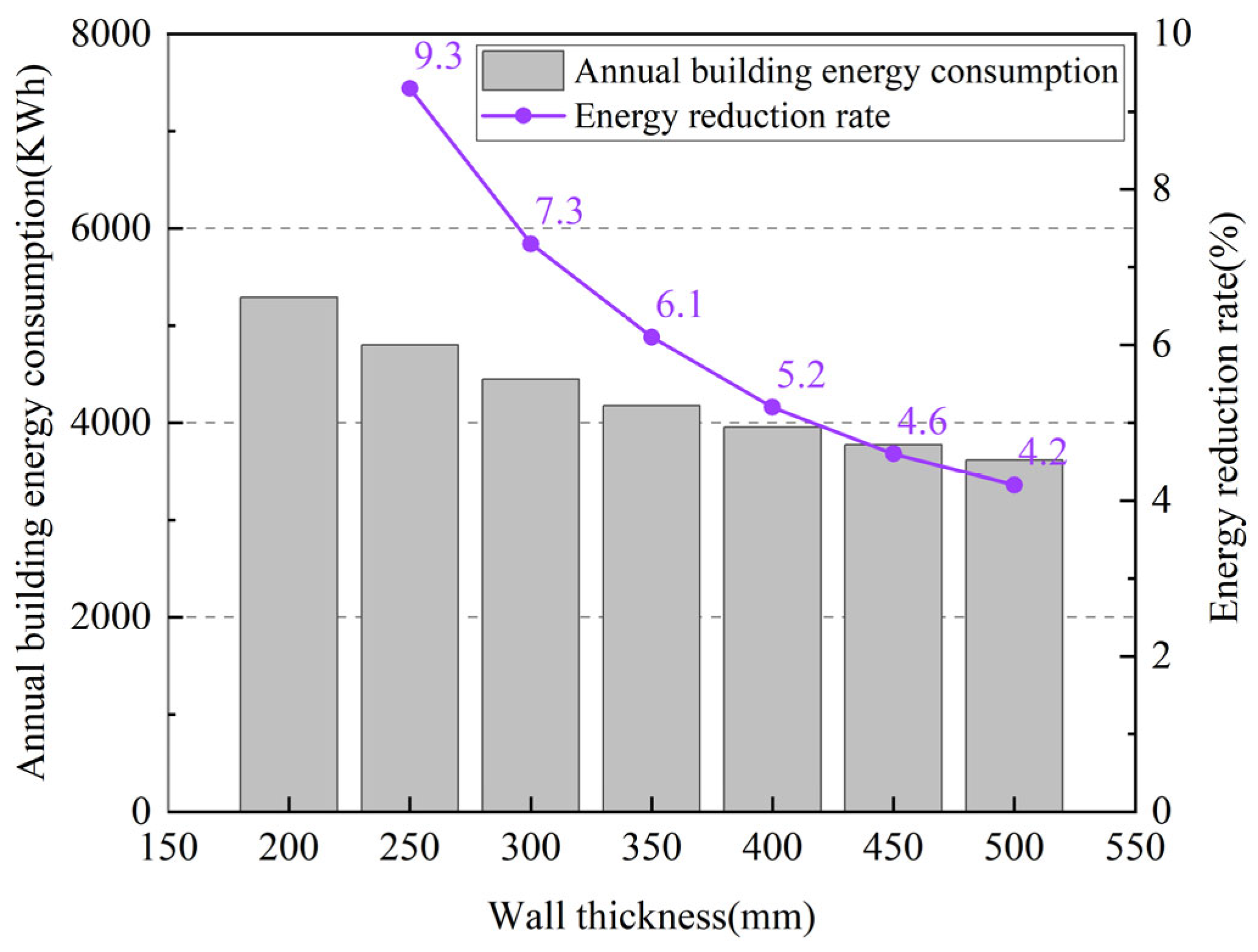
- As the wall thickness increased, the energy consumption reduction rate of rammed earth buildings gradually declined, falling below 5% when the thickness exceeded 400 mm. Therefore, considering energy efficiency, structural safety, and cost-effectiveness, a rammed earth wall thickness of 350–400 mm is recommended.
Author Contributions
Funding
Data Availability Statement
Conflicts of Interest
Nomenclature
| Hi | the total air enthalpy in the ith zone (J) | R | the energy consumption reduction rate (%) |
| t | the time (s) | E1 | the annual energy consumption of the previous thickness gradient (kWh) |
| QComp,j | the heat flow in component j (W) | E2 | the annual energy consumption of the subsequent thickness gradient (kWh) |
| QSol | the heat flow in the indoor air or furnishings resulting from shortwave solar radiation (W) | Greek symbols | |
| QIn | the convective heat source within the room (W) | θi | the air temperature in the ith zone (°C) |
| QVent | the ventilation heat flow (W) | φ | the relative humidity |
| QHVAC | the convective heat flow from the building’s ventilation system (W) | ρ | the indoor air density (kg/m3) |
| hi | the specific enthalpy of air in the ith zone (J/kg) | ρa | the density of dry air (kg/m3) |
| mi | the air mass in the ith zone (°C) | ρw | the moisture density (kg/m3) |
| x | the absolute humidity (kg/kg) | θ | the absolute temperature (K) |
| Pb | the atmospheric pressure (Pa) | Subscripts | |
| Pp | the partial pressure of the moisture (Pa) | i | ith |
| Pa(φ) | the temperature-dependent saturated moisture pressure (Pa) | Comp,j | component j |
| V | the net volume of the zone (m3) | Sol | shortwave solar radiation |
| Ra | the gas constant of dry air (287.05 J/(kg∙K)) | In | within the room |
| Rw | the gas constant for water vapor (=461.495 J/(kgK)) | b | the atmospheric pressure |
| Ci | the total moisture content in the ith zone (kg) | p | partial pressure |
| WComp,j | the moisture flow between the interior surface and indoor air (kg/s) | a | the gas constant of dry air |
| Win | the moisture source within the room (kg/s) | w | water vapor |
| WVent | the ventilation-induced moisture loss (kg/s) | Vent | the ventilation-induced moisture loss |
| WHVAC | the ventilation-induced moisture flow (kg/s) | HVAC | the ventilation-induced moisture flow |
| Mi | the mass of dry air in the zone (kg) | m | the measured value |
| e | the error (%) | s | the simulated value |
| ym | the measured value | 1 | the annual energy consumption of the previous |
| ys | the simulated value | 2 | the annual energy consumption of the subsequent |
References
- Ma, Y.; Deng, W.; Xie, J.; Heath, T.; Izu Ezeh, C.; Hong, Y.; Zhang, H. A macro-scale optimisation of zero-energy design schemes for residential buildings based on building archetypes. Sol. Energy 2023, 257, 196–209. [Google Scholar] [CrossRef]
- Tayeh, B.; Hadzima-Nyarko, M.; Riad, M.Y.; Hafez, R.D. Behavior of Ultra-High-Performance Concrete with Hybrid Synthetic Fiber Waste Exposed to Elevated Temperatures. Buildings 2023, 13, 129. [Google Scholar]
- Bourdeau, M.; Zhai, X.Q.; Nefzaoui, E.; Guo, X.; Chatellier, P. Modeling and forecasting building energy consumption: A review of data-driven techniques. Sustain. Cities Soc. 2019, 48, 101533. [Google Scholar] [CrossRef]
- Zhang, Q.; Li, J. Building carbon peak scenario prediction in China using system dynamics model. Environ. Sci. Pollut. Res. 2023, 30, 96019–96039. [Google Scholar] [CrossRef]
- Liu, L.; Tam, V.W.Y.; Almeida, L.; Le, K.N. Dynamically assessing life cycle energy consumption of buildings at a national scale by 2020: An empirical study in China. Energy Build. 2023, 296, 113354. [Google Scholar] [CrossRef]
- Zhang, Z.; Gao, Q.; Shao, S.; Zhang, Y.; Bao, Y.; Zhao, L. Carbon emission scenarios of China’s construction industry using a system dynamics methodology—Based on life cycle thinking. J. Clean. Prod. 2024, 435, 140457. [Google Scholar]
- Khrissi, Y.; Tilioua, A.; Laaroussi, N.; Bybi, A. Recycling date palm waste in a gypsum-based composite: Experimental study of thermal, acoustic, mechanical and hydric performance. Innov. Infrastruct. Solut. 2025, 10, 312. [Google Scholar]
- Barbhuiya, S.; Adak, D.; Marthong, C.; Forth, J. Sustainable solutions for low-cost building: Material innovations for Assam-type house in North-East India. Case Stud. Constr. Mater. 2025, 22, e04461. [Google Scholar]
- Schmitz, L.P.; Gosslar, J.; Dorresteijn, E.; Lowke, D.; Kloft, H. Experimental investigations on the compaction energy for a robotic rammed earth process. Front. Built Environ. 2024, 10, 1363804. [Google Scholar] [CrossRef]
- Idrissi Kaitouni, S.; Charai, M.; Es-sakali, N.; Mghazli, M.O.; El Mankibi, M.; Uk-Joo, S.; Ahachad, M.; Brigui, J. Energy and hygrothermal performance investigation and enhancement of rammed earth buildings in hot climates: From material to field measurements. Energy Build. 2024, 315, 114325. [Google Scholar] [CrossRef]
- Losini, A.E.; Grillet, A.-C.; Vo, L.; Dotelli, G.; Woloszyn, M. Biopolymers impact on hygrothermal properties of rammed earth: From material to building scale. Build. Environ. 2023, 233, 110087. [Google Scholar] [CrossRef]
- Kang, Y.; Jo, H.H.; Kim, S. Enhancing indoor comfort and building energy efficiency with cross-laminated timber (CLT) in hygrothermal environments. J. Build. Eng. 2024, 84, 108582. [Google Scholar] [CrossRef]
- Coelho, G.B.A.; Entradas Silva, H.; Henriques, F.M.A. Impact of climate change in cultural heritage: From energy consumption to artefacts’ conservation and building rehabilitation. Energy Build. 2020, 224, 110250. [Google Scholar] [CrossRef]
- Dang, X.; Janssen, H.; Roels, S. Hygrothermal Modelling of one-dimensional Wall Assemblies: Inter-model Validation between WUFI and DELPHIN. J. Phys. Conf. Ser. 2023, 2654, 012040. [Google Scholar] [CrossRef]
- Laska, M.; Małyszko, M. Modeling of Hydro-Thermal Conditions in the External Walls of a Single-Family Building with Utilization of WUFI Plus Software; Ciepłownictwo, Ogrzewnictwo, Wentylacja: Warszawa, Poland, 2023. [Google Scholar]
- Radon, J.; Was, K.; Flaga-Maryanczyk, A.; Schnotale, J. Experimental and theoretical study on hygrothermal long-term performance of outer assemblies in lightweight passive house. J. Build. Phys. 2018, 41, 299–320. [Google Scholar] [CrossRef]
- Baba, F.; Ge, H. Dynamic effect of balcony thermal bridges on the energy performance of a high-rise residential building in Canada. Energy Build. 2016, 116, 78–88. [Google Scholar] [CrossRef]
- Umubyeyi, C.; Wenger, K.; Dahmen, J.; Ochsendorf, J. Durability of unstabilized rammed earth in temperate climates: A long term study. Constr. Build. Mater. 2023, 409, 133953. [Google Scholar] [CrossRef]
- Samadianfard, S.; Toufigh, V. Stabilization effect on the hygrothermal performance of rammed earth materials. Constr. Build. Mater. 2023, 409, 134025. [Google Scholar] [CrossRef]
- Ramezannia, A.; Gocer, O.; Bashirzadeh Tabrizi, T. The life cycle assessment of stabilized rammed earth reinforced with natural fibers in the context of Australia. Constr. Build. Mater. 2024, 416, 135034. [Google Scholar] [CrossRef]
- Libralato, M.; De Angelis, A.; Tornello, G.; Saro, O.; D’Agaro, P.; Cortella, G. Evaluation of Multiyear Weather Data Effects on Hygrothermal Building Energy Simulations Using WUFI Plus. Energies 2021, 14, 7157. [Google Scholar] [CrossRef]
- Xia, D.; Zhong, Z.; Huang, Y.; Zou, Y.; Lou, S.; Zhan, Q.; Guo, J.; Yang, J.; Guo, T. Impact of coupled heat and moisture transfer on indoor comfort and energy demand for residential buildings in hot-humid regions. Energy Build. 2023, 288, 113029. [Google Scholar] [CrossRef]
- Yu, S.; Cui, Y.; Shao, Y.; Han, F. Simulation Research on the Effect of Coupled Heat and Moisture Transfer on the Energy Consumption and Indoor Environment of Public Buildings. Energies 2019, 12, 141. [Google Scholar] [CrossRef]
- Ryu, S.H.; Moon, H.J.; Kim, J.T. Evaluation of the influence of hygric properties of wallpapers on mould growth rates using hygrothermal simulation. Energy Build. 2015, 98, 113–118. [Google Scholar] [CrossRef]
- Zhao, M.; Mehra, S.-R.; Künzel, H.M. Energy-saving potential of deeply retrofitting building enclosures of traditional courtyard houses—A case study in the Chinese Hot-Summer-Cold-Winter zone. Build. Environ. 2022, 217, 109106. [Google Scholar]
- Dai, X.L.; Chen, R.T.; Guan, S.Z.; Li, W.T.; Yuen, C. BuildingGym: An open-source toolbox for AI-based building energy management using reinforcement learning. Build. Simul. 2025, 18, 1909–1927. [Google Scholar] [CrossRef]
- Shang, W.Z.; Liu, J.J.; Meng, H.; Jia, L.Z.; Dai, X.L. A RL-based human behavior oriented optimal ventilation strategy for better energy efficiency and indoor air quality. Energy Build. 2025, 345, 116072. [Google Scholar] [CrossRef]
- Sun, S.K.; Liu, Y.; Yu, S.; Han, F.H.; Kong, Z.L. Experimental and simulation study of air-cooled BIPV wall thermal performance in cold regions under coupled heat-moisture-stress effects. J. Build. Eng. 2025, 112, 113785. [Google Scholar] [CrossRef]
- Sui, X.; An, M.Y.; Cui, H.R. Investigation of condensation behavior in self-insulating recycled concrete composite block walls. J. Build. Eng. 2025, 107, 112653. [Google Scholar] [CrossRef]
- Harb, E.; Maalouf, C.; Bliard, C.; Kinab, E.; Lachi, M.; Polidori, G. Hygrothermal performance of multilayer wall assemblies incorporating starch/beet pulp in France. Constr. Build. Mater. 2024, 445, 137773. [Google Scholar] [CrossRef]
- Allinson, D.; Hall, M. Hygrothermal analysis of a stabilised rammed earth test building in the UK. Energy Build. 2010, 42, 845–852. [Google Scholar] [CrossRef]
- Sui Jiang, S.S.; Hao, J.L.; De Carli, J.N. Hygrothermal and mechanical performance of sustainable concrete: A simulated comparison of mix designs. J. Build. Eng. 2021, 34, 101859. [Google Scholar] [CrossRef]
- Moon, H.J.; Ryu, S.H.; Kim, J.T. The effect of moisture transportation on energy efficiency and IAQ in residential buildings. Energy Build. 2014, 75, 439–446. [Google Scholar] [CrossRef]
- Palani, H.; Khaleghi, H.; Salehi, P.; Karatas, A. Assessing Hygrothermal Performance in Building Walls Engineered for Extreme Cold Climate Environments. Sustainability 2023, 15, 16597. [Google Scholar] [CrossRef]
- GB50736-2012; Code for Design of Heating, Ventilation, and Air Conditioning in Civil Buildings (Explanatory Notes): [S]. General Administration of Quality Supervision, Inspection and Quarantine: Beijing, China, 2012.
- Conroy, A.; Mukhopadhyaya, P.; Wimmers, G. In-Situ and Predicted Performance of a Certified Industrial Passive House Building under Future Climate Scenarios. Buildings 2021, 11, 457. [Google Scholar] [CrossRef]
- Staszczuk, A.; Kuczyński, T.; Wojciech, M.; Ziembicki, P. Comparative Calculation of Heat Exchange with the Ground in Residential Building Including Periodes of Heat Waves. Civ. Environ. Eng. Rep. 2016, 21, 109–119. [Google Scholar] [CrossRef][Green Version]
- Jiang, M.Q.; Jiang, B.; Lu, R.; Chun, L.; Xu, H. Thermal and Humidity Performance Test of Rammed-Earth Dwellings in Northwest Sichuan during Summer and Winter. Materials 2023, 16, 6283. [Google Scholar] [CrossRef]
- Köse Özturan, M.; Kurnuç Seyhan, A. Determination of optimum insulation thickness of building walls according to four main directions by accounting for solar radiation: A case study of Erzincan, Türkiye. Energy Build. 2024, 304, 113871. [Google Scholar] [CrossRef]
- Linzi, F.; Jialong, W.; Yao, C.; Jian, F.; Pooya, S. Shear Performance of Large-Thickness Precast Shear Walls with Cast-in-Place Belts and Grouting Sleeves. ASCE-ASME J. Risk Uncertain. Eng. Syst. Part A Civ. Eng. 2023, 9, 04023005. [Google Scholar]





| Basic Parameters | Value |
|---|---|
| Bulk density [kg/m3] | 2002.50 |
| Porosity | 0.38 |
| Specific heat capacity [J/kg·K] | 760.00 |
| Thermal conductivity dry [W/m·K] | 0.55 |
| Name | Density (kg/m3) | Thermal Conductivity W/(m·K) | Specific Heat Capacity J/(kg·K) | |
|---|---|---|---|---|
| Door | 800 | 0.18 | 1700 | |
| Roof | Aerated Clay Brick | 672 | 0.12 | 1050 |
| Flax Insulation Board | 39 | 0.0376 | 850 | |
| Wood-Fiber Insulation Board | 168 | 0.0381 | 1400 | |
| Name | UW [W/(m2·K)] | Frame Factor | Solar Energy Transmittance Hemispherical | Long Wave Radiation Emissivity |
|---|---|---|---|---|
| Wooden-framed single-pane window | 5.50 | 0.1 | 0.75 | 0.80 |
| Convective Heat Gain (W) | Radiant Heat Gain (W) | Indoor Moisture (g/h) | |
|---|---|---|---|
| Generation period | 8:00~18:00 | 8:00~18:00 | 8:00~18:00 |
| Daily total | 2400 | 1200 | 3000 |
| Period | Minimum Temperature (Heating) (°C) | Maximum Temperature (Cooling) (°C) | Minimum Relative Humidity (Humidification) (%) | Maximum Relative Humidity (Dehumidification) (%) |
|---|---|---|---|---|
| 8:00~18:00 | 24 | 24 | 30 | 70 |
| 0:00~8:00 and 18:00~24:00 | 18 | 28 | 30 | 70 |
| Daily average | 20.25 | 26.50 | 30 | 70 |
| Building Walls | Density (kg/m3) | Specific Heat (J/kg·K) | Thermal Conductivity (W/m·K) | Thickness (mm) |
|---|---|---|---|---|
| Rammed earth | 2002.50 | 760 | 0.55 | 370 |
| Brick | 1952 | 863 | 1.10 | 370 |
| Parameter | Minimum | Maximum | Average |
|---|---|---|---|
| Rammed earth buildings indoor temperature (°C) | 4.20 | 32.90 | 19.30 |
| Rammed earth buildings indoor relative humidity (%) | 48.50 | 86.10 | 69.20 |
| Brick buildings indoor temperature (°C) | 3.50 | 33.30 | 19.20 |
| Brick buildings’ indoor relative humidity (%) | 37.10 | 95.70 | 69.80 |
| Building Walls | Annual Energy Consumption for Heating (kWh) | Annual Energy Consumption for Cooling (kWh) |
|---|---|---|
| rammed earth | 3184.20 | 898.50 |
| Brick | 4371.10 | 1076.30 |
| Wall Thickness (mm) | 200 | 250 | 300 | 350 | 400 | 450 | 500 |
|---|---|---|---|---|---|---|---|
| Annual energy consumption (KWh) | 5289.3 | 4798.5 | 4446.1 | 4175.4 | 3956.3 | 3772.8 | 3614.9 |
| Energy consumption reduction rate (%) | / | 9.3 | 7.3 | 6.1 | 5.2 | 4.6 | 4.2 |
Disclaimer/Publisher’s Note: The statements, opinions and data contained in all publications are solely those of the individual author(s) and contributor(s) and not of MDPI and/or the editor(s). MDPI and/or the editor(s) disclaim responsibility for any injury to people or property resulting from any ideas, methods, instructions or products referred to in the content. |
© 2026 by the authors. Licensee MDPI, Basel, Switzerland. This article is an open access article distributed under the terms and conditions of the Creative Commons Attribution (CC BY) license.
Share and Cite
Jiang, B.; Huang, K.; Jiang, M.; Wan, L. Research on Heat and Moisture Transfer Performance and Annual Energy Consumption of Full-Size Rammed Earth Buildings. Buildings 2026, 16, 582. https://doi.org/10.3390/buildings16030582
Jiang B, Huang K, Jiang M, Wan L. Research on Heat and Moisture Transfer Performance and Annual Energy Consumption of Full-Size Rammed Earth Buildings. Buildings. 2026; 16(3):582. https://doi.org/10.3390/buildings16030582
Chicago/Turabian StyleJiang, Bin, Kejie Huang, Maqi Jiang, and Li Wan. 2026. "Research on Heat and Moisture Transfer Performance and Annual Energy Consumption of Full-Size Rammed Earth Buildings" Buildings 16, no. 3: 582. https://doi.org/10.3390/buildings16030582
APA StyleJiang, B., Huang, K., Jiang, M., & Wan, L. (2026). Research on Heat and Moisture Transfer Performance and Annual Energy Consumption of Full-Size Rammed Earth Buildings. Buildings, 16(3), 582. https://doi.org/10.3390/buildings16030582