Systematic Review

Electromagnetic Wave Dehumidification Technology: A Non-Destructive Approach to Moisture Removal in Historic Buildings


1
College of Architecture and Urban Planning, Qingdao University of Technology, Qingdao 266033, China
2
College of Art and Design, Qingdao University of Technology, Qingdao 266033, China
*
Author to whom correspondence should be addressed.
Buildings 2026, 16(3), 572; https://doi.org/10.3390/buildings16030572
Submission received: 25 December 2025 / Revised: 18 January 2026 / Accepted: 23 January 2026 / Published: 29 January 2026
(This article belongs to the Special Issue Urban Renewal: Protection and Restoration of Existing Buildings)

Abstract

Moisture damage severely compromises the material properties, structural integrity, and decorative layer integrity of historic buildings, presenting a critical technical challenge in architectural heritage conservation. Electromagnetic wave dehumidification technology has garnered attention for its minimal intervention, low cost, and high efficiency, yet its practical engineering applications remain limited. This paper categorizes electromagnetic wave dehumidification devices into two main types based on their active moisture removal capability: “water-blocking type” and “dewatering type”. Research indicates that electromagnetic wave dehumidification devices utilizing electroosmosis principles require precise control of electric field strength (≥40 V/m) and Joule effect, making them more suitable for historic buildings where the material surface carries a net negative charge and low salt content. Among moisture-blocking devices, those neutralizing water molecules perform best during humidity maintenance phases. Devices that primarily alter the structure of water molecules struggle to meet heritage dehumidification requirements. Experimental analysis indicates that external factors like moisture sources and seasonal environments significantly influence technical evaluations. This paper recommends that future research should optimize experimental design, strengthen comparative studies, and explore composite mechanisms to enhance the systematic reliability of electromagnetic wave dehumidification technology in architectural heritage conservation. This research helps to clarify some of the conceptual uncertainties associated with the use of electromagnetic wave dehumidification technology. Furthermore, it proposes a principle-based experimental framework that can be used to guide future experimental designs and the application of this technology in the field of cultural heritage preservation.

1. Introduction

Moisture in buildings can adversely affect indoor environmental quality, masonry aesthetics, and structural integrity, and may even lead to occupant health issues [1]. Moisture damage to buildings manifests in various forms but can be broadly categorized into two types: that caused by water itself, including freeze–thaw cycles compromising structural stability, dissolution of soluble substances within the building, and reduced thermal insulation performance; and that caused by salts dissolved in water [2], such as salt particles depositing in the pores of porous materials, thereby decreasing the building’s shear and compressive strength. Simultaneously, salts containing sulfur and carbon elements can trigger sulfidation and recarbonation reactions in building walls, damaging decorative surfaces. Additionally, certain colored salt solutions may alter the appearance of exterior paint finishes and coatings upon penetration. Furthermore, salt presence can foster microbial growth and internal reinforcement corrosion [3,4,5,6,7].
Moisture sources are equally diverse, encompassing natural factors such as local climate conditions, subsurface water flow patterns, vegetation growth and decay cycles, as well as moisture infiltration caused by high soil moisture content and rising groundwater levels, all of which can contribute to building dampness [3,4,6,7]. Human factors include environmental humidity fluctuations from surrounding construction activities (such as scaffolding erection or protective membrane installation), which significantly increase the risk of building moisture penetration [3,4,6,7]. Notably, the moisture migration processes triggered by these factors are often driven by capillary action—a phenomenon that promotes the continuous diffusion of moisture within the building’s porous structure, thereby expanding the affected area. Existing dehumidification technologies fundamentally operate by either blocking these moisture sources or removing already infiltrated water.
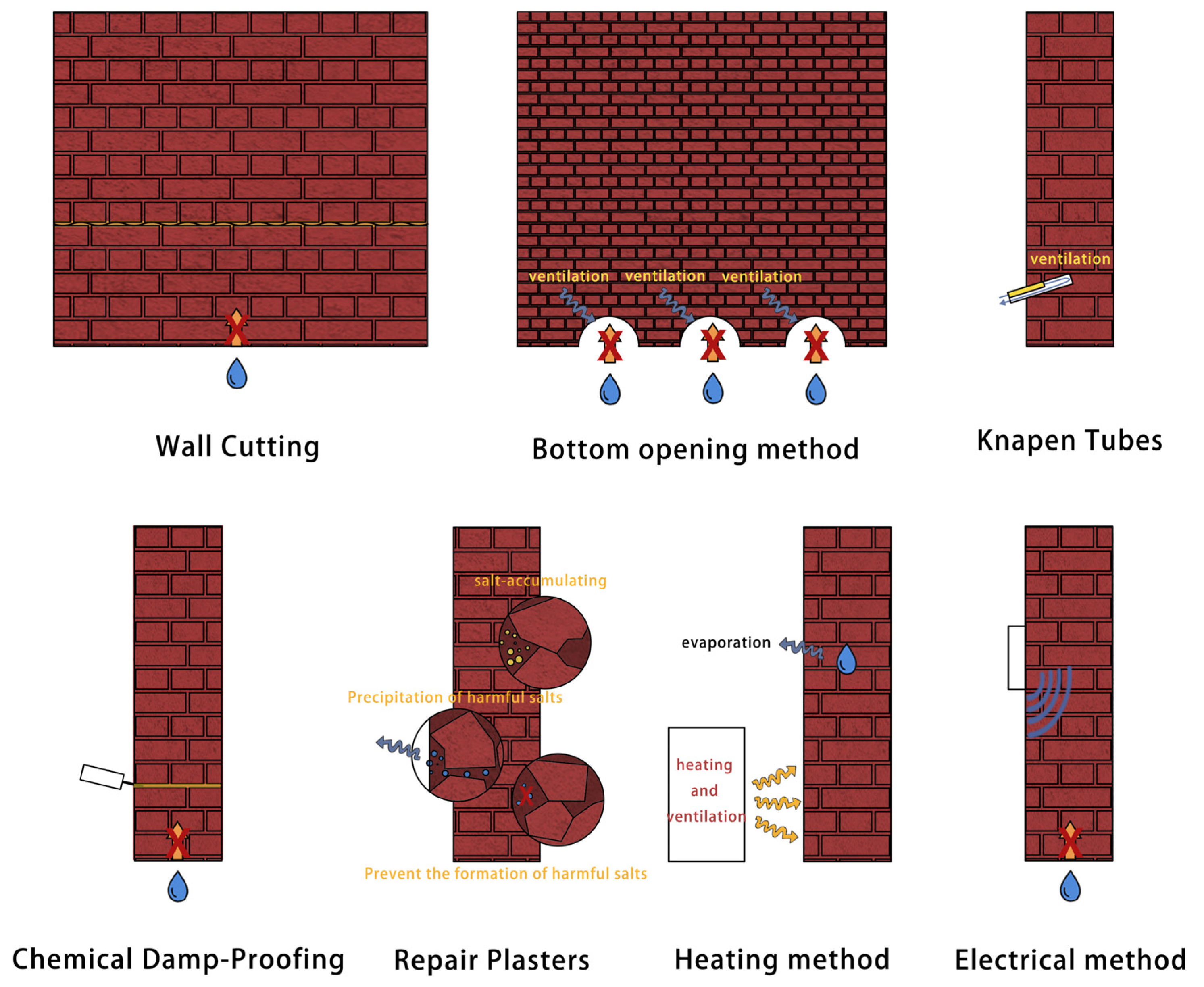
The sources, influencing factors, and manifestations of moisture in buildings are highly diverse. The electromagnetic wave dehumidification technology examined in this paper primarily targets moisture within porous masonry walls affected by capillary action. Current dehumidification methods for such issues can be broadly categorized into “destructive methods” and “non-destructive methods” based on the degree of building intervention (Figure 1).
Destructive methods primarily include:
(1)
Chemical damp-proofing: This involves injecting chemical agents into walls to form a waterproof membrane. However, its effectiveness is influenced by factors such as injection pressure and material porosity, relies heavily on operator skill, and results in inconsistent performance [3,6,8,9].
(2)
Wall cutting method: This technique involves drilling into the wall base to insert metal plates or other water-blocking materials to inhibit upward moisture rise. It may, however, lead to moisture accumulation at the base, compromise structural integrity, and is unsuitable for irregularly shaped or underground walls [3,6,8,10].
(3)
Bottom opening method: Creating ventilation openings at the wall base reduces ground contact area and promotes evaporation. This method requires significant wall modification, making it unsuitable for historic building conservation [3,6,8,11].
(4)
Knapen tubes method: This employs pipes embedded within the wall to create air pressure differentials for drainage. Its effectiveness is limited in high-humidity environments and may even increase the internal moisture content of walls [3,6,8,12].
Non-destructive methods include:
(1)
Repair plasters: This mitigates salt damage through salt storage or transport mechanisms while utilizing the mortar’s porous structure to aid moisture dispersion. Its effectiveness is time-limited, requiring long-term maintenance and replacement [3,6,8].
(2)
Heating methods: These promote moisture evaporation by warming walls. While not directly damaging structures, improper temperature control can harm heritage materials, and costs are high [3,6,8,13].
(3)
Electrical methods: Early approaches included active and passive electroosmosis, utilizing electrochemical effects to drive moisture migration. These methods are low-cost and minimally invasive. With technological advancement, dehumidification equipment based on the thermal effects of electric currents or electromagnetic waves has emerged, allowing for further device miniaturization and operational simplification. This theoretically offers more convenient solutions for wall dehumidification [3,6,8,14]. Electromagnetic wave dehumidification technology emerged within this context and is the primary focus of this paper.
In the field of architectural heritage conservation, the selection of dehumidification methods must balance effectiveness in moisture removal with minimal intervention to the building structure. As shown in Table 1, electro-dehumidification technology is a non-destructive method with relatively low long-term maintenance costs and operational complexity. Building on this, electromagnetic wave dehumidification technology not only retains these advantages but also offers features such as ease of operation, compact size, and portability. Its small size allows it to be used in confined spaces like tombs and basements, while its non-invasive nature ensures safe application in extremely precious heritage sites. The device operates with very low energy consumption—compared to conventional heating methods, which require around 1500 W for a machine covering 150 m2, electromagnetic wave dehumidification equipment for the same area consumes only about 3 W—significantly reducing maintenance costs and offering greater environmental sustainability. The portable design also lowers the barrier to operation. Despite these advantages, this technology has yet to see widespread adoption.
This paper systematically traces the origin and evolution of electromagnetic wave dehumidification technology and analyzes the operational principles of practical equipment along with relevant experimental cases. The study reveals that current electromagnetic wave dehumidification devices suffer from ambiguous classification, with diverse working principles yet lacking a detailed categorization based on their specific characteristics. Moreover, there remains a significant gap in the design of verification experiments and application guidelines tailored to devices operating on different principles, which constitutes a major barrier to the widespread adoption of this technology. To address these issues, this paper further classifies existing devices, evaluates their dehumidification performance, and examines related experimental procedures, thereby clarifying the current limitations and potential influencing factors of the technology.

2. Theoretical Foundations and Research Status

2.1. Theoretical Basis

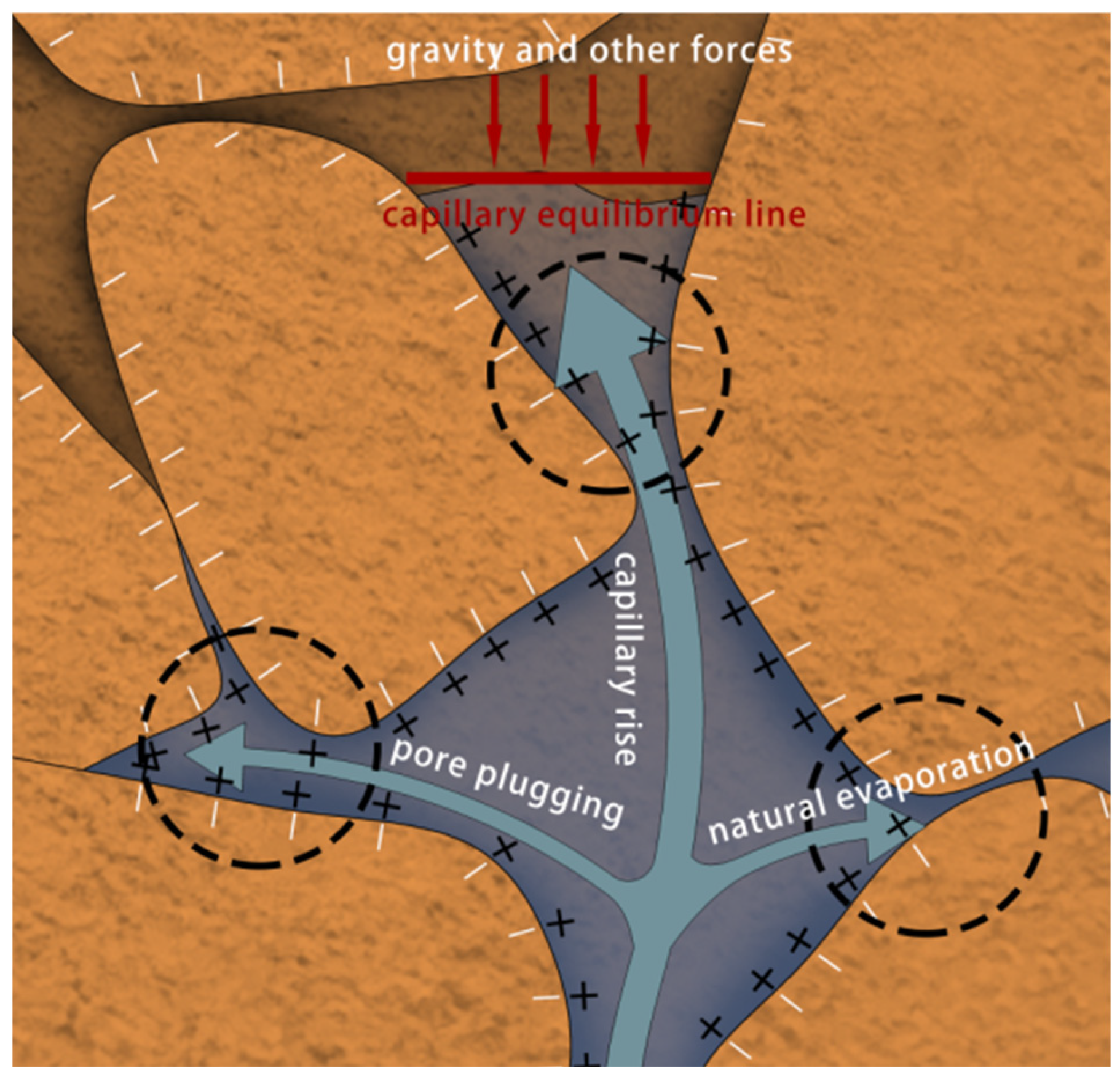
To gain a thorough understanding of the mechanisms behind various electromagnetic wave dehumidification technologies, one must first clarify the underlying cause of capillary rise in water. At the microscopic level, the capillary forces driving water upward through the pores of building materials can be explained as follows: Building material surfaces typically carry a negative charge. Water molecules, being dipoles, exhibit charge separation properties that enable them to display polarity within an electric field. Therefore, when water exists within porous materials, to satisfy the requirement for electrostatic neutrality between the building material and the internal solution, water molecules adsorb onto the surface of the building material, forming a “Helmholtz electric double layer.” This subsequently causes water to rise within the material pores. However, during the ascent process, water is influenced by factors such as gravity, pore wall friction, natural evaporation, and pore distribution, ultimately stopping at a certain height (Figure 2) [3,6,15,16]. The principle of electromagnetic wave dehumidification technology is to apply specific electromagnetic fields that interfere with the capillary action of water within wall pores, thereby achieving effective dehumidification of buildings [3,6,15,16].

2.2. Materials and Methods

Given the relatively recent development of research in this field and the need to ensure the timeliness of the literature, this study limits the screening period to 2010–2025, with a focus on key technical areas such as dehumidification of historic buildings, electromagnetic wave dehumidification, and electroosmosis dehumidification. Following the PRISMA 2020 guidelines (Supplementary Materials) [17], a multi-stage systematic search and screening process was conducted. The literature was primarily sourced from the Web of Science Core Collection, supplemented by Scopus, Google Scholar, and other databases. The search strategy used the following keyword combinations to ensure comprehensive coverage of relevant topics: “dehumidification of historic buildings” OR “historic building dehumidification” OR “moisture control in historic buildings” OR “humidity control for heritage preservation” OR “electromagnetic wave dehumidification” OR “electroosmosis dehumidification”.
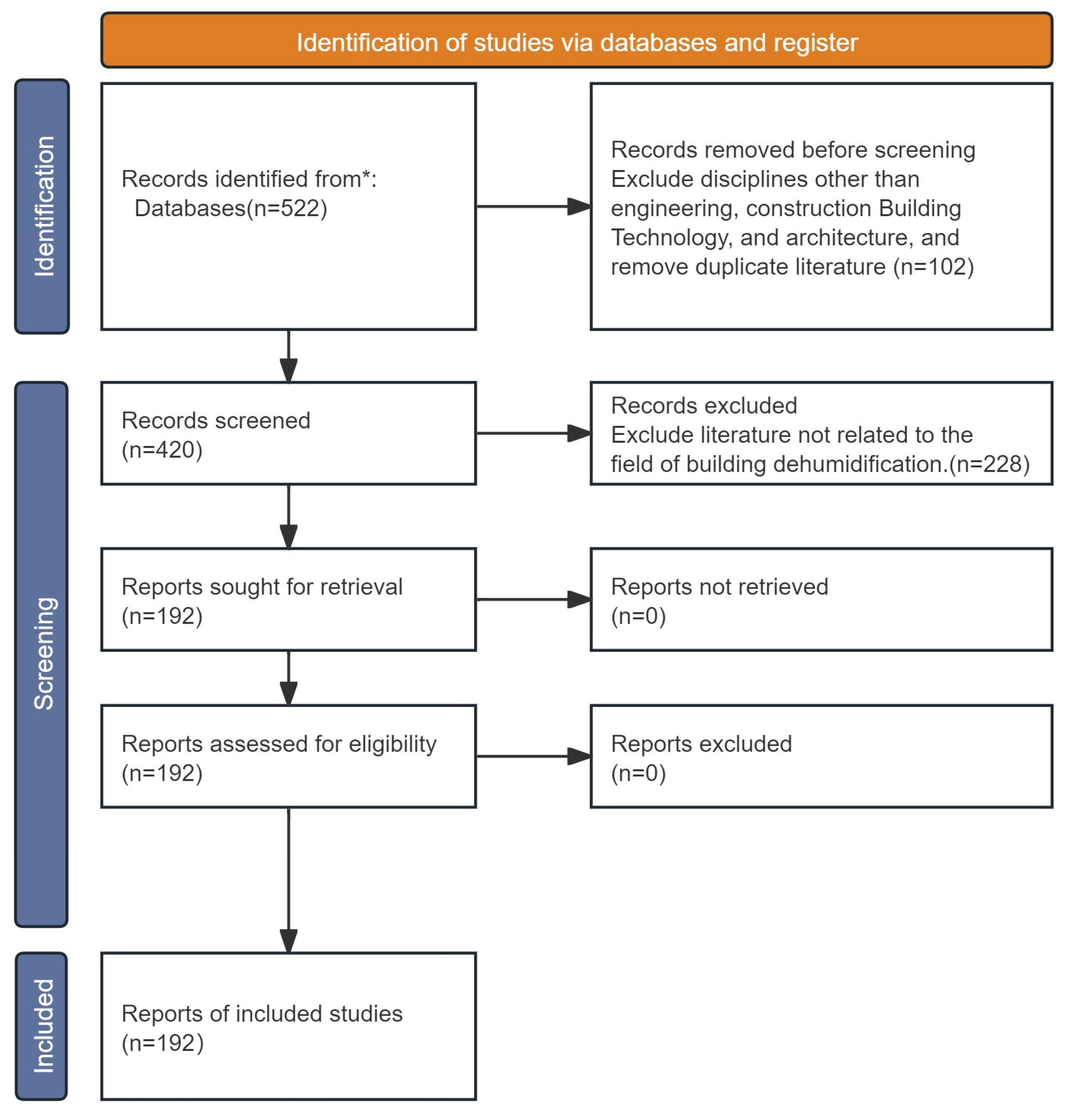
In the initial screening, the literature was restricted to the fields of engineering, construction and building technology, and architecture, and duplicates were removed. Subsequently, through title-and-abstract screening and full-text review, literature primarily focused on HVAC, human comfort, and other unrelated areas was excluded. Only literature centered on building dehumidification itself was retained, resulting in 192 relevant articles. The detailed screening process is shown in Figure 3.

2.3. Results and Discussions

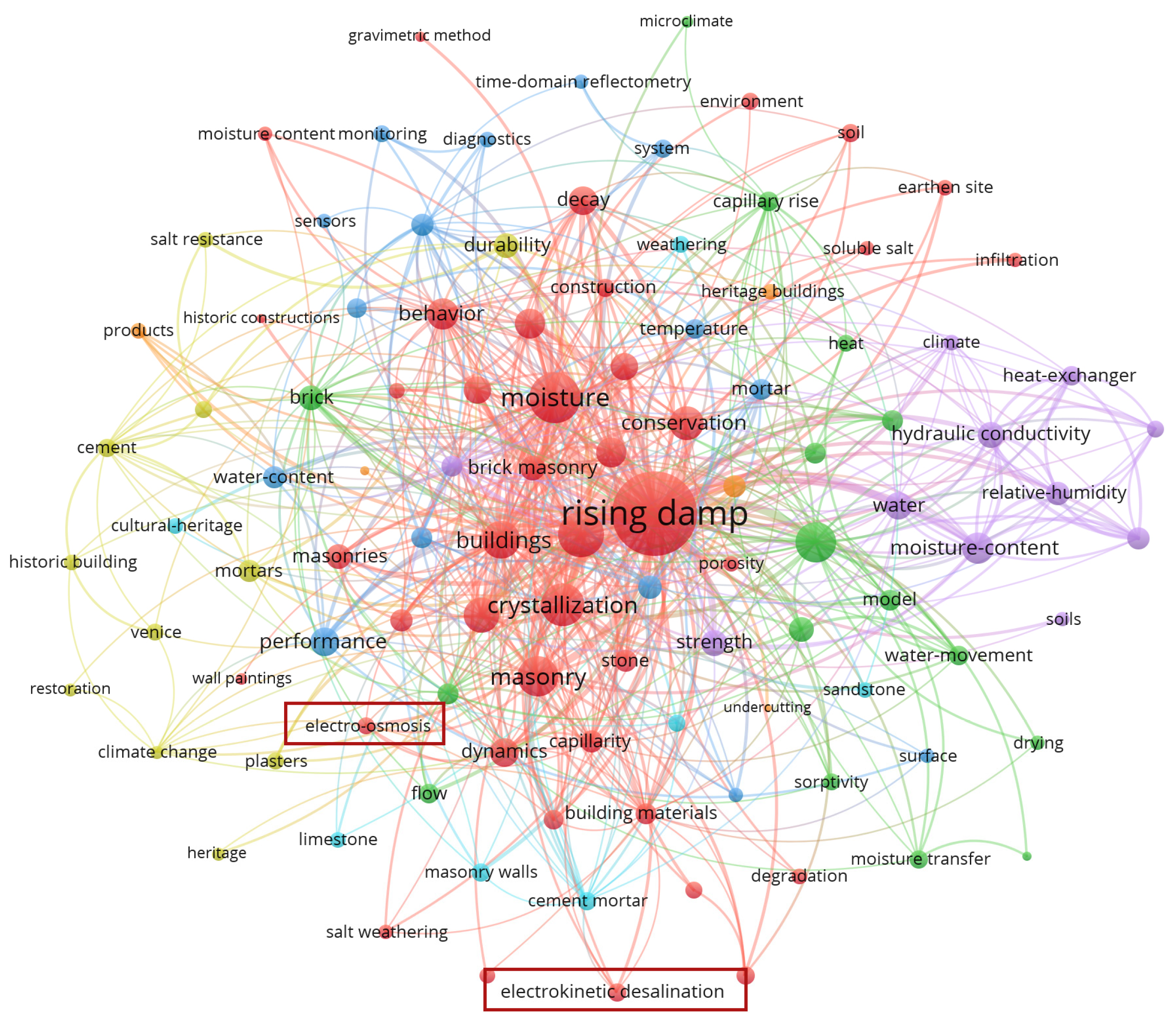
The keywords from the aforementioned 192 articles were visualized and analyzed using VOSviewer 1.6.20. The analysis reveals that current research hotspots in moisture prevention for historic buildings appear to be more inclined toward the removal of soluble salts from moisture within wall structures. Additionally, the use of electrical methods for dehumidification seems to be emerging as a promising trend in this field (Figure 4).
This paper compiles a total of 10 publications from the period 2020–2025. These articles are summarized in Table 2, which records their specific publication dates and categorizes them by type and primary research focus.
Analysis reveals that over the past five years, the related research has been predominantly in the form of academic papers, with a primary focus on capillary damage in buildings, while also encompassing some studies on monitoring methods and electrochemical dehumidification techniques. Overall, research in the field of electrochemical dehumidification remains relatively limited and requires further reinforcement.
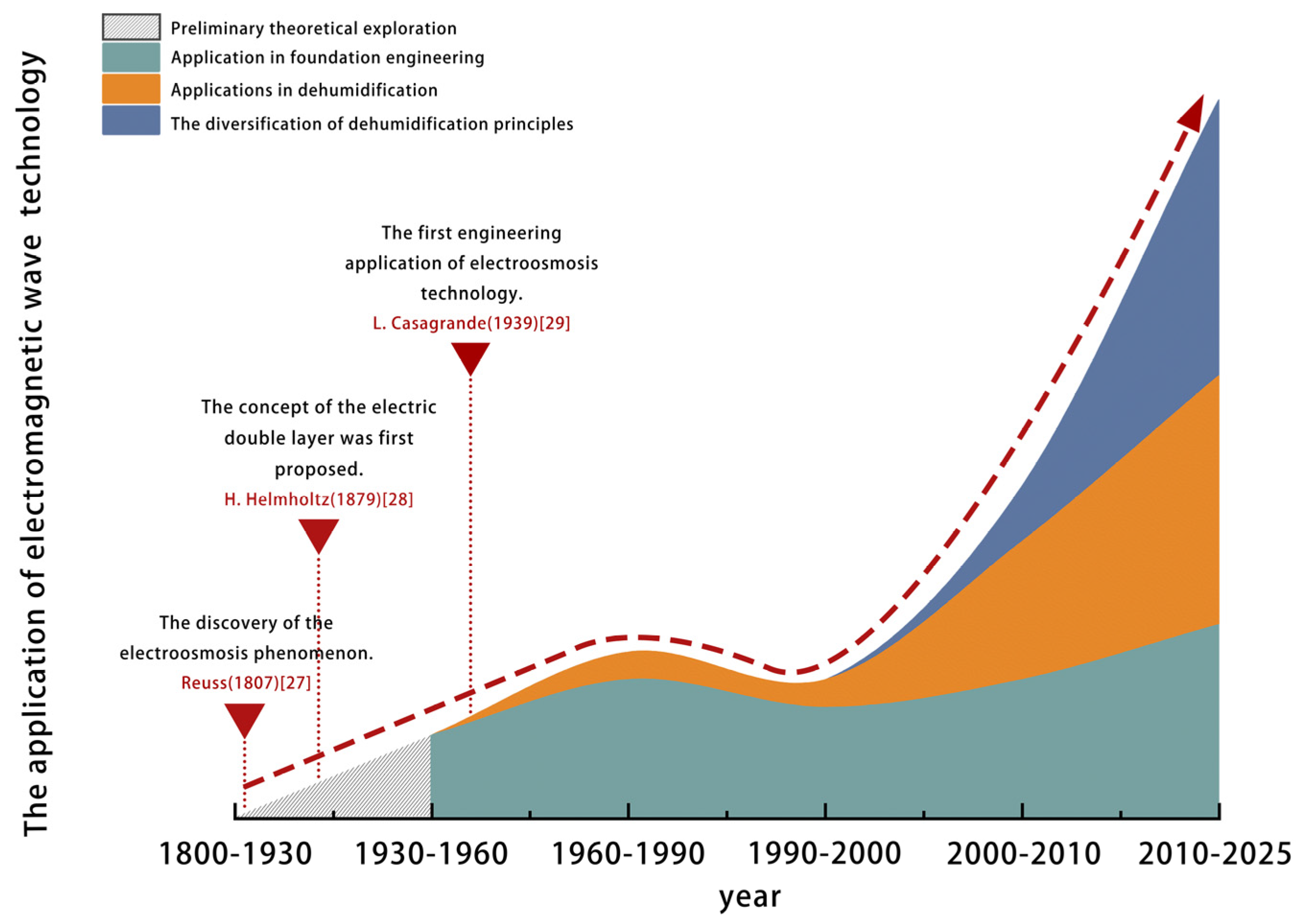
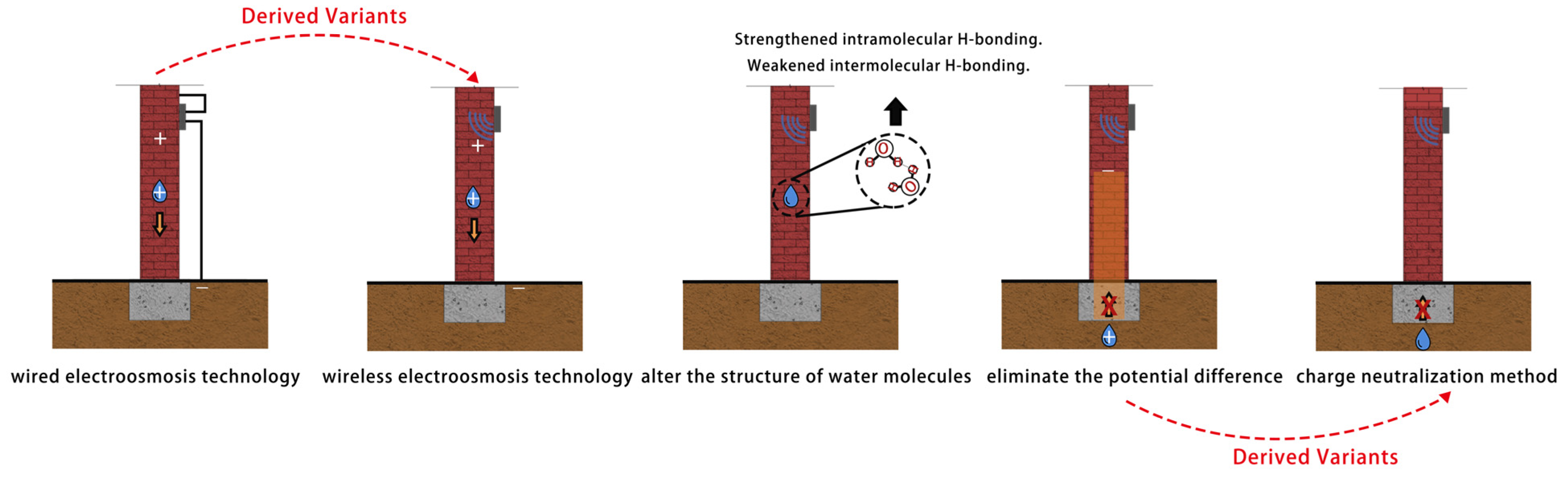
In order to explore the origins of electrochemical methods and broaden the scope of relevant literature over time, this paper attempts to clarify the developmental trajectory of the related field. Tracing the origins of relevant equipment reveals that the earliest electrical dehumidification devices were wired electroosmotic units. The operation involved placing the positive electrode at the highest point reachable by capillary action and grounding the other end as the negative electrode. This arrangement applied an electric field that reversed the capillary flow, thereby expelling moisture from the target area. Research into the underlying principles dates back to 1807, when Reuss discovered the “electroosmosis phenomenon” and formally published his findings in 1809 [27]. In 1879, H. Helmholtz identified the “electrical double layer structure,” providing a microscopic explanation for the phenomenon [28]. In civil engineering, the electroosmosis principle was first applied to soil drainage, consolidation, and purification. Its earliest documented application dates to around 1939, when Casagrande used it to enhance the bearing capacity of railway foundations, a method later detailed in a 1949 paper [29]. From the late 1940s to the present, electroosmosis has been widely applied in soil consolidation and drainage [30,31]. Its application for dehumidifying building masonry emerged in the 1980s and 1990s, with further development after 2000 alongside the commercialization of dehumidification equipment. Today, such devices have evolved into wireless electromagnetic wave dehumidification systems. Their operating mechanisms have also advanced beyond the initial electroosmotic effect to incorporate multiple principles, including altering water molecule structures to accelerate evaporation, eliminating potential differences, and neutralizing water molecules (Figure 5).

3. Classification of Devices Based on Principle Differences

As previously discussed, not all electromagnetic wave dehumidification devices are based on early electro-osmosis technology. However, some scholars and manufacturers have failed to distinguish these devices according to their differing operational principles. Consequently, despite variations in their actual mechanisms, they are often collectively labeled as “electro-osmosis dehumidifiers” or “electromagnetic wave dehumidifiers”, “electrokinetic dehumidification” [32,33]. Moreover, many manufacturers merely claim that their products employ a specific operating principle without providing clear explanations [34].
To address this issue, this study analyzes the fundamental working principles of existing mainstream electromagnetic wave dehumidifiers. Table 3 provides a classification of these devices along with relevant case examples.
Through literature review and case analysis, these devices are categorized into two main types: one with active water removal capability and the other without such functionality, referred to as “dewatering type” dehumidifiers and “water-blocking type” dehumidifiers, respectively (Figure 6).
(1)
Dewatering-type devices
These devices actively expel moisture and can be divided into two subtypes based on their working principles. The first subtype operates on the same principle as wired dehumidifiers, utilizing the electro-osmosis effect of water. It can be regarded as a wireless derivative of traditional wired systems.
The second subtype achieves dehumidification by altering the structure of water molecules. The theory posits that electromagnetic waves can influence water properties by modifying hydrogen bond structures within water clusters. There is unanimous agreement that magnetized water evaporates faster than non-magnetized, and that the weakening of the hydrogen-bonds due to the stress caused by a magnetic field affects the evaporation rate [36]. Such structural alterations occur both within and between water molecules, ultimately modifying several properties of water—such as viscosity, evaporative capacity, and boiling point—and thus accelerating the overall evaporation process [36,37].
(2)
Water-blocking type devices
Unlike dewatering-type devices, these do not actively expel moisture but rather prevent its upward movement by weakening capillary forces. Their core mechanism is described as “eliminating potential differences.” The dehumidification principle involves using electromagnetic waves to alter the charge distribution of water molecules or building materials, rendering them electrically neutral or aligning the polarity of the solution with that of the material. As a result, water molecules cannot adsorb onto the material surface, thereby halting moisture migration and stabilizing the capillary front at a lower level within the wall.
Electromagnetic wave dehumidification technology based on charge neutralization emerged relatively late and can be viewed as a variant of potential-difference elimination techniques. One representative research team claims that their device acts directly on water molecules, offering advantages such as fewer influencing factors, more stable performance, and broader applicability. However, unlike other systems that employ potential-difference elimination, this team explicitly states that the device itself does not actively remove moisture. Instead, it relies on natural evaporation for drying and typically requires integration with other dehumidification methods to effectively reduce indoor humidity levels [16].

4. Analysis of Applicability for Equipment Based on Different Principles

4.1. Materials and Methods for Applicability Analysis

Currently, there is no systematic quality assessment mechanism for experimental data established in this field. Therefore, based on the experimental workflow, Table 4 selects practical application cases of the aforementioned devices with different principles and comprehensively evaluates the objectivity of these research results from the following five aspects using a three-tier risk classification of low, medium, and high. Each item in the table is assigned a risk level: low (1 point), medium (2 points), or high (3 points). The sum of the five items is calculated, with the final threshold results defined as: low risk (total score 5–8 points), medium risk (total score 9–11 points), and high risk (total score 11–15 points). This experiment selects low-risk cases as the basis for subsequent work. Among these, identifying the source of moisture is closely related to the suitability of the experimental equipment, controlling seasonal biases and extreme factors aims to minimize the impact of unconventional interferences; meanwhile, reliable monitoring methods and complete data recording serve as the foundation for ensuring the accuracy of the research results. Table 5 further summarizes various influencing factors present in the experiments, serving as a reference for subsequent experiments and applications. In the following chapters, a dual-validation method combining simulated experiments and practical testing will be employed to further evaluate the actual effectiveness of existing devices.

4.2. Analysis of the Applicability of Electroosmosis Principle Devices

Table 6 summarizes the experiments on dehumidification using electroosmotic devices, classified according to the environment, devices, sample materials, solution, monitoring methods and final experimental results, with specific details as follows.
In Experiment 1, the device showed no significant dehumidification effect at electric field strengths below 30 V/m. While dehumidification was observed at 150 V/m, the researchers attributed this primarily to the Joule effect of the current accelerating evaporation, rather than to electroosmosis as the dominant mechanism [39]. Experiment 2 further examined the conditions for electroosmotic dehumidification by comparing different materials, electric field gradients, and full-scale models. Preliminary small-sample tests indicated that the electroosmotic effect is influenced by multiple factors, including building material, electric field strength, material water saturation, and solution composition. The results show that in clay materials with well-connected pores, the device performs well, with efficacy positively correlated with electric field strength; however, this effect is only significant at high moisture contents. In tests with alkaline mortar samples, dehumidification was poor and even reversed moisture flow occurred. This reversal was attributed to an excess of positive charge on the pore surfaces, contrary to the typical negative charge found in most building materials [40]. In a full-scale wall simulation (0.25 m thick, 0.80 m high), no significant dehumidification was observed at 30 V/m.
Experiment 3 employed a wired electro-osmotic dehumidifier, which reduced the wall moisture content from 14.48% to 2.90% over nine months and maintained this low level long-term [22]. It should be noted, however, that the building remained open to the public during the experiment, and the study did not investigate whether other factors accelerated moisture loss. Moreover, the device operated at an electric field strength of 333.3 V/m, suggesting that the observed humidity reduction may have been largely due to Joule heating.
Experiment 4 wrapped samples in plastic to prevent evaporation, aiming to verify moisture redistribution under electroosmosis. At 50 V, the standard deviation of moisture content at the anode end of the brick was 0.15%, while the cathode end registered 0.40% (both ends showed 0.30% without voltage), confirming moisture migration [41]. Subsequent Experiment 5, using full-scale samples, revealed optimal dehumidification in the voltage range of 40–55 V, expelling 30–40 mL of liquid water. The study also indicates that high salt concentrations in the pore solution hinder water migration, as ion transport rates between the anode and cathode become nearly equal under such conditions [41]. Furthermore, while electrode corrosion—a problem in wired systems—does not occur in electromagnetic wave devices, salt accumulation within walls remains a structural concern that warrants attention.
Existing practical installations have shown limited performance. In the case of St. Bavo’s church [34], for example, no significant moisture reduction was observed after 12 months of device operation. Although the paper provides few device specifications, a comprehensive analysis of available equipment and simulation cases suggests that such devices can exhibit certain dehumidification effects. Their performance, however, is influenced by building materials, moisture content, solution composition and concentration, electric field strength, and wall dimensions. Notably, electric field strength shows a positive correlation with dehumidification efficacy. Based on the collected evidence, the device demonstrates dehumidification capability when the electric field strength reaches ≥40 V/m. As voltage increases, however, the overall effect is influenced by both thermoelectric heating and electroosmotic principles. Moreover, solution salt concentration, composition, and building materials directly affect the feasibility of the technique. The experimental results indicate that the device is more suitable for scenarios in which the material surface carries a net negative charge and the pore solution has a low salt concentration.

4.3. Analysis of the Applicability of Eliminate the Potential Difference Devices

Regarding devices based on the principle of potential difference elimination, many scholars argue that this principle has no practical effect in removing moisture from buildings [42], and no experiments have demonstrated at the microscopic level that potential differences are altered by electromagnetic waves. In an Australian experiment, researchers tested two brick-and-stone structures using devices based on potential difference elimination. The results indicated that the observed effect was actually attributable to improved ventilation conditions within the buildings and the removal of plaster that had been impeding moisture evaporation [42]. This explanation was corroborated by another experiment conducted in a Baroque palace in Ludwigsburg: initial tests failed to remove the plaster obstructing moisture evaporation and drainage, resulting in negligible dehumidification effects. Consequently, researchers removed the plaster two years later, ultimately achieving measurable dehumidification effects [35].
Charge neutralization technology, a derivative method of the potential difference elimination principle, demonstrated reduced humidity levels in experimental groups compared to controls in two existing case studies at the Church of San Giovanni Maggiore and The Pietrarsa Railway Museum (the former showing a 9.6% moisture reduction, and 10.7% in the latter). However, researchers explicitly stated that the devices only block capillary action without removing water, often requiring supplementary dehumidification methods and ensuring normal natural evaporation [33]. In these experiments, the Church of San Giovanni Maggiore site was located in an underground crypt, and the test subject featured lateral extrusion of filling materials that impeded natural evaporation. The Pietrarsa Railway Museum site was covered by a translucent roof and situated near the ocean with high humidity. These factors hindered natural evaporation in the original structure, necessitating supplementary dehumidification methods to achieve the desired results. In summary, existing devices based on potential elimination principles demonstrate efficacy in blocking capillary action, despite lacking microscopic evidence that electromagnetic waves alter potential differences. However, it is important to note that these devices function as “water-blocking” equipment and do not possess dewatering capabilities. Their successful application thus relies on preliminary site surveys—ensuring natural evaporation can occur or combining with other moisture-removal methods to eliminate existing building moisture. Overall, such principle-based equipment is more suitable for long-term maintenance after building dehumidification.

4.4. Analysis of the Applicability of Alter the Structure of Water Molecules Devices

From Experiment 4, it can be concluded that water magnetization can indeed enhance evaporation rates under specific conditions, with this effect being particularly pronounced in microchannels. Remarkably, significant evaporation persists even when the relative humidity within the pores reaches 100% [36]. These findings at least demonstrate that magnetized water can effectively promote evaporation under certain conditions. However, Table 7 lists existing experimental cases, from which it can be clearly observed that the evaporation rate is actually influenced by multiple factors collectively. These factors include magnetic field strength, moisture saturation in the material, ambient temperature, relative humidity, solution, direction of the magnetic field (the direction of water flow should be perpendicular to the magnetic field), and the composition of the solution.
Beyond the aforementioned issues, the effectiveness of accelerating natural water evaporation under safe electromagnetic intensity and temperature conditions to significantly address building dampness remains questionable. For instance, in the experiment conducted by Dueñas J.A.’s team, applying a magnetic field with strength ranging from 30–200 mT only increased water evaporation rate by 6.6 mg/min [37].Such a minimal difference would yield negligible results for building dehumidification purposes and can be practically disregarded. Although Poulose, S.’s team achieved a 140% enhancement in water evaporation rate in microchannel under specific temperature, humidity and magnetic field conditions (average increase of 61 ± 42%, evaporation rate without magnetic field: 0.13 ± 0.03 kg·m−2·h−1) [36], the actual effect remains extremely limited.
Moreover, it should be noted that the data mentioned above were obtained under controlled laboratory conditions, whereas real-world evaporation is influenced by a far more complex set of factors, which significantly constrains the effectiveness of such technologies in practice. For example, both Experiment 4 and Experiment 5 employed deionized water [36,45], while moisture in actual buildings typically contains various salts and other solutes that directly affect evaporation rates. Additionally, ensuring that the magnetization device remains vertically aligned with the direction of water flow is a critical operational requirement in field applications. The unsuccessful field trial at the “Paardenmarkt” site further confirms that such equipment alone is insufficient to achieve effective dehumidification in architectural heritage contexts.

4.5. Summary

From the perspective of principle feasibility, except for the “eliminate the potential difference” which lacks robust experimental validation and remains largely hypothetical, all other principles have been verified for feasibility through well-established experimental procedures and detailed results. In terms of actual dehumidification performance observed across the experiments, comparing the above experiments reveals that while existing electromagnetic wave dehumidifiers based on electroosmosis exhibit some dehumidification effectiveness, their application in complex scenarios is limited due to factors such as building materials, moisture content, solution composition and concentration, electric field strength, and wall dimensions. Among these factors, electric field strength determines the intensity of the dehumidification effect. Analysis of the experiments reveals that a field strength ≥ 40 V/m yields notably effective dehumidification. However, caution is warranted in practical applications to avoid structural damage caused by excessive electric field strength leading to current heating effects. Additionally, the use of such devices should avoid high-salinity environments and historical buildings where material surfaces carry a net positive charge. Regarding devices that eliminate potential differences, there is insufficient evidence to substantiate the electromagnetic wave principle’s ability to alter potential differences. However, practical application experiments confirm their effective water-blocking capability. When ensuring normal natural evaporation and supplemented with other dehumidification methods, they can achieve long-term maintenance after moisture treatment. Devices claiming to alter water molecule structures via electromagnetic waves are most susceptible to environmental influences. Moreover, the effect of altering water molecule structures to increase moisture removal rates is negligible. Therefore, they are unsuitable for heritage preservation.

5. Limitations and Improvements of Existing Field Experiments

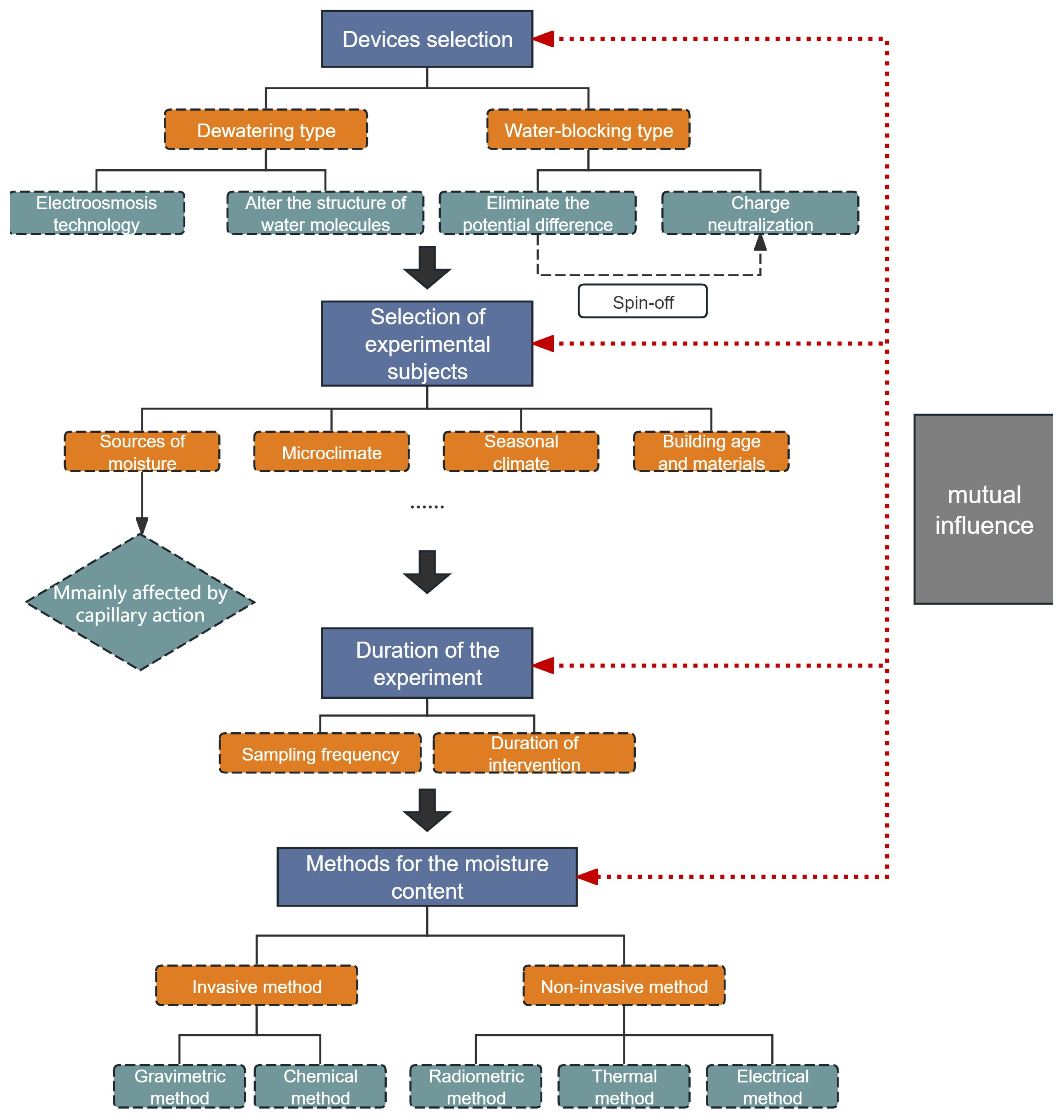
Analysis of practical applications (Table 5) clearly demonstrates that numerous complex factors in real-world scenarios influence the assessment of device effectiveness. These factors primarily operate in two ways: (1) by affecting detection methods, leading to data errors that compromise experimental results; and (2) by directly interfering with the equipment, causing dehumidification devices to fail or exhibit reduced performance. The preceding section primarily analyzed and compared the differences and applicable conditions among various principle-based devices through dual demonstrations of theoretical experiments and practical applications. Building upon this foundation, this section will commence with the experimental procedures of specific cases, focusing on examining the limitations of the current experimental framework and systematically analyzing the key factors influencing the performance of different types of principle-based equipment and experimental judgments.

5.1. Analysis and Improvement of Existing Experimental Frameworks

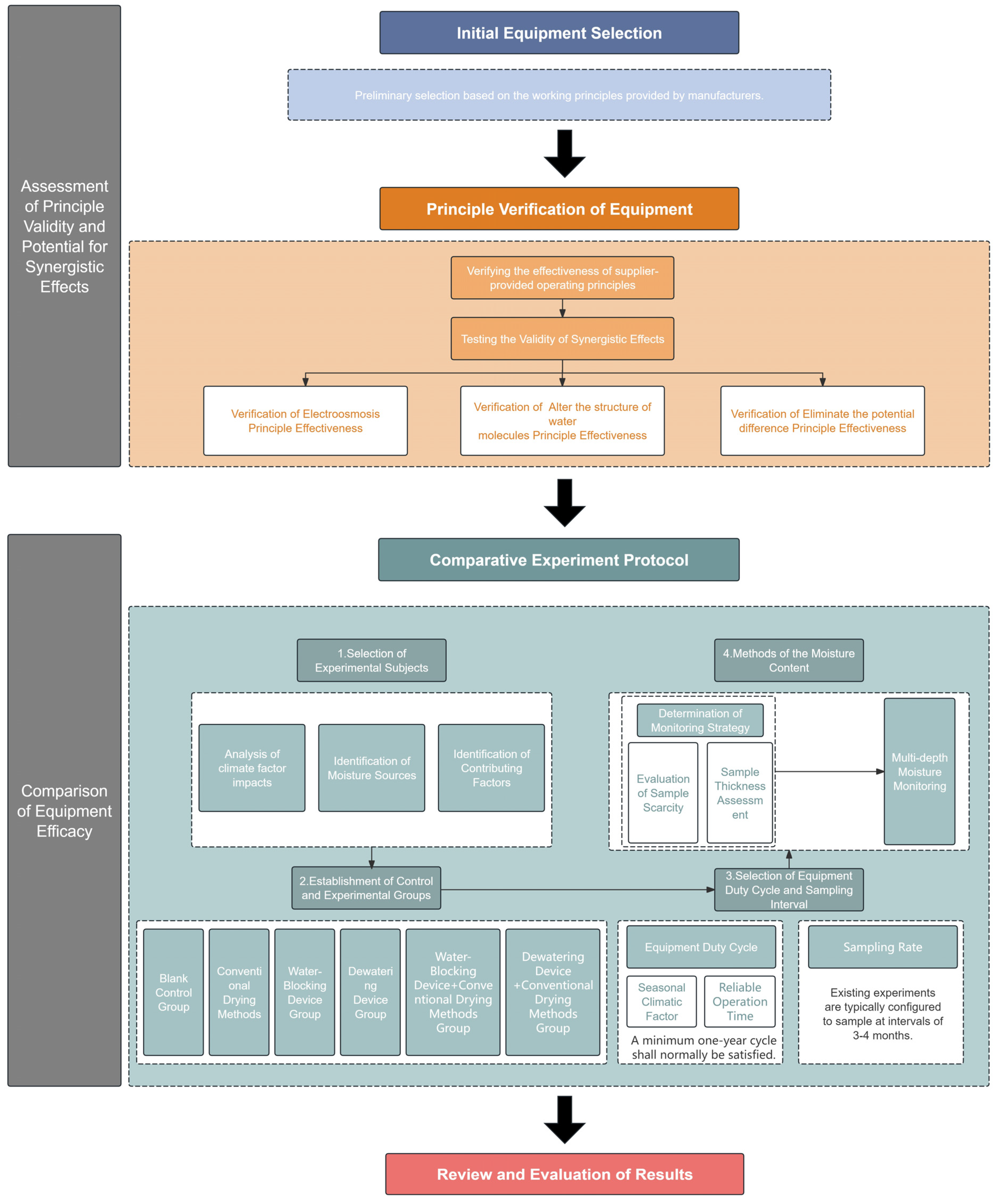
Reviewing existing experiments, this paper summarizes the general workflow of current experiments (Figure 7). Research has identified that the absence of a clear classification system for experimental equipment has led to a lack of targeted design and standardized comparative experiments in existing frameworks. This makes it challenging to systematically compare devices that operate on different working principles, resulting in a severe shortage of data reflecting the actual performance of these technologies. Additionally, researchers often accept manufacturer claims regarding working principles without independent verification, thereby failing to confirm whether the actual operating mechanism aligns with the stated principles. Existing studies tend to focus on individual mechanisms, overlooking potential synergistic effects between multiple mechanisms. Consequently, there is a notable lack of empirical research on composite working mechanisms.
To address these issues, Figure 8 proposes a two-stage experimental testing framework based on the existing experimental framework, aiming to provide a reference for subsequent research. The first stage is the verification phase, designed to confirm the validity of the device’s working principles and explore the potential impact of composite mechanisms. The second stage is the comparison phase, focusing on evaluating the performance differences of various devices in preventing building dampness. This framework aims to enhance the reliability, comparability, and generalizability of experimental conclusions.
Furthermore, analysis of existing experiments reveals that different stages of the experimental process are interrelated and mutually constraining. In Section 5.2 and Section 5.3 below, we will systematically identify potential influencing factors in current experiments by examining the individual steps of various experimental cases and propose corresponding improvement measures.

5.2. Factors Influencing the Equipment Selection Phase

As shown in Table 5 and Section 5.1, the current categorization of equipment principles is incomplete, leading to a research focus primarily on validating individual devices while overlooking inter-type differences. Consequently, existing case studies fail to clearly delineate performance variations among devices with different operating principles, which precludes direct comparisons of dehumidification efficacy across technologies. Moreover, experimental designs often lack specificity in addressing these fundamental differences. For instance, experiments evaluating “water-blocking” devices should specifically test their unique function of inhibiting capillary action. A relevant example is the C.N.T project, where researchers confirmed the feasibility of this approach by comparing an experimental group (using electromagnetic wave devices combined with other methods) with a control group (using the same methods without the electromagnetic wave device) [33].

5.3. Factors Influencing the Experiment Objective Selection Phase

Based on extensive on-site experimental analysis (Table 5), the selection of test subjects requires comprehensive consideration of multiple factors, including moisture sources, seasonal climate, microenvironmental conditions, building age, and construction materials. Proper selection helps minimize the interference of external environmental factors on experimental results, thereby avoiding misjudgments of equipment performance due to such disturbances. Additionally, test sites should prioritize locations that are temporarily closed to the public and free from other interfering activities, to prevent erroneous conclusions. The following section summarizes various influencing factors on experimental outcomes identified in existing studies and proposes corresponding mitigation strategies.

5.3.1. Judging the Sources of Moisture

Electromagnetic wave dehumidification devices are primarily designed to mitigate building dampness caused by the capillary action of moisture within wall structures. Therefore, the selection of experimental sites or the deployment of such devices should focus on areas predominantly affected by capillary moisture ingress. When selecting a location, preference should be given to relatively isolated interior walls with direct contact to the foundation. This strategy can effectively minimize interference from other moisture sources and reduce the influence of adjacent buildings, surrounding structures, and external environmental factors.

5.3.2. Impact of Seasonal and Climatic Factors

Seasonal and climatic variations in precipitation, temperature, and humidity cause significant fluctuations in indoor humidity levels. Concurrently, these changes also alter groundwater levels, thereby intensifying capillary action. If the monitoring period coincides with the rainy season, persistent heavy rainfall may trigger flooding, leading to a substantial increase in moisture content. For example, in the St. Martin’s Church project, flooding caused the humidity readings measured by the electromagnetic wave device in the dehumidified area to show a sharp increase during that period [32]. Therefore, when designing the experiment, in addition to meeting the equipment’s dehumidification cycle requirements, factors such as precipitation cycles and extreme weather conditions must also be considered.

5.3.3. Impact of Microenvironmental Factors

In practical applications, microenvironmental factors exhibit diverse characteristics, complex mechanisms, and inherent challenges in avoidance. Therefore, researchers must conduct comprehensive analyses tailored to specific field conditions. The sheer number of microenvironmental factors makes exhaustive listing impractical; the following represents only common factors identified through experimentation.
(1)
Other moisture sources: During the experiments, other moisture sources exhibit characteristics of diverse origins and inherent inevitability, such as plant growth, rainwater infiltration, increased foot traffic, and flood inundation. For instance, in experiments conducted at “Paardenmarkt,” researchers observed rainwater infiltration at 150 cm above ground level, resulting in significantly higher moisture content at this elevation compared to areas eroded by capillary action [34]. The impact of flooding was evident in the “St. Martin’s Church experiment”: the church was submerged by floodwaters in June, causing water content in the measured area to surge dramatically [32]. The influence of other moisture sources not only affects the selection of experimental locations but also increases the likelihood of equipment malfunction, as electromagnetic wave devices primarily address building dampness caused by capillary action.
(2)
Effects of Ventilation: Structural materials such as murals, coatings, wall panels, fillers, protective films, and roofing materials restrict airflow within the microenvironment. This leads to elevated local relative humidity, reducing moisture evaporation rates and, under extreme conditions, halting natural evaporation entirely. For water-blocking devices these factors can cause subsequent measured humidity values to show minimal decline, remain unchanged, or even increase. Consequently, evaluations of the device’s performance in experiments may be skewed. In experiments conducted at the “Basement of the Church of San Giovanni Maggiore,” it was observed that plaster had peeled away from the central wall section, enhancing evaporation capacity in that area. Final comparative analysis revealed significantly greater dehumidification effects in the central zone compared to the flanking regions [32]. Similarly, at the Pietrasanta Railway Museum, the presence of a translucent roof restricted air circulation, creating a greenhouse effect that not only impaired indoor ventilation but also hindered natural moisture evaporation [33].
(3)
The influence of building age and materials: Metal components can absorb or reflect the electromagnetic waves emitted by dehumidification devices, preventing the waves from reaching moisture-affected areas and thereby compromising the experimental results. In the “Paardenmarkt” project, the building contained metal beams. To mitigate their interference, researchers installed two dehumidification units to cover the beam sections, thus reducing the impact of the metal on the experiment [34].
Meanwhile, the air permeability of different plaster materials and wall thickness can also influence the experiment [32,33]. For water-blocking devices in particular, thicker walls result in a lower natural evaporation rate, leading to a less noticeable dehumidification effect. In addition, due to severe material aging in historic buildings, the properties of adjacent materials may vary significantly, which can also affect the experimental outcomes. This is especially relevant for moisture content measurement methods such as the gravimetric and chemical methods, which cannot sample the exact same location. If such variation occurs, it may lead to deviations in the data and misinterpretation of the results. For example, in the case of St. Bavo’s Church, material aging caused substantial performance variation in identical materials, with marked differences in moisture content observed between two test sites only a few meters apart [33].

5.4. Impact of Experimental Period

The selection of the experimental cycle is primarily influenced by two factors: climate and experimental equipment. As mentioned earlier, climate and extreme conditions play a significant role: in regions with substantial variations in annual precipitation and temperature, sampling should be conducted on the same dates or during the same seasons whenever possible, while avoiding extreme weather events to minimize the impact of seasonal factors. For commercially available dehumidification equipment, the effective operational lifespan typically ranges from six months to two years. Therefore, the experimental cycle should align with the manufacturer’s stated effective service life. Analysis of Table 5 indicates that an experimental cycle of 1 to 2 years is most appropriate.

5.5. Impact of Moisture Content Measurement Methods

Methods for determining moisture content can be categorized into invasive and non-invasive techniques based on whether they cause damage to the sample. Common invasive methods include gravimetric and chemical approaches; non-invasive methods encompass radiometric, electrical, and thermal techniques [23]. These methods exhibit differences in precision, applicability, and other aspects. Table 8 summarizes the commonly used moisture content monitoring methods and classifies them into invasive and non-invasive methods. The following section will provide a detailed description of the specific operational procedures for various methods, along with their respective subcategories. Additionally, it will analyze the advantages and disadvantages of each approach, as well as their suitable application scenarios, aiming to offer reference for subsequent experiments.
Gravimetric method: As the most widely used technique in experimental settings. Due to its high accuracy, it is commonly employed for standard water content determination and follows well-established experimental protocols (e.g., EN 16682 [46], ISO 12570 [47]). Additionally, this method does not require large-scale equipment and is relatively simple to perform.
The typical experimental procedure is as follows: core samples are drilled at various depths and heights along the moisture-affected areas of the wall using a low-speed drill (to minimize moisture evaporation due to heat generation). These samples are then stored in sealed containers to prevent moisture loss. After the intervention, sampling is conducted every six months or annually. The specific moisture content can be calculated using Equation (1):
Moisture content = (Initial weight − Dry weight/Dry weight × 100%)
The effectiveness of the intervention is assessed by comparing the moisture content before and after treatment. During the verification process, samples are collected at various heights and depths of the experimental subject. If moisture content is found to decrease with increasing height and increase with greater depth and is generally higher than the material’s hygroscopic moisture capacity, then it can be inferred that the dampness at the test site is caused by capillary action. In the “Paardenmarkt Project” [34], for instance, researchers used this method for both initial moisture assessment and subsequent monitoring. From the above operational procedures, it can be seen that, although this method features a comprehensive experimental process ensuring high accuracy in its results, the testing of samples relies on a laboratory environment and cannot achieve immediate verification. Simultaneously, extracting samples by drilling holes at different depths of the building requires meticulous assessment of potential damage to prevent fatal harm to the structure. Moreover, the collected samples suffer from the drawback of being non-reproducible [21,23].
Chemical methods: As destructive testing techniques, share similar limitations with the gravimetric method, such as the inability to perform repeated sampling and potential damage to the original building structure. The fundamental principle involves using reagents that react with aqueous solutions, whereby the moisture content of the material is determined by analyzing the concentration of the reagent or its reaction products.
A widely accepted chemical determination method is Karl Fischer titration [48]. This is an electrochemical technique that involves first grinding the sample into a powder and then titrating it with Karl Fischer reagent containing iodine and an organic base. The water in the sample reacts with the reagent to generate iodide ions, and the moisture content of the sample can be calculated by measuring the amount of iodide ions produced. There are two related calculation methods: the volumetric method, which determines moisture content based on the volume of Karl Fischer reagent consumed, and the coulometric method, which calculates it based on changes in electrical potential. Comparatively, the coulometric method offers higher precision, but it is not applicable to samples containing substances such as iron salts, nitrites, ketone salts, oxides, hydroxides, aldehydes, ketones, metal peroxides, strong oxidizing agents, strong acids, and boron-containing compounds. In some countries, it is adopted as a standard moisture detection method, supported by corresponding national standards, such as ISO 760 [49]. However, moisture loss may occur during the initial stage of preparing the sample solution, which can lead to experimental errors. Additionally, if the material contains minerals with water crystallization, this can also interfere with the experimental results, thereby introducing errors.
Thermal methods: Thermal methods include the heat pulse method and infrared imaging method, with the latter being more commonly used in experiments. This method offers advantages such as a large imaging area, fast imaging speed, intuition, and convenience, making it suitable for complex terrains [23]. However, it should be noted that the infrared imaging method can only measure the surface temperature, as it is easily affected by cold bridges, refraction, and weather conditions. Therefore, it usually needs to be used in conjunction with other methods [23].
In the crypt of the San Giovanni Maggiore Church and the Pietrarsa Railway Museum, researchers used thermal imaging technology to measure the moisture content of materials. They quickly measured the surface moisture distribution by utilizing the difference in infrared radiation emitted by water and wall materials. However, for deeper moisture content in the wall, traditional gravimetric methods were still required to obtain data from the interior of the wall [33]. In summary, infrared imaging technology is more suitable for preliminary identification of moisture sources within buildings. To investigate deeper and more comprehensive moisture content, it must be supplemented with other detection methods.
Radiation methods: Radiation methods are mainly divided into two categories. One category calculates moisture content by measuring the energy of rays and scattering angles based on the attenuation or scattering of rays when they collide with hydrogen atoms, such as γ-ray method, neutron radiography method, and CT scanning method. The other category derives moisture content by calculating the nuclear magnetic resonance signal of hydrogen atoms in a strong magnetic field, such as the nuclear magnetic resonance method. Radiation methods have high accuracy, but the equipment is expensive and has poor portability. Moreover, the rays emitted by the equipment are harmful to the human body. Therefore, it is not suitable to use radiation methods in confined spaces with narrow construction areas [23].
Electrical methods: Compared with the aforementioned methods, electrical methods are a relatively balanced measurement means. They have the advantages of portability, non-destructiveness, and repeatable measurement, while also achieving relatively high accuracy. Currently, common electrical methods include TDR (Time Domain Reflectometry), microwave method, GPR (ground-penetrating radar method), and resistance method. Due to the poor portability of ground-penetrating radar devices and the low measurement accuracy of the resistance method (which is easily affected by other factors), the first two methods are often used in field experiments.
However, it should be noted that experimenters need to consider the probe length and detection range of the electrical method equipment [44]. In the Saltino project, researchers used the microwave method to measure the moisture content of materials. It mainly relies on the principle that the dielectric constants of water and the wall materials are different, which causes the resonance frequency of the sensor to vary, thereby calculating the moisture content at the measured point. The salt content is related to the quality factor of the probe or to the resonance line width. However, the effective radius of this device is only 2 cm, while the wall thickness at the experimental site is 60–70 cm. Therefore, experimenters need to insert the probe deep into the wall to obtain data from the interior of the wall. Additionally, the device in this project can only measure materials with a moisture content ranging from 0% to 20% and a salt index between 1 and 10 [32]. As a result, its detection effect is relatively weak for projects located in humid environments, coastal areas, or buildings with a high groundwater level.
In summary, for this type of experiment, there is no one-size-fits-all monitoring method among the existing approaches. Selecting an appropriate moisture content detection method requires comprehensive consideration of multiple factors, including the building’s own characteristics (such as wall thickness, ambient humidity, proximity to the sea or groundwater level, etc.), the precision requirements of the experiment, and the portability and detection range of the equipment. To ensure the authenticity and accuracy of data, multiple detection methods are often combined in certain experiments. When protecting architectural heritage, given its preciousness and rarity, the invasive detection methods mentioned above should be used with caution and after careful assessment.

5.6. Summary

This chapter analyzes the design and implementation process of the electromagnetic wave dehumidification experiment. In response to shortcomings in existing experimental frameworks, an optimized experimental procedure is proposed for reference. To enhance the reliability of experimental results, Table 9 summarizes the main influencing factors and provides corresponding response strategies. The analysis indicates that the validity of the experiment is not determined by any single factor, but rather by the complex interplay among multiple aspects, including equipment selection, test subject screening, experimental timing, and monitoring methods.
In the equipment selection phase, the lack of detailed categorization in existing research leads to a deficiency in targeted experimental design. The selection of experimental objectives should consider moisture sources, seasonal climate, and micro-environmental influences, the latter of which are diverse and difficult to fully control. The choice of experimental period should balance the operational cycle of the equipment with climatic conditions, with a comprehensive analysis suggesting that 1–2 years is generally appropriate. The selection of moisture content monitoring methods requires multi-faceted trade-offs, and a combination of multiple approaches may be considered.

6. Conclusions

This paper focuses on the development and application of electromagnetic wave dehumidification equipment—an emerging dehumidification technology for architectural heritage—systematically tracing its origins and evolution. By analyzing existing applications, several issues in the field are identified, including confusion in the classification of working principles, inconsistent evaluations of device effectiveness, lack of targeted experimental designs, absence of validation for working mechanisms, and insufficient investigation into the synergistic effects of combined mechanisms.
In response to the above issues, this paper, for the first time, establishes a classification framework for electromagnetic wave dehumidification equipment, categorizing existing devices into two main types: “dewatering type” and “water-blocking type.” The former achieves dehumidification based on electroosmosis or by altering the molecular structure of water, while the latter blocks moisture by eliminating potential differences or neutralizing charges. By reviewing the working mechanisms and boundary conditions of different categories and combining theoretical analysis with engineering case studies, the performance characteristics and applicable scenarios of each type are clarified. Based on a synthesis of existing experimental analyses, devices operating on the electroosmosis principle require an electric field strength exceeding 40 V/m to achieve significant dehumidification effects, yet the potential thermal damage to building structures caused by Joule heating effects must be carefully considered. Devices utilizing the charge neutralization principle demonstrate effective water-blocking capabilities but require integration with supplementary dehumidification measures. Conversely, devices based on alter the structure of water molecules are highly sensitive to environmental variations and are insufficient for effective dehumidification when used independently.
To enhance the accuracy and standardization of research, this paper innovatively proposes a two-stage “verification-comparison” testing framework, systematically summarizing key factors influencing experimental results. These include the relevance of equipment selection, the experiment objective selection (such as moisture source identification, seasonal climate variations, and micro-environmental differences), the experimental period (time periods cover all seasons, avoid various extreme weather conditions, and meet the operational duration requirements of the equipment.), and the moisture content measurement methods (balancing the preciousness of heritage structures, precision, and portability). This provides a reference for the standardization and engineering application of the proposed technology.
Currently, research on electromagnetic wave dehumidification technology in the field of architectural heritage is still in its early stages, and some mechanisms—particularly the charge neutralization of water molecules by electromagnetic waves—lack sufficient experimental evidence. Future work should further explore the microscopic interaction mechanisms between electromagnetic waves and water molecules. Additionally, existing experiments have mostly focused on verifying single devices, lacking systematic horizontal comparison. Subsequent studies could build upon the experimental framework proposed in this paper to develop more detailed and standardized testing protocols, strengthen comparisons among devices based on the same principle, and conduct cross-comparison studies among devices with different principles, thereby promoting more scientific and standardized development in this field.

Supplementary Materials

The following supporting information can be downloaded at https://www.mdpi.com/article/10.3390/buildings16030572/s1, File S1: PRISMA 2020 Checklist; File S2: PRIMSA Abstract Checklist.

Author Contributions

Conceptualization, S.C. and C.G.; Methodology, S.C. and C.G.; Validation, S.C., C.G. and Y.Z.; Writing—original draft, S.C., C.G. and Y.Z.; Visualization, S.C. and C.G.; Investigation, S.C. and C.G.; Review and editing, S.C., Y.Z. and S.L.; Data curation, S.C. and C.G.; All authors have read and agreed to the published version of the manuscript.

Funding

A Genealogical Study of Municipal Construction in German Concessions and Leased Territories in Modern China supported by Shandong Provincial Natural Science Foundation for Youths, ZR2025QC1956Z.

Data Availability Statement

The original contributions presented in this study are included in the article. Further inquiries can be directed to the corresponding author.

Conflicts of Interest

The authors declare no conflicts of interest.

References

  1. Piuzzi, E.; Pittella, E.; Pisa, S.; Cataldo, A.; De Benedetto, E.; Cannazza, G. Microwave reflectometric methodologies for water content estimation in stone-made Cultural Heritage materials. Measurement 2018, 118, 275–281. [Google Scholar] [CrossRef]
  2. Price, C.; Amoroso, G.; Fassina, V. Stone Decay and Conservation: Atmospheric Pollution, Cleaning, Consolidation and Protection. Stud. Conserv. 1984, 29, 158. [Google Scholar] [CrossRef]
  3. Franzoni, E. Rising damp removal from historical masonries: A still open challenge. Constr. Build. Mater. 2014, 54, 123–136. [Google Scholar] [CrossRef]
  4. Di Tullio, V.; Proietti, N.; Gentile, G.; Giani, E.; Poggi, D.; Capitani, D. Unilateral NMR: A noninvasive tool for monitoring in situ the effectiveness of intervention to reduce the capillary raise of water in an ancient deteriorated wall painting. Int. J. Spectrosc. 2012, 2012, 494301. [Google Scholar] [CrossRef]
  5. Agyekum, K.; Ayarkwa, J.; Koranteng, C. Controlling rising damp in new buildings: Field trials of proposed treatment methods. In Infrastructure as a driver for economic growth and integration in African: What is the way forward? In Proceedings of the International Conference on Infrastructure Development in Africa (ICIDA), Johannesburg, South Africa, 10–12 July 2016; Available online: https://www.researchgate.net/publication/306108050 (accessed on 13 November 2025).
  6. Montuori, M.A. MURATURE ed UMIDITÀ di RISALITA CAPILLARE: Dalla DIAGNOSI agli INTERVENTI; Technical Report; Università degli Studi di Ferrara, LABOA: Ferrara, Italy, 2024; Available online: https://cias-ferrara.it/onewebmedia/documenti%20scaricabili/sem05_Montuori.pdf (accessed on 26 November 2025).
  7. Feijoo, J.; Gomez-Villalba, L.S.; Fort, R.; Rabanal, M.E. Simultaneous desalination and consolidation treatment through the application of electrokinetic techniques. Constr. Build. Mater. 2023, 408, 133686. [Google Scholar] [CrossRef]
  8. Franzoni, E. State-of-the-art on methods for reducing rising damp in masonry. J. Cult. Herit. 2018, 31S, S3–S9. [Google Scholar] [CrossRef]
  9. Sharpe, R.W. Injection systems for damp-proofing. Build. Environ. 1977, 12, 191–197. [Google Scholar] [CrossRef]
  10. Sandrolini, F.; Franzoni, E. Repair Systems for the Restoration of Ancient Buildings—Dampness Rise Problem. Restor. Build. Monum. 2007, 13, 161–172. [Google Scholar] [CrossRef]
  11. Torres, M.I.M.; Freitas, V.P.d. Treatment of rising damp in historical buildings: Wall base ventilation. Build. Environ. 2007, 42, 424–435. [Google Scholar] [CrossRef]
  12. Heiman, J.L. An evaluation of methods of treating rising damp. In Moisture Migration in Buildings; ASTM STP 779; Lieff, M., Trechsel, H.R., Eds.; American Society for Testing and Materials: Philadelphia, PA, USA, 1982; Volume STP779-EB, pp. 121–137. [Google Scholar] [CrossRef]
  13. Dreyer, J. Thermal Treatment Of Moisture Damaged Construction. In Structural Studies, Repairs and Maintenance of Heritage Architecture IX; Brebbia, C.A., Torpiano, A., Eds.; WIT Press: Southampton, UK, 2005; Volume 83, pp. 473–482. Available online: https://www.witpress.com/elibrary/wit-transactions-on-the-built-environment/83/15330 (accessed on 10 November 2025).
  14. Roland, U.; Holzer, F.; Trommler, U.; Pfütze, C.; Kopinke, F.-D.; Pfütze, C.; Freytag, O. Radiowellenunterstützte thermische Behandlung als neue Technologie zur Trocknung und Dekontamination von Bauteilen [Radio-wave supported thermal treatment as new technology for drying and decontamination of building components]. Chem. Ing. Tech. 2011, 83, 254–261. [Google Scholar] [CrossRef]
  15. Castelluccio, R.; Vitiello, V. Deleting of rising damp in the archaeological site of Piazza Armerina through the application of the technology by neutralizing electrical charge T.N.C. In World Heritage and Degradation: Smart Design, Planning and Technologies; Gambardella, C., Ed.; La Scuola di Pitagora: Napoli, Italy, 2016; pp. 1457–1466. Available online: https://www.researchgate.net/publication/332524309 (accessed on 11 September 2025).
  16. Castelluccio, R.; Vitiello, V.; Rossetto, M. Heritage 4.0. Cultural sites: The integrated system C.N.T. for rising damp diagnosis–Recovery–Monitoring. In Proceedings of the IXth International Conference AIES, Diagnosis for the Conservation and Valorization of Cultural Heritage, Napoli, Italy, 13–14 December 2018; Available online: https://www.researchgate.net/publication/332528178 (accessed on 11 September 2025).
  17. Page, M.J.; McKenzie, J.E.; Bossuyt, P.M.; Boutron, I.; Hoffmann, T.C.; Mulrow, C.D.; Shamseer, L.; Tetzlaff, J.M.; Akl, E.A.; Brennan, S.E.; et al. The PRISMA 2020 statement: An updated guideline for reporting systematic reviews. BMJ 2021, 372, n71. [Google Scholar] [CrossRef] [PubMed]
  18. Pratiwi, S.N.; Wijayanto, P.; Putri, C.A. Diagnosis of capillary rise in heritage building. In Proceedings of the 3rd International Seminar on Livable Space, Jakarta, Indonesia, 27 August 2020. [Google Scholar] [CrossRef]
  19. Vitiello, V.; Castelluccio, R.; Del Rio Merino, M. Experimental research to evaluate the percentage change of thermal and mechanical performances of bricks in historical buildings due to moisture. Constr. Build. Mater. 2020, 244, 118107. [Google Scholar] [CrossRef]
  20. Vitiello, V.; Castelluccio, R.; Villoria Sáez, P. Correlation of electrical measurements with moisture content for the diagnosis of preservation levels of neapolitan traditional masonries and the determination of recovery interventions. Constr. Build. Mater. 2023, 409, 134100. [Google Scholar] [CrossRef]
  21. Panico, S.; Herrera-Avellanosa, D.; Troi, A. Monitoring rising damp in solid masonry walls: An experimental comparison of five different methods. J. Build. Eng. 2023, 75, 106999. [Google Scholar] [CrossRef]
  22. Koca, A.; Uğural, M.N.; Yaman, E. Rising damp treatment in historical buildings by electro-osmosis: A case study. Buildings 2024, 14, 1460. [Google Scholar] [CrossRef]
  23. Huang, X.; Luo, C.; Hu, P.; Feng, C. Review of Non-destructive Testing Methods for the Moisture Content of Porous Building Materials. Build. Sci. 2024, 40, 97–106. [Google Scholar] [CrossRef]
  24. Wang, C.; Chen, M.; Jia, X.; Li, K.; Wang, C.; Wang, Y. Assessment of multiscale variability and influencing factors of humidity environment in cave temples of Wudang Mountain, China. J. Cult. Herit. 2025, 74, 66–79. [Google Scholar] [CrossRef]
  25. Mannai, A.; Guellouz, L.; Mejri, E.; Achour, M.; Hommel, J. Mineralogical and chemical study of the salt alteration of masonry blocks in the baths of Antoninus ruins at Carthage, Tunisia. STAR Sci. Technol. Archaeol. Res. 2025, 11, e2553367. [Google Scholar] [CrossRef]
  26. Mohie, M.A.; Korany, M.S. Comprehensive study of materials and techniques for the structural conservation of a Maramaldo painting on canvas from the 19th century by Eleuterio Pagliano. Pigment. Resin Technol. 2025. Forthcoming. [Google Scholar] [CrossRef]
  27. Reuss, Ferdinand Friedrich von. Available online: https://www.deutsche-biographie.de/pnd116453672.html#adbcontent/ (accessed on 26 November 2025).
  28. Helmholtz, H. Studien über electrische Grenzschichten. Ann. Der Phys. 1879, 243, 337–382. [Google Scholar] [CrossRef]
  29. Casagrande, I.L. Electro-Osmosis in Soils. Geotechnique 1949, 1, 159–177. [Google Scholar] [CrossRef]
  30. Martin, L.; Alizadeh, V.; Meegoda, J. Electro-osmosis treatment techniques and their effect on dewatering of soils, sediments, and sludge: A review. Soils Found. 2019, 59, 407–418. [Google Scholar] [CrossRef]
  31. Liu, Y.; Xie, X.; Zheng, L.; Li, J. Electroosmotic Stabilization on Soft Soil: Experimental Studies and Analytical Models (A historical review). Int. J. Electrochem. Sci. 2018, 13, 9051–9068. [Google Scholar] [CrossRef]
  32. Vanhellemont, Y.; Bolhuis, J.; de Bouw, M.; Dubois, S.; Lubelli, B.; Miedema, L.; van Hees, R. Are electrokinetic methods suitable for the treatment of rising damp? J. Cult. Herit. 2018, 31, S23–S29. [Google Scholar] [CrossRef]
  33. Castelluccio, R.; Vitiello, V.; Infante, M. Testing of the Charge Neutralization Technology: Diagnosis and Performance Efficacy. In Proceedings of the Colloqui.AT.e 2018—Edilizia Circolare. Costruire nel terzo millennio, Cagliari, Italy, 12–14 September 2018; Available online: https://hdl.handle.net/11588/741111 (accessed on 11 September 2025).
  34. Lubelli, B.; van den Hees, R.; Miedema, L.; Fuggazzotto, M.; Sardella, A.; Bonazza, A. “Electro-physical” methods to stop rising damp: Assessment of the effectiveness in two case studies. In Proceedings of the International RILEM Conference on Materials, Systems and Structures in Civil Engineering (MSSCE 2016), Lyngby, Denmark, 22–24 August 2016. [Google Scholar]
  35. Vogeley, J. Protection against rising damp in masonry: The baroque palace in Ludwigsburg, a case study. In Building Appraisal, Maintenance and Preservation, Proceedings of a 3 Day Symposium Held at the University of Bath, Bath, UK, 10–12 July 1985; Department of Architecture and Building Engineering: Bath, UK, 1985; pp. 113–123. [Google Scholar]
  36. Dueñas, J.A.; Weiland, C.; García-Selfa, I.; Ruiz-Rodríguez, F.J. Magnetic influence on water evaporation rate: An empirical triadic model. J. Magn. Magn. Mater. 2021, 539, 168377. [Google Scholar] [CrossRef]
  37. Poulose, S.; Alvarez-Braña, Y.; Basabel-Desmonts, L.; Benito-Lopez, F.; Coey, J.M.D. Magnetic Field Enhancement of Water Evaporation in Confined Spaces. IEEE Magn. Lett. 2023, 14, 1–5. [Google Scholar] [CrossRef]
  38. Riminesi, C.; Sansonetti, A.; Scala, A. Assessment of the effectiveness of a dehumidification system by emission of electromagnetic fields: Proposal of a protocol. J. Cult. Herit. 2018, 31, S46–S51. [Google Scholar] [CrossRef]
  39. Melada, J.; Gargano, M.; Veronese, I.; Ludwig, N. Does electro-osmosis work in moisture damage prevention? Applicability of infrared-based methods to verify water distribution under electric fields. J. Cult. Herit. 2018, 31, S38–S45. [Google Scholar] [CrossRef]
  40. Bertolini, L.; Coppola, L.; Gastaldi, M.; Redaelli, E. Electroosmotic transport in porous construction materials and dehumidification of masonry. Constr. Build. Mater. 2009, 23, 254–263. [Google Scholar] [CrossRef]
  41. Ottosen, L.M.; Rørig-Dalgård, I. Drying brick masonry by electro-osmosis. In Proceedings of the 7th International Masonry Conference, London, UK, 30 October–1 November 2006. [Google Scholar]
  42. Heiman, J.L.; Waters, E.H.; McTaggart, R.C. THE TREATMENT OF RISING DAMP. Archit. Sci. Rev. 1973, 16, 170–177. [Google Scholar] [CrossRef]
  43. Wang, Y.; Wei, H.; Li, Z. Effect of magnetic field on the physical properties of water. Results Phys. 2018, 8, 262–267. [Google Scholar] [CrossRef]
  44. Toledo, E.J.L.; Ramalho, T.C.; Magriotis, Z.M. Influence of magnetic field on physical-chemical properties of the liquid water: Insights from experimental and theoretical models. J. Mol. Struct. 2008, 888, 409–415. [Google Scholar] [CrossRef]
  45. Seyfi, A.; Afzalzadeh, R.; Hajnorouzi, A. Increase in water evaporation rate with increase in static magnetic field perpendicular to water-air interface. Chem. Eng. Process.-Process Intensif. 2017, 120, 195–200. [Google Scholar] [CrossRef]
  46. DIN EN 16682:2017; Conservation of Cultural Heritage—Methods of Measurement of Moisture Content, or Water Content, in Materials Constituting Immovable Cultural Heritage. Deutsches Institut für Normung: Berlin, Germany, 2017.
  47. ISO 12570:2000; Hygrothermal Performance of Building Materials and Products—Determination of Moisture Content by Drying at Elevated Temperature. International Organization for Standardization: Geneva, Switzerland, 2000.
  48. Camuffo, D. Standardization activity in the evaluation of moisture content. J. Cult. Herit. 2018, 31, S10–S14. [Google Scholar] [CrossRef]
  49. ISO 760:1978; Determination of Water—Karl Fischer Method (General Method). International Organization for Standardization: Geneva, Switzerland, 1978.
Figure 1. Methods related to building dehumidification.
Buildings 16 00572 g001
Figure 2. Electrochemical principles underlying capillary action.
Buildings 16 00572 g002
Figure 3. PRISMA flow diagram. * The primary data source is the Web of Science (n = 466). Based on the literature obtained from it, related documents were further searched in databases such as Google Scholar and Scopus (n = 56).
Buildings 16 00572 g003
Figure 4. Keyword Clustering of literature on dehumidification in historic buildings.
Buildings 16 00572 g004
Figure 5. The evolutionary path of electromagnetic wave devices [27,28,29].
Buildings 16 00572 g005
Figure 6. The principle of electromagnetic wave dehumidification.
Buildings 16 00572 g006
Figure 7. Existing experimental framework.
Buildings 16 00572 g007
Figure 8. The optimized experimental framework.
Buildings 16 00572 g008
Table 1. Comparison of dehumidification methods.
MethodChemical Damp-ProofingWall CuttingBottom Opening MethodKnapen TubesRepair PlastersHeating MethodElectrical Method
Non-destructive
Effectivenessrelatively goodgoodrelatively poorpooremphasize salt removalrelatively goodto be verified
Operational difficultydifficultdifficultdifficultmoderatemoderatesimplesimple
Investmentlowlowhighlowhighhighlow
Table 2. Research Trends in Building Dehumidification (2020–2025).
Relevant StudiesSpecific Publication DateType of LiteratureFocus of the Literature
1. Pratiwi, S.N.; Wijayanto, P.; Putri, C.A. (2020) [18]27 August 2020Conference PaperCapillary damage to buildings.
2. Vitiello, V.; Castelluccio, R.; Del Rio Merino, M. (2020) [19]30 May 2020Research ArticleCapillary damage to buildings.
3. Feijoo, J.; Gomez-Villalba, L.S.; Fort, R.; Rabanal, M.E. (2023) [7]8 December 2023Research ArticleElectrical methods for dehumidification
4. Vitiello, V.; Castelluccio, R.; Villoria Saez, P. (2023) [20]15 December 2023Research ArticleResearch of Moisture Monitoring Methods
5. Panico, S.; Herrera-Avellanosa, D.; Troi, A. (2023) [21]15 September 2023Research ArticleResearch of Moisture Monitoring Methods
6. Koca, A., Uğural, M.N.; Yaman, E. (2024) [22]17 May 2024Research ArticleElectrical methods for dehumidification
7. Huang, X.; Luo, C.; Hu, P.; Feng, C. (2024) [23]11 December 2024ReviewResearch of Moisture Monitoring Methods
8. Wang, C.; Chen, M; Jia, X., Li, K.; Wang, C.; Wang, Y. (2025) [24]7 June 2025Research ArticleCapillary damage to buildings.
9. Mannai, A.; Guellouz, L.; Mejri, E.; Bouhlila, R. (2025) [25]14 September 2025Research ArticleCapillary damage to buildings
10. Mohie, M.A.; Korany, M. S. (2025) [26]25 November 2025Research ArticleCapillary damage to buildings
Table 3. Comparison of electromagnetic wave dehumidification devices.
TypesPrincipleApplication Locations
Dewatering typeWireless electroosmosis technologySt. Bavo’s Church [32]
Alter the structure of water moleculesPaardenmarkt [34]
Water-blocking typeEliminate the potential differenceThe baroque palace of Ludwigsburg [35]
Charge neutralization methodThe Pietrarsa Railway Museum [33]
Table 4. Experiment Risk Assessment.
ProjectMoisture Source Identification 1Duration of Intervention 2Screening for Extreme Factors 3Selection of Moisture Monitoring Methods 4Data Integrity 5Risk Assessment
Church of San Giovanni Maggiore (Naples) [33]low
(1)
low
(1)
low
(1)
low
(1)
low
(1)
low
(5)
Pietrarsa Railway Museum (Naples) [33]low
(1)
low
(1)
low
(1)
low
(1)
low
(1)
low
(5)
An apartment in the Saltino (Florence) [38]low
(1)
medium
(2)
(The one-year period has not been fulfilled.)
low
(1)
medium
(2)
(No multi-depth measurements were conducted.)
low
(1)
low
(7)
Paardenmarkt (Delft) [34]low
(1)
medium
(2)
(The one-year period has not been fulfilled.)
low
(1)
low
(1)
low
(1)
low
(6)
St. Bavo’s church (Haarlem) [34]low
(1)
low
(1)
low
(1)
low
(1)
low
(1)
low
(5)
St.Martin’s church (Genappe) [32]low
(1)
low
(1)
low
(1)
low
(1)
low
(1)
low
(5)
1 Failure to identify the moisture source: High risk (3); Failure to exclude other moisture sources: Medium risk (2); All potential sources investigated: Low risk (1). 2 Failure to consider equipment suitability and seasonal factors regarding timing: High risk (3); Only one of the two factors adequately addressed: Medium risk (2); Both factors adequately addressed: Low risk (1); 3 Failure to investigate influencing factors: High risk (3); Investigated but failed to specify corresponding measures: Medium risk (2); Investigated and regulated influencing factors: Low risk (1); 4 Selection of moisture content monitoring method: Unspecified (3); Low-precision method or lack of multi-depth measurements (2); High-precision method with multi-depth measurements: Low risk (1); 5 No data recorded: High risk (3); No process data recorded (2); Complete data recording: Low risk (1).
Table 5. Field experiment comparison of electromagnetic wave dehumidification devices.
Building (Location)PeriodPrincipleMicroenvironmentDurationMonitoring MethodsResult
Church of San Giovanni Maggiore (Naples) [33]12th centurycharge neutralization method1. Lateral extrusion of filling materials
2. Inside the crypt
2 yearsgravimetric method + thermal methodsuccess
Pietrarsa Railway Museum (Naples) [33]20th century (1989)charge neutralization method1. Near the sea
2. Translucent layer
3. Inconsistent coatings
2 yearsgravimetric method + thermal methodsuccess
An apartment in the Saltino (Florence) [38]15th century (first built)
20th century (expanded)
Water-blocking type1. Inconsistent thickness of old and new walls
2. Wall surface coating
7 monthselectrical methodfailure
Paardenmarkt (Delft) [34]17th centuryalter the structure of water molecules1. Rain penetration
2. Metal beam
3. High groundwater level
4. Hygroscopic salts
10 monthsgravimetric methodfailure
St. Bavo’s church (Haarlem) [34]15th centurywireless electroosmosis technology1. Change of sampling points
2. Presence of hygroscopic salts
3. The aging properties of the materials vary significantly
4. High relative humidity
1 yearsgravimetric methodfailure
St.Martin’s church (Genappe) [32]18th centuryunknown1. Foundations in groundwater
2. Enclosed space
3. Flood impact
4. Thick wall
(87 cm)
2 yearsgravimetric methodfailure
Table 6. Simulation Experiment of an Electroosmosis Principle Device.
Experimental CaseEnvironmentDevicesSample MaterialsSolutionMonitoring MethodsResult
Experiment 1 [39]Lab: 22 °C, 40% RH+: Copper
–: Aluminum
1. eramic tiles
2. lime putty mortars
3. plasters with powdered bricks “cocciopesto”
1. 0.5 M NaCl1. gravimetric method
2. thermal method
3. radiometric method
≤30 V/m: Ineffective
>150 V/m: Effective (Joule effect)
Experiment 2 [40]Lab: 20–23 °C, 50% RHActivated titanium meshes1. hand-made clay brick
2. extruded clay brick
3. tuff brick
4. commercial
ready-mixed cement–lime mortar
5. made of clay or tuff bricks jointed with a ready-mixed cement-lime mortar
1. 0.6 M NaCl
2. 0.1 M Na2SO4
3. tap water
1. gravimetric method
2. electrical method
Small samples
(Sample Materials: 1–4)
(height and diameter: 50 mm): Effective
Actual samples (Sample Materials: 5) (thick: 250 mm and high: 800 mm): Ineffective
Experiment 3 [22]Field: Gül MosqueMirline device1. brick1. composite composition1. electrical methodeffective
Experiment 4 [41]Lab (not detailed)Aluminum electrodes1. danish red bricks1. tap water1. gravimetric methodeffective
Experiment 5 [41]Field: brick house
(build in 1950)
Iron electrodes1. yellow bricks
2. red bricks
3. carbonate based
1. composite composition1. gravimetric methodeffective
Table 7. Simulation Experiment on the Influence of magnetization on Water evaporation.
Experimental CaseDevicesEnvironmentTemperatureMagnetic Field StrengthSolutionResult (Optimal Conditions)
Experiment 1 [37]1. magnetic field generatorlaboratory6–70 °C30–200 mTtype II waterThe optimal effect is 20% at 6 °C and 150 mt.
Experiment 2 [43]1. MWD-1 magnetizing equipmentlaboratory25–70 °C100–400 mTtap waterThe optimal effect is 38.98% at 300 mt.
Experiment 3 [44]1. disc-shaped magnet (The material is not specified)laboratory22 °C45–65 mTunknownThe effect is 35.4% (The optimal conditions have not been determined.)
Experiment 4 [36]1. d-Fe-B permanent magnetLaboratory26 °C300 mTdeionized waterThe optimal effect is 38.98% at 26 °C and 300 mt.
Experiment 5 [45]2. ferrite permanent ring magnetLaboratory31 ± 1 °C45–100 mTdeionized waterThe optimal effect is 18.3% at 75 mt.
Table 8. Comparison of moisture content monitoring methods.
Invasive MethodNon-Invasive Method
MethodGravimetric MethodChemical MethodThermal MethodRadiometric MethodElectrical Method
Precisionhighhighrelatively lowhighrelatively high
Non-destructive
Repeated sampling
Data acquisitionlaboratory analysislaboratory analysisreal-time analysislaboratory analysisreal-time analysis
Table 9. Summary of Key Factors Influencing Electromagnetic Wave Dehumidification.
PhaseInfluencing FactorsCore Issue/ChallengeKey Recommendations/Mitigation Strategies
1. Equipment SelectionIncomplete categorization of equipment principleslacking direct performance comparisons between different operating principles.Design comparative experiments based on the aforementioned classification.
2. Experiment Objective Selection2.1 Sources of moistureNon-capillary moisture sources can interfere with results.Prioritize areas where dampness is predominantly caused by capillary rise.
2.2 Seasonal and climatic Factors(a) Variations in precipitation, temperature, and humidity influence groundwater levels and capillary action dynamics.
(b) Extreme weather phenomena such as seasonal floods can lead to data anomalies or device malfunction.
The experimental period should account for precipitation cycles, avoid extreme weather, and cover full seasonal variations.
2.3 Microenvironmental Factors(a) Other Moisture Sources
(b) Ventilation Effects
(c) Building Age & Materials
(a) Conduct thorough pre-assessment to minimize known interfering sources during site selection.
(b) Document and evaluate ventilation restrictions, or account for their effects during data analysis.
(c) Adjust device placement to cover areas with metal interference; consider wall thickness and material heterogeneity when selecting measurement methods.
3. Experimental PeriodClimate & Equipment LifespanAnnual climatic fluctuations and the effective service life of the equipment jointly determine an appropriate monitoring duration.A period of 1–2 years is generally suitable.
4. Methods for the moisture contentMethod Selection & LimitationsRequires trade-offs between accuracy, destructiveness, real-time capability, portability, detection depth, and cost(a) Comprehensive Consideration: The selection of methods should be based on a comprehensive consideration of building characteristics (e.g., heritage value, wall thickness, salt content), required precision, and equipment availability.
(b) Combined Use: Combining multiple methods (e.g., thermal imaging for initial screening and gravimetric method for precise measurement) is a common practice.
Disclaimer/Publisher’s Note: The statements, opinions and data contained in all publications are solely those of the individual author(s) and contributor(s) and not of MDPI and/or the editor(s). MDPI and/or the editor(s) disclaim responsibility for any injury to people or property resulting from any ideas, methods, instructions or products referred to in the content.