Article

Enhancing Electromagnetic Wave Absorption in 3D-Printed Concrete with Superabsorbent Polymers for High Performance


1
China Testing & Certification International Group Shanghai Co., Ltd., Shanghai 201203, China
2
School of Civil Engineering and Architecture, East China Jiaotong University, Nanchang 330013, China
3
School of Design and Built Environment, Curtin University, Perth, WA 6102, Australia
4
Tongji University Library, Shanghai 200092, China
*
Author to whom correspondence should be addressed.
Buildings 2026, 16(2), 300; https://doi.org/10.3390/buildings16020300 (registering DOI)
Submission received: 22 September 2025 / Revised: 24 December 2025 / Accepted: 6 January 2026 / Published: 11 January 2026
(This article belongs to the Special Issue Urban Renewal: Protection and Restoration of Existing Buildings)

Abstract

The widespread application of concrete with specific functions has become indispensable in modern technology. However, the persistent issue of electromagnetic pollution poses a serious hazard to human health, electronic equipment, and military operations. Although various conventional electromagnetic absorbing materials have been incorporated, the achievable EMW-absorption performance is still restricted, with only a narrow effective absorption bandwidth. This study investigates the application of advanced 3D-printing technology to produce concrete with enhanced EMW-absorption properties with the incorporation of SAP (super-absorbent polymers). To achieve this, concrete samples with three SAP occupying the concrete volumes (0 vol.%, 20 vol.%, and 40 vol.%) and three methods (pretreatment-addition) were examined to provide an in-depth analysis of the properties and microstructures. The study reveals superior electromagnetic absorption in concrete enhanced with SAP compared to the untreated counterpart. Specifically, samples subjected to 40 vol.% Dry Treatment SAP exhibited exceptional performance, achieving 98.77% absorption at 7.53 GHz frequency with a peak reflectance of −19.12 dB, outperforming unmodified absorbing resin concrete by 25.44%. Moreover, microscopic analysis revealed irregular void distribution within the concrete, while the 3D-printing and -mixing processes led to SAP particle fractures, forming a complex 3D structure, thereby enhancing EMW-absorption performance. Ultimately, by selecting appropriate SAP pre-treatment and mixing methods based on the specific frequency range, this study provides crucial references and practical guidance for the application of EMW-absorbing concrete in military and technological contexts.

1. Introduction

Modern electronic technologies, including wireless transmission systems and high-frequency electric equipment, result in growing problems of electromagnetic pollution [1,2]. Meanwhile, multiple reflections of electromagnetic energy and waves cause serious hazards to human health [3,4], electronic equipment [5,6], and military stealth applications [7,8]. Therefore, the emphasis on materials that effectively absorb electromagnetic waves (EMWs) to minimize the harmful impacts caused by electromagnetic radiation has grown. Concrete structures have emerged as the prevailing architectural style while meeting the enormous requirements of modern industrial production and social activities [9,10,11]. Nevertheless, ordinary cementitious composites offer a restricted ability to reflect propagating microwaves and decrease the EMW return intensity [12,13,14]. EMW-absorbing concrete absorbs and consumes EMWs, converting them into thermal energy to protect electronic equipment while mitigating interference [15]. EMW-absorbing concrete also offers wide-ranging applications in immunization and protection, building thermal and acoustic insulation, fire protection, and corrosion prevention [16,17]. Thus, numerous absorbent materials have been explored to improve electrical conductivity, magnetic properties and EMW matching capabilities, such as fly ash [18], ferrite magnetite [19], metallurgical slag [20], rubber solids [21,22], solid waste [23,24,25,26] and carbon materials (e.g., carbon powder, carbon nanotubes, carbon black, carbon fibers, silicon carbide, and graphite) [27,28].
Despite the addition of normal electromagnetic absorbing materials, the ability to absorb EMW remains constrained, and the effective absorption broadband is still narrow. The peak reflectivity and EMW bandwidth were unmatched due to the inhomogeneous distribution of the dielectric constant and permeability in the relevant frequency domain of the majority-EMW-absorbing materials [29,30]. Therefore, the optimal EMW-absorbing material possesses features which include light weight, high absorption, wide bandwidth, thin matching layer thickness, and multi-functionality [31,32,33,34]. These characteristics improve performance for EMW-absorbing materials and reduce electromagnetic interference [35,36,37]. In addition, optimization for the material-air resistance matching feature has crucial effects regarding the EMW-absorbing materials’ performance. As a result, application in concrete by re-improved and optimized EMW-absorbing materials holds significance and promotes the military and architectural fields.
Porous materials, such as expanded perlite [38], hollow glass microspheres [39], and expanded polystyrene [40,41], enhance the impedance matching properties. The materials also maximize the induced dissipation, thus increasing the EMW broadband. Xie et al. [38] incorporated expanded perlite into concrete, producing a material with a reflectance of −15 dB at an absorption bandwidth of 12.5 GHz. Lv et al. [39] employed hollow glass microspheres as fillers to improve the EMW-absorbing properties of concrete, reaching a reflectance of −8.2 dB with an absorption bandwidth at 4.4 GHz. Notably, Ma et al. [41] added expanded polystyrene to a three-layer concrete material, which achieved a reflectance of −19 dB at an average absorption bandwidth of 10 GHz. Furthermore, Guan et al. [42] blended expanded polystyrene into cement-based composites, achieving a minimum reflectance of −15.27 dB in the 8–18 GHz. These efforts have accelerated the transformation of concrete into both functional and eco-friendly materials.
Super-absorbent polymer (SAP) was developed as a polymer functional material that absorbs water and forms a gel state in a relatively brief period [43,44]. Simultaneously, the concrete surface formed a 3D space dominated by water, which improved the spatial impedance matching property [45]. Moreover, the incorporation of SAP in concrete cementitious materials improves the impedance gradient of air–concrete–wave-absorbing materials, which has great potential to develop EMW-absorption material. Hence, the SAP holds broad application prospects in EMW-absorbing concrete.
As traditional casting methods fail to fulfill flexible and precise manufacturing processes, existing pouring methods still face challenges in design flexibility and costs [46,47,48,49,50]. Therefore, 3D-printing technology development addresses these drawbacks and offers the following advantages over traditional casting methods: functionality and the ability to improve construction automation and mechanical capabilities [51,52,53]. Furthermore, such new technologies include advantages of cost effectiveness, efficiency, and environmental friendliness [54,55,56]. Also, through 3D-printing methods, sufficient constructability, bonding properties, and structural integrity are offered, and mechanical properties are improved according to the inherent mechanical attributes [57,58]. The 3D-printing technique further improves EMW by forming rough corrugated surfaces, considering the features of EMW-absorbing concrete with SAP [59]. Moreover, the fabrication method creates corrugated shapes in the transverse and longitudinal directions during the stacking process, which extends and attenuates the EMW propagation path [60,61]. Tang et al. [62] leveraged the benefits of 3D-printing technology to create a layered concrete component with a peak reflectance of −16.34 dB at an absorption bandwidth of 13.15 GHz. Sun et al. [63] explored a novel 3D-printed EMW-absorbing structure that achieved a broad material absorption bandwidth from 1 GHz to 18 GHz. Liu et al. [64] designed a spray-based 3D-printed multilayer cementitious structure with impedance-matching, absorption, and reflection layers, achieving a peak reflection loss of −13.31 dB and a −10 dB bandwidth of 9.3 GHz. Therefore, the combination of absorptive materials and the advantages of 3D-printing technology can minimize electromagnetic pollution to a greater extent.
This study primarily focuses on evaluating the effect of SAP content, pretreatment methods, and incorporation strategies on the EMW-absorption performance of 3D-printed cementitious composites. First, seven samples of EMW-absorbing concrete were produced using SAP and cementitious materials, which contained samples of SAP concrete with three volumetric admixtures (0 vol.%, 20 vol.%, and 40 vol.%) and three modalities (pretreatment-addition). Specifically, these three methods include: Method A (SAP–Dry Treatment and Incorporating Strategy 1), Method B (SAP–Immerse Treatment and Incorporating Strategy 1), and Method C (SAP–Immerse Treatment and Incorporating Strategy 2). Afterwards, the EMW-absorption tests were conducted to determine the optimal preparation method for SAP. Furthermore, the CT tests revealed the impedance matching properties of SAP-air-cementitious materials on the EMW-absorption characteristics, and elucidated mechanisms of SAP absorption and depletion from concrete. These efforts aim to provide a scientific basis for developing high-performance EMW-absorbing cementitious materials through SAP modification and advanced 3D-printing technology.

2. Materials and Methods

2.1. Electromagnetic Wave Absorbing Composite Cementitious Material Design

EMW-absorbing composites consisted of Type II 42.5 ordinary Portland cement (OPC), fine quartz sand, SAP, chopped polypropylene (PP) fibers, grade 955 silica fume (SF), copper slag (CS), hydroxypropyl methyl cellulose (HPMC), powdered polycarboxylate-based superplasticiser (SP), sodium gluconate (SG), nano clay (NC), and tap water. Their corresponding producers are introduced in Table 1. In addition, the SAP used in this research was a self-releasing type. The mixture contains 0 vol.%, 20 vol.%, and 40 vol.% of SAP (by volume fraction of silica sand), as shown in Table 2. Notably, the water absorbed by immersed SAP was regarded as internal curing water and was therefore excluded from the nominal water-to-cement ratio (w/c), which was defined solely based on the externally added mixing water. As a result, the effective w/c ratio governing the initial fresh-state behavior and printing performance was kept constant for all mixtures. Furthermore, the SAP required a different pre-treatment before being re-integrated into the cementitious material. First, two portions of 1000 g equal mass SAP are obtained as samples A and B, respectively. Then, Sample A was dried in a vacuum oven (Shanghai Yiheng Scientific Instrument Co., Ltd., Shanghai, China) set at 60 ± 5 °C for 24 h to obtain the dried, treated SAP, and its density was measured as 1.141 g/cm3. Meanwhile, sample B was formed by immersing SAP with 20 L of water for 24 h at a room temperature of 23 ± 1 °C, and the density was measured as 1.016 g/cm3 of the immersed-treated SAP. SAP was added to cement-based materials using two incorporating strategies: (1) the SAP was added to printable materials during the mixing process, and (2) the SAP was added by an addition device layer by layer during the printing process. Among them, Incorporating Strategy (2) used a self-designed SAP addition device that can fix the position of added materials to ensure the uniform distribution of SAP on the surface of the printable electromagnetic wave-absorbing concrete filament. This SAP addition device was applied to evenly insert the SAP into printable materials before the next layer of EMW-absorbing concrete mortar was printed. Using this method, the uniform distribution of SAP between each layer was achieved, thereby effectively enhancing the bonding performance of the interlayer structure.
Table 3 presents the physical properties of SAP using various pretreatment methods. To mitigate shrinkage and enhance the substrate, PP fibers with the attributes described in Table 3 were employed. The chemical compositions of OPC and SF are detailed in Table 4.
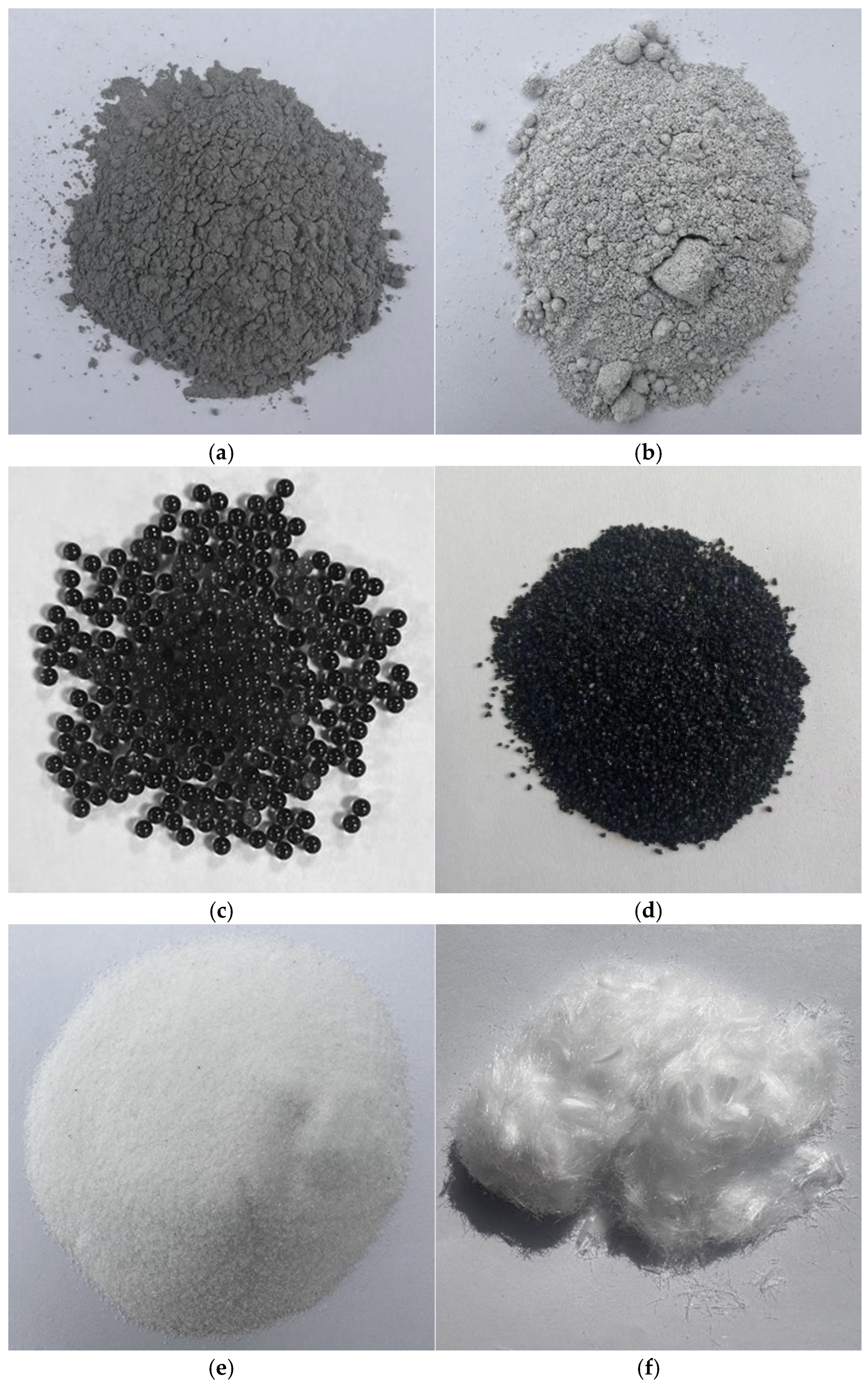
The CS, SAP, and quartz sand were utilized as fine aggregates. These SAPs, replacing the quartz sand, enhanced the EMW-absorbing performance and environmental protection. However, SAP underwent shrinkage when printable materials were hardened, resulting in a porous structure that could diminish mechanical performance. To ensure the mechanical properties, durability, and printability of these printed EMW-absorbing materials with porous features, the mix design with increased content of OPC determined by previous research was employed [46,65,66,67]. The immerse-treatment SAP, which contained water 300 times the SAP weight, was added to printed materials to facilitate the internal curing, improving the mechanical performance of printed concrete. In addition, the CS acts as a partial support structure, and the combination of CS and SAP absorbs the vast majority of EMW. SG (analytical reagent) was used as a retarder to control the setting time of cement mortar [68,69]. Morphologies of OPC, SF, SAP, CS, quartz sand, and PP fiber are shown in Figure 1.
In the experiment, the dry materials for OPC, SF, Sand, CS, and SP were first placed in a horizontal mixer (Jiangxi Haifu Electromechanical Equipment Co., Ltd., Nanchang, China) and stirred for two minutes under laboratory conditions (23 ± 1 °C) to ensure homogeneity. The aqueous solution was then added gradually and continued to mix for 3 s until a homogeneous fluid mixture was obtained. The HPMC and NC powders are also mixed for 1 min to ensure uniform dispersion. PP fibers are then added slowly to maintain uniform distribution, followed by 200 s of stirring.
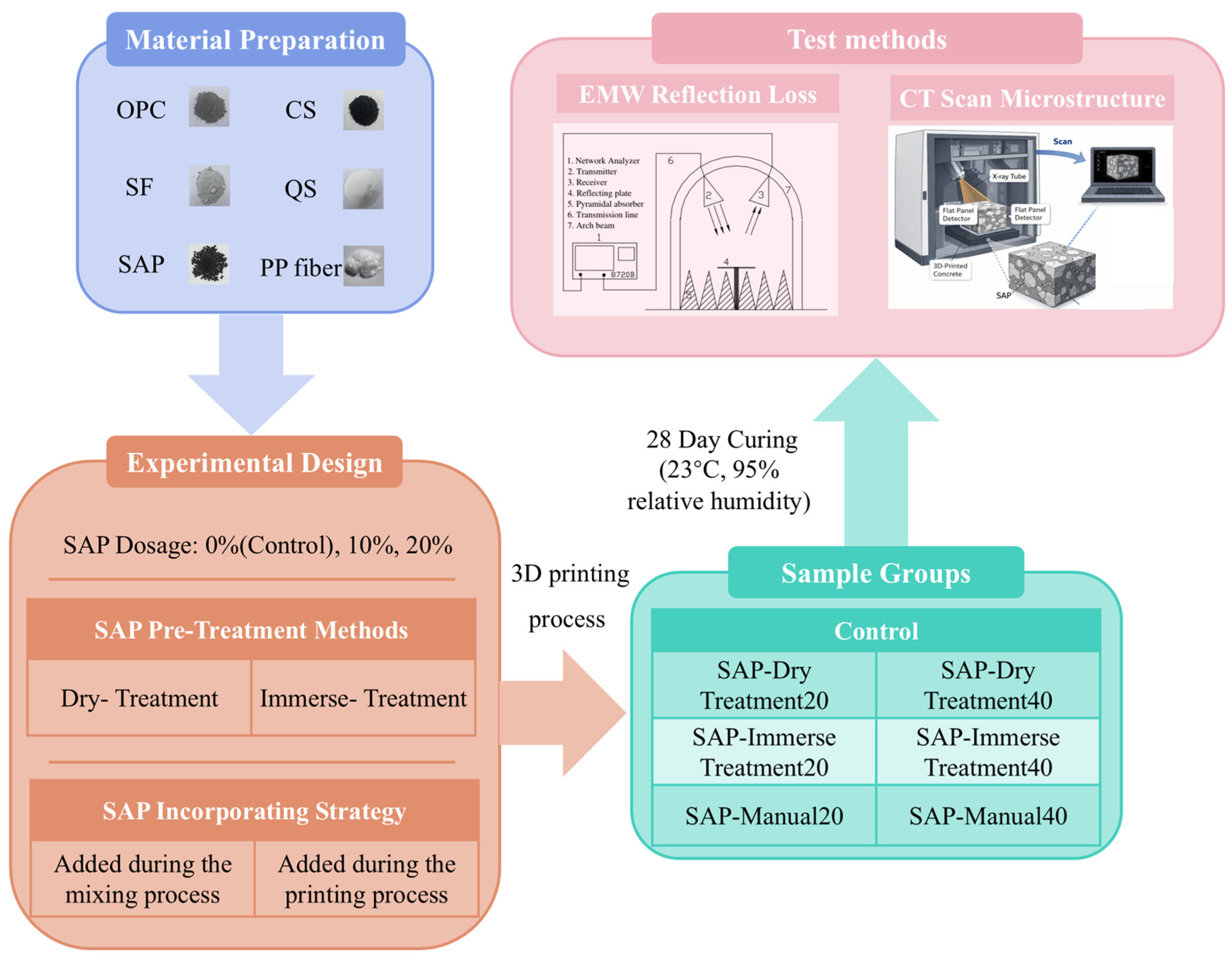
To facilitate comparative testing under different conditions, the SAP preprocessing by dry or immerse treatment ensures optimal results and conditions in the concrete tests. SAP, the novel high-performance polymer material, has a high absorption rate of 245 g/cm3, allowing it to absorb a large amount of water quickly and form a gel state, creating a 3D space mainly composed of water. These SAPs were filled in EMW-absorbing composite materials to generate regular air voids when they ultimately shrunk and dried. These voids function as a closed-cell honeycomb within the material, enabling the proposed 3D-printed concrete to develop a multi-phase composite structure consisting of air, skeletal framework, and conductive materials. Therefore, distinct sample preparations were carried out employing SAP based on the subsequent methodologies, as shown in Figure 2:
Method A (SAP–Dry Treatment and Incorporating Strategy 1)–Following the incorporation of PP fibers, 3 min dry-treated SAP was added to the printable material with 0 vol.%, 20 vol.%, and 40 vol.% (volume of SAP after water absorption was replaced with the same volume of quartz sand), respectively.
Method B (SAP–Immerse Treatment and Incorporating Strategy 1)–Following the amalgamation of PP fibers, immersed-treatment SAP occupying 20 vol.% and 40 vol.% of printable concrete was gradually introduced into the EMW for 1 min. The wet SAP was generated by immersing 1000 g of SAP in 20 L of water for 24 h at room temperature (23 ± 1 °C).
Method C (SAP–Immerse Treatment and Incorporating Strategy 2)—Upon formation of the mixture, layers of the samples were printed. During the printing process, interlayer surfaces of each layer were inserted with SAP, which occupied 20 vol.% and 40 vol.% of printable concrete and underwent immersion treatment, respectively. Subsequently, the printed samples were cured at 23 + 1 °C and 40 + 5% relative humidity, and the samples were withdrawn after 24 h. This refined protocol is anticipated to enhance the precision and uniformity of both the blending and sample preparation processes.

2.2. Three-Dimensional Printing Concrete Sample Fabrication

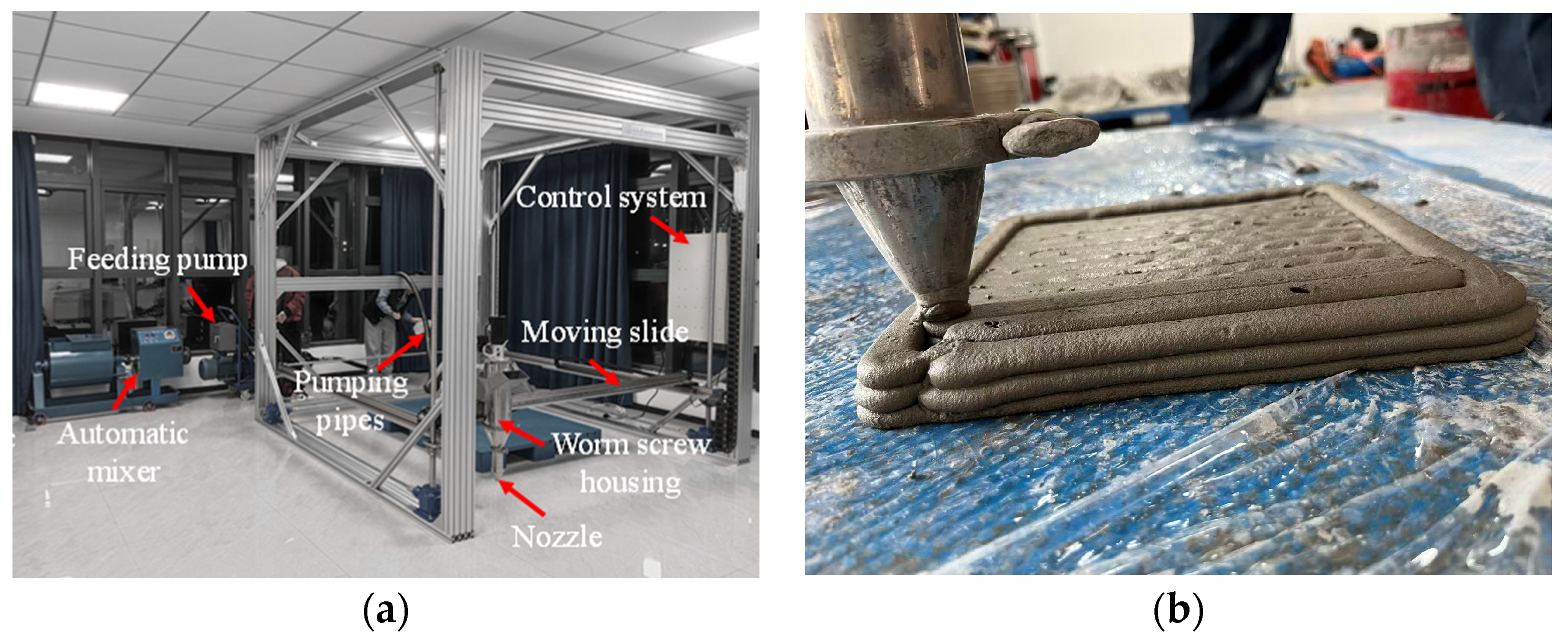
A gantry-type 3D concrete printer (Hangzhou Guanli Intelligent Technology Co., Ltd., Hangzhou, China) with an area of 2.0 × 2.0 × 2.0 m was used in this study to produce the printed specimens as illustrated in Figure 3a. The printing head contains a worm mixing screw and a printer nozzle with a circular opening of 15 mm in diameter. After mixing, the fresh mixture was conveyed to the printer hopper through a worm pump at a constant speed. Then, the filament (15 mm in width and 7 mm in height) was extruded continuously from the printer head according to the set printing path. The motion speed and extrusion speed of the printing nozzle were set as 60 mm/s and 6000 mm3/s, respectively. The 3D object was printed in a layer-by-layer manner by moving the print head simultaneously in the X, Y, and Z directions. The specific printing process is shown in Figure 3b.
After the printing stage, the printed components were subjected to water curing, ensuring a high-quality curing process. Thereafter, the printed components are wrapped in protective film and watered periodically. During the initial two hours of the curing, the printed components were watered every 10 min to maintain a fully expanded state of SAP by a continuous water absorption process. Subsequently, watering the components at 3 h intervals throughout the day achieved a permanently stable volume of SAP and an internal curing process, preventing deformation and cracking of printed material. As a result, these processes guaranteed that the SAP maintained a consistent diameter, water content, and overall performance within the concrete material. After these printed components were stable, they were placed in a curing chamber at 23 ± 1 °C and 95% relative humidity for 28 days. Following the proposed production methods and mix proportions outlined in Table 2, seven groups of 180 mm × 180 mm × 20 mm printed samples were obtained from these components using saw cutting and polishing methods. Consequently, a total of 7 printed samples were produced for electromagnetic wave absorption testing. The entire process, including sample production and subsequent experiment, is conducted in accordance with the GJB2038-1994 standard [70,71,72].

2.3. Test Methods

2.3.1. Electromagnetic Reflection Experiment

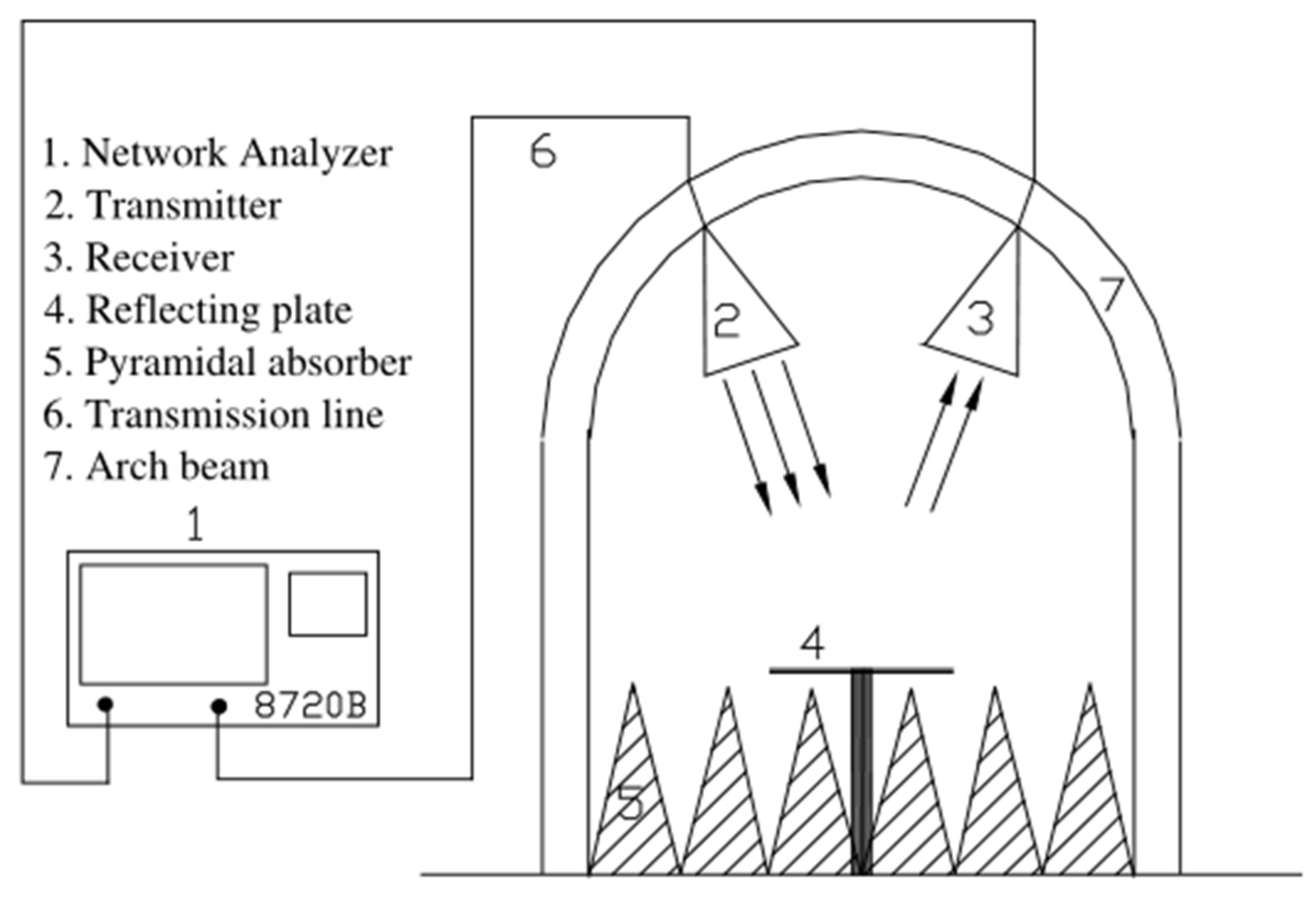
The electromagnetic absorption characteristics of SAP-filled cement-based materials, referred to as reflection loss or reflectivity, were evaluated using the arched reflecting test method within an anechoic chamber. Prior to testing, the vector network analyzer was calibrated following standard arch reflection measurement procedures to ensure measurement accuracy and comparability. The experimental arrangement, depicted in Figure 4, was interfaced with a Hewlett-Packard (HP) 8720B microwave vector network analyzer (VNA) (Hewlett-Packard, Palo Alto, CA, USA) featuring a dynamic standard attenuation of −95 dB. The VNA-based reflection loss test is a deterministic, highly repeatable physical measurement governed by electromagnetic laws, rather than a statistical sampling process [73,74]. In order to ensure the highest level of measurement accuracy, a careful VNA calibration process was carried out prior to testing, effectively reducing horn-to-horn coupling. The test specimen was meticulously positioned onto a specialized reflector plate, situated atop a custom support structure engineered for evaluating reflection loss. The quantification of the reflection loss was derived from the VNA readings obtained after the sample was introduced to the reflector plate. The dielectric properties of composites are significantly influenced by the presence of free water (pore solution) within the material, consequently impacting their electromagnetic absorption characteristics [75]. To reduce the influence of the free water in the composite material, the samples were first dried at a relatively low temperature (70–80 °C) and then smoothed before testing. Utilizing this approach, the electromagnetic reflection tests on 7 distinct concrete sample groups were conducted. In total, 1600 testing results, uniformly distributed within the 2 to 18 GHz frequency range for EMW-absorption, were collected in each sample. For each group sample, the 1600 average values at the various EMW-absorption frequencies were calculated from 4800 data points at corresponding frequencies and used for subsequent analysis of EMW absorption capability.

2.3.2. CT Analysis

The General Electric Phoenix X-ray micro-computed tomography (CT) system (GE Phoenix, Wunstorf, Germany) was used for scanning and microstructural analysis of the 3D-printed samples. CT technology, short for computed tomography, is a non-destructive testing method. The scanning was conducted at 150 kV and 190 μA, with a voxel size of 43 μm and a detector timing of 333 ms for each picture projection. A total of 500 image projections were acquired, and the obtained 2D projections were then converted into a 3D volume reflecting the scanned specimen by using reconstruction programs.

3. Results and Discussion

3.1. Electromagnetic Reflection Results

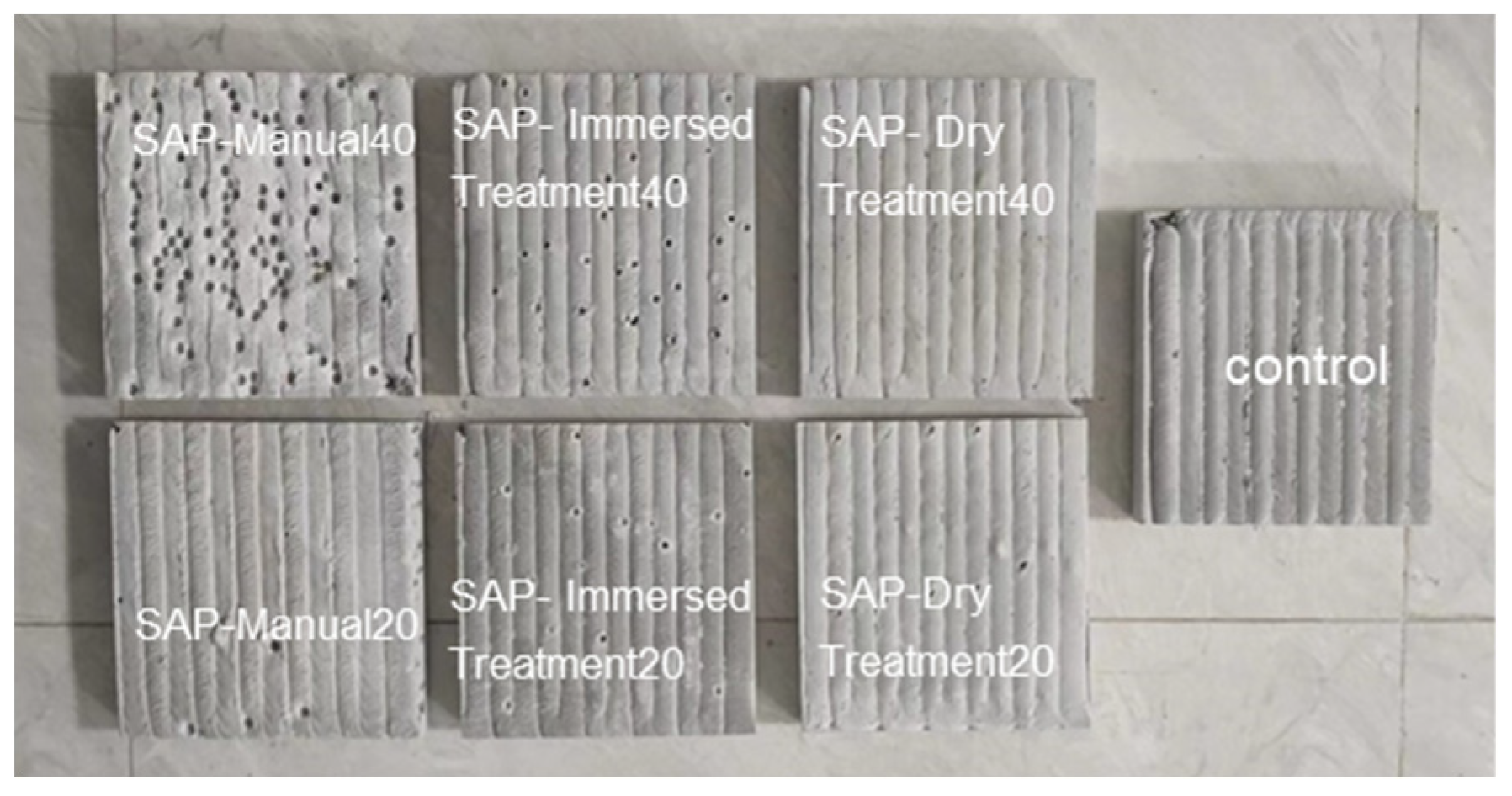
Figure 5 provides an intuitive representation of the physical presence of SAP particles within the cement matrix. Effective absorption of EMW by absorptive materials necessitates fulfilling two fundamental requirements. Firstly, the material possesses a well-matched surface impedance to facilitate the penetration of EMW into its interior. Secondly, the absorbing material ought to exhibit excellent loss performance, enabling substantial attenuation of EMW within the material. Samples produced by hardened cement paste, due to their inherent density and limited wave permeability, pose challenges in achieving impedance matching for spatial wave impedance [44]. Consequently, the absorption performance of samples produced by hardened cement paste is relatively weak. To address this limitation, enhancing the EMW-absorption capability can be significantly achieved by increasing the loading rate of SAP in composite materials and employing various optimization techniques.

3.1.1. Effect of SAP Occupying Percentages on Absorption Characteristics

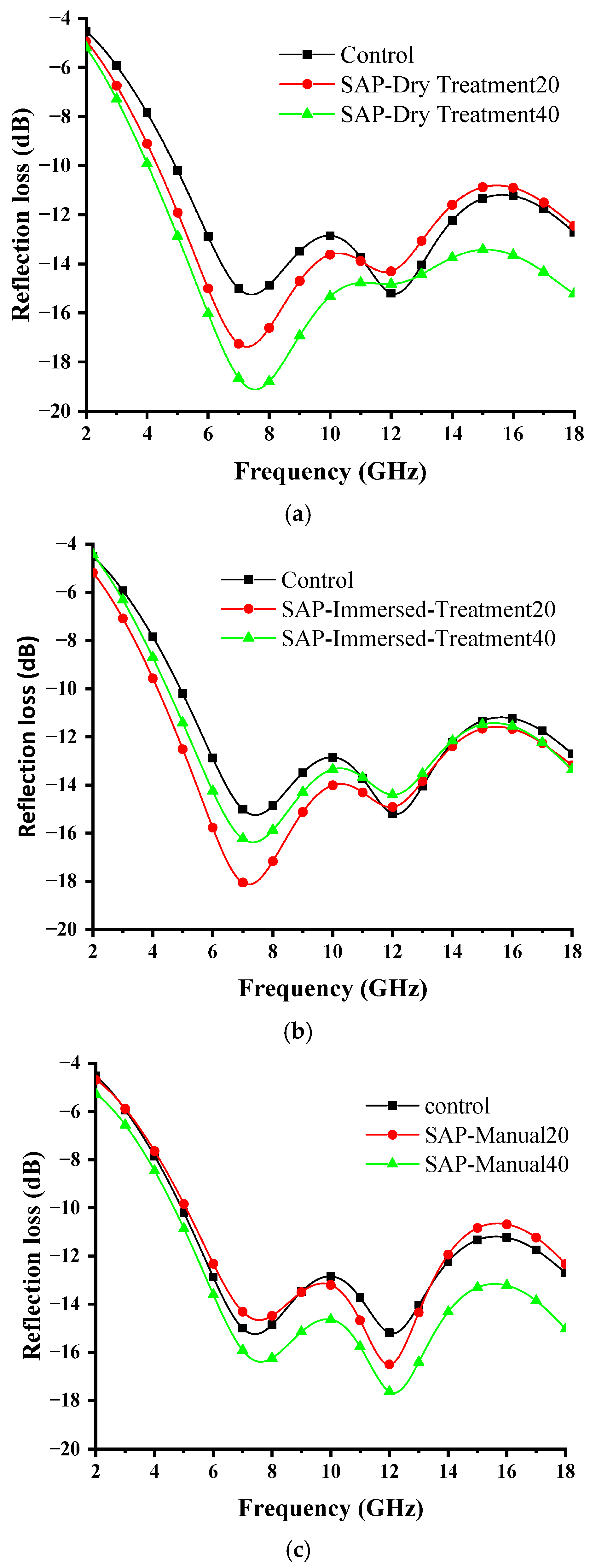
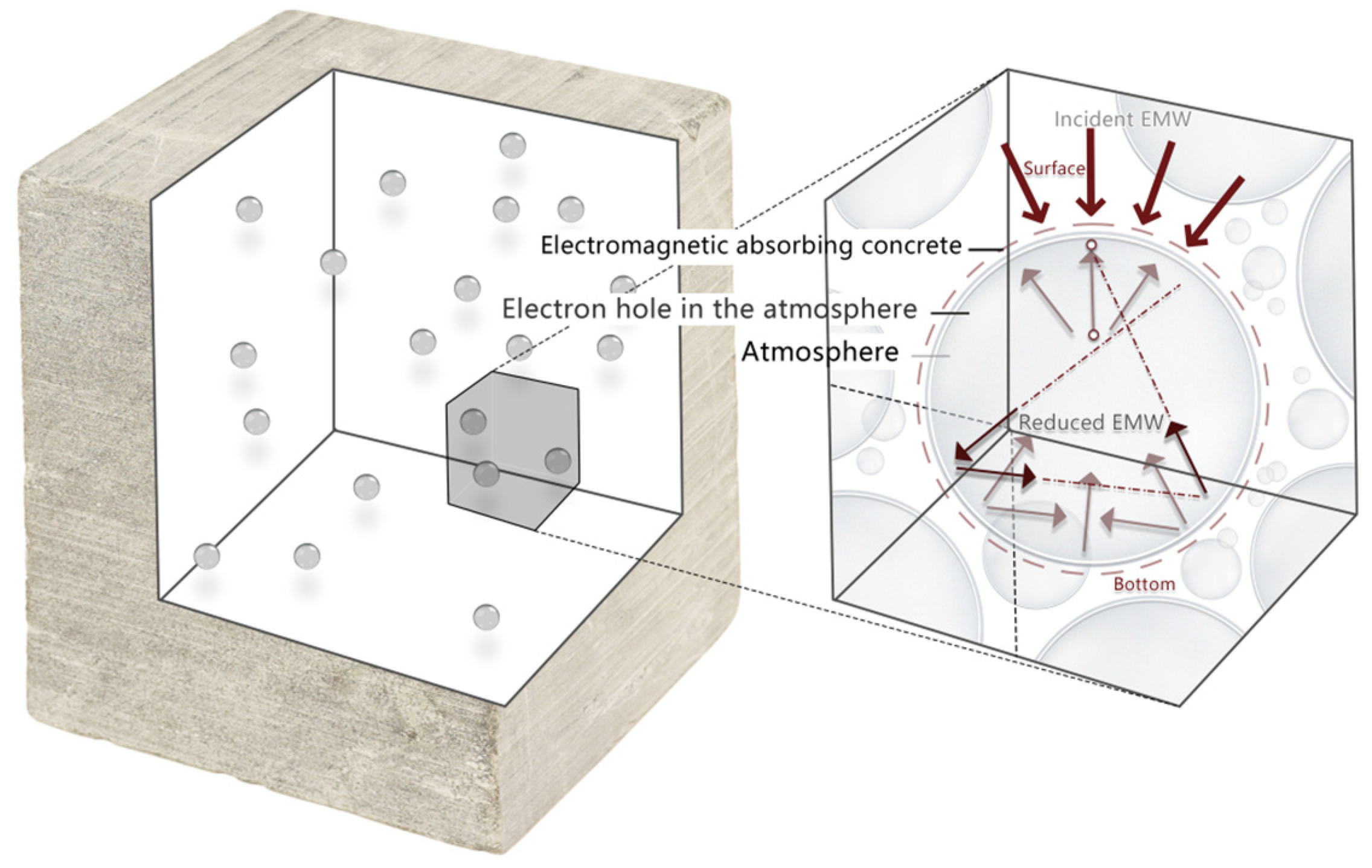
Figure 6 illustrates the reflection loss of concrete groups with varying SAPs occupying percentages of total volume. Additionally, each curve includes the 1600 average testing results. The depicted data highlights pronounced discrepancies in the reflection loss among the different samples. Notably, samples containing 20 vol.% and 40 vol.% of the SAP mixture exhibit considerably elevated reflectivity values within the frequency range of 2 to 18 GHz. For instance, dry-processed SAP with a volumetric content of 40 vol.% demonstrates a peak reflectance loss of −19.12 dB at 7.53 GHz, accompanied by a reflectance bandwidth below −10 dB at 13.97 GHz. These values significantly surpass the peak reflectance loss (−15.25 dB) and absorption bandwidth of the control EM-absorbing concrete lacking SAP (13.08 GHz). The peak reflection loss observed at 7.53 GHz, followed by a pronounced enhancement, is primarily attributed to the SAP-induced porous microstructure. This structure improves impedance matching at the material–air interface, allowing more incident electromagnetic waves to penetrate into the composite. In addition, the multiscale cavities generated by SAP shrinkage and fragmentation promote multiple reflections and scattering, thereby enhancing internal attenuation and resulting in increased reflection loss. Due to its high density and inability to dissipate energy effectively, ordinary concrete has a surface impedance that differs greatly from that of air. This impedance mismatch causes most electromagnetic waves to reflect off the concrete’s surface. Materials with high density and low dielectric loss typically exhibit a large permittivity contrast with air, which makes their intrinsic impedance much lower than the free-space impedance. This impedance mismatch causes most incident electromagnetic waves to be reflected at the surface, preventing effective wave entry. Moreover, the low-loss characteristics further limit internal attenuation, resulting in poor overall absorption. This leads to suboptimal transmittance properties, where the incident EMW struggles to penetrate within the specimen and is absorbed completely. In contrast, SAP serves as an excellent wave-transparent material. As shown in Figure 7, SAP exhibits a relatively uniform distribution within the treated cement matrix, forming a supportive skeleton. This skeleton arises from the spherical cavities left by the shrinkage of SAP particles, accompanied by thin residual gel shells and the cement paste bridges between adjacent voids. Although not mechanically load-bearing, this porous skeleton provides a functional microstructure that facilitates electromagnetic absorption. The impedance contrast between the voids and the solid matrix improves the entry of incident EMW, while the cavity geometry induces repeated internal reflections, multi-path scattering, and phase interference, ultimately enhancing EM wave attenuation within the material. The impedance matching and spatial wave impedance in the composite material are remarkably enhanced, thus facilitating the guidance of an incident electromagnetic wave into the material’s interior.
Additionally, the introduction of air, concrete, and conductive materials results in a multi-phase composite structure, further enhancing impedance-matching properties and minimizing direct reflections. EMWs propagating within the composite material experience multiple reflections and scattering at the inner surfaces of individual cellular structure particles, leading to improved electromagnetic absorption properties in concrete. Comparative analysis of various samples reveals a significant increase in reflection loss with increasing SAPs occupying percentages of total volume.
The reflection loss of an absorber has a direct correlation to its input impedance. For a single-layer plate absorber, its reflection loss with respect to a normally incident plane wave can be expressed in Equation (1) [16,76]. It should be noted that Equation (1) is derived for a homogeneous single-layer absorber under normal incidence. In the present study, this formulation is introduced as a theoretical reference to illustrate the role of impedance matching in reflection loss, rather than as a strict predictive model for the heterogeneous 3D-printed composite. The reflection loss reported in this study was obtained directly from arch reflection measurements in an anechoic chamber, independent of the assumptions associated with Equation (1).
R = 20 l o g Z 1 Z + 1 ,   Z = Z i n Z 0 = μ r ε r tan h j 2 π d λ 0 · μ r ε r
where Z is the normalized input impedance by Z 0 , d is the thickness of the material, and λ 0 is the wavelength of the incident wave in free space.
To make excellent wave absorption, in a wave-absorbing material, the following formula must be satisfied:
T + R + A = 1
where T , R , and A refer to the transmission coefficient, reflection coefficient, and absorption coefficient, respectively. To make a good absorption, the reflection must be suppressed first.
The composition of cement materials is notably intricate, constituting a multi-component composite system. To facilitate analysis, the SAP cement composite system was designed as a two-phase arrangement for simplifying the treatment process. In this system, the cement matrix represents one phase, while SAP particles constitute the other. For analytical convenience, the attenuation formulation is based on an effective two-phase representation, which serves as a qualitative interpretation of the experimental results. Consequently, the energy attenuation of EMW within the material’s internal coordinates can be estimated as described in Equation (3) [42].
σ s c = k 4 ( | x e | 2 + | x m | 2 ) 6 π = k 4 | ε r l 1 | 2 + μ r l 1 | 2 6 π
where x e and x m are the polarizability and susceptibility, and ε r l and μ r l are the relative effective permittivity and permeability of the cement-based material. So the scattering attenuation can be expressed as follows:
I ( x ) = I 0 e x p ( n k 4 | ε r l 1 | 2 + μ r l 1 | 2 6 π · x )
where k = ω ε r ε 0 μ r μ 0 is the wave number in the cement–matrix composite.
Equation (4) provides a simplified isotropic description, while the anisotropic effects induced by directional printing may lead to orientation-dependent attenuation in practice. According to Equation (4), an increase in the volume fraction of SAP leads to a growth in SAP particle number, consequently enhancing the multiple reflections and scattering of EMW. However, the absorption of EMW by cement SAP composites is intricately linked to the inherent material loss performance. The augmentation of SAP content results in a decrease in the dielectric constant and permeability of the composite material, thereby diminishing its loss performance. Consequently, the absorption performance decreases as the SAP filling ratio reaches a certain threshold. Thus, it becomes evident that there exists a specific SAP filling rate beyond which the wave-absorbing properties of the material decline. This underscores the necessity for careful consideration of the SAP particle filling rate’s impact on the wave-absorbing property of the composite material, emphasizing that a higher filling rate does not necessarily yield superior results.

3.1.2. Effect of Treatment on Absorption Characteristics

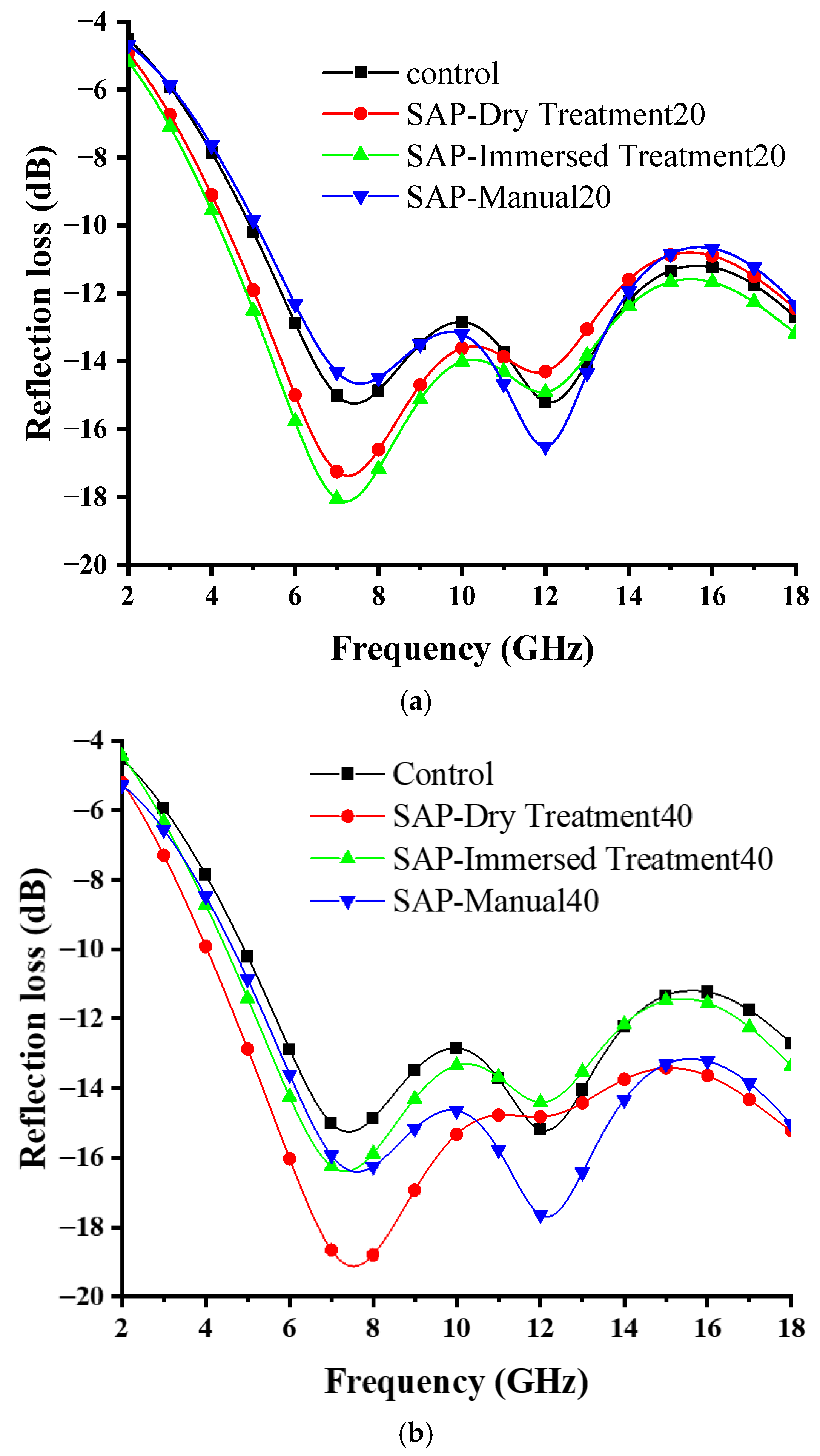
Figure 8 presents the variation in electromagnetic reflection coefficients when SAPs with equal volume fractions (20 vol.% and 40 vol.%) are introduced into concrete using three different pre-treatment and mixing methods. Figure 8a illustrates the EMW-absorption performance within the 2–10 GHz frequency range. Concrete containing a 20% volume fraction of SAP exhibits superior absorption when subjected to Method B (SAP–Immerse Treatment) compared to Methods A (SAP–Dry Treatment) and C (SAP–Manual). At the frequency of 7.21 GHz, Method B reaches a peak of −18.136 dB with an EMW-absorption loss of 98.46%, remarkably superior to the other methods. Moreover, the absorption rate exceeds 90% in the 13.74 GHz frequency band. However, in the 11–18 GHz frequency range, Method C’s SAP sample outperforms those of Method A and Method B. At 11.99 GHz, Method C achieves a maximum value of −16.551 dB with an EMW-absorption rate of 97.79%, surpassing the second-highest Method B by 1.591 dB. Thus, it is evident that in EMW-absorbing concrete containing 20% volume fraction SAP, Method B can achieve absorption and attenuation of EMW in the 2–11 GHz frequency range. If Method B’s preprocessing is inconvenient, Method A can be chosen. In the 11–18 GHz frequency range, Method C can be selected to achieve absorption and attenuation in EMW-absorbing concrete. If deemed complex, Methods A and B can be considered.
Figure 8b clearly demonstrates that concrete containing 40 vol.% SAP outperforms concrete with 20 vol.% SAP in EMW absorption. Moreover, within the 2–10 GHz frequency range, the EMW-absorption performance of Method A’s SAP sample is superior to that of Methods B and C. At the frequency of 7.53 GHz, Method A reaches a peak of −19.12 dB with an EMW-absorption loss of 98.77%, significantly higher than the other methods, and the absorption rate exceeds 90% in the 13.97 GHz frequency band, outperforming the EMW-absorbing concrete with 20% volume fraction SAP. However, in the 11–18 GHz frequency range, Method C’s SAP sample surpasses those of Methods A and B. At 12.16 GHz, Method C achieves a peak of −17.69 dB with an EMW absorption loss of 98.3%, better by 2.48 dB than the second-highest Method B. Likewise, it is known that electromagnetic wave-absorbing concrete containing 40% volume fraction SAP can choose Method A for absorption and attenuation of EMW within the 2–10 GHz frequency range. In the 11–18 GHz frequency range, Method C can be chosen to achieve absorption and attenuation in EMW-absorbing concrete. If deemed complex, Methods A and B can be considered.
As presented in Table 5, the electromagnetic wave absorption performance of the 3D-printed SAP-modified composites was compared with that reported in previous studies. The results indicate that the proposed SAP–Dry Treatment method achieves enhanced absorption capability and a wider effective bandwidth than other existing systems. This improvement is primarily attributed to the synergistic effect of SAP-induced pore structures, which promote impedance matching and facilitate multiple reflections and energy dissipation inside the material. Furthermore, various methods for electromagnetic wave reflection frequencies in differing frequency ranges ought to apply. In the 2–10 GHz frequency range, Methods A and B are the preferred choices, whereas in the 11–18 GHz frequency range, Method C should be given priority. Through testing and analysis of EMW-absorbing concrete, this approach can be widely applied in electromagnetic shielding, electromagnetic interference, radar detection, and other fields across various frequency bands. These applications can enhance the electromagnetic radiation protection capacity of buildings, mitigate the impact of electromagnetic interference, and promote overall human health in electromagnetic environments.

3.2. CT Analysis

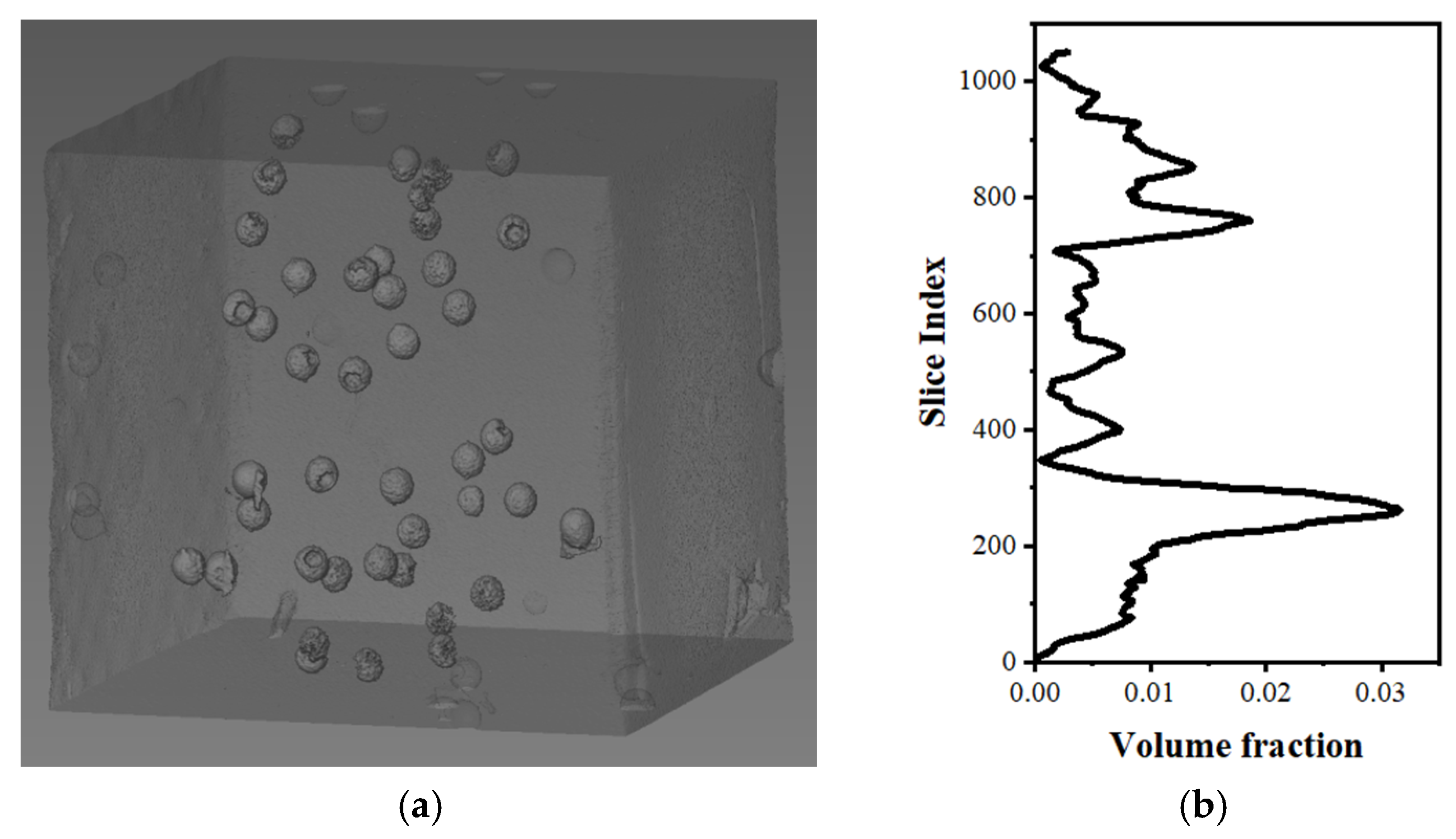
The CT method possesses an exceptional capability for observing and describing irregularities in internal structures. As a result, it is applied to investigate the distribution of SAP and conduct quantitative analysis, demonstrating the EMW-absorption performance of the proposed material using 3D-printing technology. The CT analysis results of the sample with 40 vol.% dry-processed SAP, which exhibits the optimal EMW-absorbing performance, are shown in Figure 9. CT analysis provided insights into the SAP distribution revealed in Figure 9a and the porosity revealed in Figure 9b within the sample that is sectioned into 1050 layers. The matrix of printed concrete generates a distribution of irregular and fractured voids, manifesting in diverse forms, including hemispherical, apple-like, and spherical shapes, after the SAP-embedded concrete is hardened. The total porosity of 0.79% is obtained in the printed sample. In areas with a dense SAP inserted in the printed sample, the matrix porosity correspondingly increases, reaching a maximum porosity of 3.15% at the 261-layer slice. Therefore, by designing the inserted locations and the quantity of SAP fillers, the distribution of generated voids can be meticulously customized to allow for precise fine-tuning of absorption properties based on the characteristics of EMW with different wavelengths and frequencies. Among them, irregular void distributions exhibit more extensive scattering absorption patterns, which are associated with shorter wavelengths and higher frequencies. Conversely, denser arrangements of voids are associated with shallower wavelengths and lower frequencies.
Furthermore, EMW transmitted through the concrete undergoes a series of intricate events, including multiple reflections and scattering upon the surfaces of intricate, honeycomb-like particle structures of varying sizes and shapes. These interactions lead to energy dissipation. Additionally, transitions between adjacent enclosed cavities induce phase changes along the cavity walls, leading to interference and further attenuation of electromagnetic energy. Simultaneously, within the context of the printing and mixing processes, some spherical SAP particles are fragmented, resulting in the formation of a complex three-dimensional structure within the EMW-absorbing concrete. This intricate structure amplifies the gradient between air, concrete, and the metal wave-absorbing agent, consequently broadening the EMW-absorption spectrum. As a result, the incorporation of SAP effectively bolsters the impedance matching properties of concrete composite materials, mitigating direct reflection effects arising from highly conductive materials and enhancing overall EMW-absorption capabilities.
CT analysis showed that localized porosity reached up to 3.15% in regions with high SAP concentration. These voids improve impedance matching, thereby enhancing EMW absorption. However, they may also act as potential pathways for aggressive agents such as chloride ions and CO2, potentially impacting both mechanical strength and durability. Nevertheless, as noted by Sun et al. [76], porosity caused by SAP—especially when consisting of closed or disconnected voids—does not necessarily compromise long-term durability. Instead, SAP improves internal curing and mitigates shrinkage-related microcracking, thereby enhancing matrix integrity. Tan et al. [77] observed that excessive SAP shrinkage can generate macrovoids, which may reduce compressive strength, particularly at high dosages. Similarly, Laustsen et al. [78] found that SAP can introduce both polymer-induced and air voids, with pore size distribution being a key factor in mechanical performance. To mitigate adverse effects, optimized mix design and controlled printing and curing are critical for reducing pore interconnectivity and improving the durability of 3D-printed cementitious materials.

4. Conclusions

In this study, a holistic approach encompassing pre-processing techniques and dosing methodologies was adopted to perform EMW-absorption tests and delve into the microstructural characteristics of EMW-absorbing concrete enriched with SAP. According to the experimental results, the conclusions can be summarized as follows:
  • The introduction of SAP improves wave impedance matching and wave impedance distribution, resulting in enhanced EMW impedance matching and reduced direct reflections. Notably, the sample with dry-processed 40 vol.% SAP exhibits the highest increase, with a rate of 25.44%. Due to the lower cost of SAP materials compared to previous EMW-absorbing materials, this printed EMW-absorbing concrete holds substantial commercial and application potential.
  • The SAP filling volume significantly influences the reflection loss performance of EMW-absorbing concrete. SAP-Dry Treatment40 exhibits a peak reflectance loss of −19.12 dB at 7.53 GHz, accompanied by an absorption rate of 98.77%, and the reflectance bandwidth is below −10 dB at 13.97 GHz. This is in contrast to the 20 vol.% sample (peak −17.377 dB, absorption rate 98.17%, and bandwidth 13.66) and the sample with 0 vol.% dry-processed SAP (peak −15.24 dB, absorption rate 97.01%, and bandwidth 13.08).
  • Microscopic analysis reveals irregular void distribution in concrete. EMW undergoes multiple reflections and scattering, leading to energy loss. Phase changes between adjacent voids induce interference, weakening EMW propagation. Additionally, SAP particles fracture during 3D printing and mixing, forming a complex 3D structure that enhances impedance matching, reduces direct reflection, and improves EMW-absorption performance.
  • The study found that different SAP pretreatment and mixing methods significantly affect the EMW-absorption performance of concrete with 20% and 40% SAP content. Within the 2–10 GHz frequency range, Method B is most suitable for concrete with 20% SAP content. In contrast, for the higher frequency range of 11–18 GHz, Method C becomes the more appropriate choice for this SAP content. For concrete with 40 vol.% SAP, Method A proves to be the best choice within the 2–10 GHz frequency range, and Method C excels within the 11–18 GHz frequency range.

5. Research Limitations and Future Work

While the present study provides valuable insights into the role of SAP content, pretreatment methods, and incorporation strategies on the EMW-absorption behavior of 3D-printed cementitious composites, several limitations remain. Drawing from the works of this study, the research limitations and subsequent works have been delineated:
  • This study employed high-resolution CT imaging to systematically analyze the microstructural characteristics and EMW attenuation mechanisms of SAP-modified 3D-printed concrete. However, the mechanical properties and long-term durability of the composites were not experimentally assessed. To address this, future work will include standardized tests such as chloride penetration, freeze–thaw cycles, as well as compressive and flexural strength evaluations. These efforts aim to verify the structural reliability of SAP-based 3DPC under service conditions and promote its broader application in electromagnetic shielding and infrastructure.
  • Numerical simulations and multilayer impedance modeling were not included in the present work. These approaches will be considered in future studies to further quantify wave propagation and impedance matching mechanisms in graded 3D-printed cementitious absorbers.
  • This study investigated the effects of SAP content, pretreatment methods, and incorporation strategies on the EMW-absorption performance of 3D-printed cementitious composites. However, the influence of 3D-printing parameters and patterns on interlayer porosity and EMW attenuation behavior was not fully explored. Future work will focus on quantitatively analyzing the effect of 3D-printing parameters and patterns on EMW-absorption properties through a combination of high-resolution CT scanning, surface profiling, and electromagnetic simulation experiments.

Author Contributions

Conceptualization, X.Z.; Methodology, X.Z.; Software, X.L.; Validation, X.L. and Z.L.; Formal analysis, J.X.; Investigation, X.X. and J.X.; Resources, C.Y.; Data curation, C.Y.; Writing—original draft, X.Z. and X.X.; Writing—review and editing, X.W.; Supervision, X.W. and Z.L.; Project administration, J.S.; Funding acquisition, J.S. All authors have read and agreed to the published version of the manuscript.

Funding

This research was funded by the National Key Research and Development Program of China, grant number 2021YFF0500804.

Data Availability Statement

The original contributions presented in this study are included in the article. Further inquiries can be directed to the corresponding author.

Conflicts of Interest

Author Xin Zhang was employed by the company China Testing & Certification International Group Shanghai Co., Ltd. The remaining authors declare that the research was conducted in the absence of any commercial or financial relationships that could be construed as a potential conflict of interest.

References

  1. Taishi, B.; Yang, Y.; Wu, X.; Xu, J.; Huang, S. Dual-band 3D electrically small antenna based on split ring resonators. Adv. Compos. Hybrid Mater. 2022, 5, 350–355. [Google Scholar] [CrossRef]
  2. Zhang, K.; Zheng, L.; Aouraghe, M.A.; Xu, F. Ultra-light-weight kevlar/polyimide 3D woven spacer multifunctional composites for high-gain microstrip antenna. Adv. Compos. Hybrid Mater. 2022, 5, 872–883. [Google Scholar] [CrossRef]
  3. Zhang, X.Z.; Sun, W. Investigation on microwave absorbing properties of double-layer cementitious composites. Adv. Mater. Res. 2009, 79–82, 1843–1846. [Google Scholar] [CrossRef]
  4. Wang, M.; Yang, X.; Wang, W. Establishing a 3D aggregates database from X-ray CT scans of bulk concrete. Constr. Build. Mater. 2022, 315, 125740. [Google Scholar] [CrossRef]
  5. Guo, M.; Wen, X.; Yang, S.; Xu, J.; Pan, X.; Bi, K. Extremely-low frequency mechanical antenna based on vibrating permanent magnet. Eng. Sci. 2021, 16, 387–392. [Google Scholar] [CrossRef]
  6. Sharan, T.; Singh, A.K. Enhancing the axial ratio bandwidth of circularly polarized open ground slot CPW-fed antenna for multiband wireless communications. Eng. Sci. 2021, 17, 274–284. [Google Scholar] [CrossRef]
  7. Guan, H.; Liu, S.; Duan, Y.; Cheng, J. Cement based electromagnetic shielding and absorbing building materials. Cem. Concr. Compos. 2006, 28, 468–474. [Google Scholar] [CrossRef]
  8. Al-Zhrani, S.; Bedaiwi, N.M.; El-Ramli, I.F.; Barasheed, A.Z.; Abduldaiem, A.; Al-Hadeethi, Y.; Umar, A. Underwater optical communications: A brief overview and recent developments. Eng. Sci. 2021, 16, 146–186. [Google Scholar] [CrossRef]
  9. Darwin, D.; Dolan, C.W.; Nilson, A.H. Design of Concrete Structures; McGraw-Hill Education: New York, NY, USA, 2016; Volume 2. [Google Scholar]
  10. Huang, H.; Guo, M.; Zhang, W.; Huang, M. Seismic behavior of strengthened RC columns under combined loadings. J. Bridg. Eng. 2022, 27, 05022005. [Google Scholar] [CrossRef]
  11. Huang, H.; Yuan, Y.; Zhang, W.; Zhu, L. Property assessment of high-performance concrete containing three types of fibers. Int. J. Concr. Struct. Mater. 2021, 15, 39. [Google Scholar] [CrossRef]
  12. Ma, G.; Li, Z.; Wang, L. Printable properties of cementitious material containing copper tailings for extrusion based 3D printing. Constr. Build. Mater. 2018, 162, 613–627. [Google Scholar] [CrossRef]
  13. Chi, M.; Huang, R. Effect of montmorillonite as additive on the properties of cement-based composites. Sci. Eng. Compos. Mater. 2012, 19, 45–54. [Google Scholar] [CrossRef]
  14. Pretorius, J.C. Composite Plaster Cement-Based Electromagnetic Wave Absorber. Master’s Thesis, University of Pretoria, Pretoria, South Africa, 2013. [Google Scholar]
  15. Xingjun, L.; Mingli, C.; Yan, L.; Xin, L.; Qian, L.; Rong, T.; Qi, W.; Yuping, D. A new absorbing foam concrete: Preparation and microwave absorbing properties. Adv. Concr. Constr. 2015, 3, 103–111. [Google Scholar] [CrossRef]
  16. Ma, G.; Sun, J.; Aslani, F.; Huang, Y.; Jiao, F. Review on electromagnetic wave absorbing capacity improvement of cementitious material. Constr. Build. Mater. 2020, 262, 120907. [Google Scholar] [CrossRef]
  17. Xie, S.; Ji, Z.; Zhu, L.; Zhang, J.; Cao, Y.; Chen, J.; Liu, R.; Wang, J. Recent progress in electromagnetic wave absorption building materials. J. Build. Eng. 2020, 27, 100963. [Google Scholar] [CrossRef]
  18. Ahmaruzzaman, M. A review on the utilization of fly ash. Prog. Energy Combust. Sci. 2010, 36, 327–363. [Google Scholar] [CrossRef]
  19. Guan, B.; Ding, D.; Wang, L.; Wu, J.; Xiong, R. The electromagnetic wave absorbing properties of cement-based composites using natural magnetite powders as absorber. Mater. Res. Express 2017, 4, 056103. [Google Scholar] [CrossRef]
  20. Bantsis, G.; Mavridou, S.; Sikalidis, C.; Betsiou, M.; Oikonomou, N.; Yioultsis, T. Comparison of low cost shielding-absorbing cement paste building materials in X-band frequency range using a variety of wastes. Ceram. Int. 2012, 38, 3683–3692. [Google Scholar] [CrossRef]
  21. Ghizdăveț, Z.; Ștefan, B.-M.; Nastac, D.; Vasile, O.; Bratu, M. Sound absorbing materials made by embedding crumb rubber waste in a concrete matrix. Constr. Build. Mater. 2016, 124, 755–763. [Google Scholar] [CrossRef]
  22. Khaloo, A.R.; Dehestani, M.; Rahmatabadi, P. Mechanical properties of concrete containing a high volume of tire–rubber particles. Waste Manag. 2008, 28, 2472–2482. [Google Scholar] [CrossRef] [PubMed]
  23. Arenas, C.; Leiva, C.; Vilches, L.F.; Cifuentes, H. Use of co-combustion bottom ash to design an acoustic absorbing material for highway noise barriers. Waste Manag. 2013, 33, 2316–2321. [Google Scholar] [CrossRef]
  24. Park, S.B.; Seo, D.S.; Lee, J. Studies on the sound absorption characteristics of porous concrete based on the content of recycled aggregate and target void ratio. Cem. Concr. Res. 2005, 35, 1846–1854. [Google Scholar] [CrossRef]
  25. Sun, L.; Wang, C.; Zhang, C.; Yang, Z.; Li, C.; Qiao, P. Experimental investigation on the bond performance of sea sand coral concrete with FRP bar reinforcement for marine environments. Adv. Struct. Eng. 2023, 26, 533–546. [Google Scholar] [CrossRef]
  26. Singh, A.; Wang, Y.; Zhou, Y.; Sun, J.; Xu, X.; Li, Y.; Liu, Z.; Chen, J.; Wang, X. Utilization of antimony tailings in fiber-reinforced 3D printed concrete: A sustainable approach for construction materials. Constr. Build. Mater. 2023, 408, 133689. [Google Scholar] [CrossRef]
  27. Singh, A.P.; Gupta, B.K.; Mishra, M.; Chandra, A.; Mathur, R.; Dhawan, S. Multiwalled carbon nanotube/cement composites with exceptional electromagnetic interference shielding properties. Carbon 2013, 56, 86–96. [Google Scholar] [CrossRef]
  28. Wang, P.Q.; Wang, Y.; Zhang, M.; Tan, D.J.; Li, K.Y. Preparation and study on a new type of anti-electromagnetic radiation gypsum board. Appl. Mech. Mater. 2014, 703, 90–93. [Google Scholar] [CrossRef]
  29. Keel, W.C.; Lintott, C.J.; Schawinski, K.; Bennert, V.N.; Thomas, D.; Manning, A.; Chojnowski, S.D.; Van Arkel, H.; Lynn, S. The History and Environment of a Faded Quasar: Hubble Space Telescope observations of Hanny’s Voorwerp and IC 2497. Astron. J. 2012, 144, 66. [Google Scholar] [CrossRef]
  30. Wu, F.; Hao, W.J.; Zhang, Y.F.; Wang, M.M.; Chen, D.W.; Yi, Y.Y.; Zhao, H.C.; Dong, Y.F.; Yu, X.H. The Design and Preparation of Foam Concrete Absorber for WLAN anti-jamming EMW-absorber. Adv. Mater. Res. 2013, 785–786, 300–304. [Google Scholar] [CrossRef]
  31. Lv, H.; Yang, Z.; Pan, H.; Wu, R. Electromagnetic absorption materials: Current progress and new frontiers. Prog. Mater. Sci. 2022, 127, 100946. [Google Scholar] [CrossRef]
  32. Wang, D.; Jin, J.; Guo, Y.; Liu, H.; Guo, Z.; Liu, C.; Shen, C. Lightweight waterproof magnetic carbon foam for multifunctional electromagnetic wave absorbing material. Carbon 2023, 202, 464–474. [Google Scholar] [CrossRef]
  33. Yang, Z.; Liang, Q.; Duan, Y.; Li, Z.; Li, D.; Cao, Y. A 3D-printed lightweight broadband electromagnetic absorbing metastructure with preserved high-temperature mechanical property. Compos. Struct. 2021, 274, 114330. [Google Scholar] [CrossRef]
  34. Yao, X.; Lyu, X.; Sun, J.; Wang, B.; Wang, Y.; Yang, M.; Wei, Y.; Elchalakani, M.; Li, D.; Wang, X. AI-based performance prediction for 3D-printed concrete considering anisotropy and steam curing condition. Constr. Build. Mater. 2023, 375, 130898. [Google Scholar] [CrossRef]
  35. Huo, J.; Wang, L.; Yu, H. Polymeric nanocomposites for electromagnetic wave absorption. J. Mater. Sci. 2009, 44, 3917–3927. [Google Scholar] [CrossRef]
  36. Chen, X.; Ye, Y.; Cheng, J. Recent progress in electromagnetic wave absorbers. J. Inorg. Mater. 2011, 26, 449–456. [Google Scholar] [CrossRef]
  37. Zhu, C.-L.; Zhang, M.-L.; Qiao, Y.-J.; Xiao, G.; Zhang, F.; Chen, Y.-J. Fe3O4/TiO2 core/shell nanotubes: Synthesis and magnetic and electromagnetic wave absorption characteristics. J. Phys. Chem. C 2010, 114, 16229–16235. [Google Scholar] [CrossRef]
  38. Xie, S.; Ji, Z.; Yang, Y.; Hou, G.; Wang, J. Electromagnetic wave absorption enhancement of carbon black/gypsum based composites filled with expanded perlite. Compos. Part B Eng. 2016, 106, 10–19. [Google Scholar] [CrossRef]
  39. Lv, X.; Duan, Y.; Chen, G. Electromagnetic wave absorption properties of cement-based composites filled with graphene nano-platelets and hollow glass microspheres. Constr. Build. Mater. 2018, 162, 280–285. [Google Scholar] [CrossRef]
  40. Guan, H.; Liu, S.; Duan, Y.; Zhao, Y. Investigation of the electromagnetic characteristics of cement based composites filled with EPS. Cem. Concr. Compos. 2007, 29, 49–54. [Google Scholar] [CrossRef]
  41. Ma, C.; Xie, S.; Wu, Z.; Ji, Z.; Wang, J. Research and simulation of electromagnetic wave absorbing performance for lightweight cement-based materials containing expanded polystyrene with different particle sizes and carbon black. Constr. Build. Mater. 2024, 430, 136496. [Google Scholar] [CrossRef]
  42. Guan, H.; Liu, S.; Duan, Y. Expanded Polystyrene as an Admixture in Cement-Based Composites for Electromagnetic Absorbing. J. Mater. Eng. Perform. 2007, 16, 68–72. [Google Scholar] [CrossRef]
  43. Du, J.; Liu, S.; Guan, H. Research on the absorbing characteristics of cement matrix composites filled with carbon black-coated expanded polystyrene beads. Adv. Cem. Res. 2006, 18, 161–164. [Google Scholar] [CrossRef]
  44. Guan, H.; Liu, S.; Duan, Y.; Zhao, Y. Research on Wave Absorbing and Compressive Properties of Expanded Polystyrene Filling Cement Composite Materials. J. Mater. Sci. Eng. 2006, 24, 524–527. [Google Scholar]
  45. Bian, P.; Zhan, B.; Gao, P.; Yu, Q.; Yang, Y.; Hong, L.; Zhang, W. Investigation on the electromagnetic wave absorption properties of foamed cement-based materials. Constr. Build. Mater. 2023, 364, 129903. [Google Scholar] [CrossRef]
  46. Ma, G.; Sun, J.; Wang, L.; Aslani, F.; Liu, M. Electromagnetic and microwave absorbing properties of cementitious composite for 3D printing containing waste copper solids. Cem. Concr. Compos. 2018, 94, 215–225. [Google Scholar] [CrossRef]
  47. Shakor, P.; Sanjayan, J.; Nazari, A.; Nejadi, S. Modified 3D printed powder to cement-based material and mechanical properties of cement scaffold used in 3D printing. Constr. Build. Mater. 2017, 138, 398–409. [Google Scholar] [CrossRef]
  48. Sanjayan, J.G.; Nematollahi, B.; Xia, M.; Marchment, T. Effect of surface moisture on inter-layer strength of 3D printed concrete. Constr. Build. Mater. 2018, 172, 468–475. [Google Scholar] [CrossRef]
  49. Nematollahi, B.; Xia, M.; Sanjayan, J. Current progress of 3D concrete printing technologies. In Proceedings of the 34th International Symposium on Automation and Robotics in Construction (ISARC 2017), Taipei, China, 28 June–1 July 2017. [Google Scholar]
  50. Tang, Y.; Wang, Y.; Wu, D.; Chen, M.; Pang, L.; Sun, J.; Feng, W.; Wang, X. Exploring temperature-resilient recycled aggregate concrete with waste rubber: An experimental and multi-objective optimization analysis. Rev. Adv. Mater. Sci. 2023, 62, 20230347. [Google Scholar] [CrossRef]
  51. Mechtcherine, V.; Grafe, J.; Nerella, V.N.; Spaniol, E.; Hertel, M.; Füssel, U. 3D-printed steel reinforcement for digital concrete construction–Manufacture, mechanical properties and bond behaviour. Constr. Build. Mater. 2018, 179, 125–137. [Google Scholar] [CrossRef]
  52. Le, T.T.; Austin, S.A.; Lim, S.; Buswell, R.A.; Law, R.; Gibb, A.G.; Thorpe, T. Hardened properties of high-performance printing concrete. Cem. Concr. Res. 2012, 42, 558–566. [Google Scholar] [CrossRef]
  53. Chen, L.; Chen, Z.; Xie, Z.; Wei, L.; Hua, J.; Huang, L.; Yap, P.-S. Recent developments on natural fiber concrete: A review of properties, sustainability, applications, barriers, and opportunities. Dev. Built Environ. 2023, 16, 100255. [Google Scholar] [CrossRef]
  54. Wangler, T.; Lloret, E.; Reiter, L.; Hack, N.; Gramazio, F.; Kohler, M.; Bernhard, M.; Dillenburger, B.; Buchli, J.; Roussel, N.; et al. Digital concrete: Opportunities and challenges. RILEM Tech. Lett. 2016, 1, 67–75. [Google Scholar] [CrossRef]
  55. Zhou, F.; Li, W.; Hu, Y.; Huang, L.; Xie, Z.; Yang, J.; Wu, D.; Chen, Z. Moisture Diffusion Coefficient of Concrete under Different Conditions. Buildings 2023, 13, 2421. [Google Scholar] [CrossRef]
  56. Lin, J.-X.; Chen, G.; Pan, H.-S.; Wang, Y.-C.; Guo, Y.-C.; Jiang, Z.-X. Analysis of stress-strain behavior in engineered geopolymer composites reinforced with hybrid PE-PP fibers: A focus on cracking characteristics. Compos. Struct. 2023, 323, 117437. [Google Scholar] [CrossRef]
  57. Li, Z.; Wang, L.; Ma, G. Method for the enhancement of buildability and bending resistance of 3D printable tailing mortar. Int. J. Concr. Struct. Mater. 2018, 12, 37. [Google Scholar] [CrossRef]
  58. Yang, S.; Cao, M.; Ren, X.; Ma, G.; Zhang, J.; Wang, H. 3D crack propagation by the numerical manifold method. Comput. Struct. 2018, 194, 116–129. [Google Scholar] [CrossRef]
  59. Wu, P.; Wang, J.; Wang, X. A critical review of the use of 3-D printing in the construction industry. Autom. Constr. 2016, 68, 21–31. [Google Scholar] [CrossRef]
  60. Xu, H.; Bie, S.; Xu, Y.; Yuan, W.; Chen, Q.; Jiang, J. Broad bandwidth of thin composite radar absorbing structures embedded with frequency selective surfaces. Compos. Part A Appl. Sci. Manuf. 2016, 80, 111–117. [Google Scholar] [CrossRef]
  61. Lü, S.; Liu, S. Design and analyze of the figure of pyramid absorber used in microwave chambers. Mater Sci. Tech. 2007, 15, 572–574. [Google Scholar]
  62. Tang, W.; Sun, J.; Wang, Y.; Chen, Z.; Tang, Y.; Wang, D.; Zhao, H.; Wang, X. Electromagnetic absorption properties of 3D printed fiber-oriented composites under different paths. Constr. Build. Mater. 2024, 416, 135140. [Google Scholar] [CrossRef]
  63. Sun, J.; Tang, W.; Wang, Y.; Yao, X.; Huang, B.; Saafi, M.; Wang, X. Electromagnetic and mechanical performance of 3D printed wave-shaped copper solid superstructures. J. Mater. Res. Technol. 2023, 27, 6936–6946. [Google Scholar] [CrossRef]
  64. Liu, X.; Guo, P.; Wang, H.; Zhang, Y. Spray-based 3D printed cementitious electromagnetic wave absorption materials: Optimization with structures design. Constr. Build. Mater. 2025, 470, 140615. [Google Scholar] [CrossRef]
  65. Sun, J.; Huang, Y.; Aslani, F.; Ma, G. Properties of a double-layer EMW-absorbing structure containing a graded nano-sized absorbent combing extruded and sprayed 3D printing. Constr. Build. Mater. 2020, 261, 120031. [Google Scholar] [CrossRef]
  66. Sun, J.; Huang, Y.; Aslani, F.; Wang, X.; Ma, G. Mechanical enhancement for EMW-absorbing cementitious material using 3D concrete printing. J. Build. Eng. 2021, 41, 102763. [Google Scholar] [CrossRef]
  67. Sun, J.; Huang, Y.; Aslani, F.; Ma, G. Electromagnetic wave absorbing performance of 3D printed wave-shape copper solid cementitious element. Cem. Concr. Compos. 2020, 114, 103789. [Google Scholar] [CrossRef]
  68. Das, A.; Reiter, L.; Mantellato, S.; Flatt, R.J. Early-age rheology and hydration control of ternary binders for 3D printing applications. Cem. Concr. Res. 2022, 162, 107004. [Google Scholar] [CrossRef]
  69. Chen, M.; Li, L.; Wang, J.; Huang, Y.; Wang, S.; Zhao, P.; Lu, L.; Cheng, X. Rheological parameters and building time of 3D printing sulphoaluminate cement paste modified by retarder and diatomite. Constr. Build. Mater. 2020, 234, 117391. [Google Scholar] [CrossRef]
  70. Jianjun, Y.; Wensuo, M.; Zuobin, G.; Chenhui, J.; Xianqing, L. A model for predicting electromagnetic wave absorption of 3D bidirectional angle-interlock woven fabric. Polym. Test. 2021, 100, 107272. [Google Scholar] [CrossRef]
  71. Yin, J.; Ma, W.; Gao, Z.; Lei, X.; Jia, C. A Structural Design Method of 3D Electromagnetic Wave-Absorbing Woven Fabrics. Polymers 2022, 14, 2635. [Google Scholar] [CrossRef]
  72. Deng, A.Z.; Wang, Y.J.; Zhou, X.G. Preparation and Properties of Scattering Electromagnetic Function Mortar Composite. Appl. Mech. Mater. 2013, 253, 445–450. [Google Scholar] [CrossRef]
  73. Simmons, A.; Emerson, W. An anechoic chamber making use of a new broadband absorbing material. In 1958 IRE International Convention Record; IEEE: New York, NY, USA, 1966. [Google Scholar]
  74. Micheli, D.; Pastore, R.; Vricella, A.; Delfini, A.; Marchetti, M.; Santoni, F. Electromagnetic characterization of materials by vector network analyzer experimental setup. In Spectroscopic Methods for Nanomaterials Characterization; Elsevier: Amsterdam, The Netherlands, 2017; pp. 195–236. [Google Scholar]
  75. Zhang, X.; Ding, X.; Ong, C.; Tan, B.; Yang, J. Dielectric and electrical properties of ordinary Portland cement and slag cement in the early hydration period. J. Mater. Sci. 1996, 31, 1345–1352. [Google Scholar] [CrossRef]
  76. Zhou, B.; Wang, K.; Taylor, P.C.; Gu, Y. Superabsorbent Polymers for Internal Curing Concrete: An Additional Review on Characteristics, Effects, and Applications. Materials 2024, 17, 5462. [Google Scholar] [CrossRef] [PubMed]
  77. Tan, Y.; Chen, H.; Wang, Z.; Xue, C.; He, R. Performances of Cement Mortar Incorporating Superabsorbent Polymer (SAP) Using Different Dosing Methods. Materials 2019, 12, 1619. [Google Scholar] [CrossRef] [PubMed]
  78. Laustsen, S.; Hasholt, M.T.; Jensen, O.M. Void structure of concrete with superabsorbent polymers and its relation to frost resistance of concrete. Mater. Struct. 2013, 48, 357–368. [Google Scholar] [CrossRef]
Figure 1. Morphologies of (a) OPC, (b) SF, (c) SAP, (d) CS, (e) quartz sand, and (f) PP fiber.
Buildings 16 00300 g001
Figure 2. Experimental flowchart for SAP-based 3D-printed concrete.
Buildings 16 00300 g002
Figure 3. (a) 3D concrete printer; (b) printing process.
Buildings 16 00300 g003
Figure 4. Sketch of the arch reflecting method.
Buildings 16 00300 g004
Figure 5. Sample graph for distribution of SAP beads in matrix.
Buildings 16 00300 g005
Figure 6. Effect of filling volume on microwave reflection loss (a) Dry Treatment, (b) Immersed Treatment, and (c) Manual.
Buildings 16 00300 g006
Figure 7. Sketch of the multi-reflection and scattering of the incident wave in the composite.
Buildings 16 00300 g007
Figure 8. Effect of treatment on reflection loss: (a) 20 vol.% SAP and (b) 40 vol.% SAP.
Buildings 16 00300 g008
Figure 9. (a) Porosity and (b) relationship curve between volume fraction and slice index for the proposed material.
Buildings 16 00300 g009
Table 1. Raw materials and their corresponding producers.
Raw MaterialsProducers
OPCChina Anhui Conch Group Co., Ltd., Wuhu, Chian
SAPGuangdong Xiangbao Biotechnology Co., Ltd., Guangzhou, China
PP fibersChina Shenglong Technology Industry Co., Ltd., Shengzhen, China
SFLinyuan Micro Silica Powder Co., Ltd., Xi’an, China
CSChangsha Danuo Building Materials Co., Ltd., Changsha, China
HPMCShanghai Chenqi Chemical Technology Co., Ltd., Shanghai, China
SGShanghai Chenqi Chemical Technology Co., Ltd., Shanghai, China
NCZhejiang Fenghong New Materials Co., Ltd., Hangzhou, China
Table 2. Mix design for the printing specimens (g).
SamplesOPCSFSandCSFiberSAPHPMCSPNCSGWater
Control10001001000300201.28231350
SAP-Dry Treatment20100010080030029.51.28231350
SAP-Immerse Treatment2010001008003002781.28231350
SAP-Manual2010001008003002781.28231350
SAP-Dry Treatment4010001006003002191.28231350
SAP-Immerse Treatment40100010060030021561.28231350
SAP-Manual40100010060030021561.28231350
Table 3. Physical and mechanical properties of SAP and PP fiber.
MaterialPre-TreatmentDensity, ρ (g/cm3)Single Mass (g)Elastic Modulus Ef (Gpa)Average DiameterAspect Ratio
Lf/df
Tensile Strength (MPa)Rupture Elongation (%)Length, Lf (mm)
SAPDry-treat1.1410.0065.50.5 mm1---
Immersed-treat1.0160.23110.53 mm1---
PP Fiber-0.91-3.531 µm193.5460306
Table 4. Chemical composition of OPC and SF (wt%).
OxideSiO2Al2O3Fe2O3CaOMgOSO3Na2OK2OP2O5ZnO
OPC20.104.602.8063.41.302.700.60
SF98.320.380.130.150.140.680.090.070.05
Table 5. Comparison of EMW—absorption performance between this study and previous works.
Experimental GroupReflection Loss (dB)Effective Bandwidth (GH)Ref.
SAP–Dry Treament40−19.1213.9Our work
SAP–Manual40−17.697.7Our work
Cross-Printed CF Sample−16.3413.15[62]
D2−14.79.72[65]
T147−13.319.3[64]
CS2510.23.48[46]
Disclaimer/Publisher’s Note: The statements, opinions and data contained in all publications are solely those of the individual author(s) and contributor(s) and not of MDPI and/or the editor(s). MDPI and/or the editor(s) disclaim responsibility for any injury to people or property resulting from any ideas, methods, instructions or products referred to in the content.