Article

“Avoidance” or “Approach”?—The Compensatory Consumption Psychological Mechanism of Environmental Moral Emotions on Green Sports Stadium Consumption Intention


1
School of Economics and Management, Chengdu Sport University, Chengdu 641418, China
2
School of Physical Education, Wuhan Sports University, Wuhan 430079, China
3
School of Sports Engineering and Information Technology, Wuhan Sports University, Wuhan 430079, China
*
Author to whom correspondence should be addressed.
Buildings 2026, 16(3), 560; https://doi.org/10.3390/buildings16030560
Submission received: 16 December 2025 / Revised: 15 January 2026 / Accepted: 26 January 2026 / Published: 29 January 2026

Abstract

With the continuous acceleration of the green transformation of sports stadiums, green sports stadiums characterized by low-carbon and sustainable attributes provide consumers with green consumption options in the context of sports consumption. By constructing a structural equation model, this study examines the effects of environmental awe and environmental guilt on green sports stadium consumption intention, as well as the parallel mediating role of compensatory consumption psychology. The results show that, first, environmental awe and environmental guilt have significant positive effects on green sports stadium consumption intention; second, environmental awe and environmental guilt exert positive effects on compensatory consumption psychology, including symbolic, enhancement, emotional restorative, and resilience dimensions; third, the parallel mediation analysis reveals that significant parallel mediating effects are observed only among avoidance-oriented mediators, whereas such effects are not confirmed among approach-oriented mediators. This study aims to provide theoretical references for further exploring the compensatory consumption mechanisms of green sports stadiums, promoting consumers’ intentions toward green sports stadium consumption, and supporting the operation of green sports stadiums.

1. Introduction

Driven by the promotion of health concepts, demand related to sports consumption has continued to grow [1] and has gradually become an important driving force for the development of the tertiary industry in China, drawing increasing attention to environmental threats in the construction and operation of sports stadiums, which serve as important carriers of sports consumption [2]. In recent years, green buildings have been characterized by the use of environmentally friendly materials and sustainable life cycles, reflecting the construction industry’s important responsibility for environmental protection and providing solutions to environmental threats faced by sports stadiums. At present, whole-process green, environmentally friendly, and sustainable [3,4] operation models supported by green building materials have become the mainstream direction of green transformation for sports stadiums. However, compared with traditional sports stadiums, green sports stadiums are associated with higher construction costs [5], higher consumption costs, and relatively poorer operational performance, resulting in relatively lower consumer intention toward green sports stadium consumption.
The negative impacts of environmental pollution [6] and degradation on consumers’ lives are continuously expanding, leading consumers to increasingly focus on green, environmentally friendly, low-carbon, and sustainable directions [7]. To promote consumers’ green consumption, some scholars have approached the issue from a moral perspective. For example, relevant studies indicate that green consumption behavior possesses moral attributes, showing that consumers can compensate for their own unethical behaviors, restore their self-image, and regain self-worth through the purchase of green products [8]. On this basis, scholars have further explored the emotional perspective, suggesting that moral emotions are perceived as discrepancy emotions arising when one’s moral image does not align with one’s moral ideal, and have demonstrated that moral emotions can positively influence green consumption intention [9]. Moreover, consumers can alleviate moral emotions while fulfilling environmental responsibilities through green consumption behavior [10]. Although the influence of moral emotions on green consumption intention has been validated, moral emotions, as a complex form of emotion, comprise both rational and non-rational components. While some studies have examined moral emotions from a single perspective [11,12], few have comprehensively integrated both aspects to investigate the psychological mechanisms underlying this pathway. In recent years, scholars in the field of consumption have proposed the concept of compensatory consumption [13], based on self-discrepancy theory and symbolic self-completion theory, to explain various rational, non-rational, and symbolically meaningful consumption behaviors, and it has gradually become a new focus in consumption research. Some studies indicate that compensatory consumption is an effective means of self-moral regulation, whereby consumers engage in compensatory consumption behaviors to bridge the gap between their actual moral self and ideal moral self [14]. Recently, some scholars have introduced compensatory consumption into the field of green consumption, noting that green products are important choices for consumers’ moral compensation [15]. Although compensatory consumption has been shown to compensate for moral discrepancies, research on the relationship between compensatory consumption and green consumption intention remains limited, and the psychological mechanisms underlying its occurrence have not been thoroughly explored. Based on the above, this study focuses on whether consumers’ moral emotions play a facilitating role in green sports stadium consumption characterized by altruistic attributes and attempts to explore the underlying psychological mechanisms in this facilitating process by drawing on compensatory consumption theory from an avoidance perspective—namely, avoiding potential environmental risks—or from an approach perspective—namely, shaping an individual’s pro-environmental image. To address these research questions, this study, grounded in self-discrepancy theory, constructs a compensatory consumption psychological framework for green sports stadium consumption intention based on the three selves and conducts an in-depth examination of the effects of environmental moral emotions on green sports stadium consumption intention. Furthermore, through compensatory consumption theory, this study explains the psychological mechanisms underlying this process, thereby providing theoretical references for identifying potential psychological mechanisms along the effect pathways, extending research on compensatory consumption within the field of green consumption, and promoting public intentions toward green sports stadium consumption.

2. Theoretical Foundation and Hypothesis Development

2.1. Self-Discrepancy Theory

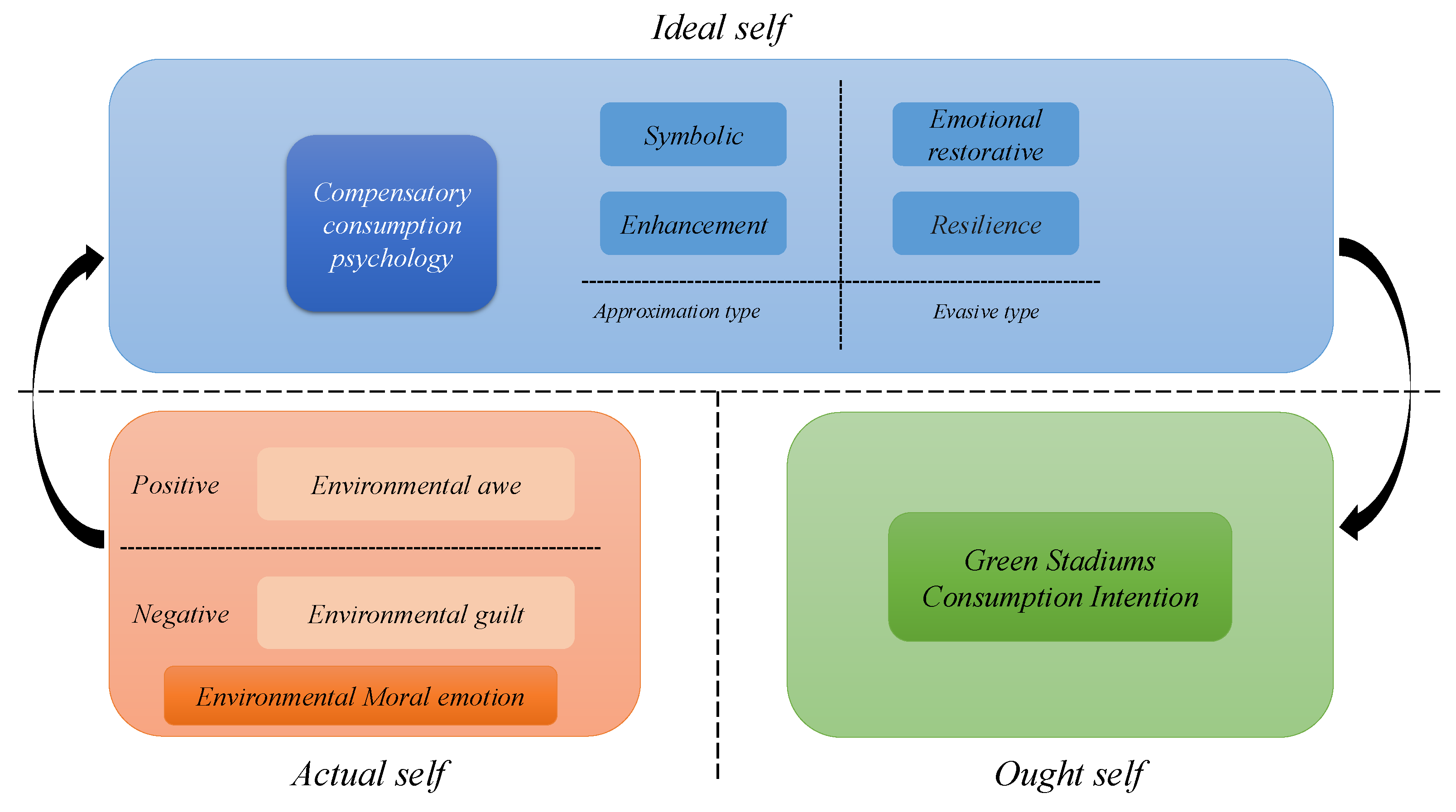
Self-discrepancy theory refers to the inconsistency between an individual’s current perception of the self and the way they hope to be perceived by others, which in turn threatens the self and motivates the individual to seek ways to resolve psychological discomfort [16]. The theory encompasses two dimensions of self-belief, namely domains of self and standpoints of self. Within self-domains, there are the actual self, the ideal self, and the ought self. The actual self refers to the traits or characteristics an individual believes they currently possess (“how I am in reality”), the ideal self refers to the traits or characteristics an individual hopes to possess (“how I would like to be ideally”), and the ought self represents the traits or characteristics that an individual believes they should possess, associated with fulfilling social obligations and responsibilities [17]. Among these three selves, the ideal self and the ought self serve as primary self-guides, directing individuals on how to improve, enhance, and surpass their actual self. Self-discrepancy theory posits that emotions are generally regarded as the result of perceived threats and discrepancies. When individuals perceive self-discrepancies and experience heightened emotions, they attempt to maintain the stability of their psychological self-assets, become motivated to self-regulate their behaviors, and activate certain mediating mechanisms, such as enhanced motivation [18] and problem-solving tendencies, in order to repair their ideal self-concept and guide actions aligned with the ought self. In this study, environmental moral emotions are conceptualized as perceived self-moral discrepancies, which stimulate motivation to bridge the gap between the actual self and the ideal self and trigger compensatory consumption psychology, thereby guiding consumers toward green sports stadium consumption intention through the ought self. In alignment with the main focus of this study, moral emotions, compensatory consumption psychology, and green sports stadium consumption intention correspond, respectively, to the actual self, ideal self, and ought self. Environmental moral emotions reflect the consumer’s perception of self-discrepancy regarding the current state, compensatory consumption psychology reflects the ideal self-state that seeks to remedy this discrepancy, and green sports stadium consumption intention reflects the behavioral intention to compensate for emotional and psychological discrepancies, as illustrated in Figure 1.

2.2. Environmental Moral Emotions and Green Sports Stadium Consumption Intention

Moral emotions are emotional experiences that arise when individuals evaluate their own or others’ thoughts and behaviors according to certain moral standards and behavioral norms, representing a response to the relationship between objective reality and one’s own moral requirements [19]. As a type of epistemic emotion, moral emotions encompass non-rational factors such as individual feelings and perceptions, while also including rational factors such as cognition and evaluation [20], serving as a comprehensive assessment of the self and providing better explanatory power for complex psychological mechanisms. Building on this, the present study introduces the concept of environmental moral emotions. Combining individuals’ environmental concerns with the definition of moral emotions, environmental moral emotions are defined in this study as emotional experiences that arise when individuals evaluate the relationship between the natural environment and their own moral standards according to certain moral norms. Relevant research has indicated that discrepancies between the actual self and the ought self are associated with aroused emotions such as guilt and fear [21]. Therefore, this study incorporates environmental awe and environmental guilt as the primary variables of moral emotion, with environmental awe representing a positive moral emotion and environmental guilt representing a negative moral emotion.
Green consumption intention reflects consumers’ preference for green products or services [22] and is defined as the likelihood and willingness of individuals to prioritize ecologically friendly products over conventional products during the consumption process. Green sports stadium consumption intention (GSCI) is a specific form of green consumption intention. As a type of green building with environmentally friendly and sustainable attributes, green sports stadiums serve as consumers’ choices in sports-related green consumption. Green sports stadiums encompass attending sports events, participating in exercise, and utilizing the sports services provided within environmentally sustainable stadiums. Therefore, in defining green sports stadium consumption intention, this study draws on the concept of green consumption intention and defines it as the likelihood and willingness of consumers to prioritize sports consumption in green sports stadiums buildings with environmentally friendly and sustainable attributes over conventional sports stadiums buildings.

2.2.1. The Positive Effect of Environmental Awe on Green Sports Stadiums Consumption Intention

Awe is experienced when individuals encounter phenomena that transcend their current experiences, such as vastness, novelty, or complexity. As a complex emotion, awe comprises a combination of feelings including wonder, fear, admiration, perplexity, submission, and other emotional components. Awe is defined as an emotional experience of admiration and reverence that arises when an individual faces vast, grand, or otherwise incomprehensible phenomena [23]. Regarding the elicitors of awe, previous studies have mainly categorized them into three types: first, social elicitors, such as deities, popes, or religious authority; second, cognitive elicitors, such as profound theories or viewpoints; and third, physical elicitors, such as magnificent architecture or artworks. This study focuses on physical elicitors, including natural landscapes such as expansive mountain ranges, towering peaks, and other grand natural environments. Research has indicated that awe toward nature is more effective in promoting pro-environmental behavior than awe toward human-made landscapes [24]. Accordingly, drawing on the perspective of physical elicitors, this study conceptualizes environmental awe (EA) as the emotional experience of admiration and reverence when individuals encounter vast, grand natural landscapes that exceed their current understanding. Studies have shown that environmental awe can enhance the connection between humans and the natural environment. Shiota’s et al. [25] research supports this view, finding that when participants were immersed in awe experiences, the activity they most desired to engage in during the following hour was spending time in nature. Moreover, ecological self-theory explains this phenomenon from a sociological perspective, suggesting that as society develops, the relationship between humans and nature becomes closer, which is a natural outcome of self-cognition. Awe establishes a connection between humans and nature, and further research has examined the relationship between awe and pro-environmental behavior. For instance, scholars have found that awe positively influences environmentally friendly behaviors, such as donating to environmental organizations or planting trees. Piff et al. [26] also indicated that awe increases individuals’ willingness to engage in prosocial behavior, for example, by acting more altruistically and generously in economic games. According to the awe prototype theory proposed by Keltner et al. [23], awe is characterized by two core features: perceived vastness and the need for accommodation. When consumers experience environmental awe, the accommodation mechanism triggered by the need for accommodation shifts their attention toward external environmental interests, fostering greater respect for nature and motivating altruistic behaviors that align with natural laws. Since green consumption behaviors have positive effects on environmental protection and sustainability [27] and are considered feasible actions for environmental preservation, consumers are more willing to pay a premium to choose green sports stadiums with higher altruistic value as their consumption targets, resulting in higher consumption intention. Based on the above, the following hypothesis is proposed:
H1: 
Environmental awe positively influences green sports stadium consumption intention.

2.2.2. The Positive Effect of Environmental Guilt on Green Sports Stadiums Consumption Intention

Guilt is a self-directed negative emotion that arises when an individual becomes aware that their own actions, or those of their organization, have violated social norms or personal moral standards, resulting in threats or negative consequences to society or others. As a typical moral emotion, guilt plays a crucial role in motivating compensatory prosocial behaviors, as it can stimulate moral actions, inhibit immoral behaviors, and encourage individuals to act according to recognized normative standards [28]. When consumers experience negative emotions, they tend to choose products that alleviate such feelings [29]. Similarly, regarding environmental issues, consumers, as beneficiaries of the environmental economy, perceive the importance of their own role in environmental protection when confronted with the destructive and threatening impacts of human economic activities on the environment. If they have not actually engaged in environmentally friendly behaviors or have not reached their ideal self-state, they experience a self-discrepancy, leading to environmental guilt. Based on this, environmental guilt (EG) in this study is defined as the emotional experience arising from individuals’ recognition that their own actions, or those of their social group, have violated environmental norms or personal environmental moral standards, resulting in threatening or negative consequences for the environment. Previous research has indicated that even negative emotions can have a significant positive effect on pro-environmental behavior, prompting consumers to incur higher economic costs to engage in environmentally friendly actions with spillover effects [30]. For instance, Mayer et al. [31] found that guilt, as a negative moral emotion, can effectively encourage consumers to address serious environmental issues and thereby avoid environmentally harmful behaviors. Moreover, affective motivation theory suggests that negative emotions drive consumers’ behavioral intentions, which has been supported in several studies [32]. Regarding environmental guilt, scholars have confirmed its role in promoting pro-environmental behaviors. For example, Tam et al. [33] found that environmental guilt can encourage individuals to engage in environmentally friendly actions. Similarly, Mkono et al. [34] observed that tourists discussing online travel experiences exhibited varying degrees of guilt, which made them more likely to make environmentally conscious tourism decisions. In summary, this study posits that when consumers experience environmental guilt, they develop a deeper self-awareness regarding environmental damage, which motivates them to compensate for their unmitigated impact on the environment resulting from economic activities, thereby promoting green sports stadium consumption intention. Based on the above, the following hypothesis is proposed:
H2: 
Environmental guilt positively influences green sports stadium consumption intention.

2.3. The Mediating Role of Compensatory Consumption Psychology

Compensatory consumption was first proposed by Gronmo [35] in 1988, who suggested that compensatory consumption occurs when consumers engage in certain consumption behaviors to satisfy psychological needs arising from deficiencies in overall self-esteem or actual self, conceptualizing it as a distinct consumption pattern. Subsequently, scholars gradually shifted the research perspective toward the viewpoint of threatened self-concept. For instance, Rucker et al. [36] provided a new conceptualization of compensatory consumption, defining it as the consumer’s selection of products that can address threats when their self-concept is perceived to be under threat. A review of the literature indicates that compensatory consumption behavior involves changes in consumers’ psychological pathways [37], as coping with self-discrepancies often requires psychological effort [38]. Accordingly, in combination with self-discrepancy theory, compensatory consumption psychology is conceptualized as the psychological process through which consumers recognize the discrepancy between their actual self and ideal self and progress toward the ought self. Based on prior research, compensatory consumption has been divided into four dimensions for discussion [39]. Drawing on behavioral motivation theory [40], these four factors can be classified into approach-oriented and avoidance-oriented dimensions. The approach-oriented dimension reflects behaviors motivated by the pursuit of positive outcomes, while the avoidance-oriented dimension reflects behaviors motivated by the avoidance of negative outcomes. Specifically, the approach-oriented dimension includes symbolic and enhancement factors, whereas the avoidance-oriented dimension includes emotional repair and resilience factors.In this study, symbolic, enhancement, emotional restorative, and resilience dimensions are jointly treated as four psychological variables of compensatory consumption and are regarded as different potential psychological changes leading to compensatory consumption behaviors. To examine the parallel mediating effects of these four variables and to identify the underlying psychological mechanisms, they are therefore treated as independent mediating variables.

2.3.1. Symbolic

Existing studies, combining symbolic self-completion theory and self-compensation theory, define symbolic compensatory needs as the consumer’s desire to obtain satisfaction through behaviors with symbolic significance when their self-concept is threatened [41]. Based on this definition, this study defines the symbolic dimension of compensatory consumption psychology (CS) as the need of threatened consumers to compensate for self-discrepancies through consumption behaviors with symbolic significance. Research grounded in symbolic self-completion theory has indicated that individuals seek self-affirmation through certain symbolic behaviors, indirectly conveying messages to others [42], such as “I have performed well in this aspect.” This phenomenon also exists in consumption behaviors, where symbolic green consumption behaviors serve this signaling function, enhancing the self-concept and demonstrating the individual’s fulfillment of environmental responsibilities. Currently, China is actively promoting green consumption, and within this context, consumers with high symbolic orientation tend to engage in green sports stadium consumption to showcase their symbolic value, fully embodying social values such as environmental sustainability and responsibility. Moreover, environmental moral emotions further drive the formation of this value recognition. Consumers with high levels of environmental awe and environmental guilt pay greater attention to the symbolic representation of their respect for nature and recognition of environmental social responsibility. When they perceive that green consumption not only fulfills environmental obligations but also symbolizes their own environmental image, it enhances the symbolic dimension, helping to reconcile the gap between the actual self and the ideal self, thereby increasing the likelihood of green sports stadium consumption. Based on the above, the following hypotheses are proposed:
H3a: 
Symbolic mediates the effect of environmental awe on green sports stadium consumption intention.
H3b: 
Symbolic mediates the effect of environmental guilt on green sports stadium consumption intention.

2.3.2. Enhancement

Mandel et al. [43] proposed five strategies of compensatory consumption, including direct approaches to address threats, whereby consumption can improve or enhance the product area perceived as threatened, thereby reducing self-discrepancy. For example, individuals dissatisfied with their body shape may purchase fitness courses to improve their physique. Similarly, Kim’s et al. [44] study introduced proactive compensatory consumption, which also involves enhancement; for instance, if one anticipates potential failure in an exam, they may purchase study books or courses to address the potential threat. From these studies, it is evident that enhancement is an important psychological factor driving consumers’ compensatory consumption intention and behavior. Accordingly, in this study, the enhancement dimension of compensatory consumption psychology (CE) is defined as the individual’s consumption aimed at improving certain aspects of their self-concept, enhancing self-perception or social evaluation, and elevating their physical and mental state through consumption and product use to compensate for negative assessments. When consumers experience high levels of environmental awe, they are more likely to focus on their admiration and reverence for the environment, recognizing that green consumption behaviors protect the natural environment and align with natural laws, thereby enhancing their perceived environmental capability. This process compensates for the gap between the actual self and the ideal self, increasing the likelihood of green sports stadium consumption. Similarly, when consumers experience high levels of environmental guilt, their awareness of environmental damage intensifies the perceived gap between the actual self and ideal self, making them more likely to focus on the environmental benefits of green products and their enhancement of personal environmental capability. This compensatory mechanism motivates consumers to improve their environmental protection ability, fulfill environmental responsibilities, and mitigate threats to social recognition, thereby increasing the likelihood of choosing green sports stadiums during sports consumption. Based on the above, the following hypotheses are proposed:
H4a: 
Enhancement mediates the effect of environmental awe on green sports stadium consumption intention.
H4b: 
Enhancement mediates the effect of environmental guilt on green sports stadium consumption intention.

2.3.3. Emotional Restorative

The emotional restorative dimension of compensatory consumption (CER) is defined as the process through which individuals achieve relief from negative emotions via consumption [39]. When facing environmental awe, a type of moral emotion, consumers are more likely to focus on the influence of external benefits, generating positive emotions toward environmental protection. Although emotional restorative can also occur under positive emotions, this restorative is primarily established within the gap between the actual self and the ideal self. Based on self-discrepancy theory, when individuals perceive self-discrepancies, they can compensate through the ought self. When consumers recognize that green consumption can help them shape an environmentally responsible image and fulfill environmental obligations to restorative this discrepancy, the emotional restorative function is effectively activated, thereby influencing their willingness to choose environmentally friendly and sustainable green sports stadiums as consumption targets. Regarding environmental guilt, a negative emotion, the role of emotional restorative is even more evident. When consumers experience high levels of environmental guilt, they are motivated to restorative the negative emotions associated with environmental damage and personal threats. This makes them more likely to perceive the environmental attributes of green consumption as an effective means to mitigate pressures from social moral recognition and environmental threats, enhancing emotional restorative. Consequently, this increases their willingness to choose green and sustainable sports stadiums during sports consumption. Based on the above, the following hypotheses are proposed:
H5a: 
Emotional restorative mediates the effect of environmental awe on green sports stadium consumption intention.
H5b: 
Emotional restorative mediates the effect of environmental guilt on green sports stadium consumption intention.

2.3.4. Resilience

The resilience dimension of compensatory consumption psychology (CR) in this study is defined as the individual’s adaptive capacity to regulate consumption under threat or stress [39]. Resilience enables consumers to use consumption to resist the negative impacts of self-threats, group identity threats, and social exclusion. Previous studies on compensatory consumption have indicated that one of the key factors driving compensatory consumption behavior is the perception of threat. When consumers face threats, they develop consumption motivations to help themselves cope with or resist these threats. Self-discrepancy theory posits that when individuals perceive a gap between their actual self and ideal self, they engage in self-regulatory behaviors. Consequently, when consumers experience environmental awe, they recognize the vastness of the environment and their own insignificance, and they become aware that excessive exploitation of the environment will exacerbate threats to humanity itself. This awareness makes consumers more likely to focus on their environmental impact and responsibilities during sports consumption, achieving a balance between themselves and the external environment, thereby promoting green sports stadium consumption intention. Similarly, when consumers experience environmental guilt, they are more aware of the negative impacts of human development on the natural environment and understand that overexploitation of nature will threaten humanity. This recognition strengthens the pressure associated with avoiding environmental harm and fulfilling obligations under social environmental initiatives, thereby motivating consumers to choose green, environmentally friendly, and sustainable sports stadiums during sports consumption, increasing their consumption intention. Based on the above, the following hypotheses are proposed:
H6a: 
Resilience mediates the effect of environmental awe on green sports stadium consumption intention.
H6b: 
Resilience mediates the effect of environmental guilt on green sports stadium consumption intention.
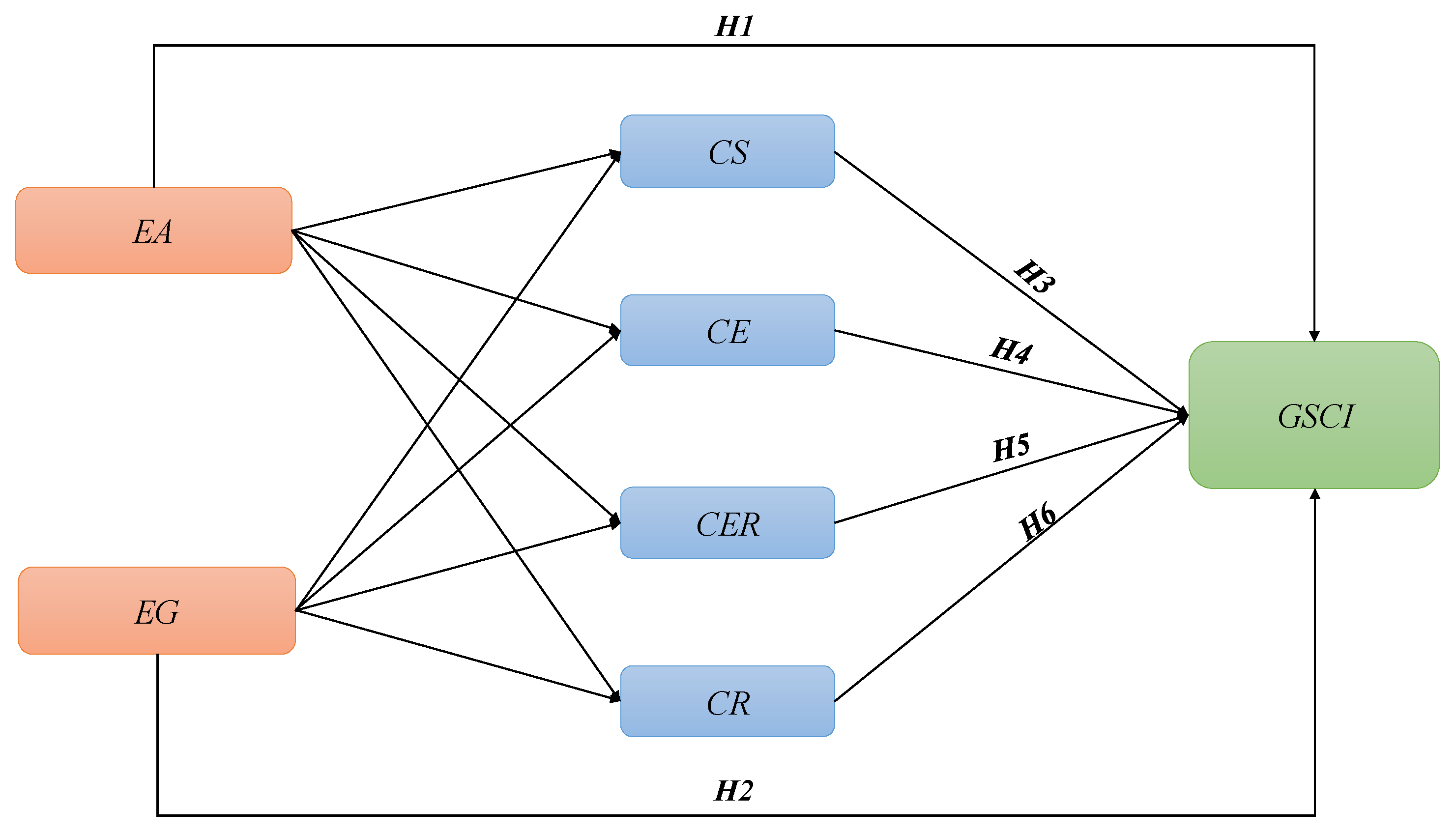
Based on the foregoing analysis, all hypothesized paths are illustrated in Figure 2.

3. Research Design

3.1. Data Collection

In this study, data were collected through a questionnaire survey administered at sports stadiums to individuals with experience in stadium services and spectating consumption. Compared with individuals who have not engaged in sports consumption, this group has a deeper understanding of sports stadium consumption, and analyzing their psychological mechanisms exhibits stronger interrelated effects; therefore, this group was selected as the survey sample. A total of 500 questionnaires were distributed, and 458 were returned, resulting in a response rate of 91.6%. After excluding questionnaires with incorrect answers, missing responses, or completion times that were too short, 418 valid questionnaires were obtained, yielding an effective response rate of 91.2%. The questionnaire included an introductory section, and participants provided informed consent prior to completion. The survey was conducted anonymously, with no items involving personal privacy or any form of intervention, in accordance with research ethics requirements. The distribution of individual sample characteristics is relatively uniform, indicating a certain level of representativeness.

3.2. Item Design

The questionnaire in this study involved seven constructs, including environmental awe and environmental guilt as representative variables of moral emotions, four dimensions of compensatory consumption psychology—symbolic, enhancement, emotional restorative, and resilience—and green sports stadium consumption intention, comprising a total of 25 items. The specific contents are presented in Appendix A Table A1. A five-point Likert scale was used, ranging from “strongly disagree” to “strongly agree,” scored 1 to 5. Higher scores indicate that the participant exhibits stronger characteristics of the respective variable. The overall Cronbach’s α coefficient of the questionnaire was 0.924, exceeding 0.7, indicating good reliability of the scale.
The items for environmental awe were adapted from Shiota’s [25] Dispositional Positive Emotion Scale (DPES) and its application to Chinese samples by Dong et al. [45], focusing on the awe dimension and modified to suit the main content of this study. This included four items, such as “In daily life, I often feel awe toward the natural environment.” The Cronbach’s α coefficient for this variable was 0.868, exceeding 0.7. Environmental guilt items were adapted from Cotte’s et al. [46] scale and tailored to the focus of this study, comprising four items, such as “I feel guilty when facing environmental threats.” with a Cronbach’s α coefficient of 0.859, exceeding 0.7.
The items for the four dimensions of compensatory consumption psychology were based on the study by Wang et al. [39] and Sidra [47], which indicated that each dimension could be used either collectively or individually. In this study, symbolic, enhancement, emotional restorative, and resilience were selected. The first two represent approach-oriented motivation, including four items for symbolic, such as “To enhance others’ positive evaluation of me, I usually choose green stadium consumption,” and three items for enhancement, such as “I would purchase green stadium services if it can promote my personal development.” The Cronbach’s α coefficients were 0.870 and 0.829, respectively, both exceeding 0.7. The latter two represent avoidance-oriented motivation, including four items for emotional restorative, such as “When I feel bad, purchasing or experiencing green stadium services can improve my mood.” and three items for resilience, such as “I would purchase green stadium services if it can reduce threats to my group identity.” The Cronbach’s α coefficients were 0.876 and 0.815, respectively, both exceeding 0.7.
The items for green sports stadium consumption intention were adapted from Manaktola’s [48] study and revised and streamlined for this study, including three items, such as “I expect to choose green stadium consumption in the future because of its environmental performance.” The Cronbach’s α coefficient for this variable was 0.849, exceeding 0.7.

4. Research Results

4.1. Confirmatory Factor Analysis

Confirmatory factor analysis was conducted on the aforementioned items. To identify the correspondence between factors and research items and to ensure that each factor is explained by only a limited set of items, this study applies the maximum variance rotation method. The results are shown in Table 1. After rotation, all items load onto their corresponding extracted factor dimensions, indicating strong associations between the items and the factors. Moreover, the composite reliability values of all variables exceed 0.6, and the average variance extracted values are all greater than 0.5, demonstrating good convergent validity for each variable.
To further examine the discriminant validity among variables, the correlations between variables and the square roots of the average variance extracted (AVE) were analyzed. As shown in Table 2, the diagonal values represent the square roots of the AVE for each variable, all of which are greater than the off-diagonal correlation coefficients. This indicates that, while the variables in this study are moderately correlated, they also maintain good discriminant validity.

4.2. Common Method Bias Test

The results indicated a KMO value of 0.891 and a significant Bartlett’s test of sphericity (p < 0.05), confirming the suitability for factor analysis. A total of seven factors with eigenvalues greater than 1 were extracted, consistent with the expectations of this study. As shown in Table 3, the first factor explained 35.338% of the variance, and after rotation, the explained variance was 11.900%. According to Harman’s single-factor test, the variance did not reach the 40% threshold, indicating that common method bias was not present in this study.

4.3. Model Fit

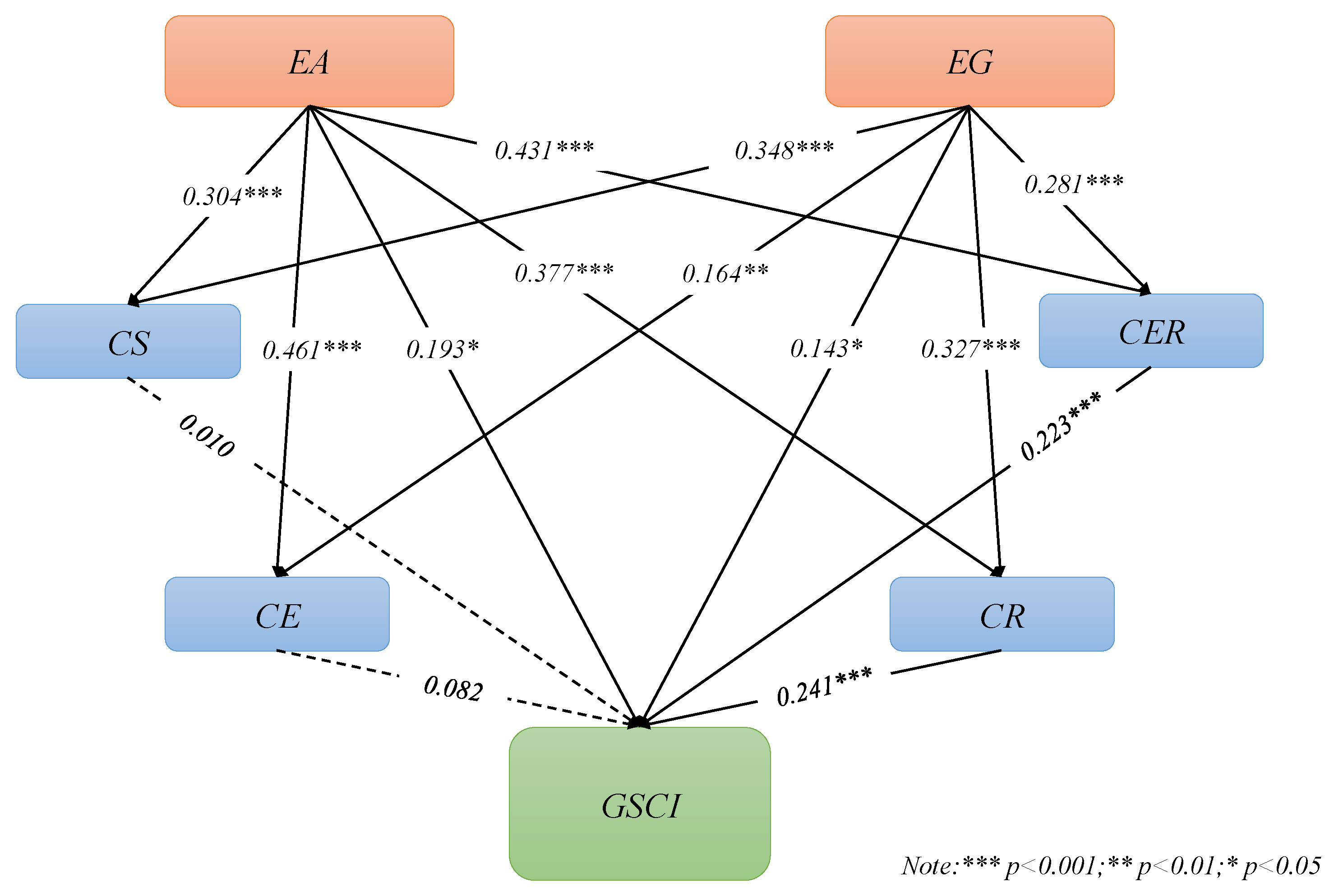
Environmental awe and environmental guilt were set as independent variables, green sports stadium consumption intention as the dependent variable, and symbolic, enhancement, emotional repair, and resilience as mediating variables. Demographic variables were included as control variables to construct the structural equation model. Model fit was tested using Amos 24.0. As shown in Table 4, the results indicate CMIN = 800.289, DF = 322, CMIN/DF represents the relative ratio of the chi-square value to the degrees of freedom. A value below 3 indicates a relatively ideal model fit, while a value below 5 is considered acceptable. In this study, the model CMIN/DF is 2.485 (<3), indicating that the model exhibits good fit. Values of CFI, TLI, and IFI greater than 0.9 also indicate good model fit. The results indicate CFI = 0.923 > 0.9, TLI = 0.906 > 0.9, IFI = 0.924 > 0.9, and RMSEA = 0.058 < 0.08, suggesting a satisfactory model fit. The specific path coefficients are presented in Table 5 and Figure 3.

4.4. Parallel Multiple Mediation Test

The Bootstrap method was used to test the mediating effects, with the four dimensions of compensatory consumption psychology treated as parallel multiple mediators. After 5000 bootstrap samples, the results are presented in Table 6. In the path through which environmental awe promotes green sports stadium consumption intention, the direct effect accounts for 45% of the total effect, with a p-value of 0.016, indicating a significant positive effect; thus, Hypothesis H1 is supported. In the parallel mediation analysis, the indirect effects of emotional restorative, resilience, symbolic, and enhancement dimensions account for 22.8%, 21.6%, 0.7%, and 9%, respectively, with p-values of 0.003, 0.001, 0.911, and 0.173, indicating that Hypotheses H3a and H4a are not supported. The 95% confidence intervals for emotional restorative and resilience do not include zero, and the parallel mediating effect is established, accounting for 44.4% of the total effect; therefore, Hypotheses H5a and H6a are supported. In the path through which environmental guilt promotes green sports stadium consumption intention, the direct effect accounts for 47.5% of the total effect, with a p-value of 0.046, indicating a significant positive effect; thus, Hypothesis H2 is supported. In the parallel mediation analysis, the indirect effects of emotional restorative, resilience, symbolic, and enhancement dimensions account for 20.9%, 26.2%, 1.1%, and 4.3%, respectively, with p-values of 0.003, 0.001, 0.911, and 0.193, indicating that Hypotheses H3b and H4b are not supported. The 95% confidence intervals for emotional restorative and resilience do not include zero, and the parallel mediating effect is established, accounting for 47.1% of the total effect; therefore, Hypotheses H5b and H6b are supported.

5. Analysis

5.1. The Positive Impact of Environmental Moral Emotions on Green Sports Stadium Consumption Intention

5.1.1. Environmental Awe and Green Sports Stadium Consumption Intention

This study examined the relationship between environmental awe and green sports stadium consumption intention. The results indicated a significant positive relationship, consistent with findings from previous studies [49,50]. In this study, this relationship is interpreted as follows: when consumers experience high levels of environmental awe, the underlying compliance mechanism is activated, making consumers more attentive to the environmental impact of their consumption choices. When consumers perceive the green, eco-friendly, and sustainable environmental values of green sports stadiums, as well as their friendliness toward the natural environment, their consumption intention increases. From the perspective of self-discrepancy theory, environmental awe, as a positive environmental moral emotion in this study, reflects a moral self-discrepancy between reverence for nature and one’s own environmental behaviors. This discrepancy guides consumers to choose green sports stadiums, which have a lower negative impact on the environment, as a means to compensate for the self-discrepancy.

5.1.2. Environmental Guilt and Green Sports Stadium Consumption Intention

This study examined the impact of environmental guilt on green sports stadium consumption intention. The analysis confirmed a significant positive relationship between the two, consistent with findings from previous research [51,52]. In this study, environmental guilt, as a negative environmental moral emotion, reflects the awareness among consumers with high levels of guilt that their fulfillment of environmental responsibilities has not yet reached their ideal standards. To practice environmental responsibility, these consumers pay more attention to the green, eco-friendly, and sustainable attributes of consumption targets, making them more inclined to make environmentally beneficial green consumption choices. Consequently, when engaging in sports consumption, these consumers are more likely to choose green sports stadiums, establishing a positive relationship between environmental guilt and green sports stadium consumption intention.

5.2. Parallel Mediating Role of Compensatory Consumption Psychology

This study examined the mediating effects of the four dimensions of compensatory consumption psychology on the relationship between environmental awe, environmental guilt, and green sports stadium consumption intention. The analysis revealed that, compared with avoidance-oriented mediators, approach-oriented mediators exhibited relatively weaker effects. Although some studies have confirmed that symbolic and enhancement dimensions are important drivers of consumers’ environmentally compensatory consumption, this study did not find significant effects of these dimensions on green sports stadium consumption intention. This phenomenon is primarily attributed to the self-psychological differences between egoistic and altruistic motivations. According to resource support theory, when individuals focus their attention on themselves, their attention to the external environment diminishes [53]. In the context of green sports stadium consumption, whether for physical exercise or sports event attendance, the process primarily enhances personal health and mental well-being. This pursuit of positive self-outcomes and hedonic benefits may overshadow the attention to the environmental attributes of green consumption, weakening the effect on shaping one’s environmental image or enhancing environmental protection capabilities. Consequently, consumers tend to select green sports stadiums primarily to satisfy personal improvement needs, with the green attributes being an additional benefit. This explains why approach-oriented compensatory consumption psychology did not show significant effects in this pathway.

5.2.1. Mediating Role of Emotional Restorative

The analysis of this study revealed that emotional restorative plays a mediating role in the positive effects of environmental awe and environmental guilt on green sports stadium consumption intention, which is consistent with findings from related studies [54]. This study proposes the following explanations: First, in the mediation between environmental awe and green sports stadium consumption intention, based on the two core characteristics of environmental awe— “perceived vastness” and “need for compliance”—consumers with higher levels of environmental awe perceive their own smallness in the face of nature and experience a psychological drive to comply with natural development patterns. This, in turn, enhances emotional restorative, whereby consumers, through the low-pollution and energy-efficient green attributes of the consumption object, minimize their impact on the natural environment, thereby increasing their intention to consume at green sports stadiums. Second, in the mediation between environmental guilt and green sports stadium consumption intention, compared with positive environmental moral emotions, consumers with higher levels of environmental guilt have a deeper awareness of their moral deficits and insufficient fulfillment of environmental responsibilities. When consumers recognize the eco-friendly characteristics of green consumption behaviors, they engage in an emotional restorative process aimed at compensating for self-moral discrepancies and avoiding social approval threats. This enhances consumers’ emotional restorative capacity, thereby promoting their intention to choose green sports stadiums as consumption targets during sports-related activities.

5.2.2. Mediating Role of Resilience

The analysis of this study revealed that resilience plays a significant mediating role in the positive effects of environmental awe and environmental guilt on green sports stadium consumption intention, consistent with findings from related studies [55]. First, in the environmental awe pathway, when consumers experience high levels of environmental awe, they become acutely aware of humanity’s smallness in the face of nature and develop a positive emotional inclination to comply with environmental development. They recognize the eco-friendly value of green consumption, which minimizes the environmental impact of their own consumption behaviors and helps avoid the risk of excessive exploitation of natural resources that could threaten humanity. This fosters a high level of resilience, generating compensatory psychology to bridge the gap between the actual self and the ideal self, thereby increasing the likelihood of choosing green sports stadiums as consumption targets during sports-related activities. Second, in the environmental guilt pathway, when consumers experience high levels of environmental guilt, they feel a sense of indebtedness toward environmental threats and become more aware of the responsibilities they should assume in protecting the environment, as well as the discrepancy between their current behaviors and these responsibilities. This motivates consumers to engage in green consumption to alleviate their guilt, mitigate risks associated with social approval and environmental threats, and achieve balance and stability between themselves and the external environment. This process enhances resilience, helping consumers perceive that green consumption can bridge the gap between their actual self and ideal self, thereby activating the ought self psychological state and increasing consumers’ intention to consume at green sports stadiums as part of fulfilling this compensatory process.

5.2.3. Parallel Mediating Role of Avoidance-Oriented Compensatory Consumption Psychology

As summarized previously, emotional restorative and resilience both belong to the avoidance-oriented dimension of compensatory consumption psychology. The analysis revealed that these two dimensions play a parallel mediating role in the positive pathways from environmental awe and environmental guilt to green sports stadium consumption intention. From the perspective of environmental awe, as a positive environmental moral emotion, it encompasses reverence for the vastness of nature and awareness of human smallness in the face of the environment. Consumers recognize that excessive exploitation of natural resources can significantly harm humanity, allowing the parallel mediating role of avoidance-oriented compensatory consumption to be fully realized. This satisfies consumers’ desire to minimize the environmental impact of their own behaviors while avoiding potential risks, enhancing the levels of avoidance-oriented compensatory consumption psychology and providing guidance for the ought self, thereby driving the ought self pathway to generate green sports stadium consumption intention and establishing this parallel mediating influence pathway. From the perspective of environmental guilt, it embodies negative emotions related to the indebtedness caused by human environmental degradation, while also containing an intrinsic motivation to assume environmental protection responsibilities. When the level of environmental guilt rises, consumers become acutely aware of the discrepancy between their current and ideal environmental protection capabilities. They then pay attention to green consumption behaviors, perceiving that engaging in such behaviors can help alleviate moral guilt, social approval pressure, and threats to social identity. This promotes increases in avoidance-oriented emotional restorative and resilience, which together guide consumers along the compensatory consumption pathway from actual self to ideal self, leading them to choose green sports stadiums with eco-friendly attributes during sports consumption. This finding is also supported by Kim’s [44] research on compensatory consumption, which categorizes compensatory consumption into proactive and reactive types. These correspond to the pathways of environmental awe and environmental guilt, respectively. Proactive compensatory consumption occurs before the threat, aiming to reduce harm to the environment and mitigate potential future environmental threats to humanity through green consumption. Reactive compensatory consumption, on the other hand, emerges in response to the perceived damage to self-concept caused by threats to the environment, driving compensatory behaviors to alleviate negative emotions.

6. Discussion

Based on the above findings, this study proposes the following recommendations. For governments, first, the development of the nature tourism industry should be promoted to encourage the public to experience the grandeur of natural landscapes, thereby fully activating awe toward the natural environment. Environmental protection should not only be regarded as a shared responsibility but also be translated into concrete actions, such as publicizing environmental moral role models to evoke public self-reflection and feelings of guilt. Second, from policy and economic perspectives, the construction and operation of green sports stadiums should be encouraged, and their coverage should be expanded to provide consumers with an adequate supply of green sports stadiums. Third, efforts should be strengthened to publicize the current state of the natural environment and to provide policy guidance, thereby fostering a clear understanding of the inseparable interdependence between humans and nature, as well as raising awareness of environmental degradation and the threats and challenges it poses to future development.
For green sports stadium operators and management teams, future operations should fully leverage the environmental and sustainable green value of green sports stadiums, strengthen the connection between the natural environment and green sports stadiums, and publicize the reduction in environmental damage and the contribution to sustainable development resulting from their construction and operation. Emphasis should be placed on the environmentally friendly attributes of green sports stadiums, such as environmental protection, reductions in carbon emissions throughout the operational life cycle, and the sustainable utilization of metabolic by-products, including reduced emissions of chlorofluorocarbons, energy-saving features, and biodegradability. These efforts can attract public curiosity toward green sports stadiums and help establish a green-friendly label. By communicating environmental degradation caused by excessive human exploitation, consumers can be guided to develop awe toward the natural environment and to recognize that choosing green sports stadium consumption constitutes an environmentally friendly behavior, thereby promoting their intention to consume green sports stadium services.In addition, due to individual differences in sensitivity to moral foundations and moral norms, green sports stadium operators may adopt diversified communication strategies. For example, various promotional activities related to sports and the natural environment can be organized, including displaying posters and slogans for green sports stadiums, installing green sports stadium billboards, and holding green sports promotion days. Charitable activities may also be carried out [56], such as strengthening collaboration with environmental organizations and jointly organizing charity fundraising events themed around environmental protection. By publicizing the green and environmentally friendly functions of sports stadiums and their importance for sustainable development, consumers’ environmental awareness can be activated through fundraising activities. Alternatively, by opening green sports stadiums for visits and experiential activities, consumers can develop a comprehensive understanding of the environmental functions of green sports stadiums through firsthand experience [57], recognize their city’s contribution to environmental protection, and, based on their sense of social belonging [58], further realize that consuming green sports stadium services represents an effective way of fulfilling their own environmental responsibility. This, in turn, can trigger avoidance-oriented compensatory consumption psychological mechanisms, enabling consumers to satisfy personal needs while simultaneously realizing the “altruistic” green attributes of such consumption.
For consumers, attention should be continuously paid to environmental changes, and a nature-oriented worldview that conforms to natural development laws and emphasizes respect for and awe toward nature should be established. Consumers should fully recognize the negative impacts of human development on the environment, build a relationship of coexistence and symbiosis with the natural environment, and understand that protecting nature is equivalent to protecting humanity itself. Accordingly, environmental values and moral awareness should be cultivated. In practice, consumers should reflect on the external environmental impacts of their own consumption behaviors, actively fulfill environmental responsibilities, and choose consumption behaviors that minimize environmental impacts, thereby compensating for the natural environment on which human survival depends. By integrating green and environmentally friendly values into actual consumption practices, harmonious development between humans and the environment can ultimately be achieved.

7. Conclusions

This study constructed a parallel mediating model of consumers’ environmental moral emotions, compensatory consumption psychology, and green sports stadium consumption intention based on self-discrepancy theory and compensatory consumption theory, illustrating the compensatory pathway from the gap between the actual self and the ideal self to the ought self. The study draws the following conclusions: First, environmental awe and environmental guilt, as positive and negative environmental moral emotions, respectively, exert significant positive effects on green sports stadium consumption intention. Second, environmental awe and environmental guilt both positively influence compensatory consumption psychology, including symbolic, enhancement, emotional restorative, and resilience dimensions. Third, emotional restorative and resilience play a mediating role in the positive effects of environmental awe and environmental guilt on green sports stadium consumption intention, acting as parallel mediators within avoidance-oriented compensatory consumption psychology. This study further refines the psychological pathway of consumers’ environmental compensatory consumption through the mediating role of compensatory consumption psychology, providing experiential insights for sports consumption and theoretical references for policymakers, green building operators, and marketing practitioners.

8. Limitations and Future Directions

This study provides certain theoretical value in the fields of promoting green sports consumption, sports stadium operation, and compensatory consumption behavior; however, several limitations remain. First, the sample selection in this study is primarily concentrated in China, which limits the generalizability of the research findings. Second, although the survey attempted to include samples across different ages, genders, and income levels, diverse individual differences were not fully examined. Third, this study mainly focuses on consumers’ psychological mechanisms and effect pathways. Despite its theoretical value and contributions, potential moderating factors constrained by different social, industrial, and group-related contexts—such as social norms, industry systems, and organizational identification—were not examined in depth. Fourth, only four dimensions of compensatory consumption psychology were selected as references in this study. Although these dimensions are consistent with the research objectives and theoretical orientation and offer certain reference value, they do not fully capture all potential factors, and the possible relationships among the dimensions were not explored in depth. Future research should expand sample diversity by incorporating data from different regions and conducting further examinations in accordance with national contexts, as well as extending analyses of individual differences and the potential moderating effects of factors such as social norms across different groups. In addition, future studies should conduct more in-depth analyses of the possible interrelationships among psychological factors within compensatory consumption theory, in order to provide a more comprehensive explanation of psychological pathways and mechanisms.

Author Contributions

Conceptualization, L.C. and Y.H.; methodology, L.C.; software, L.C.; validation, Q.H., Y.H. and L.C.; formal analysis, L.C.; investigation, L.C.; resources, Y.H.; data curation, L.C.; writing—original draft preparation, L.C.; writing—review and editing, Y.H. and Q.H.; visualization, Y.H.; supervision, Y.H.; project administration, Q.H. All authors have read and agreed to the published version of the manuscript.

Funding

This research received no external funding.

Institutional Review Board Statement

The Ethics Committee of School of Economics and Management of Chengdu Sport University, has approved the survey on “Avoidance” or “Approach”? —“The Compensatory Consumption Psychological Mechanism of Environmental Moral Emotions on Green Sports Stadium Consumption Intention” conducted by Luning Cao et al. The research team promises that the questionnaire survey will be conducted after fully informing the respondents about the content of the questionnaire and the purpose of the study, and obtaining explicit consent from all respondents. Submitting the questionnaire is considered as informed consent, and respondents can withdraw at any time during the survey process. The data collected in the questionnaire survey can be used for research after being anonymized. Respondents have the right to request the research team to delete the results related to them at any stage.

Informed Consent Statement

Informed consent was obtained from all subjects involved in the study.

Data Availability Statement

Data available on request from the authors.

Conflicts of Interest

The authors declare no conflicts of interest.

Appendix A

Table A1. Questionnaire.
DimensionItem
Environmental guilt (EG)I feel guilty when facing environmental threats.
I feel ashamed when facing environmental threats.
I reflect on my past behaviors when facing environmental threats.
I feel I should take some compensatory actions when facing environmental threats.
Environmental awe (EA)In daily life, I often feel awe towards the natural environment.
The natural environment around me often amazes me.
I can easily enjoy the beauty of nature.
I strive to explore new experiences to understand the world.
Symbolic (CS)I would choose to consume at green stadiums if it can demonstrate uniqueness.
To enhance others’ positive evaluation of me, I usually choose green stadium consumption.
I usually purchase green products that reflect my environmental image.
I would purchase green stadium services if it can demonstrate social status.
Enhancement (CE)I would purchase green stadium services if it can promote my personal development.
I would purchase green stadium services if it can enhance my self-value.
I would purchase green stadium services if it can improve my self-worth.
Emotional restorative (CER)When I feel bad, purchasing or experiencing green stadium services can improve my mood.
When something makes me uncomfortable, green stadium consumption usually relieves my negative emotions.
Purchasing and using green stadium services can make me feel better.
Purchasing and using green stadium services can release my negative emotions.
Resilience (CR)If my behavior is inconsistent with my ideal self, I would reduce discomfort by consuming green stadium services.
I would purchase green stadium services if it can reduce threats to my group identity.
I would purchase green stadium services if it can help me avoid or reduce threats.
Green Stadiums Purchase
Intention (GSPI)
I tend to choose green stadium consumption out of concern for the environment.
I expect to choose green stadium consumption in the future because of its environmental performance.
I tend to choose green stadium consumption because it is environmentally friendly.
Note: All constructs were measured using a five-point Likert scale ranging from 1 (strongly disagree) to 5 (strongly agree).

References

  1. Gan, W.; Dong, Q. esidents’ Support for Major Sporting Events in the Postponement Context: A Case Study of the 31st Summer Universiade. Int. J. Tour. Res. 2024, 26, e2788. [Google Scholar] [CrossRef]
  2. Grant, T.J., Jr. Green monsters: Examining the environmental impact of sports stadiums. Villanova Environ. Law J. 2014, 25, 149. [Google Scholar]
  3. Vanderweil, P. Greening Stadiums: Study of Environmentally Responsible Methods of Building and Retro-Fitting Stadiums. Ph.D Dissertation, Massachusetts Institute of Technology, Cambridge, MA, USA, 2008. [Google Scholar]
  4. Abidin, A.N.S.Z.; Yasin, M.R.M.; Hakim, S.; Aspar, M.A.S.M.; Jamal, N.Z. Green Technology in Sports: The Role of Waste Management in Sustainable Stadiums. In International Conference on Innovation and Technology in Sports; Springer Nature: Singapore, 2023; pp. 349–362. [Google Scholar]
  5. Xie, Y.C.; Zhang, Q. The Perspective of Ecological Building Large Sports Venues Green Regulation System. Adv. Mater. Res. 2013, 726, 3608–3612. [Google Scholar] [CrossRef]
  6. Lu, J.G.; Lee, J.J.; Gino, F.; Galinsky, A.D. Polluted morality: Air pollution predicts criminal activity and unethical behavior. Psychol. Sci. 2018, 29, 340–355. [Google Scholar] [CrossRef] [PubMed]
  7. White, K.; Habib, R.; Hardisty, D.J. How to SHIFT consumer behaviors to be more sustainable: A literature review and guiding framework. J. Mark. 2019, 83, 22–49. [Google Scholar] [CrossRef]
  8. Balaskas, S.; Panagiotarou, A.; Rigou, M. mpact of environmental concern, emotional appeals, and attitude toward the advertisement on the intention to buy green products: The case of younger consumer audiences. Sustainability 2023, 15, 13204. [Google Scholar] [CrossRef]
  9. Liang, D.; Hou, C.; Jo, M.S.; Sarigöllü, E. Pollution avoidance and green purchase: The role of moral emotions. J. Clean. Prod. 2019, 210, 1301–1310. [Google Scholar] [CrossRef]
  10. Wang, J.; Wu, L. The impact of emotions on the intention of sustainable consumption choices: Evidence from a big city in an emerging country. J. Clean. Prod. 2016, 126, 325–336. [Google Scholar] [CrossRef]
  11. Buttlar, B.; Latz, M.; Walther, E. Breaking bad: Existential threat decreases pro-environmental behavior. Basic Appl. Soc. Psychol. 2017, 39, 153–166. [Google Scholar] [CrossRef]
  12. Cao, L.; Hou, Y.; Shen, X.; Feng, S.; Liu, C.; Huang, Q. The Influence of Social Mass Environmental Cognition on Consumption Intentions in Green Stadiums from the Perspective of CAC Modeling. Buildings 2024, 14, 2744. [Google Scholar] [CrossRef]
  13. Chang, E.C.; Xie, C.; Fan, X. Defending the rules: How exposure to immoral behavior influences the boundary preference. J. Bus. Res. 2022, 139, 654–663. [Google Scholar] [CrossRef]
  14. Yetzer, A.M. Maintaining the Moral Self: Direct vs. Indirect Compensatory Consumption to Affirm the Moral Self After Threat. Ph.D Dissertation, Northwestern University, Evanston, IL, USA, 2023. [Google Scholar]
  15. Wang, C.; Zheng, X.; Yu, Q.; Lei, L. The dilemma of green consumption: Identity construction or environmental concern? Adv. Psychol. Sci. 2019, 27, 1507. [Google Scholar] [CrossRef]
  16. Higgins, E.T. Self-discrepancy: A theory relating self and affect. Psychol. Rev. 1987, 94, 3–20. [Google Scholar] [CrossRef]
  17. Barnett, M.D.; Moore, J.M.; Harp, A.R. Who we are and how we feel: Self-discrepancy theory and specific affective states. Personal. Individ. Differ. 2017, 111, 232–237. [Google Scholar] [CrossRef]
  18. Wang, Q.; Lisjak, M.; Mandel, N. On the flexibility of self-repair: How holistic versus analytic thinking style impacts fluid compensatory consumption. J. Consum. Psychol. 2023, 33, 3–20. [Google Scholar] [CrossRef]
  19. Xu, Q.; Kwan, C.M.; Zhou, X. Helping yourself before helping others: How sense of control promotes charitable behaviors. J. Consum. Psychol. 2023, 30, 486–505. [Google Scholar] [CrossRef]
  20. Septianto, F.; Seo, Y.; Li, L.P.; Shi, L. Awe in advertising: The mediating role of an abstract mindset. J. Advert. 2023, 52, 24–38. [Google Scholar] [CrossRef]
  21. Lee, J.; Sadachar, A. Investigating the conceptual link between appearance-related self-discrepancies and retail therapy shopping behavior through motivational routes. J. Fash. Mark. Manag. Int. J. 2024, 28, 334–356. [Google Scholar] [CrossRef]
  22. Dodds, W.B.; Monroe, K.B.; Grewal, D. Effects of price, brand, and store information on buyers’ product evaluations. J. Mark. Res. 1991, 28, 307–319. [Google Scholar]
  23. Keltner, D.; Haidt, J. Approaching awe, a moral, spiritual, and aesthetic emotion. Cogn. Emot. 2003, 17, 297–314. [Google Scholar] [CrossRef]
  24. Kaplan, B.; Miller, E.G.; Iyer, E.S. Shades of awe: The role of awe in consumers’ pro-environmental behavior. J. Consum. Behav. 2024, 23, 540–555. [Google Scholar] [CrossRef]
  25. Shiota, M.N.; Keltner, D.; Mossman, A. The nature of awe: Elicitors, appraisals, and effects on self-concept. Cogn. Emot. 2007, 21, 944–963. [Google Scholar] [CrossRef]
  26. Piff, P.K.; Dietze, P.; Feinberg, M.; Stancato, D.M.; Keltner, D. Awe, the small self, and prosocial behavior. J. Personal. Soc. Psychol. 2015, 108, 883. [Google Scholar] [CrossRef] [PubMed]
  27. Li, Y.; Keh, H.T.; Chen, J. Assimilating and differentiating: The curvilinear effect of social class on green consumption. J. Consum. Res. 2021, 47, 914–936. [Google Scholar] [CrossRef]
  28. Cohen, T.R.; Wolf, S.T.; Panter, A.T.; Insko, C.A. Introducing the GASP scale: A new measure of guilt and shame proneness. J. Personal. Soc. Psychol. 2011, 100, 947. [Google Scholar] [CrossRef]
  29. Trump, R.K.; Newman, K.P. Emotion regulation in the marketplace: The role of pleasant brand personalities. Mark. Lett. 2021, 32, 231–245. [Google Scholar] [CrossRef]
  30. Pham, M.T. Emotion and rationality: A critical review and interpretation of empirical evidence. Rev. Gen. Psychol. 2007, 11, 155–178. [Google Scholar] [CrossRef]
  31. Mayer, D.M.; Ong, M.; Sonenshein, S.; Ashford, S.J. The money or the morals? When moral language is more effective for selling social issues. J. Appl. Psychol. 2019, 104, 1058. [Google Scholar] [CrossRef]
  32. Su, L.; Swanson, S.R.; Hsu, M. Tourists’ social responsibility perceptions of an urban destination in China: The mediating role of consumption emotions. J. China Tour. Res. 2018, 14, 310–333. [Google Scholar] [CrossRef]
  33. Tam, K.-P. Anthropomorphism of nature, environmental guilt, and pro-environmental behavior. Sustainability 2019, 11, 5430. [Google Scholar] [CrossRef]
  34. Mkono, M.; Karen, H. Eco-guilt and eco-shame in tourism consumption contexts: Understanding the triggers and responses. J. Sustain. Tour. 2020, 28, 1223–1244. [Google Scholar] [CrossRef]
  35. Gronmo, S. Compensatory consumer behavior: Elements of a critical sociology of consumption. In The Sociology of Consumption; Polity: Cambridge, UK, 1988; pp. 65–85. [Google Scholar]
  36. Rucker, D.D.; Galinsky, A.D. Conspicuous consumption versus utilitarian ideals: How different levels of power shape consumer behavior. J. Exp. Soc. Psychol. 2009, 45, 549–555. [Google Scholar] [CrossRef]
  37. Bi, S.; Pang, J.; Chen, H.; Perkins, A. When feeling powerless, we crave nostalgia: The impact of powerlessness on the preference for nostalgic products. J. Acad. Mark. Sci. 2024, 52, 998–1017. [Google Scholar] [CrossRef]
  38. Rucker, D.D.; Galinsky, A.D. Desire to acquire: Powerlessness and compensatory consumption. J. Consum. Res. 2008, 35, 257–267. [Google Scholar] [CrossRef]
  39. Wang, L.; Zhao, M.; Gao, H.; Zhao, Y. Exploration of the dimensions and development of scales for compensatory consumption behavior. J. Manag. 2023, 20, 1837. [Google Scholar]
  40. Sun, H.; Liu, F.; Feng, W.; Cui, B. How do individuals cope with self-threat through consumption behavior? An analysis based on a orientation-path integration model. Adv. Psychol. Sci. 2021, 29, 921. [Google Scholar] [CrossRef]
  41. Cui, H.J.; Fam, K.S.; Zhao, T.Y.; Xu, W.; Han, C. How to save the wounded self: Power distance belief’s moderation of self-identity threat and status-related consumption. J. Consum. Behav. 2020, 19, 3–12. [Google Scholar] [CrossRef]
  42. Wicklund, R.A.; Gollwitzer, P.M. Symbolic self-completion, attempted influence, and self-deprecation. Basic Appl. Soc. Psychol. 1981, 2, 89–114. [Google Scholar] [CrossRef]
  43. Mandel, N.; Lisjak, M.; Wang, Q. Compensatory routes to object attachment. Curr. Opin. Psychol. 2021, 39, 55–59. [Google Scholar] [CrossRef]
  44. Kim, S.; Rucker, D.D. Bracing for the psychological storm: Proactive versus reactive compensatory consumption. J. Consum. Res. 2012, 39, 815–830. [Google Scholar] [CrossRef]
  45. Dong, R.; Peng, K.; Yu, F. The awe of positive emotions. Prog. Psychol. Sci. 2013, 21, 1996–2005. [Google Scholar] [CrossRef]
  46. Cotte, J.; Coulter, R.A.; Moore, M. Enhancing or disrupting guilt: The role of ad credibility and perceived manipulative intent. J. Bus. Res. 2005, 58, 361–368. [Google Scholar] [CrossRef]
  47. Sidra, S. Investigation of the dimensions and measurement of compensatory consumption behavior at different scales. IROCAMM-Int. Rev. Commun. Mark. Mix. 2025, 8, 106–128. [Google Scholar] [CrossRef]
  48. Manaktola, K.; Jauhari, V. Exploring consumer attitude and behaviour towards green practices in the lodging industry in India. Int. J. Contemp. Hosp. Manag. 2007, 19, 364–377. [Google Scholar] [CrossRef]
  49. Chirico, A.; Pizzolante, M.; Borghesi, F.; Bartolotta, S.; Sarcinella, E.D.; Cipresso, P.; Gaggioli, A. “Standing up for earth rights”: Awe-inspiring virtual nature for promoting pro-environmental behaviors. Cyberpsychology Behav. Soc. Netw. 2023, 26, 300–308. [Google Scholar] [CrossRef] [PubMed]
  50. Yang, Y.; Hu, J.; Jing, F.; Nguyen, B. From awe to ecological behavior: The mediating role of connectedness to nature. Sustainability 2018, 10, 2477. [Google Scholar] [CrossRef]
  51. Allard, T.; White, K. Cross-domain effects of guilt on desire for self-improvement products. J. Consum. Res. 2015, 42, 401–419. [Google Scholar] [CrossRef]
  52. Moore, M.M.; Yang, J.Z. Using eco-guilt to motivate environmental behavior change. Environ. Commun. 2007, 14, 522–536. [Google Scholar] [CrossRef]
  53. Sivanathan, N.; Pettit, N.C. Protecting the self through consumption: Status goods as affirmational commodities. J. Exp. Soc. Psychol. 2010, 46, 564–570. [Google Scholar] [CrossRef]
  54. Caldwell, M.; Henry, P. ransformative and restorative consumption behaviors following attachment trauma. Psychol. Mark. 2017, 34, 761–771. [Google Scholar] [CrossRef]
  55. Azam, H.; Muhamad, N.; Syazwan Ab Talib, M. A review of psychological resilience: Paving the path for sustainable consumption. Cogent Bus. Manag. 2024, 11, 2408436. [Google Scholar] [CrossRef]
  56. Ansari Ardali, A.; Keshkar, S.; Karegar, G. Identifying the requirements and actions for green management in relation to the sustainable development of Iranian football stadiums. Cogn. Emot. 2022, 14, 195–220. [Google Scholar]
  57. Escalera-Reyes, J. lace attachment, feeling of belonging and collective identity in socio-ecological systems: Study case of Pegalajar (Andalusia-Spain). Sustainability 2020, 12, 3388. [Google Scholar] [CrossRef]
  58. Jones, M. Building Sustainability by Creating Belonging. In Re-Indigenizing Ecological Consciousness and the Interconnectedness to Indigenous Identities; Lexington Books: Lanham, MD, USA, 2022; p. 99. [Google Scholar]
Figure 1. Theoretical Model Diagram.
Buildings 16 00560 g001
Figure 2. Theoretical Model Diagram.
Buildings 16 00560 g002
Figure 3. Theoretical Model Diagram.
Buildings 16 00560 g003
Table 1. Convergent Validity Analysis Table.
VariablesItemsStandardized Factor LoadingsCRAVECronbach’s α
EAEA10.8030.8680.6210.868
EA20.771
EA30.788
EA40.790
EGEG10.7870.8590.6040.859
EG20.777
EG30.764
EG40.781
CERCER10.8090.8770.6400.876
CER20.785
CER30.777
CER40.829
CSCS10.7980.8700.6270.870
CS20.807
CS30.814
CS40.746
CRCR10.7370.8160.5970.815
CR20.797
CR30.783
CECE10.8210.8310.6200.829
CE20.774
CE30.767
PIPI10.8030.8490.6510.849
PI20.800
PI30.818
Table 2. Discriminant Validity.
VariablesEAEGCSCECRCERGSCI
EA0.788
EG0.4450.777
CS0.4030.4590.792
CE0.4940.3410.4530.787
CR0.4940.4520.4540.4560.773
CER0.5370.4540.4550.4490.4340.800
GSCI0.5390.4810.3970.4410.5250.5400.807
Note: The bold values represent the square roots of the AVE for each construct.
Table 3. Descriptive Statistics.
IngredientInitial EigenvalueExtract the Sum of
the Squares of the Loads
Rotational Load Sum of Squares
TotalPercentage of VarianceCumulative %TotalPercentage of VarianceCumulative %TotalPercentage of VarianceCumulative %
18.83535.33835.3388.83535.33835.3382.97511.911.9
22.0028.00843.3472.0028.00843.3472.93911.75623.656
31.887.52250.8681.887.52250.8682.89511.5835.237
41.6856.7457.6081.6856.7457.6082.87511.50246.738
51.4335.73263.3411.4335.73263.3412.2899.15855.896
61.3725.48768.8271.3725.48768.8272.2549.01464.91
71.2124.84873.6751.2124.84873.6752.1918.76573.675
80.6242.49676.171
90.5652.2678.432
100.5262.10680.538
110.461.84282.379
120.4431.77384.152
130.4341.73685.888
140.4221.68887.576
150.3871.54789.123
160.3531.4190.534
170.3361.34491.877
180.3221.28793.165
190.2951.18194.346
200.2841.13495.48
210.2561.02496.504
220.2390.95897.462
230.2210.88398.345
240.2150.85999.203
250.1990.797100
Note: Extraction method: Principal Component Analysis (PCA).
Table 4. Model Fit Indices.
CMINDFCFITLIIFIRMSEA
800.2893220.9230.9060.9240.058
Table 5. Path Coefficient.
PathEstimateS.E.C.R.p
CER<—EA0.470.0647.361***
CR<—EA0.3690.0596.204***
CE<—EA0.4840.0667.364***
CS<—EA0.3180.0615.199***
CER<—EG0.3140.0634.959***
CR<—EG0.3280.0615.407***
CE<—EG0.1760.0642.7580.006
CS<—EG0.3730.0645.833***
GSCI<—EA0.2090.0842.4850.013
GSCI<—EG0.1570.0742.130.033
GSCI<—CS0.010.060.1730.863
GSCI<—CER0.220.0623.566***
GSCI<—CR0.2650.0723.665***
GSCI<—CE0.0840.0621.3610.173
Note: *** p < 0.001.
Table 6. Parallel Multiple Mediation Path Coefficients.
PathEffectCoef.SE%95%CIp
LowerUpper
EA—>GSCITotal Effect0.4210.054100%0.3130.526***
Direct Effect0.1930.07745.8%0.0360.3410.016
EA–>CER–>GSCI0.0960.03322.8%0.0350.1630.003
EA–>CR–>GSCI0.0910.03021.6%0.0380.1570.001
EA–>CS–>GSCI0.0030.0200.7%−0.0390.0400.911
EA–>CE–>GSCI0.0380.0319%−0.0170.1040.173
Total Indirect Effect0.2280.05754.1%0.1250.346***
EG—>GSCITotal Effect0.3010.058100%0.1810.411***
Direct Effect0.1430.06847.5%0.0020.2690.046
EG–>CER–>GSCI0.0630.02520.9%0.0190.1180.003
EG–>CR–>GSCI0.0790.02726.2%0.0320.1370.001
EG–>CS–>GSCI0.0030.0231.1%−0.0420.0490.911
EG–>CE–>GSCI0.0130.0134.3%−0.0060.0440.193
Total Indirect Effect0.1580.04452.50.0790.251***
Note: *** p < 0.001.
Disclaimer/Publisher’s Note: The statements, opinions and data contained in all publications are solely those of the individual author(s) and contributor(s) and not of MDPI and/or the editor(s). MDPI and/or the editor(s) disclaim responsibility for any injury to people or property resulting from any ideas, methods, instructions or products referred to in the content.