Article

Structural Response and Damage of RPC Bridge Piers Under Heavy Vehicle Impact: A High-Fidelity FE Study

1
Lianyungang Technical College, Lian Yungang 222000, China
2
The Key Laboratory of Concrete and Prestressed Concrete Structures of the Ministry of Education, Southeast University, Nanjing 211189, China
*
Author to whom correspondence should be addressed.
Buildings 2026, 16(3), 549; https://doi.org/10.3390/buildings16030549
Submission received: 24 December 2025 / Revised: 15 January 2026 / Accepted: 26 January 2026 / Published: 29 January 2026
(This article belongs to the Special Issue Dynamic Response of Structures)

Abstract

With the continuous growth of highway traffic volume and the increasing proportion of heavy vehicles, vehicle–bridge collisions have emerged as a significant accidental hazard threatening the safe operation of bridge infrastructure. Systematic investigation of the collision resistance of critical bridge components is therefore essential for the development of rational anti-collision design strategies and reliable risk assessment methods. Focusing on the representative disaster scenario of high-speed heavy vehicles impacting concrete bridge piers, this study first develops a finite element model of an RPC beam and validates its reliability through impact experiments. The validated modeling approach is then extended to bridge piers, where a high-fidelity finite element model established using ANSYS/LS-DYNA 2020 is employed to simulate the vehicle–pier collision process and to systematically investigate collision force characteristics, bridge damage evolution, and collision response behavior. The results show that the established reactive powder concrete (RPC) beam model, validated through drop hammer impact tests, reliably captures the impact-induced damage and dynamic response of concrete members. During heavy-vehicle impacts, the vehicle head and cargo compartment successively interact with the pier, generating two distinct collision force peaks, with the peak force induced by the cargo compartment being approximately 38.2% higher than that caused by the vehicle head. Severe damage is mainly concentrated within the impact region, characterized by punching shear failure on the impact face, tensile damage on the rear face, and shear failure near the pier top. The collision-induced structural response is dominated by horizontal displacement, which remains below 10 mm during the vehicle head impact but exceeds 260 mm under the cargo compartment impact. Significant displacements are also observed in the cap beam, with maximum horizontal and vertical values of 24 mm and 19 mm, respectively. These findings provide valuable insights into the impact behavior and failure mechanisms of concrete bridge piers, offering a sound theoretical basis and technical support for anti-vehicle collision design, collision-resistant structural optimization, bridge damage assessment, and the refinement of relevant design specifications.

1. Introduction

Collision accidents between vehicles and bridges occur frequently in highway transportation systems and have become a significant accidental hazard threatening the safe operation of bridge structures [1,2,3]. Such accidents can cause severe damage to bridge components and may even result in overall structural instability or collapse, leading to casualties, economic losses, and substantial societal impacts. Among these accidents, heavy vehicles pose particularly severe threats due to their large mass, high traveling speed, and concentrated kinetic energy, with key load-bearing components such as bridge piers often sustaining the most severe damage [4,5,6]. Numerous engineering incidents indicate that the disaster resistance of conventional concrete bridge structures remains inadequate under strong impacts from heavy vehicles [7,8,9,10]. Therefore, systematic investigation of the anti-collision mechanisms and performance enhancement methods for critical bridge components [11,12,13] is of considerable engineering importance and practical necessity.
In current engineering design practice, vehicle impact is typically simplified as an equivalent static load for analysis [14]. However, such simplifications cannot accurately capture the dynamic response of bridges during actual collisions and overlook critical factors, including structural inertia effects, material strain-rate sensitivity, and multiple nonlinear phenomena associated with damage evolution. Moreover, the prescribed values for vehicle impact forces vary significantly across different design codes [15,16], and a unified, physically based design methodology remains lacking, which has made dynamic analysis of vehicle–bridge collisions a long-standing focus in engineering practice. To address these challenges, existing studies have primarily employed experimental investigations, theoretical analyses, and finite element simulations [17,18,19,20,21]. Fan et al. [17] investigated the residual axial capacity of RC bridge columns after lateral impact through compression-after-impact tests and showed that impact-induced deformation and damage mode, particularly shear-dominated damage, significantly reduce postimpact axial strength. Fujikake et al. [18,19] conducted drop-hammer impact tests on RC and RPC beams and developed a two-degree-of-freedom analytical model, demonstrating that impact-induced responses and residual flexural capacity can be accurately predicted when rate effects and local damping are properly considered. Xu et al. [20] investigated the collision behavior of typical bridge superstructures subjected to over-height truck impact through scaled model tests and finite element simulations, revealing distinct local and global failure modes for different girder types. Yoo et al. [21] experimentally and analytically investigated the impact flexural behavior of UHPFRC beams and demonstrated that increasing the reinforcement ratio significantly reduces impact-induced deflection and cracking while improving recovery performance. While experimental methods can realistically reproduce collision behavior, they are costly and challenging to implement [22,23,24,25]. Theoretical approaches offer computational efficiency but are limited in capturing complex nonlinear interactions [23,24]. In contrast, the finite element method, when combined with appropriate modeling strategies and parameter selection, enables comprehensive simulation of the full vehicle–bridge collision process, providing a balance between computational accuracy and engineering practicality. Consequently, finite element analysis has become a widely adopted and reliable tool for investigating vehicle–bridge collision phenomena [26,27,28,29,30]. Although finite element methods have been widely applied to study vehicle–bridge collisions, prior research rarely addresses high-fidelity modeling of bridge pier responses. In particular, validated high-performance concrete models, detailed collision-induced damage evolution, and system-level structural responses are seldom captured. This is largely because previous studies often relied on simplified material models, coarse mesh resolutions, or focused on limited structural components, which restrict their ability to accurately reproduce full-scale dynamic responses. This study addresses these gaps by providing a high-accuracy numerical framework, enabling more precise quantification of collision forces, damage mechanisms, and dynamic structural behavior.
In this study, a high-fidelity finite element framework was established to investigate vehicle–bridge collision behavior, beginning with the construction of an RPC beam model that was rigorously validated through drop hammer impact experiments. The validated modeling approach was then extended to full-scale concrete bridge piers, where the high-fidelity finite element model, implemented in ANSYS/LS-DYNA, was employed to systematically simulate vehicle–pier collisions and analyze collision force characteristics, pier damage evolution, and overall structural response. This framework enables a detailed understanding of the dynamic behavior of bridge piers under high-speed impacts and provides a theoretical foundation for anti-collision bridge design, structural optimization, and disaster risk assessment, addressing gaps in current engineering design practices that rely on simplified or unverified analytical assumptions.

2. Model Validation and Result Analysis

2.1. Drop Hammer Impact Test and Finite Element Model of RPC Beam

Firstly, a finite element model of the reactive powder concrete (RPC) beam is established. To accurately capture the dynamic response and failure characteristics of the beam under impact loading, the model comprehensively incorporates the nonlinear constitutive behavior of RPC, the composite interaction between reinforcing steel and concrete, and the hammer–beam contact effects. An explicit dynamic finite element approach is adopted to simulate the drop-hammer impact process, providing a reliable basis for the subsequent analysis of the impact response.
In order to verify the rationality and reliability of the finite element model, the drop hammer impact test results of RPC beams carried out by Fujikake et al. [19] were selected as the comparison basis. The S1616 specimen was selected as the verification beam. In the experiment, the drop-hammer height is 1.2 m, and the diameter of the longitudinal reinforcement is 16 mm. The cross-sectional dimensions and reinforcement details of the specimen of S1616 beam are illustrated in Figure 1.
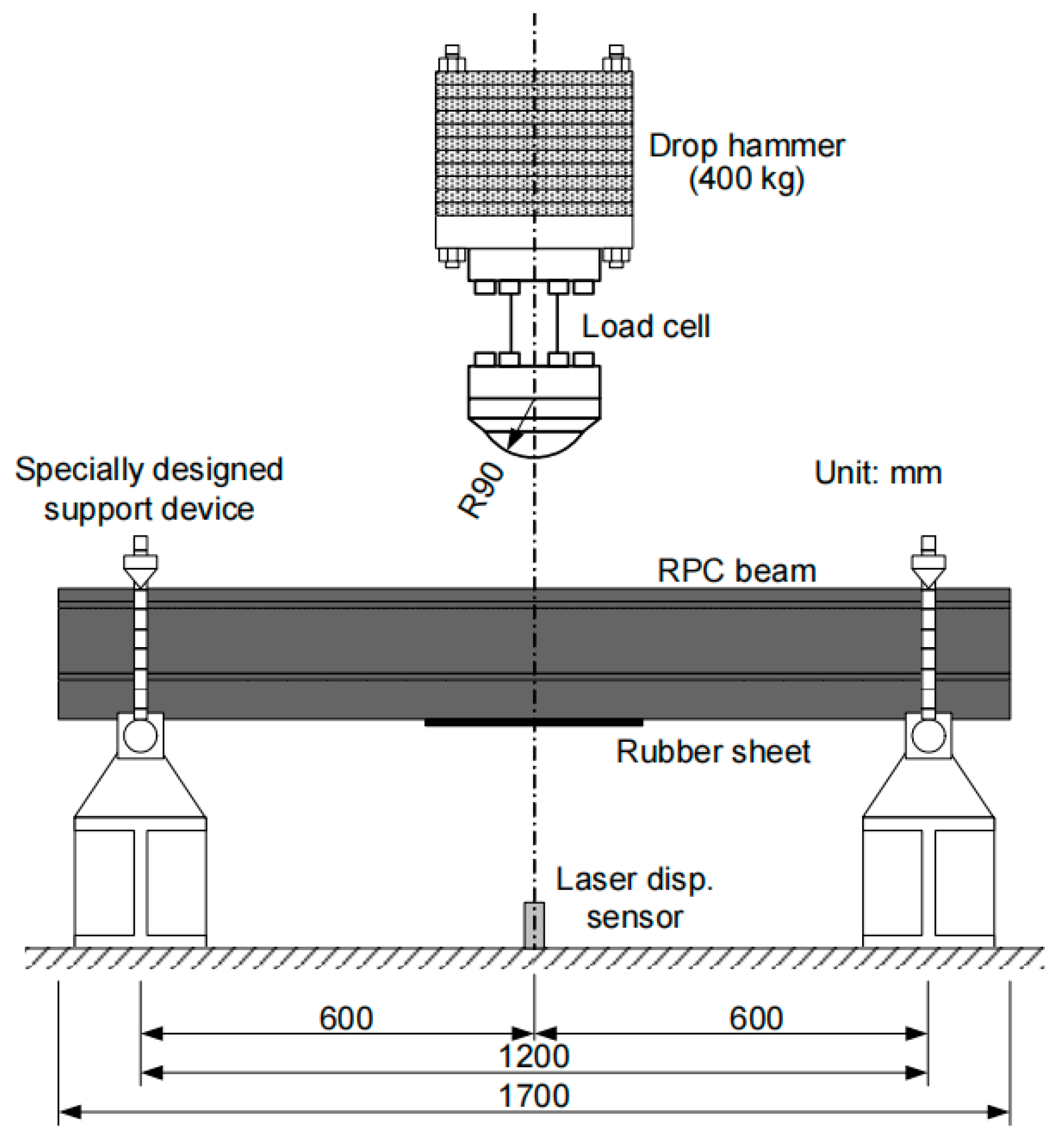
The impact test was conducted using a drop-hammer impact loading device, as shown in Figure 2. A hammer with a mass of 400 kg was released from a height of 1.2 m to strike the mid-span of the beam. The impact punch was hemispherical with a tip radius of 90 mm. The test beam was simply supported over a span of 1200 mm, and the bearing devices at both ends allowed free rotation to minimize the influence of boundary constraints and prevent uplift of the beam during impact. During the impact process, the contact force between the drop hammer and the beam was measured using a dynamic force sensor installed on the hammer, while the mid-span deflection was recorded by a laser displacement sensor. To ensure continuous displacement measurement after beam cracking, a thin rubber sheet was attached to the bottom surface at mid-span as a laser reflection target. All experimental data were collected using a PC-based data acquisition system with a sampling frequency of 100 kHz.
By comparing the numerically obtained impact force–time histories, mid-span deflection responses, and damage evolution characteristics with the corresponding experimental results, the accuracy and reliability of the proposed finite element model for RPC beams subjected to impact loading were systematically validated.
Mix proportions of RPC is shown in Table 1. The dry premixed material was supplied commercially in the form of Ductal Premix, which is primarily composed of Portland cement, silica fume, quartz sand serving as fine aggregate with a maximum particle size of 1.2 mm, and an ultrafine quartz-based powder used as the mineral admixture. Short, straight steel fibers were incorporated at a volume fraction of 2%. Each fiber had a length of 15 mm and a diameter of 0.2 mm. After demolding, all specimens were subjected to heat curing at 90 °C for a duration of 48 h to ensure adequate material performance development.
Reactive powder concrete (RPC) is modeled using the concrete damage plasticity (CDP) approach. The CDP model for RPC is formulated based on a non-associated flow rule, and the plastic potential function G is defined by a Drucker–Prager–type hyperbolic expression to appropriately capture the material’s plastic deformation and damage evolution behavior.
d ε i j p = d λ G σ i j
G = ( e σ t 0 tan ψ ) 2 + q ¯ 2 p ¯ tan ψ
where d λ is a nonnegative proportional coefficient, ψ is the expansion angle on the p-q plane under high confining pressure, e is the eccentricity.
The yield function was originally proposed by Lubliner et al. [31] and later modified and improved by Lee and Fenves [32]. The evolution of the yield surface is governed by two hardening variables. To accurately describe the yielding behavior of the material, the yield function is formulated in terms of effective stress, and its explicit expression is given as follows:
F = 1 1 α q ¯ 3 α p ¯ + β ε ¯ p l σ ¯ max γ σ ¯ max σ ¯ c ε ¯ p l = 0
α = σ b 0 / σ c 0 1 2 σ b 0 / σ c 0 1
β = σ c ¯ ε ¯ c p l σ t ¯ ε ¯ t p l 1 α + 1 + α
γ = 3 1 K c 2 K c 1
where σ ¯ max is the maximum effective principal stress, σ b 0 / σ c 0 is the ratio of initial yield stress under biaxial and uniaxial compression, K c is the ratio of the second stress invariant, σ c ¯ ε ¯ c p l and σ t ¯ ε ¯ t p l are the effective cohesive stress of concrete under compression and tension, respectively.
Based on extensive studies conducted by researchers worldwide on the mechanical properties and constitutive behavior of reactive powder concrete (RPC), together with the axial compression test results reported in Refs. [33,34] and previous investigations on RPC plastic parameters [35], the parameters of the concrete damage plasticity (CDP) model for RPC are determined. The corresponding parameter values are summarized in Table 2.
The ideal elastic-plastic model is used for the steel bar, as follows:
σ s = E s ε s             ε s ε s y σ s y                 ε s ε s y
where σ s is stress of steel bar and ε s is strain of steel bar.
It is assumed that the steel is isotropic plastic material, and the density and Poisson’s ratio are 7850 kg/m3 and 0.3, respectively. The plastic stress–strain relationship of the steel bar is shown in Table 3.

2.2. Comparison and Analysis of Results

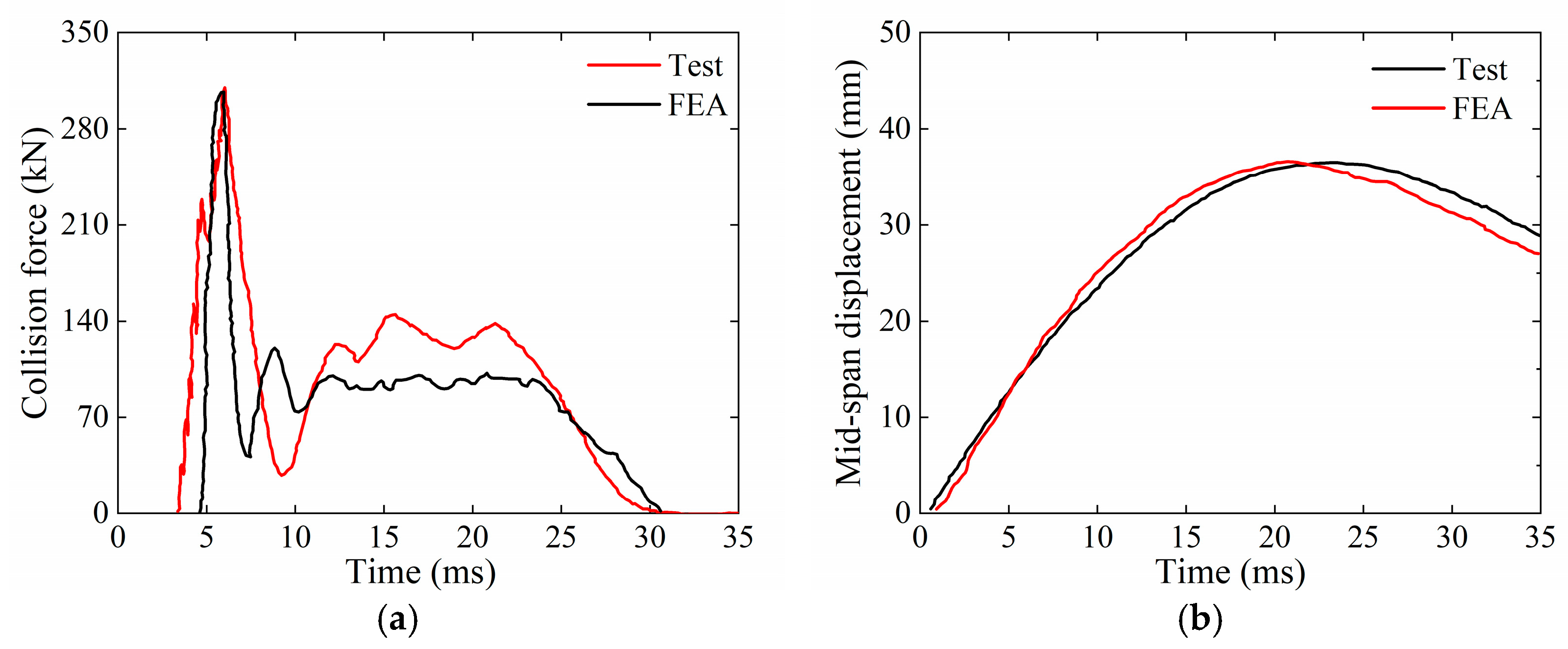
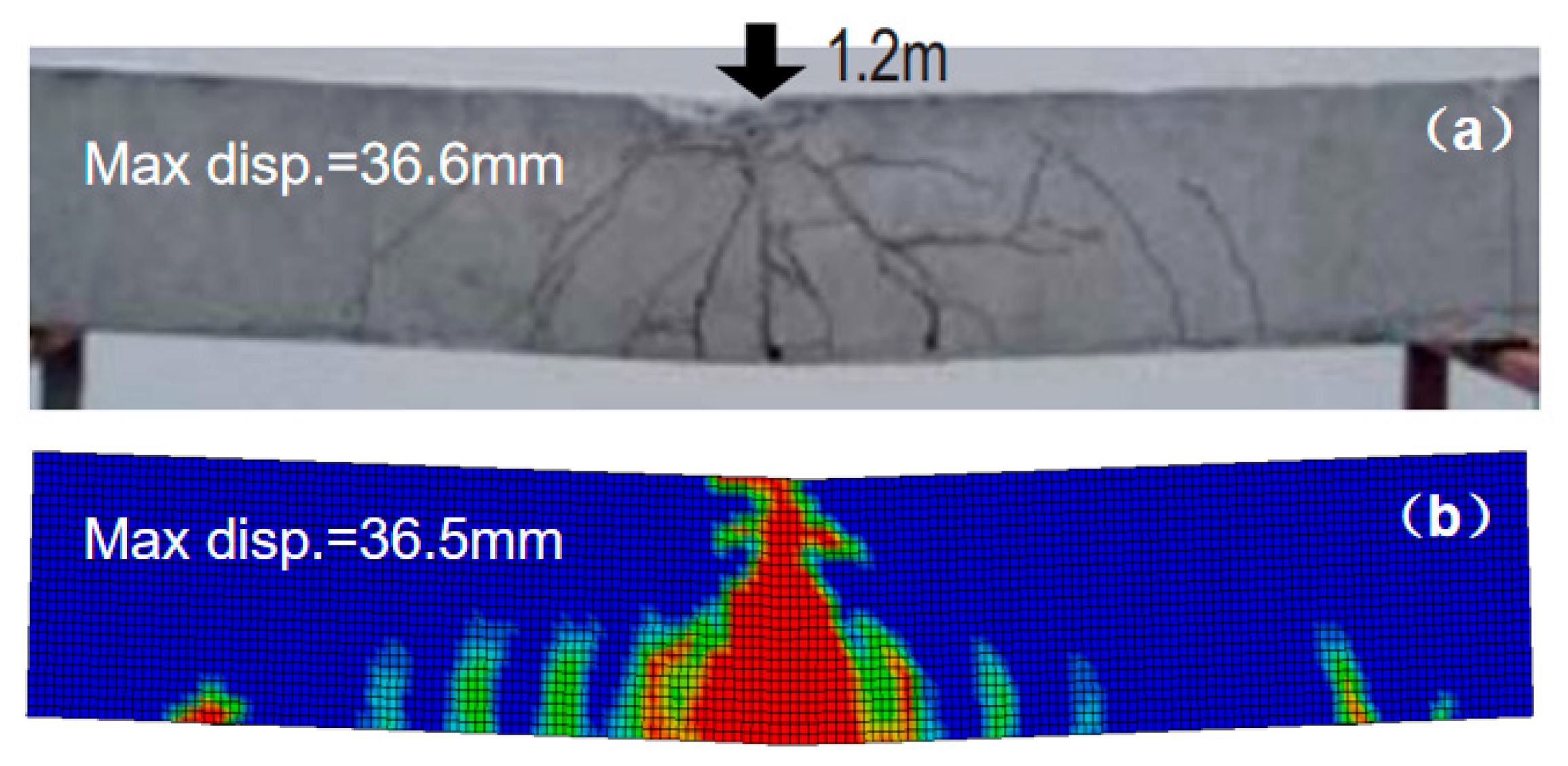
The damage distribution obtained from the finite element simulation and the experimental results is presented in Figure 3, while the comparison of collision force and mid-span displacement time histories is shown in Figure 4. As illustrated in Figure 3, both the finite element model and the experimental beam exhibit pronounced tensile cracking in the mid-span region, along with localized concrete crushing at the impact point. This close correspondence indicates that the established model can accurately reproduce the local damage patterns and crack propagation characteristics of the beam under impact loading. Figure 4 shows that the impact force–time and mid-span displacement–time histories from the finite element simulation are in strong agreement with the experimental data in terms of overall trends. The peak impact forces (308.4 kN and 310.9 kN) and maximum mid-span displacements (36.6 mm and 36.5 mm) differ only slightly, confirming the accuracy of the model in predicting stiffness degradation and dynamic response. Further analysis reveals that the force–displacement response is approximately linear at the initial stage of impact and gradually transitions to nonlinear behavior as cracks initiate and propagate, highlighting the influence of localized concrete damage on the global mechanical response.
Overall, the established finite element model reliably reproduces the damage morphology, local failure characteristics, and dynamic response of the beam, demonstrating its applicability as a validated foundation for subsequent vehicle–bridge collision simulations.

3. Collision Behavior of RPC Bridge Piers

3.1. Finite Element Model Establishment for Vehicle–Bridge Collision

The established LS-DYNA model adopted in this study is the finite element model of the Ford 800 truck jointly developed and released by the Federal Highway Administration (FHWA) and the National Crash Analysis Center (NCAC). The total vehicle mass is 16 t. The model is constructed using a combination of beam, solid, and shell elements, enabling a comprehensive representation of the structural configuration of vehicle and its collision response characteristics. The established LS-DYNA model comprises a total of 35,297 elements and incorporates seven distinct material types. The overall mesh is sufficiently refined to satisfy the accuracy requirements for vehicle–structure collision analysis.
The RPC material adopted in this study is consistent with that used in the drop hammer impact experiments reported in Ref. [19] in terms of material composition and constitutive behavior. It should be noted that Ref. [19] focuses on RPC beams subjected to gravitational loading and impact-induced inertial forces, whereas the present study applies the validated material model to bridge piers subjected to horizontal vehicle impact loads. Therefore, the experimental results are used solely for material model validation, rather than for direct comparison of force states or inertial effects between the two structural systems. Although the loading conditions and inertial force characteristics differ between the beam impact test and the bridge pier collision scenario, the validated RPC constitutive model is assumed to be transferable, as it governs the local damage and failure behavior of the material under high-rate loading.
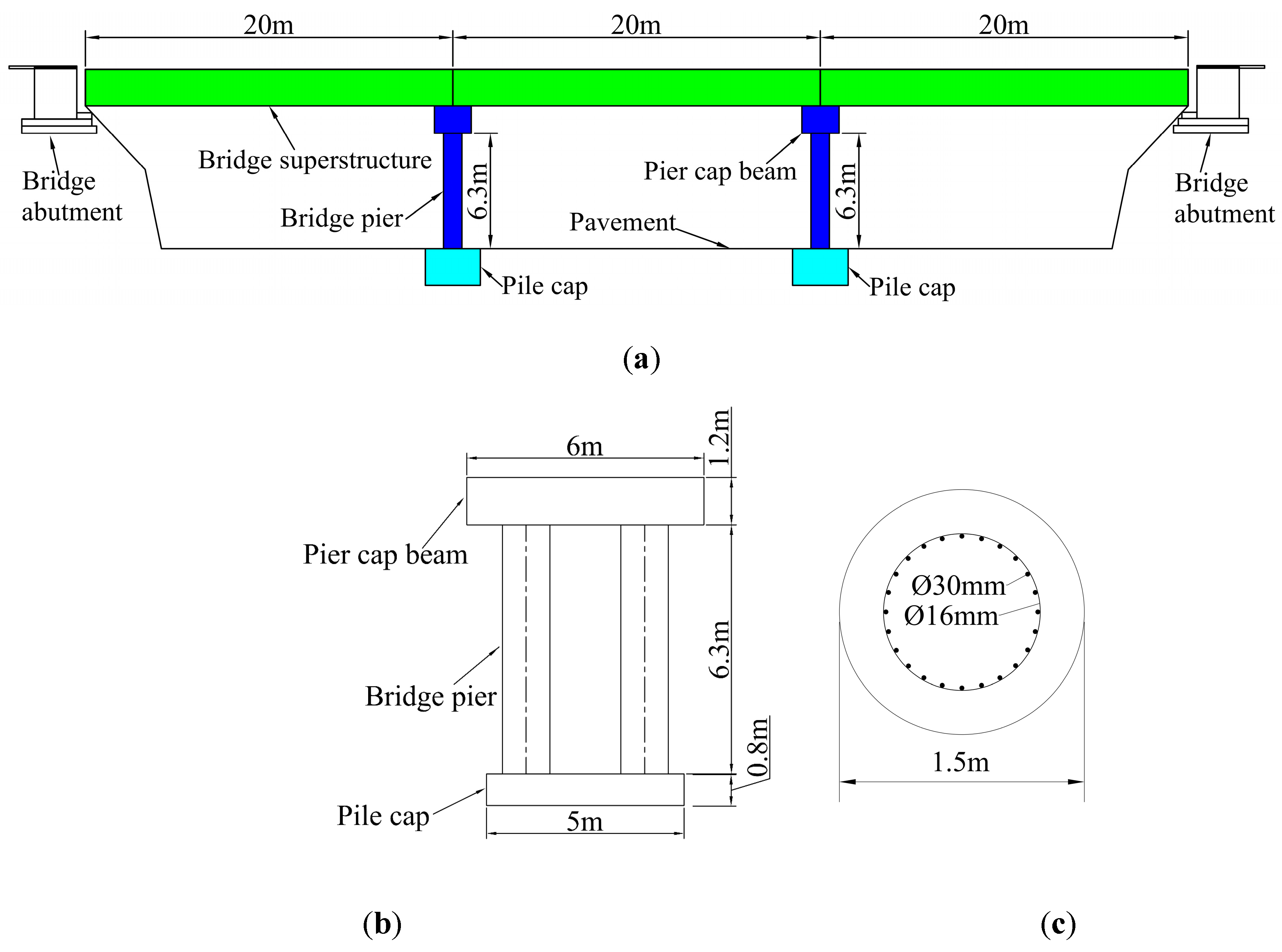
A 3 × 20 m simply supported T-beam bridge on an expressway is selected as the research object, and a finite element model incorporating a Reactive Powder Concrete (RPC) material model is established to accurately capture its nonlinear and impact-resistant behavior. The superstructure consists of a simply supported T-beam system with a span of 20 m, and the total width of the bridge deck is 7.6 m. The substructure adopts double-column pile–column piers, with each pier having a diameter of 1.5 m, a center-to-center spacing of 4.0 m, and a height of 6.3 m. The pile cap has dimensions of 5 m × 2 m × 0.8 m, and a cap beam measuring 6 m × 1.2 m is arranged at the top of the piers. The overall configuration of the bridge and the detailed dimensions of each component are illustrated in Figure 5.
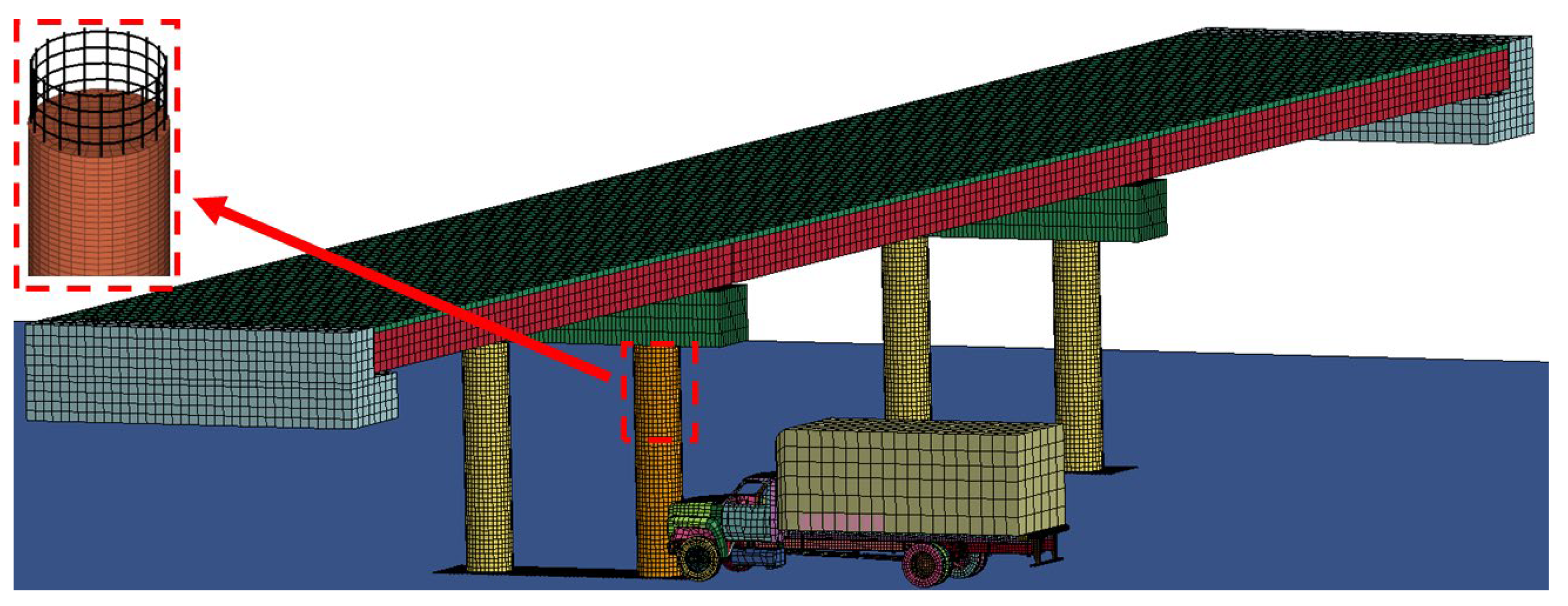
The Continuous Surface Cap Model (CSCM) [29] is adopted to simulate the dynamic behavior and damage evolution of concrete under collision loading. This model has been validated by previous studies and has been demonstrated to be suitable for analyzing the response of concrete structures under vehicle impact conditions. To improve computational efficiency in the explicit dynamic analysis, the piers, pile caps, cap beams, superstructure, abutments, and bearings are modeled using eight-node solid elements with a single integration point. The longitudinal and transverse reinforcements within the pier columns are simulated using beam elements. The interaction between the reinforcing steel and concrete is assumed to be fully bonded, and their composite action is realized through the CONSTRAINED_LAGRANGE_IN_SOLID keyword. The completed finite element model of vehicle–bridge collision is shown in Figure 6. It should be noted that the full bond assumption between the reinforcement and concrete may over-stiffen the response under high-impact loading. Incorporating bond–slip behavior could reduce peak forces, alter the damage distribution, and introduce additional energy dissipation. Future work may consider interface slip effects to refine the prediction of local failure mechanisms.
The reliability of a high-fidelity finite element model for vehicle–bridge collision analysis depends primarily on appropriate material modeling, contact treatment, and basic numerical verification. In this study, the concrete material is modeled using the Continuous Surface Cap Model (CSCM), which is formulated based on continuum damage mechanics and plasticity theory. The CSCM accounts for material hardening, damage evolution, and strain-rate effects, and has been widely adopted in impact and collision simulations of concrete structures with demonstrated accuracy. Although CSCM is often described as suitable for low-velocity impact problems, this classification mainly distinguishes structural impacts from shock-dominated or hypervelocity events. In the present study, the vehicle–bridge collision at 120 km/h falls within the structural impact regime, where concrete behavior is governed by continuum damage, plasticity, and strain-rate effects rather than shock wave propagation. The CSCM employed herein incorporates strain-rate-dependent strength enhancement and damage evolution, enabling it to capture the dynamic response of concrete under such loading conditions.
During vehicle–bridge collision events, the vehicle structure undergoes severe deformation, leading to complex and evolving interactions among internal components and between the vehicle and the bridge pier. Under such conditions, predefined contact interfaces are difficult to determine reliably. Therefore, an automatic contact algorithm is employed to robustly capture the evolving contact behavior throughout the collision process. Specifically, the interaction between the vehicle and the bridge pier is modeled using the CONTACT_AUTOMATIC_SURFACE_TO_SURFACE formulation to describe surface-to-surface contact between distinct components. In addition, CONTACT_AUTOMATIC_SINGLE_SURFACE is assigned to the bridge pier to account for potential self-contact caused by large deformation and local damage.

3.2. Verification of Finite Element Analysis Model

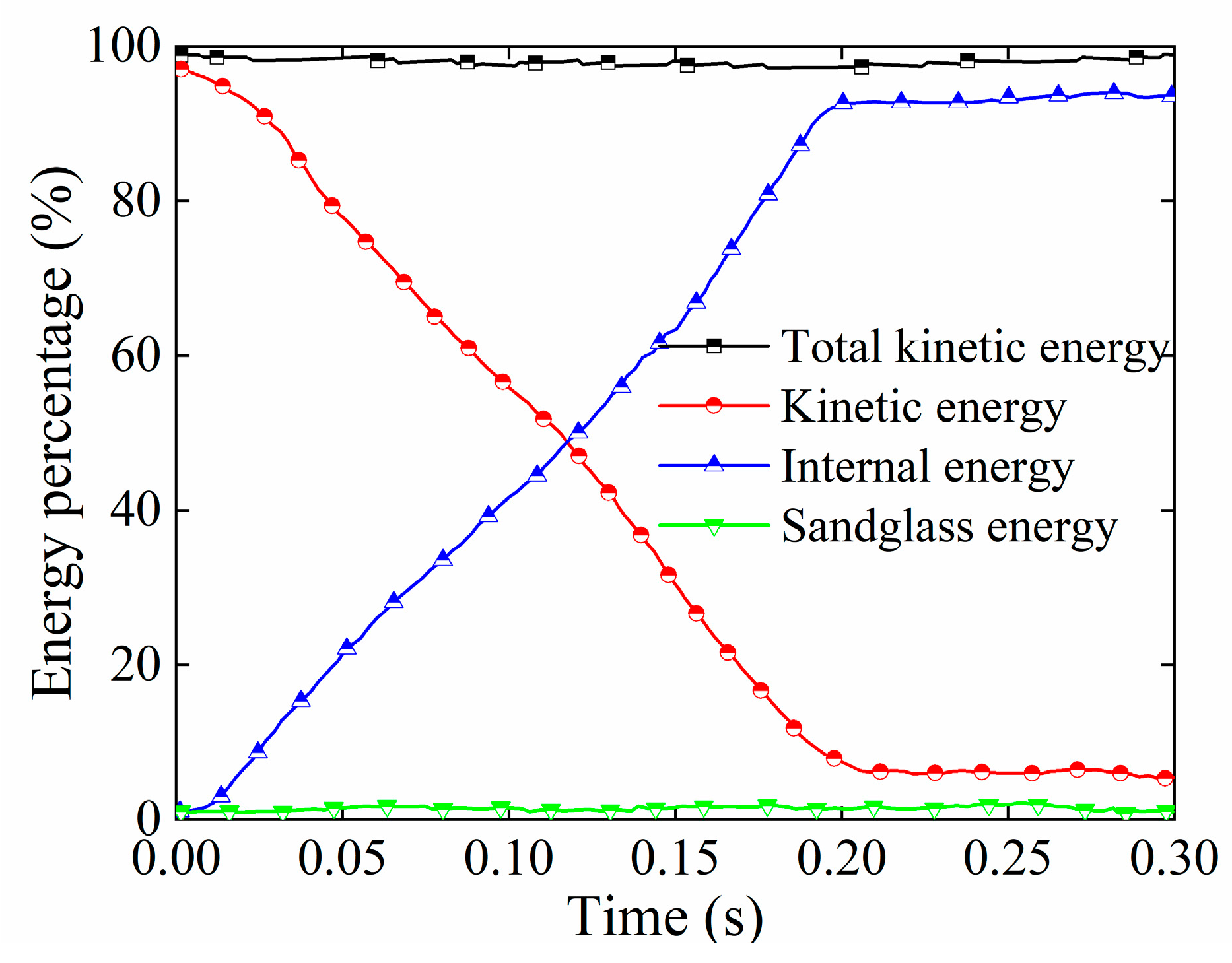
In finite element simulations, hourglass energy is a key indicator for evaluating numerical stability and contact reliability. It is generally accepted that when the ratio of hourglass energy to the total structural energy remains below 5%, the numerical results can be considered reliable. Figure 7 illustrates the energy evolution during the vehicle–bridge collision. The results indicate that the hourglass energy remains consistently low throughout the collision process, with a maximum value of only 2.3% of the total energy, which is well below the 5% threshold [36,37]. This demonstrates the absence of significant numerical instabilities and confirms the stability of the adopted contact definitions and the overall finite element model.
Moreover, the energy transformation during the collision process is physically reasonable. Prior to impact, the vehicle possesses high kinetic energy; following impact, the reduction in vehicle velocity leads to a progressive conversion of kinetic energy into the deformation-related internal energy of both the bridge pier and the vehicle. The overall energy evolution satisfies the principle of energy conservation, further validating the reliability of the proposed numerical model.
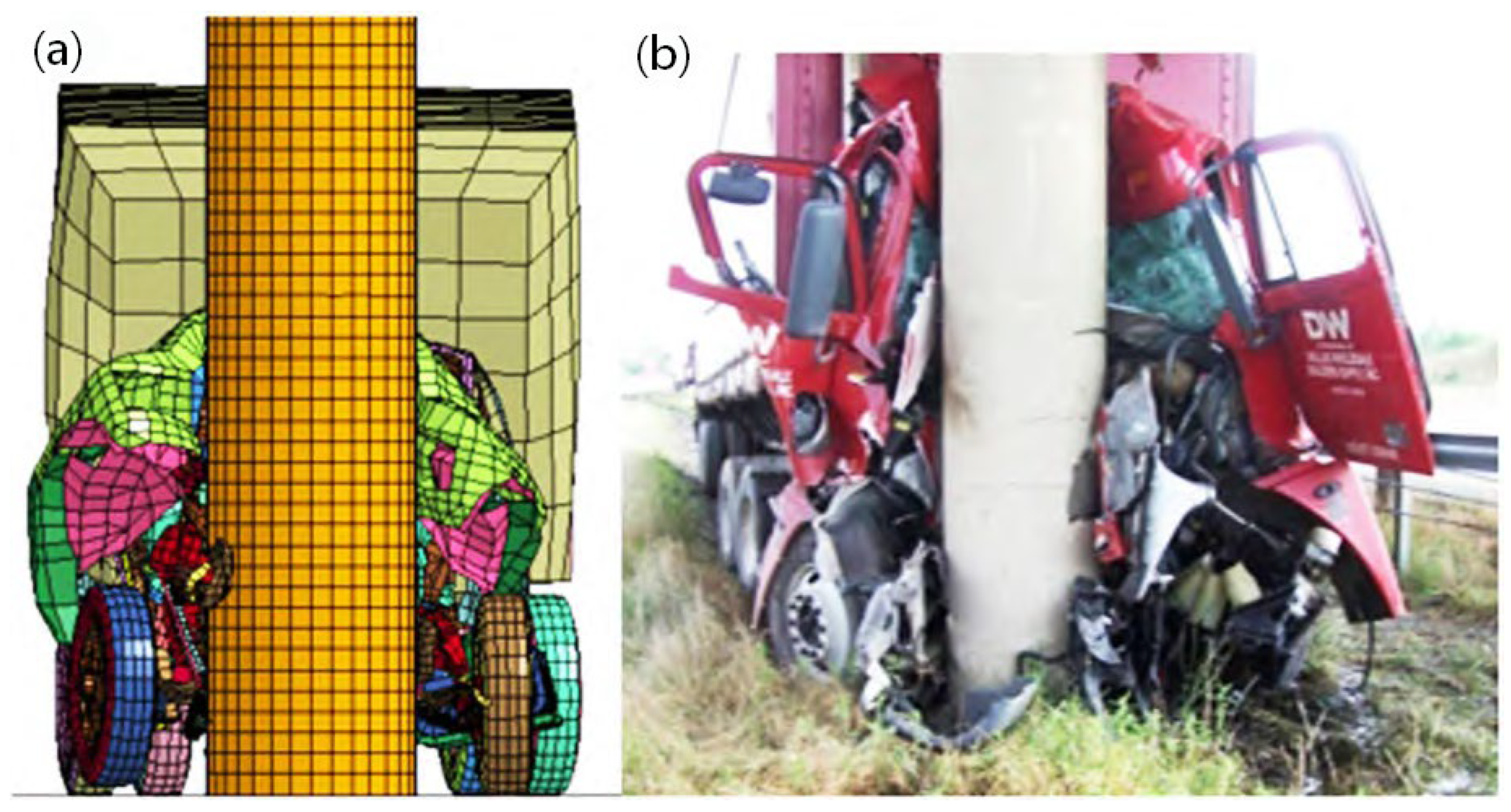
To validate the rationality of the vehicle–bridge collision model, a frontal impact between the vehicle and the pier was simulated by applying an initial velocity of 60 km/h to the vehicle. Figure 8 compares the numerical simulation results with observations from the actual accident scene. The comparison indicates that the finite element model effectively captures the key characteristics of vehicle collision, particularly the damage morphology at the vehicle front. The simulated crushing deformation exhibits strong agreement with the accident observations, thereby confirming the effectiveness of the proposed model for vehicle–bridge collision analysis.
It should be noted that the beam specimen validation mainly aims to calibrate the material model and local impact behavior, while the full-scale applicability to bridge piers is further supported by system-level vehicle–bridge collision simulations and accident case comparisons.

3.3. Verification of Grid Independence

To evaluate the influence of mesh size on the numerical results of the bridge pier, a mesh sensitivity analysis was performed using three representative element sizes: 35 mm, 50 mm, and 100 mm. The collision responses of models with different grids are shown in Table 4. The comparison of the pier responses under vehicle collision, including impact force time histories and top displacement evolution, shows that the 100 mm mesh produces higher peak impact force and maximum displacement than the other two cases, indicating that an excessively coarse mesh may lead to overestimation of structural response and introduce numerical errors.
In contrast, the 35 mm and 50 mm mesh models exhibit highly consistent results in terms of damage distribution, impact force magnitude, and maximum top displacement, suggesting that the numerical solution has essentially converged within this mesh size range. Considering both computational accuracy and efficiency, a 50 mm mesh was adopted for modeling the bridge pier, which ensures reliable predictions while significantly reducing computational cost.

3.4. Collision Force and Vehicle Deformation

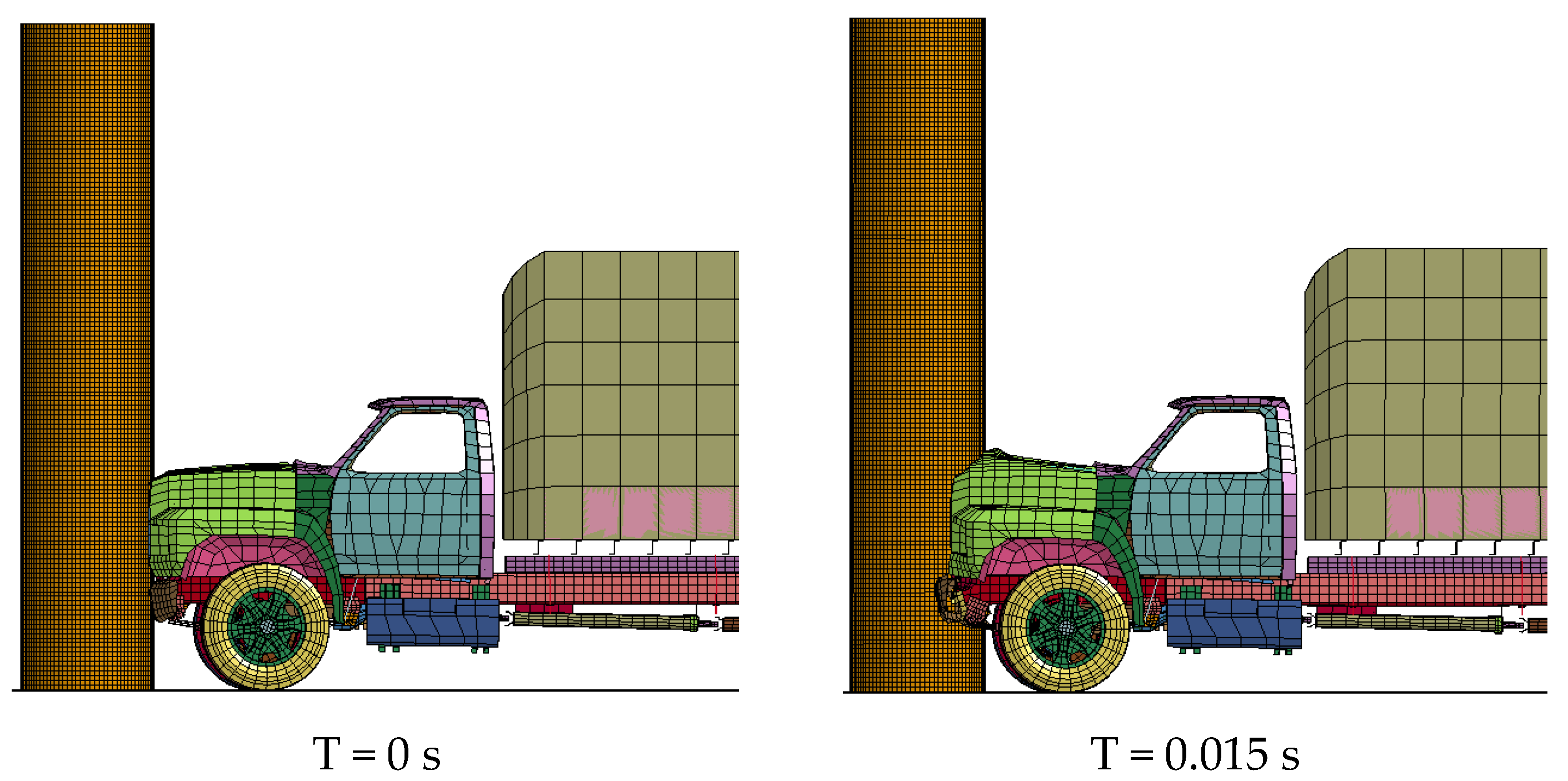
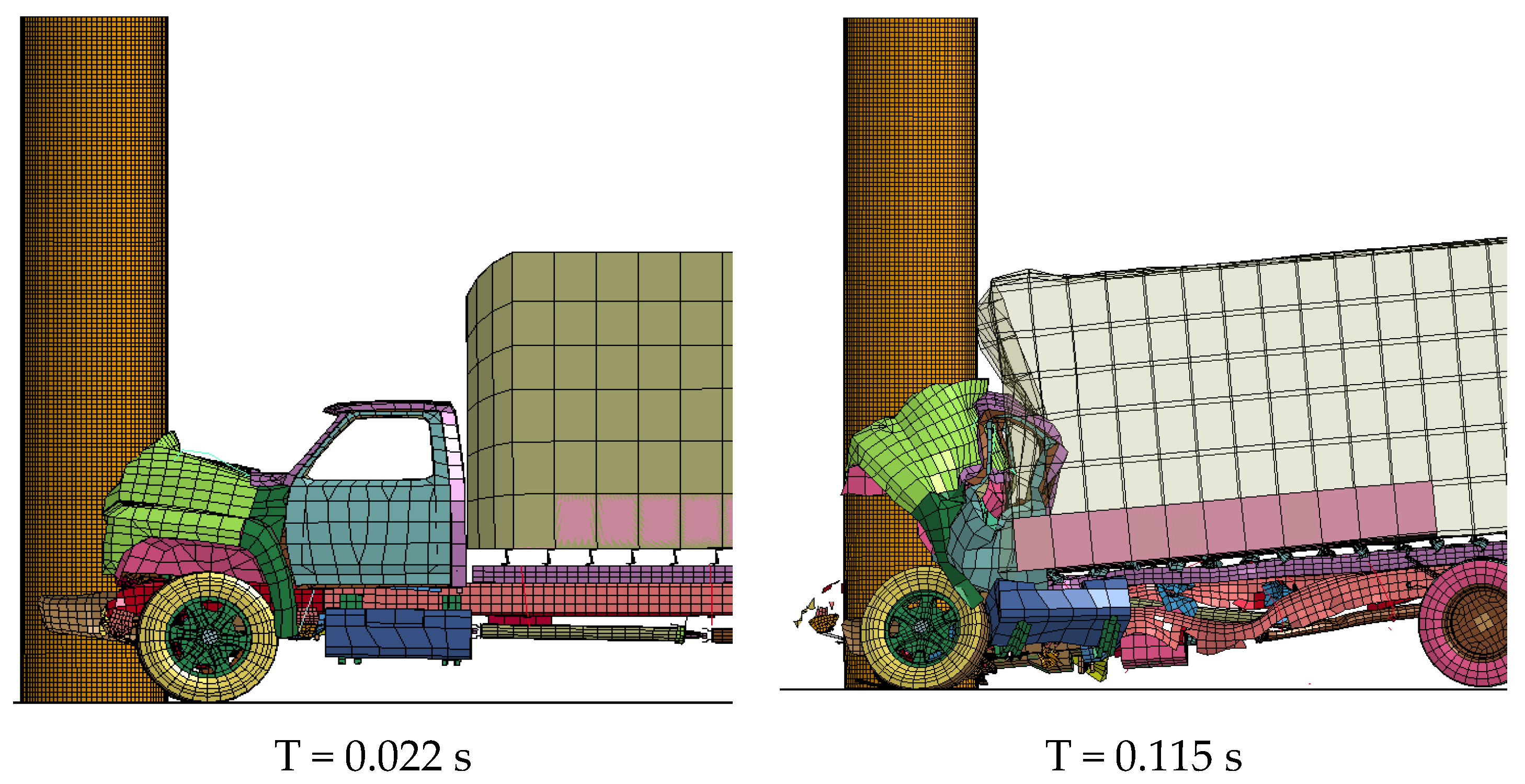
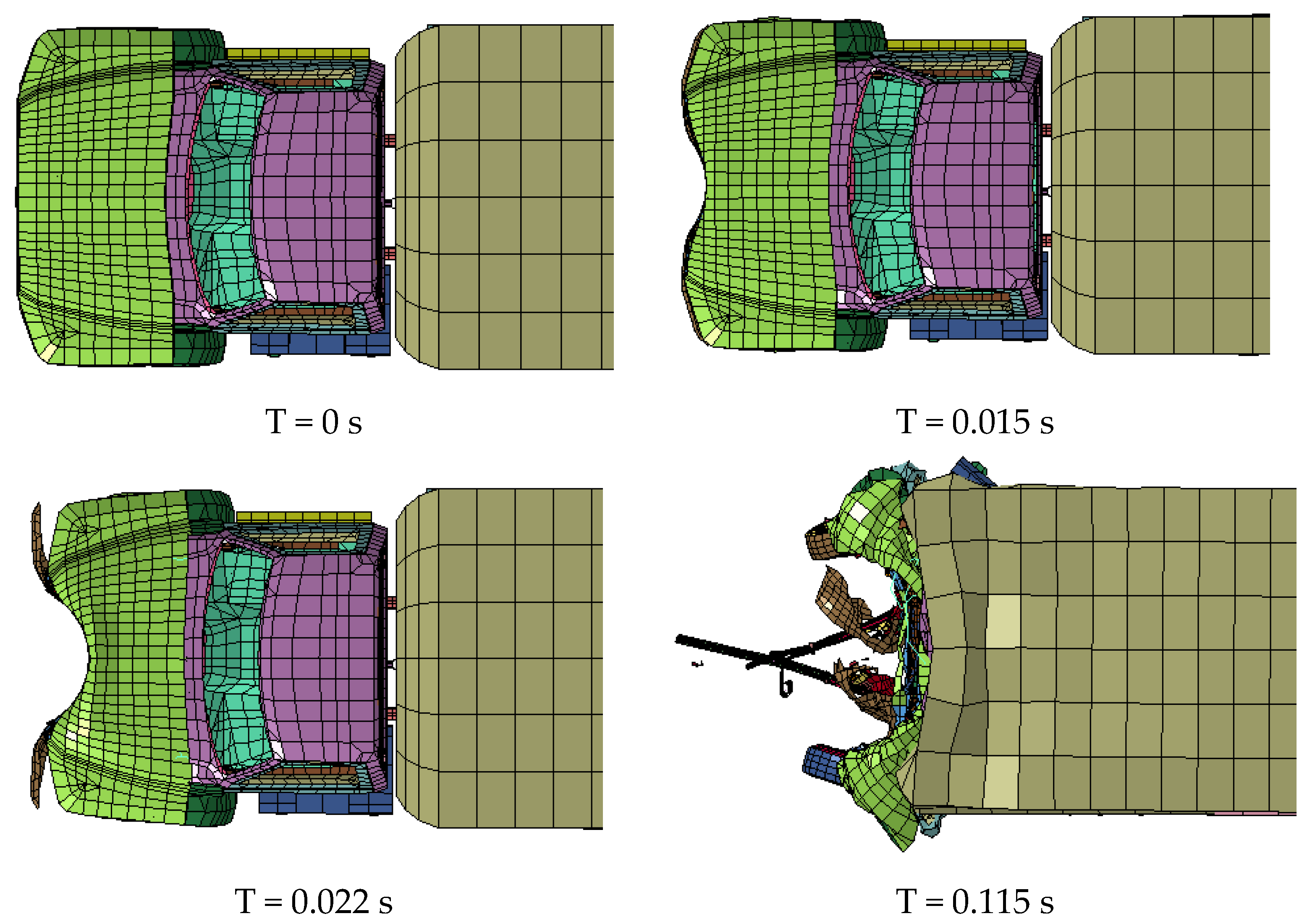
The traveling speed of vehicles on expressways often exceeds 100 km/h. Under such conditions, vehicle collisions can generate substantial dynamic loads on bridge structures, potentially causing severe damage or even structural collapse in extreme scenarios. Accordingly, an initial velocity of 120 km/h is applied to the vehicle to induce a frontal collision with the pier. The collision process of vehicle–bridge collision and the corresponding evolution of vehicle deformation at different time instants are illustrated in Figure 9 and Figure 10, respectively. The numerical simulation results indicate that the collision between the heavy vehicle and the pier can be divided into several distinct stages. At T = 0 s, the vehicle makes initial contact with the pier, while its overall structure remains intact. As the vehicle advances, the front portion gradually undergoes compressive deformation. At T = 0.015 s, the vehicle bumper contacts the pier. By T = 0.022 s, significant plastic deformation occurs at the vehicle front, and the engine compartment directly impacts the pier. At T = 0.115 s, the vehicle front is fully compressed; the top of the carriage exhibits pronounced distortion, the lower mechanical components experience severe squeezing, and the cargo begins to interact with the pier.
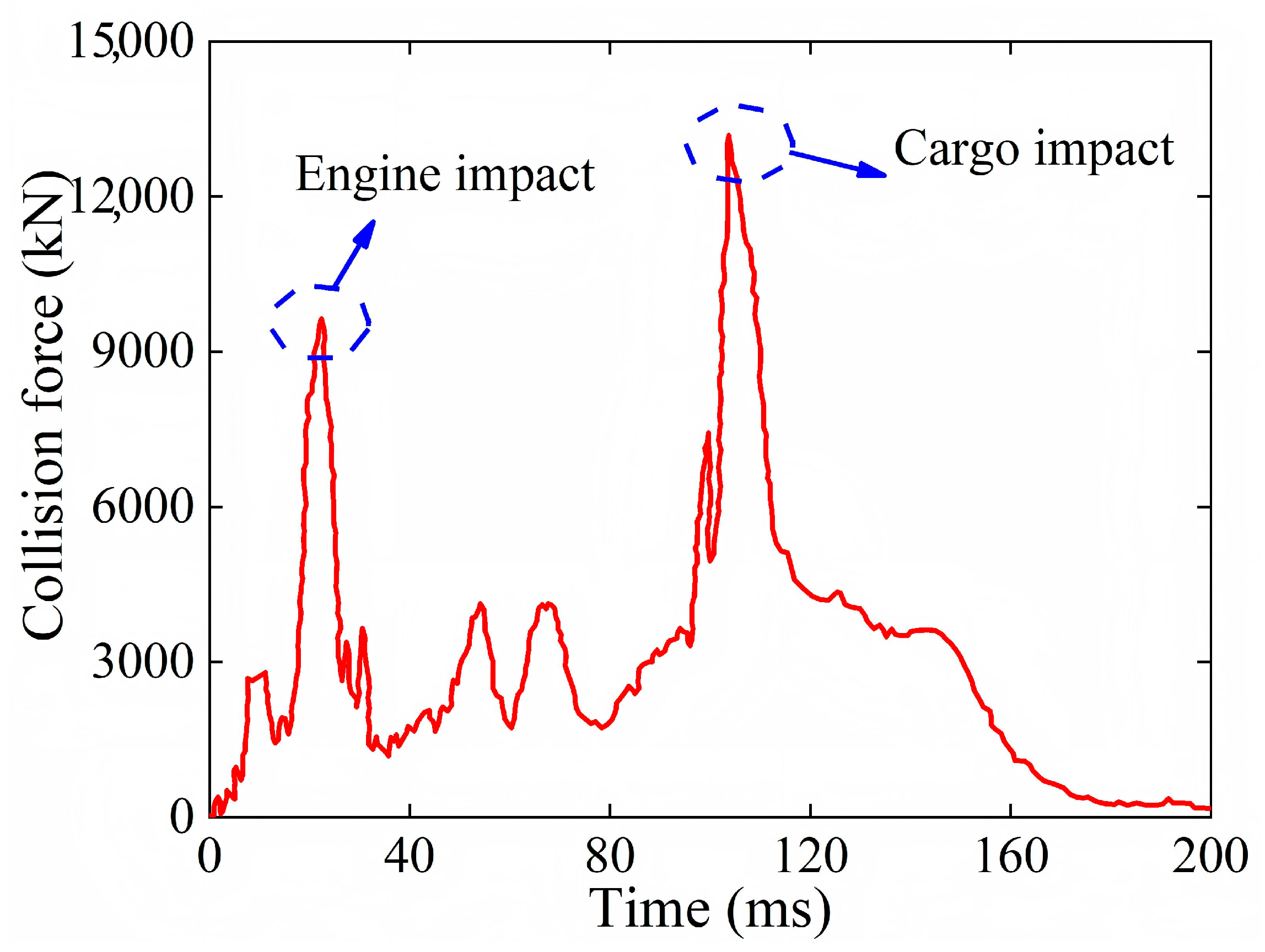
Figure 11 presents the time-history curve of the collision force. The collision force begins to rise at T = 0 s and decreases to 0 kN by T = 0.2 s, indicating that the entire collision process lasts approximately 0.2 s. This observation demonstrates that the vehicle–bridge collision constitutes a typical instantaneous dynamic event, characterized by a short load duration and a high destructive force.
Moreover, it can be seen that the collision force exhibits two distinct peaks when the bridge pier is struck by the heavy vehicle, measuring 9540 kN and 13,180 kN, corresponding to the impacts of the vehicle engine and cargo, respectively. Notably, the peak force generated by the cargo impact is approximately 38.2% higher than that caused by the engine impact. This difference is attributed to the fact that the cargo mass of the heavy vehicle used in this study accounts for more than 50% of the total vehicle mass, resulting in greater inertia and a more pronounced impact effect during the collision. Although full-scale vehicle–bridge collision tests are not conducted in this study, the numerical model has been validated through mesh sensitivity analysis and global energy evolution checks, confirming its reliability in capturing pier response and damage evolution. Full-scale experiments will be addressed in future work to further investigate peak forces and local failure mechanisms.

3.5. Bridge Damage

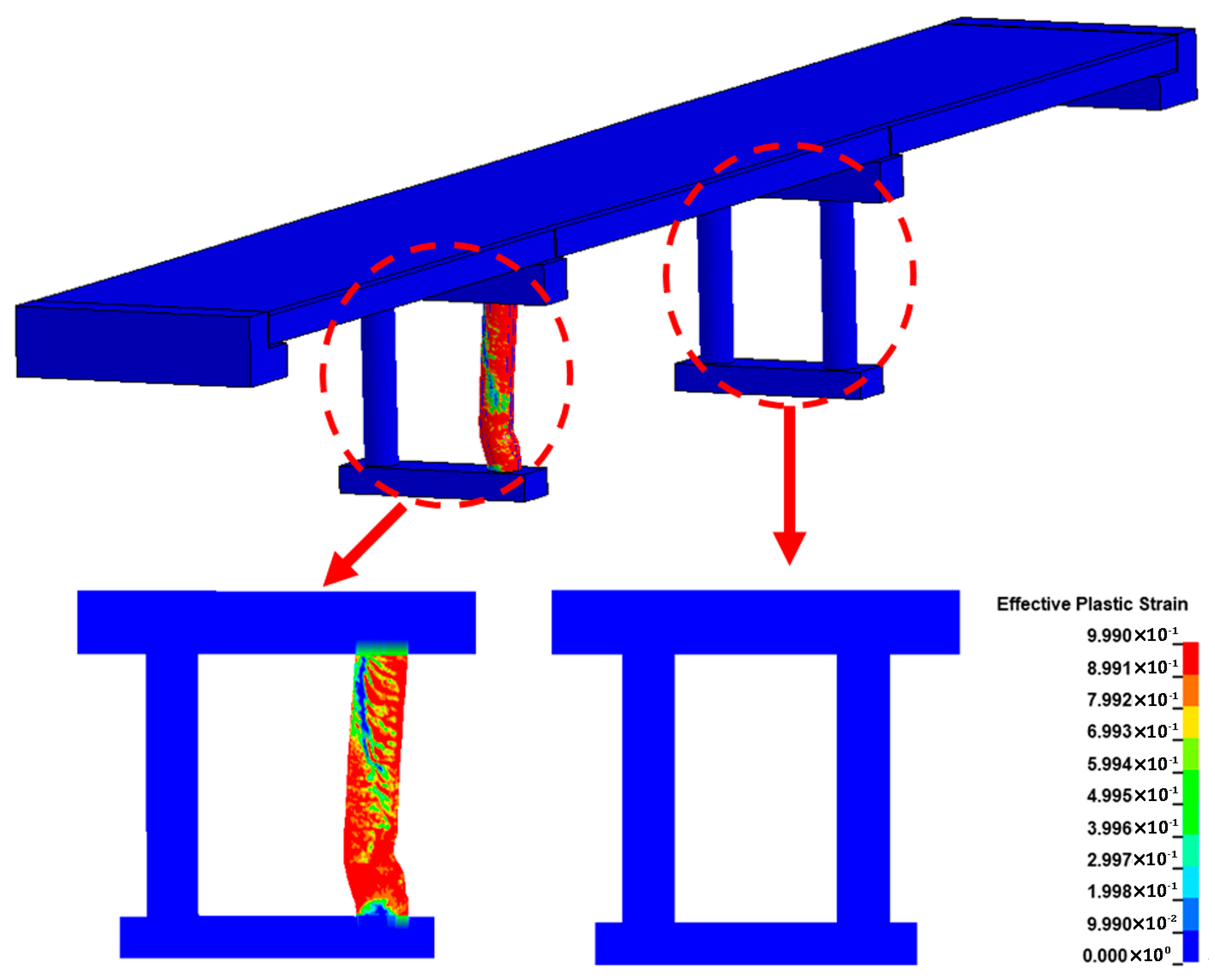
Figure 12 illustrates the overall damage distribution of the bridge following the collision. The results indicate that damage is predominantly concentrated on the impacted pier, whereas the remaining components remain largely unaffected. This limited propagation of damage is attributed to the short duration of the vehicle–bridge collision, approximately 0.2 s, which leaves insufficient time for other components to respond significantly; consequently, the subsequent analysis focuses on the pier.
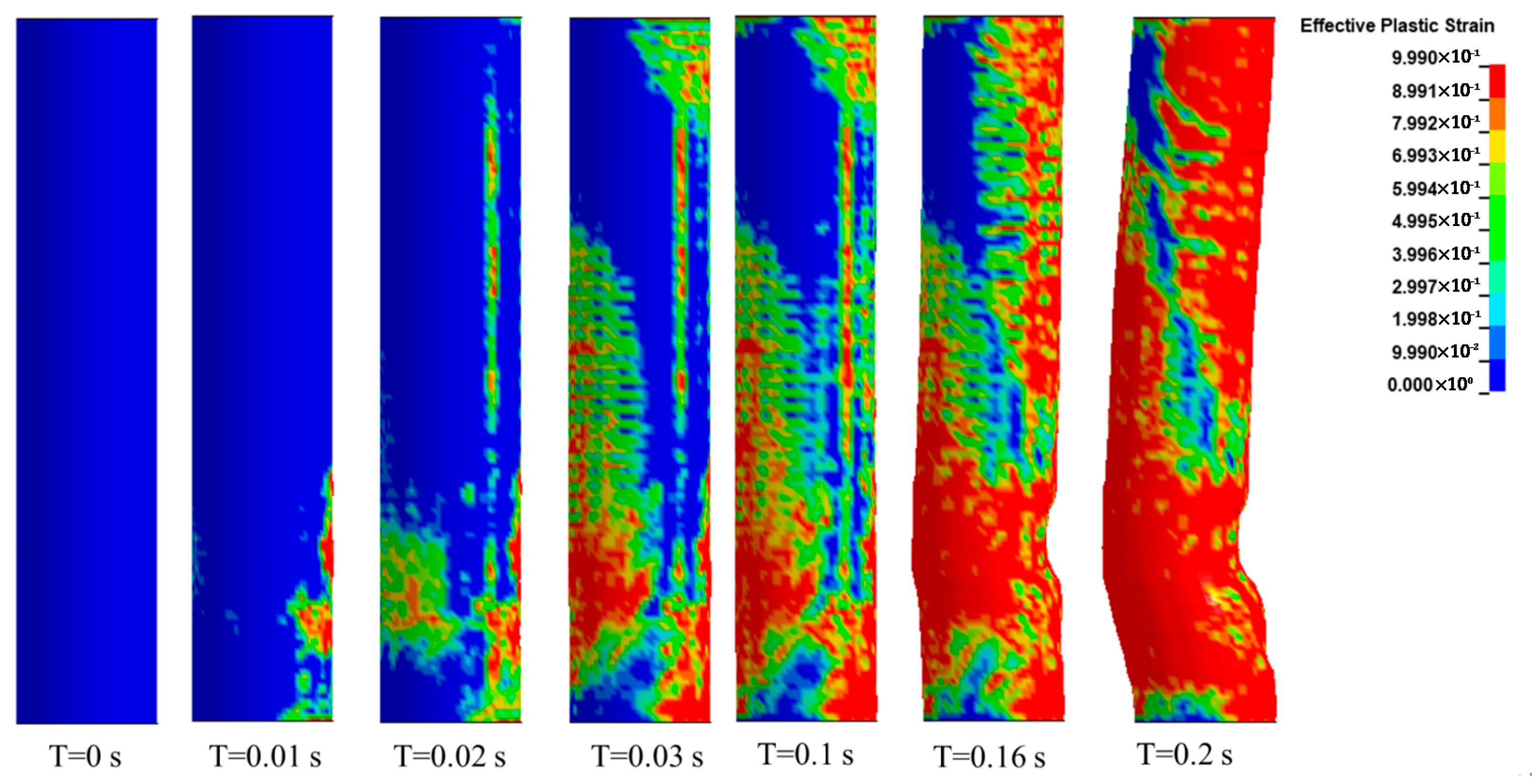
Figure 13 presents the temporal evolution of pier damage, quantified using the LS-DYNA equivalent plastic strain variable PEEQ. A critical PEEQ threshold is employed as the erosion criterion, such that elements exceeding this value are considered failed, while lower values indicate partial damage. This approach enables tracking of progressive damage, including punching shear on the impact face, tensile damage on the rear face, and shear damage near the top. At T = 0 s, the pier remains undamaged. By T = 0.01 s, slight compressive damage appears on the impact surface. At T = 0.02 s, tensile damage develops on the rear face, accompanied by a top-down damage zone in the middle and upper portions, resulting from tensile stress concentration on the collision face due to upper-structure constraints. As the collision progresses, the rear tensile region expands, forming distinct stripe-like damage, while shear failure emerges at the pier top and significant punching shear damage occurs at the impact site. By T = 0.2 s, the pier exhibits pronounced horizontal displacement at the collision location, indicating that its bearing capacity is likely substantially reduced.
These findings suggest that the design of bridge piers should prioritize reinforcement in regions susceptible to punching shear, tensile cracking, and top shear failure, particularly in high-speed vehicle collision scenarios, to enhance structural resilience.

3.6. Collision Response

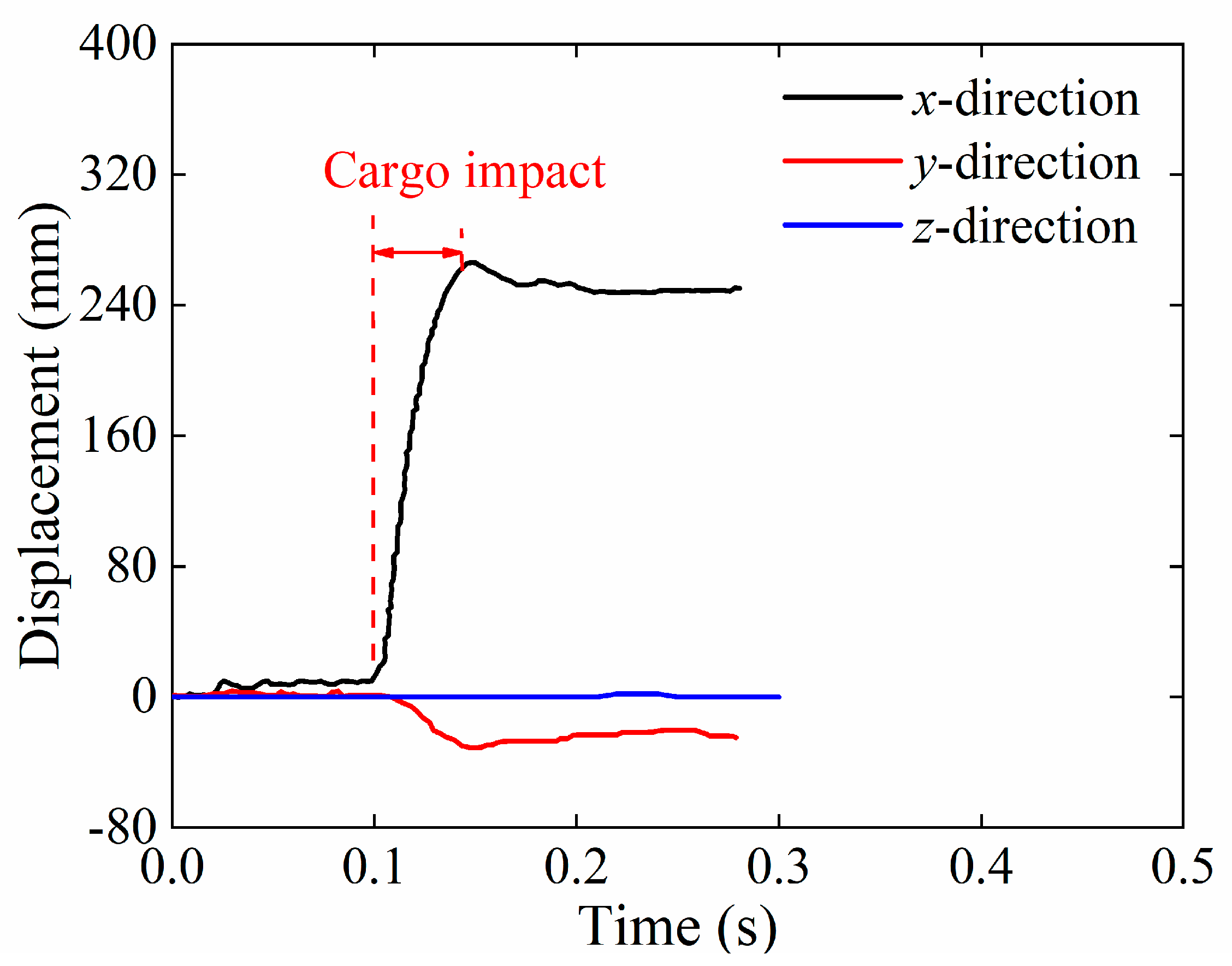
The vehicle traveling direction is defined as the x-axis, the bridge axis as the y-axis, and the vertical direction as the z-axis. Figure 14 illustrates the time-history of displacement at the collision point. For T < 0.1 s, prior to cargo impact on the pier, displacement along the x-axis is minimal, with a maximum of approximately 10 mm. When the cargo strikes the pier, x-direction displacement rapidly increases, reaching a peak of 264 mm. After this peak (around T = 0.15 s), the displacement slightly rebounds to approximately 25 mm, due to the removal of the vehicle impact load and the elastic response of the local concrete and reinforcing steel. Concurrently, the pier exhibits some deformation along the y-axis, with a maximum of approximately 32 mm, while displacement along the z-axis remains negligible, indicating that pier deformation is primarily along the x-axis with a minor bidirectional component. Although no global collapse occurs in the simulation, the pier displacement of 264 mm indicates a severe reduction in residual stiffness and load-carrying capacity. Post-impact assessment shows that the pier’s ability to resist additional lateral or vertical loads is substantially compromised, consistent with the observed punching shear, tensile cracking, and top shear damage. Therefore, the pier is considered functionally failed under this cargo impact scenario.
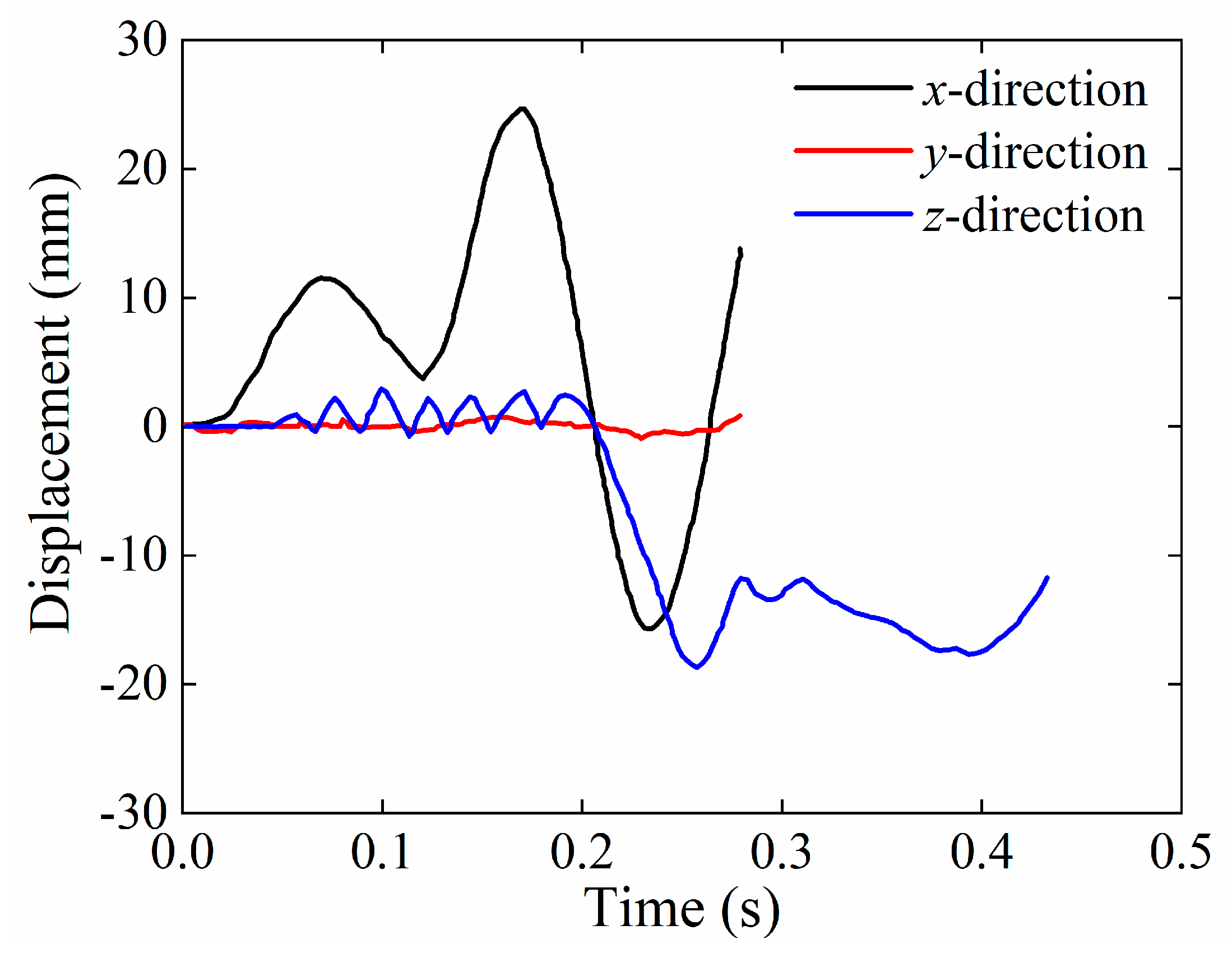
Figure 15 presents the displacement time-history of the cap beam during the collision. From T = 0 s, the vehicle begins to contact the pier, and the collision force is small. The pier remains in the elastic response stage, with x-direction displacement increasing gradually, while z-direction displacement of the cap beam fluctuates slightly around zero. When T > 0.1 s, corresponding to cargo impact, the pier undergoes rapid deformation, and the superstructure responds noticeably: the cap beam exhibits significant horizontal (x) displacement and pronounced vertical (z) subsidence, with maximum sinking approaching 20 mm. By T ≈ 0.15 s, the x-displacement rebounds from 25 mm to a maximum negative displacement of 17 mm, while z-direction displacement also partially rebounds. This behavior aligns with the pier damage and deformation evolution shown in Figure 10. Notably, during the engine impact stage, horizontal displacement of the cap beam is minimal, and vertical subsidence is negligible, indicating that engine impact has a limited effect on the bridge superstructure, whereas cargo impact induces substantially larger horizontal and vertical displacements. These results suggest that the design and reinforcement of bridge superstructures should account for the pronounced dynamic effects of cargo impacts, particularly in the horizontal and vertical directions, to enhance overall structural resilience.
The displacement responses are closely correlated with the observed damage patterns and provide important implications for structural safety. Small displacements accompanied by limited damage indicate that the pier remains in a stable load-resisting state, whereas large lateral displacements coincide with severe local crushing and cracking, implying stiffness degradation and reduced load-carrying capacity. Although no global collapse occurs in the simulations, the combined displacement–damage response suggests an elevated risk of structural failure under cargo impact. This correlation offers a qualitative basis for assessing pier safety under heavy-vehicle collisions.
The post-peak elastic rebound observed in the pier displacement is due to the localized nature of the damage. While the elements at the impact zone undergo punching shear and are eroded upon reaching the critical PEEQ threshold, the remaining undamaged portions of the pier continue to respond elastically, resulting in limited global displacement recovery. Mesh sensitivity checks further confirm that this rebound is not a numerical artifact but a physically consistent response of the partially damaged pier.

4. Conclusions

This study developed a vehicle–bridge collision model using ANSYS/LS-DYNA, with the RPC beam finite element model validated against existing drop hammer impact tests. The collision behavior of RPC bridge piers subjected to heavy vehicle impacts was systematically investigated, and the main findings are summarized as follows:
(1)
RPC Beam Model Validation: The finite element model of the RPC beam was rigorously validated against drop hammer impact experiments. Overall, the model accurately reproduces the impact response of concrete members. It effectively captures the development of damage patterns and the dynamic behavior under impact loading, demonstrating its reliability as a basis for subsequent vehicle–bridge collision simulations.
(2)
Collision Force Characteristics: The bridge pier exhibits distinct dynamic responses under heavy vehicle collisions. Two peak forces were observed, corresponding to the engine and cargo impacts, with the cargo-induced peak approximately 38.2% higher due to its greater mass and inertia. These results emphasize the critical influence of cargo mass on pier impact severity and the need to consider it in design and reinforcement strategies.
(3)
Damage Distribution: Damage is primarily concentrated on the impacted pier, while other bridge components remain largely unaffected. Key failure modes include punching shear at the collision face, tensile cracking at the rear, and shear failure near the pier top. The spatial distribution and evolution of damage highlight the importance of localized reinforcement and structural detailing in high-impact zones to mitigate catastrophic failure.
(4)
Collision Response: The dynamic response of the pier and superstructure is dominated by horizontal motion. x-direction displacements at the collision point were minimal (<10 mm) for engine impacts but reached up to 264 mm for cargo impacts, accompanied by partial elastic rebound. The cap beam responded primarily in the x- and z-directions, with cargo impacts generating approximately 25 mm in the horizontal direction and about 20 mm in the vertical direction. These observations indicate that cargo collisions govern the overall structural response, highlighting the necessity to account for large displacements in both pier and superstructure design.
Overall, the study reveals that cargo collisions dominate the structural response and damage of bridge piers, and the displacement patterns of both piers and cap beams are strongly directional. By integrating a validated material model with full-scale collision simulation, this study clearly differentiates itself from existing work and provides improved insight into impact mechanisms, offering a more reliable reference for collision-resistant design and damage assessment of bridge piers under heavy vehicle impacts.

Author Contributions

Conceptualization, Y.G. and T.Z.; methodology, Y.G.; software, J.Z.; validation, B.Y., C.Z. and T.Z.; formal analysis, Y.G. and C.Z.; investigation, T.Z.; resources, C.Z.; data curation, Y.G.; writing—original draft preparation, Y.G., T.Z. and J.Z.; writing—review and editing, B.Y. and H.W.; visualization, B.Y.; supervision, H.W. and C.Z.; project administration, T.Z.; funding acquisition, C.Z. All authors have read and agreed to the published version of the manuscript.

Funding

This research was funded by National Natural Science Foundation of China grant number 51578136, 521 Project of Lianyungang City grant number LYG065212025087, Lianyungang City Science and Technology Plan (Social Development) Project 2024 grant number SF2431, and the Postgraduate Research & Practice Innovation Program of Jiangsu Province grant number KYCX22_0219.

Data Availability Statement

The data that support the findings of this study are available from the corresponding author upon reasonable request.

Acknowledgments

We acknowledge the support of the Key Laboratory of Concrete and Prestressed Concrete Structures of the Ministry of Education.

Conflicts of Interest

The authors declare no conflicts of interest.

References

  1. Sun, W.B.A.; Fan, W.; Yang, C.C.; Peng, W.B. Lessons learned from vehicle collision accident of Dongguofenli Bridge: FE modeling and analysis. Eng. Struct. 2021, 244, 112813. [Google Scholar] [CrossRef]
  2. Xue, S.Y.; Hao, H.; Hao, Y.F. Numerical investigation of impact response of bridge pier subjected to off-center vehicle collision. Eng. Struct. 2024, 317, 118624. [Google Scholar] [CrossRef]
  3. Ma, T.Y.; Zhu, Y.J.; Xiong, W.; Zhang, B.Y.; Hu, K.W. Bridge post-disaster rapid inspection using 3D point cloud: A case study on vehicle-bridge collision. J. Infrastruct. Intell. Resil. 2025, 4, 100153. [Google Scholar] [CrossRef]
  4. Wee, T.; Hor, Y.; MuI’Nuddin, M.; Saravanan, K.; Shahir, L.M.; Rahman, S.A.; Wong, T.C. Research on HGV collisions with concrete bridge piers. Appl. Mech. Mater. 2014, 567, 648–653. [Google Scholar] [CrossRef]
  5. Zhou, D.Y.; Li, R.W.; Wang, J.; Guo, C.T. Study on impact behavior and impact force of bridge pier subjected to vehicle collision. Shock. Vib. 2017, 2017, 7085392. [Google Scholar] [CrossRef]
  6. Heng, K.; Li, R.W.; Wu, H. Damage assessment of simply supported double-pier bent bridge under heavy truck collision. J. Bridge Eng. 2022, 27, 04022021. [Google Scholar] [CrossRef]
  7. Echevarria, A.; Zaghi, A.E.; Christenson, R.; Accorsi, M. CFFT bridge columns for multihazard resilience. J. Struct. Eng. 2016, 142, C4015002. [Google Scholar] [CrossRef]
  8. Cheng, M.Y.; Fang, Y.C.; Chiu, Y.F.; Wu, Y.W.; Lin, T.C. Design and maintenance information integration for concrete bridge assessment and disaster prevention. J. Perform. Constr. Facil. 2021, 35, 04021015. [Google Scholar] [CrossRef]
  9. Chen, L.; Wu, H.; Fang, Q.; Li, R.W. Full-scale experimental study of a reinforced concrete bridge pier under truck collision. J. Bridge Eng. 2021, 26, 05021008. [Google Scholar] [CrossRef]
  10. Li, Z.; Dong, X. Resistance of reinforced concrete structures and their road load-bearing properties to disasters. J. Struct. Des. Constr. Pract. 2025, 30, 04025075. [Google Scholar] [CrossRef]
  11. Tahmasebinia, F.; Zhang, L.D.; Park, S.; Sepasgozar, S. Numerically evaluation of FRP-strengthened members under dynamic impact loading. Buildings 2021, 11, 14. [Google Scholar] [CrossRef]
  12. Han, R.B.; Zhou, H.; Wu, M. Dynamic performance analysis of precast segment column reinforced with CFRP subject to vehicle collision. Buildings 2024, 14, 2658. [Google Scholar] [CrossRef]
  13. Yu, X.H.; Chen, Y.H.; He, Y. Vulnerability assessment of reinforced concrete piers under vehicle collision considering the influence of uncertainty. Buildings 2025, 15, 1222. [Google Scholar] [CrossRef]
  14. Rys, D.; Judycki, J.; Jaskula, P. Determination of vehicles load equivalency factors for polish catalogue of typical flexible and semi-rigid pavement structures. Transp. Res. Procedia 2016, 14, 2382–2391. [Google Scholar] [CrossRef]
  15. JTG D60-2015; General Specifications for Design of Highway Bridges and Culverts. Ministry of Transport of the People’s Republic of China: Beijing, China, 2015.
  16. AASHTO L. Bridge Design Specifications, 2014; American Association of State Highway and Transportation Officials: Wash-ington, DC, USA, 2013. [Google Scholar]
  17. Fan, W.; Liu, B.; Consolazio, R. Residual capacity of axially loaded circular RC columns after lateral low-velocity impact. J. Struct. Eng. 2019, 145, 04019039. [Google Scholar] [CrossRef]
  18. Fujikake, K.; Li, B.; Soeun, S. Impact response of reinforced concrete beam and its analytical evaluation. J. Struct. Eng. 2009, 135, 938–950. [Google Scholar] [CrossRef]
  19. Fujikake, K.; Senga, T.; Ueda, N.; Ohno, T.; Katagiri, M. Study on impact response of reactive powder concrete beam and its analytical model. J. Adv. Concr. Technol. 2006, 4, 99–108. [Google Scholar] [CrossRef]
  20. Xu, L.; Lu, X.Z.; Smith, S.T.; He, S.T. Scaled model test for collision between over-height truck and bridge superstructure. Int. J. Impact Eng. 2012, 49, 31–42. [Google Scholar] [CrossRef]
  21. Yoo, D.Y.; Banthia, N.; Kim, S.W.; Yoon, Y.S. Response of ultra-high-performance fiber-reinforced concrete beams with continuous steel reinforcement subjected to low-velocity impact loading. Compos. Struct. 2015, 126, 233–245. [Google Scholar] [CrossRef]
  22. Buth, C.E.; Brackin, M.S.; Williams, W.F.; Fry, G.T. Collision Loads on Bridge Piers: Phase 2, Report of Guidelines for Designing Bridge Piers and Abutments for Vehicle Collisions; Texas Transportation Institute: College Station, TX, USA, 2011. [Google Scholar]
  23. Lin, C.; Yan, X.; Guo, X.; Liu, C.L.; Agrawal, A.K. Test and numerical simulation of truck collision with anti-ram bollards. Int. J. Impact Eng. 2015, 75, 30–39. [Google Scholar] [CrossRef]
  24. Xiao, Y.; Chen, L.; El-Tawil, S. Impact tests of model RC columns by an equivalent truck frame. J. Struct. Eng. 2016, 142, 04016002. [Google Scholar] [CrossRef]
  25. Chen, L.; El-Tawil, S.; Xiao, Y. Reduced models for simulating collisions between trucks and bridge piers. J. Bridge Eng. 2016, 21, 04016020. [Google Scholar] [CrossRef]
  26. Abdelkarim, O.I.; Elgawady, M.A. Performance of bridge piers under vehicle collision. Eng. Struct. 2017, 140, 337–352. [Google Scholar] [CrossRef]
  27. Agrawal, A.K.; Liu, G.Y.; Alampalli, S. Effects of truck impacts on bridge piers. Adv. Mater. Res. 2013, 639, 13–25. [Google Scholar] [CrossRef]
  28. Cao, R.; Agrawal, A.K.; El-Tawil, S.; Xu, X.C.; Wong, W. Heavy truck collision with bridge piers: Computational simulation study. J. Bridge Eng. 2019, 24, 04019052. [Google Scholar] [CrossRef]
  29. Fan, W.; Xu, X.; Zhang, Z.; Shao, X.D. Performance and sensitivity analysis of UHPFRC-strengthened bridge columns subjected to vehicle collisions. Eng. Struct. 2018, 173, 251–268. [Google Scholar] [CrossRef]
  30. Lei, W.W.; Wang, L.B.; Shu, H.; Liu, X.G.; Liu, Y.X.; Chen, K.F. Analysis of vehicle-bridge coupled vibration and driving comfort of a PC beam-steel box arch composite system for autonomous vehicles. Buildings 2025, 15, 1385. [Google Scholar] [CrossRef]
  31. Lubliner, J.; Oliver, J.; Oller, S.; Onate, E. A plastic-damage model for concrete. Int. J. Solids Struct. 1989, 25, 299–326. [Google Scholar] [CrossRef]
  32. Lee, J.; Fenves, G.L. Plastic-damage model for cyclic loading of concrete structures. J. Eng. Mech.-ASCE 1998, 124, 892–900. [Google Scholar] [CrossRef]
  33. CEB-FIP. Fib Model Code for Concrete Structures; Ernst & Sohn: Berlin, Germany, 2013. [Google Scholar]
  34. OoYang, X.; Wu, Z.M.; Shan, B.; Chen, Q.K.; Shi, C. A critical review on compressive behavior and empirical constitutive models of concrete. Constr. Build. Mater. 2022, 323, 126572. [Google Scholar] [CrossRef]
  35. Lin, M.K.; Sun, H.C.; Fan, J.B.; Xian, X.L. Analysis of shear mechanical properties of RPC-NC interface. J. Lanzhou Jiaotong Univ. 2023, 42, 1–6. (In Chinese) [Google Scholar] [CrossRef]
  36. Shang, X.J.; Su, J.Y. Dynamic Analysismethods and Engineering Examples of ANSYS/LS-DYNA; China Water Power Press: Beijing, China, 2006. (In Chinese) [Google Scholar]
  37. Liu, L.P.; Liu, W.F.; Guo, J.B.; Du, T.; Guo, E. Refined modeling method of vehicle impact concrete pier. J. Railw. Sci. Eng. 2022, 19, 1666–1674. (In Chinese) [Google Scholar] [CrossRef]
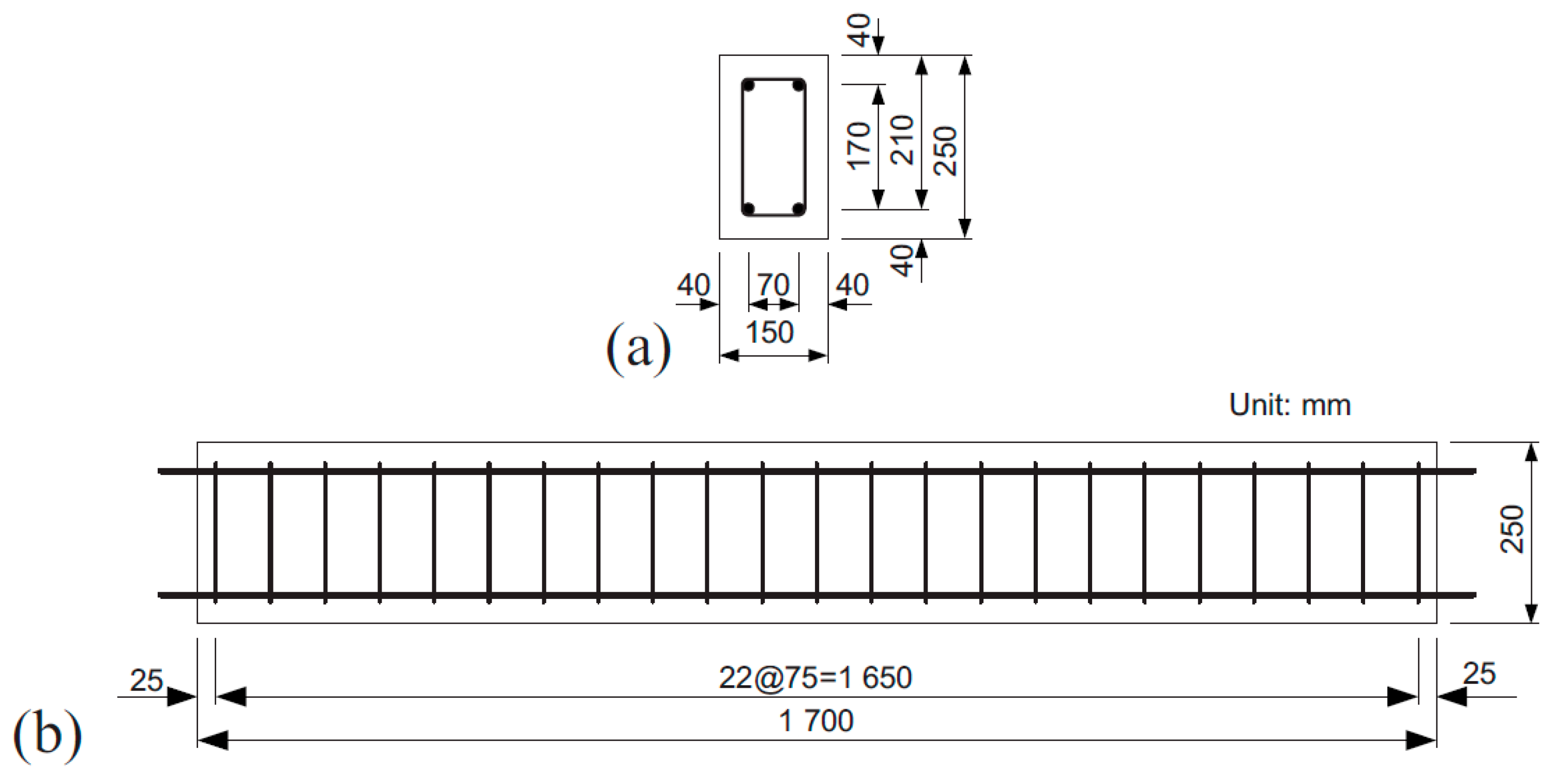
Figure 1. The cross-sectional dimensions and reinforcement details of the specimen of S1616 beam: (a) cross section and (b) longitudinal section.
Buildings 16 00549 g001
Figure 2. Drop hammer impact test setup [19].
Buildings 16 00549 g002
Figure 3. The damage distribution of RPC beam: (a) drop hammer impact test and (b) finite element analysis.
Buildings 16 00549 g003
Figure 4. (a) Collision force and (b) mid-span displacement time history curves.
Buildings 16 00549 g004
Figure 5. The overall configuration of the bridge and the detailed dimensions of each component (a) elevation drawing of full-bridge; (b) double-column pile-column structure pier and (c) cross section of pier.
Buildings 16 00549 g005
Figure 6. Finite element analysis model of vehicle–bridge collision.
Buildings 16 00549 g006
Figure 7. Energy evolution during the vehicle–bridge collision.
Buildings 16 00549 g007
Figure 8. Numerical simulation results with observations from the actual accident [37] (a) numerical simulation results and (b) actual accident.
Buildings 16 00549 g008
Figure 9. The whole process of vehicle–bridge collision.
Buildings 16 00549 g009aBuildings 16 00549 g009b
Figure 10. The deformation process of vehicle at different time instants.
Buildings 16 00549 g010
Figure 11. Collision force time history curve.
Buildings 16 00549 g011
Figure 12. Bridge damage distribution cloud map.
Buildings 16 00549 g012
Figure 13. Damage evolution of the bridge pier.
Buildings 16 00549 g013
Figure 14. The time-history of displacement at the collision point.
Buildings 16 00549 g014
Figure 15. The displacement time-history of the cap beam during the collision.
Buildings 16 00549 g015
Table 1. Mix proportions of RPC.
Fiber Volume Fraction (%)Water-Cement Ratio (%)Water *1
(kg/m)
Pre-Blended Powders (kg/m2)Steel Fiber (kg/m2)Superplasticizer (kg/m)
2.022.0180225415725
*1 including superplasticizer.
Table 2. Plastic parameters of CDP constitutive model for RPC.
ψ e σ b 0 / σ c 0 Kc μ
150.11.160.6670.005
Table 3. Plastic parameters of steel bar.
Yield Stress (MPa)Plastic StrainFlexible Damage
3600Breaking strainTriaxial stressStrain ratio
3850.011030
3950.020.50.430
4010.1Damage evolution
4270.15Damage displacement
4400.40.02
4541
5254
Table 4. Comparison of collision response.
Grid Size (mm)Size of Impact Force (kN)Displacement of Collision Point (mm)
3534931.87
5035791.89
10039542.65
Disclaimer/Publisher’s Note: The statements, opinions and data contained in all publications are solely those of the individual author(s) and contributor(s) and not of MDPI and/or the editor(s). MDPI and/or the editor(s) disclaim responsibility for any injury to people or property resulting from any ideas, methods, instructions or products referred to in the content.