1. Introduction
Against the backdrop of the global shift toward green and low-carbon development, the building sector—as one of the major sources of carbon emissions—is facing unprecedented pressure to reduce energy use and emissions, alongside significant opportunities for technological innovation. According to the 2023 report Building Materials and the Climate: Constructing a New Future, published by the United Nations Environment Programme, the building sector accounts for 37% of global greenhouse gas emissions, making it the largest single source of emissions worldwide [
1,
2,
3,
4,
5]. Chinese studies indicate that in 2022, carbon emissions from China’s building and construction activities represented nearly half of the nation’s total energy-related emissions, with operational electricity use in buildings alone contributing the equivalent of 1.44 billion tons of carbon dioxide [
6,
7,
8]. This underscores that buildings are not only major energy consumers but also a critical area that must be addressed to achieve national carbon goals.
Under the strong impetus of China’s “dual carbon” goals—carbon peak and carbon neutrality—the driving force behind green building development has gradually shifted from early-stage policy support toward market-led adoption, becoming a central pathway for the deep transformation of the construction sector [
9,
10,
11,
12]. China’s 14th Five-Year Plan for Building Energy Efficiency and Green Building Development has set clear targets, and mandatory standards such as the General Code for Building Energy Efficiency and Renewable Energy Utilization impose strict requirements on energy consumption for new buildings. The continuously refined Green Building Assessment Standard (GB/T 50378) [
13] establishes a multi-dimensional evaluation framework where the “Energy Efficiency and Energy Use” category carries a weight of 20 points, making it a core assessment criterion. This standard sets region-specific technical parameters tailored to different climate zones and explicitly encourages the adoption of new materials and technologies with energy-saving and carbon-reduction potential in its “Enhancement and Innovation” section.
In this context, polymer-dispersed liquid crystal (PDLC) switchable glazing—as an intelligent building material capable of dynamically adjusting light and heat transmission—shows significant promise as a key enabler for energy saving and carbon reduction [
14,
15,
16,
17,
18]. PDLC smart windows, which offer combined benefits in solar shading, daylighting, privacy control, and energy performance [
19,
20,
21], align well with the core objectives of China’s green building evaluation system. Building energy design codes like GB 55015–2021 [
22] impose stricter performance requirements on building envelopes, particularly limiting the thermal transmittance (U-value) and solar heat gain coefficient (SHGC) of glazing. Although the U-value of PDLC glass is slightly higher than that of some high-performance low-emissivity (Low-E) glass, its SHGC can be dynamically adjusted over a wide range—from as low as 0.1 in its opaque state to approximately 0.47 when fully transparent. This adaptability far surpasses conventional glazing with fixed SHGC values, enabling precise management of building energy use while meeting stringent shading requirements and optimizing daylight transmission.
Despite this potential, PDLC adoption faces significant challenges in subtropical climates characterized by high humidity, intense solar radiation, and distinct seasonal variations. Most field implementations have occurred in temperate regions, with limited real-world performance data for humid subtropical zones [
23]. Ghosh et al. [
15] demonstrated that while PDLC glazing can reduce cooling energy demand by 10.3% in Omani buildings, such benefits are highly climate-dependent. In subtropical regions where relative humidity frequently exceeds 70%, long-term stability remains a critical concern. Mesloub et al. [
23] reported measurable degradation in switching performance after 18 months in high-humidity environments, highlighting durability barriers. Current field studies reveal significant knowledge gaps regarding PDLC application in subtropical contexts.
Taking Zhuhai City in Guangdong Province—a representative region with hot and humid summers and mild winters—as a case study, this research integrates local climate conditions, the current state of green building development, and real-world applications. Through on-site comparative testing of PDLC smart windows installed at the China Railway Construction Tower in Zhuhai, the study systematically evaluates their effectiveness in regulating indoor temperature and humidity, as well as their potential for saving energy and reducing carbon emissions across different seasons and operational modes. In real-world applications, the energy-saving value of PDLC glass manifests in multiple ways: reducing air-conditioning energy demand through minimized solar heat gain in summer; lowering artificial lighting loads via effective daylight utilization and glare reduction in its transparent state; and enhancing thermal comfort by facilitating passive solar heating in winter. Compared with conventional glazing, PDLC offers clear advantages in dynamic shading, ultraviolet blocking, and responsive control, with pronounced benefits in public buildings and high-end residential projects requiring fine-tuned light-thermal environments.
From a whole-lifecycle perspective, the carbon reduction potential of PDLC glass spans material production, building operation, and end-of-life recycling. During manufacturing, recycled raw materials and renewable energy can lower embodied carbon. Over the operational phase—which dominates a building’s lifetime emissions—its energy-saving contribution is most significant. At the end of life, the high recyclability of glass supports resource conservation. Although PDLC technology is not yet formally listed in the highest tier of China’s green building materials certification catalog, its dynamic energy-saving features already qualify for bonus points under current green building rating systems. As the technology becomes more widespread and relevant standards evolve, formal inclusion in official green materials certification frameworks is expected to become a clear trend. The findings of this research aim to provide a scientific basis and practical guidance for the large-scale deployment of PDLC technology in subtropical regions characterized by high heat and humidity.
This pioneering field study of polymer-dispersed liquid crystal (PDLC) smart windows in subtropical climates establishes baseline thermal and humidity control performance metrics in operational commercial buildings. While comprehensive thermal comfort assessment requires additional parameters beyond the scope of this initial investigation, our work provides the essential empirical basis for future detailed comfort and energy performance analyses.
2. Climate and Environmental Analysis of Zhuhai City
The testing site is located in Xiangzhou District, Zhuhai City, Guangdong Province. We therefore begin with a detailed analysis of Zhuhai’s climate and environmental conditions to provide a precise quantitative basis for evaluating the application of polymer-dispersed liquid crystal (PDLC) switchable glazing.
Zhuhai lies along the coast of the South China Sea and features a southern subtropical monsoon climate, characterized by abundant heat year-round, hot summers, and mild, dry winters. These climatic conditions necessitate active control of indoor thermal environments in urban buildings, particularly during summer months when air conditioning accounts for the largest share of total building energy consumption. Meteorological data from the past decade clearly indicate a continuous decline in Zhuhai’s climate comfort levels, which not only amplifies fluctuations in societal electricity demand but also directly increases the city’s carbon emissions.
To quantitatively assess Zhuhai’s climate comfort, we employ a comfort index model that integrates three factors: the temperature–humidity index (weighted at 60%), wind-effect index (30%), and clothing index (10%). The evaluation grading criteria follow those outlined in
Table 1. Using meteorological observation data from Zhuhai spanning 1962 to 2024, which were obtained from publicly disclosed datasets of the China Meteorological Administration, this composite index enables a systematic evaluation of historical changes in the city’s climate comfort.
Among these factors, the temperature–humidity index exerts the strongest influence on overall comfort. The Temperature–Humidity Index (THI) quantifies human perception of the combined effects of ambient temperature and humidity. The
THI is calculated as follows:
where
T represents air temperature (°C), and
RH denotes relative humidity (%) [
24,
25,
26].
Table 1.
Classification of the Three Major Climate Comfort Indices [
26].
Table 1.
Classification of the Three Major Climate Comfort Indices [
26].
| Temperature–Humidity Index | Wind-Effect Index | Clothing Index | Scoring Standard |
|---|
| Index Value | Human Sensation | Index Value | Human Sensation | Index Value | Suitable Clothing |
|---|
| >80 | Very hot, extremely uncomfortable | ≥160 (t > 35.6 °C) | Extremely uncomfortable, hot wind | <0.1 | Ultra-short skirt attire | 1 |
| 75–80 | Hot, very uncomfortable | 160–80 (t > 32.8 °C) | Uncomfortable hot wind | 0.1–0.3 | Tropical clothing | 3 |
| 70–75 | Warm, uncomfortable | 80 to –50 | Imperceptible wind | 0.3–0.5 | Short-sleeved open-collar shirt | 5 |
| 65–70 | Warm, relatively comfortable | –50 to –200 | Warm wind | 0.5–0.7 | Light summer clothing | 7 |
| 60–65 | Comfortable, most acceptable | –200 to –300 | Comfortable wind | 0.7–1.3 | Casual wear with a shirt and undergarments | 9 |
| 55–60 | Cool, relatively comfortable | –300 to –600 | Cool wind | 1.3–1.5 | Typical casual wear with a cotton jacket | 7 |
| 45–55 | Chilly, uncomfortable | –600 to –800 | Slightly cold wind | 1.5–1.8 | Common winter clothing | 5 |
| 40–45 | Cold, very uncomfortable | –800 to –1000 | Cold wind | 1.8–2.5 | Common casual wear with an overcoat | 3 |
| <40 | Very cold, extremely uncomfortable | ≤–1000 | Very cold wind | >2.5 | Various winter thermal clothing | 1 |
From a physical perspective, the temperature–humidity index essentially represents temperature adjusted for humidity levels. It captures how varying humidity alters human perception of temperature under identical thermal conditions. At high humidity, the body’s ability to cool itself through sweating is reduced, causing perceived temperatures to rise significantly above actual air temperatures. Conversely, drier conditions at the same temperature yield greater comfort. This index is widely applied in areas such as tourism climate assessments and evaluations of living environments, serving as a key indicator for understanding human adaptability to climatic conditions.
Long-term observations show that Zhuhai’s annual average climate comfort index fluctuates between 5.2 and 6.4, generally falling within the “relatively comfortable” range. However, notable inter-decadal shifts are evident. The period from the 1970s to the early 1980s marked a phase of higher comfort levels, followed by a gradual decline that reached its lowest historical point in 2014. Accelerated urbanization and global warming have progressively degraded Zhuhai’s climatic livability, shifting it toward “relatively uncomfortable” conditions [
27]. Seasonally, spring (index 5.8–7.3) and winter (6.6–8.4) remain relatively comfortable periods, while summer ranks as “uncomfortable” (2.4–4.4). Autumn acts as a transitional season, with comfort levels intermediate to the other three seasons. The most pronounced declines occur in summer and autumn, reflecting climate change trends such as prolonged hot seasons and increased days with discomfort [
26].
On a monthly scale, Zhuhai exhibits a distinct “dual-peak” comfort pattern: comfort levels rise steadily from January, peaking in March (“comfortable” rating), then decline sharply after April to reach their annual lows in July–August (“uncomfortable” state). Comfort improves again from September onward, with October–December returning to relatively comfortable conditions. December and March are the most comfortable months, featuring mild temperatures, light winds, and moderate humidity. In contrast, July–August—characterized by high temperatures, elevated humidity, low wind speeds, and intense solar radiation—registers the lowest comfort scores, often inducing oppressive heat. This monthly variation in comfort directly shapes electricity demand patterns, particularly during summer peaks when widespread air conditioning use drives sharp surges in power consumption.
Data on the relationship between climate comfort and electricity consumption are presented in
Table 2. Analysis of 2010–2014 records reveals a significant negative correlation between these variables. Regression modeling establishes the following relationship between the monthly societal electricity consumption index (Y) and the integrated climate comfort index (CCI): Yᵢ = 12.32794 − 0.68675·CCIᵢ. This model demonstrates strong explanatory power (R
2 = 0.8255), with regression coefficients statistically significant at the 0.001 level. Practically, each one-unit increase in CCI corresponds to an average 0.68675% reduction in the monthly electricity consumption index. Conversely, each one-unit decrease in CCI is associated with approximately a 0.69% rise in electricity use. For instance, when July’s comfort index falls below 3, electricity consumption exceeds baseline by over 10.27%. When January’s comfort index rises above 7, consumption drops below 7.52% of baseline.
Anomaly patterns further confirm that CCI deviations reliably predict electricity consumption shifts. Higher-than-average comfort levels correlate with reduced electricity use (negative anomalies), while lower comfort levels are associated with increased consumption (positive anomalies). To clarify these dynamics, the year is divided into “comfortable seasons” (spring/winter) and “uncomfortable seasons” (summer/autumn): During comfortable seasons, improved comfort (from “relatively comfortable” to “comfortable”) reduces electricity use from +2.78% above average to −2.81% below average. Peak positive anomalies simultaneously decrease from 23.82% to 11.26%, indicating comfort enhancement primarily suppresses peak cooling demands. During uncomfortable seasons, modest comfort improvement (from “very uncomfortable” to “relatively uncomfortable”) shifts electricity use from +4.0% above average to −2.4% below average. The most severe negative anomalies intensify from −11.7% to −16.7%, reflecting reduced baseline heating loads during extreme cold spells.
Rising electricity loads are closely tied to poor heat control in building structures. Conventional glass curtain walls continuously absorb solar heat during summer, forcing air conditioning systems into prolonged overuse to maintain indoor comfort. Polymer-dispersed liquid crystal (PDLC) light-adjusting glass offers an innovative solution to this challenge. Its ability to dynamically control light transmission supports building energy transitions. Zhuhai’s experience during 2024’s extreme weather events highlighted PDLC’s potential: in commercial buildings, PDLC glass blocks direct solar heat at the source, reduce cooling loads, minimize indoor radiant heat, and permit higher thermostat settings. With Zhuhai’s 2024 electricity demand growing 7.9% year-on-year—and building air conditioning accounting for over 40% of consumption—widespread PDLC adoption could alleviate grid pressure during peak periods while advancing urban carbon peak goals.
PDLC technology also demonstrates environmental benefits through lifecycle carbon management. Although production requires initial energy input, its operational energy savings are substantial. With a switching lifespan exceeding 100,000 cycles, long-term efficiency gains far outweigh manufacturing emissions. Adapting PDLC to Zhuhai’s rainy climate requires enhanced weather resistance, particularly through nano-hydrophobic coatings to maintain stable light-adjusting performance despite moisture and pollution. As production costs decline and manufacturing advances, PDLC applications are expanding from premium commercial buildings to residential areas—aligning with Zhuhai’s “zero-carbon park” initiatives. Integrating PDLC with rooftop solar panels and battery storage presents a viable pathway for green building transformation. For example, industrial parks could deploy “solar + PDLC + storage” microgrids: By day, PDLC dynamically regulates indoor lighting, reducing solar power fed to public grids. By night, stored energy maintains PDLC’s frosted state for privacy without wasted electricity.
As Zhuhai pursues both livability and low-carbon development, understanding climate comfort’s impact on energy use becomes critical. PDLC technology—by dynamically adjusting how buildings interact with outdoor climate—offers an innovative approach to reconciling energy demand with emission reduction targets. Its implementation directly cuts air conditioning energy use while indirectly lowering grid carbon intensity through optimized consumption patterns. With ongoing refinements, PDLC glass is positioned to become foundational technology in Zhuhai’s near-zero-carbon building demonstration zones, invigorating sustainable urban growth.
3. Materials and Methods
3.1. Basic Information of the Experimental Site
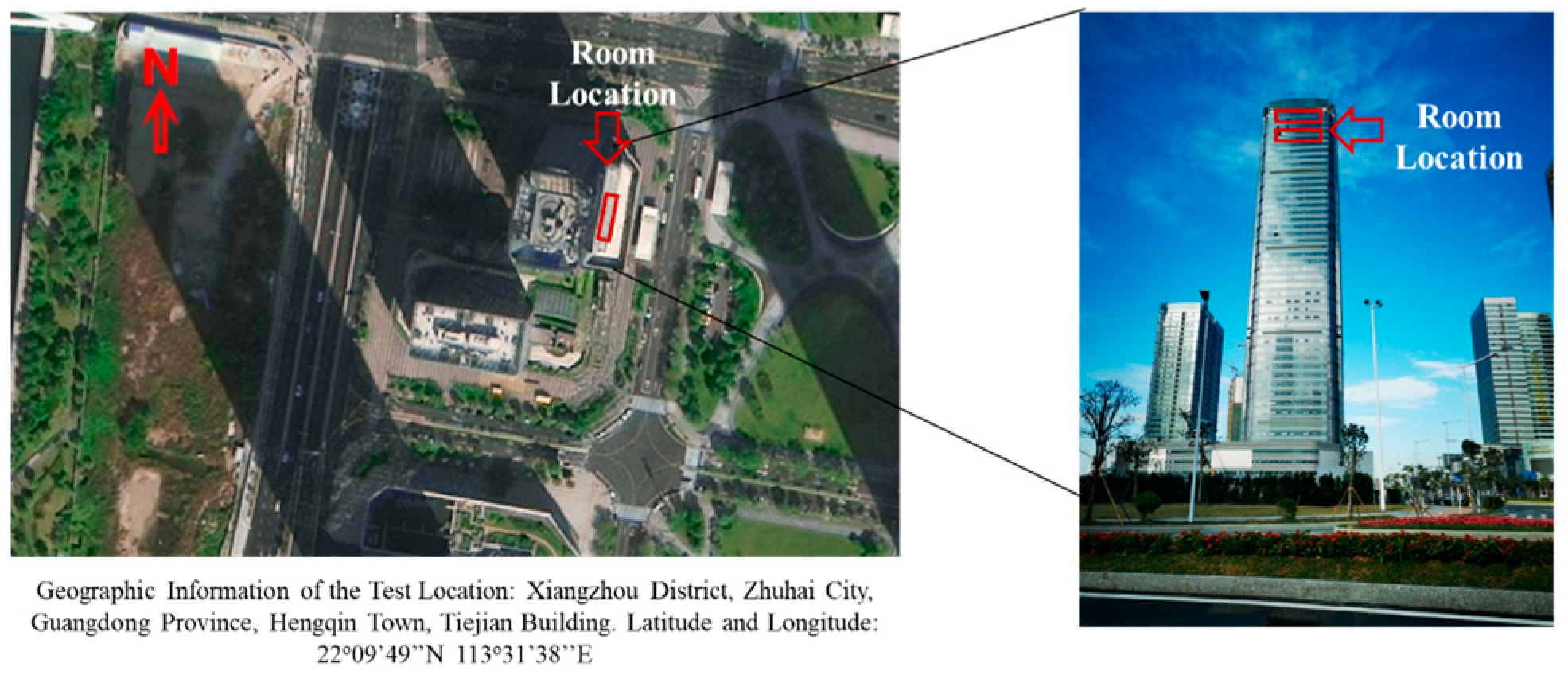
The practical application test of polymer-dispersed liquid crystal (PDLC) smart windows was conducted at the China Railway Construction Corporation Building in Hengqin Town, Xiangzhou District, Zhuhai City, Guangdong Province, China. The building is situated at geographic coordinates 22°09′49″ N, 113°31′38″ E. As shown in
Figure 1, a satellite overhead image clearly illustrates the building’s position within the urban area and the locations of the test rooms.
This test was carried out at four designated points: G1, G2, G3, and G4, corresponding to room numbers 3818, 3819, 4217, and 4118. These rooms featured an ultra-high window-to-wall ratio of 95.4%, representing a cutting-edge architectural design typical of modern premium office buildings that maximizes natural lighting and panoramic city views. Basic details of these test locations are provided in
Table 3. G1 and G2 were positioned in a room of 35.36 square meters, with a window area of 9.54 square meters. These points represented two conventional light-blocking methods—curtains fully raised and curtains fully lowered—serving as baseline comparison conditions. G3 and G4 were installed in a slightly larger room of 42.82 square meters, with a window area of 12.68 square meters. These points evaluated the real-world performance of PDLC film under two electrically controlled settings: a cloudy (opaque) state and a clear (transparent) state. All rooms shared identical window orientation, facing 10 degrees north of due west (compass direction 280 degrees).
This practical assessment was conducted at the China Railway Construction Corporation Building for two key reasons. First, the building exemplifies a standard modern high-rise environment, enabling an authentic evaluation of PDLC windows’ comprehensive performance under real-world conditions. This includes testing across varying room sizes, window-to-wall proportions, and comparative setups to measure light-adjusting capabilities during daytime illumination, responses to temperature variations, energy efficiency, and user experience.
Second, the collaborative accessibility of this site provided essential logistical advantages. Its multi-room layout and adaptable configurations—supporting simultaneous testing of multiple states—created a stable, consistent platform for both cross-condition comparisons and long-term performance analysis within a single architectural setting. This unified environment facilitates rigorous, impartial evaluation of PDLC technology’s benefits and characteristics relative to conventional shading methods in actual use cases. Furthermore, the data gathered here offers critical insights for refining product design and functionality in future iterations.
3.2. Path of the Sun’s Movement at the Test Location
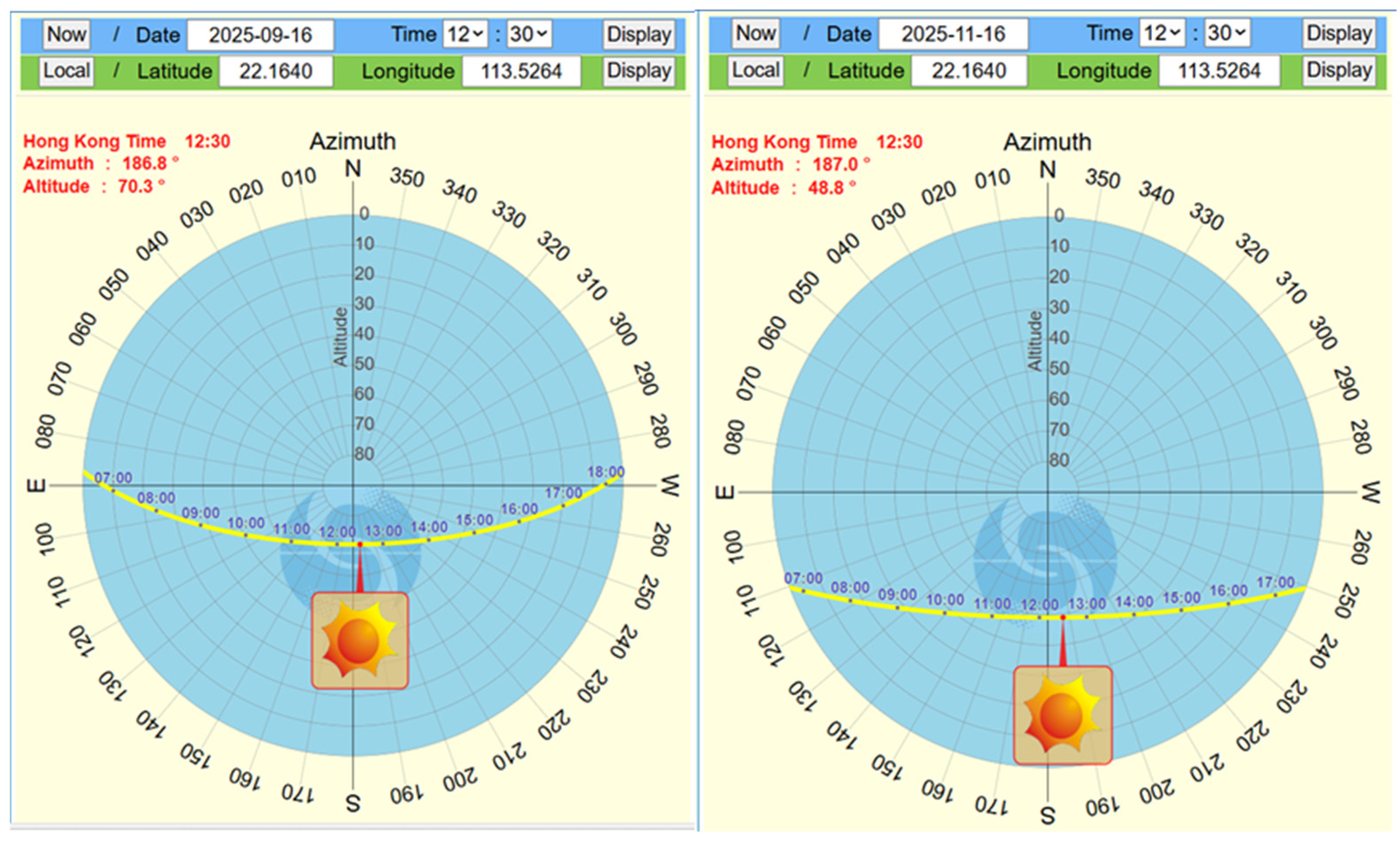
Zhuhai lies near 22° north latitude, south of the Tropic of Cancer, where the sun’s path varies significantly with the seasons. Around the summer solstice (June–July), the sun reaches a high position in the sky at noon, nearly overhead, with sunrise and sunset occurring in northern directions. Around the winter solstice (December–January), the sun remains lower in the sky, with sunrise and sunset shifting toward southern directions. The seasonal variations in the solar trajectory at the test location are clearly illustrated in
Figure 2.
At the test site—with windows uniformly facing 10 degrees north of due west (compass direction 280 degrees)—direct sunlight enters the rooms primarily during afternoon hours. However, the timing and angle of this exposure differ markedly between mid-September (near the autumn equinox) and mid-November due to seasonal shifts in the sun’s position.
On 16 September, the sun aligns with the window direction (280 degrees) at approximately 16:30. At this moment, its height above the horizon is about 13 degrees. This occurs because the sun’s direct rays fall near the equator in September, causing sunset to occur slightly south of due west (around 270 degrees). Consequently, sunlight reaches the west-northwest-facing windows only after the sun moves northwest later in the afternoon. Additionally, the sun’s relatively high position in autumn results in a larger entry angle.
By November 16 (around the start of winter), alignment with the window direction occurs earlier—near 16:00—with the sun’s height reduced to approximately 7 degrees. This shift happens because the sun’s direct rays have migrated southward, moving sunset farther south (to a larger compass angle). Thus, west-northwest windows receive direct light earlier in the afternoon. Simultaneously, the sun’s lower overall position in winter reduces the entry angle significantly.
Both months exhibit afternoon alignment between the sun’s direction and window orientation, yet key differences emerge: September’s direct sunlight occurs closer to sunset with a higher angle, while November’s arrives earlier with a lower angle. These variations stem from seasonal changes in sunset position and solar altitude driven by Earth’s annual orbit. They further indicate that west-northwest-facing windows gain more direct afternoon sunlight during autumn than in winter.
3.3. Materials
In this assessment of PDLC smart windows, the sample formulation consists of E8 liquid crystal (70%), 1,4-butanediol diacrylate (BDDA, 6%), butyl acrylate (BA, 6%), lauryl methacrylate (LMA, 6%), and cyclohexyl methacrylate (CHMA, 12%). The ratio of LMA to CHMA is maintained at 6% and 12%, respectively. The purity levels of the primary raw materials and the manufacturing enterprises responsible for the PDLC film formulation are documented in
Table 4. For the detailed research process, please refer to the paper I previously published [
29,
30].
3.4. Installation Method for PDLC Film
Surface preparation of the base material is conducted first. Technicians systematically clean the target glass surface. After removing visible dirt with a dedicated cleaner, a secondary wipe using high-purity ethanol and lint-free cloths is essential to eliminate residual oils, dust, and contaminants. This creates a clean, high-energy bonding surface free of impurities. Cleaning must follow a single directional stroke to avoid recontamination. Concurrently, the adhesive side of the PDLC film—which comes pre-coated with pressure-sensitive adhesive—undergoes identical ethanol cleaning to remove any residual release agents or airborne particles.
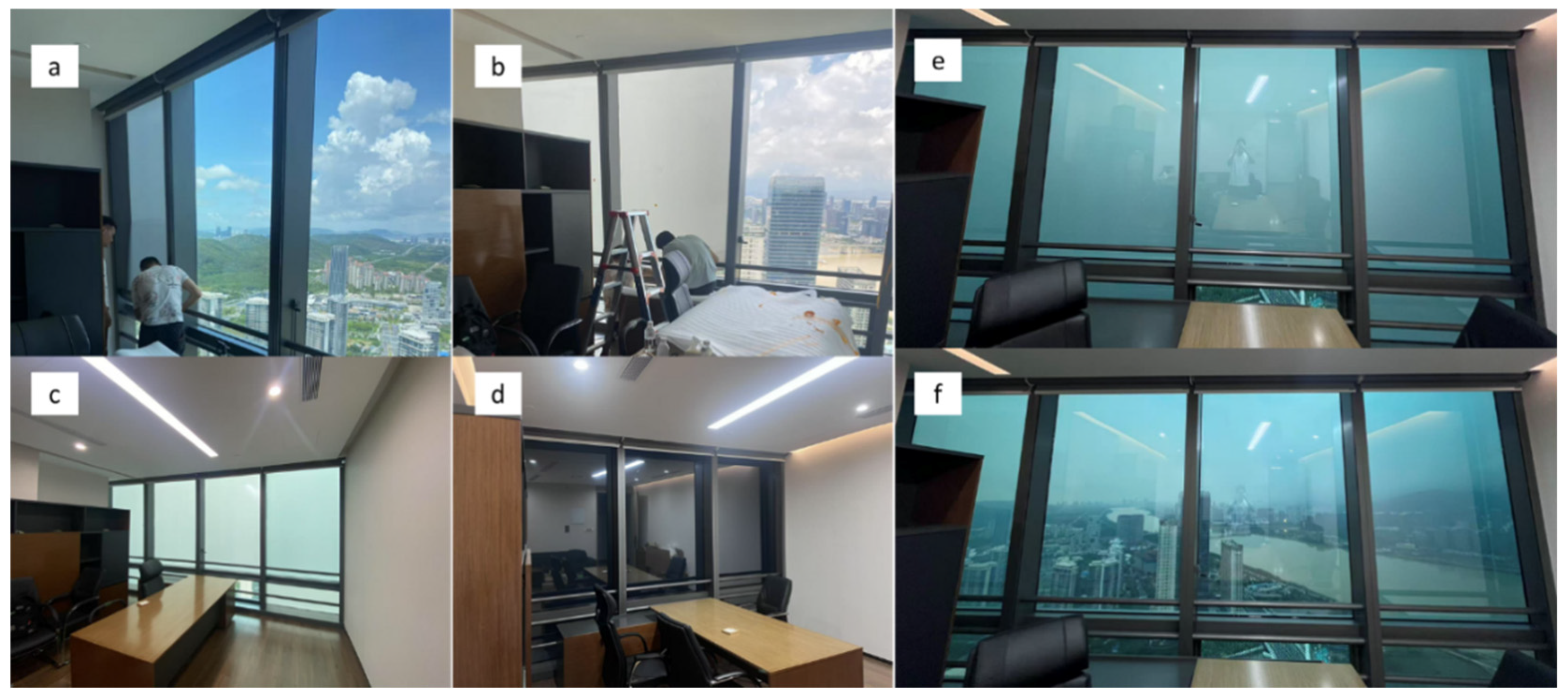
Next, the physical bonding of the film commences, a key stage illustrated in
Figure 3, which details the full film installation process and post-installation test conditions. Once environmental dust levels meet installation requirements, technicians cut the PDLC film sheet to dimensions slightly smaller than the glass pane. The protective liner on the top 5–10 cm edge of the film is peeled back first. The film is then precisely positioned on the glass, typically by securing the top edge to prevent lateral movement. Using a handheld soft roller tool, pressure is applied from the center of the bonded area outward toward the edges to expel trapped air and achieve initial adhesion. Maintaining this pressure and alignment, two technicians work in coordination: one slowly peels away the remaining protective liner downward at a steady pace, while the other immediately follows with the roller tool, applying identical center-to-edge pressure to newly exposed sections. This expels all air beneath the film until full adhesion is achieved across the entire surface without visible bubbles. Critical success factors include synchronizing the liner removal speed with roller application progress and ensuring uniform pressure distribution.
Following physical bonding, electrical connections and system integration are performed. PDLC film functionality requires alternating current applied to transparent conductive coatings on both ends of the polymer film. Technicians solder insulated wires to the designated electrode areas at the film’s edges using an electric soldering iron, ensuring robust electrical contact. Connection points and wire pathways are secured and insulated with tape or plastic conduits to maintain tidy wiring and prevent short circuits.
Finally, a continuous, even bead of neutral silicone sealant is applied along all seams between the PDLC film, glass, and window frame. This sealant barrier protects against external moisture and contaminants, safeguards electrodes and adhesive layers, and enhances esthetic appearance. After installation, the system remains undisturbed until the sealant fully cures (typically 24–72 h, depending on ambient temperature and humidity). Only then is initial power applied to verify functional performance—including light-adjusting responsiveness, uniformity of opacity transitions, and operational stability—against design specifications.
3.5. Characterization
This study evaluated the combined effects of temperature and humidity under conditions involving PDLC smart windows. A baseline temperature of 25 °C was set, and data collection began around 12:00 noon, when direct sunlight entered the rooms. The test data were collected continuously on a daily basis from September to November 2025. The test rooms were maintained under controlled conditions with no occupants, equipment, or lighting present. Additionally, all HVAC and dehumidification systems remained inactive throughout the testing period, and room doors were kept closed to prevent external air exchange. Temperature and humidity in four separate rooms (G1–G4) were recorded at 30 min intervals using Jianda Renke (Jinan, China) LORA temperature and humidity recorders (Model RS-WS-LORAH-6C), with each measuring device positioned at the geometric center of its respective room at a height of 1.0 m and 2.5 m from the window surface. All sensors were housed in standard Maisien (Changzhou, China) radiation shields (model RS-RS12, white polyethylene louvers) to minimize solar radiation effects on measurements. Prior to deployment, sensors underwent a 72 h stabilization period and were cross-calibrated against reference instruments (Testo 175-H1, ±0.2 °C/±1.5% RH) with biweekly field verification. Data outliers exceeding ±3 standard deviations from moving averages were automatically flagged and manually verified against backup measurements.
The thermal environment parameters were measured using calibrated sensors positioned at a height of 1.0 m above the floor. We acknowledge that this measurement height differs from the standard recommendations of 0.6 m for seated occupants and 1.1 m for standing occupants specified in ISO 7726, ASHRAE 55, and ISO 7730 [
31,
32,
33]. The experimental design employed a simplified measurement model focused on comparative analysis across different window configurations. Since all experimental conditions maintained consistent measurement height and external parameters, the relative comparisons presented in this study retain validity and reference value despite the deviation from standard measurement protocols.
The PDLC smart windows (product series: PDLC-X low-voltage type, Manufacturer: Zhonghe, Changzhou, China) were installed as retrofit films on existing 6 mm clear float glass. The system was operated using a dedicated controller (model PDLC-CT200, Manufacturer: Zhonghe, Changzhou, China) providing 32 V AC at 50 Hz frequency. Power consumption measurements (using Yokogawa WT310 power meter, Suzhou, China) showed 1.8 W/m2 during state transition (activation) and 0.3 W/m2 to maintain transparent state, with zero power consumption in the frosted (off) state. The operational protocol maintained a transparent state from 8:00 to 12:00 and frosted state from 12:00 to 18:00 during weekday testing periods, with weekend cycles adjusted to simulate typical occupancy patterns through automated scheduling.
To minimize the impact of varying thermal properties, the surface temperatures of the smart windows were measured in both transparent and frosted states during direct sunlight exposure. To accurately measure the thermal boundary conditions, non-contact infrared thermometers (Deli DL333600A, accuracy ±1.0 °C, Ningbo, China) were used to measure the internal surface temperature of the windows (G1–G4) during direct sunlight exposure between 15:30 and 16:00. Measurements were taken at five consistent points across each window surface, with the thermometer positioned perpendicular to the glass at a distance of 30 cm to minimize measurement error. These internal surface temperature measurements were selected as they directly influence the indoor thermal environment and heat exchange with room air. While a temperature gradient between internal and external surfaces exists (particularly under high solar radiation conditions), our experimental design focused on establishing consistent boundary conditions for comparing indoor temperature variations across different window states, rather than determining absolute thermal transmittance values. Under the controlled test conditions (no HVAC operation), the internal surface temperature provided the most relevant parameter for evaluating how different window states affect interior heat accumulation.
In both states, the glass surface temperature stabilized at approximately 50 °C. Once the window surface temperatures were equalized and external heat exchange conditions remained consistent, differences in indoor temperature increases could be primarily attributed to variations in solar radiation admitted through the windows. Therefore, the analysis focused specifically on indoor temperature and humidity changes resulting from solar heat gain through the smart glazing.
It should be explicitly noted that this experimental protocol did not measure operative temperature (the weighted average of air temperature and mean radiant temperature), which represents a critical benchmark for comprehensive building envelope performance simulation as established in industry-standard tools such as EnergyPlus and IDA-ICE [
34]. This methodological constraint was a deliberate scope limitation to focus exclusively on fundamental temperature and humidity control capabilities of PDLC windows under controlled conditions.
4. Results and Discussion
Continuous testing was conducted at the four test points of Group G over three consecutive months, from September to November 2025. The recorded temperature and humidity data were analyzed separately for each month to examine the influence of PDLC smart windows and to identify monthly variations in these environmental parameters. This approach enabled a systematic assessment of how the windows moderated indoor climate stability across seasonal transitions.
4.1. Analysis of Test Results from September to October 2025
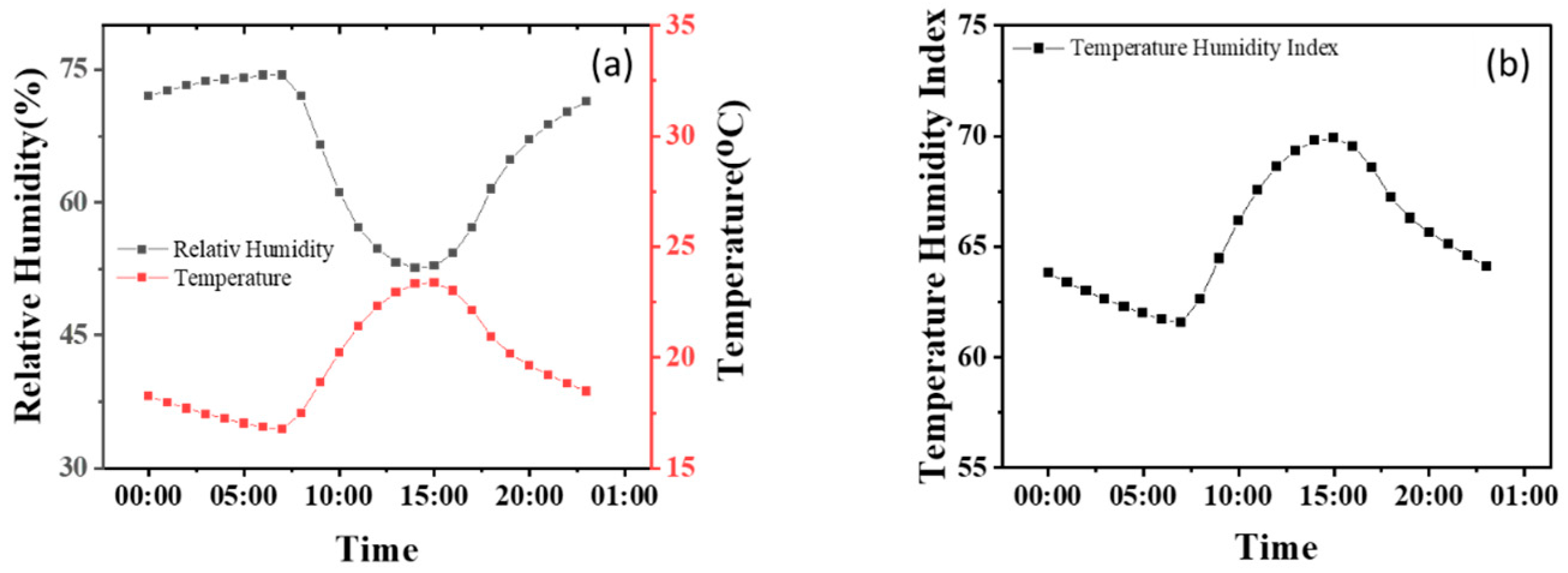
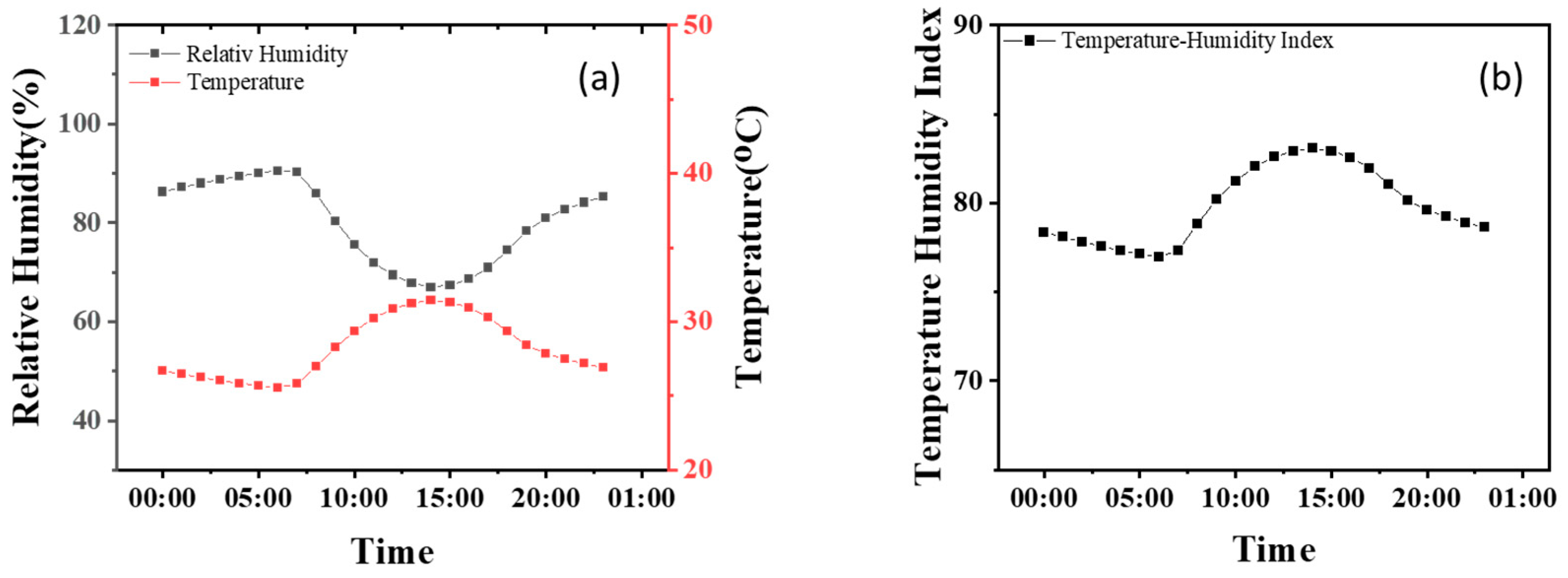
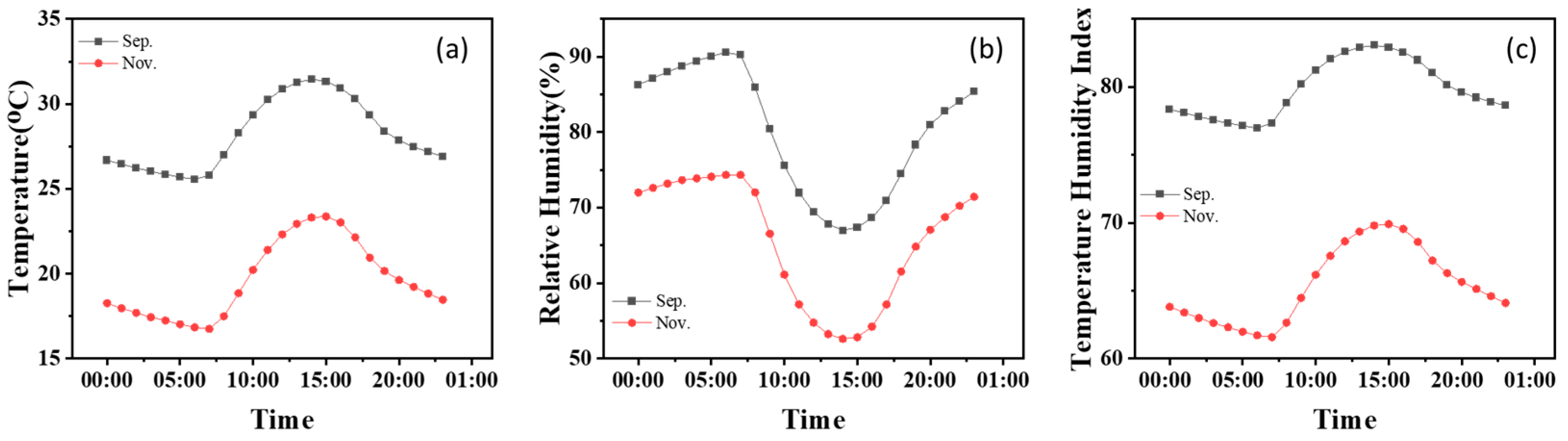
During the September–October 2025 testing period, the outdoor environment in Xiangzhou District, Zhuhai, exhibited a typical subtropical daily climate pattern. Hourly variations in outdoor temperature, humidity, and the combined temperature–humidity index are presented in
Figure 4.
Outdoor temperatures steadily decreased between 00:00 and 06:00, falling from 26.68 °C to 25.56 °C. After 07:00, temperatures rose sharply, peaking at 31.45 °C between 14:00 and 15:00 before gradually declining. Relative humidity followed an inverse pattern: it increased continuously during early morning hours (00:00–06:00), reaching 90.55%, then decreased as temperatures rose during daytime, with the lowest value of 70.91% recorded at 17:00. Humidity rose again after evening onset. This cyclical temperature–humidity relationship directly drove fluctuations in the combined index: values remained stable at 77–78 during early morning hours, peaked at 83.06 by 14:00 (corresponding to “very hot, extremely uncomfortable” conditions on standard thermal comfort scales), and gradually declined to 80.12 after 19:00.
The period from 12:00 to 19:00 represented the most thermally challenging interval, characterized by the strongest solar radiation and the poorest comfort conditions. This pattern aligns directly with seasonal changes in solar altitude and direction typical for Zhuhai during September–October, coinciding with maximum heat accumulation in building structures.
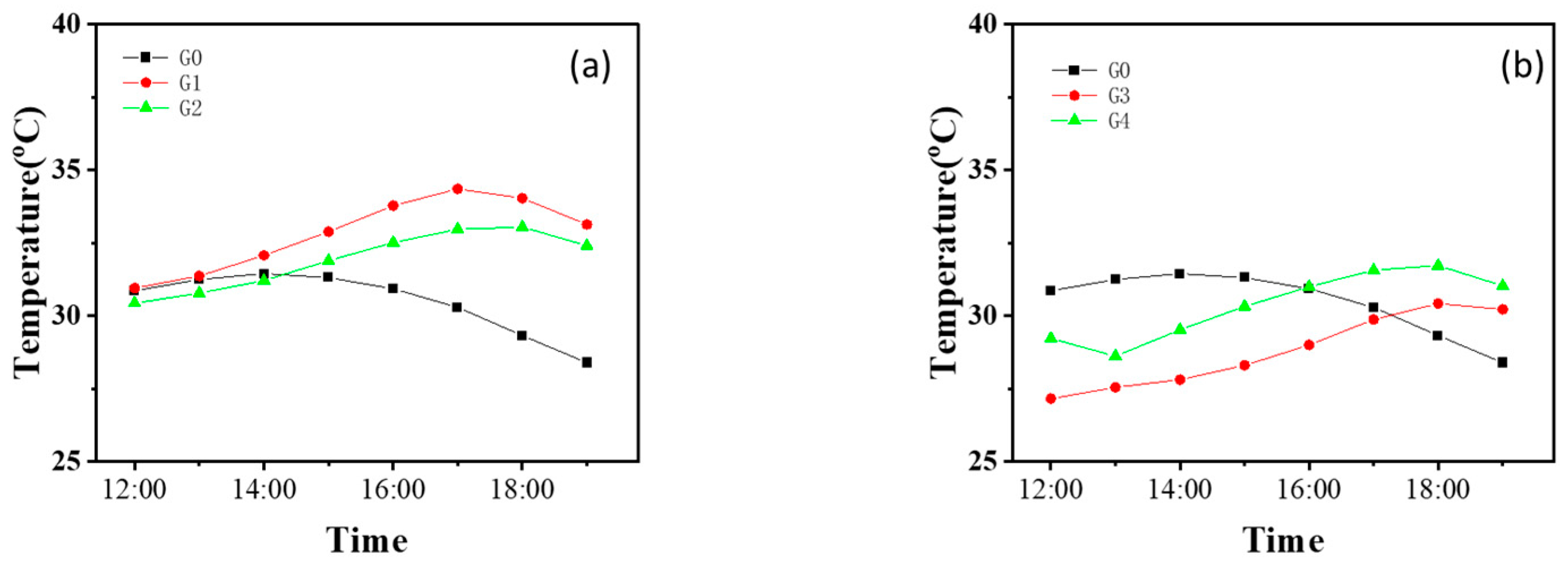
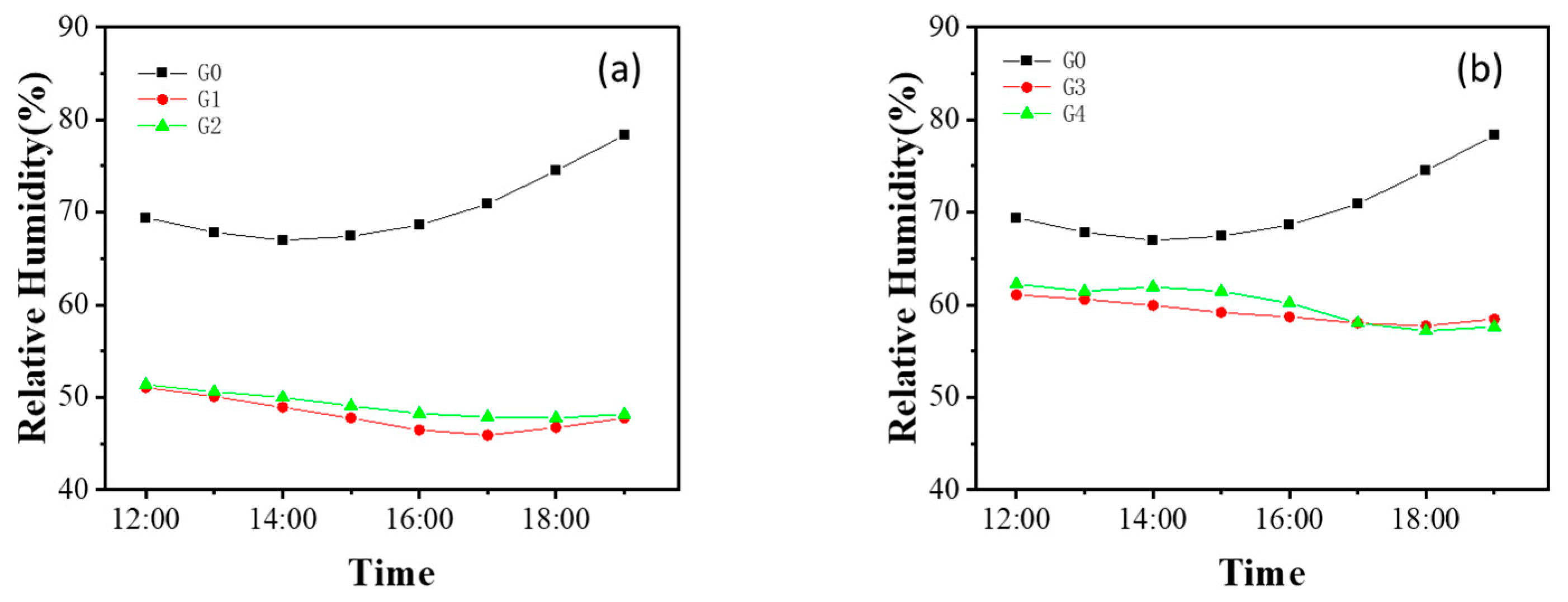
Integrating outdoor index variations with Group G’s hourly test results (where G0 represents real-time outdoor temperature, humidity, and index in Xiangzhou District, Zhuhai), the analysis focused on temperature and humidity data between 12:00 and 19:00. Results are presented in
Figure 5 and
Figure 6.
At 12:00, the initial temperatures of groups G1 and G2 were 30.86 °C and 30.96 °C, respectively, indicating nearly identical starting thermal conditions. As solar radiation intensified, the indoor temperature of G1 rose continuously, reaching a peak of 31.45 °C at 14:00 before slowly declining to 28.40 °C by 19:00. In contrast, G2, benefiting from curtain shading, experienced a more moderate temperature change due to effective blockage of solar radiation. Its highest temperature, 33.79 °C, occurred at 16:00, but overall fluctuations were smaller, and a rapid cooling trend was observed after 15:00. Notably, although G2 reached its daily maximum later, its rate of temperature increase was significantly lower than that of G1. This shows that while curtains cannot completely prevent heat transfer, they are markedly effective in suppressing the entry of short-wave radiation. The largest temperature difference between the two groups, 2.85 °C, occurred at 16:00, reflecting the key influence of external light intensity on indoor heat accumulation.
Regarding the temperature performance of G3 and G4, G4 started at a slightly lower temperature of 30.44 °C at 12:00 compared to G3’s 30.96 °C, which may be related to local ventilation or operational differences in equipment. However, as the solar altitude angle increased in the afternoon and aligned more directly with the window orientation (approximately 280°), the temperature of G4 rose rapidly, reaching 32.89 °C at 15:00, one of the highest values among all four groups. In comparison, G3 maintained a consistently lower temperature, peaking at 31.01 °C at 16:00, which was about 1.88 °C lower than G4 at the same time. Specifically, during the critical period from 14:00 to 17:00, the temperature increase rate for G4 was 0.36 °C per hour, far exceeding G3’s rate of 0.17 °C per hour, demonstrating the amplifying effect of the transparent state on solar heat gain. Furthermore, G4’s temperature decreased more rapidly after 17:00, while G3 exhibited greater thermal stability, indicating that the frosted state not only reduces immediate heat load but also slows the indoor heat release process.
A comprehensive comparison of the data reveals that the temperature difference between G1 and G2 stems mainly from differing shading efficiencies, with G2’s curtains reducing the maximum temperature rise by approximately 2.8 °C. The contrast between G3 and G4 highlights the advantage of the PDLC film’s regulatory capability—under the same architectural conditions, the transparent state can raise the indoor temperature by nearly 2 °C, while the frosted state effectively suppresses heat buildup. Considering the background information, the period from September to October is during autumn when the solar altitude angle is relatively high (e.g., reaching 13° at 16:30 on 16 September), resulting in strong direct sunlight around noon, particularly on west-northwest-facing windows. Under these conditions, the high light transmittance of G4 allowed it to absorb more solar radiation, leading to significant indoor heating. In contrast, G3, by electrically switching to the frosted state, achieved a shading function similar to curtains but with higher response speed and controllability.
Further quantitative analysis shows that from 12:00 to 17:00, the total temperature increases were 0.59 °C for G1, 2.83 °C for G2, 0.05 °C for G3, and 2.45 °C for G4. This means that under identical lighting conditions, G3 had the smallest temperature rise, only 2% of that of G4, demonstrating its superiority in energy saving and heat reduction. Meanwhile, the temperature curve for G4 showed a distinct single-peak pattern, with the peak occurring around 15:00, whereas G3 exhibited a more stable, plateau-like trend with minimal fluctuations, confirming the stability of its dynamic shading system. In summary, in practical application scenarios, PDLC smart windows can not only flexibly adjust light transmittance but also effectively manage the indoor thermal environment. Especially during periods of strong sunlight in late autumn and early winter, electrical switching can significantly reduce indoor heat load while ensuring adequate daylight, showcasing comprehensive thermal performance advantages over traditional curtains.
It should be noted that the thermal measurements conducted at 1.0 m height may not precisely represent the thermal conditions experienced by occupants in standard seated (0.6 m) or standing (1.1 m) positions as defined in international standards. This limitation should be considered when interpreting the absolute values of temperature and thermal comfort indices reported in this study. However, the comparative analysis between different window configurations remains valid as all measurements were conducted under consistent height conditions.
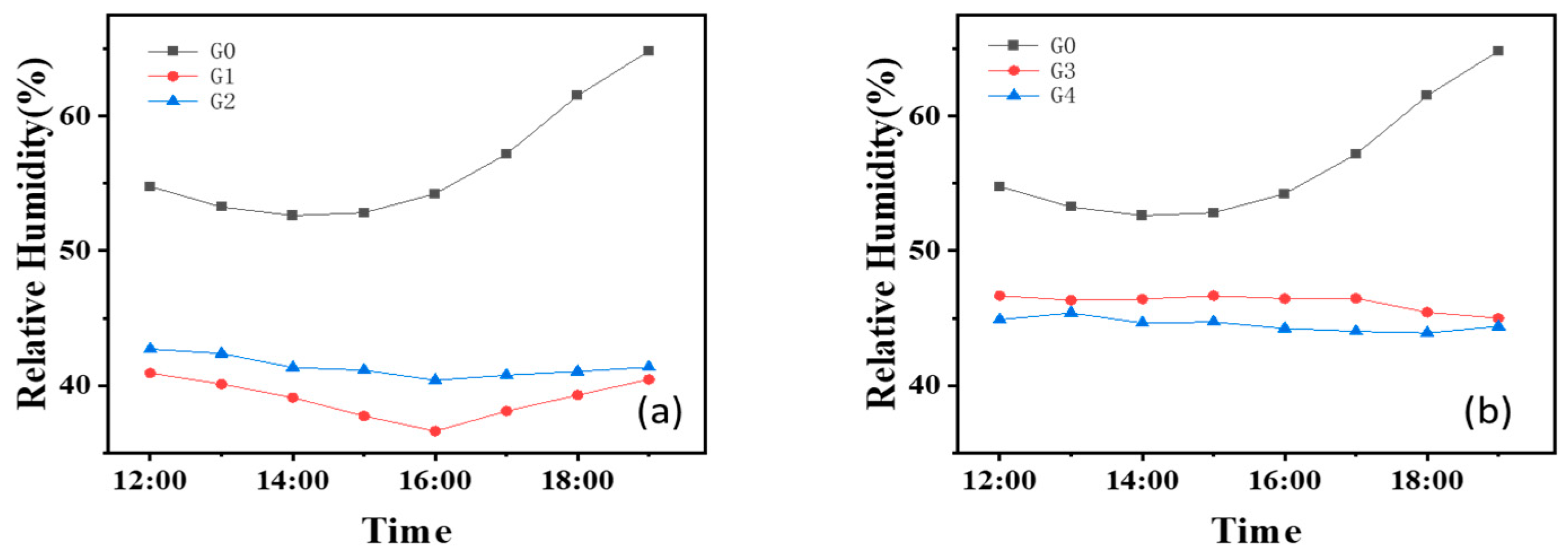
An analysis of the relative humidity trends for G1 and G2 reveals similar patterns, indicating that adjusting only the curtain opening or closing has a limited impact on air humidity under identical room structures. At 12:00, the relative humidity was 69.4266% for G1 and 51.0595% for G2. Both groups showed a gradual declining trend in the afternoon as sunlight intensified, dropping to 78.3302% for G1 and 47.7476% for G2 by 19:00. It is worth noting that although G1 and G2 were in the same room, their initial humidity levels differed significantly (by about 18.4%). This may be related to the effect of curtain status on ventilation conditions. When the curtain was fully open (G1), the exchange of indoor and outdoor air was less restricted, resulting in higher humidity levels. When the curtain was closed (G2), a more enclosed space was formed, reducing evaporation sources and hindering air circulation, which made it difficult for moisture to accumulate, thus keeping the overall humidity lower. Furthermore, G2 showed a noticeable decline from 50.0905% to 47.7690% between 13:00 and 15:00, a drop of 2.3%, indicating a stronger drying effect, likely due to accelerated moisture evaporation caused by heat buildup in the enclosed space.
In contrast, the relative humidity changes for G3 and G4 were more complex, reflecting the influence of the PDLC smart window’s different operating modes on the indoor microclimate. G3 (in the frosted state) maintained consistently low humidity levels throughout the observation period, decreasing gradually from 61.0975% at 12:00 to 58.4575% at 19:00, with a total drop of only 2.6% and minimal fluctuation. This suggests that the frosted PDLC film effectively blocked external light, reducing the indoor heat load and thus suppressing moisture evaporation caused by temperature rise, which helped maintain a more stable humidity environment. For G4 (in the transparent state), the initial humidity was 62.2619% at 12:00, which decreased rapidly over time, falling to 58.0429% by 17:00 before stabilizing. The total decline was 4.2%, significantly higher than that of G3. Particularly between 14:00 and 17:00, the humidity dropped sharply from 61.9309% to 58.0429%, a decrease of over 3.9%. This significant change primarily resulted from the transparent state allowing substantial solar radiation to penetrate the glass, raising the indoor temperature and accelerating surface moisture evaporation, which reduced the water vapor content in the air.
Further quantitative analysis shows that the maximum relative humidity difference between G3 and G4 occurred at 15:00, recorded at 61.17% and 60.19%, respectively, with a difference of about 0.98%. While this may seem small, it is meaningful in a constant temperature-controlled environment. Considering the experiment’s baseline temperature was set at 25 °C and the PDLC film surface temperature remained around 50 °C between 15:30 and 16:00, the high light transmittance in the transparent state allowed more solar energy into the room, intensifying the heat-humidity coupling effect. The frosted state, by scattering light and reducing incident energy, slowed the internal heat accumulation process, thus more effectively controlling humidity fluctuations. Additionally, at 16:00, the humidity in G4 reached its lowest point of 58.0429%, while G1 remained at 68.6233%, a difference of about 10.6%.
In summary, based on average data from September to October, the relative humidity changes in G1 and G2 demonstrate the indirect impact of traditional shading methods on indoor humidity, primarily through alterations in ventilation and heat transfer. The data from G3 and G4 clearly illustrate the humidity control capabilities of PDLC smart windows under different electrical control states. The transparent state (G4), by admitting more solar radiation, caused a greater rise in indoor temperature and a more pronounced drop in humidity, especially in the afternoon. The frosted state (G3), utilizing its optical properties, effectively mitigated external thermal disturbances, resulting in a more stable humidity environment. The data indicates that G3 had the smallest humidity fluctuation range (±1.5%), followed by G4 (±4.2%), while G1 and G2 showed ranges of ±8.9% and ±5.1%, respectively. This confirms that the PDLC system offers superior stability for the indoor environment compared to traditional shading methods. These findings not only validate the potential of PDLC smart windows in regulating temperature and humidity but also provide valuable insights for future energy-efficient building design.
4.2. Analysis of Test Results from November 2025
Zhuhai in November experiences an autumnal climate transition. Under cold air influences, diurnal temperature variations characteristic of its subtropical monsoon climate became more pronounced. Outdoor temperature, humidity, and combined temperature–humidity index data are shown in
Figure 7. Between 12:00 and 19:00, external temperatures initially rose before declining, peaking at 23.37 °C at 15:00. Relative humidity followed an inverse pattern, reaching its lowest values (approximately 52.62–54.25%) between 15:00 and 16:00. These rhythmic variations primarily resulted from changing solar radiation intensity. In November, Zhuhai’s solar azimuth shifted from approximately 170° at noon (slightly east of due south) toward 250–260° (southwest) between 16:00 and 19:00. Since all test room windows faced 10° north of due west (compass bearing 260°), this period represented critical direct sunlight exposure. Particularly between 15:00 and 17:00, although solar altitude decreased, the alignment between solar azimuth and window orientation caused intense direct radiation on glass surfaces. The outdoor combined index peaked at 69.90 at 15:00, within the “warm, moderately comfortable” range—consistent with Zhuhai’s transitional November climate shifting from summer’s heat and humidity toward winter’s mild dryness.
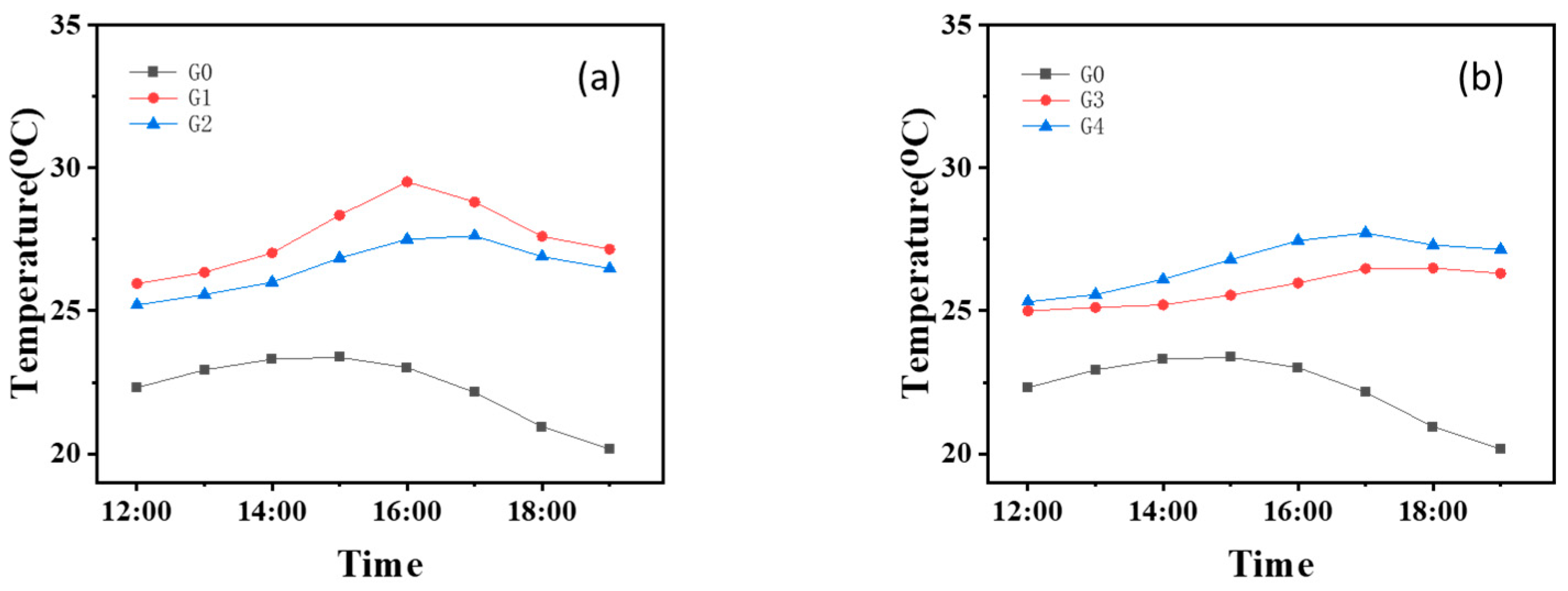
Integrating outdoor index variations with Group G’s hourly results (where G0 represents real-time outdoor temperature, humidity, in Xiangzhou District, Zhuhai), the analysis focused on 12:00–19:00 data. Results appear in
Figure 8 and
Figure 9.
Between 12:00 and 19:00, as the outdoor solar altitude angle gradually decreased, the west-oriented windows received direct solar radiation relatively early in the afternoon due to the sun’s more southerly position in winter. The indoor temperature of G1 rose from 22.31 °C at 12:00 to 23.02 °C at 16:00, an increase of 0.70 °C; it then slowly decreased to 20.16 °C by 19:00. In contrast, G2 demonstrated superior thermal barrier performance throughout this period. Its temperature increased only slightly from 25.96 °C at 12:00 to 28.35 °C at 15:00, before gradually decreasing to 27.16 °C by 19:00. This smaller overall fluctuation, maintained at a relatively high level, indicates that fully closed curtains can effectively reduce heat ingress while retaining some internal heat storage effect.
The data comparison for the PDLC smart window systems, G3 and G4, is more critical. G4, in transparent mode, started at 25.21 °C at 12:00. As sunlight intensified, its temperature continuously climbed, peaking at 26.85 °C at 15:00 (an increase of 1.64 °C), and then slowly decreased as light weakened, reaching 26.48 °C at 19:00. Meanwhile, G3, in the frosted state with significantly reduced light transmittance, started at a slightly higher initial temperature of 25.12 °C at 12:00 but exhibited a clear lag in the subsequent heating process. Its maximum temperature of 26.48 °C occurred at 16:00, with a maximum temperature rise of only 1.36 °C, which is about 0.28 °C lower than G4’s peak increase. Notably, the maximum temperature difference between G3 and G4, approximately 0.37 °C, occurred between 15:00 and 16:00. This demonstrates the PDLC film’s better insulation performance in the frosted state, effectively suppressing indoor temperature rise caused by solar radiation compared to the transparent state.
A further horizontal comparison between G1 and G2 reveals that significant temperature control effects can be achieved even without active modulation, using physical shading. For instance, at 15:00, G1’s temperature was 23.37 °C, while G2’s was 28.35 °C—a difference of nearly 5 °C, indicating the greater impact of the external environment on the interior when curtains are open. However, this difference also reveals an important phenomenon: although G2 did not receive direct sunlight, its internal temperature did not drop significantly but instead showed a slow rising trend, likely due to heat absorption and re-radiation from walls and furniture. This suggests that non-direct radiation factors must be considered when evaluating shading system efficacy.
Comparing G3 with G1 highlights the energy-saving potential of PDLC technology. Although the G1 room was smaller, its temperature response was faster and its fluctuations were larger. In the larger space containing G3, the temperature rise process was more gradual and controllable due to the regulating effect of the PDLC film layer. For example, at 16:00, G1’s temperature had risen to 23.02 °C, while G3’s was 26.48 °C. Although the absolute value for G3 is higher, considering its lower initial temperature and greater thermal mass, its actual heat gain rate was likely lower than G1’s. Furthermore, G3’s temperature stabilized after 17:00, indicating good thermal buffering characteristics, probably attributable to the PDLC material’s inherent thermal resistance and dynamic modulation capabilities.
In summary, the November test results confirm the significant temperature control capability of PDLC smart windows under afternoon winter sunlight. Particularly for G3 compared to G4, the indoor temperature rise was effectively suppressed, with an average daily increase about 0.3 °C lower and a more stable temperature curve. In contrast, traditional curtains, while providing some light blocking, are passive, lack precise control, and can lead to indoor overcooling or overheating. PDLC windows, capable of rapid state switching via electrical control, can flexibly adapt to different climatic conditions while meeting daylighting needs, demonstrating a higher level of intelligence and energy efficiency.
It is worth noting that the glass surface temperature for all test points stabilized at approximately 50 °C between 15:30 and 16:00, indicating consistent external heat exchange conditions. Therefore, the differences in indoor temperature changes are primarily attributable to the varying light transmittance of the windows, ensuring the reliability of the experimental results. In conclusion, based on November field measurement data, PDLC smart windows demonstrate excellent thermal management capability in winter west-facing lighting environments. Particularly in the frosted mode, they can reduce the indoor temperature rise by about 10% or more compared to the transparent mode, outperforming traditional curtain shading methods and showing great potential for widespread application in modern building energy-saving retrofits.
The relative humidity of G1 at 12:00 was 40.9141%, which then gradually decreased to its lowest point of 37.72% at 15:00, before rising again to 40.44% by 19:00. In comparison, G2 started at a slightly higher humidity level (42.69%), decreased to 41.12% at 15:00, and ended at 41.35%. This indicates that although closing the curtains reduced some natural ventilation pathways, the incomplete seal still allowed a degree of air exchange, resulting in smaller humidity fluctuations and maintenance of a relatively higher humidity level in G2. Notably, the noticeable drop in G1 around 15:00 may be related to increased sunlight exposure raising the indoor temperature and enhancing evaporation, which relatively diluted the moisture content in the air.
In the G3 and G4 groups, the humidity dynamics were more complex. G3’s relative humidity showed minor fluctuations, declining gradually from 46.66% at 12:00 to 44.40% by 19:00. This trend suggests that while blocking external light, the frosted state also limited the infiltration of outside moisture. Additionally, the reduced internal heat load likely decreased the tendency for moisture to condense, thereby suppressing any significant rise in humidity. G4, in the transparent state, exhibited more pronounced variations: starting at 44.89%, it briefly increased, peaking at 44.71% around 15:00, before gradually declining to 44.38%. Particularly between 15:00 and 17:00, G4’s relative humidity consistently remained higher than G3’s, with a maximum difference of approximately 0.5% (e.g., 44.23% vs. 44.25% at 16:00). This indicates that when the PDLC window was transparent, more solar radiation entered the room, causing localized heating and intensifying the activity of water molecules in the air, which temporarily increased the relative humidity. However, as sunlight weakened towards evening, this effect diminished and the humidity level decreased accordingly.
A further comparison between the G1/G2 and G3/G4 groups reveals that despite all rooms being subject to the same external climate conditions (mid-November, low solar altitude angle, southerly sunset direction), differences in building structure and shading methods led to distinct microclimate responses. For instance, at the key time of 15:00, G1’s relative humidity had dropped to its daily lowest (37.72%), while G3 remained above 46.64%, demonstrating a stronger humidity buffering capacity. Although G4’s humidity was higher than G1’s, it was lower than G3’s, reflecting that the transparent state allowed greater heat gain, which impacted indoor humidity levels; however, the humidity control in this state proved less stable than that achieved in the frosted state.
In summary, the November data reveals an important pattern: under low winter sunlight conditions, the transparent state of the PDLC smart window slightly elevates the indoor relative humidity compared to the frosted state, particularly during periods of strong afternoon sunlight. This phenomenon stems from the higher solar heat gain in the transparent mode, which raises the indoor temperature more quickly and enhances the air’s capacity to hold moisture, leading to a short-term increase in relative humidity. In contrast, the frosted state reflects and scatters most solar radiation, effectively reducing the indoor heat load and maintaining a more stable humidity environment. Furthermore, compared to traditional curtains, PDLC technology not only controls light but also indirectly regulates humidity. Its advantage lies in its precise responsiveness to environmental variables. For example, the average relative humidity for G3 throughout the test period was 45.16%, significantly higher than that of G1 (39.87%) and G2 (41.48%). This suggests that the PDLC frosted mode not offers good thermal insulation but also provides a certain “humidity buffering” function, which can help alleviate winter dryness.
In conclusion, based on measured data from November, the relative humidity responses of PDLC smart windows under different electrical control states show clear differences: the transparent state promotes a short-term increase in humidity, making it suitable for scenarios requiring daylight and moderate humidification; the frosted state provides more stable humidity control, ideal for office or living spaces prioritizing stability. These results provide a quantitative basis for the application of PDLC windows in actual buildings, especially in climate zones like South China, where winters are warm, summers are hot, and humidity fluctuates frequently. Properly configuring the operating modes of PDLC windows can significantly improve the quality of the indoor thermal and humidity environment.
4.3. Cross-Seasonal Performance Analysis of PDLC Smart Windows
Zhuhai’s climate environment evolved significantly between September and November 2025, with pronounced changes in temperature and humidity relevant to this study. September represented late summer with persistently high temperatures and humidity, while November marked late autumn with notably cooler, drier conditions and an overall milder climate. Comparative outdoor temperature, humidity, and combined temperature–humidity index data for these months appear in
Figure 10.
In September, average daytime outdoor temperatures consistently exceeded 30 °C, peaking at 31.45 °C (14:00), with relative humidity ranging between 67% and 90%. By contrast, November’s average daytime temperatures decreased to approximately 22–23 °C, with humidity between 52% and 74%. These seasonal differences directly produced distinct combined index distributions: September values universally exceeded 78, peaking at 83.06 (14:00), corresponding to “very hot, extremely uncomfortable” conditions; November values clustered within 61–70, generally falling in the “comfortable” or “warm, moderately comfortable” ranges.
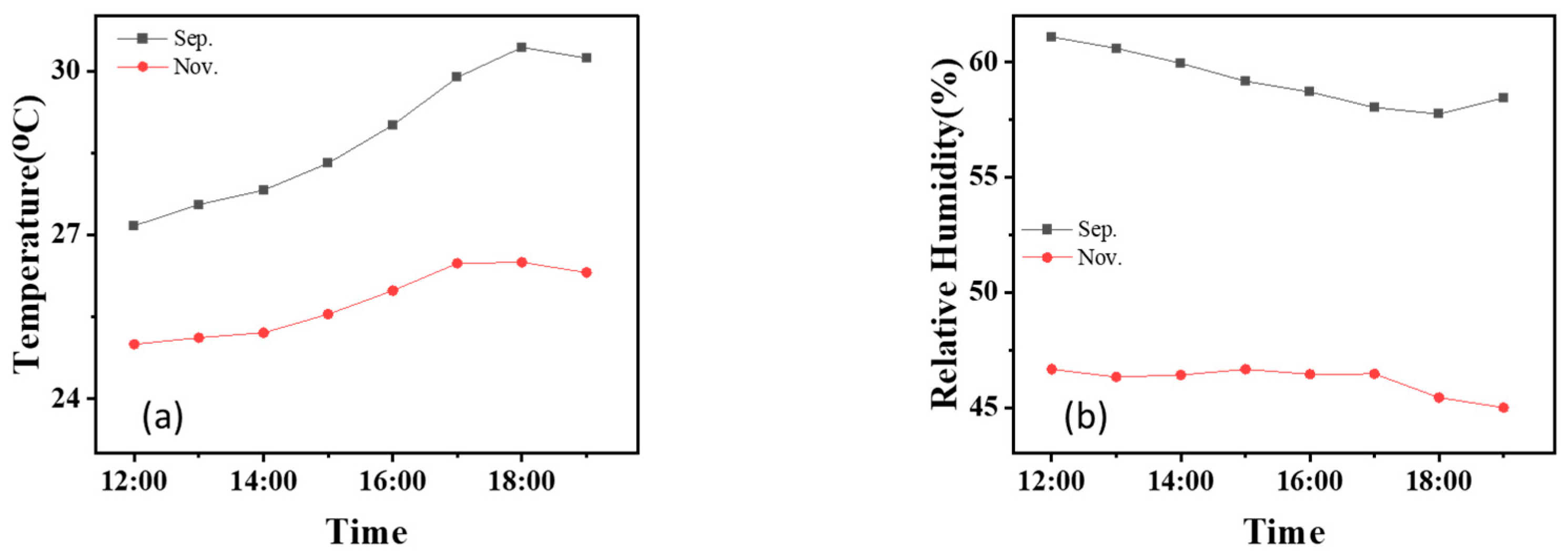
Significant variations occurred in G3 room temperature and humidity during direct sunlight exposure (12:00–19:00) between these months, as detailed in
Figure 11.
Based on the temperature trends observed from September to October (
Figure 11), the indoor temperature in Room G3 exhibited a clear diurnal increase, with a particularly notable rise during the afternoon hours. Taking the data from 12:00 to 19:00 as an example, the average temperature in September increased from an initial value of approximately 27.17 °C, gradually climbing to 30.23 °C by 19:00, representing a cumulative increase of about 3.06 °C. In contrast, during the same period in November, the temperature rose from 25 °C to only 26.31 °C, an increase of just 1.31 °C, which is significantly lower than the previous period. This difference primarily stems from the seasonal variation in the sun’s path: around mid-September, the sun is closer to the equator, resulting in a higher noon altitude, and the sunset direction is slightly south (approximately 270°). Consequently, around 16:30, the sun aligns perfectly with the window orientation of 280°, at which point the solar altitude angle is about 13°, resulting in a larger angle of incidence and stronger direct solar radiation. This allows the room to absorb more solar energy, leading to a faster rate of temperature increase. In comparison, by mid-November, the direct solar point has moved southward, and the sunset direction is further south, causing the sun to align with the window orientation earlier, around 16:00. However, at this time, the solar altitude angle decreases to about 7°, resulting in more oblique sunlight and reduced solar radiation received per unit area, thereby limiting the magnitude of the indoor temperature increase. Furthermore, between 15:00 and 17:00, the September temperature increased from 28.31 °C to 29.88 °C, a rise of 1.57 °C, while in November it only increased from 25.55 °C to 26.48 °C, a rise of 0.93 °C. This further confirms the stronger solar radiation and more significant heating effect on autumn afternoons compared to early winter.
It is noteworthy that although both datasets were recorded during the same time period (12:00–19:00), the baseline environmental conditions differed due to distinct climatic backgrounds. September–October coincides with the clear and pleasant autumn weather in South China, characterized by good atmospheric transparency and less cloud cover, which favors the penetration of solar radiation. In contrast, November marks the beginning of early winter, with slightly higher air humidity and increased cloud frequency, which weakens the ability of some short-wave radiation to reach the ground. Combining this with the fact that the PDLC film surface temperature remained stable at around 50 °C between 15:30 and 16:00, as mentioned in the installation process, it can be inferred that the glass surface’s heat absorption capacity is similar regardless of whether it is in a transparent or frosted state. Therefore, the difference in indoor temperature rise is primarily determined by the total amount of transmitted solar radiation. This also indicates that, for the same window film operating mode, seasonal changes in the solar trajectory are a key factor affecting the indoor heat load.
In terms of specific values, comparing the maximum daily temperature differences, the largest temperature increase in September occurred at 17:00 (29.9 °C), which was 2.7 °C higher than at 12:00. In November, the peak temperature was 26.5 °C, only 1.5 °C higher than the baseline value. This indicates that even under identical building structures and material configurations, the change in the sun’s angle of incidence due solely to seasonal variation can cause the indoor temperature increase amplitude to differ by nearly a factor of two. For PDLC smart windows, this implies that during periods of high radiation intensity, such as September–October, their light-control function holds higher application value for reducing heat gain—by switching to the frosted state, most visible light and infrared rays can be effectively blocked, thereby suppressing an excessively rapid rise in indoor temperature. In November, although afternoon sunlight is still present, the overall radiation intensity is lower and the temperature increase is slower. Consequently, the energy-saving potential of the smart window is relatively reduced during this period.
In summary, a quantitative analysis of the temperature data for Room G3 from September–October and November leads to the following conclusion: as the season progresses, the decrease in solar altitude angle and the shift in the direction of incidence cause a significant reduction in the direct radiant energy received by the west-facing windows, leading subsequently to a slowdown in the indoor temperature increase. The temperature increase in September was 3.06 °C, whereas in November it was only 1.31 °C, showing a clear seasonal difference in the thermal environment. This variation not only reflects the periodic pattern of natural lighting conditions but also provides a scientific basis for optimizing the practical application scenarios of PDLC smart windows—namely, that shading control strategies should be enhanced during periods of high radiation, such as from late summer to early autumn, while in the early winter, transparency can be flexibly adjusted according to needs to balance daylighting and thermal insulation requirements. Simultaneously, the experimental data verify the controllability of the PDLC film under constant external thermal boundary conditions; its impact on the indoor thermal environment can achieve a dynamic balance through precise control demonstrating intelligent advantages superior to traditional curtain systems.
5. Conclusions
Based on a three-month field test (September to November 2025), this study systematically evaluated the temperature and humidity control performance of PDLC smart windows under the typical subtropical climate of Zhuhai. The results demonstrate that, compared to traditional shading systems, PDLC smart windows offer significant advantages in managing indoor environmental conditions during seasonal transition periods.
During September–October, the PDLC window in the frosted state (G3) exhibited excellent temperature control capability. Its temperature increase was only 2% of that observed in the transparent state (G4). During peak solar radiation hours (14:00–17:00), the maximum temperature difference between the two states reached 1.88 °C. Meanwhile, the humidity fluctuation range in the frosted state remained at an extremely low level of ±1.5%, far superior to traditional curtain systems (±5.1% to ±8.9%). This superior performance stems from the PDLC film’s ability to effectively scatter incoming solar radiation while maintaining visual connection with the outdoors—a key advantage over traditional opaque shading methods.
In the November climate transition period, when outdoor temperatures dropped to 22–23 °C and the solar altitude angle decreased significantly, the PDLC window demonstrated its adaptive functionality. The frosted state continued to provide a temperature buffering effect, reducing the indoor temperature rise by about 0.37 °C during peak irradiation hours compared to the transparent state. Notably, the transparent state showed beneficial humidity-related temperature effects, maintaining relative humidity approximately 0.5% higher than the frosted state in the afternoon.
Cross-seasonal analysis revealed the influence of solar geometry on PDLC performance. In the frosted state, the indoor temperature rise decreased from 3.06 °C in September–October to 1.31 °C in November, a reduction of 57%. This is primarily attributed to seasonal changes in solar altitude and azimuth angles, particularly affecting west-facing windows. This quantifiable relationship between solar geometry and temperature performance provides critical references for applying PDLC technology under different climatic conditions and building orientations.
These findings confirm that PDLC smart windows represent a significant advancement in building envelope technology for subtropical climates. Future research should explore long-term durability under varying UV exposure conditions, conduct comprehensive building energy modeling following best practices to evaluate energy impacts over complete seasonal cycles—providing full methodological transparency including simulation engines, boundary conditions, internal heat gains profiles, and specific control strategies for the smart windows—and develop integration strategies with building automation systems to maximize their adaptive potential.
These findings confirm that PDLC smart windows represent a significant advancement in building envelope technology for subtropical climates. Future research should explore long-term durability under varying UV exposure conditions, energy impacts over complete seasonal cycles [
34], and integration strategies with building automation systems to maximize their adaptive potential.