Research on the Thermal–Stress Coupling Effect and Fire Protection Structures of SHS Group Columns of Steel Structure Modular Units


Abstract
1. Introduction
2. Thermal Analysis of SHS Grouped Columns
2.1. Thermal and Mechanical Properties
2.1.1. Thermal Properties of Material at High Temperature
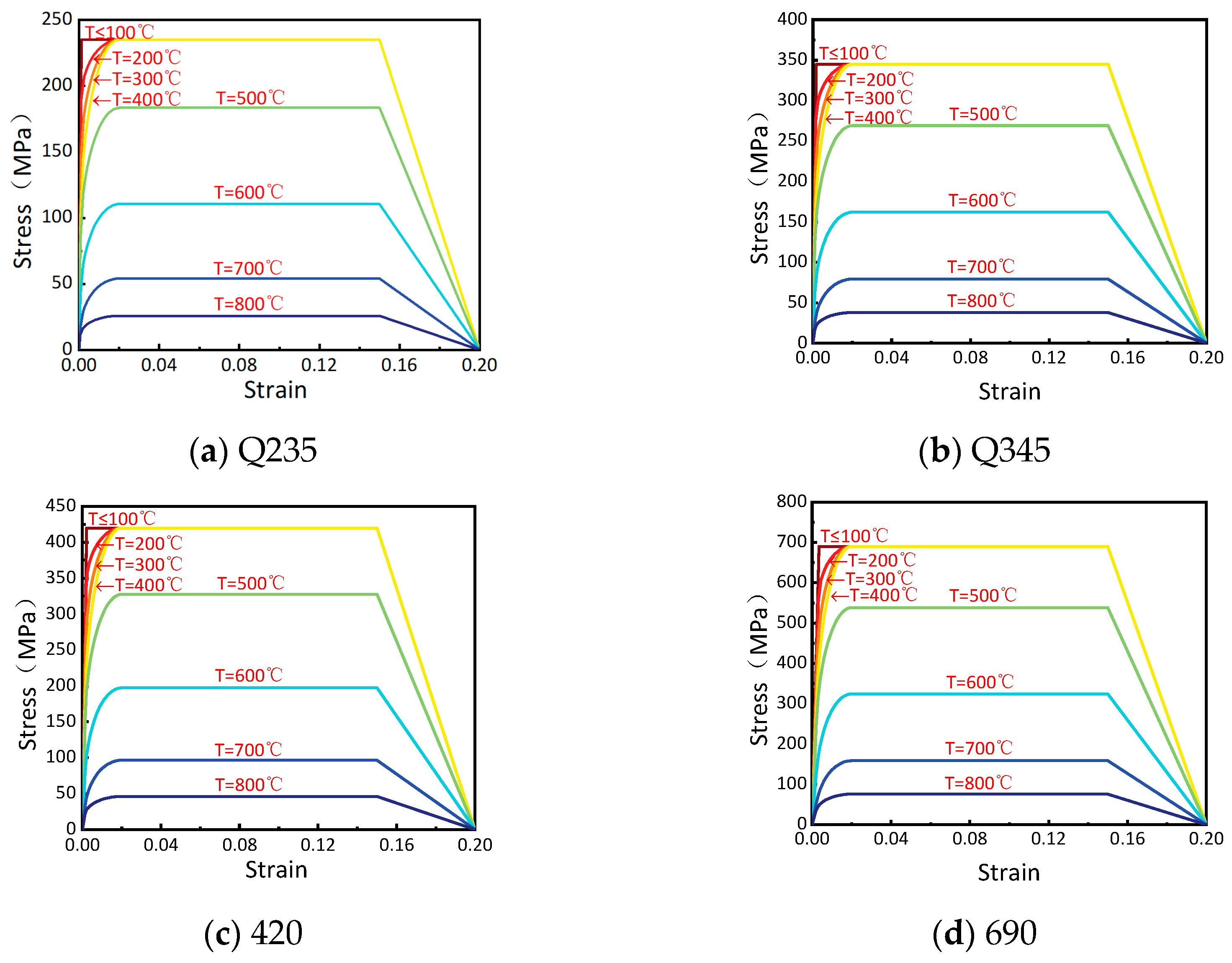
2.1.2. Mechanical Properties of Steel at High Temperature
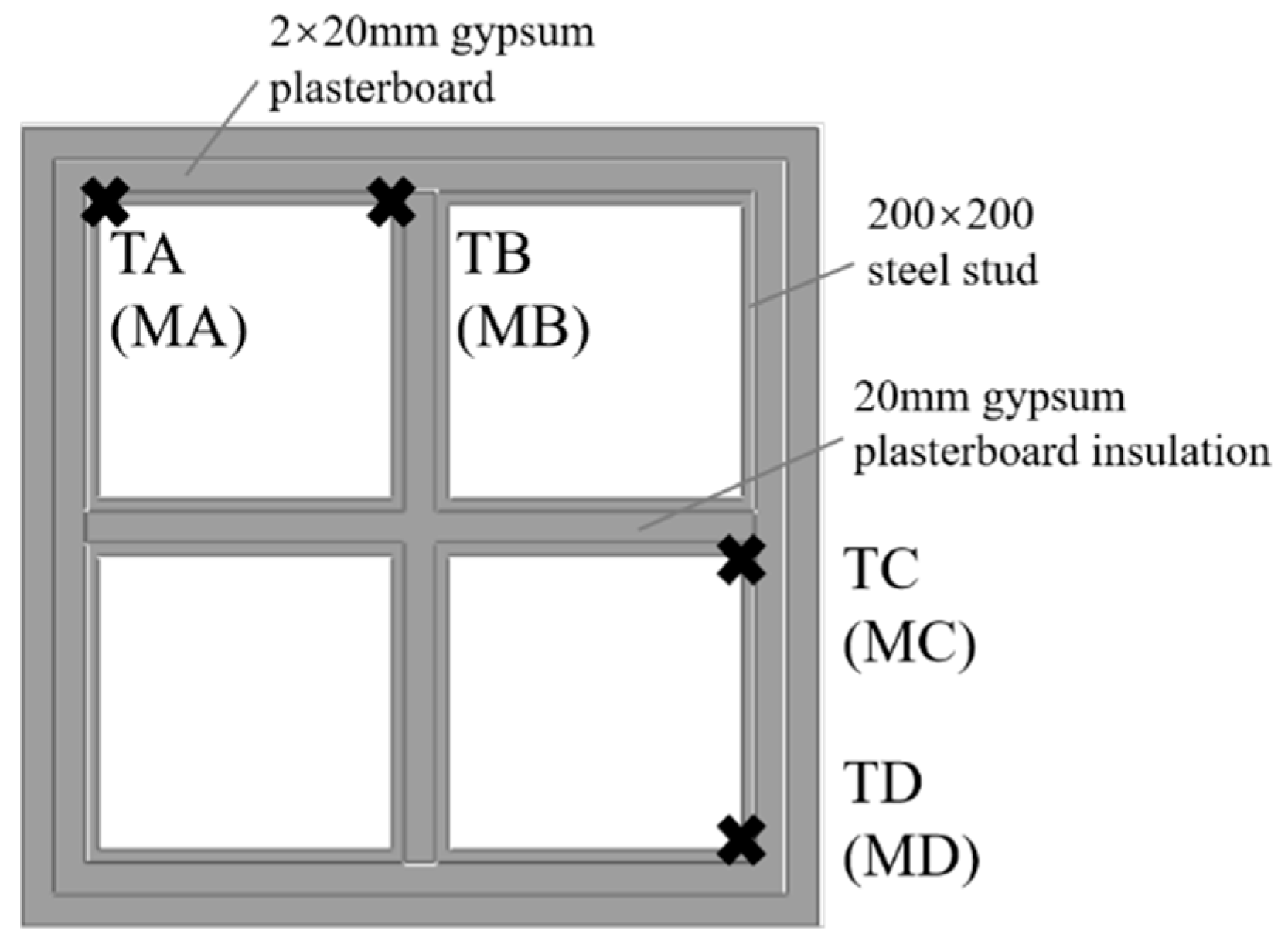
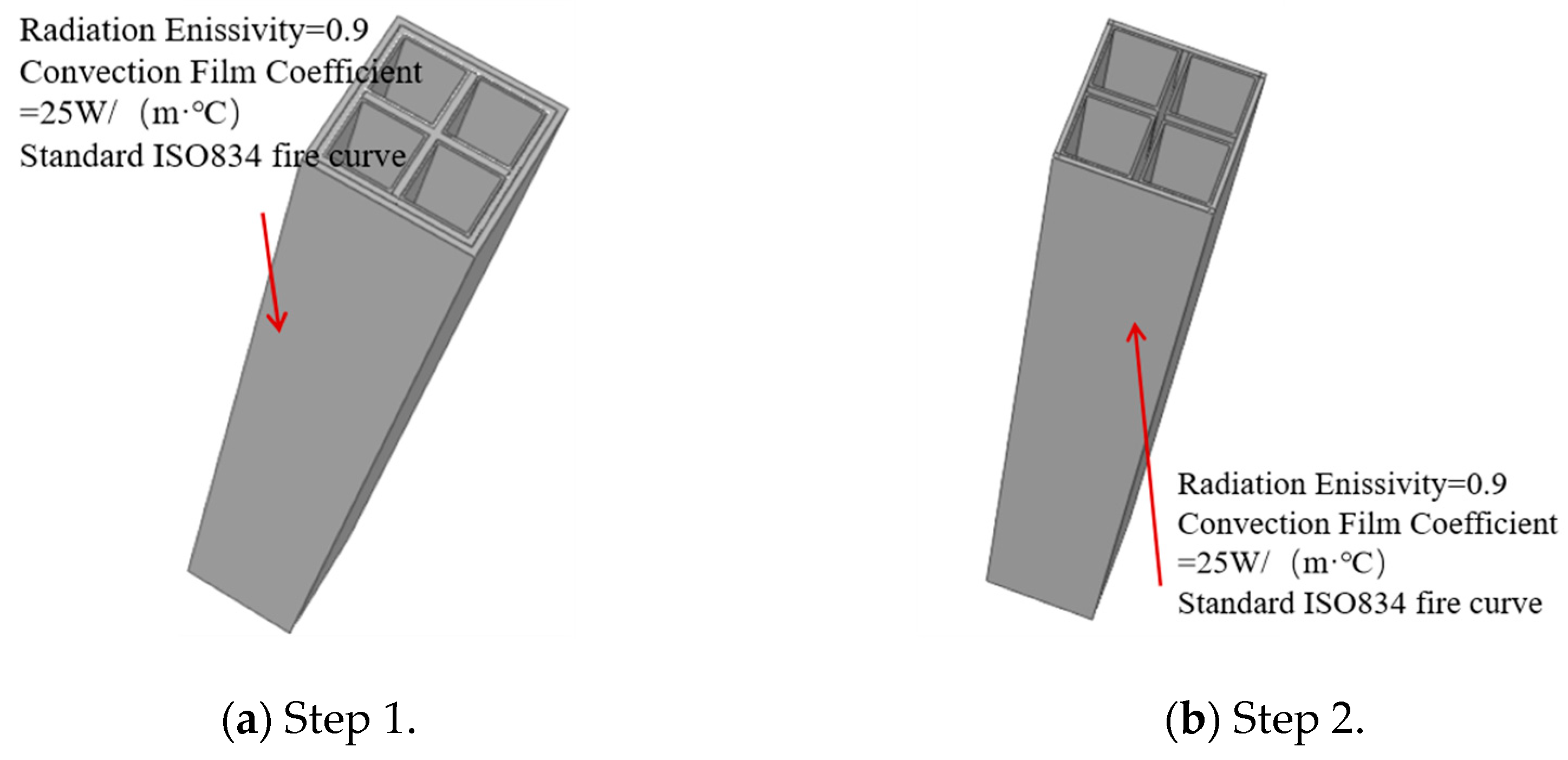
2.2. Thermal Model
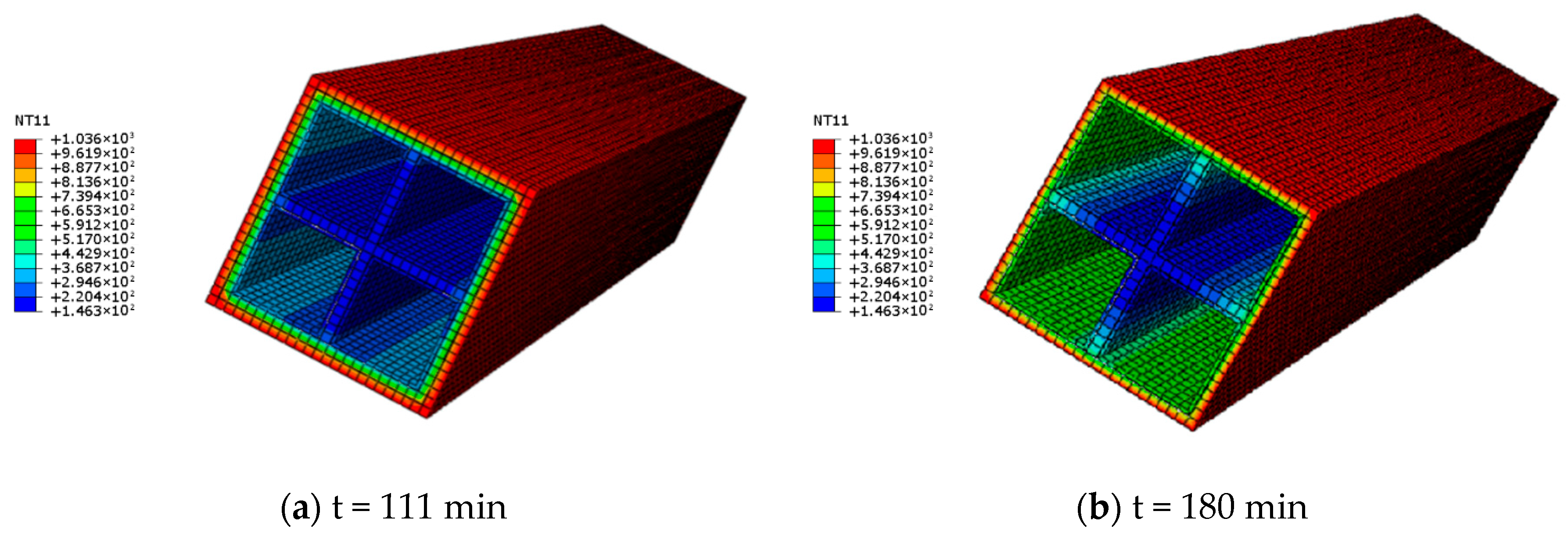
2.3. Verification and Analysis of Thermal Model
3. Thermal–Mechanical Model Analysis of SHS
3.1. Establishment of Thermal–Mechanical Model
3.2. Definition of FRL
3.3. Verification and Analysis of Thermal–Mechanical Model
4. Parametric Analysis of Influence of Fire Resistance
4.1. Parameters of Modular Column (Load Ratio, Slenderness, Steel Strength, and Cavity Space)
4.2. Parameters of Fireproof Board (Type of Insulation, Thickness of Gypsum Board, and Type of Inner Cladding Panel)
5. Practical Calculation Formula for Fire Resistance Limit
5.1. Multiple Linear Regression Model
5.2. Multiple Linear Regression Analysis
6. Conclusions
- (1)
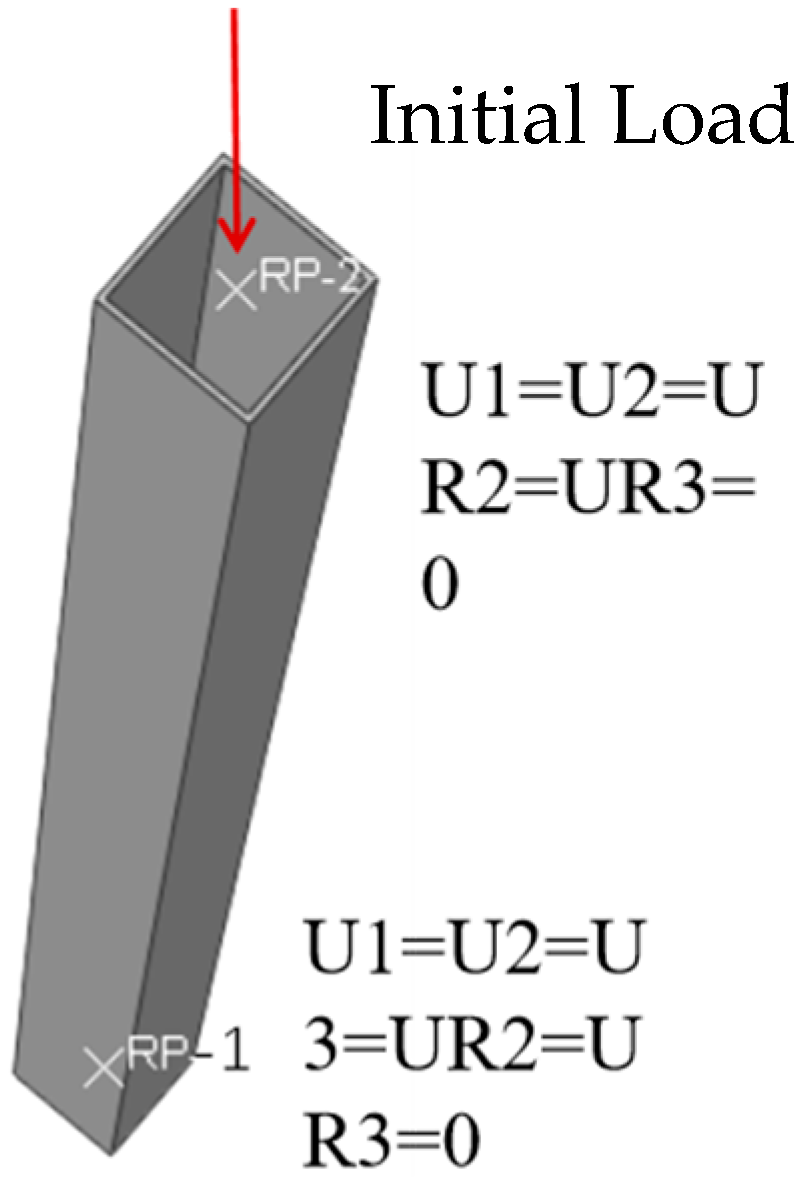
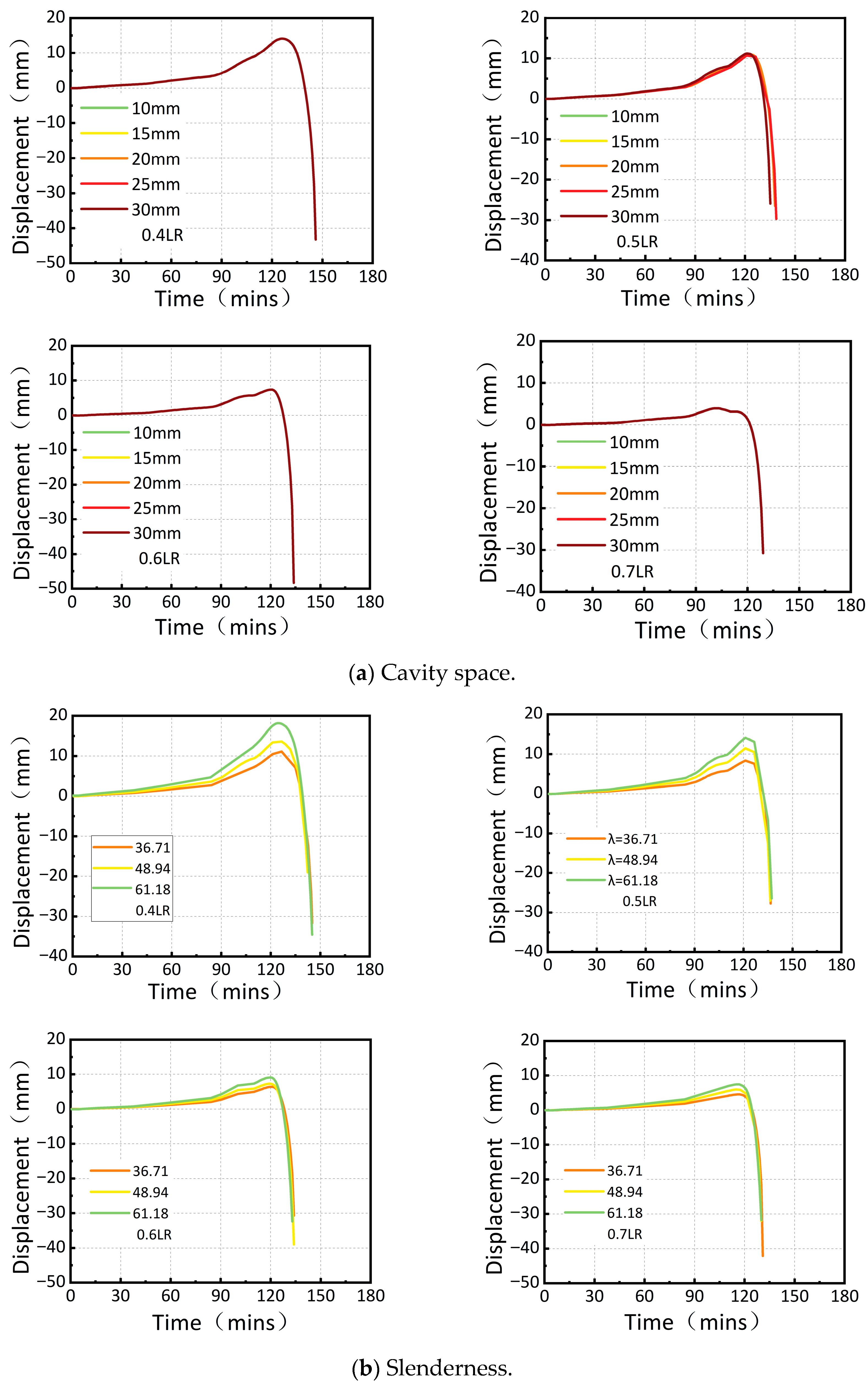
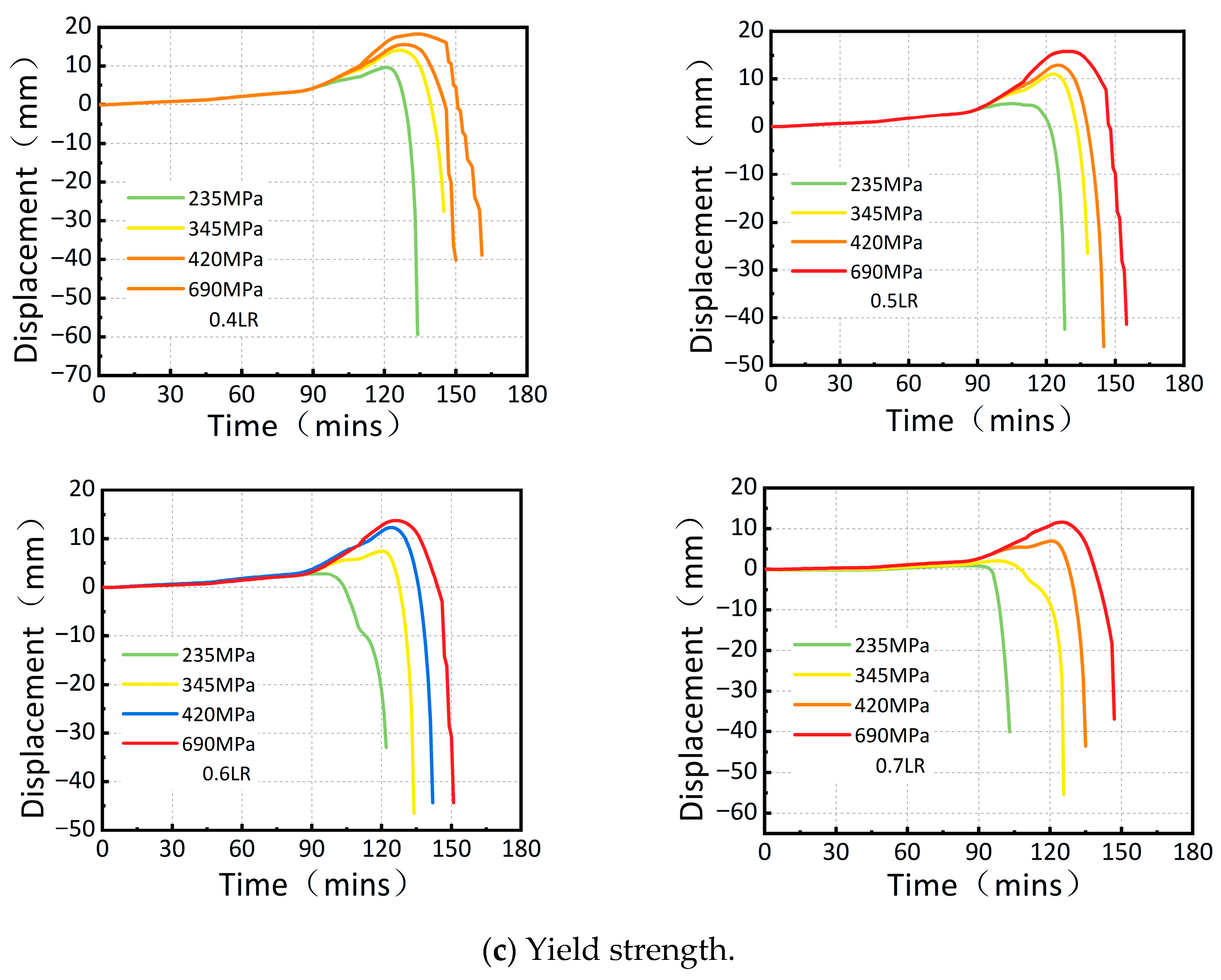
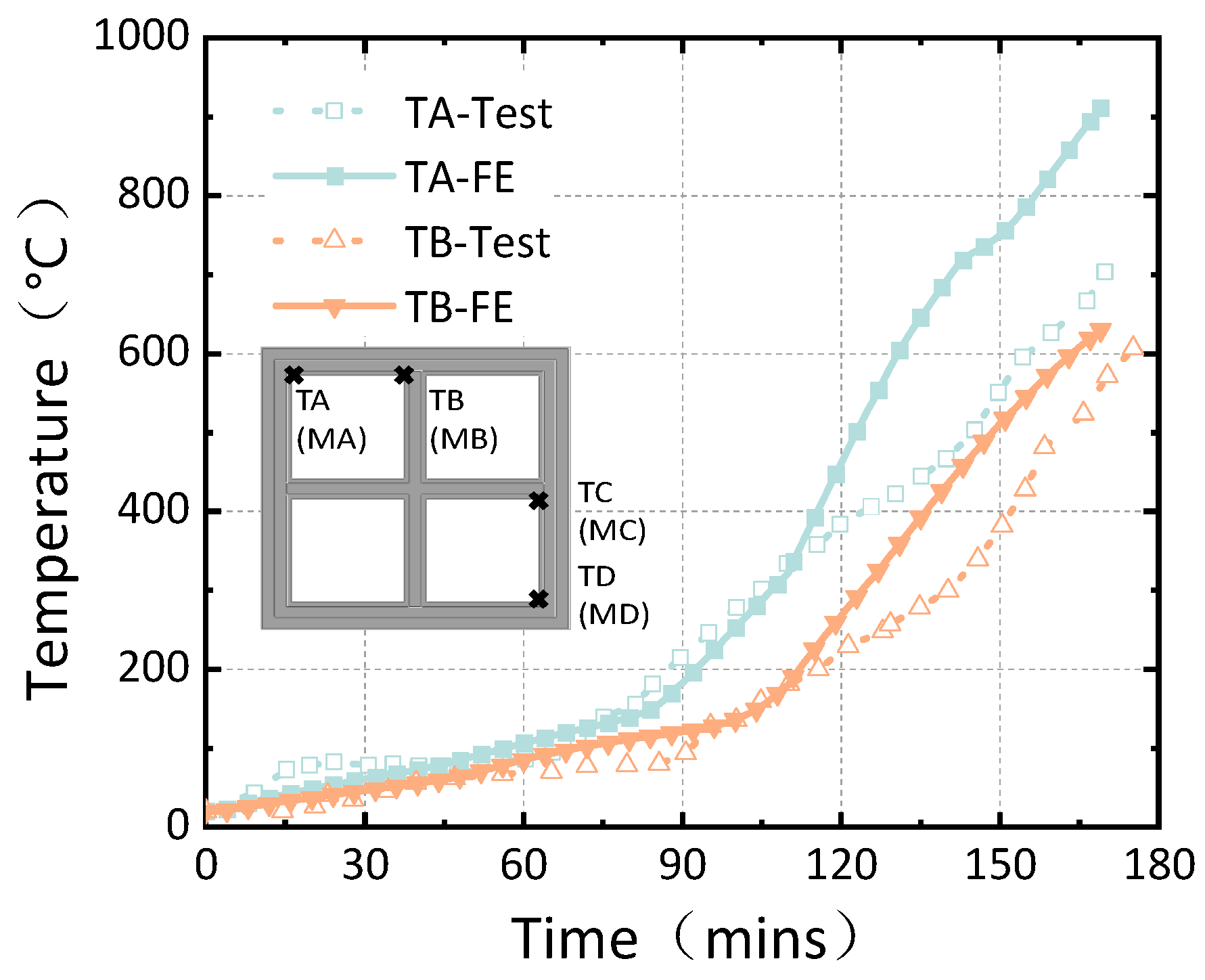
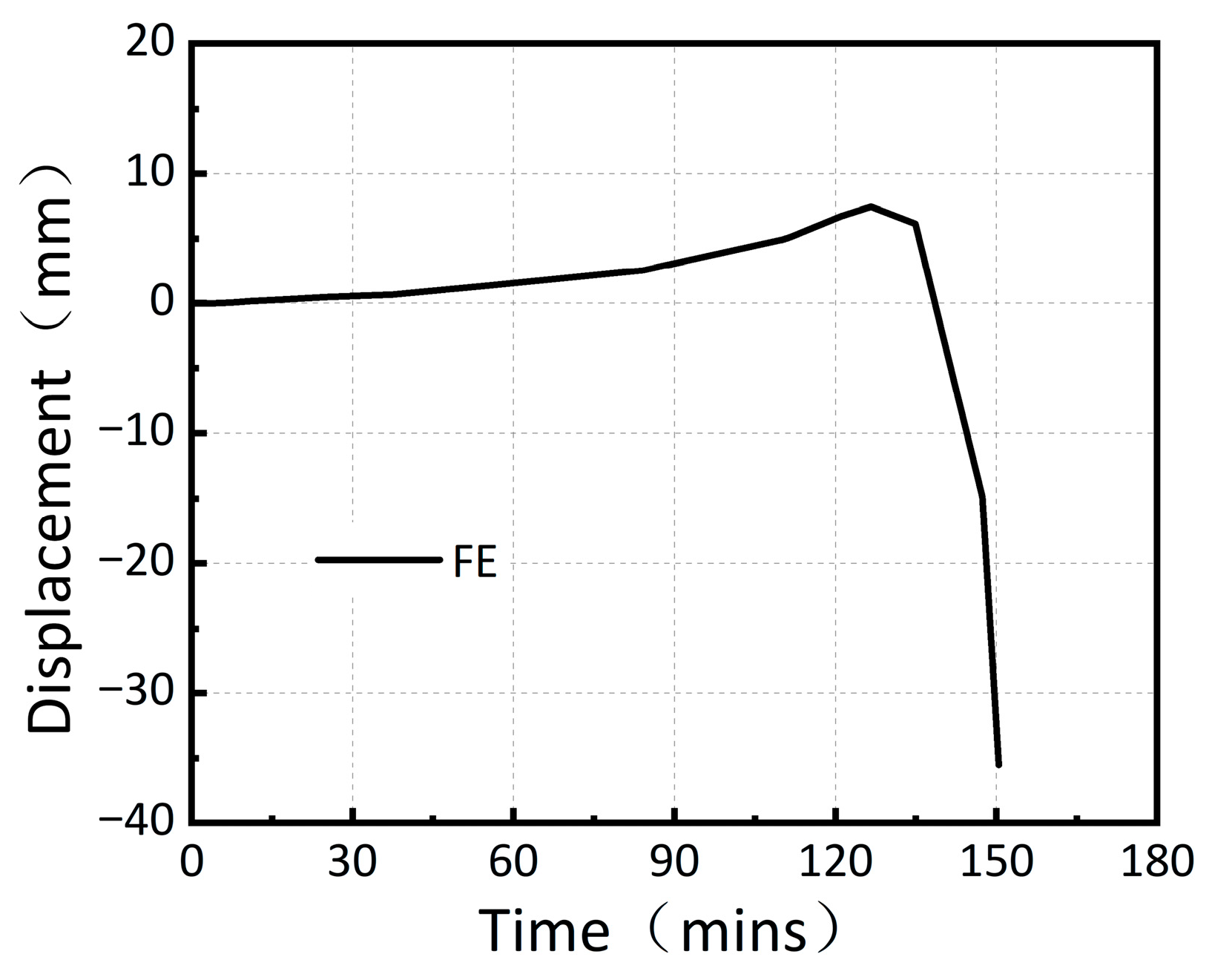
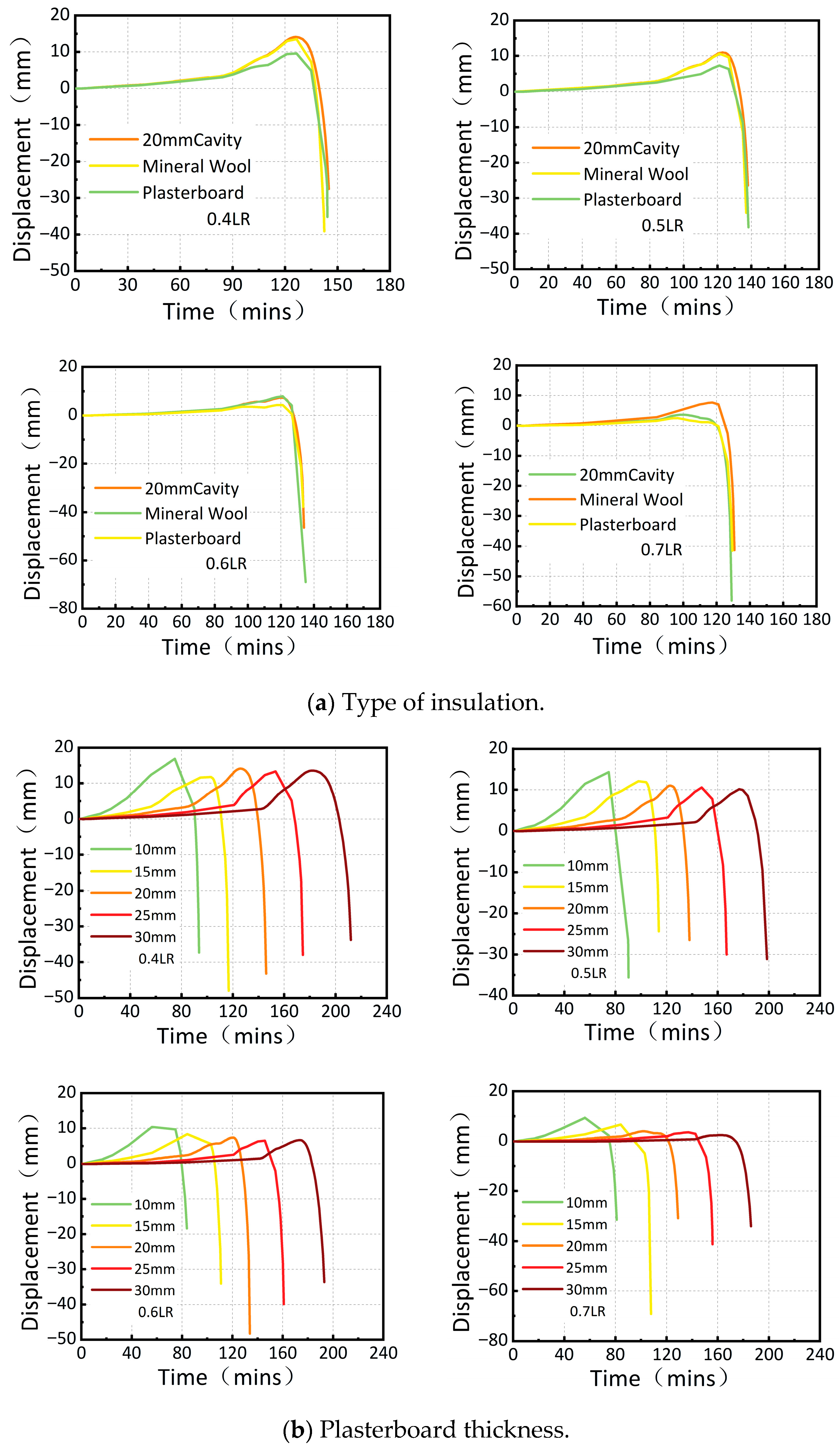
- It can be seen from the thermal–mechanical simulation results that due to the combined action of thermal expansion in the process of temperature rise and compression deformation caused by load when steel strength is reduced, axial deformation occurs in the steel column, which first extends and then compresses, and finally reaches the critical deformation state and fails. The time–temperature curve obtained by thermal simulation and the failure time obtained by thermal–mechanical simulation agree well with results from the test.
- (2)
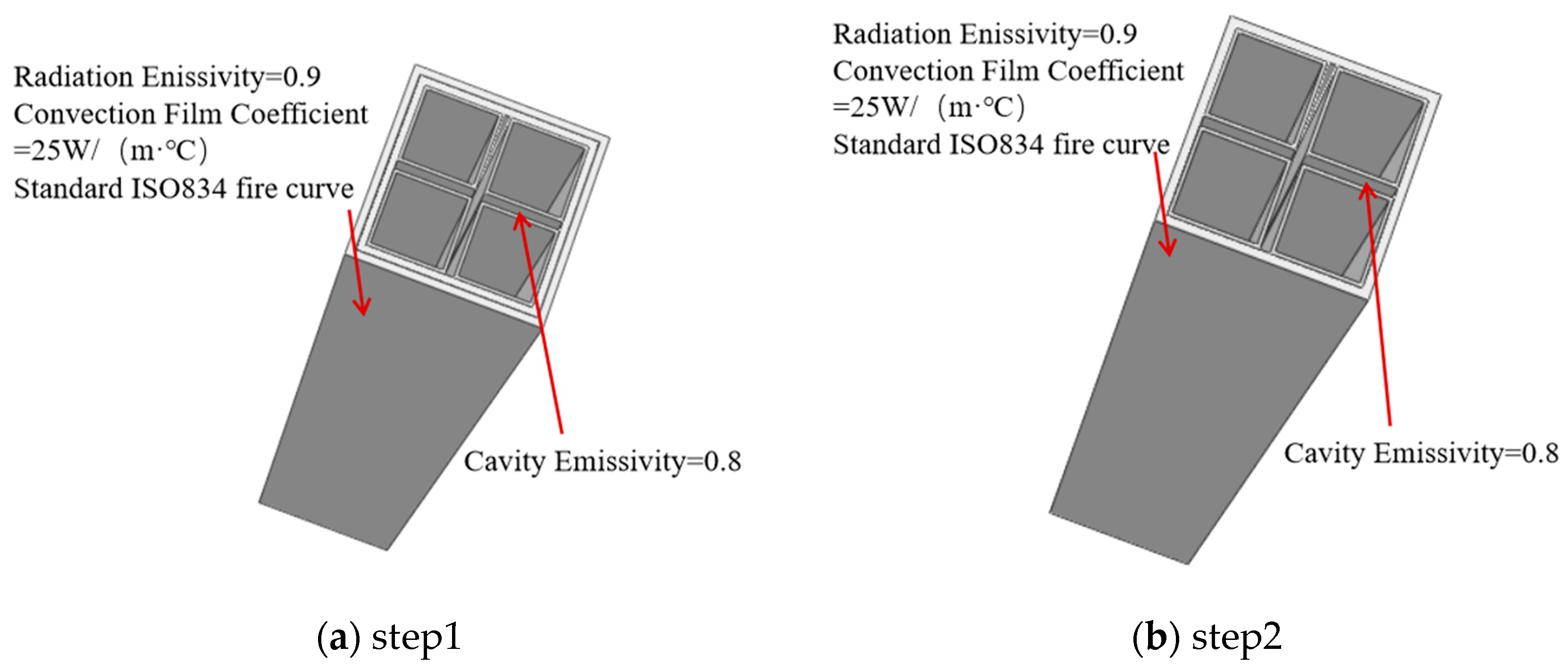
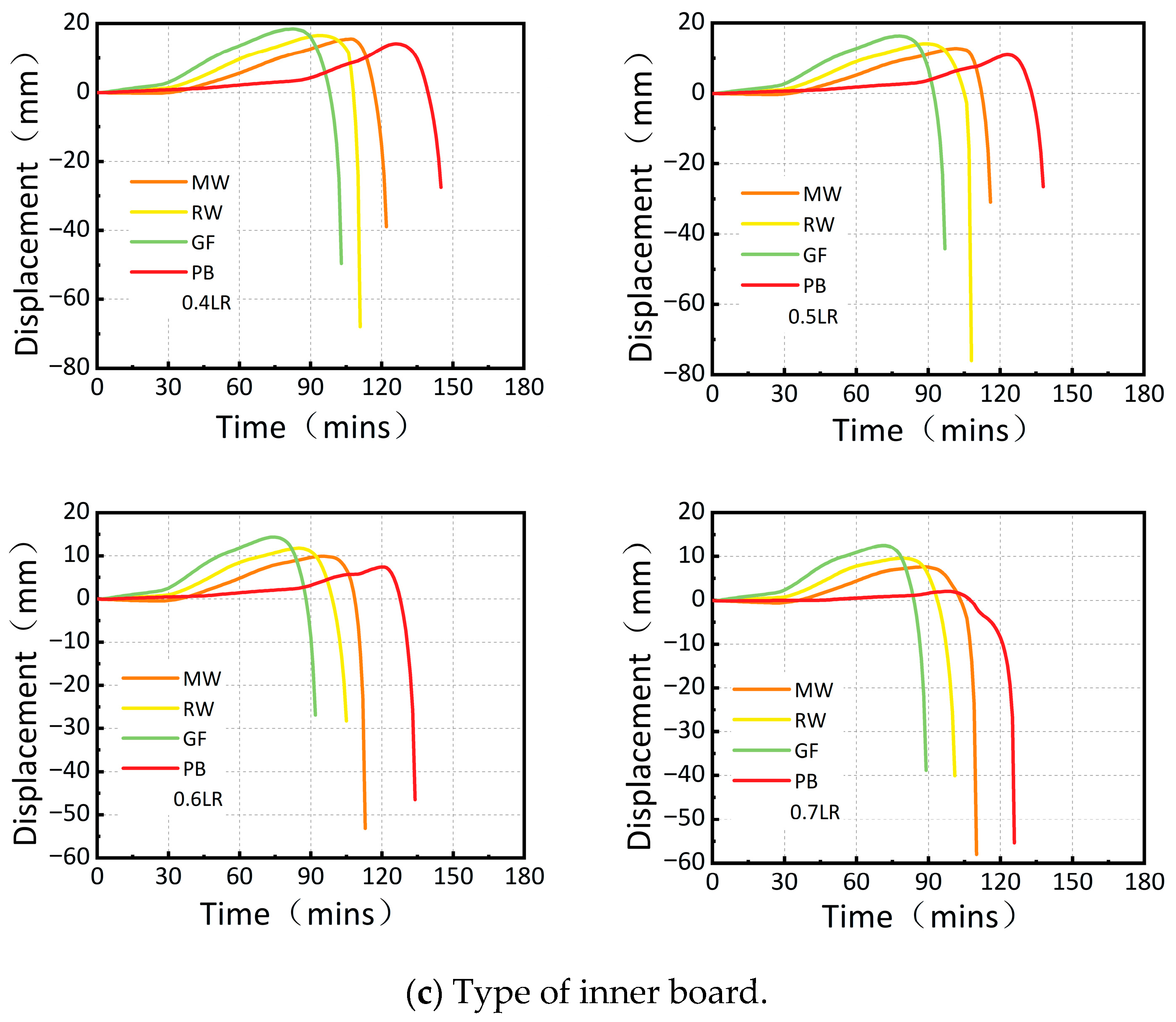
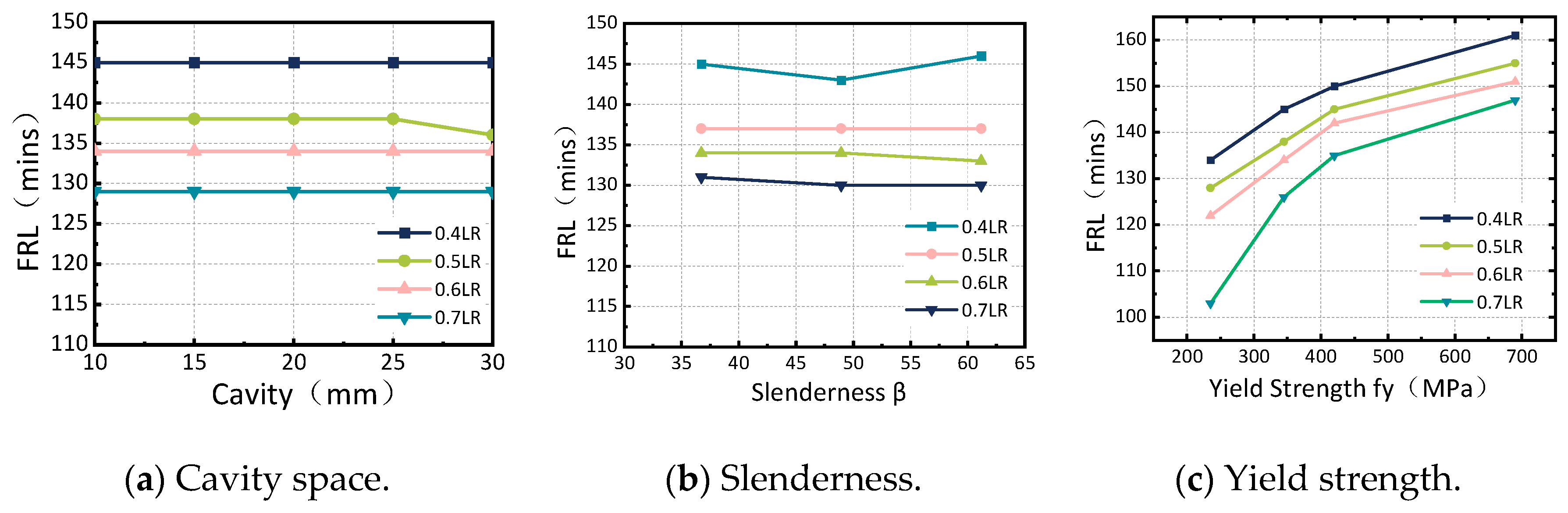
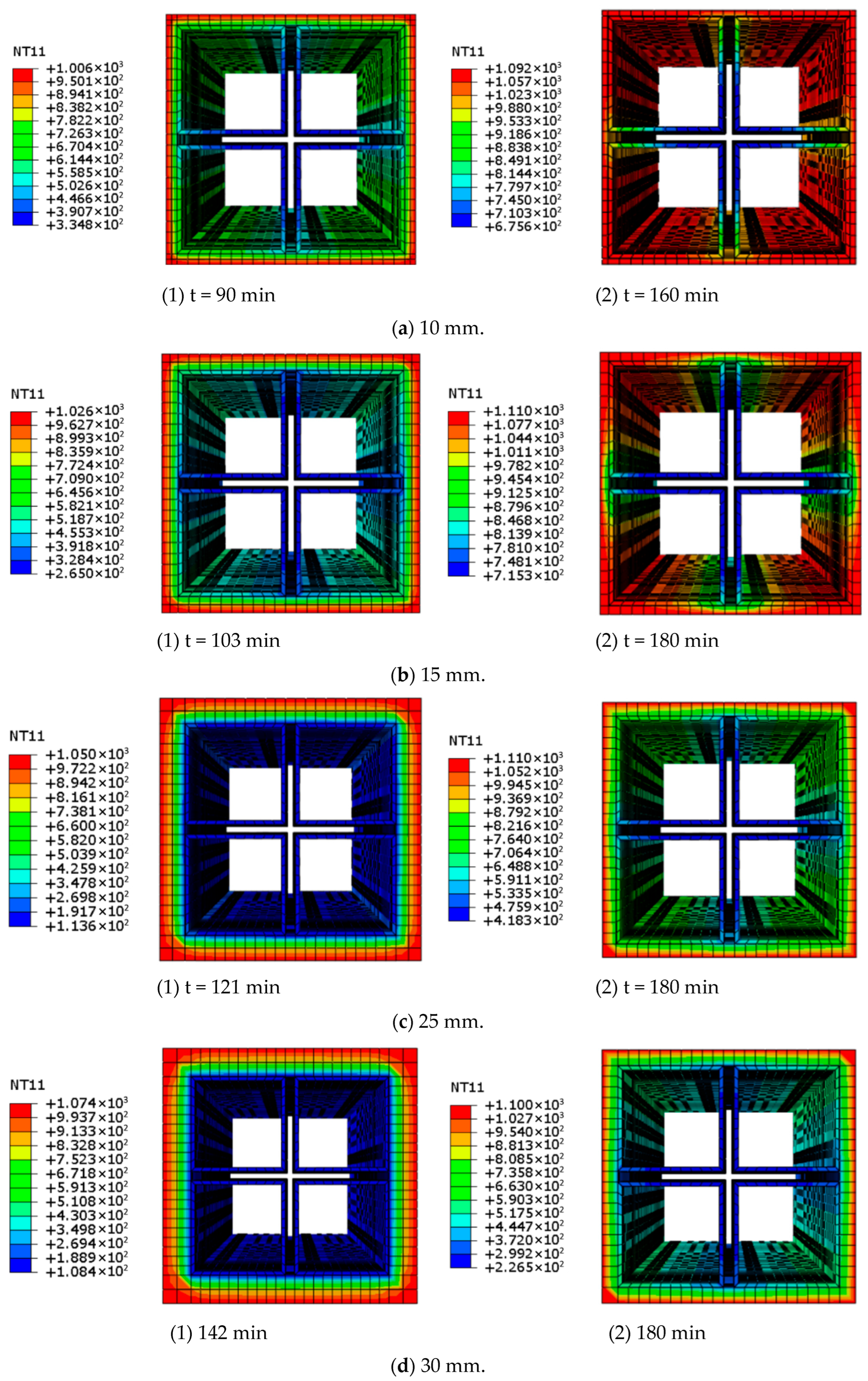
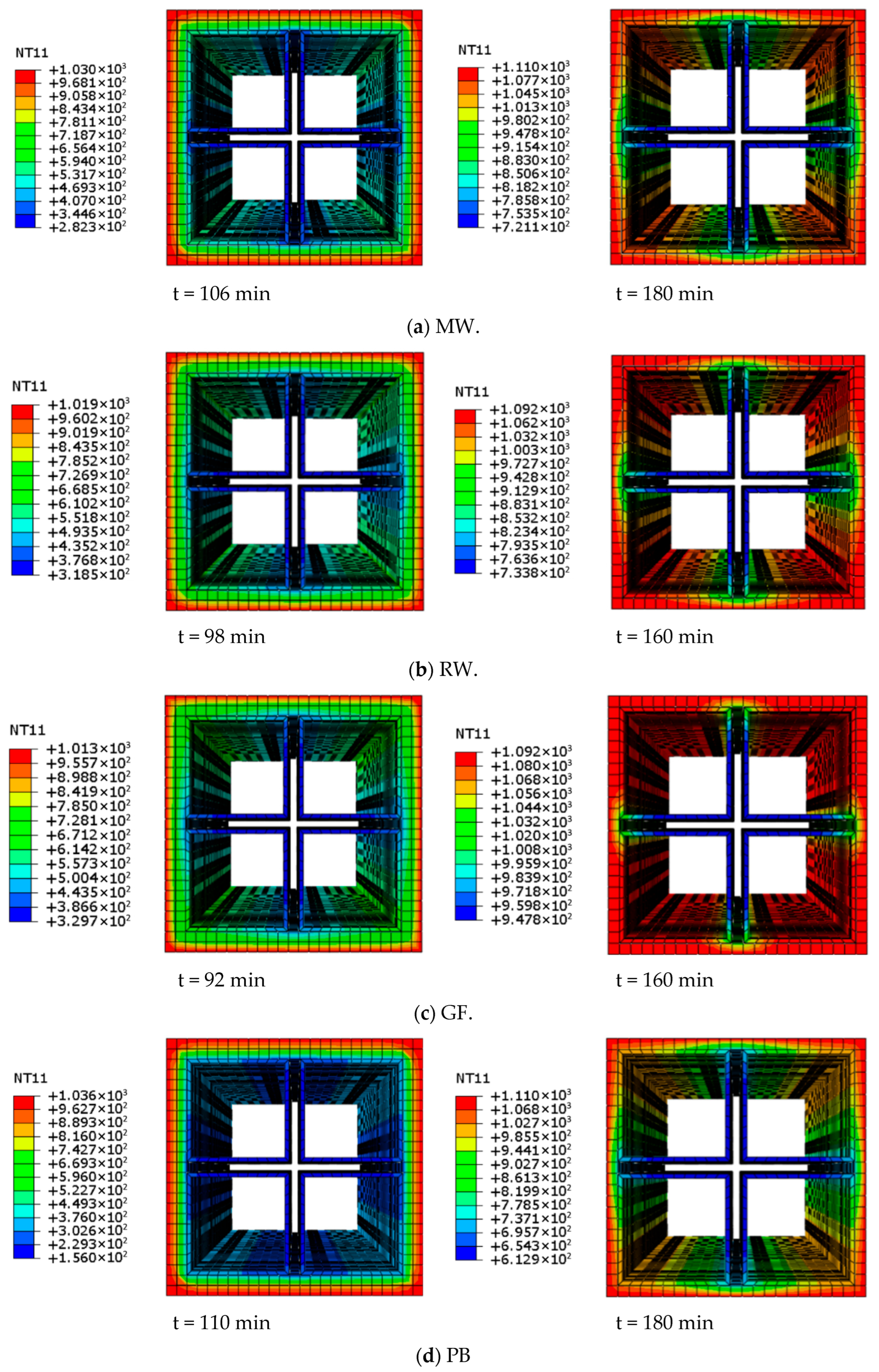
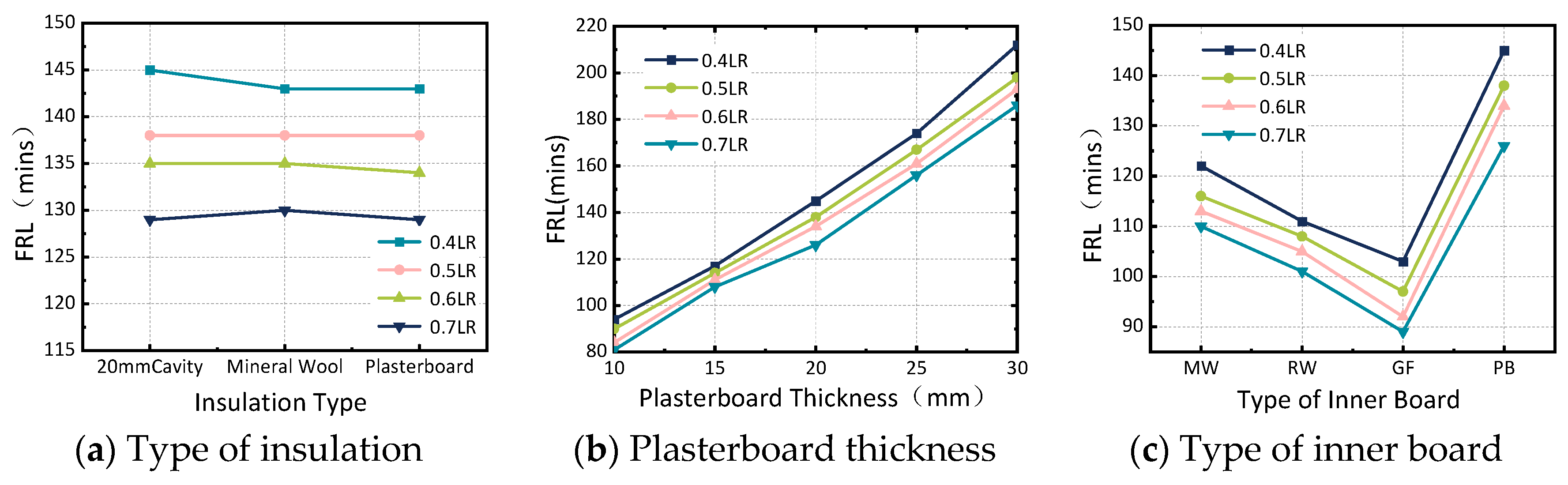
- Due to the effect of cavity radiation, and the group column is subject to fire on all sides, the change in cavity space has little effect on the fire resistance of the column. Compared with the cavity, the setting of the mineral wool layer and the gypsum board layer does not increase the fire resistance of the steel column, and the change in slenderness has little influence on the fire resistance. When other conditions are consistent, the fire resistance of grouped columns will be improved with the increase in steel yield strength and gypsum board thickness, and will be worse with the increase in load ratio. When the thickness of the gypsum board is increased from 10 mm to 30 mm, and the load ratio is 0.4, 0.5, 0.6, and 0.7, the fire resistance is increased by 126%, 120%, 130%, and 130%, respectively. When the yield strength of steel is increased from 235 MPa to 690 MPa, and the load ratio is 0.4, 0.5, 0.6, and 0.7, the fire resistance level is correspondingly increased by 20%, 21%, 24%, and 43%. When the inner plate is GF, RW, MW, and PB, and the load ratio is 0.4, 0.5, 0.6, and 0.7, the corresponding fire resistance level ratio is 1:1:13:1.24:1.45, 1:1:14:1 23:1.46, 1:1:11:2:1.42, and 1:1:08:1.18:1.41, respectively. The simulation results show the time–temperature curves of different assembly groups of columns, which can better predict the fire resistance limit and provide a reference for engineering practice. It can be found that the best way to increase the fire resistance of the modular column is to increase the thickness of the gypsum board, because the rise in temperature is the most critical factor affecting the mechanical properties of the steel column, and increasing the thickness of the gypsum board can effectively slow down the heating rate of the steel column. Thus, the fire resistance of the modular steel column is improved.
- (3)
- Research on real fire curves for modular structures is currently in its nascent stage, presenting a significant knowledge gap. In contrast, substantial progress has been made in developing real fire curves for light steel composite walls. This disparity highlights the critical need and urgency for systematic investigations into real fire curves specific to modular structural systems.
Author Contributions
Funding
Data Availability Statement
Conflicts of Interest
References
- Ferdous, W.; Bai, Y.; Ngo, T.D.; Manalo, A.; Mendis, P. New advancements, challenges and opportunities of multi-storey modular buildings—A state-of-the-art review. Eng. Struct. 2019, 183, 883–893. [Google Scholar] [CrossRef] [Scilit]
- Lawson, R.M.; Ogden, R.G.; Bergin, R. Application of modular construction in high-rise buildings. J. Archit. Eng. 2012, 18, 148–154. [Google Scholar]
- Lacey, A.W.; Chen, W.; Hao, H.; Bi, K. Structural response of modular buildings—An overview. J. Build. Eng. 2018, 16, 45–56. [Google Scholar]
- Liu, J. Experimental Research on Joint of Steel Module and Fire Resistance of Components. Master’s Thesis, Tianjin University, Tianjin, China, 2017. [Google Scholar]
- Zha, X.; Zuo, Y. Finite element study of container structure under normal and high temperature. Math. Probl. Eng. 2016, 2016, 2652149. [Google Scholar] [CrossRef] [Scilit]
- Nguyen, Q.T.; Ngo, T.; Tran, P.; Mendis, P.; Zobec, M.; Aye, L. Fire performance of prefabricated modular units using organoclay/glass fibre reinforced polymer composite. Constr. Build. Mater. 2016, 129, 204–215. [Google Scholar] [CrossRef] [Scilit]
- Zhang, L.; Bai, Y.; Chen, W.; Ding, F.X.; Fang, H. Thermal performance of modular GFRP multicellular structures assembled with fire resistant panels. Compos. Struct. 2017, 172, 22–33. [Google Scholar] [CrossRef] [Scilit]
- Perera, D. Fire performance of modular wall panels: Numerical analysis. Structures 2021, 34, 1048–1067. [Google Scholar] [CrossRef] [Scilit]
- Yu, Y.; Tian, P.; Man, M.; Chen, Z.; Jiang, L.; Wei, B. Experimental and numerical studies on the fire-resistance behaviors of critical walls and columns in modular steel buildings. J. Build. Eng. 2021, 44, 102964. [Google Scholar] [CrossRef] [Scilit]
- Perera, D.; Upasiri, I.R.; Poologanathan, K.; Perampalam, G.; O’Grady, K.; Rezazadeh, M.; Rajanayagam, H.; Hewavitharana, T. Fire performance analyses of modular wall panel designs with loadbearing SHS columns. Case Stud. Constr. Mater. 2022, 17, e01179. [Google Scholar] [CrossRef] [Scilit]
- Perera, D.; Upasiri, I.; Poologanathan, K.; O’Grady, K.; Nagaratnam, B.; Kanthasamy, E.; Rajanayagam, H. Numerical investigation on fire performance of LSF and steel modular floor panels. Buildings 2022, 12, 1721. [Google Scholar] [CrossRef] [Scilit]
- Piquer, A.; Hernández-Figueirido, D. Protected steel columns vs partially encased columns: Fire resistance and economic considerations. J. Constr. Steel Res. 2016, 124, 47–56. [Google Scholar] [CrossRef] [Scilit]
- Wang, K.; Young, B. Fire resistance of concrete-filled high strength steel tubular columns. Thin-Walled Struct. 2013, 71, 46–56. [Google Scholar] [CrossRef] [Scilit]
- Hoffstaeter, R.A.; Piloto, P.A.G.; Martins, C.H.; Rigobello, R. Numerical investigation on the fire resistance of partially encased steel columns. Int. J. Civ. Eng. 2023, 21, 1315–1342. [Google Scholar] [CrossRef] [Scilit]
- Chen, H.; Zhang, H.; Wang, J.; Sun, T.; Li, Y. Study on fire resistance of axially compressed partially-encased composite steel and concrete columns with different strengthening measures. J. Archit. Civ. Eng. 2022, 39, 19–29. [Google Scholar]
- Wu, Y.; Fan, S.; He, B.; Li, C.; Zhou, H. Experimental study and numerical simulation analysis of the fire resistance of high-strength steel columns with rectangular sections under axial compression. Fire Saf. J. 2021, 121, 103266. [Google Scholar] [CrossRef] [Scilit]
- ISO 834-1; Fire Resistance Tests—Elements of Building Construction—Part 1: General Requirement. International Organization for Standardization (ISO): Vernier, Switzerland, 2018.
- Rusthi, M.; Keerthan, P.; Mahendran, M.; Ariyanayagam, A. Investigating the fire performance of LSF wall systems using finite element analyses. J. Struct. Fire Eng. 2017, 8, 354–376. [Google Scholar] [CrossRef] [Scilit]
- Keerthan, P.; Mahendran, M. Thermal performance of composite panels under fire conditions using numerical studies: Plasterboards, rockwool, glass fibre and cellulose insulations. Fire Technol. 2013, 49, 329–356. [Google Scholar] [CrossRef] [Scilit]
- EN 1993-1-2:2005; Eurocode 3: Design of Steel Structures—Part 1–2: General Rules—Structural Fire Design. CEN: Brussels, Belgium, 2005.
- Dodangoda, M.T.; Mahendran, M.; Keerthan, P.; Frost, R.L. Developing a performance factor for fire rated boards used in LSF wall systems. Fire Saf. J. 2019, 109, 102872. [Google Scholar] [CrossRef] [Scilit]
- Chen, W.; Ye, J.; Li, X. Thermal behavior of gypsum-sheathed cold-formed steel composite assemblies under fire conditions. J. Constr. Steel Res. 2018, 149, 165–179. [Google Scholar] [CrossRef] [Scilit]
- Xiang, Y.; Zhou, X.; Shi, Y.; Xu, L.; Xu, Y. Experimental investigation and finite element analysis of cold-formed steel channel columns with complex edge stiffeners. Thin-Walled Struct. 2020, 152, 106769. [Google Scholar] [CrossRef] [Scilit]
- Bénichou, N.; Sultan, M.A. Thermal properties of lightweight-framed construction components at elevated temperatures. Fire Mater. 2005, 29, 165–179. [Google Scholar] [CrossRef] [Scilit]
- GB/T 9978.8-2008; Test Methods for Fire Resistance of Building Elements—Part 8: Specific Requirements for Non-Loadbearing Vertical Separating Elements. Standards Press of China: Beijing, China, 2008.
- Chen, W.; Ye, J.; Bai, Y.; Zhao, X.L. Thermal and mechanical modeling of load-bearing cold-formed steel wall systems in fire. J. Struct. Eng. 2014, 140, A4013002. [Google Scholar] [CrossRef] [Scilit]
- Simões, Y.D.S.; Rocha, F.M.; Munaiar Neto, J. Numerical comparison between the thermo-structural behavior of steel and partially encased steel and concrete composite columns in fire. Rev. IBRACON Estrut. Mater. 2018, 11, 876–901. [Google Scholar] [CrossRef] [Scilit]
- Li, N.; Liu, J.; Zhao, J. Research on the seismic damage of steel frame structure under fire. J. Archit. Civ. Eng. 2022, 24, 72–81. [Google Scholar]
- Khademi, F.; Akbari, M.; Jamal, S.M.; Nikoo, M. Multiple linear regression, artificial neural network, and fuzzy logic prediction of 28 days compressive strength of concrete. Front. Struct. Civ. Eng. 2017, 11, 90–99. [Google Scholar] [CrossRef] [Scilit]
- Alan, O.S. An Introduction to Regression Analysis; Working Paper 20; University of Chicago Law School: Chicago, IL, USA, 1993. [Google Scholar]









| Material | Density (kg/m3) | Thermal Conductivity (W/m °C) | Specific Heat (J/Kg·°C) |
|---|---|---|---|
| Steel [23] | 7850 |  | 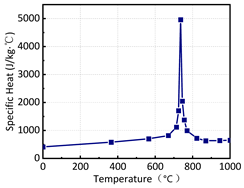 |
| Gypsum Plaster- Board [9,19,20,21,22] | 800 |  | 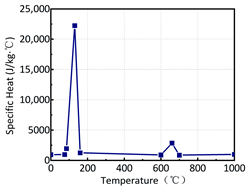 |
| Mineral Wool [9,21,24] | 120 |  | 840 |
| Rock wool [10] | 100 |  | 840 |
| Glass Fiber [10] | 15.42 |  | 900 |
| Temperature (°C) | 20–400 | 500 | 600 | 700 | 800 | 900 | 1000 | 1100 | 1200 |
| 1.00 | 0.78 | 0.47 | 0.23 | 0.11 | 0.06 | 0.04 | 0.02 | 0 |
| Temperature (°C) | 20 | 100 | 200 | 300 | 400 | 500 | 600 |
| 1.00 | 1.00 | 0.90 | 0.80 | 0.70 | 0.60 | 0.31 | |
| Temperature (°C) | 700 | 800 | 900 | 1000 | 1100 | 1200 | |
| 0.13 | 0.09 | 0.0675 | 0.045 | 0.0225 | 0 |
| Strain Range | Stress | Tangent Modulus |
|---|---|---|
| 0 | ||
| - | ||
| 0 | - |
| Column Length L (m) | Slenderness |
|---|---|
| 2 | 24.47 |
| 3 | 36.71 |
| 3.75 | 45.88 |
| 4 | 48.94 |
| 5 | 61.18 |
| LR | T (mm) | Slenderness | (MPa) | Insulation | Cavity (mm) | FRL (min) |
|---|---|---|---|---|---|---|
| 0.4 | 20 | 45.88 | 235 | cavity = 20 mm | 20 | 134 |
| 20 | 45.88 | 420 | cavity = 20 mm | 20 | 150 | |
| 20 | 45.88 | 690 | cavity = 20 mm | 20 | 161 | |
| 0.5 | 20 | 45.88 | 235 | cavity = 20 mm | 20 | 128 |
| 20 | 45.88 | 420 | cavity = 20 mm | 20 | 145 | |
| 20 | 45.88 | 690 | cavity = 20 mm | 20 | 155 | |
| 0.6 | 20 | 45.88 | 235 | cavity = 20 mm | 20 | 122 |
| 20 | 45.88 | 420 | cavity = 20 mm | 20 | 142 | |
| 20 | 45.88 | 690 | cavity = 20 mm | 20 | 151 | |
| 0.7 | 20 | 45.88 | 235 | cavity = 20 mm | 20 | 103 |
| 20 | 45.88 | 420 | cavity = 20 mm | 20 | 135 | |
| 20 | 45.88 | 690 | cavity = 20 mm | 20 | 147 | |
| 0.4 | 20 | 36.71 | 345 | cavity = 20 mm | 20 | 145 |
| 20 | 48.94 | 345 | cavity = 20 mm | 20 | 143 | |
| 20 | 61.18 | 345 | cavity = 20 mm | 20 | 146 | |
| 0.5 | 20 | 36.71 | 345 | cavity = 20 mm | 20 | 137 |
| 20 | 48.94 | 345 | cavity = 20 mm | 20 | 137 | |
| 20 | 61.18 | 345 | cavity = 20 mm | 20 | 137 | |
| 0.6 | 20 | 36.71 | 345 | cavity = 20 mm | 20 | 134 |
| 20 | 48.94 | 345 | cavity = 20 mm | 20 | 134 | |
| 20 | 61.18 | 345 | cavity = 20 mm | 20 | 133 | |
| 0.7 | 20 | 36.71 | 345 | cavity = 20 mm | 20 | 131 |
| 20 | 48.94 | 345 | cavity = 20 mm | 20 | 130 | |
| 20 | 61.18 | 345 | cavity = 20 mm | 20 | 130 | |
| 0.4 | 20 | 45.88 | 345 | cavity = 20 mm | 10 | 145 |
| 20 | 45.88 | 345 | cavity = 20 mm | 15 | 145 | |
| 20 | 45.88 | 345 | cavity = 20 mm | 25 | 145 | |
| 20 | 45.88 | 345 | cavity = 20 mm | 30 | 145 | |
| 0.5 | 20 | 45.88 | 345 | cavity = 20 mm | 10 | 138 |
| 20 | 45.88 | 345 | cavity = 20 mm | 15 | 138 | |
| 20 | 45.88 | 345 | cavity = 20 mm | 25 | 138 | |
| 20 | 45.88 | 345 | cavity = 20 mm | 30 | 136 | |
| 0.6 | 20 | 45.88 | 345 | cavity = 20 mm | 10 | 134 |
| 20 | 45.88 | 345 | cavity = 20 mm | 15 | 134 | |
| 20 | 45.88 | 345 | cavity = 20 mm | 25 | 134 | |
| 20 | 45.88 | 345 | cavity = 20 mm | 30 | 134 | |
| 0.7 | 20 | 45.88 | 345 | cavity = 20 mm | 10 | 129 |
| 20 | 45.88 | 345 | cavity = 20 mm | 15 | 129 | |
| 20 | 45.88 | 345 | cavity = 20 mm | 25 | 129 | |
| 20 | 45.88 | 345 | cavity = 20 mm | 30 | 129 |
| LR | t (mm) | Slenderness | (MPa) | Insulation | Cavity (mm) | FRL (min) |
|---|---|---|---|---|---|---|
| 0.4 | 20 | 45.88 | 345 | mineral wool = 20 mm | 20 | 143 |
| 20 | 45.88 | 345 | plasterboard = 20 mm | 20 | 143 | |
| 0.5 | 20 | 45.88 | 345 | mineral wool = 20 mm | 20 | 138 |
| 20 | 45.88 | 345 | plasterboard = 20 mm | 20 | 138 | |
| 0.6 | 20 | 45.88 | 345 | mineral wool = 20 mm | 20 | 135 |
| 20 | 45.88 | 345 | plasterboard = 20 mm | 20 | 134 | |
| 0.7 | 20 | 45.88 | 345 | mineral wool = 20 mm | 20 | 130 |
| 20 | 45.88 | 345 | plasterboard = 20 mm | 20 | 129 | |
| 0.4 | 10 | 45.88 | 345 | cavity = 20 mm | 20 | 94 |
| 15 | 45.88 | 345 | cavity = 20 mm | 20 | 117 | |
| 20 | 45.88 | 345 | cavity = 20 mm | 20 | 145 | |
| 25 | 45.88 | 345 | cavity = 20 mm | 20 | 174 | |
| 30 | 45.88 | 345 | cavity = 20 mm | 20 | 212 | |
| 0.5 | 10 | 45.88 | 345 | cavity = 20 mm | 20 | 90 |
| 15 | 45.88 | 345 | cavity = 20 mm | 20 | 114 | |
| 20 | 45.88 | 345 | cavity = 20 mm | 20 | 138 | |
| 25 | 45.88 | 345 | cavity = 20 mm | 20 | 167 | |
| 30 | 45.88 | 345 | cavity = 20 mm | 20 | 198 | |
| 0.6 | 10 | 45.88 | 345 | cavity = 20 mm | 20 | 84 |
| 15 | 45.88 | 345 | cavity = 20 mm | 20 | 111 | |
| 20 | 45.88 | 345 | cavity = 20 mm | 20 | 134 | |
| 25 | 45.88 | 345 | cavity = 20 mm | 20 | 161 | |
| 30 | 45.88 | 345 | cavity = 20 mm | 20 | 193 | |
| 0.7 | 10 | 45.88 | 345 | cavity = 20 mm | 20 | 81 |
| 15 | 45.88 | 345 | cavity = 20 mm | 20 | 108 | |
| 20 | 45.88 | 345 | cavity = 20 mm | 20 | 129 | |
| 25 | 45.88 | 345 | cavity = 20 mm | 20 | 156 | |
| 30 | 45.88 | 345 | cavity = 20 mm | 20 | 186 |
| LR | IP (mm) | Slenderness | (MPa) | Insulation | Cavity (mm) | FRL (min) |
|---|---|---|---|---|---|---|
| 0.4 | MW | 45.88 | 345 | cavity = 20 mm | 20 | 122 |
| RW | 45.88 | 345 | cavity = 20 mm | 20 | 111 | |
| GF | 45.88 | 345 | cavity = 20 mm | 20 | 103 | |
| PB | 45.88 | 345 | cavity = 20 mm | 20 | 145 | |
| 0.5 | MW | 45.88 | 345 | cavity = 20 mm | 20 | 116 |
| RW | 45.88 | 345 | cavity = 20 mm | 20 | 108 | |
| GF | 45.88 | 345 | cavity = 20 mm | 20 | 97 | |
| PB | 45.88 | 345 | cavity = 20 mm | 20 | 138 | |
| 0.6 | MW | 45.88 | 345 | cavity = 20 mm | 20 | 113 |
| RW | 45.88 | 345 | cavity = 20 mm | 20 | 105 | |
| GF | 45.88 | 345 | cavity = 20 mm | 20 | 92 | |
| PB | 45.88 | 345 | cavity = 20 mm | 20 | 134 | |
| 0.7 | MW | 45.88 | 345 | cavity = 20 mm | 20 | 110 |
| RW | 45.88 | 345 | cavity = 20 mm | 20 | 101 | |
| GF | 45.88 | 345 | cavity = 20 mm | 20 | 89 | |
| PB | 45.88 | 345 | cavity = 20 mm | 20 | 129 |
Disclaimer/Publisher’s Note: The statements, opinions and data contained in all publications are solely those of the individual author(s) and contributor(s) and not of MDPI and/or the editor(s). MDPI and/or the editor(s) disclaim responsibility for any injury to people or property resulting from any ideas, methods, instructions or products referred to in the content. |
© 2026 by the authors. Licensee MDPI, Basel, Switzerland. This article is an open access article distributed under the terms and conditions of the Creative Commons Attribution (CC BY) license.
Share and Cite
Liu, J.; Gao, F. Research on the Thermal–Stress Coupling Effect and Fire Protection Structures of SHS Group Columns of Steel Structure Modular Units. Buildings 2026, 16, 525. https://doi.org/10.3390/buildings16030525
Liu J, Gao F. Research on the Thermal–Stress Coupling Effect and Fire Protection Structures of SHS Group Columns of Steel Structure Modular Units. Buildings. 2026; 16(3):525. https://doi.org/10.3390/buildings16030525
Chicago/Turabian StyleLiu, Jiadi, and Feiyan Gao. 2026. "Research on the Thermal–Stress Coupling Effect and Fire Protection Structures of SHS Group Columns of Steel Structure Modular Units" Buildings 16, no. 3: 525. https://doi.org/10.3390/buildings16030525
APA StyleLiu, J., & Gao, F. (2026). Research on the Thermal–Stress Coupling Effect and Fire Protection Structures of SHS Group Columns of Steel Structure Modular Units. Buildings, 16(3), 525. https://doi.org/10.3390/buildings16030525