Article

Optimization of Earth Dam Cross-Sections Using the Max–Min Ant System and Artificial Neural Networks with Real Case Studies


by
Amin Rezaeian
1,
Mohammad Davoodi
2,
Mohammad Kazem Jafari
2,
Mohsen Bagheri
3,
Ali Asgari
4,* and
Hassan Jafarian Kafshgarkolaei
5
1
Department of Civil Engineering, Go.C., Islamic Azad University, Gorgan 49147-36815, Iran
2
International Institute of Earthquake Engineering and Seismology, Tehran 19537-14515, Iran
3
Department of Civil Engineering, Babol University of Technology, Babol 47148-71167, Iran
4
Department of Civil Engineering, Faculty of Engineering and Technology, University of Mazandaran, Babolsar 47416-13534, Iran
5
Department of Civil Engineering, University of Minho, Azurém, 4800-058 Guimarães, Portugal
*
Author to whom correspondence should be addressed.
Buildings 2026, 16(3), 501; https://doi.org/10.3390/buildings16030501
Submission received: 5 December 2025 / Revised: 7 January 2026 / Accepted: 16 January 2026 / Published: 26 January 2026
(This article belongs to the Section Building Structures)

Abstract

The identification of non-circular critical slip surfaces in slopes using metaheuristic algorithms remains a frontier challenge in geotechnical engineering. Such approaches are particularly effective for assessing the stability of heterogeneous slopes, including earth dams. This study introduces ODACO, a comprehensive program developed to determine the optimum cross-section of earth dams with berms. The program employs the Max–Min Ant System (MMAS), one of the most robust variants of the ant colony optimization algorithm. For each candidate cross-section, the critical slip surface is first identified using MMAS. Among the stability-compliant alternatives, the configuration with the most efficient shell geometry is then selected. The optimization process is conducted automatically across all loading conditions, incorporating slope stability criteria and operational constraints. To ensure that the optimized cross-section satisfies seismic performance requirements, an artificial neural network (ANN) model is applied to rapidly and reliably predict seismic responses. These ANN-based predictions provide an efficient alternative to computationally intensive dynamic analyses. The proposed framework highlights the potential of optimization-driven approaches to replace conventional trial-and-error design methods, enabling more economical, reliable, and practical earth dam configurations.

1. Introduction

Traditional optimization methods may face challenges when applied to large-scale and highly complex geotechnical problems, as their computational demands make them impractical for real-world applications. This limitation has motivated the use of heuristic and metaheuristic algorithms, which provide near-optimal solutions efficiently rather than exact global optima. Algorithms inspired by natural processes, such as ant colony optimization (ACO) and bee colony optimization (BCO), have proven effective in solving complex optimization tasks across various engineering fields [1]. Although heuristic and metaheuristic methods have been widely applied in geotechnical engineering, including slope stability and dam-related optimization problems, their implementation has often focused on specific aspects such as slip surface identification or parameter calibration. Among these approaches, the present study focuses on improved ant colony optimization (ACO)–based algorithms because of their suitability for constraint-dominated geometric optimization problems. Improved ACO has demonstrated strong performance in identifying non-circular critical slip surfaces and has also been explored in dam-related applications. However, its integrated application to the direct optimization of earth dam cross-sectional geometry under combined static and seismic considerations remains relatively limited. This motivates further investigation of ACO-based frameworks to improve the efficiency, robustness, and practical applicability of geotechnical design procedures.

1.1. Literature Review

Finding the optimum cross-section of an earth dam is among the most challenging problems in geotechnical engineering, as it involves a combination of several computationally demanding optimization and prediction tasks. These include: (i) determining the critical slip surface, particularly non-circular surfaces; (ii) identifying the optimum dam cross-section; and (iii) predicting seismic responses of optimized cross-sections.
Numerous studies have investigated the geometry of critical slip surfaces using optimization methods. Early works relied on classical optimization techniques [2,3,4,5], which, despite their theoretical rigor, often struggled with efficiency and accuracy in highly non-linear problems. With advances in computational power, heuristic and metaheuristic optimization methods emerged as effective alternatives, overcoming many of the drawbacks of classical techniques [6,7,8,9]. Metaheuristic algorithms, designed to escape local optima, have demonstrated superior performance in identifying non-circular slip surfaces [10,11,12,13,14]. As an early example, Cheng et al. [5] evaluated six global optimization methods for slope stability analysis, including the ant colony optimization (ACO) algorithm, though their study was limited to the earliest ACO variant, the ant system (AS). Subsequent studies, such as Kahatadina et al. [13] and Rezaeean et al. [15], highlighted the improved performance of modified ACO algorithms in identifying complex slip surfaces. More recently, hybrid and surrogate-based methods have been proposed. For example, adaptive slap swarm algorithms combined with pattern search have been applied to probabilistic slope stability problems [16], while genetic algorithms and response surface methodologies have been used to improve efficiency in locating critical slip surfaces under uncertainty [17]. These advances reflect the continued evolution of optimization strategies for slope stability analysis.
In terms of dam design, heuristic optimization has been widely applied to concrete structures such as gravity and arch dams [18], but applications to earth dams remain relatively limited. Early studies focused on reinforced soil embankments [19], homogeneous embankments, and simplified heterogeneous earth dams [20]. Li et al. [21] used a genetic algorithm to optimize the cross-section of a concrete-faced rockfill dam (CFRD), though their search was confined to a narrow solution space. Recent works have expanded this scope: a case study of the Mashkid Olia earth dam in Iran employed finite element analysis and response surface methodology to optimize settlements [22], while investigations into zoned dam geometry and seepage performance have shown how cross-sectional design directly affects hydraulic safety. These contributions underline the importance of advanced optimization in addressing realistic, heterogeneous conditions, though comprehensive frameworks that integrate stability, geometry, and seismic performance remain scarce.
Artificial intelligence (AI) techniques, particularly artificial neural networks (ANNs), have gained traction in geotechnical earthquake engineering due to their potential to model complex nonlinear relationships, although their performance depends heavily on the quality and representativeness of the training data [23,24,25,26,27,28]. Early efforts by Tsompanakis et al. [29] demonstrated the feasibility of predicting seismic accelerations in embankments using ANN models, while later studies applied ANNs to estimate permanent deformations [30]. More recent research has extended AI applications to earth dam performance: pore pressure prediction through ensemble ANN models integrated with fuzzy clustering [31], seismic fragility assessment of clayey-core dams [32], and modeling of seepage behavior under seismic conditions [33]. These studies illustrate the growing role of AI and machine learning [34,35] in rapid prediction of infrastructures responses, yet applications directly targeting seismic response prediction of optimized earth dam cross-sections are still limited.

1.2. Gap and Motivation

Although heuristic optimization methods, including ACO-based approaches, have been applied to earth dam design, most existing studies remain case-specific and lack a generalized, reusable computational framework. Optimization procedures are often tailored to a single dam geometry or a limited set of loading conditions, which restricts their applicability to broader design scenarios. Moreover, critical governing conditions for earth dams—such as end-of-construction, steady-state seepage at normal and intermediate water levels, and rapid drawdown—are rarely considered simultaneously within a unified optimization framework, despite their collective importance in design practice.
In addition, several key geometric and mechanical aspects have received limited attention in previous optimization studies. The effects of upstream and downstream berms on slope stability are often neglected, and stability assessments have predominantly been based on circular slip surface assumptions. This simplification overlooks non-circular failure mechanisms that are particularly relevant for zoned earth dams and complex geometries. Furthermore, most optimization frameworks have primarily focused on static stability criteria, with seismic performance indicators either treated separately or excluded altogether.
Overall, while substantial advances have been made in metaheuristic slope stability optimization, surrogate modeling, and AI-based prediction, there remains a need for integrated frameworks that combine (i) Improved ACO variants for identifying non-circular critical slip surfaces, (ii) optimization under multiple static and seismic loading scenarios, and (iii) efficient ANN-based prediction of seismic responses to reduce reliance on computationally intensive dynamic analyses. Addressing these gaps can improve both the efficiency and reliability of earth dam design, supporting optimization-driven decision-making while complementing, rather than replacing, established engineering judgment and design procedures.

2. Characteristics of the Optimum Cross-Section Determination Model

2.1. General Model

The process of determining the optimum cross-section of an earth dam involves three optimization problems and one prediction task:
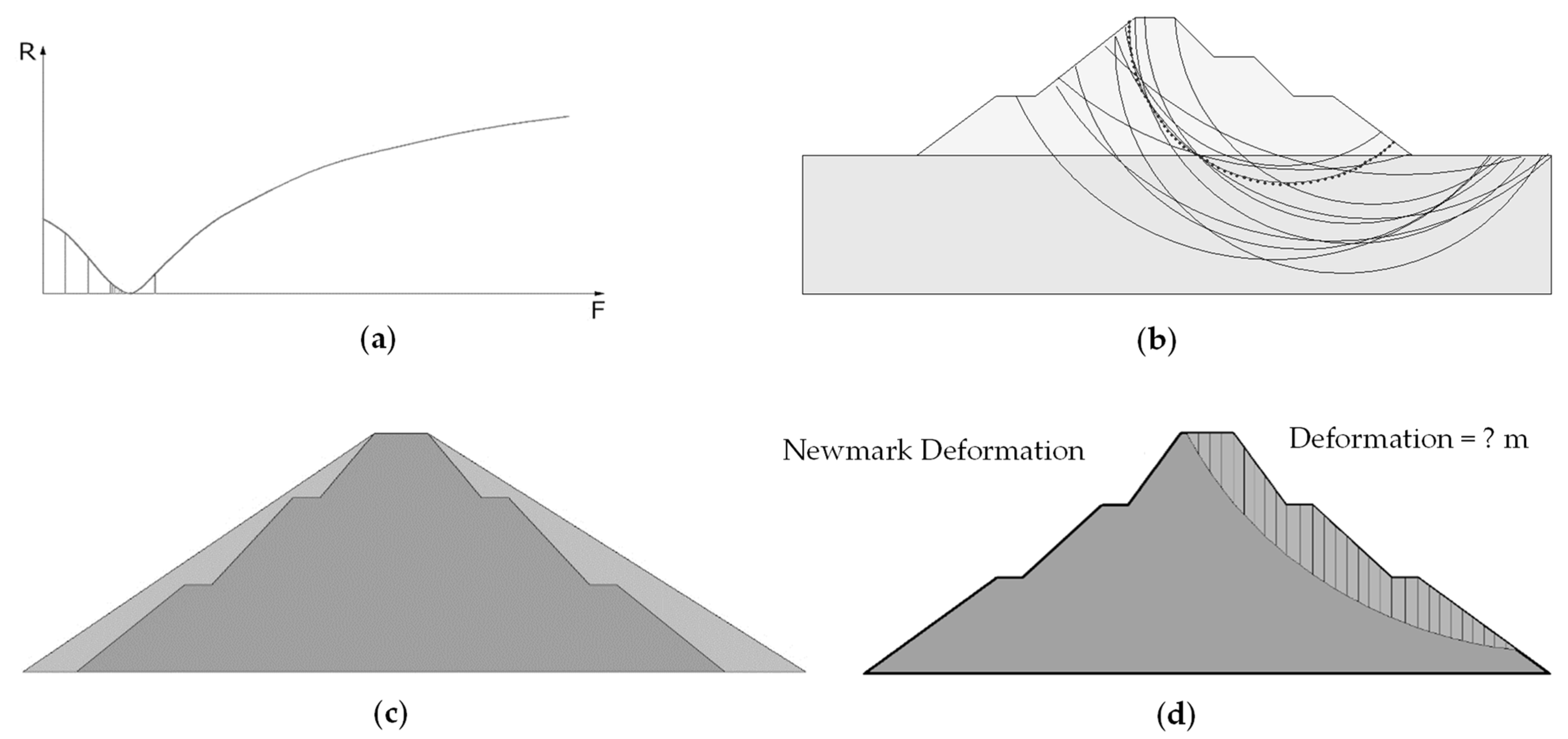
  • Evaluation of the safety factor for a given slip surface.
  • Identification of the critical slip surface within a specified dam cross-section under a defined loading condition.
  • Optimization of the dam cross-section considering all relevant loading cases.
  • Prediction of the seismic response for the optimized dam cross-section.
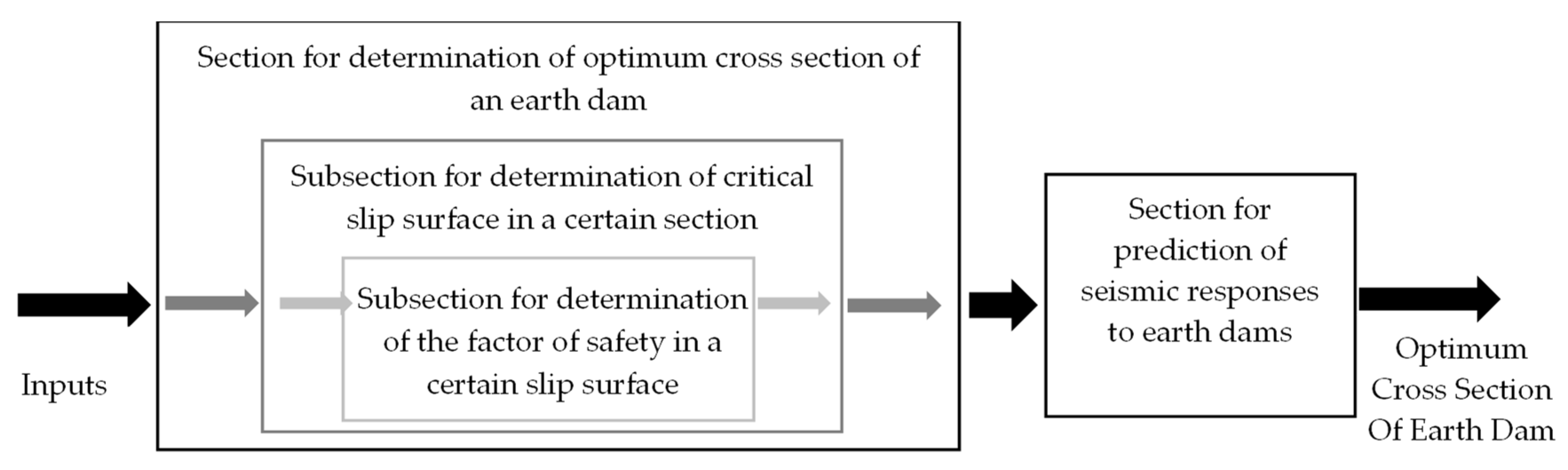
Figure 1 illustrates the overall workflow for identifying the optimum cross-section of an earth dam, while Figure 2 presents the sequential stages of the analysis process.
In the following sections, the optimization of the dam cross-section is described after a brief overview of the optimization procedure using the Improved Ant Colony Optimization algorithm. For brevity, the subsection detailing the determination of the critical slip surface for a given cross-section using the ACO algorithm is omitted here; additional information can be found in Ref. [15]. Furthermore, the prediction of seismic responses for the optimized cross-section using an Artificial Neural Network (ANN) model is discussed, representing one of the key components in the overall optimization framework.

2.2. Review of Improved ACO Algorithms

The Ant System (AS) algorithm [36] was the first developed member of the Ant Colony Optimization (ACO) family of algorithms. In ant colony optimization, the pheromone updating mechanism refers to the process by which pheromone levels on solution components are iteratively adjusted based on solution quality. This mechanism typically consists of two steps: pheromone evaporation, which reduces all pheromone values to avoid premature convergence, and pheromone reinforcement, where higher-quality solutions deposit additional pheromone to guide subsequent search toward promising regions of the solution space. Subsequent enhancements to this foundational method led to the emergence of more efficient variants, among which the Max–Min Ant System (MMAS) represents one of the most advanced and effective modifications. In the present study, the MMAS algorithm, originally proposed by Stützle and Hoos [37], is employed due to its superior optimization performance.
The MMAS algorithm builds upon the basic principles of the AS approach but introduces four key distinctions.
1. One of its defining features is that pheromone updates are performed exclusively on the best-performing path identified during each iteration—typically the route selected by the most elite ant. The pheromone updating mechanism in the MMAS algorithm is expressed as shown in Equation (1) [1]:
τ i , j t + 1 = 1 ρ τ i , j t + τ i , j b e s t t
where τ i , j t represents the pheromone concentration on the path between nodes i and j at iteration. The evaporation rate ( 0 ρ 1 ), which prevents the unlimited accumulation of pheromones and allows the algorithm to forget poor historical. τ i , j b e s t t is the pheromone amount added by the “elite” ant (the one that found the best solution), reinforcing the most efficient design path.
2. The aforementioned feature can, however, lead to stagnation in the search process. As the pheromone concentration rapidly increases along the best-performing path, all ants tend to follow this same route, which may correspond only to a local rather than a global optimum. To mitigate this effect, the MMAS algorithm imposes upper and lower limits on the pheromone levels along each path, denoted as τ m i n and τ m a x , respectively. At the end of each iteration, the pheromone concentration on every path is checked and adjusted, if necessary, to ensure that it remains within this prescribed range. When the pheromone value exceeds the limits, it is reset to the corresponding boundary value ( τ m i n or τ m a x ).
This mechanism prevents excessive reinforcement of suboptimal local paths during the early iterations and allows all decision nodes to remain accessible for exploration. Consequently, artificial ants can effectively investigate a wider portion of the search space. The maximum and minimum pheromone limits in the t iteration are defined by Equations (2) and (3):
τ m a x t = 1 1 ρ Q f s g b t
τ m i n t = τ m a x t 1 P b e s t n N O a v g 1 P b e s t n
In these equations, f s g b t denotes the value of the objective function obtained up to the t-th iteration, P b e s t represents the probability that ants will select the best solution again, and N O a v g is the average number of available decision options at each node.
3. In the MMAS algorithm, the initial pheromone concentration ( τ 0 ) assigned to each path is set equal to the upper pheromone limit ( τ m a x ). This adjustment promotes a fully exploratory behavior at the beginning of the search, encouraging broad sampling of potential solutions.
4. Another distinguishing feature of MMAS is the use of reinitialization or pheromone reactivation under two specific circumstances: (1) when the search process stagnates, and (2) when no improvement in the optimal solution is observed after a predefined number of iterations. In such cases, a small amount of initial pheromone is reintroduced into the system to “restart” the search process. This mechanism acts as a controlled perturbation, allowing the algorithm to escape stagnation and continue an active and adaptive exploration of the solution space.

2.3. Cross Section Subdivision Optimizer

The optimization problem for determining the optimum cross-section of an earth dam can be mathematically expressed as:
C = m i n   A x
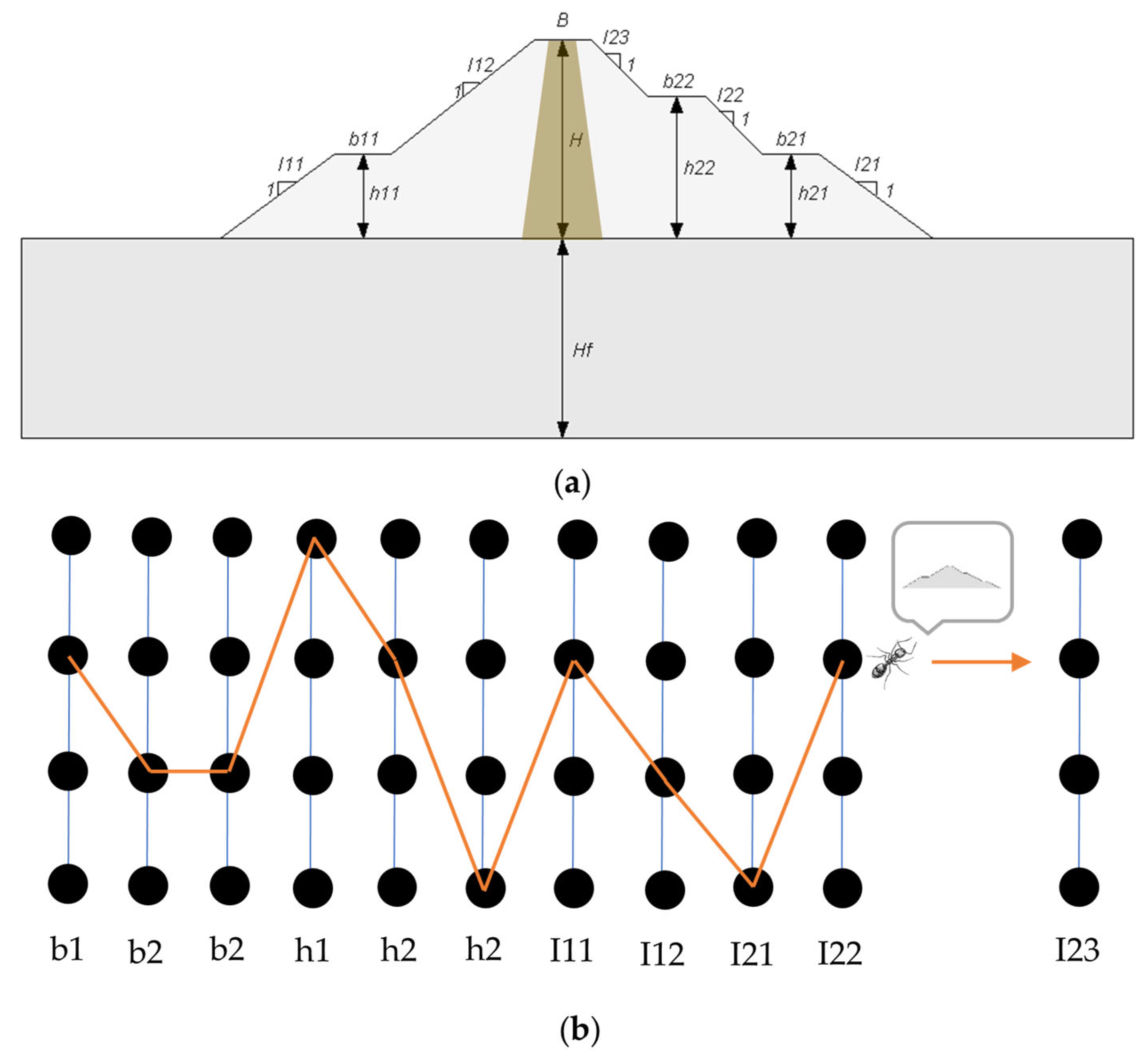
where C denotes the objective function, A x represents the cross-sectional area of a specific dam section, and x is the vector of design variables. In this study, the objective function is defined as the minimization of the cross-sectional area of the dam while satisfying stability and geometric constraints.
The set of design variables includes n, n′, b1i, b2i, h1i, h2i, I1i, and I2i, as illustrated in Figure 3a. Here, n and n′ correspond to the number of berms on the upstream and downstream faces of the dam, respectively. The parameters B, H, and Hf are constants representing the crest width, total dam height, and foundation depth. The geometric arrangement of these variables, illustrated in Figure 3b, establishes the optimization domain, within which the objective is to identify the most efficient combination of berm dimensions and slope angles for both the upstream and downstream faces. In the implemented optimization framework, artificial ants traverse the solution graph, depositing pheromone trails on the nodes associated with each decision path. This pheromone accumulation guides subsequent searches toward promising regions of the design space, enabling the algorithm to converge toward the optimum cross-sectional configuration.
Two groups of independent constraints were incorporated into the optimization problem. Detailed descriptions of these constraints are available in Refs. [15,20,38]. The first group defined the boundaries of the ant search space, establishing the feasible domain that contains all possible solutions (i.e., admissible paths). Infeasible regions—corresponding to geometrically impossible configurations—were excluded from the search domain.
The second group comprised conditional constraints, which distinguished feasible from infeasible solutions during the optimization process. The constraints are applied in such a way that the slope stability criteria and acceptable values of some seismic responses are guaranteed, and in addition, implementation restrictions such as minimum spacing of the berms are also taken into account. When a candidate solution violated any constraint, a penalty function was imposed instead of pheromone reinforcement, thereby discouraging the selection of that path in subsequent iterations. Cross-sections that failed to satisfy either geometric or slope stability conditions were penalized and effectively removed from further consideration.
Each potential cross-section of the earth dam was required to meet slope stability criteria under all relevant loading conditions, including (1) end of construction, (2) partial steady-state seepage, (3) full steady-state seepage, and (4) rapid drawdown. For every load case, the minimum factor of safety had to exceed the prescribed allowable value. If the safety factor fell below the allowable threshold for any condition, the corresponding cross-section was penalized using a large objective value (set to 1010 m2), which caused its pheromone level to decay to near zero. Consequently, such infeasible solutions were excluded from selection in future iterations.
The ODACO algorithm was implemented in MATLAB version 2016, comprising more than 11,000 lines of code. A total of 63 computationally intensive analyses were conducted to determine the optimal cross-section of the earth dam. Each analysis involved thousands of intelligent evaluations to identify both circular and non-circular critical slip surfaces using the ACO-based stability module. The total number of slope stability assessments in each run was determined by the product of the number of artificial ants, iterations, and load cases.
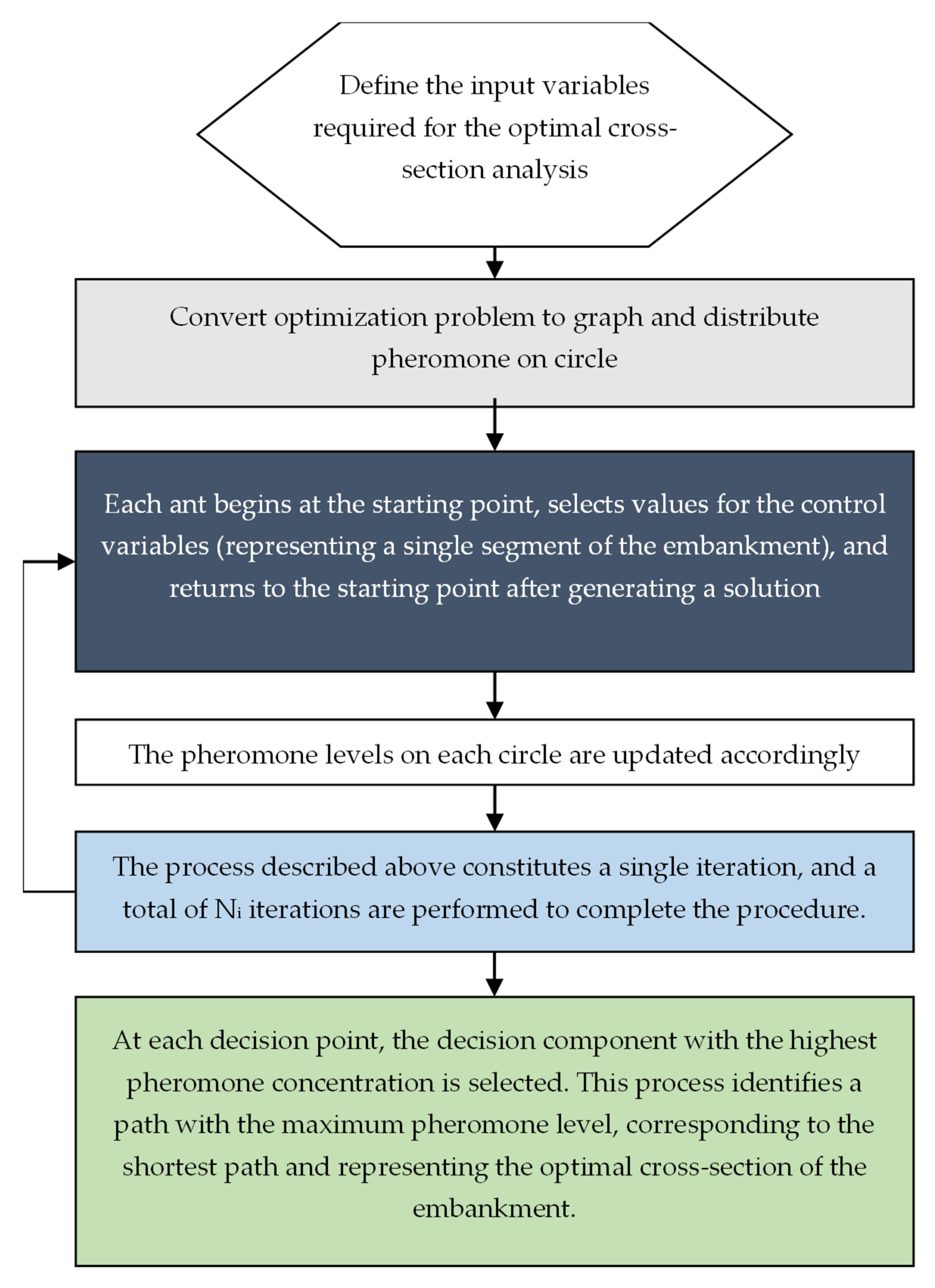
Figure 4 illustrates the overall flowchart of the proposed ACO-based framework for determining the optimal cross-section of an earth dam.

2.4. Seismic Response Predictor Subdivision

There is a growing demand for fast and reliable computational tools capable of predicting the seismic response of large geotechnical systems, such as earth dams. In this context, artificial neural networks (ANNs) [39] provide an effective solution due to their ability to deliver rapid predictions. Once trained, ANN models can estimate structural responses within seconds, independent of the input ground motion characteristics or peak ground acceleration (PGA). This makes them a compelling alternative to finite element analyses [40,41] and finite difference methods [42], which require substantial computational time—often several hours—when modeling the dynamic response of large structures subjected to long-duration strong earthquake excitations.
The ANN models developed in this study were implemented using the Neural Network Toolbox in MATLAB. A hybrid training strategy was adopted in which the back-propagation (BP) algorithm [43] served as the global learning method, while the Levenberg–Marquardt (LM) approach was employed as the local optimizer. Following standard recommendations, the neural network architecture included a single hidden layer, where a hyperbolic tangent sigmoid activation function was applied; the output layer utilized a linear activation function.
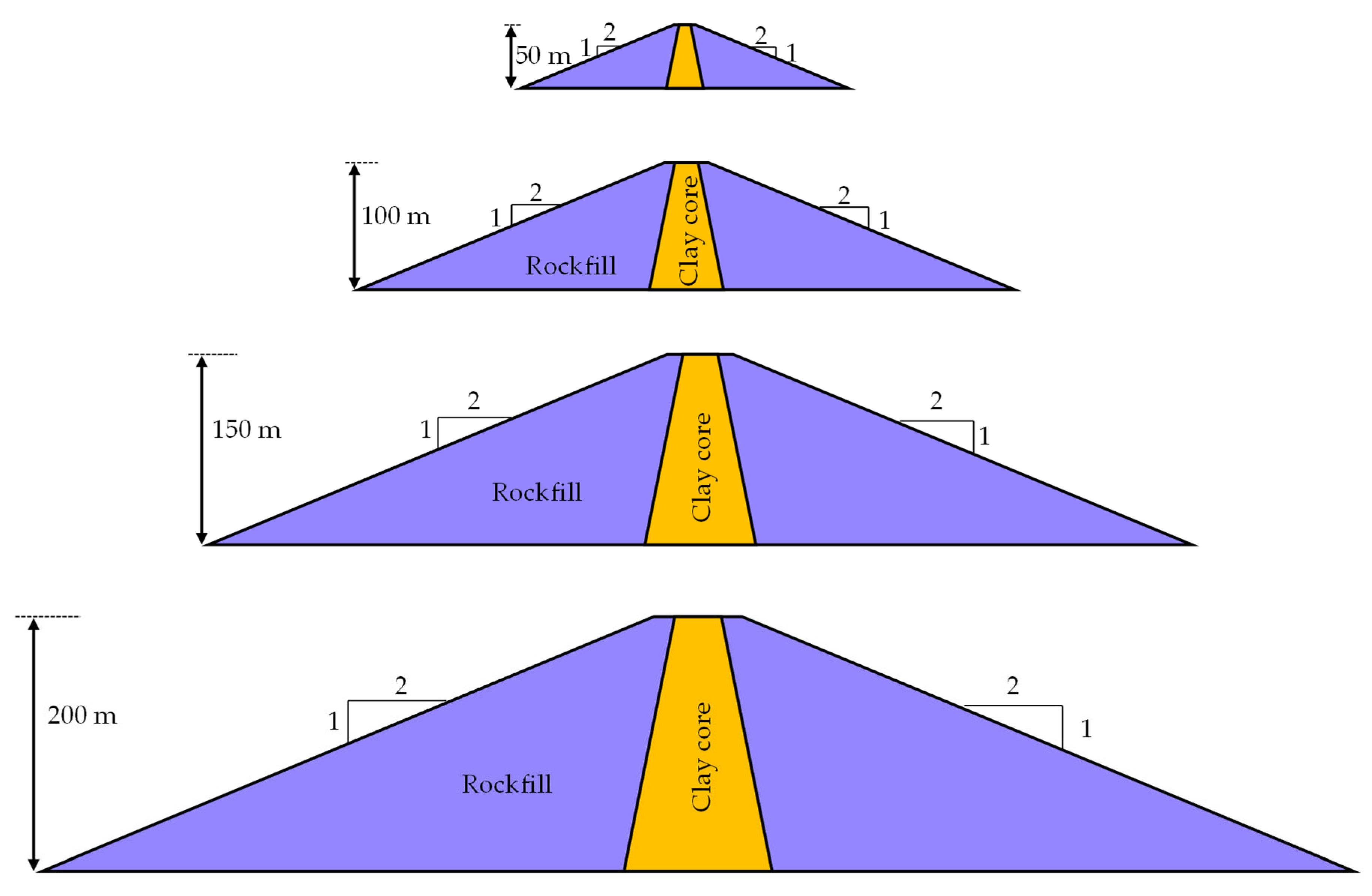
To generate the dataset required for training, validation, and testing of the ANNs, several hundred two-dimensional finite element simulations were performed using the QUAKE/W program [44]. These numerical analyses covered a wide range of earth dam geometries with central vertical clay cores and heights of 50, 100, 150, and 200 m. All dams were assumed to rest on hard-rock foundations and exhibited different combinations of upstream and downstream shell slopes. The core, filter, drain, and crest configurations maintained geometric similarity across all heights.
The finite element models were constructed under plane-strain conditions and discretized with dense meshes composed of triangular three- and four-node elements, with element sizes selected based on wavelength requirements. Soil nonlinearity was represented using the equivalent-linear approach, while the strain-dependent stiffness degradation and damping increase were incorporated through the Ishibashi and Zhang [45] modulus reduction and damping ratio curves. In the present study, an equivalent-linear seismic analysis approach was adopted to balance computational efficiency and model complexity, in line with the objective of developing and training an artificial neural network–based optimization framework. The proposed methodology requires a large number of simulations covering diverse geometric configurations, material properties, and seismic loading scenarios; performing fully nonlinear dynamic analyses for all cases (over 1000 models) would impose a prohibitive computational cost and limit the feasibility of the optimization process.
The seismic responses considered in the numerical analyses consisted of the permanent deformation of the dam body and the maximum horizontal acceleration at the dam crest. In the ANN framework, earthquake ground motions were treated as model inputs and characterized through a set of intensity measures (IMs). These IMs summarize several commonly used ground-motion parameters that capture amplitude, frequency content, duration, and other key features essential for describing seismic excitations.
The selection of ground motion records for dynamic analysis is a critical step that directly influences the reliability and interpretability of the results. In this study, the input ground motions were selected from well-documented strong-motion databases to be representative of regional seismic hazard characteristics, including earthquake magnitude, source-to-site distance, and faulting mechanism, thereby ensuring realistic seismic input. The records were also chosen to cover a broad range of frequency content, duration, and waveform complexity in order to adequately capture the dynamic response of soil–structure systems, particularly earth dams, which are sensitive to low- and intermediate-frequency components.
In addition, the selected ground motions were scaled to predefined intensity measures, specifically peak ground acceleration (PGA), to enable consistent comparisons among different analysis cases and to support parametric investigations across varying seismic intensity levels. Considering that earth dams are typically founded on Type I soil according to the Iranian seismic design code (IR2800), only records corresponding to this soil classification were adopted. In total, 22 acceleration time histories satisfying these criteria were employed in the analyses and are summarized in Table 1. Each record was scaled to seven PGA levels (0.01 g, 0.05 g, 0.1 g, 0.2 g, 0.3 g, 0.4 g, and 0.5 g) to ensure that the ANN could capture both linear and nonlinear structural responses. Of the total dataset, 70% of the records were randomly assigned for network training, 15% for validation, and the remaining 15% for testing.
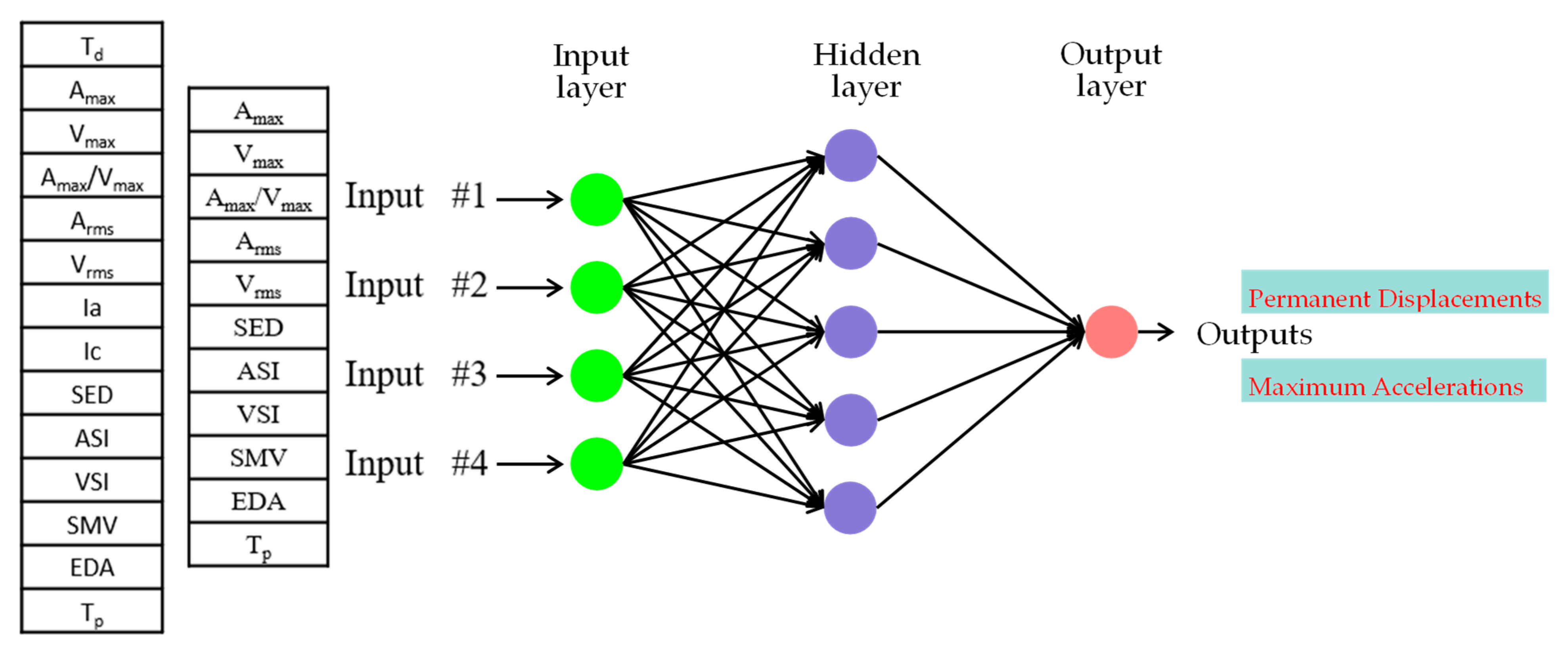
To enhance predictive accuracy and ensure robust generalization, the ANN was evaluated and refined under various scenarios, incorporating several optimization strategies. As illustrated in Figure 5, the network architecture comprised three layers and was examined in two configurations. In the first configuration, the design recommendations provided by Tsompanakis et al. [29] were adopted.
Accordingly, the ANN used to predict the seismic response of the earth dams was arranged as follows: (a) an input layer with fourteen nodes (PGA, PGV, PGV/PGA, ASI, VSI, SMV, EDA, ARMS, VRMS, SED, Ia, IC, duration of strong motion (Td), and predominant period (TP)); (b) a hidden layer; and (c) an output layer with one node (response).
In the second configuration, to improve the performance of the ANN, the inputs proposed by Tsompanakis et al. [29] were re-evaluated and several parameters that appeared to negatively affect the training process were removed. By excluding four inputs—ARMS, arias intensity (Ia), characteristic intensity (IC), and duration of strong motion (Td)—the number of input parameters was reduced from 14 to 10. This modification significantly improved the performance and reduced the prediction error of the revised neural network, as shown in Figure 5.
Four separate ANNs were developed to predict the seismic response of earth dams with heights of 50, 100, 150, and 200 m. For other dam heights, linear interpolation and extrapolation were applied. Table 1 presents the optimal configuration of these ANNs in both scenarios.
While previous studies enhanced ANN quality by tailoring input parameters to different PGA levels, the present research focuses on developing a more general neural network capable of providing reliable predictions of seismic responses for a specific dam cross-section under a wide range of earthquake excitations and PGA levels.

3. Application of ACO for Optimizing Embankment and Earth Dam Cross-Sections

Three case studies were conducted in this research. In the first example, the MMAS algorithm was applied to determine the optimal cross-section of an earth dam based on slope stability criteria. The second example involved a quantitative evaluation of a seismic response prediction program for earth dams. In the third example, the impact of the optimization program on reducing both the volume and construction costs of earth dams was demonstrated. This case study focused on optimizing the cross-sections of an existing earth dam in Iran while ensuring compliance with slope stability and seismic performance criteria.

3.1. Example 1

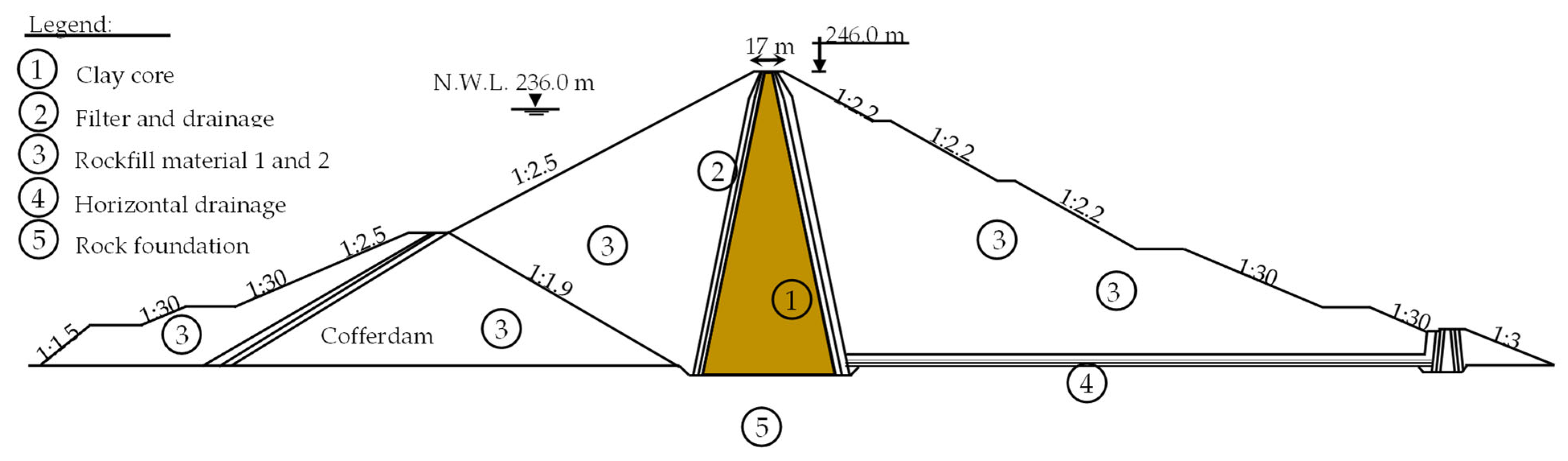
In the first case study, the ODACO program was employed to optimize the cross-section of the Gotvand-Olya Dam, considering only slope stability criteria. Gotvand-Olya is a zoned earth dam with a central clay core and a height of 182 m, making it the tallest earth dam in Iran. Figure 6 shows the critical cross-section of the dam, while Table 2 presents the properties of the soil materials used in its construction. Using the ODACO program, various configurations of the dam’s cross-section—with and without berms—were evaluated under standard loading conditions. The modified ACO algorithm was applied to identify the most optimal cross-section in each scenario. Given the dam’s considerable height, the maximum berm width was set at 40 m. The resulting optimized cross-sections and associated data are provided in Figure 7 and Table 3. Application of ODACO led to a 13% reduction in the dam’s volume, yielding a corresponding decrease in construction costs. In the Gotvand-Olya earth dam, considering an embankment volume of approximately 32 million cubic meters and an estimated construction cost of about USD 200 million, a 13% reduction in embankment volume could result in a cost saving of approximately USD 26 million. The ACO-based results, achieved through precise tuning of algorithm parameters, were more optimized than those reported by Rezaeian et al. (2021) [46]. Additionally, as outlined in Table 2, the shell material properties of the Gotvand Dam are defined across three distinct layers.

3.2. Example 2

The aim of this example was to evaluate the ANN model described in Section 2 for predicting the maximum horizontal acceleration at the crest of a zoned earth dam founded on hard rock. To this end, as shown in Figure 8, four earth dams with heights of 50, 100, 150, and 200 m, upstream and downstream slopes of 2:1, a core slope of 0.2:1, and crest widths of 10, 20, 20, and 20 m, respectively, were analyzed. The core, filter, drain, and crest configurations maintained geometric similarity across all heights. Since Quake/W can define Gmax, maximum shear modulus, values as a function of confining stress for each element, increasing the number of layers was not required to model Gmax accurately. However, because the software assigns GGG-reduction and damping functions independently of confining pressure, multiple layers were defined for the core and shell to enhance modeling accuracy, with each layer assigned its corresponding hardening and damping functions. The load case considered was of the end-of-construction type. The properties of the different zones of the earth dams are summarized in Table 4, while the characteristics of the acceleration records used for training, validation, and testing the neural network are provided in Table 1 and Section 2. Additionally, two other records—one with high-frequency content and another with low-frequency content, less similar to the other records—were included to more rigorously evaluate the performance of the ANN model.
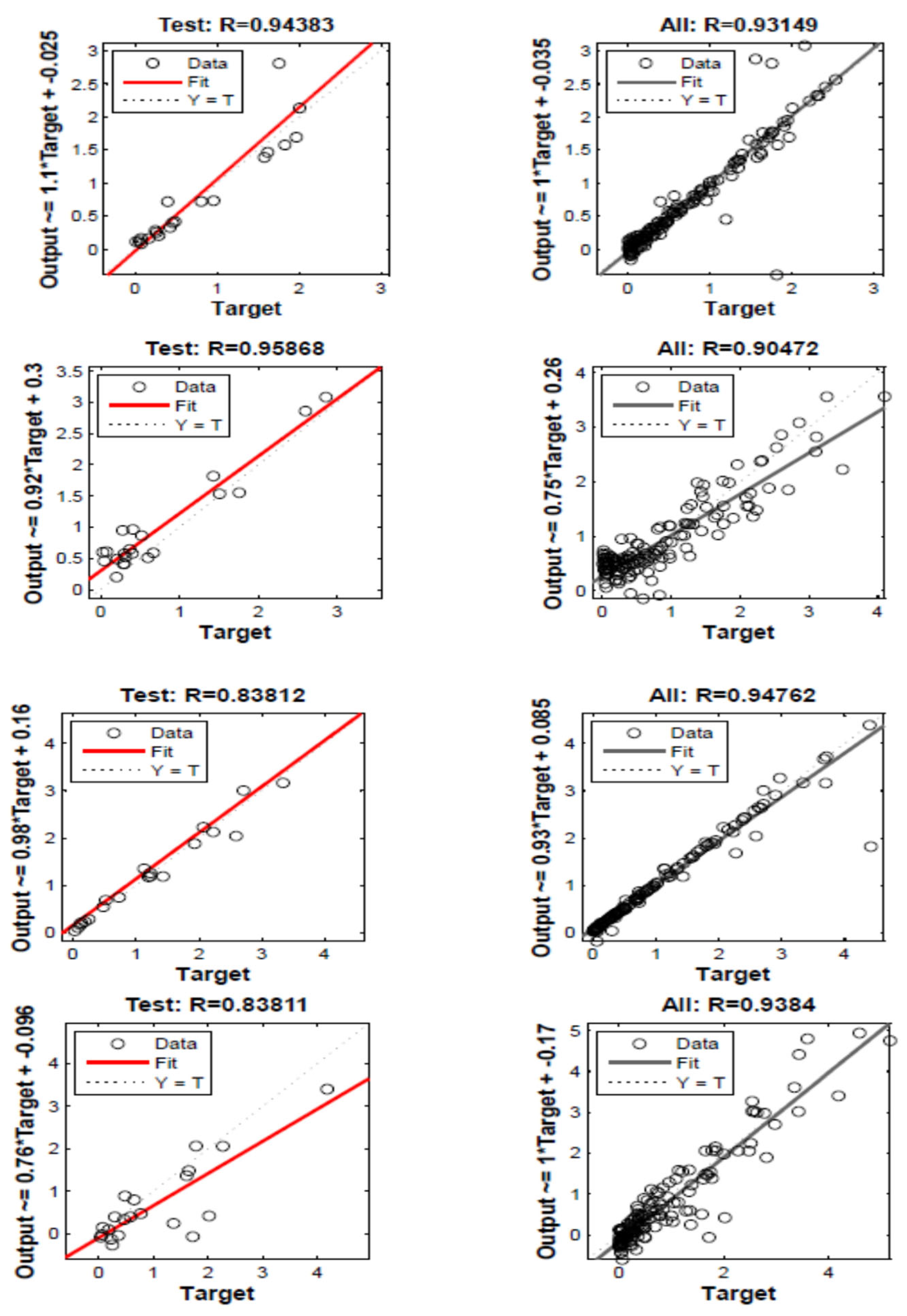
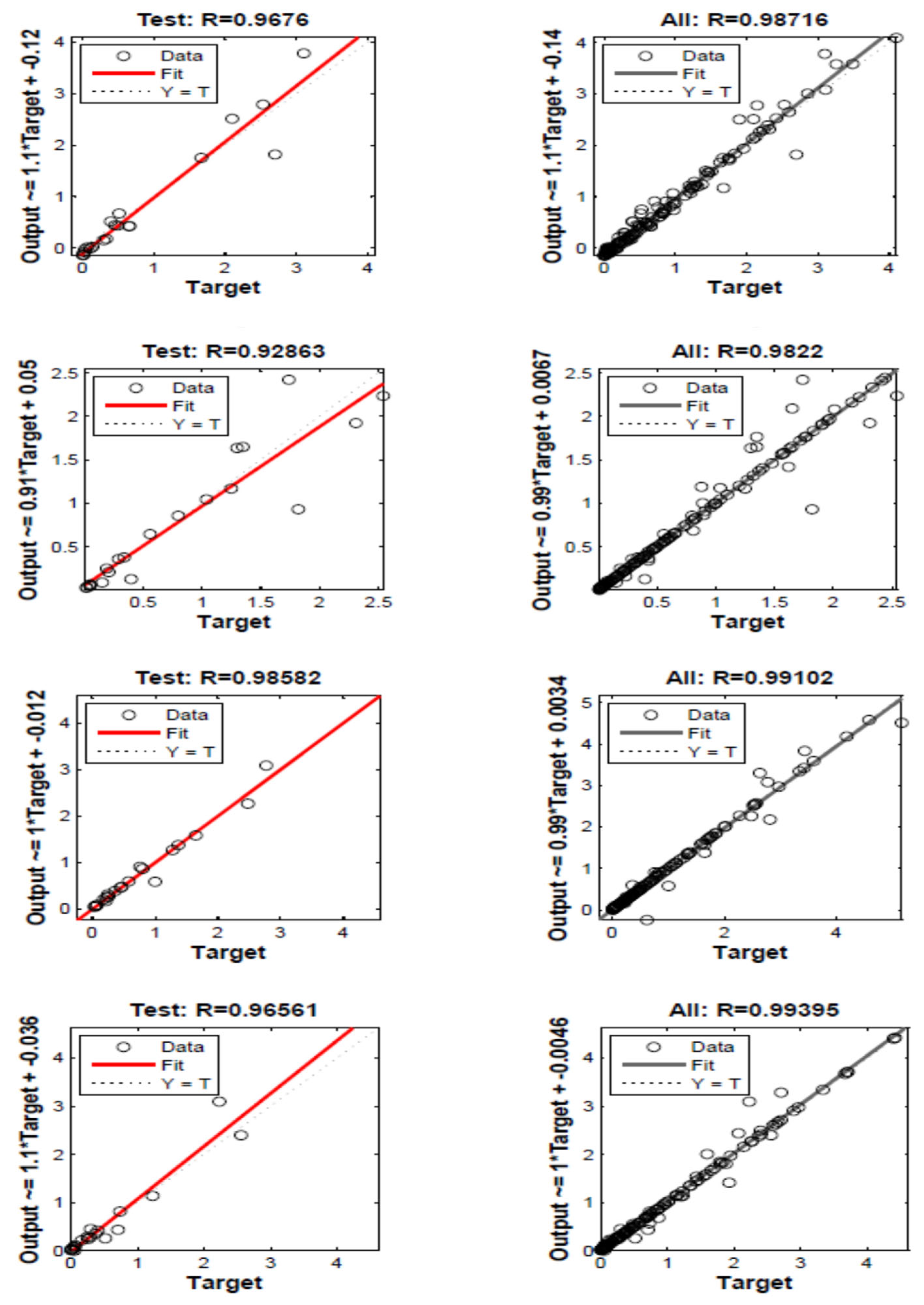
The results of the qualitative evaluation of two neural network architectures for predicting the seismic responses of the four dams under various earthquake records and PGA levels are shown in Figure 9 and Figure 10. As observed, the neural network structure proposed in this study (second model) for predicting the global seismic response of earth dams performed significantly better than the model presented in the literature [47] (first model). For a more detailed and quantitative assessment, two additional earthquake records not used in the previous stage were selected—one with low-frequency content and the other with high-frequency content. These records were tested at four PGA levels: 0.01 g, 0.1 g, 0.2 g, and 0.5 g, and the results of the neural network with the optimal structure (Table 5) are summarized in Table 6. The findings indicate that the neural networks were capable of accurately predicting the seismic responses of the earth dams. Acceleration amplification decreased noticeably with increasing nonlinearity. Examination of both neural network structures (Figure 9 and Figure 10) showed that linear-state predictions were generally more realistic than nonlinear-state predictions. As can be seen in Figure 9 and Figure 10, the correlation coefficient is between 0.9 and 1, which indicates a very good agreement between the predicted values of the ANN and the results obtained from the dynamic analyses. It is also evident from the information in Table 6 that the approximation error of the ANN is often less than 20%, even for high PGA levels. The results further suggest the potential for developing a more general ANN model capable of predicting the seismic response of earth dams of varying heights, geometries, and material properties with satisfactory accuracy.

3.3. Example 3

In the third example, the study aimed to identify the optimal cross-section of an earth dam considering both slope stability requirements and seismic criteria. First, the optimum cross-section was determined using the improved ACO method (MMAS), taking into account slope stability criteria and all common load cases for earth dams. Then, its permanent deformation under critical earthquake load cases was estimated using an ANN and compared with the allowable limits. If the seismic response of the proposed optimum cross-section met the criteria, the design was confirmed; otherwise, the optimization steps were repeated. This approach was applied in a case study on one of the most prominent earth dams in northern Iran, the Alborz Earth Dam. It is acknowledged that material properties, seismic loading characteristics, and ANN predictions are subject to uncertainty, and the present results are valid within the assumed deterministic parameter ranges. The proposed findings complement existing engineering judgment.
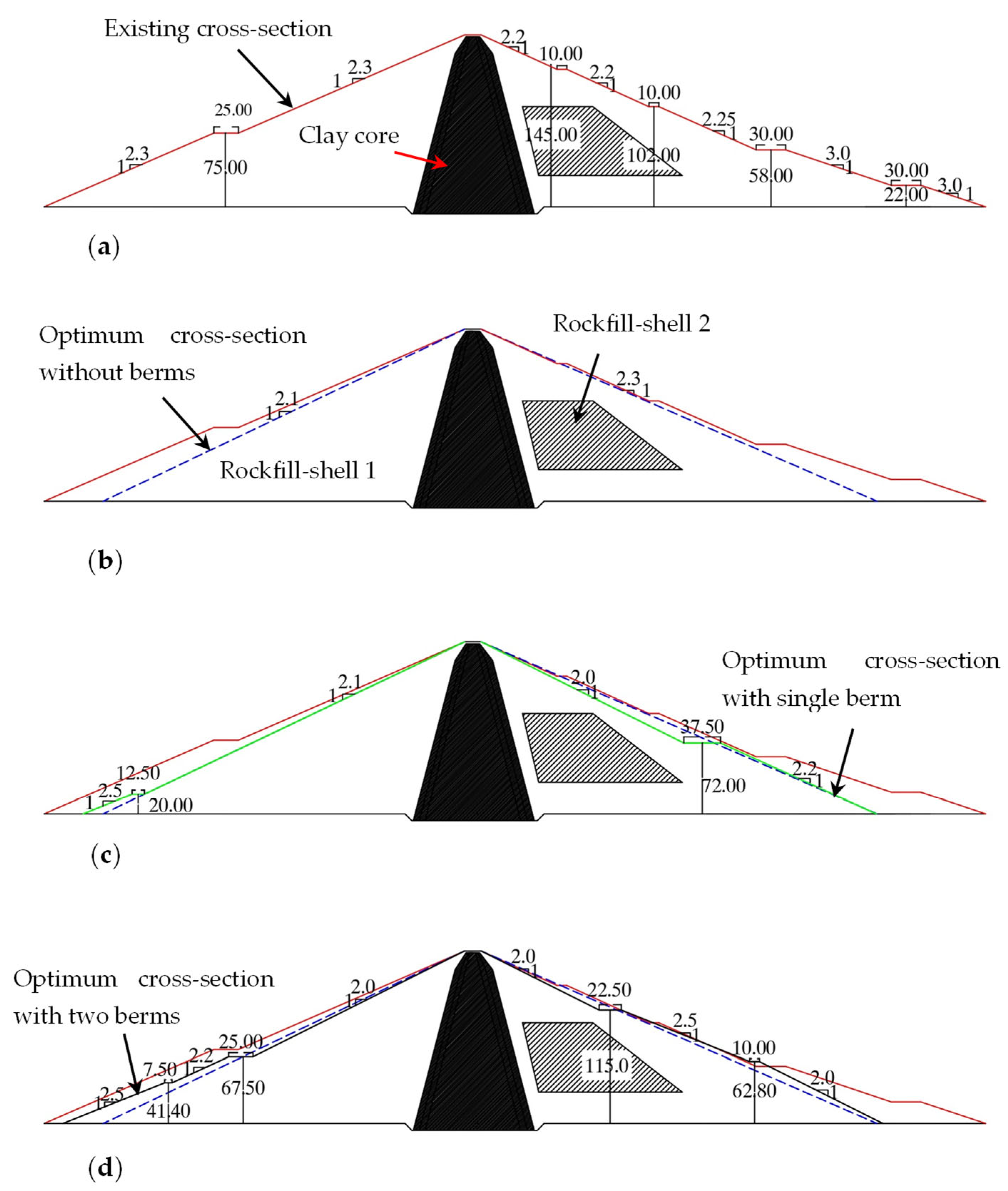
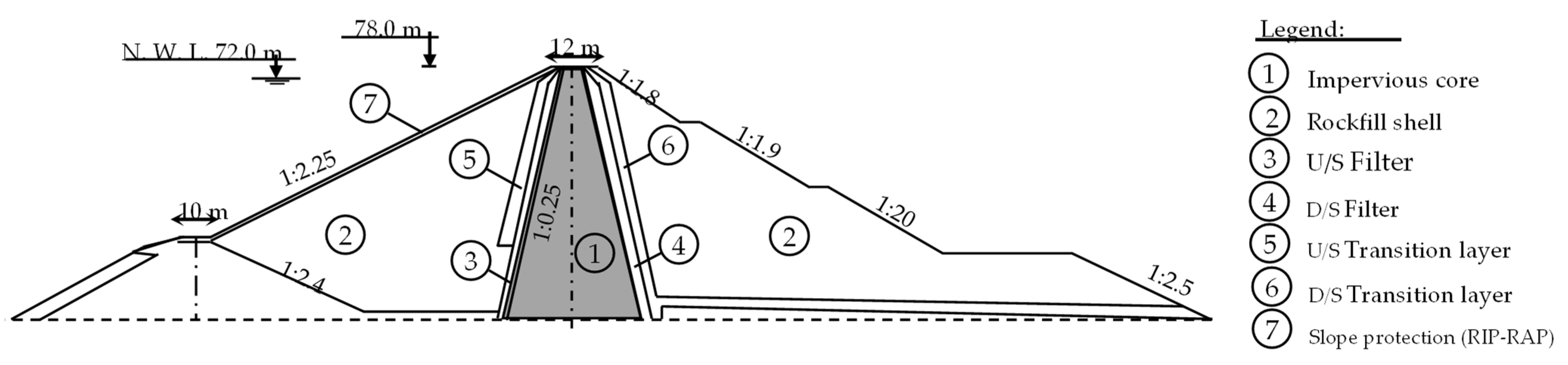
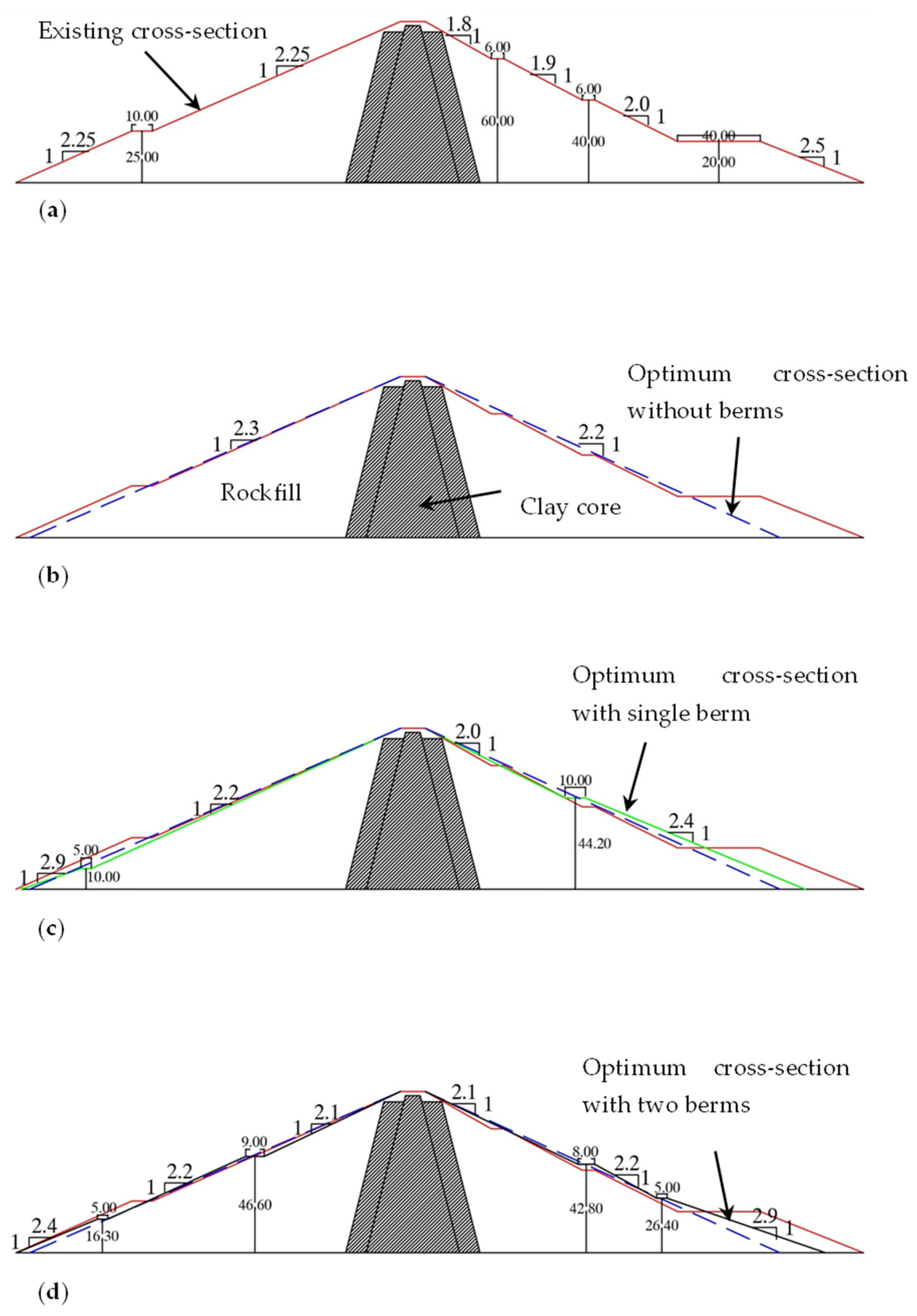
The Alborz Earth Dam is a zoned earth dam featuring a central clay core and a height of 78 m. The critical cross-section of the dam is illustrated in Figure 11, while Table 7 summarizes the properties of the construction materials. Given the dam’s height, the maximum berm width was set at approximately 20 m. The optimization results are presented in Figure 12 and Table 8. Application of the ODACO method for cross-section optimization resulted in a 4.2% reduction in embankment volume, leading to a corresponding decrease in construction costs. The proposed optimization framework is intended for the geometric refinement of the dam shell of an already designed earth dam. The internal zoning system, including the core, filter, and drainage elements, is assumed to remain unchanged during optimization. Seepage behavior and permeability characteristics are therefore inherited from the preliminary design stage and are not explicitly re-analyzed, as the primary focus is on slope stability and seismic response–controlled shell optimization. Furthermore, to assess the influence of berms on reducing the optimal cross-sectional area for dams of varying heights, the Alborz Earth Dam was geometrically scaled, and the optimal cross-section was determined for each scenario. The characteristics of the optimal cross-sections for dams of different heights are summarized in Table 9.
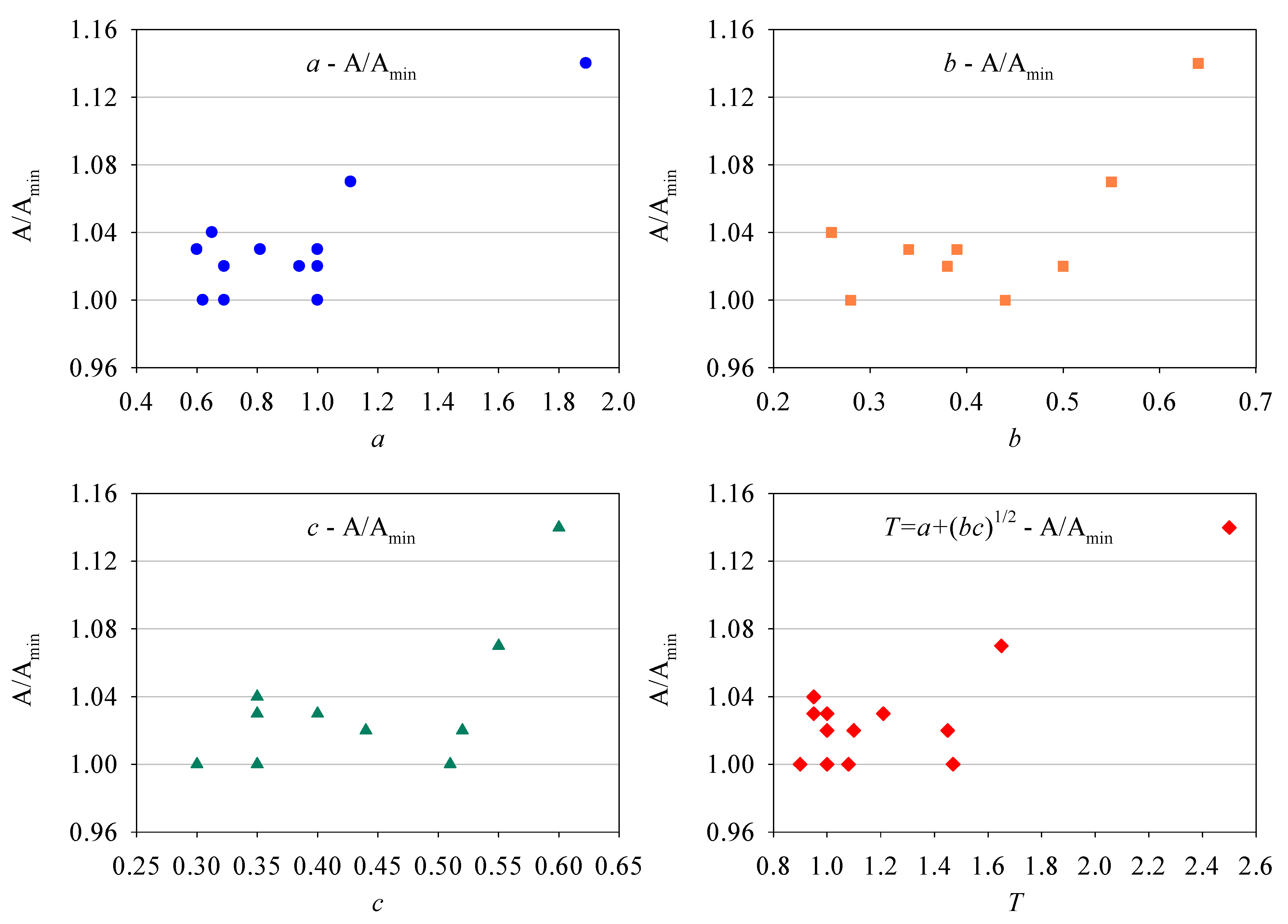
The results obtained from the ACO, with more precisely adjusted parameters, are slightly less optimized compared to the responses reported by Rezaeeian et al. [20]. As shown in Figure 13, the optimum ranges of the dimensionless parameters a, b, and c for the optimal cross-sections listed in Table 9 were 0.5–1, 0.3–0.5, and 0.25–0.5, respectively. The optimum range of the overall parameter T, defined as T = a + b × c , was 0.8–1.5. The parameters a, b, and c are defined by Equations (5)–(7) below:
a = 1 n   +   1 I i h i I 1 h 1
b = b i h i H b i
c = h ¯ j 2 H
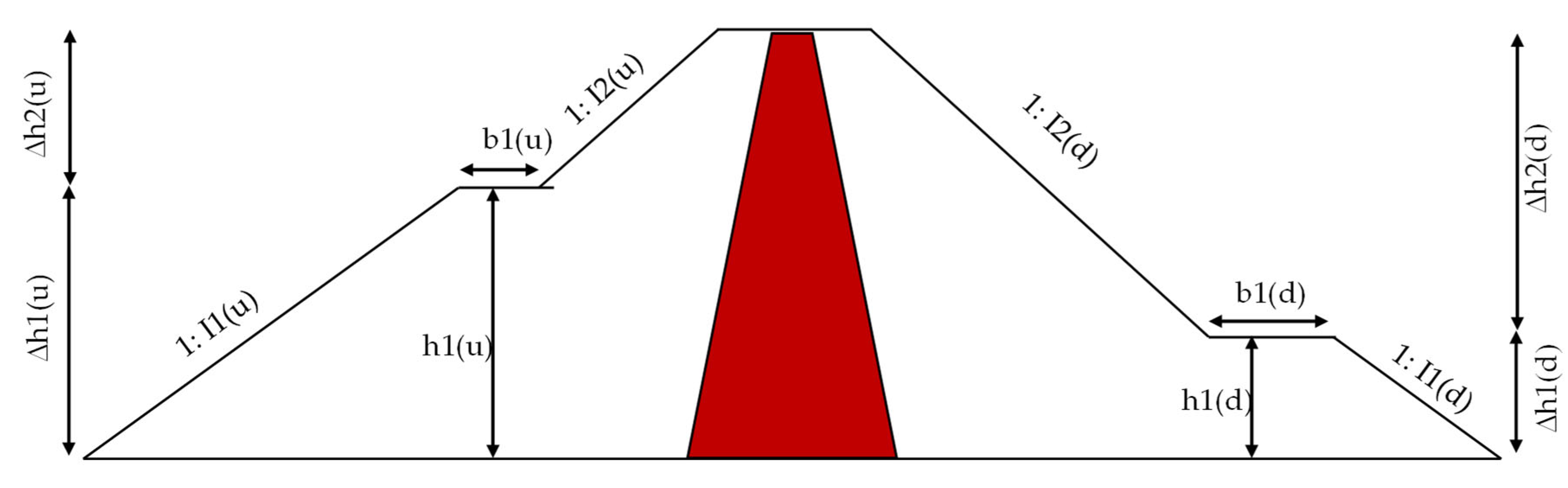
In the equations, as shown in Figure 14, I i represents the slope of the i-th zone at the upstream or downstream of the earth dam; h i is the corresponding height difference; n is the number of berms at the upstream or downstream; I 1 and h 1 denote the slope and height difference in the lowest section of the dam cross-section at both downstream and upstream, respectively; h i is the height of the i-th berm from the foundation level; h ¯ j is the mean of h i values at upstream and downstream; and H is the total height of the dam.
The dimensionless parameter a applies to all cross-sections (with or without berms), whereas parameters b and ccc are defined only for cross-sections with berms. Since the objective of this study was to identify safe and constructible cross-sections with minimal earthwork, values of these parameters exceeding their optimal ranges indicate less optimal designs. Parameter a reflects the slope arrangement: increasing slope values from lower to upper levels, combined with a wider lower slope, reduces a, representing an optimal configuration. Parameters b and c capture the influence of berm width and height: when berm widths are larger at lower levels and smaller at upper levels, and the average berm elevation decreases toward the base of the dam, the values of b and c are minimized, corresponding to a more optimal cross-section.

4. Conclusions

The following results were obtained from the complex and time-intensive modeling and analyses conducted in this study. One of the primary objectives was to evaluate the effectiveness of the ACO algorithm as an artificial intelligence tool for determining the optimal cross-section of earth dams. In earth dams and other embankments, a specific number of berms at each height is required to achieve minimal embankment volume; deviations from this number result in increased material usage. The ODACO program, which integrates the ACO algorithm with operational constraints, alleviates the trial-and-error burden traditionally faced by dam designers and often produces significantly more optimal designs.
The use of metaheuristic algorithms, such as ODACO, is therefore highly advantageous for optimizing earth dam cross-sections. This approach not only simplifies the design process for engineers but also yields economic benefits by substantially reducing construction costs—particularly in taller, more expensive dams. Implementing berms with optimized configurations can lead to considerable cost savings, potentially reducing earthwork volumes by up to 4%.
For the optimized cross-sections, the dimensionless parameters a, b, and c were within the ranges 0.5–1, 0.3–0.5, and 0.25–0.5, respectively. The overall parameter T, defined as T = a + b × c , ranged from 0.8 to 1.5. In non-optimal cross-sections, these parameters exceeded the defined optimal ranges, indicating less efficient designs. It is acknowledged that material properties, seismic loading characteristics, and ANN predictions are subject to uncertainty, and the present results are valid within the assumed deterministic parameter ranges. The proposed findings complement existing engineering judgment.
Another objective of this study was to assess the capability of artificial neural networks (ANNs) in predicting the dynamic response of embankments and earth dams under seismic loads of varying intensities. The goal was to reduce the substantial costs associated with conventional calculations in seismic geotechnical engineering. To achieve this, a comprehensive analysis was performed, evaluating various parameters. The results indicate that ANNs can provide reliable approximations of the seismic response of embankments and earth dams. The obtained results show that the correlation coefficients between the ANN-predicted responses and those derived from dynamic analyses range from 0.9 to 1.0, indicating a strong level of agreement. Moreover, the ANN approximation error generally remains below 20%, even at high peak ground acceleration (PGA) levels, demonstrating the robustness and reliability of the proposed model within the investigated seismic intensity range.
This research developed an optimized layout for the integrated ANN model capable of providing reliable predictions across all PGA levels. Despite the complexity of the problem, the successful performance and acceptable accuracy of the general ANN model demonstrate that ANNs are a practical and cost-effective tool for estimating seismic responses of earth dams. Implementing ANNs in seismic geotechnical engineering could significantly reduce computational costs and enhance predictive capabilities. Further development of ANN training for additional cases—considering variations in dam geometry, material properties, and other parameters—will advance the creation of a more general and widely applicable ANN model.
Furthermore, the use of an improved ACO algorithm to determine the optimal cross-section of earth dams, combined with precise parameter tuning and the simplification of dam modeling, resulted in more accurate and realistic design outcomes.

Author Contributions

Conceptualization, A.R., M.D., M.K.J. and A.A.; Methodology, A.R., M.D., M.B. and H.J.K.; Software, A.R. and M.D.; Validation, A.R.; Formal analysis, A.R. and M.K.J.; Investigation, A.R., M.D., M.K.J., M.B., A.A. and H.J.K.; Data curation, A.R. and M.B.; Writing—original draft, A.R., M.B. and A.A.; Writing—review & editing, M.D., A.A. and H.J.K.; Visualization, A.R. and A.A.; Supervision, M.D., M.K.J. and A.A. All authors have read and agreed to the published version of the manuscript.

Funding

This research received no external funding.

Data Availability Statement

The original contributions presented in this study are included in the article. Further inquiries can be directed to the corresponding author.

Conflicts of Interest

The authors declare no conflicts of interest.

References

  1. Dorigo, M.; Birattari, M.; Stutzle, T. Ant colony optimization. IEEE Comput. Intell. Mag. 2006, 1, 28–39. [Google Scholar] [CrossRef]
  2. Baker, R.; Garber, M. Theoretical analysis of the stability of slopes. Géotechnique 1978, 28, 395–411. [Google Scholar] [CrossRef]
  3. Chen, Z.-Y.; Shao, C.-M. Evaluation of minimum factor of safety in slope stability analysis. Can. Geotech. J. 1988, 25, 735–748. [Google Scholar] [CrossRef]
  4. DeNatale, J.S. Rapid identification of critical slip surfaces: Structure. J. Geotech. Eng. 1991, 117, 1568–1589. [Google Scholar] [CrossRef]
  5. Cheng, Y.M.; Li, L.; Chi, S.C. Performance studies on six heuristic global optimization methods in the location of critical slip surface. Comput. Geotech. 2007, 34, 462–484. [Google Scholar] [CrossRef]
  6. Malkawi, A.I.H.; Hassan, W.F.; Sarma, S.K. Global Search Method for Locating General Slip Surface Using Monte Carlo Techniques. J. Geotech. Geoenviron. Eng. 2001, 127, 688–698. [Google Scholar] [CrossRef]
  7. Vageesha, S.; Mathada, G.V.; Srividya, A. Slope Stability Assessment—A Comparison of Probabilistic, Possibilistic and Hybrid Approaches. Int. J. Perform. Eng. 2007, 3, 231–242. [Google Scholar]
  8. Rubio, E.; Hall, J.W.; Anderson, M.G. Uncertainty analysis in a slope hydrology and stability model using probabilistic and imprecise information. Comput. Geotech. 2004, 31, 529–536. [Google Scholar] [CrossRef]
  9. Asadoullahtabar, S.R.; Asgari, A.; Mohammad Rezapour Tabari, M. Assessment, identifying, and presenting a plan for the stabilization of loessic soils exposed to scouring in the path of gas pipelines, case study: Maraveh-Tappeh city. Eng. Geol. 2024, 342, 107747. [Google Scholar] [CrossRef]
  10. Sengupta, A.; Upadhyay, A. Locating the critical failure surface in a slope stability analysis by genetic algorithm. Appl. Soft Comput. 2009, 9, 387–392. [Google Scholar] [CrossRef]
  11. Cheng, Y.M.; Liang, L.; Chi, S.C.; Wei, W.B. Determination of the Critical Slip Surface Using Artificial Fish Swarms Algorithm. J. Geotech. Geoenviron. Eng. 2008, 134, 244–251. [Google Scholar] [CrossRef]
  12. Lee, K.S.; Geem, Z.W. A new meta-heuristic algorithm for continuous engineering optimization: Harmony search theory and practice. Comput. Methods Appl. Mech. Eng. 2005, 194, 3902–3933. [Google Scholar] [CrossRef]
  13. Kashani, A.R.; Gandomi, A.H.; Mousavi, M. Imperialistic Competitive Algorithm: A metaheuristic algorithm for locating the critical slip surface in 2-Dimensional soil slopes. Geosci. Front. 2016, 7, 83–89. [Google Scholar] [CrossRef]
  14. Kang, F.; Li, J.; Ma, Z. An artificial bee colony algorithm for locating the critical slip surface in slope stability analysis. Eng. Optim. 2013, 45, 207–223. [Google Scholar] [CrossRef]
  15. Rezaeean, A.; Noorzad, R.; Khozein, A.; Dankoub, M. Ant colony optimization for locating the critical failure surface in slope stability analysis. World Appl. Sci. J. 2011, 13, 1702–1711. [Google Scholar]
  16. Mostafaei, Y.; Soleimani Kutanaei, S. Modeling and prediction of embankment dam displacement under earthquake loading using artificial neural networks and swarm optimization algorithm. Int. J. Geo-Eng. 2025, 16, 8. [Google Scholar] [CrossRef]
  17. Fahimi, R.; Seyedkazemi, A.; Kutanaei, S.S. Prediction and sensitivity analysis of embankment dam settlement under earthquake loading using gene expression programming. Geomech. Geoengin. 2025, 20, 115–137. [Google Scholar] [CrossRef]
  18. Kaveh, A. Shape Optimization of Arch Dams with Frequency Constraints by Enhanced Charged System Search Algorithm and Neural Network. In Applications of Artificial Neural Networks and Machine Learning in Civil Engineering; Kaveh, A., Ed.; Springer Nature: Cham, Swizerland, 2024; pp. 199–215. [Google Scholar] [CrossRef]
  19. Ponterosso, P.; Fox, D.S.J. Optimization of reinforced soil embankments by genetic algorithm. Int. J. Numer. Anal. Methods Geomech. 2000, 24, 425–433. [Google Scholar] [CrossRef]
  20. Rezaeeian, A.; Davoodi, M.; Jafari, M.K. Determination of optimum cross-section of earth dams using ant colony optimization algorithm. Sci. Iran. 2019, 26, 1104–1121. [Google Scholar] [CrossRef]
  21. Li, Y.; Wang, J.; Xu, Z. Design Optimization of a Concrete Face Rock-Fill Dam by Using Genetic Algorithm. Math. Probl. Eng. 2016, 2016, 4971048. [Google Scholar] [CrossRef]
  22. Bagherzadeh Khalkhali, A.; Izadi, P. Safety and stability control of Mashkid Olia earth dam based on response surface optimization methodology (case study). Arab. J. Geosci. 2024, 18, 1. [Google Scholar] [CrossRef]
  23. Baziar, M.H.; Nilipour, N. Evaluation of liquefaction potential using neural-networks and CPT results. Soil Dyn. Earthq. Eng. 2003, 23, 631–636. [Google Scholar] [CrossRef]
  24. Kerh, T.; Ting, S.B. Neural network estimation of ground peak acceleration at stations along Taiwan high-speed rail system. Eng. Appl. Artif. Intell. 2005, 18, 857–866. [Google Scholar] [CrossRef]
  25. Rajasekaran, S.; David, V.K. MicroARTMAP for pattern recognition problems. Adv. Eng. Softw. 2007, 38, 698–709. [Google Scholar] [CrossRef]
  26. Liu, G.; Li, D. Probabilistic stability assessment of slope considering soft soil and silty clay foundations. Sci. Rep. 2025, 15, 3336. [Google Scholar] [CrossRef] [PubMed]
  27. Li, Q.; Ru, Y.; Tao, Z.; Wu, Y. Uncertainty quantification of ensemble inverse analysis for rainfall-induced slope failure using mixture probabilistic programming. Eng. Geol. 2025, 357, 108341. [Google Scholar] [CrossRef]
  28. Kar, S.S.; Athawale, A.A.; Portelinha, F.H.M.; Burman, A.; Roy, L.B. Probabilistic Analysis of Finite Slope Stability Using MS-Excel. Geotech. Geol. Eng. 2024, 43, 36. [Google Scholar] [CrossRef]
  29. Tsompanakis, Y.; Lagaros, N.D.; Psarropoulos, P.N.; Georgopoulos, E.C. Simulating the seismic response of embankments via artificial neural networks. Adv. Eng. Softw. 2009, 40, 640–651. [Google Scholar] [CrossRef]
  30. Barkhordari, K.; Entezari Zarch, H. Prediction of Permanent Earthquake-Induced Deformation in Earth Dams and Embankments Using Artificial Neural Networks. Civ. Eng. Infrastruct. J. 2015, 48, 271–283. [Google Scholar] [CrossRef]
  31. Beiranvand, B.; Rajaee, T.; Komasi, M. Optimizing pore pressure prediction in earth dams through the integration of panel data and intelligent models. Discov. Appl. Sci. 2025, 7, 842. [Google Scholar] [CrossRef]
  32. Baziar, M.H.; Alavi, S.M. Seismic Assessment of Clayey-Core Earth Fill Dams Using Performance-Based Fragility Curves and Finite Difference Analyses. Geotech. Geol. Eng. 2024, 42, 4581–4608. [Google Scholar] [CrossRef]
  33. Tung, S.; Mukherjee, S.; Garg, A.; Tomar, R. Steady-state seepage through and below earthen dam under seismic condition: Insights into hydrological mechanism. Acta Geophys. 2025, 73, 799–812. [Google Scholar] [CrossRef]
  34. Akbarzadeh, M.R.; Naeim, B.; Asgari, A.; Estekanchi, H.E. Framework for multi-hazard parameterized fragility based uncertainty quantification and sensitivity analysis of offshore wind turbines. Soil Dyn. Earthq. Eng. 2026, 201, 109963. [Google Scholar] [CrossRef]
  35. Akbarzadeh, M.R.; Jahangiri, V.; Naeim, B.; Asgari, A. Advanced computational framework for fragility analysis of elevated steel tanks using hybrid and ensemble machine learning techniques. Structures 2025, 81, 110205. [Google Scholar] [CrossRef]
  36. Dorigo, M. Optimization, Learning and Natural Algorithms. Ph.D. Thesis, Politecnico di Milano, Milano, Italy, 1992. [Google Scholar]
  37. Stützle, T.; Hoos, H.H. MAX–MIN Ant System. Future Gener. Comput. Syst. 2000, 16, 889–914. [Google Scholar] [CrossRef]
  38. Rezaeean, A.; Mirzaei, A.; Khozein, A. Optimization of embankment by ant colony optimization algorithm. Indian J. Sci. Technol. 2012, 5, 1863–1869. [Google Scholar] [CrossRef]
  39. Haykin, S. Neural Networks; Prentice Hall: Hoboken, NJ, USA, 1999. [Google Scholar]
  40. Asgari, A.; Ranjbar, F.; Bagheri, M. Seismic resilience of pile groups to lateral spreading in liquefiable soils: 3D parallel finite element modeling. Structures 2025, 74, 108578. [Google Scholar] [CrossRef]
  41. Bagheri, M.; Ranjbar Malidarreh, N.; Ghaseminejad, V.; Asgari, A. Seismic resilience assessment of RC superstructures on long–short combined piled raft foundations: 3D SSI modeling with pounding effects. Structures 2025, 81, 110176. [Google Scholar] [CrossRef]
  42. Jafarian, Y.; Bagheri, M.; Khalili, M. Earthquake-Induced Deformation of Breakwater on Liquefiable Soil with and Without Remediation: Case Study of Iran LNG Port. In New Developments in Materials for Infrastructure Sustainability and the Contemporary Issues in Geo-environmental Engineering; Shu, S., He, L., Kai, Y., Eds.; Springer International Publishing: Cham, Swizerland, 2019; pp. 23–37. [Google Scholar]
  43. David, J.M. A practical Bayesian framework for backprop networks. Neural Comput. 1992, 4, 448–472. [Google Scholar]
  44. Dynamic Modelling with QUAKE/W 2007, User Manual Fourth Edition; Version–An Engineering Methodology; Geo-Slope International Ltd.: Calgary, AB, Canada, 2007.
  45. Ishibashi, I.; Zhang, X. Unified dynamic shear moduli and damping ratios of sand and clay. Soils Found. 1993, 33, 182–191. [Google Scholar] [CrossRef]
  46. Rezaeian, A.; Davoodi, M.; Jafari, M.K. Predicting the Seismic Response of Embankments and Earth Dams with Artificial Neural Network. Bull. Earthq. Sci. Eng. 2020, 7, 33–50. Available online: https://www.bese.ir/article_243552.html?lang=en (accessed on 7 January 2026).
  47. Kerh, T.; Chu, D. Neural networks approach and microtremor measurements in estimating peak ground acceleration due to strong motion. Adv. Eng. Softw. 2002, 33, 733–742. [Google Scholar] [CrossRef]
Figure 1. Schematic workflow of the algorithm used to identify the optimal cross-section of an earth dam under prescribed loading conditions.
Buildings 16 00501 g001
Figure 2. (a) Evaluation of the safety factor for a given slip surface; (b) Identification of the critical slip surface for a specific dam cross-section; (c) Optimization of the dam cross-section; (d) Prediction of seismic responses for the optimized configuration.
Buildings 16 00501 g002
Figure 3. Conceptual overview of the optimization procedure for: (a) earth dam cross-section design, and (b) graphical depiction of the optimization framework, emphasizing minimization of the dam cross-sectional area.
Buildings 16 00501 g003
Figure 4. Flowchart illustrating the ant colony optimization (ACO) procedure for determining the optimal cross-section of an earth dam.
Buildings 16 00501 g004
Figure 5. Configuration of ANN modeling used to predict seismic responses of earth dams.
Buildings 16 00501 g005
Figure 6. Critical cross-section of Gotvand-Olya earth dam.
Buildings 16 00501 g006
Figure 7. Optimized cross-sectional designs of the Gotvand-Olya Earth Dam obtained using the ACO algorithm: (a) critical dam cross-section, (b) optimal configuration without berms, (c) optimal configuration with one berm, and (d) optimal configuration with two berms.
Buildings 16 00501 g007
Figure 8. Cross-sectional configurations of earth dams analyzed for seismic response prediction in Example 2, with heights of 50, 100, 150, and 200 m, upstream and downstream slopes of 2:1, a core slope of 0.2:1, and crest widths of 10, 20, 20, and 20 m, respectively.
Buildings 16 00501 g008
Figure 9. Comparison between maximum horizontal acceleration calculated by QUAKE/w and predicted by ANN with an initial architecture for earth dams with 50, 100, 150, and 200 m height (from top to bottom).
Buildings 16 00501 g009
Figure 10. Comparison of the maximum horizontal acceleration obtained from QUAKE/W analyses and ANN predictions for earth dams with heights of 50, 100, 150, and 200 m (from top to bottom).
Buildings 16 00501 g010
Figure 11. Critical cross-section of Alborz earth dam.
Buildings 16 00501 g011
Figure 12. Optimization results for the Alborz Earth Dam cross-section using the ACO algorithm: (a) critical cross-section, (b) optimal cross-section without berms, (c) optimal cross-section with a single berm, and (d) optimal cross-section with two berms.
Buildings 16 00501 g012
Figure 13. Optimal range of dimensionless parameters of a, b, c, and T for optimal cross-sections in Example 2.
Buildings 16 00501 g013
Figure 14. Introduced parameters for determination equations of a, b, c, and T.
Buildings 16 00501 g014
Table 1. A series of earthquake acceleration records used to train, validate, and test the ANN model.
Earthquake’s Name (Region)MagnitudeNumber of Records
Chi-Chi, Taiwan7.625
Loma Prieta, USA6.934
Niigata, Japan6.634
Tottori, Japan6.614
Iwate, Japan6.93
Chuetsu, Japan6.82
Table 2. Properties of materials used in the Gotvand-Olya earth dam.
Components γ k N / m 3 c (kPa) φ d e g
Shell 1208–246 m21042
95–208 m21040
65–95 m21038
Shell 2 20035
Filter20030
Drain20035
Core20.56020
Table 3. Optimization results for the Gotvand-Olya earth dam cross-section using the ACO algorithm: configurations without berms and with one or two berms.
Case of the Cross SectionCross Section Area (m2)Percent of Change in Cross SectionDecrease or Increase
Present80,087--
Optimal configuration without berm70,35012
Optimal configuration with a single berm69,30513.4
Optimal configuration with two berms71,81910.3
Table 4. Earth dams’ material properties studied in Example 2.
Components γ k N / m 3 c (kPa) φ d e g Poisson Ratio (ν)
Shell200400.334
Filter200400.334
Core 1610200.334
Table 5. The architecture used for each of the ANN subsystems.
H (m)Architecture
50[10-10-1]
100[10-10-1]
150[10-50-1]
200[10-50-1]
Table 6. Results of the ANN model for predicting maximum horizontal acceleration at the dam crest, using Chuetsu and Iwate earthquake records for earth dams with 50, 100, 150, and 200 m height.
Height of Earth DamMethodChuetsuIwate
0.01 g0.1 g0.3 g0.5 g0.01 g0.1 g0.3 g0.5 g
50ANN0.1090.5581.591.9820.0020.1970.6370.997
QUAKE/W0.0880.761.62.040.0210.190.530.89
100ANN0.080.5872.093.680.0670.2520.6671.221
QUAKE/W0.0710.562.614.310.0180.20.71.06
150ANN0.0710.8552.7813.9570.0250.2230.6691.411
QUAKE/W0.070.681.6740.0220.250.881.43
200ANN0.0690.7892.3084.2510.0220.1780.4510.978
QUAKE/W0.0960.852.564.370.0180.190.611.04
Table 7. Characteristics of the materials used in Alborz earth dam.
Components γ k N / m 3 c (kPa) φ d e g
Shellσ3 = 3 kg/cm220.5040
σ3 = 5 kg/cm220.5039
σ3 = 7 kg/cm220.5037
Filter 19.5035
Core 18.52018
Table 8. Optimal cross-section results for the Alborz Earth Dam using the ACO algorithm: configurations without berms, with one berm, and with two berms.
Case of the Cross SectionCross Section Area (m2)Percent of Change in Cross Section Decrease or Increase
Present 15,274--
Optimal configuration without berm14,6254.2
Optimal configuration with a single berm14,6304.2
Optimal configuration with two berms15,1600.1
Table 9. Characteristics of optimal cross-sections for earth dams of heights 30, 50, 100, 150, and 200 m using the ACO algorithm: configurations without berms, with one berm, and with two berms.
CasesUpstream SlopesDownstream SlopesBerms Width in Upstream
(m)
Berms Width in Downstream
(m)
Berms Level in Upstream
(m)
Berms Level in Downstream
(m)
Height
(m)
Number of Berms
3001:2.21:2.2----
11:2.3  1:2.31:2.1  1:2.14.741716
21:2.4 1:2.1 1:2.0 1:2.2 1:2.1 1:2.24.3   44   5.713   2112   28
5001:2.31:2.2----
11:2.3  1:2.21:2.1  1:2.19102713
21:2.4 1:2.3 1:2.0 1:2.7 1:2.0 1:2.39   45   411   2711   38
10001:2.31:2.3----
11:2.9  1:2.11:2.2  1:2.11293965
21:2.7 1:2.4 1:2.1 1:2.5 1:2.4 1:2.27   44   418   4216   43
15001:2.31:2.3----
11:2.3  1:2.21:2.2  1:2.14139756
21:2.5 1:2.2 1:2.2 1:2.2 1:2.2 1:2.226   821   434   7224   81
20001:2.31:2.3----
11:2.1  1:2.31:2.1  1:2.241026113
21:2.4 1:2.2 1:2.2 1:2.3 1:2.4 1:2.222   1010   1630   9238   121
Disclaimer/Publisher’s Note: The statements, opinions and data contained in all publications are solely those of the individual author(s) and contributor(s) and not of MDPI and/or the editor(s). MDPI and/or the editor(s) disclaim responsibility for any injury to people or property resulting from any ideas, methods, instructions or products referred to in the content.