



Investigating the Coupling Deformation Mechanism of Asymmetric Deep Excavation Adjacent to a Shared-Wall Metro Station and Elevated Bridge Piles in Soft Soil
Abstract
1. Introduction
2. Engineering Overview
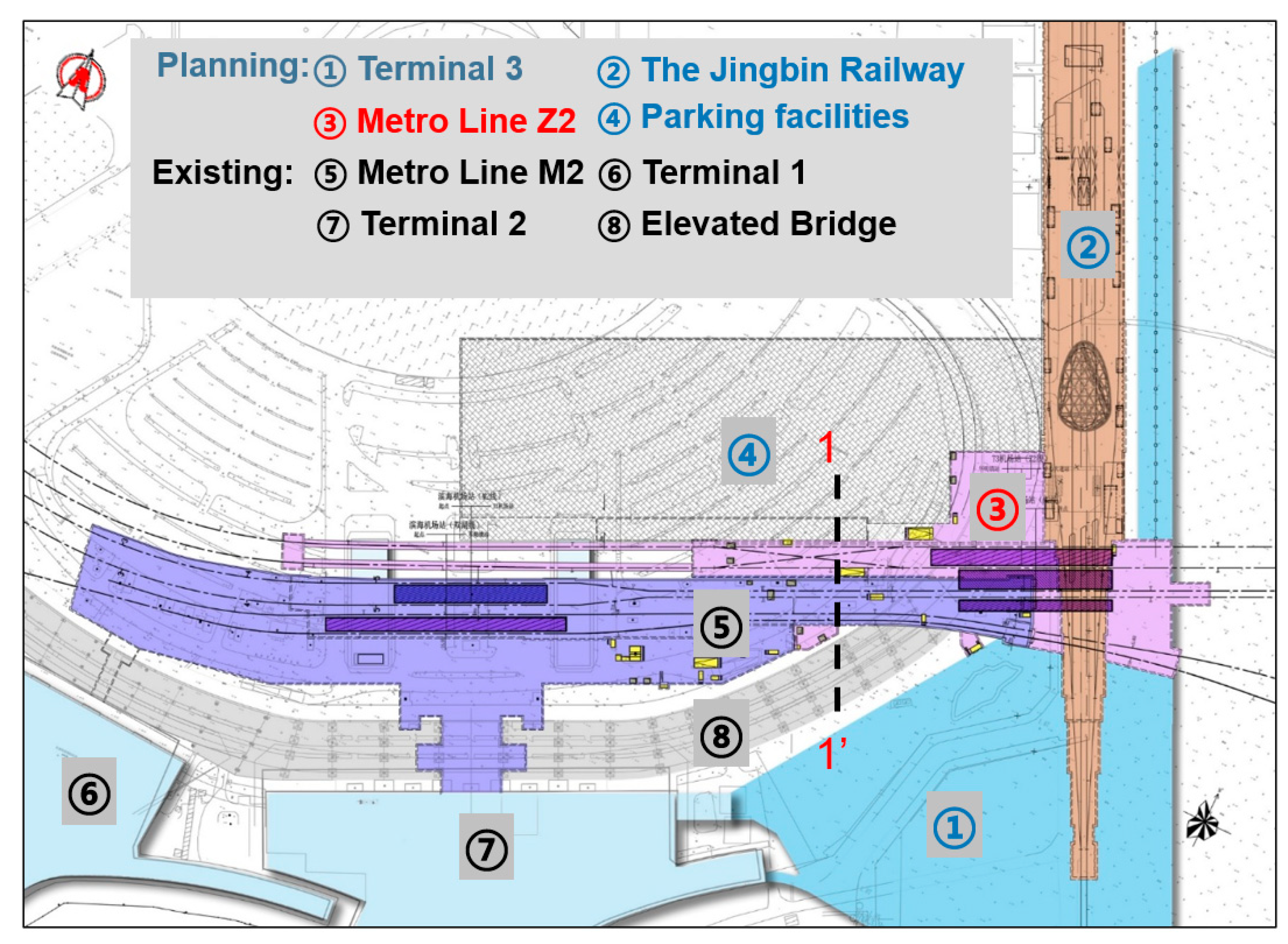
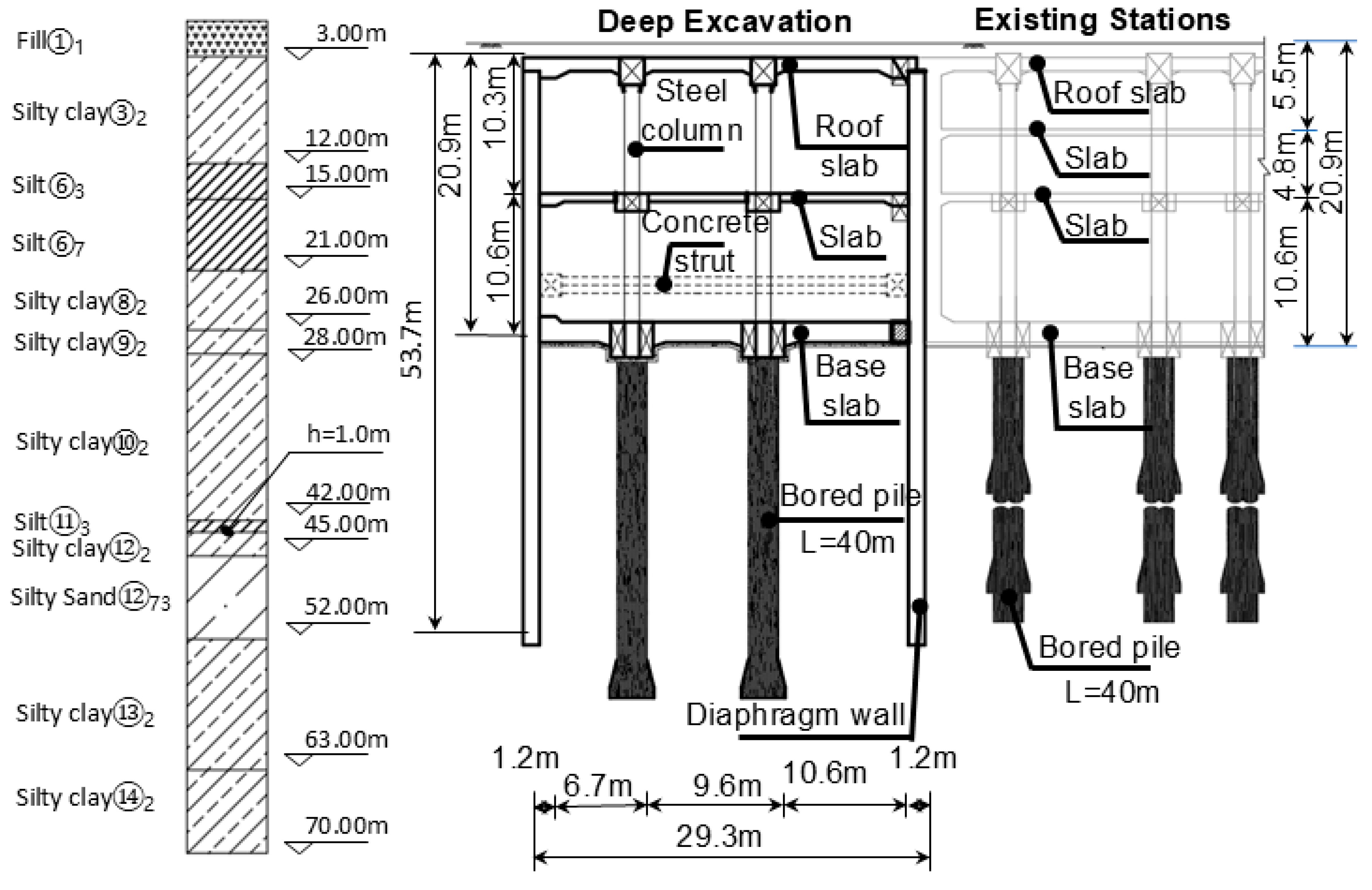
2.1. Project Overview
2.2. Environmental Overview of the Site
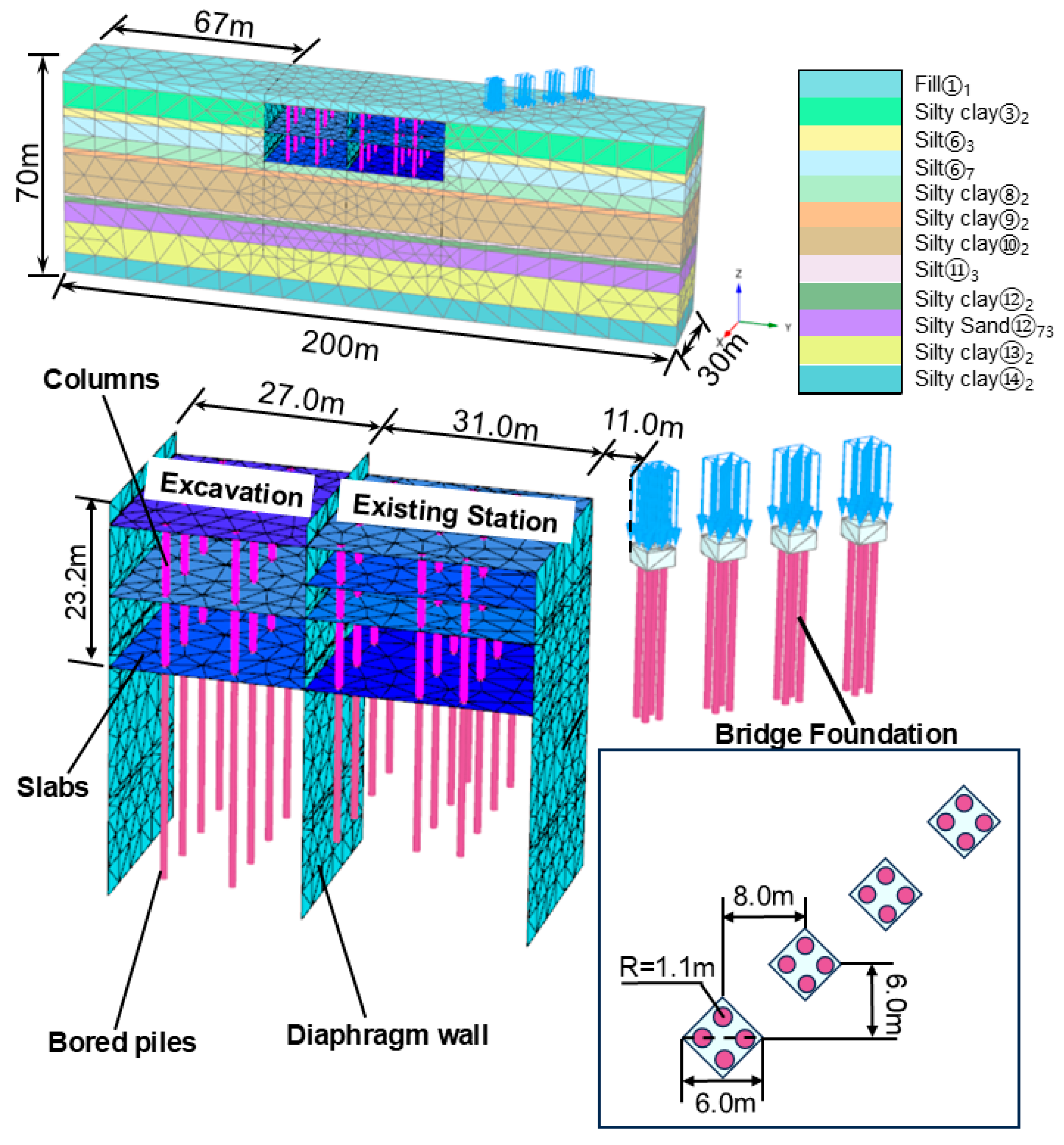
2.3. Geometric Model Parameters and Boundary Conditions
2.4. Calculation Parameters
2.5. Construction Procedures
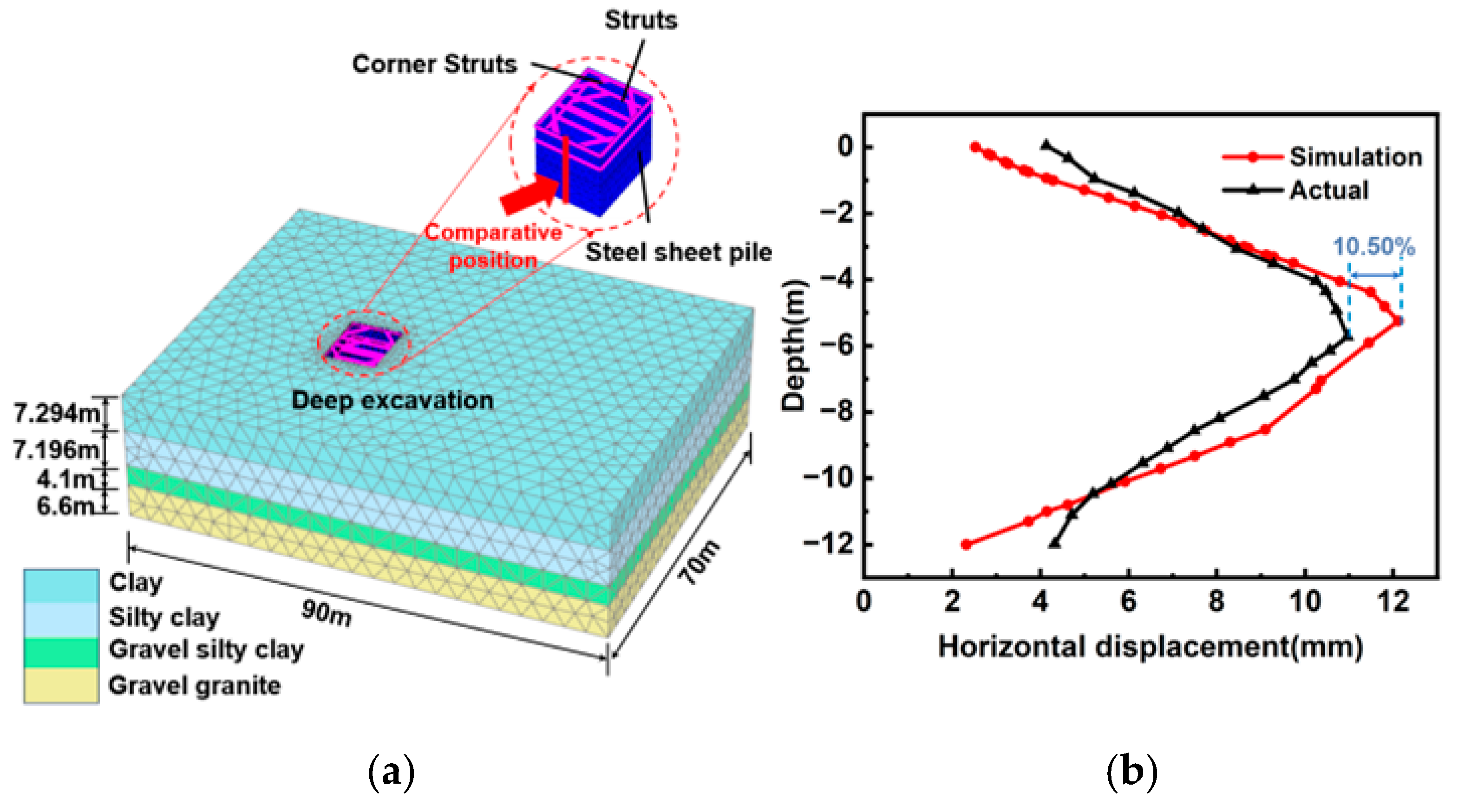
2.6. Model Validation
3. Simulation Cases and Result Analysis
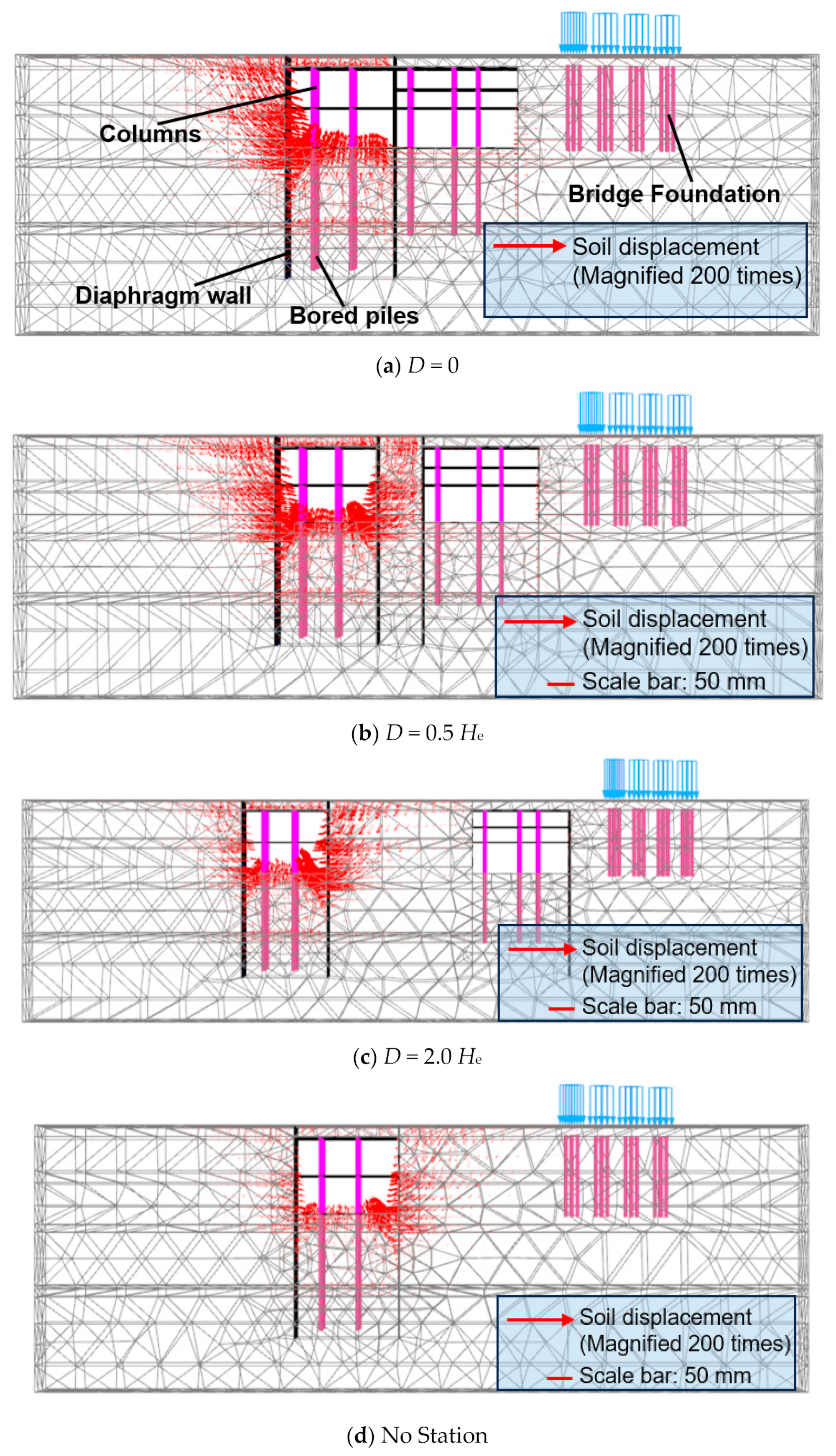
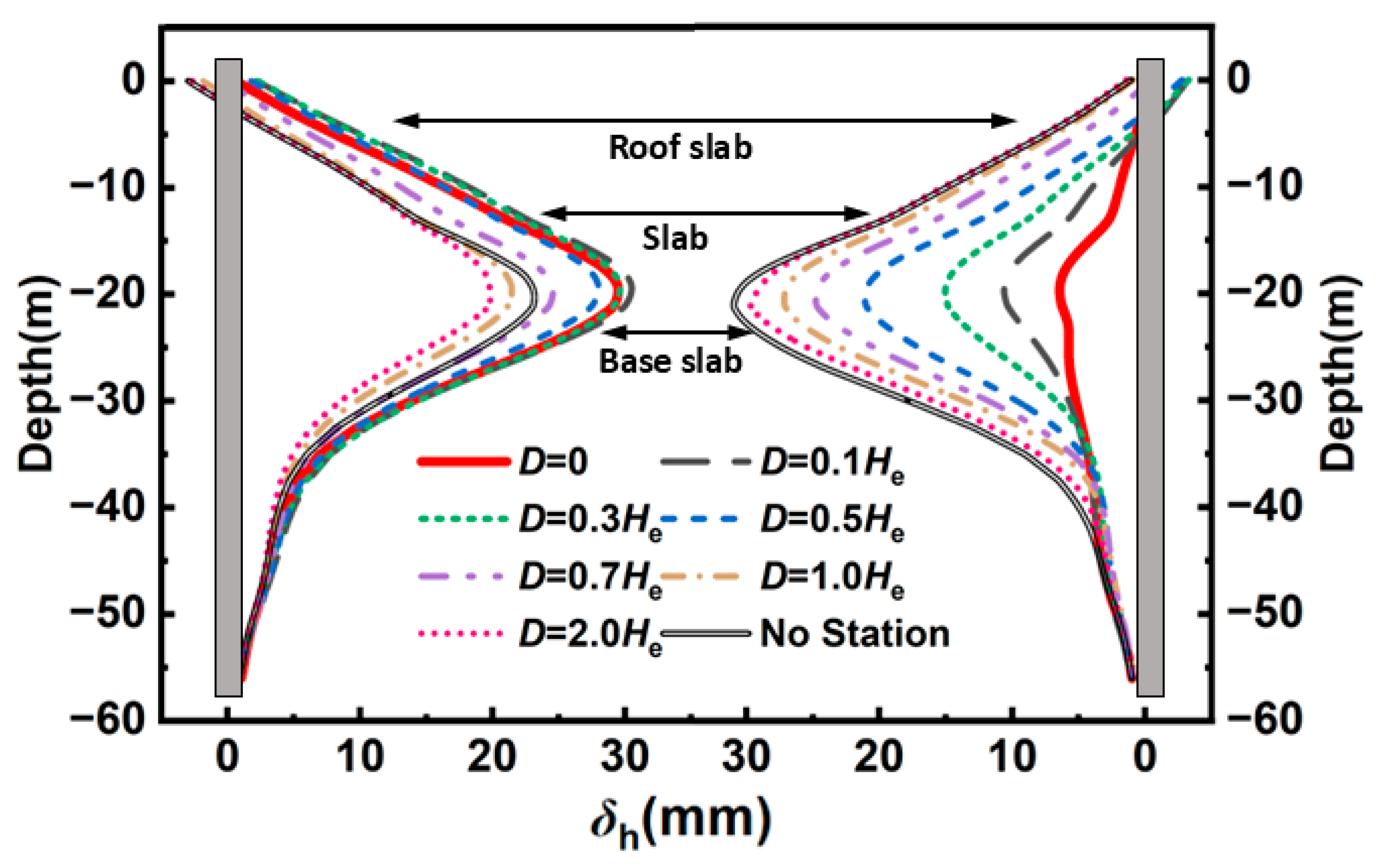
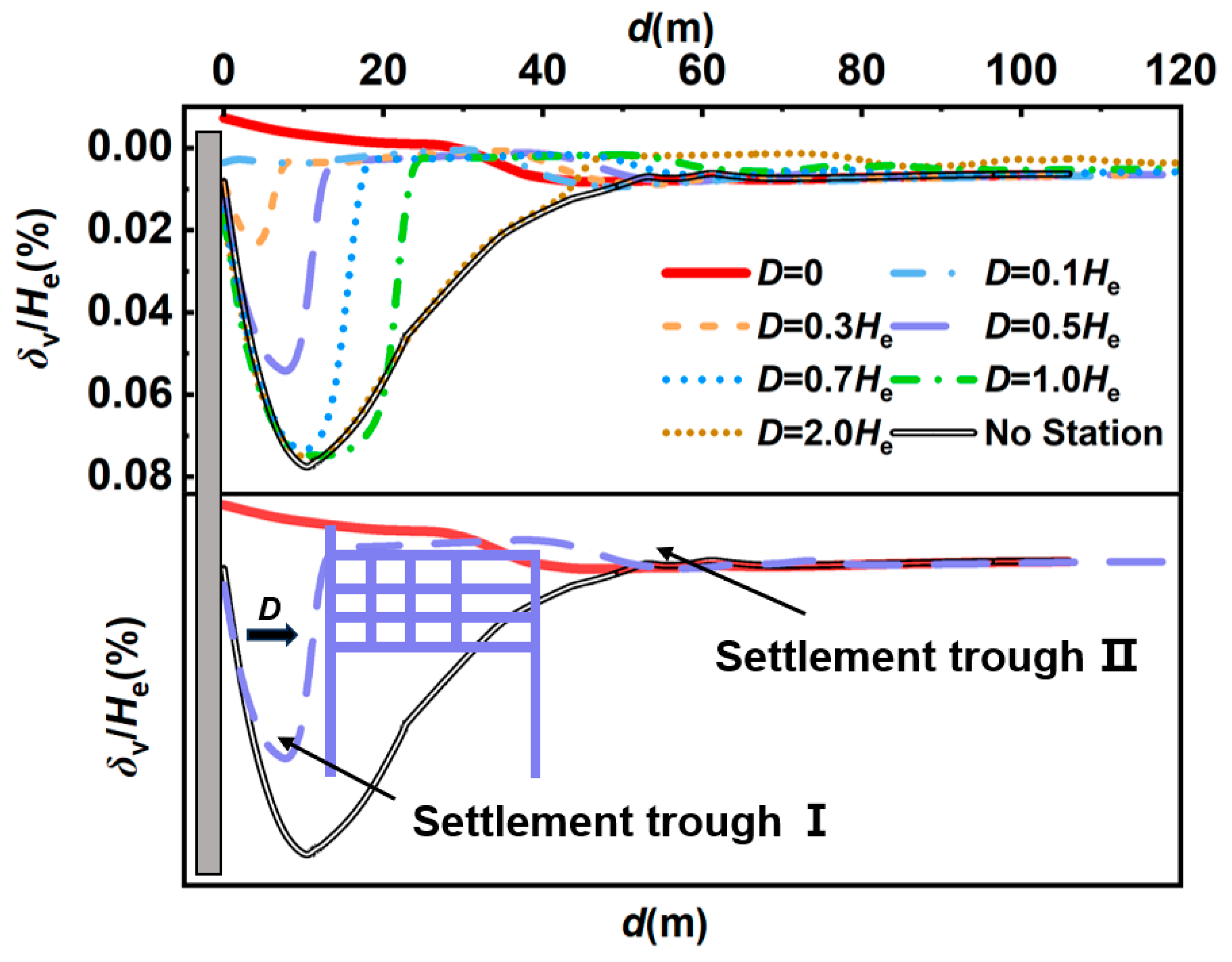
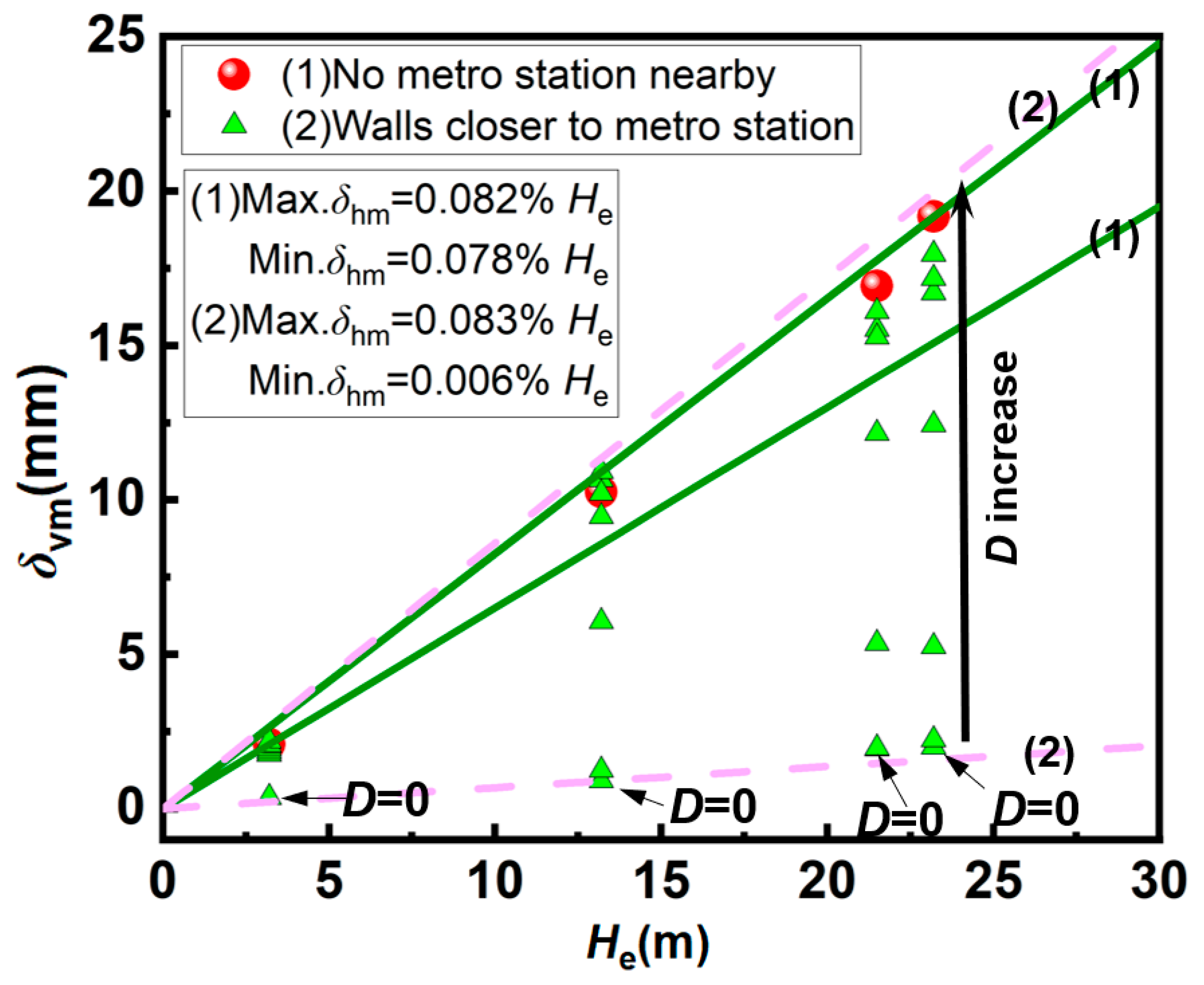
3.1. Asymmetric Deformation of the Excavation Under the “Shared Wall” Constraint
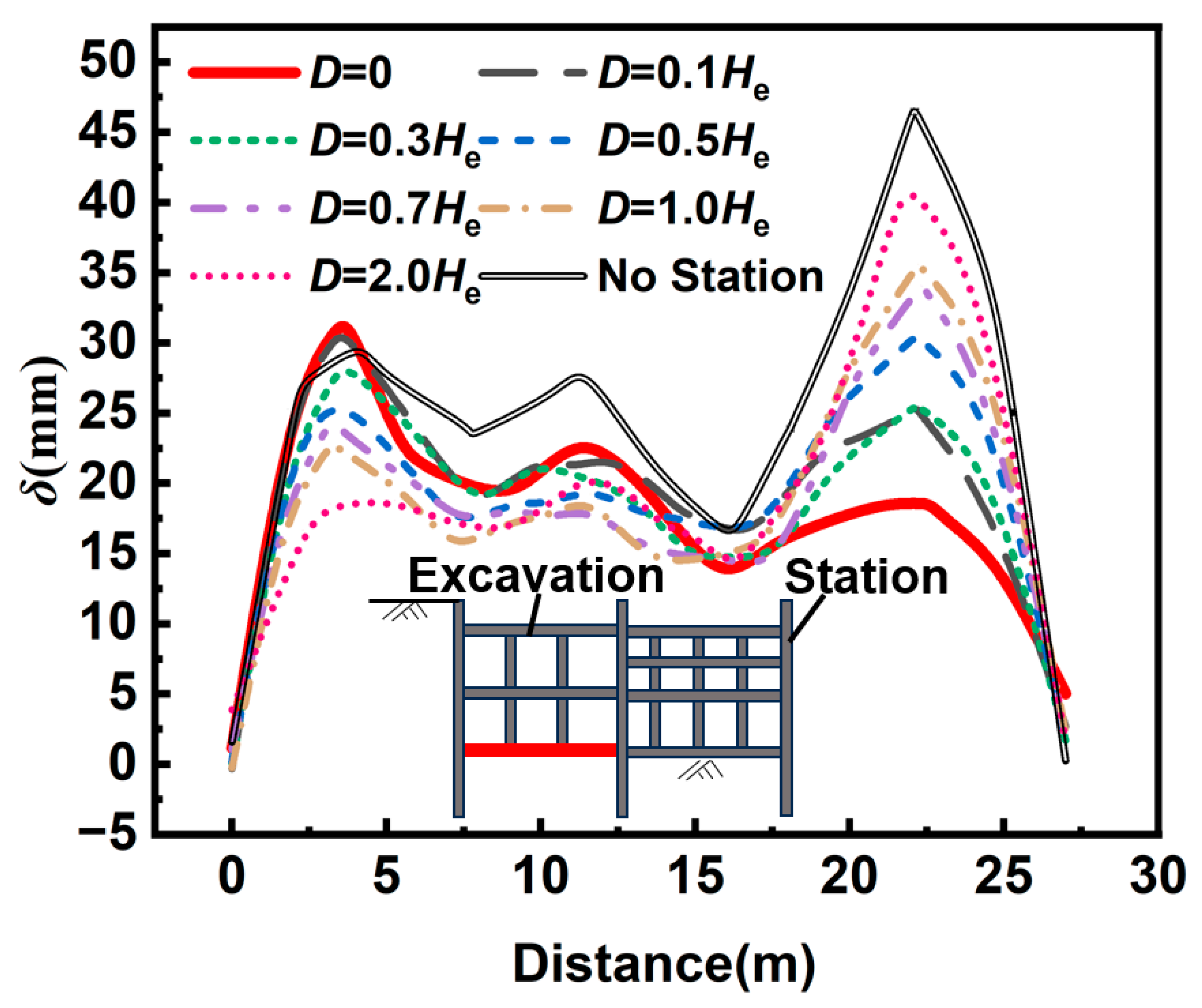
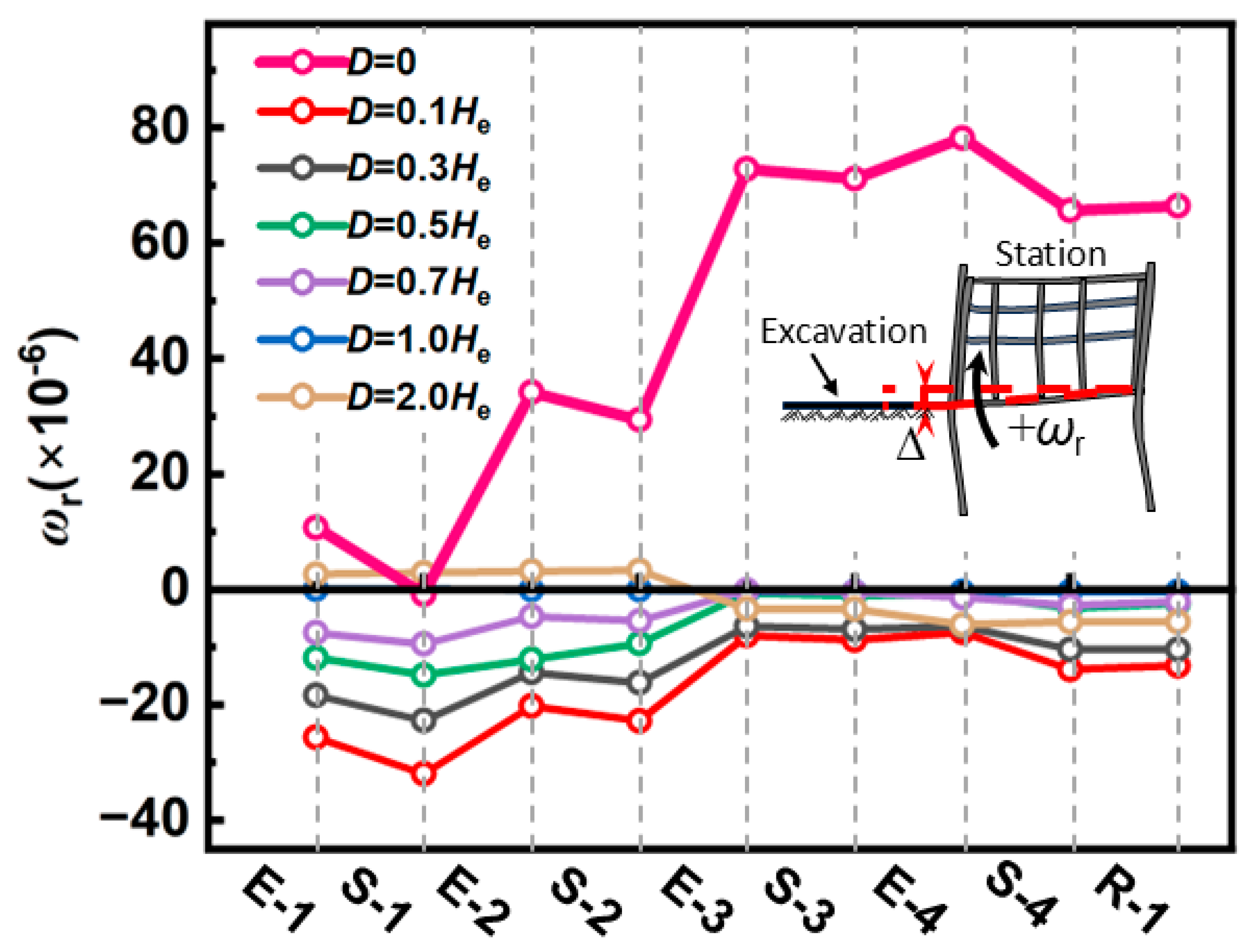
3.2. Excavation-Induced Deformation Pattern of the Shared-Wall Existing Station
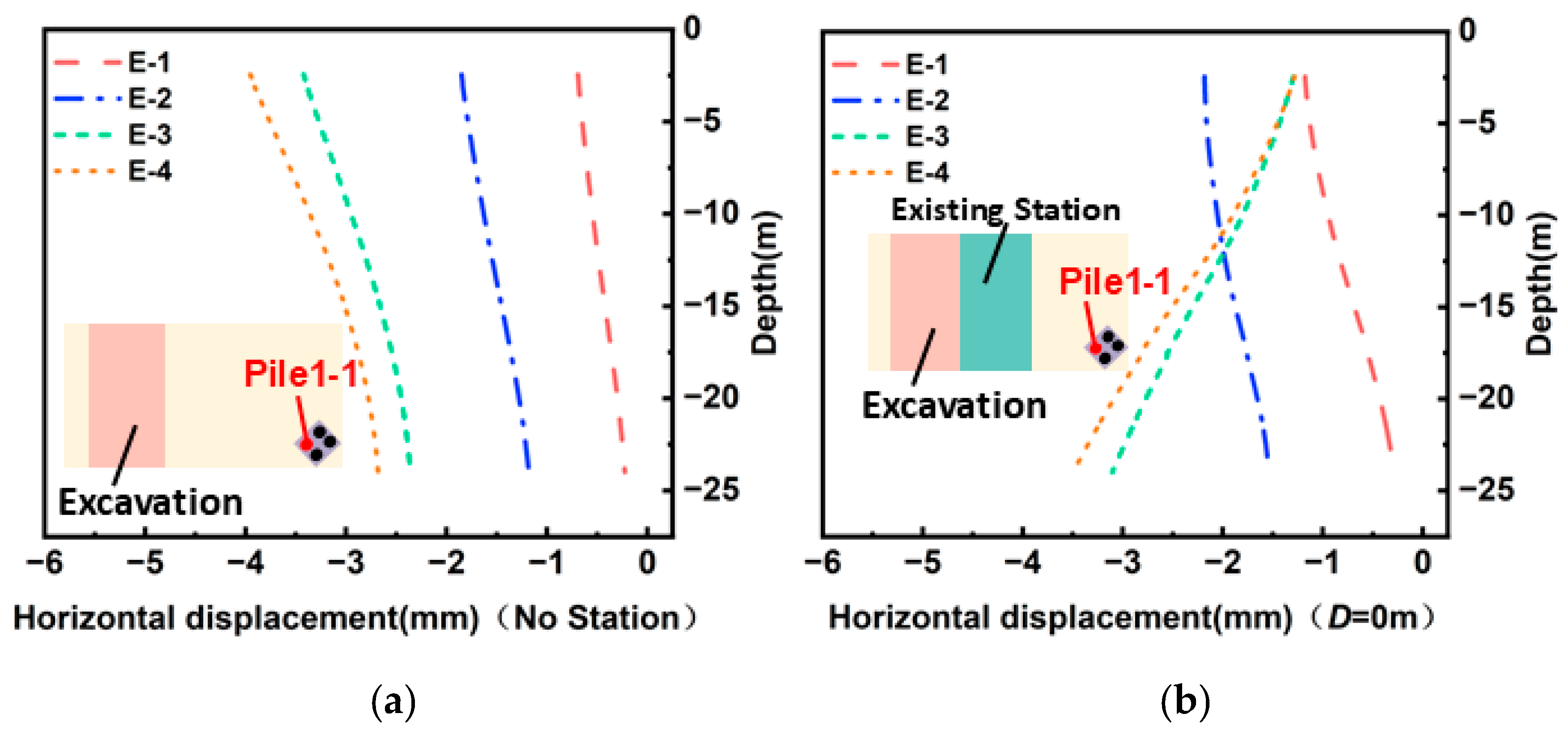
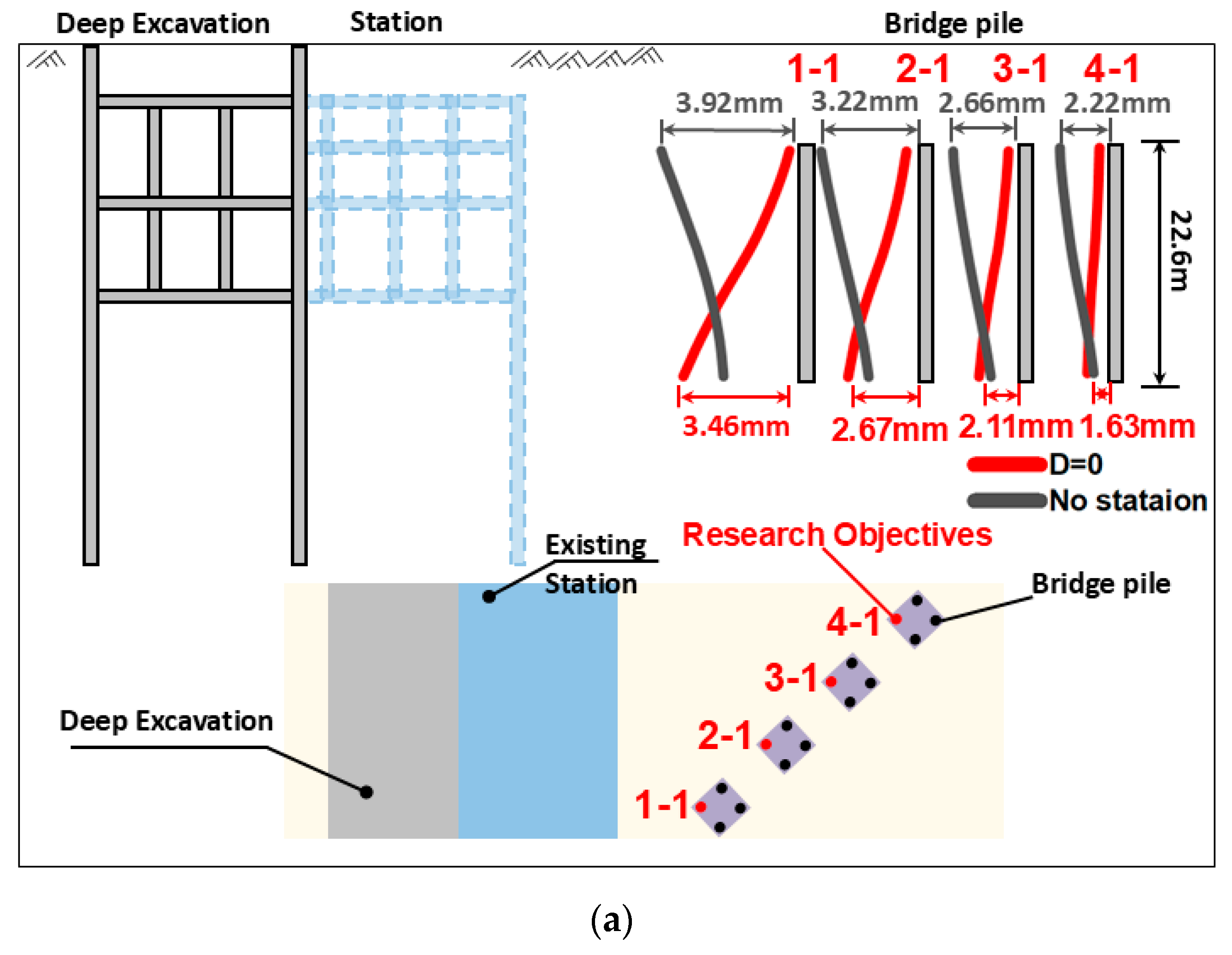
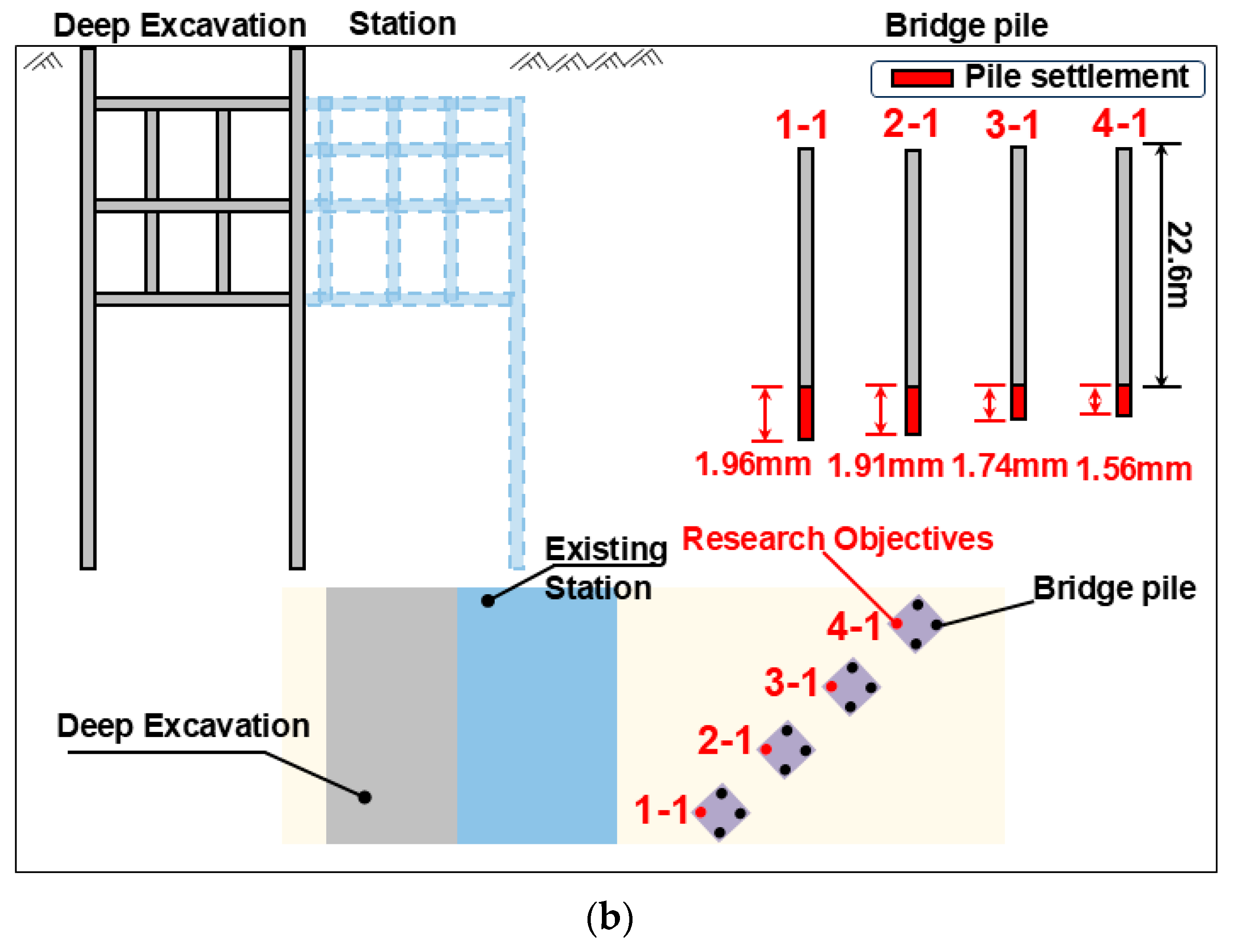
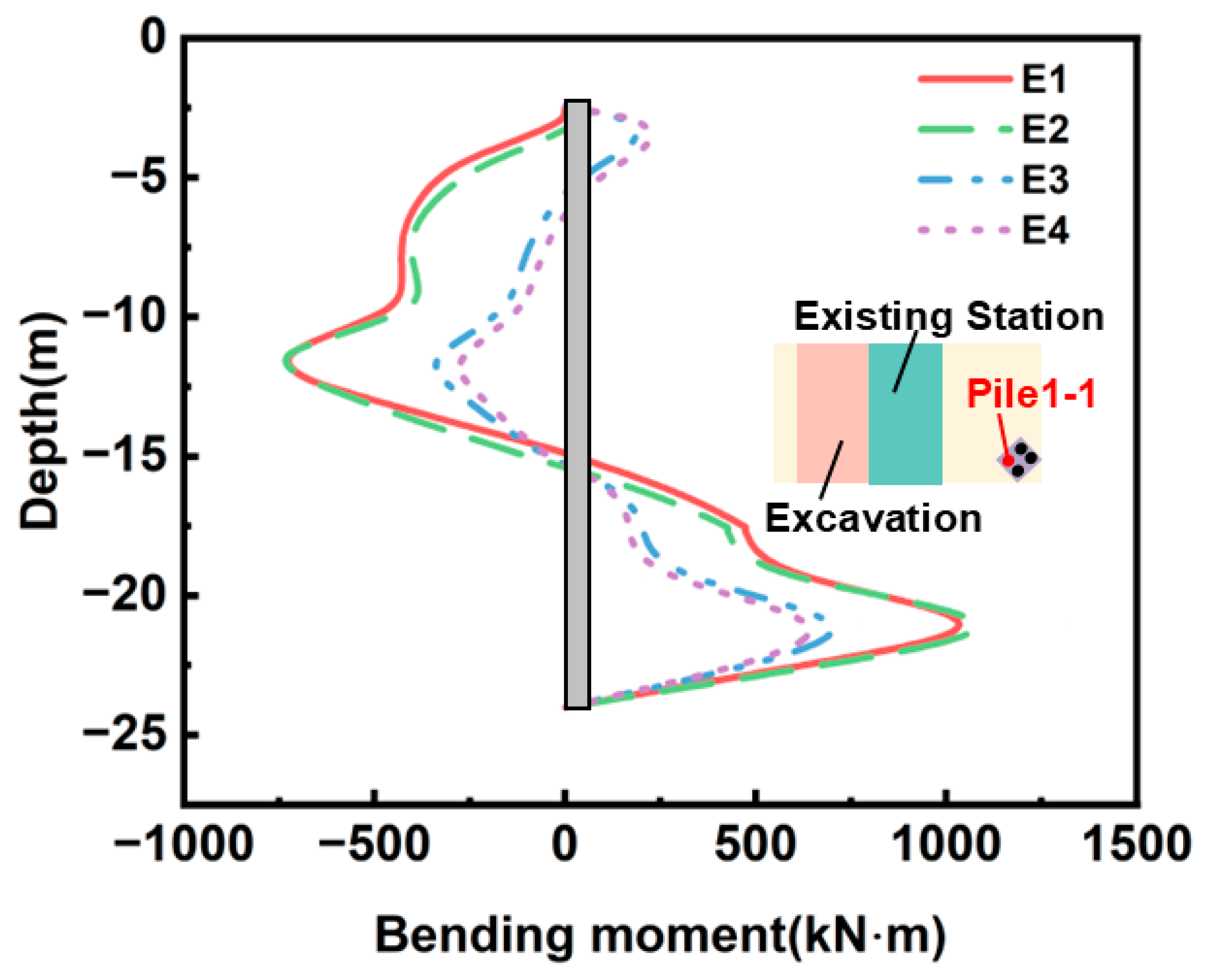
3.3. Deformation Mechanism of Adjacent Bridge Piles Considering Influence of Existing Structures
4. Parametric Study
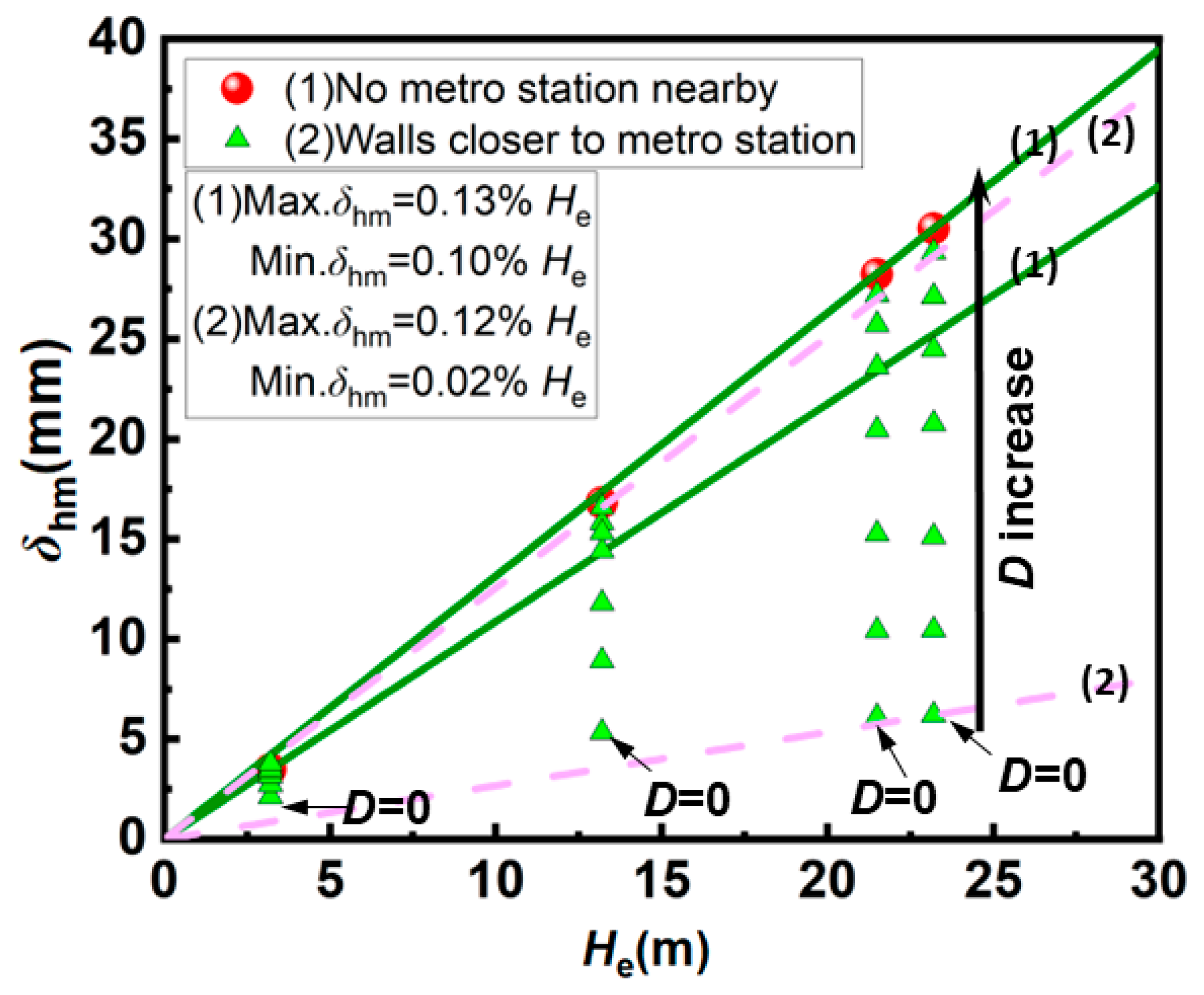
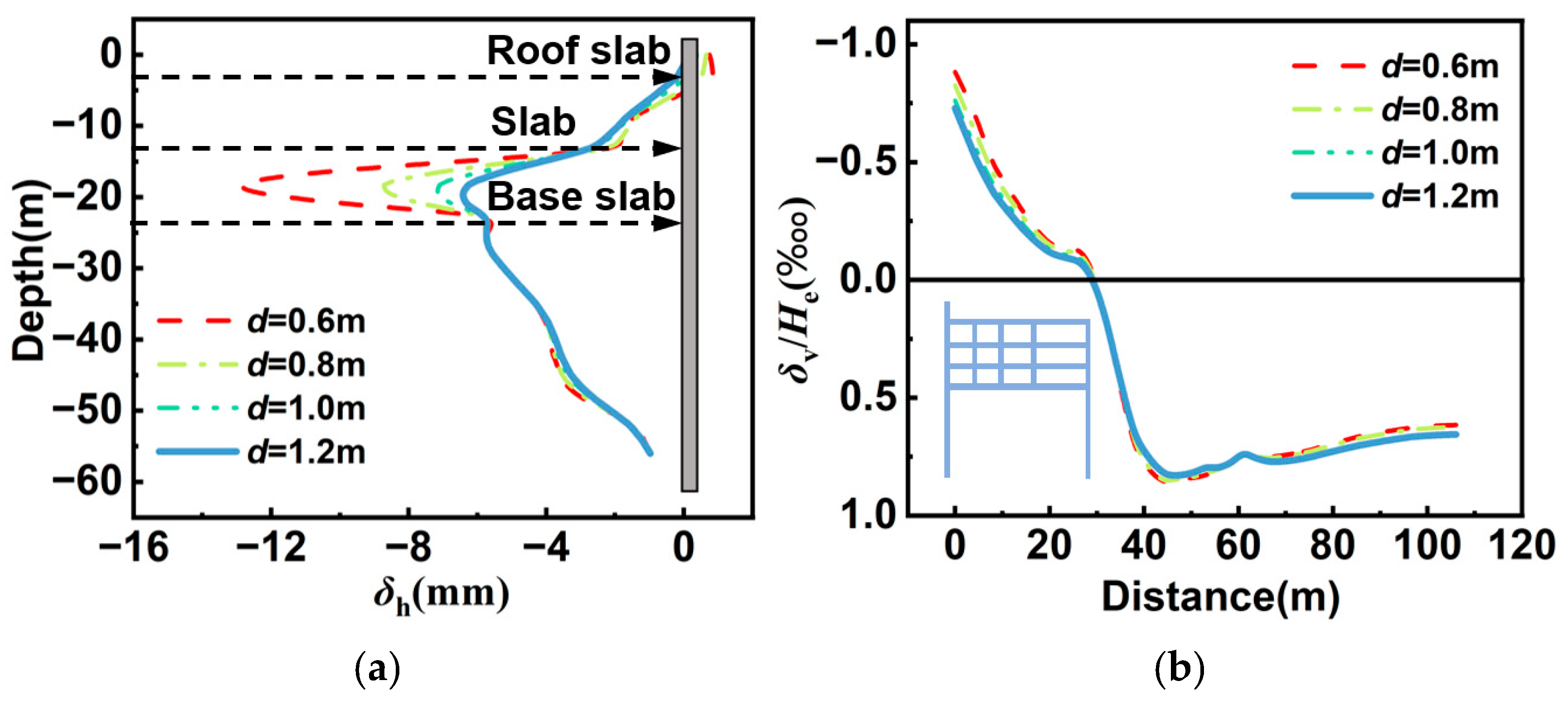
4.1. Thickness of the Shared Diaphragm Wall
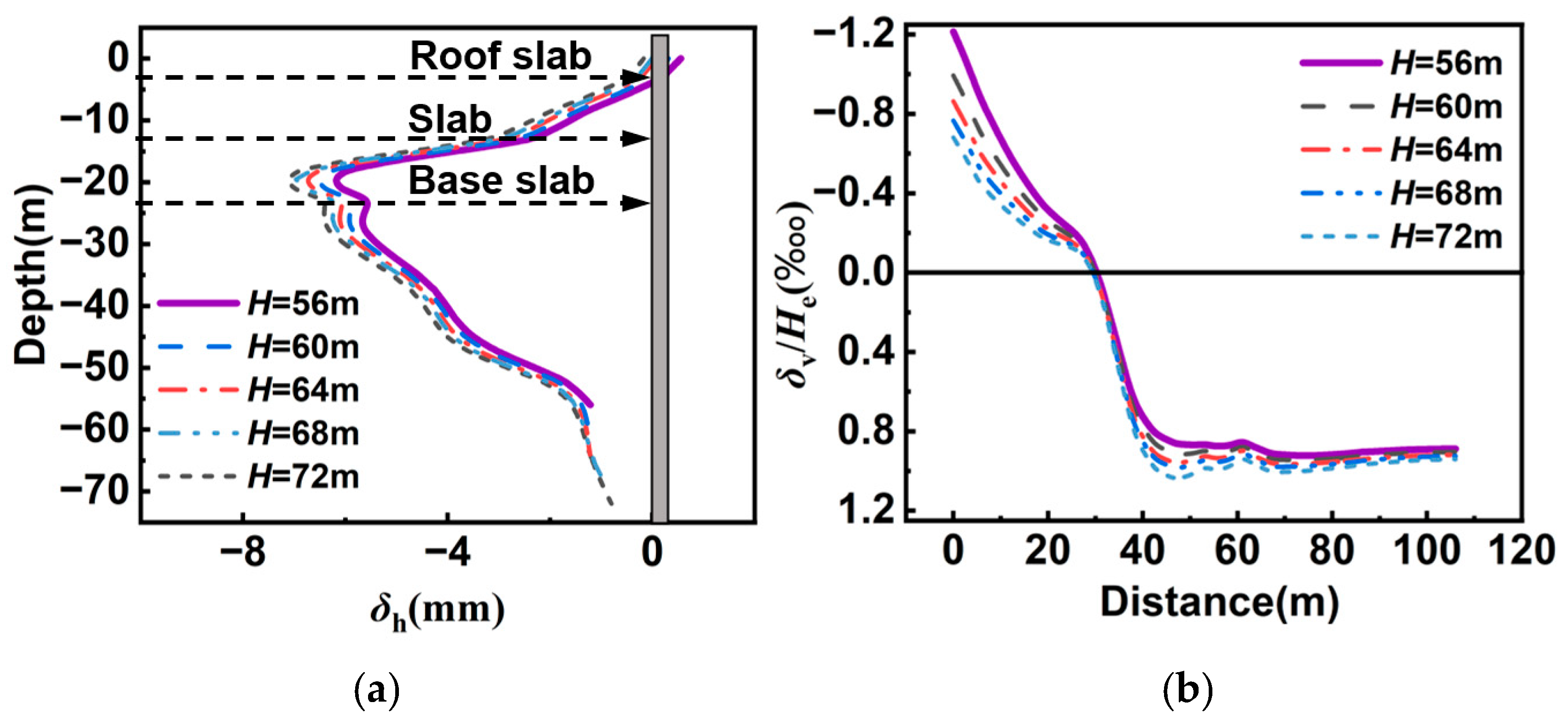
4.2. Depth of Shared Diaphragm Wall
5. Conclusions
- Asymmetric constraint mechanism: The existing station acts as a high-stiffness boundary that fundamentally modifies the excavation’s deformation pattern. Under the shared-wall condition (D = 0), lateral displacement and basal heave on the near side are effectively suppressed. This restraint decays nonlinearly and becomes negligible once the spacing exceeds 2.0 He.
- Deformation mode reversal: Under non-shared scenarios, the station tilts “counter-clockwise toward the excavation” due to ground loss; however, in shared-wall systems, the station exhibits “clockwise tilting away from the excavation,” which is directly driven by excavation-induced basal rebound transferred through the shared diaphragm wall.
- Shielding effect on piles: The station exerts a significant “shielding effect” on adjacent bridge piles. It restricts shallow soil movement, shifting the pile deformation pattern from a cantilever mode to a deep lateral displacement profile, where the maximum displacement occurs at the pile toe instead of the head.
- Practical implementation and design: Effectively controlling station deformation requires optimizing both shared wall thickness and depth. Designers should shift the priority from traditional settlement control to anti-heave measures. Furthermore, monitoring strategies for adjacent piles must extend to the pile toes to capture the depth-dependent shielding response.
Author Contributions
Funding
Data Availability Statement
Conflicts of Interest
References
- Tan, Y.; Wang, D. Characteristics of a large-scale deep foundation pit excavated by the central-island technique in Shanghai soft clay. II: Top-down construction of the peripheral rectangular pit. J. Geotech. Geoenviron. Eng. 2013, 139, 1894–1910. [Google Scholar] [CrossRef]
- Tan, Y.; Wei, B.; Zhou, X.; Diao, Y. Lessons learned from construction of Shanghai metro stations: Importance of quick excavation, prompt propping, timely casting, and segmented construction. J. Perform. Constr. Facil. 2015, 29, 04014096. [Google Scholar] [CrossRef]
- Tan, Y.; Wei, B.; Diao, Y.; Zhou, X. Spatial corner effects of long and narrow multipropped deep excavations in Shanghai soft clay. J. Perform. Constr. Facil. 2014, 28, 04014015. [Google Scholar] [CrossRef]
- Jia, Y.; Cao, Z.; Li, Z.; Du, F.; Huang, C.; Lin, H.; Wang, W.; Zhai, M. Nonlinear evolution characteristics and seepage mechanical model of fluids in broken rock mass based on the bifurcation theory. Sci. Rep. 2024, 14, 10982. [Google Scholar]
- Lin, H.; Zhang, W.; Guo, S.; Zhang, X.; Wang, L.; Zhang, J. Study on the energy evolution mechanism and fractal characteristics of coal failure under dynamic loading. ACS Omega 2025, 10, 54710–54719. [Google Scholar] [CrossRef] [PubMed]
- Tan, Y.; Wang, D. Characteristics of a large-scale deep foundation pit excavated by the central-island technique in Shanghai soft clay. I: Bottom-up construction of the central cylindrical shaft. J. Geotech. Geoenviron. Eng. 2013, 139, 1875–1893. [Google Scholar] [CrossRef]
- Zhen, J.; Zheng, G.; Huang, J.; Lin, S.; Pei, H.; Gao, S.; Li, Q.; Cheng, X. Deformation and Control of Metro Structures during Asymmetric Bilateral Zero-Distance Excavations. Int. J. Geomech. 2025, 25, 05025008. [Google Scholar] [CrossRef]
- Zheng, G.; Huang, J.; Diao, Y.; Yan, Y.; Jiao, C.; Zhang, L.; Jia, J.; Peng, J. Field Investigation of Deflection Characteristics and Control Strategies of a Short Floating Pile Adjacent to Deep Excavation. J. Geotech. Geoenviron. Eng. 2025, 151, 05025001. [Google Scholar] [CrossRef]
- Xia, B.; Zheng, G.; Zhou, H.; He, Y. Evaluation of building damage caused by excavation-induced ground movements in three-dimensional deformation field: A case study in Tianjin, China. Acta Geotech. 2025, 20, 3795–3809. [Google Scholar] [CrossRef]
- Zeng, S.; Sun, H.; Tao, Y.; Pan, S.; Cai, Y. Multi-stage and multi-objective optimization framework for servo-controlled wall deflection during deep excavation. Can. Geotech. J. 2026, 63, 1–24. [Google Scholar] [CrossRef]
- Tao, Y.; Pan, S.; Sun, H.; Shen, W. Active adjustment of axial forces in excavations with servo steel struts. Acta Geotech. 2025, 1–19. [Google Scholar] [CrossRef]
- Tao, Y.; Zeng, S.; Ying, T.; Sun, H.; Pan, S.; Cai, Y. A deep transfer learning model for the deformation of braced excavations with limited monitoring data. J. Rock Mech. Geotech. Eng. 2025, 17, 1555–1568. [Google Scholar] [CrossRef]
- Shi, J.; Liu, G.; Huang, P.; Ng, C.W.W. Interaction between a large-scale triangular excavation and adjacent structures in Shanghai soft clay. Tunn. Undergr. Space Technol. 2015, 50, 282–295. [Google Scholar] [CrossRef]
- Liu, G.B.; Huang, P.; Shi, J.W.; Ng, C.W.W. Performance of a deep excavation and its effect on adjacent tunnels in Shanghai soft clay. J. Perform. Constr. Facil. 2016, 30, 04016041. [Google Scholar] [CrossRef]
- Liang, R.; Wu, J.; Sun, L.; Shen, W.; Wu, W. Performances of adjacent metro structures due to zoned excavation of a large-scale basement in soft ground. Tunn. Undergr. Space Technol. 2021, 117, 104123. [Google Scholar] [CrossRef]
- Liao, S.-M.; Wei, S.-F.; Shen, S.-L. Structural responses of existing metro stations to adjacent deep excavations in Suzhou, China. J. Perform. Constr. Facil. 2016, 30, 04015089. [Google Scholar] [CrossRef]
- Deng, X.; Zheng, H.; Song, Z.; Wang, J. Deformation analysis of deep foundation pit works adjacent to a new subway station. J. Undergr. Space Eng. 2018, 14, 270–277. (In Chinese) [Google Scholar]
- Chen, S.-L.; Zhang, F.; Dai, N. Studies on stress and deformation behaviors of deep excavations adjacent to substructures. J. Shanghai Jiaotong Univ. 2016, 50, 1658–1664. (In Chinese) [Google Scholar]
- Zhou, F.; Zhou, P.; Li, J.; Lin, J.; Ge, T.; Deng, S.; Ren, R.; Wang, Z. Deformation characteristics and failure evolution process of the existing metro station under unilateral deep excavation. Eng. Fail. Anal. 2022, 131, 105870. [Google Scholar] [CrossRef]
- Wang, Z.; Zhou, F.; Zhou, P.; Jiang, Y.; Deng, S.; Ren, R. Research on deformation theory of existing stations based on single side excavation and unloading of large foundation pits with strong close connection. Chin. J. Rock Mech. Eng. 2020, 39, 2131–2147. (In Chinese) [Google Scholar]
- Yin, H.; Wang, S.; Wang, D.; Dong, Z.; Gao, Z.; Zhang, Z. Sheltering effect induced by established station to the new station excavation in Zhengzhou. Arch. Civ. Mech. Eng. 2023, 23, 175. [Google Scholar] [CrossRef]
- Hou, Y.M.; Wang, J.H.; Zhang, L.L. Finite-element modeling of a complex deep excavation in Shanghai. Acta Geotech. 2009, 4, 7–16. [Google Scholar] [CrossRef]
- Yang, T.; Xiong, S.; Liu, S.; Liu, Y.; Zhao, H.; Li, Y. Numerical analysis of the influence of deep foundation pit construction on adjacent subway stations in soft soil areas. Adv. Civ. Eng. 2022, 2022, 6071868. [Google Scholar] [CrossRef]
- Li, M.-G.; Wang, J.-H.; Chen, J.-J.; Zhang, Z.-J. Responses of a newly built metro line connected to deep excavations in soft clay. J. Perform. Constr. Facil. 2017, 31, 04017096. [Google Scholar] [CrossRef]
- Li, M.-G.; Xiao, X.; Wang, J.-H.; Chen, J.-J. Numerical study on responses of an existing metro line to staged deep excavations. Tunn. Undergr. Space Technol. 2019, 85, 268–281. [Google Scholar] [CrossRef]
- Yu, C.; Long, J.; Lu, M. Study on the influence of deep foundation pit excavation on adjacent metro structure. IOP Conf. Ser. Earth Environ. Sci. 2021, 768, 012101. [Google Scholar] [CrossRef]
- Xiang, X. Comparative analysis of deformation of adjacent station caused by different construction sequence of foundation pit. J. Railw. Eng. 2015, 32, 80–85. (In Chinese) [Google Scholar]
- Ou, X.; Zhang, X.; Fu, J.; Zhang, C.; Zhou, X.; Feng, H. Cause investigation of large deformation of a deep excavation support system subjected to unsymmetrical surface loading. Eng. Fail. Anal. 2020, 107, 104202. [Google Scholar] [CrossRef]
- Liu, B.; Zhang, D.; Xi, P. Influence of vehicle load mode on the response of an asymmetrically-loaded deep excavation. KSCE J. Civ. Eng. 2019, 23, 3315–3329. [Google Scholar] [CrossRef]
- Xu, C.; Xu, Y.; Sun, H.; Chen, Q. Characteristics of braced excavation under asymmetrical loads. Math. Probl. Eng. 2013, 2013, 452534. [Google Scholar] [CrossRef]
- Guo, P.; Gong, X.; Wang, Y. Displacement and force analyses of braced structure of deep excavation considering unsymmetrical surcharge effect. Comput. Geotech. 2019, 113, 103102. [Google Scholar] [CrossRef]
- Liu, S.; Yang, J.; Fu, J.; Zheng, X. Performance of a deep excavation irregular supporting structure subjected to asymmetric loading. Int. J. Geomech. 2019, 19, 05019007. [Google Scholar] [CrossRef]
- Wang, H. Effect of genetic algorithm in optimizing deep foundation pit supporting structure. Arab. J. Geosci. 2021, 14, 266. [Google Scholar] [CrossRef]
- Zhang, W.; Wu, N.; Jia, P.; Zhou, X.; Li, H.; Wang, G. Study of the mechanical performance of excavation under asymmetrical pressure and reinforcement measures. Arab. J. Geosci. 2021, 14, 1834. [Google Scholar] [CrossRef]
- Lei, H.; Zhan, B.; Feng, S.; Amin, M. Influence of foundation pit groups’ excavation on the deformation characteristics of adjacent railway subgrade and protection measures. Geotech. Geol. Eng. 2023, 41, 3877–3895. [Google Scholar] [CrossRef]
- Wu, J.; Yu, J.; Fang, F.; Lin, G.; Tang, X.; Ding, H.; Xu, C. Impact of Excavation on Adjacent Elevated Bridges and Optimization Analysis of Deformation Control. Buildings 2024, 14, 3197. [Google Scholar] [CrossRef]

| Soil Layer | Soil Name | Depth/m | γ/kN/m3 | c’/kPa | φ’/° | /kPa | /kPa | /kPa | /kPa |
|---|---|---|---|---|---|---|---|---|---|
| ➀1 | Fill | 0~3 | 18.5 | 12.4 | 16 | 4400 | 4400 | 26,300 | 52,800 |
| ➂2 | Silty clay | 3~12 | 18.5 | 13.4 | 27.1 | 6400 | 5200 | 49,300 | 145,600 |
| ➅3 | Silt | 12~15 | 20.3 | 19.8 | 32 | 9900 | 5200 | 49,400 | 62,400 |
| ➅7 | Silt | 15~21 | 20.2 | 23.5 | 29.2 | 8300 | 9100 | 83,200 | 109,200 |
| ➇2 | Silty clay | 21~26 | 19.6 | 21.7 | 22.9 | 10,000 | 12,100 | 84,500 | 338,800 |
| ➈2 | Silty clay | 26~28 | 19.7 | 13.6 | 24.4 | 10,500 | 13,800 | 72,100 | 220,800 |
| ➉2 | Silty clay | 28~42 | 19.9 | 24.8 | 22.4 | 3800 | 7400 | 46,700 | 207,200 |
| ⑪3 | Silt | 42~43 | 20.3 | 24 | 31.1 | 8500 | 7100 | 54,700 | 85,200 |
| ⑫2 | Silty clay | 43~45 | 19.9 | 24.8 | 22.4 | 5600 | 6700 | 46,700 | 187,600 |
| ⑫73 | Silty sand | 45~52 | 19.4 | 13 | 25.7 | 6000 | 7200 | 50,400 | 86,400 |
| ⑬2 | Silty clay | 52~63 | 19.7 | 38.7 | 15.9 | 10,000 | 10,000 | 77,000 | 280,000 |
| ⑭2 | Silty clay | 63~70 | 19.7 | 28.3 | 21 | 6000 | 6000 | 42,000 | 168,000 |
| Structure | Element Type | Elastic Modulus/GPa |
|---|---|---|
| Diaphragm wall | Plate | 34.5 |
| slabs | Plate | 34.5 |
| columns | Beam | 200 |
| Bored piles and bridge piles | Embedded Beam | 34.5 |
| concrete struts | Beam | 30 |
| Stage | Construction Steps |
|---|---|
| 1 | In situ stress equilibrium |
| 2 | Generate the existing station and bridge foundation |
| 3 | Reset displacement to 0. Construct the excavation diaphragm wall and engineering piles |
| 4 | Dewater and excavate to the first soil layer (−3.2 m) (E-1) |
| 5 | Construct the excavation top slab and steel pipe columns (S-1) |
| 6 | Backfill soil on the top slab |
| 7 | Dewater and excavate to the second soil layer (−12.15 m) (E-2) |
| 8 | Construct the excavation middle slab (S-2) |
| 9 | Dewater and excavate to the third soil layer (−21.45 m) (E-3) |
| 10 | Construct the third concrete struts (S-3) |
| 11 | Dewater and excavate to the fourth soil layer (−23.06 m) (E-4) |
| 12 | Construct the base slab (S-4) |
| 13 | Remove the concrete struts (R-1) |
| Variables | Calculation Condition |
|---|---|
| Distance between the excavation and existing station (D) | 0, 0.1 He, 0.3 He, 0.5 He, 0.7 He, 1.0 He, and 2.0 He |
| Thickness of the shared diaphragm wall when D = 0 (d) | 0.6 m, 0.8 m, 1.0 m, and 1.2 m |
| Depth of the shared diaphragm wall when D = 0 (H) | 56 m, 60 m, 64 m, 68 m, and 72 m |
| No station | / |
Disclaimer/Publisher’s Note: The statements, opinions and data contained in all publications are solely those of the individual author(s) and contributor(s) and not of MDPI and/or the editor(s). MDPI and/or the editor(s) disclaim responsibility for any injury to people or property resulting from any ideas, methods, instructions or products referred to in the content. |
© 2026 by the authors. Licensee MDPI, Basel, Switzerland. This article is an open access article distributed under the terms and conditions of the Creative Commons Attribution (CC BY) license.
Share and Cite
Ma, Y.; Kang, M.; Li, H.; Zhen, J.; Yin, X.; Hao, J.; Hu, S.; Sun, J.; Cheng, X.; Zheng, G. Investigating the Coupling Deformation Mechanism of Asymmetric Deep Excavation Adjacent to a Shared-Wall Metro Station and Elevated Bridge Piles in Soft Soil. Buildings 2026, 16, 480. https://doi.org/10.3390/buildings16030480
Ma Y, Kang M, Li H, Zhen J, Yin X, Hao J, Hu S, Sun J, Cheng X, Zheng G. Investigating the Coupling Deformation Mechanism of Asymmetric Deep Excavation Adjacent to a Shared-Wall Metro Station and Elevated Bridge Piles in Soft Soil. Buildings. 2026; 16(3):480. https://doi.org/10.3390/buildings16030480
Chicago/Turabian StyleMa, Yunkang, Mingyu Kang, Hongtao Li, Jie Zhen, Xiangjian Yin, Jinjin Hao, Shenghan Hu, Jibin Sun, Xuesong Cheng, and Gang Zheng. 2026. "Investigating the Coupling Deformation Mechanism of Asymmetric Deep Excavation Adjacent to a Shared-Wall Metro Station and Elevated Bridge Piles in Soft Soil" Buildings 16, no. 3: 480. https://doi.org/10.3390/buildings16030480
APA StyleMa, Y., Kang, M., Li, H., Zhen, J., Yin, X., Hao, J., Hu, S., Sun, J., Cheng, X., & Zheng, G. (2026). Investigating the Coupling Deformation Mechanism of Asymmetric Deep Excavation Adjacent to a Shared-Wall Metro Station and Elevated Bridge Piles in Soft Soil. Buildings, 16(3), 480. https://doi.org/10.3390/buildings16030480