Article

Effect of Vibratory Mixing on the Quasi-Static and Dynamic Compressive Properties of a Sustainable Concrete for Transmission Tower Foundations

1
Guangzhou Power Supply Bureau of Guangdong Power Grid Co., Ltd., Guangzhou 510620, China
2
School of Civil and Transportation Engineering, Guangdong University of Technology, Guangzhou 510006, China
3
College of Urban and Rural Construction, Zhongkai University of Agriculture and Engineering, Guangzhou 510225, China
4
School of Civil Engineering, Guangdong Communication Polytechnic, Guangzhou 510650, China
*
Authors to whom correspondence should be addressed.
Buildings 2026, 16(2), 310; https://doi.org/10.3390/buildings16020310
Submission received: 2 December 2025 / Revised: 1 January 2026 / Accepted: 9 January 2026 / Published: 11 January 2026
(This article belongs to the Section Building Materials, and Repair & Renovation)

Abstract

This study addresses the need for flexible and high-toughness materials for transmission tower pile foundations subjected to typhoons and earthquakes by investigating the static and dynamic mechanical behavior of rubberized concrete prepared using vibratory mixing. The objectives are to assess how vibratory mixing influences strength evolution, failure modes, strain rate sensitivity, and energy absorption of rubberized concrete compared with conventional mixing at 0%, 20%, and 30% rubber contents. Quasi-static compression tests and Split Hopkinson Pressure Bar (SHPB) dynamic compression tests were conducted to quantify these effects. The results show that vibratory mixing significantly improves the paste–aggregate–rubber interfacial structure. It increases the compressive strength by 8.4–30% compared with conventional mixing and reduces the strength loss at the 30% rubber content from 51.12% to 38.98%. Under high-speed impact loading, vibratory mixed rubber concrete exhibits higher peak strength, stronger energy absorption capacity, and a more stable strain rate response. The mixture with 20% rubber content shows the best comprehensive performance and is suitable for impact-resistant design of transmission tower foundations. Future research should extend this work by considering different rubber particle sizes and vibratory mixing frequencies to identify optimal combinations, and by incorporating quantitative fragment size distribution analysis under impact loading to further clarify the fracture mechanisms and enhance the application of rubberized concrete.

1. Introduction

In recent years, extreme weather events and strong disturbances have occurred more frequently, and the service environment of transmission towers has become more severe. The tower structure can experience intense swaying and rapid vibratory under accidental dynamic loads such as typhoons, earthquakes, and nearby blasting activities [1,2]. These actions subject the tower foundation and cap concrete to significant instantaneous dynamic stresses and high strain rate effects within a very short time [3]. The impact resistance and energy absorption capacity of foundation materials under such dynamic conditions play a decisive role in the overall safety of transmission tower structures. Existing studies have shown that rubber particles have good deformability [4,5] and strong energy absorption capacity [6,7,8,9], which can significantly improve the impact resistance of concrete materials [10,11,12,13]. Therefore, incorporating rubber particles into the concrete of transmission tower foundations can provide flexible buffering and stress wave attenuation under strong dynamic loads such as blasting vibrations and earthquakes [14], thereby improving the dynamic response of foundation components.
However, rubber particles have a low elastic modulus [15] and a weak interfacial bond [16,17,18], which can reduce the compressive strength of concrete to some extent [19,20,21,22]. The foundation of a transmission tower is a key load-bearing component of the entire structural system, and it requires higher material strength and bearing stability. This limitation restricts the engineering application of rubberized concrete. Therefore, improving its energy absorption capacity while mitigating the reduction in strength is essential for enabling the use of rubberized concrete in transmission tower foundations.
In recent years, vibratory mixing technology has been introduced into concrete production [23,24,25,26,27]. Its core principle is to apply high-frequency mechanical vibratory during mixing. This process can significantly improve the encapsulation of rubber and aggregate by the cement paste and increase the density of the interfacial transition zone, thereby enhancing the overall load-bearing performance of the material. Xiong et al. [28] found that vibratory mixing can effectively improve the mechanical properties of high-strength lightweight concrete. Zheng et al. [29] verified the positive effects of vibratory mixing on fiber distribution uniformity and interfacial bonding strength in steel fiber concrete. Zheng et al. [25] further confirmed through X-Ray Diffraction (XRD) and Fourier Transform Infrared (FTIR) analyses that vibratory mixing promotes the participation of SiO2 in hydration, increases the hydration degree, and improves structural compactness. Its advantage is that it does not require additional admixtures or changes in the mix proportions. It enhances the strength of rubberized concrete solely through the improvement of the mixing process, making it more suitable for high load-bearing structures such as transmission tower foundations. However, most previous studies on vibratory mixing have been limited to conventional or fiber-reinforced concrete, with little attention paid to its application in rubberized concrete.
Although vibratory mixing has shown potential in improving interfacial structures and mechanical properties in several concrete systems, systematic studies on vibratory mixed rubberized concrete remain limited. However, how vibratory mixing influences the dynamic response, strain rate sensitivity, and energy absorption of rubberized concrete under SHPB loading remains unclear. Based on this, this study prepared concrete specimens with different rubber contents using vibratory mixing and conventional mixing. Quasi-static compression tests and Split Hopkinson Pressure Bar (SHPB) dynamic compression tests were conducted. The strength evolution, failure characteristics, strain rate sensitivity, and energy absorption capacity of the materials were systematically compared. The role of vibratory mixing in regulating the interfacial structure and improving performance was also examined.
This work is particularly important for transmission tower foundations operating under extreme environmental conditions. Typhoon-induced wind loads mainly involve low-frequency, long-duration cyclic actions that govern the static load-bearing requirement, whereas the high-frequency shock components of earthquakes and nearby blasting vibrations impose impulsive loads with strain rates in the range of 10 1 10 3 s 1 , consistent with the quasi-static and SHPB loading regimes adopted in this study [30,31,32,33]. The strain rate-dependent material parameters obtained herein provide reliable guidance for optimizing foundation materials and improving impact-resistant design under different service conditions.

2. Specimen Preparation and Experimental Principles

2.1. Mix Proportions of Raw Materials and Mixing Methods

The concrete specimens used in this study were composed of cement, tap water, fine aggregate, and coarse aggregate. The cement was P·O 42.5 ordinary Portland cement. The fine aggregate had a fineness modulus of 2.59 and a bulk density of 1229 kg/m3. The recycled rubber particles had a particle size of 20 mesh (about 0.85 mm) and were added to the concrete by internal mixing. Their bulk density was 465 kg/m3. The coarse aggregate was well-shaped granite gravel with a continuous grading of 5–10 mm. The mixing water was ordinary tap water.
The concrete mixing process was carried out using a DT60ZBW mixer, The equipment parameters are listed in Table 1. The equipment uses a chain drive system, in which the mixing motor drives the mixing shaft to rotate and the blades to stir all materials in the drum periodically. During mixing, the vibratory motor applies high-frequency vibratory to the mixing shaft and blades, generating two different mixing modes, as shown in Figure 1. Conventional mixing relies only on the rotating blades to complete the mixing process, whereas vibratory mixing introduces high-frequency vibration in addition to blade rotation, causing the mixing shaft and blades to vibrate at high frequency during mixing. This high-frequency vibratory improved the cleanliness of the aggregate surfaces, enabling better adhesion of the cement paste. Under rapid vibratory, the relative motion frequency of the cement particles increased, and the bonding between hydration products and the aggregate surface was further enhanced. It also reduced cement agglomeration and weakened micro-level nonuniformity, leading to a more complete hydration process. Therefore, compared with conventional mixing, vibratory mixing enables concrete to achieve better workability. In this study, the mixing methods were divided into vibratory mixing (VM) and conventional mixing (CM). The mix proportions of each group are listed in Table 2, and the specimen naming rules were as follows: VMNC, VMRC20 (20%), VMRC30 (30%), CMNC, CMRC20 (20%), and CMRC30 (30%). The cement was fixed at 398 kg/m3 for all mixtures, and the water-to-binder ratio (w/b, by mass) was maintained at 0.53 (three specimens per mixture).

2.2. Specimen Preparation

In this study, two mixing methods were used to prepare the rubberized concrete specimens: conventional mixing (CM) and vibratory mixing (VM). To ensure uniform distribution of raw materials and adequate paste coating on the aggregates, the specimen preparation process was carried out as follows:
(1)
Mixing stage: All dry materials, including cement, aggregates, rubber particles were added to the mixer. The mixing motor was turned on, and the materials were mixed for about 2 min to ensure an initial uniform distribution.
(2)
Water-adding and mixing stage: The predetermined amount of water was added slowly. For the CM group, only the mixing motor was turned on. For the VM group, the high-frequency vibratory motor was also activated. Mixing continued for 2 min until the cement paste formed a uniform slurry.
(3)
Casting stage: The well-mixed rubberized concrete was poured into molds that had been coated with a release agent.
(4)
Vibratory stage: The molds filled with fresh concrete were placed on a vibrating table and vibrated for 60 s to remove air bubbles and improve compactness.
(5)
Surface finishing and pre-curing preparation: The surface of the specimen was leveled with a trowel and then covered with a plastic film to prevent moisture loss.
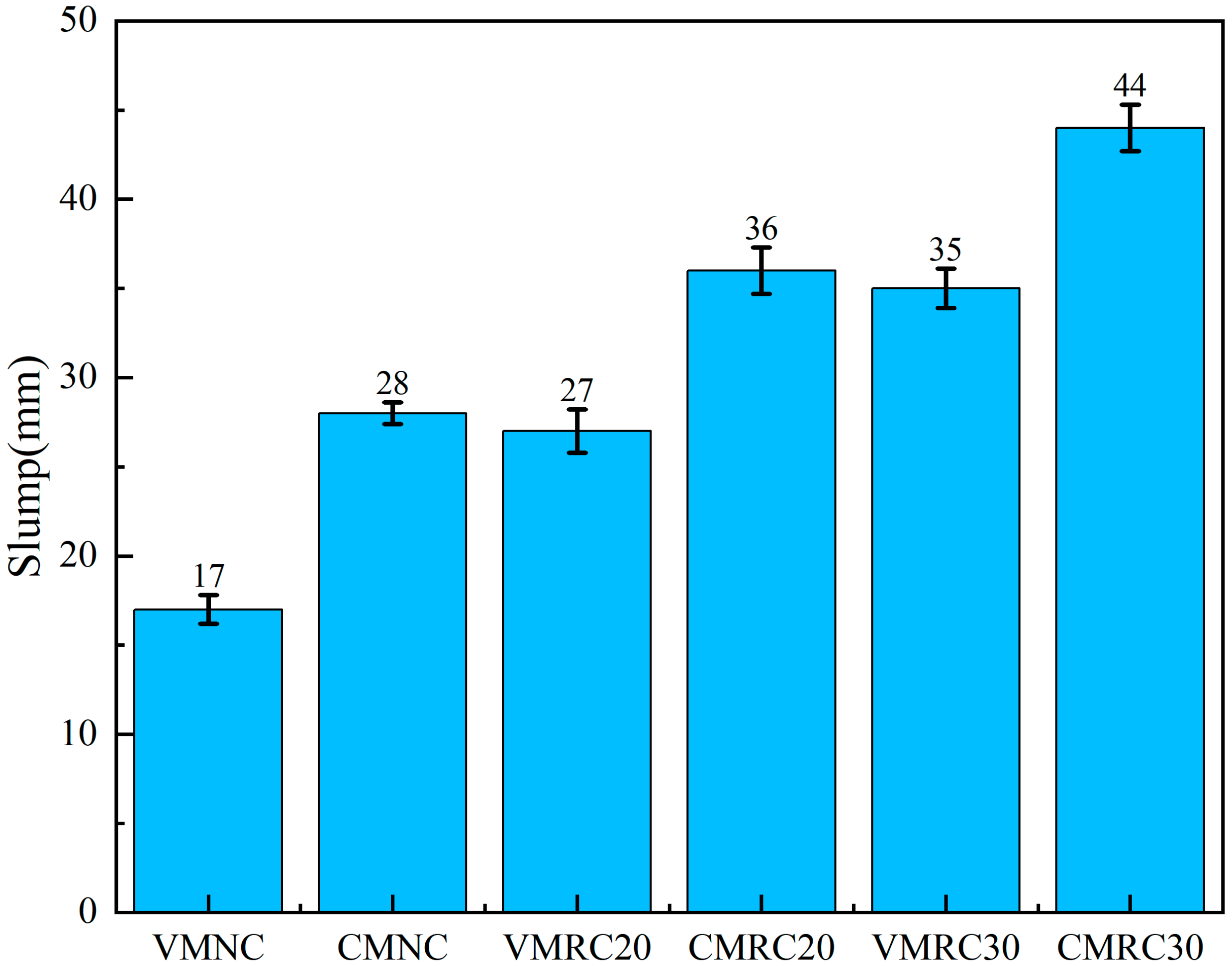
The specimens were demolded after standing at room temperature for 24 h. They were then placed in a standard curing environment with a temperature of (20 ± 2) °C and a relative humidity above 95% for 28 days. The two mixing methods had the same mixing time and the same curing conditions, with the only difference being the mixing mode. The slump values were 17 mm, 27 mm, 35 mm, 28 mm, 36 mm, and 44 mm, as shown in Figure 2 (The bar charts and error bars represent the mean values and standard deviations (n = 3)). When the rubber content was below 30%, the slump of the concrete increased with the increase in rubber content under both vibration mixing and conventional mixing. When rubber particles are added to concrete, their air-entraining effect and water-absorption effect influence the mixture differently. The positive air-entraining effect is greater than the negative water-absorption effect, resulting in an overall increase in slump. The slump of rubberized concrete under vibration mixing was significantly lower than that under conventional mixing. This is because vibration disperses the cement clusters formed during conventional mixing and increases the degree of cement hydration.

2.3. Experimental Program

2.3.1. Quasi-Static Compression Test

Cylindrical concrete specimens with a diameter of 150 mm and a height of 300 mm were used in the quasi-static compression test. The test was carried out using a Latest C088-01 compression testing machine, which has a maximum loading capacity of 4000 kN.
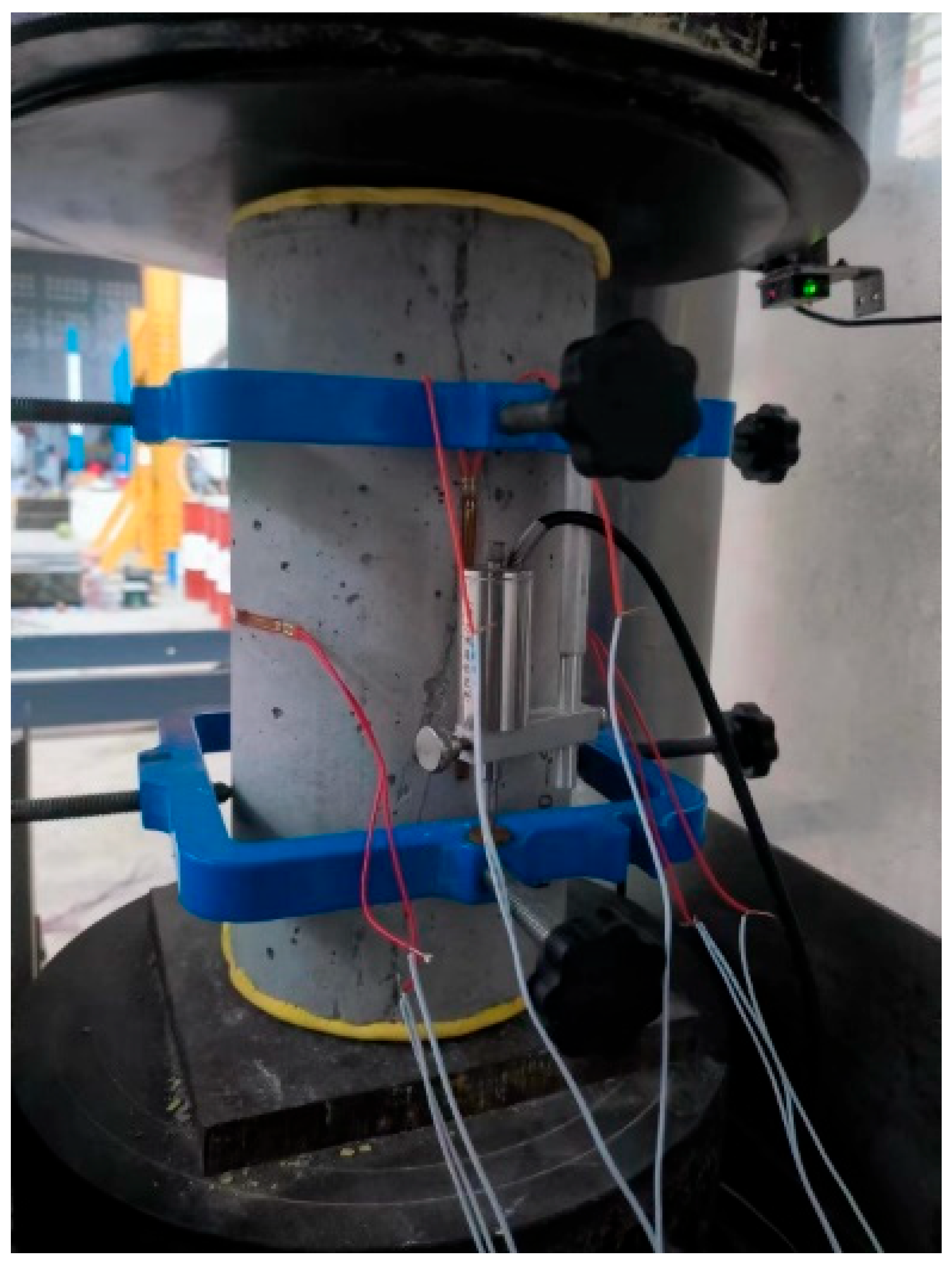
Four resistance strain gauges were attached to the circumferential surface of each specimen during the test preparation stage. The specimen surface was carefully polished with sandpaper to remove impurities and surface irregularities and to ensure proper bonding of the strain gauges. Two strain gauges were used to measure the longitudinal strain, and the other two were used to measure the circumferential strain. A displacement gauge was placed along the axial direction of the specimen to record the displacement after the concrete entered the softening stage (Figure 3). During the test, all strain gauges and the displacement sensor were connected to a multi-channel static data acquisition system, and their data were recorded simultaneously. The loading mode was displacement control, with a loading rate of 0.18 mm/min, corresponding to a strain rate of approximately 1 × 10⁻⁵ s−1.
The E and ν of the concrete were calculated according to ASTM C469. They were determined using Equation (1) and Equation (2), respectively.
E = σ 2 σ 1 ε 2 0.000050
ν = ε t 2 ε t 1 ε 2 0.000050
In these equations, σ 1   is the stress corresponding to an axial strain of 0.000050. σ 2   is 40% of the peak stress. ε 2   is the axial strain corresponding to σ 2 . ε t 1   is the lateral strain at an axial strain of 0.000050, and ε t 2 is the lateral strain corresponding to the axial strain ε 2 .

2.3.2. Dynamic Compression Test

The dynamic compression test was conducted using a Split Hopkinson Pressure Bar (SHPB) system, model LWKJ-HPKS-Y100. The device consisted of a striker bar, an incident bar, and a transmission bar, with lengths of 1000 mm, 5500 mm, and 3500 mm, respectively. All three bars had a diameter of 100 mm. The elastic modulus of the bar material was E b = 206   GPa, and its density was ρ b = 7710 kg / m 3 . The elastic wave velocity of the bars was calculated using C b = E b / ρ b . Stress equilibrium is a critical requirement for the validity of dynamic compression tests. To overcome the inherent pulse oscillation and dispersion associated with SHPB testing, a copper pulse shaper with a diameter of 15 mm and a thickness of 1 mm was placed between the striker and the incident bar. The use of the pulse shaper effectively smooths the incident wave and ensures that the concrete specimen reaches stress equilibrium prior to failure.
The concrete specimens used in the test were cylindrical, with a diameter of 100 mm and a length of 50 mm. To ensure test accuracy, both ends of each specimen were precision-ground using a surface grinder before loading. The schematic diagram of the dynamic compression loading process of the concrete specimen is shown in Figure 4.
After the stress uniformity assumption is satisfied, a specific time relationship exists among the incident, reflected, and transmitted stress waves according to one-dimensional stress wave propagation theory. The onset times of the reflected wave (tr) and transmitted wave ( t t ) can be determined from the onset time of the incident wave ( t i ), as expressed in Equation (3).
t r = t i + 2 l 1 C b , t t = t i + l 1 + l 2 C b + l 0 C 0
where l 1   = 2875 mm is the distance from the strain gauge on the incident bar to the bar–specimen interface, l 2   = 1436 mm is the distance from the strain gauge on the transmitted bar to the bar–specimen interface, l 0 is the specimen thickness measured experimentally.
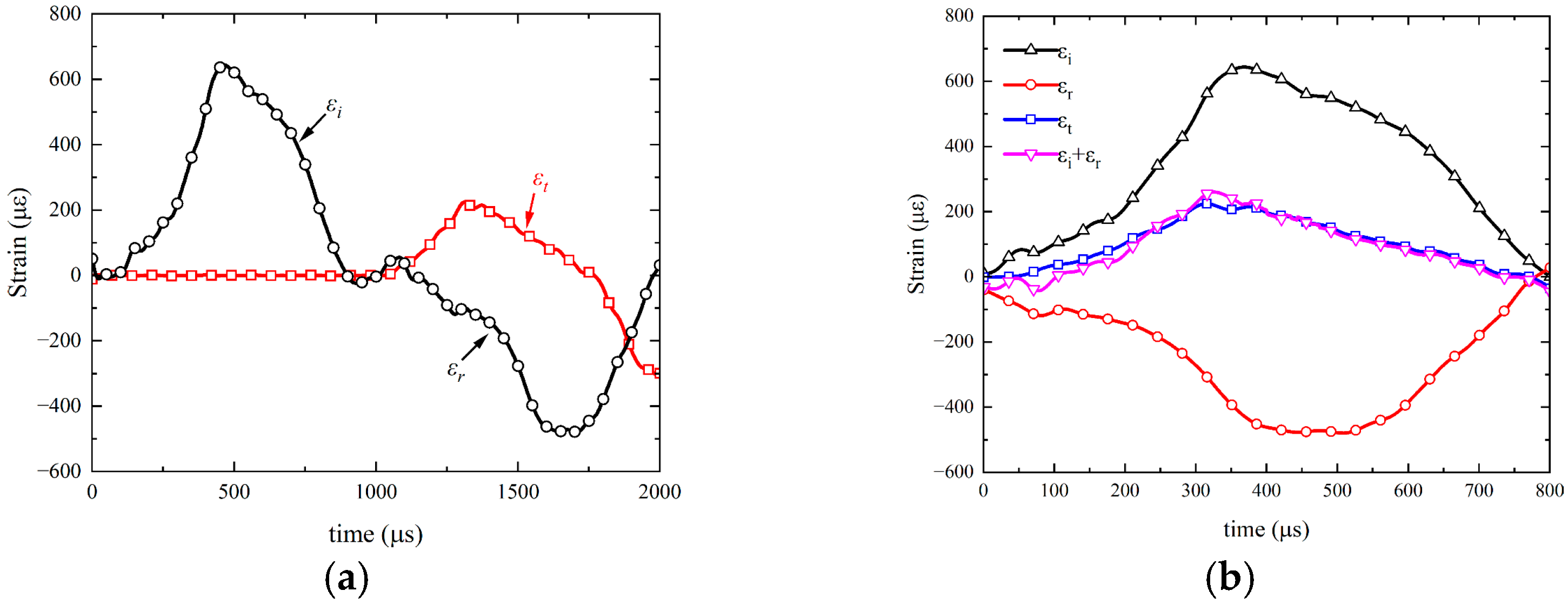
After aligning the onset times of the incident, reflected, and transmitted waves, the transmitted wave approximately coincides with the superposition of the incident and reflected waves. This indicates that stress equilibrium is achieved at both ends of the specimen, as illustrated in Figure 5.

3. Results and Analysis of the Quasi-Static Compression Test

3.1. Failure Modes

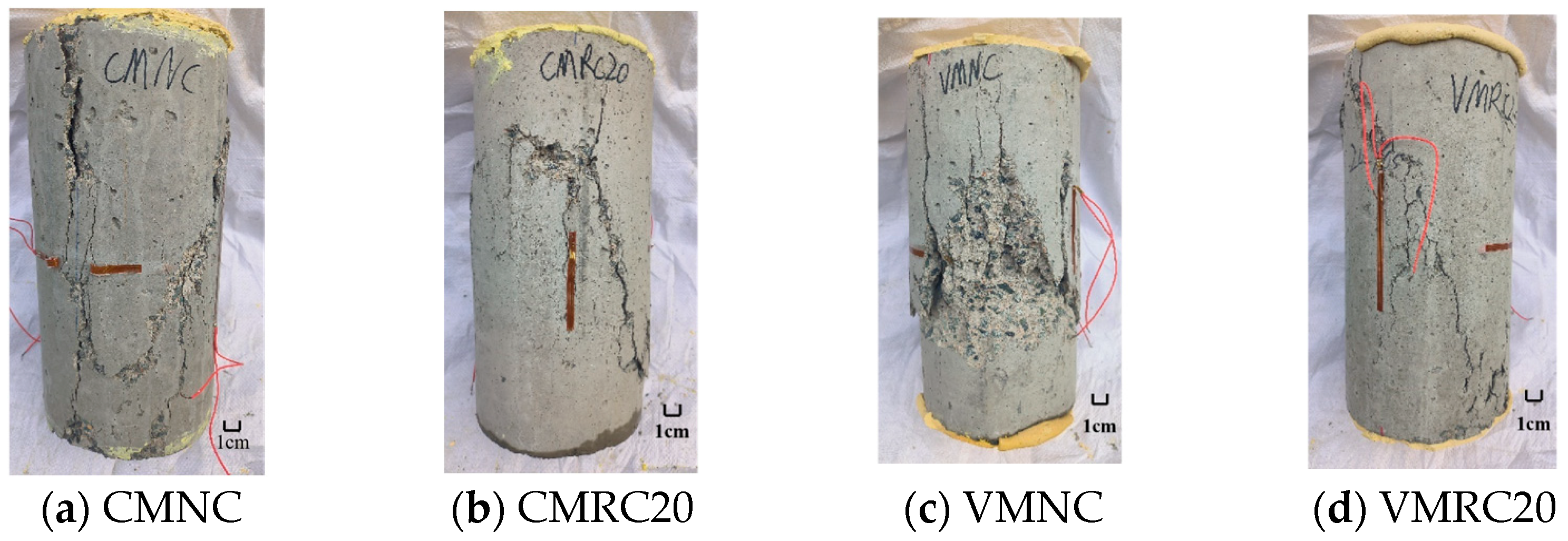
As shown in Figure 6, the failure modes of the specimens differed significantly. Figure 6a,b show that rubberized concrete exhibited cracks that initiated at the edges and propagated vertically under compression. Multiple fine vertical cracks formed and then merged into a main crack at the ultimate load. Although the specimens failed, they remained intact without disintegration. In contrast, normal concrete showed typical brittle failure. The main cracks were mostly intersecting diagonal cracks, forming cone-shaped fractures. The crack widths were larger, indicating a clear shear failure mechanism.
This difference is mainly because concrete is a brittle material, while the incorporation of rubber particles changes the internal structure and enhances ductility and toughness. Under compression, the rubber particles can absorb and disperse stress, which reduces stress concentration and alters the failure mode. Since the Young’s modulus of rubber is much lower than that of cement paste and aggregates, the rubber particles act like micro-cracks or voids in the concrete. This increases the number of weak interfacial zones, allowing cracks to propagate more easily along these regions. As a result, the compressive strength of rubberized concrete is lower than that of normal concrete.
A comparison of Figure 6 shows that the mixing method had no obvious influence on the failure mode. However, vibratory mixing improved the compactness of the concrete, which caused cracks to propagate more rapidly once they formed. At the same time, the overall number of cracks decreased, and the crack distribution became more uniform.

3.2. Quasi-Static Compressive Strength

The quasi-static compression results of concrete with different rubber contents (0%, 20%, and 30%) under vibratory mixing and conventional mixing are shown in Table 3. As the rubber content increased, both the quasi-static compressive strength and the Young’s modulus decreased significantly. Compared with conventional mixing, vibratory mixing reduced the performance degradation caused by rubber at the same rubber content. In addition, Poisson’s ratio of all specimens remained stable at approximately 0.20, showing no significant variation with changes in rubber content or mixing method.
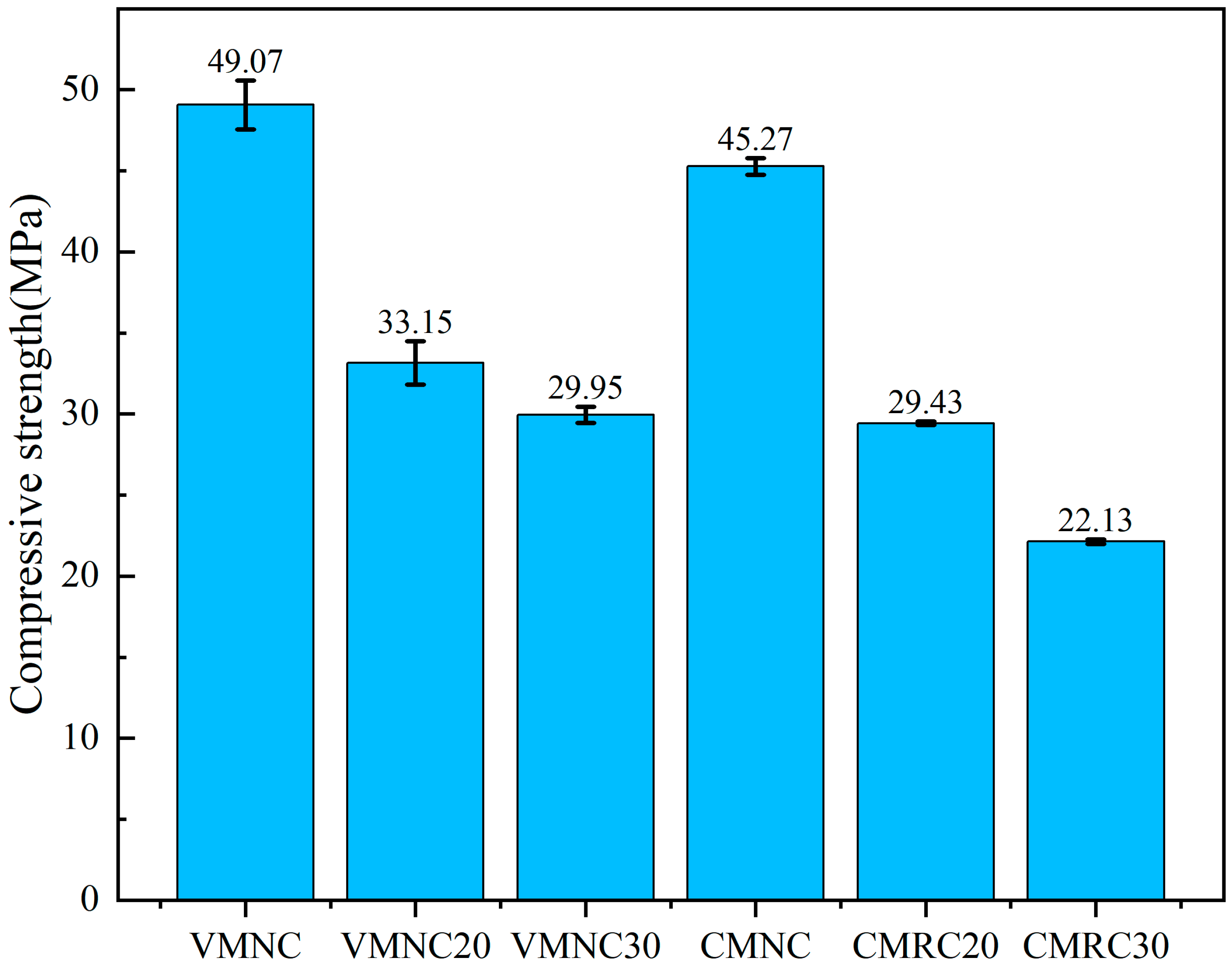
Under vibratory mixing, the quasi-static compressive strength of concrete with 0%, 20%, and 30% rubber content increased by 8.4%, 12.6%, and 30.0%, respectively, compared with conventional mixing, as shown in Figure 7 (the bar charts and error bars represent the mean values and standard deviations (n = 3)). As the rubber content increased, the strength enhancement effect of vibratory mixing on rubberized concrete became more significant. Compared with rubber reported in previous studies methods that rely on chemical agents or additional processing steps, vibration mixing achieves strength enhancement with zero admixtures, low cost, and good scalability. Its simple operation makes it more suitable for engineering applications.
As shown in Table 3, from the perspective of strength loss, the specimens prepared with vibratory mixing showed reductions of 2.55% and 12.14% in strength loss at rubber contents of 20% and 30%, respectively, compared with conventional mixing. This phenomenon can be mainly attributed to, at higher rubber contents, the concrete mixture becomes more porous and less compact under conventional mixing. Vibratory mixing improves the uniform distribution of components and enhances interfacial bonding, which leads to a denser internal structure. As a result, it reduces the negative effect of rubber incorporation on concrete strength and partially compensates for its performance deficiencies [34].

3.3. Stress–Strain Relationship

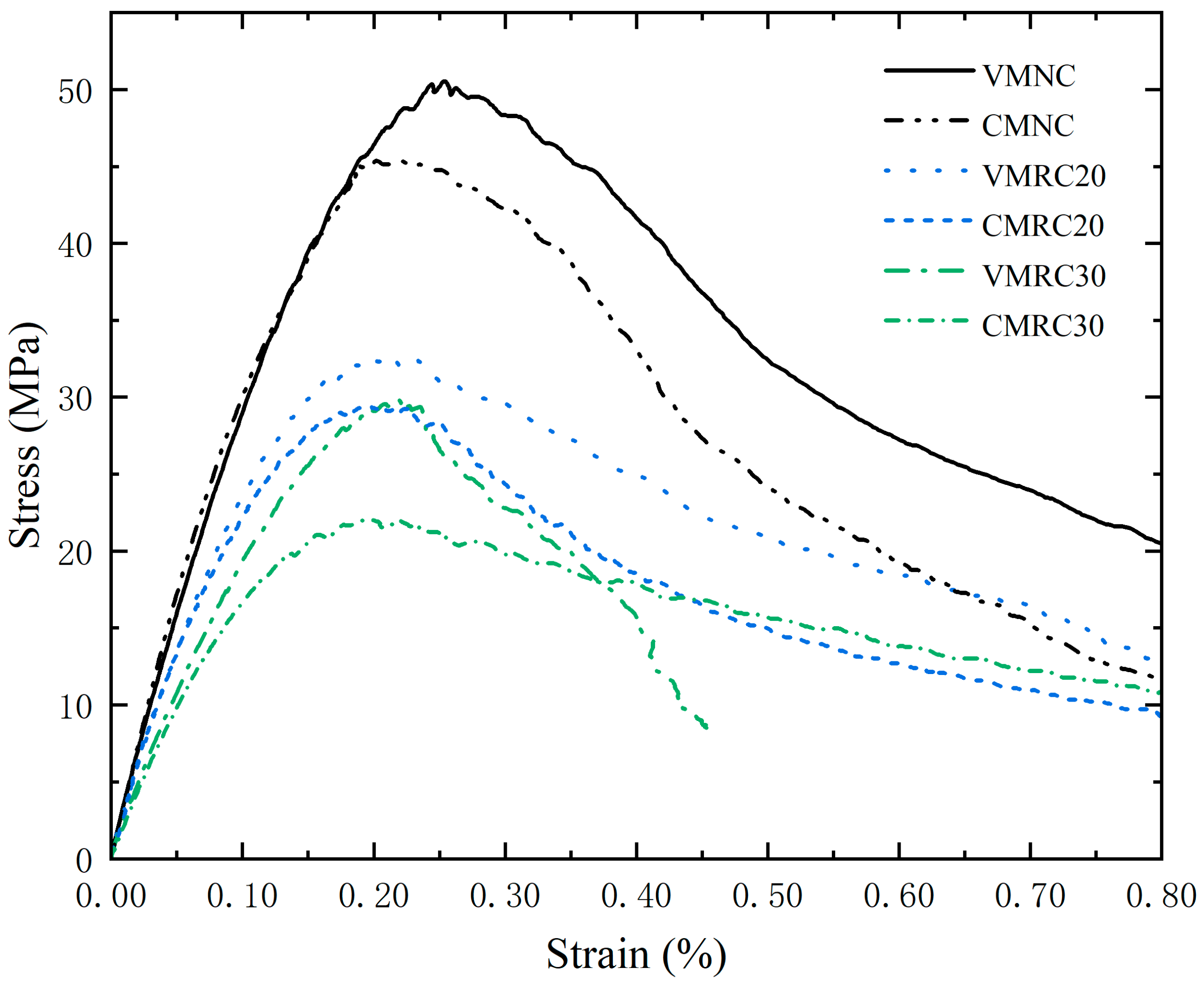
Figure 8 shows the quasi-static stress–strain curves of concrete specimens with different rubber contents under vibratory mixing and conventional mixing. The results indicate that the rubberized concrete exhibited the same general stress–strain trend under both mixing methods. At the initial stage, the curve presented a linear elastic phase, during which the strain increased linearly with stress. The specimen then entered the yield stage, where the increase in stress became slow or even stopped, while the strain continued to grow, showing a certain nonlinear characteristic.
In terms of peak stress, the rubberized concrete prepared by vibratory mixing showed higher peak stress than that prepared by conventional mixing, indicating a clear improvement in mechanical performance. However, for both mixing methods, the peak stress decreased as the rubber content increased. In addition, after reaching the ultimate stress, the stress reduction rate of the rubberized concrete was significantly lower than that of normal concrete, which indicates better ductility and deformation capacity.
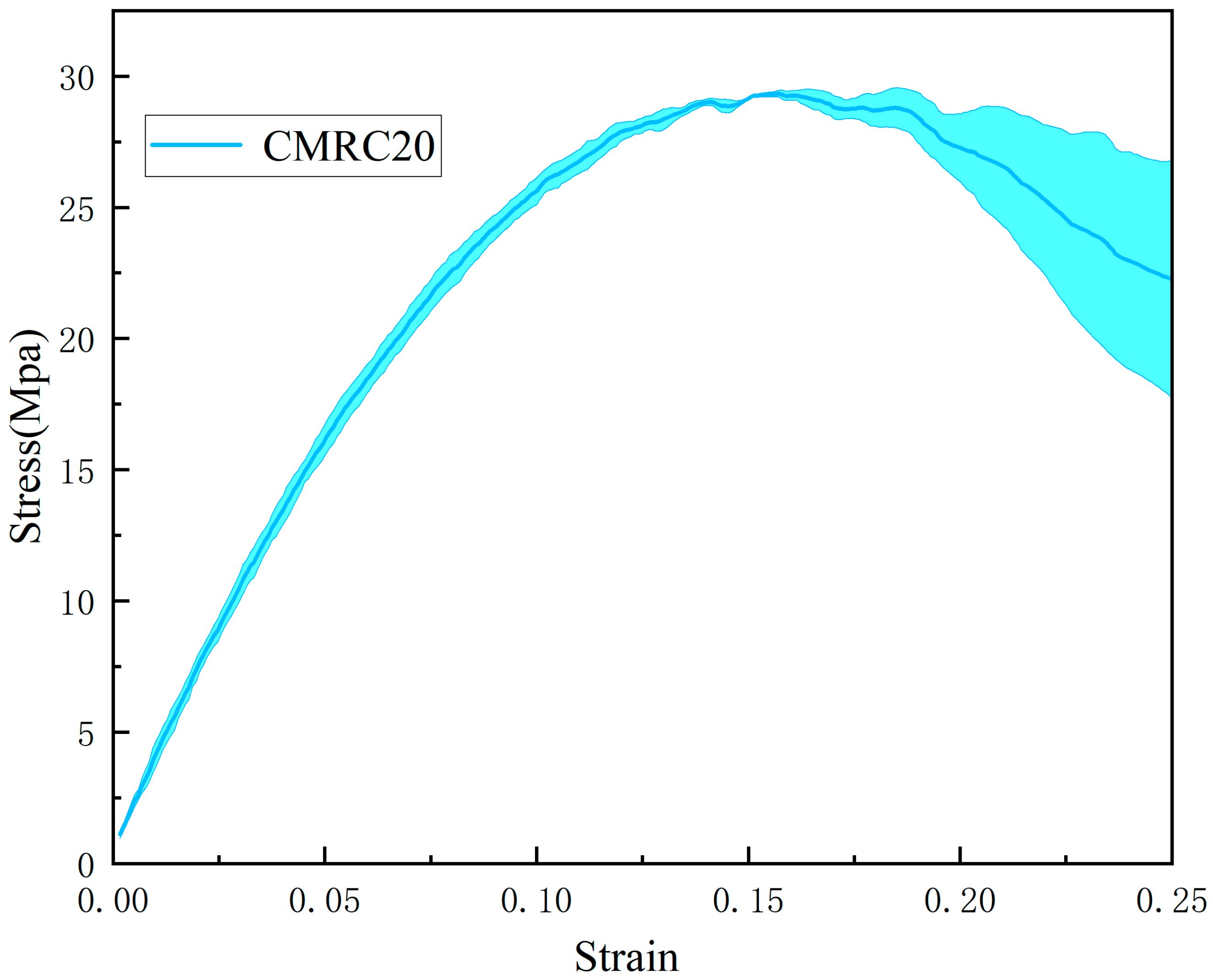
Overall, vibratory mixing did not alter the fundamental stress–strain evolution pattern but significantly improved peak strength and mitigated the strength loss associated with rubber incorporation. Since three replicate specimens were tested for each mixture, the stress–strain curves shown in Figure 8 represent the mean response, and the variability of key mechanical parameters (peak stress) was confirmed by the statistical dispersion illustrated in Figure 9.

4. Results and Analysis of the Dynamic Compression Test

4.1. Failure Modes

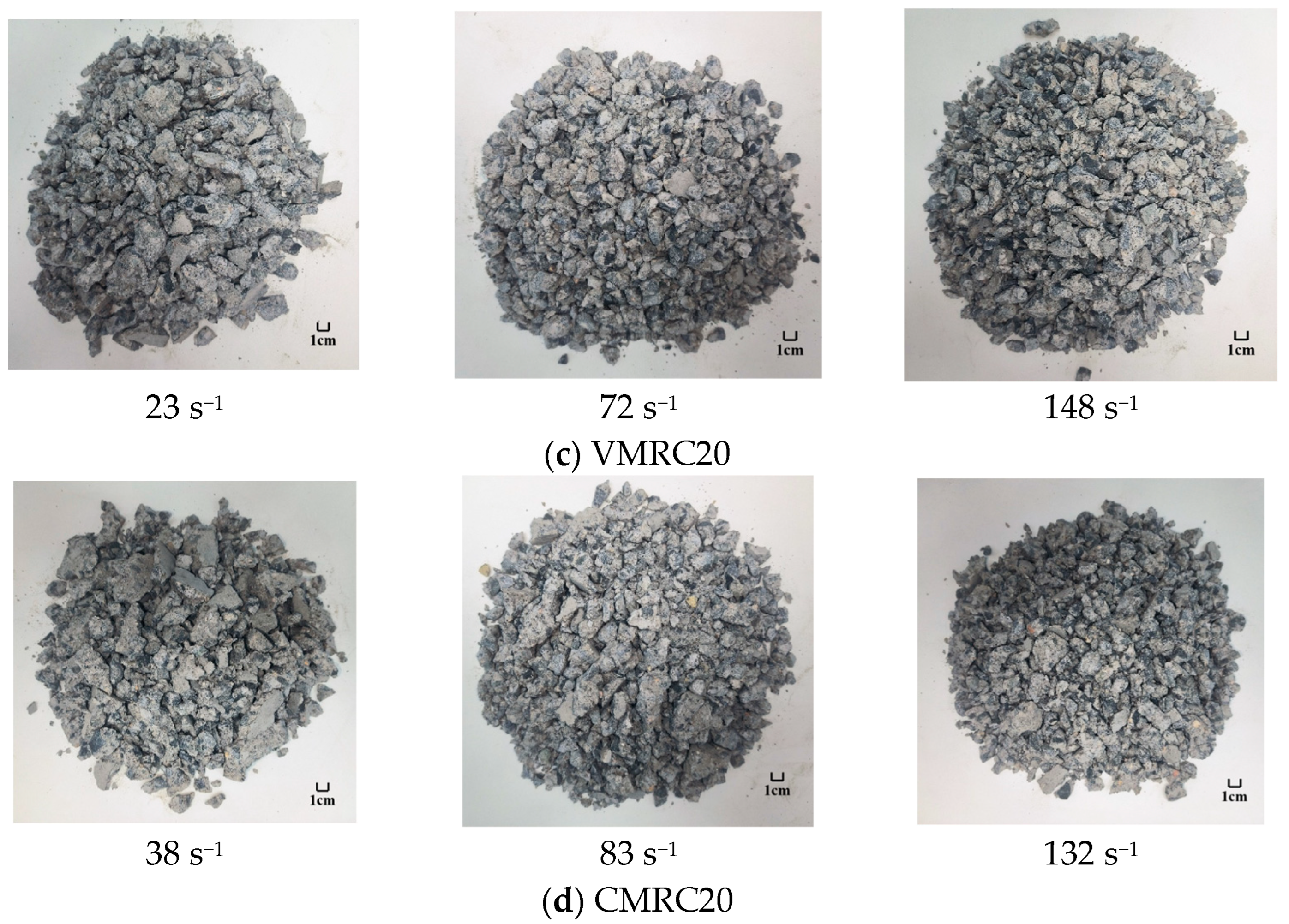
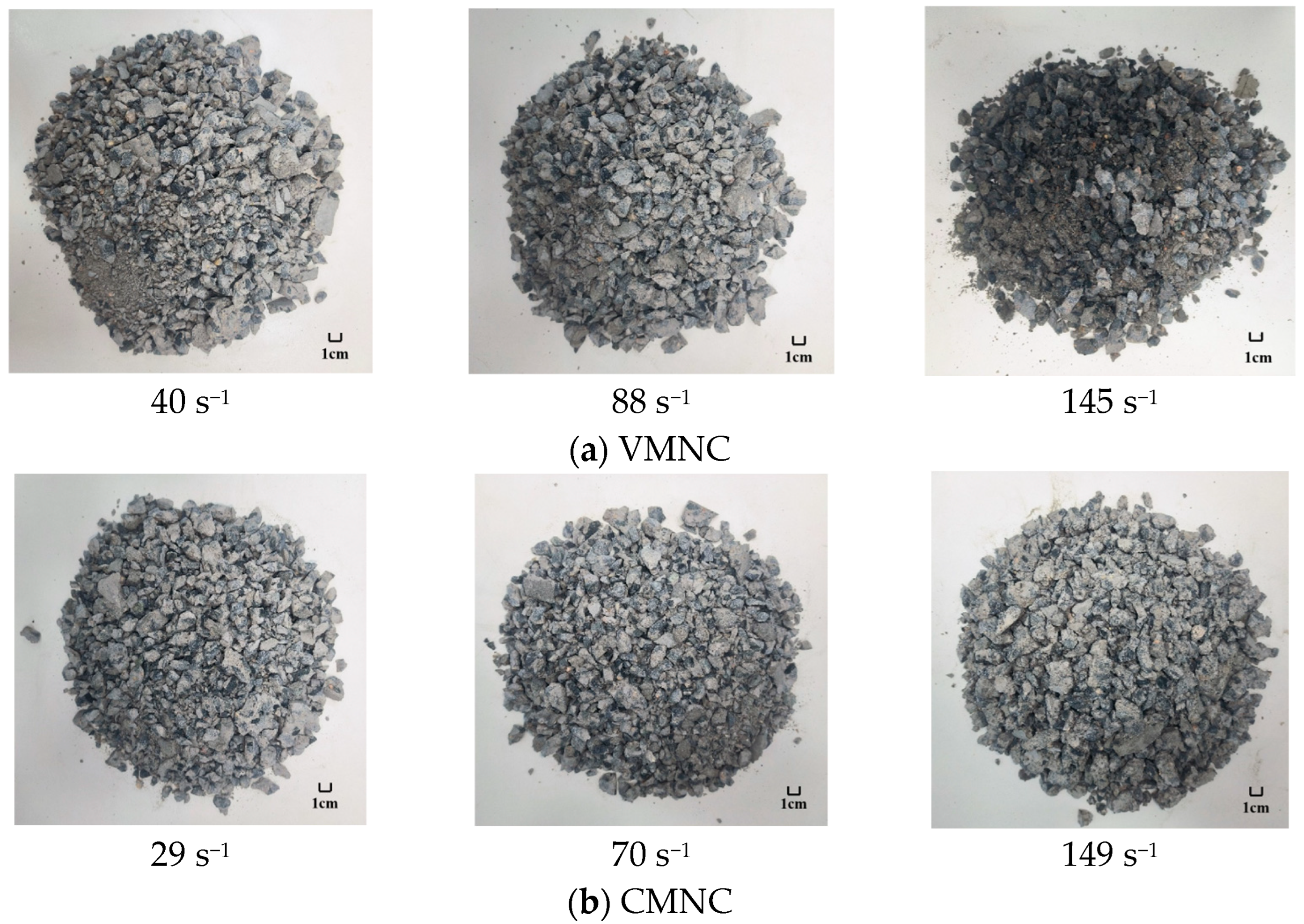
The failure modes of concrete with different rubber contents under the two mixing methods are shown in Figure 10. As illustrated in Figure 10a, the proportion of crushed aggregates increased significantly with the rise in strain rate, and most failures occurred inside the aggregates. This is because, under high strain rates, the impact load is applied within an extremely short time, and the specimen must release energy rapidly, which promotes the fast propagation of numerous cracks. Due to the limited time available, the cracks tend to penetrate through the aggregates rather than propagate along the interfaces. This phenomenon reflects the strain rate sensitivity of concrete.
It can be seen from the figure that the concrete fragments after impact exhibited a typical spindle-shaped impact fragmentation pattern. This is mainly because the two ends of the specimen were subjected to strong impact loads within a very short time. The energy spread rapidly along the loading direction, causing more severe local damage at the specimen ends.
In addition, as shown in Figure 10a,c, at similar strain rates, the incorporation of rubber reduced the particle size of the concrete fragments, indicating that the dynamic increase factor (DIF) of rubberized concrete was higher than that of normal concrete, This is consistent with the conclusions of Feng [35]. Comparing the two mixing methods, Figure 10c,d show that, at the same rubber content, the fragments of the specimens prepared by vibratory mixing were generally larger than those prepared by conventional mixing. This indicates that vibratory mixing increased the compactness of the concrete structure. Under dynamic impact, fewer cracks were needed to dissipate energy, which resulted in larger fragment sizes.

4.2. Stress–Strain Relationship

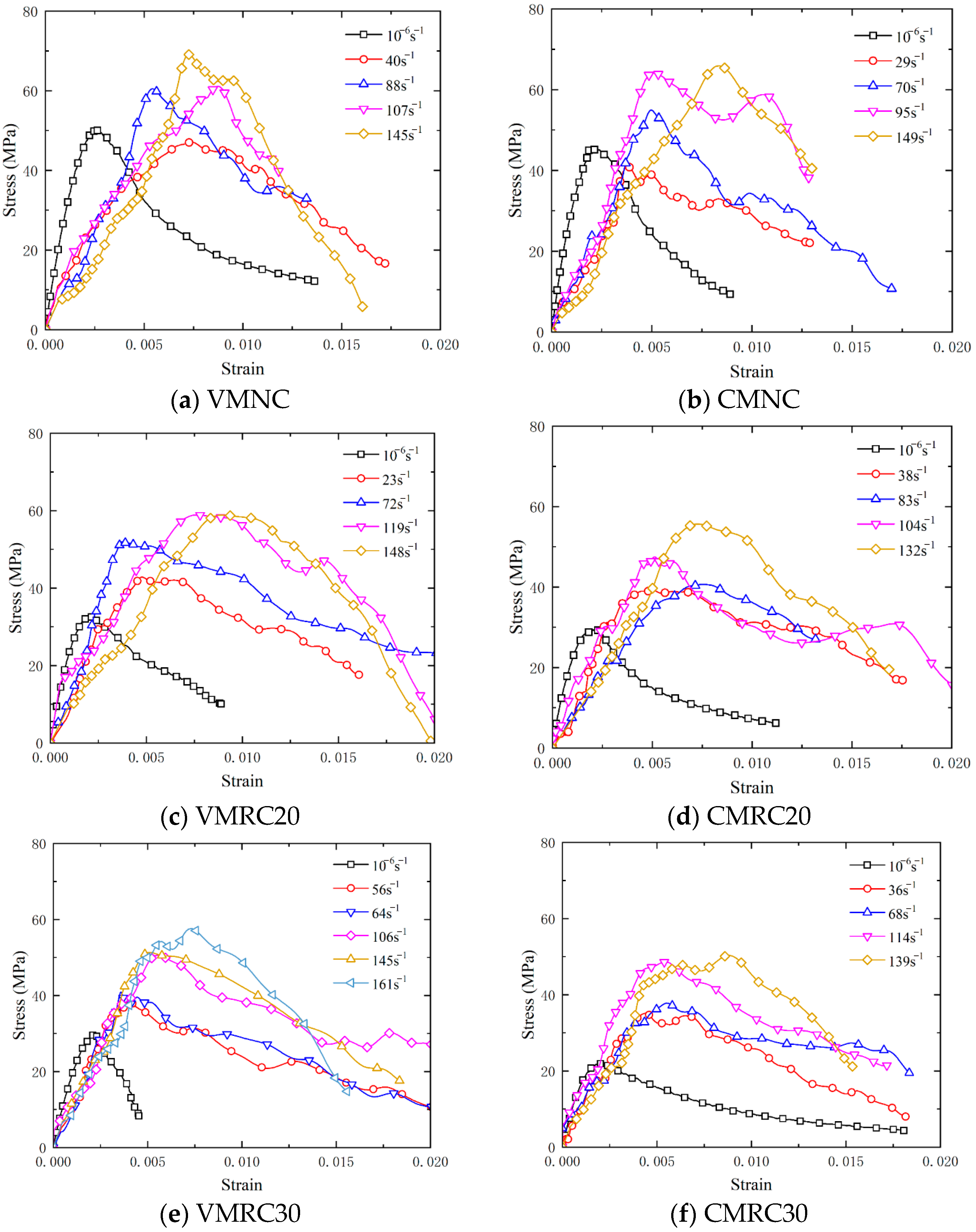
Under similar strain rate conditions, the dynamic compressive stress–strain relationships of the VMNC, CMNC, VMRC20, CMRC20, VMRC30, and CMRC30 concrete groups are shown in Figure 11. The results indicate that, for different mixing methods and rubber contents, the dynamic stress–strain curves exhibited a similar pattern to their quasi-static responses. All curves included an elastic rising stage, a plastic strengthening stage, and a stress descending stage, reflecting typical strain response characteristics.
The following conclusions can be drawn from Figure 11:
(1)
As the strain rate increased, the dynamic compressive strength of all concrete groups increased and was much higher than the corresponding quasi-static strength, showing clear strain rate sensitivity and a positive correlation effect.
(2)
The incorporation of rubber significantly enhanced the strain rate sensitivity of the concrete, resulting in a greater increase in strength at high strain rates. This effect was especially pronounced under vibratory mixing, where the peak stress of vibratory mixing was noticeably higher than that of conventional mixing. The enhancement became more significant as the rubber content increased, indicating that vibratory mixing can effectively mitigate the negative influence of rubber on concrete strength.
(3)
Although vibratory mixing improved the dynamic strength of the concrete, it had only a minor influence on the overall shape of the dynamic stress–strain curve and did not change the basic strain response characteristics of rubberized concrete.
In addition, compared with normal concrete, the rubberized concrete exhibited better ductility under dynamic loading. After the stress reached the peak value, the descending stage was more gradual, which delayed the occurrence of instability and demonstrated good deformation capacity. In contrast, normal concrete lost stability rapidly after the peak stress and showed a typical brittle failure mode.

4.3. Impact Toughness

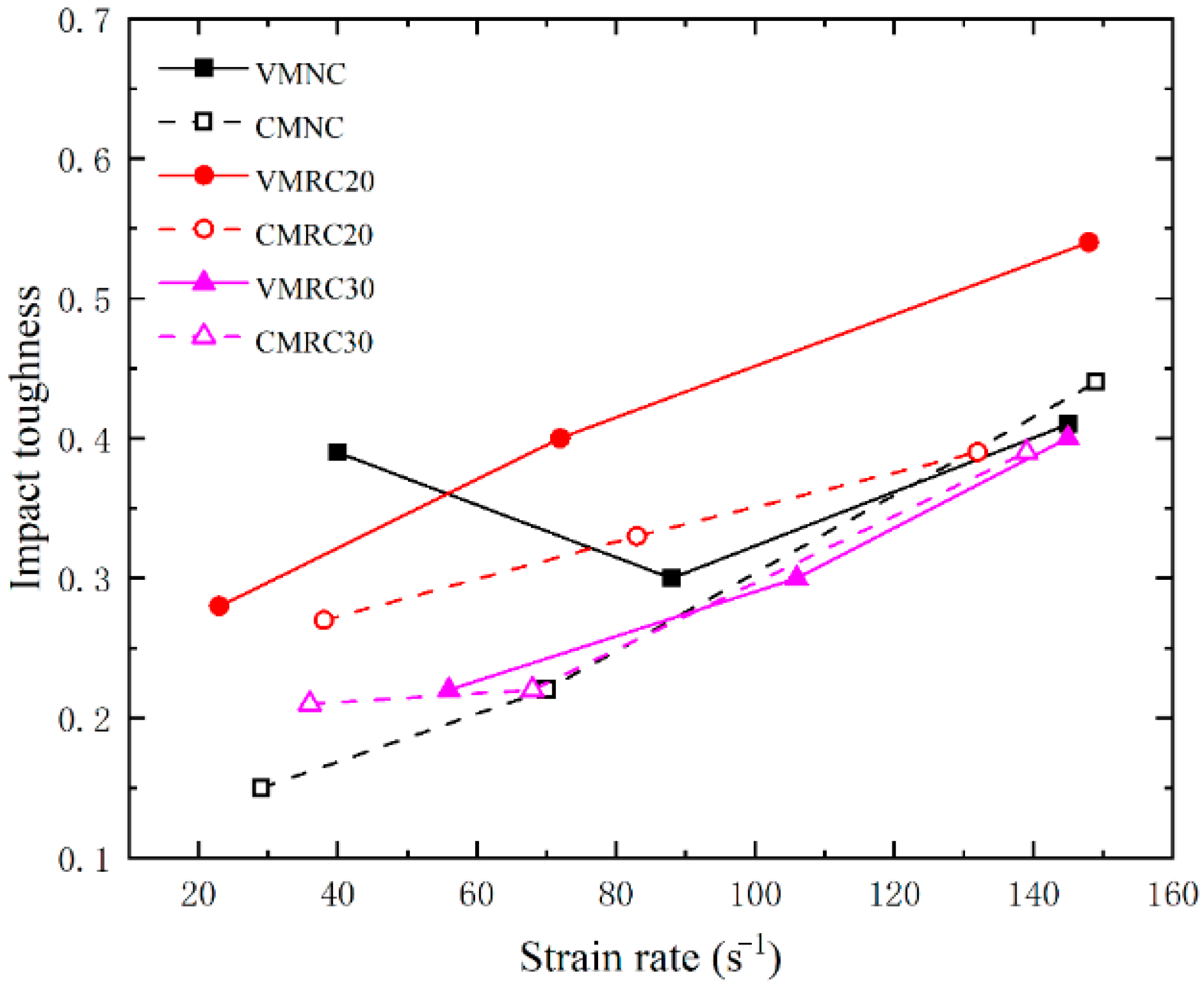
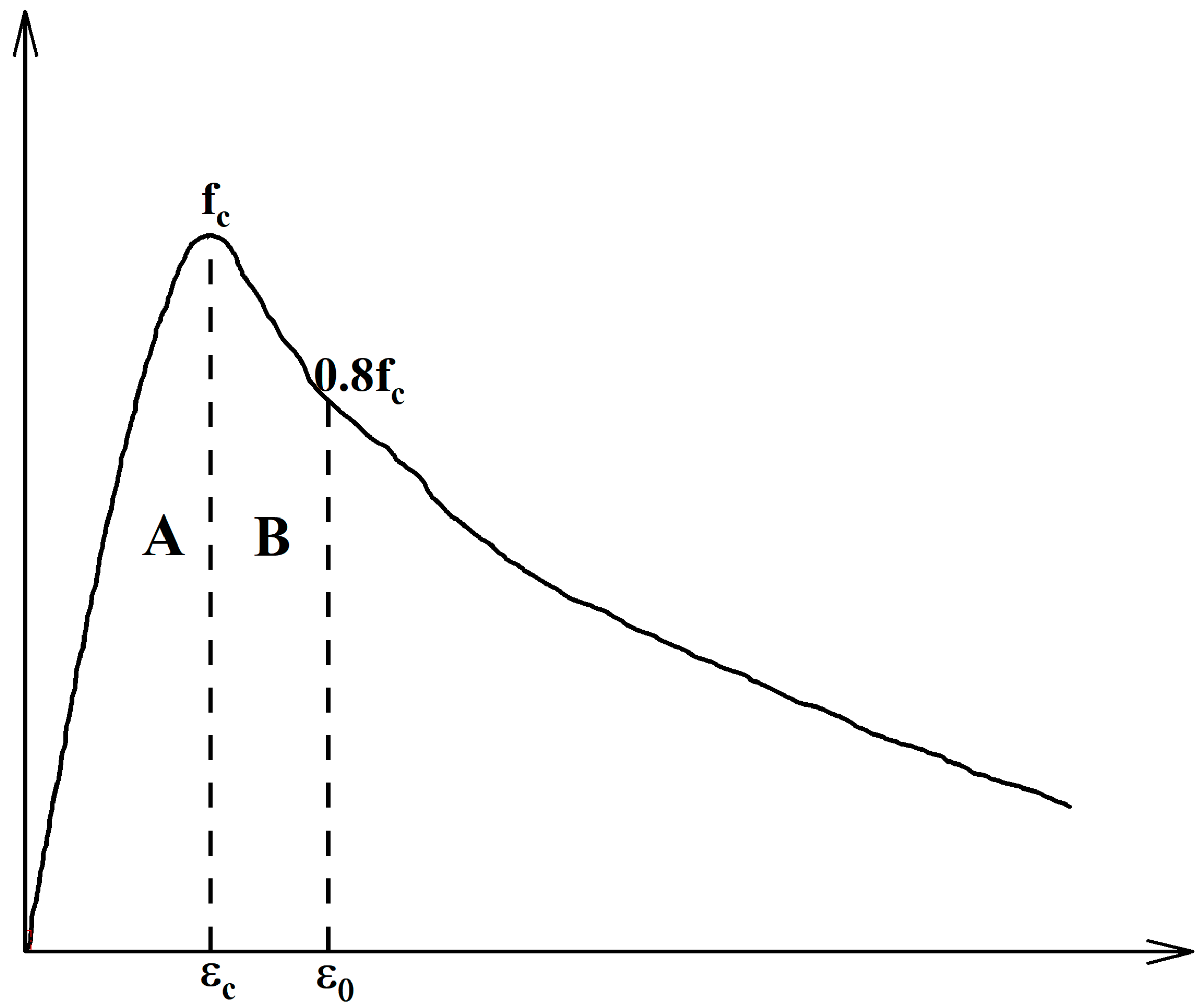
To evaluate the effects of different mixing methods and rubber contents on the energy absorption capacity of concrete under impact loading, this study adopted the impact toughness index W proposed by Khaloo et al. [36]. Figure 12 illustrates this concept, where A represents the area from the initial point to the peak stress, and B denotes the area from the peak stress to 80% of the peak stress in the post-peak descending region. Accordingly, the toughness of concrete can be evaluated using the ratio B/(A + B). Based on Figure 13, the following conclusions can be drawn:
(1)
Compared with conventional mixing, vibratory mixing increased the impact toughness by approximately 15–35%. The improvement was most significant at a rubber content of 20% (RC20), reaching about 30%. At rubber contents of 0% and 30%, the increases were approximately 15–20% and 10–18%, respectively. These results indicate that vibratory mixing enhances the bonding between the paste, aggregates, and rubber, enabling greater energy absorption under impact loading.
(2)
Regardless of the mixing method, the impact toughness increased first and then decreased as the rubber content increased. Using each NC specimen as a reference, RC20 showed the highest impact toughness. The improvement was about 20–25% in the CM group and about 35–45% in the VM group. However, the improvement of RC30 decreased significantly and could even be slightly lower than that of RC20.
The peak toughness at 20% rubber content reflects an optimal balance between energy dissipation and structural continuity. At this level, rubber particles effectively activate energy absorption through deformation and crack deflection at the ITZ without significantly disrupting the load-bearing skeleton. When the rubber content increases to 30%, the higher volume fraction of rubber–paste ITZ forms interconnected weak regions, promoting premature crack propagation and reducing the overall energy absorption efficiency. In summary, vibratory mixing has a significant advantage in improving the impact toughness of rubberized concrete, and a rubber content of 20% provides the optimal energy absorption performance [37].

4.4. Strain Rate Effect

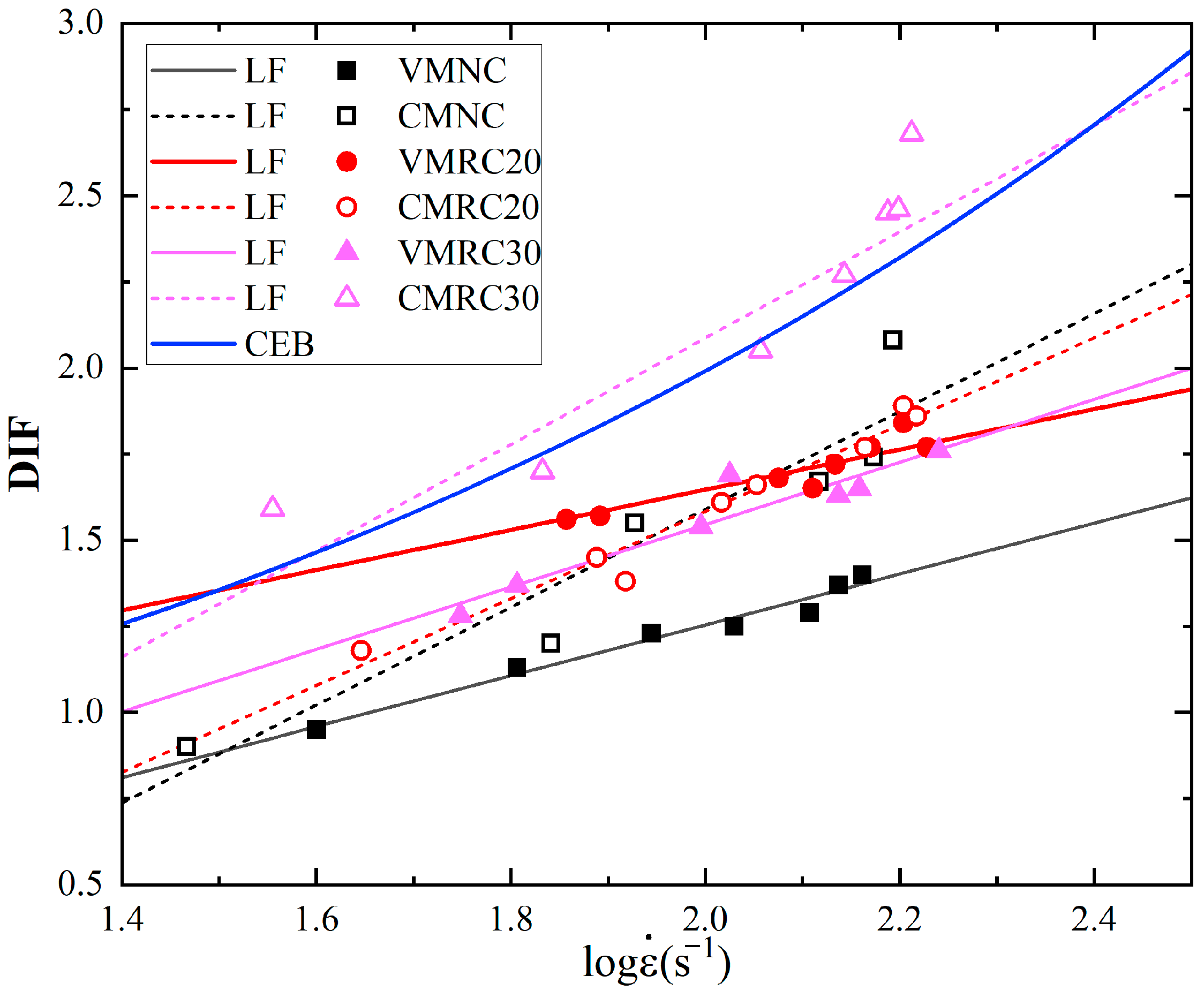
Figure 14 shows the relationship between the strain rate and the dynamic increase factor (DIF) of rubberized concrete under different mixing methods and rubber contents in the dynamic compression test. The results exhibit a clear linear correlation, indicating that rubberized concrete also shows a pronounced positive strain rate effect, which is consistent with the response trend of normal concrete. In addition, following the recommendation of the Comité Euro-International du Béton (CEB) model [38], the DIF values were calculated using Equations (4) and (5) based on the static compressive strength of VMNC for comparison. The results indicate that the CEB model exhibits a noticeable tendency toward overestimation.
Each set of DIF test data showed a linear correlation. Recent studies have shown that the HAO model [39] can effectively describe this strain rate-dependent behavior, and the fitted relationship is expressed by the empirical equation given in Equation (6). Table 4 summarizes the fitted values of concrete with different rubber contents under the two mixing methods. SE(a) and SE(b) represent the standard errors of the fitted slope and intercept, respectively. The consistently low SE values and high coefficients of determination (R2 = 0.864–0.969) indicate that the linear DIF–strain rate fits are statistically reliable. Under conventional mixing, the slopes of the DIF–strain rate curves for all rubber contents were generally higher than those under vibratory mixing. This indicates that, at the same strain rate, DIF increased more rapidly with strain rate in the conventional mixing condition. The reason is that DIF is the ratio of dynamic strength to quasi-static strength. Vibratory mixing significantly improved the quasi-static strength of the concrete, and this effect was more pronounced at higher rubber contents. In comparison, the improvement in dynamic compressive strength produced by vibratory mixing was less significant in the high strain rate range than under quasi-static conditions. The DIF values of vibratory mixed specimens were relatively lower, and the slopes of the curves decreased, reflecting a weakening effect of vibratory mixing on the strain rate sensitivity of rubberized concrete.
D I F = f cd f cs = ε ˙ ε ˙ s 1.026 a             for   ε ˙ 30 s 1
D I F = f cd f cs = γ ε ˙ ε ˙ s 1 3                 for   ε ˙ > 30 s 1
where f c d and f c s denote the dynamic and static compressive strengths, ε ˙ is the applied strain rate, and ε s ˙ = 30   ×   10 6 s 1 is the quasi-static reference strain rate. The parameters are defined as α = 1 / 5 + 9 f c / f c o , f c o = 10 MPa , and log γ = 6.15 α 2 .
DIF = a log ε ˙ + b
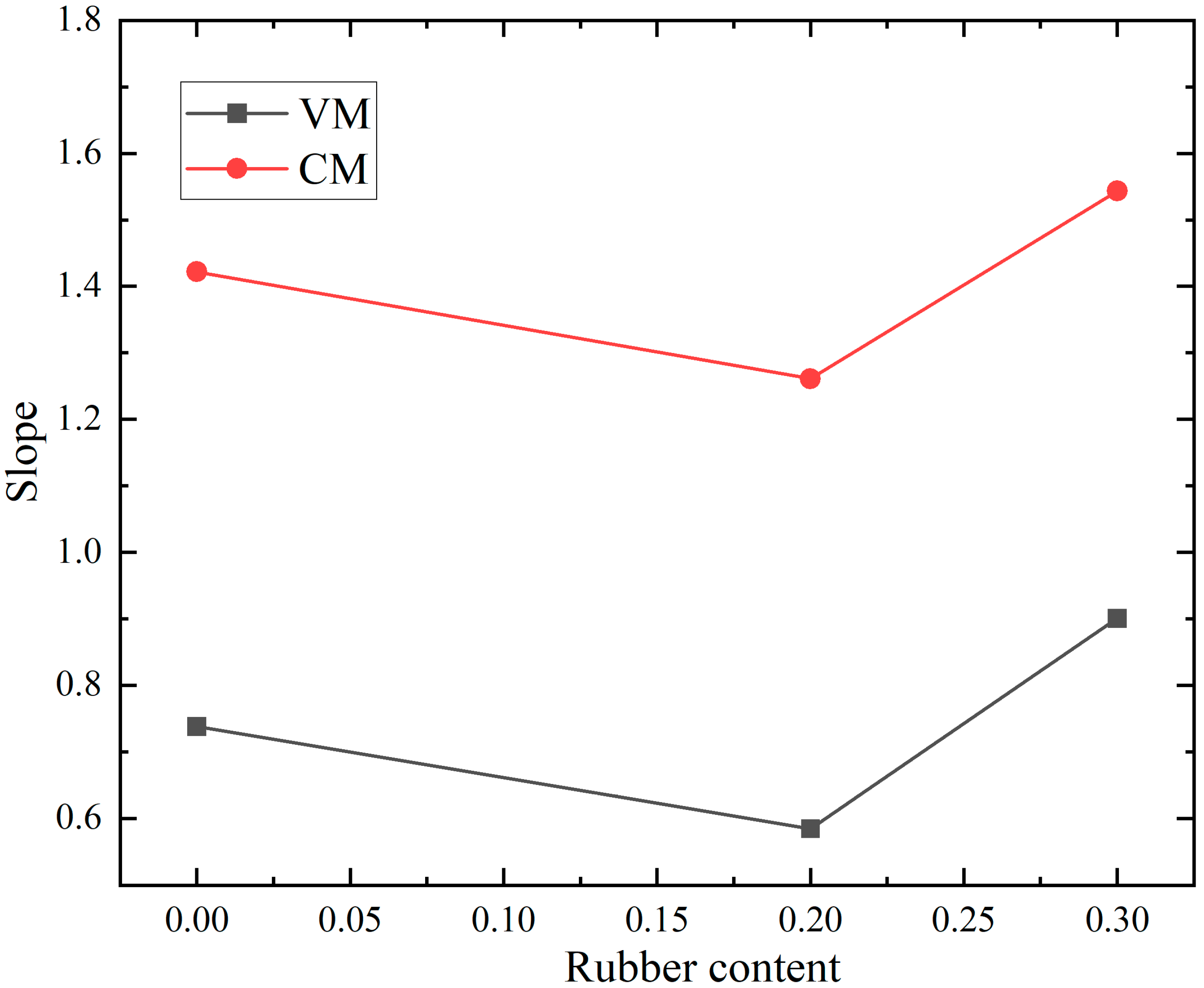
As shown in Figure 15, further analysis shows that as the rubber content increased, the slopes of the DIF–strain rate curves under both mixing methods first decreased and then increased. When the rubber content reached 30%, both the slope and the intercept reached their maximum values, indicating that the strain rate effect was most pronounced at this content. At 20% rubber content, rubber deformation and ITZ-related crack deflection effectively suppress strain rate sensitivity, leading to a minimum slope. When the rubber content increases to 30%, excessive rubber–paste interfaces form interconnected weak regions, making stress transfer more strain rate dependent and resulting in a higher slope. At this point, the performance difference between vibratory mixing and conventional mixing became smaller. Although the 30% rubber mixture exhibits a relatively higher slope in strain rate sensitivity, its quasi-static compressive strength is the lowest among all groups. Considering both static load-bearing capacity and dynamic impact resistance, the 30% rubber mixture therefore does not provide balanced overall engineering performance.
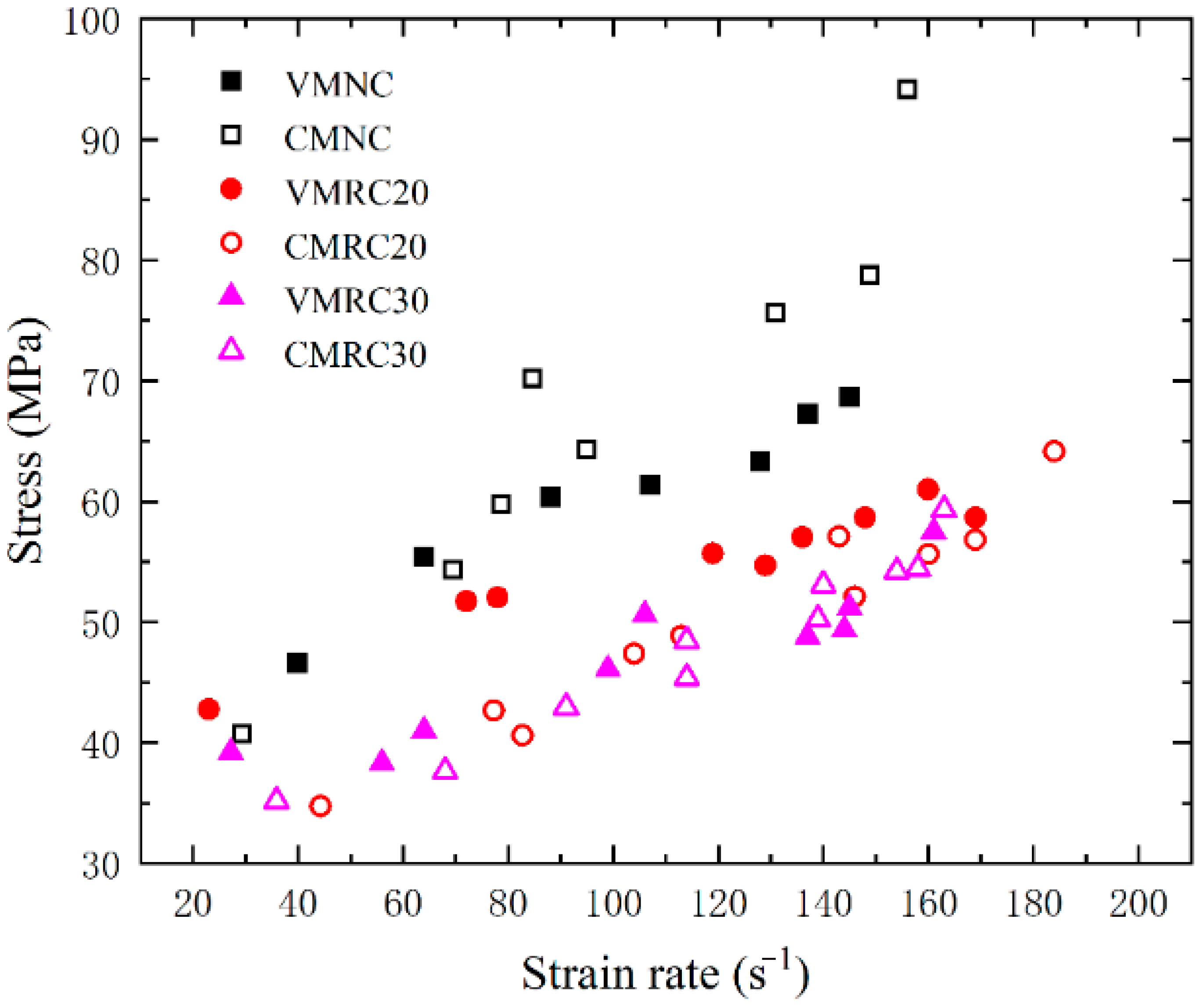
As shown in Figure 16, when the strain rate was below 100 s−1, the dynamic compressive strength of concrete under vibratory mixing was generally higher than that under conventional mixing for all rubber contents. The improvement was most significant for RC20 (20% rubber content). However, as the strain rate continues to increase, the enhancing effect of vibratory mixing on the dynamic compressive strength of rubber-modified concrete gradually diminishes.

5. Microstructural Analysis

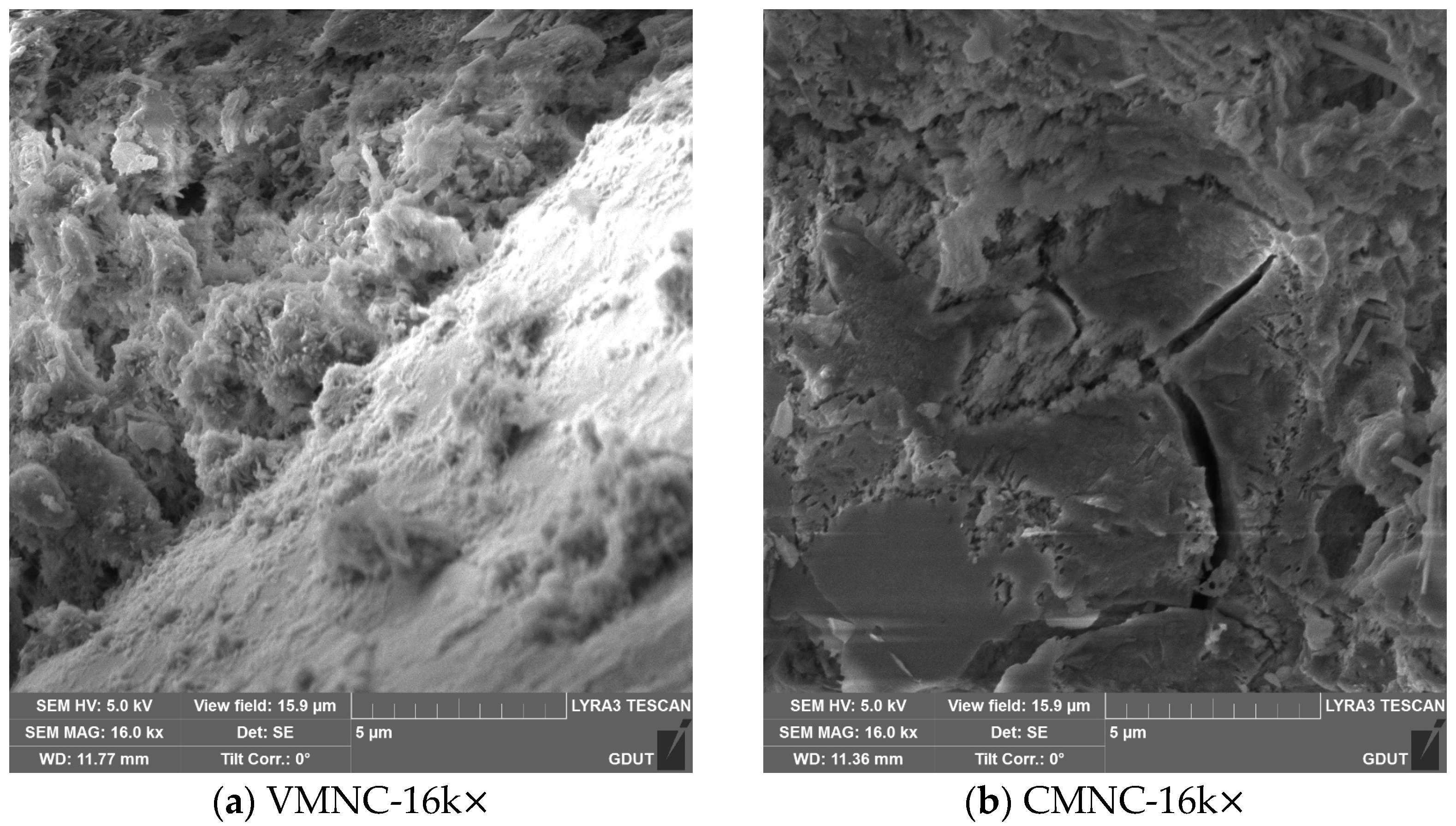
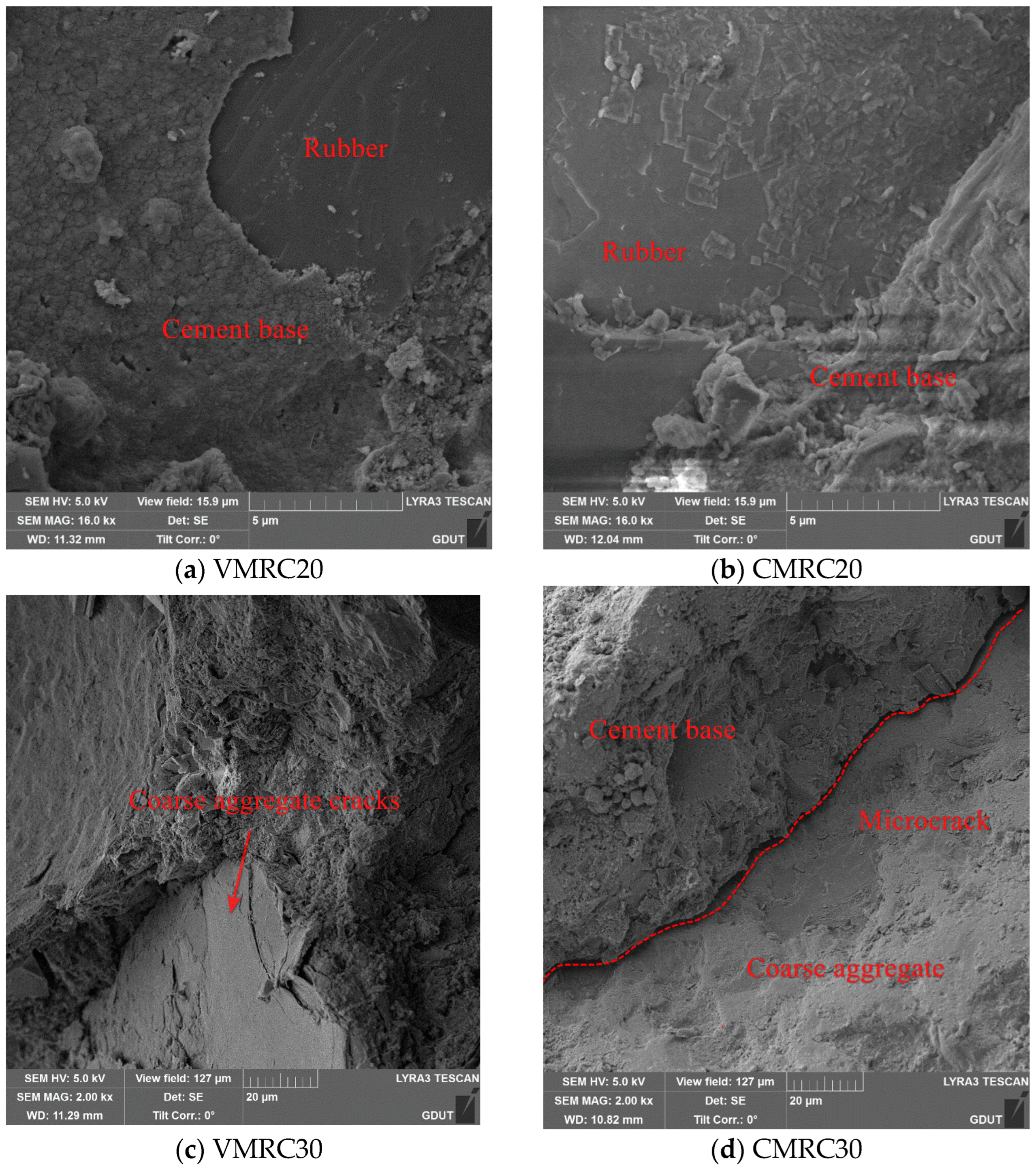
To further investigate the effects of vibration mixing on the hydration degree and microcrack propagation of concrete with different rubber contents, a scanning electron microscope (SEM) with model LYRA-3-XMU at the Analytical was used to conduct microstructural analysis on rubberized concrete prepared by vibration mixing and conventional mixing.
In the microstructural images of each concrete group shown above, the smooth surfaces correspond to rubber particles, the rough surfaces correspond to coarse aggregates, and the porous structures correspond to the mortar matrix. Figure 17a,b show the microstructure of normal concrete prepared by vibratory mixing and conventional mixing, respectively. The vibratory mixed specimen exhibits a more uniform distribution of hydration products, with denser and more continuous C–S–H gel formation. The aggregate–mortar interfacial transition zone (ITZ) appears more compact, indicating improved adhesion and reduced microcrack initiation along weak interfacial boundaries. These features are consistent with the enhanced mechanical performance observed in the vibratory mixed concrete.
The microstructural morphologies of rubberized concrete with a rubber content of 20% under vibration mixing and conventional mixing are shown in Figure 18a,b. It can be observed that, in the rubberized concrete prepared by conventional mixing, the C–S–H gel formed on the surface of rubber particles mainly exhibited layered and plate-like crystals with a relatively loose structure. In contrast, under vibration mixing, the rubber particle surfaces were covered by wrinkle-like C–S–H gel aggregates with a more orderly arrangement and a denser structure. This indicates that vibration mixing effectively improved the distribution of C–S–H gel during the hydration process, thereby exerting a positive influence on the macroscopic mechanical properties of the concrete.
Figure 18c,d illustrates the crack propagation characteristics of rubberized concrete with 30% rubber content under vibratory mixing. Cracks propagate from the mortar matrix across the ITZ (red dot line) and further into the coarse aggregates, indicating that the improved ITZ effectively increases the resistance to crack deflection and enhances the load transfer between phases. This behavior suggests that vibratory mixing enables concrete to better mobilize the mechanical contribution of its constituent phases, resulting in superior macroscopic strength.

6. Conclusions

This study investigated the quasi-static and dynamic compressive behavior of rubberized concrete with rubber contents of 0%, 20%, and 30% prepared by conventional mixing and vibratory mixing, with emphasis on strength evolution, failure characteristics, strain rate sensitivity, and energy absorption:
(1)
Vibratory mixing significantly improved the static load-bearing capacity of rubberized concrete. Compared with conventional mixing, compressive strength increased by 8.4–30.0% at the same rubber content. At 30% rubber content, the compressive strength increased from 22.13 MPa to 29.94 MPa, and the corresponding strength loss rate was reduced from 51.12% to 38.98%.
(2)
Under quasi-static loading, rubber incorporation altered the failure characteristics, while vibratory mixing resulted in a more uniform crack distribution. Under dynamic loading, at comparable strain rates, rubber incorporation led to smaller concrete fragment sizes, whereas vibratory mixed specimens exhibited larger fragments, indicating reduced damage severity.
(3)
Vibratory mixing significantly enhanced the dynamic compressive strength and energy absorption capacity of concrete. The improvement was most pronounced at a rubber content of 20%, with impact toughness increasing by approximately 15–35%.
(4)
Among the investigated mixtures, rubberized concrete with 20% rubber content prepared by vibratory mixing showed the most balanced overall performance in terms of strength, toughness, and strain rate stability, demonstrating its potential for impact-resistant pile foundation applications.
In summary, this study examined the static and dynamic mechanical behavior of rubberized concrete prepared with vibratory mixing, demonstrating that vibratory mixing improves interfacial compactness, mitigates strength deterioration induced by rubber incorporation, and enhances impact resistance. Future studies should explore a broader range of rubber particle sizes and vibratory mixing parameters and incorporate quantitative fragment size distribution analysis to further clarify the dynamic response and failure mechanisms of rubberized concrete.

Author Contributions

Conceptualization, X.C.; Data curation, X.C., W.F., X.W., H.L. and F.Y.; Formal analysis, X.W.; Funding acquisition, G.S., H.L. and F.Y.; Investigation, H.L.; Methodology, G.S.; Project administration, F.Y.; Resources, F.Y.; Supervision, W.F.; Validation, G.S., X.C. and W.F.; Visualization, F.Y.; Writing—original draft, G.S.; Writing—review & editing, W.F. All authors have read and agreed to the published version of the manuscript.

Funding

This research was funded by the Science and Technology Project of China Southern Power Grid Co., Ltd. (GDKJXM20231138), the National Natural Science Foundation of China (12072079), Guangdong Provincial Education Science Planning Project (No. 2025GXJK0208) and the Key Scientific Research Platform Projects of Guangdong Provincial Colleges and Universities (2025KCXTD074; 2024GCZX023; 2023CJPT003).

Data Availability Statement

The original data are available upon request. The data are not publicly available due to project privacy.

Acknowledgments

The authors thank all the technical personnel from the Structural Laboratory of Guangdong University of Technology for their assistance during the experiments.

Conflicts of Interest

Author Guangtong Sun was employed by the company Guangzhou Power Supply Bureau of Guangdong Power Grid Co., Ltd. The remaining authors declare that the research was conducted in the absence of any commercial or financial relationships that could be construed as a potential conflict of interest. The authors declare that this study received funding from the Science and Technology Project of China Southern Power Grid Co., Ltd. The funder was not involved in the study design, collection, analysis, interpretation of data, the writing of this article or the decision to submit it for publication.

References

  1. Guo, X.; Li, H.-N.; Zhang, H. Multi-Hazard Failure Analysis and Performance Evaluation of Transmission Towers Utilizing Data-Driven Probabilistic Models Subject to Combined Wind and Earthquake. Structures 2025, 77, 109196. [Google Scholar] [CrossRef]
  2. Wang, F.; Zhang, G.; Li, W.; Nie, H. Numerical Investigation into the Effects of Controlled Tunnel Blast on Dynamic Responses of the Transmission Tower. Adv. Civ. Eng. 2023, 2023, 6021465. [Google Scholar] [CrossRef]
  3. Khademalrasoul, A.; Goudarzi, E.; Labibzadeh, M. Underwater Blast Response and Pile Failure Analysis of Submerged Reinforced Concrete Piles and Pile Group Foundations. Ocean Eng. 2022, 248, 110788. [Google Scholar] [CrossRef]
  4. Zhu, X.; Chen, X.; Tian, H.; Ning, Y. Experimental and Numerical Investigation on Fracture Characteristics of Self-Compacting Concrete Mixed with Waste Rubber Particles. J. Clean. Prod. 2023, 412, 137386. [Google Scholar] [CrossRef]
  5. Feng, L.-Y.; Chen, A.-J.; Liu, H.-D. Stress–Strain Behavior and Constitutive Relation of Rubberized Plastic Concrete under Uniaxial and Triaxial Compression. Struct. Concr. 2023, 24, 6436–6450. [Google Scholar] [CrossRef]
  6. Du, T.; Yang, Y.; Cao, H.; Si, N.; Kordestani, H.; Sktani, Z.D.I.; Arab, A.; Zhang, C. Rubberized Concrete: Effect of the Rubber Size and Content on Static and Dynamic Behavior. Buildings 2024, 14, 1541. [Google Scholar] [CrossRef]
  7. He, S.; Jiang, Z.; Chen, H.; Chen, Z.; Ding, J.; Deng, H.; Mosallam, A.S. Mechanical Properties, Durability, and Structural Applications of Rubber Concrete: A State-of-the-Art-Review. Sustainability 2023, 15, 8541. [Google Scholar] [CrossRef]
  8. Li, X.; Zhao, Y.; Yao, W.; Wu, B.; Xia, K. Dynamic Fracture Behaviors of Rubberized Mortars with Various Rubber Powder Sizes and Volume Percentages. Eng. Fract. Mech. 2022, 269, 108553. [Google Scholar] [CrossRef]
  9. Li, Y.; Chai, J.; Wang, R.; Zhou, Y.; Tong, X. A Review of the Durability-Related Features of Waste Tyre Rubber as a Partial Substitute for Natural Aggregate in Concrete. Buildings 2022, 12, 1975. [Google Scholar] [CrossRef]
  10. Chen, J.; Zhuang, J.; Shen, S.; Dong, S. Experimental Investigation on the Impact Resistance of Rubber Self-Compacting Concrete. Structures 2022, 39, 691–704. [Google Scholar] [CrossRef]
  11. Kumar, R.; Dev, N. Assessment of Mechanical and Impact Resistance Properties of Rubberized Concrete After Surface Modification of Rubber Crumb. Iran. J. Sci. Technol. Trans. Civ. Eng. 2022, 46, 2855–2871. [Google Scholar] [CrossRef]
  12. Yu, Y.; Jin, Z.; Zhu, H.; Song, H. Effect of Rubber Particles on Impact Resistance of Concrete at a Temperature of −20 °C. Arch. Civ. Mech. Eng. 2021, 21, 107. [Google Scholar] [CrossRef]
  13. Yang, F.; Wu, J.; Li, J.; Liang, Y.; Chen, S.; Feng, W.; Li, H.; Wu, J. Effects of Strain Rate, Age and Rubber Content on the Dynamic Mechanical Properties of Ultra-Early-Strength Unsaturated Polyester Resin Concrete. Constr. Build. Mater. 2025, 493, 143253. [Google Scholar] [CrossRef]
  14. Taghizadeh, K.; Steeb, H.; Luding, S.; Magnanimo, V. Elastic Waves in Particulate Glass-Rubber Mixtures. Proc. R. Soc. A-Math. Phys. Eng. Sci. 2021, 477, 20200834. [Google Scholar] [CrossRef]
  15. Yu, S.; Cao, M.; Liu, C.; Jin, H. Damage Characteristics of Uniaxial Compressed Concrete Embedded Different Aging Rubber by 3D Mesoscale Model. Adv. Civ. Eng. 2022, 2022, 9533618. [Google Scholar] [CrossRef]
  16. Zhai, S.; Liu, C.; Liu, G.; Pang, B.; Zhang, L.; Liu, Z.; Liu, L.; Zhang, Y. Effect of Modified Rubber Powder on the Mechanical Properties of Cement-Based Materials. J. Mater. Res. Technol. 2022, 19, 4141–4153. [Google Scholar] [CrossRef]
  17. Zhai, S.; Zhang, Y.; Liu, L. Investigation on Recycling Application of Waste Rubber Tyres in Concrete. In Proceedings of the 17th East Asian-Pacific Conference on Structural Engineering and Construction, Singapore, 27–30 June 2022; Geng, G., Qian, X., Poh, L.H., Pang, S.D., Eds.; Springer Nature: Singapore, 2023; pp. 1539–1552. [Google Scholar]
  18. Abbas, S.; Fatima, A.; Kazmi, S.M.S.; Munir, M.J.; Ali, S.; Rizvi, M.A. Effect of Particle Sizes and Dosages of Rubber Waste on the Mechanical Properties of Rubberized Concrete Composite. Appl. Sci. 2022, 12, 8460. [Google Scholar] [CrossRef]
  19. Chong, B.W.; Othman, R.; Ramadhansyah, P.J.; Doh, S.I.; Li, X. Mathematical Modelling of Concrete Compressive Strength with Waste Tire Rubber as Fine Aggregate. J. Mech. Eng. Sci. 2021, 15, 8344–8355. [Google Scholar] [CrossRef]
  20. Bu, C.; Zhu, D.; Lu, X.; Liu, L.; Sun, Y.; Yu, L.; Xiao, T.; Zhang, W. Modification of Rubberized Concrete: A Review. Buildings 2022, 12, 999. [Google Scholar] [CrossRef]
  21. Ahmad, J.; Zhou, Z.; Majdi, A.; Alqurashi, M.; Deifalla, A.F. Overview of Concrete Performance Made with Waste Rubber Tires: A Step toward Sustainable Concrete. Materials 2022, 15, 5518. [Google Scholar] [CrossRef]
  22. Hasan, A.; Ahmed, S.; Ahsan, R. Effect of Waste Tire Rubber Particles on the Properties of Rubberized Concrete. Civ. Eng. J. 2025, 11. [Google Scholar] [CrossRef]
  23. Yang, F.; Yao, Y.; Wang, X.; Jin, W.; Feng, Z. Preparation of Recycled and Multi-Recycled Coarse Aggregates Concrete with the Vibration Mixing Process. Buildings 2022, 12, 1369. [Google Scholar] [CrossRef]
  24. Zhang, C.; Sun, Y.; Xu, J.; Wang, B. The Effect of Vibration Mixing on the Mechanical Properties of Steel Fiber Concrete with Different Mix Ratios. Materials 2021, 14, 3669. [Google Scholar] [CrossRef] [PubMed]
  25. Zheng, Y.; Zhou, Y.; Huang, X.; Min, Y.; Luo, H.; Chen, Y.; Li, W. Study on Performance Improvement of Ultra-High Performance Concrete by Vibration Mixing. Constr. Build. Mater. 2022, 327, 126823. [Google Scholar] [CrossRef]
  26. Zhou, L.; Yin, J.; Wang, W.; Liu, F.; Xiao, M.; Yang, Y.; Cui, H. Effect of Vibration Mixing on the Mechanical Properties of Carbon Nanotube-Reinforced Ultra-High-Performance Concrete. Buildings 2024, 14, 2545. [Google Scholar] [CrossRef]
  27. Zheng, Y.; Zhou, Y.; Nie, F.; Luo, H.; Huang, X. Effect of a Novel Vibration Mixing on the Fiber Distribution and Mechanical Properties of Ultra-High Performance Concrete. Sustainability 2022, 14, 7920. [Google Scholar] [CrossRef]
  28. Xiong, G.; Wang, C.; Zhou, S.; Jia, X.; Luo, W.; Liu, J.; Peng, X. Preparation of High Strength Lightweight Aggregate Concrete with the Vibration Mixing Process. Constr. Build. Mater. 2019, 229, 116936. [Google Scholar] [CrossRef]
  29. Zheng, Y.; Wu, X.; He, G.; Shang, Q.; Xu, J.; Sun, Y. Mechanical Properties of Steel Fiber-Reinforced Concrete by Vibratory Mixing Technology. Adv. Civ. Eng. 2018, 2018, 9025715. [Google Scholar] [CrossRef]
  30. Song, D.; Mai, S.; Liu, X.; Hu, N.; Shi, W.; Wang, E.; Yang, Y. Real-Time High-Temperature SHPB Experimental Investigation on Dynamic Mechanical Properties and Fracture Characteristics of Surrounding Rock in Tunnel Fire Explosion. Eng. Fract. Mech. 2025, 329, 111596. [Google Scholar] [CrossRef]
  31. Xiao, H.; Gao, G.; Xu, Y.; Wang, P.; Wu, N.; Huang, X. Influence of Axial Prestress and Loading Rate on Dynamic Fracture of Pre-Faulted Granite. Eng. Fract. Mech. 2025, 328, 111535. [Google Scholar] [CrossRef]
  32. Dong, L.; Wang, J.; Li, X.; Peng, K. Dynamic Stability Analysis of Rockmass: A Review. Adv. Civ. Eng. 2018, 2018, 4270187. [Google Scholar] [CrossRef]
  33. Mei, D.; Wei, X.; Luo, Y.; Chen, S.; Li, X.; Huang, J.; Yang, C. Dynamic Characteristics and Energy Dissipation Laws of Reinforced Porous Coral Reef Limestone. Rock Mech. Rock Eng. 2025, 58, 10417–10437. [Google Scholar] [CrossRef]
  34. Zhao, K.; Zhao, L.; Hou, J.; Zhang, X.; Feng, Z.; Yang, S. Effect of Vibratory Mixing on the Slump, Compressive Strength, and Density of Concrete with the Different Mix Proportions. J. Mater. Res. Technol. 2021, 15, 4208–4219. [Google Scholar] [CrossRef]
  35. Feng, W.; Liu, F.; Yang, F.; Jing, L.; Li, L.; Li, H.; Chen, L. Compressive Behaviour and Fragment Size Distribution Model for Failure Mode Prediction of Rubber Concrete under Impact Loads. Constr. Build. Mater. 2021, 273, 121767. [Google Scholar] [CrossRef]
  36. Khaloo, A.R.; Dehestani, M.; Rahmatabadi, P. Mechanical Properties of Concrete Containing a High Volume of Tire–Rubber Particles. Waste Manag. 2008, 28, 2472–2482. [Google Scholar] [CrossRef]
  37. Liu, Z.; Chen, X.; Wang, X.; Diao, H. Investigation on the Dynamic Compressive Behavior of Waste Tires Rubber-Modified Self-Compacting Concrete under Multiple Impacts Loading. J. Clean. Prod. 2022, 336, 130289. [Google Scholar] [CrossRef]
  38. Pham, T.M.; Renaud, N.; Pang, V.-L.; Shi, F.; Hao, H.; Chen, W. Effect of Rubber Aggregate Size on Static and Dynamic Compressive Properties of Rubberized Concrete. Struct. Concr. 2022, 23, 2510–2522. [Google Scholar] [CrossRef]
  39. Hao, Y.; Hao, H.; Jiang, G.P.; Zhou, Y. Experimental Confirmation of Some Factors Influencing Dynamic Concrete Compressive Strengths in High-Speed Impact Tests. Cem. Concr. Res. 2013, 52, 63–70. [Google Scholar] [CrossRef]
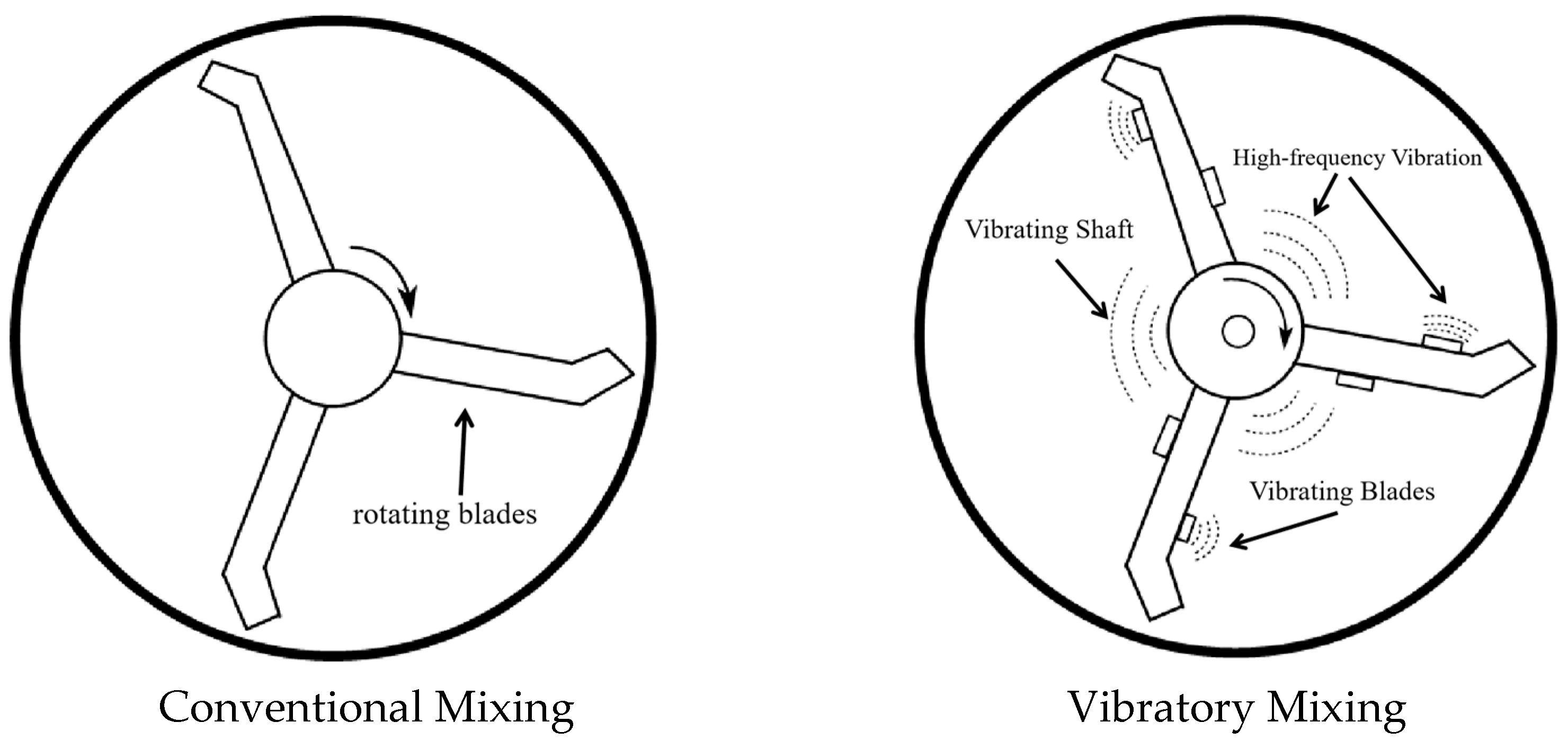
Figure 1. Mixing Method.
Buildings 16 00310 g001
Figure 2. Slump of rubber concrete with different content under VM and CM.
Buildings 16 00310 g002
Figure 3. Uniaxial quasi-static compression test.
Buildings 16 00310 g003
Figure 4. The diagram of dynamic compression test.
Buildings 16 00310 g004
Figure 5. (a) Unprocessed waveform diagram; (b) Waveform diagram after waveform time alignment.
Buildings 16 00310 g005
Figure 6. Failure modes of quasi-static uniaxial compression tests.
Buildings 16 00310 g006
Figure 7. Quasi-static compressive strength.
Buildings 16 00310 g007
Figure 8. Stress–strain curves of rubber concrete.
Buildings 16 00310 g008
Figure 9. Mean stress–strain curve of CMRC20 with ±1 SD variability band obtained from three replicate specimens.
Buildings 16 00310 g009
Figure 10. Failure modes of concrete with different rubber content under different mixing modes.
Buildings 16 00310 g010aBuildings 16 00310 g010b
Figure 11. Dynamic stress–strain curves of rubber concrete with different rubber content under different mixing methods.
Buildings 16 00310 g011
Figure 12. Method for calculating toughness.
Buildings 16 00310 g012
Figure 13. Impact toughness of rubber concrete with different mixing amounts under different mixing methods.
Buildings 16 00310 g013
Figure 14. Relationship between strain rate and DIF of rubber concrete under different mixing methods.
Buildings 16 00310 g014
Figure 15. Effect of rubber content on the slope of the DIF.
Buildings 16 00310 g015
Figure 16. Relationship between strain rate and dynamic compressive strength of rubber concrete under different mixing methods.
Buildings 16 00310 g016
Figure 17. Micro-morphology of ordinary concrete under different mixing methods.
Buildings 16 00310 g017
Figure 18. Micro-morphology of concrete with different rubber content under different mixing methods.
Buildings 16 00310 g018
Table 1. Mixer-related parameters.
Capacity (L)Mixing Motor Power (kW)Vibration Motor Power (kW)Vibration
Acceleration (g)
Mixing Speed (r/min)
6043355
Table 2. Static Mechanical Properties (kg/m3).
IDCementWaterSandCoarse
Aggregate
Rubber
Particles
VMNC39821060911830
CMNC
VMRC20398210487118354
CMRC20
VMRC30398210426118381
CMRC30
Table 3. Quasi-static compressive properties.
IDCompressive Strength (MPa)Young’s
Modulus (GPa)
Poisson’s RatioStrength Loss (%)
VMNC49.0730.00.2110
VMRC2033.1524.20.19932.44
VMRC3029.9420.70.19838.98
CMNC45.2732.90.2130
CMRC2029.4325.10.20434.99
CMRC3022.1319.70.20351.12
Table 4. Linear fitting results of the DIF–strain rate relationship.
IDabSE(a)SE(b)R2
VMNC0.73805−0.222080.02760.05580.97
CMNC1.42184−1.253930.05800.11720.89
VMRC200.584690.478470.04540.09270.95
CMRC201.26162−0.940370.13830.27970.97
VMRC300.90636−0.267090.06340.12990.90
CMRC301.54309−0.863970.27380.55840.86
Disclaimer/Publisher’s Note: The statements, opinions and data contained in all publications are solely those of the individual author(s) and contributor(s) and not of MDPI and/or the editor(s). MDPI and/or the editor(s) disclaim responsibility for any injury to people or property resulting from any ideas, methods, instructions or products referred to in the content.