Article

Enhancing Interlayer Properties and Sustainability of 3D-Printed UHPC with Antimony Tailings

1
School of Civil Engineering and Architecture, East China Jiao Tong University, Nanchang 330013, China
2
Jiangxi Communications Investment Group Co., Ltd., Nanchang 330000, China
3
Jiangxi Traffic Engineering Assembly Manufacturing Co., Ltd., Nanchang 330000, China
4
Hangzhou Institute of Communications Planning Design & Research Co., Ltd., Hangzhou 310006, China
5
Key Laboratory for Resilient Infrastructures of Coastal Cities, Shenzhen University, Shenzhen 518060, China
6
China Railway Tunnel Group Co., Ltd., Guangzhou 511458, China
*
Author to whom correspondence should be addressed.
Buildings 2026, 16(1), 53; https://doi.org/10.3390/buildings16010053
Submission received: 18 October 2025 / Revised: 11 November 2025 / Accepted: 15 November 2025 / Published: 23 December 2025
(This article belongs to the Special Issue Urban Renewal: Protection and Restoration of Existing Buildings)

Abstract

This study investigates the interlayer properties and sustainability of 3D-printed ultra-high-performance concrete (UHPC) modified with antimony tailings (ATs). The different AT ratios considered were 2.7, 5.4, 8.1, 10.8, and 13.5 wt% additions. The mechanical experiments show the optimal concentration resulting in compressive and flexural strength of 11.2% and 17.2% enhancement at 28 days, respectively. SEM analysis revealed that AT enhances the interlayer strength of 3D-printed UHPC and influences the anisotropic behavior of the matrix around steel fibers. X-CT demonstrated that increasing the AT from the compared group to 13.5% reduced the pore volume from 2.02% to 0.30%. Furthermore, an environmental impact assessment of the 10.8 wt% AT exhibited a 32.5% reduction in key indicators including abiotic depletion (ADP), acidification potential (AP), global warming potential (GWP), and ozone depletion potential (ODP). Consequently, UHPC incorporating AT offers superior environmental sustainability in the practical construction of 3D-printed concrete. This research provides practical guidance in optimizing 3D-printed UHPC engineering, further facilitating the integrated design and manufacturing of multi-layer structures.

1. Introduction

The promising utilization of ultra-high-performance concrete (UHPC) satisfies the increasing demands in construction engineering comprising nuclear facilities, offshore structures, and high-rise buildings [1,2,3]. Meanwhile, UHPC possesses superior ductility, durability, compressibility, and flexibility as an innovative cement-based material [4,5]. In particular, UHPC has 136.6 MPa compressive strength, even exceeding 150 MPa under different curing conditions such as standard room, steam, and autoclave [6,7]. Moreover, UHPC presents outstanding strength and corrosion resistance, attributed to the minor-porosity mortar [8,9]. However, insufficient flexural strain characteristics, high shrinkage, and low workability impair the engineering properties of UHPC materials [10]. Therefore, various high-performance tailings have been examined to compensate for the mechanical and structural performances of cementitious composites.
Several studies have been carried out to enhance concrete strength by incorporating mine tailings into the mixture. Zhou et al. [11] suggested that substituting 35% bauxite tailings into the mix caused 40.7 and 48.0 MPa compressive strength, reflecting 24.2% and 35.2% enhancement at 28 and 60 days, respectively. Cheng et al. [12] verified that siliceous-iron tailings comprising 30% content can withstand a maximum of 75 freezing and thawing cycles, demonstrating a 50% enhancement of frost resistance. Esmaeili et al. [13] determined that a 15% substitution ratio of copper tailings resulted in an optimal splitting tensile and compressive strength of 5.26 and 60.42 MPa after 365 days. In recent years, several investigations have extended the use of tailings to UHPC, demonstrating their potential to enhance mechanical performance. For example, Li et al. [14] reported that incorporating 30% molybdenum tailings into UHPC achieved a flexural and compressive strength of 19.5 and 112.8 MPa at 28 days. Similarly, Deng et al. [15] demonstrated that replacing river sand with 100% molybdenum tailings enhanced chloride resistance by 25.6%, increased the compressive strength to 109.32 MPa, and reduced production costs by 13%. Esmaeili et al. [16] found that substituting 10% steel/copper/molybdenum tailings (SCMT) for cement improved chloride ion resistance by 17.6% and increased compressive strength by 50%. Significantly, antimony tailing (AT) manifests superior mechanical properties (2.5 and 15 MPa of flexural and compressive strength, respectively) and enhanced effects in cementitious composites [17]. However, bending performances have been considered the significant weakness of AT/cement compounds due to the absence of oriented fiber bridging and uniform interlayer intervals [18]. These limitations can be effectively mitigated by 3D printing technology, which allows precise control of fiber orientation and filament placement, thereby enhancing the interlayer bonding and load transfer efficiency. Therefore, 3D printing technology is utilized in manufacturing UHPC making up for strength deficiencies in flexural behaviors.
The 3D-printed concrete (3DPC) technology has been widely explored, which overcomes challenges presented by conventional casting methods such as dangerous building procedures, high-cost formwork, and excessive industry waste [19,20,21]. The 3DPC illustrates excellent anisotropy due to the oriented fiber’s influence, whose stacked process and extruded filament have oriented fibers following the printed path [22]. Furthermore, steel fibers reinforced in UHPC enhance ultimate deflection and flexural properties due to their bridging effect, minimizing the propagation of main fracture and crack branching [20]. Especially in aligned steel fiber-reinforced concrete, steel fiber provides ideal improvements in ductility, crack control, and crack resistance [23]. Nonetheless, the comprehensive mechanism and sustainability among UHPC, AT, and 3D printing technologies have not been examined. This research fills the gap by examining the mechanical, microstructural, and environmental performance of 3D-printed AT-UHPC.
This research experimentally evaluates the interlayer performance and sustainability of the 3D-printed AT concrete reinforced with steel fibers. Tests on flexural and compressive strength were carried out to explore the mechanical characteristics of the 3DPC doped with different AT concentrations. The microstructure, compound variation, and fiber pore distribution effects were investigated by X-CT, SEM, and XRD. Furthermore, a program was implemented to investigate the effects of the hardened behaviors of porosity, three-orientation strength, interlayer bond strength, and environmental impact indicators (ADP, AP, GWP, and ODP) on AT.

2. Experimental Program

2.1. Materials

Ultra-high-performance concrete (UHPC), steel fiber, AT (Xikuangsha Mining Area, Lengshuijiang, Hunan, China), grade 955 silica fume (SF) (Henan Shengda New Material Technology Co., Ltd., Jiaozuo, Henan, China), quartz sand (QS) (Anhui Fengyang Longyang Mining Co., Ltd., Chuzhou, Anhui, China), and common potable tap water are employed in this research, whose content compositions are illustrated in Table 1. UHPC is prepared from 6 types of powders including ordinary QS, fly ash (FA) (China Baowu Steel Group, Shanghai, China), QP (Anhui Fengyang Longyang Mining Co., Ltd., Chuzhou, Anhui, China), ordinary Portland cement (P.O 42.5) (China National Building Materials, Beijing, China), SF, and superplasticizer (SP) (Jiangsu Sobute New Materials Co., Ltd., Nanjing, Jiangsu, China) in a mixed proportion. In this research, a 2.7 wt% AT concentration was selected as preliminary trials showed that this baseline dosage ensured adequate flowability, dispersion, and stable buildability during 3D printing. Therefore, the mixture containing 2.7 wt% AT was identified as the control group attributed to UHPC containing trace amounts of antimony. Furthermore, four mass ratios (5.4, 8.1, 10.8, and 13.5 wt%) of AT are designated as AT1, AT2, AT3, and AT4. Additionally, short, round, straight steel fiber (Shanghai Bekaert-Ergang Co., Ltd., Shanghai, China) was utilized to increase the optimal mechanical capabilities, and its mechanical properties and size are demonstrated in Table 2.
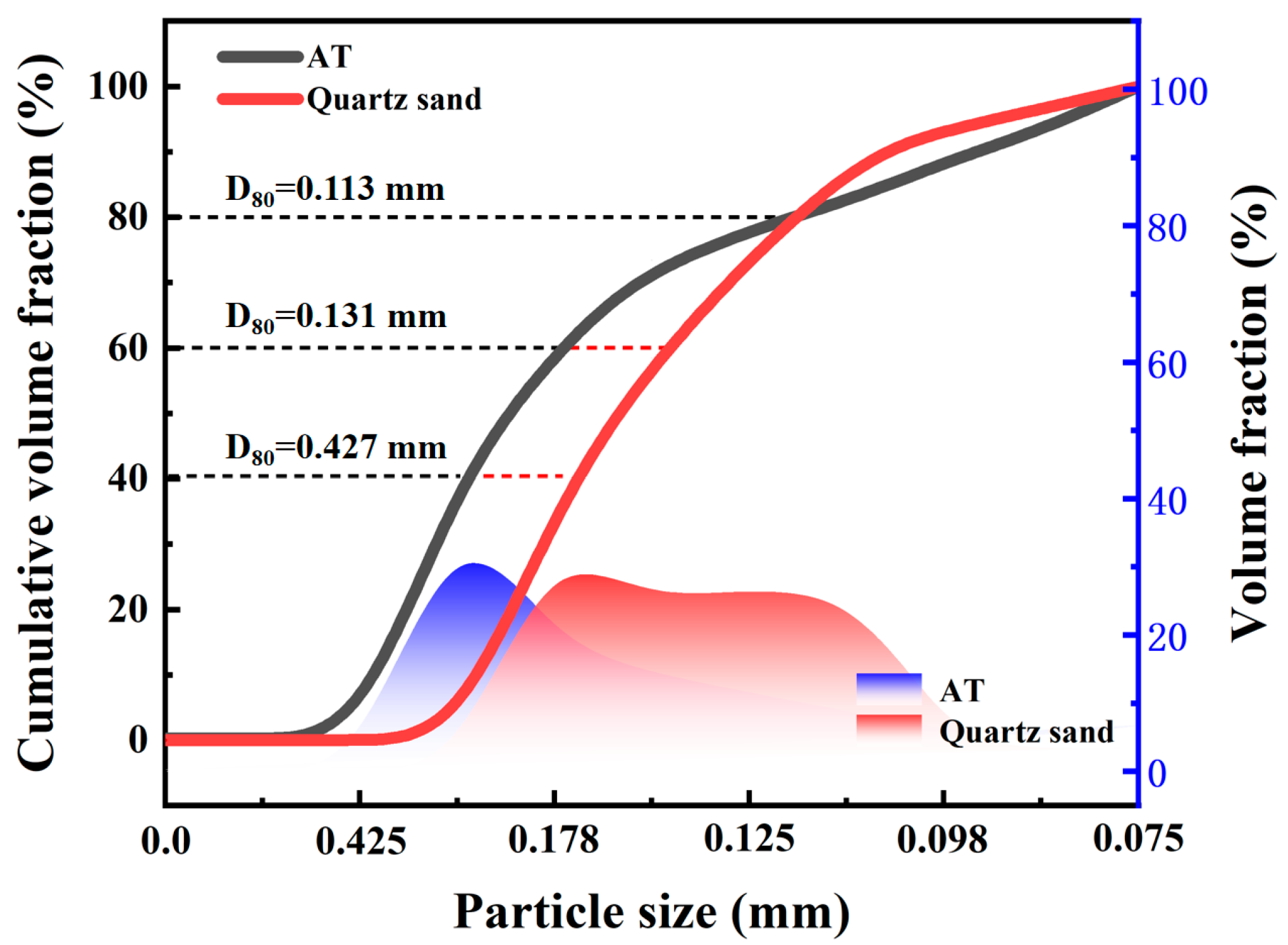
The AT utilized in this research is made by calcining and grinding into powder by massive AT, obtained from Xikuang mountain in Hunan Province. In addition, AT features a 1.26% water absorption ratio and 0.52 fineness modulus (FM), while the chemical composition is demonstrated in Table 3. Figure 1 provides the grain size profile data of quartz sand and AT, and the equivalent diameters for D40, D60, and D80 are 0.427 mm, 0.131 mm, and 0.113 mm, respectively.

2.2. Preparation of the 3D-Printed AT-UHPC

In the mixing procedure, dry materials were first poured into the mixer for 5 min after weighing, whereas AT and quartz sand were blended for another 5 min. Thereafter, pre-weighed water was slowly incorporated into the mixture for around 2 min. Globular or clumpy particles containing unreacted dry materials were subject to be removed with a spatula. Meanwhile, quantitative steel fibers were gradually incorporated instead of a one-time addition; otherwise, a low-quality mixture was inevitably caused. The mixer constantly sustained working conditions during manufacturing until a uniform-paste cementitious material was generated.
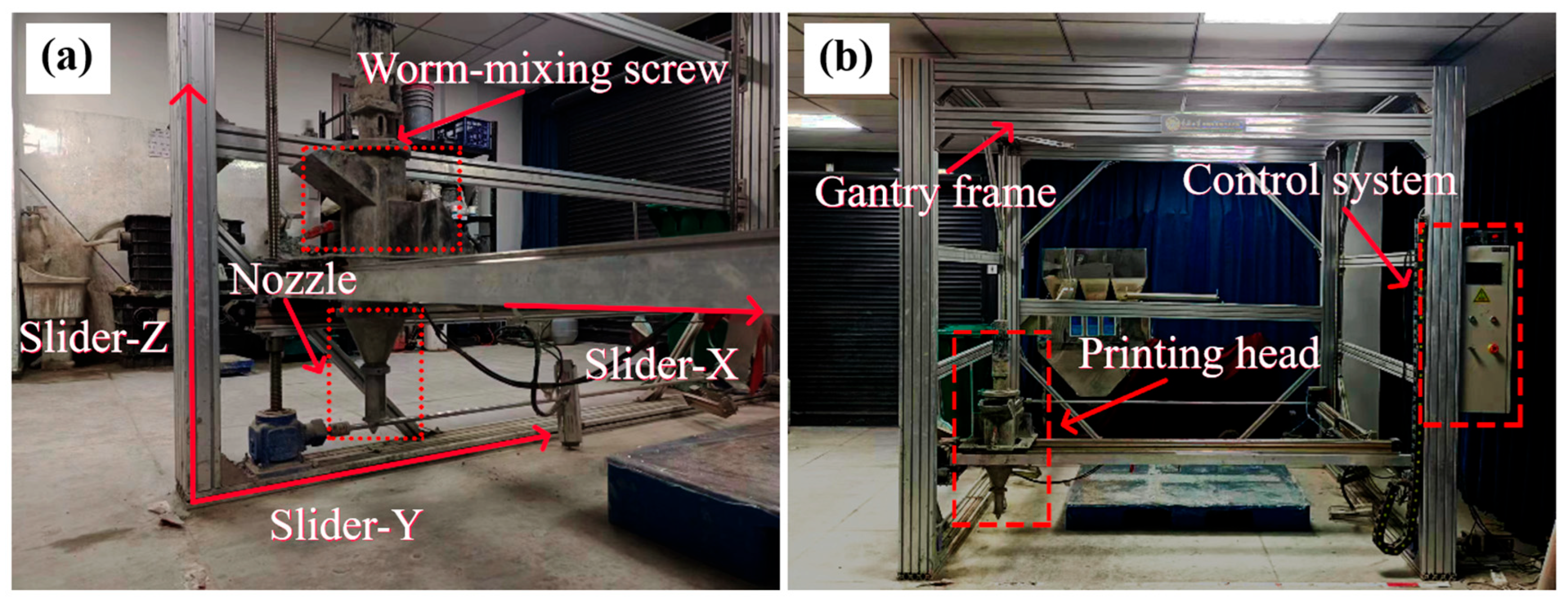
In addition, a gantry-form printing system possesses a 1.6 m (L) × 1.5 m (W) × 1.5 m (H) frame for fabricating printed specimens, as demonstrated in Figure 2a,b. The printer is composed of a self-developed digital control system, a gantry, a printed head, and three directional sliders. The print head integrates a 15 mm diameter circular nozzle and a worm-mixing screw, operating at a travel speed of 50 mm/s and extrusion rate of 8830 mm3/s. Fresh composite is fed continuously to the nozzle, extruding 6 mm high, 15 mm wide filaments along a preprogrammed digital path. Specimens were produced by continuous extrusion printing without an intentional interlayer waiting time. After printing, plastic films were placed on printed objects to prevent moisture evaporation.

2.3. Mechanical Peerformace of 3D-Printed AT-UHPC

Test specimens were divided into 5 groups based on different incorporation ratios of AT (2.7, 5.4, 8.1, 10.8, and 13.5 wt%). Printed samples were sawed to 40 × 40 × 40 mm cubic and 40 × 40 × 160 mm prism shapes; all specimens were cured at relative humidity (90% ± 2%) at room temperature (23 ± 1 °C).
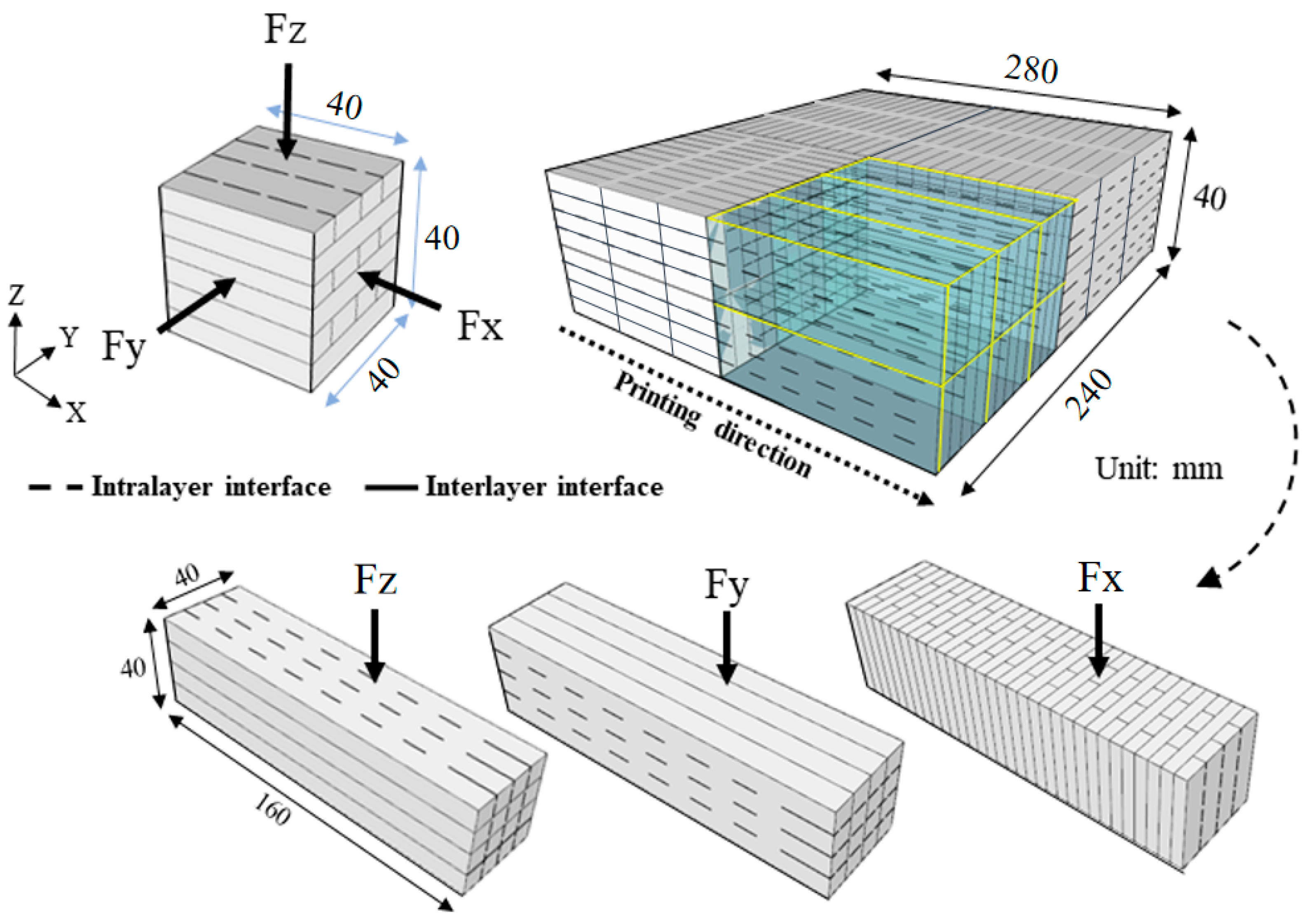
In the compressive and flexural strength tests at 14 and 28 d, for X, Y, and Z directions, three specimens were prepared. Accordingly, a total of 18 samples were used for the compressive and flexural strength tests to ensure statistical reliability. The inherent loading rate was adjusted to 0.5 mm/min and 0.5 MPa/s, following ASTM C109 [24] and ASTM C348-14 [25]. Figure 3 shows, for flexural strength, the specimen is loaded on the z-axis, whereas compressive strength withstood loads in three orthogonal directions to evaluate the anisotropic mechanical performances. The three-point bending experiments following the GB/T 17671-2021 standard [26] were conducted through an automatic pressure-testing machine, which maintains a measurement accuracy of 1%.

2.4. Characterization of 3D-Printed AT-UHPC

The UHPC samples with different AT concentrations were characterized to determine their crystal structure, pore size distribution, and morphology. The Gemini300 scanning electron microscope (SEM) was employed to analyze the microstructure in the interfacial transition zone (ITZ) among AT, steel fibers, and other materials. Five different AT concentrations of UHPC were then imaged by the SEM at an acceleration voltage of 5 kV.
X-ray micro-computed tomography (X-CT) with a high-definition image displays the cracking path and fracture surface after the post-test, identifying the pore spatial distribution and total porosity. The utilized scan instrument possesses a 450 kV small-focus ray source and a digital panel detector, with a 310 × 600 mm detection range. It features 2.8 LP/mm spatial resolution, 1% density resolution, 1500 W maximum tube power, and maximum penetrability (exceeding 60 mm equivalent steel). The single-crystal X-ray diffractometer (XRD) named Agilent Supernova was utilized to characterize the UHPC crystal structure doped with various concentrations of AT. The XRD patterns of UHPC were recorded in the range of 20° to 70° (2θ) with a scanning rate of 2°/min and a step size of 0.01°.

2.5. Environmental Assessment of 3D-Printed AT-UHPC

A systematic four-phase approach compliant with ISO 14040 standards [27] was implemented to conduct the environmental assessment, utilizing the OpenLCA tool as the primary analytical platform [28].
(1)
Goal and boundaries: the functional element is 1 × 1 × 1 m3 concrete formulated with various AT proportions, as shown in Table 1. The system boundaries include raw material extraction, material transportation, and laboratory-scale concrete production. The energy consumption of the 3D printing process, curing process, and service life stages was excluded.
(2)
Life cycle inventory (LCI): Using the Ecoinvent v3.8 database, an input/output model was constructed in OpenLCA to quantify material and emission flows. In this study, inputs encompass raw materials utilized in concrete mixtures, including AT, cement, aggregate, sand, steel fibers, and water. Outputs contain the concrete mixture design and are discharged into the atmosphere, terrestrial environment, and aquatic systems.
(3)
Impact assessment: This study evaluates four key environmental impact indicators: ozone depletion potential, abiotic resource depletion potential, global warming potential, and acidification potential. Based on the EN-15804 standard [29], the OpenLCA method is applied to assess environmental impacts resulting from the production of 1 m3 of concrete during the mixing stage. To facilitate comparison, the characterized outcomes for each indicator are standardized via dividing them by the yearly total equivalent discharges [30] relevant to this impact category on a broad regional scale.
(4)
Interpretation: A comparative analysis of ecological effects across the different samples is conducted. Additionally, the numerous critical ecological effects indicator in the concrete production process is identified and discussed.

3. Results and Discussion

3.1. Flexural and Compressive Strength of 3D-Printed AT-UHPC

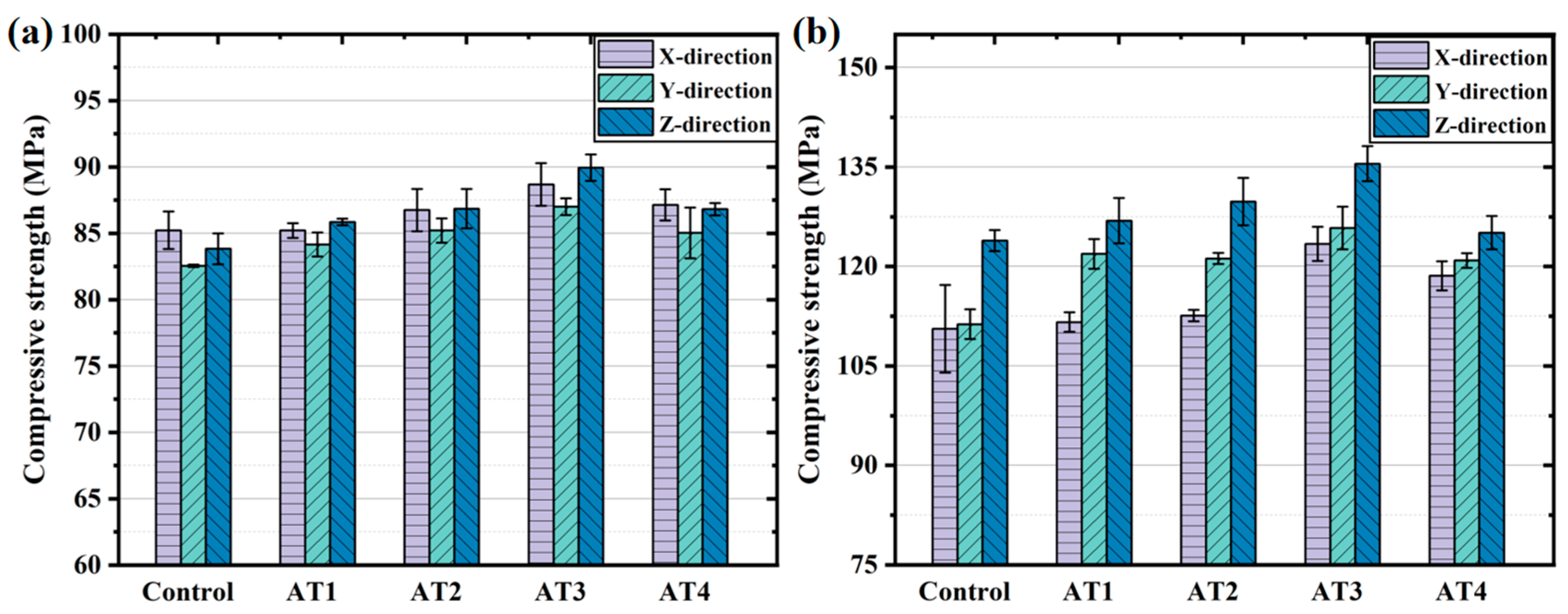
Figure 4a,b demonstrate the compressive strength experiment results of 3D printing concrete with various ratios after 14 days and 28 days, respectively. Figure 4a shows the compressive strength of AT-UHPC enhanced by 4.0%, 5.4%, and 7.2% in the x, y, and z directions compared with the control group at 14 days, respectively. Furthermore, Figure 4b illustrates the compressive strength was enhanced by 11.6%, 13.0%, and 9.7% at 28 d. These compressive enhancements are attributed to the increase in hydrothermal SiO2 compounds in AT which are combined with cement-formed high-strength silicon/calcium (SC) compounds [30]. The generated compounds and the irregular-surface AT packs and optimizes microstructure, enhancing integration and reducing microcracks between the aggregate and the matrix. However, the increase in AT content above 10.8 wt% has caused a reduction in compressive strength behaviors. For instance, the compressive strength of AT4 reflected a reduction of 2.6% and 5.4% at 14 and 28 days compared to the counterpart (AT3), respectively, particularly an 8.0% drop in the z direction at 28 days. Owing to the excessive SC compounds, excess AT particles remained unreacted and agglomerated, which acted as structural flaws and compromised the microstructure [30]. Free ATs in cementitious composites are prone to generate weak areas and induce intensity reduction under complex chemical reactions.
Furthermore, evident anisotropy can be measured in relation to the compressive intensity in the X, Y, and Z direction, and AT inclusion has a limited impact on the anisotropic properties. For 14-day test samples, the compressive intensity of UHPC is illustrated in the sequence Z-axis > X-axis > Y-axis. With increasing curing time, the compressive strength of all loading directions is enhanced by more than 25 MPa. Z-axis compressive strength sustains the highest values, which increased from 123.9 MPa to 135.5 MPa in the three directions during the curing age [31]. The 28-day compressive strength improved to 125.8 MPa and 123.4 MPa, improving by 13.03% and 11.57% in the Y and X directions, respectively, compared with the control. The Y direction had a drastic increase (up by 41.8%) in compressive strength, which exceeded the X-axis by 4.2% at 28 days. This phenomenon is mainly attributed to the weak interlayer interface and steel fiber orientation that affected basic mechanical characteristics such as splitting tensile strength and shear strength, particularly mechanical anisotropy in the cementitious structure. Due to the crack-bridging mechanism [32], the oriented fiber in the printed filament mitigates the microcrack process and improves mechanical toughness and absorption behavior to printing composites, even the flexural resistance performance.
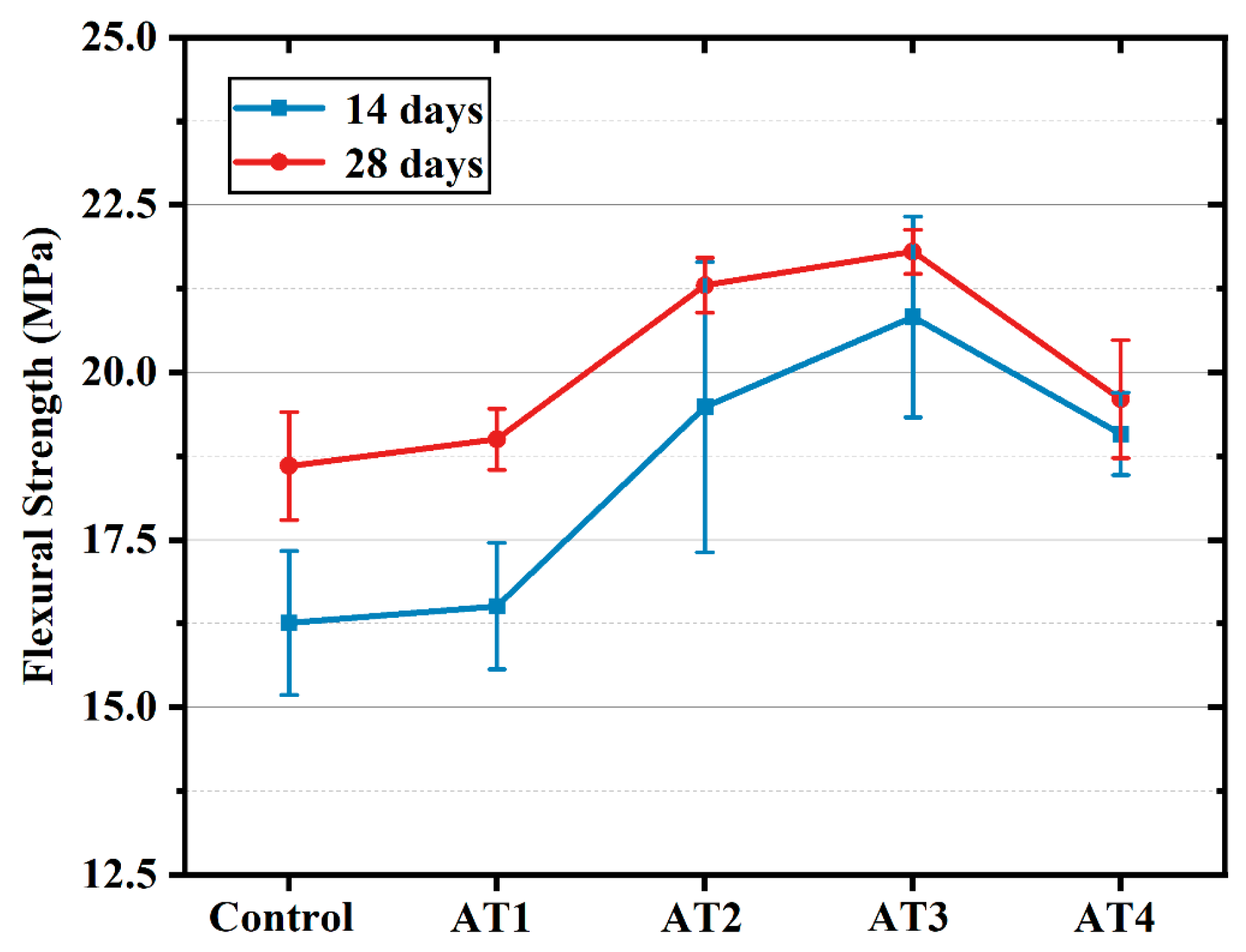
Figure 5 depicts the AT content’s influence on the flexural behavior of the 3D printing mixture at 14 and 28 days. The flexural characteristic before the AT3 sample improved gradually with AT content and curing age. The flexural strengths of the control are 16.26 MPa and 18.60 MPa at 14 and 28 days, respectively. At the 14 d curing age, the flexural values were improved by 19.80%, 28.11%, and 17.34% with AT2, AT3, and AT4, compared to the control. Similarly, 14.5%, 17.2%, and 5.37% increases in flexural strength for AT2, AT3, and AT4 were shown at 28 days. At 10.8 wt% concentration, the flexural strength improved, reaching a peak of 20.83 MPa and 21.80 MPa at 14 and 28 d, respectively. These flexural strength increases indicate that AT is prominent in enhancing the flexural strength of the sample. However, the influence of AT with 13.5 wt% content on the flexural strength is weakened, leading to a drop of 21.8 MPa against 19.6 MPa at 28 d. The variation in line with the compressive intensity indicates that AT’s effect on UHPC is regular and significant; 10.8 wt% AT demonstrates optimal influence.
The compressive and flexural intensity rose with the increasing AT content on a varying trend. The generated enhanced and decreased effects are mainly attributed to the AT rich in SiO2; consequently, the AT proportion change is equivalent to the SiO2 content variation in the whole reaction. The SiO2 fortifies the pozzolanic activity of cementitious materials, as well as producing calcium/aluminate hydrate and calcium/silicate hydrate, which fill pores, adding density in the ITZ [33,34]. Additionally, the generated calcium/silicate hydrate featuring a substantial specific surface area involves the adsorption and encapsulation of antimony anions [17]. However, excessive SiO2 will have a negative influence, inducing agglomeration, increasing air voids, and decreasing the microstructural density. This study only examined the compressive and flexural strengths at 14 and 28 days, without evaluating long-term mechanical performance.

3.2. Microstructure of 3D-Printed AT-UHPC

3.2.1. Evolution of 3D-Printed AT-UHPC

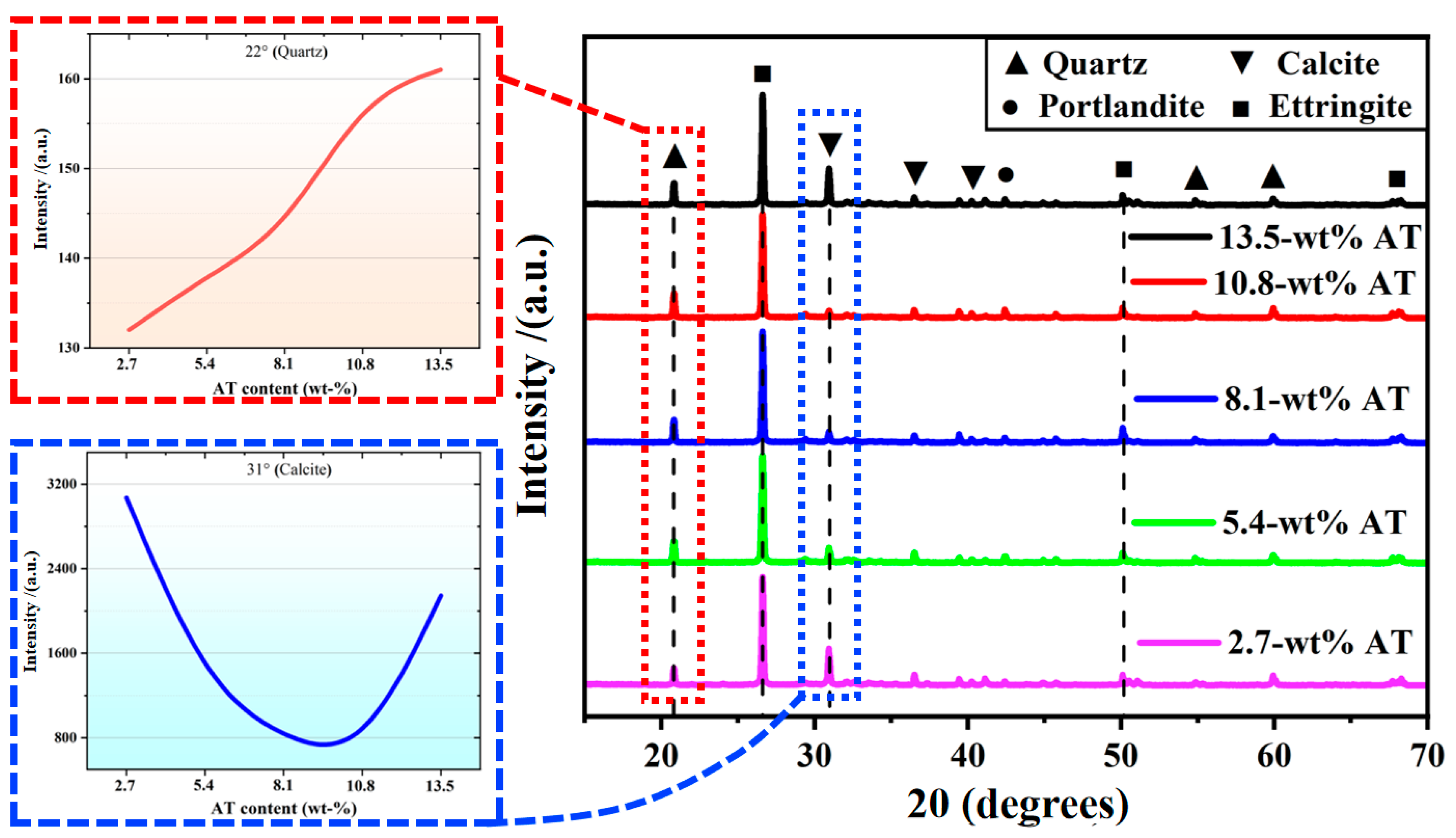
The XRD pattern quantitative analysis of the hydration products of UHPC incorporated with different contents of AT is shown in Figure 6. The main hydration ingredients of the microstructure including silica (Quartz), calcium carbonate (Calcite), calcium hydroxide (Portlandite), and ettringite were revealed. The increasing addition of AT dosages does not alter the microstructure of the hydration phase but it transforms the intensity values of the crystal diffraction peak (CDP).
Based on the conducted compressive behavior tests, the compressive intensity of UHPC reaches its peak at 10.8 wt% AT concentration. Therefore, it can be inferred that the increasing AT reduces the calcite content and promotes the generation of the C-S-H substances, effectively improving the compressive performance of UHPC. Moreover, it has been found that the CaCO3 reduction contributes to partial unstable phase disappearance in a mixture from other studies [35,36], which improves the mechanical properties of concrete and makes it more stable and sturdier.

3.2.2. Pore structure of 3D-Printed AT-UHPC

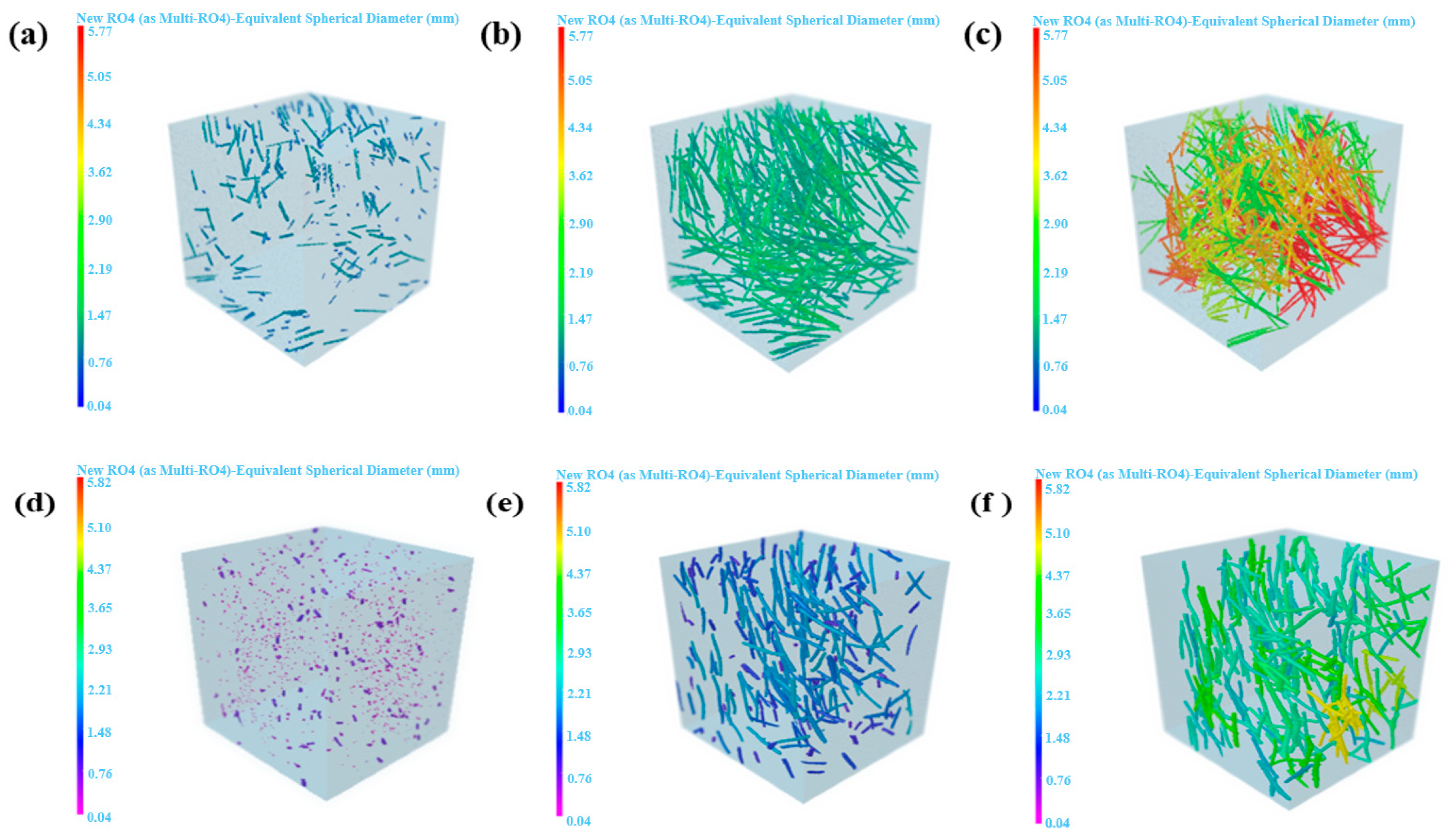
The pore size distribution of 0.04–5.77 mm is represented by diverse colors according to the chromatographic analysis, as shown in Figure 7. Through Dragonfly pore analysis, a pore size of 0.04–5.77 mm is divided into 2.00–5.77 mm, 0.04–1.00 mm, and 1.00–2.00 mm. The voids and fractures mainly present elongated strips that are probably due to the oriented fiber’s moving nozzle and steel fiber [37]. According to Figure 7d–f, the increasing AT reduces the size and density of pores compared to the control and AT4, particularly the gap over 5.00 mm. In addition, AT4 exhibits spherical micropores that differ from the slender pores of the control within 0.04–1.00 mm. This is probably attributed to the increasing AT content fueling the production of calcium carbonate, which compensates for the cracks influenced by steel fibers.
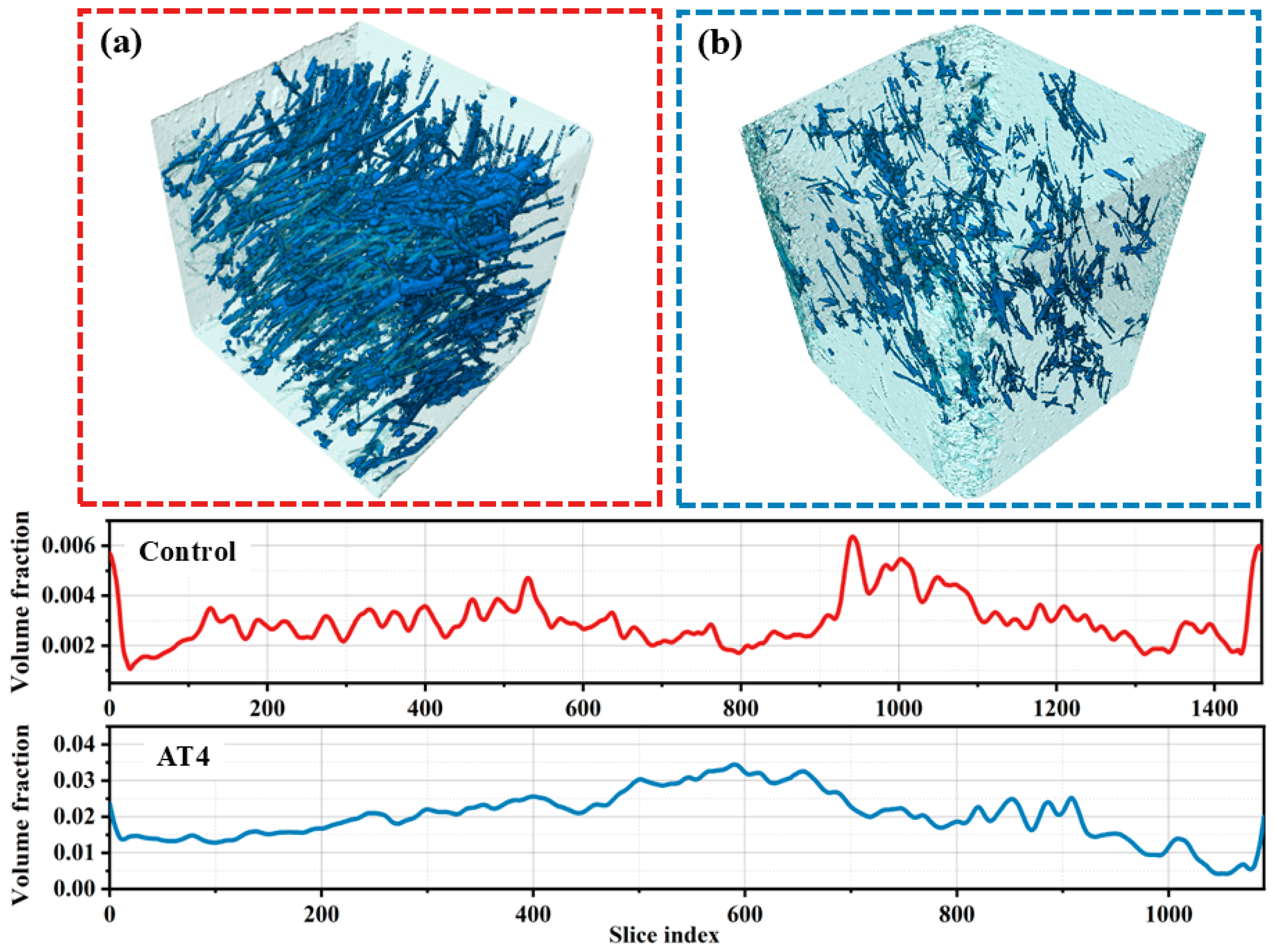
Moreover, the X-CT analysis was applied to the 3D-printed mixtures of the control and AT4, showing the internal voids’ morphology and volume fraction/slice, as depicted in Figure 8. The variation in the two-type specimens is significantly related to the AT concentration, particularly the number of pores and cracks. Specifically, the porosity was measured as 2.02% for the control in Figure 8a and 0.30% for AT4 (13.5 wt%-treated AT) in Figure 8b. The porosity as described above was yielded by the mean volume fractions, employing the Avizo application. The volume fraction range for the control pores was determined as 0.0041 to 0.0349, whereas for AT4 pores, it was found to be 0.0011 to 0.0065. It is confirmed that there is an 85.15% drop in porosity in AT4 compared with the control. This improvement can be attributed to the increased AT concentrations causing the microstructural density to improve and the internal fractures to reduce. According to the volume fraction in the X-Y direction, the flaws in the control are mainly concentrated in the specimen center, whereas pores in AT4 are uniformly dispersed. The volume fraction/slice in Figure 8b reflects a relatively subtle fluctuation (the maximum difference: 0.005) for comparison with Figure 8a. It is counted through each slice volume of samples divided by the total volume of a slice. This result indicates that 13.5 wt% AT concentration effectively weakens the generation of cracks (size and number, etc.) and increases the material uniformity and density.
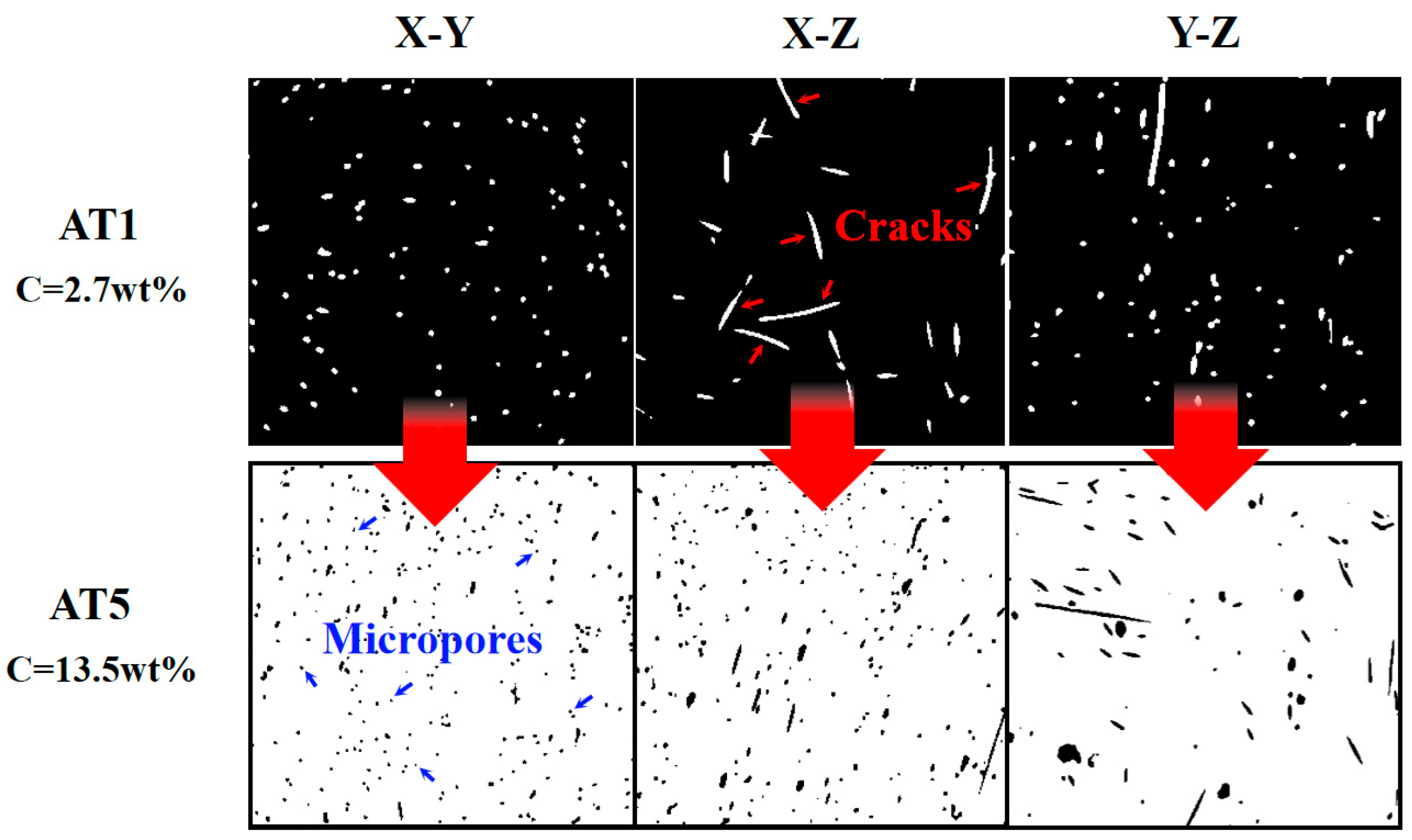
In addition, the 2D plane slice derived from the 3D model data was adopted in three directions (X-Y, X-Z, and Y-Z). Figure 9 illustrates the fracture’s various forms of slice in X-Y, X-Z, and Y-Z directions, in contrast with the experimental results of compressive strength in Figure 4. An important change is observed in void morphology as the concentration is increased from the control to 13.5 wt%, where elongated cracks have decreased, particularly in the X-Z direction. The pore size has reduced in the X-Y direction and these pores are mainly distributed around the edges. Nevertheless, the Y-Z direction demonstrates longer fractures at 13.5 wt% content, but this may be owing to sampling that coincidentally contains a few large voids.
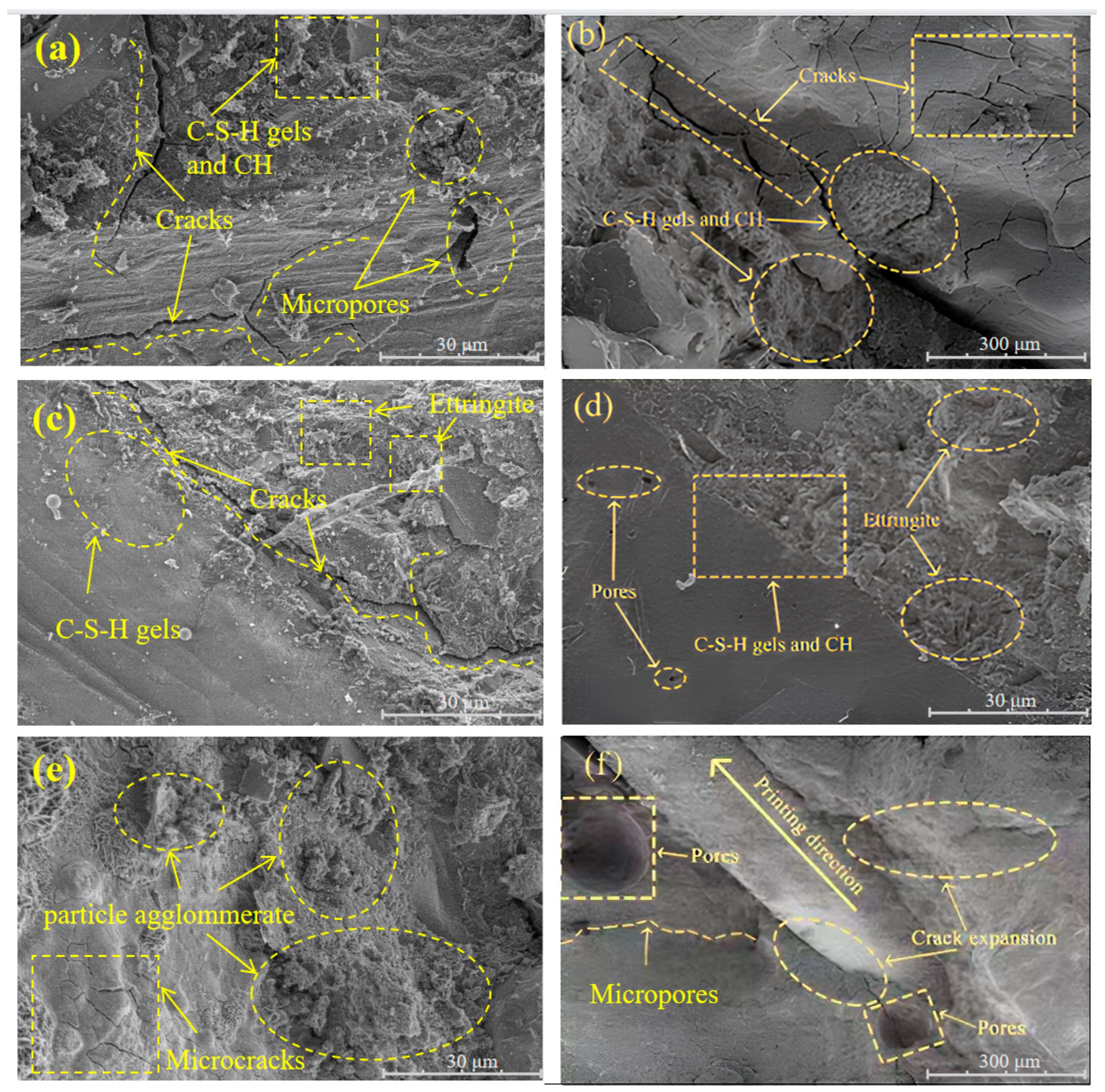
The compressive strength (z direction) remains at the highest level, potentially due to the layer deposition and fiber orientation during 3D printing. Each extruded layer slightly compacts the one below, reducing vertical porosity and enhancing interlayer density, which improves load-bearing capacity under compression. As shown in Figure 10f, cracks propagate parallel to the fiber alignment in the X-Y direction, while loads applied perpendicular to this direction (Z-axis) activate the fiber bridging effect and resist delamination. Hence, the Z direction exhibits the greatest compressive intensity on account of the combined effects of interlayer compaction and fiber bridging. Additionally, the AT incorporation further enhances the compressive strength in the z direction referring to Figure 8a,b. Consequently, the compressive strength maintaining the highest value in the z direction may be the outcome of the above factors’ action.
In addition, the y direction presenting the lowest early compressive strength was observed, whereas its intensification ultimately exceeds the x direction at 28 days of curing age. This phenomenon probably occurred due to the uneven microstructure and stress distribution inside the concrete, as shown in the X-Z and Y-Z direction diagrams. The crystal structure and particle distribution of UHPC have changed after adding AT, which enhances its cohesion and causes a dominant increase in the compressive intensity in the y direction. Additionally, the unevenness that potentially occurred in the preparation and curing process (e.g., uneven vibration, different curing conditions) induces strength differences between the x and y direction orientations. The joint action of the above factors may result in an increase in compressive intensity in the y direction.

3.2.3. Morphology of 3D-Printed AT-UHPC

Figure 10 demonstrates classic SEM images of the UHPC doped with processed AT particles at the 28-day curing age. Referring to Figure 10a,b, the testing samples’ microstructure contains scant C-S-H gels and CHs, along with wide microcracking and massive pores. The ettringite is also contained in the microstructure according to Figure 10c, which weakens the consistency of the ITZ. As depicted in Figure 10, the 8.1 wt% AT incorporation increases the amount of calcium silicate hydrate and restricts the generation of calcium hydroxide (unfavorable crystals). We can observe that the cracks and pores in the 8.1, 10.8, and 13.5 wt% AT addition samples are slight and smaller than the former shown in Figure 10a,b. The AT3 sample further presents a compacted and dense microstructure, generating more C-S-H gel particles to increase mechanical characteristics (Figure 10d). Nevertheless, the phenomenon of crystal agglomerates of hydration particles occurred in 13.5 wt% concentration while displaying slight voids. This variation in Figure 10d,e can be attributed to the excessive SiO2 substances [35,38] increasing the viscosity between the cement matrix and aggregate surface, finally causing a low-density microstructure.
Additionally, the main effect of variation in the compressive strength of the three directions can be explained in the printing and loading orientations via Figure 10f. Obvious cracks are parallel to the steel fiber direction (the printing path), which is attributed to the loading along the x direction. These loadings (tensile and shearing stress), which transfer in the weak joint among the intralayer and interlayer, are subject to induced cracking expansion and sliding displacement between steel fibers and matrixes. However, oriented steel fibers achieve the bridging effect to improve strength and toughness in the microstructure, while the loadings are perpendicular to the printed filaments (Y direction and Z direction). We can see that around the perpendicular direction of steel, fibers distributed slight microcracks without large-sized cracks and voids. Therefore, the reasons why the compressive strength in the Z direction and X direction at 28 days of curing proved to be optimal and the worst were explained, respectively.

3.3. Environmental Impacts of 3D-Printed AT-UHPC

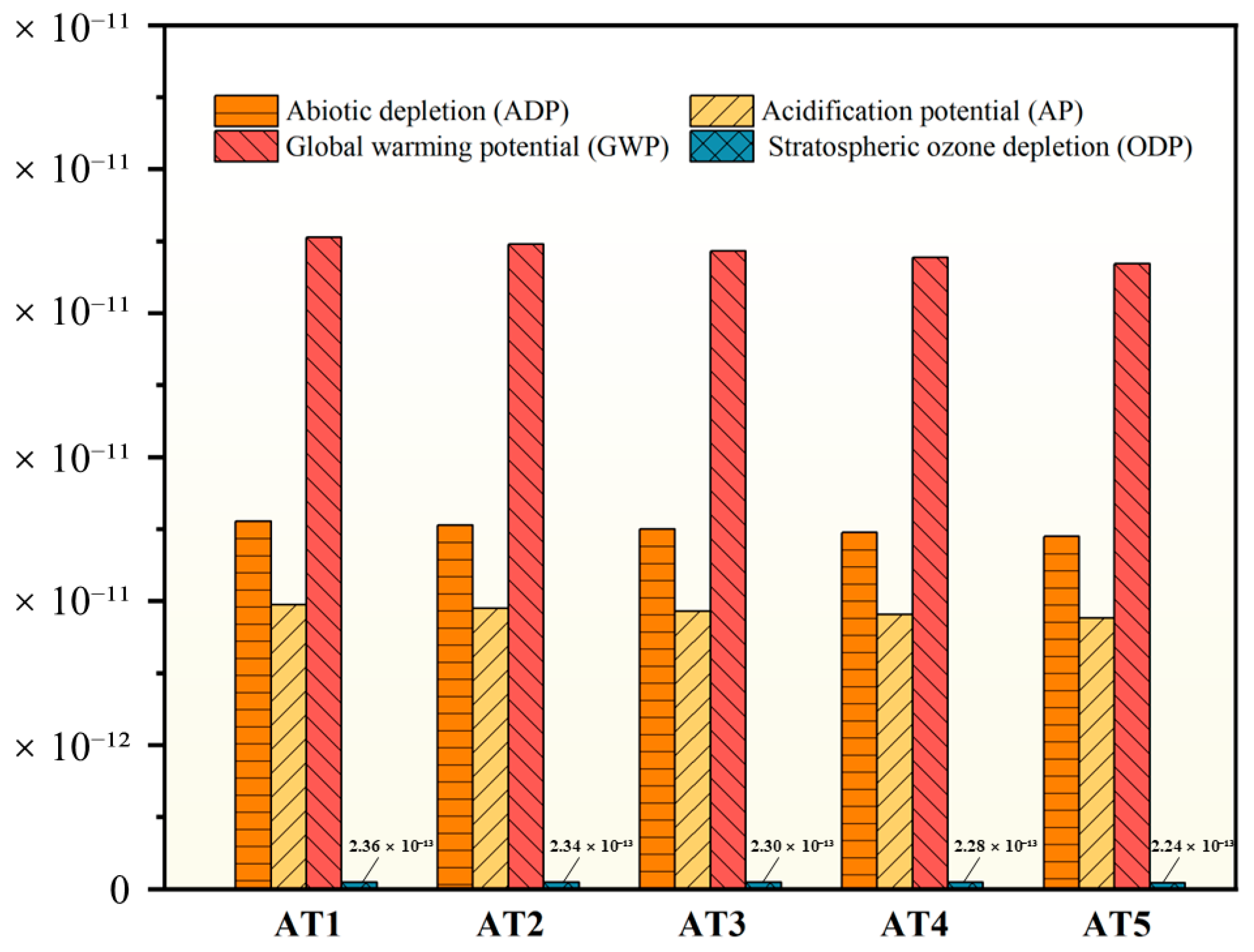
Figure 11 presents the normalized environmental impact indicators per 1 m3 of concrete, analyzed using OpenLCA (version 2.0.0). Except for ozone depletion, the concrete production process for all mix designs shows considerable contributions to abiotic depletion, acidification potential, and global warming potential. Among the four environmental impact categories assessed, GWP is the most significantly affected, while ODP remains marginal. This outcome is largely due to CO2 emissions generated during cement production, which intensify global warming and result in a high GWP value.
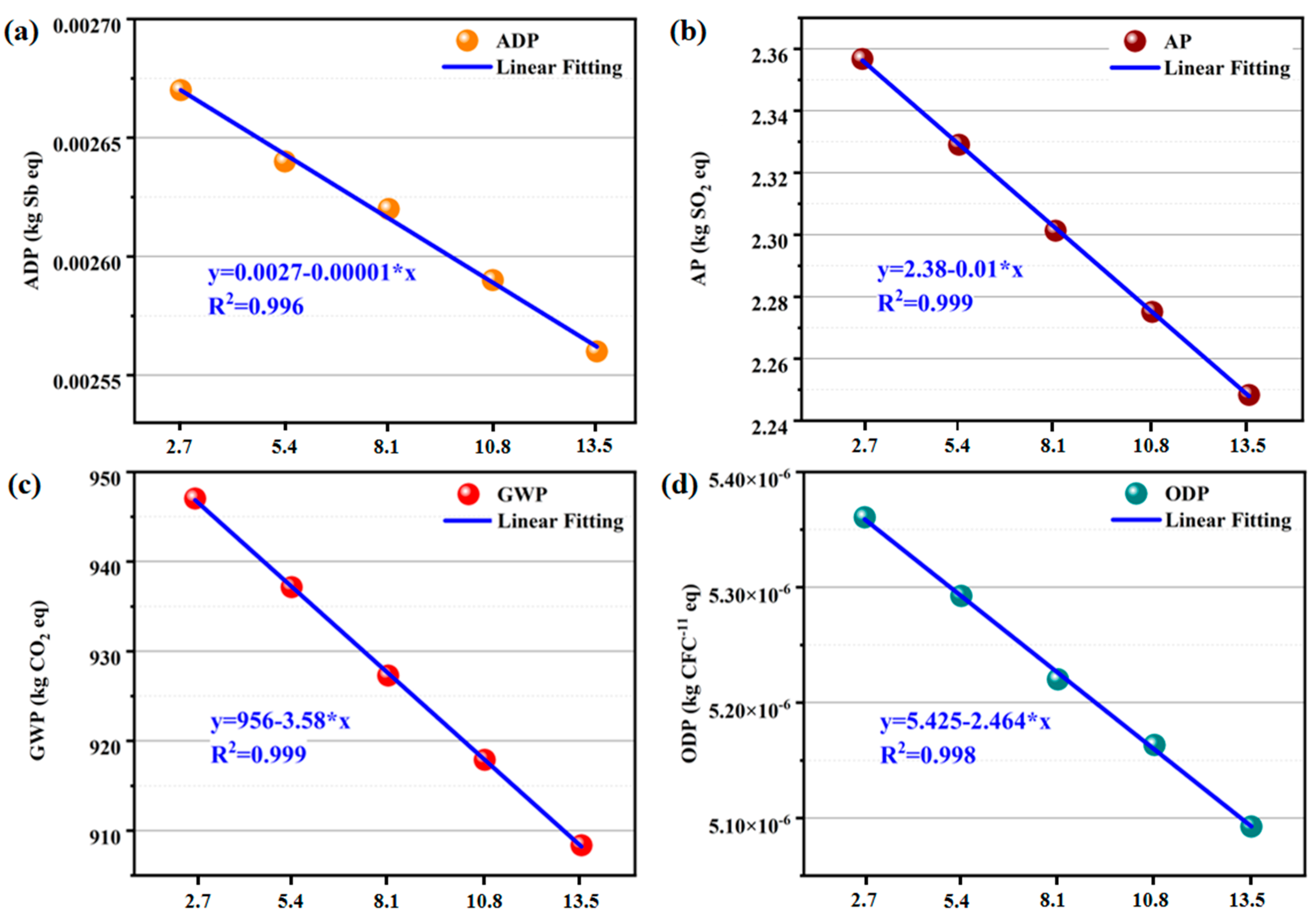
Figure 12 presents the environmental impact variation among different AT concentrations. The increased incorporation of AT decreases the ozone depletion, acidification potential, abiotic depletion, and global warming potential significantly, which is attributed to the superior sustainability and minor environmental footprint of AT compared to cement. An increasing permutation of cement by AT causes a noticeable reduction in the total environmental impacts, highlighting the environmental advantage of AT utilization. The ODP is mainly attributed to atomic chlorine (Cl) and bromine (Br), which are derived from halogenated gases like chlorofluorocarbons (CFCs) [39]. These elements are absent from the major chemical compositions of AT, SF, and cement in Table 3; consequently, ODP exerts a marginal influence on concrete production. The ODP minor variation might be due to the nitrous oxide (N2O) contained in AT and cement [39], which disturbs the stratospheric ozone as a greenhouse gas.
The relationship between environmental indicator variability and AT concentration was quantified through curve-fitting of the experimental data in Figure 12. A general equation for the optimally fitted lines can be formulated as
y = β 0 + β 1 x
where y is the environmental indicator (ADP, AP, GWP, ODP), x represents AT concentration (in wt%), and β0 and β1 denote the intercept and slope coefficients of the regression model, respectively. The coefficient of determination (R2) and the Pearson correlation coefficient (r) are introduced.
Figure 12 presents R2 values between 0.996 and 0.999, demonstrating that AT concentration accounts for over 99.6% of the variability in environmental indicators, with near-perfect model fit. Additionally, the equality R2 = r2 holds due to the fitting curve in Figure 12a–d being a simple linear regression equation. r2 approaching 1 indicates a strong positive linear correlation between environmental indicator and AT. Therefore, the accurate simulation of AT-induced trends in the environmental impact indicators can be determined by Equation (1).
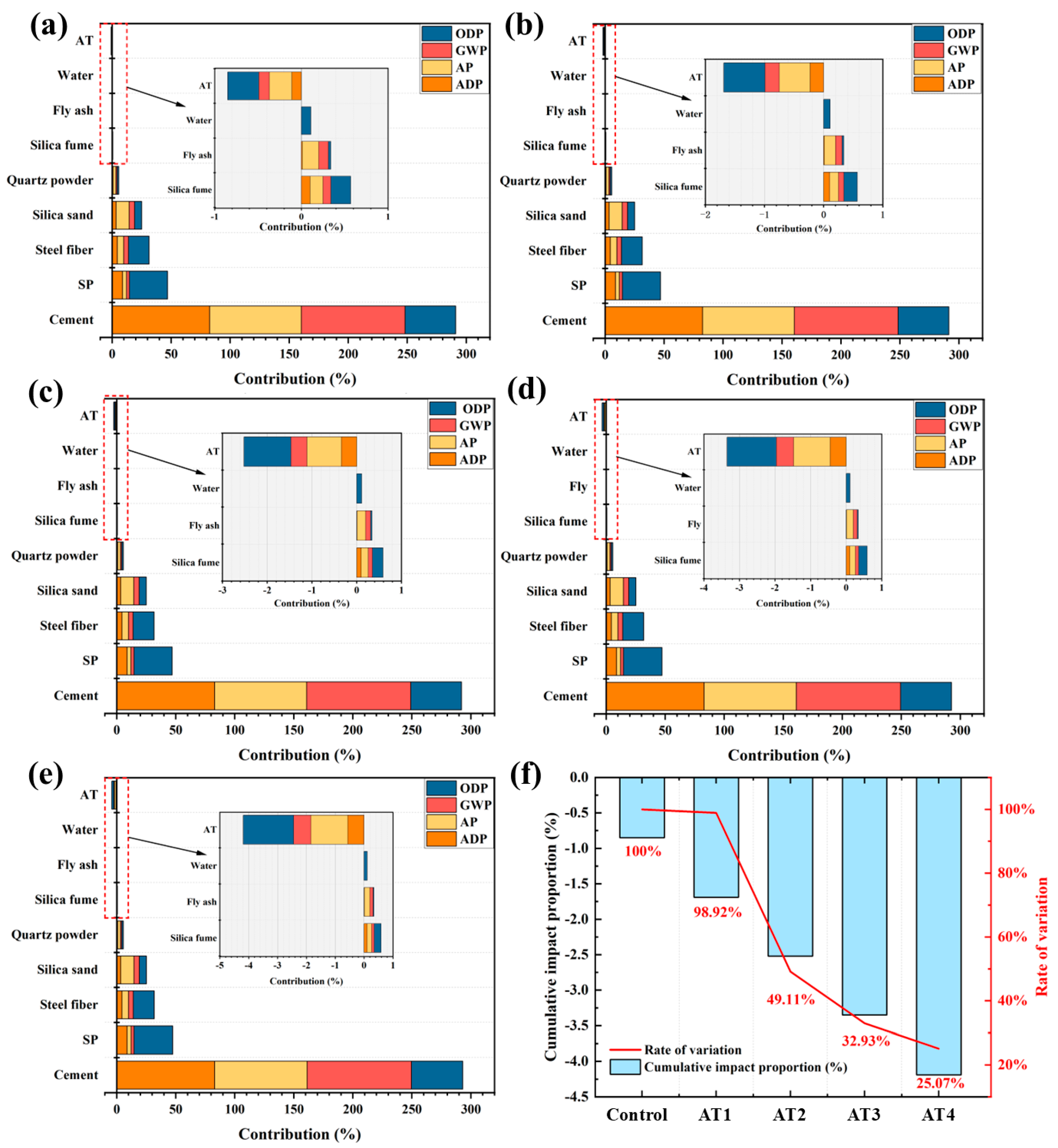
Figure 13a–e present the cumulative environmental impact (CEI) contributions of the five samples. Cement is identified as the primary contributor to the CEI across all indicators. Other components reflect a notable decrease within the range of 83.9% to 98.1% compared to the cement. Furthermore, the incorporation of antimony tailings (ATs) shows a clear positive effect in mitigating the four evaluated environmental impact categories. This improvement is attributed to AT acting as a low-impact supplementary material that partially replaces cement, thereby reducing the overall environmental burden of the 3D-printed UHPC. With increasing AT content, a consistent downward trend in total environmental impacts is observed, indicating that the utilization of AT contributes to more sustainable material performance. Figure 13f contains the AT-CEI proportion and its relative change rate between the various AT incorporations. As the AT content increases, the total environmental impact shows a continuous decline, supporting the sustainability advantages of AT-based mixtures. The relationship between AT content and CEI, along with the associated reduction rates, is summarized in Figure 13f. The maximum reduction rate occurred between 5.4 wt% and 8.1 wt%, then trended towards deceleration after reaching 10.8 wt%. Meanwhile, the 10.8 wt% AT incorporation further results in a 32.93% decrease in the relative change rate compared to AT2. Therefore, AT3 displays the advantages of sustainability and environmental friendliness while guaranteeing sufficient mechanical intensities.

4. Conclusions

This study evaluated the sustainability and mechanical performance of 3D-printed ultra-high-performance concrete incorporating antimony tailings (ATs) as an industrial by-product, supported by multiple analytical techniques. An integrated experiment was undertaken to examine how four different AT addition levels affect compressive strength, flexural strength, and microstructural characteristics, compared with the control (2.7 wt% AT). The main conclusions can be derived as follows:
  • The compressive intensity on 28-day-cured specimens optimally increased by 11.6%, 13%, and 9.7% in the x-y-z direction compared to the control, respectively. For the anisotropy, the Z direction demonstrated optimal characteristics in mechanical intensity compared to both the Y direction and X direction, owing to the bridge effect of steel fiber orientation.
  • Overall, 10.8 wt% AT was identified as the best mix proportion, separately leading to an 11.2% and 17.2% improvement of flexural and compressive intensity on account of the interlayer interface enhancement contributed by AT in 3D-printed UHPC. However, mechanical strength decreased by over 13.5 wt% AT content owing to the pozzolanic performances influenced by excessive ATs and compositional changes.
  • Incorporated AT prominently decreased the porosity of 3D-printed UHPC. A pore reduction from 2.02% to 0.30% was examined by microstructure characterization, attributed to the effect mechanism of high-intensify substances and AT.
  • The environmental impact indicator was reduced by ATs from −2.25% to −4.19%, significantly alleviating four potential problems. Moreover, 10.8 wt% AT resulted in a −3.35% cumulative impact proportion and 32.93% rate of change, providing the optimal balance in compressive strength and environmental gains. This research establishes a foundation for future study in 3D-printed UHPC optimized by AT for mechanical and environmental characteristics.
  • This study primarily addressed the short-term mechanical and environmental performance of 3D-printed AT-UHPC under laboratory conditions. The long-term durability and large-scale applicability were not evaluated in this work. Future research will aim to investigate the long-term service behavior, environmental stability, and scalability of this material to assess its potential for real-world structural applications. The findings of this study offer direct implications for the construction industry by presenting a viable method to repurpose industrial waste (antimony tailings) into valuable 3D-printed concrete material. The enhanced mechanical performance and reduced environmental footprint make AT-UHPC a promising candidate for sustainable construction, particularly in fabricating prefabricated components and complex architectural elements with improved eco-efficiency.

Author Contributions

Conceptualization, X.W.; Methodology, X.W. and K.G.; Software, F.W.; Validation, Y.T.; Formal analysis, B.L., K.G., X.Z., H.H. and Y.Z.; Investigation, H.H.; Resources, B.L. and X.Z.; Data curation, F.W.; Writing—review & editing, Y.Z.; Supervision, Y.T. All authors have read and agreed to the published version of the manuscript.

Funding

This research received no external funding.

Data Availability Statement

The original contributions presented in the study are included in the article, further inquiries can be directed to the corresponding author.

Conflicts of Interest

Author Baidian Li was employed by the company Jiangxi Communications Investment Group Co., Ltd. Author Fei Wu was employed by the company Jiangxi Traffic Engineering Assembly Manufacturing Co., Ltd. Authors Kan Gu and Xiang Zhou were employed by the company Hangzhou Institute of Communications Planning Design & Research Co., Ltd. Authors Hongyuan He and Yufa Zhang were employed by the company China Railway Tunnel Group Co., Ltd. The remaining authors declare that the research was conducted in the absence of any commercial or financial relationships that could be construed as a potential conflict of interest.

References

  1. Zhang, T.; Yang, J.; Chen, M.; Gao, P.; Zhang, M. Effect of iron tailing fines on dynamic properties and microstructure of recycled steel fibre reinforced ultra-high performance concrete. Constr. Build. Mater. 2025, 460, 139679. [Google Scholar] [CrossRef]
  2. Wang, Y.; Qiao, P.; Sun, J.; Chen, A. Influence of fibers on tensile behavior of ultra-high performance concrete: A review. Constr. Build. Mater. 2024, 430, 136432. [Google Scholar] [CrossRef]
  3. Ren, M.; Wen, X.; Gao, X.; Liu, Y. Thermal and mechanical properties of ultra-high performance concrete incorporated with microencapsulated phase change material. Constr. Build. Mater. 2020, 273, 121714. [Google Scholar] [CrossRef]
  4. Soliman, A.A.; Heard, W.F.; Williams, B.A.; Ranade, R. Effects of the tensile properties of UHPC on the bond behavior. Constr. Build. Mater. 2023, 392, 131990. [Google Scholar] [CrossRef]
  5. Chu, H.; Gao, L.; Qin, J.; Jiang, J.; Wang, D. Mechanical properties and microstructure of ultra-high-performance concrete with high elastic modulus. Constr. Build. Mater. 2022, 335, 127385. [Google Scholar]
  6. Huang, B.; Chi, Y.; Wang, J.; Wang, G.; Ye, J.; Whale, E.; Hepworth, D.; Ye, J.; Saafi, M. Mechanical and fracture properties of sugar beetroot-based nanosheets (SNS) doped cementitious composites. Constr. Build. Mater. 2023, 409, 133926. [Google Scholar] [CrossRef]
  7. Chen, H.; Zhang, G.; Ding, Q.; Zhu, J.; Yang, J.; Fu, J.; Wang, Y. Effect of lightweight aggregate pre-wetting degree on the chloride ion permeability of ultra-high performance concrete. J. Build. Eng. 2025, 100, 111777. [Google Scholar]
  8. Mo, Z.; Gao, X.; Su, A. Mechanical performances and microstructures of metakaolin contained UHPC matrix under steam curing conditions. Constr. Build. Mater. 2020, 268, 121112. [Google Scholar] [CrossRef]
  9. Wang, X.; Yu, R.; Song, Q.; Shui, Z.; Liu, Z.; Wu, S.; Hou, D. Optimized design of ultra-high performance concrete (UHPC) with a high wet packing density. Cem. Concr. Res. 2019, 126, 105921. [Google Scholar] [CrossRef]
  10. Du, J.; Meng, W.N.; Khayat, K.H.; Bao, Y.; Guo, P.W.; Lyu, Z.H.; Abu-obeidah, A.; Nassif, H.; Wang, H. New development of ultra-high-performance concrete (UHPC). Compos. Part B-Eng. 2021, 224, 109220. [Google Scholar] [CrossRef]
  11. Zhou, L.; Gou, M.; Zhang, H. Investigation on the applicability of bauxite tailings as fine aggregate to prepare 3D printing mortar. Constr. Build. Mater. 2023, 364, 129904. [Google Scholar] [CrossRef]
  12. Cheng, Y.; Huang, F.; Qi, S.; Li, W.; Liu, R.; Li, G. Durability of concrete incorporated with siliceous iron tailings. Constr. Build. Mater. 2020, 242, 118147. [Google Scholar] [CrossRef]
  13. Esmaeili, J.; Aslani, H. Use of copper mine tailing in concrete: Strength characteristics and durability performance. J. Mater. Cycles Waste Manag. 2019, 21, 729–741. [Google Scholar] [CrossRef]
  14. Li, X.; Liu, C.-X.; Zhao, X.-Y.; Kang, S.-B. Effect of recycled molybdenum tailings on mechanical properties of ultra-high-performance concrete. Front. Mater. 2024, 11, 1483446. [Google Scholar] [CrossRef]
  15. Deng, S.-W.; Li, Y.-F.; Ma, H.-Y.; Liu, H.-B.; Bai, Q. Utilizing molybdenum tailings to prepare eco-friendly ultra-high performance concrete (UHPC): Workability, mechanical properties and life-cycle assessment. Case Stud. Constr. Mater. 2025, 22, e04501. [Google Scholar]
  16. Esmaeili, J.; AL-Mwanes, A.O. Production of eco-friendly UHPC with high durability and resistance to harsh environmental conditions using copper mine tailings. J. Build. Eng. 2023, 76, 107297. [Google Scholar] [CrossRef]
  17. Singh, A.; Wang, Y.; Zhou, Y.; Sun, J.; Xu, X.; Li, Y.; Liu, Z.; Chen, J.; Wang, X. Utilization of antimony tailings in fiber-reinforced 3D printed concrete: A sustainable approach for construction materials. Constr. Build. Mater. 2023, 408, 133689. [Google Scholar] [CrossRef]
  18. Jiang, P.; Chen, Y.; Wang, W.; Yang, J.; Wang, H.; Li, N.; Wang, W. Flexural behavior evaluation and energy dissipation mechanisms of modified iron tailings powder incorporating cement and fibers subjected to freeze-thaw cycles. J. Clean. Prod. 2022, 351, 131527. [Google Scholar] [CrossRef]
  19. Ma, G.; Li, Z.; Wang, L.; Wang, F.; Sanjayan, J. Mechanical anisotropy of aligned fiber reinforced composite for extrusion-based 3D printing. Constr. Build. Mater. 2019, 202, 770–783. [Google Scholar] [CrossRef]
  20. Yao, Y.; Zhang, J.; Sun, Y.; Pi, Y.; Wang, J.; Lu, C. Mechanical properties and failure mechanism of 3D printing ultra-high performance concrete. Constr. Build. Mater. 2024, 447, 138108. [Google Scholar] [CrossRef]
  21. Wolfs, R.J.M.; Bos, F.P.; Salet, T.A.M. Hardened properties of 3D printed concrete: The influence of process parameters on interlayer adhesion. Cem. Concr. Res. 2019, 119, 132–140. [Google Scholar] [CrossRef]
  22. Lyu, X.; Elchalakani, M.; Wang, X.; Sun, J.; Huang, B.; Saafi, M.; Zhu, B.; Wei, Z.; Wang, Y. Mechanical performance and anisotropic analysis of rubberised 3D-printed concrete incorporating PP fibre. Environ. Sci. Pollut. Res. 2024, 31, 49100–49115. [Google Scholar] [CrossRef] [PubMed]
  23. Peng, Z.; Cong, W.; Zhen, G.; Fei, W. A review on fracture properties of steel fiber reinforced concrete. J. Build. Eng. 2023, 67, 105975. [Google Scholar] [CrossRef]
  24. ASTM C109/C109M-2020; Standard Test Method for Compressive Strength of Hydraulic Cement Mortars. ASTM International: West Conshohocken, PA, USA, 2020.
  25. ASTM C348-14; Standard Test Method for Flexural Strength of Hydraulic-Cement Mortars. ASTM International: West Conshohocken, PA, USA, 2021.
  26. GB/T 17671-2021; Test Method of Cement Mortar Strength (ISO Method). China Standard Press: Beijing, China, 2021.
  27. ISO 14040:2006; Environmental Management—Life Cycle Assessment—Principles and Framework. International Organization for Standardization: Geneva, Switzerland, 2006.
  28. Huang, B.; Ge, Y.; Wang, X.; Wang, Y.; Wang, J.; Song, C.; Zhu, J.; Amaechi, C.V.; Sun, J. Recycled ceramic brick powder utilization in fiber reinforced 3D printing concrete: An eco-friendly substitute to conventional fine aggregates. J. Build. Eng. 2024, 98, 111441. [Google Scholar] [CrossRef]
  29. EN-15804:2012+A2:2019; Sustainability of Construction Works—Environmental Product Declarations—Core Cules for the Product Category of Construction Products. European Committee for Standardization (CEN): Brussels, Belgium, 2019.
  30. Wu, F.; Liu, Y.; Qu, G.; Xie, R. High value-added resource treatment of antimony tailings: Preparation of high-strength lightweight foam concrete materials. Process Saf. Environ. Prot. 2022, 166, 269–278. [Google Scholar] [CrossRef]
  31. Ding, T.; Xiao, J.; Zou, S.; Wang, Y. Hardened properties of layered 3D printed concrete with recycled sand. Cem. Concr. Compos. 2020, 113, 103724. [Google Scholar] [CrossRef]
  32. Huang, H.; Gao, X.; Li, L.; Wang, H. Improvement effect of steel fiber orientation control on mechanical performance of UHPC. Constr. Build. Mater. 2018, 188, 709–721. [Google Scholar] [CrossRef]
  33. Feng, S.; Xiao, H.; Guan, S. Influence of Nano-SiO2 and Nano-TiO2 on properties and microstructure of cement-based materials. Constr. Build. Mater. 2025, 459, 139805. [Google Scholar] [CrossRef]
  34. Karlina, A.I.; Karlina, Y.I.; Gladkikh, V.A. Analysis of experience in the use of micro-and nanoadditives from silicon production waste in concrete technologies. Minerals 2023, 13, 1525. [Google Scholar] [CrossRef]
  35. Almotlaq, T.; Huang, B.; Saafi, M.; Ye, J. Enhancing the self-sensing and energy storage capabilities of cementitious composites through marine sand doping. Constr. Build. Mater. 2024, 428, 136218. [Google Scholar] [CrossRef]
  36. Wu, Z.; Shi, C.; Khayat, K.H. Multi-scale investigation of microstructure, fiber pullout behavior, and mechanical properties of ultra-high performance concrete with nano-CaCO3 particles. Cem. Concr. Compos. 2018, 86, 255–265. [Google Scholar] [CrossRef]
  37. Liu, J.; Li, S.; Gunasekara, C.; Fox, K.; Tran, P. 3D-printed concrete with recycled glass: Effect of glass gradation on flexural strength and microstructure. Constr. Build. Mater. 2022, 314 Pt B, 125561. [Google Scholar] [CrossRef]
  38. Huang, B.; Chi, Y.; Almotlaq, T.; Wang, J.; Saafi, M.; Ye, J.; Sun, J.; Wang, Y.; Ye, J. Influence of sugar beetroot microsheets on the hydration kinetics of cementitious composites: Electrochemical characterization. Cem. Concr. Compos. 2023, 144, 105314. [Google Scholar] [CrossRef]
  39. Chipperfield, M.P.; Bekki, S. Opinion: Stratospheric ozone—Depletion, recovery and new challenges. Atmos. Chem. Phys. 2024, 24, 2783–2802. [Google Scholar] [CrossRef]
Figure 1. Particle size of quartz sand and antimony tailings.
Buildings 16 00053 g001
Figure 2. Three-dimensional-printing system: (a) detailed images of the printed structure; and (b) integral appearance of the gantry printer.
Buildings 16 00053 g002
Figure 3. The 3D-printed specimens and the loading of them in x, y, and z directions.
Buildings 16 00053 g003
Figure 4. Compressive strength of printed concrete at (a) 14 days, (b) 28 days.
Buildings 16 00053 g004
Figure 5. Flexural intensity of UHPC containing AT at 14 and 28 d.
Buildings 16 00053 g005
Figure 6. XRD results of UHPC with different contents of treated AT.
Buildings 16 00053 g006
Figure 7. The distribution of internal pore sizes is as follows: 0.04–1.00 mm, 1.00–2.00 mm, and 2.00–5.77 mm: (ac) the control; (df) AT4.
Buildings 16 00053 g007
Figure 8. Volume fraction and X-CT porosity of the 3D-printed UHPC mixture: (a) the control; (b) AT4.
Buildings 16 00053 g008
Figure 9. The CT slices of the AT testing sample in X-Y, X-Z, and Y-Z directions demonstrate the internal flaws and fractures.
Buildings 16 00053 g009
Figure 10. SEM images of UHPC with different levels of AT: (a) the control; (b) AT1; (c) AT2; (d) AT3; (e) AT4; (f) print interface micrograph of AT3.
Buildings 16 00053 g010
Figure 11. Environmental impacts assessed for five different concrete mix design categories.
Buildings 16 00053 g011
Figure 12. The concrete numerical variations in four indicators: (a) ADP; (b) AP; (c) GWP; (d) ODP.
Buildings 16 00053 g012
Figure 13. The cumulative impact ratio of raw material in samples: (a) the control; (b) AT1; (c) AT2; (d) AT3; (e) AT4; (f) environmental impact analysis for AT.
Buildings 16 00053 g013
Table 1. Details of proportion design for the printed samples (kg).
SymbolCementFAQPSteel FiberWaterATSFQSSP
Control36.763.689.190.740.831.0010.6941.440.74
AT135.763.689.190.740.832.0010.6941.440.74
AT234.763.689.190.740.833.0010.6941.440.74
AT333.763.689.190.740.834.0010.6941.440.74
AT432.763.689.190.740.835.0010.6941.440.74
Table 2. The mechanical capabilities and size of short, round, straight steel fiber.
FiberDensity
(g/cm3)
Length
(mm)
Diameter
(mm)
Aspect Ratio
(%)
Elastic Modulus
(GPa)
Tensile Strength
(MPa)
Steel7.8130.2652002500
Table 3. Chemical composition of antimony tailings, silica fume, and cement.
MaterialSiO2TiO2Al2O3Fe2O3CaOMgONa2OK2OFeOP2O5MnOOthers
AT88.800.233.860.980.610.110.020.420.270.040.034.63
SF98.320.380.130.150.140.090.070.72
Cement20.100.214.602.8064.91.300.605.49
Disclaimer/Publisher’s Note: The statements, opinions and data contained in all publications are solely those of the individual author(s) and contributor(s) and not of MDPI and/or the editor(s). MDPI and/or the editor(s) disclaim responsibility for any injury to people or property resulting from any ideas, methods, instructions or products referred to in the content.