


Mechanical Response and Interfacial Deterioration of Red Mud-Based Synthetic Sand Mortar Under Freeze–Thaw Cycles

Abstract
1. Introduction
2. Materials and Methods
2.1. Raw Materials and Preparation of Red Mud-Based Synthetic Sand
2.2. Mechanical Properties of the Sands
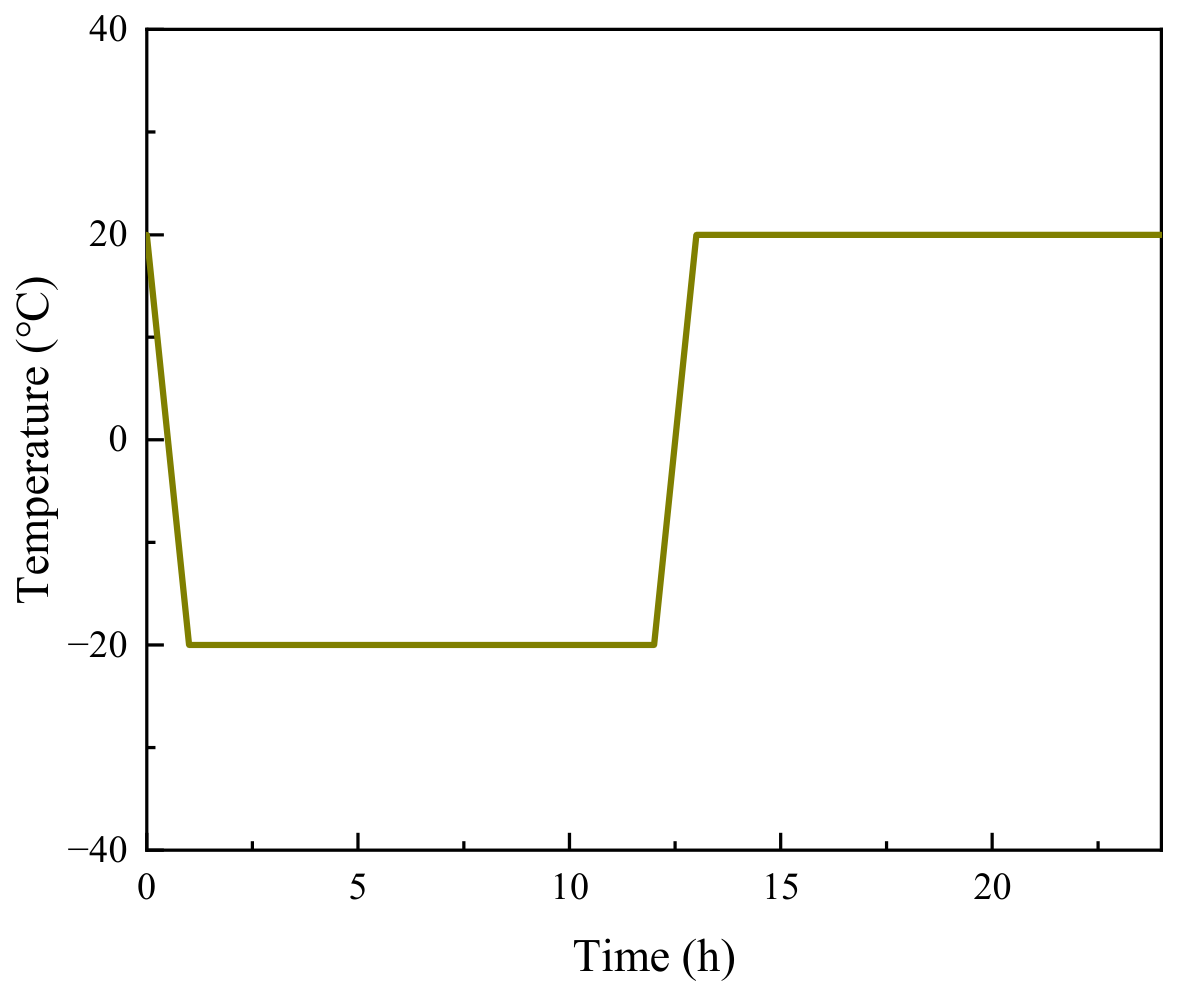
2.3. Freeze–Thaw Cycles
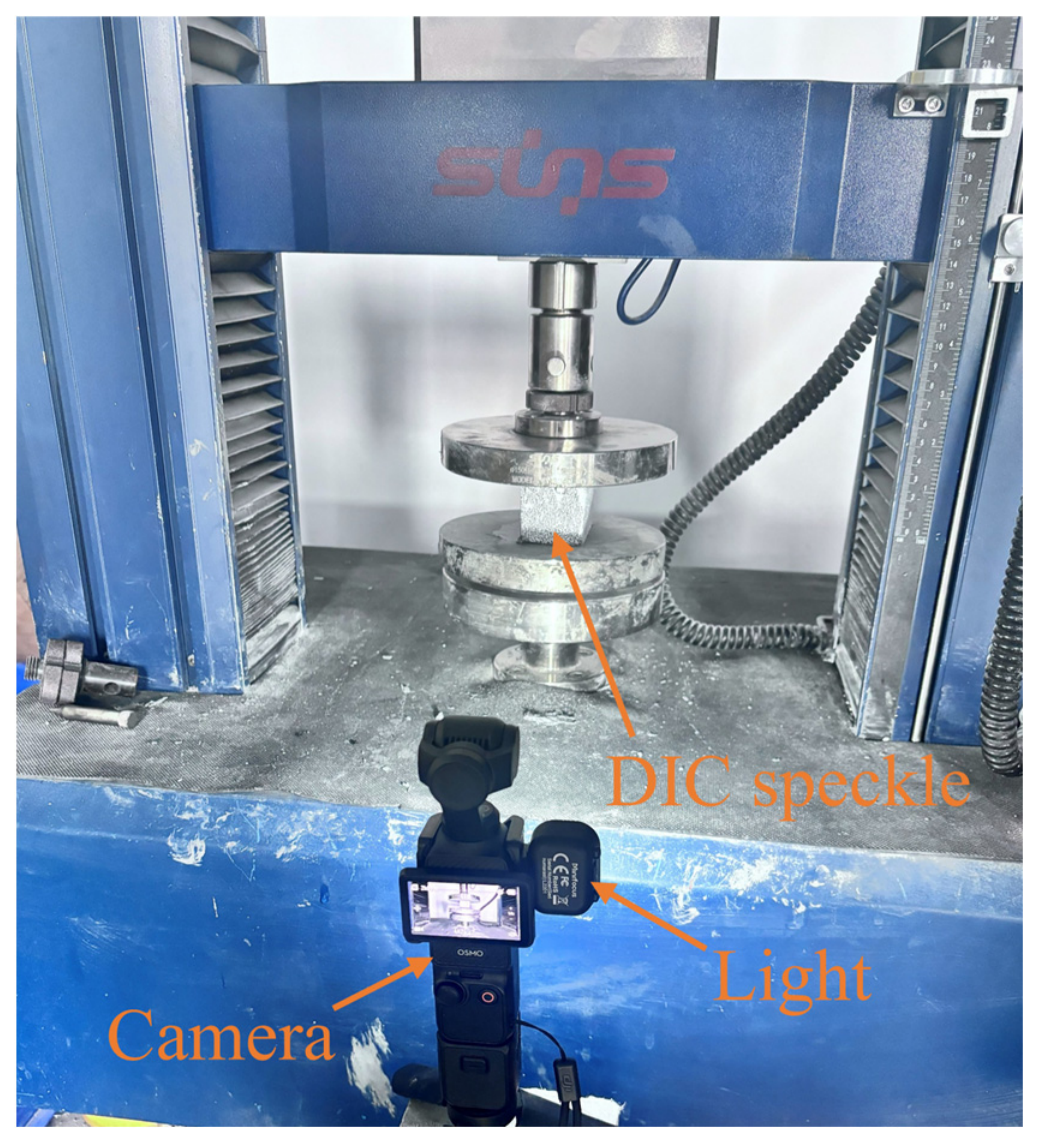
2.4. DIC Testing of Specimens Before and After Freeze–Thaw Cycling
3. Results and Discussion
3.1. Strength Development of Mortars Containing Different Fine Aggregates
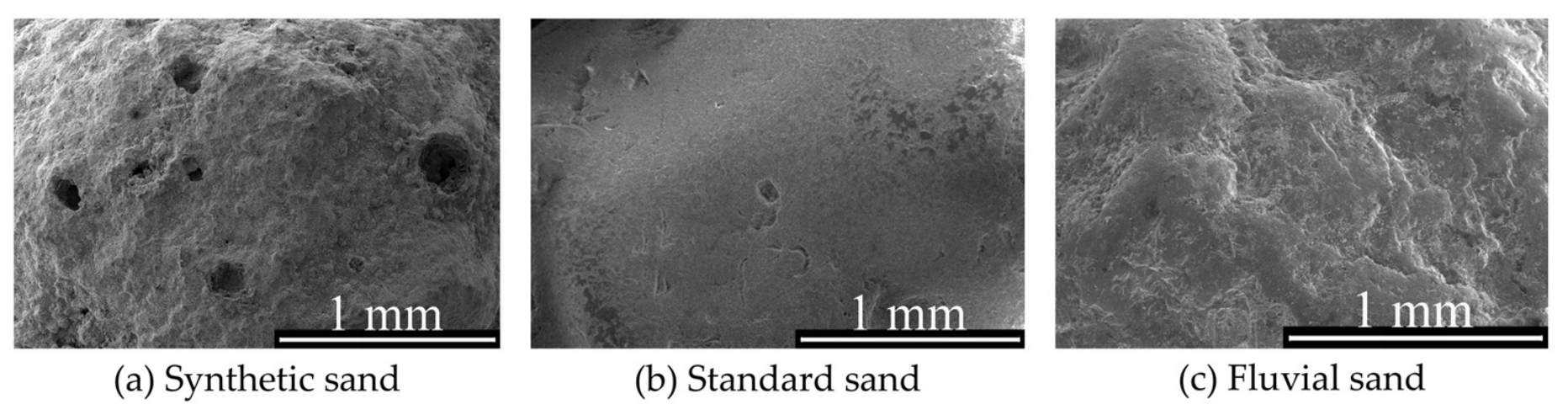
3.2. Interfacial Microstructure and Bonding Mechanism Between Fine Aggregates and Cement Paste
3.3. Analysis of Freeze–Thaw Performance
3.4. Preparation of Specimens for DIC Testing
3.5. Interfacial Morphology and Damage Mechanism Before and After Freeze–Thaw Cycling
4. Conclusions
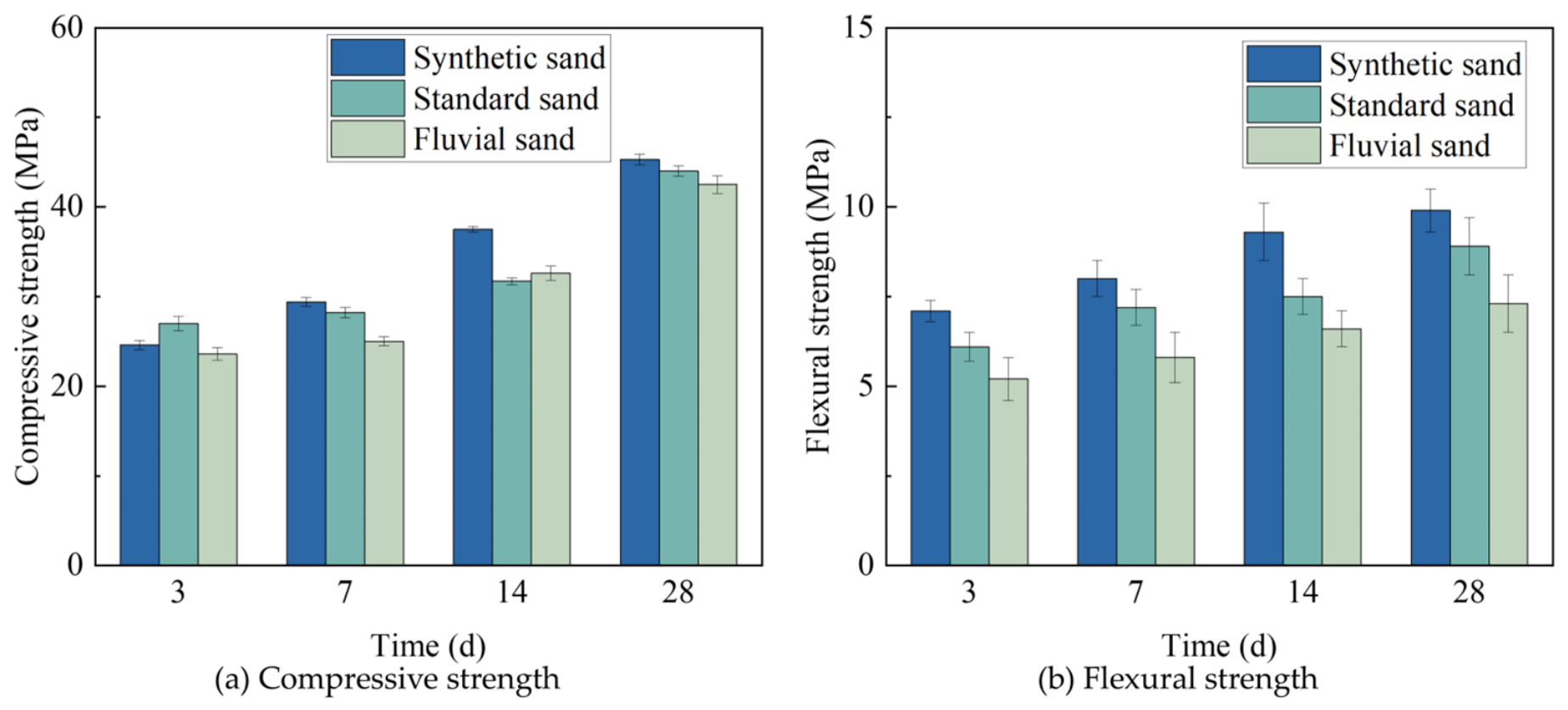
- The strengths of all three mortars increased with curing age. At 28 d, the compressive strength of the synthetic sand mortar was 45.3 MPa, comparable to that of the standard sand mortar (44.0 MPa) and slightly higher than that of the fluvial sand mortar (42.5 MPa). Its flexural strength reached 9.9 MPa, representing increases of 10.1% and 26.3% over the standard sand and fluvial sand mortars, respectively.
- After 25 freeze–thaw cycles, the mass loss rates of the synthetic sand, standard sand, and fluvial sand mortars were 0.2%, 0.4%, and 0.3%, respectively. All values were below 5%, with only minor differences among the groups. The compressive- and flexural-strength loss rates of the synthetic sand mortar were 6.1% and 8.6%, respectively, lower than those of the standard sand mortar (13.9% and 23.6%) and fluvial sand mortar (10.1% and 17.5%). These results demonstrate the favorable freeze–thaw resistance of the synthetic sand mortar.
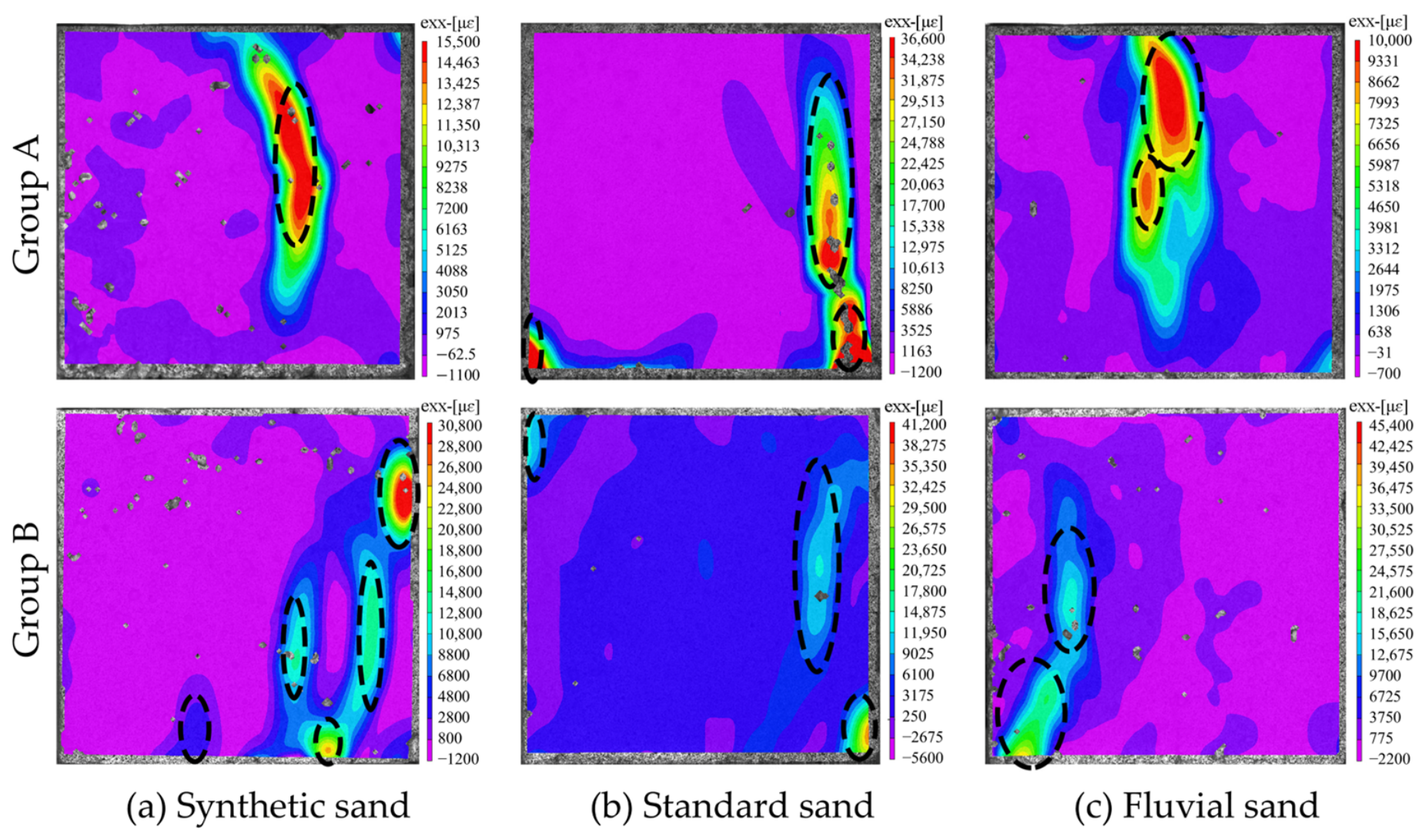
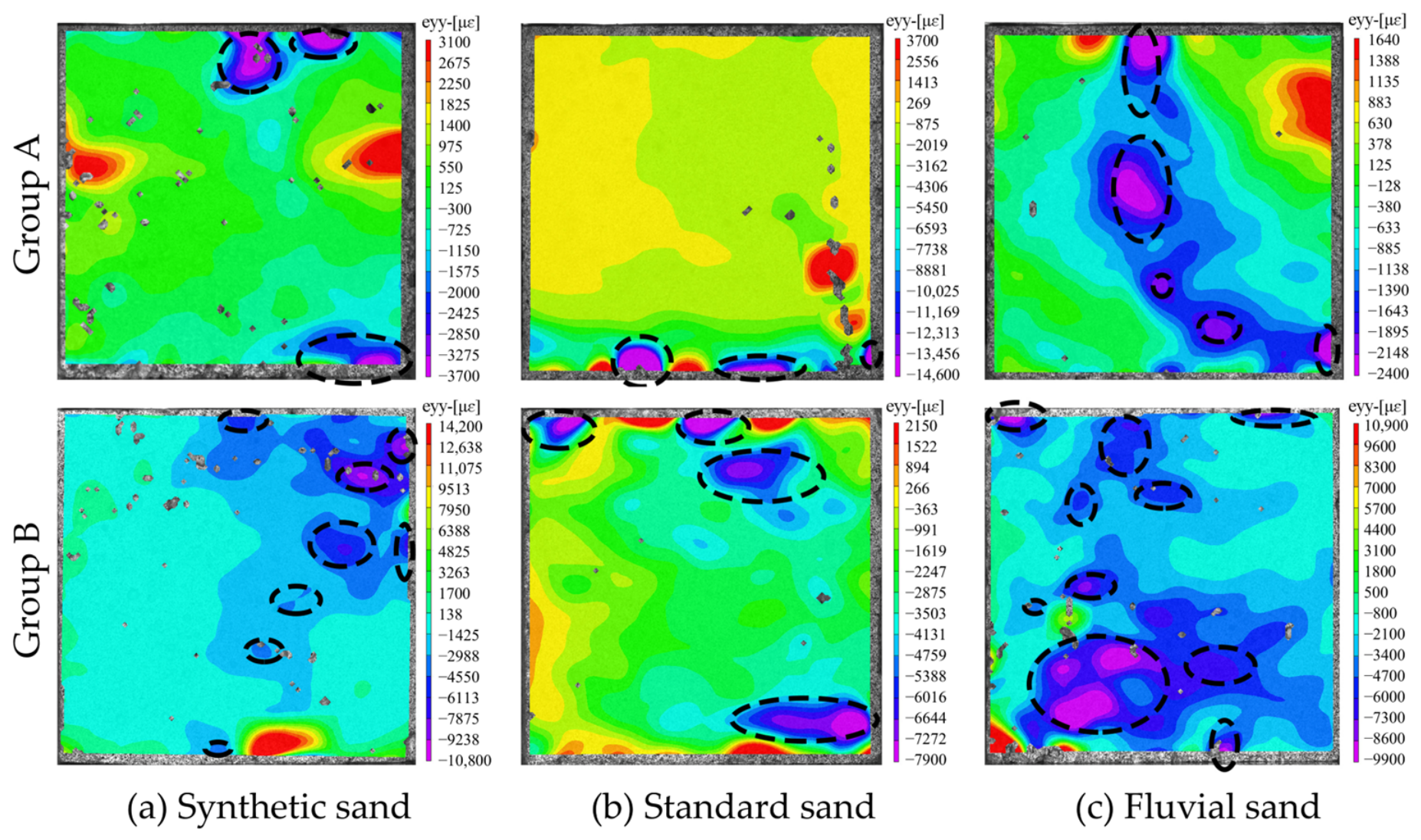
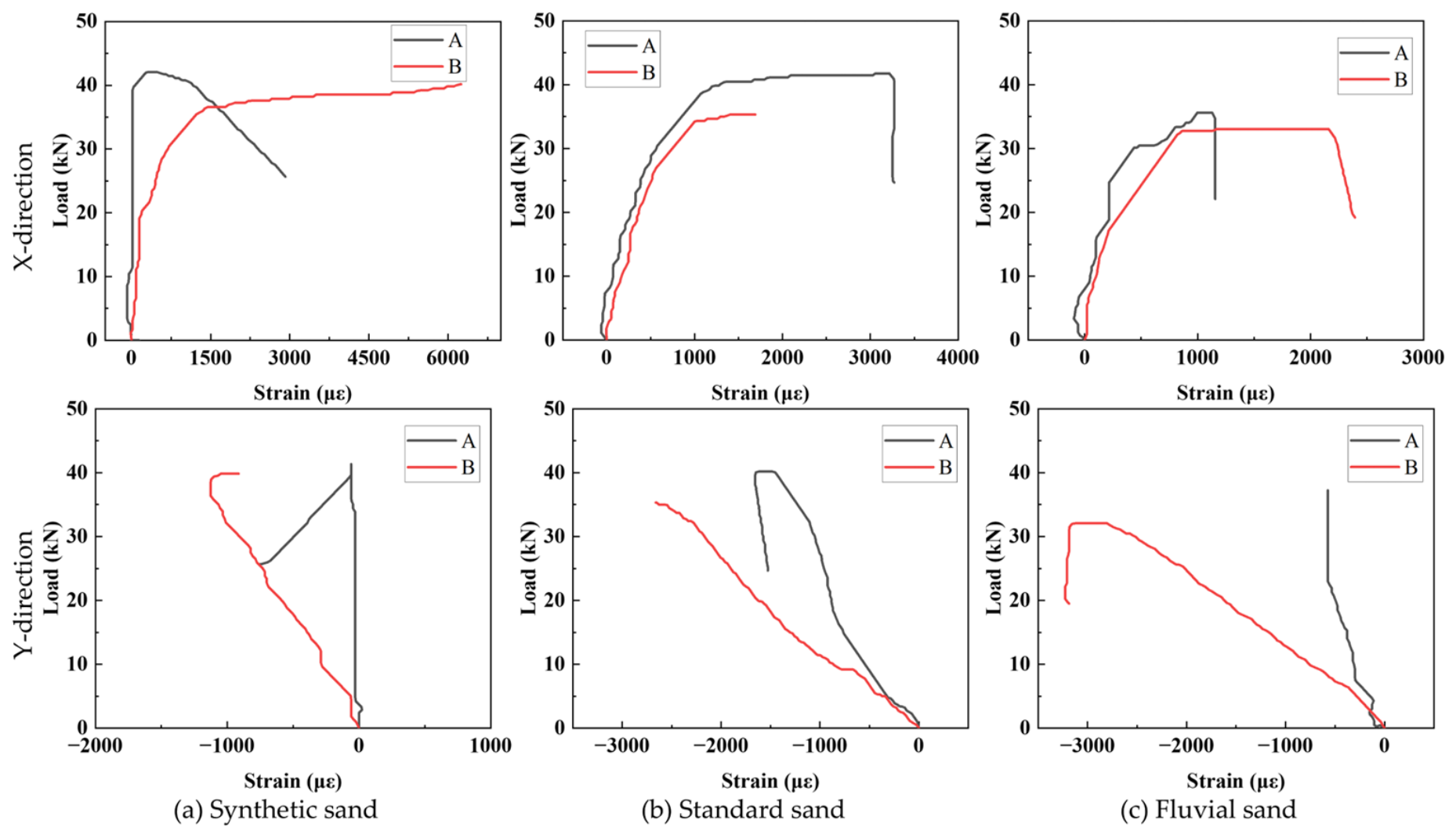
- The DIC results showed that both the global strain and degree of strain localization increased after freeze–thaw cycling. The freeze–thaw-exposed specimens generally exhibited greater strain at the same applied load and earlier turning points in their load–strain curves, suggesting increased deformation and an earlier onset of nonlinear behavior. The unfrozen synthetic sand specimens exhibited limited nonlinear deformation before failure and failed relatively abruptly. After freeze–thaw cycling, the nonlinear deformation stage became more pronounced and the characteristics of brittle failure were reduced, although the load-bearing capacity decreased.
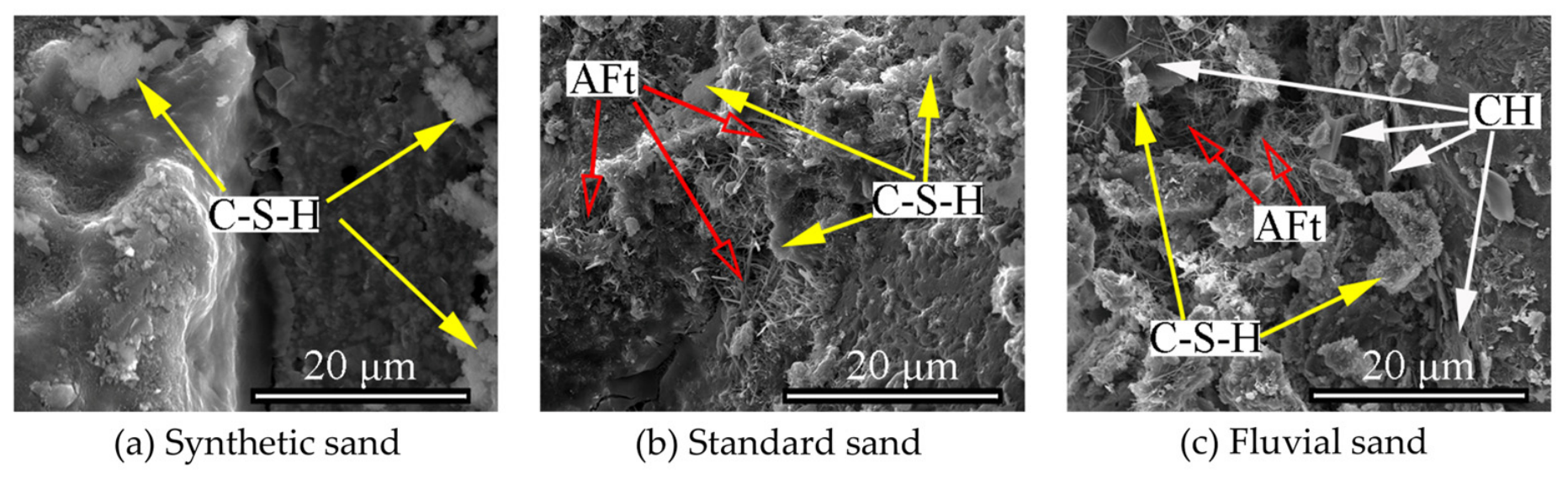
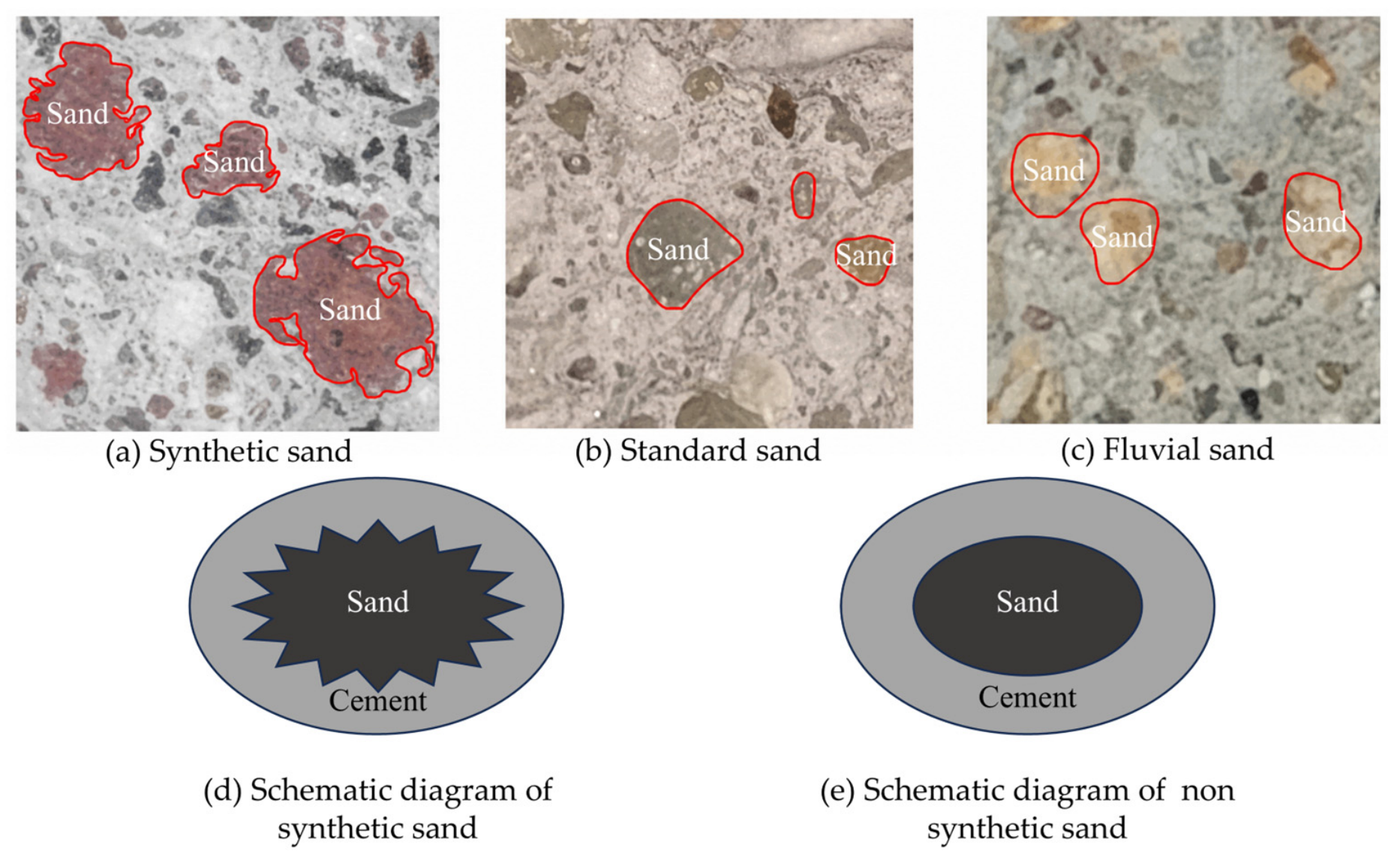
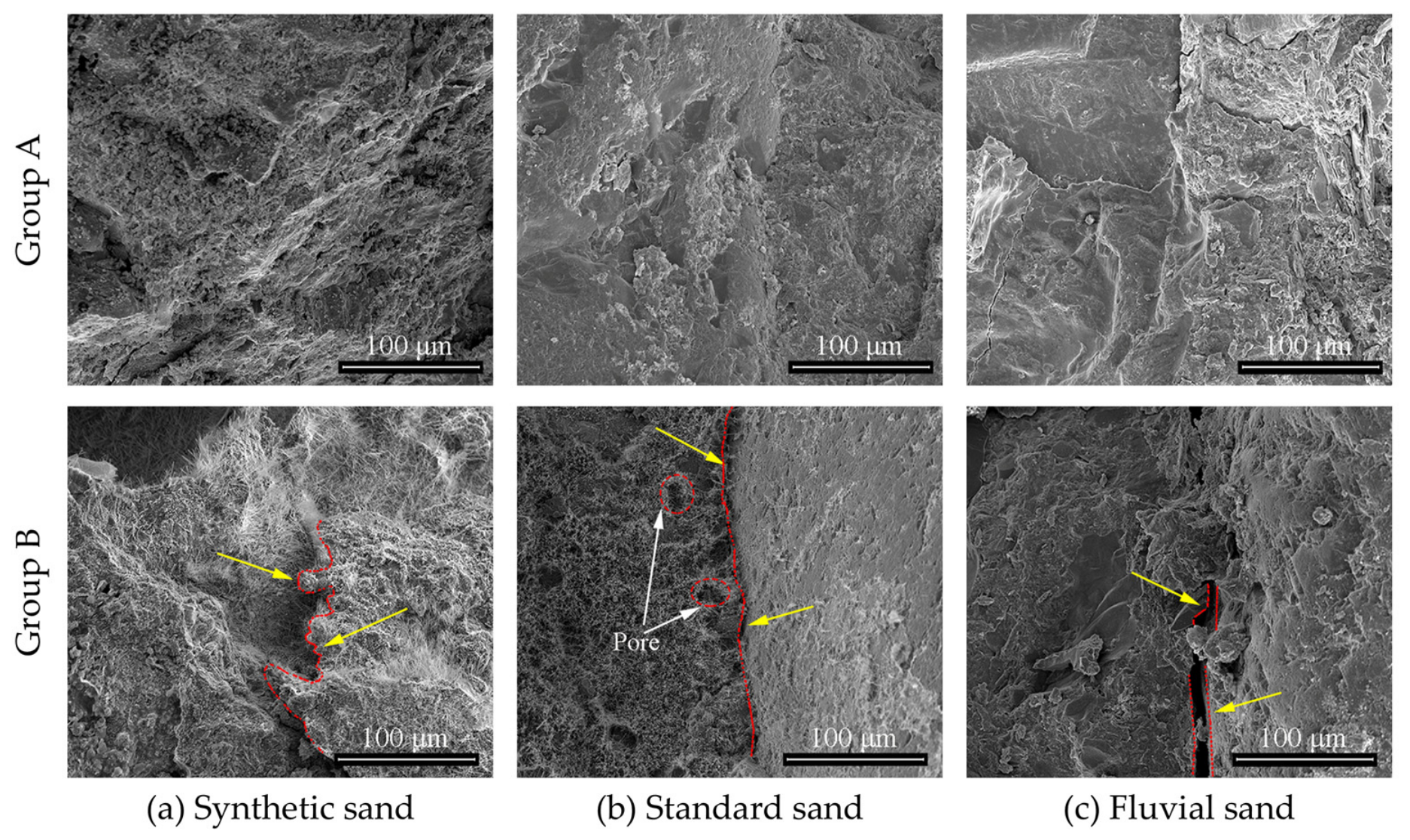
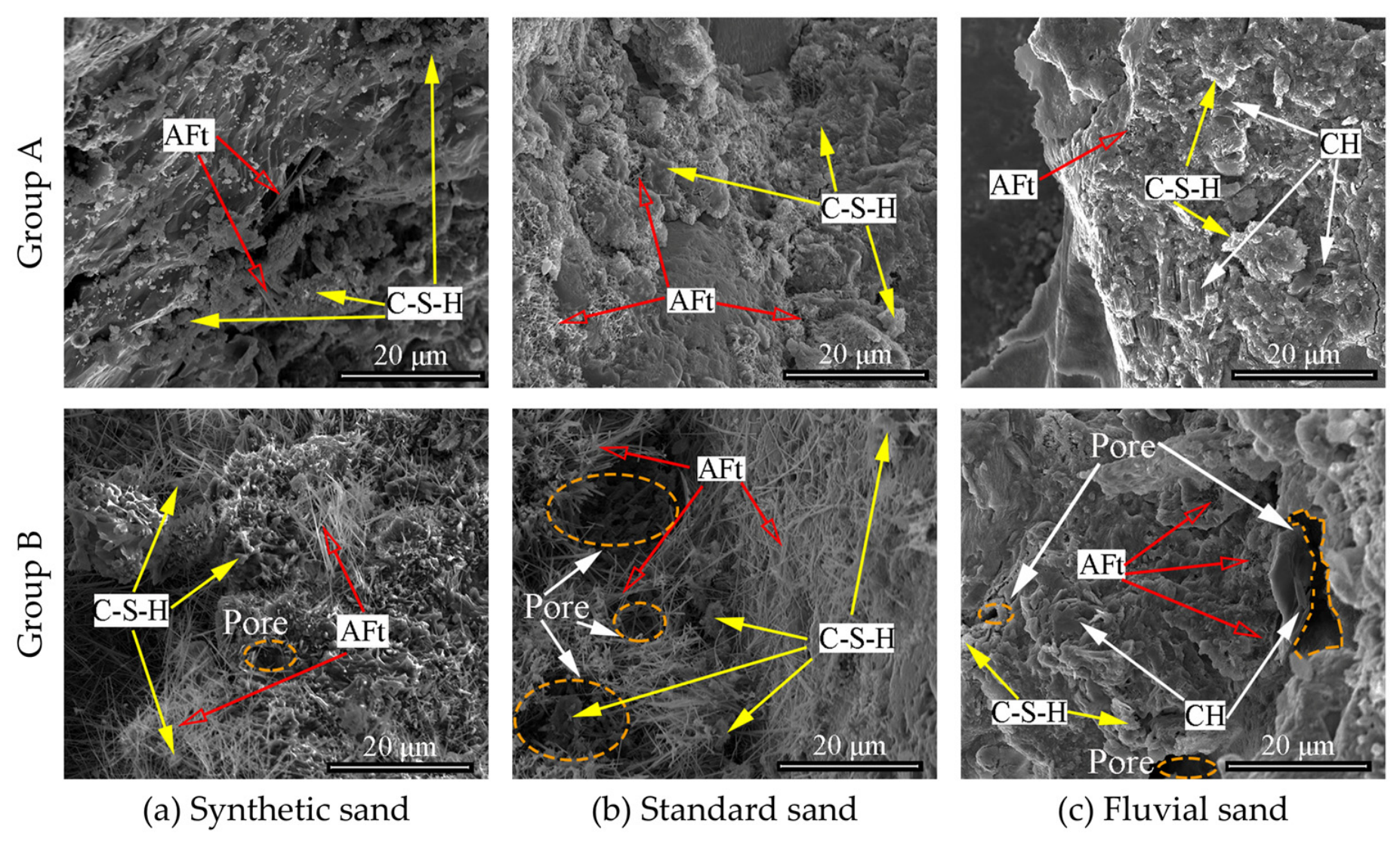
- SEM observations showed that pores and gaps of varying degrees developed at the fine aggregate–cement paste interfaces of all three mortars after freeze–thaw cycling, with the synthetic sand interface exhibiting less deterioration. The nested structure and relatively dense interface formed by the synthetic sand enhanced mechanical interlocking and suppressed freeze–thaw-induced crack propagation to some extent. Needle-like crystals appeared more prevalent in the examined interfacial regions after freeze–thaw cycling. Their morphology was suggestive of AFt, although this assignment remains tentative.
Author Contributions
Funding
Data Availability Statement
Conflicts of Interest
References
- Wang, R.; Hu, Z.; Li, Y.; Wang, K.; Zhang, H. Review on the deterioration and approaches to enhance the durability of concrete in the freeze–thaw environment. Constr. Build. Mater. 2022, 321, 126371. [Google Scholar] [CrossRef] [Scilit]
- Su, A.; Chen, T.; Gao, X.; Li, Q.; Qin, L. Effect of carbonation curing on durability of cement mortar incorporating carbonated fly ash subjected to freeze–thaw and sulfate attack. Constr. Build. Mater. 2022, 341, 127920. [Google Scholar] [CrossRef] [Scilit]
- Huang, Y.; Shao, C.; Yu, Z.; Wei, H.; Li, Z.; Zhu, Z. Study of freeze–thaw deterioration of saturated and unsaturated hydraulic concrete based on measured strain. J. Build. Eng. 2024, 97, 110771. [Google Scholar] [CrossRef] [Scilit]
- Huang, S.; Yu, S.; Ye, Y.; Ye, Z.; Cheng, A. Pore structure change and physico-mechanical properties deterioration of sandstone suffering freeze–thaw actions. Constr. Build. Mater. 2022, 330, 127200. [Google Scholar] [CrossRef] [Scilit]
- Lu, Y.; Li, X.; Han, Y.; Wu, J. Mechanical properties of rock samples with a single natural weak plane after freeze–thaw action. Cold Reg. Sci. Technol. 2021, 181, 103179. [Google Scholar] [CrossRef] [Scilit]
- Zhou, D.; Chen, D.; Yang, F.; Mei, J.; Yao, Y.; Deng, Y. Freeze–thaw damage analysis and life prediction of modified pervious concrete based on Weibull distribution. Case Stud. Constr. Mater. 2024, 20, e03305. [Google Scholar] [CrossRef] [Scilit]
- Yuan, C.; Qu, S.; Bai, W.; Guan, J.; Xie, Y. Study on the mechanical properties and mesoscopic damage mechanism of recycled aggregate concrete under different dynamic strain rates after freeze-thaw cycles. Case Stud. Constr. Mater. 2025, 22, e04182. [Google Scholar] [CrossRef] [Scilit]
- Dong, F.; Wang, H.; Yu, J.; Liu, K.; Guo, Z.; Duan, X.; Qiong, X. Effect of freeze–thaw cycling on mechanical properties of polyethylene fiber and steel fiber reinforced concrete. Constr. Build. Mater. 2021, 295, 123427. [Google Scholar] [CrossRef] [Scilit]
- Liu, X.; Yan, Z.; Wang, D.; Zhao, R.; Niu, D.; Wang, Y. Corrosion cracking behavior of reinforced concrete under freeze–thaw cycles. J. Build. Eng. 2023, 64, 105610. [Google Scholar] [CrossRef] [Scilit]
- Liu, M.; Lu, J.; Lou, B. Research on Kaiser effect of acoustic emission in concrete subjected to bending after freeze–thaw. J. Build. Eng. 2023, 78, 107713. [Google Scholar] [CrossRef] [Scilit]
- Luo, T.; Zhang, C.; Sun, C.; Zheng, X.; Ji, Y.; Yuan, X. Experimental investigation on the freeze–thaw resistance of steel fibers reinforced rubber concrete. Materials 2020, 13, 1260. [Google Scholar] [CrossRef] [Scilit]
- Jierula, A.; Wu, C.; Fu, Z.; Niyazi, H.; Li, H. Experimental study of recycled concrete under freeze–thaw conditions. Materials 2024, 17, 3934. [Google Scholar] [CrossRef] [Scilit]
- Sáez del Bosque, I.F.; Van den Heede, P.; De Belie, N.; Sánchez de Rojas, M.I.; Medina, C. Freeze–thaw resistance of concrete containing mixed aggregate and construction and demolition waste-additioned cement in water and de-icing salts. Constr. Build. Mater. 2020, 259, 119772. [Google Scholar] [CrossRef] [Scilit]
- Wu, B.; Li, Z. Mechanical properties of compound concrete containing demolished concrete lumps after freeze–thaw cycles. Constr. Build. Mater. 2017, 155, 187–199. [Google Scholar] [CrossRef] [Scilit]
- Cortes, D.D.; Kim, H.K.; Palomino, A.M.; Santamarina, J.C. Rheological and mechanical properties of mortars prepared with natural and manufactured sands. Cem. Concr. Res. 2008, 38, 1142–1147. [Google Scholar] [CrossRef] [Scilit]
- Wu, H.; Gao, Q. Study on freeze–thaw resistance of cement concrete with manufactured sand based on BP neural network. Buildings 2024, 14, 2952. [Google Scholar] [CrossRef] [Scilit]
- Tian, K.; Wang, Y.; Hong, S.; Zhang, J.; Hou, D.; Dong, B.; Xing, F. Alkali-activated artificial aggregates fabricated by red mud and fly ash: Performance and microstructure. Constr. Build. Mater. 2021, 281, 122552. [Google Scholar] [CrossRef] [Scilit]
- Zhao, Y.; Zhang, B.; He, F.; Meng, F.; Yang, S.; Wang, Q.; Zhu, W. Effects of dosage and type of GGBS on the mechanical properties of a hybrid red-mud geopolymer. J. Mater. Civ. Eng. 2023, 35, 04023008. [Google Scholar] [CrossRef] [Scilit]
- Liu, G.; Zhu, Y.; Wan, X.; Xu, P.; Wu, C.; Yu, H. Mechanical properties of alkali-activated red mud aggregate concrete: Experimental study and mechanism analysis. Results Eng. 2026, 29, 108694. [Google Scholar] [CrossRef] [Scilit]
- Ortega, J.M.; Cabeza, M.; Tenza-Abril, A.J.; Real-Herraiz, T.; Climent, M.Á.; Sánchez, I. Effects of red mud addition in the microstructure, durability and mechanical performance of cement mortars. Appl. Sci. 2019, 9, 984. [Google Scholar] [CrossRef] [Scilit]
- Turan, E.; Alameri, I.A.; Oltulu, M. Long-term durability of red mud-modified cement mortars: Effects of high temperature and freeze-thaw cycles. Chall. J. Struct. Mech. 2025, 11, 116–127. [Google Scholar] [CrossRef] [Scilit]
- Pour, A.F.; Verma, R.K.; Nguyen, G.D.; Bui, H.H. Analysis of transition from diffuse to localized failure in sandstone and concrete using digital image correlation. Eng. Fract. Mech. 2022, 267, 108465. [Google Scholar] [CrossRef] [Scilit]
- Zhou, K.; He, J.; Huang, W.; Gao, Z.; Lei, D.; Wang, D. Effect of nanomaterials on micro-mechanical properties of concrete ITZ under freeze–thaw cycles. Constr. Build. Mater. 2025, 500, 144130. [Google Scholar] [CrossRef] [Scilit]
- Du, Y.; Yang, L.; Zhang, G.; Shang, L.; Xu, Y.; Ji, X.; Deng, M. Degradation of compressive performance and multiscale damage evolution mechanism of concrete under freeze–thaw cycles. Constr. Build. Mater. 2026, 531, 146738. [Google Scholar] [CrossRef] [Scilit]
- Pour, A.F.; Gholampour, A.; Ozbakkaloglu, T. Strain localization analysis using digital image correlation for PVA fiber-reinforced concrete-filled FRP tubes under compressive loading. Compos. Struct. 2022, 300, 116128. [Google Scholar] [CrossRef] [Scilit]
- Yu, X.; Yang, J.; Zhang, Z.; Leng, J.; Chen, R.; Zhou, J.; Zou, Y. Shear performance and degradation mechanism of UHPC–NC interface under composite salts freeze–thaw cycles. Case Stud. Constr. Mater. 2025, 22, e04408. [Google Scholar] [CrossRef] [Scilit]
- Zhao, Y.-R.; Wang, L.; Lei, Z.-K.; Han, X.-F.; Shi, J.-N. Study on bending damage and failure of basalt fiber reinforced concrete under freeze–thaw cycles. Constr. Build. Mater. 2018, 163, 460–470. [Google Scholar] [CrossRef] [Scilit]
- Xiao, M.; Li, F.; Chen, Y.; Tang, Y.; Gao, P.; Hu, J.; Wei, J.; Yu, Q. Investigation on drying-induced microcracks distribution characteristic and its formation mechanism in concrete. Constr. Build. Mater. 2025, 475, 141216. [Google Scholar] [CrossRef] [Scilit]
- GB/T 17671–1999; Method of Testing Cements—Determination of Strength. Standards Press of China: Beijing, China, 1999.
- GB/T 50082–2024; Standard for Test Methods of Long-Term Performance and Durability of Concrete. China Architecture & Building Press: Beijing, China, 2024.
- Lyu, K.; She, W.; Chang, H.; Gu, Y. Effect of fine aggregate size on the overlapping of interfacial transition zone (ITZ) in mortars. Constr. Build. Mater. 2020, 248, 118559. [Google Scholar] [CrossRef] [Scilit]
- Lei, J.-J.; Wu, Z.-X.; Wen, Z.-J.; Cheng, Z.-S.; Zhu, R. Mesoscale analysis of the effect of interfacial transition zone on the compressive damage of concrete based on discrete element method. Materials 2022, 15, 8840. [Google Scholar] [CrossRef] [Scilit]
- Josserand, L.; Coussy, O.; de Larrard, F. Bleeding of concrete as an ageing consolidation process. Cem. Concr. Res. 2006, 36, 1603–1608. [Google Scholar] [CrossRef] [Scilit]
- Shan, J.; Jing, H.; Ye, W.; Chen, S.; Lyu, P.; Guo, M.; Cui, Y.; Gao, M. Performance evolution and interfacial transition zone reconstruction mechanisms in concrete with surface-modified coal gangue aggregate. Constr. Build. Mater. 2026, 539, 147554. [Google Scholar] [CrossRef] [Scilit]
- Liu, R.; Xiao, H.; Liu, J.; Guo, S.; Pei, Y. Improving the microstructure of ITZ and reducing the permeability of concrete with various water/cement ratios using nano-silica. J. Mater. Sci. 2019, 54, 444–456. [Google Scholar] [CrossRef] [Scilit]
- Berger, R.L.; Cahn, D.S.; McGregor, J.D. Calcium hydroxide as a binder in Portland cement paste. J. Am. Ceram. Soc. 1970, 53, 57–58. [Google Scholar] [CrossRef] [Scilit]
- Tasong, W.A.; Lynsdale, C.J.; Cripps, J.C. Aggregate–cement paste interface: Part I. Influence of aggregate geochemistry. Cem. Concr. Res. 1999, 29, 1019–1025. [Google Scholar] [CrossRef] [Scilit]
- Luo, L.; Yao, W. Effect of chloride ion corrosion on the microstructure of multiple interfaces of alkali-activated GGBS/FA-based recycled concrete. J. Build. Eng. 2024, 95, 110270. [Google Scholar] [CrossRef] [Scilit]
- Liu, J.; Chen, X.; Rong, H.; Yu, A.; Ming, Y.; Li, K. Effect of interface transition zone and coarse aggregate on microscopic diffusion behavior of chloride ion. Materials 2022, 15, 4171. [Google Scholar] [CrossRef] [Scilit]
- Dang, J.; Xiao, J.; Duan, Z. Effect of pore structure and morphological characteristics of recycled fine aggregates from clay bricks on mechanical properties of concrete. Constr. Build. Mater. 2022, 358, 129455. [Google Scholar] [CrossRef] [Scilit]
- Wang, Q.; Han, S.; Yang, J.; Lin, X.; An, M. Preparation of geopolymer concrete with Bayer red mud and its reaction mechanism. Constr. Build. Mater. 2023, 409, 133730. [Google Scholar] [CrossRef] [Scilit]
- Li, Y.; Guo, H.; Zhou, H.; Li, Y.; Chen, J. Damage characteristics and constitutive model of concrete under uniaxial compression after freeze–thaw damage. Constr. Build. Mater. 2022, 345, 128171. [Google Scholar] [CrossRef] [Scilit]
- Ebrahimi, K.; Daiezadeh, M.J.; Zakertabrizi, M.; Zahmatkesh, F.; Habibnejad Korayem, A. A review of the impact of micro- and nanoparticles on freeze–thaw durability of hardened concrete: Mechanism perspective. Constr. Build. Mater. 2018, 186, 1105–1113. [Google Scholar] [CrossRef] [Scilit]
- Wang, H.; Cheng, Y.; Liang, J.; Zhao, W.; Li, A. Evaluating the fracture characterization of asphalt mixtures under freeze–thaw damage based on full-field measurements. Measurement 2024, 228, 114393. [Google Scholar] [CrossRef] [Scilit]
- Lu, J.; Liu, J.; Yang, H.; Wan, X.; Gao, J.; Zhang, J.; Li, P. Experimental investigation on the mechanical properties and pore structure deterioration of fiber-reinforced concrete in different freeze–thaw media. Constr. Build. Mater. 2022, 350, 128887. [Google Scholar] [CrossRef] [Scilit]
- Rustamov, S.; Kim, S.W.; Kwon, M.; Kim, J. Mechanical behavior of fiber-reinforced lightweight concrete subjected to repeated freezing and thawing. Constr. Build. Mater. 2021, 273, 121710. [Google Scholar] [CrossRef] [Scilit]
- Zhou, Z.; Shen, Y.; Zhang, H.; Wang, Y.; Yang, H.; Pan, J.; Wei, X. Sandstone–concrete interface debonding mechanism under freeze–thaw actions: Fracture process and fracture criterion. Constr. Build. Mater. 2021, 294, 123526. [Google Scholar] [CrossRef] [Scilit]
- Pan, J.; Shen, Y.; Yang, G.; Zhang, H.; Yang, H.; Zhou, Z. Debonding behaviors and micro-mechanism of the interface transition zone in sandstone–concrete interface in response to freeze–thaw conditions. Cold Reg. Sci. Technol. 2021, 191, 103359. [Google Scholar] [CrossRef] [Scilit]
- Li, Y.; Zhang, H.; Chen, S.; Wang, H.; Liu, G. Multi-scale study on the durability degradation mechanism of aeolian sand concrete under freeze–thaw conditions. Constr. Build. Mater. 2022, 340, 127433. [Google Scholar] [CrossRef] [Scilit]
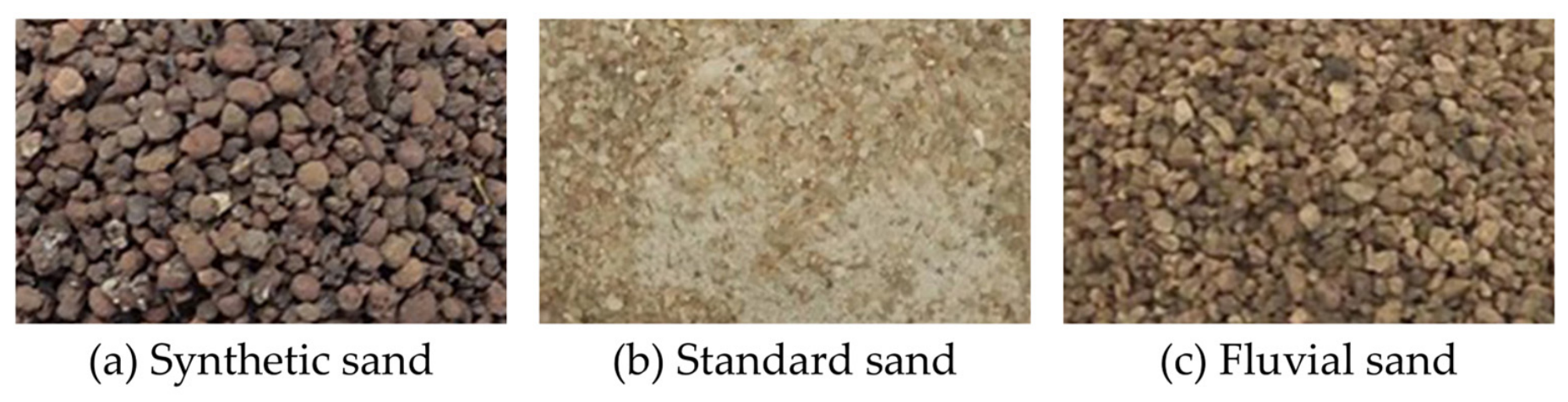

| Sample | Synthetic Sand | Standard Sand | Fluvial Sand |
|---|---|---|---|
| Apparent density (kg/m3) | 2730 | 2640 | 2610 |
| Packing density (kg/m3) | 1530 | 1550 | 1470 |
| Void content (%) | 44 | 41 | 44 |
| Saturated water absorption at dry surface (%) | 6.1 | 2.1 | 2.6 |
| Particle Size (mm) | Synthetic Sand (g) | Standard Sand (g) | Fluvial Sand (g) |
|---|---|---|---|
| 4.75~2.36 | 135 | 0 | 135 |
| 2.36~1.18 | 337.5 | 351 | 337.5 |
| 1.18~0.6 | 337.5 | 418.5 | 337.5 |
| 0.6~0.3 | 337.5 | 158 | 337.5 |
| 0.3~0.15 | 202.5 | 378 | 202.5 |
| <0.15 | 0 | 44.5 | 0 |
| Loss Rate (%) | Synthesis Sand | Standard Sand | Fluvial Sand |
|---|---|---|---|
| Mass | 0.2 | 0.4 | 0.3 |
| Compressive strength | 6.1 | 13.9 | 10.1 |
| Flexural strength | 8.6 | 23.6 | 17.5 |
| Mortar | Group | X-Direction (με) | Y-Direction (με) |
|---|---|---|---|
| Synthetic sand | A | 4088 to 15,550 | −3700 to −2000 |
| B | 8800 to 30,800 | −10,800 to −4550 | |
| Standard sand | A | 10,613 to 36,600 | −3162 to −875 |
| B | 11,950 to 41,200 | −3503 to −991 | |
| Fluvial sand | A | 2644 to 10,000 | −2400 to −1138 |
| B | 12,675 to 45,400 | −9900 to −4700 |
Disclaimer/Publisher’s Note: The statements, opinions and data contained in all publications are solely those of the individual author(s) and contributor(s) and not of MDPI and/or the editor(s). MDPI and/or the editor(s) disclaim responsibility for any injury to people or property resulting from any ideas, methods, instructions or products referred to in the content. |
© 2026 by the authors. Licensee MDPI, Basel, Switzerland. This article is an open access article distributed under the terms and conditions of the Creative Commons Attribution (CC BY) license.
Share and Cite
Hu, K.; Ge, C. Mechanical Response and Interfacial Deterioration of Red Mud-Based Synthetic Sand Mortar Under Freeze–Thaw Cycles. Buildings 2026, 16, 3708. https://doi.org/10.3390/buildings16183708
Hu K, Ge C. Mechanical Response and Interfacial Deterioration of Red Mud-Based Synthetic Sand Mortar Under Freeze–Thaw Cycles. Buildings. 2026; 16(18):3708. https://doi.org/10.3390/buildings16183708
Chicago/Turabian StyleHu, Kai, and Cuicui Ge. 2026. "Mechanical Response and Interfacial Deterioration of Red Mud-Based Synthetic Sand Mortar Under Freeze–Thaw Cycles" Buildings 16, no. 18: 3708. https://doi.org/10.3390/buildings16183708
APA StyleHu, K., & Ge, C. (2026). Mechanical Response and Interfacial Deterioration of Red Mud-Based Synthetic Sand Mortar Under Freeze–Thaw Cycles. Buildings, 16(18), 3708. https://doi.org/10.3390/buildings16183708

