Article

Self-Healing Performance of Concrete with Combined Incorporation of CCCW and Microcapsules

1
State Key Laboratory of Hydroscience and Engineering, Tsinghua University, Beijing 100084, China
2
Beijing Jinyu Group Co., Ltd., Beijing 100052, China
3
School of River and Ocean Engineering, Chongqing Jiaotong University, Chongqing 400074, China
4
Beijing Building Materials Academy of Science Research, Beijing 100041, China
*
Author to whom correspondence should be addressed.
Buildings 2026, 16(18), 3644; https://doi.org/10.3390/buildings16183644
Submission received: 24 July 2026 / Revised: 9 September 2026 / Accepted: 11 September 2026 / Published: 13 September 2026
(This article belongs to the Section Building Materials, and Repair & Renovation)

Abstract

Crack-induced durability deterioration remains a critical challenge for concrete structures. Cementitious capillary crystalline waterproofing materials (CCCW) enable moisture-driven crystallization, while alginate/epoxy microcapsules provide stress-induced bonding. However, it remains unclear whether combining the two agents produces a complementary repair effect or only an additive one under different humidity conditions. This study investigates the self-healing properties of concrete containing CCCW and alginate/epoxy microcapsules. The results indicate that the healing performance of microcapsules depends little on moisture dependence and shows stable repair performance, while CCCW performs well in humid environments but is inhibited under dry conditions. At a fixed total dosage of 3%, the optimal hybrid system containing 2% microcapsule and 1% CCCW achieves higher recovery rates than any single-admixture group under all three curing conditions. This improvement is consistent with potentially complementary contributions from microcapsules and CCCW, although the detailed chemical nature and temporal evolution of the observed deposits require further investigation. This study provides a reference for the design and application of multi-component self-healing concrete in complex service environments.

1. Introduction

Concrete is widely used in construction due to its cost-effectiveness and high compressive strength, despite inherent brittleness and weak tensile properties [1]. Cracking, caused by mechanical loading and shrinkage, deteriorates rapidly in aggressive environments, threatening structural durability [2,3]. Self-healing concrete technology offers promise for autonomous crack repair without manual effort. Two healing pathways exist: autogenous healing, which relies on residual hydration, and autonomous healing, which employs embedded functional materials. The latter is generally preferred for long-term applications because of its superior reliability and reproducibility [4,5].
Cementitious capillary crystalline waterproofing materials (CCCW) have gained in-creasing attention as internal admixtures for enhancing concrete self-healing capacity. CCCW contains water-activated reactive components that migrate through capillary networks and cracks. These components promote the formation of insoluble crystalline and hydration products that reduce pore connectivity, block seepage pathways, and improve compactness and durability [6,7,8]. The performance depends on dosage, crack width, matrix characteristics, and exposure condition. Higher dosages may lead to increasing dosage diminishing returns [9], wider cracks require more products for effective bridging [10,11], and strength grade affects pore structure, interfacial zones, ion transport, and product deposition [12,13]. Although CCCW significantly enhances autogenous healing through crystalline product deposition, its effectiveness is strongly dependent on water availability. In moisture-deficient environments, activation of the reactive components is suppressed, leading to reduced healing capacity and longer healing timescales [14,15,16]. This moisture-dependent limitation restricts the applicability of CCCW to water-rich conditions and raises concerns regarding long-term durability in dry climates or intermittent wetting conditions, indicating that CCCW alone may not be reliable in such environments. To overcome this constraint and broaden the applicability of self-healing concrete systems, it is necessary to investigate how CCCW interacts with additional functional materials, particularly those activated through different mechanisms. This is key to achieving robust and environmentally independent self-healing performance.
Microcapsule-based systems provide a complementary, crack-triggered pathway. When a propagating crack ruptures a capsule, the released agent flows into the crack and bonds the fracture interface [17,18,19,20,21]. Since the pioneering work of White et al. [22], diverse microcapsule systems have emerged. Yin et al. [23] developed Na2SiO3@EC microcapsules and incorporated them at 1–8 wt% into alkali-activated slag mortars. Li et al. [24] prepared epoxy-core microcapsules with formaldehyde shells and observed enhanced healing at 1% dosage. Wang et al. [25] incorporated Bacillus sphaericus bio-microcapsules, which showed superior healing performance in moist environments. Recently, Mao et al. [26] used superabsorbent polymer (SAP) microcapsules with epoxy resin cores, which rapidly repaired cracks under various humidity conditions. However, it should be noted that microcapsules have limitations. They may introduce weak interfaces or void-like defects before cracking. Their finite payload limits the volume that can be filled, while their healing efficiency depends on capsule-crack interception. Therefore, neither CCCW nor microcapsules alone can simultaneously guarantee rapid macro-crack bonding, sustained micro-pore densification, and stable performance across contrasting moisture conditions. Meanwhile, how the mechanical properties and self-healing performance of concrete change under the combined action of microcapsules and CCCW remains unclear. The limitations of the current research and the core issues addressed in this paper are summarized in the Table 1.
Although hybrid self-healing systems that combine crystalline admixtures and other healing constituents have been increasingly studied, combining different healing agents does not always lead to complementary effects. However, little attention has been given to how healing systems with fundamentally different activation conditions and moisture dependencies interact under different curing environments. Alginate/epoxy microcapsules are designed to provide localized healing when propagating cracks rupture the embedded capsules. By contrast, the healing action of CCCW is strongly moisture-dependent and relies on the continued formation and deposition of reaction products within cracks and connected pores. As a result, the relative contributions of these two healing systems may vary substantially between air and water environments. It remains unclear whether these distinct response characteristics can provide complementary healing functions, and how such environment-dependent behavior affects crack recovery and mechanical recovery. Establishing this relationship can move hybrid self-healing concrete beyond the simple combination. It can also support the rational design of multi-component healing systems based on their activation conditions and functional roles, rather than only optimizing the dosage of individual healing agents.
This study investigates the combined use of CCCW and alginate/epoxy microcapsules as a multi-component self-healing strategy, focusing on their environment-dependent and potentially complementary healing behavior. First, the effects of different dosages and mass ratios of CCCW and microcapsules on the compressive strength of concrete are evaluated to identify suitable combinations without compromising the mechanical properties of the matrix. Then, compressive-strength recovery and healing performance are investigated under air and water curing conditions to examine how environmental moisture influences the healing performance of the combined system. Microstructural observations are also conducted to relate the macroscopic healing behavior to the spatial distribution and filling characteristics of microcapsules and reaction products within the crack region. This study does not treat hybridization as the simple combination or dosage optimization of two known healing agents. Instead, it aims to clarify how healing systems with different activation characteristics contribute to crack repair under varying moisture conditions. The results provide a scientific basis for the rational design of multi-component self-healing concrete with improved adaptability to different service environments.

2. Materials and Methods

2.1. Sample Preparation

Concrete with a design compressive strength of 30 MPa was used in this study. The concrete mix design consists of ordinary Portland cement (Red Lion P·O 42.5, produced in Zhejiang, China), natural river sand, natural crushed stone (5–20 mm, sourced in Chongqing, China); the detailed proportion for all groups is shown in Table 2.
Microcapsules (supplied by Beijing Jinyu Group Co., Ltd., Beijing, China) and CCCW (supplied by Guardex New Material Technology Co., Ltd., Suzhou, China) were incorporated by partially replacing cement on an equal-mass basis, with the replacement ratios calculated based on the original cement content. Microcapsule-only groups (Group M) or CCCW-only groups (Group C) contained 1%, 2%, and 3% self-healing component as cement replacements. The total dosage of self-healing material of hybrid groups (Group H) was fixed at 3% by cement mass, containing microcapsule/CCCW replacement ratios of 1%/2%, 1.5%/1.5%, and 2%/1%, respectively. The test included one control group without self-healing material and nine self-healing groups, as shown in Table 3.
To investigate the effects of CCCW and microcapsules on the mechanical performance recovery of concrete under different curing environments, two types of specimens were prepared: cubic specimens (100 mm × 100 mm × 100 mm) and prismatic specimens (100 mm × 100 mm × 400 mm) were used to assess compressive strength and fracture toughness recovery rates, respectively. Cylindrical specimens (100 mm in diameter and 50 mm in height) were used to investigate the crack self-healing process under different curing conditions. The CCCW contained Ca(OH)2, CaCO3, MgO, SiO2, and other constituents. Microcapsules were fabricated using sodium alginate (SA) as the shell material and epoxy resin (E-51) as the core material. The obtained microcapsules were white or yellow spherical particles, with a core content of 64.1 wt.% and particle diameters range from 0.7 to 2.0 mm. The fresh concrete was cast into prefabricated molds, compacted by vibration, and demolded after adequate strength development. The samples were then cured under three typical conditions, as shown in Table 4.
The microcapsules exhibited good sphericity and a relatively uniform particle-size distribution. Scanning electron microscopy (SEM, Zeiss Supra 55 thermal field-emission scanning electron microscope produced in Oberkochen, Germany) observations (Figure 1) showed that the microcapsules possessed a three-dimensional network structure, with the epoxy resin distributed within the calcium alginate network. Single-capsule compression tests further showed that microcapsules with diameters of 0.7, 1.3, and 1.7 mm exhibited rupture loads of approximately 11.25, 11.73, and 12.16 N, respectively. This indicates relatively stable mechanical resistance over the investigated particle-size range. In addition, microscopic observations of microcapsules recovered from concrete after mixing showed that most capsules retained their spherical morphology and high structural integrity, although a small amount of ruptured capsule debris was observed. Overall, a substantial proportion of the microcapsules withstood the mechanical actions during concrete mixing.
The retention and integrity of the microcapsules during concrete production were also evaluated. During casting, 5 kg of concrete was sampled at the early and late stages and subsequently sieved. Using the sand particle-size gradation in Table 5, microcapsules were separated from the 0.63–4.75 mm fraction, and the capsule-to-sand mass ratio was determined. The designed capsule-to-sand ratio was 1.33, while the measured values at the early and late stages of casting were 1.30 and 1.31, respectively. Microscopic examination revealed that the microcapsules were well retained and uniformly distributed during mixing and casting.

2.2. Testing Apparatus and Procedure

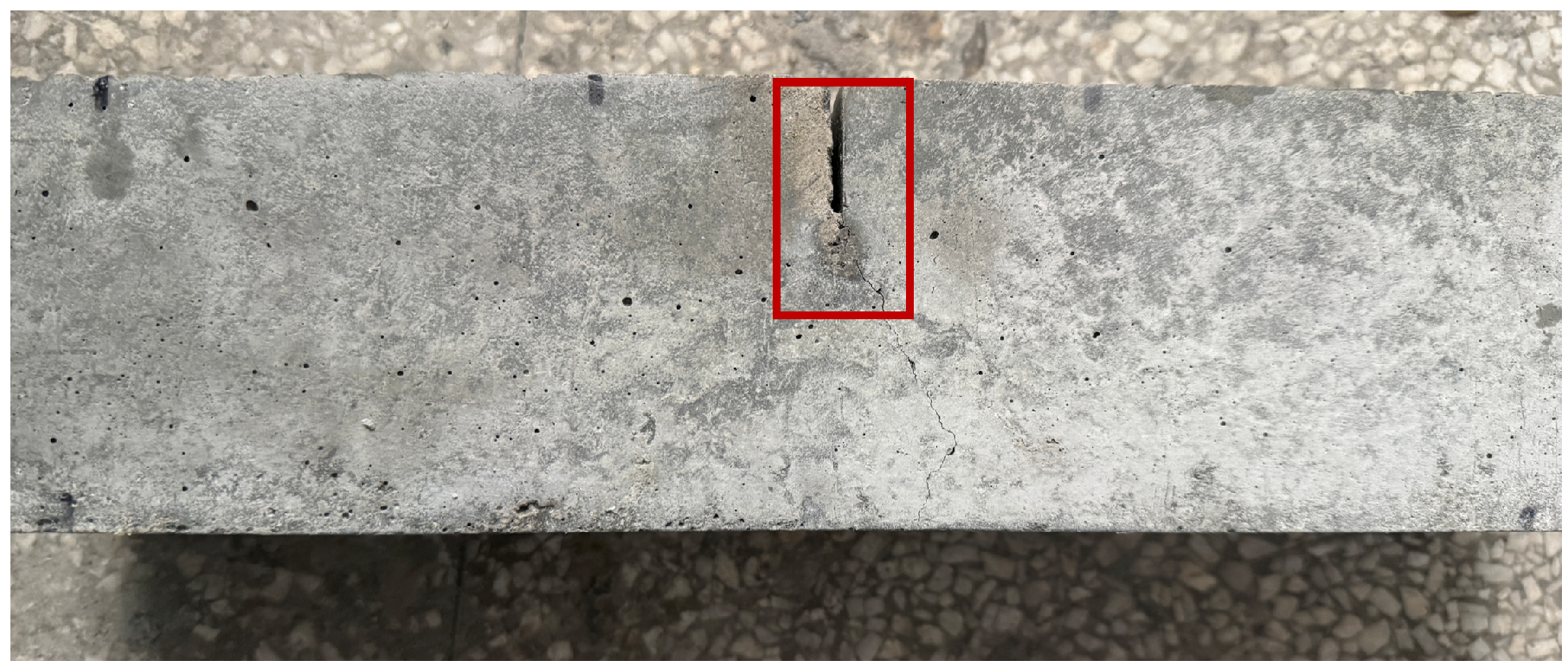
To investigate the mechanical property recovery of concrete, specimens were first subjected to controlled pre-damage before healing. For each mixture and specimen type, the ultimate load P0 was determined as the mean ultimate load of companion specimens with the same mixture composition and geometry. A pre-damage load Pd corresponding to 80% of P0 (Pd = 0.80P0) was then applied at a loading rate of 0.05 mm/min, after which the specimens were immediately unloaded to zero. The same normalized preloading level was applied to all groups to standardize the initial damage condition (Figure 2), and the groups were cured under different conditions. After healing, destructive tests were conducted to evaluate the strength recovery of concrete with varying self-healing material dosages. The initial crack width was set as 0.3 mm for the test [27]. To ensure testing repeatability, all experimental evaluations were performed using three parallel replicate specimens for each mixture. The reported data represent the arithmetic mean values of these independent replicates.
To distinguish the influence of the initial matrix properties from the subsequent healing response, the pre-damage compressive strength of each mixture was independently measured and defined as its initial reference strength (fc,initial). The compressive strength of specimens in both damaged and healed states was tested by uniaxial compression tests after curing for 7 and 28 days. Before exposure, the specimen surfaces were kept in a surface-dry condition. For the water-immersion specimens, the entire cracked region was fully submerged throughout the healing period. No intermittent wetting–drying cycles were applied. The compressive strength recovery rates of 7 d (Rc,7d) and 28 d and (Rc,28d) are obtained by Equations (1) and (2):
R c , 7 d = f c , 7 d f c , i n i t i a l × 100 %
R c , 28 d = f c , 28 d f c , i n i t i a l × 100 %
where fc,7d and fc,28d denote 7 d and 28 d compressive strength.
The fracture toughness of specimens in both damaged and healed states was tested by the three-point bending method on notched beams, and the fracture toughness recovery rate was used to evaluate the repair effect. The fracture toughness KIC was obtained through the following equation:
K I C = P m a x S B D 3 / 2 · f α
where Pmax means the peak load; S, B, D, and α denote the span length, specimen width (100 mm), specimen depth (100 mm), and notch-to-depth ratio (0.3), respectively; f(α) is the geometric correction factor given by:
f ( α ) = 3 α [ 1.99     α ( 1     α ) ( 2.15     3.93 α   +   2.7 α 2 ) ] 2 ( 1   +   2 α ) ( 1     α ) 3 / 2
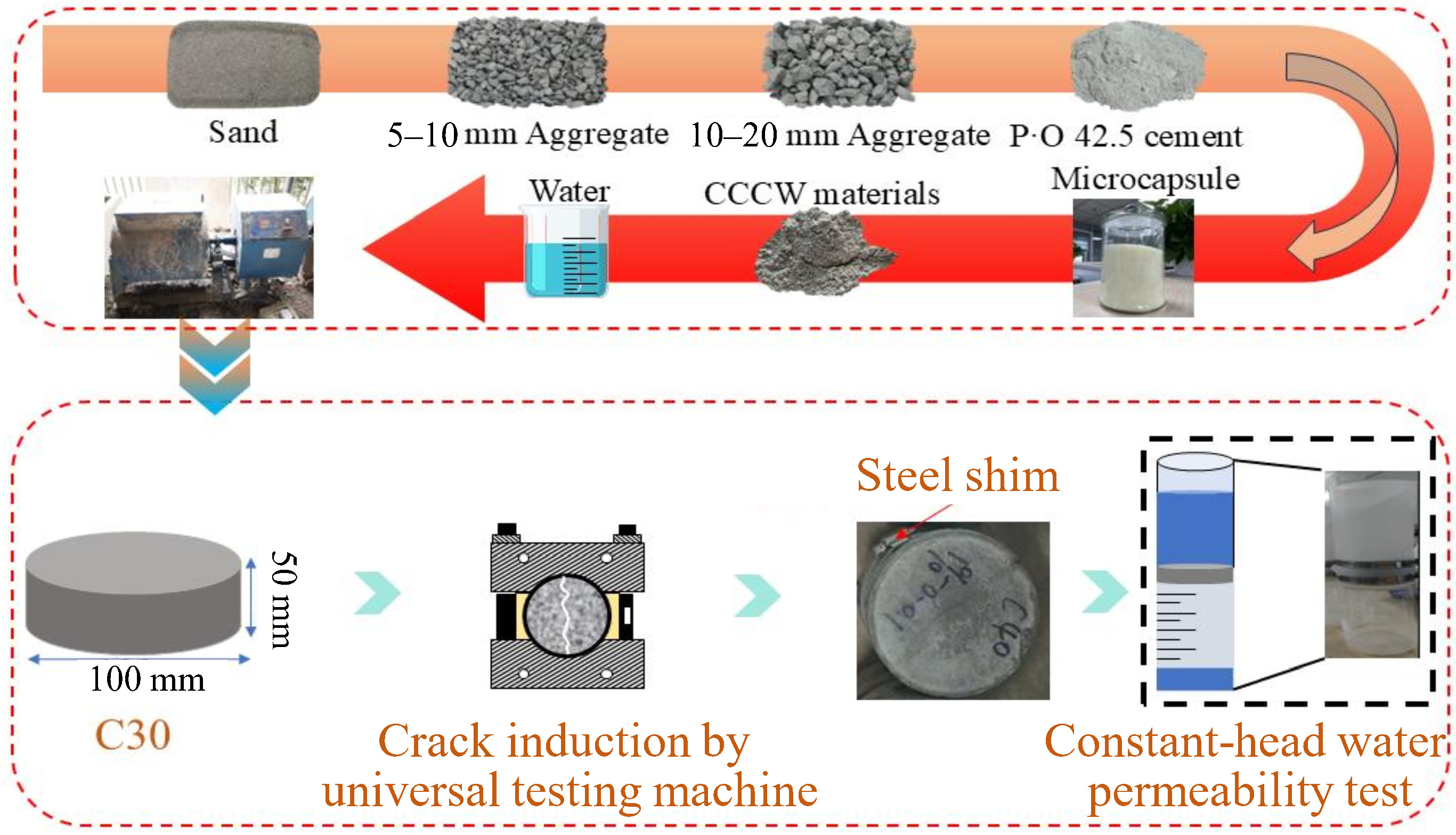
Cylindrical specimens (Φ100 mm × 50 mm) were used for the crack self-healing tests [28]. Cracks were induced in the specimens using a universal testing machine, as shown in Figure 3. After cracking, steel shims with a nominal thickness of 0.3 mm were temporarily inserted into the crack openings to establish a nominal target crack width. The specimens were then rigidly clamped to restrain further macroscopic crack opening, after which the steel shims were removed before healing exposure. Thus, no steel shim remained within the crack during either the healing period or the seepage tests. The actual crack width was not continuously monitored during healing. Therefore, 0.3 mm presents the nominal initial target crack width rather than a continuously measured value.
Crack impermeability recovery was evaluated using a constant-head water permeability test. During each measurement, a constant total hydraulic head of 300 mm (H = 0.300 m) was maintained across the specimen. The corresponding hydrostatic pressure difference was approximately 2.94 kPa. After the hydraulic head and water flow had stabilized, the seepage discharge Wp,t (mL/min) at healing age t was determined from the collected water volume per unit time. For calculation of the permeability coefficient, Wp,t was converted to units of m3/s. For the cylindrical specimens, the seepage-path length was L = 0.050 m and the effective cross-sectional area was A = 7.854 × 10⁻³ m2. The permeability coefficient was calculated using the Darcy-based relationship:
K t = W p , t L A H
where Kt is the permeability coefficient at healing age t (m/s), L is the specimen thickness in the seepage direction (m), A is the effective seepage area (m2), and H is the constant hydraulic head (m).
To quantify the recovery of impermeability, the impermeability recovery ratio Ht was calculated relative to the initial cracked condition:
H t = K 0 K t K 0 × 100 %
where K0 is the initial permeability coefficient measured immediately after crack formation and Kt is the permeability coefficient after t days of healing. Because the specimen geometry and hydraulic head were identical for all measurements, the same recovery ratio can be calculated from the measured seepage discharge:
H t = W p , 0 W p , t W p , 0 × 100 %
Accordingly, the percentage values present the normalized recovery of impermeability rather than direct crack-width closure. For clarity, the residual normalized permeability at healing age t can also be expressed as:
R K , t = K t K 0 × 100 % = 100 % H t
where RK,t is the normalized permeability ratio. A lower RK,t and a higher Ht indicate a greater reduction in water transport through the restrained crack. Seepage measurements were performed at healing ages of 0, 3, 6, 9, 12, 15, 18, 21, 24, 27, 30, 33, 39, and 45 days.

2.3. Microscopic Analysis

To examine the morphological features and spatial distribution of microcapsules, cracks, and solid deposits in the healed regions, representative microscale samples were collected from the crack regions. SEM observations were used to characterize morphological features rather than to determine the chemical or phase composition of the observed deposits.

3. Results and Discussion

3.1. Concrete Recovery of Hybrid Healing Material

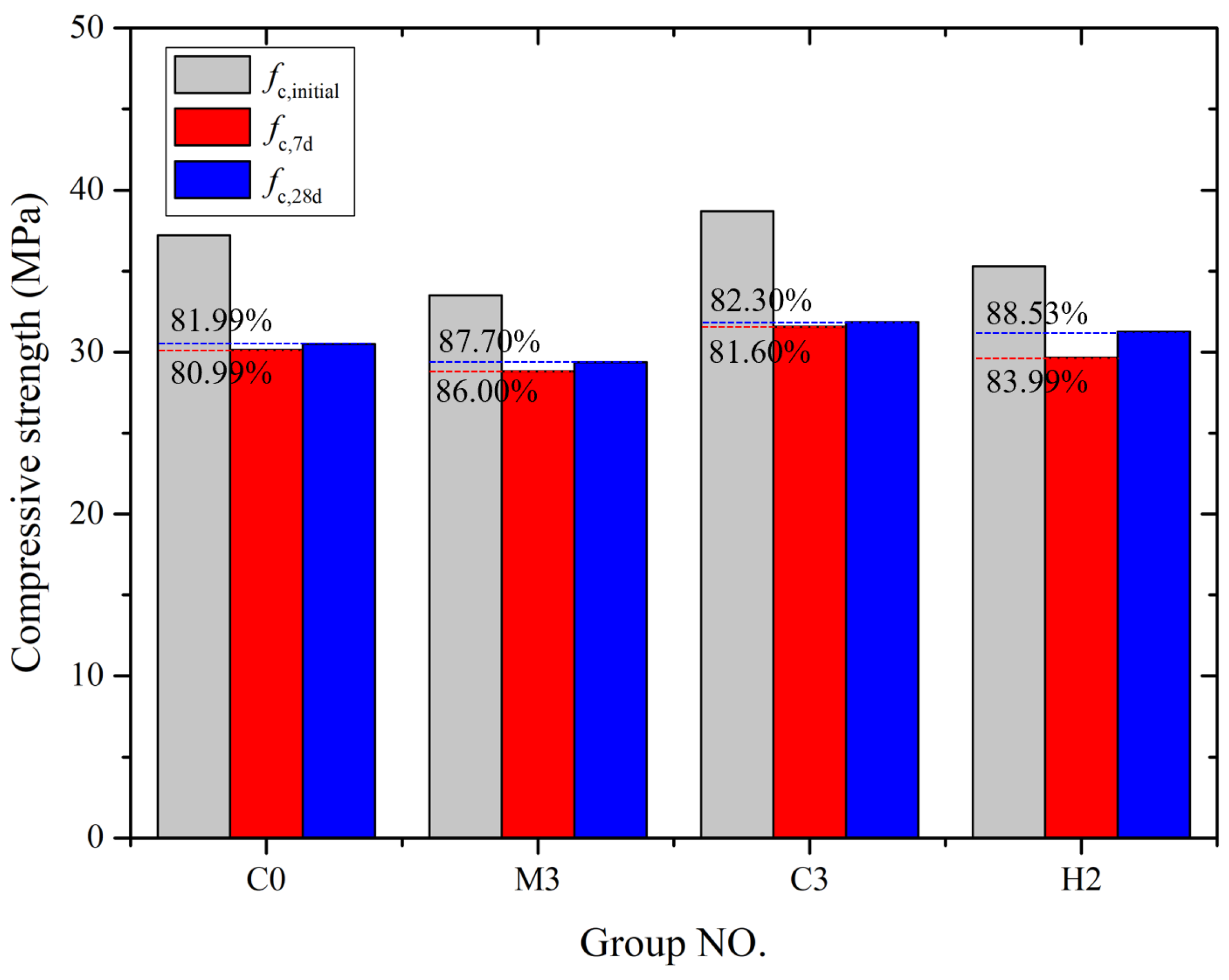
Under air curing condition, three groups at a total dosage of 3% (M3, C3, and H2) were first compared with the control group. The compressive strength and recovery rates at 7 and 28 days were tested to evaluate the effects of self-healing materials on concrete strength and repair performance. The initial compressive strength differs among C0, M3, C3, and H2. These differences arise from the self-healing materials added to the matrix, not from the healing effect itself. Test results and recovery rates are presented in Table 6 and Figure 4.
Under air curing condition, the compressive strength recovery rate of all groups increases with healing age. After 7 days of curing, the control group shows the lowest recovery rate. The microcapsule-only group achieves a higher recovery rate than the control group, indicating a rapid repair effect. The CCCW-only group presents only limited improvement, because the moisture-dependent crystallization reaction cannot be fully activated. At this early stage, the hybrid group shows a recovery level between those of the two single-admixture groups.
After 28 days of curing, the recovery rates of all groups are further enhanced. The control group still ranks the lowest with limited strength restoration among all the groups. The microcapsule-only group continues to improve steadily and remains higher than the CCCW-only group. The CCCW-only group shows limited recovery due to the lack of moisture. Overall, the hybrid group achieves the highest 28-day compressive strength recovery rate. This may be attributed to the different action mechanisms of the two self-healing materials. Microcapsule healing is stress-triggered and largely independent of moisture, thus rapidly bonding macro-cracks. This feature makes it dominant in air environments. CCCW requires water to generate insoluble crystals for micro-pore filling, so its repair effect is constrained under air curing. In the hybrid system, the two mechanisms complement each other and produce a complementary effect, resulting in the optimal strength recovery.

3.2. Fracture Recovery of Hybrid Healing Material

After pre-damage loading, the peak load of each group in the damaged state was tested. The test results and the calculated fracture toughness are presented in Table 7. In the table, ΔKIC means the reduction rate of KIC relative to the control group.
For Group M, the fracture toughness decreases with the increase in microcapsule dosage. At a low dosage of 1–2%, the reduction in fracture toughness is negligible with a reduction rate of around 2%. When the dosage reaches 3%, the fracture toughness decreases by 6.25% compared with the control group. This negative effect on fracture toughness is dose-dependent, possibly due to interface bonding between capsules and the cement matrix.
Test results for Group C also present a fluctuating downward trend with the increasing dosage. Unlike microcapsule particles, CCCW is incorporated as a fine powder, producing both an interface defect effect and a micro-aggregate filling effect in the concrete matrix. At a dosage of 1%, the interface defect effect is dominant, and the fracture toughness decreases by 6.25% compared with the control group. At a dosage of 2%, the fine powder fills the matrix pores and optimizes the pore structure. This partially compensates for the loss in fracture toughness, thus causing a slight rebound. When the dosage further increases to 3%, powder agglomeration occurs. This increases initial defects and reduces fracture toughness.
The two self-healing materials differ in their mechanisms of action on concrete fracture toughness. The hybrid healing material can provide a complementary effect and achieve superior repair performance. A properly proportioned hybrid healing material can effectively alleviate the weakening of fracture toughness caused by a high dosage of single material. For Group H, H1 performs better than the other two groups, with fracture toughness only 2.27% lower than that of the control group. This may be attributed to the graded filling effect from spherical microcapsules and fine CCCW powder. Such filling enhances the ITZ compactness and lowers initial defects. This complementary effect may provide a more favorable basis for the subsequent self-healing process.
After pre-damage loading, all specimens were subjected to self-healing curing in an air environment for 28 days. The peak load after healing (P′max) and post-healing fracture toughness (K′IC) were measured via three-point bending tests. The KIC recovery rate, defined as the ratio of K′IC to KIC, was used to quantify the restoration of fracture properties. Test results of the recovery performance are shown in Table 8.
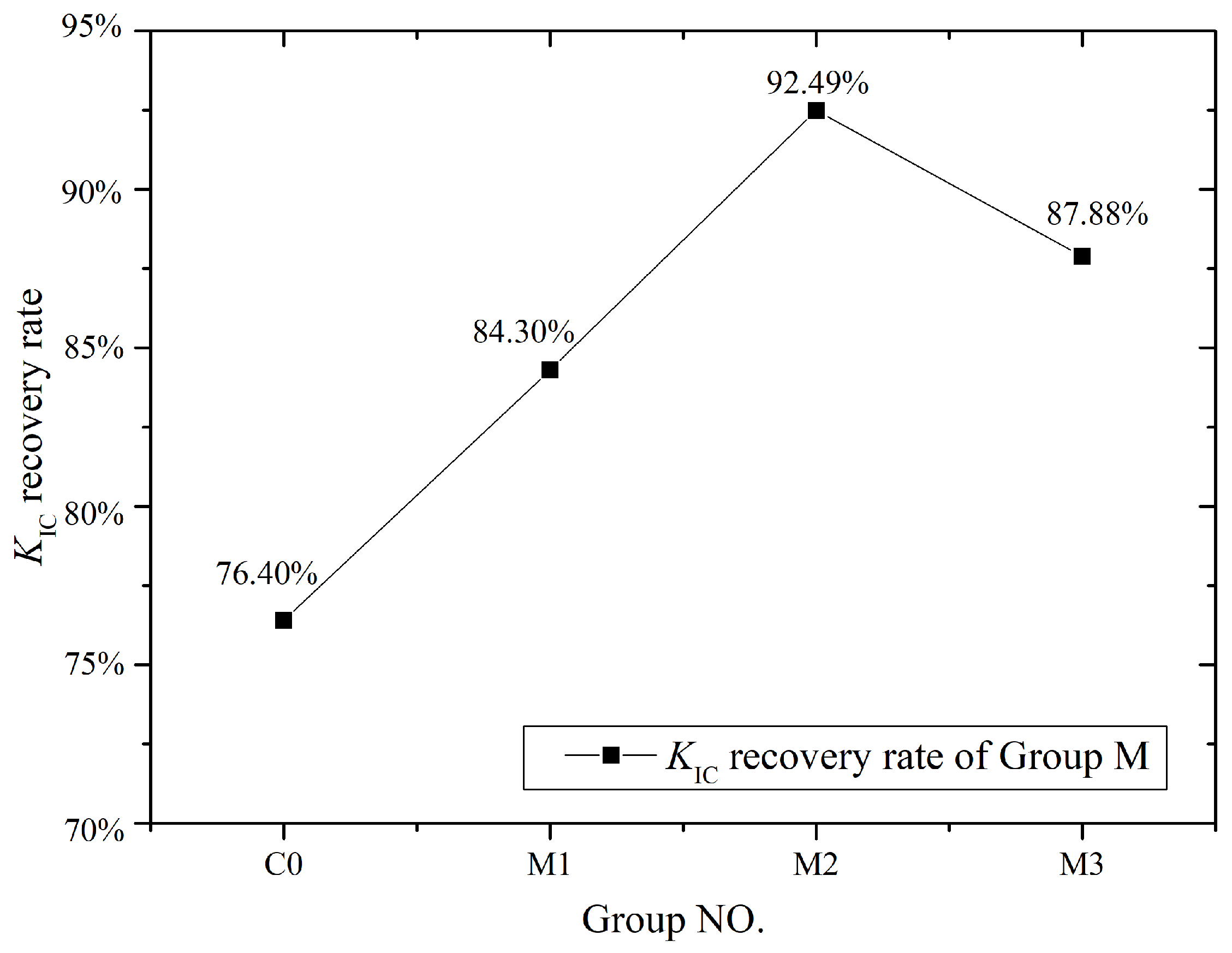
Figure 5 shows the variation of KIC recovery rate of Group M. The KIC recovery rate first increases and then decreases with increasing dosage. When the microcapsule dosage increases from 0 to 2%, the recovery rate rises continuously and reaches a peak of approximately 92.49% at a dosage of 2%. As the dosage further increases to 3%, the recovery rate drops to 87.88%. Therefore, 2% is the optimal dosage for fracture property restoration under air curing conditions for the microcapsule-only groups.
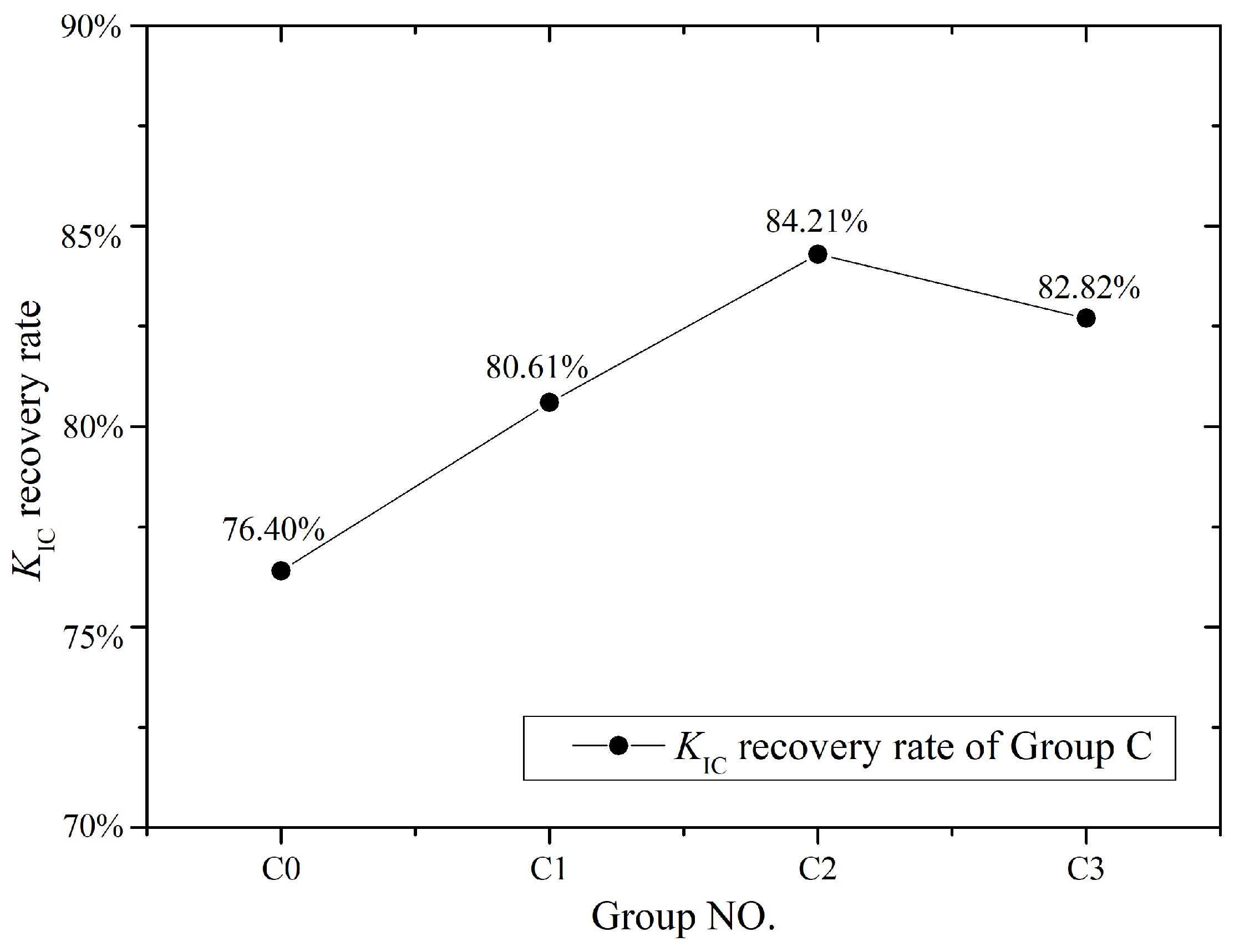
Figure 6 shows the KIC recovery rate of CCCW-only groups. Similar to the microcapsule groups, Group C shows a peak of 84.21% at 2% dosage, with a slight drop to 82.82% at 3%.
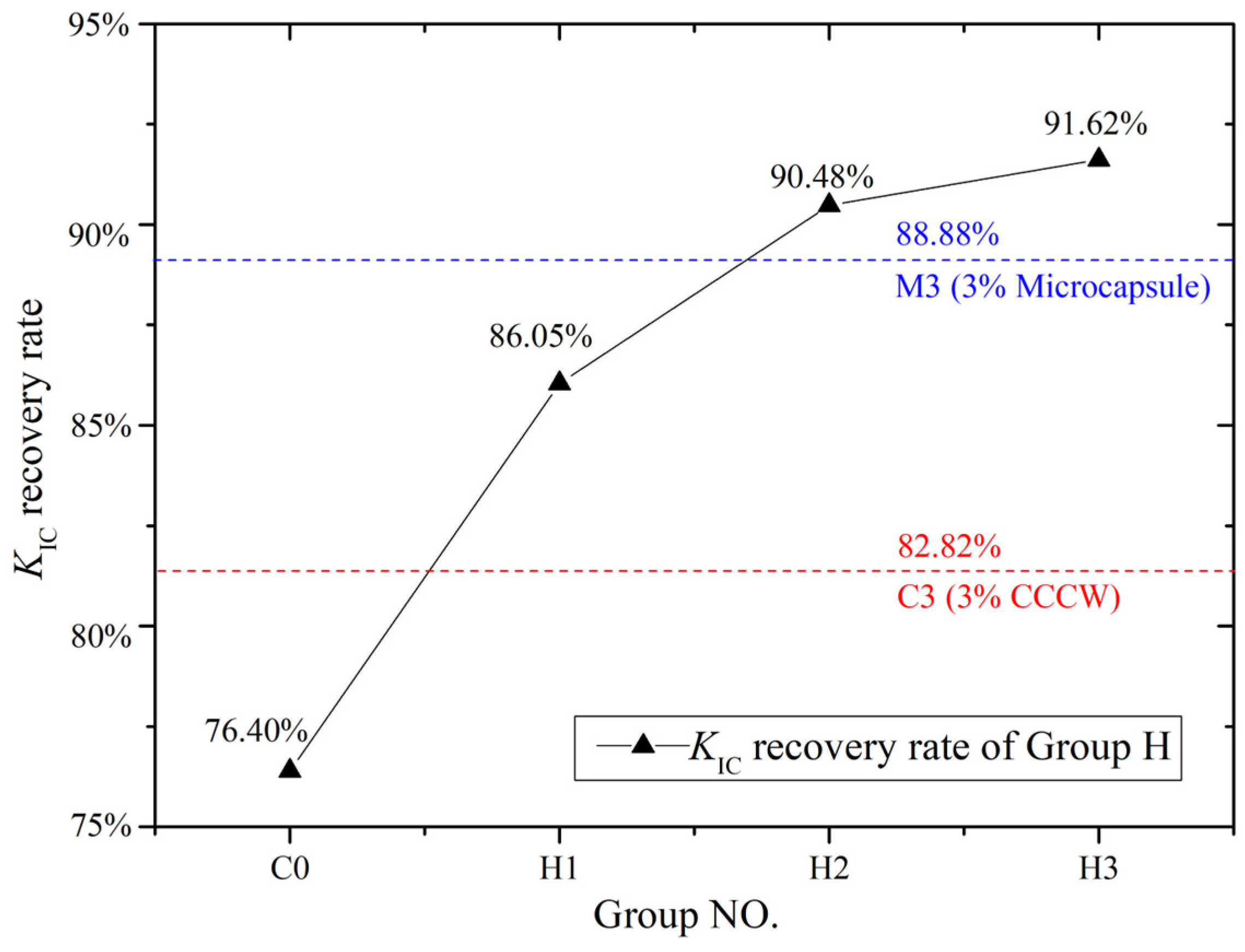
With the total dosage of self-healing materials fixed at 3%, the KIC recovery rates of hybrid healing materials with different proportioning ratios are shown in Figure 7. Among the hybrid groups, H3 with 2.0% microcapsule and 1.0% CCCW achieves a recovery rate of 91.62%, indicating effective repair performance.
In the above figure, the two horizontal dashed lines mark the representative recovery levels of the CCCW-only and the microcapsule-only groups of a dosage of 3%, respectively. The self-healing performance of H1 with 1.0% microcapsule and 2.0% CCCW is between the two single-agent groups. H2 and H3 achieve better self-healing effects than the single-agent groups. Compared with single-agent groups at the same total dosage, properly proportioned hybrid groups show a distinct complementary healing performance.

3.3. Effect of Curing Environment on Crack Self-Healing Process

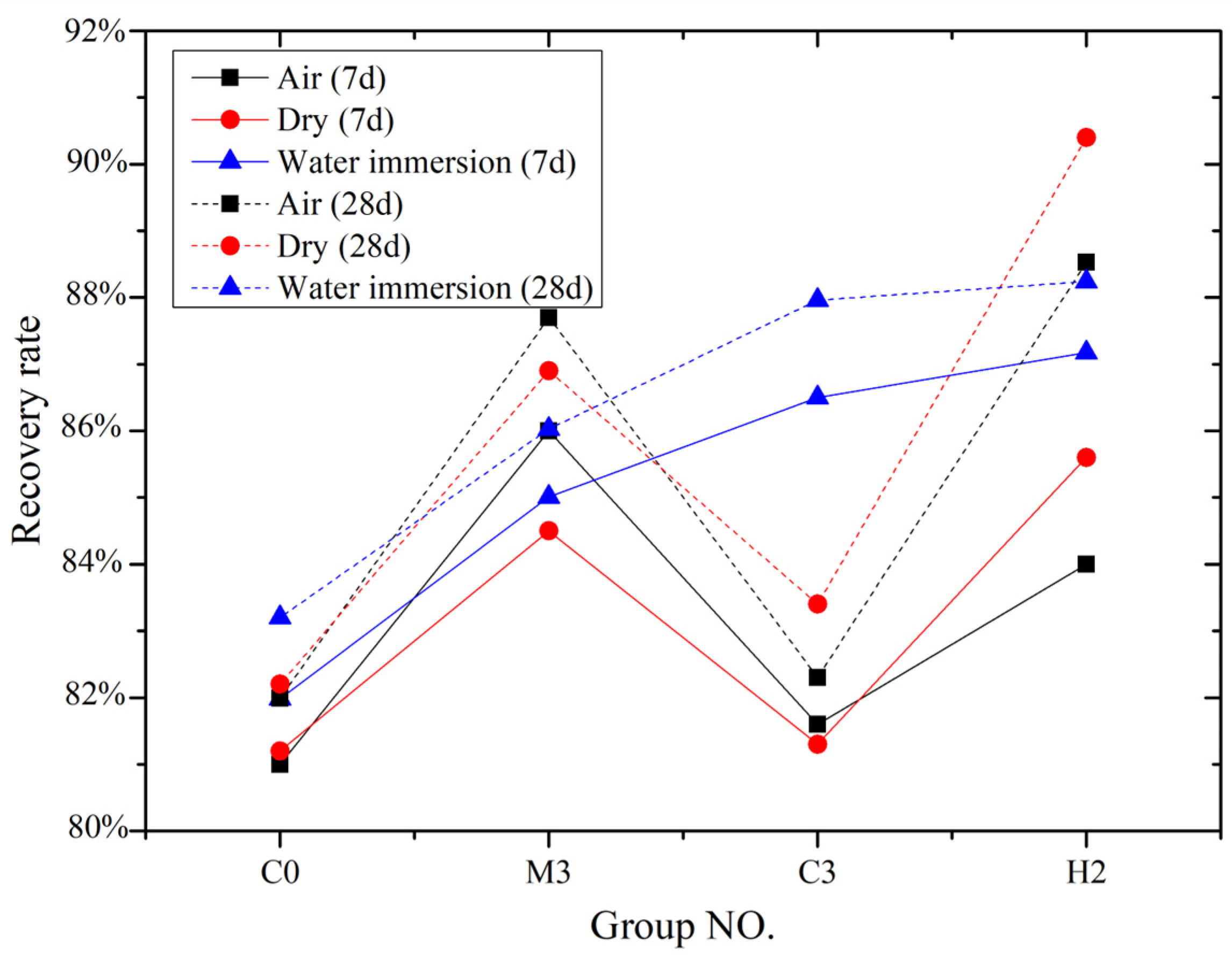
Curing environment has a notable impact on the self-healing performance of concrete. Different healing material systems differ in moisture sensitivity. After pre-damage, the specimens were immediately transferred to three different healing environments. The strength recovery rates of all groups were compared under three typical conditions, as shown in Table 9 and Figure 8.
Under air curing condition, the hybrid system performs better in recovery, followed by the microcapsule-only group, the CCCW-only group, and the control group in sequence.
Under dry condition, the overall recovery level of all groups declines to varying degrees. The control group shows the lowest strength restoration, as autogenous healing is severely restricted by extreme water shortage. The CCCW-only groups show little repair effect, as crystallization is almost inhibited without sufficient moisture. In contrast, the microcapsule-only group still maintains stable repair performance due to its low moisture dependence. Overall, the hybrid system retains the highest observed 28-day recovery rate among all the groups.
Under water immersion condition, most groups achieve better strength recovery than under air curing. However, H2 is an exception: its 7-day recovery under dry curing exceeds that under other conditions, and its 28-day recovery in air is slightly above the water-immersion value. Sufficient water supply promotes continued cement hydration in the control group, leading to an obvious rise in its recovery rate. The CCCW-only group shows better repair performance. Its crystallization reaction was fully activated, and its 28 d recovery rate exceeds that of the microcapsule-only group. The hybrid system achieves the highest observed value among all groups, due to its stable overall recovery rate. This stability comes from the adequate functioning and complementarity of the two self-healing agents.
The different moisture dependence of the two mechanisms explained this variation. The stress-triggered microcapsule healing is barely affected by moisture and maintains stable repair across environments. The CCCW system relies on water to activate the crystallization reaction, so its repair efficiency increases with environmental moisture. The hybrid system combined both mechanisms. It achieved notable strength recovery under all three curing conditions through complementarity, showing strong environmental adaptability.

3.4. Self-Healing Behavior and Complementary Mechanism

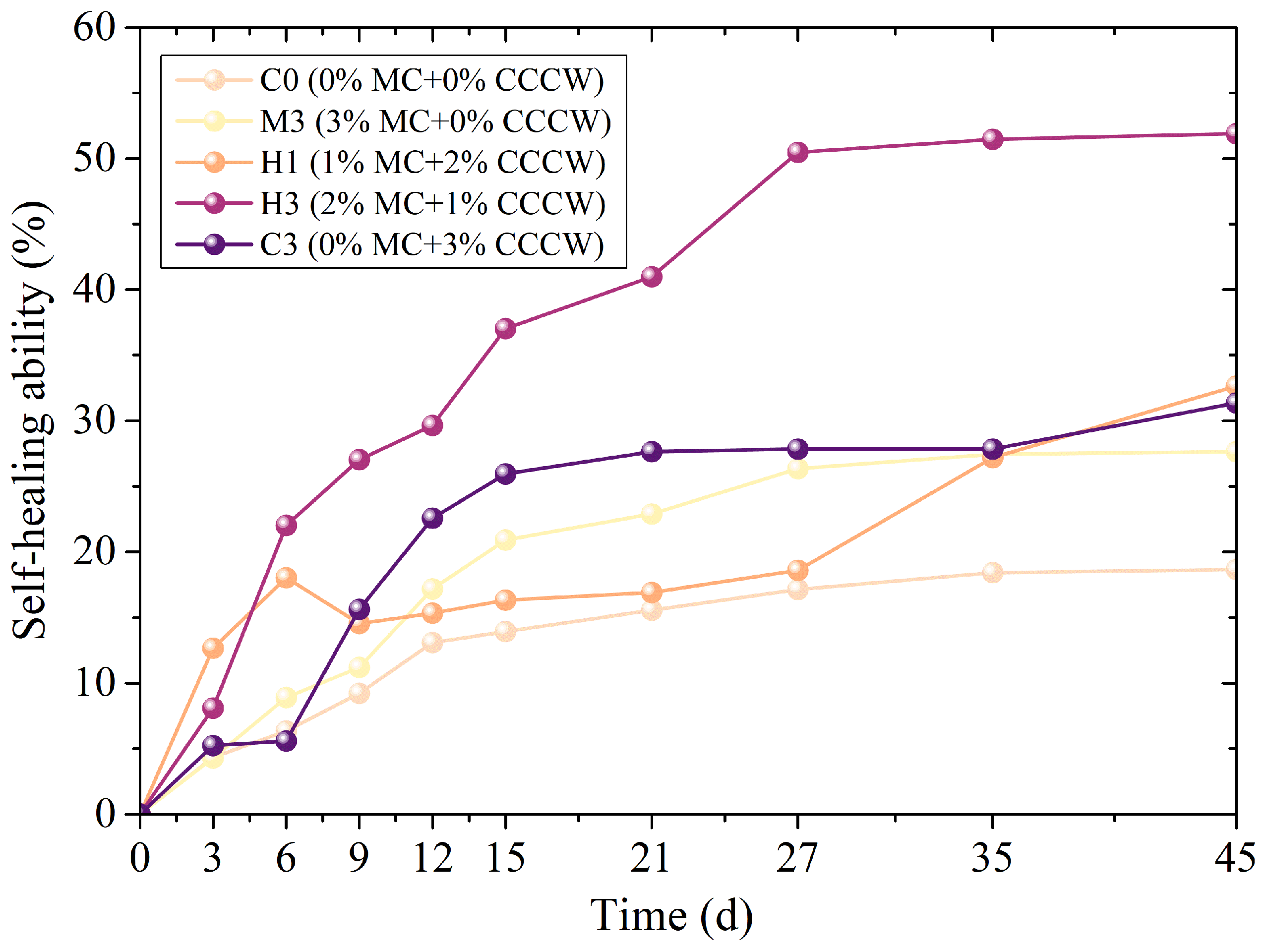
To investigate the self-healing behavior of concrete with 0.3 mm cracks with different microcapsule-CCCW dosages, the evolution of the self-healing capacities of 4 groups with a total dosage of 3% and the control group is shown in Figure 9. In the specimen notation, MC denotes microcapsule healing material.
The self-healing capacity of all mixtures increases with healing age, whereas the development rate and final healing level depend strongly on the relative proportions of the two healing agents. The control mixture C0 shows a self-healing capacity of only 18.65% after 45 days, indicating that ordinary concrete’s intrinsic healing is limited and mainly results from the continued hydration of unhydrated cement and carbonate precipitation. The self-healing capacities of M3 (containing 3% microcapsule) and C3 (containing 3% CCCW) after 45 days’ curing are 27.65% and 31.35%, respectively. Both values are higher than the control group, confirming that either healing agent promotes the recovery of permeability. However, the improvement from a single healing mechanism remains relatively limited.
H3 (containing 2% microcapsule and1% CCCW) exhibited the highest observed self-healing performance. Its self-healing capacity increases rapidly during the first 27 days and reached 51.89% at 45 d. SEM observations further show the spatial coexistence of microcapsules, cracks, and solid deposits within the examined healed regions. This improvement may be attributed to the complementary temporal and spatial roles of CCCW and the microcapsules. After cracking, microcapsules are ruptured by the propagating crack and release their healing agent, providing initial bonding and local filling. This reduces the effective crack width and thus the amount of additional products required for subsequent sealing. Meanwhile, water penetrating the crack may activate the reactive constituents in CCCW, promoting the continued formation and deposition of secondary hydration and crystalline products along the crack walls and pore interfaces. The regions initially filled by microcapsules may also offer favorable surfaces for inorganic deposits. This facilitates gradual connection of isolated deposits into a more continuous sealing layer. The rapid initial response of the microcapsules and the sustained precipitation induced by CCCW act in combination, enhancing both the continuity of the healing products and the efficiency of permeability recovery. However, SEM observations provide only morphological evidence. They do not directly identify the phase composition or origin of the deposits, the temporal sequence of capsule rupture, healing-agent release, and subsequent product formation. Therefore, the above explanation is proposed as a mechanism rather than direct experimental confirmation.
H1 (containing 1% microcapsule and 2% CCCW) also shows relatively rapid early-age healing. However, its self-healing capacity at 45 days was only 32.65%, substantially lower than that of H3 and only slightly higher than the two single-agent groups. This result indicates that the beneficial effect of combining CCCW and microcapsules is highly sensitive to their relative proportions and does not increase monotonically with CCCW dosage. A higher CCCW content provides more reactive constituents, but insufficient microcapsules limit early crack filling and bonding. Consequently, the subsequently formed inorganic products remain locally distributed rather than forming a continuous sealing structure. The limited late-age improvement of the single-agent mixtures further suggests that an individual healing mechanism cannot simultaneously provide rapid initial filling and sustained densification. Within the test dosage range, the combination of 2% microcapsule and 1% CCCW offers the most favorable balance between early filling, continued deposition, and crack-filling demand. This balance results in a higher long-term self-healing capacity.
The above results show that properly proportioned hybrid groups present higher recovery performance than single-agent groups under air curing conditions. This enhancement comes from the complementary effect of the two healing materials.
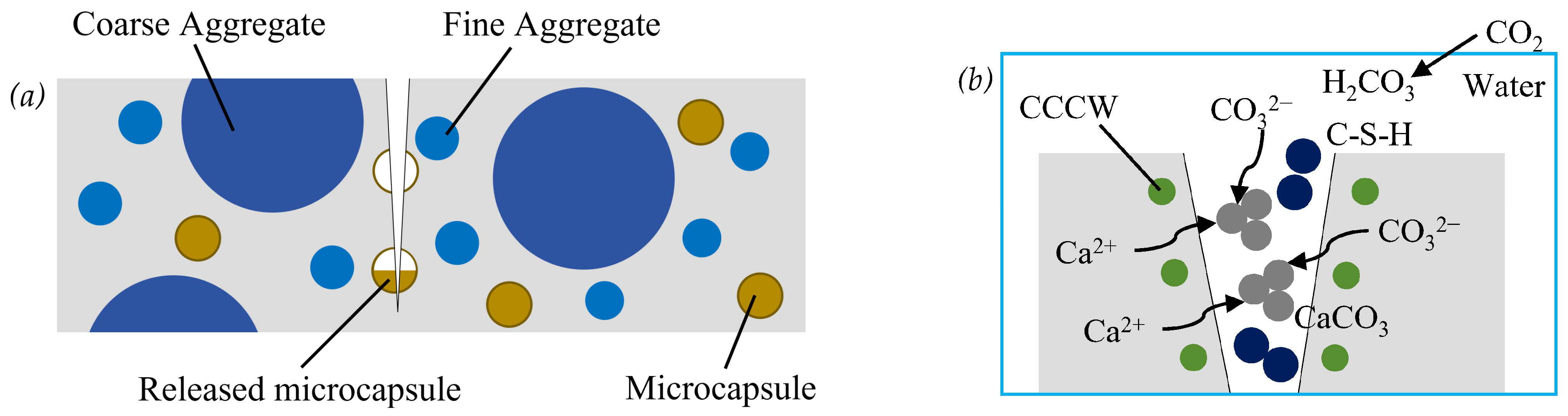
Figure 10 illustrates the proposed healing processes. According to previous studies, microcapsules intersected by a propagating crack rupture and release their healing agent, providing localized crack filling or bonding. CCCW-related healing relies on moisture-driven reactions and the subsequent deposition of solid products in cracks and pores. These processes were not directly monitored in the present study. Therefore, Figure 10 represents a conceptual interpretation based on macroscopic recovery, SEM observations, and previously reported mechanisms.
For the hybrid healing material, the two healing mechanisms form a complementary process. In the early stage, the healing agent from ruptured microcapsules quickly bonds the main crack interface, providing a stable base for subsequent crystallization. Meanwhile, CCCW gradually fills micro-pores and interfacial defects around the healed zone. This complementary effect explains the superior fracture toughness recovery of hybrid groups over single-agent groups at the same total dosage.

4. Microstructural Analysis

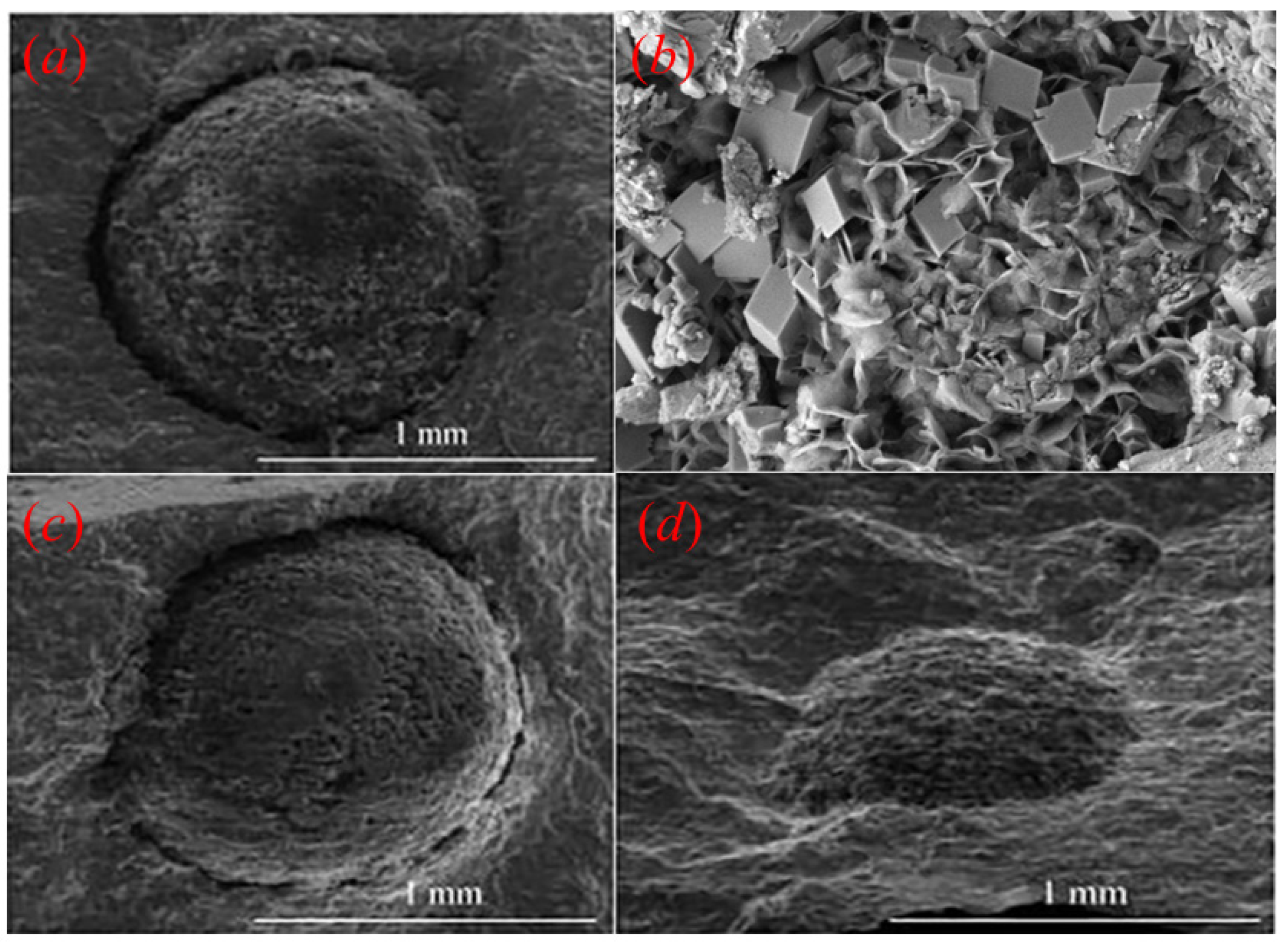
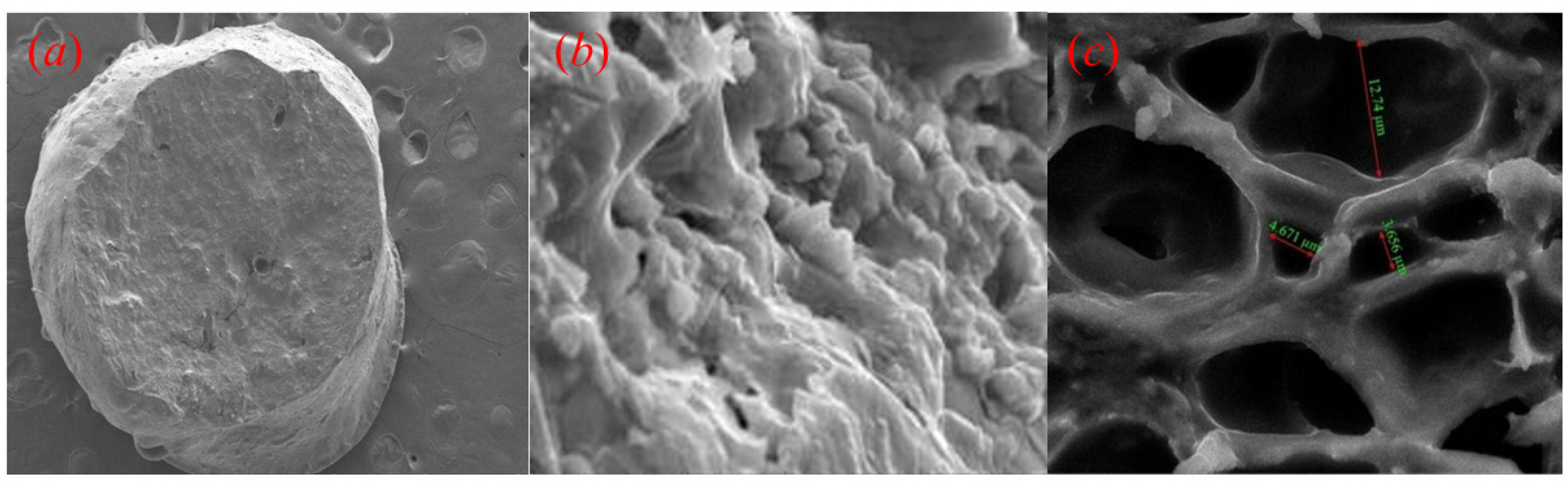
Figure 11 presents the cross-sectional morphology, locally magnified features, and internal network architecture of the microcapsules. As shown in Figure 11a, the microcapsule displays a well-preserved overall profile with a continuous cross-sectional morphology. No obvious damage or collapse is observed, indicating good structural integrity. As shown in Figure 11b, a closer examination of the cross-sectional region reveals that the interior is not completely dense or homogeneous, but instead exhibits a relatively rough morphology with distinct porous features. The high-magnification SEM image in Figure 11c further reveals a well-developed three-dimensional porous network, where pores are interconnected by continuous skeletal frameworks and the local pore walls are on the micrometer scale. This interconnected network provides internal space for agent loading and may also serve as transport pathways for agent migration, thus offering a structural basis for self-healing in cracked concrete.
Figure 12 presents the microstructural characteristics of the microcapsules, CCCW-affected regions, and healed crack regions. In Figure 12a, the microcapsule is well embedded in the cementitious matrix, with no obvious large-scale defects or interfacial separation along its outer surface. This indicates good structural integrity during incorporation and matrix hardening.
Such a stable embedded state helps preserve the capsule’s structural and functional integrity before cracking and provides a structural basis for its subsequent interaction with propagating cracks. The CCCW-sampled region, as shown in Figure 12b, shows abundant plate-like, block-like, and interwoven solid deposits. These products overlap with each other and partially fill the surrounding pores, transforming the originally relatively loose local structure into a more continuous and compact microstructure. These features indicate substantial deposition and accumulation of solid reaction products within the pores and defective regions associated with CCCW, reducing local pore space. This morphological change may contribute to reduced pore connectivity and is consistent with the measured improvement in impermeability.
Figure 12c further reveals the spatial relationship between the crack and the micro-capsule. As the crack propagates towards the microcapsule, pronounced interfacial separation and cracking can be observed between the microcapsule and the surrounding cementitious matrix. This indicates that the crack propagation path directly interacts with the region containing the microcapsule, providing morphological evidence for its potential involvement in subsequent crack healing.
After healing (Figure 12d), substantial deposition and accumulation of reaction products can be observed within the crack region, progressively occupying the original crack space and forming a relatively continuous and compact filling structure. Combined with Figure 12b,c, abundant plate-like, block-like, and interwoven reaction products are observed in the CCCW-affected region, while crack propagation towards the microcapsule accompanies interfacial separation and cracking. After healing, reaction products extensively cover and fill these cracks and interfacial defects. This suggests a possible spatial link between microcapsule-related regions and the accumulation of deposits from CCCW-related reactions.
Based on these microstructural features, the two healing systems may play complementary roles during crack repair. Microcapsules may participate in localized healing when cracks propagate into their vicinity. CCCW-related reactions may further promote the continued deposition and accumulation within the cracks and surrounding pores. Their combined contributions may improve the structural continuity and compactness of the healed crack regions. These microstructural characteristics are consistent with the enhanced healing performance observed macroscopically for the combined system, providing additional morphological evidence for complementary healing effect.
Overall, the SEM observations in Figure 12a–d reveal that the healed regions contain microcapsules, cracks, and solid deposits in close spatial association. Substantial deposit accumulation is visible, and the crack region appears morphologically more compact after healing. These morphological features are consistent with the proposed complementary roles of microcapsules and CCCW in crack repair. Specifically, the microcapsules may contribute to localized healing when cracks propagate into their vicinity. In contrast, CCCW-related reactions may further promote the continuous deposition and accumulation of solid reaction products within the cracks and surrounding pores. However, these observations are consistent with the proposed complementary roles of the two healing agents, although SEM morphology alone does not identify the phase composition or origin of the deposits or directly demonstrate the temporal healing process.

5. Conclusions

This paper investigated the self-healing performance of concrete incorporating with CCCW and microcapsules under different curing conditions. The main conclusions are as follows:
  • Under air curing conditions, the hybrid group achieves a higher compressive strength recovery rate at a total dosage of 3%, exceeding both the microcapsule-only group and CCCW-only group. This indicates that the hybrid system enhances strength recovery more effectively than either single-agent system alone. The advantage is more pronounced after 28 days, suggesting sustained recovery of the hybrid system over the investigated healing period.
  • For single-agent systems, the fracture toughness recovery rate first increases and then decreases with dosage, with an optimal dosage of 2% under air curing conditions. With a microcapsule-to-CCCW mass ratio of 2:1 (3% total dosage), the fracture toughness recovery rate of the hybrid system reaches 91.62%, exceeding all single-agent groups at the same total dosage. This enhancement is attributed to the graded filling effect of spherical microcapsules and fine CCCW powder, which optimizes the interfacial transition zone and mitigates initial performance loss.
  • Curing conditions notably affect permeability recovery, but the effect varies among healing material type. The CCCW-only group performs better under water immersion due to sufficient moisture for crystalline precipitation, while the microcapsule-only group is less moisture-sensitive and maintains stable repair. The hybrid system achieves higher overall recovery performance under all three conditions, demonstrating strong environmental adaptability. This complementary effect may arise from the multi-scale and time-phased complementary mechanisms of the two healing materials.
  • The combination of CCCW and microcapsules enhances the self-healing of concrete with 0.3 mm cracks. The healing performance depends on the proportion. The mixture with 2% microcapsule and 1% CCCW achieves the highest observed healing capacity, exceeding single-agent groups at 3% dosage. This optimal performance is associated with complementary contributions from the two healing agents. However, their individual temporal contributions and the phase composition of the observed deposits are not identified in this study.
  • Future research should extend to a wider range of concrete strength grades and crack widths. Long-term and cyclic damage-healing tests are also required to evaluate the durability and repeatability of the hybrid system. The combined CCCW-microcapsule system merits further investigation into its effects on chloride resistance, carbonation resistance, freeze–thaw resistance, and other durability indicators. In addition, the influence of these additives on fresh concrete properties, mixing and placement, scalability, and field application needs further study. More detailed cost–benefit analysis and field-scale validation should be carried out to promote the practical application.

Author Contributions

Conceptualization, Y.G. and X.A.; methodology, Y.G. and X.L.; software, X.L.; validation, Y.G., M.L. and R.L.; formal analysis, X.L.; investigation, Y.G. and M.L.; resources, X.A.; data curation, R.L.; writing—original draft preparation, Y.G. and M.L.; writing—review and editing, X.L. and R.L.; visualization, M.L.; supervision, X.A.; project administration, R.L.; funding acquisition, X.L. and X.A. All authors have read and agreed to the published version of the manuscript.

Funding

This research was funded by the National Natural Science Foundation of China (grant number 52479116).

Institutional Review Board Statement

Not applicable.

Informed Consent Statement

Not applicable.

Data Availability Statement

The data presented in this study are available on request from the corresponding author. The data are proprietary or confidential in nature and may only be provided with restrictions.

Conflicts of Interest

Authors Yu Gu and Runfeng Li were employed by Beijing Jinyu Group Co., Ltd. and Beijing Building Materials Academy of Science Research, respectively. The remaining authors declare that the research was conducted in the absence of any commercial or financial relationships that could be construed as a potential conflict of interest.

References

  1. De Souza, D.J.; Sanchez, L.F.M.; Biparva, A. Influence of engineered self-healing systems on ASR damage development in concrete. Cem. Concr. Compos. 2024, 147, 105440. [Google Scholar] [CrossRef] [Scilit]
  2. Zhang, W.; Zheng, Q.; Ashour, A.; Han, B. Self-healing cement concrete composites for resilient infrastructures: A review. Compos. Part B Eng. 2020, 189, 107892. [Google Scholar] [CrossRef] [Scilit]
  3. Zuo, J.; Li, H.; Zhan, J.; Dong, B.; Wang, L.; Chen, D. Preparation and properties of cement mortar/metal hydroxide microcapsules composites. Cem. Concr. Compos. 2020, 105, 103438. [Google Scholar] [CrossRef] [Scilit]
  4. Borçato, A.G.; Medeiros-Junior, R.A. Self-healing in metakaolin-based geopolymers with crystalline admixture, expansive agent, and hydrated lime. Constr. Build. Mater. 2024, 418, 135391. [Google Scholar] [CrossRef] [Scilit]
  5. Zheng, Q.; Xie, Z.; Li, J.; Li, W.; Jiang, Z. Autogenously self-healable cementitious composite incorporating autolytic mineral microspheres: Hydration regulation and structural alteration. Compos. Part B Eng. 2023, 259, 110724. [Google Scholar] [CrossRef] [Scilit]
  6. Tan, Y.; Zhao, B.; Yu, J.; Xiao, H.; Long, X.; Meng, J. Effect of cementitious capillary crystalline waterproofing materials on the mechanical and impermeability properties of engineered cementitious composites with microscopic analysis. Polymers 2023, 15, 1013. [Google Scholar] [CrossRef] [Scilit] [PubMed]
  7. Zhang, C.; Guan, X.; Lu, R.; Li, J.; Li, Y. Effect of cementitious capillary crystalline waterproof material on the various transport properties of cracked cementitious composites. Constr. Build. Mater. 2023, 365, 130138. [Google Scholar] [CrossRef] [Scilit]
  8. Hu, X.; Xiao, J.; Zhang, Z.; Wang, C.; Long, C.; Dai, L. Effects of CCCW on properties of cement-based materials: A review. J. Build. Eng. 2022, 50, 104184. [Google Scholar] [CrossRef] [Scilit]
  9. Cuenca, E.; Mezzena, A.; Ferrara, L. Synergy between crystalline admixtures and nano-constituents in enhancing autogenous healing capacity of cementitious composites under cracking and healing cycles in aggressive waters. Constr. Build. Mater. 2021, 266, 121447. [Google Scholar] [CrossRef] [Scilit]
  10. Zhang, Y.; Liu, L.; Wei, G.; Lai, L. Investigating the self-healing performance of cracked undersea constructions. J. Build. Eng. 2023, 80, 107928. [Google Scholar] [CrossRef] [Scilit]
  11. Li, X.; Chen, M.; Chen, X.; Xu, Y.; Zhao, B.; Li, P.; Yao, G.; Zheng, D. Influence of externally sprayed cementation capillary crystalline waterproofing material on the self-healing process of concrete. Constr. Build. Mater. 2026, 514, 145206. [Google Scholar] [CrossRef] [Scilit]
  12. Zhao, H.; Wu, Z.; Liu, A.; Zhang, L. Numerical insights into the effect of ITZ and aggregate strength on concrete properties. Theor. Appl. Fract. Mech. 2022, 120, 103415. [Google Scholar] [CrossRef] [Scilit]
  13. Ren, X.; Tang, C.; Xie, Y.; Long, G.; Ma, G.; Wang, H.; Tang, Z. 3D mesoscale study on the effect of ITZ and aggregate properties on the fracture behaviors of concrete based on discrete element method. J. Build. Eng. 2024, 83, 108450. [Google Scholar] [CrossRef] [Scilit]
  14. Liu, H.; Huang, H.; Wu, X.; Peng, H.; Li, Z.; Hu, J.; Yu, Q. Effects of external multi-ions and wet-dry cycles in a marine environment on autogenous self-healing of cracks in cement paste. Cem. Concr. Res. 2019, 120, 198–206. [Google Scholar] [CrossRef] [Scilit]
  15. Lauch, K.S.; Desmettre, C.; Charron, J.P. New water permeability set-up and factors affecting concrete self-healing. Constr. Build. Mater. 2021, 294, 123595. [Google Scholar] [CrossRef] [Scilit]
  16. Hooshmand, A.; Kianoush, R.; Siad, H.; Lachemi, M.; Moslemi, M. Investigation of leakage and self-healing of direct tension cracks under sustained loading and high-water pressure. Constr. Build. Mater. 2021, 267, 120879. [Google Scholar] [CrossRef] [Scilit]
  17. Liu, Y.; Zhuge, Y.; Fan, W.; Duan, W.; Wang, L. Recycling industrial wastes into self-healing concrete: A review. Environ. Res. 2022, 214, 113975. [Google Scholar] [CrossRef] [Scilit] [PubMed]
  18. Sun, D.; Ma, W.; Ma, J.; Mao, Q.; Lan, M.; Wang, Z.; Sun, S.; Tian, Y.; Guo, H.; Cui, S. Workability and crack recovery performance investigation of IPDI microcapsules-based self-healing cement paste. J. Mater. Civ. Eng. 2021, 33, 04021148. [Google Scholar] [CrossRef] [Scilit]
  19. Mao, Q.; Feng, X.; Liang, P.; Wang, R.; Wang, Z.; Cui, S.; Lan, M. Characteristics of Self-Healing Microcapsules for Cementitious Composites. J. Wuhan Univ. Technol.-Mater. Sci. Ed. 2018, 33, 1108–1112. [Google Scholar] [CrossRef] [Scilit]
  20. Wan, P.; Wu, S.; Liu, Q.; Liu, Q.; Wang, H.; Zhao, F.; Wu, J.; Niu, Y.; Ye, Q. Sustained-release calcium alginate/diatomite capsules for sustainable self-healing asphalt concrete. J. Clean. Prod. 2022, 372, 133639. [Google Scholar] [CrossRef] [Scilit]
  21. Du, W.; Lin, R.; Liu, Q. Investigation of isophorone diisocyanate microcapsules to improve self-healing properties and sulfate resistance of concrete. Constr. Build. Mater. 2021, 300, 124438. [Google Scholar] [CrossRef] [Scilit]
  22. White, S.R.; Sottos, N.; Geubelle, P.; Moore, J.; Kessler, M.; Sriram, S.; Brown, E.; Viswanathan, S. Correction: Autonomic healing of polymer composites. Nature 2001, 415, 817. [Google Scholar] [CrossRef] [Scilit]
  23. Yin, K.; Luo, Z.; Liu, X.; Pan, H.; Zhi, T.; Feng, H.; Song, Y.; Su, Y. Preparation and application of Na2SiO3@EC microcapsules for self-healing alkali-activated slag. Constr. Build. Mater. 2023, 400, 132651. [Google Scholar] [CrossRef] [Scilit]
  24. Li, X.; Liu, R.; Li, S.; Zhang, C.; Yan, J.; Liu, Y.; Sun, X.; Su, P. Properties and mechanism of self-healing cement paste containing microcapsule under different curing conditions. Constr. Build. Mater. 2022, 357, 129410. [Google Scholar] [CrossRef] [Scilit]
  25. Wang, J.Y.; Soens, H.; Verstraete, W.; De Belie, N. Self-healing concrete by use of microencapsulated bacterial spores. Cem. Concr. Res. 2014, 56, 139–152. [Google Scholar] [CrossRef] [Scilit]
  26. Mao, Q.; Chen, J.; Wu, W.; Li, R.; Shi, S.; Wang, Z.; Cui, S. Multiple self-healing effects of water-absorbing microcapsules in cementitious materials. Polymers 2023, 15, 428. [Google Scholar] [CrossRef] [Scilit] [PubMed]
  27. GB/T 50476-2008; Code for Durability Design of Concrete Structures. China Architecture & Building Press: Beijing, China, 2008.
  28. SL/T 352-2020; Test Code for Hydraulic Concrete. China Water & Power Press: Beijing, China, 2020.
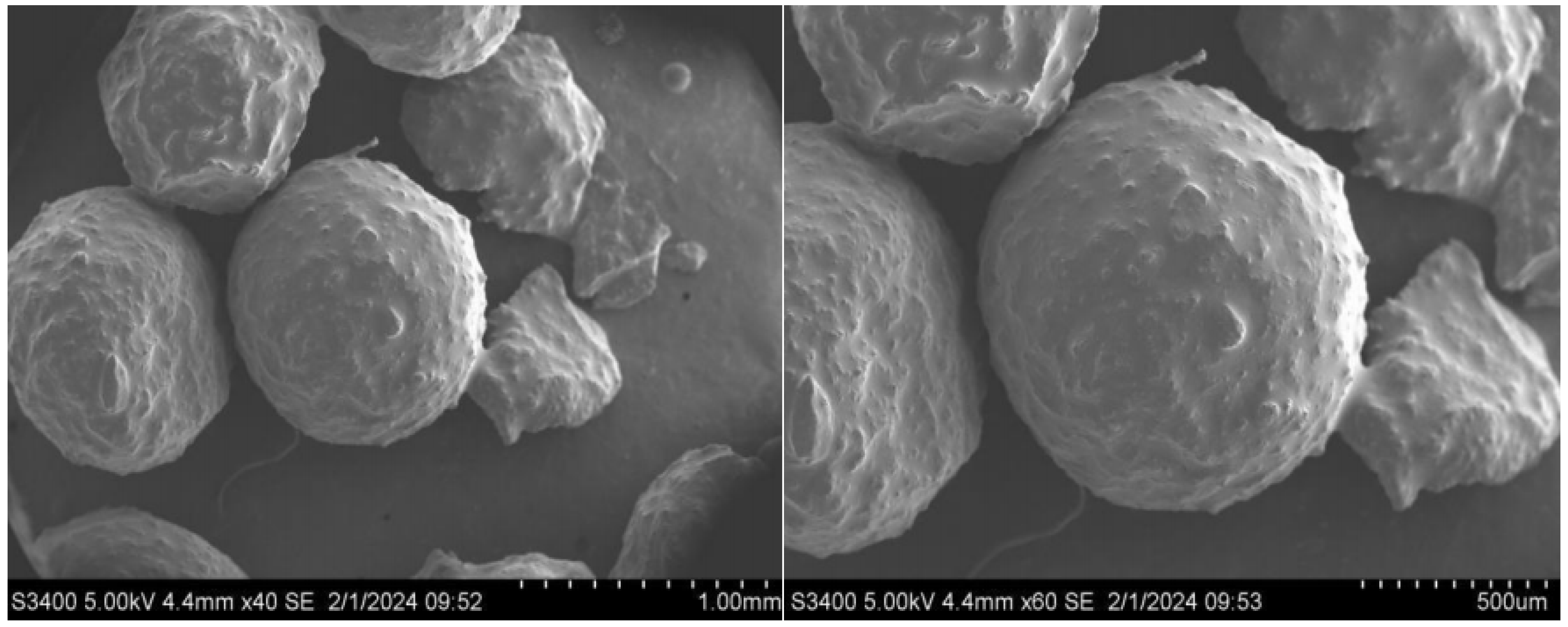
Figure 1. Microscopic Morphology and Structural Integrity Analysis of Microcapsules.
Buildings 16 03644 g001
Figure 2. Crack distribution at 80% of ultimate load.
Buildings 16 03644 g002
Figure 3. Test procedure.
Buildings 16 03644 g003
Figure 4. Compressive strength of specimens cured in air.
Buildings 16 03644 g004
Figure 5. KIC recovery rate of microcapsule-only groups.
Buildings 16 03644 g005
Figure 6. KIC recovery rate of CCCW-only groups.
Buildings 16 03644 g006
Figure 7. KIC recovery rate of hybrid groups.
Buildings 16 03644 g007
Figure 8. Recovery rate under different curing environments.
Buildings 16 03644 g008
Figure 9. Self-healing capacity of mixtures with different microcapsule-CCCW ratios.
Buildings 16 03644 g009
Figure 10. Schematic illustration of the proposed healing processes: (a) possible localized crack filling associated with microcapsules; (b) moisture-assisted deposition associated with CCCW.
Buildings 16 03644 g010
Figure 11. (a) Cross-sectional morphology of the microcapsule; (b) magnified view of the cross-section; (c) internal network structure of the microcapsule.
Buildings 16 03644 g011
Figure 12. (a) Interface between the microcapsule and the cementitious matrix; (b) solid deposits observed in the CCCW-containing region; (c) spatial relationship between a crack and a microcapsule-containing region; and (d) solid deposits within the healed crack region of the hybrid specimen.
Buildings 16 03644 g012
Table 1. Representative self-healing approaches and the gap addressed by this study.
ApproachPrimary Activation/Healing RouteEstablished Capability and Remaining LimitationRefs.
CCCW used aloneWater-activated crystallization and continued hydrationEffective pore blocking and densification; strongly moisture dependent; diminishing dosage returns[6,7,8,9,10,11,12,13,14,15,16]
Microcapsules used aloneCrack-triggered release of sodium silicate, epoxy, or biological agentsRapid and targeted repair; finite payload and possible capsule-matrix defects[18,19,20,21,22,23,24,25]
Water-absorbing alginate/epoxy microcapsulesEpoxy bonding plus shell swelling/internal curingMultiple functions across humidity levels; CCCW coupling and ratio effects not evaluated[26]
Crystalline-admixture hybrid conceptsCrystallization combined with nano-constituent effectsDemonstrates multi-component potential; does not establish CCCW-microcapsule cross-environment synergy[9]
Present studyStress-triggered epoxy bonding plus moisture-driven progressive crystallizationTests dosage/mass-ratio effects and recovery under water, air, and dry curing using mechanical and permeability-related indicatorsThis work
Table 2. Concrete Mix Design (kg/m3).
W/CCementWaterFine
Aggregate
Coarse
Aggregate
Water-Reducing Admixture
0.5535519562912211.34
Table 3. Self- healing material replacement of different groups.
GroupNO.MicrocapsuleCCCW
Control groupC00.0%0.0%
Group MM11.0%0.0%
M22.0%0.0%
M33.0%0.0%
Group CC10.0%1.0%
C20.0%2.0%
C30.0%3.0%
Group HH11.0%2.0%
H21.5%1.5%
H32.0%1.0%
Table 4. Typical curing conditions.
ConditionTemperature/°CRelative Humidity
Air20 ± 260 ± 5%
Dry20 ± 230 ± 5%
Water immersion20 ± 2Fully immersed in water
Table 5. Particle Size Distribution of sand.
Particle size0.15 mm0.30 mm0.60 mm1.18 mm2.36 mm4.75 mm
Percentage91.2%81.3%62.7%42.3%25.9%2.5%
Table 6. Compressive strength test results of self-healing material cured in air.
GroupNO.fc,initial
/MPa
fc,7d
/MPa
Rc,7dfc,28d
/MPa
Rc,28d
Control groupC037.230.1380.99%30.5081.99%
Group MM333.528.8186.00%29.3887.70%
Group CC338.731.5881.60%31.8582.30%
Group HH235.329.6583.99%31.2588.53%
Table 7. Fracture toughness test results of self-healing material.
GroupNO.Pmax/kNKIC/MPa∙m1/2ΔKIC
Control groupC09.151.76/
Group MM18.971.722.27%
M29.031.731.70%
M38.581.656.25%
Group CC18.581.656.25%
C28.891.712.84%
C38.481.637.39%
Group HH18.951.722.27%
H28.741.684.55%
H38.681.675.11%
Table 8. Post-healing fracture toughness test results of self-healing material.
GroupNO.P′max/kNK′IC/MPa∙m1/2KIC Recovery Rate
Control groupC07.011.3576.40%
Group MM17.541.4584.30%
M28.311.6092.49%
M37.571.4587.88%
Group CC16.921.3380.61%
C27.501.4484.21%
C37.001.3582.82%
Group HH17.721.4886.05%
H27.901.5290.48%
H37.951.5391.62%
Table 9. Compressive strength test results of self-healing material cured in different conditions.
GroupNO.DryWater Immersion
Rc,7dRc,28dRc,7dRc,28d
Control groupC081.20%82.20%81.98%83.20%
Group MM384.50%86.90%85.01%86.03%
Group CC381.30%83.40%86.50%87.96%
Group HH285.60%90.40%87.17%88.24%
Disclaimer/Publisher’s Note: The statements, opinions and data contained in all publications are solely those of the individual author(s) and contributor(s) and not of MDPI and/or the editor(s). MDPI and/or the editor(s) disclaim responsibility for any injury to people or property resulting from any ideas, methods, instructions or products referred to in the content.