Uniaxial Damage Mechanisms in Roller-Compacted Concrete Subjected to Freeze–Thaw Cycles
 , , ,
, , ,
Abstract
1. Introduction
2. Experimental Program
2.1. Specimen Preparation and Environmental Conditioning
2.2. Integrated Multi-Scale Damage Testing
3. Results and Analysis
3.1. Surface Deterioration and Mass Evolution
3.1.1. Macroscopic Morphological Damage
3.1.2. Mass Loss Characteristics
3.2. Uniaxial Compressive Mechanical Properties
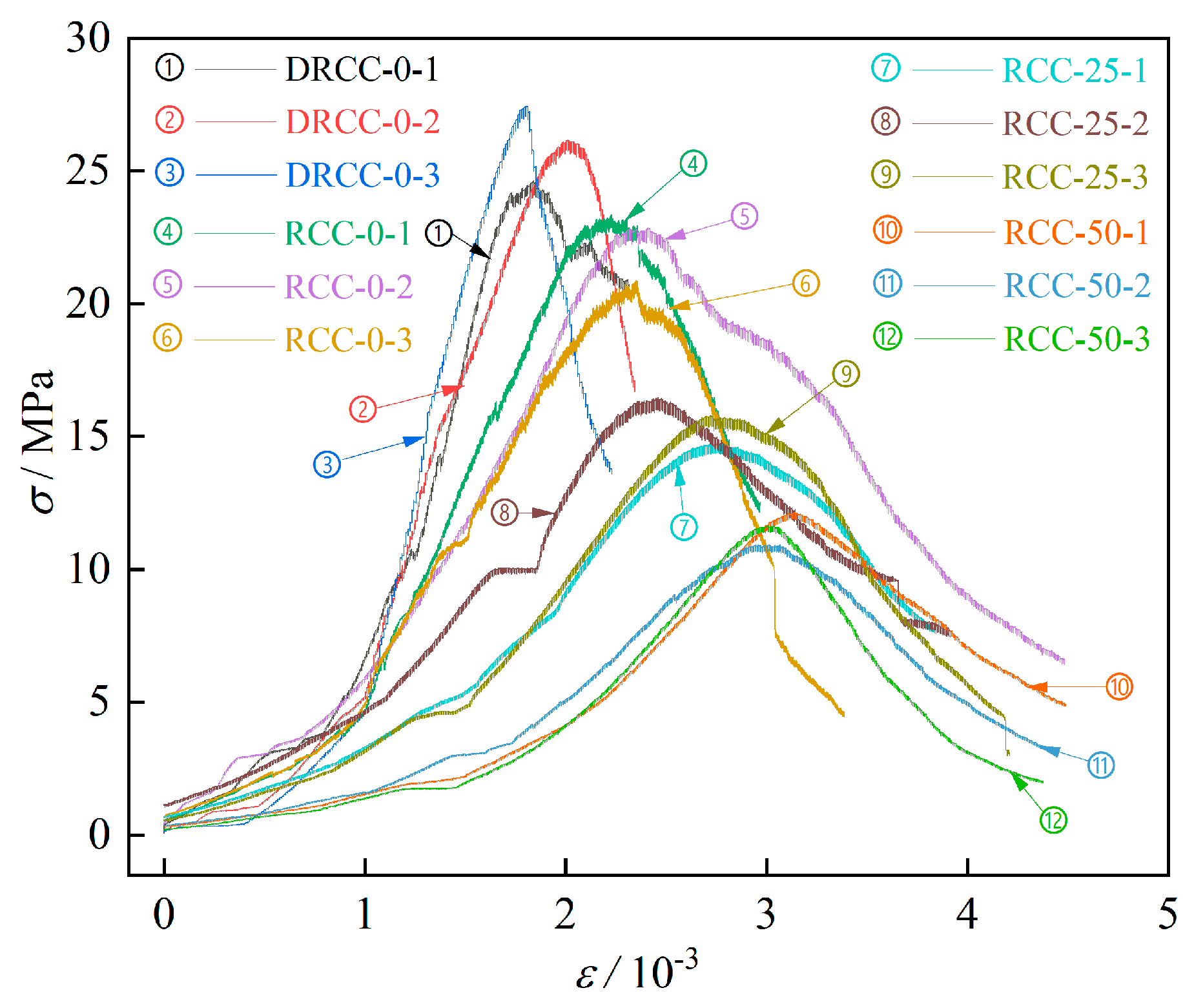
3.2.1. Deformation Characteristics
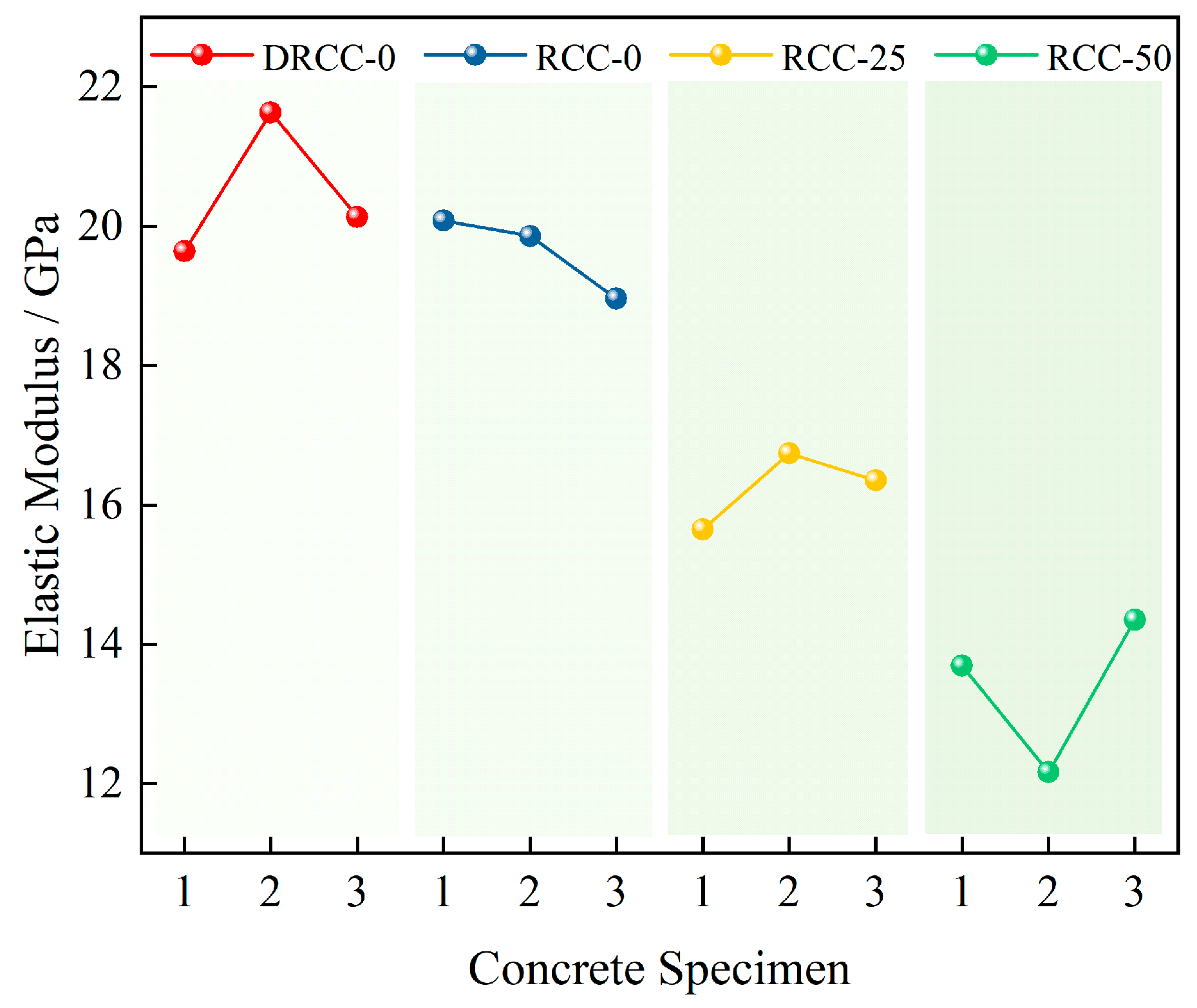
3.2.2. Evolution of Elastic Modulus with F-T Cycles
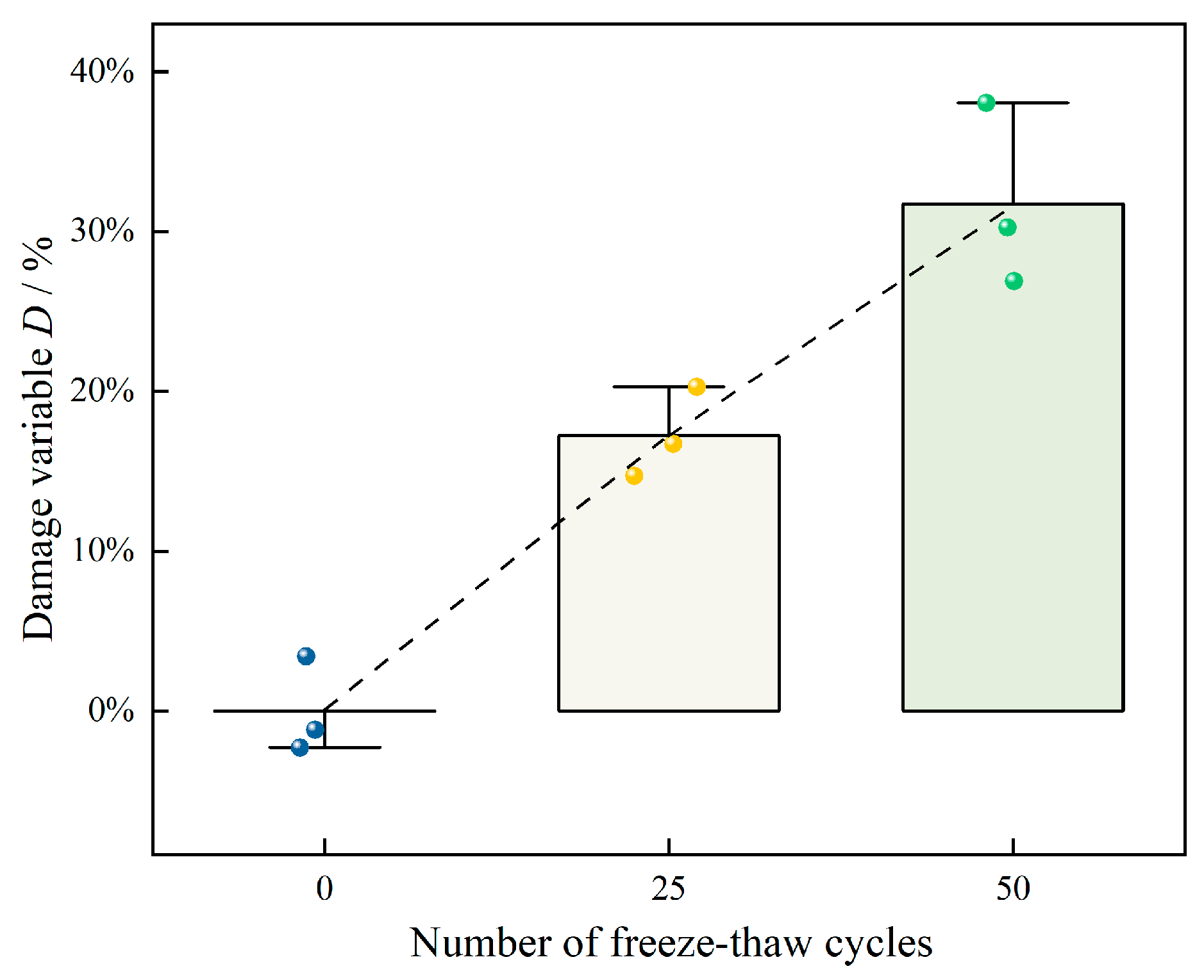
3.2.3. Evolution of Peak Stress with F-T Cycles
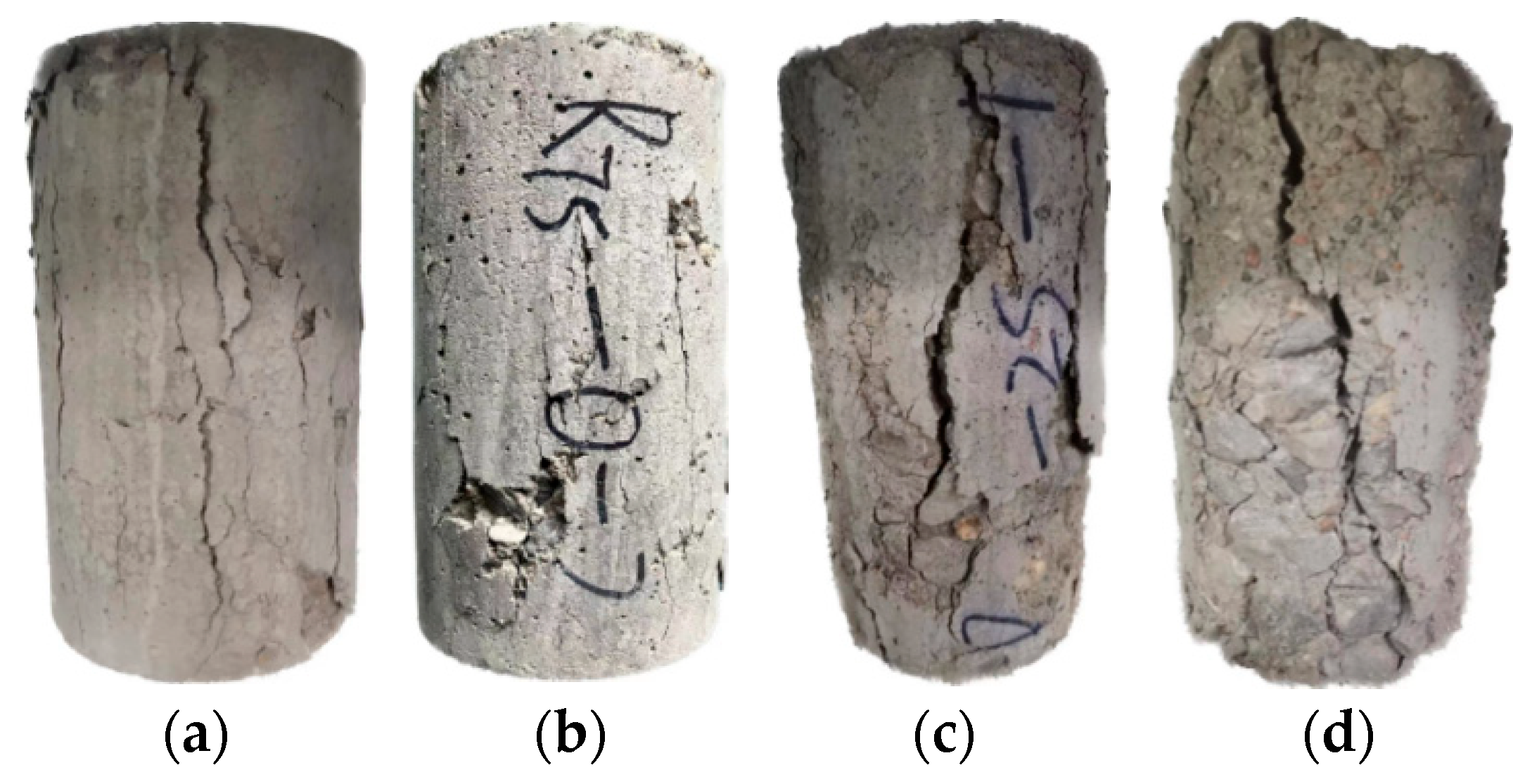
3.2.4. Failure Characteristics
3.3. Microscopic Damage Under Uniaxial Compression
3.3.1. Evolution of AE Ring-Down Counts and Energy, and Damage Stage Identification
3.3.2. Evolution of Pore Structure Characteristics
3.3.3. RA-AF Distribution Characteristics and Failure Modes
3.3.4. b-Value Characteristics
4. Conclusions
- (1)
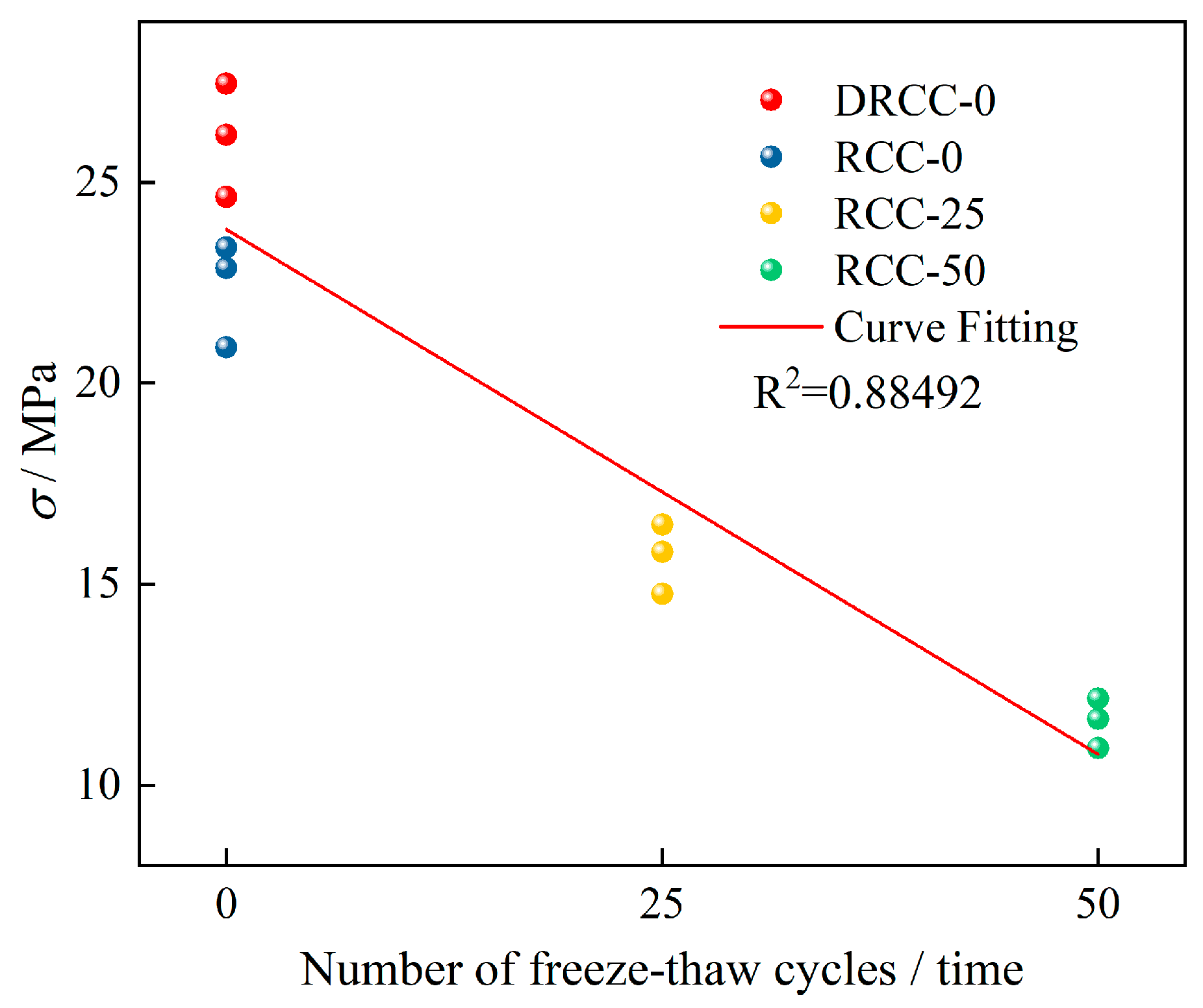
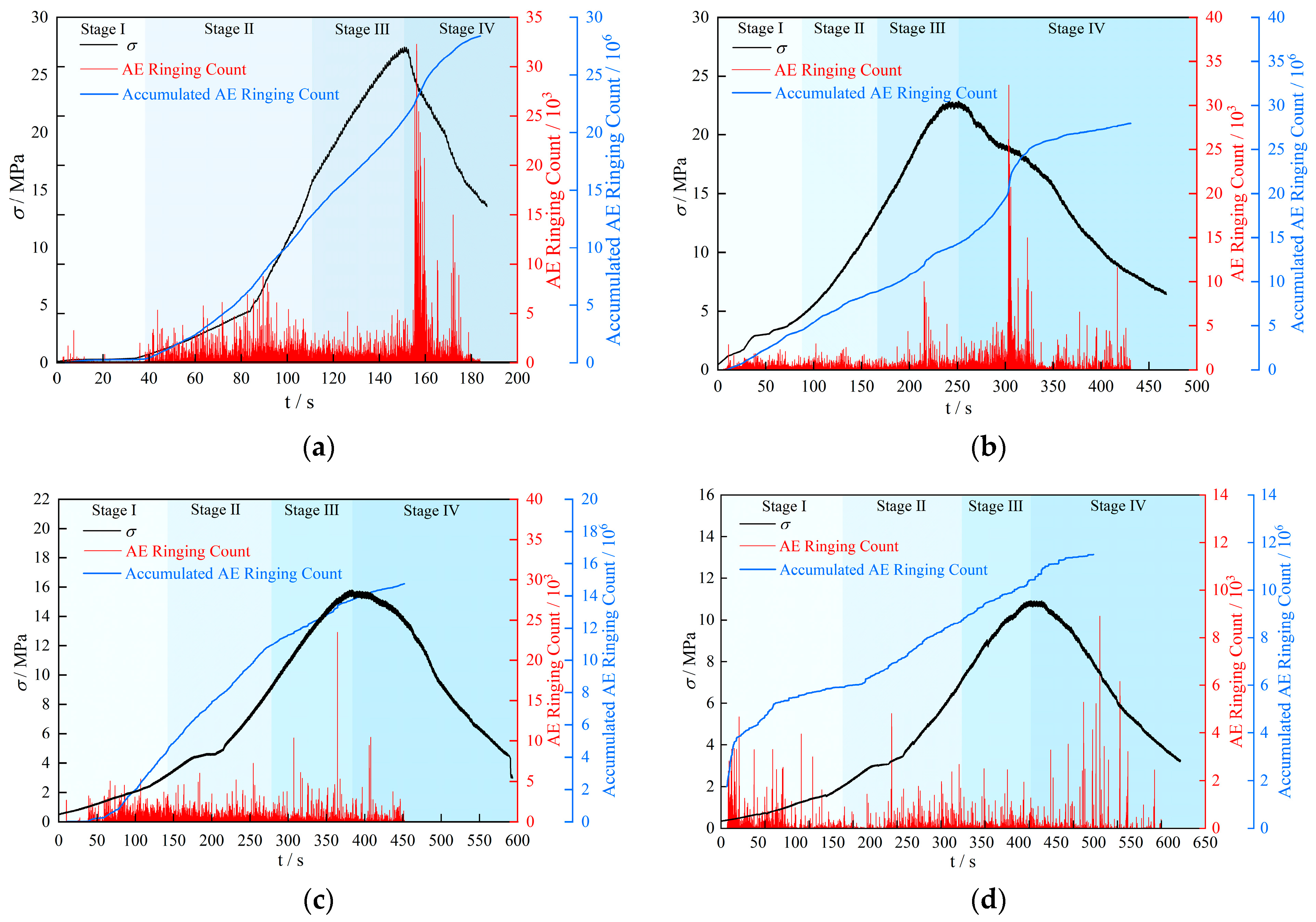
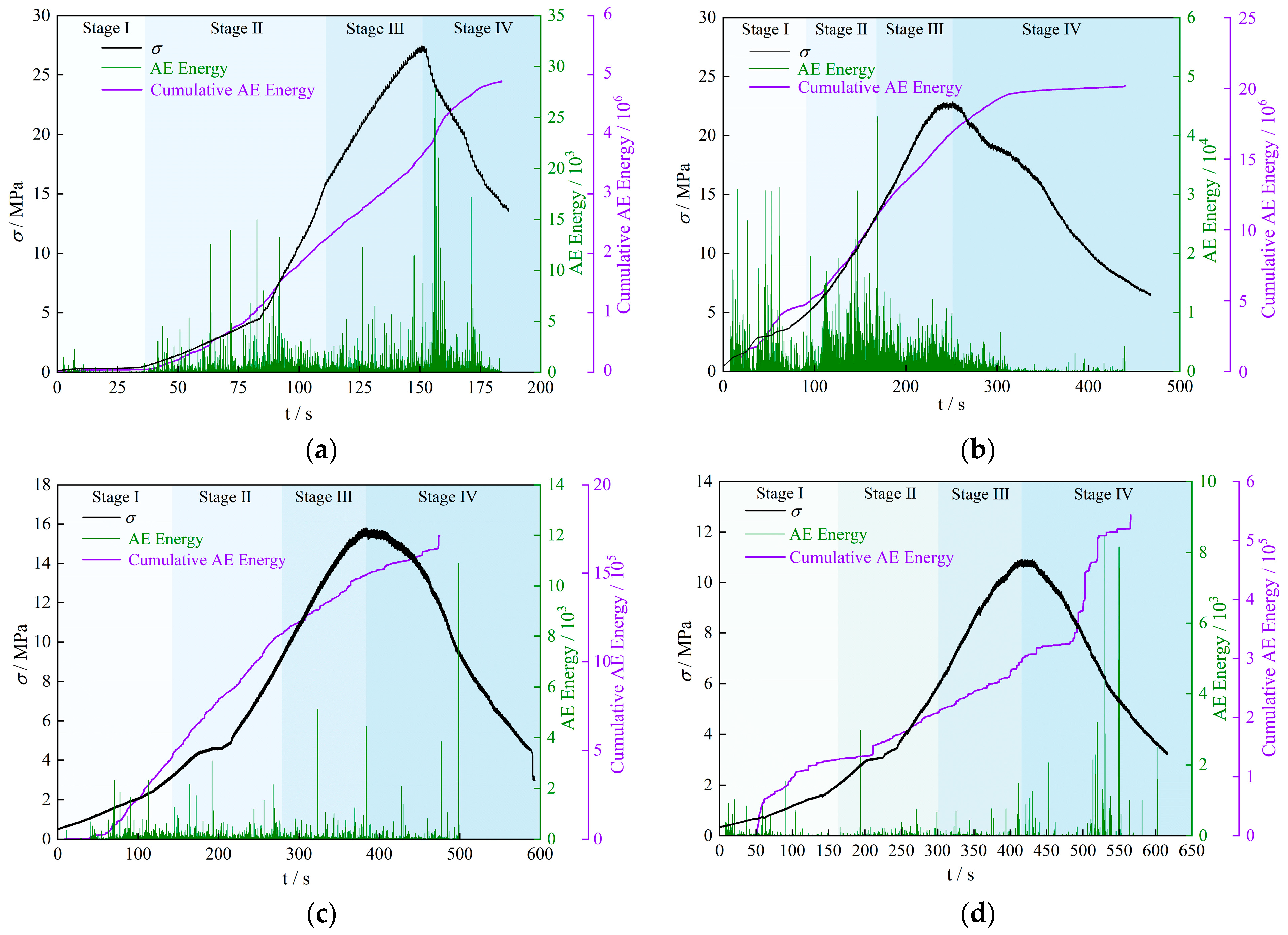
- The macroscopic mechanical properties of RCC undergo profound deterioration under the influence of F-T cycles. As the number of F-T cycles increases, the peak stress decreases progressively with increasing F-T cycles. After 50 cycles, the elastic modulus degrades to approximately 56% of its initial value. On the stress–strain curves, the pre-peak plastic yield zone of the damaged specimens broadens significantly. Correspondingly, the macroscopic failure mode transitions from brittle axial splitting in the dry state to ductile oblique shear failure following severe F-T deterioration.
- (2)
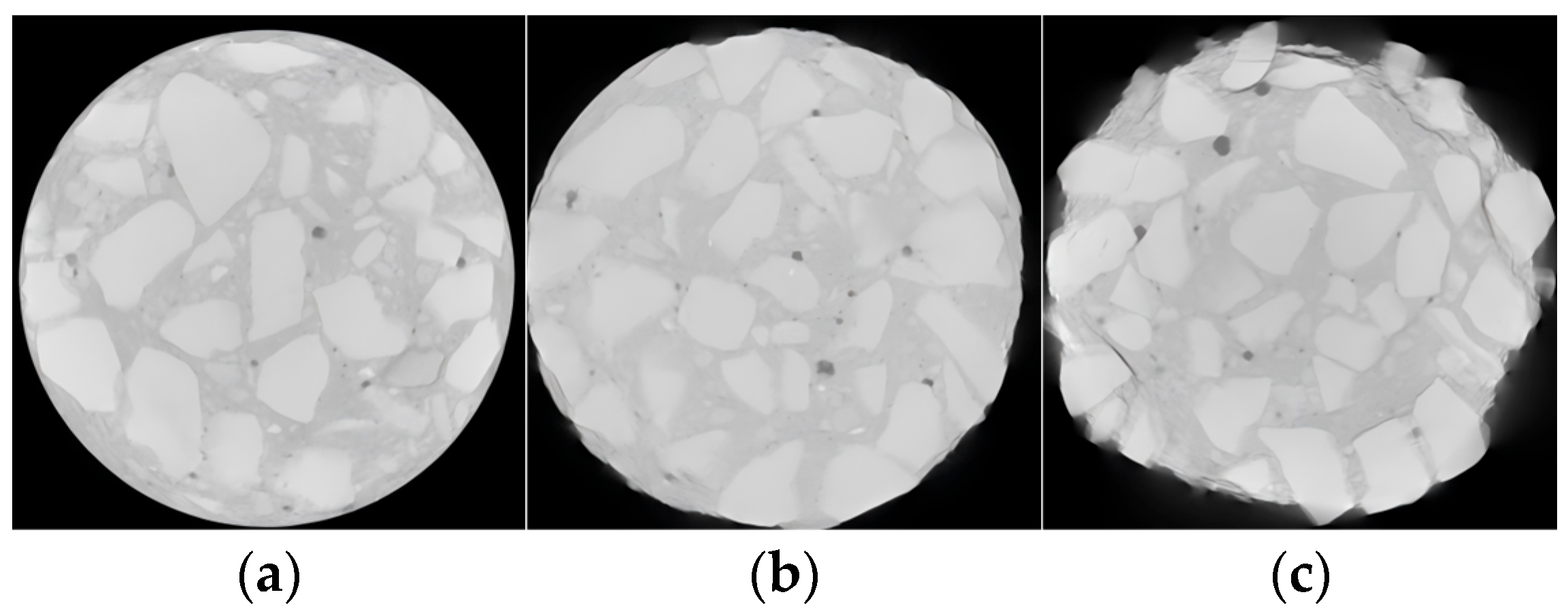
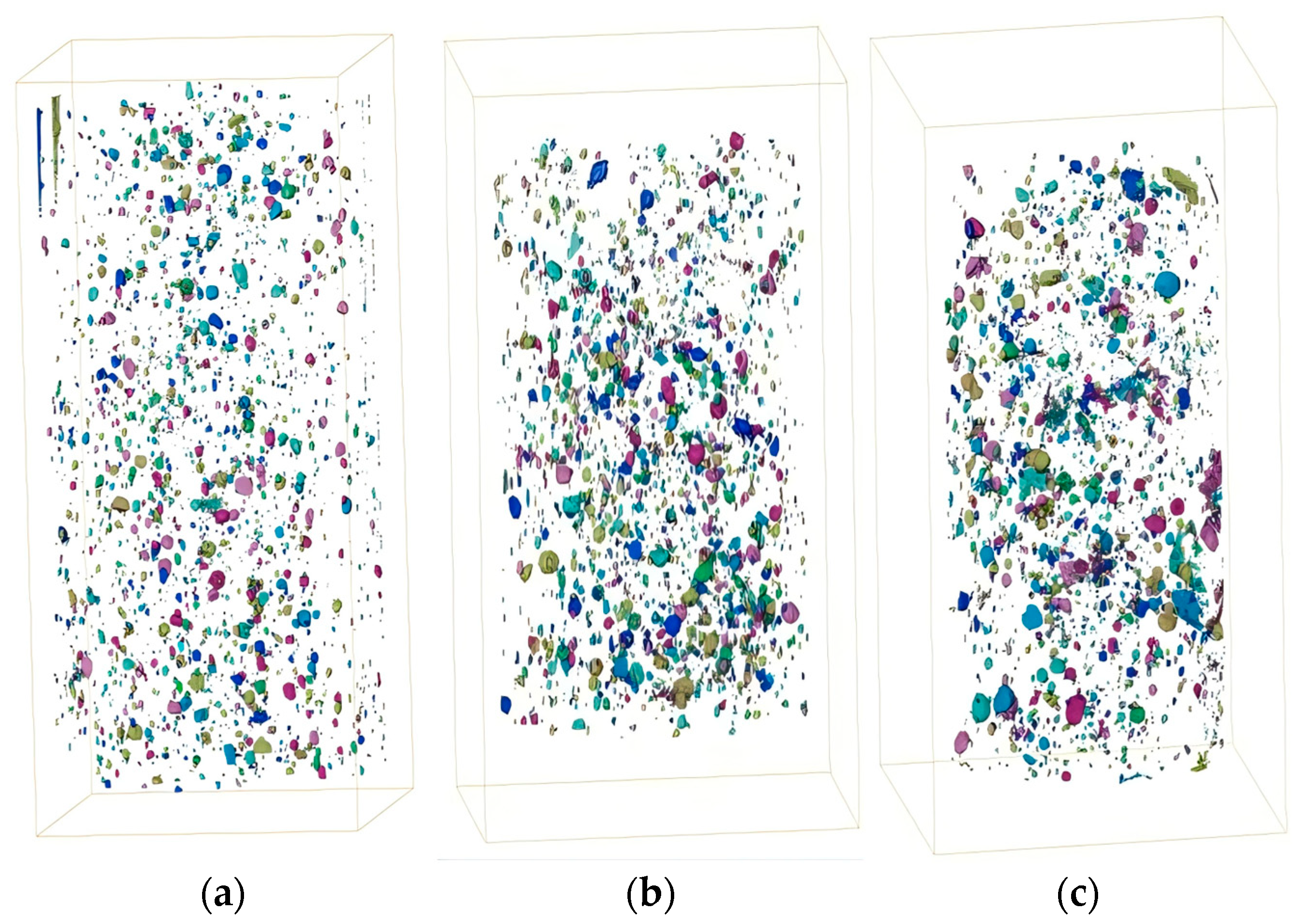
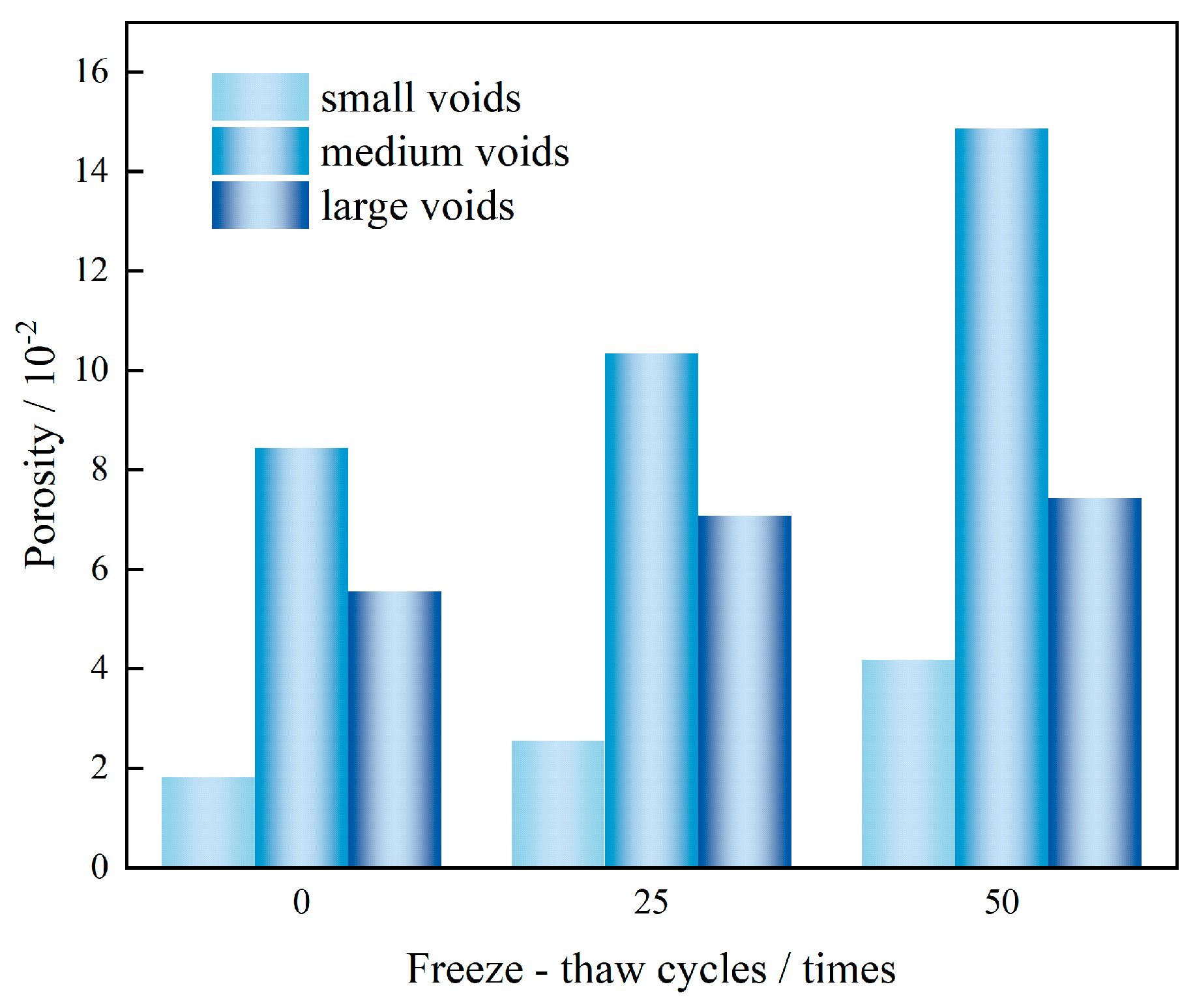
- The frost-heaving action profoundly alters the internal pore distribution characteristics of the RCC. Mesoscopic pores with equivalent diameters ranging from 500 to 2500 μm are the most sensitive to F-T action. As the F-T cycles increase from 0 to 50, their volume fraction increases from 8.45% to 14.86%. Driven by the crystallization pressure induced by the ice–water phase transition, the native isolated pores continuously propagate and coalesce, ultimately forming a 3D spatially interconnected damage network.
- (3)
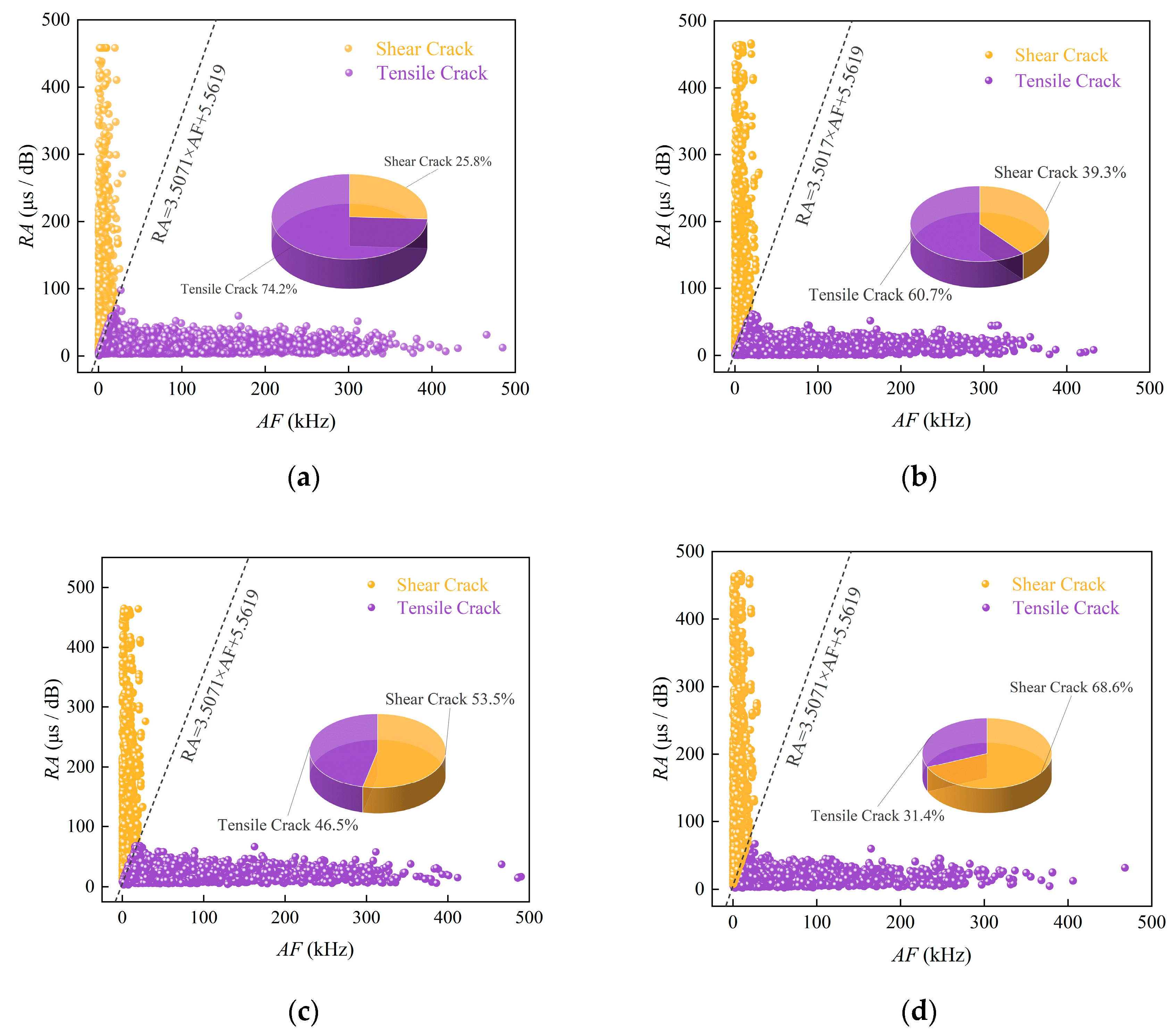
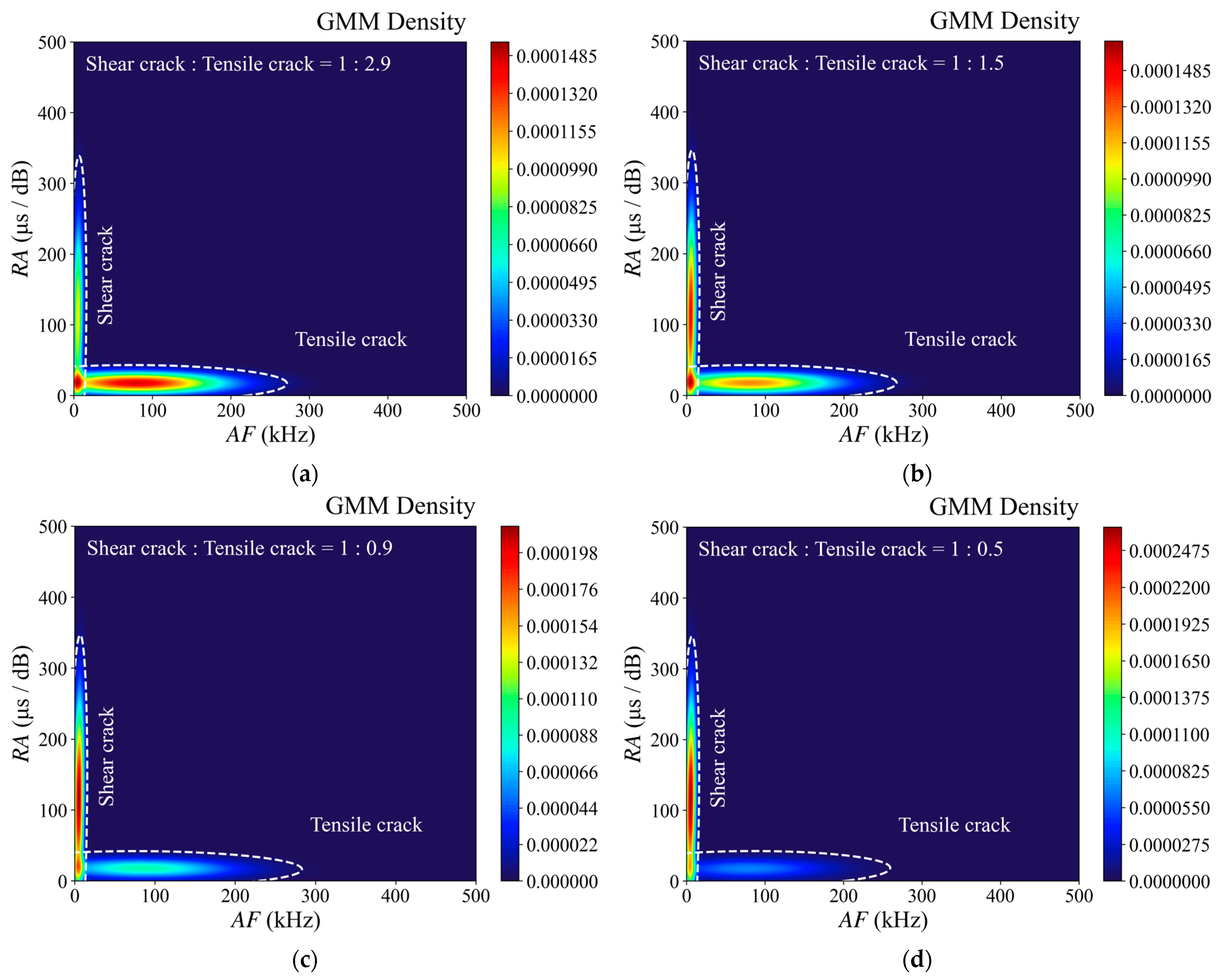
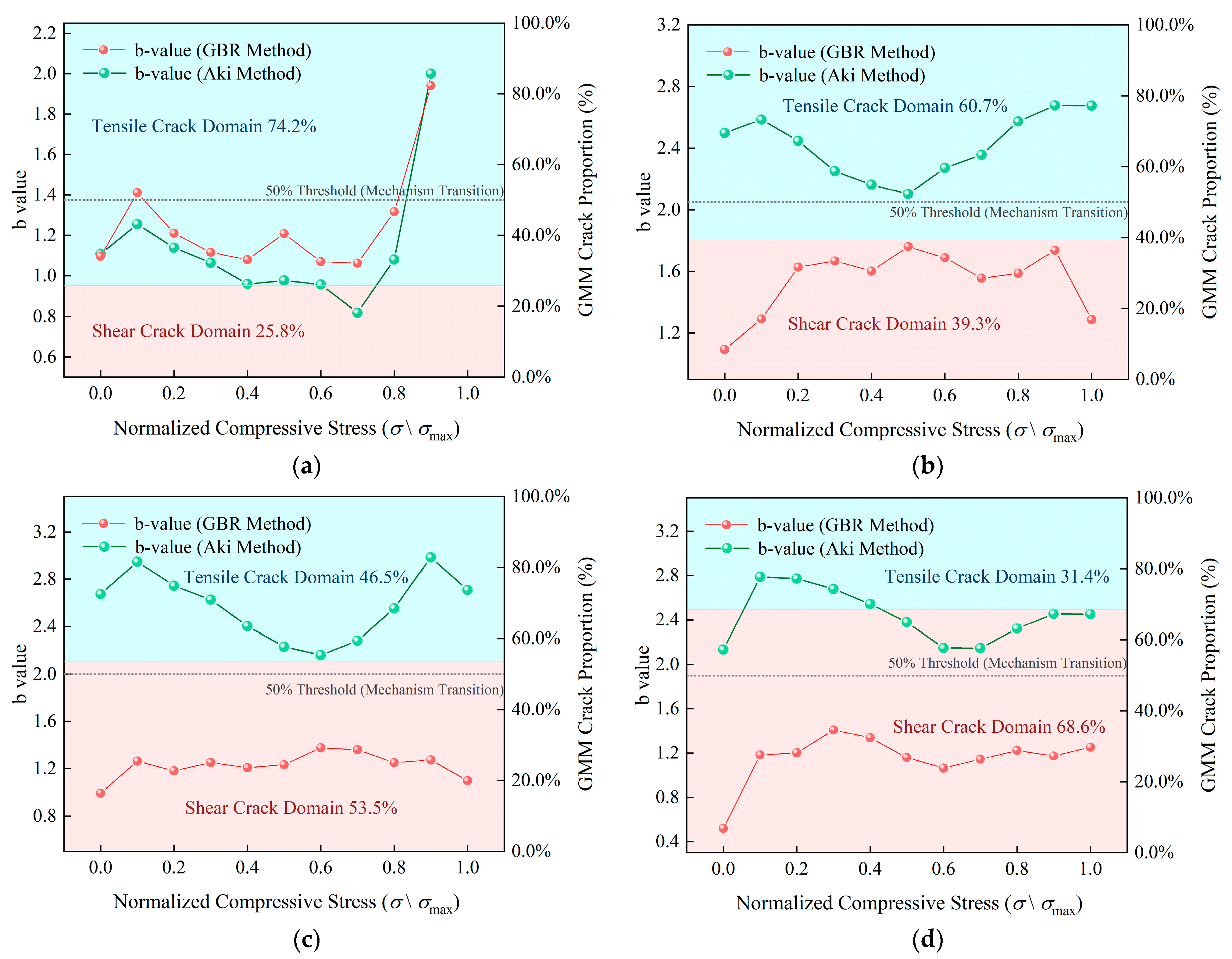
- The GMM clustering results of the AE RA-AF parameters effectively quantify the microscopic fracture modes during the loading process. Under compression, the dry matrix is predominantly governed by tensile cracks, accounting for 74.2%. However, driven by the superimposed effects of interfacial lubrication by pore water films and frost-heaving defects, the proportion of shear cracks reaches 53.5% after 25 F-T cycles, surpassing the 50% criterion adopted herein to indicate the dominance of shear-type fractures. This proportion further increases to 68.6% after 50 F-T cycles, objectively corroborating the mechanical mechanism underlying the transition of the macroscopic failure mode toward shear sliding.
- (4)
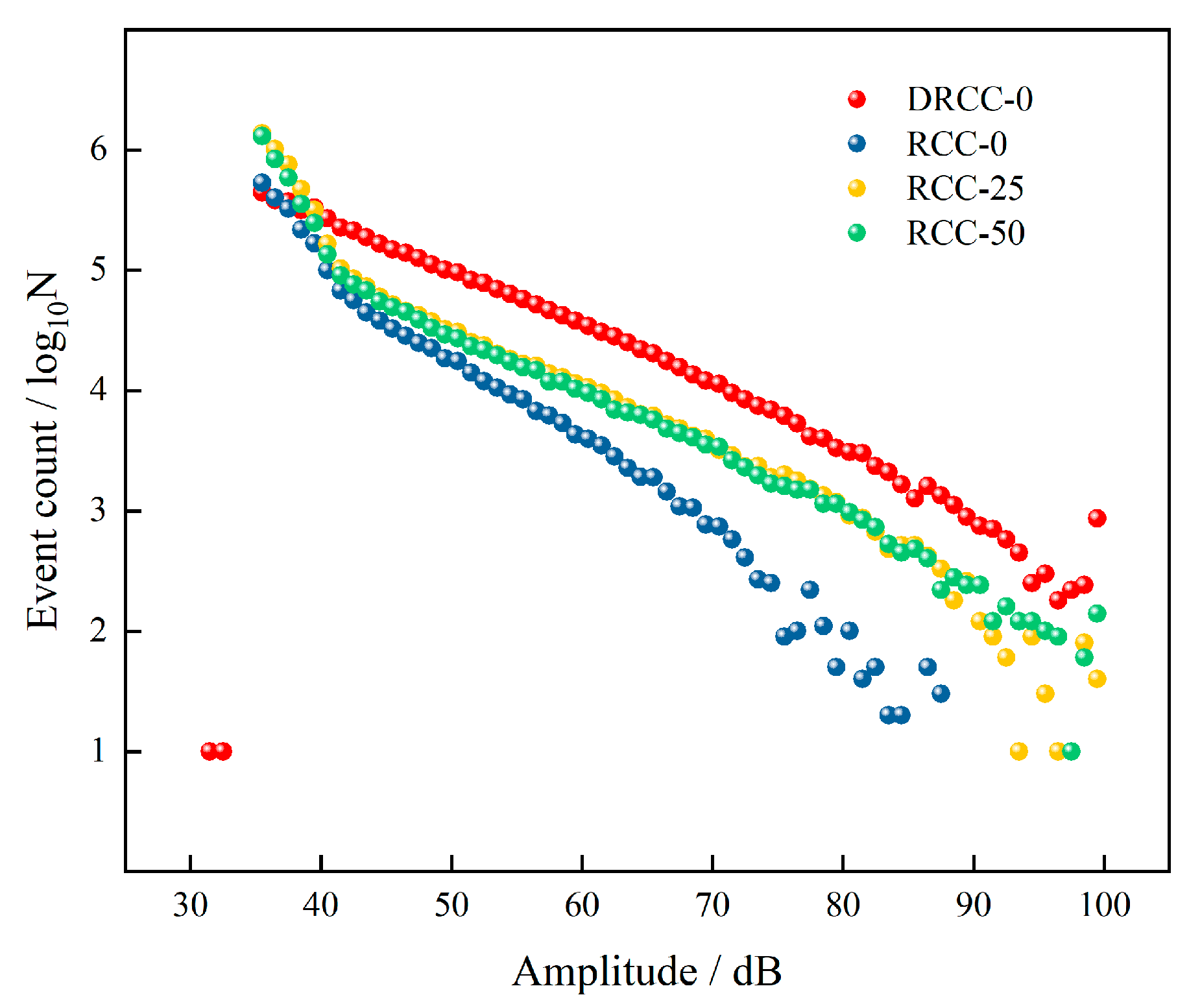
- Dynamically calibrating the AE b-value using Aki’s maximum likelihood method effectively mitigated the masking effect of pore water on the recognition of low-amplitude AE events. Influenced by the lubricating effect of the interfacial water film, the b-value of the intact saturated specimens during the pre-peak nonlinear loading stage increased from 1.08 in the dry state to 2.57. Conversely, after 50 freeze–thaw cycles, this b-value in the damaged specimens dropped back to 2.32. This acoustic evolution characteristic reflects that, during the later stages of compression, microscopic diffuse cracks undergo large-scale frictional sliding along the mesoscopically interconnected pores, subsequently triggering macroscopic oblique shear failure.
Author Contributions
Funding
Data Availability Statement
Conflicts of Interest
References
- Science and Technology Promotion Center of the Ministry of Water Resources. 2023 Advanced and Practical Technologies in Water Conservancy; China Water & Power Press: Beijing, China, 2024; 277p. [Google Scholar]
- Su, H.Z.; Xie, W. Review on Frost Damages of Hydraulic Concrete in Cold Region and Its Preventive Control. Bull. Chin. Ceram. Soc. 2021, 40, 1053–1071. [Google Scholar]
- Liu, A.; Zhang, Z.T.; Fan, B.J.; Hu, W.; Zhou, K.X.; Liu, Z.; Liu, K.S. Coupled dynamic model of the vibratory roller-unsaturated subgrade and evolution of its dynamic response during vibratory compaction. Soil Dyn. Earthq. Eng. 2026, 209, 110488. [Google Scholar] [CrossRef] [Scilit]
- Zhang, Z.T.; Wang, Y.H.; Zhang, J.Q.; Liu, Z.; Gao, W.H. A new gradation equation for coarse-grained subgrade fillers and its applicability based on the fractal theory. Geomech. Geophys. Geo-Energy Geo-Resour. 2025, 11, 20. [Google Scholar] [CrossRef] [Scilit]
- Zhao, Z.R.; Zhang, W.M.; Hu, Z.L.; Liu, Y.J.; Yao, W.Y.; Zhong, Y.T.; Shen, Z.Z. Review of Meso-structural Evolution and Mechanical Damage Characteristic of Concrete Subjected to Freeze-thaw Cycles. Water Resour. Hydropower Eng. 2025, 56, 226–242. [Google Scholar]
- Wang, Y.; Li, S.J.; Ye, M.; Yong, G.R.; Bai, Y.; Deng, Y.J.; Qin, M.; Zheng, Z. Research Progress on Mesostructural Evolution and Mechanical Damage Characteristics of Concrete under F-T Cycles. Sci. Technol. Eng. 2023, 23, 5853–5874. [Google Scholar]
- Zhang, Z.T.; Gao, W.H. Effect of different test methods on the disintegration behaviour of soft rock and the evolution model of disintegration breakage under cyclic wetting and drying. Eng. Geol. 2020, 279, 105888. [Google Scholar] [CrossRef] [Scilit]
- Sun, C.W.; Chen, X.Z.; Chai, J.R.; Wei, T.L.; Ma, B. Research on the Uniaxial Compressive Behavior of Hydraulic Roller Compacted Concrete Subjected to Freeze-Thaw Cycles. Hydro-Sci. Eng. 2023, 2023, 83–94. [Google Scholar]
- Bai, W.F.; Niu, D.X.; Guan, J.F.; Yuan, C.Y. The Statistical Damage Model of Concrete under Uniaxial Compression Considering Freeze-Thaw Deterioration Effect. Eng. Mech. 2023, 40, 117–129. [Google Scholar]
- Hou, S.S.; He, X.; Meng, X.S.; Chen, L.; Feng, Z.; Liu, M.X.; Li, A.; Guo, C.B.; Ji, F. Mesostructure and Strength Characteristics of Granite under Freeze-Thaw Cycles Based on CT Scanning. J. Geomech. 2024, 30, 462–472. [Google Scholar]
- Chen, S.J.; Ren, J.X.; Liu, L.; Li, Y.G.; Ren, X.; Fu, Q. Mesoscopic Characteristics and Damage Evolution of Concrete under Coupled Freeze-Thaw and Salt Erosion. J. Chin. Ceram. Soc. 2024, 52, 3524–3536. [Google Scholar]
- Aggelis, G.D. Classification of Cracking Mode in Concrete by Acoustic Emission Parameters. Mech. Res. Commun. 2011, 38, 153–157. [Google Scholar] [CrossRef] [Scilit]
- Chen, X.D.; Shi, Z.X.; Zhang, Z.C.; Ning, Y.J.; Bai, L.H. Study on Axial Tensile Damage Evolution Mechanism of Wet-Screened Concrete Based on GMM. J. Archit. Civ. Eng. 2024, 41, 1–9. [Google Scholar]
- Zhao, Y.F.; Chen, M.H.; Jiang, X.; Cao, X.P.; Qin, B.B. Damage Evolution and Avalanche Characteristics of Concrete under Salt-Freezing Action by Acoustic Emission. Dev. Built Environ. 2025, 21, 100600. [Google Scholar] [CrossRef] [Scilit]
- Scholz, C.H. The Frequency-Magnitude Relation of Microfracturing in Rock and Its Relation to Earthquakes. Bull. Seismol. Soc. Am. 1968, 58, 399–415. [Google Scholar] [CrossRef] [Scilit]
- Liu, B.; Zheng, K.; Wang, C.L.; Bi, J.; Lian, S.L. Mechanism Analysis on Anisotropic Degradation of Sandstone in F-T Environment Based on Acoustic Emission. Chin. J. Geol. Hazard Control 2024, 35, 132–142. [Google Scholar]
- Liu, M.M.; Chen, T.; Chen, S.Z.; Cao, X.F.; Kong, L.Y.; Jia, Y.L. Shear Strength Parameters and Acoustic Emission Deterioration Characteristics of Feldspar Sandstone under Different Numbers of F-T Cycles. Saf. Coal Mines 2026, 57, 190–199. [Google Scholar]
- Xue, W.P.; Zhou, Y.Y.; Cheng, H.; Yao, Z.S.; Rong, C.X.; Wang, Z.J.; Wu, H. Seepage Dynamics and Damage Characteristics of Shaft Lining Concrete under Hydraulic Coupling. Coal Geol. Explor. 2026, 54, 136–146. [Google Scholar]
- JGJ 55-2011; Specification for Mix Proportion Design of Ordinary Concrete. China Architecture & Building Press: Beijing, China, 2011.
- Lyu, C.; Yu, C.; Lu, C.; Pan, L.; Li, W.W.; Liu, J.P. Long-Term Performance and Microstructural Characterization of Dam Concrete in the Three Gorges Project. Engineering 2024, 33, 237–262. [Google Scholar] [CrossRef] [Scilit]
- Zhu, X.Y.; Chen, X.D.; Bai, Y.; Ning, Y.J.; Zhang, W. Evaluation of Fracture Behavior of High-Strength Hydraulic Concrete Damaged by Freeze-Thaw Cycle Test. Constr. Build. Mater. 2022, 321, 126359. [Google Scholar] [CrossRef] [Scilit]
- Zhou, L.T.; Wang, H.; Chen, B.; Gao, Z.H.; Zhou, C.T. Damage-Acoustic Emission Characterization of Basalt Fiber Foam Concrete under F-T Environment. Acta Mater. Compos. Sin. 2025, 42, 2062–2073. [Google Scholar]
- GB/T 50081-2019; Standard for Test Method of Mechanical Properties on Ordinary Concrete. China Architecture & Building Press: Beijing, China, 2019.
- GB/T 50082-2024; Standard for Test Method of Long-Term Performance and Durability of Concrete. China Architecture & Building Press: Beijing, China, 2024.
- Wang, W.; Hong, Y.L.; Jiang, P.; Zhan, H.H.; Ren, T.X.; Qiu, X.R.; Li, C.H. Critical Review of Basalt Fiber-Reinforced Concrete: Mechanical Properties, Durability, and Micro Mechanisms. Acta Mater. Compos. Sin. 2026, 1–27. [Google Scholar] [CrossRef]
- Shi, L.; Myers, M.K. Microstructure-Informed Hyper-Viscoelastic Model Capturing Soft Tissue Tensile Behavior across Large Deformations. J. Mech. Phys. Solids 2026, 206, 106348. [Google Scholar] [CrossRef] [Scilit] [PubMed]
- Ji, X.; Liu, Q.; Li, Q.J.; Hou, D.S.; Wang, M.H. Ca/Si Ratio–Dependent Lubrication Mechanisms in Calcium Silicate Hydrate: Implications for Concrete Fluidity. J. Build. Eng. 2026, 120, 115240. [Google Scholar] [CrossRef] [Scilit]
- Xie, J.; Si, J.W.; Hang, E.C.; Sun, Y.D. Damage Evolution Law of LNG Tank Concrete Subjected to Cryogenic-Temperature Freeze-Thaw Cycles. J. Build. Mater. 2025, 28, 58–64. [Google Scholar]
- Li, J.C.; Li, Y.; Chen, D.H.; Zhao, W.; Zhang, R. Effect of Initial Damage Coupled Freeze-Thaw Cycle on the Properties of Recycled Fine Powder Concrete. Concrete 2026, 61–67. (In Chinese) [Google Scholar]
- Zhou, T.; Xiong, X.B.; Li, Y. Influence of F-T Cycles on Dynamic Performance of Steel Fiber Reinforced Concrete. J. Water Resour. Water Eng. 2021, 32, 167–172+178. [Google Scholar]
- Yang, T.T.; Li, Z.H.; Hu, J.; Li, Z.X.; Song, C.Y.; Zheng, T.; Pan, S.D.; Guo, L.C. Mechanical Behavior and Deformation Mechanisms of 3D Woven Preforms under Shear Loading Based on Experimental and Numerical Approaches. Thin-Walled Struct. 2025, 215, 113488. [Google Scholar] [CrossRef] [Scilit]
- Zhou, Y.B.; Aydin, B.B.; Zhang, F.Q.; Hendriks, M.A.N.; Yang, Y.G. Lattice Modelling of Complete Acoustic Emission Waveforms in the Concrete Fracture Process. Eng. Fract. Mech. 2025, 320, 111040. [Google Scholar] [CrossRef] [Scilit]
- Zhao, N.; Lian, S. Study of Damage Mechanism and Evolution Model of Concrete under Freeze–Thaw Cycles. Appl. Sci. 2024, 14, 7693. [Google Scholar] [CrossRef] [Scilit]
- ASTM E1441-19; Standard Guide for Computed Tomography (CT). ASTM International: West Conshohocken, PA, USA, 2019.
- Ketcham, R.A.; Carlson, W.D. Acquisition, Optimization and Interpretation of X-Ray Computed Tomographic Imagery: Applications to the Geosciences. Comput. Geosci. 2001, 27, 381–400. [Google Scholar] [CrossRef] [Scilit]
- Guo, L.Y.; Chen, B.; Gao, Z.H.; Chen, C.Z. Pore Structure and Thermal Conductivity of Basalt Fiber Reinforced Foam Concrete under F-T Cycles. Acta Mater. Compos. Sin. 2025, 42, 3274–3287. [Google Scholar]
- Ohtsu, M.; Uchida, M.; Okamoto, T.; Yuyama, S. Damage Assessment of Reinforced Concrete Beams Qualified by Acoustic Emission. ACI Struct. J. 2002, 99, 468–476. [Google Scholar] [CrossRef] [Scilit] [PubMed]
- JCMS-III B5706-2003; Monitoring Method for Active Cracks in Concrete by Acoustic Emission. Federation of Construction Materials Industries: Tokyo, Japan, 2003.
- Wu, G.; Zhou, Q.; Ran, H.L. The Maximum Likelihood Estimation of b-Value in Magnitude-Frequency Relation and Analysis of Its Influencing Factors. Seismol. Geol. 2019, 41, 21–43. [Google Scholar]
- Xu, X.Y.; Su, H.Z.; Yan, X.Q.; Yao, K.F. Damage Detection of Concrete Materials Based on Energy Attenuation of Acoustic Emission Signals. Nondestruct. Test. 2023, 45, 46–51. [Google Scholar]
- Liu, L.; Xu, Y.F.; Liu, Y.; Wang, R.Q.; Zhang, Z.J.; Ma, R.Q. Characterization of Acoustic Emissions from Concrete Based on Energy Activity Coefficient. Buildings 2024, 14, 2109. [Google Scholar] [CrossRef] [Scilit]
- Wang, W.; Yuan, K.; Liu, Q.; Ren, J.; Ding, Z.; Li, X. Mesh size identification for cohesive fracture model based on experimentally calibrated FPZ length and FDEM simulation. Theor. Appl. Fract. Mech. 2026, 143, 105485. [Google Scholar] [CrossRef] [Scilit]









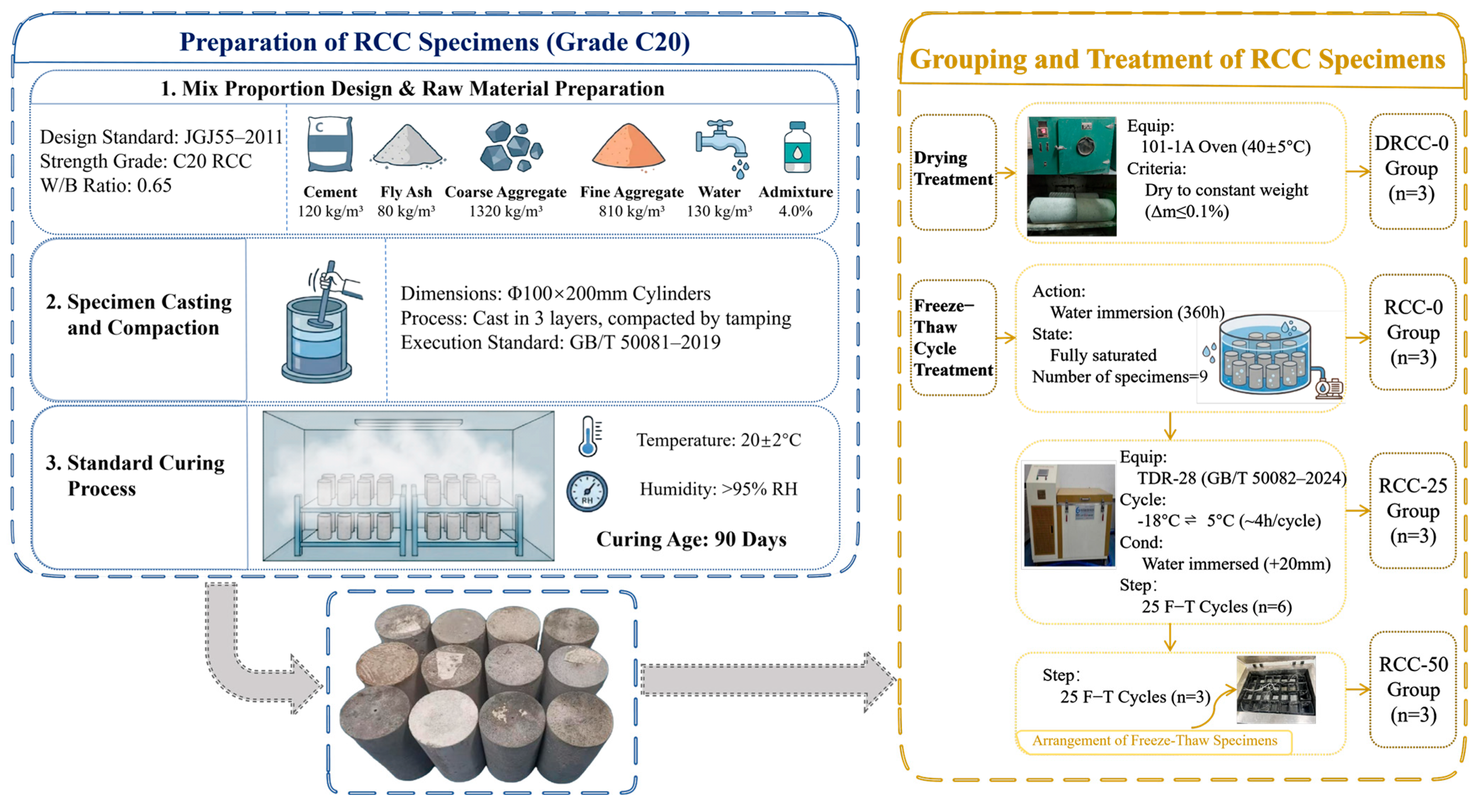
| Compressive Strength Grade | Admixture Dosage (%) | Water-to-Binder Ratio | Water (kg/m3) | Cement (kg/m3) | Coarse Aggregate (kg/m3) | Fine Aggregate (kg/m3) | Fly Ash (kg/m3) |
|---|---|---|---|---|---|---|---|
| C20 | 4.0 | 0.65 | 130 | 120 | 1320 | 810 | 80 |
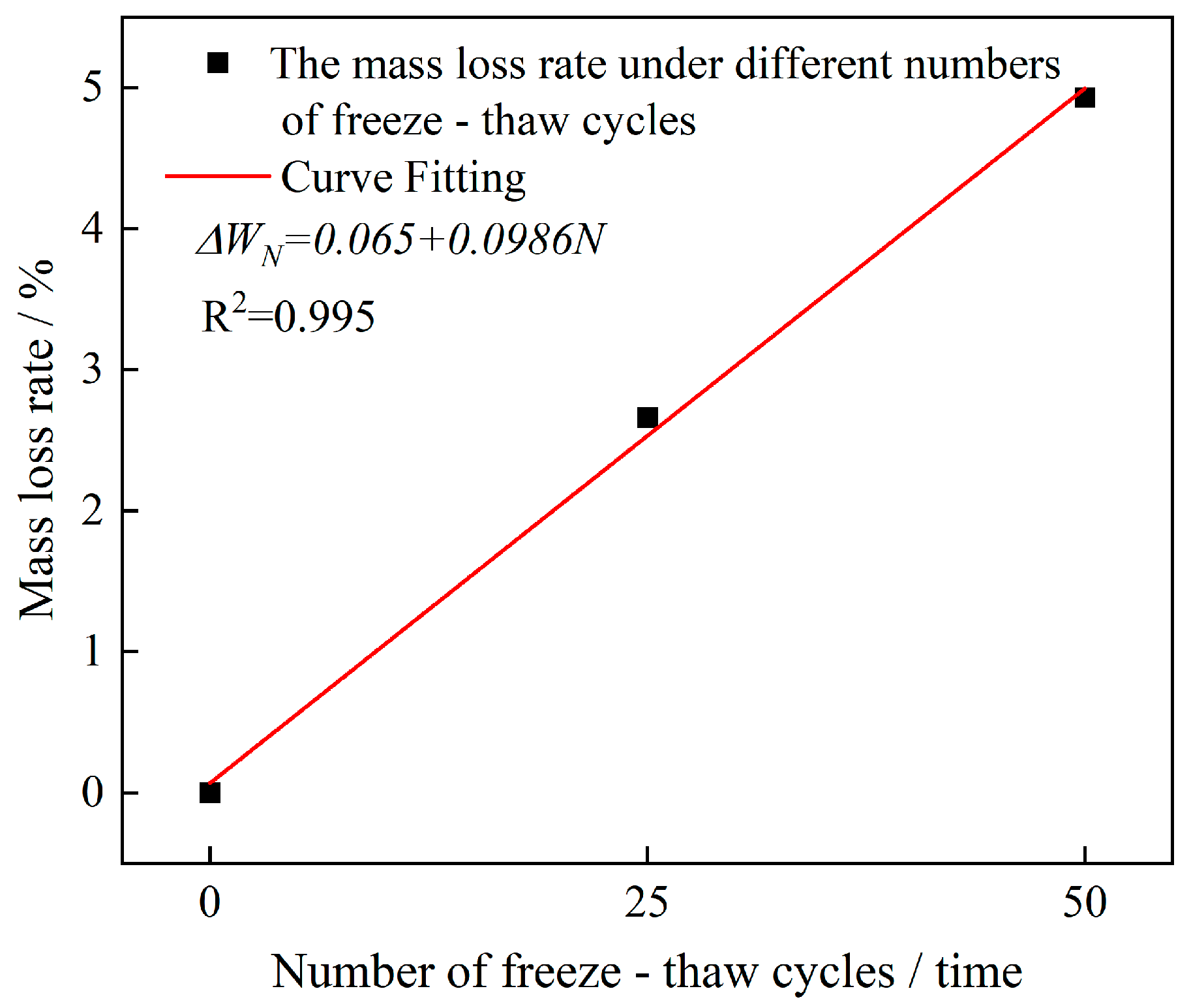
| Specimen ID | Mass (g) | F-T Cycles | Mass Loss (g) | Mass Loss Rate (%) | Average Mass Loss (g) | Average Mass Loss Rate (%) |
|---|---|---|---|---|---|---|
| RCC-0-1 | 3798 | 0 | 0 | 0 | 0 | 0 |
| RCC-0-2 | 3956 | 0 | 0 | |||
| RCC-0-3 | 3801 | 0 | 0 | |||
| RCC-25-1 | 3700 | 25 | 98 | 2.58 | 103 | 2.66 |
| RCC-25-2 | 3814 | 142 | 3.59 | |||
| RCC-25-3 | 3732 | 69 | 1.82 | |||
| RCC-50-1 | 3611 | 50 | 187 | 4.92 | 190 | 4.93 |
| RCC-50-2 | 3761 | 195 | 4.93 | |||
| RCC-50-3 | 3613 | 188 | 4.95 |
| Specimen ID | (mm) | H (mm) | M (g) | (MPa) | (MPa) | Cv (%) | (10−3) | (10−3) | E (GPa) |
|---|---|---|---|---|---|---|---|---|---|
| DRCC-0-1 | 99.99 | 199.98 | 3845 | 24.64 | 26.09 | 5.4 | 1.84 | 1.88 | 19.64 |
| DRCC-0-2 | 100.05 | 200.05 | 3856 | 26.18 | 2.01 | 21.63 | |||
| DRCC-0-3 | 99.98 | 199.99 | 3894 | 27.45 | 1.80 | 20.13 | |||
| RCC-0-1 | 99.98 | 199.98 | 3798 | 23.37 | 22.37 | 5.9 | 2.23 | 2.33 | 20.08 |
| RCC-0-2 | 99.95 | 200.03 | 3792 | 22.86 | 2.41 | 19.86 | |||
| RCC-0-3 | 100.02 | 199.97 | 3814 | 20.89 | 2.35 | 18.96 | |||
| RCC-25-1 | 100.08 | 200.04 | 3825 | 14.76 | 15.68 | 5.5 | 2.73 | 2.64 | 15.65 |
| RCC-25-2 | 99.94 | 199.97 | 3845 | 16.48 | 2.46 | 16.74 | |||
| RCC-25-3 | 100.12 | 200.05 | 3777 | 15.80 | 2.72 | 16.35 | |||
| RCC-50-1 | 99.97 | 199.98 | 3801 | 12.15 | 11.57 | 5.3 | 3.14 | 3.04 | 13.69 |
| RCC-50-2 | 100.04 | 199.96 | 3785 | 10.92 | 2.96 | 12.16 | |||
| RCC-50-3 | 99.99 | 200.03 | 3786 | 11.64 | 3.01 | 14.35 |
Disclaimer/Publisher’s Note: The statements, opinions and data contained in all publications are solely those of the individual author(s) and contributor(s) and not of MDPI and/or the editor(s). MDPI and/or the editor(s) disclaim responsibility for any injury to people or property resulting from any ideas, methods, instructions or products referred to in the content. |
© 2026 by the authors. Licensee MDPI, Basel, Switzerland. This article is an open access article distributed under the terms and conditions of the Creative Commons Attribution (CC BY) license.
Share and Cite
Liu, K.; Wang, X.; Xia, Y.; Yue, W.; Yuan, K.; Sun, C.; Wang, D.; Zhao, S. Uniaxial Damage Mechanisms in Roller-Compacted Concrete Subjected to Freeze–Thaw Cycles. Buildings 2026, 16, 3360. https://doi.org/10.3390/buildings16173360
Liu K, Wang X, Xia Y, Yue W, Yuan K, Sun C, Wang D, Zhao S. Uniaxial Damage Mechanisms in Roller-Compacted Concrete Subjected to Freeze–Thaw Cycles. Buildings. 2026; 16(17):3360. https://doi.org/10.3390/buildings16173360
Chicago/Turabian StyleLiu, Kaide, Xinping Wang, Yu Xia, Wenping Yue, Kekuo Yuan, Chaowei Sun, Dingbo Wang, and Songxin Zhao. 2026. "Uniaxial Damage Mechanisms in Roller-Compacted Concrete Subjected to Freeze–Thaw Cycles" Buildings 16, no. 17: 3360. https://doi.org/10.3390/buildings16173360
APA StyleLiu, K., Wang, X., Xia, Y., Yue, W., Yuan, K., Sun, C., Wang, D., & Zhao, S. (2026). Uniaxial Damage Mechanisms in Roller-Compacted Concrete Subjected to Freeze–Thaw Cycles. Buildings, 16(17), 3360. https://doi.org/10.3390/buildings16173360