Article

Explainable Ensemble Machine Learning Models for Bond Strength Prediction at Ultra-High-Performance-to-Normal-Strength-Concrete Interfaces


1
Nepal Research and Collaboration Center, New Baneshwor, Kathmandu 44600, Nepal
2
Department of Computer Science, University of South Dakota, Vermillion, SD 57069, USA
3
Department of Civil Engineering, Kantipur Engineering College, Tribhuvan University, Dhapakhel, Lalitpur 44700, Nepal
4
Department of Civil Engineering, Cosmos College of Management and Technology, Pokhara University, Lalitpur 44700, Nepal
5
Department of Civil Engineering, Lumbini Engineering Management and Science College, Pokhara University, Bhalwari 32903, Nepal
6
Department of Civil Engineering, Thapathali Campus, IOE, Tribhuvan University, Kathmandu 44600, Nepal
7
Department of Civil Engineering, Tribhuvan University, Kathmandu 44600, Nepal
*
Author to whom correspondence should be addressed.
Buildings 2026, 16(15), 3081; https://doi.org/10.3390/buildings16153081

Submission received: 21 May 2026 / Revised: 29 July 2026 / Accepted: 30 July 2026 / Published: 3 August 2026

Abstract

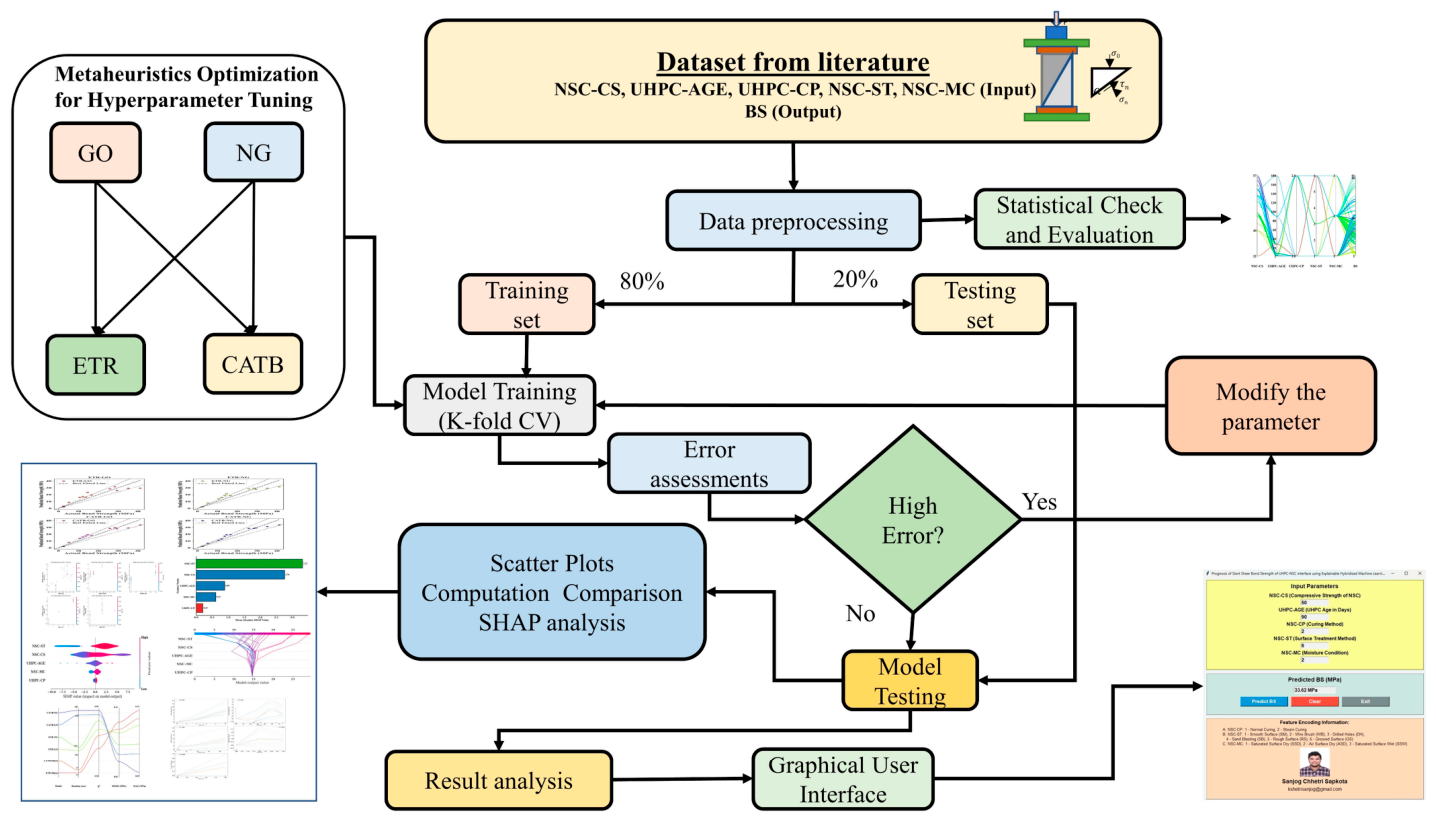
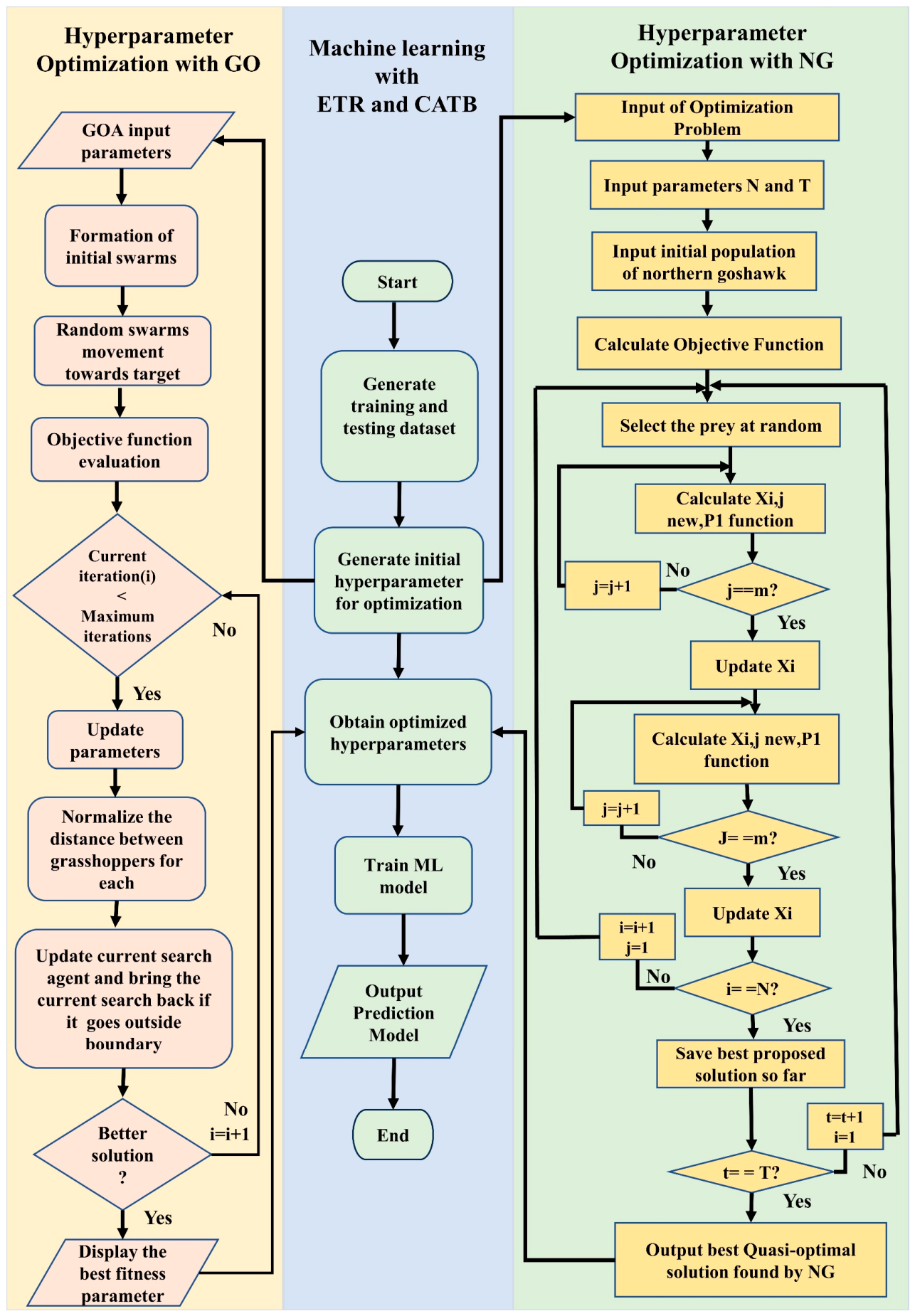
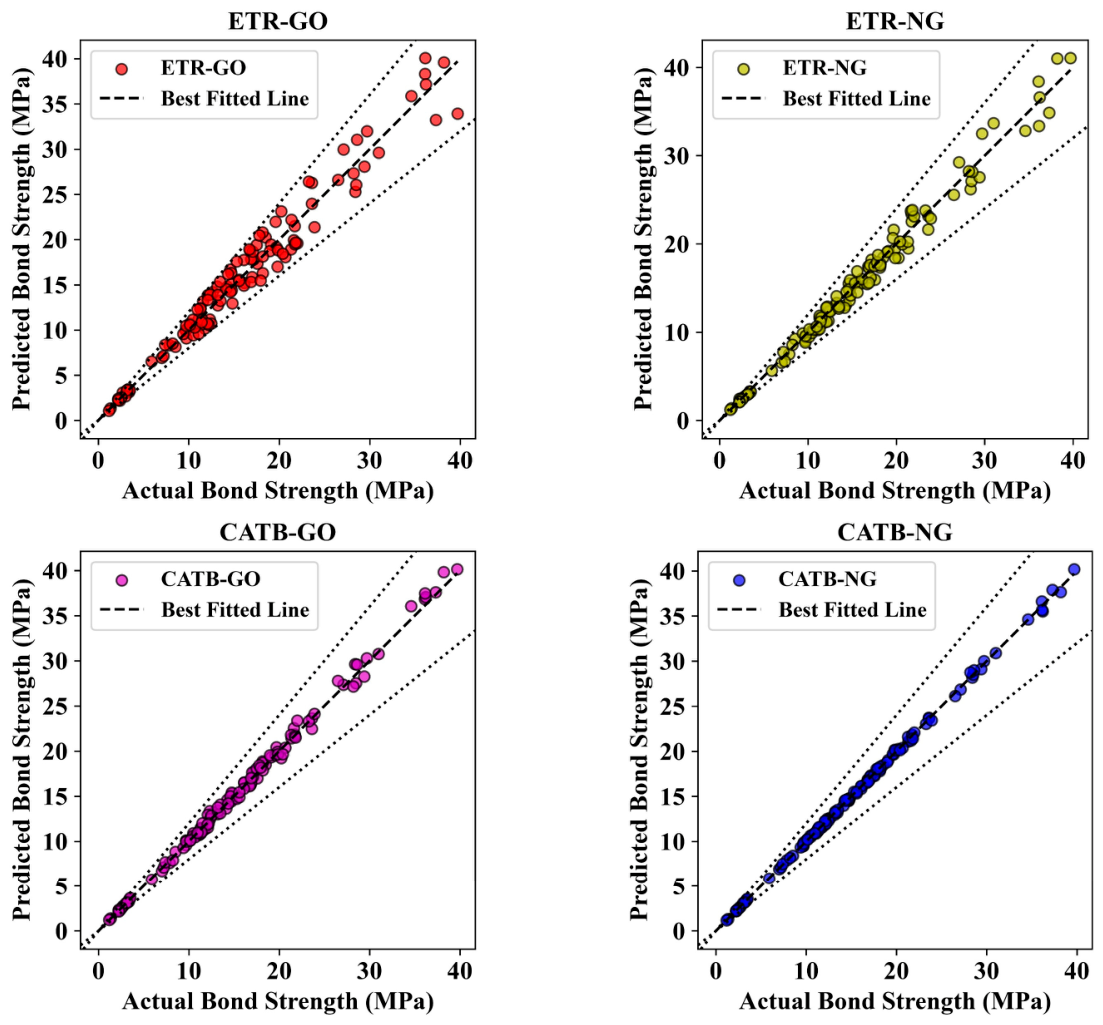
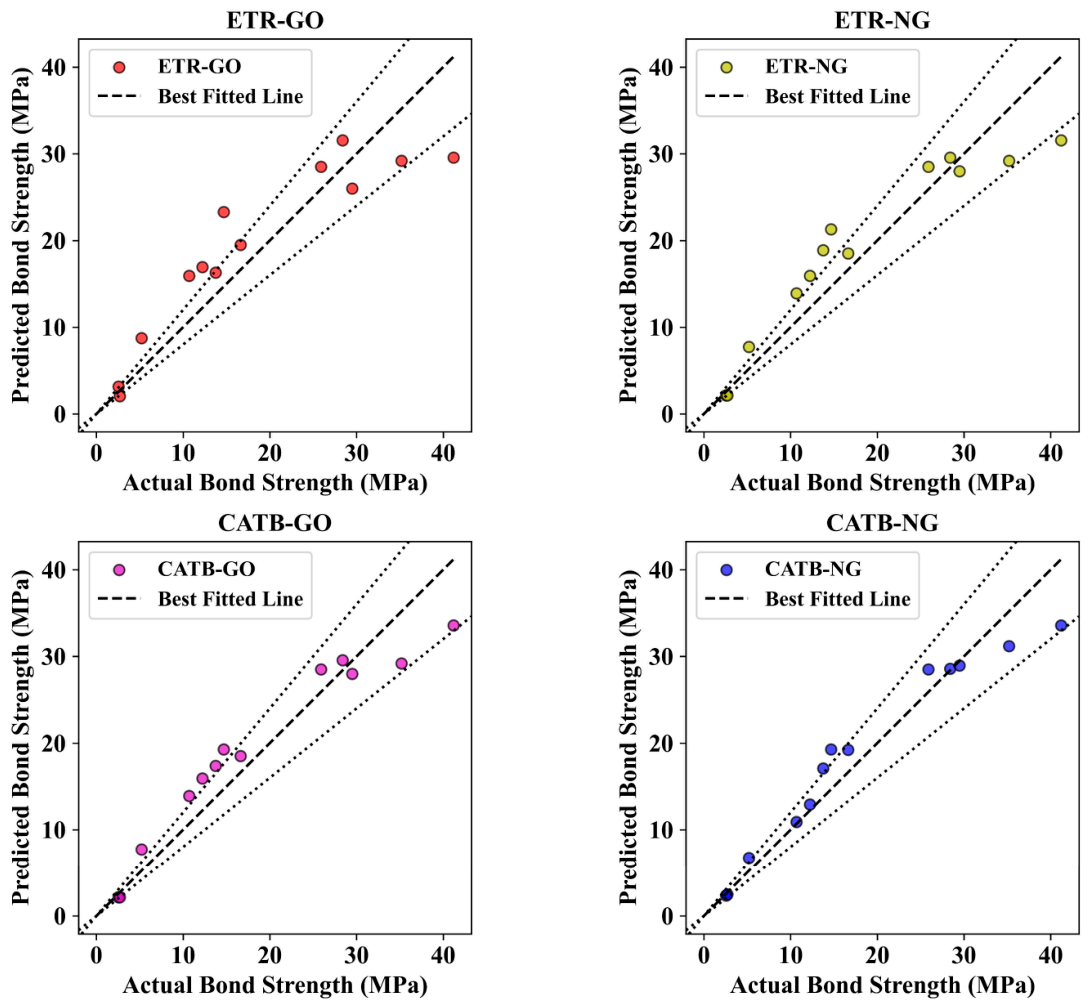
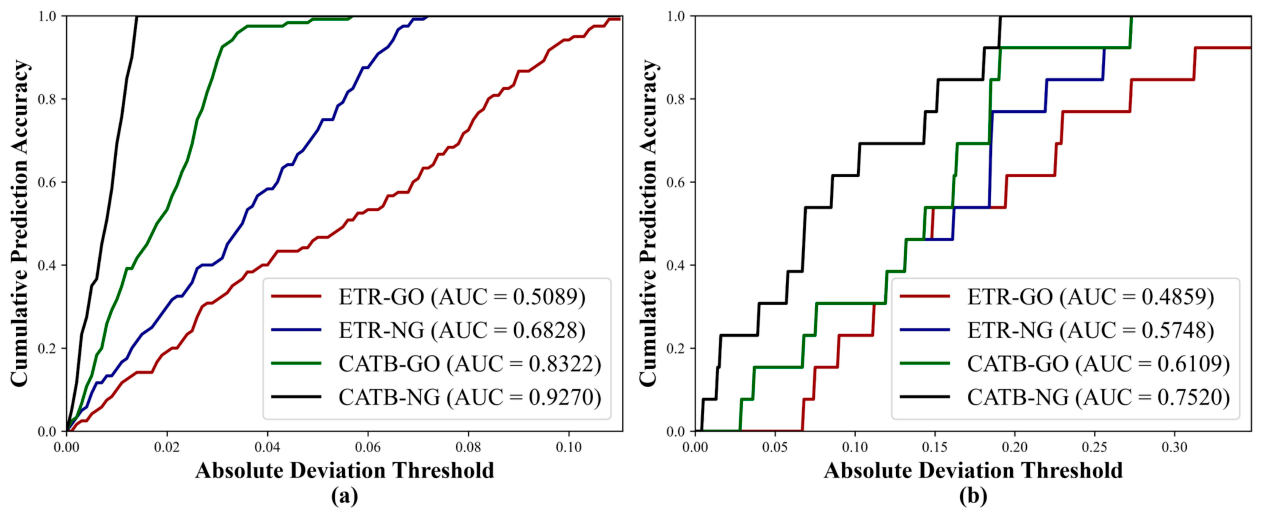
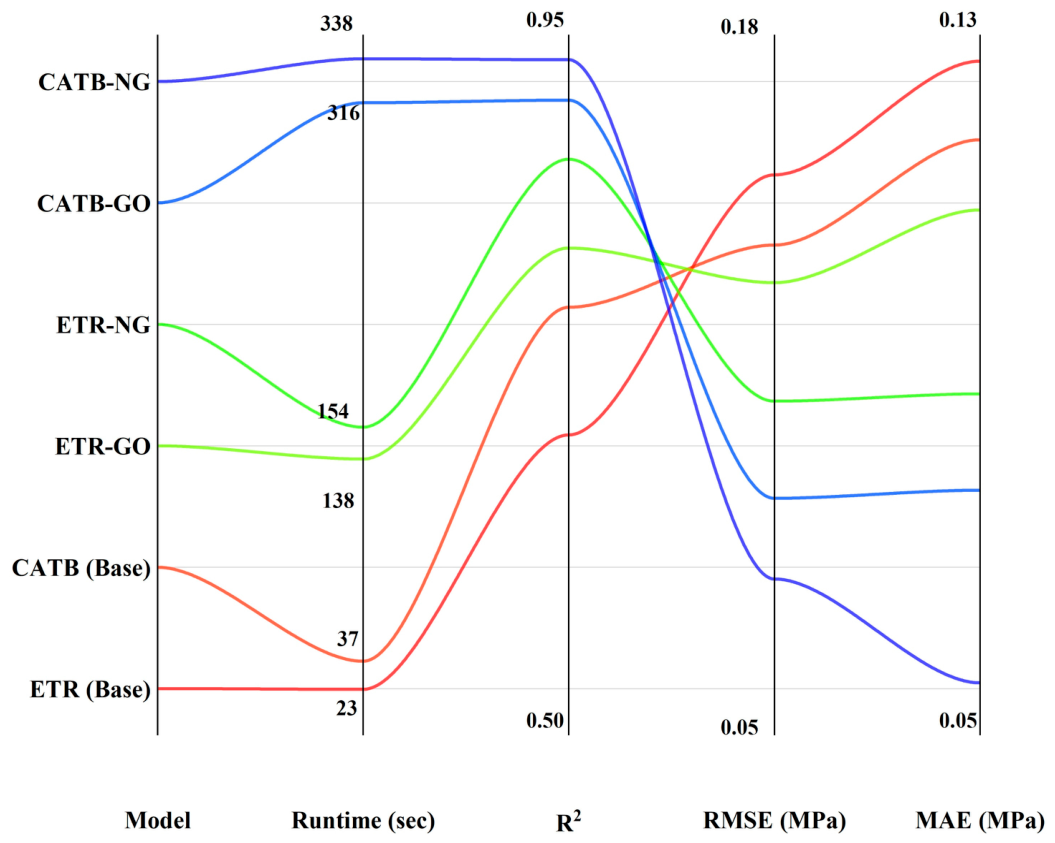
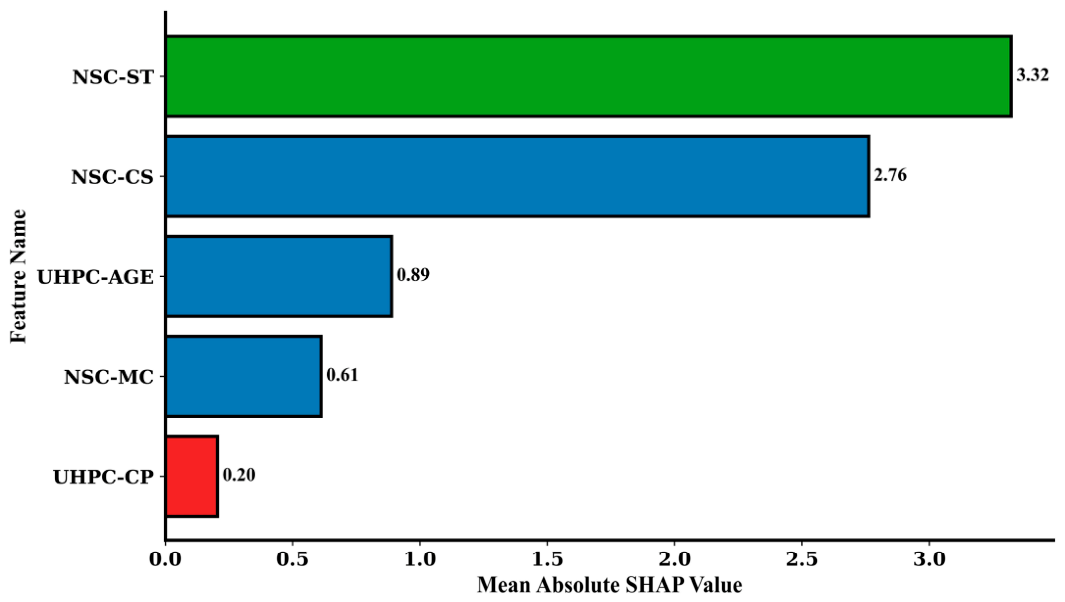
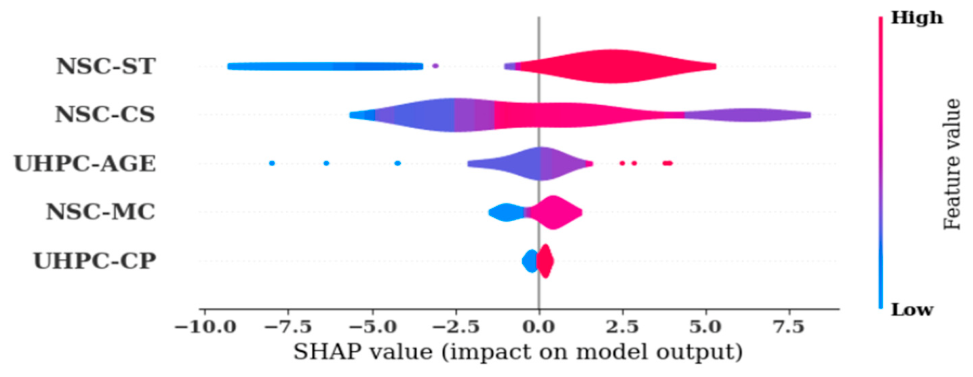
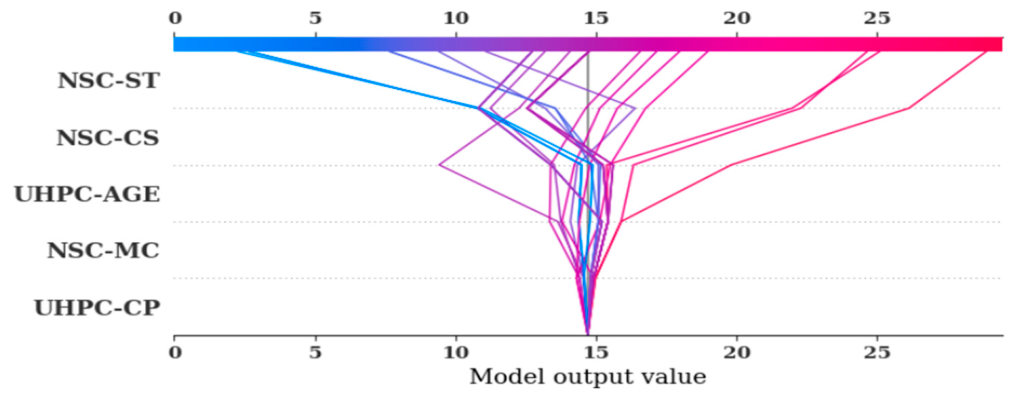
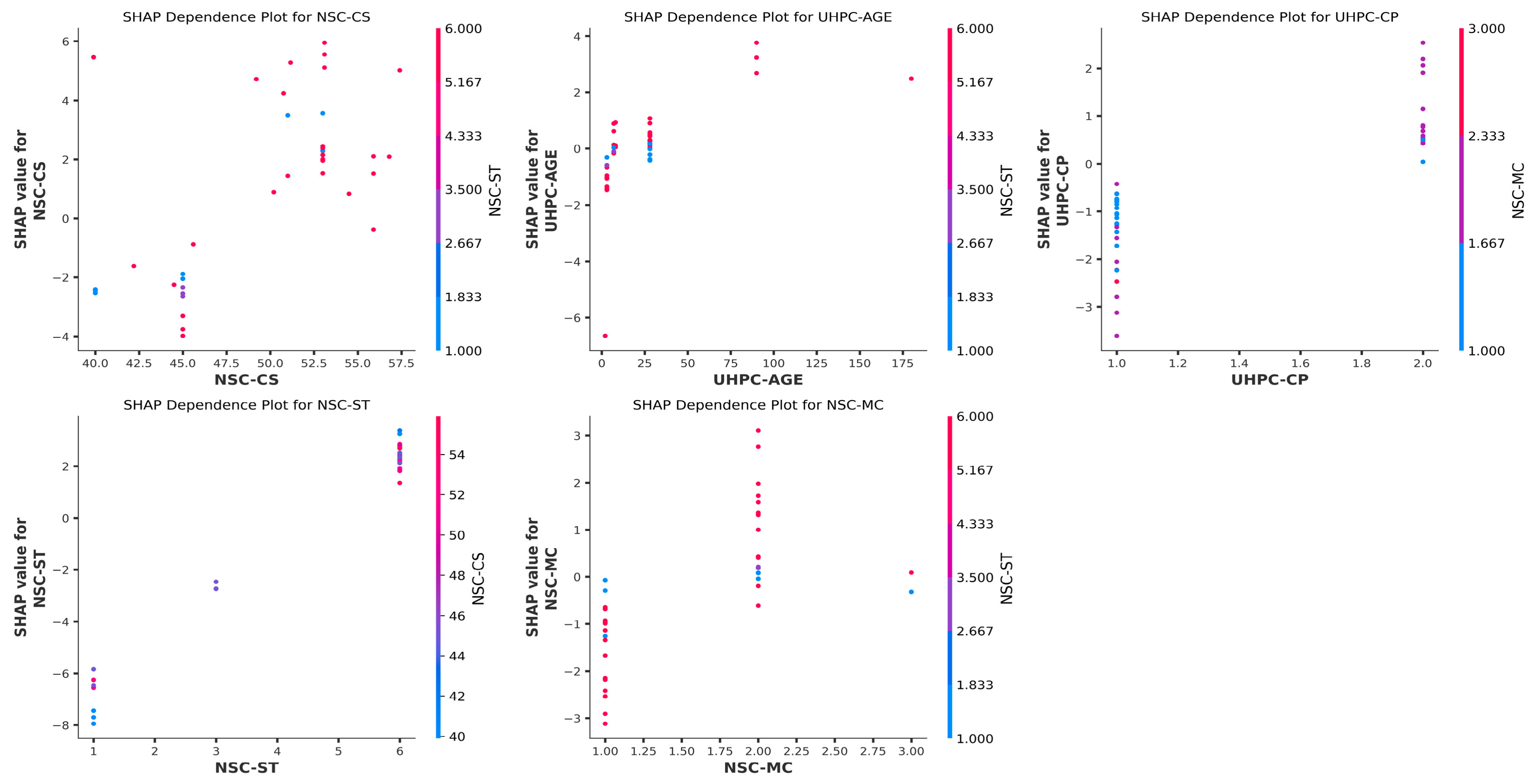
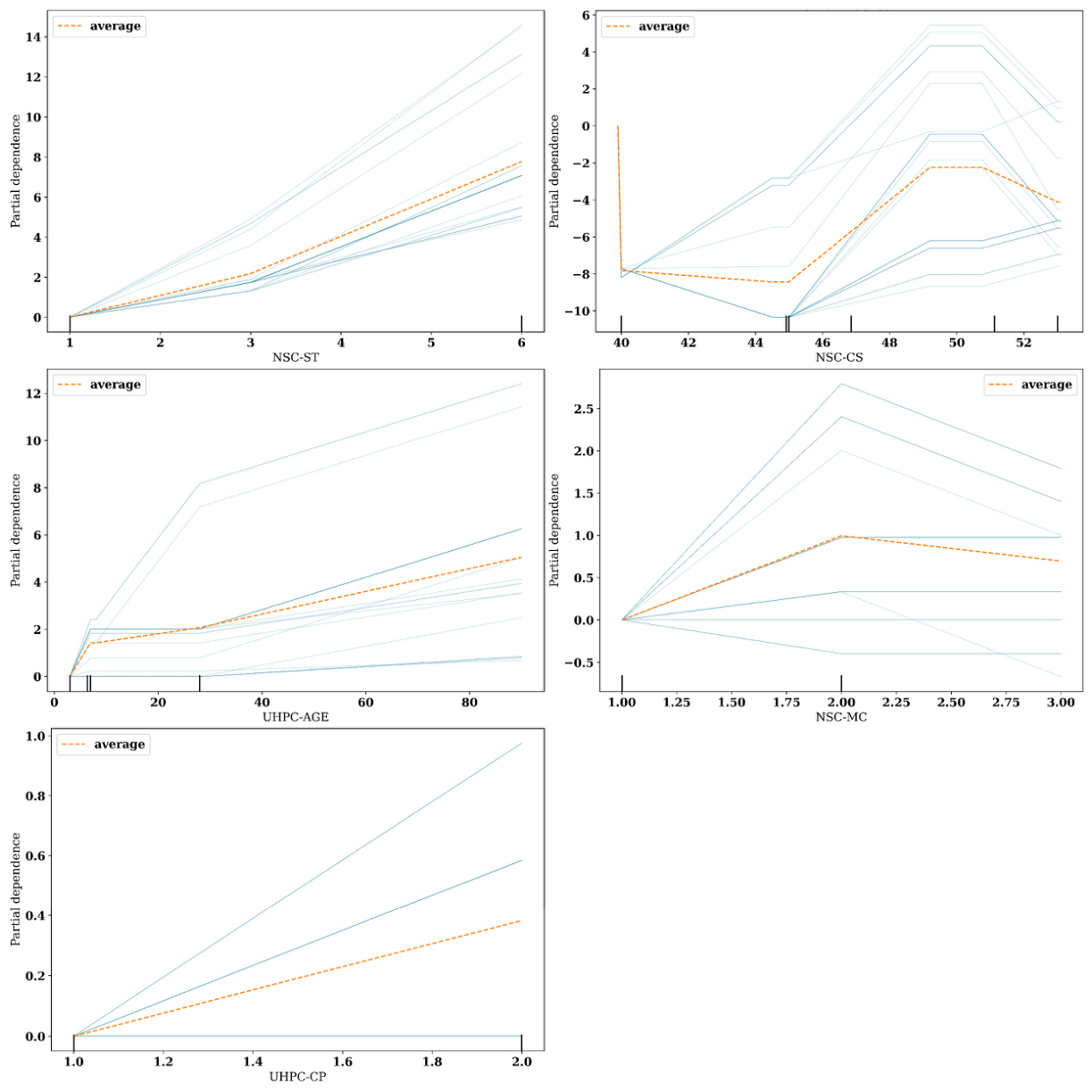
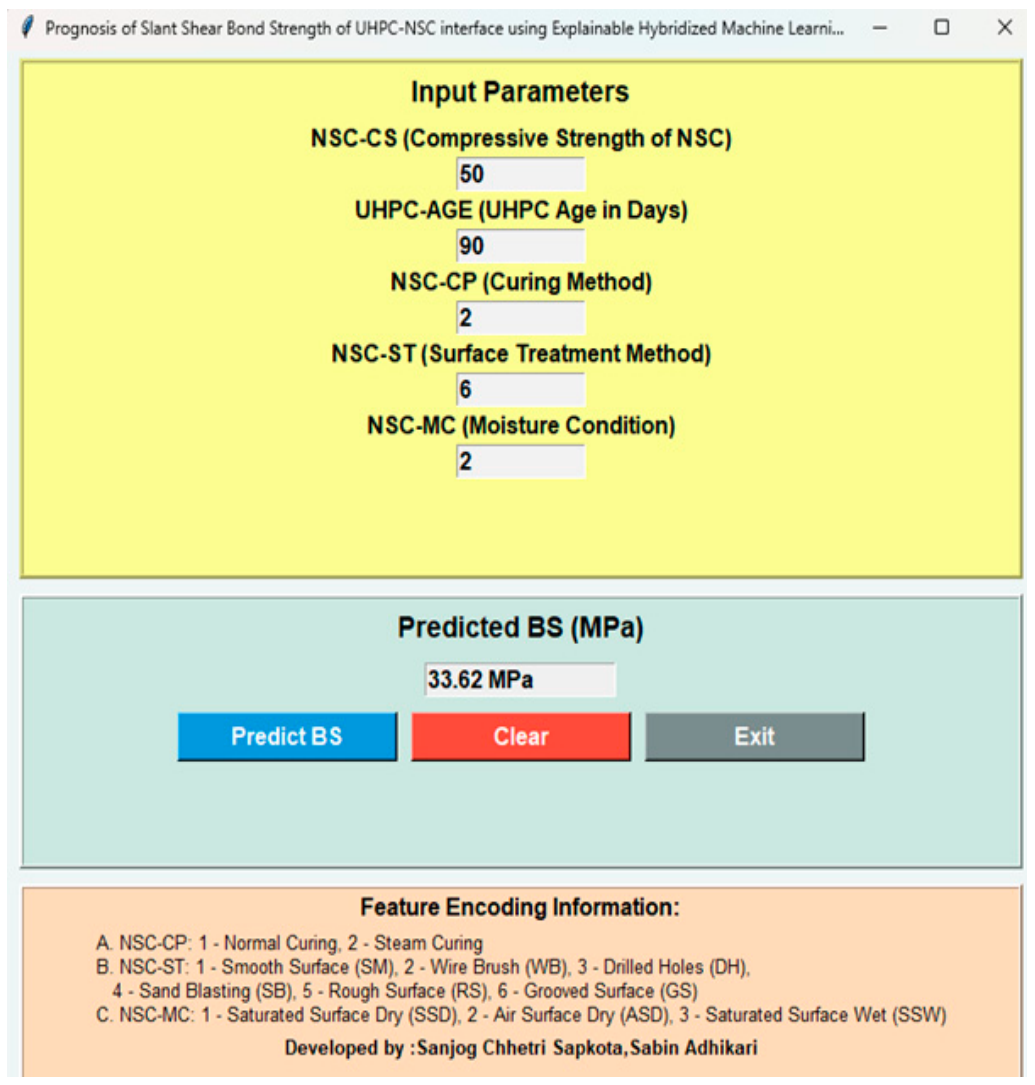
The slant shear bond strength of the UHPC-NSC interface is a key parameter governing load transfer and structural reliability in composite concrete members. However, accurate prediction remains challenging because of strong nonlinear relationships among influencing parameters and the limited availability of experimental data. This study presents an optimized machine learning framework for reliable bond strength prediction by integrating Extra Trees Regressor (ETR) and CatBoost (CATB) with Grasshopper Optimization (GO) and Northern Goshawk Optimization (NG) for hyperparameter optimization. Model performance was evaluated using cross-validation and independent testing to ensure reliable generalization. Among the developed models, the optimized CATB-NG achieved the highest predictive accuracy with an R2 of 0.934, RMSE of 3.081 MPa, and MAE of 2.186 MPa. SHapley Additive exPlanations (SHAP) identified NSC surface treatment and compressive strength as the dominant factors influencing bond strength, while Individual Conditional Expectation (ICE) analysis revealed nonlinear feature interactions and threshold behaviors. To facilitate practical engineering applications, the optimized model was implemented in a graphical user interface (GUI) for real-time prediction with standardized feature encoding. The proposed framework provides an accurate, interpretable, and user-friendly tool for predicting UHPC-NSC interfacial bond strength and supports engineering design and decision making.
Keywords: interfacial bond strength prediction; explainable artificial intelligence (XAI); SHapley Additive exPlanations (SHAP); ICE (Individual Conditional Expectation); metaheuristic optimization; ensemble machine learning; concrete interface behavior interfacial bond strength prediction; explainable artificial intelligence (XAI); SHapley Additive exPlanations (SHAP); ICE (Individual Conditional Expectation); metaheuristic optimization; ensemble machine learning; concrete interface behavior