Explainable Ensemble Machine Learning Models for Bond Strength Prediction at Ultra-High-Performance-to-Normal-Strength-Concrete Interfaces

 ,
,  , and
, and
Abstract
1. Introduction
2. Research Significance
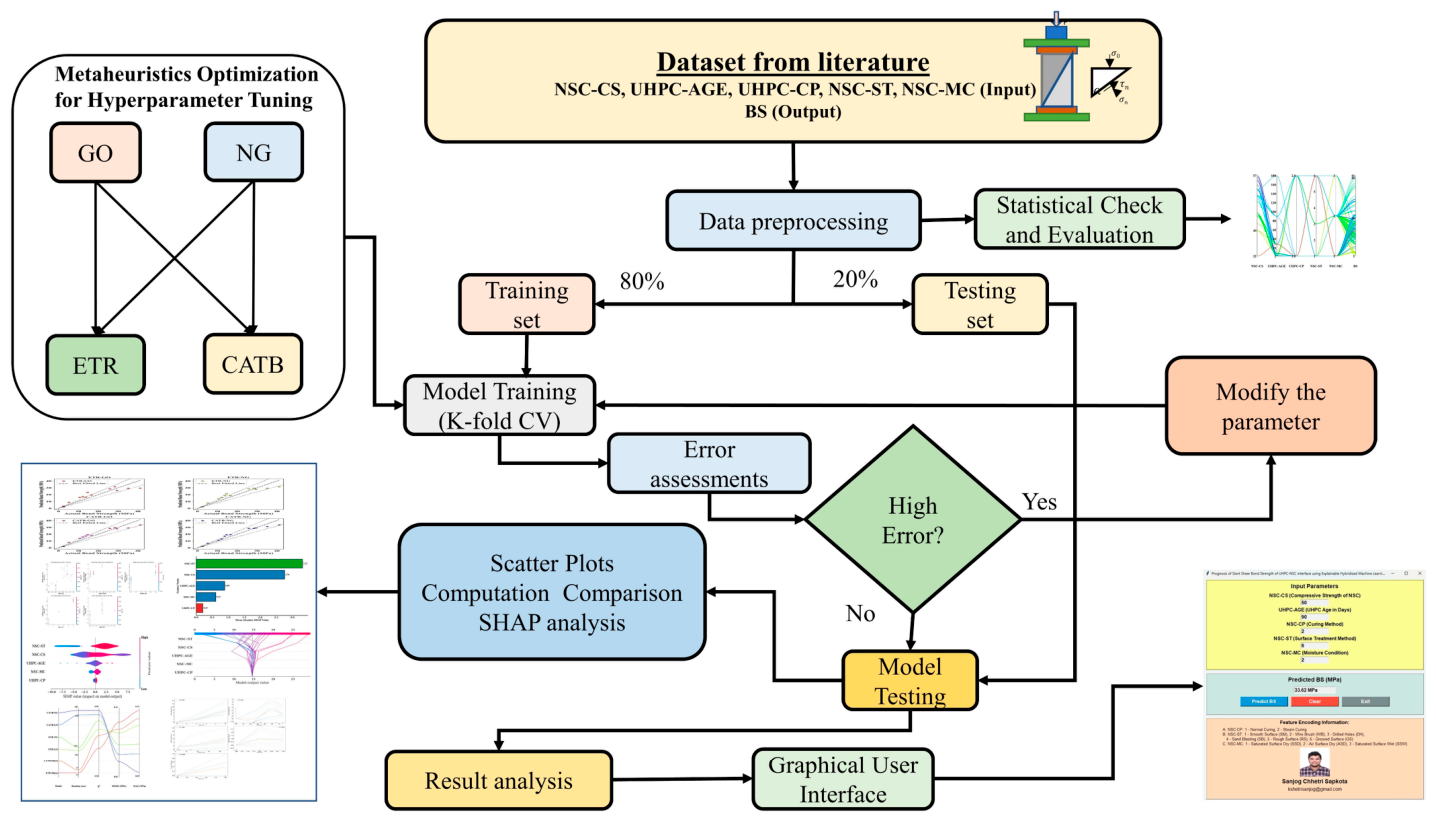
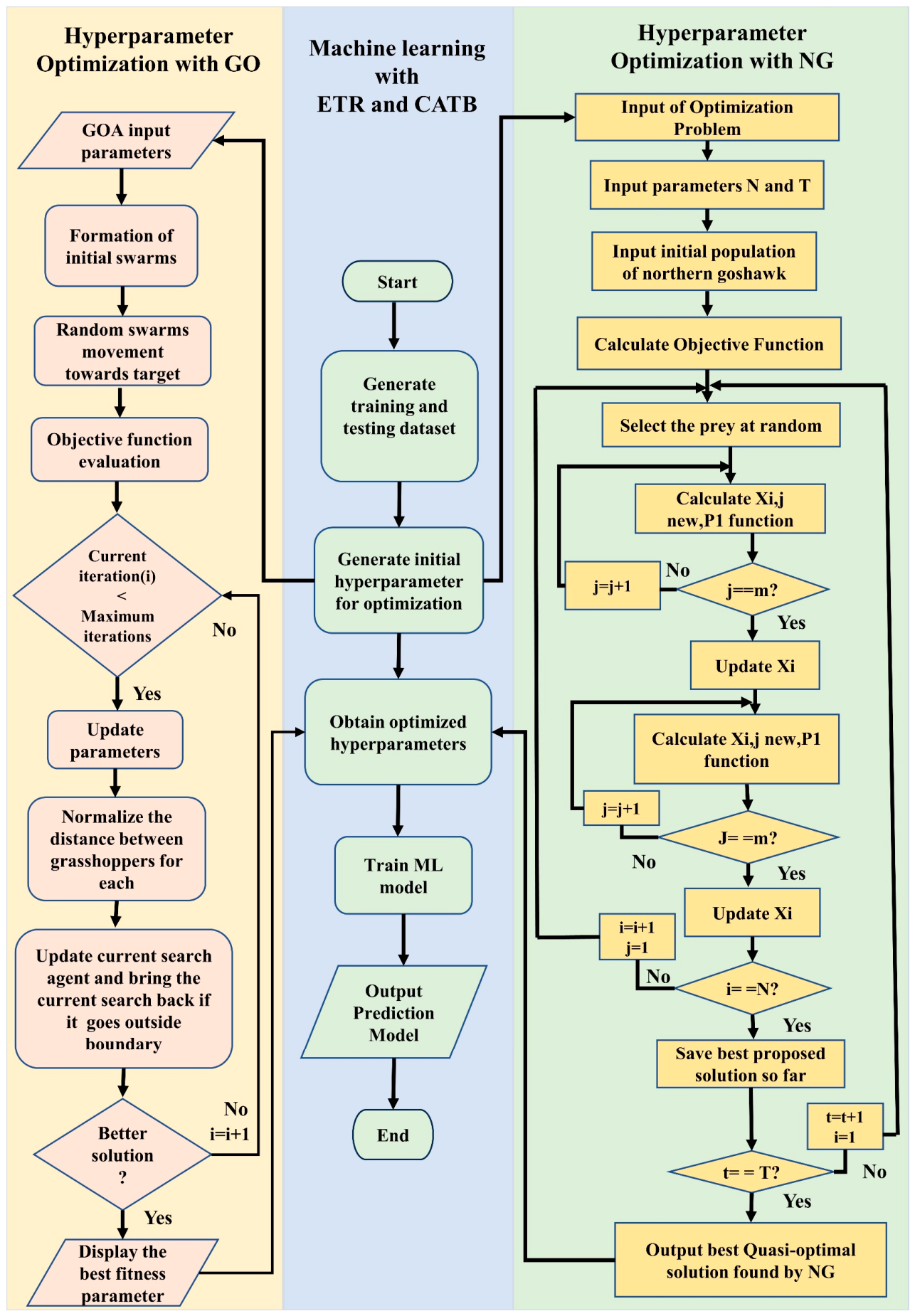
- A novel hybrid machine learning framework integrating Extra Trees Regressor and CatBoost with Grasshopper Optimization (GO) and Northern Goshawk Optimization (NG) is proposed to improve the prediction accuracy and generalization capability of UHPC-NSC slant shear bond strength through intelligent hyperparameter optimization. Such optimizers enhance model robustness by efficiently tuning hyperparameters while mitigating premature convergence to local optima, a common limitation of metaheuristic search algorithms. By maintaining an effective balance between global exploration and local exploitation, the optimization process is more likely to identify near-optimal hyperparameter configurations, thereby improving predictive accuracy and generalization performance on unseen datasets.
- A comprehensive comparative investigation is conducted by jointly evaluating predictive accuracy, computational efficiency, and optimization performance, providing a balanced assessment of the trade-off between model robustness and computational cost for practical engineering applications.
- An explainable artificial intelligence framework is established by combining SHAP and Individual Conditional Expectation (ICE) analyses to quantify both the global importance and local nonlinear influence of key material, curing, and interface parameters governing slant shear bond strength.
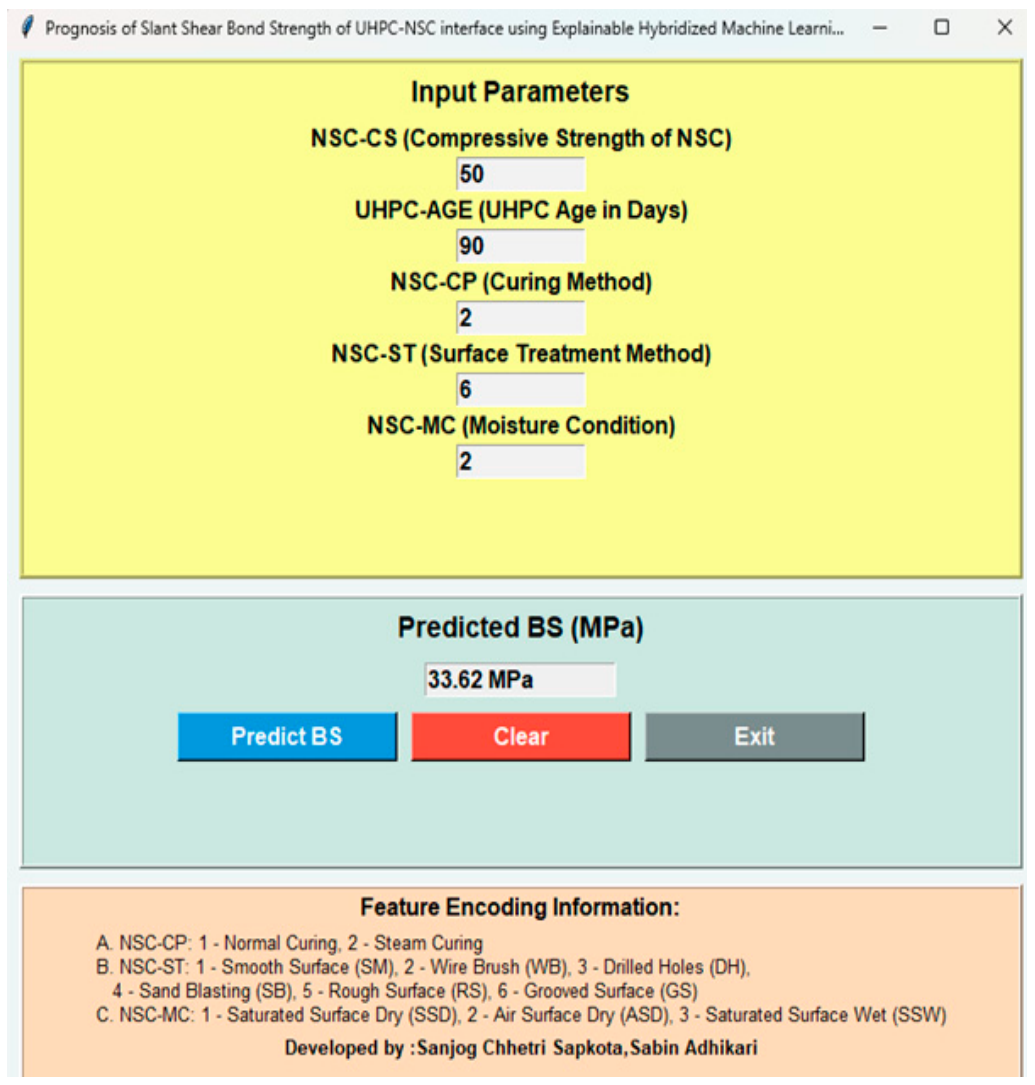
- A user-oriented graphical user interface (GUI) is developed to translate the optimized machine learning models into a practical engineering decision-support tool, enabling rapid bond strength prediction and interactive visualization without requiring programming expertise.
- An integrated prediction and interpretation framework is presented that combines metaheuristic optimization, ensemble learning, explainable artificial intelligence, and GUI-based deployment within a single workflow, providing an accurate, transparent, and practically applicable tool for UHPC-NSC interfacial bond strength assessment.

3. Methodology
3.1. Data Collection
3.2. Data Preprocessing and Analysis
3.3. Machine Learning Models and Optimization Techniques
3.3.1. Extra Tree Regressor
3.3.2. Catboost Regressor (CATB)
3.3.3. Grasshopper Optimization (GO)
3.3.4. Northern Goshawk Optimization (NG)
4. Model Development and Performance Metrics
5. Results and Discussion
5.1. Comparison of Predictions of Different ML Models
5.2. Performance Comparison of the Models
5.3. SHAP and ICE-Based Model Explainability
5.4. Discussion and Graphical User Interface
6. Conclusions
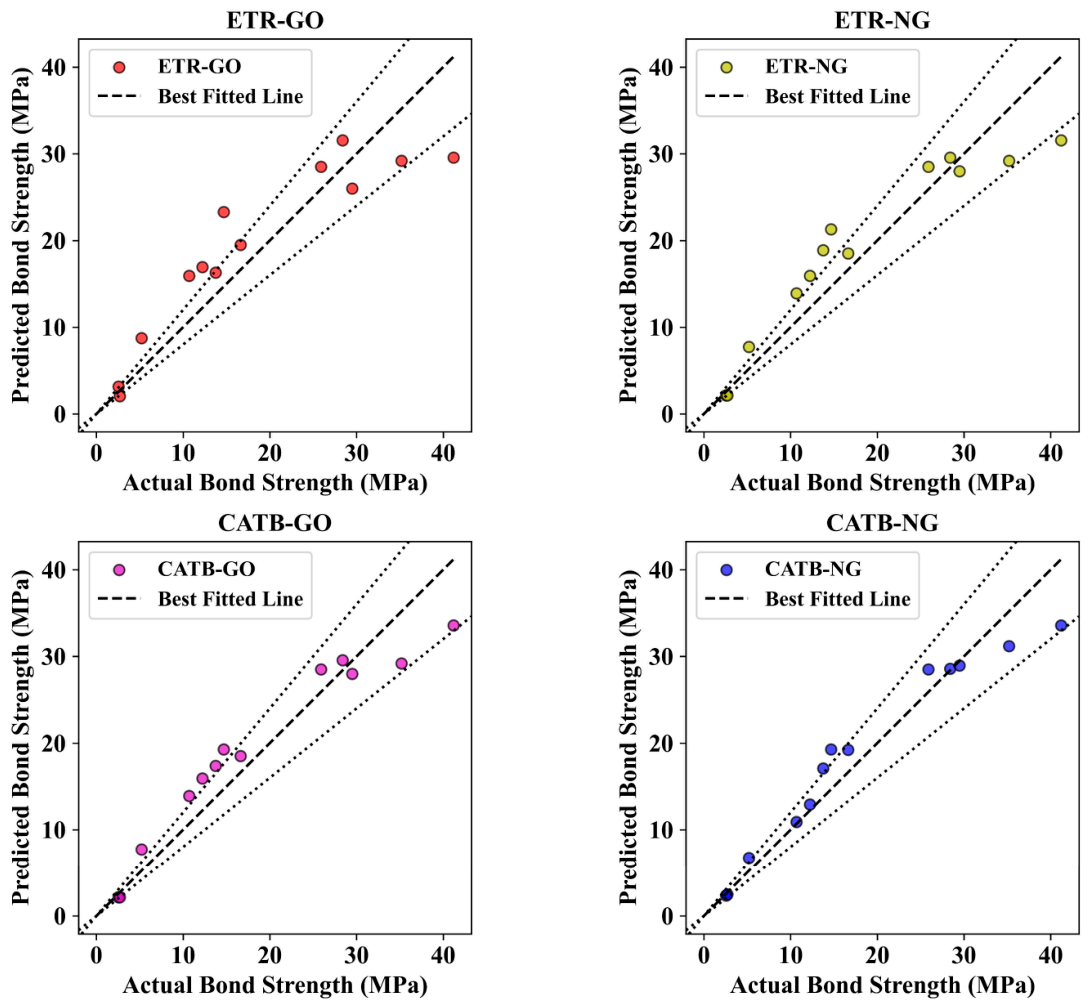
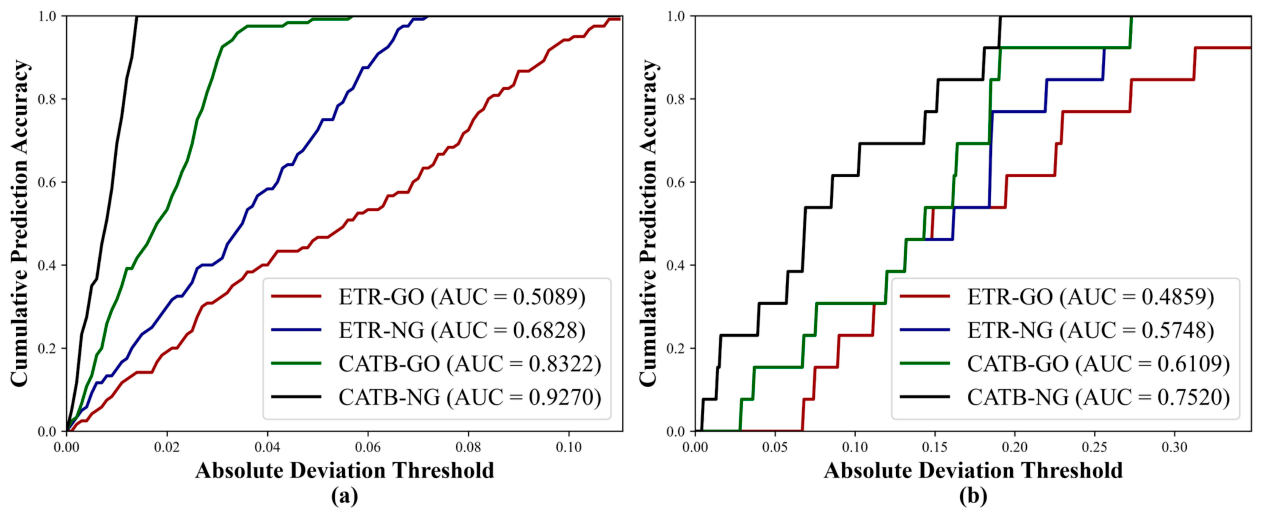
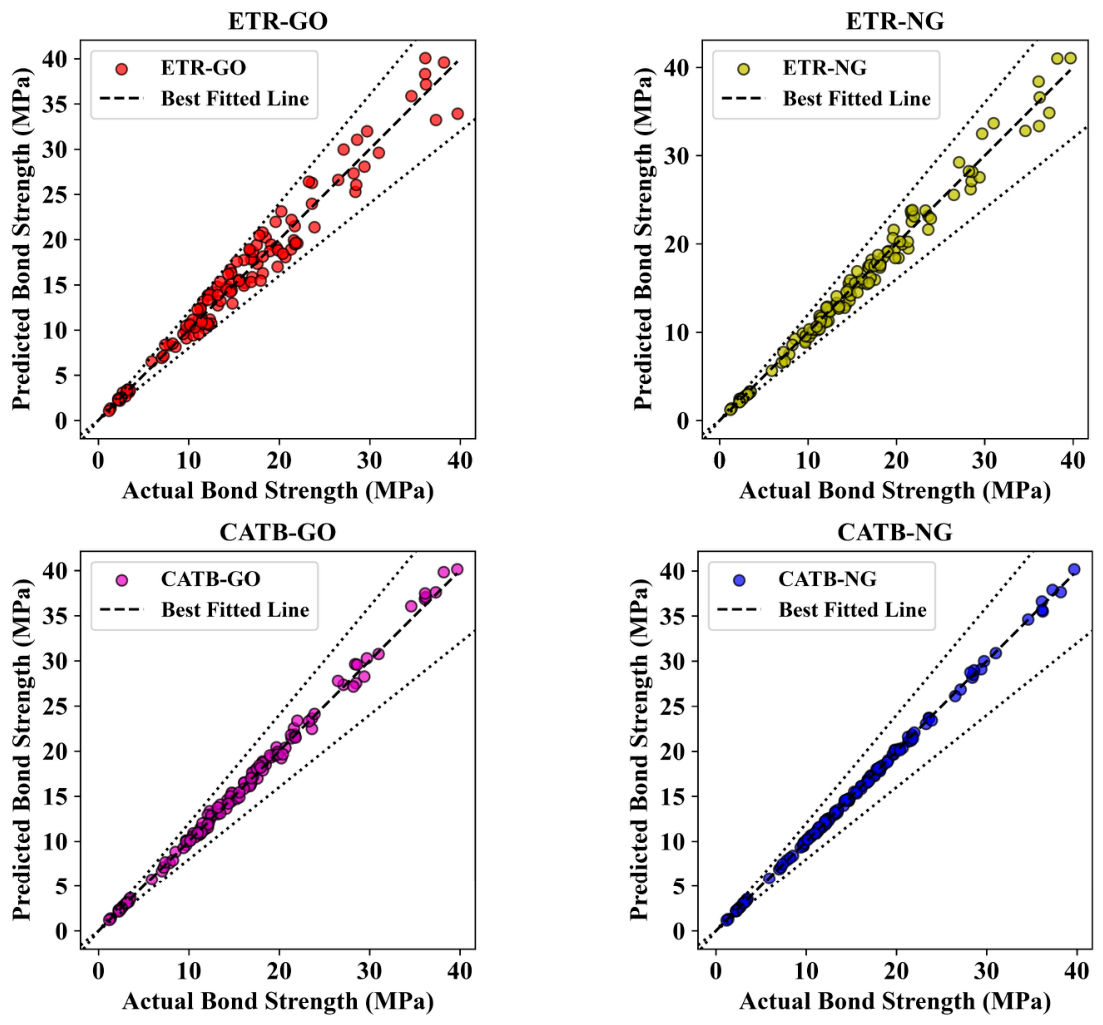
- The hybrid models, when optimized, demonstrate a clear increase in predictive power over the base learners. The test set R2 value rises gradually from 0.695 and 0.764 in ETR Base and CATB Base to 0.870 and 0.934 in ETR NG and CATB NG, respectively. Meanwhile, RMSE decreases from 6.602 MPa and 5.828 MPa to 4.330 MPa and 3.081 MPa, while MAE reduces from 4.621 MPa and 4.079 MPa to 3.457 MPa and 2.186 MPa. These gains support strong generalization and a compact error bound for the optimized model.
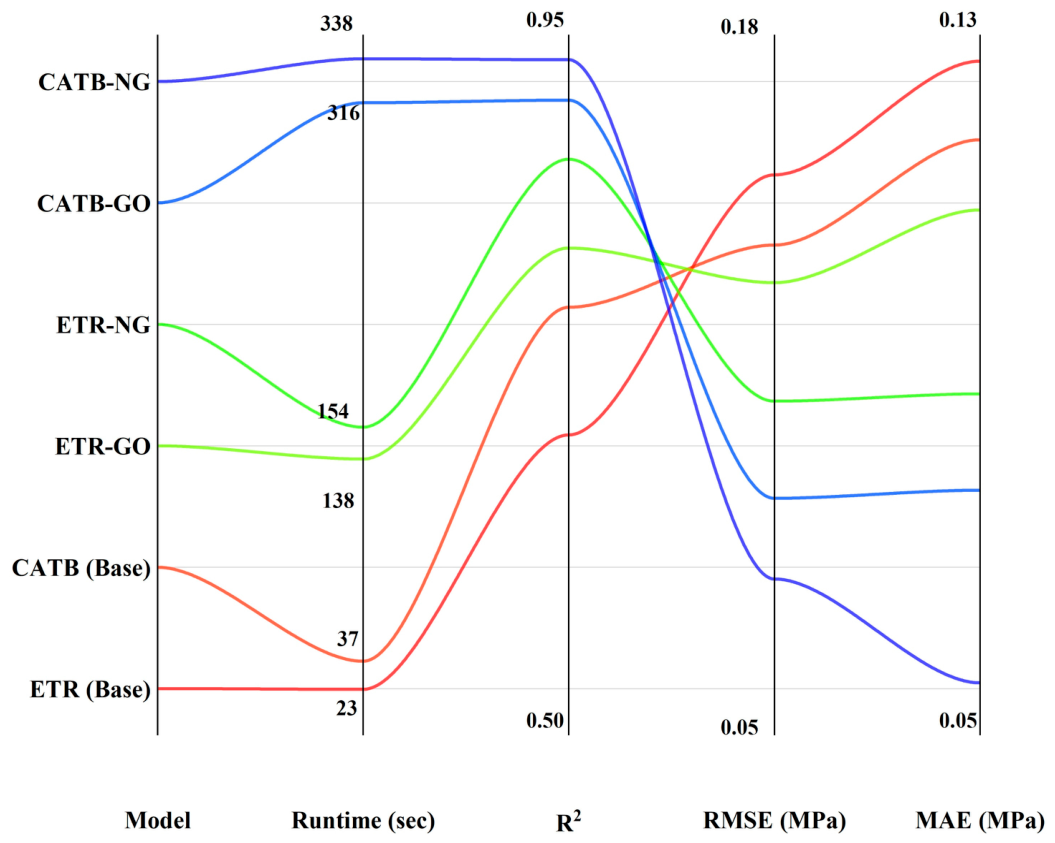
- Base models offer the fastest runtime, with 23 s in the case of ETR and 37 s for CATB, but weak prediction accuracy. In the case where hybridization with GO and NG is used, the runtime increases in the range of 138 s to 338 s, but these lead to large improvements in performances. ETR-NG enhances R2 by approximately 25% (at the cost of up to 6.7 times the runtime). Furthermore, CATB-NG enhances R2 by approximately 22%, at the cost of an approximately 9.1-fold increase in runtime. This is an explicit accuracy computation trade-off.
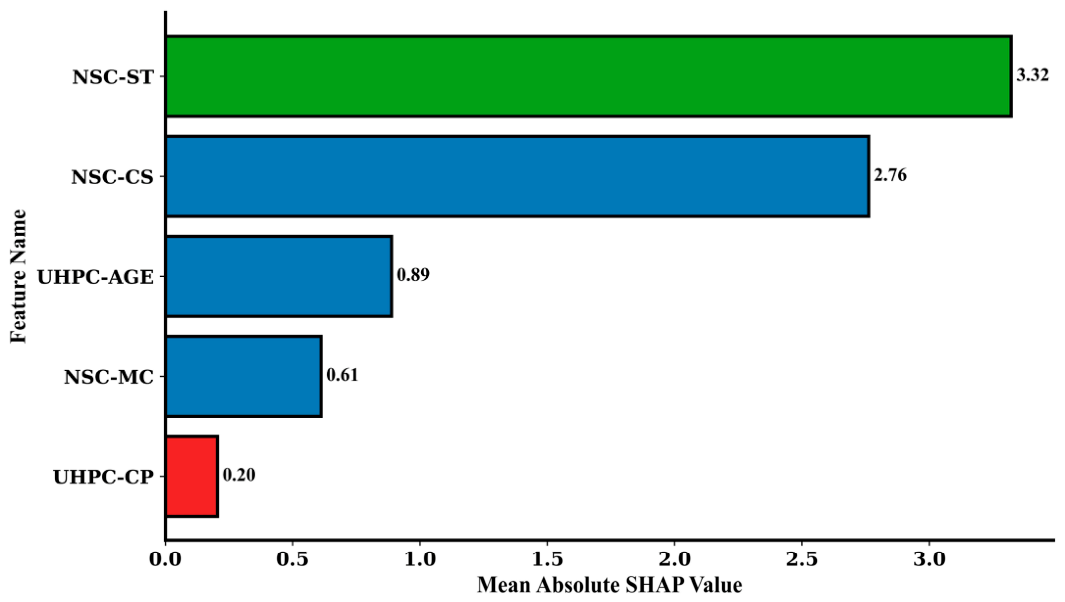
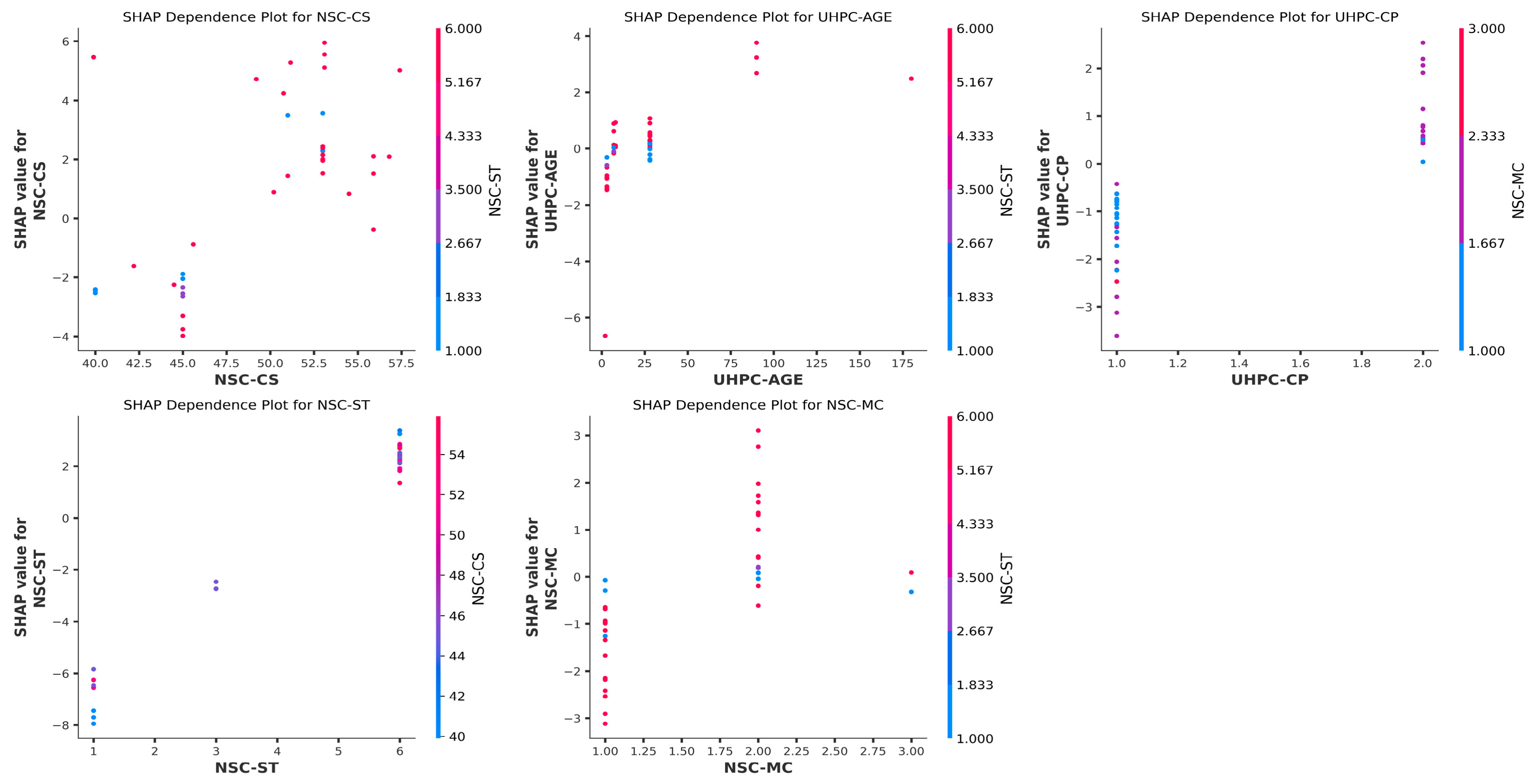
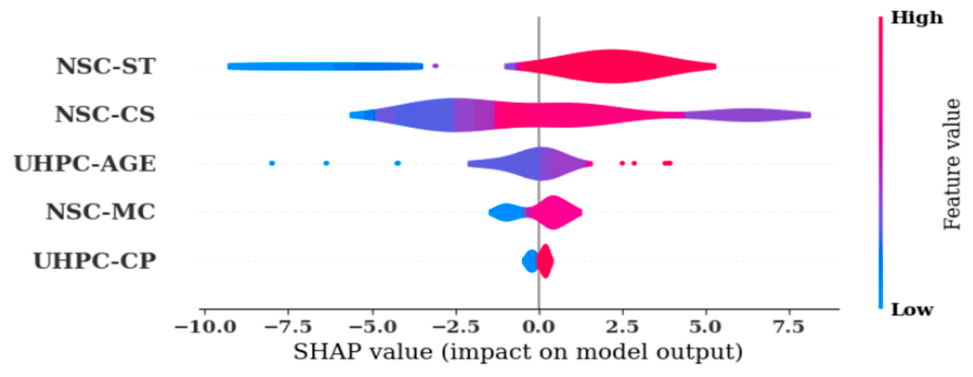
- The NSC surface treatment is shown to be the dominant factor over bond strength, according to the SHAP results. It reveals that the UHPC age and moisture condition have a medium-scale effect, and the curing manner is of little importance. These trends are consistent with a bond transfer mechanism that is controlled by the mechanical interlocking and coercer integrity.
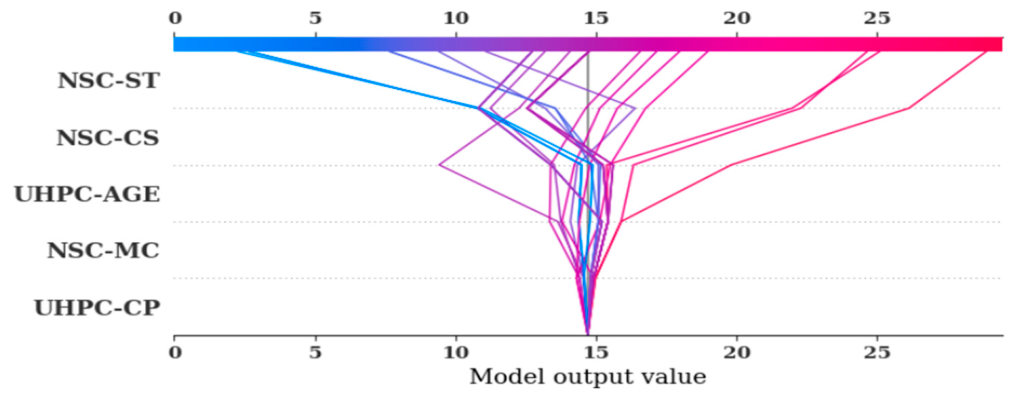
- Trends of SHAP dependence show that NSC with a rough or mechanically treated surface is associated with higher bond strength. Enhanced NSCs appear to improve bond performance up to a saturation level, after which further benefits diminish. The age of the UHPC has a threshold effect and is significant in that it develops rapidly at its early ages, then reaches stability.
- The SHAP dependence plot shows that typically the roughed or mechanically treated NSCs are the highest positive SHAP values, indicating they make good candidates for bond improvement. The CS of NSC contributes positively to an optimal mid-to-high strength range, past which the marginal increase in bond strength becomes smaller. There exists a threshold effect in the bond properties of UHPC with a substantial increase at early to mid-age, followed by stabilization. SHAP contributions are always higher under lower moisture conditions, and this may reflect greater interfacial adhesion at these reduced levels of surface moisture.
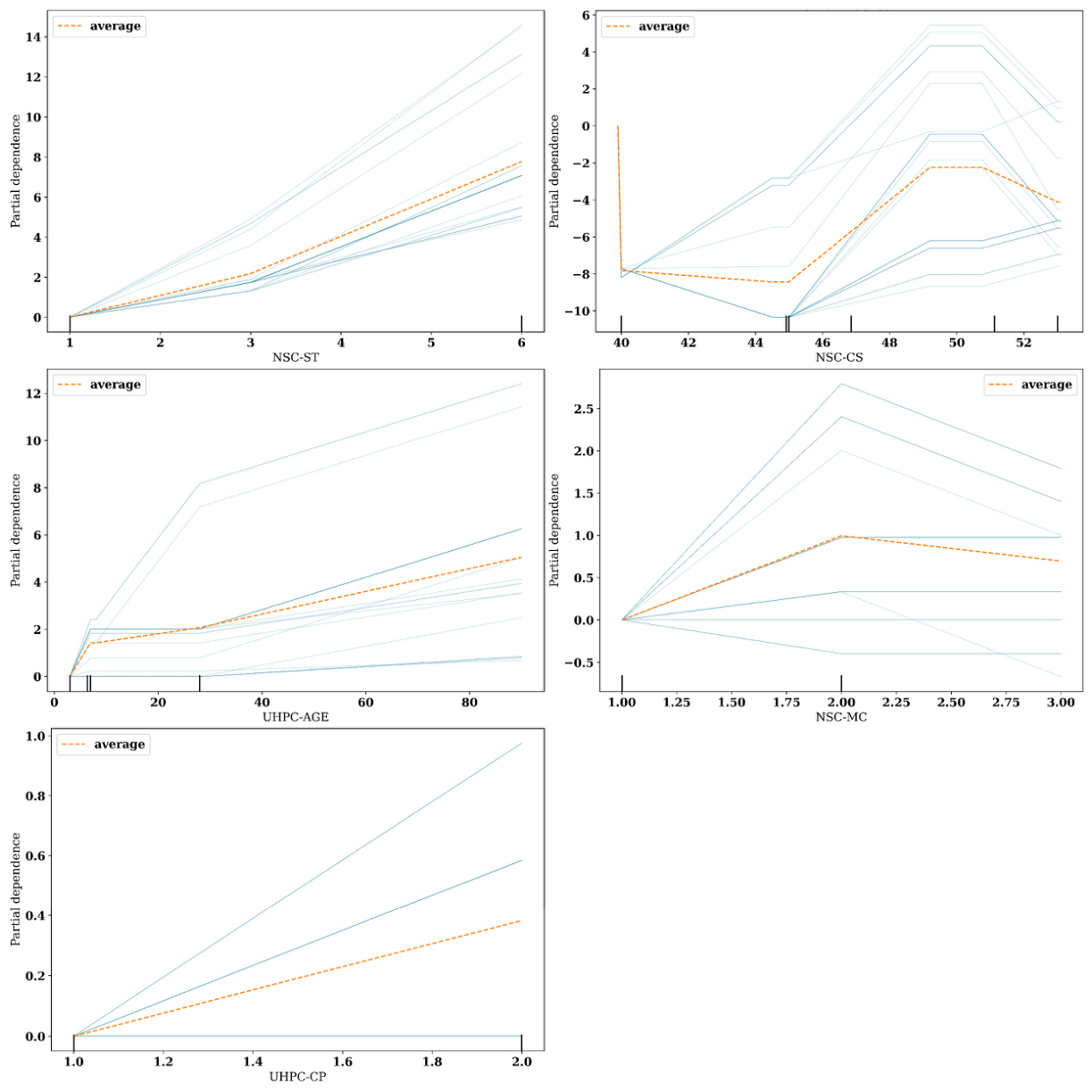
- The ICE plots indicate strong nonlinear and interaction effects, especially between surface treatment and NSC strength. Only when both parameters are favorably aligned does the bond strength increase steeply, which accounts for the range of applicability of linear or weak sequence-dependent models.
- A GUI of the user interface is developed by using Tkinter with an implemented optimized CATB-NG model for live prediction. The framework maintains stable feature representation, stationary inference, and fast bond strength evaluation in the face of uncertainties, enabling practical engineering decision making without requiring expertise in machine learning.
Author Contributions
Funding
Data Availability Statement
Conflicts of Interest
References
- Mizan, M.H.; Hayakawa, R.; Matsumoto, K. Effects of Combined Deterioration of Steel Corrosion and Freeze-Thaw Cycles on the Pull-Out Behavior of Deformed Bars in Concrete. Constr. Build. Mater. 2025, 505, 144758. [Google Scholar] [CrossRef] [Scilit]
- Zhang, J.; Li, J.; Yun, H.; Long, J.; Zhu, Q.; Guan, Z. Durability of New-to-Old Concrete Interface under Coupling Action of Freeze-Thaw Cycle and Chloride Salt Erosion. Structures 2024, 70, 107867. [Google Scholar] [CrossRef] [Scilit]
- Khan, M.B.; Abbas, Y.M.; Shafiq, N.; Khan, M.I.; Zahid, M.; Masmoudi, R. Stress Transformation at Slant Interfaces in Concrete Structures: Role of Graphene Enhanced Fiber Overlays in Building Rehabilitation. J. Build. Eng. 2025, 113, 114019. [Google Scholar] [CrossRef] [Scilit]
- Huang, T.; Bobyr, M. Review of Delamination Damage of Composite Materials. J. Compos. Sci. 2023, 7, 468. [Google Scholar] [CrossRef] [Scilit]
- Amran, M.; Huang, S.S.; Onaizi, A.M.; Makul, N.; Abdelgader, H.S.; Ozbakkaloglu, T. Recent Trends in Ultra High Performance Concrete: Current Status, Challenges, and Future Prospects. Constr. Build. Mater. 2022, 352, 129029. [Google Scholar] [CrossRef] [Scilit]
- Bahmani, H.; Mostafaei, H.; Santos, P.; Fallah Chamasemani, N. Enhancing the Mechanical Properties of Ultra High Performance Concrete through Silica Sand Replacement with Steel Slag. Buildings 2024, 14, 3520. [Google Scholar] [CrossRef] [Scilit]
- Akhnoukh, A.K.; Buckhalter, C. Ultra High Performance Concrete: Constituents, Mechanical Properties, Applications and Current Challenges. Case Stud. Constr. Mater. 2021, 15, e00559. [Google Scholar] [CrossRef] [Scilit]
- Shrestha, A.; Sapkota, S.C. Hybrid machine learning model to predict the mechanical properties of ultra-high-performance concrete (UHPC) with experimental validation. Asian J. Civ. Eng. 2024, 25, 5227–5244. [Google Scholar] [CrossRef] [Scilit]
- Wang, X.; Ma, Z.; Wang, X.; Xue, S.; Shen, W.; Wu, D.; Zhang, X.; Han, Z.; Sui, S.; Wang, M.; et al. Design of Self-Compacting Ultra High Performance Concrete towards Cementitious Materials Packing Optimization. Cem. Concr. Compos. 2024, 148, 105443. [Google Scholar] [CrossRef] [Scilit]
- Xu, Z.; Qin, F.; Yang, Q.; Peng, X.; Xu, B. Review of Research on the Interfacial Shear Performance of Ultra High Performance Concrete and Normal Concrete Composite Structures. Coatings 2025, 15, 414. [Google Scholar] [CrossRef] [Scilit]
- Bai, M.; Ding, T.; Zhao, Y.; Zhao, Y. Shear Performance of New-to-Old Concrete Interface Based on Various Surface Preparation Techniques and Roughness. Case Stud. Constr. Mater. 2024, 21, e03549. [Google Scholar] [CrossRef] [Scilit]
- Zhang, B.; Yu, J.; Chen, W.; Liu, H.; Li, H.; Guo, H. Experimental Study on Bond Performance of NC-UHPC Interfaces with Different Roughness and Substrate Strength. Materials 2023, 16, 2708. [Google Scholar] [CrossRef] [Scilit] [PubMed]
- Fan, T.; Xu, P.; Chen, H.; Yuan, T.; Xu, A.; Chen, C.; Wu, Y. Analysis of Surface Texture Distribution Characteristics of Concrete Substrate and Modeling of Coating Adhesion Strength. Materials 2025, 18, 5412. [Google Scholar] [CrossRef] [Scilit] [PubMed]
- Tayeh, B.A.; Abu Bakar, B.H.; Megat Johari, M.A.; Voo, Y.L. Mechanical and Permeability Properties of the Interface between Normal Concrete Substrate and Ultra High Performance Fiber Concrete Overlay. Constr. Build. Mater. 2012, 36, 538–548. [Google Scholar] [CrossRef] [Scilit]
- Farouk, A.I.B.; Rong, W.; Zhu, J. Compressive Behavior of Ultra High Performance Concrete-Normal Strength Concrete Column with the Longitudinal Grooved Contact Surface. J. Build. Eng. 2023, 68, 106074. [Google Scholar] [CrossRef] [Scilit]
- Horák, P.; Pešková, Š.; Jogl, M.; Sovják, R.; Vítek, P. Experimental Investigation of Cohesion between UHPC and NSC Utilising Interface Protrusions. Materials 2022, 15, 6537. [Google Scholar] [CrossRef] [Scilit] [PubMed]
- Santos, D.S.; Santos, P.M.D.; Dias da Costa, D. Effect of Surface Preparation and Bonding Agent on the Concrete-to-Concrete Interface Strength. Constr. Build. Mater. 2012, 37, 102–110. [Google Scholar] [CrossRef] [Scilit]
- Daneshvar, D.; Behnood, A.; Robisson, A. Interfacial Bond in Concrete-to-Concrete Composites: A Review. Constr. Build. Mater. 2022, 359, 129195. [Google Scholar] [CrossRef] [Scilit]
- Zhang, Y.; Zhu, P.; Wang, X.; Wu, J. Shear Properties of the Interface between Ultra High Performance Concrete and Normal Strength Concrete. Constr. Build. Mater. 2020, 248, 118455. [Google Scholar] [CrossRef] [Scilit]
- Haber, Z.B.; Munoz, J.F.; de la Varga, I.; Graybeal, B.A. Bond Characterization of UHPC Overlays for Concrete Bridge Decks: Laboratory and Field Testing. Constr. Build. Mater. 2018, 190, 1056–1068. [Google Scholar] [CrossRef] [Scilit]
- Feng, S.; Xiao, H.; Liu, R.; Liu, M. Bond Properties between Ultra High Performance Concrete and Normal Strength Concrete Substrate: Bond Macro Performance and Overlay Transition Zone Microstructure. Cem. Concr. Compos. 2022, 128, 104436. [Google Scholar] [CrossRef] [Scilit]
- Xu, L.; Yao, Y.; Li, Y.; Su, J.; Wu, Y. Review of the Interfacial Bonding Properties between Ultra High Performance Concrete and Normal Concrete. Appl. Sci. 2023, 13, 6697. [Google Scholar] [CrossRef] [Scilit]
- Muñoz, M.A.C.; Harris, D.K.; Ahlborn, T.M.; Froster, D.C. Bond Performance between Ultra High Performance Concrete and Normal Strength Concrete. J. Mater. Civ. Eng. 2014, 26, 04014031. [Google Scholar] [CrossRef] [Scilit]
- Lessly, H.S.; Kumar, S.L.; Jawahar, R.R.; Prabhu, L. Durability Properties of Modified Ultra High Performance Concrete with Varying Cement Content and Curing Regime. Mater. Today Proc. 2021, 45, 6426–6432. [Google Scholar] [CrossRef] [Scilit]
- Khaksefidi, S.; Ghalehnovi, M.; de Brito, J. Bond Behaviour of High Strength Steel Rebars in Normal Strength Concrete and Ultra High Performance Concrete. J. Build. Eng. 2021, 33, 101592. [Google Scholar] [CrossRef] [Scilit]
- Huang, H.; Yuan, Y.; Zhang, W.; Liu, B.; Viani, A.; Mácová, P. Microstructure Investigation of the Interface between Lightweight Concrete and Normal Weight Concrete. Mater. Today Commun. 2019, 21, 100640. [Google Scholar] [CrossRef] [Scilit]
- Kahangi Shahreza, S.; Ahmadi, K. Data-Driven Prediction of Masonry Flexural Bond Strength: Interpretability and Implications. Case Stud. Constr. Mater. 2025, 23, e05412. [Google Scholar] [CrossRef] [Scilit]
- Liu, T.; Pan, C.; Huang, T.; Ai, Y.; Xu, Z.; Li, J.; He, Z.; Xie, M. Hybrid Parameter-Driven Analysis-Based Approach for Predicting the Interface Bond Strength between Steel Bar and Machine-Made Gravel Aggregate Concrete. Case Stud. Constr. Mater. 2025, 23, e05325. [Google Scholar] [CrossRef] [Scilit]
- Muftuoglu, G.M.; Dehghanian, K. Soil Liquefaction Assessment Using Machine Learning. Artif. Intell. Geosci. 2025, 6, 100122. [Google Scholar] [CrossRef] [Scilit]
- Mengistu, T.D.; Chung, I.-M.; Chang, S.W. Machine Learning for Water Quality Prediction and Uncertainty Assessment. Phys. Chem. Earth 2026, 143, 104319. [Google Scholar] [CrossRef] [Scilit]
- Shah, S.M.T.; Piantanakulchai, M. Ensemble Machine Learning for Travel Time Prediction: An Active Learning-Assisted Approach. Results Eng. 2026, 29, 108712. [Google Scholar] [CrossRef] [Scilit]
- Abduljabbar, R.; Dia, H.; Liyanage, S. Machine Learning Traffic Flow Prediction Models for Smart and Sustainable Traffic Management. Infrastructures 2025, 10, 155. [Google Scholar] [CrossRef] [Scilit]
- Chomacki, L.; Rusek, J.; Słowik, L. Machine Learning in Predicting Failures of Buried Water Supply Networks Affected by Mining Impacts. Sci. Rep. 2026, 16, 8465. [Google Scholar] [CrossRef] [Scilit] [PubMed]
- Liu, Y.; Luo, H. An Efficient Machine Learning-Based Model for Duration Prediction of Construction Tasks with Large-Scale Datasets. Adv. Eng. Inform. 2026, 69, 103820. [Google Scholar] [CrossRef] [Scilit]
- Özkılıç, Y.O.; Ecemis, A.S.; Stel’Makh, S.A.; Beskopylny, A.N.; Shcherban’, E.M.; Yildizel, S.A.; Aksoylu, C.; Madenci, E. Thermo-Mechanical and Data-Driven Assessment of Sustainable Concrete Incorporating Waste Tire Aggregates and Recycled Steel Fibers. Buildings 2026, 16, 946. [Google Scholar] [CrossRef] [Scilit]
- Zhang, F.; Wang, C.; Liu, J.; Zou, X.; Sneed, L.H.; Bao, Y.; Wang, L. Prediction of FRP-Concrete Interfacial Bond Strength Based on Machine Learning. Eng. Struct. 2023, 274, 115156. [Google Scholar] [CrossRef] [Scilit]
- Su, M.; Zhong, Q.; Peng, H.; Li, S. Selected Machine Learning Approaches for Predicting the Interfacial Bond Strength between FRPs and Concrete. Constr. Build. Mater. 2021, 270, 121456. [Google Scholar] [CrossRef] [Scilit]
- Hiew, S.Y.; Teoh, K.B.; Raman, S.N.; Kong, D.; Hafezolghorani, M. Prediction of Ultimate Conditions and Stress-Strain Behaviour of Steel-Confined Ultra-High-Performance Concrete Using Sequential Deep Feed-Forward Neural Network Modelling Strategy. Eng. Struct. 2023, 277, 115447. [Google Scholar] [CrossRef] [Scilit]
- Farouk, A.I.B.; Zhu, J. Prediction of Interface Bond Strength between Ultra High Performance Concrete and Normal Strength Concrete Using a Machine Learning Approach. Arab. J. Sci. Eng. 2022, 47, 5337–5363. [Google Scholar] [CrossRef] [Scilit]
- Lazaridis, P.C.; Thomoglou, A.K. Rapid Shear Capacity Prediction of TRM-Strengthened Unreinforced Masonry Walls through Interpretable Machine Learning Deployed in a Web App. J. Build. Eng. 2024, 98, 110912. [Google Scholar] [CrossRef] [Scilit]
- Gray, D.T.; Simwanda, L.; Sifan, M.; Poologanathan, K.; Kannan, T. Machine Learning Prediction of Shear Strength in Cold-Formed Steel Modular Construction-Optimised (MCO) Beam. Buildings 2026, 16, 1497. [Google Scholar] [CrossRef] [Scilit]
- Sapkota, S.C.; Sapkota, S.; Bansal, T.; Haq, M.; Al Osta, M.A. Leveraging Interpretable Ensemble Machine Learning for Predicting Interfacial Bond Strength between Normal Strength Concrete Substrate and UHPC Overlays. Arab. J. Sci. Eng. 2025, 50, 8621–8645. [Google Scholar] [CrossRef] [Scilit]
- Liu, K.; Wu, T.; Shi, Z.; Yu, X.; Lin, Y.; Chen, Q.; Jiang, H. Interpretable Machine Learning Models for Predicting the Bond Strength between UHPC and Normal Strength Concrete. Mater. Today Commun. 2024, 40, 110006. [Google Scholar] [CrossRef] [Scilit]
- Tian, L.; Wang, L.; Xian, G. Machine Learning Prediction of Interfacial Bond Strength of FRP Bars with Different Surface Characteristics to Concrete. Case Stud. Constr. Mater. 2024, 21, e03984. [Google Scholar] [CrossRef] [Scilit]
- Li, R.; Sun, W.; Wang, J.; Zhan, S.; Zhang, J.; Wang, G. XGBoost Prediction of UHPC-NC Bond Strength Using Interface Damage Parameters. Eng. Fract. Mech. 2026, 338, 112042. [Google Scholar] [CrossRef] [Scilit]
- Ecemiş, A.S.; Yildizel, S.A.; Beskopylny, A.N.; Stel’makh, S.A.; Shcherban’, E.M.; Aksoylu, C.; Madenci, E.; Özkılıç, Y.O. Sustainable Concrete with Waste Tire Rubber and Recycled Steel Fibers: Experimental Insights and Hybrid PINN-CatBoost Prediction. Polymers 2025, 17, 2910. [Google Scholar] [CrossRef] [Scilit] [PubMed]
- Singh, P.; Singla, S.; Bansal, A.; Kumar, M.; Mrinali, A.; Hasnain, S.M.M. Data-Driven Modeling for Bond Strength in Reinforced Concrete Structures. Sci. Rep. 2026, 16, 16861. [Google Scholar] [CrossRef] [Scilit] [PubMed]
- Taffese, W.Z.; Zhu, Y.; Chen, G. Ensemble-Learning Model Based Ultimate Moment Prediction of Reinforced Concrete Members Strengthened by UHPC. Eng. Struct. 2024, 305, 117705. [Google Scholar] [CrossRef] [Scilit]
- Mehdizadeh, B.; Fakharian, P.; Nouri, Y.; Afrazi, M.; Samali, B. Machine Learning-Assisted Analysis of Fracture Energy in Externally Bonded Reinforcement on Groove Bond Strength Prediction. Buildings 2026, 16, 1070. [Google Scholar] [CrossRef] [Scilit]
- Zhan, S.; Sun, W.; Li, R.; Wang, J.; Zhang, J.; Yang, Y. Prediction and Model Validation of UHPC-NSC Interface Bonding Performance Based on Machine Learning Algorithms. J. Mater. Civ. Eng. 2026, 38, 04025567. [Google Scholar] [CrossRef] [Scilit]
- Katlav, M.; Turk, K. Explainable Stacked Machine Learning Models for Predicting Fiber-Reinforced Polymer (FRP) Bars-Concrete Interfacial Bond Strength Retention in Marine Environments. Eng. Struct. 2026, 365, 123237. [Google Scholar] [CrossRef] [Scilit]
- Abid, K.A.; Syed, S.A.; Khan, M. Explainable Machine Learning-Based Model for Predicting Interlayer Bond Strength in 3D Printed Concrete. Multiscale Multidiscip. Model. Exp. Des. 2025, 8, 415. [Google Scholar] [CrossRef] [Scilit]
- Zhang, Z.; Ge, W.; Han, S.; Ashour, A.; Cao, D.; Wu, J. Genetic Algorithm-Optimized and Explainable Machine Learning for Bond Strength Prediction Between Steel-FRP Composite Bars and Concrete. Eng. Struct. 2026, 359, 122773. [Google Scholar] [CrossRef] [Scilit]
- Al-Hamd, R.K.S.; Albostami, A.S.; Warren, H. Data-Driven and Explainable AI Models for Evaluating Bond Strength in Reinforced Concrete at Elevated Temperatures. Fire Saf. J. 2025, 158, 104514. [Google Scholar] [CrossRef] [Scilit]
- Kashani, A.H.; Ghalehnovi, M.; Etemadfard, H. ML Modeling of Ultimate and Relative Bond Strength for Corroded Rebars Based on Concrete and Steel Properties. Sci. Rep. 2025, 15, 26830. [Google Scholar] [CrossRef] [Scilit] [PubMed]
- Khorshidi, M.; Nejatipour, P.; Teimortashlu, A.; Oliveto, G.; Afaridegan, E. Explainable AI-Based Optimization Framework for Sustainable Fly Ash Concrete Design. Sci. Rep. 2026, 16, 22397. [Google Scholar] [CrossRef] [Scilit] [PubMed]
- Nikzad, M.H.; Heidari-Rarani, M.; Sareh, P. From Classical Machine Learning Algorithms to Modern Transformer-Inspired Neural Networks for Multi-Target Prediction of Fracture Properties in Concrete Structures. Mach. Learn. Appl. 2026, 24, 100877. [Google Scholar] [CrossRef] [Scilit]
- van Rossum, G. Scripting the Web with Python. World Wide Web J. 1997, 2, 97–106. [Google Scholar] [CrossRef]
- McKinney, W. pandas: A Foundational Python Library for Data Analysis and Statistics. In Proceedings of the Python for High Performance and Scientific Computing Conference, Seattle, WA, USA, 9–11 June 2011; pp. 1–9. [Google Scholar]
- Harris, C.R.; Millman, K.J.; van der Walt, S.J.; Gommers, R.; Virtanen, P.; Cournapeau, D.; Wieser, E.; Taylor, J.; Berg, S.; Smith, N.J.; et al. Array Programming with NumPy. Nature 2020, 585, 357–362. [Google Scholar] [CrossRef] [Scilit] [PubMed]
- Geurts, P.; Ernst, D.; Wehenkel, L. Extremely Randomized Trees. Mach. Learn. 2006, 63, 3–42. [Google Scholar] [CrossRef] [Scilit]
- Mame, M.; Huang, S.; Li, C.; Zhou, J. Application of Extra-Trees Regression and Tree-Structured Parzen Estimators Optimization Algorithm to Predict Blast-Induced Mean Fragmentation Size in Open-Pit Mines. Appl. Sci. 2025, 15, 8363. [Google Scholar] [CrossRef] [Scilit]
- Dorogush, A.V.; Ershov, V.; Gulin, A. CatBoost: Gradient Boosting with Categorical Features Support. arXiv 2018, arXiv:1810.11363. [Google Scholar]
- Hancock, J.T.; Khoshgoftaar, T.M. CatBoost for Big Data: An Interdisciplinary Review. J. Big Data 2020, 7, 94. [Google Scholar] [CrossRef] [Scilit] [PubMed]
- Saremi, S.; Mirjalili, S.; Lewis, A. Grasshopper Optimisation Algorithm: Theory and Application. Adv. Eng. Softw. 2017, 105, 30–47. [Google Scholar] [CrossRef] [Scilit]
- Dehghani, M.; Hubálovský, Š.; Trojovský, P. Northern Goshawk Optimization: A New Swarm-Based Algorithm for Solving Optimization Problems. IEEE Access 2021, 9, 162059–162080. [Google Scholar] [CrossRef] [Scilit]
- Pedregosa, F.; Varoquaux, G.; Gramfort, A.; Michel, V.; Thirion, B.; Grisel, O.; Blondel, M.; Prettenhofer, P.; Weiss, R.; Dubourg, V.; et al. Scikit-Learn: Machine Learning in Python. J. Mach. Learn. Res. 2011, 12, 2825–2830. [Google Scholar]
- Prokhorenkova, L.; Gusev, G.; Vorobev, A.; Dorogush, A.V.; Gulin, A. CatBoost: Unbiased Boosting with Categorical Features. arXiv 2019, arXiv:1706.09516. [Google Scholar]
- Lyngdoh, G.A.; Zaki, M.; Krishnan, N.M.A.; Das, S. Prediction of Concrete Strengths Enabled by Missing Data Imputation and Interpretable Machine Learning. Cem. Concr. Compos. 2022, 128, 104414. [Google Scholar] [CrossRef] [Scilit]
- Franceschi, L.; Donini, M.; Perrone, V.; Klein, A.; Archambeau, C.; Seeger, M.; Pontil, M.; Frasconi, P. Hyperparameter Optimization in Machine Learning. Found. Trends Mach. Learn. 2025, 18, 975–1109. [Google Scholar] [CrossRef] [Scilit]
- Sapkota, S.C.; Haq, M.; Thapa, B.; Adhikari, S.; Dhakal, A.; Paudel, R.; Ghimire, A.; Bansal, T. Predicting the Strength of Sustainable Graphene-Enhanced Cementitious Composites Using Novel Machine Learning and Explainable AI Techniques. Infrastructures 2026, 11, 146. [Google Scholar] [CrossRef] [Scilit]
- Hunter, J.D. Matplotlib: A 2D Graphics Environment. Comput. Sci. Eng. 2007, 9, 90–95. [Google Scholar] [CrossRef] [Scilit]
- Fieldsend, J.E. Regression Error Characteristic Optimisation of Non-Linear Models. In Multi-Objective Machine Learning; Jin, Y., Ed.; Studies in Computational Intelligence; Springer: Berlin, Heidelberg, Germany, 2006; Volume 16, pp. 159–184. [Google Scholar] [CrossRef] [PubMed]
- Faigle, U.; Kern, W. The Shapley Value for Cooperative Games under Precedence Constraints. Int. J. Game Theory 1992, 21, 249–266. [Google Scholar] [CrossRef] [Scilit]
- Lundberg, S.; Lee, S.I. A Unified Approach to Interpreting Model Predictions. arXiv 2017, arXiv:1705.07874. [Google Scholar]
- Lundberg, S.M.; Erion, G.; Chen, H.; DeGrave, A.; Prutkin, J.M.; Nair, B.; Katz, R.; Himmelfarb, J.; Bansal, N.; Lee, S.I. Explainable AI for Trees: From Local Explanations to Global Understanding. arXiv 2019, arXiv:1905.04610. [Google Scholar]
- Goldstein, A.; Kapelner, A.; Bleich, J.; Pitkin, E. Peeking inside the Black Box: Visualizing Statistical Learning with Plots of Individual Conditional Expectation. arXiv 2014, arXiv:1309.6392. [Google Scholar]
- Ruiz España, S.; Arnal, L.; Signol, F.; Perez Cortes, J.C.; Arlandis, J. Explaining Machine Learning Predictive Models through Conditional Expectation Methods. arXiv 2026, arXiv:2601.07313. [Google Scholar]
- Ousterhout, J.K. Tcl and the Tk Toolkit; Addison-Wesley Professional: Reading, MA, USA, 1994. [Google Scholar]







| Features | Category | Mean | Median | Std. Dev. | Minimum | Maximum | Range |
|---|---|---|---|---|---|---|---|
| NSC-CS | Input | 47.16 | 45 | 5.16 | 31.9 | 57.4 | 25.5 |
| UHPC-AGE | Input | 22.8 | 28 | 25.43 | 2 | 180 | 178 |
| UHPC-CP | Input | 1.56 | 2 | 0.49 | 1 | 2 | 1 |
| NSC-ST | Input | 4.74 | 6 | 2.07 | 1 | 6 | 5 |
| NSC-MC | Input | 1.72 | 2 | 0.55 | 1 | 3 | 2 |
| BS | Output | 16.03 | 14.69 | 9.04 | 1.19 | 41.2 | 40.01 |
| Model Names | Hyperparameters | MHA Parameter | Optimal Value |
|---|---|---|---|
| ETR-GO | max_samples_split (1 to 10) | n_pop = 20; max_iter = 100; dim = 3 | 3 |
| max_depth (1 to 10) | 8 | ||
| n_estimators (10 to 100) | 85 | ||
| ETR-NG | max_samples_split (1 to 10) | n_pop = 20; max_iter = 100; dim = 3 | 2 |
| max_depth (1 to 10) | 7 | ||
| n_estimators (10 to 100) | 66 | ||
| CATB-GO | learning_rate (0.1 to 1) | n_pop = 20; max_iter = 100; dim = 3 | 0.17 |
| max_depth (1 to 10) | 3 | ||
| n_estimators (10 to 100) | 97 | ||
| CATB-NG | learning_rate (0.1 to 1) | n_pop = 20; max_iter = 100; dim = 3 | 0.11 |
| max_depth (1 to 10) | 6 | ||
| n_estimators (10 to 100) | 89 |
| Dataset | Indices | Ideal Range | ETR-GO | ETR-NG | CATB-GO | CATB-NG |
|---|---|---|---|---|---|---|
| Training Set | R2 | 1 | 0.964 | 0.985 | 0.996 | 0.999 |
| RMSE | 0 | 1.613 | 1.043 | 0.538 | 0.2183 | |
| MAE | 0 | 1.238 | 0.774 | 0.402 | 0.164 | |
| WI | 1 | 0.991 | 0.996 | 0.999 | 0.999 | |
| RSR | 0 | 0.187 | 0.121 | 0.06 | 0.025 | |
| Testing Set | R2 | 1 | 0.813 | 0.870 | 0.908 | 0.934 |
| RMSE | 0 | 5.203 | 4.330 | 3.654 | 3.081 | |
| MAE | 0 | 4.282 | 3.457 | 3.034 | 2.186 | |
| WI | 1 | 0.940 | 0.960 | 0.972 | 0.981 | |
| RSR | 0 | 0.431 | 0.359 | 0.303 | 0.255 |
| Reference | Dataset | Best Model Used | Optimization | Explainability | Test R2 | Test RMSE |
|---|---|---|---|---|---|---|
| Faroukh and Jinsong [39] | 133 | SVM | Random Search | No Analysis | 0.792 | 3.465 |
| Sapkota et al. [42] | 133 | CATB | Bayesian | SHAP | 0.8274 | 3.1375 |
| Present Study | 133 | CATB-NG | GO, NG | SHAP, ICE, GUI | 0.934 | 2.186 |
Disclaimer/Publisher’s Note: The statements, opinions and data contained in all publications are solely those of the individual author(s) and contributor(s) and not of MDPI and/or the editor(s). MDPI and/or the editor(s) disclaim responsibility for any injury to people or property resulting from any ideas, methods, instructions or products referred to in the content. |
© 2026 by the authors. Licensee MDPI, Basel, Switzerland. This article is an open access article distributed under the terms and conditions of the Creative Commons Attribution (CC BY) license.
Share and Cite
Sapkota, S.C.; Adhikari, S.; Panta, N.; Lekhak, B.; Pandey, S.; Karmacharya, K.; Paudel, S. Explainable Ensemble Machine Learning Models for Bond Strength Prediction at Ultra-High-Performance-to-Normal-Strength-Concrete Interfaces. Buildings 2026, 16, 3081. https://doi.org/10.3390/buildings16153081
Sapkota SC, Adhikari S, Panta N, Lekhak B, Pandey S, Karmacharya K, Paudel S. Explainable Ensemble Machine Learning Models for Bond Strength Prediction at Ultra-High-Performance-to-Normal-Strength-Concrete Interfaces. Buildings. 2026; 16(15):3081. https://doi.org/10.3390/buildings16153081
Chicago/Turabian StyleSapkota, Sanjog Chhetri, Sabin Adhikari, Nisha Panta, Bivek Lekhak, Sandip Pandey, Krishal Karmacharya, and Satish Paudel. 2026. "Explainable Ensemble Machine Learning Models for Bond Strength Prediction at Ultra-High-Performance-to-Normal-Strength-Concrete Interfaces" Buildings 16, no. 15: 3081. https://doi.org/10.3390/buildings16153081
APA StyleSapkota, S. C., Adhikari, S., Panta, N., Lekhak, B., Pandey, S., Karmacharya, K., & Paudel, S. (2026). Explainable Ensemble Machine Learning Models for Bond Strength Prediction at Ultra-High-Performance-to-Normal-Strength-Concrete Interfaces. Buildings, 16(15), 3081. https://doi.org/10.3390/buildings16153081