1. Introduction
Given the difficulties that children with autism experience with sensory perception and spatial discrimination, which impact their ability to navigate built environments independently and clearly, the ability to find one’s way (wayfinding) is one of the most important daily challenges. This can increase their feelings of confusion and anxiety within public facilities, especially health and educational centers [
1,
2,
3]. Interior colors play a significant role in improving their understanding of spaces and the surrounding environment, and in facilitating orientation and navigation by creating a set of clear and familiar visual cues they can rely on for wayfinding [
4].
This study aims to explore the effect of colors used in interior design on the ability of children with autism to find their way (wayfinding) and navigate within a health center designated for them, through a case study of the Autism Health Center in Ajdabiya. This aims to improve the quality of life of children with autism and their families, whose suffering is no less than that of their children. The study also aims to identify children with autism’s interactions with different colors and assess the extent to which these interactions can be used to facilitate mobility, or wayfinding. This is achieved through a methodology that relies on testing children and administering a questionnaire to gather the opinions of specialists and childcare supervisors within the center, as well as parents.
This questionnaire can be used to clarify the impact of the colors used and their importance in interior design on these children’s mobility. The study also aims to provide practical design recommendations based on scientific evidence and real-world data to improve care environments for children with autism spectrum disorder, enhance their independence, improve their quality of life, and reduce stress. This is achieved by exploring all the factors influencing the impact of colors, as well as the challenges and obstacles that affect the wayfinding process for children with autism.
The importance of this study stems from its examination of the relationship between interior color and wayfinding performance in a real-world autism healthcare setting. By combining experimental testing, behavioral observation, and questionnaire-based assessment, the study provides empirical evidence that may contribute to the development of evidence-informed design strategies for autism-friendly environments. Despite the importance of the study topic and the increasing interest in designing environments that are appropriate for the needs of children with autism spectrum disorder, there are several obstacles and challenges facing such studies in countries around the world, in general and in Libya and Ajdab in particular. These include the lack of design standards in many health centers that take into account the sensory and visual difficulties these children face, especially regarding their ability to move and navigate within buildings (wayfinding).
Knowledge of color-based wayfinding and its influence on navigation performance among children with ASD remains limited, particularly within local healthcare contexts. However, previous studies have examined related topics, including sensory-sensitive design, environmental color, visual perception, healthcare wayfinding, and autism-friendly environments. These studies have employed diverse methodologies, including observational studies, experimental testing, questionnaire-based assessments, virtual simulations, and case studies. Research has also highlighted the importance of contextual factors, including cultural background, environmental familiarity, children’s perspectives, individual sensory differences, and local design conditions. Nevertheless, comparatively few studies have investigated the direct relationship between interior color and wayfinding performance among children with ASD in real-world healthcare facilities, a primary focus of the present study [
4,
5,
6].
Although a growing body of research has examined autism-friendly environments, sensory-responsive design, healthcare wayfinding systems, and environmental color, important gaps remain regarding the practical application of these findings within real-world autism healthcare facilities. Much of the existing literature focuses on theoretical frameworks, environmental guidelines, or controlled experimental settings. At the same time, fewer studies investigate how specific interior color conditions influence measurable wayfinding outcomes and behavioral responses in operational healthcare environments [
7]. Most of the existing literature is either theoretical or conducted under controlled conditions, making it hard to apply in practice. Moreover, little concern has been expressed regarding how the various color forms affect cognitive functioning and behavioral reactions simultaneously [
4,
5,
7,
8,
9,
10]. This paper addresses the knowledge gap by presenting an experimental study conducted in an operational autism health care facility.
The current study examines the following hypotheses about the effects of interior color conditions on wayfinding performance in children with ASD:
- -
H1: Higher wayfinding success rates are found for cool colors (blue and green) than warm colors (orange and pink)
- -
H2: Cool colors are seen as being associated with shorter navigation times than warm colors.
- -
H3: Cool colors are believed to induce more calm behavior, and warm colors are believed to induce more distracting behavior.
- -
H4: There are statistically significant differences in wayfinding performance in the six color conditions used.
These hypotheses are empirically tested in experimental wayfinding tasks, by observing behaviour and in questionnaires (
Section 3).
2. Theoretical Background and Basic Concepts
Autism spectrum disorder (ASD) is a neurodevelopmental condition that affects communication, behavior, and social interaction. Sensory processing disorders, such as atypical reactions to colors, sounds, and lighting, often accompany it. Studies indicate that children with autism experience hyper- or hyposensitivity to sensory stimuli, making the built environment an important factor influencing their behavior and interaction [
11]. One of the most prominent challenges these children face is difficulty with spatial orientation—the ability to recognize paths, navigate within buildings, and reach desired locations without stress or confusion. This is due to poor spatial awareness and an inability to recognize or remember landmarks, which increases their dependence on others and reduces their independence [
12,
13].
In this context, color in interior design plays a crucial role in enhancing or hindering their ability to navigate [
14]. Color is not only an aesthetic element; it is also an effective visual tool that helps children with autism distinguish spaces, focus attention, and reduce anxiety caused by visual overload [
4,
6]. However, the relationship between color and orientation skills in children with autism remains limited, especially in real-world settings such as health or educational centers in developing countries. Also, many current designs do not account for the cognitive characteristics of these children, making this study necessary to achieve this goal [
15,
16].
2.1. Basic Concepts
Below are the most important basic concepts related to the study and its procedures, through which visions and a conscious understanding of the subject of study can be formed.
2.1.1. Wayfinding
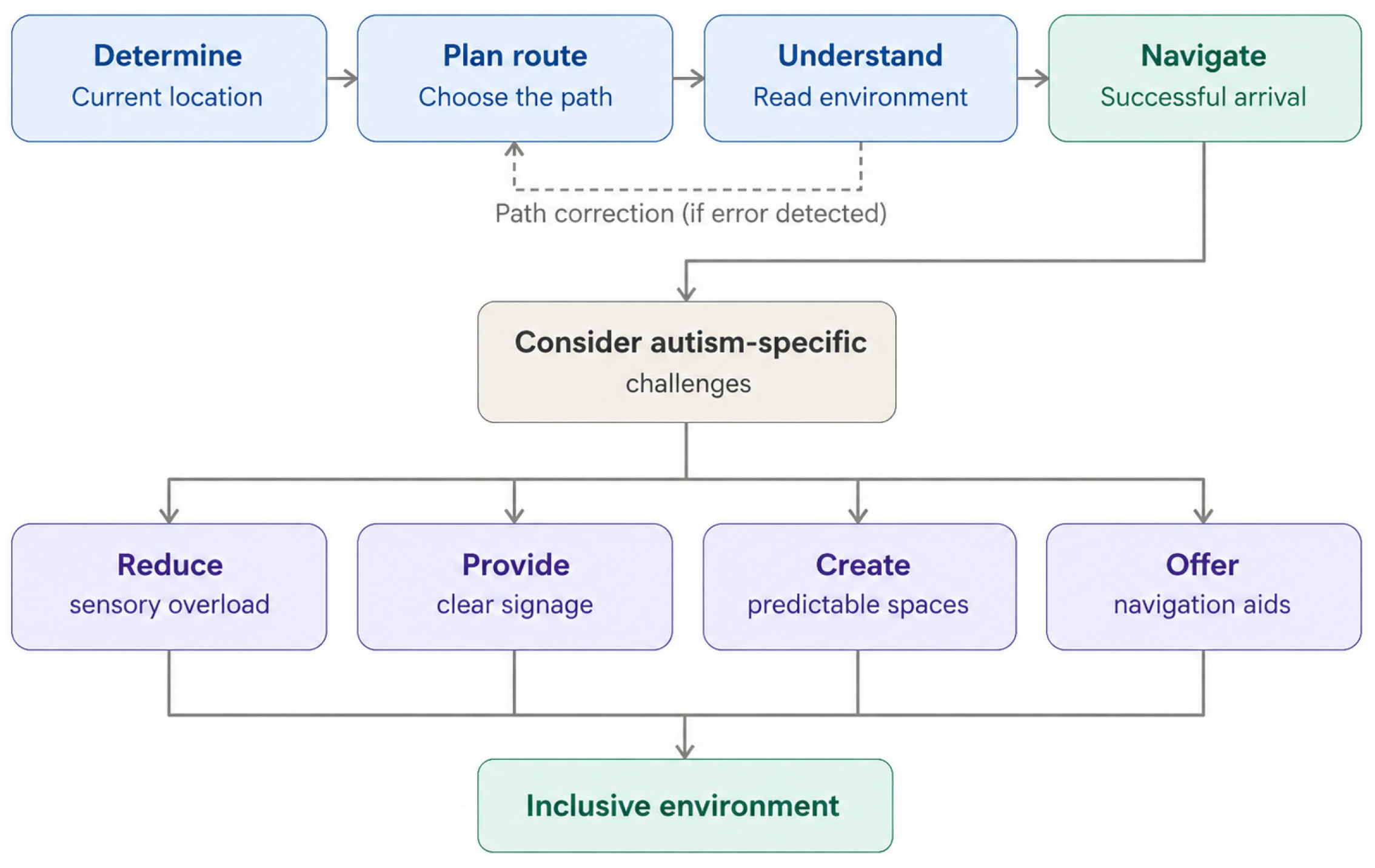
Wayfinding refers to the process through which individuals orient themselves, understand spatial information, make navigation decisions, and successfully reach a desired destination within an environment. In environmental psychology and built environment research, wayfinding is used to evaluate how effectively people navigate and interpret spatial cues, particularly in complex settings [
17,
18,
19]. Whether this environment is a closed environment, an open environment, or a hybrid environment between open and closed, this technology includes many operations known as sensory–cognitive processes that help a person determine their current location, determine the correct path to reach a specific destination, and correct this path if any error occurs in it. These processes also help in understanding the features of the surrounding environment and its changes.
Figure 1 shows the most important of these processes [
20,
21,
22].
In general populations, effective wayfinding systems are supported by a combination of architectural, graphic, and environmental design strategies. Common approaches include clearly visible signage, consistent color coding, visual landmarks, logical spatial organization, and adequate lighting. Signage is typically positioned within comfortable viewing ranges and designed using legible typography, sufficient font size, high color contrast, and consistent placement throughout the building. Additional design elements such as corridor width, ceiling height variation, destination visibility, and spatial zoning also contribute to successful navigation. These principles are widely applied in healthcare, educational, transportation, and public environments to improve orientation, reduce navigation errors, and support user independence [
19,
23].
2.1.2. Guidance Process Mechanism
The guidance process is significant for the reasons mentioned previously [
24,
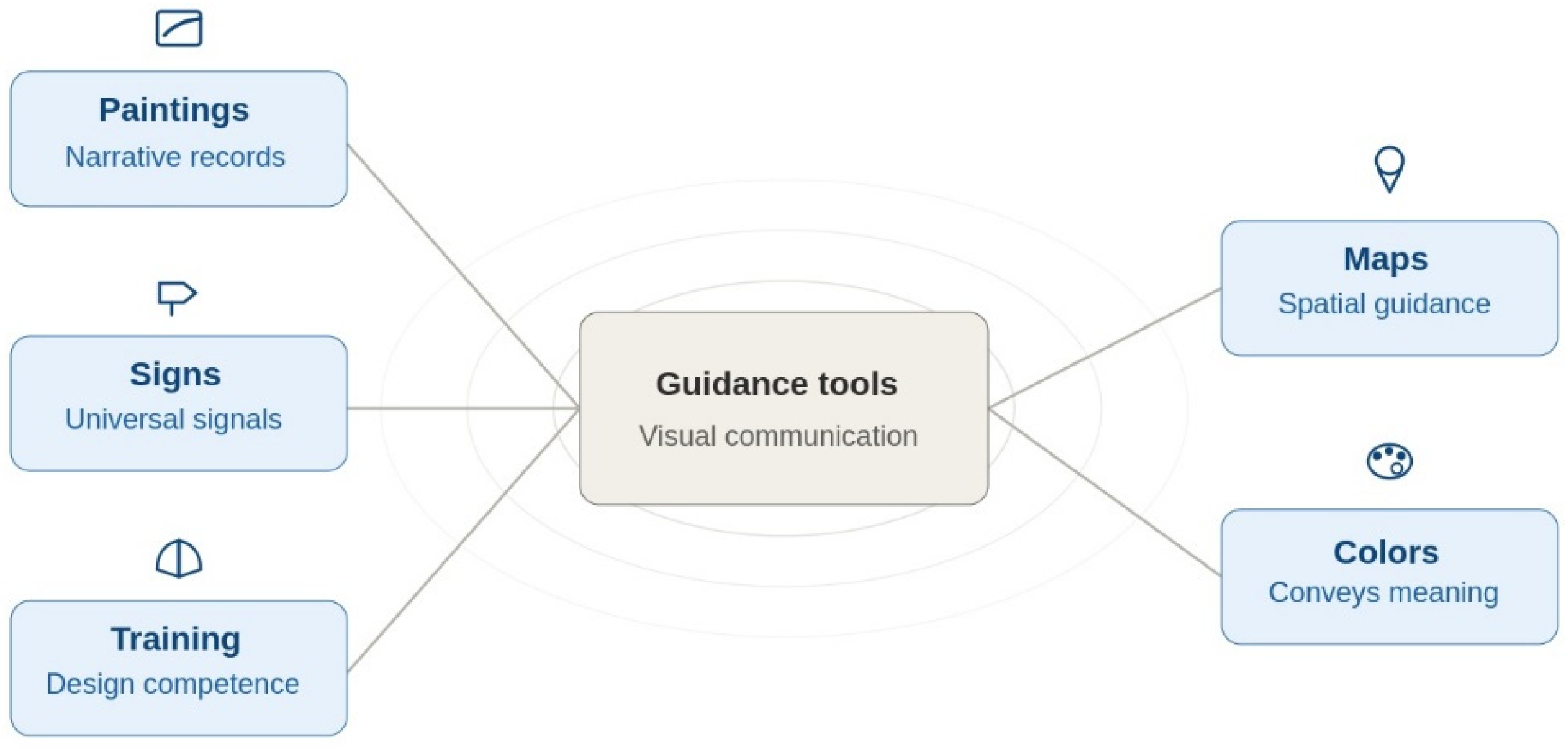
25], but how is guidance accomplished, and how does it contribute to enhancing the user’s cognitive competence in the environment surrounding them and interacting with it—whether visually, auditorily, or even tactilely—to understand dimensions, directions, and movement? The stages and procedures of the guidance mechanism can be defined as follows (
Figure 2):
Orientation and goal-setting: Where the goal to be reached is determined, and where the goal is the final destination [
26].
Path decision: Deciding on the path you will follow based on the existing and available signals, which may be signals of bright colors or distinctive signs, as mentioned previously [
27].
Path monitoring: Monitoring the path through conscious and continuous understanding of the environment to stay on the right path [
23].
Reaching the destination: Reaching the destination, which is the end point [
28].
2.1.3. Individual Differences Affecting Wayfinding
Human ability to construct navigation is influenced by a range of individual variations, including demographic, cognitive, psychological, and physiological factors [
29]. Cognitive functions and learning ability are directly influenced by age, while gender affects physical endurance and the use of visual or kinesthetic tools [
30]. Higher cognitive functions, such as attention and memory, rule comprehension and interaction with the world, and prior experience, enhance an individual’s ability to navigate familiar environments. Psychological states such as self-confidence, anxiety, and preference for navigation devices (traditional or new) also rule navigation, as well as physiological states such as loss of hearing or vision or chronic illnesses. Accordingly, when developing navigation systems, one has to be careful to provide a variety of navigation tools, easy-to-understand language, sufficient information, and engaging visual and audio aids, along with user training programs to ensure navigation works effectively [
31,
32,
33].
2.1.4. Color and Wayfinding
Colors play a fundamental role in guiding movement and organizing spaces in our daily lives. They help distinguish between different elements and easily identify signs and paths. They facilitate the identification of objects such as symbols and signs, making navigation smoother. Colors also help direct attention to specific points or clearly define paths, enhancing visual perception of a space. Additionally, colors carry emotional connotations that influence feelings and behavior; they may induce calm, alertness, or stimulation, making them a powerful tool that not only reflects the visual aspect but also influences the overall user experience within the designed environment. Color is one of the most vital factors in orientation and user experience design, as it plays a fundamental role in guiding people through environments, whether in open spaces, buildings, or specific websites. Color is an important wayfinding element because it helps users distinguish spaces, recognize routes, identify destinations, and associate visual cues with specific locations within an environment [
34,
35].
2.1.5. Physiological Responses to Color
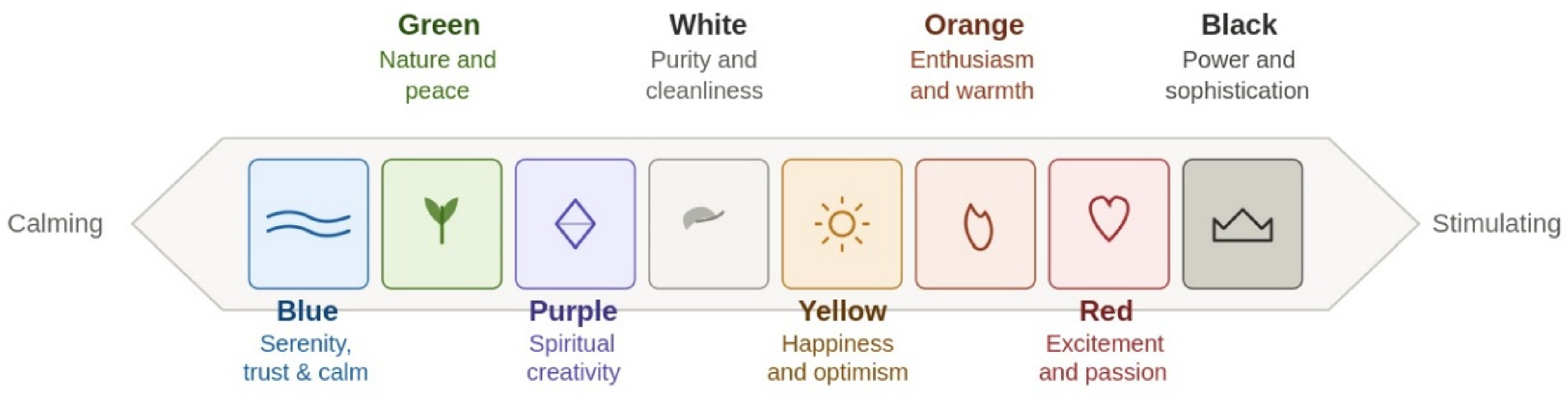
Color psychology is concerned with the emotional effects of colors on people in evoking psychological and emotional responses, where each color is associated with different feelings such as excitement, calmness, luxury, or positivity. Previous studies have frequently associated red with increased arousal and stimulation, blue with calmness and confidence, and green with relaxation and visual comfort; however, these associations may vary across individuals, contexts, and cultures [
36]. However, color is limited by conditions such as color blindness, which calls for alternative visuals, the varying effects of colors under different lighting conditions, and implications that vary from culture to culture. At a physiological level, colors can affect bodily processes such as heart rate and blood pressure, alter stress- and sleep-related hormone levels, and even stimulate brain regions. Autism spectrum disorder (ASD) is a neurodevelopmental disorder that influences communication, behavior, and cognition. Its manifestations and severity vary from individual to individual, and creating suitable environments requires an understanding of each individual’s needs, including thoughtful color choices (
Figure 3) [
36,
37].
2.1.6. Autism Spectrum Disorder (ASD)
Autism spectrum disorder (ASD) is a developmental disorder that affects human speech and does not allow it to function normally, as it causes the person to have many delays, whether communicating with others or communicating in general with the world around them. The reason is that it encompasses a wide spectrum of symptoms and severities, so it can be said that each person responds differently to medication [
11].
The causes of ASD are complex and are generally understood to involve interactions between genetic and environmental factors. Individuals with ASD may experience differences in communication, social interaction, sensory processing, and behavioral regulation. Common characteristics include repetitive behaviors, restricted interests, sensory sensitivities, and a preference for predictable routines. However, the presentation and severity of these characteristics vary considerably between individuals, which is why ASD is described as a spectrum disorder. As time passes, individuals may not enjoy physical communication, and may experience problems such as delayed vowel sounds or obligatory language abbreviation [
38,
39].
2.1.7. Autism Spectrum Disorder and Wayfinding
Autism spectrum disorder has a direct impact on how individuals perceive and experience the world, and orientation and navigation are among their greatest challenges. People with autism may struggle to understand traditional maps or signage, especially when they contain unfamiliar symbols or metaphorical language, making independent navigation difficult. Sensory sensitivity is another major obstacle, and bright lights, loud noises, or unpleasant smells can lead to anxiety or stress, which makes orientation difficult for them. In addition, most of them cannot plan or respond to unexpected changes in their environment, given their strong reliance on routine. Any sudden change is likely to induce extreme confusion and discomfort, so facilitating them requires adaptive, empathetic responses and a deep understanding of their individual needs, such as simplifying navigation aids, providing warm sensory areas, and developing simple, repetitive systems that enable them to travel safely and with confidence [
40].
Research has shown that many children with ASD demonstrate heightened sensitivity to visual environmental stimuli, including color, which may influence cognitive processing, emotional regulation, attention, and spatial orientation. Previous studies have examined the psychological and behavioral effects of environmental color and sensory-sensitive design; however, comparatively little empirical evidence is available regarding the direct relationship between specific interior color conditions and measurable wayfinding outcomes, such as navigation success, task completion time, and behavioral stability, in real-world healthcare settings. Therefore, the present study contributes to the existing literature by experimentally examining the influence of selected interior colors on wayfinding performance and behavioral responses within an operational autism healthcare environment [
41].
3. Methodology
In this section, the framework applied in the study, including the research design, procedures, data collection tools, experimental protocol, questionnaire administration, reliability and validity processes, and statistical methods of analysis, is presented. The methodology was developed to test the effect of interior color on the wayfinding ability of children with autism spectrum disorder (ASD) in the Ajdabiya Autism Health Centre in Libya.
The research uses a mixed-methods approach incorporating descriptive, experimental, comparative, quantitative, and qualitative methods. This approach was selected to integrate quantitative findings with direct behavioral observations, thereby providing a more comprehensive understanding of the relationship between interior color and wayfinding performance.
3.1. Applied Framework of the Study
The structure of the study used is shown in
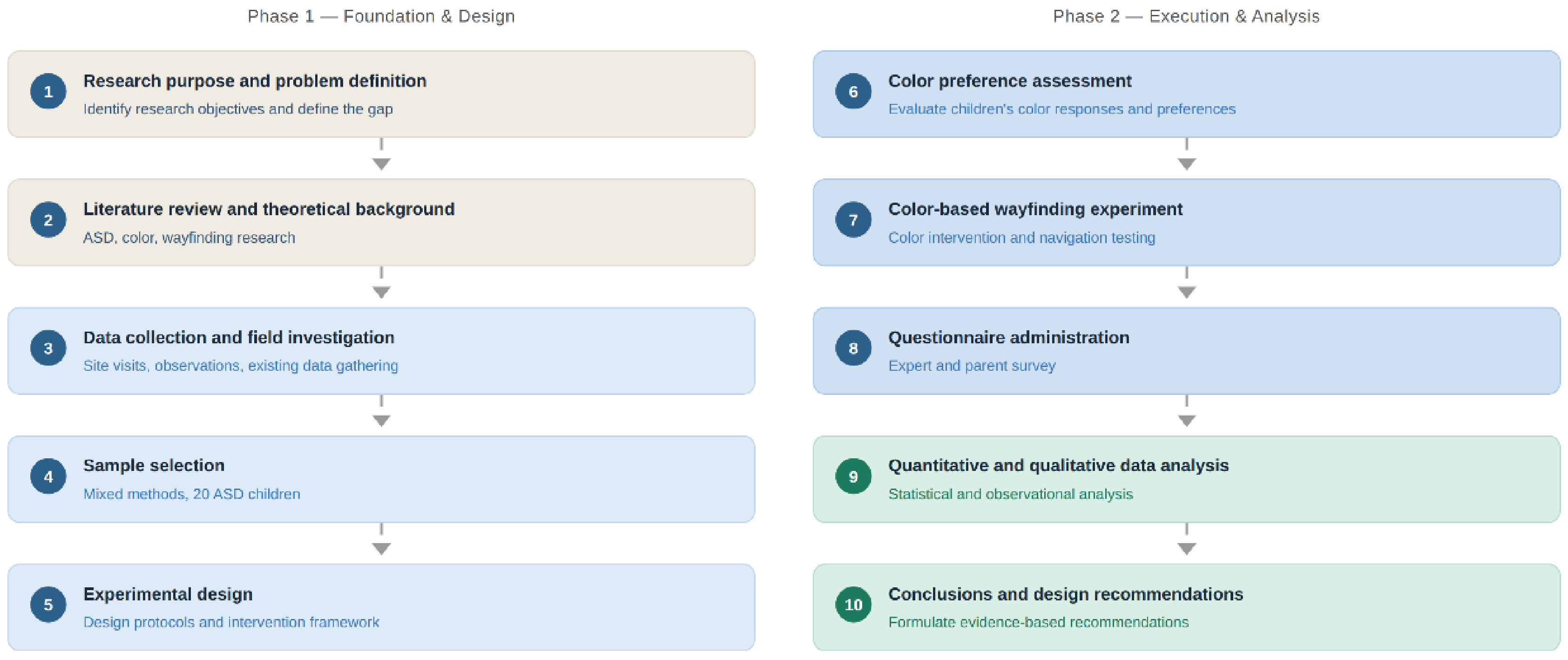
Figure 4. The framework shows the flow of the research process, starting with the theoretical background and the development of the research problem, and proceeding to data collection, experimental design, color intervention, behavioral observation, questionnaire administration, and statistical analysis and interpretation of results.
As shown in
Figure 4, the study was implemented through two main stages: (1) the experimental wayfinding assessment and (2) the questionnaire-based evaluation. The first one was an experimental comparison of the control group with the experimental group of children with autism. The control group was exposed to the original environment without any color modifications. In contrast, the experimental group was exposed to environments in which interior colors were systematically modified as part of the intervention. The second step was a questionnaire to be given to specialists, supervisors, and parents to assess the perceived impact of color on children’s behaviour, how children react to feelings, and how easy it is to follow.
Interior color was the independent variable in the research, and the dependent variables were the wayfinding success rate, the time required to reach the destination, calm behavior, and level of distraction.
3.2. Study Procedures
The operations were conducted based on the following framework, as shown in
Figure 4, and included the following stages:
Write the purpose and the problem of the research.
Carrying out a literature review and theoretical concepts on related topics.
Gathering and working with field data.
The study sample has to be determined.
The experimental procedure has to be designed.
Carrying out the color preference test.
How an experiment in the wayfinding, which is founded on the color, can be implemented.
Administering the questionnaire.
Both quantitative and qualitative data will be interpreted.
Reflect on the outcomes and give design suggestions.
3.2.1. The Discovery of the Research Problem and Objective
The main aim of the study was to examine how the interior colors affect the wayfinding abilities of autistic children in the Ajdabiya Autism Health Center. The research problem was developed due to the identified difficulty children with ASD experience when moving within an indoor healthcare setting, in particular, when visual cues are not salient or when they are oversalient.
3.2.2. Data Gathering and Analysis
A variety of data sources were employed, including previous research, academic literature, field observations, and expert input, as well as direct observations of children’s behavior during navigation.
The data collected was abridged on the following:
How color affects the children who are autistic;
Wayfinding behaviour and space orientation;
Emotional, behavioural responses of children;
Design of questionnaire, and validation;
Proper statistical processes which are adequate in the analysis of experimental data and survey data.
The children’s observation was conducted to assess the kids’ pre- and post-study colors. This was observed to have the following signs: ability to navigate, interaction with the environment, level of distraction, calmness and the related behaviour of anxiety.
3.2.3. Study Sample
The sample of the experiment comprised 20 children diagnosed with ASD at the Ajdabiya Autism Health Center. The participants were randomly assigned to the experimental conditions in the study, with one set serving as a control group in which the interior of the room was the same (neutral) color. In contrast, the other participants were divided into the six color conditions (blue, green, yellow, purple, orange, and pink) for the analysis of wayfinding performance. Behavioral observation and triangulation within the mixed-methods design were supported by the control–experimental distinction, and inferential analysis of wayfinding performance was conducted across the six color groups. The relatively small number of participants in each color condition suggests that the study is exploratory, and the results should be examined in this context.
The twenty children were distributed across the six experimental color conditions as follows: blue (n = 4), green (n = 4), yellow (n = 3), purple (n = 3), orange (n = 3), and pink (n = 3). Red was not included as a testing condition because it was not selected during the preliminary color preference assessment. Assignment to color conditions was conducted after the preference assessment, with each child exposed only to the assigned color condition. Due to the limited number of eligible children available at the center, equal group sizes could not be fully achieved. Therefore, the study is presented as an exploratory case-study experiment rather than a fully powered controlled trial.
The questionnaire sample consisted of 20 adult respondents, including specialists, educational supervisors, and parents associated with the center. These individuals were selected because of their regular interaction with the participating children and their familiarity with their behavioral characteristics. Their participation provided complementary observational perspectives regarding emotional responses, attention levels, and navigational behavior during the experimental activities.
Purposive sampling was used to select participants, since the study needed individuals actively engaged in the care of individuals with ASD and with frequent contact with the center’s physical environment. This sampling method is suitable for studies with a specific and accessible population of interest, but not for estimating the population level.
Since this study was exploratory, the sample size was based on the number of children in the population who met the inclusion criteria. The children were selected from the population attending the Ajdabiya Autism Health Center, where all children who met the inclusion criteria (confirmed ASD diagnosis, appropriate age for the wayfinding tasks, and parent consent) were eligible for the study during the study period. The final sample of 20 children represents the largest number of eligible children available during the study time frame.
The number of participants in this study is small. It may not provide sufficient statistical power for inferential analysis, but this is appropriate for the exploratory nature of the study and for similar case-study research on autism-friendly environmental design in real-world clinical environments. The implications of sample size are discussed extensively in
Section 3.8.
3.2.4. Experimental Design
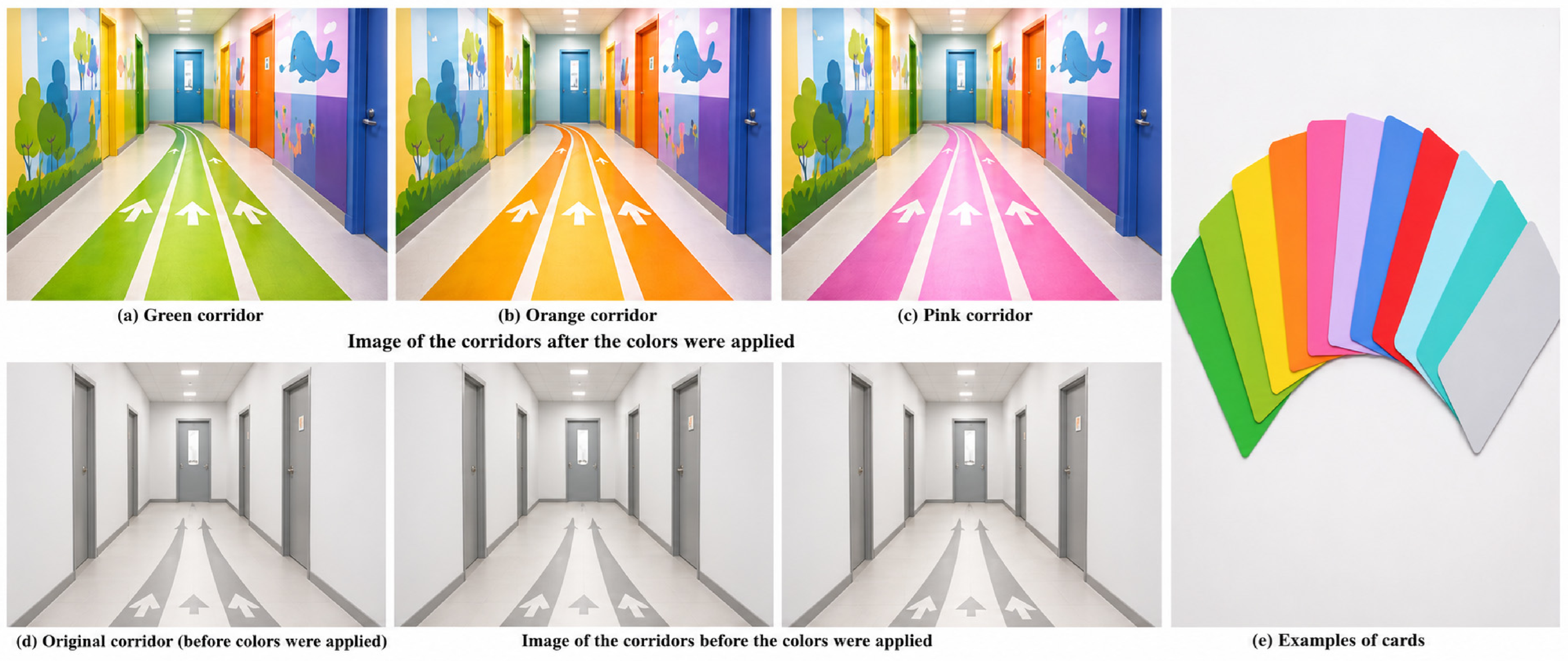
Figure 5 provides a visual representation of the experimental environment, including the original corridor condition, the color-modified corridor condition, and the color samples used during the preliminary preference assessment that informed the selection of experimental color conditions.
In the experiment, two main stages were carried out: a wayfinding test stage and a questionnaire-based assessment stage (see
Figure 5).
- -
Stage One: in-person experimental direct testing.
Before the wayfinding testing, a pretest on color preferences was administered to the participants by showing printed color cards over the course of one week. This stage was used to identify the color most relevant to the user group and to enable the choice of conditions in the experimental stage. Six colors were selected for testing—blue, green, yellow, purple, orange, and pink—representing a range of preference levels and chromatic categories (cool, warm, and neutral) to allow comparison across conditions. Red was not included because it was not a preferred choice during the initial preference assessment. This was done to maintain ecological validity and to avoid artificially inserting a non-preferred stimulus, given the participants’ natural selection tendencies.
After the preference assessment, each of the six preferred colors was applied to the corridor walls and the directions of the testing environment. A series of standard wayfinding problems was presented to participants in the assigned color conditions. The tasks were designed to require the child to seek out a specific target in the center without any other cues, starting from a designated starting point (e.g., a fixed room or a point along a pre-established corridor route). This set of tasks and starting and stopping points was used across all color conditions, and the only variable was the interior color.
In the experimental environment, color served as a visual cue to support spatial orientation. The same destination, route layout, corridor dimensions, lighting conditions, and task instructions were maintained across all testing conditions. The colors were applied physically within the corridor environment. Color saturation and brightness were maintained at consistent levels across the tested conditions to the extent permitted by the existing facility materials and lighting system. Each participant completed the assigned wayfinding task during a single testing session under a single color condition. The only variable modified was the color treatment applied to the corridor environment. Colors were not associated with different destinations, nor were different routes assigned to different colors. Instead, each participant completed the wayfinding task under a single color condition, allowing the study to evaluate whether specific interior colors influenced navigation efficiency, orientation behavior, and emotional responses while moving through the space.
There was a control subgroup that performed the same standardized tasks in unmodified (neutral) interior conditions for baseline behavioral observations. The spatial arrangement, lighting, and signage were controlled across all conditions, with interior color as the only variable. The testing was performed over one week to enable environment reconfiguration between testing conditions.
The following indicators were taken:
- -
Success rate in getting to the correct destination;
- -
Time to do the task;
- -
During movement, calm behaviour;
- -
Distraction level;
- -
Extreme doubt or perplexity.
The participants were provided with the same navigation task, instructions, road conditions, and observation criteria.
Behavioral indicators were operationally defined to achieve consistency and objectivity. The measure of success was the ability to reach the correct destination without help (scored as 1 = success, 0 = failure). Time was measured in seconds from the starting point to the completion of the task. Calmness and distraction were evaluated using structured observational rating scales.
The calmness rating was based on the extent of relaxed movement, lack of agitation, and continuity of task engagement in the child, using a 5-point Likert scale (1 = highly agitated, 5 = fully calm). Distraction was also measured by the frequency of attention shifts, hesitation, and off-task behavior, using a 5-point scale (1 = highly focused, 5 = highly distracted). Trained supervisors conducted all observations to ensure consistency among participants.
- -
Stage Two: questionnaire test.
This was followed by the formalized questionnaire being presented to the specialists, supervisors and parents. The questionnaire was intended to determine how the perceived change in the kids’ emotional responses, ease of navigation, and color preferences occurred after the color intervention.
3.3. Questionnaire Design and Administration
The questionnaire respondents consisted of specialists, educational supervisors, and parents associated with the autism center. These respondents completed the questionnaire after observing the participating children during the wayfinding activities. The questionnaire was administered immediately following completion of the experimental tasks to ensure that responses reflected direct observations of children’s navigational performance, emotional responses, and behavioral reactions within the tested color conditions. Although respondents represented different backgrounds, all questionnaire responses were analyzed collectively as observational assessments.
The questionnaire comprised three major areas:
Emotional response;
Navigational ease;
Color preference.
The three items, totaling nine, were used to represent all the domains. The questionnaire was designed to measure respondents’ perceptions of how the colors would influence children’s emotional state, movement, and ability to identify paths.
The questionnaire was administered through a face-to-face interaction in a supervised environment to ensure clarity, completeness, and consistency of the answers. Response bias was minimized by ensuring participants understood the purpose of the questionnaire and by collecting responses anonymously where possible.
To quantify the responses, a Likert-type rating scale was used. The responses obtained were then converted to percentages for descriptive comparison and statistical analysis.
3.4. Reliability and Validity Processes
To enhance the reliability and validity of the study, several procedures were implemented.
3.4.1. Reliability
The questionnaire was tested using Cronbach’s alpha to assess its internal consistency. The fact that the questionnaire reliability values range from 0.78 to 0.95, and the overall reliability is 0.86, indicates that the questionnaire’s internal consistency is high.
3.4.2. Content Validity
The expert review helped ensure content validity. The specialists who participated in the study and were familiar with autism, child behavior, and environmental design reviewed the questionnaire items and observation indicators to ensure that the items were relevant and understandable, and that the observation indicators were within the study objectives.
3.4.3. Construct Validity
Construct validity was achieved by organizing the questionnaire questions into three theoretically based domains (emotional response, navigator ease, and color preference). These areas are associated with the key constructs to be considered in the research: behavioral regulation, wayfinding performance, and environmental perception.
3.4.4. Observation Validity
Another method of validation, behavioral observation, was used. The observation indicators were equated with the quantitative variables measured during the experiment, such as success rate, time, calmness, and distraction. This triangulation increased the validity of the results by comparing direct behavioral evidence with questionnaire responses.
3.5. Data Analysis
The data analysis process included both quantitative and qualitative analyses.
3.5.1. Quantitative Analysis
Both the experimental wayfinding results and the questionnaire results underwent quantitative analysis. A p value of <0.05 was used as the criterion of significance in all analyses. Frequency, percentage, mean, standard deviation and minimum and maximum values were used as descriptive statistics for wayfinding performance indicators (success rate, navigation time, calmness, and distraction) and for the questionnaire domains (emotional response, navigational ease, and color preference).
Differences in wayfinding performance in the different color conditions and the relationship among the important variables in this study were examined using inferential analyses. The following tests were carried out:
Shapiro–Wilk test: Used to test the normality of dependent variables before parametric tests. It is recognised in
Section 4.4 that this test has limited statistical power in small samples.
Levene’s test: Used to test the homogeneity of variance among the six color conditions, which is one of the assumptions of the one-way ANOVA.
One-way ANOVA: Used to determine if there were statistically significant differences in wayfinding performance between the six color conditions. Partial eta-squared (η2p) was used to report the effect size and quantify the magnitude of group differences, as is the current recommendation.
Pearson correlation analysis: Used to explore the relationships among color condition and the wayfinding outcome variables (success rate, navigation time, calm behavior, and distraction).
Pareto analysis: Ranked and used as a descriptive tool to determine the subset of conditions that contributed most significantly to increased success rate, calmness and decreased navigation time. The analysis is interpretive rather than inferential.
Since the study was exploratory and the number of observations per color condition was small, post hoc pairwise comparisons were not performed, and only the omnibus inferential findings are reported.
3.5.2. Qualitative Analysis
The qualitative component of the study consisted primarily of structured behavioral observations conducted during the wayfinding tasks. Observations were recorded by trained supervisors using predefined behavioral indicators developed for the study. Particular attention was given to patterns of hesitation, route uncertainty, distraction, task engagement, emotional calmness, and interactions with environmental cues.
Following data collection, observation records were reviewed and organized according to recurring behavioral themes. A thematic content analysis approach was used to identify common patterns across the different color conditions. Behaviors were grouped into categories: navigation confidence, route-correction behavior, distraction episodes, hesitation events, and observable emotional responses.
The qualitative findings were not treated as a standalone qualitative study; rather, they were used to provide contextual interpretation of the quantitative performance measures. This triangulation helped explain why certain color conditions were associated with higher or lower navigation performance and provided additional insight into the behavioral responses of children with ASD during the wayfinding tasks.
3.6. Control of Methodological Rigor and Bias
To increase the methodological rigor of the study, several steps were taken into consideration:
- -
The same navigation tasks were given to all the children;
- -
The testing conditions of the same route conditions were kept during testing;
- -
Lighting and spatial treatment were preserved as before, with the only difference that the intervention of color was also involved;
- -
Before the environmental change, the tapes of color preferences were made;
- -
Replies to the questions in the questionnaire were collected in a controlled environment;
- -
Statistical reliability and validity tests were done;
- -
Triangulation of experimental data;
- -
Questionnaire data and behavioral observations were collected.
Observer bias was minimized through the use of predefined behavioral criteria and consistent evaluation procedures.
3.7. Ethical Considerations
This study received ethical approval from the relevant educational and institutional authorities in Ajdabiya, Libya. The study was carried out with the support and permission of the Education Supervisory Body, which verified compliance with regulations governing research involving children and the protection of their rights and privacy.
We had informed consent from the parents or legal guardians of all the participating children before data collection. The consent forms were very clear on the purpose of the study, the procedures to be followed and the voluntary nature of participation. They made it clear to the parents that participation was purely for academic research purposes and that they had the right to withdraw their child at any time without consequences.
All the procedures were designed to be non-invasive and suitable for children with autism spectrum disorder (ASD). The activities were held in a familiar, controlled setting (Ajdabiya Autism Health Center) to provide some comfort and reduce stress. Experimental tasks were introduced in natural, supportive ways that aligned with normal teaching and therapeutic interactions.
Anonymity and confidentiality were observed strictly. No personally identifying information was captured or disclosed, and all information gathered was used solely to conduct the research. This study complied with the ethical principles for conducting research with vulnerable groups, ensuring the safety, dignity, and respect of all involved.
3.8. Methodological Limitations
Some methodological limitations should be noted about the present study, the findings of which should be understood in light of these limitations:
- (1)
The present study offers empirical evidence from a real health care setting, a setting underrepresented in the existing literature.
- (2)
The study is of an exploratory type. A small sample (20 children, six color conditions) results in limited statistical power for inferential analyses and limited generalizability of the results to other children.
- (3)
Pair-wise post hoc comparisons for specific color conditions were therefore not carried out, and only the omnibus ANOVA results are reported for this same reason. At these sample sizes, the tests of statistical assumptions (Shapiro–Wilk for normality and Levene’s for homogeneity of variance) are also not very powerful and should be interpreted with appropriate caution.
- (4)
Colors in the experimental phase were predetermined with the same participants in a preliminary preference evaluation. Although this was done to ensure ecological validity and to prevent the presentation of stimuli that the user group avoided, it also entailed a departure from the ideal of pure independence between experimental conditions and participant preferences. The lack of red in the experimental phase prevents any direct empirical conclusions, particularly about its impact on wayfinding performance in this population.
- (5)
The study was carried out in one healthcare institution (Ajdabiya Autism Health Center), which is not a wide range of contexts for the findings. The results might not be generalizable to other settings due to differences in environmental factors, such as cultural factors and facility design.
- (6)
Manipulations of the variable (a color) were made apparent in the environment, and trained supervisors conducted behavioral observations. While full blinding to condition was not possible due to the nature of the intervention, structured rating scales and predetermined behavioral criteria were used to minimize observer bias.
- (7)
Order of color exposures was not formally counterbalanced across subjects, and so order, fatigue or carry-over effects cannot be excluded as a factor contributing to the observed differences. Randomized or counterbalanced exposure sequence should be used in future studies.
- (8)
The analytical design did not involve a formal inferential comparison of the control (neutral interior conditions) and experimental color conditions. The control subgroup was not intended as a statistically comparable group; rather, it was used as a baseline for qualitative observation of behavior. Therefore, the current results are not intended as empirical evidence that a particular color change can improve wayfinding, but rather a demonstration of differences among the various color conditions. In the future, studies with a full factorial design—where each condition, including the various colors, will be compared to a no-color condition—would help substantiate causal claims.
- (9)
The sample was limited to a wide developmental range (6–16 years) with no age included as a covariate in the analysis. No information on the severity of ASD, cognitive functioning, or sensory processing profiles was gathered (this may mask individual variation in responses to color and reduce the possibility of comparison with samples in the broader literature). In addition, participants’ previous familiarity with the center environment was not formally measured and may have influenced navigation performance independently of the color intervention.
Based on these considerations, future research should involve larger and more powerful samples (at least 15–20 children per color condition as was done in the present study), should include detailed clinical and sensory characterization of the children, should counterbalance the order of color conditions (to account for any carry-over effects), and should be replicated in several healthcare and educational contexts to increase external validity. The incorporation of physiological data (HRV, eye-tracking) and digital simulation environments would further enhance understanding of sensory and cognitive responses to color in the ASD population.
4. Results
This section will include the findings from the experimental wayfinding testing, the questionnaire analysis and the inferential statistical analysis. Only the tables and figures that are important for clarity have been included, and redundant content has been minimized.
It is important to describe the analytical function of each sample component before presenting the findings. Inferential analysis of wayfinding behavior was conducted for the six color modes, as described in
Section 4.3 and
Section 4.4. The control sub-group that executed the standard wayfinding tasks under unmodified (neutral) interior conditions was primarily used to provide a comparative baseline for interpreting the behavioural patterns observed under the colored conditions and was also used in the qualitative behavioural observation component of the study (
Section 4.3). No formal inferential comparison between the control and the experimental sub-groups was made, and its implications are discussed in
Section 3.8.
4.1. Sample Characteristics
The findings showed that the average age of the study participants was 8.4 years (SD = 1.95) with a range of 6–16 years. Most respondents were men (60 percent), and the majority lived in cities (80 percent).
Table 1 presents the demographic characteristics of children with autism.
Table 2 presents the demographic characteristics of specialists and supervisors, showing a mean age of 37.76 years and a wide range of professional experience, which increases the reliability of the observational and questionnaire data.
4.2. Color Preference Results
The findings of the color preference test are given in
Table 3.
Table 3 shows the colors that were chosen to experiment on the children (source: authors).
Table 3 shows the children’s choices and preferences for colours, where the favourite colour and the one ranked first was blue, followed by green, then yellow, then mauve, then orange, with pink last.
The results show that the most preferred colors were blue (27.8%) and green (27.7). Yellow (18.5%) was moderately preferred. Orange (9%) and pink (3) were the least popular. These findings helped in choosing colors to be applied in the experimental process.
It should be mentioned that red was not chosen at this stage; thus, it was not taken into account in the experimentation.
4.3. Experimental Wayfinding Performance
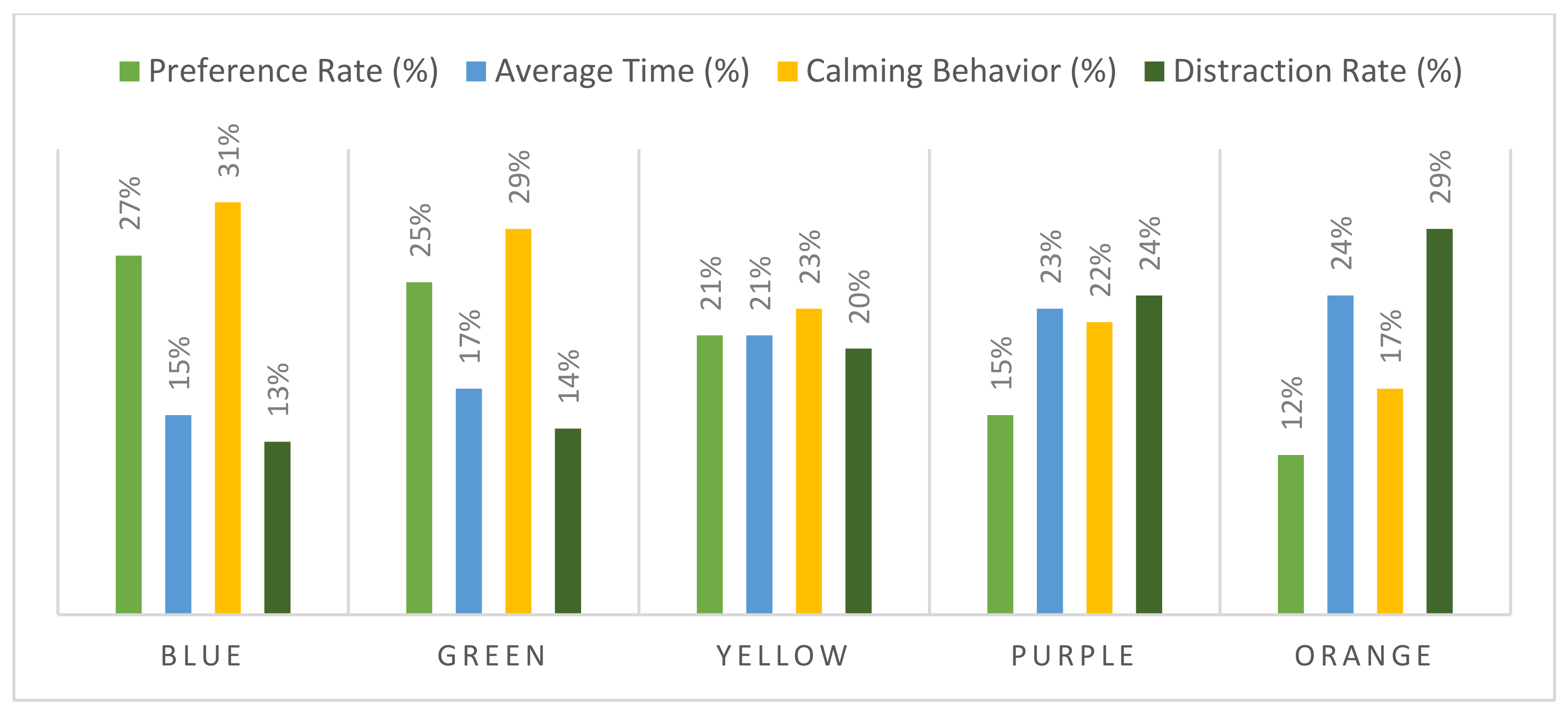
The findings from the wayfinding experiment are summarized in
Figure 6.
Navigation time values are presented as normalized percentages to allow for comparison across color conditions. Analysis shows that the following statements are true:
- -
The highest success rate (78%) and the lowest normalized navigation time score (15%) were observed by blue.
- -
The performance of green was similar, with somewhat lower efficiency.
- -
Yellow and purple showed an average performance.
- -
The lowest level of performance was registered for orange and pink.
Observations of behaviour indicate that the following statements are true:
- -
Cool colors (blue and green) were linked with a greater level of calmness.
- -
Warm colors (orange and pink) were related to the greater level of distraction.
These findings indicate that color greatly influences the performance of navigation as well as behavioural responses.
4.4. Behavioral Observation Findings
In addition to the quantitative performance indicators, structured behavioral observations were conducted throughout the wayfinding tasks. Observation records were reviewed and grouped into recurring behavioral themes, including navigation confidence, hesitation behavior, route uncertainty, distraction, and task engagement. Distinct behavioral patterns were then identified across the different color conditions. Children exposed to the blue and green environments generally demonstrated more direct navigation toward the target destination, fewer observable pauses during movement, and lower levels of distraction. Observers noted that these children appeared more focused on the task and required fewer route corrections during navigation.
In contrast, participants exposed to the orange and pink conditions showed more frequent hesitation behaviors, including stopping, scanning the surrounding environment, and displaying uncertainty when selecting directions. These conditions were also associated with higher levels of observable distraction and less consistent task engagement. Yellow and purple conditions produced intermediate behavioral patterns. Children in these environments generally completed the tasks successfully but showed occasional hesitation and a moderate level of route uncertainty compared with the blue and green conditions.
These observations should be interpreted as descriptive behavioral evidence rather than formal qualitative findings. Nevertheless, they provide contextual support for the quantitative trends reported in the wayfinding performance results and contribute to understanding how different color conditions may influence navigation behavior among children with ASD.
4.5. Statistical Analysis
Table 4 presents the results of the one-way ANOVA conducted to test for differences in wayfinding performance across the six color conditions.
Results showed a significant difference in wayfinding performance among the six color conditions, F(5, 14) = 5.87, p = 0.004. Partial eta-squared was used to estimate the size of this effect (η2p = SS_between/SS_total = 72.40/106.92 = 0.677). This is considered a large effect according to Cohen’s conventions, meaning that wayfinding performance across the tested conditions varied by around 67.7% by color condition.
Normality and homogeneity of variance were assessed using the Shapiro–Wilk and Levene’s tests, respectively, and were not violated at the
p < 0.05 level. However, due to the limited number of observations for each condition, the assumption tests have limited statistical power and should be interpreted with due caution. Similarly, pairwise post hoc comparisons across color conditions were not performed, and only an omnibus test of group differences is presented. The significant group differences favoring cool colors (blue, green) over warm colors (orange, pink) can be interpreted in the context of the descriptive patterns described in
Section 4.3.
4.6. Correlation Analysis
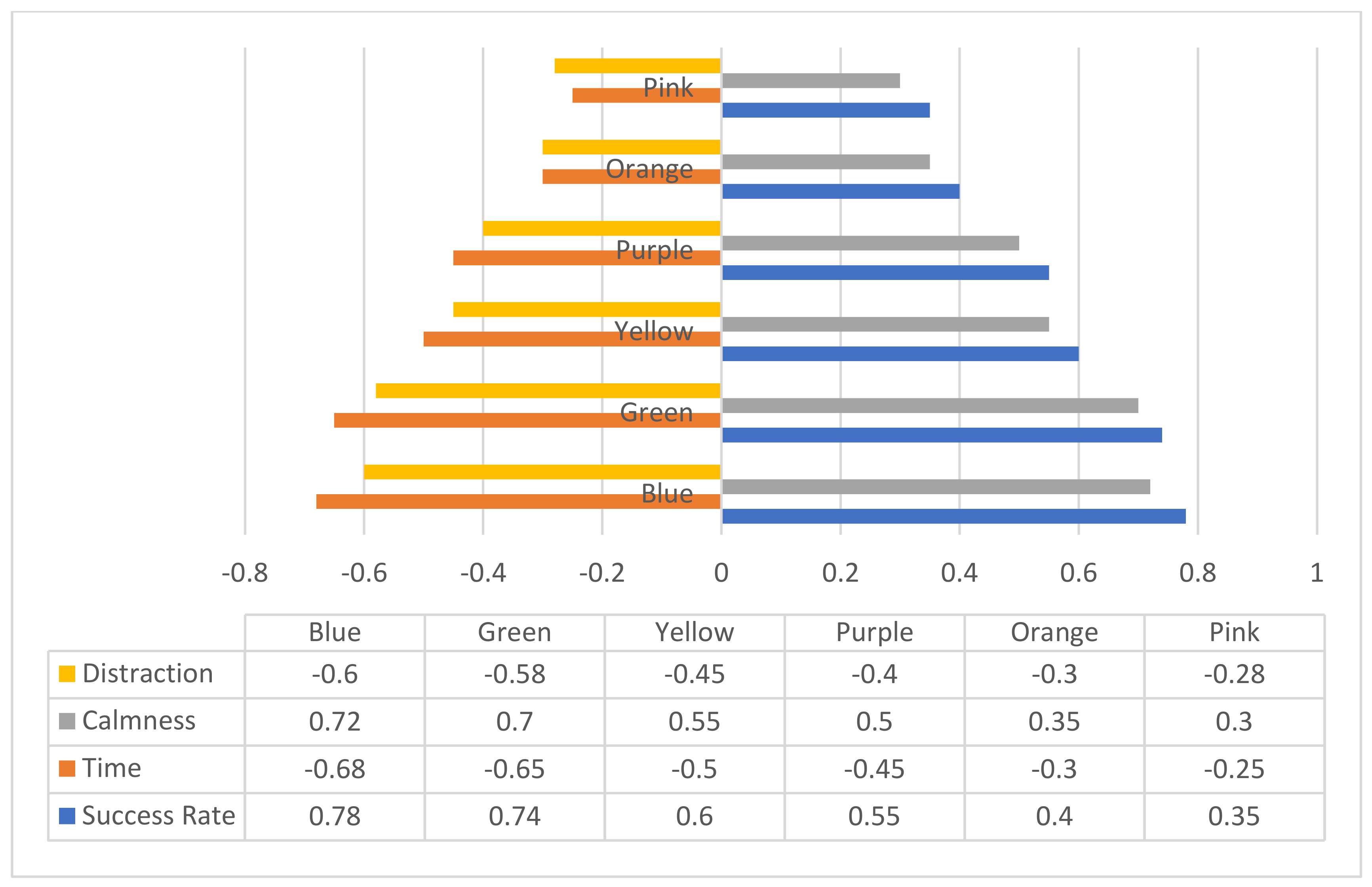
Exploratory Pearson correlation coefficients were calculated to provide descriptive information regarding possible relationships between color conditions and wayfinding outcomes. The correlation patterns are summarised in
Figure 7. Since the study is exploratory in nature and the number of observations per condition is small, the correlation values are given as approximate magnitudes. They are interpreted descriptively, not as precise point estimates.
The analysis showed the following trends:
- -
Cool colors (blue and green) were highly correlated with success rate (r ≈ 0.72 to 0.78), highly correlated with calm behavior (r ≈ 0.70 to 0.74), and moderately negatively correlated with navigation time (r ≈ −0.65 to −0.68). This negative correlation with time indicates that these conditions were associated with faster task completion, which is consistent with the results described in
Section 4.3.
- -
Warm colors (orange and pink) exhibited lower correlation values (r ≈ 0.30–0.45), indicating a significantly smaller relationship between the color and successful wayfinding and behavioral stability in these conditions.
The overall pattern of correlation supports the ANOVA results presented in
Section 4.4. It substantiates the descriptive trend that cool colors were correlated with better navigation performance and higher rates of behavioral regulation. However, because of the limited number of observations per condition, individual correlation coefficients should be considered unstable point estimates with broad confidence intervals.
The correlation analysis is therefore included as additional descriptive evidence to support the omnibus ANOVA results and not as a stand-alone confirmatory analysis. Larger samples are needed to determine the exact magnitude of the effects of each color–outcome relationship.
Given the limited sample size, p-values and confidence intervals are not emphasized, and the reported correlation estimates should be interpreted solely as exploratory descriptive indicators rather than stable measures of association.
4.7. Pareto Analysis
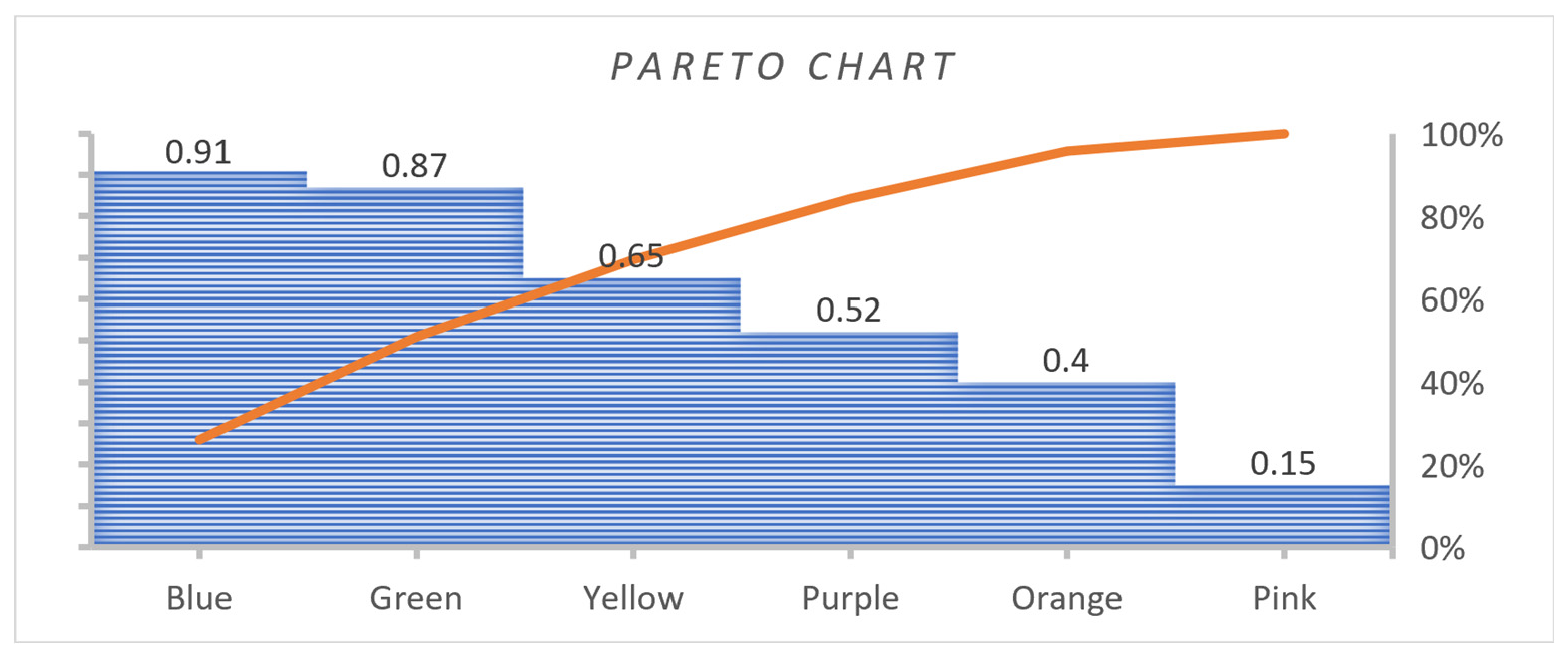
In
Figure 8, the Pareto analysis is presented.
Results show that blue, green, and yellow account for over 70 percent of the total improvement in performance. Other colors have an insignificant contribution. This suggests that it is possible to create the most effective wayfinding design using a small, carefully selected set of colors (source: authors).
4.8. Questionnaire Results
Table 5 shows the internal consistency of the questionnaire subscales, calculated using Cronbach’s alpha. The reliability coefficient for each instrument ranged from 0.78 to 0.95, exceeding the 0.70 criterion for good internal consistency. Overall, the scale had high reliability (α = 0.86) across nine items.
Attention is drawn to the relatively high coefficient for the color preference subscale (α = 0.95, three items), which may indicate a high conceptual similarity among the items rather than independent indicators of the construct. It is recognized that this is a limitation of the current instrument and is discussed again in
Section 5.7. The data reported in the column labeled “% variance explained” in
Table 5 are a descriptive index of inter-item coherence within each subscale and are not intended to represent the results of a formal exploratory factor analysis, which was not performed in the present study.
Table 6 shows the descriptive statistics.
The results indicate generally high agreement across all domains, with mean values ranging from 0.81 to 0.88 and moderate variability. These findings affirm that the participants had a positive influence of color on behavior and navigation.
It is also noted that the questionnaire was given to specialists, supervisors, and parents; the responses were proxy reports of what was perceived to happen to the children in the presence of color; the children were not asked directly to report on the effects of color. Proxy reporting is methodologically appropriate as it is used in studies with children with ASD, especially when communication difficulties limit direct self-report. Still, it has the inherent limitation that what observers perceive may not exactly match what the children are experiencing. This limitation informed the development of the triangulation of questionnaire answers with the wayfinding measures and observations of behavior (
Section 3.4.4).
4.9. Summary of Findings
The findings of the study suggest that interior color may be associated with differences in wayfinding performance and behavioral responses among children with ASD within the context examined. Across the experimental conditions, cool colors, particularly blue and green, were generally associated with higher success rates, shorter navigation times, and greater behavioral calmness. Behavioral observations also indicated more focused task engagement, fewer observable pauses, and less route uncertainty under these color conditions.
In contrast, warm colors such as orange and pink were associated with lower navigation performance and higher levels of distraction and hesitation during task completion. Yellow and purple demonstrated intermediate patterns of performance and behavioral response.
The statistical analyses indicated significant differences across the six color conditions. However, given the exploratory nature of the study, the relatively small sample size, and the variability typically associated with ASD populations, these findings should be interpreted cautiously and not as definitive evidence of causal relationships. The inferential analyses are therefore presented as supportive evidence alongside the behavioral observations and descriptive findings.
Correlation analysis and Pareto analysis provided additional descriptive support for the observed trends, while behavioral observations helped explain how children interacted with the colored environments during navigation tasks. Red was not included in the experimental phase because it was not selected during the preliminary preference assessment; therefore, no empirical conclusions can be drawn regarding its effect on wayfinding performance within the present sample.
The implications of these findings are discussed further in
Section 5, taking into account the study’s exploratory scope and the methodological limitations outlined in
Section 3.8.
5. Discussion
The results of the present study empirically indicate that interior color is an associated factor influencing wayfinding performance and behavioral reactions by the children with autism spectrum disorder (ASD). The results show that there are differences in color conditions in terms of navigation achievement, time efficiency, and behavioral stability, making color a significant factor in functional design but not a purely aesthetic element.
5.1. Performance Wayfinding Interpretation
In the experiment, the highest success rates and the shortest time to complete the wayfinding task were achieved by using so-called cool colors, particularly blue and green, which confirms their utility in supporting the wayfinding task. Such observations are explicable in light of the sensory processing nature of children with autism, who, in most cases, tend to be very sensitive to environmental stimuli.
The blue color, which appears to be the most successful, is most closely related to a relaxing effect and a reduction in the overstimulation of the senses. This helps maintain children’s attention and enhances their cognitive capacity, enabling them to navigate more efficiently. Likewise, the green color, commonly associated with nature, will aid relaxation and visual comfort, which will help create stable behavioral responses and improved orientation. These findings are consistent with previous studies that highlight the calming and attention-supporting effects of cool colors in autism-sensitive environments.
The performance levels associated with the warm colors (orange and pink) were comparatively lower, with longer navigation times and greater observable distraction. Behavioral observations further suggested that children in these conditions exhibited more frequent pauses, greater route uncertainty, and more shifts in attention during task completion. These patterns may indicate that such colors introduced additional sensory stimulation that interfered with attention and spatial orientation. Although these observations should be interpreted cautiously, they are consistent with environmental psychology theories suggesting that warm colors are often associated with higher levels of arousal and stimulation.
5.2. Behavioral Response and Emotional Regulation
In addition to performance abilities, the research examines the relationship between color and behavior control. The results show that blue and green environments are correlated with increased calmness and decreased agitation, whereas orange and pink environments are correlated with increased agitation and reduced behavioral stability.
The specified difference is especially prominent when the regulation of emotions is primarily linked to environmental factors. These results suggest that efficient wayfinding design should balance cognitive clarity and emotional comfort, as both contribute to successful wayfinding.
Surprisingly, the yellow color’s performance was average, as it is not only attention-stimulating but also moderately stimulating. It could be a good aid for visibility and orientation. Still, when overdone, it can lead to overstimulation, which is why it has been placed between the high- and low-performing colors.
5.3. Properties of the Interpretation of Color
The observed differences between colors could be explained further by the known psychological properties of the colors. Blue and green, which demonstrated the most successful results, are usually associated with notions of calmness, stability, and lower cognitive load. These attributes make them especially appropriate for settings designed to accommodate children with sensory sensitivities.
The impacts of purple were roughly equal and are typically viewed as soft and unobtrusive, which correlates with purple’s average performance in the experiment. On the other hand, orange, although interesting, can also cause overstimulation if overused, which in turn aligns with its lower efficacy in navigation tasks.
These interpretations substantiate the idea that the decision to select the color in an autism-friendly environment should be based on functional performance, not on visual preference.
5.4. Red Exclusion Implications
Another interesting thing about this experiment is that there was no red observed. Red was not chosen in the initial stage of color preference (preliminary) and was thus left out to ensure continuity of the ecological validity.
Theoretically, red is commonly known as a high-arousal color, which is associated with heightened alertness, heart rate, and sensory stimulation. Though these characteristics may be advantageous in some cases, like the need to increase the rate of reaction in children with autism, they may also lead to sensory overload in such children.
A possible explanation is that the lack of red selection reflects an implicit avoidance of stimulating red colors among the participants. This is, however, speculative: a non-preference observed in a short, card-based assessment alone does not necessarily provide evidence of systematic avoidance, and other factors that may explain the preference, such as familiarity effects, order of presentation, and other sample-specific preferences, cannot be excluded. Conclusive findings from direct experimental testing of red under controlled exposure on wayfinding performance in ASD populations are needed before any substantive conclusions are drawn.
5.5. Co-Ordination with the Existing Literature
The findings of this research are consistent with previous research suggesting the importance of sensory-sensitive design in autism-friendly environments. The need to create settings that minimize sensory overload and provide clear, predictable cues for individuals with ASD has been emphasized in the literature above. The findings of this study are consistent with previous research highlighting the importance of sensory-sensitive design in autism-friendly environments.
However, unlike many previous studies, which are based on theoretical frameworks or controlled simulations, this study not only describes them but also provides empirical evidence from a real-world healthcare setting, thereby increasing the practical applicability of the findings.
Moreover, the present work will contribute to the existing body of knowledge by providing a correlation between color and emotional response, as well as measurable performance indicators, such as success rate, navigation time, and behavioral stability. The other significant contribution to the subject of architectural design for neurodiverse users is the idea of combining the two.
5.6. Design Implications
This study has direct implications for architectural and interior design, particularly in healthcare settings and children’s learning centres for autistic children.
The results indicate that the following statements hold:
- -
Priorities on the cool colors (blue and green) should be given to allow wayfinding.
- -
Warm colors must be sparsely used and in few places, since they would lead to overstimulation.
- -
The color policies should be based on clear, coherent and realistic zoning.
- -
The range of effective colors is rather small, and several colors can be employed to achieve the maximum possible results, as the Pareto analysis has proven.
The design principles can be used to develop design guidelines that enhance accessibility and user experience for individuals with ASD. However, color should not be considered in isolation. Effective wayfinding systems also depend on the integration of other environmental and graphic design elements, including signage placement, typography, font size, font color, symbol clarity, spatial organization, lighting conditions, and the visual characteristics of architectural forms. Future research should examine how these factors interact with color to influence navigation performance and behavioral responses in autism-friendly environments.
5.7. Limitations and Future Research
This study has several limitations, even though it has contributed to the study. The sample size was not very large, which might affect the generalizability of the findings. Furthermore, the research was conducted at a single healthcare facility, which limited the diversity of the context.
Future research should use larger, more diverse samples; investigate additional colors, such as red; and examine long-term behavioral adaptation to color-based environments. Future studies should also explore the potential influence of cultural, social, and environmental factors on color preferences and wayfinding responses, as color meanings and associations may vary across different populations and contexts. The combination of digital simulation models with physiological measurements would further enhance understanding of sensory and cognitive responses to color.
Future studies should also investigate the combined effects of color and other wayfinding variables, such as typography, signage characteristics, graphical symbols, visual contrast, and architectural geometry, to develop more comprehensive design recommendations.
5.8. Summary
This research shows that interior color is a significant factor in determining wayfinding performance and behavioural responses in children with autism. Altogether, the results of using evidence-based design to build a supportive, functional environment for a neurodiverse population are highlighted.
6. Conclusions
This paper has addressed how the wayfinding behaviour and performance of children with autism spectrum disorder (ASD) in a healthcare facility can be influenced by interior color. The findings bring out one clear empirical finding: that color is not simply a factor of aesthetic consideration, but a factor of functional design consideration, which plays a significant role in spatial orientation, navigation efficiency, and emotional regulation.
The results revealed that cool colors, and blue and green in particular, followed a consistent pattern, creating the highest degree of navigation success, reduced time to task completion, and increased behavioral stability. Quite the contrary, warm colors, such as orange and pink, were associated with poor performance and high levels of distraction, meaning they are not appropriate for use as wayfinding in autism-sensitive spaces.
This statistical test was useful in demonstrating that these differences were not minimal and in estimating the impact of color on cognitive and behavioral performance. Moreover, the fact that the stage of the experiment did not involve the use of red, because the selection of this color was not made during the preference assessment stage, indicates that users might simply avoid using highly stimulating colors.
Overall, the current research contributes to the growing field of sensory-responsive architecture by providing experimental data from a real environment that correlates environmental design factors with measurable user performance.