A Study of the Self-Healing Mechanism of Concrete Using Microorganisms Immobilized in an Improved Recycled Aggregate

Abstract
1. Introduction
2. Materials and Methods
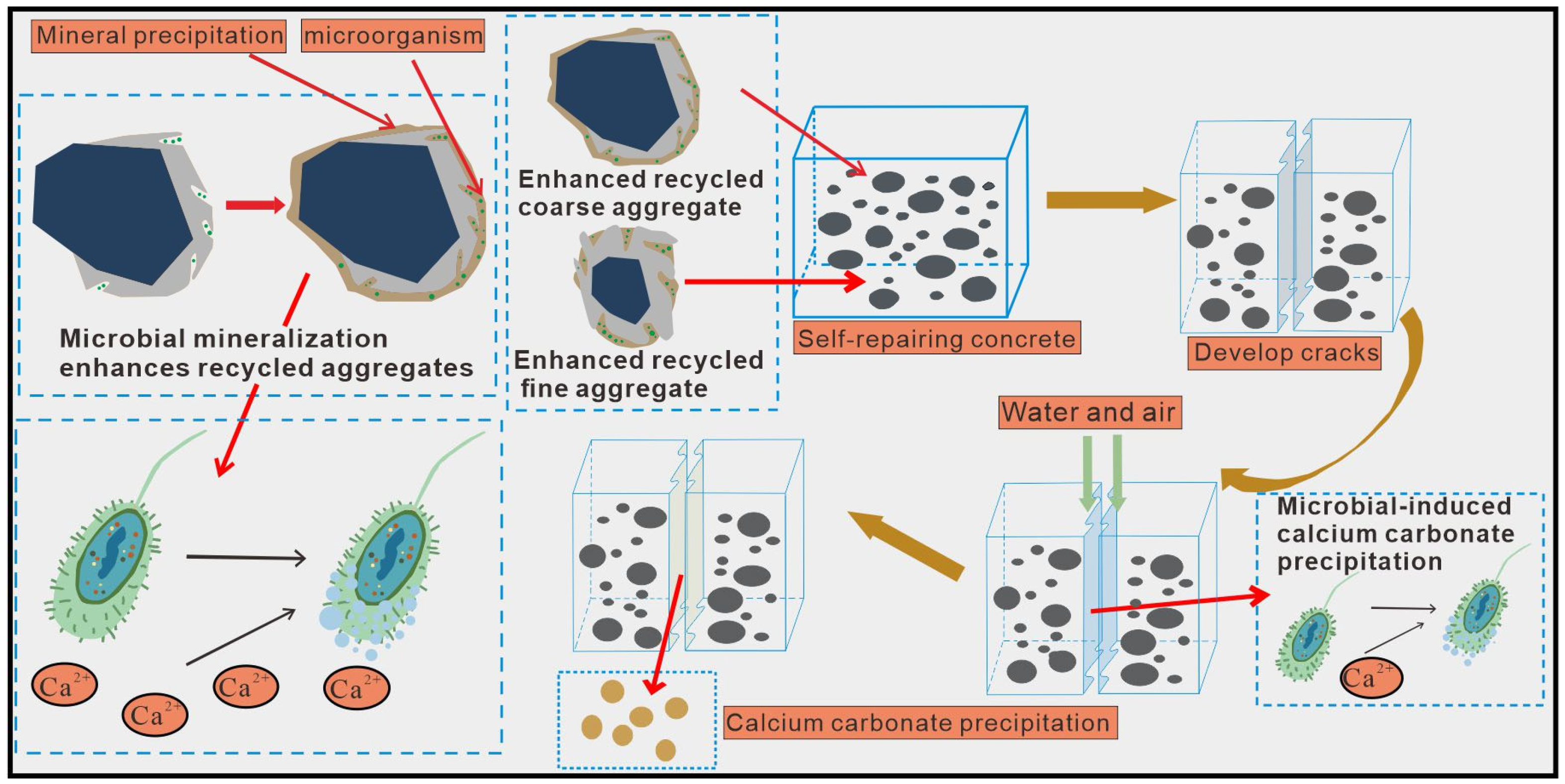
2.1. The Process of Self-Healing in Concrete Cracks
2.2. Description of Microorganisms and Culture Media
2.3. Process for Reinforcing with Recycled Aggregates
2.4. Preparation of Self-Healing Concrete
2.5. Testing of Self-Healing Properties in Concrete Cracks
2.6. X-Ray Diffraction (XRD) Analysis
2.7. Scanning Electron Microscopy (SEM) and Energy-Dispersive Spectroscopy (EDS)
3. Results and Discussion
3.1. Water Absorption and Crushing Index of Enhanced Recycled Concrete Aggregate
3.2. Phase Analysis of Mixed-Bacterial Mineralized Precipitates
3.3. Microstructure of Mixed-Bacterial Mineralized Precipitates
3.4. Analysis of the Self-Healing Effect of Concrete Cracks
3.5. The Crack Healing Rates of Concrete at Different Repair Times
3.6. Analysis of the Compressive Strength of Repaired Concrete
4. Conclusions
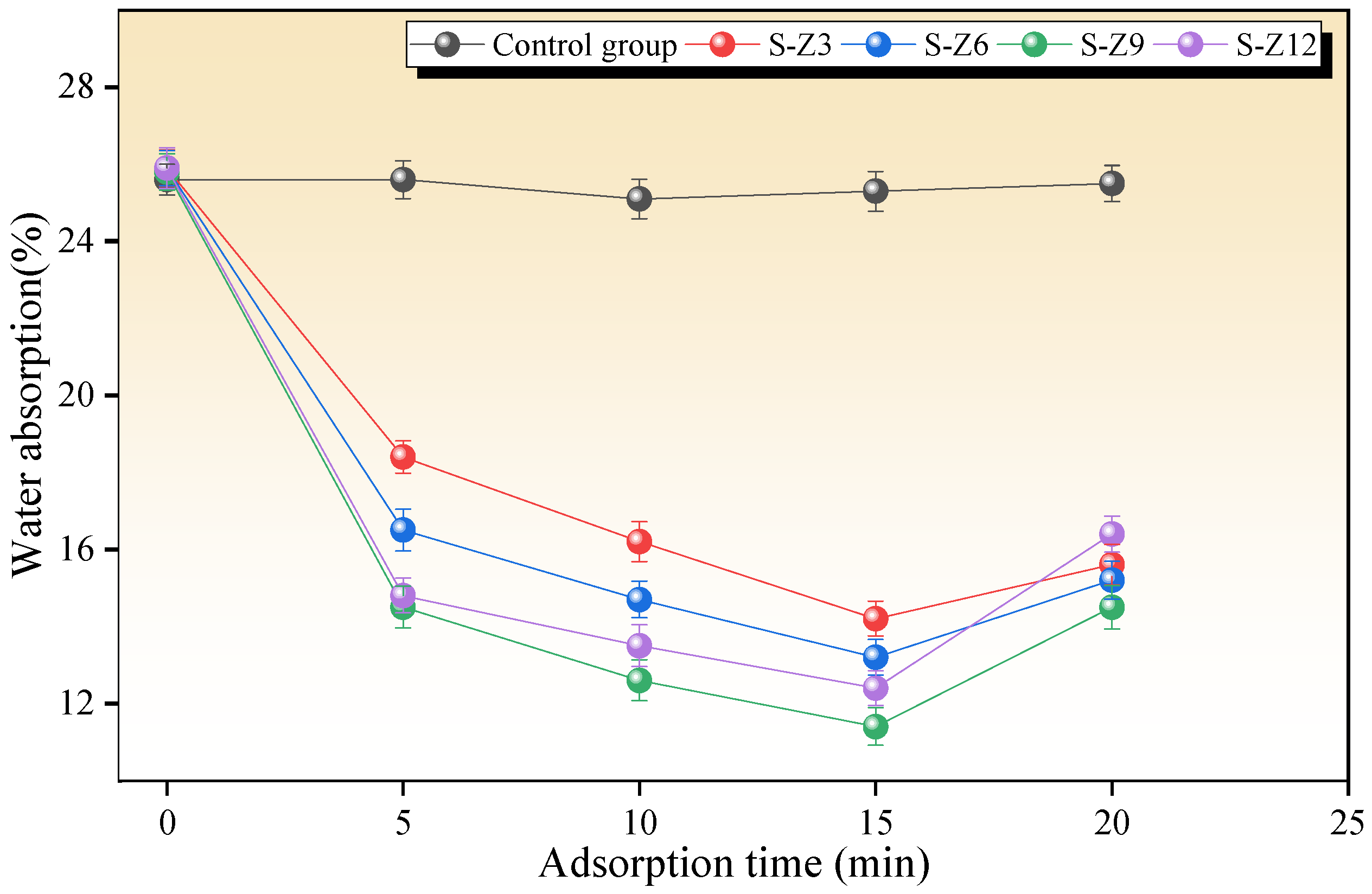
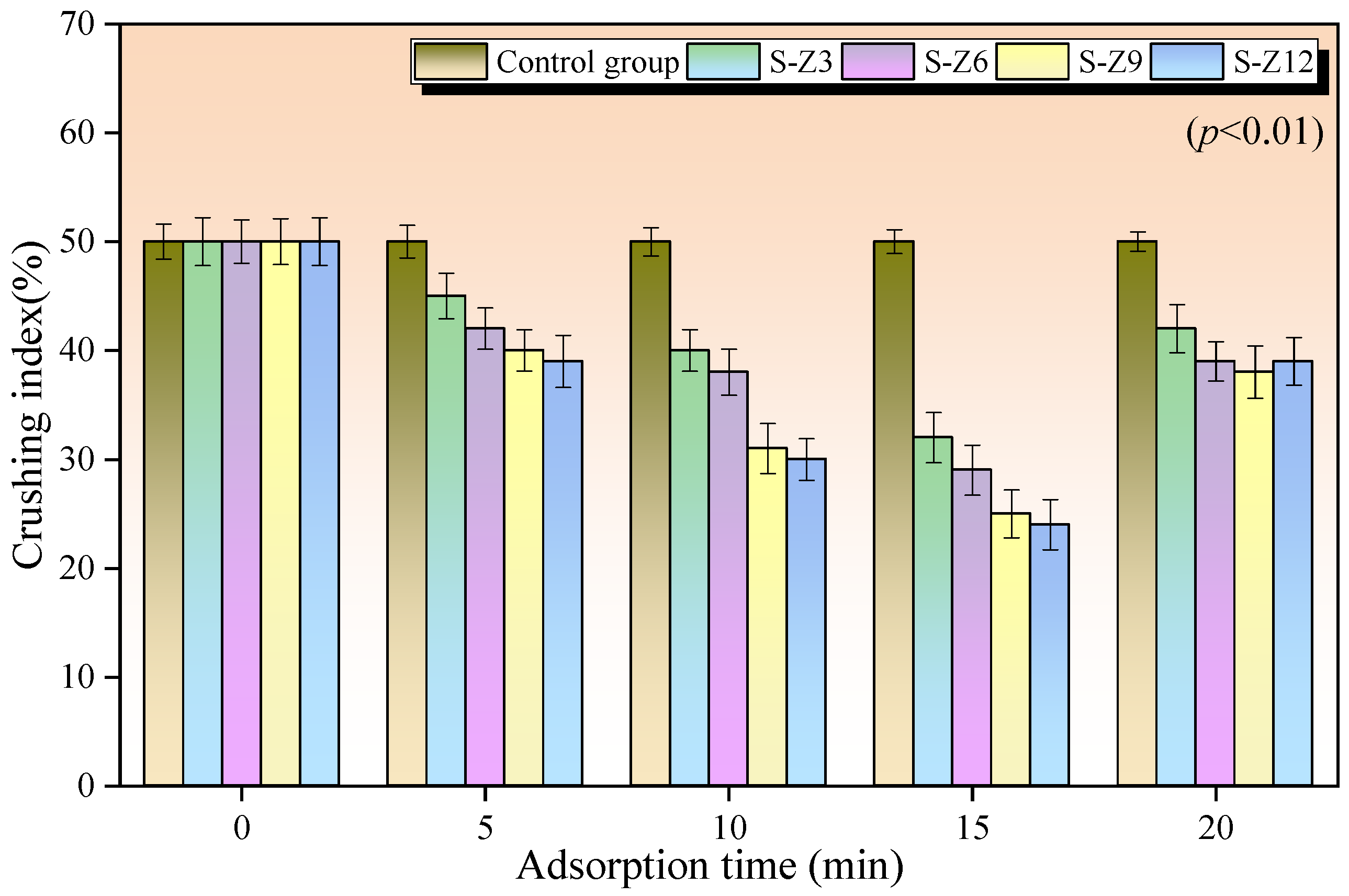
- As the duration of mixed-microbial mineralization treatment increased, the water absorption and crushing index of the recycled aggregates first decreased and then increased. After 9 days of mineralization treatment, the water absorption and crushing index of the recycled aggregates showed the greatest reduction, decreasing by 11.4% and 20.4%, respectively.
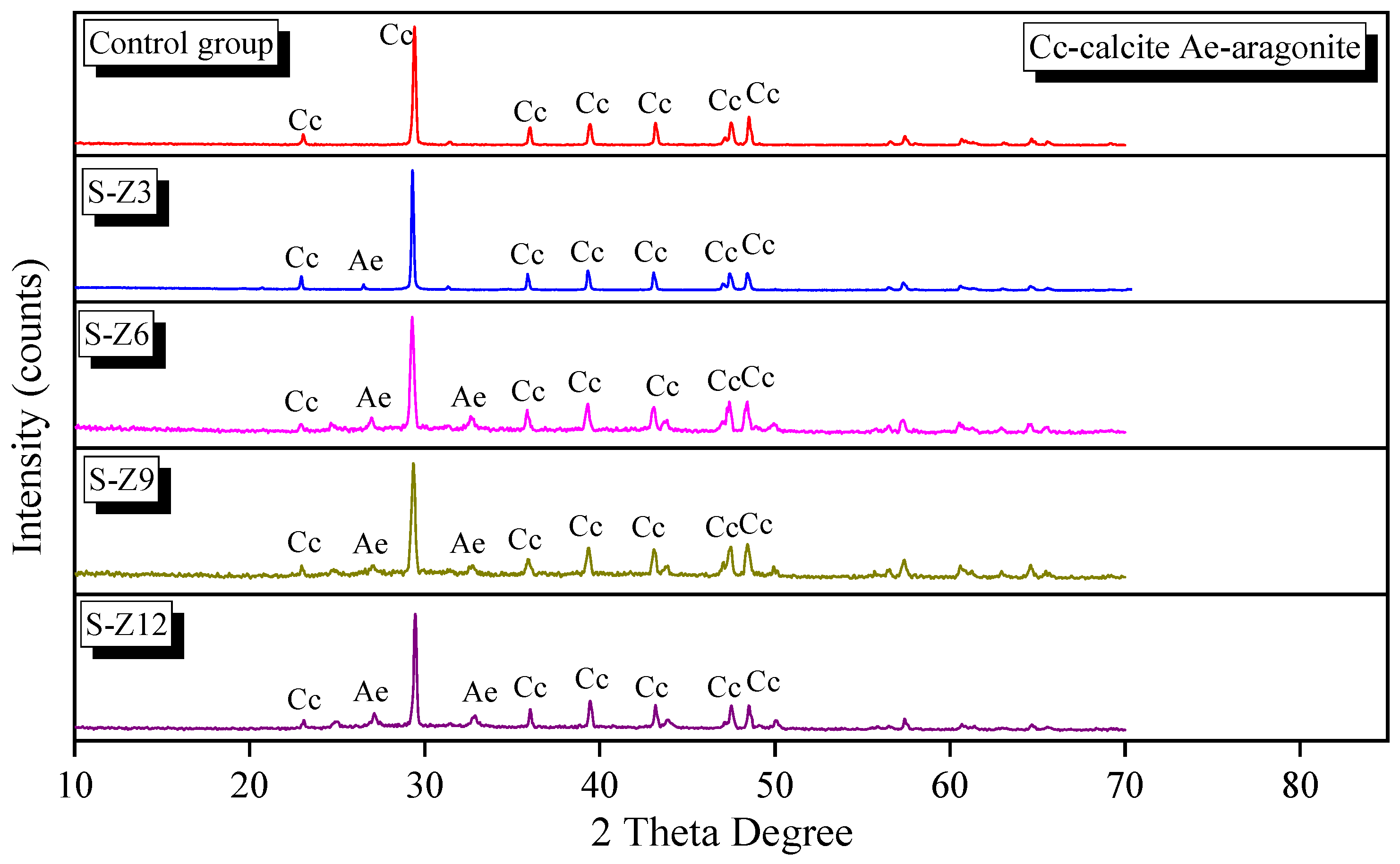
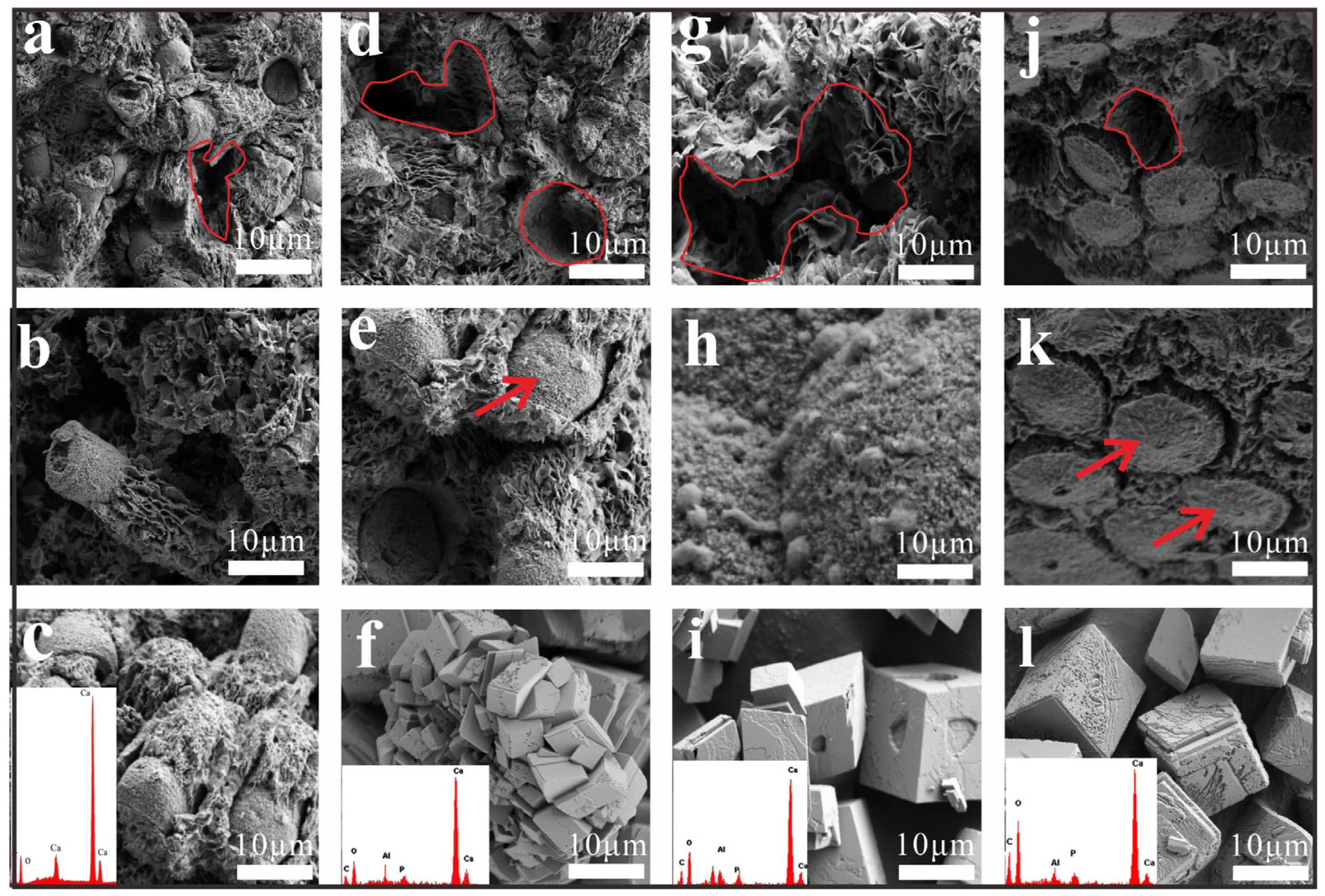
- The biomineralized precipitates in concrete cracks were formed by the interlocking of square and rhombohedral crystals, consisting of calcite- and aragonite-type calcium carbonate. The crystals were densely arranged and stacked, and exhibited good compatibility with the cementitious matrix.
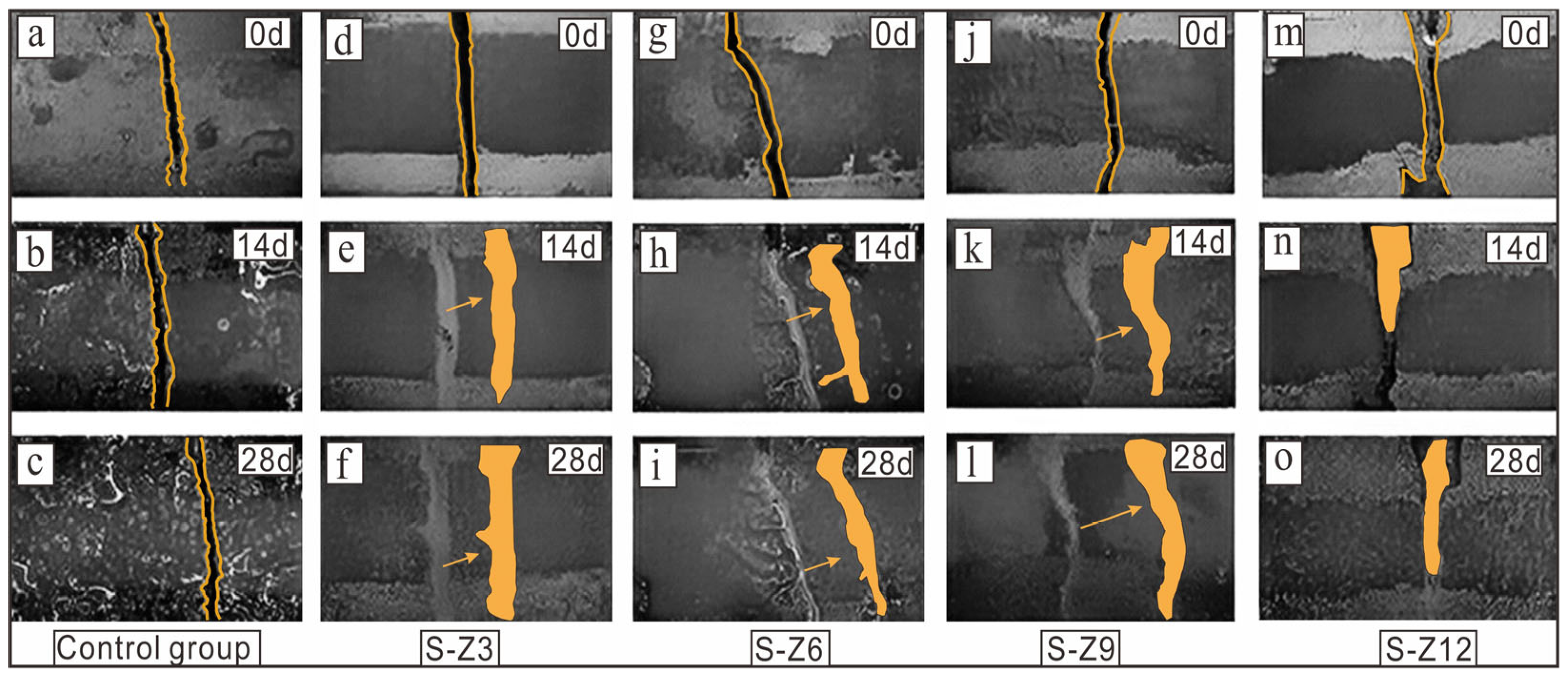
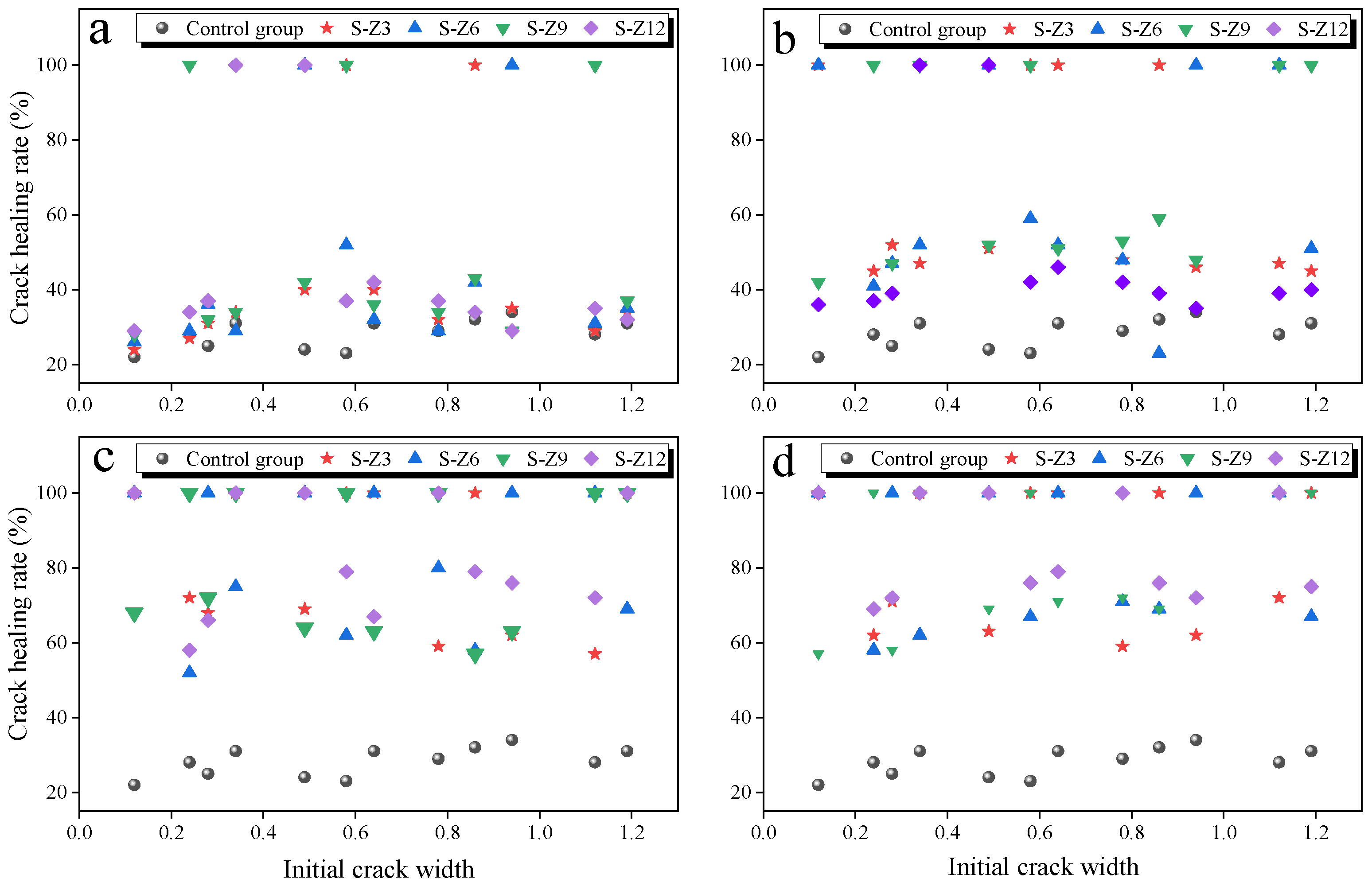
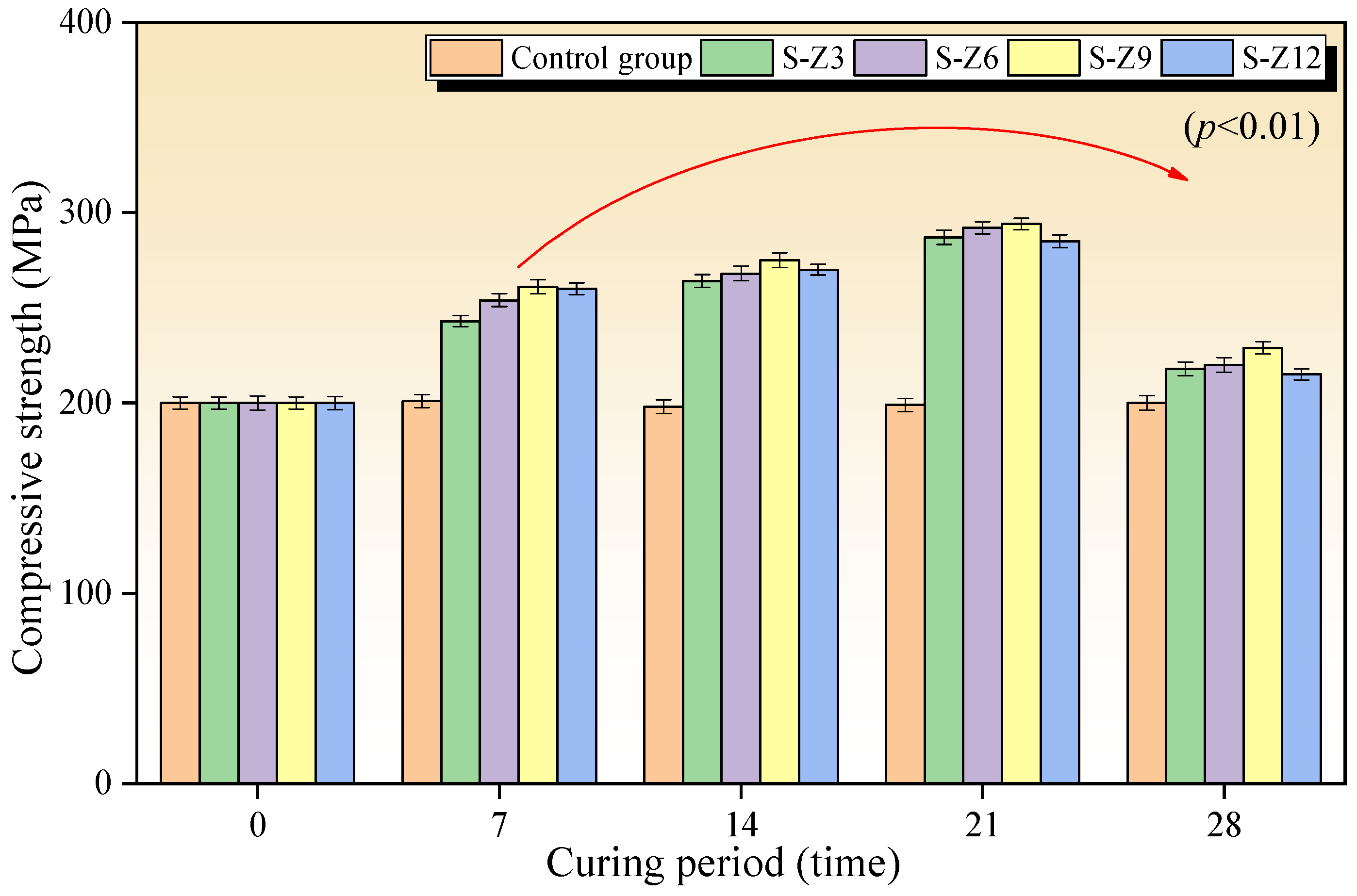
- The optimal adsorption and mineralization times for the recycled aggregate were 15 min and 9 days, respectively. The resulting concrete exhibited a compressive strength 35% higher than that of concrete made with the same recycled aggregate but without reinforcement. The average crack repair width and crack healing rate reached 0.28 mm and 70%, respectively, representing improvements of 39.7% and 42.6% compared to ordinary concrete.
Author Contributions
Funding
Data Availability Statement
Acknowledgments
Conflicts of Interest
References
- Cui, Z.; Alipour, A. Concrete cover cracking and service life prediction of reinforced concrete structures in corrosive environments. Constr. Build. Mater. 2018, 159, 652–671. [Google Scholar] [CrossRef]
- Askar, M.K.; Al-Kamaki, Y.; Ferhadi, R.; Majeed, H.K. Cracks in concrete structures causes and treatments: A review. J. Duhok Univ. 2023, 26, 148–165. [Google Scholar] [CrossRef]
- Jiang, L.; Li, P.; Wang, W.; Zhang, Y.; Li, Z. A self-healing method for concrete cracks based on microbial-induced carbonate precipitation: Bacteria, immobilization, characterization, and application. J. Sustain. Cem.-Based Mater. 2024, 13, 222–242. [Google Scholar]
- Kashif Ur Rehman, S.; Mahmood, F.; Jameel, M.; Riaz, N.; Javed, M.F.; Salmi, A.; Awad, Y.A. A biomineralization, mechanical and durability features of bacteria-based self-healing concrete—A state of the art review. Crystals 2022, 12, 1222. [Google Scholar] [CrossRef]
- Meng, H.; Lu, X.; Hussain, S.; Shaheen, A.; Liu, G. Self-healing behaviors of core–shell-structured microcapsules cement-based materials immobilized with microbes by expanded perlite. J. Nanoelectron. Optoelectron. 2021, 16, 1828–1833. [Google Scholar] [CrossRef]
- Soda, P.R.K.; Chakravarthi, E.K.; Mogal, A.; Mini, K. Statistical and experimental investigation on self-healing of microcracks in cement mortar by encapsulation of calcite precipitating bacteria into expanded perlite. Constr. Build. Mater. 2022, 342, 127985. [Google Scholar] [CrossRef]
- De Brito, J.; Ferreira, J.; Pacheco, J.; Soares, D.; Guerreiro, M. Structural, material, mechanical and durability properties and behaviour of recycled aggregates concrete. J. Build. Eng. 2016, 6, 1–16. [Google Scholar] [CrossRef]
- Su, Y.; Yao, Y.; Wang, Y.; Zhao, X.; Li, L.; Zhang, J. Modification of recycled concrete aggregate and its use in concrete: An overview of research progress. Materials 2023, 16, 7144. [Google Scholar] [CrossRef] [PubMed]
- Shen, L.; Yu, W.; Li, L.; Zhang, T.; Abshir, I.Y.; Luo, P.; Liu, Z. Microorganism, carriers, and immobilization methods of the microbial self-healing cement-based composites: A review. Materials 2021, 14, 5116. [Google Scholar] [CrossRef] [PubMed]
- Zou, Z.; Zhang, J.; Wang, P.; Han, R.; Liu, Y.; Zhou, A. Immobilizing bacteria in pre-enhanced recycled coarse and fine aggregates for improving the self-healing efficiency of cracks in concrete. J. Build. Eng. 2026, 119, 115250. [Google Scholar] [CrossRef]
- Liu, C.; Xu, X.; Lv, Z.; Xing, L. Self-healing of concrete cracks by immobilizing microorganisms in recycled aggregate. J. Adv. Concr. Technol. 2020, 18, 168–178. [Google Scholar] [CrossRef]
- Akhtar, M.K.; Kanwal, M.; Khushnood, R.A.; Khan, M.B.E. Assessment of mechanical attributes and microstructural densification of self-healing recycled coarse aggregate concrete using various bacterial immobilizers. J. Build. Eng. 2023, 69, 106229. [Google Scholar] [CrossRef]
- Wang, X.; Xu, J.; Wang, Z.; Yao, W. Use of recycled concrete aggregates as carriers for self-healing of concrete cracks by bacteria with high urease activity. Constr. Build. Mater. 2022, 337, 127581. [Google Scholar] [CrossRef]
- Zhang, Y.; Luo, W.; Wang, J.; Wang, Y.; Xu, Y.; Xiao, J. A review of life cycle assessment of recycled aggregate concrete. Constr. Build. Mater. 2019, 209, 115–125. [Google Scholar] [CrossRef]
- Guo, H.; Shi, C.; Guan, X.; Zhu, J.; Ding, Y.; Ling, T.-C.; Zhang, H.; Wang, Y. Durability of recycled aggregate concrete–A review. Cem. Concr. Compos. 2018, 89, 251–259. [Google Scholar] [CrossRef]
- Rombouts, J.L.; Kranendonk, E.M.M.; Regueira, A.; Weissbrodt, D.G.; Kleerebezem, R.; van Loosdrecht, M.C.M. Selecting for lactic acid producing and utilising bacteria in anaerobic enrichment cultures. Biotechnol. Bioeng. 2020, 117, 1281–1293. [Google Scholar] [CrossRef] [PubMed]
- Patel, M.A.; Ou, M.S.; Harbrucker, R.; Aldrich, H.C.; Buszko, M.L.; Ingram, L.O.; Shanmugam, K.T. Isolation and characterization of acid-tolerant, thermophilic bacteria for effective fermentation of biomass-derived sugars to lactic acid. Appl. Environ. Microbiol. 2006, 72, 3228–3235. [Google Scholar] [CrossRef] [PubMed]
- Naseer, K.; Ashfaq, K.; Shamim, A.; Saeed, M.; Tahir, U.; Batool, A.; Ali, Q.; Ali, D. Isolation of aerobic denitrifying bacteria Stutzerimonas stutzeri and its application in coking wastewater treatment. Sci. Rep. 2026, 16, 8717. [Google Scholar] [CrossRef] [PubMed]
- Wei, S.Z.; Xiao, B.Y.; Liu, J.X. Impact of alkali and heat pretreatment on the pathway of hydrogen production from sewage sludge. Chin. Sci. Bull. 2010, 55, 777–786. [Google Scholar] [CrossRef]
- Zhang, Z.; Zhang, Y.; Yan, C.; Liu, Y. Influence of crushing index on properties of recycled aggregates pervious concrete. Constr. Build. Mater. 2017, 135, 112–118. [Google Scholar] [CrossRef]
- Ding, Y.; She, A.; Yao, W. Investigation of water absorption behavior of recycled aggregates and its effect on concrete strength. Materials 2023, 16, 4505. [Google Scholar] [CrossRef] [PubMed]
- Lin, Z.; Kanwal, H.; Hao, W. Effects of crack width and healing time on healing performance of microcapsule-based self-healing concrete. J. Test. Eval. 2022, 50, 2043–2053. [Google Scholar] [CrossRef]
- Zhu, Y.; Piehowski, P.D.; Zhao, R.; Chen, J.; Shen, Y.; Moore, R.J.; Shukla, A.K.; Petyuk, V.A.; Campbell-Thompson, M.; Mathews, C.E.; et al. Nanodroplet processing platform for deep and quantitative proteome profiling of 10–100 mammalian cells. Nat. Commun. 2018, 9, 882. [Google Scholar] [CrossRef] [PubMed]
- Fantoni, R.; Caneve, L.; Colao, F.; Fornarini, L.; Lazic, V.; Spizzichino, V. Methodologies for laboratory laser induced breakdown spectroscopy semi-quantitative and quantitative analysis—A review. Spectrochim. Acta Part B At. Spectrosc. 2008, 63, 1097–1108. [Google Scholar] [CrossRef]
- Chen, Y.; Chen, Y.; Wang, S.; Chen, Z.; Guo, J.; Chen, G. Research progress and application prospects of microbial mineralization for repairing cracks in recycled concrete. Biochem. Eng. J. 2025, 219, 109733. [Google Scholar] [CrossRef]
- Soda, P.R.K.; Mini, K.M. Performance enhancement and remediation of microcracks in cement mortar by doping calcite-precipitating microorganisms. J. Mater. Civ. Eng. 2022, 34, 04022035. [Google Scholar] [CrossRef]
- Azarian, M.H.; Sutapun, W. Biogenic calcium carbonate derived from waste shells for advanced material applications: A review. Front. Mater. 2022, 9, 1024977. [Google Scholar] [CrossRef]
- Xing, X.; Zhong, G.; Wu, Z.; Cai, J.; Cheng, X. Self-healing mechanism of deposited carbonates in cement cracks under CO2 storage well conditions. Front. Mater. 2022, 9, 1013545. [Google Scholar] [CrossRef]
- Seifan, M.; Berenjian, A. Microbially induced calcium carbonate precipitation: A widespread phenomenon in the biological world. Appl. Microbiol. Biotechnol. 2019, 103, 4693–4708. [Google Scholar] [CrossRef] [PubMed]
- Pacheco, V.L.; Bragagnolo, L.; Reginatto, C.; Thomé, A. Microbially induced calcite precipitation (MICP): Review from an engineering perspective. Geotech. Geol. Eng. 2022, 40, 2379–2396. [Google Scholar] [CrossRef]
- Hashim, M.S.; Kaczmarek, S.E. The transformation of aragonite to calcite in the presence of magnesium: Implications for marine diagenesis. Earth Planet. Sci. Lett. 2021, 574, 117166. [Google Scholar] [CrossRef]
- Hu, H.T.; Fu, C.H.; Zhan, Q.W.; Zhang, X.; Ge, Y.; Zhou, J. Study on improving the crack self-healing width and depth based on microbial mineralization modified by Ca–Al bimetallic hydroxides. J. Build. Eng. 2024, 91, 109598. [Google Scholar] [CrossRef]
- Kamal, A.; Nazish, M.; Kamal, K.; Akbar, M.; Ansir, F.; Aslam, N.; Riaz, M.S.; Albasher, G.; Munis, M.F.H. Trichoderma harzianum-loaded maize biochar enhances Cd–Cu immobilization and reduces bio-accessibility in contaminated soil. Sci. Rep. 2025, 15, 28099. [Google Scholar] [CrossRef] [PubMed]
- Shi, M.; Fang, Y.; Zhang, F.; Chu, H.; Jin, W.; Li, W.; Qi, Z.; Jiang, L. A bionic mineral precipitation method to improve the mechanical and vegetative properties of ecological concrete. Constr. Build. Mater. 2025, 476, 141294. [Google Scholar] [CrossRef]
- Zhuang, D.; Chen, S.; Li, J.; Han, S.; Guo, Y. Recycled coarse aggregate from waste concrete strengthened by microbially induced calcium carbonate precipitation. Environ. Technol. Innov. 2025, 37, 103981. [Google Scholar] [CrossRef]



| Number | Mix Proportion (kg/m3) | ||||||
|---|---|---|---|---|---|---|---|
| Recycled Coarse Aggregate | Sand | Recycled Fine Aggregate | Cement | Water | Water Reducer | Calcium Lactate | |
| Control Group | 500 | 200 | 80 | 200 | 100 | 1.8 | 4.8 |
| S-Z3 | 500 | 200 | 80 | 200 | 100 | 1.8 | 4.8 |
| S-Z6 | 500 | 200 | 80 | 200 | 100 | 1.8 | 4.8 |
| S-Z9 | 500 | 200 | 80 | 200 | 100 | 1.8 | 4.8 |
| S-Z12 | 500 | 200 | 80 | 200 | 100 | 1.8 | 4.8 |
Disclaimer/Publisher’s Note: The statements, opinions and data contained in all publications are solely those of the individual author(s) and contributor(s) and not of MDPI and/or the editor(s). MDPI and/or the editor(s) disclaim responsibility for any injury to people or property resulting from any ideas, methods, instructions or products referred to in the content. |
© 2026 by the authors. Licensee MDPI, Basel, Switzerland. This article is an open access article distributed under the terms and conditions of the Creative Commons Attribution (CC BY) license.
Share and Cite
Luo, X.; Zhuang, D.; Liu, W. A Study of the Self-Healing Mechanism of Concrete Using Microorganisms Immobilized in an Improved Recycled Aggregate. Buildings 2026, 16, 2914. https://doi.org/10.3390/buildings16142914
Luo X, Zhuang D, Liu W. A Study of the Self-Healing Mechanism of Concrete Using Microorganisms Immobilized in an Improved Recycled Aggregate. Buildings. 2026; 16(14):2914. https://doi.org/10.3390/buildings16142914
Chicago/Turabian StyleLuo, Xinqi, Dingxiang Zhuang, and Wenpei Liu. 2026. "A Study of the Self-Healing Mechanism of Concrete Using Microorganisms Immobilized in an Improved Recycled Aggregate" Buildings 16, no. 14: 2914. https://doi.org/10.3390/buildings16142914
APA StyleLuo, X., Zhuang, D., & Liu, W. (2026). A Study of the Self-Healing Mechanism of Concrete Using Microorganisms Immobilized in an Improved Recycled Aggregate. Buildings, 16(14), 2914. https://doi.org/10.3390/buildings16142914