Review

BIM-Based Digital Twins for Sustainable Building Management: A Tertiary Literature Review

by
Francisco Valdez Apolo
1,
Andrea Paulina Rodríguez Zúñiga
2,
Paul Cárdenas-Delgado
2,*,
Cristian Guaman Sanchez
1,
Cristian Medina-Galarza
1,
Alfredo Ordoñez
1 and
Priscila Cedillo
2
1
Virtualtech Research Group, Facultad de Arquitectura y Urbanismo, Universidad de Cuenca, Cuenca 010107, Ecuador
2
Departamento de Ciencias de la Computación, Universidad de Cuenca, Cuenca 010107, Ecuador
*
Author to whom correspondence should be addressed.
Buildings 2026, 16(14), 2850; https://doi.org/10.3390/buildings16142850
Submission received: 7 May 2026 / Revised: 6 July 2026 / Accepted: 7 July 2026 / Published: 17 July 2026
(This article belongs to the Special Issue Digital Twins in Construction, Engineering and Management)

Abstract

Building Information Modeling-based (BIM) Digital Twins (DT) are increasingly adopted to support sustainable building management; however, the growing body of secondary literature—systematic reviews, surveys, and bibliometric studies—remains methodologically fragmented and lacks a consolidated tertiary synthesis. This fragmentation prevents researchers and practitioners from identifying consistent guidelines, validated frameworks, and comparable software ecosystems across the field. To address this gap, this study conducts a tertiary review of 57 secondary studies published between 2018 and 2025, following Kitchenham and Charters’ evidence-based guidelines and the PICOC framework. Data extraction and comparative analysis were conducted across seven criteria, including methodological approaches, proposed frameworks, enabling technologies, software tools, and reported limitations. The results reveal that bibliometric analyses and systematic literature reviews dominate the field, with few yielding structured frameworks and taxonomies; nearly half of the reviewed studies do not assess specific software platforms. Artificial intelligence and the internet of things are among the most widely studied enabling technologies, primarily associated with energy management, predictive maintenance, and structural monitoring, yet their integration with BIM-based DT platforms is inconsistently documented. The findings expose persistent interoperability constraints, insufficient data governance structures, limited maturity models, and a lack of large-scale empirical validation—gaps that this tertiary synthesis maps and prioritizes to guide future research toward reproducible, scalable, and sustainability-oriented DT implementations in the architecture, engineering, and construction sector.

1. Introduction

The digital transformation of the Architecture, Engineering, and Construction (AEC) sector constitutes a central pillar of Industry 4.0 and 5.0, driven by the need to enhance operational efficiency, sustainability, and holistic life-cycle management of buildings [1,2]. In this context, Digital Twins (DT) have emerged as dynamic Cyber-Physical Systems (CPS) capable of monitoring, diagnosing, and predicting performance conditions during the building operation phase [2,3]. The structural foundation of DT in the AEC domain is based on Building Information Modeling (BIM), which provides geometric and semantic representations, while DT integrates continuous data streams through the Internet of Things (IoT), Artificial Intelligence (AI), cloud computing, big data, and CPS [4]. The evolution from BIM toward DTs directly addresses global sustainability demands, aligning with the Sustainable Development Goals (SDGs) and the development of Nearly Zero-Energy Buildings (NZEBs) [5].
In recent years, there has been rapid growth in systematic reviews, surveys, and bibliometric studies addressing DT in AEC. However, these studies exhibit high methodological heterogeneity and a lack of consistent theoretical frameworks and comparative taxonomies [6,7]. Moreover, research has largely focused on early stages of DT development, emphasizing conceptual approaches or prototype systems with partial integration of IoT data into BIM environments [8]. In addition, BIM tools dominate the DT ecosystem, while systematic evaluations of operational platforms, Common Data Environment (CDE), and asset management systems remain limited [2,3].
Similarly, recent systematic reviews reveal an evolution of the field toward topics such as energy efficiency, circular economy, the metaverse, and CPS, driving a gradual transition from conceptual approaches to more operational applications [7,9,10]. Despite the growing number of secondary studies, the existing body of literature remains fragmented across methodological approaches, technological domains, and application contexts. Current reviews tend to focus on specific aspects of DT, such as enabling technologies or particular use cases, without providing an integrated and structured overview of the field. In addition, inconsistencies in methodological approaches, limited assessment of software and technological tools, and the absence of unified classification frameworks hinder the consolidation of knowledge and the identification of research gaps.
This fragmentation makes it difficult to obtain a comprehensive understanding of how DT is being developed using BIM, which technologies and tools are being adopted, and what research topics are currently being prioritized. As a result, both researchers and practitioners face challenges when attempting to position new contributions or design coherent implementation strategies.
Therefore, the aim of this study is to conduct a tertiary review of systematic reviews, surveys, and bibliometric studies focused on the development of BIM-based DT for sustainable building management. While existing reviews provide valuable insights into specific technologies, applications, or research trends, they do not offer a consolidated synthesis of the review landscape itself. By systematically analyzing and comparing secondary studies, this work provides an integrated perspective on the methodological approaches, technological components, software and hardware ecosystems, and application domains that shape current BIM-based DT research. This study adopts a structured qualitative synthesis approach grounded in evidence-based research, following the guidelines proposed by Kitchenham and Charters [11].
To the best of the authors’ knowledge, no previous tertiary review has specifically addressed BIM-based Digital Twins for sustainable building management. The novelty of this study lies in treating the secondary literature itself as the unit of analysis and in integrating dimensions that previous reviews have often examined separately.
Accordingly, the contribution of this work is threefold: (i) to provide a tertiary synthesis of systematic reviews, surveys, and bibliometric studies on BIM-based Digital Twins for sustainable building management; (ii) to integrate methodological approaches, enabling technologies, software and hardware ecosystems, and application domains within a common analytical structure; and (iii) to identify cross-cutting gaps and underexplored areas across the secondary literature, thereby providing a consolidated basis for future research and practical implementation in the AEC sector.
This study is guided by the following Research Questions (RQs): RQ1. How have existing secondary studies synthesized and represented the knowledge for BIM-based DT development? RQ2. What software and hardware tools are used in developing DT through BIM? RQ3. What topics are being addressed by research on the development of DT? These RQs aim to identify the proposed methods and frameworks, the software and hardware tools employed, the predominant research approaches, and the main limitations of the current state of knowledge. The results enable the identification of persistent patterns and gaps and provide a solid conceptual foundation for future research and practical applications within the context of sustainability in the AEC sector.
Finally, the rest of this paper is structured as follows. Section 2 presents background concepts needed for the reader to understand the field in which this study takes place. Section 3 explains in detail the methodology used to carry out the SLR. Next, Section 4 presents all the findings by year and country, and for each Extraction Criteria (EC), the relations between the criteria are also shown. Then, Section 5 addresses each RQ based on the analyzed results; in addition, gaps, trends, and limitations are noted. Moreover, Section 6 outlines the steps taken to assess quality throughout the study. Finally, in Section 7, the authors conclude the study, stressing the main results, findings, and future directions for investigation.

2. Theoretical Framework

DT emerges in Industry 4.0 as systems that integrate virtualization, feedback, and simulation to optimize resources and sustainability [1,12], applied in health, transport, energy, and more recently in the AEC sector, where they enable dynamic asset management. In AEC, DT represents a transition from static models to cyber-physical models that operate, predict, and diagnose in real time [13,14]; their ability to integrate data across the life cycle drives monitoring and operational prediction [15,16].
DT builds its structural basis on BIM, which provides geometric and semantic structure, while DT adds continuous data flows via IoT, AI, cloud computing, big data, and CPS. The BIM, IoT, DT triad organizes sector-wide digitalization, although still limited by interoperability issues and a lack of standards [4]. During this transition, multiple methodological approaches have been proposed to support DT implementation, including BIM-driven workflows, data integration pipelines, and CPS-based architectures, although the standardization and reproducibility of these approaches remain uneven across studies. Central to this variability is the absence, across much of the BIM-based DT literature, of a shared framework for classifying digital representations according to their level of cyber-physical integration. Kritzinger et al. [17] propose the most widely adopted taxonomy for this purpose, distinguishing three levels. A Digital Model (DM) is a digital representation of an existing or planned physical object in which no automated data exchange exists between the physical and digital counterparts; all updates must be performed manually. A Digital Shadow (DS) adds an automated, one-way data flow from the physical object to its digital representation, so that changes in the physical asset are automatically reflected digitally, though the DS cannot alter the state of the physical asset in return. A DT, in the strict sense, requires a fully integrated, bidirectional, automated data flow between both objects [7,8].
This taxonomy aligns with the structural requirements described by Tao et al. [1], whose three-dimension model, comprising physical entity, virtual entity, and connection, and subsequent five-dimension extension adding services and data specify the architecture necessary to sustain the bidirectional link that characterizes a true DT. Bidirectionality is therefore the defining criterion that separates a DT from a DM or a DS. Within this framework, CPS denotes the broader systems-engineering paradigm in which computational and physical processes are integrated through sensing, networking, actuation, and control infrastructures. In the AEC domain, a DT built upon BIM represents the operational instantiation of a CPS: BIM provides the geometric and semantic structure, while IoT, AI, and cloud computing enable the real-time data flows required to elevate a static DM toward a fully bidirectional DT. Labels such as “Cyber-Physical Model” and “Smart Twin”, encountered recurrently across the reviewed literature, generally denote partial instantiations of these integration levels without constituting formally distinct conceptual categories. The evolution from BIM to DT responds to sustainability demands, SDG, and NZEB targets [5]. However, thematic fragmentation persists, requiring tertiary studies that synthesize methods, approaches, theoretical frameworks, and research gaps to consolidate the field.
The field is rapidly growing with numerous reviews, yet it shows methodological heterogeneity and a lack of consolidated theoretical frameworks. Liu et al. [12], analyzing 842 articles, identify three contribution types: case studies, frameworks, and technological developments; this evidences a field still in the process of structuring. Nguyen and Adhikari [15], reviewing 150 studies, highlight interoperability, level of detail, scalability, and life-cycle integration as key research challenges.
The literature shows a predominance of methods focused on the BIM-to-DT transition. Many studies remain in early stages (conceptual or prototype) with partial IoT integration [14]. The ecosystem is strongly dominated by BIM tools, as BIM reduces errors, clashes, and delays, and 4D BIM optimizes planning and project management [13,18]. Shishehgarkhaneh et al. [3], through a bibliometric analysis, identify an expansion toward the circular economy, the metaverse, and CPS. From a technological perspective, these approaches rely on heterogeneous software ecosystems, including BIM authoring tools, interoperability standards such as Industry Foundation Classes (IFC), cloud-based platforms, and IoT-enabled data infrastructures, yet the literature lacks a consistent classification of these systems across applications.
Currently, DT research increasingly focuses on energy efficiency through real-time data and AI integration [10]. The field is evolving toward systematic reviews, bibliometric analyses, and conceptual taxonomies. Five emerging research lines include technological sustainability, digital construction, data-driven infrastructure, digital heritage, and architectural efficiency [19]. However, several research gaps persist: a lack of a unified definition of DT, a scarcity of studies on existing undocumented buildings, and a lack of comparative metrics.
Although DT in Industry 4.0 is mature, its transfer to the AEC sector remains partial [20]. Multiple cross-cutting challenges hinder implementation. Syntactic and semantic interoperability remains the major technical challenge due to the absence of common protocols [6]. Organizational barriers, rigid contractual structures, lack of data governance, and institutional resistance also complicate the DT–BIM transition [6]. Functional classification is crucial to systematize a dispersed field. By life-cycle phase, research is concentrated in design and construction, with fewer studies in operation and maintenance [7], although deep operational integration is still limited [14].
By purpose or function, DTs are classified according to anomaly detection, predictive maintenance, and operational optimization [4] By maturity or scale: conceptual, pilot, operational, institutional [14]. By represented object: building, infrastructure, energy systems, and subcomponents; multiscale DT requires greater interoperability [6]. Liu et al. [12] highlight the lack of consistent taxonomies; many studies do not specify phase, function, maturity, or scale, complicating comparison. These classification approaches, however, are not consistently applied across studies, limiting their usefulness for systematic comparison and synthesis.
Energy optimization benefits significantly from BIM + IoT integration, enabling continuous adjustment of energy parameters via multicriteria optimization. AI-enhanced models predict consumption and regulate Heating, Ventilation, and Air Conditioning (HVAC) intelligently [14]. Water-management applications are emerging: DT detects leaks and optimizes operation in water infrastructure systems. For preventive maintenance, DT improves O&M in NZEB buildings and enhances technical staff training [21]. In structural management, DT supports predictive safety and integrates information into CDE platforms to ensure traceability and resilience. In circular economy applications, DT enables material tracking, dismantling simulations, and life-cycle assessment (LCA) support [6,7,19].
DT, therefore, constitutes a cognitive infrastructure integrating technology, data, and sustainability. The field shows increasing technical maturity, particularly regarding AI, BIM, and DT integration for predictive energy management [22]. These applications demonstrate the practical outcomes of DT implementation, although the extent to which such results are empirically validated varies significantly across studies. Research is evolving toward circularity, resilience, and empirical verification, marking a transition from conceptual to operational approaches [6,7]. Despite these advances, limitations persist: methodological fragmentation, lack of coherent classification frameworks, and terminological inconsistency in the use of concepts such as DS, Cyber-Physical Model, and Smart Twin [7,14], whose formal distinctions, as addressed earlier in this section, remain inconsistently applied across the reviewed secondary literature.
Industry 5.0 promotes autonomous, resilient, and predictive DT supported by advanced AI technologies [8]. Organizations adopting AI-driven digital transformation demonstrate higher operational efficiency and competitiveness. DT, BIM integration is evolving toward sustainability-oriented digital ecosystems combining environmental, social, and economic indicators [7]. However, existing studies still highlight major gaps: absence of solid taxonomies, weak links between sustainability and digitalization, and limited large-scale validation [7].
Despite the growing number of reviews and surveys, to the best of the authors’ knowledge, no consolidated tertiary synthesis currently exists that critically integrates the dispersed findings across the field. In particular, the literature reveals a lack of standardized methodological guidelines, limited empirical validation of proposed approaches, and the absence of structured classifications of technological ecosystems, which together hinder comparability and large-scale implementation.
The need for a tertiary synthesis framework that integrates existing reviews and establishes homogeneous categories for comparing methods, tools, and metrics justifies this study, which addresses these limitations by synthesizing existing approaches. It identifies patterns in technological implementations and structures a comparative framework to support more consistent analysis of DT applications in AEC.

3. Research Method

This study adopts a tertiary review approach based on the methodology proposed by Kitchenham and Charters [11], which provides a structured framework for identifying, evaluating, and synthesizing the literature relevant to a particular research question or topic. According to Kitchenham and Charters [11], in a domain where a number of systematic reviews already exist, it may be possible to conduct a tertiary review, which is a systematic review of systematic reviews, to answer broader RQs. In this context, this work presents a tertiary review that uses the same methodology as a standard SLR.
The review process is structured into three main stages: planning, conducting, and reporting. In the planning stage, the RQs and review protocol are defined. The conducting stage involves selecting studies based on predefined criteria, followed by data extraction, quality assessment, and synthesis. Finally, in the reporting stage, the results are structured and presented to ensure transparency and reproducibility.

3.1. Planning the Review

This work presents a tertiary review of BIM and DT, specifically aimed at pinpointing recent developments and existing research gaps in the field. According to Petticrew and Roberts [23], RQs can be structured through the PICOC framework, which includes Population, Intervention, Comparison, Outcome, and Context. Within this framework, population refers to the specific role, group, or application domain under study. The intervention refers to the method, tool, technology, or procedure intended to address a particular issue. Comparison refers to the methodology, technology, or design against which the intervention is evaluated. Outcome refers to the aspects or results considered relevant for practitioners. Context refers to the conditions under which the comparison takes place, including the participants and the tasks performed. In this review, the application of these criteria is summarized in Table 1.
The PICOC framework was used to define the scope of the review and ensure a structured formulation of the RQs, inclusion criteria, and search strategy. This approach improves the study’s transparency and reproducibility by clearly linking the research objectives to the selection and analysis of the literature. Based on this approach, the main research question was: How are BIM-based DTs developed and applied for sustainable building management, according to secondary studies, and what challenges and open research directions define the domain’s future? Three sub-questions (RQ1–RQ3) complement this, focusing on identifying proposed methods and frameworks, the tools used, the predominant research approaches, and the limitations of the current literature. Furthermore, the PICOC statement was used to define the main study topics, search strings, and combined terms for BIM, DT, sustainability, and secondary studies, and were syntactically adapted to each digital library. Search string tests identified the following string as generating the most relevant papers: (“Building Information Modeling” OR “BIM”) AND (“sustainability” OR “efficiency”) AND (“Digital Twins” OR “DT”) AND (“Review” OR “Survey” OR “Literature” OR “Mapping”).

3.1.1. Identification of Data Sources and Search Strategy

The search strategy combined automated and manual searches to identify relevant secondary studies on the development of DT using BIM. First, the automated search was conducted in the IEEE Xplore, ACM Digital Library, SpringerLink, and ScienceDirect databases, considering publications from 2018 to 2025. The year 2018 was selected as the starting point because the publication of ISO 19650-1:2018 [24] established the concepts and principles for BIM-based information management. The automated search included journal articles and conference proceedings, and was based on titles, keywords, and abstracts. The search string was adjusted for each library to match its specific syntax requirements. Second, a manual search was conducted to complement the automated process. For this purpose, conference proceedings and journals relevant to the domain were examined (see Table 2). For journals, the Journal Citation Report (JCR) rankings were used to categorize them into quartiles (Q1–Q4). For conferences, the CORE ranking system (A*, A, B, C) was used (see Table 2). Some studies were excluded at this stage because they had already been identified in the automated search.

3.1.2. Selection Criteria for Secondary Studies

The inclusion criteria considered are presented in Table 3. Secondary studies of the following types were included: SLRs, surveys, bibliometric studies, and studies that explicitly address the integration of DT and BIM and are published in English. Primary studies, short papers of fewer than five pages, and introductory articles, editorials, or articles without relevant methodological contributions were excluded. However, automatic search results may include unrelated studies. Therefore, the selection of studies was carried out in multiple stages, beginning with the review of titles, abstracts, and keywords. Discrepancies were resolved by consensus after reviewing the full texts of the conflicting studies. To ensure transparency and traceability, a record of excluded articles was maintained. The selection results were then organized into tables showing the number of selected and excluded articles, classified by year of publication and source.

3.1.3. Data Extraction Strategy

To systematically analyze the selected studies, data extraction was performed using a structured process, in which the criteria presented in Table 4 were considered to address the specific RQs. The criteria were chosen following the PICOC statement from which the RQ emerged, too. Additionally, the quality score for each study and the number of primary studies included in each review were documented. In this process, each researcher extracted the criteria relevant to their expertise in their study area to assess the accuracy of the collected information. Moreover, for each study, bibliographic data were recorded, including publication source, year, authors, institutional affiliation, and country of origin.
The coding process allowed assigning multiple categories to the same study when appropriate, and the “None” category was used when the information was not explicitly reported in the analyzed source. Data analysis was carried out using basic statistical procedures. The techniques employed included tabulating the extracted data, counting frequencies by analytical category, and comparing the different defined categories of evidence. The answers to the RQs (RQ1–RQ3) were obtained through a cross-synthesis of the results for criteria EC1–EC7. For analysis and visualization, data matrices in spreadsheets were used, supplemented by bubble charts to illustrate relationships among categories, approaches, and research gaps.
For RQ1, the goal is to identify guidelines that improve DT development using BIM. Two criteria are considered. EC1 classifies studies according to their methodological design, including SLRs, which provide a structured and reproducible synthesis of evidence; systematic mappings, which identify and categorize research trends and gaps; literature surveys, which provide broad descriptive syntheses of existing research in the field; bibliometric or meta-analytic studies, which quantitatively examine publication patterns or statistically integrate findings; and other approaches. EC2 identifies the type of practical contribution reported, such as methodologies that propose structured procedures, frameworks that offer conceptual structures, guides or processes that describe step-by-step actions, taxonomies that classify concepts hierarchically, or none when no explicit practical contribution is provided.
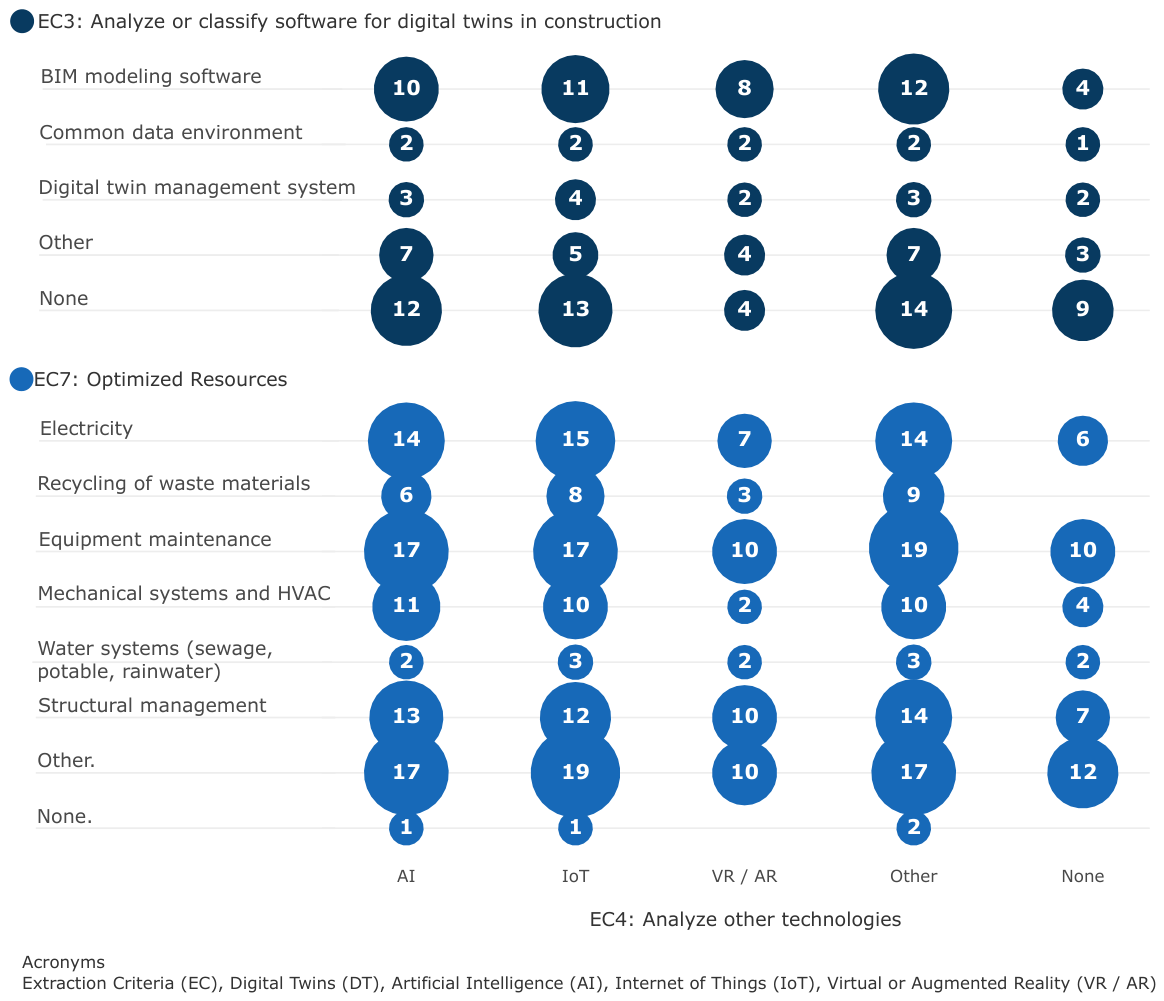
EC3 aims to identify and classify the software environments used to implement DT in the construction domain, as reported in the selected review studies. DT systems typically integrate multiple digital tools to support modeling, data management, and system monitoring throughout the building life cycle. For each selected review, the software tools described in the primary studies (as synthesized in the review) were identified and categorized by their primary function within the DT ecosystem. The classification includes: (i) BIM modeling software, referring to tools used for the creation and management of building information models. (ii) CDE software, enabling centralized data storage, collaboration, and information exchange; (iii) DT Management Systems (DTMS), defined as platforms that integrate real-time data, simulation, and monitoring capabilities within a DT framework; (iv) Other software, including complementary tools such as simulation engines, visualization platforms, or IoT interfaces; and (v) None, when no specific software was reported in the review. This classification enables a structured comparison of the technological ecosystems described in the literature and provides insight into the maturity and integration levels of DT-related software in the AEC industry.
EC4 examines the presence of additional enabling technologies (software and hardware) that complement BIM in DT development. Specifically, this criterion assesses whether the reviewed studies report the use of technologies such as AI, IoT, Virtual Reality (VR), and AR, as well as related technological components. Including EC4 in the review is important because BIM-based DT does not operate in isolation; rather, they rely on an ecosystem of complementary technologies that enable sensing, data processing, analytics, and immersive interaction with built environments. By systematically capturing these technologies, EC4 allows the review to identify prevailing technological trends, reveal how BIM is being extended through emerging digital tools, and highlight potential gaps in the integration of software and hardware solutions across the architectural and engineering domains.
EC5 examines the challenges associated with implementing DT based on BIM. This criterion categorizes barriers identified in the reviewed studies into industry-related, political and legal, social and organizational, technological, and economic challenges. Including EC5 is essential because implementing BIM-based DT requires not only technological infrastructure but also regulatory frameworks, organizational capabilities, and stakeholder collaboration within the AEC industry. Recent studies emphasize that interoperability limitations, data integration issues, and lack of standardized frameworks remain major technological obstacles, while organizational resistance and governance issues also affect DT adoption [12].
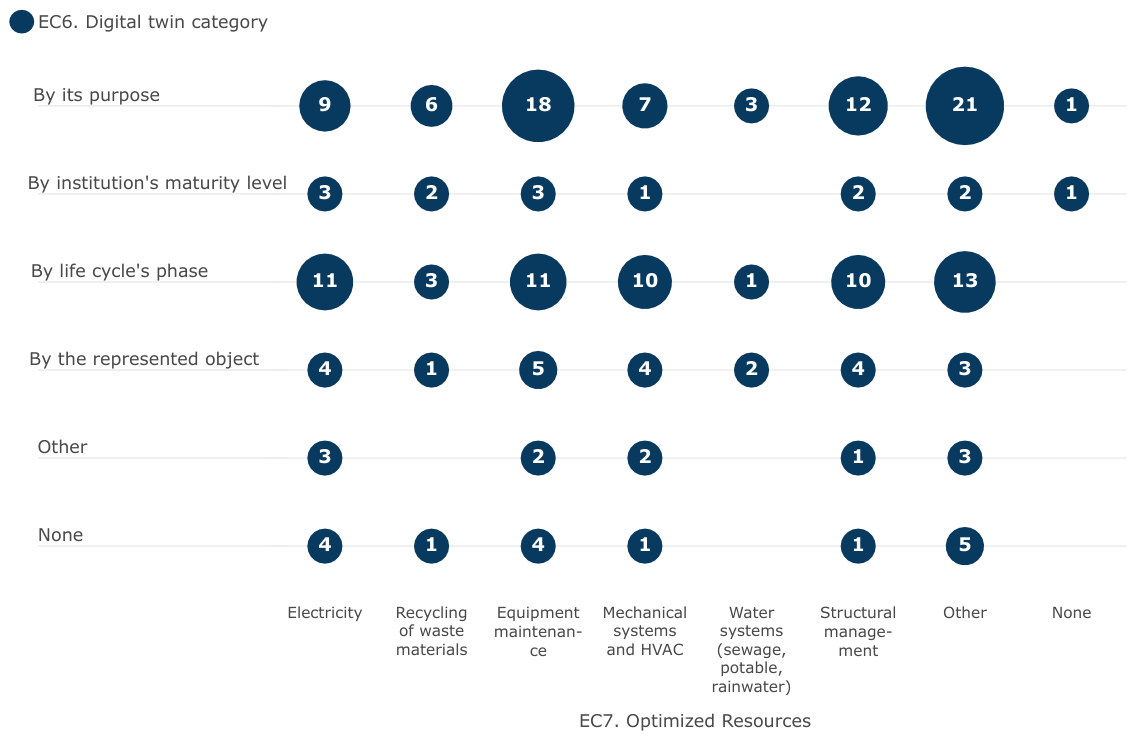
EC6 aims to identify how DT are categorized within the context of BIM, as reported in the selected review studies. The classification of DTs varies across the literature depending on their function, level of development, and application context. For each selected review, the categorization approaches described in the primary studies (as synthesized within the review) were identified and classified according to the following criteria: (i) by purpose, referring to the intended function of the DT (e.g., monitoring, prediction, optimization); (ii) by the represented object, distinguishing between DTs of components, buildings, or larger systems such as campuses or cities; (iii) by institution’s maturity level, indicating the level of digital or organizational development required to implement DT solutions; (iv) by life cycle phase, referring to the stage of the building life cycle addressed (e.g., design, construction, operation); (v) other, including alternative classification approaches not covered by the previous categories; and (vi) none, when no explicit DT categorization was reported in the review. This classification enables a structured understanding of how DT concepts are interpreted and applied in relation to BIM across the literature, highlighting differences in conceptualization, scope, and implementation maturity within the AEC domain.
EC7 focuses on optimizing resources through the integration of BIM and DTs. This criterion evaluates whether studies address improvements in operational domains, including electricity consumption, waste recycling, equipment maintenance, structural management, HVAC systems, and water management. The inclusion of EC7 is important because DT technologies enable real-time monitoring, predictive analytics, and data-driven decision-making, thereby improving operational efficiency and sustainability in built environments. Recent literature highlights that BIM-enabled DT support energy optimization, predictive maintenance, and infrastructure performance management, contributing to more sustainable and resilient building operations [25,26].

3.2. Conducting the Review

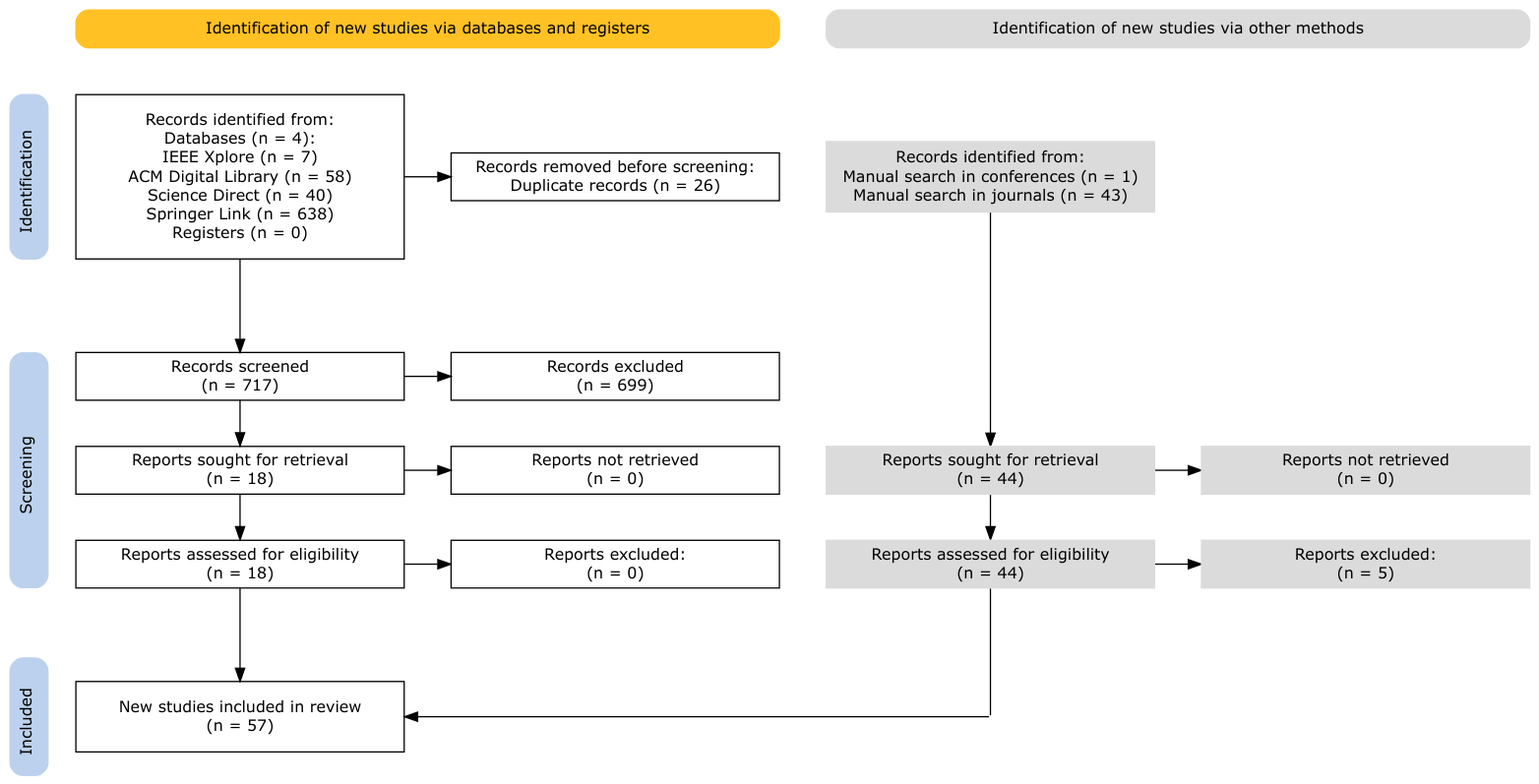
The initial automatic search using the search string across the four digital libraries retrieved 743 articles. Additionally, a manual search across four conferences and five journals on BIM and DT yielded 44 articles sought for retrieval. After a detailed scan of the titles and abstracts, we discarded duplicated papers, papers that did not meet the inclusion criteria, or that violated the exclusion criteria. Finally, 57 articles were selected. Figure 1 shows the number of papers found in each source, the papers screened at each stage, and the total number of studies that met inclusion criteria. In addition, materials related to the current SLR, including the protocol and extraction results, are publicly available on an Open Science Framework (OSF) repository (https://osf.io/kcwv7/overview, accessed on 27 May 2026).

4. Results

This section presents the results derived from applying the EC, focusing on BIM integration for DT development. The findings are structured into three subsections. Section 4.1 examines the temporal and geographical distribution of the reviewed studies. Section 4.2 describes a criterion-by-criterion synthesis that combines descriptive statistics with in-depth insights from representative reviews. Finally, Section 4.3 introduces bubble-chart visualizations crossing selected ECs to identify technological trends, research gaps, and potential directions for future research.

4.1. Results per Country and per Year

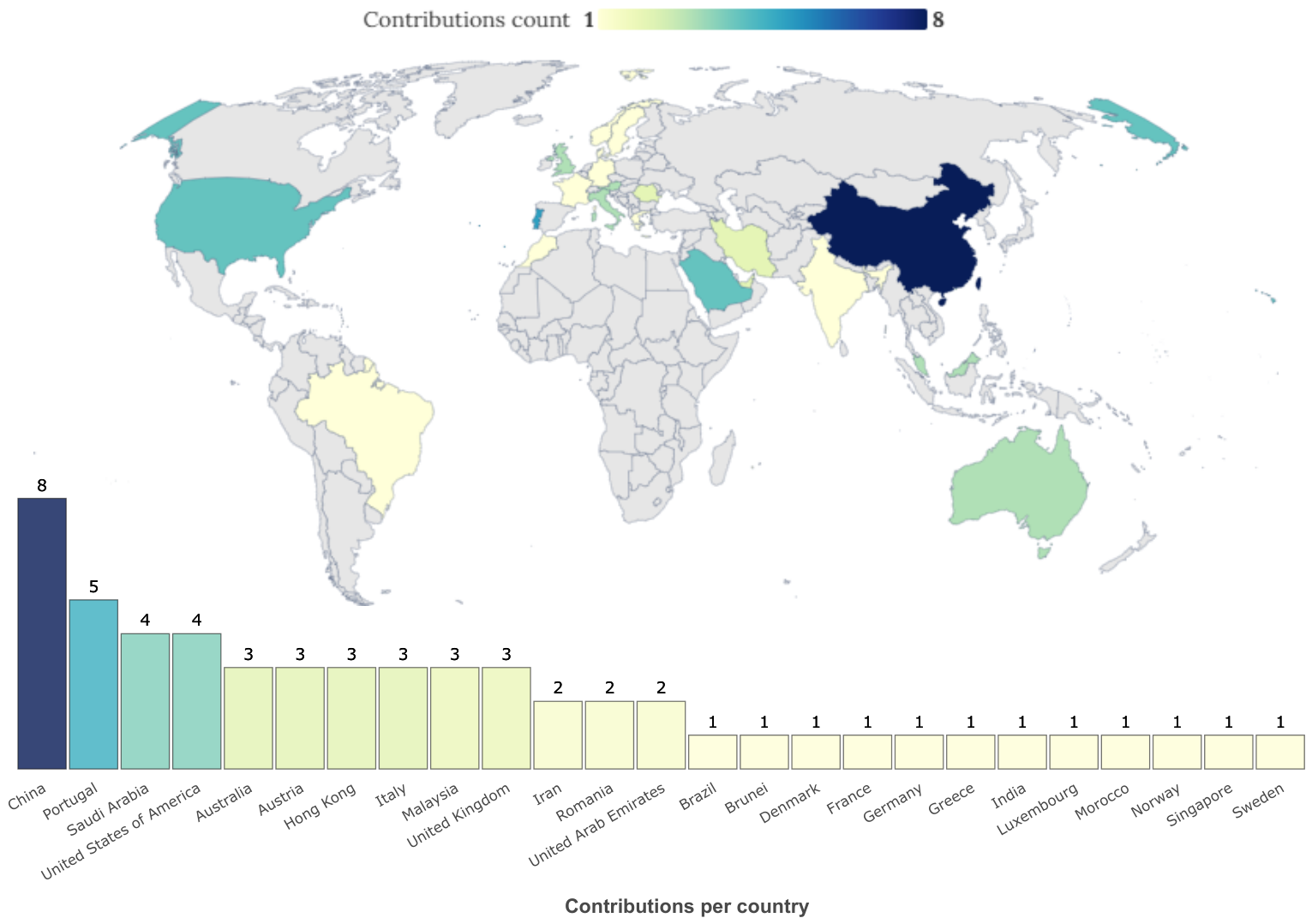
Figure 2 shows that secondary study production is concentrated in a few countries. China leads with eight contributions, followed by Portugal (five), and then Saudi Arabia and the United States (four each). The remaining countries have between one and three studies, demonstrating a low density of research outside these main centers. This distribution suggests that the field’s development is driven by regions with strong agendas for digitalization and smart building. In contrast, the limited participation from other regions suggests potential difficulties in conducting research in these areas of knowledge, possibly due to economic constraints or a weak focus on smart city development. Furthermore, the under-representation of developing countries underscores gaps in the adoption and generation of BIM- and DT-based solutions.
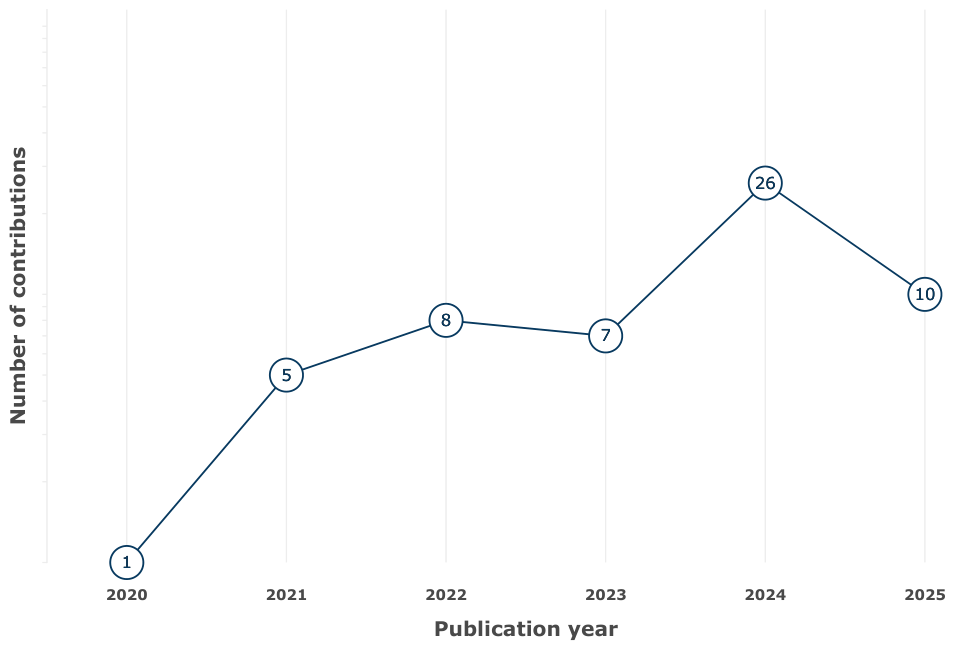
Figure 3 shows the distribution of secondary studies by year. The distribution shows an increasing trend from 2020 to 2024. After starting in 2020 (one study), a sustained increase is observed in 2021 (five studies) and 2022 (eight studies), with a slight decrease in 2023 (seven studies). The greatest growth occurs in 2024, with 26 studies, indicating a rapid expansion of interest in the topic. This increase coincides with the maturation of enabling technologies such as AI and IoT. Overall, the results reflect a recently expanding field that is still consolidating.

4.2. Criterion-by-Criterion Results

In this section, the main findings for each EC are presented. Also, specific studies are referenced to expose relevant insights. Table 5 shows the count of studies and percentages per EC. Furthermore, Appendix A and Appendix B provide a detailed overview of the reviewed studies and the traceability of which study corresponds to each EC. In this way, a complete first analysis of the selected studies is presented.
EC1—Type: Regarding the type of secondary studies considered in the review, bibliometric analyses and meta-analyses constitute the most frequent category, appearing in 30 studies (50.9%), including RS3, RS6, and RS14. SLRs are also widely represented, with 22 studies (38.6%), as observed in RS6, RS9, and RS20. Systematic mapping studies account for 18 papers (31.6%), with representative contributions such as RS2, RS5, and RS17. In contrast, survey-based secondary studies are limited, appearing in only four studies (7.0%), including RS4, RS18, and RS51. A similarly small number of studies fall into other secondary-study types (four studies, 7.0%), as reflected in RS1, RS8, and RS43. Overall, the results indicate a strong dominance of bibliometric analyses and conventional SLRs in BIM—DT secondary research, while survey-based and alternative review types are few.
EC2—Results or guidelines evidence-based framework-based outputs represent the most relevant structured contribution within this criterion, appearing in 10 studies (17.5%). Specifically, RS22 proposes an enhanced BIM-based DT framework for bridge engineering applications. A DT framework for construction assets aligned with the ISO 19650 BIM standard is presented in RS24, while RS25 introduces a DT framework oriented toward construction project management. The DT–CI framework (DT in the Construction Industry) is explicitly defined in RS15. In addition, RS50 proposes a framework aimed at the future integrated development of Geographic Information System (GIS) and BIM environments. These studies explicitly formalize their contributions as frameworks within the context of BIM-based DT.
Other types of contributions are identified in 10 studies (17.5%), covering structured outputs that do not take the form of formal frameworks or methodological guidelines. Within this group, RS7 and RS41 propose roadmaps related to the development and adoption of DT technologies. A general and customizable data fusion process model is presented in RS8. The study RS9 addresses research and commercial solutions for BIM-to-AR/VR workflow architectures. The extraction of key terms and definitions of DT across different life-cycle phases is reported in RS18. Classification-oriented contributions include an overview and classification of the analyzed literature in RS29, as well as the classification of DT use cases in port environments. The definition of construction life-cycle stages is addressed in RS46. In addition, RS6 reports multiple technological approaches, including cloud-based solutions, ontologies, data mining, ML, and DT, while RS3 proposes an architecture based on web services.
Taxonomy-oriented contributions are rare, with only one study (1.8%), represented by RS16, which focuses on classification structures rather than procedural or methodological guidance. No studies explicitly resulted in formal guidelines or process-based outputs, nor in standalone methodological formulations under this criterion. Overall, the results indicate that only a limited number of studies propose structured frameworks. The BIM–DT literature largely lacks explicit evidence-based practical guidelines. Most contributions remain at a conceptual, classificatory, or exploratory level.
EC3—Analyze or classify software for DT in construction: The analysis of 57 studies reveals strong heterogeneity in how software tools are evaluated and reported. A total of 33% of the publications analyze BIM modeling software, confirming its relevance but also showing a predominant focus on authoring environments rather than on downstream operational tools. Several studies reference the use of Autodesk Revit as the main BIM platform (RS6, RS20), often complemented by other modeling solutions such as ArchiCAD or Tekla Structures (RS18, RS38). These tools are primarily used for 3D parametric modeling, automated drawing generation, and integration of BIM models with simulation, visualization, or life-cycle extensions. However, most reviews do not clearly distinguish among the modeling, coordination, and analytical uses of BIM software, limiting comparative assessment.
Only 5% of the reviewed studies explicitly address CDEs. For example, RS18 mentions auxiliary BIM tools such as BIMserver or Navisworks to support data exchange and coordination, but these platforms are generally treated as secondary infrastructures rather than as core governance mechanisms within DT frameworks. Asset management and DTMSs appear in 10.5% of the studies. RS1 reviews maintenance-oriented platforms such as OpenMAINT and ManTus BIM, while RS2 classifies DT software according to functions, including component monitoring, anomaly detection, and operational optimization. These contributions indicate an emerging but still limited focus on operational-phase software within the reviewed literature.
In addition, 19% of the publications group software tools under heterogeneous “other” categories, reflecting methodological diversity and fragmented reporting practices. Notably, 49% of the studies do not evaluate any specific software tool, indicating that nearly half of the research remains conceptual. Overall, the lack of standardized criteria for software classification and evaluation constrains cross-study comparability and slows the technical consolidation of DT research in the AEC sector.
EC4—Analyze other technologies (software and hardware): Within the selected secondary studies, 47.4% examine AI. Many works reference the use of machine learning (ML) (RS7, RS27, RS29, RS32). RS4 analyzes ML, deep learning, and neural network approaches; RS5 report the combination of ML with data-mining techniques; and RS6 integrates criteria for semantic-web frameworks. These approaches are used for enhancing knowledge representation, reasoning processes, classification, prediction, anomaly detection, and automated feature extraction. However, RS38 explores AI taxonomies, and RS47 reports the use of a federated model to support distributed or privacy-preserving learning settings.
Furthermore, 50.9% of the papers review IoT technologies. RS8 discusses IoT–BIM data fusion methods for integrating heterogeneous sensor streams. For example, the use of sensors, smart sensors, and drones for real-time data acquisition (RS21, RS32); while RS14 uses hardware-sensor performance metrics to assess reliability, sampling frequency, and deployment constraints. Moreover, RS20 focuses on the technological infrastructure supporting IoT deployments, including 5G, LTE, Wi-Fi, GPS, GNSS, camera systems, and actuators.
In addition, a smaller proportion of secondary studies (26.3%) includes VR/AR. RS9 compares VR and AR device categories, interaction methods, tracking systems, and application contexts. RS21 synthesizes VR applications in simulation, design review, training, and construction management. Beyond visualization, RS38 explores how AR/VR enhances human–robot collaboration, supporting two-way communication, job supervision, and urban-scale design and planning through participatory usability assessments involving non-expert users. However, only RS46 examines extended reality as an integrated paradigm that combines AR and VR to support immersive monitoring, interaction with digital models, and activity coordination within DT environments.
Many reviews reported a fusion of software and hardware technologies, going beyond AI, IoT, and VR/AR (52.6%). A consistent number of studies integrate distributed and advanced computing infrastructures, including blockchain, edge computing, and cloud-computing environments (RS5, RS14, RS18, RS28, RS23, RS34). Multiple contributions rely on reality-capture and geospatial technologies such as GIS platforms, LiDAR or laser-scanning systems (RS7, RS10, RS16, RS19, RS21, RS30, RS37, RS46). In addition, several studies mention data-management mechanisms such as cloud storage, databases, data-lake architectures, data-transfer protocols, or digital-workflow tools (RS6, RS16, RS47). Finally, others reference semantic-web technologies and IFC-based data structures (RS48, RS49).
EC5—Challenges to implement DT: The results suggest that BIM-based DT adoption is constrained by a combination of technical fragmentation and limited organizational readiness. The prominence of industry, technological, and organizational barriers indicates that implementation problems are systemic rather than purely software-related. In contrast, the lower attention given to legal and economic dimensions may reflect the still-experimental maturity of the field, where regulatory, contractual, and investment issues have not yet been sufficiently examined.
EC6—DT category in BIM: The thematic classification of DT remains diverse and fragmented across the reviewed literature. A total of 47% of the studies classify DTs by purpose or industry, emphasizing function- and sector-oriented applications rather than unified conceptual frameworks. For example, RS1 and RS5 focus on maintenance-driven DTs applied to historic buildings and urban assets, respectively, while RS28 adopts a capability-oriented perspective to analyze applications and challenges in built-environment projects. Life-cycle-based classifications appear in 31% of the studies, reflecting interest in linking DTs to specific phases such as operation and maintenance. However, these approaches are often limited to isolated stages, as illustrated by reviews that focus primarily on operational energy efficiency or maintenance activities (RS2, RS41) rather than on full life-cycle integration.
Only 8% of the studies classify DTs according to maturity levels. RS46, for instance, reports generally low maturity levels, with DT implementations supporting bidirectional data flows yet remaining dependent on non-autonomous decision-making mechanisms. Object- or scale-based classifications appear in 12% of the literature, with studies such as RS29 addressing DTs at the level of complex infrastructures, such as seaports and terminal facilities. In contrast, several reviews adopt non-standard thematic perspectives or omit explicit classification schemes altogether (RS36, RS40). Overall, the absence of consistent, comparable taxonomies limits cross-study synthesis and reflects the ongoing conceptual consolidation of DT research in the AEC domain.
EC7—Optimized resources: The reviewed literature frames sustainability mainly in terms of operational efficiency, particularly maintenance, energy, and structural performance. The limited attention to water and material recycling shows that BIM-based DT research has not yet fully embraced broader circular-economy and resource-management perspectives. The large “Other” category also suggests fragmented application domains and the absence of a consolidated classification for sustainability outcomes.

4.3. Relations Between Criteria

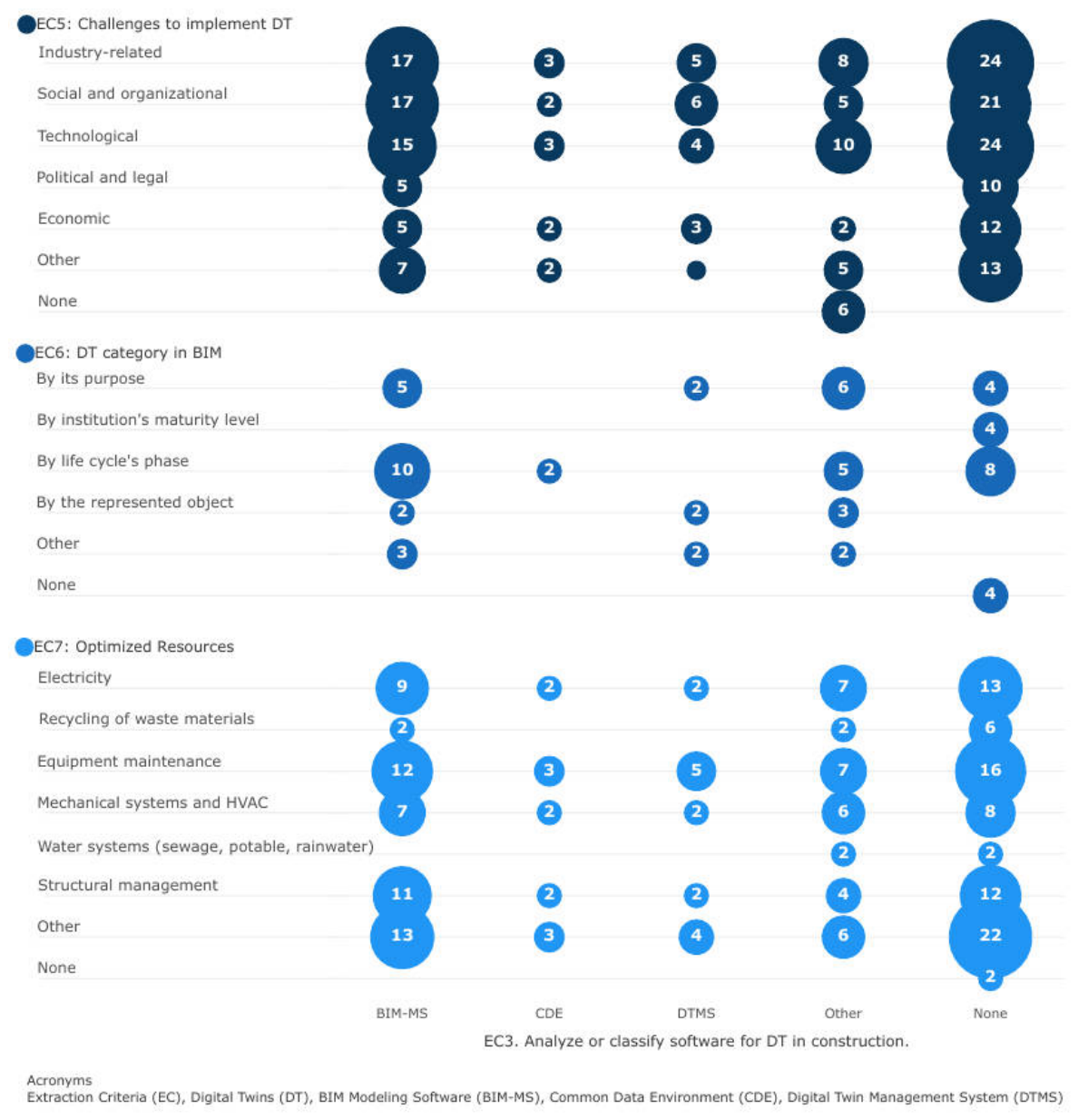
In this section, bubble graphs are presented. A bubble chart summarizes the distribution of the reviewed studies by cross-relations. The size of each bubble represents the number of secondary studies reporting a given combination, while the axes reflect the EC selected to cross, respectively. Figure 4 reveals a persistent gap between thematic analyses and the explicit consideration of software ecosystems in secondary studies on DT. Although the reviewed studies and surveys frequently address challenges, categorizations, and resource optimization, these dimensions are rarely systematized or classified in relation to concrete digital infrastructures within the body of secondary studies themselves.
Regarding implementation challenges, industrial, technological, and organizational aspects are widely discussed in the secondary literature, but in most cases, they are not accompanied by an explicit categorization of digital tools or platforms. This does not imply the absence of software in the underlying primary studies; rather, it reflects a limitation in how secondary studies synthesize, structure, and compare such information.
A similar trend is observed in the categorization of DT. Classifications based on purpose or life-cycle phase are primarily presented through conceptual or methodological frameworks, with limited linkage to specific enabling technologies. Maturity-based and object-based classifications appear less frequently and, again, without systematic articulation with software ecosystems at the level of secondary synthesis.
With respect to resource-oriented analyses, a relatively clearer relationship with enabling technologies can be observed, particularly in domains such as maintenance and structural management. Nevertheless, even in these cases, information on specific tools is often presented in an aggregated or implicit manner, which hampers comparison across studies.
Overall, these results highlight a structural limitation of the current secondary literature: although primary studies may incorporate and analyze complex digital ecosystems, this information is not consistently translated into comparable frameworks or explicit taxonomies within reviews. This fragmentation at the synthesis level reinforces the need for studies that more systematically articulate the links between challenges, categorizations, resources, and technologies, thereby contributing to a more coherent and operational understanding of the DT research landscape.
Figure 5 illustrates the co-occurrence between DT categorization and resource optimization aspects across the analyzed domains. The results confirm a predominance of purpose-based classifications, particularly in equipment maintenance, structural management, and electricity, where the highest number of intersections is observed. This aligns with the general trend in the literature, where optimization strategies are primarily driven by clearly defined objectives.
Life cycle classifications also show strong representation, especially in electricity and equipment maintenance, highlighting the importance of considering different stages of system development. In contrast, recycling of waste materials presents fewer intersections overall, with a more limited but structured emphasis on purpose-driven approaches. Classifications based on institutional maturity remain marginal across all domains, while those based on the represented object appear with moderate but limited frequency. Overall, the results indicate that research on resource optimization is primarily driven by functional objectives and supported by life-cycle considerations, whereas other dimensions remain underexplored.
Figure 6 reveals a clear concentration of studies combining AI and IoT technologies with core building subsystems, particularly structural management, mechanical systems, and HVAC, and energy-related domains such as electricity and water systems. This concentration suggests that these technologies are primarily adopted as enabling mechanisms for data-driven monitoring, analysis, and optimization in resource-intensive building components, where measurable physical variables and continuous data acquisition are readily available. In contrast, VR/AR technologies exhibit a more limited presence and are predominantly associated with visualization, inspection, or user interaction tasks rather than direct optimization or autonomous decision-making processes. This pattern suggests that VR/AR currently plays a complementary role, acting as an interface layer rather than as a core analytical or operational technology within DT ecosystems. The limited integration of VR/AR within BIM-based DT workflows can be attributed to a convergence of technical, economic, and organizational barriers.
From a hardware maturity standpoint, current head-mounted displays and mixed-reality devices present significant constraints for on-site construction environments, including limited battery life, sensitivity to dust and weather conditions, and insufficient processing power for rendering high-fidelity BIM models in real time. From an economic perspective, the cost of deploying and maintaining immersive hardware infrastructure across construction projects remains prohibitive for most organizations, particularly small and medium enterprises that represent the majority of AEC industry participants. Furthermore, the absence of standardized data pipelines connecting BIM authoring platforms to VR/AR rendering engines introduces interoperability friction that slows adoption. These factors collectively explain why VR/AR currently functions as a visualization interface—dependent on human-in-the-loop interaction—rather than as an autonomous analytical layer capable of triggering real-time decisions within DT frameworks. Addressing these barriers will require coordinated advances in lightweight hardware, open interoperability standards such as IFC, and cost reduction through cloud-based rendering offloading.
In addition, a considerable number of studies fall under the categories “Other” and “None”. Studies classified as “Other” correspond to cases where the technologies employed could not be mapped to the predefined sub-items of the EC, indicating the presence of heterogeneous or emerging technological approaches that extend beyond the current segmentation. This diversity suggests that the technological landscape surrounding DT applications in construction is broader than the categories explicitly considered in this review. Conversely, studies classified as “None” represent cases where resource optimization or system-level improvements are addressed without the explicit use of additional enabling technologies beyond BIM- or DT-based frameworks. This finding is particularly relevant, as it highlights the existence of solutions that rely on organizational, methodological, or conceptual strategies rather than on technological augmentation, revealing alternative pathways for optimization within construction and facility management contexts.

5. Discussion

5.1. RQ1: How Have Existing Secondary Studies Synthesized and Represented the Knowledge for BIM-Based DT Development?

The study results present a clear lack of robust evidence-based guidelines for developing BIM-based DTs. While a subset of studies (17.5%) make framework-oriented contributions (RS24, RS25), these are predominantly domain-specific and architecture-focused, addressing isolated aspects such as data integration or conformity with standards. Although these frameworks represent the most structured form of guidance identified, they do not converge toward a unified methodological approach or provide comprehensive end-to-end development processes. Consequently, their applicability remains limited and difficult to generalize to different use cases and functional contexts.
Furthermore, the absence of procedural or process-based guidelines is notable. The taxonomy-based contributions (1.8%) are purely classificatory and do not translate into practical development strategies (RS16). Similarly, the roadmaps, conceptual models, and data fusion approaches identified across studies offer fragmented perspectives but fail to articulate how to integrate these components systematically. This fragmentation shows a lack of attention to reproducibility, validation, and implementation limitations.

5.2. RQ2: What Are the Software and Hardware Tools Used in the Development of DT Using BIM?

Based on the analysis of the reviewed studies, which analyze hardware and software technologies, it is clear that there are heterogeneous combinations of BIM modeling platforms, CDE, DTMS, simulation tools, data analytics environments, and middleware solutions. Nearly half of the reviewed studies do not evaluate software platforms (49.1%), while only a limited proportion explicitly analyzes DTMS (10.5%) or CDE (5.3%) solutions. This suggests that current reviews keep their focus strongly centered on modeling environments, with comparatively limited attention for analyzing the operational infrastructures required to support scalable and continuously connected DT throughout the asset life cycle in primary studies.
Furthermore, the results indicate a limited search for maturity in the adoption of fully integrated DT platforms. In many cases, the secondary studies reveal how DT functionalities are distributed across multiple software layers, which complicates system interoperability and scalability (RS26). However, the identified technological landscape highlights the convergence of multiple software and hardware ecosystems shaping the development of BIM-based DTs. AI (47.4%), IoT-BIM (50.9%) data integration, and advanced computing infrastructures have emerged as key enabling components for predictive modeling and real-time data management. In particular, ML and IoT can support a more efficient, sustainable, and responsive transformation of urban environments (RS14).
Finally, 52.6% of secondary studies have reported how primary studies rely on diverse technological layers, including sensing infrastructures, cloud and edge computing environments, reality capture technologies, and immersive interfaces. However, challenges such as real-time data reliability, sensor calibration, and interoperability across platforms remain insufficiently addressed (RS32). These results show that the field of BIM-based DT is continuously integrating different hardware and software tools. Therefore, future work should focus on quality criteria such as reliability, scalability, interoperability, and security.

5.3. RQ3: What Topics Are Being Addressed by Research on the Development of DT?

The analysis of the reviewed studies indicates that research on the development of DTs primarily addresses industry-related, social, organizational, and technological challenges. These results mean that investigations of primary studies focus on the people involved, the software and hardware layers, and adoption in industry contexts. This emphasis is consistent with reviews that identify persistent industry barriers such as complex project management, quality control, and interoperability constraints as central obstacles to DT deployment (RS36). As observed in the analyzed sample, the most prominent themes are monitoring, optimization, predictive maintenance, and decision support, reflecting a strong emphasis on improving system performance and enabling data-driven management.
This predominance is particularly evident in domains such as equipment maintenance and energy systems, where DTs are used to enhance operational efficiency, reduce downtime, and support real-time decision-making. These findings suggest that current research is largely driven by practical and measurable outcomes, prioritizing operational use cases over more strategic or exploratory applications. Such an orientation is reflected in the categorization of DTs by purpose and life-cycle phase reported across the literature, where classifications are frequently organized around functional objectives and specific operational stages rather than full life-cycle integration (RS15, RS23). In contrast, topics such as design support, early-stage planning, and life-cycle-wide integration appear less frequently in the reviewed studies. This indicates that the potential of DTs to support decision-making across the full life cycle of built assets remains only partially explored.
Furthermore, the results reveal a significant thematic imbalance within the reviewed literature. While considerable attention is devoted to operational optimization domains such as maintenance, energy management, monitoring, and performance improvement, substantially less attention is given to governance models, organizational capabilities, maturity assessment, and life-cycle-wide integration. This imbalance aligns with reviews reporting that DT implementations in the built environment generally remain at low maturity levels, with limited articulation between their characteristics, applications, and the organizational conditions required for adoption (RS28). This suggests that research in the field is advancing more rapidly in understanding technological experimentation than in exploring the development of the institutional and methodological foundations required for large-scale DT adoption. As a result, the literature remains rich in analyzing application-oriented studies but provides comparatively limited guidance regarding implementation readiness, organizational transformation, and long-term operational integration.

6. Validation of the Systematic Review

One of the most significant challenges in conducting an SLR is ensuring the inclusion of both internal and external valid studies. In the context of research, validation is the process that ensures the results obtained are accurate, reliable, and representative in the studied field. On the one hand, internal validation focuses on evaluating the coherence and consistency within the studies selected for the review. In this way, the review avoids biases and guarantees that the findings accurately reflect the relationship between the variables studied. On the other hand, external validation ensures that the studies are representative of the diversity of situations in which they are applied. Then, those results can be transferable to different environments and contexts.

6.1. Quality Assessment of the Reviewed Studies

The review process evaluates core questions for each study using the DARE criteria, as recommended in the methodological guidelines of Kitchenham and Charters [11] for conducting SLRs. These questions rate each study related to whether inclusion and exclusion criteria were clearly described and appropriate; whether the search strategy was likely to have identified all relevant studies; whether the authors assessed the quality or validity of the included primary studies; whether the basic characteristics of the included studies were adequately described; and whether the reviewed studies had been published in relevant sites and have got considerable citations. Each question was rated as Yes (1 point), Partially (0.5 points), or No/Unknown (0 points).

6.1.1. Are Inclusion and Exclusion Criteria Clearly Described and Appropriate?

The first quality dimension evaluated whether each secondary study clearly described and justified its inclusion and exclusion criteria. Studies could be scored as 1 (explicit criteria), 0.5 (implicit or partially stated criteria), or 0 (unclear or absent criteria). The average score obtained was 0.72, indicating that most studies provided sufficiently defined eligibility criteria, though some lacked full clarity or justification. Most papers have a specific inclusion and exclusion criteria section. In others, these criteria could be deduced from their RQs. In some cases, studies present them in tables or images (e.g., Prisma process image).

6.1.2. Is the Literature Search Likely to Have Covered All Relevant Studies?

The second dimension assessed the breadth and adequacy of the literature search strategies used by the reviewed studies. Searches covering four or more databases or including additional strategies were rated as 1, standard searches across several databases as 0.5, and limited searches as 0. The average score was 0.53, suggesting that while many studies applied reasonably broad searches and explicitly indicated their criteria to search studies, several relied on restricted or minimally documented strategies; most reviews rely solely on indexers such as SCOPUS, Google Scholar, or WebOfScience. Few studies make manual searches in selected journals or conferences. Even when there are robust justifications for using indexers in literature reviews, the authors of the present work consider that searching in oriented databases could retrieve papers with stronger alignment to the investigation’s goals. Also, not all papers in conferences and journals related to the topic are indexed.

6.1.3. Assessment of Primary-Study Quality Evaluation

Did the reviewers assess the quality/validity of the included studies? This dimension examined whether the secondary studies explicitly evaluated the methodological quality of their included primary studies. Reviews providing clear quality criteria were scored as 1, those implying quality considerations as 0.5, and those omitting such evaluation as 0. The average score was 0.42, indicating that explicit quality assessment of primary studies was inconsistently addressed across the reviewed literature. In most cases, there was no quality-related section or even information in the papers reviewed, even internal quality or external quality. Most of the papers that had a score present only quality related to how many papers reviewed have been cited by others.

6.1.4. Assessment of Study-Description Completeness

Were the basic characteristics of the included studies adequately described? This dimension assessed whether the secondary studies adequately described the basic characteristics of the primary studies they included. Studies were rated as 1 when detailed information was provided, 0.5 when only partial summaries were offered, and 0 when study characteristics were insufficiently reported. The average score was 0.84, indicating that most reviews provided clear and sufficiently informative descriptions of their included studies in tables, images, or dedicated sections for this information.

6.1.5. Assessment of Publication Relevance

The relevance of each study was evaluated based on its publication venue. Journals were classified according to the SCImago Journal Rank (SJR) (https://www.scimagojr.com/, accessed on 27 May 2026) quartiles, with Q1 and Q2 considered very relevant, Q3 and Q4 as relevant, and non-indexed venues as not so relevant. Conferences were categorized according to the CORE Conference Ranking (https://portal.core.edu.au/conf-ranks/, accessed on 27 May 2026), where A*/A were considered very relevant, B/C as relevant, and D or unranked venues as not so relevant. Using this scoring scheme (1 points for very relevant, 0.5 for relevant, and 0 for not so relevant), the average publication-relevance score across all included studies was 0.85. This suggests that the majority of the reviewed studies were published in reputable, recognized venues within their research communities.

6.1.6. Assessment of Citation Impact

The citation impact of each study was evaluated using site-of-publication citation counts. For studies published before 2023, three categories were applied: high impact (more than 5 citations, 10 points), medium impact (1–5 citations, 5 points), and low impact (0 citations, 0 points). For studies published after 2023, citation-based bias was mitigated by introducing two adjusted categories: potentially high (any number of citations, 10 points) and potentially medium (no citations, 5 points). The resulting average score for citation impact was 0.92, indicating that most studies had already been cited or were published in contexts suggesting future citation relevance.

6.2. Validation of Data Extraction Classification of Secondary Studies

To assess the consistency of the data extraction process, an intra-rater reliability evaluation was conducted using Cohen’s Kappa coefficient. Rather than measuring agreement among reviewers, the objective was to evaluate the stability of each reviewer’s classifications over time.
The review team consisted of four domain experts with complementary backgrounds in architecture, electrical engineering, electronics and telecommunications, and computer science. Each reviewer was responsible for extracting and classifying information for a specific subset of EC within their area of expertise. This decision was adopted because the EC addressed heterogeneous dimensions of BIM-based DTs, including architectural, technological, operational, and computational aspects. Assigning reviewers to the criteria most closely aligned with their disciplinary expertise was intended to improve the accuracy, consistency, and interpretability of the extracted information throughout the review process.
For the reliability assessment, each reviewer independently classified four secondary studies using their assigned EC. After a two-week interval, the reviewers repeated the classification process without reference to their initial assessments. Cohen’s Kappa was calculated by comparing the classifications assigned by each reviewer across the two evaluation rounds.
The resulting Kappa value was 0.83, which indicates a high degree of classification stability over time according to commonly accepted interpretation guidelines [28]. Although this procedure does not constitute a traditional inter-rater agreement assessment, it demonstrates that the reviewers consistently applied the EC associated with their domain expertise. During the two-week interval between classification rounds, the reviewers continued to analyze additional secondary studies included in the review. Thus, the repeated assessment evaluated not only temporal consistency but also confirmed that the interpretation and application of the EC remained stable after reviewing 57 articles.

7. Conclusions

This article presents a systematic review of reviews, a tertiary study that identifies trends and gaps in the literature by synthesizing secondary studies that collect primary research on how emerging technologies support the field of BIM-based DT. The review was conducted using a rigorous, validated methodology to define inclusion and exclusion criteria, conduct qualitative validation, and apply EC to 57 secondary studies.
Those studies directly analyze the following question: How does developing DT using BIM improve when various methods, frameworks, tools, and techniques are used? The results show that bibliometric analyses (50.9%) and SLRs (38.6%) dominate the field, while only 17.5% propose structured frameworks and 1.8% present explicit taxonomies; approximately 49% do not assess specific software platforms. AI and the IoT are the most frequently examined enabling technologies, primarily associated with energy management, predictive maintenance, and structural monitoring.
Beyond consolidating evidence reported in previous reviews, this tertiary study reveals several structural characteristics of the BIM-based DT research landscape. The findings indicate a limited presence of integrative frameworks and taxonomies, a lack of convergence toward common software architectures for DT implementation, and a strong concentration of research on operational and performance-oriented applications, while governance-, maturity-, and life-cycle-oriented aspects remain comparatively underexplored. These patterns emerge only through the synthesis of multiple review studies and constitute a contribution that goes beyond identifying individual categories and research trends.
One limitation of this study is the search strategy used to identify secondary studies. The search string was designed to focus on secondary studies by including terms such as “review”, “survey”, “literature”, and “mapping”. While these terms are commonly used to identify secondary studies, some relevant publications categorized under alternative labels, including “bibliometric analysis”, “scientometric analysis”, or “overview”, may not have been retrieved through the automated search process. As a result, certain relevant secondary studies might have been excluded. Future tertiary reviews should broaden their search strategies by incorporating additional descriptors and publication labels to enhance coverage and reduce the risk of omission.
Another limitation of this study concerns the selection of information sources used during the search process. The review protocol prioritized specialized digital libraries commonly used in engineering, construction, and computing research, including IEEE Xplore, ACM Digital Library, ScienceDirect, and SpringerLink. Consequently, multidisciplinary indexing services such as Web of Science, Google Scholar, or Scopus were not included in the search strategy. Although this decision was intended to maximize the retrieval of studies from the primary publication venues most relevant to BIM-based DTs, some potentially relevant secondary studies indexed exclusively in Web of Science, Google Scholar, or Scopus may not have been identified. Future tertiary reviews could complement searches in specialized digital libraries with multidisciplinary indexing platforms to further improve coverage and reduce the risk of omission.
A further limitation concerns the reliability assessment procedure. Due to the multidisciplinary nature of the extraction criteria, each criterion was assigned to the reviewer whose expertise was most closely aligned with the corresponding domain. Consequently, the reliability analysis evaluated intra-rater consistency through a test–retest procedure rather than inter-rater agreement. While the obtained Cohen’s Kappa values indicate that reviewers applied the extraction criteria consistently over time, this approach does not provide evidence regarding the level of agreement that could be achieved among different reviewers evaluating the same criteria. Future studies could complement this procedure with inter-rater reliability assessments involving multiple reviewers independently classifying the same subset of studies. Finally, the findings indicate persistent interoperability constraints, insufficient data governance structures, limited maturity models, and scarce large-scale validation. This tertiary synthesis consolidates dispersed knowledge and identifies methodological and technological gaps that affect the consolidation of BIM-based DT for sustainable building management.

Author Contributions

Conceptualization, F.V.A., A.P.R.Z., P.C.-D., and C.G.S.; data curation, F.V.A., A.P.R.Z., P.C.-D., and C.G.S.; methodology, F.V.A., A.P.R.Z., P.C.-D., P.C., and C.G.S.; validation, A.P.R.Z.; formal analysis, F.V.A., A.P.R.Z., P.C.-D., and C.G.S.; investigation, F.V.A., A.P.R.Z., P.C.-D., and C.G.S.; writing—original draft preparation, F.V.A., A.P.R.Z., P.C.-D., C.G.S., and C.M.-G.; writing—review and editing, F.V.A., A.P.R.Z., P.C.-D., C.G.S., A.O., and C.M.-G.; visualization, A.P.R.Z.; supervision, F.V.A., A.O.; project administration, F.V.A.; funding acquisition, F.V.A. All authors have read and agreed to the published version of the manuscript.

Funding

This research was funded by “Vicerrectorado de Investigación e Innovación de la Universidad de Cuenca (VIIUC), Cuenca-Ecuador”, grant number VIUC_XXI_2025_32_VALDEZ_FRANCISCO, research project “Marco de trabajo para el desarrollo de gemelos digitales para campus universitarios sostenibles.: Estudio piloto Facultad de Arquitectura de la Universidad de Cuenca”.

Data Availability Statement

The protocol and extraction results supporting the findings of this SLR are publicly available in the OSF repository, accessible at https://osf.io/kcwv7/overview (accessed on 12 May 2026).

Acknowledgments

During the preparation of this manuscript/study, the authors used ChatGPT (OpenAI, model GPT-4.5) for the purposes of assisting with the formatting of tables, hyperlinks, and bibliographic entries in Overleaf, and refinement of English phrasing as the authors are non-native speakers. The authors have reviewed and edited the output and take full responsibility for the content of this publication.

Conflicts of Interest

The authors declare no conflict of interest. The funders had no role in the design of the study; in the collection, analyses, or interpretation of data; in the writing of the manuscript, or in the decision to publish the results.

Abbreviations

The following abbreviations are used in this manuscript:
BIMBuilding Information Modeling
DTDigital Twin
AIArtificial Intelligence
IoTInternet of Things
AECArchitecture, Engineering and Construction
SDGsSustainable Development Goals
NZEBNearly Zero-Energy Buildings
ECExtraction Criteria
RQResearch Questions
VRVirtual Reality
ARAugmented Reality
HVACHeating, Ventilation, and Air Conditioning
CPSCyber-Physical Systems
CDECommon Data Environment
DTMSDigital Twin Management System
GISGeographic Information System
SLRSystematic Literature Review
MLMachine Learning
IFCIndustry Foundation Classes
SJRSCImago Journal Rank

Appendix A. Review Studies

RS1
Morganti, C.; Bragadin, M. A. A Literature Review of H-BIM Strategy for Construction Maintenance. In: Proceedings of the 11th International Conference of Ar.Tec. Colloqui.AT.e 2024, Lecture Notes in Civil Engineering, Vol. 612. Springer, Cham, 2025 [29].
RS2
Cespedes-Cubides, A. S.; Jradi, M. A Review of Building Digital Twins to Improve Energy Efficiency in the Building Operational Stage. Energy Inform 2024, 7 (1), 11 [30].
RS3
Zhao, Y.; Liu, Y.; Mu, E. A Review of Intelligent Subway Tunnels Based on Digital Twin Technology. Buildings 2024, 14 (8), 2452 [31].
RS4
Koulalis, I.; Dourvas, N.; Triantafyllidis, T.; Ioannidis, K.; Vrochidis, S.; Kompatsiaris, I. A Survey for Image Based Methods in Construction: From Images to Digital Twins. In International Conference on Content-based Multimedia Indexing; ACM: Graz Austria, 2022; pp 103–110 [32].
RS5
Lawal, O. O.; Nawari, N. O.; Lawal, O. AI-Enabled Cognitive Predictive Maintenance of Urban Assets Using City Information Modeling—Systematic Review. Buildings 2025, 15 (5), 690 [33].
RS6
Jayasanka, T. A. D. K.; Darko, A.; Edwards, D. J.; Chan, A. P. C.; Jalaei, F. Automating Building Environmental Assessment: A Systematic Review and Future Research Directions. Environmental Impact Assessment Review 2024, 106, 107465 [34].
RS7
Sepasgozar, S.; Khan, A.; Smith, K.; Romero, J.; Shen, X.; Shirowzhan, S.; Li, H.; Tahmasebinia, F. BIM and Digital Twin for Developing Convergence Technologies as Future of Digital Construction. Buildings 2023, 13 (2), 441 [35].
RS8
Huang, X.; Liu, Y.; Huang, L.; Onstein, E.; Merschbrock, C. BIM and IoT Data Fusion: The Data Process Model Perspective. Automation in Construction 2023, 149, 104792 [36].
RS9
Schiavi, B.; Havard, V.; Beddiar, K.; Baudry, D. BIM Data Flow Architecture with AR/VR Technologies: Use Cases in Architecture, Engineering and Construction. Automation in Construction 2022, 134, 104054 [37].
RS10
Liu, X.; Antwi-Afari, M. F.; Li, J.; Zhang, Y.; Manu, P. BIM, IoT, and GIS Integration in Construction Resource Monitoring. Automation in Construction 2025, 174, 106149 [38].
RS11
Li, Y.; Li, Y.; Ding, Z. Building Information Modeling Applications in Civil Infrastructure: A Bibliometric Analysis from 2020 to 2024. Buildings 2024, 14 (11), 3431 [39].
RS12
De Wilde, P. Building Performance Simulation in the Brave New World of Artificial Intelligence and Digital Twins: A Systematic Review. Energy and Buildings 2023, 292, 113171 [40].
RS13
Anshari, M.; Lim, S. A.; Semivolos, A. Building Information Modelling (BIM) with Digital Twin for the Sustainable Management of Smart City & Building Preservation: A Literature Review. In 2023 International Conference on Sustaining Heritage: Innovative and Digital Approaches (ICSH); IEEE: Sakhir, Bahrain, 2023; pp 77–82 [41].
RS14
El-Agamy, R. F.; Sayed, H. A.; Al Akhatatneh, A. M.; Aljohani, M.; Elhosseini, M. Comprehensive Analysis of Digital Twins in Smart Cities: A 4200-Paper Bibliometric Study. Artif Intell Rev 2024, 57 (6), 154 [42].
RS15
Liu, J.; Duan, L.; Lin, S.; Miao, J.; Zhao, J. Concept, Creation, Services and Future Directions of Digital Twins in the Construction Industry: A Systematic Literature Review. Arch Computat Methods Eng 2025, 32 (1), 319–342 [43].
RS16
Saif, W.; RazaviAlavi, S.; Kassem, M. Construction Digital Twin: A Taxonomy and Analysis of the Application-Technology-Data Triad. Automation in Construction 2024, 167, 105715 [44].
RS17
Salzano, A.; Zitiello, E. P.; Nicolella, M.; Gragnaniello, C. Digital Evolution: From BIM to Digital Twin. In Proceedings of the 11th International Conference of Ar.Tec. (Scientific Society of Architectural Engineering), Colloqui.AT.e 2024. Lecture Notes in Civil Engineering, Vol. 612. Springer, Cham, 2025 [45].
RS18
Hu, W.; Lim, K. Y. H.; Cai, Y. Digital Twin and Industry 4.0 Enablers in Building and Construction: A Survey. Buildings 2022, 12 (11), 2004 [46].
RS19
Jiang, F.; Ma, L.; Broyd, T.; Chen, K. Digital Twin and Its Implementations in the Civil Engineering Sector. Automation in Construction 2021, 130, 103838 [47].
RS20
Opoku, D.-G. J.; Perera, S.; Osei-Kyei, R.; Rashidi, M. Digital Twin Application in the Construction Industry: A Literature Review. Journal of Building Engineering 2021, 40, 102726 [48].
RS21
Lauria, M.; Azzalin, M. Digital Twin Approach in Buildings: Future Challenges via a Critical Literature Review. Buildings 2024, 14 (2), 376 [49].
RS22
Song, H.; Yang, G.; Li, H.; Zhang, T.; Jiang, A. Digital twin enhanced BIM to shape full life cycle digital transformation for bridge engineering. Automation in Construction, 147, 104736, 2023 [50].
RS23
Sghiri, A.; El Bhiri, B.; Assoul, S. Digital Twins and Energy Efficiency in Buildings: A Literature Review. In: Technology and the Environment: Implementing Smart and Sustainable Solutions into Our Cities. ICATH 2023. Advances in Science, Technology & Innovation. Springer, Cham, 2025 [51].
RS24
Nour El-Din, M.; Pereira, P. F.; Poças Martins, J.; Ramos, N. M. M. Digital Twins for Construction Assets Using BIM Standard Specifications. Buildings 2022, 12 (12), 2155 [8].
RS25
Reja, V. K.; Sindhu Pradeep, M.; Varghese, K. Digital Twins for Construction Project Management (DT-CPM): Applications and Future Research Directions. J. Inst. Eng. India Ser. A 2024, 105 (3), 793–807 [52].
RS26
Puiu, I. L.; Fortiș, T. F. Digital Twins for Improving Buildings Performances: A Literature Review Methodology Use Case. In: Advances on P2P, Parallel, Grid, Cloud and Internet Computing. 3PGCIC 2024. Lecture Notes on Data Engineering and Communications Technologies, Vol. 232. Springer, Cham, 2025 [53].
RS27
Attar, K. M.; Abbasianjahromi, H.; Poshdar, M. Digital Twins for Improving the Construction Safety: Literature Content Analysis and Gap Spotting for Future Directions: KN Toosi University of Technology, Tehran, Tehran IRAN. Iran J Sci Technol Trans Civ Eng 2024, 48 (4), 1887–1901 [54].
RS28
Shahzad, M.; Shafiq, M. T.; Douglas, D.; Kassem, M. Digital Twins in Built Environments: An Investigation of the Characteristics, Applications, and Challenges. Buildings, 12(2), 120, 2022 [55].
RS29
Neugebauer, J.; Heilig, L.; Voß, S. Digital Twins in the Context of Seaports and Terminal Facilities. Flex Serv Manuf J 2024, 36 (3), 821–917 [56].
RS30
Zahedi, F.; Alavi, H.; Majrouhi Sardroud, J.; Dang, H. Digital Twins in the Sustainable Construction Industry. Buildings 2024, 14 (11), 3613 [2].
RS31
Musarat, M. A.; Hameed, N.; Altaf, M.; Alaloul, W. S.; Salaheen, M. A.; Alawag, A. M. Digital Transformation of the Construction Industry: A Review. 2021 International Conference on Decision Aid Sciences and Application (DASA), Sakheer, Bahrain, 2021, pp. 897–902 [57]
RS32
Asif, M.; Naeem, G.; Khalid, M. Digitalization for Sustainable Buildings: Technologies, Applications, Potential, and Challenges. Journal of Cleaner Production 2024, 450, 141814 [58].
RS33
Muta, L. F.; Melo, A. P.; Lamberts, R. Enhancing Energy Performance Assessment and Labeling in Buildings: A Review of BIM-Based Approaches. Journal of Building Engineering 2025, 103, 112089 [59].
RS34
Ma, X.; Du, W.; Li, L.; Liu, J.; Yuan, H. Examining the Nexus of Blockchain Technology and Digital Twins: Bibliometric Evidence and Research Trends. Front. Eng. Manag. 2024, 11 (3), 481–500 [60].
RS35
Chen, Y.; Wang, X.; Liu, Z.; Cui, J.; Osmani, M.; Demian, P. Exploring Building Information Modeling (BIM) and Internet of Things (IoT) Integration for Sustainable Building. Buildings 2023, 13 (2), 288 [61].
RS36
Wang, W.; Xu, K.; Song, S.; Bao, Y.; Xiang, C. From BIM to Digital Twin in BIPV: A Review of Current Knowledge. Sustainable Energy Technologies and Assessments 2024, 67, 103855 [62].
RS37
Dervishaj, A.; Gudmundsson, K. From LCA to Circular Design: A Comparative Study of Digital Tools for the Built Environment. Resources, Conservation and Recycling 2024, 200, 107291 [63].
RS38
Moshood, T. D.; Rotimi, J. Ob.; Shahzad, W.; Bamgbade, J. A. Infrastructure Digital Twin Technology: A New Paradigm for Future Construction Industry. Technology in Society 2024, 77, 102519 [64].
RS39
Zhang, F.; Chan, A. P. C.; Darko, A.; Chen, Z.; Li, D. Integrated Applications of Building Information Modeling and Artificial Intelligence Techniques in the AEC/FM Industry. Automation in Construction 2022, 139, 104289 [65].
RS40
Hauer, M.; Hammes, S.; Zech, P.; Geisler-Moroder, D.; Plörer, D.; Miller, J.; Van Karsbergen, V.; Pfluger, R. Integrating Digital Twins with BIM for Enhanced Building Control Strategies: A Systematic Literature Review Focusing on Daylight and Artificial Lighting Systems. Buildings 2024, 14 (3), 805 [66].
RS41
Elshabshiri, A.; Ghanim, A.; Hussien, A.; Maksoud, A.; Mushtaha, E. Integration of Building Information Modeling and Digital Twins in the Operation and Maintenance of a Building Lifecycle: A Bibliometric Analysis Review. Journal of Building Engineering 2025, 99, 111541 [67].
RS42
Baghalzadeh Shishehgarkhaneh, M.; Keivani, A.; Moehler, R. C.; Jelodari, N.; Roshdi Laleh, S. Internet of Things (IoT), Building Information Modeling (BIM), and Digital Twin (DT) in Construction Industry: A Review, Bibliometric, and Network Analysis. Buildings 2022, 12 (10), 1503 [3].
RS43
Almasoudi, A.; Bhatti, A. Q.; Alluqmani, A. E.; Alotaibi, A. Investigation of Enhancing Heritage Preservation Utilizing Heritage Building Information Modeling (HBIM). J. Umm Al-Qura Univ. Eng.Archit. 2025, 16 (2), 414–442 [68].
RS44
Hammes, S.; Geisler-Moroder, D.; Weninger, J.; Zech, P.; Pfluger, R. Market Demands vs. Scientific Realities: A Comparative Analysis in the Context of BIM-Based and User-Centred Lighting Control. Developments in the Built Environment 2024, 19, 100526 [69].
RS45
Johri, A.; Joshi, P.; Kumar, S.; Joshi, G. Metaverse for Sustainable Development in a Bibliometric Analysis and Systematic Literature Review. Journal of Cleaner Production 2024, 435, 140610 [70].
RS46
Parracho, D. F. R.; Nour El-Din, M.; Esmaeili, I.; Freitas, S. S.; Rodrigues, L.; Poças Martins, J.; Corvacho, H.; Delgado, J. M. P. Q.; Guimarães, A. S. Modular Construction in the Digital Age: A Systematic Review on Smart and Sustainable Innovations. Buildings 2025, 15 (5), 765 [71].
RS47
Arsecularatne, B. P.; Rodrigo, N.; Chang, R. Review of Reducing Energy Consumption and Carbon Emissions through Digital Twin in Built Environment. Journal of Building Engineering 2024, 98, 111150 [72].
RS48
Geremicca, F.; Bilec, M. M. Searching for New Urban Metabolism Techniques: A Review towards Future Development for a City-Scale Urban Metabolism Digital Twin. Sustainable Cities and Society 2024, 107, 105445 [73].
RS49
Nhamage, I. A.; Horas, C. S.; Dang, N.-S.; Campos E Matos, J. A.; Poças Martins, J. Strategies for Maximising the Value of Digital Twins for Bridge Management and Structural Monitoring: A Systematic Review. Arch Computat Methods Eng 2025, 32 (7), 4555–4586 [74].
RS50
Xia, H.; Liu, Z.; Efremochkina, M.; Liu, X.; Lin, C. Study on City Digital Twin Technologies for Sustainable Smart City Design: A Review and Bibliometric Analysis of Geographic Information System and Building Information Modeling Integration. Sustainable Cities and Society 2022, 84, 104009 [75].
RS51
Malta, A.; Farinha, T.; Cardoso, A. J. M.; Mendes, M. Survey on the Use of BIM Methodology for Railway 3D Modeling. Discov Appl Sci 2024, 6 (12), 657 [76].
RS52
Li, W.; Xie, Q.; Ao, J.; Lin, H.; Ji, S.; Yang, M.; Sun, J. Systematic Review: A Scientometric Analysis of the Status, Trends and Challenges in the Application of Digital Technology to Cultural Heritage Conservation (2019–2024). npj Herit. Sci. 2025, 13 (1), 90 [77].
RS53
Puiu, I. L.; Fortiș, T. F. The Efficiency of Building Maintenance Using Digital Twins: A Literature Review. In: Advanced Information Networking and Applications. AINA 2024. Lecture Notes on Data Engineering and Communications Technologies, Vol. 203. Springer, Cham, 2024 [78].
RS54
Boje, C.; Guerriero, A.; Kubicki, S.; Rezgui, Y. Towards a Semantic Construction Digital Twin: Directions for Future Research. Automation in Construction 2020, 114, 103179 [79].
RS55
Okolo, C.; Schmieder, N.; Hellwig, M.; Rigger, E. Towards a Digital Twin for Sustainable Asset Management of IoT Devices in Smart Buildings. In 2024 IEEE International Conference on Engineering, Technology, and Innovation (ICE/ITMC); IEEE: Funchal, Portugal, 2024; pp 1–9 [80].
RS56
Park, J.; Lee, J.-K.; Son, M.-J.; Yu, C.; Lee, J.; Kim, S. Unlocking the Potential of Digital Twins in Construction: A Systematic and Quantitative Review Using Text Mining. Buildings 2024, 14 (3), 702 [81].
RS57
Pereira, V.; Santos, J.; Leite, F.; Escórcio, P. Using BIM to Improve Building Energy Efficiency—A Scientometric and Systematic Review. Energy and Buildings 2021, 250, 111292 [82].

Appendix B. Articles Categorized by Criteria

Table A1. Articles categorized by criteria.
EC ItemCountStudies
EC1. Type.
Systematic Review of the Literature22RS6, RS9, RS12, RS14, RS15, RS16, RS20, RS21, RS22, RS23, RS32, RS33, RS34, RS40, RS41, RS42, RS45, RS47, RS48, RS49, RS55, RS56
Bibliometric analysis or Meta-analysis30RS6, RS7, RS10, RS11, RS13, RS14, RS15, RS16, RS17, RS20, RS23, RS26, RS27, RS30, RS35, RS36, RS37, RS39, RS40, RS41, RS42, RS45, RS49, RS50, RS52, RS53, RS56, RS57
Survey4RS4, RS18, RS44, RS51
Systematic mapping18RS2, RS5, RS7, RS10, RS17, RS19, RS24, RS25, RS26, RS29, RS31, RS38, RS39, RS46, RS47, RS50, RS52, RS54
Others4RS1, RS8, RS28, RS43
EC2. If the study resulted in evidence-based practical guidelines.
Methodology0
Framework10RS2, RS3, RS5, RS8, RS15, RS22, RS24, RS25, RS43, RS50
Guides or Processes0
Taxonomy1RS16
None38RS1, RS4, RS10, RS11, RS12, RS13, RS14, RS17, RS19, RS20, RS21, RS23, RS26, RS27, RS28, RS30, RS31, RS32, RS33, RS34, RS35, RS36, RS37, RS38, RS39, RS40, RS44, RS45, RS47, RS48, RS49, RS51, RS52, RS53, RS54, RS55, RS56, RS57
Others10RS3, RS6, RS7, RS8, RS9, RS15, RS18, RS29, RS41, RS46
EC3. Analyze or classify software for digital twins in construction.
BIM modeling software20RS2, RS4, RS6, RS9, RS16, RS18, RS19, RS20, RS22, RS30, RS33, RS38, RS40, RS43, RS49, RS51, RS52, RS53, RS55, RS57
Common data environment software3RS2, RS16, RS18
DT Management System (DTMS)6RS1, RS16, RS29, RS36, RS40, RS51
Others11RS2, RS3, RS4, RS6, RS14, RS16, RS18, RS23, RS26, RS27, RS37
None29RS5, RS7, RS8, RS10, RS11, RS12, RS13, RS15, RS17, RS21, RS24, RS25, RS28, RS31, RS32, RS34, RS35, RS39, RS41, RS42, RS43, RS44, RS45, RS46, RS47, RS48, RS50, RS54RS56
EC4. Analyze other technologies (software and hardware).
AI27RS4, RS5, RS6, RS7, RS12, RS14, RS15, RS16, RS18, RS21, RS22, RS23, RS27, RS28, RS29, RS30, RS32, RS33, RS36, RS38, RS39, RS46, RS47, RS48, RS49, RS52, RS54
IoT29RS5, RS7, RS8, RS10, RS14, RS15, RS16, RS18, RS19, RS20, RS21, RS22, RS23, RS27, RS28, RS29, RS30, RS32, RS33, RS35, RS36, RS38, RS40, RS42, RS46, RS48, RS49, RS54, RS55
VR or AR15RS7, RS9, RS14, RS16, RS18, RS19, RS21, RS22, RS27, RS29, RS32, RS38, RS46, RS49, RS52
Others31RS4, RS5, RS6, RS7, RS10, RS14, RS15, RS16, RS18, RS19, RS21, RS22, RS23, RS28, RS29, RS30, RS32, RS34, RS36, RS37, RS38, RS39, RS46, RS47, RS48, RS49, RS50, RS52, RS54, RS55, RS57
None15RS1, RS2, RS3, RS17, RS24, RS25, RS26, RS31, RS41, RS43, RS44, RS45, RS51, RS53, RS56
EC5. Challenges to implement Digital Twins.
Industry-related46RS1, RS2, RS4, RS5, RS6, RS7, RS8, RS10, RS11, RS12, RS13, RS14, RS15, RS16, RS18, RS19, RS20, RS21, RS22, RS23, RS24, RS25, RS27, RS29, RS30, RS31, RS32, RS34, RS35, RS36, RS38, RS39, RS41, RS43, RS44, RS47, RS48, RS49, RS50, RS51, RS52, RS53, RS54, RS55, RS56, RS57
Social and organizational41RS1, RS4, RS6, RS7, RS10, RS11, RS15, RS16, RS17, RS18, RS19, RS20, RS21, RS22, RS24, RS25, RS27, RS29, RS30, RS31, RS32, RS34, RS35, RS36, RS38, RS39, RS40, RS41, RS43, RS44, RS47, RS48, RS49, RS50, RS51, RS52, RS53, RS54, RS55, RS56, RS57
Technological46RS1, RS2, RS3, RS4, RS5, RS6, RS7, RS8, RS9, RS10, RS11, RS12, RS13, RS14, RS15, RS16, RS18, RS20, RS21, RS22, RS23, RS24, RS25, RS27, RS29, RS30, RS31, RS32, RS34, RS35, RS36, RS37, RS38, RS39, RS41, RS42, RS43, RS44, RS47, RS49, RS50, RS53, RS54, RS55, RS56, RS57
Political and legal13RS7, RS8, RS10, RS15, RS28, RS33, RS34, RS41, RS42, RS43, RS46, RS51, RS52
Economic20RS1, RS2, RS7, RS15, RS17, RS20, RS21, RS26, RS29, RS30, RS31, RS32, RS34, RS36, RS41, RS42, RS43, RS44, RS47, RS57
Others22RS4, RS7, RS10, RS11, RS13, RS16, RS18, RS21, RS22, RS25, RS26, RS27, RS29, RS30, RS31, RS32, RS34, RS35, RS38, RS39, RS43, RS54
None1RS45
EC6. Digital twin category in BIM.
By its purpose/industry28RS1, RS5, RS10, RS11, RS13, RS14, RS15, RS16, RS21, RS23, RS24, RS25, RS26, RS27, RS28, RS30, RS31, RS32, RS34, RS37, RS42, RS43, RS47, RS48, RS50, RS52, RS55, RS56
By institution’s maturity level5RS14, RS15, RS28, RS46, RS54
By life cycle’s phase20RS2, RS4, RS6, RS12, RS15, RS18, RS19, RS20, RS22, RS25, RS27, RS35, RS36, RS38, RS39, RS41, RS44, RS53, RS56, RS57
By the represented object7RS3, RS15, RS23, RS26, RS29, RS49, RS51
Others4RS14, RS16, RS33, RS40
None5RS7, RS8, RS9, RS17, RS45
EC7. Optimized resources.
Electricity27RS2, RS3, RS6, RS7, RS8, RS9, RS10, RS11, RS12, RS14, RS15, RS17, RS18, RS19, RS23, RS26, RS30, RS32, RS33, RS35, RS36, RS39, RS40, RS44, RS46, RS47, RS53
Recycling of waste materials10RS7, RS10, RS11, RS15, RS18, RS36, RS37, RS46, RS48, RS55
Equipment maintenance34RS1, RS2, RS3, RS5, RS6, RS7, RS8, RS9, RS10, RS11, RS13, RS14, RS15, RS16, RS17, RS18, RS20, RS21, RS22, RS24, RS25, RS26, RS28, RS29, RS30, RS32, RS36, RS39, RS41, RS47, RS51, RS52, RS53, RS55
Mechanical system and HVAC *19RS2, RS3, RS6, RS8, RS12, RS15, RS18, RS23, RS25, RS26, RS30, RS32, RS33, RS35, RS36, RS39, RS40, RS47, RS57
Water (sewage, potable, and rainwater)5RS3, RS19, RS26, RS32, RS48
Structural management24RS4, RS11, RS13, RS15, RS16, RS17, RS18, RS19, RS20, RS21, RS22, RS24, RS25, RS26, RS29, RS30, RS31, RS38, RS39, RS41, RS43, RS46, RS49, RS52
Others39RS1, RS2, RS3, RS7, RS8, RS9, RS11, RS12, RS15, RS16, RS17, RS18, RS20, RS21, RS24, RS25, RS27, RS28, RS29, RS30, RS31, RS32, RS33, RS34, RS35, RS37, RS38, RS39, RS40, RS41, RS42, RS43, RS45, RS47, RS48, RS52, RS53, RS55, RS56
None2RS50, RS54
* Heating, Ventilation, and Air Conditioning.

References

  1. Tao, F.; Zhang, H.; Liu, A.; Nee, A. Digital twin in industry: State-of-the-Art. IEEE Trans. Ind. Inform. 2019, 15, 2405–2415. [Google Scholar] [CrossRef]
  2. Zahedi, F.; Alavi, H.; Majrouhi Sardroud, J.; Dang, H. Digital Twins in the Sustainable Construction Industry. Buildings 2024, 14, 3613. [Google Scholar] [CrossRef]
  3. Shishehgarkhaneh, M.; Keivani, A.; Moehler, R.; Jelodari, N.; Roshdi Laleh, S. Internet of Things (IoT), Building Information Modeling (BIM), and Digital Twin (DT) in Construction Industry: A Review, Bibliometric, and Network Analysis. Buildings 2022, 12, 1503. [Google Scholar] [CrossRef]
  4. Mbasso, W.F.; Harrison, A.; Dagal, I.; Jangir, P.; Khishe, M.; Kotb, H.; Shaikh, M.S.; Smerat, A.; Fendzi Donfack, E.; Kumar, R. Digital Twins in Renewable Energy Systems: A Comprehensive Review of Concepts, Applications, and Future Directions. Energy Strategy Rev. 2025, 61, 101814. [Google Scholar] [CrossRef]
  5. Sajadieh, S.; Noh, S. From Simulation to Autonomy: Reviews of the Integration of Artificial Intelligence and Digital Twins. Int. J. Precis. Eng. Manuf. Green Technol. 2025, 12, 1597–1628. [Google Scholar] [CrossRef]
  6. Perez, Y.; Avila, J.; Sanchez, O. Influence of BIM and lean on mitigating delay factors in building projects. Results Eng. 2024, 22, 102236. [Google Scholar] [CrossRef]
  7. Langlotz, P.; Klar, M.; Yi, L.; Hussong, M.; Sousa, F.; Aurich, J. Concept of hybrid modeled digital twins and its application for an energy management of manufacturing systems. Procedia CIRP 2022, 112, 549–554. [Google Scholar] [CrossRef]
  8. Nour El-Din, M.; Pereira, P.F.; Poças Martins, J.; Ramos, N.M.M. Digital Twins for Construction Assets Using BIM Standard Specifications. Buildings 2022, 12, 2155. [Google Scholar] [CrossRef]
  9. Khan, B.; Ali, S.; Ullah, Z. Deep learning based digital twins augmented reality: Model predictive control for battery and storage optimization in renewable energy prosumers districts. J. Energy Storage 2025, 131, 117565. [Google Scholar] [CrossRef]
  10. Glatt, M.; Sinnwell, C.; Yi, L.; Donohoe, S.; Ravani, B.; Aurich, J. Modeling and implementation of a digital twin of material flows based on physics simulation. J. Manuf. Syst. 2021, 58, 231–245. [Google Scholar] [CrossRef]
  11. Kitchenham, B.; Charters, S. Guidelines for Performing Systematic Literature Reviews in Software Engineering; Technical Report; University of Durham: Keele, UK, 2007. [Google Scholar]
  12. Liu, W.; Lv, Y.; Wang, Q.; Sun, B.; Han, D. A Systematic Review of the Digital Twin Technology in Buildings, Landscape and Urban Environment from 2018 to 2024. Buildings 2024, 14, 3475. [Google Scholar] [CrossRef]
  13. De las Morenas, J.; Belmonte, L.M.; Morales, R. Designing an AI-Driven Digital Twin Architecture for Building Energy Prediction. J. Build. Eng. 2025, 113, 113966. [Google Scholar] [CrossRef]
  14. Deng, M.; Menassa, C.C.; Kamat, V.R. From BIM to Digital Twins: A Systematic Review of the Evolution of Intelligent Building Representations in the AEC-FM Industry. J. Inf. Technol. Constr. 2021, 26, 58–83. [Google Scholar] [CrossRef]
  15. Nguyen, T.; Adhikari, S. The Role of BIM in Integrating Digital Twin in Building Construction: A Literature Review. Sustainability 2023, 15, 10462. [Google Scholar] [CrossRef]
  16. Rehman, I.; Mazher, K.; Wuni, I. Systematic review of 4D BIM benefits in construction projects. Results Eng. 2025, 28, 107091. [Google Scholar] [CrossRef]
  17. Kritzinger, W.; Karner, M.; Traar, G.; Henjes, J.; Sihn, W. Digital Twin in manufacturing: A categorical literature review and classification. IFAC-PapersOnLine 2018, 51, 1016–1022. [Google Scholar] [CrossRef]
  18. Dyck, G.; Hawley, E.; Hildebrand, K.; Paliwal, J. Digital Twins: A novel traceability concept for post-harvest handling. Smart Agric. Technol. 2023, 3, 100079. [Google Scholar] [CrossRef]
  19. Ali, Z.; Zain, M.; Hasan, R.; Pathan, M.; AlSalman, H.; Almisned, F. Digital twins: Cornerstone to circular economy and sustainability goals. Environ. Dev. Sustain. 2025, 27, 1–42. [Google Scholar] [CrossRef]
  20. Salaorni, D.; Bianchi, F.; Colnago, S.; Barisione, A.; Trovò, F.; Restelli, M. A novel digital twin for battery energy storage systems in micro-grids. J. Energy Storage 2025, 132, 117745. [Google Scholar] [CrossRef]
  21. Challouf, K.; Alhloul, A.; Nemeth, N. Mapping the role of industry 4.0 technologies in green supply chain management: A bibliometric and structured text analysis. Discov. Sustain. 2025, 6, 1–32. [Google Scholar] [CrossRef]
  22. Tashkinov, A. The implementation of lean and digital management techniques using artificial intelligence in industrial settings. Discov. Artif. Intell. 2024, 4, 1–23. [Google Scholar] [CrossRef]
  23. Petticrew, M.; Roberts, H. Systematic Reviews in the Social Sciences: A Practical Guide; Blackwell Publishing: Hoboken, NJ, USA, 2005. [Google Scholar]
  24. ISO 19650-1:2018; Organization and Digitization of Information About Buildings and Civil Engineering Works, Including Building Information Modelling (BIM)—Information Management Using Building Information Modelling—Part 1: Concepts and Principles. International Organization for Standardization: Geneva, Switzerland, 2018.
  25. Yang, Z.; Tang, C.; Zhang, T.; Zhang, Z.; Doan, D.T. Digital Twins in Construction: Architecture, Applications, Trends and Challenges. Buildings 2024, 14, 2616. [Google Scholar] [CrossRef]
  26. Qiu, S.; Zaheer, Q.; Ali, F.; Wajid, S.; Chen, H.; Ai, C.; Wang, J. Exploring the Impact of Digital Twin Technology in Infrastructure Management: A Comprehensive Review. J. Civ. Eng. Manag. 2025, 31, 395–417. [Google Scholar] [CrossRef]
  27. Haddaway, N.R.; Page, M.J.; Pritchard, C.C.; McGuinness, L.A. PRISMA2020: An R package and Shiny app for producing PRISMA 2020-compliant flow diagrams, with interactivity for optimised digital transparency and Open Synthesis. Campbell Syst. Rev. 2022, 18, e1230. [Google Scholar] [CrossRef] [PubMed]
  28. Cohen, J. A Coefficient of Agreement for Nominal Scales. Educ. Psychol. Meas. 1960, 20, 37–46. [Google Scholar] [CrossRef]
  29. Morganti, C.; Bragadin, M.A. A Literature Review of H-BIM Strategy for Construction Maintenance. In Proceedings of the 11th International Conference of Ar.Tec. (Scientific Society of Architectural Engineering); Corrao, R., Campisi, T., Colajanni, S., Saeli, M., Vinci, C., Eds.; Springer: Cham, Switzerland, 2025; pp. 556–568. [Google Scholar] [CrossRef]
  30. Cespedes-Cubides, A.; Jradi, M. A review of building digital twins to improve energy efficiency in the building operational stage. Energy Inform. 2024, 7, 11. [Google Scholar] [CrossRef]
  31. Zhao, Y.; Liu, Y.; Mu, E. A Review of Intelligent Subway Tunnels Based on Digital Twin Technology. Buildings 2024, 14, 2452. [Google Scholar] [CrossRef]
  32. Koulalis, I.; Dourvas, N.; Triantafyllidis, T.; Ioannidis, K.; Vrochidis, S.; Kompatsiaris, I. A survey for image based methods in construction: From images to digital twins. In Proceedings of the 19th International Conference on Content-Based Multimedia Indexing (CBMI ’22), Graz, Austria, 14–16 September 2022; pp. 103–110. [Google Scholar] [CrossRef]
  33. Lawal, O.O.; Nawari, N.O.; Lawal, O. AI-Enabled Cognitive Predictive Maintenance of Urban Assets Using City Information Modeling—Systematic Review. Buildings 2025, 15, 690. [Google Scholar] [CrossRef]
  34. Jayasanka, T.; Darko, A.; Edwards, D.; Chan, A.P.; Jalaei, F. Automating building environmental assessment: A systematic review and future research directions. Environ. Impact Assess. Rev. 2024, 106, 107465. [Google Scholar] [CrossRef]
  35. Sepasgozar, S.M.E.; Khan, A.A.; Smith, K.; Romero, J.G.; Shen, X.; Shirowzhan, S.; Li, H.; Tahmasebinia, F. BIM and Digital Twin for Developing Convergence Technologies as Future of Digital Construction. Buildings 2023, 13, 441. [Google Scholar] [CrossRef]
  36. Huang, X.; Liu, Y.; Huang, L.; Onstein, E.; Merschbrock, C. BIM and IoT data fusion: The data process model perspective. Autom. Constr. 2023, 149, 104792. [Google Scholar] [CrossRef]
  37. Schiavi, B.; Havard, V.; Beddiar, K.; Baudry, D. BIM data flow architecture with AR/VR technologies: Use cases in architecture, engineering and construction. Autom. Constr. 2022, 134, 104054. [Google Scholar] [CrossRef]
  38. Liu, X.; Antwi-Afari, M.F.; Li, J.; Zhang, Y.; Manu, P. BIM, IoT, and GIS integration in construction resource monitoring. Autom. Constr. 2025, 174, 106149. [Google Scholar] [CrossRef]
  39. Li, Y.; Li, Y.; Ding, Z. Building Information Modeling Applications in Civil Infrastructure: A Bibliometric Analysis from 2020 to 2024. Buildings 2024, 14, 3431. [Google Scholar] [CrossRef]
  40. de Wilde, P. Building performance simulation in the brave new world of artificial intelligence and digital twins: A systematic review. Energy Build. 2023, 292, 113171. [Google Scholar] [CrossRef]
  41. Anshari, M.; Lim, S.A.; Semivolos, A. Building Information Modelling (BIM) with Digital Twin for the Sustainable Management of Smart City & Building Preservation: A literature Review. In Proceedings of the 2023 International Conference on Sustaining Heritage: Innovative and Digital Approaches (ICSH), Sakhir, Bahrain, 18–19 June 2023; pp. 77–82. [Google Scholar] [CrossRef]
  42. El-Agamy, R.F.; Sayed, H.A.; Akhatatneh, A.M.A.; Aljohani, M.; Elhosseini, M. Comprehensive Analysis of Digital Twins in Smart Cities: A 4200-Paper Bibliometric Study. Artif. Intell. Rev. 2024, 57, 154. [Google Scholar] [CrossRef]
  43. Liu, J.; Duan, L.; Lin, S.; Miao, J.; Zhao, J. Concept, Creation, Services and Future Directions of Digital Twins in the Construction Industry: A Systematic Literature Review. Arch. Comput. Methods Eng. 2025, 32, 319–342. [Google Scholar] [CrossRef]
  44. Saif, W.; RazaviAlavi, S.; Kassem, M. Construction digital twin: A taxonomy and analysis of the application-technology-data triad. Autom. Constr. 2024, 167, 105715. [Google Scholar] [CrossRef]
  45. Salzano, A.; Zitiello, E.P.; Nicolella, M.; Gragnaniello, C. Digital Evolution: From BIM to Digital Twin. In Proceedings of the 11th International Conference of Ar.Tec. (Scientific Society of Architectural Engineering); Corrao, R., Campisi, T., Colajanni, S., Saeli, M., Vinci, C., Eds.; Springer: Cham, Switzerland, 2025; pp. 681–693. [Google Scholar]
  46. Hu, W.; Lim, K.Y.H.; Cai, Y. Digital Twin and Industry 4.0 Enablers in Building and Construction: A Survey. Buildings 2022, 12, 2004. [Google Scholar] [CrossRef]
  47. Jiang, F.; Ma, L.; Broyd, T.; Chen, K. Digital twin and its implementations in the civil engineering sector. Autom. Constr. 2021, 130, 103838. [Google Scholar] [CrossRef]
  48. Opoku, D.G.J.; Perera, S.; Osei-Kyei, R.; Rashidi, M. Digital twin application in the construction industry: A literature review. J. Build. Eng. 2021, 40, 102726. [Google Scholar] [CrossRef]
  49. Lauria, M.; Azzalin, M. Digital Twin Approach in Buildings: Future Challenges via a Critical Literature Review. Buildings 2024, 14, 376. [Google Scholar] [CrossRef]
  50. Honghong, S.; Gang, Y.; Haijiang, L.; Tian, Z.; Annan, J. Digital twin enhanced BIM to shape full life cycle digital transformation for bridge engineering. Autom. Constr. 2023, 147, 104736. [Google Scholar] [CrossRef]
  51. Sghiri, A.; El Bhiri, B.; Assoul, S. Digital Twins and Energy Efficiency in Buildings: A Literature Review. In Proceedings of the Technology and the Environment: Implementing Smart and Sustainable Solutions into Our Cities; El Bhiri, B., Assoul, S., Essaaidi, M., Eds.; Springer: Cham, Switzerland, 2025; pp. 55–63. [Google Scholar]
  52. Reja, V.K.; Pradeep, M.S.; Varghese, K. Digital Twins for Construction Project Management (DT-CPM): Applications and Future Research Directions. J. Inst. Eng. Ser. A 2024, 105, 793–807. [Google Scholar] [CrossRef]
  53. Puiu, I.L.; Fortiş, T.F. Digital Twins for Improving Buildings Performances: A Literature Review Methodology Use Case. In Proceedings of the Advances on P2P, Parallel, Grid, Cloud and Internet Computing; Barolli, L., Ed.; Springer: Cham, Switzerland, 2025; pp. 245–257. [Google Scholar]
  54. Attar, K.M.; Abbasianjahromi, H.; Poshdar, M. Digital Twins for Improving the Construction Safety: Literature Content Analysis and Gap Spotting for Future Directions. Iran. J. Sci. Technol. Trans. Civ. Eng. 2024, 48, 1887–1901. [Google Scholar] [CrossRef]
  55. Shahzad, M.; Shafiq, M.T.; Douglas, D.; Kassem, M. Digital Twins in Built Environments: An Investigation of the Characteristics, Applications, and Challenges. Buildings 2022, 12, 120. [Google Scholar] [CrossRef]
  56. Neugebauer, J.; Heilig, L.; Voß, S. Digital Twins in the Context of Seaports and Terminal Facilities. Flex. Serv. Manuf. J. 2024, 36, 821–917. [Google Scholar] [CrossRef]
  57. Musarat, M.A.; Hameed, N.; Altaf, M.; Alaloul, W.S.; Salaheen, M.A.; Alawag, A.M. Digital Transformation of the Construction Industry: A Review. In Proceedings of the 2021 International Conference on Decision Aid Sciences and Application (DASA), Sakheer, Bahrain, 7–8 December 2021; pp. 897–902. [Google Scholar] [CrossRef]
  58. Asif, M.; Naeem, G.; Khalid, M. Digitalization for sustainable buildings: Technologies, applications, potential, and challenges. J. Clean. Prod. 2024, 450, 141814. [Google Scholar] [CrossRef]
  59. Muta, L.F.; Melo, A.P.; Lamberts, R. Enhancing energy performance assessment and labeling in buildings: A review of BIM-based approaches. J. Build. Eng. 2025, 103, 112089. [Google Scholar] [CrossRef]
  60. Ma, X.; Du, W.; Li, L.; Liu, J.; Yuan, H. Examining the nexus of blockchain technology and digital twins: Bibliometric evidence and research trends. Front. Eng. Manag. 2024, 11, 481–500. [Google Scholar] [CrossRef]
  61. Chen, Y.; Wang, X.; Liu, Z.; Cui, J.; Osmani, M.; Demian, P. Exploring Building Information Modeling (BIM) and Internet of Things (IoT) Integration for Sustainable Building. Buildings 2023, 13, 288. [Google Scholar] [CrossRef]
  62. Wang, W.; Xu, K.; Song, S.; Bao, Y.; Xiang, C. From BIM to digital twin in BIPV: A review of current knowledge. Sustain. Energy Technol. Assess. 2024, 67, 103855. [Google Scholar] [CrossRef]
  63. Dervishaj, A.; Gudmundsson, K. From LCA to circular design: A comparative study of digital tools for the built environment. Resour. Conserv. Recycl. 2024, 200, 107291. [Google Scholar] [CrossRef]
  64. Moshood, T.D.; Rotimi, J.O.; Shahzad, W.; Bamgbade, J. Infrastructure digital twin technology: A new paradigm for future construction industry. Technol. Soc. 2024, 77, 102519. [Google Scholar] [CrossRef]
  65. Zhang, F.; Chan, A.P.; Darko, A.; Chen, Z.; Li, D. Integrated applications of building information modeling and artificial intelligence techniques in the AEC/FM industry. Autom. Constr. 2022, 139, 104289. [Google Scholar] [CrossRef]
  66. Hauer, M.; Hammes, S.; Zech, P.; Geisler-Moroder, D.; Plörer, D.; Miller, J.; van Karsbergen, V.; Pfluger, R. Integrating Digital Twins with BIM for Enhanced Building Control Strategies: A Systematic Literature Review Focusing on Daylight and Artificial Lighting Systems. Buildings 2024, 14, 805. [Google Scholar] [CrossRef]
  67. Elshabshiri, A.; Ghanim, A.; Hussien, A.; Maksoud, A.; Mushtaha, E. Integration of Building Information Modeling and Digital Twins in the Operation and Maintenance of a building lifecycle: A bibliometric analysis review. J. Build. Eng. 2025, 99, 111541. [Google Scholar] [CrossRef]
  68. Almasoudi, A.; Bhatti, A.Q.; Alluqmani, A.E.; Alotaibi, A. Investigation of enhancing heritage preservation utilizing heritage building information modeling (HBIM). J. Umm Al-Qura Univ. Eng. Archit. 2025, 16, 414–442. [Google Scholar] [CrossRef]
  69. Hammes, S.; Geisler-Moroder, D.; Weninger, J.; Zech, P.; Pfluger, R. Market demands vs. scientific realities: A comparative analysis in the context of BIM-based and user-centred lighting control. Dev. Built Environ. 2024, 19, 100526. [Google Scholar] [CrossRef]
  70. Johri, A.; Joshi, P.; Kumar, S.; Joshi, G. Metaverse for Sustainable Development in a bibliometric analysis and systematic literature review. J. Clean. Prod. 2024, 435, 140610. [Google Scholar] [CrossRef]
  71. Parracho, D.F.R.; Nour El-Din, M.; Esmaeili, I.; Freitas, S.S.; Rodrigues, L.; Poças Martins, J.; Corvacho, H.; Delgado, J.M.P.Q.; Guimarães, A.S. Modular Construction in the Digital Age: A Systematic Review on Smart and Sustainable Innovations. Buildings 2025, 15, 765. [Google Scholar] [CrossRef]
  72. Arsecularatne, B.P.; Rodrigo, N.; Chang, R. Review of reducing energy consumption and carbon emissions through digital twin in built environment. J. Build. Eng. 2024, 98, 111150. [Google Scholar] [CrossRef]
  73. Geremicca, F.; Bilec, M.M. Searching for new Urban Metabolism techniques: A review towards future development for a city-scale Urban Metabolism Digital Twin. Sustain. Cities Soc. 2024, 107, 105445. [Google Scholar] [CrossRef]
  74. Nhamage, I.A.; Horas, C.S.; Dang, N.S.; e Matos, J.A.C.; Martins, J.P. Strategies for Maximising the Value of Digital Twins for Bridge Management and Structural Monitoring: A Systematic Review. Arch. Comput. Methods Eng. 2025, 32, 4555–4586. [Google Scholar] [CrossRef]
  75. Xia, H.; Liu, Z.; Efremochkina, M.; Liu, X.; Lin, C. Study on city digital twin technologies for sustainable smart city design: A review and bibliometric analysis of geographic information system and building information modeling integration. Sustain. Cities Soc. 2022, 84, 104009. [Google Scholar] [CrossRef]
  76. Malta, A.; Farinha, T.; Cardoso, A.J.M.; Mendes, M. Survey on the use of BIM methodology for railway 3D modeling. Discov. Appl. Sci. 2024, 6, 657. [Google Scholar] [CrossRef]
  77. Li, W.; Xie, Q.; Ao, J.; Lin, H.; Ji, S.; Yang, M.; Sun, J. Systematic review: A scientometric analysis of the status, trends and challenges in the application of digital technology to cultural heritage conservation (2019–2024). npj Herit. Sci. 2025, 13, 90. [Google Scholar] [CrossRef]
  78. Puiu, I.L.; Fortiș, T.F. The Efficiency of Building Maintenance Using Digital Twins: A Literature Review. In Proceedings of the Advanced Information Networking and Applications; Barolli, L., Ed.; Springer: Cham, Switzerland, 2024; pp. 201–211. [Google Scholar]
  79. Boje, C.; Guerriero, A.; Kubicki, S.; Rezgui, Y. Towards a semantic Construction Digital Twin: Directions for future research. Autom. Constr. 2020, 114, 103179. [Google Scholar] [CrossRef]
  80. Okolo, C.; Schmieder, N.; Hellwig, M.; Rigger, E. Towards a Digital Twin for Sustainable Asset Management of IoT Devices in Smart Buildings. In Proceedings of the 2024 IEEE International Conference on Engineering, Technology, and Innovation (ICE/ITMC), Funchal, Portugal, 24–28 June 2024; pp. 1–9. [Google Scholar] [CrossRef]
  81. Park, J.; Lee, J.K.; Son, M.J.; Yu, C.; Lee, J.; Kim, S. Unlocking the Potential of Digital Twins in Construction: A Systematic and Quantitative Review Using Text Mining. Buildings 2024, 14, 702. [Google Scholar] [CrossRef]
  82. Pereira, V.; Santos, J.; Leite, F.; Escórcio, P. Using BIM to improve building energy efficiency—A scientometric and systematic review. Energy Build. 2021, 250, 111292. [Google Scholar] [CrossRef]
Figure 1. Review results by source using the PRISMA 2020 [27].
Buildings 16 02850 g001
Figure 2. Review results by country.
Buildings 16 02850 g002
Figure 3. Review results by year.
Buildings 16 02850 g003
Figure 4. Co-occurrence between EC3 with EC5, EC6, and EC7, highlighting challenges, dominant software for DT construction trends, and underexplored combinations in BIM-based DT research.
Buildings 16 02850 g004
Figure 5. Co-occurrence between EC7 and EC6, highlighting dominant optimized resources trends and underexplored digital twin categories in BIM-based DT research.
Buildings 16 02850 g005
Figure 6. Co-occurrence between EC4 with EC3 and EC7, highlighting dominant technological trends and underexplored technology combinations in BIM-based DT research.
Buildings 16 02850 g006
Table 1. PICOC criteria.
CriteriaDescription
PopulationSecondary studies on developing Digital Twins (DT) using Building Information Modeling (BIM) for sustainable building management.
InterventionChallenges, software types, technologies, and optimized resources involved in developing DT throughout the BIM life-cycle.
ComparisonComparison of methodological approaches and proposed solutions reported in secondary studies addressing the development of DT using BIM.
OutcomeEmerging trends, research gaps, and key challenges in developing DT using BIM.
ContextResearch context with domain experts.
Table 2. Conferences and journals selected for manual search.
ConferenceCORE
International Conference in Environmental SystemsA
International Conference on Sustainability in Energy and BuildingsA
International Conference on Sustainable Construction Materials and TechnologiesB
Conference on Systems for Built EnvironmentsA
JournalQuartil
SustainabilityQ1
BuildingsQ1
Automation in ConstructionQ1
Energy and BuildingsQ1
Journal of Building EngineeringQ1
Table 3. Inclusion and exclusion criteria.
Inclusion Criteria
Secondary studies on developing Digital Twins (DT) using Building Information Modeling (BIM) for sustainable building management.
Exclusion Criteria
Articles not written in English.
Primary studies.
Short papers with fewer than five pages.
Introductory papers to conferences and special issues.
The most complete version will be used when an SLR has been published in more than one journal/conference.
Table 4. Data Extraction Criteria (EC) grouped by research question (RQ).
Research Questions (RQ)Extraction Criteria  (EC)
RQ1. How have existing
secondary studies
synthesized and
represented the
knowledge for
BIM-based
DT development?
EC1. Type
□ Systematic review of the literature□ Survey
□ Systematic mapping□ Other
□ Bibliometric or Meta-analysis
EC2. Results or guidelines evidence-based
□ Methodology□ Guides or Processes
□ Framework□ Other
□ Taxonomy□ None
RQ2. What software
and hardware tools
are used in developing
DT through BIM?
EC3. Analyze or classify software for DT in construction
□ BIM modeling software□ Other
□ Common data environment software□ None
□ DT management system
EC4. Analyze other technologies (software and hardware)
□ Artificial intelligence□ Other
□ Internet of Things□ None
□ Virtual or augmented reality
RQ3. What topics are
being addressed
by research on
he development of DT?
EC5. Challenges to implement DT
□ Industry-related□ Political and legal challenges
□ Social and organizational□ Other
□ Technological□ None
□ Economic
EC6. DT category in BIM
□ By its purpose□ By the represented object
□ By institution’s maturity level□ Other
□ By life cycle’s phase□ None
EC7. Optimized Resources
□ Electricity□ Recycling of waste materials
□ Equipment maintenance□ Structural management
□ Mechanical system and HVAC *□ Other
□ Water (sewage, potable, and rainwater)□ None
* Heating, Ventilation, and Air Conditioning.
Table 5. Review results by extraction criteria (EC).
Extraction CriteriaCountPercentage
EC1. Type
Systematic review of the literature2238.6%
Systematic mapping1831.6%
Bibliometric or Meta-analysis3050.9%
Survey47%
Other47%
EC2. Results or guidelines evidence-based
Methodology00%
Framework1017.5%
Taxonomy11.8%
Guides or Processes00%
Other1017.5%
None3864.9%
EC3. Analyze or classify software for DT in construction
BIM modeling software2033.3%
Common data environment software35.3%
DT Management System (DTMS)610.5%
Other1119.3%
None2949.1%
EC4. Analyze other technologies (software and hardware)
Artificial intelligence2747.4%
Internet of things2950.9%
Virtual or augmented reality1526.3%
Other3152.6%
None1526.3%
EC5. Challenges to implement DT
Industry-related4675.4%
Social and organizational4166.7%
Technological4675.4%
Economic2033.3%
Political and legal1322.8%
Other2238.6%
None11.8%
EC6. Digital twin category
By its purpose/industry2847.4%
By institution’s maturity level58.8%
By life cycle’s phase2031.6%
By the represented object712.3%
Other47%
None58.8%
EC7. Optimized Resources
Electricity2747.4%
Equipment maintenance3457.9%
Mechanical system and HVAC *1931.6%
Water (sewage, potable, and rainwater)58.8%
Recycling of waste materials1015.8%
Structural management2442.1%
Other3964.9%
None23.5%
* Heating, Ventilation, and Air Conditioning.
Disclaimer/Publisher’s Note: The statements, opinions and data contained in all publications are solely those of the individual author(s) and contributor(s) and not of MDPI and/or the editor(s). MDPI and/or the editor(s) disclaim responsibility for any injury to people or property resulting from any ideas, methods, instructions or products referred to in the content.