


Abstract
As a city rich in historical and cultural heritage, Guangzhou has made substantial efforts to protect and revitalise its historic districts. This study examines Yongqing Fang, a well-known commercialised historic district in Guangzhou, to understand how tourism-driven development reshapes everyday life and the interactions among its diverse users. Using comparative analysis, interviews, and NVivo 12 coding, the research explores how longstanding residents and newer occupants adjust to the rapidly evolving environment. The findings reveal that urban renewal and commercialisation have undermined local culture and social networks, altering how spaces are used. While lifestyle differences are evident among different user groups, the study also highlights instances of alienation and conflict, as well as moments of positive interaction and mutual support. The research emphasises the importance of inclusive strategies in heritage renewal and raises the question, drawing attention to the challenges faced by marginalised users in commercialised historic districts. It offers recommendations for policymakers, urban planners, and other stakeholders to balance heritage preservation with the social and economic needs of communities, fostering sustainable integration of tourism and local life in historic districts.
1. Introduction
In the 20th century, as cities confronted challenges related to economic growth, culture was increasingly viewed as essential for fostering social equity and driving economic development. However, as urban renewal and gentrification advanced, culture became commercialised, often manifesting in cities through urban cultural tourism. Social and cultural innovation now play a critical role in diverse economic and social spheres, stimulating cultural creativity and enabling new forms of tourism [1,2]. The UK’s Local Government Association emphasised that culture-led regeneration strengthens tourism, creative, and cultural industries, builds individual skills and confidence, and enhances community pride and local identity [3].
In 1986, China introduced the concept of ‘Historic Traditional Blocks’, aiming to protect the architectural styles and distinctive features of these areas. In October 2002, the revised Law of the People’s Republic of China on the Protection of Cultural Relics officially included historic districts as immovable cultural relics, designating them as ‘Historical and Cultural Blocks’. As a city renowned for its rich historical and cultural assets, Guangzhou has launched the plan Vibrancy, Inclusion, and Openness; a Mega-City’s Road Towards Green Development—UN SDGs Guangzhou Voluntary Local Review, which shows the city’s commitment to the UN’s 2030 Agenda for Sustainable Development. In alignment with SDG 11, the plan outlines seven measures, specifically using Yongqing Fang as an example, to preserve the cultural identity of Guangzhou and safeguard its historical and cultural heritage.
During the initial stages of renovation, the area encountered strong opposition and protests from citizens, experts, and media, driven by concerns over the neglect of historical and cultural heritage protection and the forced relocation of indigenous residents [4,5,6,7]. Scholars have examined various aspects of these transformations, including the impacts of excessive tourism on daily life, the effects of commercialisation on cultural authenticity, residents’ attachment to historic urban spaces, policy implications and public participation, and issues of excessive commercialisation and gentrification [8,9,10,11,12].
This study examines how tourism-driven commercialisation reshapes everyday life and stakeholder interactions within commercialised historic districts. Using Yongqing Fang as a case study, it explores the complex dynamics of commercialising historic districts within the broader context of urban development. It provides insights into balancing local life and tourism in the renewal of commercialised historic districts with economic and social growth, offering practical recommendations for policymakers, urban planners, and stakeholders to promote the sustainable development of historic districts. Meanwhile, this study also addresses two research questions: How does tourism-driven redevelopment of historic districts affect the everyday living spaces and spatial memories of local residents? During the revitalization of historic districts, how do different stakeholders—including the government, developers, tourists, and residents—influence the use and governance of public space?
2. Literature Review
2.1. The Phenomenon of Commercialised Historic Districts
The renewal of historic districts has been extensively discussed, highlighting several key issues. These include social equity and public participation during renovations, the challenges of gentrification and excessive commercialisation, concerns over cultural authenticity after updates, and the impact of these changes on local attachment and daily life.
During the renovation of historic districts, the rights and interests of residents can be damaged in some cases; the form of encroachment appears when commercial areas encroach on private spaces and produce a ‘heterotopia’ instead of focusing on daily life [13]; the form of deprivation appears when the government ignores public opinion and forcibly demolishes residential areas [14]. In this context, private spaces become public, and residents turn into objects of observation for tourists and visitors, effectively becoming part of the landscape [15].
Scholars note that while improvements in livability can boost tourism development, such development may also harm livability [16]. The disruption of original social structures by non-local residents contributes significantly to the loss of indigenous populations [17]. Tourism-led transformations often lead to a breakdown of both material and spiritual attachments to place, resulting in feelings of expulsion among locals [18]. Moreover, tourism can homogenise local culture, as customs and traditions adapt to meet non-local consumer expectations [19].
The development mode of the Liwan Historical District is characterised by commercialisation, artificiality, and standardisation. It is essential to integrate the district’s rich historical heritage into the daily lives of its residents [14].
2.2. Everyday Life in the Historic District
From the perspective of archaeology, everyday life includes several key areas: (a) the relationship between everyday life and identity; (b) social transformations in everyday life, particularly the impact of cultural conflicts and the role of everyday life in resisting or adapting to these changes; and (c) daily social change, emphasising that everyday life can act as a catalyst for social transformation. Research on everyday life related to space mainly focuses on the role of spaces in everyday life, the relationship between spatial layout and social identity, the significance of pathways in everyday life, the influence of external factors on spaces, resistance and adaptation within spatial contexts, and spaces for cultural exchange and integration [20].
Historic districts have unique characteristics that distinguish them from other areas, notably in everyday life. Although certain norms exist regarding public spaces and elderly social needs, urban renewal areas remain under-researched. Unlike populations elsewhere who adapt their everyday life to environmental changes, residents of historic districts tend to preserve their original lifestyles despite sudden transformations. This desire can be seen as conflicting with the objectives of environmental development. Therefore, research on everyday life in historic districts focuses on three aspects: (a) identifying everyday life cultures that people hope to retain; (b) identifying the side effects caused by environmental changes; and (c) establishing the relationship between everyday life and the built environment [21,22,23,24].
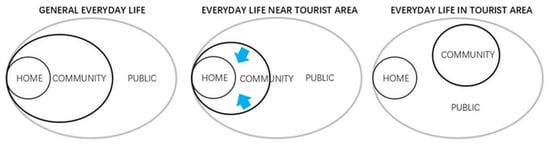
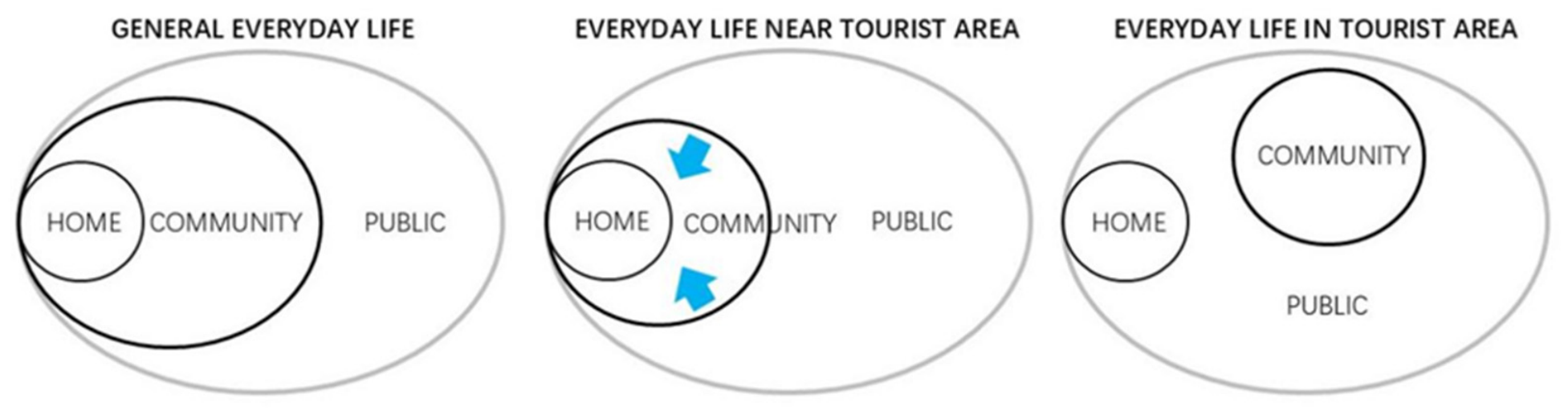
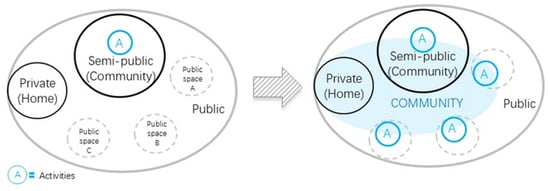
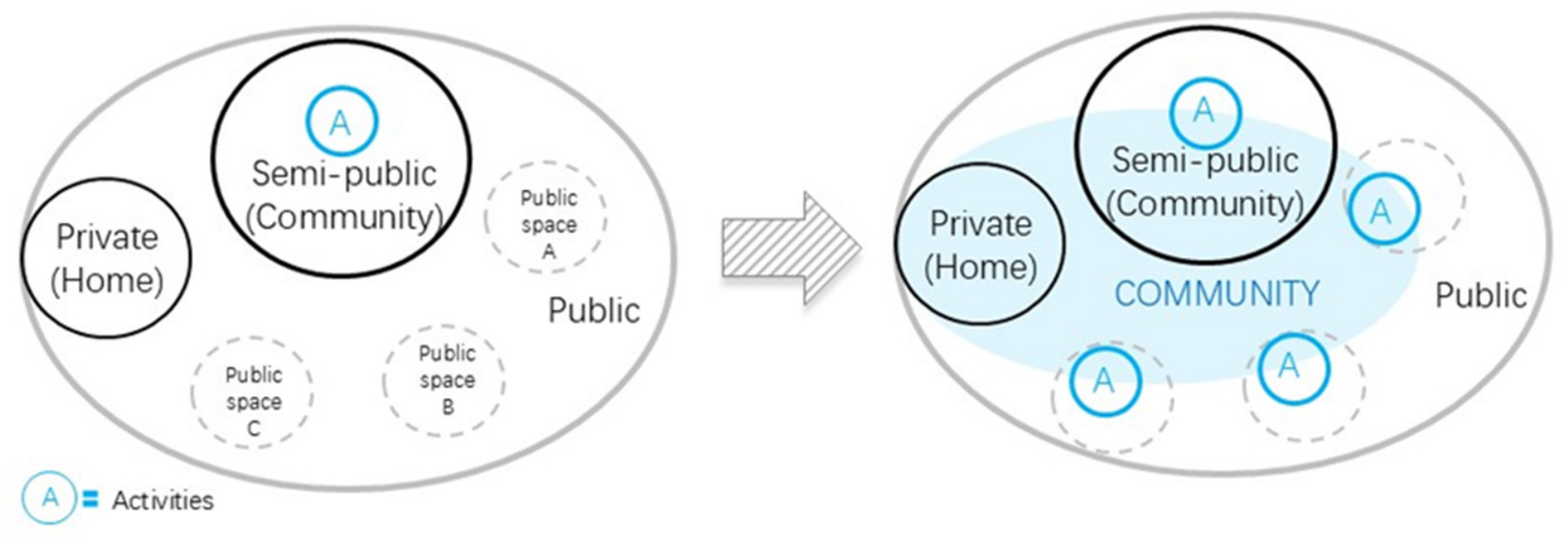
Figure 1 illustrates the distinctions in public life between historic districts and ordinary districts. Typically, the transition from home to community, and then to public space, follows a natural progression from private space to semi-public space, and finally to fully public space [25]. However, in the tourist area, this progression is disrupted: at the boundary of the tourist zone, community spaces are compressed, and within the core tourist area, community spaces are even separated from residential spaces. This segmentation interrupts the natural flow between private and public realms.
Figure 1.
Everyday life circle of historic district.
Everyday lifestyles are diverse and evolve as society changes, making it challenging to balance renewal with preservation and to address both individual and community needs [26]. Unlike tangible and intangible cultural heritage, which have established methods for evaluation and preservation, everyday life lacks a standardised framework for such assessment. A significant strand of academic thought maintains that the examination of mundane life as it unfolds across spatial settings necessitates a focus on the constitutive relationship between spatial organisation and the role-based behaviours individuals adopt in their daily engagements [14].
Gehl and Gemzøe’s emphasis on public life provides a useful lens through which to examine how redesigned streets, squares, and pedestrian environments influence residents’ everyday spatial practices and social interactions. However, while their work highlights the observable relationship between spatial form and public life, less attention is paid to how different stakeholders, such as governments, developers, tourists, and local residents, negotiate the meanings, uses, and governance of public space. Therefore, this study builds on Gehl and Gemzøe’s people-centred approach and employs grounded theory to further explore how public spaces in historic districts are experienced, contested, and redefined in the context of tourism-driven redevelopment [27].
3. Methodology
3.1. Case Selection
This study took Yongqing Fang in central Guangzhou as a case study. The site is situated in Liwan District—an area historically known as Xiguan—and was officially designated as a national AAAA-level tourist attraction in 2020. Yongqing Fang is widely regarded as one of the most representative historic and cultural blocks in Guangzhou, embodying the traditional Xiguan culture. In 2005, China’s Ministry of Housing and Urban-Rural Development, along with the State Administration of Cultural Heritage, launched an initiative to protect significant historical and cultural assets. Since then, 875 historic blocks have been identified across China, with Guangzhou’s Liwan District accounting for 14 of the city’s 26 designated blocks. This district preserves many traditional communities, showcasing a rich legacy of cultural heritage [28].
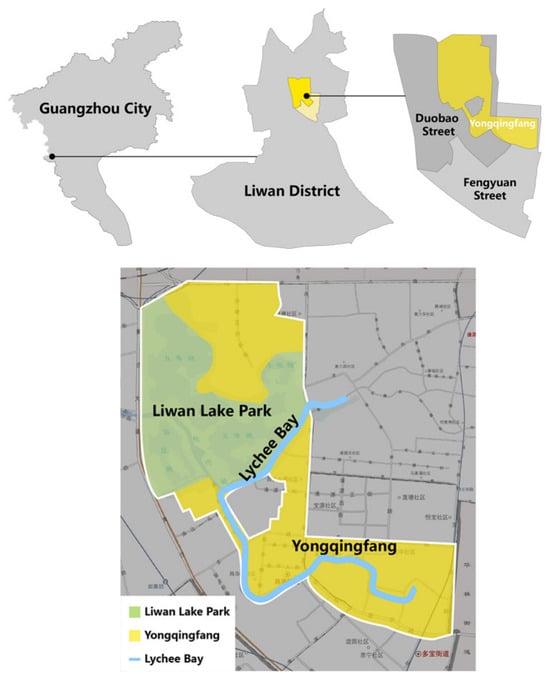
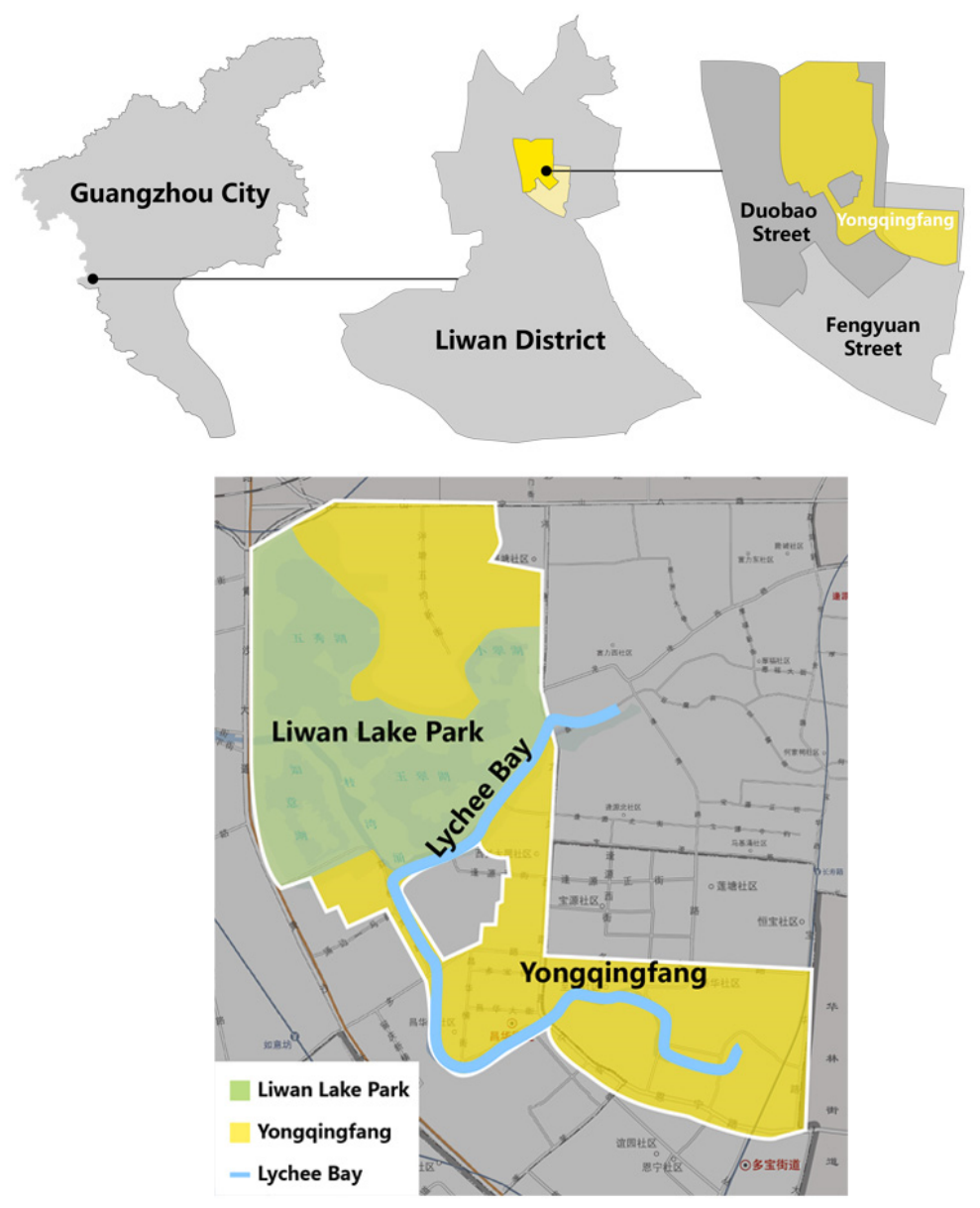
Figure 2 illustrates the location and boundary of Yongqing Fang, situated in Liwan District, Guangzhou, and spanning two administrative streets. This area exemplifies the characteristic elements of Liwan, including the Litchiwan River, arcade-style streets, and traditional commercial and residential zones. The study primarily addresses both commercial and residential spaces within this historic district (Table 1). Notably, Yongqing Fang demonstrates contrasting renewal approaches: the southern section underwent a top-down urban renewal process, while the northern section reflects a more gradual, incremental improvement.
Figure 2.
The location and boundary of Yongqing Fang.
Table 1.
Case sample.
3.2. Research Design
This study uses qualitative research methods to interpret the relationship between culture and inclusiveness in the regeneration of historic districts [29]. Both data and methodological triangulation were adopted, drawing inspiration from grounded theory—a methodology that generates theories from qualitative data [30,31]. Grounded theory allows theoretical models to be built through interviews, literature review, and coding [32]. Grounded theory was adopted because the study is exploratory and addresses context-dependent relationships among tourism-driven regeneration, everyday spatial practices, and multiple stakeholder groups. Rather than applying predetermined themes or testing an existing hypothesis, the study sought to derive concepts, categories, and their relationships inductively from the interview and observational data. This study primarily adopts procedural grounded theory, represented by Strauss and Corbin, which is based on open coding, axial coding, and selective coding. Guided by this approach and informed by the public space and public life method proposed by Gehl and Gemzøe [27], the study was carried out in three stages: (1) collecting literature and interviewing stakeholders on public space use before renovation, (2) conducting site observations of current public space usage, and (3) transcribing and coding interview and observation data. A methodological framework is presented in Figure 3 to clarify the relationship among the research stages and analytical procedures. Ethical approval was obtained, participants were informed about the study objectives and informed consent for participation was obtained. To treat participants with respect, notes were made to supplement the data for those who were not willing to be captured on camera.
Figure 3.
Methodological framework.
Observation. Observations were carried out on weekdays and weekends at six square nodes, five street nodes, and two landmark nodes, conducted at intervals of 1–2 h from 8 a.m. to 10 p.m. [33]. The three types of nodes not only differ in their spatial attributes but also encompass three distinct groups of people—tourists, residents, and merchants—which will provide effective data support for the spatial observations and interview records of different populations in this study. Observation tables (Table 2) documented five dimensions: spatial features, environment, facilities, daily living, social activities, and folk customs, providing an overview of behaviours and lifestyle patterns. Most of the people were informed in advance that they would be photographed for research purposes. In effect, it was difficult to obtain consent from all of the people, and some participants were not willing to be captured on camera. In this regard, notes were made in order to treat the participants with respect.
Table 2.
Observation design.
Interviews. An interview guide was developed and refined through internal review and field testing to ensure clarity and relevance [34]. Interviewees were recruited through face-to-face contact in the designated areas. Members of the research team approached potential participants on site, briefly introduced the study, and invited those who expressed interest to take part. Participants who met the inclusion criteria and agreed to participate were then interviewed in person. Interviewees were selected from stakeholders in the designated spaces, categorised according to their degree of involvement and duration of association with these areas (Table 3). The stakeholders were grouped into three primary categories: users, builders, and managers. Within the builder group, designers had the most direct influence on the spatial presentation, while developers and government entities held main control over the design process. Users were further divided into residents, merchants, and tourists based on their respective roles, although there were instances of overlap between residents and merchants. Managers were classified as either operational or functional staff. Customised interview outlines were prepared for each stakeholder group to guide the interview process and ensure systematic data collection.
Table 3.
Interview design.
Data Analysis. NVivo 12 (QSR International Pty Ltd., Melbourne, Australia) was employed to code and analyse interview transcripts. Coding was developed based on grounded theory principles to enable systematic abstraction and data visualisation. The analysis followed an iterative three-stage coding process. First, open coding was conducted to identify initial concepts from interview transcripts and observation notes. Second, axial coding was used to explore relationships among initial codes and to group them into higher-level categories, with particular attention to connections between social behaviours, spatial practices, and stakeholder interactions. Finally, selective coding was applied to refine these categories into core themes, including alienation, spatial tensions, and inclusive communication. Two researchers independently conducted the coding process. The coding outputs were then compared, discussed, and refined through repeated rounds of discussion until consensus was reached. NVivo 12 supported further analysis, including word frequency assessments and thematic categorisation, allowing for an in-depth examination of recurring concepts and the relationships between categories.
3.3. Coding of the Research
In this study, over 1000 individuals were observed, including residents, merchants, visitors and workers. Researchers captured 650 photographs documenting the environment, activities, and behaviours of people, primarily from fifteen designated points. Nineteen participants were interviewed, comprising six visitors, one sanitation worker, one event organiser, one researcher, one specialist, and seven residents—four of whom also operated as merchants (Table 4). Respondents in age groups A1 and A5 were relatively few, while other age groups were more evenly represented. The primary interview roles included visitors, residents, and merchants, supplemented by interviews with individuals in other roles. Audio recordings from the interviews were transcribed. About 61,000 Chinese characters of interview text were obtained.
Table 4.
Coding of the research.
During the sampling process, it was observed that residents and merchants in the area were predominantly in age group A4, whereas tourists were mainly in age group A2, and workers were mainly in age groups A2 and A3. The sampling showed significant differences in age distribution among these groups. Group A2 had a relatively larger sample size due to the high proportion of tourists and workers.
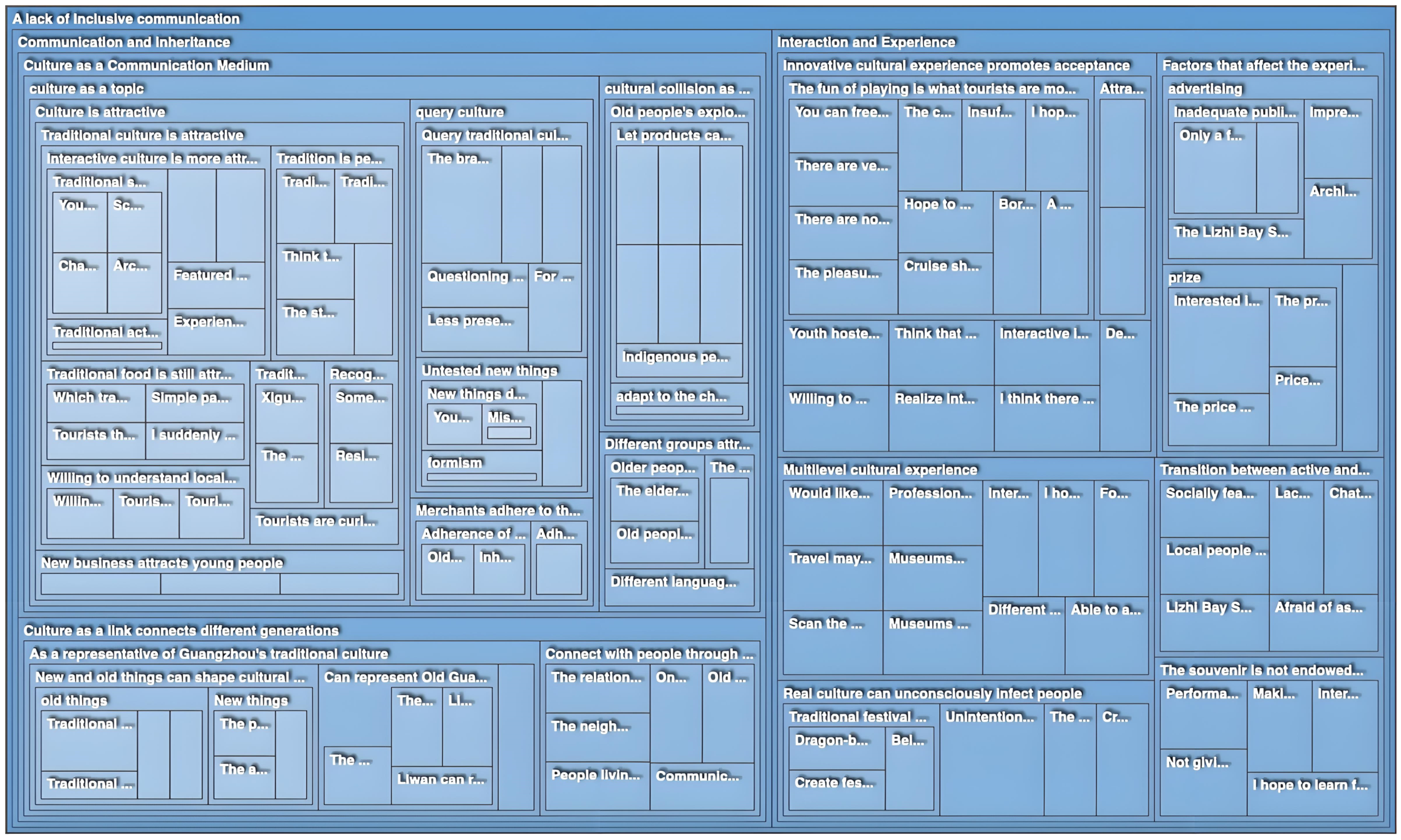
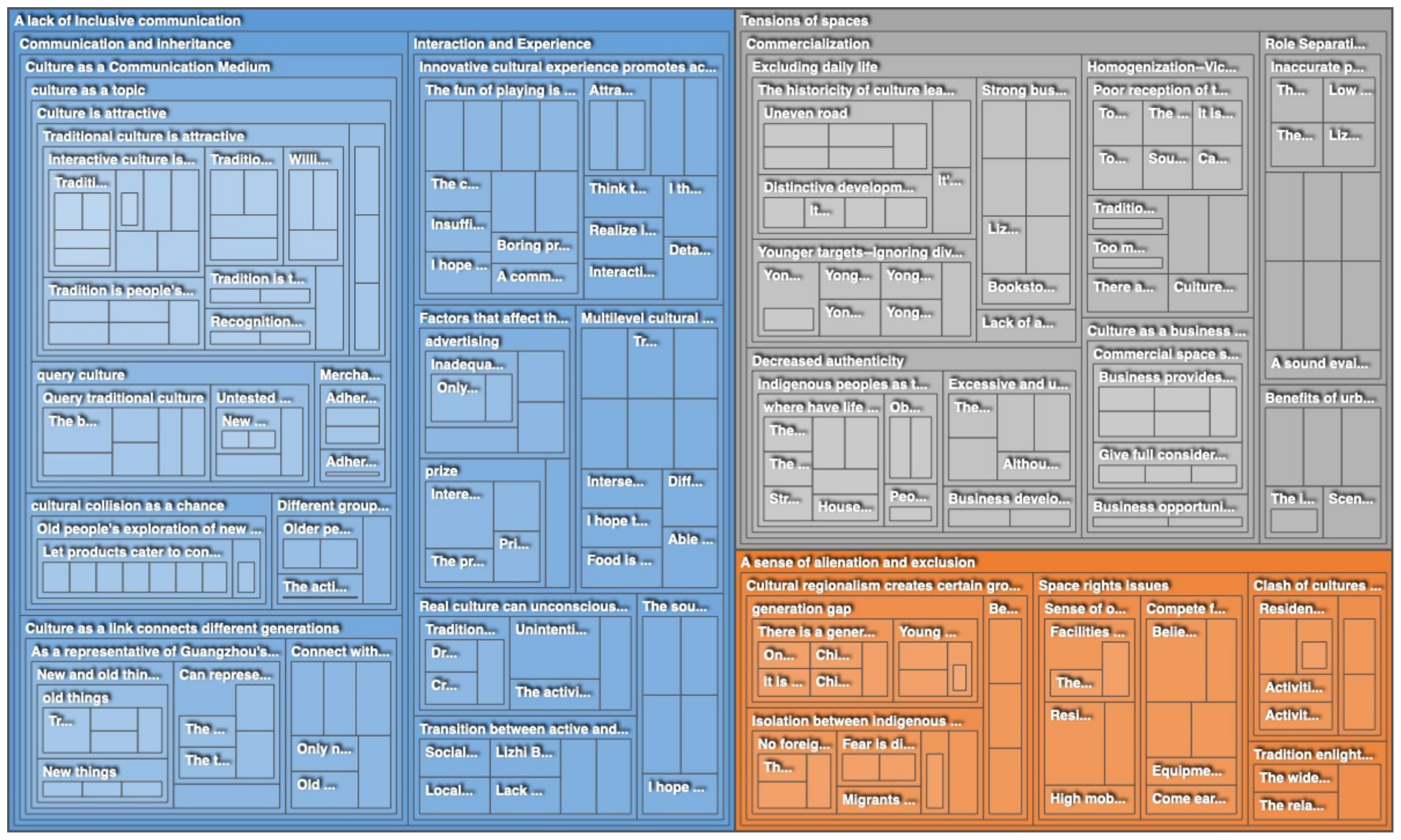
352 codes were obtained according to the data collected from interviews, including 259 primary codes, and finally narrowed down to three core categories (Figure 4).
Figure 4.
Coding of the research.
After adding some meaningless words (such as ‘is’, ‘the’, etc.) to the stop words list, the frequency of words used in the interviews indicated the themes and main concerns (Table 5). From the group’s perspective, the topics of young people, residents, children, locals, and tourists were highly relevant. From the perspective of inclusion, some specific inclusive connotations were mentioned, such as ‘communicate’, ‘understand’, ‘friendly,’ and ‘open’. From the perspective of culture, life and tradition, change and differences were mentioned.
Table 5.
Profiles of interview participants.
4. Results
4.1. Comparison Before and After Regeneration
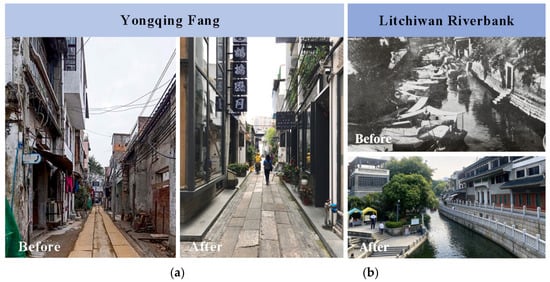
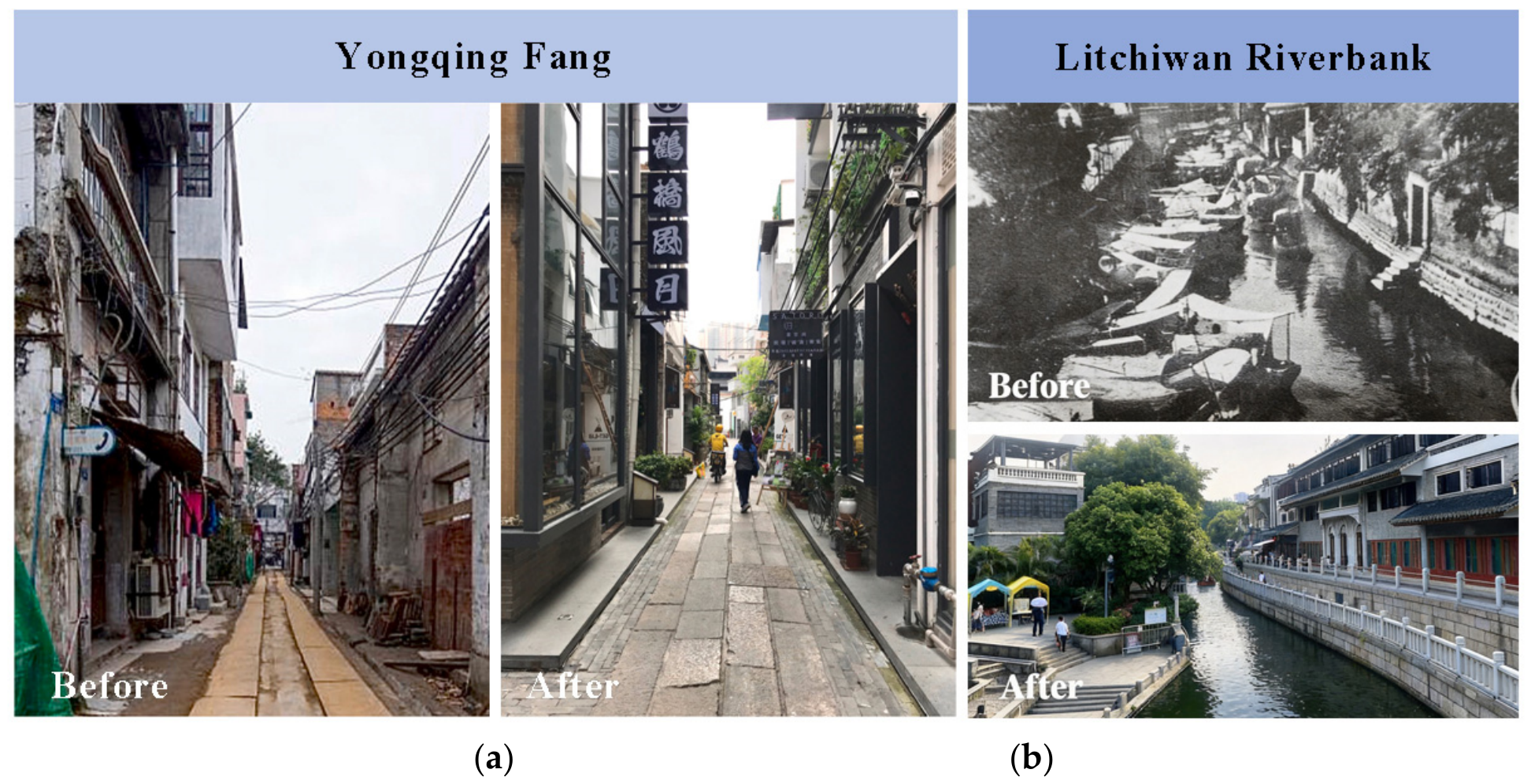
Changes in spatial memory (Figure 5). According to the Guangzhou Liwan Chronicle, Liwan has been a significant centre for foreign exchange and trade since the Ming dynasty, which facilitated the development of business and the catering service industry in Xiguan. During this period, Lizhiwan was known as a place where ‘fishermen sang in the evening’. In the mid to late Qing dynasty, affluent merchants gathered in the area, leading to a gradual transition to residential houses. The picturesque scenes of flower boats during the late Qing dynasty and early Republic of China marked a peak in Lizhiwan’s prosperity, making it a popular leisure destination for citizens. Year by year, the number of litchi trees diminished, and nearby factories contributed to severe pollution [35]. The unique cultural heritage of Liwan was shaped by its long history, establishing it as an unforgettable historical centre for Guangzhou residents. Today, following urban renewal efforts, Lizhiwan has once again emerged as a tourist destination, attracting visitors from across the country and around the world.
Figure 5.
(a) Yongqing Fang, past and present ([36]). (b) Litchiwan Riverbank in the 1930s ([37]) and the status quo today.
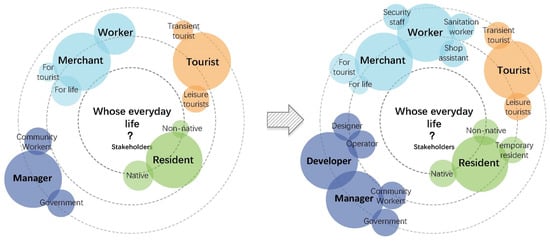
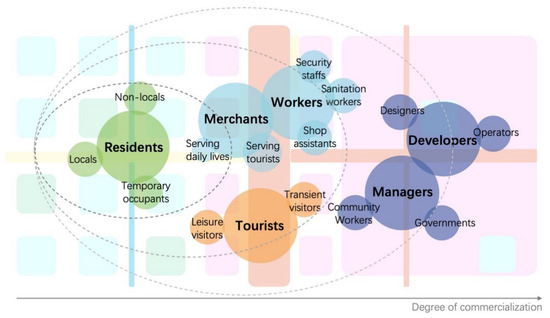
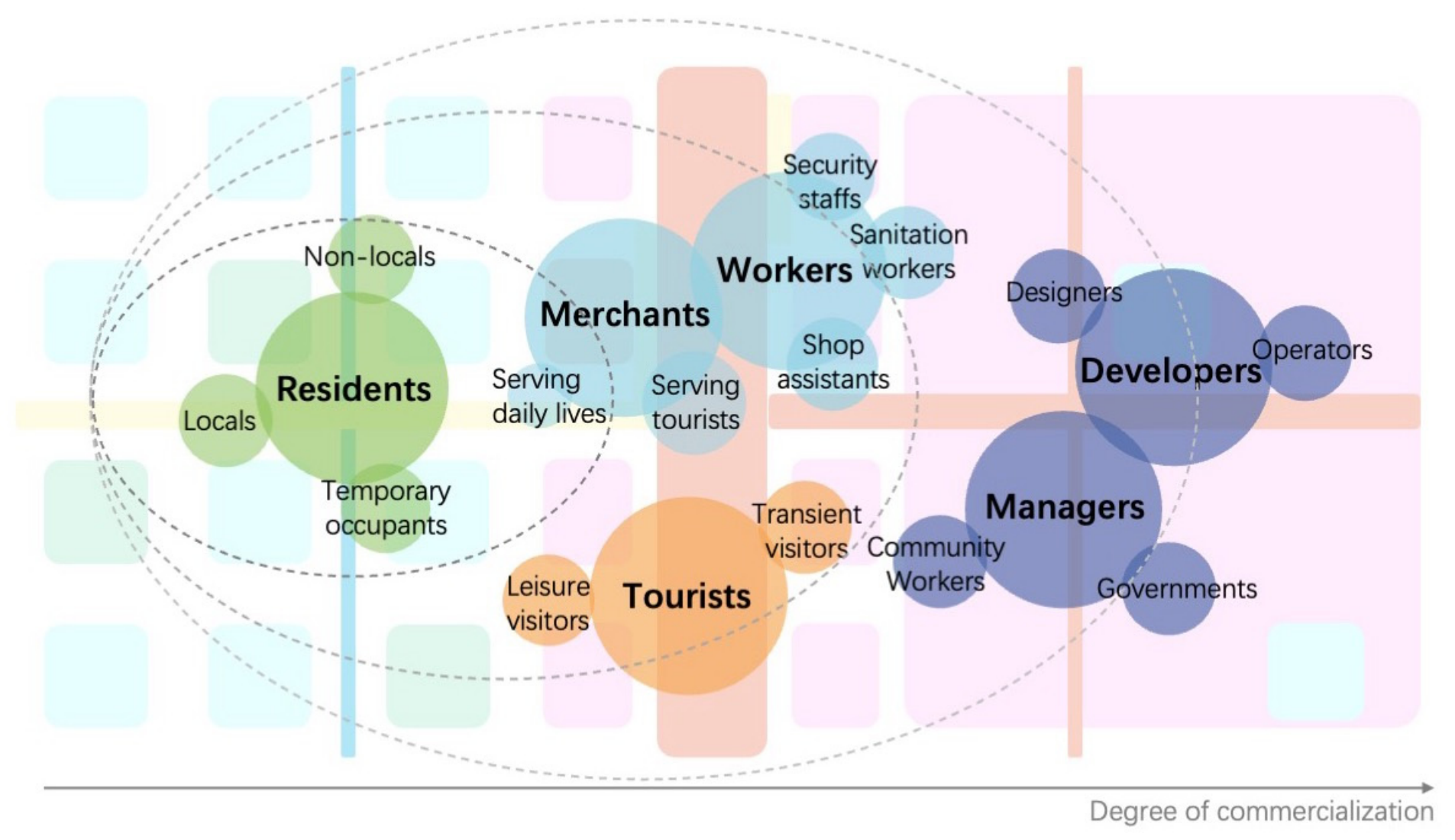
Changes in space users (Figure 6). The shifts in daily life within the area reflect the evolving demographics of its inhabitants. By identifying key stakeholders and analysing the historical functions and contexts of the space, changes in primary space users were documented. Space stakeholders are primarily divided into four categories, ordered by their proximity to space usage: residents, merchants and workers, tourists, and managers and developers. Significant changes include an overall rise in tourist numbers, with a particular increase in transient visitors; a rise in non-local residents, particularly temporary occupants (such as those in rental housing, youth apartments, and long-term visitors); the addition of developers as active stakeholders; and a higher number of workers.
Figure 6.
Stakeholder map.
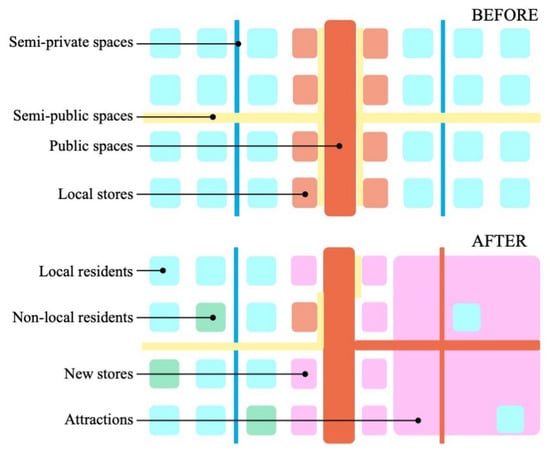
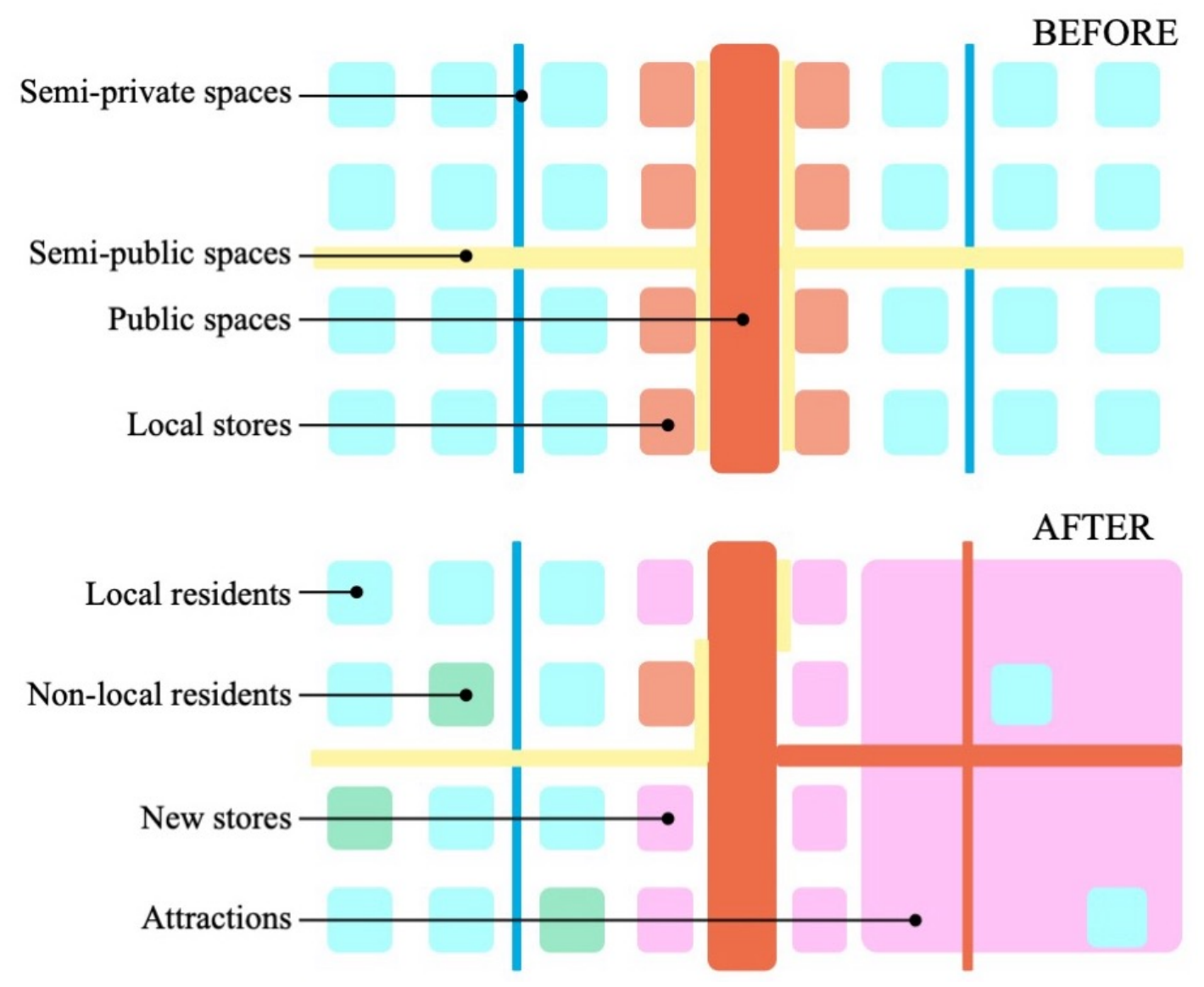
Changes in spatial pattern (Figure 7). Due to factors such as active renewal and passive adaptation, the spatial pattern of the area has evolved. Public spaces have expanded to accommodate a broader audience, while semi-public spaces, such as neighbourhood zones, have become increasingly public, disrupting the continuity of neighbourhood spaces. Private spaces, particularly for residents in commercial zones, have also been affected. The resident community has grown more diverse, shifting from a closely connected group to a mix of individuals less familiar with each other. Additionally, shop types have shifted, with traditional shops giving way to newer types of commercial establishments.
Figure 7.
Spatial layout changes in historic cultural districts before and after commercialisation.
4.2. The Use of Public Spaces
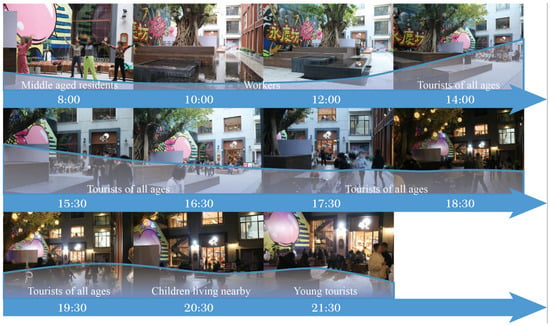
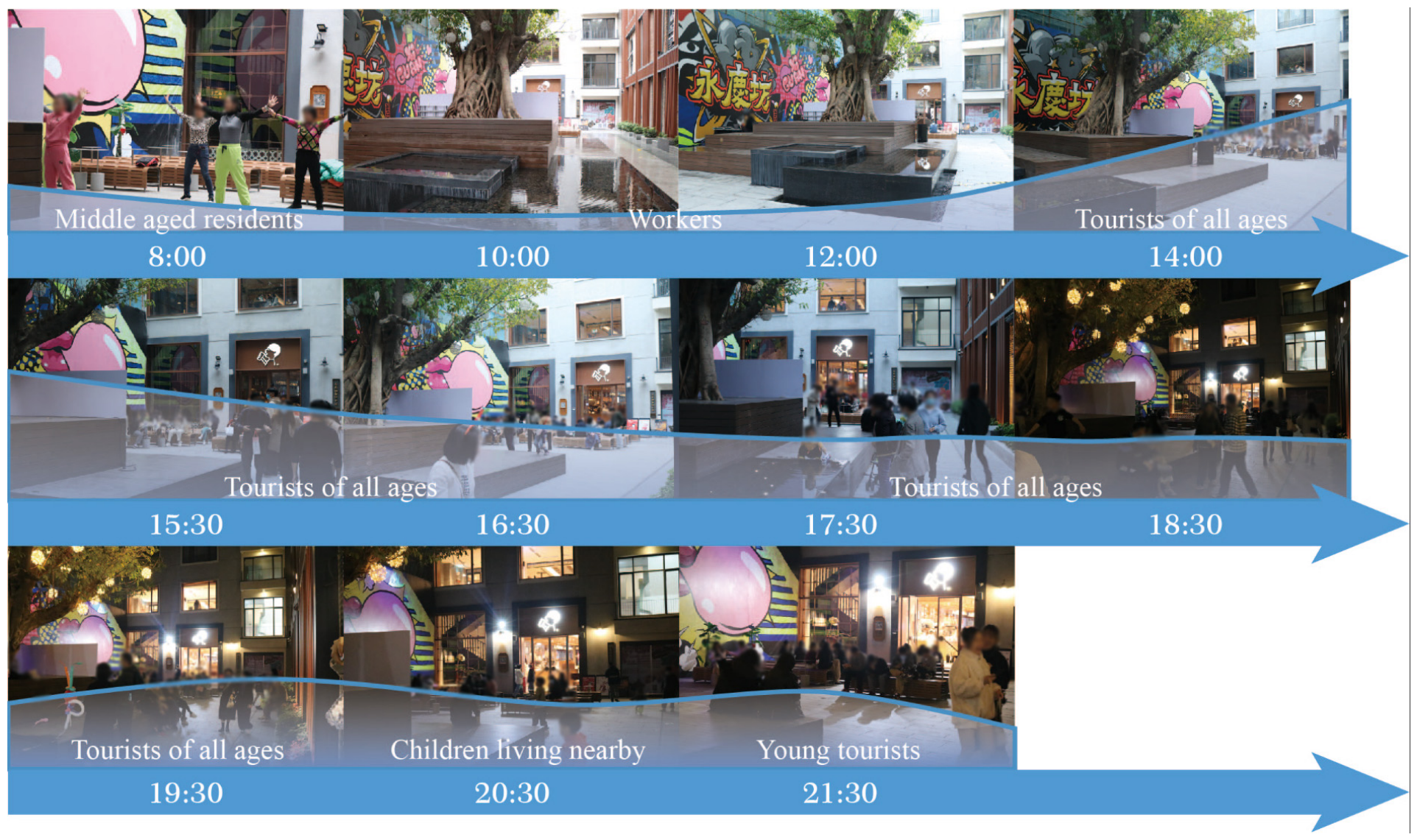
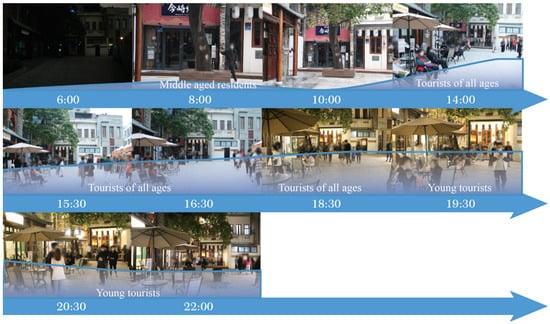
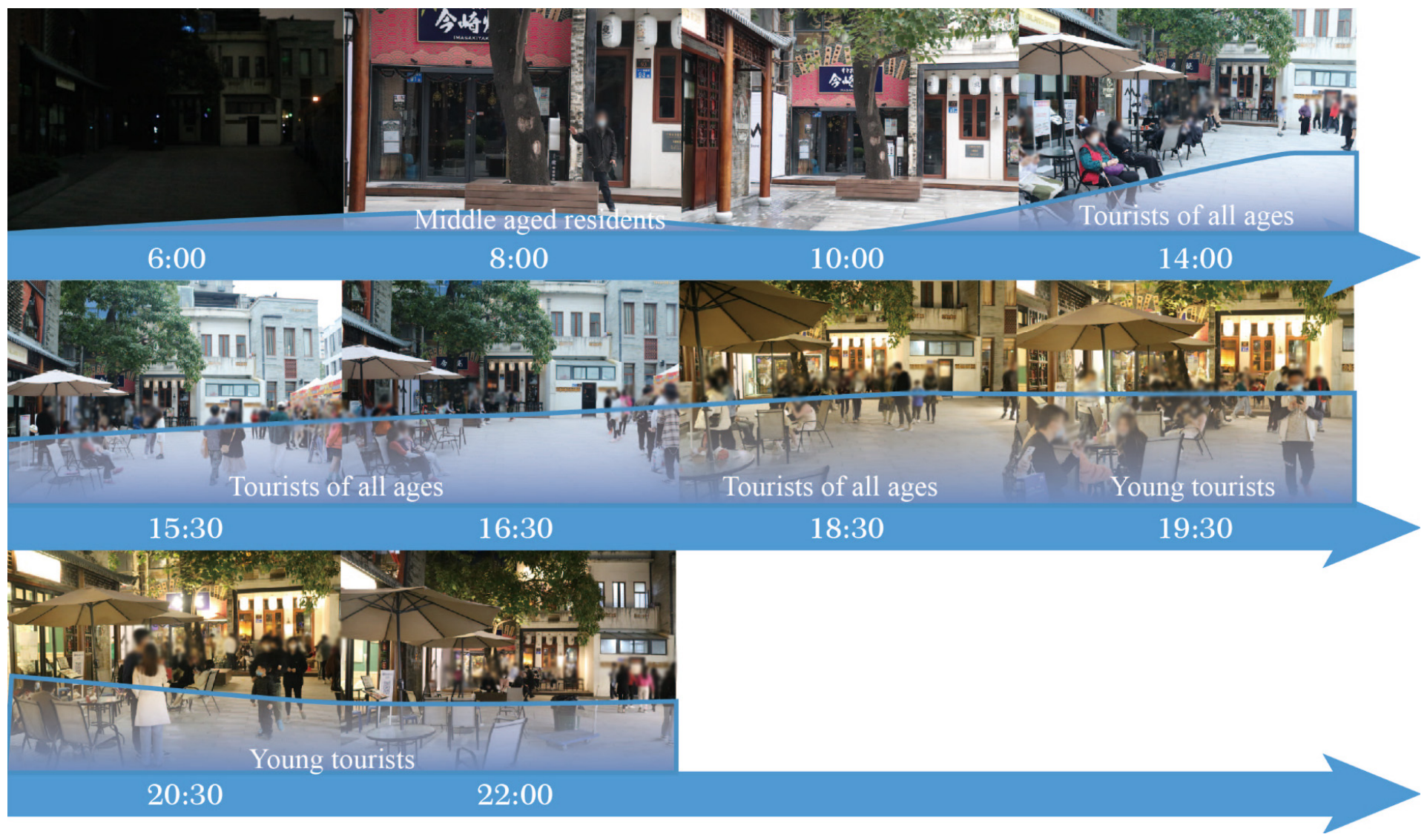
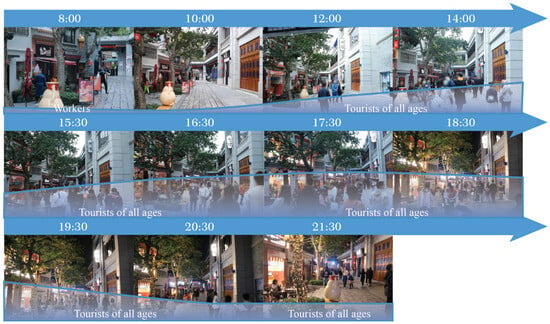
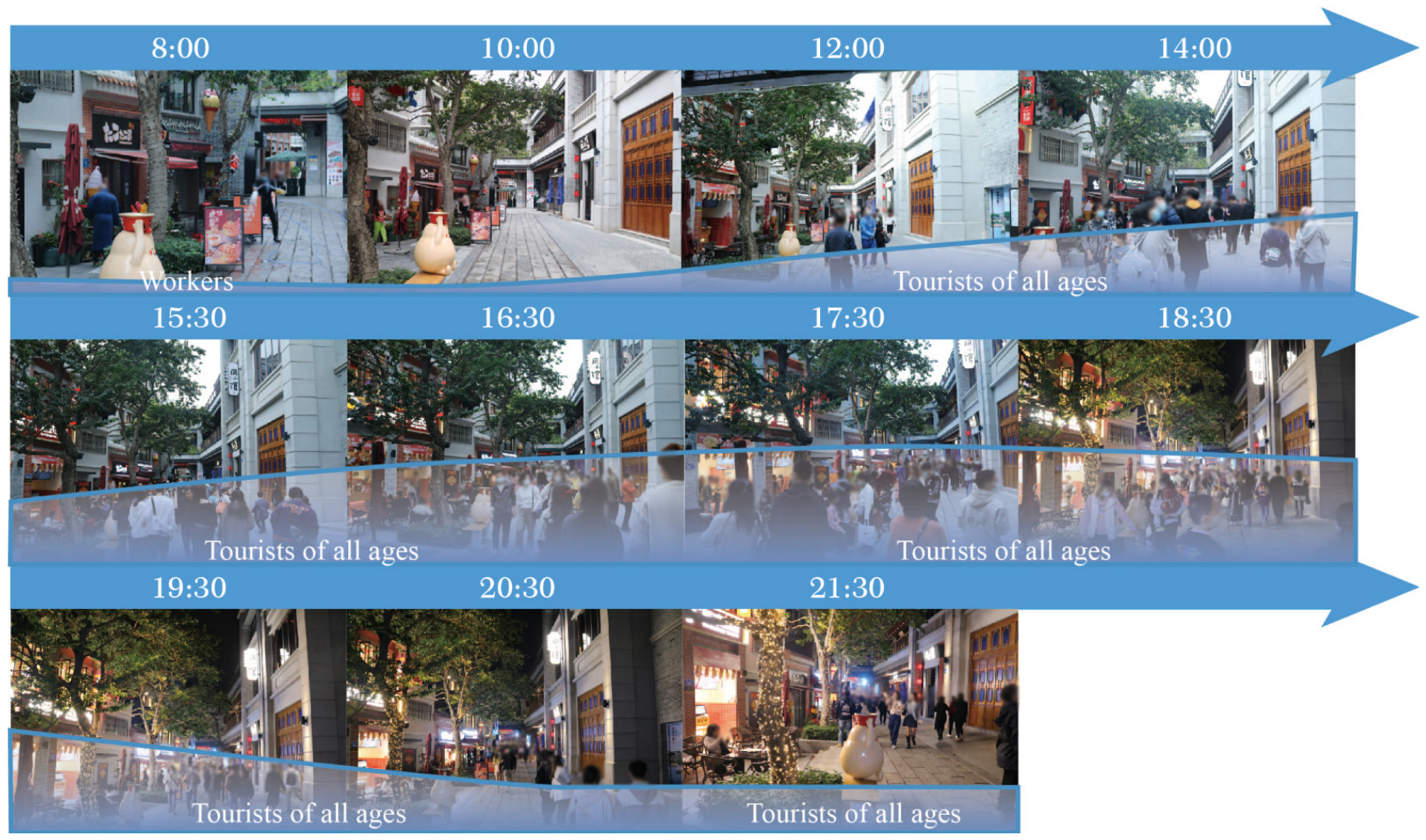
As shown in Figure 8, Figure 9 and Figure 10, the user groups and activities were diverse at different periods. The curve in the figures showed the flow of people, indicating the main population at different times. Space A was a square consisting of seats provided by a beverage store and a landscape seat. Residents exercised at around 8 o’clock, and shops generally opened after 10 o’clock. Tourists arrived after 10 o’clock and residents seldom exercised after that time. Children living nearby came to play at night, and their parents watched them from the house’s second floor. Space B was a square with restaurants and residential buildings on both sides. The place was composed of seats provided by shops. The dwellers did exercise at around 8 a.m. After noon, the hotel set up some chairs, and some tourists rested on the seats for a long time. Vendors came out and set up the stalls in the afternoon. Space C was the main commercial street occupied by various shops, with three households among them. When tourists passed by the houses reserved for living, they often stopped and took some photos.
Figure 8.
Observation in Space A.
Figure 9.
Observation in Space B.
Figure 10.
Observation in Space C.
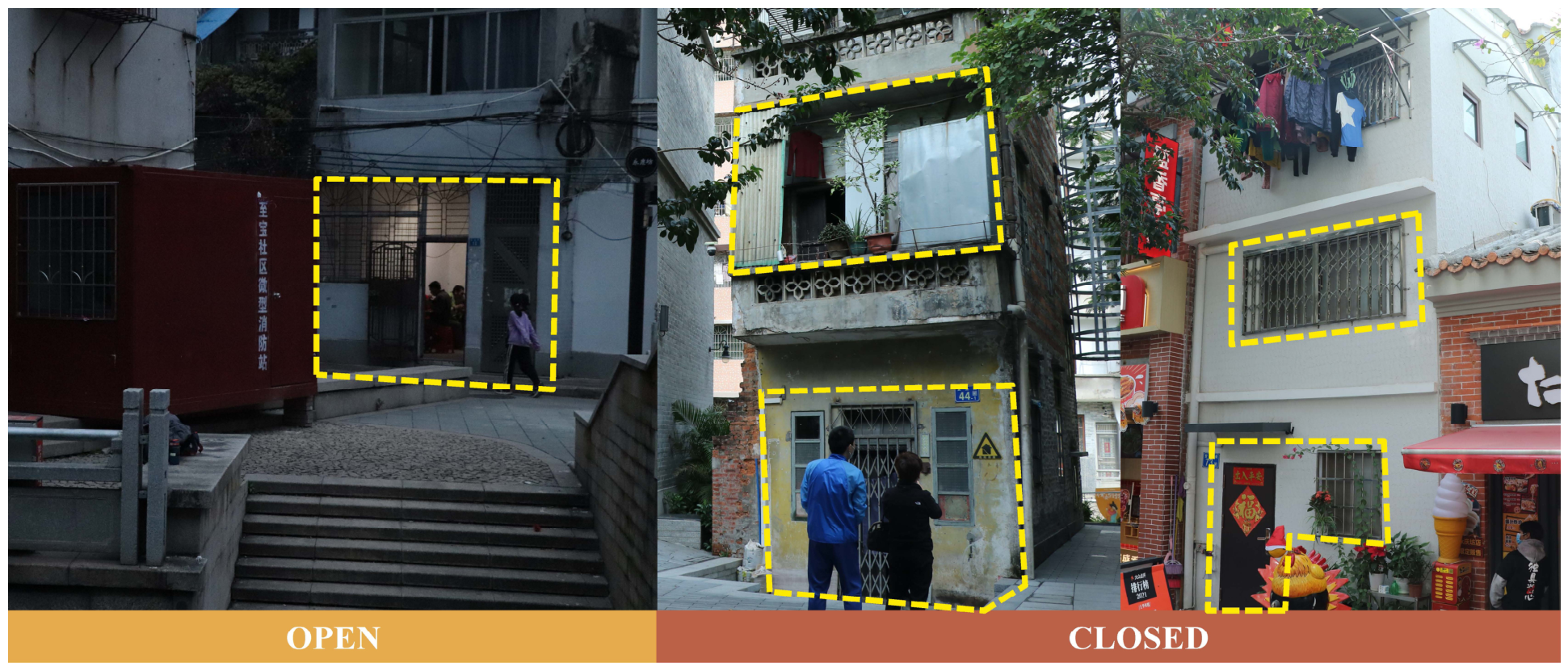
According to the observations, dwellers preferred activities in the early morning and late at night but seldom in the daytime because of the crowd of tourists. The dwellers tended to keep the doors and windows closed for the whole day. In this regard, these public spaces can enrich their usage ways from an inclusive perspective by involving different city users.
4.3. A Sense of Alienation and Exclusion: Compression of Everyday Life in Spatial Patterns
The first category is ‘A sense of alienation and exclusion’ (Appendix A.1). The two main codes in this core category are cultural regionalism, which creates a sense of alienation and space rights issues. Sense of alienation includes generation gaps, isolation of locals from non-locals, and general vigilance against strangers.
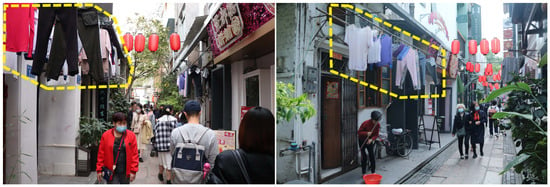
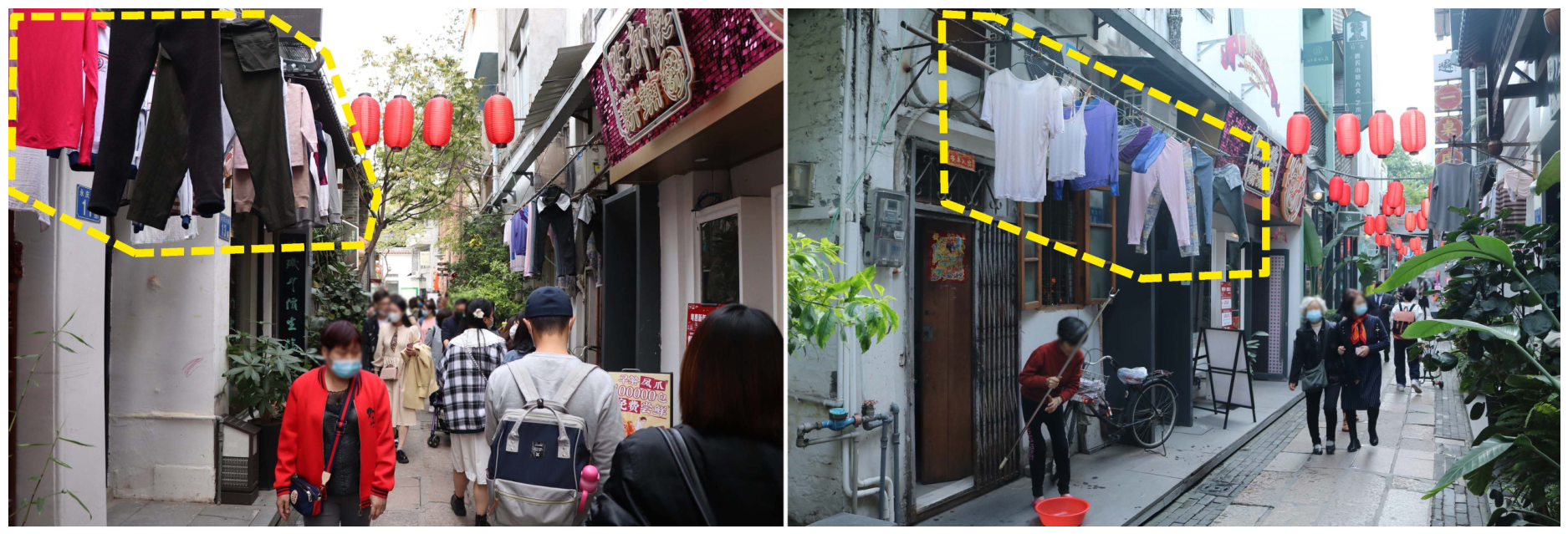
The compression of everyday life manifested across residential, transitional, and tourist areas. In residential areas, some tourists ventured in, while those near tourist zones experienced a high influx of visitors. In transitional areas, recent years saw an expansion of boutique shops and a decline in traditional stores. The arcade street, once central to neighbourhood interaction, transformed into a highly public space due to changes in business types and foot traffic, shifting away from everyday neighbourhood use. In the core tourist area of Yongqing Fang, only a few households remained, now surrounded by tourism-oriented businesses. Traditionally private activities, such as drying clothes or household chores, were exposed to the heavy flow of tourists (Figure 11).
Figure 11.
The core tourist area of Yongqing Fang. (The area circled in yellow indicates residents continuing their everyday practice of hanging laundry).
Additionally, a resettlement building was constructed within Yongqing Fang’s core to accommodate residents. Regardless of whether they lived in this new building or remained in their original homes, the original neighbourhood connections were disrupted. The shared internal public space now served both residents’ everyday activities and tourist traffic simultaneously. Residents benefited from a clean, comfortable public space, which became a quality activity area for them during quieter morning and evening hours. However, at peak times, the number of users often exceeded the space’s capacity. Unlike community public spaces, this shared area had a higher degree of public exposure, which reduced neighbourhood and community-focused activities.
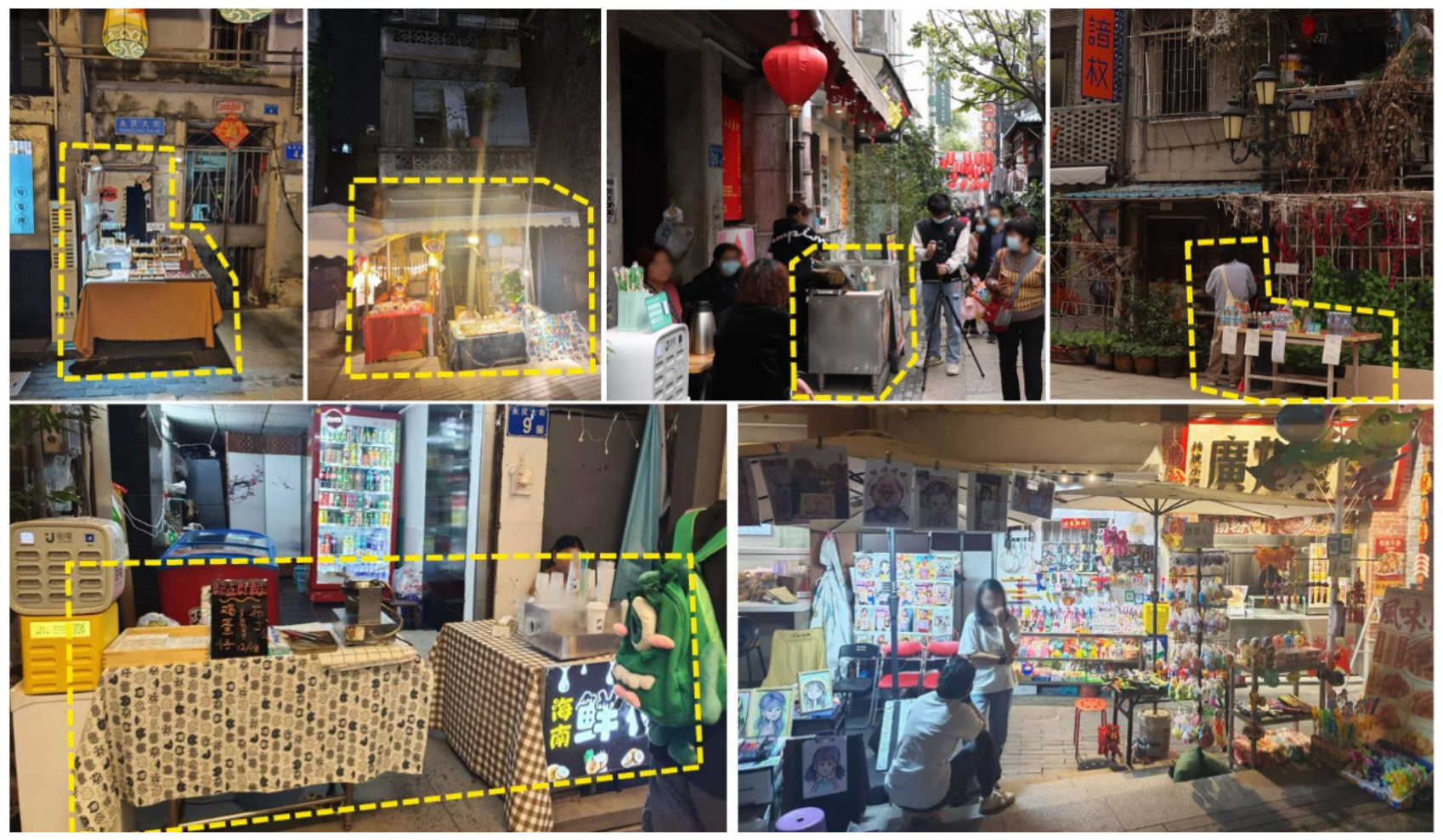
From the perspective of commercialisation’s influence, whether positive or negative, it inevitably altered the nature of everyday life. Some residents reported positive effects of commercialisation, such as increased income and improved environmental quality. The influx of new visitors also drove innovation among traditional shops, encouraging them to adjust their products to appeal to younger customers or to introduce tourist-oriented items at the entrances of shops that previously served everyday needs. Many residents began using the space outside their homes for sales, transforming original living spaces into commercial areas, with stairs, front doors, and doorways repurposed for selling goods and increasing profits (Figure 12).
Figure 12.
Business at the doorstep.
We have been operating here for several generations, but now we are making more money because this is a tourist attraction.(P1)
If the dwellers are unfamiliar with you, they will target you everywhere…I got the information from my peers when talking with them.(P5)
Space rights issues include conflict over territory and a sense of belonging. The conflict is mainly reflected in the various requirements of different people within the limited space. To some extent, social participation and spontaneous behaviour reflect a sense of belonging.
The role separation reveals the reasons for exclusion from the perspectives of designers and operators. The problems of ‘missing activities’ (P12), ‘intangible cultural heritage blocks [being] difficult to discover’ (P17), and ‘too many creative markets’ (P16) indicate the separate interests of designers and operators.
The guidance and control of business formats are not mature enough in terms of planning and overall implementation and operation.(P17)
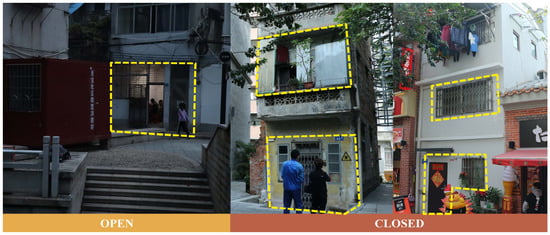
Some residents reported the negative impacts of tourism and commercialisation on their lives. Those residing in the commercial centre tended to keep their doors and windows tightly shut, while residents living farther from the centre were more likely to leave their doors and windows open (Figure 13).
Figure 13.
The impact of tourism on the openness of residents’ residences.
Some people get drunk and make a lot of noise at night, and my neighbour has called the police multiple times.(P5)
Sometimes, when there are too many people, it’s difficult to get out.(P11)
The priorities set by the government and planners significantly influenced the attention given to everyday living spaces in commercialised tourist areas. In the development of Yongqing Fang, particularly in the northern section, the government demonstrated considerable respect for residents; however, the construction and maintenance of public facilities and services still largely catered to tourism.
The government often checks in with us about things like renovating the canopy…the trees, and keeping facilities in good shape.(P1)
The commercialisation of historic districts undoubtedly provided some benefits to residents; however, this did not necessarily signify an improvement in the quality of everyday life. While upgrades in infrastructure and the environment were apparent, the reduction in everyday living spaces, semi-private areas, and community spaces emerged as a significant challenge.
4.4. Tensions of Spaces: Alienation, Exclusion, and Conflict
The second category is ‘Tensions of spaces’ (Appendix A.2). Compared to other historic districts that are overly commercialised and homogenised, Yongqing Fang retains specific cultural characteristics in the regeneration and restorations. Some traditional shops and heritage blocks were preserved, while new business models and commercial activities were introduced. However, conflicts of use exist among some commercial, cultural and living spaces. The original living spaces were utilised as commercial spaces. The stairs, front door spaces and doorways were used to sell commodities for more profits.
After the influx of new residents, everyday life became markedly different from traditional patterns, leading to a strong sense of alienation among different groups. Various factors, such as cultural differences, contributed to a degree of mutual exclusion and even conflict, resulting in a diminished sense of belonging for local residents and challenges for newcomers in developing a sense of community. This alienation manifested in several ways, including generational gaps, isolation between locals and non-locals, and a general vigilance towards strangers.
One of the most challenging issues is how immigrants integrate into local life. It takes time…after all, everyone’s living habits are different.(P1)
Alienation varied from person to person, and individuals who were already good at communicating with others showed more joy in interacting with different people. In this mixed old and new community, some respondents mentioned feeling excluded, including verbal exclusion in interpersonal communication and being treated differently in daily life.
If residents are not familiar with you, they will target you everywhere and get along well with peers…Many times, some community activities notify residents, but we are basically unaware of them.(P5)
The conflicts primarily arose from the diverse needs of individuals within constrained spatial environments. These conflicts often manifested as competing demands from different groups inhabiting the same limited spaces. For instance, some residents engaged in regular activities within specific public spaces, leading to disputes and disagreements when these spaces were appropriated for use by others. Such dynamics highlighted the complexities of communal living, where the interplay of established routines and emerging interactions results in friction among community members.
The government intends to use our rent to ornament the environment because many elderly people don’t have enough money.(P3)
We played badminton there. Those people who were dancing in the square there thought that we were taking up their space.(P5)
Some people get drunk at night…it is noisy. My neighbours called the police several times. Sometimes when we hang the sheets and covers outside and block out the sunlight, they report to the property management.(P5)
4.5. A Lack of Inclusive Communication: Cultural Identity and Cultural Authenticity
The third category is ‘Lack of inclusive communication’ (Appendix A.3). The theme emerges from two aspects—communication and inheritance, and interaction and experience. Cultural exchange is valuable in connecting local and non-local people and promoting mutual understanding between different communities.
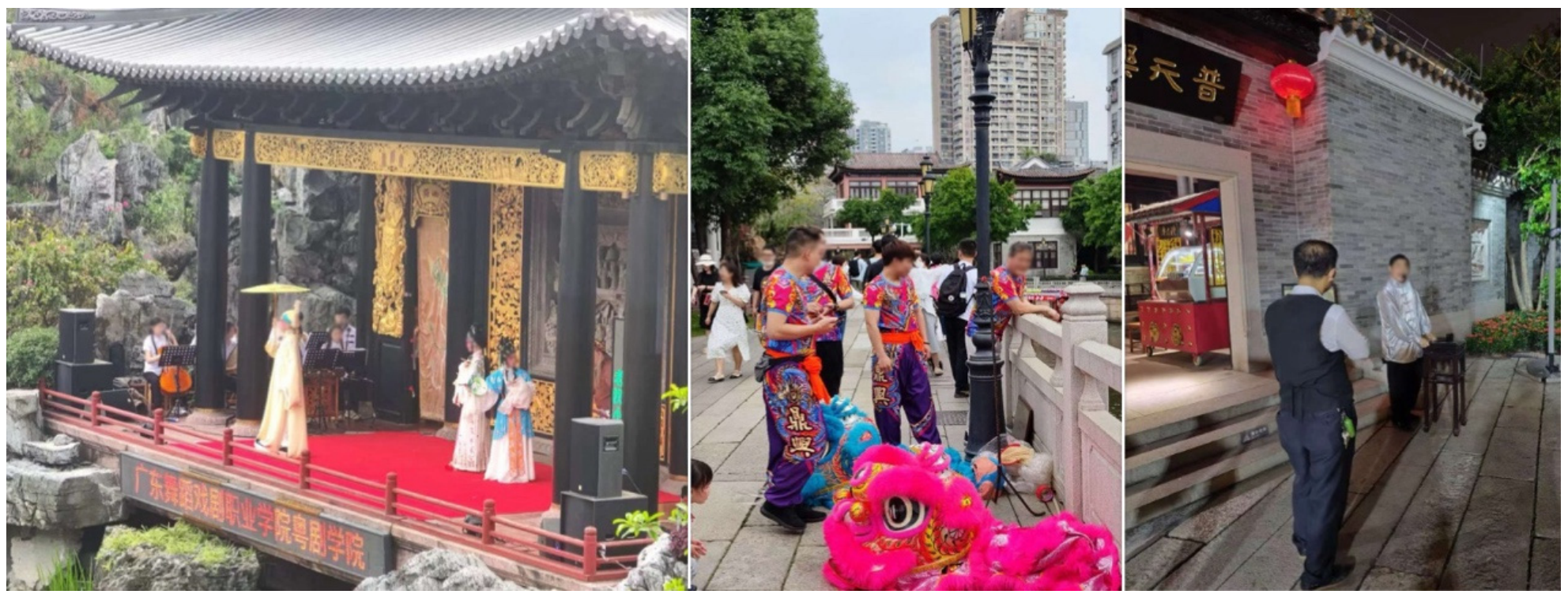
People held diverse opinions on whether this area genuinely reflects historical culture and contains authentic cultural elements (Figure 14). Many interviewees expressed a strong affirmation of Yongqing Fang’s historical culture, indicating a profound sense of cultural identity and pride. Younger participants particularly emphasised the area’s inclusiveness and the diversity of activities, noting that cultural events could foster mutual understanding and interaction among various cultural groups.
Figure 14.
Cultural activities.
The local products here are traditional and of good quality. These things and the techniques to make them have been passed down for generations…Don’t you think we’ve always been trendy? The nearby Thirteen Hongs were once the best ports.(P1)
You can see that the native goods are traditional and quality guaranteed. These things and production techniques have been passed down from generation to generation for a long time.(P5)
However, some respondents questioned the authenticity of the displayed culture, noting that severe homogenisation had led to a lack of uniqueness. Homogenisation was perceived to decrease cultural authenticity; for instance, when unverified products were showcased by multiple residents or when a popular cultural item spurred numerous imitations, the area’s distinctiveness was reduced. Such commercialisation made tourist destinations feel similar, causing them to lose any unique identity.
Many products are just marketed as cultural, but they don’t resonate with people and lack [cultural] connection.(P15)
This perceived lack of prominence and cultural homogenisation was attributed to certain planning decisions. The results showed that traditional cultural elements were placed in less prominent areas, with a street dedicated to intangible cultural heritage hidden in an alley, while bars, creative markets, chain stores, and coffee shops occupied the main.
For a scenic spot, it could be a selling point by selling some traditional handicrafts and creative merchandise. Many traditional snacks need to satisfy the tastes of modern people. Those so-called internet-famous shops become popular public spaces for young people.(P5)
In terms of communication of culture, informants highlighted the value of different cultures colliding, as with mutual attraction between foreigners and locals or between different ages.
We held a DJ-like party in the park, and many older people came to have a look. But they didn’t dance with us. They just watched and thought it was a fun thing.(P3)
Culture bridges different generations by exchanging local characteristics and daily activities with local people. The results suggest that innovation, diversity and interaction are necessary in the regeneration of historic districts.
If you have a more refined sensibility, it is nice to have an exhibition hall or a museum, and for this type of commercial street, you prefer to have a relaxed and entertaining experience.(P16)
Young people prefer those relaxed musicals or live bands; on the contrary, the official Cantonese operas are more favoured by the elderly people.(P14)
To reduce the effect of commercialisation and attract more young people, some specific shops provide various interactive experiences and services that are free of charge. During the interviews, a method of improving inclusivity emerged, which will be further elaborated in the discussion. More data from observations and interviews can be found in Appendix A.4.
5. Findings and Discussion
5.1. Mutual Understanding: Creating and Providing Opportunities
There are two main characteristics of the commercial transformation of a historic district. One is the transformation of daily life in the original area. As a space for residents’ everyday life, the people, things, and objects within the public spaces form a unique culture. Residents are independent of each other, but they also establish a relatively fixed connection in daily activities. Neighbourhoods change as shops move in and native residents leave. Esmailpoor et al. showed that the disruption of an area’s original social structure by non-natives is an essential reason for the loss of indigenous populations [17].
The other is that cultural diversity increases rapidly. In addition to the ubiquitous generation gap in society and the difficulty inherent in the integration of foreigners by locals, group segregation, such as mutual incomprehension, is identified due to cultural collisions. Cocola-Gant showed that tourism-led transformations lead to a breakdown in both material and spiritual attachment, leading to a feeling of being expelled [18]. In this study, the native residents expressed a more inclusive attitude towards migrant populations and tourism, yet still had a strong sense of ownership. They believe that the complete integration of migrant populations requires effort from generations. At the same time, some young people placed less emphasis on neighbourhood relationships and lived their own lives. On the other hand, tourists feared disturbing residents, and residents found it difficult to interact with the constant flow of tourists. Except for some natives who ran businesses there, most seldom communicated much with strangers. Diversity exists in this region, but there still needs to be more communication.
Scholars point out that while improvements in liveability promote tourism development, tourism development can have negative impacts on liveability [16]. It is difficult to establish a new network when one’s original social network is broken, especially for natives. Cultural exchange among various stakeholders with diverse cultural backgrounds is a problem. Nevertheless, it can be improved by design. Design opportunities and directions generated from Category 1 are represented in Table 6. Essential phenomena are indicated—daily life restoration and establishment of a sense of belonging. The specific issues are summarised based on physical, behavioural, and mental aspects, which can be searched along the upper levels of the codes and the references. Directions are proposed based on the opportunities deduced from the previous step.
Table 6.
Design opportunities and directions generated from Category 1.
Everyday life can be affected if excessive emphasis is placed on commercial development. Proposed directions suggest that effective communication between stakeholders is valuable, including exchanging various cultures and integrating business culture and lifestyle. It is thus essential to promote cultural exchange through business models and commercial spaces. Nevertheless, residents’ lives should be prioritised. Figure 15 illustrates the everyday life cycle to address the fragmentation of community spaces in historic districts. Public spaces A, B, and C refer to public activity areas such as squares, pocket parks, and streets. The blue circle represents community-based daily activities, including leisure and entertainment, social interactions, public affairs, and life services. By enriching scattered, high-quality public spaces and connecting them through community-driven activities, activity managers can establish a stable loop of community engagement. For residents seeking interaction with tourists, cultural activities such as public calligraphy can be held in these spaces to enrich daily life and foster dialogue. Meanwhile, for those who prefer more private activities, the flexible, tidal nature of the space can be utilised for fitness and hobby groups. Therefore, from a spatial perspective, public space deserves particular attention. Improving the functions of this space will help compensate for the deficiencies of semi-public areas, thereby achieving a balance between commercial interests and residents’ needs.
Figure 15.
Improvement of the everyday life circle of historic districts.
5.2. Lively: Value Living Space
The Yongqing Fang project has made significant improvements in large-scale rebuilding by focusing on neighbourhood protection and providing employment opportunities for residents rather than gentrification [36]. However, homogenisation still exists in the commercial renewal of historic districts when commercial spaces infringe upon living spaces. The centralised transformation promotes business aggregation and the proliferation of chain stores. More and more living spaces have become commercial spaces. In addition, the separation of the designer’s and management’s roles fails to meet the expectations in actual practice. Physical, behavioural and psychological factors should be considered at both design and management levels.
The case of Yongqing Fang reveals the core problem of transitional areas. The so-called transitional area refers to the area where shops spontaneously spread to the edge of residential areas. In this zone, traditional shops are gradually being replaced by new commercial facilities, and the types of shops have changed significantly. At the same time, private space—especially the areas owned by residents within the commercial district—has also been encroached upon. The resident group has shifted from a closely connected acquaintance-based community to a mixed group composed of individuals who are relatively unfamiliar with one another. Therefore, in the renewal of historic districts, transitional areas should be spaces that are identified and intervened in as a priority, rather than focusing only on core tourist areas or heritage buildings.
Accessibility is another critical issue. Inclusive design requires equitable use for as many people as possible. However, transforming a space defined as historical and cultural into an accessible space can be destructive to heritage. Accessibility is more challenging in restorative projects than in those built from scratch. To promote the inclusiveness of historic districts, designers should provide as many accessible paths as possible and draw accessible maps, especially at tourist attractions.
For this reason, designers need to coordinate heritage conservation and use demands by adopting a strategy of “low-intervention renewal—multi-route organisation—information-based guidance.” They should first assess barriers such as level differences and paving conditions in streets and alleys, and improve accessibility through micro-renewal measures such as clearing miscellaneous objects, applying anti-slip treatments, and adding resting seats. For core historical spaces that are difficult to renovate, their authentic form should be retained, while flatter and more continuous alternative routes should be provided around them. At the same time, accessibility maps should be used to indicate flat routes, steps, ramps, resting points, and congested periods, helping different groups choose suitable routes, avoiding damage to the historical fabric, and making inclusiveness a pathway for social continuity.
Saha highlights how predatory development patterns implemented by private developers weaken multicultural neighbourhoods, proposing in response the importance of ‘self-sustainability’ [38]. Commercialisation has played an essential role in activating the Yongqing Fang area, but it also has certain limitations in promoting culture. The living space around Yongqing Fang presents deficiencies and potential for inclusiveness in regenerating historic districts. For the tensions of spaces, opportunities from physical, behavioural and mental aspects are identified (Table 7). It is suggested that a historic district where business meets life should serve residents and tourists. It can be a popular destination for both of them. step.
Table 7.
Design opportunities and directions generated from Category 2.
5.3. Valuable: Encourage Participation in Cultural Dissemination
The most down-to-earth stories often come from natives, and the most vivid culture emerges from integrating a new culture with local traditions. Communication, acceptance and integration are the only ways to inherit a culture. Meanwhile, many tourists consider interaction with locals to be a better experience. Merchants have a relatively singular role in communication between natives and tourists (Table 8). In this regard, building a historic district in which rich cultural activities attract both residents and tourists is a sustainable way, which means that we should pay attention not only to the preferences of tourists but also to the residents.
Table 8.
Design opportunities and directions generated from Category 3.
Figure 16 shows the dominant force in historic districts. On the left side of the diagram lies the residential area, where the residents’ everyday life predominantly shapes the character of the space. In the middle are arcade streets, where merchants significantly influence the state of the area. On the right side is the tourist area, which is largely controlled by developers and managers. This distribution suggests that in more commercialised areas, the involvement of diverse stakeholders is essential for improvement, requiring strategic oversight. Conversely, less commercialised spaces can evolve more organically, with fewer participants. Under the ‘tourist area-transition area-residential area’ model, the everyday life in historic districts is affected in different ways, with varying relationships and conflicts between stakeholders. The tourist area, now dominated by tourists, weakens the role of residents. Here, merchants and tourists influence the daily lives of locals, while residents and merchants impact the cultural output.
Figure 16.
Dominant force in historic districts.
The transition area should also consider enhancing everyday life services by supporting traditional merchants with tourism-oriented products. Neighbourhood activities and interactions with arcade spaces can be used to showcase everyday life culture. Retaining the characteristic of arcade streets where people can linger, adding seating, and promoting neighbourhood interactions can further enrich the space. The tourist area can be regarded as a public space for residents, where, supported by communities and social institutions, various public welfare activities—such as cultural events—can take place. Through strategies like off-peak usage, this area can not only conform to everyday life but also facilitate cultural dissemination by engaging with both the local community and tourists.
Commercial activities oriented toward tourism should be regulated through spatial planning, selection of business formats, and daily management. In Yongqing Fang, such commercial activities should be mainly concentrated in areas with high tourist flows, such as the core tourism area, commercial streets, and designated transitional spaces, for purposes of cultural display, community activities, and tourist consumption, while avoiding interference with residential areas. Narrow residential lanes, residents’ access routes, and semi-public spaces used for daily communication and rest should not be used as sites for commercial development.
When regulating tourism-related commercial activities, a review mechanism for commercial uses should be established, giving priority to shops oriented toward residents’ needs, traditional commercial establishments, and commercial activities with local cultural characteristics. Practices that replace daily service facilities such as grocery stores, repair shops, and traditional food shops with homogeneous souvenir shops, chain cafés, or purely tourist-oriented retail stores must be assessed in terms of whether they affect residents’ convenience, community continuity, and cultural authenticity. At the same time, commercial operation guidelines that take residents’ daily routines into account should be formulated, covering key aspects such as noise, logistics, waste disposal, and spatial use. Cultural and public welfare activities may be held during off-peak periods, so that tourism areas can also meet residents’ daily needs.
To ensure cultural vibrancy and authenticity, a proportion of original local commercial forms should be retained in tourist areas. Both the government and developers are pivotal in this process: the former helps mediate competition over spatial use, while the latter is responsible for improving the physical environment and reshaping community relations.
Specifically, the government should assist in promoting and managing festival activities of the original residents, respect ritual procedures and parade routes, cooperate with departments such as cultural tourism and public security to maintain order, and promote cultural dissemination and the enhancement of the city’s image through documentation. At the same time, the government should support community planners and scholars in compiling oral histories, provide venues or financial support for local heritage exhibition halls, and record and display the historical memories of the original residents. In addition, it should promote the establishment of a “joint decision-making committee” composed of original residents, scholars, media representatives, and other stakeholders, so as to form a long-term collaborative governance mechanism.
Developers should strengthen the protection of buildings, remove clutter, restore granite pavements, create community public spaces, rebuild community relationships, and promote the integration of new and old residents as well as merchants. They should introduce diverse commercial forms and organise cultural activities—especially encouraging the participation of elderly people—thereby enriching cultural exchange. Through these measures, communication can be promoted, community cohesion strengthened, and social sustainability enhanced. With a sense of cultural identity and shared spaces for cultural expression, residents can unite, making historical and cultural areas more vibrant and authentic.
5.4. Implication for Future Research
This study suggests that the protection of everyday life is crucial in addressing issues such as over-commercialisation and homogenisation in historic districts. It highlights how the commercial development of such areas has brought about significant changes in terms of space, economy, and the roles of various stakeholders. However, alongside its benefits, this development has also led to conflicts, including tensions between public and private spaces, between tourists and residents, and among other stakeholders. To achieve a sustainable balance between commerce and local life, it is essential to engage various stakeholders in the protection and construction of everyday life, fostering mutual promotion of both business interests and the authentic living environment.
This study did not employ a large, representative sample of informants, but efforts were made to ensure sample diversity in terms of age, gender and position within the available time and resources. While this study has identified key categories and directions for further research, more expansive studies are needed to fully explore these findings. Future research should aim to expand both the sample size and the range of stakeholders involved, ensuring a more holistic understanding of the dynamics within commercialised historic districts like Yongqing Fang. Intensive and in-depth studies across other similar districts would further inform the development of design strategies that balance cultural preservation with commercialisation. Moreover, future studies should assess the practical implementation of these findings in design, offering insights for the sustainable integration of tourism and local life in historic districts.
6. Conclusions
This study examined how tourism-driven regeneration has reshaped everyday-life spaces, spatial memories, and stakeholder relationships in Yongqing Fang. The findings show that commercial and tourism development has compressed residents’ everyday spaces, intensified tensions at the interfaces between residential and visitor-oriented areas, and weakened inclusive communication among residents, merchants, tourists, developers, and managers. These changes demonstrate that the regeneration of historic districts involves not only the physical improvement of the built environment but also the redistribution of spatial access, use, and decision-making power.
The study contributes to research on commercialised historic districts by connecting spatial transformation with the everyday practices and experiences of multiple stakeholders. It further demonstrates the value of examining residential spaces, transitional areas, tourism-oriented spaces, and their interfaces as an interconnected spatial system. The research findings indicate that redevelopment strategies must respond in a targeted manner to the threefold challenges of the encroachment upon residential space, the weakening of community connections, and the loss of cultural authenticity. Specifically, the spatial boundaries between residential areas and transitional zones should be strictly maintained, the replacement of original residents’ commercial activities by tourism-oriented commercial activities should be regulated, and social interaction networks should be reconstructed through public spaces, thereby forming an inclusive governance model that balances commercial vitality with the rights and interests of original residents.
As an in-depth qualitative case study, this research focuses on the context-specific processes through which tourism-driven regeneration has reshaped everyday spatial practices and stakeholder relationships in Yongqing Fang. The findings are intended to provide analytical insights into the regeneration of commercialised historic districts rather than statistical generalisations across all urban contexts. Future research could extend the present analytical framework through comparative studies of historic districts with different regeneration models, governance arrangements, and levels of tourism development. Longitudinal research could also examine how spatial use, commercial composition, and stakeholder relationships evolve over time and assess the longer-term effects of regeneration strategies.
Author Contributions
Conceptualization, C.X. and J.X.; methodology, C.X. and J.X.; software, Y.Z.; validation, C.X., J.X. and J.Y.; formal analysis, Y.Z. and J.Y.; investigation, Y.Z.; resources, C.X. and J.X.; data curation, Y.Z.; writing—original draft preparation, Y.Z. and J.Y.; writing—review and editing, C.X.; visualisation, Y.Z.; supervision, J.X.; project administration, J.X.; funding acquisition, C.X. All authors have read and agreed to the published version of the manuscript.
Funding
This research was funded by the National Natural Science Foundation of China, grant number 52008114; Philosophy and Social Sciences Fund of Guangdong Province, grant number GD24CYS04; 2023 Youth Project of Philosophy and Social Science of Guangdong Province, grant number GD23YSH04.
Institutional Review Board Statement
The study was conducted in accordance with the Declaration of Helsinki, and approved by the Ethics Committee of Guangdong University of Technology (protocol code GDUTXS2023173 and date of approval 4 July 2023).
Informed Consent Statement
Patient consent was waived due to the participants were first informed about the objectives of the study. They were then told that their personal data and any information provided during the study would be stored securely and treated with confidentiality, following data protection regulations. Finally, they were asked for their consent to participate in the study and were informed that they could stop participating at any point in time if they wished to do so. The ethics approval number is GDUTXS2023173.
Data Availability Statement
The data supporting the findings of this study are not publicly available due to privacy en ethical considerations but are available from the corresponding author upon reasonable request.
Acknowledgments
The authors would like to acknowledge the National Natural Science Foundation of China (52008114), Philosophy and Social Sciences Fund of Guangdong Province (GD24CYS04) and 2023 Youth Project of Philosophy and Social Science of Guangdong Province (GD23YSH04) for the data collection and the preparation of the paper. The authors thank Ministry of Housing and Urban-Rural Development, Office of Guangzhou Municipal Commission on Aging and Guangzhou Volunteer Association for providing support for the research.
Conflicts of Interest
The authors declare no conflicts of interest.
Appendix A
Appendix A.1
Figure A1.
Coding: A Sense of Alienation and Exclusion.

Appendix A.2
Figure A2.
Coding: Tensions of Spaces.

Appendix A.3
Figure A3.
Coding: A Lack of Inclusive Communication.
Appendix A.4. Record of Observation
| Obserratienal Focus | Specific Observational Content | Result (A Is Soace A; B s Sose B C s Space C) | |
| (1) Physical | (1-1) Spaces | (1-1-1) Activiies at different times and places | (A) Morning fitness for surrounding residents; Most of the time is for tourists to rest; Residents play at night |
| (B) Morning fitness for surrounding residents; Most of the time is for tourists to rest; Dinnerorders, tourists are waiting for seats: There will be a market starting in the afternoon; At night, it’s mostly passing by | |||
| (C) Most of the time is for tourists passing | |||
| (1-1-2) Conflicts over space | (A) It is difficult to take photos when many people are resting; Running children and resting people may have conflicts | ||
| (B) Non consuming tourists will use the chairs placed outside the restaurant | |||
| (C) Needs quiet residents and streets with high pedestrian traffic | |||
| (1-2) Environments | (1-2-1) Environmental characteristics and cultural atmosphere | (A) The large banyan tree and the resting space under the tree are surrounded by buildings with a historical atmosphere | |
| (B) Retained 1 original residence, the rest are newer restaurants | |||
| (C) Retained 2 original residence; Streets with high liquidity; Some small snack shops | |||
| (1-2-2) Environmental quality | (A) The environment is good, and many people are staying | ||
| (B) The environment is good, but it is difficult to stay | |||
| (C) Difficult to stay | |||
| (1-3) Facilities | (1-3-1) Type, quantity, quality | (A) Store seats; public seats; waterscape | |
| (B) Store seats; a few public seats | |||
| (C) Store seats; no public seats | |||
| (1-3-2) Accessible facilities | (A) Flat ground | ||
| (B) Flat ground | |||
| (C) More stairs and lack of accessibility facilities | |||
| (1-4) Items | (1-4-1) Objects with cultural characteristics | (A) Big banyan tree; wooden seats | |
| (B) Original Residence | |||
| (C) Architecture | |||
| (1-4-2) Specially protected objects | (A) Big banyan trec | ||
| (B) Original Residence | |||
| (C) Architecture | |||
| (2) Behavioural | (2-1) Daily living | (2-1-1) Daily life | (A) Nearby residents exercise in the morning; The children living nearby will play here atnight, and their families can see them from the second floor |
| (B) Nearby residents exercise in the morning; Residents’ doors and windows are closed for along time | |||
| (C) Residents’ doors and windows are closed for a long time | |||
| (2-1-2) Use of accessible facilities | (A) Children run and play on the seats; Sports people use seats as storage racks; The staff also rest in the seats, usually sitting on the back with fewer people | ||
| (B) Tourists will use restaurant chairs to rest when there are not many people eating | |||
| (2-2) Social Activities | (2-2-1) Use of accessible facilities | (A) Tourists resting or taking photos in seats; The children will play together here | |
| (2-2-2) Relationship between different roles | (A) Different roles are relatively independent | ||
| (B) Different roles are relatively independent | |||
| (C) Different roles are relatively independent | |||
| (2-2-3) Communication | (A) Tourists often rest here, making it difficult to trigger communication; Surrounding residents and children will play here | ||
| (B) Market vendors sometimes talk to customers | |||
| (C) Basically no communication | |||
| (2-3) Folk Customs | (2-3-1) Holidays | (A) The festival installation display occupies public seats | |
| (3) Mental | (3-1) Attitudes | (3-1-1) Expressions and emotion | (A) The overall atmosphere is pleasant and relaxed |
| (B) More quiet sitting or passing by | |||
| (C) Residents’ lives are greatly affected | |||
References
- Miles, S.; Paddison, R. Introduction: The Rise and Rise of Culture-Led Urban Regeneration. Urban Stud. 2005, 42, 833–839. [Google Scholar] [CrossRef] [Scilit]
- Della Lucia, M.; Trunfio, M.; Go, F.M. Heritage and urban regeneration: Towards creative tourism. In Tourism in the City: Towards an Integrative Agenda on Urban Tourism; Bellini, N., Pasquinelli, C., Eds.; Springer International Publishing: Cham, Switzerland, 2017; pp. 179–191. [Google Scholar] [CrossRef] [Scilit]
- Local Government Association. Culture-Led Regeneration: Achieving Inclusive and Sustainable Growth. Available online: https://culturalplacemaking.com/document/culture-led-regeneration-achieving-inclusive-and-sustainable-growth/ (accessed on 24 April 2026).
- Blečić, I.; Cois, E.; Muroni, E.; Saiu, V. Spaces Seeking Activities—Activities Seeking Spaces: Evaluation and Policy Design of Neighbourhood-Wide Urban Community Spaces. City Cult. Soc. 2024, 39, 100606. [Google Scholar] [CrossRef] [Scilit]
- Cucco, P.; Maselli, G.; Nesticò, A.; Ribera, F. An Evaluation Model for Adaptive Reuse of Cultural Heritage in Accordance with 2030 SDGs and European Quality Principles. J. Cult. Herit. 2023, 59, 202–216. [Google Scholar] [CrossRef] [Scilit]
- Yi, X.; Fu, X.; Yu, L.; Jiang, L. Authenticity and Loyalty at Heritage Sites: The Moderation Effect of Postmodern Authenticity. Tour. Manag. 2018, 67, 411–424. [Google Scholar] [CrossRef] [Scilit]
- Zhang, T.; Yin, P.; Peng, Y. Effect of Commercialization on Tourists’ Perceived Authenticity and Satisfaction in the Cultural Heritage Tourism Context: Case Study of Langzhong Ancient City. Sustainability 2021, 13, 6847. [Google Scholar] [CrossRef] [Scilit]
- Xu, X.; Le, T.H.; Kwek, A.; Wang, Y. Exploring Cultural Tourist Towns: Does Authenticity Matter? Tour. Manag. Perspect. 2022, 41, 100935. [Google Scholar] [CrossRef] [Scilit]
- Rozmiarek, M.; Malchrowicz-Mośko, E.; Kazimierczak, M. Overtourism and the Impact of Tourist Traffic on the Daily Life of City Residents: A Case Study of Poznan. J. Tour. Cult. Change 2022, 20, 718–734. [Google Scholar] [CrossRef] [Scilit]
- Wang, Y. Exploring Multiple Dimensions of Attachment to Historic Urban Places, a Case Study of Edinburgh, Scotland. Int. J. Herit. Stud. 2023, 29, 428–440. [Google Scholar] [CrossRef] [Scilit]
- Joassart-Marcelli, P.; Bosco, F.J.; Vadun-Lemp, N.; Brazda, T. Whose Sidewalk Is It? Street Vendors and the Battle for San Diego’s Foodscape. Urban Geogr. 2024, 46, 861–880. [Google Scholar] [CrossRef] [Scilit]
- Liu, Z.; Abd Malek, M.I.B.; Harun, N.Z.B.; Jaafar, N.H.B.; Song, Y.; Tang, Y.; Lyu, Y. How Do Streetscape Visual Components Affect Public Perception in Post-Renewed Neighborhoods: A Case Study in Chengdu. J. Asian Archit. Build. Eng. 2025, 24, 4486–4503. [Google Scholar] [CrossRef] [Scilit]
- Guo, E. The Production of Space in East Asian Cities: Urban Cultures of Tokyo, Shanghai and Hong Kong; Garden City Publishing: Taipei, Taiwan, 2011. [Google Scholar]
- Xie, D.; Zhu, X. Social Conflict, Interest Game and Historic Districts Regeneration: A Case Study of Enning Street in Guangzhou. Urban Dev. Stud. 2014, 21, 86–92. [Google Scholar]
- Chen, X. Accumulation and consumption of placeness: The emergence of “Lizhiwan” and the disappearance of “Enning Road”. Tour. Trib. 2013, 28, 11–12. [Google Scholar]
- Liu, J.; Nijkamp, P.; Huang, X.; Lin, D. Urban Livability and Tourism Development in China: Analysis of Sustainable Development by Means of Spatial Panel Data. Habitat Int. 2017, 68, 99–107. [Google Scholar] [CrossRef] [Scilit]
- Esmailpoor, N.; Esmaeilpoor, F.; Rezaeian, F. Explaining the Causes of Population Outflow from the Historical Fabric of Yazd City. Cities 2023, 137, 104318. [Google Scholar] [CrossRef] [Scilit]
- Cocola-Gant, A. Place-Based Displacement: Touristification and Neighborhood Change. Geoforum 2023, 138, 103665. [Google Scholar] [CrossRef] [Scilit]
- Garcia-Hernandez, M.; de la Calle-Vaquero, M.; Yubero, C. Cultural Heritage and Urban Tourism: Historic City Centres under Pressure. Sustainability 2017, 9, 1346. [Google Scholar] [CrossRef] [Scilit]
- Cao, L. Consuming “Authenticity”? Reinterpreting the “new Middle Class” in China through the Lens of Retailing Changes. Urban Stud. 2023, 60, 501–518. [Google Scholar] [CrossRef] [Scilit]
- Bartmanski, D.; Kim, S.; Loew, M.; Pape, T.; Stollmann, J. Fabrication of Space: The Design of Everyday Life in South Korean Songdo. Urban Stud. 2023, 60, 673–695. [Google Scholar] [CrossRef] [Scilit]
- Ginzarly, M.; El Khoury, R.; Srour, F.J. Public Space and Everyday Heritage: An Inquiry into Children’s and Adults’ Perception. City Cult. Soc. 2024, 38, 100594. [Google Scholar] [CrossRef] [Scilit]
- Keenan, K.; Dehaan, L. The Charleston Approach: Placing Policy Analysis with Street Level Bureaucrats. Urban Geogr. 2024, 45, 234–257. [Google Scholar] [CrossRef] [Scilit]
- Song, H.; Cheong, H.-Y.; Jun, B.; Lee, M.-H. The Process of Building Community Resilience in Residential Regeneration Activities in Jangsu Village, Seoul, Korea. J. Asian Archit. Build. Eng. 2018, 17, 457–464. [Google Scholar] [CrossRef] [Scilit]
- Wang, D.; Li, F. Daily Activity Space and Exposure: A Comparative Study of Hong Kong’s Public and Private Housing Residents’ Segregation in Daily Life. Cities 2016, 59, 148–155. [Google Scholar] [CrossRef] [Scilit]
- Robin, C. Archaeology of Everyday Life. Annu. Rev. Anthropol. 2020, 49, 373–390. [Google Scholar] [CrossRef] [Scilit]
- Gehl, J.; Gemzøe, L. Public Spaces—Public Life; Arkitektens Forlag: Copenhagen, Denmark, 2004. [Google Scholar]
- People’s Government of Guangdong Province. Notice of the People’s Government of Guangdong Province on Announcing the List of Historical and Cultural Streets in Guangdong Province (Guangdong Government Letter [2020] No. 63). Available online: https://www.gd.gov.cn/zwgk/wjk/qbwj/yfh/content/post_2982803.html (accessed on 24 April 2026).
- Schöbel, S. Qualitative Research as a Perspective for Urban Open Space Planning. J. Landsc. Archit. 2006, 1, 38–47. [Google Scholar] [CrossRef] [Scilit]
- Glaser, B.G. Basics of Grounded Theory Analysis: Emergence vs. Forcing; Sociology Press: Mill Valley, CA, USA, 1992; ISBN 978-1-884156-00-7. [Google Scholar]
- Strauss, A.; Corbin, J.M. Grounded Theory in Practice; SAGE Publications: Thousand Oaks, CA, USA, 1997; ISBN 978-0-7619-0748-0. [Google Scholar]
- Zhaosen, Z.; Guangsi, L. Research on the Influencing Factors of Users’ Perception of the Inclusiveness of Urban Parks Based on the Grounded Theory. Landsc. Archit. Front. 2022, 10, 12–37. [Google Scholar] [CrossRef] [Scilit]
- Ciesielska, M.; Jemielniak, D. Qualitative Methodologies in Organization Studies; Springer International Publishing: Cham, Switzerland, 2017; ISBN 978-3-319-65217-7. [Google Scholar]
- Chenail, R. Interviewing the Investigator: Strategies for Addressing Instrumentation and Researcher Bias Concerns in Qualitative Research. Qual. Rep. 2011, 16, 255–262. [Google Scholar] [CrossRef] [Scilit]
- Zu, F.P. Guangzhou Vicissitudes Record; Flower City Publishing House: Guangzhou, China, 2020; ISBN 978-7-5360-8988-4. [Google Scholar]
- Wang, M.; Zhang, F.; Wu, F. Governing Urban Redevelopment: A Case Study of Yongqingfang in Guangzhou, China. Cities 2022, 120, 103420. [Google Scholar] [CrossRef] [Scilit]
- Guangdong Provincial Sun Yat-Sen Library. Old Guangzhou; Lingnan Fine Arts Publishing House: Guangzhou, China, 2009; ISBN 978-7-5362-4116-9. [Google Scholar]
- Saha, A. Sustaining Multicultural Places from Gentrified Homogenisation of Cities. Cities 2022, 120, 103433. [Google Scholar] [CrossRef] [Scilit]



Disclaimer/Publisher’s Note: The statements, opinions and data contained in all publications are solely those of the individual author(s) and contributor(s) and not of MDPI and/or the editor(s). MDPI and/or the editor(s) disclaim responsibility for any injury to people or property resulting from any ideas, methods, instructions or products referred to in the content. |
© 2026 by the authors. Licensee MDPI, Basel, Switzerland. This article is an open access article distributed under the terms and conditions of the Creative Commons Attribution (CC BY) license.