


Abstract
This paper investigates the axial compressive behavior of perfobond rib (PBL)-stiffened double-skin composite walls with circumferential gaps. Axial compression tests were first conducted on three specimens with different gap ratios to examine the failure mode, load-shortening response and strain development. Finite element models were then developed and validated against the test results, and a parametric study was subsequently carried out to quantify the effects of gap ratio, steel ratio and material strengths on the axial resistance. The results show that circumferential gaps do not alter the basic failure mode, which remains governed by outward local buckling of the steel faceplates accompanied by crushing of the infilled concrete, but they reduce the peak resistance and weaken the post-peak response. The reduction in axial resistance is mainly attributed to the weakened steel–concrete interaction before the peak load, while the local re-contact developing after the peak contributes little to the peak resistance. The reduction factor generally decreases with increasing gap ratio and is also affected by the material strengths and steel ratio, which can be represented by a strength-ratio index. Based on these results, a simplified evaluation model is proposed by expressing the axial resistance as the intact-wall resistance multiplied by a reduction factor related to the gap ratio and strength-ratio index. The proposed model provides acceptable prediction accuracy within the investigated parameter range and should be interpreted as a design-oriented simplified evaluation approach.
1. Introduction
Double-skin composite walls (DSCW), comprising two parallel steel faceplates with concrete infill, have gained widespread application in modern infrastructure projects, including bridge pylons, subsea tunnels, nuclear containment structures, and high-rise buildings [1,2,3]. Their efficiency arises from the steel–concrete composite action: the faceplates act as permanent formwork and load-bearing elements, while the concrete core enhances global stiffness and restrains local buckling of the thin-walled plates, enabling high strength-to-weight ratios and accelerated construction compared with conventional reinforced concrete walls.
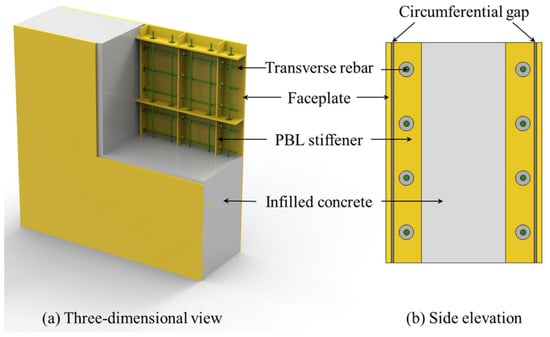
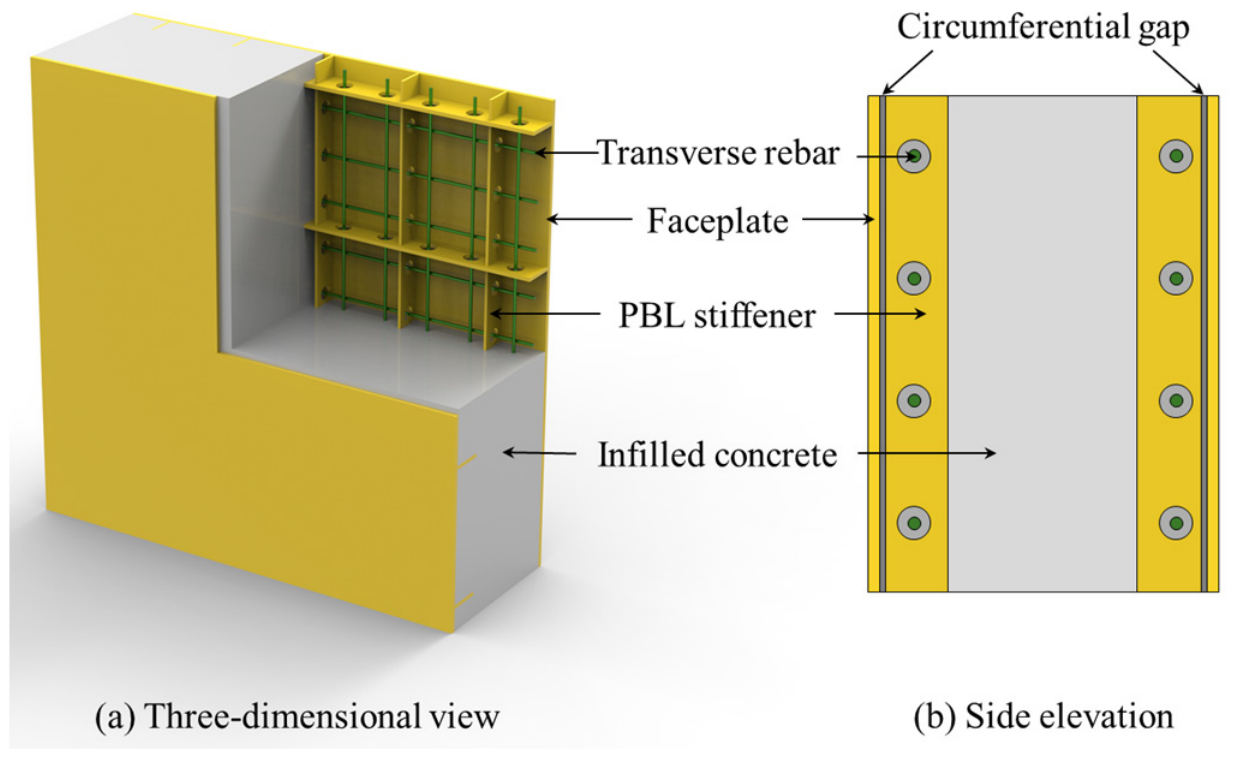
The composite action of DSCWs relies critically on continuous contact and force transfer at the steel–concrete interface [1,4]. In practice, circumferential gaps, namely a continuous separation between the faceplates and the concrete along the wall perimeter, may exist at the steel–concrete interface due to material deformation, temperature variation or construction imperfections. Such imperfections may persist and evolve during service, raising concerns about the axial compressive performance of DSCWs. A schematic illustration of the PBL-stiffened DSCW, including the steel faceplates, concrete infill, PBL stiffeners, transverse rebars, and the circumferential gap at the steel–concrete interface, is shown in Figure 1.
Figure 1.
PBL-stiffened DSCW and circumferential gap at the steel–concrete interface.
In particular, PBL connectors have been widely recognized as effective mechanical connectors for transferring forces between steel plates and concrete through the combined action of the perforated rib, concrete dowel and transverse reinforcement [4,5,6,7]. A recent study on concrete-filled steel tubular columns with gap defects has also clarified the axial loading mechanism and evaluation method of members with interface gaps [8]. Previous studies have examined the mechanical behavior of related steel–concrete composite members, including CFST members with interface imperfections [9,10,11,12] and DSCWs or steel–concrete sandwich composite walls with different stiffening or connecting details [1,13,14,15,16,17]. These studies have shown that the local buckling of compressed steel faceplates plays a decisive role in the resistance and deformation capacity of DSCWs, and that appropriate stiffening or connecting measures can improve steel–concrete composite action and delay premature plate buckling [18,19,20,21,22,23,24,25]. Therefore, compared with unstiffened or simply stiffened steel–concrete composite walls, PBL-stiffened DSCWs may retain part of the steel–concrete interaction even when the initial contact at the steel–concrete interface is weakened.
Research on interface imperfections in composite structures has mainly focused on concrete-filled steel tubular (CFST) columns, including circumferential gaps, localized gaps and interfacial debonding defects [8,26,27,28,29,30,31]. Existing studies have indicated that gap imperfections can delay the development of steel–concrete contact stress, weaken confinement and lateral support, and consequently reduce the load-bearing capacity, stiffness and ductility of CFST members [8,26,27,28,29,30,31]. In general, circumferential gaps tend to induce more pronounced deterioration than localized gaps, and the gap effect may be further amplified when the lateral restraint provided by the concrete core is weakened. However, these findings are mainly derived from circular, square or other tubular composite sections, where the axial performance is strongly related to circumferential confinement.
In contrast, DSCWs consist of relatively flat steel faceplates and concrete infill, and their composite action depends more strongly on interface shear transfer and mechanical connectors. For PBL-stiffened DSCWs, the PBL ribs and transverse reinforcement may provide an additional load-transfer path between the steel faceplates and the concrete core when a circumferential gap exists. This mechanism is different from that of conventional CFST members, because the interaction recovery in PBL-stiffened DSCWs may be governed not only by gap closure and contact stress, but also by the mechanical contribution of the perforated ribs, concrete dowels and transverse reinforcement. Nevertheless, previous DSCW studies generally assumed perfect steel–concrete contact, while existing gap-related studies mainly focused on CFST members. The influence mechanism of circumferential gaps on the axial compressive behavior of PBL-stiffened DSCWs, especially the interaction among gap closure, PBL-mediated load transfer, faceplate local buckling and concrete crushing, remains insufficiently understood.
Accordingly, this study aims to clarify the influence mechanism of circumferential gaps on the axial performance of PBL-stiffened DSCWs and to develop a design-oriented evaluation approach. Axial compression tests were conducted on specimens with different circumferential gap ratios to capture the failure patterns, load-shortening responses and strain evolution of the faceplates. Finite element models were then developed and validated against the test results, which a systematic parametric study was based on, performed to quantify the effects of the gap ratio, steel area ratio and material strengths on the axial resistance. Finally, a simplified evaluation model for axial resistance is proposed to support design-oriented assessment of PBL-stiffened DSCWs with circumferential gaps.
2. Experimental Program
2.1. Design of Specimens
Three PBL-stiffened double-skin composite wall (DSCW) specimens were fabricated and tested under axial compression. It should be noted that the experimental program was limited to three specimens, including one intact specimen and two specimens with circumferential gaps. No repeated specimens were tested for each gap ratio. Therefore, the tests were mainly used to identify the basic structural response, failure characteristics and strain development, and to provide validation data for the FE model. The broader influence of the gap ratio and other parameters was further investigated through the numerical parametric study. All specimens shared identical geometry and detailing, and the only variable was the circumferential gap between the steel faceplates and the concrete core. As listed in Table 1, the specimens were designated as AG0 (no gap), AG1 and AG2 (with circumferential gaps). The circumferential gap ratio (χ) is defined as:
where D is the overall specimen thickness and ds is the gap width at a single steel–concrete interface.
Table 1.
Parameters of PBL-stiffened DSCW specimens.
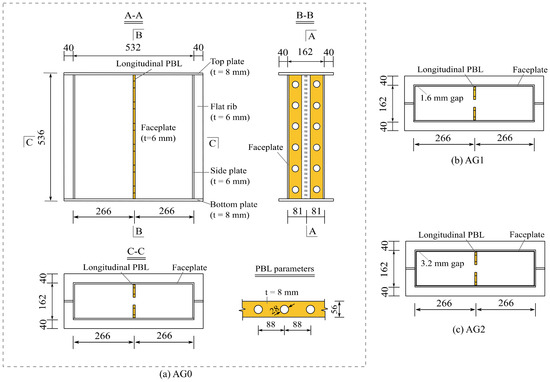
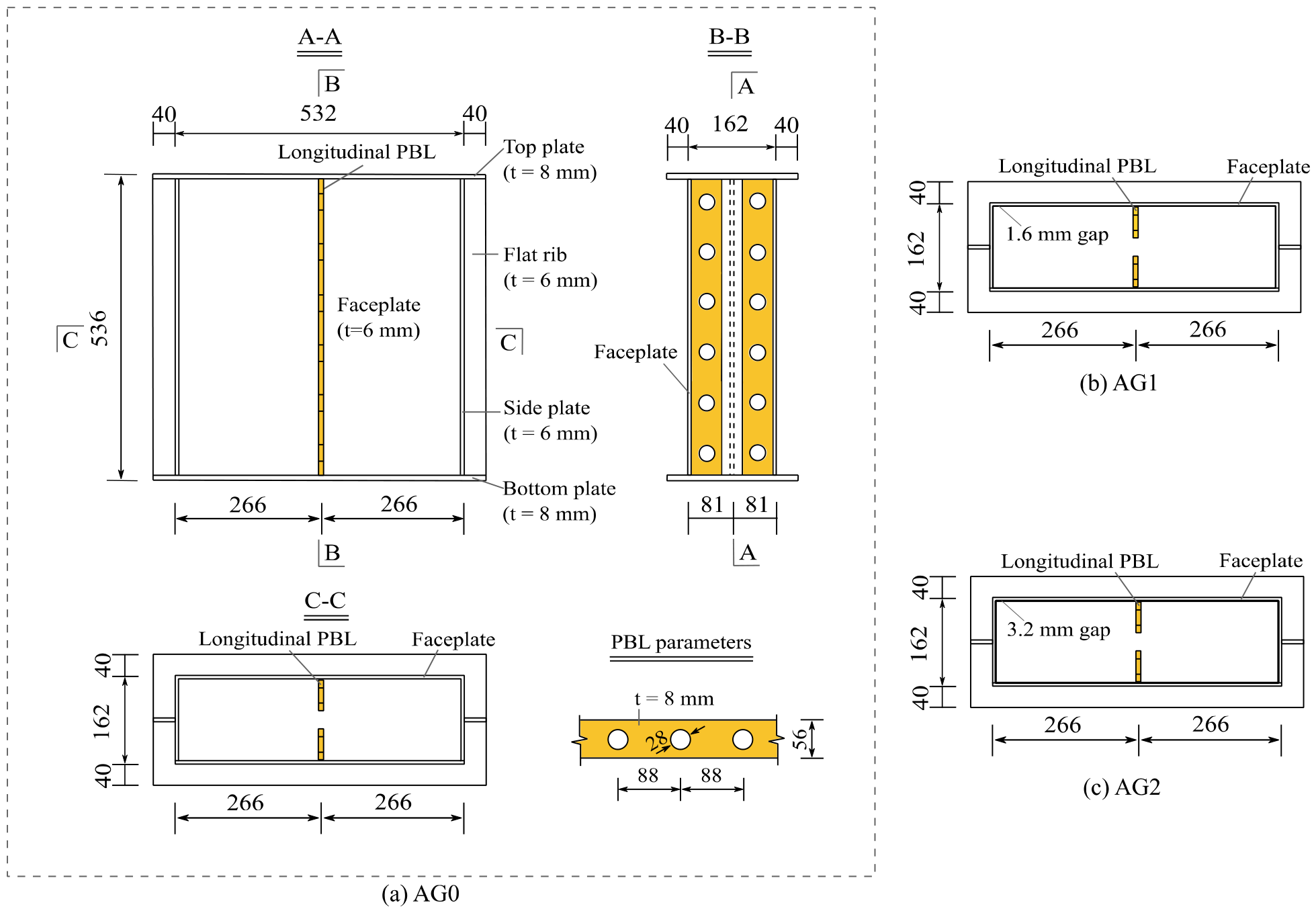
The specimens consisted of two parallel steel faceplates stiffened by PBL ribs, with concrete cast between the faceplates to form a composite wall section. Thick steel end plates were provided at both ends to ensure uniform load transfer and to prevent premature local failure at the loading ends. The detailed configuration and key dimensions are shown in Figure 2.
Figure 2.
Geometric configuration of specimens.
To create the target circumferential gaps in AG1 and AG2, thin steel sheets with prescribed thicknesses were inserted along the two steel–concrete interfaces before concrete casting. The sheets were wrapped with plastic film and coated with a release agent to reduce bonding with concrete and facilitate removal. All fabrication procedures, including faceplate assembly, placement of transverse reinforcement through PBL openings, concrete casting and curing conditions, were kept consistent for all specimens.
The target gap widths were determined according to the prescribed circumferential gap ratios. According to Equation (1), a gap ratio of χ = 0.02 corresponds to a single-interface gap width of ds = χD/2 = 1.62 mm for the specimen thickness D = 162 mm, while χ = 0.04 corresponds to ds = 3.24 mm. Therefore, steel sheets with nominal thicknesses of 1.6 mm and 3.2 mm were used for AG1 and AG2, respectively. After concrete curing, the steel sheets were carefully removed from the accessible edges, leaving continuous circumferential gaps between the steel faceplates and the concrete core. Since full-field measurement of the internal gap distribution after sheet removal was difficult, the gap widths are regarded as nominal values, and the fabricated gaps are treated as idealized uniform circumferential gaps for mechanism identification and FE model validation.
In actual structures, circumferential gaps caused by concrete shrinkage, temperature variation or construction imperfections may exhibit non-uniform and irregular distributions along the steel–concrete interface. In the present study, a uniform circumferential gap was adopted as an idealized and controllable defect form to isolate the fundamental influence of gap width on the axial compressive behavior. Therefore, the results mainly represent the response of DSCWs with nominally uniform circumferential separation, while irregular gap geometry, localized gaps and spatially varying gap distributions should be further investigated in future studies.
2.2. Material Properties
Material properties of the steel and concrete were obtained from companion material tests conducted in parallel with the specimen fabrication. For steel, standard tensile coupon tests were performed on samples cut from the same plates used for the faceplates and PBL stiffeners. The measured elastic modulus Es, yield strength fy, and ultimate strength fu were 208 GPa, 423 MPa, and 506 MPa, respectively. For concrete, standard compressive tests of 150 mm cubes were carried out on specimens cast from the same batch as that used for the DSCW specimens and cured under the same conditions. The average compressive strength and elastic modulus at the test date were measured as 56.9 MPa and 36.3 GPa, respectively.
Since the concrete constitutive model in the FE analysis was defined using the cylindrical compressive strength, the measured 150 mm cube compressive strength was converted before being used in the numerical model. In this study, the cylindrical compressive strength was taken as fc = 0.80 fcu, where fcu is the 150 mm cube compressive strength. Accordingly, the measured cube strength of 56.9 MPa corresponds to a cylindrical compressive strength of 45.5 MPa. This converted value was used in the FE validation models, while the measured elastic modulus of 36.3 GPa was directly adopted.
2.3. Test Setup and Instrumentation
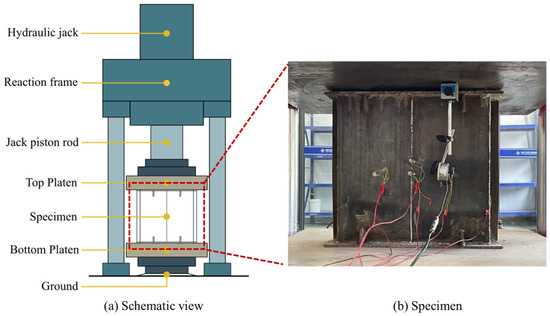
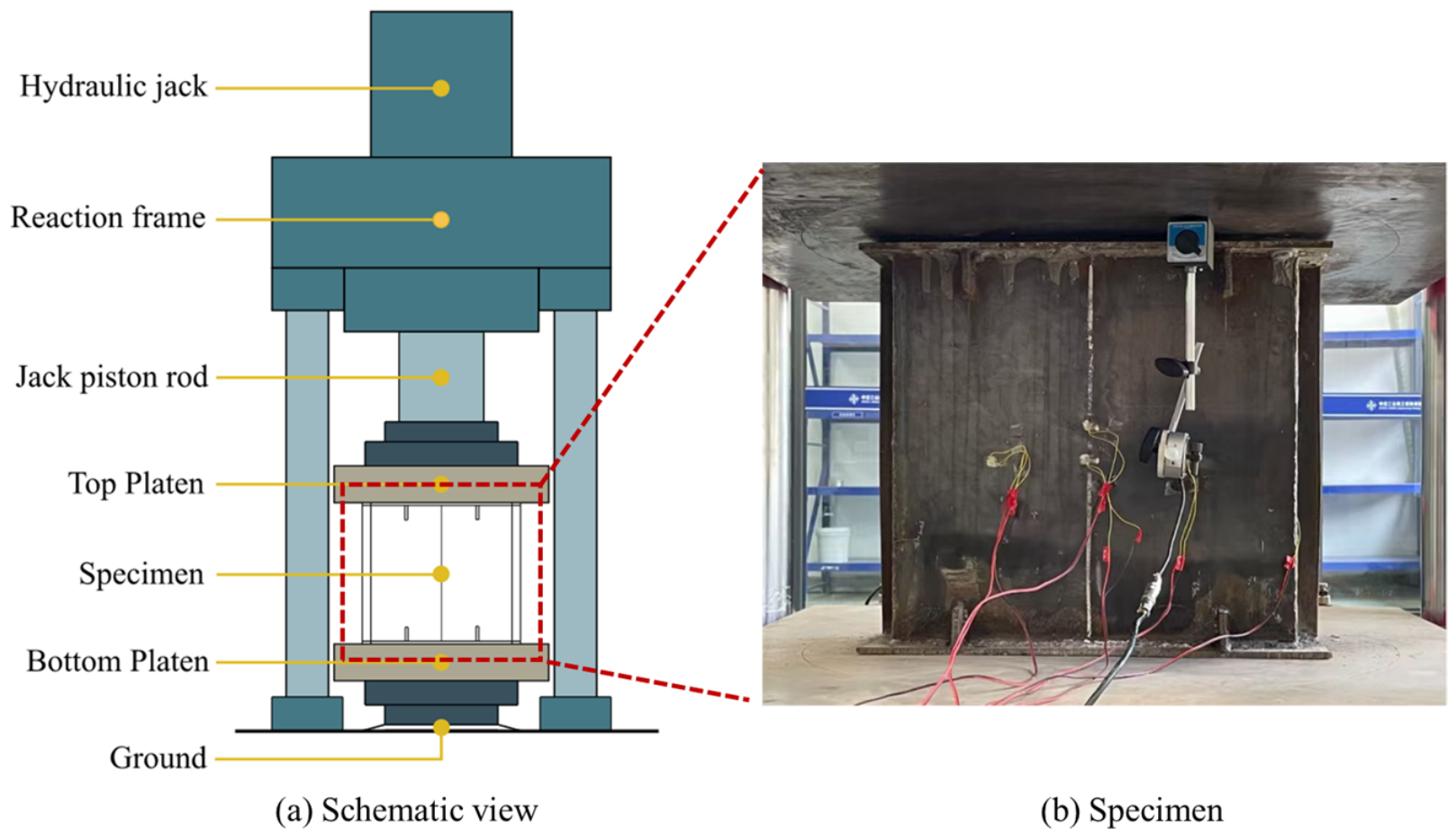
The axial compression tests were conducted using a servo-hydraulic loading system, as illustrated in Figure 3. The system mainly consisted of a reaction frame, a hydraulic actuator, and a control unit, with a maximum axial loading capacity of 10,000 kN. To promote uniform load transfer and reduce local stress concentration at the loading ends, a thin layer of fine sand was placed at both ends of the specimen.
Figure 3.
Test setup.
The loading protocol was carried out in two successive stages. In the first stage, force-controlled loading was applied at a constant rate of 3 kN/s until the load reached 80% of the predicted ultimate load. The test was then switched to displacement control at a rate of 0.01 mm/s and continued until the load dropped to 70% of the peak value, at which point the test was terminated.
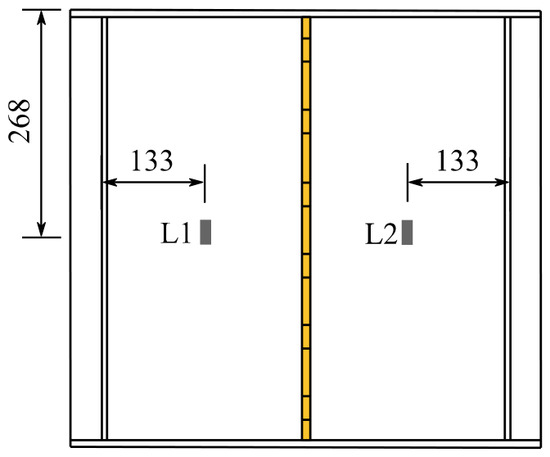
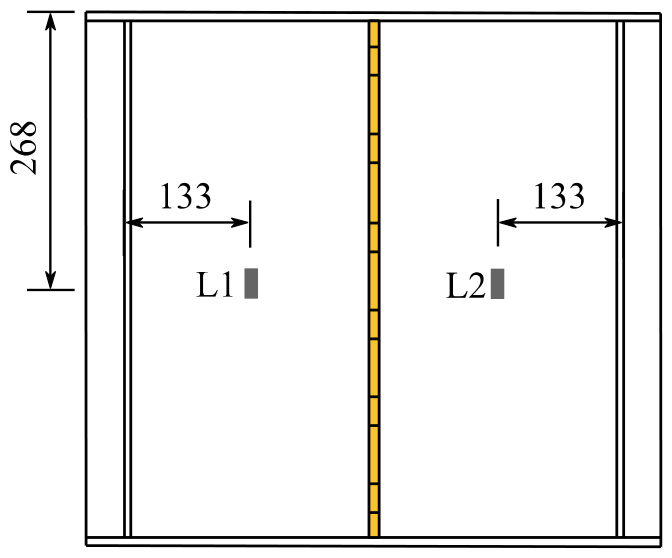
During the test, the axial load was recorded by the force sensor integrated in the loading system. The axial shortening of the specimen was measured using displacement gauges mounted on the loading device. Strain gauges were bonded on the outer surfaces of the steel faceplates to monitor strain development in the longitudinal direction. The strain gauge layout is shown in Figure 4.
Figure 4.
Arrangement of strain gauges.
3. Test Results and Discussion
3.1. Failure Modes
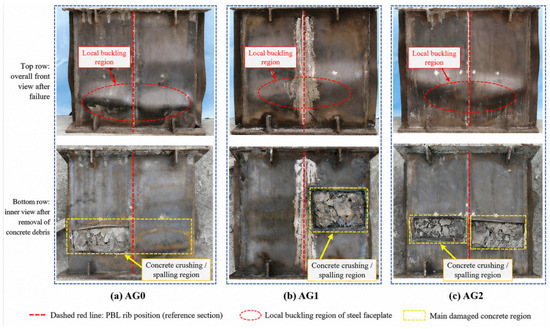
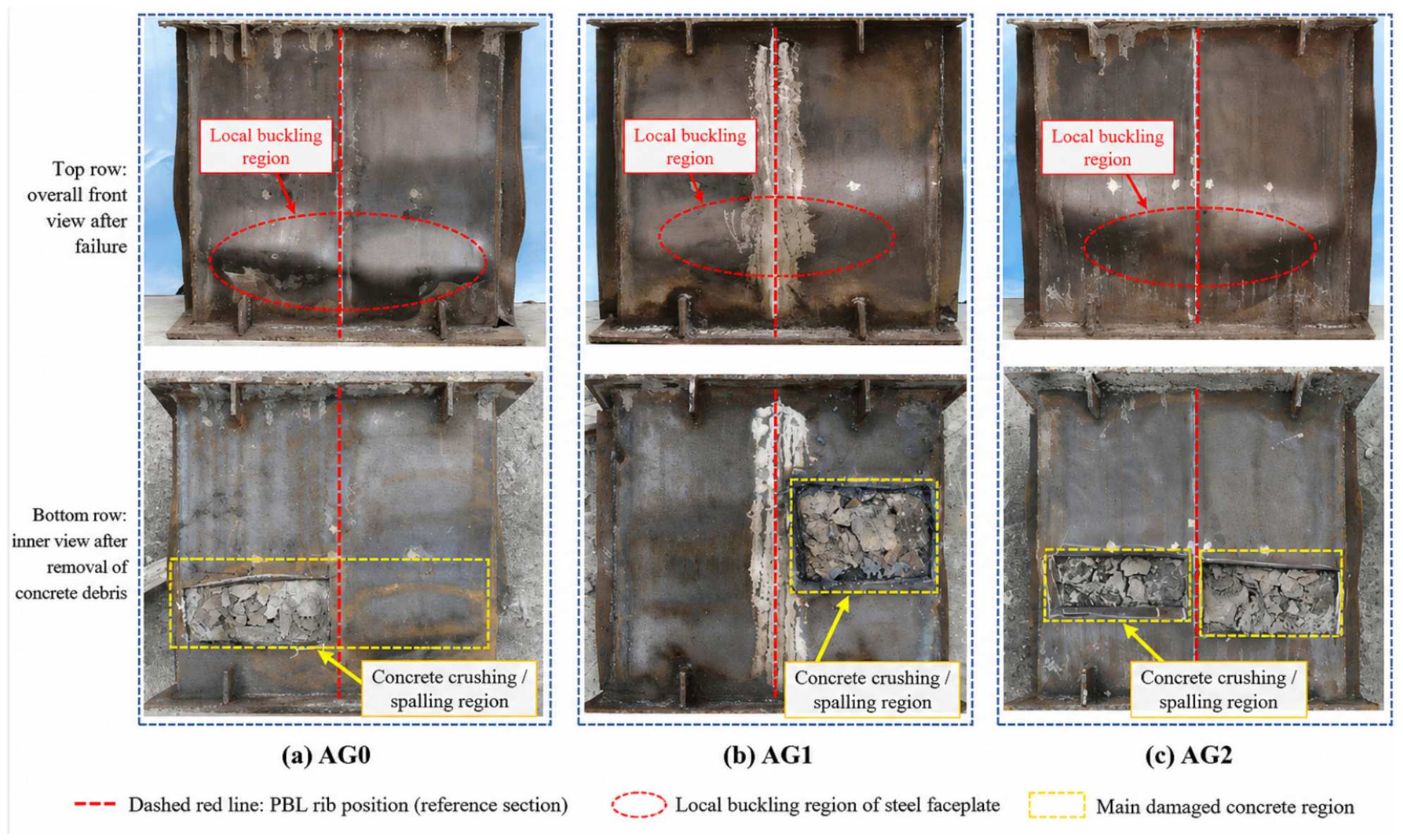
Figure 5 compares the observed failure modes of all specimens. The circumferential gap did not change the overall failure pattern, which was governed by outward local buckling of the steel faceplates accompanied by crushing of the infilled concrete. Buckling initiated when the load approached the peak and developed into transverse half-waves on both sides of the PBL stiffeners, while one to two longitudinal waves formed along the specimen height. After the peak, the buckling amplitude increased, and concrete crushing localized beneath the buckling waves, leading to progressive degradation of the load-carrying capacity.
Figure 5.
Failure modes of all specimens.
3.2. Load-Axial Shortening Curves
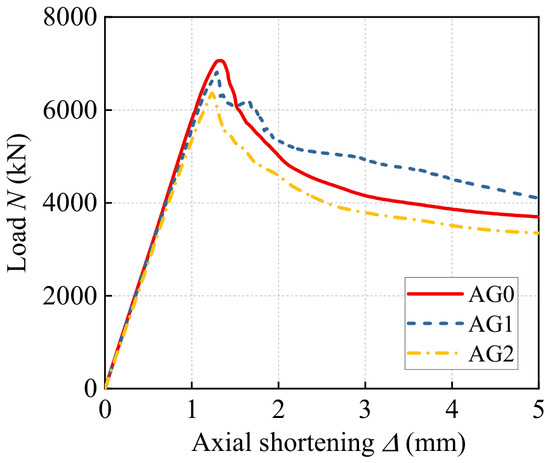
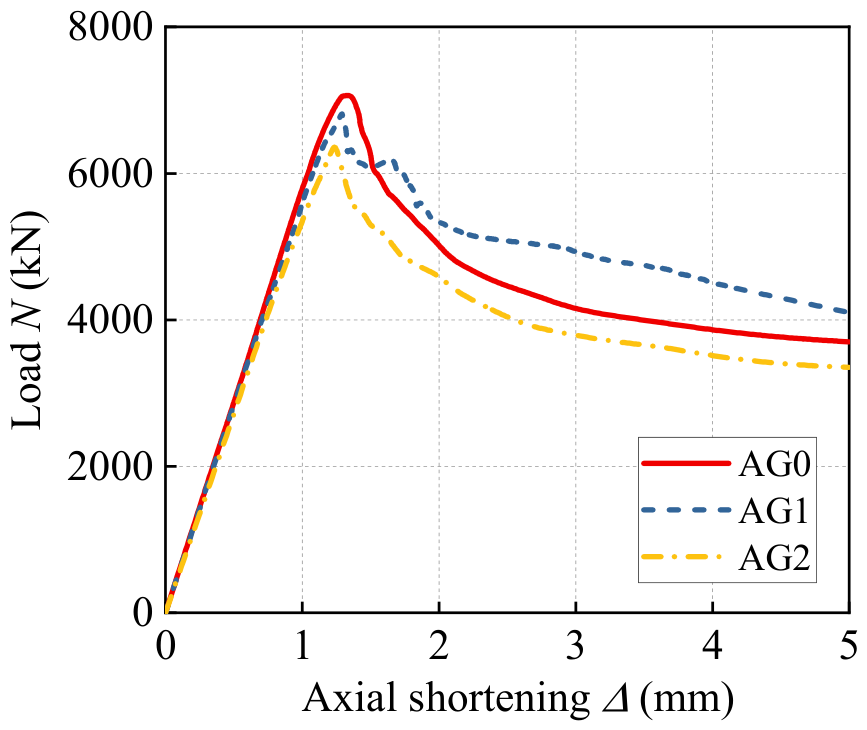
Figure 6 presents the measured axial load–axial shortening (N–Δ) responses of the specimens with different circumferential gap ratios. All specimens exhibit an ascending branch with gradually reduced stiffness, followed by a peak load and a post-peak softening stage. Compared with the no-gap specimen, the gap-defective specimens show a clear reduction in peak resistance and a more pronounced loss of post-peak stability, indicating that the circumferential gap weakens the pre-peak steel–concrete interaction and reduces the lateral support provided by the concrete core to the steel faceplates.
Figure 6.
Load–axial shortening curves.
Specimen AG1 exhibits a distinct secondary peak on the descending branch. This phenomenon may be associated with transient local re-contact at the steel–concrete interface, which could temporarily enhance the composite action and lead to a short-lived resistance recovery. However, this interpretation should be treated with caution because interface closure, contact pressure and relative slip were not directly measured during the test. Therefore, the secondary peak is regarded as a specimen-specific post-peak feature, and its possible mechanism is further discussed with reference to the FE contact results.
3.3. Axial Compressive Resistance
Table 2 summarises the test results in terms of the peak axial load Nu and the corresponding axial shortening Δu. To quantify the deterioration induced by circumferential gaps, a gap-induced reduction factor η is defined as:
where Nu0 is the peak load of the no-gap specimen, and Nu is that of the specimen with a circumferential gap.
Table 2.
Experimental results.
As listed in Table 2, the presence of circumferential gaps leads to a clear reduction in peak resistance. Relative to the specimen AG0, the peak load decreased by 3.6% for AG1 and 9.4% for AG2, respectively. A similar trend is observed for the deformation corresponding to the peak load. These reductions suggest that the circumferential gap may impair the peak resistance and limit the deformation development at the critical stage. However, because each gap ratio was represented by only one specimen, the possible influence of normal experimental scatter cannot be completely separated from the gap effect based on the tests alone. Therefore, this trend is further examined through the validated FE parametric study.
3.4. Strain History
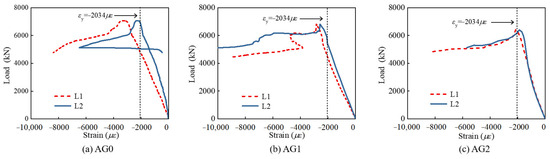
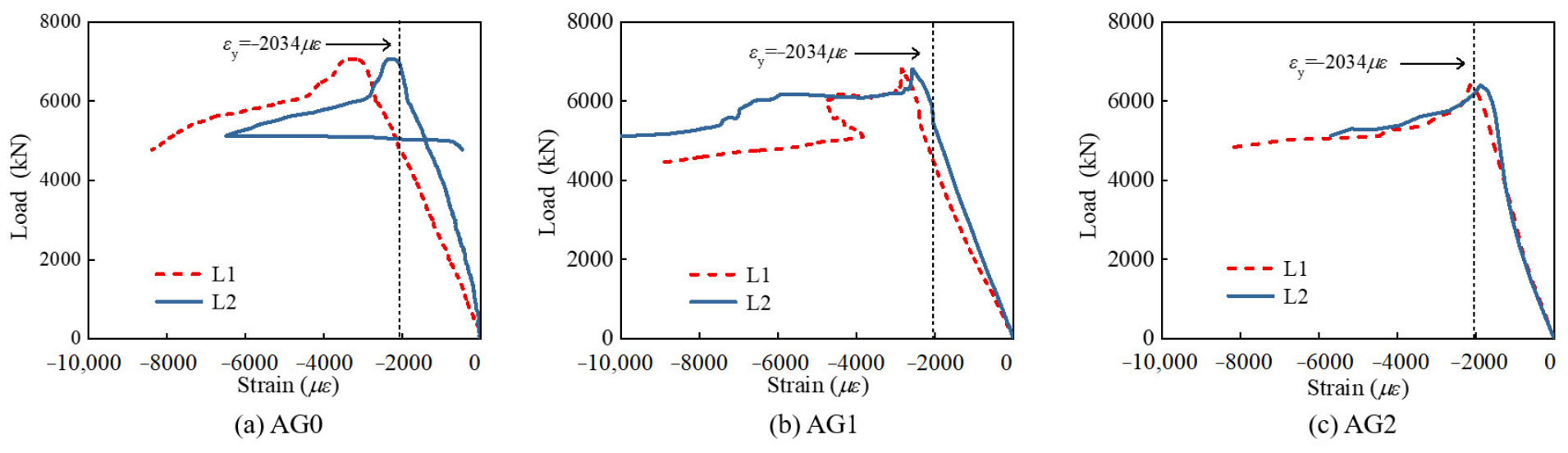
Figure 7 presents the load–longitudinal strain responses measured at the mid-height of the steel faceplates. Compressive strains are taken as negative. For specimen AG0, longitudinal strain increased almost linearly at the early stage and then developed rapidly as the load approached the peak. At Nu, the compressive faceplate strain exceeded the steel yield strain (εy = fy/Es), indicating that the faceplates in the compression zone had entered the plastic regime and the material strength was effectively mobilized. In contrast, for the gap-defective specimens AG2, some measured compressive strains did not reach εy at the peak loads, implying that the pre-peak response was governed by reduced steel–concrete interaction and weaker lateral support from the concrete core.
Figure 7.
Load–strain curves.
The post-peak strain increase in AG1 is consistent with the secondary peak discussed in Section 3.2. This behavior may be related to the progressive closure of the circumferential gap as concrete damage accumulated and lateral dilation developed, which could promote local re-contact at the steel–concrete interface. Nevertheless, because no direct measurement of interface closure or relative slip was conducted in the test, this explanation remains a plausible interpretation rather than direct experimental evidence. The corresponding FE contact results are used only as supplementary evidence for interpreting this post-peak response.
4. Numerical Investigation
4.1. FE Modeling
Finite-element (FE) models were developed in ABAQUS to investigate the axial compressive behavior of PBL-stiffened double-skin composite walls (DSCWs) with circumferential gaps. The ABAQUS/Explicit solver was adopted to robustly handle complex contact interactions and potential local buckling of the faceplates. Quasi-static conditions were ensured by applying a sufficiently low loading rate together with mass scaling, and by monitoring the energy balance during the analysis [32].
To further verify the quasi-static nature of the explicit analyses, the energy histories of the validation models were extracted from the whole model. The kinetic energy (ALLKE), internal energy (ALLIE), artificial strain energy (ALLAE) and external work (ALLWK) were monitored throughout the loading process. Because the internal energy is close to zero at the beginning of the analysis, the energy ratios were evaluated after the initial numerical transient. As summarized in Table 3, the maximum ALLKE/ALLIE ratios of AG0, AG1 and AG2 were 0.857%, 0.453% and 0.452%, respectively, indicating that the kinetic energy remained much smaller than the internal energy during the main loading process. The maximum ALLAE/ALLIE ratios were 5.335%, 4.360% and 1.882%, respectively, showing that the artificial strain energy remained limited. Therefore, the dynamic effect introduced by the explicit solution was minor, and the numerical analyses can be regarded as quasi-static.
Table 3.
Energy ratios for checking quasi-static conditions in ABAQUS/Explicit analyses.
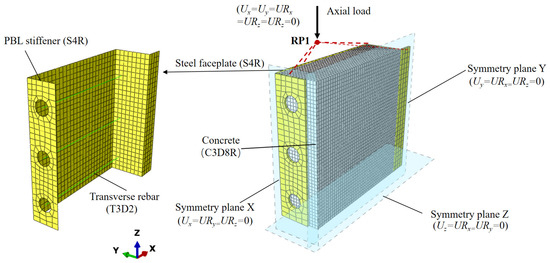
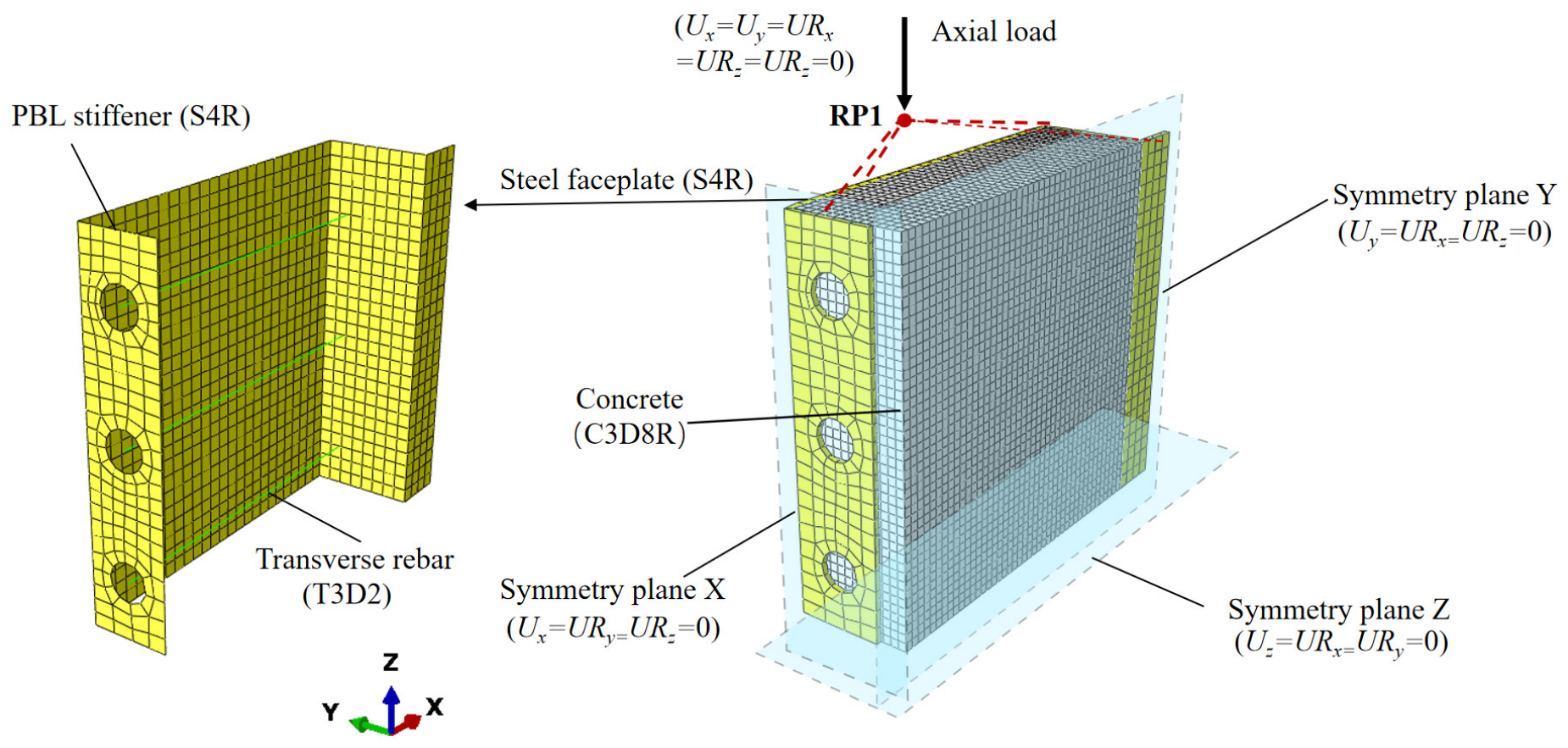
Considering the geometric and loading symmetries, one-eighth of the specimen was modelled to reduce computational cost (Figure 8). To examine whether the one-eighth symmetry model artificially constrained the deformation mode, an additional FE model with fewer symmetry constraints was also analysed. The comparison showed that the global load-shortening response, peak resistance and dominant local buckling pattern obtained from the less-constrained model were very close to those of the one-eighth model. Therefore, the use of the one-eighth model was considered acceptable for the present axial compression analysis, in which the geometry, loading condition and nominal circumferential gap distribution were symmetric. The steel faceplates and PBL stiffeners were modelled using four-node reduced-integration shell elements (S4R), while the infilled concrete was discretised using eight-node reduced-integration solid elements (C3D8R). A mesh convergence study was conducted, and a uniform element size of 15 mm and 20 mm was adopted for the steel components and the adjacent concrete region, respectively.
Figure 8.
FE model.
No explicit initial geometric imperfection was introduced into the steel faceplates in the present FE models. This treatment was adopted because the measured initial out-of-plane imperfections of the test specimens were not available. The local buckling of the faceplates was triggered by the combined effects of axial compression, steel–concrete interaction, circumferential gap-induced loss of support and material nonlinearity. It should be noted that neglecting initial geometric imperfections may lead to a relatively idealized prediction of the local buckling process and may slightly overestimate the buckling-related resistance. Therefore, the FE models were mainly used to evaluate the global axial response, peak resistance and dominant failure mechanism, while the influence of measured initial imperfections should be further investigated in future refined simulations.
A reference point (RP1) was created at the loading end, and the top surfaces of the steel faceplates, PBL stiffeners and concrete were coupled to the RP1 to enforce uniform axial displacement. Symmetrical boundaries were imposed on the symmetry planes, as illustrated in Figure 8. The interface between the outer steel faceplates and the concrete core was modelled using surface-to-surface contact. In the normal direction, hard contact was assigned to prevent penetration while allowing separation. In the tangential direction, a penalty friction formulation was adopted with a friction coefficient of 0.7. This value was selected according to previous FE studies on steel–concrete composite members and CFST members, in which friction coefficients in the range of approximately 0.3–0.7 are commonly adopted for rough steel–concrete interfaces [8,26,27,28,29,30,31]. In the present study, μ = 0.7 was used to represent a relatively rough interface after concrete casting and curing.
It should be noted that the effect of the friction coefficient is mainly mobilized after local steel–concrete re-contact occurs. For the gap-defective specimens, the interface remains largely separated before the peak load, and the peak resistance is governed mainly by the weakened pre-peak composite action and faceplate local buckling. Therefore, the friction coefficient may influence the post-peak response and residual resistance more significantly than the peak resistance. A quantitative sensitivity analysis of the friction coefficient is left for future work.
The PBL stiffeners and transverse rebars were embedded in the concrete using the embedded region constraint. This modeling strategy assumes full bond between the PBL/rebar system and the surrounding concrete and therefore neglects possible local slip, dowel degradation or bond damage around the perforated ribs. This assumption may lead to a relatively idealized representation of the load-transfer capacity of the PBL system. However, because the present study focuses primarily on the global axial resistance, gap-induced deterioration and dominant buckling–crushing mechanism, the embedded constraint was considered acceptable for the current modeling scope. The possible influence of local PBL slip and bond deterioration is acknowledged as a limitation and should be further investigated using refined connector-level models or bond–slip relationships.
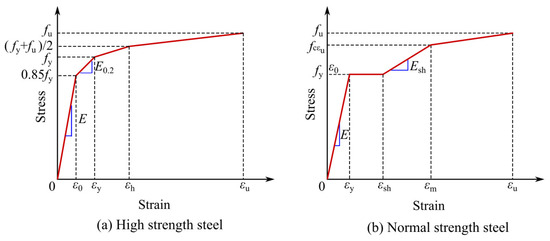
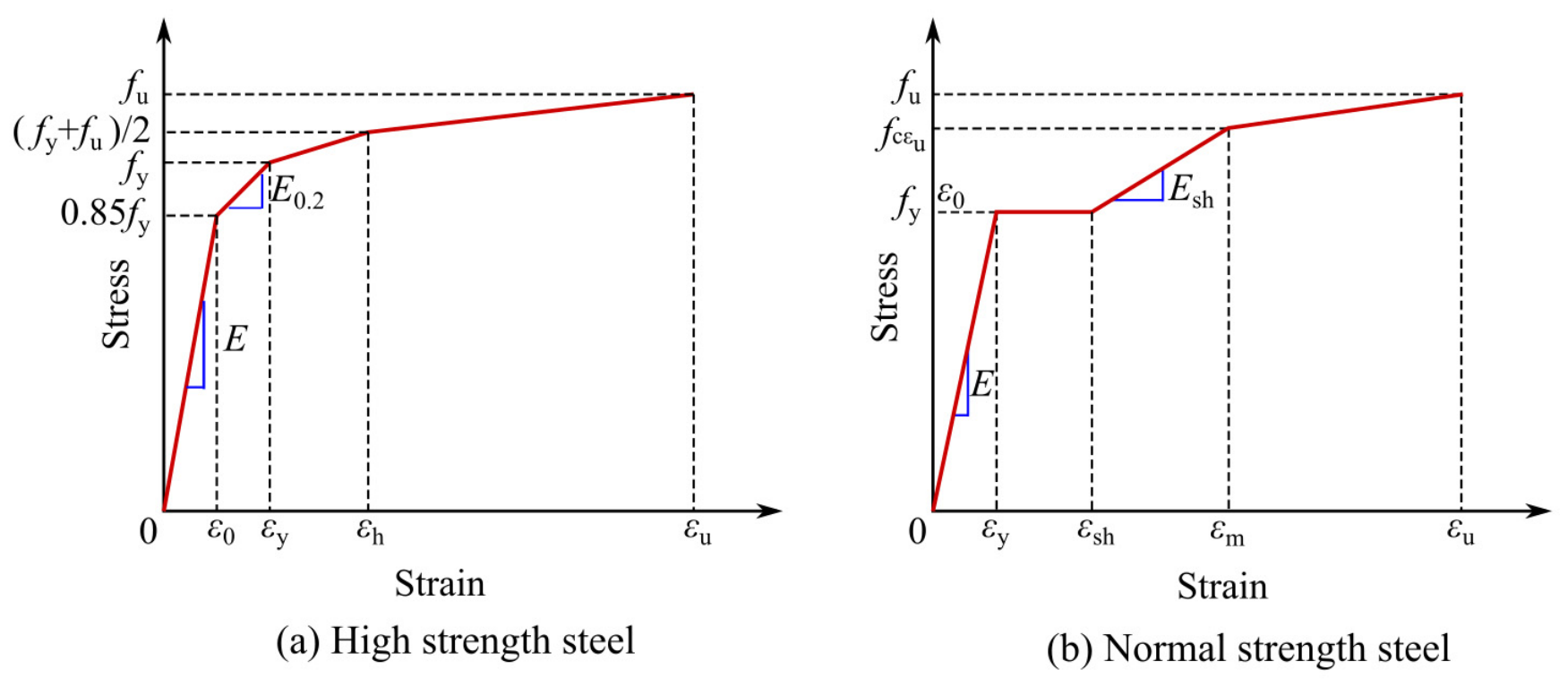
The high-strength steel was modelled using the multi-linear elastic–plastic constitutive relationship proposed by Shi et al. [33], incorporating the von Mises yield criterion and isotropic hardening, as shown in Figure 9a. The normal-strength steel was represented by the constitutive model proposed by Yun and Gardner [34], as illustrated in Figure 9b. The parameter values adopted for these constitutive models are given in Ref. [35].
Figure 9.
Constitutive models for steel.
For the validation models, the measured material properties obtained from the tensile coupon tests were directly adopted. The density, elastic modulus and Poisson’s ratio of steel were taken as 7.85 × 10⁻⁹ tonne/mm3, Es = 208 GPa and v = 0.3, respectively. The initial yield stress was 423.9 MPa. The plastic behavior was defined using a multi-linear stress–plastic strain relationship in ABAQUS based on the measured tensile response. For the parametric study, the same constitutive framework was adopted, while the yield strength was varied according to the designed material-strength series.
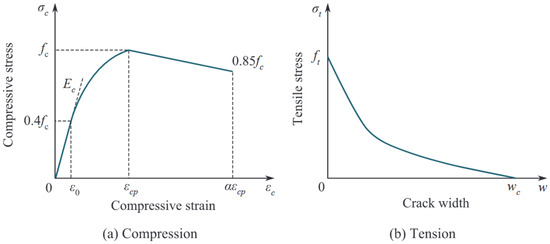
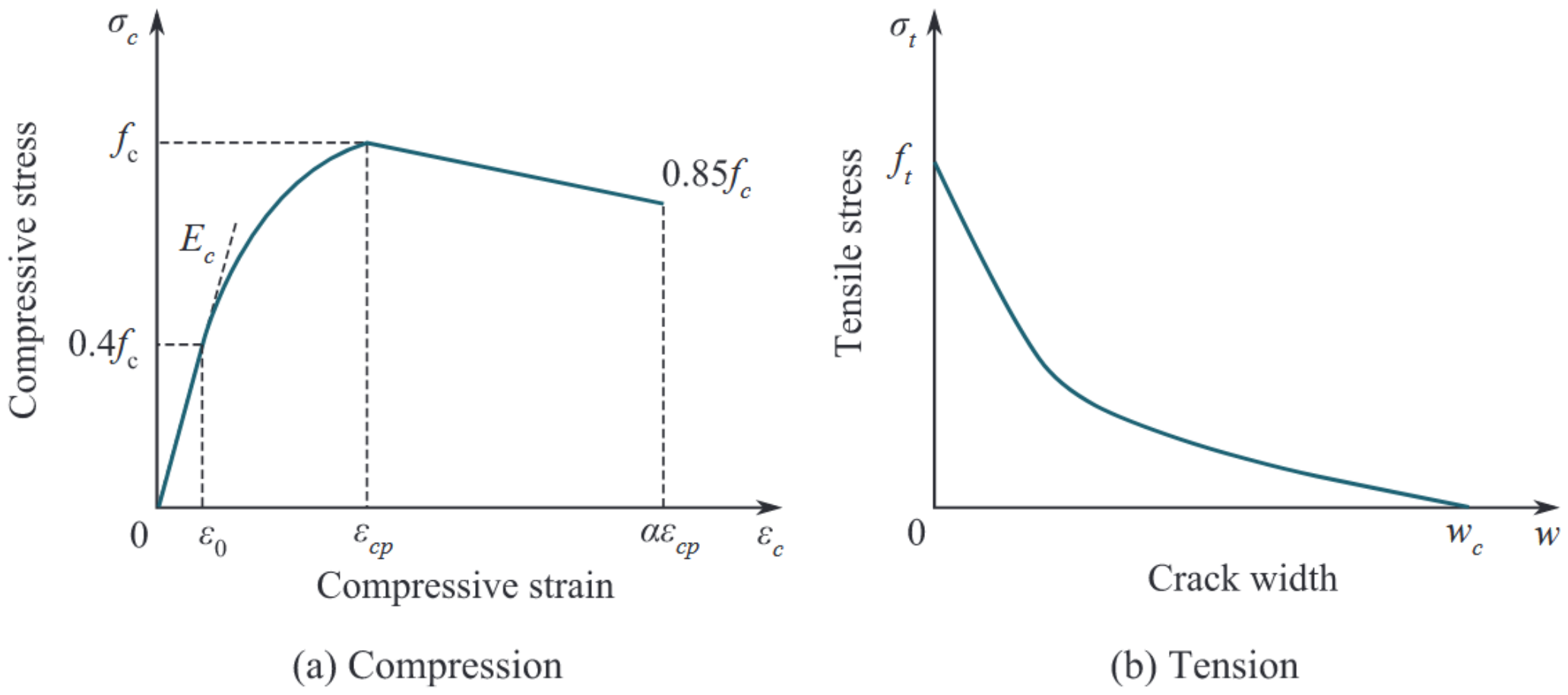
Figure 10 depicts the compressive stress–strain relationship of concrete, where fc denotes the cylindrical compressive strength. For the validation models, fc was obtained by converting the measured 150 mm cube strength according to fc = 0.80 fcu, as described in Section 2.2. Therefore, fc = 45.5 MPa was adopted for the tested specimens. For the parametric study, the concrete strength values were also expressed in terms of cylindrical compressive strength to maintain consistency with the constitutive model. CEB-FIP [36] provides the relationship between cylindrical and cubic compressive strengths. The parameters are defined as follows: Ec = Ec0(fc/10)1/3 represents the elastic modulus of concrete, with Ec0 taken as 21.5 GPa; σc is the compressive stress; and k = Ecεy/fc; εcp is the peak strain corresponding to fc; and η = εc/εcp. The descending branch terminates at point (0.85fc, αεcp), with α defined as 15.
Figure 10.
Constitutive models for concrete.
Figure 10b illustrates the stress–crack width relationship for the post-cracking tensile behavior of concrete, where σt denotes the tensile stress, ft is the tensile strength of concrete calculated based on the cylindrical compressive strength fc, and ω represents the crack width. The crack width at full stress release, ωc, is given by 5.14GF/ft, where GF is the fracture energy required to create a unit area of tensile crack (defined as 0.073fc0.18). The coefficients c1 and c2 are set to 3 and 6.93, respectively. The Poisson’s ratio of concrete is assumed to be 0.2.
The Concrete Damaged Plasticity (CDP) model was adopted to simulate the inelastic material behavior of high-strength concrete. The compressive dc and tensile dt damage parameters can be calculated using Equations (3) and (4), where εcpl represents the plastic strain, and bc represents the ratio of plastic strain to inelastic strain, taken as 0.7.
The main plasticity parameters used in the CDP model are listed in Table 4. The dilation angle was taken as 37°, the eccentricity was 0.1, the ratio of biaxial to uniaxial compressive strength fb0/fc0 was 1.16, the shape factor Kc was 0.6667, and the viscosity parameter was set to 1.0 × 10⁻⁵. These parameters were kept consistent in the validation models and the parametric analysis to ensure comparability among different cases.
Table 4.
CDP parameters used for concrete in the FE models.
4.2. Validation of FE Models
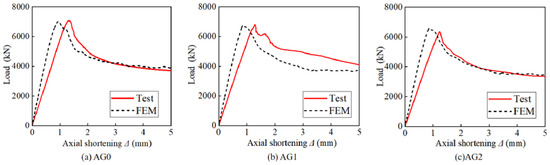
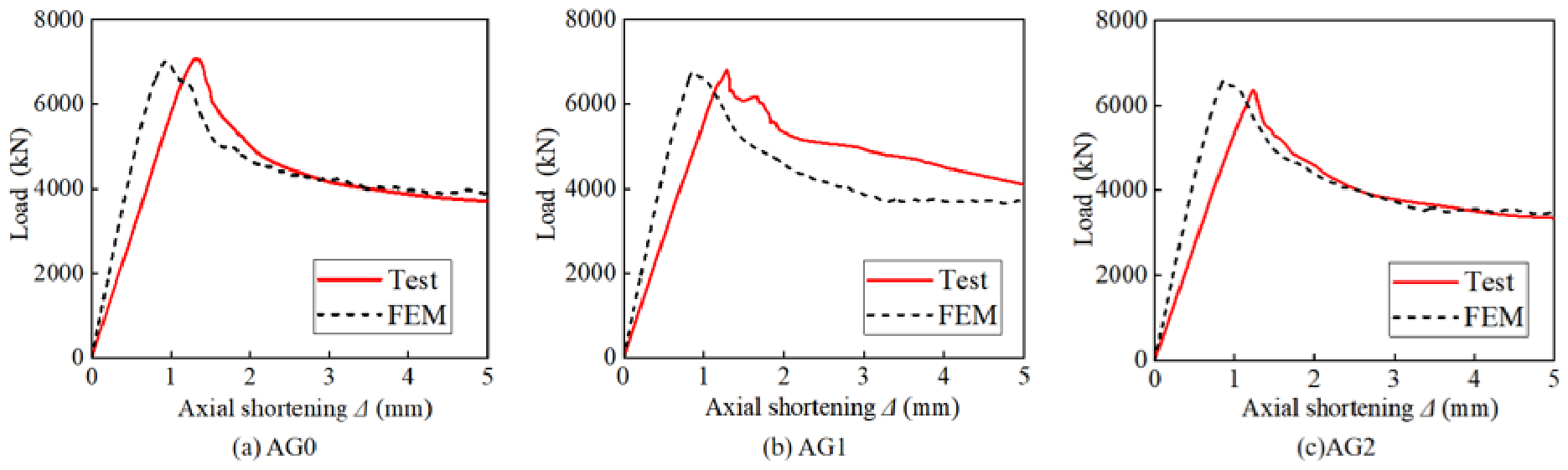
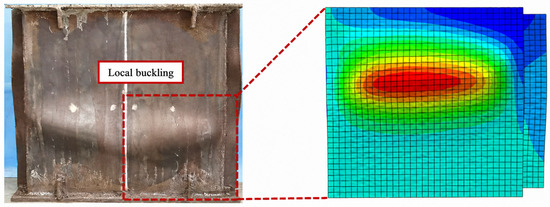
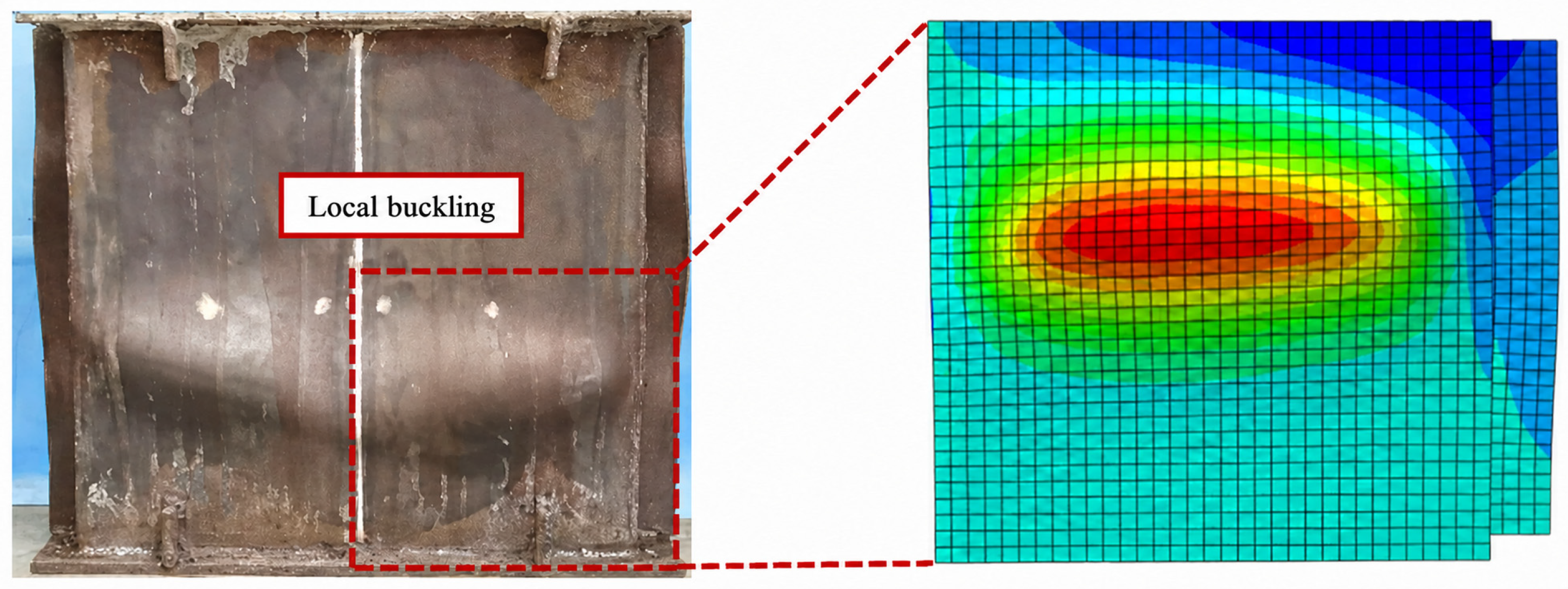
The developed FE modeling approach was validated against the axial compression test specimens, with emphasis placed on the global axial load–axial shortening (N–Δ) responses, peak load, and failure characteristics. As shown in Figure 11, the FE simulations capture the overall trend of the measured N–Δ curves. The predicted peak loads agree closely with the test results, with Nu,FE/Nu ranging from 0.993 to 1.031, a mean ratio of 1.007 and a coefficient of variation of 0.017 (Table 2). In terms of failure patterns, the simulations reproduce the dominant outward local buckling of the steel faceplates accompanied by crushing of the infilled concrete (Figure 12), and the buckling localization relative to the PBL-stiffened sub-panels is consistent with the test observations.
Figure 11.
Comparison of load–axial shortening curves.
Figure 12.
Comparison of failure modes for AG2.
Overall, the FE model reasonably captures the global load-shortening response, peak resistance and dominant failure mode of the tested specimens. However, because the validation is based on a limited number of experimental specimens without repeated tests, the model validation should be regarded as a necessary but not exhaustive verification. The agreement with these three tests alone is not sufficient to establish a general design equation. The subsequent parametric analysis is therefore used to extend the discussion beyond the tested cases within the adopted modeling assumptions, while the limitations associated with the experimental database are acknowledged.
4.3. Failure Mechanism
The failure of PBL-stiffened DSCWs with circumferential gaps under axial compression is governed by a buckling–crushing coupled mechanism. Owing to the initial interface separation, the steel–concrete interaction is not fully mobilized before the peak load, so the composite action and the lateral restraint provided by the infilled concrete remain limited during the pre-peak stage.
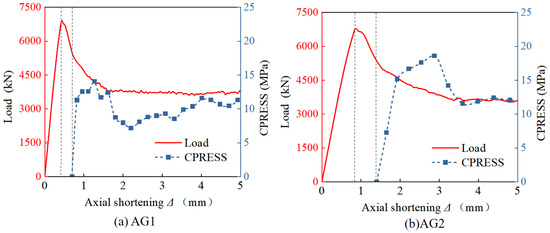
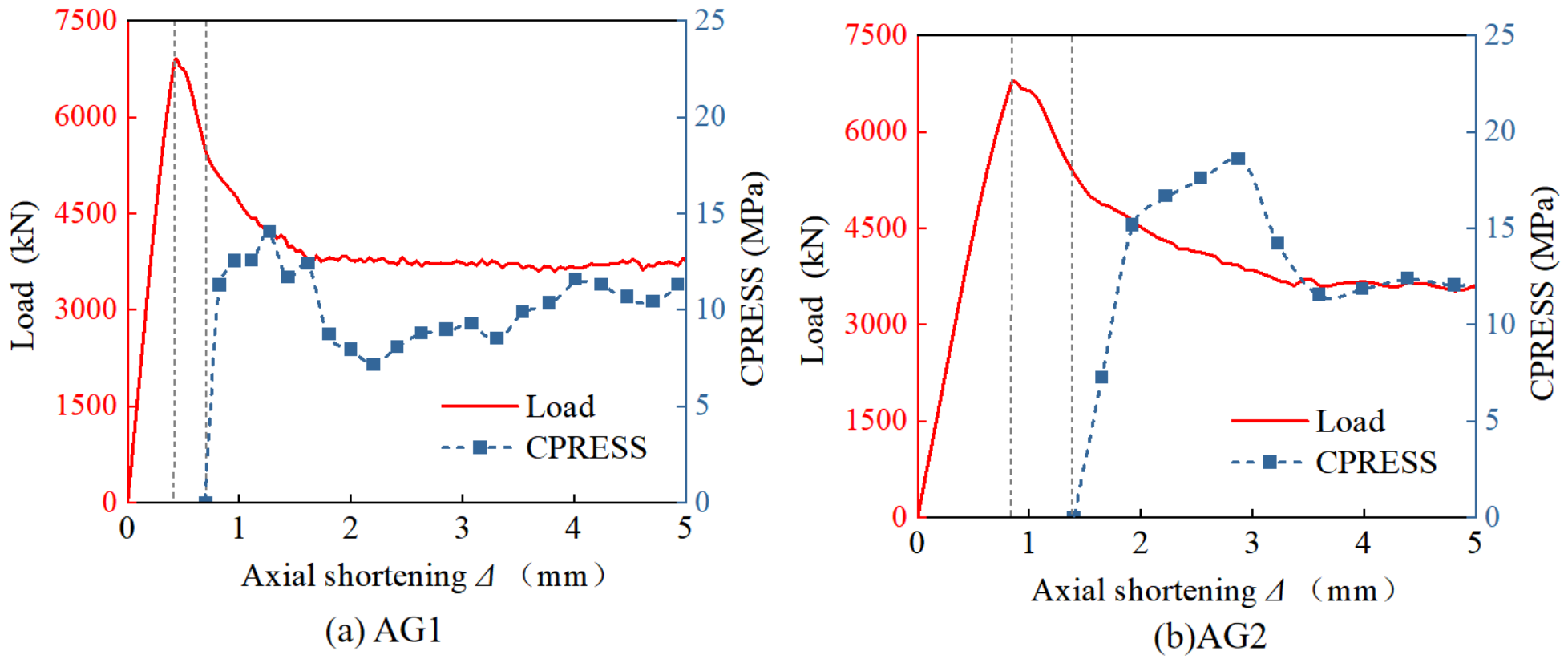
The FE contact results provide supplementary evidence for the possible development of local interface re-contact after the peak load. It should be clarified that the CPRESS contours are not used as direct evidence for pronounced pre-peak local contact in specimen AG1. As shown in Figure 13, CPRESS remains close to zero before the peak load and becomes more evident on the descending branch, indicating that sustained contact is mainly mobilized after the peak load in the numerical model. Before the peak load, the weakened steel–concrete interaction is mainly inferred from the reduced global stiffness, lower peak resistance and delayed mobilization of composite action, rather than from direct CPRESS evidence. Therefore, the FE contact pressure results are used to support the interpretation of post-peak local re-contact and the secondary peak behavior, rather than to prove significant pre-peak contact transfer. However, because interface contact pressure was not directly measured in the test, this mechanism should be regarded as a numerical interpretation rather than direct experimental confirmation.
Figure 13.
Global load-shortening response and evolution of interface contact pressure.
In addition to the CPRESS results, the delayed steel–concrete interaction was also inferred from the global load-shortening response and strain development. Compared with the intact specimen, the gap-defective specimens exhibited reduced stiffness, lower peak resistance and delayed mobilization of composite action between the steel faceplates and the concrete core, indicating weakened steel–concrete interaction before the peak load. It should be noted that direct interface slip transfer was not measured in the tests, and an energy-based decomposition of the load-transfer mechanism was not performed. The energy histories extracted from the FE models were mainly used to verify the quasi-static nature of the explicit analyses. Therefore, the proposed mechanism is interpreted based on the combined evidence from global response, strain evolution and FE contact behavior, while direct slip-based or energy-based confirmation should be further investigated in future studies.
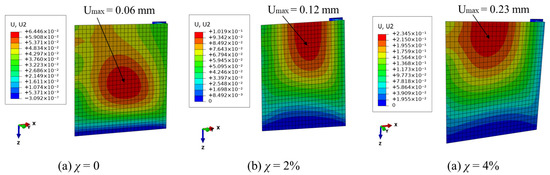
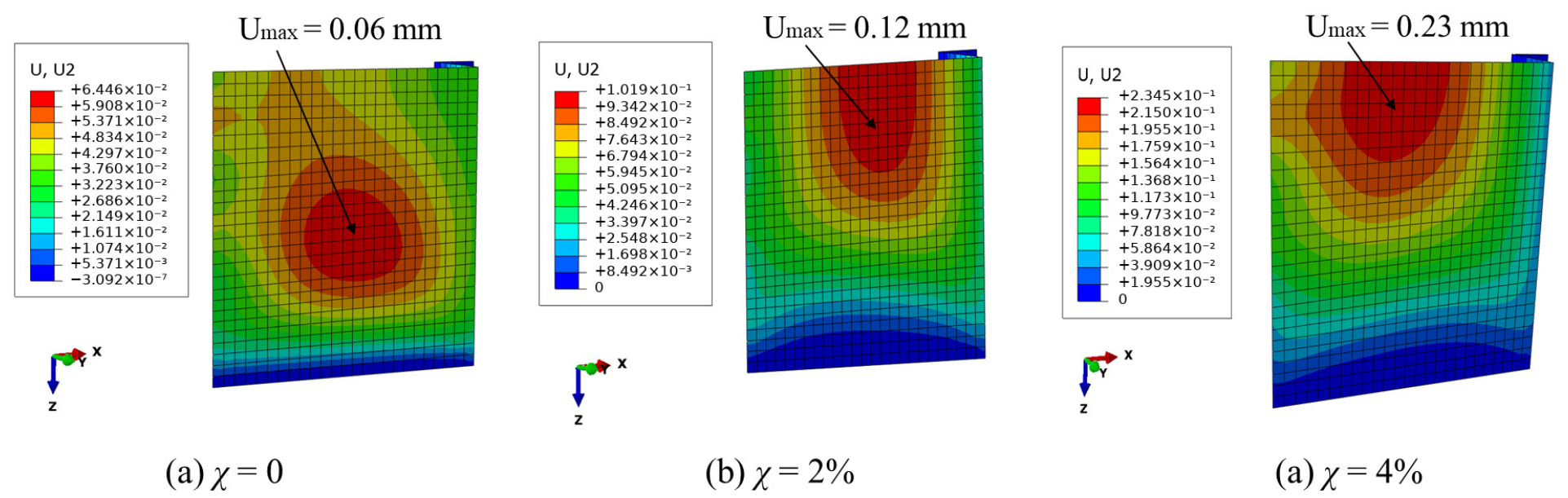
With increasing gap ratio, the weakened pre-peak interaction leads to less effective lateral restraint to the faceplates, which accelerates local buckling in the inter-rib sub-panels. As shown in Figure 14, larger gaps are associated with more pronounced out-of-plane deformation of the faceplates at the peak load, while the buckling location remains essentially unchanged. The more severe local bulging further promotes earlier crushing of the adjacent concrete. Therefore, circumferential gaps reduce both the peak resistance and the corresponding deformation capacity, but do not alter the governing failure mode, which remains characterized by the coupled progression of faceplate buckling and concrete crushing.
Figure 14.
Out-of-plane deformation of faceplates for different gap ratios at peak load.
4.4. Parametric Analysis
4.4.1. Design of Parameters
A systematic FE database was established to quantify the gap-induced deterioration of PBL-stiffened DSCWs. A total of 95 models were generated by varying the circumferential gap ratio χ, faceplate thickness ts (or steel area ratio ρs), and material strengths (fy and fc), as summarised in Table 5.
Table 5.
Summary of parameters adopted in the FE parametric analysis.
The gap ratio was taken as χ = 0, 0.01, 0.02, 0.03, 0.04. Group A (thickness series) varies ts = 6, 10, 14 and 18 mm while keeping the material combination unchanged (Q420 steel and C60 concrete), with χ swept over all five levels for each ts. Group B–D (material-strength series) fixes ts = 10 mm and varies fy = 355, 500, 690 MPa and fc = 32, 40, 50, 57, 65 MPa (C40, C50, C60, C70, C80) in a full-factorial manner, again with χ swept over all five levels for each (fy, fc) pair. This design provides a compact FE database covering the combined effects of χ, steel area ratio and material strengths.
A key consideration in the database design was to control the local slenderness of the sub-panels between adjacent PBL stiffeners. It should be noted that the parametric database was not designed as a strictly one-factor-at-a-time study with completely unchanged geometry and connector layout. Instead, the PBL spacing was adjusted together with the faceplate thickness or steel strength to maintain a comparable local slenderness level and to avoid a change in the dominant failure mechanism. For the thickness series in Group A, the PBL spacing was scaled with the faceplate thickness, and the resulting s/ts values remained nearly constant, ranging from 27.8 to 28.0.
For the material-strength series in Groups B–D, the faceplate thickness was fixed at ts = 10 mm, while the PBL spacing was reduced as the steel yield strength increased, with s/ts decreasing from 30.0 for Group B to 25.0 for Group C and 22.0 for Group D. This adjustment was adopted to keep the sub-panels in a comparable yielding-controlled regime and to avoid premature elastic local buckling of the faceplates. Therefore, the effects of faceplate thickness, steel strength and concrete strength should be interpreted within the controlled design framework of the present parametric study, rather than as strictly independent one-factor-at-a-time variations. The actual s/ts values are listed in Table 5 to clarify the design logic of the FE database.
4.4.2. Effect of Circumferential Gaps
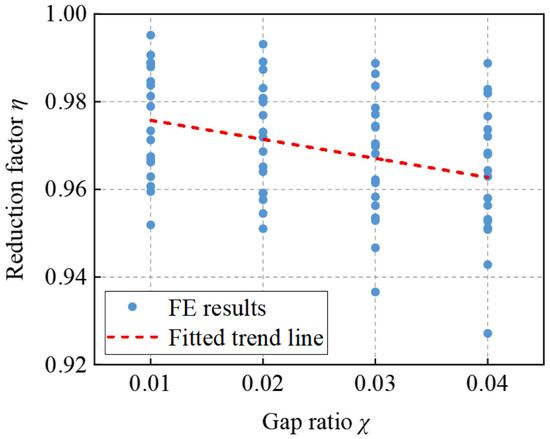
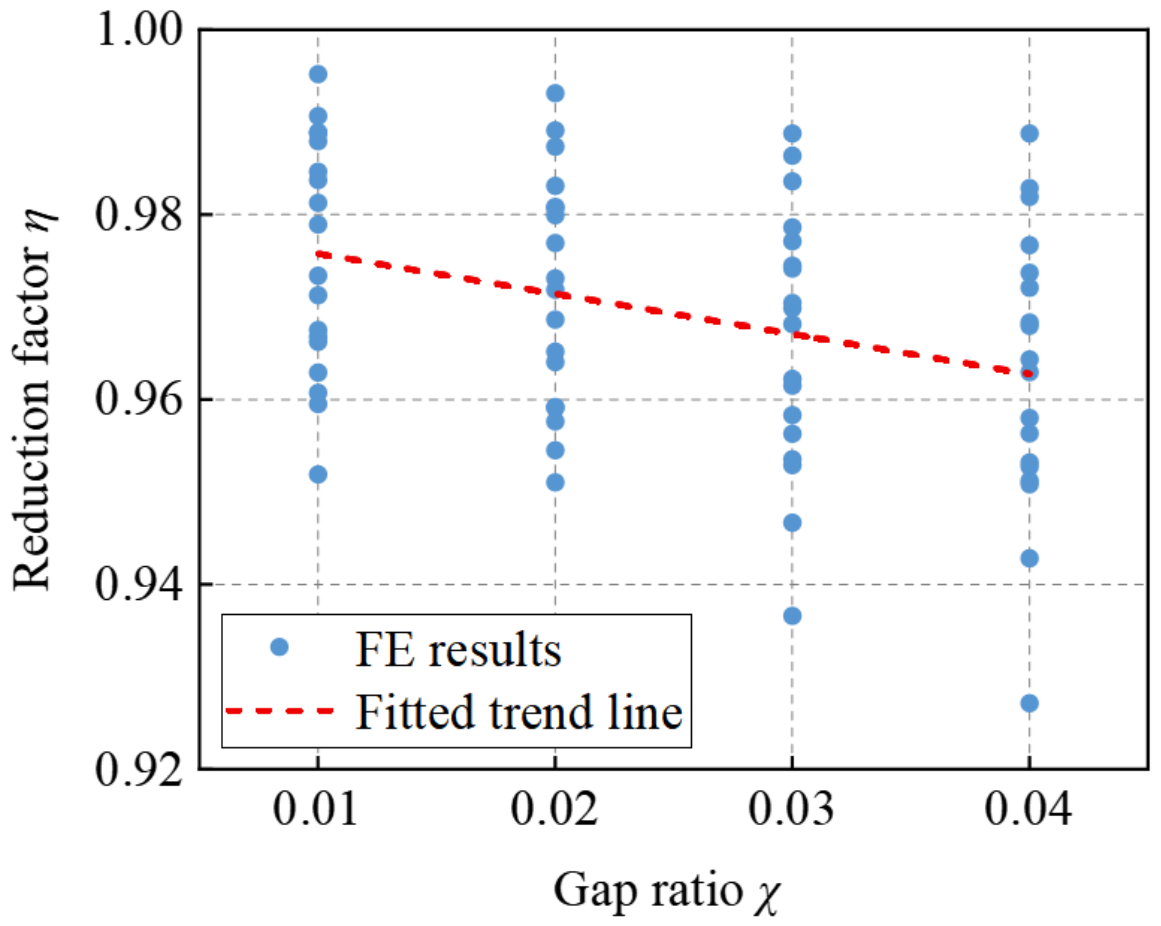
Figure 15 shows that η generally decreases with increasing χ. Despite some scatter in the numerical results, the fitted trend line indicates an overall decreasing tendency, suggesting that the resistance reduction becomes more pronounced as the circumferential gap increases. The scatter also suggests that the η–χ relationship is influenced by other parameters, as discussed in the following section.
Figure 15.
Variation in reduction factor η with gap ratio χ.
4.4.3. Effects of Material Strengths and Steel Ratio
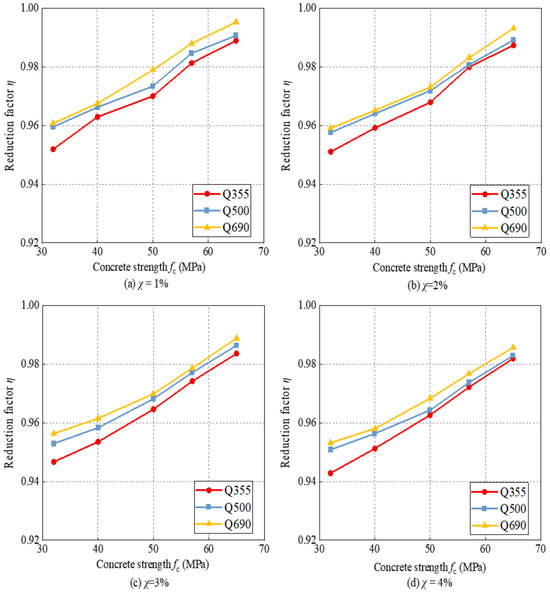
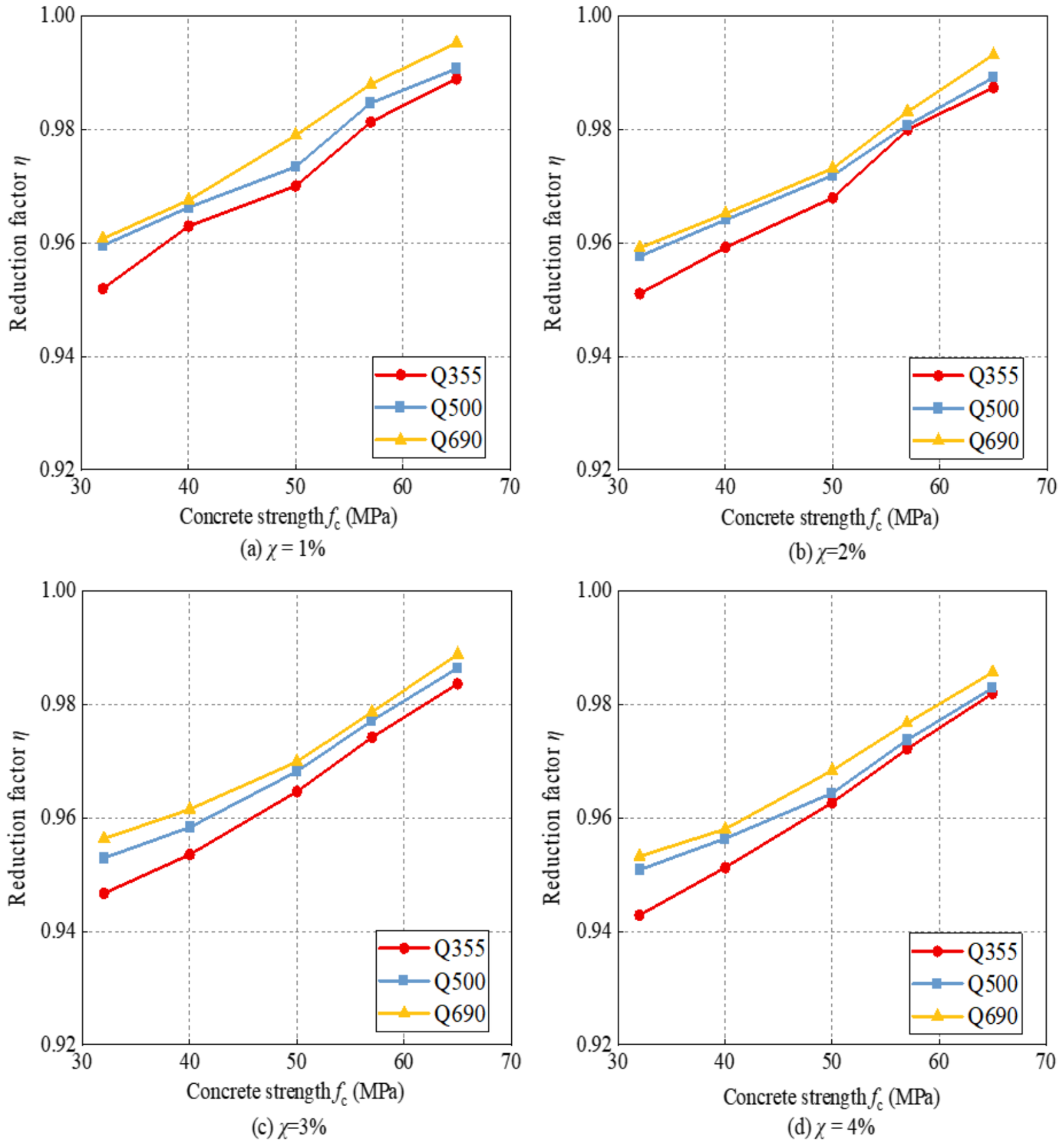
As shown in Figure 16, the reduction factor η increases with increasing concrete strength for the steel grades and gap ratios considered, indicating that higher concrete strength can improve the relative resistance retention of the wall after the introduction of circumferential gaps. For a given concrete strength, specimens with higher steel strength generally exhibit slightly larger absolute axial resistance. However, the variation in η should be interpreted with caution because η is a normalized reduction factor rather than the absolute axial resistance.
Figure 16.
Variation in reduction factor η with concrete strength for different steel strengths at given χ values.
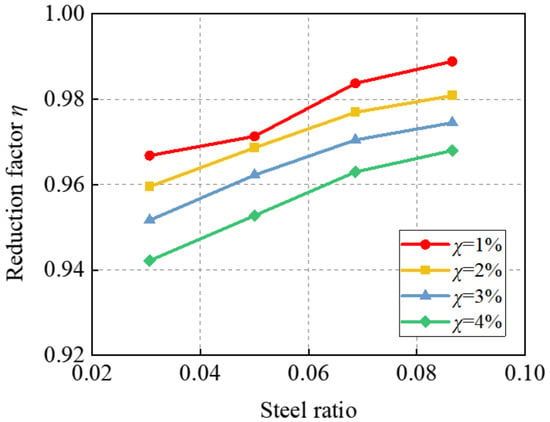
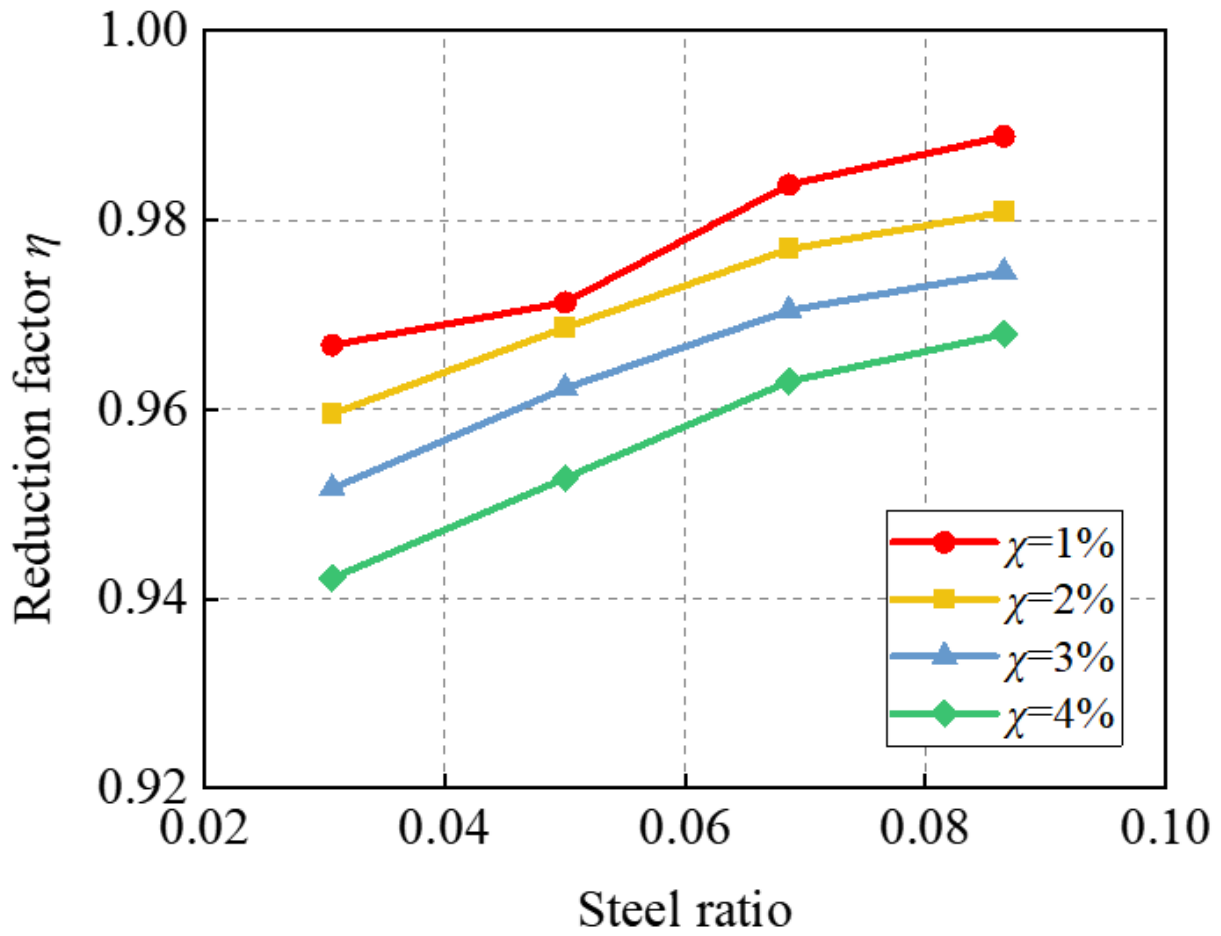
Figure 17 shows the influence of steel area ratio on the gap-induced resistance reduction. It should be clarified that the axial resistance Nu and the reduction factor η describe different aspects of the structural response. Increasing the faceplate thickness or steel yield strength generally increases the absolute axial resistance of both the intact and gap-defective DSCWs. However, η is defined as the ratio between the resistance of the gap-defective wall and that of the corresponding intact wall. Therefore, a lower value of η does not indicate a lower absolute resistance, but represents a more pronounced relative resistance loss caused by the circumferential gap. Within the investigated parameter range, the effect of steel ratio on η should therefore be interpreted as relative gap sensitivity rather than absolute resistance enhancement.
Figure 17.
Variation in reduction factor η with steel ratio.
4.4.4. Steel–Concrete Strength-Ratio Index
To reduce the number of independent variables and provide a compact representation for the combined effect of faceplate thickness and material strengths, a steel–concrete strength-ratio index ξ is introduced as
where As and Ac are the steel and concrete areas per unit wall width, respectively, ts is the faceplate thickness, and tc is the concrete thickness. It should be clarified that ξ is not intended to represent a real circumferential confinement effect. Instead, it is defined as a steel–concrete strength-ratio index to characterize the relative contribution of the steel faceplates and the concrete core, including the effects of faceplate thickness, steel yield strength and concrete compressive strength. Therefore, ξ is used only as a compact parameter for describing the combined influence of steel ratio and material strengths on the gap-induced resistance reduction.
The strength-ratio index ξ should not be interpreted as the steel ratio alone. Instead, it is a combined index reflecting the relative contribution of steel and concrete, including the effects of faceplate thickness, steel yield strength and concrete compressive strength. Therefore, the relationship between η and ξ represents the relative sensitivity of the axial resistance to circumferential gaps, rather than the direct variation in the absolute axial resistance. A higher ξ value indicates a larger relative steel contribution in the intact wall, but when the steel–concrete interaction is weakened by circumferential gaps, a larger portion of this potential composite contribution may not be fully mobilized.
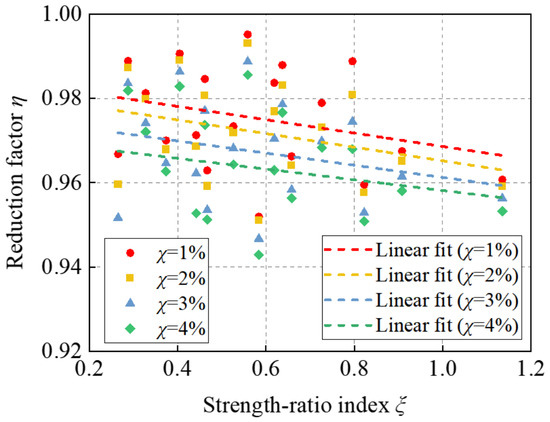
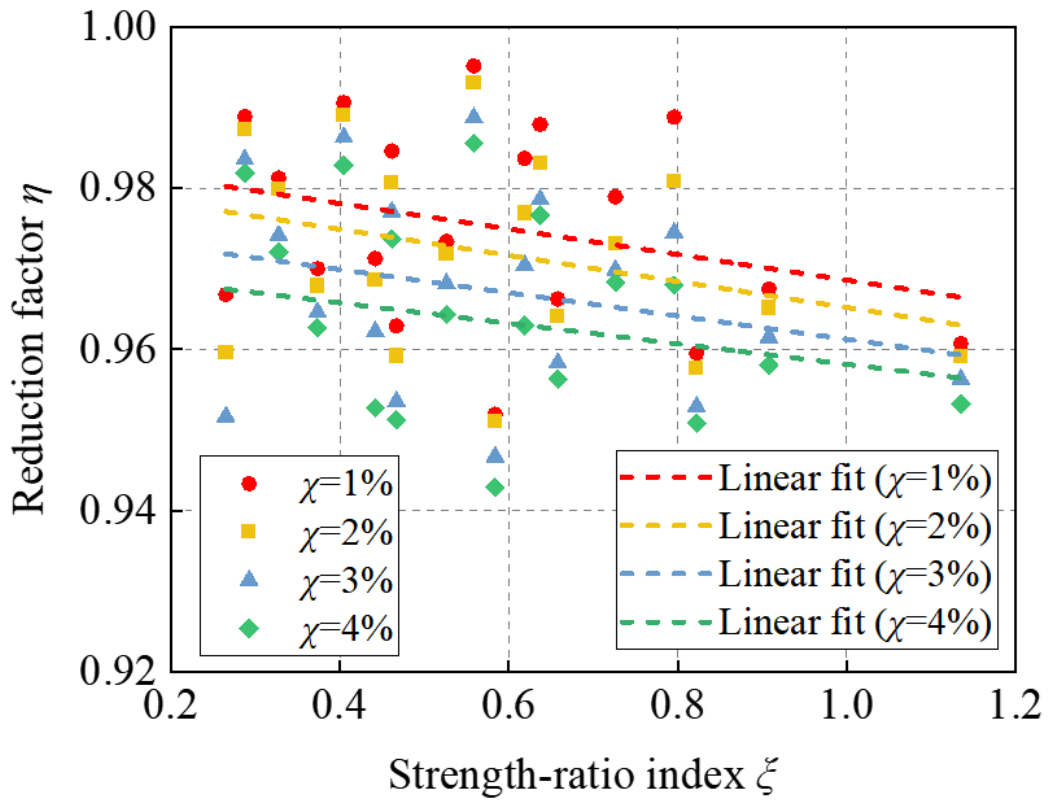
As shown in Figure 18, the reduction factor η exhibits an overall decreasing tendency with increasing strength-ratio index ξ at each gap ratio χ. However, a certain degree of scatter can also be observed in the numerical results, indicating that the η–ξ relationship is affected by the coupled effects of faceplate thickness, steel strength, concrete strength and PBL layout. Therefore, the relationship between η and ξ should be interpreted as an approximate negative correlation rather than a strictly linear dependence. In this study, ξ is introduced as an additional index to compactly represent the combined influence of steel ratio and material strengths on the relative gap-induced resistance reduction.
Figure 18.
Variation in reduction factor η with strength-ratio index ξ at different gap ratios χ and the corresponding first-order fitting lines.
5. Simplified Evaluation Model for Axial Resistance
5.1. Simplified Evaluation Model
To facilitate engineering-oriented evaluation of the axial resistance of PBL-stiffened DSCWs with circumferential gaps within the investigated parameter range, the resistance is expressed as the intact-wall resistance multiplied by a reduction factor that accounts for the gap-induced deterioration. Accordingly, the axial resistance is written as
where Nu0 is the axial resistance of the corresponding intact DSCW under the same configuration, and η(χ, ξ) is the reduction factor accounting for the influence of the circumferential gap ratio χ and strength-ratio index ξ. The proposed expression should be interpreted as a simplified evaluation model calibrated from the FE parametric database, rather than as a general design equation. Its applicability is limited to the parameter ranges covered in this study and to PBL-stiffened DSCWs with similar geometric proportions, PBL layouts, boundary conditions, loading mode and dominant failure mechanism.
Based on the numerical results shown in Figure 18, the variation in η with ξ at each gap ratio χ was described using a first-order fitting function for engineering simplification, rather than being interpreted as a strictly linear physical relationship. By further fitting the intercepts and slopes of the first-order functions with respect to χ, the following piecewise simplified reduction function is obtained:
Since the regression was conducted using the gap-defective FE models with χ = 0.01–0.04, the fitted reduction function in the second branch should not be extrapolated to the intact case. For the intact wall, the reduction factor is defined as η = 1.0, and the axial resistance is equal to Nu0. It should be noted that the second branch of Equation (7) is an empirical fitting expression calibrated for finite circumferential gaps in the investigated FE database. Therefore, it should not be interpreted as a continuous physical law in the limit of χ → 0, nor should it be used for very small gap ratios outside the calibrated range without further validation.
To quantify the approximation quality of the first-order fitting functions, several statistical indicators were calculated for each gap ratio, including the coefficient of determination R2, adjusted R2, root mean square error (RMSE), mean absolute error (MAE), and maximum absolute error (MaxAE). The results are summarized in Table 6. The R2 values range from 0.0483 to 0.0930, indicating that the η–ξ relationship contains noticeable scatter and should not be interpreted as a robust strictly linear dependence. This is consistent with the dispersion observed in Figure 18. Nevertheless, the error-based indicators remain small, with RMSE ranging from 0.0112 to 0.0125, MAE ranging from 0.0094 to 0.0101, and MaxAE not exceeding 0.0253. Therefore, the first-order fitting functions are used as practical engineering approximations rather than exact physical laws.
Table 6.
Statistical indicators for the first-order fitting relationships.
To further justify the choice of the fitting form, a second-degree polynomial fitting function was also examined for comparison. The comparison results are listed in Table 7. Although the second-degree polynomial fitting slightly increases the R2 values at each gap ratio, the improvement in RMSE and MAE is very limited. In addition, the adjusted R2 values of the second-degree polynomial fitting are lower than those of the first-order fitting in all cases, indicating that the additional quadratic term does not provide a sufficient improvement when the increase in model complexity is considered. The maximum absolute error is also not consistently reduced by the second-degree polynomial fitting. Therefore, considering the design-oriented purpose of the proposed model, the first-order fitting function was retained because it provides a better balance between prediction accuracy, simplicity and engineering interpretability.
Table 7.
Comparison between Linear and Quadratic polynomial fitting functions.
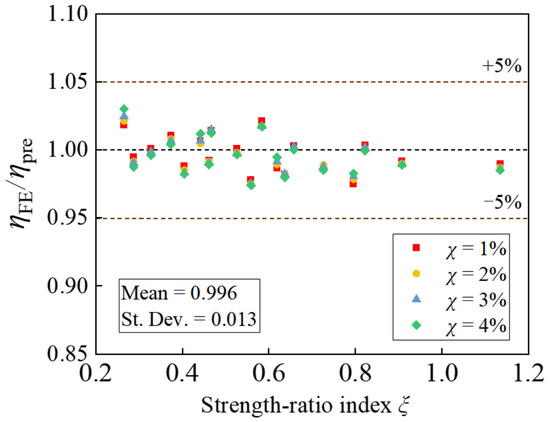
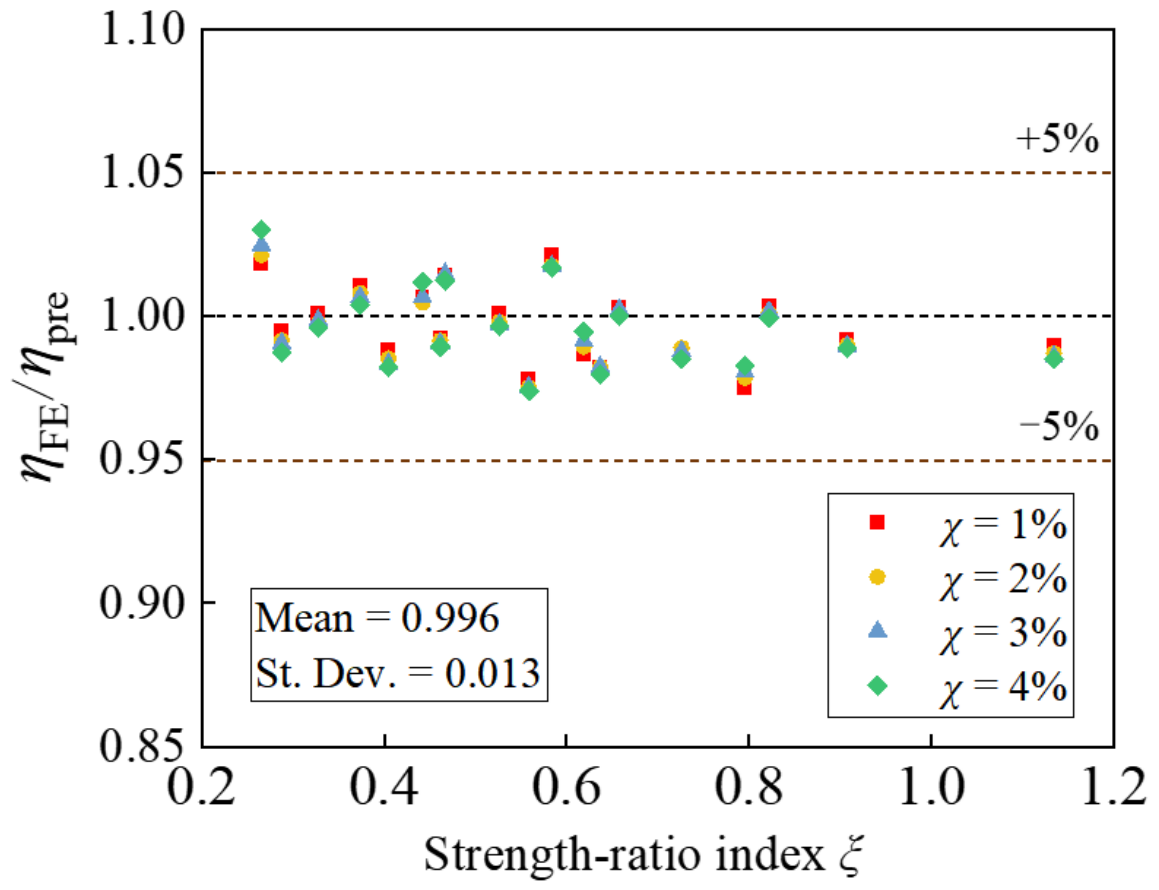
The prediction accuracy of the final simplified model was further evaluated using all 76 gap-defective FE data points included in the verification database. The RMSE, MAE and MaxAE of the proposed model are 0.0133, 0.0113 and 0.0283, respectively. The mean prediction ratio ηpre/ηFE is 0.9963, and the maximum relative error is 3.00%. These results indicate that, although the η–ξ relationship is scattered, the proposed simplified model provides acceptable accuracy for design-oriented evaluation within the investigated parameter range.
For practical implementation, Nu0 is first determined for the intact configuration, and the reduction factor η(χ, ξ) is obtained from Equation (7). The axial resistance is finally obtained from Equation (6). The applicability of the proposed simplified model is limited to the parameter ranges covered by the numerical database in this study, namely the circumferential gap ratio χ = 0.01–0.04 for gap-defective cases, faceplate thickness ts = 6–18 mm, steel yield strength fy = 355–690 MPa, and concrete compressive strength fc = 32–65 MPa. These ranges were selected to cover both practically relevant design conditions and numerical sensitivity cases for evaluating the influence of gap ratio, steel ratio and material strengths. The proposed model is intended for PBL-stiffened DSCWs with similar geometric proportions, PBL arrangements and failure mechanisms to those investigated in this study. It should not be directly extrapolated to members with substantially different geometries, connector layouts, boundary conditions, loading modes, or failure modes without further experimental or numerical validation.
5.2. Verification
The proposed model was verified against the numerical database by examining the distribution of the ratio ηpre/ηFE with respect to the strength-ratio index ξ, as shown in Figure 19. The ±5% bounds are also plotted to indicate the prediction deviation. For the current dataset, the ratio ηpre/ηFE has a mean value of 0.996 and a standard deviation of 0.013, and all data fall within the ±5% bounds. These results indicate that the proposed formulation provides acceptable prediction accuracy within the investigated FE database and can be used as a simplified engineering evaluation approach within the specified parameter range.
Figure 19.
Distribution of ηpre/ηFE with respect to the strength-ratio index ξ.
Nevertheless, this verification was based on the numerical database generated from the same FE modelling framework. Therefore, it demonstrates the internal consistency of the proposed simplified model within the investigated parameter range, but does not constitute independent experimental validation over a broad design domain. Additional experimental data covering different gap ratios, geometries, PBL layouts and loading conditions are still required before the proposed expression can be further generalized for design applications.
6. Conclusions
Based on the experimental study, validated FE analysis and parametric investigation of PBL-stiffened DSCWs with circumferential gaps under axial compression, the following conclusions can be drawn:
It should be noted that the experimental program was limited to three specimens without repeated tests for each gap ratio. Therefore, the test results are mainly used to identify the basic structural response, failure characteristics and strain development, while the broader influence of gap ratio, faceplate thickness and material strengths is discussed based on the validated FE parametric study.
(1) For the tested specimens, circumferential gaps did not substantially alter the basic failure mode of PBL-stiffened DSCWs under axial compression, which remained governed by local buckling of the faceplates accompanied by crushing of the concrete. Nevertheless, the presence of gaps reduced the resistance and weakened the post-peak response.
(2) The reduction in axial resistance was mainly caused by the weakened steel–concrete interaction before the peak load. Although local re-contact could occur during the post-peak stage, its contribution to the peak resistance was limited.
(3) The reduction factor η generally decreased with increasing gap ratio χ. The deterioration was also affected by the material strengths and steel ratio, which could be represented by the strength-ratio index ξ.
(4) A simplified evaluation model was proposed for the axial resistance of PBL-stiffened DSCWs with circumferential gaps by expressing the resistance as the intact-wall resistance multiplied by a reduction factor η(χ, ξ). The reduction factor was defined as η = 1.0 for the intact case and was fitted for finite circumferential gaps within χ = 0.01–0.04. The proposed expression should be interpreted as a simplified evaluation model calibrated from the FE database rather than as a general design equation. It provides acceptable prediction accuracy within the investigated FE database, and its applicability is limited to the investigated parameter range, axial compression loading and the modelling assumptions adopted in this study. Further validation is required before applying it to DSCWs with different geometries, connector layouts, loading modes or dominant failure mechanisms.
The present study focuses on the axial compressive behavior of PBL-stiffened DSCWs with circumferential gaps. The effects of seismic loading, cyclic loading and combined bending–compression were not investigated and should be further examined in future studies.
Author Contributions
Conceptualization, L.S. and H.C.; methodology, H.C. and T.J.; software, H.C. and T.J.; validation, H.C., T.J. and C.L.; formal analysis, H.C. and T.J.; investigation, H.C. and T.J.; resources, L.S.; data curation, H.C. and T.J.; writing—original draft preparation, H.C. and T.J.; writing—review and editing, L.S., H.C. and C.L.; visualization, H.C. and T.J.; supervision, L.S.; project administration, L.S.; funding acquisition, L.S. All authors have read and agreed to the published version of the manuscript.
Funding
This research was funded by the National Natural Science Foundation of China, grant number 52408144; the Natural Science Foundation of Chongqing, China, grant number CSTB2025NSCQ-GPX0407; and the R&D Program of Beijing Municipal Education Commission, grant number KM202410005025.
Data Availability Statement
The data presented in this study are available on request from the corresponding author.
Conflicts of Interest
The authors declare no conflict of interest.
References
- Sun, L.; Liu, Y.; Wang, H.; Shi, F. Axial compressive behavior of PBL-stiffened double-skin composite walls considering local buckling: Experimental and theoretical investigation. Eng. Struct. 2023, 289, 116329. [Google Scholar] [CrossRef] [Scilit]
- Luttikholt, A.; Doorduyn, A.; De Wit, H.; Li, Y. Consideration of concrete and steel sandwich tunnel elements. Tunn. Undergr. Space Technol. 2022, 121, 104309. [Google Scholar] [CrossRef] [Scilit]
- Senthilkumar, R.; Karunakaran, P.; Chandru, U. Progress and challenges in double skin steel–concrete composite walls: A review. Innov. Infrastruct. Solut. 2023, 8, 32. [Google Scholar] [CrossRef] [Scilit]
- Sun, L.; Liu, Y.; Wang, H.; Shi, F.; Liu, J.; Jiang, L. Tensile stiffness of perfobond rib connectors in steel–concrete composite pylon of bridges. Eng. Struct. 2023, 284, 115931. [Google Scholar] [CrossRef] [Scilit]
- Oguejiofor, E.C.; Hosain, M.U. A parametric study of perfobond rib shear connectors. Can. J. Civ. Eng. 1994, 21, 614–625. [Google Scholar] [CrossRef] [Scilit]
- Medberry, S.B.; Shahrooz, B.M. Perfobond shear connector for composite construction. Eng. J. 2002, 39, 2–12. [Google Scholar] [CrossRef] [Scilit]
- Ahn, J.-H.; Kim, S.-H.; Jeong, Y.-J. Shear behaviour of perfobond rib shear connector under static and cyclic loadings. Mag. Concr. Res. 2008, 60, 347–357. [Google Scholar] [CrossRef] [Scilit]
- Shen, Q.; Wang, J.; Wang, F.; Li, G.; Hu, Z. Axial loading mechanism analyses and evaluation methods of CCFT short columns with gap defects. Structures 2022, 46, 1422–1432. [Google Scholar] [CrossRef] [Scilit]
- Liu, H.; Chen, Z.; Liu, Y.; Chen, Y.; Du, Y.; Zhou, F. Interfacial debonding detection for CFST structures using an ultrasonic phased array: Application to the shenzhen SEG building. Mech. Syst. Signal Process. 2023, 192, 110214. [Google Scholar] [CrossRef] [Scilit]
- Huang, Y.-H.; Liu, A.-R.; Fu, J.-Y.; Pi, Y.-L. Experimental investigation of the flexural behavior of CFST trusses with interfacial imperfection. J. Constr. Steel Res. 2017, 137, 52–65. [Google Scholar] [CrossRef] [Scilit]
- Chen, S.; Hou, C.; Zhang, H.; Han, L.-H. Structural behaviour and reliability of CFST trusses with random initial imperfections. Thin-Walled Struct. 2019, 143, 106192. [Google Scholar] [CrossRef] [Scilit]
- Guo, C.; Lu, Z. Effect of circumferential gap on dynamic performance of CFST arch bridges. J. Bridge Eng. 2021, 26, 04020121. [Google Scholar] [CrossRef] [Scilit]
- Yan, J.-B.; Chen, A.; Wang, T. Compressive behaviours of steel-UHPC-steel sandwich composite walls using novel EC connectors. J. Constr. Steel Res. 2020, 173, 106244. [Google Scholar] [CrossRef] [Scilit]
- Nie, J.-G.; Hu, H.-S.; Fan, J.-S.; Tao, M.-X.; Li, S.-Y.; Liu, F.-J. Experimental study on seismic behavior of high-strength concrete filled double-steel-plate composite walls. J. Constr. Steel Res. 2013, 88, 206–219. [Google Scholar] [CrossRef] [Scilit]
- Choi, B.-J.; Kang, C.-K.; Park, H.-Y. Strength and behavior of steel plate–concrete wall structures using ordinary and eco-oriented cement concrete under axial compression. Thin-Walled Struct. 2014, 84, 313–324. [Google Scholar] [CrossRef] [Scilit]
- Chen, Z.; Zi, Z.; Zhou, T.; Wu, Y. Axial compression stability of thin double-steel-plate and concrete composite shear wall. Structures 2021, 34, 3866–3881. [Google Scholar] [CrossRef] [Scilit]
- Qin, Y.; Shu, G.-P.; Zhou, X.-L.; Han, J.-H.; Zhang, H.-K. Behavior of T-shaped sandwich composite walls with truss connectors under eccentric compression. J. Constr. Steel Res. 2020, 169, 106067. [Google Scholar] [CrossRef] [Scilit]
- Huang, Z.; Liew, J.Y.R. Compressive resistance of steel-concrete-steel sandwich composite walls with J-hook connectors. J. Constr. Steel Res. 2016, 124, 142–162. [Google Scholar] [CrossRef] [Scilit]
- Zhao, Y.; Li, Z.; Tang, Z.; Ma, H. Compressive behavior of double-skin composite walls considering local buckling and post-buckling effect. J. Constr. Steel Res. 2022, 197, 107496. [Google Scholar] [CrossRef] [Scilit]
- Tao, Z.; Han, L.-H.; Wang, D.-Y. Experimental behaviour of concrete-filled stiffened thin-walled steel tubular columns. Thin-Walled Struct. 2007, 45, 517–527. [Google Scholar] [CrossRef] [Scilit]
- Tao, Z.; Uy, B.; Han, L.-H.; Wang, Z.-B. Analysis and design of concrete-filled stiffened thin-walled steel tubular columns under axial compression. Thin-Walled Struct. 2009, 47, 1544–1556. [Google Scholar] [CrossRef] [Scilit]
- Liang, W.; Dong, J.; Wang, Q. Mechanical behaviour of concrete-filled double-skin steel tube (CFDST) with stiffeners under axial and eccentric loading. Thin-Walled Struct. 2019, 138, 215–230. [Google Scholar] [CrossRef] [Scilit]
- Eltayeb, E.; Ma, X.; Zhuge, Y.; Xiao, J.; Youssf, O. Composite walls composed of profiled steel skin and foam rubberized concrete subjected to eccentric compressions. J. Build. Eng. 2022, 46, 103715. [Google Scholar] [CrossRef] [Scilit]
- Tong, J.-Z.; Pan, W.-H.; Shen, M.-H. Performance of double-skin composite walls with re-entrant profiled faceplates under eccentric compression. J. Build. Eng. 2020, 28, 101010. [Google Scholar] [CrossRef] [Scilit]
- Sun, L.; Liu, Y.; Wang, H.; Shi, F. Eccentric compressive behavior of PBL-stiffened double-skin composite walls in bridge pylons. J. Constr. Steel Res. 2023, 208, 108027. [Google Scholar] [CrossRef] [Scilit]
- Zhang, W.; Mao, Y.; Xing, Z.; Xu, Y.; Chen, Y.; Chen, W.; Jiang, X. Axial compression behavior of square CFST short column with triangular-corner gap. J. Build. Eng. 2023, 80, 108046. [Google Scholar] [CrossRef] [Scilit]
- Wang, J.; Liu, W.; Shen, Q.; Li, J.; Han, Z. Experimental investigation and theoretical analysis of axially-loaded concrete-filled elliptical tubes with circumferential gaps. Thin-Walled Struct. 2022, 181, 110100. [Google Scholar] [CrossRef] [Scilit]
- Liao, F.-Y.; Han, L.-H.; Tao, Z. Behaviour of CFST stub columns with initial concrete imperfection: Analysis and calculations. Thin-Walled Struct. 2013, 70, 57–69. [Google Scholar] [CrossRef] [Scilit]
- Xu, J.; Zhou, T.; Chen, Z.; Li, W. Axial compression behavior of square concrete-filled steel tube with concrete defects. Structures 2025, 75, 108777. [Google Scholar] [CrossRef] [Scilit]
- Patel, A.J.P.; Purohit, S. The axial behaviour of concrete filled double skinned steel tubular (CFDST) column with concrete imperfections. Fract. Struct. Integr. 2025, 19, 1–14. [Google Scholar] [CrossRef] [Scilit]
- Liao, F.-Y.; Han, L.-H.; He, S.-H. Behavior of CFST short column and beam with initial concrete imperfection: Experiments. J. Constr. Steel Res. 2011, 67, 1922–1935. [Google Scholar] [CrossRef] [Scilit]
- Thai, H.-T.; Vo, T.P.; Nguyen, T.-K.; Pham, C.H. Explicit simulation of bolted endplate composite beam-to-CFST column connections. Thin-Walled Struct. 2017, 119, 749–759. [Google Scholar] [CrossRef] [Scilit]
- Shi, G.; Xu, K.; Ban, H.; Lin, C. Local buckling behavior of welded stub columns with normal and high strength steels. J. Constr. Steel Res. 2016, 119, 144–153. [Google Scholar] [CrossRef] [Scilit]
- Yun, X.; Gardner, L. Stress-strain curves for hot-rolled steels. J. Constr. Steel Res. 2017, 133, 36–46. [Google Scholar] [CrossRef] [Scilit]
- Sun, L.; Liu, Y.; Wang, H.; Shi, F. Local and post-local buckling behavior of welded square high-strength steel tubes with concrete-infilled restraints. Thin-Walled Struct. 2023, 183, 110381. [Google Scholar] [CrossRef] [Scilit]
- CEB-FIP Model Code 2010; British Standards Institution: London, UK, 2010.

Disclaimer/Publisher’s Note: The statements, opinions and data contained in all publications are solely those of the individual author(s) and contributor(s) and not of MDPI and/or the editor(s). MDPI and/or the editor(s) disclaim responsibility for any injury to people or property resulting from any ideas, methods, instructions or products referred to in the content. |
© 2026 by the authors. Licensee MDPI, Basel, Switzerland. This article is an open access article distributed under the terms and conditions of the Creative Commons Attribution (CC BY) license.